

Blonde and white box braids have a very specific kind of drama. They can look cool-toned and sharp, or soft and creamy, or almost metallic if the parting is clean and the braid size is chosen with a little restraint. The trick is that white hair does not hide much. Every crooked section, every fuzzy edge, every bit of lint shows up fast.
That is why some blonde-and-white braid installs look expensive and others look busy in the worst way. The color combo itself is strong, but the shape matters just as much. A clean middle part, a tidy scalp line, and the right braid length can make the difference between a style that reads polished and one that looks rushed. Tiny thing. Big payoff.
My favorite versions of this look lean into contrast on purpose. Honey blonde softens the face. Platinum white makes the whole style feel icy. A little white near the front can wake up a warm blonde base without turning the whole head into a bright sheet of color. And yes, the upkeep matters, because lighter braiding hair gets dull faster if you ignore it.
So the best place to start is with styles that do more than look pretty in a photo. They should also wear well, grow out cleanly, and give you a decent return on the hours you spend in the chair.
1. Honey Blonde Box Braids with White Face-Framing Pieces
Honey blonde does a lot of heavy lifting here. It keeps the look warm, flattering, and less stark than a full head of white, while the front pieces bring in enough brightness to make the style pop near the face. If you want blonde and white box braids that still feel wearable at work, on errands, or in a low-key setting, this is one of the easiest wins.
Why It Works
The contrast stays near the hairline, which means the brightest part of the style lands where people actually look first. That matters more than most braid inspo photos admit. A full white install can swallow your features if the braid size is too large or the parting is sloppy.
I like this version on medium box braids, roughly pencil-width to slightly thicker, because the honey base gives the white strands room to breathe. Around 6 to 8 packs of pre-stretched braiding hair is usually enough for a mid-back install, depending on how full you want it.
- Keep the white pieces around the front hairline and temple area.
- Use honey blonde through the crown and most of the length.
- Ask for neat, medium-sized squares so the color placement stays visible.
- Finish with mousse and a light wrap to stop flyaways from drying hard.
Best move: keep the white pieces to just 4 to 8 braids around the face. More than that starts to push the whole look toward costume territory.
2. Platinum White Small Box Braids
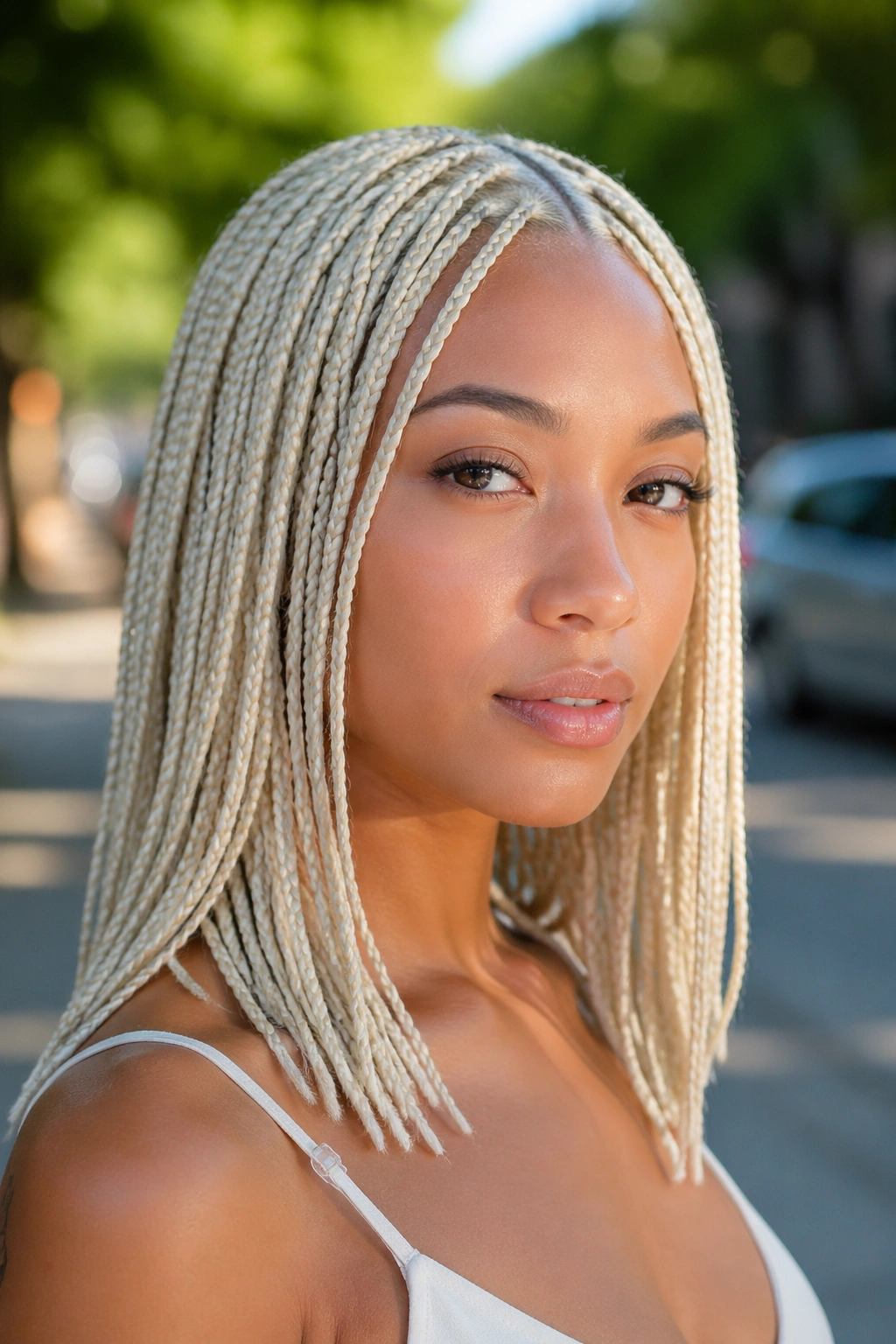
Platinum white small box braids are not subtle. That is the point, and if you are going to commit to the color, the braid size should back it up. Small sections make the white look finer, cleaner, and more expensive, especially when the scalp parting is crisp and the ends are sealed neatly.
This style works best when the whole install is kept uniform. No chunky pieces. No random size changes. Small braids give the color a smoother surface, which helps the white hair read as bright instead of rough. On long installs, you will usually need extra attention at the roots because light hair shows new growth faster than darker shades.
I’d pair this with a center part or a very clean side part. Both keep the look structured. Both help the white feel deliberate.
If you want a finishing touch, add tiny silver cuffs near the ends rather than loading the braids with too much hardware. White hair already has enough presence. It does not need help competing with itself.
3. Blonde-to-White Ombre Waist-Length Braids
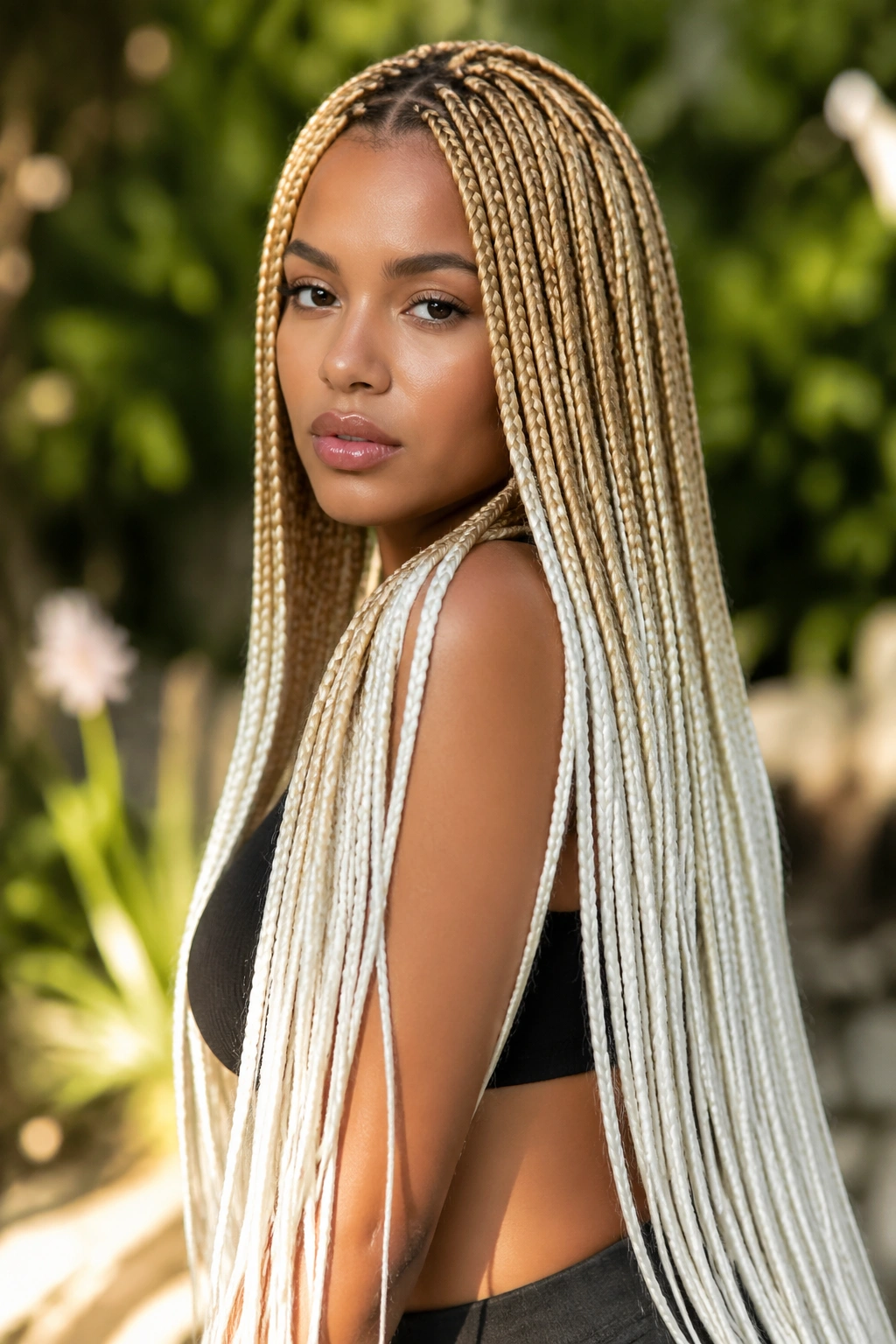
What happens when blonde fades into white instead of stopping abruptly? You get a softer, more expensive-looking braid set. The ombre shift removes that hard line some two-tone styles have, and on waist-length box braids it creates a long, smooth visual line that feels a little icy without looking harsh.
How to Wear It
The best ombre starts with a warmer blonde at the root or upper half and slides into pearl white through the mid-lengths and ends. If you jump from golden blonde straight to bright white, the transition can feel abrupt. A vanilla blonde or beige blonde bridge keeps the fade clean.
This style loves length. Anything around 24 to 30 inches gives the color shift enough room to show. Shorter braids can still work, but the gradient gets compressed and loses some of its softness.
What to Ask For
- A blonde base that is slightly warmer than the white end
- Braids installed with the color transition beginning below the ear
- Straight, sealed ends rather than curly ends if you want the ombre to look sharp
- A gloss spray that does not leave a sticky film
One thing to watch: white ends fray faster than blonde ends if you rough them up too much. Sleeping in a satin bonnet helps more than people think. Every night. No skipping.
4. Jumbo Blonde Box Braids with White Cuffs
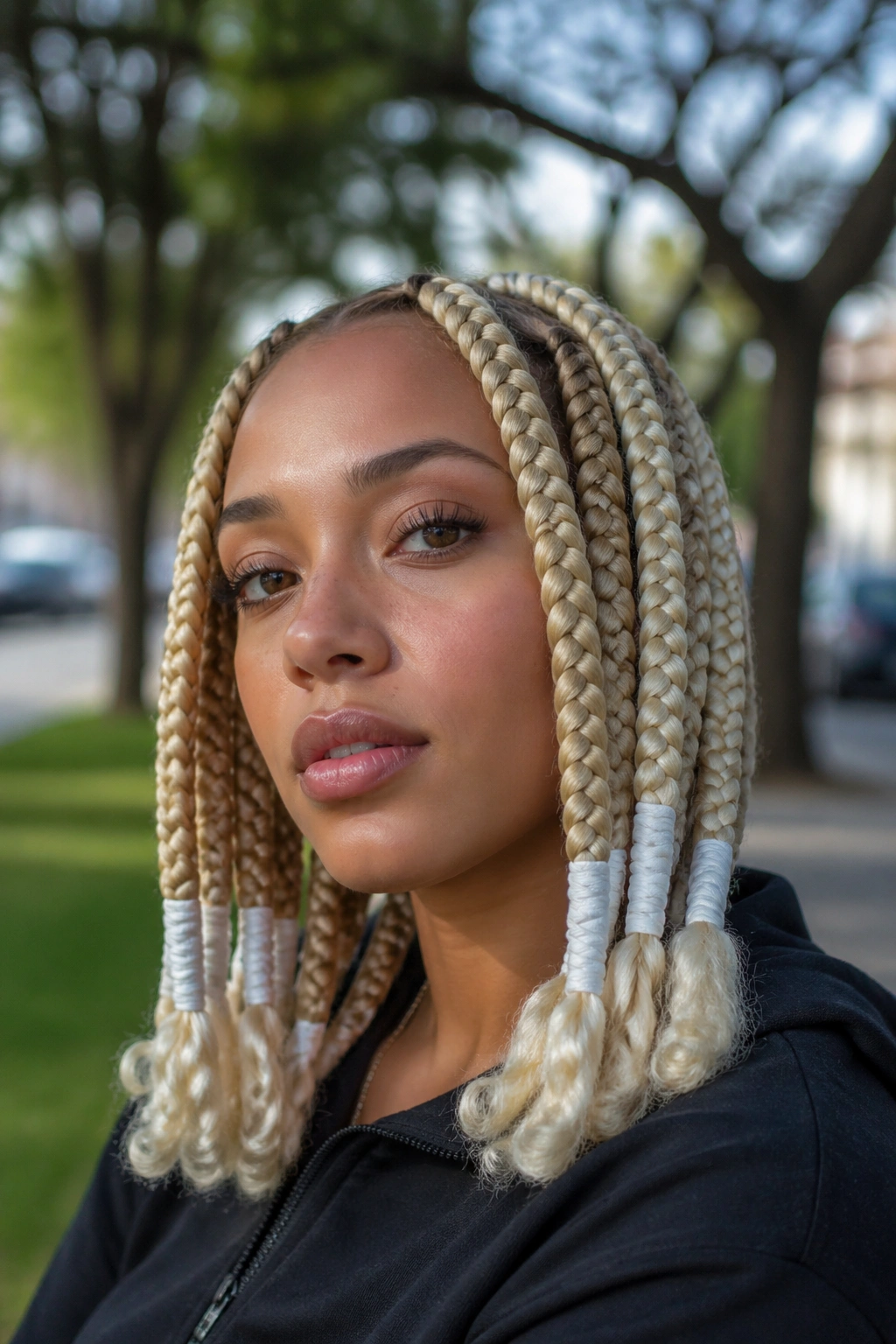
Picture six or eight thick braids, heavy with color, then a few white cuffs catching the light near the ends. That is the vibe here. Jumbo blonde box braids are bold on their own, and the white accents keep them from looking flat.
The size does most of the work. Jumbo braids install faster, feel a little lighter on the scalp than a dense small-braid set, and show off color placement from across the room. White cuffs or braid wraps are a smart way to introduce the second shade without committing the whole head to bright white.
I like this style for shoulder-length to mid-back wear. Very long jumbo braids can start to swing hard, and the color contrast gets harder to control. Keep the braids thick, but not so thick that the parting disappears.
A few details matter here:
- Use 4 to 6 large braids around the perimeter for balance.
- Place the white cuffs only on the lower third of the braid.
- Keep the ends blunt or lightly curled, not thin and stringy.
- Avoid overloading with accessories; the braid size already gives you enough presence.
This is the version I reach for when I want the color story to stay easy. Big, clean, done.
5. White Knotless Box Braids with a Sleek Low Bun
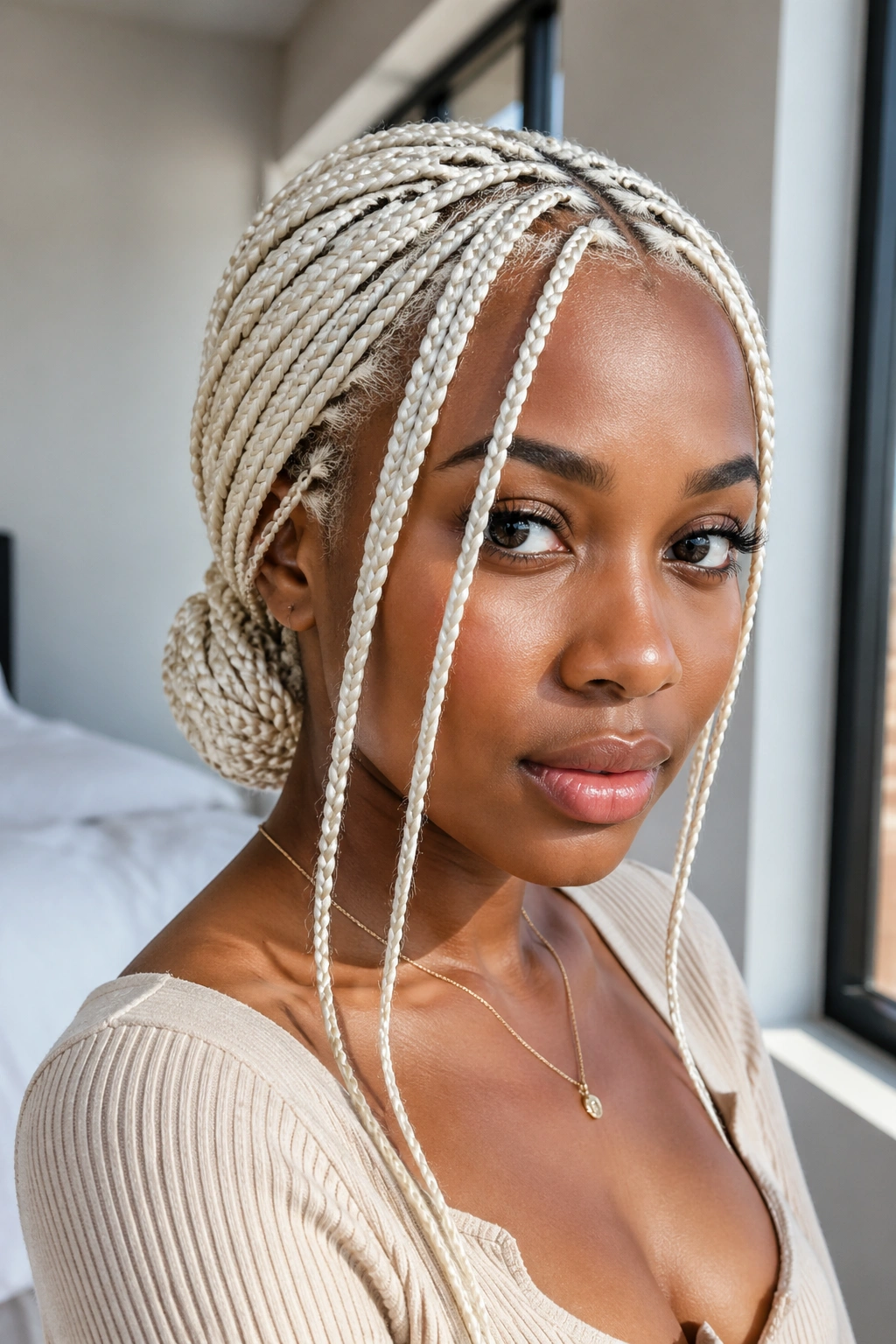
A low bun takes the edge off white braids in the best possible way. Knotless box braids already sit flatter at the scalp, which means the whole style looks smoother from the start. Add pure white or soft ivory hair, and you get a look that feels crisp without trying too hard.
The bun keeps the brightness controlled. That matters because white braids can dominate a face if they fall everywhere at once. Pulled low at the nape, they look neater, and the exposed scalp line gets a chance to be part of the design instead of an afterthought.
This is one of those styles that looks better when it has a little restraint. Leave a few braids free around the forehead if you want softness, but keep the bun compact. A loose, messy bun tends to make white braids look frayed faster than they really are.
It is also a good option if your scalp gets tired under heavier installs. Knotless braids reduce that tight, boxed-in feeling at the root. Not gone. Just easier to live with.
6. Blonde and White Boho Box Braids with Loose Curls
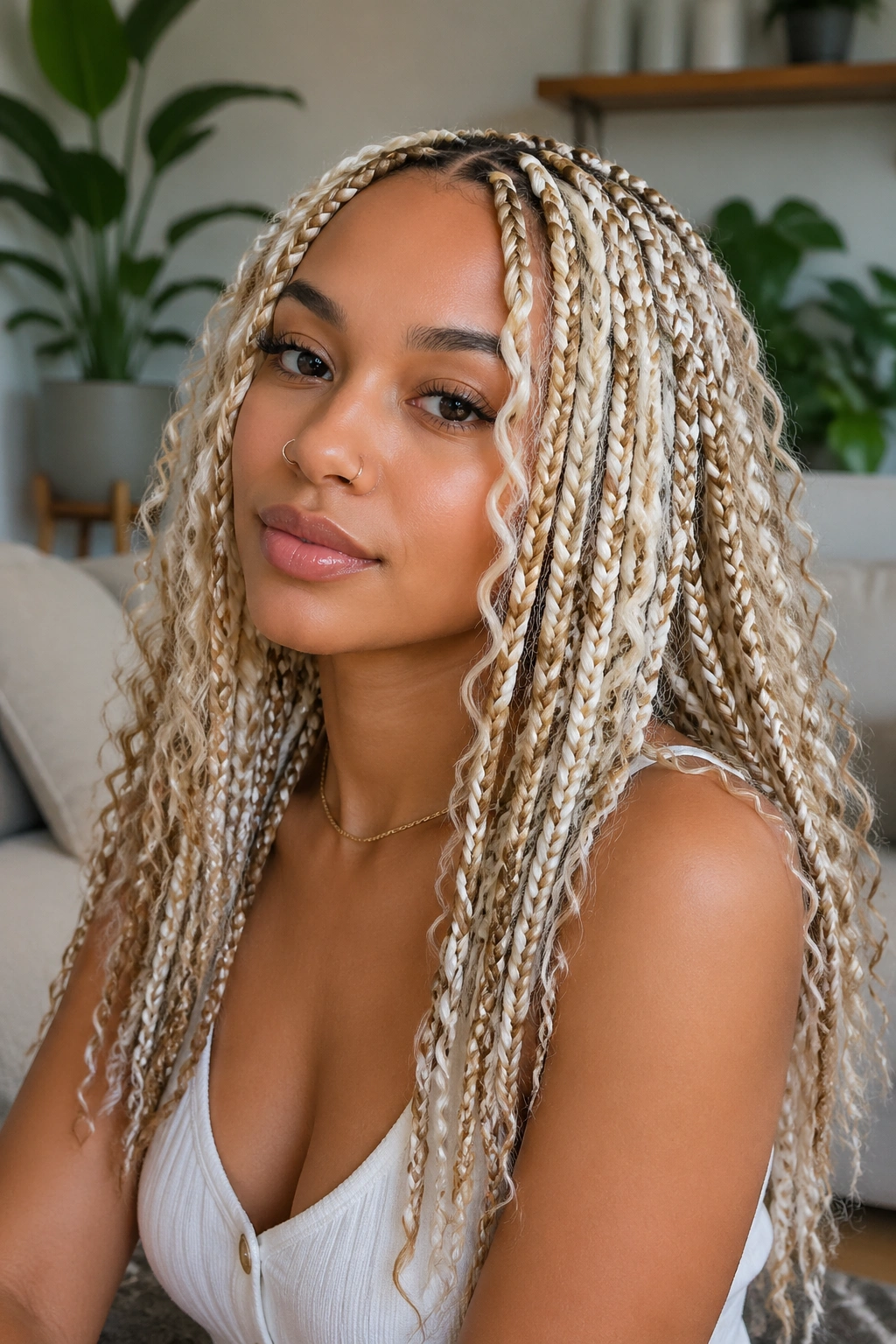
Unlike sleek traditional braids, boho box braids bring in texture on purpose. The loose curls change the whole mood of blonde and white hair. Suddenly the style is less sculpted and more lived-in, which helps the light colors look softer and less severe.
The curl pieces matter more than people think. Use a curl pattern that is defined enough to hold shape, but not so tight that it tangles every time you turn your head. Medium spiral curls or soft water-wave pieces usually behave better than stiff ringlets. They also blend more naturally with the braid body.
This version is especially good if you like contrast but do not want a hard color block. Put the white in the curl pieces or in alternating braids, then keep the blonde dominant through the roots and most of the length. It reads lighter, airier, and a little more playful.
A small warning: boho styles need more maintenance. The loose pieces can frizz early, especially near scarves, collars, and coat hoods. If you hate detangling stray curls with your fingers, this is not the simplest option.
7. Alternating Blonde and White Box Braids
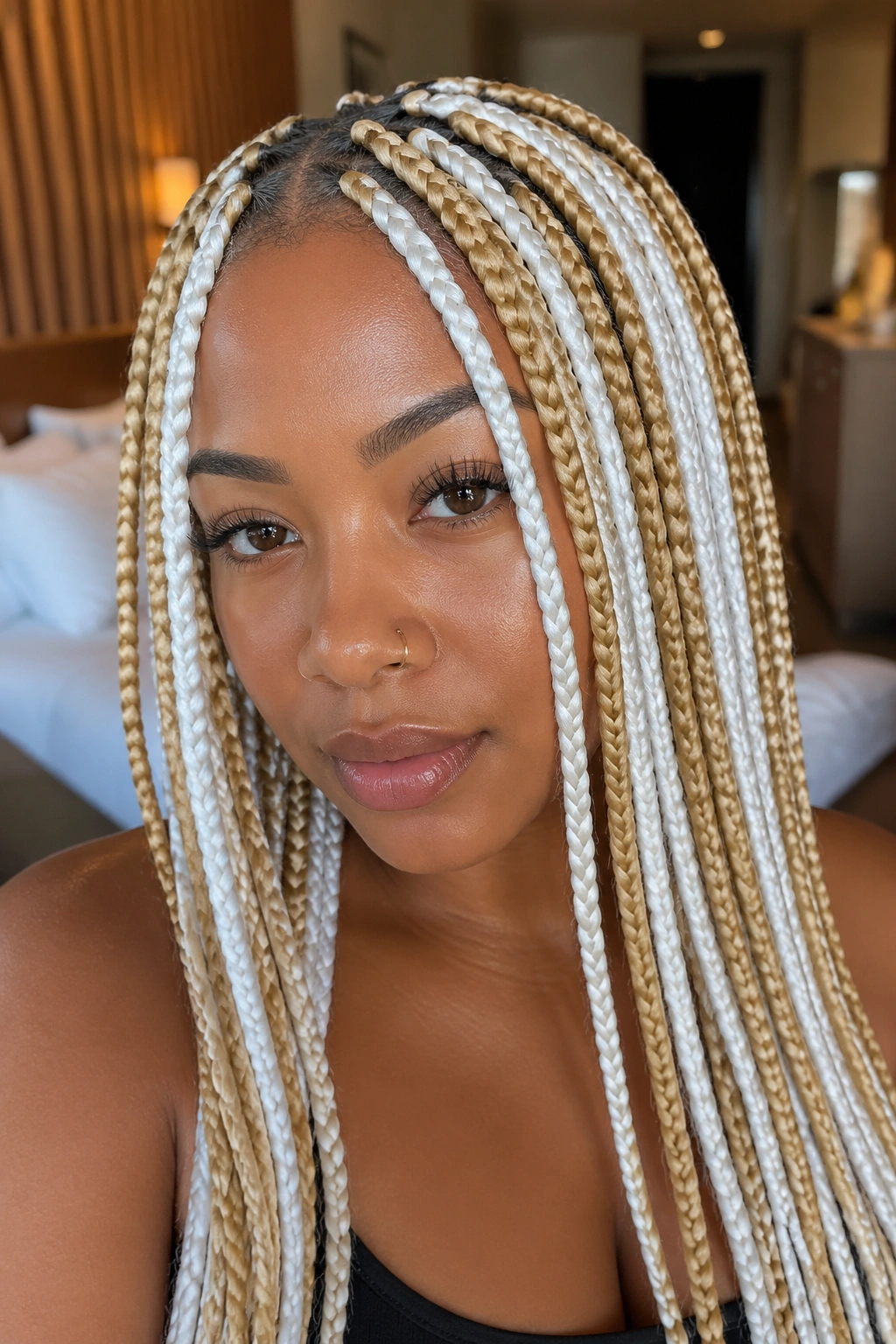
Alternating color placement changes everything. Instead of blending blonde into white on each braid, you switch the colors braid by braid. One blonde braid. One white braid. Then back again. The effect is sharper, cleaner, and a little more graphic.
Why It Stands Out
This is the style to choose when you want the braid pattern itself to do the talking. The color break is immediate, which makes the sections easier to read from a distance. It also works well on medium to large braids because the alternating rhythm is visible even if you do not have perfectly even lighting.
The downside is obvious. There is nowhere to hide. If the parting is crooked or the braid sizes vary too much, the whole style starts looking messy. Clean sectioning is non-negotiable here.
How to Keep It Balanced
- Keep the braids the same width from front to back.
- Use the same braid length on both colors.
- Place white braids near the front and crown if you want more brightness.
- Finish with a light mousse so both shades settle evenly.
My take: this is one of the strongest choices if you like structured, fashion-forward braids and do not mind the look being noticed fast.
8. Shoulder-Length Blonde Box Braids with White Tips
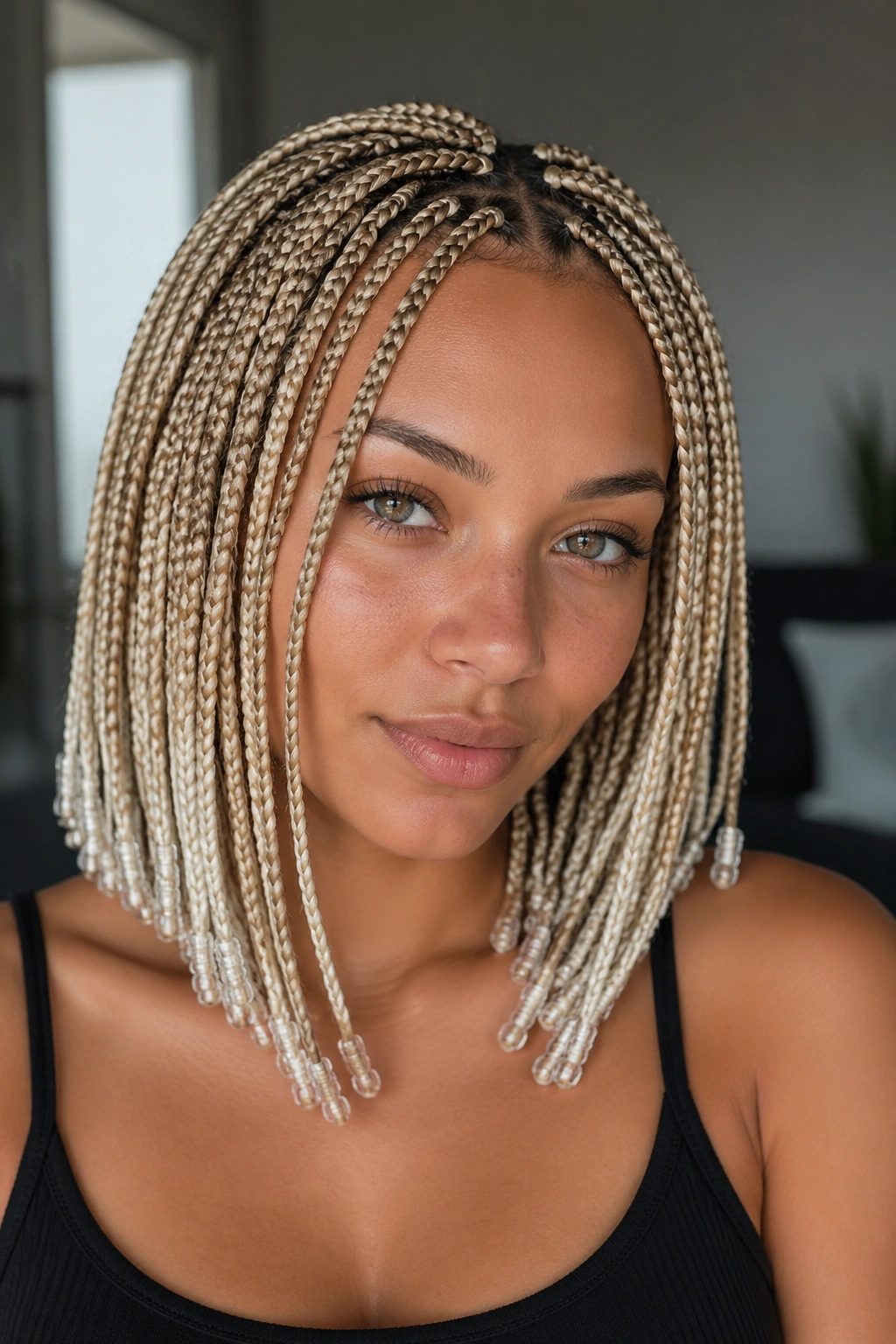
Shoulder-length braids are the easiest version to live with. They do not swing as hard, they dry faster after washing, and they do not pull on the scalp the way waist-length installs can. Add white tips, and the style gets a clean finish without overwhelming the whole head with bright color.
The shorter length makes the blonde the main event. The white tips act like a cool little finish rather than a full color takeover. That works especially well if you want something light and fresh, but not icy enough to fight with every outfit.
Shoulder-length braids also suit people who spend time in collars, jackets, or uniforms. Long blonde and white braids can rub and fray at the ends. Shorter braids dodge some of that wear and tear.
A blunt, sealed tip keeps the style polished. If the ends are too wispy, the white can start looking dusty instead of bright. That is one of those tiny details people notice even if they do not know why the style feels off.
9. White Money Piece with Honey Blonde Box Braids
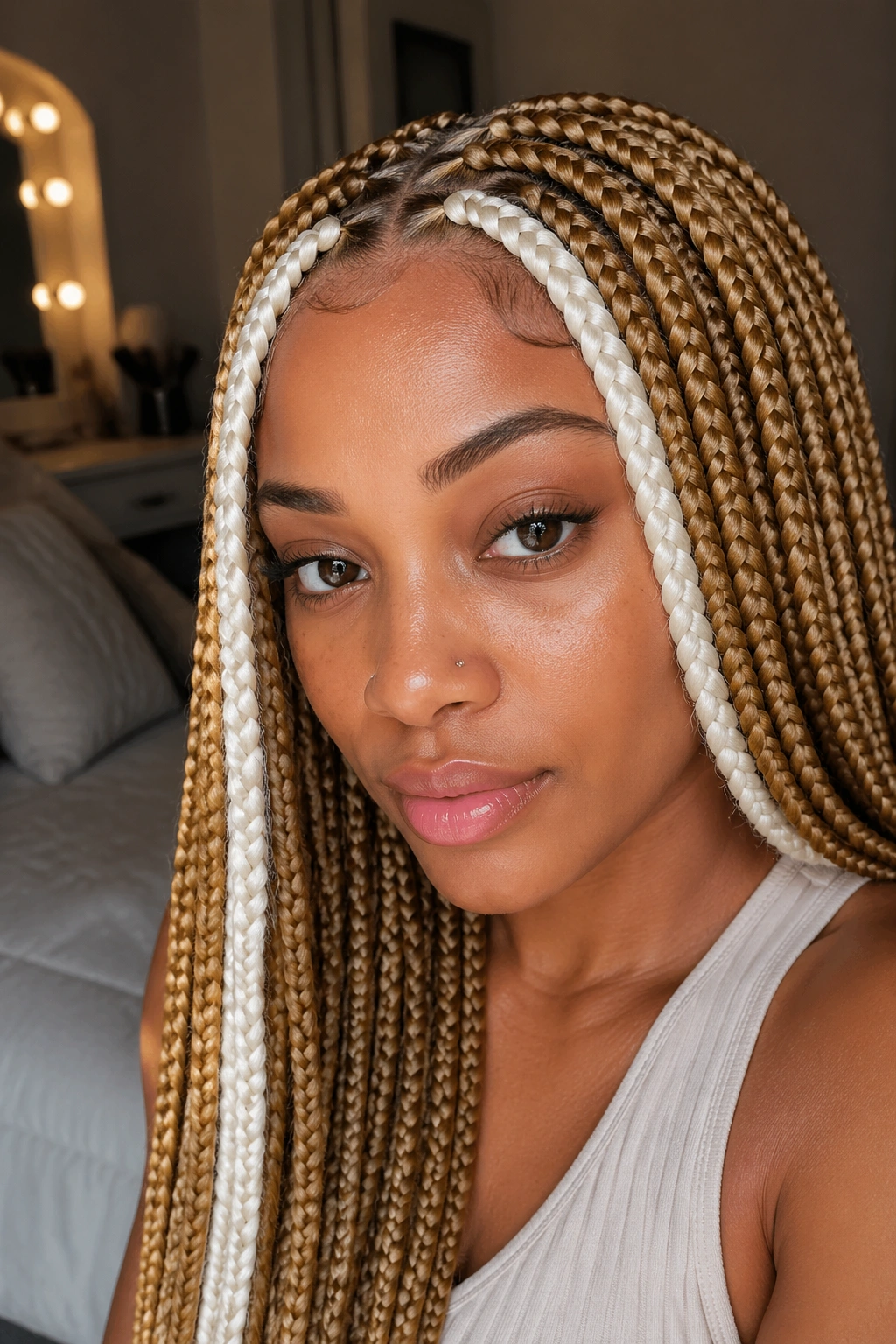
A white money piece is one of the simplest ways to wake up a honey blonde install. You keep most of the hair in a warm blonde shade, then place two thicker white sections at the front so the face gets framed with brightness. Clean. Direct. Effective.
Why It Works
The front money piece acts like a spotlight, but not a loud one. It pulls the eye toward the face while letting the rest of the braids stay soft and wearable. On darker complexions, the contrast can be especially strong. On lighter complexions, it gives the face a sharper outline.
The key is thickness. A money piece that is too thin disappears once the hair settles. A piece that is too wide can take over the whole front section. Somewhere around 1 to 1.5 inches per side is the sweet spot for most head shapes.
Best Ways to Style It
- Pull the front braids into a half-up style to show the white framing pieces.
- Wear them loose when you want the contrast to stay obvious.
- Add a middle part if you like symmetry, or a soft side part if you want the face frame to angle across the cheekbones.
A small note: this style looks best when the white pieces are the same shade, not a patchwork of different whites. Consistency matters more than people expect.
10. Triangle-Part Blonde Box Braids
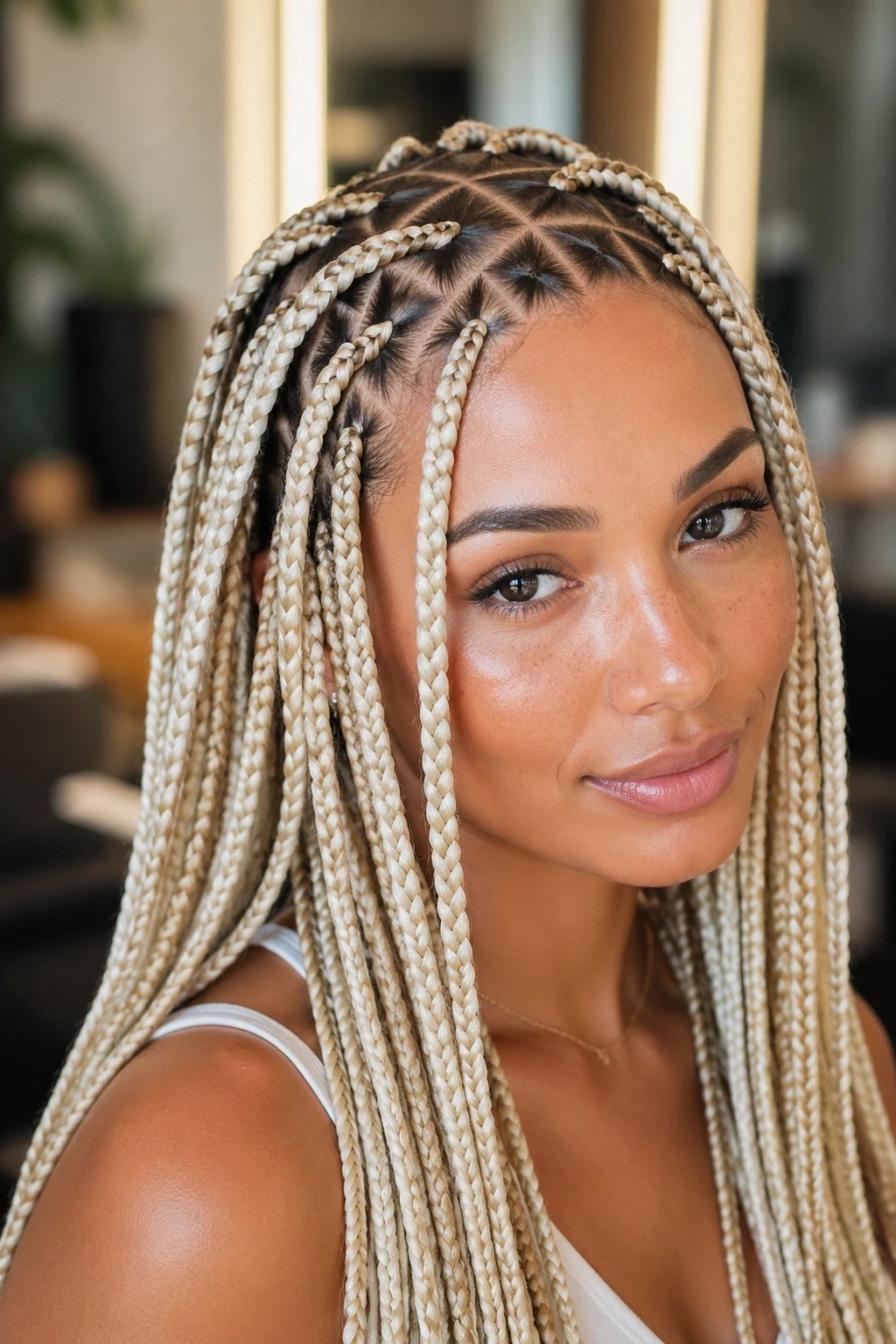
Triangle parts change the geometry of the whole head. Instead of standard squares, the sections angle across the scalp, which gives blonde and white braids a more deliberate, styled look. If you want the color to feel a little fashion-editor, this is the path.
The shape works especially well when the braids are medium-sized and the color mix is balanced. Triangle parts add visual movement before the hair even starts. That means the blonde and white tones do not need to do all the work. The sectioning carries some of the weight.
I like this look with a soft ombre or a split placement. A hard color block plus triangle parting can feel busy if the braids are long and thick. A gradient or blended shade keeps the design from turning loud.
You do need a patient braider for this. Triangle sections take more planning than straight squares, and the parts show. If the lines are lazy, the whole style gives itself away. If they are clean, the braid set looks sharp from every angle.
11. White Box Braids in a High Ponytail
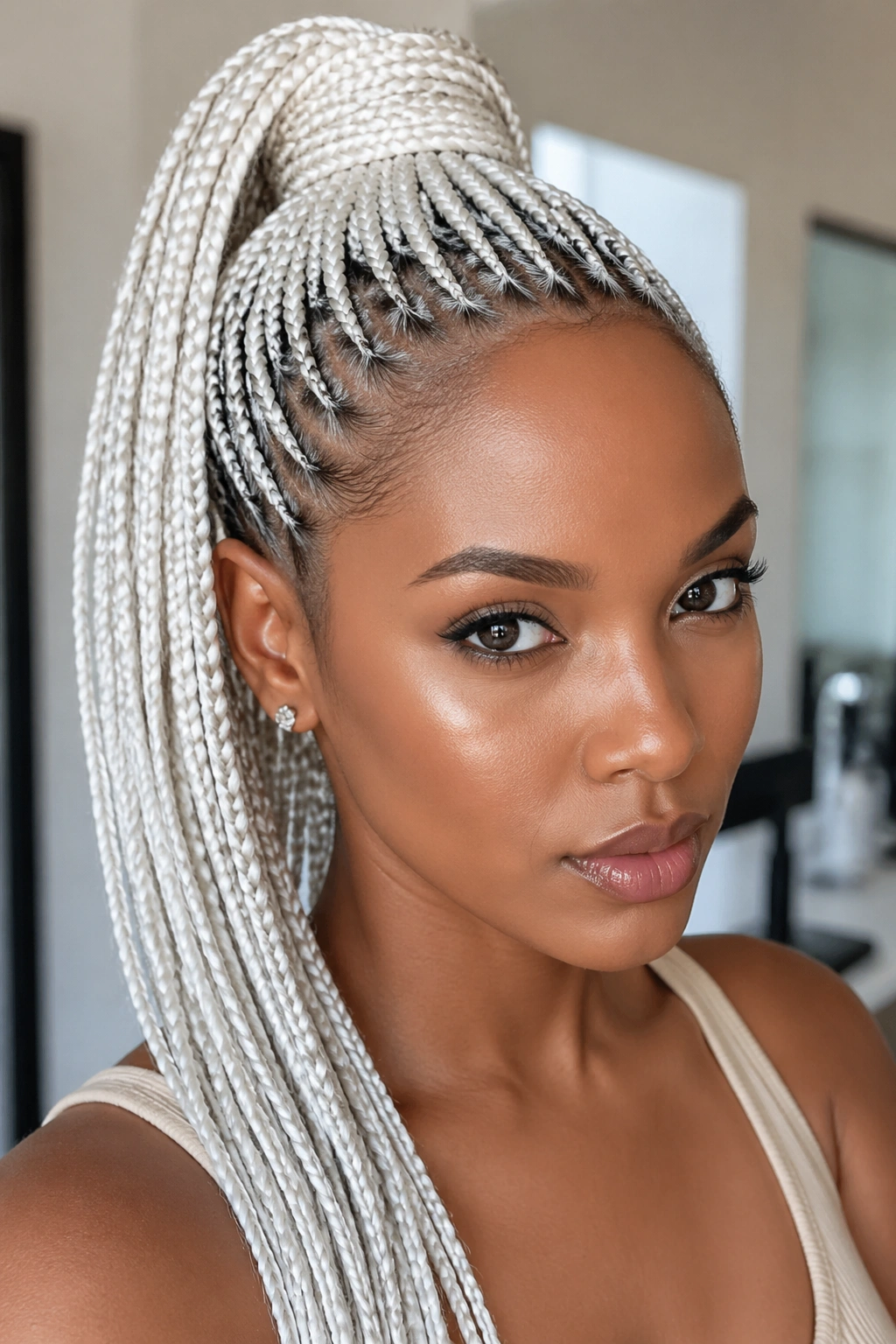
A high ponytail does what it always does: it lifts the face, tightens the silhouette, and turns the braid length into a moving detail rather than the entire event. With white box braids, that lift matters. It keeps the color from sitting flat around the shoulders and gives the style a more athletic, clean edge.
The ponytail also shows off scalp work. If your parts are neat, this style rewards you immediately. If they are not, there is no hiding place. White braids draw the eye up, and the base has to hold up under that kind of attention.
This version works well with extra-long braids because the ponytail becomes the statement. The tail swings. The base stays tidy. That split is what makes the look feel polished instead of heavy.
I’d keep the wrap around the base tight and smooth. A floppy ponytail holder ruins the line. Use a hair tie that grips without snatching, then wrap a small braid around the base if you want the finish to look intentional.
12. Blonde and White Goddess Box Braids with Curly Ends
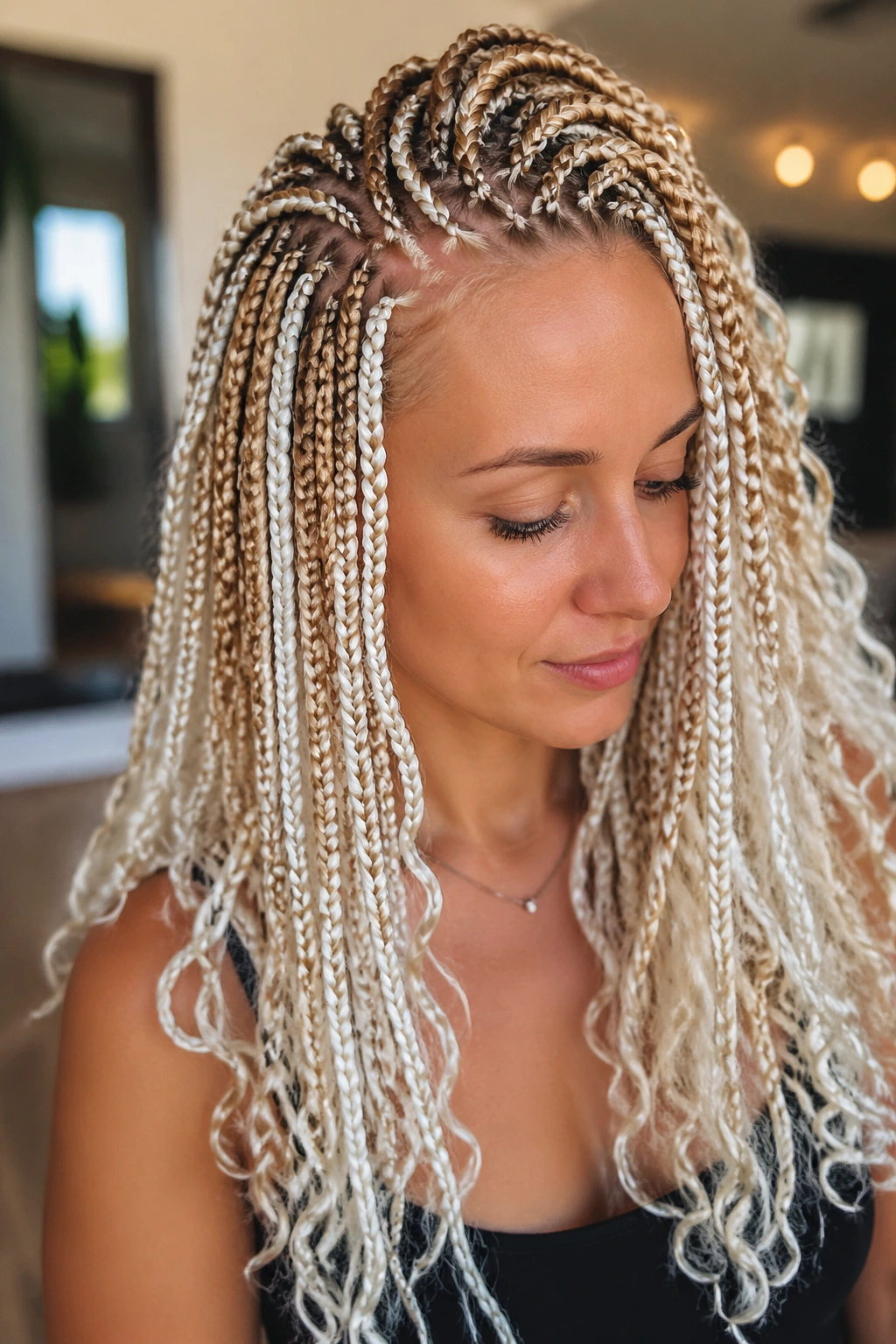
Goddess box braids sit somewhere between traditional braids and boho braids. The braided body stays clean, while the ends loosen into curls or waves. That mix works beautifully with blonde and white hair because the texture at the bottom softens the brightness at the top.
What Makes Them Different
Regular braids can look severe in white. Curly ends break that up. The curls add movement, and because the color is light, the texture reads more clearly than it would on dark hair. The style ends up feeling airy instead of stiff.
I prefer this version when the braids are medium length, somewhere around the chest or upper back. Too long, and the curls can tangle. Too short, and you lose the point of the finish. The sweet spot is a length that lets the curls fall without dragging on clothing.
Best Pairings
- A soft side part
- Lightweight braid mousse
- Small gold or pearl cuffs near the front
- A satin bonnet that leaves the curls from getting crushed overnight
Practical note: curly ends need finger detangling more often than sealed tips. If you hate touch-ups, keep the curl pieces limited to the outer layers.
13. Deep Side-Part Platinum Blend Box Braids
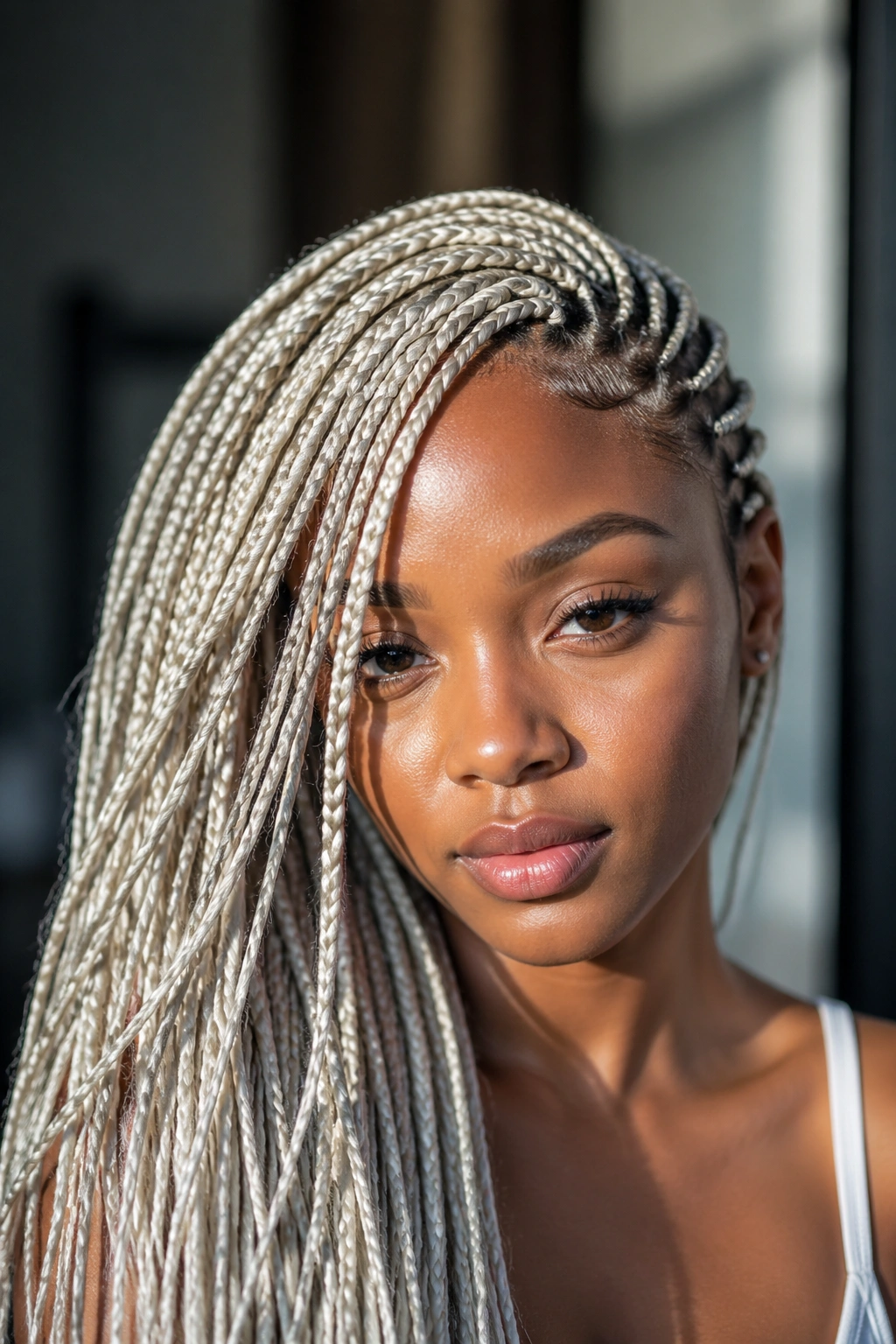
A deep side part changes the mood fast. Center parts feel clean and balanced. Deep side parts feel a little more dramatic, especially when the braids are platinum or nearly white with a soft blonde base underneath. The whole style leans elegant without becoming fussy.
The side part also helps when you want volume to fall in one direction. Platinum hair can look flat if it hangs evenly on both sides. Pushing it over gives the style shape. That shape matters more than people think on lighter installs because the eye can lose definition when every braid is the same shade.
I like this look with medium to small braids. Big braids can collapse into the side part and make the style feel heavy on one side. Smaller braids keep the line more fluid and let the part stay visible.
A little root shadow helps here too. Not dark roots, exactly. Just enough contrast to keep the scalp from blending into the bright strands. Without that, the style can flatten in photos and in person.
14. Micro Box Braids in Buttery Blonde
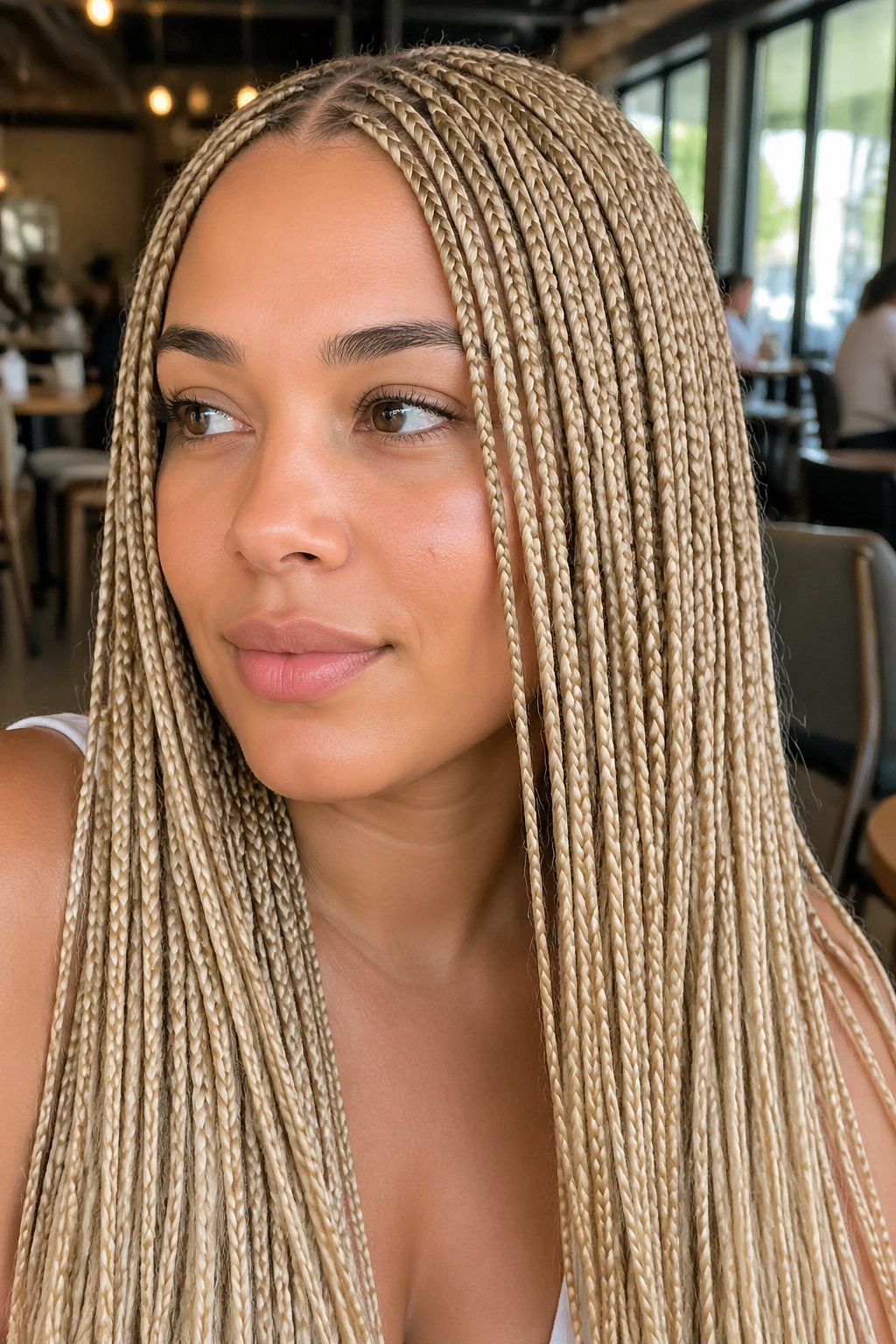
Micro braids ask for patience. They also give you a gorgeous amount of movement when they are done well. In buttery blonde, the tiny sections make the color read almost like woven thread. That is a different look from chunky braids. More delicate. Less loud. Much more time-consuming.
Why the Size Matters
Micro box braids are one of the best choices if you want blonde to feel soft rather than flashy. The smaller the braid, the more the shade blends across the head instead of sitting in bold blocks. It is a good match for people who like light color but do not want to feel like the hair wears them.
The install usually takes longer, and the scalp can feel tighter if the parts are too small or the braids are pulled too hard. That is not the style being “bad.” It is the price of the look. Better to know that upfront.
Who It Suits
- People who like movement over bulk
- Anyone who wants a long-lasting protective style
- Wearers who do not mind longer install time
- Folks who prefer a softer blonde rather than sharp platinum
My advice is blunt: if your hairline is sensitive, ask for a gentle tension install. Pretty braids are not worth a sore scalp for a week.
15. Braided Bob with Frosted White Ends
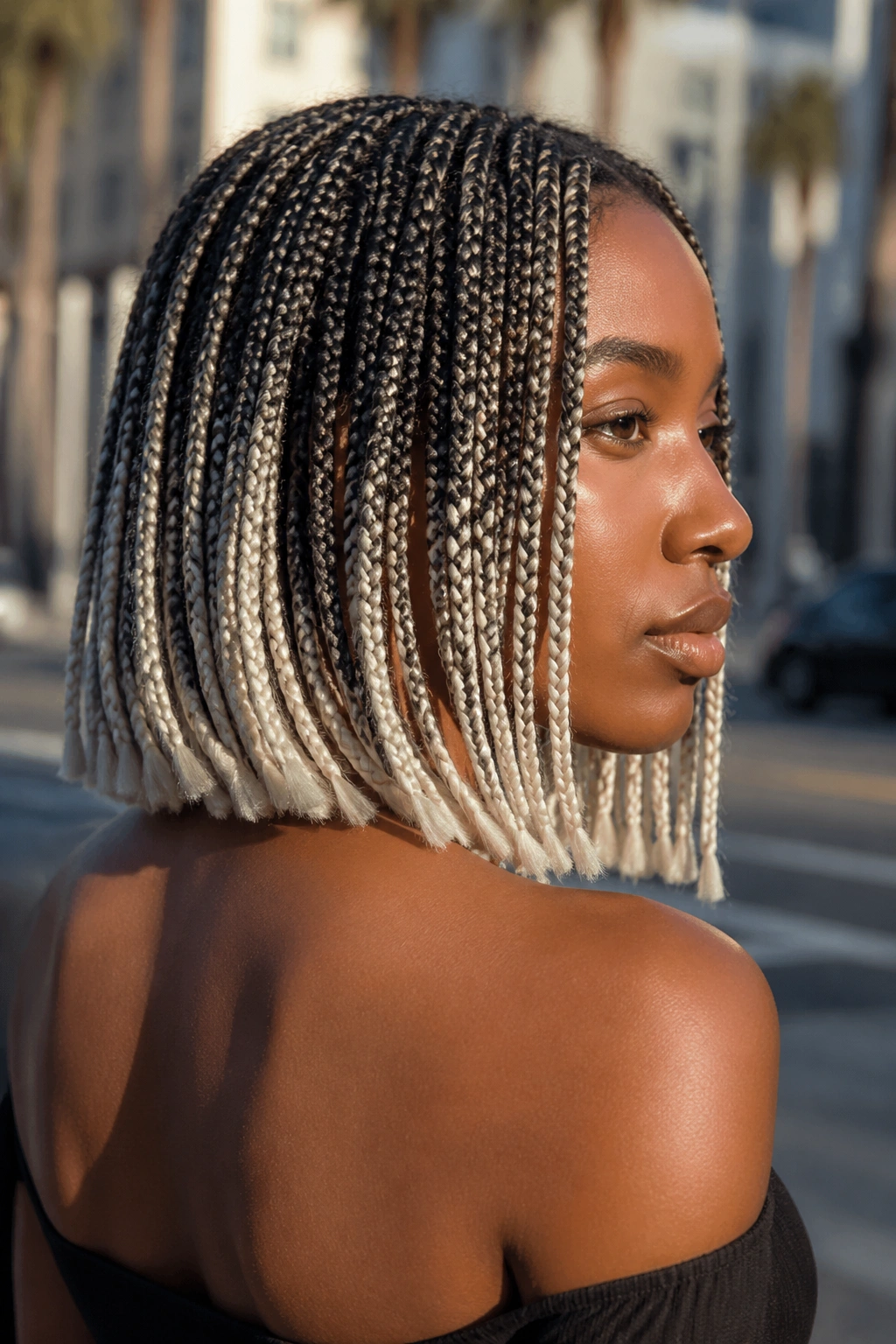
A braided bob is one of the smartest ways to wear blonde and white without fighting long hair all day. The shorter shape keeps the style light, while frosted white ends make the whole look feel finished. No extra weight. No dragging length. Just a crisp cut and a clean color finish.
The bob shape also does something useful around the neck and shoulders. It removes the constant rubbing that can rough up longer ends. That makes the white tips stay cleaner for longer, which matters because white shows wear quickly. A short braid set can look fresher on day ten than a long one does on day five.
This style shines when the ends are blunt and even. Jagged lengths can make the frosted tips look accidental. A good bob feels intentional from every side angle, which is harder to pull off than people expect.
If you want a tiny bit of edge, add a side part or tuck one side behind the ear. The asymmetry gives the short length more shape. Tiny move. Big difference.
16. Half-Up, Half-Down Blonde and White Box Braids
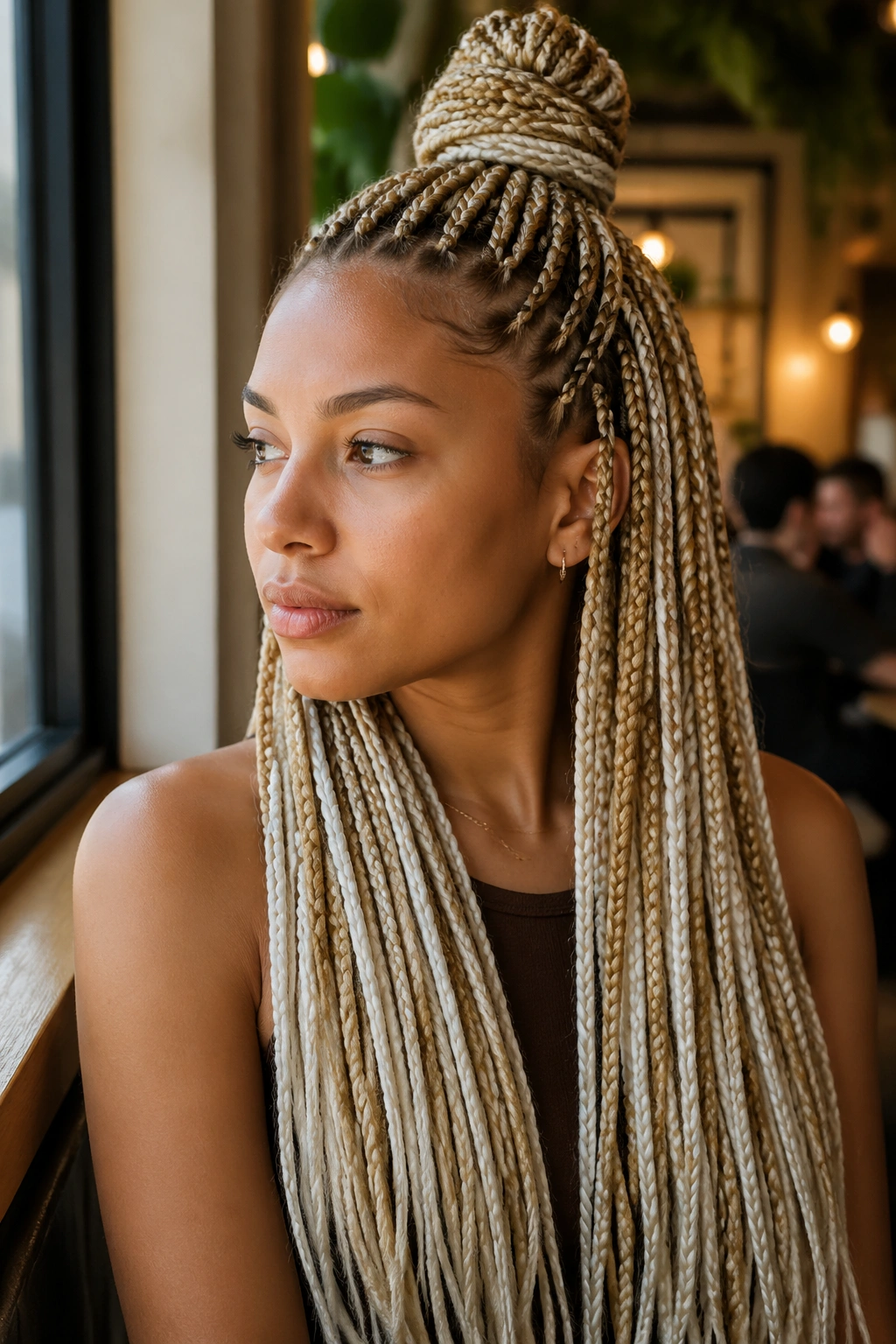
Half-up, half-down is the easiest styling trick in the book, and it works because it changes the shape without changing the braids themselves. With blonde and white box braids, it keeps the color story visible up top while letting the length fall loose in back.
The style is especially good when the top section includes the brightest braids. That lifts the face and keeps the white from feeling too heavy around the jaw. The lower half can stay more blonde, which gives the whole look a little depth instead of one flat color wall.
I’d keep the top knot or half-pony secure, not floppy. If the upper section slips, the whole style starts looking unfinished. A wrapped base, a clean tie, and a bit of mousse near the crown solve most of that.
- Best on medium to long braids
- Works with both knotless and traditional installs
- Good for showing off color placement at the front
- Easy to dress up with cuffs or a scarf
It is a dependable style. Sometimes that is exactly what you need.
17. Beaded Blonde-and-White Braids
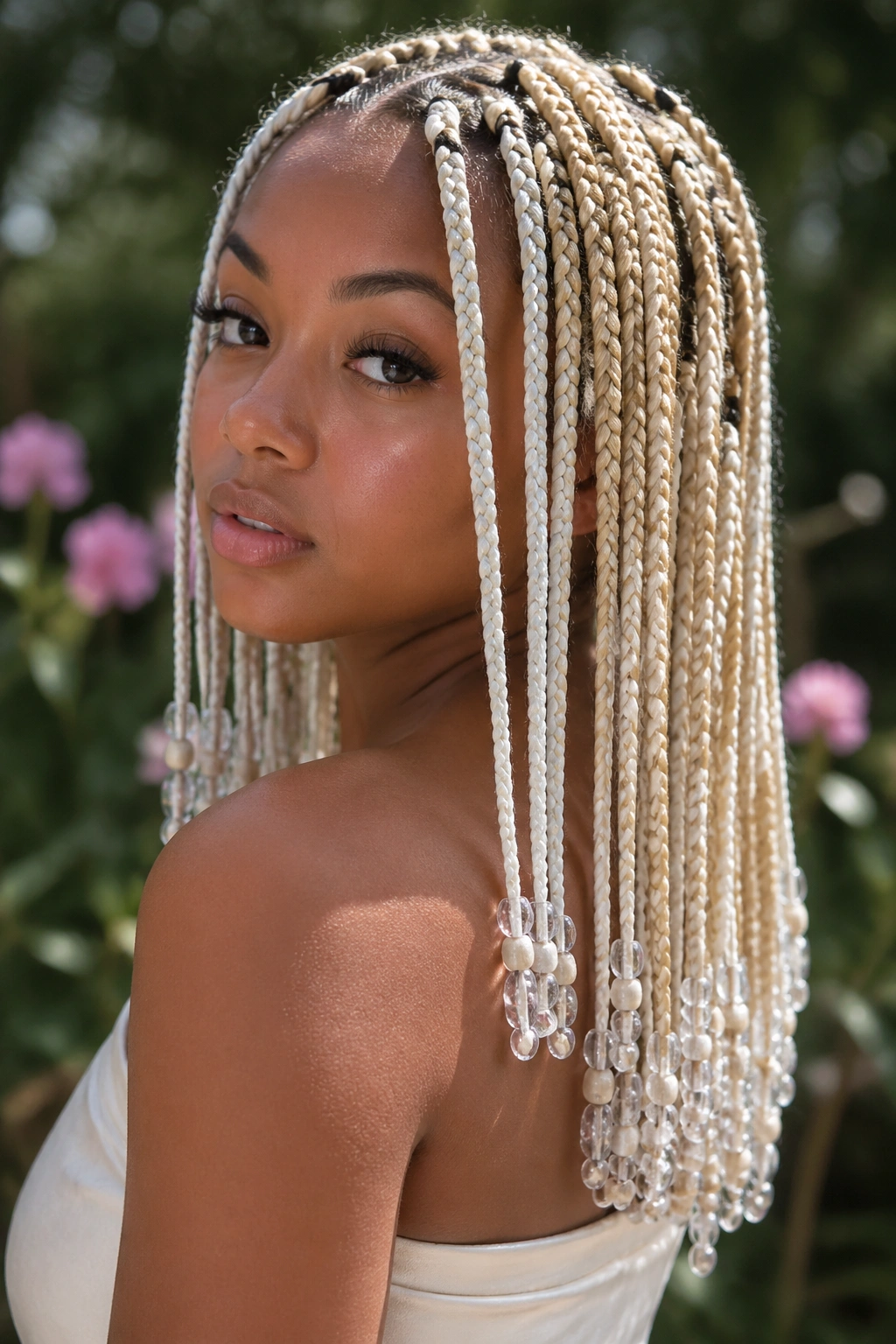
Beads change the sound and the silhouette of braids. They clack a little when you move, which is either charming or annoying depending on your mood. On blonde and white box braids, they can be beautiful if you keep the colors controlled. Too many colors in the beads, and the whole head starts fighting itself.
What to Use
Clear beads, pearly white beads, translucent gold beads, and small silver rings usually work best. They support the hair color instead of competing with it. Heavy wooden beads can look nice too, but they pull more weight on the ends. That matters if the braids are long.
I like this style on medium-size braids because the beads need enough braid thickness to sit properly. Tiny braids can look swallowed up by oversized beads. Giant braids can make the beads feel cramped. Medium is the sweet spot.
Styling Notes
- Place beads near the ends, not all the way up the braid.
- Use 2 to 4 beads per braid for a balanced look.
- Keep the braid ends sealed firmly so the beads do not slide off.
- Mix one bead color across the head instead of using five.
My opinion: this is best when the braids are the star and the beads are the punctuation.
18. Root-Shadow Blonde Box Braids with White Ends
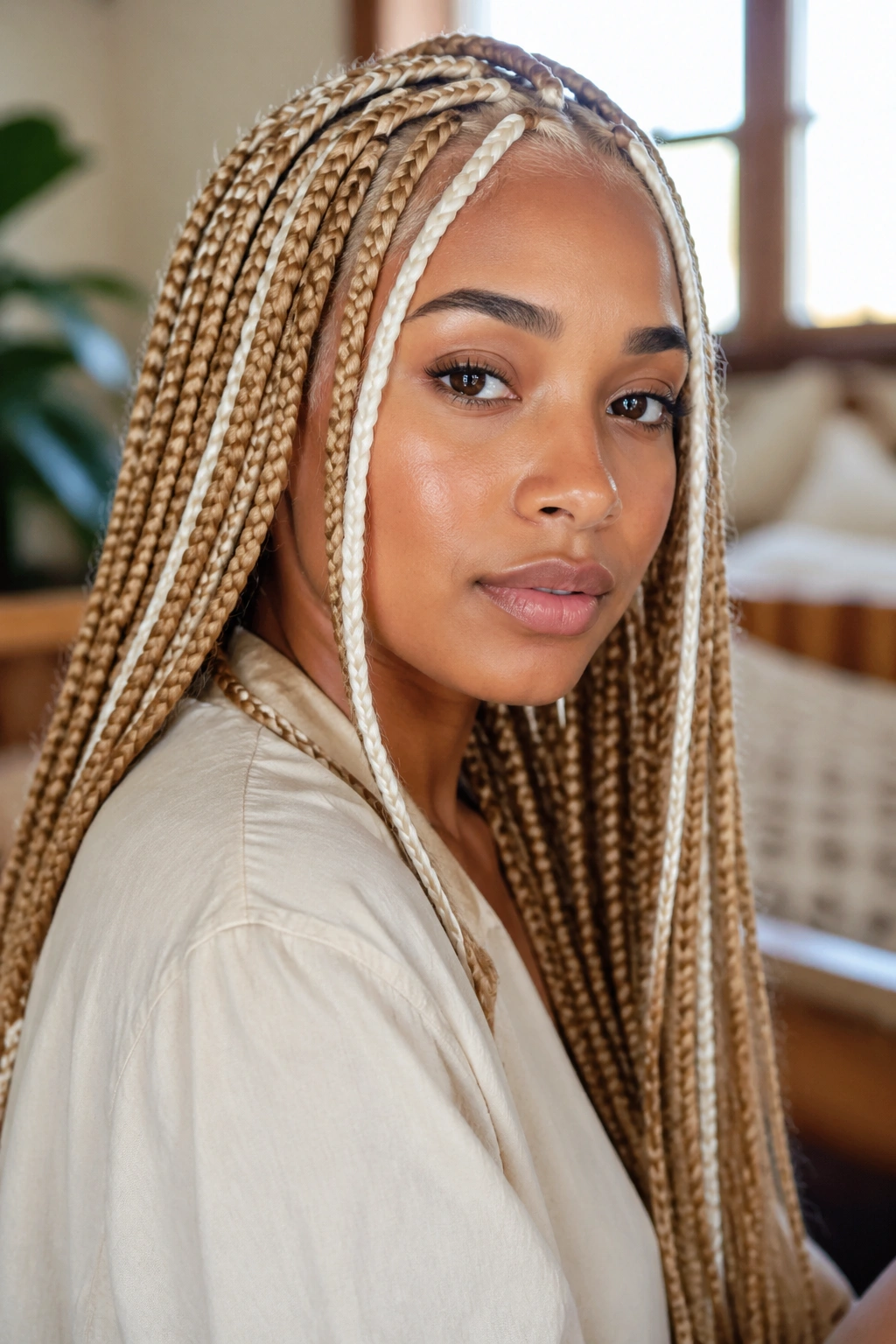
If you want a blonde-and-white style that grows out a little more gracefully, root-shadow braids are the safest bet. The darker or deeper root area softens the transition from scalp to braid, and the white ends keep the look bright where it matters most. That combination buys you a cleaner grow-out and a calmer overall finish.
This is the version I would recommend to anyone who likes light hair but hates how fast pure white starts to look rough. The shadow at the base hides some of the wear that shows up after a couple of weeks. The white ends still give you that frosted effect, but they are placed where the hair can shine instead of frizzing around the face.
It works on almost every braid length, though shoulder-length through mid-back tends to look the most balanced. Too long and the white tips can get thin. Too short and the shadow-to-bright transition barely gets a chance to show.
A plain middle part keeps it modern. A soft side part makes it gentler. Either way, this is the version I’d pick if you want blonde and white box braids that feel polished, practical, and easy to wear without constant fuss.