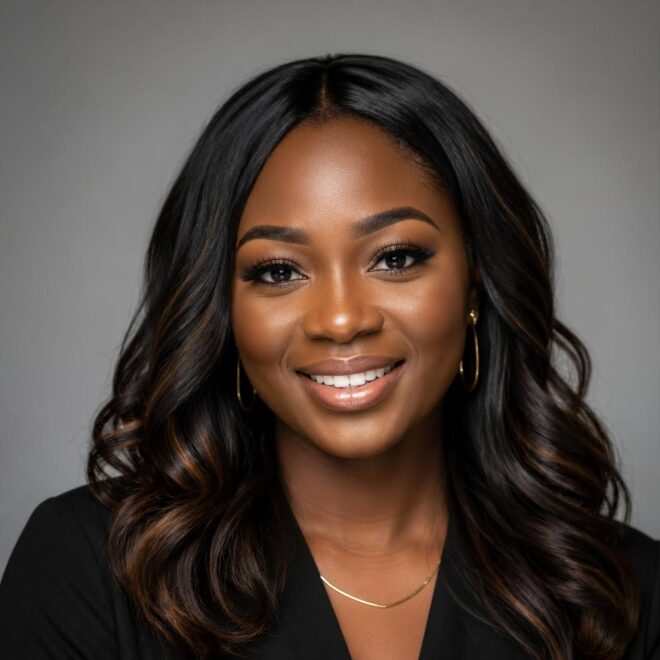


A mohawk afro is a statement before it’s a hairstyle. You don’t wear one by accident. You wear it because you want the silhouette — that clean strip of height running down the center of your head, flanked by contrast on either side — and you’re willing to commit to the energy it brings. And the energy is real. Walk into a room with a proper mohawk afro and you change the air in the room.
This roundup of 23 mohawk afro styles for bold women covers every version I’ve seen work well on natural Black hair, from subtle, grown-up interpretations you could wear to a client meeting, to dramatic, high-crowned showpieces for stage and performance. Some use faux shaving to create the illusion of a mohawk without a single inch cut. Some involve real close cuts on the sides. Some keep the sides as cornrows or twists. All of them center on that central strip — the heart of the style.
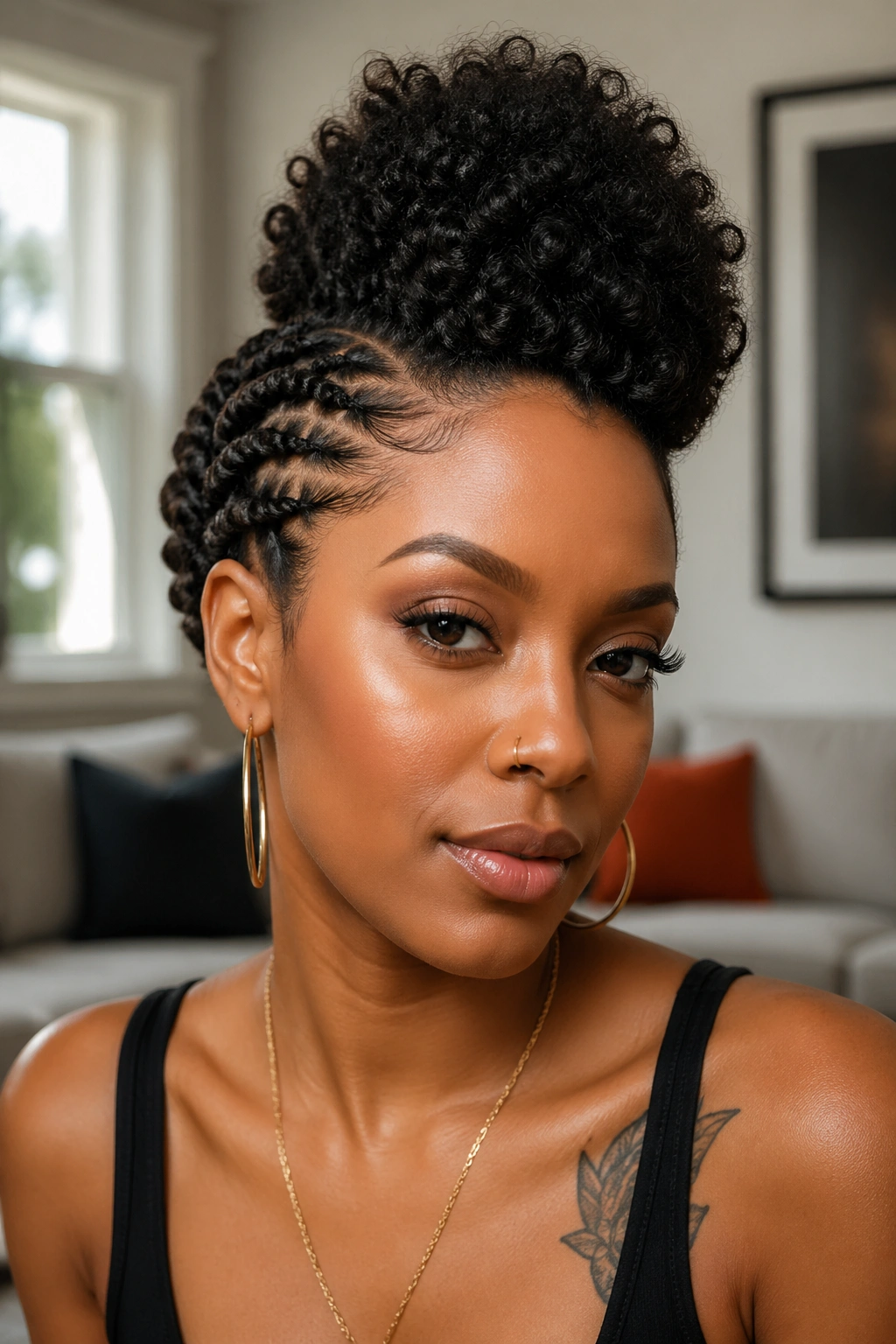
Before we get into the specific looks, a quick honest note. Mohawk afros are demanding. They need good shape, good volume, and consistent upkeep to stay looking sharp. A week of ignoring your mohawk turns it into a floppy mess. If you’re not prepared to touch it up most mornings, pick a different style. But if you are? There’s nothing that compares.
I’ll be direct about which styles require a barber, which you can do at home, and which work better for short versus longer afros. No point in selling you a look that won’t work with your hair length or lifestyle.
What Defines a Mohawk Afro
At its core, a mohawk afro is a central strip of afro hair running from forehead to nape, with the sides of the head treated differently — shorter, shaved, braided flat, or twisted tight. The contrast between the voluminous center and the compressed or absent sides creates the signature silhouette.
The proportions change the mood entirely. A narrow center strip with shaved sides reads punk and aggressive. A wide center strip with cornrowed sides reads elegant and architectural. Same concept, completely different vibes.
Understanding the proportion lever is how you pick the right mohawk for you. Don’t just copy a photo. Think about how wide the strip is, how tall the afro rises, and what’s happening on the sides — because those three factors define how the style will feel on your head.
Tools and Products You Actually Need
You need a pick. Not the cheap plastic ones from the drugstore — a solid metal or wooden pick with rounded tines that lift your hair without tearing. The difference between a good pick and a bad one is the difference between a clean mohawk and a frizzy one.
A blow dryer with a comb attachment for stretching the center strip when you need extra height. A light-hold gel for the edges and the borders between center and sides. A heavier-hold gel or butter for the central strip if you want it sculpted. A bristle brush for smoothing down the sides.
Clippers are optional. If you’re doing a shaved-side mohawk, you’ll need them — or a regular barber appointment. Clippers aren’t hard to learn, but the first few attempts take longer than you’d think, and uneven sides are more visible than you’d think.
Prepping Your Hair for Maximum Height
Mohawk afros live and die by volume on top. If your center strip is flat or shrunken, the whole style fails. Stretching is non-negotiable for anything other than the shortest looks.
Banding, African threading, or stretching under a bonnet with heat all work. For the tallest mohawk styles, I recommend a blow-dried stretch — not flat ironed, just dried with tension from a comb attachment. This preserves your natural texture while adding the height you need.
Moisturize the night before, not the morning of. Hair that’s freshly moisturized is too soft and heavy to hold height. Hair that was moisturized yesterday and sealed with oil sits better in a mohawk shape.
Shaving Versus Faux-Hawk Versus Braid-Down Sides
You have three main ways to create the mohawk silhouette: actually shave the sides, use braids or twists to compress the sides flat against the scalp (the faux-hawk method), or slick the sides down with product and clips. Each has tradeoffs.
Shaving is permanent until it grows back. The look is sharpest and the maintenance easiest — you just touch up the sides every few weeks. But you lose the flexibility to wear other styles during the grow-out, and the first weeks of regrowth can feel awkward.
Braiding or twisting the sides keeps your options open. Take down the braids and you have a full head of hair again. The downside is more daily effort to keep everything tight.
Slicking down with gel is the fastest and most reversible method. No braiding, no shaving. But it doesn’t last — by midday, the sides start to puff and the mohawk shape softens.
1. The Classic High Mohawk With Shaved Sides
The purest form of the style. Sides clipped close or shaved, center strip stretched tall and proud, usually four to six inches wide. The silhouette looks like a cresting wave frozen in motion.
Why It Works
- Nothing distracts from the central afro
- Maintenance is minimal once the sides are established
- Works on any length of center hair
- The shape is instantly recognizable
Pro tip: Ask your barber for a slight taper rather than a clean shave on the sides. A taper grows out more gracefully and looks less severe in everyday settings.
2. The Cornrow-Sided Mohawk
Instead of shaving, the sides get six to ten tight cornrows running from the hairline back to the ears. The center strip rises as a full afro. This version is entirely reversible — take the cornrows down, and you have a regular afro again.
The cornrows on the sides should be consistent in size and tight against the scalp. Loose or uneven cornrows ruin the compressed look you’re trying to achieve. This is one of the cases where precision matters.
Because no hair is cut, this mohawk is the best choice for anyone who wants the look but isn’t ready to commit. You can rotate in and out as your mood changes.
3. The Twist-Sided Mohawk
Same concept as cornrow sides, softer execution. Two-strand twists along each side instead of braids. The twists naturally have more volume than cornrows, so the compression isn’t as dramatic, but the silhouette still reads clearly as a mohawk.
This version is kinder to your scalp than tight cornrows and faster to install. Most women can twist their own sides in under thirty minutes once they’ve done it a few times.
The twist pattern on the sides also catches light beautifully, adding visual texture that flat cornrows don’t have. Think of it as the grown-up, softer cousin of the standard faux-hawk.
4. The Short Cropped Mohawk
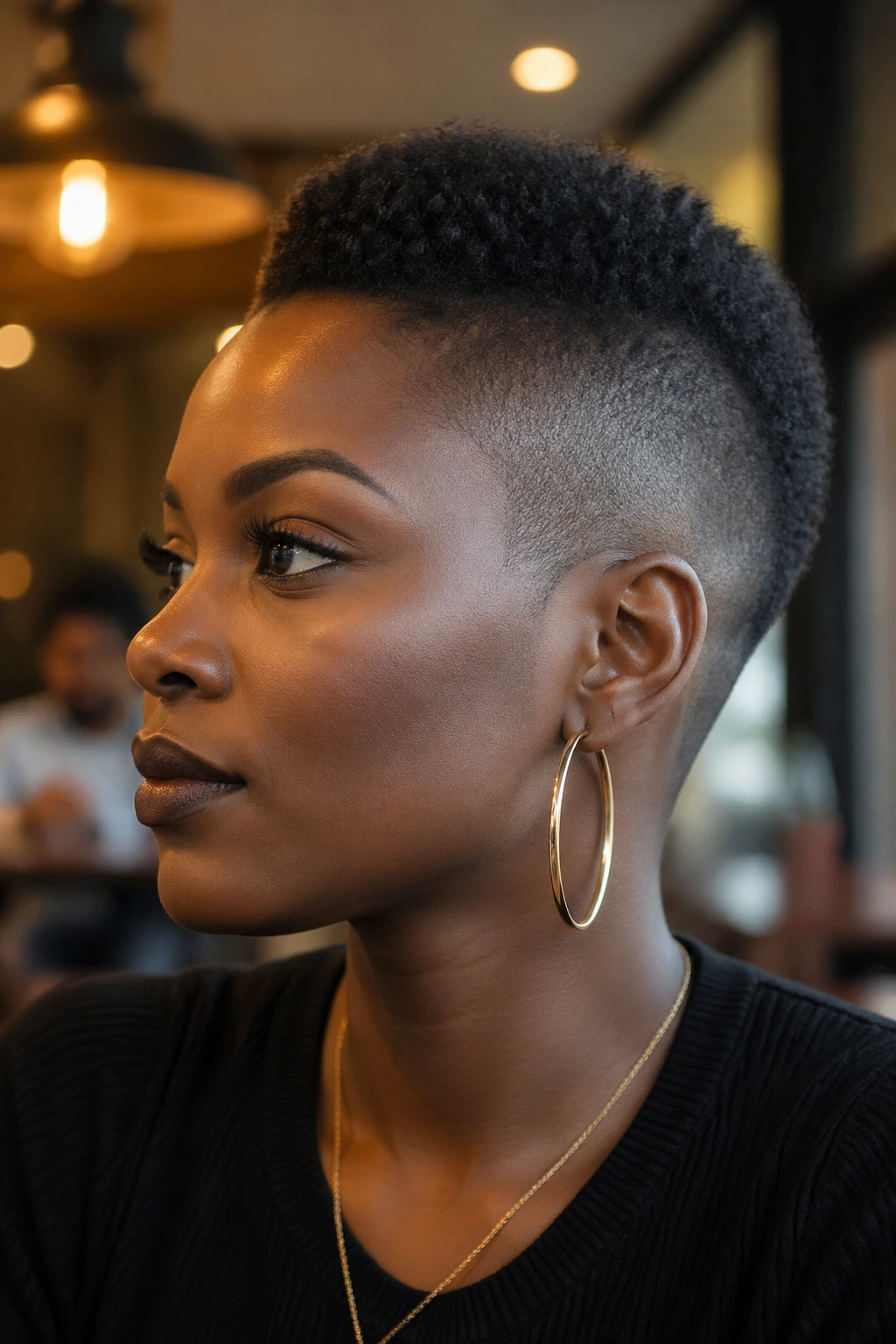
Can a mohawk work on hair that’s only two inches long? Yes — and it might surprise you how striking it looks. The center strip is kept deliberately short, almost brush-cut in style, and the sides are shaved close or kept slightly longer than the center for a reverse taper.
The contrast here isn’t about height. It’s about density and definition. A dense short center against nearly-bare sides creates the mohawk silhouette without needing any length at all.
How to Use It
Use a small amount of gel or leave-in to define the edges of the center strip. Finger-style the strip itself to lift the coils slightly. It’s more about shape than volume, so keep product light.
This works beautifully on women who prefer very short hair and want to push the look further without growing anything out.
5. The Curly Mohawk With Defined Coils
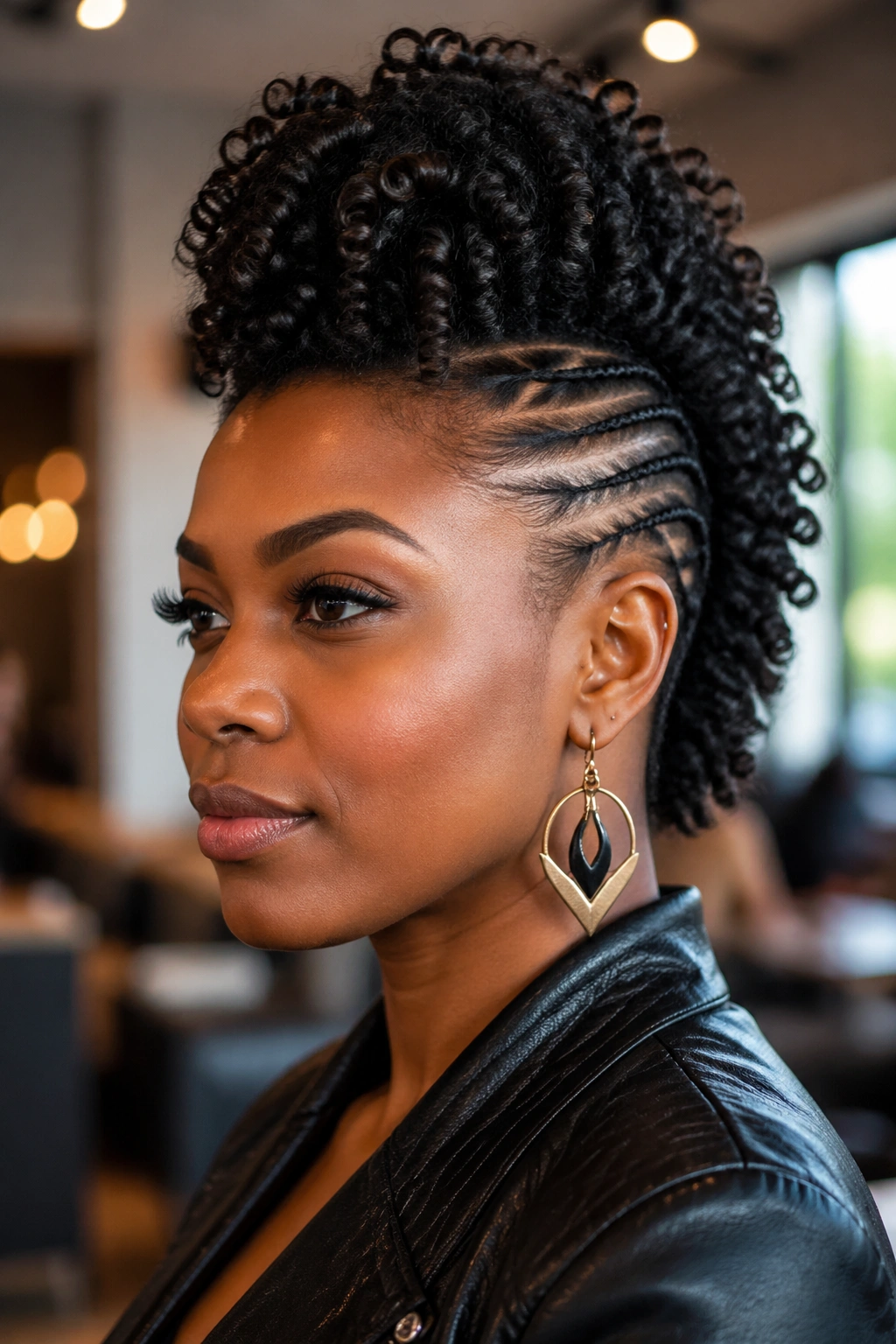
A taller center strip of hair that’s been defined with twist-outs or finger coils. The individual curls are visible and defined rather than blending into a fluffy mass. The sides are cornrowed flat or shaved close.
The key detail is the curl definition. A well-defined twist-out on top shows off the coil pattern and elevates the whole style from “afro mohawk” to “sculpted mohawk.” It looks intentional at every level.
Set the twist-out the night before installation. Morning-of styling of the center strip should be limited to refreshing and shaping, not creating the curl pattern from scratch.
6. The Mohawk With Colored Center Strip
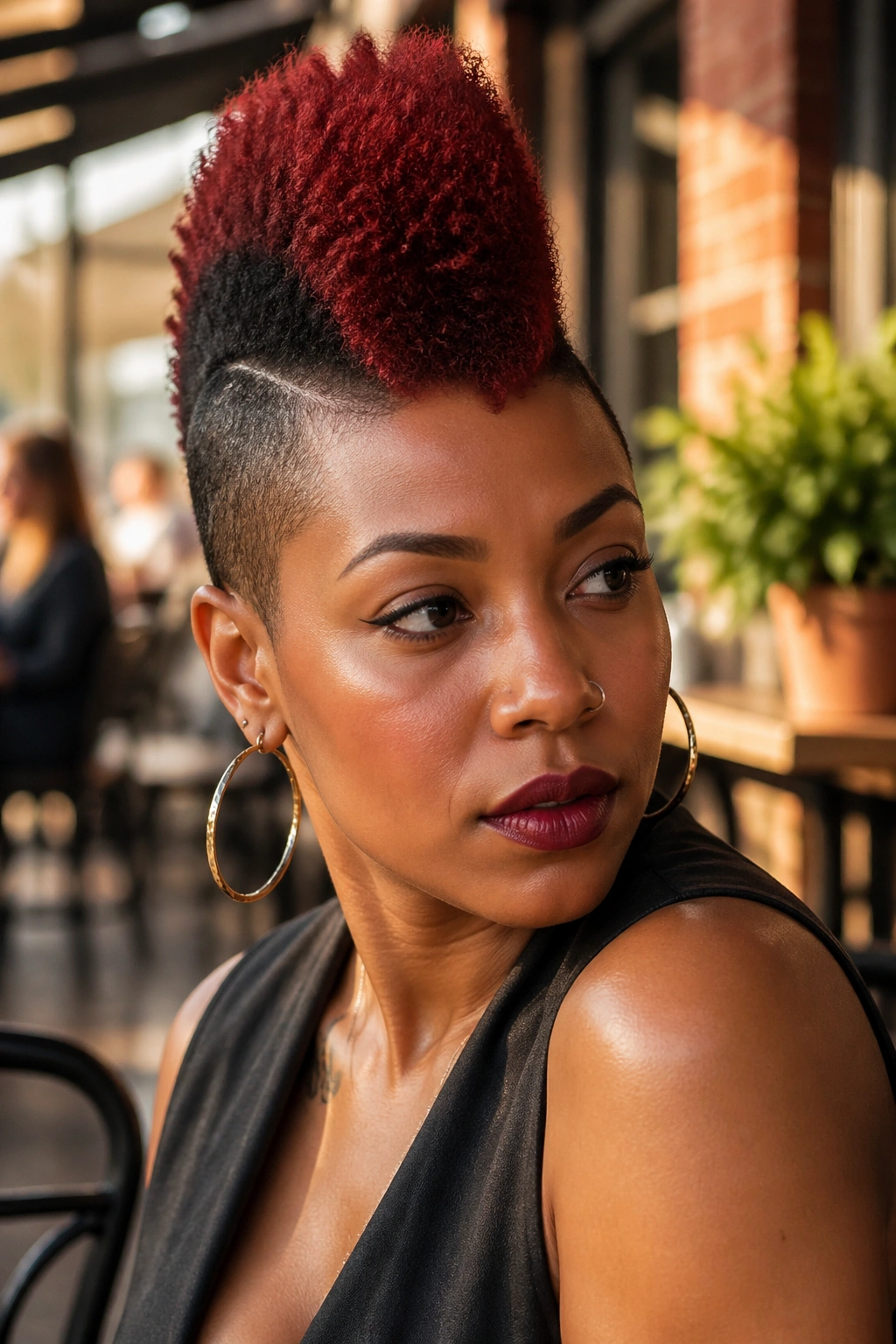
For the bold bold. The center strip is dyed a contrasting color — burgundy, copper, honey blonde, purple, whatever — while the sides (cornrowed or shaved) remain natural. The color amplifies the already-dramatic silhouette into something unmissable.
Bleach and color on natural hair require real care. Use a trusted stylist, deep condition obsessively, and don’t skip the protein treatments. Color-treated natural hair is thirstier and more fragile than virgin hair, and the central strip is doing the most work visually, so you can’t afford for it to look dry or damaged.
The color doesn’t have to be wild. A warm caramel or auburn works just as well as neon for making the strip stand out from the sides.
7. The Faux-Hawk With a Low Center Strip
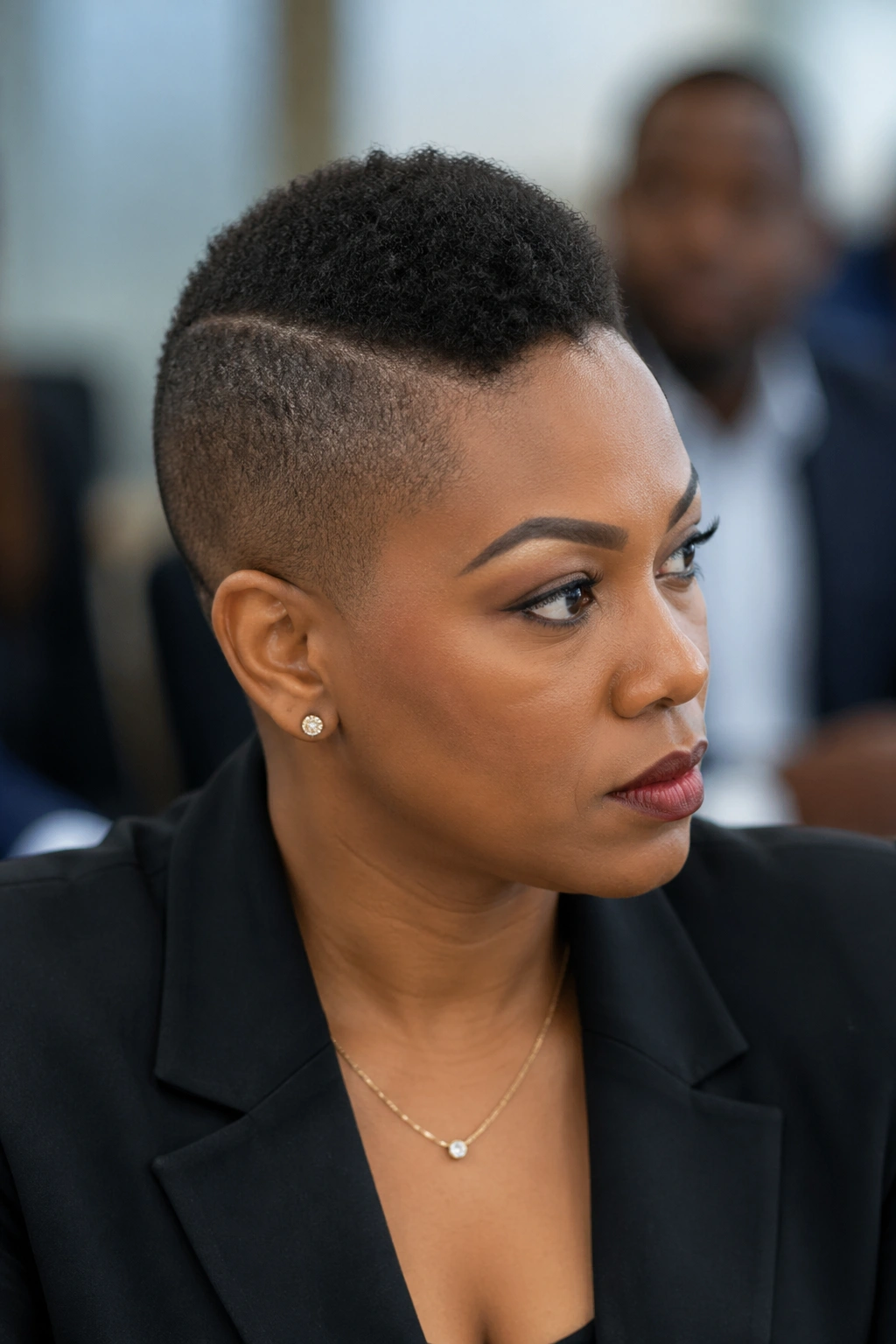
Not every mohawk has to tower. A low faux-hawk keeps the center strip at a modest height — maybe two to three inches — while the sides stay tightly cornrowed or twisted. The overall silhouette reads as a mohawk but feels understated.
This is the version I wear to meetings. It’s identifiable as a mohawk, which gives it character, but it doesn’t dominate the room the way a tall one does. For anyone who wants the style without the full commitment, start here.
The trick to the low version is keeping the sides extra tight. If the sides poof, the center strip gets lost and the whole look becomes just a regular afro.
8. The Cornrow-Down Mohawk With a Puff
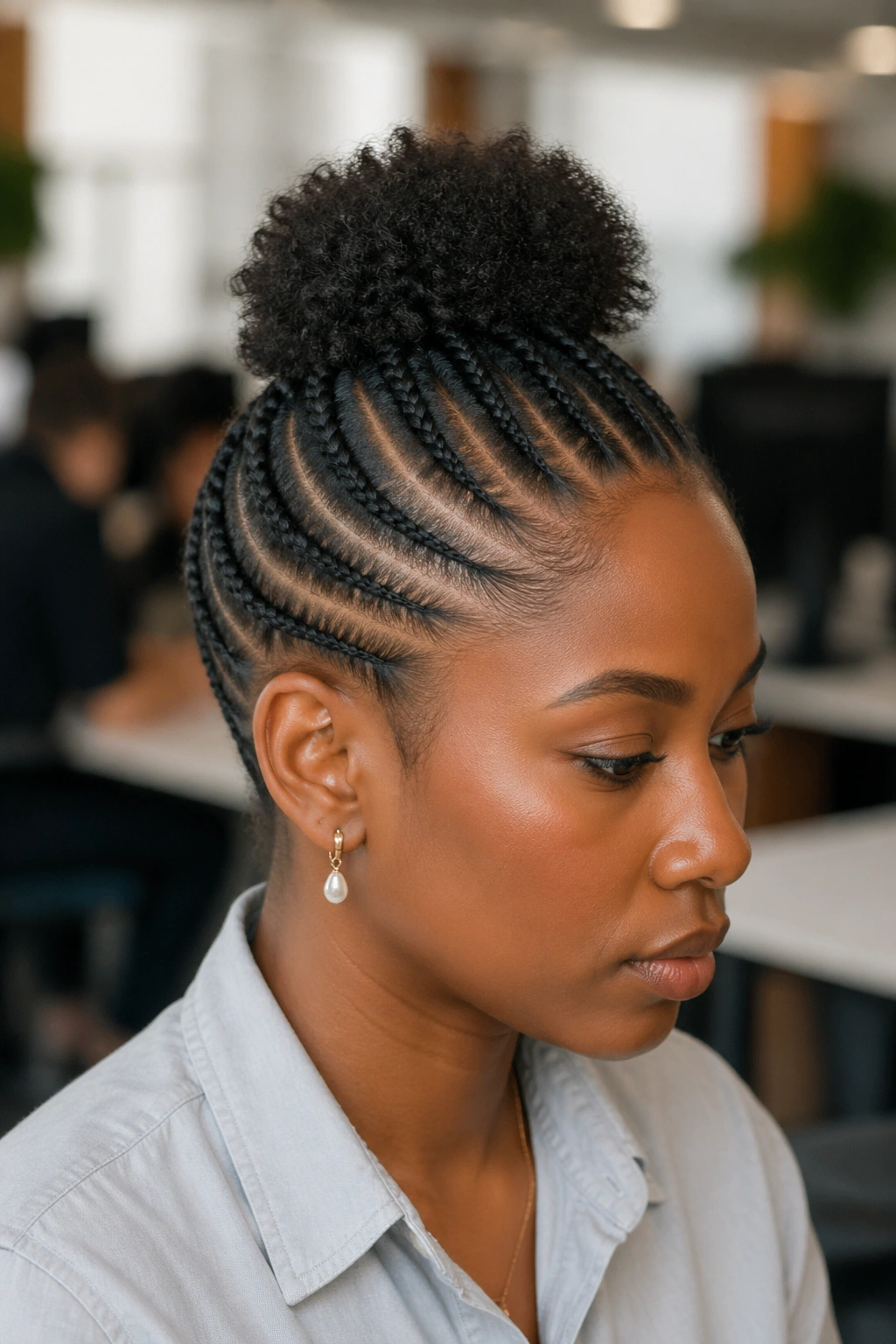
Cornrows run from the hairline back along the sides, meeting at the crown. The crown section gathers into a rounded afro puff. The puff is the mohawk’s destination — all the cornrows lead to it.
This is the most practical mohawk style. It’s workplace-friendly, stays in place all day, and doesn’t require any cutting or shaving. I’d call it the “starter mohawk” for anyone who wants to dip into the style family without going bold.
The puff should sit slightly back from center for the most flattering angle. A puff pulled dead-center on top can look cartoonish; a puff at the back of the crown looks sophisticated.
9. The Mohawk With Shaved Designs on the Sides
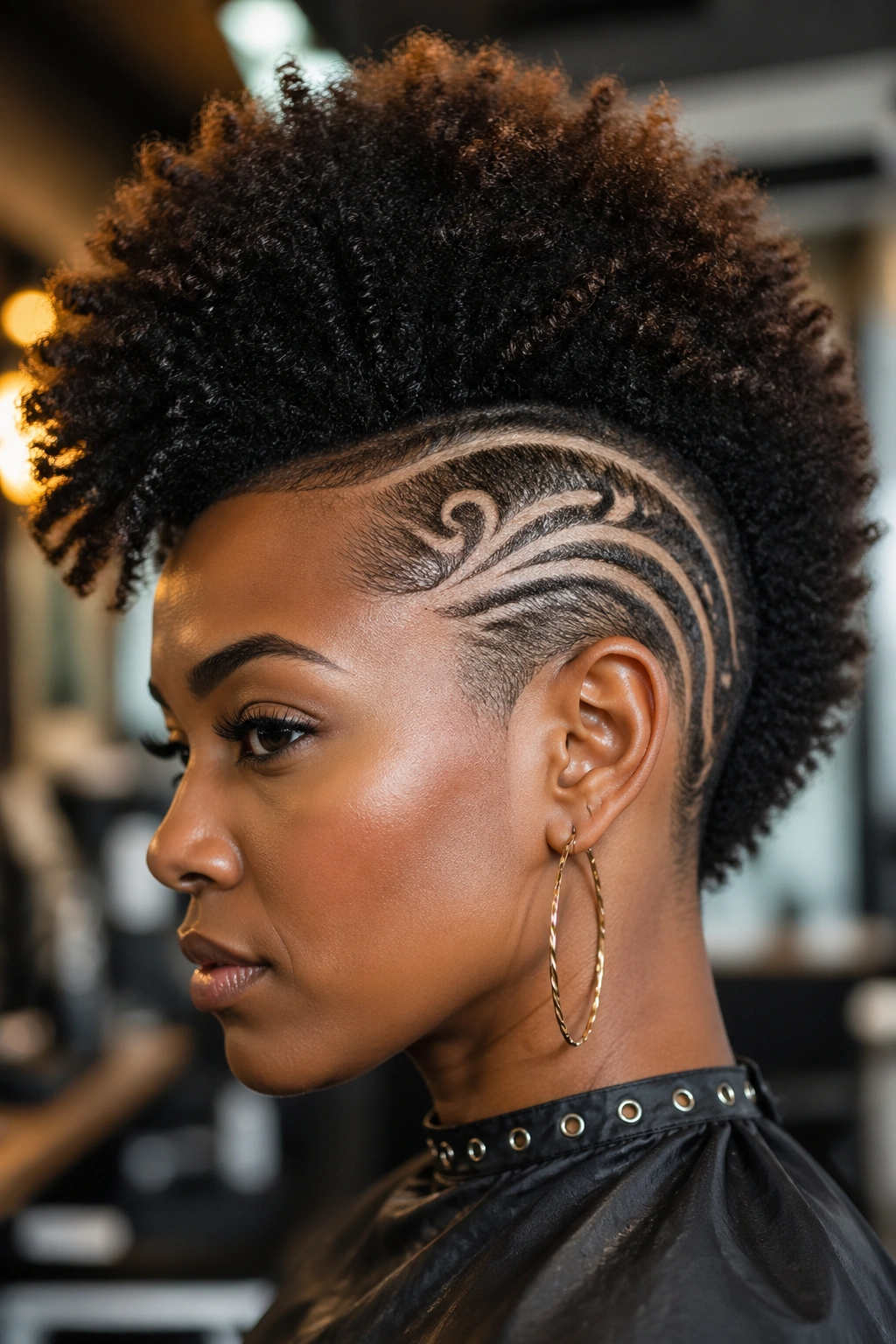
Beyond just a clean shave, the sides feature decorative designs cut into the close-shaven hair — swirls, lines, star shapes, geometric patterns. The center strip rises as a full afro, and the decorative sides become a secondary focal point.
This is barber work. You need someone skilled with clippers and an artistic hand. A good design artist can take forty-five minutes or more on each side, and the result is worth it. Bad designs look scrappy.
Designs grow out over two to three weeks. Plan for touch-ups if you want the pattern to stay crisp for longer than that.
10. The Asymmetric Mohawk
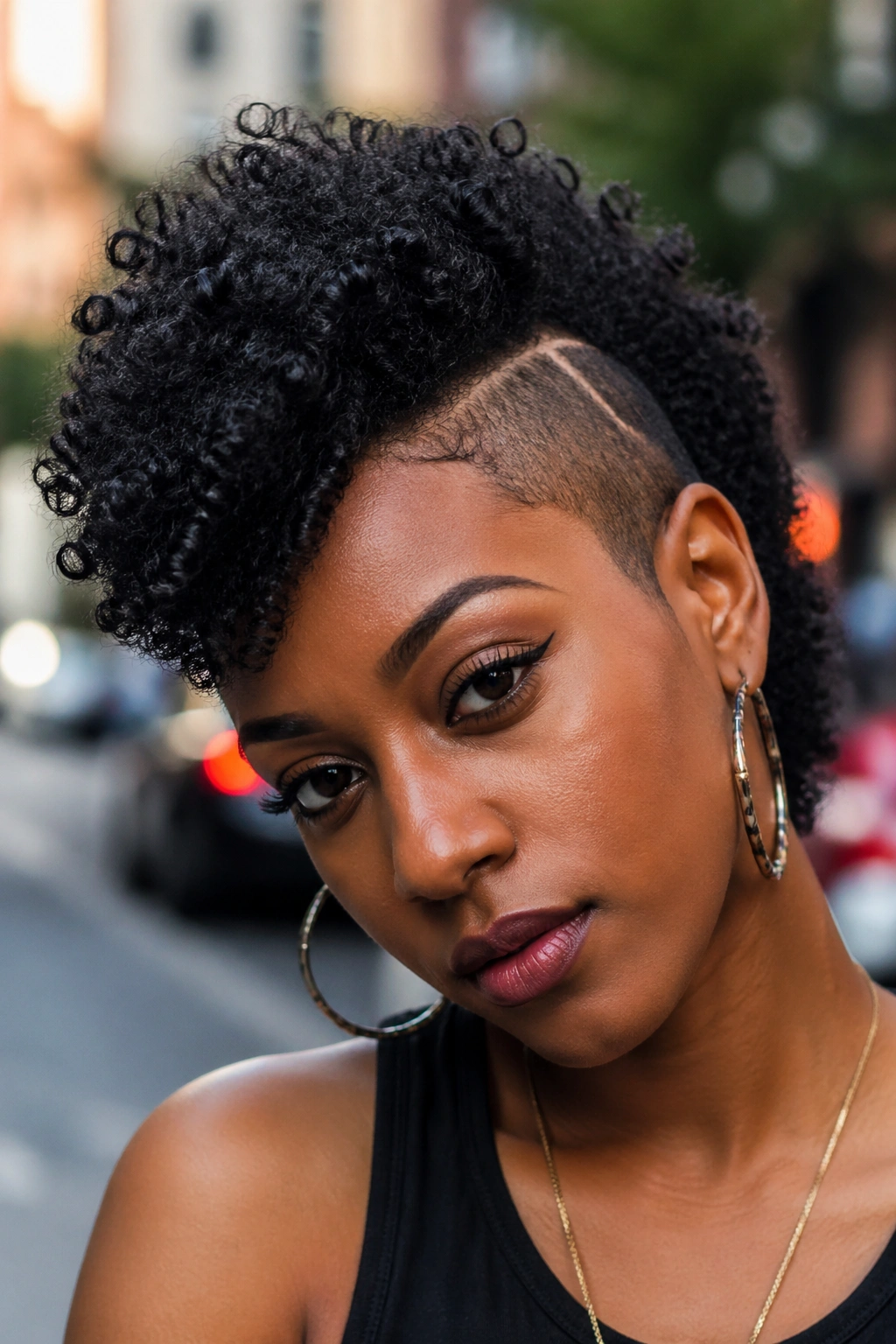
Rather than running straight down the center, the mohawk strip curves or angles toward one side of the head. The asymmetry breaks the standard silhouette and adds edge and modernity.
What Makes It Different
- The strip is not centered — it favors one side
- One side of the head has more exposed scalp than the other
- The face appears tilted or framed at an angle
- It photographs particularly well from the heavier side
The curve can be subtle or extreme. I prefer a subtle curve — following the natural line from temple to opposite nape — because it looks intentional without feeling forced. Extreme angles can cross into costume territory.
11. The Short Mohawk With Wavy Top
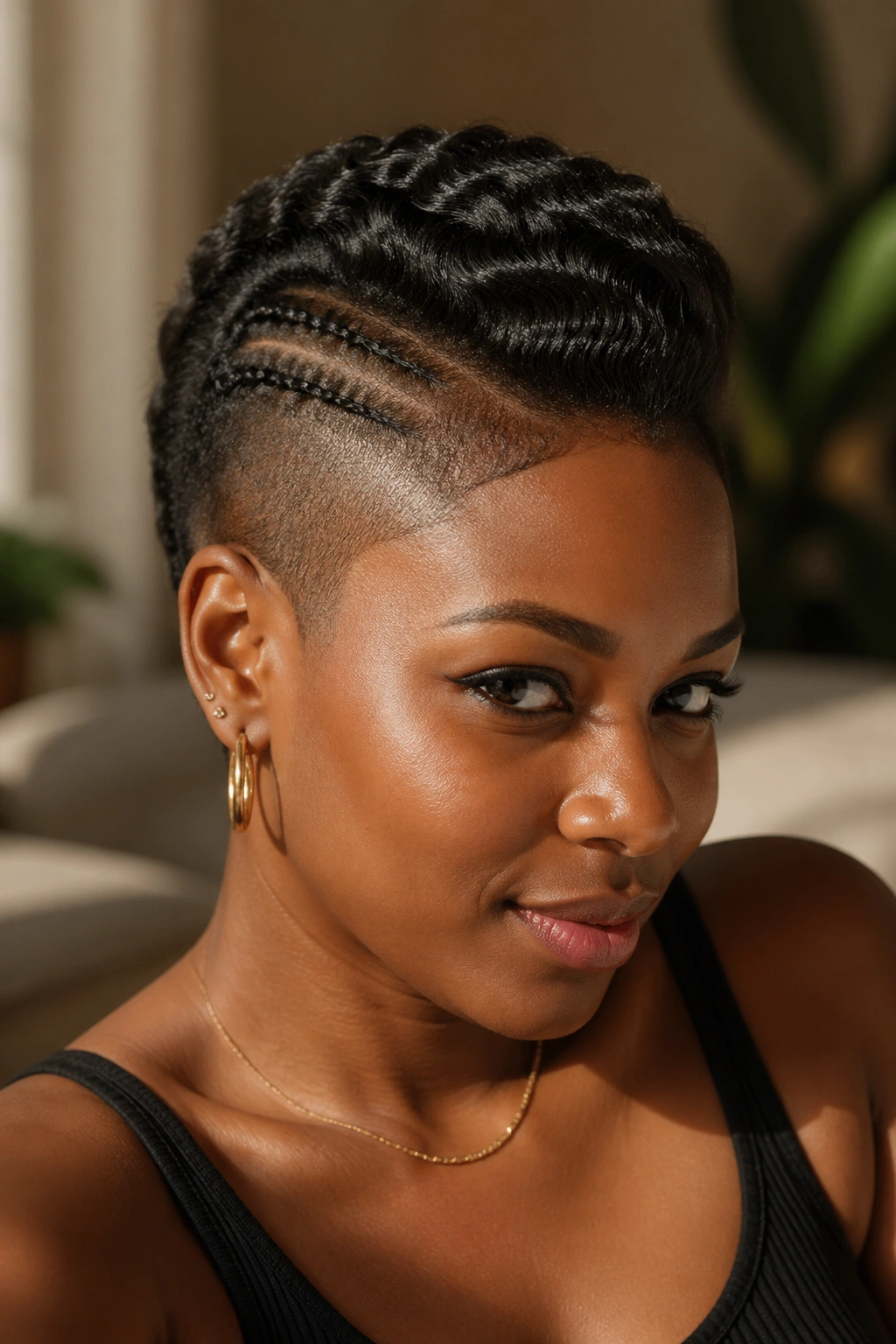
The center strip is kept short — about three inches — and styled into defined waves rather than an upright afro. The sides are cornrowed or lightly tapered. The waves on top give the style movement and softness while still maintaining the mohawk silhouette.
Think of it as a mohawk with personality. The waves add a playful quality that the classic upright version doesn’t have, and the shorter height makes it easier to wear in everyday settings.
Achieve the waves with flat twists set overnight, then unraveled and fluffed in the morning. A small amount of gel along the wave pattern holds the shape.
12. The Braided Mohawk Strip
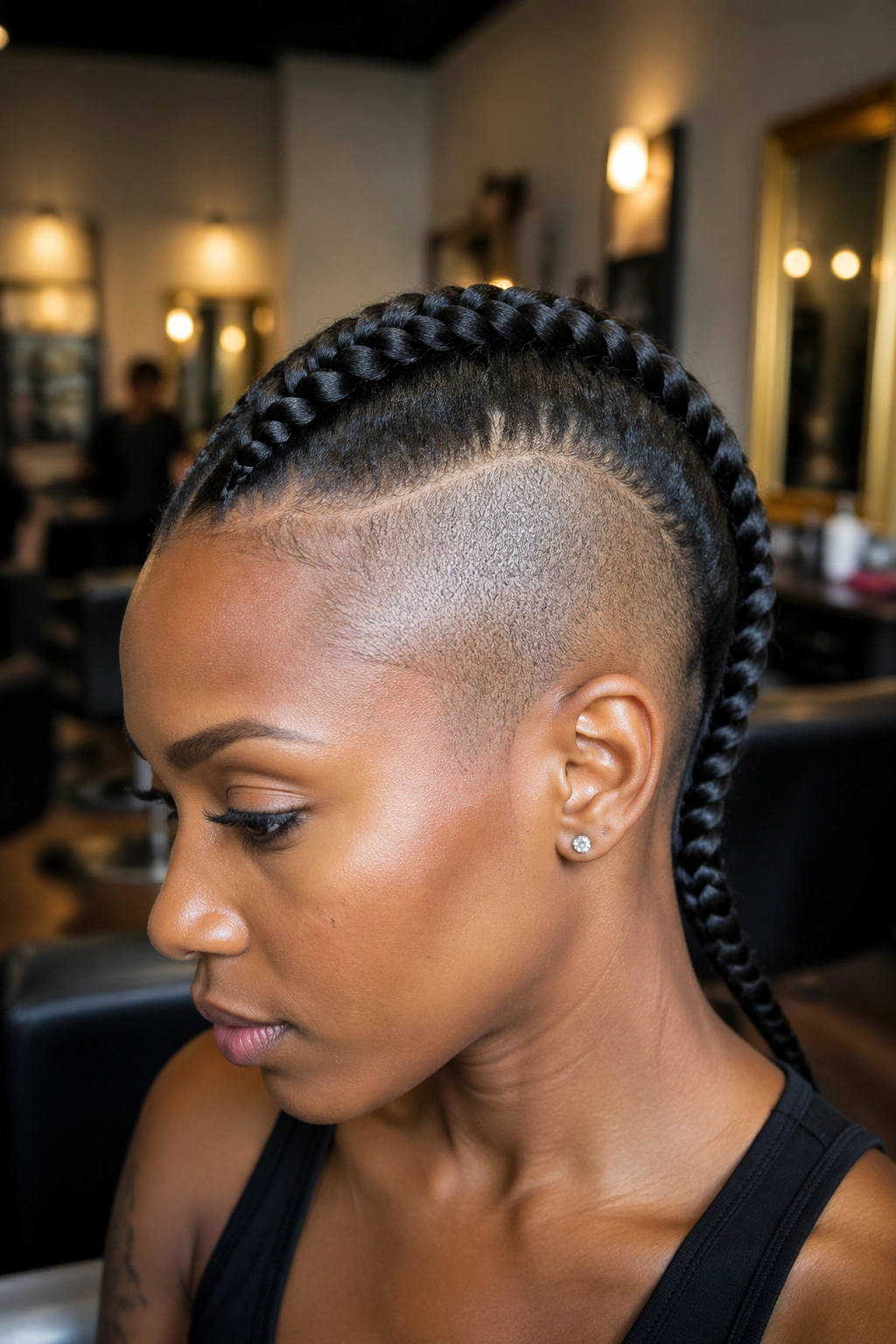
Rather than a loose afro on top, the center strip is itself braided into a single thick cornrow running from forehead to nape. The sides can be shaved, tapered, or cornrowed. The braided strip replaces the traditional afro with a structural plait.
This reads cleaner and more polished than a loose afro mohawk. It’s also dramatically longer-lasting — a well-done center cornrow stays sharp for five or six days with minimal touch-up.
The braid can be thick and single, or two to three parallel braids running down the center. Single reads bolder. Multiple reads softer.
13. The Twist-Out Mohawk With Volume
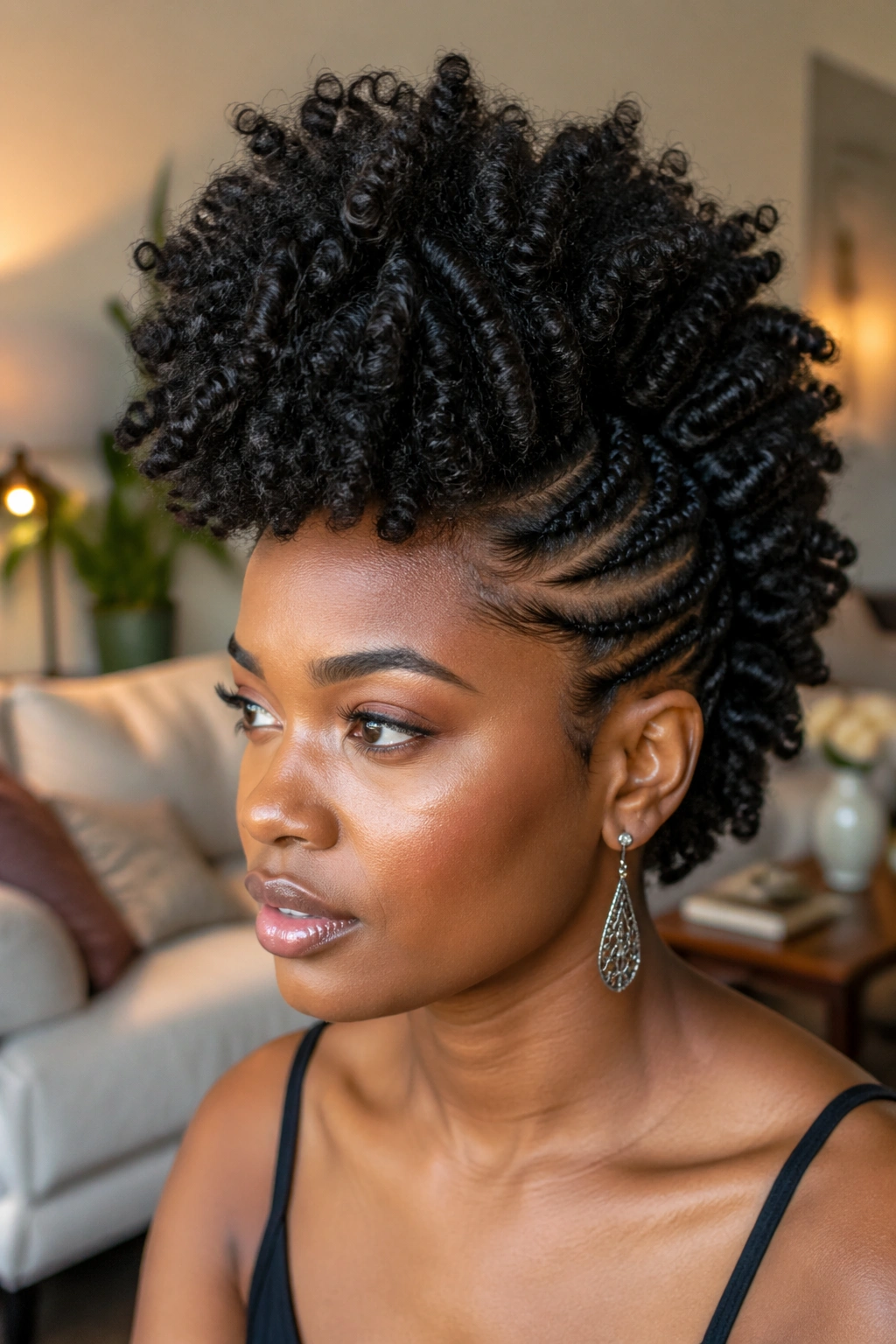
Your whole afro — including the sides — is done in a twist-out, but the sides are then flat twisted, cornrowed, or pinned against the scalp to create the mohawk shape. The twist-out curl pattern shows on top while the sides stay compressed.
It’s a softer mohawk option, and the texture on top is beautiful. Twist-out curls catch light and show depth in a way that a simple picked afro doesn’t.
The compression on the sides needs to be strong because twist-out curls want to expand. Use strong clips or tight braiding to keep them flat.
14. The High Fade Mohawk
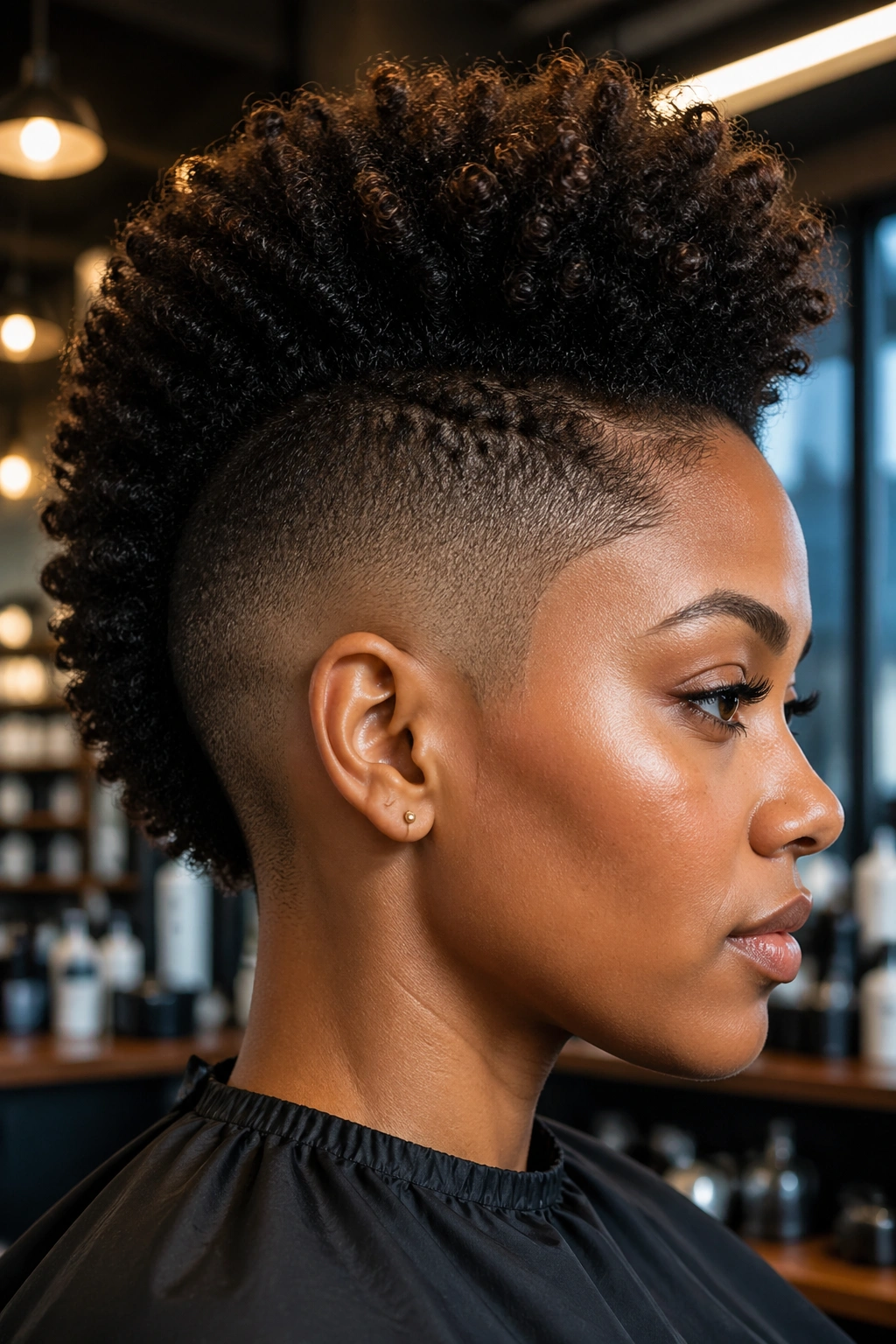
A sharp fade on the sides transitions from skin-short at the temples up to longer hair at the top, meeting the full afro of the center strip. The fade adds a gradient of length on the sides rather than a flat shave.
Fades look modern and are barber-friendly — any shop that does fades can handle this one. The transition between faded sides and full center is where skilled work shows. A messy transition ruins the style.
This version reads both masculine and feminine depending on how you style the top. Taller central strip = more dramatic. Shorter = more androgynous and clean.
15. The Mohawk With a Braided Border
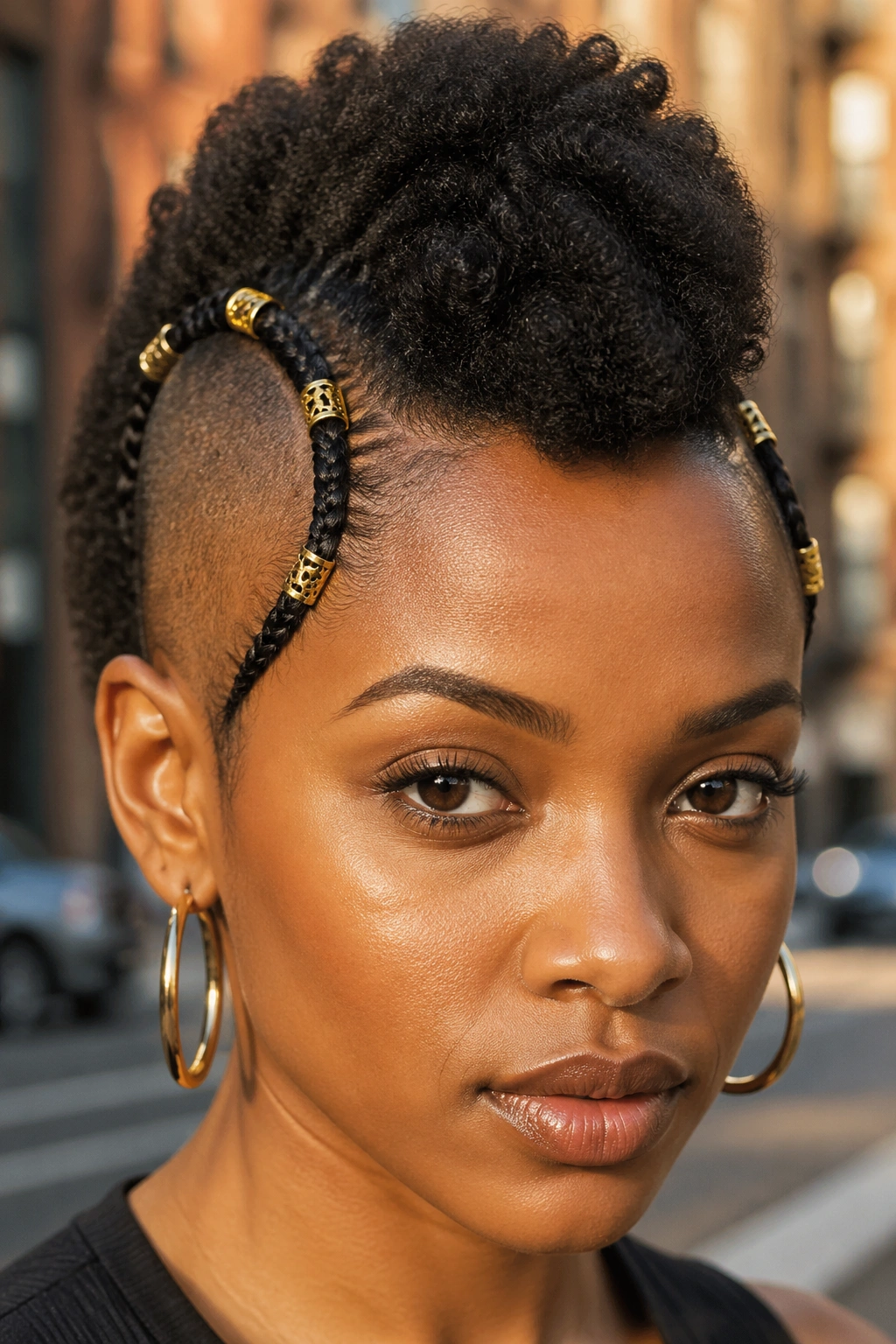
A single cornrow runs along the edge of each side of the center strip, acting as a border between the afro and the shaved or cornrowed sides. The borders visually separate the mohawk strip from the rest of the head and emphasize the silhouette.
The border braid should be thin — pencil-width or slightly thicker — and follow the exact line of the strip edge. Uneven border braids distort the mohawk shape, so take time to get them straight.
Add small cuffs or beads along the border braids for decorative detail. A handful of gold cuffs at regular intervals adds elegance.
16. The Two-Toned Mohawk
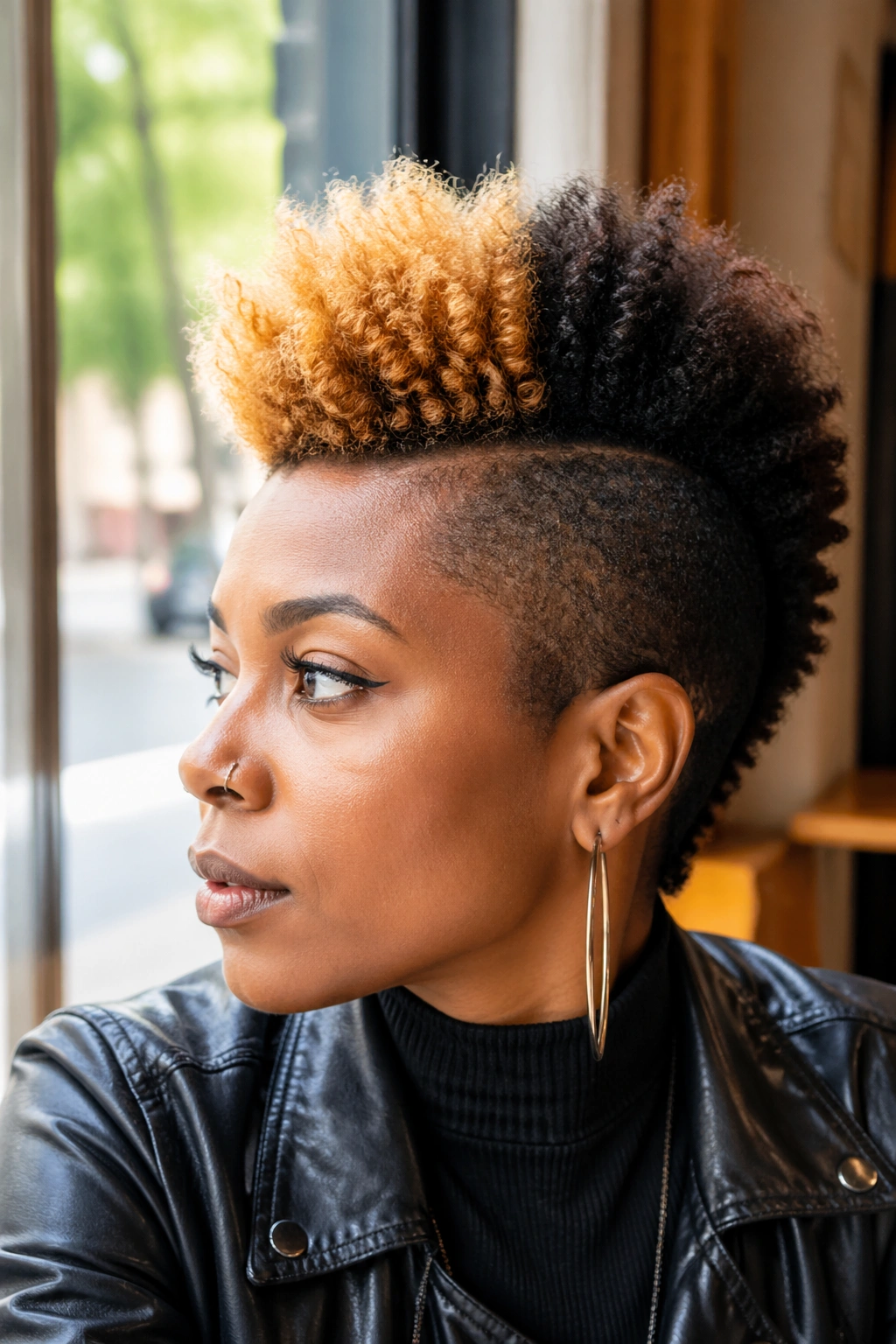
The center strip is divided into two color sections — typically darker at the roots and lighter at the ends, or one color on the front half and another on the back. The sides stay natural or close-cropped.
Two-toned color within the strip itself creates depth that single-color strips can’t match. As the hair moves and the strip shifts slightly during the day, the color pattern changes too.
This is an advanced look. The coloring has to be precise or it just looks patchy. Work with a stylist who’s colored natural hair before.
17. The Mohawk With a Top Knot
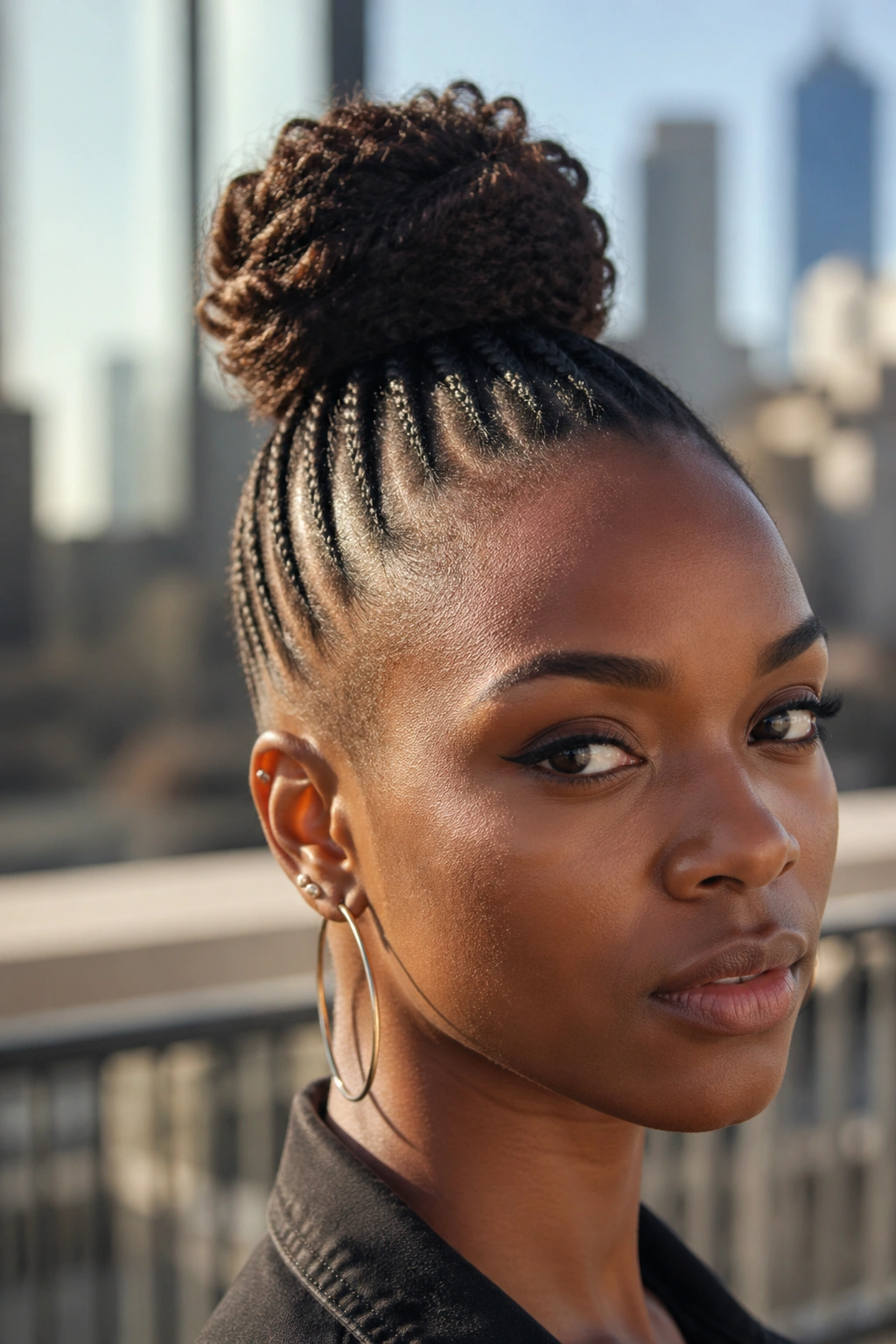
Instead of a loose afro on top, the center strip is gathered into a top knot at the crown. The sides are cornrowed, twisted, or shaved. The knot becomes the focal point of the style.
This is one of the fastest daily mohawks — once the sides are done, you just gather the top strip into a small knot in the morning. Takes under five minutes.
The knot should sit high on the crown, not at the back of the head. A top-center knot reads as a deliberate style choice. A back-of-head knot just looks like a lazy bun.
18. The Punk-Inspired Spiky Mohawk
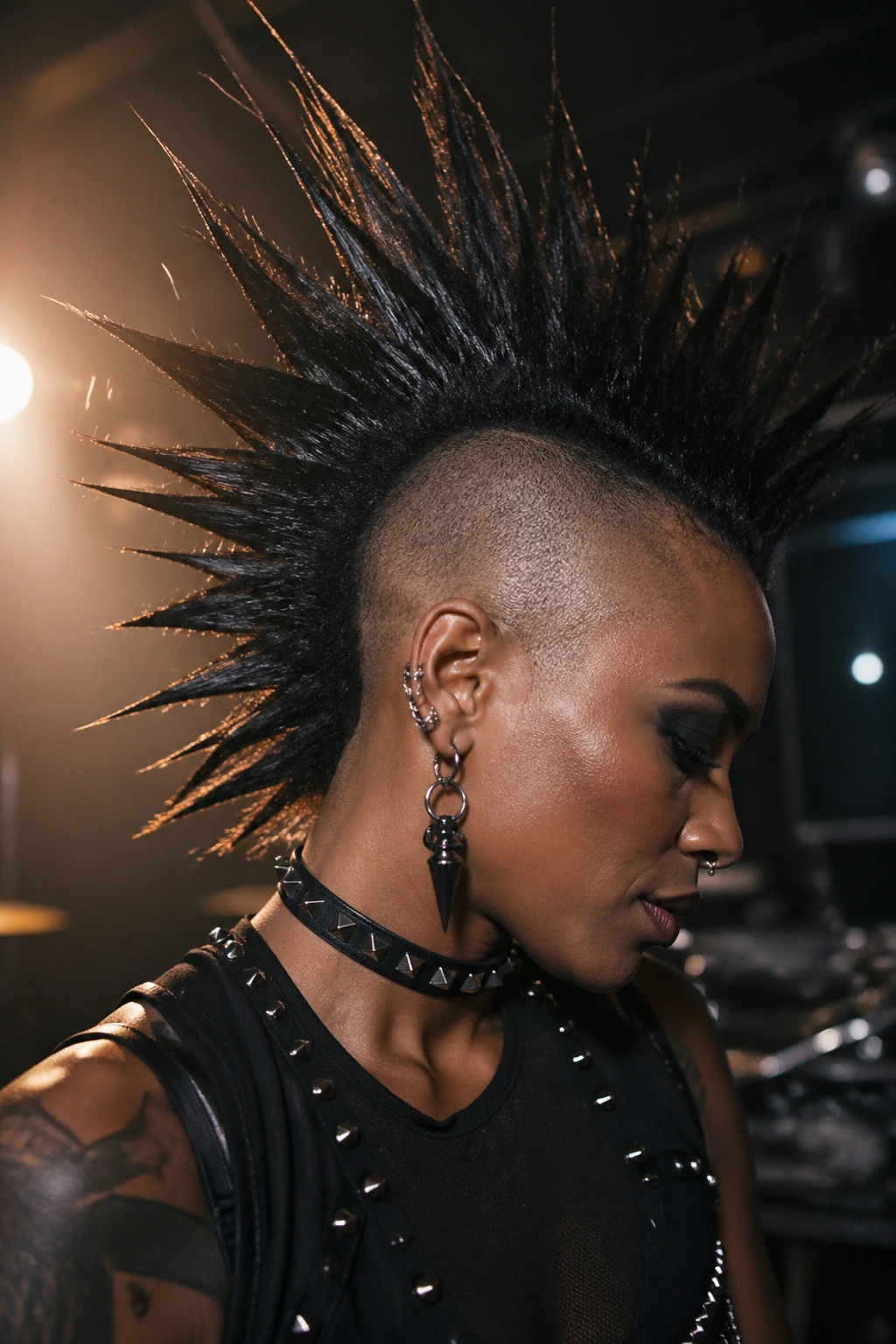
Taking the punk aesthetic and translating it to afro texture. The center strip is stretched and stiffened with gel or butter to stand up in sharp, defined sections rather than a rounded dome. The sides are usually shaved.
This is theatrical. You’re not wearing this to the grocery store. It’s for performances, photoshoots, parties, costume events. The spiking technique requires a lot of product and some time, and you only want to do it when the payoff justifies the effort.
Use a strong-hold product and work in small sections, lifting and shaping each one. The result should look like frozen flames rising from your head.
19. The Softer Mohawk With a Side Swoop
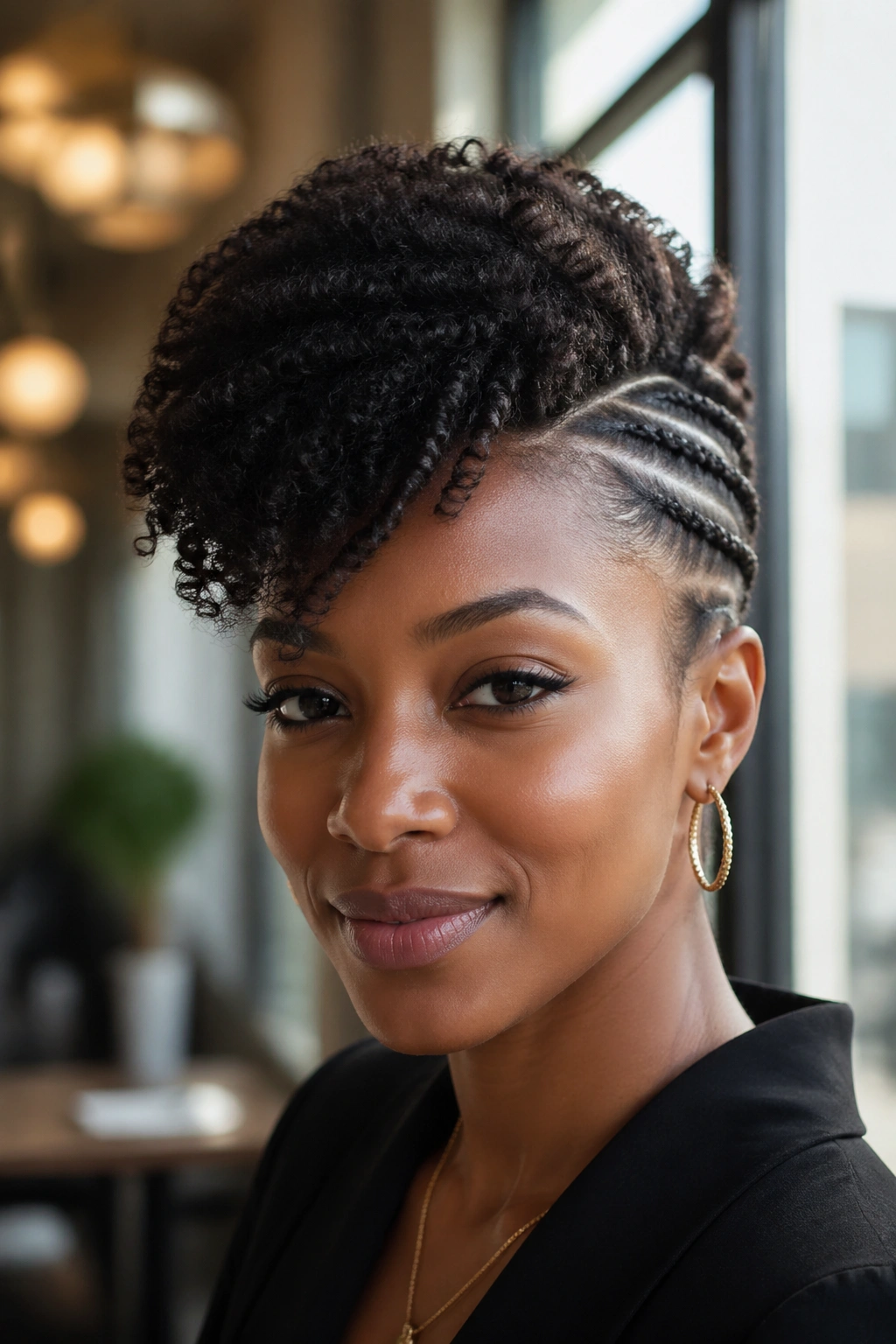
The center strip isn’t perfectly centered — it leans toward one side and ends with a small swooping wave at the front. The sides are tapered or lightly cornrowed. The overall effect is mohawk-adjacent rather than strict mohawk, and it’s much easier to wear in professional settings.
Who This Is For
- Women who want the mohawk aesthetic without the severity
- Those in work environments where a classic mohawk is too much
- Anyone learning to wear bold styles and wanting a gateway
The swoop should fall naturally across one side of the forehead, framing the eye beneath it. Too structured and it looks odd; too loose and it disappears. Use a small amount of gel to coax it into place without forcing it.
20. The Raised Mohawk With an Undercut
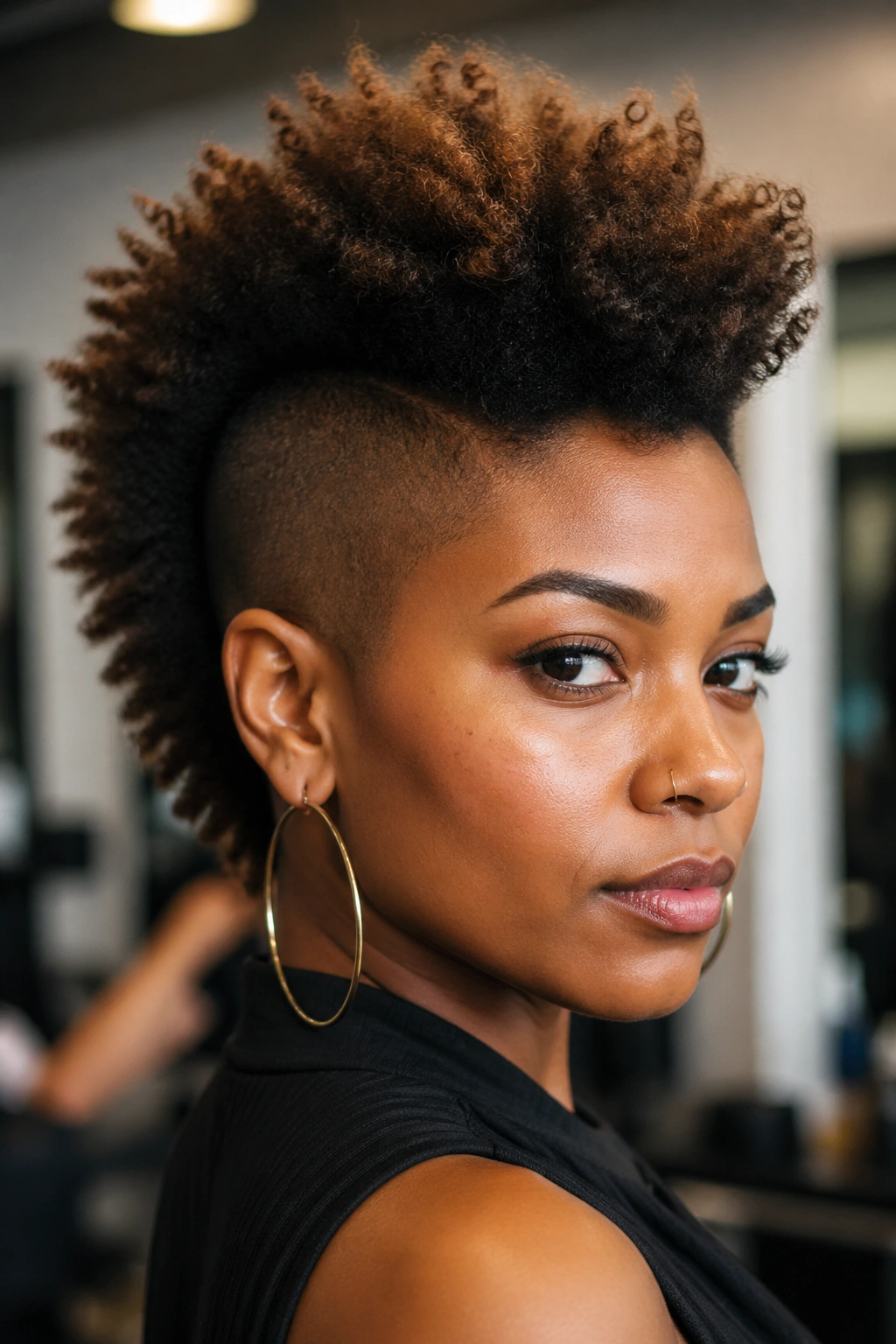
An undercut — hair clipped close underneath an overlaid longer section — takes the mohawk concept and reinvents it. The top layer stays full and lifts into a center-strip afro, while the lower layer on the sides is clipped close. When you lift your hair, the undercut is revealed.
This gives you two styles in one. Down, it looks like a full afro. Lifted or pinned back, the mohawk reveals itself. Great for anyone who wants versatility.
An undercut requires a barber to start, but grow-out is manageable because the longer top layer hides any uneven regrowth.
21. The Braided Mohawk With Beaded Ends
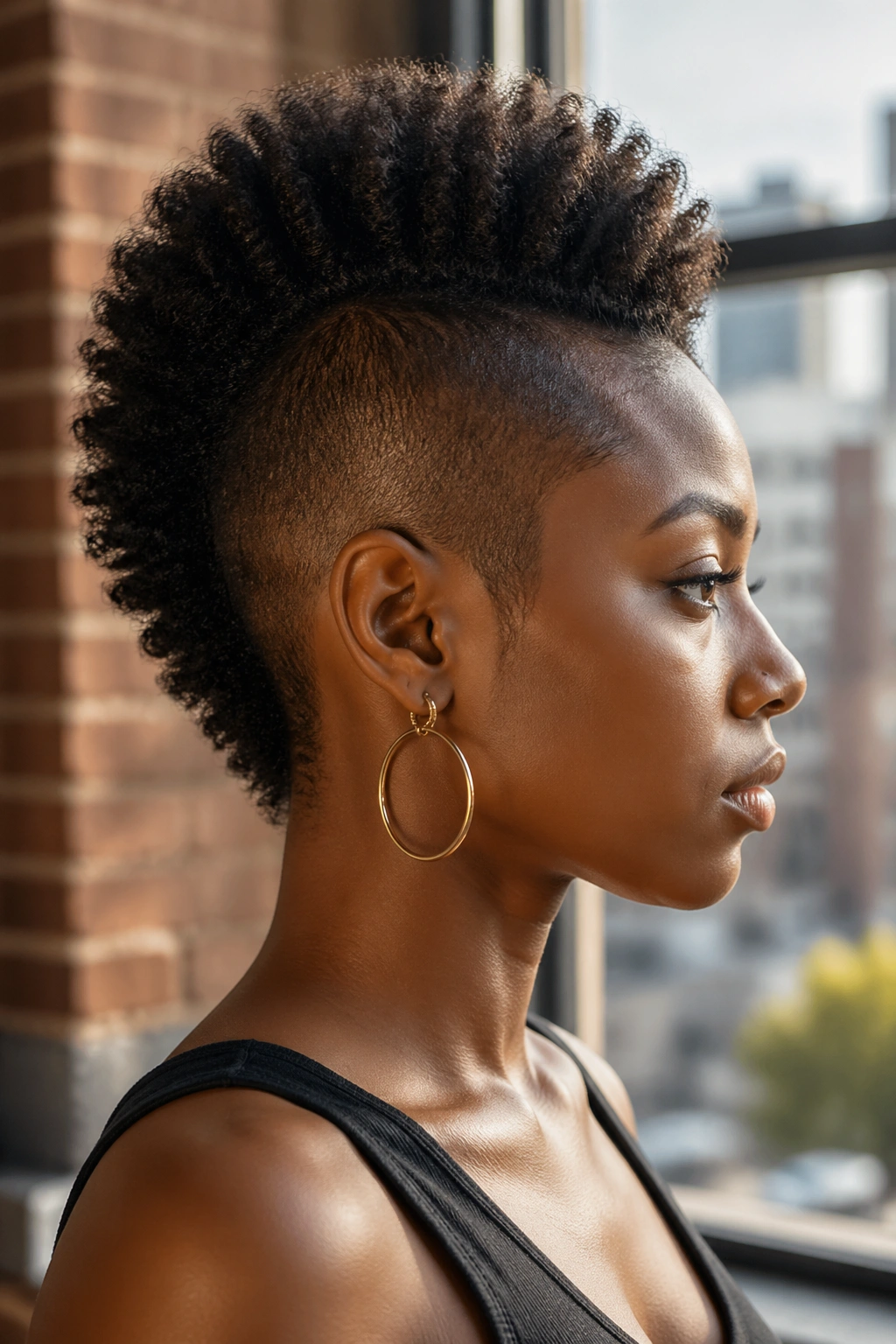
The center strip is braided into several parallel cornrows running down the head, and the ends of each cornrow are decorated with wooden or gold beads. The sides are shaved or tightly cornrowed.
The beads add weight and motion to the back of the style. As you move, they shift subtly, catching the eye. It’s a beautiful detail that most people don’t think of when planning a mohawk.
Use beads in natural materials rather than plastic. Wood, bone, ceramic, or metal all look more refined than plastic and photograph better too.
22. The Curly Strip With Loose Ends
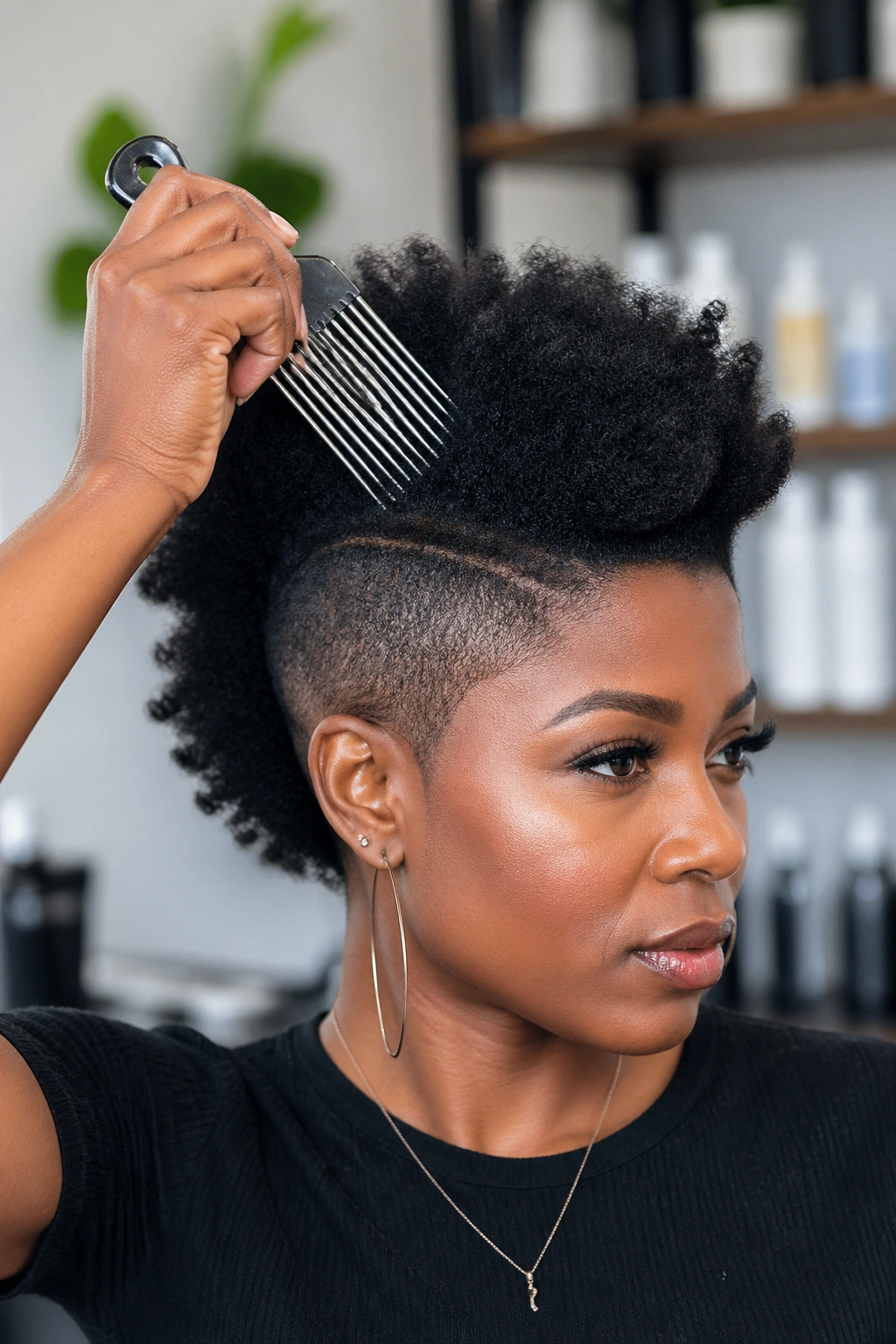
The center strip is kept in its natural curl pattern without any twist-outs or setting — just the hair as it grows, defined only with a light leave-in. At the back, the strip tapers to a point where the coils hang loosely past the shaved or braided sides.
This is the most natural-looking mohawk style. No sculpting, no product-heavy shaping — just a strip of afro doing what afro does, with compressed sides framing it.
The honesty of this version is its strength. It looks like the mohawk a woman with afro hair would naturally create without trying too hard, which is exactly the vibe some women want.
23. The Full Afro Mohawk With Dramatic Height
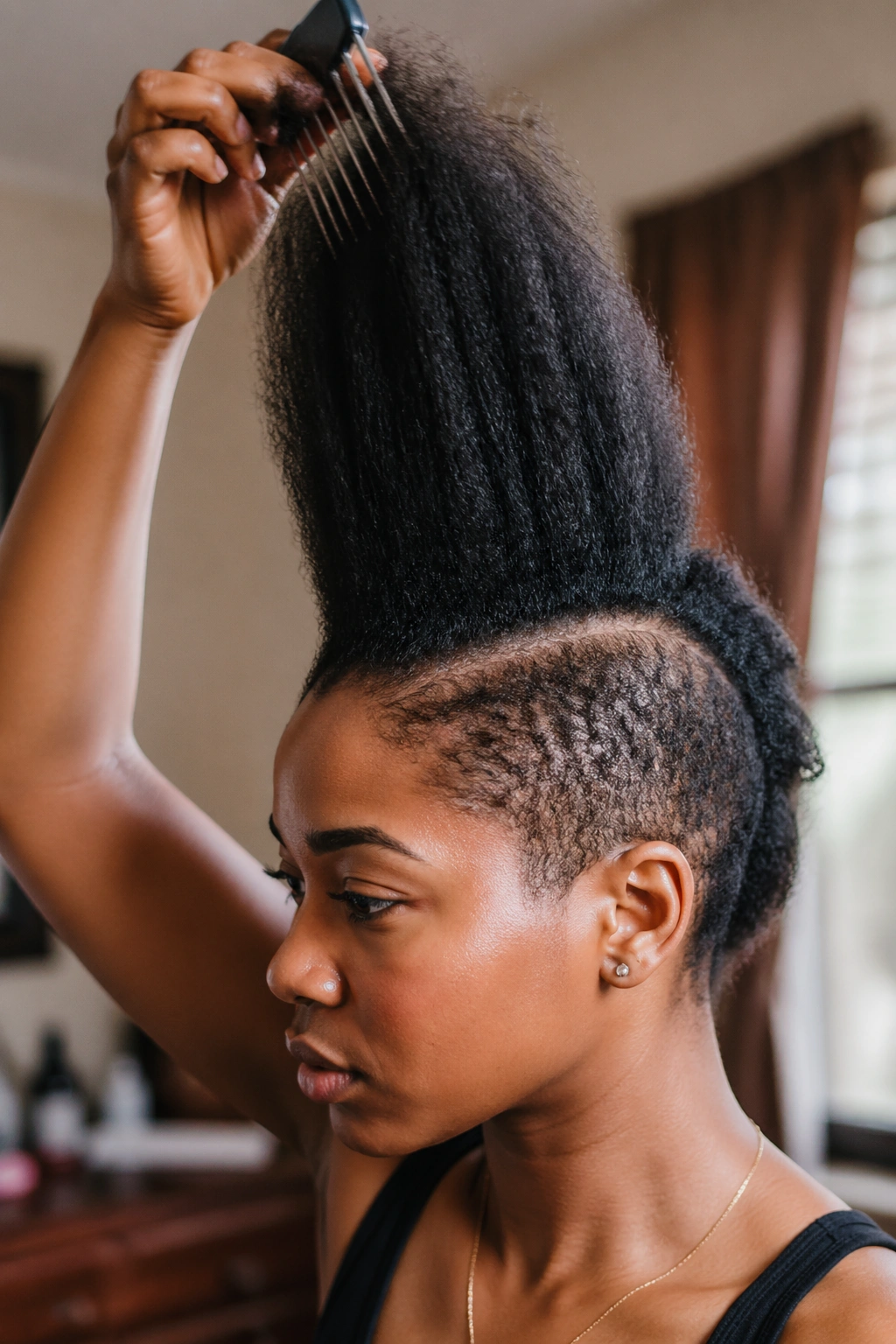
The most dramatic style on the list. The center strip is the tallest afro your hair length will allow — stretched, picked, sculpted, and shaped to rise as high as possible. The sides are shaved close or tightly compressed. The silhouette is pure impact.
Height requires length. Unless you have at least six inches of stretched hair, this version won’t give you the drama you’re going for. Work toward it over time if your hair isn’t there yet.
Use a combination of blow-drying, picking, and sculpting to reach maximum height. A small amount of mousse applied at the roots and blown out gives the hair more loft than leave-in alone. This is a style for stages, events, and statement moments — not every day.
Daily Maintenance of a Mohawk Afro
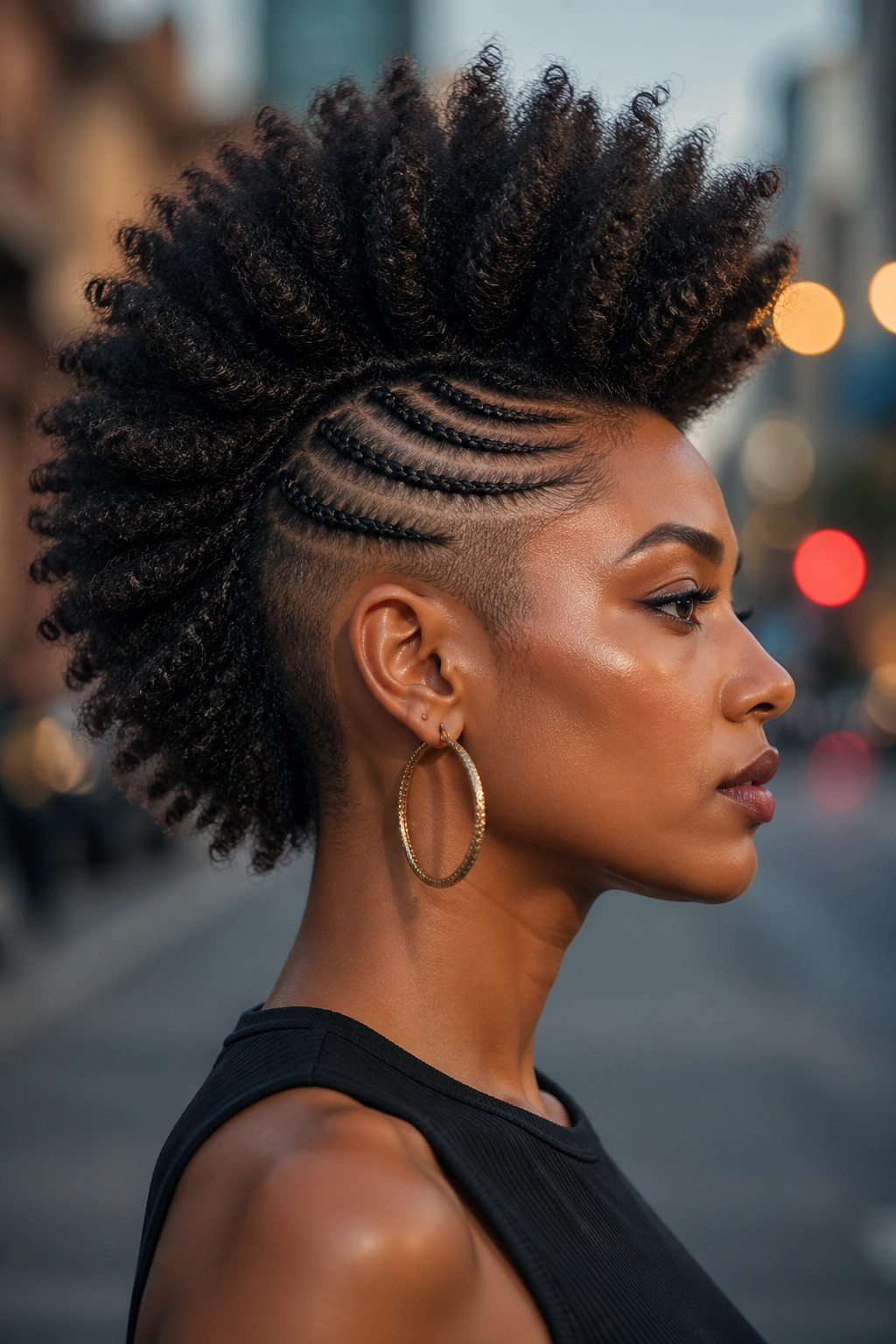
The central strip is where maintenance concentrates. Every morning, lightly mist the strip with a water-and-leave-in mix, then pick or lift into shape. This takes five to ten minutes and brings back the volume that sleep and gravity stole overnight.
Refresh the sides only if they need it. Cornrowed or twisted sides usually hold fine with just a smooth-down of edge control along the hairline. Shaved sides need nothing except the occasional touch-up with clippers.
At night, the strip should be covered with a satin scarf or bonnet. Don’t skip this. Cotton pillowcases wreck afro curls and the strip will look deflated in the morning without protection.
Deep condition weekly. The strip is doing more styling work than regular afro hair and needs the extra moisture to stay springy and defined.
Common Mistakes to Avoid
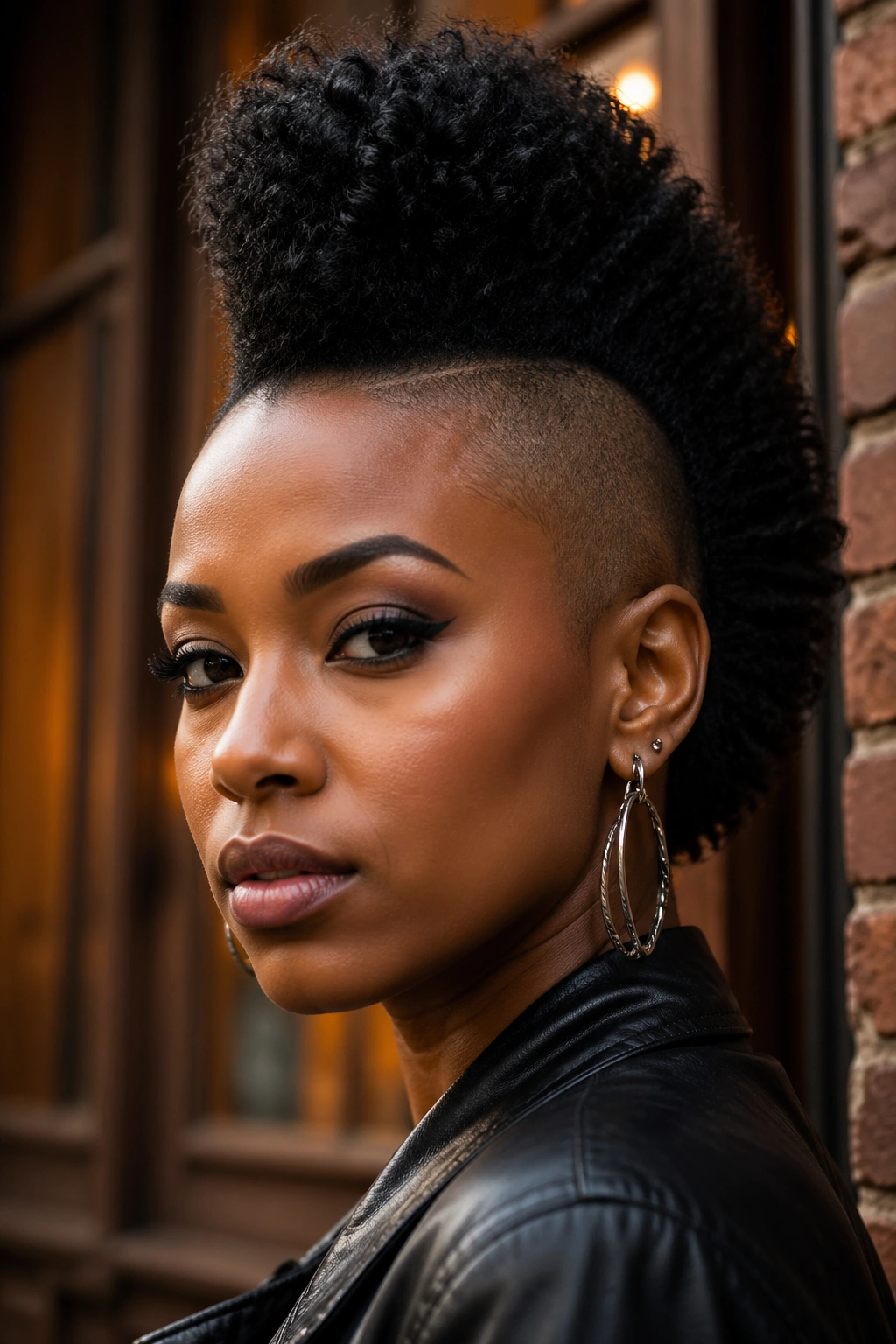
Too-narrow strip. A strip under two inches wide looks like a costume rather than a style. Give the center enough width to read as a deliberate silhouette rather than an accident.
Flat top. The whole point of a mohawk afro is the height and volume of the center. A shrunken, flat strip fails the concept entirely. Stretch before installing, and pick up every morning.
Ignoring the edges. The edges around the strip — where the mohawk meets the cornrowed or shaved sides — are the visual boundary between the two zones. Clean, defined edges sell the whole style. Fuzzy edges ruin it.
Skipping nighttime protection. Mohawk afros need satin coverage every single night. A few unprotected nights ruin the strip’s shape and force a full restyling.
Over-gelling the strip. Heavy gel flattens afro texture and creates a crusty, unnatural look. Use light product on the body of the strip and save the heavier hold for the edges and borders.
How to Choose Your Mohawk Style
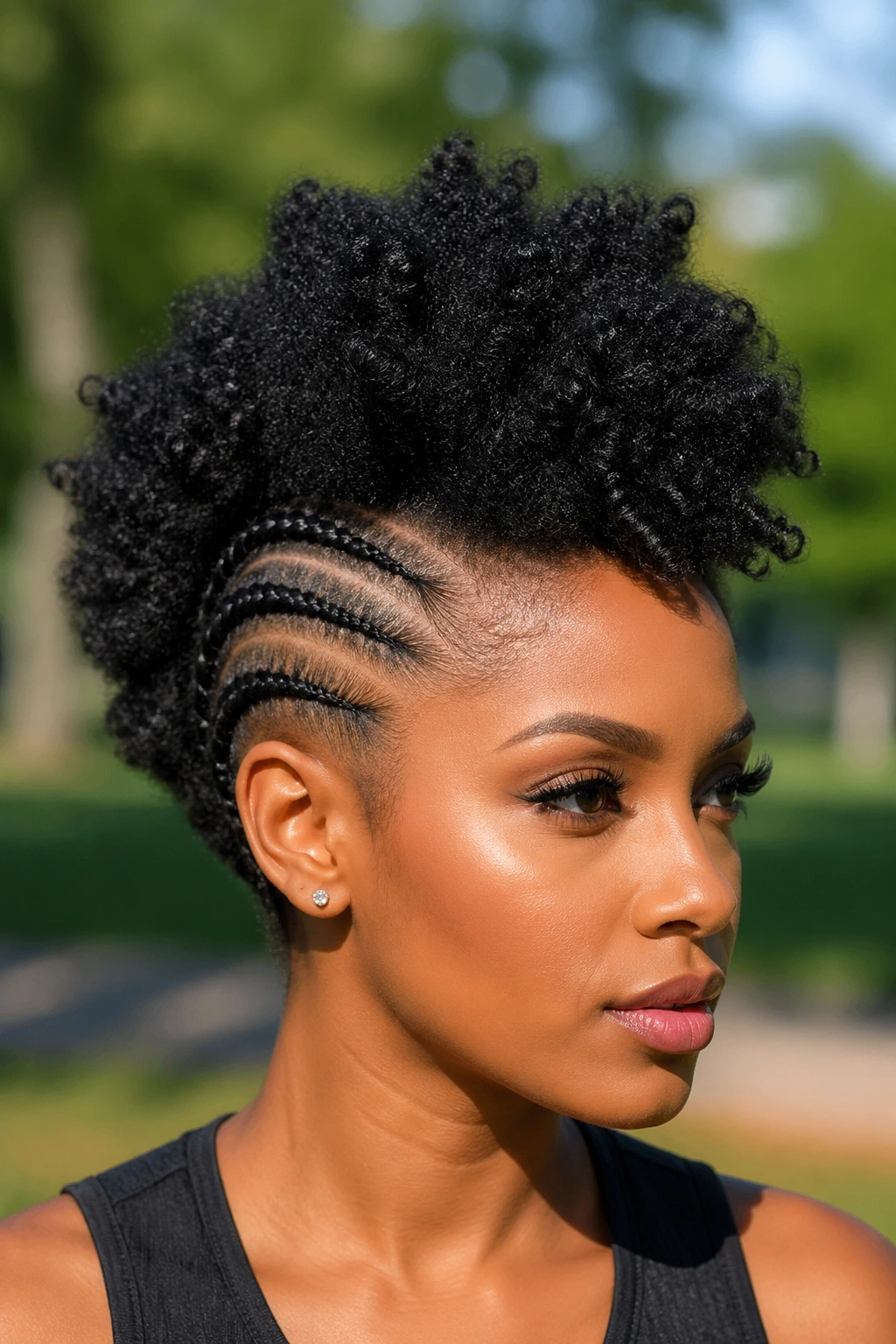
Start with commitment level. Are you willing to shave? If yes, doors open to the classic, the fade, the undercut, and the decorative-sided versions. If no, stick with cornrow-sided, twist-sided, and faux-hawk options.
Consider your hair length. Under three inches — cropped, short, and low versions work. Three to six inches — most of the list is available. Over six inches — the dramatic, high, and sculpted versions reward your length.
Think about your schedule. Mohawks need daily attention. If you’re too rushed in the morning for five minutes of styling, pick a style that holds with minimal touch-up (cornrow-sided, braided strip, top knot versions).
Finally, think about the events where you’ll wear it. Workplace-friendly versions (low faux-hawk, cornrow puff, side swoop) look different from stage-ready versions (high afro, spiky, colored). Pick what fits the life you actually live, not the one in the inspiration photo.
Final Thoughts
A mohawk afro is not a subtle choice. You’re telling the world that you’re present, that you’re sure, that you don’t mind being looked at — and for a lot of women, that energy is exactly what they need in their style rotation. It’s not for every day of every week. But on the days you want to walk taller, a mohawk delivers like no other look can.
Pick the version that matches your hair, your life, and your mood. Wear it with your shoulders back. That’s the whole point.