



The moment between washing your hair and actually getting to class is smaller than anyone wants to admit. Afro hairstyles for school and college have to live in the real world — not the world where you have two hours and perfect conditions, but the one where your alarm went off late, the dining hall opens in twenty minutes, and you still have to get yourself together. Natural hair is capable of gorgeous, complicated things. The styles that survive a semester are a different category entirely.
There’s also the layer of identity that school hair carries in a way that office hair sometimes doesn’t. You’re finding your look, building it, sometimes changing it month to month. The styles you wear in the hallway, at the library, in the lab — they say something about who you are and how you want to be seen. And natural afro hair gives you a breadth of expression that few other textures can match.
What School Schedules Do to Natural Hair Routines
The biggest styling obstacle isn’t finding the right products. It’s finding the right habits for a week that never goes the same way twice.
Morning classes disrupt wash-day timing completely. Evening practices, late study sessions, and inconsistent sleep schedules push moisture routines to the back burner. The protective styles that last a full two weeks get the most traction in academic settings because they remove the daily decision-making. But they have their own demands — installation time, maintenance costs, and the scalp-health discipline that not everyone has built yet.
Build your routine around two categories: low-effort daily styles and longer-lasting installed styles. Know which week calls for which, and you won’t spend ten minutes every morning staring into a mirror trying to improvise.
Managing Moisture Without a Full Wash Day Every Week
Dry hair is harder to style, breaks more easily, and doesn’t hold any look for long. But washing hair every day strips it. The middle path — co-washing (conditioner only, no shampoo) mid-week, or simply refreshing with a light misting of water and a small amount of leave-in — keeps the moisture level high without requiring a full wash session.
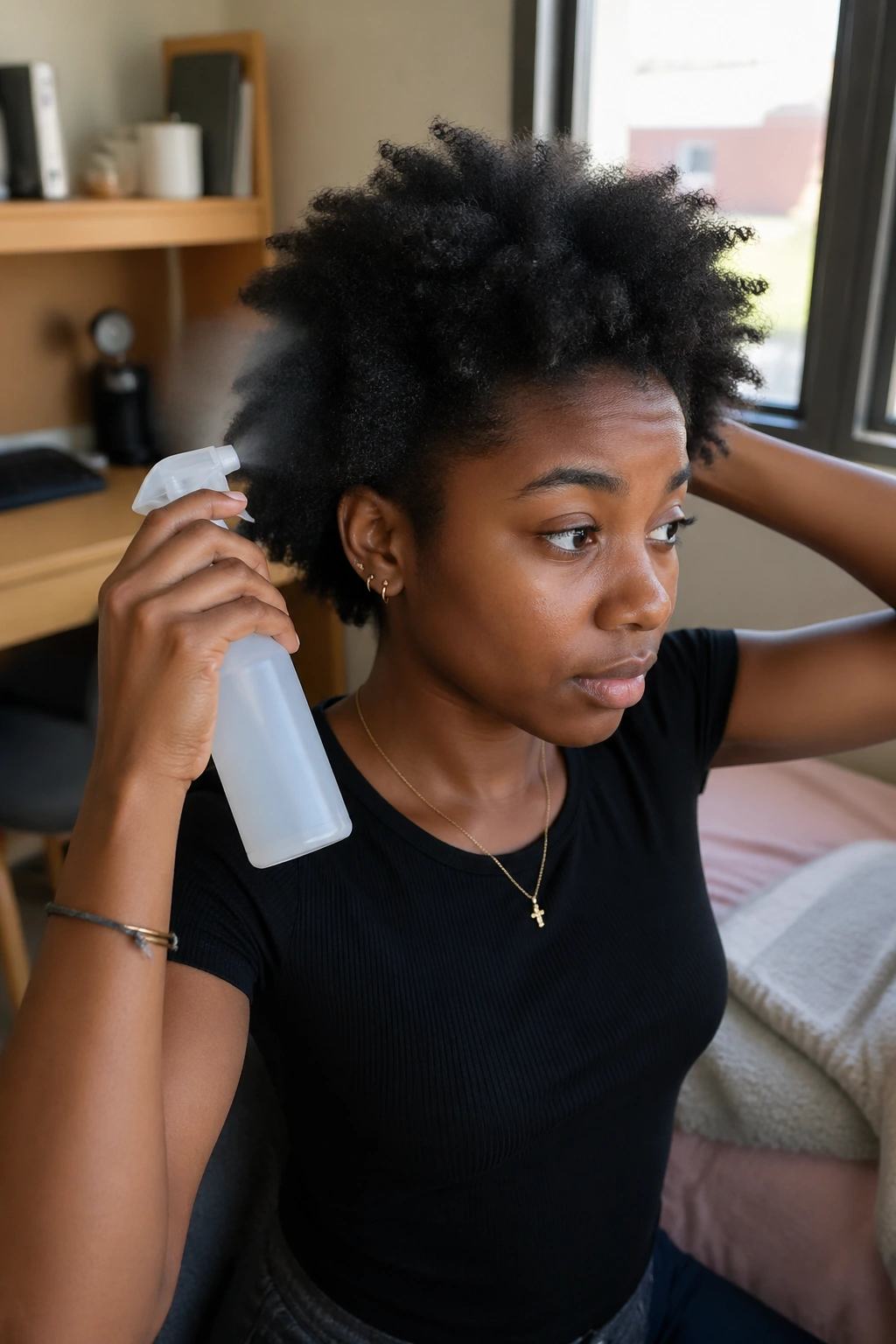
A spray bottle with water and a few drops of glycerin is the most underused tool for campus natural hair. Two minutes of misting and scrunching in the morning adds two to three more days of life to most styles. Keep one in your dorm room, one in your bag.
Full shampoo wash days work best on weekends — ideally when you have time to deep condition and let the style set properly before the week starts. Two to three hours on a Sunday morning, done right, carries your hair through most of the week looking intentional.
Products Worth Keeping in a Small Stash
A dorm room or shared bathroom isn’t the place for a forty-product collection. Keep it tight.
A sulfate-free shampoo — used once a week, maximum. A moisturizing conditioner heavy enough to slip through tangles but not so heavy it takes forever to rinse. A leave-in that feels light when it dries, not sticky. A curl cream or pudding for defining days. Edge gel for anything that needs a clean perimeter. A light oil — jojoba or sweet almond — for sealing and finishing.
That’s six products. All of it fits in a small shower caddy. The fewer products you’re managing, the more consistent your routine becomes.
The Role of Protective Styles in an Academic Schedule
Protective styles — anything that tucks the ends of your hair away and reduces daily manipulation — are genuinely life-changing for a full semester. Once they’re in, the morning routine collapses to two minutes: unwrap your bonnet, smooth a few edges, leave.
The investment is upfront. Installation takes time. But you get two to four weeks of near-zero daily effort in exchange. For students who travel between home and campus, who have irregular schedules, or who simply don’t want to think about their hair every morning, protective styles are the practical choice.
The styles below cover everything from five-minute daily options to full protective installs — in the order you’d encounter them when building out a natural hair rotation.
1. High Puff
The puff is the patron saint of the five-minute morning. Gather everything toward the crown, secure with a satin-lined hair tie (not a standard elastic — it causes breakage at the nape), fluff the puff, lay the edges if you want them defined, and done.
On afro hair, the puff has a presence that ponytails on straight hair don’t. It’s full and round and visible in a room. It reads confident rather than rushed, which is exactly what you want when you’re sprinting to an eight o’clock class.
The variation that gets underused: the low puff. Instead of centering everything at the crown, gather it lower — toward the nape — for a look that’s a bit softer and sits better with headphones during long study sessions. The high puff can get in the way of some headphone headbands. The low puff doesn’t.
Keep a small edge gel in your bag. A quick edge touch-up in the bathroom mirror before a big lecture or presentation takes thirty seconds and makes the whole look more polished.
2. Natural Twist-Out
Twist-outs are a wash-night investment that pays off for three to four days. Do them Sunday night, unwrap Monday morning, and you’ve got defined, bouncy hair for most of the week.
The technique: damp hair, leave-in, curl cream, two-strand twist in half-inch to one-inch sections. Sleep on them — satin pillowcase or bonnet. Unravel slowly the next morning, starting at the ends, separating upward. Oil your fingertips before separating to prevent frizz.
The failure mode most people hit: unraveling before the hair is fully dry. If you can still feel any cool dampness in the twist, it’s not done. Damp twists unravel into frizzy sections, not defined ones. Give them the full night — or set them under a hooded dryer before bed if you’re working late.
Day two and three, spritz lightly and scrunch. Day four, tie it up into a puff or bun and carry the style one more day without making it look like you gave up.
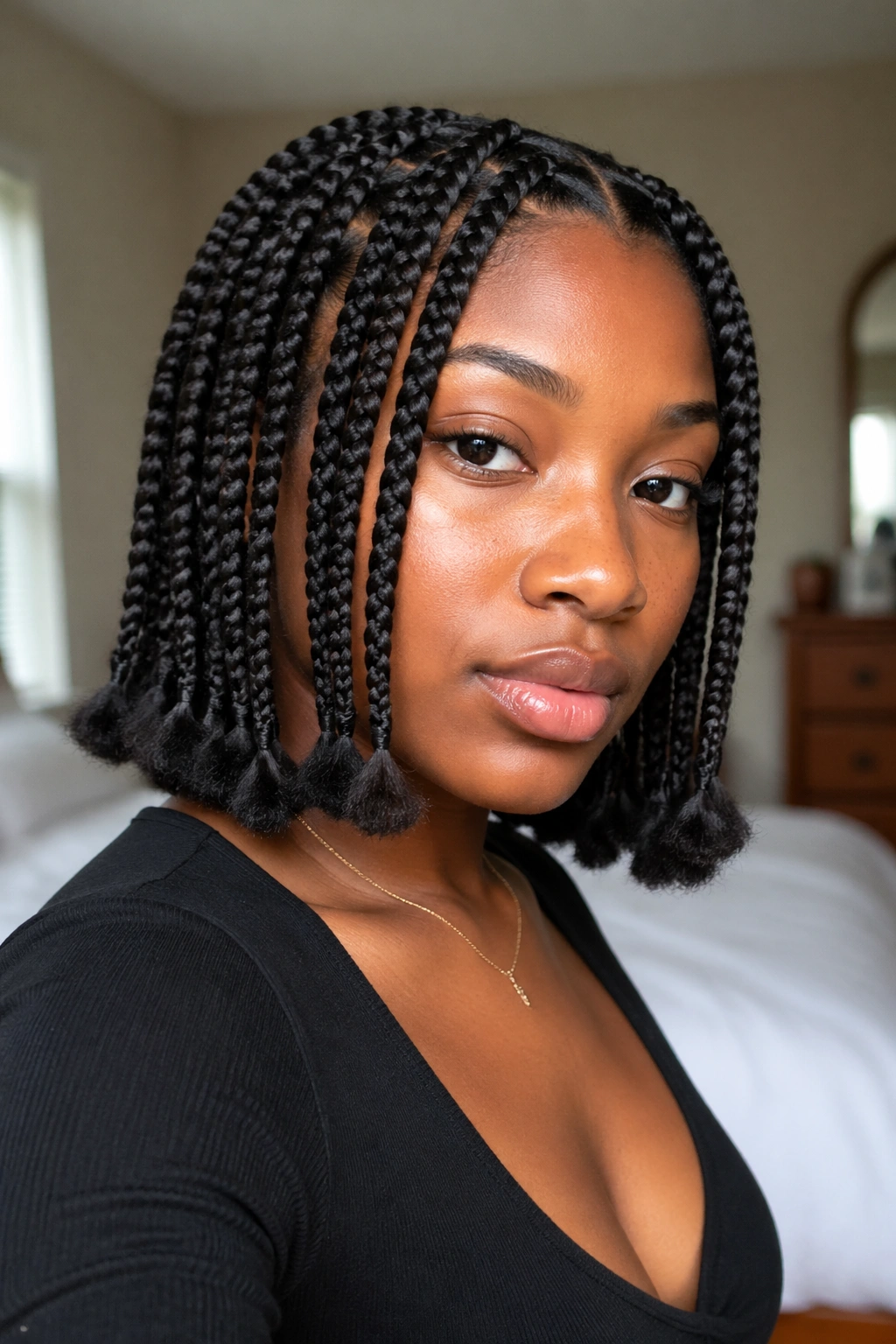
3. Box Braids (Your Own Hair)
No extensions. Just your natural hair, braided in clean sections. On medium-length natural hair, these land around chin to shoulder length — shorter than extension box braids, but completely wearable as a style on their own.
Divide into square sections, braid tightly but not scalp-tight, secure the ends. You can leave the ends loose (they’ll puff slightly, which looks intentional) or seal them with a small elastic.
This style can last up to two weeks on natural-only hair before new growth makes it look too grown-out. It’s one of the lower-maintenance protective styles available without salon time — you can install them yourself in about an hour, maybe less once you’ve done it a few times.
Who This Is For
Best for hair that’s at least four to five inches of stretched length. Shorter hair may braid fine but the individual braids will be so short they don’t lie well. If your hair is shorter, skip to flat twists instead.
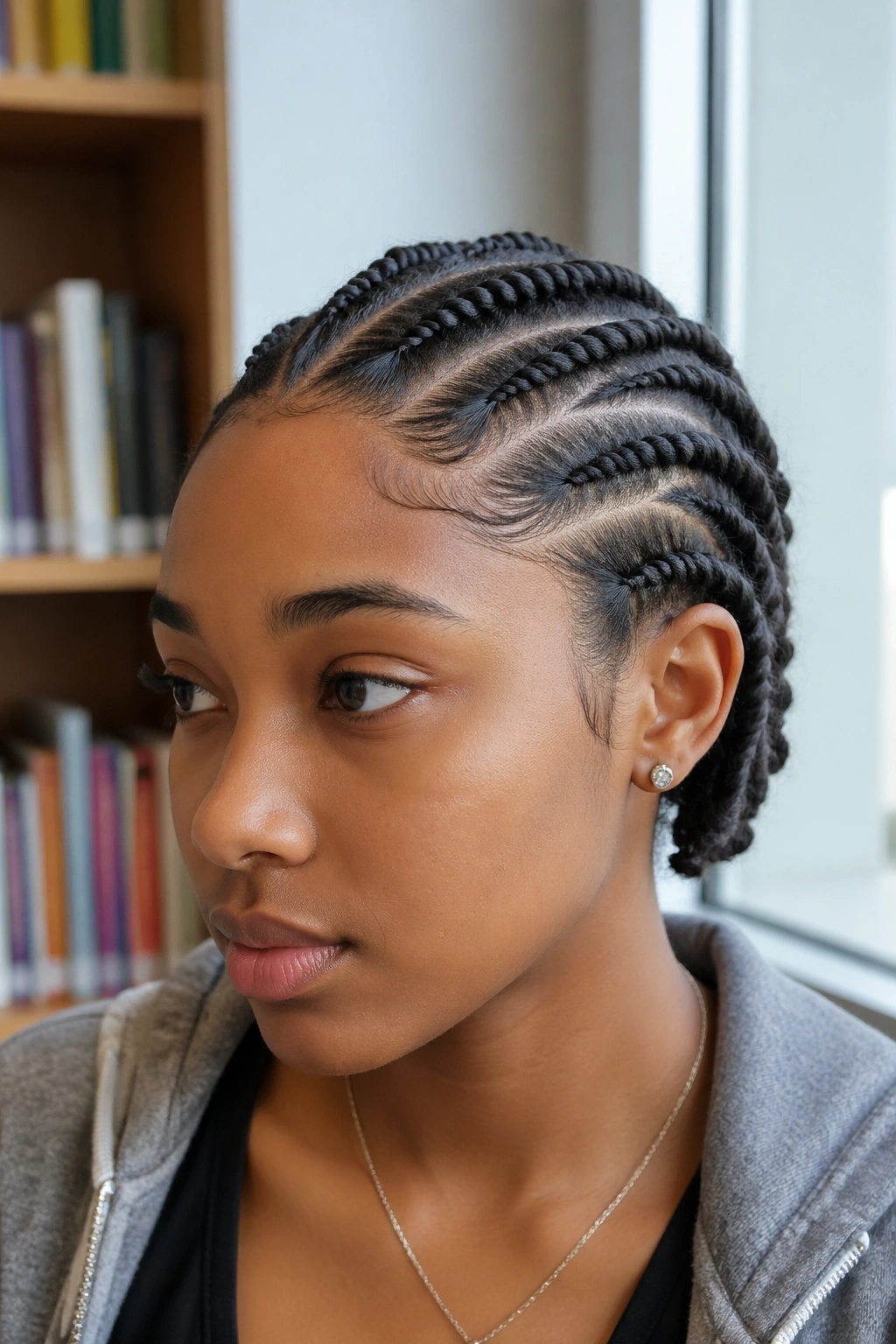
4. Flat Twist Styles
Flat twists lie against the scalp like cornrows but use a two-strand twist technique rather than three strands. They’re easier to execute for most people than cornrows — less tension control required — and they produce a similar smooth, structured look.
For school, flat twists work in two ways: as a finished style on their own (a full head of flat twists is a complete look) or as the base for a flat twist-out (where you wear the twists overnight and unravel them the next morning for a wavy, textured result).
The base style lasts up to a week before the edges start looking fuzzy. Spritz and re-smooth any sections that need it mid-week. The flat twist-out unraveling takes about ten minutes the morning after installation.
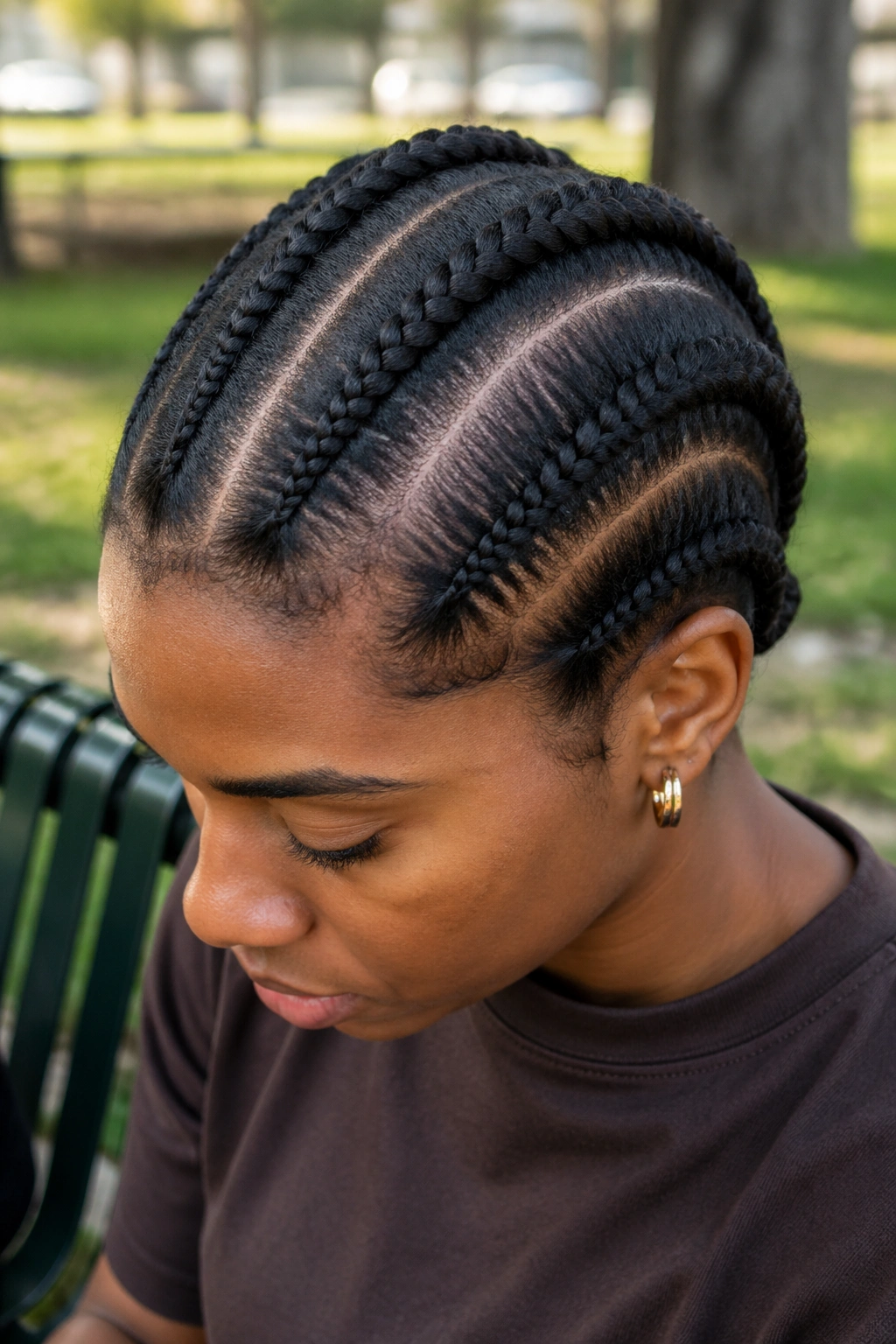
5. Jumbo Cornrows
Four to six large cornrows going straight back is one of the most efficient protective styles available. Installation takes thirty to forty-five minutes tops, depending on your skill level. The style lasts one to two weeks with proper overnight wrapping.
The hair between the braids — the parts — needs moisture. A light oil massaged onto the scalp between each braid, every two or three days, prevents the scalp from drying out under the braids. Dry scalp plus a pulled braid style is uncomfortable and can cause flaking.
Larger cornrows are gentler on the scalp than smaller, tighter ones. Four big cornrows create less tension than ten thin ones. On a student schedule, where you can’t always tell when your next wash day will be, the gentler approach is better for long-term hair health.
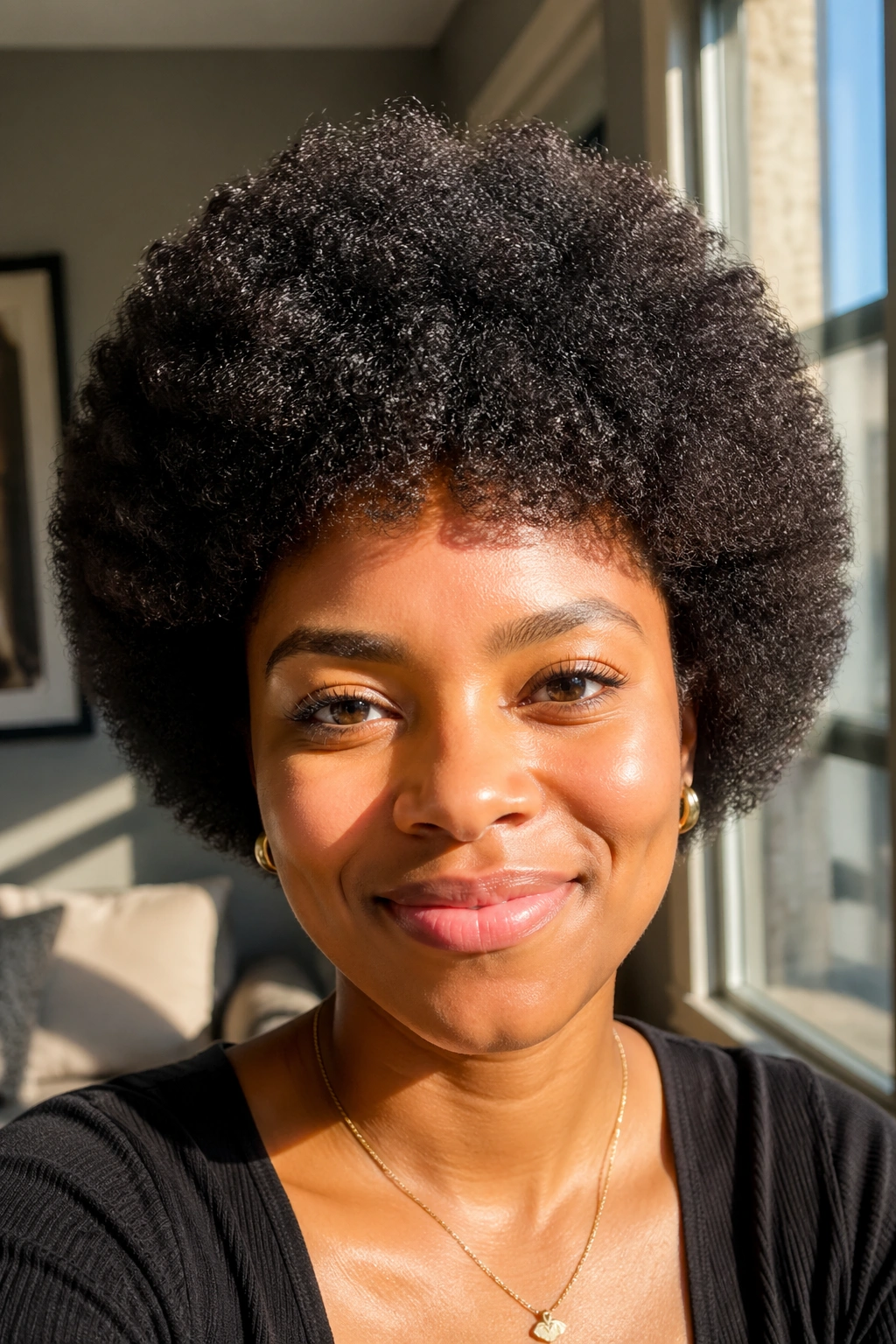
6. Mini Afro (Fully Picked Out)
Not everyone with natural hair is working toward length. A mini afro — shaped, rounded, fully picked out — is a complete style at any length. On shorter medium-length hair, this look has a proportion that’s striking rather than understated.
The technique is simple but requires fresh moisture. Wash, condition, apply a light curl cream, and allow to dry. Once fully dry, use an afro pick to pick from the roots upward, working around the head systematically until the whole afro is round and full.
Shape the perimeter with your hands. Define edges with gel if you want a clean border. Done.
The common mistake: picking before the hair is fully dry. Wet afro picking creates frizz, not volume. Wait for complete dryness, even if it takes most of the morning.
7. Satin Scarf Styles
The satin scarf is usually thought of as a protective wrap for sleeping. But styled intentionally, it becomes part of the look.
Wrap a square satin scarf around the hairline — from the forehead, looped behind, tied back at the nape — and tuck your hair under it, creating a wrapped look. Or leave the hair visible at the crown and use the scarf as a headband. Or tie it in a knot at the top of the head for a bow effect over a high puff.
What Makes It Different
The satin scarf style has the dual advantage of protecting the hair at the edges and temples — where most friction damage happens — while also looking deliberate and styled. It’s popular for a reason: it works on a morning when the hair underneath isn’t quite doing what you want.
Carry one in your bag. They fold to nothing and weigh nothing. Instant backup plan.
8. Braid-Out with Volume
A braid-out creates a looser, more open wave pattern than a twist-out and is faster to install on wash night. Three-strand braid each section while the hair is damp and product-loaded, sleep on it, unravel in the morning.
The volume is the appeal here. A fully unraveled braid-out on medium-length afro hair has a huge silhouette — wide, fluffy, and textured rather than defined and curly. It’s the most voluminous style on this list and one of the most attention-getting.
For busy academic mornings, the braid-out actually gets faster with practice. Most naturals can braid their whole head in twenty to thirty minutes after a few months of doing it regularly.
9. Bantu Knot-Out
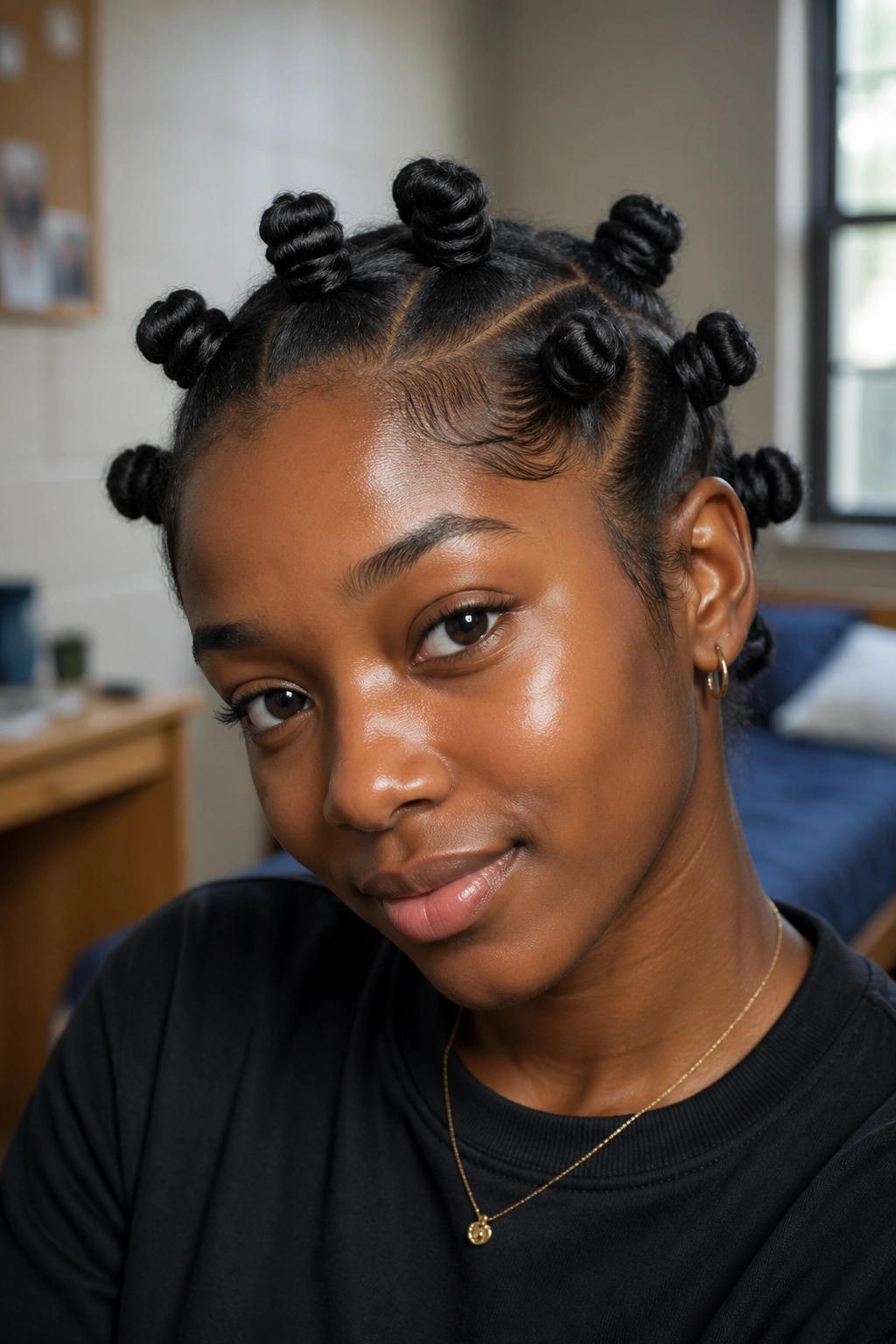
Same principle as the twist-out and braid-out, different overnight technique, different resulting pattern. Bantu knots wound tightly create a tighter, more uniform spiral than either braids or twists.
On a college schedule, Bantu knot-outs work well because you can literally wear the knots themselves if you’re tight on time — the knot style on its own is a complete look — and then unravel them the next day when you have a bit more morning time.
Eight to twelve knots across a medium-length afro head, allowed to dry fully overnight, give you bouncy, spring-loaded spirals that last two to three days before refreshing.
10. Half-Up, Half-Down Natural Styles
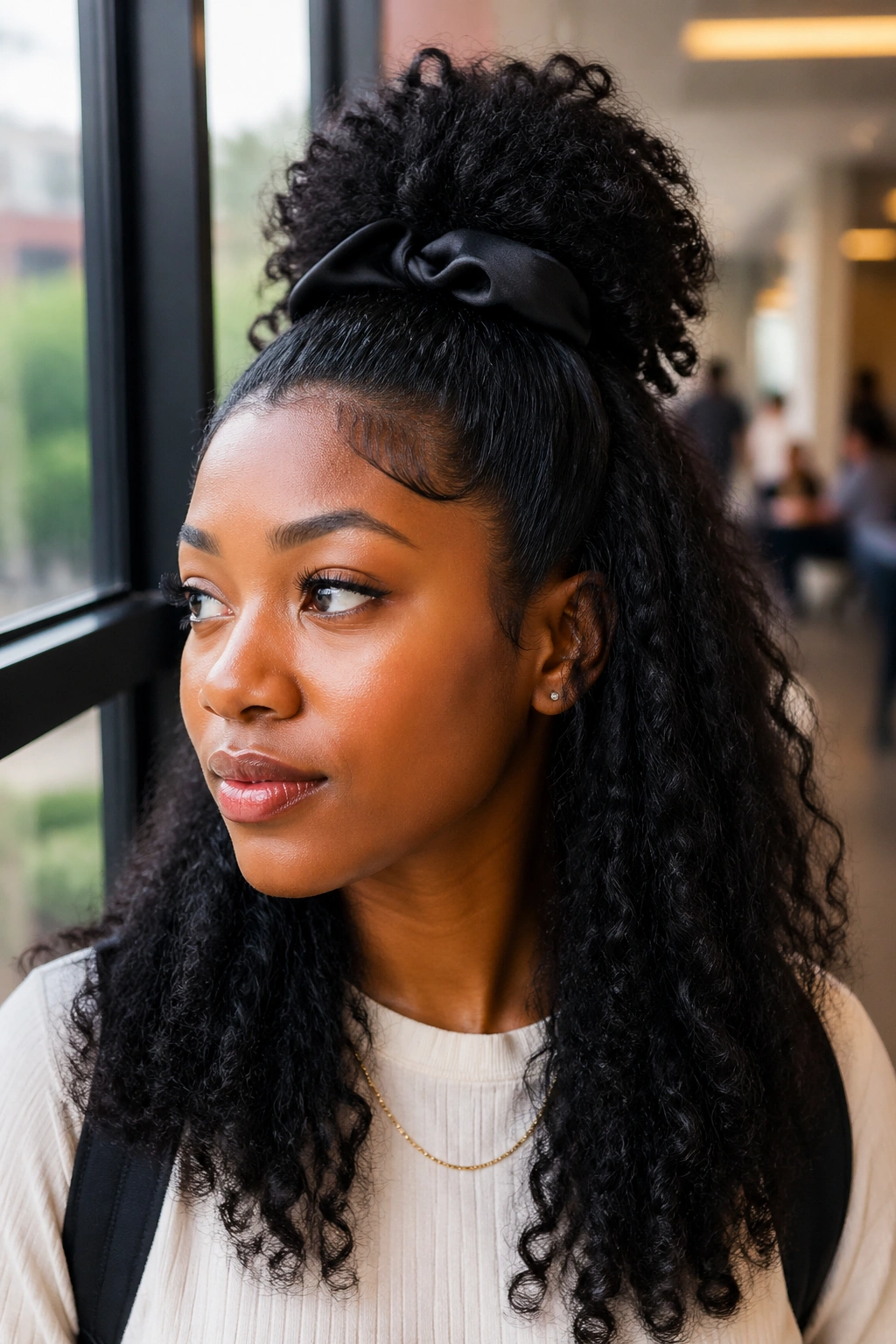
Take the top half of your hair — from the crown to roughly ear level — and gather it into a puff, bun, or secured twist. Leave the bottom half down in its natural state.
It sounds simple. It looks much more considered than it is, because the contrast between the smooth or defined gathered section and the free-flowing natural lower section creates interesting visual geometry.
On a practical level, the half-up style lets you wear your natural texture without dealing with the full weight and volume of all your hair down — relevant for long lectures, outdoor campus days, or whenever you want less hair around your face.
No gel required unless you want defined edges. A satin tie for the top section and you’re done in under three minutes.
11. Low Bun with Natural Texture
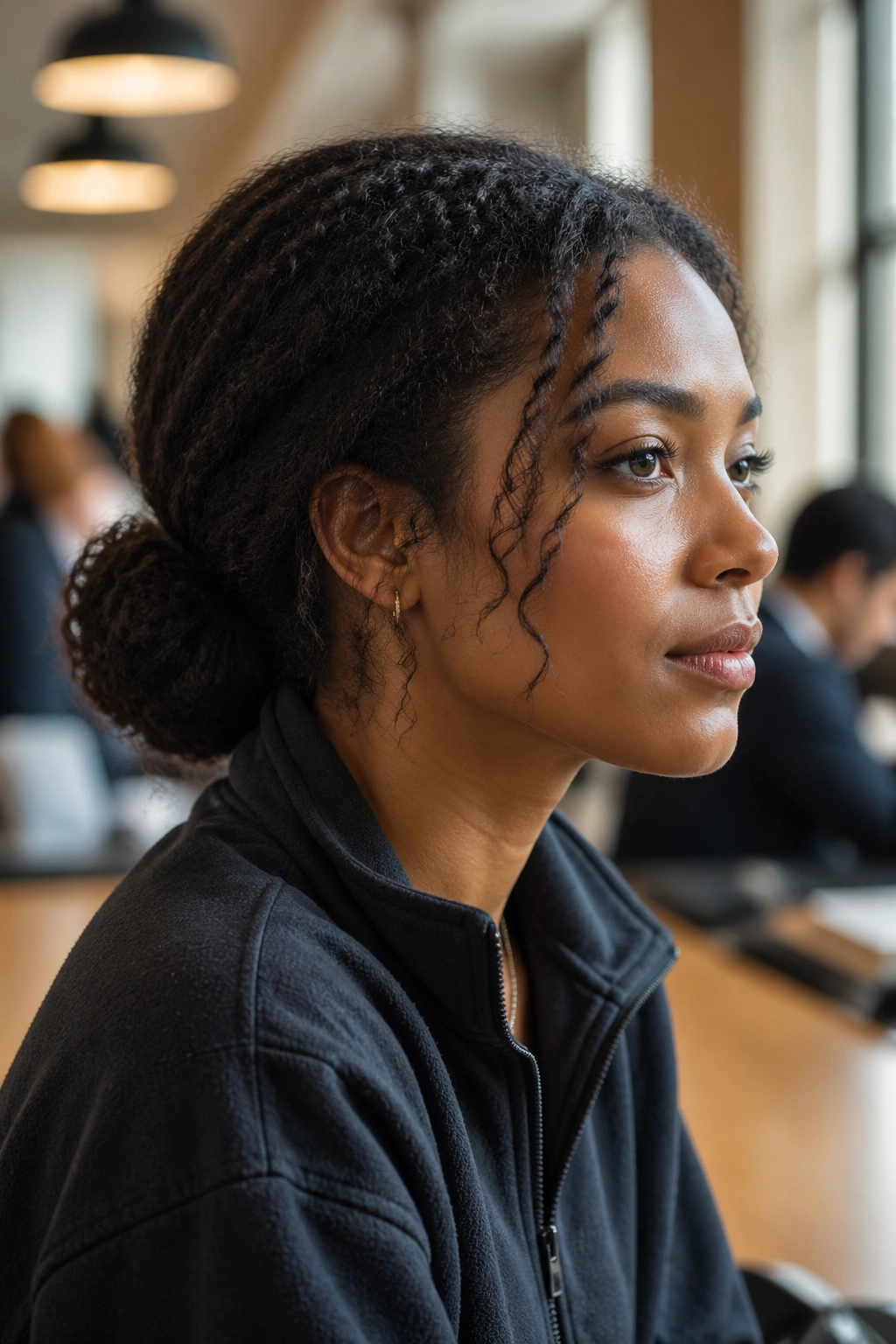
Gather everything toward the nape — low, relaxed, not pulled tight — and secure with a hair tie. Coil the secured section around itself and pin with bobby pins or tuck-and-pin to create a loose bun shape. Leave a few face-framing pieces at the temples.
The natural afro texture in the bun means it won’t sit flat and slick like a straight-hair bun. It will be textured and slightly imperfect, which is not a flaw — it’s the look.
This is the quietest style on the list. Not high-volume, not bold. For days when you want your hair off your face and out of the way, for lab days, for presentations when you want minimal distraction from your work. It’s practical in the truest sense and takes about four minutes.
12. Protective Style with Crochet Natural Hair
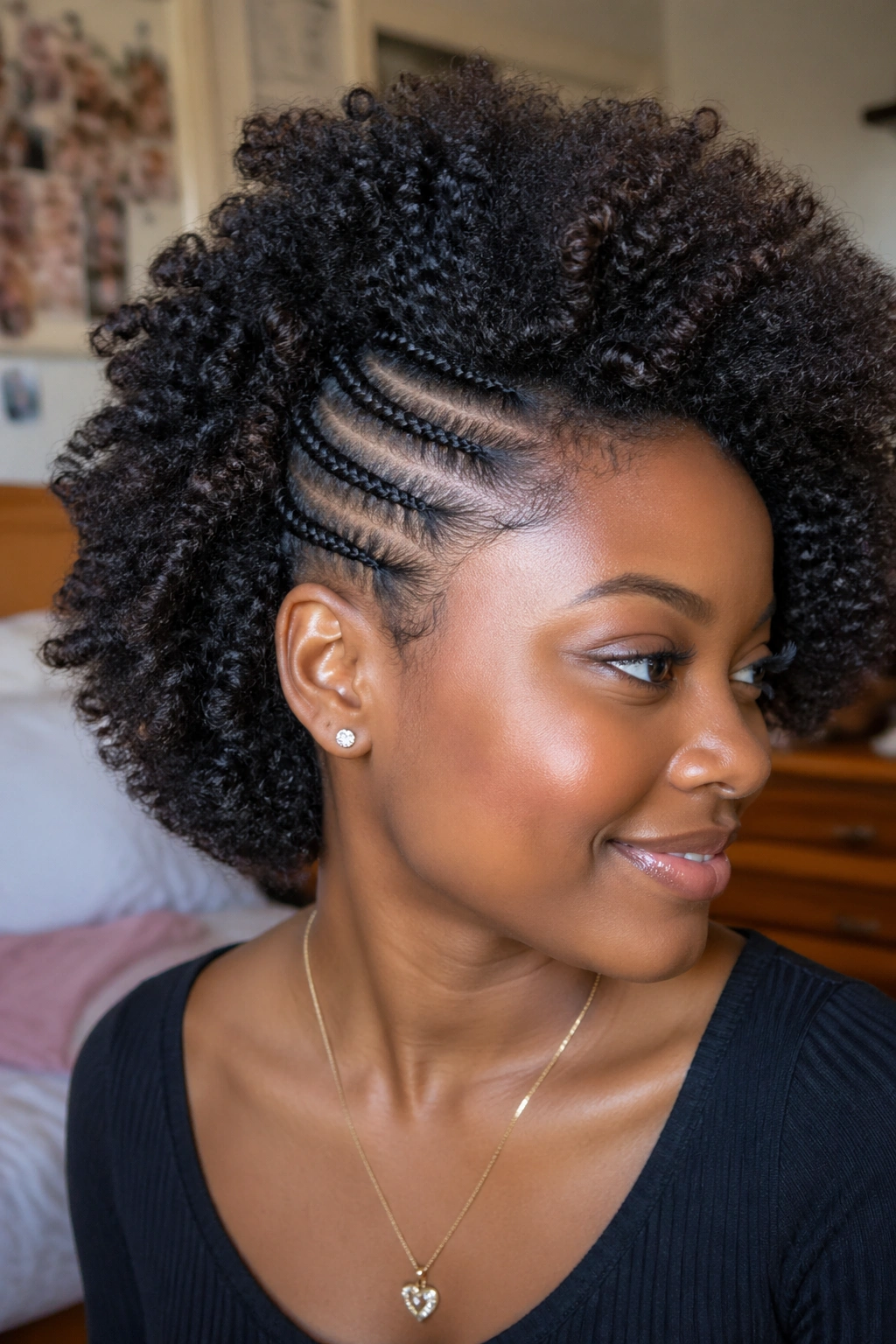
Crochet hair installed over a cornrow base is a full protective style. The cornrows braid your natural hair flat; individual bundles of crochet hair are looped through the braids with a crochet needle. The result looks like a full head of natural hair — if you choose the right texture.
For this to blend with natural afro hair, choose crochet styles in kinky, coily, or curly textures that match your own. The styles labeled “Afro Kinky Bulk,” “Kinky Twist,” or “Marley Hair” in crochet packaging are the most likely to blend well.
Installation takes a few hours and ideally another person. It lasts four to six weeks with proper nighttime protection. For a full semester of hands-off hair, this is the most low-maintenance option with the most high-impact result.
13. Natural Hair with Headband
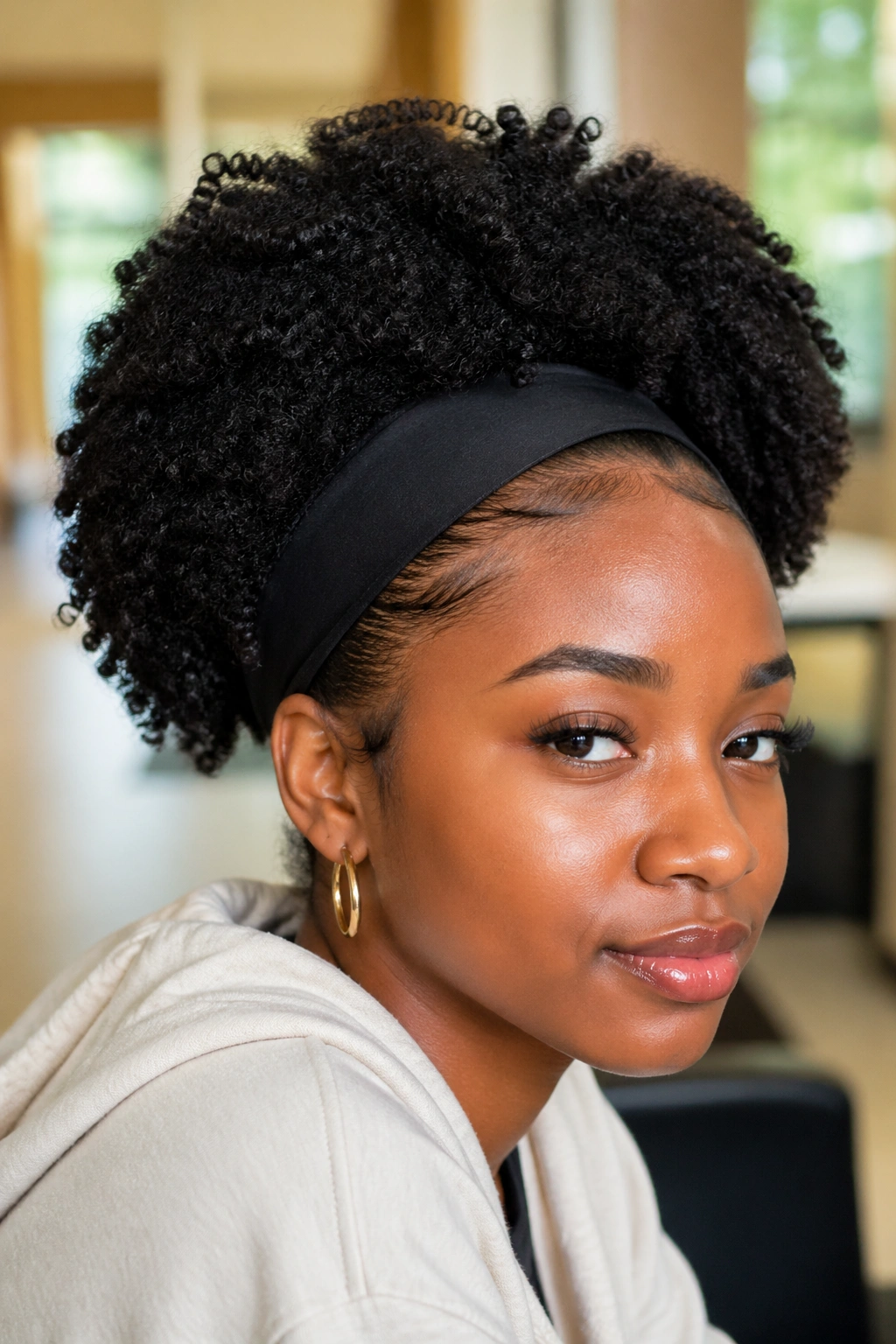
This is the simplest style on the list and one of the most effective for a rushed morning. Wear your hair in whatever natural state it’s in — wash-and-go, day-three puff, whatever — and add a headband.
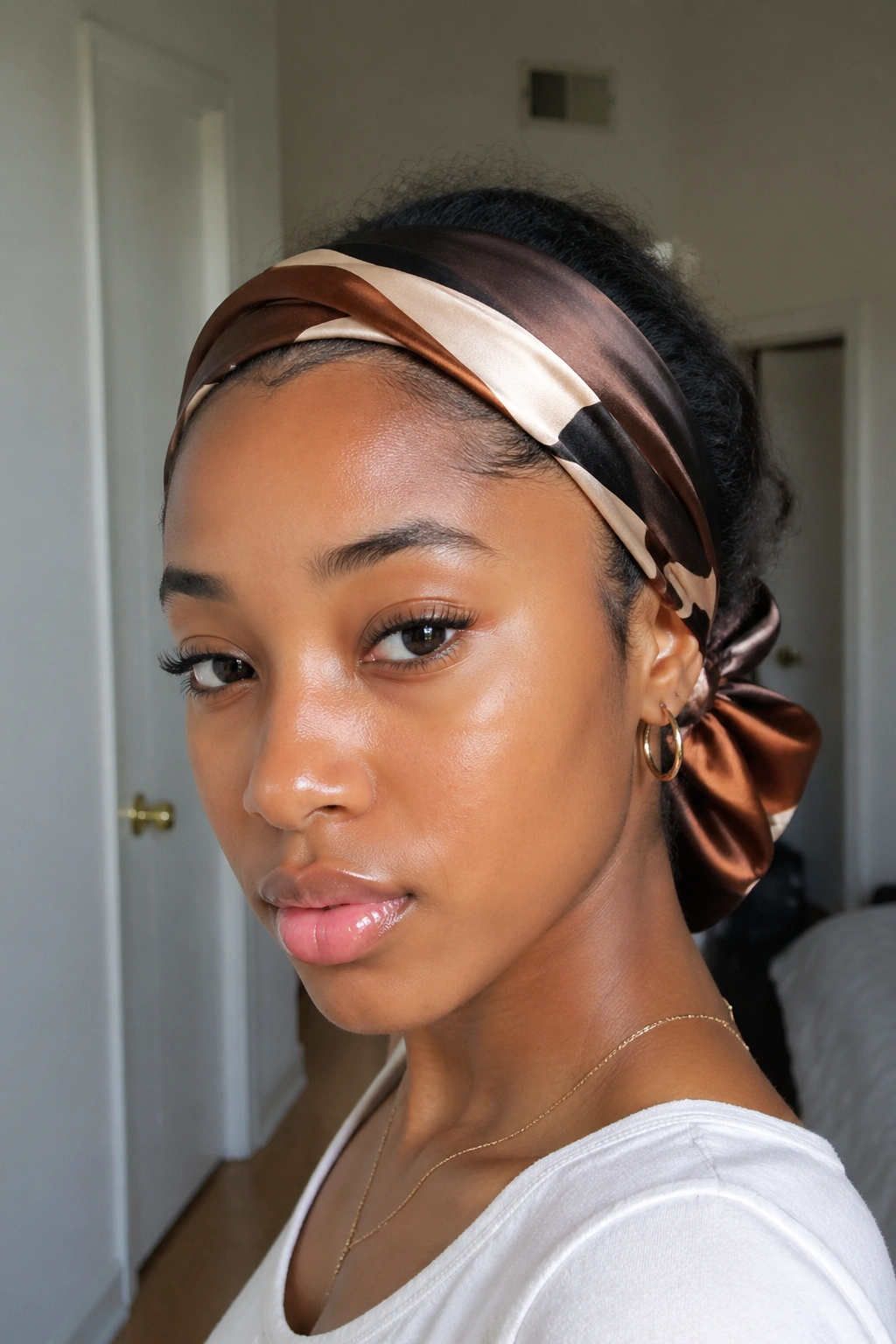
A wide satin or fabric headband across the front of the hairline keeps edges smooth and turns an imperfect hair day into an intentional-looking style. The headband draws attention upward, framing the face, and the natural hair behind it fills in the silhouette.
For campus, this is the move for exam mornings, early-morning study sessions, or any day where you simply did not have capacity for a hair routine. It is not giving up. It is strategizing.
14. Faux Locs with Natural Hair Only
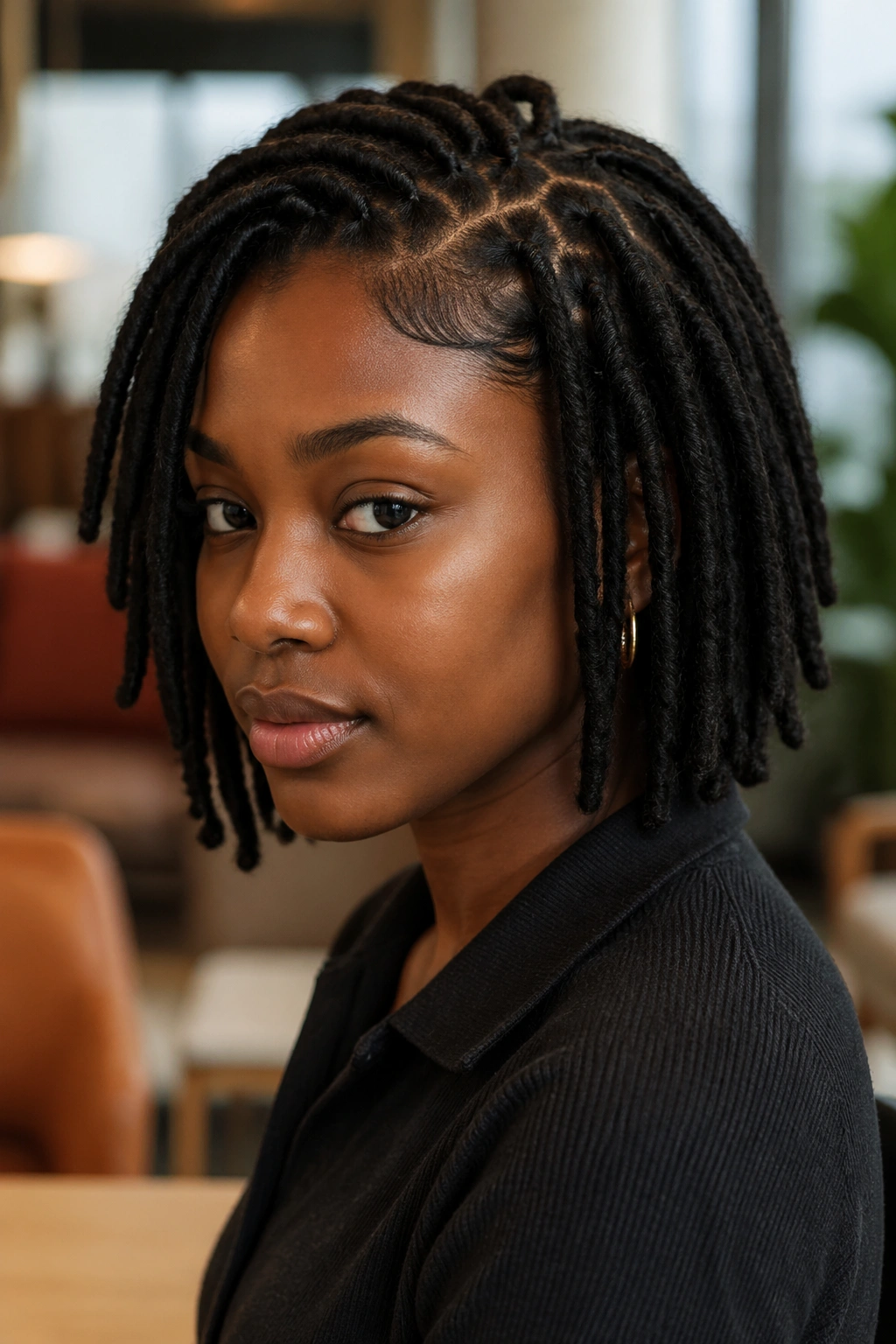
Faux locs installed without extension hair — just your own natural hair, coiled around itself in loc-like sections — is possible on medium-length hair and produces short, chunky faux locs that fall between the chin and shoulder.
The technique: section the hair, twist each section tightly from root to tip, then coil the twist around itself into a thicker rope and secure at the end. The resulting faux loc is not as long or as uniform as extension-based faux locs, but the texture is entirely natural and the maintenance is minimal.
These last about two weeks before the roots need attention. Spritz with water every few days and seal with a small amount of oil to keep the locs from drying out and fraying.
15. Defined Wash-and-Go for Lecture Days
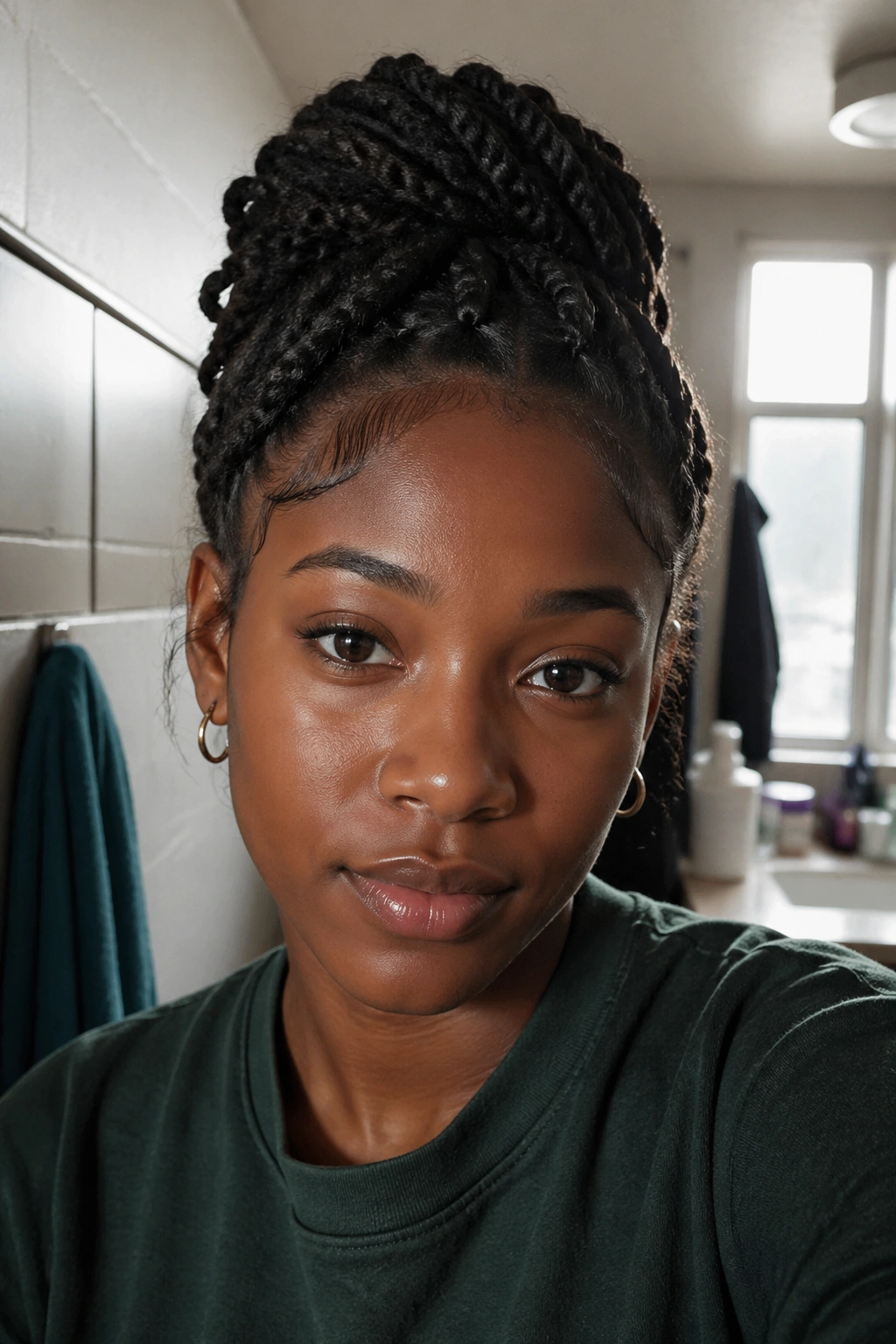
A clean, defined wash-and-go — where every curl section is visible and the pattern is uniform — reads professional enough for any academic setting, including presentations, job fairs, or faculty meetings.
The technique requires more product than a casual wash-and-go. Rake a thick curl cream through completely soaked sections, palm by palm, smoothing downward. Then apply a gel over the cream for hold. The gel cast will feel stiff until the hair is fully dry. Scrunch with oil afterward to soften it.
How to Get the Most From It
Apply products in the shower while standing under running water, if you can. The running water gives you the saturation level that makes product distribution easiest. Works significantly better than applying products over a sink.
Allow to air dry or diffuse on low. Do not touch it while it dries. Honest timeline: this takes about forty-five minutes to install correctly plus drying time. It’s not a morning-of style — do it the evening before.
16. Two-Puff Style (Double Buns)
Part the hair horizontally ear-to-ear. Gather the front half into a puff or bun at the top of the head; gather the back half into a second puff or bun at the nape. Secure both.
Two puffs instead of one gives a playful, high-energy look that’s everywhere on campus. It’s not just a kids’ hairstyle — worn with defined edges and clean sections, it looks polished and fun. The contrast between the two gatherings creates visual interest.
For shorter natural hair, both puffs end up small and tightly compact — a different look than on longer hair, but equally valid. For medium-length hair, the proportions are particularly flattering.
17. Frohawk for Bold Days
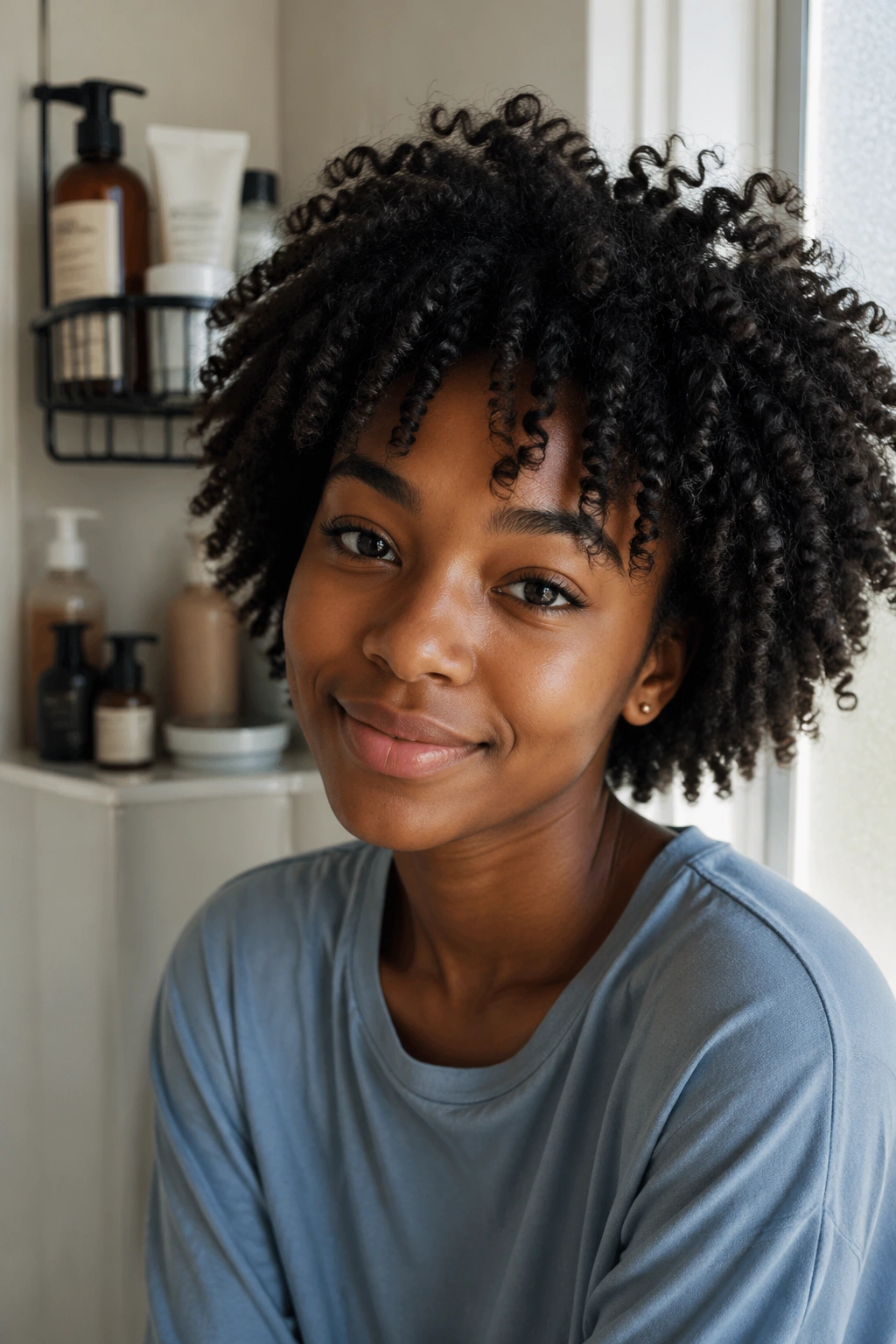
This doesn’t require any cutting. Pin or gather the sides of your hair flat — using bobby pins, small hair ties, or braiding — and leave the center section free. Pick or fluff the center strip upward for height.
The frohawk is for when you want your hair to make a statement. It’s assertive. It commands attention. And it’s faster than it looks — the pinned sides take five minutes, the fluffing takes two. Total of seven minutes for a look that photographs like you spent an hour on it.
Medium-length afro hair gives the frohawk its best proportions. Long enough for the center strip to have real presence; short enough that the pinned sides don’t create too much bulk at the temples.
18. Twist-and-Curl Hybrid
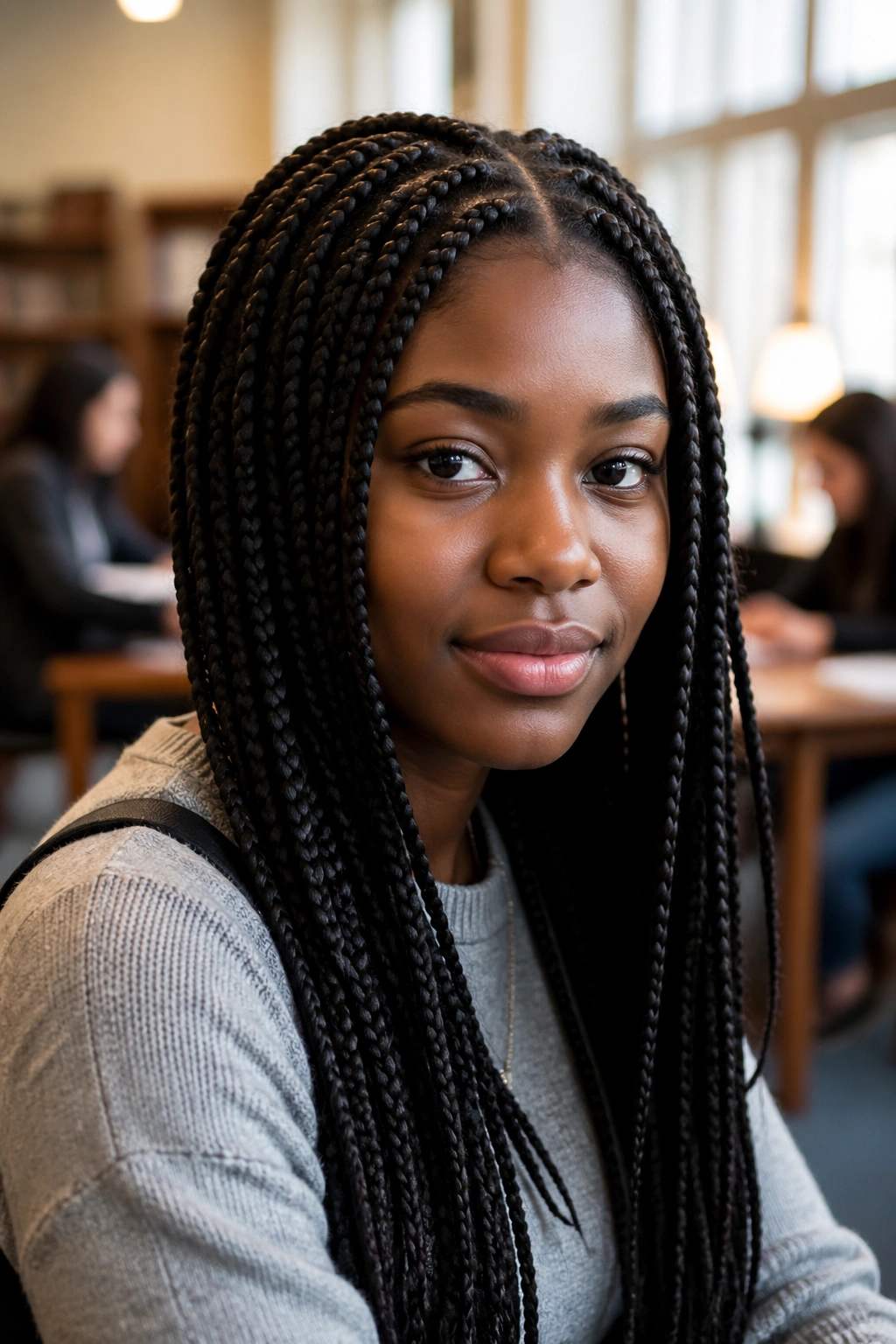
Apply a curl cream to wet hair in sections, but instead of twisting the whole section, twist only the first two-thirds of the section from the root, then release and let the remaining length curl naturally. The result is a hybrid — defined twists near the root, loose curls at the ends — that has more dimension than either technique alone.
This works best on 3C through 4A hair where the ends have enough curl pattern to coil on their own. On very tight 4C textures, the ends may need a flexi rod or pin curl to set the curl shape.
The visual interest of a twist-and-curl on medium-length hair — the transition from defined to free — reads textural and layered in a way that simple styles often don’t.
19. Scalp Braid Accents with a Free Afro
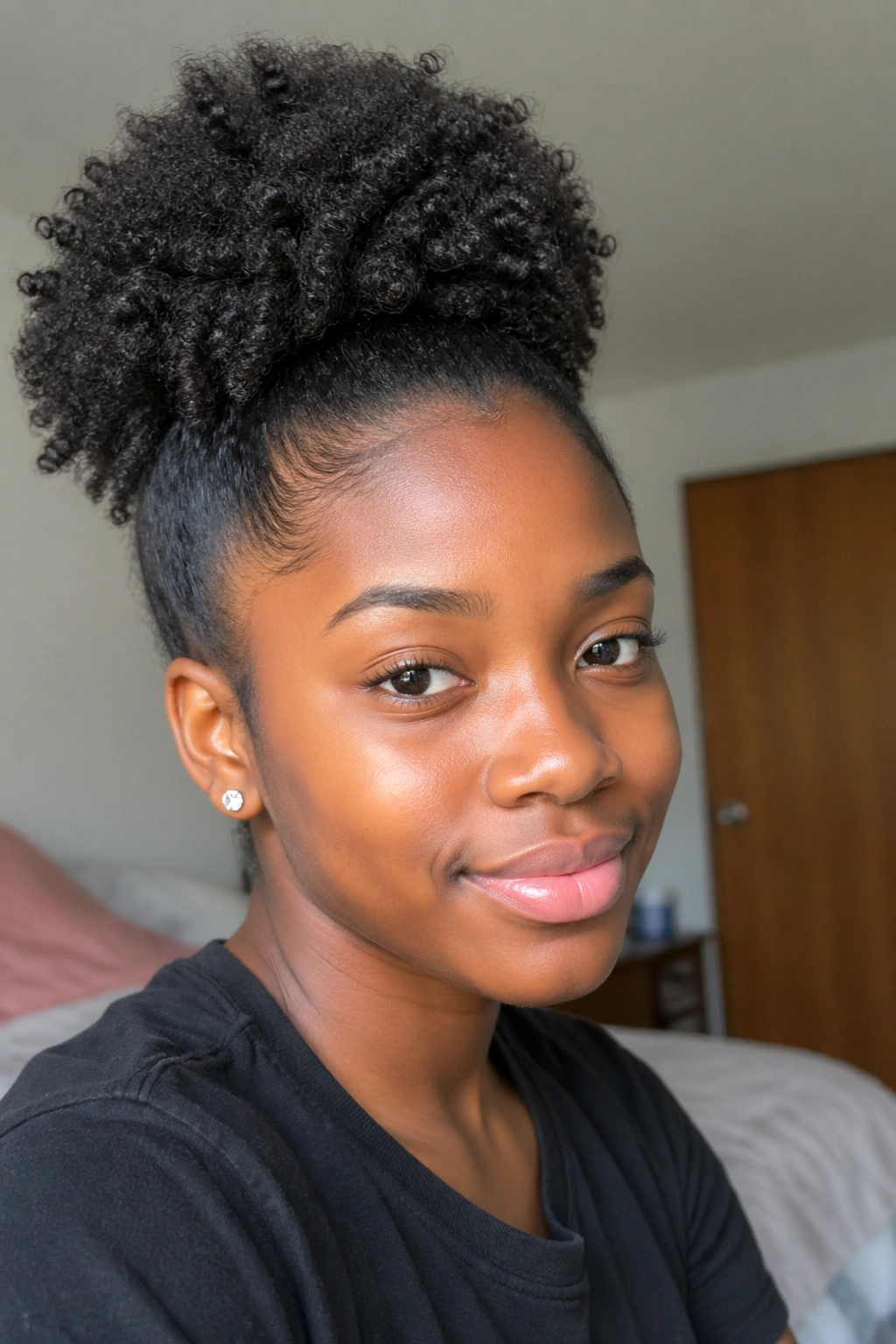
Cornrow two or three sections at the front of your head — just the hairline, not the whole head — and leave the rest of your hair free in its natural state. The braided sections at the front serve as structural accents, keeping hair out of your face while the rest of the afro does its natural thing.
This style is lower-commitment than a full cornrow set. You only need to braid a small portion of your hair. The result feels like a more detailed wash-and-go — your texture is still the feature, but you’ve added a sculptural element at the front.
Great for naturals who want the freedom of a wash-and-go but find the hair falling forward into their face during class or study sessions.
20. Cornrow and Puff Combination
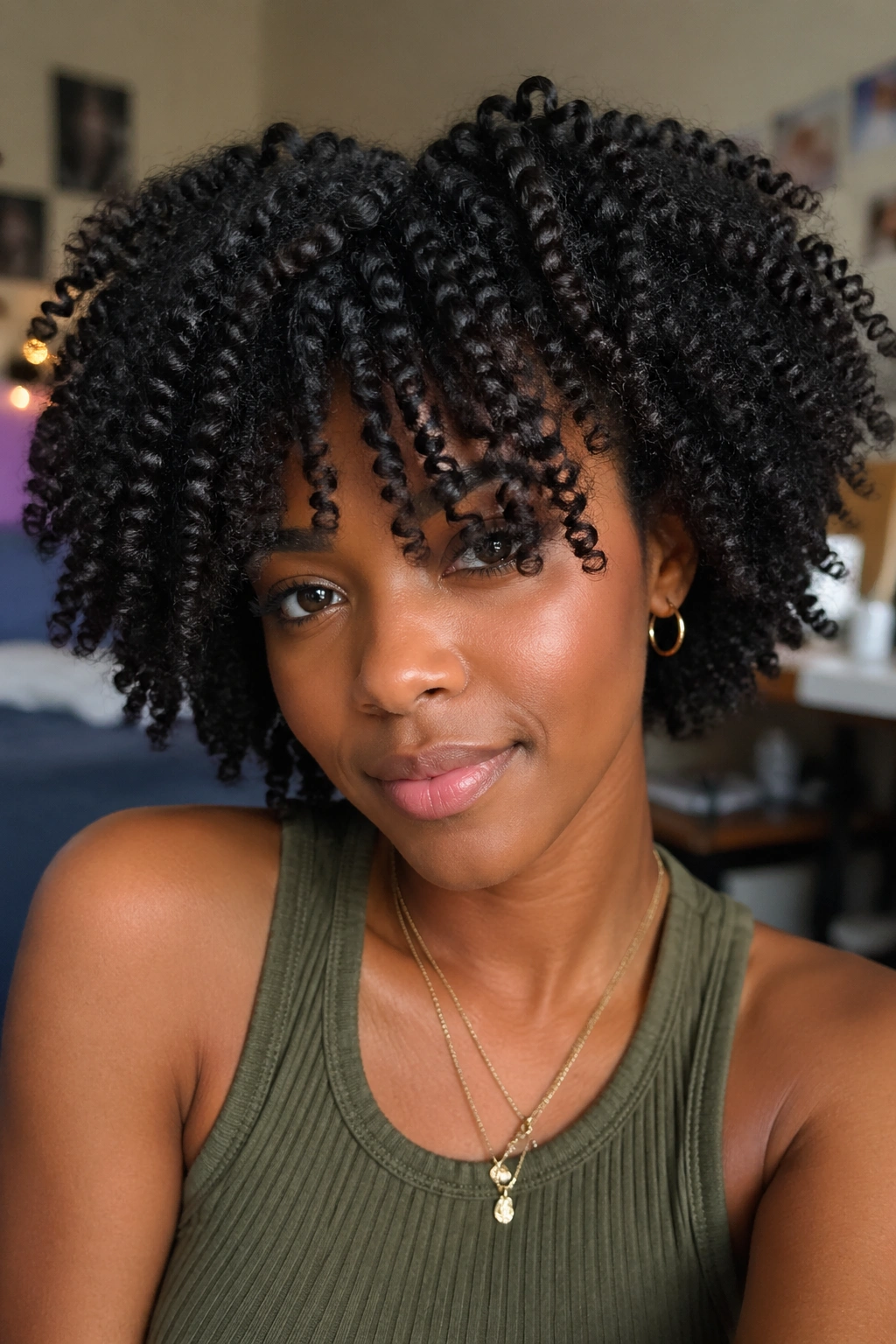
Cornrow the front two-thirds of your head, stopping about two-thirds of the way back. Leave the remaining back section free and gather it into a puff above the cornrows.
The puff sits like a crown above the cornrows and creates a combination look that borrows from both the sleek, structured cornrow aesthetic and the voluminous naturalness of the puff. It’s one of the best hybrid styles in natural hair for exactly this reason: it’s both at once.
Installation takes about an hour if you’re braiding your own hair. It lasts a full week without much maintenance. The cornrow portion can be re-laid with a small amount of braid spray at day four or five if the edges start to look fuzzy. The puff refreshes with a morning misting and scrunch.
This is the style to build toward if you’re not comfortable with cornrows yet. Practice the braiding on a weekend afternoon when there’s no pressure and you don’t have anywhere to be.
Dealing With Gym Class, Labs, and Outdoor Campus Life
Sweat, chlorine, lab chemicals, outdoor wind — natural hair encounters all of these things in an academic environment, and each one asks something different of your routine.
After a gym session: the scalp sweats, which is fine and healthy. The issue is letting sweat sit in the hair without refreshing. A quick rinse with water — just water, no shampoo — after intense exercise removes salt buildup from the scalp and hair surface. Follow with a very light leave-in mist and you’re done. This is not a wash day. It’s a rinse and refresh. Takes five minutes.
Swimming is a different situation. Chlorine is harsh on natural hair, breaking down the protein structure with repeated exposure. Before you get in the pool, saturate your hair with plain water. Hair that’s already full of water absorbs less chlorine. After swimming, shampoo the chlorine out the same day rather than waiting for your regular wash day. A quick sulfate-free shampoo and rinse followed by a leave-in is better than letting chlorine sit in the hair for three days until your next scheduled wash.
Outdoor campus life — wind, sun exposure, humidity changes — affects natural hair predictably. Wind causes tangling at the ends, which leads to knots that take time to detangle later. A simple braid or twist before going outside keeps the ends from snarling. Protective styles handle outdoor days better than free styles for exactly this reason.
Direct sun exposure bleaches natural hair color over time with consistent exposure. A hat, a scarf, or just keeping a protective style in during months with heavy outdoor time keeps color from fading. This matters especially for naturals who have built color into their hair through henna or dye.
Budget-Friendly Natural Hair on a Student Income
Let’s be honest: the natural hair product industry wants you to spend a lot of money. You don’t have to.
The products that genuinely justify their price at a student budget level: a sulfate-free shampoo (a mid-sized bottle lasts two to three months washing weekly), a conditioner heavy enough to detangle and deep condition (two products in one is more efficient), and an edge gel. That’s the core.
Curl creams and defining products have massive price variation. A drugstore curl cream that performs well for your texture is not inferior to a prestige product. The ingredient list matters more than the brand. If the first five ingredients match what’s in a fifty-dollar jar, the fifteen-dollar alternative will produce essentially the same result.
Oils are interchangeable at the base level. Jojoba, sweet almond, and grapeseed oil are all effective sealants and can be bought at grocery or health food stores for a fraction of what specialty hair-oil brands charge.
DIY deep conditioners — a cup of conditioner mixed with a tablespoon of honey and a tablespoon of coconut oil — cost pennies and perform at the level of professional masks. Honey is a humectant that draws moisture into the hair shaft. Coconut oil penetrates rather than just coating. The combination is genuinely effective and requires nothing from a specialty store.
Making Protective Styles Last Through a Full Academic Term
The two things that determine how long a protective style lasts: how well you installed it and how well you maintain it overnight.
Installation: clean, moisturized hair, not pulled too tight, with product sealed in at the ends. Styles installed on dry, brittle hair don’t last because the hair breaks. Styles installed too tightly cause tension alopecia at the hairline over time — the bald patches at the temples and nape that some people dismiss as “natural” but are actually from years of too-tight braids.
Overnight maintenance: bonnet, always. A satin scarf tied around the hairline keeps edges fresh. A satin or silk pillowcase as backup if you lose the bonnet in the night. The goal is zero friction between your hair and anything else while you sleep.
What to Do on a Bad Hair Day at School
Bad hair days happen. They happen to every natural, at every skill level, regardless of how good your products are or how carefully you followed your routine. Knowing how to recover quickly matters more than avoiding them entirely.
The puff is the fastest recovery. Whatever is going on — undefined, frizzy, not-cooperating hair — the puff contains it and turns it into a deliberate silhouette. Two minutes maximum.
The satin scarf or headband is the second option. If the puff isn’t even cooperating, a fabric headband across the front covers the edges and turns imperfect hair into a headband day. Completely valid.
Dry shampoo for natural hair — or a light cornstarch sprinkle worked into the roots — absorbs excess oil buildup mid-week that makes the hair feel heavy and look greasy, which is sometimes the whole problem.
And occasionally: let it be what it is. Natural hair in its unstyled, moisturized, free state isn’t wrong. An afro that’s not perfectly picked out is still a full, real hairstyle. You don’t owe anyone a presentation-ready style every single morning.
Handling Natural Hair at Schools Where It’s Not Understood
This is real. Natural hair discrimination exists in academic spaces — dress codes that target afros, comments from peers, uncomfortable questions from people who think touching your hair is acceptable. It is not.
Wear your hair how you want to wear it. The styles in this list — all of them — are appropriate for every academic context. A high puff is not less professional than a flat-ironed blowout. Bantu knots are not less appropriate than a low chignon. The same standard of professionalism that applies to one hair texture applies to all of them.
If your institution has explicit written policies that target natural Black hair, look up what legal protections are available in your state or country. The CROWN Act protects natural hair in education and workplaces in a growing number of U.S. states. Know your rights.
Building a Weekly Rotation That Works
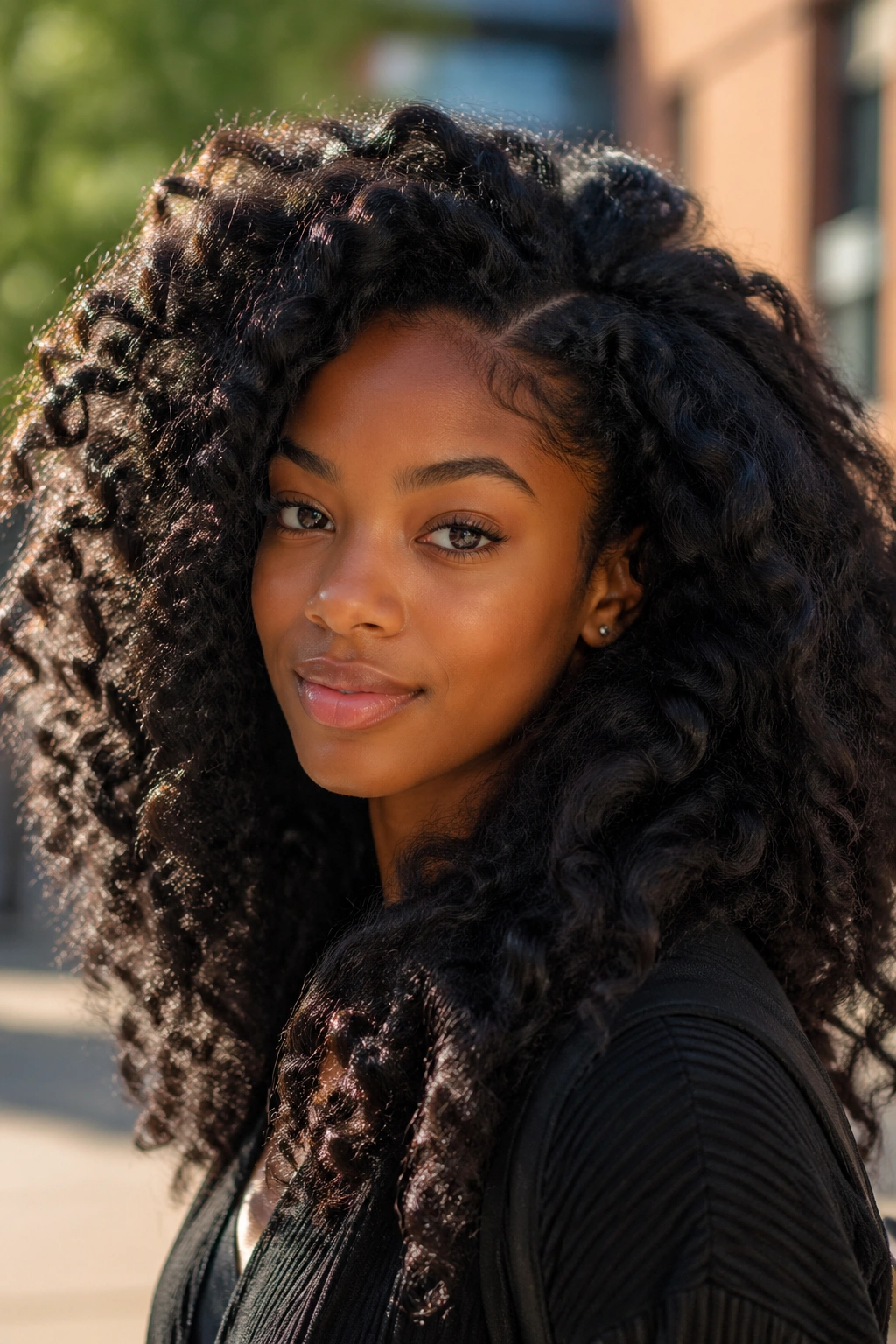
The most sustainable approach to school-year natural hair is a rotation — not one style worn to destruction, but a rhythm that alternates between high-effort installed styles and low-effort daily styles.
A simple semester rotation: two weeks of protective style (cornrows, crochet, flat twists), followed by one week of daily styling (puff, twist-out, braid-out alternating). Wash day lands every seven to ten days. Deep condition weekly during the daily-styling week.
This gives your hair regular protective periods while also giving it regular washing and moisturizing access. Neither extreme — constant protective styles with no washing, or daily manipulation with no protected periods — is great for hair health. The alternation is what builds length over time and keeps your hair looking its best through a full academic year.
