

Big cornrow styles take everything subtle about traditional braiding and turn the volume up. Thick rows. Bold lines. Statement-making proportions that read as confident from across a room. Where small cornrows whisper, big cornrows speak loud.
The appeal goes beyond just visual impact. Big cornrows install faster than micro versions — sometimes in under two hours for a full head. They put less tension per row on your scalp because there are fewer parts pulling at follicles. And they show off your hair density rather than hiding it under tiny intricate work.
What follows is a deep look at 22 different big cornrow styles. Each one has its own row count, parting choice, finishing detail, or extension approach that sets it apart. Big doesn’t mean repetitive — there’s range within the chunky braid territory.
What Counts as a “Big” Cornrow
There’s no official measurement. But generally, cornrows that span an inch or more in width per row qualify as big. Anything thinner than three-quarters of an inch starts feeling medium. Quarter-inch rows are tiny by comparison.
Big cornrows usually mean fewer rows total. Three to seven rows across the whole head is the typical range. Below three feels mohawk-territory. Above seven starts edging into medium width.
The thickness comes from the section size, not from extensions alone. Even all-natural-hair big cornrows still need substantial section width per row to qualify as big.
Why Bigger Cornrows Take Less Tension Per Strand
Math makes the case. Twelve thin rows pull tension at twelve points. Five thick rows pull tension at five points. Same head, fewer pull points, less stress per follicle.
That doesn’t mean big cornrows are damage-free. A poorly installed thick braid can still rip out edges. But done with moderate tension, big cornrows tend to be gentler on the scalp than micro alternatives.
For women dealing with thinning edges or scalp sensitivity, big cornrows offer protection without the constant micro-pull of tighter installs.
Prep for Big Cornrow Installs
The same washing, deep conditioning, and stretching rules apply. Clean hair grips better. Conditioned hair flexes without breaking. Stretched hair shows even row spacing.
Thicker rows ask for slightly damp hair rather than fully dry hair. The dampness lets your braider compress the section into the braid more tightly, creating a denser, fuller-looking row. Bone-dry hair springs back and creates puffy, loose-looking braids.
Use a strong-hold edge gel along the parting lines. Big rows leave more scalp visible between them, which means flyaways and frizz at the parts read more obviously than in tight, dense styles.
Choosing Between Three, Five, and Seven Rows
Three rows is the boldest possible big cornrow style. Each row carries roughly a third of your hair, making them dramatic and chunky. Best on faces with strong features that can support the visual weight.
Five rows hits the most popular sweet spot. Wide enough to feel substantial, narrow enough to flatter most face shapes. The standard recommendation if you’re trying big cornrows for the first time.
Seven rows still qualifies as big but reads more delicate. Each row is thinner, allowing for more decorative detail and finer parting work between them.
Tools That Make Big Cornrows Easier
A wide-tooth comb for sectioning. A rat-tail comb for clean parts between rows. Sturdy clips that hold thick sections without snapping. Edge brush for finishing the perimeter.
Forget the tiny detangling combs. Big sections need wide teeth that can pass through without catching. A denman brush works well for smoothing each section before braiding.
For extensions, opt for pre-stretched kanekalon in matching tones. Pre-stretched hair has less tangle issues and integrates more smoothly into thick braids.
1. Three Jumbo Cornrows All Back
Three thick cornrows running from hairline to nape. That’s it. Bold, fast, and unmistakable.
Why It Works
- Installs in under an hour
- Reads bold without looking try-hard
- Easy to wash and maintain
- Lasts 1-2 weeks before needing refresh
Tip: Have your braider make the center row slightly thicker than the side rows. The proportional weight in the middle balances the look.
2. Five Big Cornrows With Beaded Tips
Five rows running back, ends finished with one large brass or wooden bead each. The beads click as you move and add a heritage detail to the simple pattern.
The bead size matters here. With big braids, tiny beads look lost. Pick beads at least the diameter of a dime to read against the thick rows.
Brass beads patina over time, developing a warm aged look. Wooden beads keep their color but can crack if dropped. Both work, just pick based on how you want them to age.
3. Big Side-Swept Cornrows
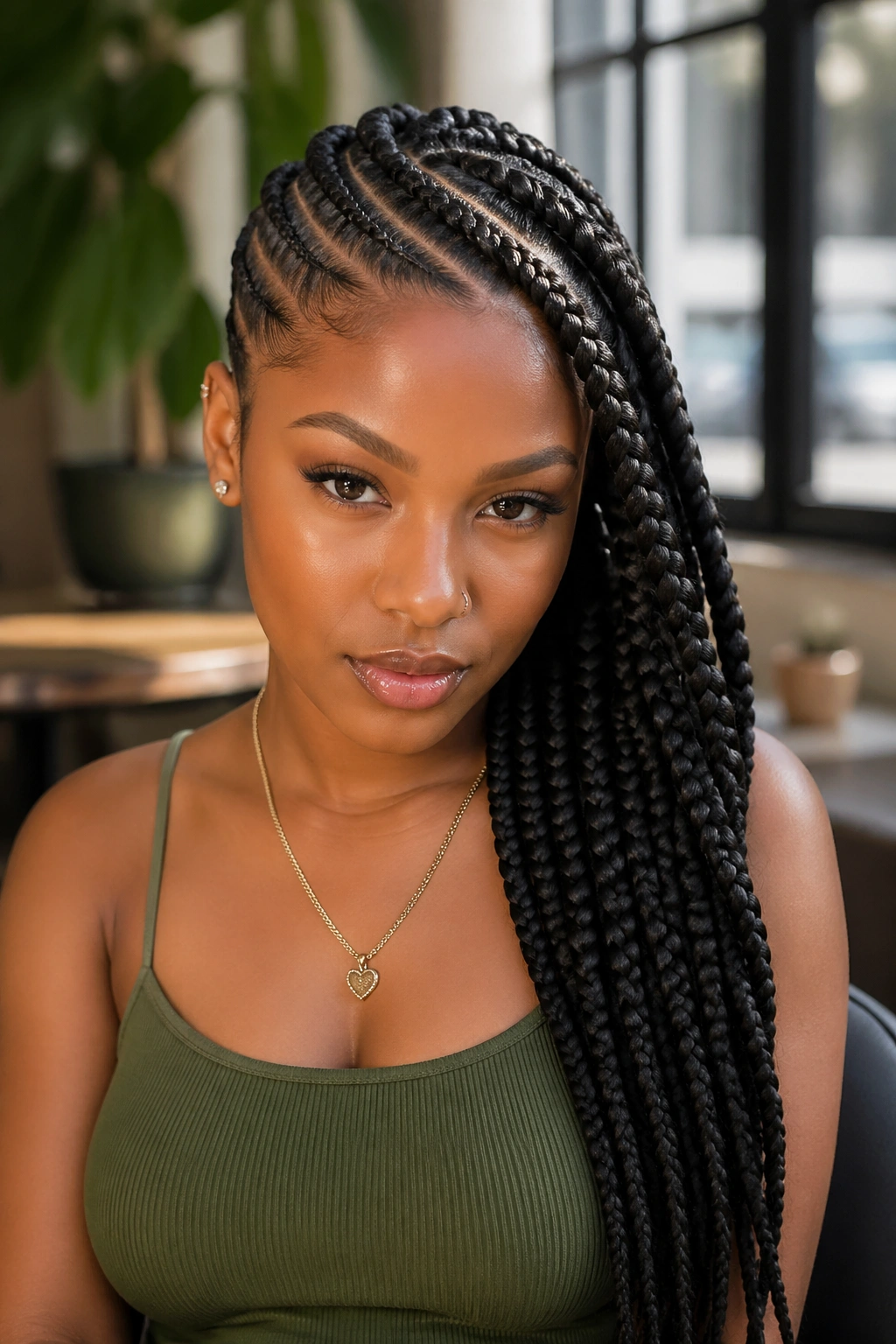
Four to five thick cornrows angling diagonally to one side. All rows lean toward one shoulder, creating an off-center finish.
What’s different about this version: the heaviness of big rows makes the side-sweep more dramatic than thin-row versions. The asymmetry hits harder when there’s more hair pulling to one side.
Pair with off-the-shoulder tops or anything that exposes the opposite collarbone. The visual line of the braid sweep extends the line of the neck and shoulder.
4. Big Cornrows With Curly Bulk Tips
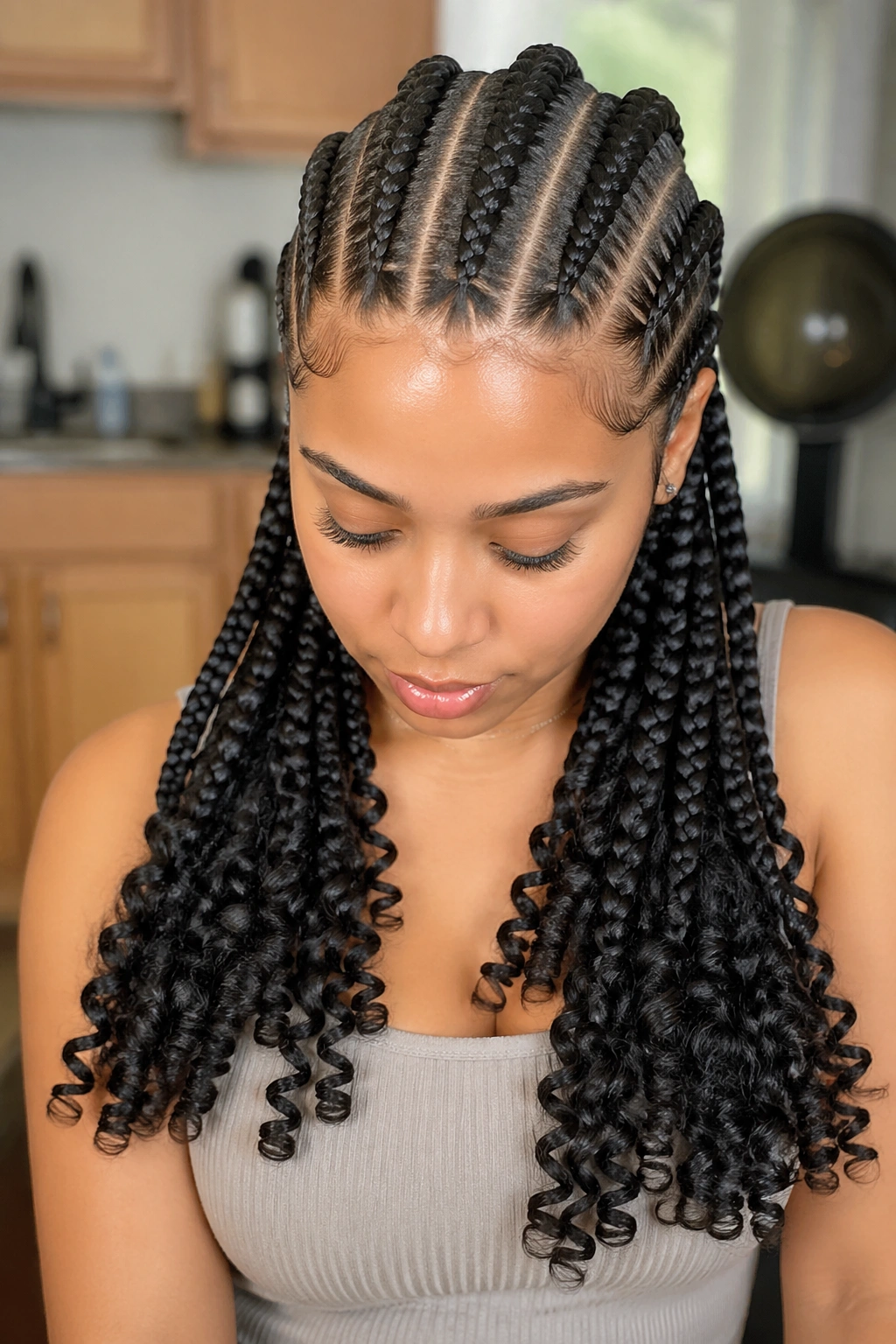
Cornrow extensions in big rows, but the ends are made of pre-curled kanekalon that adds bulk and curl to the bottom of each braid.
Picture five thick rows transitioning from sleek braid to a poof of curls at the tips. The contrast between tight scalp work and curly volume below is the entire point.
For best results, dip the curly tips in warm water before unbinding to refresh and shape the curls.
5. Six Big Cornrows With Center Part
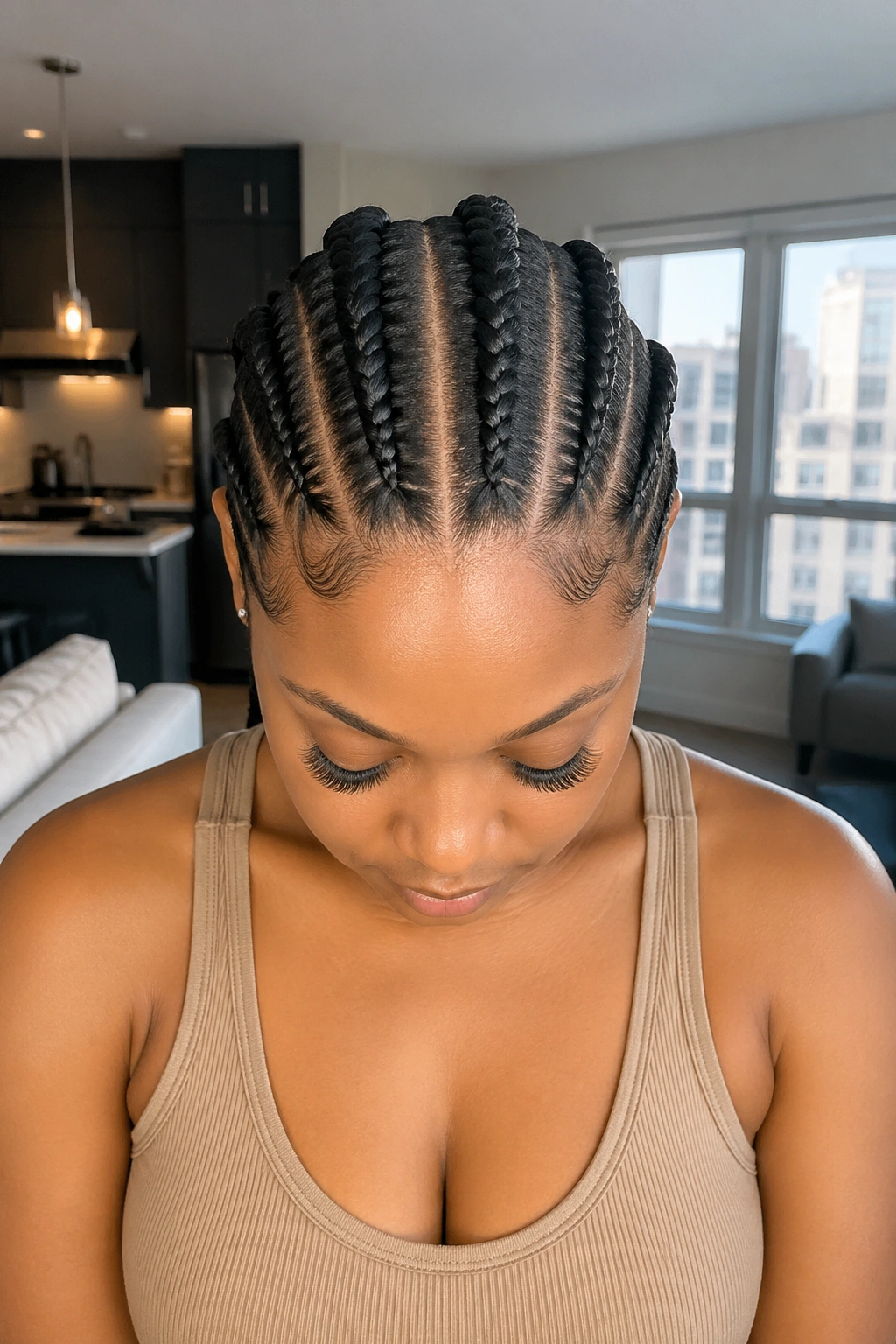
Three thick rows on each side of a deep center part. Symmetrical, classic, and easy to wear with anything.
Why the center part works: it splits the visual weight of big rows evenly across both sides of the face. No asymmetric tilt. Just balance.
The center part needs to sit dead-center to read as intentional. Off-center by even a half-inch and it looks like an accident.
6. Big Cornrows Into Two Side Buns
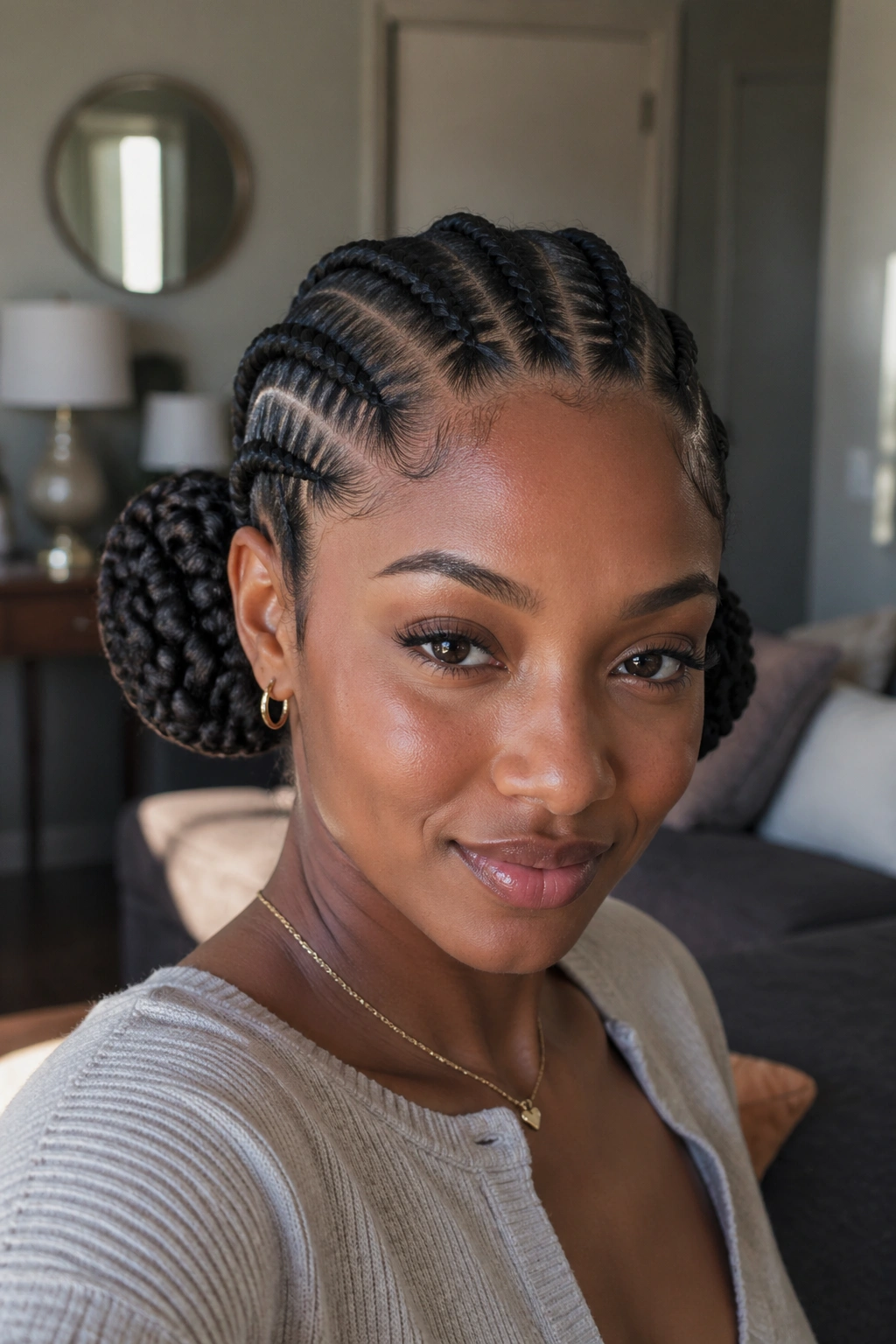
Five or six thick cornrows leading to two buns at the sides, behind each ear. The buns sit low rather than high, giving the style a relaxed but polished finish.
Styling Tips
- Buns should be the same size on each side for symmetry
- Use bobby pins matching your hair color to secure
- Mist with light hairspray to control flyaways
The dual side buns flatter heart-shaped faces by adding visual width at the jaw level.
7. Big Cornrows With Diamond Parts
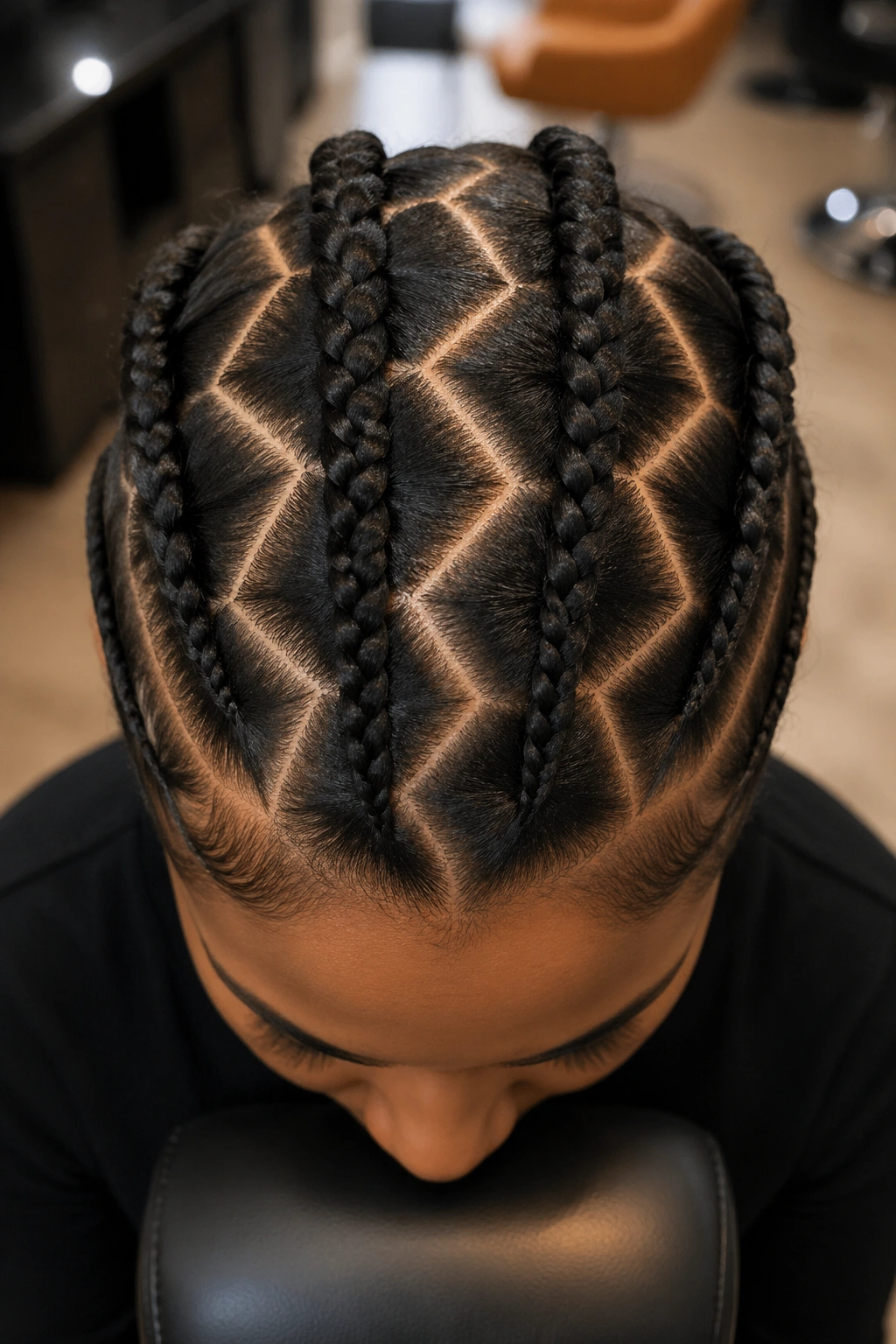
Instead of straight parts running front-to-back between rows, the parts form diamond shapes. The result is big rows that follow geometric paths across the scalp.
Hard to install well. The diamond parts need precision, and big braids on curved paths require a skilled hand. Budget extra time and find a braider who specializes in pattern work.
The geometric pattern photographs best from above. Overhead angles show off the diamond grid clearly.
8. Four Big Cornrows With Thread Wraps
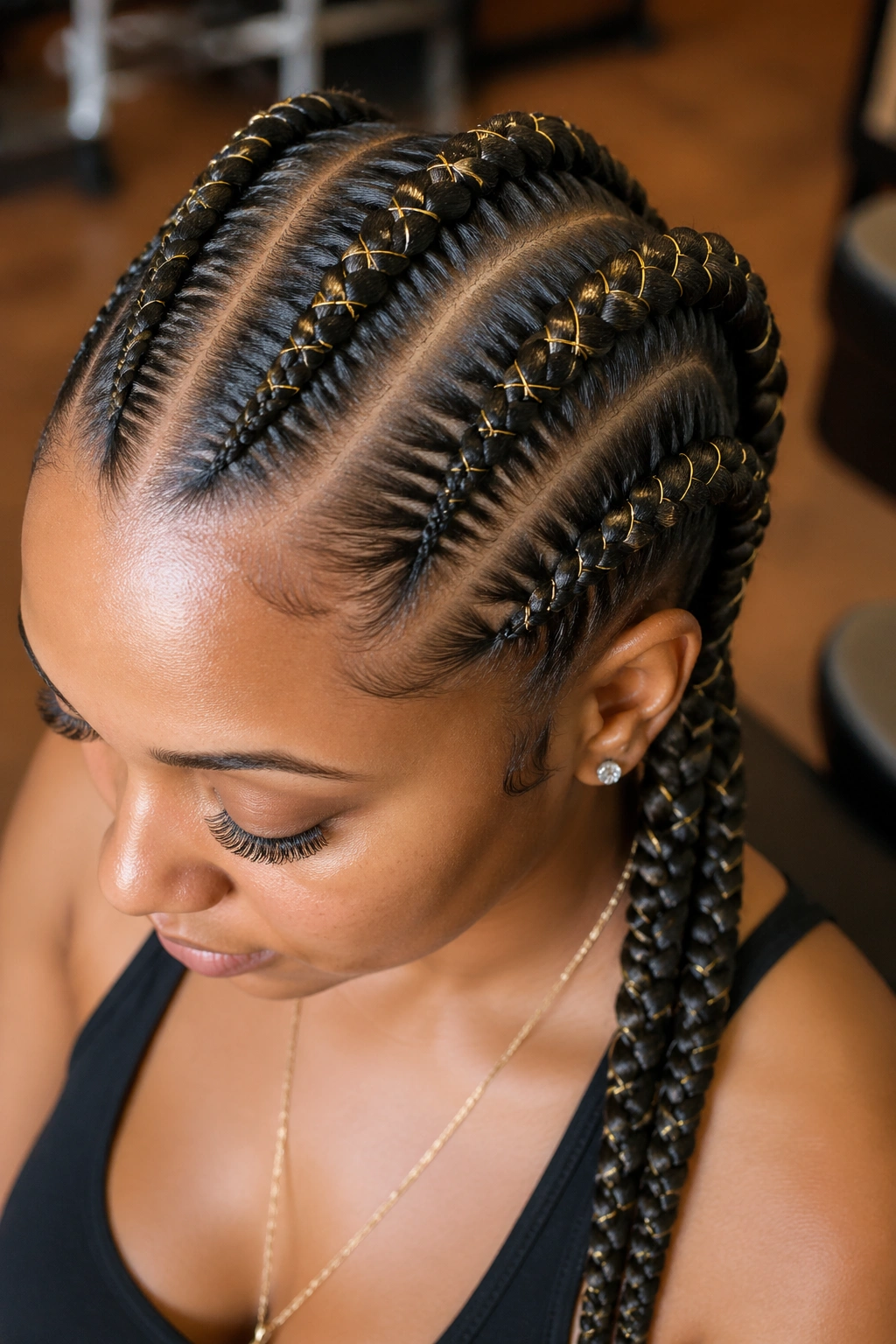
Four thick rows running back, with one or two of them wrapped from root to tip with metallic thread. The thread spirals around the braid, catching light as it goes.
Gold thread on dark hair reads luxe. Silver thread reads modern. Copper reads warm. Pick based on your skin undertone and overall vibe.
The wrap takes extra time per braid. Add 20-30 minutes per wrapped row to the install timeline.
9. Big Lemonade Cornrows
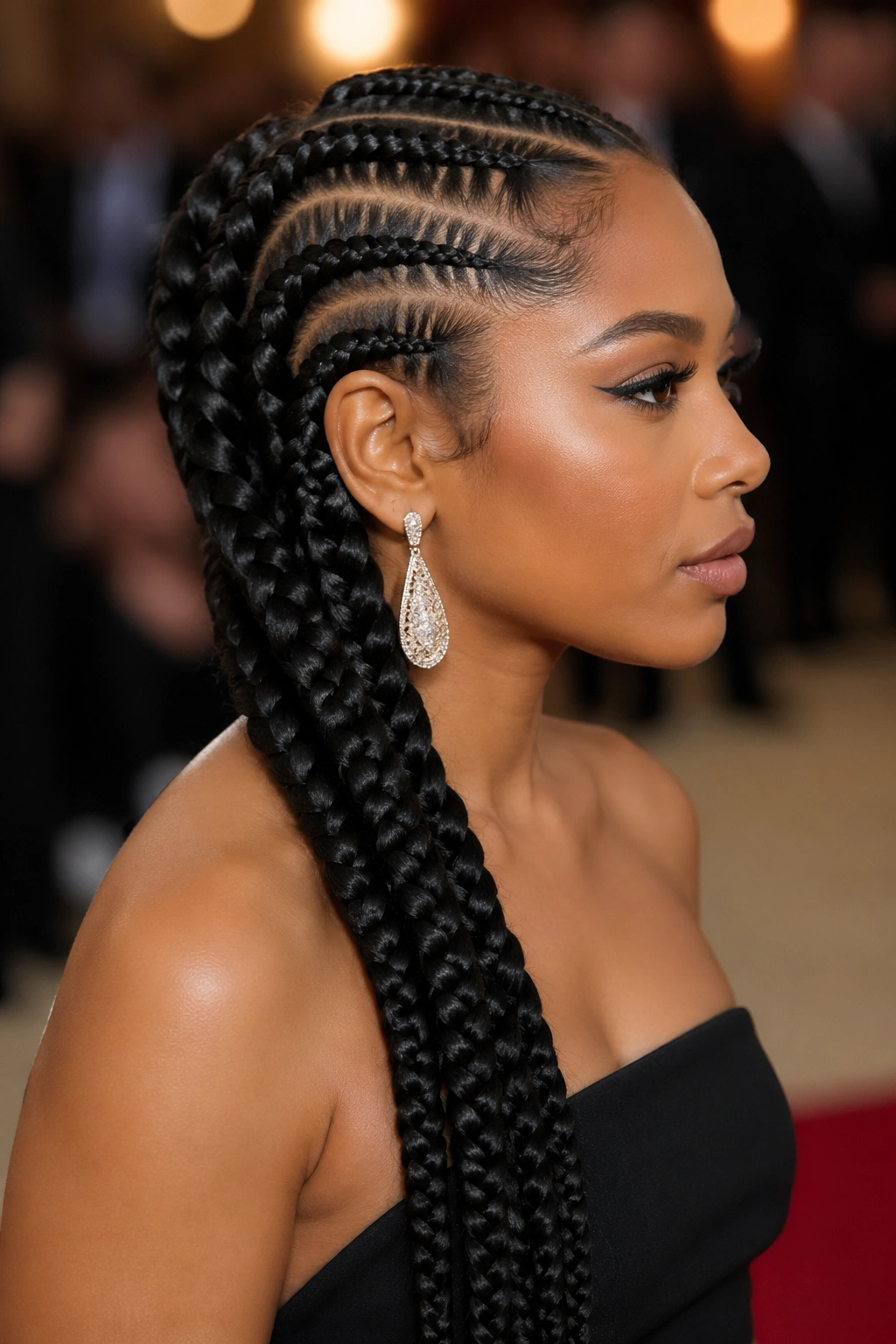
The Beyoncé-inspired style scaled up. All rows angle to one side and extend with kanekalon to past the shoulder. But these rows are jumbo, not standard width.
Big lemonade cornrows carry serious visual weight. The thick side-swept rows demand attention from across a room.
Best for events where you want your hair to be the focus. Not the most office-friendly look unless your office is creative.
10. Big Cornrows With Cowrie Shells
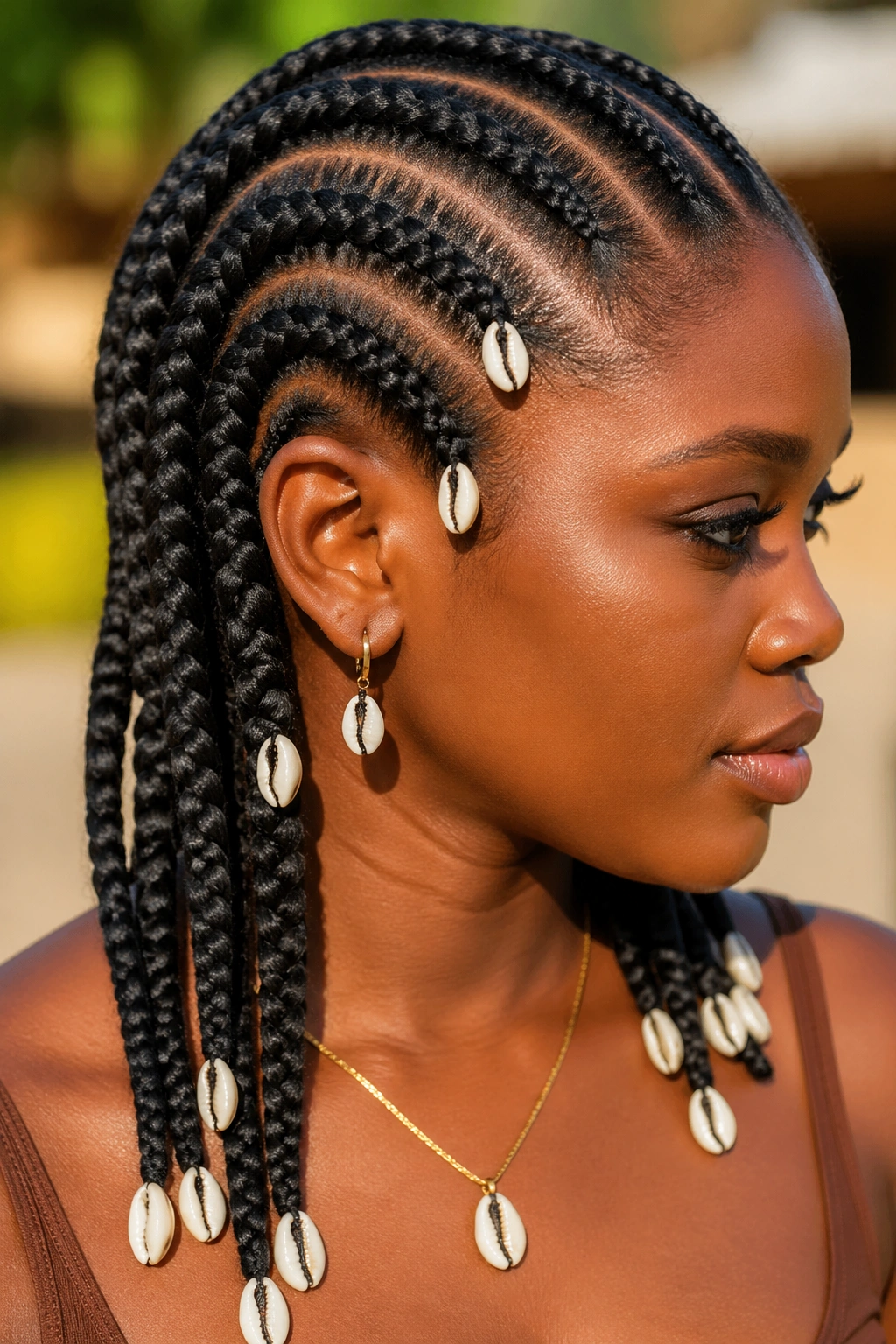
Five to six thick rows with cowrie shells woven into the braid bodies or threaded onto the ends. Cowries carry deep cultural significance in West African traditions.
The shells contrast against the dark braid color and catch light at every angle. The clicking sound when you move adds a sensory layer to the style.
Use real cowries, not plastic copies. The plastic versions look cheap and don’t hold up to wear.
11. Big Cornrow Mohawk
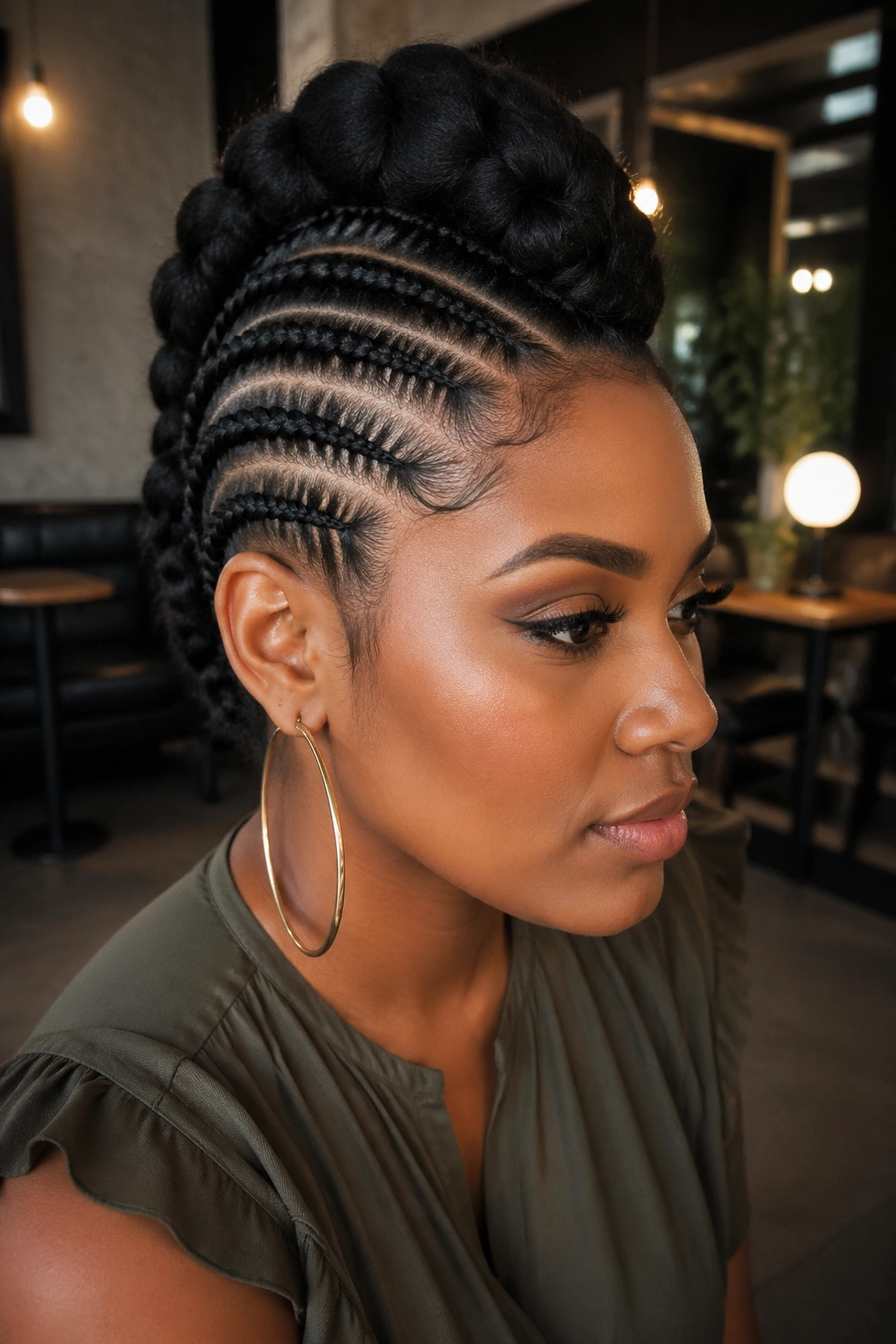
Sides cornrowed flat in big rows. The center strip stays raised — either as a single thick cornrow running down the middle or as a puffed-out natural section.
The mohawk look reads edgy without requiring any actual shaving. Reversible too — once you take the cornrows down, you’re back to a full head of hair.
Pair with hoop earrings and bold lipstick for a fully committed statement look.
12. Big Cornrows With Fade Sides
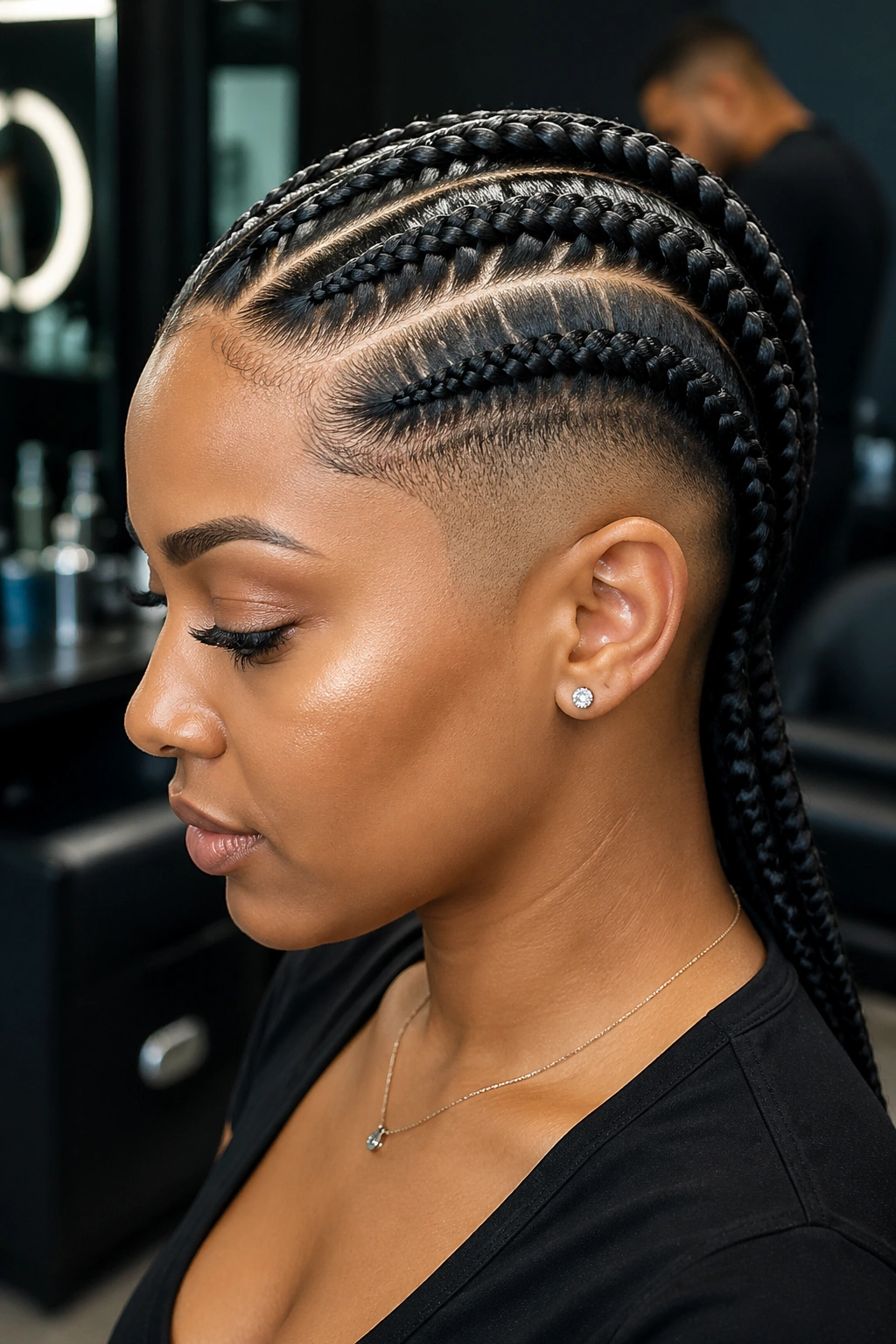
Big cornrows on top, faded or shaved sides. Maximum contrast between the thickness of the braids and the close-cut sides.
What to Watch For
- The fade needs touch-ups every 1-2 weeks
- The contrast can read masculine if not styled with intentional softness
- Edge maintenance becomes critical along the fade line
Best for women who already wear shorter sides regularly. New territory for those who haven’t.
13. Big Cornrows With Front Bump
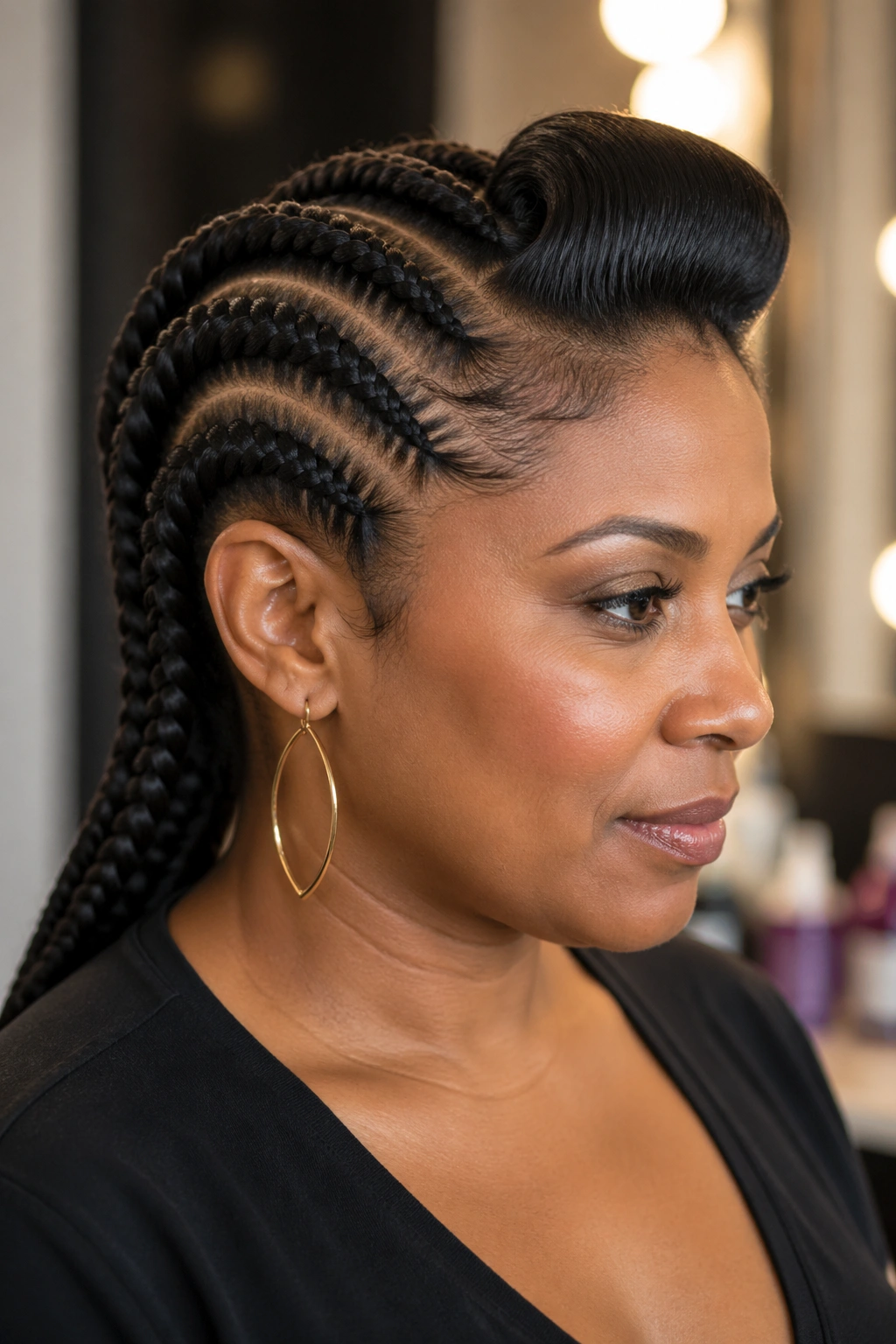
Standard big cornrows running back, with the very front section bumped up rather than braided flat. The bump creates volume and softness at the hairline before the braids take over.
The bump is created by combing the front section forward, lifting it slightly with mousse or pomade, then pinning it back to create a pompadour-like front piece.
Adds height to the face. Works well for round face shapes that benefit from vertical lift.
14. Big Cornrows in a Crown Braid
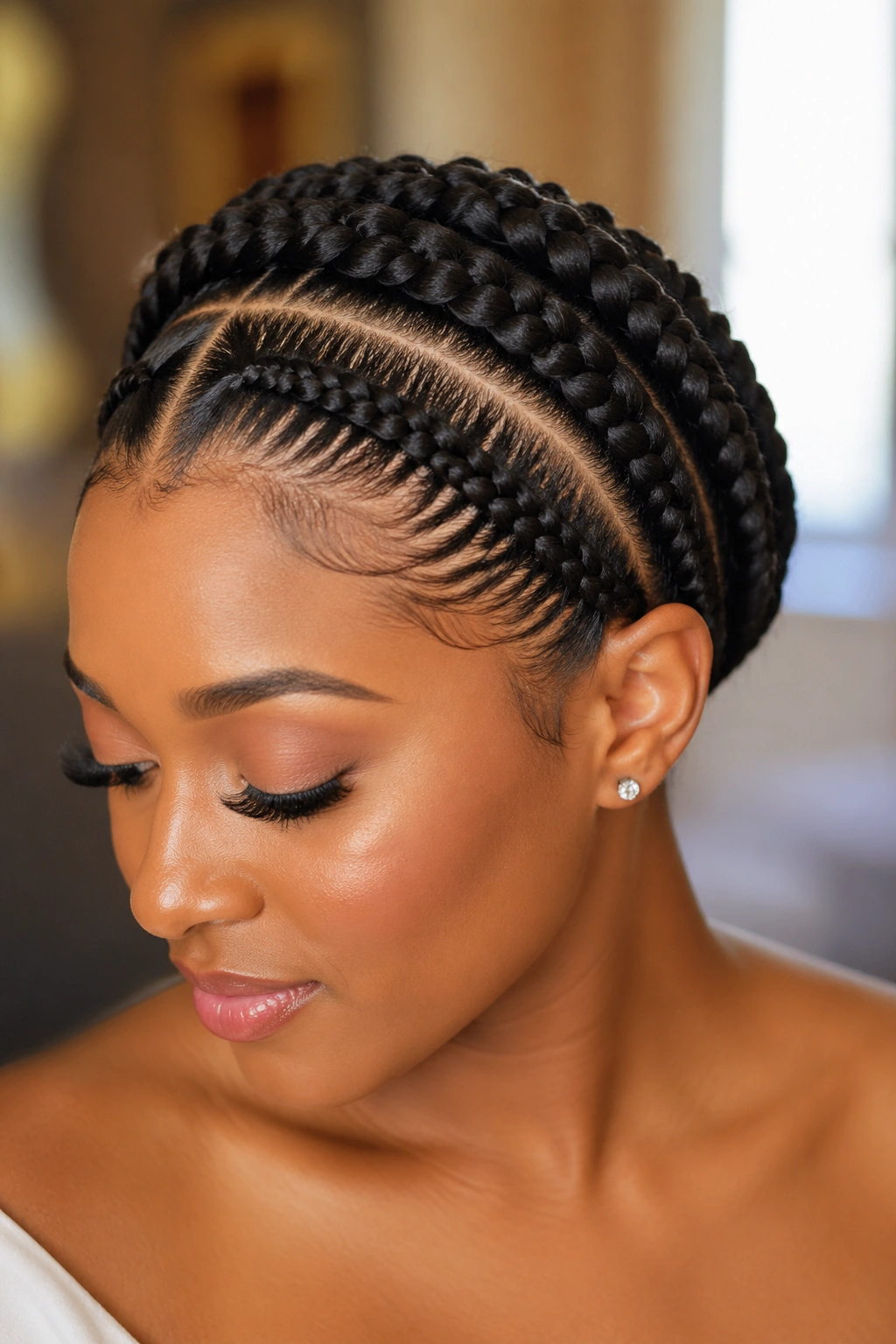
Four to five big cornrows, braided across the top of the head in a crown shape rather than going front-to-back. The braids encircle the head like a halo.
Hard to install. The crown direction means the braider works around your head rather than down it, requiring a flexible neck and patient sitting position.
The finished look is regal. Best for weddings, formal events, or any moment you want to feel like royalty.
15. Big Cornrows With Hidden Color Underneath
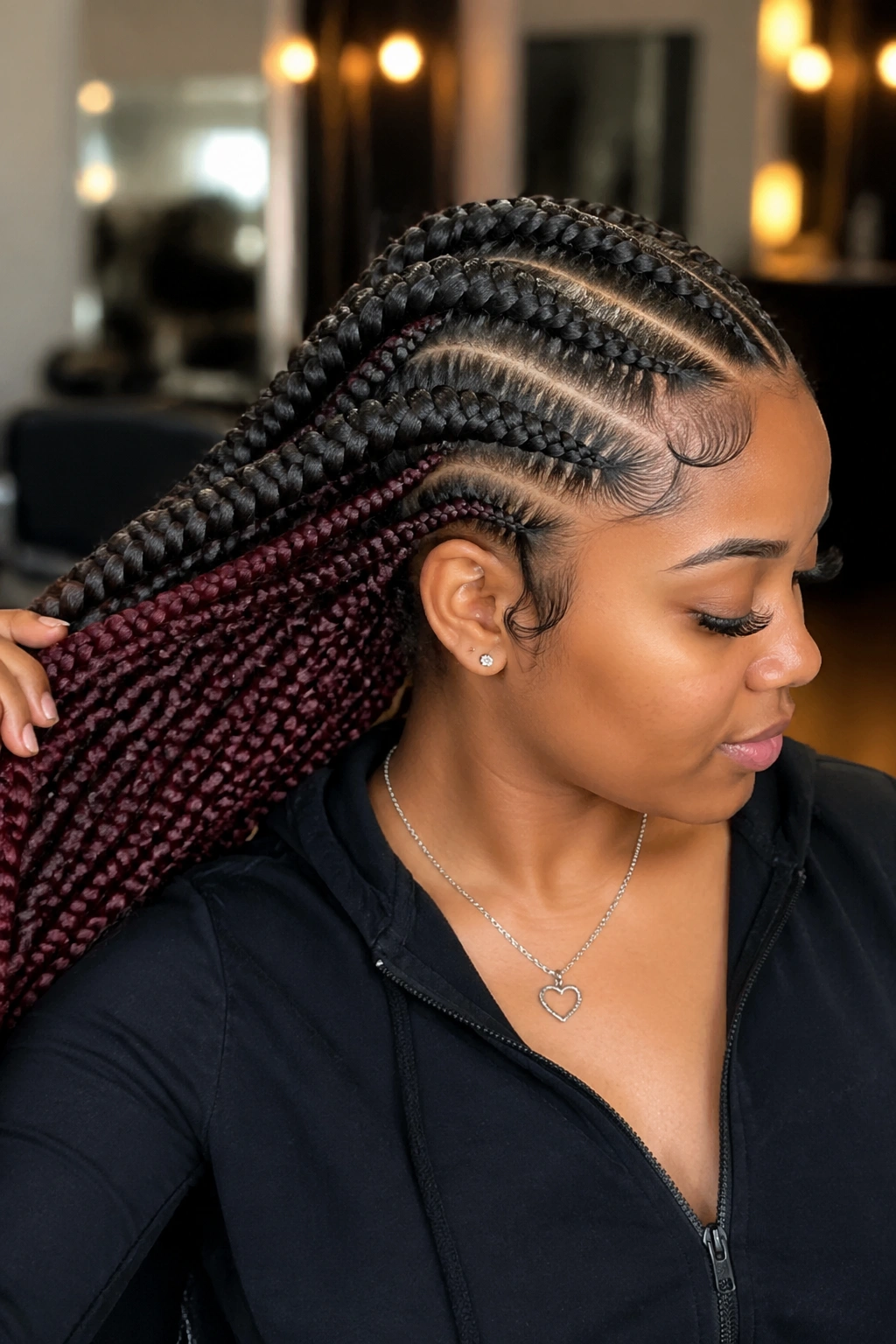
Top layer is solid natural color. Underneath layer — visible only when you flip your hair or move — is a contrasting color like burgundy or honey blonde.
The peekaboo effect surprises. From the front, the style reads as one color. Movement reveals the second color below.
Pre-colored kanekalon makes this possible without dyeing your real hair. Pick contrasting tones — dark over light or warm over cool — for maximum reveal impact.
16. Five Big Cornrows With Curly Front Out
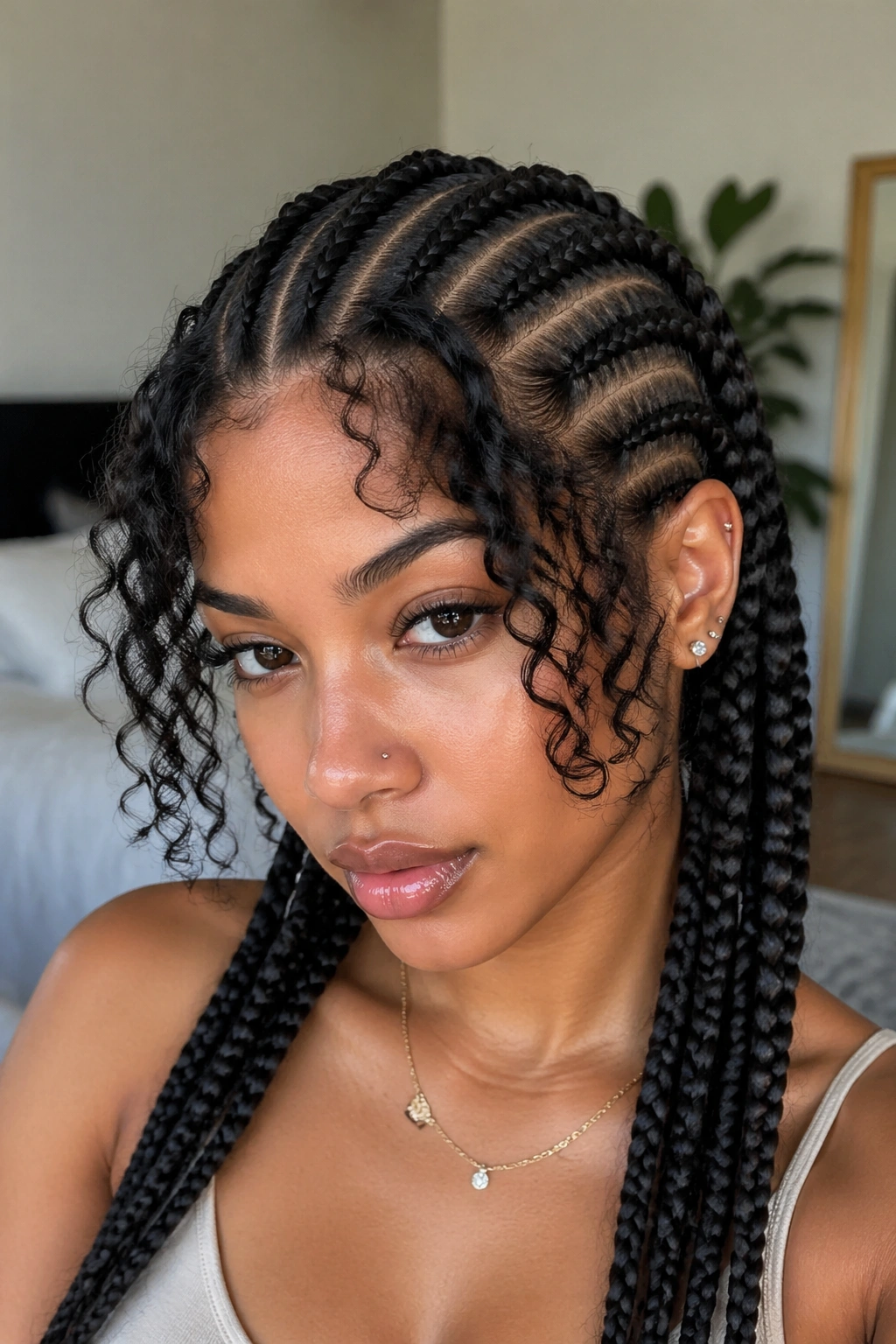
Five thick rows starting just past the front hairline. The front itself stays out, styled into curly bangs that frame the face.
Why leave the front out: the curly fringe softens the harsh line of where braids meet skin. Better for round and square face shapes that benefit from frame softening.
Keep the bangs hydrated separately. Spritz with water and leave-in every 1-2 days, then re-curl with finger coiling or a curling rod.
17. Big Cornrows Wrapped Into a Single Thick Braid
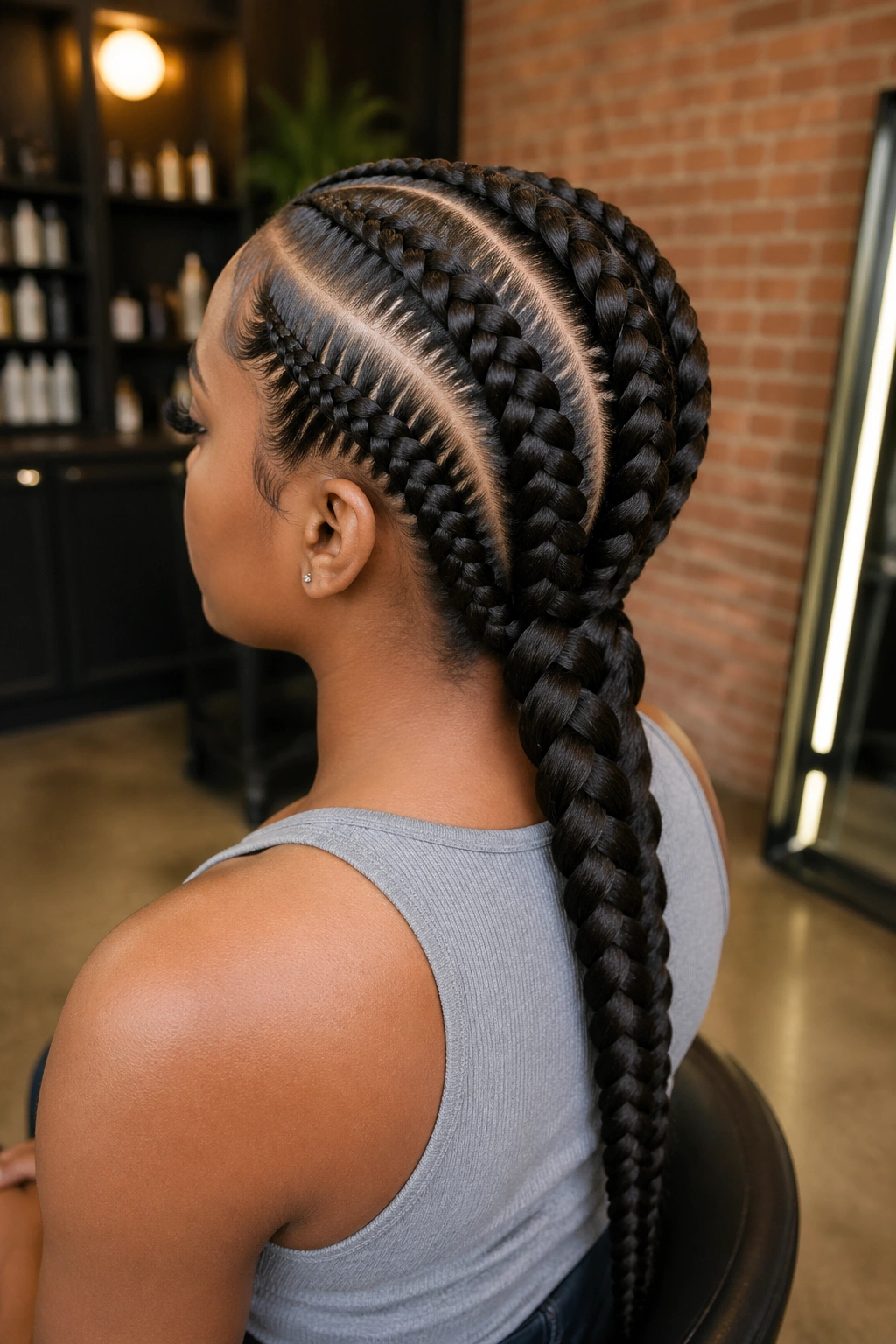
All big cornrow rows lead to the back of the head where they’re combined into one massive single braid running down the back. Like a thick rope of braids.
The combination braid can be a basic three-strand or a more decorative five-strand. Either way, it makes the back of the head a focal point.
Length-wise, this style works for hair past the shoulder. Shorter hair won’t have enough length to combine into the back braid.
18. Big Cornrows With Multi-Width Pattern
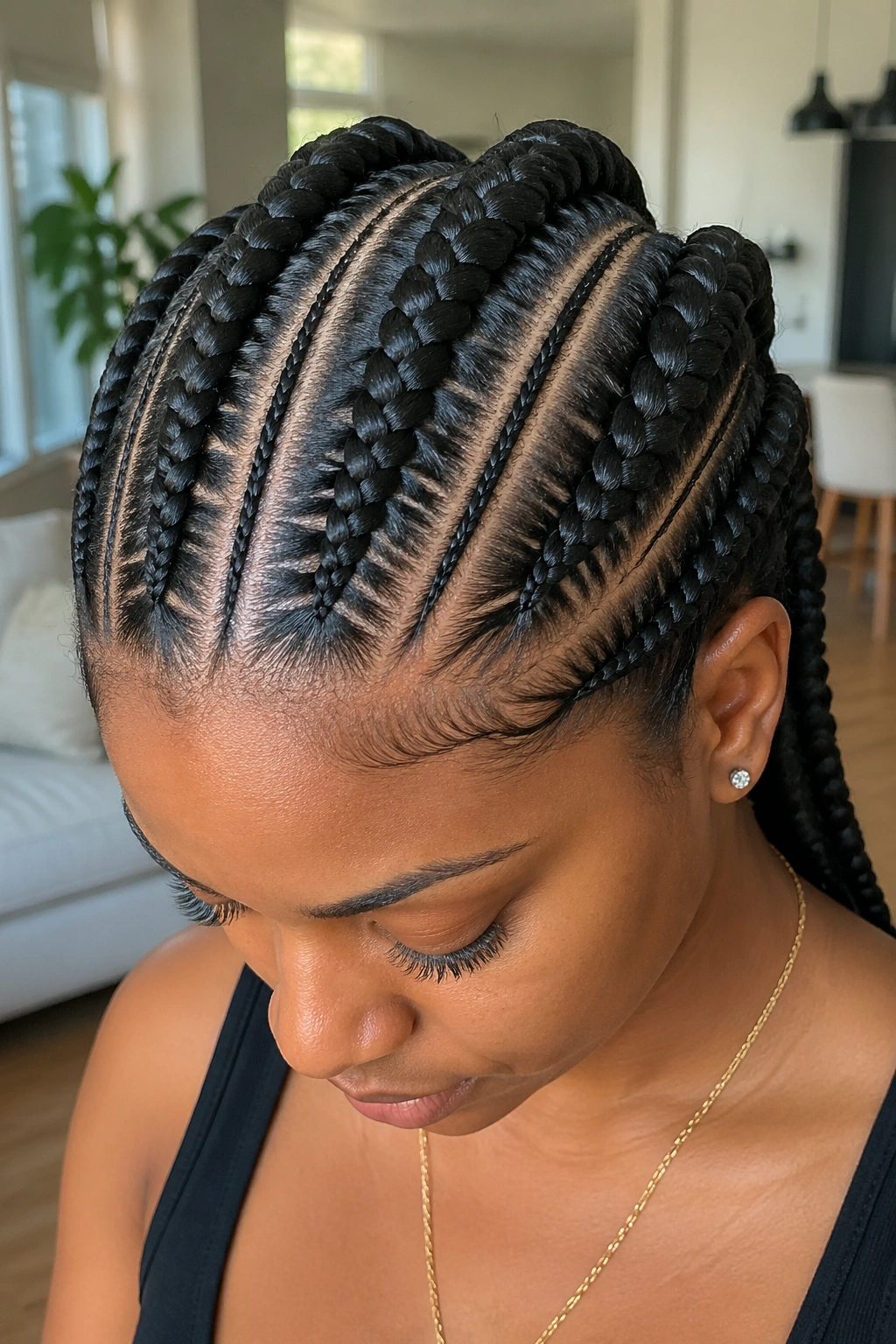
Mix big rows with smaller accent rows in the same head. Three jumbo rows alternating with two smaller rows creates rhythm and visual interest.
The mixed widths read as intentional design. Random row widths would read as accidental, but planned alternation reads as art.
Pick your pattern before you start. Communicate it clearly to your braider so they can section accordingly.
19. Big Cornrows With Side Swoop and Front Curl
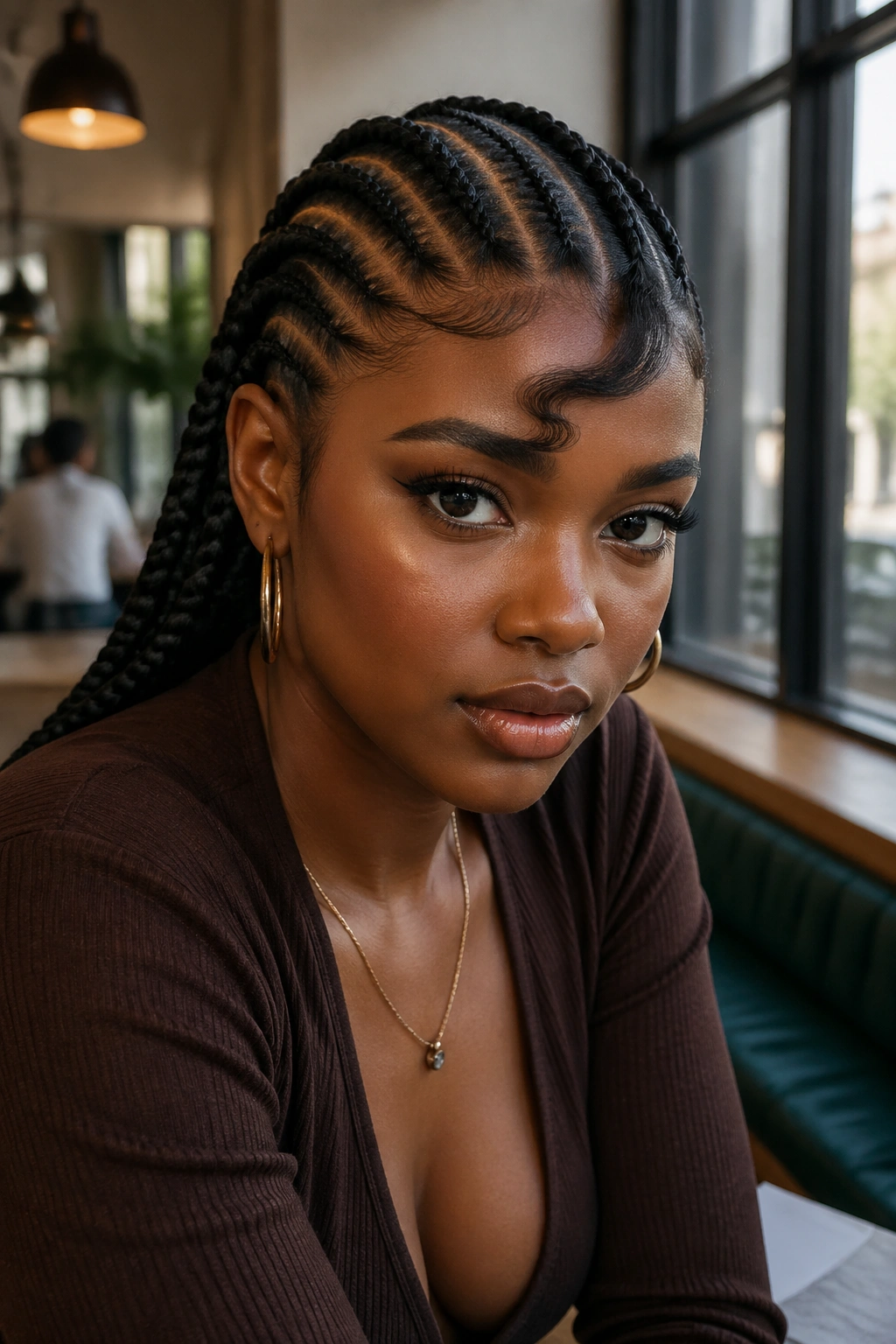
Big rows angling to one side, with the front section pulled out and curled into a swooping bang that crosses the forehead.
The swooping bang adds romance and softness to the bold side-swept braids. Old Hollywood meets braid culture.
For the swoop to hold, set the curl with light hairspray and pin behind the ear with a small bobby pin.
20. Big Box Cornrows
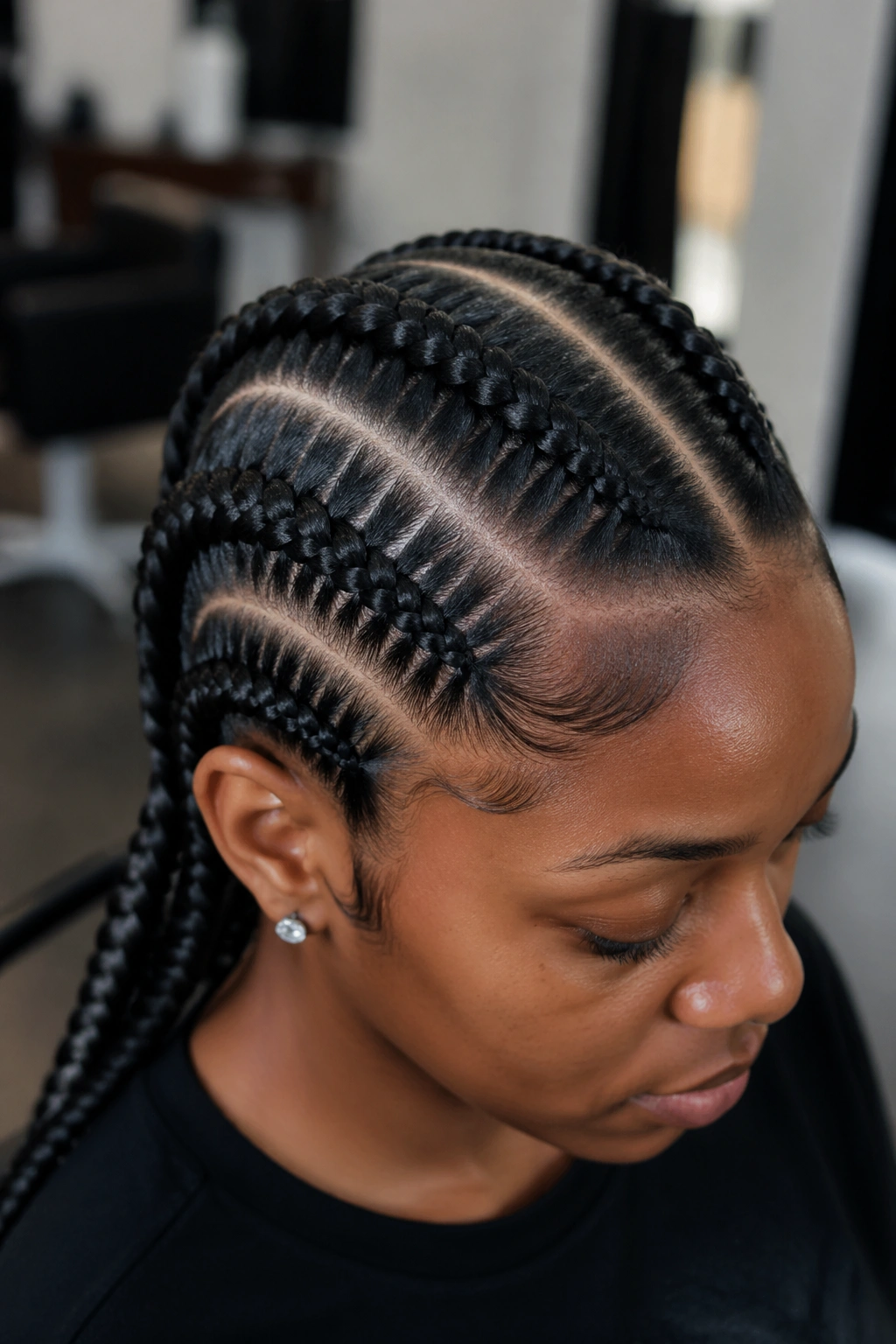
Big cornrows where the parts form perfect square boxes across the scalp. Each box contains one thick cornrow within it.
How to Style It
The grid pattern reads geometric and intentional. Each box should be the same size, with parts equally wide between them. Ask your braider to mark the grid first with a comb before any braiding starts.
Photographs beautifully from overhead. The square pattern emphasizes symmetry and design.
21. Big Cornrows With Hair Ring Accents
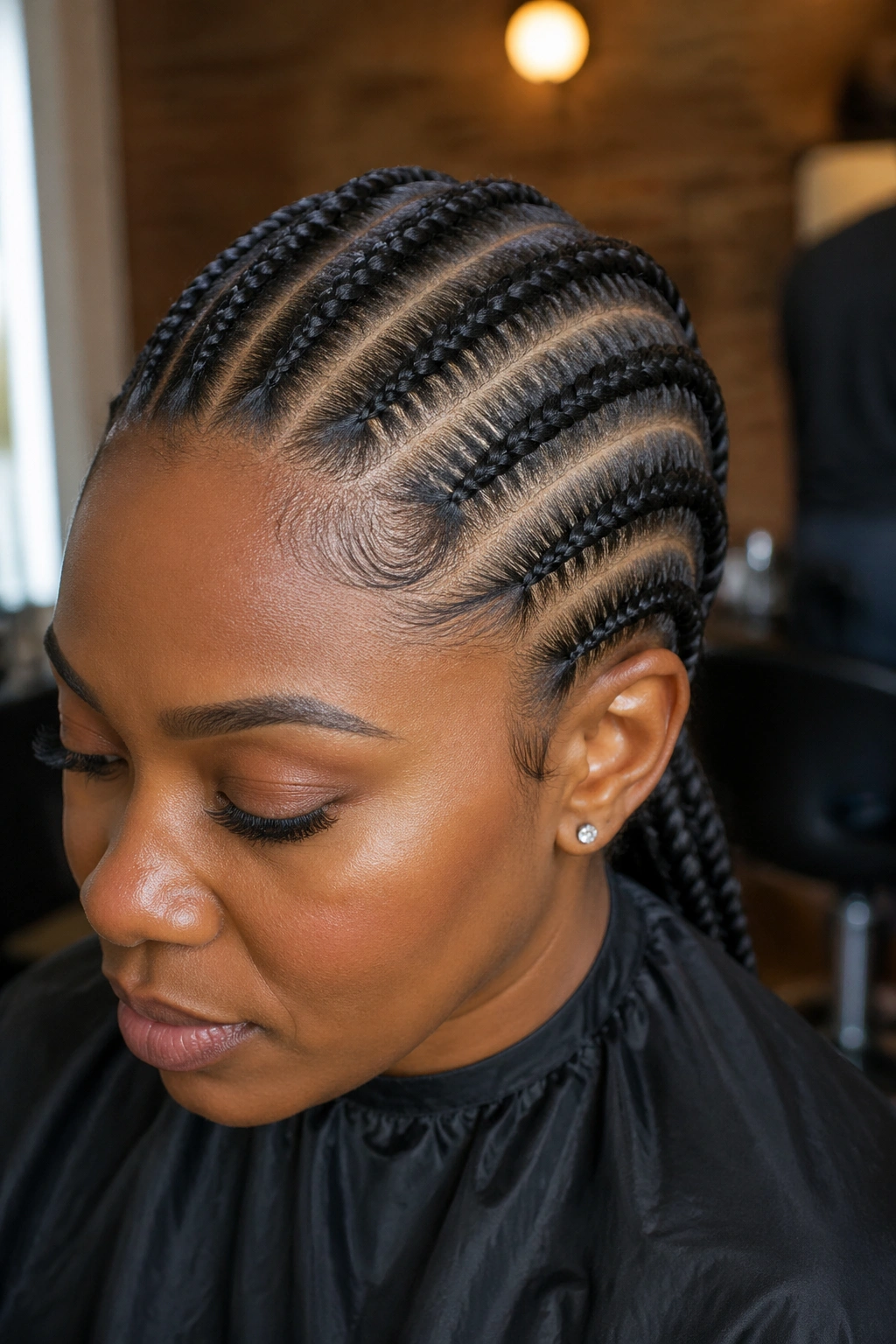
Five to six big cornrows decorated with metal hair rings — small bronze, gold, or silver rings that clip onto the braid bodies at intervals.
Unlike beads that hang freely, hair rings stay where placed. That precision lets you create patterns — three rings spaced evenly down a single braid, or rings only at the very top of each braid for a crown-like effect.
Pick ring metals that match your jewelry. Coordinated metals look pulled together. Mixed metals can look messy if not done with skill.
22. Big Cornrows Leading Into a French Roll
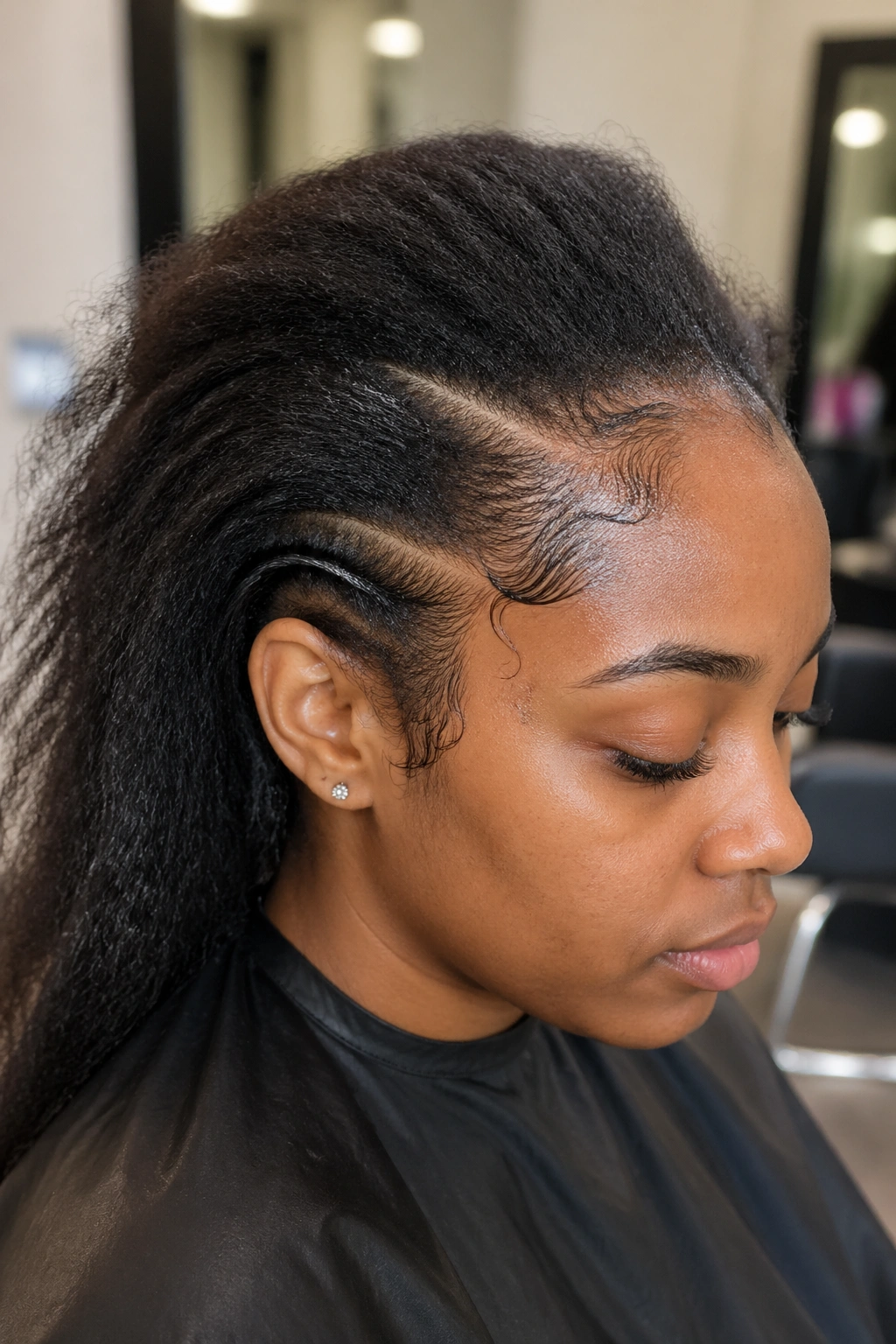
Big rows running back, ends gathered at the nape and tucked into a vertical French roll running down the back of the head.
The French roll elevates the casual nature of big cornrows into formal territory. Wedding-appropriate, gala-appropriate, business-formal-appropriate.
Pin securely. The weight of big rows can pull a poorly pinned French roll loose during the day.
Caring for Big Cornrows Through the Wear Cycle
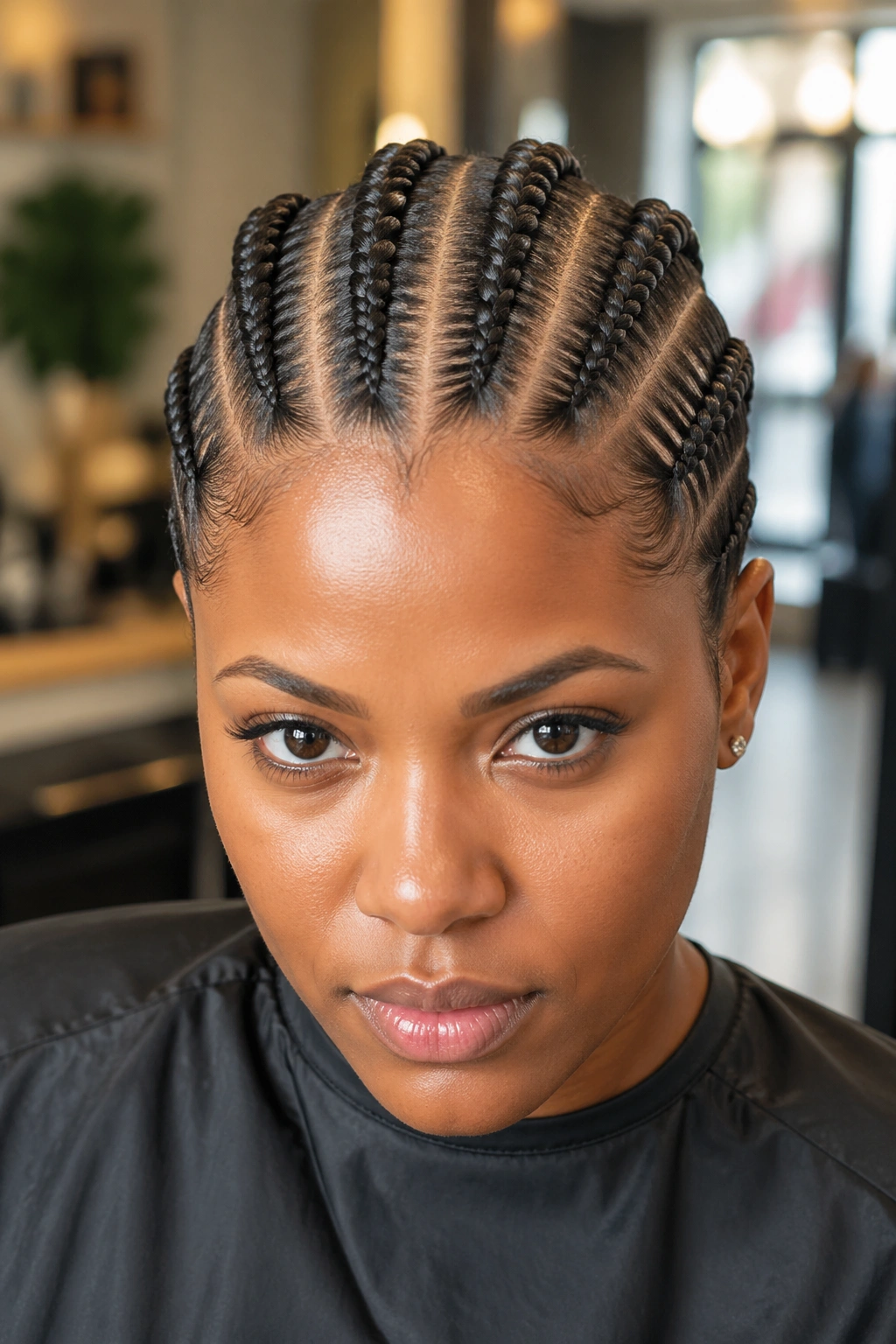
Big cornrows last 2-4 weeks depending on the install and your maintenance habits. The lifespan is shorter than micro braids because the bigger sections have more room for frizz and slippage.
Wash every 7-10 days with diluted sulfate-free shampoo applied along the part lines. Rinse thoroughly. Air-dry to avoid frizz.
Moisturize with light products. Spray water-based mists daily, follow with a drop of jojoba or argan oil only at the parts and ends. Avoid heavy butters that build up between the thick sections.
Sleep Routines for Big Braids
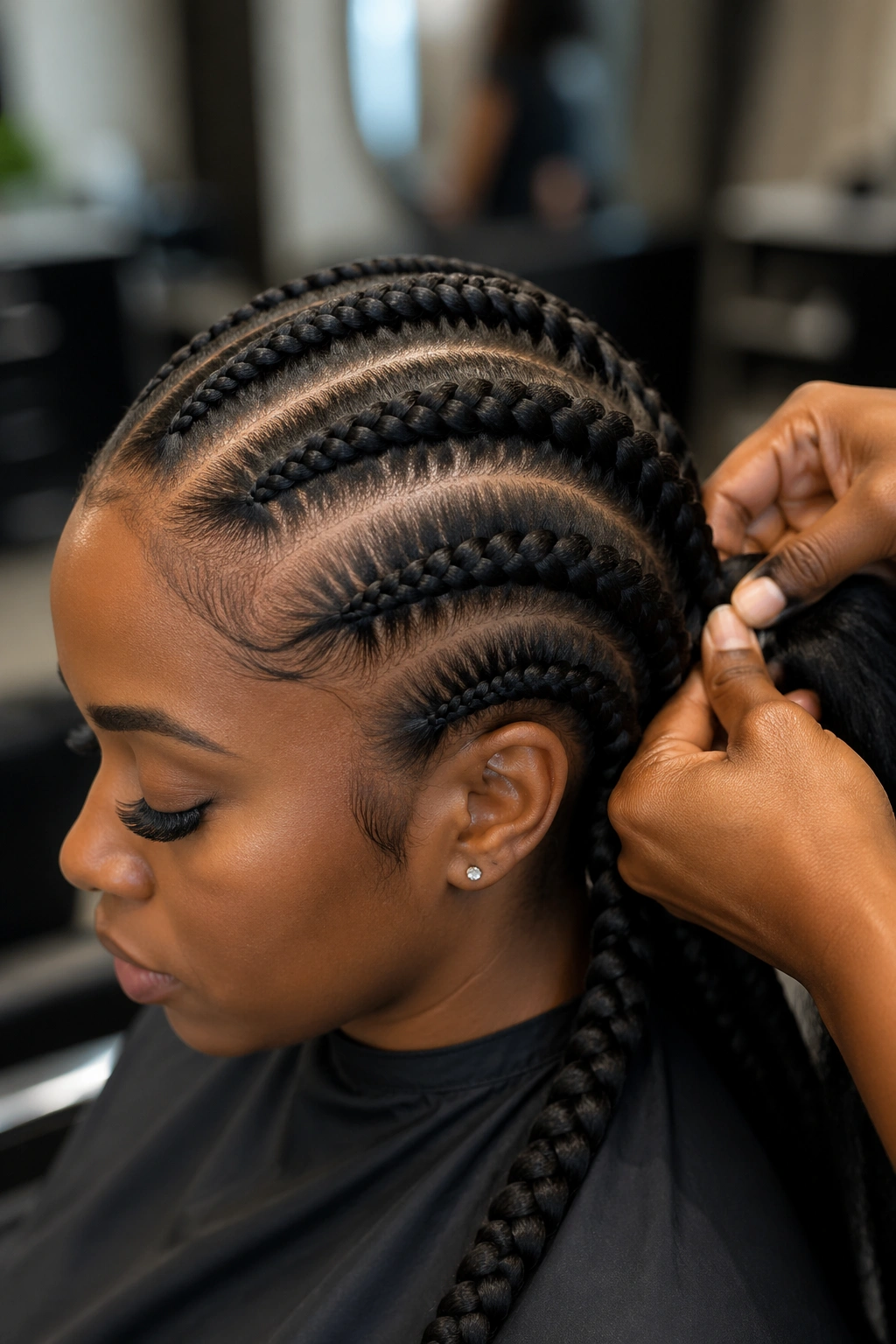
Satin bonnet over the head every night. Tie it snug but not tight. Make sure the bonnet covers all the way to the nape — big braids hanging out the bottom of a too-small bonnet rub against your shoulders and frizz.
For very long big braids, gather the length into a loose braid or twist before bonnet placement. Keeps the length contained and prevents tangling.
Pillowcases should be silk or satin even with bonnet wear. Backup protection if the bonnet shifts overnight.
When Big Cornrows Need to Come Down
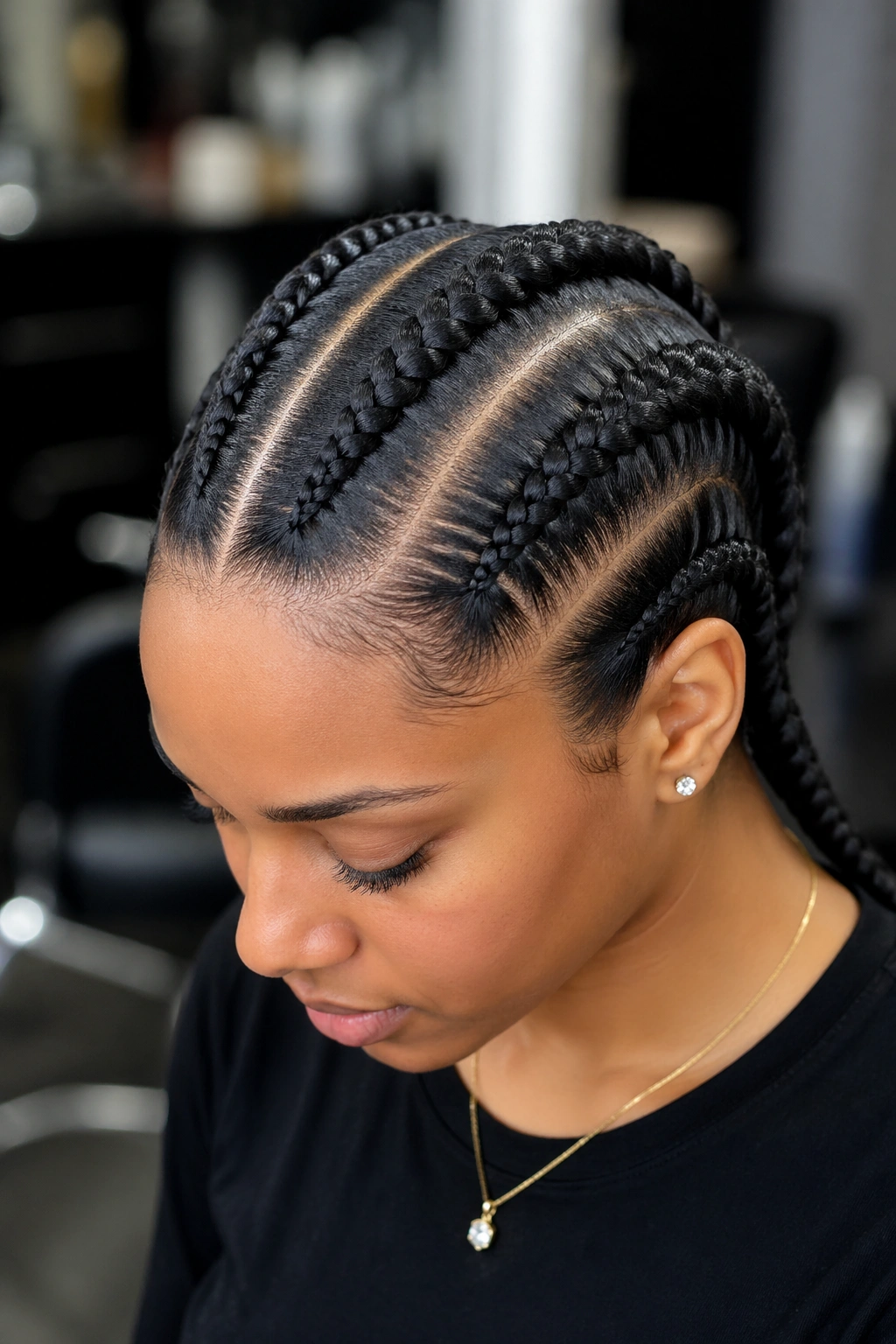
Watch for the same signs as any cornrow style — fuzzy roots, persistent itch, buildup at the parts, lost shape.
Big cornrows tend to lose their crispness sooner than smaller versions because there’s more room for the sections to loosen. By week three, even a fresh-looking install starts reading tired.
Better to take them down one week early than wear them one week too long.
Takedown Without Pulling Out Your Hair
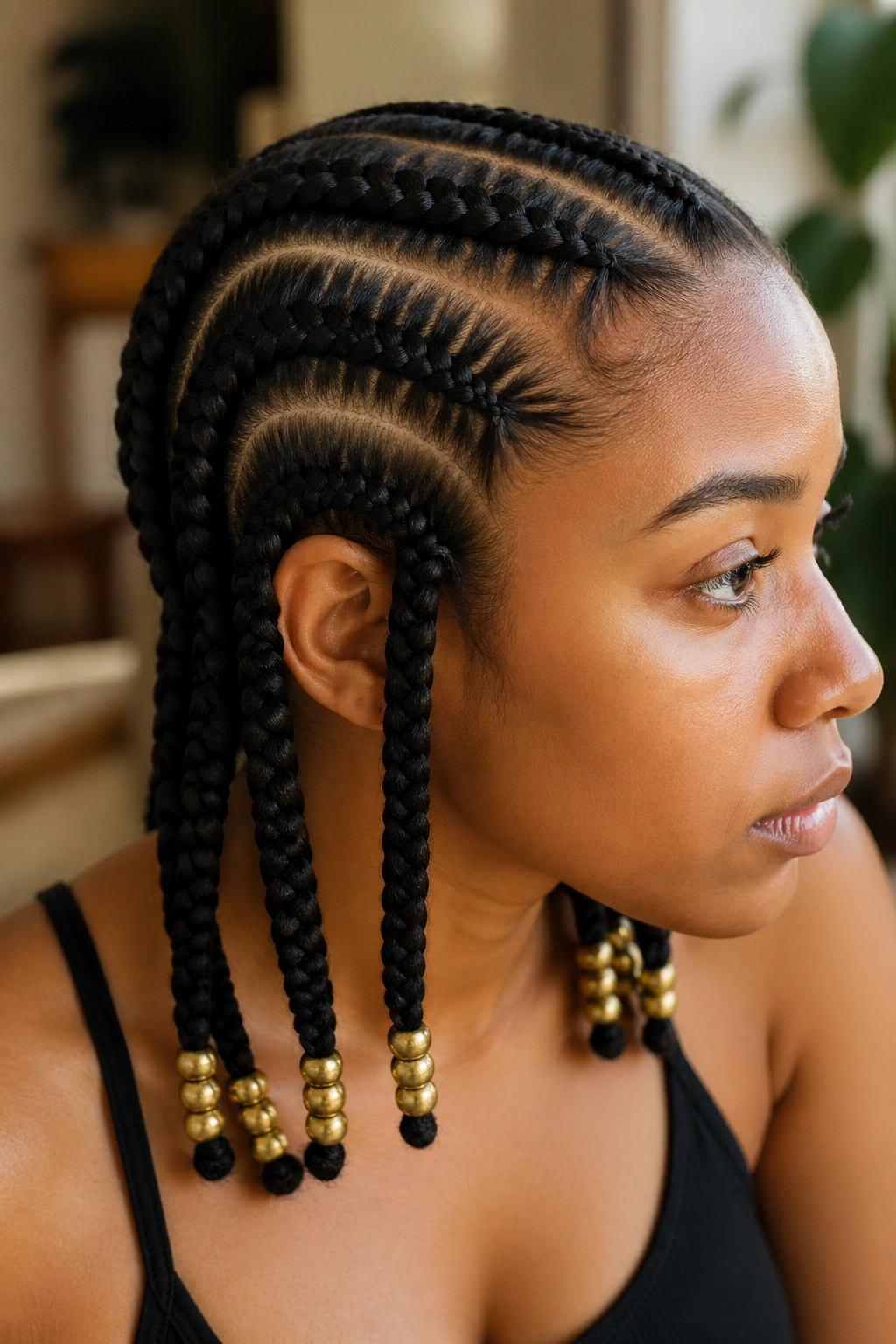
Big cornrows take down faster than smaller versions because there’s less braid work per row. But they still need patience.
Start at the tip, unravel slowly. Use the pointed end of a rat-tail comb to ease open each stitch if needed. For feed-in extensions, slide the kanekalon out before fully unraveling the braid.
Once unbraided, finger-detangle with conditioner-slicked hands in the shower. Don’t brush dry. Wash with a clarifying shampoo, follow with a deep conditioning treatment.
Expect to see weeks worth of shed hair release during takedown. Normal. Not breakage. Just hair that couldn’t fall out while braided.