



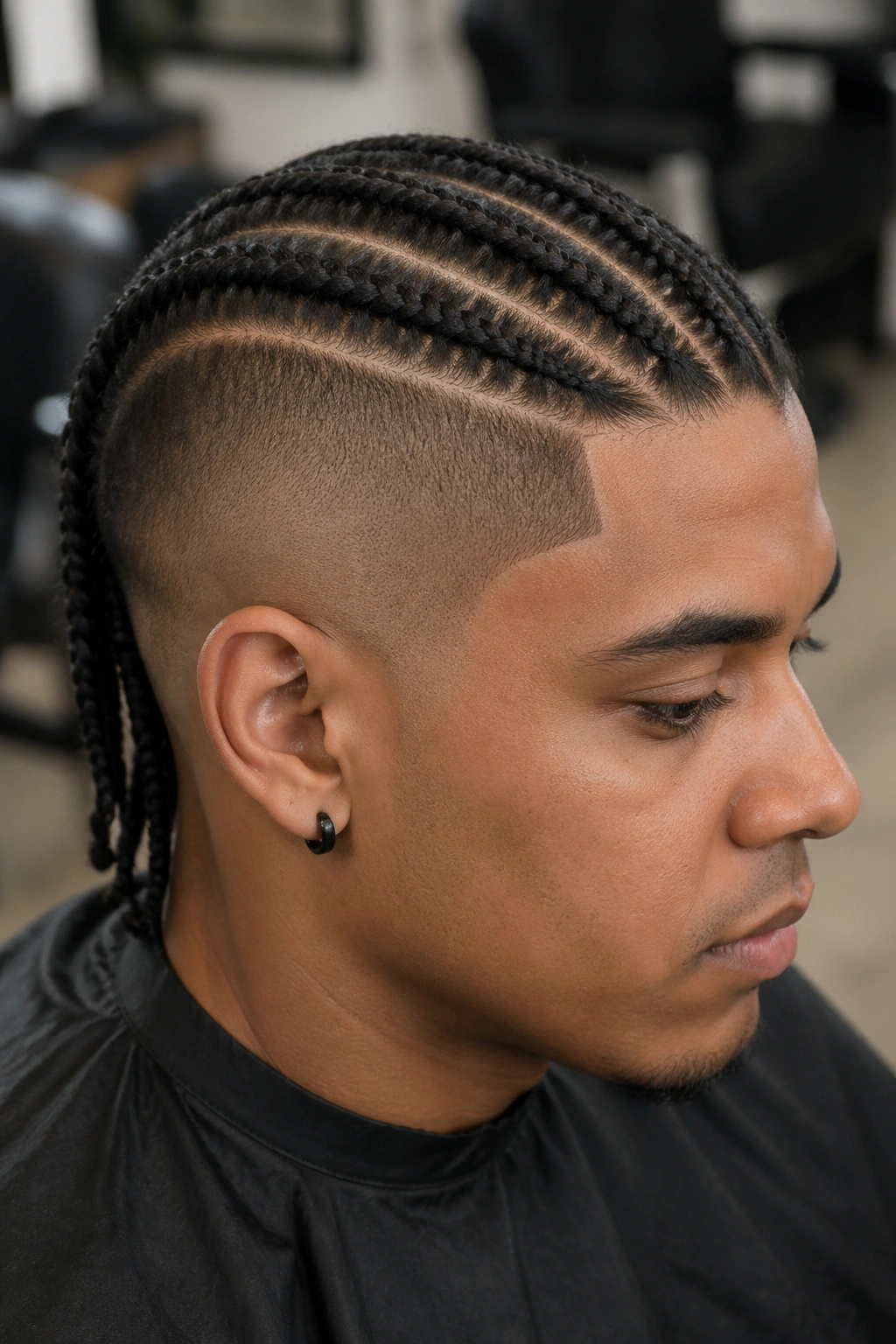
Side cornrows with shaved sides pull off something specific that few other hairstyles can match. The hard edge of bare scalp meeting the soft parallel lines of braided hair creates contrast that reads bold, architectural, and unmistakably intentional. There’s no accidentally wearing this style. Everything about it is a decision.
The shaved portion is where personal expression lives. Some people buzz down to skin. Some leave a close crop. Some carve designs into the shaved area — lines, patterns, initials, geometric shapes. Some keep it simple with a clean fade from the cornrows down to bare scalp. The cornrows provide the softer counterpart. Together, the two elements create the dual-texture silhouette that has been central to this style for decades.
What follows runs through 22 side cornrows with shaved sides variations — covering shave options, cornrow patterns, face-shape considerations, and styling approaches that keep this bold look wearable across different settings.
Why This Style Reads So Strong
The contrast does the work. Braided hair has visual texture — three-strand patterns, parallel lines, optional stitches or curves. Shaved skin has none. When they meet at a hard edge, each element emphasizes the other. The braids look more braided. The shave looks more shaved.
This is why the style reads edgy even when the cornrows themselves are traditional. A simple straight-back cornrow on the non-shaved side looks conservative on its own. Combine it with a shaved side, and the whole finished look shifts energy completely.
The shaved side also creates negative space — bare scalp that draws the eye and creates visual breathing room. On a full-head cornrow install, every square inch of the scalp carries detail. With a shaved side, roughly a third of the head becomes quiet, which makes the cornrows on the other side pop harder.
The Cultural and Personal Weight of Shaved Sides
Shaved sides on Black women carry history. The style appears in African traditions going back centuries, often with regional variations in pattern and technique. It has also appeared in street fashion, subcultures, and mainstream visibility at different points over the years.
Choosing shaved sides means stepping into a style with depth. For some, it connects to cultural roots. For others, it’s about personal freedom — breaking from expectations about long hair or symmetrical styling. For others, it’s purely aesthetic.
Whatever the reason, this is a style that announces itself. Think about what you want it to say before you commit.
Shave Options to Consider Before Commitment
Full shave to skin: the most dramatic version. Bare scalp visible. Requires maintenance every 1-2 weeks.
Close crop (1-3mm buzz): slightly softer than full shave. Still reads as shaved but has visible hair stubble. Maintenance every 2 weeks.
Short fade (3-6mm): the softest version. Hair is visibly short but not skin-level. The fade from cornrows to short hair can be gradual, which softens the contrast. Maintenance every 3 weeks.
Designed shave: patterns, lines, or shapes carved into the shaved section. Most dramatic visually. Most maintenance — every 1-2 weeks to keep the design sharp.
Thinking Through Commitment Length
Shaved sides aren’t a quick style swap. Once hair is removed, it takes months to grow back. If you decide you don’t love it after a week, you’re stuck with it for a while.
Consider wearing a tight-braided “pseudo-shave” first — cornrows installed so tight against the scalp that from certain angles they read like a shaved side. This gives you the visual effect for a few weeks before committing to actual clippers.
If you do commit to the full shave, plan for 6-12 months minimum before the hair is long enough to match the opposite side. Some people never grow it out — they maintain the shaved side as their signature for years.
Prep and Execution
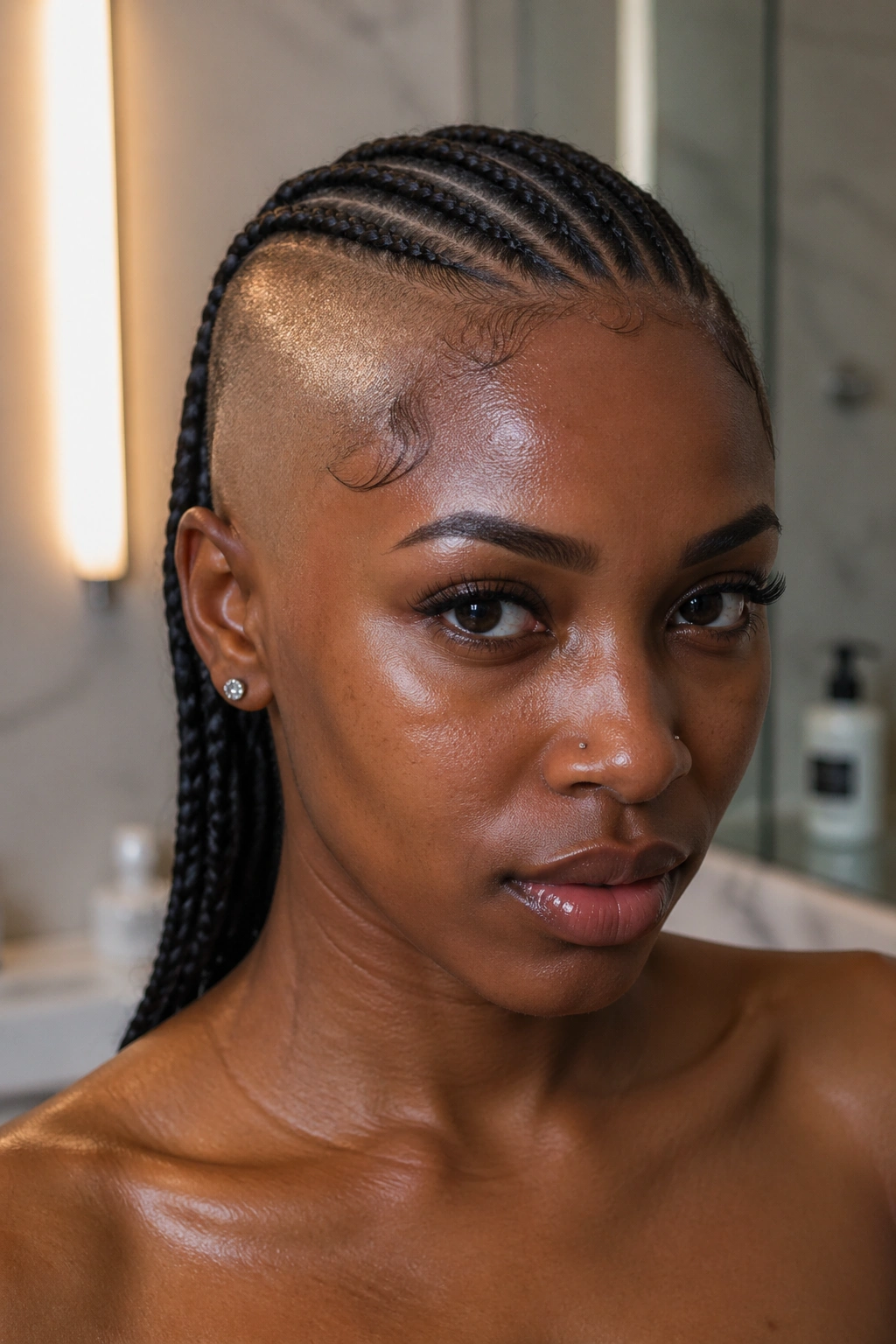
Work with a barber who has experience with Black hair. Not every barber does. A good barber understands how to approach 4C texture with clippers, how to create clean lines without irritation, and how to design shaved patterns that look symmetrical.
Prep the area before shaving. Clean scalp. Moisturizer. If you have sensitive skin, use a pre-shave balm to protect against razor burn.
After shaving, moisturize the bare area with a lightweight lotion or scalp cream. Dry shaved skin shows up immediately and visibly — dusty, flaky, ashen.
Tools You’ll Need
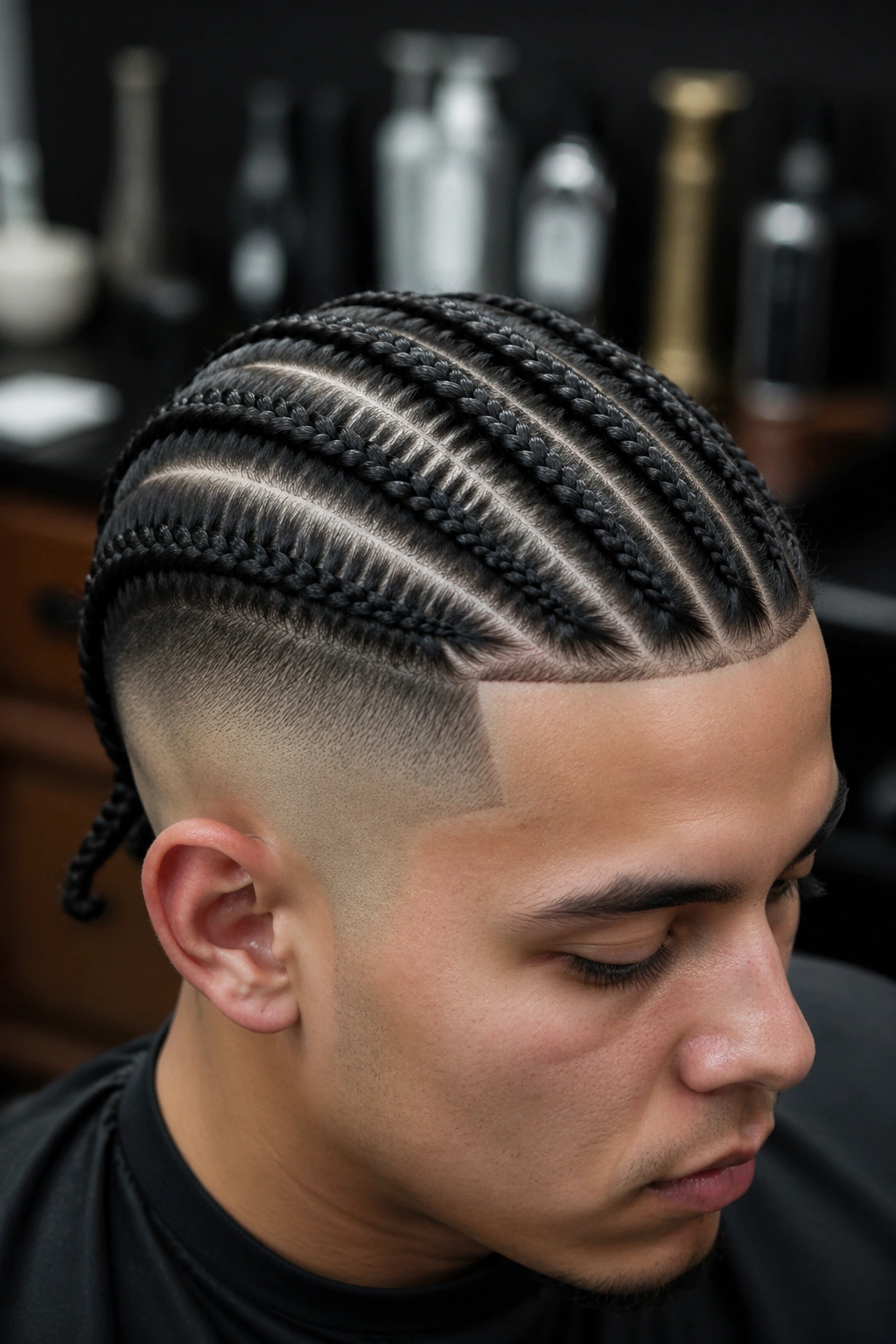
Clippers with adjustable guards for different shave lengths. A straight razor or detail trimmer for clean edge lines. Moisturizer for the shaved area. Standard cornrow tools (rat-tail comb, edge brush, gel, clear elastics) for the cornrow side.
If designing shaved patterns, add a detail trimmer with a narrow head and a washable fabric marker for sketching the design before cutting.
1. Straight Back Cornrows With Full Shave
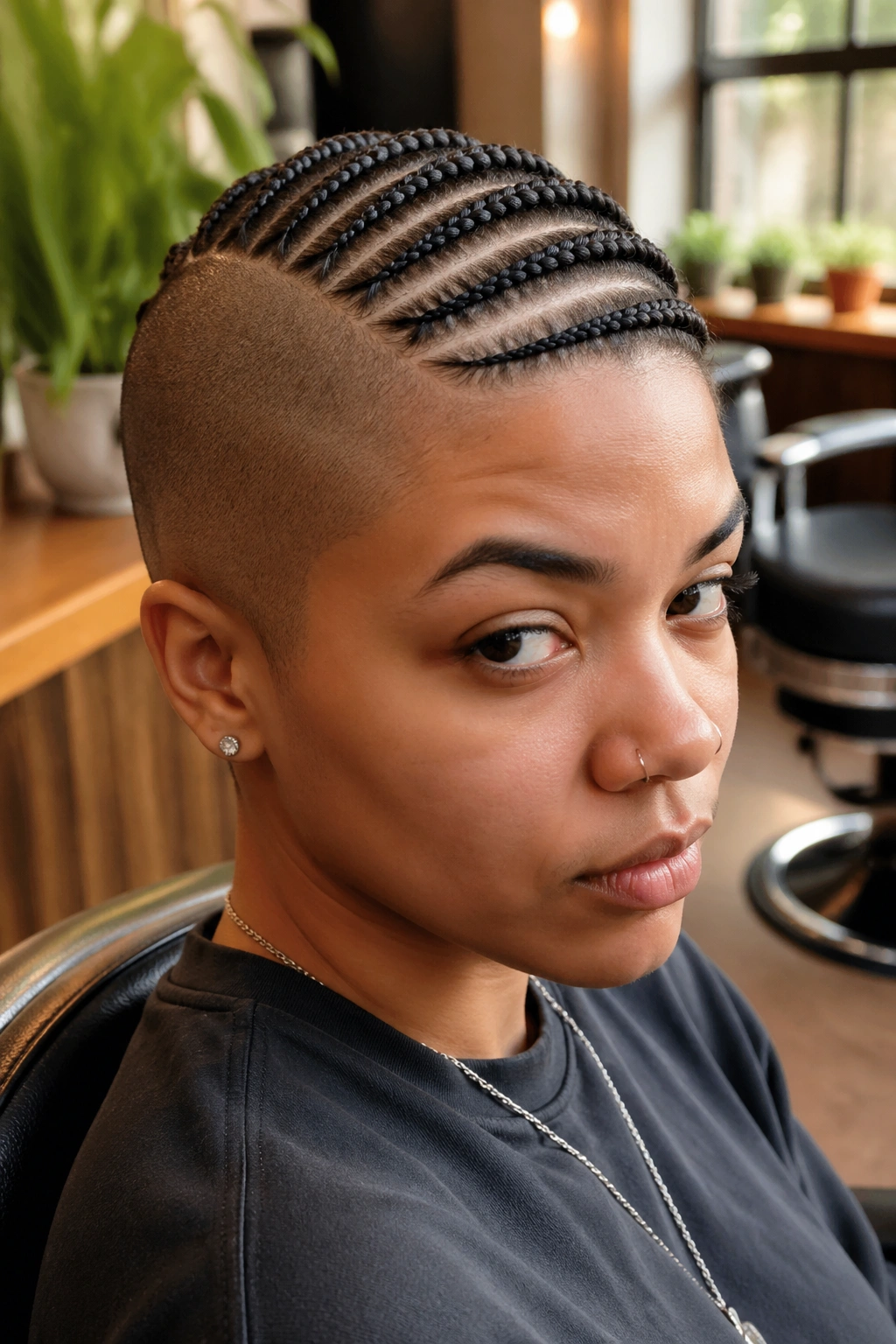
The base template. Five to seven straight-back cornrows on one side of the head, shaved skin on the other. Clean. Architectural. Minimal.
The part that divides the cornrows from the shaved section runs in a clean line from the front hairline to the nape. The line itself becomes a visible design element — the sharper the line, the more deliberate the style reads.
Sleep with a silk scarf tied around both sections to preserve the cornrows and protect the shaved area from cotton friction.
2. Curved Cornrows Meeting a Designed Shave
What Makes It Different
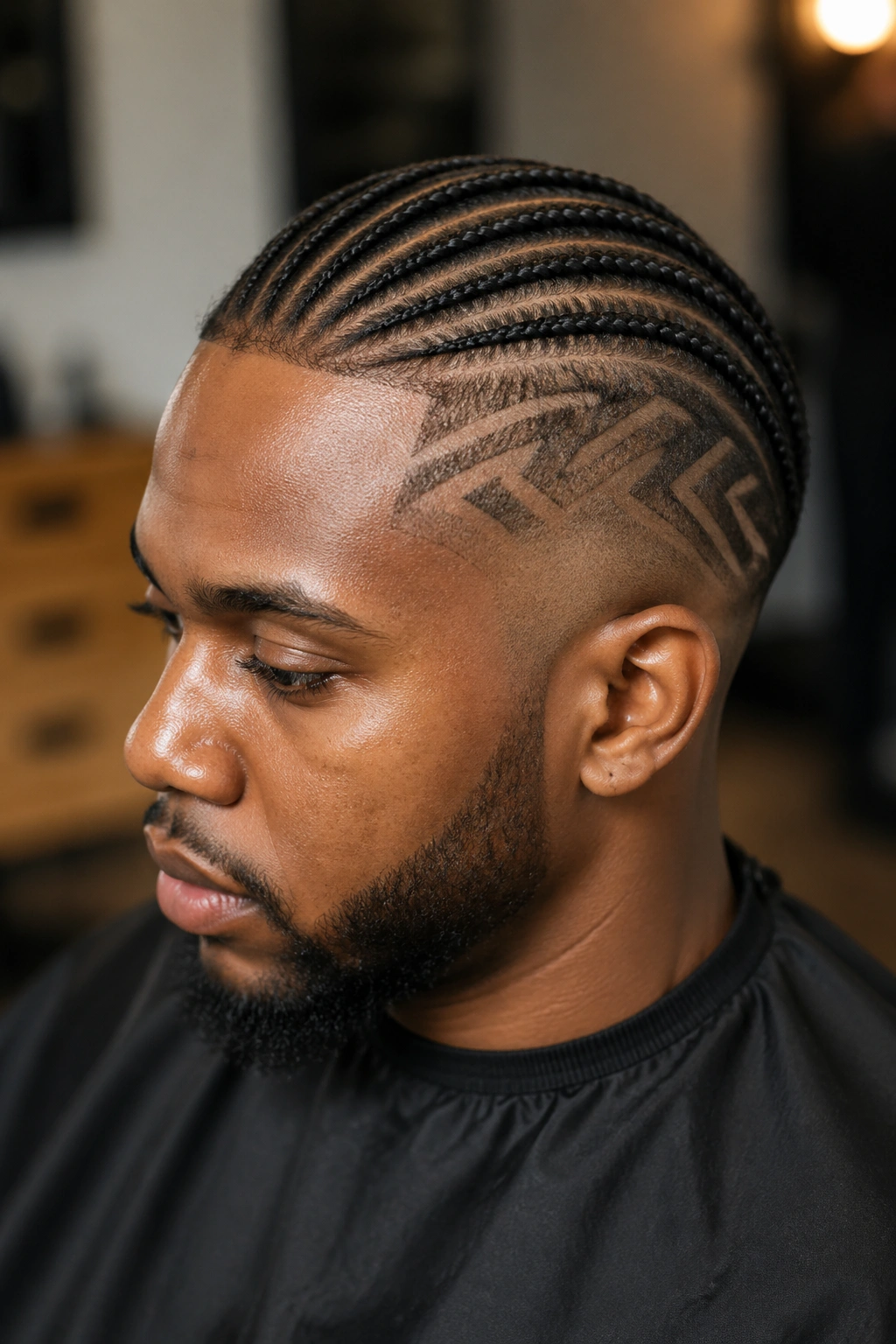
The cornrows follow gentle curves rather than running straight back. The shaved section carries a geometric design — lines, chevrons, or tribal-inspired patterns. Both elements have deliberate visual complexity.
- The curved cornrows soften the hard edge of the shaved section
- The design in the shaved portion gives the bare scalp a focal point
- Both elements need skilled installation — amateur curves and amateur shave designs both look sloppy
- Pair with simple clothing so the hair stays the visual lead
Tip: Match the curve direction of the cornrows to the line direction of the shave design. If the cornrows curve toward the back, the shave lines should run in a complementary direction. Visual harmony beats random directions.
3. Jumbo Cornrows With Short Fade
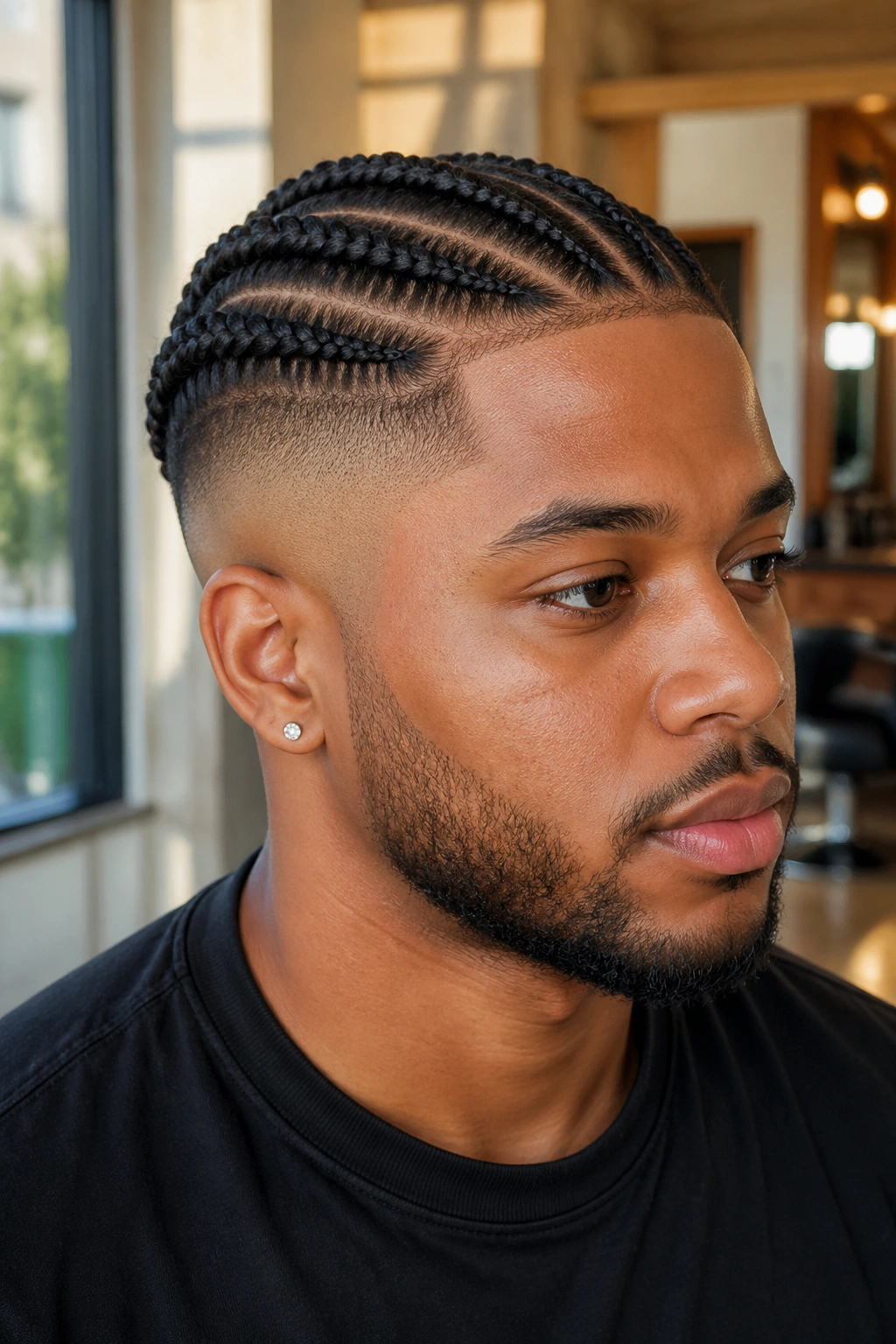
Three jumbo cornrows on one side of the head. The opposite side fades from the cornrow edge down to bare scalp in a smooth gradient. The fade reads softer than a hard shave line.
Jumbo cornrows with fade work beautifully for those who want the shaved-side aesthetic without the stark visual contrast. The gradient easing from long braid to short hair to bare scalp creates flow.
Install time for the cornrow portion runs under an hour. The fade takes another 20-30 minutes.
4. Small Cornrows With Shaved Temples
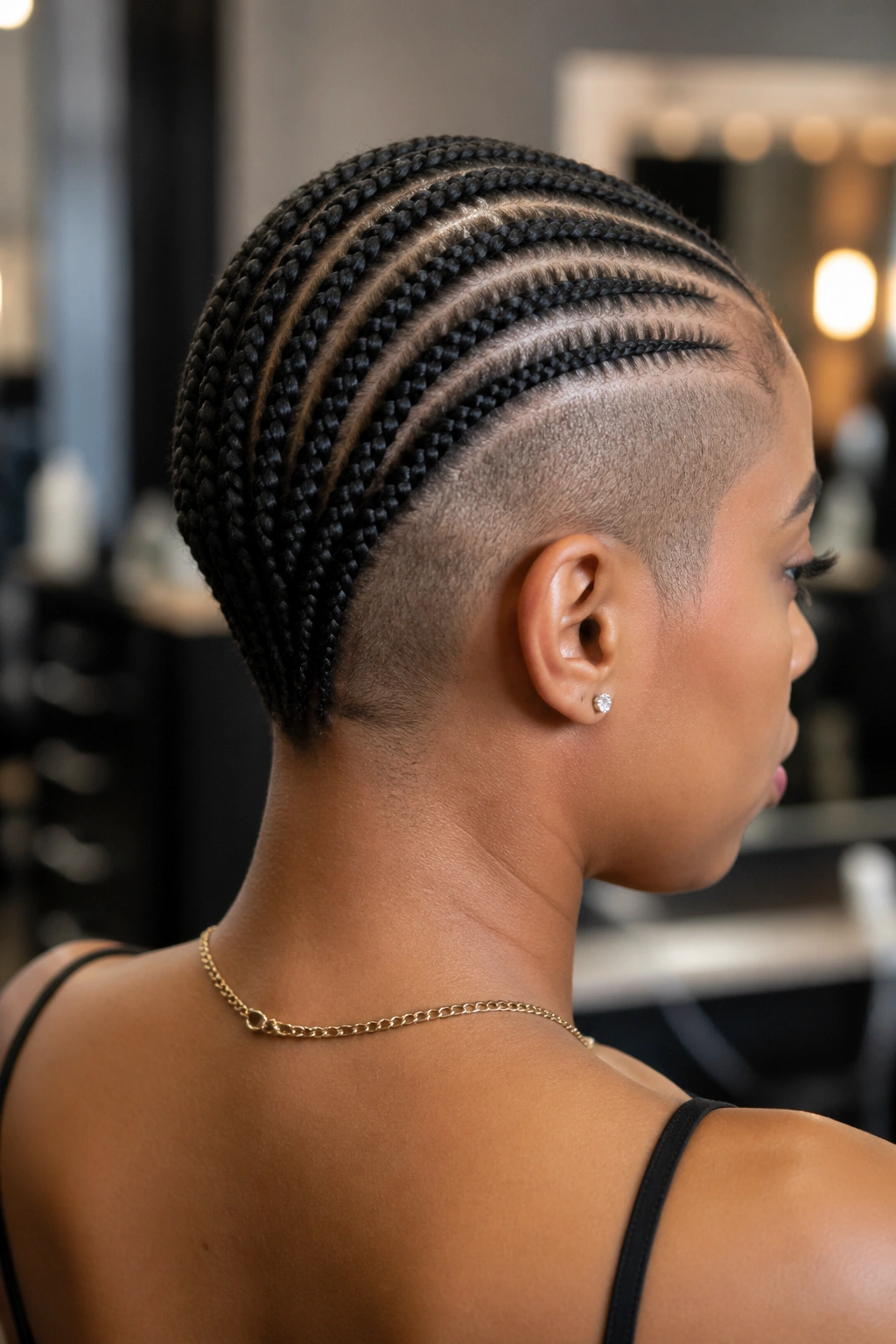
The entire back of the head keeps small cornrows. The temple sections on both sides are shaved — either to skin or to short crop. The effect creates a headband of bare skin framing the face while the back stays braided.
This variation gives the shaved-side look without full commitment to one side. Both temples get the shave. Both sides look symmetric. The cornrows run from the temple shave lines back to the nape.
Maintenance: both temple areas need re-shaving every 1-2 weeks.
5. Stitch Cornrows Meeting a Clean Shave
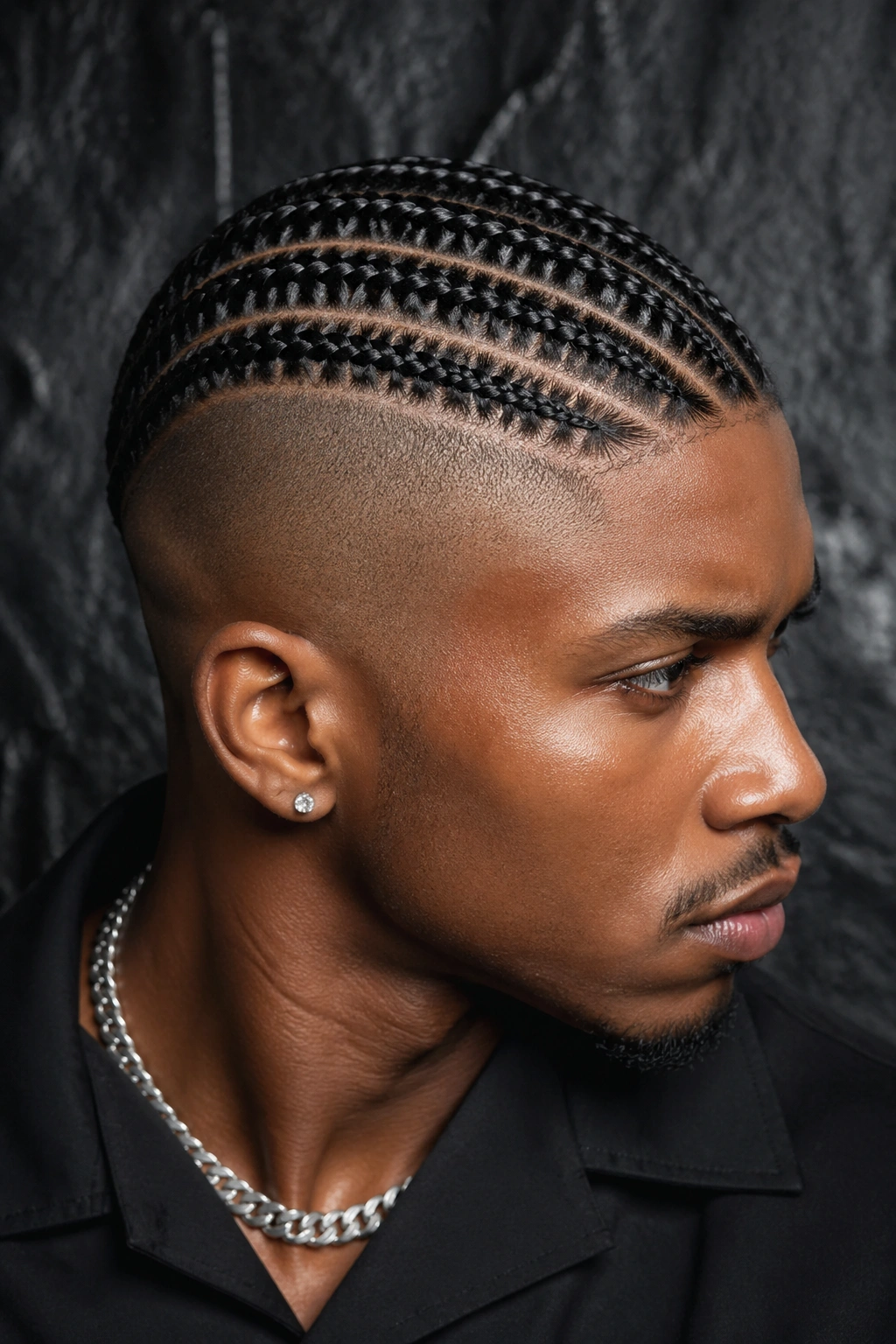
Bold claim: stitch cornrows with a shaved side might be the most textural, high-detail combination in the whole cornrow family. The stitch detail along each braid creates layered horizontal lines. The bare scalp beside it creates a smooth surface. Two textures at maximum contrast.
This is a photoshoot install. Budget 5-6 hours for the stitch work plus the shave.
The shaved side should be kept skin-smooth for best contrast with the stitch detail.
6. Cornrows With Shaved Side and Designed Lines
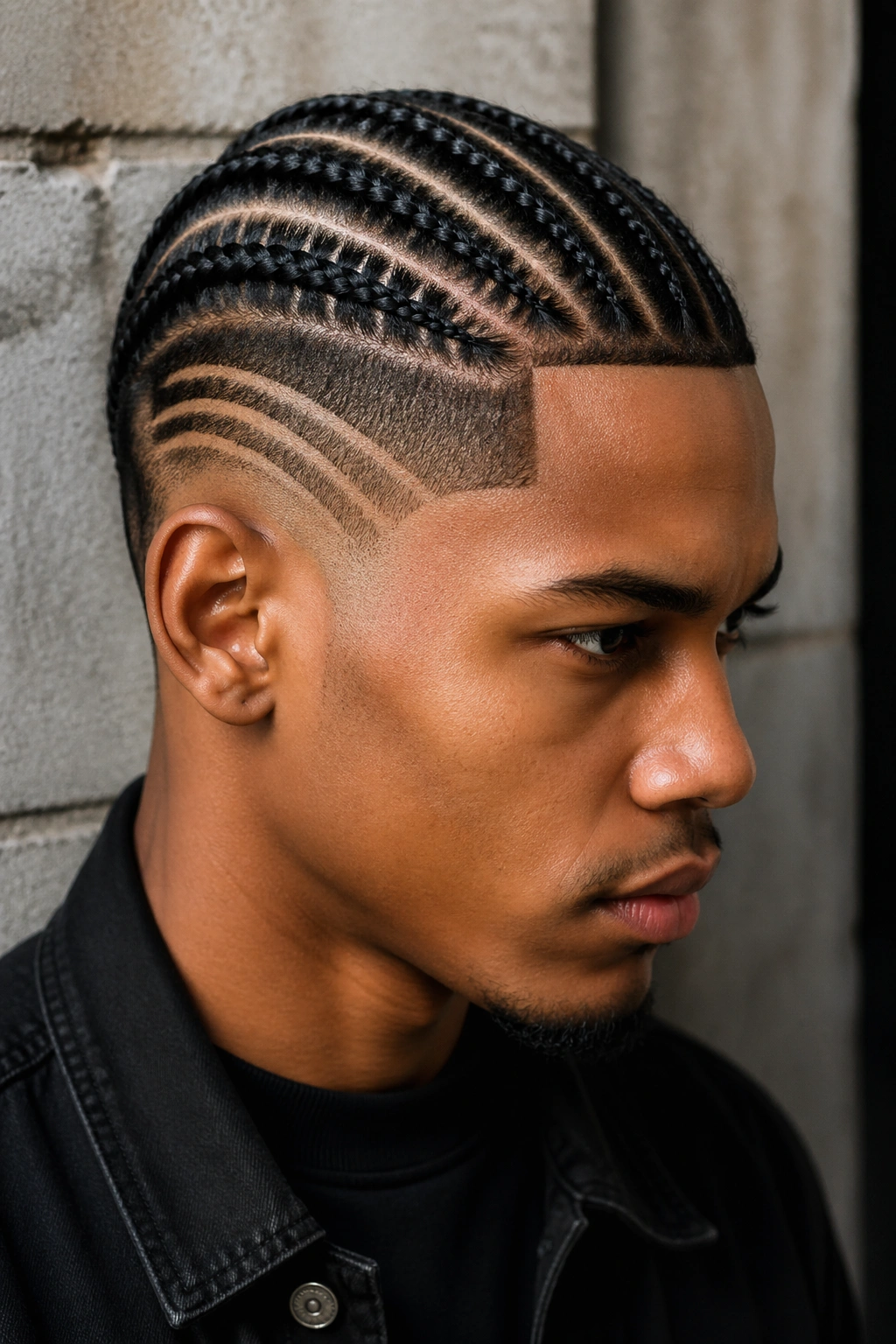
Standard cornrows on one side, shaved skin with thin line designs cut into it on the other. The lines can be horizontal, vertical, diagonal, or a combination. They’re carved with a detail trimmer leaving lines of slightly longer hair between strips of bare skin.
The lines should align with the direction of the cornrows — or contrast with them intentionally. Random line placement looks unplanned.
Maintenance: re-carve the lines every 1-2 weeks as the hair grows.
7. Feed-In Cornrows With Fade Side
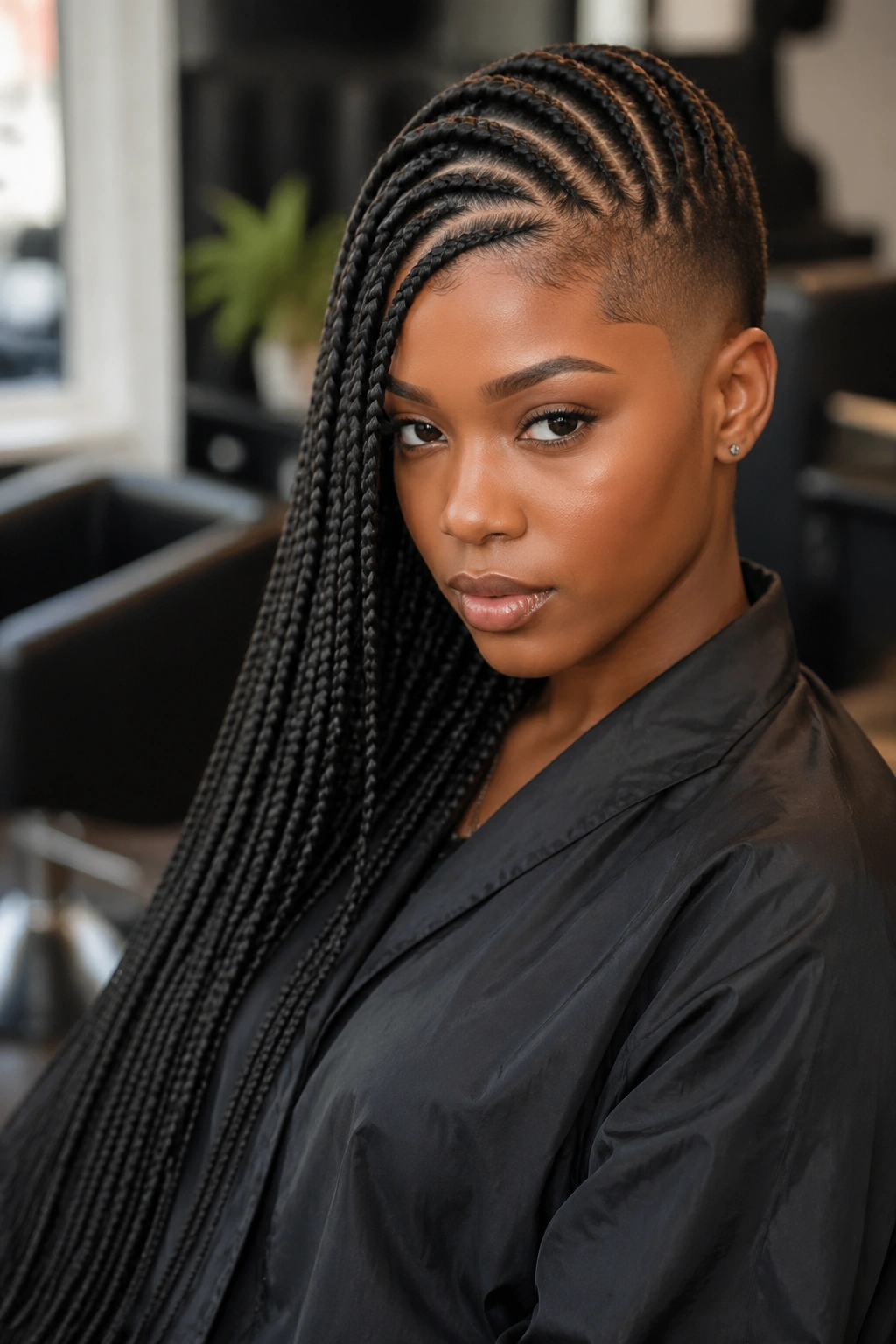
Long feed-in cornrows on one side, running past the shoulder. Short fade on the other side. The length contrast amplifies the style.
Feed-in technique adds length past the natural hair. Kanekalon braided in gradually creates extension length that can reach the mid-back or longer.
Install time runs 3-4 hours for the feed-in side plus 20 minutes for the fade.
8. Cornrows With Shaved Side and Curls on Top
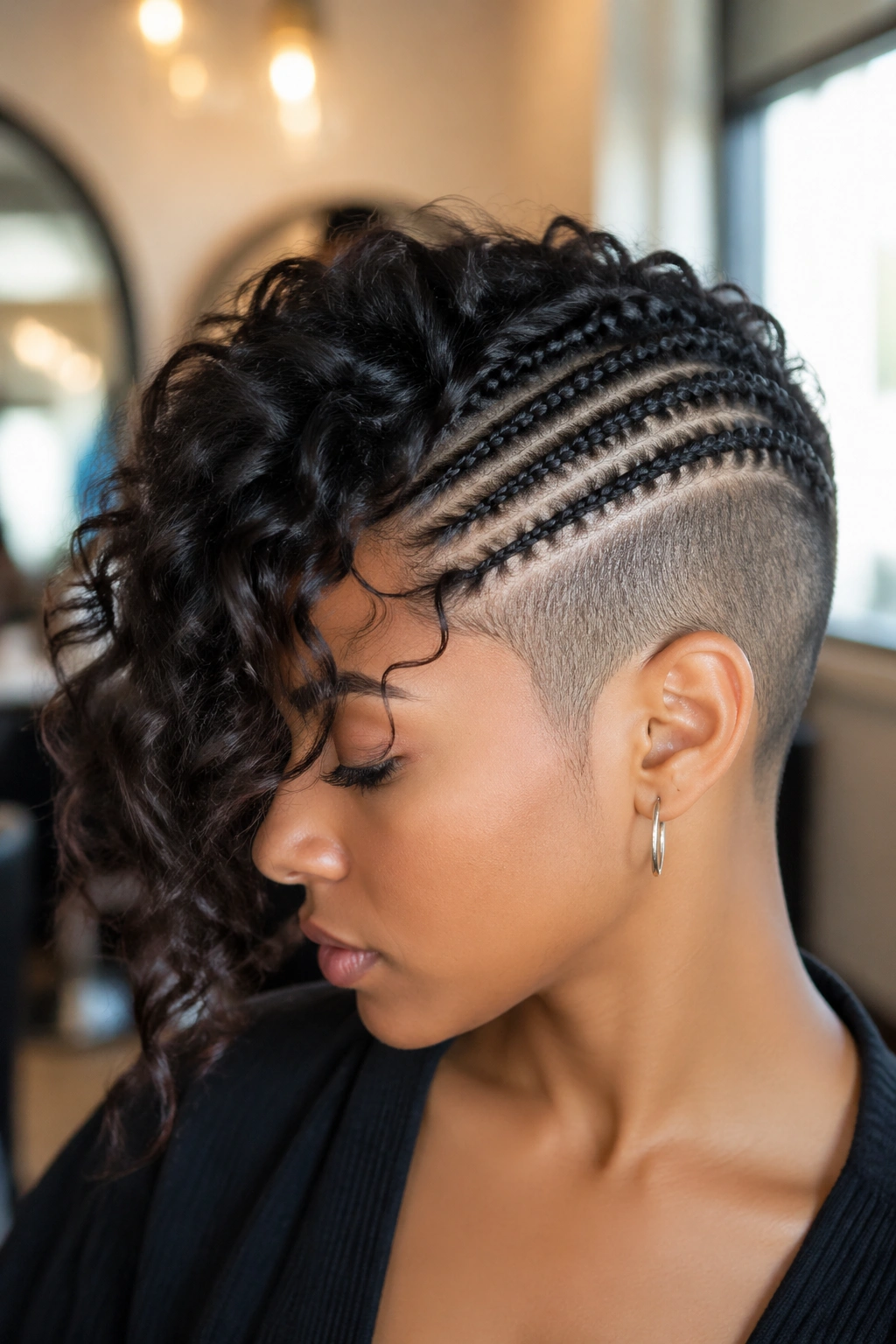
Question: how do you soften the aggression of a shaved side without losing the edge?
Answer: loose curls on top that flow over the shaved section. The curls add femininity and movement. The shaved area stays visible but less stark.
How to Use It
The cornrows run along one side of the head. The opposite side is shaved. The crown and top section remain loose, styled into curls that drape over toward the shaved side.
This variation reads softer than other shaved-side styles while keeping the architectural silhouette.
9. Lemonade Cornrows With Shaved Nape
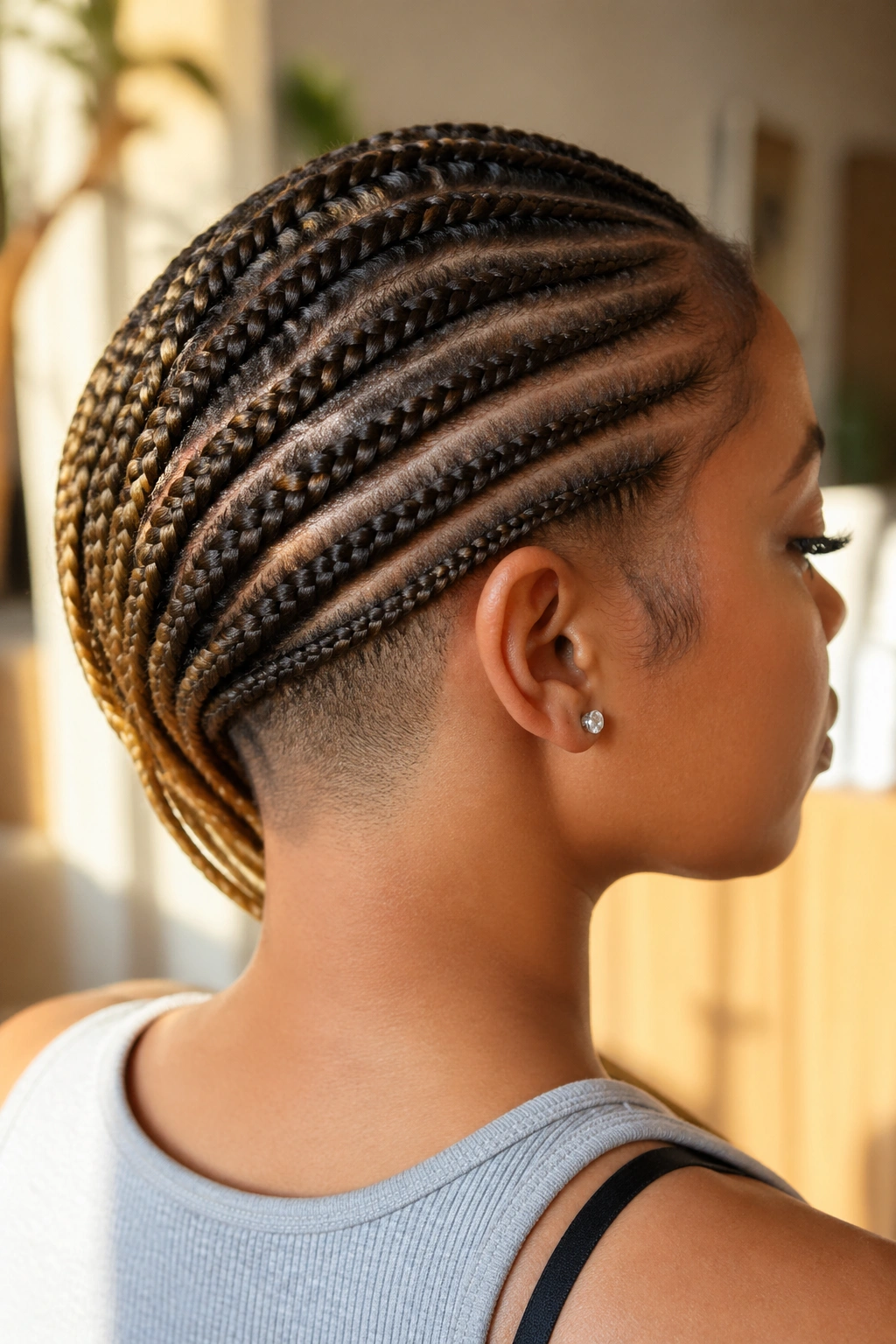
Lemonade-style diagonal cornrows across the head with the nape area shaved. The nape shave adds an unexpected element — the shaved area only shows when hair lifts or when viewed from certain angles.
This is the most subtle shaved-side variation on this list. For many daily contexts, the shave remains hidden. Only certain movements reveal it.
Good for those who want the personal feeling of a shaved section without constant visibility.
10. Tribal Cornrows With Designed Shave
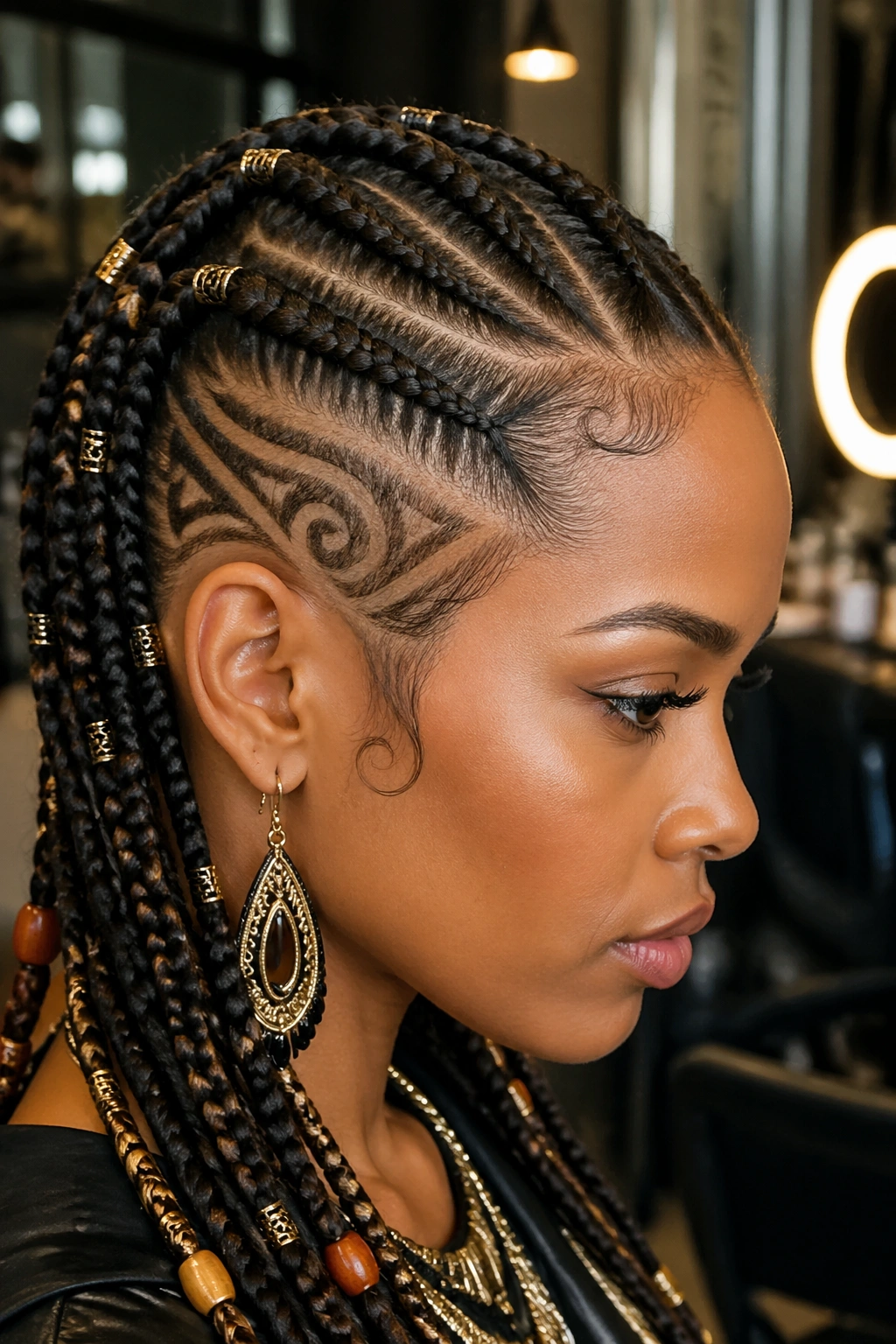
Tribal cornrow patterns — mixed braid sizes, asymmetric placement, metal cuffs and beads — paired with a designed shave on one side. The tribal aesthetic carries through both the braided and the shaved portions.
Designs worth considering: African symbolic patterns, geometric tribal motifs, or modern interpretations of traditional designs.
This is a high-commitment, high-impact style. Wear it when you want the hair to be the central element of your presentation.
11. Cornrows With Shaved Side and Baby Hairs
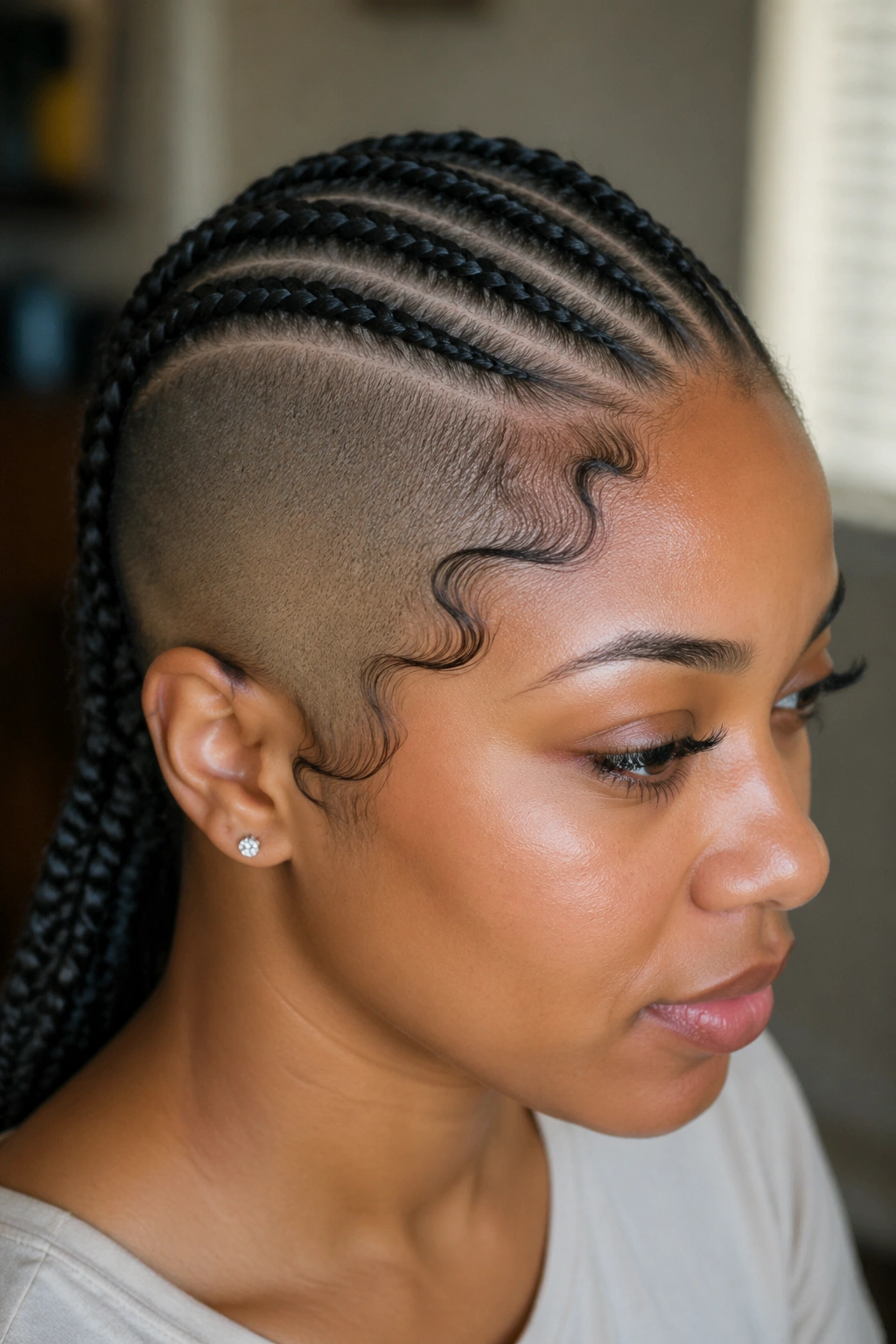
Standard cornrows on one side. Shaved skin on the other. The hairline along the shaved side carries laid baby hairs — swooped, sculpted, or patterned with edge gel.
The baby hairs soften the transition between cornrow and shave. They add detail work that complements the braided design.
Practice baby hair styling in a mirror before committing. Swooped baby hairs on shaved sides look different than on full-haired styles because the bare scalp provides more visible background.
12. Color-Dyed Cornrows With Shaved Side
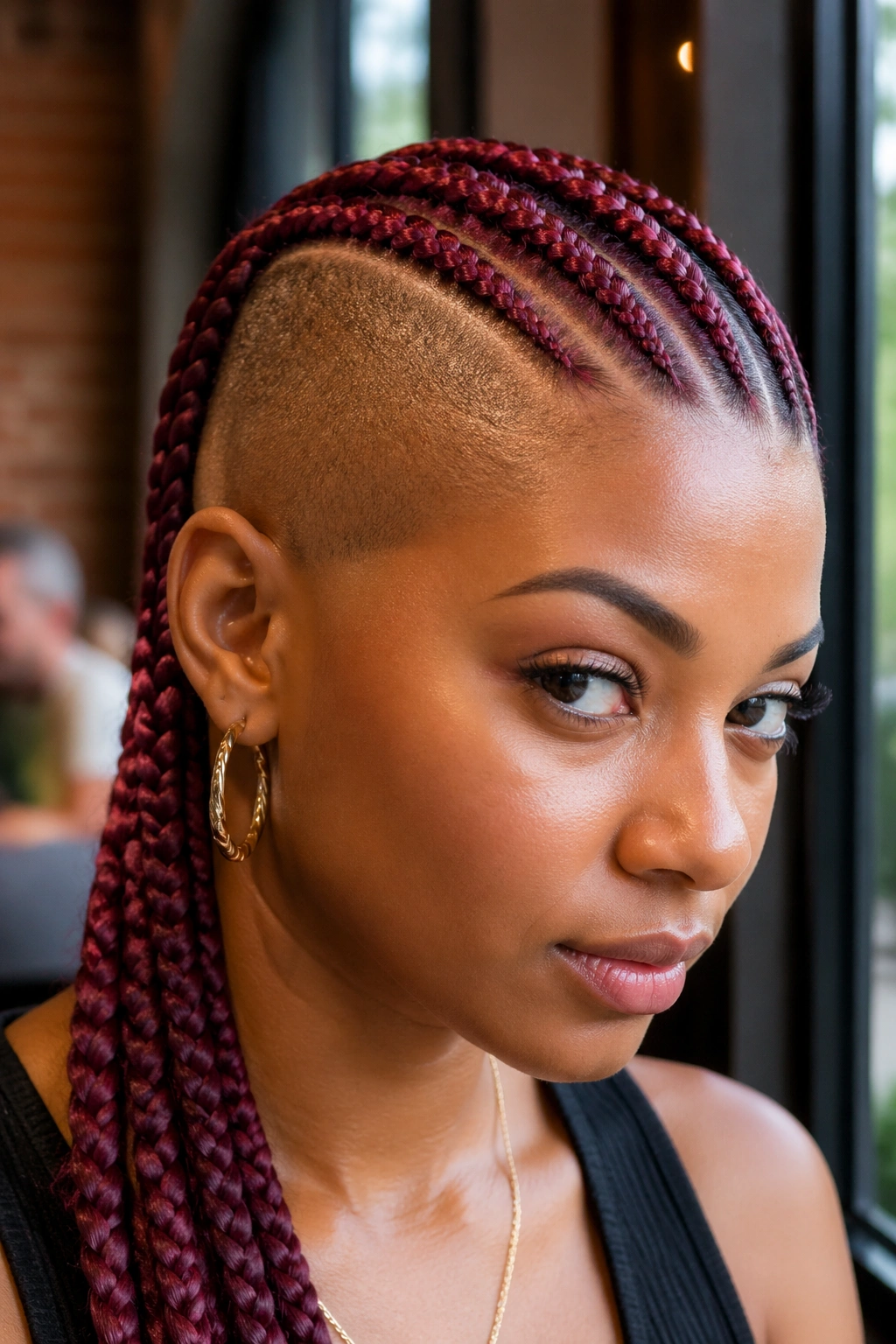
The cornrow side gets installed with colored kanekalon — burgundy, ginger, red, blonde. The shaved side stays bare. The color on the cornrow side creates a strong chromatic contrast with the skin tone visible on the shaved side.
Pick colors that complement your skin undertone. Warm undertones: copper, burgundy, auburn. Cool undertones: plum, wine, berry.
13. Cornrows With Fade and Crown Detail
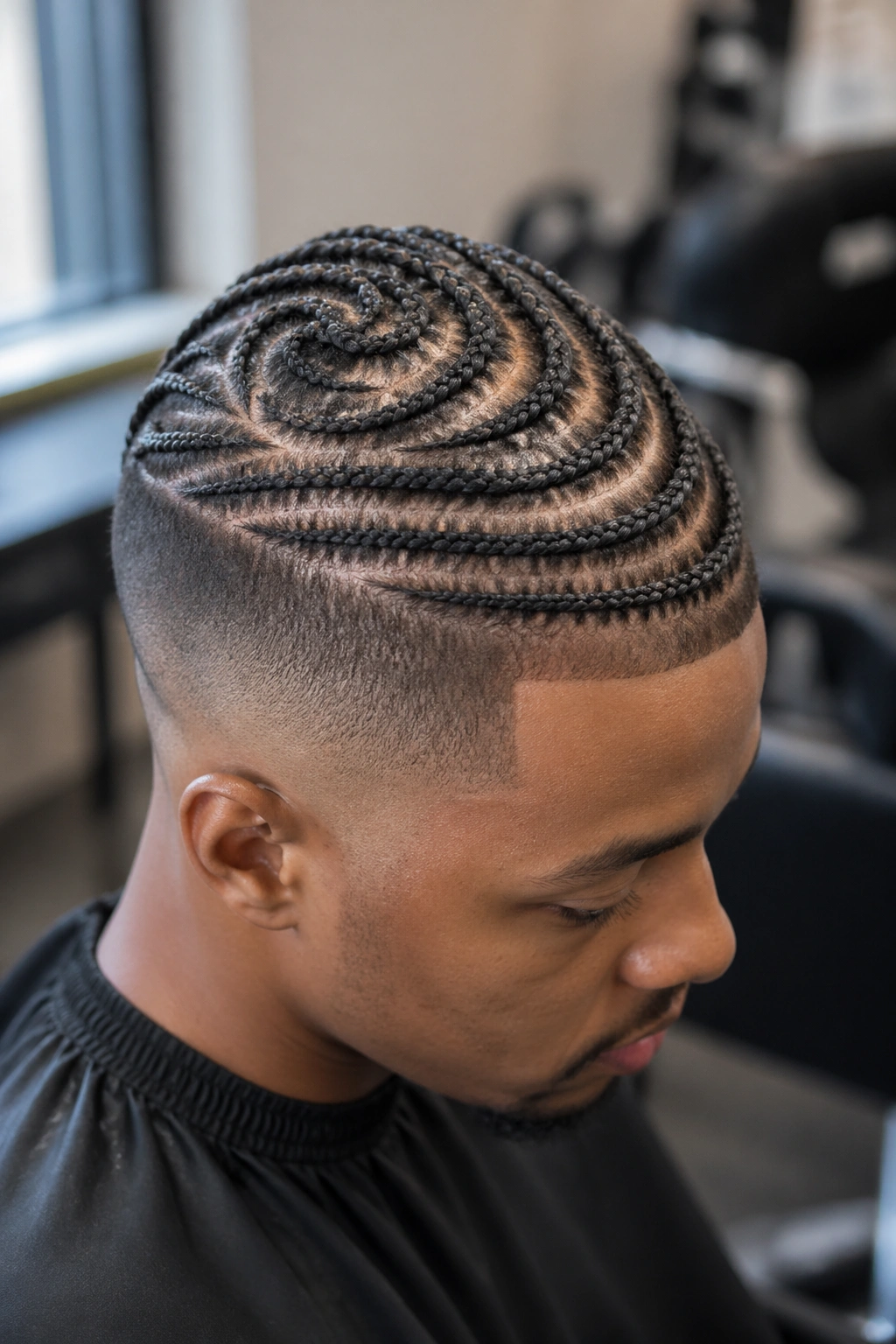
The fade on one side. Cornrows on the other. At the crown of the head, the cornrows swirl into a central design — a starburst, a spiral, or a mandala-like pattern.
The crown detail becomes the third element of the style — balancing between the fade and the cornrows below. It’s the visual anchor that ties the dual aesthetic together.
Skilled braider required. Crown patterns need precise parting and consistent curve direction.
14. Small Cornrows With Shaved Side Into Bun
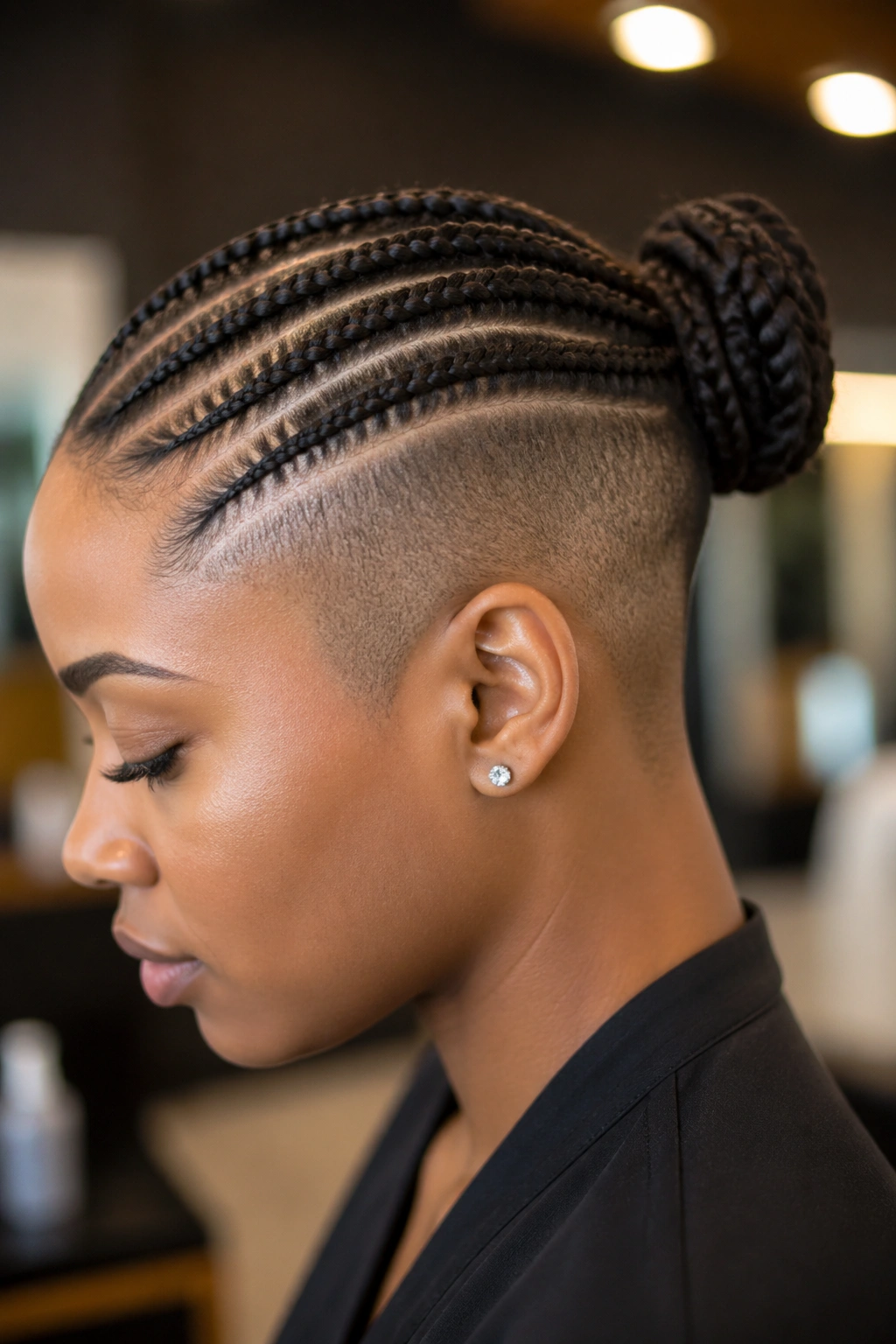
Small cornrows on one side, shaved on the other, with all braids gathering into a bun at the back. The bun creates a third silhouette element — the braid side, the shaved side, the bun anchor.
This variation works for formal events where you want the edginess of the shave paired with the polish of a bun silhouette.
The bun can sit at the crown, the back, or the nape depending on the energy you want.
15. Cornrows With Deep Shaved Undercut
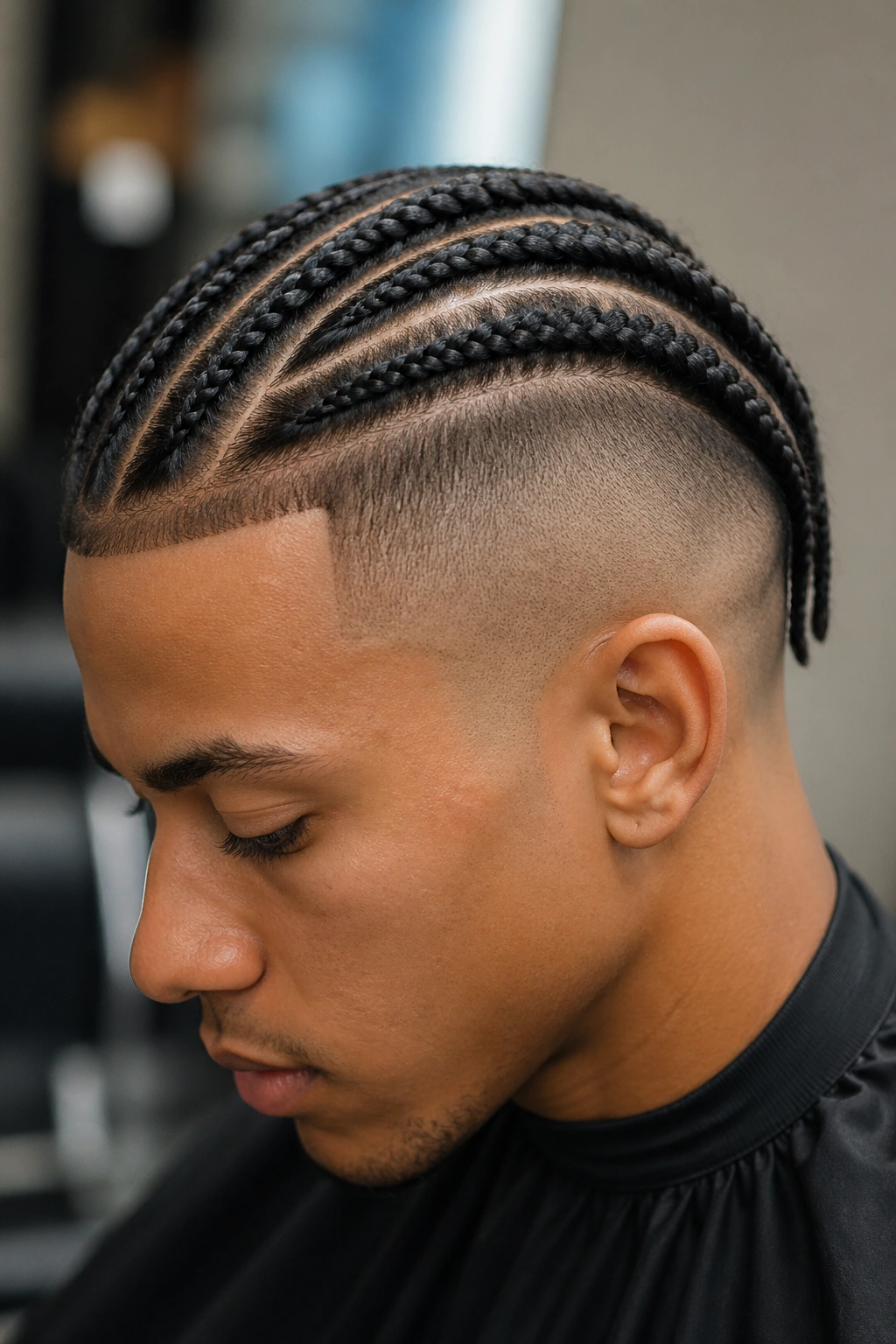
Rather than a full shaved side, an undercut takes a section from the ear line down. The top portion gets cornrowed. The bottom section stays shaved. From certain angles, the undercut is completely hidden.
Undercuts offer versatility. Pull the top cornrows loose and the undercut shows. Let everything hang over and the undercut disappears.
Maintenance every 2 weeks to keep the undercut crisp.
16. Cornrows With Shaved Side and Stitch Details
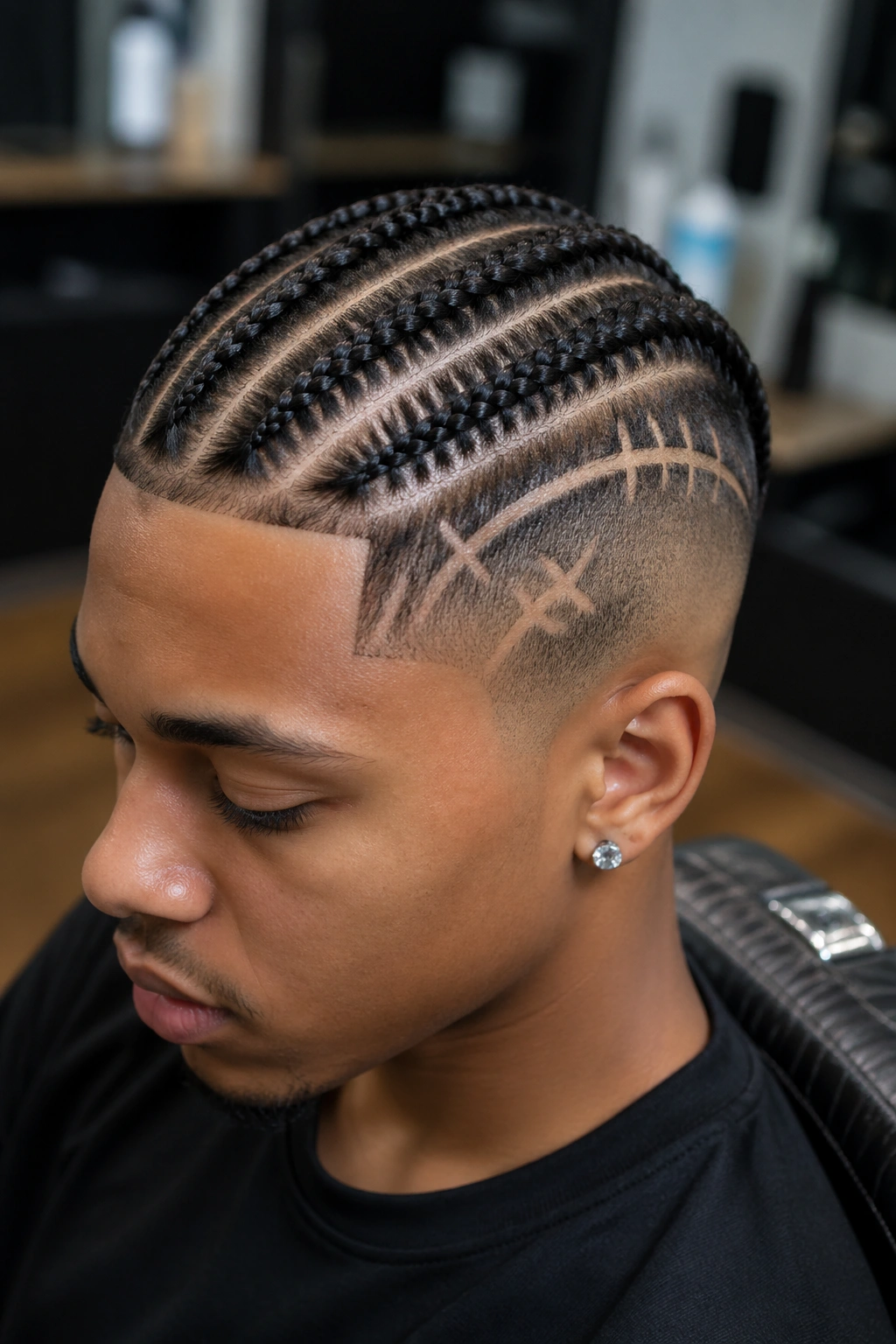
Stitch cornrow detail on the braided side. Designed stitch-like lines carved into the shaved side with a detail trimmer. The two textures mirror each other visually — stitch pattern on the hair, stitch pattern on the scalp.
This is an advanced styling combination. Both elements require skill.
The mirrored stitch pattern creates visual harmony across the whole head.
17. Heart Design Cornrows With Shaved Side
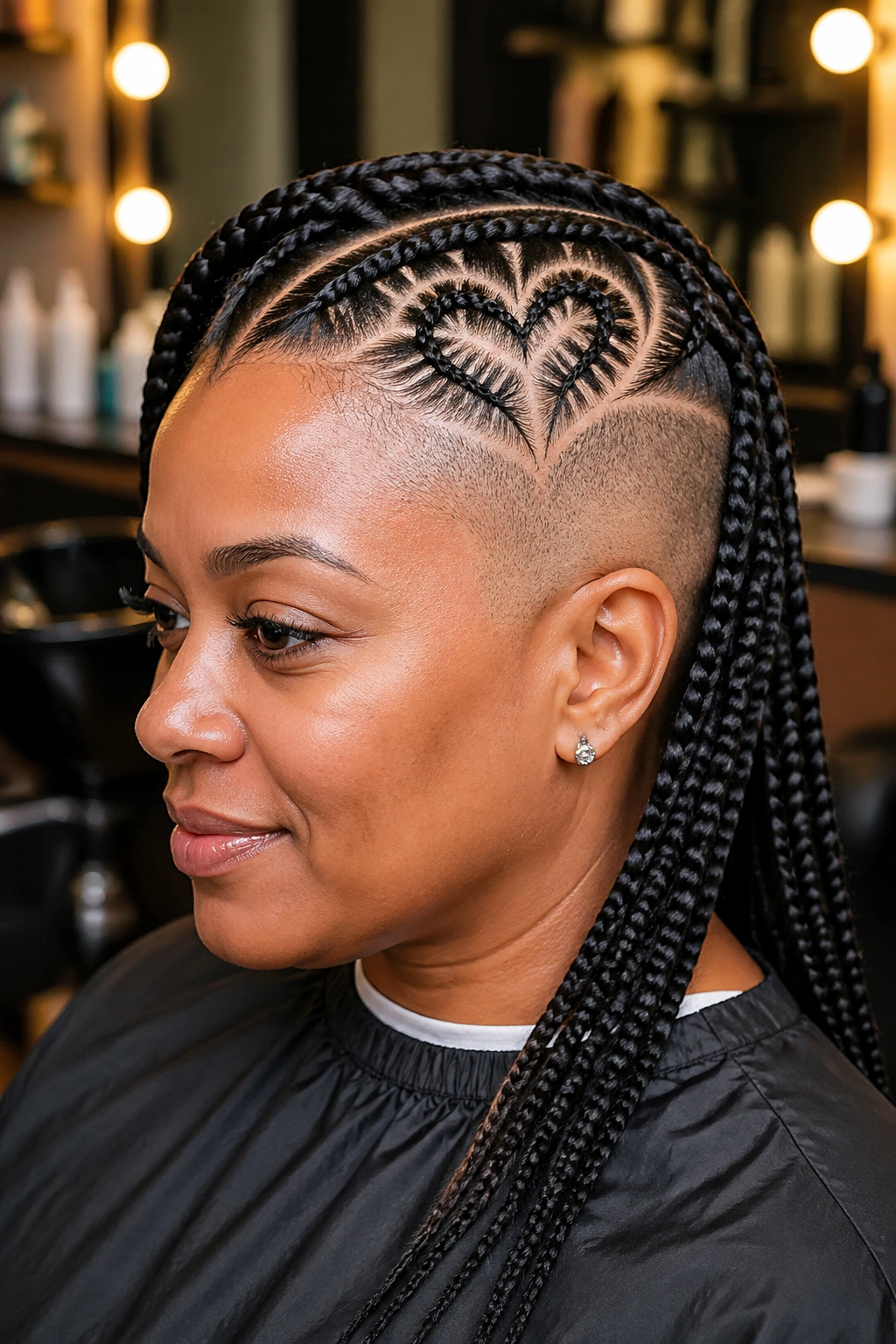
Cornrows with heart-shaped parting details on one side. Shaved skin on the other. The heart parts in the cornrow section add soft, feminine detail that balances the hard-edge of the shave.
This combination reads feminine and edgy — a combination that’s hard to achieve without the contrast between shaved and styled sections.
18. Cornrows With Two-Tone Color and Shave
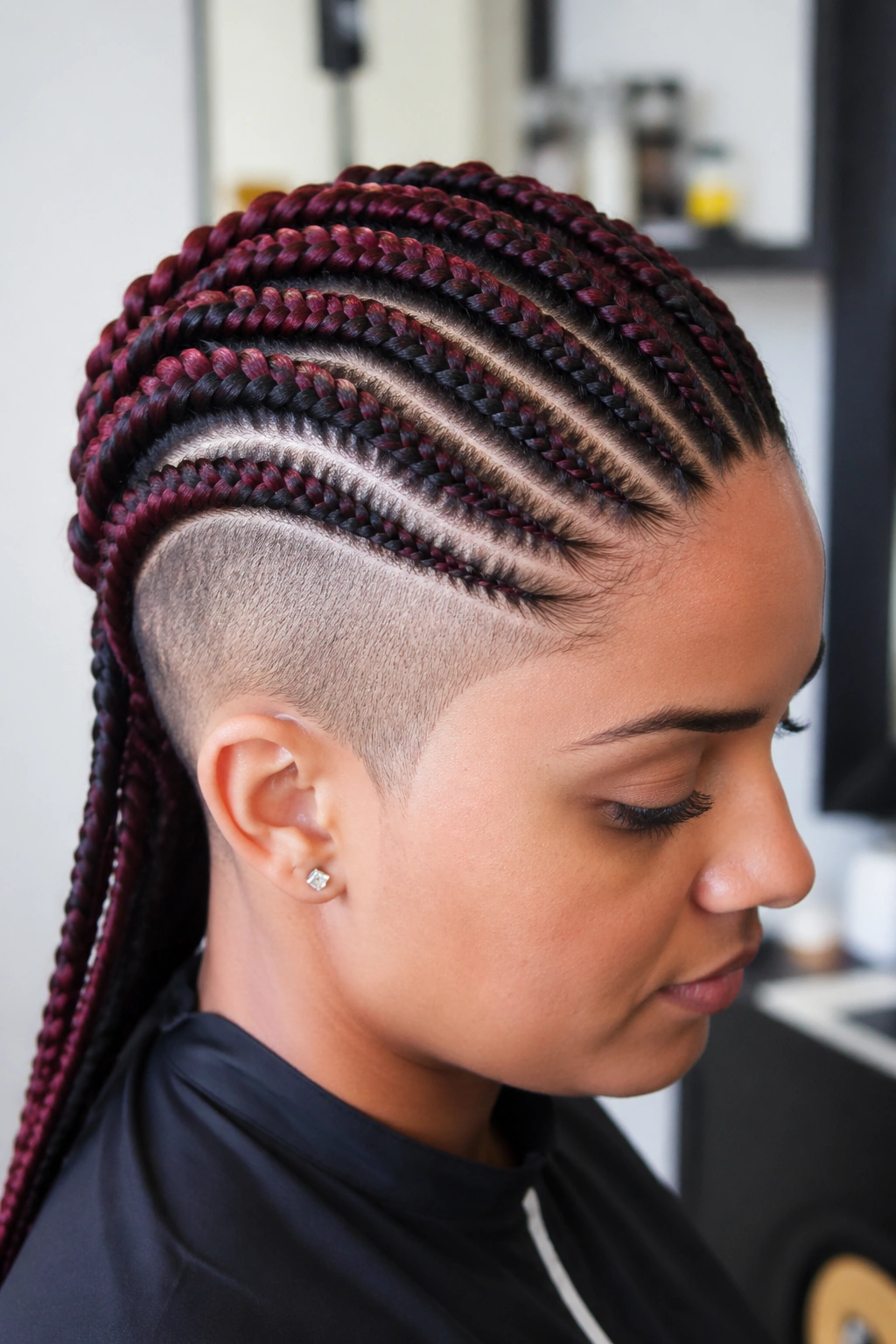
Cornrows installed in two alternating colors — say, black and burgundy — with a shaved side. The two colors add dimensional visual interest to the braided side while the shave provides the contrast.
Two-tone installation takes more planning. Each cornrow needs its color pre-decided before installation begins.
Works for those who want maximum visual complexity on the braided side while maintaining the bold shaved contrast.
19. Cornrows Crossing Over Shaved Area
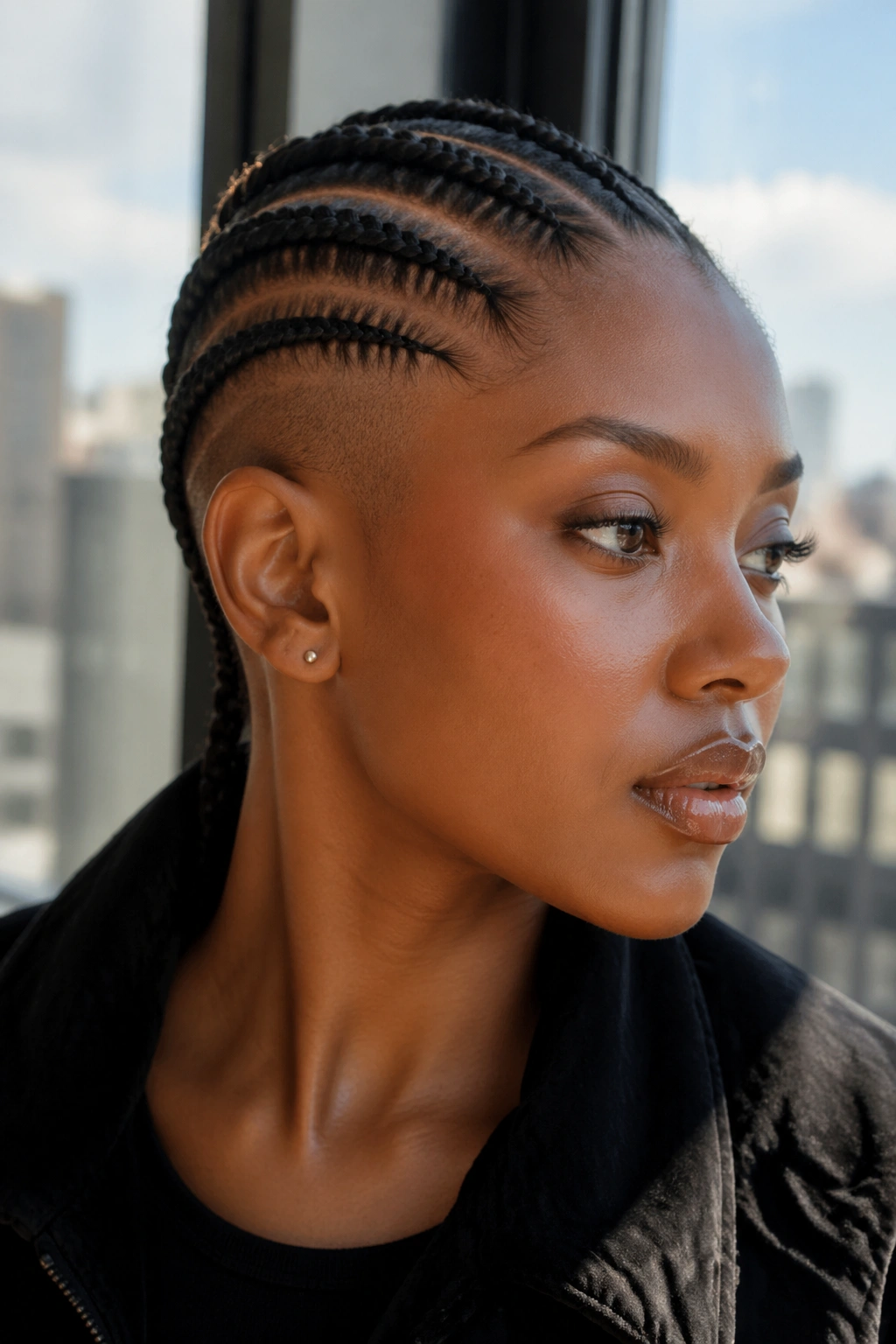
A design choice where the cornrows don’t stay on one side. Instead, they cross over the shaved area at specific points — usually two or three cornrows that arc from one side of the head, over the shave line, and into the shaved section.
This is a sculptural approach. The braids visible crossing the shaved area create strong design lines.
Works particularly well for photoshoots and special events where the architectural quality of the style can be appreciated.
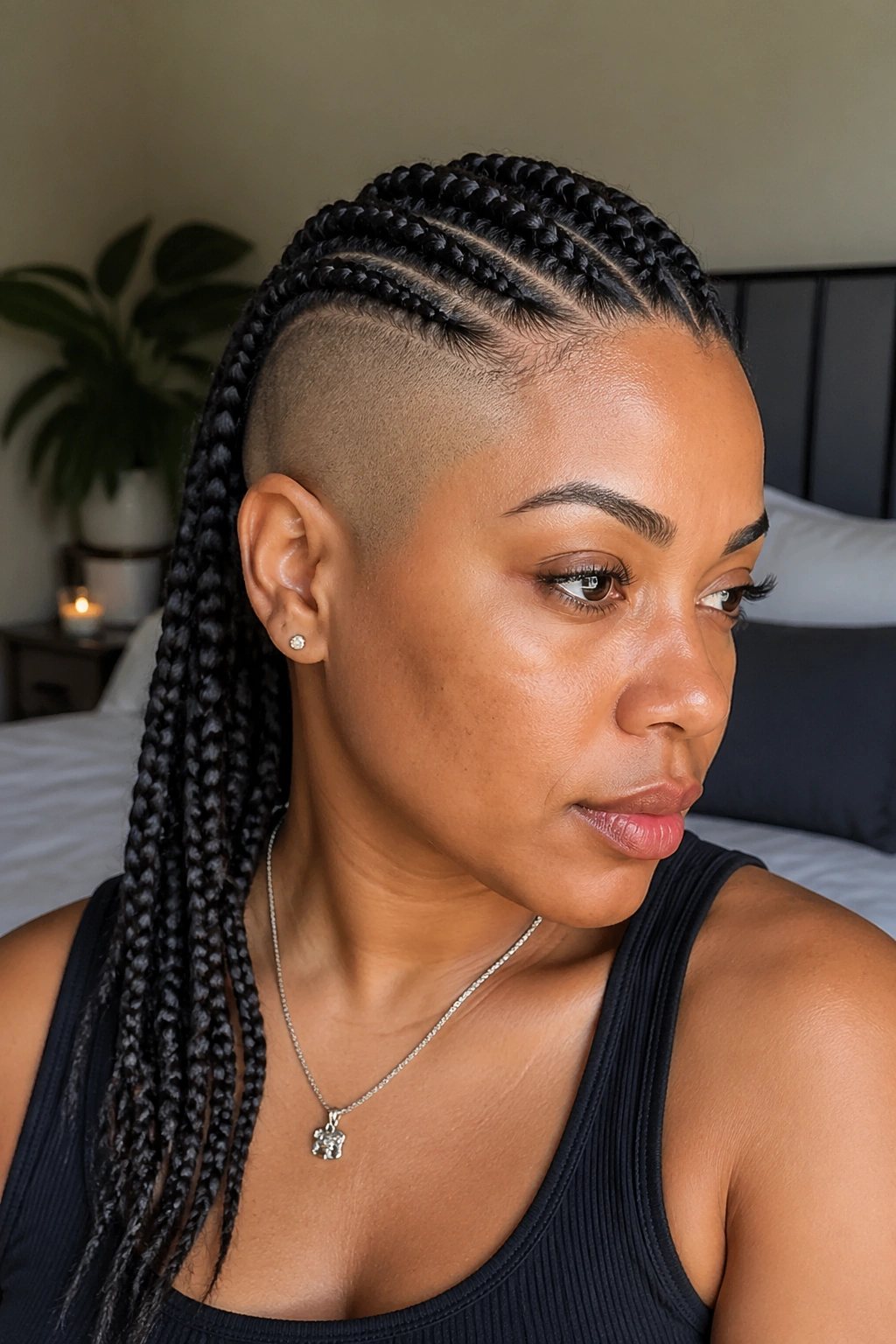
20. Faux Cornrows With Shaved Side
Styling Tips
Not actual cornrows — tight braid-like installation using shorter natural hair on the non-shaved side. The “cornrows” are more like very close two-strand twists or flat braids. Visually they read as cornrows from a distance.
This variation works for those with shorter natural hair who want the side-cornrow-with-shaved-side aesthetic without enough length for true cornrows.
The shave side looks identical to the full-cornrow versions.
21. Cornrows With Shaved Side and Cuffs
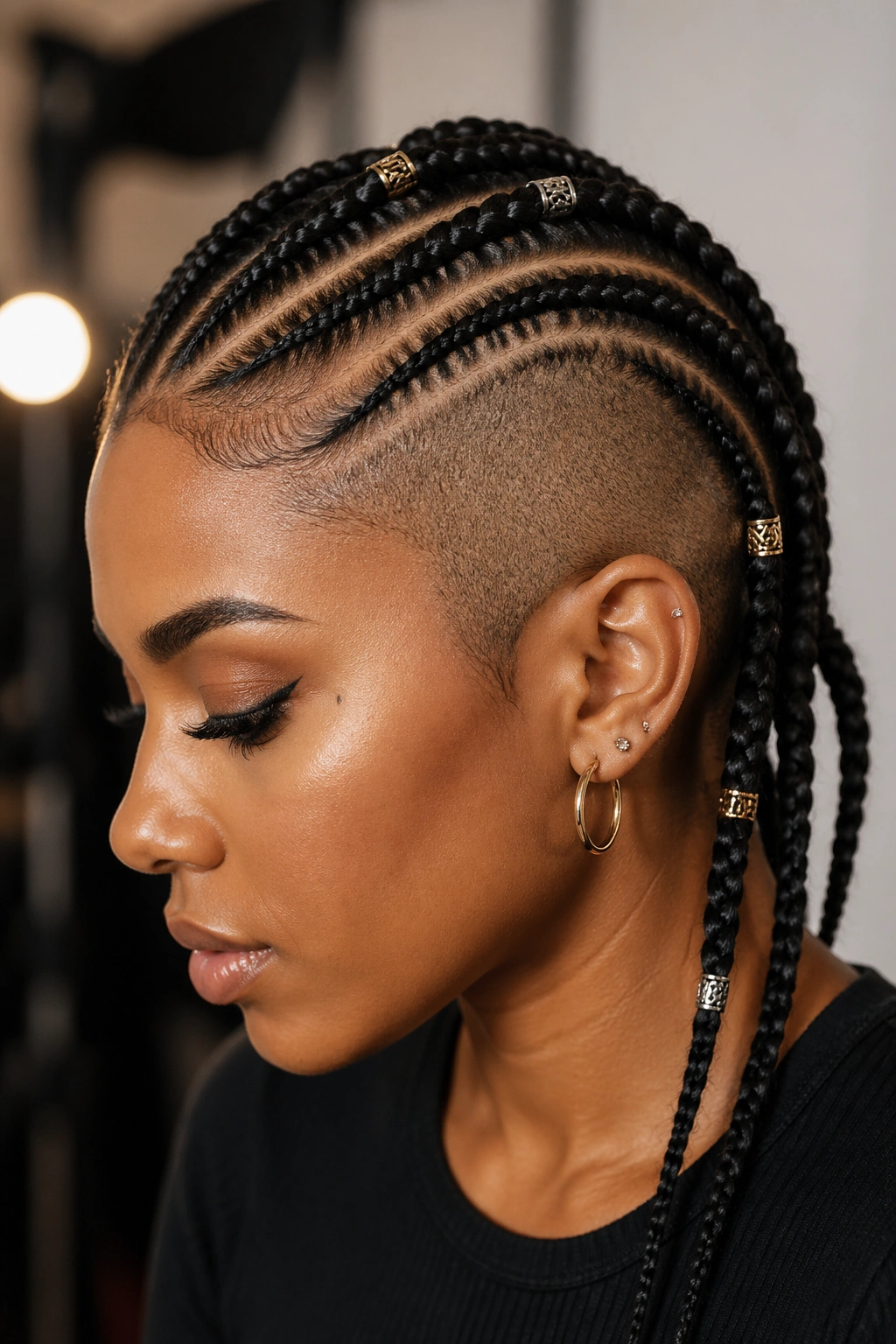
Standard cornrows on one side. Shaved skin on the other. Metal cuffs — gold, silver, copper — threaded onto select cornrows as accent details.
Cuff placement options: clustered near the front where they frame the face, distributed evenly along the length of specific braids, or grouped at the ends.
Match the cuff metal to the energy you want. Gold reads warm and traditional. Silver reads modern and edgy. Copper reads bohemian.
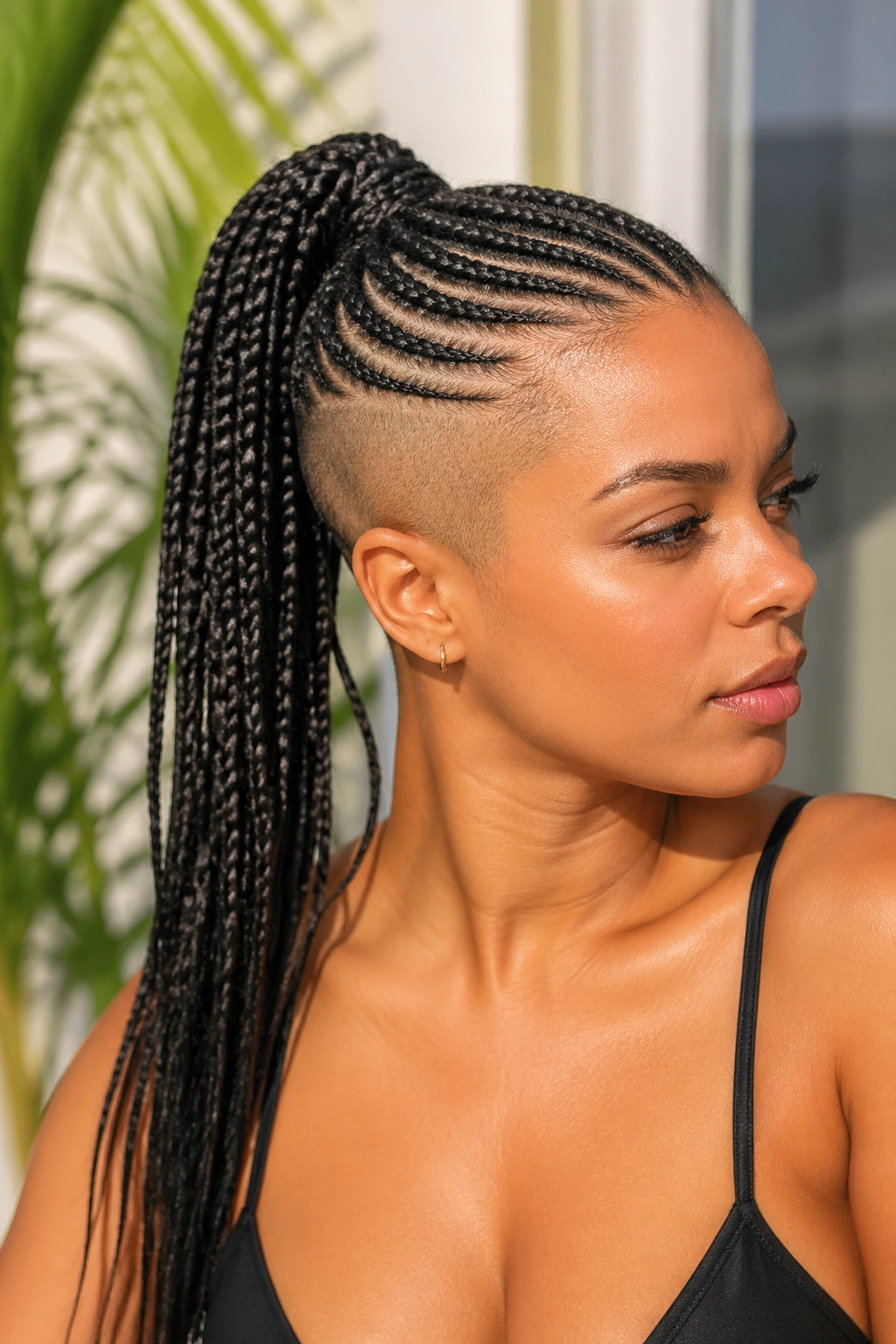
22. Long Cornrows With Shaved Side Into Ponytail
Maintenance Notes
Long cornrows (usually feed-in length) on one side. Shaved section on the other. All braids gather into a single ponytail at the back or side.
The ponytail position changes the read. High pony reads athletic and energetic. Side pony reads styled and playful. Low pony reads classic and polished.
Protect the shaved area at night by sleeping with a silk pillowcase even if the rest of the hair is wrapped in a bonnet. Cotton pillowcases pull moisture from shaved scalp and cause friction that can irritate.
Maintenance Across Both Sections
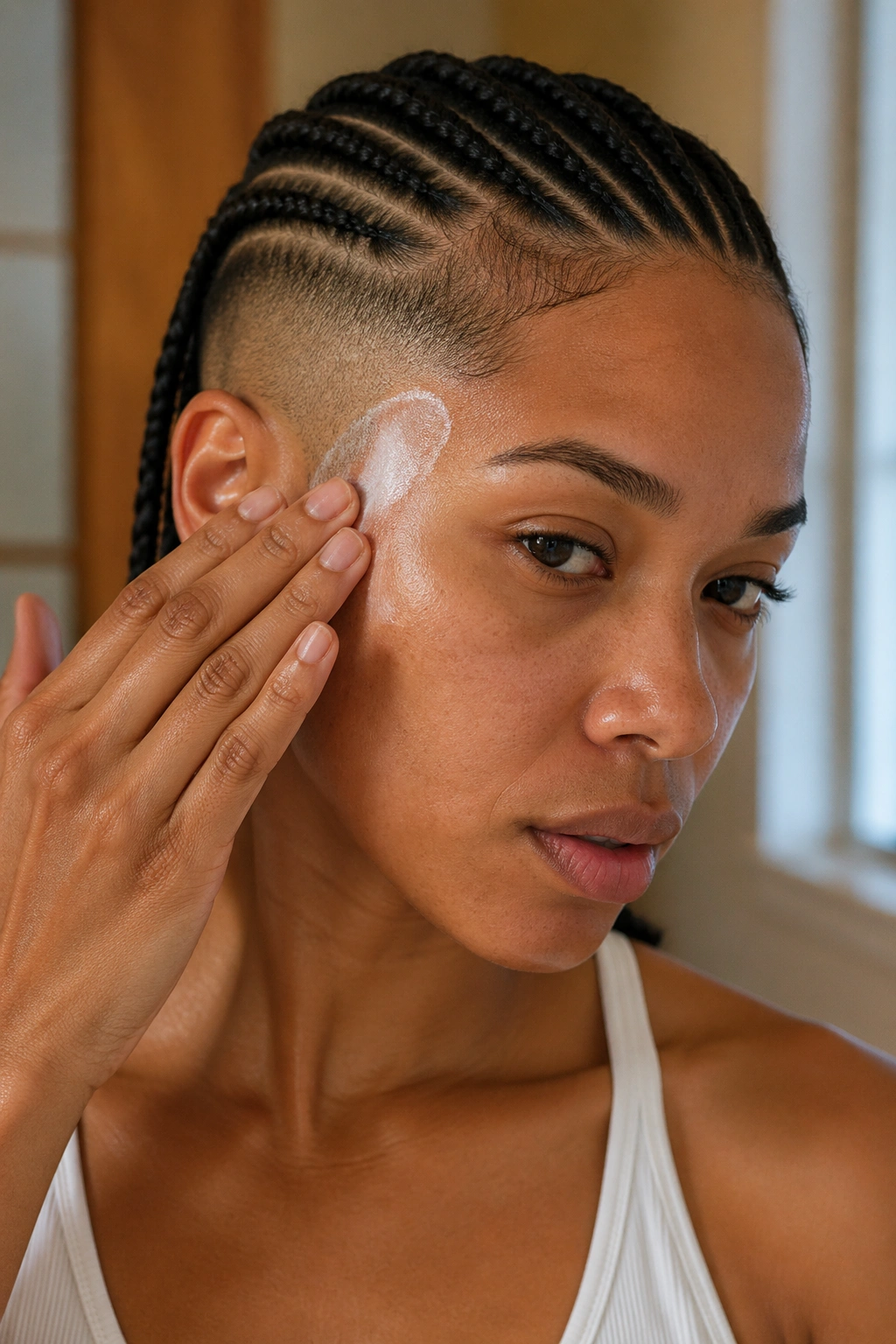
The cornrow side needs standard cornrow care. Weekly scalp oil. Nightly silk bonnet. Light gel refresh on the hairline every few days.
The shaved side needs different attention. Daily moisturizer on the shaved area. Re-shave every 1-2 weeks (for skin shave) or 3 weeks (for short fade). Watch for razor burn, ingrown hairs, or dry skin.
Both sections work together visually. If one side gets neglected, the whole style looks unkempt. Plan maintenance for both simultaneously — schedule your cornrow refresh days to align with your shave appointments.
Preventing Razor Burn and Irritation
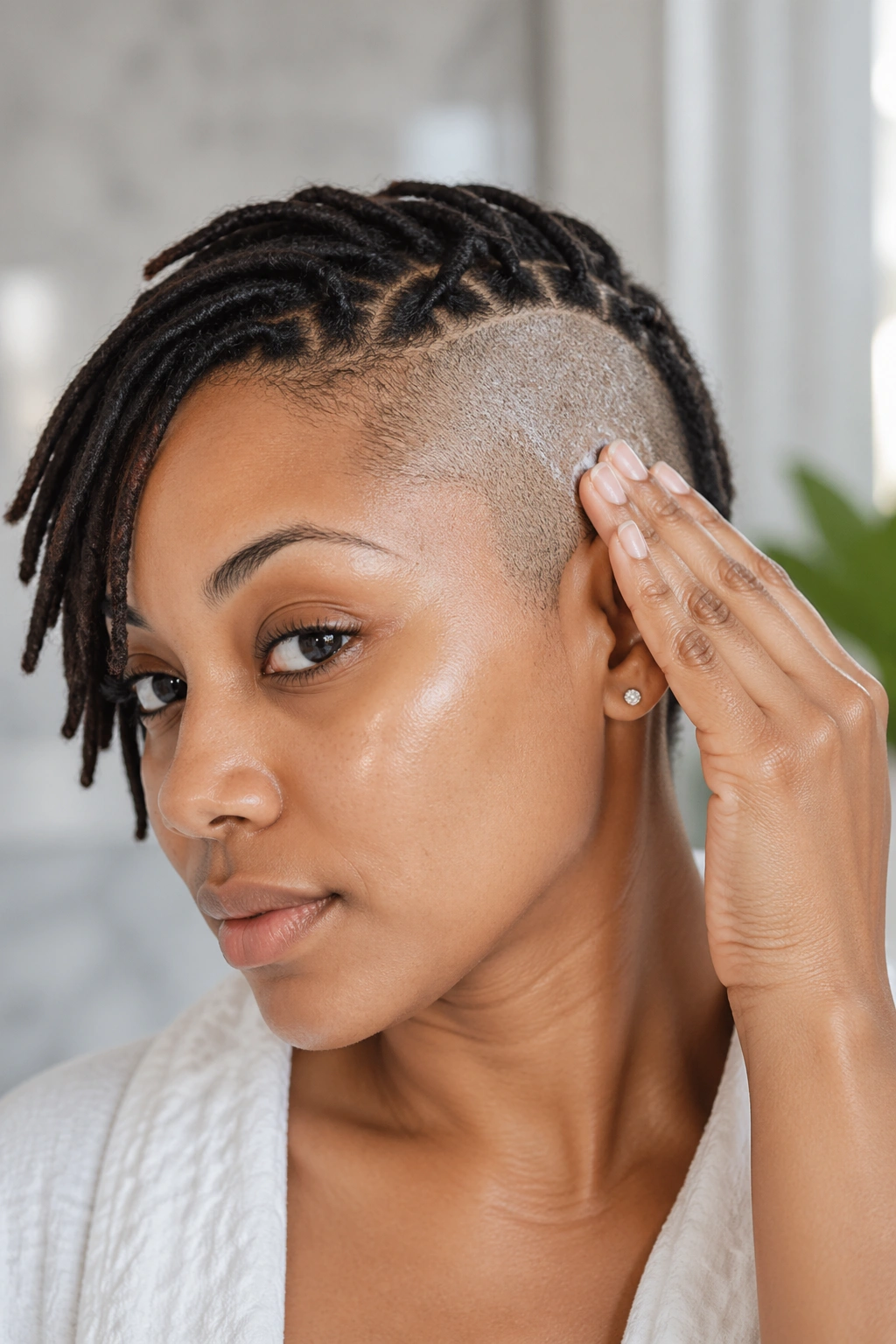
Some scalps are sensitive to clipper work. Common issues: razor burn (red irritation), ingrown hairs (bumps under the skin), dryness, itching.
Prevention starts with prep. Clean scalp before shaving. Gentle exfoliation once a week on the shaved area to prevent ingrowns. Moisturizer after every shave.
If you develop ongoing irritation, consult a dermatologist. Chronic clipper-induced folliculitis needs medical attention rather than home remedies.
Face Shape and Head Shape Considerations
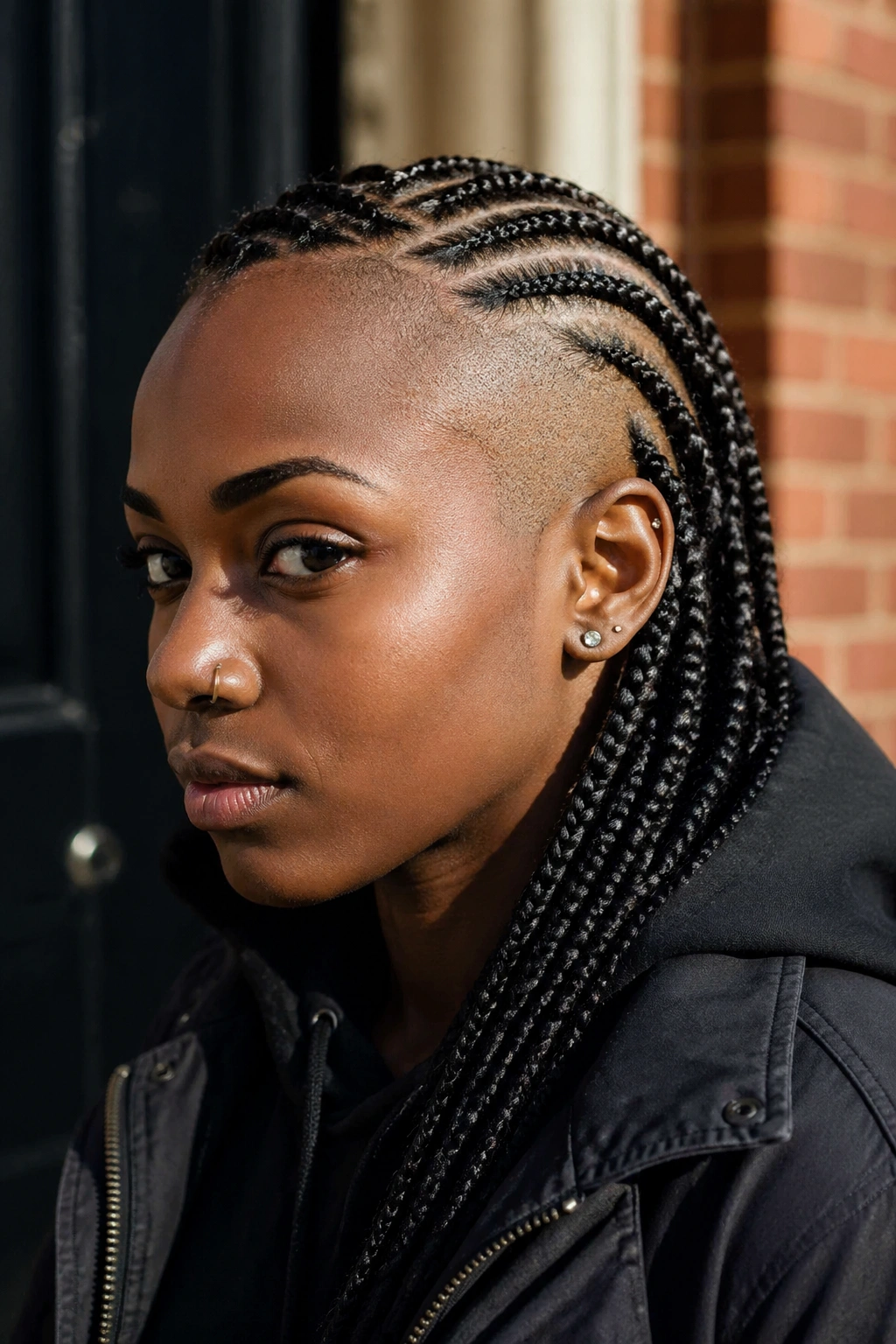
Round face: shaved sides add vertical length that balances roundness. Works well.
Oval face: most variations work. Go by personal preference.
Heart face: lean toward softer shaved options (fade rather than full shave) to avoid emphasizing the narrow chin.
Square face: shaved sides work but combine with curved cornrow patterns to soften the overall angularity.
Long face: avoid adding too much vertical emphasis. A shaved side that extends upward adds length that might not flatter a long face.
Picking the Right Version for Your Lifestyle
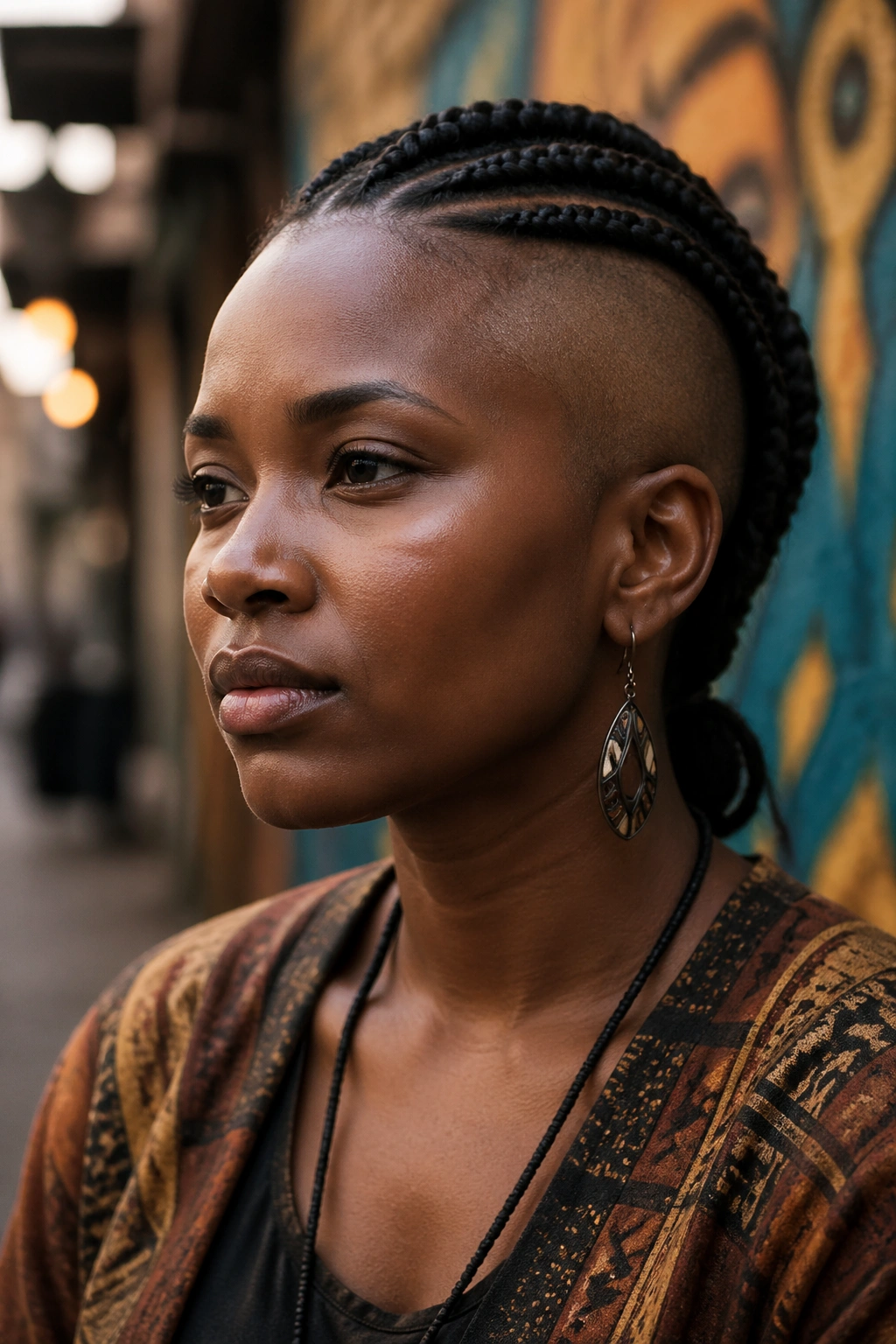
Active lifestyle: shorter cornrow lengths with easy-maintenance fades. Nothing that flops around during workouts.
Professional work: more conservative shaves (fade rather than designed shave) with traditional cornrow patterns on the non-shaved side.
Creative or self-directed work: any variation. This is where designed shaves and colored cornrows can fully express.
Social and event-heavy lifestyle: rotation of variations to match different occasions. One baseline style and two or three variations for different settings.
When to Take This Style Down
The cornrow side comes out after 4-6 weeks as with any cornrow install. The shaved side needs separate maintenance on its own schedule.
If you’re transitioning away from the whole shaved-side look, the shave side is the longer commitment. Plan for 6-12 months of growth before the hair on that side matches the opposite side in length.
During growth out, styling options become limited. Consider wearing hats, headwraps, or accepting an asymmetric look during the transition period.
Common Mistakes

Shaving without a skilled barber. Bad clipper work shows up permanently until the hair grows back.
Designing complex shaved patterns without practice. A simple clean edge always beats a poorly executed detailed pattern.
Skipping moisturizer on the shaved area. Dry shaved scalp reads dusty and ashen in photos.
Not maintaining both sections equally. A fresh cornrow install paired with an overgrown shave line looks half-finished.
Side cornrows with shaved sides give you an architectural, dual-texture silhouette that no other style can match. The commitment is real. The payoff is a look that reads bold, intentional, and personal in ways that fuller hairstyles simply can’t. Find your preferred shave length, find your preferred cornrow pattern, and you’ve got a signature style that becomes genuinely yours.
