



Big straight back cornrows aren’t for everyone — and that’s exactly the point. When you want something that reads as confident, sculptural, and unmistakably bold, you go bigger. Three. Four. Five fat rows running straight from hairline to nape, each thick enough to feel substantial when you run your hand along it. Big straight back cornrow styles have this way of making a person stop mid-sentence. The style does the talking before you do.
I started wearing big cornrows after years of denser feed-in sets. The shift felt radical at first. Suddenly my scalp could breathe. My braider finished in 90 minutes instead of 4 hours. My edges stopped looking thin at the temples. The heavier weight of each braid meant less friction on the front hairline — a surprising benefit I didn’t expect.
Big cornrows also age differently than small ones. Small braids get fuzzy along the parts. Big braids stay looking good for a week longer before the fuzz becomes noticeable. For anyone who hates redoing styles every few weeks, this is the move.
What follows is 22 genuinely different interpretations of big straight back cornrows. Different counts (3, 4, 5, 6, 7). Different widths. Different finishing techniques. Different styling contexts. Each one stands on its own. Some are traditional. Some play with texture, color, or accessories. All of them work on hair from shoulder-length to waist-length and on textures from 3C to 4C.
Before the list, a few things worth knowing about big cornrows specifically.
Big Cornrows vs Small Cornrows — What Changes
Everything changes when the braid width doubles. Installation time drops. Weight per braid increases. Scalp coverage decreases (more of your scalp shows between the rows). The overall silhouette becomes bolder and simpler.
Big cornrows are less delicate. They’re architectural. They shape the head like helmet pieces rather than softening it like veils. This means they flatter strong, angular features well and can overwhelm very soft, round faces unless the styling works to balance it.
Maintenance is gentler. There are fewer parts to frizz, fewer edges to touch up, fewer rows to oil. A full big-cornrow set can hold for 4-5 weeks with minimal intervention.
Counting — How Many Big Rows Work Best
Three rows is the most dramatic and the most divisive. Some love it, some find it too bold for daily wear.
Four rows is a balanced middle ground. It reads as intentional without being overwhelming. Most people who try four stick with four.
Five rows is the most common “big” count. It gives a touch more structure without losing the bold effect.
Six and seven rows start crossing into medium cornrow territory, but the braids themselves can still be thick if parting is generous.
Prep for Big Cornrows
Wash, deep condition, stretch. Same as any cornrow prep, but with extra attention to moisture. Big braids carry more hair per row, which means more weight pulling on each root. If your hair isn’t properly moisturized going in, that weight can cause mid-shaft breakage.
A protein-balanced conditioner is worth using the week before install. It strengthens the strands so they can handle the tension.
Don’t apply heavy butter or thick cream on install day. The braider needs some grip. Light oil on the scalp is fine.
Tools That Work Specifically for Big Cornrows
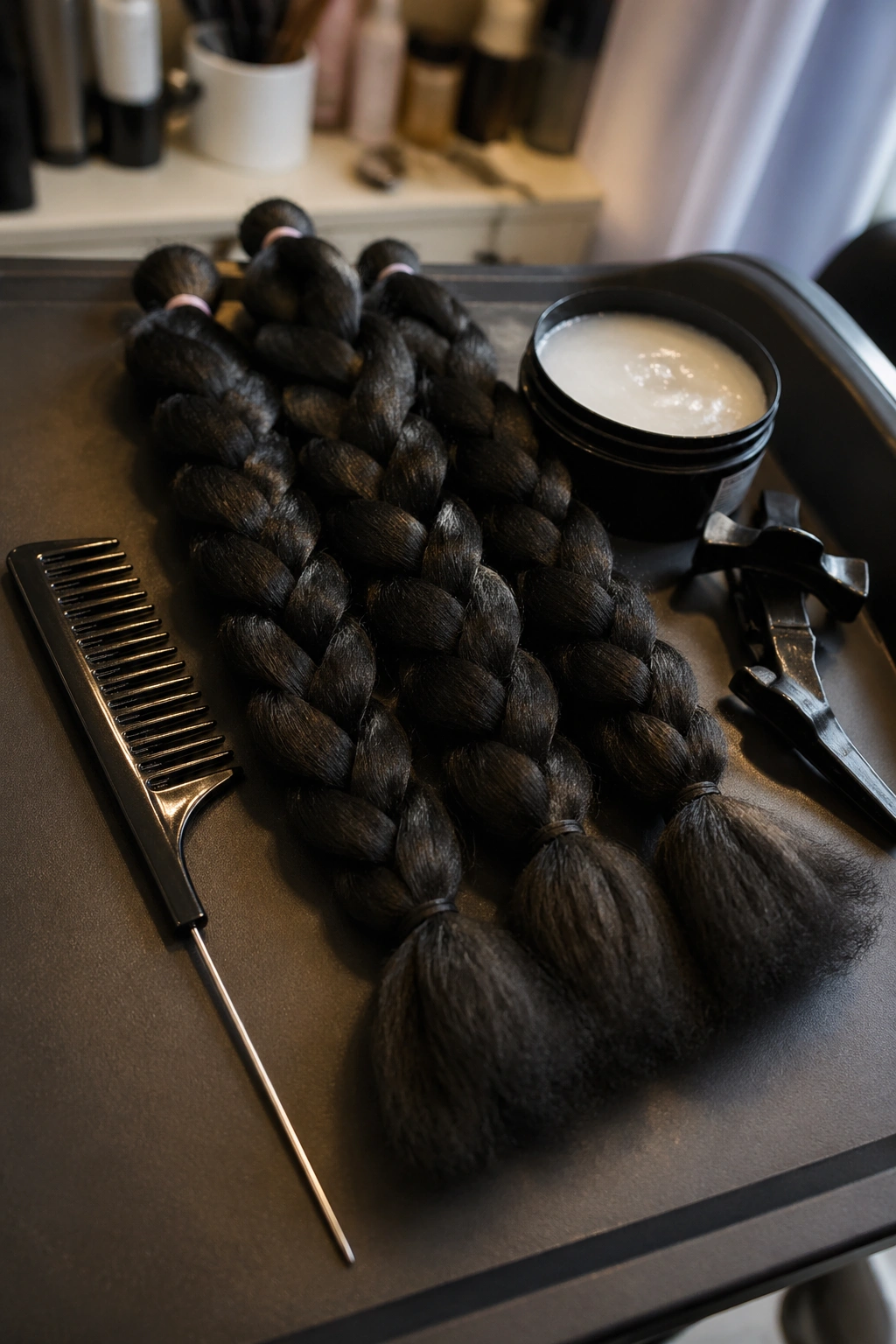
A wider-toothed rat-tail comb for bigger parts. Thicker kanekalon packs if you’re adding length — the rows need substantial filler to stay plump. A strong-hold edge control for the wider hairline gaps between rows. That’s most of it.
You don’t need as many clips or sectioning tools since the rows themselves are fewer.
Tension Matters More on Big Rows
Because each big row carries more hair, tight braiding creates disproportionately high tension at the root. Ask your braider to prioritize a firm-but-not-painful grip. You should feel security in the braids without feeling pulled.
If your scalp feels tight the next morning, spray a light leave-in and gently massage the bases of the braids. This usually releases enough tension to ease discomfort without compromising the style.
1. Three Fat Cornrows Straight Back to Waist Length
The boldest of the bold. Three wide cornrows running from forehead to nape, each one thick as a wrist, finished with extension or natural hair reaching the waist.
Why It Works
- Maximum impact with minimum time in the chair
- Low tension per braid since the hair is spread across only three sections
- Lasts 5-6 weeks with minimal upkeep
- Reads as bold editorial style
Pro tip: the middle braid should sit exactly on your center, with the two side braids equally spaced. Any drift makes the count look uneven.
2. Four Wide Cornrows With Sharp Parts
Four thick rows, each about 2 inches wide at the scalp, with crisp parts between them. The parting needs precision — any wavering line shows up more on four rows than on ten.
Unlike the three-row style, four reads slightly more balanced and less avant-garde. It’s the count for someone who wants boldness without the extreme.
Four works for both men and women, which is worth noting — it’s one of the most gender-versatile cornrow counts.
The parts should be clean enough that you could run a pencil along them without wobbling. That’s the standard.
3. Five Bold Cornrows With Tapered Ends
Five thick cornrows where the braids start wide at the hairline and gradually taper thinner by the ends. The taper gives the style a sculptural quality — each braid feels intentionally shaped rather than uniform.
The taper requires feed-in technique. Extensions are added progressively to build width at the scalp, then reduced gradually as the braid moves back.
This style photographs with more depth than uniform-width cornrows because the taper creates varying shadow along each braid.
Best for medium to long hair. Short hair doesn’t have enough length for the taper to show meaningfully.
4. Six Rows with Alternating Tension
Six big cornrows where three are braided slightly tighter and three slightly looser, alternating across the head. The visual rhythm adds interest without disrupting the basic straight-back silhouette.
What makes this different: most cornrow sets have uniform tension. This intentionally varies it for texture. Up close, you can see the alternating tightness.
Who this is for — anyone who wants something subtly different from the usual big cornrow look without committing to decorative elements like beads or color.
5. Three Big Cornrows with a Wide Gap at the Temples
Three fat cornrows placed with extra space at the temples so the side sections of the head read as open scalp rather than being filled with edges or smaller accent braids. The look is architectural, almost severe.
This style photographs incredibly well in profile. The open temples create negative space that makes the braids look like standing pillars.
Edge work matters here. The open temples are a clean zone that any stray hair will clutter. Lay edges precisely and consider a thin edge gel line to define the border where the scalp meets the braid.
6. Four Cornrows With a Center-Split Part
Four big rows where a dramatic center part splits the head in half, with two rows on each side running straight back. The part itself becomes a design element rather than just a functional divider.
The center part on only four rows reads bold. On ten rows it would look standard. On four, it stands out.
Flattering for faces with good bilateral symmetry. If your features are strongly asymmetric, a center part can draw attention to the imbalance.
The part needs touch-ups every 3-4 days. A small dab of gel along the line keeps it crisp.
7. Five Big Straight Back Cornrows With Hair Wrapped in Gold Thread
All five braids wrapped tightly in gold or copper-colored thread from base to tip. The thread creates a metallic surface on each braid that glints under light.
The wrapping process adds about 20-30 minutes to the install. It’s worth it for photos or events.
The thread catches light differently throughout the day — bright in direct sun, warm under indoor lighting, subtle in shade. It never reads the same way twice.
Avoid water. The thread tarnishes and can unravel. Plan for dry styling during the wrapped period.
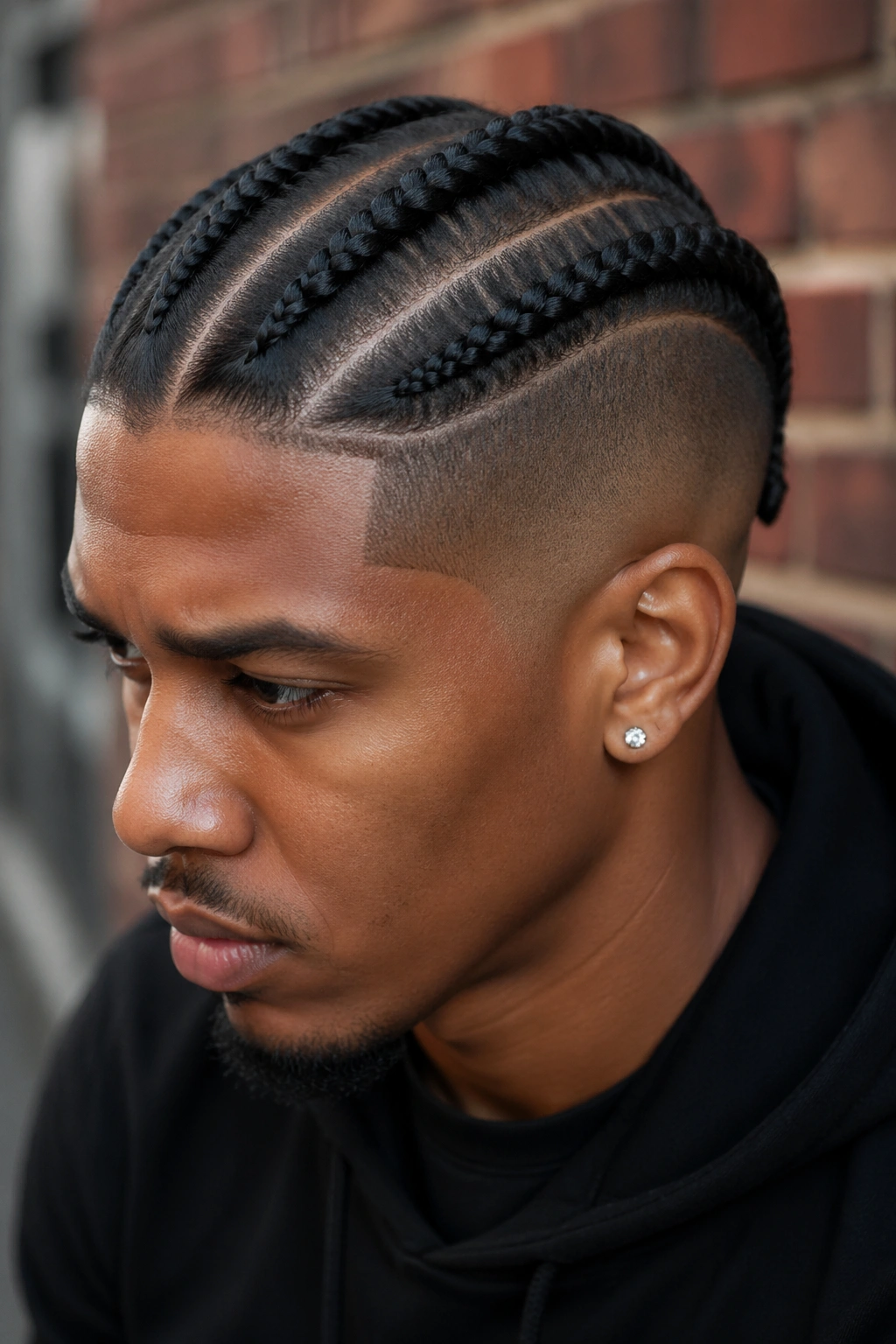
8. Four Big Cornrows With a Half-Shaved Undercut
Four wide cornrows on the crown of the head with the sides shaved or faded. The shaved section starts just above the ear and extends around to the back at an even line.
This is the boldest variation in the set. Combining big cornrows with an undercut takes the style to a fully edgy place.
Who this is for — anyone who already has an undercut or is willing to commit to one for this look. The cut needs refreshing every 2-3 weeks.
The contrast between the big, full braids and the clean shaved skin is the appeal. Without one, the other loses half its impact.
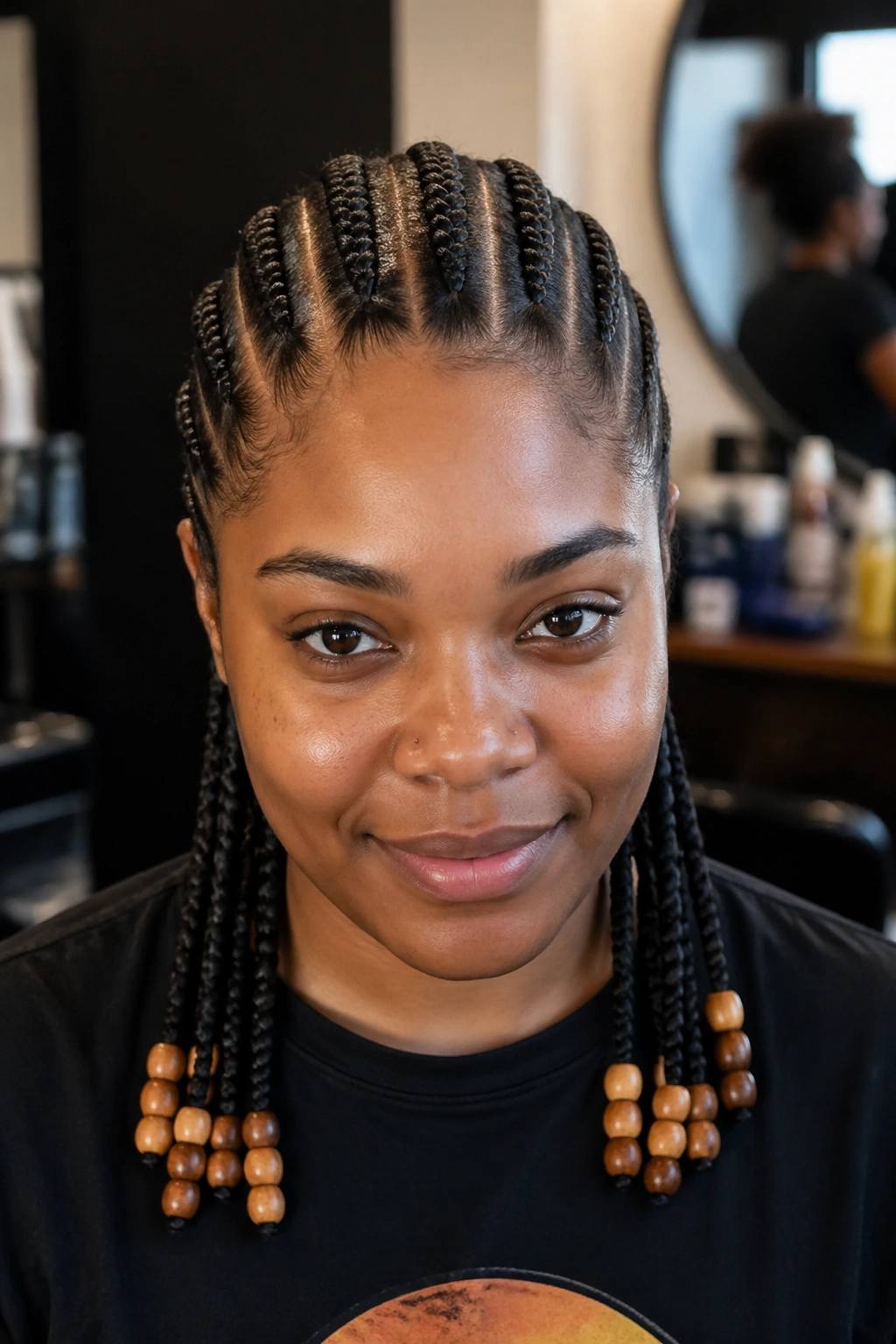
9. Six Big Cornrows Ending in Wooden Beads
Six big straight-back cornrows each finishing with a cluster of wooden beads. The beads add weight and swing to the ends without affecting the upper portion of the style.
Choose beads with openings wide enough to thread the braid through smoothly. Too-tight beads can damage hair fiber when moving up and down.
The weight of six beaded rows is more than you’d expect. Expect the style to feel heavier for the first few days until you get used to the added drag at the ends.
Wooden beads have a soft clack when they move. Some love the sound. Some find it distracting. Know which you are before committing.
10. Three Big Cornrows With a Side Ponytail Finish
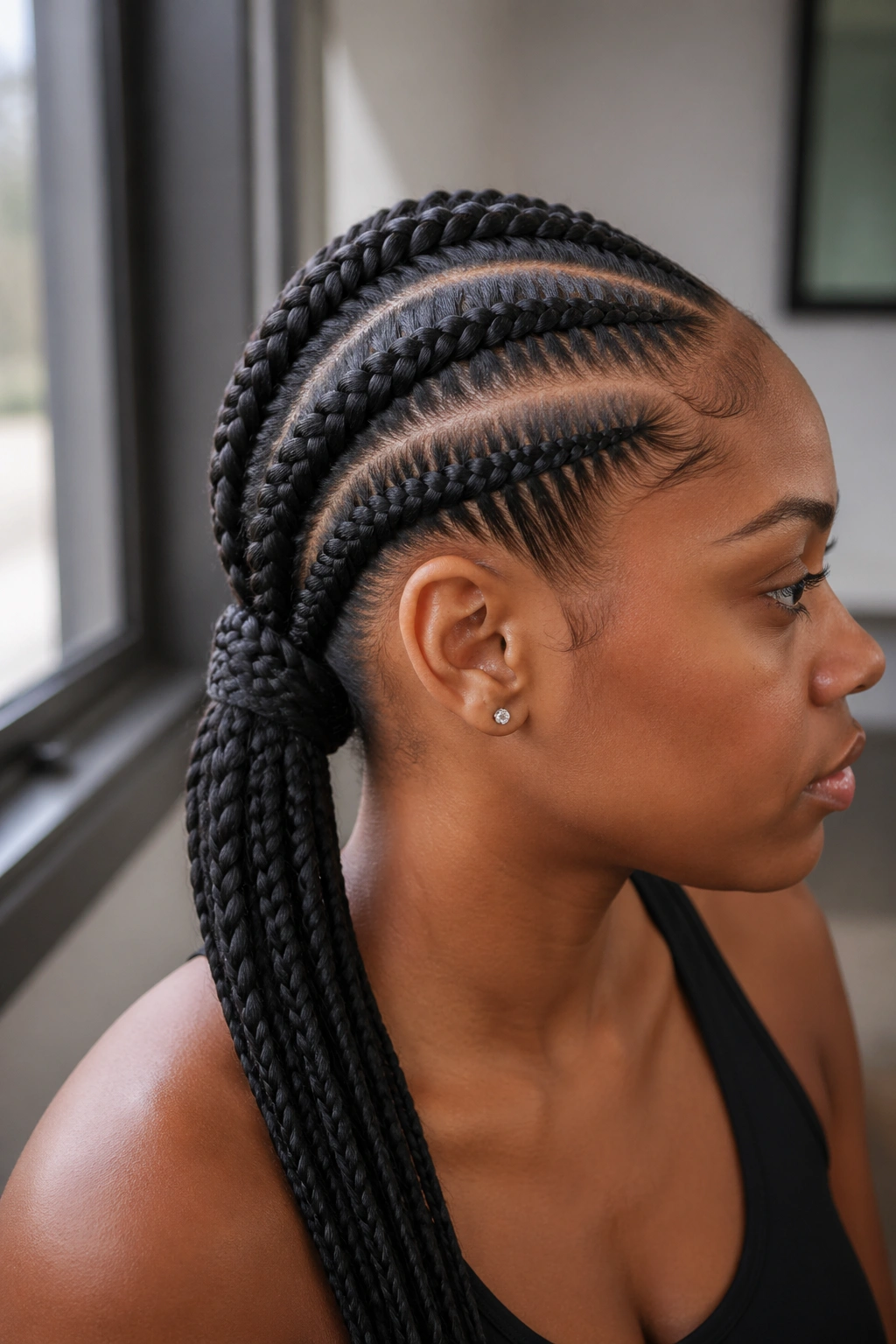
Three wide cornrows curving to one side and gathering at the ear into a single big side ponytail. The directional flow is entirely to one side, creating an asymmetric, editorial look.
The curve of the rows needs planning. Your braider should mark the curve path before parting.
The side ponytail can be left as three bold tails or gathered into one thick combined tail with a silk wrap at the base.
Best for long hair because the side fall is the focus. On shorter hair, the curve direction gets lost.
11. Four Big Cornrows With Scalp Design Accents
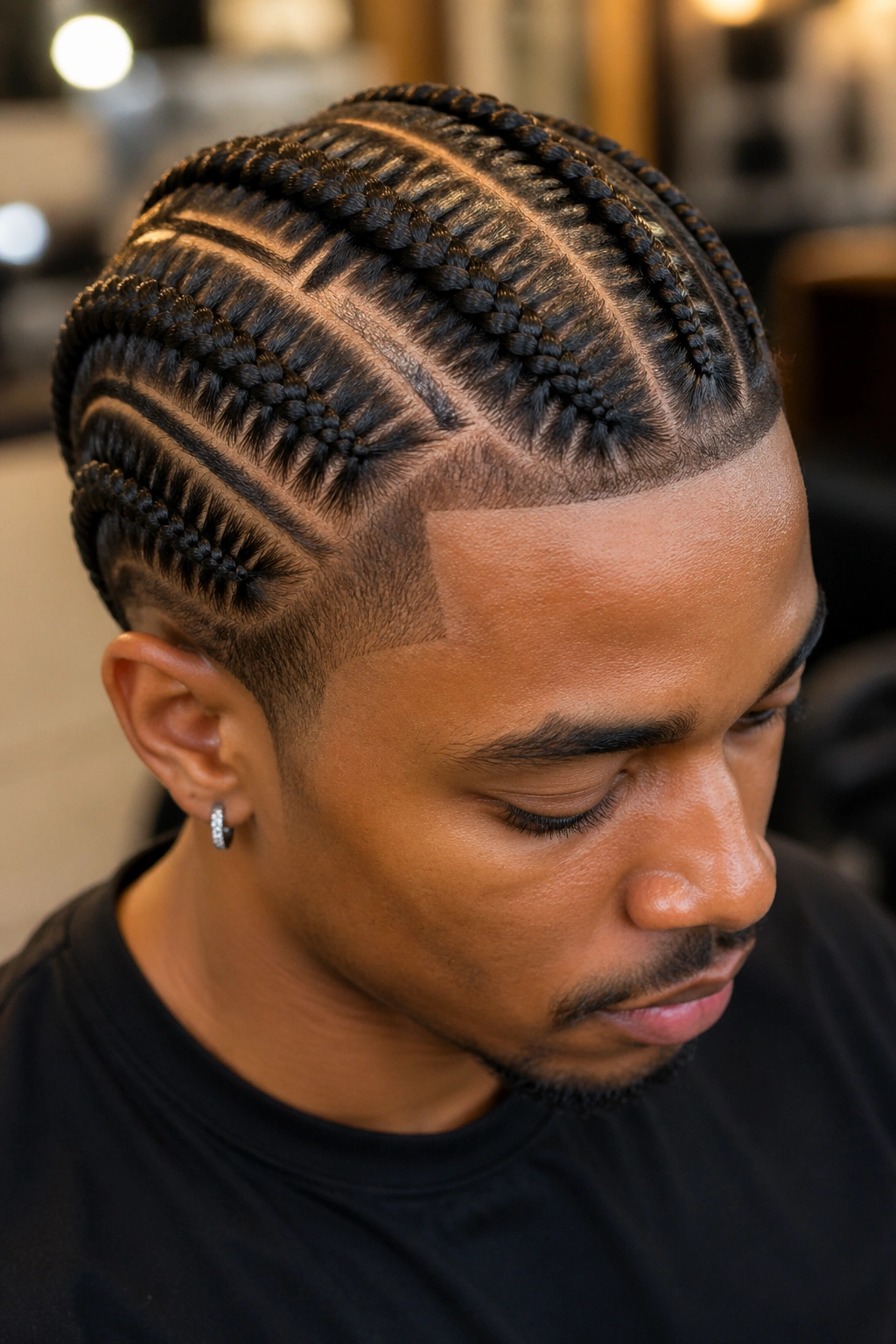
Four wide cornrows with small geometric lines, dots, or curves drawn between them using edge gel or temporary color on the scalp. The scalp designs fill the negative space between the big rows.
Simple designs work best — chevrons, diagonal lines, dots at regular intervals. Elaborate designs crowd the minimalism of the four-row base.
Scalp gel designs last about 5-7 days. Scalp color (the kind sold specifically for this purpose) lasts 2-3 weeks.
The overall effect is traditional-meets-modern. Scalp adornment has deep roots in Black hair culture, and the four-row base gives the designs space to breathe.
12. Five Thick Cornrows With Loose Curls Left Out at the Front
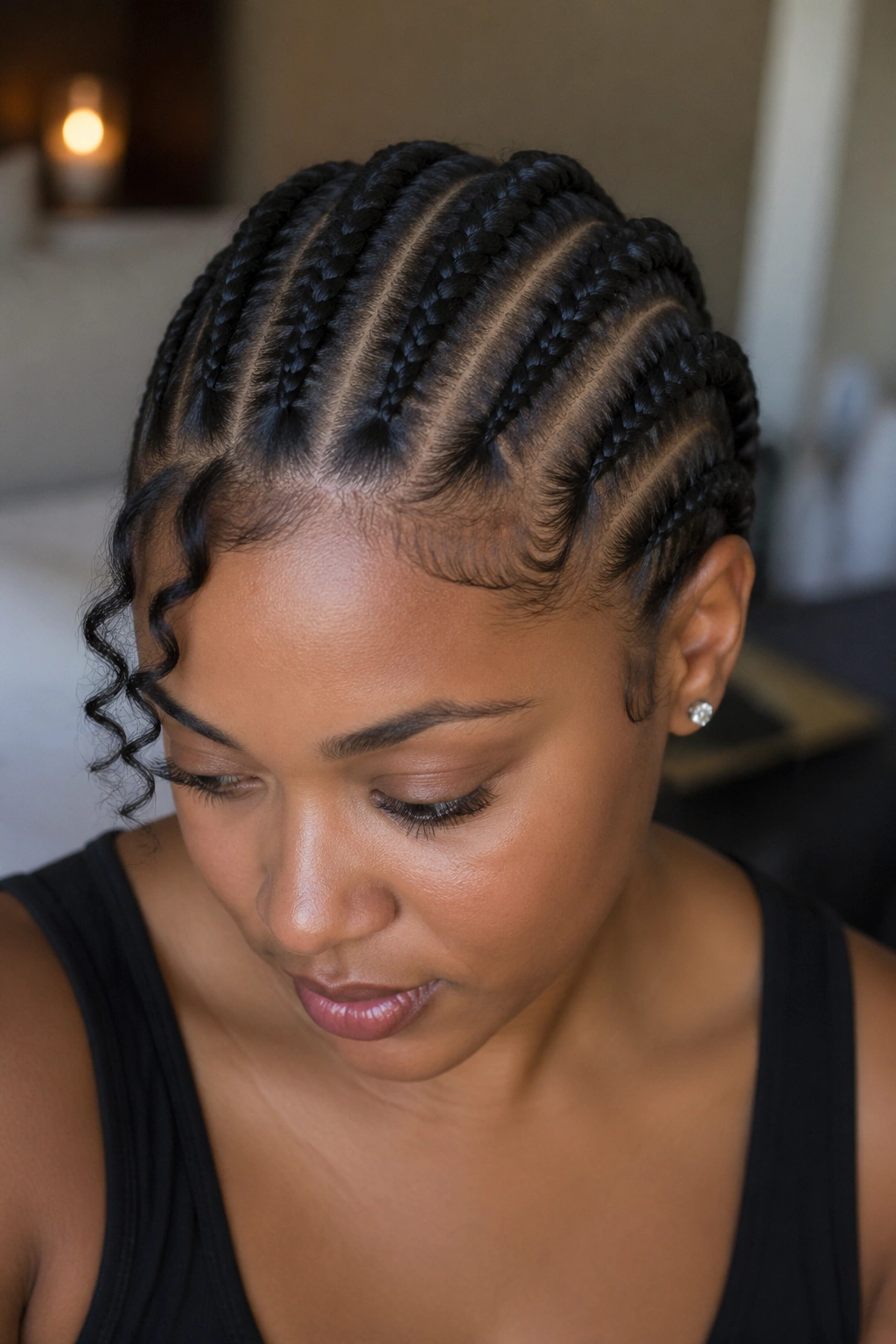
Five big cornrows running from the crown backward, with a small section of hair at the very front left out and curled into loose waves that fall over the forehead.
The left-out section softens the cornrow structure. It adds movement and femininity to an otherwise architectural style.
The curls need restyling every morning. A flexi-rod set overnight gives the freshest look. A light pomade keeps them defined without crispiness.
Styling Tips
- Keep the left-out section small — just a 2-inch triangle at the center of the front
- Use a curl cream that doesn’t add shine; matte curls look more natural than glossy
- Blend the curled section into the start of the first two cornrows so there’s no obvious seam
13. Six Big Cornrows With a Geometric Parting at the Nape
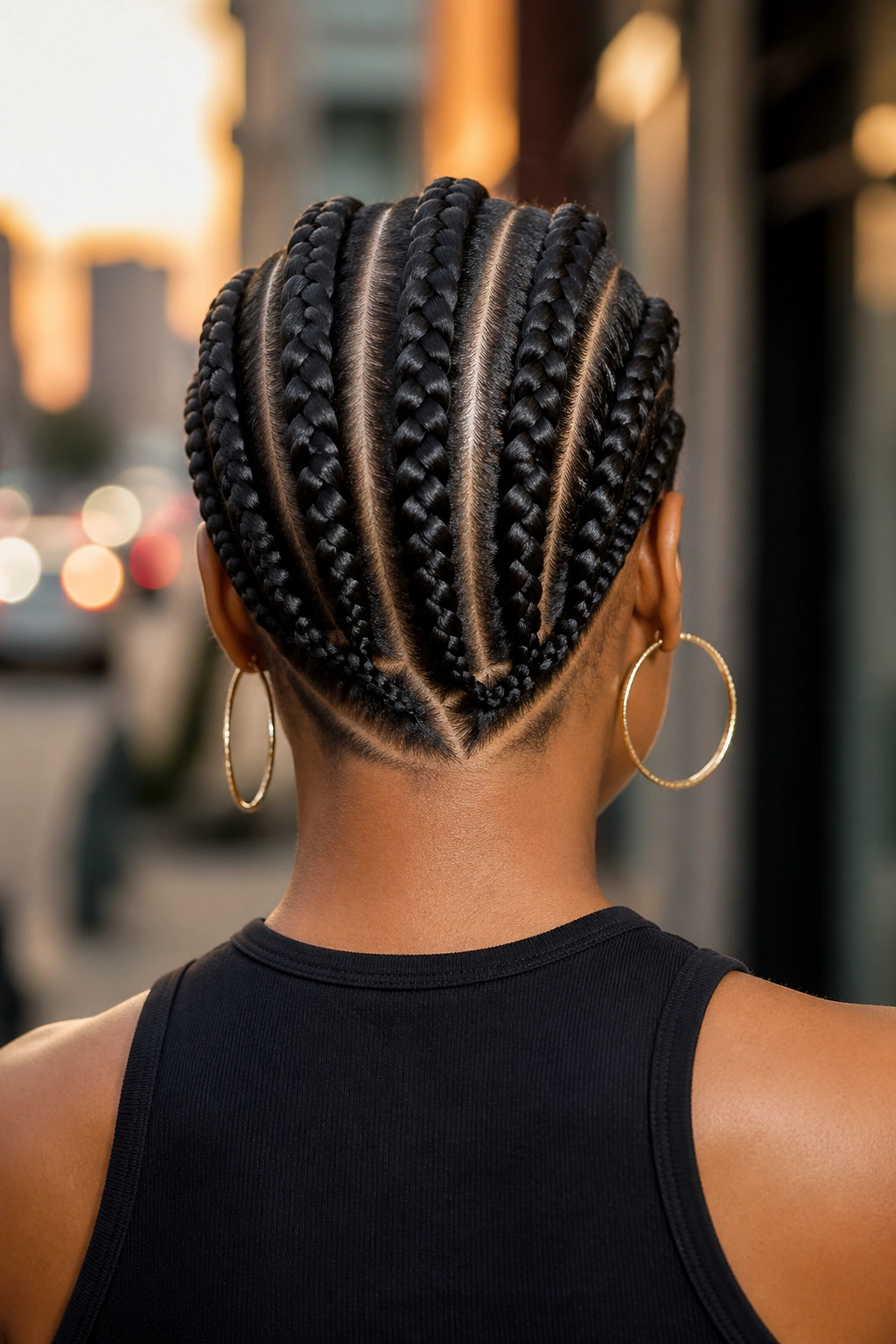
Six wide rows running straight back, but at the nape, the ends of all six braids gather within a geometric outline — a triangle, diamond, or hexagonal shape drawn onto the scalp where the braids terminate.
This is a modern, graphic approach to finishing a cornrow set. It turns the nape into a design zone.
The geometric shape works best when drawn before the braiding starts, so the braider can direct the ends precisely into the outlined area.
Photos from behind are striking. The geometric nape reads like intentional design, not an accidental finish.
14. Four Big Cornrows Dyed in Different Shades
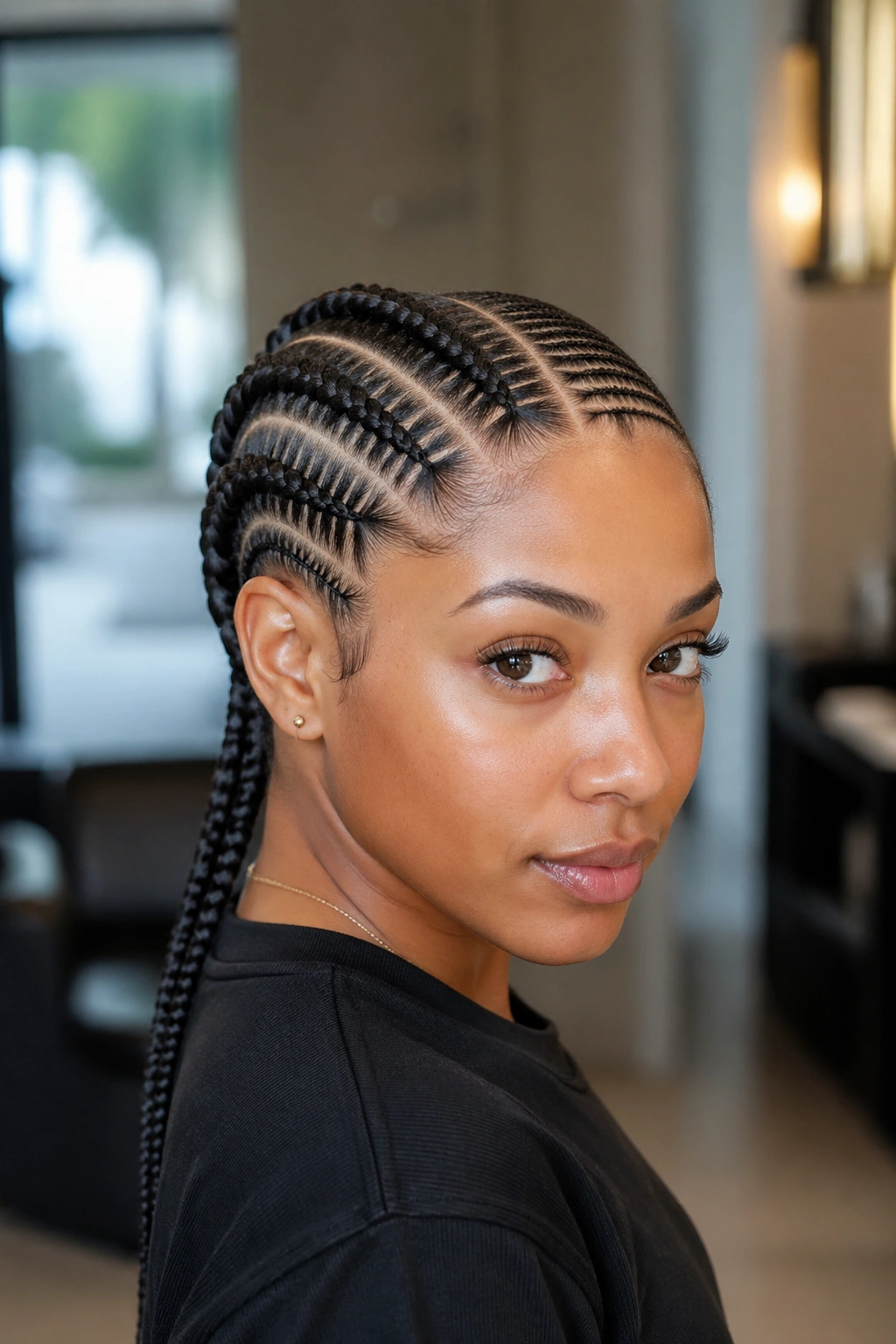
Four wide cornrows where each braid is a subtly different shade — jet black, dark brown, deep auburn, and a hint of honey. The color differentiation comes from the extensions used, not from dyeing your natural hair.
Layer the colors in a gradient from dark to light across the head. Most people start with black on the outside and progress inward to the lightest shade.
Unlike bold color accents, this version reads as nuance rather than statement. It’s the subtle play-with-color option.
15. Three Big Cornrows with a Crown Braid Accent
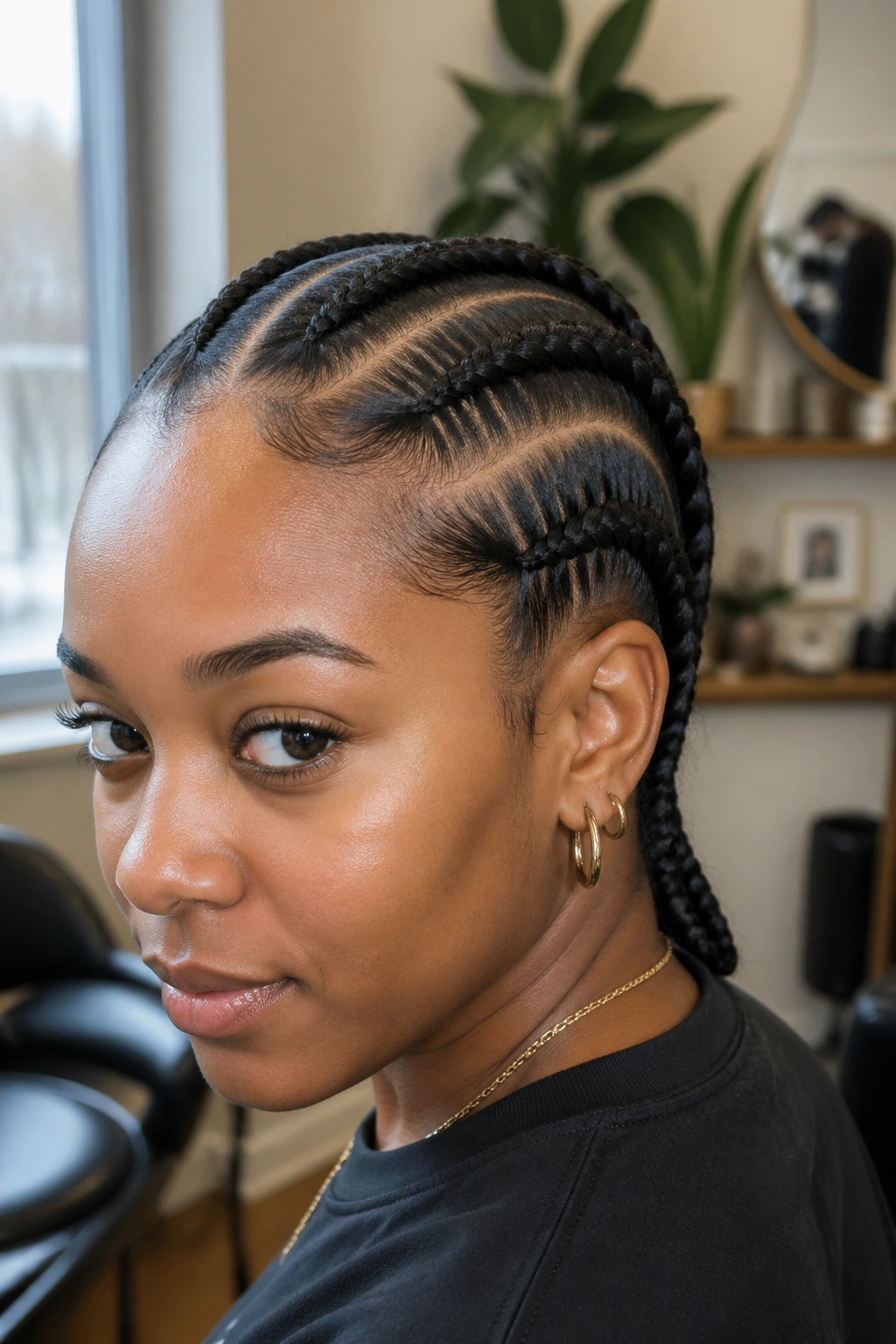
Three big straight-back cornrows paired with a thin crown braid running across the front of the head, tucked behind the ears. The crown braid acts almost like a hairband.
The crown braid is optional — some wear it daily, others switch between wearing it and taking it out for different occasions. When integrated into the cornrows, it’s permanent for the install’s duration.
This style bridges traditional cornrow and bohemian free-braid looks. It’s a useful in-between for those who want structure without severity.
16. Five Bold Cornrows With Beaded Tips Only
Five wide cornrows where only the last 2 inches of each braid carries a small cluster of beads. Unlike rows where beads run throughout, this version keeps the scalp-to-mid-length clean and uses beads purely as decorative tips.
The concentrated bead weight at the ends creates a satisfying swing with movement. It’s less noisy than beads throughout the braid length.
Choose small, lightweight beads — ceramic or metal. Heavy beads at the tips pull too much and can fatigue the scalp.
17. Four Big Cornrows With an Ankara Fabric Wrap
Four wide cornrows braided, then wrapped individually with strips of ankara fabric from base to tip. The wrapping integrates West African pattern and color into the braid structure.
Each fabric wrap takes about 10 minutes to apply. Plan on the full set needing 30-40 additional minutes after braiding.
The fabric must be thin and pliable. Cotton ankara works well. Silk versions are luxurious but harder to wrap cleanly.
The patterns change the reading of the style completely. Identical braid structures with different ankara prints look like entirely different looks.
18. Six Big Cornrows in a Mohawk Configuration
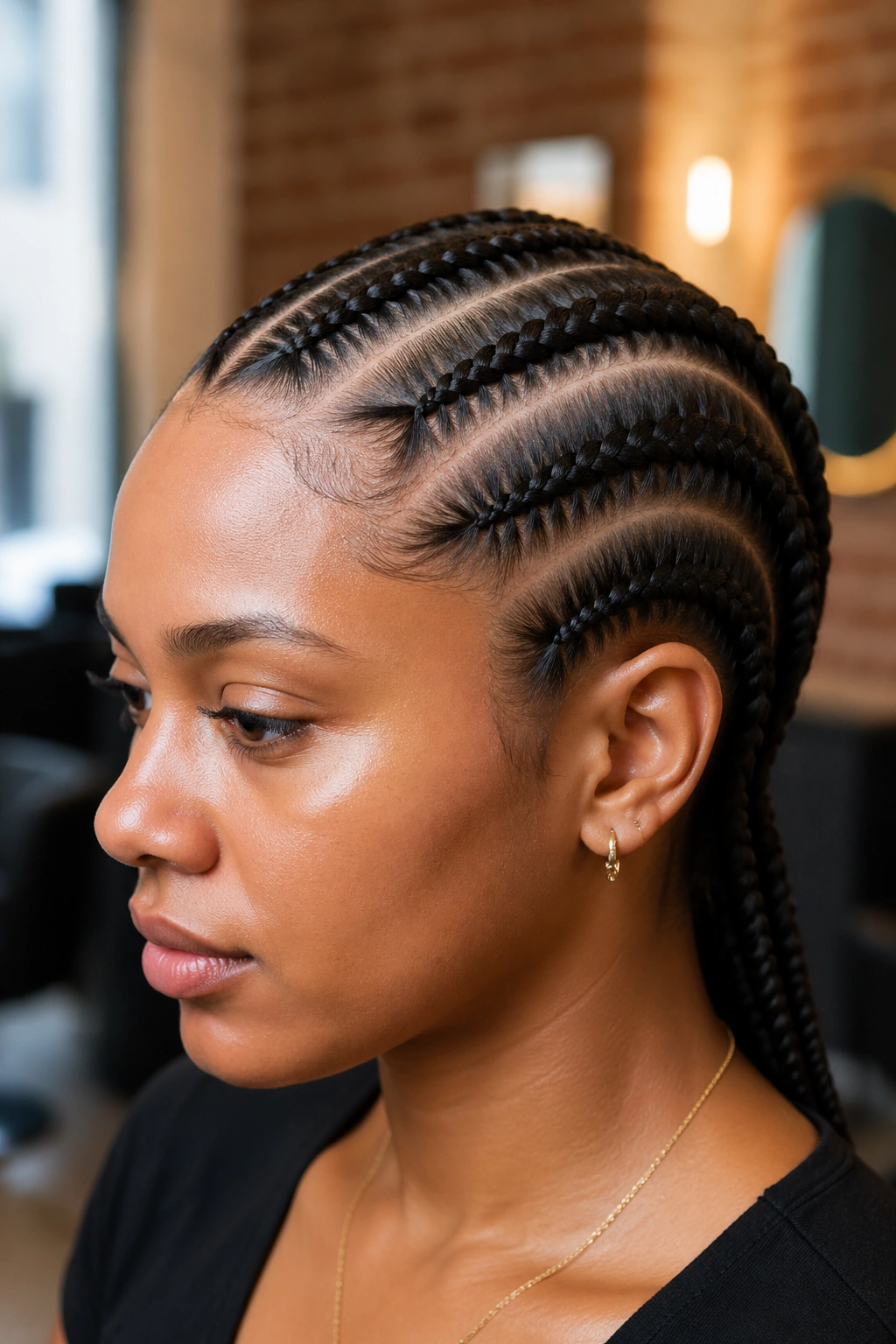
Six big cornrows running in a narrow strip from forehead to nape — a mohawk — with the sides of the head left loose or braided flat against the scalp in smaller accent braids.
The mohawk configuration shifts the entire silhouette. Instead of covering the full head, the braids claim only a center strip. The effect is vertical and bold.
Who this is for — anyone with a narrow head shape or face who wants dramatic vertical emphasis.
This style requires strong edge work at the perimeter of the strip. The borders are what define the mohawk shape. Sloppy edges blur it.
19. Five Big Cornrows With a Side Swoop Bang
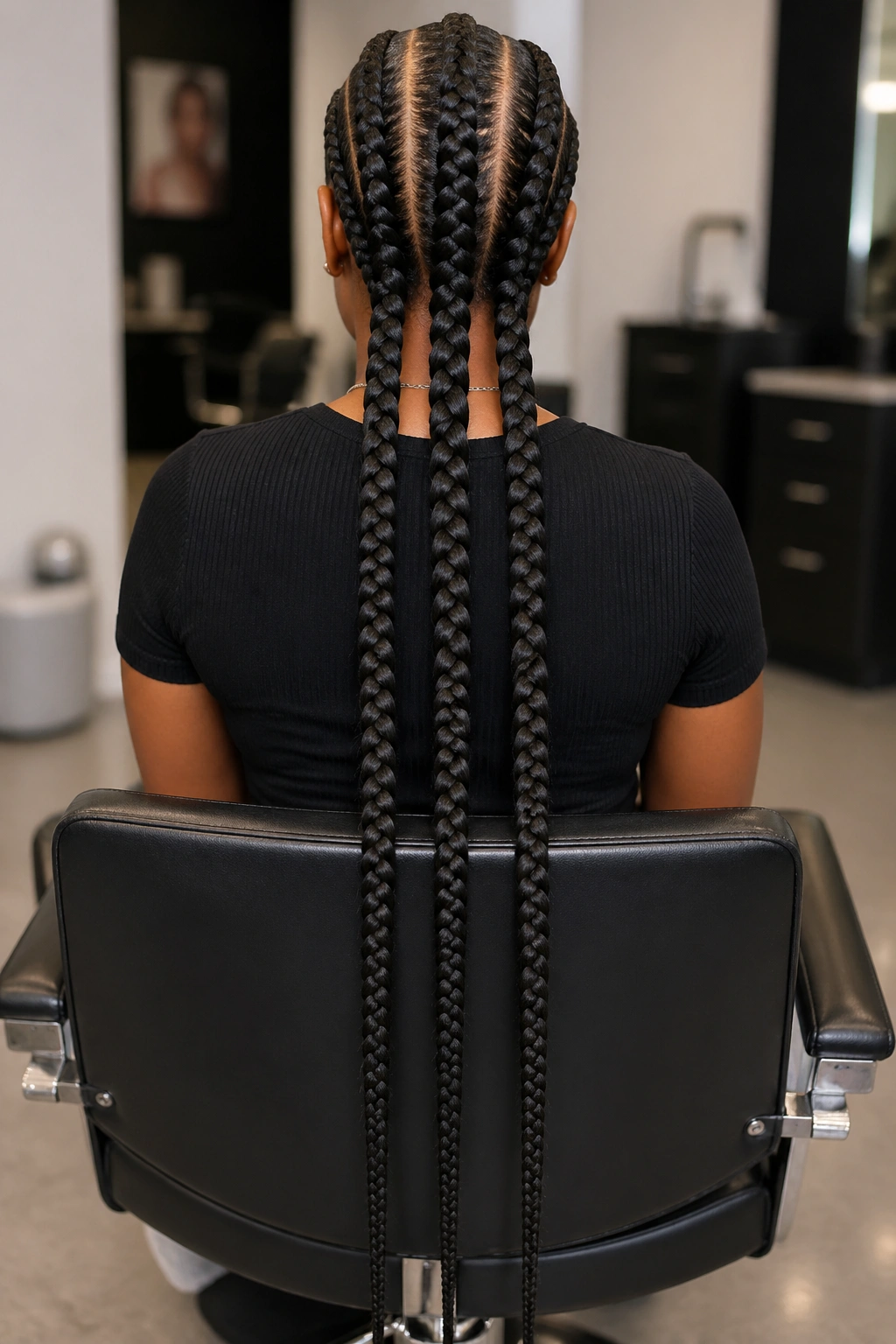
Five big cornrows running straight back from the crown, with a side-swept bang section of loose hair draped over one side of the forehead.
The bang adds softness and variety. It breaks up what would otherwise be full coverage and gives the face a visual anchor at the front.
The bang needs daily styling. A flat iron on low heat, a blow dryer with a round brush, or an overnight silk wrap all work. Choose based on your hair’s natural tendency.
This style is especially flattering for high foreheads because the bang shortens the visible forehead while the big cornrows frame the upper head.
20. Three Big Cornrows With a Bantu Knot Ending
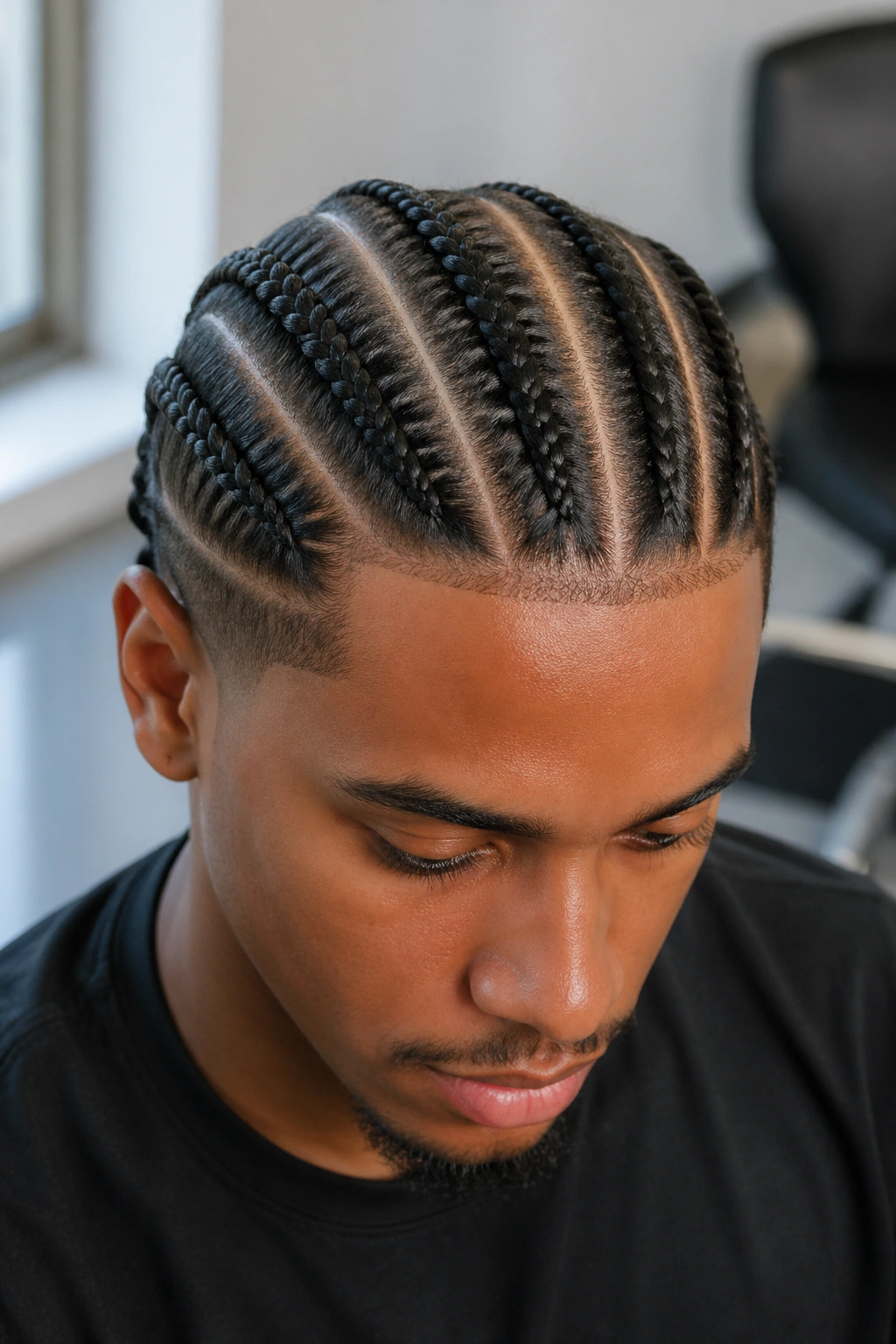
Three wide cornrows that end at the nape in three small bantu knots secured with hair pins. The bantu knots provide a sculptural finish without extending the length.
Bantu knots at the ends also stretch the hair inside. When the style is taken down eventually, you’ll have crimped wave patterns at the tips of your natural hair.
The knots need to be tight and well-secured. Loose bantu knots unravel within 48 hours, leaving the ends to fall free.
Dab a small amount of gel at each knot base to lock it down. Reapply gel every 3-4 days for clean edges.
21. Four Big Cornrows With Gradient Kanekalon
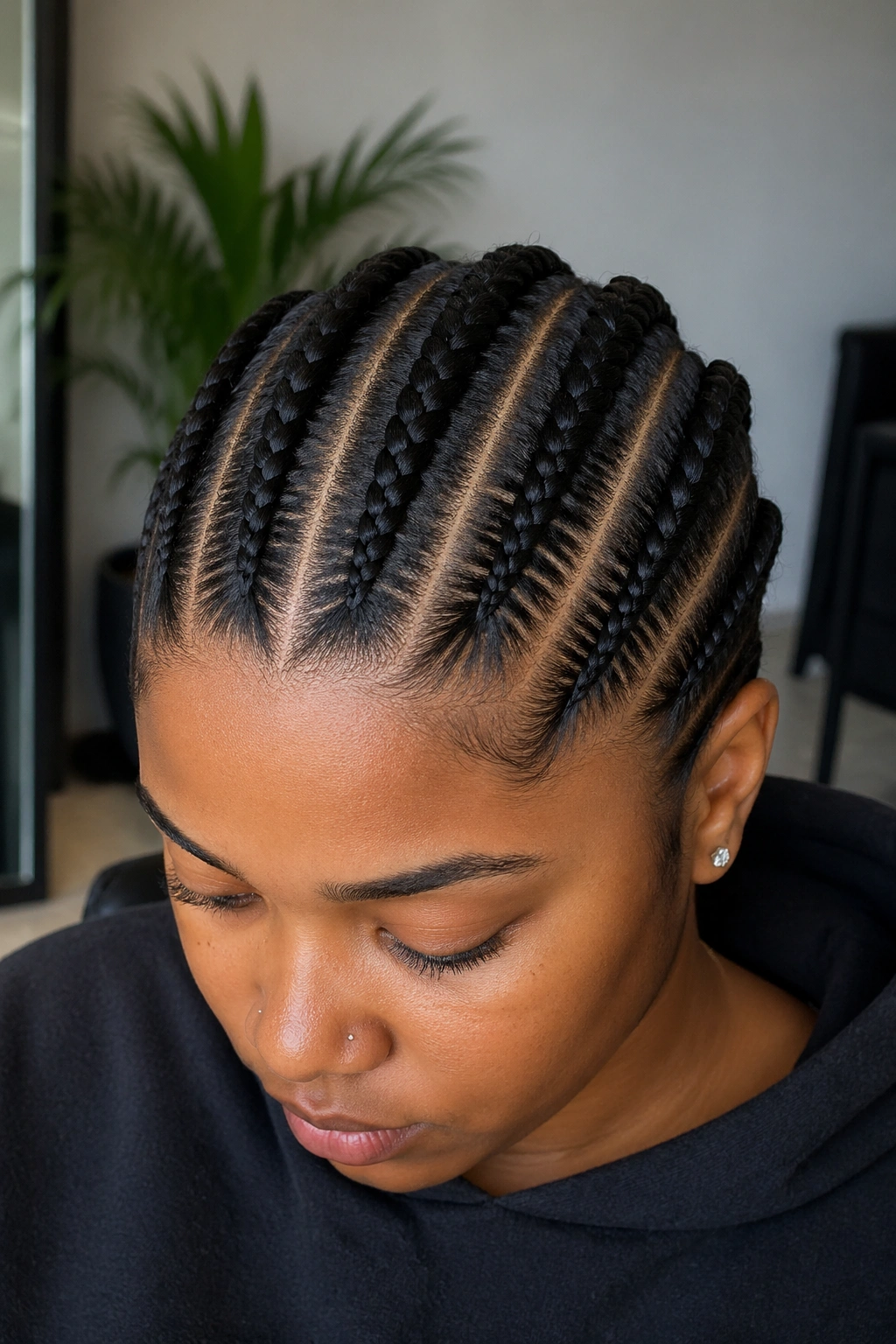
Four big cornrows braided with ombre kanekalon that transitions from dark at the scalp to lighter at the tips. Popular gradients include black-to-honey, dark brown-to-auburn, and black-to-platinum.
The transition happens within the extension length — typically starting about 8-10 inches from the root. By the ends, the lighter color dominates.
Best for long hair. The gradient needs length to show the full transition. Short hair only displays the dark portion.
The color doesn’t damage your natural hair because the gradient is entirely in the extensions. When you take the braids down, your natural hair is unchanged.
22. Five Big Cornrows With an Accessory Headband Woven In
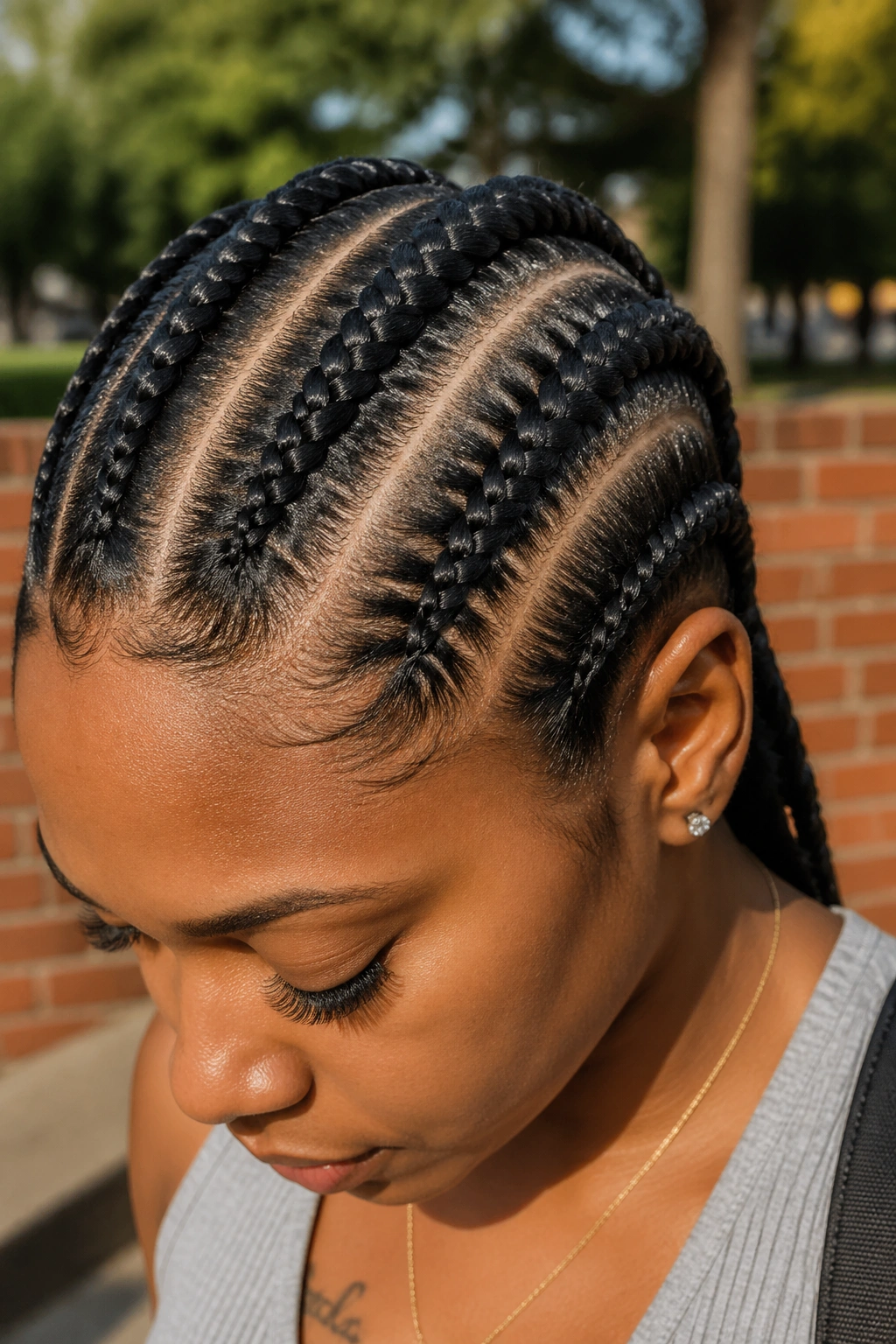
Five big cornrows with a thin decorative headband — metallic, fabric, or beaded — woven into the braids near the front hairline. The band becomes part of the style rather than an add-on.
The band should be thin enough to integrate without distorting the braid shape. Thick bands sit on top; thin bands disappear into the weave.
Metallic bands work for evening events. Fabric bands for daytime or bohemian settings. Beaded bands for cultural or ceremonial occasions.
The band adds weight at the front of the style. Ensure the front cornrows are braided extra securely to support the additional mass.
Why Big Cornrows Last Longer Than Small Ones
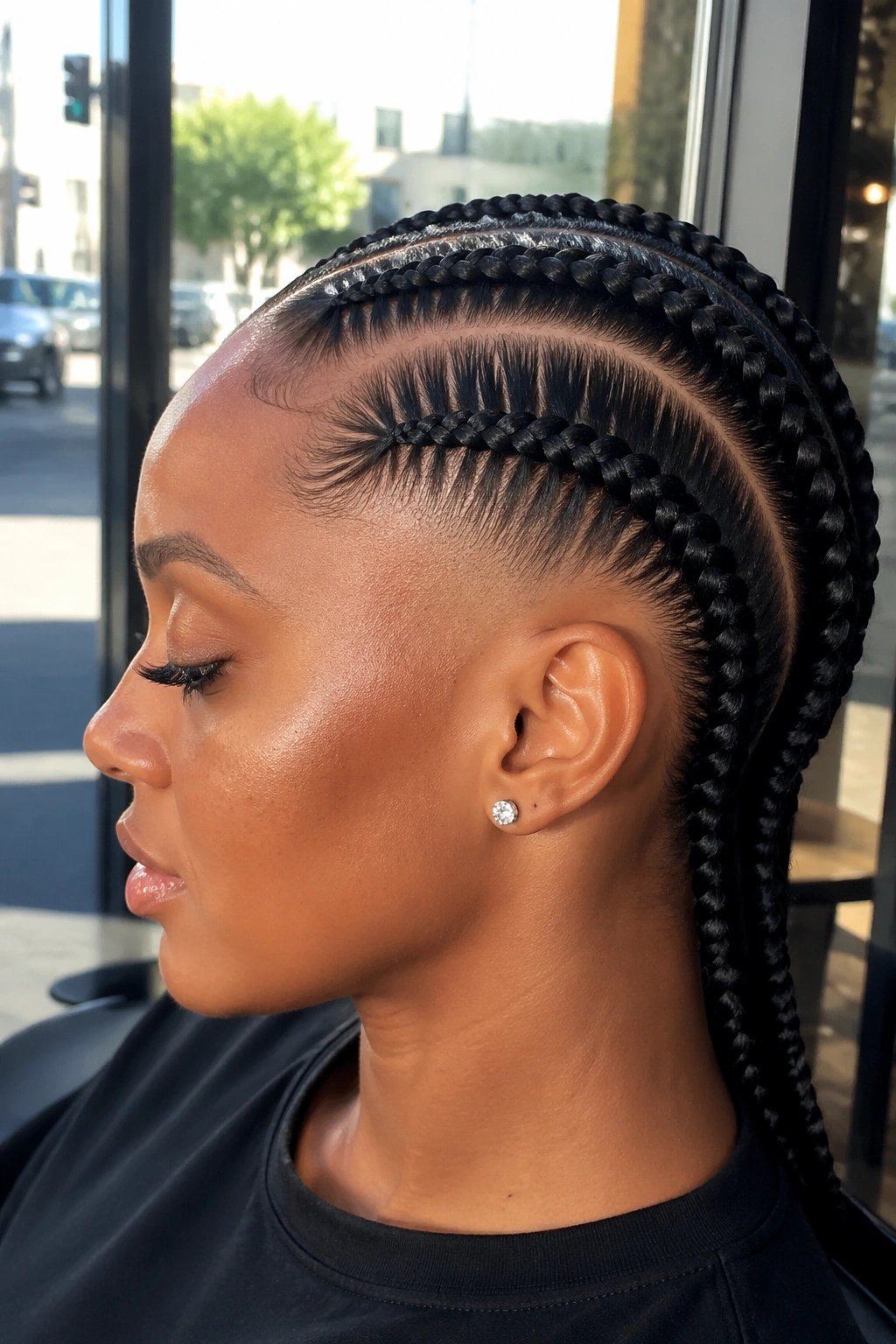
Big cornrows have a structural advantage. Each braid contains more hair, which means more strands holding each other together. That density makes them resistant to the loosening and fuzzing that affects thinner braids.
The parts are also wider, which means less real estate for frizz to develop. Ten thin parts create ten opportunities for frizz. Four wide parts create four.
And the weight of a big braid helps it stay in place against gravity. Thin braids swing freely and lose their shape with movement. Big braids carry weight that keeps them settled.
The result — a big cornrow style that looks good on day 1 usually still looks good at week 4. Small cornrows might peak at day 10.
Maintaining Big Cornrows
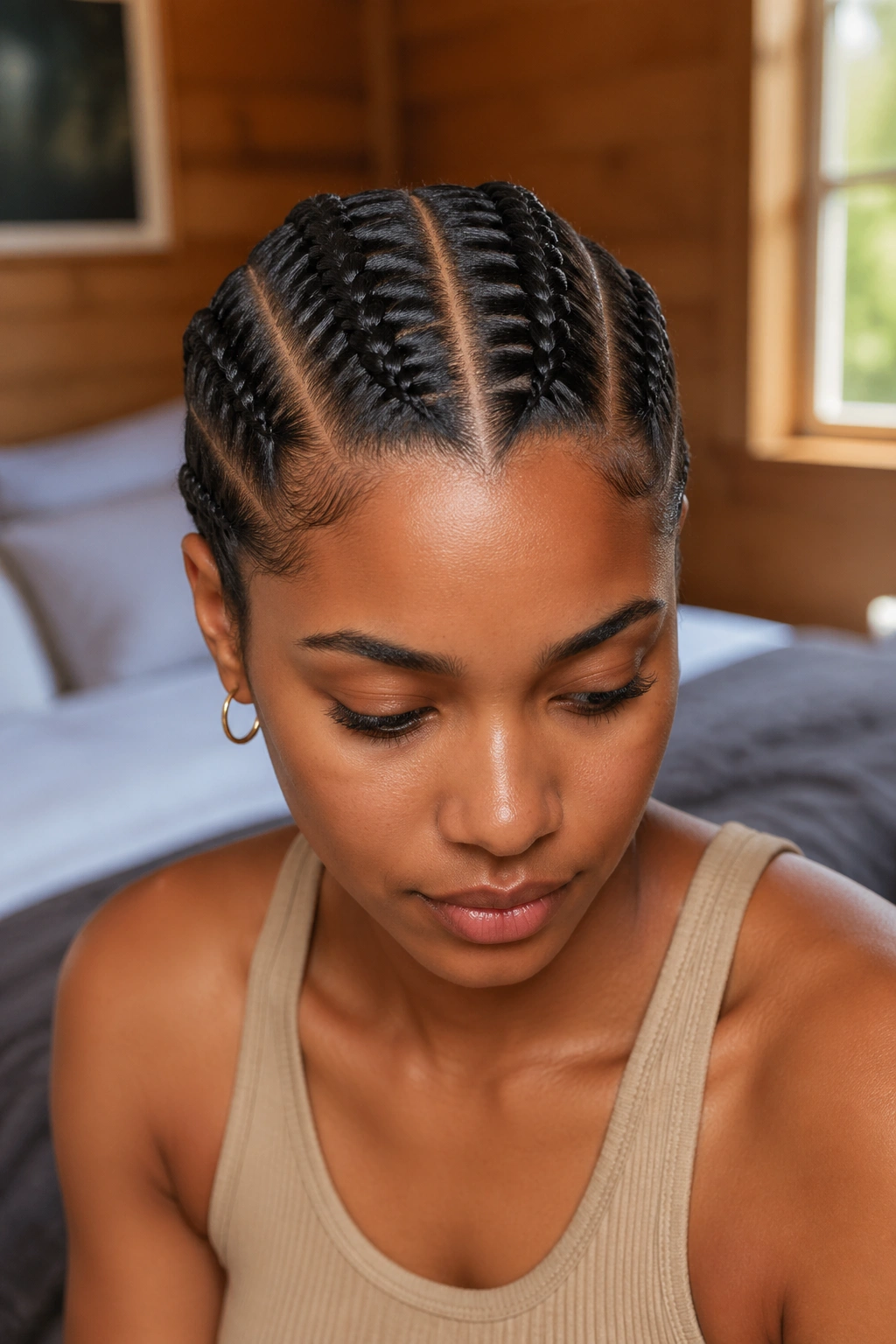
Satin bonnet every night. A big one that fits all the braids without forcing them.
Light oil on the scalp every 3-4 days. Tea tree, peppermint, or lavender work well. Avoid heavy castor oil except in winter or if your scalp is truly dry.
Edge refresh once a week. A small amount of edge gel applied with a soft brush, not a toothbrush. Toothbrushes over-bristle edges and cause breakage.
Avoid touching the braids unnecessarily. Hands transfer oil, lint, and friction. All three accelerate frizz.
If you swim, wear a swim cap or braid the ends into a quick updo. Chlorine and salt water both dull kanekalon extensions and dry out scalp oils.
When to Take Big Cornrows Down
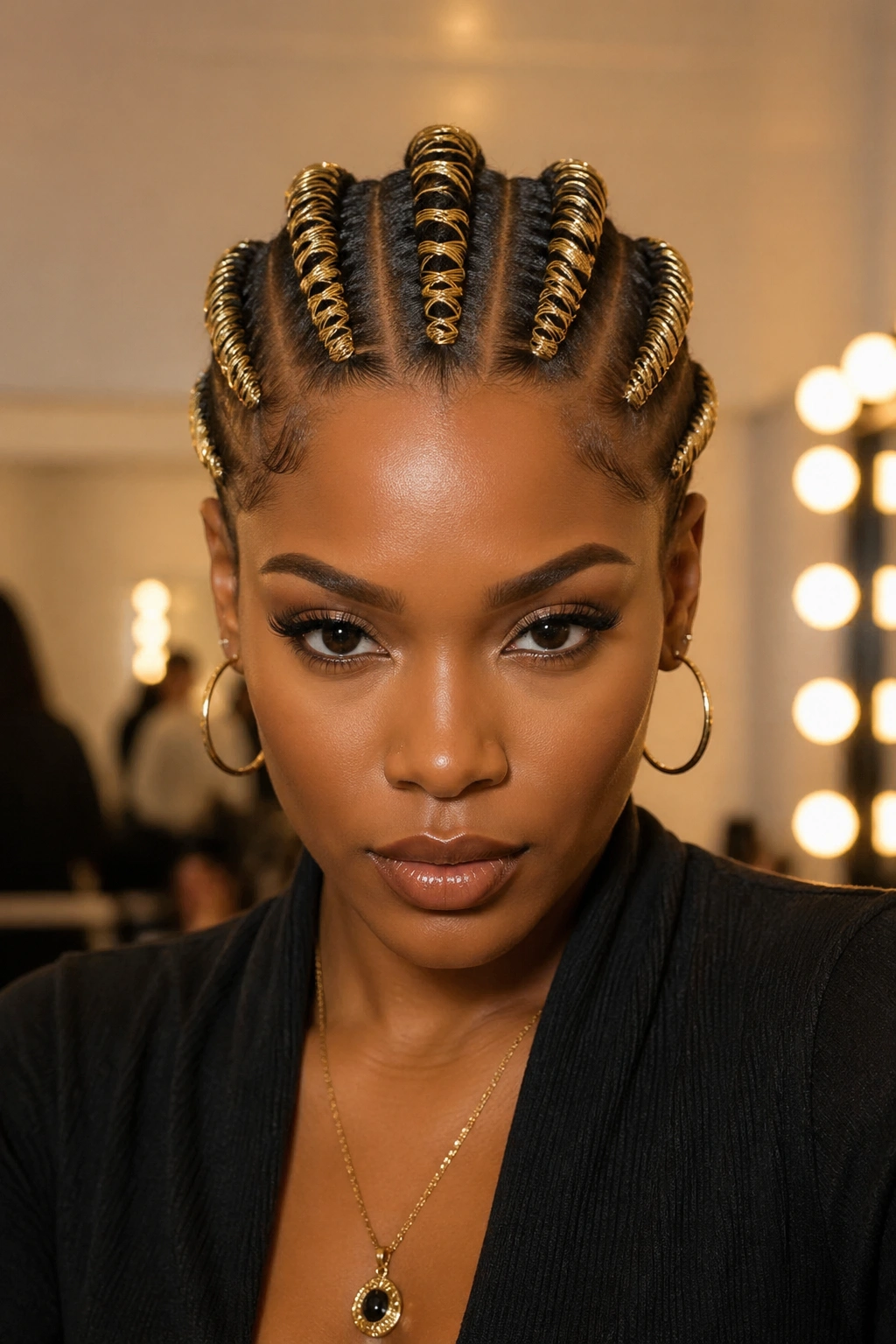
Big cornrows can last up to 6 weeks. Past that, new growth at the roots creates matting and tension that damages hair on takedown.
Signs it’s time — the front rows look fuzzy past the point where gel can smooth them, the scalp feels tight when you try to move the braids, the ends feel brittle, or the overall shape has softened from sculptural to shapeless.
Take down with conditioner and patience. Work one braid at a time. Finger-detangle as you go. Never rip or force.
After takedown, a full wash, deep condition, and trim is ideal before installing the next style.
Big Cornrow Styles Worth Revisiting
The three-row variation is the one that makes the biggest impression but also the one most people try once and don’t return to. Too bold for daily wear.
The four-row and five-row variations are the workhorses. They flatter more face shapes, fit more dress codes, and transition from casual to formal with minimal adjustment.
The six-row version is underrated. It gives you the boldness of big cornrows with slightly more density for those who find four too stark.
Each count has its moment. The right one depends on what you’re going for — the photo, the event, the season of life you’re in. All of them protect your hair. All of them look good. Pick based on mood.
Common Mistakes That Kill Big Cornrow Styles
Going too tight. Big braids carry big weight. Tight braiding adds up to painful scalp and potential traction issues. Ask for firm but not severe.
Skipping the edge work. Big braids leave more scalp visible between them, which means edges matter more, not less. Uneven edges kill the look.
Forgetting that big cornrows show every imperfection. A small braid can hide a parting error. A big braid can’t. Make sure the parting is done well before committing.
Not sleeping protected. One night without a bonnet can fuzz the entire front of the style. No exceptions.
Washing too aggressively. Big braids hold water longer than small ones. Wash gently, dry thoroughly, and never wrap damp braids in a cloth — they mildew.
Big straight back cornrow styles are a real commitment to a look. Done right, they’re the most striking protective style you can wear. Done wrong, they’re the most obvious mistake. Get the braider right, get the prep right, and get the maintenance right — the style does the rest.
