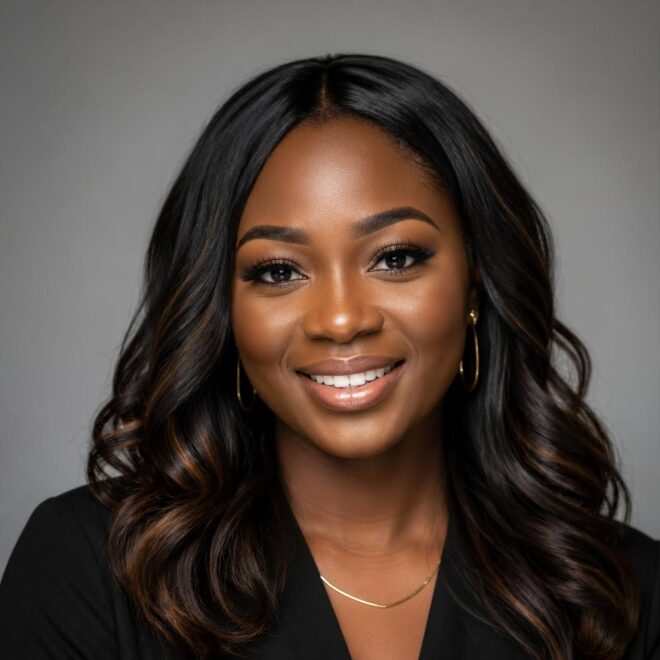


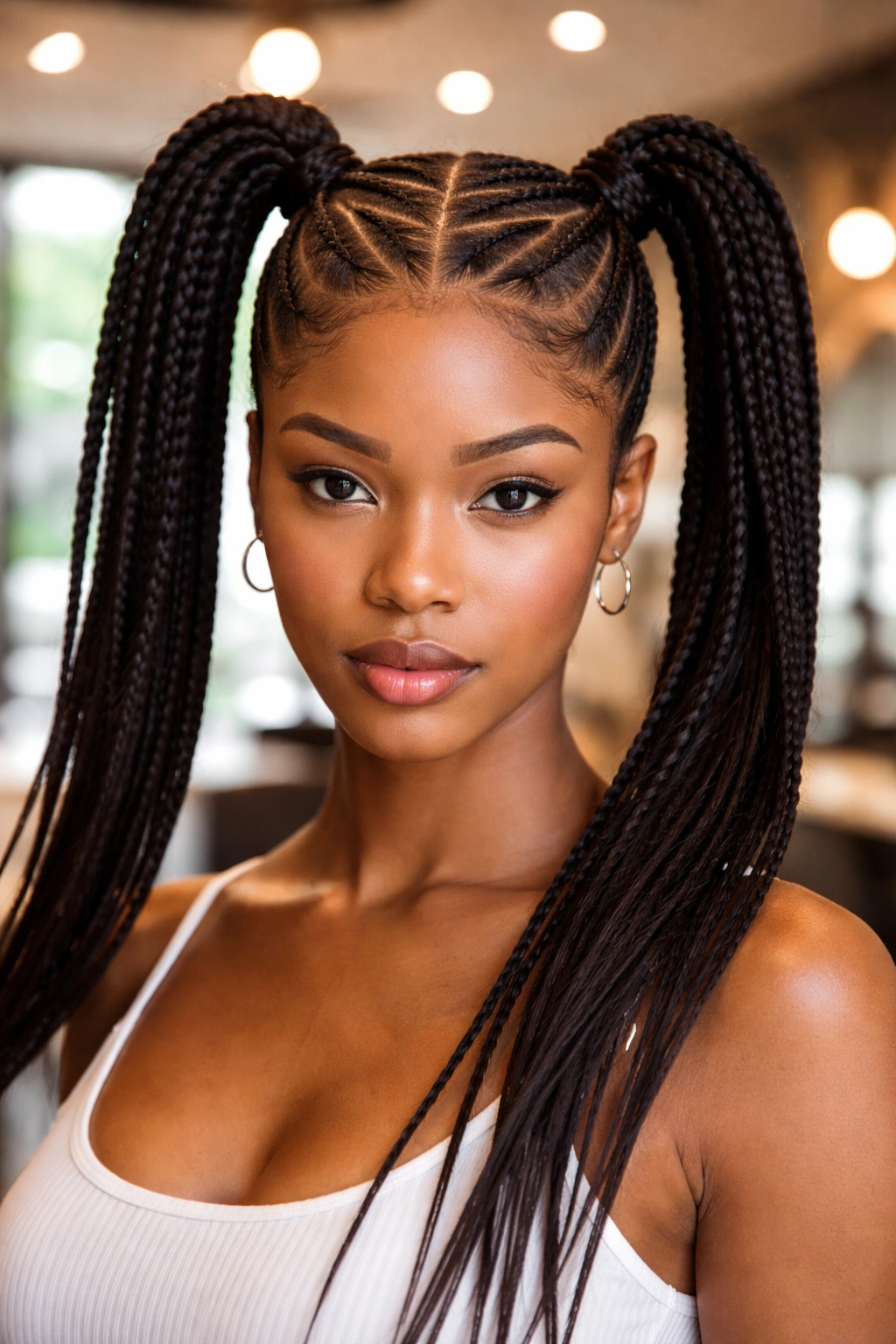
Cornrow pigtail styles take what could be a basic two-pony look and turn it into something with structure, edge, and serious staying power. The cornrows give you the scalp work — clean parts, intentional patterns, that sharp braided foundation — while the pigtails give you movement, personality, and a strong silhouette. Together they create a style that reads as both protective and expressive.
The pairing isn’t accidental. Pigtails on their own can look young or undone. Cornrows on their own can read as restrained. Combine them, and the cornrows pull the pigtails up into something polished while the pigtails soften the geometric severity of the braids. It’s balance, basically.
But not every cornrow pigtail combination works. The pattern of the cornrows changes how the pigtails sit. The placement of the pigtails changes the mood of the whole style. The technique used at the transition determines whether the look holds up for two days or two weeks. So here’s the breakdown — what makes cornrow pigtail styles function, who they suit, and 22 distinct versions you can wear from school drop-offs to date nights.
Why Cornrow Pigtails Work as a Hair Strategy
Pigtail braids alone are simple. Cornrows alone are protective. Cornrow pigtails combine the protection of scalp braiding with the visual interest and shape of two distinct sections — and that combination solves a few real problems at once.
You’re protecting your edges and lengths. You’re keeping hair off your face and neck. You’re creating a style that translates from gym to office to dinner without restyling. And you’re doing it without the weight of a full head of single braids or the heat damage of constant blow-outs.
That’s a lot of value from one styling decision. The trick is choosing the right version for your life and your hair.
Cornrow Pattern Sets the Mood
The cornrow pattern leading into the pigtail does most of the work in defining the style.
Straight back cornrows read clean, athletic, and modern. Best for everyday wear and active days.
Side-swept cornrows read playful and asymmetric. Best for casual outings or when you want to soften the look.
Geometric or zigzag cornrows read editorial and intentional. Best for events or photo days.
Stitch braids read polished and detail-oriented. Best for occasions where the braiding itself is the statement.
Pick the cornrow pattern based on the personality you want the style to project, not based on what’s quickest to install.
Pigtail Construction Options
Pigtails aren’t a single thing. The construction varies, and each construction creates a different finish.
- Continuous cornrow into braid pigtail — the cornrow runs into a pigtail braid without changing technique
- Cornrow into kanekalon-fed braid pigtail — synthetic hair is added at the transition for length and fullness
- Cornrow into puff pigtail — the cornrow gathers into a curly puff at the end rather than continuing as a braid
- Cornrow into curly pigtail bundle — synthetic curls are attached for a soft, voluminous pigtail
- Cornrow into freed-natural pigtail — the natural hair is released at the end and styled separately
Each method creates a distinct look. Plan which one suits your event before booking the install.
Prep, Tools, and Timing
The prep is the same as any cornrow style, but with one addition. Pigtails require a clear vision of where the cornrows will end and the pigtails will begin. That decision needs to be made before the first braid goes in.
Two days before the install:
- Wash with clarifying shampoo
- Deep condition for 30+ minutes
- Stretch hair using bands or low-heat blow-out
The day of:
- Bring inspiration photos showing the exact pigtail placement you want
- Decide on synthetic hair length and color in advance
- Wear a button-up or zip top so it doesn’t disturb the install
Time required varies by complexity. Simple straight-back cornrows into two basic pigtails take 2-3 hours. Detailed geometric cornrows with curly pigtail bundles take 5-7.
1. Classic Two-Section Straight-Back Cornrow Pigtails
The starting point for the entire category. Hair is parted down the middle, with cornrows running straight back on each side, gathering at the back of the head into two long pigtails.
Why It Works
The center part is universally flattering. The straight-back cornrows keep the style looking groomed. The pigtails balance each side of the body symmetrically, which reads as composed and athletic.
- Works for any age from kids to adults
- Holds up for active days — gym, sports, hiking, swimming
- Translates between casual and dressed-up depending on accessories
- The fastest install in the cornrow pigtail family — about 2 hours
Tip: keep the pigtails the exact same length. Even a half-inch difference reads as a mistake. Ask for them to be measured against each other before the final tie-off.
2. High Cornrow Pigtails With Geometric Parts
Both pigtails sit high on the head — almost at the crown — with cornrows that travel up sharp diagonal or zigzag parts to reach them. The pigtails themselves swing freely from these elevated anchor points.
The high placement changes the energy. Standard pigtails read casual. High pigtails read energetic, confident, almost defiant. Combined with geometric parts on the scalp, the style takes on a strong editorial quality.
The challenge is height symmetry. Both pigtails need to attach at the same height on each side of the head, measured from the crown center. Eyeballing won’t cut it. Ask your stylist to measure.
The geometric parts should be visible from the front view. If they’re hidden by hair flopping forward, they’re not adding anything. The point is the precision — make sure the precision shows.
3. Low Cornrow Pigtails With Soft Curly Ends
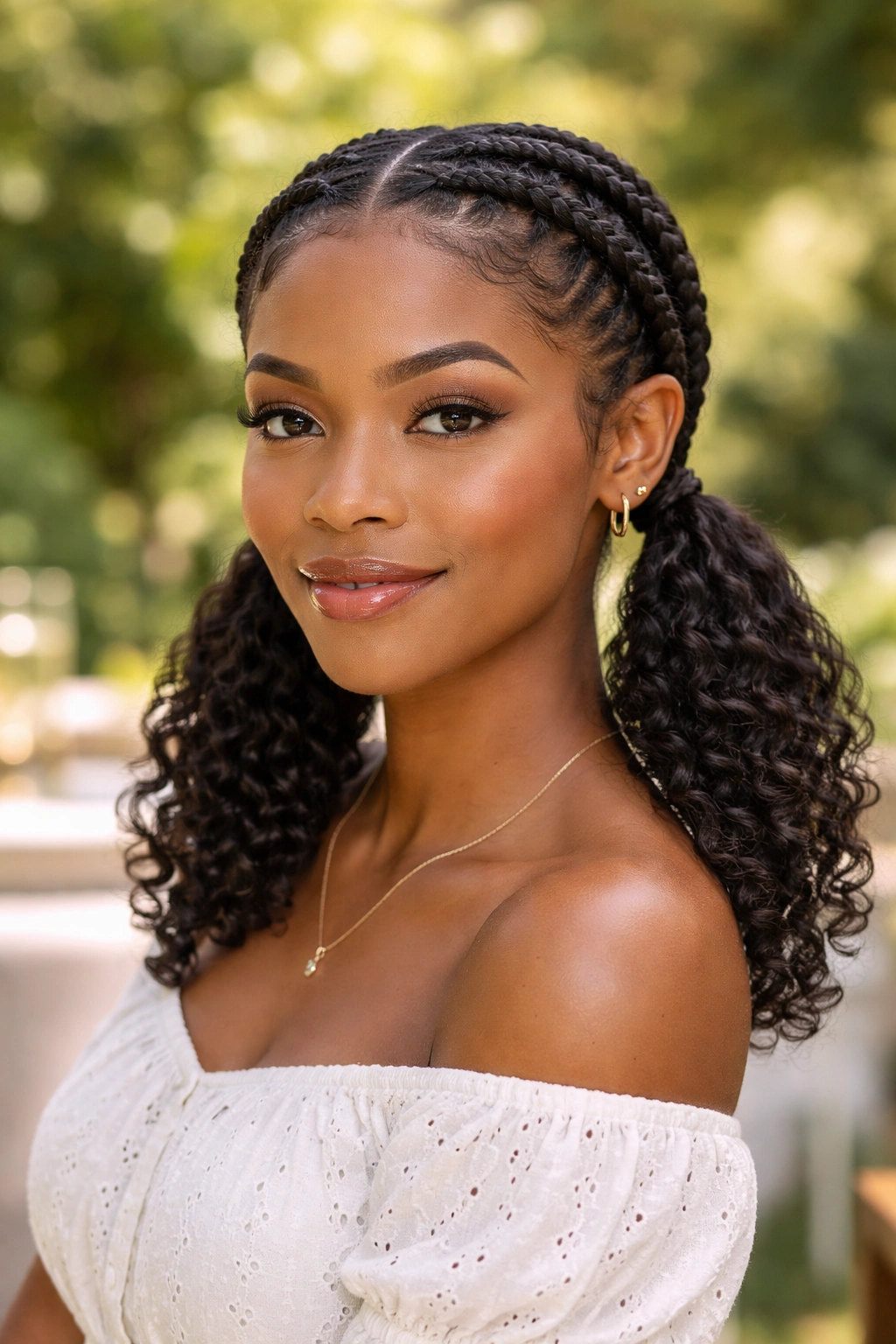
The cornrows run straight back at a downward angle, ending in two low pigtails at the nape of the neck. The pigtails are finished with soft curly ends — either natural curls released or curly synthetic hair added at the transition.
This is the romantic version. Low pigtails with soft curls read sweeter and gentler than tight braided pigtails or high placements. The look softens around the face and shoulders rather than projecting outward.
Best worn for daytime events — brunch, garden parties, casual ceremonies. The low placement reads as approachable rather than performative.
A small detail that matters: the transition from cornrow to curl should happen at the back of the head, not at the shoulders. If the synthetic curls start too low on the pigtail, they look tacked on. Higher transitions blend better.
4. Cornrow Side Pigtails With Asymmetric Parting
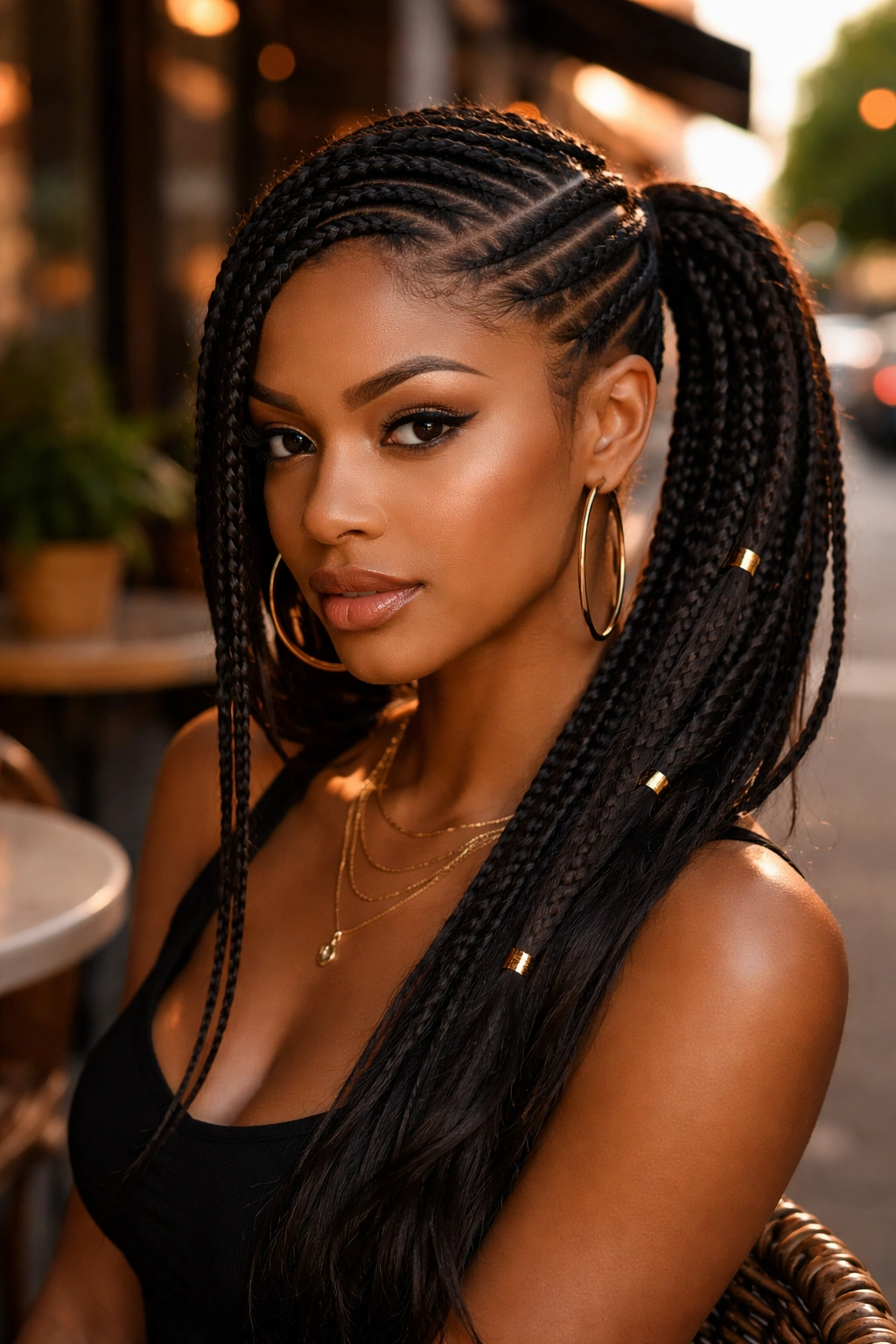
Both pigtails are pulled to one side of the head — either both on the left, both on the right — with cornrows running diagonally across the scalp to feed into them. The parting is deliberately asymmetric.
Unlike standard symmetrical pigtails, this version creates intentional imbalance for visual drama. One side of the head reads as the focal point. The other side is clean cornrowing that supports the pigtail volume.
How to Style It
- Choose the side that suits your face shape — high cheekbones look stronger on the same side as the pigtails
- Add an oversized earring on the opposite side to balance the visual weight
- Pair with off-the-shoulder tops to extend the asymmetric line
- Works especially well with shorter pigtails — about chin to shoulder length
The two pigtails can be slightly different lengths in this version. Asymmetric pigtails on an asymmetric style actually emphasizes the design.
5. Cornrow Pigtails With Beaded Accents
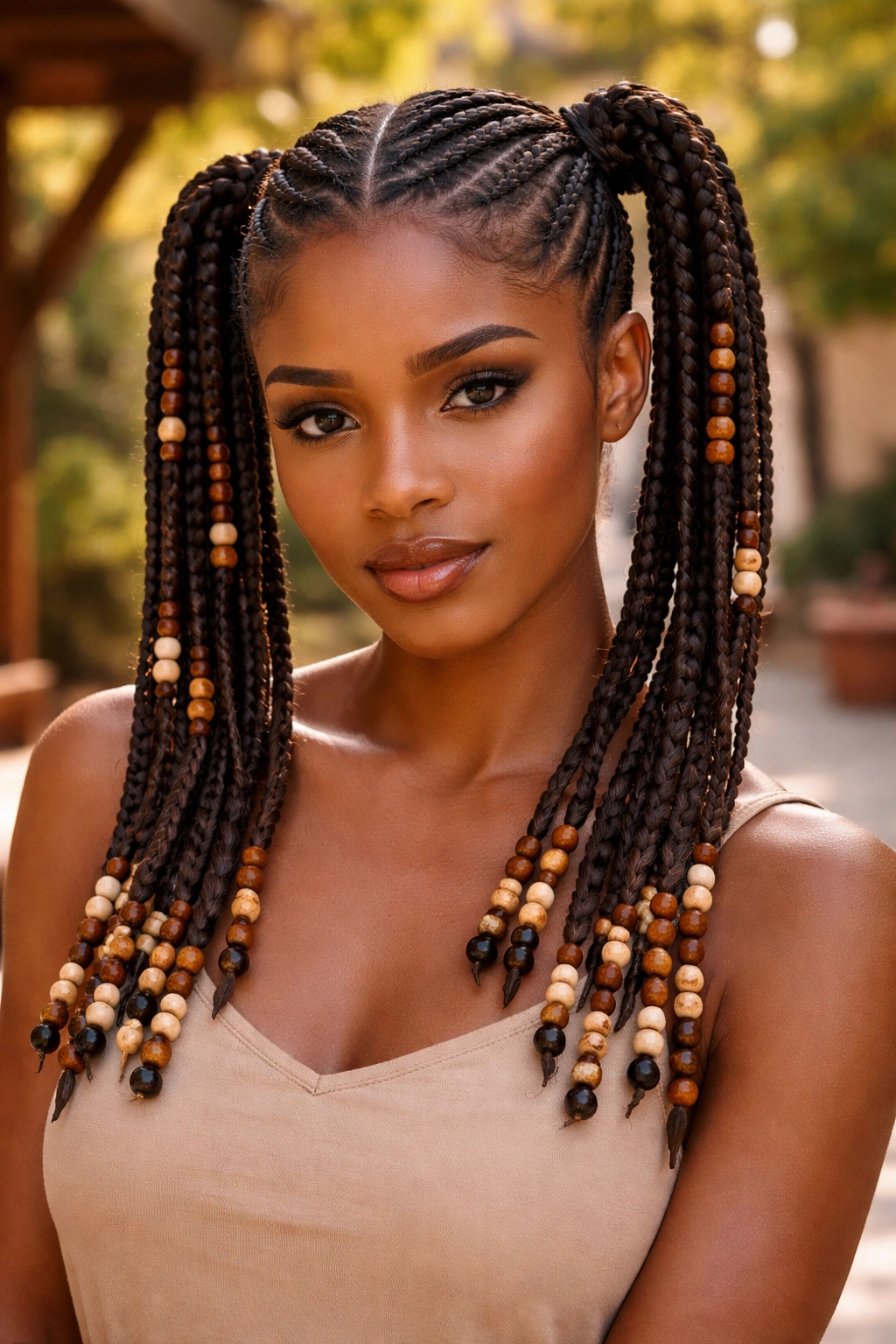
Standard pigtail placement, but with wooden, gold, or stone beads threaded onto select cornrows and onto the pigtails themselves. The beads create sound, movement, and visual texture.
Beads are loaded with cultural meaning — they appear across African and Caribbean braid traditions and signal both adornment and identity. In the cornrow pigtail context, they add weight and rhythm to a style that might otherwise feel too clean.
Place beads thoughtfully. Three to five per pigtail. A few scattered along the cornrows. Don’t overload — the goal is accent, not avalanche.
Wooden beads photograph richer than plastic and don’t yellow over time. Brass and antique gold tones suit warm skin tones. Silver works on cooler complexions.
The beads should be small enough not to drag on the braids. Heavy beads create tension that loosens the cornrows over time.
6. Long Knotless Cornrow Pigtails for Movement
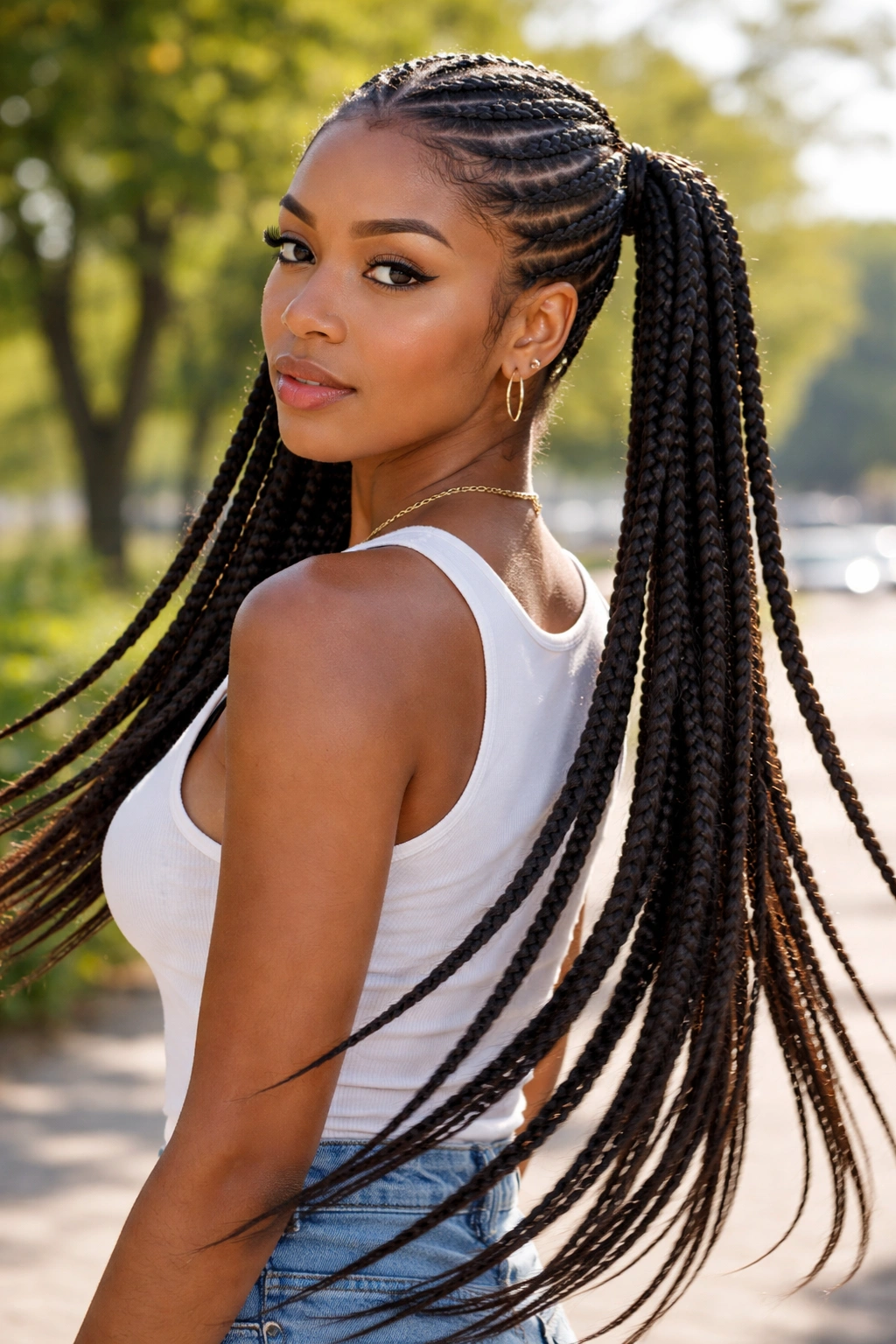
Cornrows transition into knotless braid pigtails that hang well past the chest. The knotless technique means no visible knot at the transition point — the synthetic hair is gradually fed in for a seamless cornrow-to-braid flow.
The length is the feature. Pigtails reaching the waist or below create movement that shorter styles can’t match. Walk, turn, dance — the pigtails follow with their own momentum.
Knotless construction is gentler on the scalp than knotted styles, but it does take longer. Expect 4-6 hours for a full install. The result is worth it — no visible bumps at the transition, and significantly less tension on the scalp through the wear period.
Practical note: very long pigtails catch on chair backs, bag straps, and zippers. Tuck them forward over your shoulders when sitting down, and gather them at the nape with a soft tie when sleeping.
7. Curly Pigtail Puffs With Cornrowed Frame
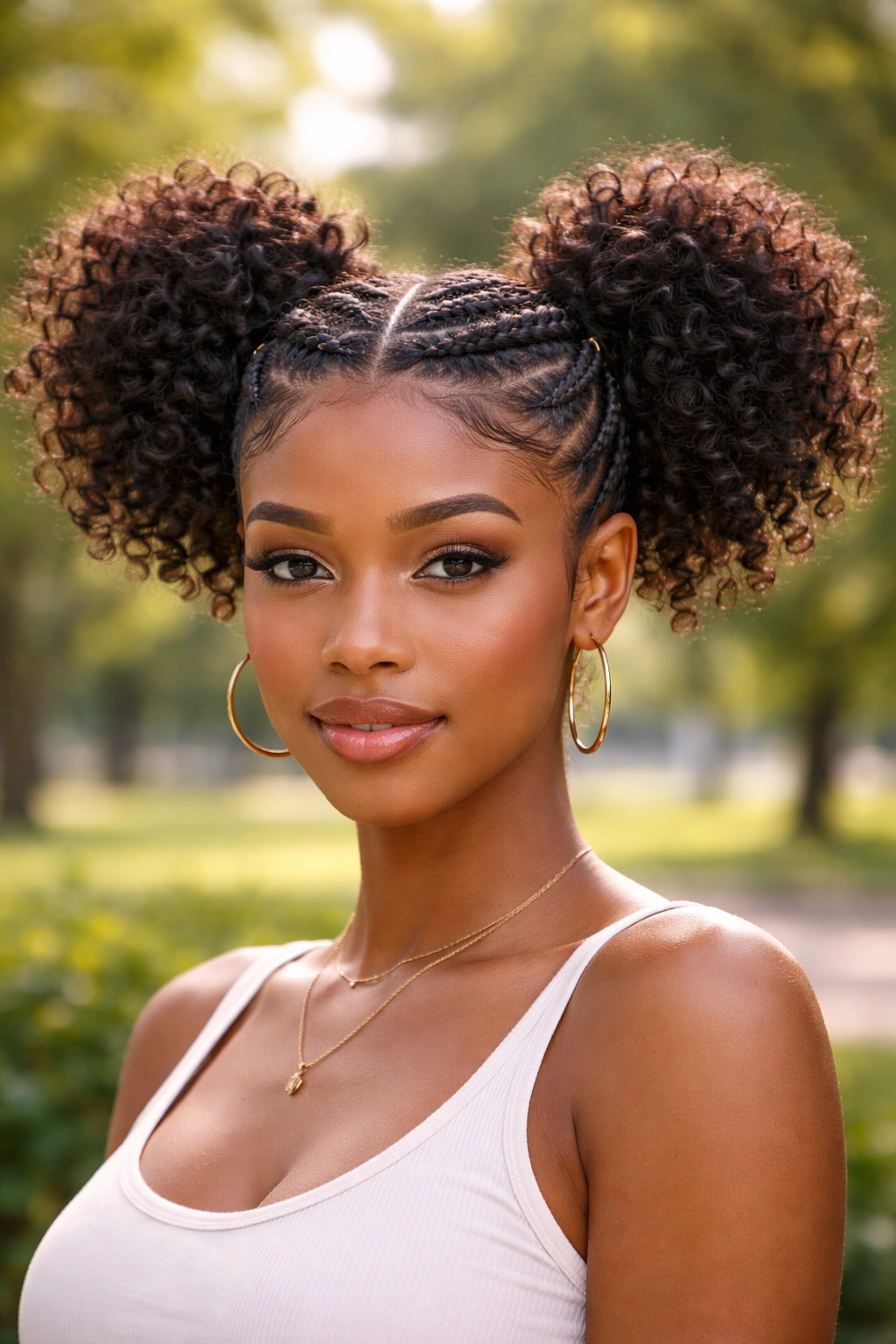
Cornrows run from the front of the head back to two anchor points, where the natural hair (or added curly hair) is released into two voluminous, curly puffs. The puffs sit like clouds on each side of the head.
The mood is completely different from braided pigtails. Puffs read soft, voluminous, and full of personality. Cornrows give the style structure that prevents the puffs from looking accidental.
This works exceptionally well as a transition style — when natural hair has grown enough that puffs are achievable but still benefits from protective scalp work.
The puff size should be substantial. Small puffs look apologetic. Large, full puffs look intentional and confident. Use a curl-defining cream and finger-coil sections within each puff for better definition.
8. Boho Cornrow Pigtails With Loose Wisps
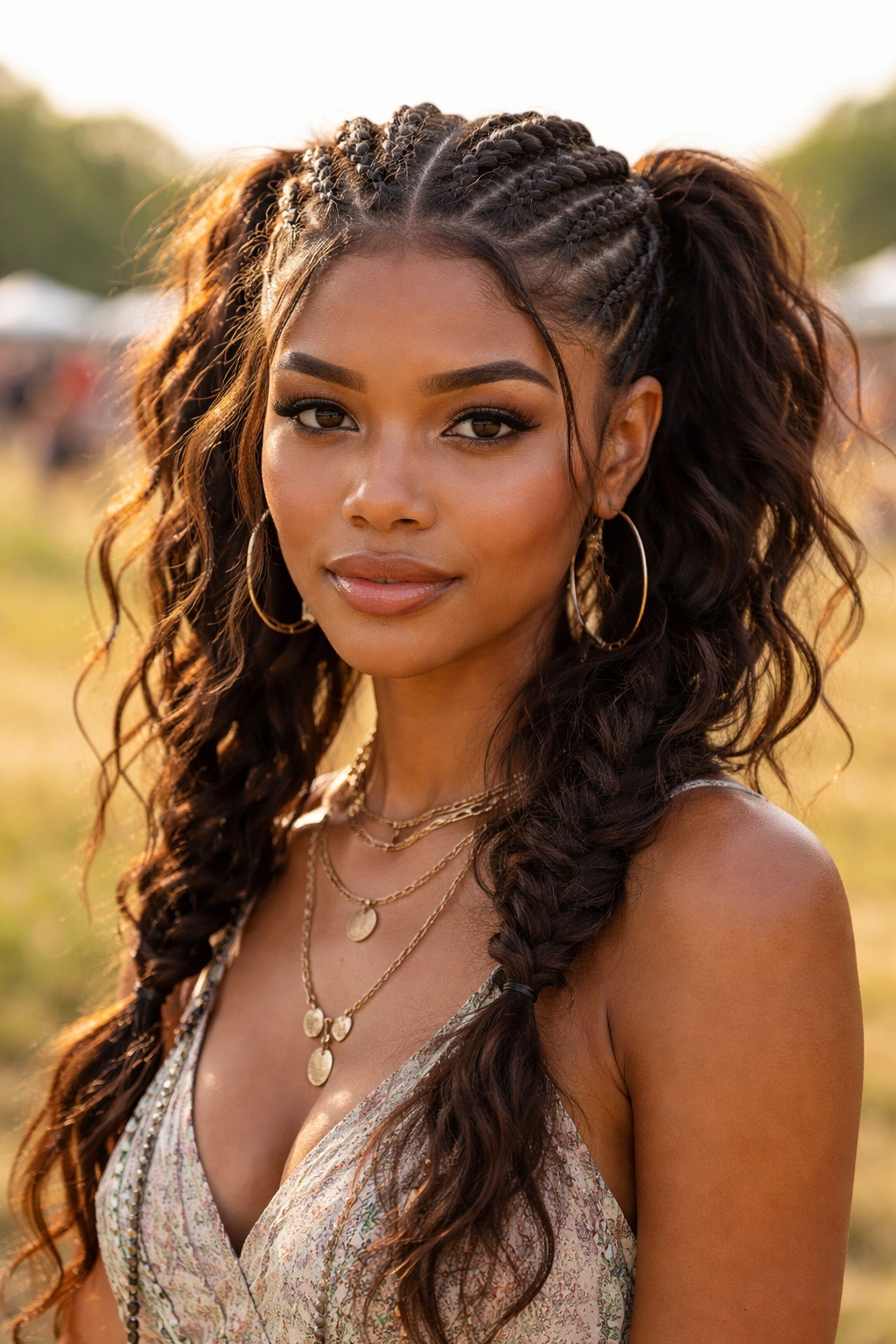
Cornrows are intentionally loose and slightly imperfect — not perfectly straight, not perfectly parallel — leading into pigtails with curly or wavy wisps pulled out along the way. The whole effect is undone but considered.
The wisps are critical. Without them, loose cornrows just look messy. With strategic wisps pulled out at the temples, along the cornrow lines, and around the pigtail bases, the style reads as boho rather than careless.
Who This Is For
- Anyone going for a music-festival or vacation feel
- People with strong personal style who want hair that looks lived-in
- Photographers and creatives who need hair that photographs naturally
- Works best in casual settings — too undone for offices or formal events
The wisps should be curly, even if the rest of the pigtail is braided. Curly escaping pieces signal intentional boho. Straight escaping pieces signal a falling-apart style.
9. Tight Sleek Cornrow Pigtails With Long Synthetic Length
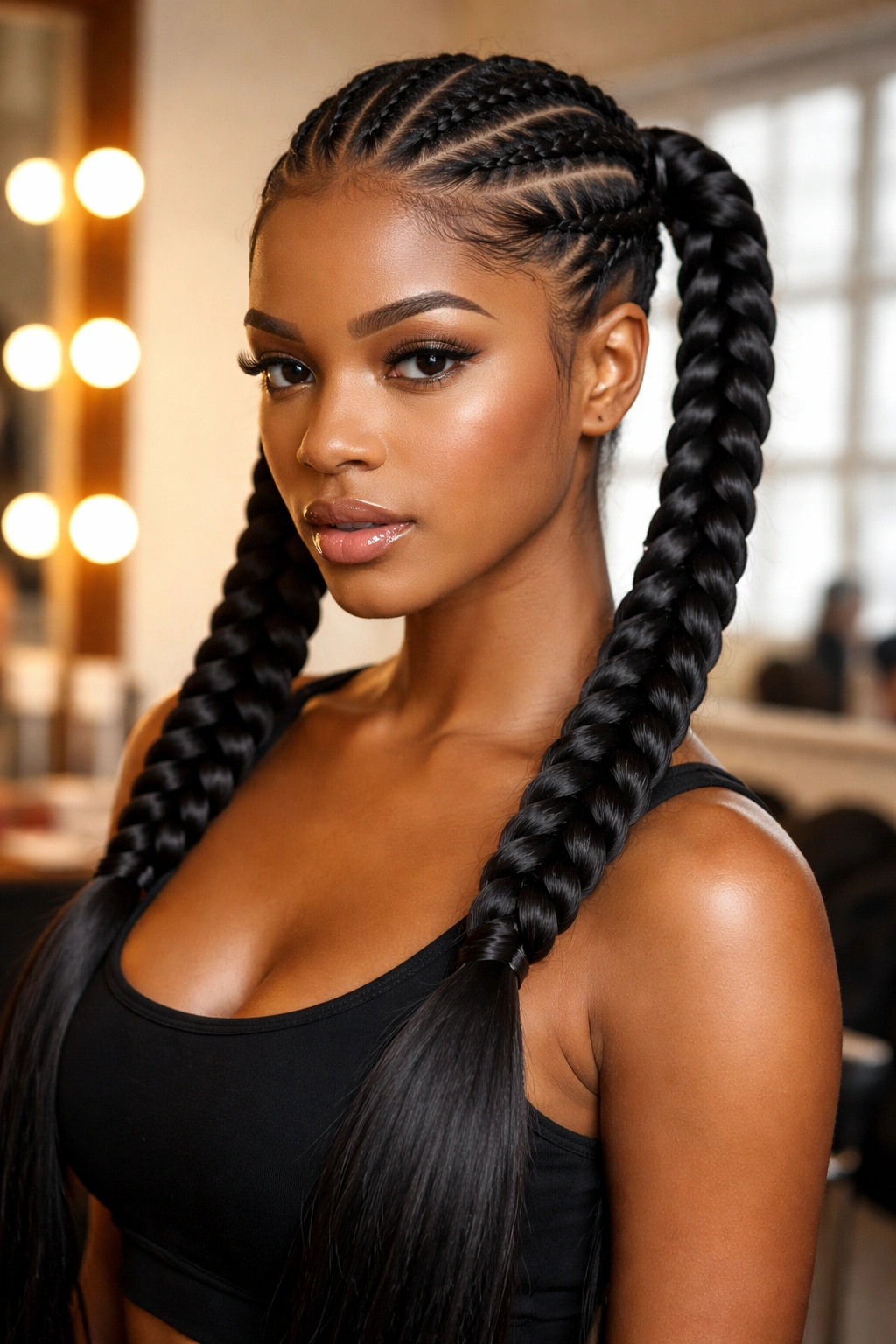
Hair is pulled extremely tight against the scalp. Cornrows are flat and shiny with edge gel. Pigtails are long, smooth, and free of frizz — usually with synthetic hair added for length and weight.
This is the sleek-and-controlled version. Every hair sits where it’s been placed. The look reads as athletic, modern, and intentional.
The tightness can become a problem. If your stylist is pulling hard enough to give you a headache during install, ask them to ease up on the front and edges. Sleek doesn’t have to mean painful, and overly tight cornrows damage the hairline over time.
Use lightweight edge gel for the slick. Heavy gels flake by hour six. A light, clear edge tamer paired with a soft-bristle brush gives the same shine without the residue.
10. Cornrow Pigtails With Color-Blocked Synthetic Hair
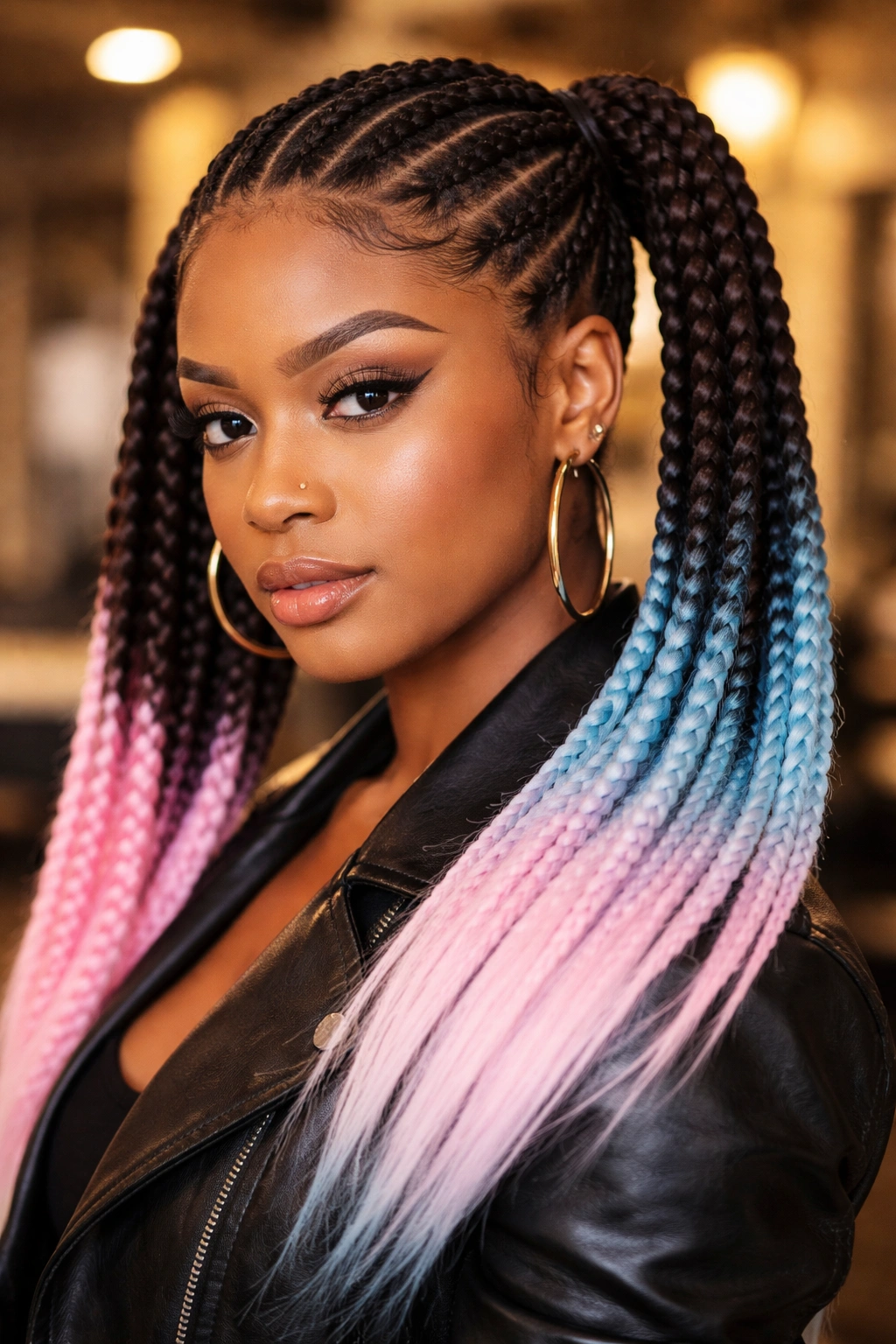
The cornrows are natural color matched to your hair, but the pigtail length is added in a contrasting shade — honey blonde, copper, burgundy, even bold purple. The color shift happens at the transition point.
The color-block effect is bold without committing to a full dye job. You can wear neutral cornrows close to the scalp and let the color show only when the pigtails are visible.
The technical reality: the transition between natural and colored synthetic hair needs to be hidden well. Ask your stylist to use an overlapping technique where some natural strands wrap around the colored synthetic at the transition. This blurs the line and prevents the obvious “color drop” effect that looks costume-y.
Choose colors that complement your skin tone. Warm tones (copper, honey, chocolate brown) suit warm undertones. Cool tones (ash blonde, platinum, blue-black) suit cool undertones. Test against your wrist before committing.
11. Cornrow Pigtails With Stitch-Braid Pattern
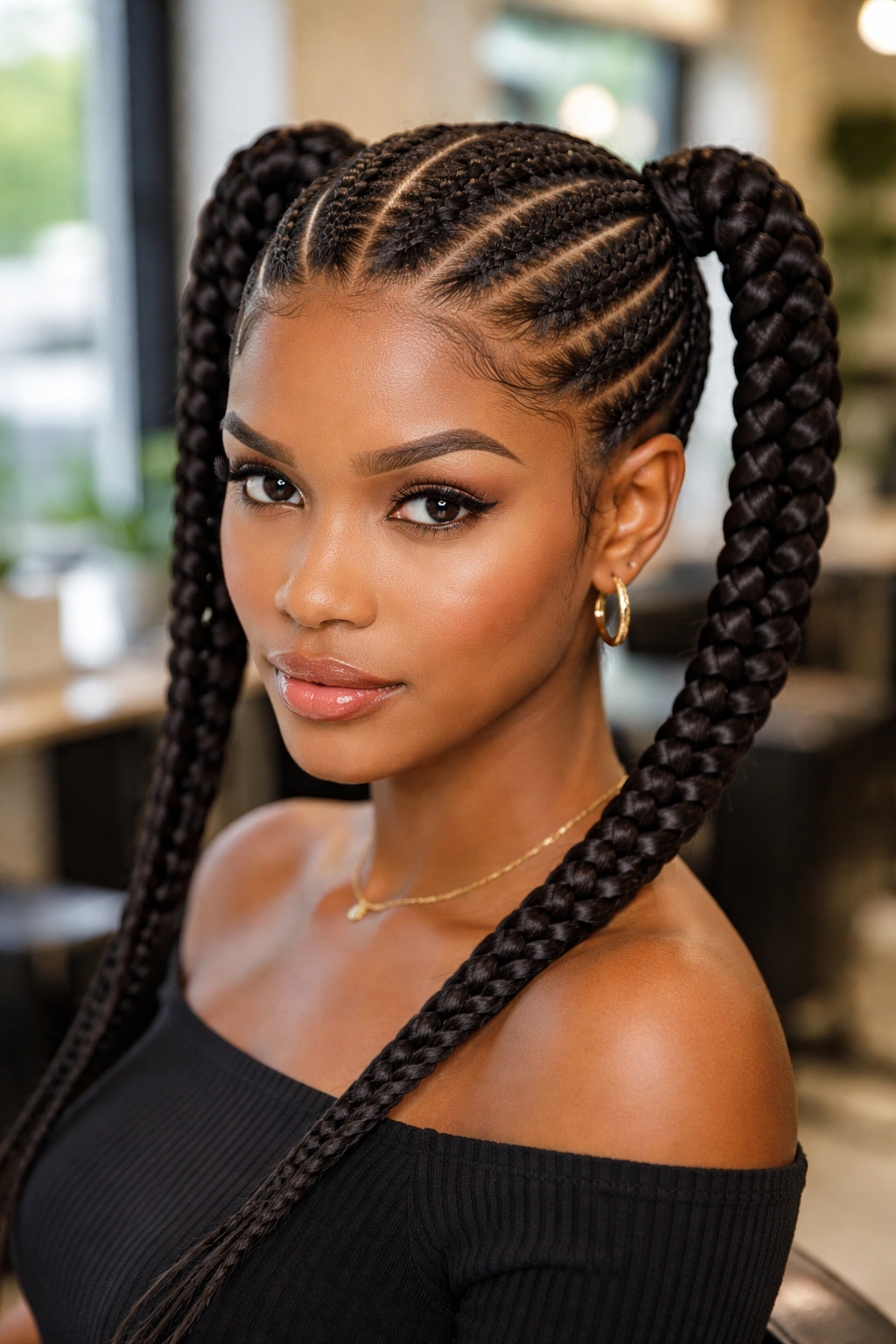
Stitch braids form the cornrow pattern, with their signature horizontal ridges visible across each braid, leading into pigtails at the back. The stitching adds dimensional detail that simple cornrows lack.
Stitch braids elevate the cornrow component significantly. What would be a simple two-pigtail style becomes something with intricate scalp art, with each ridge in the braid pattern catching the light differently and creating depth.
The pigtails can be either stitched all the way down or transitioned to smooth braids partway. Both work, though the all-stitch version maintains visual consistency.
Stitch braiding takes longer — about an extra 1-2 hours over standard cornrows. The investment is worth it for the depth of the finished look.
Maintenance note: stitch braids can fuzz at the ridge lines faster than smooth cornrows. Use a light gel rather than mousse to keep the ridges crisp through week two.
12. High Pigtails With Bantu-Style Cornrow Knots
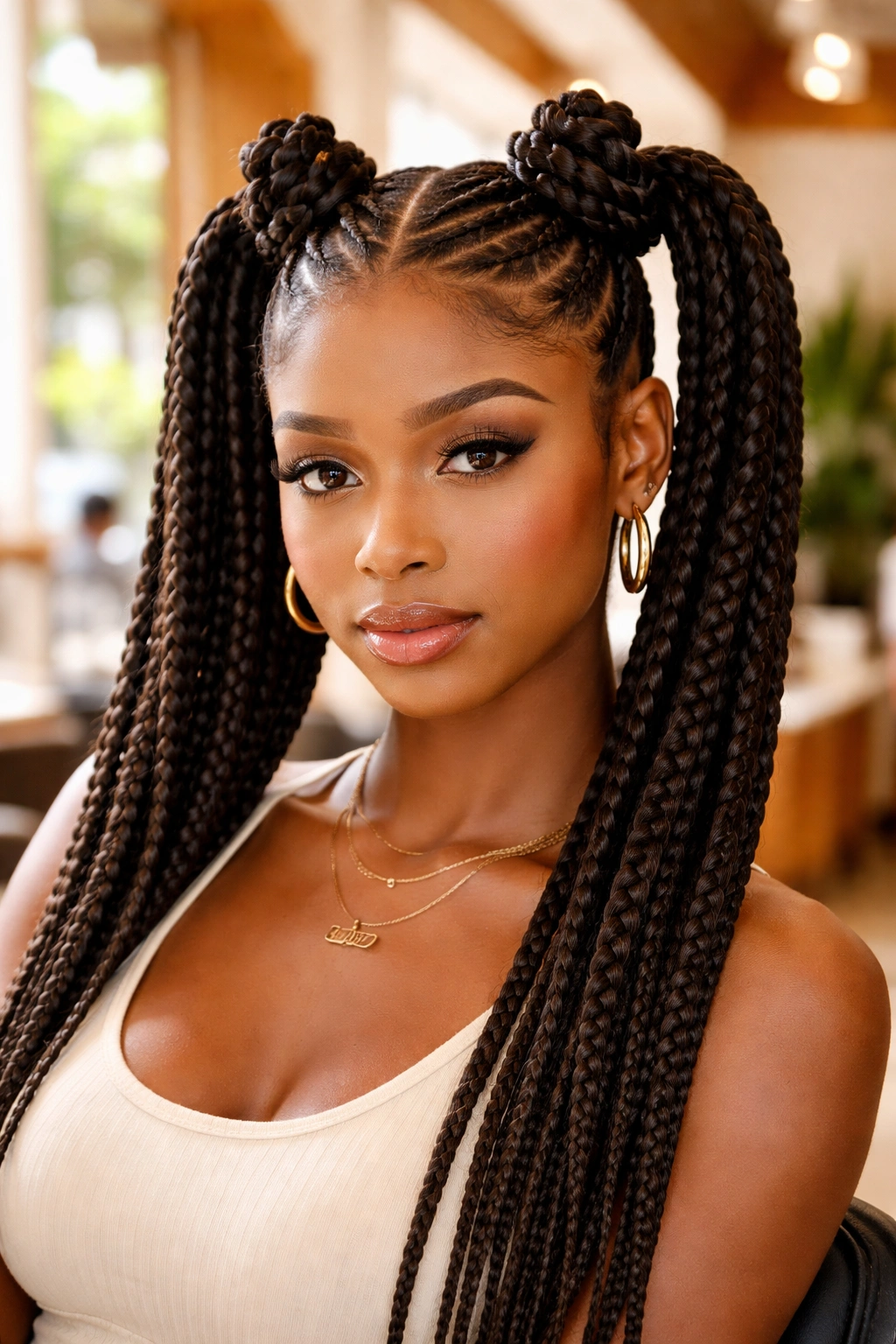
Cornrows run from the hairline back, but instead of continuing into pigtails, they pause at multiple Bantu-style knots across the crown — and the pigtails emerge from the final two knots. The knots themselves form a decorative pattern.
This is hybrid territory. You’re combining three traditional African hair forms — cornrows, Bantu knots, and pigtails — into one cohesive style. The result is rich with cultural references and visually striking.
Knot placement matters. Three to five knots positioned in a clean pattern across the crown look intentional. Random scattering looks accidental. Plan the placement before braiding starts.
The pigtails should be longer than the knots are tall, so the pigtails clearly read as the conclusion of the design rather than competing with the knot pattern for attention.
13. Cornrow Side-Pigtails With Curly Bun Toppers
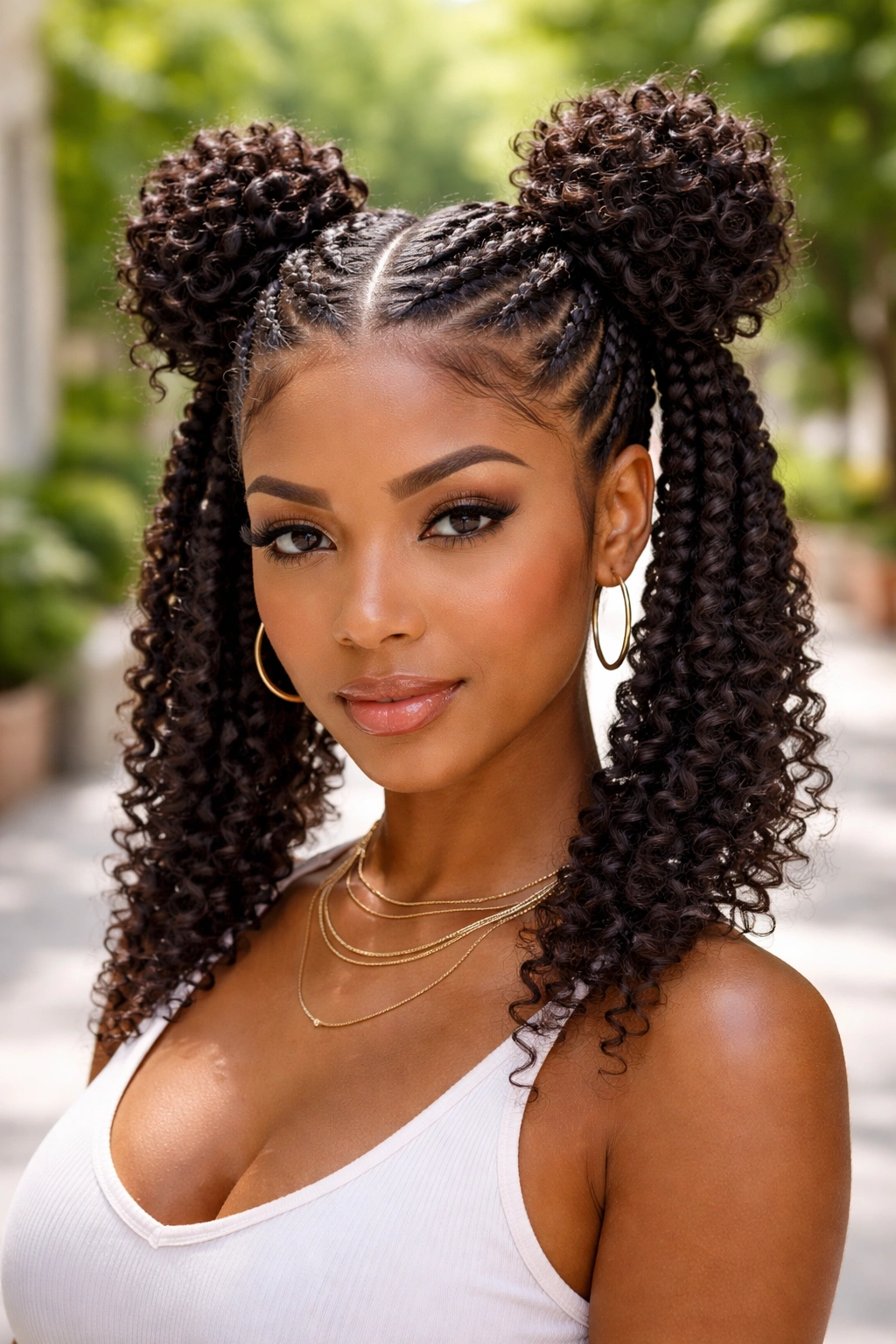
Both pigtails feature a curly bun at the top — like a small, decorative puff at the anchor point — before the pigtail length flows down. The cornrows lead up to the buns from sectioned parts.
The bun-topped pigtail is unexpected. Most pigtails are smooth at the top and free at the bottom. Adding a bun at the top creates dimensional interest and a more sculptural finish.
Styling Tips
- Use curly synthetic hair just for the bun, with smooth braided pigtails below
- Keep both buns identical in size — measure them before pinning final
- Add a small wrap of thread or beads at the base of each bun for polish
- Works best for daytime events with relaxed dress codes
The buns can stay tidy for about two weeks before they need re-pinning. Carry a few extra bobby pins in your bag.
14. Cornrow Pigtails With Side Bangs
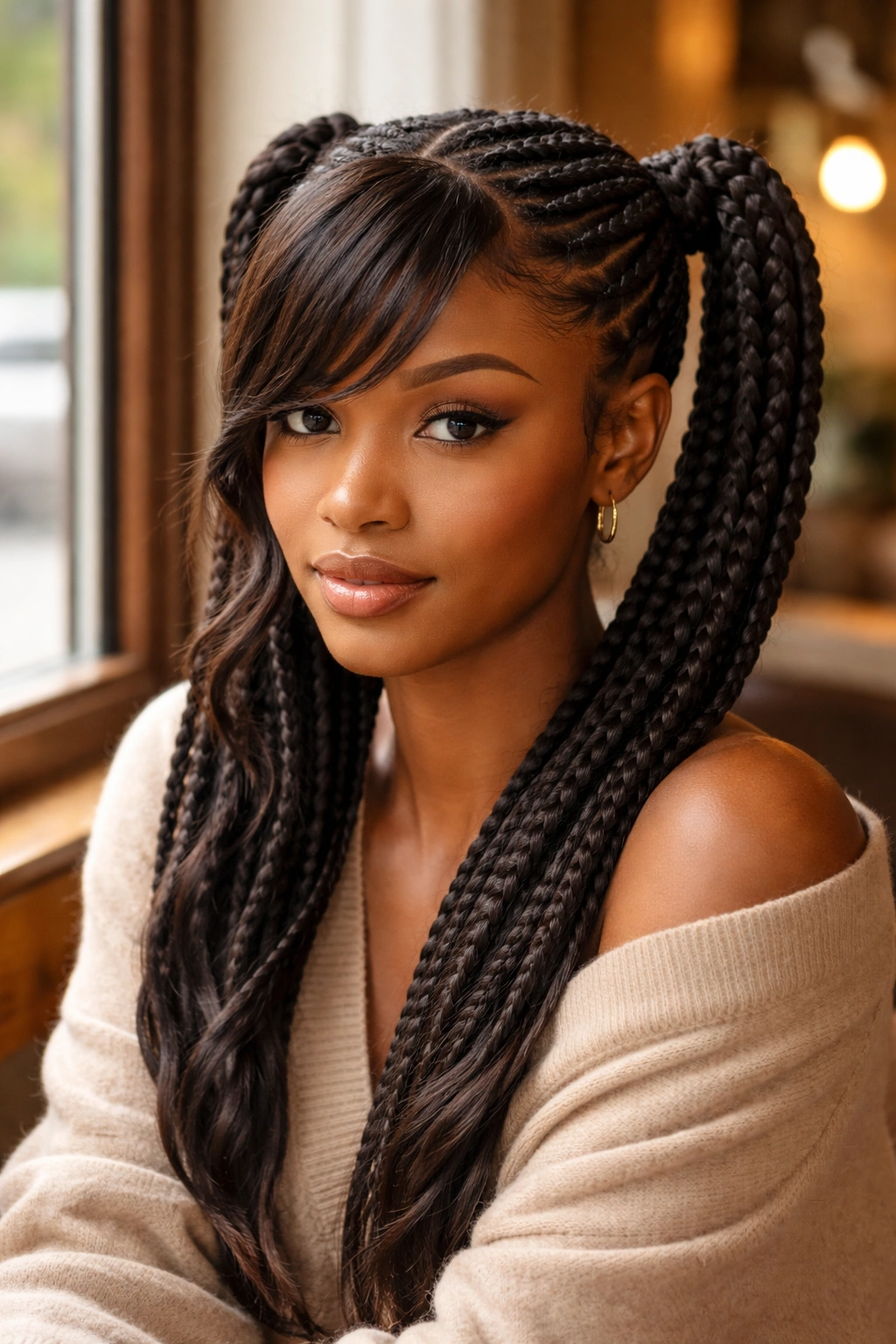
Standard cornrow pigtails, but with a section of synthetic hair released at the front to create side-swept bangs that fall across the forehead. The bangs soften the geometric pigtail style.
Bangs add a face-framing element that pigtails alone lack. They’re particularly flattering for high foreheads, square face shapes, and anyone who wants to soften the angular look that pigtails can sometimes project.
Choose the bang texture based on the pigtail texture. Curly bangs with curly pigtails. Straight bangs with sleek braided pigtails. Mixing textures here looks disjointed.
The bangs require maintenance. They’ll need to be moisturized, smoothed, and occasionally re-styled. If you don’t want the upkeep, skip them. If you love the look, commit to the daily routine.
15. Cornrow Pigtails With Wrapped Thread Detail
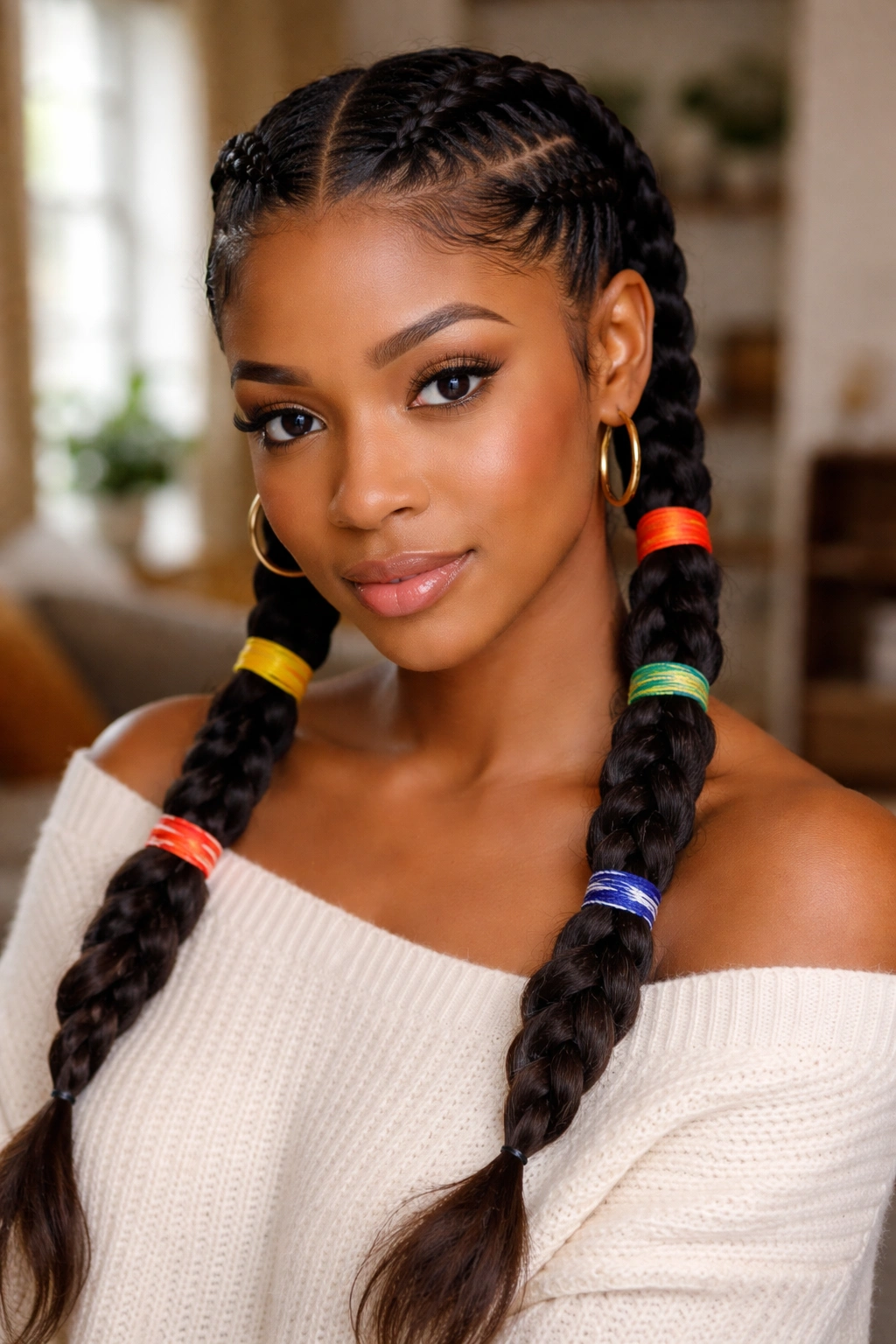
Cornrow pigtails are wrapped with colored thread at intervals — bands of color tied around the pigtail at 3-4 points along its length. Thread colors can be matched or contrasted to the hair.
Thread wrapping is a traditional technique that adds craft and personality without requiring color commitment. Switch thread colors for different events, removing and re-wrapping in minutes.
The thread should be substantial — embroidery floss thickness or thicker. Thin sewing thread looks cheap and can break. Cotton or wool thread holds shape and color longer.
Wrapping technique matters. Thread should be wound tightly enough to hold but not so tight it strangles the braid. About 8-10 wraps per band gives a balanced look. Tie off with a small knot tucked under the wrap so it disappears.
16. Long Cornrow Pigtails With Curly Tips
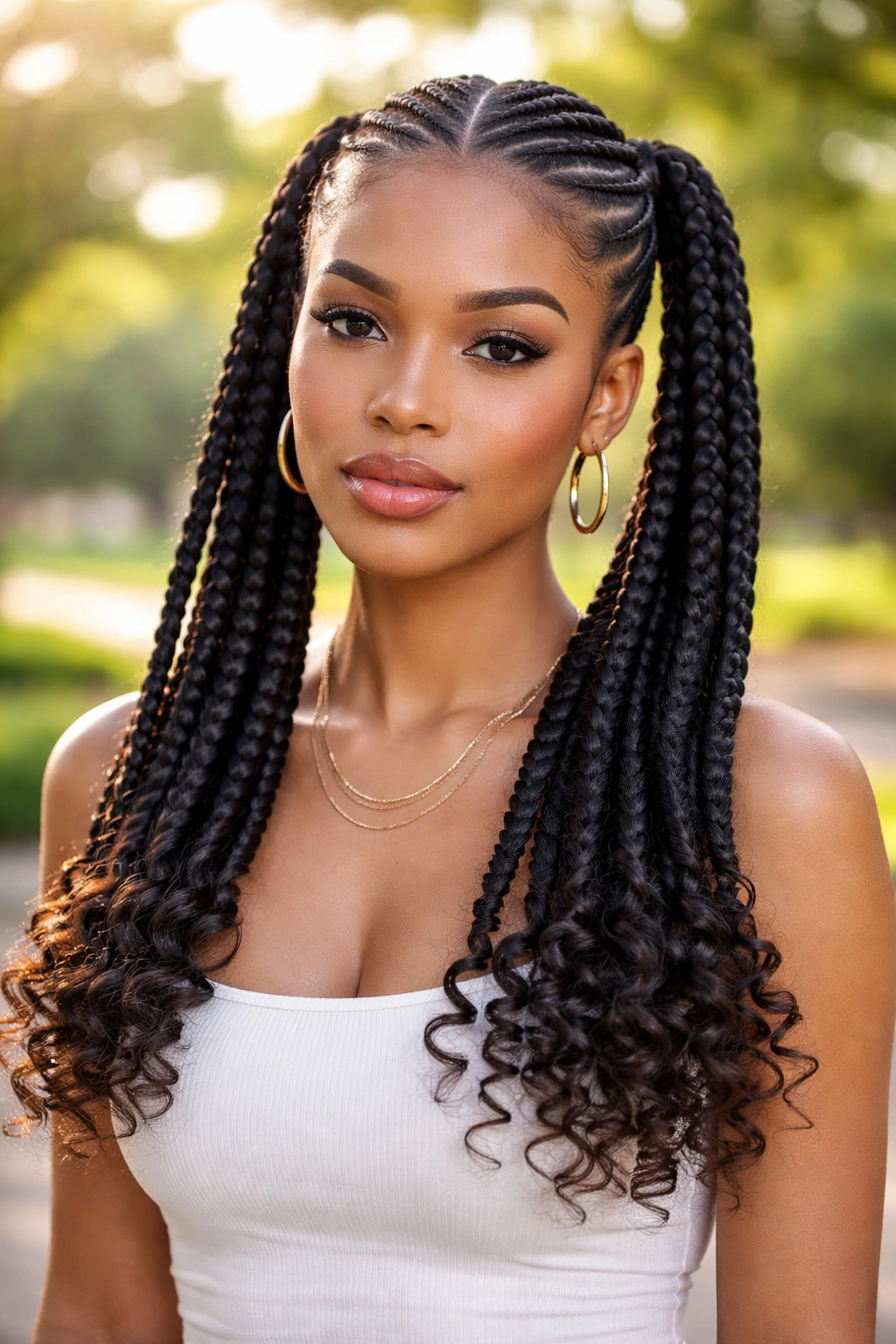
The pigtails are mostly braided — long, smooth, sleek — but the final 4-6 inches at the tip are released into a curly burst. The contrast between sleek braid and curly end gives the style movement and surprise.
Most pigtails end in a clean tie or simple braid finish. The curly tip changes that. It’s an unexpected detail that draws the eye downward and adds visual rhythm to long pigtails.
The curly tips work best when they’re slightly oversized — a deliberate burst of curl rather than a few wispy strands. Two to three inches of curl diameter looks intentional.
Alternative approach: instead of releasing the natural hair, attach a small curly hair piece at the pigtail tip. This gives consistent curl quality across both pigtails and lasts the full life of the install.
17. Cornrow Pigtails With Wave-Pattern Parts
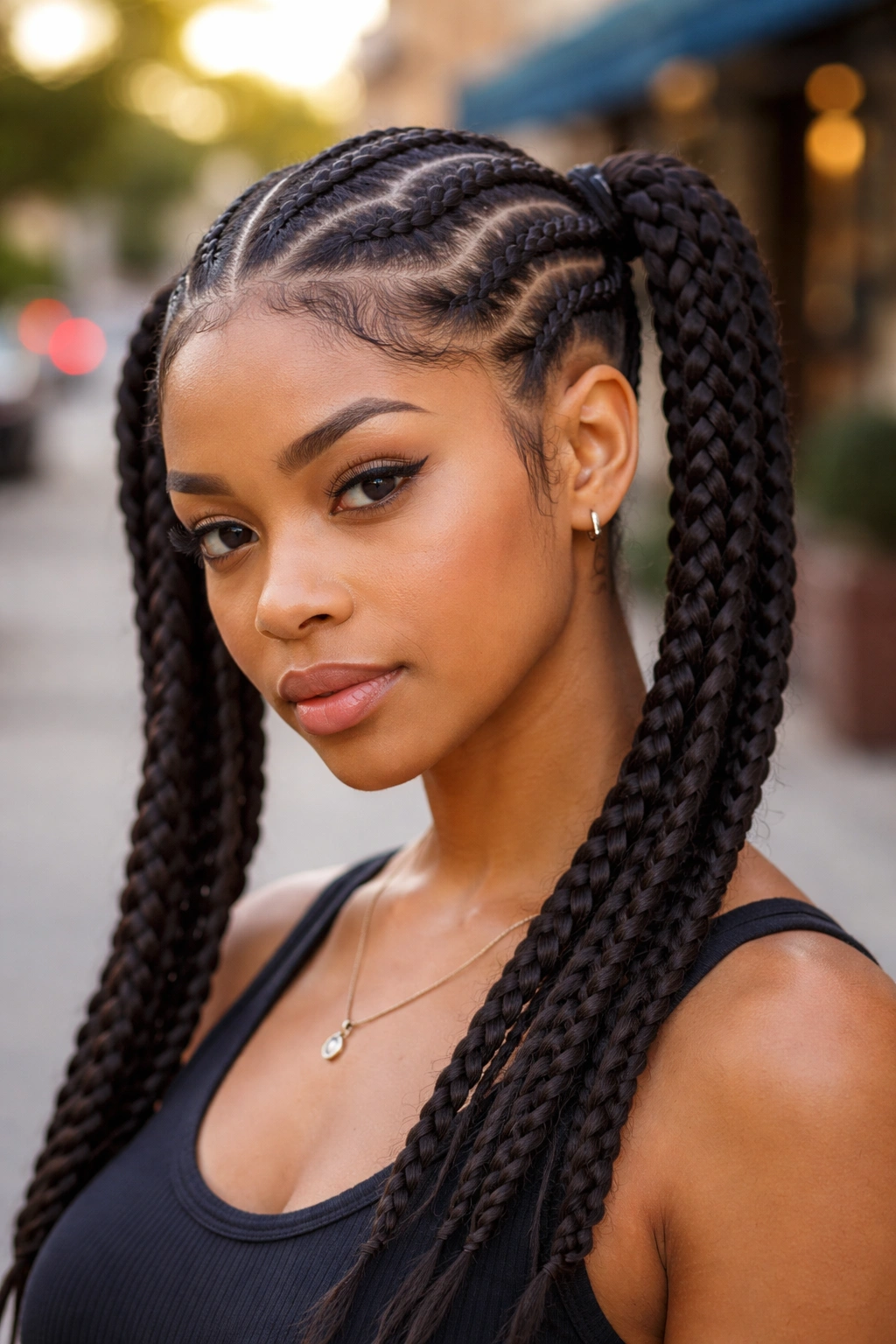
Rather than straight cornrow lines, the parts and braids follow gentle wave patterns across the scalp before reaching the pigtails. The waves create a softer, more organic look on the scalp.
Wavy parts read romantic and feminine compared to the geometric severity of straight or zigzag parts. The cornrows themselves curve gently as they follow the wave lines, which gives the entire scalp design a fluid quality.
This works particularly well with longer pigtails that have natural movement. The waves on the scalp echo the way the pigtails sway when you move.
The braider needs experience with curved braiding. Following a wave requires constant micro-adjustments to braid angle, which is harder than braiding a straight line. Ask to see examples of curved cornrow work before booking.
18. Cornrow Pigtails With Heart-Shaped Top Pattern
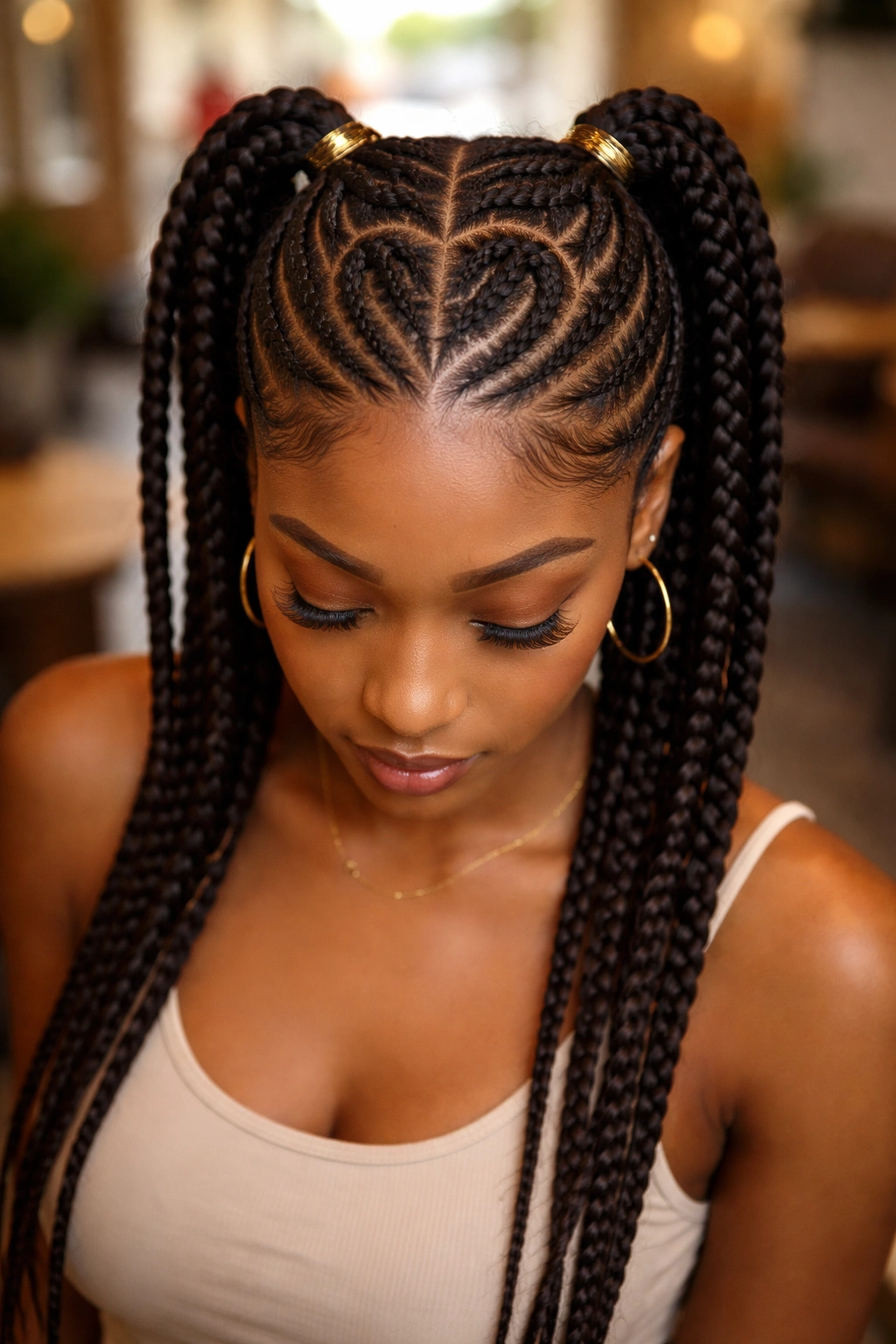
The cornrows on the crown form a heart shape before the braids gather into pigtails at the back. The heart can be small and centered or larger and spread across the crown.
This is whimsical territory. The heart pattern reads young, sweet, and personal. Best for casual wear, photo events, or anyone who wants their hair to project a specific personality.
Who This Is For
- Younger wearers — kids, teens, women in their twenties
- Photographers wanting a distinctive style for shoots
- Anyone going to a Valentine’s-themed or romantic event
- Works for casual settings, not formal ones
The heart needs to be visible and clearly readable. Too small and it looks like a random pattern. Too large and it overwhelms the rest of the style. About 3-4 inches across at its widest hits the right balance.
19. Cornrow Pigtails With Parted Crown Design
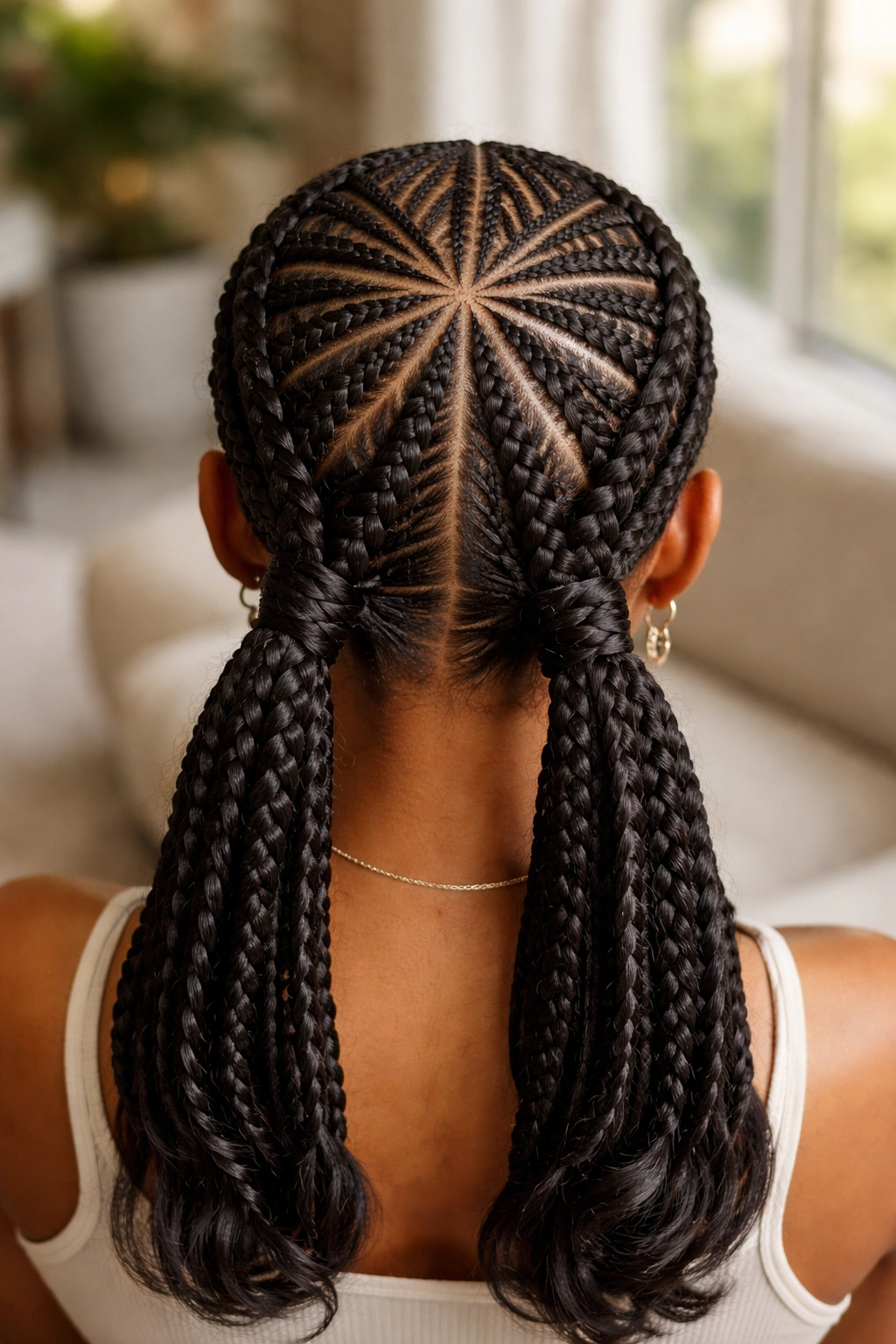
The crown features an ornate parting design — diamonds, triangles, or radiating lines — before the cornrows funnel down to two pigtails at the nape. The parting design becomes the focal point.
This is where cornrows cross into wearable art. The crown design can be as simple as four diamonds in a row or as complex as a multi-layered geometric pattern. The pigtails serve as the anchor for the design rather than the main feature.
A skilled braider can create crown designs that take 2-3 hours alone, separate from the cornrow and pigtail work. The full install can run 6-8 hours for elaborate patterns.
Worth it for special events. Wedding parties, photo shoots, performance hair. Probably overkill for everyday wear unless you have the time and budget for routine refresh.
20. Cornrow Pigtails With Mohawk Strip Center
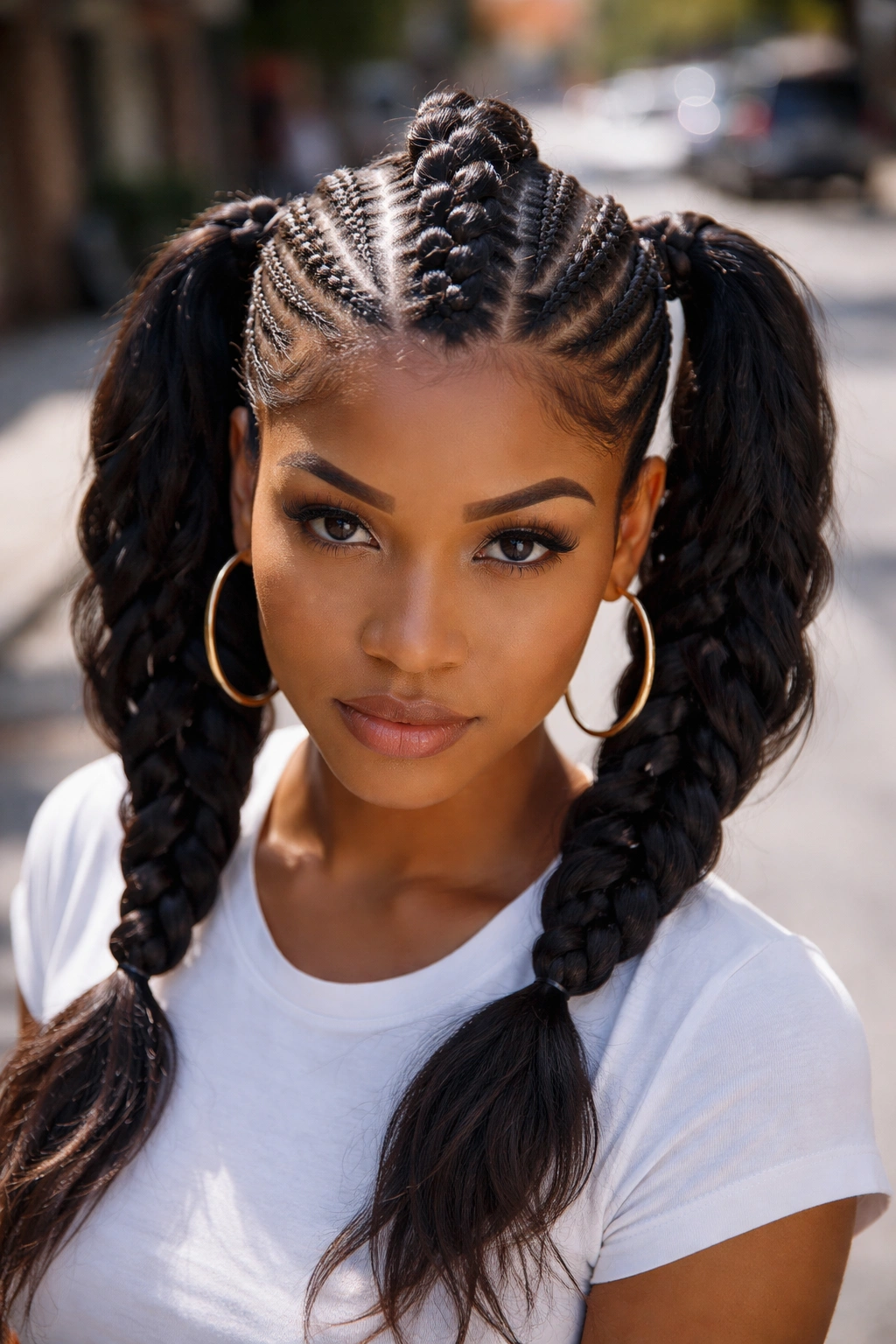
Cornrows on either side of the head pull into pigtails, but the center strip down the middle of the head is left as a thicker mohawk-style braid that ties into one of the pigtails or stands alone.
The mohawk element adds edge to what could otherwise be a sweet style. It’s pigtails with attitude. The strong center line creates a Y-shape across the head when viewed from above — pigtails on each side, mohawk down the middle.
Best worn by people who already lean into bold style choices. Paired with classic tops and minimal jewelry, it can become daily wear. Paired with edgy clothing, it becomes a full statement.
The mohawk strip can be the same width throughout or taper from wider at the front to narrower at the back. Either works visually. Pick based on which suits your face shape.
21. Mini Cornrow Pigtails for a Subtle Look
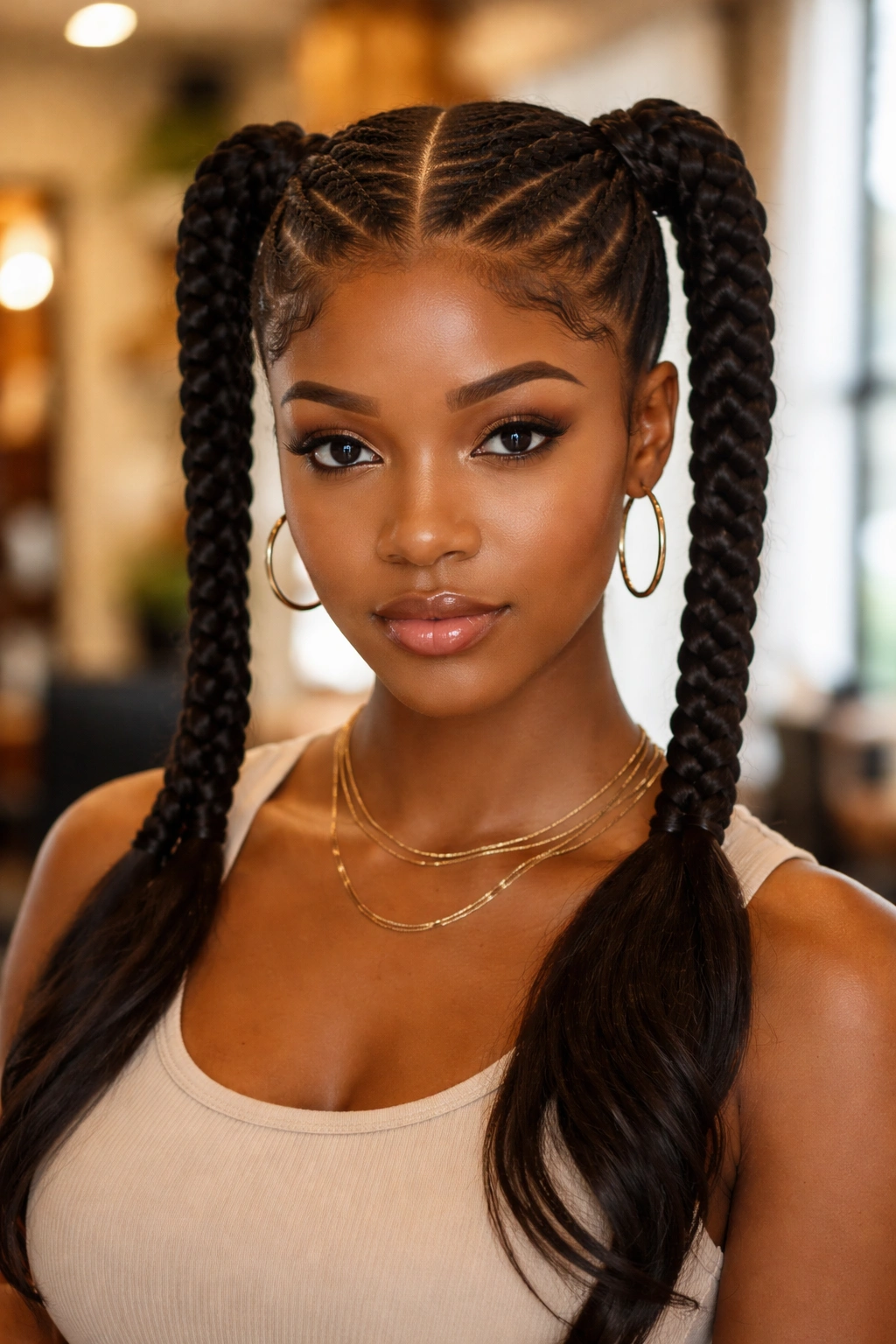
Two small cornrow pigtails — about pencil-width each, hanging just past the shoulders — with the rest of the natural hair flowing freely or styled separately. The pigtails are accents rather than the full style.
This is the most casual and lowest-commitment version of the cornrow pigtail family. Quick install (about 1 hour), easy daily wear, and the rest of your hair stays as-is.
The pigtails can be positioned anywhere — at the temples, behind the ears, lower at the nape. Each placement creates a different mood. Temple pigtails read youthful and playful. Lower placements read more polished.
Add small beads, thread wraps, or a tiny silver cuff at the end of each pigtail for visual interest. These accents make the pigtails feel intentional rather than incidental.
22. Statement Cornrow Pigtails With Multi-Strand Construction
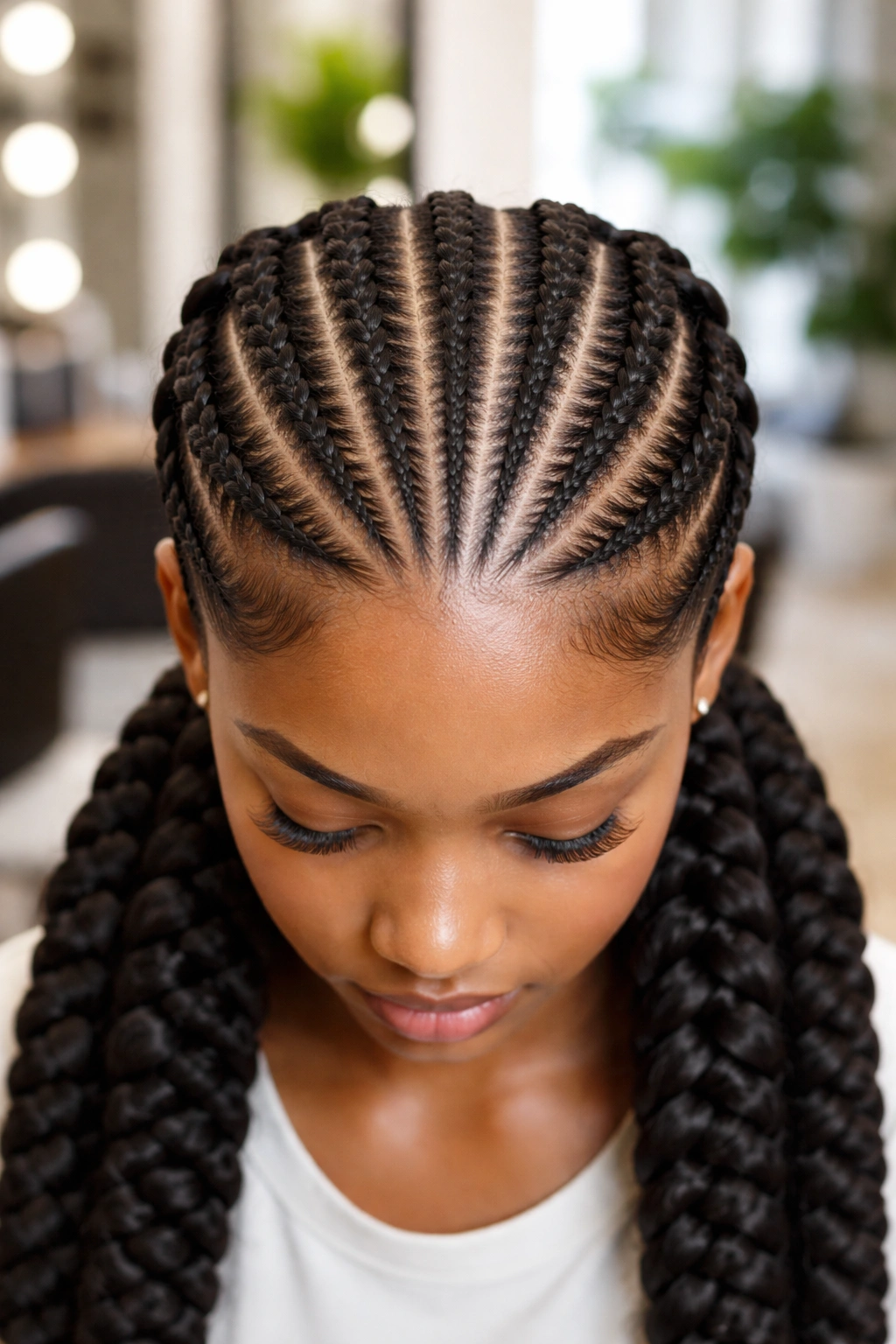
Each pigtail is constructed from multiple smaller braids rather than one thick braid. Six to eight thin braids make up each pigtail, secured at the top to a single anchor point.
The multi-strand construction adds dimension and movement that single braids can’t match. Each strand within the pigtail can move independently, creating texture and visual depth.
What Makes It Different
- Each thin braid moves independently for natural-looking flow
- Distributes the visual weight rather than concentrating in one thick braid
- Photographs with more dimension than single-braid pigtails
- Allows for color variation within each pigtail — some strands one shade, others another
The construction takes longer — about 4-5 hours total for both pigtails plus the cornrow work. The result is a style that reads more sophisticated than standard pigtails because of the obvious craftsmanship.
Day-to-Day Maintenance for Cornrow Pigtails
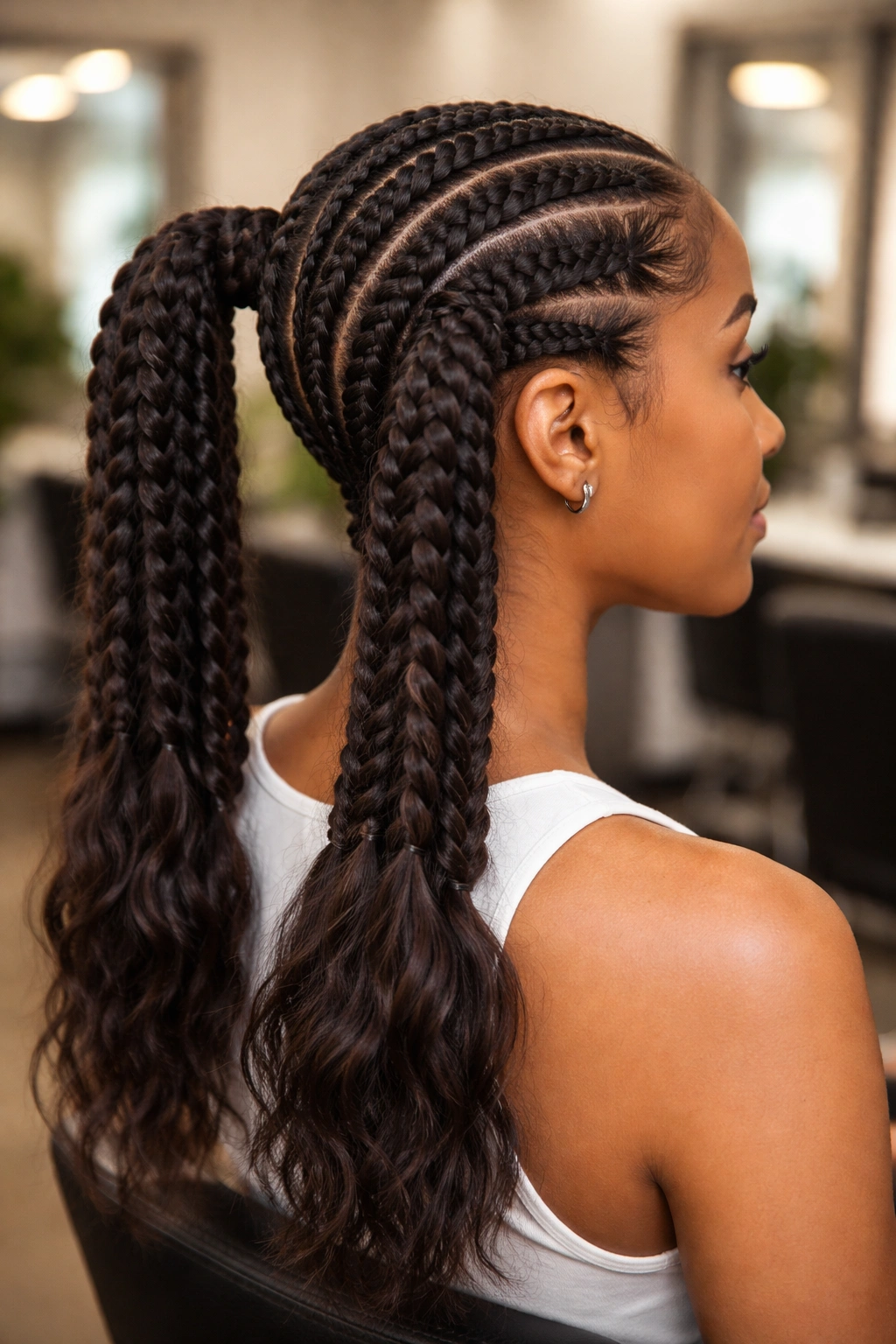
Pigtails see more friction than other braid styles because they hang free. They brush against shoulders, catch on jackets, and bounce when you move. That movement needs accommodation.
Every morning, gently smooth the pigtails with a light leave-in spray. Avoid heavy oils that weigh down the hair and attract dust.
Every 4-5 days, focus on the cornrow base — apply scalp oil between the braids, mist the pigtails with refreshing spray, smooth any flyaways at the edges.
The pigtail tips fray fastest. If they start looking ragged before the rest of the style, trim the very ends or wrap them in thread for a cleaner finish.
Sleeping in Cornrow Pigtails
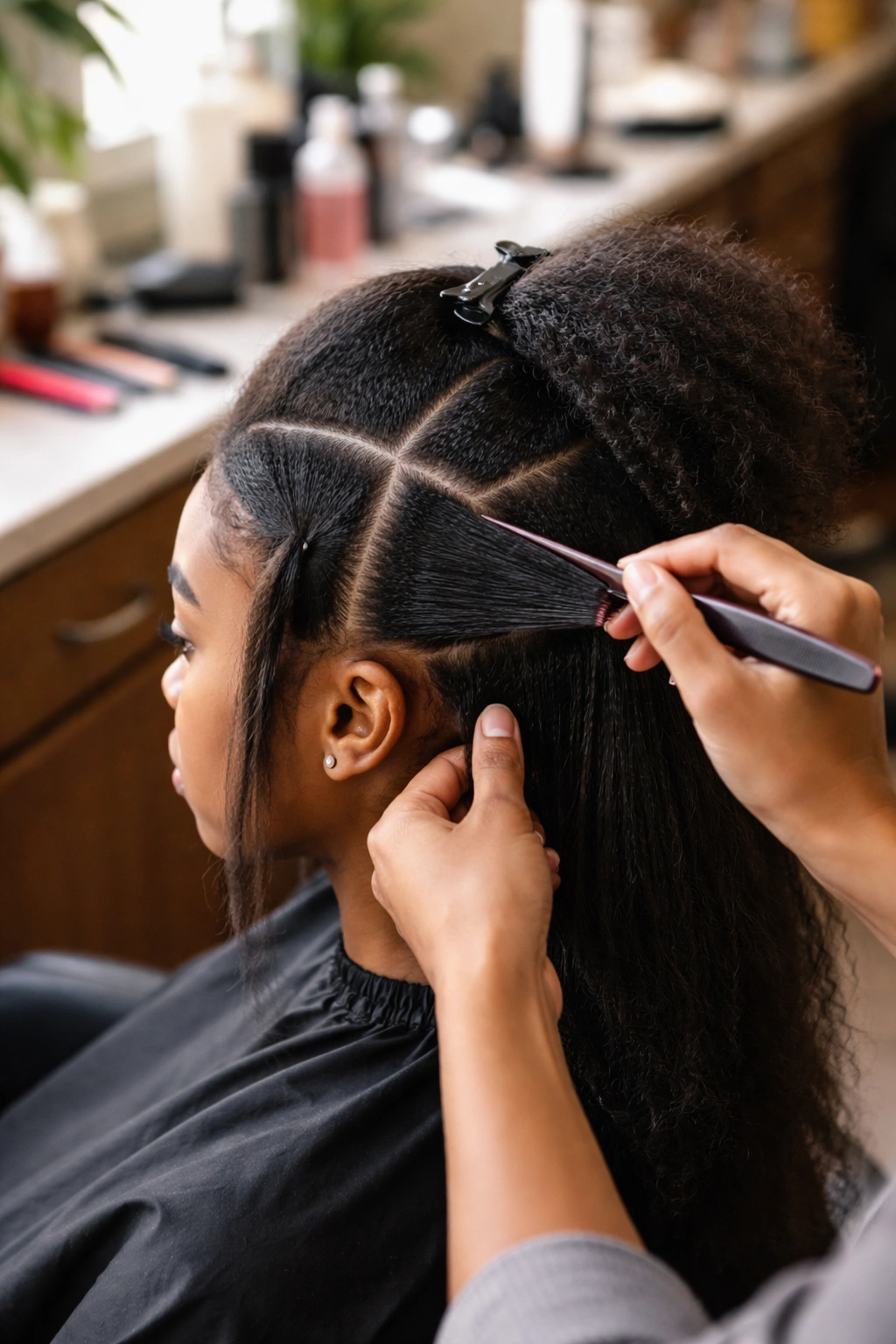
Pigtails tangle if they’re loose during sleep. Two strategies work.
The first: gather both pigtails forward over your chest before lying down, then sleep on your back. This keeps them out of the friction zone.
The second: braid both pigtails together loosely or twist them once and tie at the bottom. This contains them as a single unit overnight. Untwist in the morning.
In either case, wear a satin bonnet or sleep on a silk pillowcase. Both reduce the friction that causes frizz at the cornrow base and along the pigtail length.
When to Take Down and How
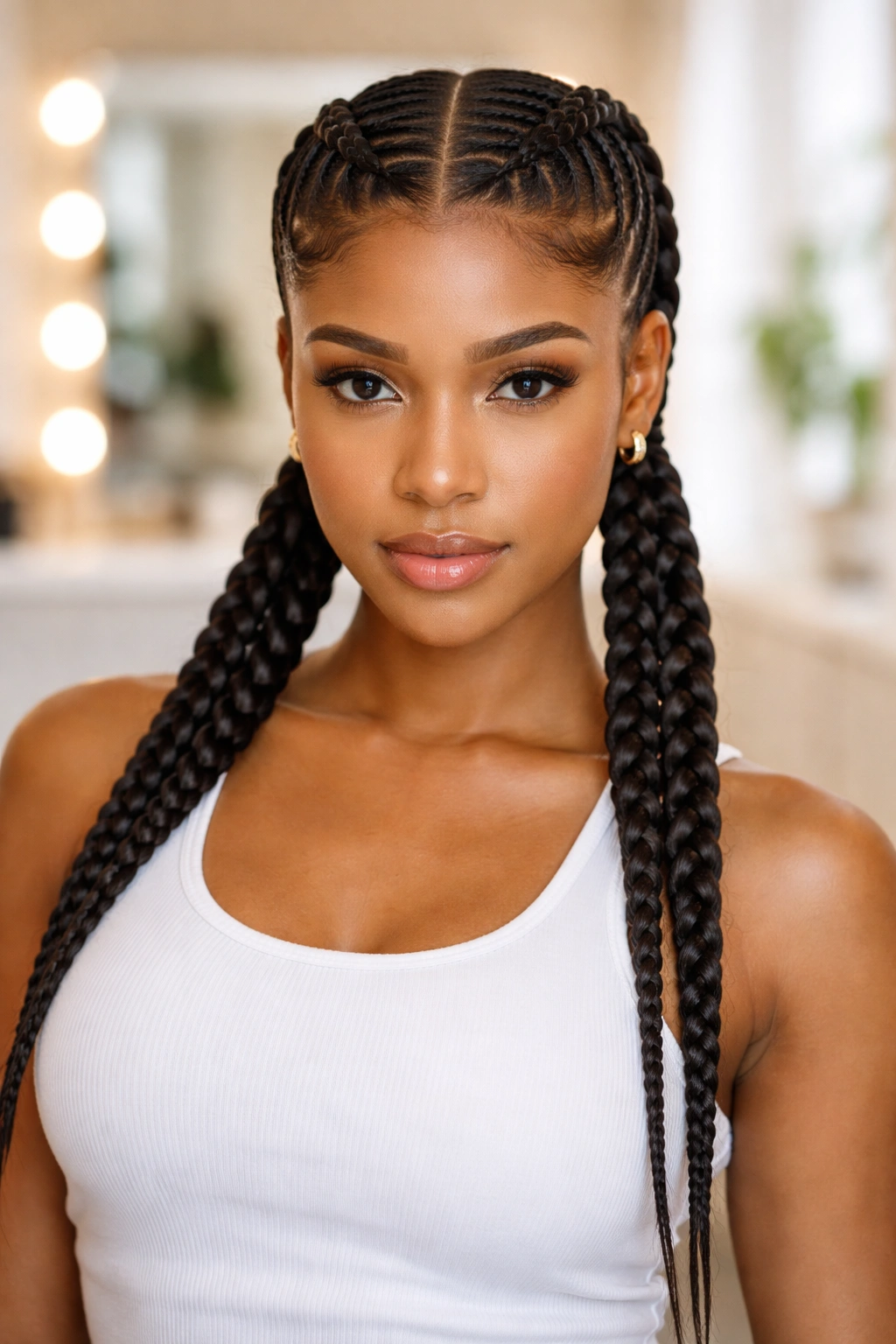
Cornrow pigtails generally last 4-6 weeks before takedown becomes necessary. Signs it’s time:
- Cornrows have lifted significantly at the front
- Pigtail tips are excessively frayed
- Buildup at the scalp despite regular cleaning
- The pigtails feel heavier than they did at install (hair growth + product buildup)
Takedown starts at the pigtail tips. If synthetic hair was added, cut it free at the cornrow transition. Then unbraid each cornrow slowly from end to scalp, applying conditioner to the section closest to the roots where shed hair has accumulated.
Co-wash twice. Deep condition. Take a 2-3 day break before any new install. The scalp earned the rest.
Choosing the Right Cornrow Pigtail Style
Match the version to the use case rather than just the mood.
- Daily wear: Classic Two-Section, Tight Sleek, Mini Pigtails
- Weekend or casual: Boho, Side Bangs, Heart-Shaped Top
- Events and photos: Multi-Strand Statement, Crown Design, Beaded
- Active days: Knotless Long, Stitch-Braid, Geometric High
- Soft and romantic: Low with Curly Ends, Curly Pigtail Puffs, Wave-Pattern
Cornrow pigtails reward the choice that fits your real life. Pick for durability, comfort, and how often you want to redo the look. The right version becomes a style you want to wear, not just one you’re getting through.