



Cornrow buns with curls give you the best of two worlds that rarely cooperate. The scalp-hugging discipline of cornrows. The soft, round volume of a bun. The decorative movement of curls escaping or surrounding it. It’s a style built for occasions — weddings, graduations, work presentations, date nights — but it also holds up for everyday wear because the bun keeps hair contained and out of the face.
What most tutorials miss is this: the bun placement changes everything. A high bun reads different than a low one. A side bun has a different mood than a center bun. Cornrow pattern underneath affects how the bun sits, how long it lasts, how much tension ends up where. Get the combination wrong and the bun slides, the edges fuzz, and the curls frizz before the event is over.
So here’s a breakdown of how cornrow buns with curls actually work, plus 22 genuinely different versions. Each one carries a distinct mood and construction. No two rely on the same trick.
The Anatomy of a Cornrow Bun With Curls
At its simplest, a cornrow bun with curls combines three elements: cornrows on the scalp, a gathered bun at some point on the head, and curls either woven through the bun or escaping from it.
But the combinations are almost infinite. The cornrows can go straight back, forward, to one side, or in geometric patterns. The bun can sit high, low, center, or off to one side. The curls can be added synthetic hair, heat-curled natural hair, or a removable curly bun piece. Each variation shifts the style’s personality.
Understanding the mechanics is what separates a style that lasts all day from one that droops by hour six.
Why Bun Placement Changes the Mood
Placement is the single most underrated decision in this style. Two people can wear identical cornrows and identical curl textures, and a high bun versus a low bun will make them look like they’re going to different events.
High bun reads formal, elongates the neck, and demands upright posture. Best for evenings and ceremonies.
Low bun reads classic, professional, and works at any age. Best for weddings, offices, and understated events.
Side bun reads romantic and slightly playful. Best for dates, cocktail events, or when you want to show off one earring.
Half-up bun reads casual chic — think brunch, weekend events, travel.
Pick the placement before you pick the cornrow pattern. The cornrows should support the bun, not fight it.
Prep Before the Install
Cornrow buns with curls demand strong foundations. If the cornrows aren’t crisp, the bun slides. If the hair isn’t stretched, the cornrows bump. If the curls aren’t set properly, they frizz within hours.
Two days before install:
- Wash with a clarifying shampoo to remove product buildup
- Deep condition for at least 30 minutes
- Blow-dry on low heat or band the hair overnight to stretch without damage
- Trim split ends — any exposed natural hair will be visible
The day of install:
- Skip leave-in conditioner — it makes hair too slippery
- Moisturize the scalp lightly, not the lengths
- Bring snacks if the install will run 3+ hours
- Wear a top that doesn’t have to go over your head afterward
Tools and Hair That Make a Difference
Synthetic hair choice matters more than price. Cheap kanekalon gets shiny after one wash and tangles at the bun. Quality options:
- X-Pression Ultra Braid for base braiding — soft, less shine, holds shape
- Freetress Water Wave for the curly component — pre-curled, looks natural
- Human hair bulk for buns that need to be wet-set into specific curl patterns
Tools your stylist should have:
- Rat-tail comb with a fine needle end for clean parts
- Parting spray to keep sections defined while braiding
- Bun foam or a donut insert for structured buns
- Bobby pins (black AND brown, to match different sections)
- Edge brush for finishing
1. Classic Low Bun With Cornrows Straight Back and Curly Framing
This is the version that earned its place as a wedding and graduation standard. Six to eight cornrows braided straight back, collected into a low bun at the nape, with loose curls released around the bun and a few tendrils pulled out at the temples.
Why It Works
The low placement reads elegant without trying too hard. Cornrows straight back keep the top of the head clean and professional. The curl framing softens what would otherwise be too severe.
- Flattering on almost every face shape, especially long or oval faces
- Plays well with veils, headpieces, tiaras, or just statement earrings
- Lasts 5-7 days with minimal maintenance
- Works at any age from teens to 60+
Tip: when the stylist gathers the braid ends into the bun, they should twist the bundle as they wrap rather than just coiling it. Twisting locks the bun in place without extra pins.
2. High Crown Bun With Feed-In Cornrows and Loose Spiral Curls
Feed-in cornrows — where synthetic hair is gradually added as the braid progresses rather than all at once at the base — create a seamless thickening effect that looks natural. These braids run up and back to a high point at the crown, where they release into a voluminous curl bundle that coils into a high bun.
The feed-in technique is what separates this from an amateur high bun. Without feed-ins, the braids look thin at the front and bulky at the back where the synthetic hair was added. With feed-ins, the braid gradually thickens as it moves toward the bun, creating the illusion that the curls are simply growing from continuously thick hair.
The height of the bun should be about two inches above the crown when finished. Any higher and the style tips into costume. Any lower and you lose the elongating effect that makes this version so flattering.
Expect 4-6 hours in the chair for a clean feed-in install. It’s worth every minute.
3. Side-Swept Cornrows Into a Loose Side Bun With Cascading Curls
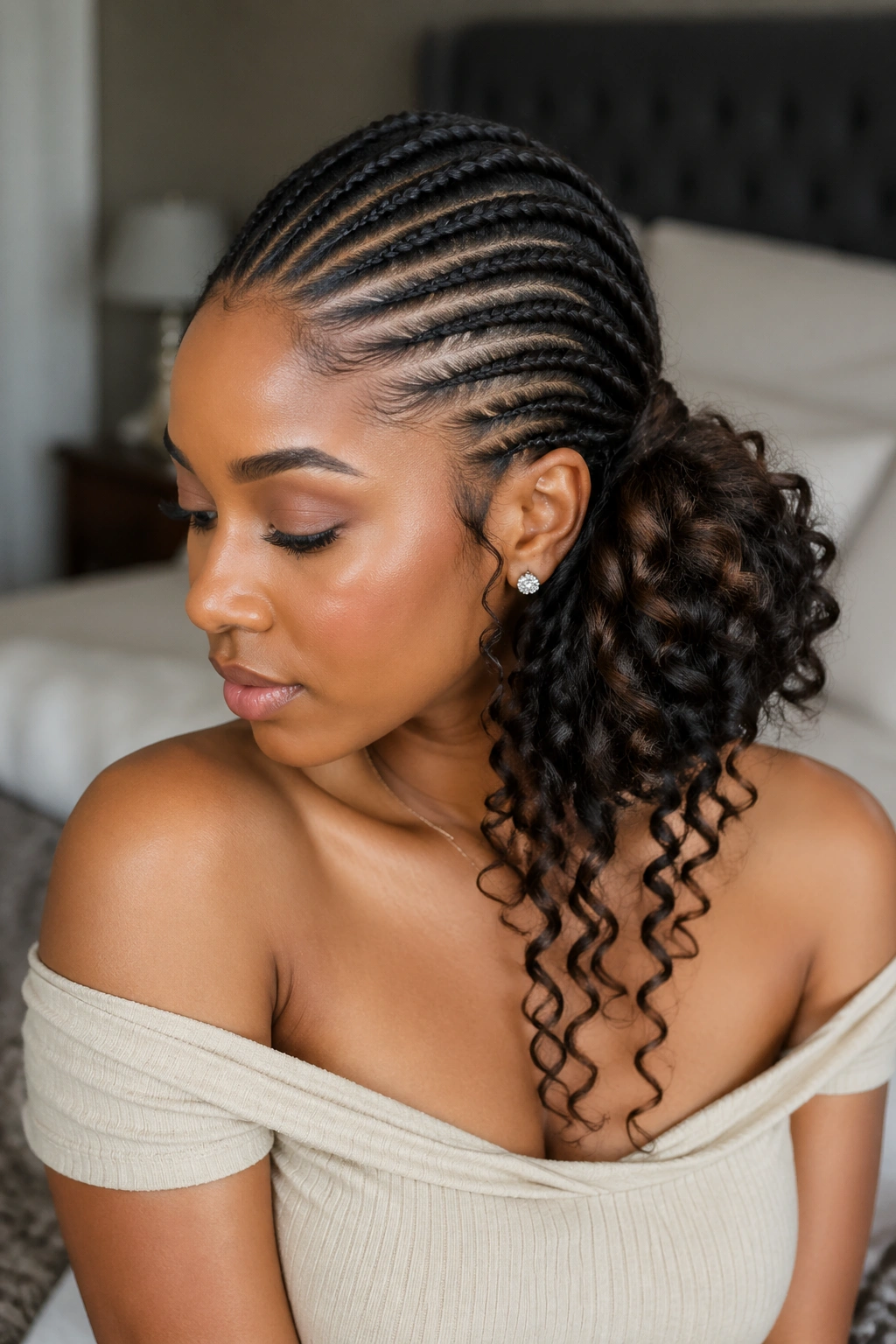
Rather than symmetrical parts, the cornrows all sweep diagonally across the head toward one shoulder, gathering into a side bun at the nape with a few curls released to cascade down the neck and collarbone.
It’s romantic and cinematic. The diagonal sweep creates motion even when you’re standing still, and the curls falling from the bun give the style a pre-Raphaelite feel — like a painting rather than a photograph.
Side buns can look lopsided if the proportions are off. The bun needs to be full enough that it balances the braided side of the head. A skinny side bun on top of thick cornrows looks like an afterthought. Ask for extra synthetic hair in the bun to create deliberate volume.
A small secret: side buns stay in place better with a hidden elastic under the bun form. Two bobby pins alone won’t hold a full curl bundle through an evening of dancing. Your stylist should pin the bun to the base elastic, not to the braids directly.
4. Halo Bun Crown With Small Cornrows and Curly Finish
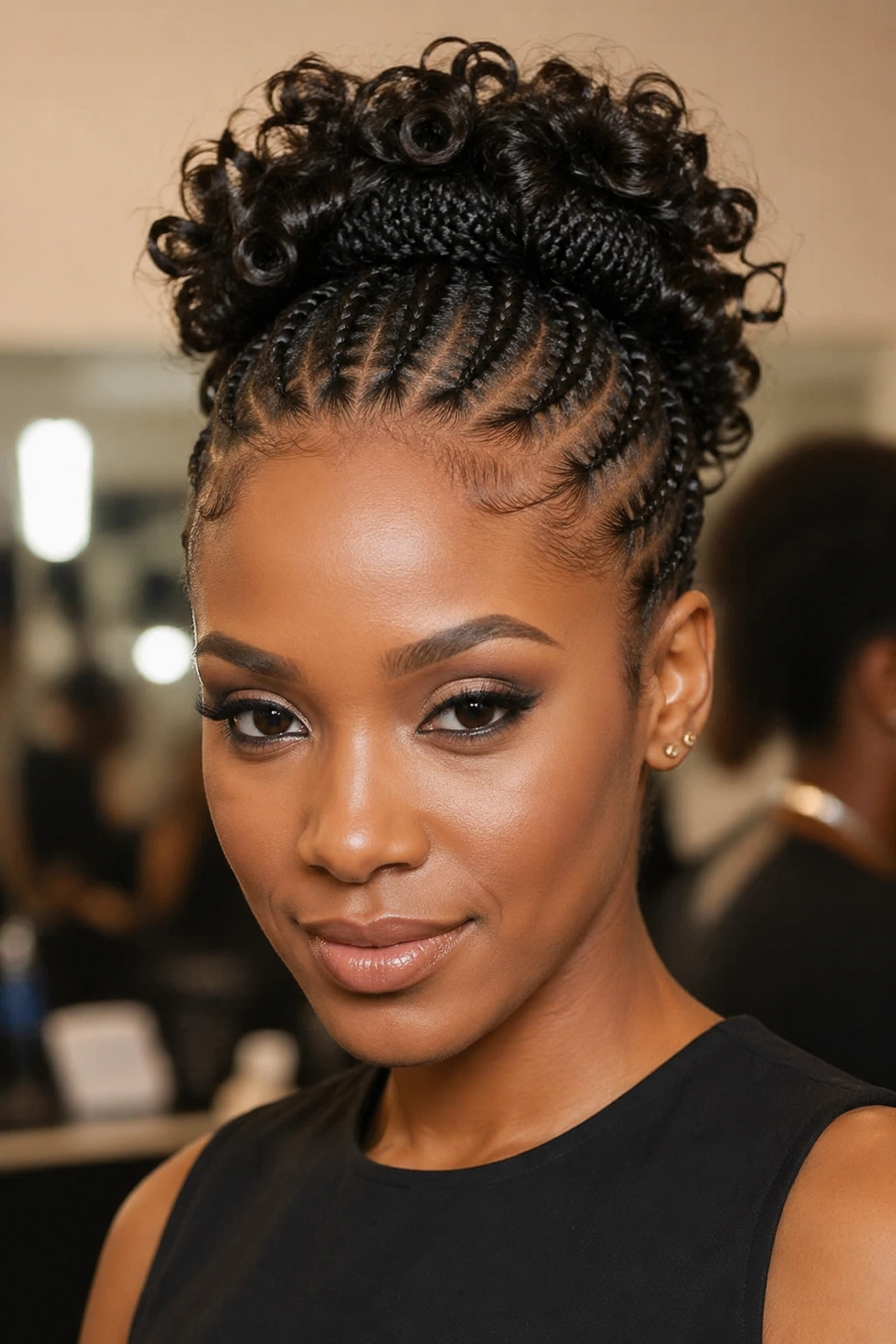
Two or three small cornrows form a halo around the crown before the remaining hair is gathered into a bun at the top center of the head, wrapped in loose curls that spiral over the halo braiding.
The halo pattern draws the eye around the face rather than down the back, which makes this version ideal for front-facing events — speeches, interviews, seated dinners. The viewer’s gaze circles the head instead of hitting just one feature.
The trick is the halo ending. Where the cornrows circle back and meet, there’s a potential visual seam that can look sloppy. A skilled braider hides this by tucking the merge point underneath the bun. If your stylist doesn’t know the technique, ask them to start the halo at the back of the head so the seam falls directly under the bun base.
What to Watch For
- Halo braiding puts even tension across the scalp, which actually reduces the headache risk compared to pulled-back styles
- The style photographs well from every angle because there’s no single “front” to the look
- Earrings become very visible — choose them carefully
- Works best with pre-curled water-wave hair for the bun
5. Double Bun With Cornrow Parting and Curly Tendrils
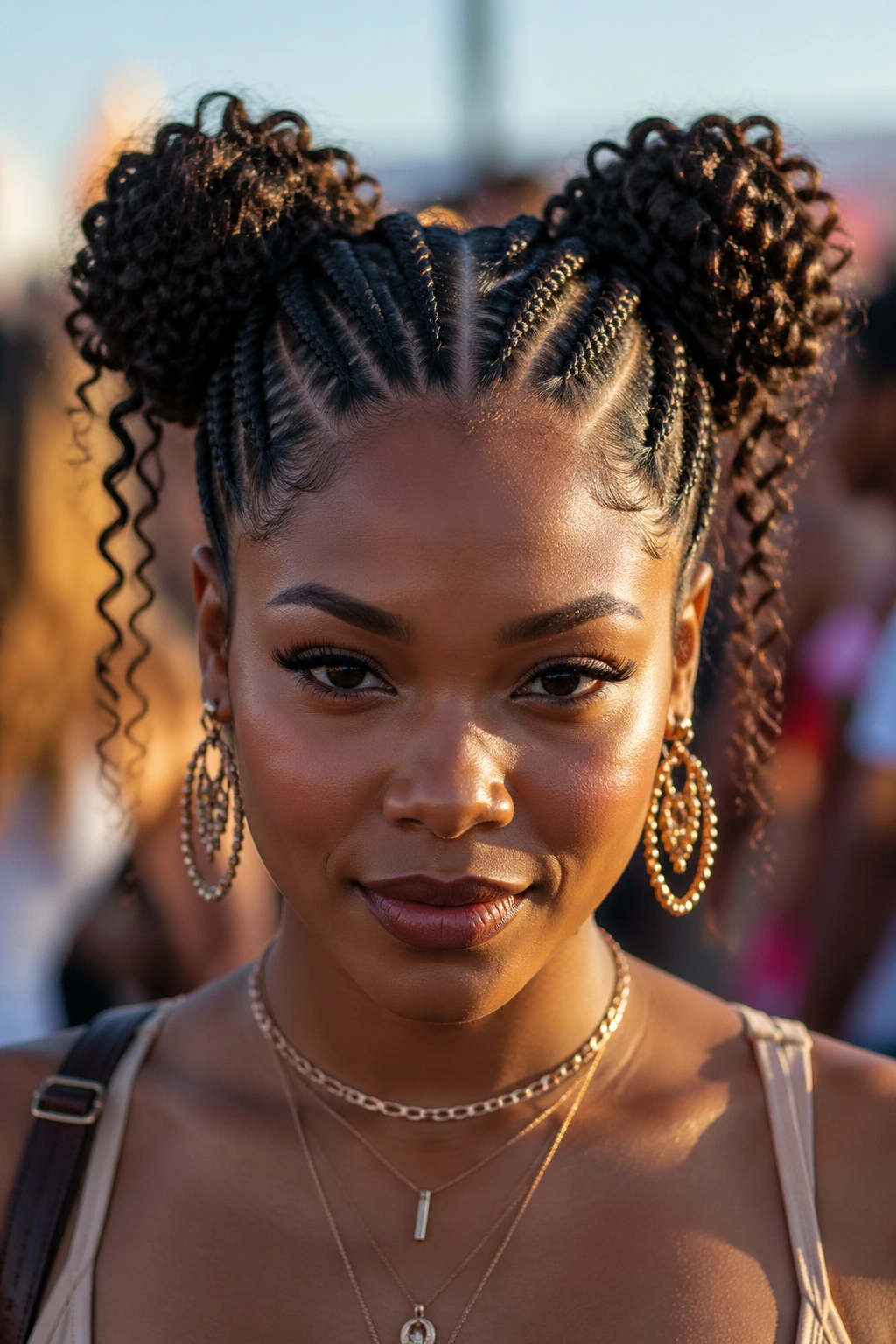
Yes, this is the playful one. Hair is parted down the middle, with cornrows on each side running back and up to two symmetrical buns positioned just above the ears. Curly tendrils escape from each bun.
Who This Is For
- Festival wear, concerts, outdoor events
- Anyone looking for a youthful, fun style
- Vacation hair that can be worn multiple days
- Works well for women 18-35
The double bun is a strong choice that rewards commitment. Worn tentatively, it looks accidental. Worn with intention — bright earrings, a fresh lip color, confident posture — it becomes a signature.
Keep both buns identical in size. Any asymmetry reads as a mistake. Measure them before pinning finally.
6. Messy Romantic Bun With Cornrowed Sides and Curly Volume
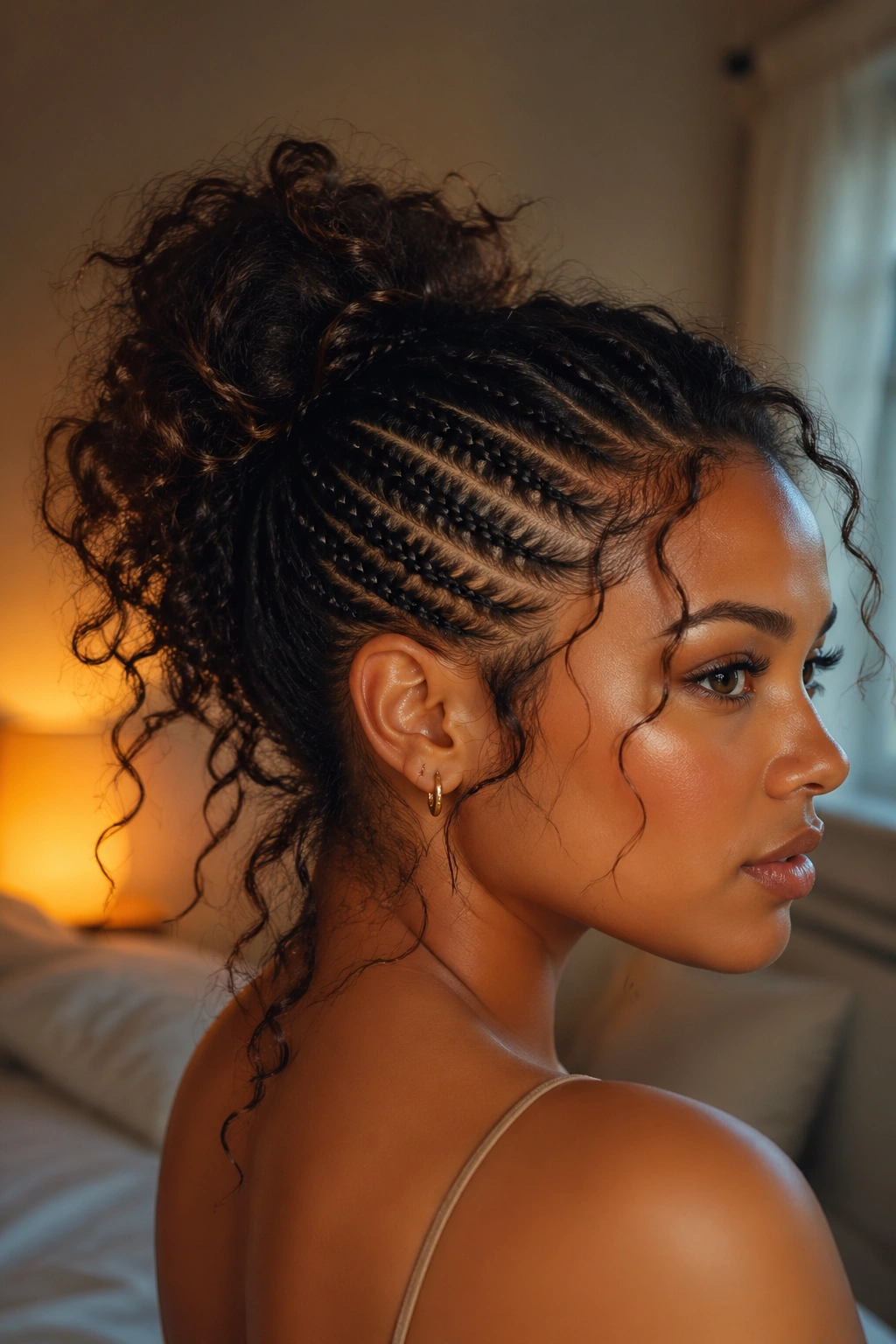
The cornrows are clean and precise on the sides only, stopping about two inches behind the ears. The back of the head is a loose, intentionally messy bun full of curls, with pieces pulled out at the nape, the temples, and the top for a deliberately undone look.
This is the style you wear when you want to look like you didn’t try — while knowing you absolutely did. The messiness is carefully constructed, every pulled-out piece placed with purpose.
The cornrowed sides give structure. Without them, the messy bun reads as bedhead. With them, the contrast between the tight side braids and the loose back volume creates the tension that makes this style work.
Note on the pulled-out pieces: they should be curly, not stick-straight. Straight escaping pieces look like the bun is falling apart. Curly escaping pieces look like the bun is perfectly imperfect.
7. Top Knot Bun With Tight Cornrows and Coily Curl Finish
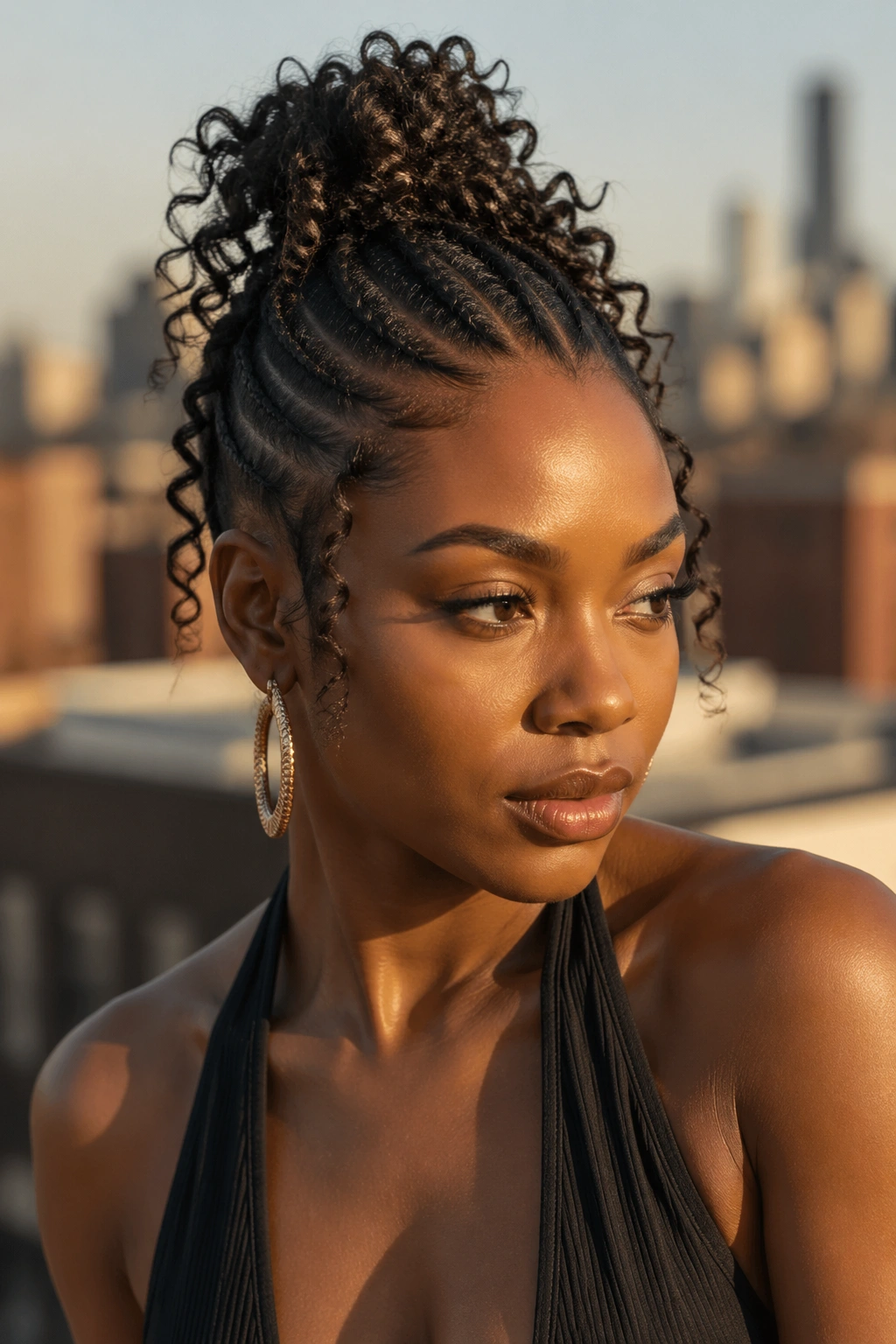
Every cornrow on the head drives upward toward a single tight top knot at the very crown. The bun itself is small and dense. Coily curls — tight, spiraling, almost springy — surround or cascade from the knot.
The contrast is the entire point. Scalp-hugging discipline everywhere below. Explosive coily volume at the top. It reads as strong and architectural, more editorial than the softer bun styles.
Heights matter here. The top knot needs to sit directly at the crown, not toward the back. If it slips backward during install, the proportions go wrong and the head shape looks flat on top.
The coil texture should be tight. Deep-wave is too loose. Look for kinky-curly or afro-kinky synthetic hair, or wet-set human hair on the smallest rollers available. The result is a bun that looks like natural hair fresh from a twist-out.
Lifespan is about 10-14 days because the top knot carries most of the weight and slowly loosens.
8. Low Sleek Bun With Stitch-Braid Cornrows and Silky Curls
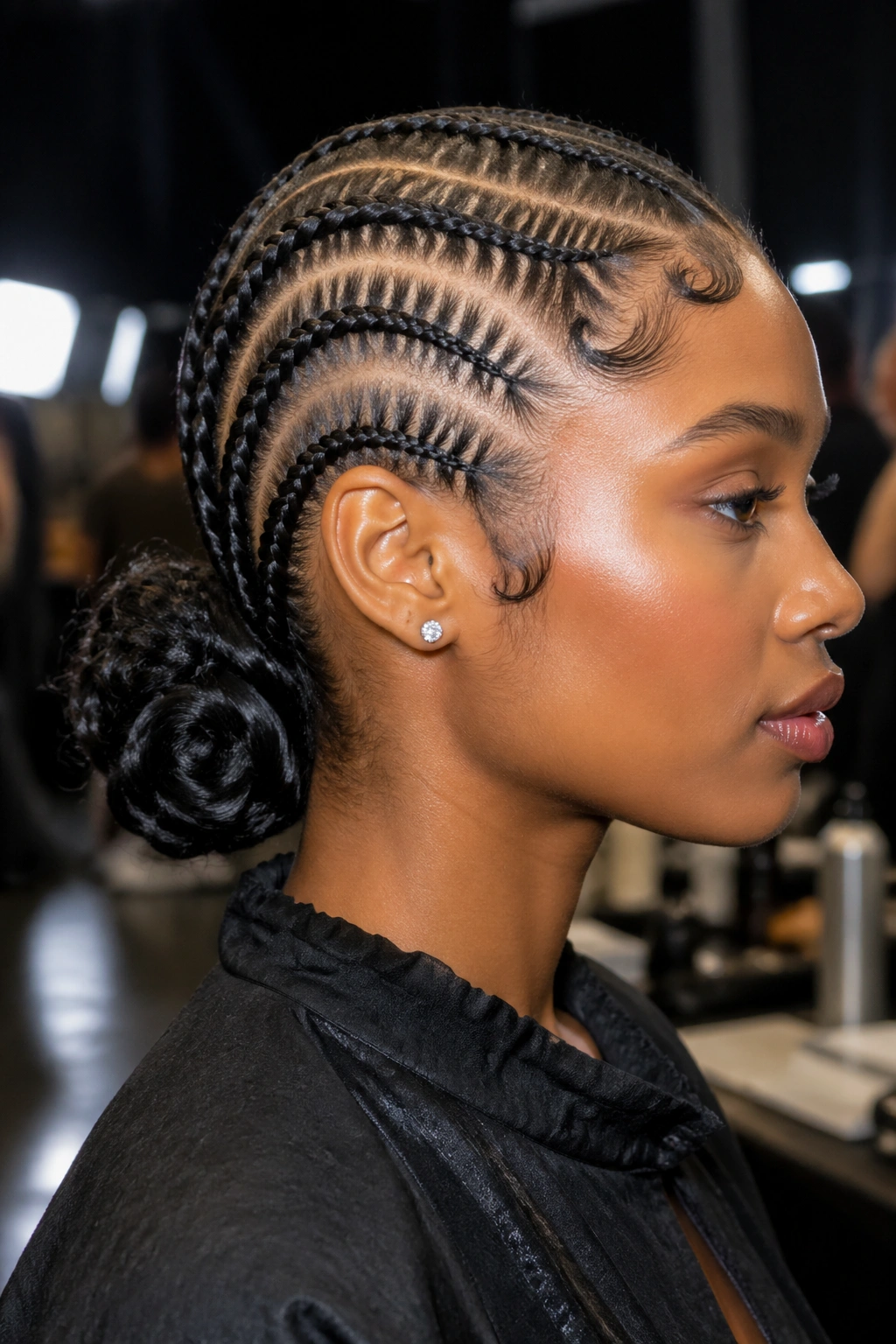
Stitch braids along the scalp with their signature horizontal ridges, all gathered into a tight, sleek low bun at the nape. The curls here are silky and shiny — body-wave or loose curls, brushed smooth rather than defined.
It’s the polished version of the style. Clean. Restrained. Runway-worthy.
The sleek low bun requires a flat base, so the cornrows need to sit close to the scalp throughout. No bumps, no lifts. This is where a skilled braider matters — someone who can maintain consistent tension across 20+ small stitch braids without any of them pulling too loose or too tight.
Finish the style with a drop of serum or lightweight oil to give the bun that high-shine look. Don’t overdo it or the hair goes greasy. A pea-sized amount, warmed between the palms, smoothed over the bun once.
9. Boho Bun With Loose Cornrows and Curly Wisps
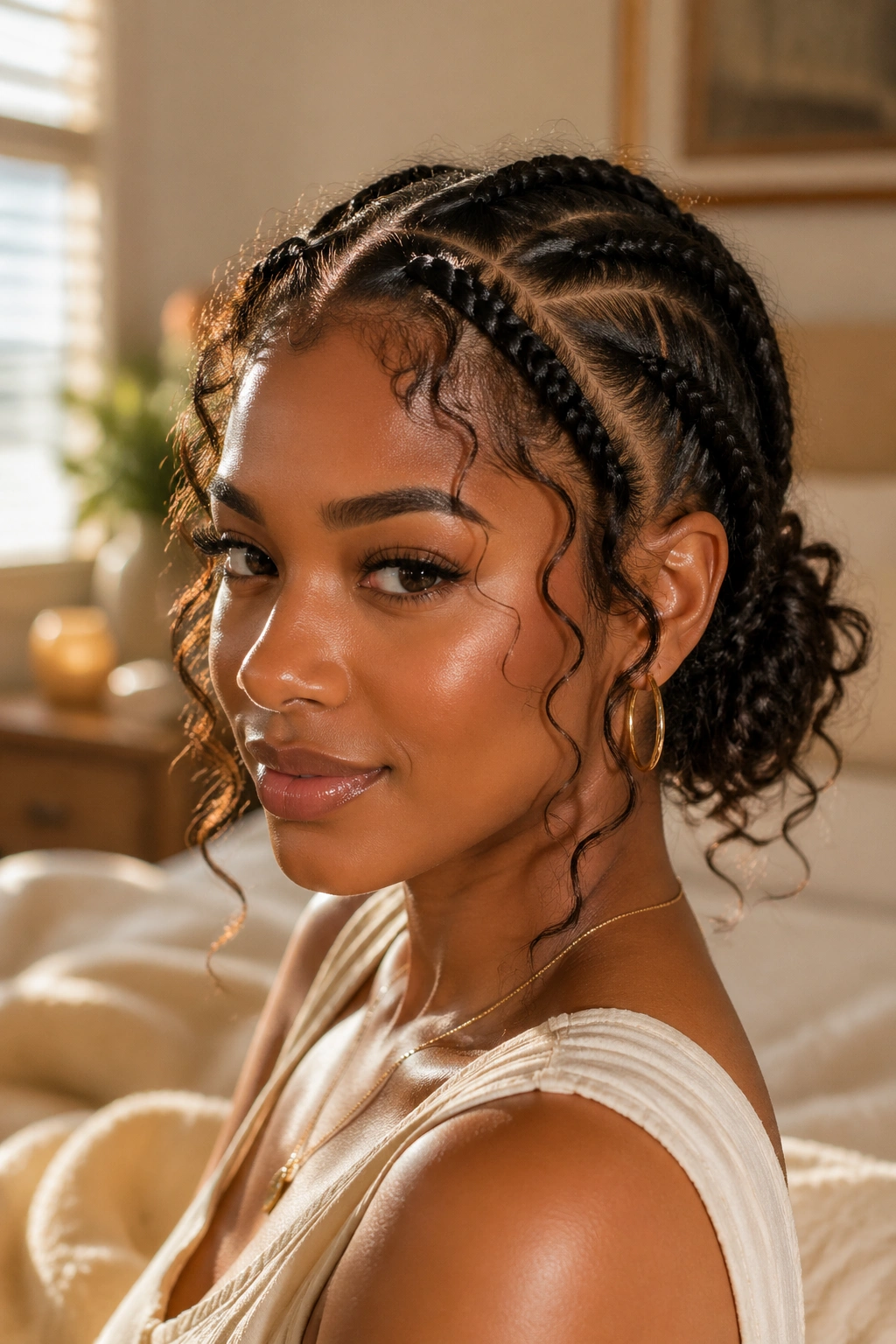
Two to four chunky cornrows that look almost freestyle — slightly irregular width, not perfectly parallel — pulled back into a loose, organic bun at the nape of the neck with curly pieces pulled out generously along the braid lines and around the bun itself.
Unlike the precise style bins above, the boho version thrives on looseness. Perfect parts ruin the vibe. Slightly uneven braids are part of the charm.
The key insight: not every braider can do intentionally loose. Some stylists default to tight precision regardless of the request. Be explicit. “I want the cornrows slightly messy on purpose. Can you do that without feeling like you’re doing it wrong?” If they hesitate, find someone else.
The curly wisps should be irregular in length and placement. Some longer, some shorter. Some in front, some at the back. If they’re all the same length and evenly spaced, the look becomes too styled. Uneven is the goal.
10. Elegant Chignon With Cornrows and Pinned Curls
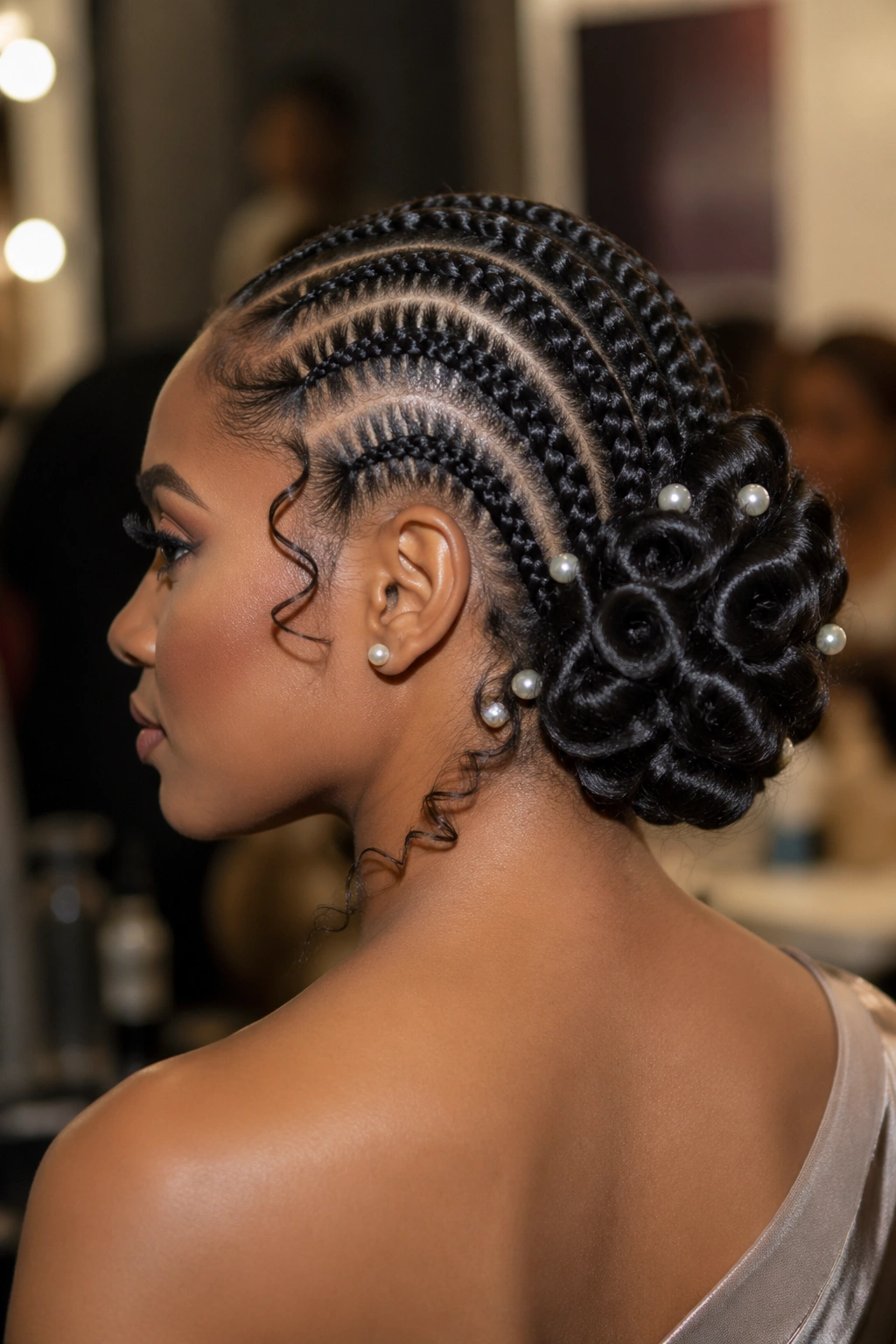
The cornrows are small and restrained — maybe 8-10 thin braids — gathered into a structured chignon at the nape. Curls are then individually pinned around and through the chignon to create a floral, sculptural effect.
This is black-tie hair. Opera hair. Gala hair.
The individual pinning is what makes it. A curly bun with naturally falling curls looks romantic. A chignon with each curl placed and pinned looks architected. The latter reads more formal.
Styling Tips
- Each curl should be pinned at the base, not the tip, so it holds its shape
- Use crossed bobby pins for stronger hold — two pins in an X at each anchor
- Finish with a light hair spray from 12 inches away to set without stiffening
- Add small pearls, crystal pins, or gold hair combs for occasion-specific accents
This style requires a skilled hand. Budget at least 5 hours for the full install and ask to see examples of the stylist’s chignon work before booking.
11. Curly Half-Up Half-Down Bun With Cornrowed Crown
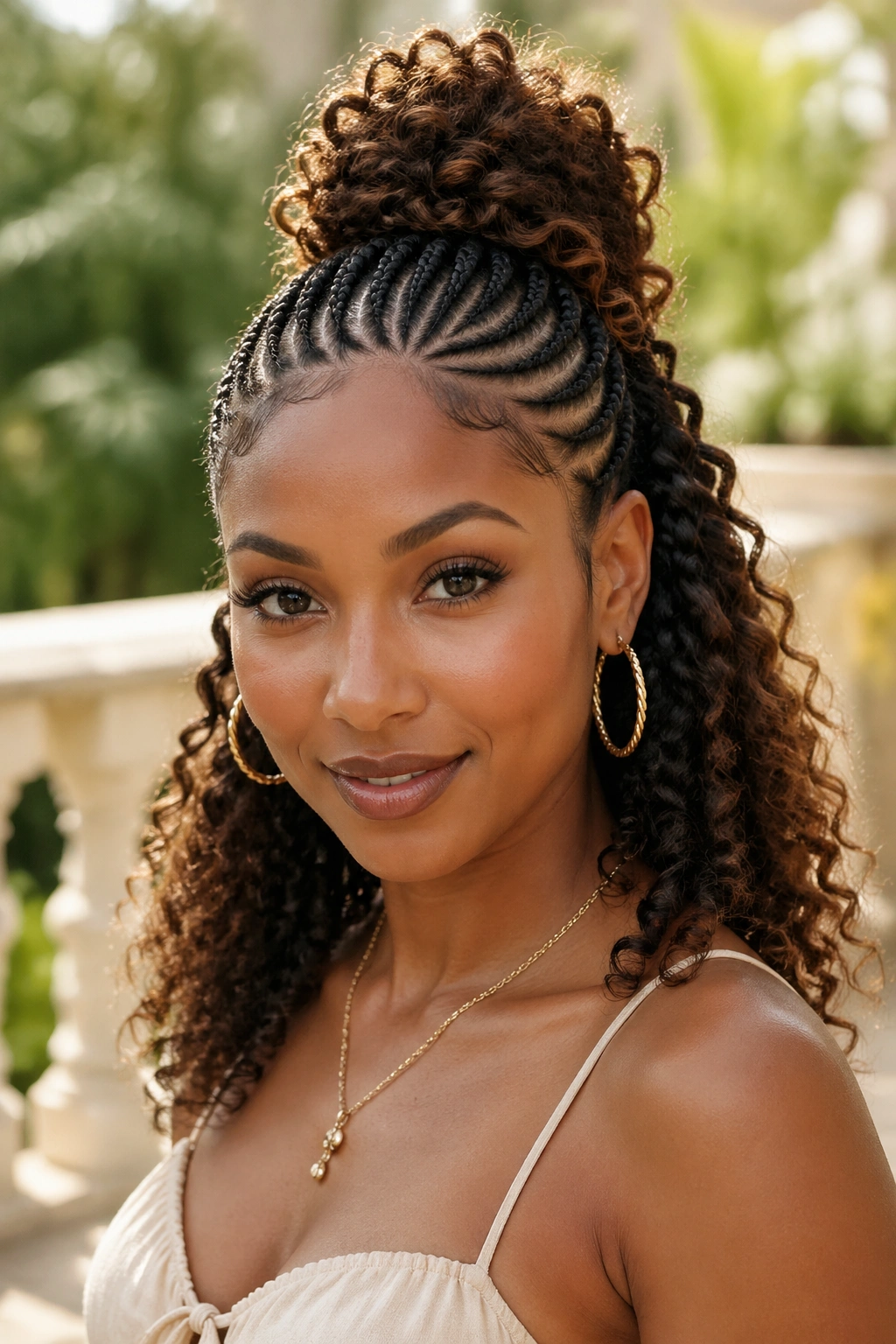
Only the crown and sides are cornrowed — the rest of the hair is released into a curl cascade at the nape. A portion of hair at the crown is pulled into a half-up bun, leaving the rest curly and flowing.
It’s the bun style for someone who doesn’t want to fully commit to an updo. You get the upright, groomed look of a bun where it matters — the crown — while keeping the free-flowing curl energy at the back.
The half-up bun sits about an inch above the crown, directly at the center-back of the head. Too low and the style looks indecisive. Too high and you lose the romantic cascade effect.
The cornrows only cover the top half of the head, so takedown is faster than a full install. Expect 2-3 hours for install, and about 30 minutes for takedown.
12. Oversized Bun With Small Cornrows and Curl Wrap
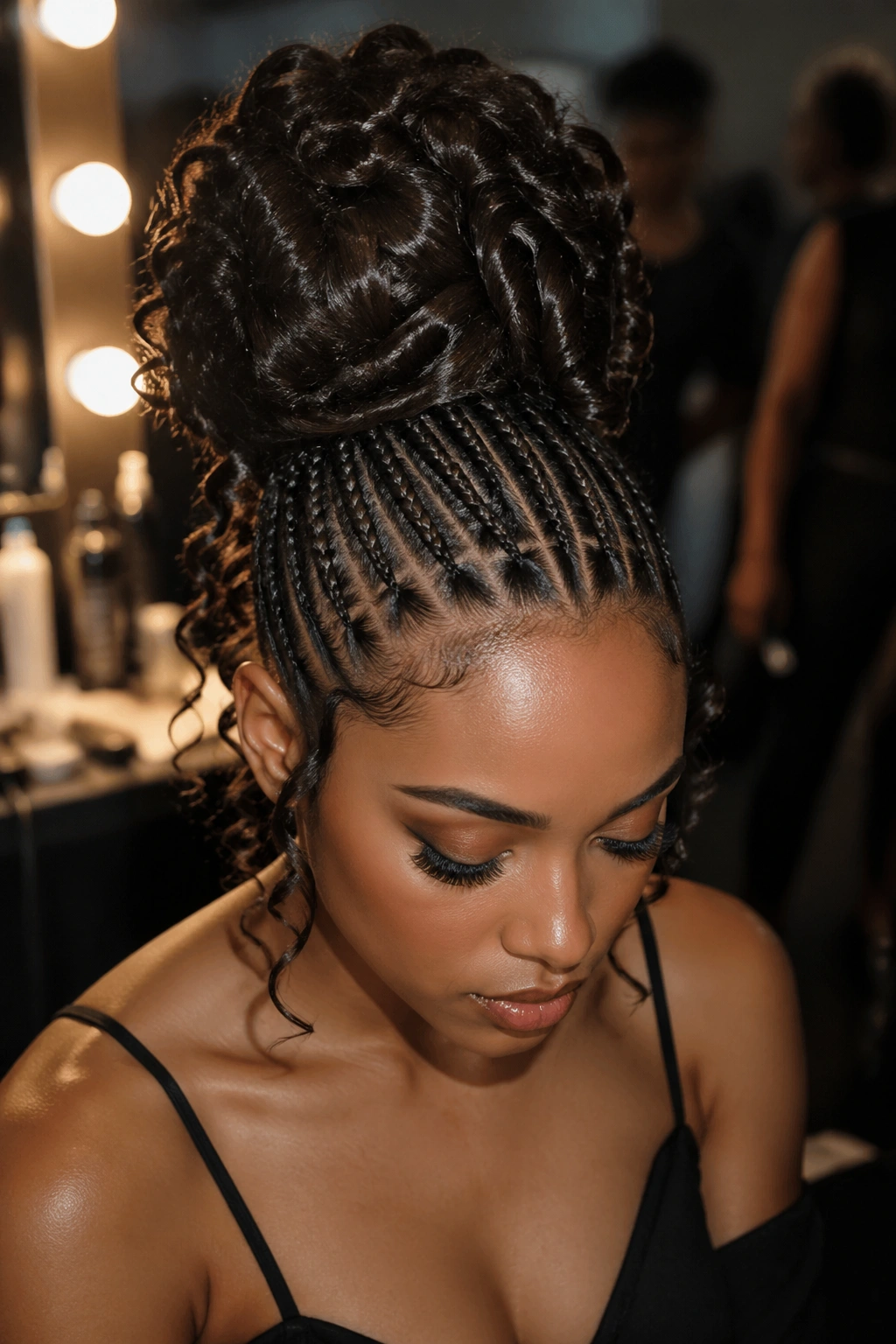
Tiny cornrows — 16 to 24 total — run straight back to a single oversized bun at the crown. The bun is wrapped in curly kanekalon to create dramatic volume.
The proportion is the statement. Small, restrained scalp braiding. Massive curled bun. The contrast signals intention — this isn’t hair that happened, it’s hair that was planned.
An oversized bun needs structure underneath. Your stylist should use a large bun donut or a rolled piece of kanekalon as a base, wrapped in the actual curl hair. Without structure, the bun collapses under its own weight by the end of the evening.
Worth noting: oversized buns are front-heavy. They can strain the neck over long wear. If you’re wearing this style to an 8-hour event, do gentle neck stretches every hour or so to prevent stiffness.
13. Twisted Bun With Cornrows and Curly Accents
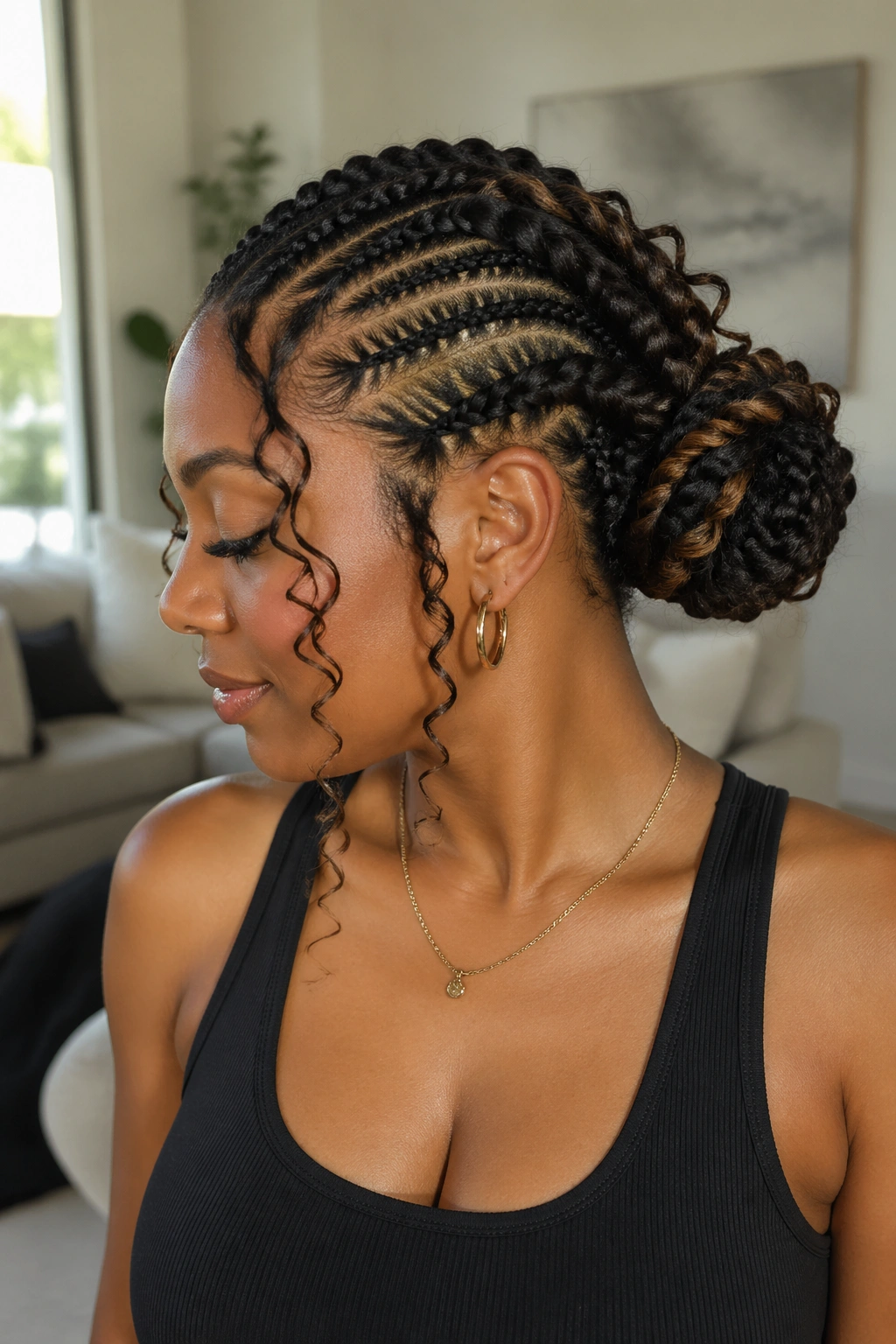
Rather than a wrapped bun, this version uses two thick twists of curly hair looped and pinned into a bun shape at the back of the head. The cornrows feed into the twists at the base.
The twisted texture gives the bun dimension you can’t get with a simple wrap. You see the rope-like structure of the twist, and when curls are layered or peeking through, the effect is almost three-dimensional — a sculpted rope of hair.
Ask your stylist for a rope twist (two strands twisted over each other), not a flat twist (which is braided against the scalp and won’t create the same bun dimension). Rope twists have more visual interest and hold up better over time.
The twist should be finished with a light oil sheen spray — not a finishing spray, which flattens the rope texture. Oil sheen keeps the rope looking dimensional without stiffening it.
14. Bantu Knot-Inspired Cornrow Bun
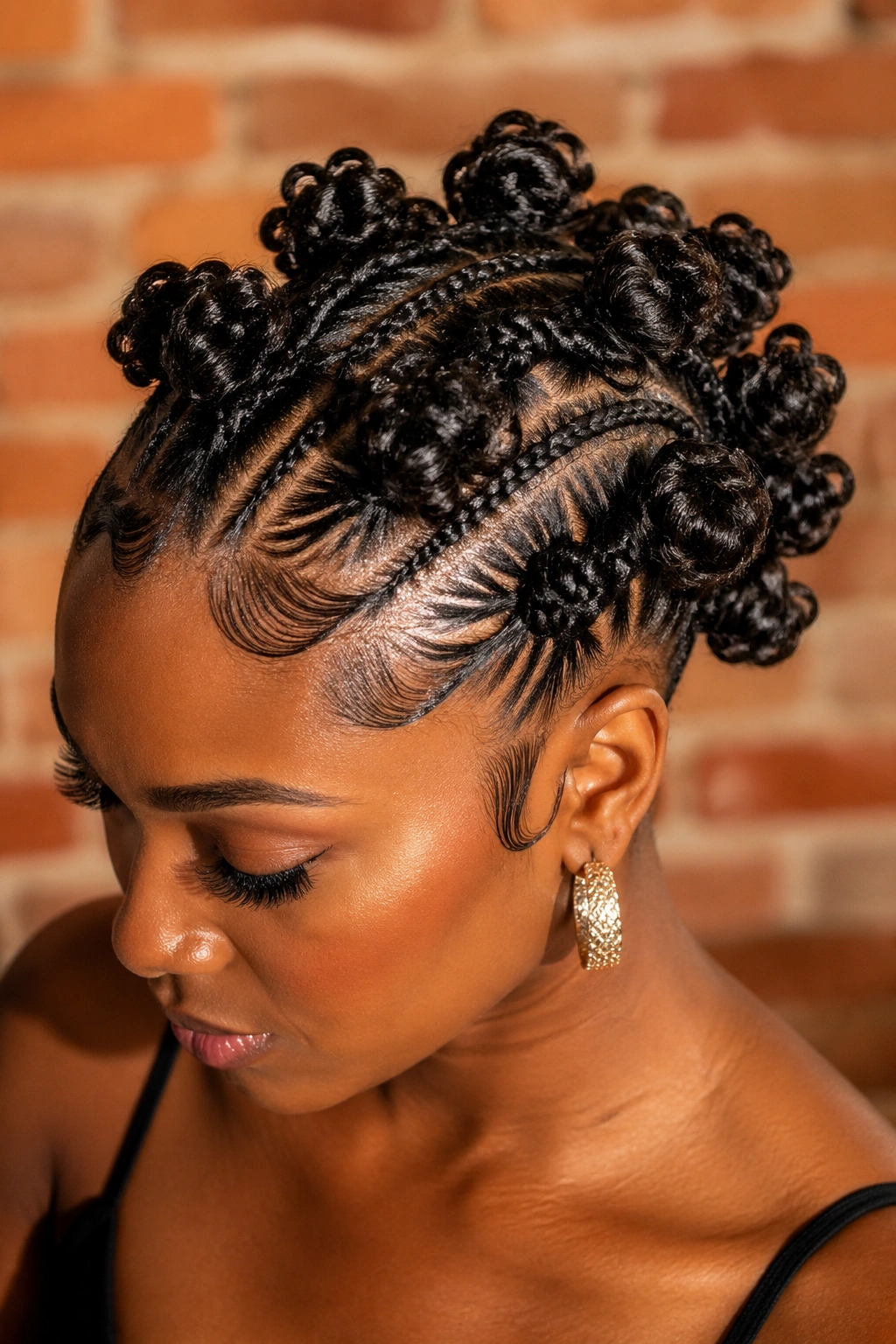
Cornrows that end in multiple small Bantu-style knots across the crown, each knot wrapped in curly hair for volume and texture. The knots themselves form the bun, just distributed rather than collected into one.
This is where cornrow buns cross into sculptural territory. You’re not making a single bun — you’re making a landscape of mini buns across the head.
What Makes It Different
- Distributes weight evenly across the scalp rather than concentrating at one point
- Reads as traditional, artistic, and rooted in African hair heritage
- Each mini-bun can be positioned differently to flatter the face shape
- Photographs from any angle because there’s no single focal point
Works best with 6-10 Bantu-inspired knots total. Fewer and the pattern doesn’t read. More and it starts to feel crowded.
This style carries cultural weight. Wear it with awareness and respect for its origins.
15. Curly Bun With Cornrow Frame and Face-Cradling Tendrils
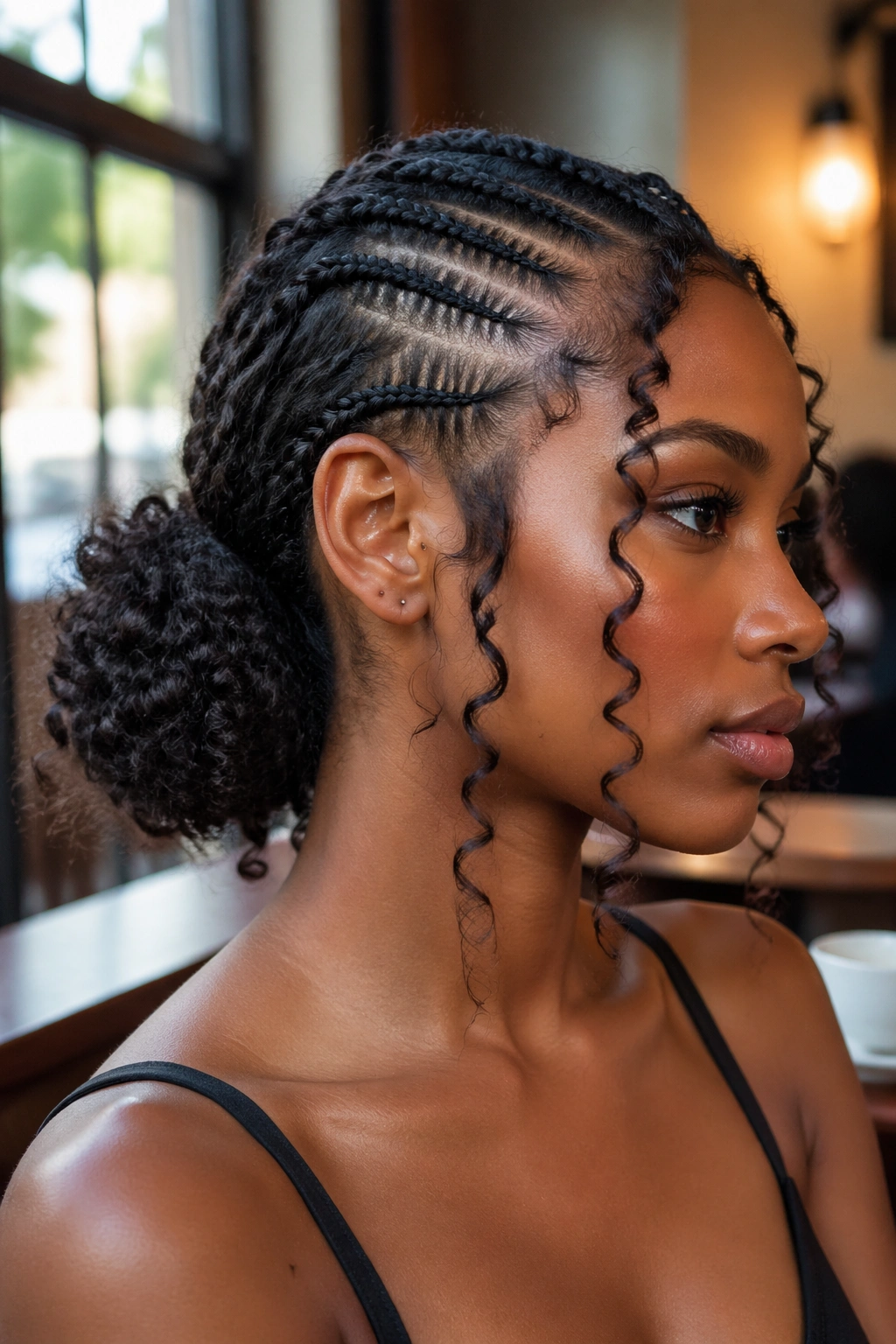
A clean curly bun at the nape, with cornrows framing only the hairline — a 2-inch border of braiding around the face — and long, soft curly tendrils pulled out at the temples to cradle the face.
The partial cornrow pattern is what makes this special. The braids frame like a picture frame, drawing attention to the face without overwhelming it. The tendrils at the temples soften the frame effect.
Hair discipline meets intentional softness. It’s a style that reads both put-together and approachable — ideal for first dates, interviews, or any occasion where you want to look polished but warm.
Real note: cornrows that only run along the hairline are prone to lifting faster than full-head cornrows. Expect to refresh the front every 7-10 days with gel and a silk scarf overnight. The payoff is the style’s softer overall feel.
16. Ballerina Bun With Cornrows and Minimal Curls
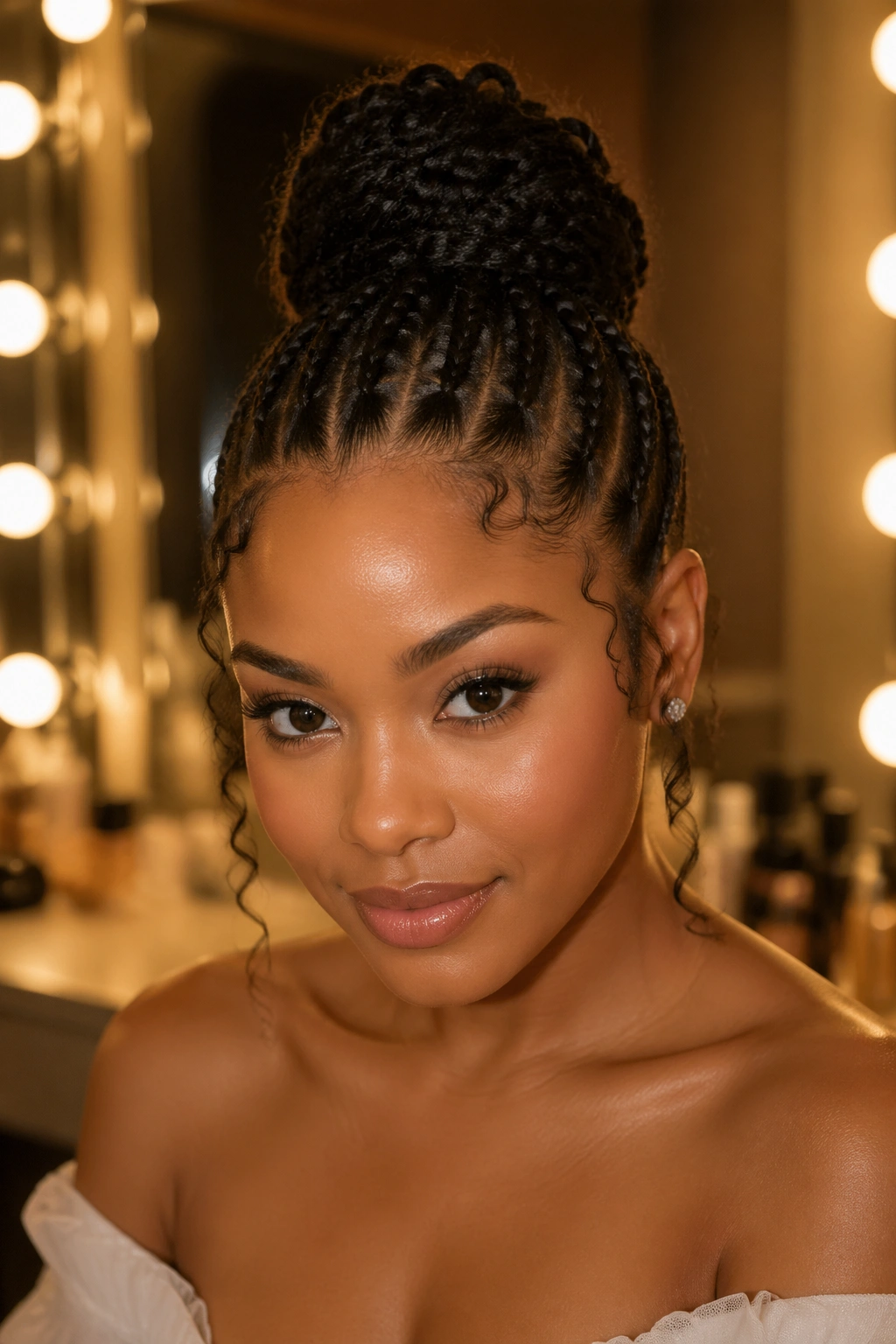
The cornrows run back clean, with all hair gathered into a tight, high ballerina-style bun wrapped minimally. A few delicate curls escape near the face, but the overall look is restrained.
Inspired by classical ballet, this style prioritizes clean lines and elegant discipline over volume or drama. The curls are accents, not features. The star is the clean bun silhouette.
For the bun to sit correctly, hair needs to be pulled tight enough to lift the brows slightly. Not painful — subtle. You should feel tension at the scalp but not pain.
Use a ballerina bun form — a small, ring-shaped insert — for the cleanest finish. The hair wraps around the form rather than being coiled directly, which gives the bun its perfectly round, structured look.
17. Vintage Pinup Bun With Cornrow Base
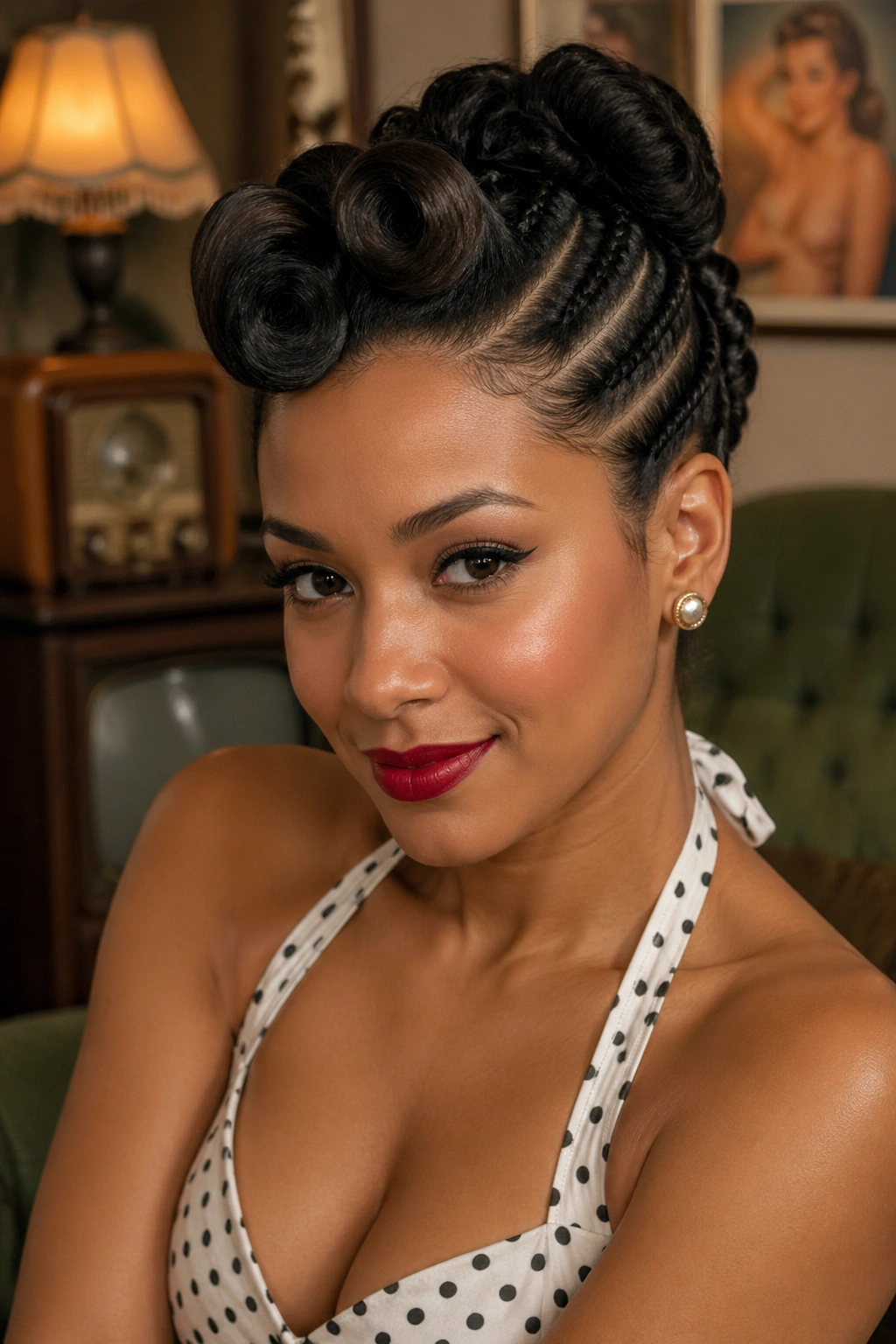
Cornrows lay the foundation, but the front section above the ears is left loose, curled into vintage-style rolls, and pinned up like 1940s pinup hair. The rest of the braids funnel into a low, sculpted bun at the nape.
The vintage element is unexpected, which is exactly why it works. Cornrows rarely meet 1940s rolls in the same style. The combination creates something that feels both historical and completely original.
The pin curls above the ears need to be set properly. If they’re just brushed into shape, they’ll fall by the end of the evening. Use a curling iron at 350°F to set tight pin curls, pin them in place while they cool, then unpin and comb lightly before the final roll-up.
Recommendation
- Pair with red lipstick for full pinup commitment
- Choose 1940s-era jewelry for event wear (pearls, brooches)
- Works especially well for themed events, vintage weddings, or retro photography sessions
Not for the faint of heart, but unforgettable when it lands.
18. Cornrow Bun With Colored Curls for Contrast
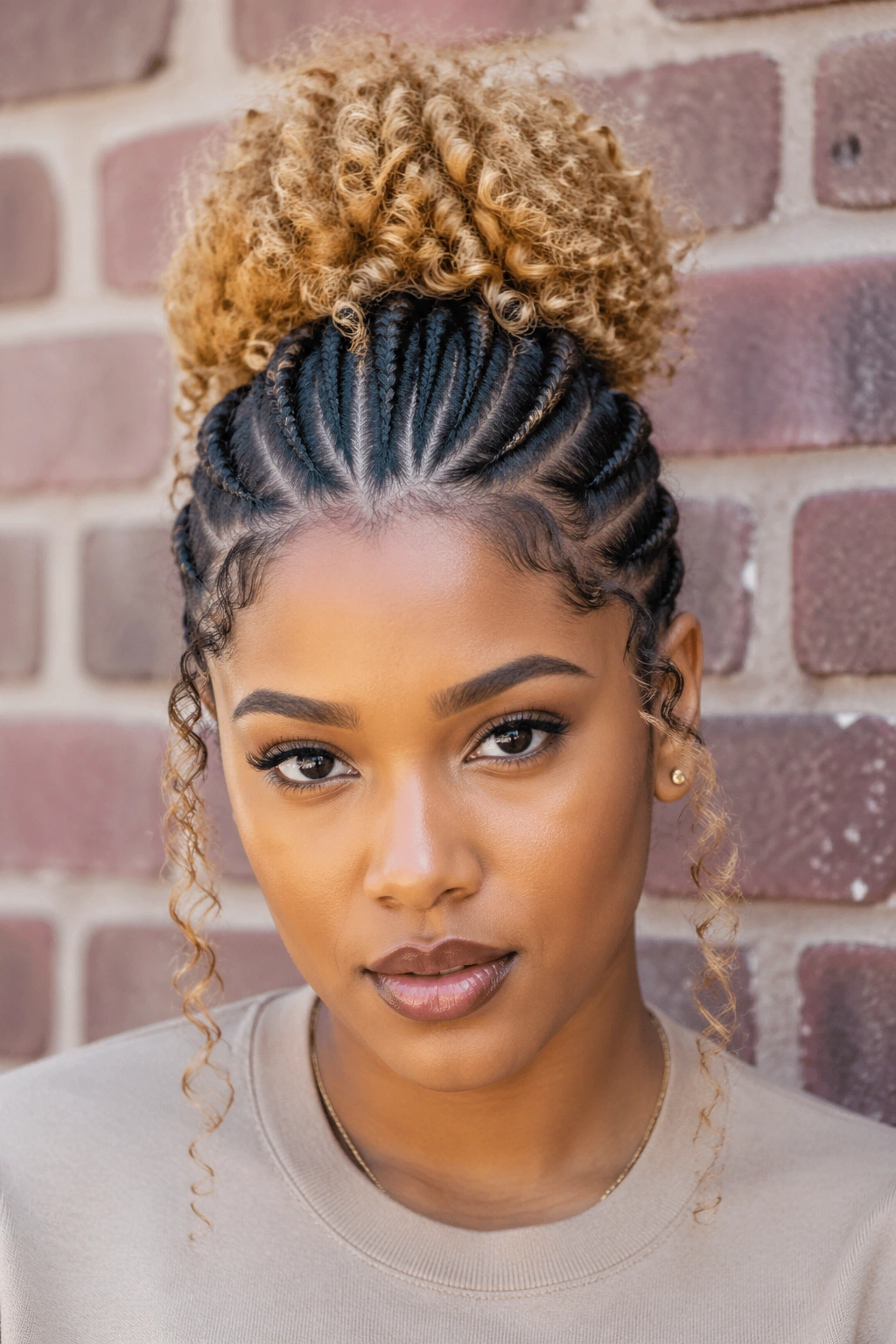
The cornrows are a neutral color matched to the natural hair, but the bun is a contrasting shade — honey blonde against black, copper against dark brown, even deep burgundy or bold purple.
The contrast shift is the point. It adds visual surprise without committing to a full-color change. The scalp-level cornrows remain natural and easy to wear in professional settings. The bun becomes the statement when you take the hat off.
The technical consideration: colored synthetic hair for the bun needs to match the texture of the natural cornrows so the transition doesn’t look jarring. Honey blonde water-wave works with black natural 4C hair because the curl pattern creates visual consistency even with the color change.
Avoid shocking color contrasts unless the occasion calls for it. A copper bun against black natural hair reads as sophisticated. A neon pink bun against the same reads as costume. Choose your contrast carefully.
19. Bun With Tightly Coiled Curls and Sharp Geometric Cornrows
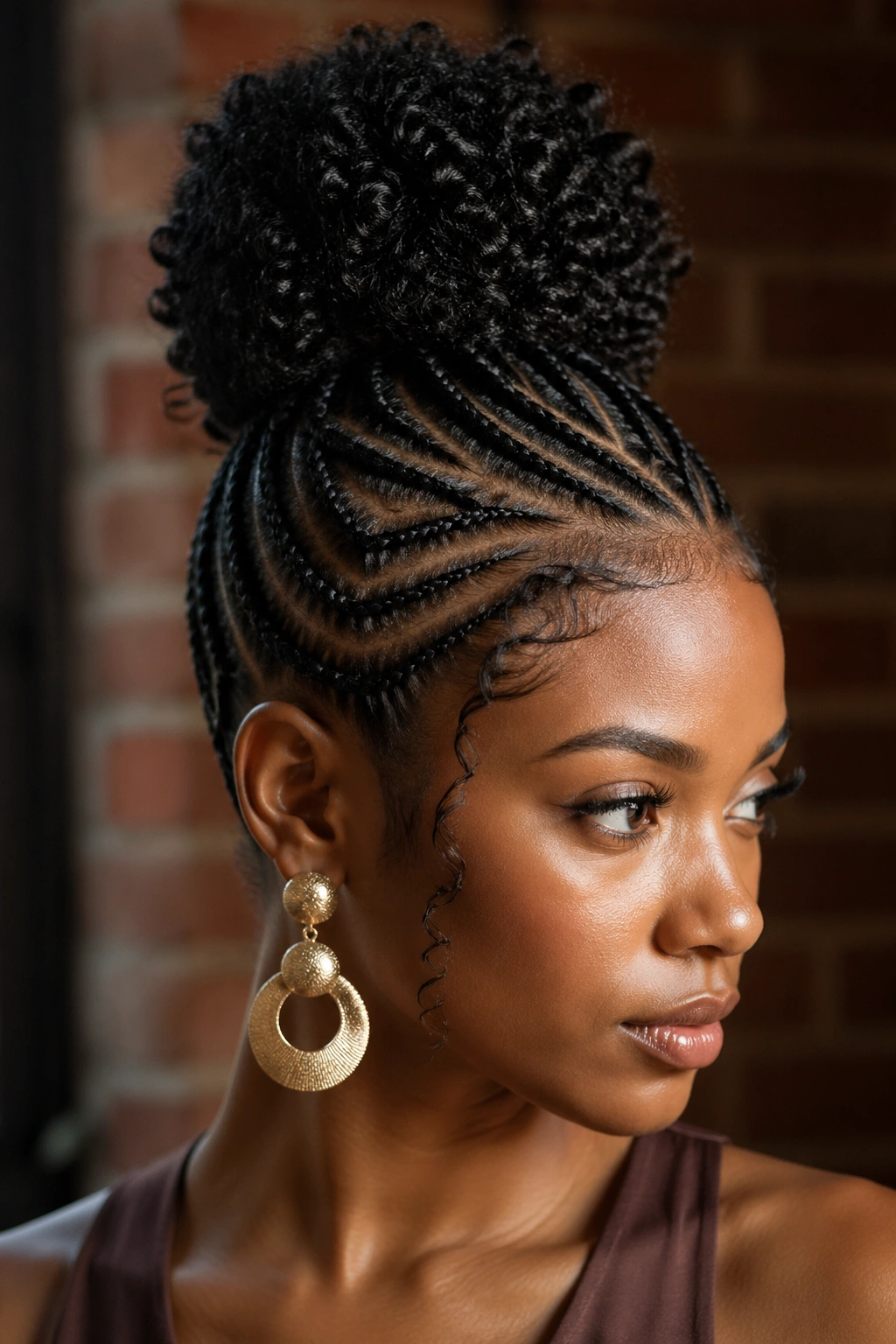
The cornrows form a geometric pattern — diamond shapes, zigzags, or starbursts — before gathering into a central bun. The curls used are tightly coiled, almost fro-textured, for maximum volume.
The geometry is what earns this style its editorial feel. Clean angled parts. Intentional asymmetry. A bun that rises from the pattern like the center of a flower.
Geometric cornrow patterns take serious time. Budget 6-8 hours for the full install, and go to a stylist who specializes in decorative braid work. A general braider will get the bun right but miss the precision the patterns demand.
Tight coils are the only curl texture that complements the geometry. Loose waves or soft curls visually fight the sharp lines. Keep the coils consistent and compact.
20. Asymmetric Bun With One-Sided Cornrows and Curl Drop
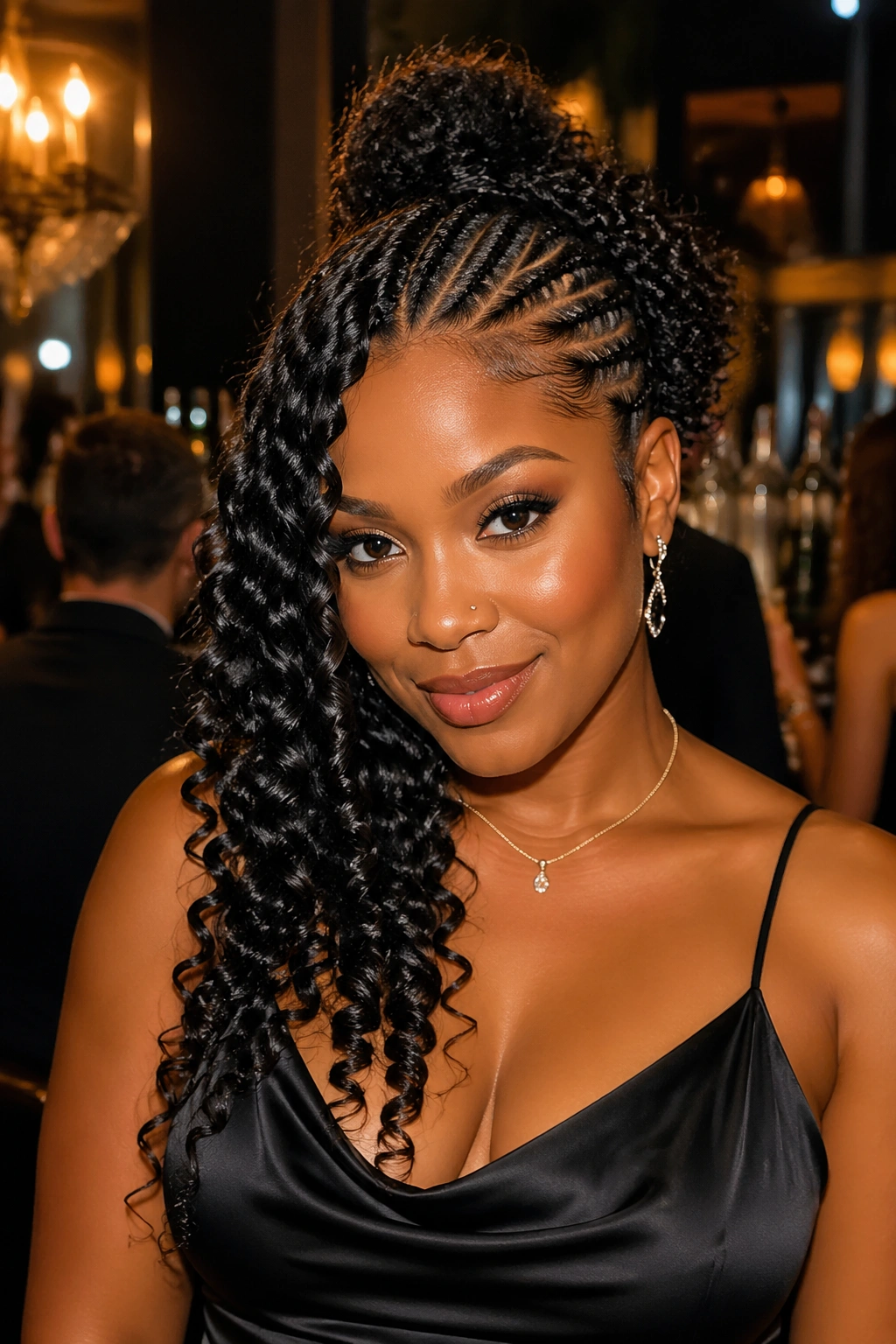
All cornrows run from one side of the head to the other — like they’ve been swept dramatically across — ending in a bun positioned off-center. A long section of curls drops from the bun over the opposite shoulder.
Asymmetry is the design principle. Nothing here is balanced, and that’s the intentional choice. The one-sided sweep creates a visual movement that ends with a single, striking curl cascade.
Best worn for events where you’ll be seen from multiple angles — cocktail parties, receptions, shoots. From the front, the sweep draws the eye across the face. From the side, the curl drop creates an unexpected silhouette. From behind, the bun and curl cascade read almost like a dance pose.
Not recommended for everyday wear. The asymmetry demands attention, and wearing it too often dilutes its impact.
21. Low Curly Chignon With Cornrowed Crown and Soft Frame
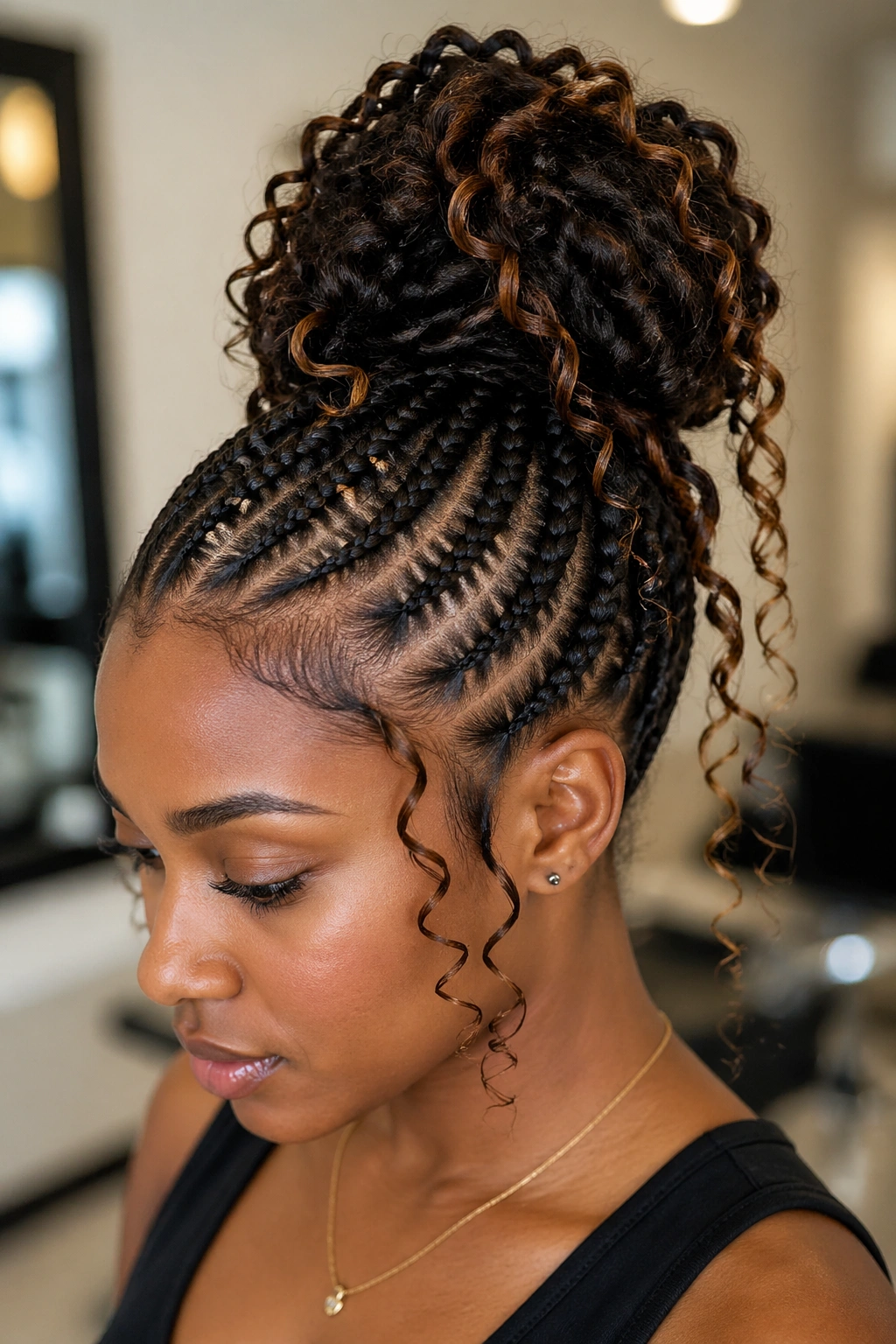
The crown is cornrowed in a neat pattern — typically 4-6 braids — ending in a low chignon at the nape wrapped in curls. Soft hair is left at the sides of the face, unbraided, curled to frame the cheekbones.
Why It Works
Unlike full-head cornrow styles, this version leaves the face-framing hair natural and loose, which creates a softness around the face that fully cornrowed styles can’t achieve.
- Reads as professional but not stiff
- Works exceptionally well for women with fuller face shapes
- The loose face-framing pieces can be restyled daily for variety
- Good for transition periods between full protective styles and fully natural wear
The unbraided face-framing sections need to be protected at night. Satin bonnet over the whole head, with the framing pieces tucked gently inside. Morning refresh with a light curling cream.
22. Architectural Cornrow Sculpture Ending in a Pinned Curl Bun
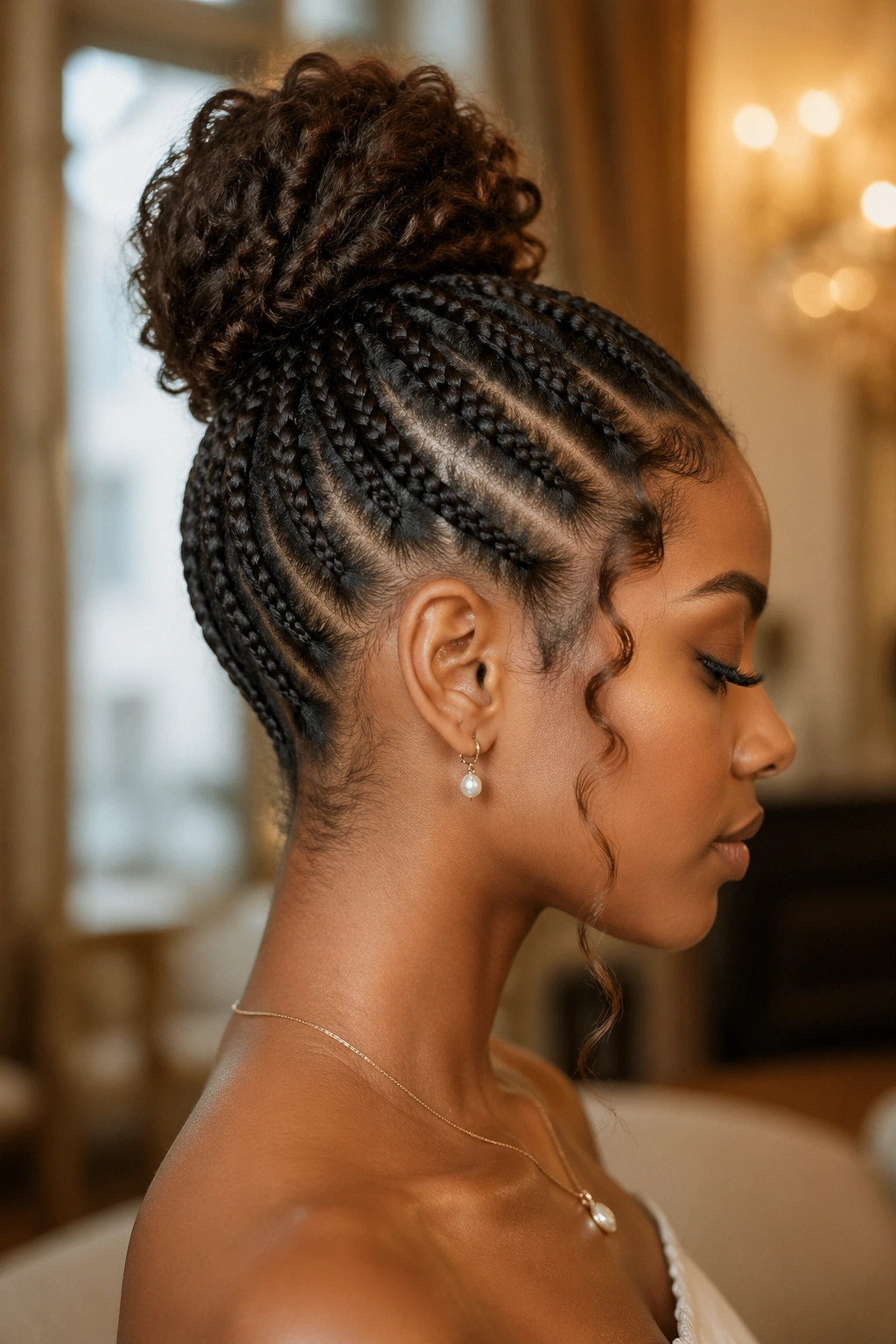
This is the style that goes beyond hair and enters art. Complex, multi-directional cornrow patterns create a visible sculpture across the scalp — sometimes with 30+ cornrows running in coordinated patterns — all leading to a central bun where curls are individually pinned to create a three-dimensional flower or sunburst.
It’s not daily hair. It’s installation hair. Wedding hair for the fashion-forward. Photoshoot hair. Editorial hair.
The execution requires a braid artist, not just a braider. Look for stylists who specialize in competition-level braiding, traditional African braid patterns with contemporary adaptations, or red-carpet celebrity work.
Expect 8-12 hours for the full install. Expect to pay accordingly. Expect compliments for the entire duration of the event.
Maintaining Cornrow Buns With Curls Day to Day
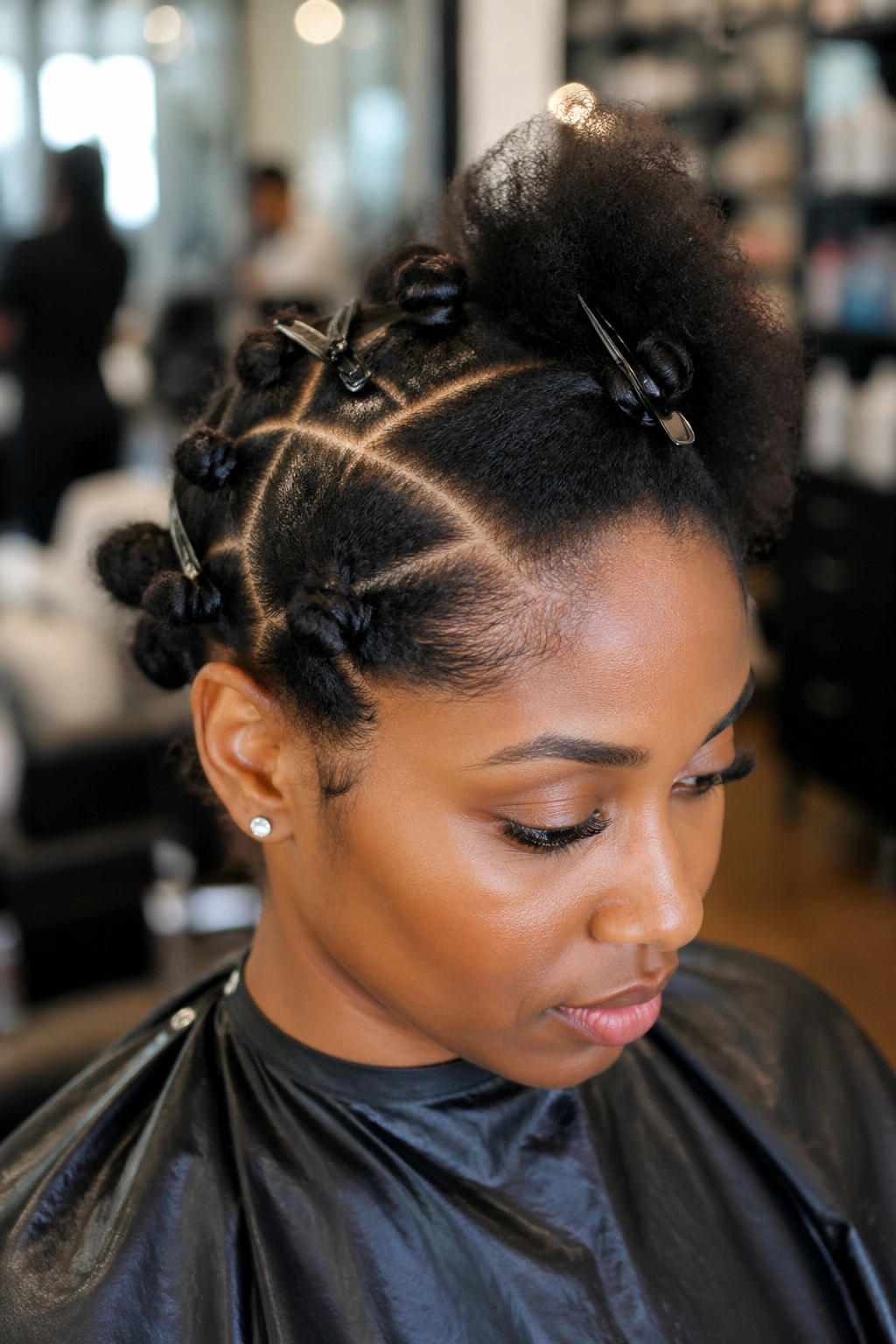
The bun moves throughout the day whether you want it to or not. Small adjustments keep it from sliding out of place.
Every morning, gently press the bun back into shape with your palm. Don’t reshape it — just secure it. If a single curl has slipped, tuck it back with a bobby pin.
Every 4 days, mist the curls with a lightweight leave-in spray. Scrunch gently with fingers, don’t touch after that. The curls should reset without over-handling.
At week two, a full refresh helps. Undo the bun, comb the curls gently, re-style into a fresh bun shape, and pin. The braids stay intact but the bun portion looks new.
Nighttime Protection Without Compression
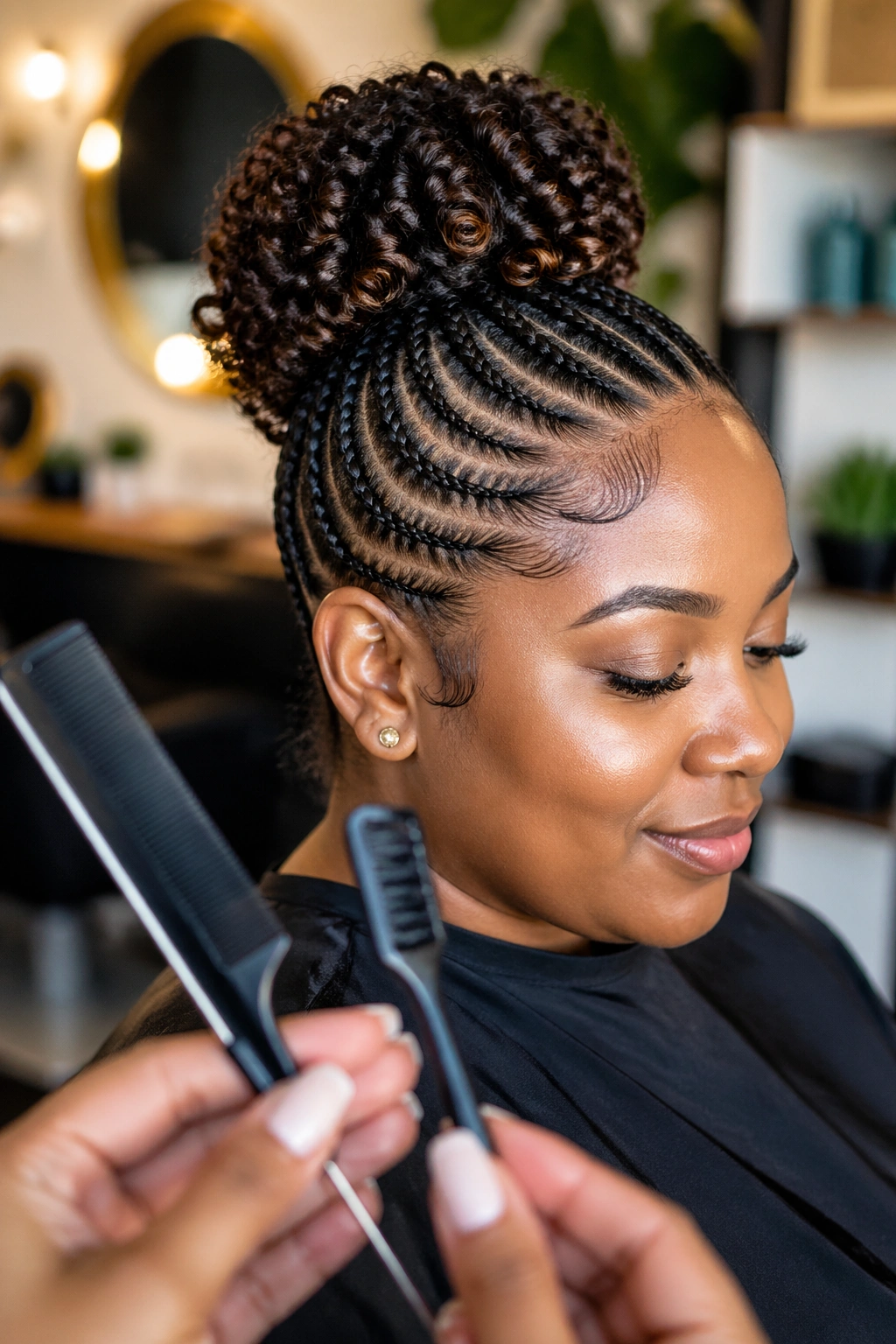
The bun is the hardest part to sleep with. Compressing it flattens the structure. Sleeping on it pulls tension to one spot.
The fix is a silk-lined bonnet large enough to hold the bun without squashing it. Gather the bun at the very top of the bonnet so it sits against the crown overnight rather than pressing into the pillow.
For oversized buns, a satin-lined turban with the top tied loose works better than a traditional bonnet. The turban shape can accommodate more volume.
If the bun is pinned in with bobby pins, remove the pins before sleep. The metal pressing into the scalp all night creates irritation and can leave small dents in the skin.
Taking the Style Down Without Damage
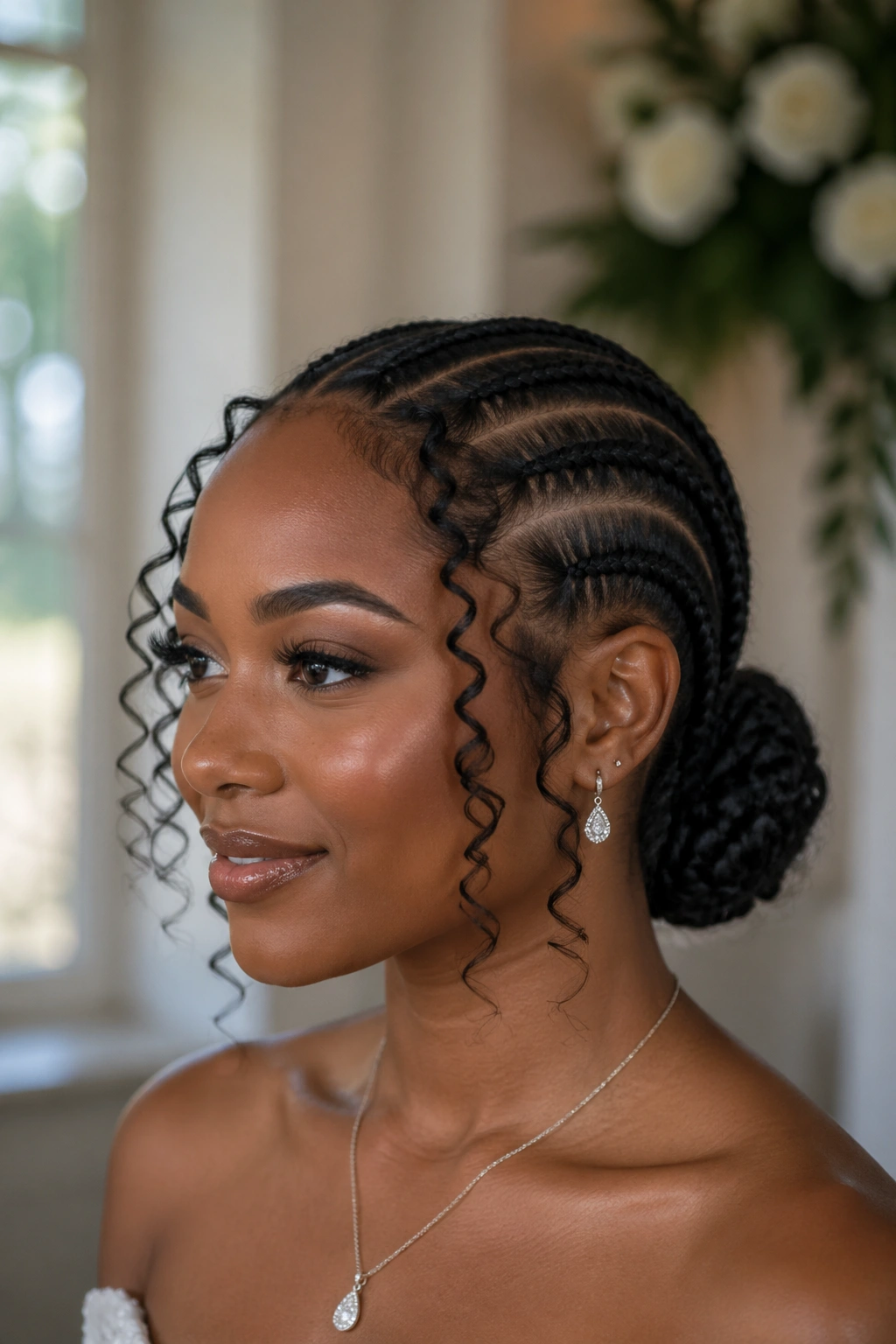
Start with the bun. Gently remove all bobby pins and undo the bun wrap. If synthetic hair was wrapped around the bun, unwind it slowly — don’t pull.
Once the bun is undone, you’ll have cornrows ending in loose synthetic or natural curly hair. Cut the synthetic hair off at the braid tip if it’s a separate piece. Don’t try to unbraid through it.
Unbraid each cornrow from the tip to the scalp. The last two inches near the roots will have the most shed hair — pause there, apply conditioner, and work slowly.
After full takedown, co-wash the hair twice. The first wash removes surface buildup. The second gets the scalp clean. Follow with a deep conditioner, and give the scalp 48-72 hours of rest before any new style.
Choosing the Right Version for You
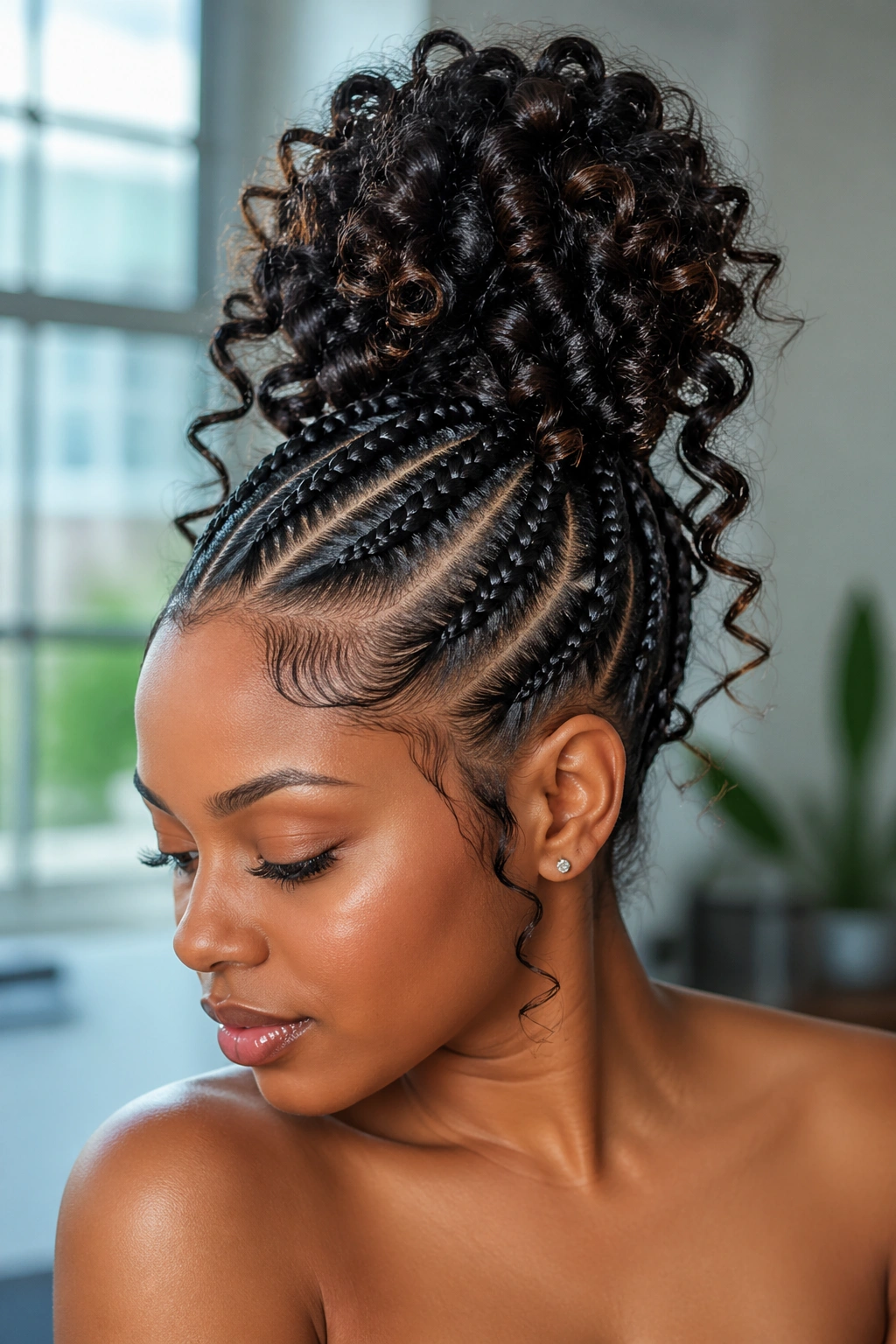
With so many possibilities, the question isn’t which style is best — it’s which fits your life.
- Formal occasion: Classic Low Bun, Elegant Chignon, Architectural Sculpture
- Everyday wear: Messy Romantic Bun, Boho Bun, Half-Up Half-Down
- Festival or fun: Double Bun, Top Knot, Colored Curls Bun
- Professional settings: Sleek Low Bun, Ballerina Bun, Chignon with Frame
- Vacation hair: Low Curly Chignon, Half-Up Bun, Side-Swept Bun
Match the style to the occasion and the lifestyle, not just the mood. A bun that photographs well but falls apart by hour six isn’t a win. Pick for durability and you’ll actually enjoy wearing the look.
Cornrow buns with curls are versatile in ways most protective styles aren’t. Invest in the right install, protect the style at night, and give the bun an occasional refresh — and you’ll have weeks of beautiful, wearable, adaptable hair that handles everything from the school run to the reception.
