



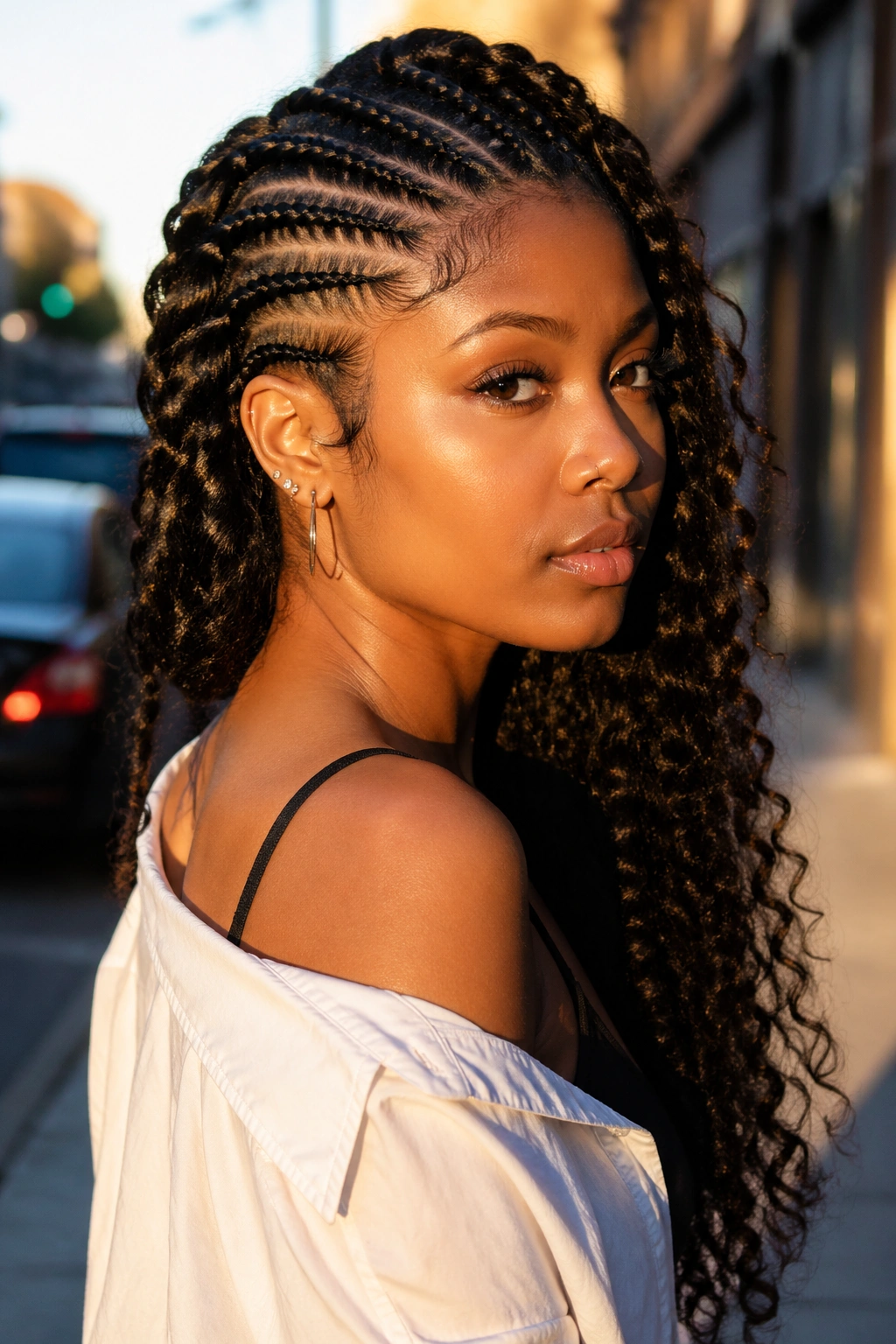
Half cornrows with curls hit a rare balance — protective where you need it, free where you want movement. The front or top sits in clean braided rows. The rest hangs loose in curls. It’s a style I reach for when I want the neat look of cornrows without fully committing to an all-over install. And it photographs so well from every angle that it’s become a go-to for weddings, work events, and weekend outings alike.
This walkthrough covers twenty-two half cornrow with curl styles. Each one approaches the split differently — some braid only the front, some only the sides, some the top third. The curled section also changes per style, from tight defined coils to loose beach waves. The point is showing the range so you can pick what matters to you.
What “Half” Can Mean
Half cornrows isn’t a strict definition. It’s a family of styles where part of the hair is braided in cornrow pattern and the rest isn’t.
The front-half version braids the hair from the forehead to the crown. Everything from crown to ends stays loose.
The side-half version braids both sides (or one side), leaving a center section and the back loose.
The top-third version braids only the top layer, leaving everything below free.
Each layout creates a different silhouette. Pick by what you want to hide, reveal, or emphasize.
Why This Combination Works
Pure cornrow installs can feel heavy or committed. You know you’re wearing a style that takes work to change.
Half cornrows give you flexibility. You can switch up the loose section by curling it differently, pinning it back, or straightening it while the braided section stays constant.
The curled section also acts as a softener. Pure braided styles read structured and sharp. A flow of curls behind or below balances the geometry.
Choosing the Curl for the Loose Section
The curl pattern sets the mood.
Tight curls read bouncy and defined. They hold up for longer but need more care.
Loose curls read relaxed and low-maintenance. They drop into waves over time.
Beach waves read casual and undone. They’re the easiest to style and maintain.
Spirals read dramatic and elegant. They suit longer hair and more formal settings.
Your natural curl pattern matters too. If your hair is 4C, you can style curls with braid-outs or flexi rods. If you have looser curls naturally, work with what you already have.
Prep for Half Cornrow Styles
Clean, moisturized hair is the starting point. The cornrow section needs to be detangled and slightly stretched — a few hours of air-dry after washing, or overnight in loose twists.
The curl section can be prepped differently. If you’re using your natural curls, apply your usual curl definer. If you’re setting curls for the install, plan the setting time into your schedule.
Block out 2 to 4 hours for the whole process. Shorter than a full cornrow install, longer than a simple wash-and-go.
Tools to Have on Hand
- Rat-tail comb for the cornrow parts
- Wide-tooth comb for the loose section
- Edge gel
- Curl cream or custard for the loose hair
- Flexi rods or perm rods if setting curls
Skip heavy butters near the cornrow section. They’ll transfer between the two halves and look oily on one or crunchy on the other.
1. Front Cornrows with Curled Back
Why It Works
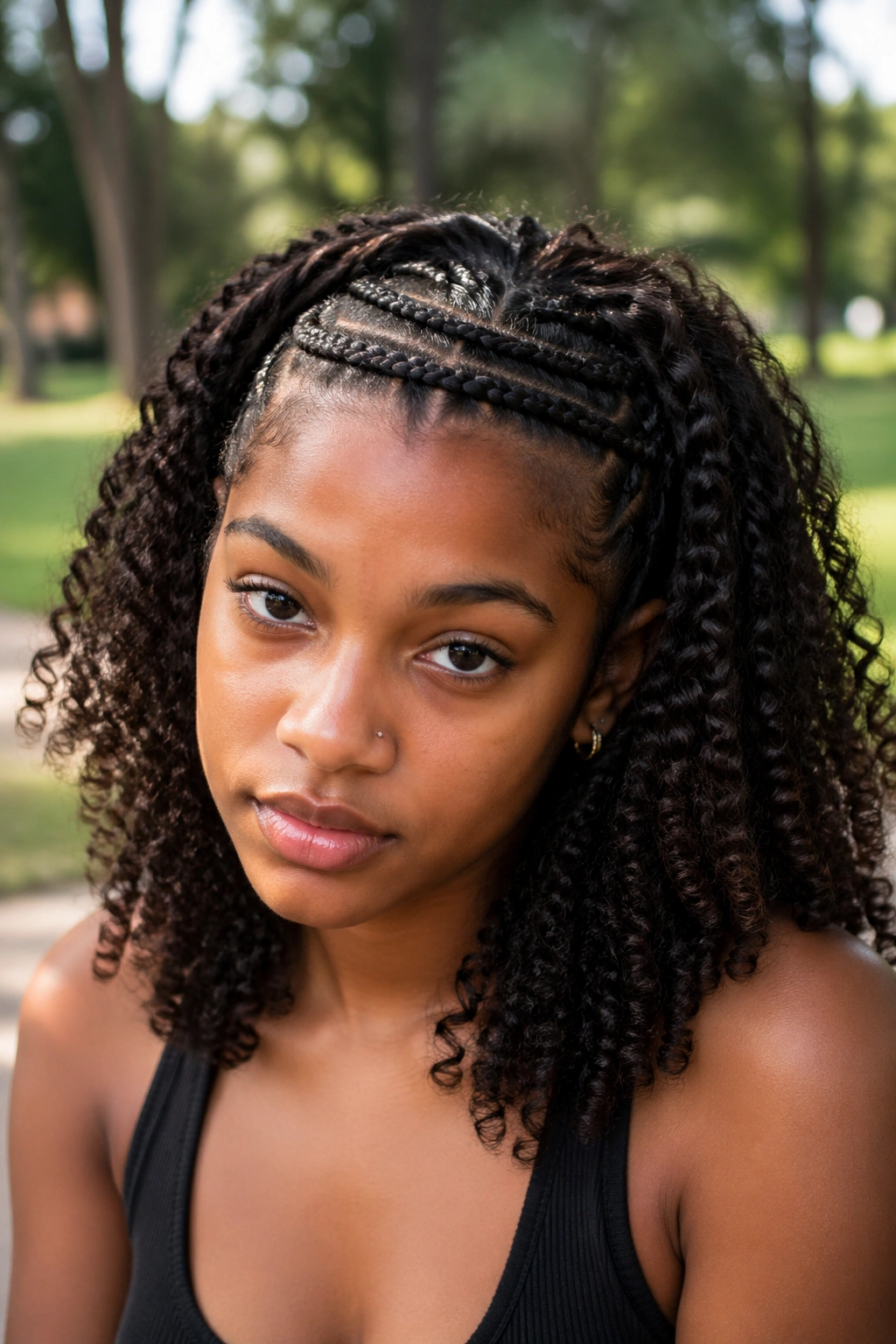
The most common half cornrow style. The front of the head — from the hairline to the crown — wears cornrows. The back and sides hang loose in curls.
- Three to five cornrows in front typically works
- Part the cornrows from the loose section cleanly — no transition fuzz
- Curl the back with flexi rods or braid-out methods for definition
Tip: Leave a small piece of loose hair at the temples to frame the face. It softens the hard line where the braids end.
2. Side Cornrows with Center Curled Out
The sides of the head wear cornrows. A strip down the center from forehead to crown stays loose and curled. The style creates a mohawk-like silhouette without the aggression.
The cornrow sides should be flat against the scalp. The curled center can be pulled up for volume or left to flow over one shoulder.
Pin the center section with small bobby pins if you want it to stay upright. Let it flow if you want softness.
3. Top Layer Braided, Bottom Curled
The top of the hair, visible from above, is braided in cornrows. The bottom layer, which falls from underneath, is curled and left loose.
The top cornrows are hidden from most angles when the loose curls cover them. But when you pull the hair back or gather it up, the cornrows are revealed.
This is a “secret” style — it shows when you show it.
4. Lemonade Front with Curled Back
Lemonade-style cornrows angling from one side of the head to the other, with curled hair flowing down from the stopping point. The angled braids direct the eye, and the curls pick up where they end.
Four to six lemonade braids in the front. They all angle toward the same shoulder. The curled back section flows in a single direction, following the same sweep.
This style has built-in asymmetry. One side of the face is exposed; the other is framed by braids.
5. Two Cornrows with Bouncy Curls
What Makes It Different
Only two cornrows in the front, running side by side from the hairline to the crown. The rest of the hair flows in bouncy curls.
The minimal braid count reads clean and modern. The two cornrows are distinct but simple.
Who This Is For
Anyone who wants the look of cornrows without committing to a full front pattern. Good for weekend casual and beach trips.
6. Cornrow Crown with Curls All Around
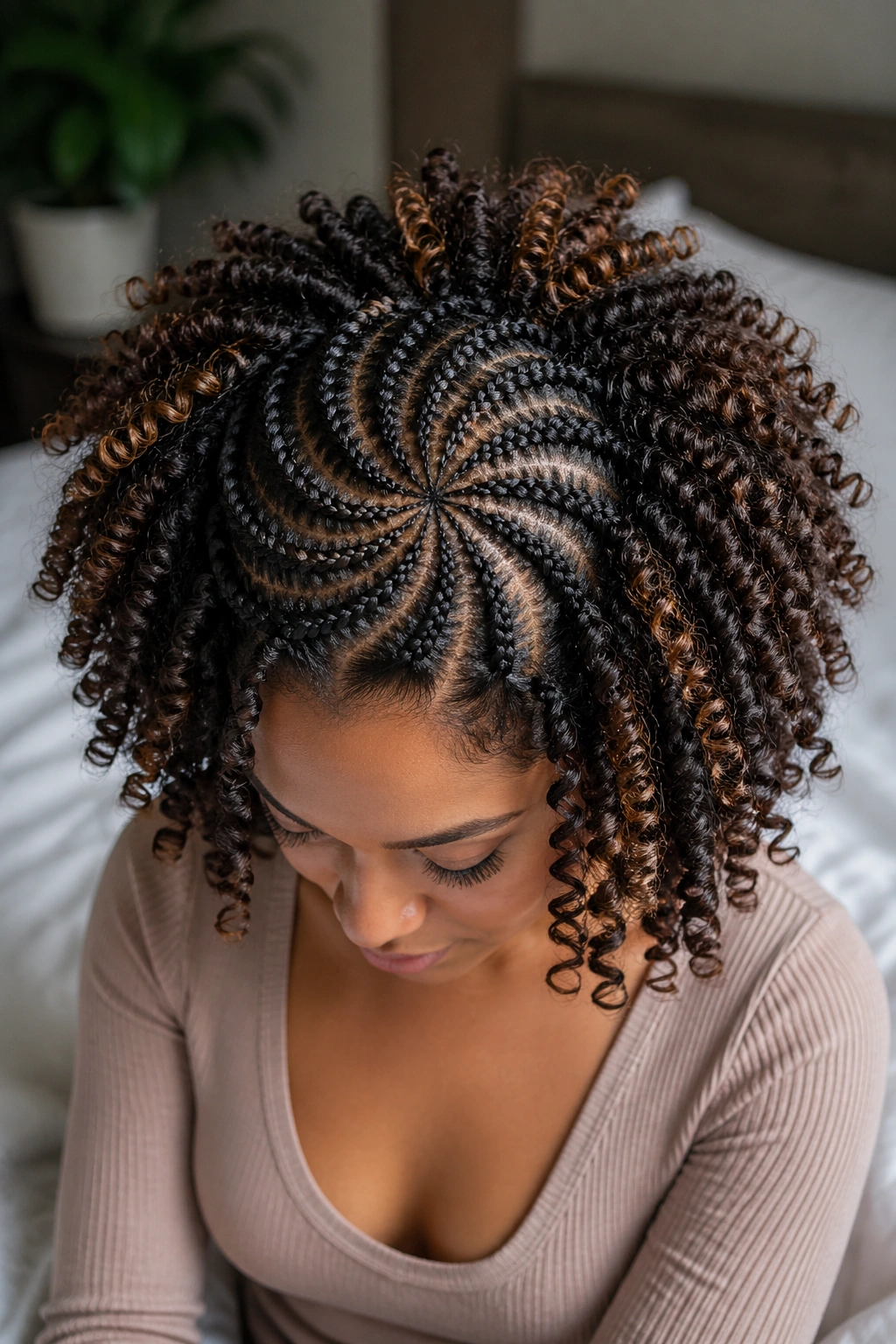
A circle or oval of cornrows at the crown, with curls flowing out from the edges in all directions. The cornrow section sits like a cap on top.
The crown cornrows can form a simple oval or a more elaborate pattern (star burst, spiral, heart). The curls frame the crown like rays.
This is a high-effort style but photographs beautifully from above.
7. Half-Up Cornrows with Curled Down
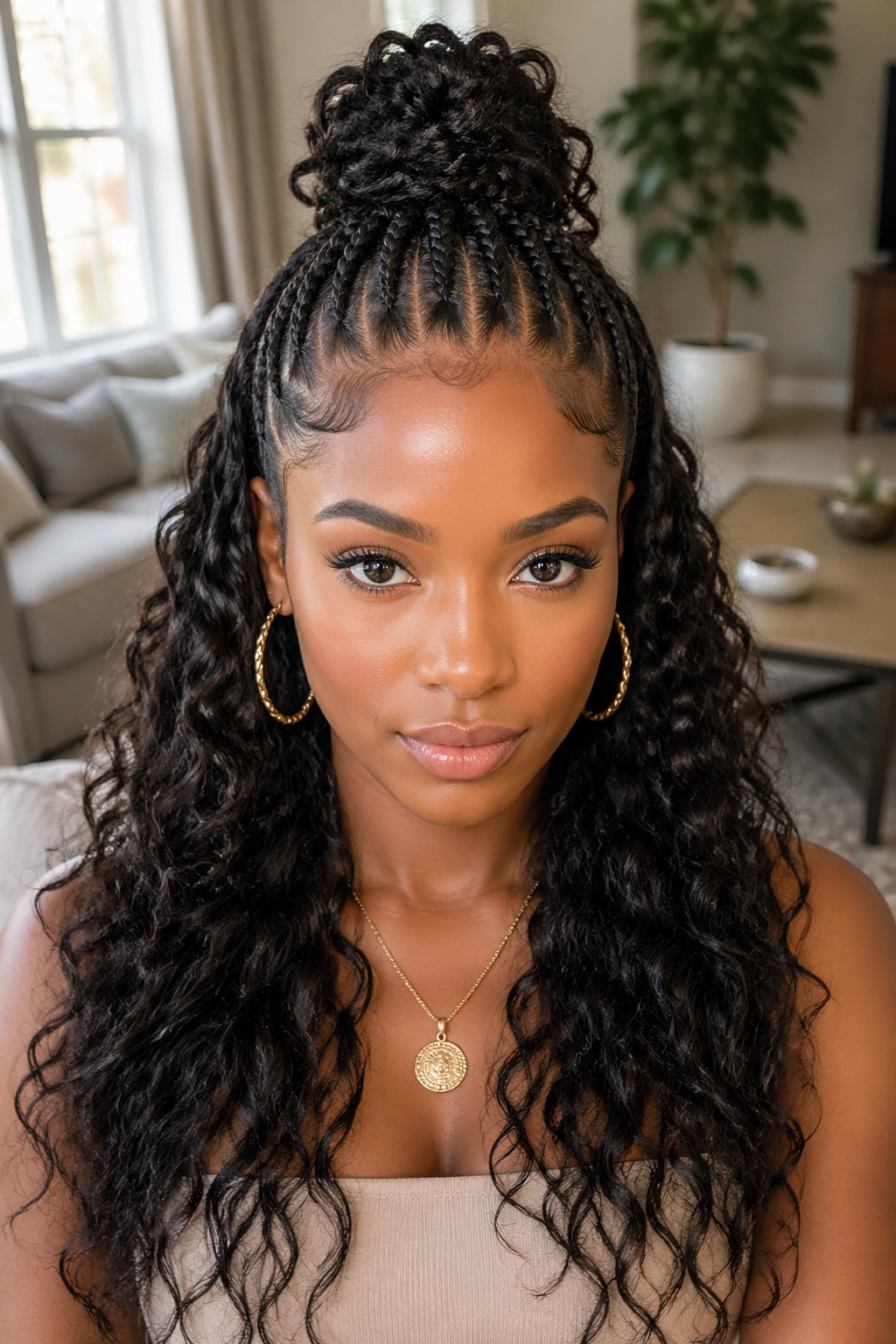
The front half of the hair is braided in cornrows that pull up into a high bun or ponytail. The back half stays loose and curled.
The bun sits at the crown. The curled back section flows past the shoulders.
This is a “dressed up half-up” — more polished than a plain half-up bun because of the cornrow structure in the up section.
8. Side-Swept Cornrows with Waves
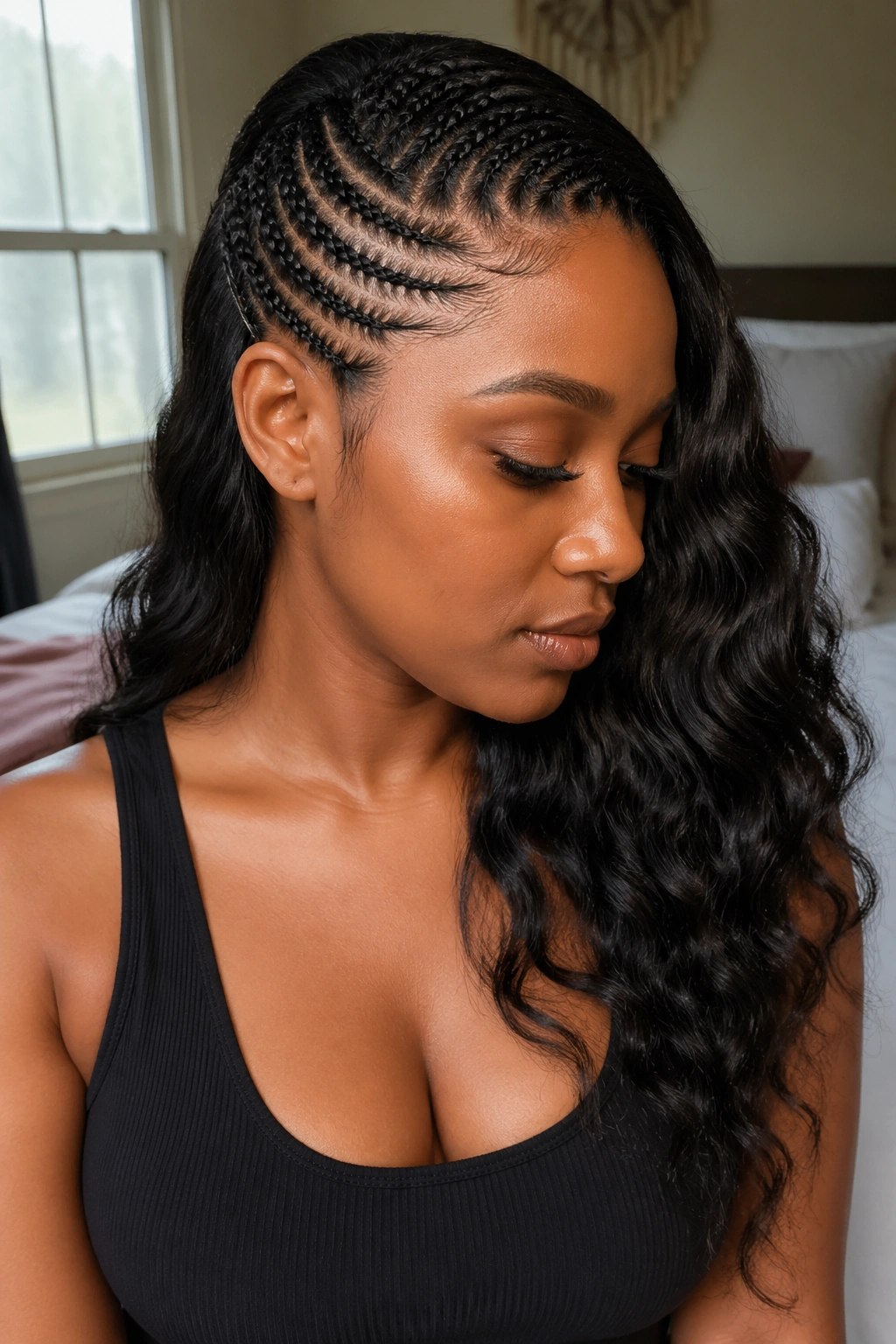
The front of the hair sweeps to one side in cornrows. The rest of the hair falls in loose waves across the opposite shoulder.
The sweep direction is your choice. Left-sweeping is more common, but right-sweeping works just as well.
Pin the cornrows behind the ear on the sweep side with a small bobby pin. The pin keeps the sweep from drifting.
9. Cornrow Fringe with Curly Body
A short fringe of cornrows over the forehead, with the rest of the hair in curls. The cornrow fringe is an accent rather than the main structure.
Two to three cornrows in the fringe. They should be short — stopping just behind the hairline or just above the eyebrows.
This reads youthful and playful. It’s a great option for casual days or music festivals.
10. Diagonal Cornrows with Curled Flow
Diagonal cornrows running across one side of the head, with curls flowing from where they end. The diagonal creates a dynamic line that the curls continue.
Three to four diagonal cornrows. They angle from the temple to the opposite side of the crown.
The curls should hang on the same side the cornrows end. This continues the diagonal flow into the curled section.
11. Mohawk-Style Cornrows with Curled Top
Cornrows down the sides of the head, mohawk-style. The top stays loose and curled, creating a voluminous strip down the center of the head.
The side cornrows are tight against the scalp. The top curls puff up for volume.
This style reads edgy. It’s a statement look.
12. Single Large Cornrow with Loose Curls
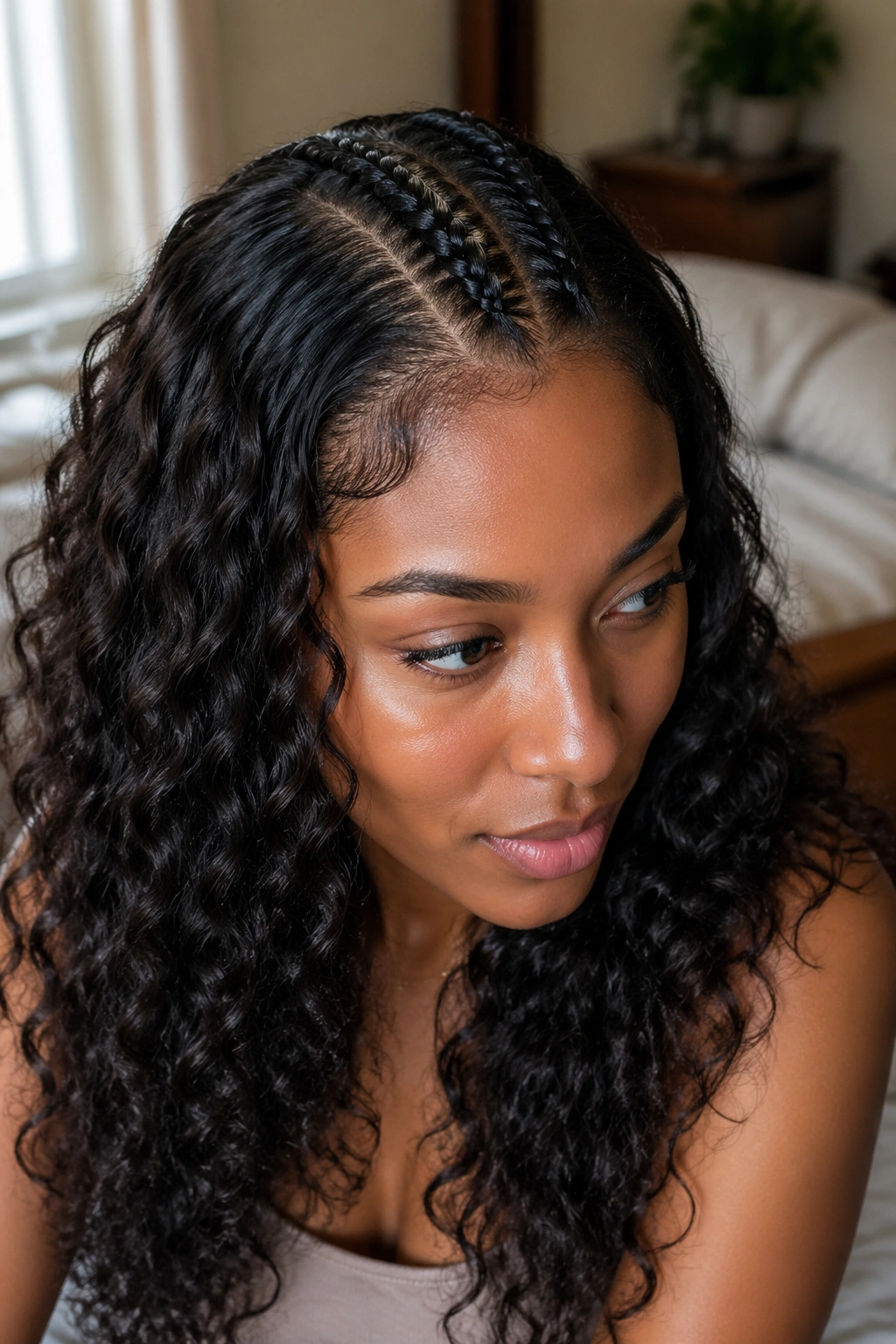
What if just one cornrow runs from the hairline to the crown, and everything else is curled? The single braid becomes an accent, like a carved line through the curls.
The cornrow can be placed center, off-center, or diagonally across the top. Each placement creates a different visual rhythm.
How to Wear It
Let the curls fall around the cornrow. Don’t try to pin them away from it. The interaction between braid and curls is the point.
13. Cornrows with Curled Half-Ponytail
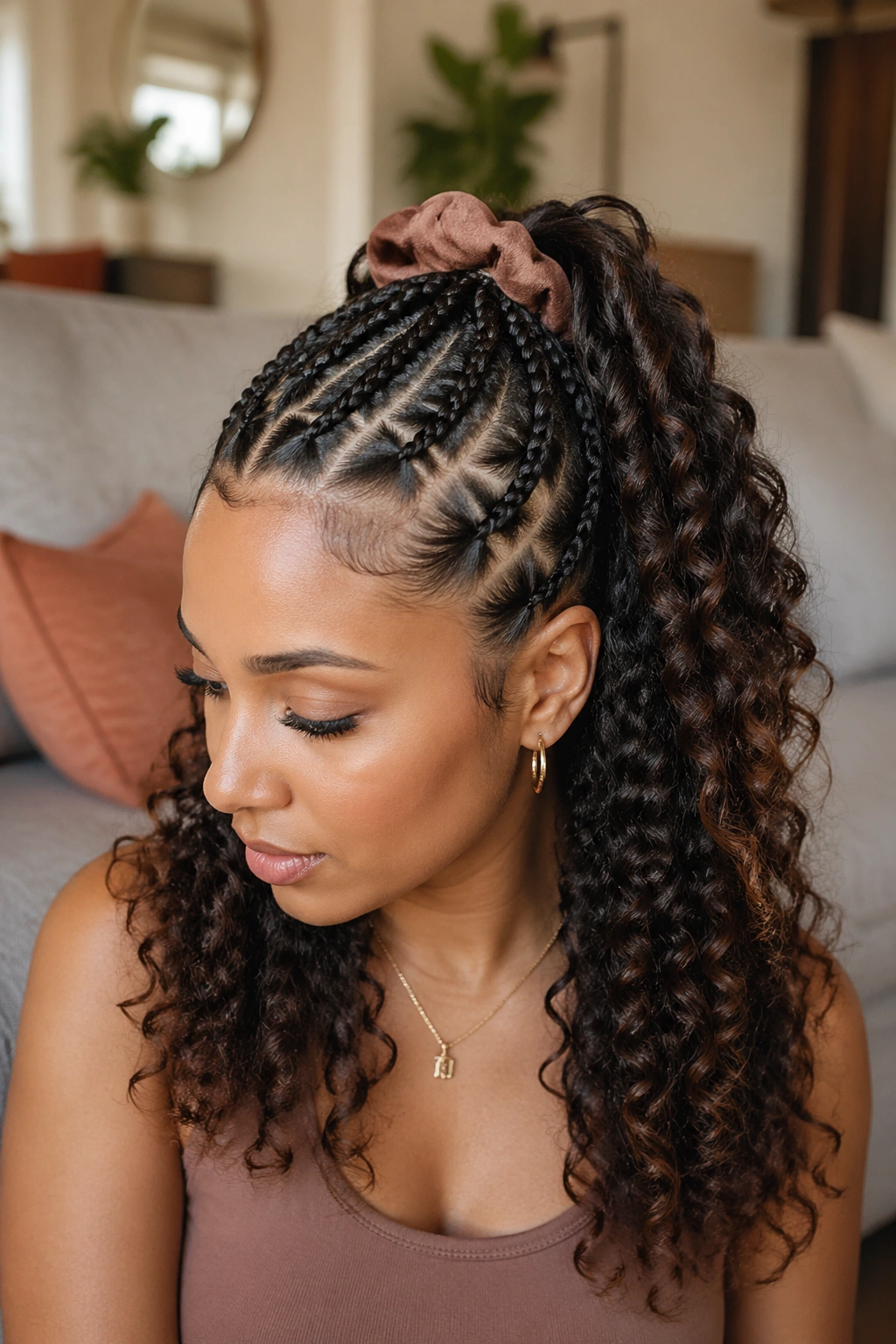
The front cornrows pull into a half-ponytail at the crown. Curls fall from the ponytail and from the unbraided back.
The ponytail can be tight and sleek or loose and relaxed. Both work. Tight looks more formal. Loose looks more casual.
A scrunchie in a matching color keeps the ponytail together without drawing attention.
14. Front Cornrows with Curled Bun Back
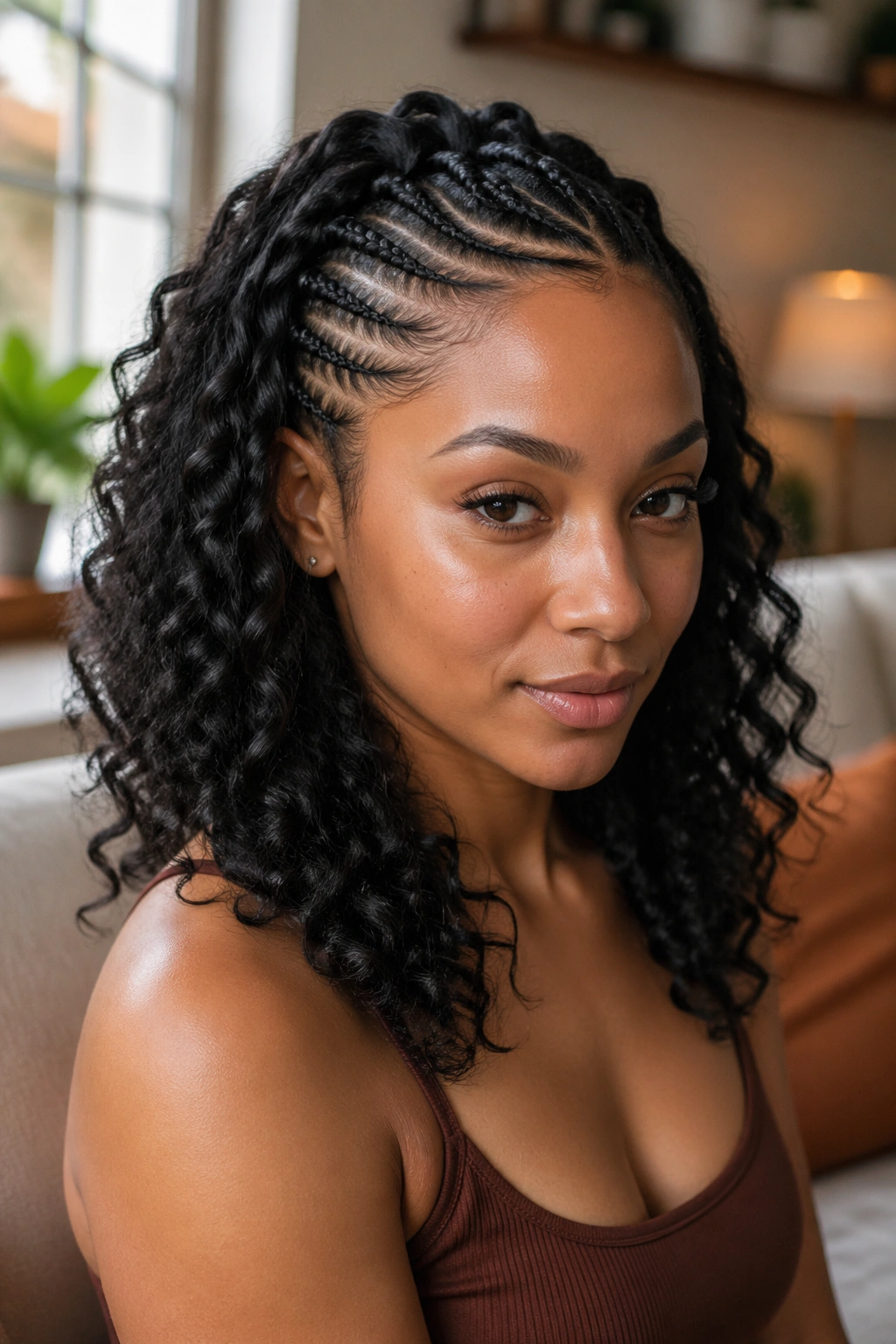
The front is cornrowed. The back is gathered into a curly bun, with some loose curls falling from the bun.
The bun sits at the nape or just above. It’s casual — not a sleek low bun, but a more voluminous, textured one.
This style is comfortable for long days. The bun keeps the curls off the neck.
15. Cornrows with Curled Side Tail
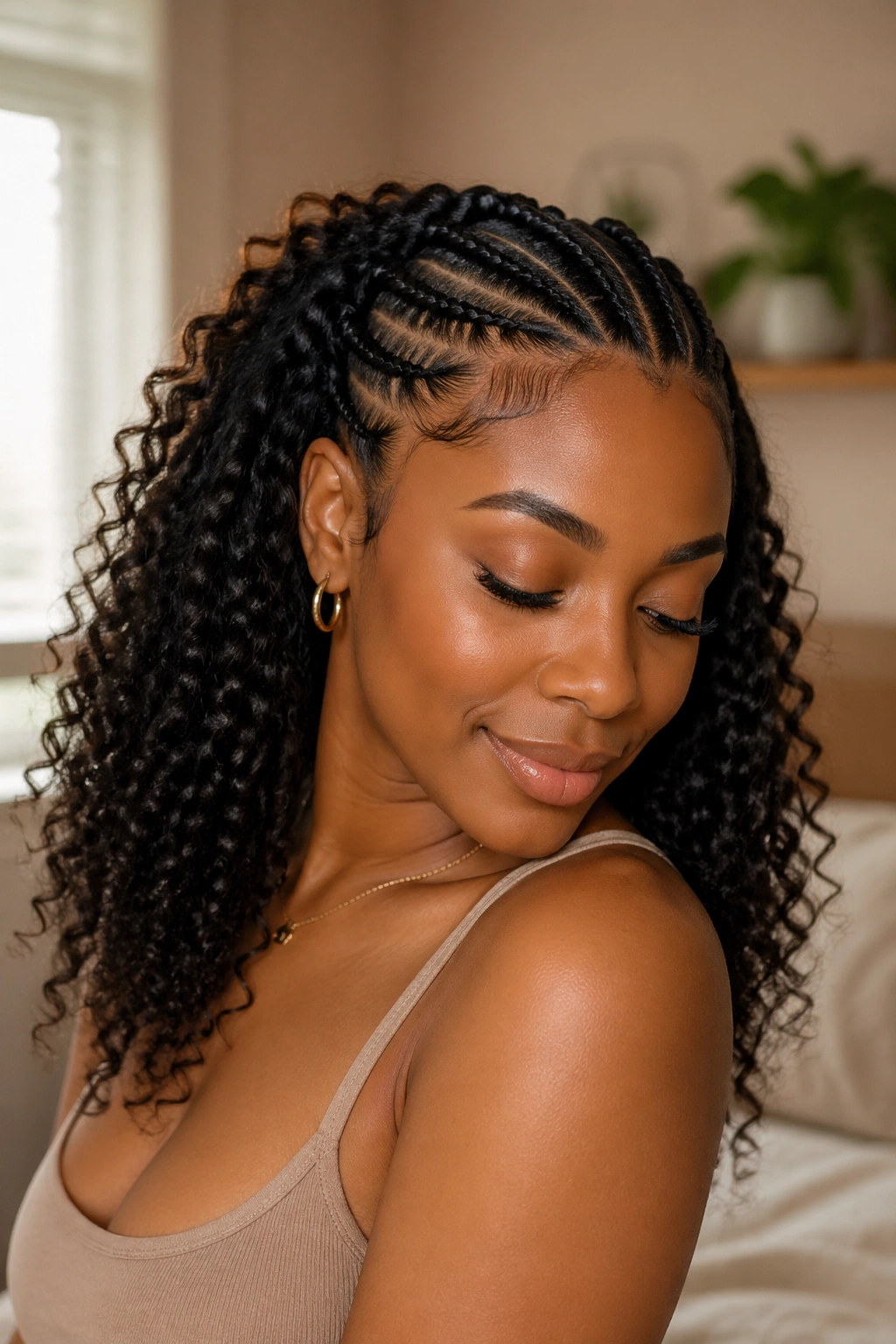
One side of the head is braided; the other side flows in curls over the shoulder. The cornrows create a clean side; the curls cover the other.
The effect is like half an updo — one side pulled back, the other side loose. It works for formal events where you want a mix of polish and softness.
16. Cornrows with Curls and Headband
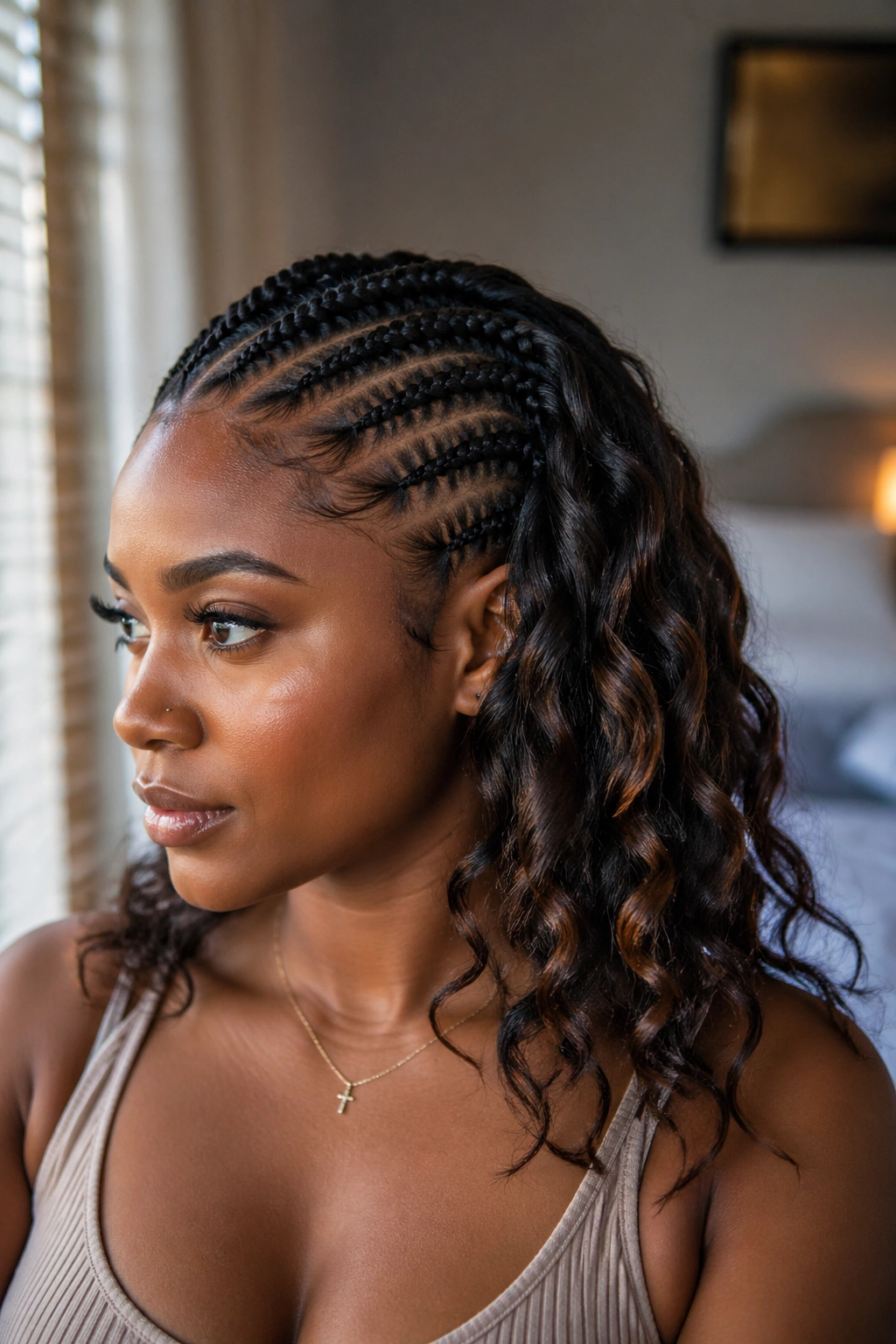
A half cornrow style finished with a thick headband or wrap. The headband covers part of the transition between braided and loose sections, making the style feel unified.
The headband can match your hair color (for subtlety) or contrast with it (for visual pop). Both approaches have their fans.
Fabric choice matters. Silk and satin don’t catch on the curls. Cotton can snag.
17. Cornrow Crown with Curled Face Frame
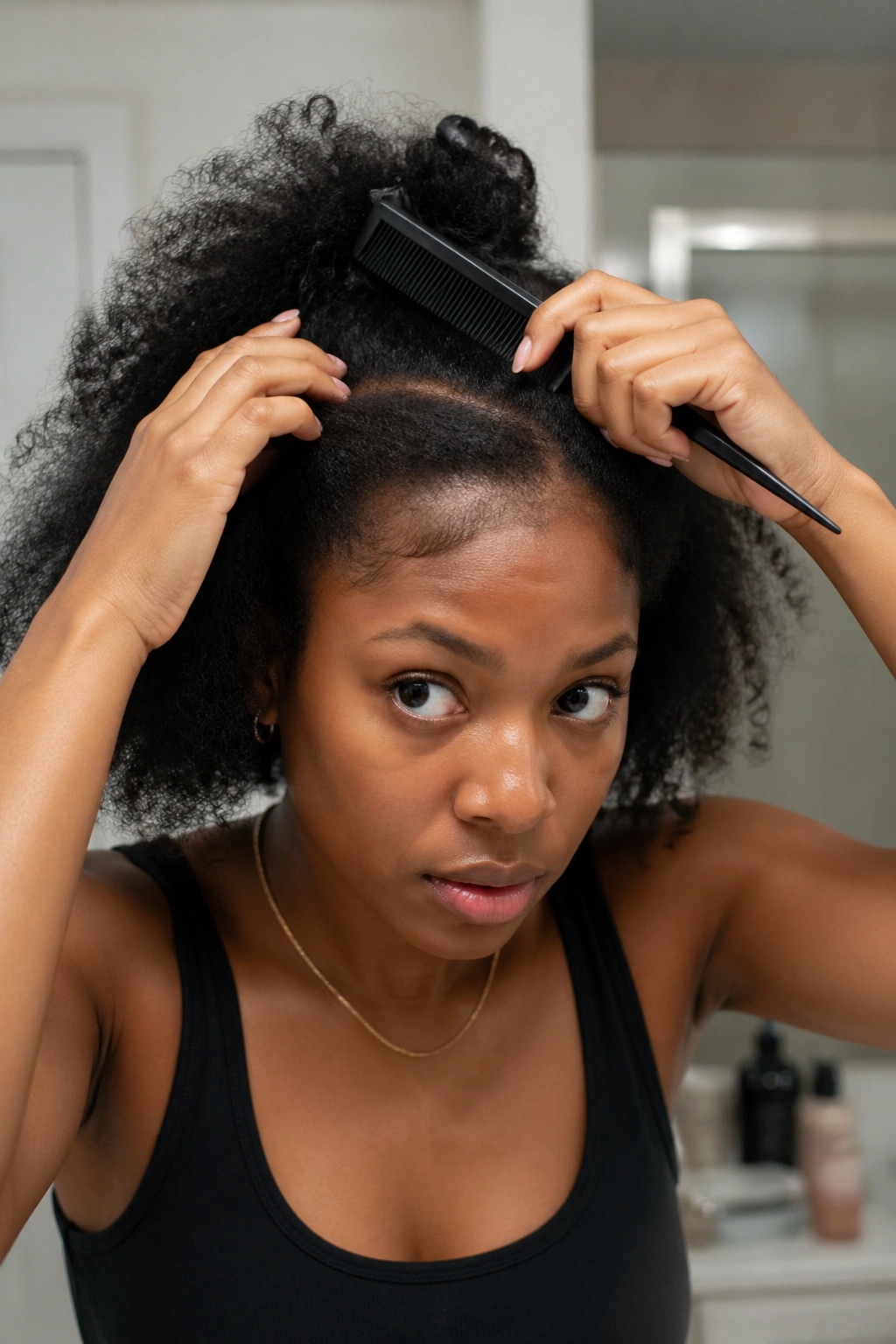
A small crown of cornrows at the top of the head, with curls falling around the face. The crown sits inside a frame of curls.
Two to three cornrows form the crown. They don’t extend down to the nape — they stop at the back of the crown area.
This is a good option for round face shapes because the face-frame curls add definition.
18. Cornrows Ending in Curled Pigtails
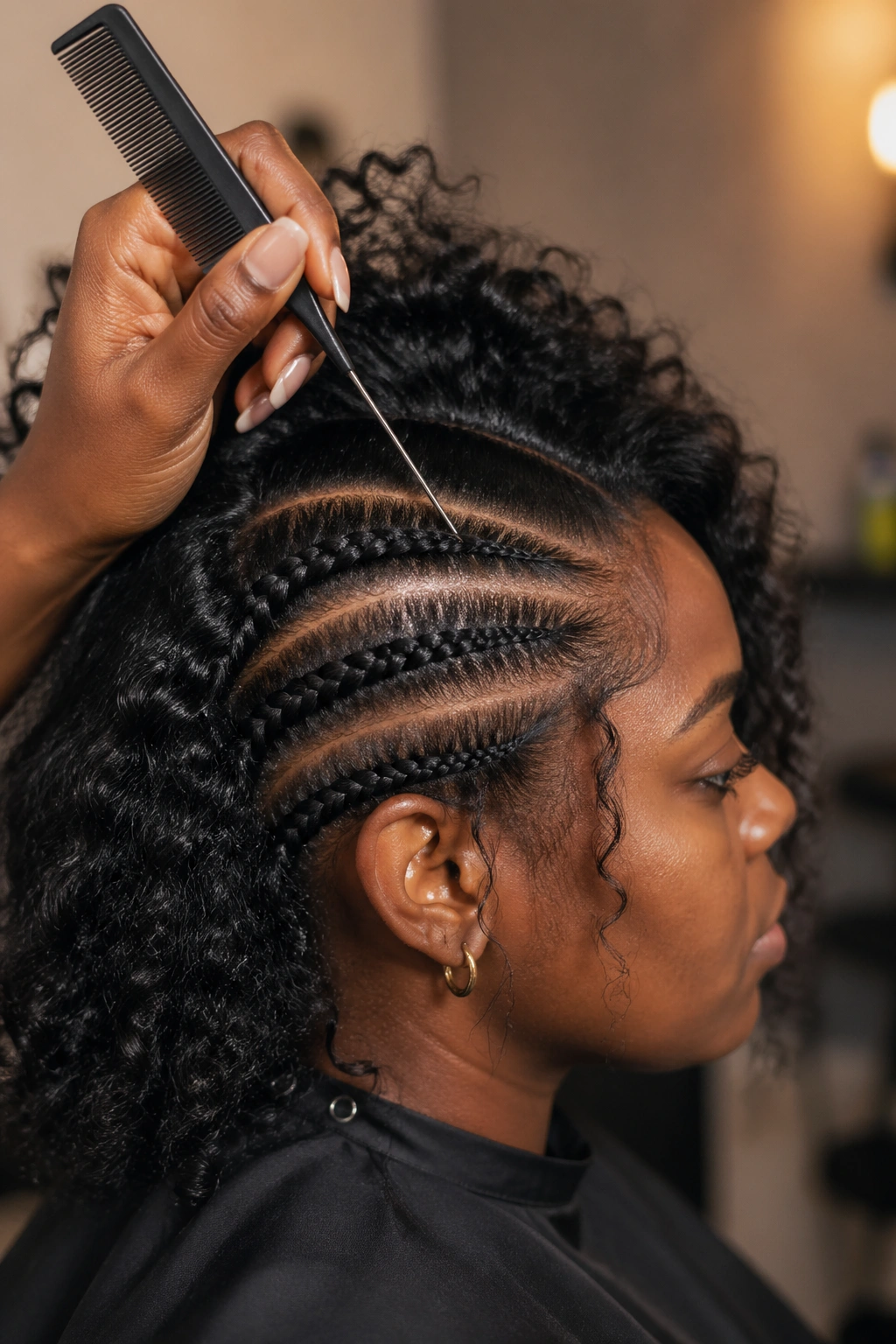
The cornrows angle down the sides of the head and end in curled pigtails — one on each side. It’s a younger-feeling style but can read adult with the right curl quality.
The pigtails hang loose. They’re not gathered into elastics. The curl pattern keeps the hair contained without needing a band.
Pair with a fitted top rather than a loose one. The style plays better with defined silhouettes.
19. Cornrows with Curled Chignon
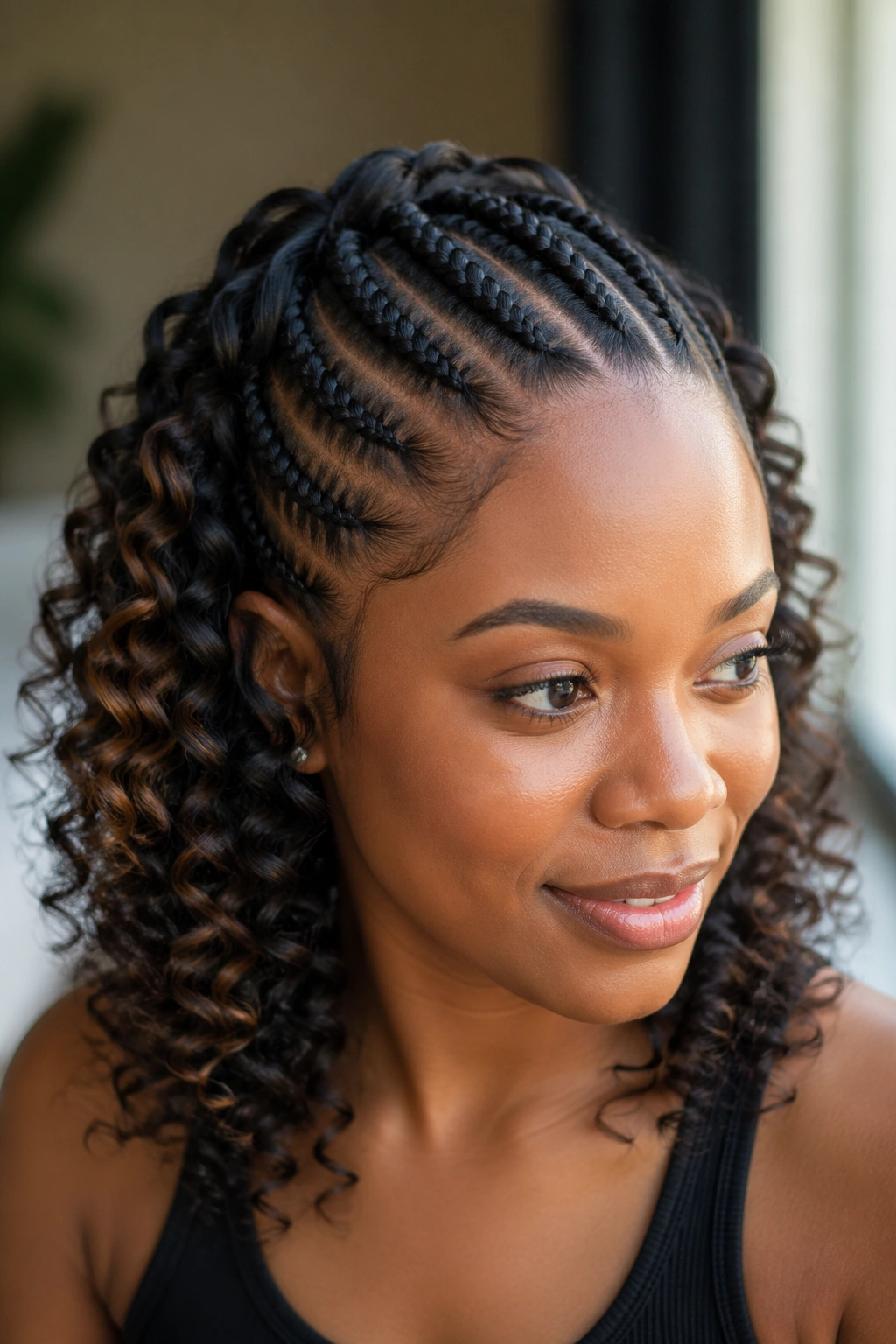
An elegant chignon at the nape, with cornrows feeding into it from the front. The chignon is a low, classic bun.
The cornrows in front guide all the hair to the chignon. No pieces hang free except what frames the face.
This is a formal event style. Wedding guest, gala, any setting where you want something refined.
20. Asymmetric Cornrows with Curled Length
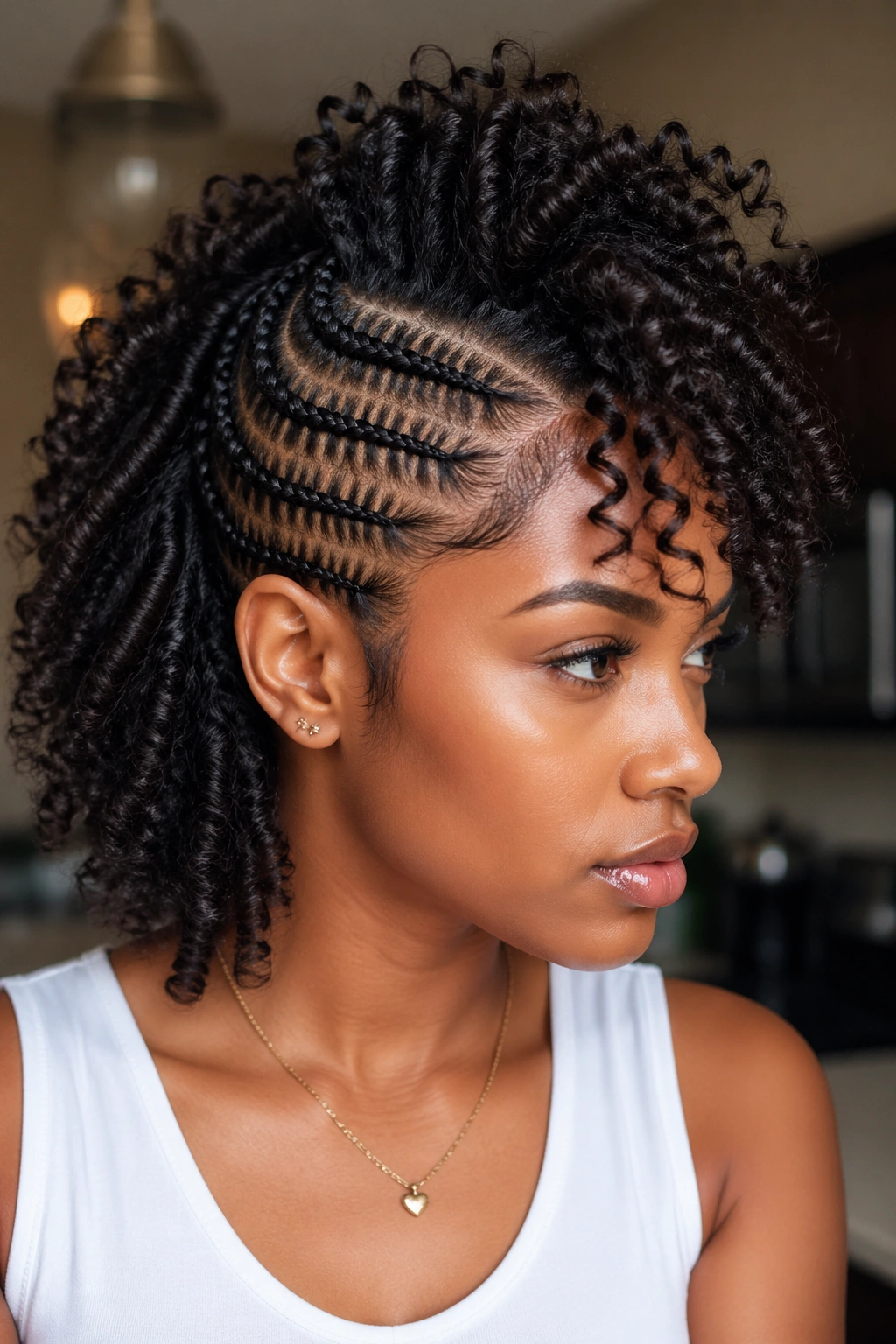
One side of the head has cornrows. The other side is fully loose and curled. The split is along the center of the head or slightly off-center.
This is a stronger asymmetry than other half cornrow styles. You see two entirely different sections of hair from the front.
Some people feel visually off-balance at first. Give it a day. The asymmetry settles into intention.
21. Cornrows with Curled Waterfall
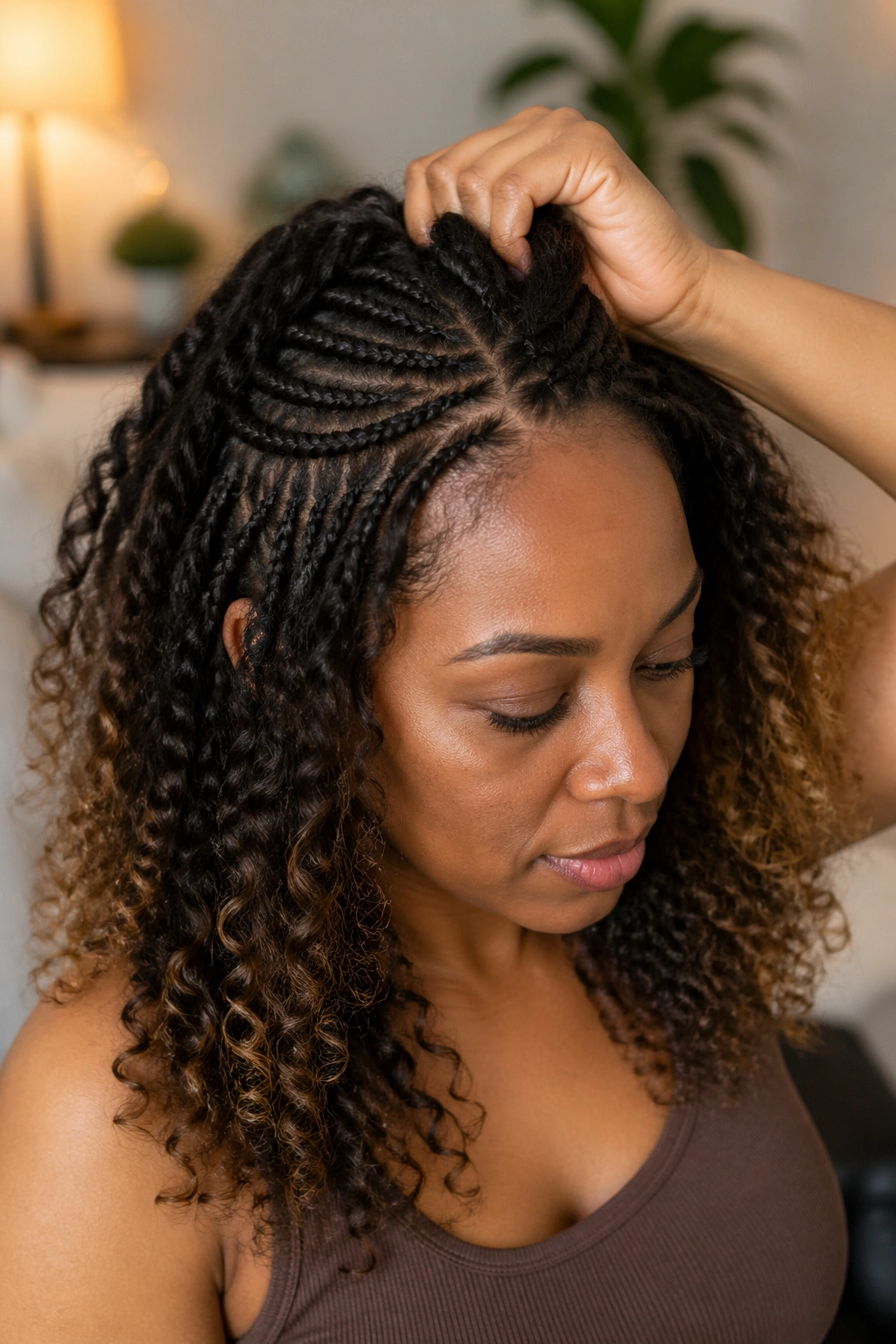
The front cornrows end at the crown, and a cascade of curls flows from there down the back. The curls form a “waterfall” of texture.
The cornrow section should be tight and structured. The curl waterfall should be loose and flowing. The contrast is the style.
Use a curl-defining cream on the waterfall section. Skip heavy oils; they weigh down the flow.
22. Cornrows with Curled Top Puff
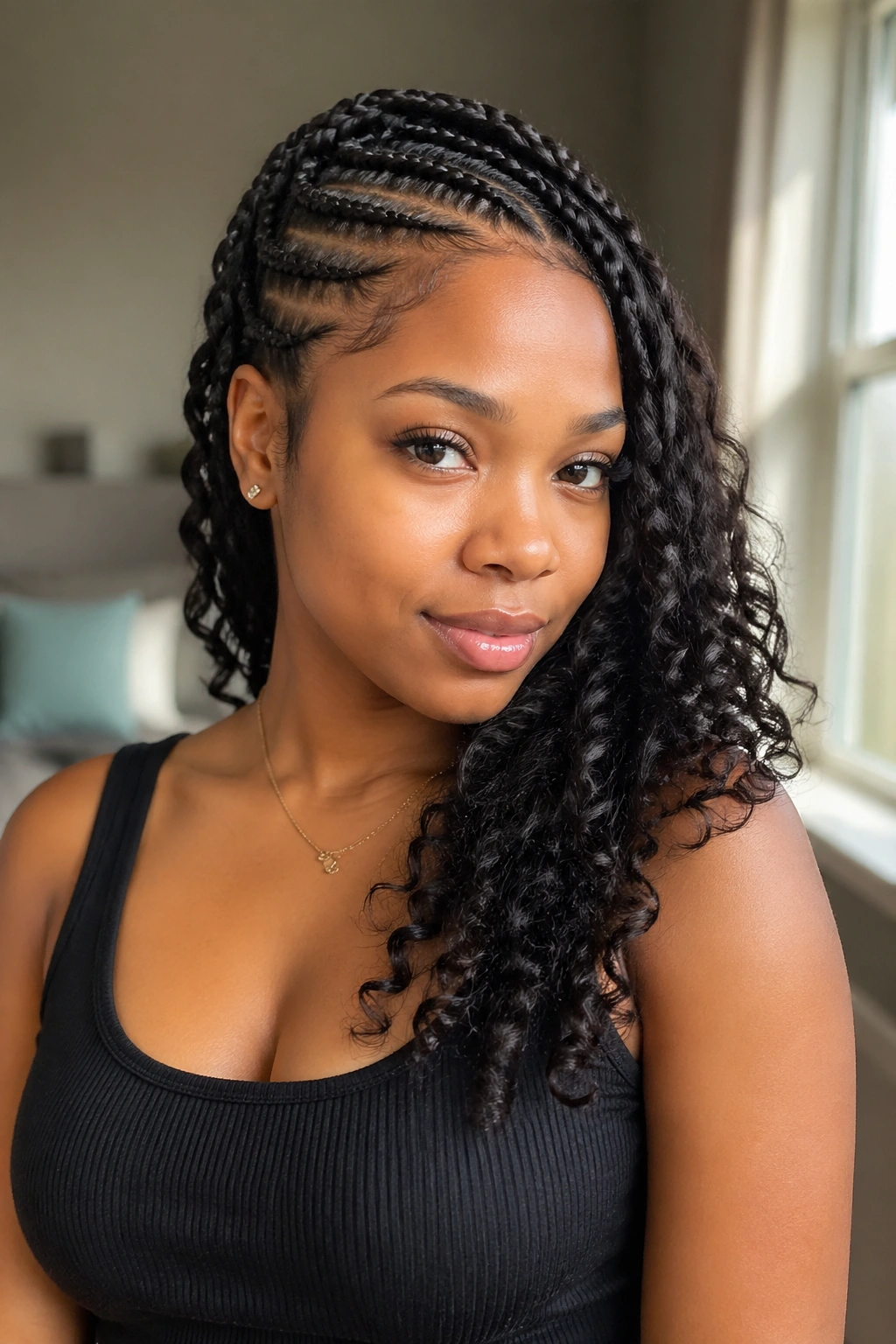
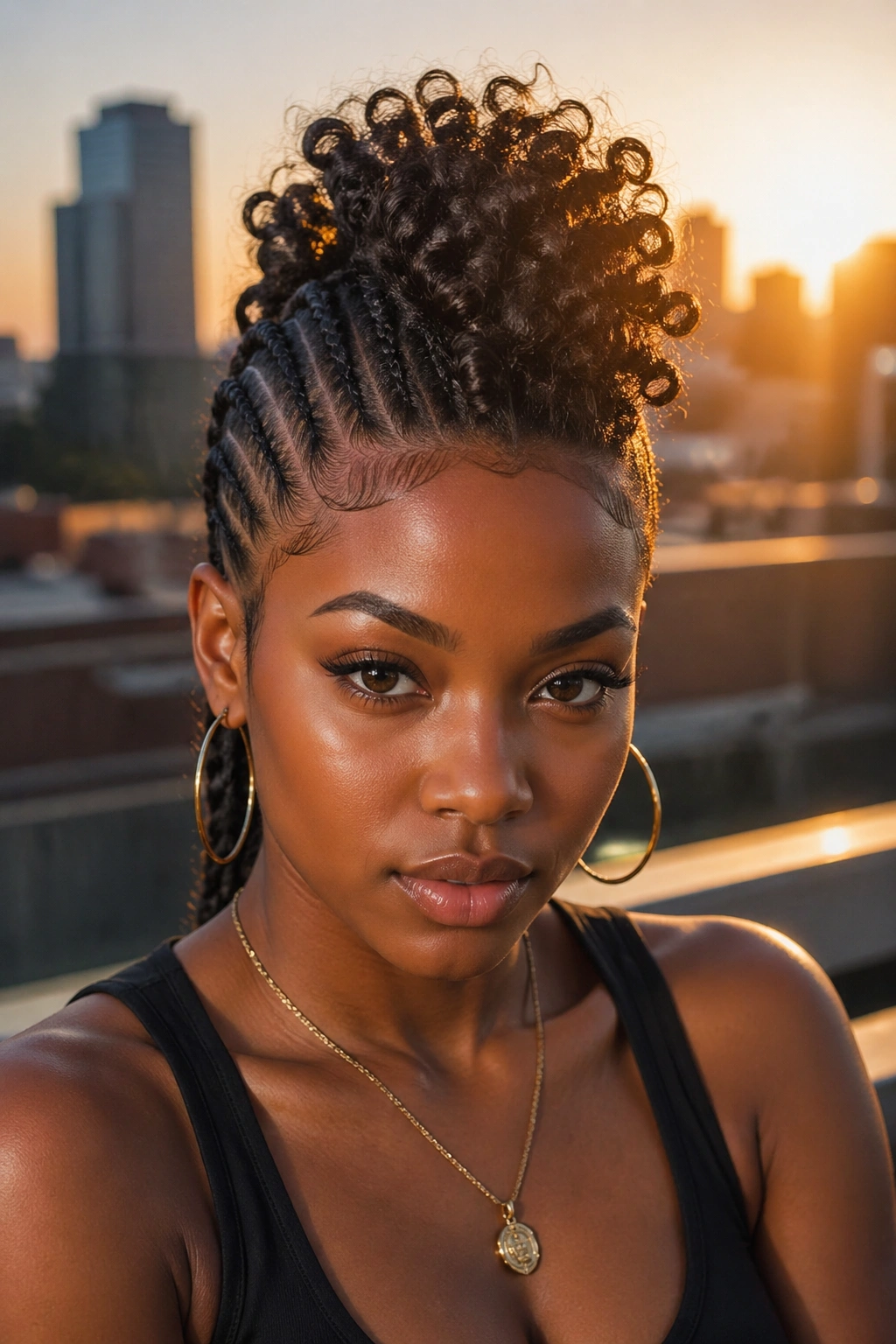
The sides and back of the head wear cornrows. The top stays loose and puffs up into a curly crown.
The puff is the focal point. It should be high, round, and well-defined. The cornrows beneath are supporting infrastructure.
Use a curl cream and a pick to shape the puff. A satin scarf at night keeps it round for the next day.
Caring for the Cornrow Section
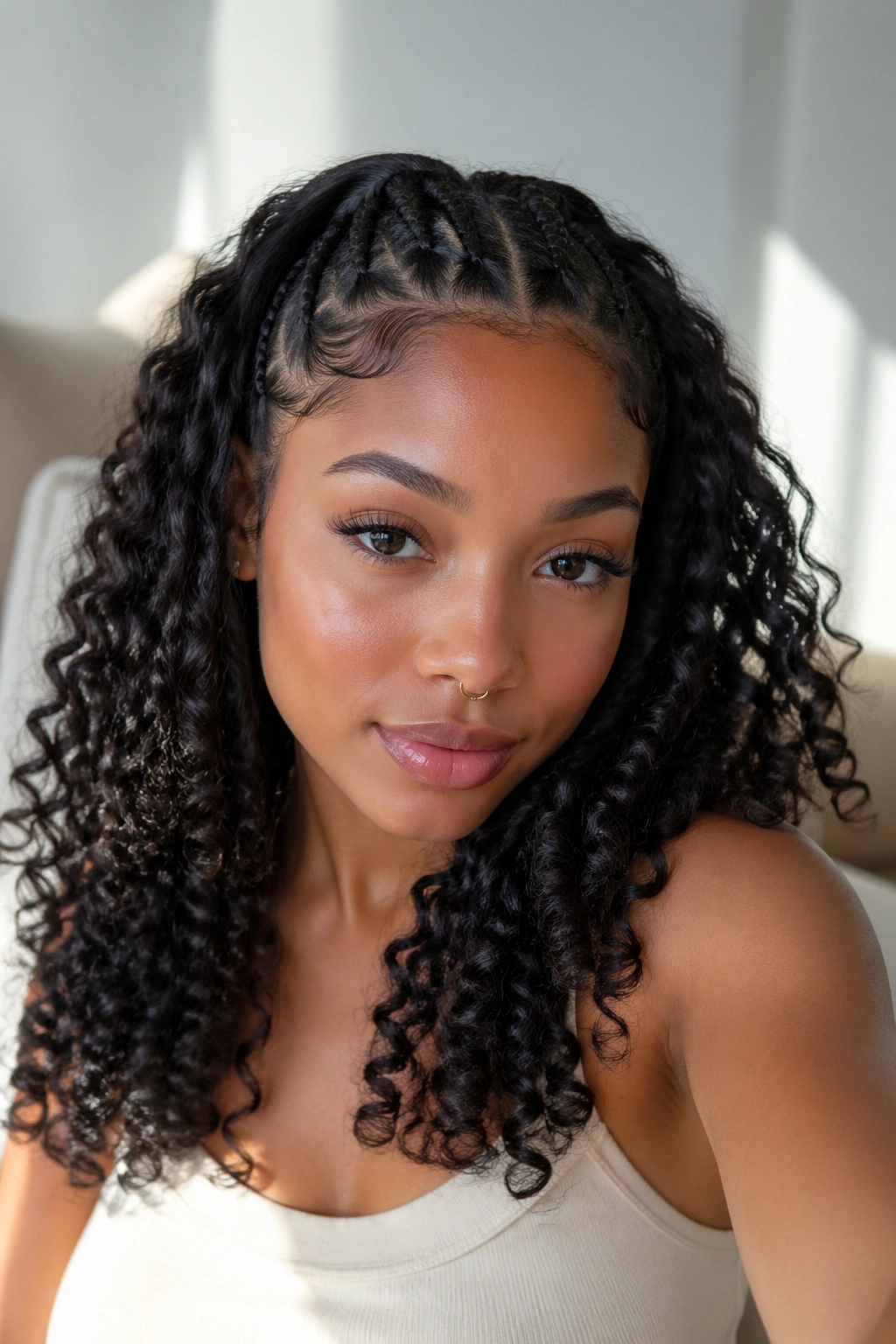
Different sections of the same head need different care.
- Spray the cornrow section with water and leave-in every 2 to 3 days
- Apply a light scalp oil (jojoba or argan) along the parts twice a week
- Use an edge gel to refresh the hairline every 3 to 4 days
- Avoid heavy butters on the cornrow parts — they build up
The loose curled section needs its own moisture routine — more frequent misting, more curl cream, more nightly protection.
Caring for the Curled Section
Curls want moisture and minimal manipulation.
- Mist with water and leave-in daily or every other day
- Apply curl cream on damp hair after washing
- Finger-detangle, not comb-detangle
- Sleep with a satin bonnet or pineappled in a silk scrunchie
For styled curls (flexi rod sets, braid-outs), maintain the curl pattern with a weekly re-set if needed. Some people re-set their curls every week. Others let them fall naturally over time.
Sleep Routine
The two sections need different sleep care but can be handled together.
Gather the loose curls into a high pineapple using a silk scrunchie. This lifts them off the pillow. Then wrap a satin bonnet over the whole head, including the cornrow section.
If your cornrows are tight against the scalp and the curls are short, a simple bonnet might be enough without the pineapple. Try both and see which works for your specific install.
Side sleepers should rotate sides nightly. One-sided sleep flattens the curls on that side.
Refreshing Between Styles
Half cornrow installs can last 2 to 3 weeks with care. The curl section may need weekly re-setting. The cornrow section holds longer.
Refresh the curls by spraying with water and re-applying curl cream. Re-set with flexi rods if needed. The curl section might look different from day one, but it won’t look neglected.
Refresh the cornrow section with edge gel and a small brush at the hairline. Tuck any loose hair back into the cornrow pattern.
Taking Down Half Cornrows
Since only part of the hair is braided, takedown is faster than a full cornrow install.
Start with the cornrow section. Unravel from the ends up. Finger detangle each braid as you unravel.
The loose curled section doesn’t need any takedown — it’s already free.
Once the cornrows are out, wash and condition the whole head. Detangle thoroughly before styling again or going in for another install.
Budget 1 to 2 hours for the takedown, depending on how many cornrows you had.
Picking the Right Style for You
Face shape, hair length, and occasion all play a role.
- Round faces suit styles with vertical lines — center cornrows with curled sides, mohawk-style splits
- Long faces balance with horizontal emphasis — side cornrows, half-up buns
- Square jaws soften with flowing curls around the face
- Heart-shaped faces pair well with volume at the nape, where curls collect
Hair length matters. Short natural hair makes cornrow-and-curls harder because there’s less length to play with. Medium and long hair offer the most options.
Occasion matters too. A structured style with tight cornrows and defined curls reads formal. A relaxed split with beach waves reads casual.
Mistakes to Avoid
Overworking the transition point between cornrow and curl leaves a frizzy mess. Let the sections exist separately without trying to blend them too much.
Using the same products on both sections doesn’t work. The cornrows need lightweight scalp care. The curls need moisturizing definition.
Skipping the satin bonnet at night kills the curls. Friction flattens them.
Pulling the cornrows too tight at the hairline causes damage. Edge hair is the most fragile. A cornrow should feel snug, not sharp.
Half cornrows with curls are one of the most flexible categories in protective styling. The split between braided and loose sections lets you adjust your look without a full re-install. The twenty-two versions here show how much range the combination offers — from subtle accents to bold asymmetry. Pick what fits your face and your week. Then wear it with confidence, because the style handles the rest.
