



Cornrow styles in gray sit at the intersection of tradition and rebellion. Cornrows themselves carry centuries of cultural history. Gray hair — whether earned through age or chosen as a color statement — carries its own weight as a marker of wisdom, authenticity, or fashion-forward thinking. Bring them together and you get a look that turns heads not because it shouts, but because it commits.
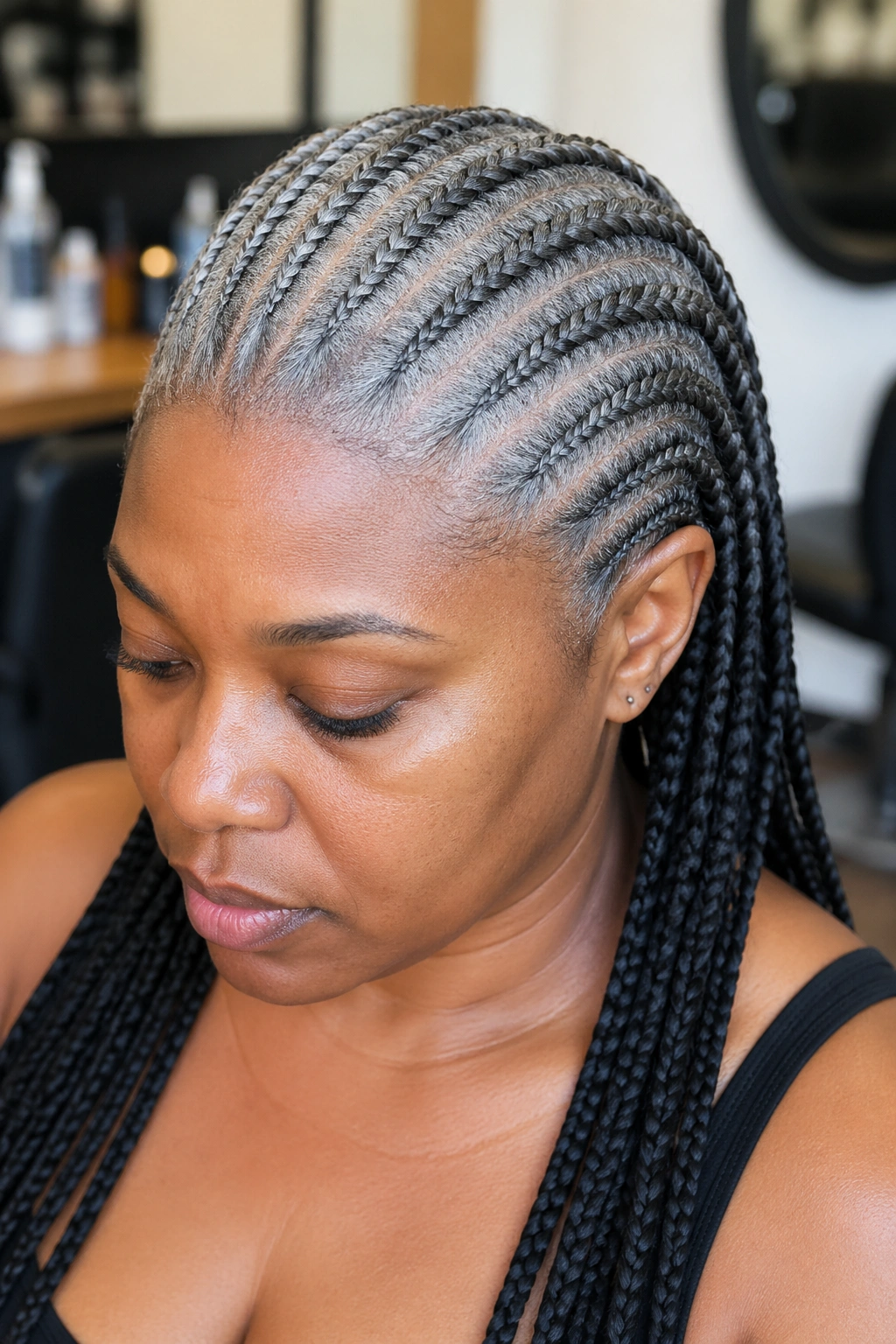
Most discussion of gray hair frames it as something to fight or hide. That framing has shifted as more women — across all ages — choose to wear gray boldly, sometimes coloring it in deliberately even before nature gets there. Cornrows showcase gray hair beautifully because the scalp-hugging braid pattern lets the silver tones catch light from every angle. The braids become almost luminous.
Whether your gray is natural, transitioning, or fully colored in for the look, cornrow styles give you ways to wear it that feel intentional rather than incidental. Here’s the breakdown of how to plan, install, and maintain cornrows in gray — plus 22 distinct versions ranging from soft silver tones to bold platinum statements.
Why Gray Cornrows Hit Different
Gray hair has a unique optical quality. The lack of pigment means each strand reflects light rather than absorbing it the way darker hair does. Braided into cornrows, this effect intensifies — every braid catches light along its length, creating an almost metallic glow.
Compared to gray hair worn loose or curly, cornrowed gray reads as more deliberate. The structure of the braids prevents the gray from looking unkempt or accidental. It signals that the wearer chose this look and styled it with care.
That intentionality matters. Gray hair often gets read as a default rather than a choice. Cornrows correct that read instantly.
Natural Gray Versus Colored Gray
There’s a real distinction between wearing your own gray and coloring hair to gray.
Natural gray has variation — some silver strands, some white, some still pigmented. The mix creates depth and dimension that no dye job can perfectly replicate.
Colored gray is uniform — every strand the exact same shade. This gives a cleaner, more graphic look but lacks the natural depth.
Both work for cornrows. The choice depends on personal preference, hair condition, and willingness to commit to upkeep. Colored gray demands more maintenance — root touch-ups every 6-8 weeks if your natural color is dark.
Hair Health Considerations for Gray
Gray hair behaves differently than pigmented hair, regardless of whether it came from age or color. The fiber is often coarser, drier, and more prone to yellowing.
Coarseness is actually an advantage for cornrows — the hair holds the braid pattern better and resists slipping out. Dryness needs constant attention. Gray strands lose moisture faster, so deep conditioning before any cornrow install is critical.
Yellowing comes from sun exposure, pollution, and certain styling products. Use a purple shampoo before braiding to neutralize any warm tones. The braids will look brighter and stay truer to the silver shade longer.
Tools and Hair for the Best Result
If you’re using added synthetic hair, color matching matters more for gray than for any other shade. The slightest mismatch reads as obviously fake.
- X-Pression Pre-Stretched Braiding Hair in gray, silver, or salt-and-pepper blends works well for most natural-gray cornrows
- Outre Color Bomb has accurate silver and platinum tones that don’t yellow
- Human hair bulk in gray for the highest-end installs, especially for events
- Avoid cheap synthetic gray — it has a green or blue undertone that reads instantly as fake
For natural gray installs without added hair, the only tool difference is product. Use a gentle, sulfate-free clarifying shampoo before installing — gray hair shows buildup faster than darker hair.
Edge Care for Gray Hair
Gray edges are more delicate than pigmented edges. The fiber is often finer at the hairline, and traction damage shows faster on lighter hair.
Keep edge tension light. Don’t pull edges into tight sweeps that strain the hairline. Use a gentle edge gel — preferably one with castor oil or a similar conditioning ingredient.
Skip heavy edge brushes. A soft toothbrush or makeup brush works better for laying gray edges without creating breakage.
1. Sleek All-Back Cornrows in Pure Silver
The starting point. Six to eight cornrows braided straight back across the entire head, in a pure silver shade with no warm undertones. Edges laid flat, parts crisp, ends braided down to mid-back length.
Why It Works
Pure silver against any skin tone creates a striking contrast that reads as sophisticated rather than aged. The straight-back pattern keeps the focus on the silver color and the precision of the braid work.
- Universally flattering at any age — works for women in their 30s through 80s
- Photographs exceptionally well in any lighting because silver catches highlights
- Pairs with both bold and minimal jewelry — black pearls work especially well
- Holds up for 4-6 weeks with proper maintenance
Tip: ask your stylist to use a single brand of silver synthetic hair throughout. Mixing brands often means mixing undertones — some silvers lean cool, others warm — and the inconsistency shows in finished braids.
2. Salt-and-Pepper Cornrows in Mixed Strands
Rather than a single gray shade, this version uses synthetic hair that mixes silver, white, and dark gray strands within each cornrow. The braids show natural-looking variation that mimics aging hair.
The mixed strands give the cornrows depth that solid colors can’t match. The cornrows look real — like the wearer has been letting their natural gray come in and styled it intentionally.
This version works particularly well for women who are partially gray and want to extend their natural look with cornrows. The mixed synthetic hair blends with the natural mix of pigmented and gray strands, creating seamless transitions.
Use a stylist who has experience with mixed-color synthetic hair installation. Some braiders aren’t accustomed to working with multi-tone hair and can end up with awkward color blocking instead of natural variation.
3. Cornrows With Silver Highlights on Dark Base
Cornrows are braided in your natural dark color, but specific braids — usually 3 to 5 throughout the head — are installed with silver synthetic hair. The result is a bold streak pattern.
The contrast is the feature. Dark cornrows create the structure. Silver streaks create the visual punctuation. The placement matters more than the count — a single silver braid at the center part reads stronger than five randomly placed.
Good placement options:
- One bold silver braid down the center
- Two silver braids framing the face on each side
- Three silver braids placed at uneven intervals across the head
- Silver braids only on one side for asymmetric drama
This is the entry-level option for anyone curious about gray cornrows but not ready to commit to a full silver install.
4. Platinum Blonde Cornrows With Silver Undertones
This version sits between gray and blonde — platinum blonde with cool silver undertones rather than warm yellow ones. It’s gray for those who want lighter, brighter, less mature-reading color.
Who This Is For
Platinum-silver works for younger wearers who want cool-toned brightness without committing to full gray. The platinum element keeps the look fresh and youthful while the silver undertones add the sophisticated quality of pure gray.
- Best for skin tones that handle cool colors well
- Pairs beautifully with bright lip colors and bold makeup
- Works for high-fashion settings, photo shoots, and confident daily wear
- Requires regular toning to prevent yellowing
If your skin tone leans warm, test platinum-silver against your face before booking. Some warm undertones look washed out next to platinum, which makes the style feel disconnected from the wearer.
5. Charcoal Gray Cornrows for Subtle Statement
Rather than bright silver, this version uses a deep charcoal gray — almost black with gray undertones. The gray reads as moody and modern rather than aged or platinum.
Charcoal gray reads as the gray for people who want gray without the brightness. It works in professional settings where pure silver might feel too statement-making. It looks intentional without being loud.
The shade can be tricky to find. Most synthetic hair labeled “dark gray” leans either too brown or too blue. Look for true charcoal — neutral undertones, gray that reads almost like wet slate.
This works well for transitional periods. If you’re letting natural gray grow in but aren’t ready for full silver yet, charcoal cornrows bridge the gap visually while giving your hair a break from constant coloring.
6. Gray Cornrows With Side-Swept Pattern
Cornrows sweep diagonally across the head from one side to the other, in a soft silver or gray shade. The sweep creates flowing visual motion across the scalp that solid back-braided cornrows don’t achieve.
The diagonal sweep emphasizes face shape, particularly working with oval and heart-shaped faces. The pattern draws the eye along the diagonal line, which creates visual elongation.
A few specifics:
- Choose the sweep direction that suits your hair part preference
- Keep the cornrow widths consistent — usually medium width works best
- The longest cornrow should hit your shoulder on the swept side
- Pair with statement earrings on the opposite side for balance
This version reads as both polished and softer than straight-back gray cornrows. Ideal for occasions where you want gray to read as elegant rather than edgy.
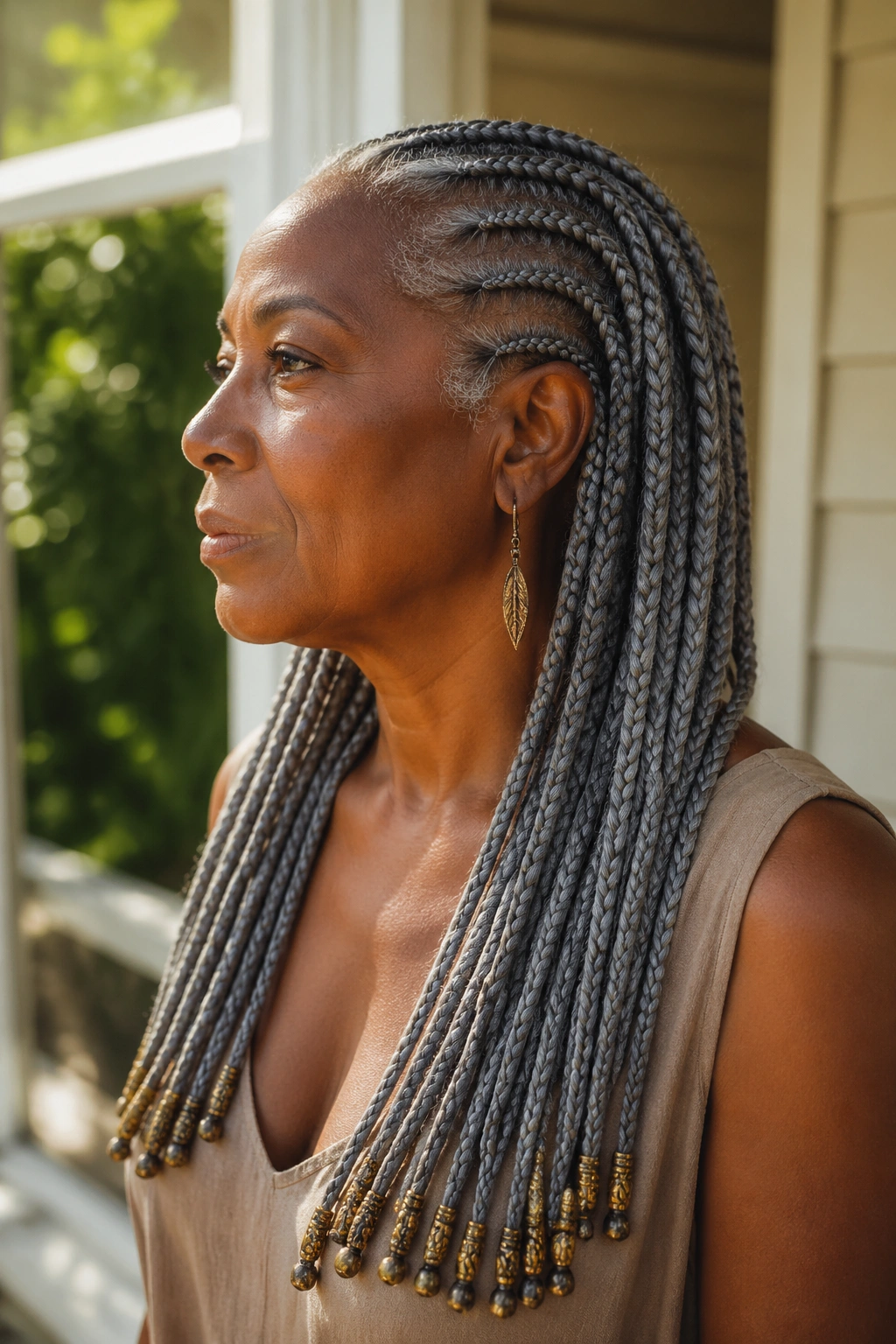
7. Long Gray Cornrows With Beaded Ends
Cornrows in silver or gray, ending with brass, copper, or wooden beads at the tips. The metal beads add weight, sound, and sophisticated contrast against the cool gray tone.
Bead choice matters here. Silver beads disappear into silver cornrows. Gold or brass beads create warm-cool contrast that draws the eye. Wooden beads add organic texture against the metallic-feeling gray.
Practical note on beads: silver-toned hair shows fingerprint smudges and product residue more than darker hair. Use beads that won’t transfer color or oil onto the braids. Pre-clean any new beads with rubbing alcohol before threading them on.
The beads should be small to medium — no larger than a kidney bean each. Larger beads pull on gray hair, which is more delicate, and can cause breakage at the braid tips.
8. Cornrows With Gray Roots and Black Length
Inverse coloring — the cornrows start gray at the scalp and transition to black through the length. The reverse-ombre effect is unexpected and graphic.
Most ombre styles go dark at the roots and lighter at the ends. The reverse plays against expectation. The visible scalp braiding shows the gray. The hanging length reads as dark and natural. The transition between them happens in the middle of each cornrow.
This works well for women who want to highlight new gray growth at the scalp without committing to full gray hair. The cornrows make the gray visible and intentional rather than something to cover.
The transition needs to be done with synthetic hair that’s been dip-dyed or specifically manufactured with the gradient. Pre-dyed ombre kanekalon in silver-to-black exists but is less common — search specialty suppliers.
9. Geometric Gray Cornrows With Statement Parts
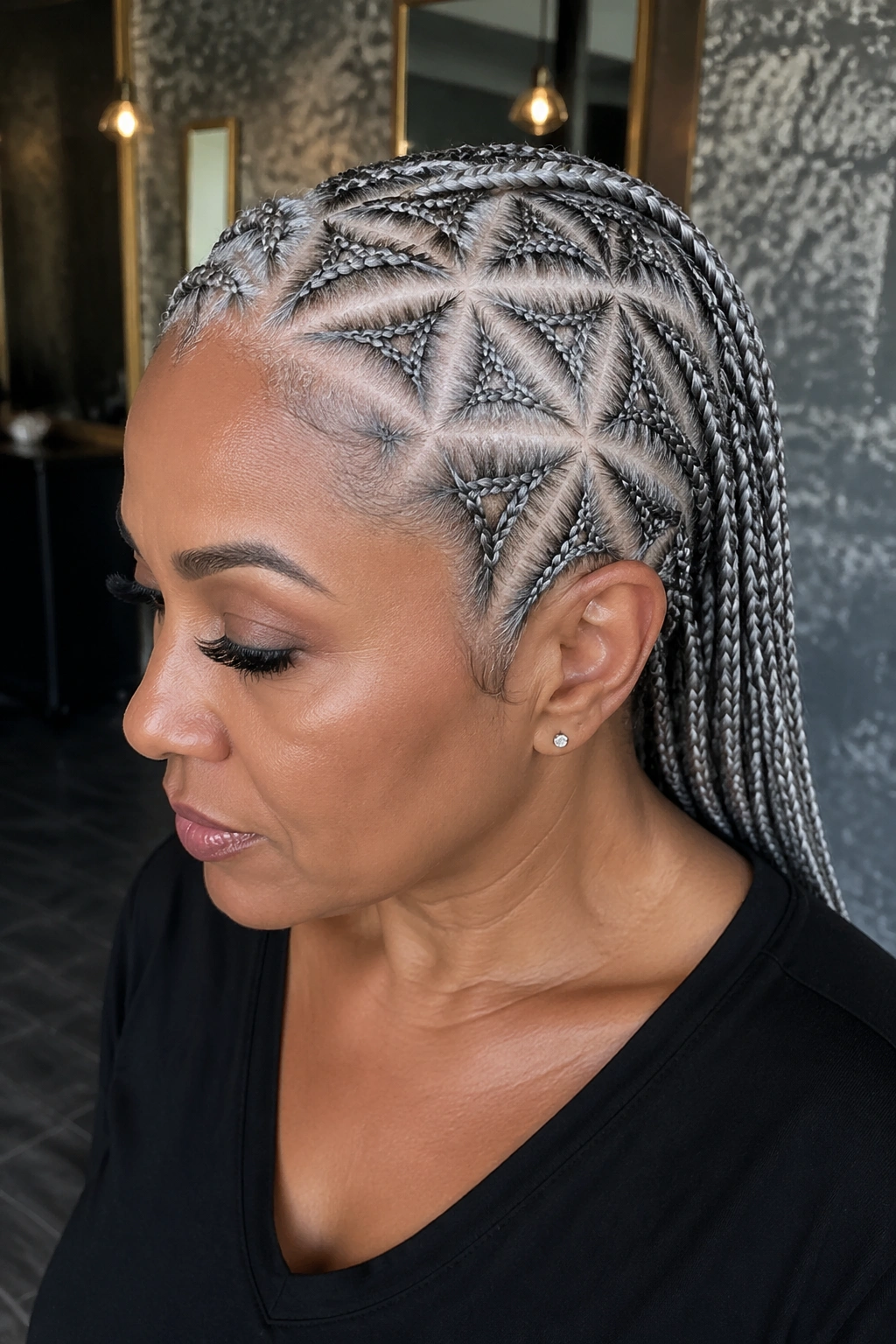
The cornrows form geometric patterns on the scalp — diamonds, triangles, or starbursts — in pure silver or platinum gray. The combination of bold pattern and bold color creates an editorial, sculptural look.
Geometric patterns are dramatic in any color. In silver, they read almost like art installations on the scalp — clean lines of metallic-looking braid intersecting at sharp angles.
This is event hair, photo hair, or “I want my hair to be the conversation” hair. Not for low-key situations, but unforgettable when worn for the right occasion.
A skilled braider with geometric pattern experience is essential. The patterns require precise parting and consistent tension across many small braids. Budget 6-8 hours for the install and prepare to pay accordingly.
10. Cornrows With Two-Tone Gray Pattern
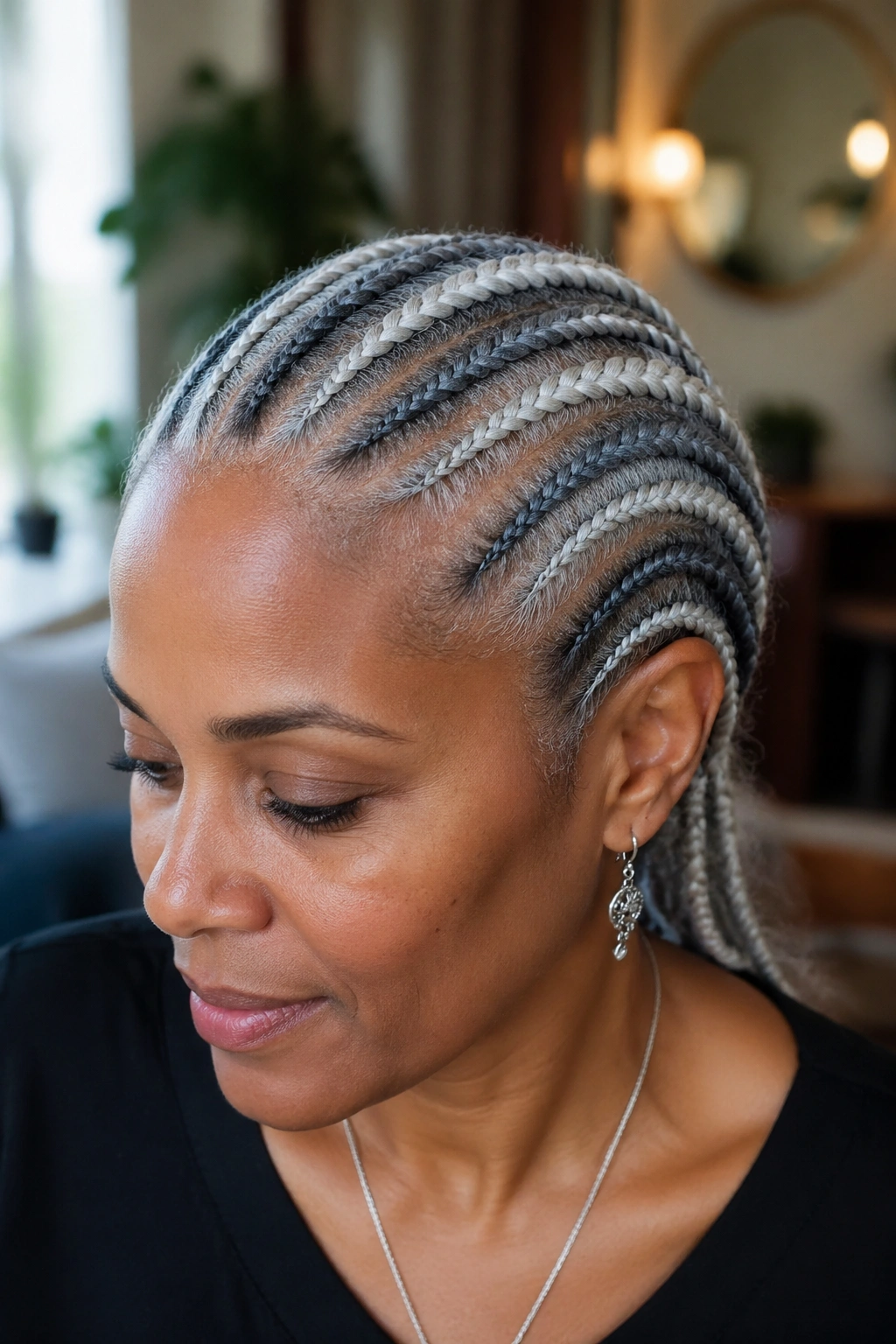
Two distinct shades of gray — one lighter, one darker — alternated across the head in a deliberate pattern. The two-tone effect creates depth and dimension across the cornrowed surface.
How to Style It
- Alternate single braids between lighter and darker gray for striped effect
- Group braids in sections — three light, three dark — for more dramatic blocks
- Use the lighter shade only at the front for face-framing brightness
- Reverse the pattern (darker at front, lighter at back) for an unexpected twist
The shade contrast should be visible but not jarring. About two shades apart works — a true silver next to a soft platinum, or a charcoal gray next to a medium silver. Greater contrast tips the look into costume territory.
11. Boho Gray Cornrows With Loose Wisps
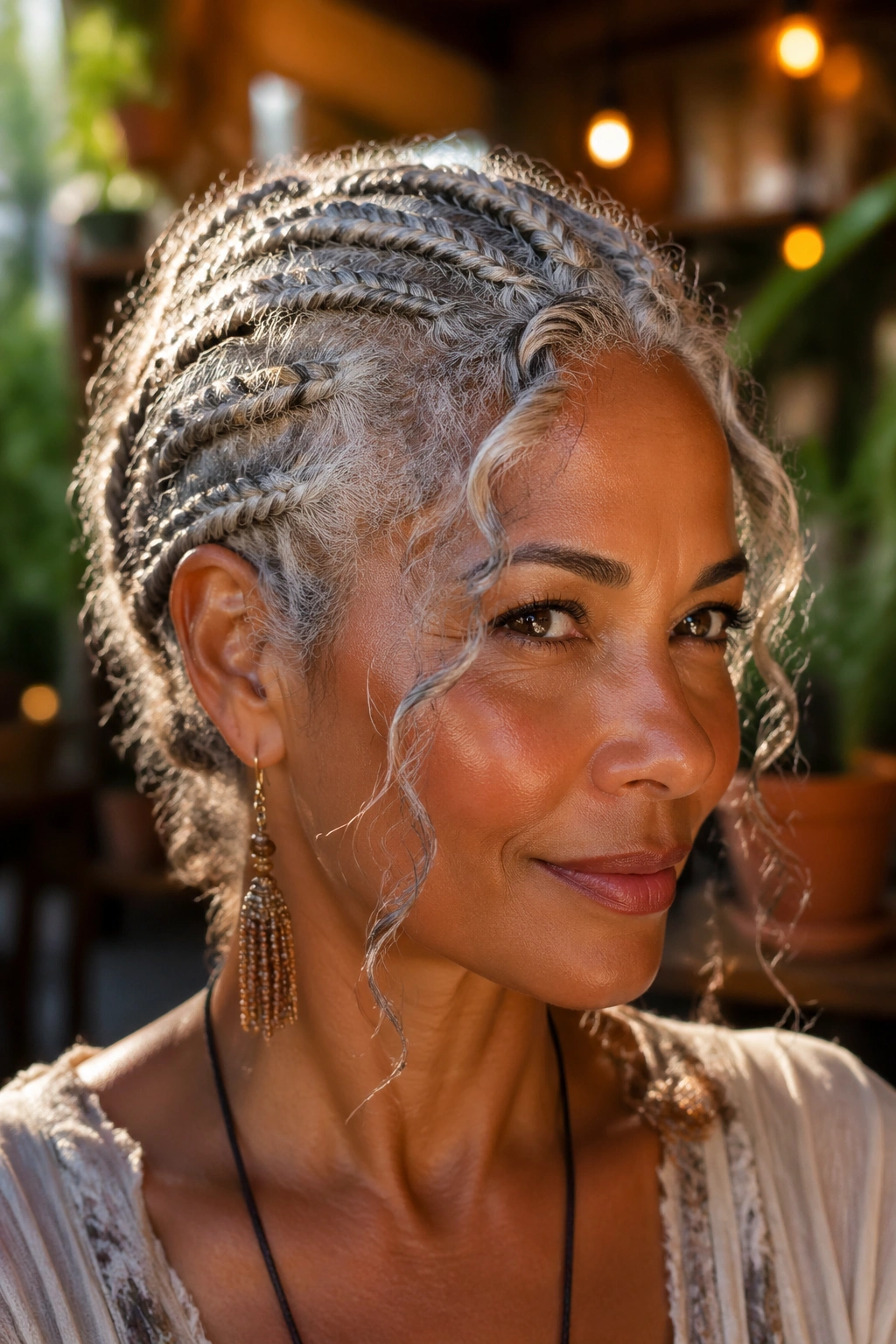
Soft silver or gray cornrows with curly wisps pulled out along the braid lines and around the temples. The loose wisps soften the cornrow geometry into something romantic and unstructured.
Gray hair benefits from softness because it can read as severe in tightly disciplined styles. The boho approach lets the gray feel approachable rather than statement-making.
The wisps need to be slightly wavy or curly. Straight wisps from gray cornrows can look like fly-aways rather than intentional design elements. If your natural gray is straight, ask the braider to leave wisps that have been pre-waved with a curling iron or wet-set with rollers.
This version reads as bohemian, artistic, and timeless. It works at every age and in nearly every setting except the most formal corporate environments.
12. Stitch-Braid Cornrows in Pure White
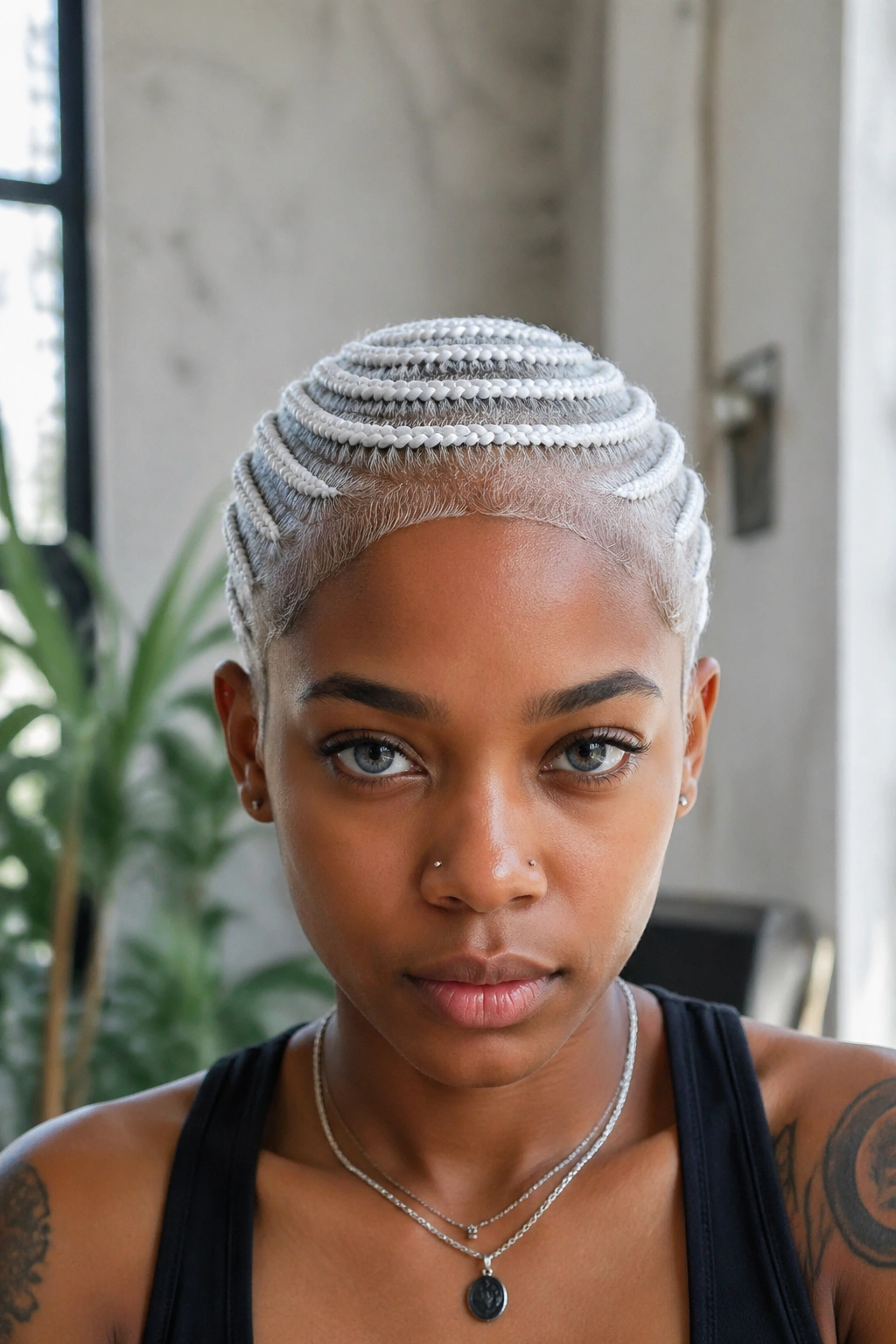
Stitch braids — those signature horizontal-ridged cornrows — in a pure white shade. The combination is bold without being aggressive.
Pure white hair carries different connotations than gray. It reads more deliberate, more graphic, often more youthful. White cornrows on younger faces signal fashion-forward style. On older faces, they signal confidence and self-acceptance.
The stitch pattern adds intricate detail that’s particularly visible in white. Each ridge in the braid catches light differently from the surrounding sections, creating visual depth that solid white cornrows would lack.
The white shade requires more careful product selection. Yellow-tinted gels and oils can transfer to white synthetic hair. Use clear, water-based products only.
13. High Pony Cornrows With Long Silver Tail
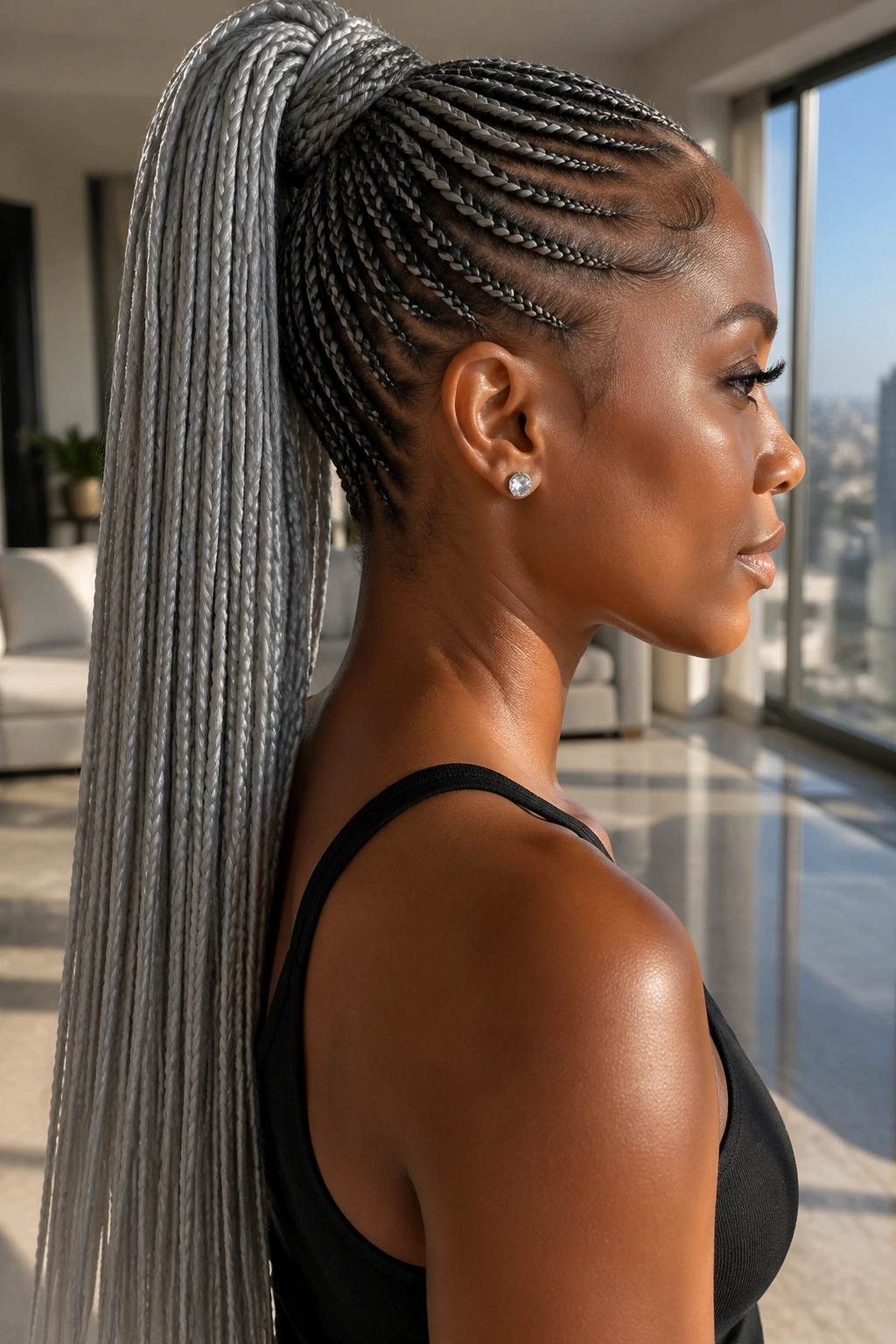
Cornrows funnel from the entire head up to a single high ponytail at the crown, where the synthetic gray hair cascades into a long, sleek tail down the back.
The high pony with silver length is dramatic. The cornrows create the sleek anchor. The silver tail creates the movement and drama. Together they read as confident and ageless.
Long silver tails — 24 inches or more — need quality synthetic hair to avoid the obvious-fake look. The longer the synthetic, the more important the quality of the fiber. Cheap long silver hair tangles, frizzes, and yellows quickly.
The pony anchor point needs strong support. A high pony with a long, weighted tail puts significant tension on the crown. Make sure the cornrows funneling into the pony are tight enough to hold but not so tight they cause headaches.
14. Cornrows in Smoky Gray With Pink Accents
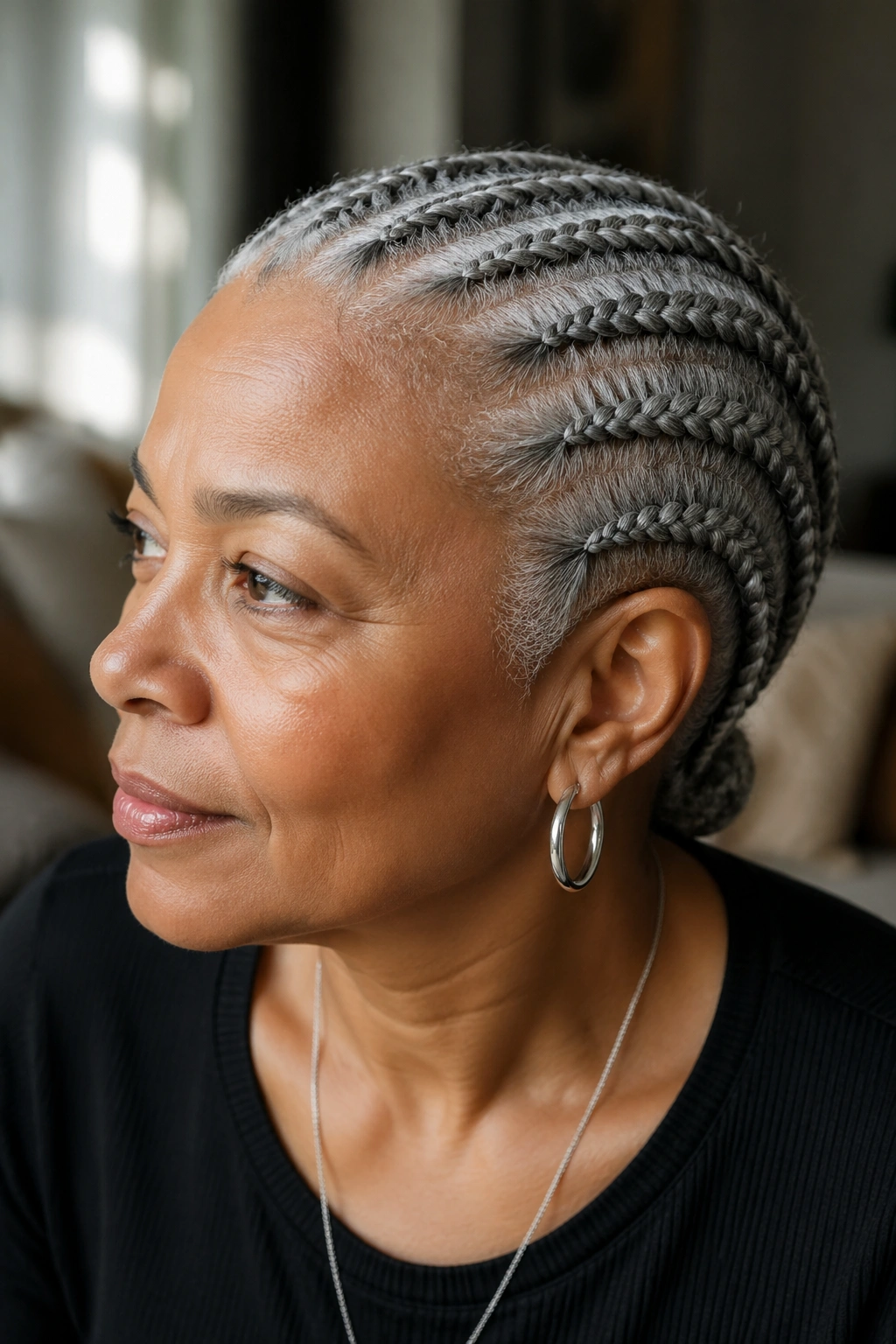
The base cornrows are a smoky medium gray, but two or three accent cornrows are installed in dusty pink or rose. The pink-gray combination is unexpected and surprisingly elegant.
Pink and gray work together because both are muted, neither competes for attention. The pink accents add warmth to gray that can sometimes feel cool or austere. The gray gives the pink a sophistication that pink alone might lack.
This is a creative-industry style. Works for fashion, art, music settings. Less suited to traditional corporate environments, though some workplaces are loosening expectations.
Place the pink accents near the front of the head where they’ll be visible. Pink cornrows hidden at the back defeat the purpose of having them.
15. Curly Gray Cornrow Ends With Sleek Braids
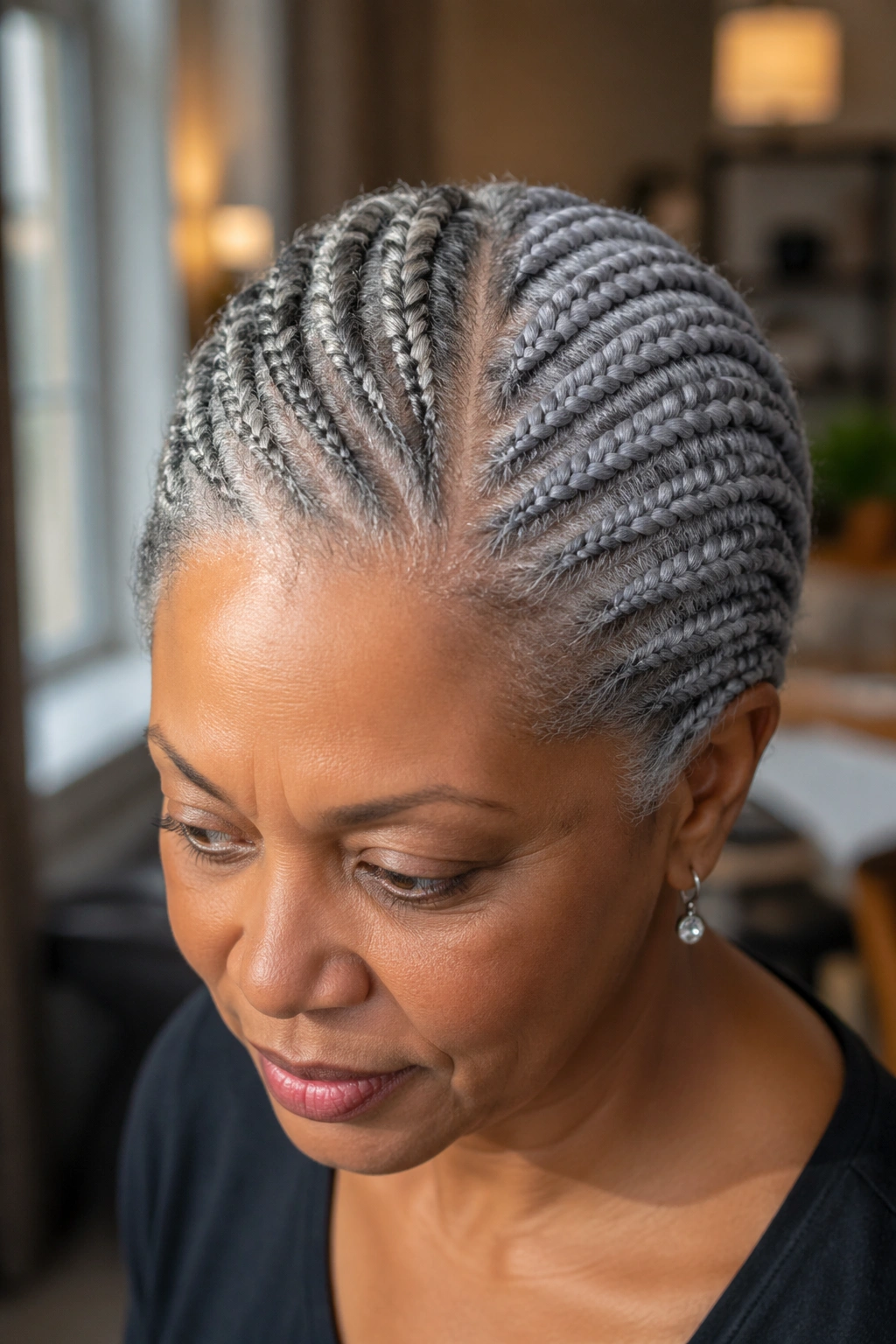
Cornrows are braided sleek and silver against the scalp, but the ends release into curly gray hair extensions. The curls fall around the shoulders for soft contrast against the disciplined scalp braiding.
This is the gray version of goddess cornrows. Same mechanics, different color. The gray curls catch light differently than dark curls, creating an almost ethereal quality.
What to Watch For
- Use water-wave or loose-curl synthetic hair in matched gray tones
- Curl quality is critical — cheap gray curls go frizzy fast
- Refresh curls every 3 days with light leave-in spray
- Sleep in oversized satin bonnet to protect curl shape
The gray curls add femininity and softness that pure cornrows lack. Worth it for occasions where you want gray to read as glamorous rather than utilitarian.
16. Asymmetric Gray Cornrows With Shaved Side
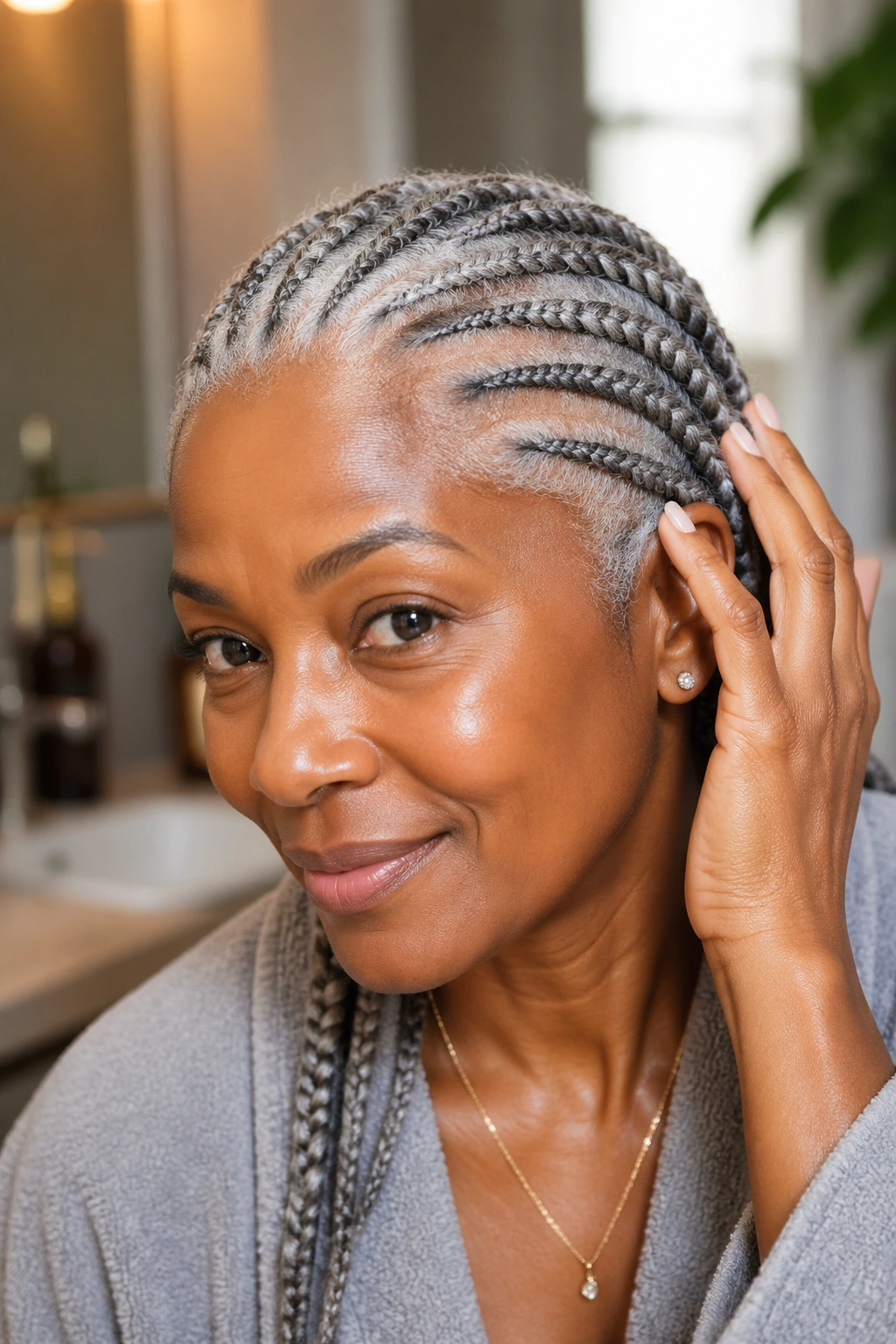
Cornrows on the majority of the head, but one side — usually behind the ear — is shaved short. The cornrows can be silver, white, or gray, with the shaved side providing strong contrast.
This is the most editorial gray cornrow option. It commits to a bold visual statement that combines structural braiding, dramatic color, and architectural shaving.
The shaved side becomes part of the design. Some wearers add geometric patterns shaved into the short hair — lines, dots, simple shapes. Others keep it clean shaved with no design.
Best for women already comfortable with experimental hair. The shaved side commits you to monthly trim appointments to keep the contrast clean. The cornrows themselves last 4-6 weeks, but the shaved area needs more frequent attention.
17. Gray Cornrows With Crown Bun
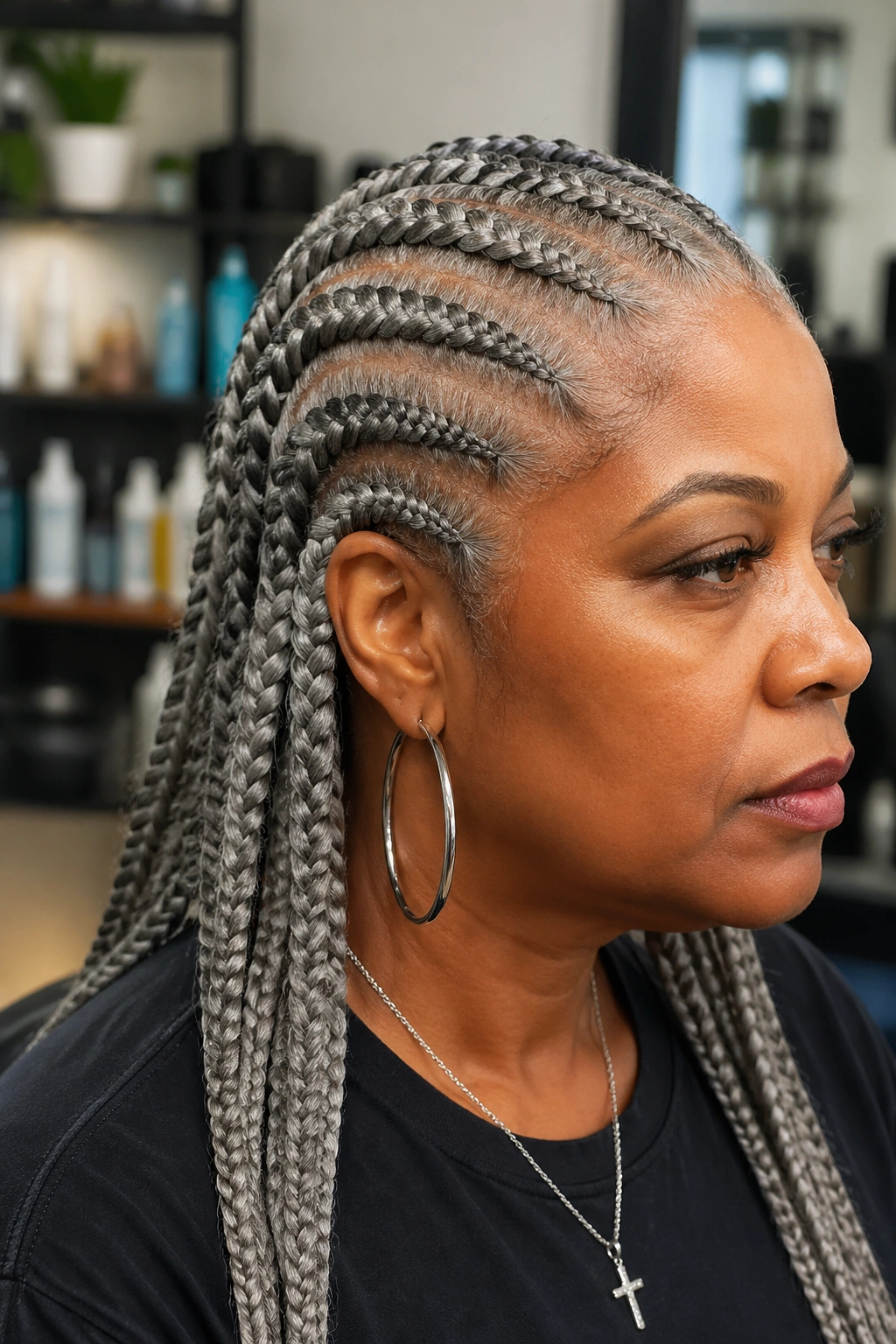
Cornrows in silver or gray funnel up to a single bun at the crown. The bun is also gray, often slightly fuller and more sculptural than the braids leading to it.
The crown bun elongates the head shape and adds height. Gray cornrows already command attention; adding a sculptural bun on top compounds the visual impact.
The bun should be structured rather than messy. A clean, dense bun signals intention. A loose, undone bun on gray cornrows can read as neglected rather than artful.
Use a bun form or padding underneath to maintain shape through wear. Gray hair (especially synthetic) sometimes lacks the body of darker hair, so structural support keeps the bun sitting properly.
18. Soft Lavender-Gray Cornrows for Subtle Color
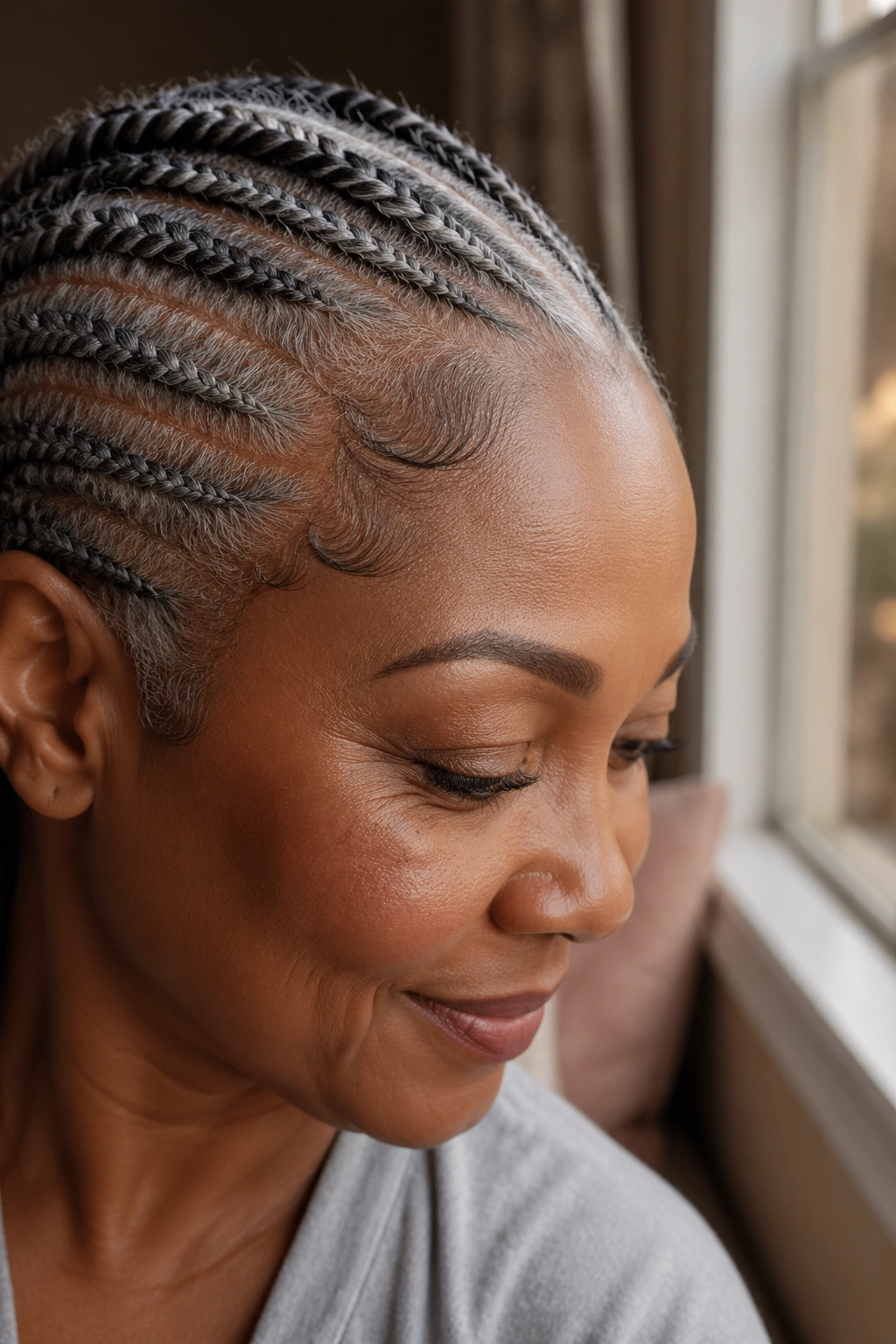
A lavender-tinted gray that reads almost as a faded purple. Soft. Cool. Slightly otherworldly.
Lavender-gray works for women who want gray with personality. The faint purple tone adds creative interest without departing from the gray family entirely. It reads as artistic without being loud.
Skin tone matters here. Cool undertones suit lavender-gray beautifully. Warm undertones can find it washes them out — test against your face before committing.
The lavender quality fades over time as the synthetic hair settles. Some wearers like the gradual shift toward pure gray. Others refresh with a temporary purple toning spray every two weeks to maintain the lavender quality.
19. Cornrows With Gray Tips Only
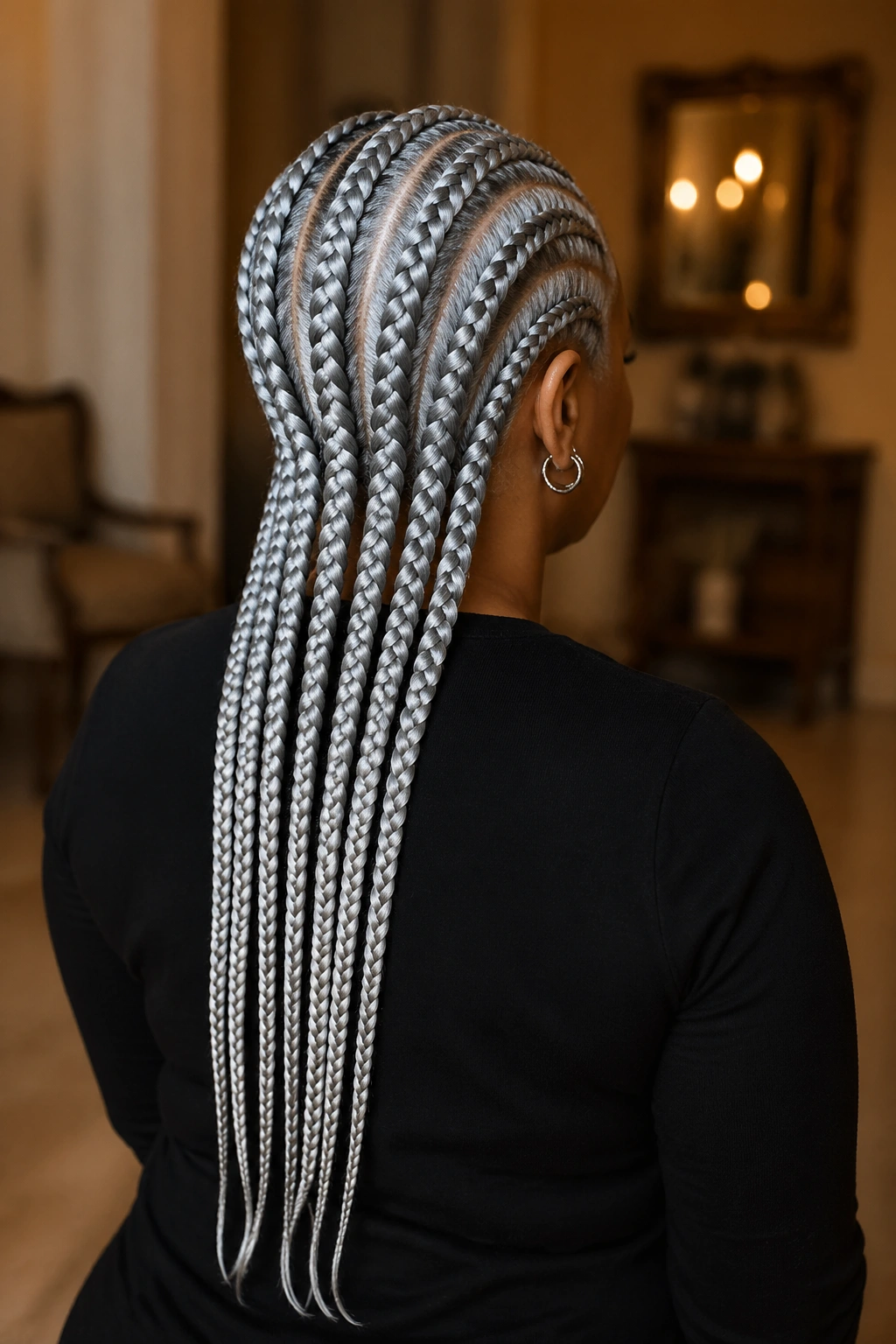
The cornrows are natural color along the scalp, with synthetic gray hair added only at the ends. The tips are silver or gray, transitioning subtly from the natural color.
This is the lowest-commitment gray option. You get the visual interest of gray hair without committing to a full gray install. The natural roots stay neutral. The gray tips add bold accent.
Good for testing whether full gray suits you before going further. Wear gray-tipped cornrows for one cycle, see how you feel about the look. If you love it, commit to full gray next time. If you don’t, no major change needed.
The gray-natural transition needs to be hidden well. Ask your stylist to feather the connection point so the color shift looks gradual rather than abrupt.
20. Pixie-Length Gray Cornrows for Short Hair
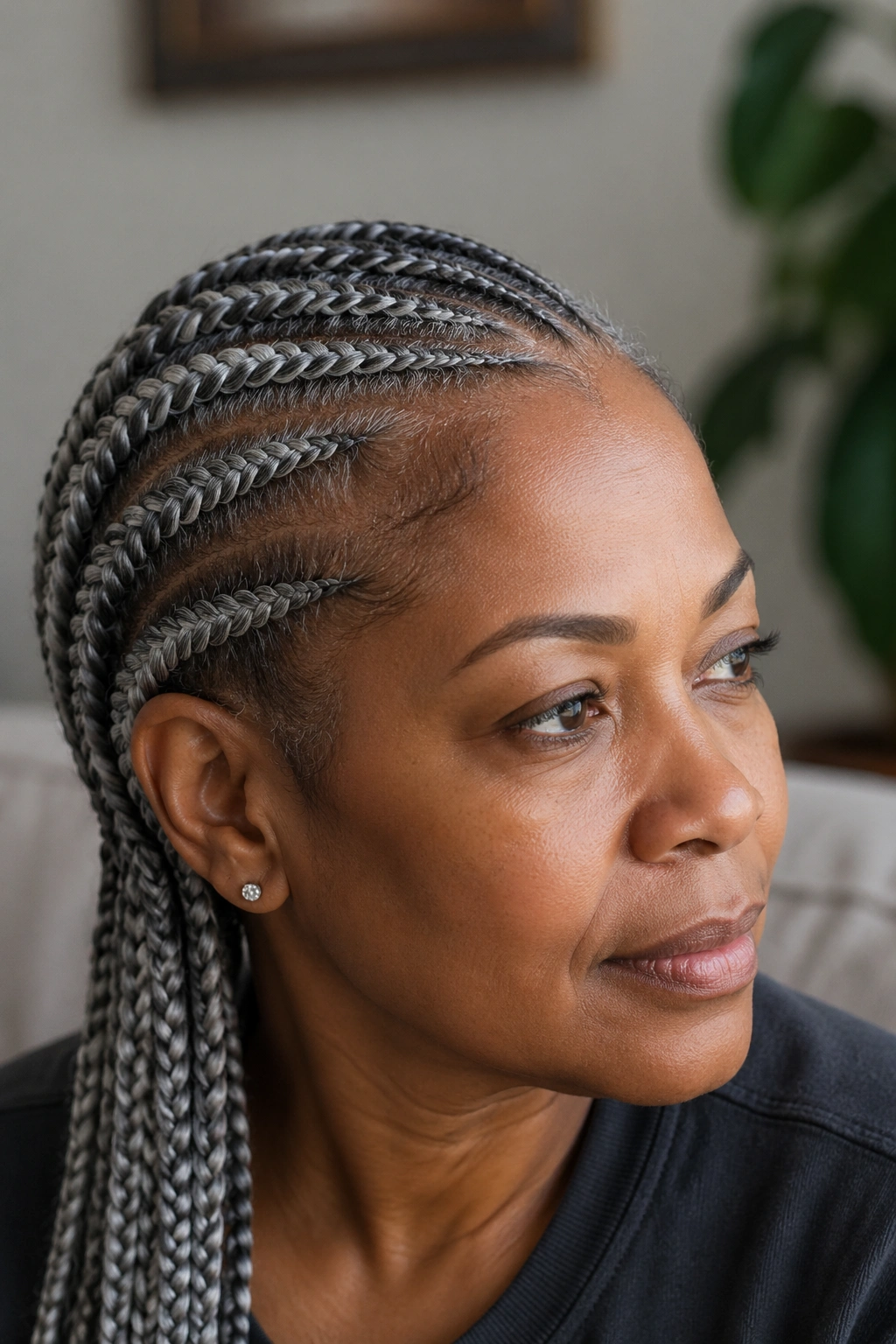
Short cornrows that hug the scalp and end at the nape of the neck — essentially a pixie cut version of cornrow styling, executed in gray. The cornrows are tight, neat, and very close to the head.
Short gray cornrows read as confident and minimalist. The style requires nothing dramatic — no length, no accessories, no flowing extensions. The gray color and the cornrow craftsmanship do all the work.
This works particularly well for older women whose natural hair has gone gray and who prefer low-maintenance styling. The short length means less daily upkeep. The gray color requires no dye maintenance if it’s natural.
Edge work matters more on short styles because there’s less hair to distract from imperfect edges. Use a gentle edge gel and keep the edges crisp.
21. Cornrow Mohawk in Bold Silver
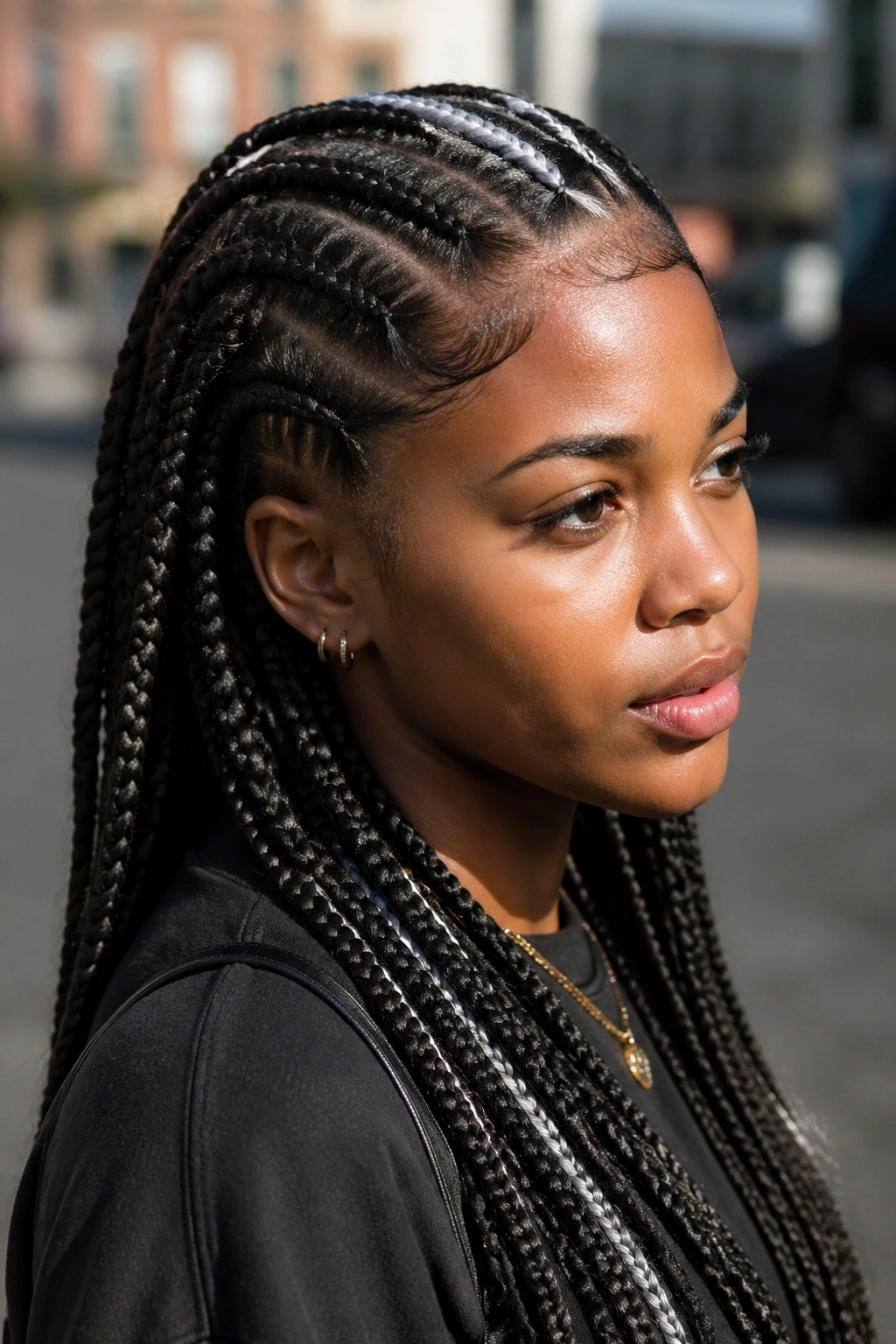
A central strip of cornrows runs down the middle of the head — like a mohawk pattern — in bright silver, with the sides shaved or kept very short. The contrast between the silver strip and the bare sides is dramatic.
Cornrow mohawks were already statement styles. In silver, they become unforgettable. The bright color makes the mohawk strip pop against any scalp color showing on the sides.
Wear with confidence. This isn’t a style you can wear half-heartedly. Wear it with strong eye makeup, statement earrings, and posture that says you mean it.
The mohawk strip can be straight braided, stitch-braided, or geometric. Each variation creates a different mood. Straight braids read polished. Stitch braids read intricate. Geometric reads sculptural.
22. Gray Cornrows With Decorative Pearl Accents
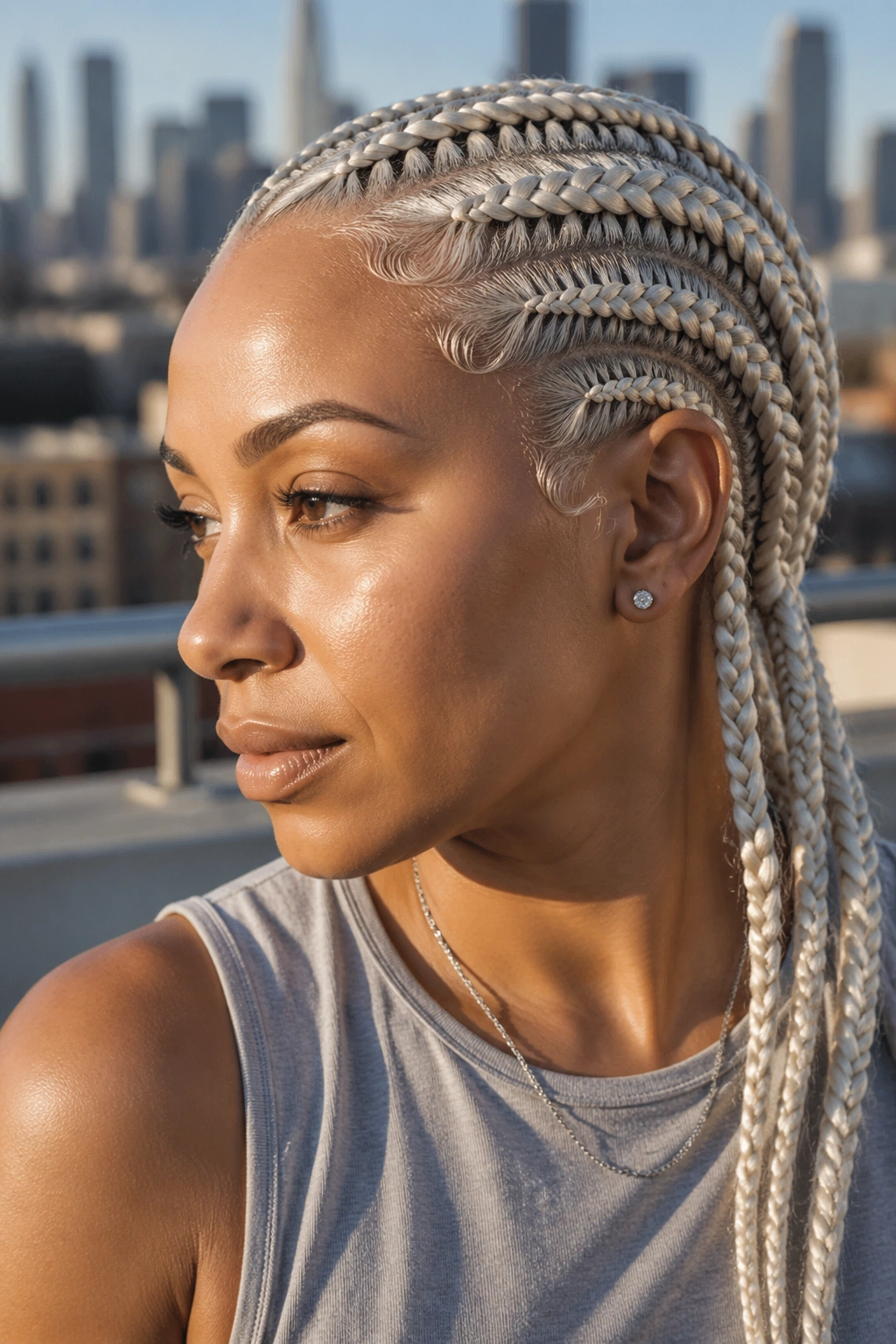
Small white or gray freshwater pearls are threaded into the cornrows at intervals — along the braid length, at the ends, or at the part lines. The pearls add elegant texture without color competition.
Why It Works
Pearls and gray hair share a quality — both look luminous in good light, both read as classic rather than trendy, both elevate any look without overwhelming it.
- Pearls can be subtle (a few scattered) or generous (lining each cornrow)
- Choose freshwater pearls for character or perfectly round cultured pearls for polish
- Best for events, ceremonies, formal photography
- Removable, so the same install can transition from formal to casual
Place pearls thoughtfully. Random scattering looks accidental. Patterned placement — one pearl every two inches, for example — looks deliberate.
Maintaining Gray Cornrows for Color and Shape
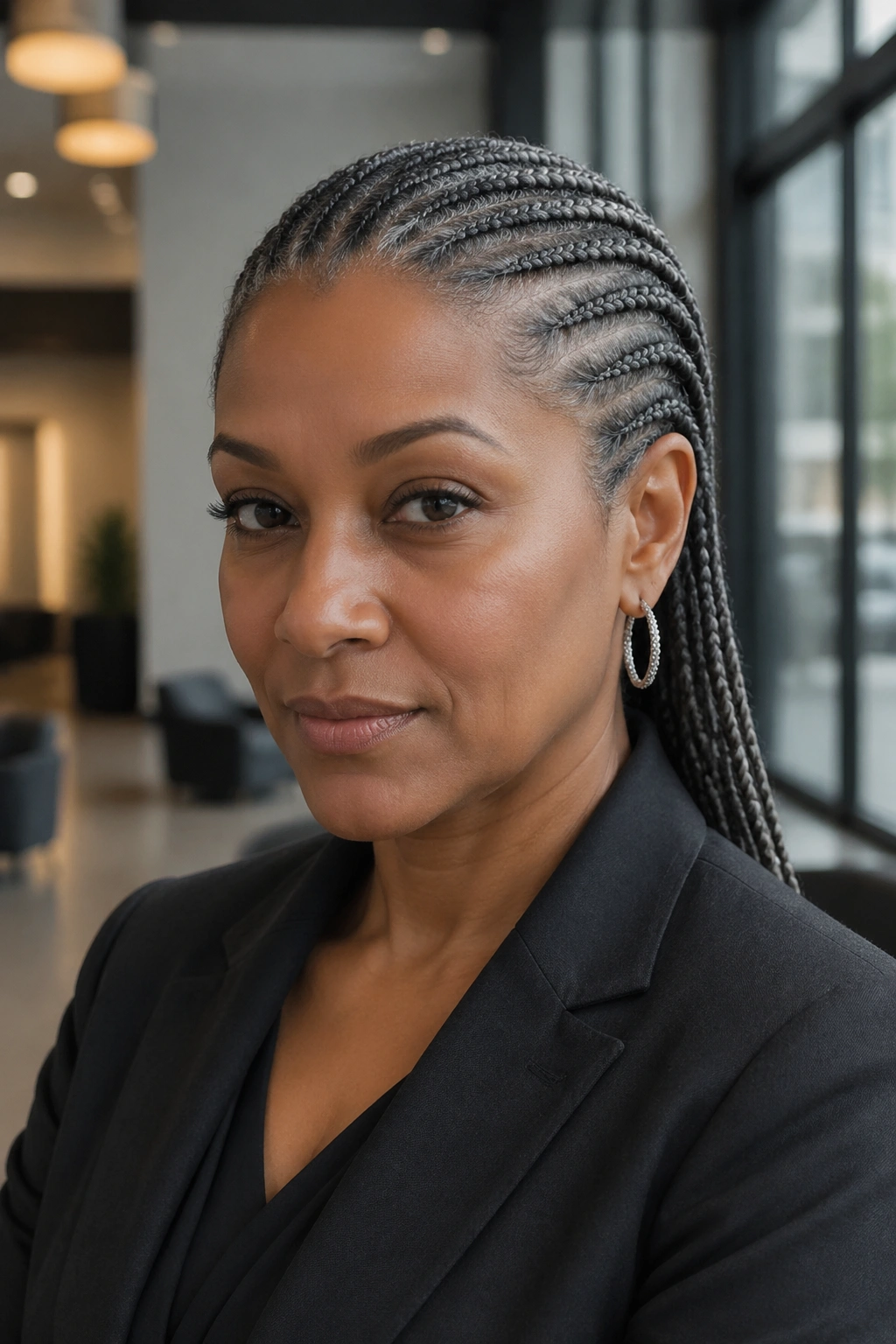
Gray hair is more delicate than pigmented hair. The braids need both moisture care and color care.
Every morning, smooth flyaways with a light leave-in spray. Avoid heavy oils that can darken the gray over time.
Every 4 days, oil the scalp between the braids with a light, clear oil — jojoba or argan work well without yellowing the hair.
Every 7-10 days, use a purple toning spray on the cornrows to neutralize any yellowing that’s developing. This keeps the gray reading clean and intentional.
Watch for product buildup. Gray shows residue faster than dark hair. If the cornrows start looking dull, mist with diluted apple cider vinegar (1 part ACV to 4 parts water) and rinse gently.
Sleeping in Gray Cornrows
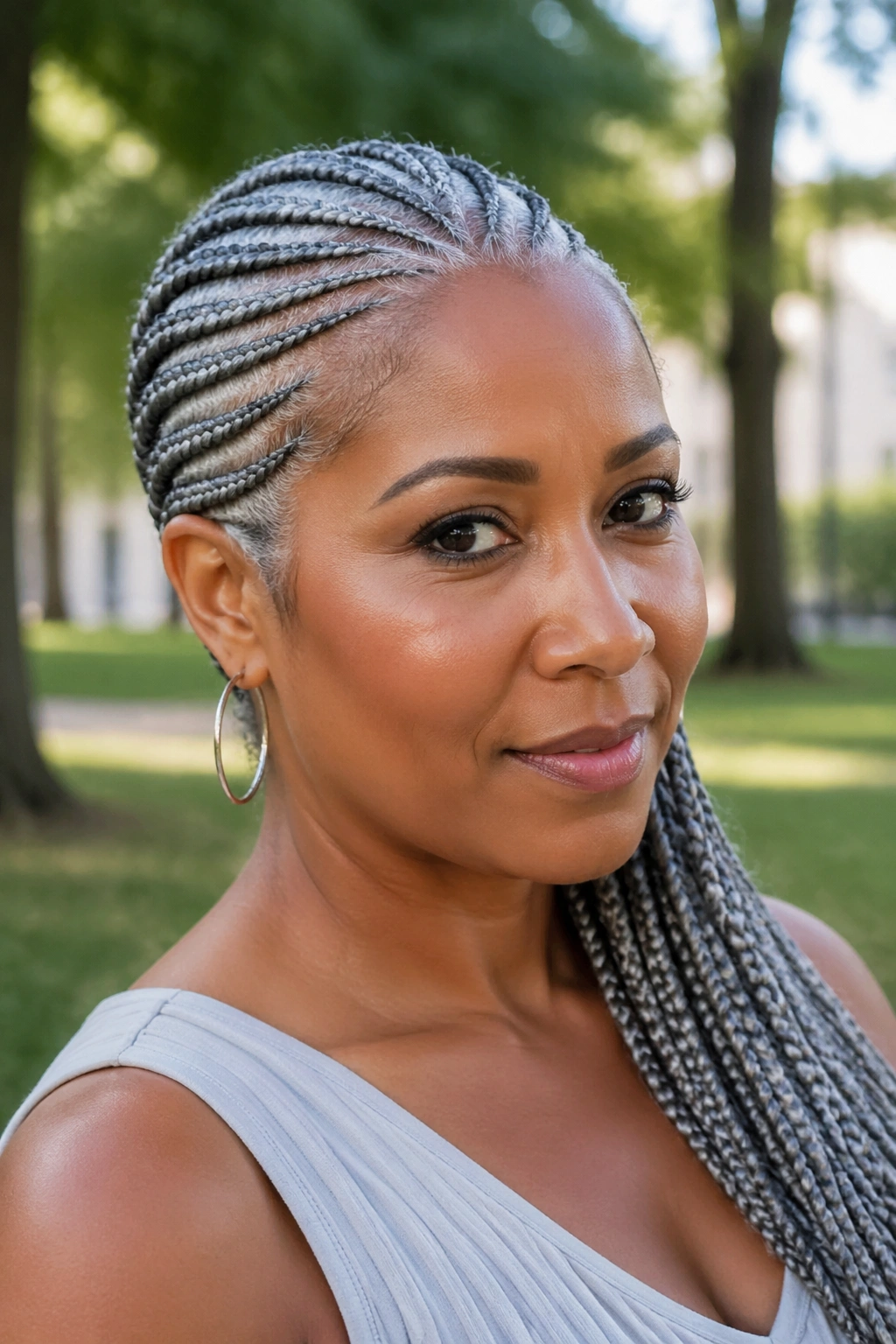
Gray hair is more porous than pigmented hair, which means it picks up dirt and oils from pillowcases more easily. Silk pillowcases or satin bonnets are non-negotiable.
Wash your bonnet weekly. Sleeping in a dirty bonnet transfers oils back to the cornrows and can yellow the gray over time.
If your natural skin is oilier, layer a silk scarf under the bonnet to absorb scalp oils overnight without contact with the cornrows themselves.
Takedown Without Damaging Gray Hair
Takedown matters more for gray hair because the strands are more fragile. Rushed takedown breaks more strands. Patient takedown preserves them.
Start at the tips. Cut synthetic gray hair off at the cornrow transition. Don’t try to unbraid through it.
Once the cornrow is exposed, finger-detangle each section slowly. Apply conditioner generously to the area near the scalp where shed hair has accumulated. Wait 10 minutes before continuing — let the conditioner soften the tangle.
After takedown, do a clarifying wash to remove any synthetic-hair residue. Follow with a deep conditioner specifically formulated for gray hair (look for ones marketed for “silver” or “platinum” hair). Give your hair 48 hours of rest before any new install.
Picking the Right Gray Cornrow for You
Match the version to your relationship with gray and your daily life.
- Just exploring gray: Cornrows With Gray Tips Only, Salt-and-Pepper Mixed
- Embracing natural gray: Sleek All-Back, Pixie-Length, Soft Side-Swept
- Bold color statement: Pure Silver, Platinum, Mohawk in Silver
- Soft and feminine: Boho With Wisps, Curly Gray Ends, Lavender-Gray
- Editorial and dramatic: Geometric, Asymmetric With Shaved Side, Crown Bun
Gray cornrows are an opportunity, not a compromise. Picked thoughtfully, installed well, and cared for consistently, they create some of the most striking hair styling you can wear at any age. The gray catches light. The cornrows hold the line. The combination commands attention without trying to.
