



Simple cornrows with beads bring out something quietly playful that minimalist braids can’t quite reach on their own. The cornrow does the structural work — clean parts, flat scalp, low maintenance. The beads add the percussion. A small click at the shoulder when you turn your head. A glint of color when light hits the right angle. A tiny bit of weight at the ends that makes you walk slightly taller without quite knowing why. Beads have been part of African braiding traditions for centuries, and the simple cornrow base is what shows them off best.
I started using beads on my own cornrows about five years ago, and I’ve gone through almost every kind. Wood. Glass. Plastic. Metal cuffs. Hand-painted ceramics. Cheap mall-store packs and expensive small-batch sets. The lesson I keep relearning is the same one I was told when I started — less almost always wins. A handful of beads in the right place reads as elegant. A waterfall of beads on every braid reads as costume. The right balance is what separates a simple beaded cornrow style that looks effortless from one that screams for attention. This roundup pulls together 22 simple cornrow looks with beads — each with a different bead choice, placement, color logic, or finishing detail.
Why Beads and Cornrows Work So Well Together
Cornrows have clean lines. Beads have texture and color. The combination creates contrast — the flat braid against the sculpted bead — which keeps the eye moving without overwhelming it.
Functionally, beads anchor the ends of cornrows so they don’t unravel. A bead and elastic combo locks in the braid better than just an elastic alone. They also weigh the braid down slightly, which helps it hang straighter and more uniformly.
Bold statement: simple beaded cornrows are the most beginner-friendly bead style on any braid type. The cornrow base is sturdy, the bead application is at the ends only, and the maintenance is minimal compared to fully embellished braids.
Getting the Hair Ready for a Clean Beaded Finish
Beads sit best on neatly braided ends. That means starting with stretched, well-detangled hair so the cornrows themselves are smooth from start to finish.
Wash 24 hours before braiding with a clarifying or sulfate-free shampoo. Deep condition with heat for 30 minutes, then stretch the hair with a tension brush on medium heat. Detangle in four sections with leave-in.
Trim before braiding. Frayed ends look messy under a clear elastic, and the bead won’t sit cleanly against a fluffy bottom.
Detail that matters: keep the section size consistent across the head. Uneven section sizes mean uneven braid widths, which means the beads sit at different angles on each braid — and that asymmetry shows up in photos.
Choosing the Right Bead for the Style
Beads come in materials that each have their own mood.
Wooden beads — natural, warm, earthy. Best for boho or everyday looks. Lightweight and gentle on the braid.
Glass beads — heavier, glossy, often translucent or iridescent. Good for statement styles but heavy enough to pull on the roots over time.
Plastic beads — the lightest option, comes in every color imaginable. Affordable and great for kids’ styles, but can read juvenile on adults if the colors are too bright.
Metal cuffs — gold, silver, copper, brass. Sleek and structured. Heavier than they look — pair with thicker braids.
Ceramic and clay beads — handmade-feeling, earthy, often painted. Great for cultural or boho styles.
Pick one material per style. Mixing two materials in the same install reads as indecisive.
How to Apply Beads Without Damaging the Braid
Use a beader tool or a hairpin loop to thread beads onto the braid. Slide each bead up to the desired position, then secure with a small clear elastic at the end.
Melt the elastic end with a quick flame — about two seconds — to create a tiny seal that prevents the bead from slipping off. Don’t hold the flame too long. Burning the kanekalon creates a hard knot and a chemical smell.
For beads applied along the length of the braid (not just at the ends), use two elastics — one above the bead and one below — to keep the bead in place.
Keeping Bead Weight Manageable
Heavy beads on every braid creates sustained pull on the roots. After a week, you’ll feel the soreness at the temples and crown.
Distribute weight by skipping beads on alternating braids, or by using fewer beads per braid (3-5 instead of 8-10). The visual effect is similar, but the load on the scalp is half.
For long-term wear, lightweight wooden or hollow plastic beads are kindest to the scalp. Heavy metal cuffs are best reserved for short wear — a single event or a week at most.
A Note Before the List Begins
Every style below assumes you’re going to keep the basics consistent: tie down with a satin scarf at night, mist edges in the morning, and wash every 10-14 days. I’ll only mention specific maintenance when a particular style needs something different.
1. Three Wooden Beads at the End
The simplest beaded cornrow style on the list. Three plain wooden beads at the end of each braid. No accent colors. No metal mixed in. Just consistent, warm wood across the whole head.
Why It Works
Three is the magic number for end beads. Two looks unfinished. Four feels heavy. Three reads as polished and intentional.
- Best on natural-color cornrows (no extensions needed)
- Holds 2-3 weeks
- Pairs with all neutral wardrobes
A note: light wood beads (birch, beech) suit cool skin tones; dark wood (walnut, mahogany) suits warm skin tones.
2. Cornrows With Single Gold Bead
One gold metal bead at the end of each cornrow. Just one. Small to medium size — about the diameter of a pencil.
The single-bead choice is the most adult version of beaded cornrows. It reads sophisticated rather than playful.
Pair with gold hoop earrings or a delicate gold chain for a cohesive metal palette. Mixing gold beads with silver jewelry breaks the visual flow.
3. Alternating Bead Colors
Beads at the ends in two alternating colors — say cream and tan, or black and gold. The pattern is consistent across the head.
Bold claim: two-color alternating beads is the most underrated style on this list. The visual rhythm gives the look more interest than single-color beading without crossing into busy.
The two colors should be from the same family — both warm, both cool, or both neutral. A warm cream with a cool gray reads as accidental.
4. Stitch Braids With Bead Accents
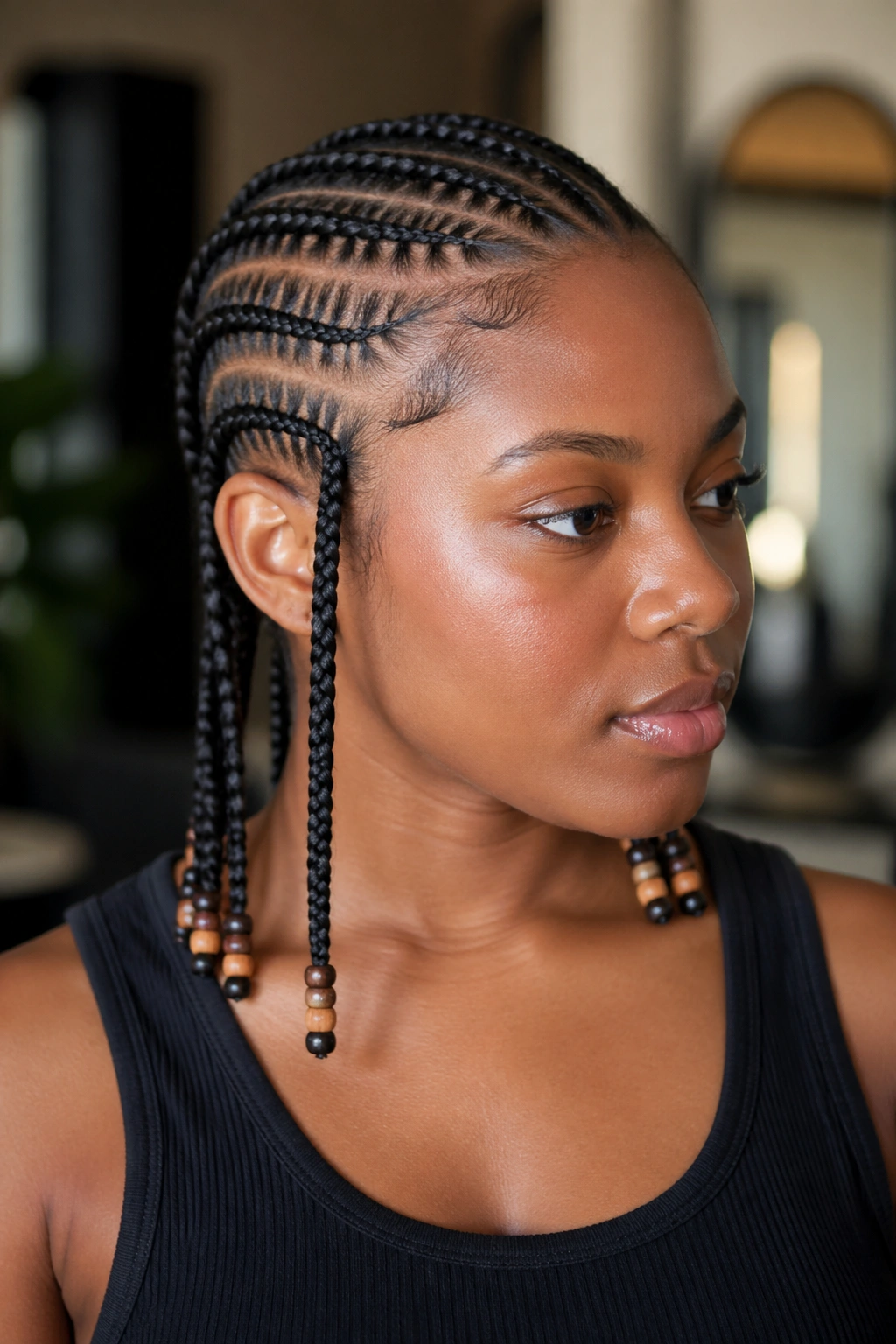
Standard stitch braid cornrows with three small beads at the end of each braid. The precision of the stitch braids carries the visual weight, and the beads add a final touch.
The bead size needs to be smaller on stitch braids than on regular cornrows — usually 4-5mm beads instead of 6-8mm. Larger beads compete with the stitch detail.
Wooden or matte ceramic beads work better here than glossy or metal. The stitch braid look is understated, and the beads should be too.
5. Cornrows With Beads Mid-Length
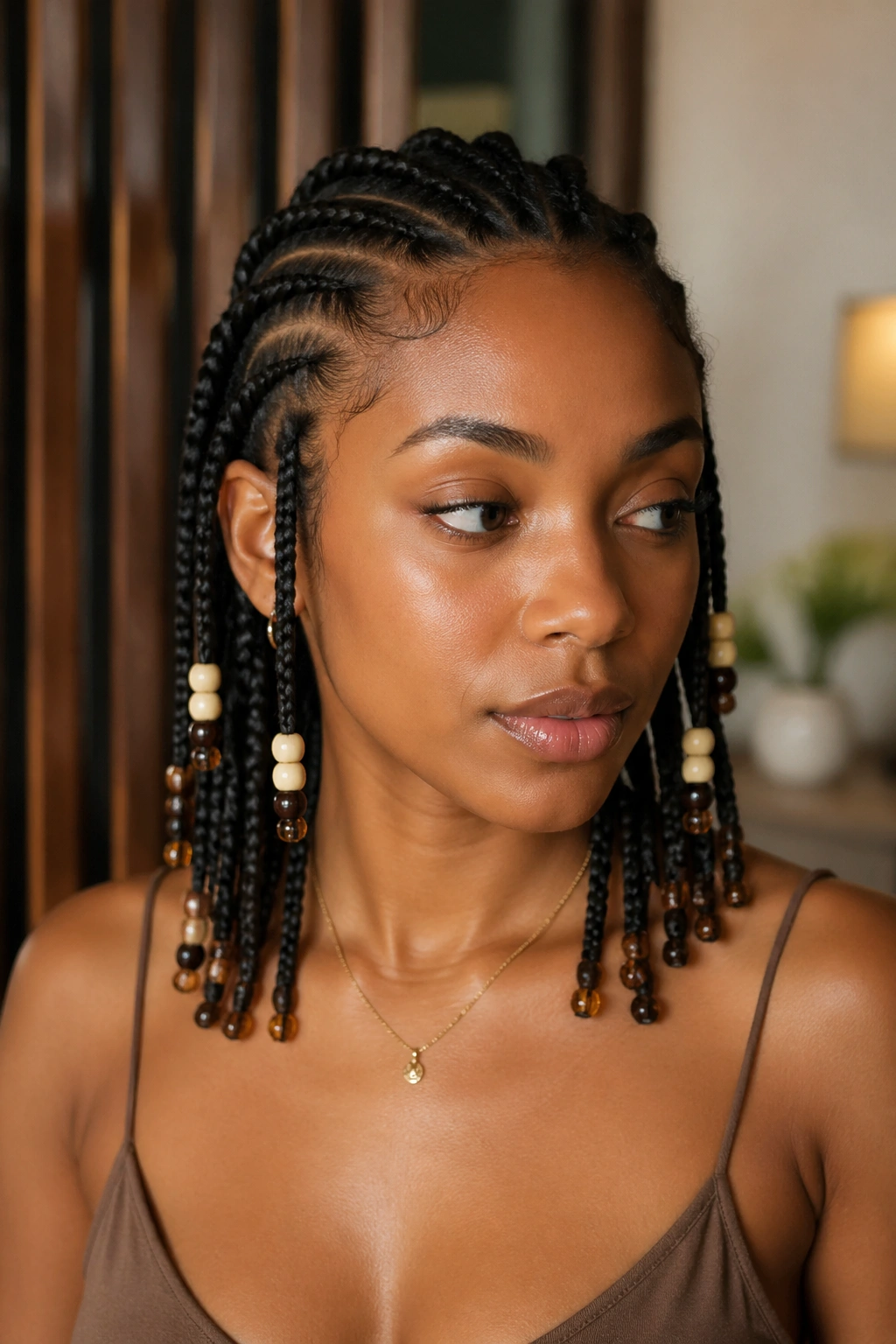
Beads applied not at the ends but at a single point along the length of each braid — usually halfway down. A decorative belt, of sorts.
This is a less common placement and reads as more editorial than ends-only beading. Use 1-2 beads per braid at the mid-length point.
The beads need to stay in place, so secure with a tiny elastic on either side. Otherwise they slide down over the course of a day.
6. Side-Swept Cornrows With Beads
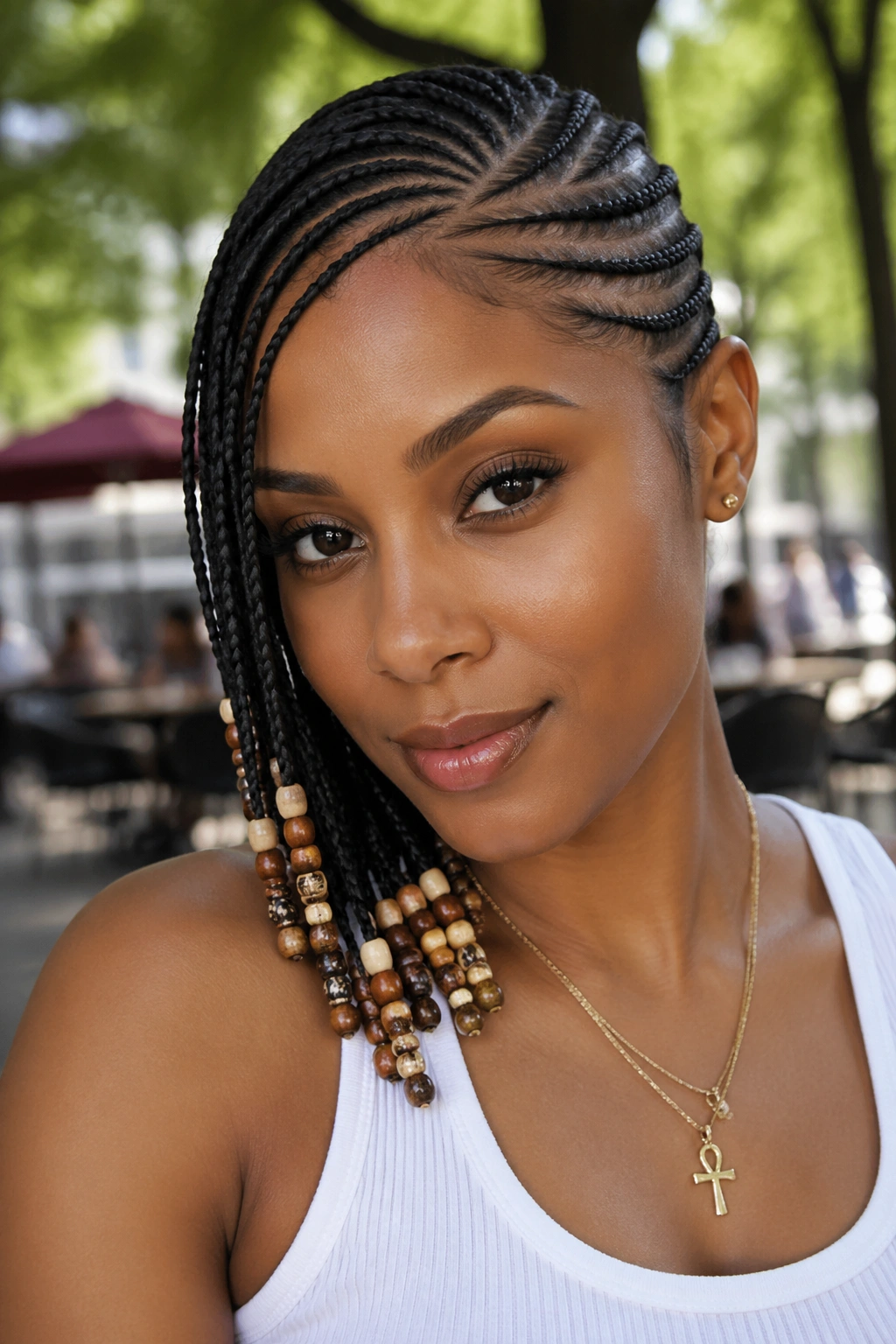
All cornrows sweep diagonally from one side of the head to the opposite ear. Beads decorate only the front-most cornrows that frame the face.
The asymmetry is the appeal. Beaded ends only on the side that sweeps forward. The back-sweeping side stays plain.
This style flatters round and heart-shaped faces because the beaded side draws the eye horizontally across the cheekbone.
7. Cornrows With Pearl Accents
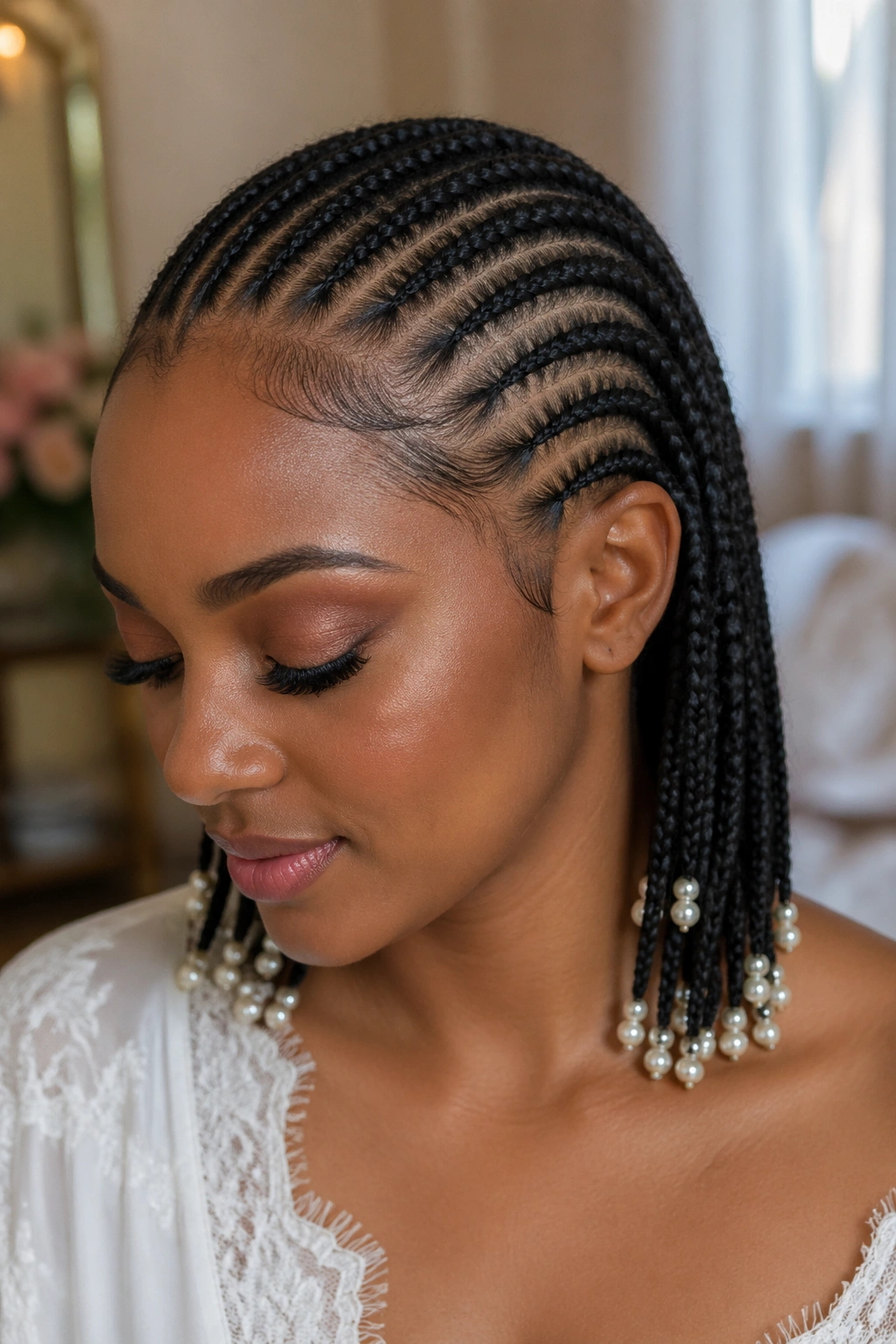
Small faux pearl beads — usually 4-6mm — at the ends of each cornrow. The pearls give a soft, elevated finish.
Pearls suit weddings, brunches, and any occasion where you want polished without flashy. They also work with most outfit colors because pearl is an effective neutral.
Use faux pearls, not real ones. Real pearls discolor with edge gel and fade after a single wear.
8. Mini Beads on Every Other Braid
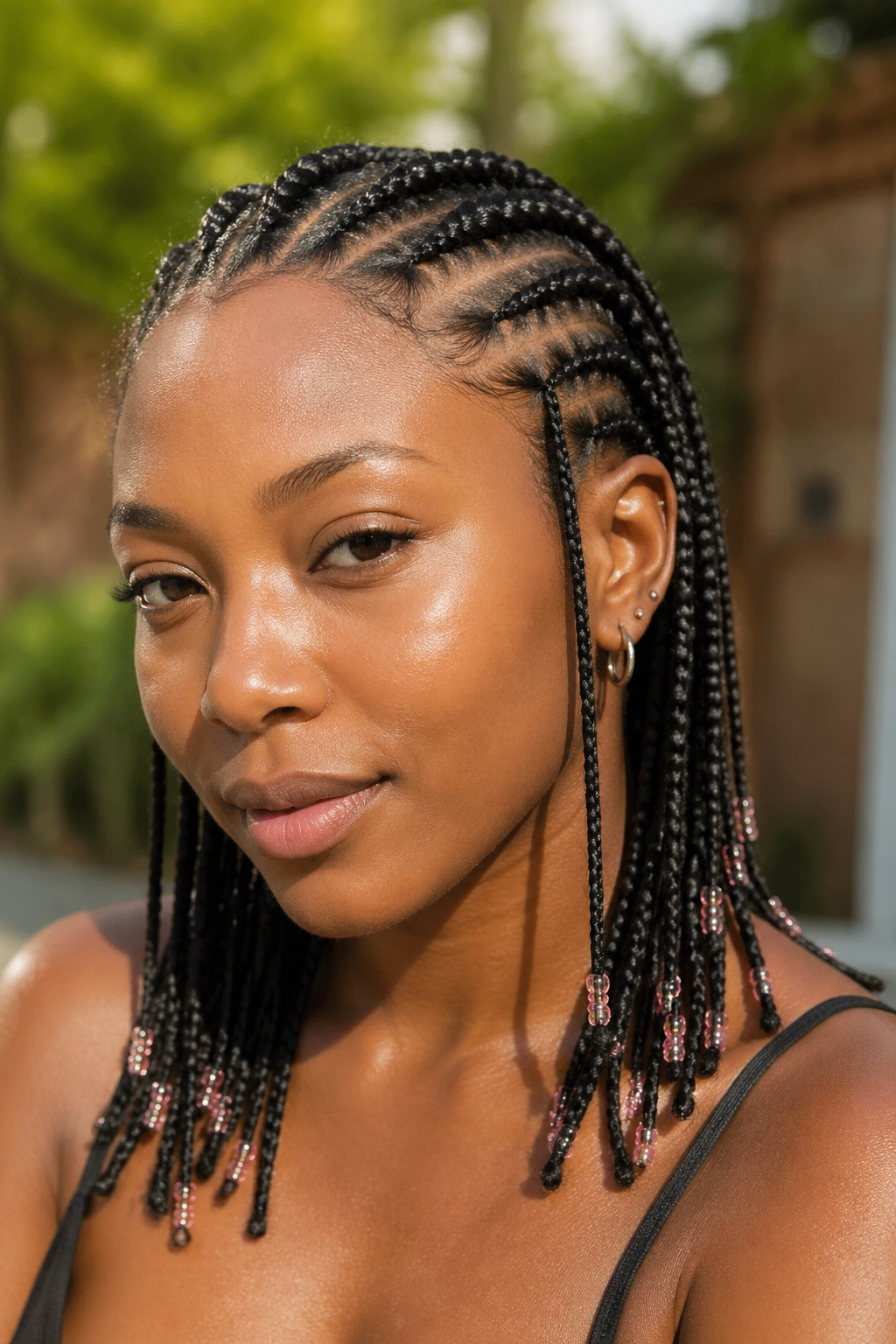
Beads at the ends of alternating braids only. The non-beaded braids stay plain. The visual rhythm gives the style movement without overload.
This is the simplest way to halve the weight of a beaded style while keeping most of the visual impact. Great for women with sensitive scalps.
Choose smaller beads (4mm) for the beaded braids — alternating beads are more visible by default, so they don’t need to be large to register.
9. Cornrows With a Single Statement Bead
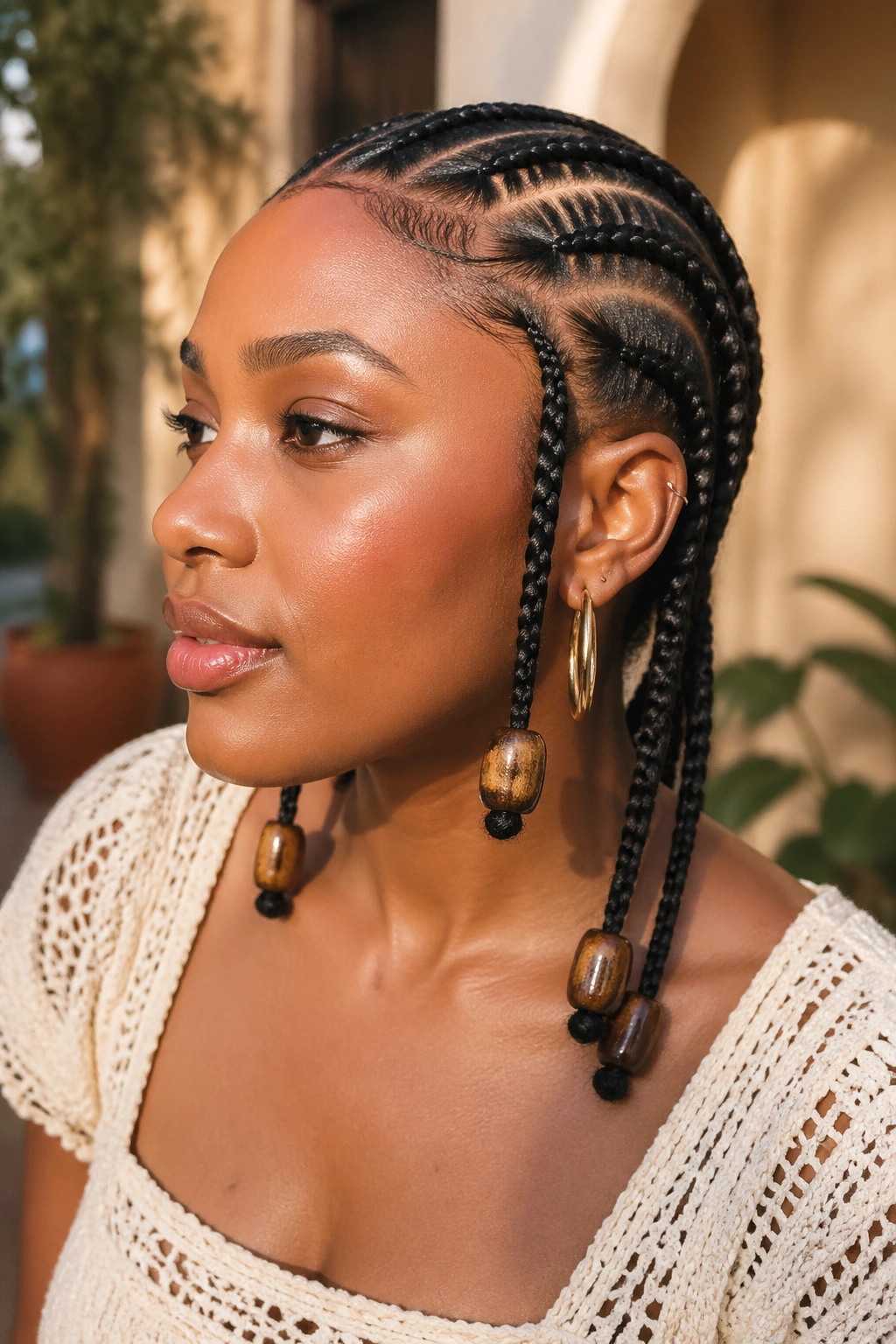
One large, distinctive bead per braid — a hand-painted ceramic, a hammered metal disc, or a unique glass bead. Each bead is a small accent in itself.
The statement bead style works best with simple cornrows. Anything more complex competes with the bead for attention.
Pick a bead that has personal meaning — a souvenir from a trip, a heritage symbol, a color you love. The story behind the bead is part of what makes the style feel intentional.
10. Cornrows With Beads at the Hairline Only
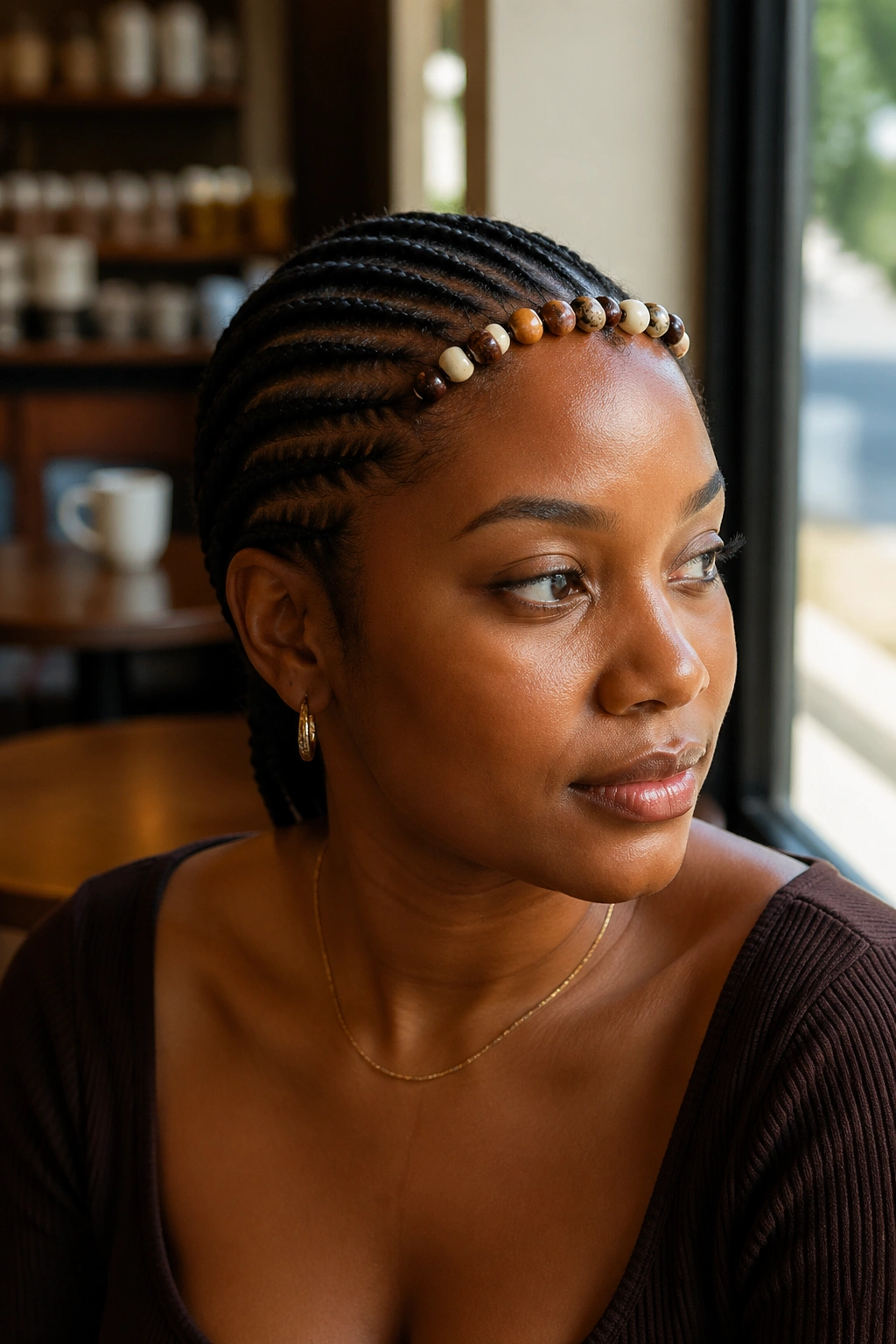
Beads at the ends of the front-most cornrows only — usually the three to five braids that frame the face. The back braids stay plain.
This concentrates the bead detail where it’s most visible — the face frame — and keeps weight distributed away from the crown and back of the head.
It’s also a practical choice for women who pull their hair into low buns or ponytails. The bead detail stays visible at the hairline even when the back is gathered up.
11. Bohemian Cornrows With Wooden Bead Mix
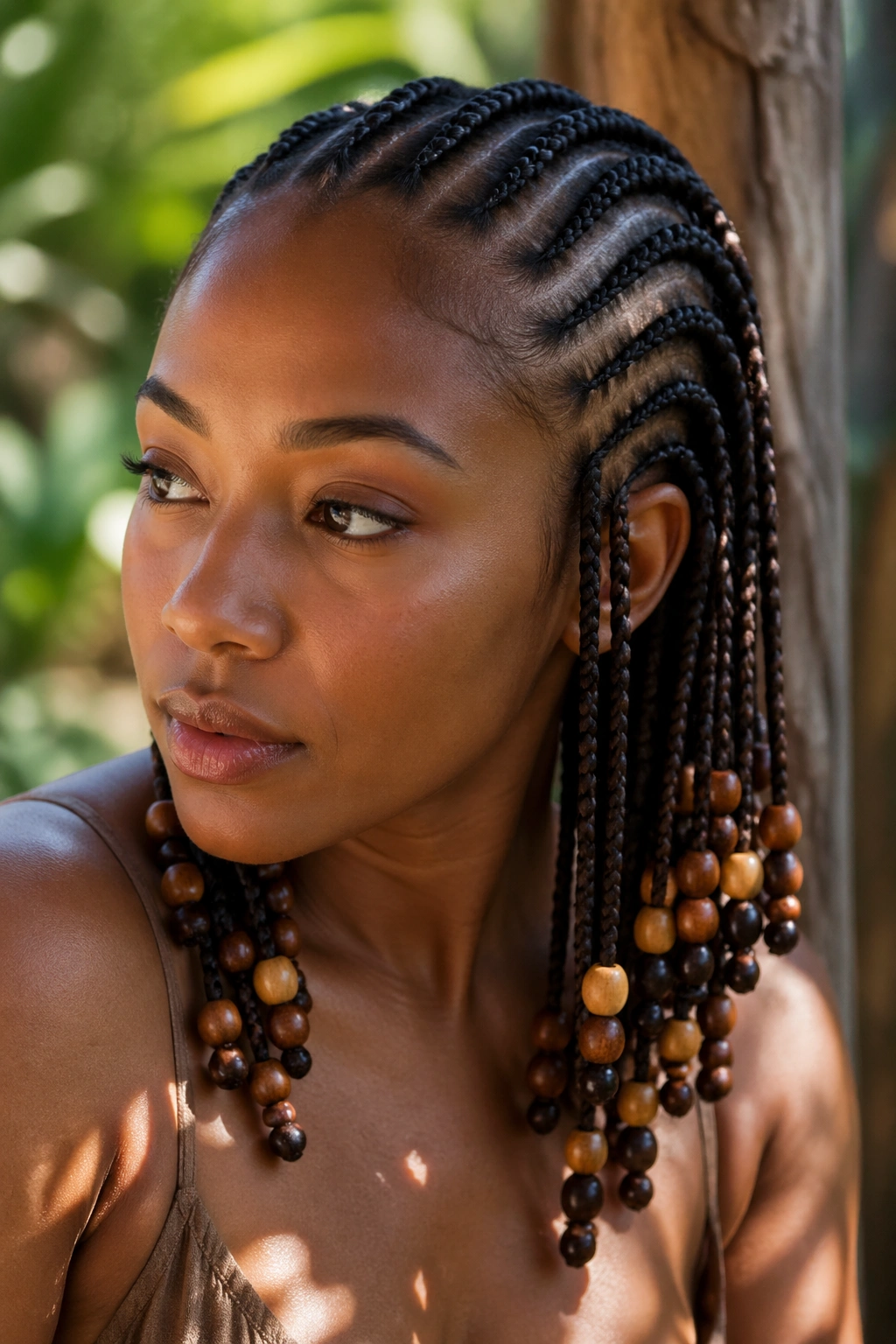
Wooden beads in three different sizes — small, medium, and slightly larger — mixed across the ends of each braid. The variation gives the style a hand-crafted, boho mood.
The bead mix should still feel deliberate. Stick to one wood color and vary only the size, or stick to one size and vary only the wood color. Varying both creates chaos.
This style suits flowy dresses, layered jewelry, and casual weekend looks. Less suited to formal or corporate settings.
12. Cornrows With Beads and Cowrie Shells
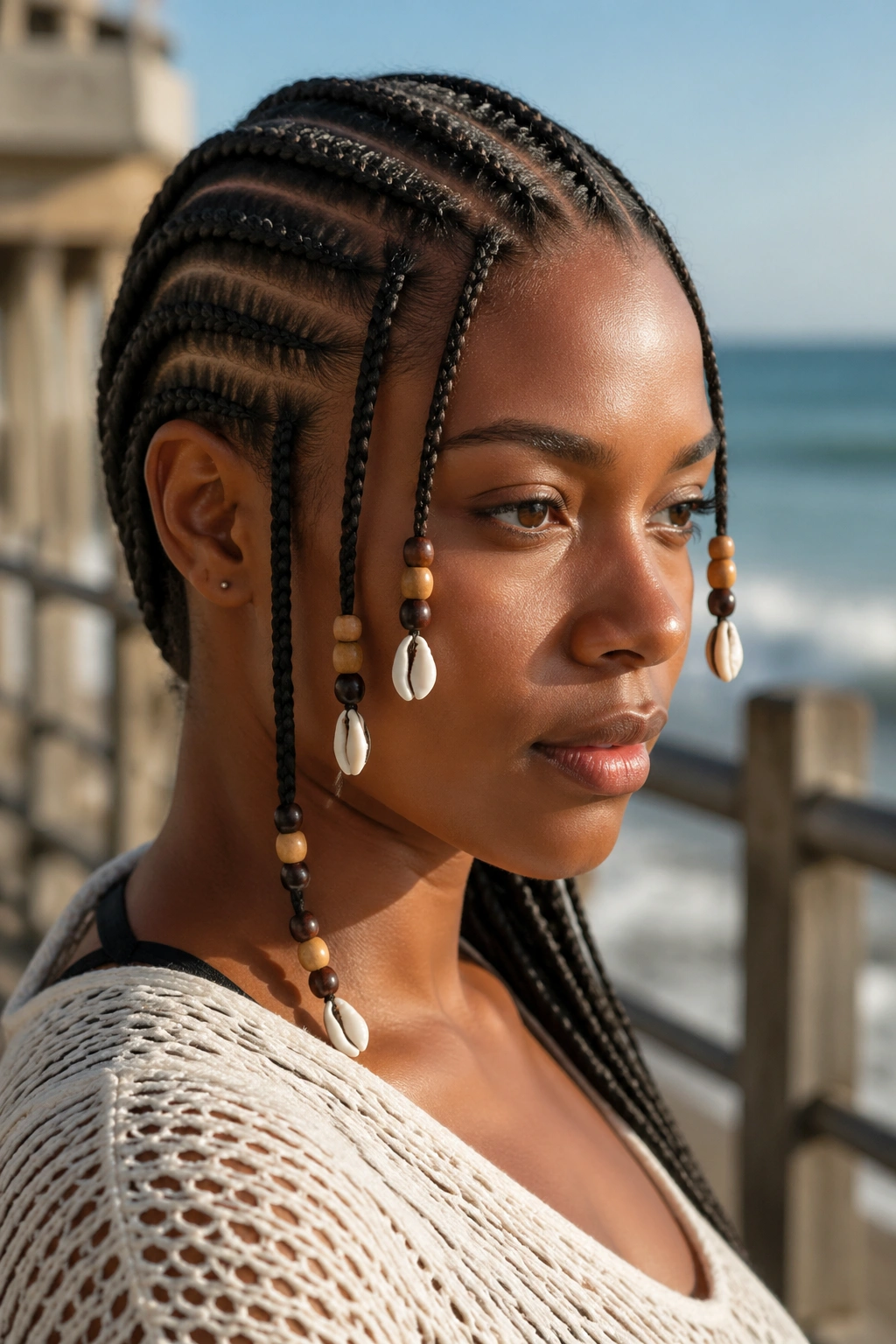
A few cowrie shells mixed in with wooden beads at the ends of select cornrows. The shells reference traditional African braiding without being heavy-handed.
Cowries are heavier than wooden beads, so use them sparingly — one or two per braid maximum, and only on the front-most braids where the visual impact is highest.
Cowrie shells and braiding traditions go back generations. Wearing them is a cultural reference, and for many, a personal one.
13. Stitch Braids With a Single Cowrie
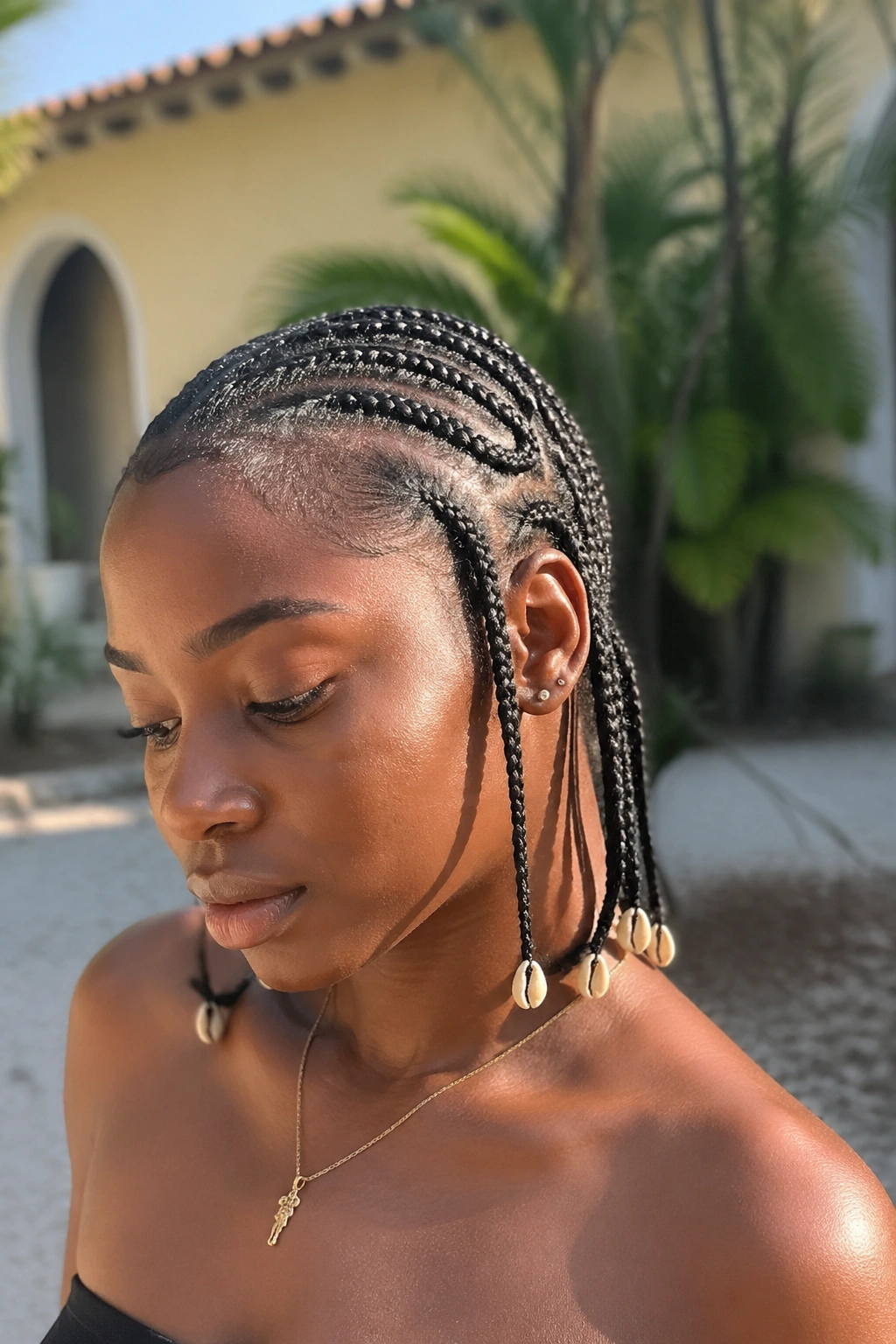
Stitch braid cornrows with one cowrie shell at the end of each braid. The stitch precision plus the shell creates a clean, culturally rooted look.
Use small cowries — about the size of a thumbnail — so they don’t overwhelm the precise stitch lines.
This style reads especially well with hoop earrings and a clean, structured outfit. The braid does the texture work, the shell adds a single point of organic contrast.
14. Cornrows With Pastel Beads
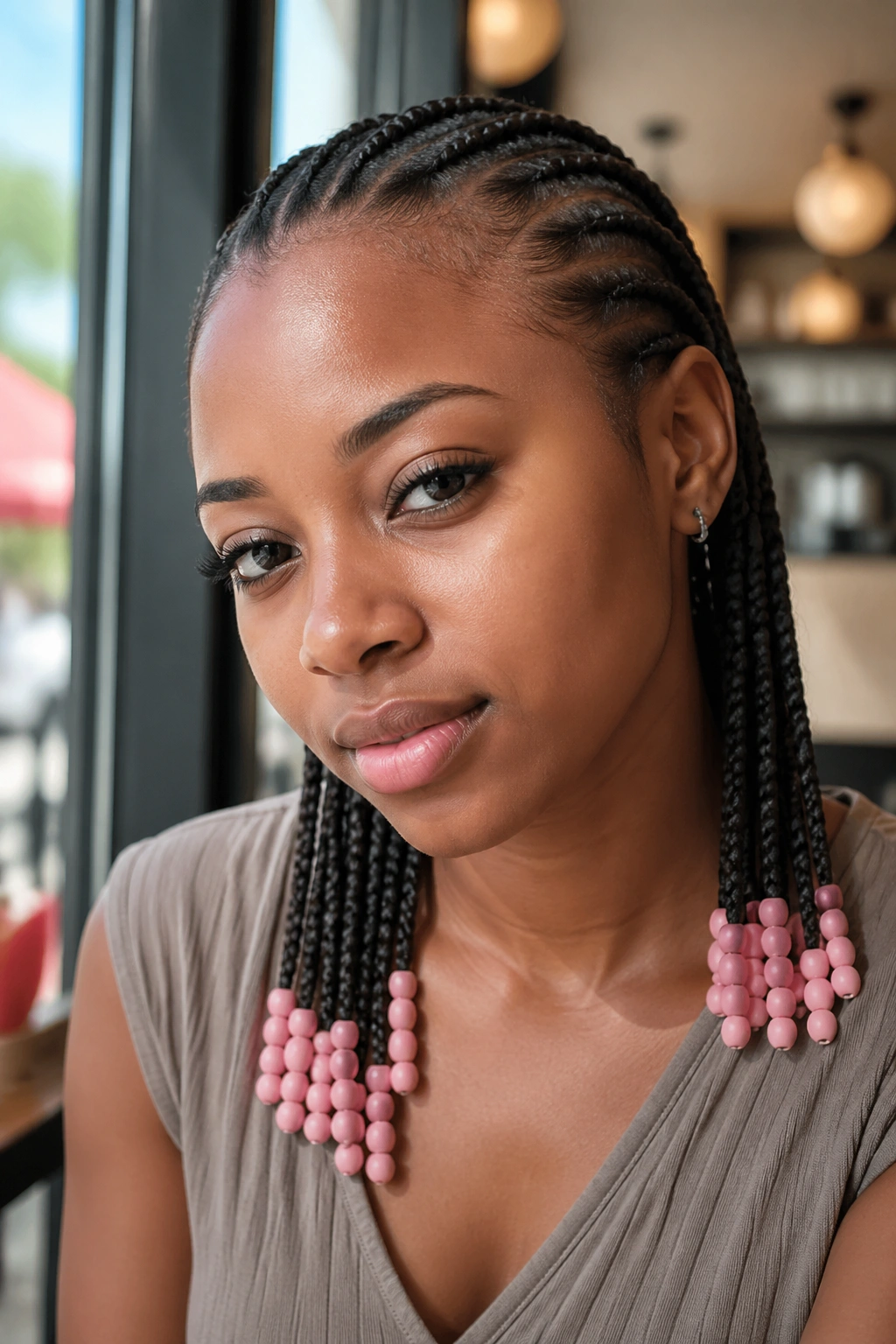
Pastel beads — soft pink, mint green, lavender, baby blue — at the ends of each braid. The colors are soft enough to stay grown without crossing into childish.
Use matte ceramic or matte plastic beads in pastels. Glossy plastic in pastels can read juvenile, but matte finishes feel intentional.
Pick one pastel color and commit. A rainbow of pastels across the head reads as costume.
15. Cornrows With Beads on Thicker Braids
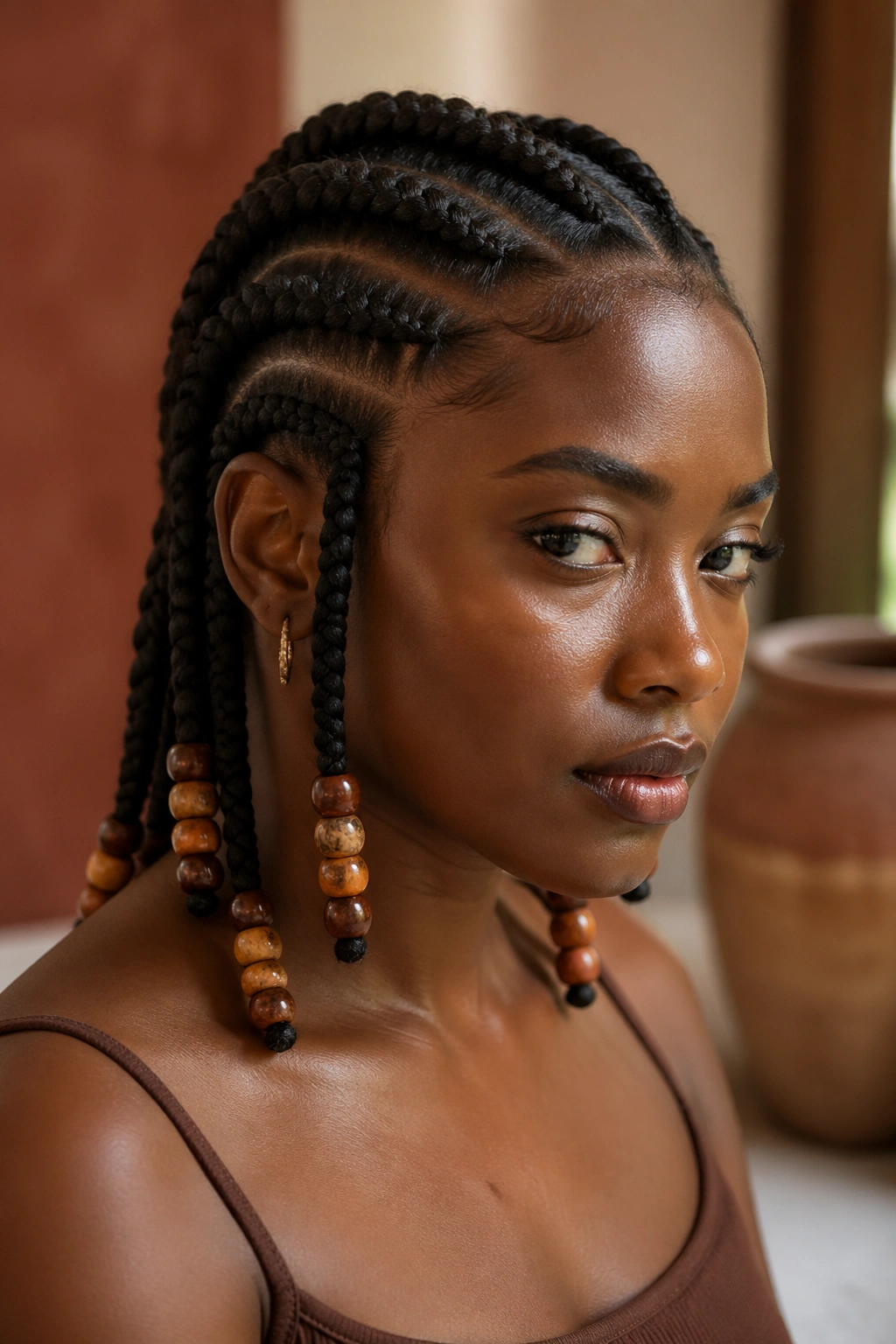
Apply beads to a style where the cornrows are thicker than usual — 5-7 cornrows total instead of 10-12. The thicker braids can support more bead weight without the roots loosening.
The beads should also be larger to scale with the braid thickness — 8-10mm instead of 5-6mm.
This style has a sculptural feel. Think large terracotta beads on chunky cornrows for a look that suits earthy, textured wardrobes.
16. Cornrows With Beads and Single Cuff
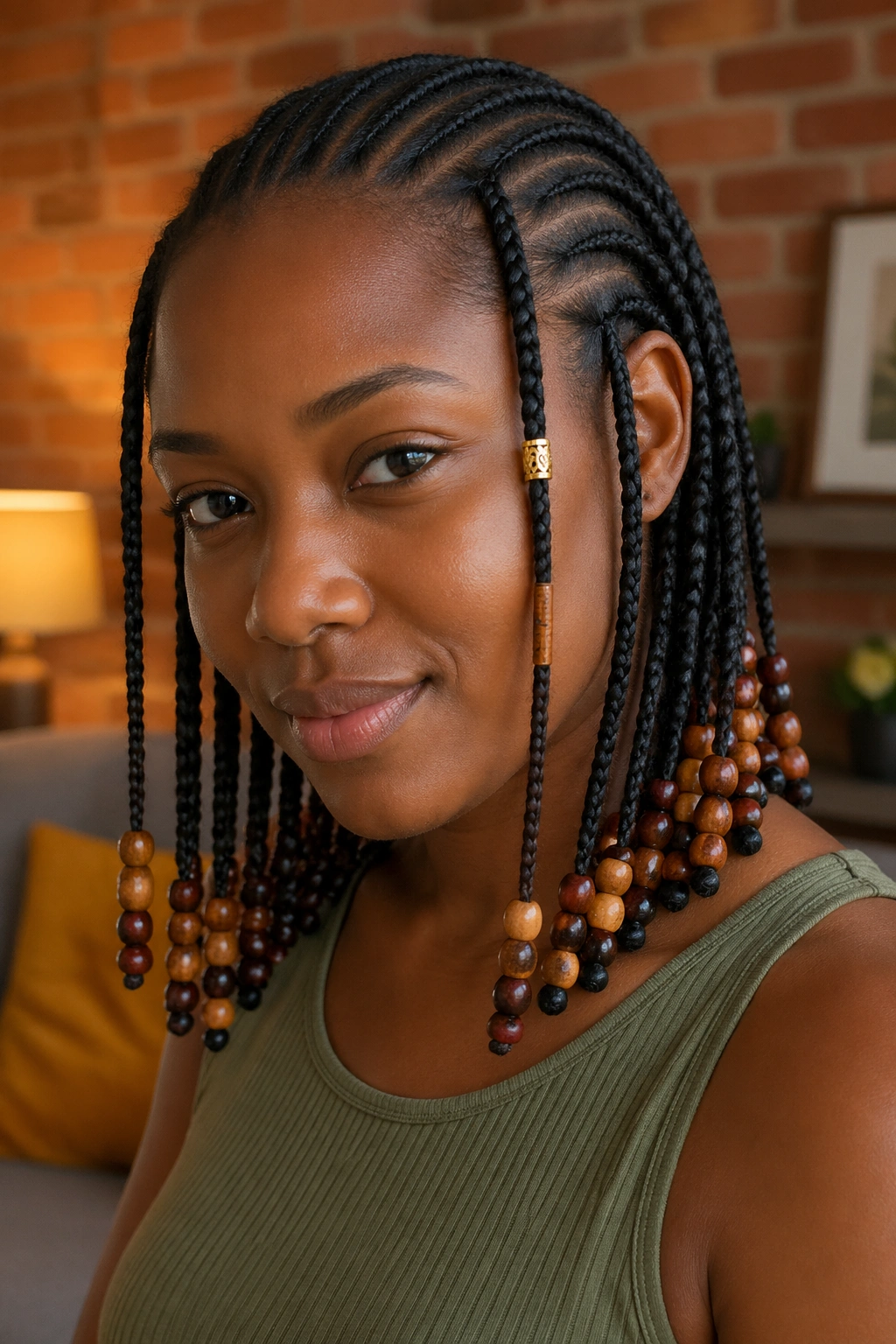
Wooden beads at the ends of each braid plus a single gold cuff at the mid-length point of the front-most braid. The cuff is a single accent rather than a uniform decoration.
The single cuff acts as a focal point on an otherwise distributed bead style. It’s where the eye lands first.
Place the cuff about ⅓ of the way down the braid. Higher and it disappears into the hairline; lower and it competes with the end beads.
17. Cornrows With Heishi Beads
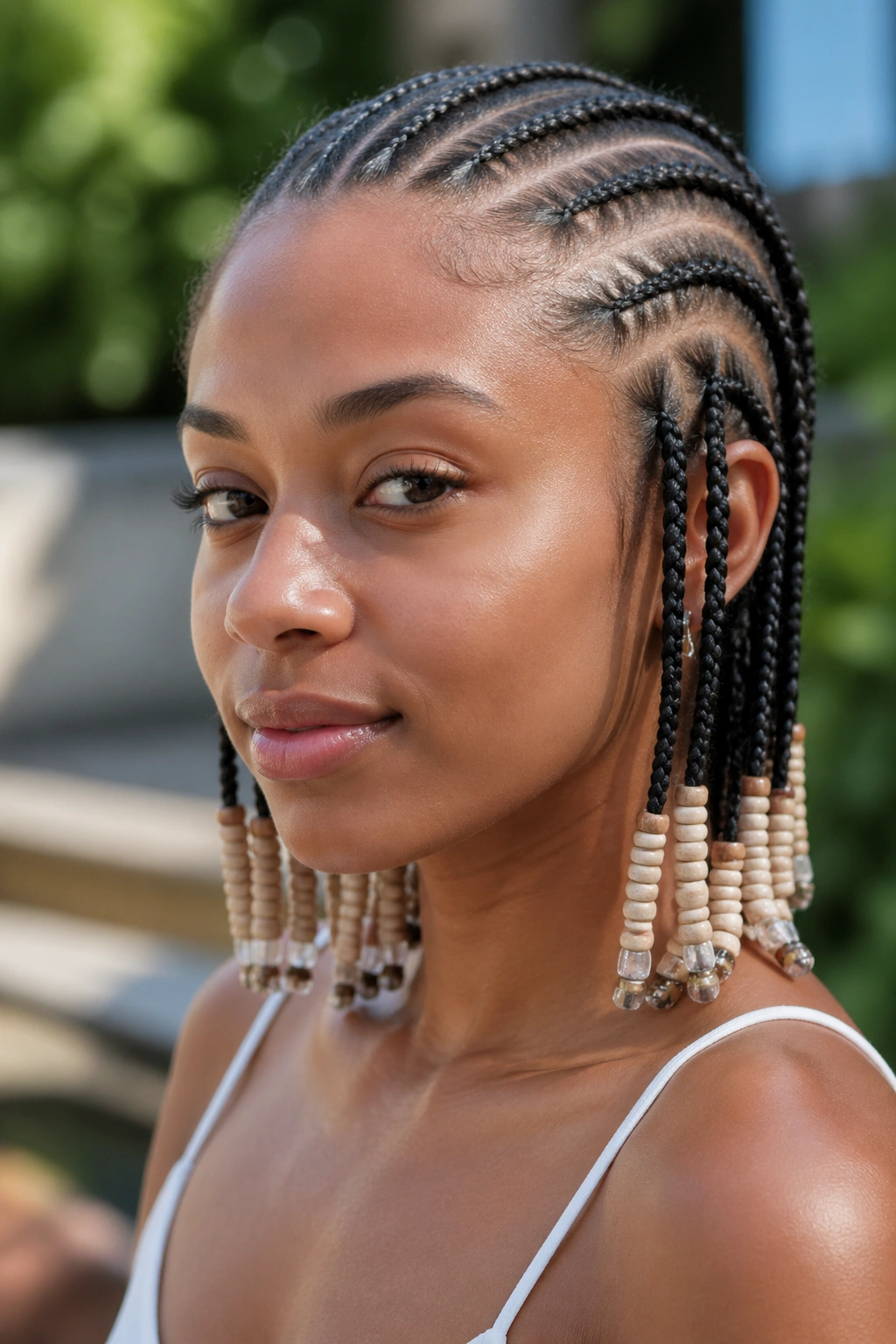
Heishi beads — small, flat, disc-shaped beads originally from Pueblo traditions — strung along the ends of each braid. They sit closer together than round beads and give a tubular, almost clay-like look.
Heishi beads come in shell, stone, and plastic. For a soft finish, use shell or pale stone heishi. For a bolder look, use black or terracotta.
The disc shape is unusual enough to feel distinctive without being aggressive. It’s a quietly different choice that hair people will notice and ask about.
18. Cornrows With Beads and Beach-Wave Ends
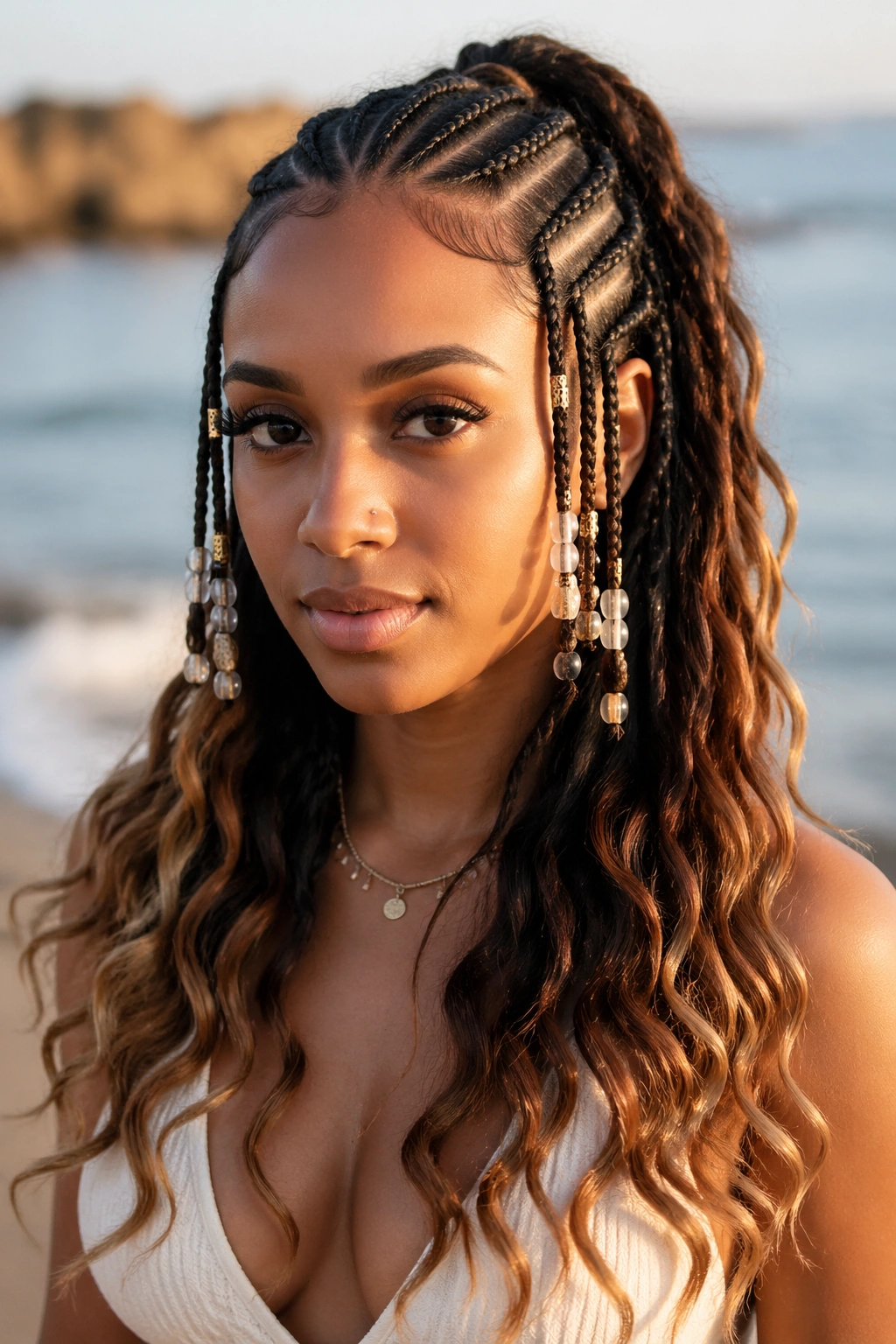
Cornrows with beads at the ends, plus loose, beach-wavy ends below the bead. The beads anchor the wave and create a half-up, half-down feel from below.
Use water-wave kanekalon for the wave texture, fed in toward the bottom of each braid. The bead sits above the wave, holding the transition in place.
This is one of the softest beaded styles on the list. It suits warm-weather looks and beachy aesthetics.
19. Cornrows With Beads at Specific Intervals
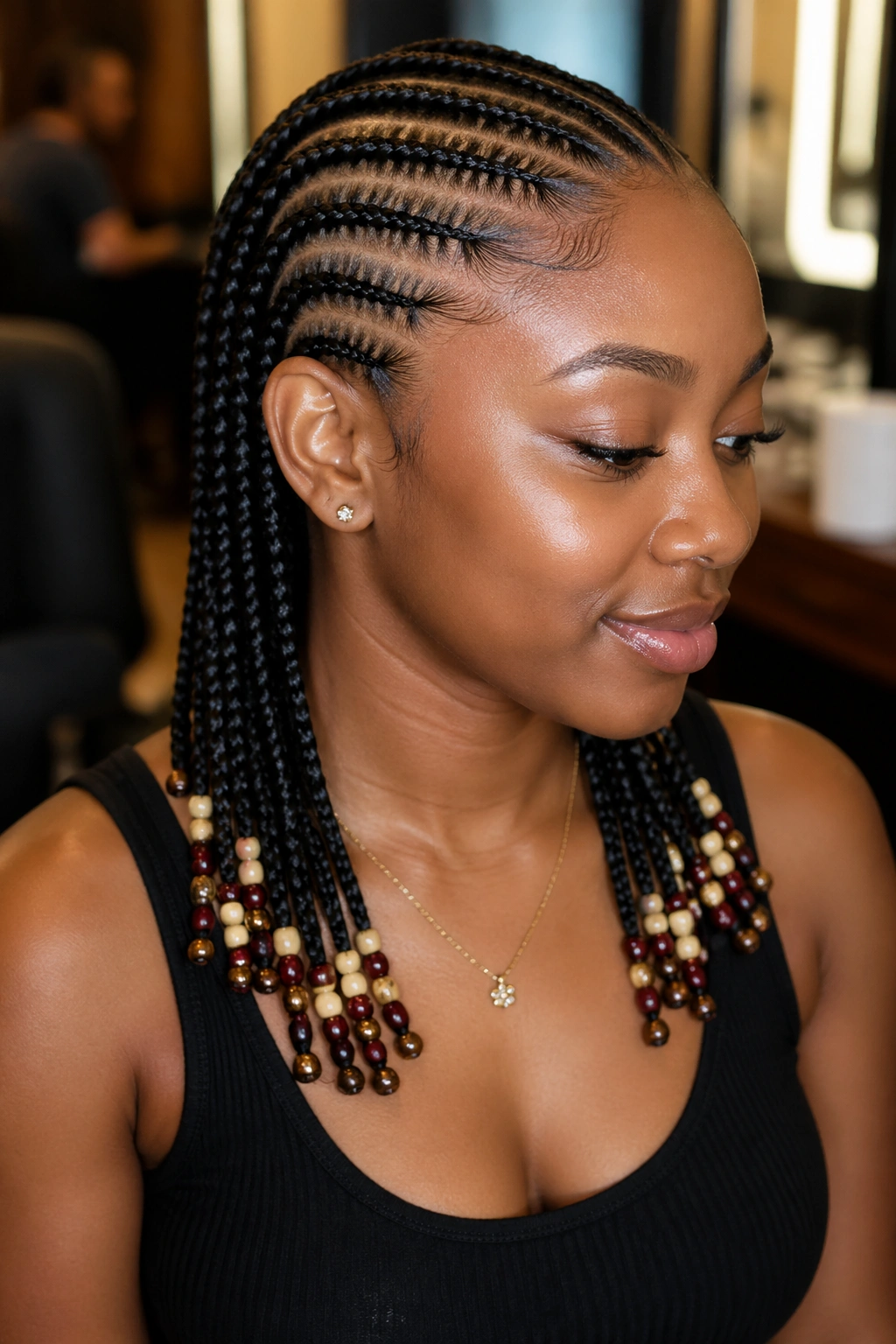
Beads at three points along each braid — one at ⅓ down, one at ⅔ down, and one at the end. The vertical rhythm creates a stripe of color when the braid hangs straight.
Use small beads (4-5mm) for this style so the multiple bead points don’t add up to too much weight.
The triple-bead pattern reads as deliberate and structured. It’s a step up from end-only beading without crossing into busy.
20. Cornrows With Tiny Bell Beads
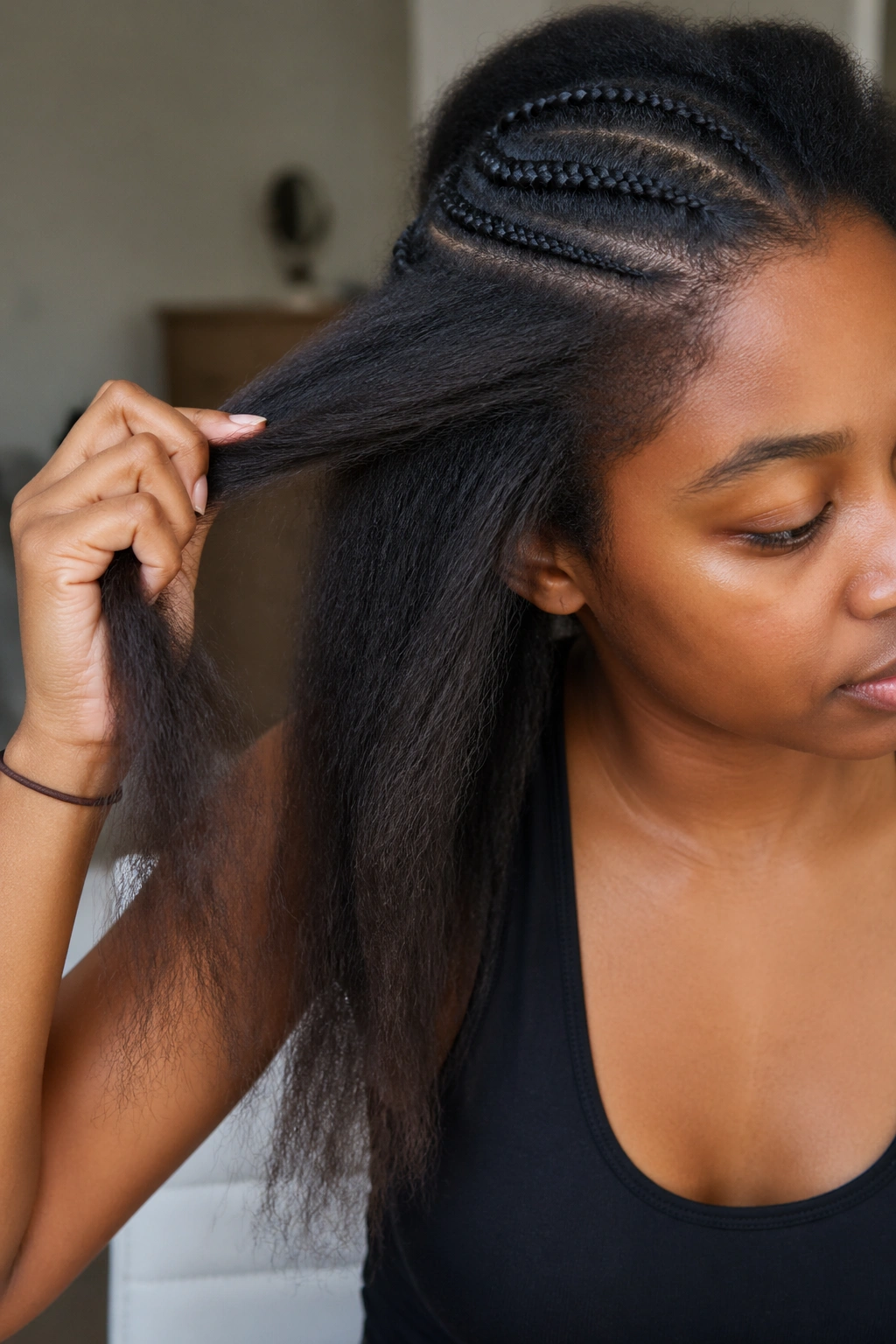
Small bell-shaped beads — sometimes called Indian bell beads or Tibetan beads — at the ends of select cornrows. They make a soft sound when you move.
The sound is part of the style. Wearing them reminds you they’re there with every head turn. Some find this charming; others find it distracting. It’s a personal choice.
Use sparingly — three to five braids with bell beads, the rest plain. A full head of bells is too much.
21. Cornrows With Mixed-Material Bead Cluster
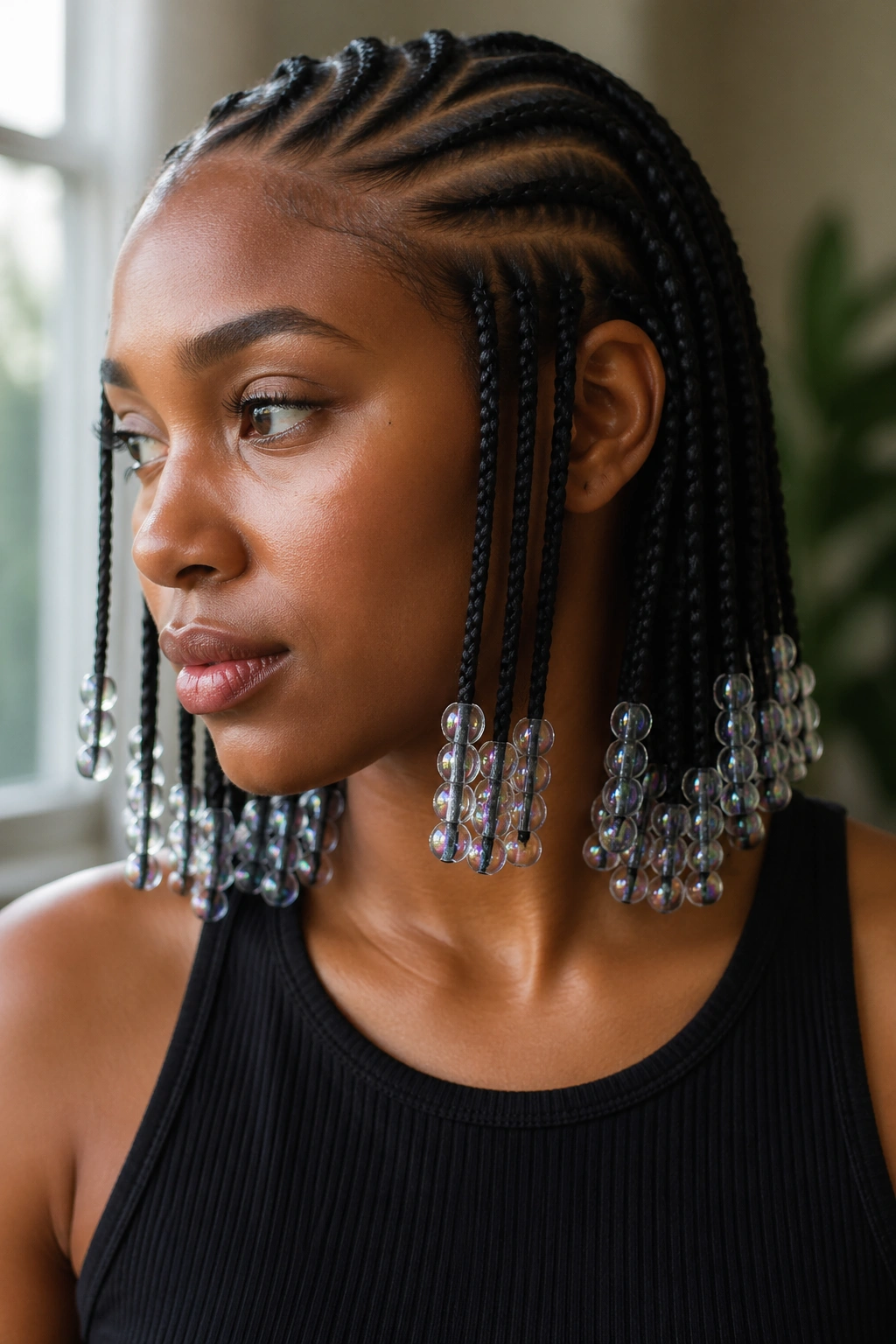
A small cluster of mixed-material beads — say one wooden, one glass, one metal — at the very end of each braid. The cluster is the focal point.
The mixed-material rule that says pick one material per style? This is the deliberate exception. The mix is the style.
Keep the cluster small — three beads total per braid maximum — so the mix doesn’t become chaos.
22. Cornrows With Beads and Decorative Thread
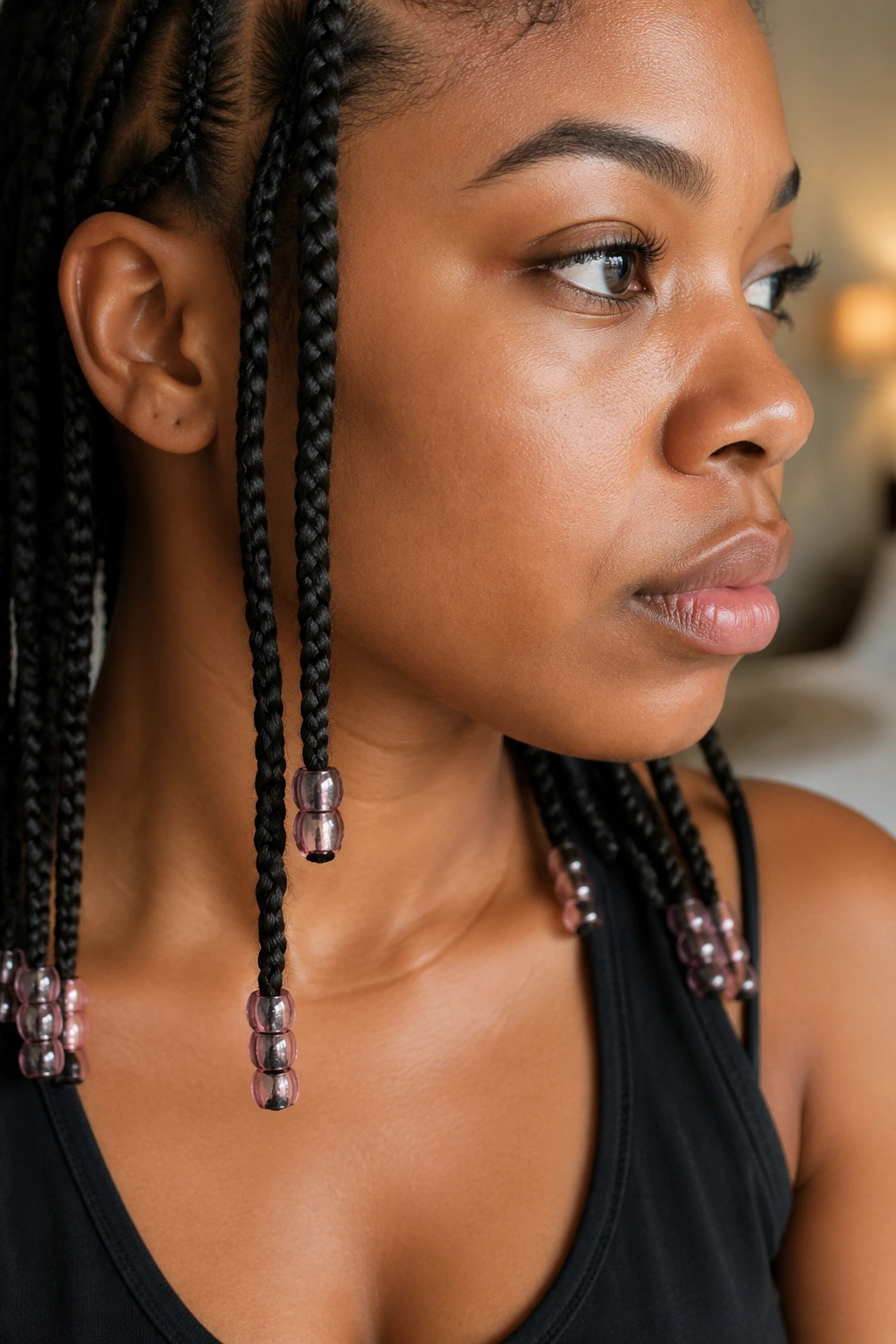
Cornrows with a decorative thread — usually waxed cotton or hemp — wrapped around a section of one or two braids, finished with a single bead at the end of the wrap.
The thread can be a contrasting color (white thread on dark hair, gold on black) or a matching tone for a more subtle effect.
This is the most editorial style on the list. It’s not a wear-everywhere look — it suits photoshoots, festivals, and statement occasions.
How Long Beaded Cornrows Last
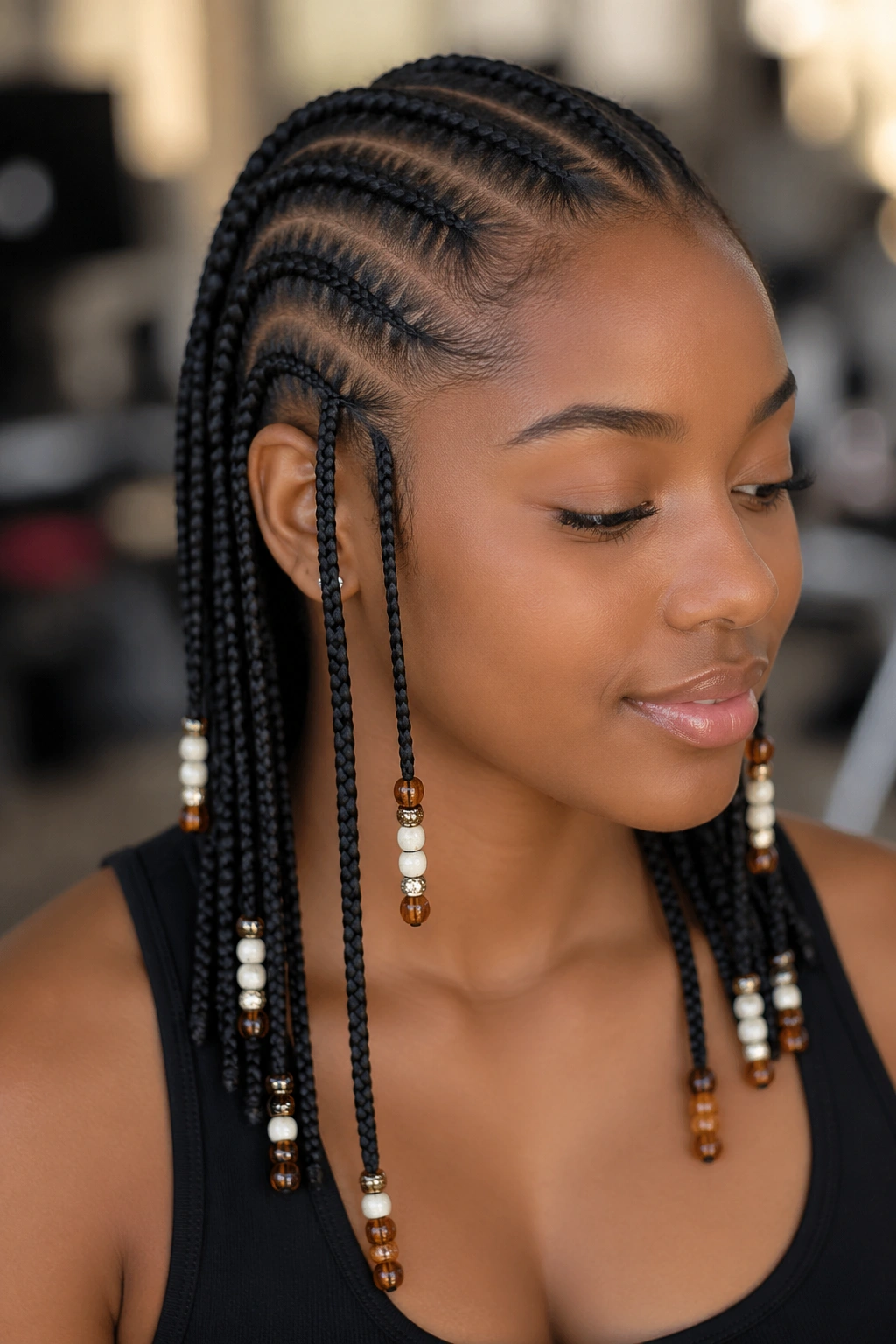
Standard beaded cornrows on natural hair last 2-3 weeks. The bead weight pulls roots loose slightly faster than non-beaded versions, so plan for the lower end of the cornrow lifespan range.
Heavy bead styles (like glass or metal-cuff combinations) last shorter — 1-2 weeks max before the roots need attention.
Light bead styles (wooden, small ceramic) last longer — closer to the standard 2-3 weeks.
When the bead weight starts to feel uncomfortable on the roots, it’s time to either redo or take down. Don’t push past discomfort.
Wash Day With Beads in Place
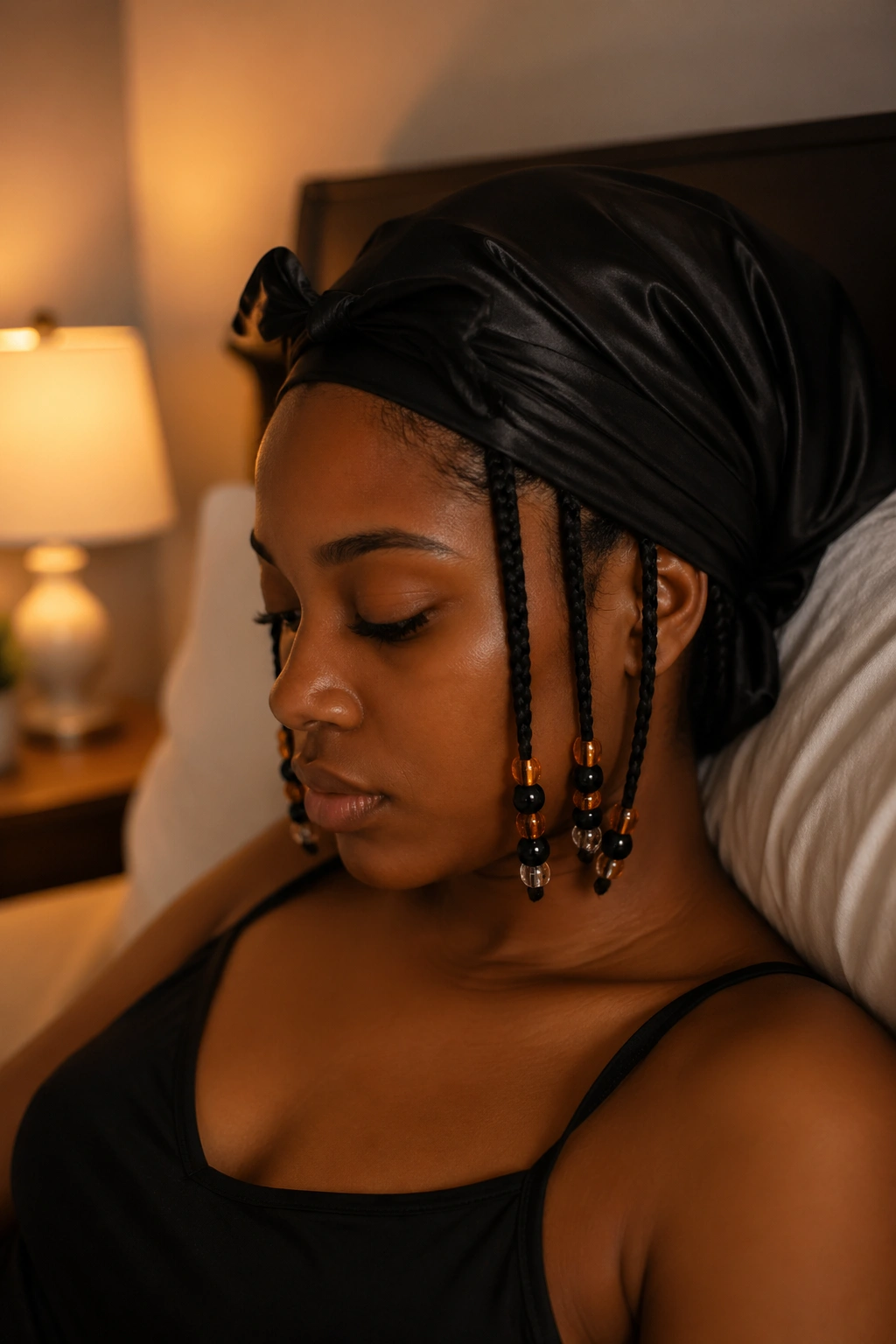
Yes, you can wash beaded cornrows. The trick is keeping the beads in place during the rinse.
Tie a satin scarf around the bottom of the braids before washing. The scarf holds the beads together and prevents them from clattering against each other and chipping.
Apply diluted sulfate-free shampoo with a squeeze bottle along the parts. Massage with fingertip pressure on the scalp only. Don’t rub the braids.
Rinse thoroughly under warm water. The scarf around the bottom will collect the shampoo runoff, which protects the bead finish.
Dry completely. A hooded dryer on low for 30 minutes works well; the scarf can stay tied during drying.
Scalp Care for Beaded Styles
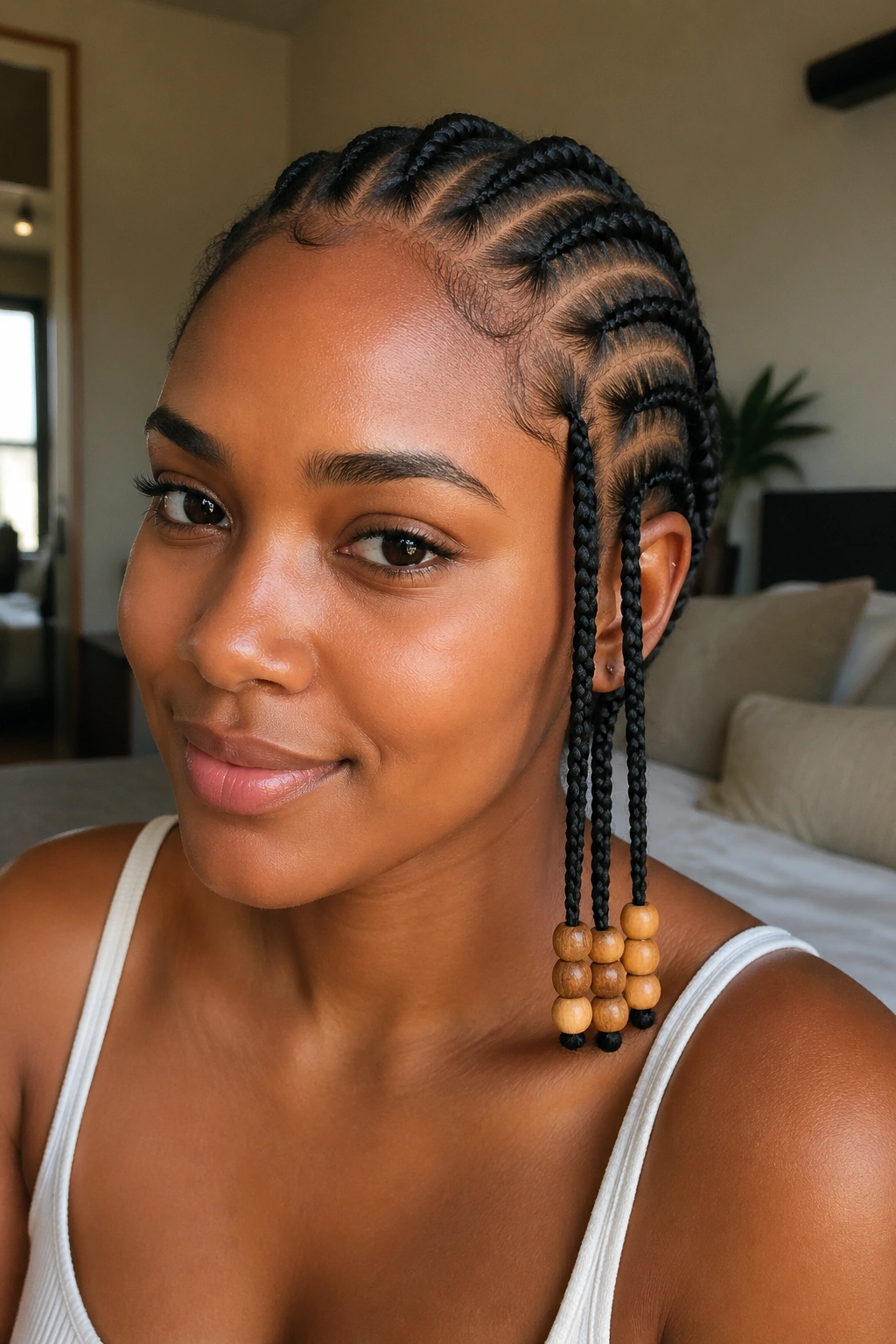
The bead weight increases tension on the roots, so scalp care needs to compensate.
Mist daily with water and leave-in. Apply a light oil to the parting lines twice a week. Massage gently with fingertip pressure for 60 seconds at a time to relieve root tension.
Check the front hairline daily for any signs of pulling. If you see redness, soreness, or thinning, take the heaviest beads out — even if you don’t take down the whole style.
Taking Down Beaded Cornrows
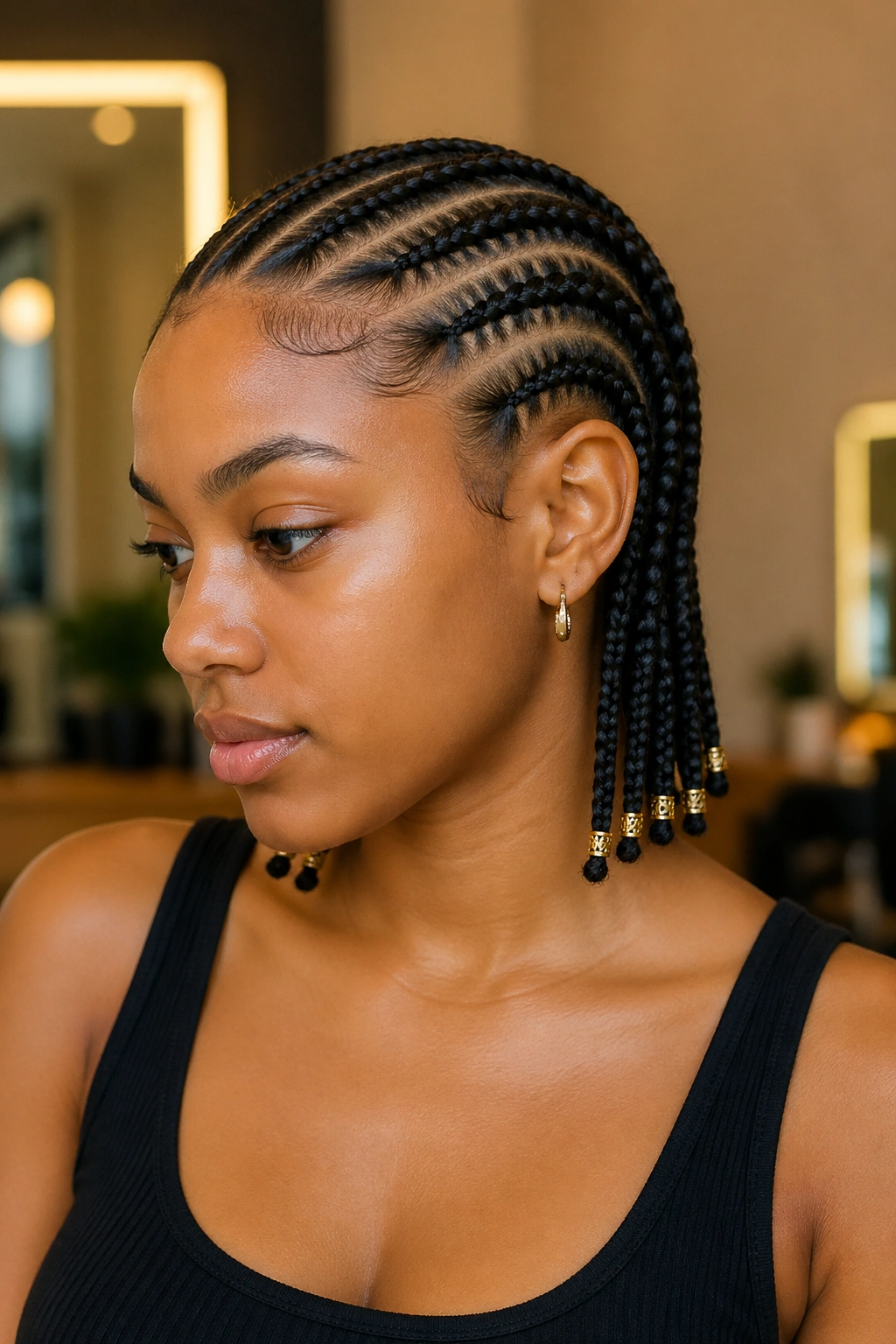
Remove all beads before unraveling the cornrows. Cut the elastic carefully with small scissors and slide each bead off.
Keep the beads — most can be reused. Wash them with mild soap and water, dry completely, and store in a small bag or jar.
After bead removal, take down the cornrows the standard way: saturate with detangling spray, unravel from the ends up, finger-detangle, then wash and deep condition.
Picking the Right Beaded Style for You
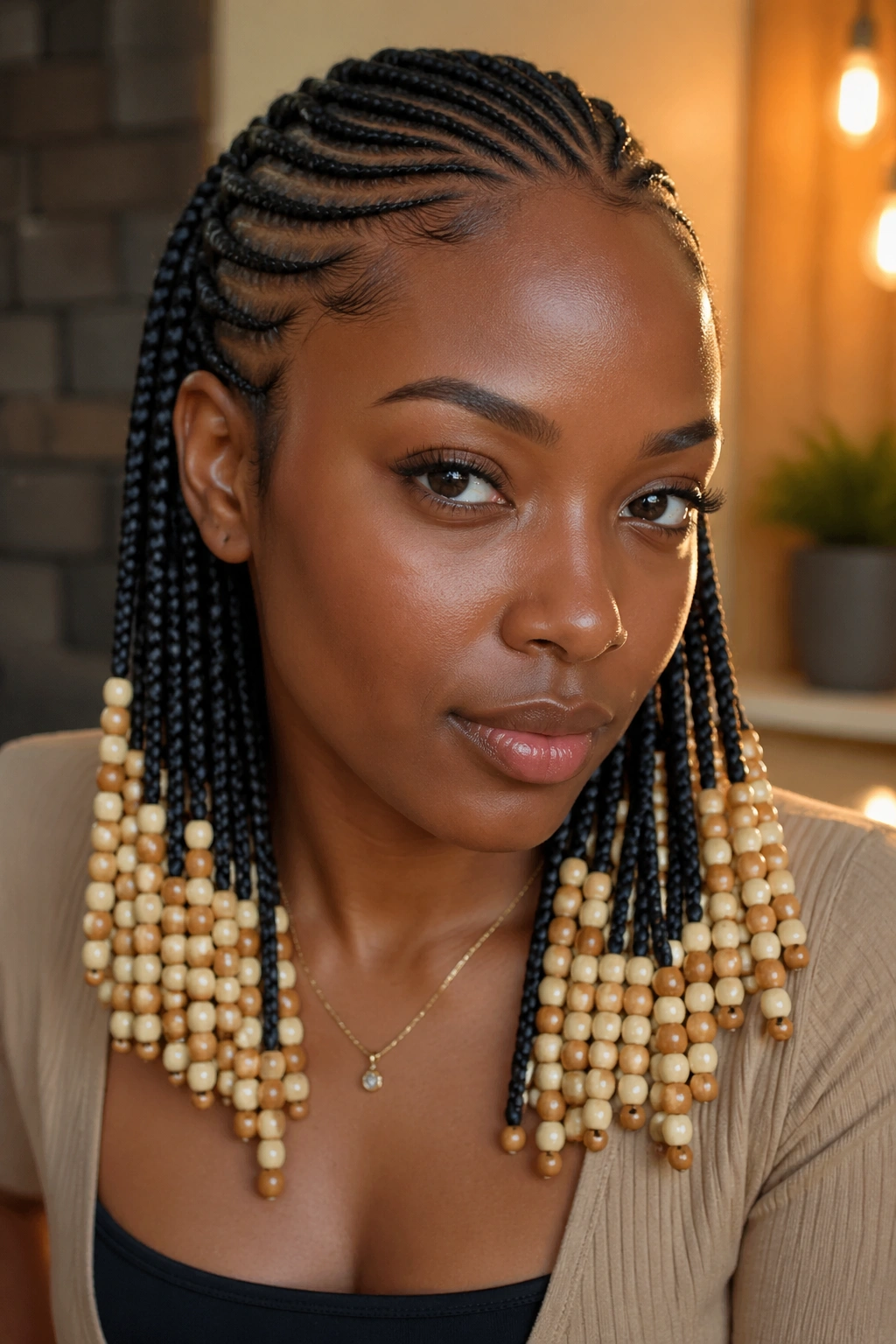
Start with your scalp tolerance. If your roots feel sore by the end of a long day even without beads, choose lightweight wooden or hollow plastic options.
Consider your wardrobe. Wooden and earth-tone beads pair with most casual clothes. Metal beads pair with structured and dressy outfits. Pastel beads pair with soft, romantic looks.
Think about the occasion. A single statement bead works for daily wear. A full Bohemian mix works for festivals or vacations. Cowrie shells suit cultural events and connection-to-roots moments.
The best beaded cornrow style is the one that feels light enough to wear all day without thinking about, looks intentional from every angle, and makes you smile when you catch your reflection. Pick the variation that matches your life, your scalp, and your taste — then commit to keeping it fresh. Beads reward the thoughtful, and a small handful in the right place will always read more elegantly than a head full of competing details.
