



Small cornrows on natural hair sit in a sweet spot between protective styling and pure artistry. Thick cornrows are forgiving — you can finish a head in under an hour, and minor parting flaws disappear under the bulk. Small cornrows give you no such mercy. Every part shows. Every uneven section reads. Every loose braid stands out against the precision of the rest.
That difficulty is also why small cornrows look so impressive when done well. Dozens of fine, parallel braids running cleanly across the scalp telegraph patience and skill in a way that bigger braids never quite manage.
These 22 small cornrow styles work specifically with natural hair texture — no extensions required. Each style focuses on what small cornrows can do that other braid sizes can’t: precision, density, and that distinct visual rhythm only fine braiding creates.
What “Small” Actually Means
Small cornrows means braids roughly ⅛ to ¼ inch wide at the scalp. Not micro braids (those are even thinner), but noticeably finer than standard cornrows.
The smaller the braid, the more braids you need to cover the head. A typical adult head holds 8-12 standard cornrows. Small cornrows on the same head: 25-40 braids, sometimes more.
That count matters because it determines install time. Plan on 3-5 hours for a full head of small cornrows on natural hair. Some braiders take 6 hours. Anyone promising 90 minutes is cutting corners.
Why Natural Hair Is the Right Foundation for Small Cornrows
Small cornrows showcase your actual hair texture in ways extensions never can. The fine braids reveal the curl pattern, the natural shine, the density variations across your scalp. It becomes a styling that’s authentically yours.
There’s also less weight to worry about. No added hair means no extra pull on the scalp. Edges stay protected. The braids can stay in for weeks without strain.
The trade-off is that the braid lengths are limited to whatever your natural hair already is. Short natural hair gives you short small cornrows. There’s no fudging.
Length Requirements
For small cornrows to look good, your natural hair needs at least 3 inches of stretched length at every section of your head. Less than that and the braids won’t catch enough hair to hold properly — they’ll slip out within days.
Crown and back of head usually have plenty of length. The hairline and nape are where braiders run into trouble. If your edges are short or your nape is sparse, a skilled braider can still work with what’s there, but the result might be selective small cornrows rather than full coverage.
Don’t pull short hair into braids that are too tight to compensate for length. That’s a fast track to traction damage at the most vulnerable spots.
Hair Prep That Makes Small Cornrows Behave
Wash with a clarifying shampoo a few days before install. Build-up makes the hair too slippery for small cornrows, which need some grip to start cleanly.
Deep condition for 30+ minutes. Detangle thoroughly. Stretch overnight in chunky twists or banded sections.
The morning of install, apply a light braid-prep spray — these are sold specifically for braid installs and contain ingredients that give the hair just enough hold without being sticky. Don’t use heavy creams or oils right before braiding; they make the small sections impossible to grip.
Tools That Matter for Small Work
A pin-tail rat-tail comb with a fine metal tip is non-negotiable. Small parts require precision parting that thicker comb tails can’t deliver.
A boar-bristle brush smooths each section before braiding. Sectioning clips with teeth (not flat clips) hold off-section hair. A spray bottle with water and a tiny bit of conditioner keeps each section workable.
Some braiders use a small dab of edge gel on each section before braiding, just to keep flyaways down. A little goes a long way — too much makes braids stiff.
1. Classic Straight-Back Small Cornrows
The blueprint. Twenty-five to thirty-five fine braids running straight from the hairline to the nape. Nothing fancy, just dense parallel rows that show off the precision.
Why It Works on Natural Hair
- Dense coverage protects the scalp from sun and weather
- The fine braid count creates a polished, refined look
- Lasts 3-4 weeks easily on well-prepped natural hair
- Looks formal enough for work, casual enough for everyday
Tip: Ask for parts that are slightly thicker at the front (where edges are delicate) and finer through the crown and back.
2. Small Cornrows With a Side Part
A deep side part — about 3 inches off-center — divides the head, then small cornrows run back from each side. The asymmetry adds polish without changing the braid technique itself.
The deep part suits oval and oblong faces especially well. On round faces, a less dramatic side part (closer to center) works better.
The side part needs maintenance. Edge gel along the part line keeps it sharp through the week. Without that, the part fuzzes within days.
3. Small Cornrows Into a Low Bun
All braids cornrowed straight back, gathered into a low bun at the nape. Because the natural hair lengths are tucked into the bun, the look reads neat and contained.
For natural hair shorter than shoulder-length, this style creates the illusion of more length than you have. The bun adds visual height without requiring extensions.
Use a hair net inside the bun to hold loose braid ends in place. Without the net, ends pop out throughout the day.
4. Small Diagonal Cornrows
Instead of running straight back, the braids run on a diagonal across the head — top-right to bottom-left, for instance. The diagonal creates dynamic visual movement.
Small cornrows on a diagonal are particularly striking because the fine parallel lines emphasize the angle.
Choose your diagonal direction with intention. Mirror the direction you usually wear your hair parted for cohesion with your everyday styling.
5. Small Cornrows With a Curved Hairline
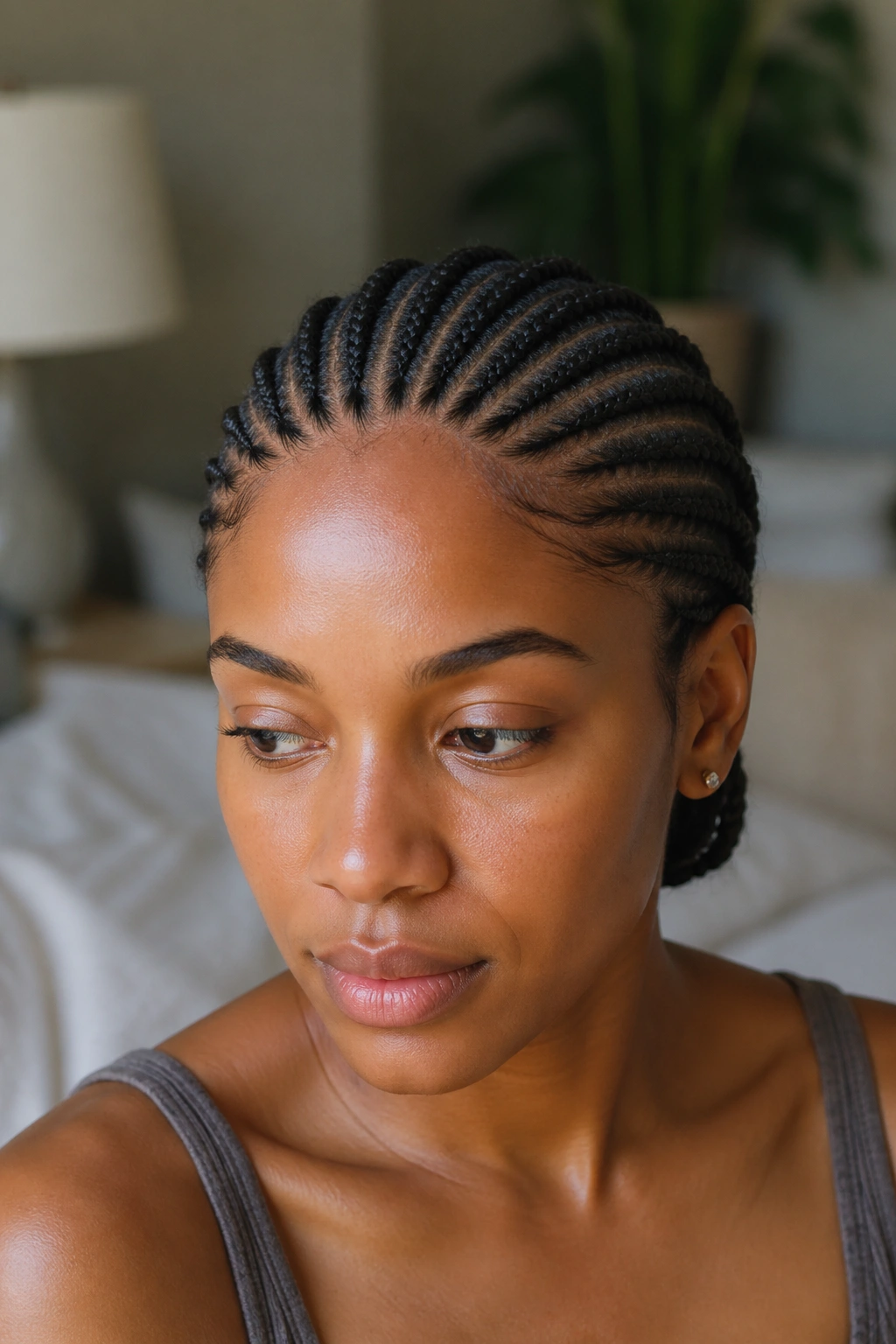
The front cornrows angle to follow a curved hairline rather than going straight back. The curve softens the geometry and frames the face.
Curved hairline cornrows work especially well on heart-shaped faces — the curve echoes the cheekbone-to-chin transition.
The curve has to be even on both sides. Asymmetric curves look like mistakes.
6. Small Cornrows With Zig-Zag Parts
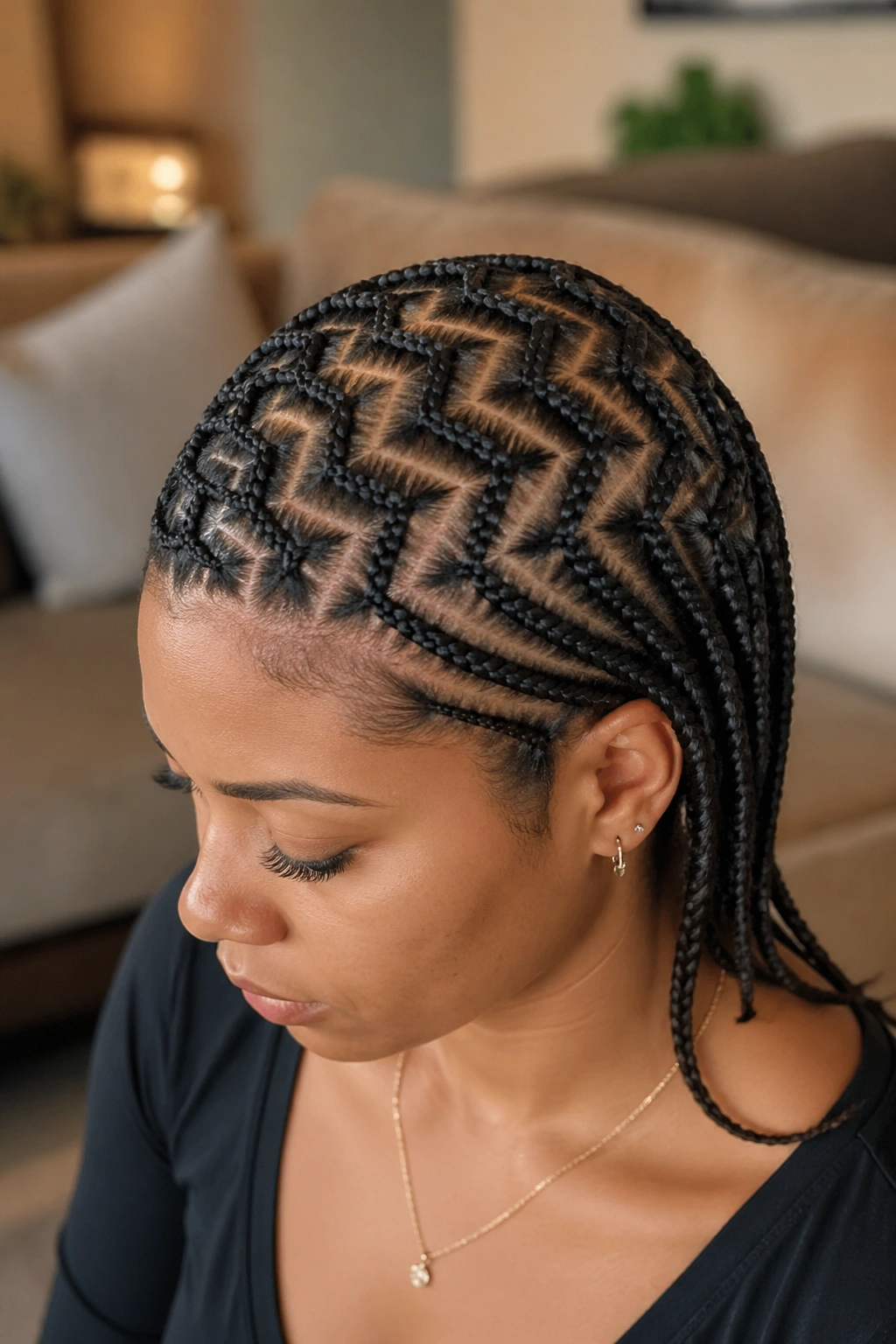
Rather than straight parts, the parts zig-zag across the head. The braids themselves are still small and parallel, but the parting creates visual rhythm underneath.
A skilled braider can produce zig-zags so sharp they look like architectural drawings. A sloppy braider produces wavy lines that read like a mistake.
Examine your braider’s portfolio for zig-zag work before committing to this style.
7. Small Cornrows With Geometric Parts
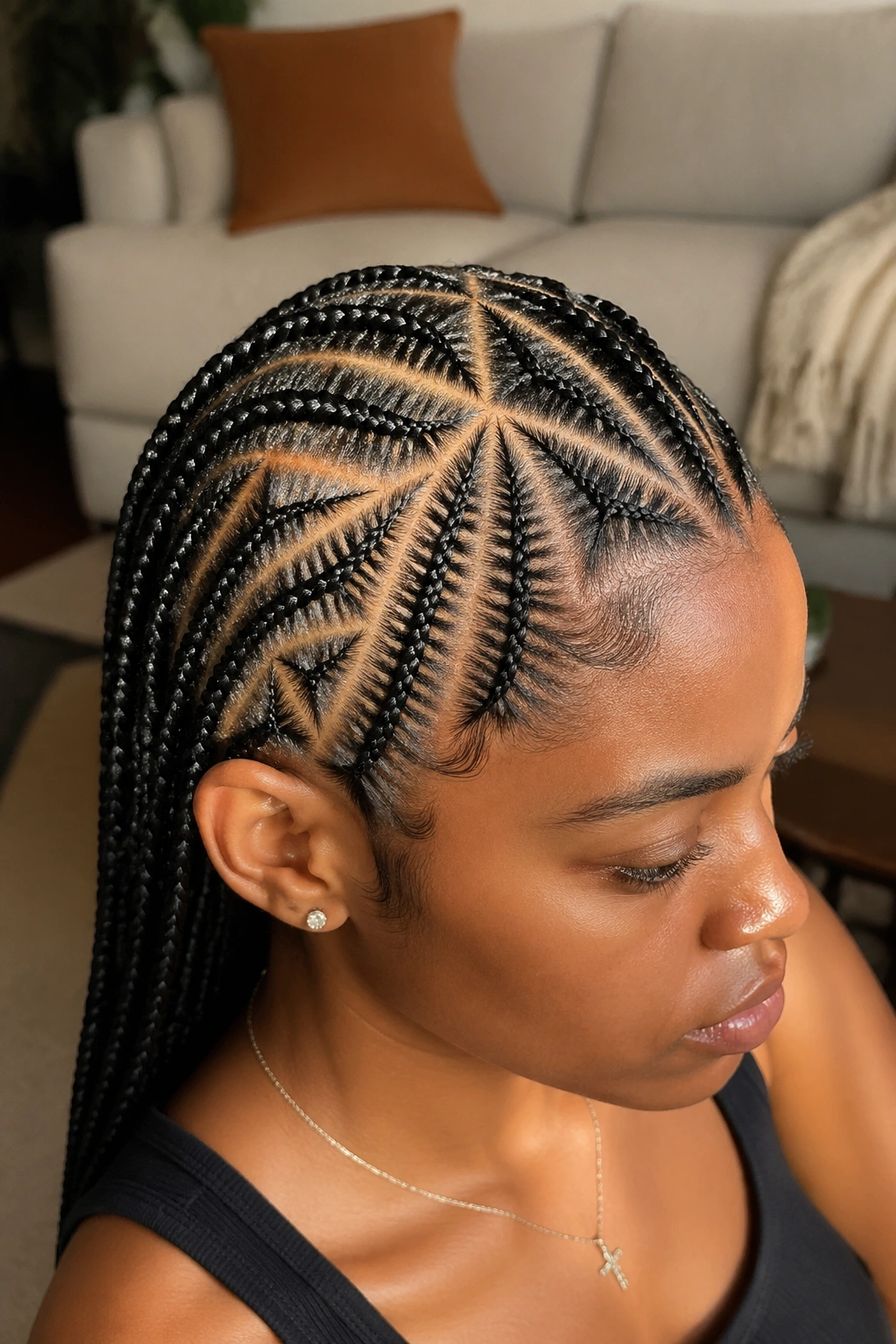
Triangle, diamond, and rectangle parts replace traditional straight or zig-zag patterns. Each section of hair sits inside a geometric shape, with a small cornrow running from one corner to the section’s edge.
This is small-cornrow architecture. Takes 5-6 hours for a full head and requires both skilled braiding and clear vision of the final geometric pattern.
The shapes have to be sharp. Soft, rounded geometric parts blur the whole effect.
8. Two Big French Braids of Small Sections
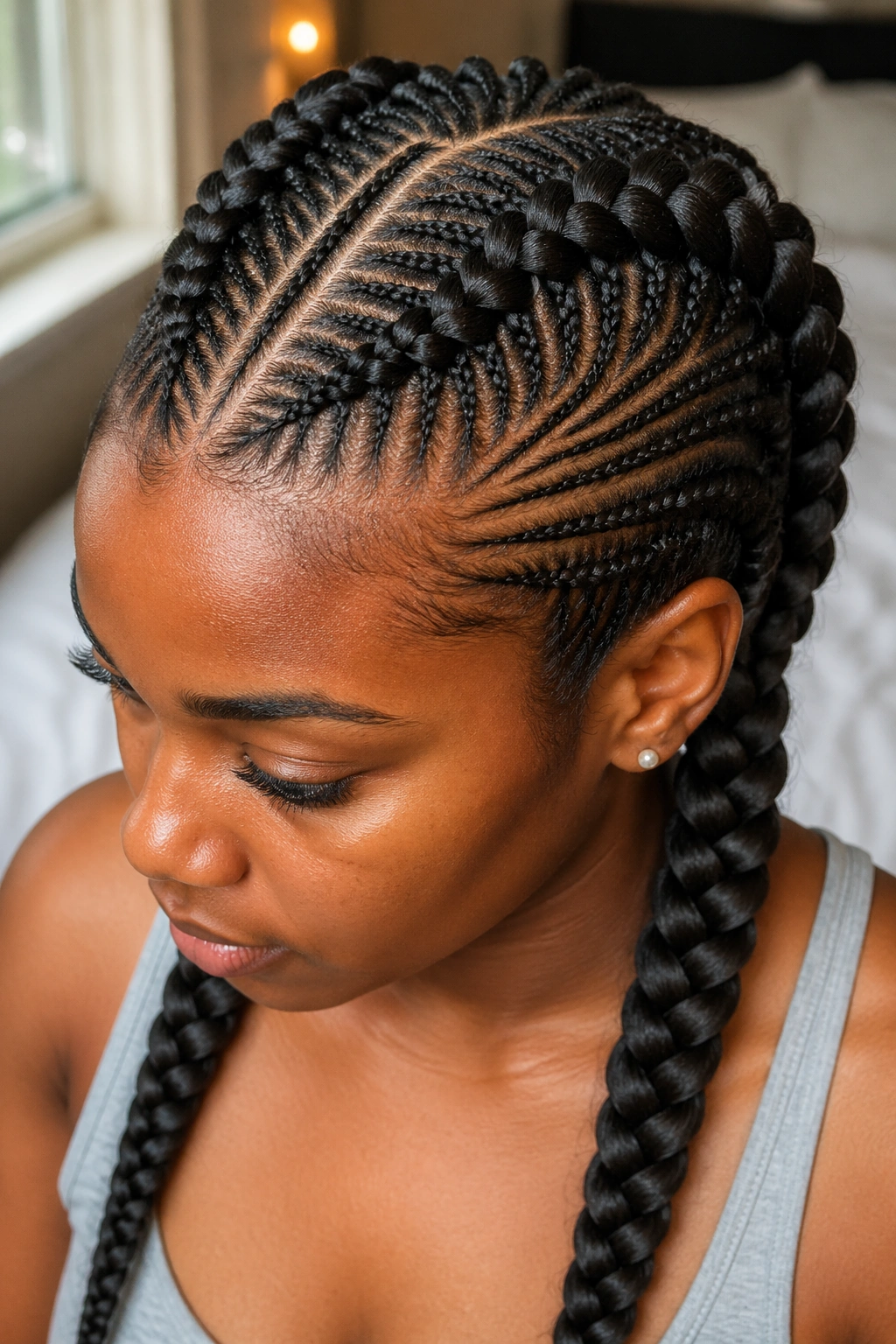
Two French-style braids, each one composed of many small sections feeding into the bigger braid as it travels. Looks like braid-within-braid.
The technique involves picking up small subsections of hair as the French braid progresses, much like a regular feed-in cornrow but with more sections per inch.
Time-consuming. Worth it for the unique visual texture.
9. Small Cornrows With Exposed Scalp Patterns
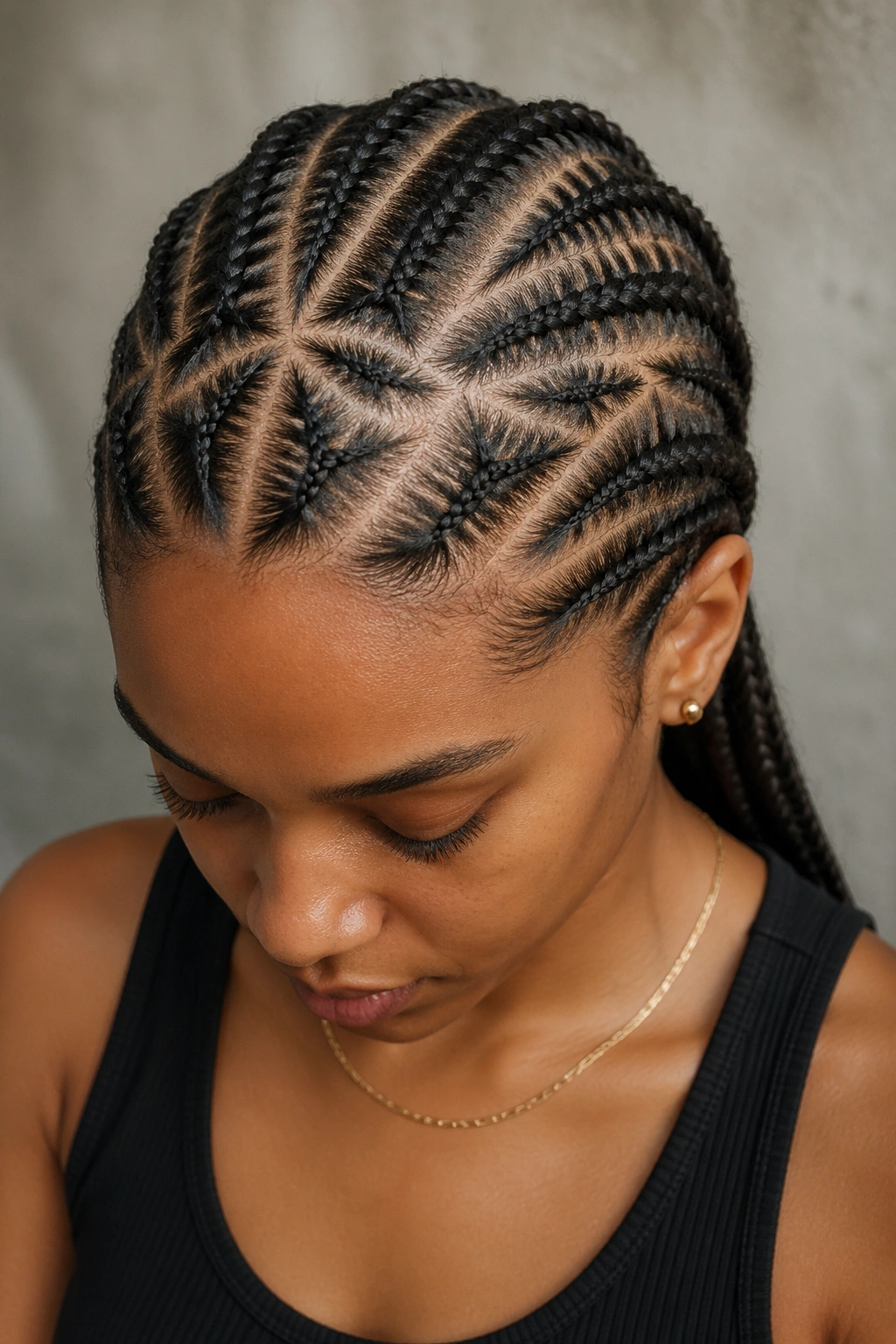
The braids leave intentional gaps showing the scalp underneath, creating patterns visible through the negative space. Could be diamond gaps, triangular gaps, or asymmetric exposed sections.
A bold styling choice. Reads modern and editorial.
If you have thinning at the crown or other scalp visibility concerns, skip this — exposed scalp styling will draw attention to those areas.
10. Small Mohawk Cornrows
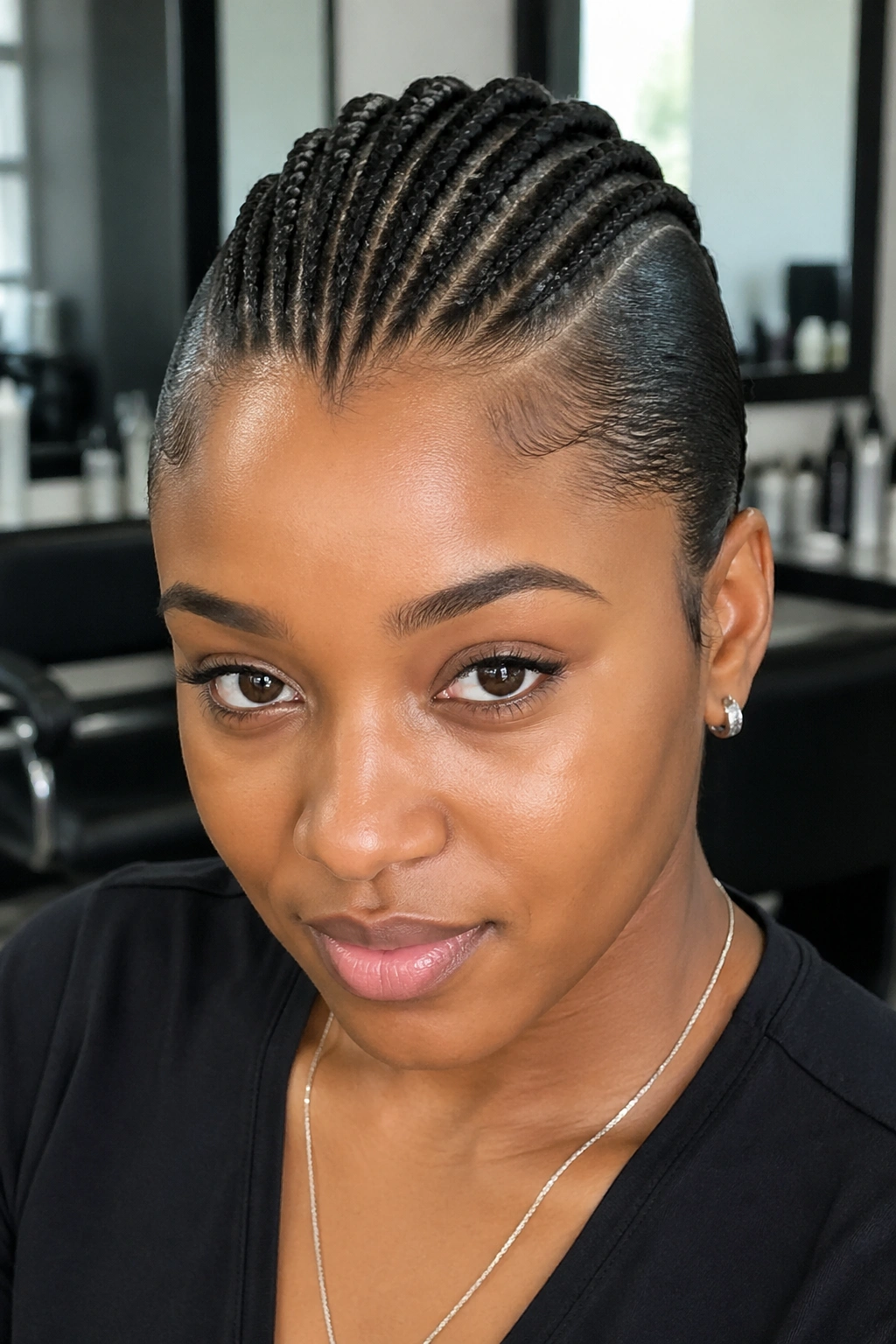
A dense strip of small cornrows runs from front to back through the center of the head. The sides are slicked flat with edge gel — no shaving, just smooth flat hair.
A small-cornrow mohawk has a different vibe than a thick-cornrow mohawk. The fineness reads sleeker and more refined.
The slicked sides need re-smoothing every 2-3 days. Heat from your scalp causes the gel to soften and the hair to start lifting.
11. Small Cornrows With a High Puff
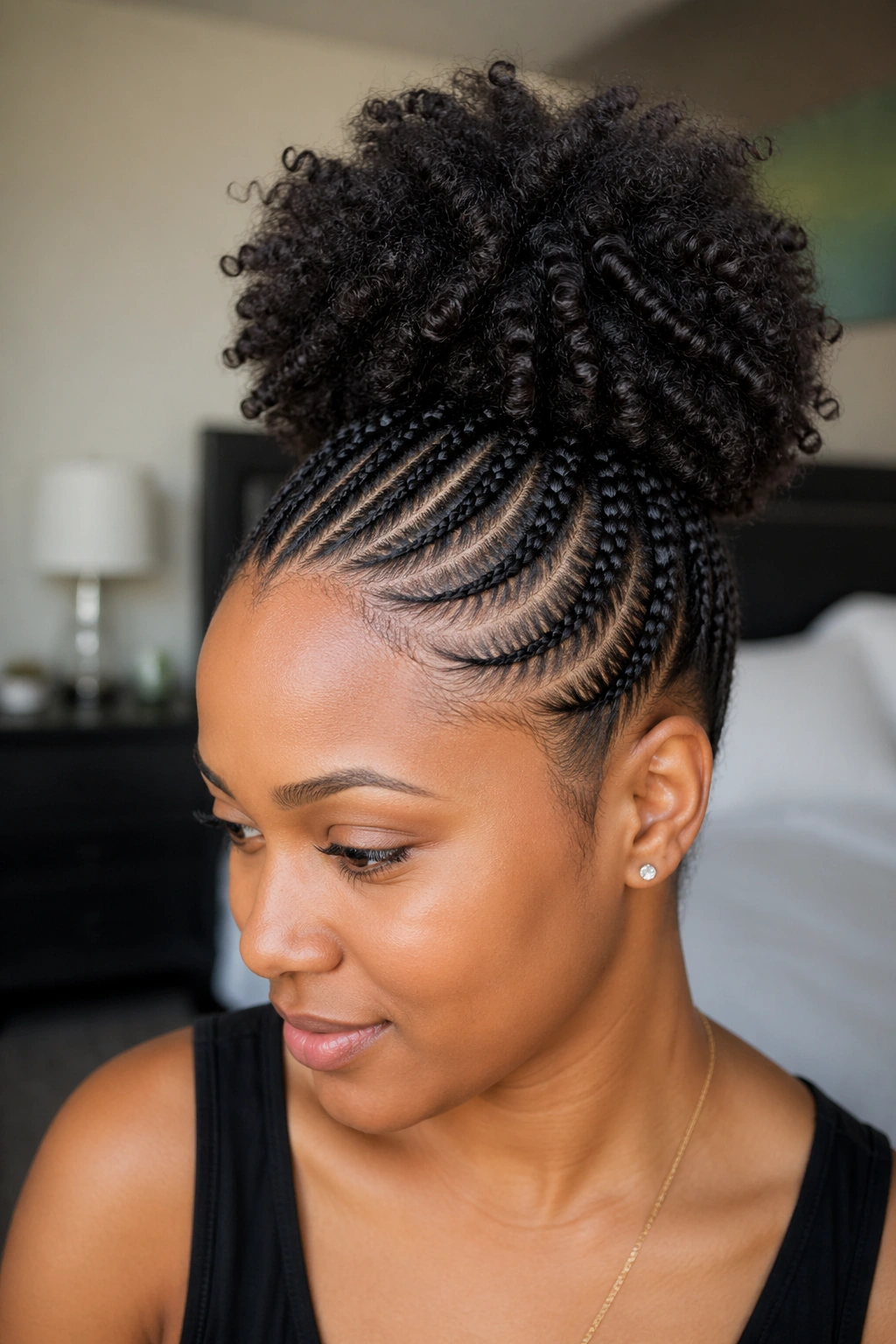
The braids cornrow upward toward the crown, where the natural hair gathers into a high puff. The puff is unmanipulated natural texture, picked out for volume.
The contrast between the precise small cornrows below and the wild puff above makes both elements stronger.
For 4C hair, the puff has built-in volume. For looser textures, you might need to lightly tease the puff to give it height.
12. Small Cornrows With Beaded Tips
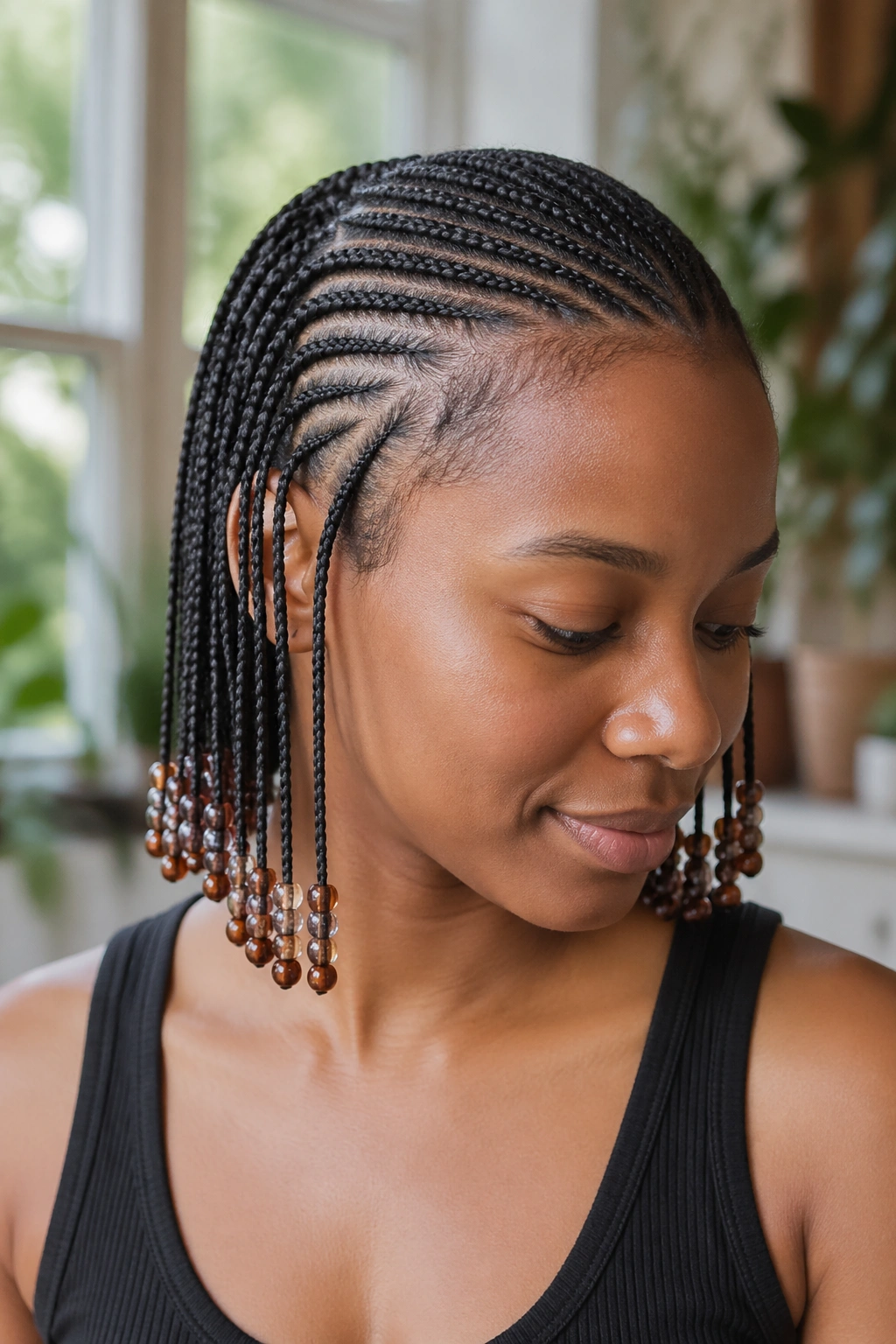
Small natural-hair cornrows finished with small beads at the tips. Because the braids themselves are fine, the beads need to be proportionally small — large beads look out of scale.
Glass seed beads or small wooden beads work. Avoid chunky plastic beads that overwhelm the delicate braid.
Place beads on every braid for full impact, or selectively on every 2-3 braids for subtler accent.
13. Small Cornrows Into an Updo
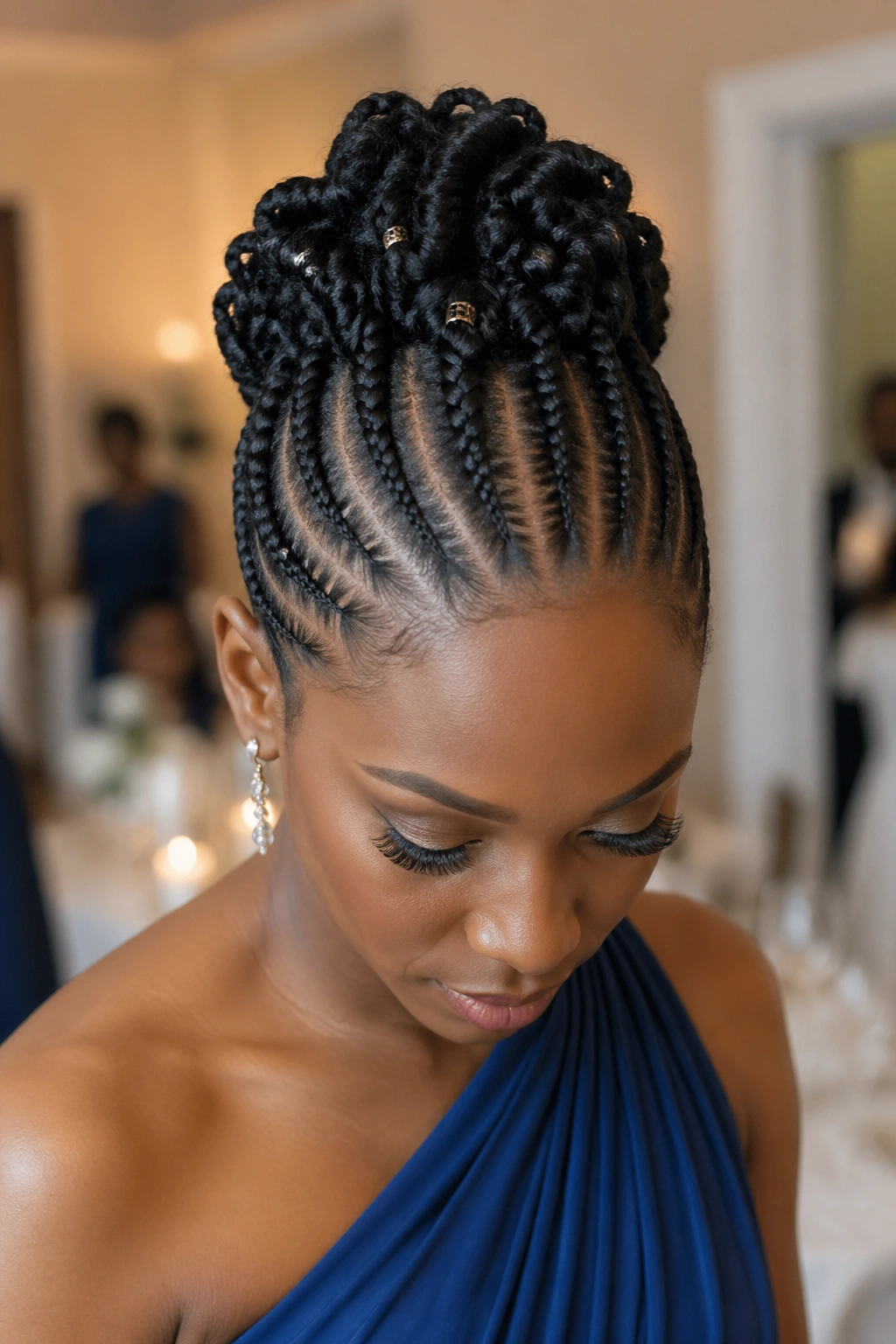
The cornrows run upward from the hairline and nape, all gathered into a sculptural updo at the crown. The natural hair forms the updo shape — twists, knots, or a curated bun arrangement.
A formal-event style. Wedding, gala, awards show territory.
The updo requires pinning and shaping after the braids are installed. Plan an extra hour beyond braid time for the updo finish.
14. Small Cornrows With Half-Twists at the Ends
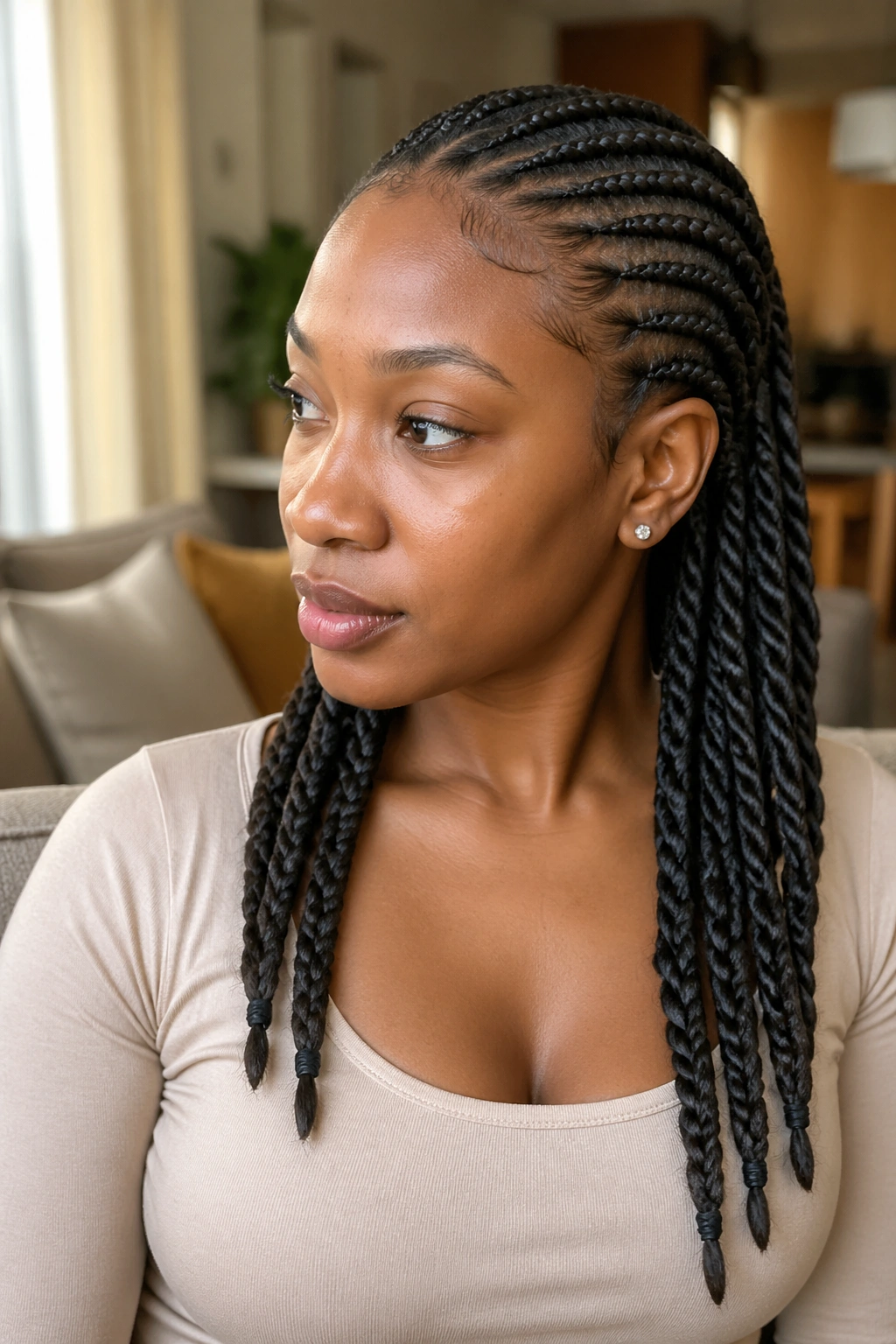
The cornrow holds the hair flat against the scalp from hairline to mid-back. Then the natural hair released from the braid is twisted into two-strand twists for the final length.
This hybrid look gives you the small cornrow precision at the scalp with twisted texture at the ends. Good for natural hair with enough length to twist after the cornrow ends.
The transition point — where cornrow ends and twist begins — should be sealed with a small elastic or a touch of edge gel so the cornrow doesn’t unravel.
15. Small Cornrows With Fulani Influence
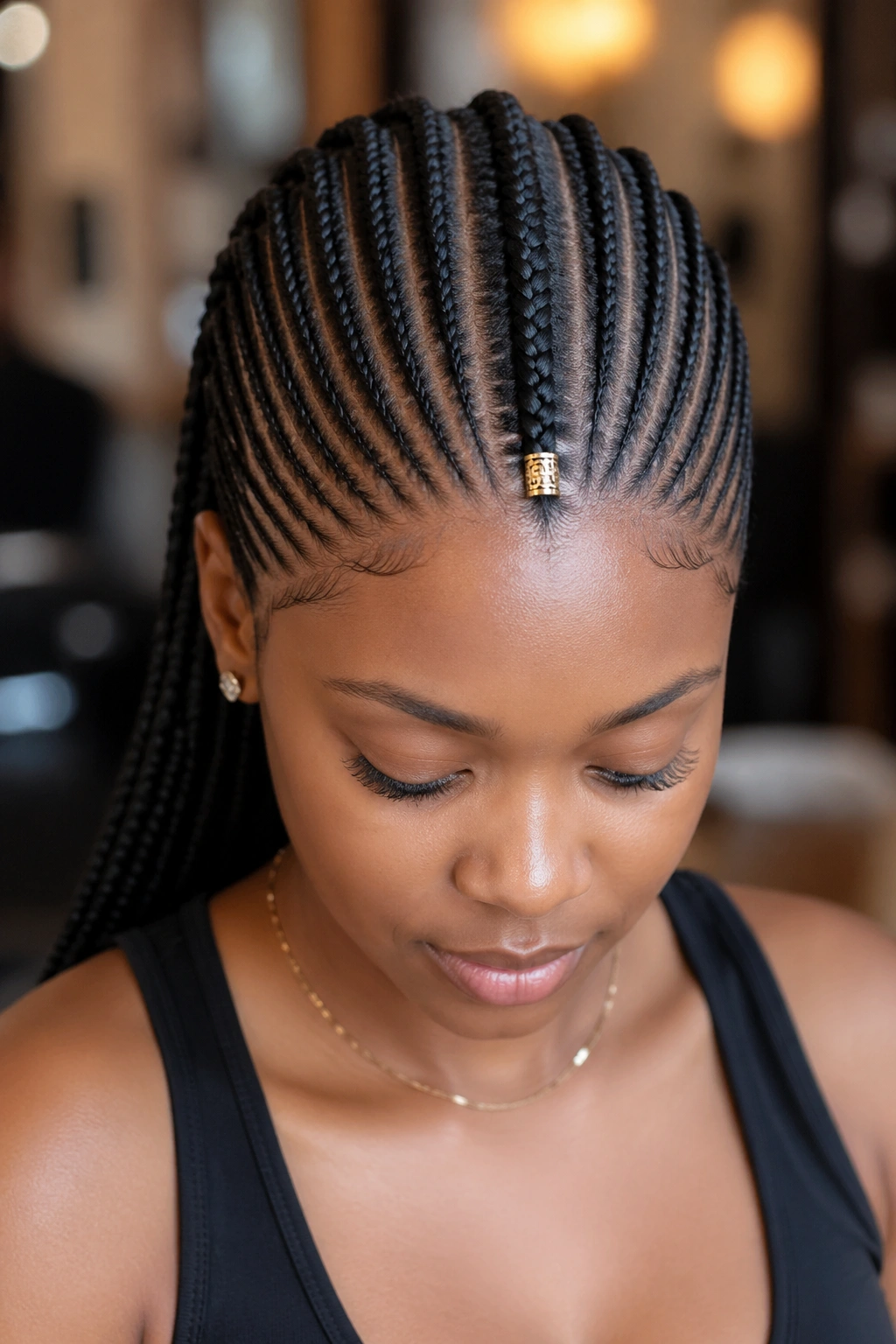
Fine cornrows with one thicker accent braid running down the center of the head. The center braid is roughly twice the width of the surrounding small braids.
Fulani style modernized into small-braid territory. The contrast between the bulk of small braids and the singular thick centerpiece creates visual hierarchy.
Add a single bead or cuff to the center braid for extra emphasis.
16. Small Cornrows With a Pony at the Crown
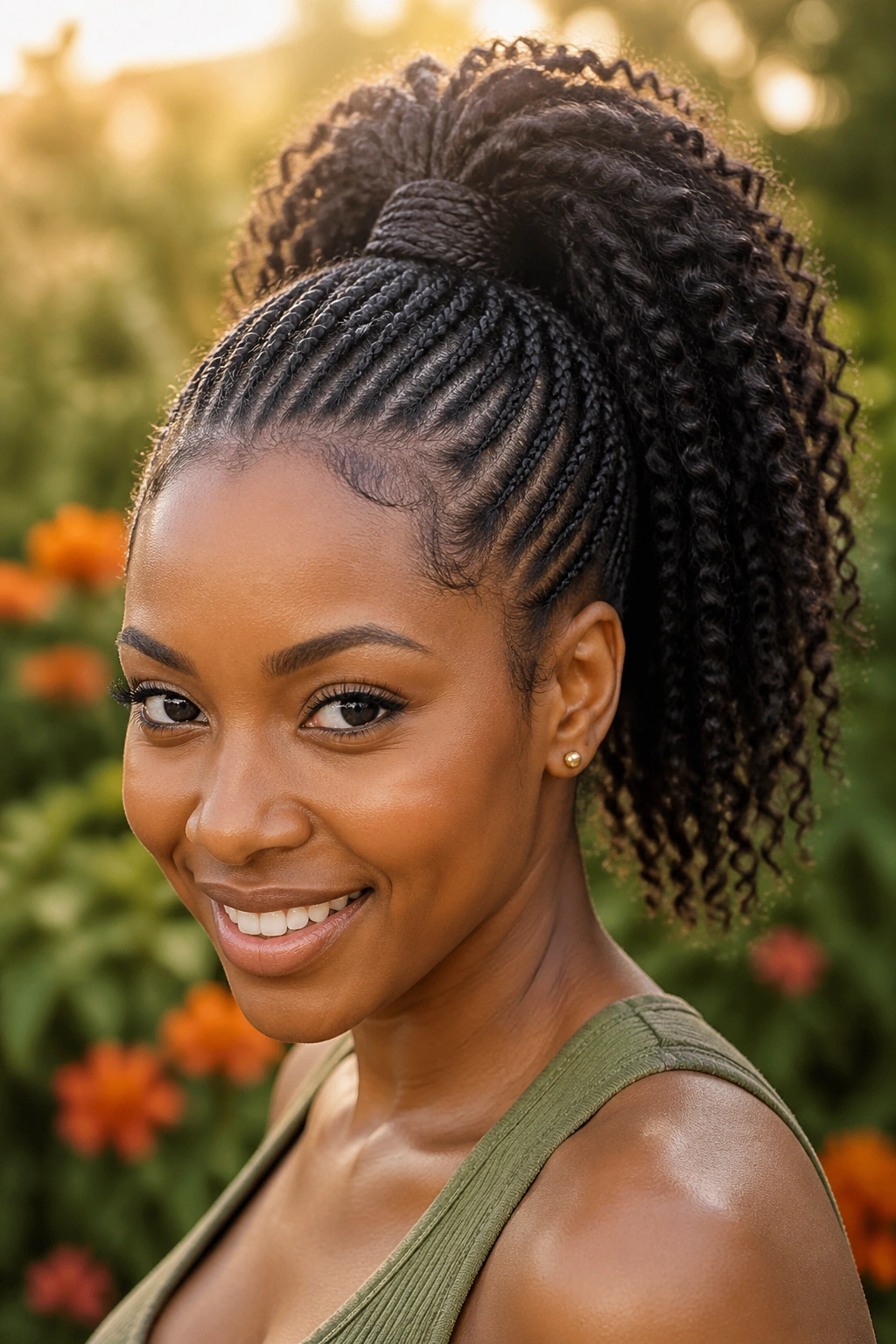
All braids cornrowed up toward the crown, then released into a high ponytail of natural hair. The ponytail is unfilled by extensions — just whatever your natural hair length provides.
For shorter natural hair, the ponytail reads as a mini puff. For longer natural hair, it can be a substantial hanging pony.
The base of the pony needs a smoothed wrap of natural hair around the elastic to hide the band. Otherwise the elastic looks unfinished.
17. Small Cornrows With a Crown Braid
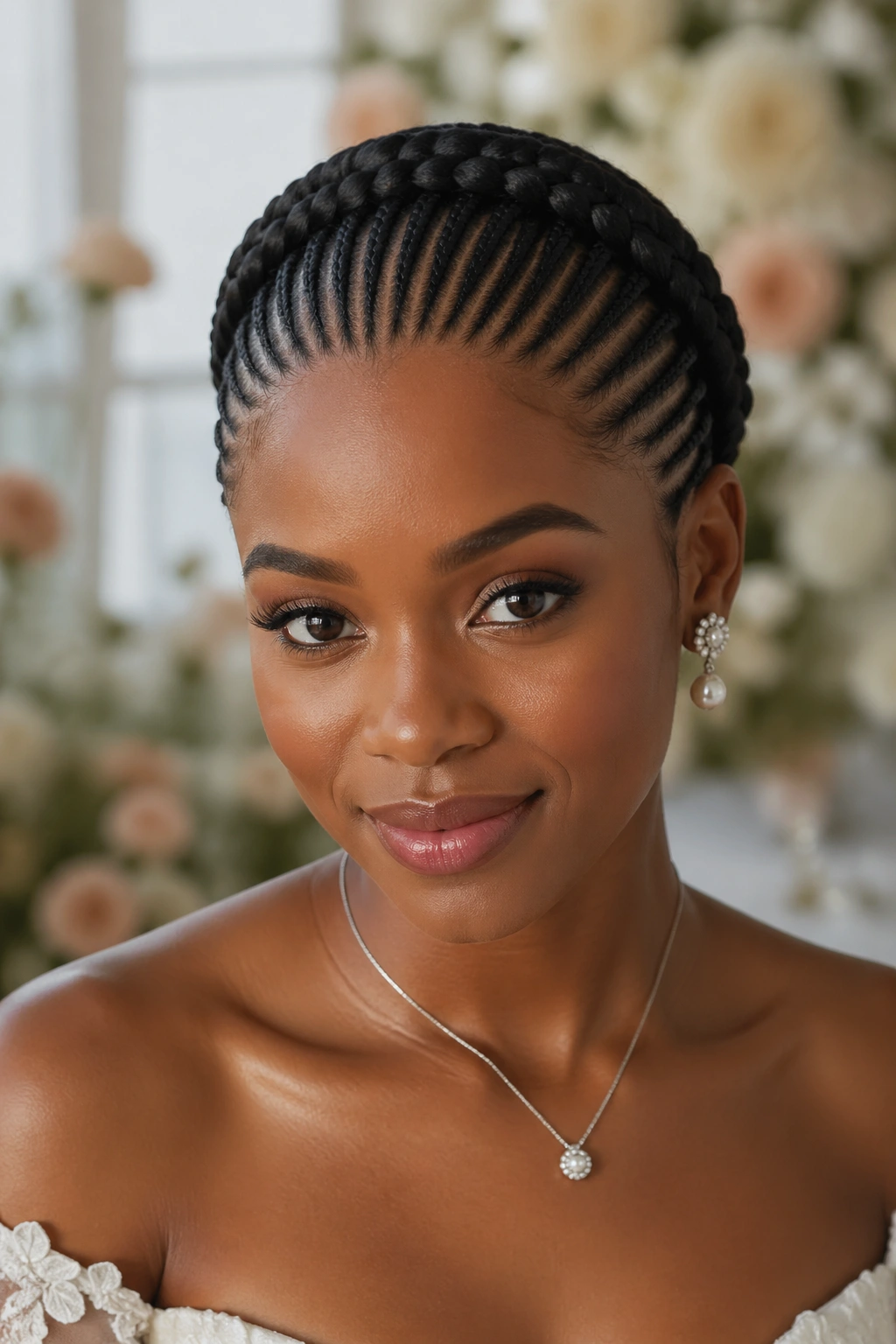
Small cornrows across the rest of the head, with one thicker cornrow wrapping around the crown like a halo. The halo is built from a separate section of hair set aside before the rest of the cornrowing begins.
Romantic styling. Reads bridal or formal.
The halo cornrow needs to be anchored at both ends — usually pinned underneath the surrounding small braids — so it doesn’t slip during the day.
18. Small Cornrows With Hidden Color
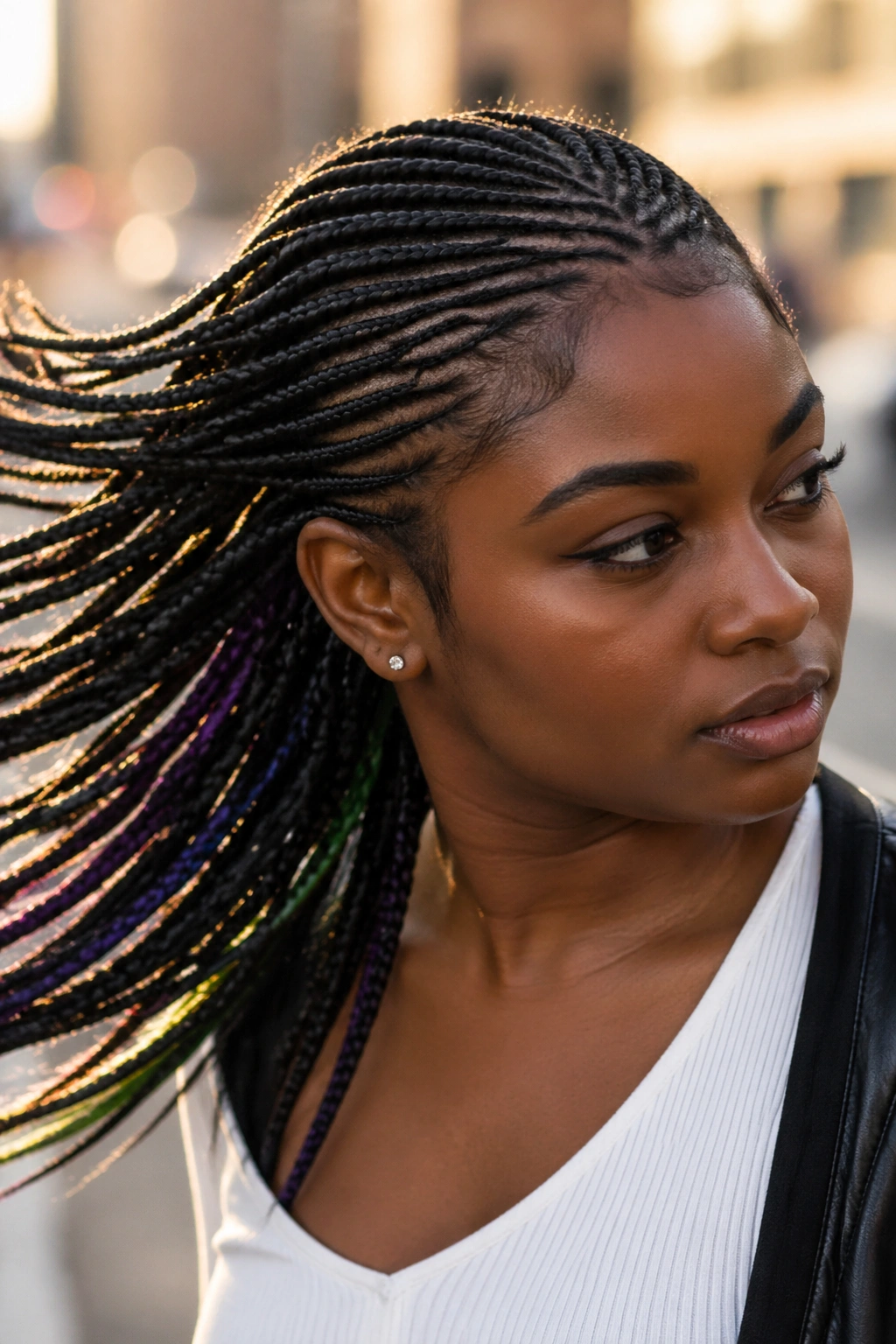
Most of the braids are natural color. A few cornrows hidden underneath show colored hair — usually accomplished by lifting top sections and dyeing only the lower hair before braiding. When you flip your hair or the wind catches it, the color flashes.
A subtle color play. Reads sneaky-cool.
The dye job needs to be done before the install. Touching up dye after small cornrows are in place is nearly impossible without taking everything down.
19. Small Cornrows With a Cornrow Headband
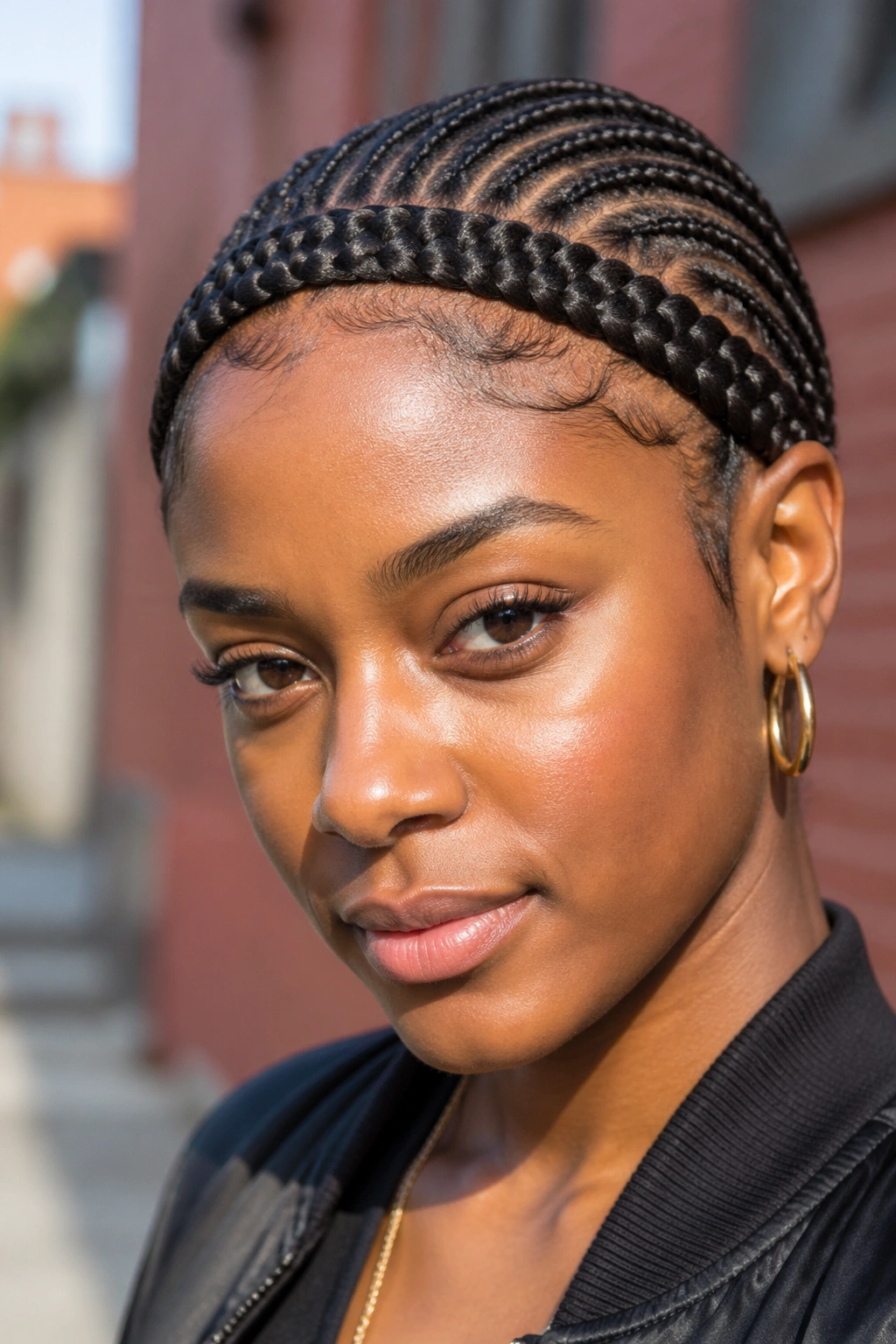
A single thick cornrow runs across the front of the head like a headband, with small cornrows behind it. The headband cornrow gives the front a defined edge.
Good for women with fine edges who want some hairline structure without the full pull of having all braids meet at the front.
Use edge gel where the headband meets the smaller braids to hide the seam.
20. Small Cornrows With Wide-Spaced Parts
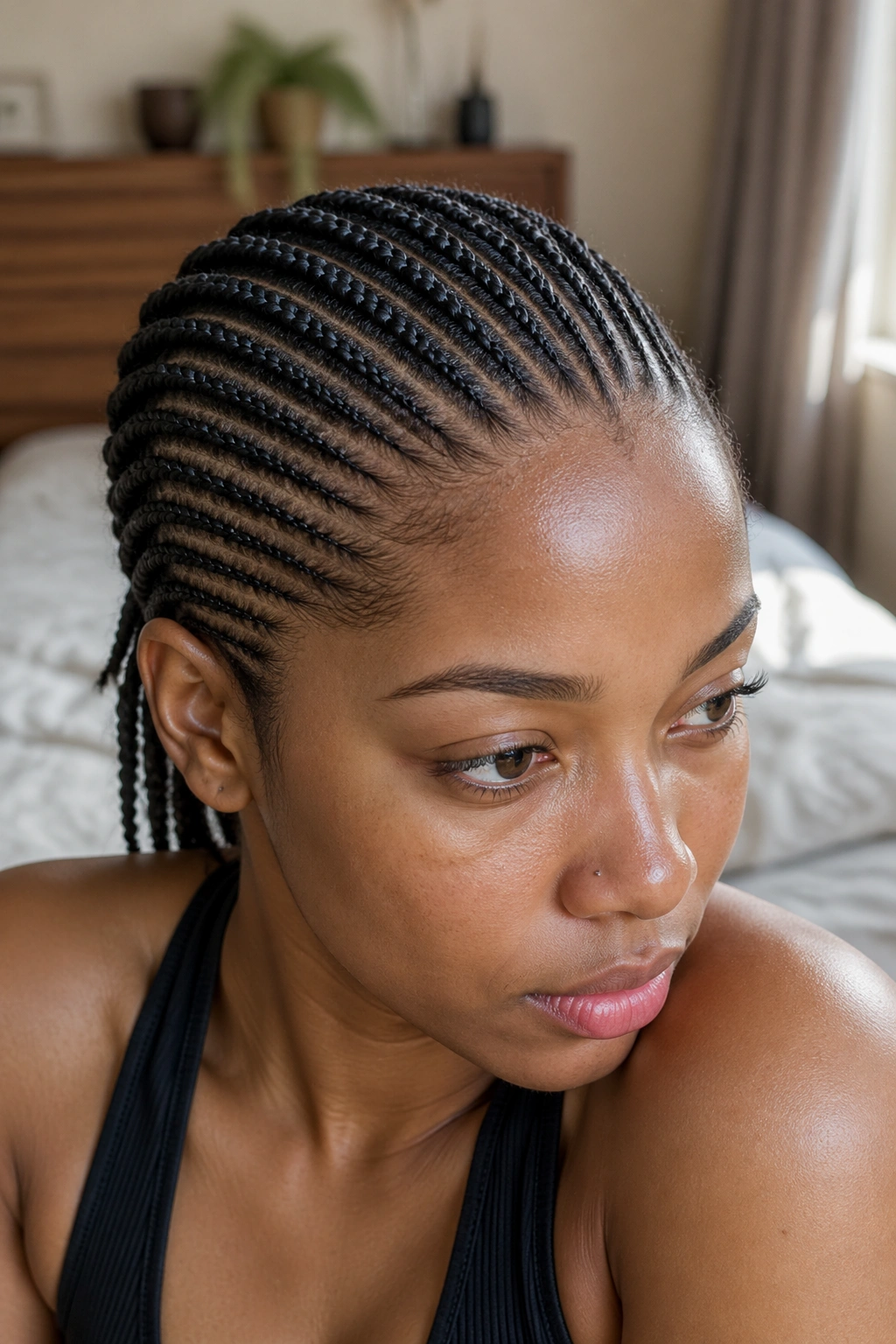
Same number of cornrows as standard small-cornrow styles, but with intentionally wider gaps between rows. The wider gaps showcase scalp and create a more graphic look than dense small cornrows.
Less protective than dense styles because more scalp is exposed. Better for indoor wear or styles meant for cooler weather.
The parts have to be clean — wide gaps make every parting flaw obvious.
21. Small Cornrows With a Twisted Crown Section
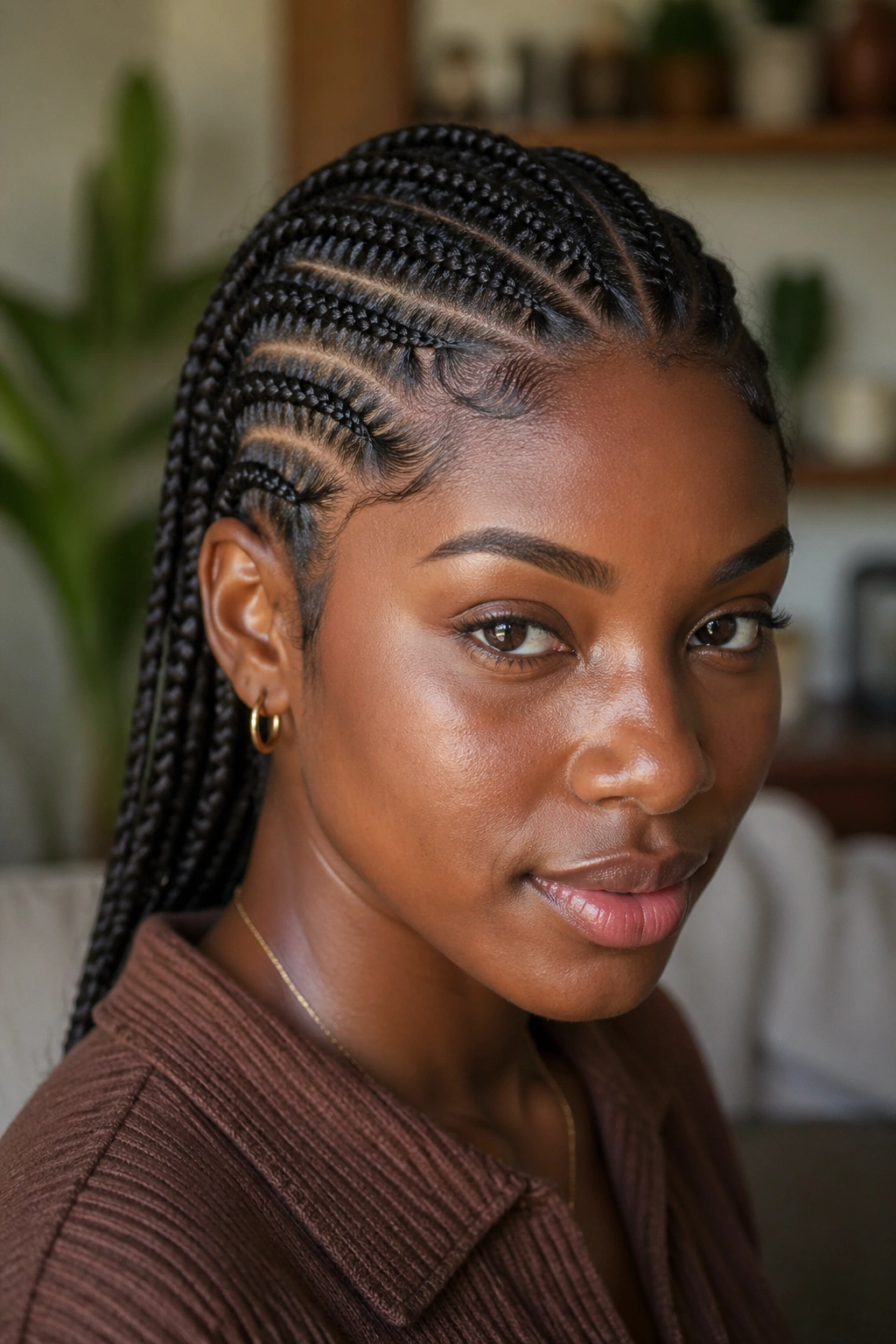
The crown features a separate sectioned area that’s two-strand twisted instead of cornrowed. The twists rise above the surrounding small cornrows.
Mixed-texture styling. The two techniques against each other emphasize both.
The twist section can be wrapped into a soft bun on top, or left loose as a textured crown peak.
22. Small Cornrows With an Asymmetric Pattern
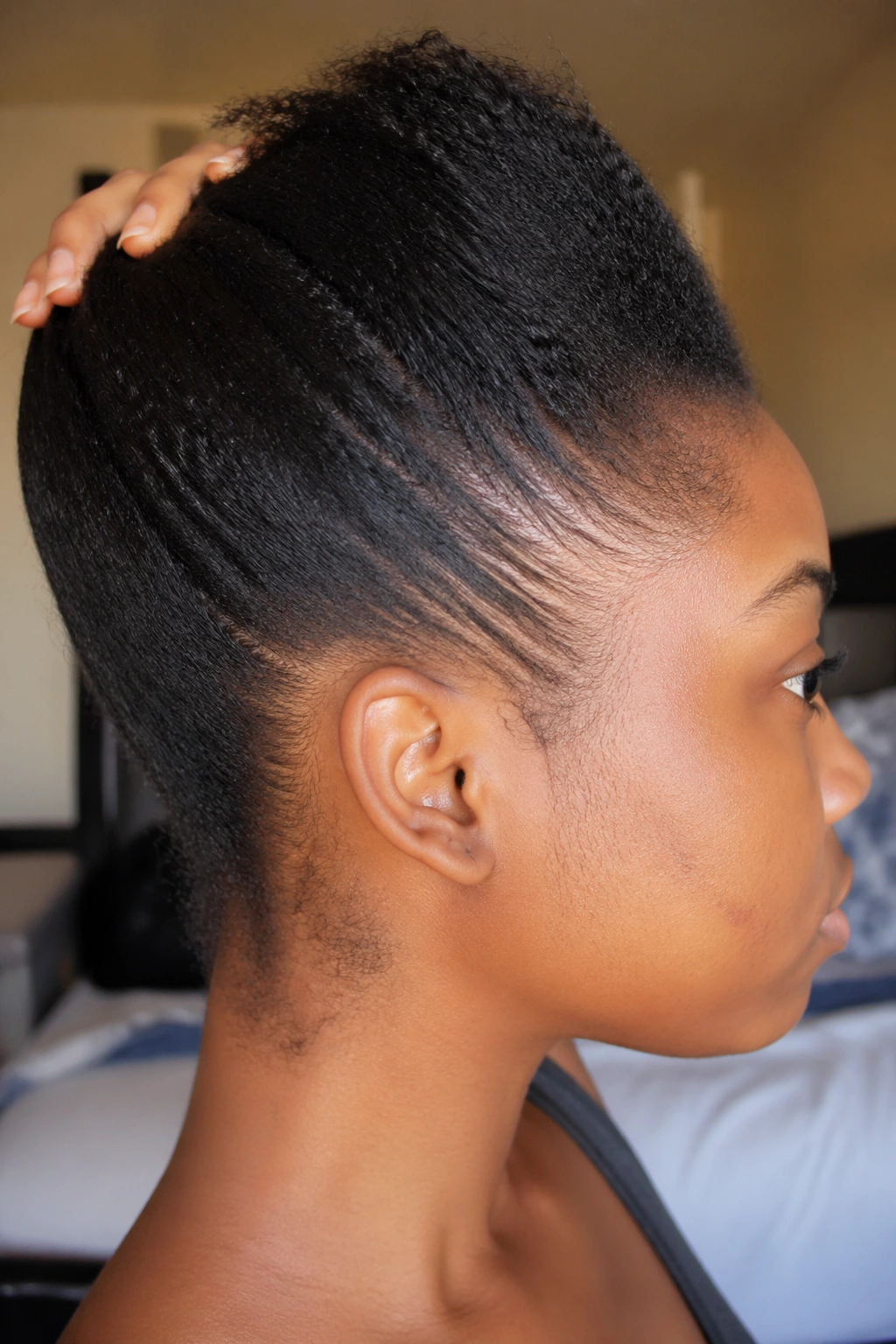
The left side of the head has a different cornrow pattern than the right side. Could be diagonal versus straight, dense versus spaced, curved versus angular. The asymmetry creates a styling that reads modern and confident.
Asymmetric small cornrows take serious planning. Both sides need to feel intentional, not random.
A good braider will sketch the pattern before starting. If your braider just starts braiding without planning, the asymmetry will look like a mistake.
Maintaining Small Cornrows on Natural Hair
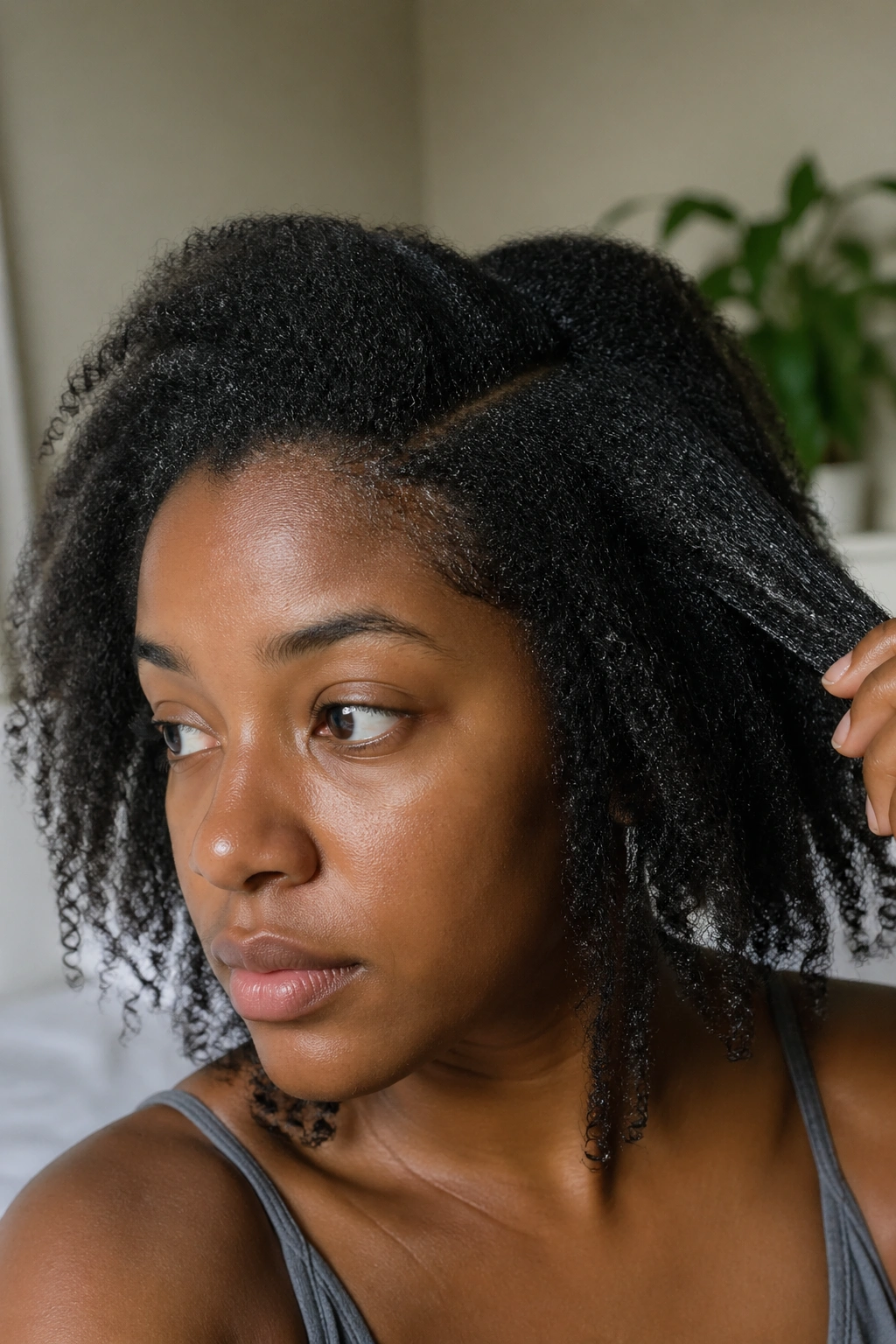
The single biggest factor in small cornrow longevity is night protection. A satin bonnet that fits snugly without compressing the braids is required. Cotton pillowcases shred fine braids fast — within a week, the edges look fuzzy and individual hairs start escaping.
Tie a silk scarf around your hairline before the bonnet for extra edge protection. Layered protection lasts longer than a single bonnet.
Refresh edges every 2-3 days with a small amount of edge gel and a soft brush. Daily edge work keeps the front looking fresh; skipping days lets fuzz accumulate quickly.
Moisturizing Small Cornrows Without Buildup
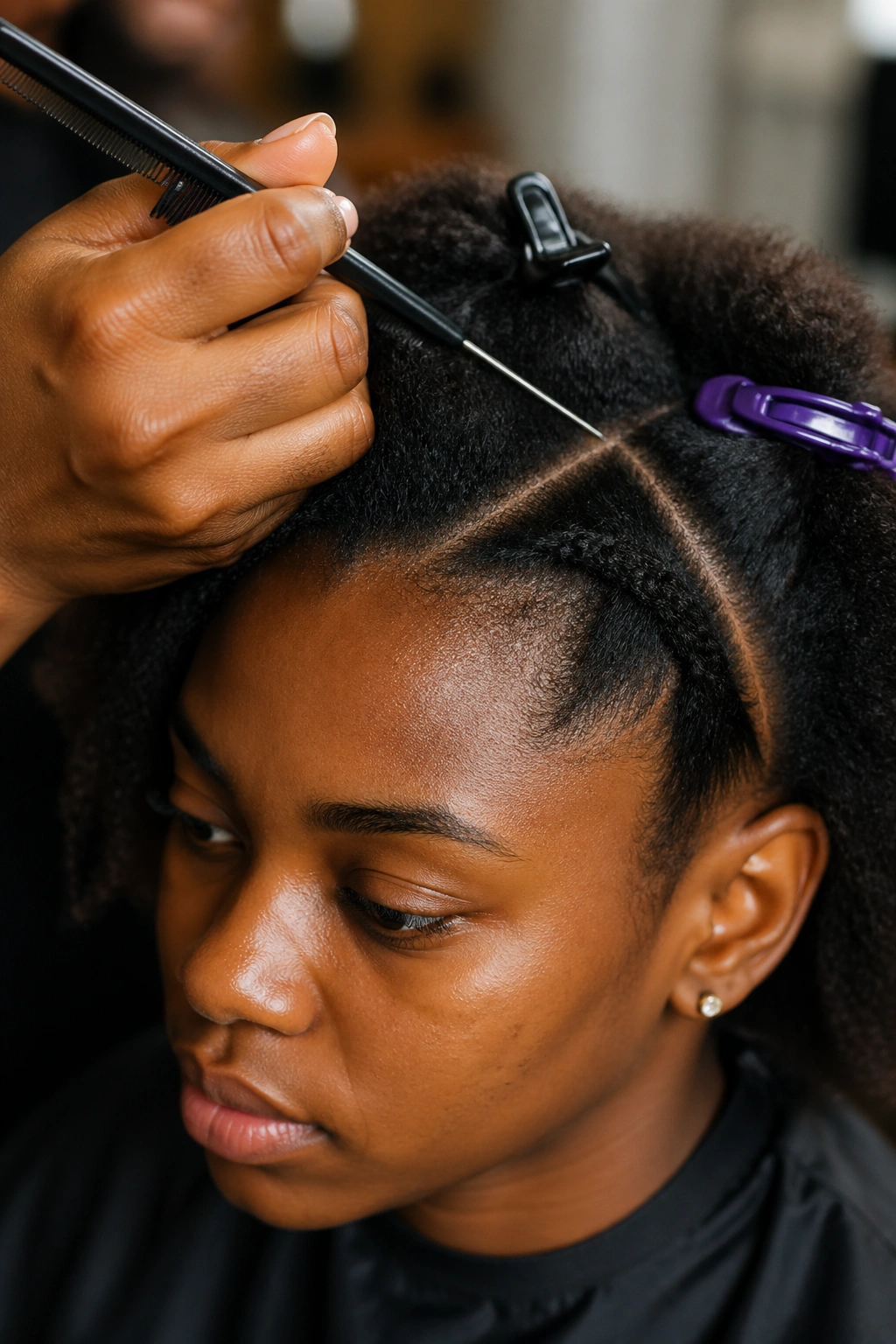
Natural hair under cornrows still needs moisture. The fine braids actually let moisture through more easily than thick braids do.
Use a water-based braid spray every 2-3 days, focused on the scalp and the braid lengths. The spray should feel light, almost weightless. Heavy creams suffocate small braids and cause buildup that takes ages to wash out.
Apply a few drops of jojoba or sweet almond oil to the scalp once a week. Massage gently. Avoid coconut oil or olive oil — both go heavy on fine braids and yellow over time.
Washing Small Cornrows
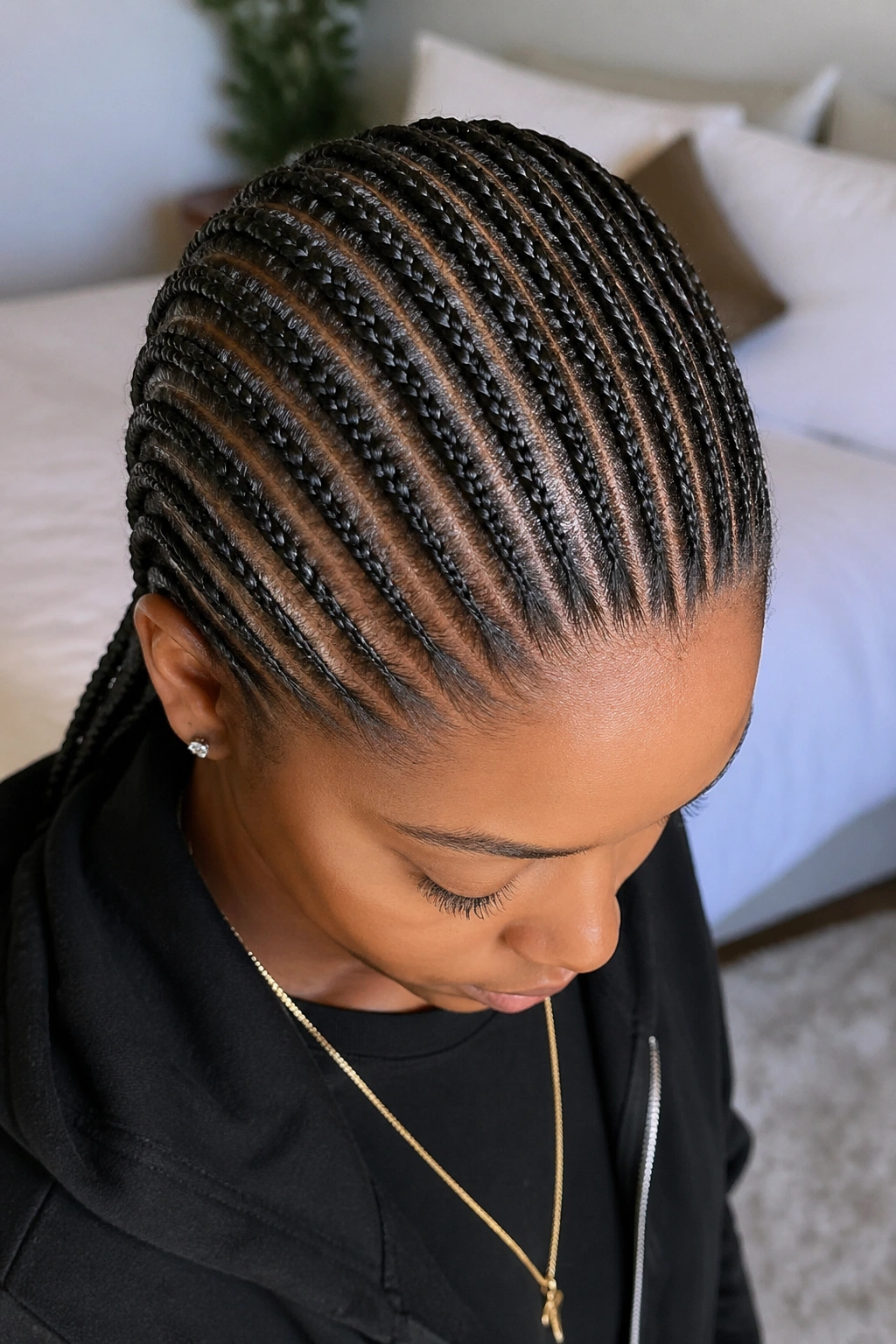
Wash every 2 weeks. Apply diluted sulfate-free shampoo to the scalp via a nozzle bottle. Massage gently with fingertips, never nails. Rinse thoroughly with cool water.
Follow with a light leave-in spray applied to the scalp. Never apply heavy conditioner — it’ll never rinse out fully and will sit between the braids causing odor.
Air-dry fully before bedtime. Damp small cornrows under a bonnet for 8 hours create perfect conditions for mildew. Fully dry first.
Refreshing the Hairline
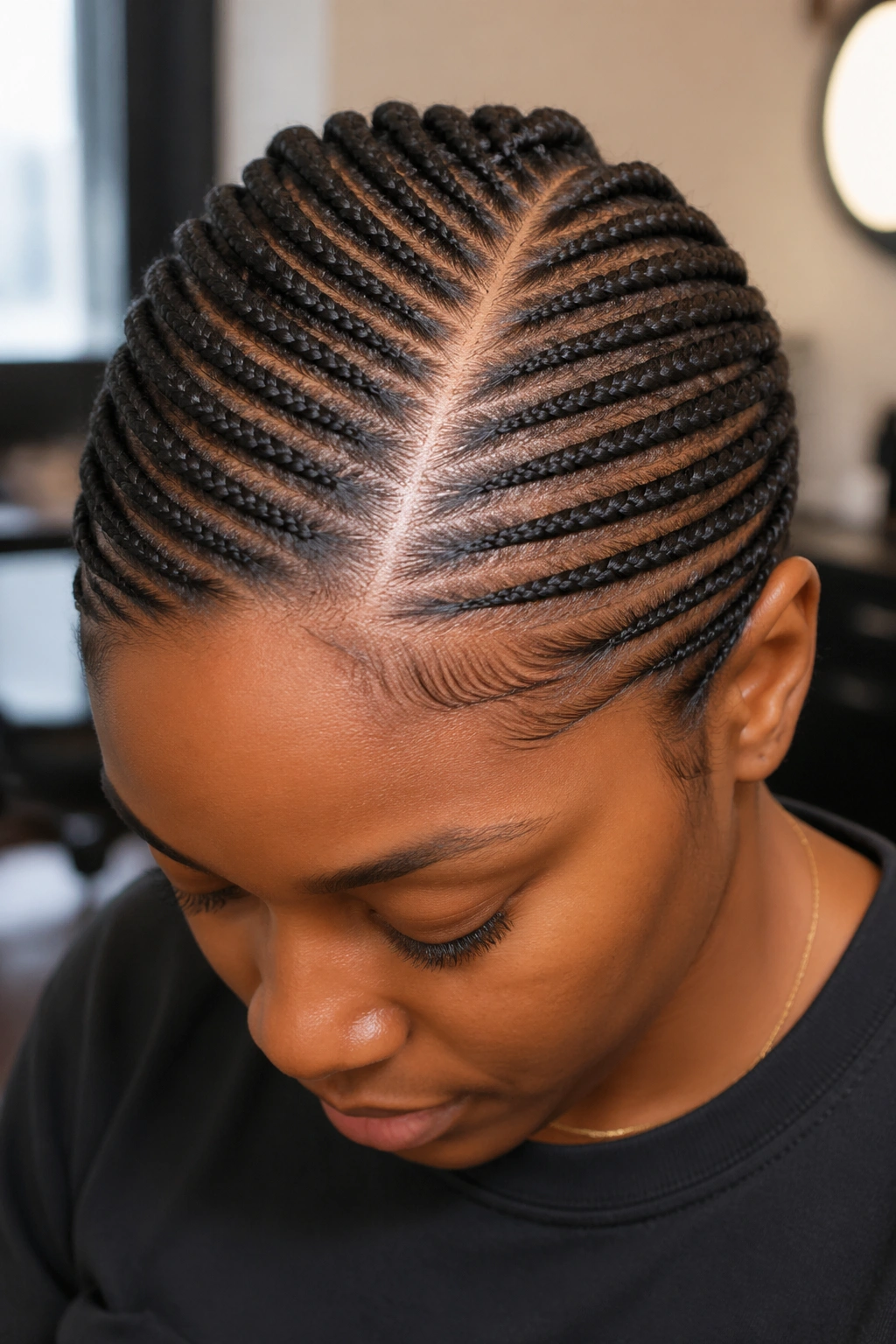
Small cornrows around the hairline lift first. Once the edges show new growth pulling forward, the front of the style starts looking aged.
Around week 2-3, you may want to redo just the front 4-6 cornrows. A skilled braider can take down and redo these specific braids without disturbing the rest of the head — usually a 30-minute touch-up.
Don’t try to braid the new growth into the existing braids. The visible seam will be obvious, and the texture difference will catch every glance.
When to Take Them Down
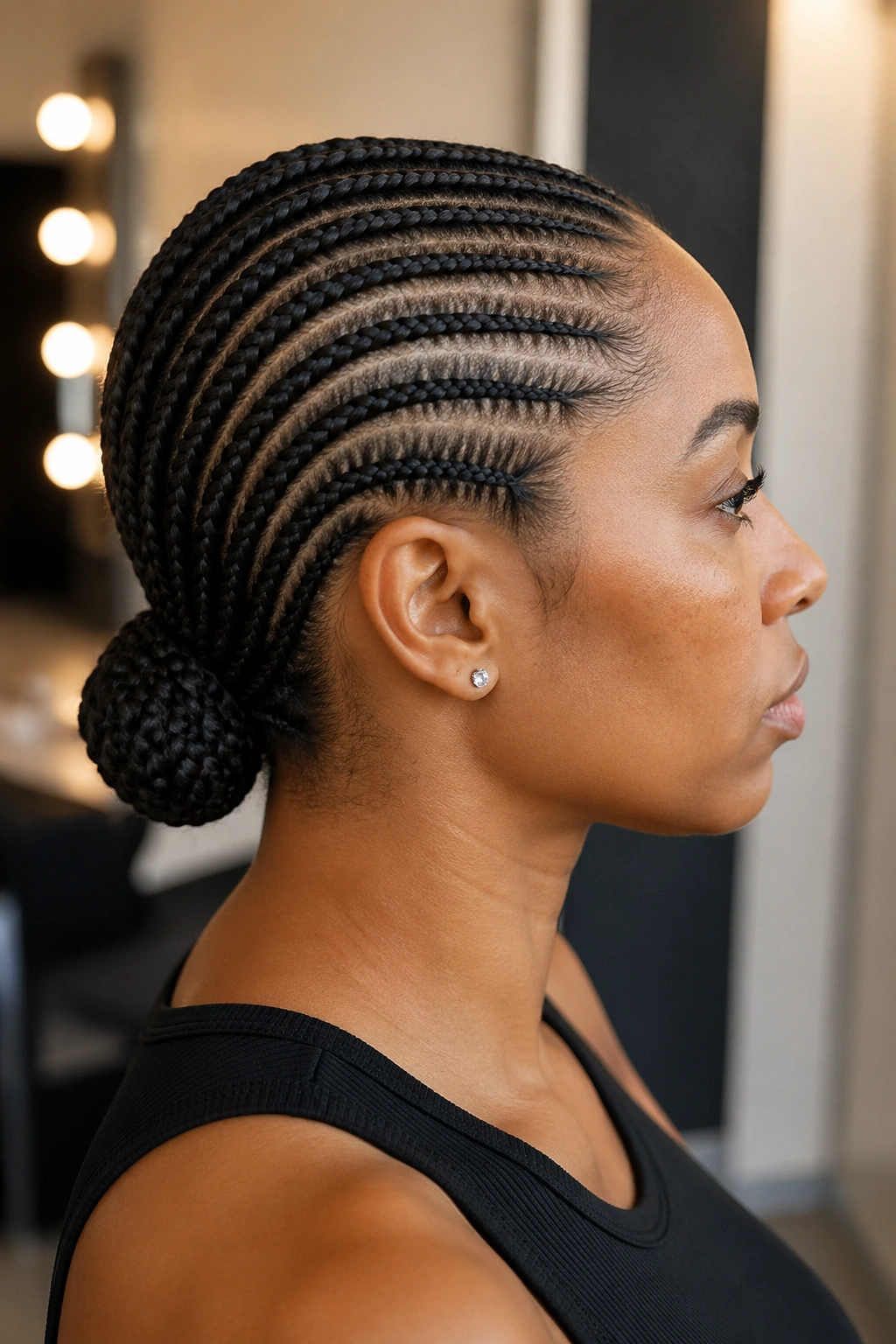
Small cornrows on natural hair last 3-4 weeks comfortably. Pushing past 4 weeks risks the new growth at the roots tangling with the established braids, which makes takedown miserable and risks breakage at the demarcation line.
The takedown signal: scalp itching that doesn’t respond to washing or moisturizing, visible loosening at multiple braids, or the front edges looking tired even after refresh.
Take down on damp hair using a slippery conditioner. Section by section, unraveling each braid from tip to root. Detangle each freed section before moving to the next. Rushing this stage causes breakage.
Picking the Right Small Cornrow Style
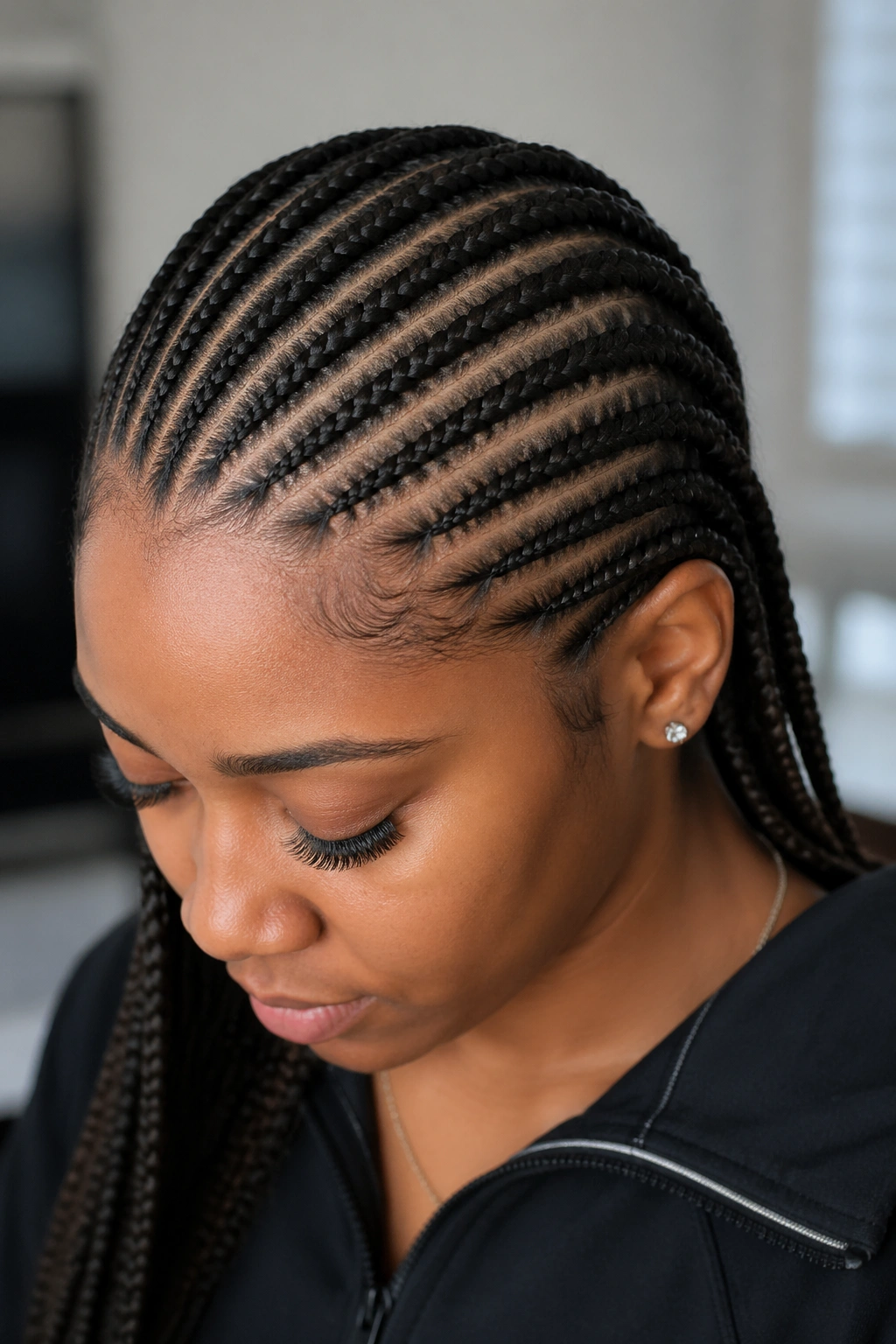
Small cornrows reward intention. Bigger braids forgive lazy choices; small braids don’t. Pick a pattern that matches your face shape, your maintenance tolerance, and your styling goals.
A first-time small-cornrow wearer should start with classic straight-backs or a simple side part. The simpler styles let you learn how small cornrows behave on your hair before investing in elaborate patterns.
Once you’ve worn small cornrows successfully, scale up to geometric parts, asymmetric designs, or mixed-texture hybrids.
The best small cornrow style is the one that makes you stand a little straighter when you catch your reflection. That’s the one to keep coming back to.
