


Silver cornrow styles sit in an interesting aesthetic space. Not quite platinum, not quite gray, not quite white — silver carries a metallic quality that reads cool, polished, and slightly futuristic. The shade photographs dramatically, catches light in unique ways, and flatters more skin tones than people assume. Silver kanekalon has become one of the more requested extension shades in recent years, and there’s a reason for that: silver cornrows read as a deliberate choice in a way that standard brown or black braids don’t always do.
I’ve worn silver cornrows for everything from formal events to everyday wear, and the shade never stops drawing compliments. What I’ve learned through multiple installs: silver is more demanding than other colors. It shows dirt faster, reacts to hard water more dramatically, and can yellow if you use the wrong oils. But the payoff — a head of silver braids that catches every bit of ambient light — justifies the extra care.
This piece covers 22 silver cornrow styles, each one approaching the shade differently. Some lean into warm silver (slightly tinted toward gold). Some push cold silver (slightly tinted toward blue). Some combine silver with other colors for contrast. Each one solves a different styling or aesthetic goal.
Understanding Silver as a Hair Color
Silver isn’t a single shade. It spans from nearly-white platinum silver to deep gunmetal gray. Within that range, you have:
- Icy silver (very cool, near-white with blue undertones)
- Pure silver (neutral, neither warm nor cool)
- Warm silver (slight gold undertone)
- Ash silver (slight green or gray undertone)
- Gunmetal silver (deep, smoky, gray-leaning)
Each shade photographs differently and flatters different skin undertones. Cooler silvers suit cool-undertoned skin. Warmer silvers suit warm-undertoned skin. Neutral silvers work on most people.
When buying silver kanekalon, check the lighting of any online photos carefully. Silver can look dramatically different in warm versus cool light, and product photos can mislead. If possible, compare against a physical sample before committing to a full pack for a full-head install.
Why Silver Is Demanding as a Braid Color
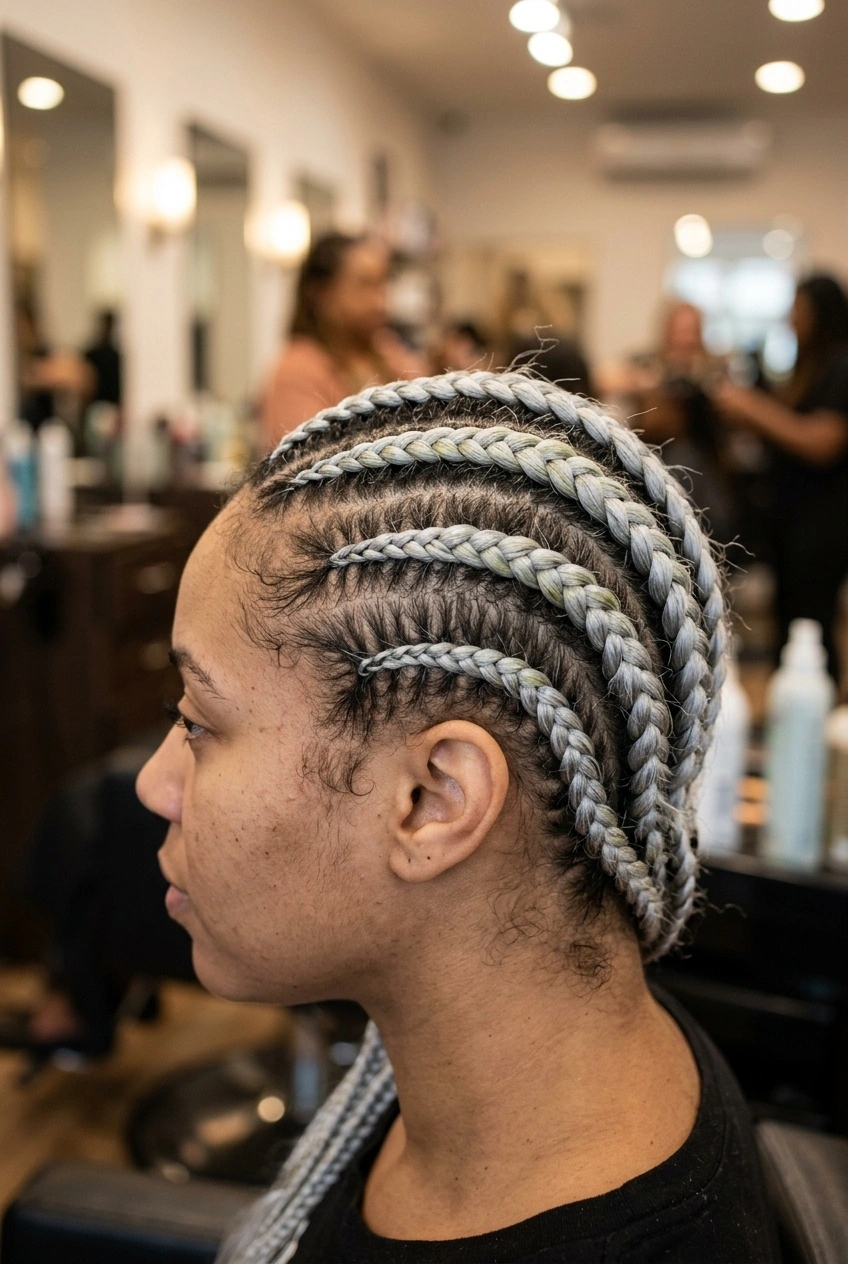
Silver kanekalon is more delicate than black or brown because of the processing required to achieve the light shade. The fibers have been stripped of natural pigment and then re-coated; that processing makes them slightly more porous and reactive.
Hard water mineral content leaves yellow or orange tinting on silver kanekalon over time. Chlorine from swimming can cause greenish tones. Heavy oils (coconut, castor) can darken silver within a few weeks.
This means silver installs require slightly different care than standard installs. Distilled or filtered water for rinsing, lightweight oils or spray-based leave-ins for maintenance, and swim caps if you’re going in chlorinated water.
None of this is a dealbreaker — silver styles hold beautifully when cared for — but it’s worth knowing before committing.
Tools and Materials for a Silver Install
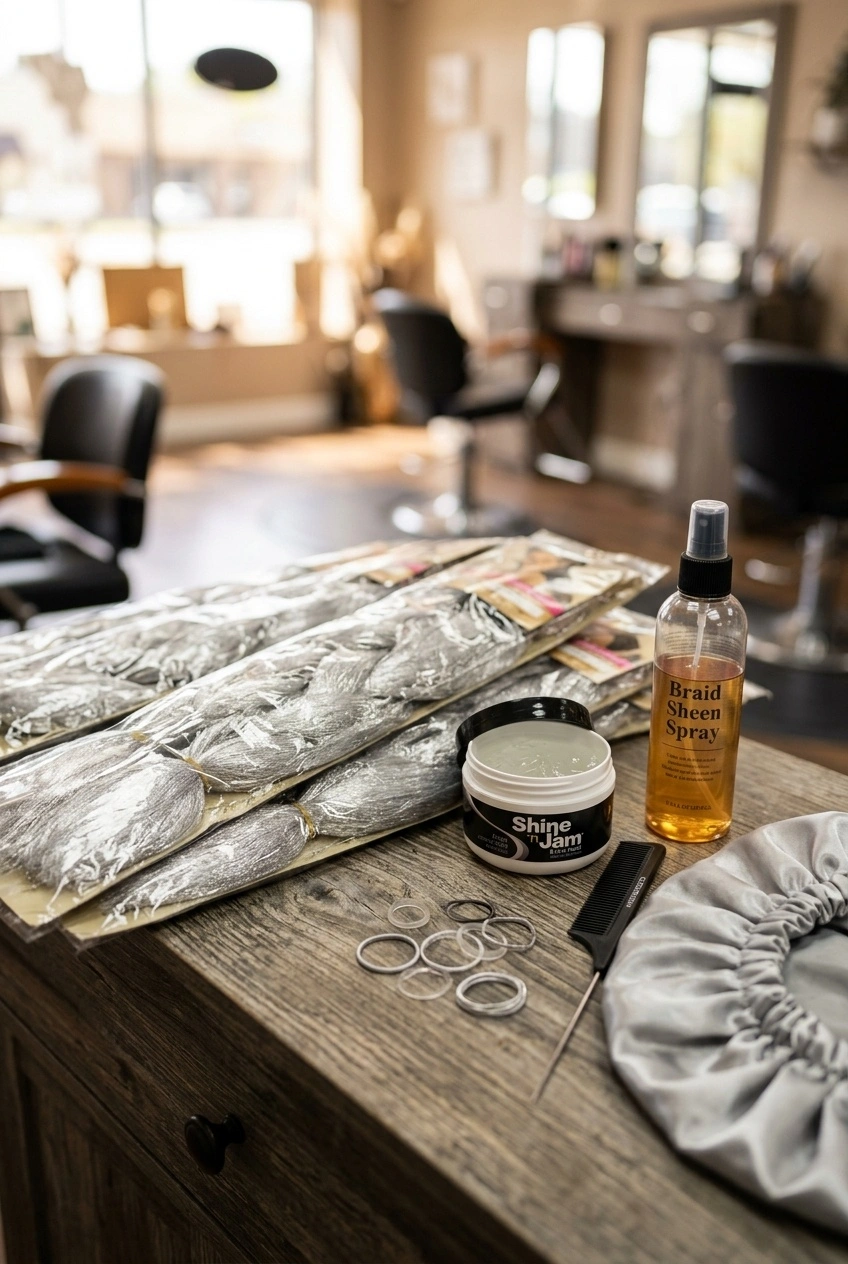
- Pre-stretched kanekalon in your chosen silver shade (1-2 packs depending on density)
- Edge control with firm hold and no flake (colored silver can show flakes more than dark installs)
- A fine-tooth rat-tail comb with metal tip
- Braid sheen spray (lightweight, non-yellowing formula)
- Silver or clear rubber bands for securing
- Silk or satin bonnet for nighttime protection
- Distilled or filtered water for rinse/refresh
Avoid oil-based products for the first few days after install. Silver kanekalon absorbs oil differently than black kanekalon, and early heavy oil application can cause dulling.
Parting for Maximum Visual Impact
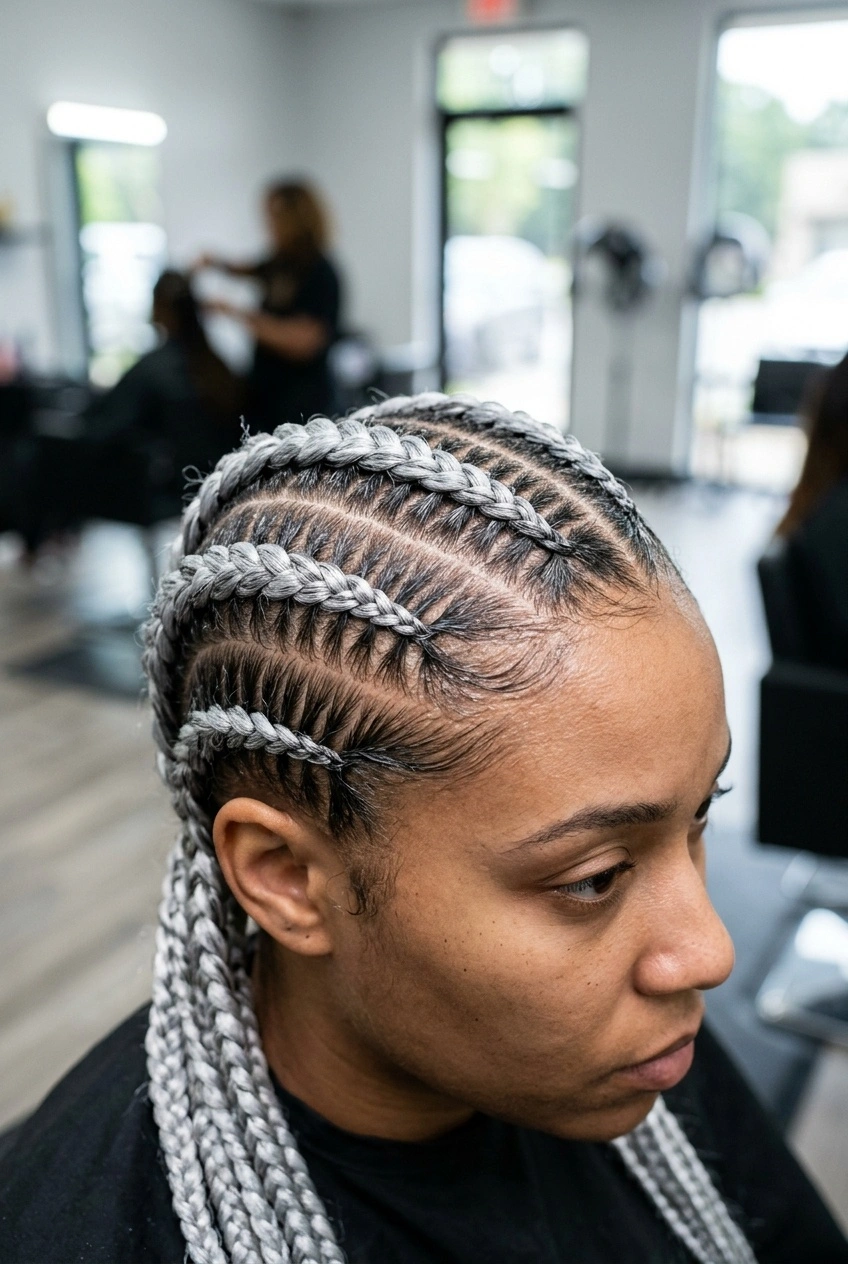
Silver cornrows show parting lines more vividly than dark cornrows. Every wobble, every smudged gel, every uneven spacing shows up. This raises the bar for parting precision.
Use a fine-tooth comb with a sharp metal tip. Apply gel to the scalp along the parting line before combing through, which keeps the line defined even after braiding starts.
Plan your pattern before the first part. Random freehand parting on silver usually produces uneven row distribution that looks messy from step one.
A skilled braider is worth the investment for silver installs. The color punishes imprecision, and a less-experienced braider can produce a finished look that reads sloppy no matter how expensive the kanekalon.
Caring for Your Natural Hair Underneath
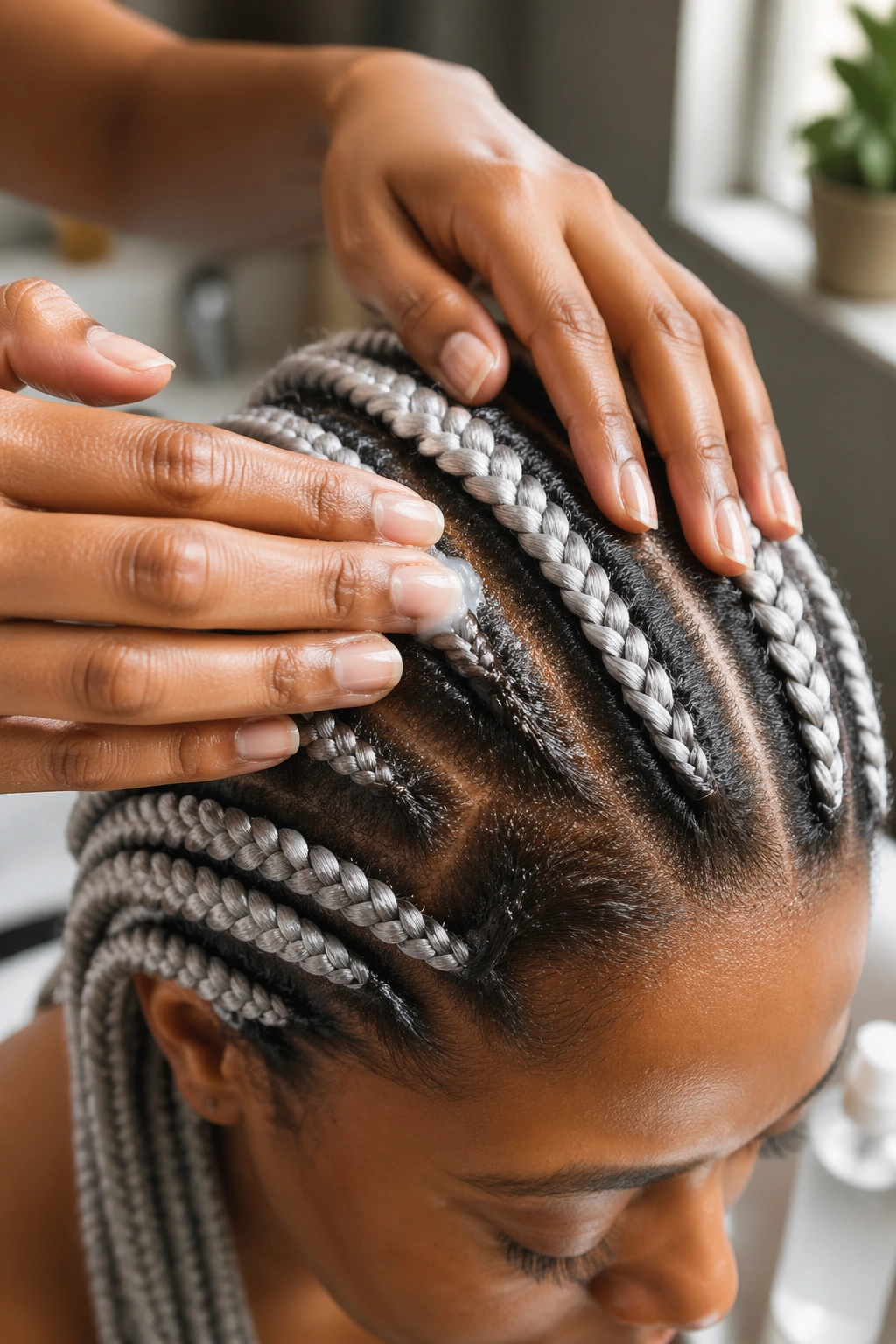
What’s happening under the silver braids matters as much as the braids themselves. Your natural hair needs moisture, scalp care, and protection from the tension any braid style creates.
Pre-install, clarify with a sulfate shampoo to remove buildup, then deep condition for at least 20 minutes. This baseline hydration gets you through the first two weeks of the install.
Post-install, apply a lightweight scalp oil (jojoba, rosemary, peppermint) directly to the partings every few days using an applicator bottle. Avoid heavy oils that could darken the silver.
Refresh with a water-and-leave-in spritz every 2-3 days, focusing on the scalp and braid bases rather than saturating the length.
1. Straight-Back Silver Cornrows in Icy Platinum-Silver
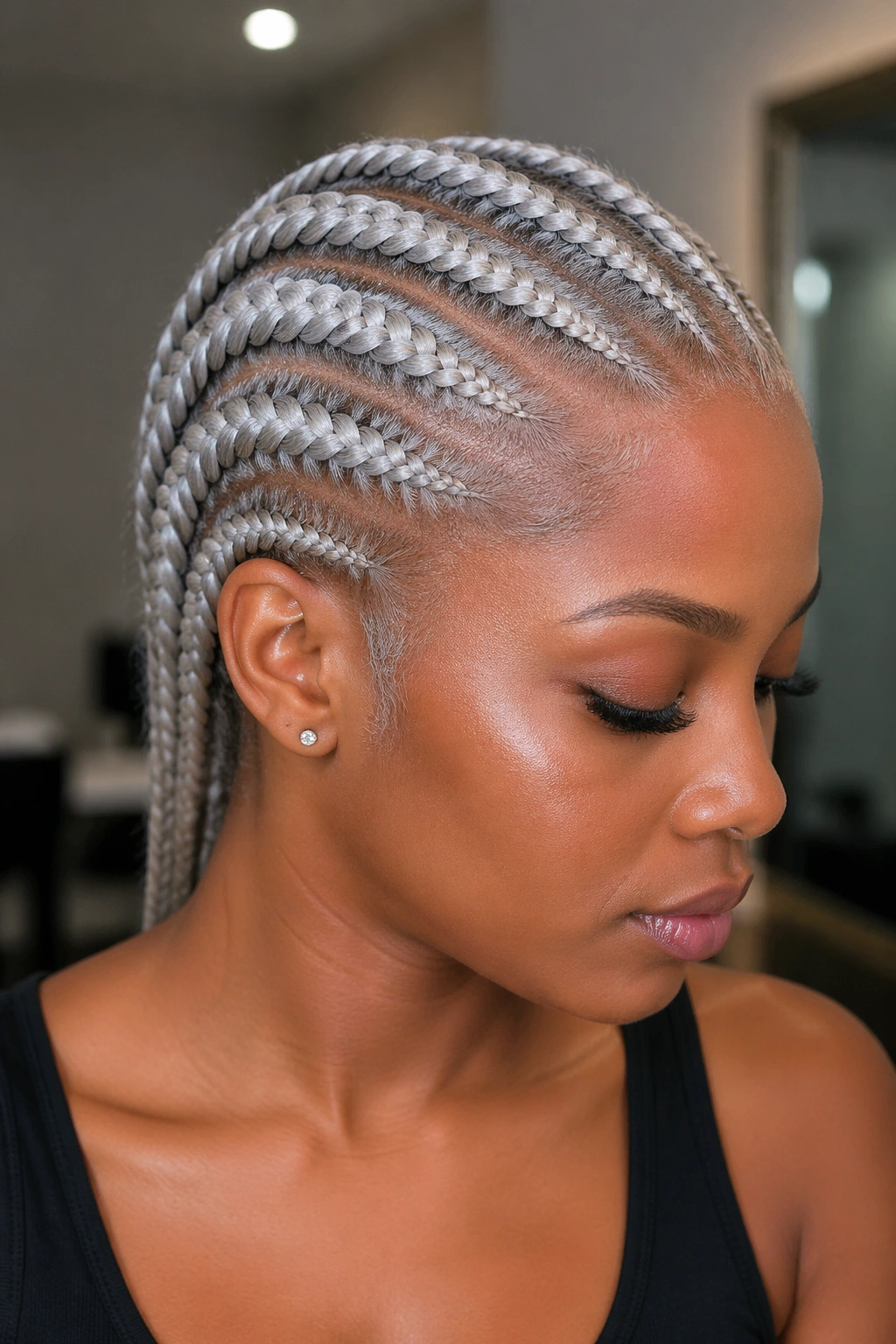
Six to eight straight-back cornrows in icy platinum-silver kanekalon running from the hairline to the nape. The shade is at the coldest end of the silver spectrum — nearly white with a subtle blue undertone.
Why It Works
Icy silver is the most dramatic silver shade against warm-undertoned skin. The contrast between deep brown skin and near-white hair reads editorial and striking.
- Use around 1.5 packs of kanekalon at medium density
- Plan for 3-4 hours of install time
- Secure braid ends with small rubber bands
The straight-back pattern is where silver shows best for first-time wearers. It’s a clean canvas that lets the color do the visual work without competing with parting complexity.
The style reads sophisticated without being overdone. Event hair that doesn’t feel costume-y.
2. Silver Cornrows With Black Root Fade
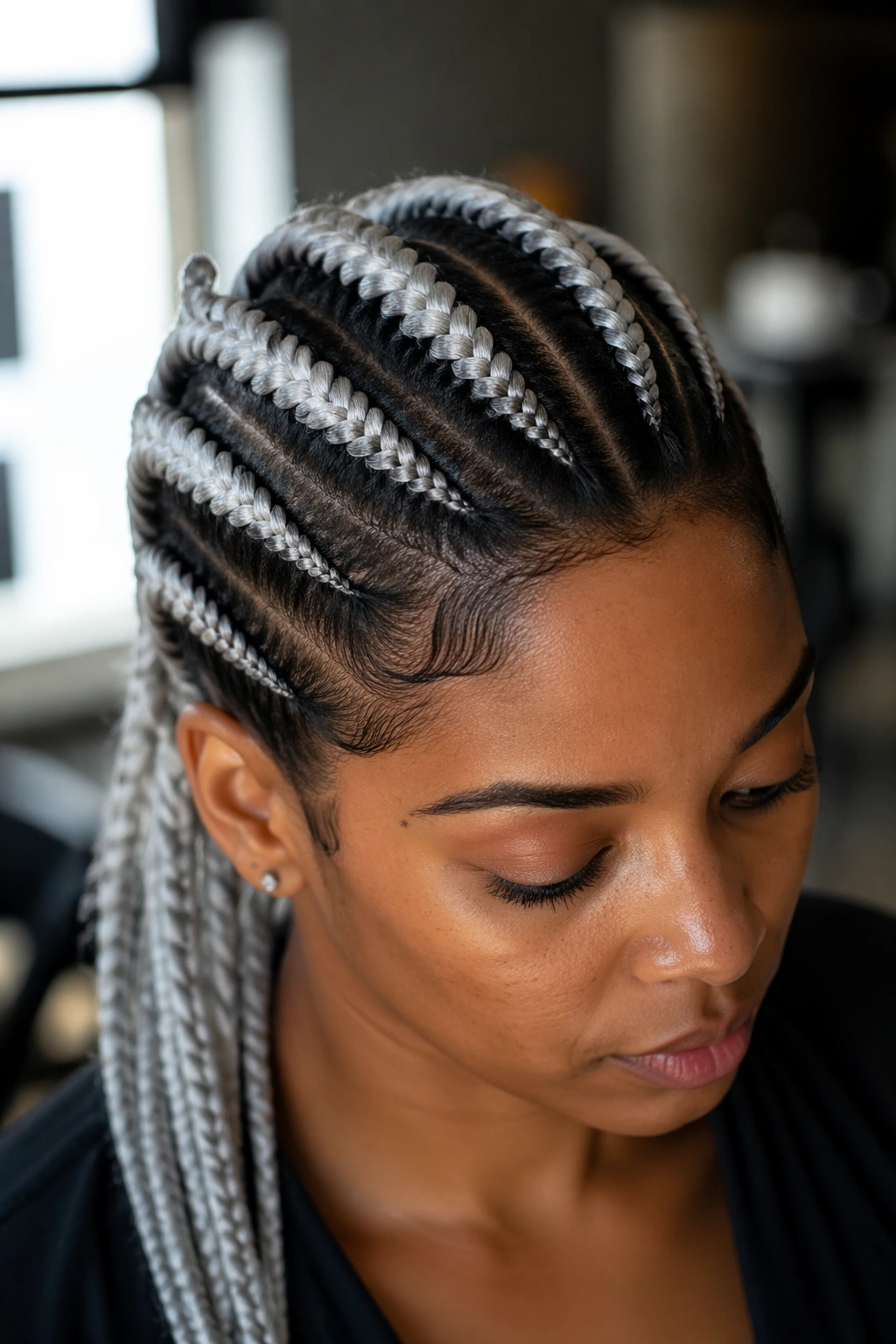
The cornrows are installed with black or dark brown kanekalon at the base (close to your natural scalp color) and silver kanekalon throughout the length. The effect is a grown-out look — as if the silver has been growing from dark roots.
The transition zone — where black meets silver — should be gradual, not abrupt. Good braid-dye results require ombré or pre-colored two-tone kanekalon; DIY color transitions rarely match the clean gradient of professionally prepared extension hair.
What makes this different from pure silver: the dark root reduces the visual shock of the shade transition. For anyone nervous about commitment or who wants a more “natural” silver look, this version softens the impact.
Who this is for: anyone wanting silver styling without the full contrast of an all-over silver install.
3. Silver Feed-In Cornrows With Wooden Beads
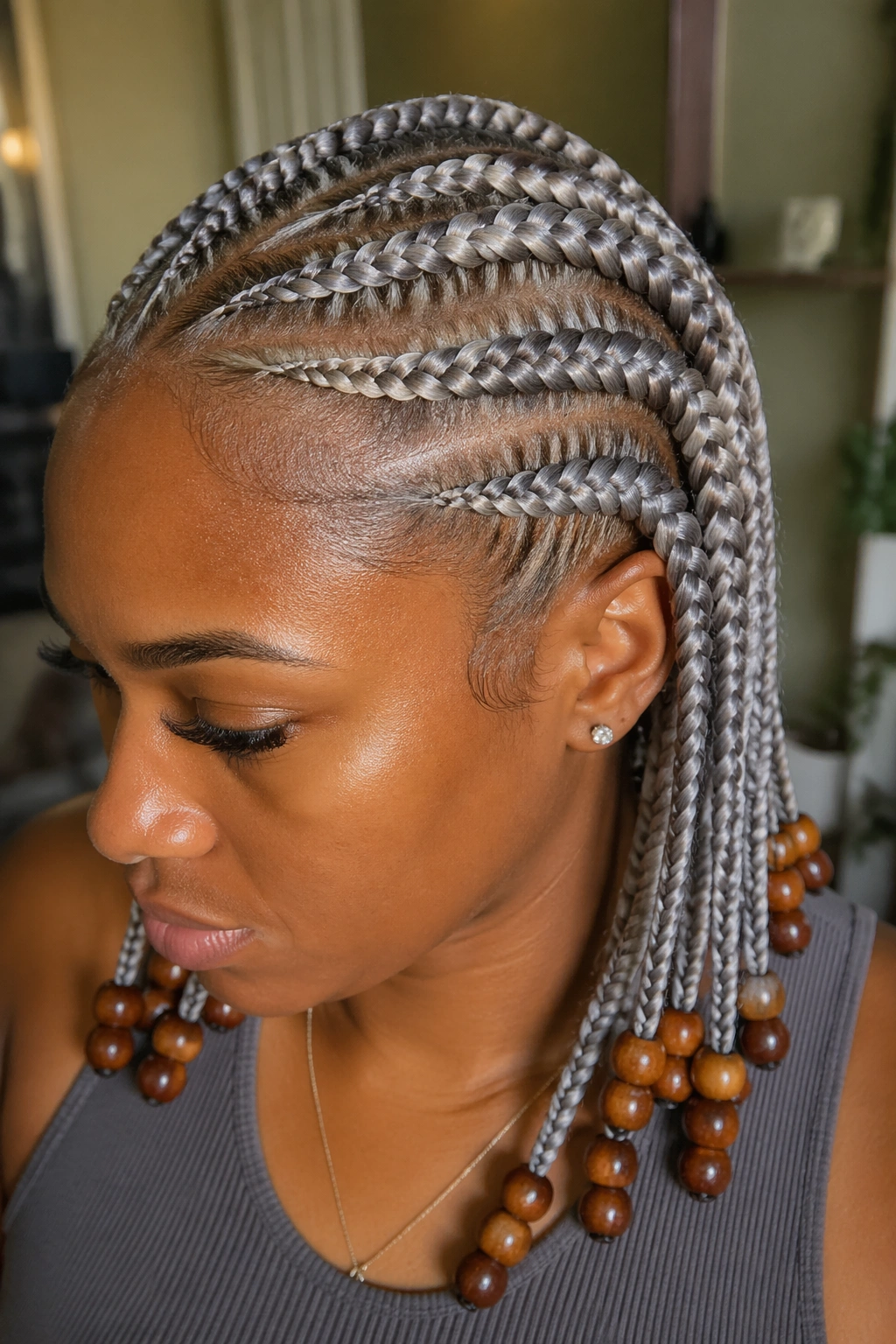
Feed-in cornrows using silver kanekalon with natural wooden beads at the ends. The contrast between cool silver and warm wood creates unexpected depth.
This pairing shouldn’t work — silver and wood seem like opposite aesthetics. But the contrast clicks visually. The cool metallic quality of silver sets off the organic warmth of wood.
Use 3-4 wooden beads per braid end. Choose wood in medium brown tones; too light (blonde wood) competes with the silver, too dark (ebony) fights against it.
Best for: anyone who wants silver styling with a grounding, earthy finish. The wood keeps the look from feeling too metallic or clinical.
4. Small-Gauge Silver Cornrows
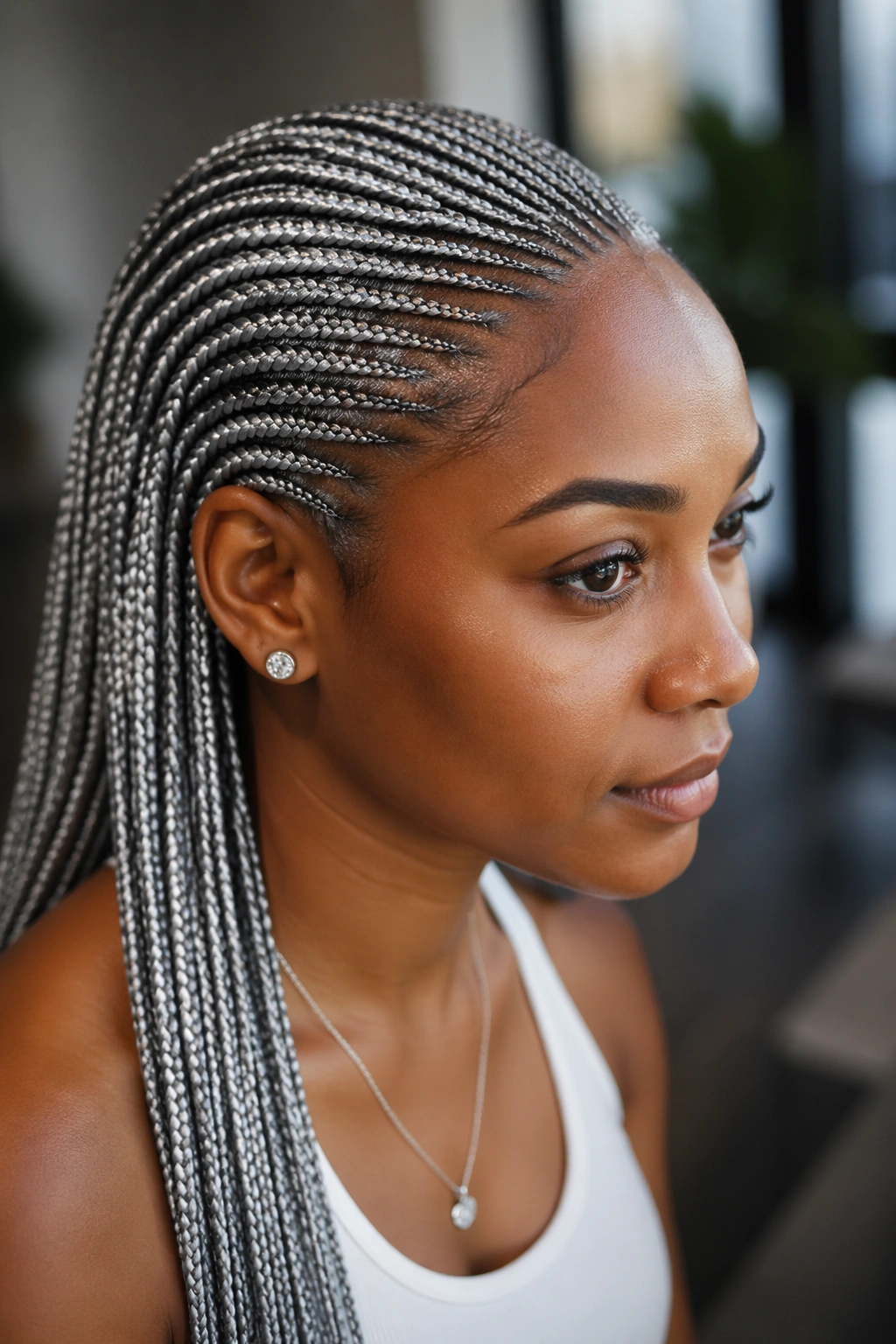
Small-gauge cornrows (about 1/2 inch base width) in silver create a dense, sophisticated finish. Where chunky silver braids read playful, small-gauge silver reads refined.
The install takes longer — 6-8 hours versus 3-4 for chunky — but the payoff is a more detailed, layered finished look. Silver shows detail beautifully, and small-gauge work capitalizes on that.
- Use 2 full packs of kanekalon for a small-gauge full head
- Expect a higher tension install; plan for a rest day after
- Maintain with extra care (higher row count means more surface area to refresh)
Who this is for: anyone wanting silver cornrows for a formal event or photo shoot where detailed finish matters.
5. Silver Cornrows With Face-Framing Pieces
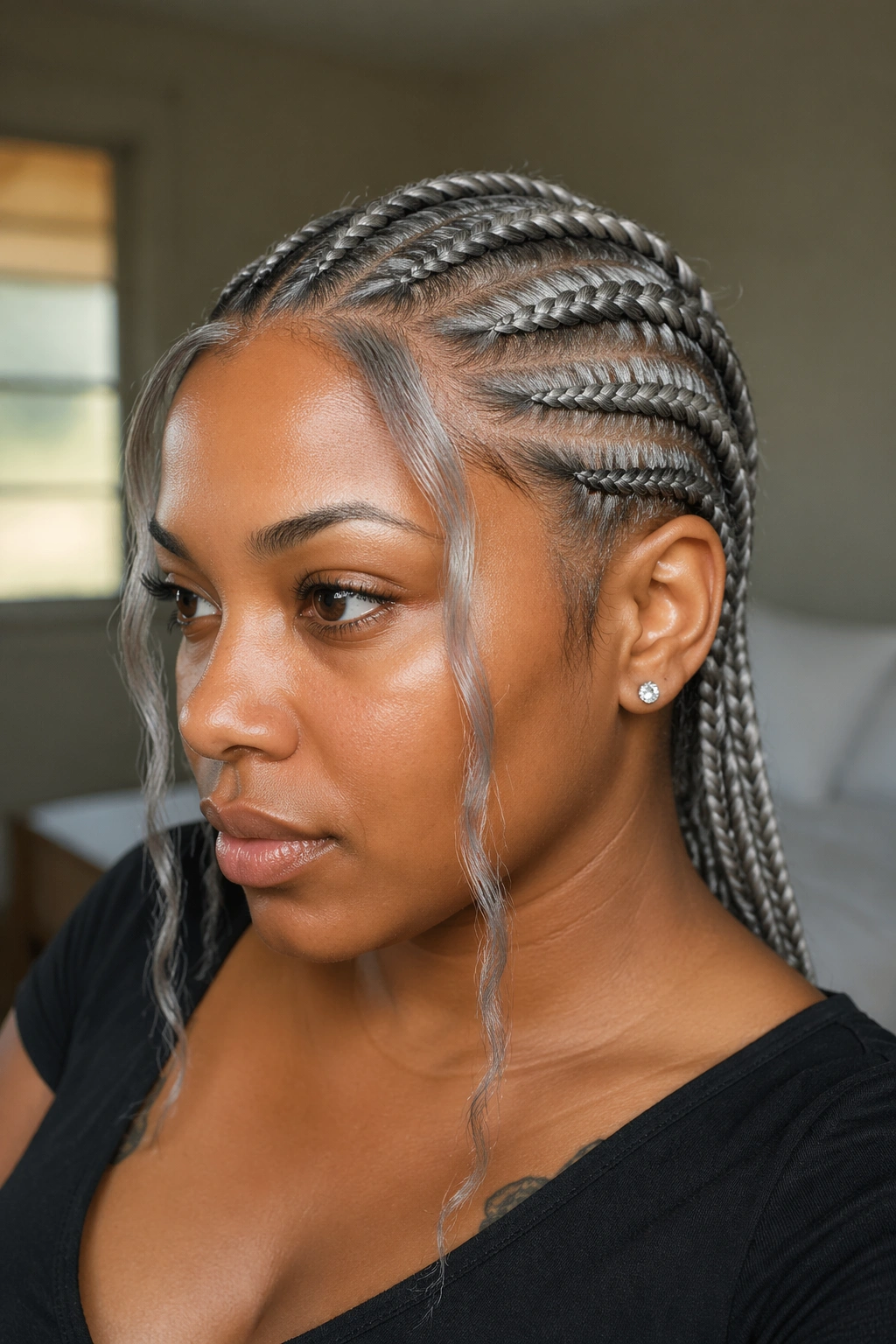
Standard silver cornrows across the full head, with two face-framing pieces at the temples left unbraided and styled as straight silver strands. The pieces can be your natural hair dyed or pressed, or additional silver kanekalon extensions.
The face-framing pieces soften the geometric cornrow pattern and create a more flattering silhouette against the face.
Unlike pure cornrows, this hybrid approach creates visual movement at the face. The loose pieces sway as you move, while the cornrows stay structured.
Best for: anyone wanting a less strictly geometric silver look, or those who want their silver styling to flatter their face shape more explicitly.
6. Silver Cornrow Mohawk With Shaved Sides
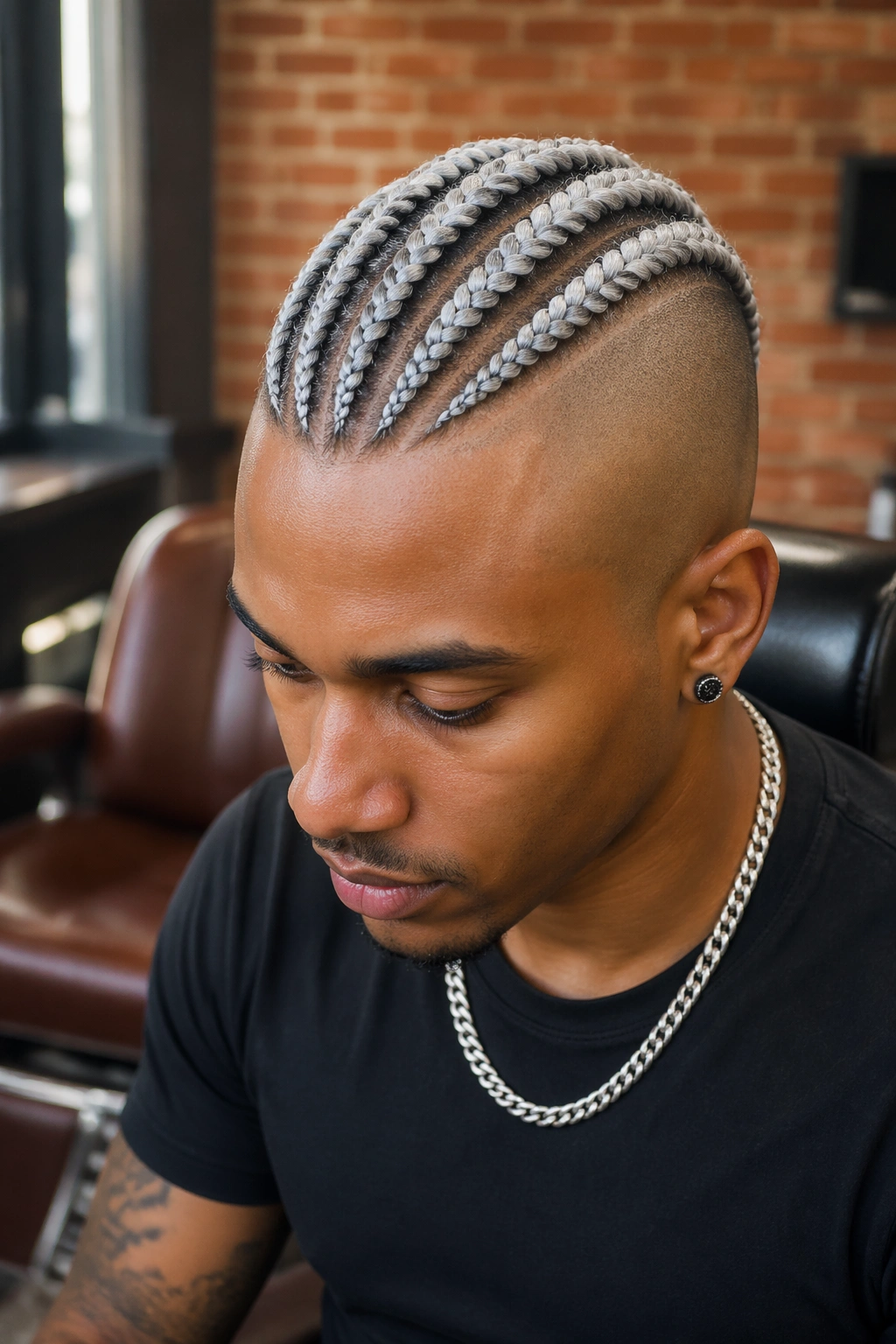
A center strip of five to seven silver cornrows running down the middle of the head, with the sides shaved clean. The contrast between bare scalp and silver braids is dramatic and bold.
This is a statement version of silver styling. Not for conservative settings, not for quiet wear. It asks for attention and receives it.
The center strip can be straight-back or stitch-detailed for extra visual interest. The shaved sides can be freshly buzzed for maximum contrast or slightly grown out for a softer edge.
Commit fully to this look or skip it. A half-committed silver mohawk (loose silver strands over unshaved sides) doesn’t work; the style needs the full shaved commitment to read right.
7. Silver Cornrows With a High Ponytail
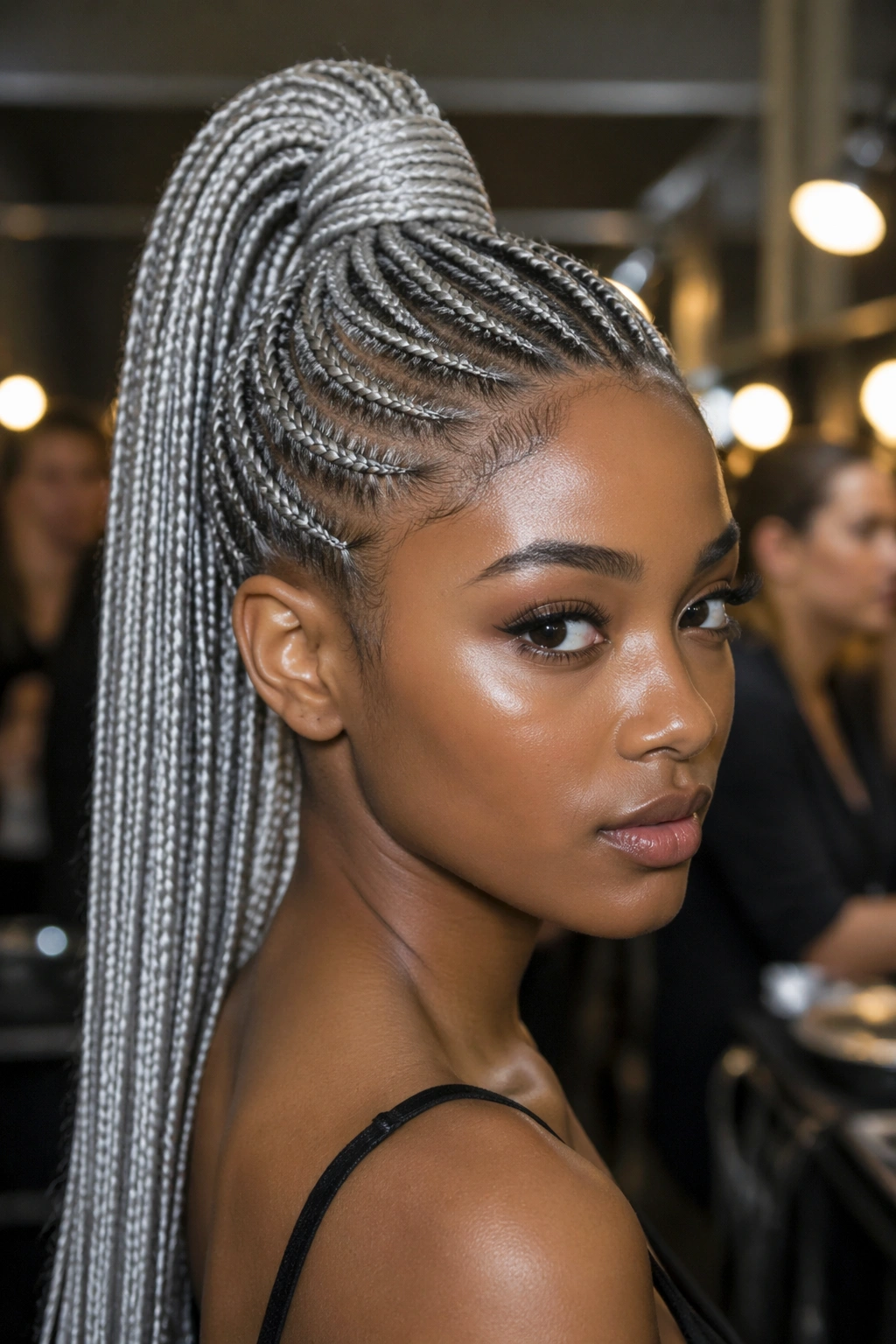
All silver cornrow ends gather into a high ponytail at the crown. The ponytail can be left as silver braid bundles or wrapped with additional silver kanekalon for a smooth cylindrical finish.
High silver ponytails photograph dramatically because the gathered braids radiate out from the crown point, and the silver color catches light from multiple angles.
The technical requirement: every cornrow has to angle toward the crown gather point. Straight-back rows won’t work for this configuration.
Best for: dressed-up occasions, photo shoots, events where the high-drama silhouette suits the setting.
8. Silver Cornrows With a Burgundy Single Accent Braid
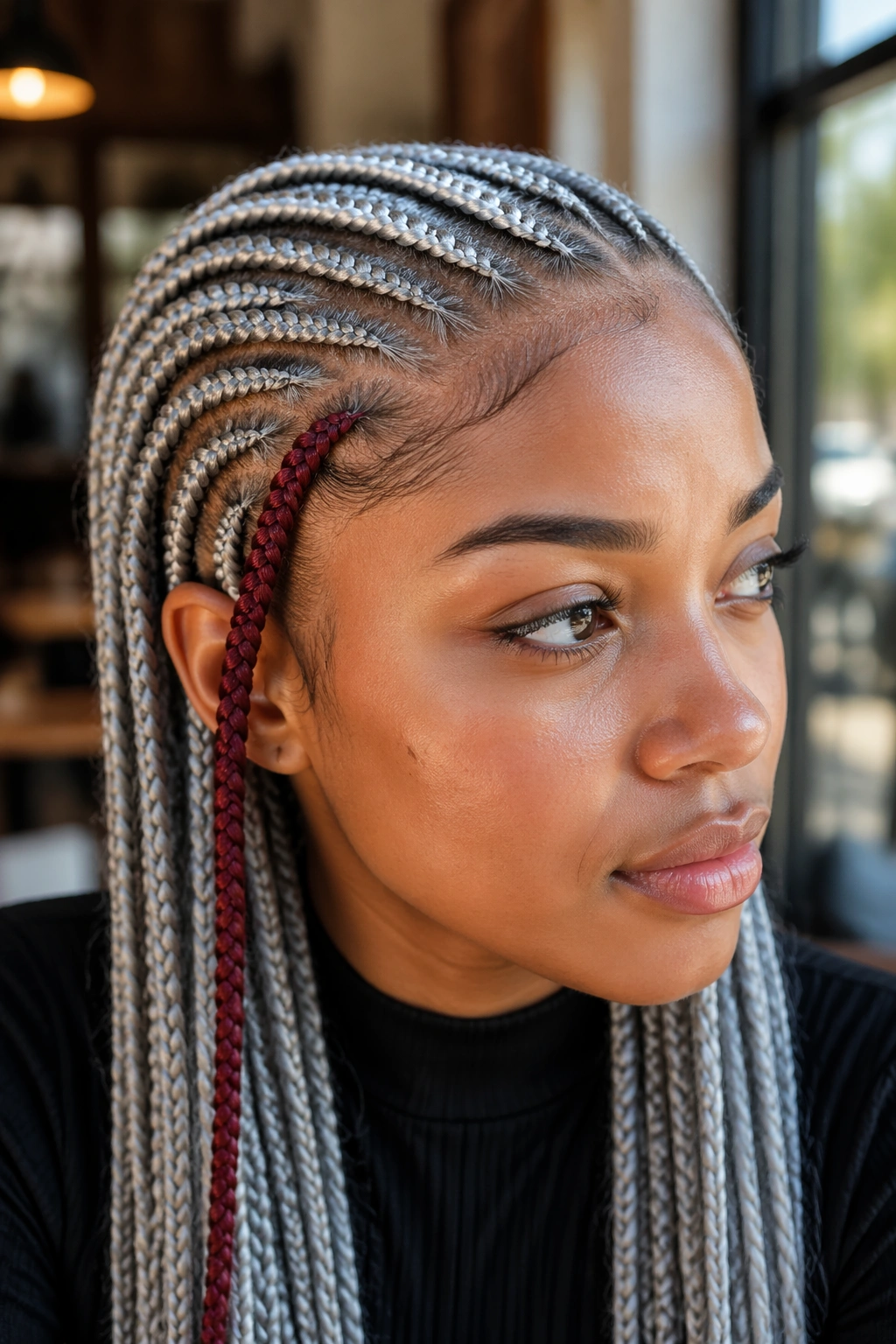
In a head of silver cornrows, one braid is installed in deep burgundy or wine kanekalon. The single accent braid provides a pop of warm color against the cool silver base.
The placement decision matters. A face-frame placement (one burgundy braid at the temple) draws immediate attention. A crown placement (one braid visible from the top) reads more subtle. A back placement reads as a hidden detail.
Burgundy works particularly well against silver because the warm red-wine tone and the cool silver are complementary. The color contrast reads intentional rather than random.
Who this is for: anyone who loves single-accent styling and wants a pop of color without committing to a full multi-color install.
9. Silver Cornrows With Jumbo Rows
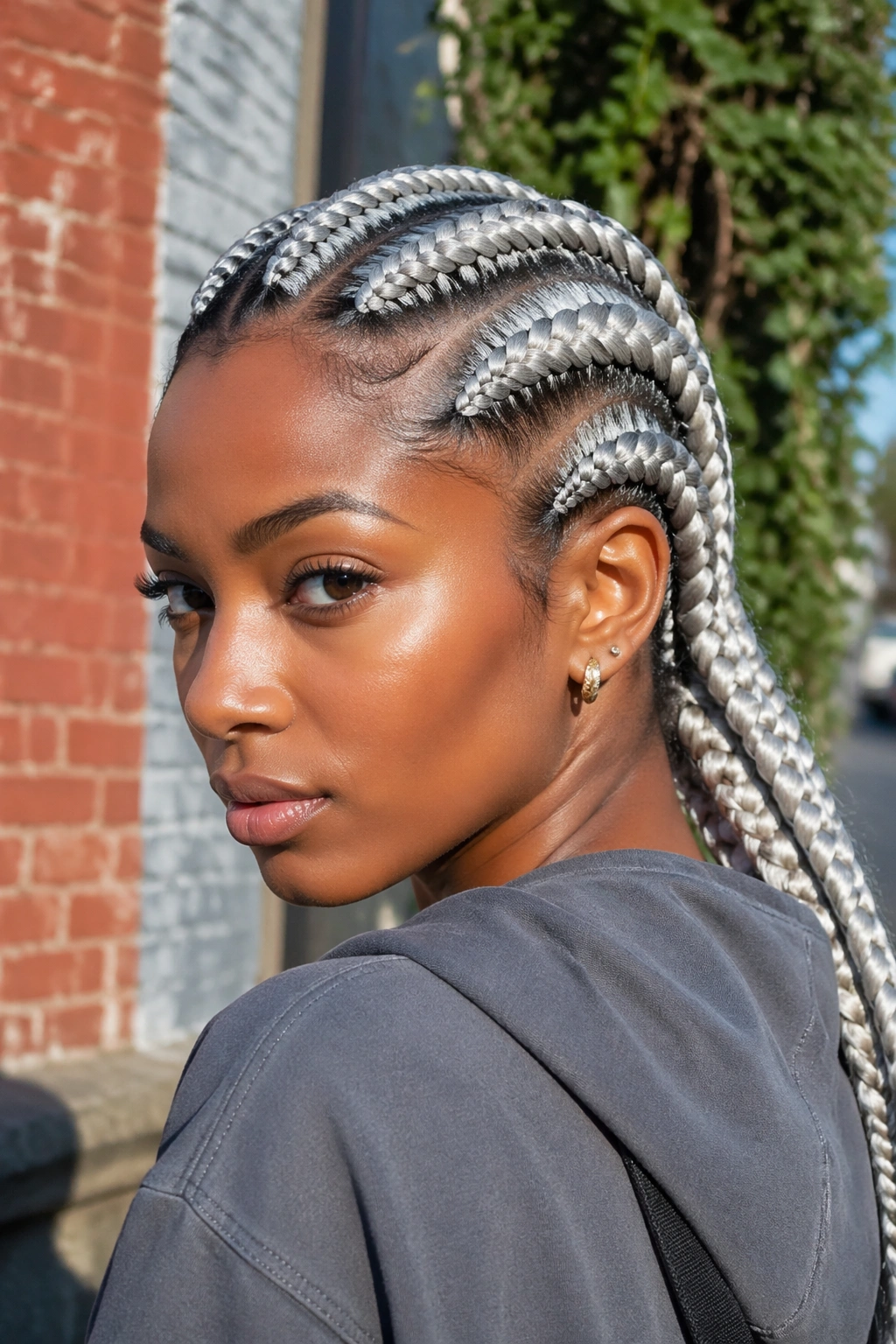
Five or six very thick cornrows across the entire head. Each row is about 2.5-3 inches wide. The chunky geometry against the silver color reads bold and contemporary.
Jumbo silver cornrows install faster than standard or small-gauge versions — maybe 2-3 hours for a full head. The lower row count means less parting, less braiding, less overall time.
The finished look is graphic. It reads almost like a hair helmet — structured, defined, and visually strong.
Best for: anyone who prefers bold simple lines over detailed ornate patterns. This is the silver style for minimalists.
10. Silver Cornrows With Stitch Details
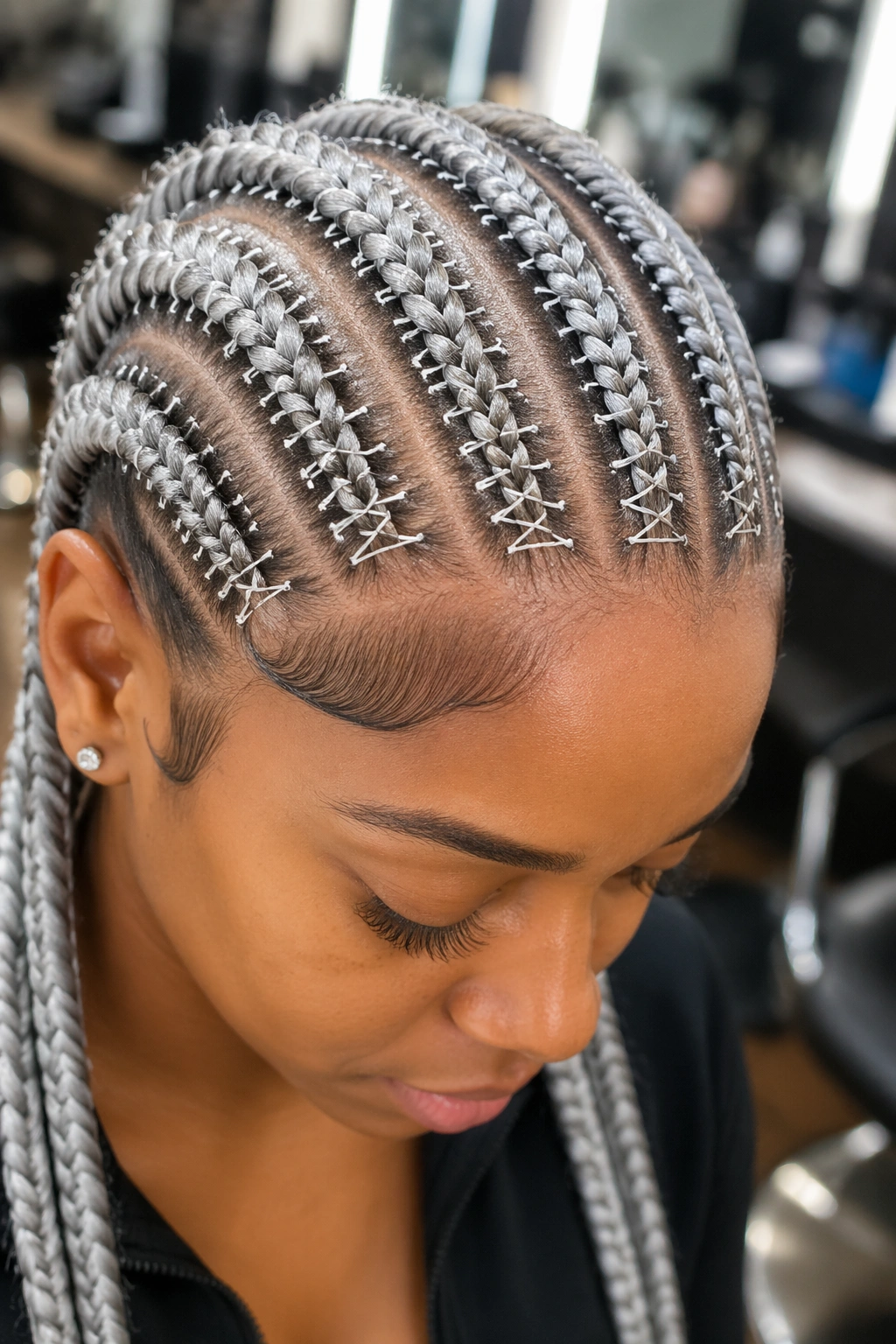
Adding visible stitch details to silver cornrows (horizontal feed-in “stitches” along each row) maximizes the visual impact of the color. Every stitch pops against the silver base.
How to Style It
Request 8-12 visible stitches per row. Fewer than 8 reads as standard feed-ins; more than 12 reads as excessively detailed.
- Plan additional install time — stitch work adds hours
- Use pre-stretched kanekalon in a single silver shade for clean stitch lines
- Maintain with gentle refresh to preserve stitch definition
The finished style is ornate and photographs exceptionally well. Every stitch becomes a visual detail that dark cornrows would hide.
11. Silver Cornrows With a Deep Side Part
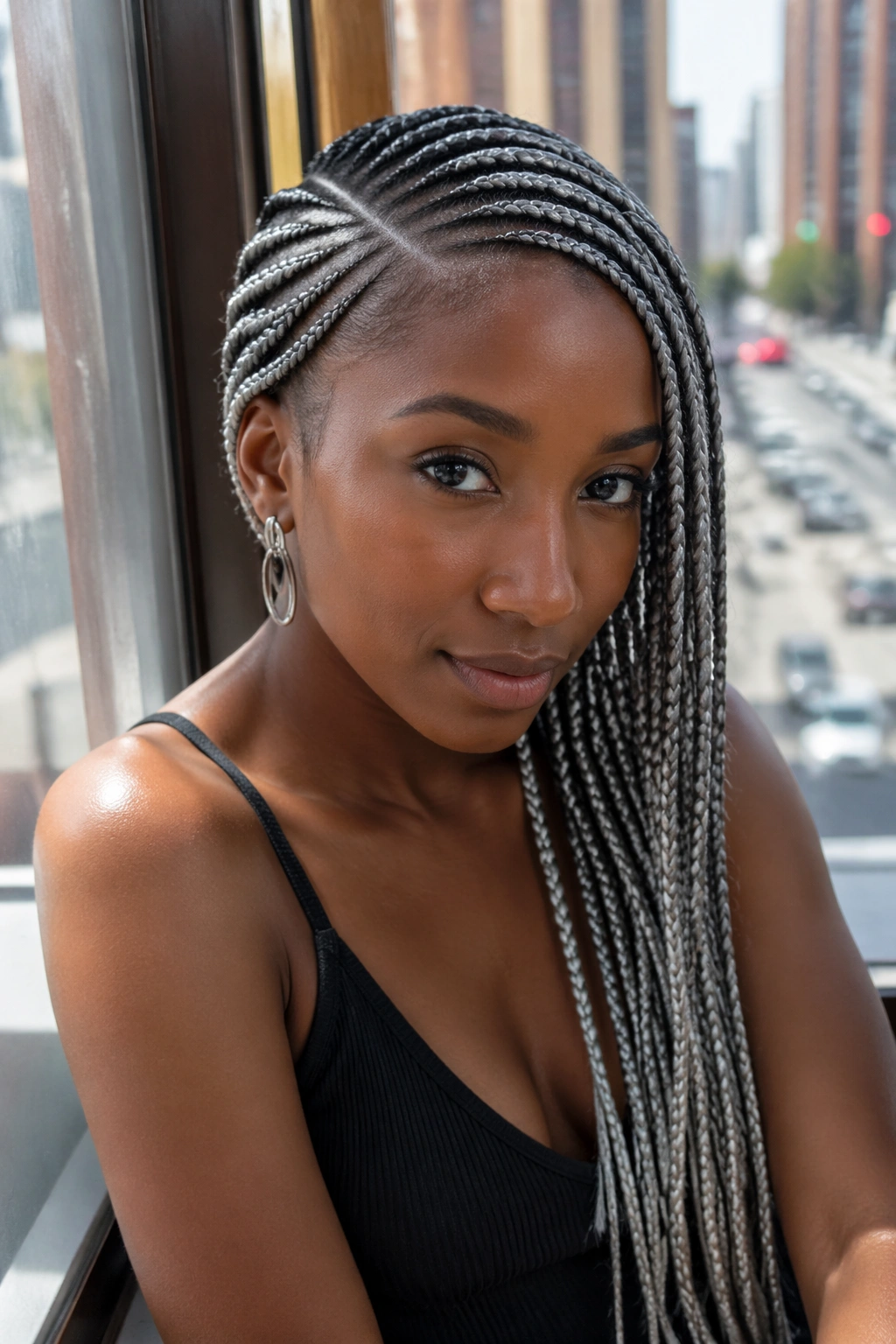
A deep side part shifts the hair’s geometric center off-axis, and silver cornrows flowing from the deep part create a dramatic asymmetric silhouette. The longer side carries more visible rows; the shorter side has fewer.
The deep side part should be at least 2 inches off the center of the head. Shallower parts don’t produce the asymmetric drama that makes this style work.
Best for: anyone who prefers asymmetric styling and wants silver to emphasize the off-center effect.
Recommendation: style the side part with gel and a soft brush before braiding begins. A clean defined part line is central to this look.
12. Silver Cornrows With a Curled End Finish
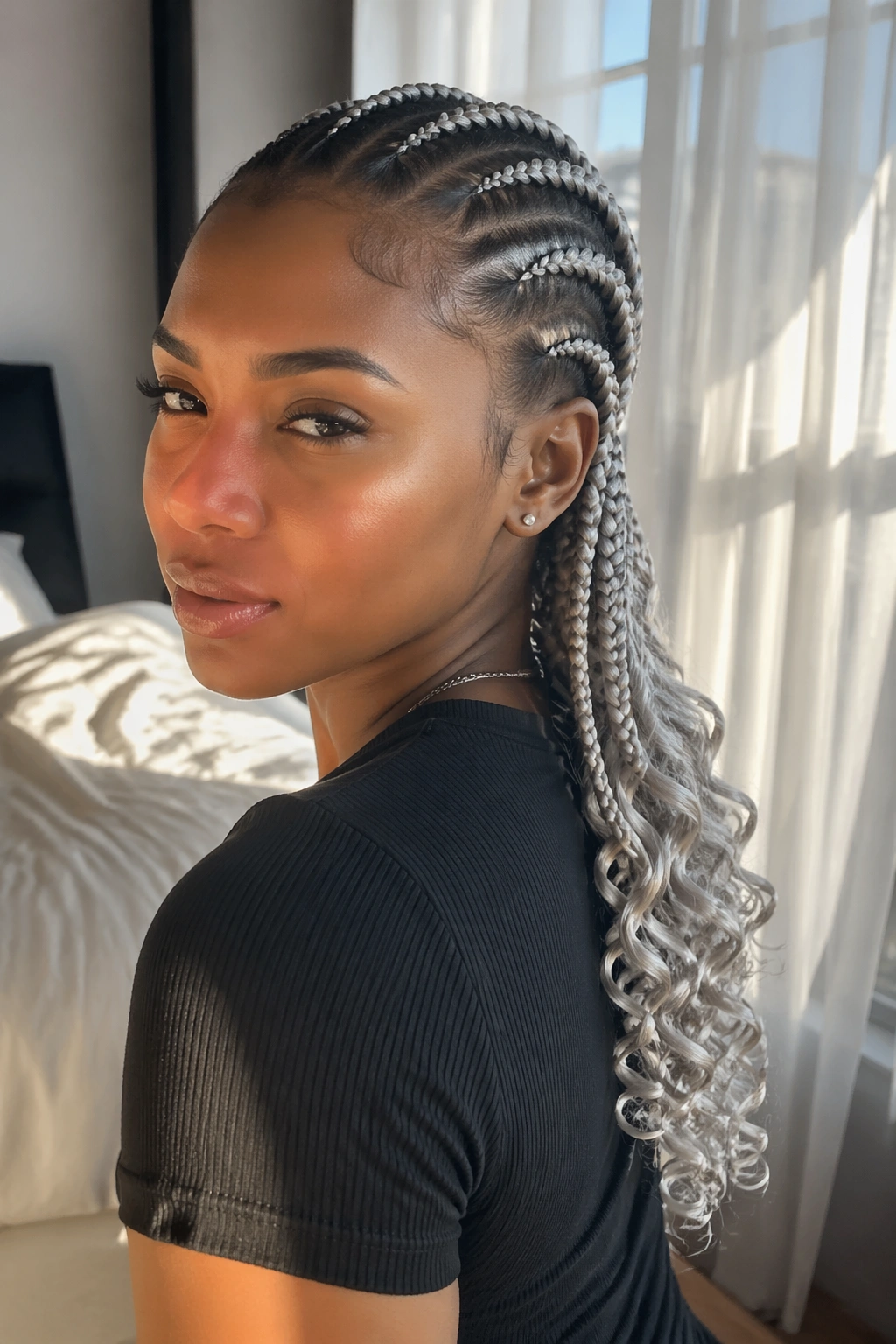
The braid ends are curled using hot water dips or flexi-rods overnight. The curls soften the otherwise angular silver braids and add romantic movement to the ends.
Silver kanekalon holds curls well when set properly. The fiber can take heat up to about 180°F before damage occurs; keep hot water dips below that.
For flexi-rod setting, divide the last 3-4 inches of each braid into two-strand twists, wrap around a flexi-rod, sleep overnight, and unravel in the morning.
The contrast — sharp silver cornrows up top, soft silver curls at the ends — creates a dimensional finish. Neither pure geometric nor pure romantic.
13. Silver Cornrows With a Low Chignon
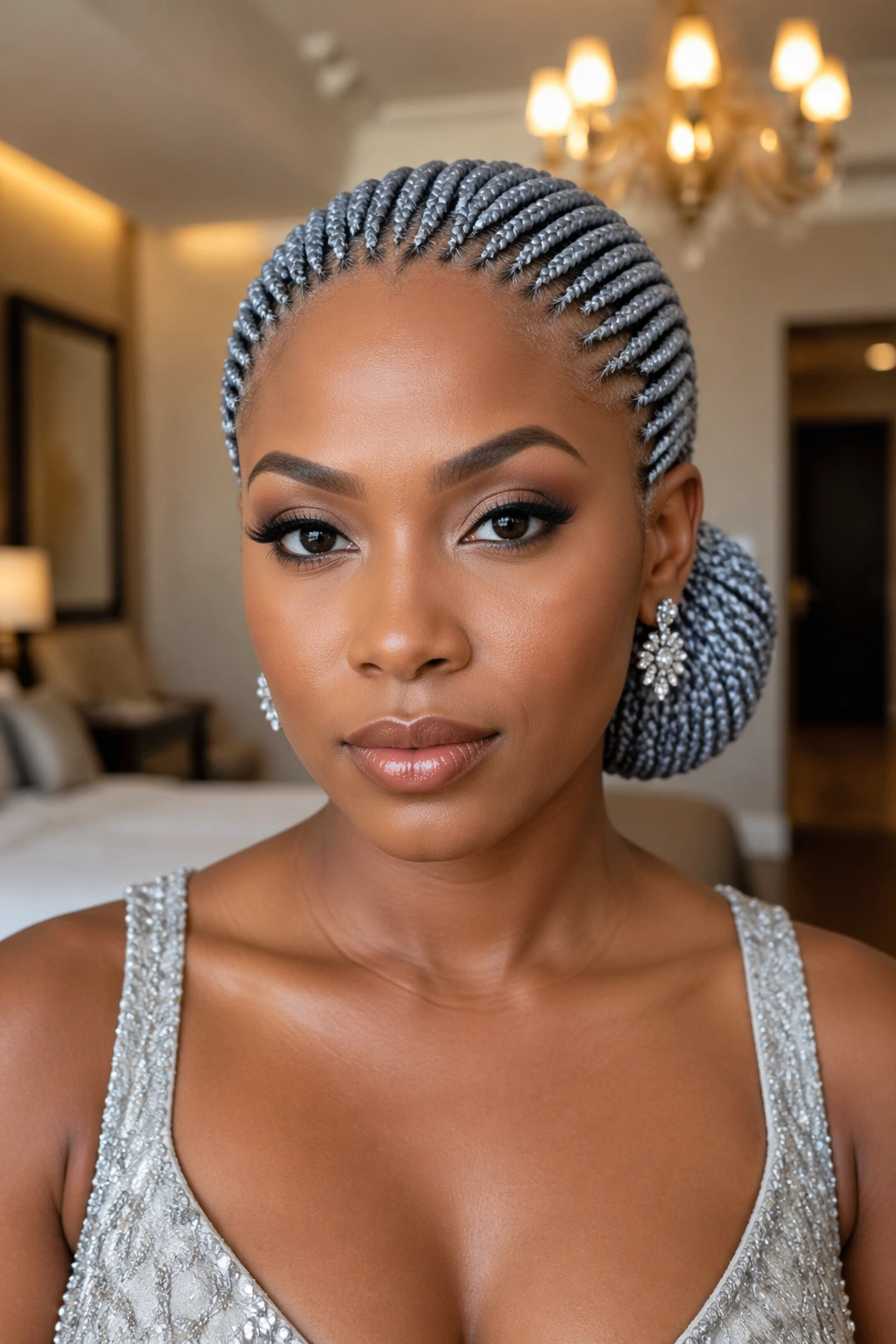
All braid ends gather into a low chignon at the nape. The chignon is a classic updo structure — a small rolled or twisted bun sitting low.
Silver cornrows into a chignon read elegant. The silver color elevates the structural bun into something that reads formal. The look suits black-tie events, weddings, and other settings where a polished updo fits.
Use bobby pins that match the silver color. Standard dark bobby pins show against silver hair; silver or clear pins blend.
Who this is for: anyone wearing silver cornrows to an event where an updo is appropriate. The chignon elevates the style into formal territory.
14. Silver Cornrows With Beaded Ends in Clear Glass
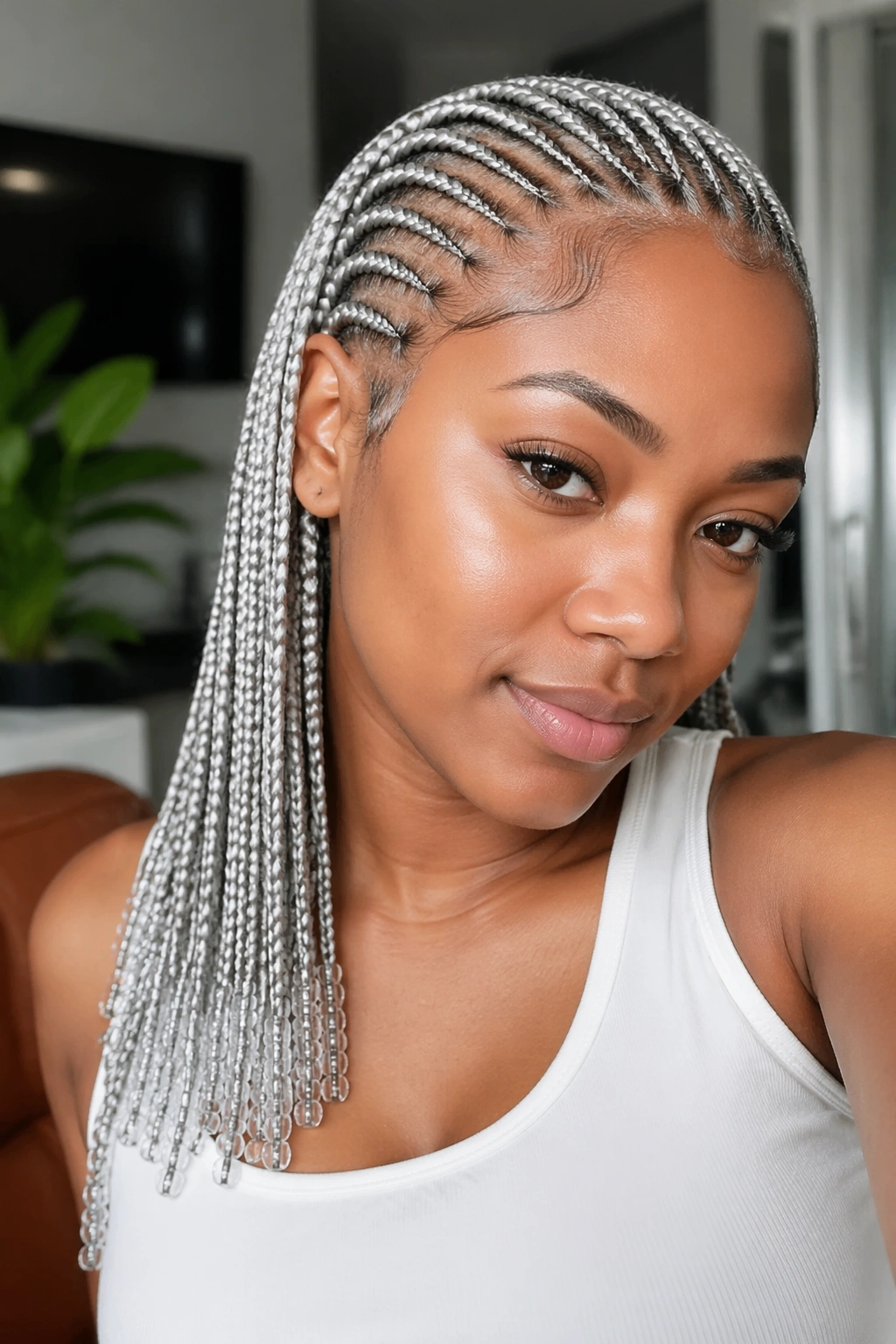
Clear glass beads at the silver cornrow ends let the silver color shine through the bead itself. The beads appear almost invisible — subtle accents that reflect light rather than adding their own color.
This is restraint applied to beading. Where wood beads add warmth and metal beads add shine, clear glass beads add only refractive detail.
Use 3-5 beads per braid end, all identical in size and clarity. Any color variance breaks the subtle effect.
The finished look reads minimalist and refined. It’s the beaded option for someone who wants the structural benefit of bead ends without visible color commitment.
15. Silver Cornrows With Triangular Partings
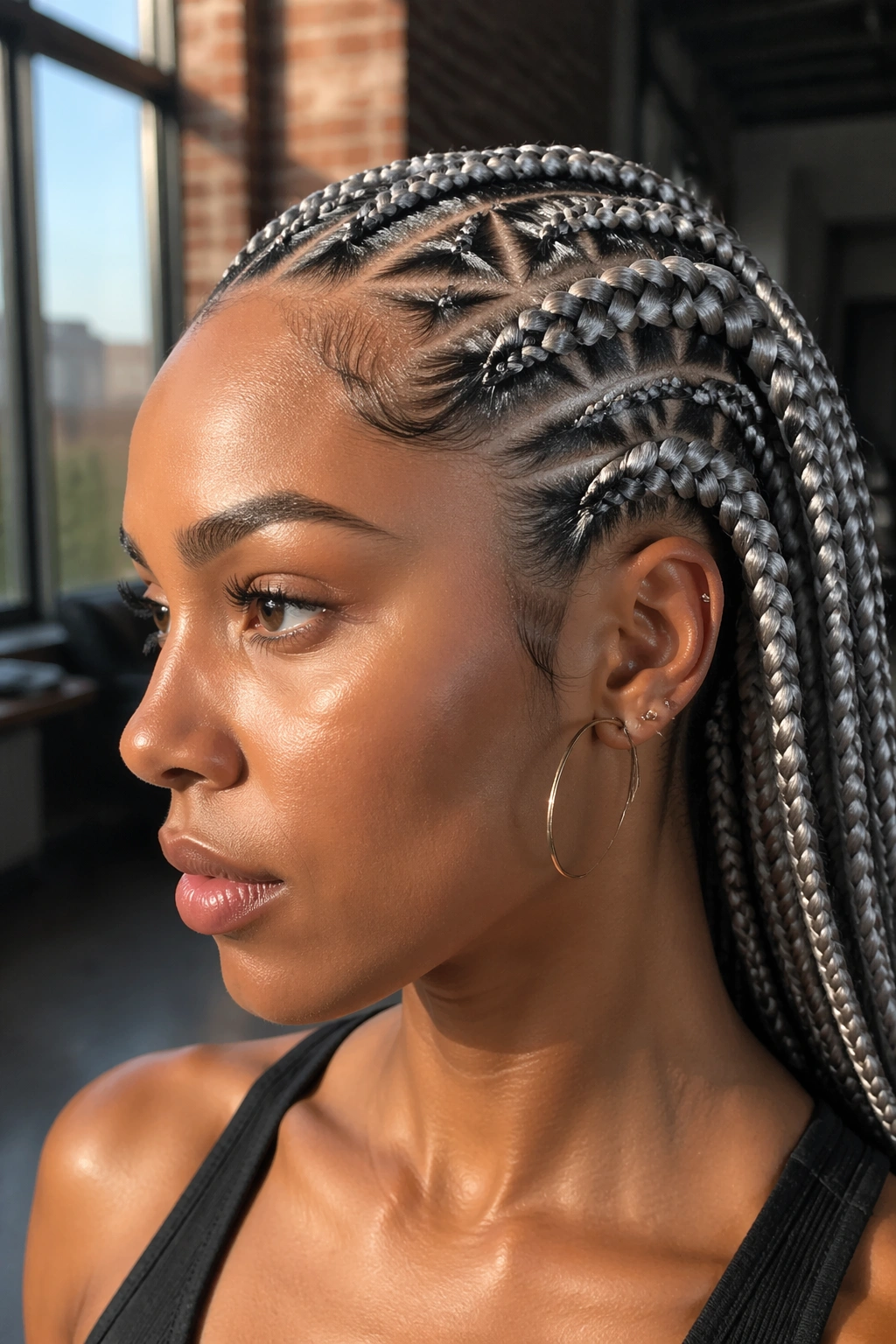
The partings between rows form triangles rather than standard rectangles. Silver braids cascade from each triangle base. The geometric parting pattern amplifies visually against the silver color.
Triangular partings require precise measurement and practiced hands. Not all braiders specialize in this technique.
The finished effect is architectural and bold. Silver specifically enhances the triangular geometry because the color shows every parting line clearly.
Best for: anyone who appreciates geometric design and wants silver styling with extra visual interest in the parting pattern.
16. Silver Cornrows With a Boho Drop Braid
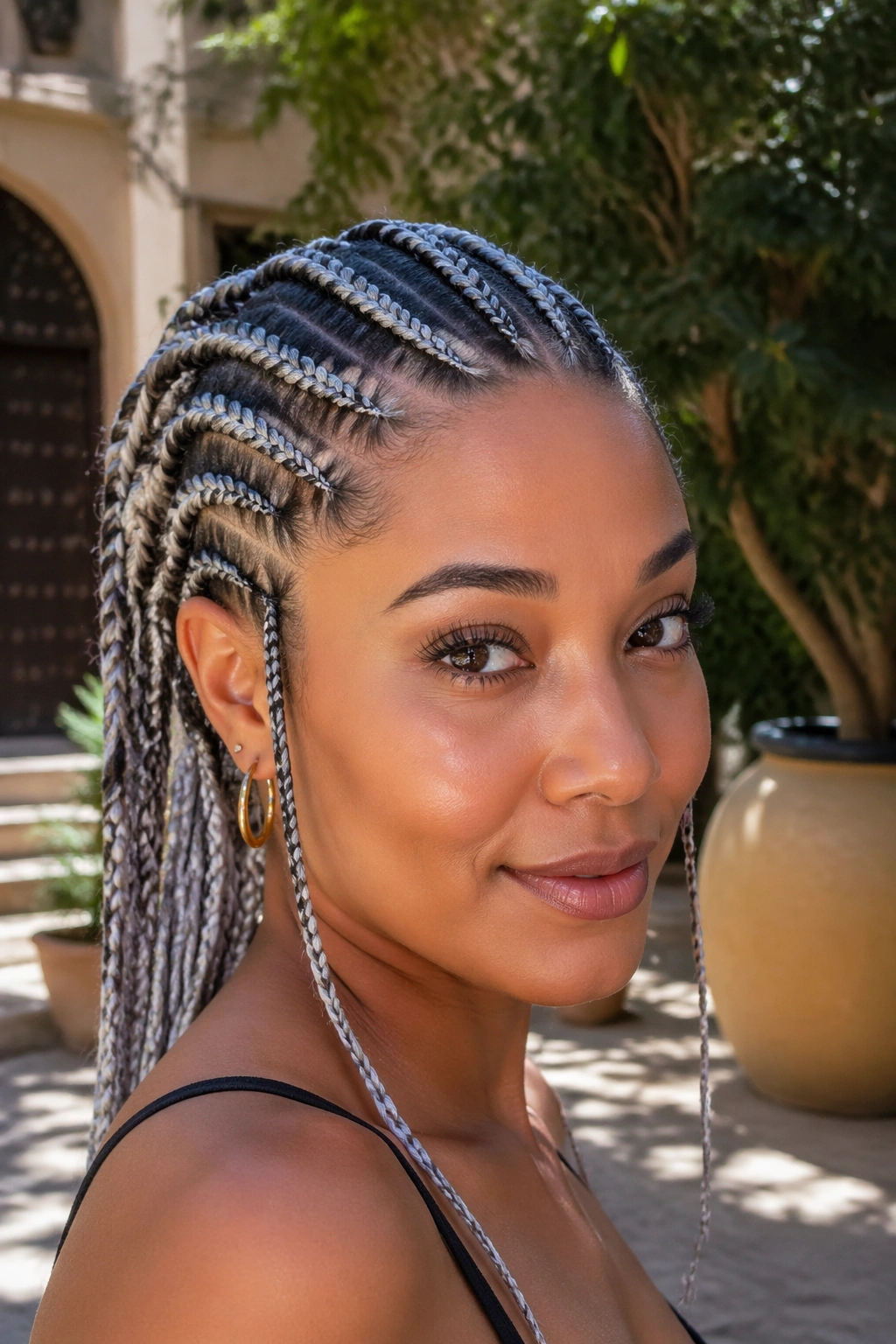
The cornrows are installed standardly across the head, but one or two long “drop” braids hang freely from the side or back. The drop braids are larger and chunkier than the structured cornrows, creating intentional contrast.
The drop braids read bohemian — less structured, more flowing. They soften the strict geometry of the cornrows.
Use bigger braids (about 1 inch thick) for the drop portions to differentiate them clearly from the rest of the install.
Who this is for: anyone who wants silver cornrows with a softer, less formal finish. The drop braids add movement without disrupting the overall structure.
17. Silver Cornrows With Thread Wrapping
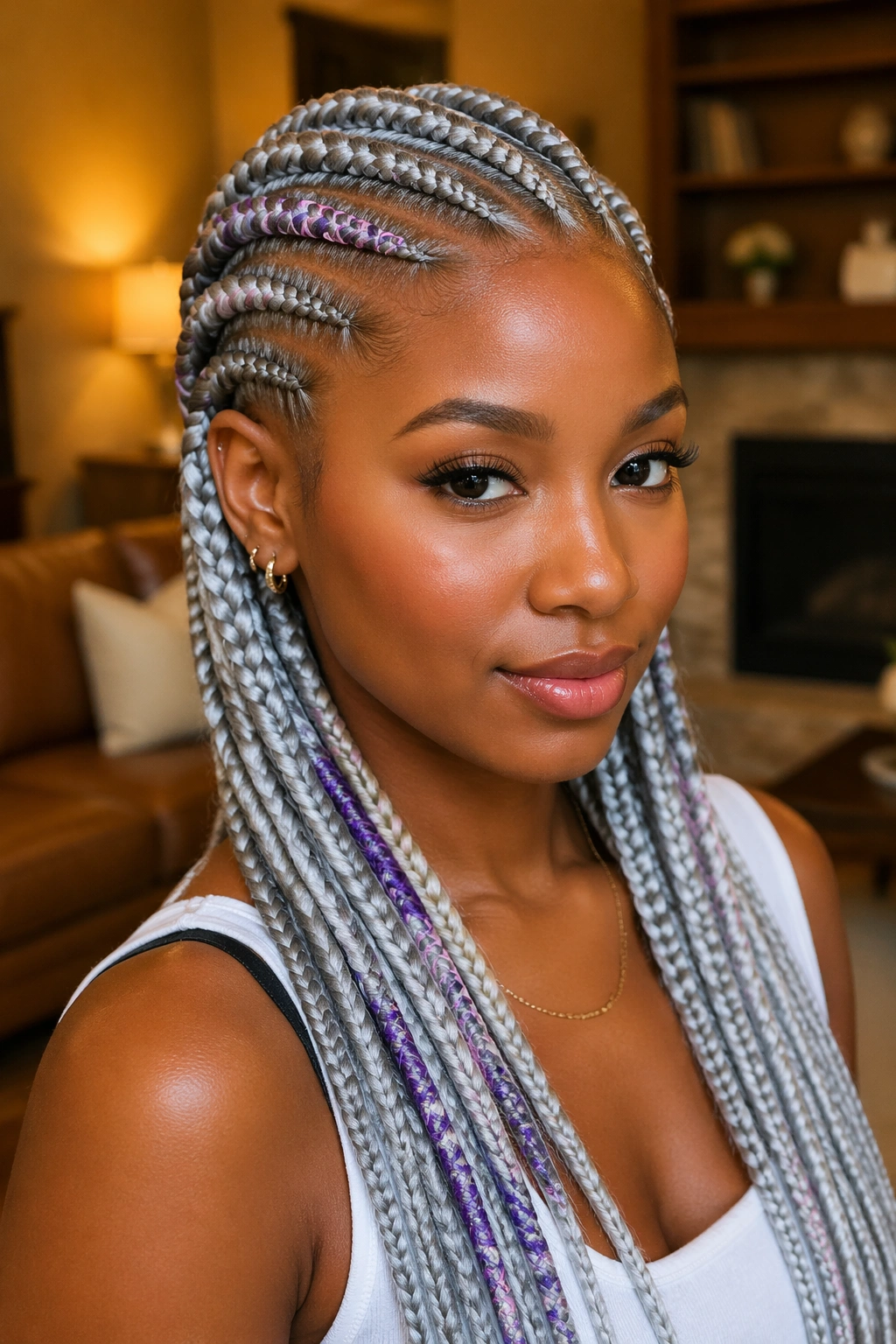
Sections of individual silver braids get wrapped with colored cotton embroidery thread. The thread adds texture and color accent to the silver base.
Thread colors should complement the cool silver. Deep jewel tones (navy, emerald, burgundy) work well. Earth tones (rust, mustard) read unexpectedly good. Bright primaries can feel too costume-y.
Wrap length varies per braid — 1 inch on some, 3 inches on others — for visual rhythm.
The finished look is artisanal. It reads handcrafted and intentional, with layered detail that beads alone can’t provide.
18. Silver Cornrows With a Crown Braid Accent
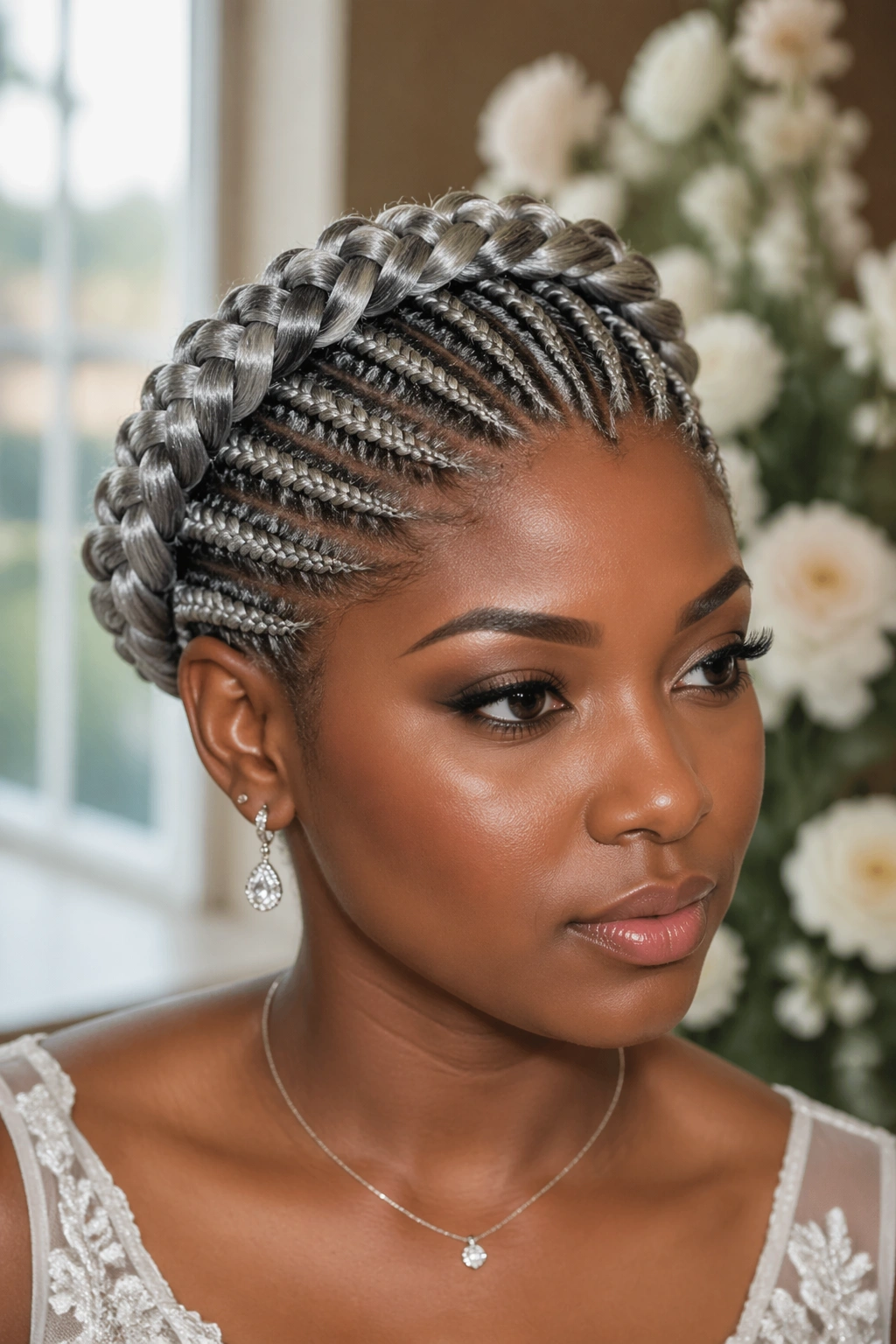
One thicker silver braid runs horizontally across the top of the head like a crown, while the rest of the install is small-gauge cornrows standard-direction. The crown braid becomes the focal element.
The crown braid should be noticeably larger than the other rows — maybe 1.5-2 inches thick against smaller 1/2-inch rows. If the scale is too close, the crown effect is lost.
This style suits ceremonial or formal settings where a visible crown element fits the mood. It reads royal without being literally a crown.
Best for: weddings, photo shoots, cultural events, or anyone wanting silver cornrows with a regal element.
19. Silver Cornrows With a Shaved Temple Design
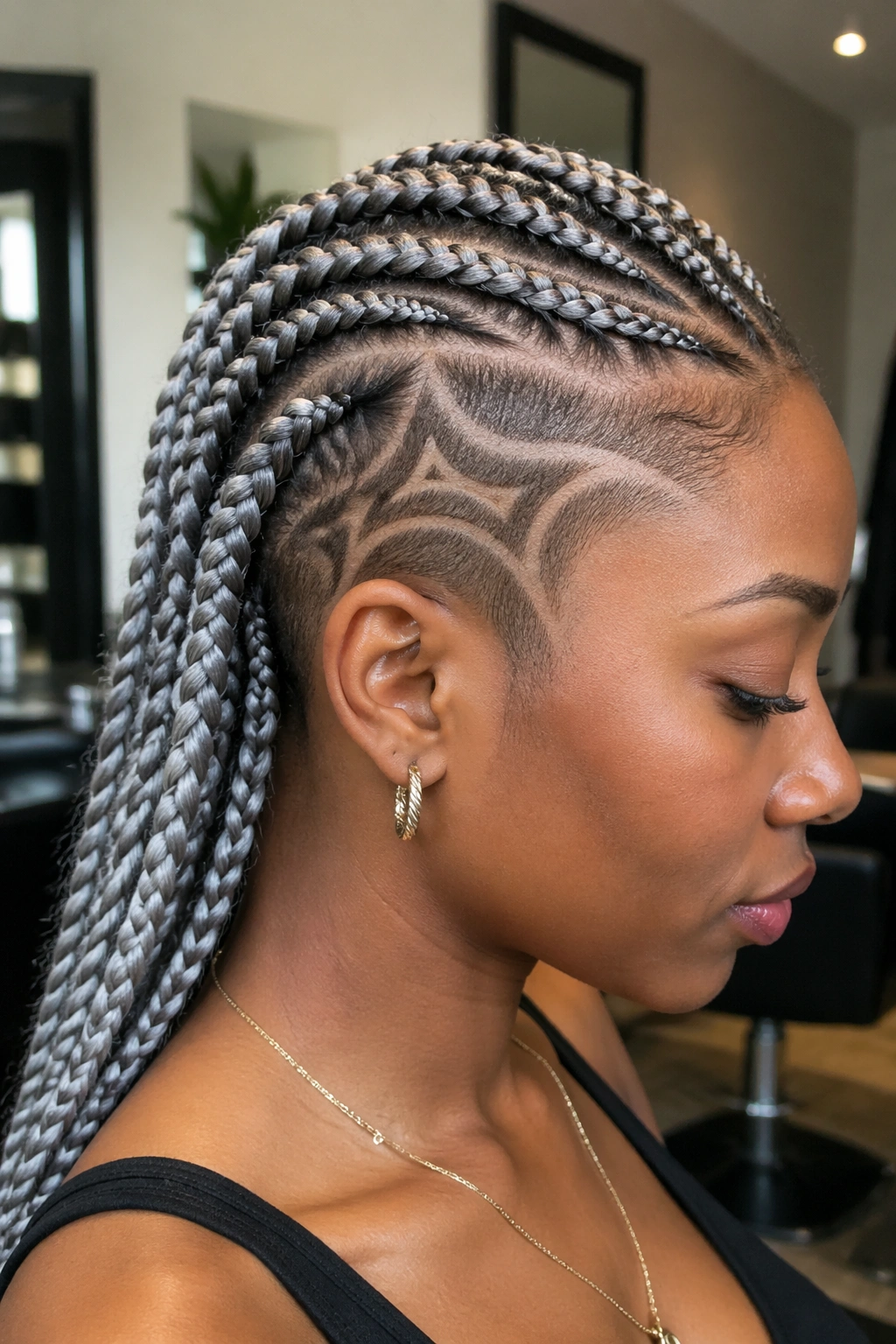
One side of the head has a design shaved into the hair — a star, a geometric pattern, a swirl — while the other side carries full silver cornrows. The shaved design is visible as a negative-space accent.
The shaved design can be created by a barber before the install, then the cornrows work around it. The design complements the silver color because the bare scalp contrast is dramatic against light hair.
Who this is for: anyone with existing clipper work or ready to commit to the shaved design. The combination works best when the design is intentional rather than a grown-out fade.
20. Silver Cornrows With a Halo Updo
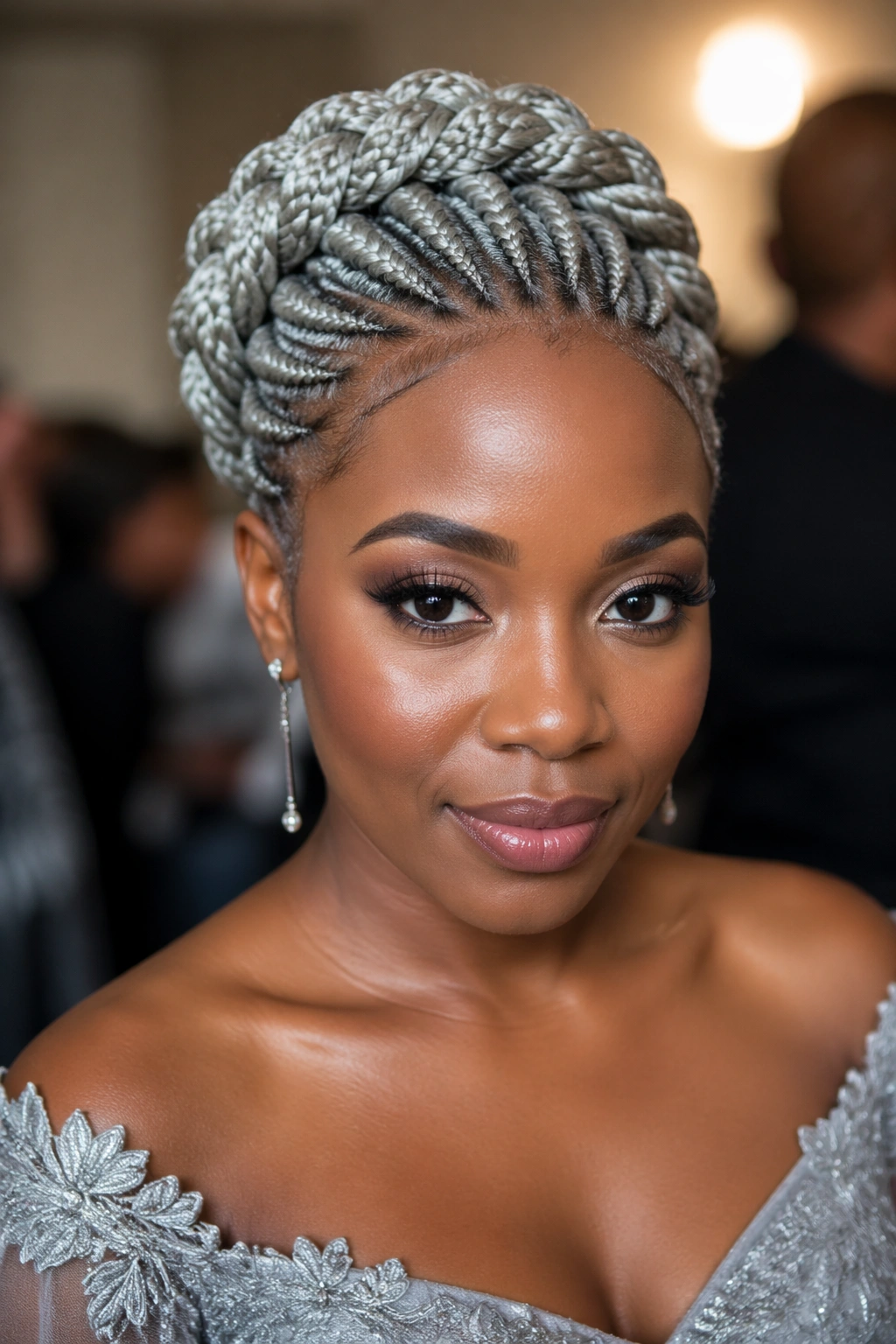
All silver cornrow ends are twisted and pinned around the crown in a halo pattern. The twisted braids form a ring around the top of the head, like a turban or crown of braids.
This is a styling choice rather than an install choice. The underlying cornrow installation can be any pattern; the halo finish comes during styling.
The updo requires practice. Use long bobby pins at angles that hold against the head’s curve. Standard short bobby pins won’t hold the weight of a silver halo.
Best for: formal events, weddings, any setting where an updo fits. The halo silhouette reads sophisticated and considered.
21. Silver Cornrows With Long Cascading Ends
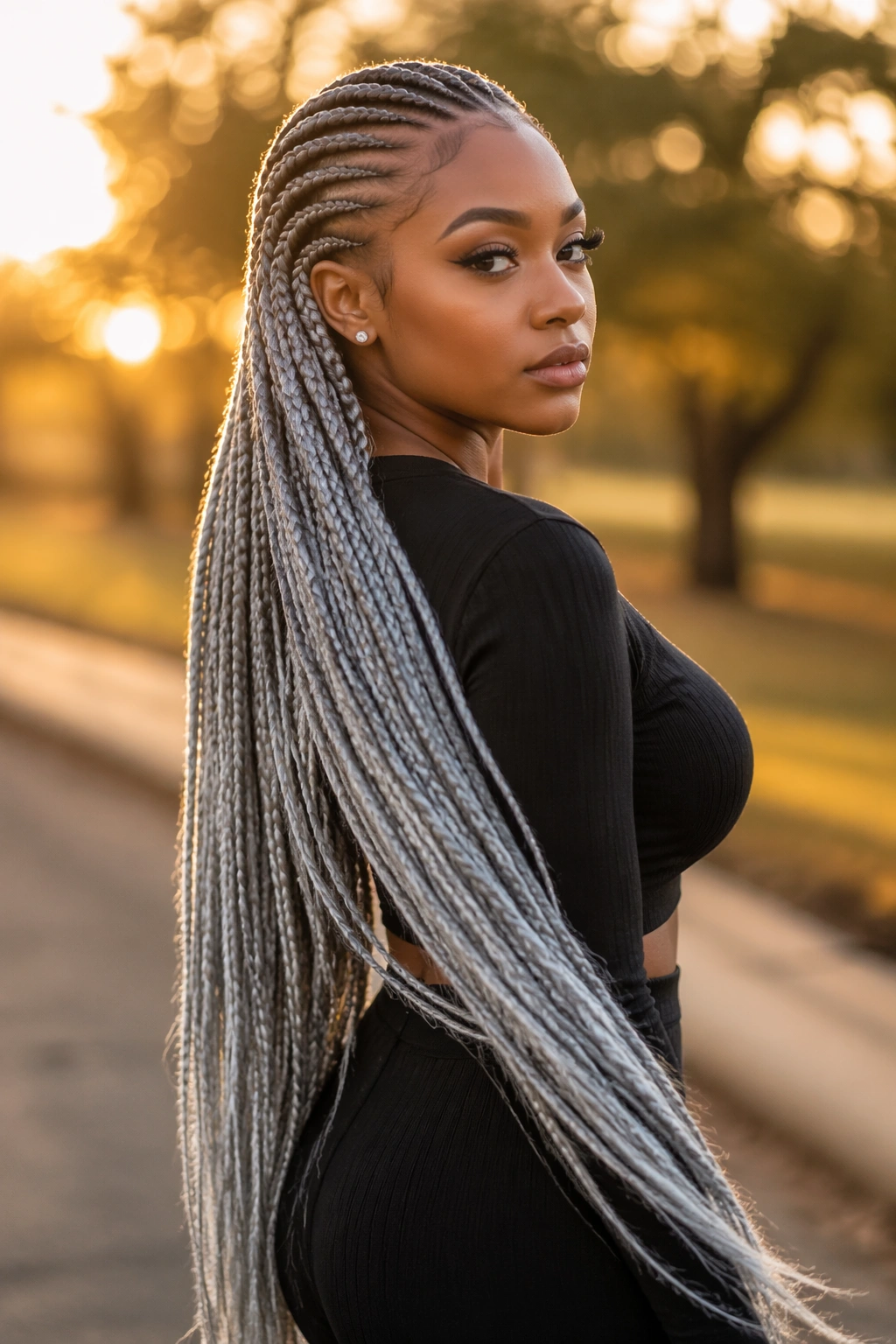
Extended silver cornrows with length reaching to the waist or beyond. The dramatic length makes the silver color statement-level bold.
Requires significant kanekalon — 2-3 full packs for a full head at this length. Plan the budget accordingly.
The weight of long silver cornrows puts strain on the scalp. Don’t wear past 2-3 weeks without letting the scalp rest. Between installs, do scalp care and edge recovery.
- Use pre-stretched kanekalon for smoother application
- Plan for 5-6 hours of install time
- Sleep carefully — long braids tangle easily without proper containment
The visual payoff is significant. Dramatic silver length reads cinematic and photographs beautifully.
22. Silver Cornrows With a Heart-Shaped Back Pattern
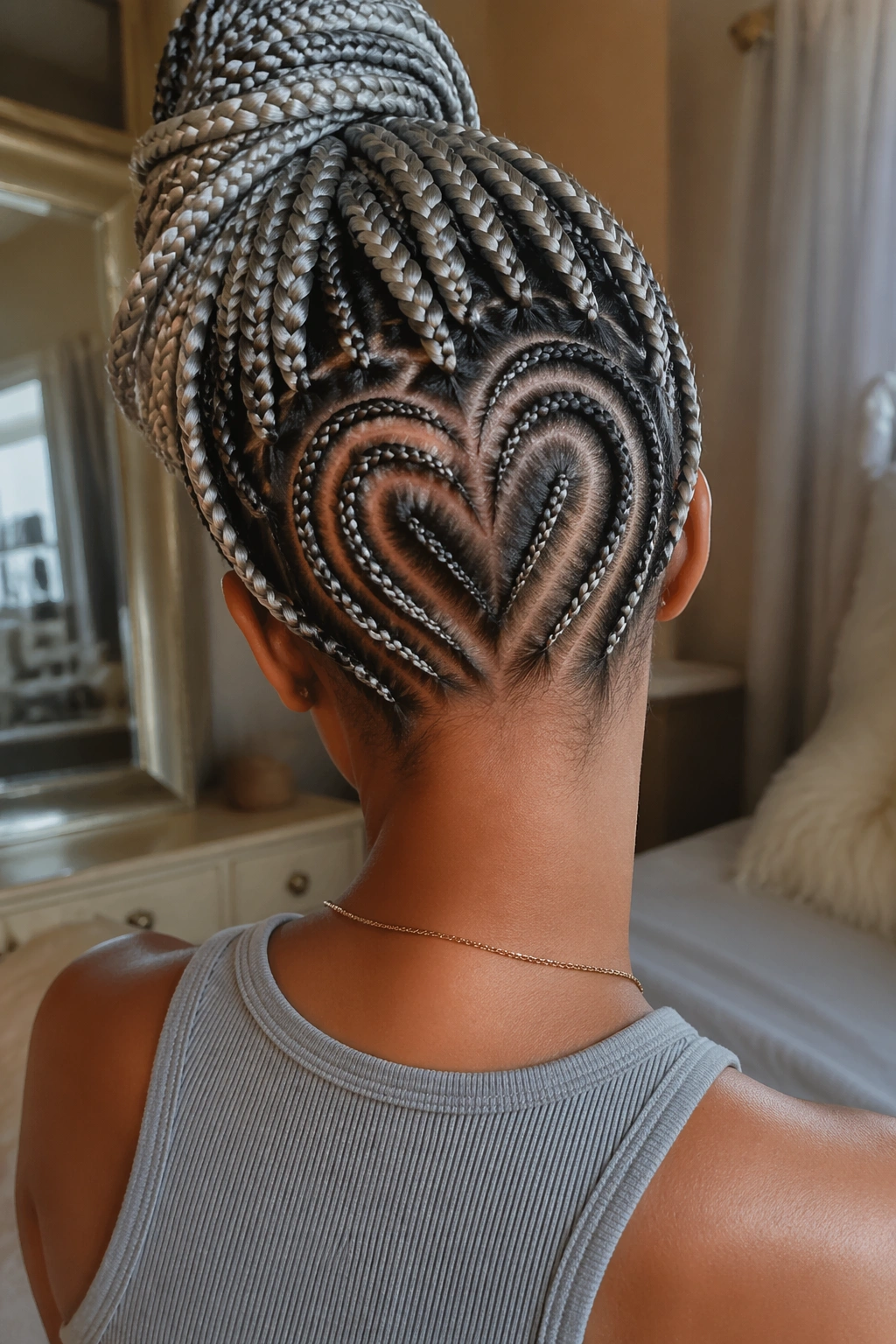
Standard silver cornrows across the front and sides, with a special heart-shaped pattern braided into the back of the head. The heart is visible when your hair is pulled back or viewed from behind.
Custom back patterns require skilled braiders who specialize in design work. Bring reference photos and confirm the braider has done heart patterns before.
The heart can be subtle (outlined with careful parting) or bold (filled with contrasting color kanekalon). Silver hearts against silver bases read as texture variation; contrasting color hearts read as color statement.
Who this is for: anyone who wants a detail that’s visible from specific angles but not every angle. The back design becomes a private detail revealed at certain moments.
Caring for Silver Kanekalon
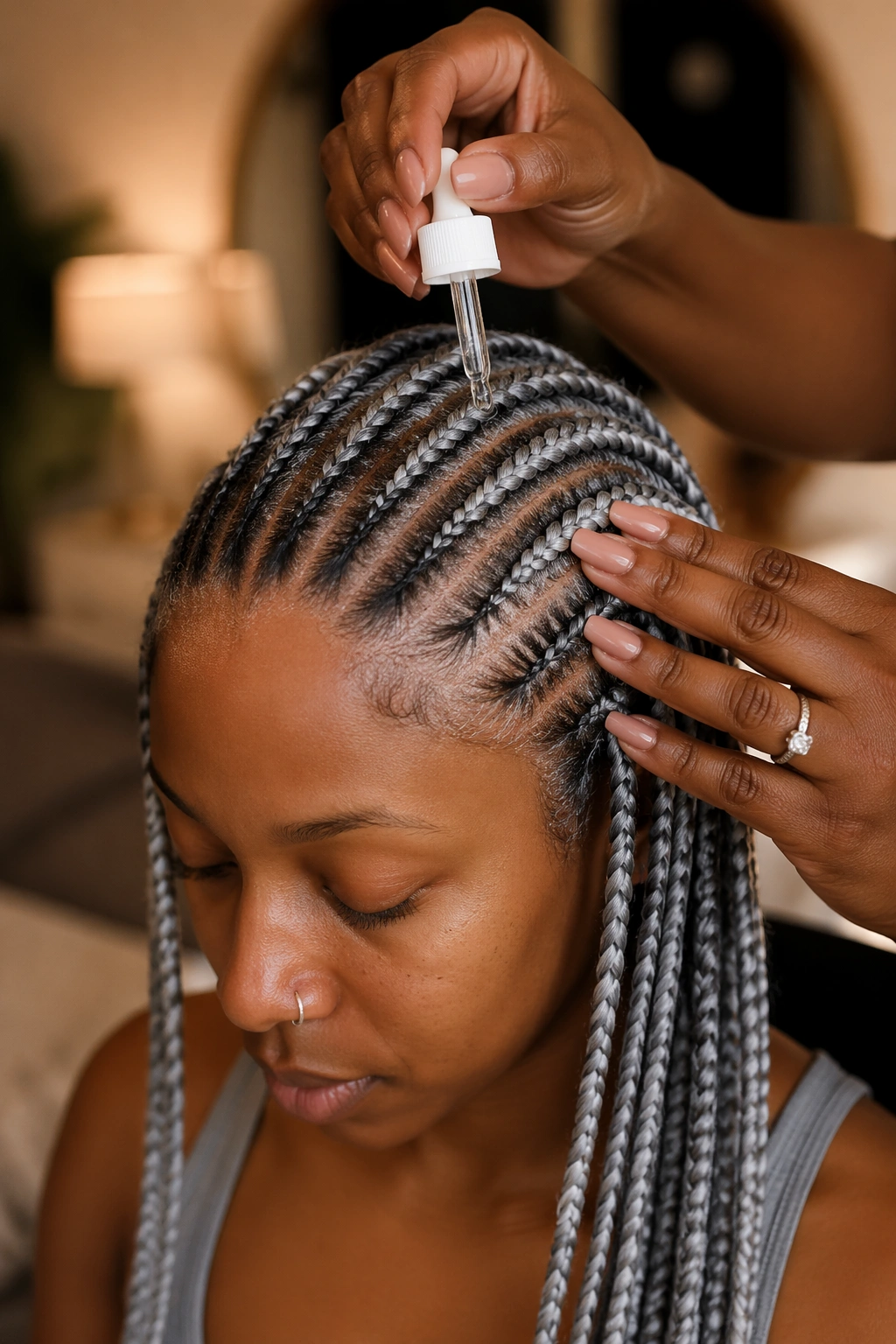
Silver kanekalon needs different care than darker shades. Specific routines preserve the color and prevent yellowing.
Wash the braid bases with diluted clarifying shampoo every 2-3 weeks. Skipping washes lets buildup accumulate and can tint the silver yellow.
Rinse with distilled or filtered water when possible. Hard water minerals deposit on silver kanekalon and cause yellow or orange tinting over weeks of wear.
Avoid heavy oils. Coconut, castor, and olive oil can darken silver kanekalon within weeks of heavy application. Switch to lightweight oils (argan, grapeseed, jojoba) applied sparingly to the scalp only.
Use a braid sheen spray designed for light-colored hair. Standard sheen sprays can contain oils that dull silver over time.
Sleep Protection for Silver
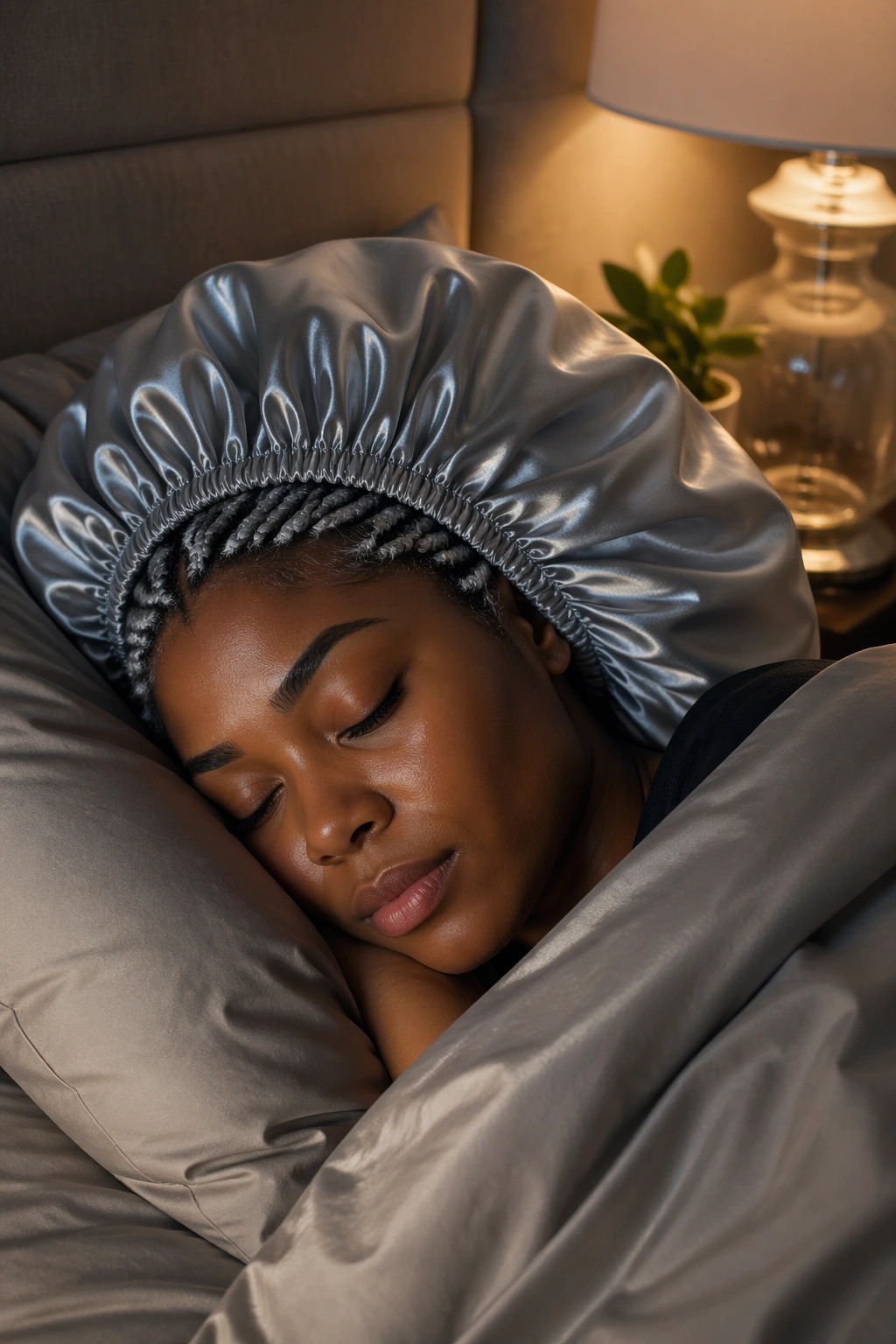
Silk or satin bonnets are non-negotiable. Cotton pillowcases grip silver kanekalon fibers and cause frizz that’s hard to refresh.
A large bonnet that contains all the braids without compression works best. Silver shows compression lines more than darker shades, so tight bonnets create visible flattening.
For dramatic-length installs, gather the ends into a low loose bun before putting the bonnet on. Contained ends friction less against the bonnet interior.
Refreshing the Silver Look
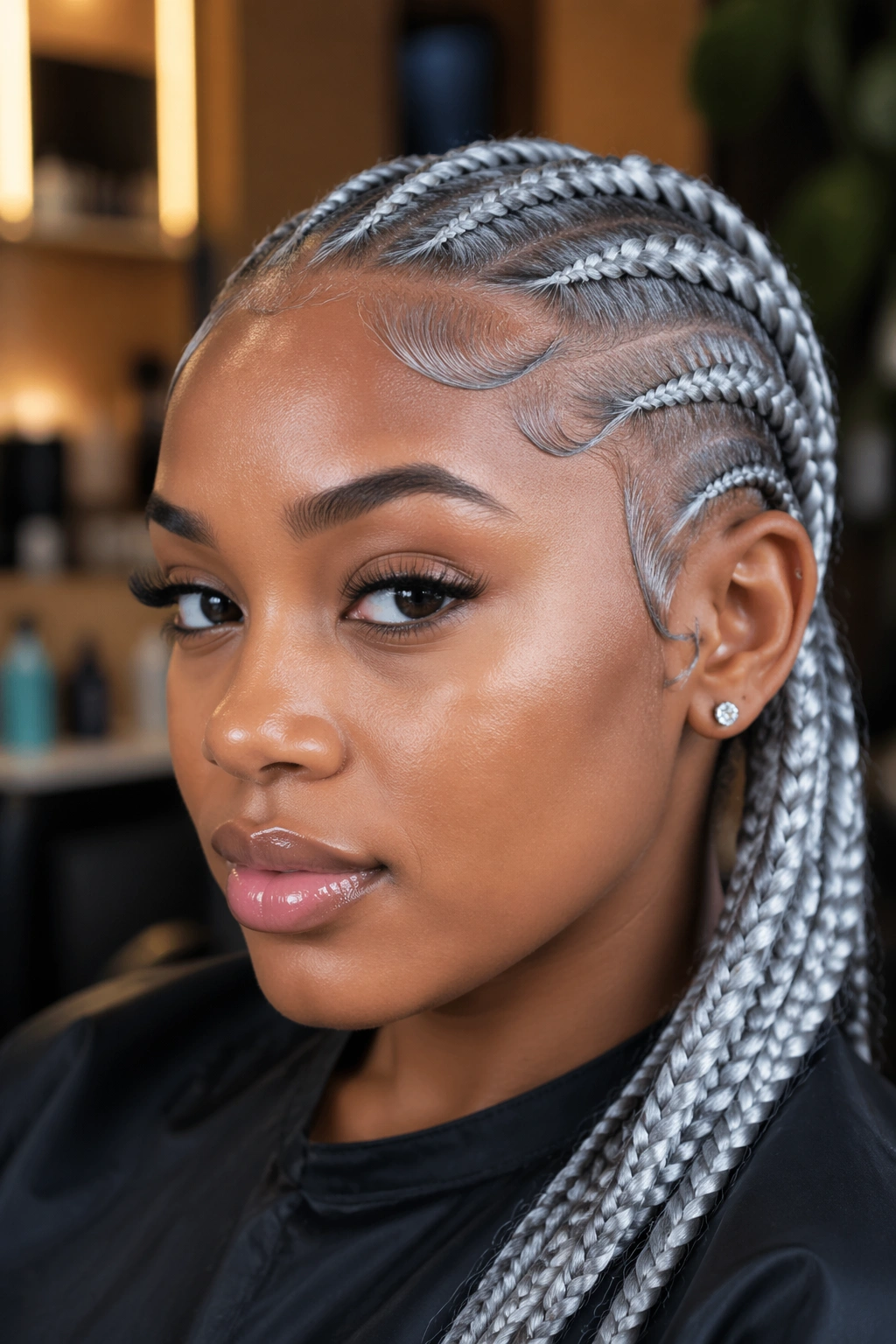
Silver cornrows show wear faster than dark cornrows because every fuzz and flyaway shows against the light color.
Edges need regular re-laying. Apply edge gel every 3-4 days and smooth with a soft brush. Fresh edges are the biggest factor in whether silver cornrows look current or tired.
Spray the partings with a light mist every few days. A water-and-leave-in spray keeps the scalp area fresh and the parting lines clean.
Retouch the braid bases if specific rows have loosened. Using a small amount of gel, smooth flyaways at the base of affected rows.
When to Remove Your Silver Cornrows
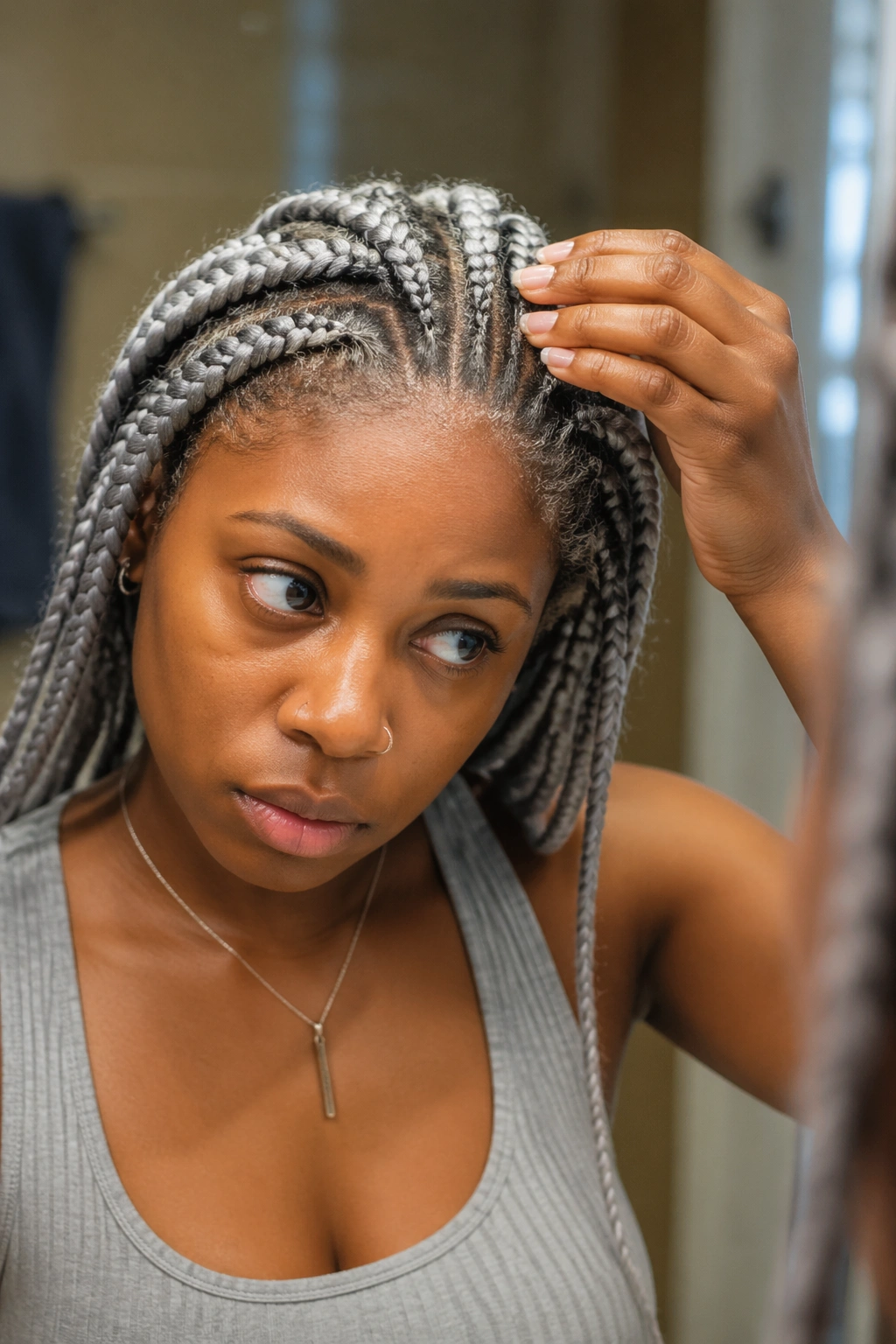
Silver cornrows typically hold for 2-3 weeks. The color itself can lose brightness past three weeks, and mineral buildup from water exposure starts showing.
Signs it’s takedown time:
- Silver color dulled to yellow or beige tones
- New growth pushing braids visibly away from scalp
- Fuzz overwhelming the braid pattern past what refresh can fix
- Itchy scalp that persists despite oil treatments
When taking down, work slowly. Saturate each braid with water and conditioner, unravel from the end toward the scalp, and detangle before moving to the next braid.
Wash your natural hair with clarifying shampoo after takedown to remove product buildup from the install period. Follow with deep conditioning.
Silver Cornrows and Skin Undertone
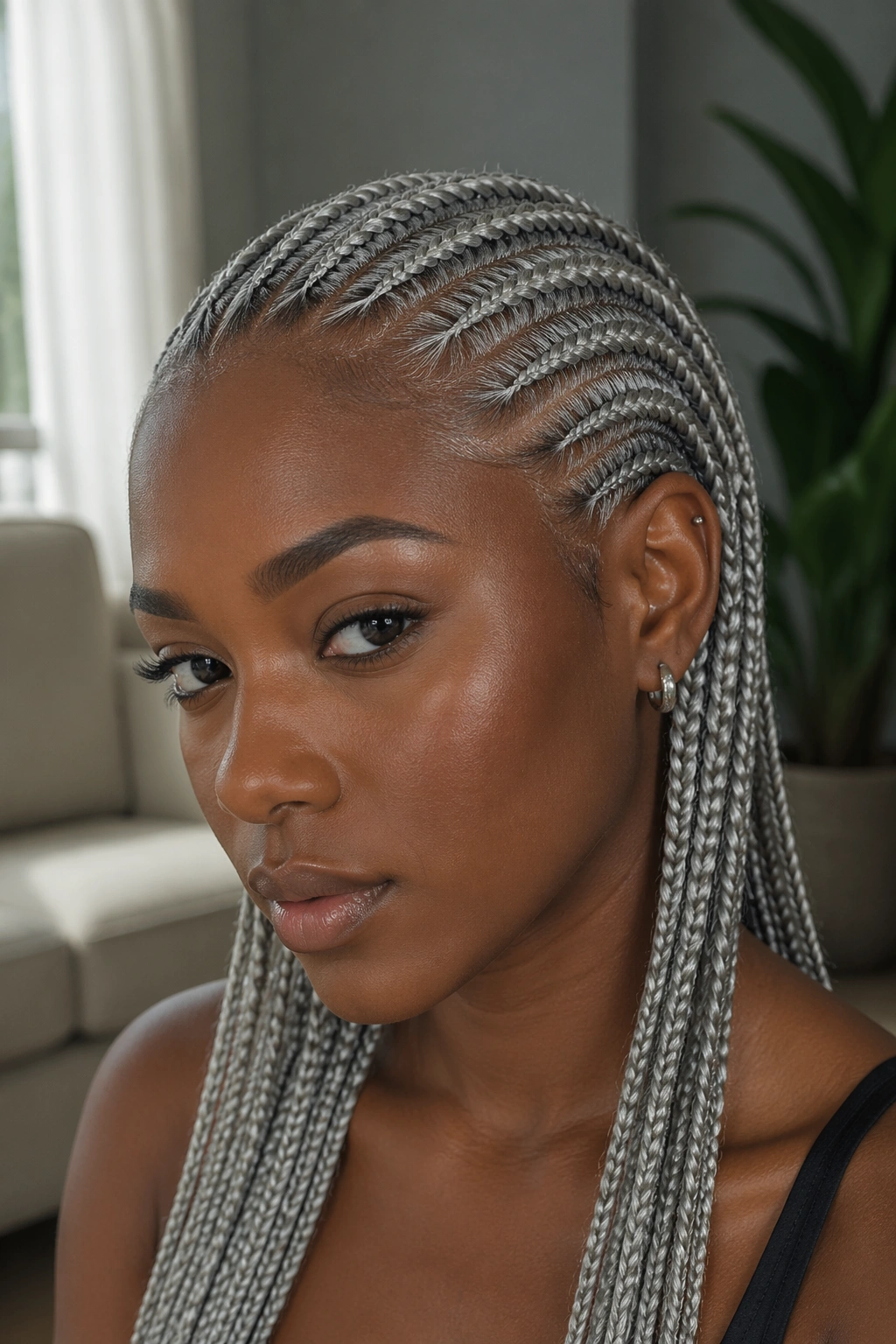
Silver is flattering on most skin tones, but specific silver shades suit specific undertones better.
- Cool-undertoned skin (blue/purple veins): icy silver, ash silver, pure silver
- Warm-undertoned skin (green veins): warm silver, gunmetal silver
- Neutral-undertoned skin (mixed veins): any silver shade works
Against deeper skin tones, icy silver creates the most dramatic contrast. Against lighter skin tones, warm silver reads more harmonious.
The lighting where you’ll wear the style matters too. Silver shifts noticeably between warm interior lighting (golden tones) and cool outdoor lighting (blue tones). Consider where you’ll be wearing the style most.
Picking the Right Silver Cornrow Style for You
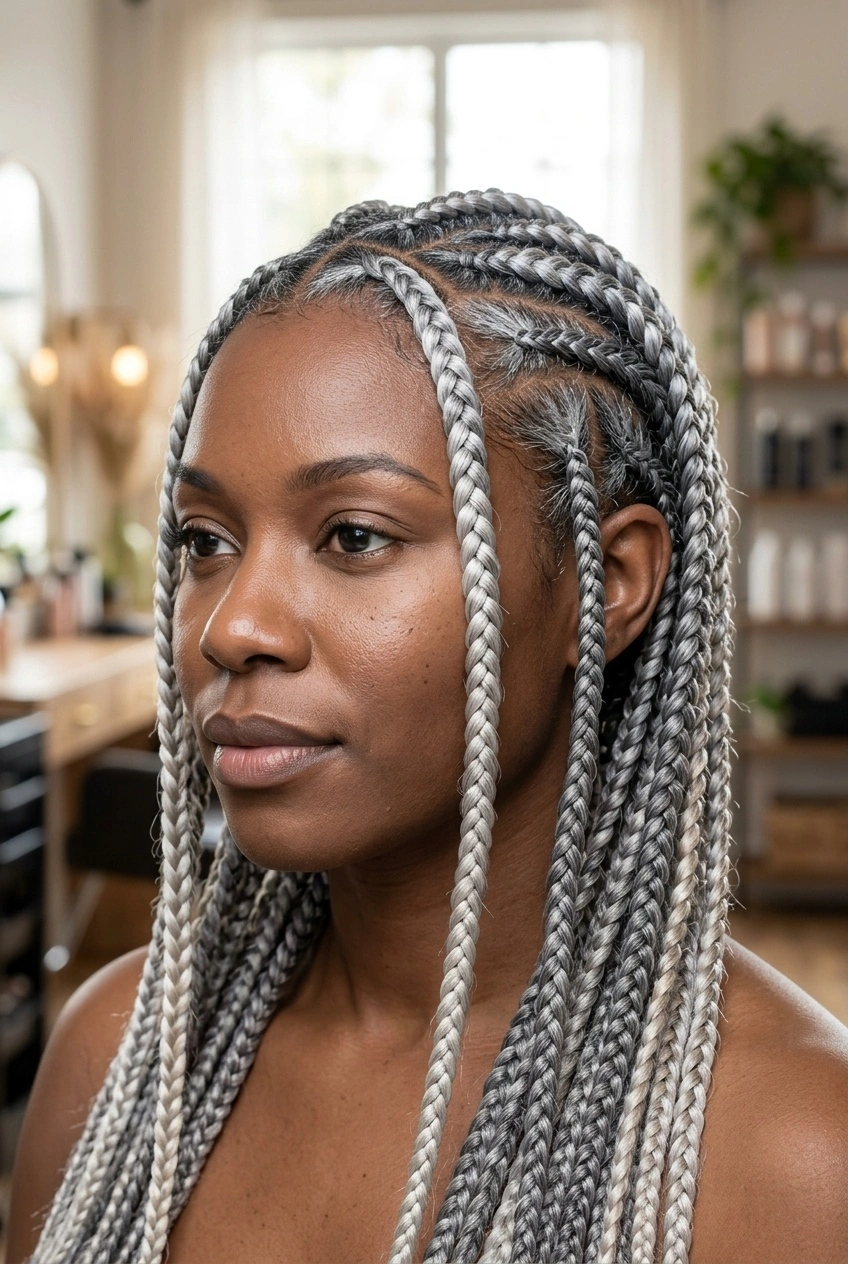
Silver is a commitment of attention. It demands more care than standard shades and draws more eyes. Know yourself before committing.
For first-time silver wearers, start with a simpler pattern — straight-back or a classic Fulani-style — rather than diving into elaborate custom designs. Get comfortable with the color first.
Face shape considerations: silver color naturally brightens the face. Patterns that add vertical lines (mohawks, halo crowns) visually lengthen round faces. Horizontal patterns (straight-back) visually widen narrow faces.
Lifestyle fit matters. If you swim regularly, skip silver or protect rigorously with swim caps. If you exercise daily and sweat heavily, choose simpler silver patterns that handle daily refresh without losing definition.
Trust your braider’s input. Silver punishes imprecision; an experienced braider with silver-work portfolio images will produce better results than a less-experienced one, regardless of your preferences for style complexity.
The right silver cornrow style for you is one you’ll enjoy looking at for three weeks. Silver isn’t a background color; you’ll see it every time you look in a mirror. Pick a shade and pattern you’ll love on repeated viewing.