



613 blonde cornrows sit at the boldest end of the protective styling spectrum. The “613” designation refers to a specific shade code — a platinum-to-pale-blonde color that reads almost white in direct light. On deep brown to dark skin, 613 creates the most dramatic contrast available in synthetic braiding hair. The effect stops people mid-sidewalk. It commands attention in every room.
Wearing 613 cornrows takes confidence. The color draws immediate eyes, which means your styling has to hold up under scrutiny. Sloppy installs, fading patches, or frizzy sections become obvious on 613 in a way they never would on black hair. The pay-off for that higher bar — when 613 cornrows are done right, they photograph like nothing else.
The shade pairs best with melanin-rich skin tones. The contrast between pale blonde hair and deep brown skin creates the signature 613 visual statement. Lighter skin tones can wear 613 too, but the effect is softer and requires more consideration of undertone to avoid looking washed out.
What “613” Actually Means in Hair Color
613 is the color code used across the hair extension industry for the palest blonde shade. On the hair color wheel, 613 sits at “the lightest possible blonde before going into gray or white tones.” Think bleached-out platinum with warm undertones — not quite white, not quite yellow.
The code traces back to professional hair color charts. The first digit represents the level (lightness, where 6 is a medium blonde); the 13 represents the tone (double-digit blonde tones indicate the lightest and coolest shades). Manufacturers kept this labeling convention when synthetic extensions entered the market.
Not all “613” extensions are identical. Different brands interpret the shade slightly differently. Some lean more yellow; some lean more white. Some are evenly colored throughout; some have slight shading variations. Test multiple brands before committing to a full head install.
Why 613 Works So Well on Deep Skin Tones
Color theory is the short answer. Blonde sits directly opposite deep brown on the color wheel, which means the contrast registers as maximum. High-contrast color pairings catch the eye first and hold attention longest.
Beyond theory, 613 brightens the face. The pale blonde reflects light up onto the skin, which enhances the natural warmth of melanin-rich complexions. The effect is similar to wearing a white top against dark skin — the reflected brightness flatters the features.
The boldness reads as self-assured rather than trendy. Blonde on Black hair has been associated with rebellion, confidence, and rule-breaking since the 1960s. Choosing 613 carries that legacy whether you intend it or not.
The Practical Reality of 613 Maintenance
613 requires more maintenance than any other cornrow color. The pale blonde shows dirt, sweat, product buildup, and shed skin more visibly than dark colors.
Scalp flaking becomes immediately noticeable against 613. Keep your scalp clean and exfoliated throughout wear. Apply light scalp oil regularly to prevent the flaking that would invisibly absorb into black hair but show like confetti on 613.
Yellowing happens over time. Chlorine, hard water, heavy products, and sun exposure all gradually tint 613 toward yellow. A purple shampoo — the kind used to tone natural blonde hair — can be used sparingly on synthetic 613 braids to counteract yellowing, though test on a small section first.
Sweating through the braids leaves visible marks on 613. Active lifestyles require more frequent washing or shorter wear periods compared to darker color cornrows.
Picking the Right 613 Brand
Outre X-Pression Pre-Stretched in 613 is my top pick for cornrow work. The fiber is smoother than competitors, resists yellowing better than budget brands, and the pre-stretching reduces frizz at the root.
Sensationnel Ruwa Pre-Stretched in 613 is a close second. Slightly silkier than Outre, which some braiders prefer for certain styles.
FreeTress 613 braiding hair works well for detailed styles where the slightly coarser texture helps the braid hold its shape. More prone to yellowing than premium brands.
Avoid budget 613 extensions. The dye on cheap platinum extensions can run when wet, bleeding color onto pillowcases, clothing, and skin. Premium brands use more stable dyes.
Prep That Protects Both Hair and Color
Wash with a clarifying shampoo to remove all buildup. Any residual product on your natural hair can transfer to the 613 extensions and create dark spots at the root that show dramatically against the pale blonde.
Deep condition with a moisture-rich product. Heavily moisturized natural hair handles the long wear period better than dry hair.
Stretch the hair completely. Fresh shrinkage creates visible bumps at the base of 613 cornrows that read as imperfect installation. Stretched hair takes a cleaner cornrow pattern.
Apply a barrier product at the hairline before install. A thin layer of petroleum-free barrier balm along the edges prevents the 613 extensions from touching your natural hairline directly, which can minimize color transfer in the other direction (from hair oil to extensions).
1. Straight-Back 613 with Seven Cornrows
The foundational 613 style. Seven cornrows running straight back from the hairline to the nape. Even spacing, consistent thickness, pure platinum 613 throughout.
The simplicity lets the color do the entire visual work. Seven cornrows create visible scalp lines between them, which adds to the graphic impact when the hair is 613 — the contrast between exposed scalp and pale blonde reads like a pattern.
- Install time: 3 to 4 hours
- Lasts: 3 to 5 weeks
- Packs needed: 3 to 4 of 613 pre-stretched kanekalon
Tip: Ask your braider to finish with the braids blunt-cut at the same length across all seven. Uneven 613 braid lengths read as mistakes; consistent ends read as polished.
2. 613 Cornrows with Deep Side Part
Six cornrows in an asymmetric configuration — four on one side of a deep side part, two on the other. The deep side part emphasizes the platinum tone by creating a wide expanse of visible blonde across the larger section.
The asymmetric count creates natural visual flow. The side part acts as a diagonal line that draws the eye across the face, which works particularly well for highlighting cheekbones.
Pair with a bold red lip. The contrast between 613 blonde, deep brown skin, and red lip color is a photographic classic for a reason.
3. 613 Cornrows with Middle Part
Two main braids on each side of an exact middle part — or six cornrows with three on each side, perfectly symmetrical. The precision of the middle part amplifies the 613 impact.
Why It Works
Symmetric styles read as formal and intentional. Combined with the boldness of 613, the effect is commanding rather than casual. This is the version for events where you want your hair to carry structural authority.
Best for: Formal events, professional photography, styled media appearances.
4. 613 Cornrows into High Ponytail
The cornrows angle up toward the crown, where they gather into a high ponytail of 613 extensions. The combination of bold color and high placement creates maximum drama.
The high pony adds vertical length to the silhouette, which photographs particularly well. Full-body shots benefit from the continued color flow from cornrows into flowing pony.
For the pony finish, use either matching 613 extensions braided into the gather point or a 613 drawstring ponytail piece. Both work; drawstring pieces install faster but cost more per unit.
5. 613 Cornrows with Beaded Tips
Standard 613 cornrows finished with beads at the tips. The bead choice matters enormously on 613. Wooden beads create earthy contrast. Gold-tone beads feel luxurious. Crystal or pearl beads read bridal. Colored glass beads can add accent tones without disrupting the platinum dominance.
Bead placement should be asymmetric rather than uniform. Three beads on one braid, one on another, a cluster of five on a third — the variation reads intentional rather than decorative.
Heat-seal bead ends to prevent sliding. A quick touch of lighter flame on synthetic braid tips melts the fiber slightly, which holds the beads in place without adhesive.
6. 613 Cornrows with Dark Root Shadow
The most technically demanding version. The braider uses dark brown or black kanekalon for the first 1 to 2 inches at the scalp, then transitions into 613 for the rest of the braid length. The effect mimics natural grown-out blonde with dark roots.
This creates a lived-in look that reads less styled than pure 613. For everyday wear, it’s more forgiving — shadow roots mean natural root regrowth blends visually rather than standing out.
The transition point requires braider skill. Sloppy transitions create obvious color change lines; clean transitions look like natural fade.
7. 613 Cornrows with Color-Block Accents
Most of the head in 613. One to three braids built in a contrasting color — burgundy, copper, electric blue, or pastel pink all work as color accents against 613.
The accent braids position strategically. Face-framing placement maximizes impact. Back-of-head placement creates rear view detail. Random distribution works but requires a braider with strong design instincts.
Choose the accent color with intention. Warmer accent colors (red, copper) pair with warmer 613 tones. Cooler accents (blue, purple) pair with cooler 613 tones.
8. 613 Cornrows with Sculpted Edges
Standard 613 cornrow pattern. The elevated element — sculpted baby hair edges that create swoops, swirls, or decorative curves along the hairline.
How to Use It
Edge work photographs beautifully against 613. The dark natural baby hair contrasts with the blonde cornrows, creating an almost graphic frame around the face.
Use a fine-tipped edge brush and a strong-hold edge gel. Work in small sections. The sculpted edges need re-laying every 2 to 3 days for the duration of the style.
Tip: Sculpt edges in the direction of the cornrow flow. Edges fighting the cornrow direction look like accidents; edges reinforcing the flow look deliberate.
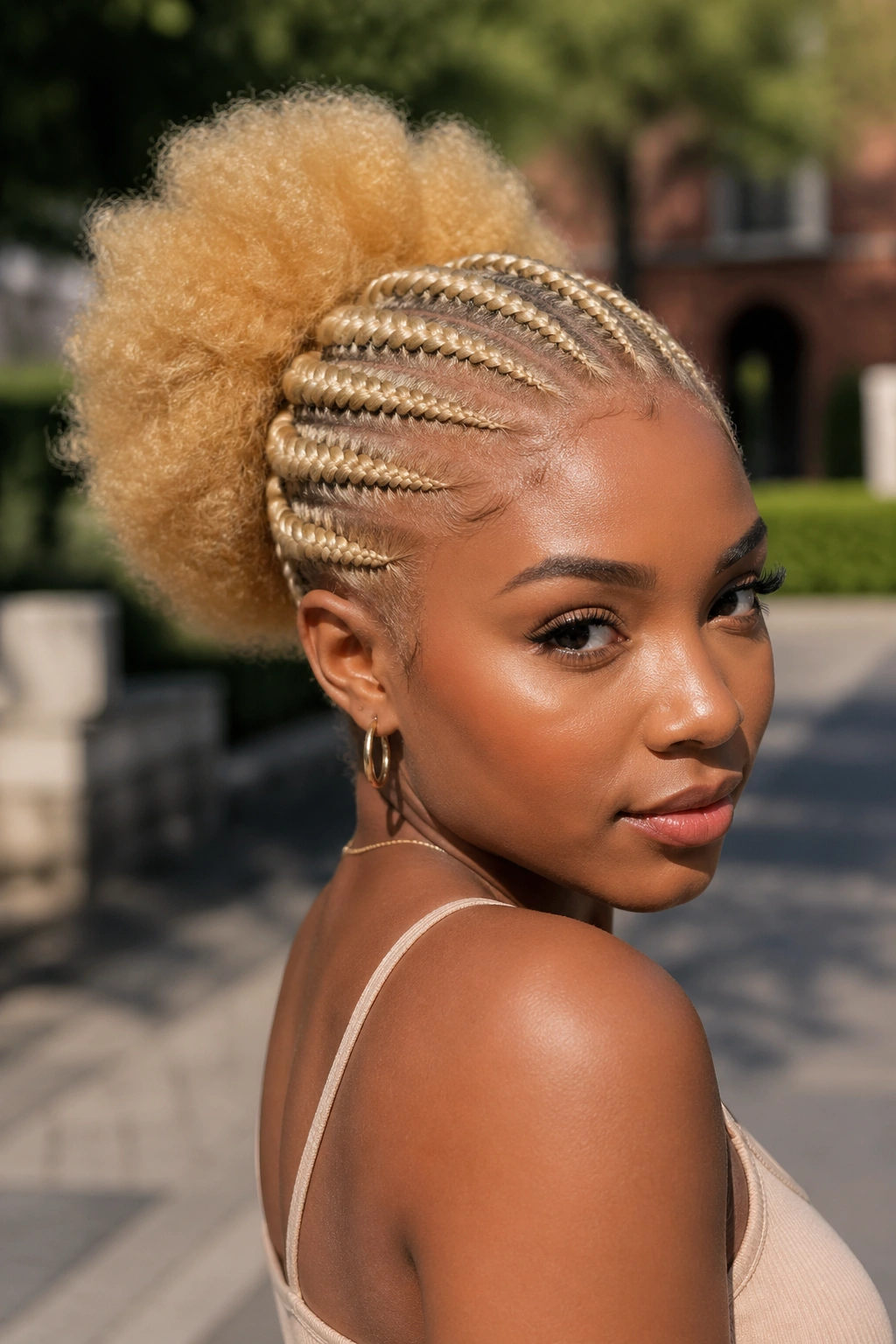
9. 613 Cornrows with Afro Puff Back
The cornrows cover the front and sides of the head. The back section remains unbraided, styled into a natural afro puff. The unbraided natural hair in its original color contrasts dramatically with the 613 cornrows.
This version preserves the natural hair color as the “reality check” behind the styling choice. It reads as blonde-forward styling with an acknowledgment of the natural foundation.
The puff requires regular moisturizing and picking. Maintain a separate moisture routine for the back section while the cornrows handle the front.
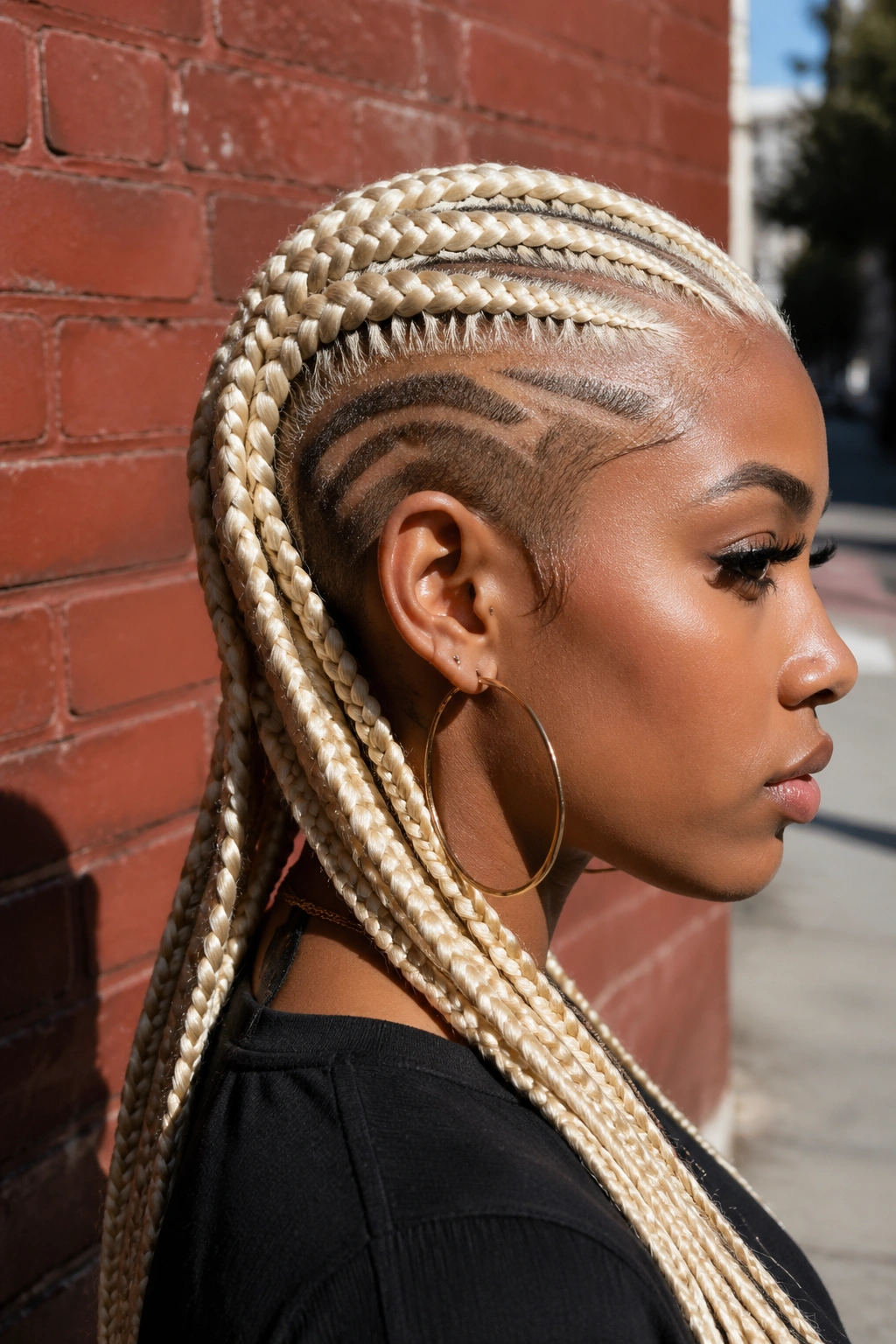
10. 613 Cornrows with Shaved Side
Cornrows cover the top of the head. One or both sides feature a shaved or faded section — either fully shaved or designed with clipper patterns.
The combination of 613 cornrows and shaved sides reads edgy and confident. The blonde amplifies whatever attitude the shaving brings.
Maintenance includes both the cornrow care and clipper touch-ups every 2 to 3 weeks.
11. 613 Cornrows with Jumbo Sections
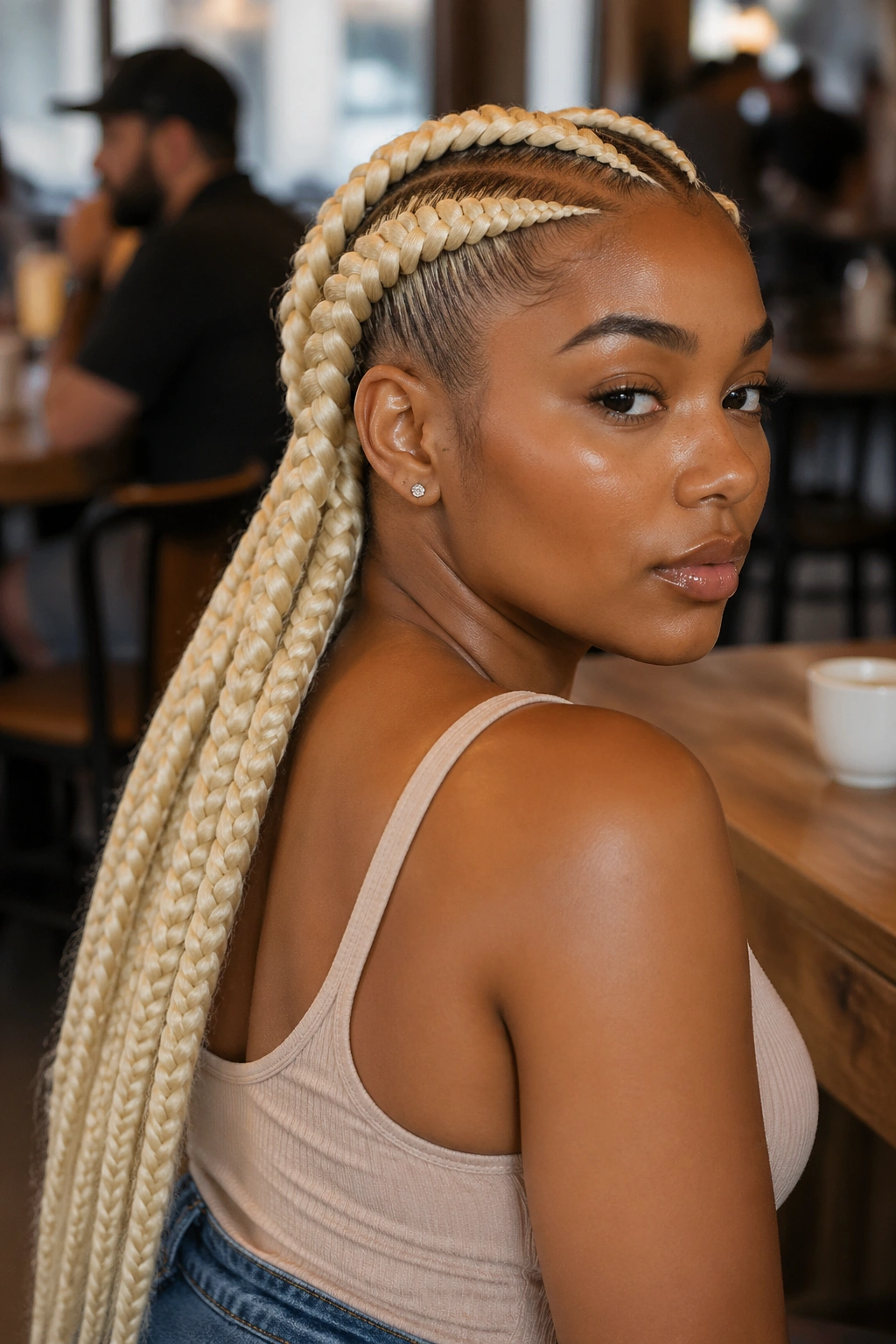
Just two to four cornrows total, each containing substantial amounts of 613 extension hair. The jumbo sizing creates rope-like braids that hang thick down the back.
The simplicity of fewer, bigger braids pairs particularly well with 613. Dozens of thin blonde braids can read overwhelming; a few large blonde braids read sculptural.
The style installs faster than multi-braid versions — often under 2 hours. It also reduces scalp tension by distributing across fewer sections.
12. Micro 613 Cornrows
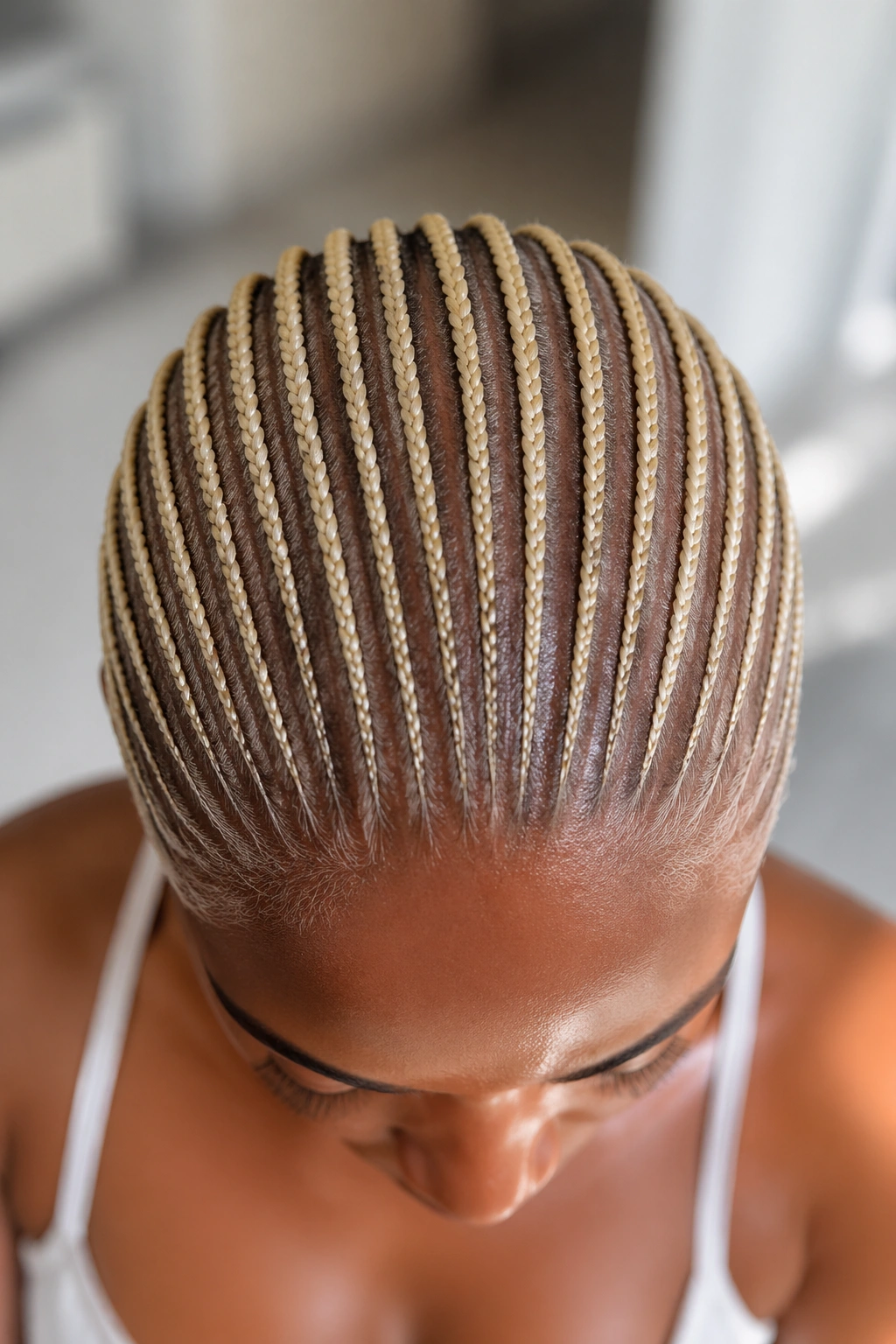
The opposite extreme. Fifteen to twenty thin cornrows across the head, each built with careful precision in 613 extensions.
Micro cornrows show more scalp between braids. On 613, the visible scalp creates a ticker-tape effect — alternating stripes of blonde and natural skin tone. It’s a strong graphic pattern that photographs exceptionally well.
Install time stretches to 6 to 8 hours for micro 613 cornrows. Budget accordingly.
13. 613 Cornrows with Curly Ends
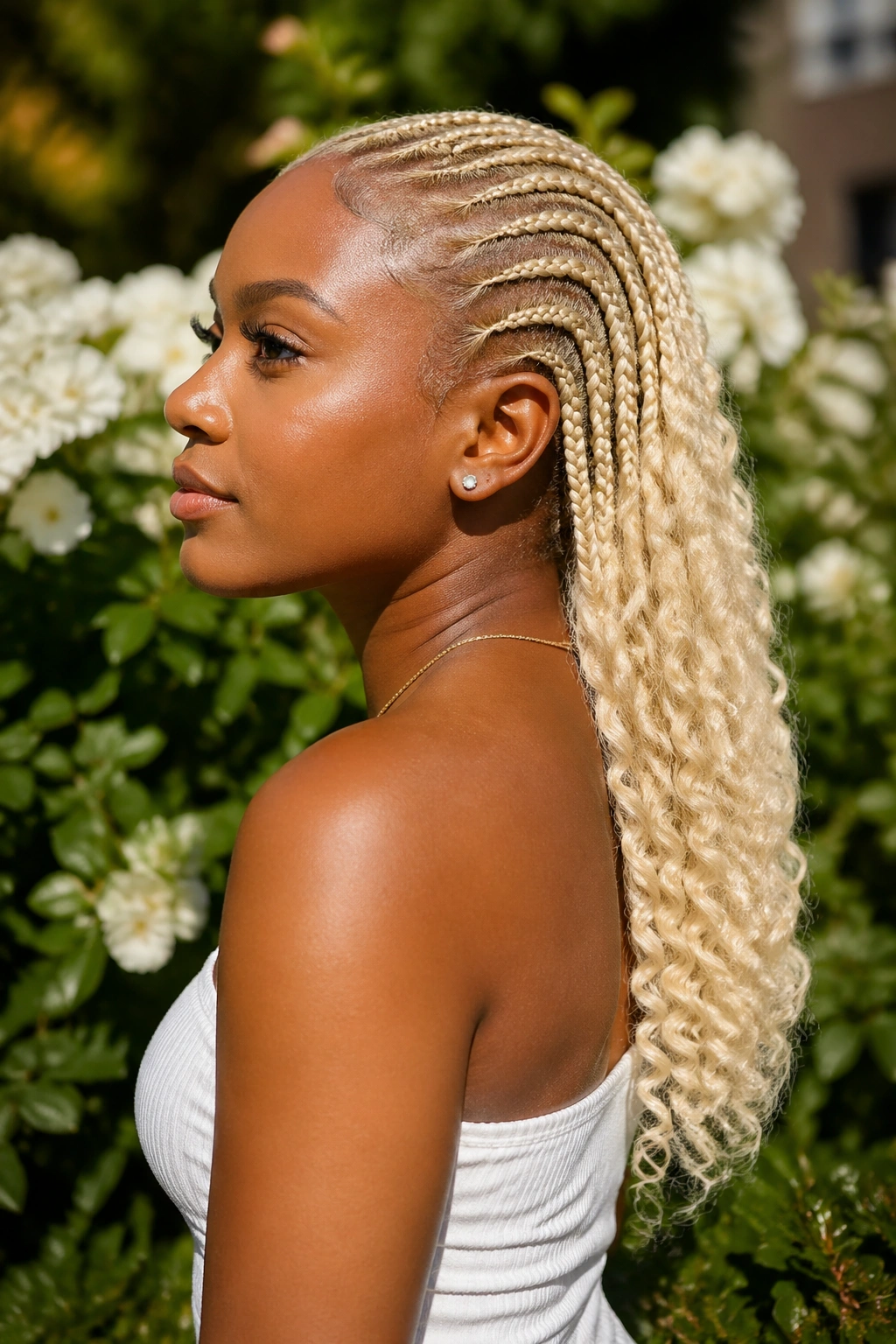
The cornrows run standard 613 throughout the braid length. The last 4 to 6 inches transition into loose 613 curls — either using pre-curled 613 extensions or by manipulating synthetic fiber at the braid ends.
The curl portion adds softness to what would otherwise be straight-edged cornrows. Combined with 613 blonde, the curls read romantic and flowing.
Refresh curls daily with a leave-in mist. Synthetic curls lose definition under sleep pressure and need re-shaping each morning.
14. 613 Cornrows with Bob-Length Cut
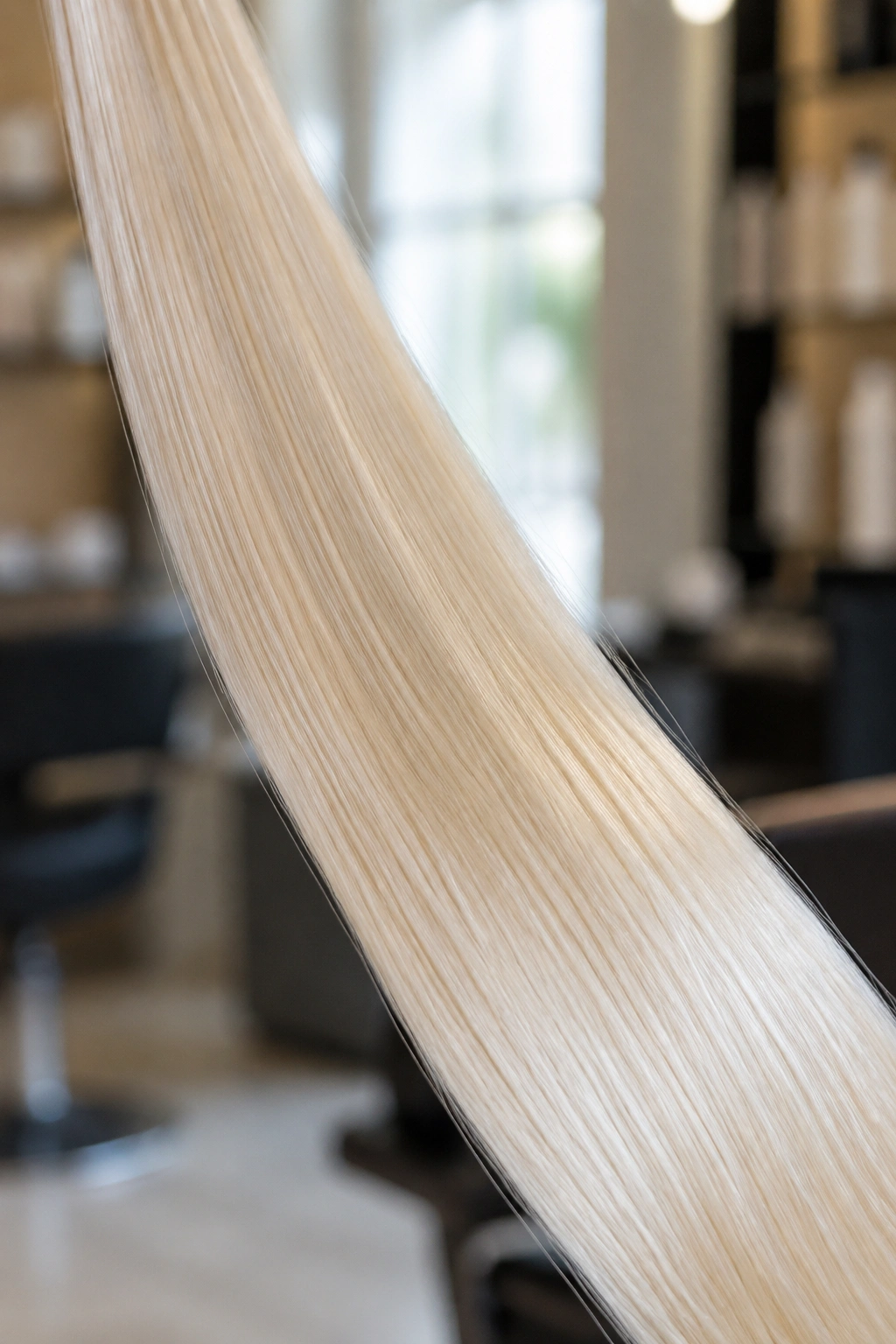
The cornrows stop at chin to collarbone length. The shorter format and platinum color combine for a sophisticated look that reads less playful than long 613.
Bob-length 613 cornrows are easier to maintain daily. Less weight, less night wrapping, faster wash times. The shorter length also shows less yellowing over time because there’s less surface area to discolor.
This is the 613 style I recommend for professional environments that accept bold color choices but prefer contained silhouettes.
15. 613 Cornrows with Low Bun
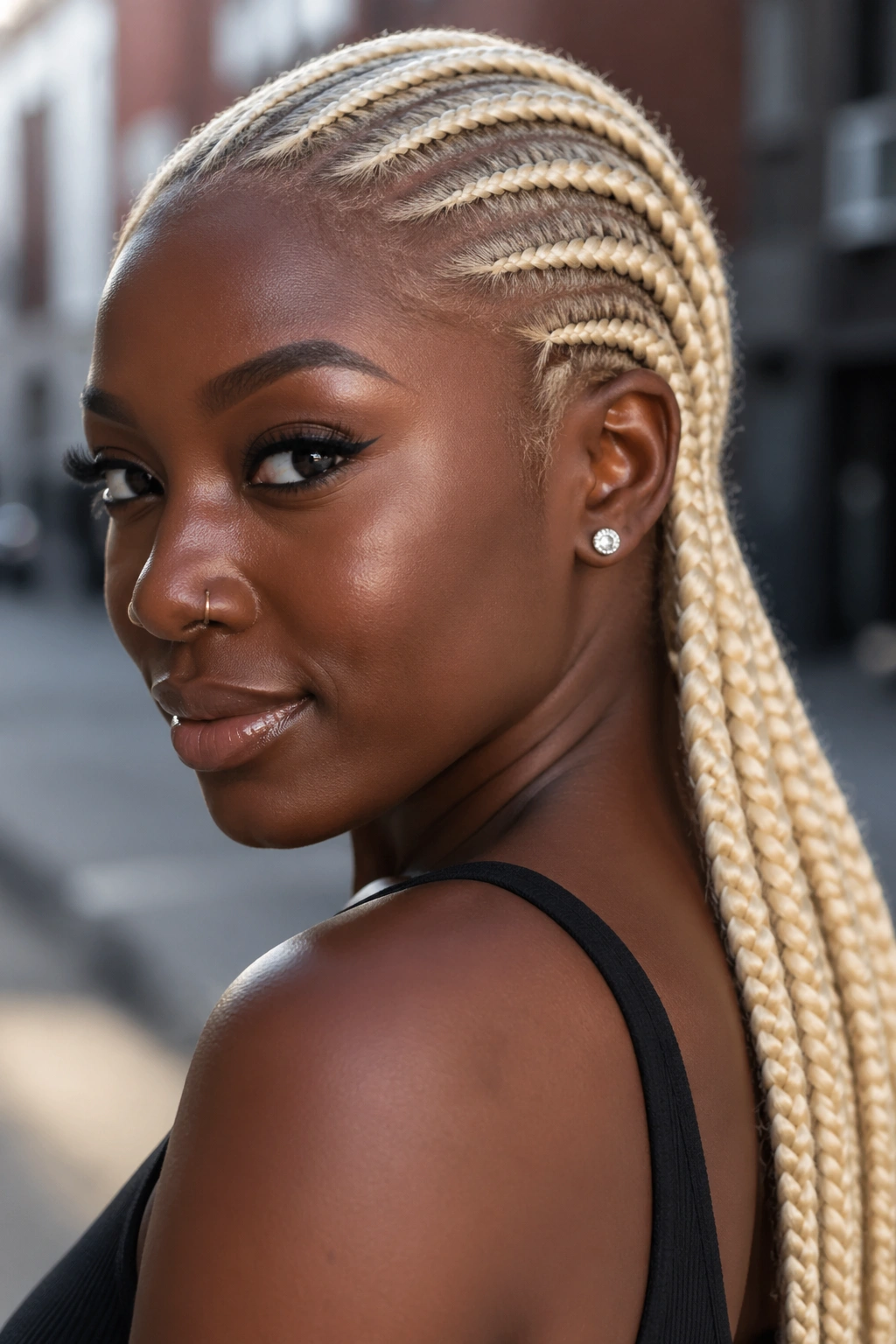
The cornrows angle down toward a low bun at the nape, built from 613 extension hair or wrapped braid ends. The bun sits against the neck as the visual anchor.
What Makes It Different
Low buns on 613 read more formal than their dark-hair counterparts. The pale blonde elevates even simple styling into elevated territory.
The bun should be matched to the cornrow color exactly. Off-tone buns break the visual continuity and look obviously added-on. Pre-cut a section of 613 extension specifically for the bun portion.
Who this is for: Formal events, weddings, work environments that accept bold color.
16. 613 Cornrows with Crown Bun
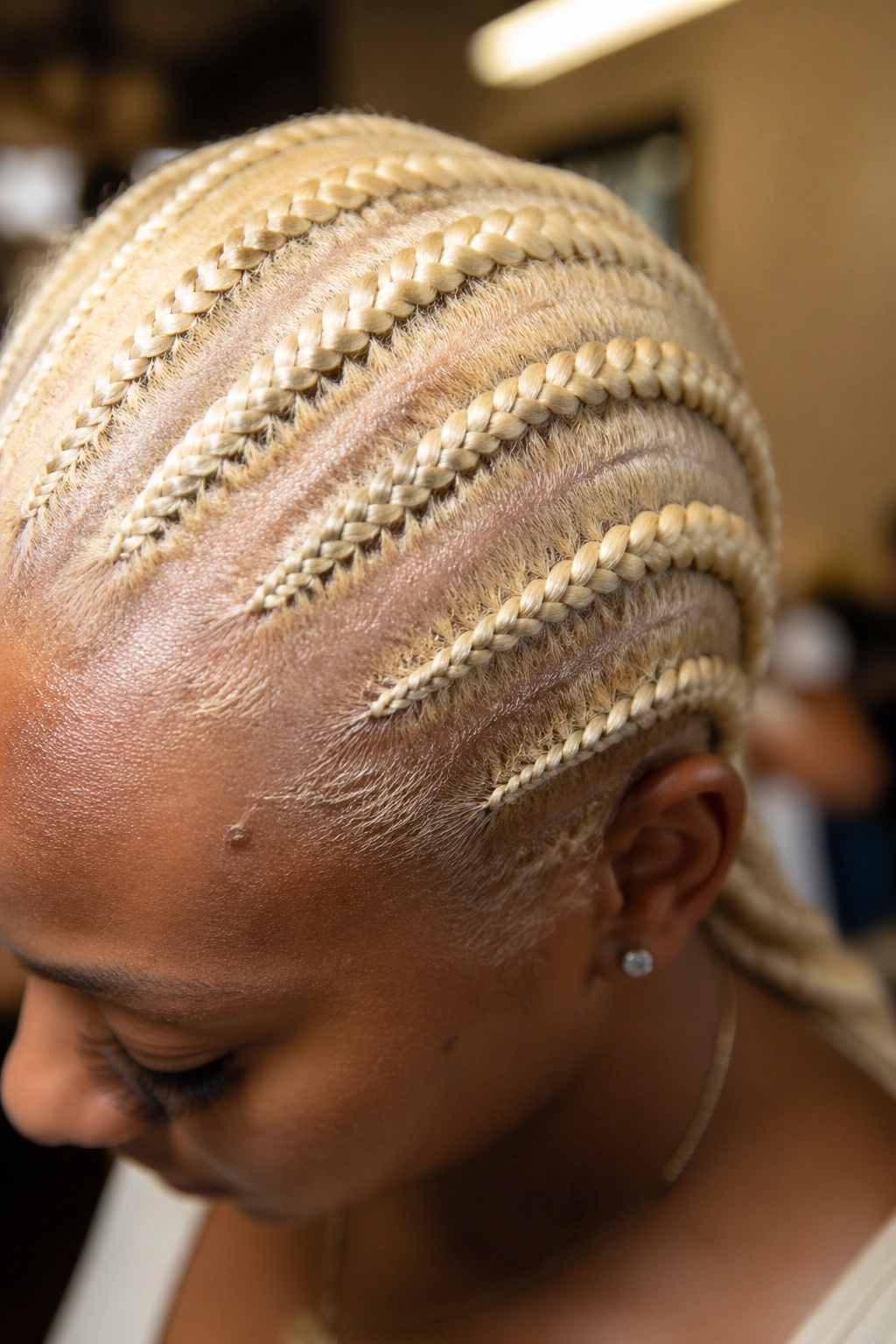
All cornrows angle up toward a bun at the crown of the head. The bun position sits higher than a traditional low bun, creating a more dramatic upward sweep.
The elevated bun emphasizes facial structure by pulling all volume upward. It’s the version for women with strong bone structure who want their features framed by the styling.
This works particularly well for portrait photography. The face becomes the undisputed focal point with all visual weight directed upward and away from the face.
17. 613 Cornrows with Heart Part Back
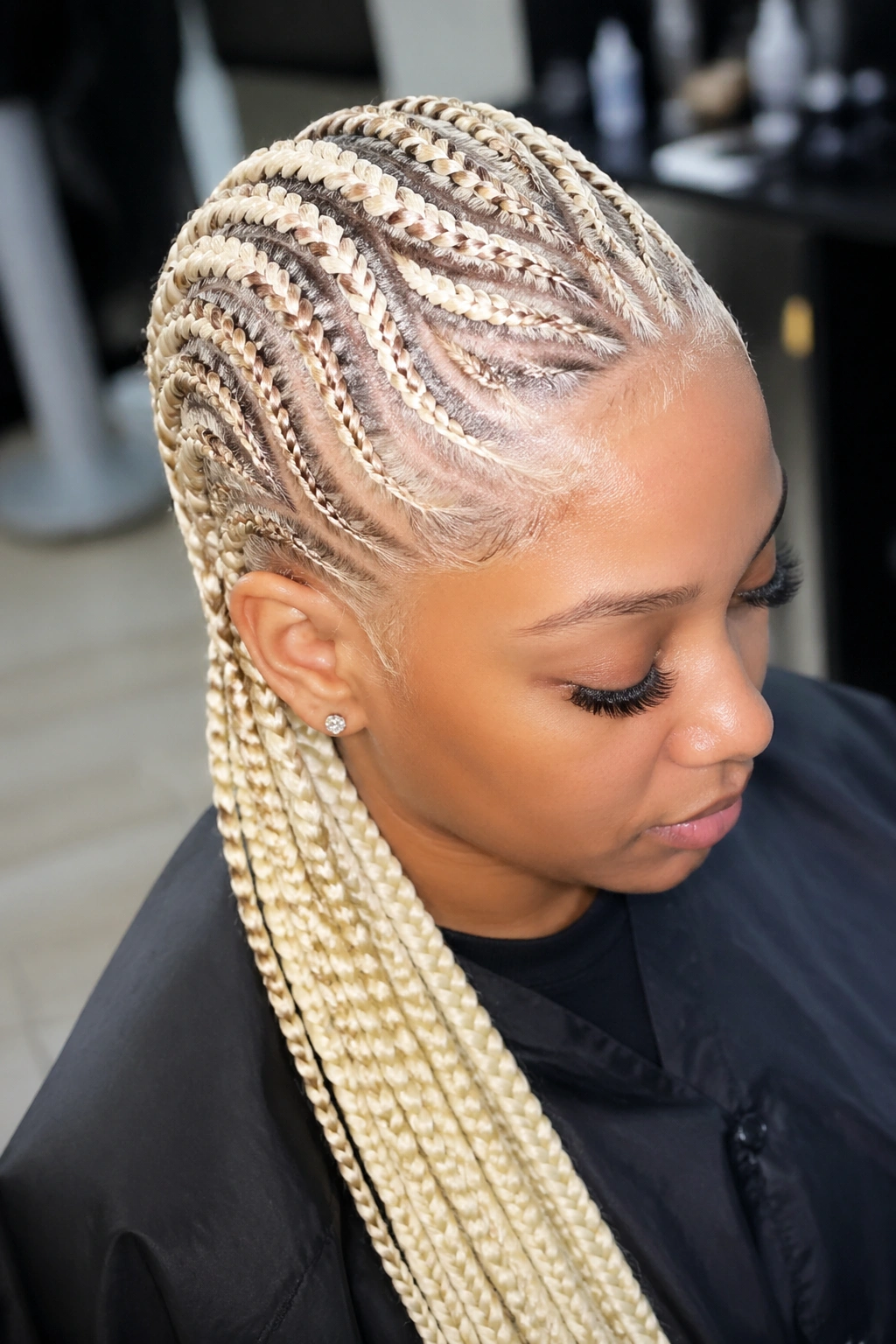
A heart-shaped parting sits at the back of the head, with the 613 cornrows flowing around and through the heart outline. The heart itself may be filled with smaller 613 braids or left open with scalp visible.
The heart shape reads soft against the boldness of 613. It’s a rare combination — daring color with decorative shape.
Best viewed from behind. Plan for someone to photograph the back view during events. The heart won’t show from the front.
18. 613 Cornrows with Fulani Braid Influence
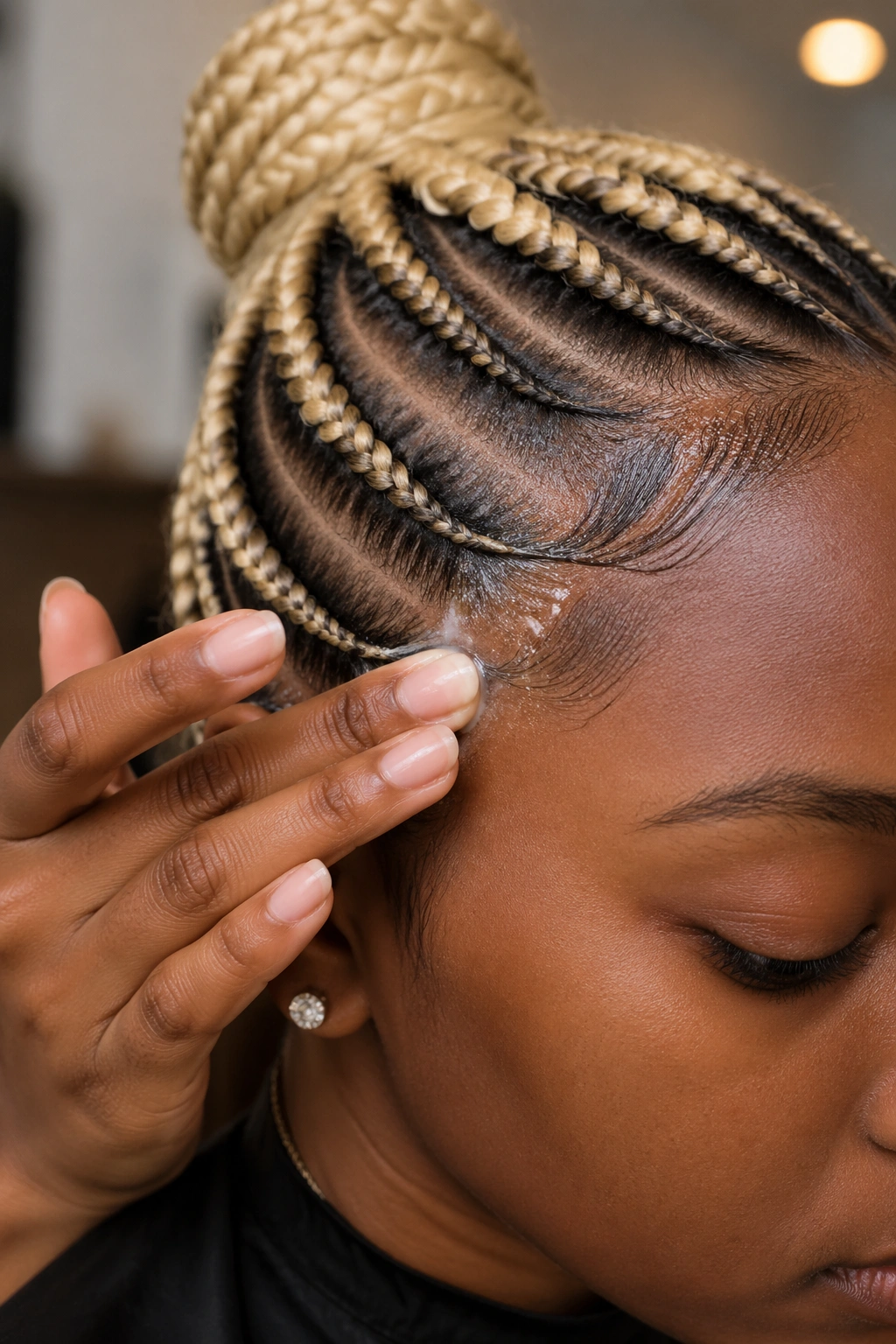
Traditional Fulani styling adapted to 613. A single braid runs along the hairline across the front, with the main 613 cornrows flowing back into a central collection.
Cultural recognition is important here. Fulani braiding carries specific meaning in West African tradition. Wearing Fulani-style cornrows in 613 bridges traditional design with statement color — which can read as a celebration of cultural heritage or as appropriation depending on execution and accessories.
Research the Fulani context before wearing. Pair with beaded or shell accents that connect to traditional adornment.
19. 613 Cornrows with Gold Chain Detail
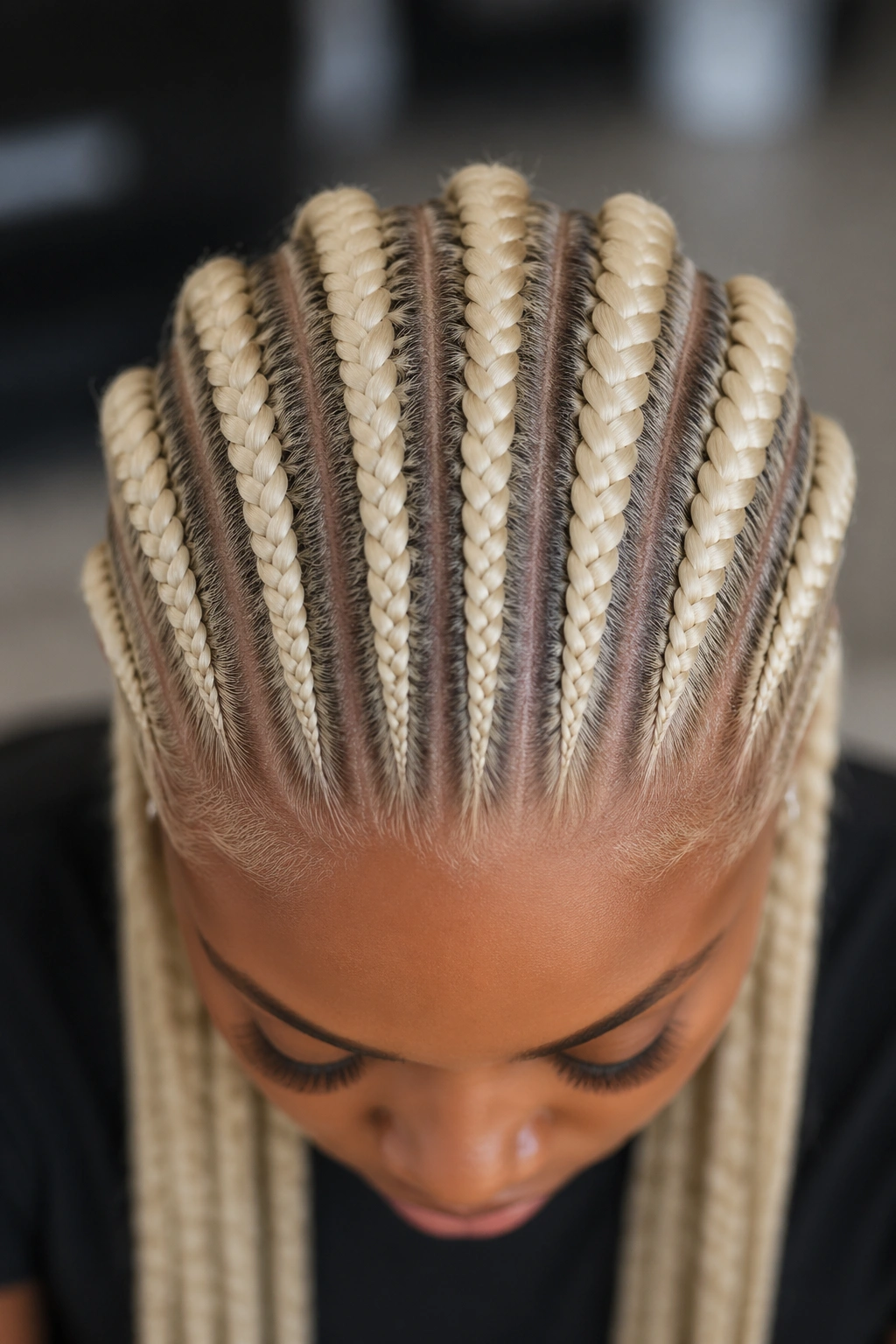
Fine gold chains weave through select 613 cornrows. The metallic gold pairs beautifully with the pale blonde — both catch light, creating a double-shimmer effect.
Chain placement requires planning. Too many chains make the style feel cluttered; too few feel accidental. The balance is usually 2 to 4 chains distributed asymmetrically across the head.
Use jewelry-grade chains. Costume jewelry can rust or stain 613 extensions over time.
20. 613 Cornrows with Mohawk Top
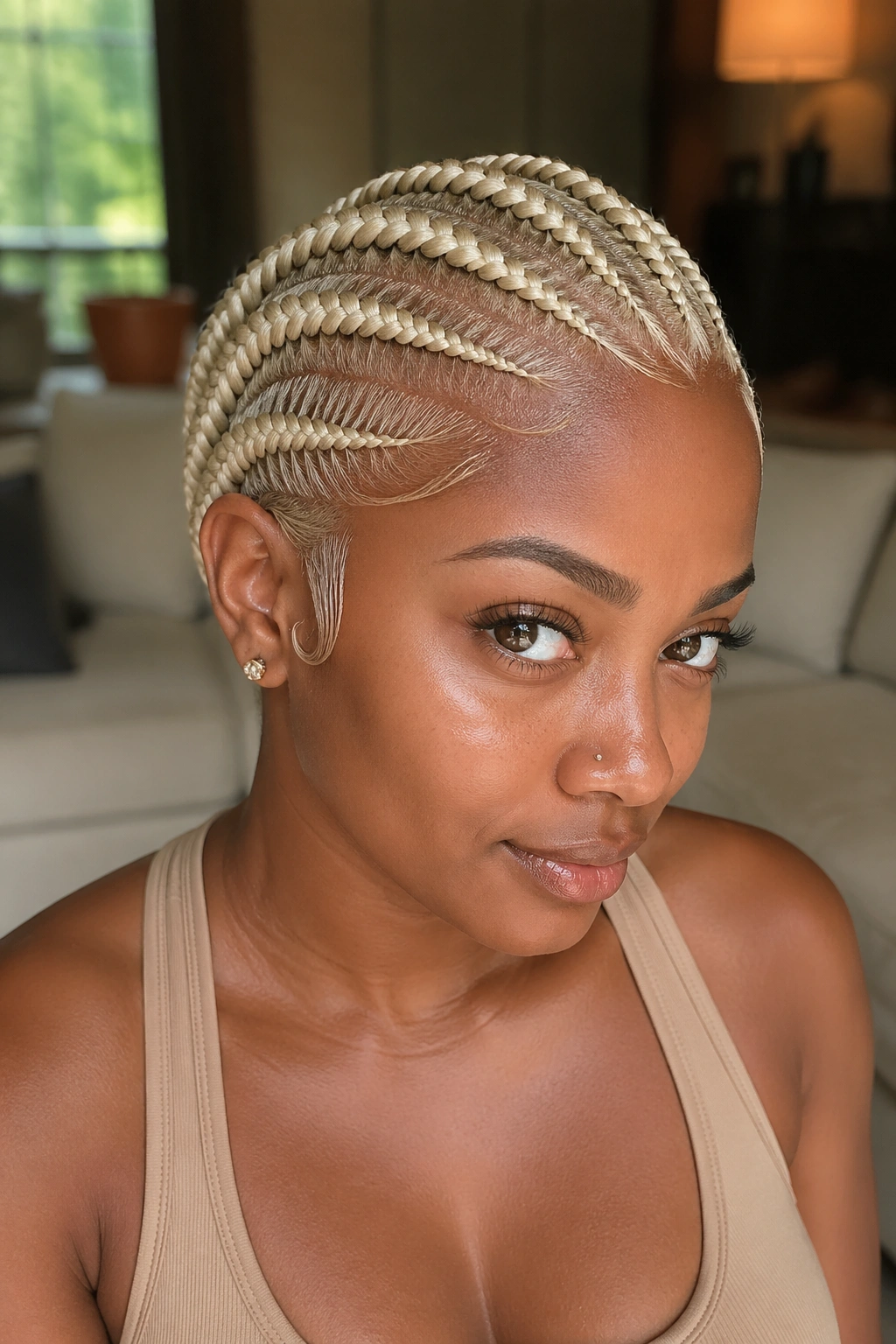
The sides braid tight against the scalp. The center strip from forehead to nape stays raised — either through actual height in the braided center or through visual contrast with flatter sides. The center strip is 613; the sides can be 613 or natural color.
The mohawk in 613 reads punk-elegant. It’s the version for women who want rebellious energy balanced with refined execution.
The raised center needs daily maintenance. The braid shape flattens under sleep pressure and requires morning reshaping.
21. 613 Cornrows with Zigzag Parts
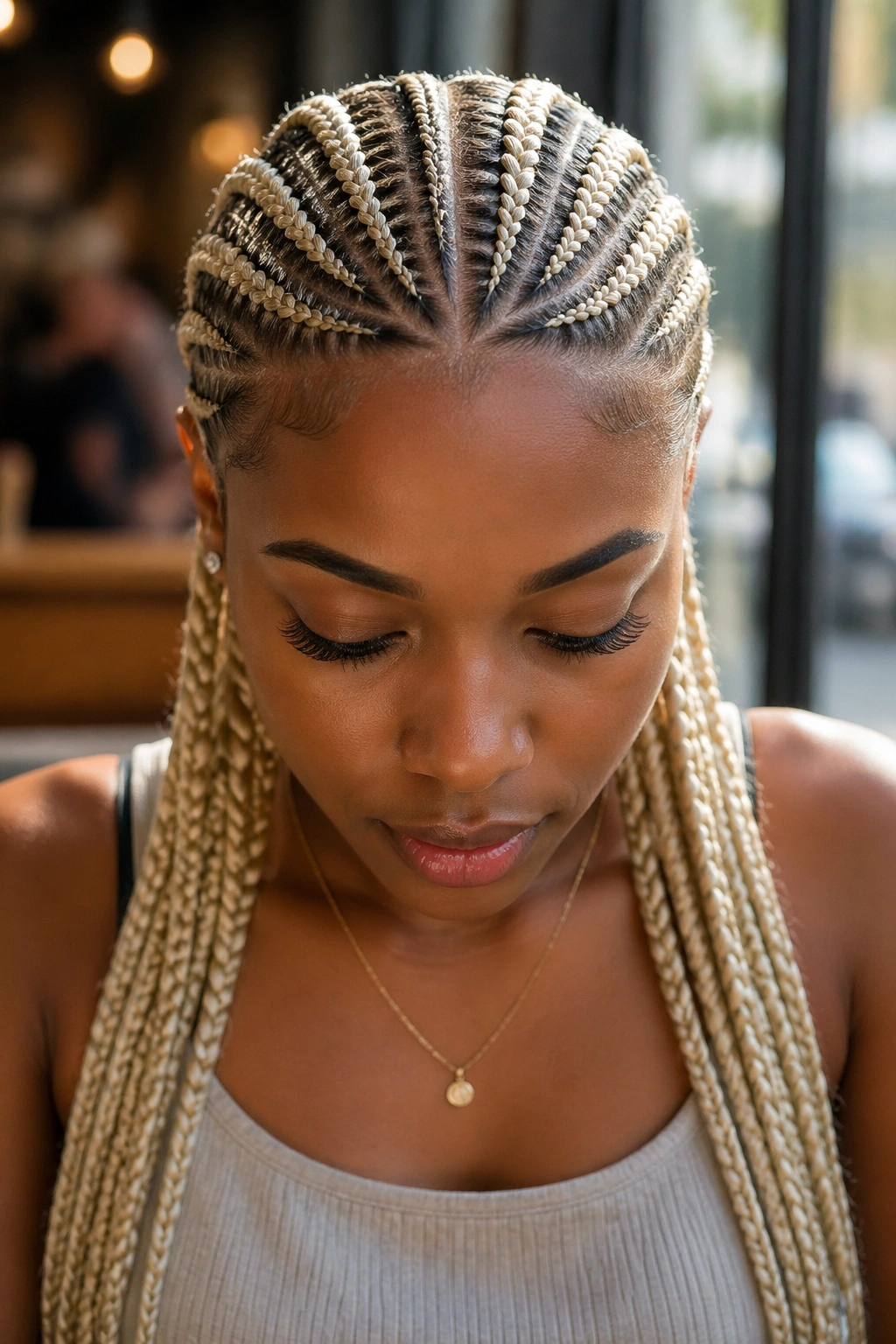
The cornrows themselves are standard, but the parting between them zigzags rather than running straight. The zigzag pattern creates visible graphic scalp lines that complement the 613 boldness.
What to Watch For
Zigzag parting requires a braider with real parting skill. Sloppy zigzags read as asymmetric cornrows rather than deliberate design.
Maintain the zigzag visibility with weekly gel application along the parts. The zigzag loses definition over time as scalp oils build up.
22. 613 Cornrows with Full Goddess Updo
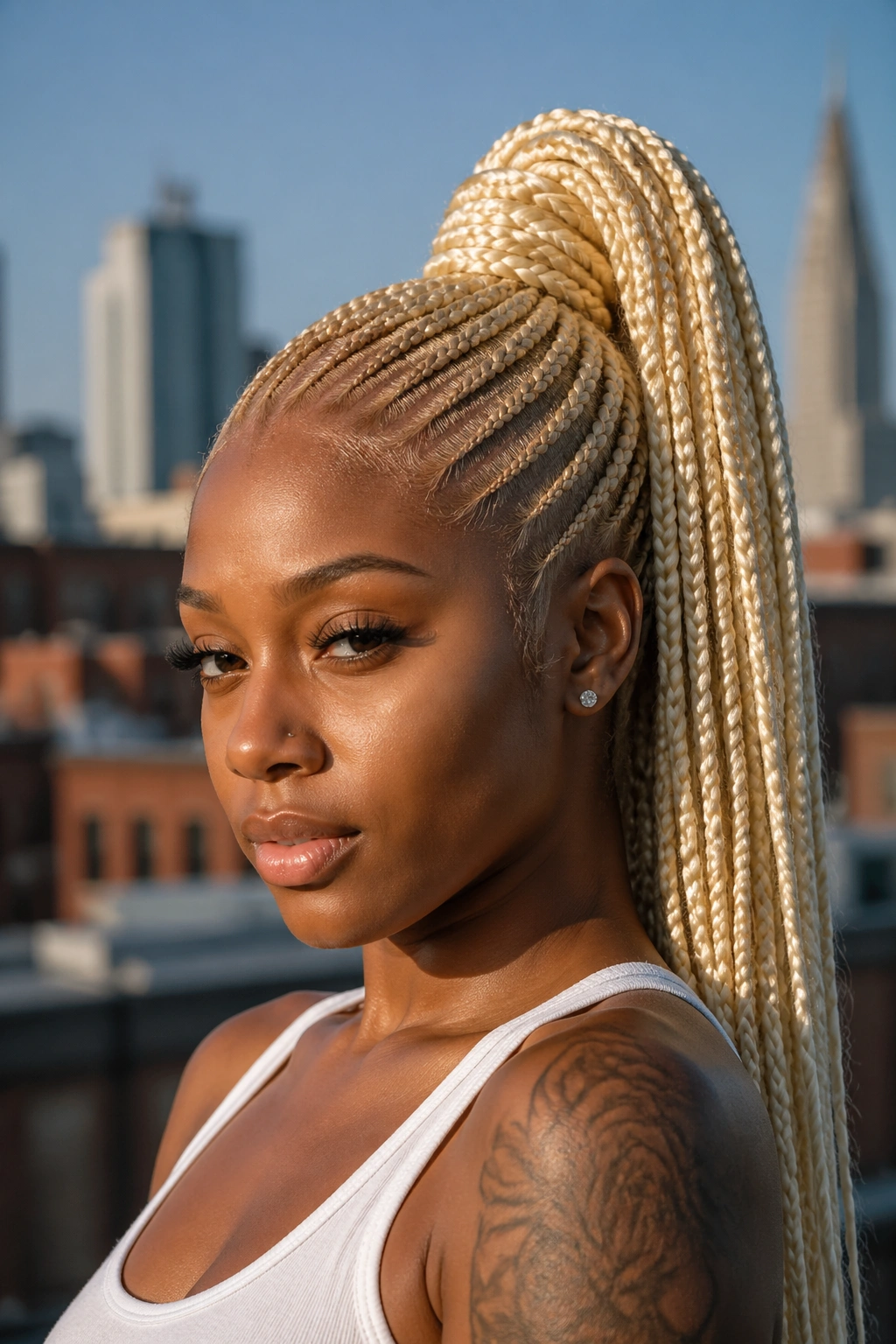
The cornrows flow into a full goddess updo at the crown — gathered 613 hair styled into a voluminous arrangement of loose curls and twists pinned on top of the head.
This is the most elevated version of 613 cornrows. The bold color combined with the architectural updo creates maximum visual impact.
Best for major events — weddings, award ceremonies, major photography sessions. The install time reaches 6 to 8 hours with the full updo styling included.
Maintaining 613 Color Through Weeks of Wear
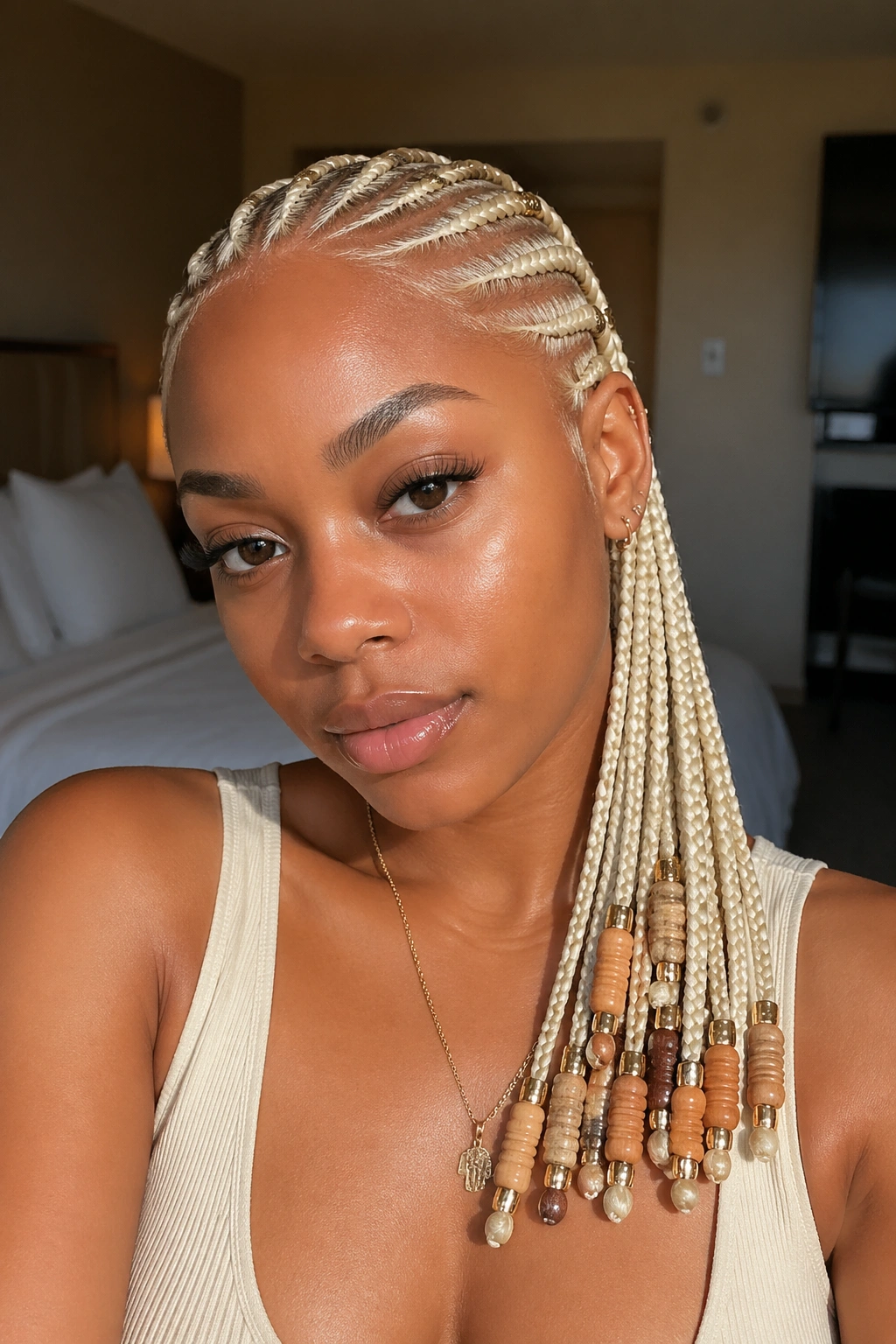
Color preservation requires active care. 613 doesn’t hold its tone indefinitely — environmental factors shift the shade toward yellow or dull it over time.
Use a purple-toned shampoo sparingly. Once every 2 weeks, diluted significantly with water. Test on a small section first to ensure the product doesn’t turn the synthetic fiber purple or patchy.
Minimize sun exposure when possible. UV light bleaches and yellows synthetic fibers simultaneously. A wide-brim hat during long outdoor exposure protects the color.
Pre-wet with fresh water before swimming. Saturated braids absorb less chlorine or salt water. Rinse immediately after swimming.
Avoid smoke exposure if possible. Cigarette and cooking smoke yellows synthetic blonde faster than dark hair.
Sleeping with 613 Cornrows
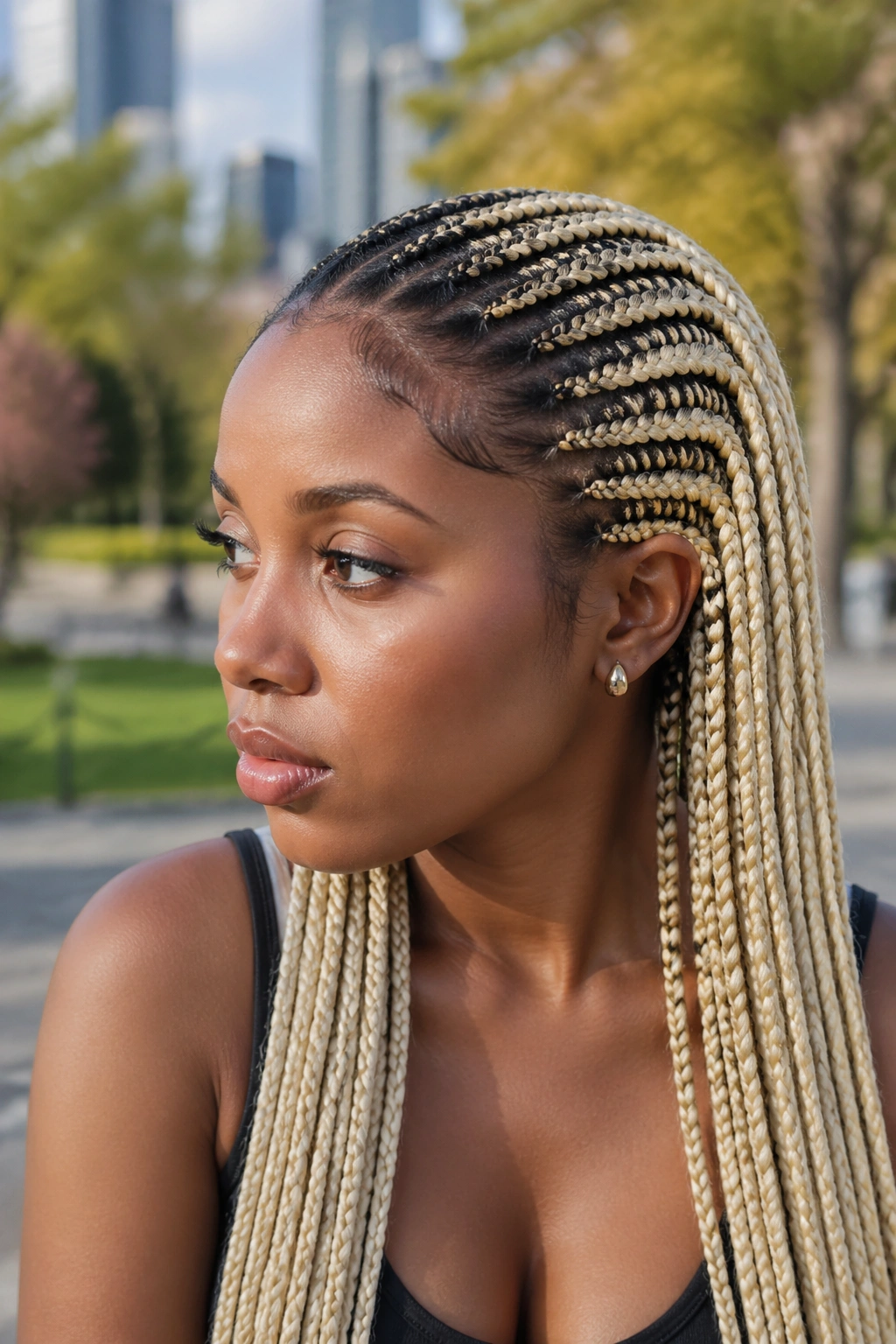
Satin bonnet every single night. 613 extensions are especially prone to pillowcase friction tangles because the pale color shows every tangle and frizz clearly.
Wrap the bonnet snug but not tight. Over-tight bonnets crease the cornrows; loose bonnets slip off during sleep.
For long 613 cornrows, gather the braids loosely in the bonnet. Crushed or crumpled braids create visible creases by morning.
Use a satin pillowcase as a secondary layer. Even with a bonnet, pillowcase friction reaches through some bonnet materials.
Washing Without Destroying the Color
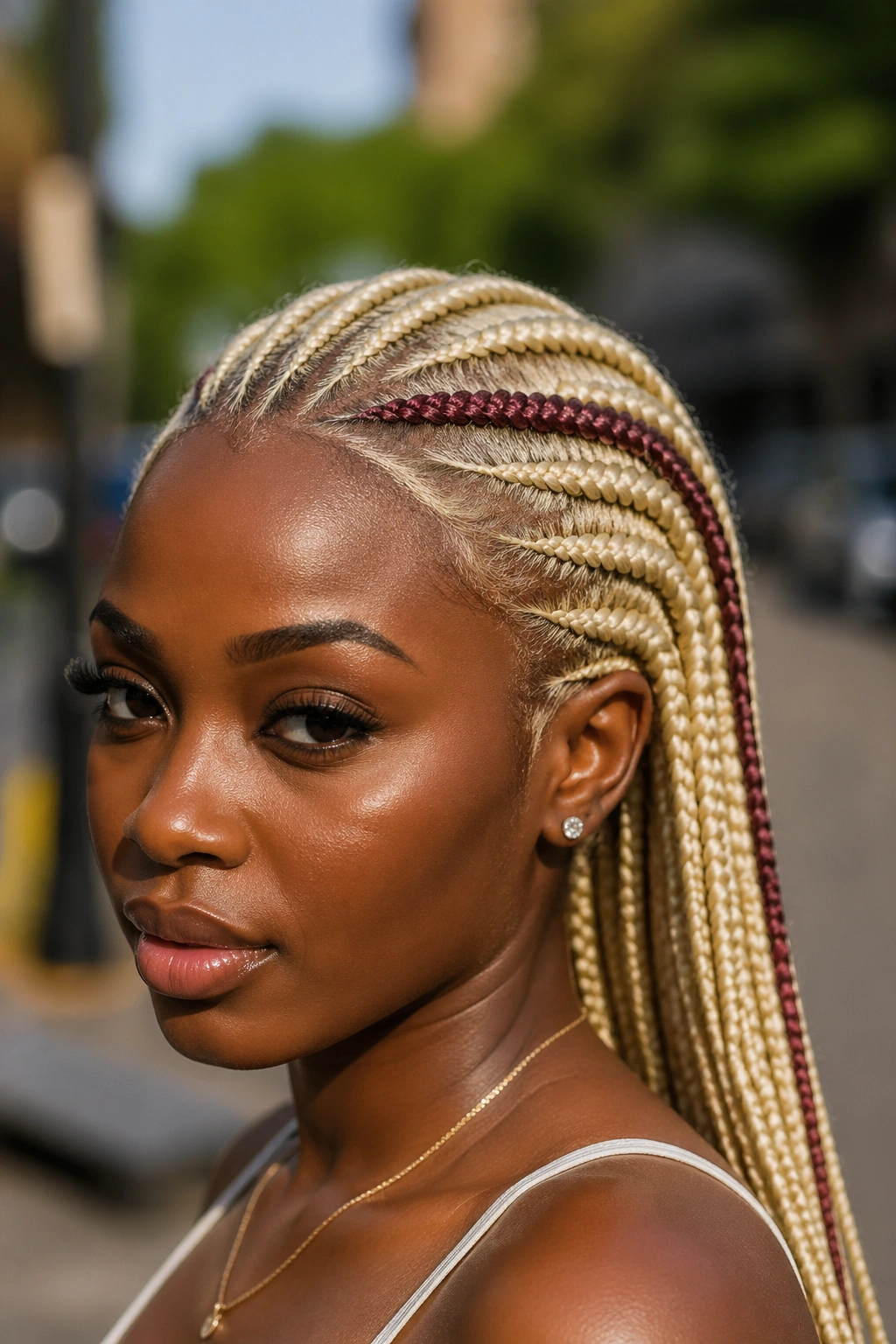
Wait at least 10 days after install before the first wash. Early washing can loosen the base and shift the cornrow pattern.
Use a sulfate-free, color-safe shampoo. Dilute it significantly. Squeeze through the braids rather than scrubbing. Rinse with cool water — hot water accelerates color fade.
Apply a color-safe leave-in conditioner after rinsing. The conditioner seals the synthetic fiber cuticle and helps preserve the platinum tone.
Dry thoroughly with a cool-setting blow dryer or hooded dryer. Wet 613 extensions show water spots more than dry ones, and damp braids can mildew at the scalp.
Taking Down 613 Cornrows Safely
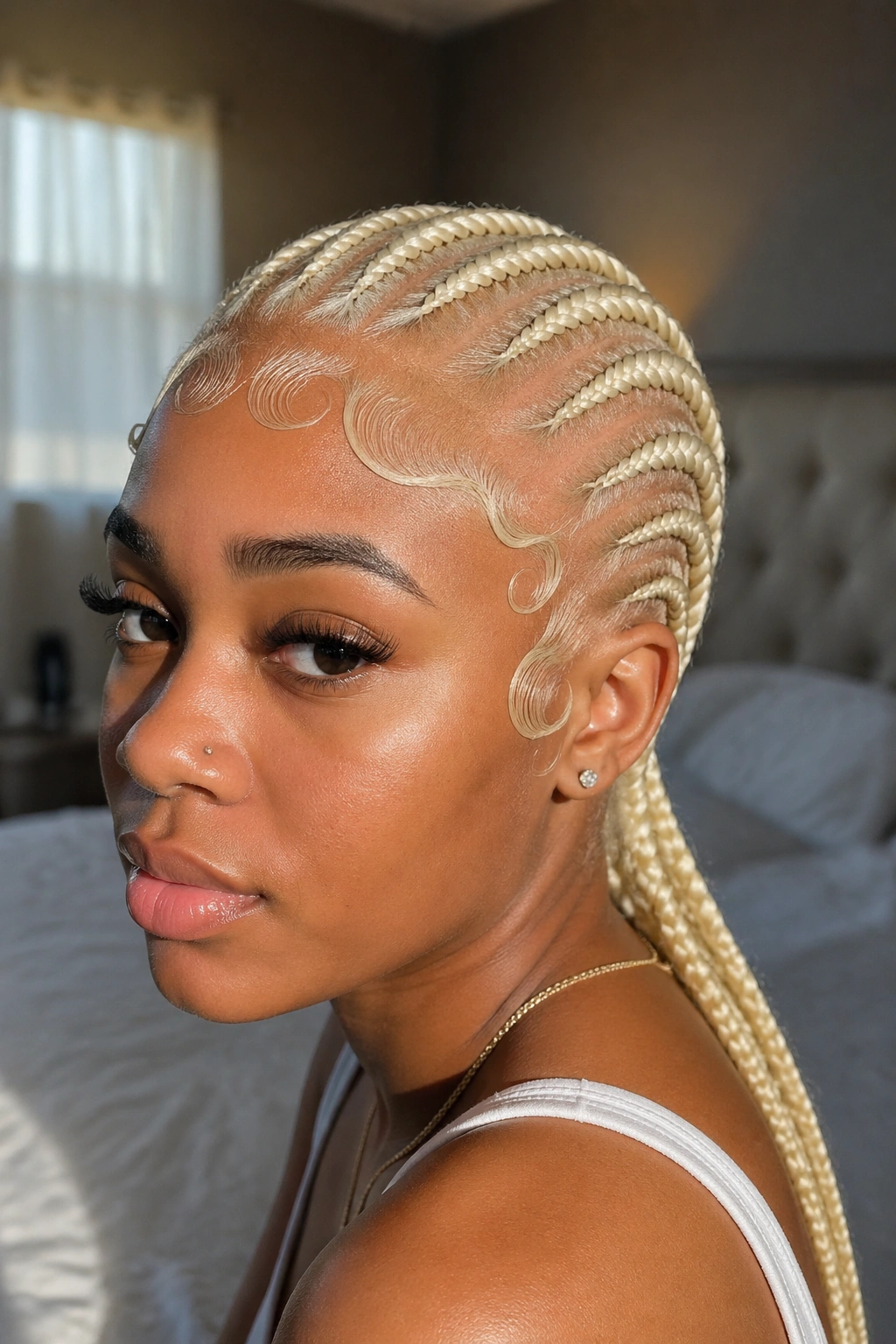
613 cornrows require the same careful takedown as any other protective style, with one additional consideration — avoiding color transfer during the takedown process.
Use clear or white conditioner for the takedown soak. Some tinted conditioners can transfer color to 613 extensions during the extended contact time of takedown.
Unbraid from tip to root, working slowly. Shed hair accumulated over 4 to 6 weeks will come out during this process — that’s normal shedding that would have happened daily.
Deep condition immediately after takedown. Your natural hair has been under tension for weeks and needs moisture replenishment before the next styling cycle.
Picking the Right 613 Style for You
Your skin tone determines which 613 shade works best. Cool undertones suit ashy 613 extensions; warm undertones suit slightly golden 613. Test multiple brands and shades before committing to full install.
Your lifestyle determines length and complexity. Active lives work better with shorter 613 cornrows that can be washed more frequently. Sedentary or office-based lives can handle long, elaborate 613 styles that wouldn’t tolerate heavy sweat.
Your event calendar guides styling choices. Major events benefit from the dramatic styles — crown bun, goddess updo, mohawk. Everyday wear works better with simpler configurations — straight-back, bob-length, low bun.
Your comfort level with attention matters. 613 draws stares. If you’re not comfortable being looked at, choose a less-visible color first and work up to 613 after you’ve developed confidence in carrying bold hair.
Common Mistakes with 613 Cornrows
Buying cheap 613 extensions. The dye on budget 613 runs, yellows fast, and can stain clothing or skin. Pay for quality.
Skipping the strand test. Different 613 brands look slightly different. Hold the extension against your skin in natural light before purchase.
Neglecting color maintenance. 613 yellows faster than any other color. Without active preservation, it loses its platinum quality within weeks.
Wearing 613 without confidence. The color requires you to own it. Tentative 613 styling reads as mismatched.
Using heavy products near the scalp. Buildup shows immediately on 613. Keep products light and distribute carefully.
Over-washing. Every wash fades 613 slightly. Wash only when necessary — every 2 to 3 weeks maximum.
Skipping satin protection. Cotton friction on 613 creates frizz and color dulling faster than on darker colors.
613 blonde cornrows represent the pinnacle of bold protective styling. The color demands attention and rewards careful maintenance with photographs and daily wear that nothing else can match.
Pick the shade that complements your undertones. Pick the style that fits your lifestyle and event calendar. Find a braider experienced with blonde work specifically — some braiders handle 613 better than others due to the technical demands of clean installation on pale extensions. Commit to the maintenance routine the color requires.
613 is an investment of time, money, and attention. The right person, the right prep, the right upkeep — the payoff is worth it.
Own the boldness. The color deserves nothing less.
