



Feed in cornrows with color are where braiding turns into painting. The base technique — adding hair gradually as you braid so the cornrow tapers from thin to thick — is already an art. Drop color into that equation and you’ve got a way to wear a piece of design on your head. I’ve watched women walk into a salon nervous about color, leave with copper-streaked feed-ins, and become completely different versions of themselves by the end of the week.
The thing nobody warns you about is that color in feed-in cornrows behaves differently than color in regular braids. Because feed-ins start narrow and widen as they go, the color reads in waves rather than solid blocks. A deep red feed-in starts as a thin ribbon at your hairline and blooms into a thick stripe by the time it hits your shoulders. That visual rhythm is what makes feed-ins with color so striking. It’s also why poorly placed color can look choppy.
I want to walk you through twenty-two color combinations and patterns that work. Some are subtle — you’d have to look twice to notice the color is even there. Others are loud enough to stop traffic. All of them respect what feed-in cornrows actually do, instead of just slapping color into a regular cornrow technique.
Why Color Works So Well in Feed-Ins
Standard cornrows use one continuous strand of hair from root to tip. Feed-ins introduce new hair gradually. That gradient effect — narrow to wide — gives color extra dimension that flat cornrows can’t.
When you braid in two tones together, the result isn’t just two stripes side by side. It’s an interplay where the colors weave through each other in the three-strand rotation. From a distance, the cornrow reads as a single dimensional color. Up close, it shows every twist of the underlying braid pattern.
This dimensionality is also why feed-in color photographs better than regular braided color. Cameras pick up the depth.
Color Theory Basics for Feed-Ins
You don’t need a degree in color theory. You need to know three things.
One: warm tones flatter warm undertones, cool tones flatter cool undertones. If your skin reads more golden, copper and honey colors lift your face. If your skin reads more pink or olive, ash blonde and burgundy work harder for you.
Two: contrast level matters. High-contrast colors — say, black hair with platinum blonde feed-ins — read bold and graphic. Low-contrast colors — black hair with deep auburn feed-ins — read sophisticated and almost hidden until light hits them.
Three: the rule of three. Either go fully one color, two-tone (your natural plus one accent), or three-tone (natural plus two related accents). Past three colors, the look gets busy.
Picking Your Kanekalon
Pre-stretched kanekalon comes in dozens of shades. The brand matters more than people think. X-Pression and Sensationnel hold color through wear. Cheaper brands fade after one wash and lint up by week two.
Buy two packs in your accent color even if you only need one. Color matching across packs isn’t always perfect, and having extra means you can swap if a section reads off.
Sealing the ends of color kanekalon needs a specific approach — too-hot water causes the dye to bleed onto your natural hair. Use water at about 160 to 170 degrees, not boiling.
Pre-Install Prep for Color Cornrows
Wash and stretch your natural hair two days before. Same as any cornrow install. The difference comes in the leave-in.
Use a clear or white leave-in product. Tinted leave-ins — anything with a brown or orange tone — can muddy the color of your feed-ins, especially with lighter shades like blonde. A clear gel and a white moisturizing milk are your friends here.
Soak the kanekalon in apple cider vinegar and water for fifteen minutes. Cuts the chemical smell, softens the fiber, and removes any loose dye that might transfer to your scalp.
How Feed-Ins Actually Get Color
Two methods. Method one: pre-color the kanekalon. You’re using hair that’s already dyed when you start. The color is consistent. The install is straightforward.
Method two: add color highlights through standard kanekalon. You braid in colored strands among neutral ones, creating peekaboo color. Used for subtle effects.
Most of the styles below use method one, but I’ll flag the few that work better with method two.
1. Honey Blonde Feed-Ins on Black Base
Six feed-in cornrows in honey blonde, alternating with six in your natural black. The two tones run parallel from front to back.
Why It Works
Honey blonde reads as a warm caramel that flatters every skin tone from the deepest umber to lighter brown. It’s not as harsh as platinum and not as expected as auburn. The honey tone catches sunlight and creates a sense of movement when you turn your head.
- Use kanekalon labeled “27” or “honey blonde” — most brands match
- Pre-soak in vinegar for full 15 minutes to set the color
- Alternate one black, one honey, repeating across the head
Quick tip: the blonde feed-ins will look thicker than the black ones because lighter colors reflect more light. Make the blonde sections slightly narrower at the start to compensate.
2. Burgundy Feed-Ins All Over
Every cornrow in deep burgundy. No black showing through. Full immersion into one rich, wine-toned color.
Burgundy is the color most Black women try first when they want something other than natural. It works because it’s still in the brown family — close enough to black that it reads sophisticated, far enough away that it’s clearly a choice.
The depth of burgundy means it photographs almost black in low light and shows true wine-red in sunlight. You get two looks for the price of one.
3. Copper Tips Only
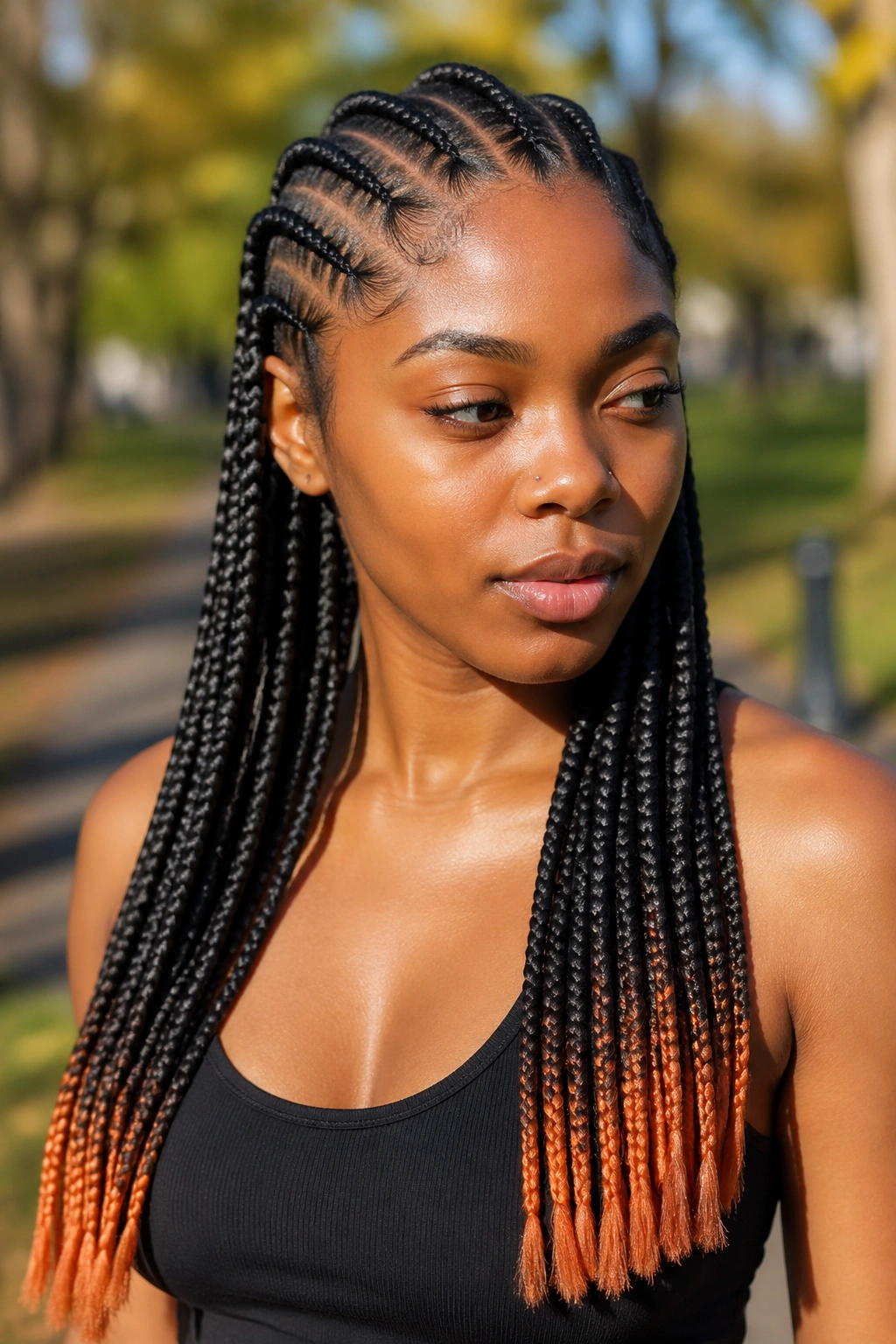
Natural black at the root and through most of the braid, but the last four inches of each feed-in are copper. The color shows up only when the braid moves.
This style works on the principle of restrained color. Most of what you see is your natural shade. The copper is a hidden accent that flashes when you flip your head or when wind catches the braids.
Buy ombre kanekalon — pre-blended hair that fades from black to copper at the ends. Saves you having to match colors yourself.
4. Two-Tone Feed-Ins with Caramel and Black
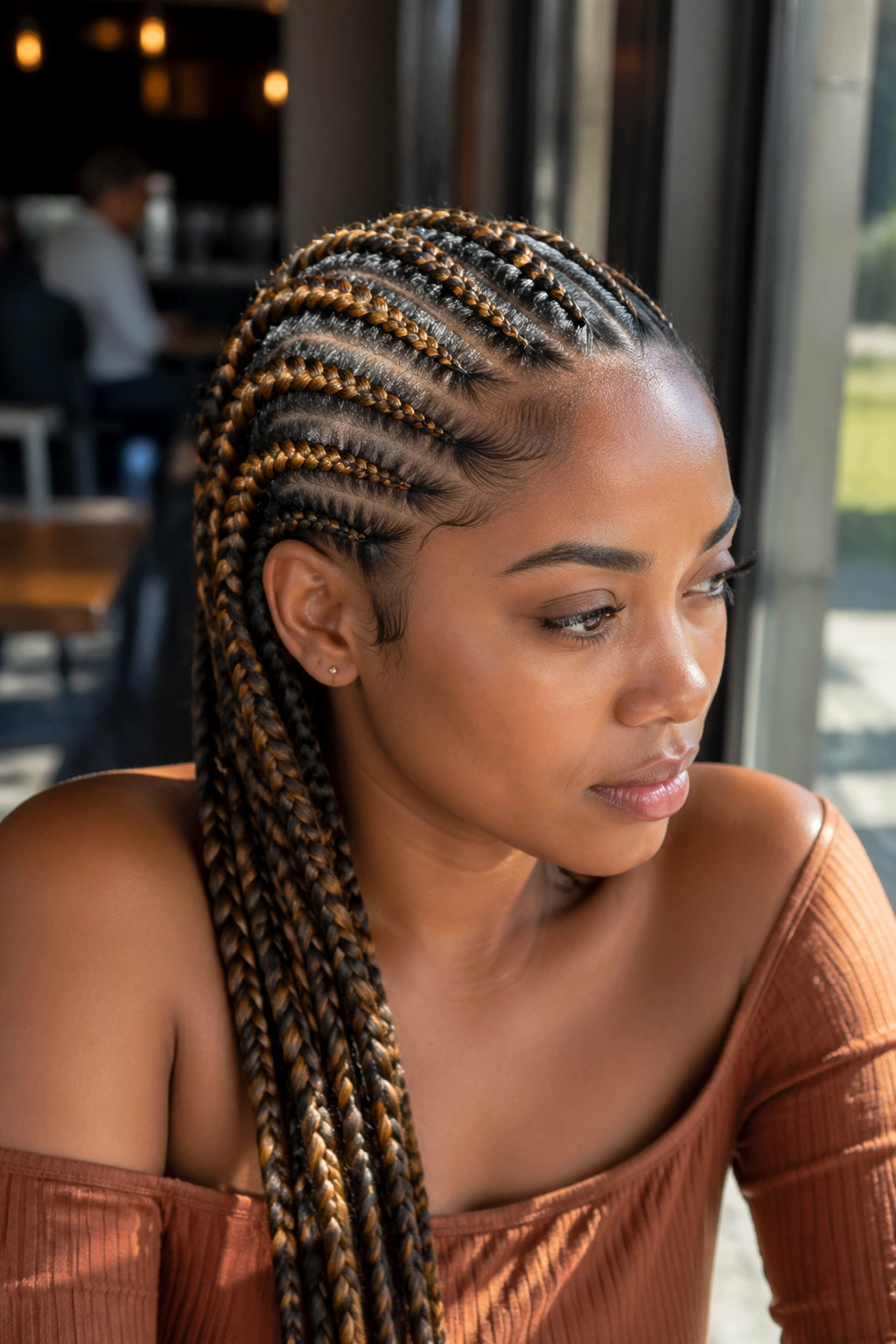
Each individual cornrow contains both colors. Half the strands in the three-strand braid are caramel, half are black. The cornrow itself is two-tone.
This is the technique where method-two color shines. You’re not making colored stripes. You’re making colored cornrows.
Take a section of black hair and a section of caramel hair, blend them together as one strand, then start your three-strand braid. The result reads as a marbled or tortoiseshell effect within each cornrow.
5. Bright Red Feed-Ins for Statement Wear
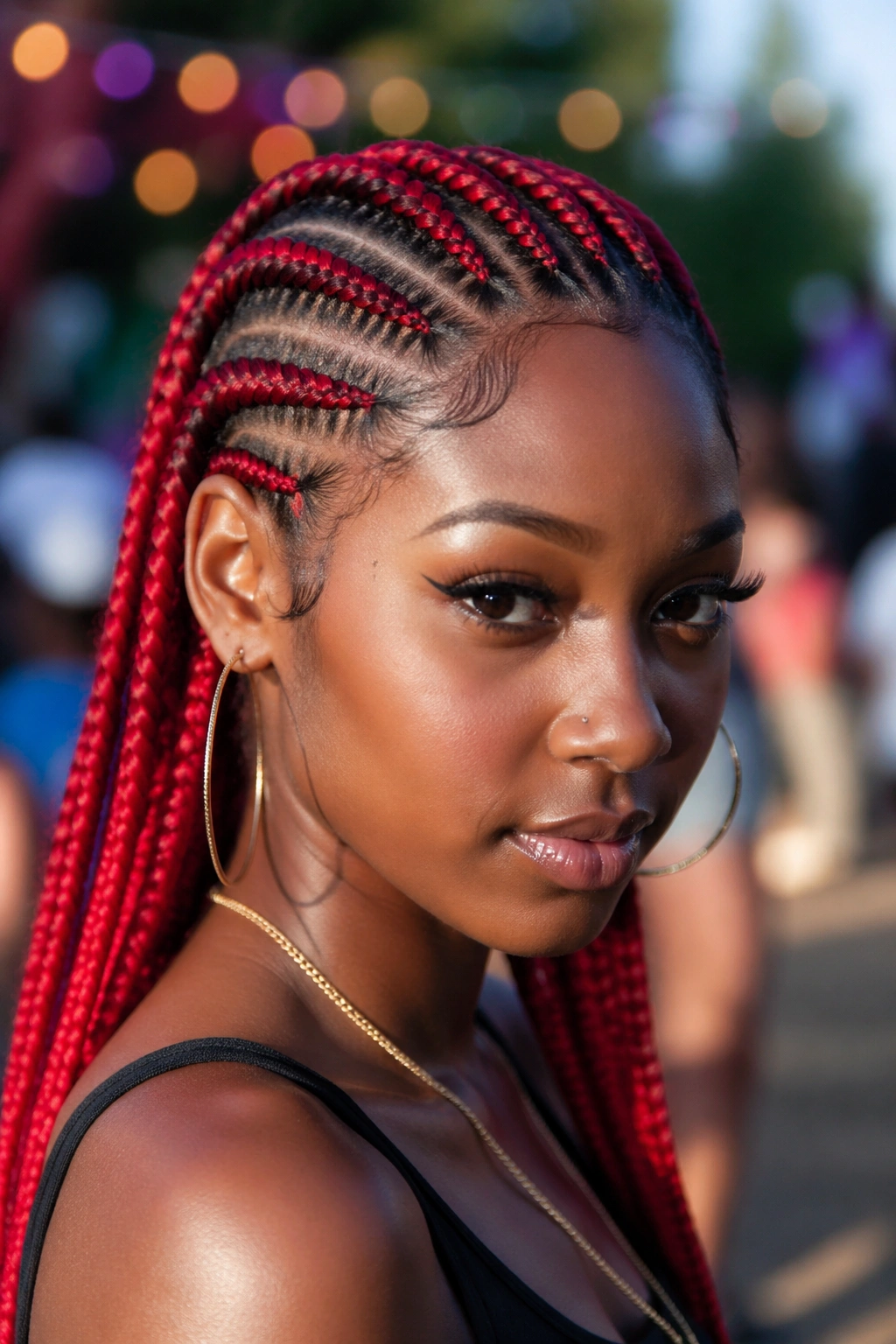
Fire-engine red. Not burgundy. Not auburn. The kind of red that announces itself across a room.
Red is the boldest color choice in this list. It demands confidence, clean parts, and an outfit palette that supports it rather than competes. Red feed-ins don’t go with everything. They go with neutrals, with denim, with white, and with intentional color stories.
The advantage: red kanekalon hides regrowth better than blonde or pastel colors because the contrast against black natural hair is dramatic enough that small fuzz at the part doesn’t disrupt the overall effect.
A scenario: you’ve got a music festival or a girls’ weekend on the calendar and you want photos that don’t look like every other photo. Red feed-ins handle that brief beautifully.
6. Pastel Pink Highlights
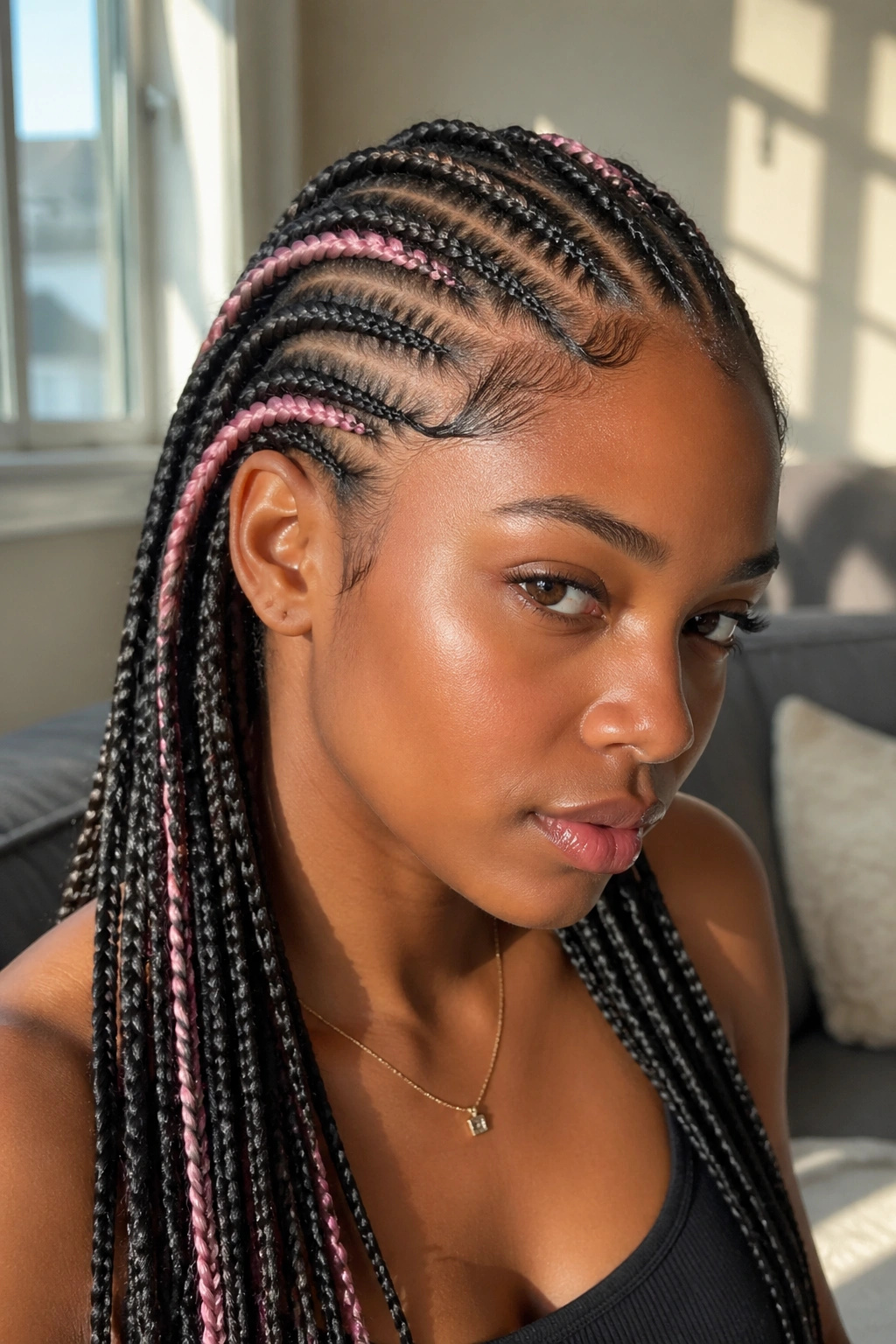
Two or three feed-ins in pastel pink scattered among black or brown cornrows. The pink shows up like a punctuation mark in the pattern.
Pastel colors require lighter base hair to read true. If your natural hair is very dark, pre-bleached kanekalon in pastel pink will still show, but it’ll have a slightly muted quality compared to wearing it on lighter natural hair.
Place the pink intentionally — one cornrow at the side part, another two over from it, then maybe one at the back. Random scatter looks accidental. Patterned scatter looks designed.
7. Platinum Blonde Feed-Ins
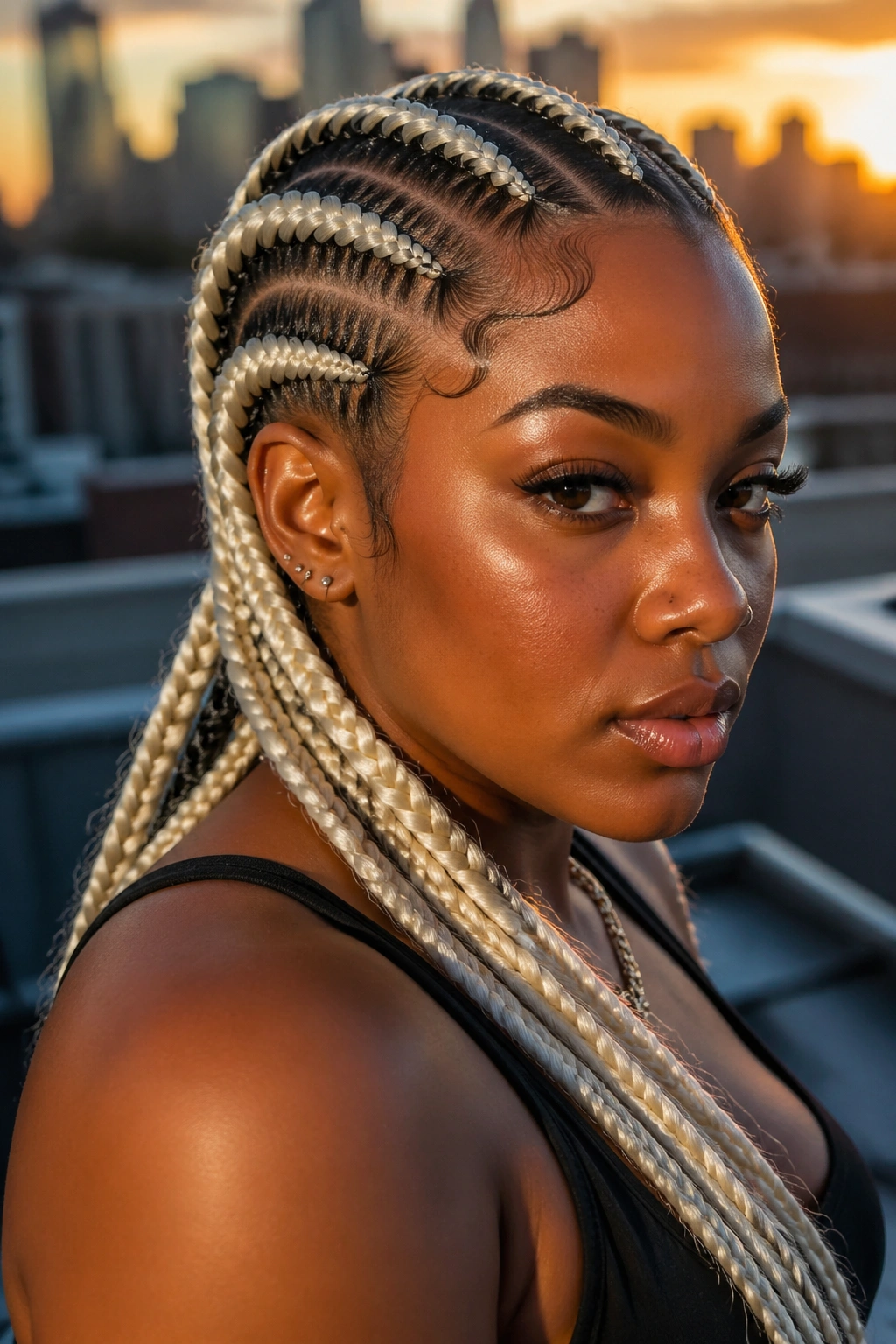
Stark white-blonde feed-ins against black natural hair. The contrast is the whole point.
What Makes It Different
Platinum is the most graphic color choice possible. There’s no warmth in it, no softness. It reads pure and almost icy. On Black women with deep skin tones, this contrast is striking in a way that softer blondes can’t replicate.
The maintenance is real. Platinum kanekalon picks up oil and product residue faster than darker colors. Expect to see slight yellowing by week two if you use dark hair products near the platinum sections.
A purple-toned shampoo isn’t necessary for kanekalon, but a quick rinse with a diluted vinegar solution at week two refreshes the white tone.
8. Rainbow Feed-Ins for Festival Wear
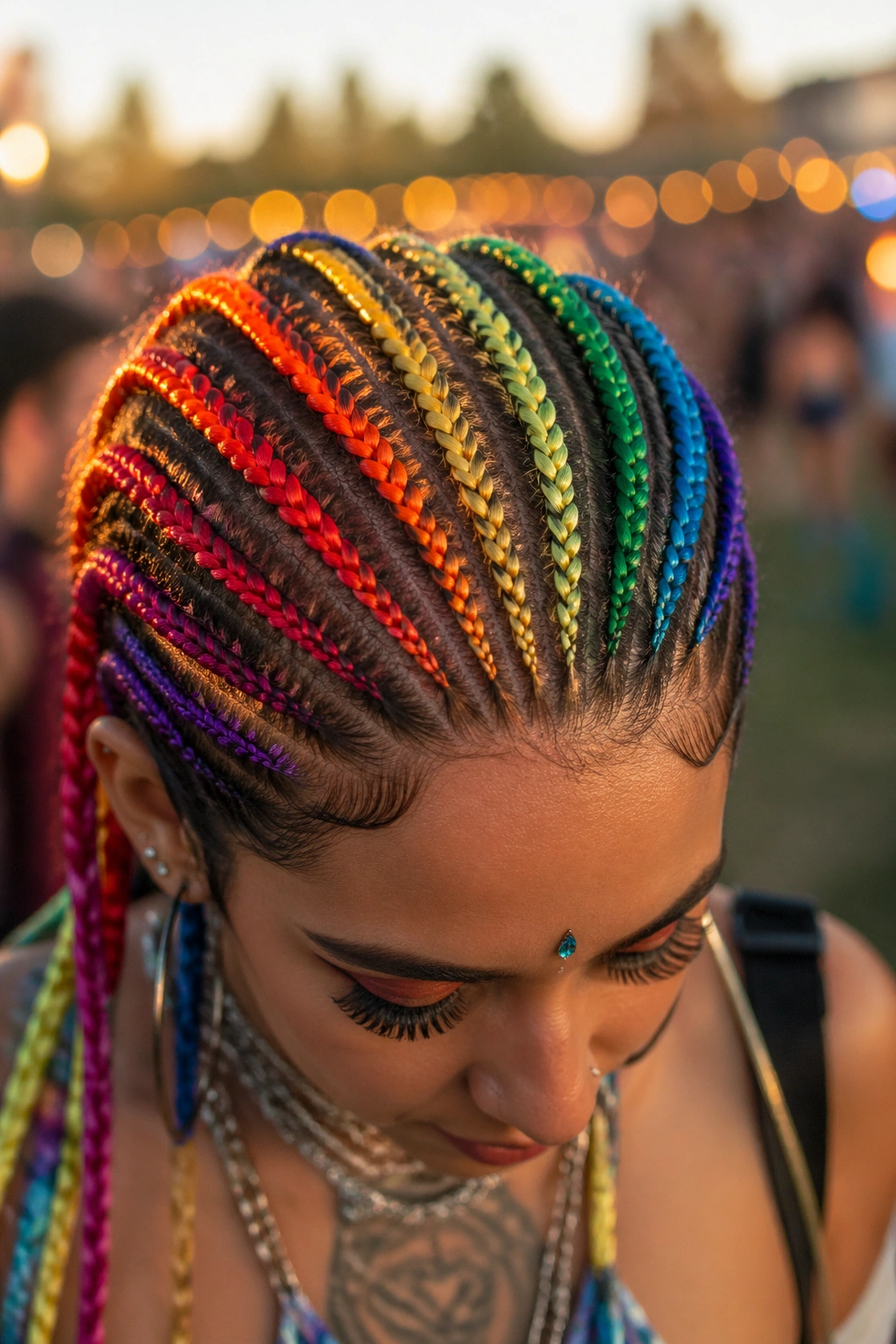
Six or eight feed-in cornrows, each in a different color of the rainbow. Red, orange, yellow, green, blue, purple — sometimes split across more rows.
This is wearable art. The style commits to color as the main statement. Outfit choices become secondary because no outfit competes with rainbow hair anyway.
Buy a multi-pack of pre-colored kanekalon if you can find one. Some brands sell rainbow sets specifically for this kind of install. Saves the cost of buying eight individual packs.
9. Auburn Feed-Ins with Subtle Highlights
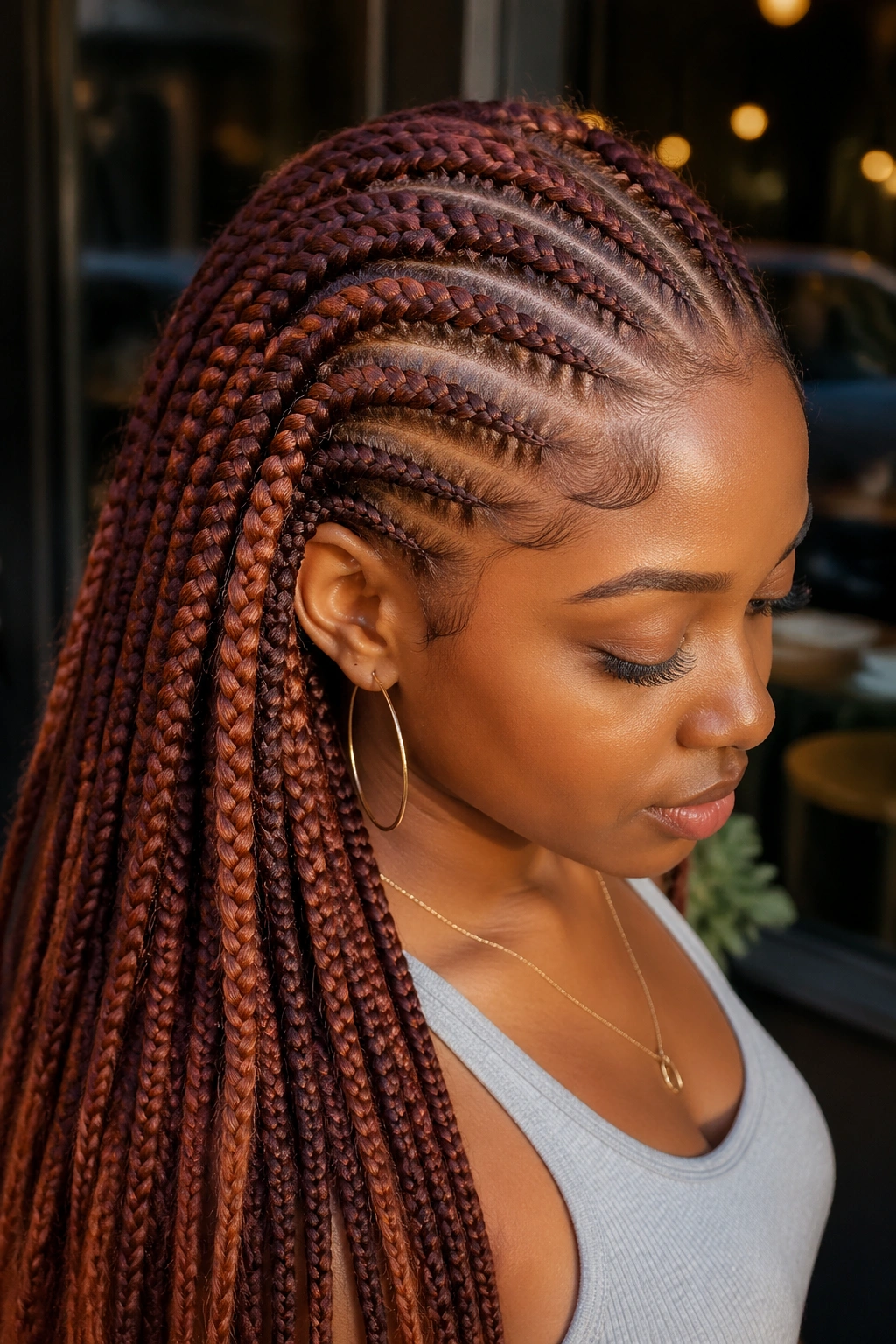
Mostly auburn cornrows with two or three lighter copper highlights mixed in. The result reads as one rich, dimensional color rather than two distinct shades.
Auburn is the color that ages gracefully through the install. As feed-in cornrows naturally start to lose their tightest definition by week three, auburn still looks intentional and warm. Brighter colors like red can start to read tired by then.
Use this style when you want color that doesn’t shout. From across a parking lot, your hair reads dark. From three feet away, it reads gorgeous.
10. Forest Green Accent Feed-Ins
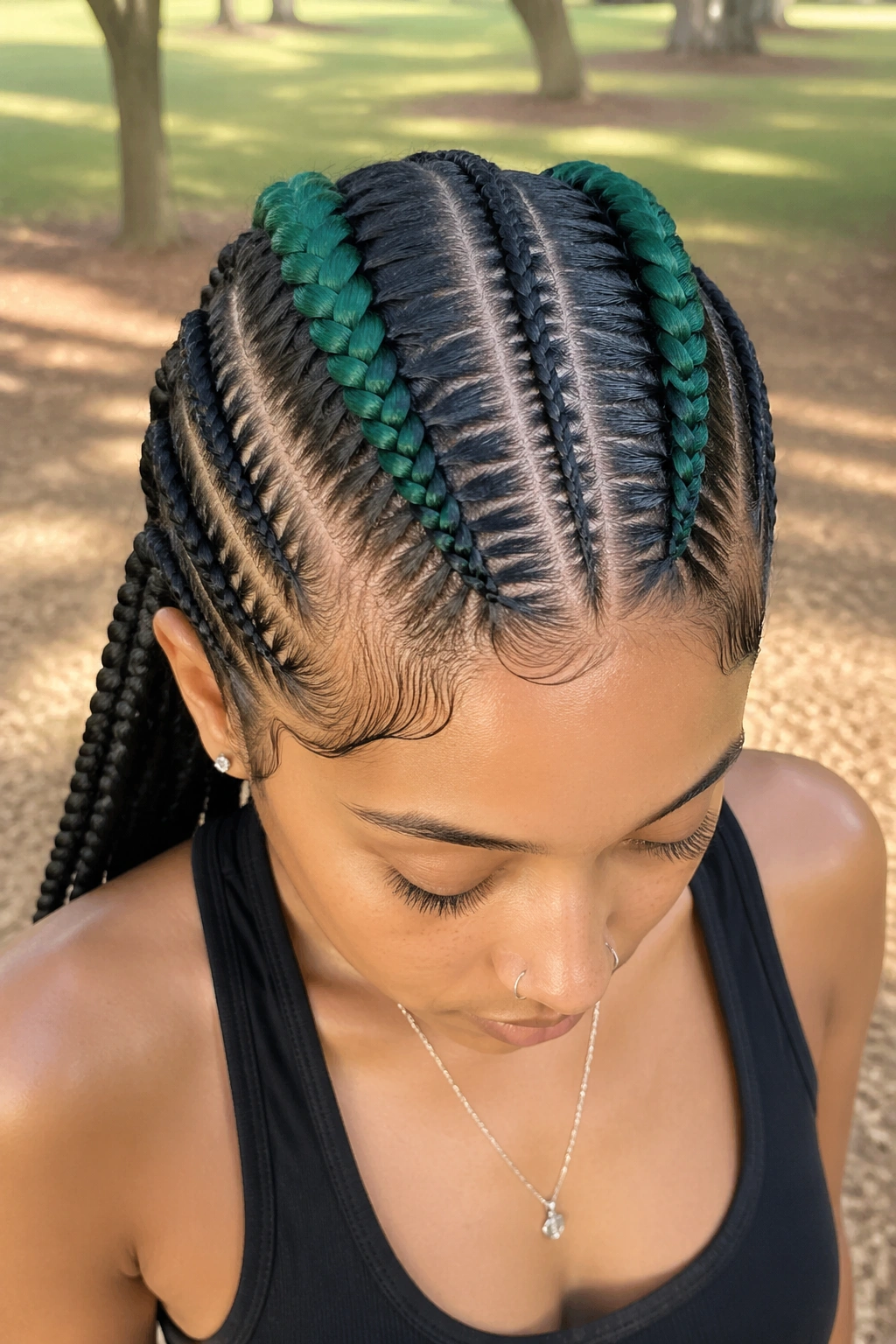
Two feed-in cornrows in deep forest green, placed symmetrically — one on the left side, one on the right. The rest are black.
Green is the underused color in feed-ins. People reach for blonde, red, or burgundy and skip the cool tones. But deep green against black hair has a richness that surprises every time it walks past.
Pick a green that’s saturated rather than bright. Hunter green, forest green, emerald — these all hold up. Lime green and neon green read costume-y unless that’s the goal.
11. Lavender Highlights Through Brown
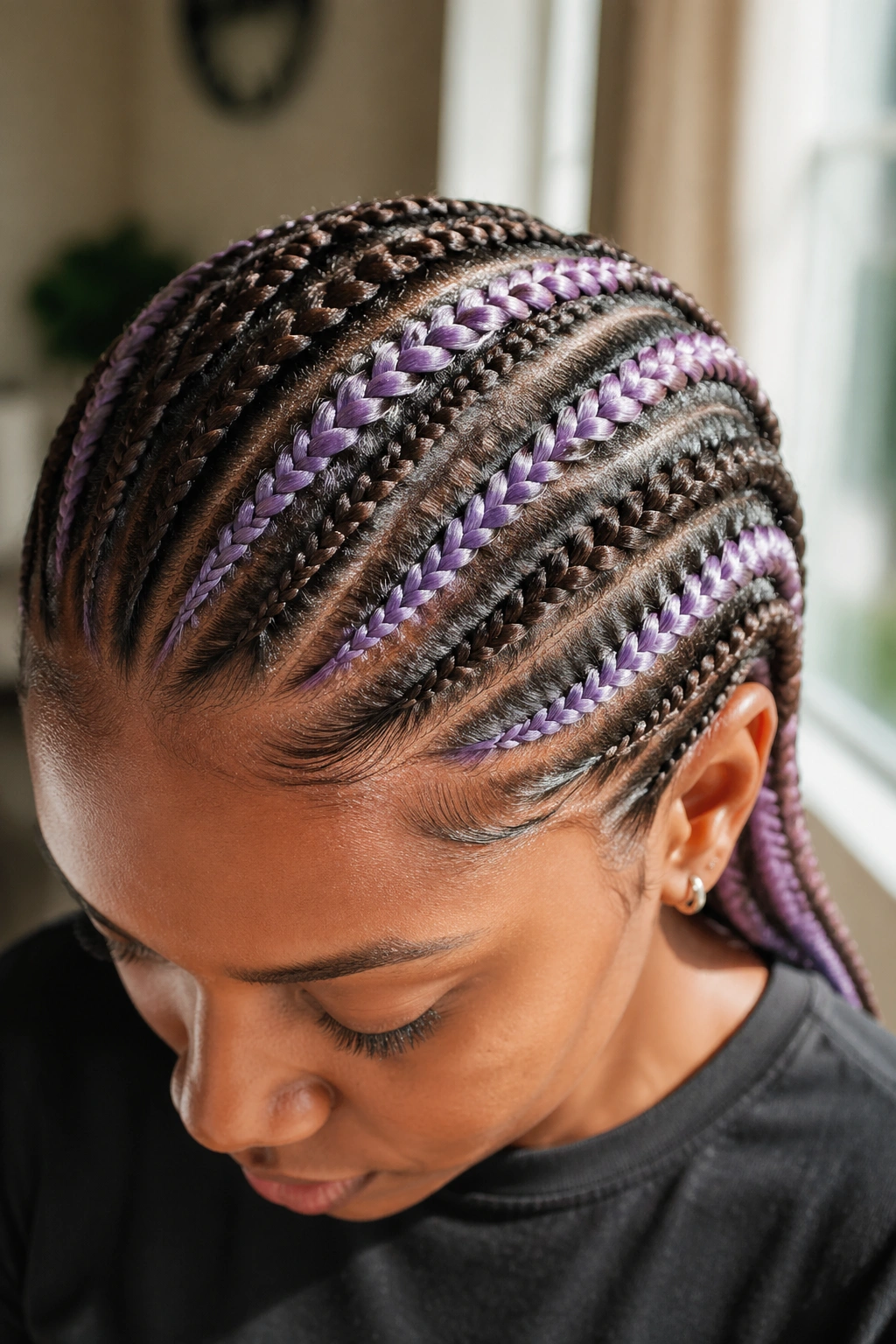
Brown base cornrows with three lavender feed-ins woven through. The lavender catches in the part lines like a watercolor wash.
How to Style It
Place the lavender braids with intention — one along the side part, one or two across the crown. The placement should create a visual flow rather than a random splatter.
Pair this with brown rather than black natural hair because lavender against pure black can read as too high-contrast. Brown softens the gap and the colors read as a cohesive palette.
- Use natural-looking brown kanekalon for the base if your hair is black
- Lavender from brands like Freetress holds color through three to four washes
- Refresh with a UV-protective spray to prevent sunlight fade
12. Caramel Ombre Throughout
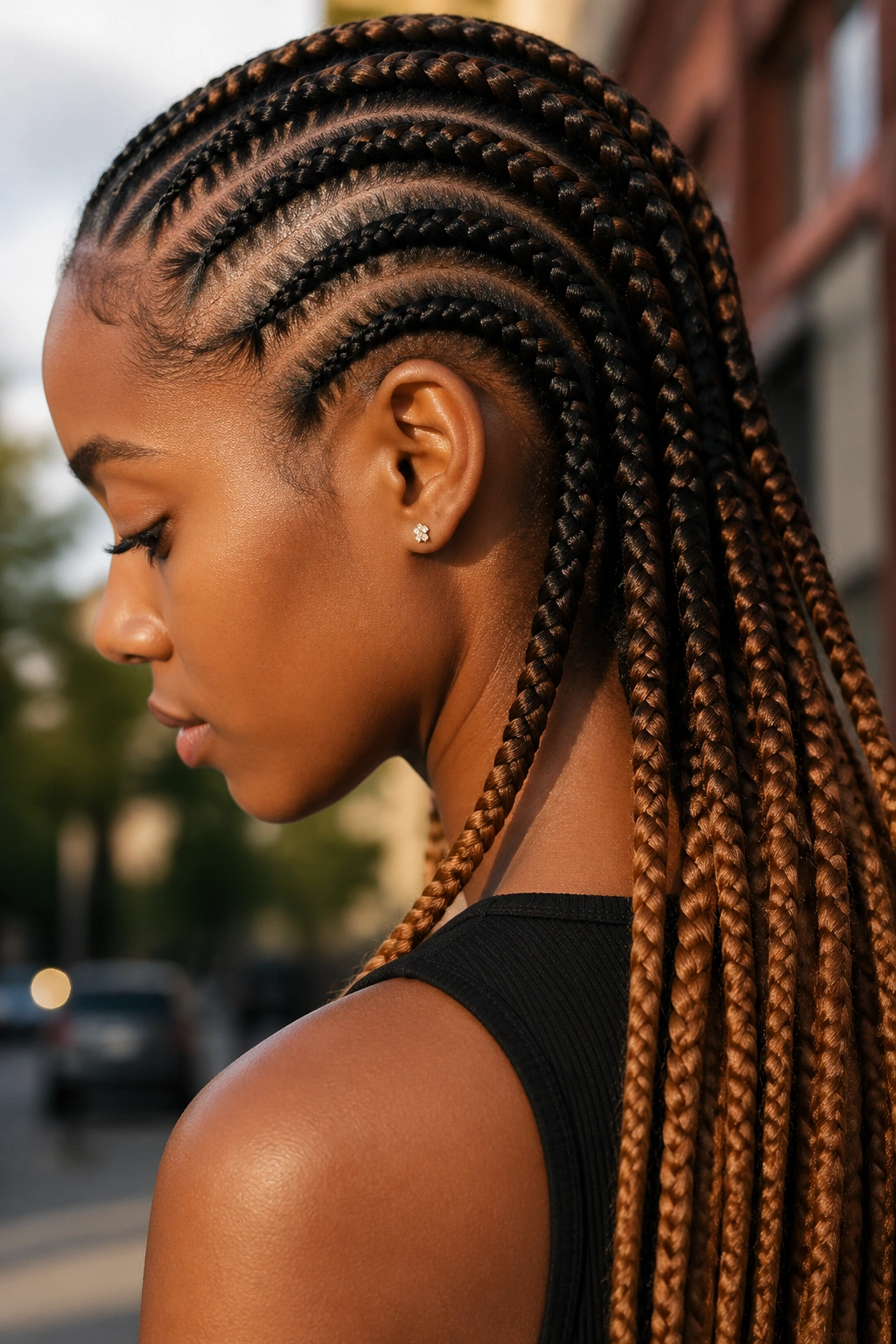
Each cornrow starts black at the root and gradually transitions to caramel by the tips. The whole head becomes a single ombre statement.
Pre-made ombre kanekalon makes this style possible without dye work. Buy hair labeled as “T1B/27” or similar — the T means it’s a transition color, 1B is your natural black, 27 is the caramel.
The gradient appears most clearly when the braids move. Static, you see one color blending into another. In motion, you see two distinct tones.
13. Money Piece Color Up Front
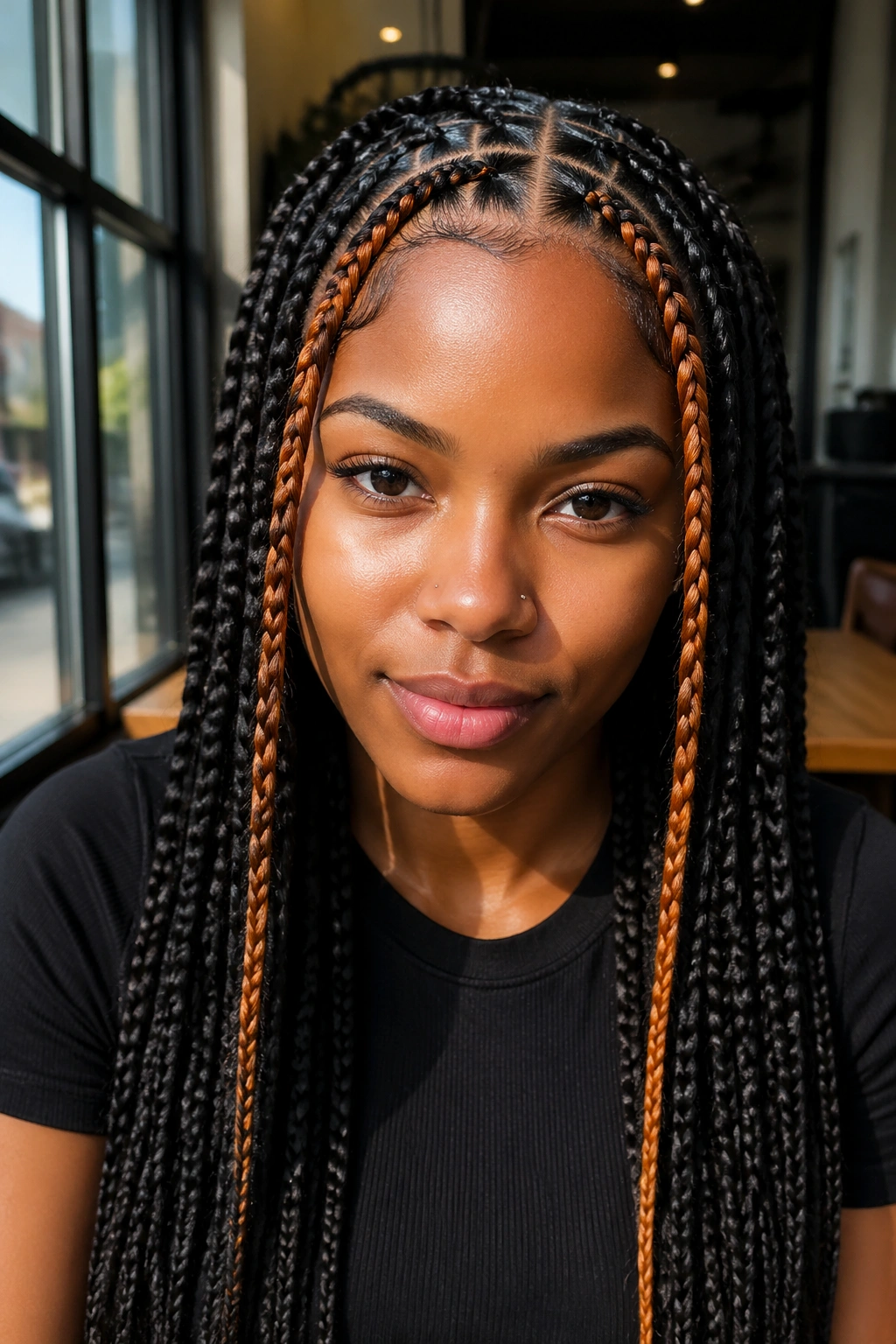
Two cornrows at the front frame the face in a contrasting color — blonde, copper, or red — while the rest stay natural. The “money piece” effect.
This style is borrowed from face-framing color techniques used on loose hair. Translated to cornrows, it means the two front cornrows on either side of the parting are in your accent color, and everything behind them is natural.
The advantage is concentration. Most of your color is doing work right at the face, where it has the maximum flattering effect on your features.
14. Pink and Blonde Combined
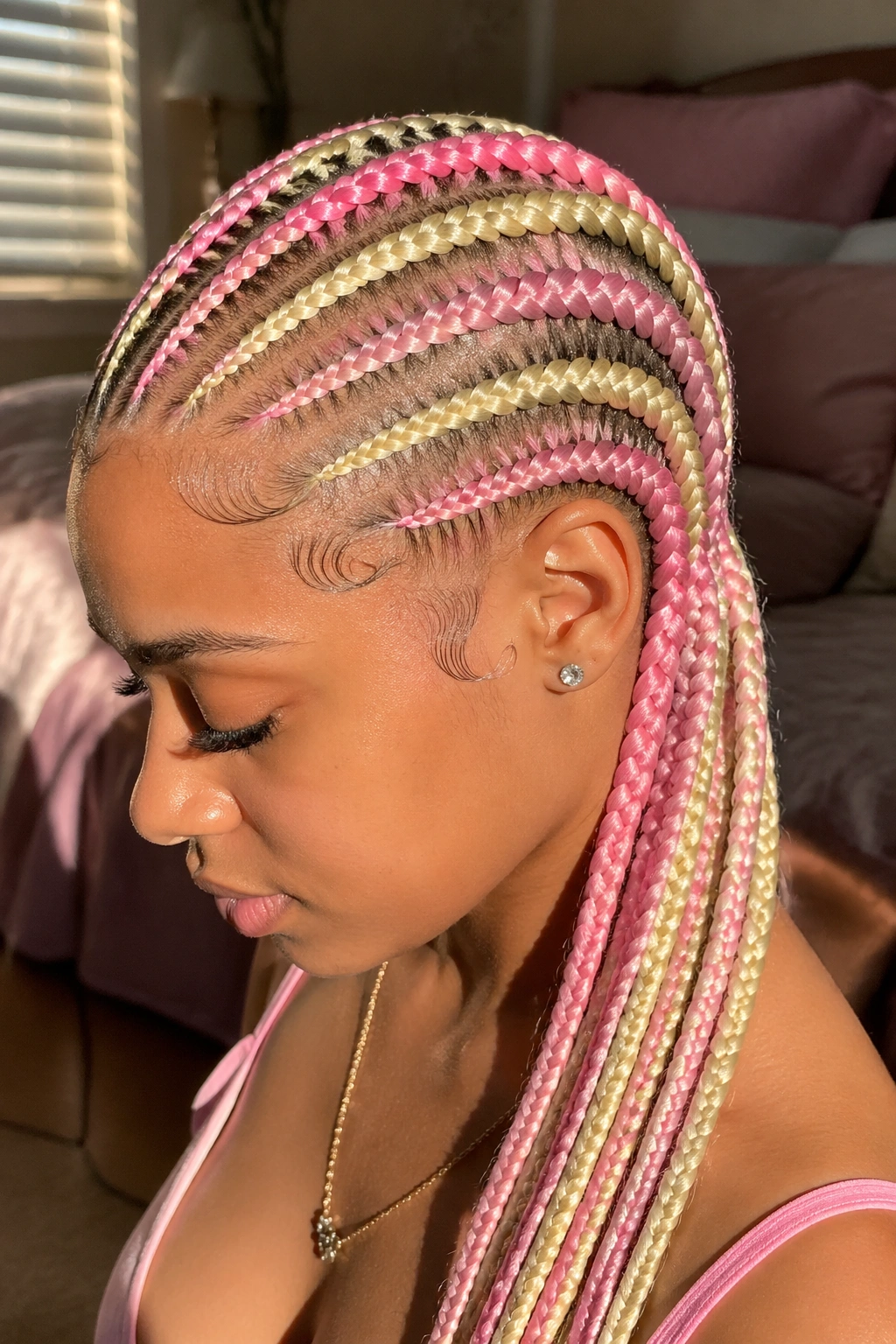
Half the feed-ins in pastel pink, half in blonde, alternating across the head. Two soft colors working as a duo.
Cool tones like blonde paired with warm tones like pink might seem like they’d clash, but they harmonize because both are in the lighter range. The eye reads them as related rather than competing.
This combination suits playful occasions. Birthday parties, beach trips, photo shoots where you want soft drama. It’s not the choice for a job interview at a conservative office.
15. Single Color Streak
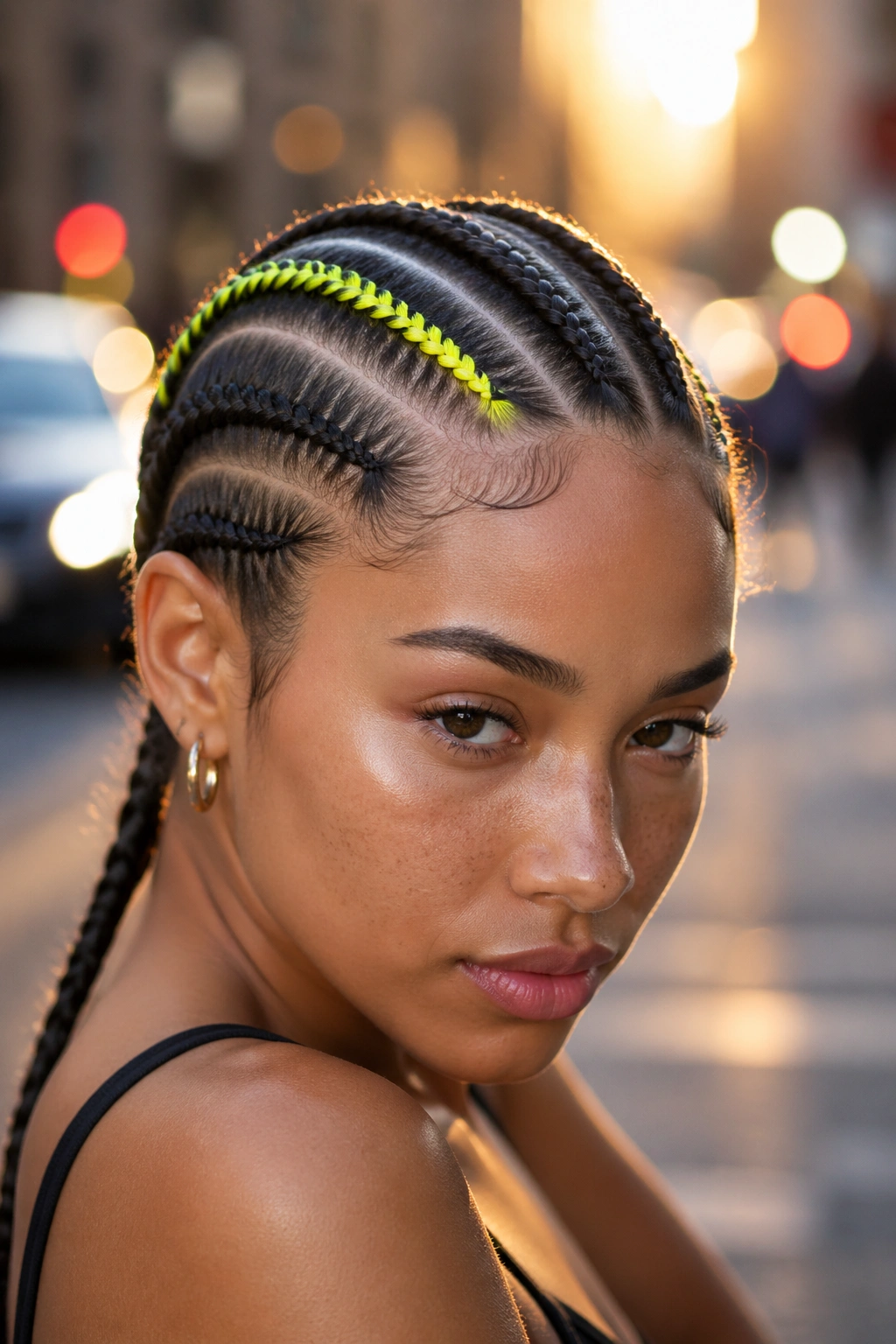
One single feed-in cornrow in a wild color — neon yellow, electric blue, hot pink — with everything else completely natural. The streak is the whole story.
The placement matters more than the color. A single streak that runs parallel to your part draws the eye to your face. A streak placed at the side or back gets lost in the surrounding cornrows.
Reserved for women who want a hint of edge without committing to a full color install. The single streak is also the easiest to remove if you change your mind — just unbraid that one row.
16. Brown to Blonde Sombre
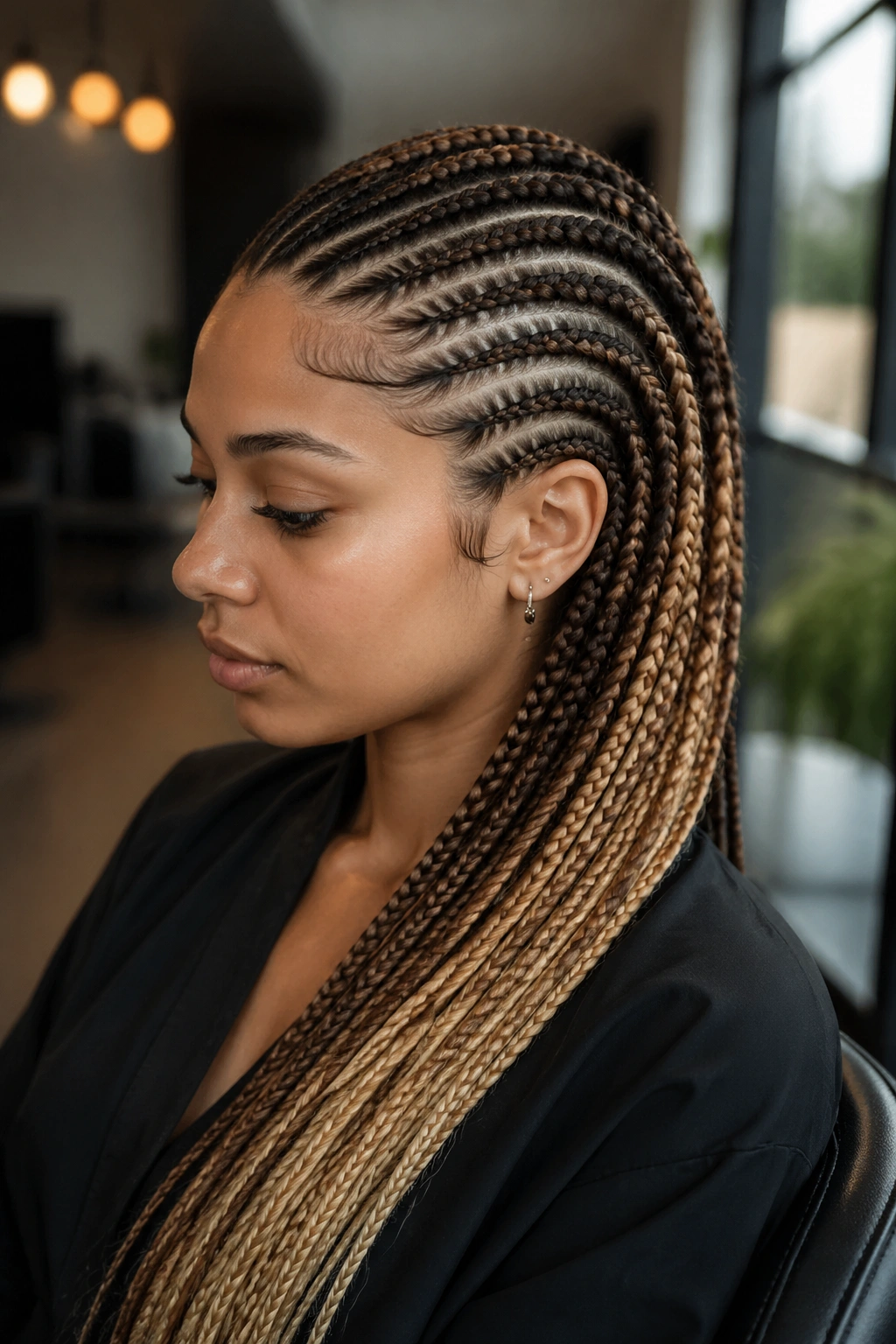
Like ombre, but softer. The transition from brown to blonde happens gradually rather than abruptly. The two colors melt into each other.
Sombre — short for soft ombre — is the version of color transition that reads elegant rather than statement. You see the lightening at the ends, but you can’t pinpoint where the brown ends and the blonde begins.
Use kanekalon labeled “balayage” or look for hair with three or four shades blended in one pack.
17. Black with Burgundy Underlayer
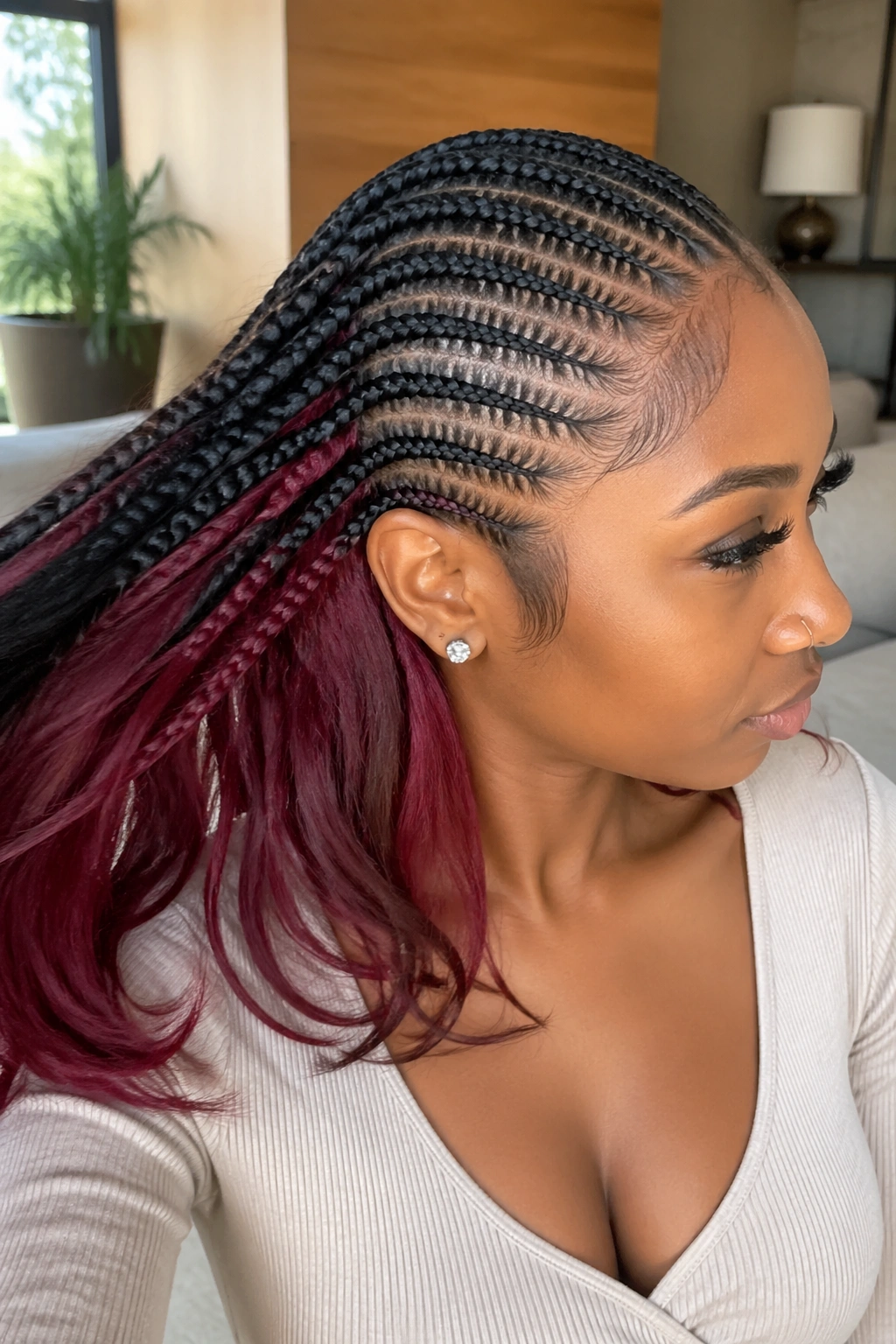
The visible cornrows on top stay black, but the cornrows underneath — the bottom layer when you flip your head — are burgundy. The color only shows when you move your hair.
This is the peekaboo technique applied to cornrows. From the front, the install looks classic. Lift the top layer or wear it pulled to one side, and the burgundy reveals itself.
Useful for women in professional environments where overt color isn’t appropriate but you still want to wear the color you love. The burgundy is your secret.
18. Multi-Tone Brown Feed-Ins
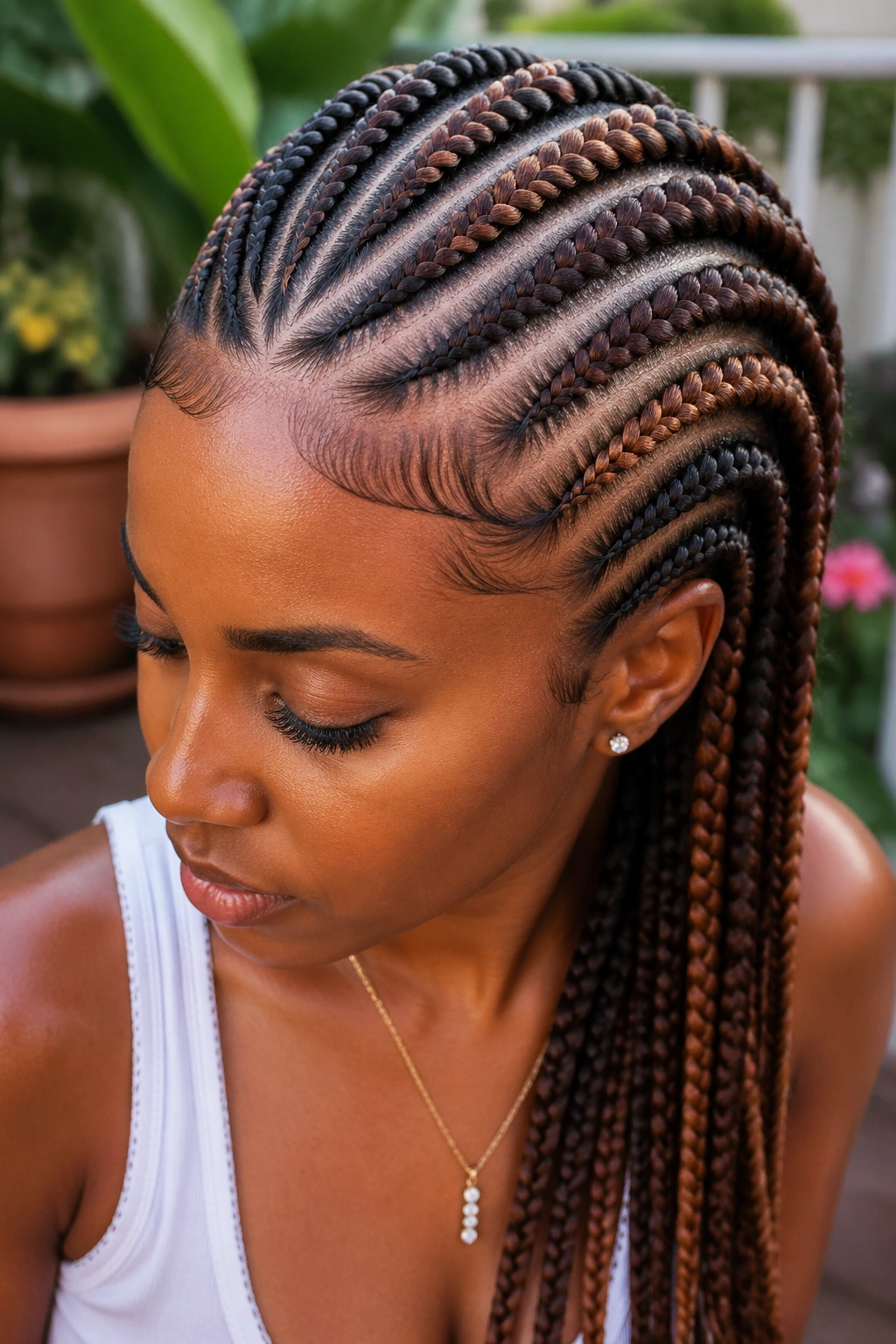
Three different brown shades — chestnut, walnut, and chocolate — woven across the cornrows. The result is a dimensional, lived-in brown that reads natural even though it’s done with kanekalon.
Who This Is For
Anyone who wants the look of professionally highlighted hair without the commitment of actual hair color. The variation in tones across the cornrows creates depth that single-color installs can’t match.
This works especially well for women whose natural hair is brown rather than black. The kanekalon shades blend more believably with their actual roots.
The trick is in the rotation. Don’t put all the chestnut on one side and all the chocolate on the other. Alternate across the head so each section has all three tones.
19. Feed-Ins with Color at the Ends Only
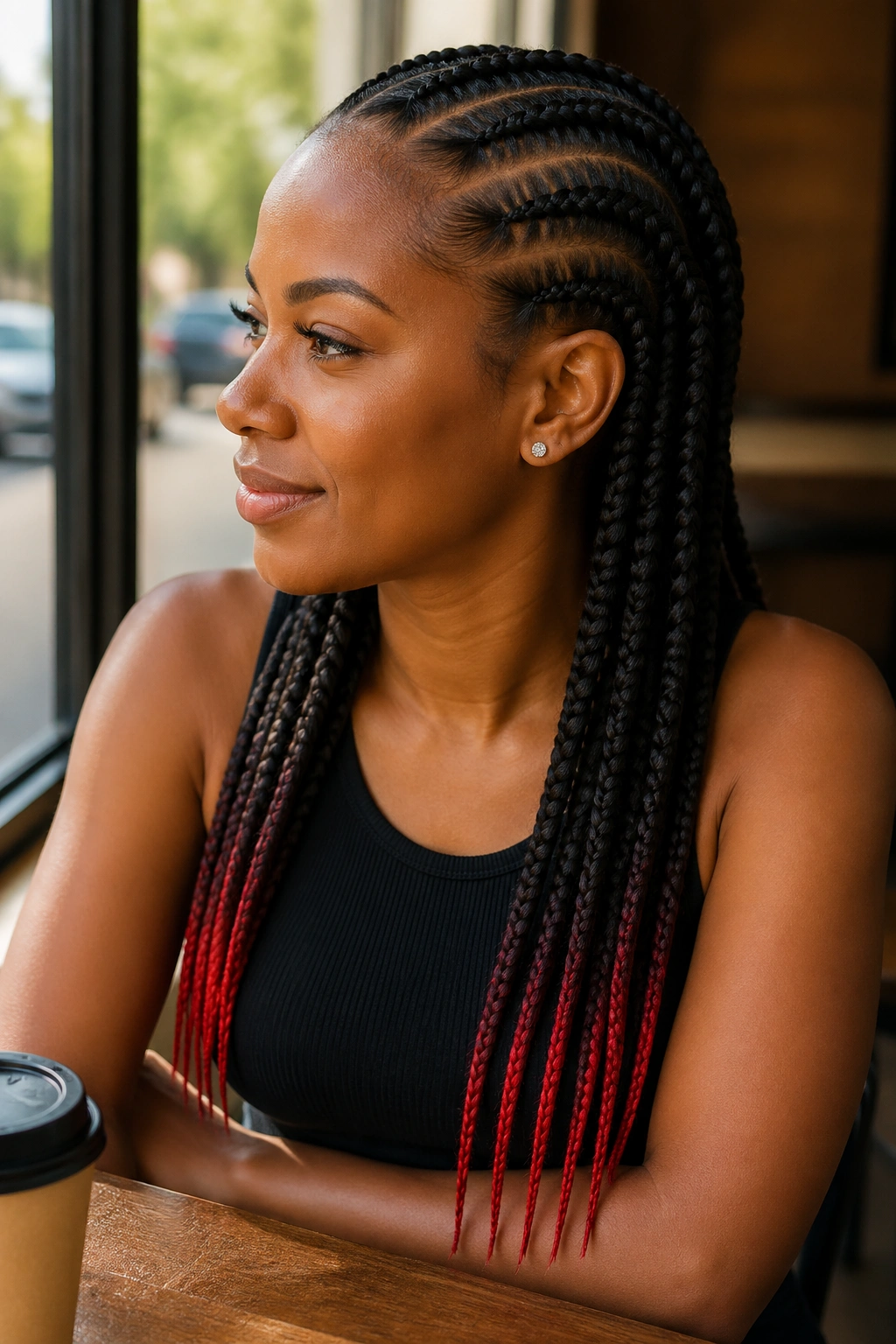
Natural color through 90 percent of the braid, then a sudden burst of color at the very tips. Three or four inches of vivid color hanging at the ends.
Use this when you want maximum color drama with minimum color commitment. The colored ends can be cut off if you want to revert to a clean look without unbraiding the whole install.
Pre-dipped kanekalon with colored tips is sold for exactly this purpose. Common color choices: peach tips, electric blue tips, hot pink tips, lime green tips.
20. Galaxy Inspired Feed-Ins
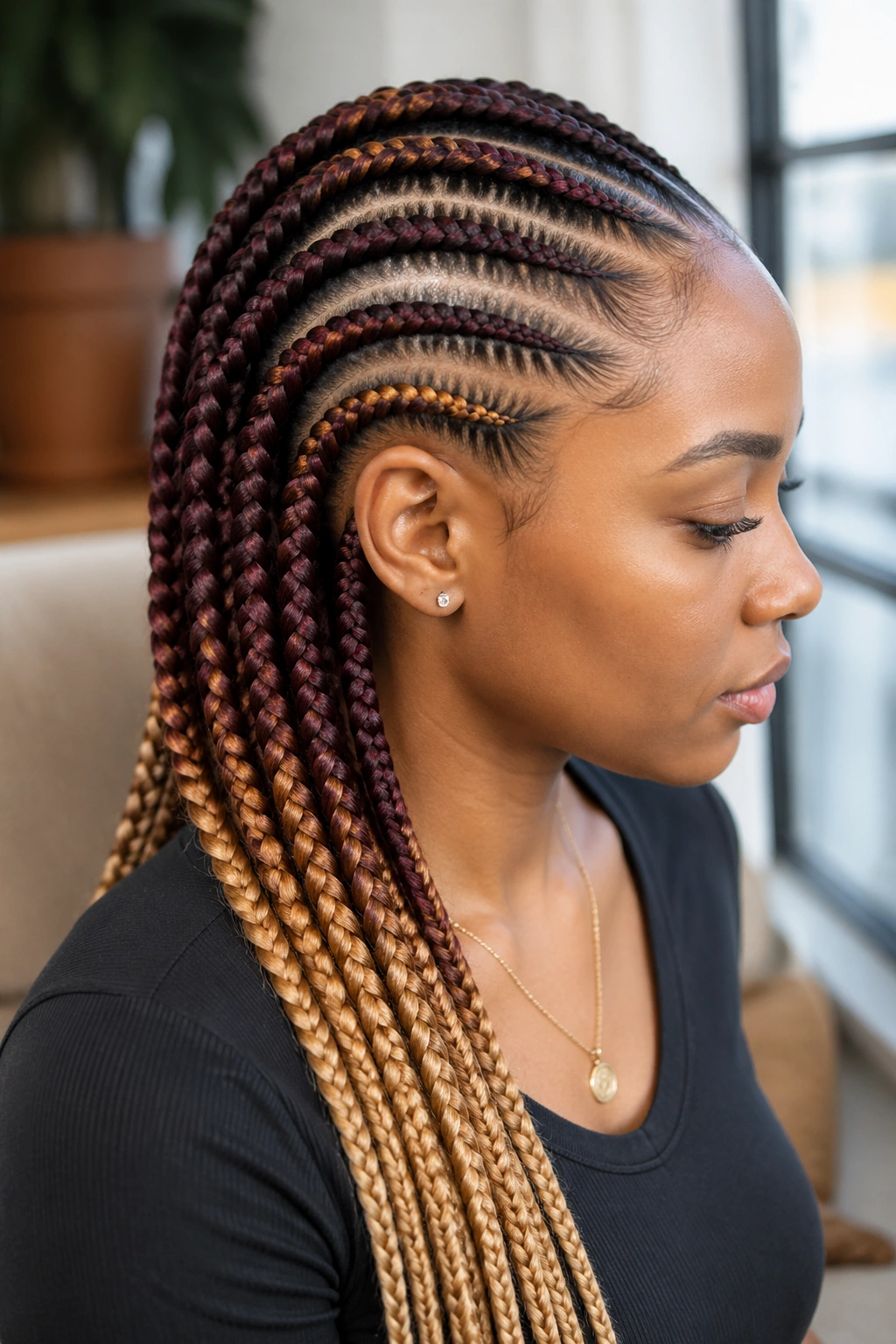
Deep purple, blue, and silver braided in alternating cornrows to create a “galaxy” effect. The combination reads cosmic and otherworldly.
Three or four cornrows in deep purple, two in midnight blue, one in silver — placed across the head in a pattern that mimics the way colors swirl in space. The silver braid plays the role of starlight.
This is the most artistic style on this list. It rewards patience in the install and confident wear after.
21. Two-Strand Color Wrap
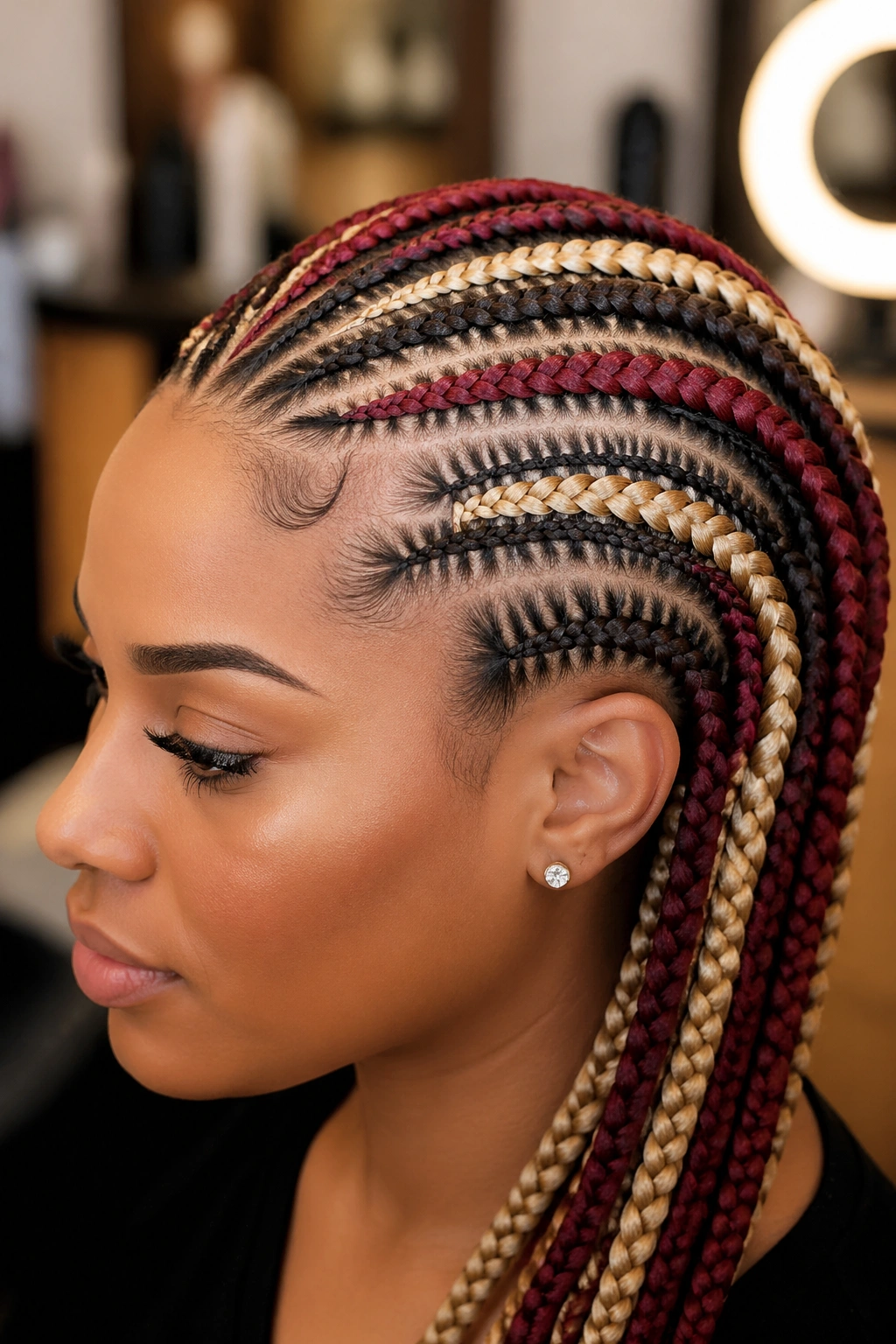
Take your natural hair and wrap a colored strand of kanekalon around the outside of each cornrow as you braid. The color wraps the cornrow rather than being braided into it.
The wrapping technique creates a candy-cane effect — your dark cornrow underneath with a bright color spiraling around it. Different from feed-ins because the color doesn’t taper. It stays consistent in width along the braid.
Time-intensive. About 30 percent more time per cornrow than standard feed-in installation.
22. Black Roots into Pastel Rainbow
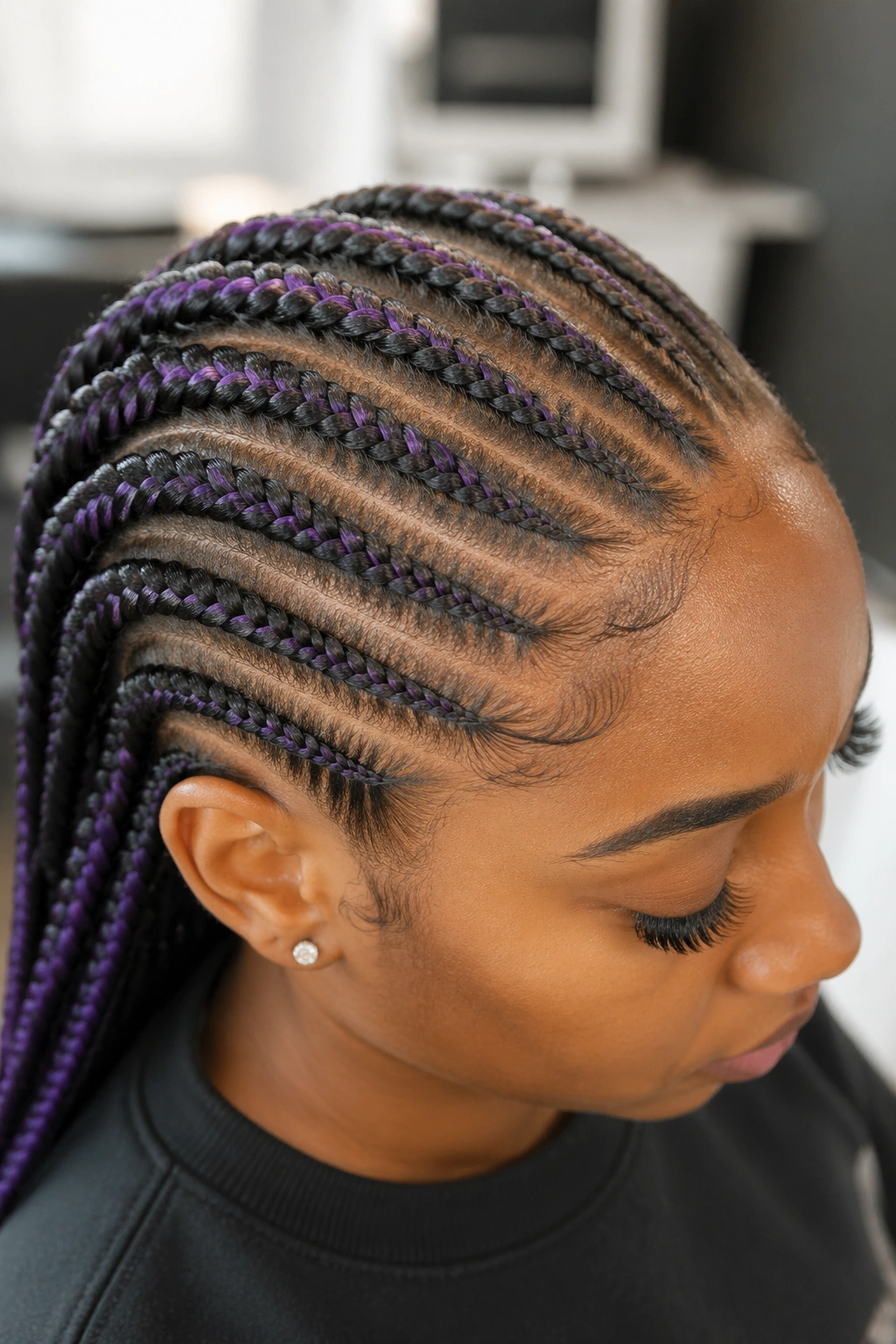
Solid black for the first two inches at the root, then transitioning into a pastel rainbow throughout the rest of each braid. The roots ground the style. The rainbow takes over below.
This is the most ambitious color style in the list. The black roots give the style structure and make regrowth invisible for longer. The rainbow does all the visual work below.
Buy or make your own pre-blended kanekalon — black at the top, fading into pink, lavender, mint, and pale yellow. Some specialty brands sell this exact transition pre-made.
Caring for Color Feed-Ins
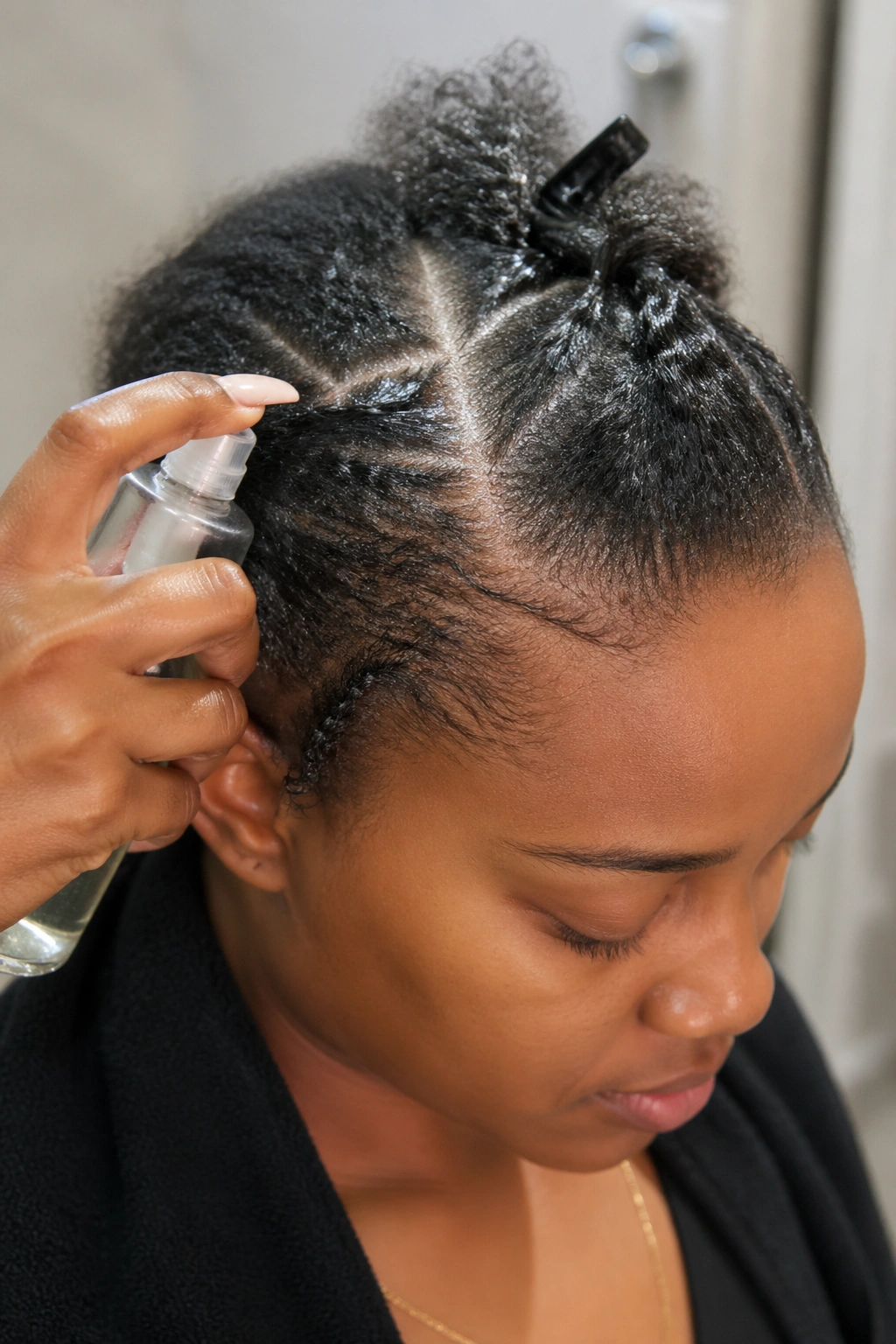
Color kanekalon needs gentler treatment than standard kanekalon. Direct sunlight fades the brighter shades within two to three weeks of constant outdoor wear. A UV-protective spray applied weekly extends the color life.
Avoid swimming in chlorinated pools. Chlorine strips color from synthetic hair faster than from real hair. If you must swim, soak the braids in fresh water before getting in the pool — saturated kanekalon absorbs less chlorine.
Sleep with a satin scarf, same as any cornrow style. The scarf protects color along with reducing friction.
A water-glycerin mist refreshes the braids without water-logging them. Spray every two or three days, scrunch lightly with hands, let air dry.
Picking the Right Color for Your Skin Tone
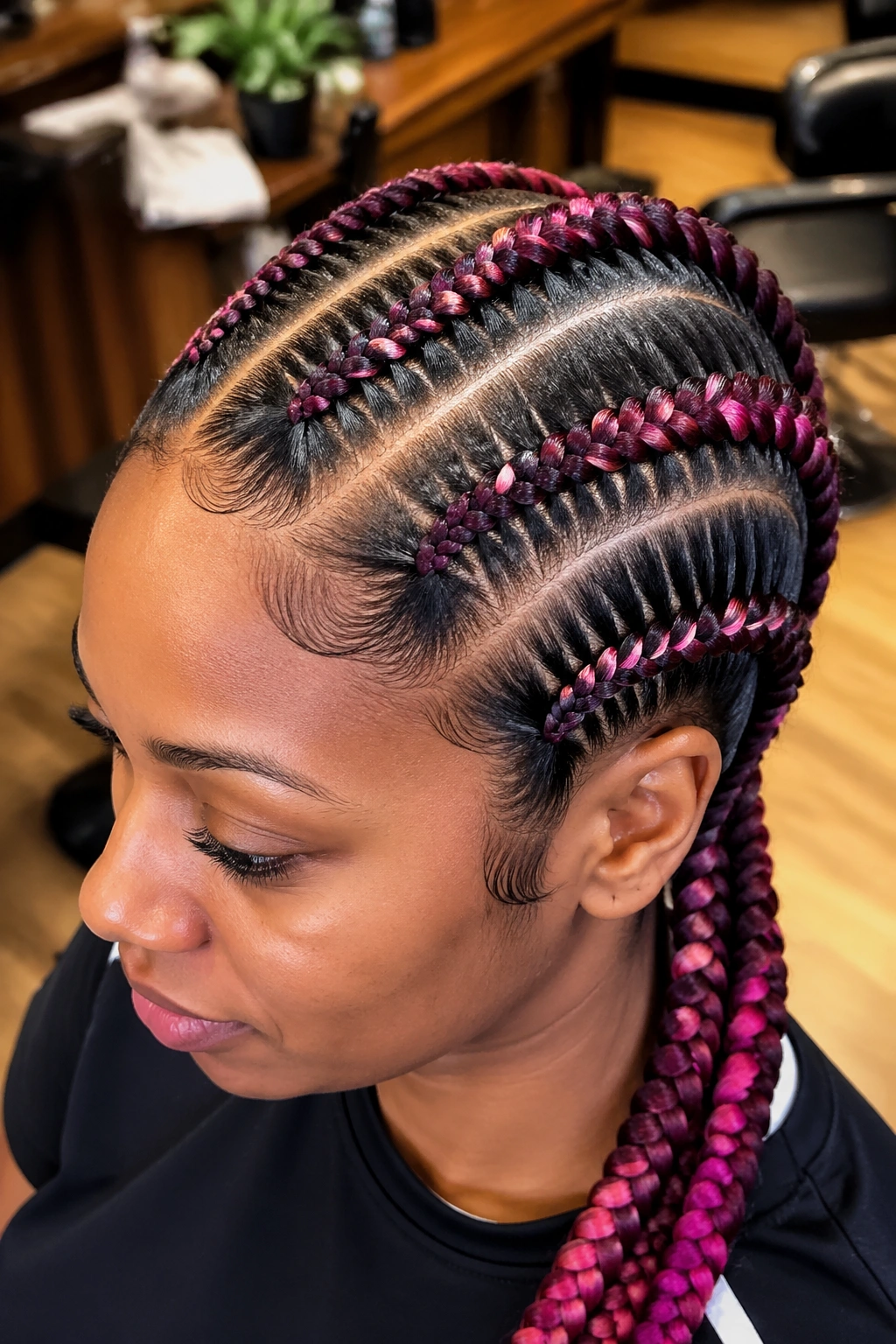
Warm undertones — golden, peach, olive-leaning-warm — flatter best in copper, honey, caramel, deep red, burnt orange, and warm browns.
Cool undertones — pink, blue, olive-leaning-cool — flatter best in burgundy, ash blonde, plum, lavender, navy, and cool grays.
Neutral undertones — somewhere between — can wear anything but tend to look most polished in shades that have both warmth and coolness, like rose gold, copper-blonde, or smoky lavender.
Test before you commit by holding the kanekalon up to your face under natural light. If your skin looks brighter and more even, the color is right. If your skin looks dull or yellow against the color, pick a different shade.
Common Mistakes with Color Feed-Ins
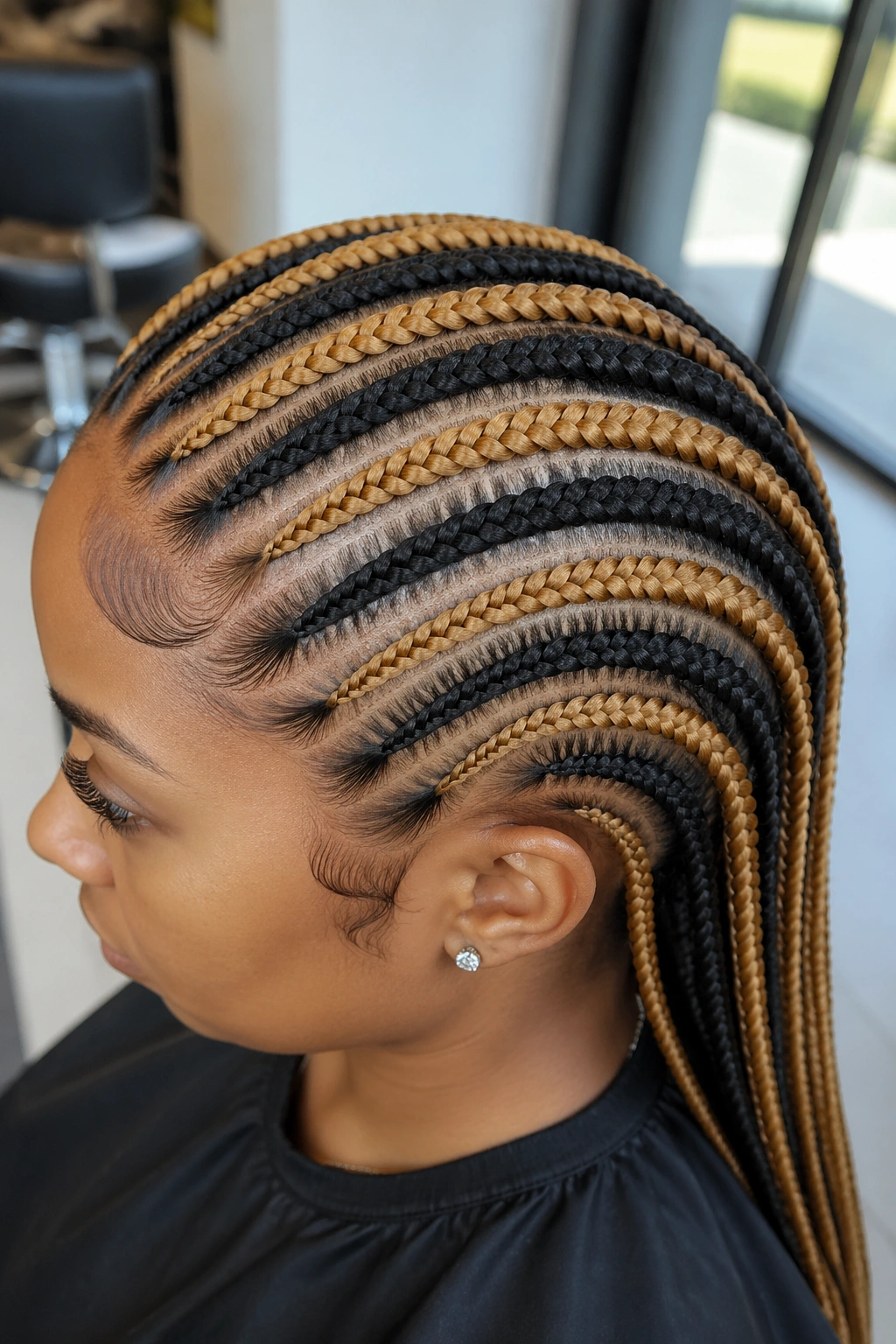
Mistake one: matching too closely. If your accent color is two shades different from your natural color, the contrast doesn’t read. Either go bold or go subtle — the in-between zone falls flat.
Mistake two: ignoring color placement. Throwing colored cornrows in random spots looks accidental. Plan the placement before you start braiding. Draw it on paper if you need to.
Mistake three: using cheap color kanekalon. The dye in low-grade hair bleeds onto skin, scalp, and clothing. Spend a few extra dollars on quality.
Mistake four: not pre-soaking. Color kanekalon straight from the pack carries excess dye. The first time it gets wet, that dye runs. Pre-soak in vinegar water before installation.
Mistake five: over-styling the color. Curling, crimping, and heat-styling color kanekalon damages the dye much faster than it damages the fiber itself. If you want curls, buy pre-curled color hair instead of curling it yourself.
Taking Down Color Feed-Ins
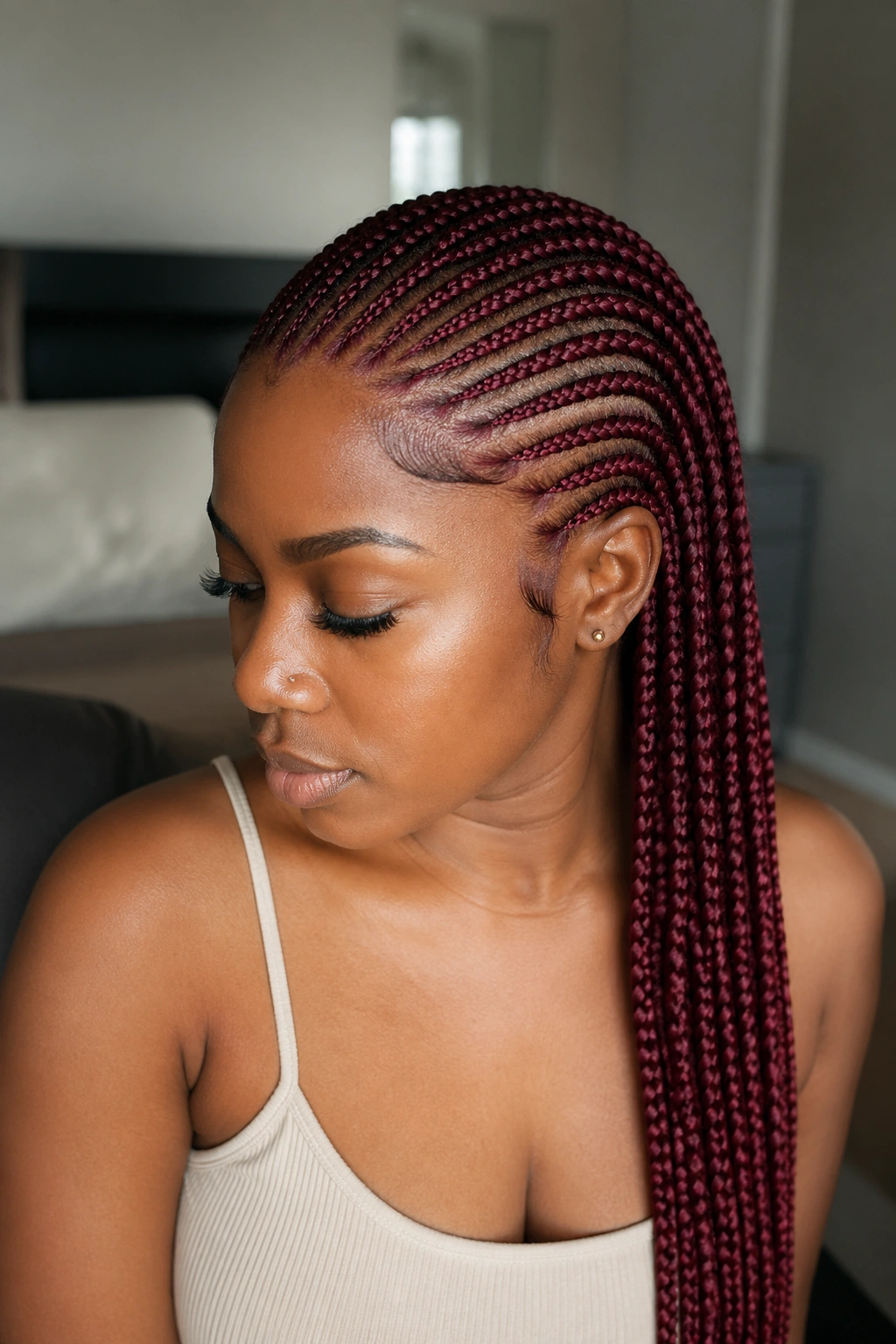
Treat takedown of color feed-ins exactly like takedown of regular feed-ins. The color doesn’t change the technique. But know that color kanekalon transfers more easily to skin during takedown — your fingertips will pick up some pigment as you unravel.
Wear gloves if you’re working with bright reds or deep purples. The dye washes off skin quickly but can stain fingernails for a day or two.
Rinse hair under running water as you take each braid down. The continuous water flow keeps any released dye moving away from your scalp instead of pooling there.
Once everything is out, deep condition for at least 30 minutes. Color kanekalon often leaves the natural hair slightly drier than uncolored hair would, and the deep condition restores moisture quickly.
Feed in cornrows with color give you a way to wear color that no other braiding style matches — because the feed-in technique creates the dimension that flat color cornrows can’t. Pick your shade based on your undertone, plan your placement before installation, and treat the kanekalon with the same care you’d give a real dye job. The result is a style that turns heads, holds up for weeks, and lets you wear color without committing your actual hair to dye.
