



Five straight back cornrows is the count that nobody talks about. Six gets all the attention because it’s the round number. Eight gets praised for being neat. But five is the one that hits the sweet spot between bold and balanced, between fast and finished. The asymmetry of an odd number — particularly five — sits differently on the head. There’s no center division. The head has a clear middle braid that anchors the design while the four others move around it.
I started doing five-braid straight backs on my own head about a decade ago and never went back to even-numbered counts for everyday wear. Five is faster than six. It looks intentional in a way that even numbers rarely do. And the braids end up wider per row, which means each one reads substantial without crossing into chunky territory. For women with medium to thick hair, five is the count that fills the head without crowding the parts.
Twenty-two versions of the five-braid straight back. Some are pure classics. Some add color, beads, or tapering. A few mix techniques in ways you might not have seen before. Each one teaches something different about how five braids can carry a whole look.
Why Five Is the Magic Count
Geometry is the answer. Five braids create one center line and two pairs of side lines. The center is the focal point. The pairs flank it symmetrically. Your eye reads this immediately, even if you don’t consciously notice the structure.
Compare that to six braids, where there’s no center. The eye has to choose where to focus and ends up scanning. With five, the center makes the choice for you.
Five braids also fit average head shapes better than four or six. Each braid is roughly 1.75 inches wide on a standard head — wide enough for a clean cornrow, narrow enough that the parts read as design lines rather than empty scalp space.
When Five Works Best
Five braids suit medium-density natural hair best. Fine hair can look sparse with such few rows because the parts read wide. Very thick hair can look squashed because each braid carries too much volume.
The style also works well for women with shorter natural hair who want to use feed-in extensions. Five braids hold extensions cleanly without the install becoming overwhelming. You’re not feeding kanekalon into eight or ten rows. You’re focusing your time on five well-built braids.
Tools and Prep
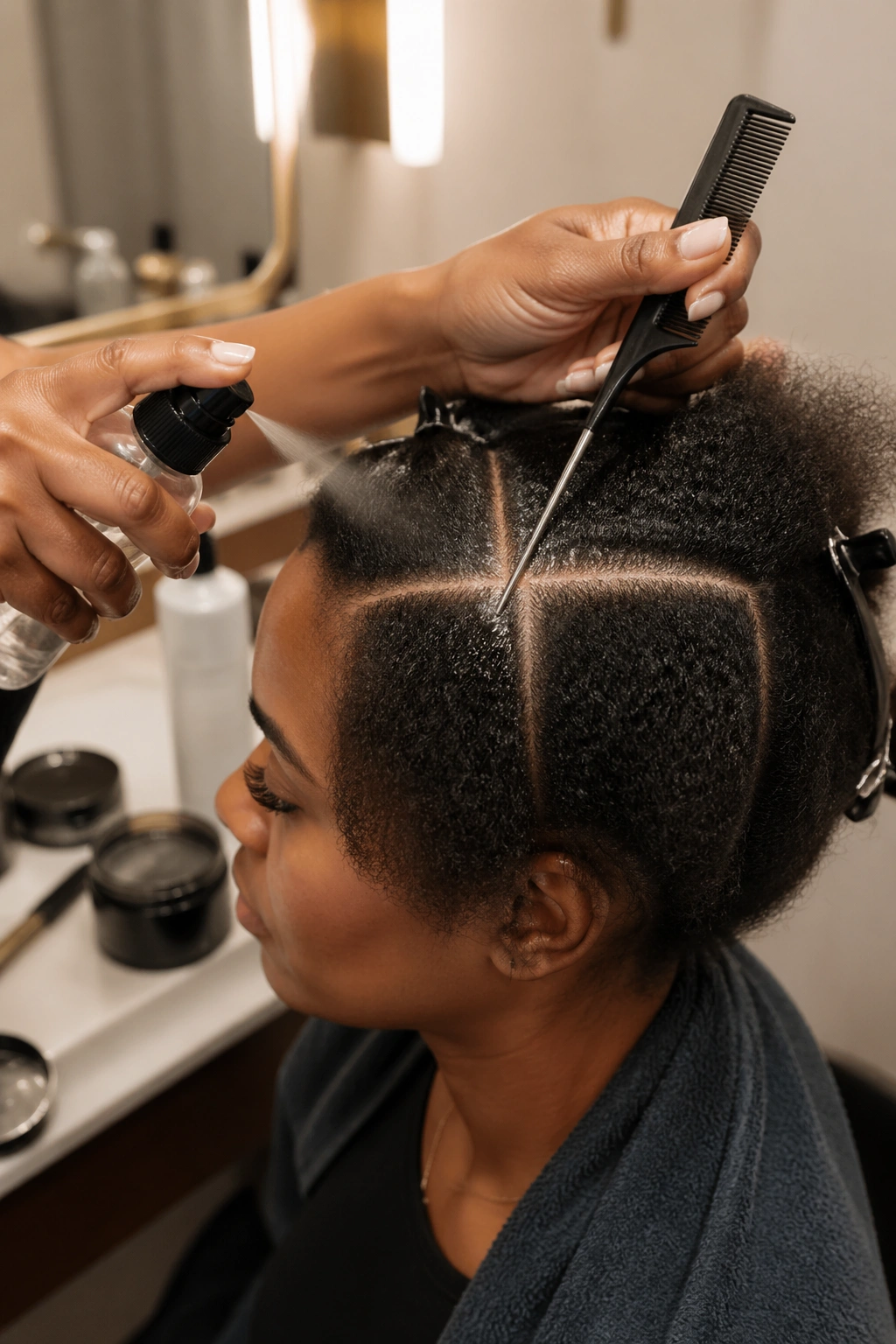
Standard cornrow kit. Rat-tail comb with metal end. Spray bottle with water and leave-in. Eco-style or similar firm-hold gel. Edge control. Five hair clips for sectioning.
Prep the night before. Wash, condition, stretch the hair, and let it air dry to about 80 percent. Do not braid sopping wet hair. Slightly damp is the goal.
Section the head into five even sections before you start braiding anything. Pin each section closed. This forces you to be precise about width before tension takes over.
The Center Section Sets Everything
Start with the center braid. Always. The center braid is the visual anchor — if it’s off-center or wider than the others, the whole style reads crooked. Once the center is in, the four side braids can be worked outward from it.
Measure the center section using your comb. Make a clean part down the middle of the head. Measure roughly an inch and a half on each side of that center line. That’s your center braid section.
Pin it. Move on to the side sections, working outward symmetrically.
1. Classic Five Straight Backs
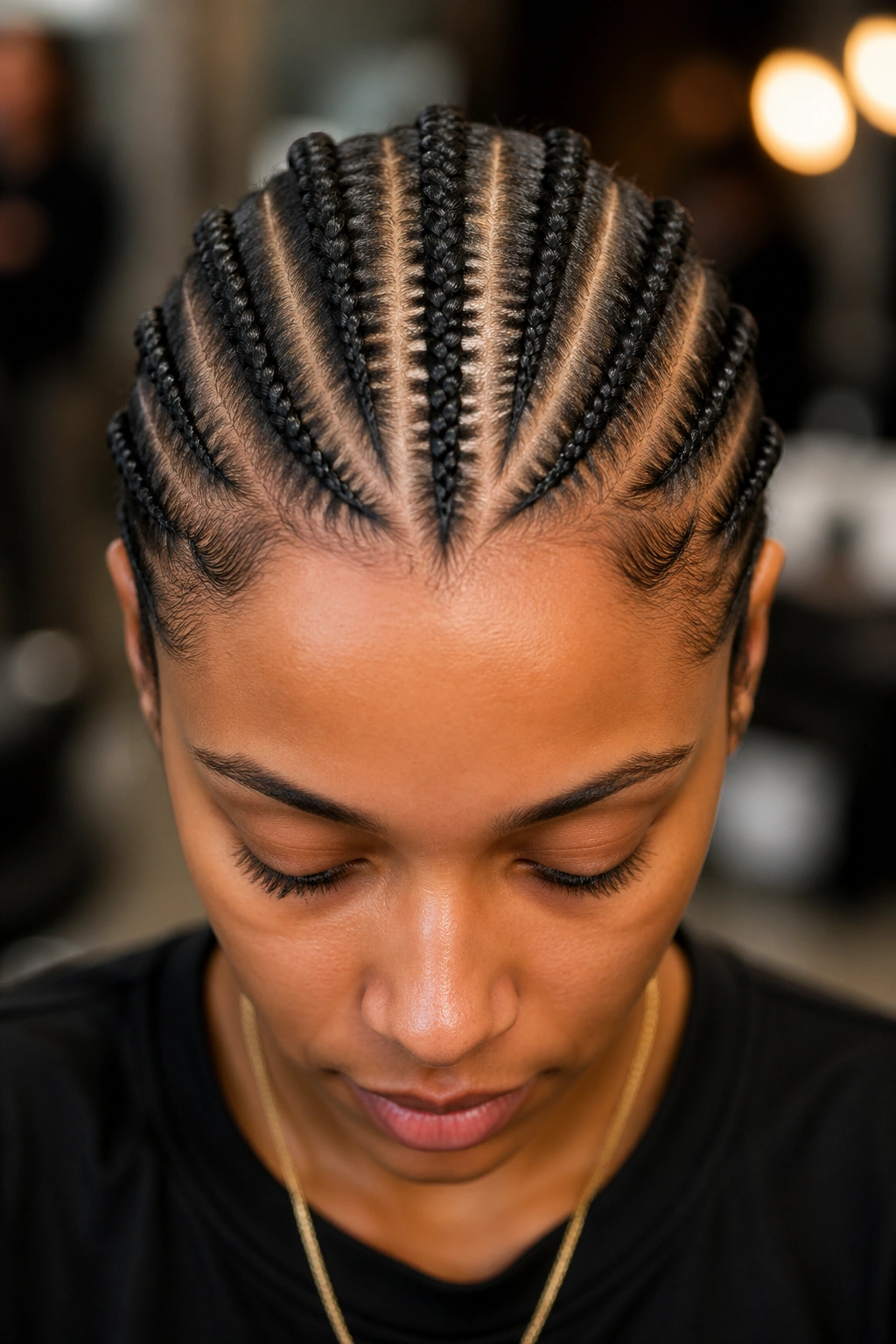
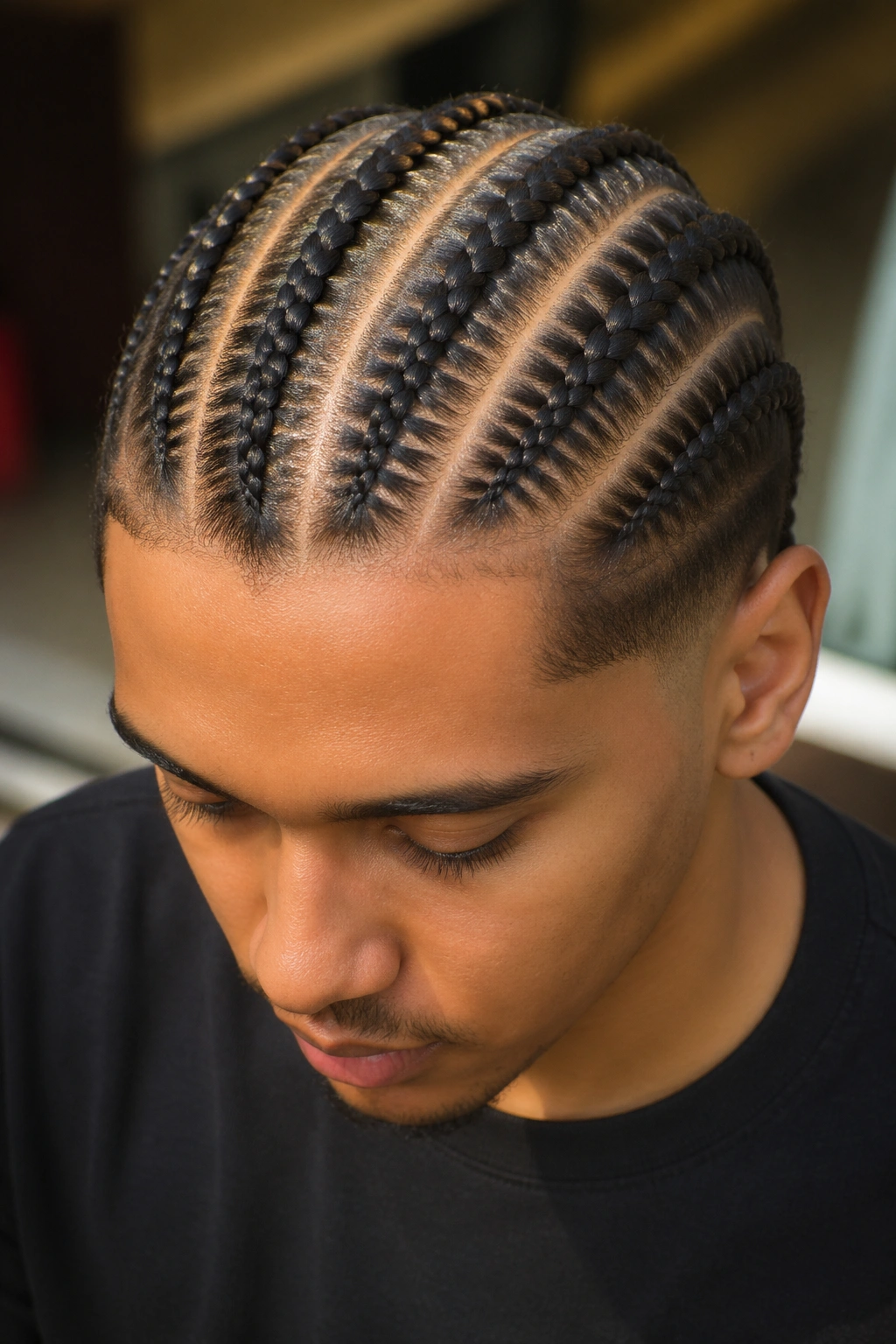
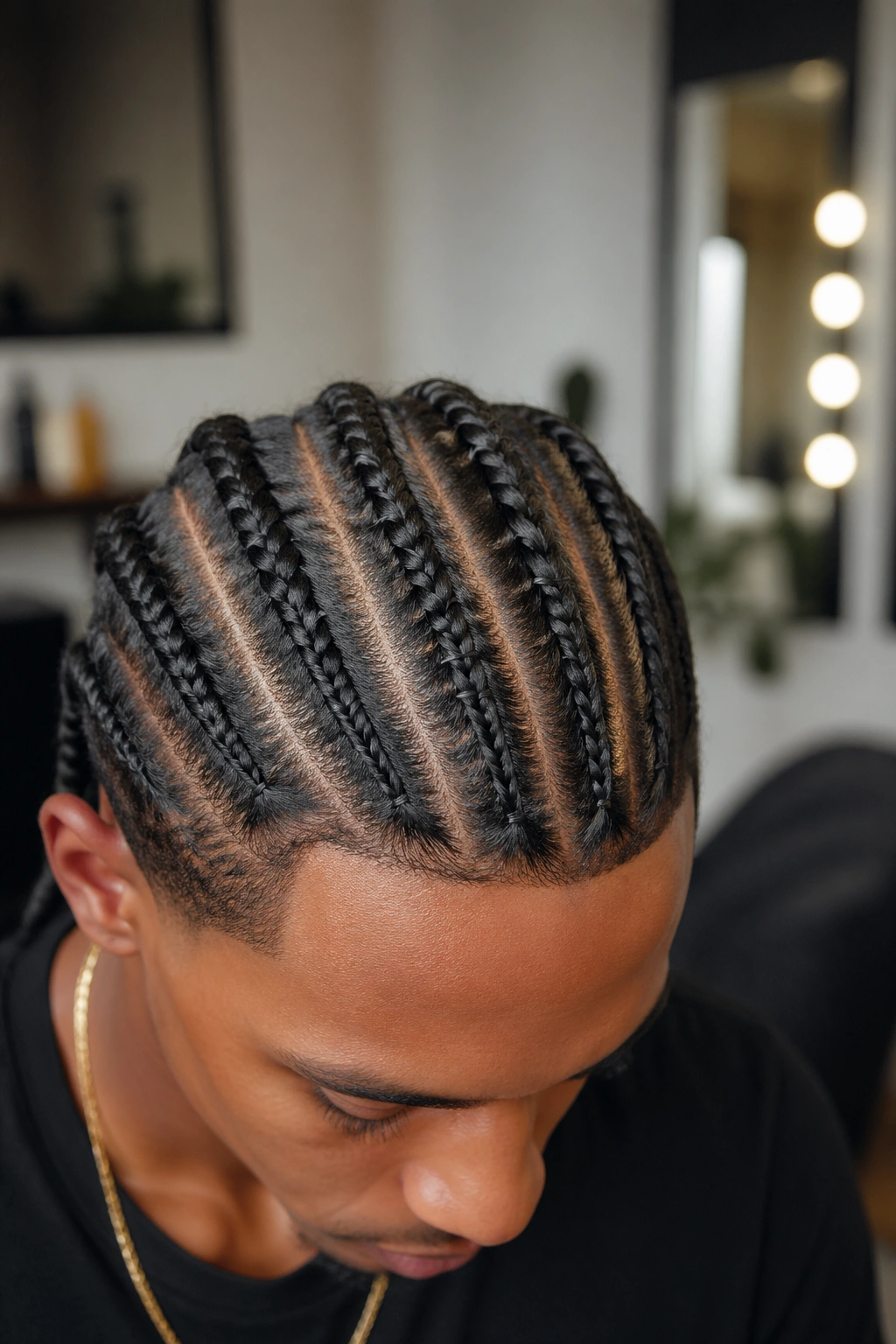
The pure version. Five medium-width braids running from forehead to nape, evenly spaced, no decoration.
Why It Works
The classic version reads timeless because it strips the style down to its essentials. No beads. No color. No angles. Just five clean lines moving in formation.
- Part each section using the rat-tail comb, with parts running parallel
- Apply a small dab of edge gel along each part to lock it down
- Braid using under-hand strokes for raised, defined cornrows
- Secure ends with small clear elastics or tuck under
Quick tip: the second-to-last stitch is the most likely to slip if you ease tension too early. Hold tension all the way to the final stitch, then secure.
2. Five Straight Backs with Stitch Detail
Each braid features small horizontal stitches running across its length, creating texture along the cornrow.
The stitches add visual richness without changing the silhouette. From a distance, the style still reads as five straight backs. Up close, the stitch detail becomes the showpiece.
Stitch braiding takes 30 percent more time than smooth braiding. Plan accordingly. The trade-off is wear time — stitch braids hold an extra week or more before fuzzing.
3. Five Jumbo Straight Backs
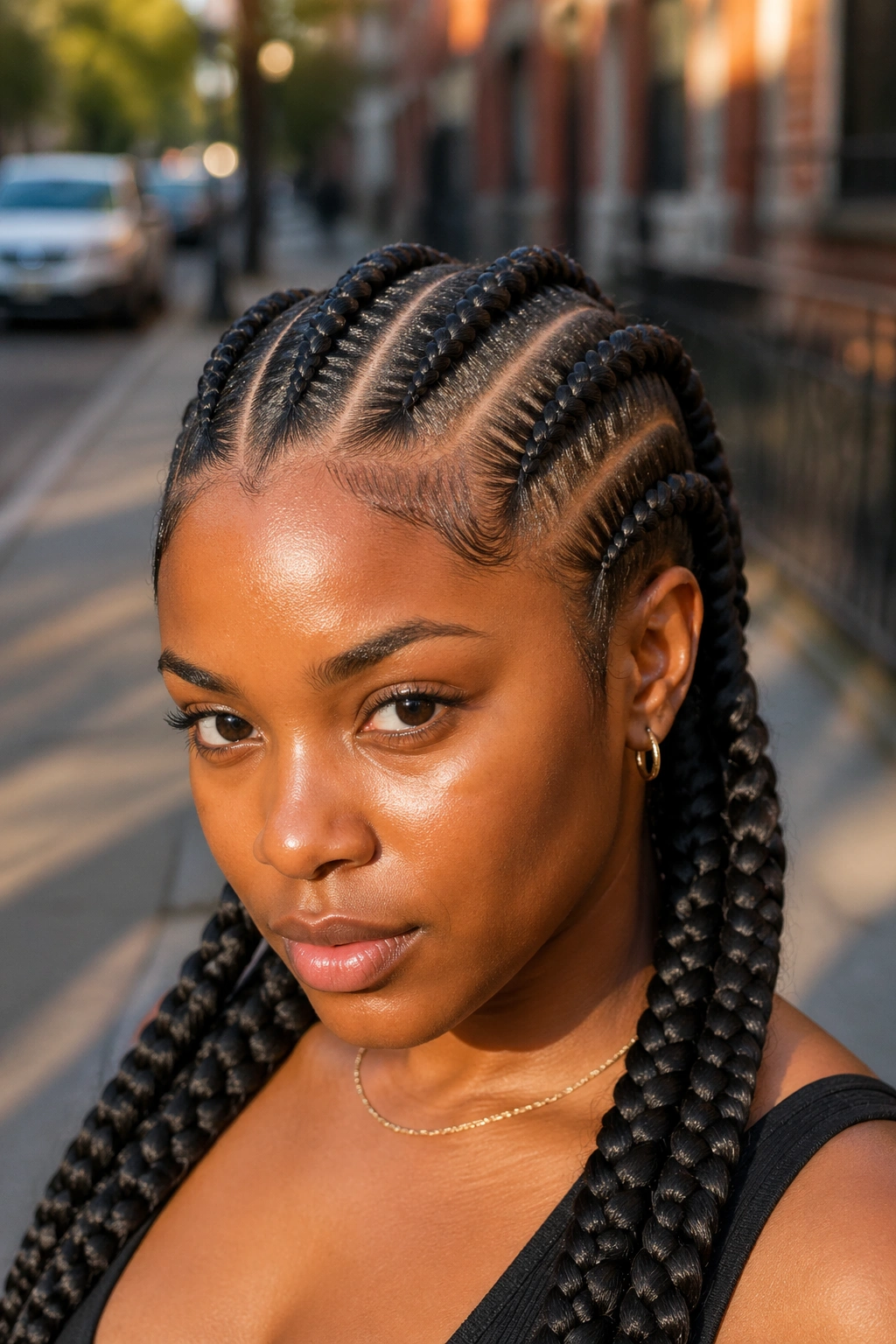
Same five-braid count, but each braid is fed with extensions to make it much thicker. Each braid ends up nearly an inch wide at the base.
The jumbo version reads bold and statement-making. The braids carry visual weight that smaller versions can’t match. They also sway more dramatically when you walk, which adds a quality of movement that smooth thin braids don’t have.
Best for women with longer hair or who don’t mind extensions doing the length work. The extra weight on the scalp is noticeable for the first day or two, then your body adjusts.
4. Five Micro Straight Backs
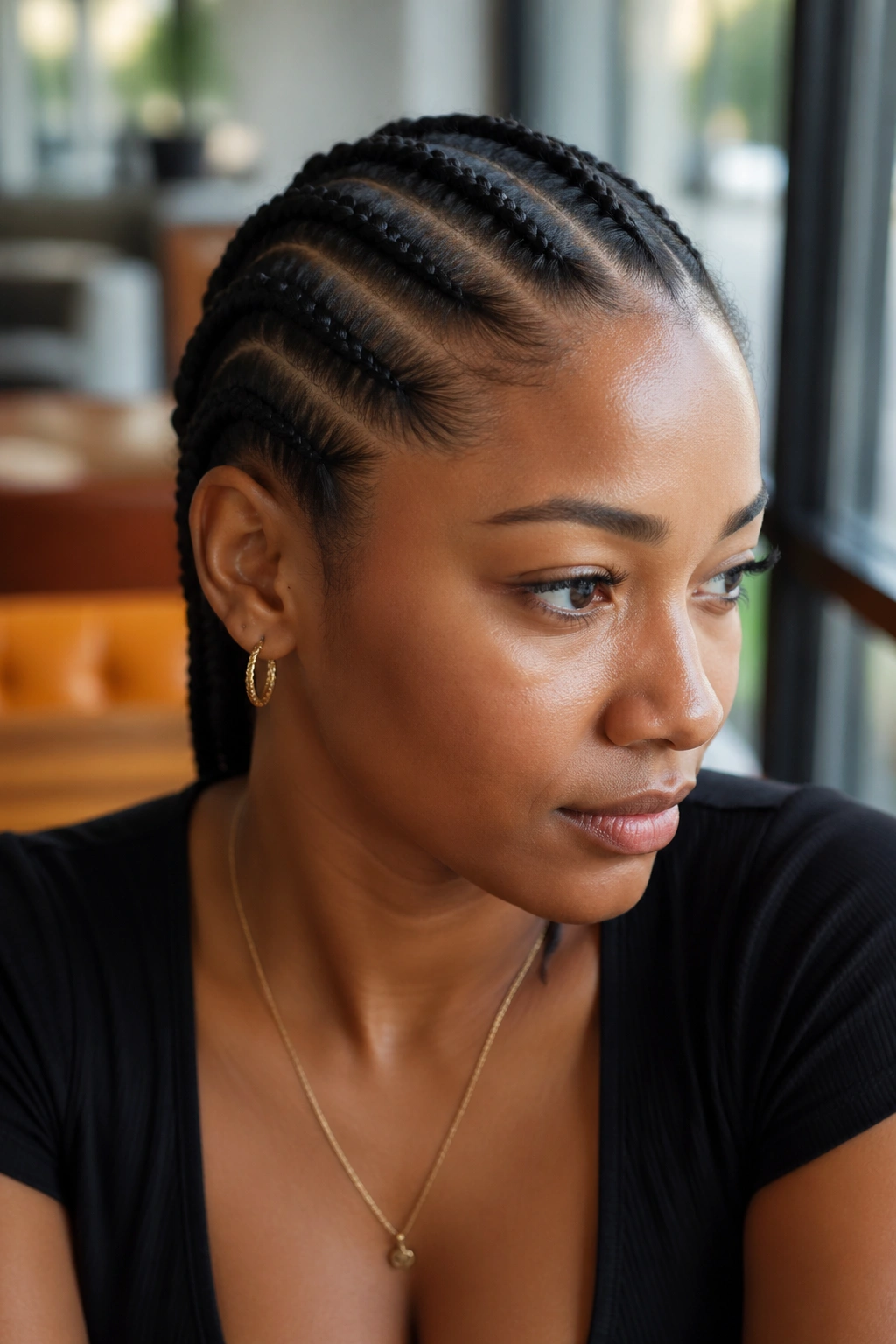
The opposite extreme. Each section is thinner — about three-quarters of an inch — and the braids are tightly woven and small.
Micro versions of five braids work for women with finer hair who want the structure of straight backs without the visual heft of jumbo. The five smaller braids spread the head’s hair across less width, making the parts more pronounced.
Time investment: about 90 minutes for a full install. Wear time: up to four weeks with proper care.
5. Five Straight Backs with Beaded Ends
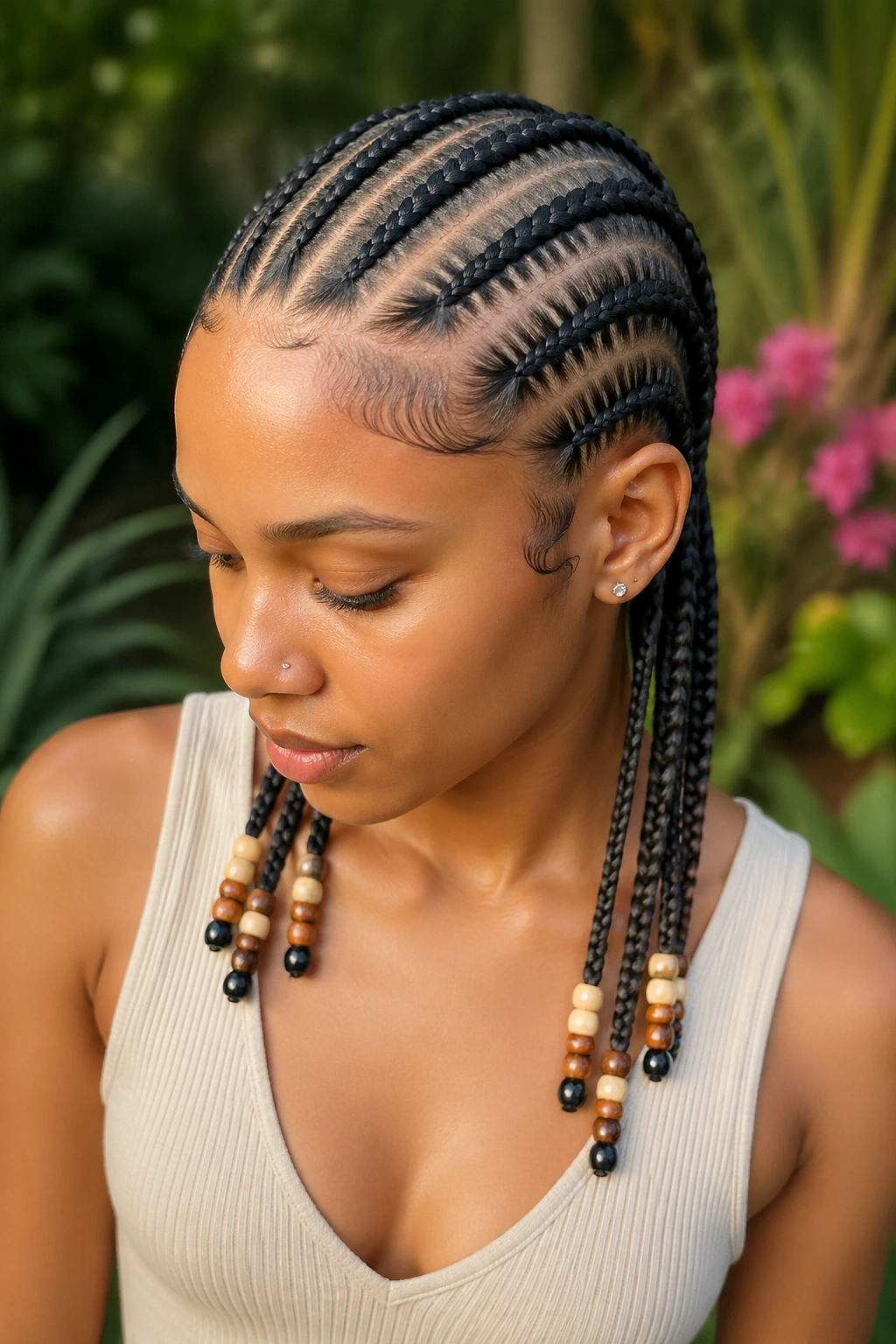
Each braid ends with three small beads — wood, glass, or acrylic — crimped in place. The beads sway and click when you move.
Beads work especially well on five-braid installs because each braid has more visual weight per braid than smaller-count installs. The beads complement that weight rather than disappearing into a sea of tiny braids.
Pick beads in coordinating colors. Three matching beads per braid reads polished. Mixed colors per braid can read messy unless intentionally curated.
6. Five Straight Backs Ending in a Low Ponytail
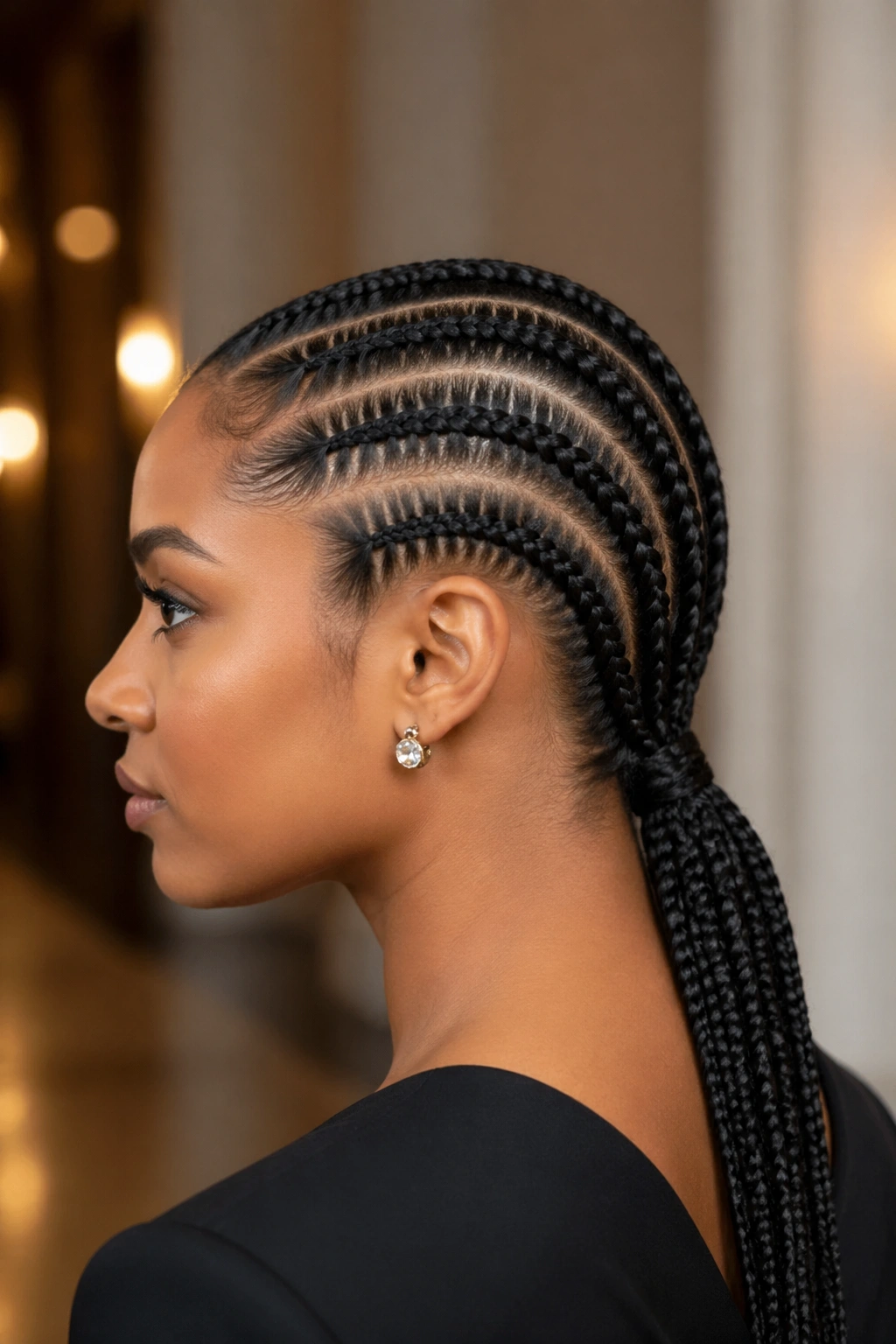
All five braid ends are gathered at the nape into a single low ponytail. The braids themselves form the ponytail without needing a separate band.
Take the longest braid, wrap it around the others at the gathering point, and tuck the end under to secure. The result is a self-contained ponytail with no visible elastic.
Useful for formal occasions where elastic bands would look unfinished. Also useful for active days where you want the braids consolidated rather than swinging individually.
7. Five Straight Backs into a Bun
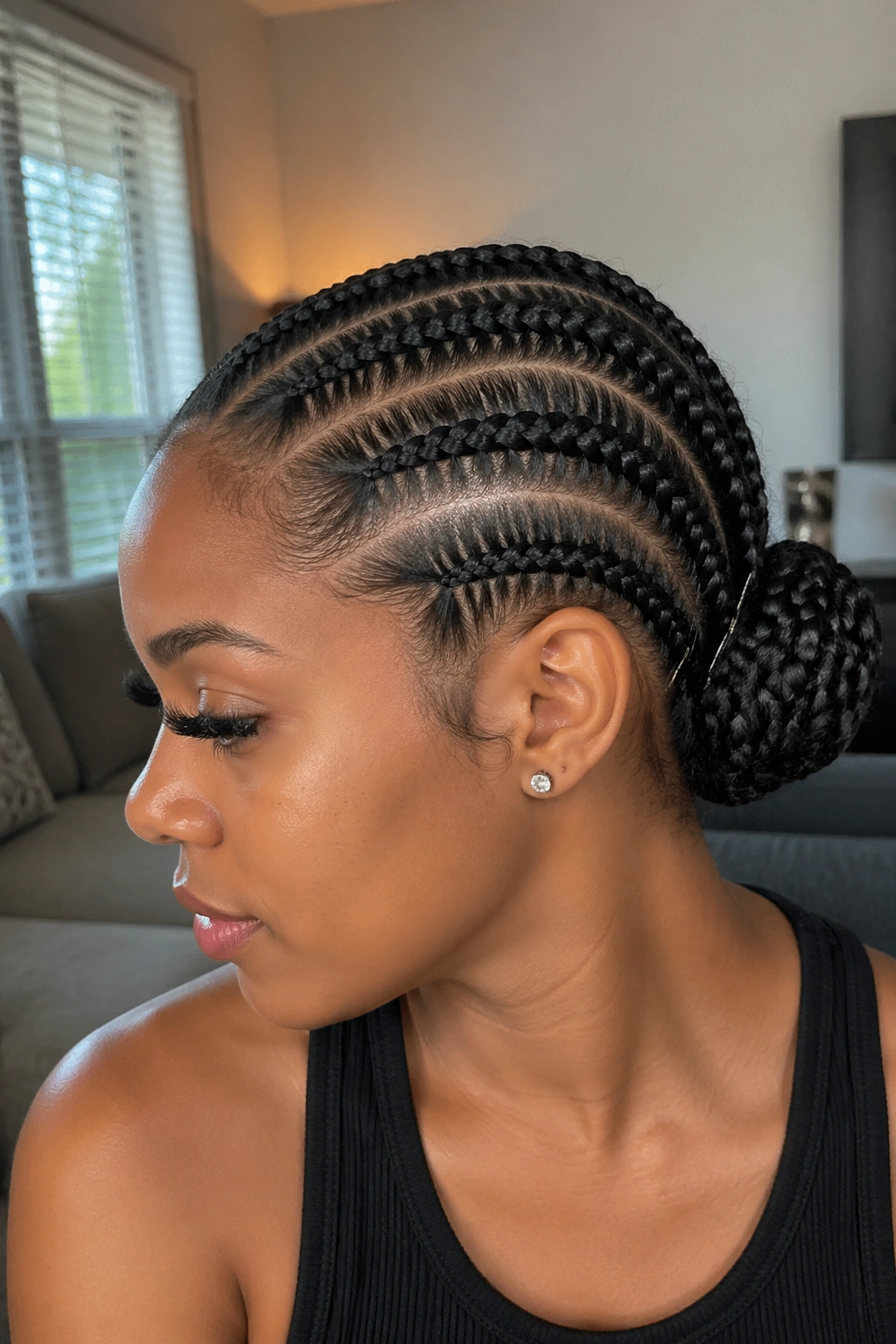
Same gathering point as the ponytail, but the loose ends are coiled up into a bun rather than left to hang.
The bun can sit at the nape, mid-back, or high on the crown depending on preference. Each position gives a different feel — nape is softest, crown is most dramatic, mid-back is the practical middle.
Pin with U-pins arranged perpendicular to the scalp. Two pins at the top of the bun, one at each side, one at the bottom.
8. Five Straight Backs with Feed-In Extensions
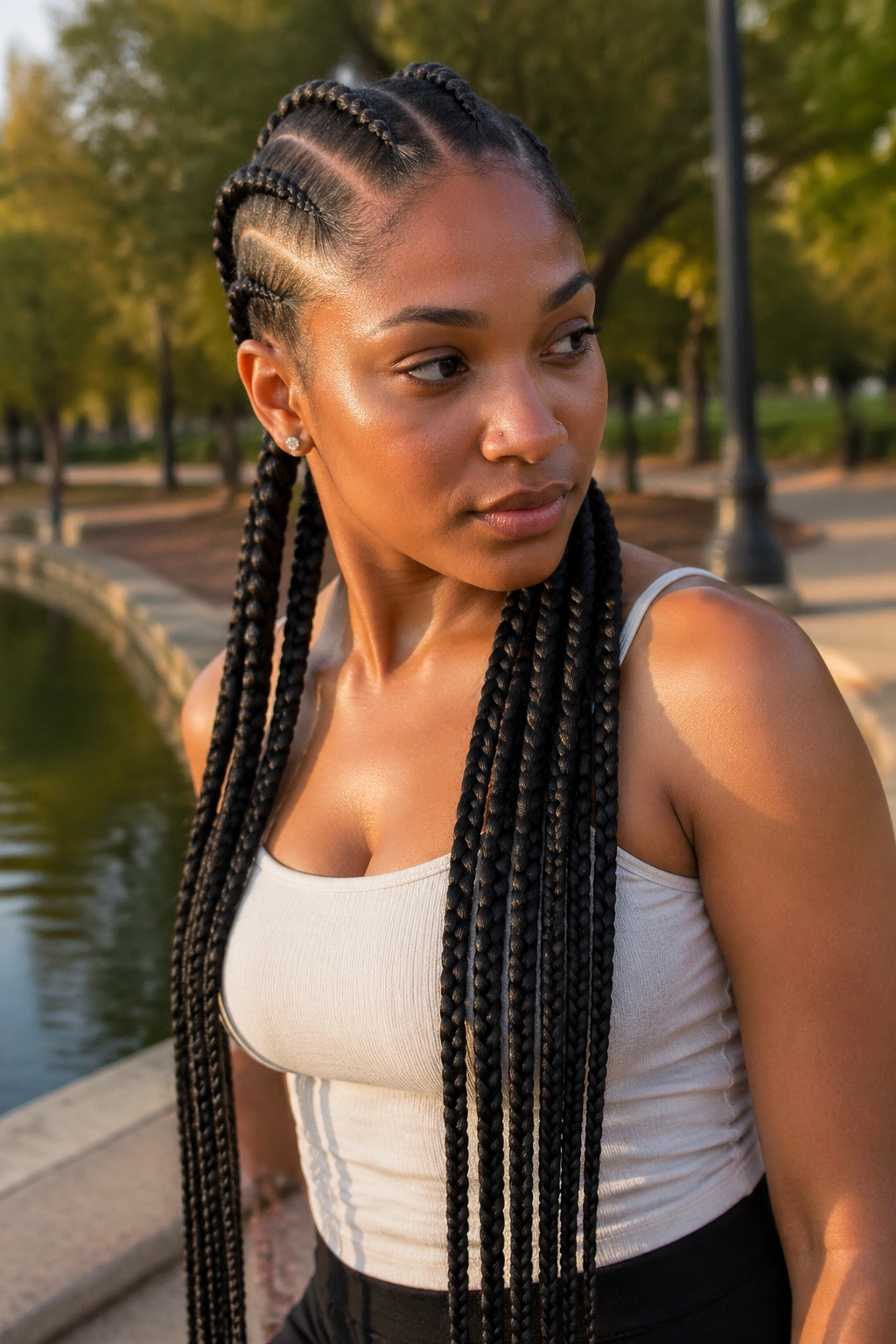
Start with your natural hair at the front and feed kanekalon in gradually as you braid back. The braids extend past your natural length.
Feed-in extensions on five braids let each braid grow to substantial length without feeling weighty per-braid. The extensions distribute across only five rows, so each row carries more length than it would with eight or ten rows.
End the braids at waist length or longer. The five-braid count handles long extensions well because the visual proportions stay balanced.
9. Five Straight Backs with Curly Ends
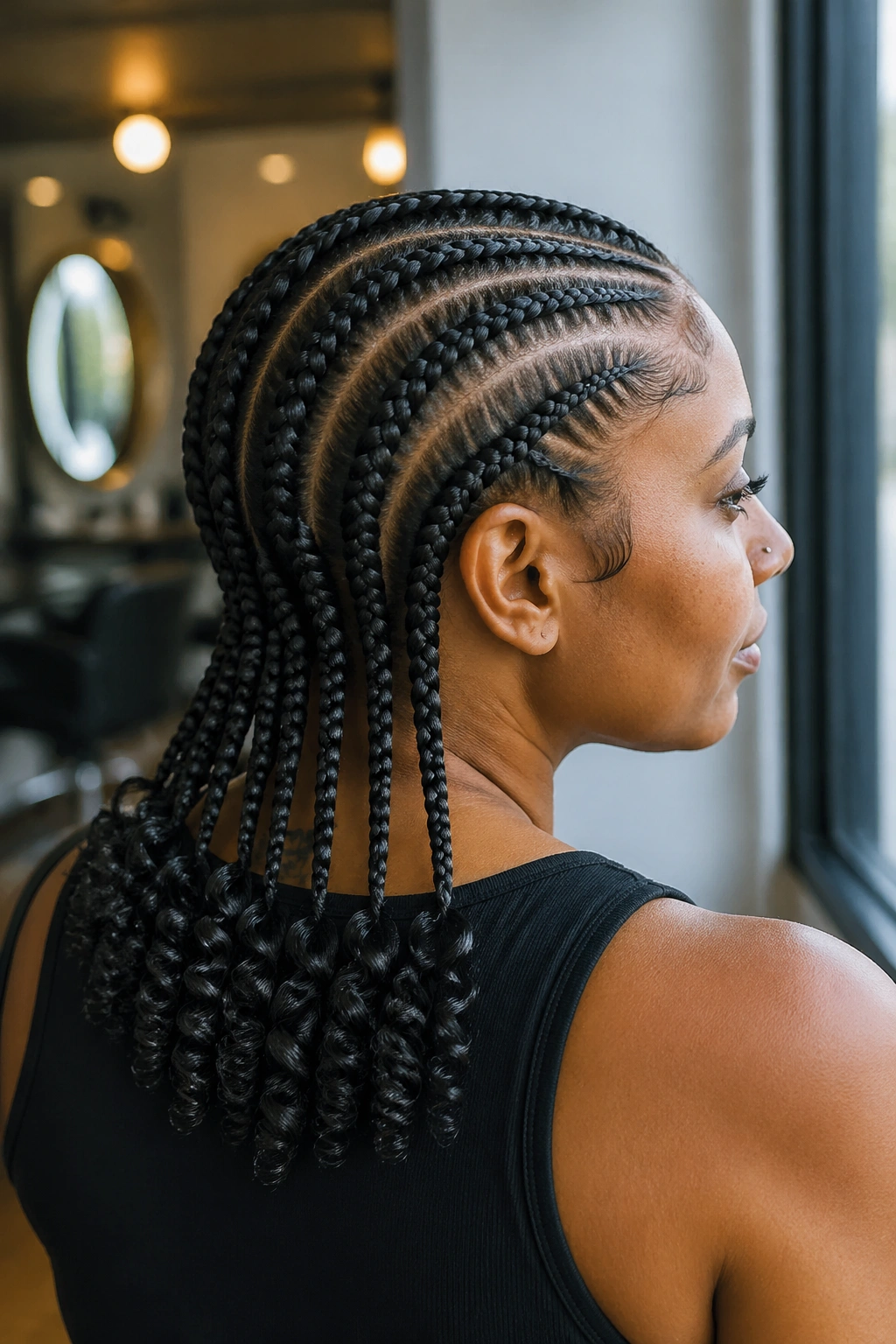
Standard install through the braided portion, but the kanekalon ends are pre-curled — either with rod-set hair from the pack or by dipping in hot water.
The curls add a softness at the ends that contrasts with the structured braids above. The five-braid silhouette reads geometric. The curls read fluid. The combination reads designed.
A scenario: you’ve got a wedding to attend and you want a style that photographs as both sophisticated and personal. Five straight backs with curly ends does that beautifully.
- Use pre-curled kanekalon for the easiest install
- Or dip braid ends in 160-degree water to set curls in regular kanekalon
- Let cool fully before patting dry
- Spray with light hold spray to set the curls
10. Five Straight Backs with Colored Center
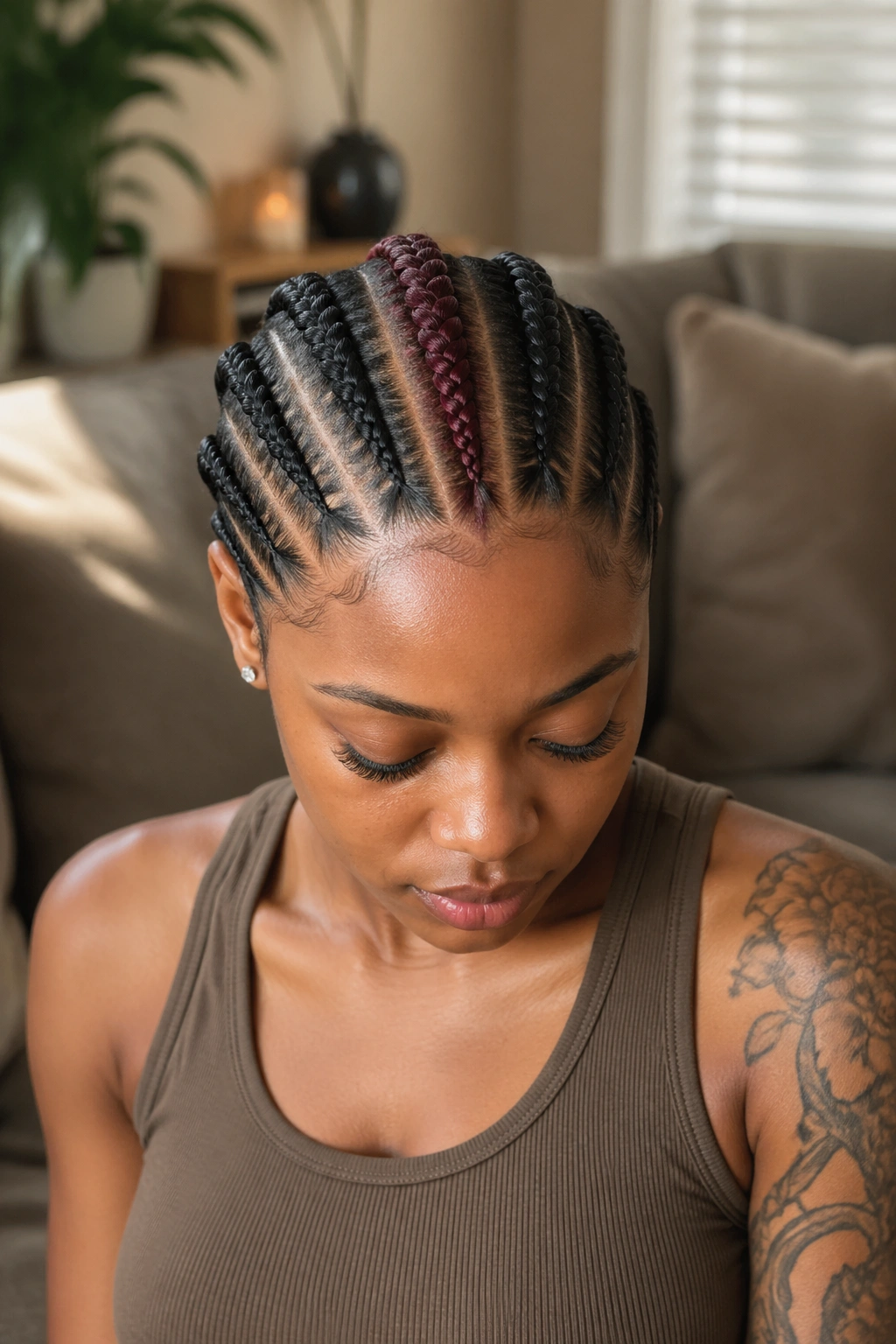
The center braid is in a contrasting color while the four side braids stay natural. The colored center becomes the focal point.
Pick a color that flatters your skin tone. Burgundy, copper, honey, or a deeper auburn all work. Brighter colors like red or pink are bolder choices for women who want maximum contrast.
The single colored braid at the center reads as intentional design rather than random color. It anchors the whole look.
11. Five Straight Backs with Side Part
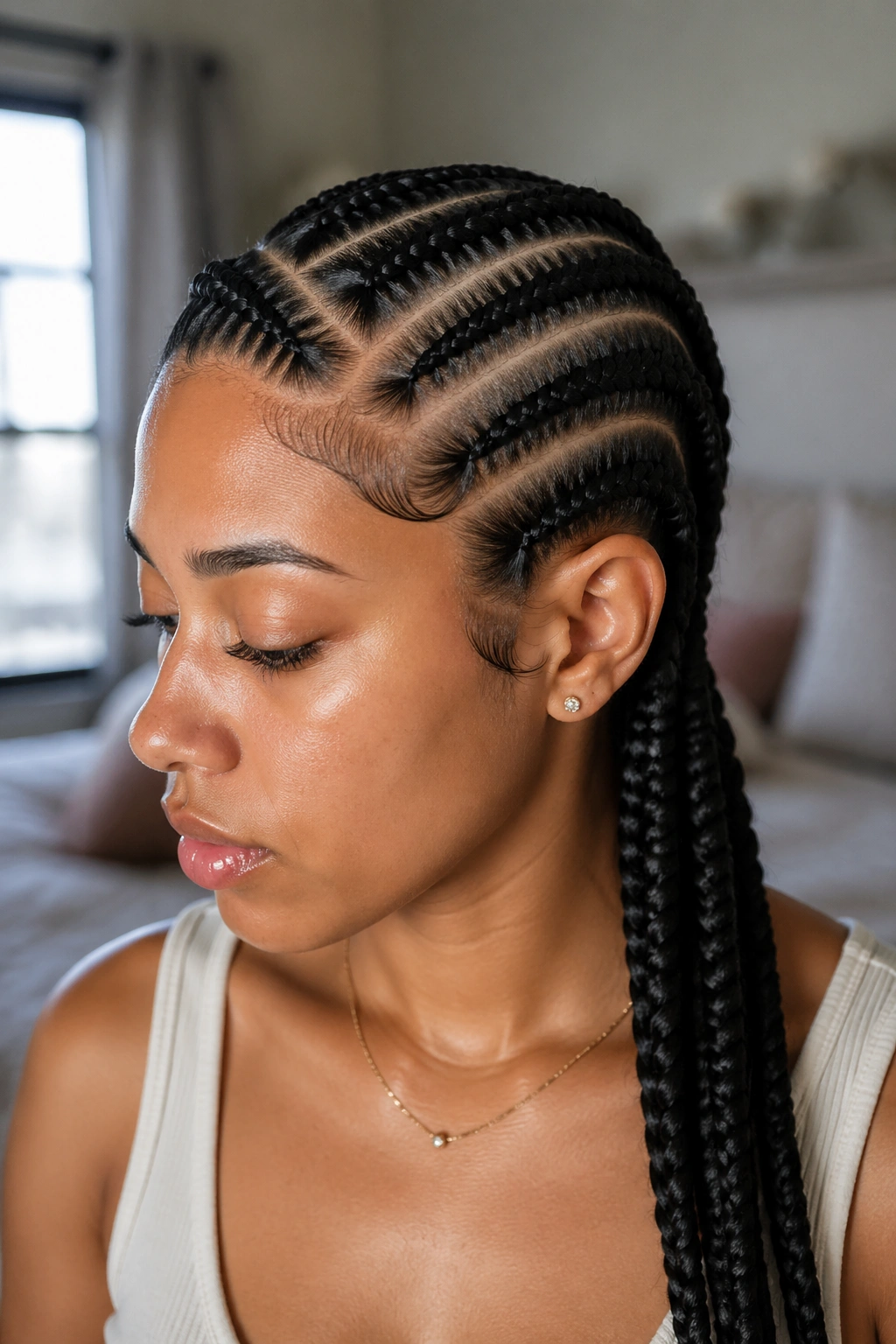
Skip the center part. Use a deep side part and let the five braids start from there. The braid count stays at five, but they all originate from one side.
The side part shifts the entire visual balance. Three braids end up on the heavy side, two on the lighter side. The asymmetry reads modern and creates more facial framing on one side.
Best for face shapes that benefit from asymmetric framing — round, square, or slightly heart-shaped faces.
12. Five Straight Backs with Triangle Parts
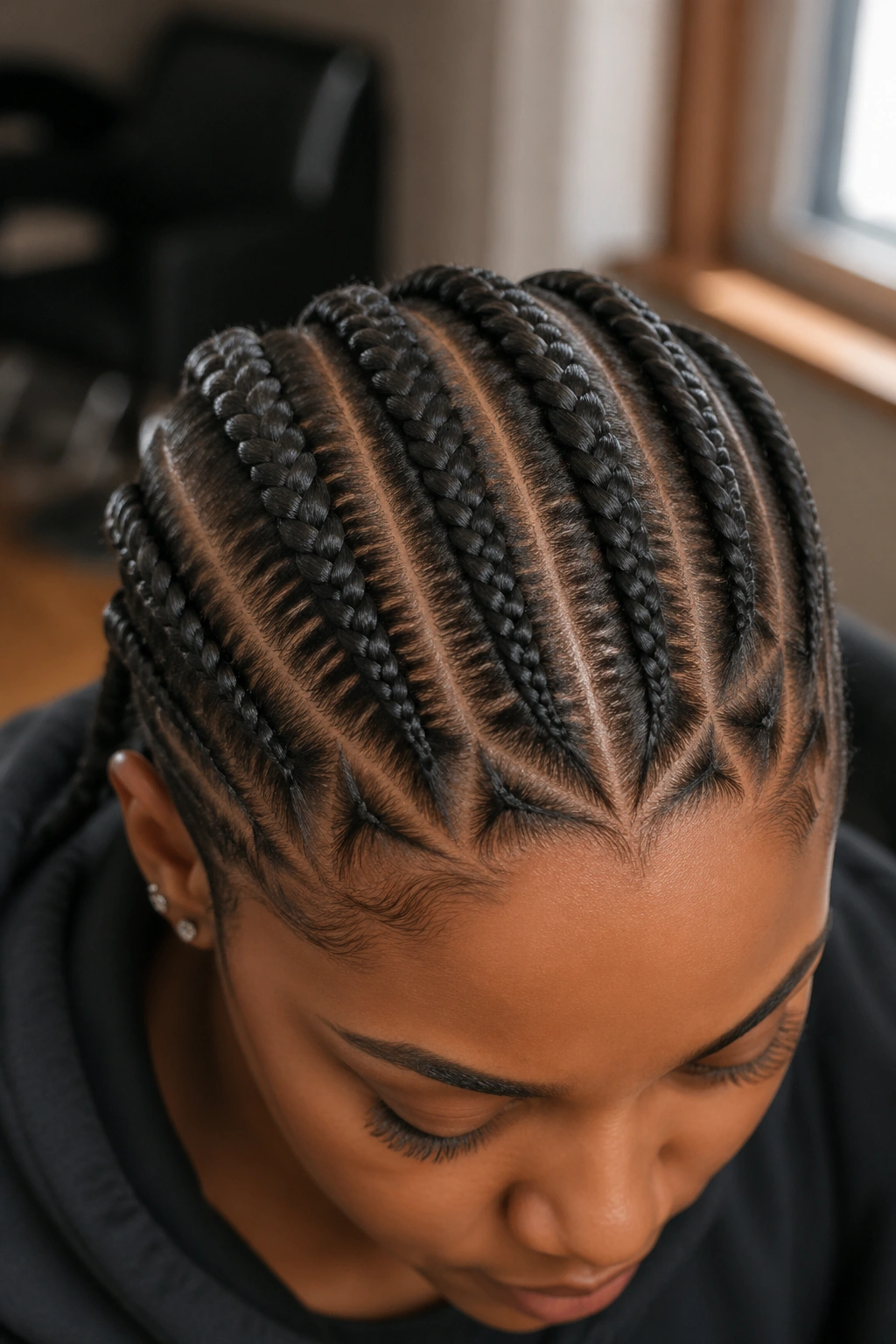
The five sections at the front are triangle-shaped rather than rectangular. The triangle parts taper to a point at the front of the head.
Triangle parts add geometric interest without changing the count. From the side, the braids still read as five straight backs. From above, the parts create a starburst effect.
Time-intensive parting. Cut the triangles slowly with the rat-tail comb, checking symmetry before you commit.
13. Five Straight Backs with Beads at Roots
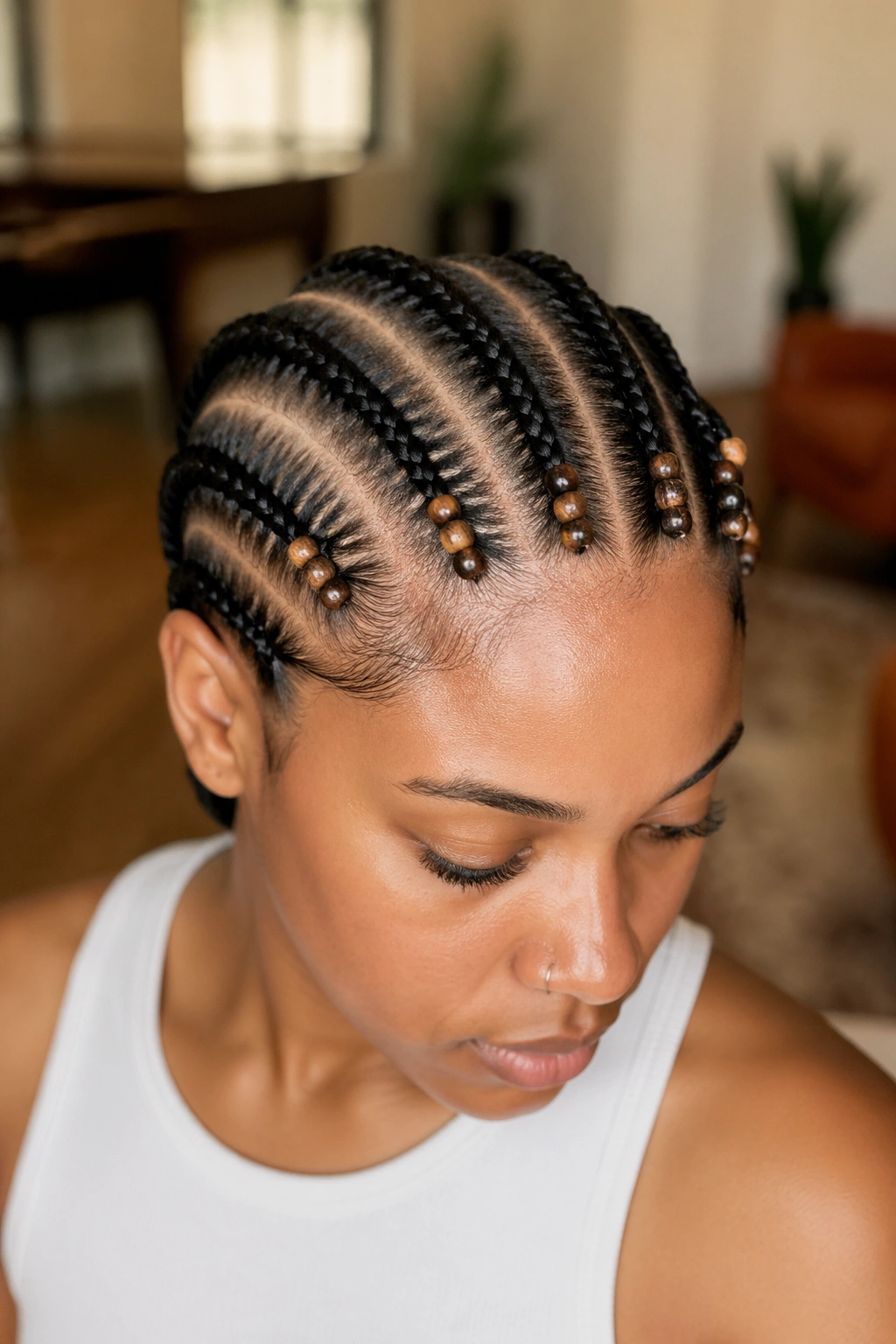
Beads threaded onto the very first inch of each braid — at the root — rather than at the ends. The beads frame the hairline.
What Makes It Different
Most beaded styles place beads at the ends. Root beading is unusual because it requires careful placement to avoid pulling at the scalp.
Use small, lightweight beads only. Heavy beads at the root will hurt by hour three. Acrylic or hollow plastic beads work. Wood and glass do not.
Root beads make the style read decorative without requiring movement to be seen.
14. Five Straight Backs Pulled to One Side
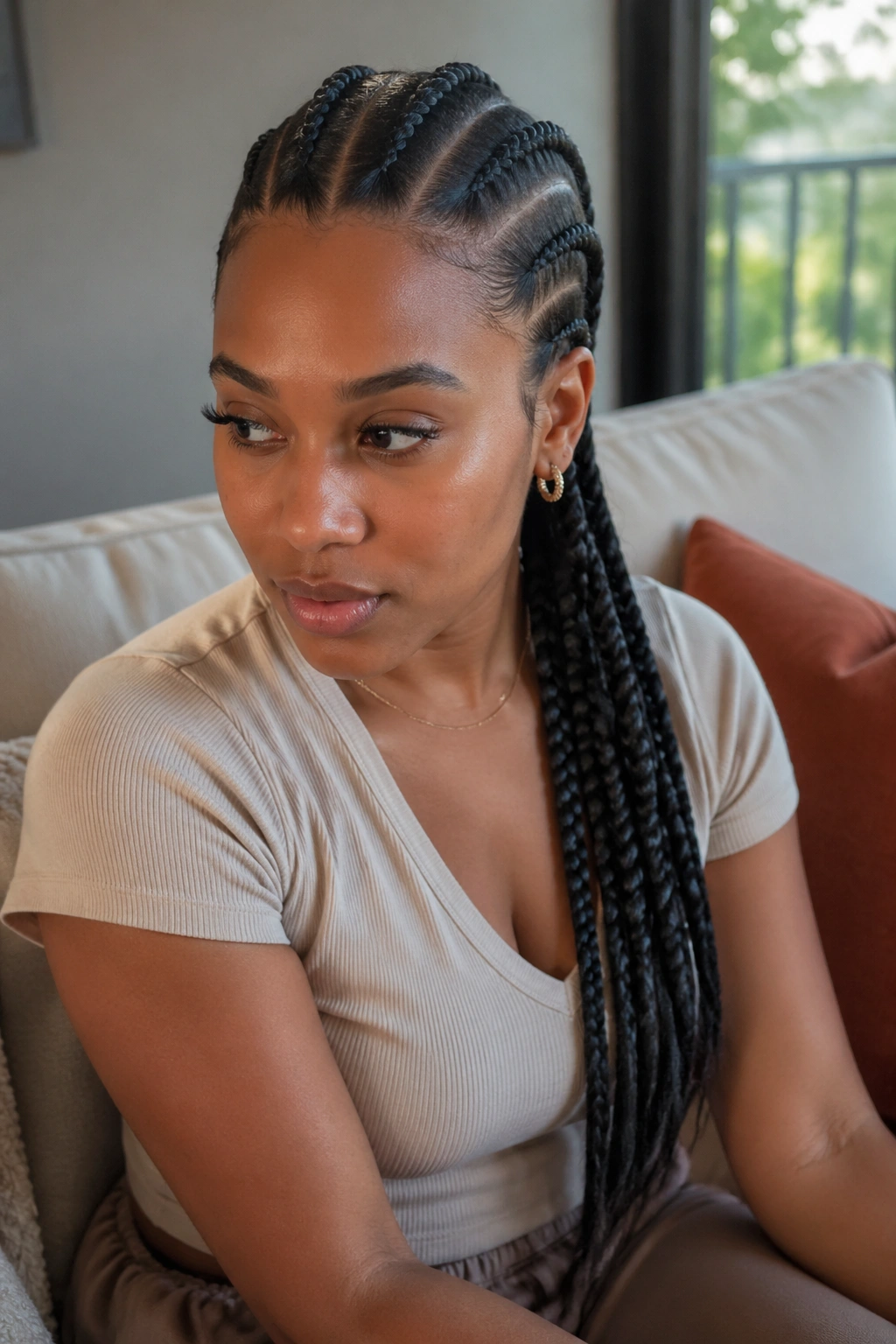
All five braid ends gathered at one shoulder, creating a side-swept cascade. The braids run straight back, then bundle to one side at the nape.
The side pull adds drama to the basic install without changing the braiding technique. Same five braids, different finishing position.
Secure the side bundle with a single elastic at the nape on the chosen side. Let the braids cascade naturally over the shoulder.
15. Five Straight Backs with a Halo Wrap
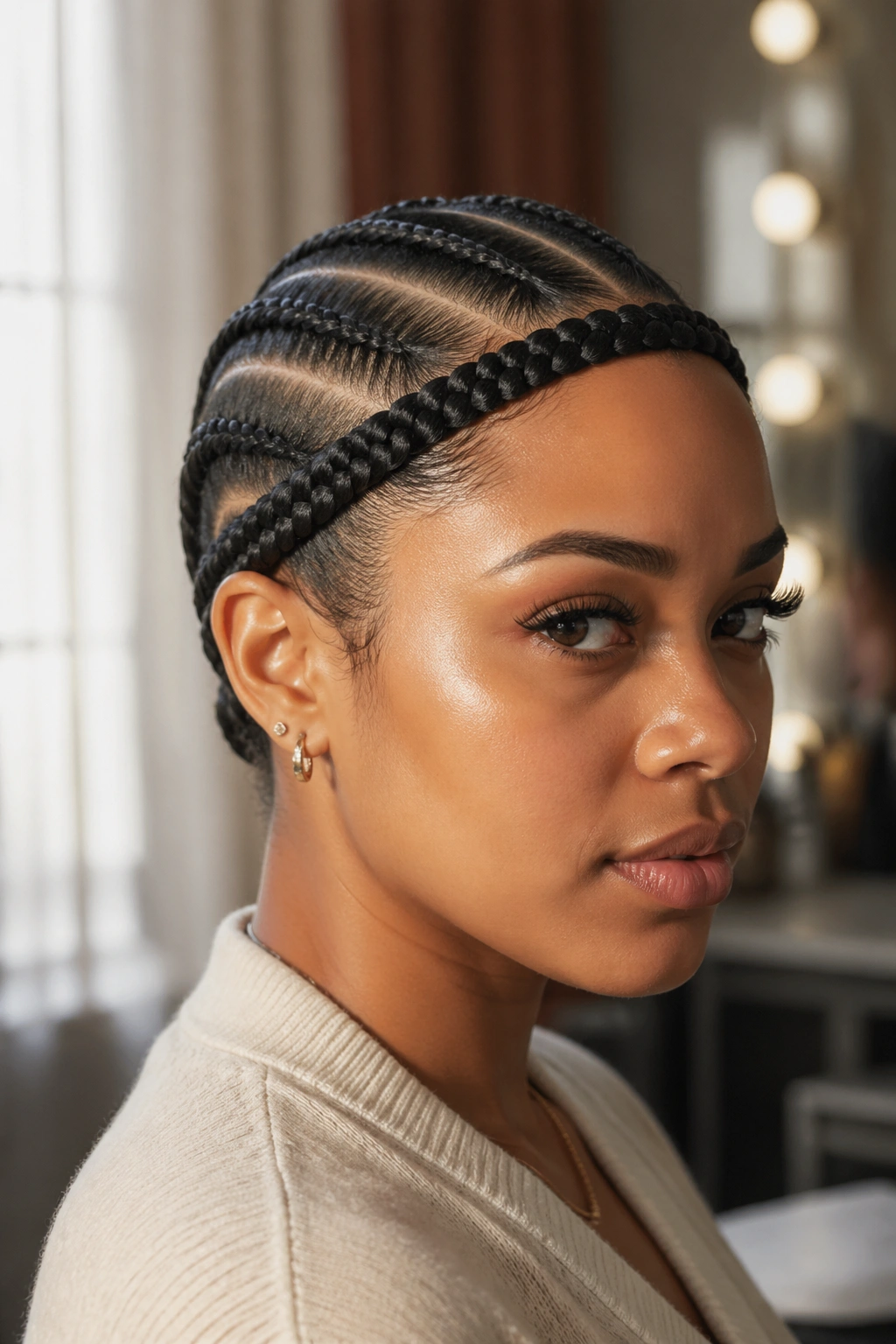
Take the longest braid (usually a feed-in extended one) and wrap it across the front of the head like a halo, tucking the end behind the opposite ear. The other four braids stay running back.
The halo wrap creates a frame across the forehead that turns the style into a regal silhouette. Reserved for events where you want to look done — engagements, photo shoots, formal dinners.
If your braids aren’t long enough to halo wrap, use a single feed-in extension for that one specific braid only.
16. Five Straight Backs Tapered
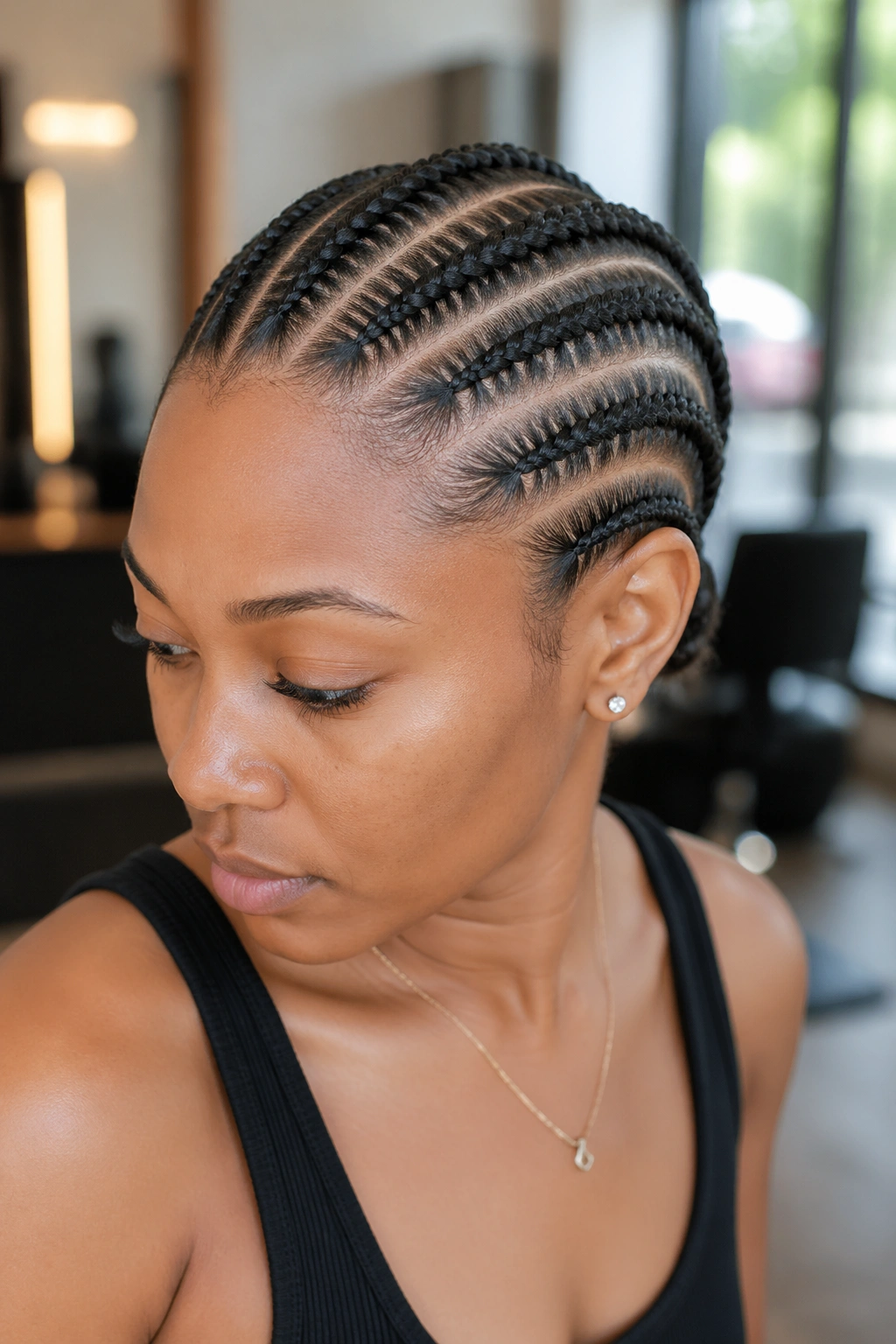
The braids start wide at the front and narrow as they move back. The taper creates an elegant flow rather than blocky uniformity.
Taper by gradually reducing the amount of natural hair in each stitch as you braid back. The braid naturally narrows.
The tapered version softens the geometry of straight backs. Suits softer face shapes — round, oval, or those with gentle features.
17. Five Straight Backs with Cuffs
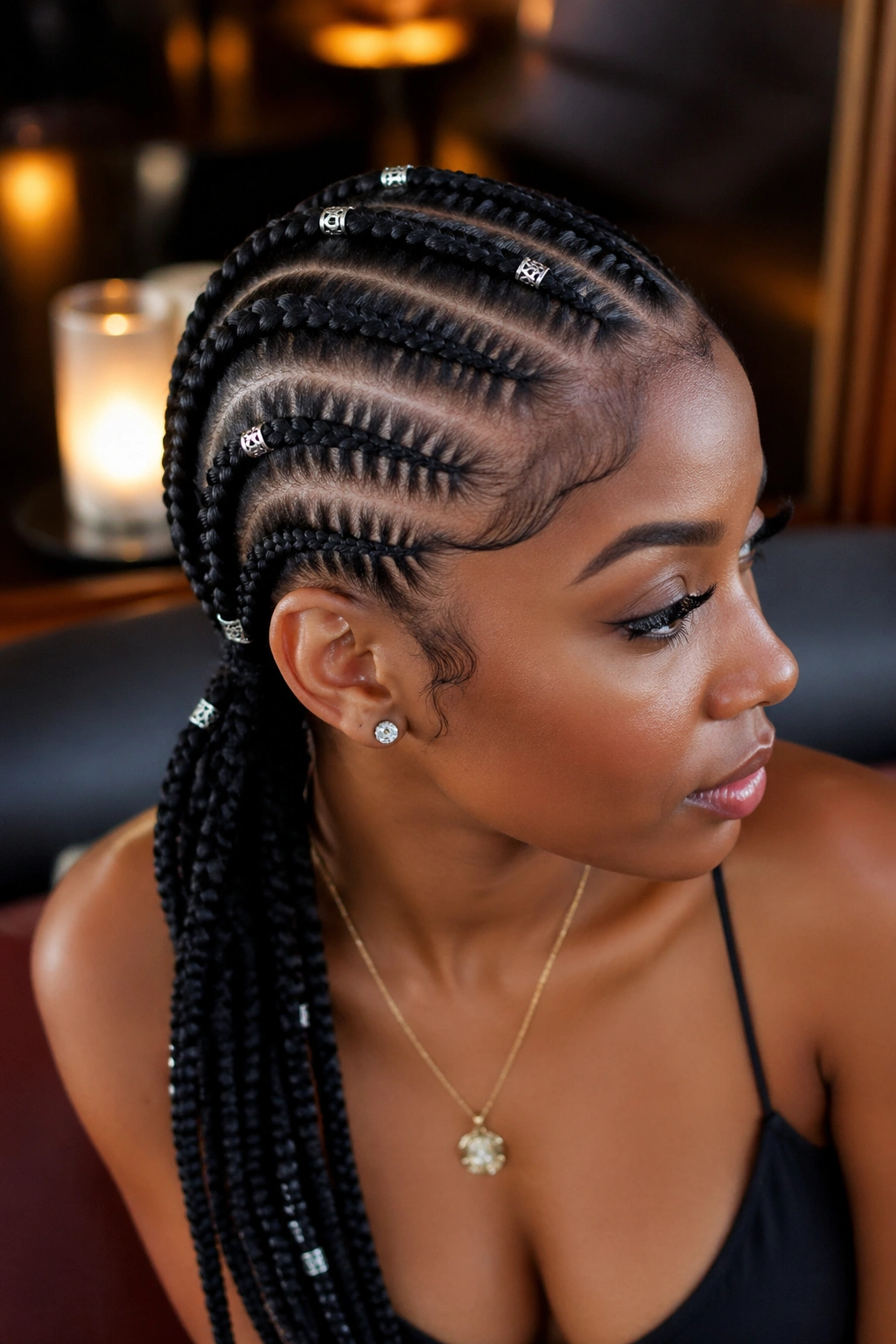
Decorative metal cuffs slid onto random braids and crimped in place. Two or three cuffs total, scattered across the install.
Cuffs are different from beads because they’re rigid and reflective. They catch light and create flashes of metallic shine through the braids.
Place cuffs at varied positions — one near the root of one braid, one mid-length on another, one near the end of a third. Random placement reads designed. Symmetric placement can read too orchestrated.
18. Five Straight Backs with a Pulled-Back Front
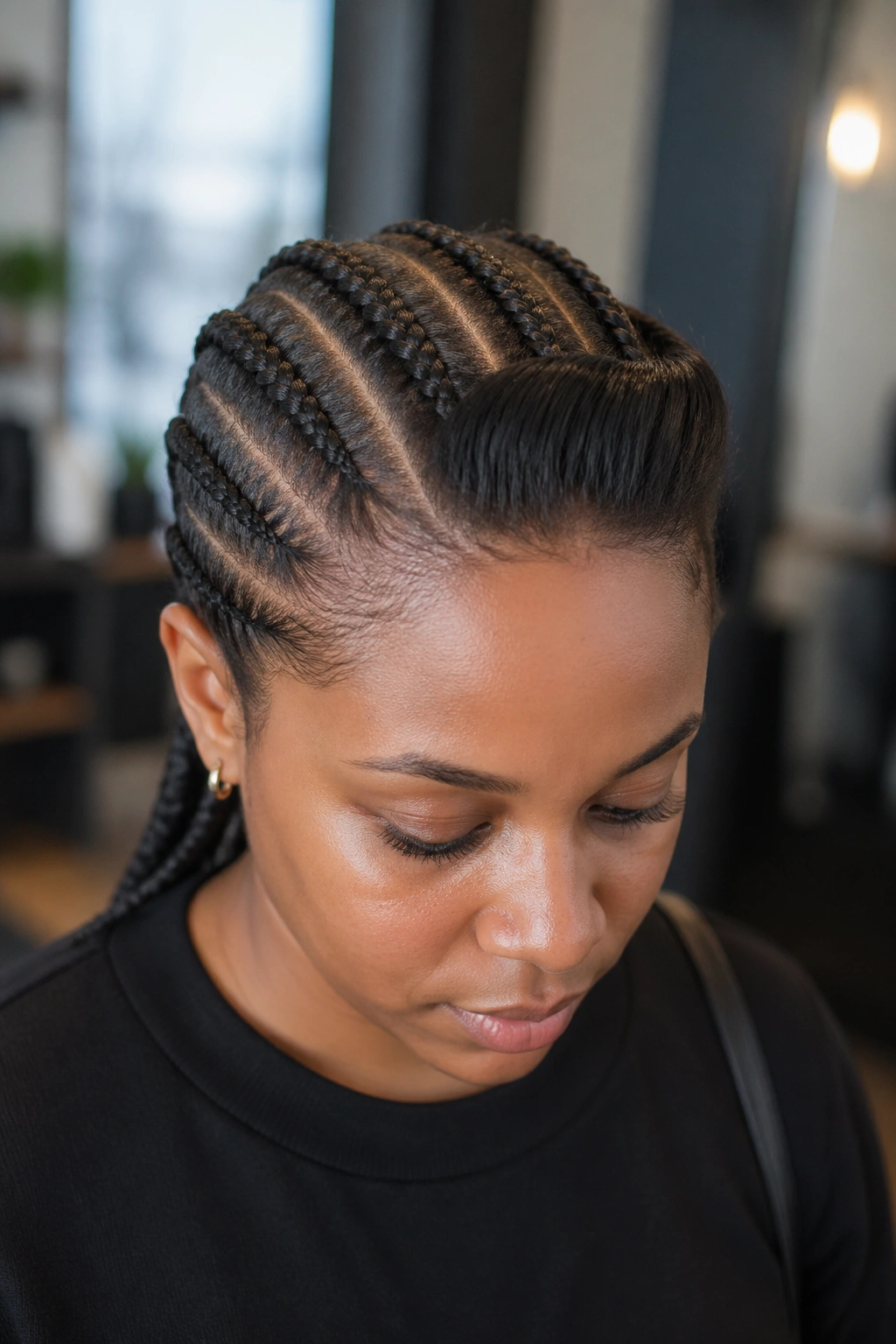
The front of each braid is pulled back tighter than the back portion, creating a slight pompadour effect at the hairline. The five braids still run straight back, but the front has more lift.
The pulled-back front adds height to the silhouette. Useful for women with shorter foreheads who want vertical visual interest at the top of the head.
Achieve the lift by braiding the first two stitches of each braid with a slight upward angle before settling into the straight-back pattern.
19. Five Straight Backs with Curved Sides
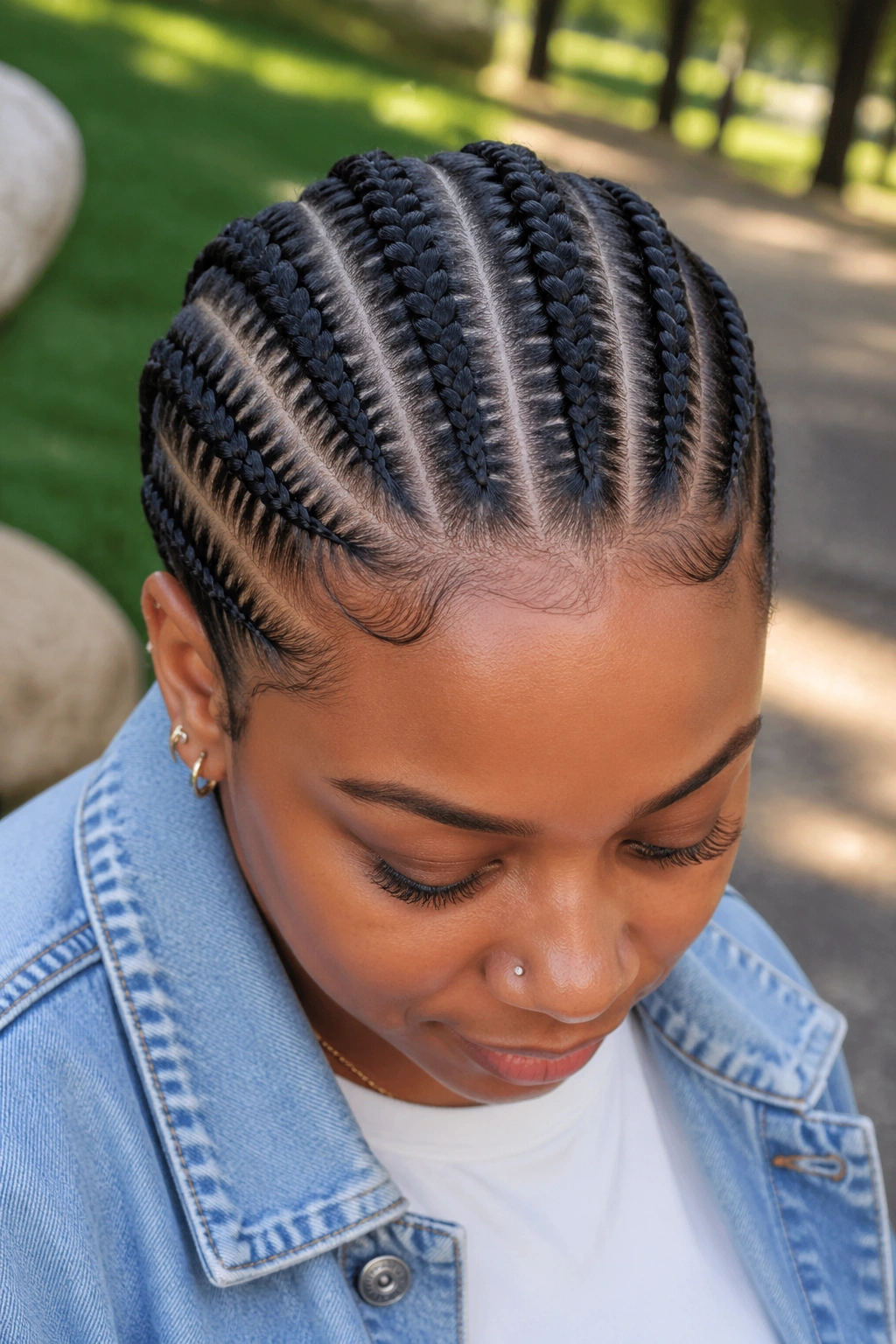
The center braid runs straight. The two adjacent braids curve slightly outward. The two outermost braids curve more dramatically. The result is a fan shape rather than parallel lines.
The fanning creates movement in what would otherwise be a static design. Each braid still moves from front to back, but the angles tell a story.
This style works on round-shaped heads particularly well because the curves complement the head’s natural shape.
20. Five Straight Backs with Underbraids
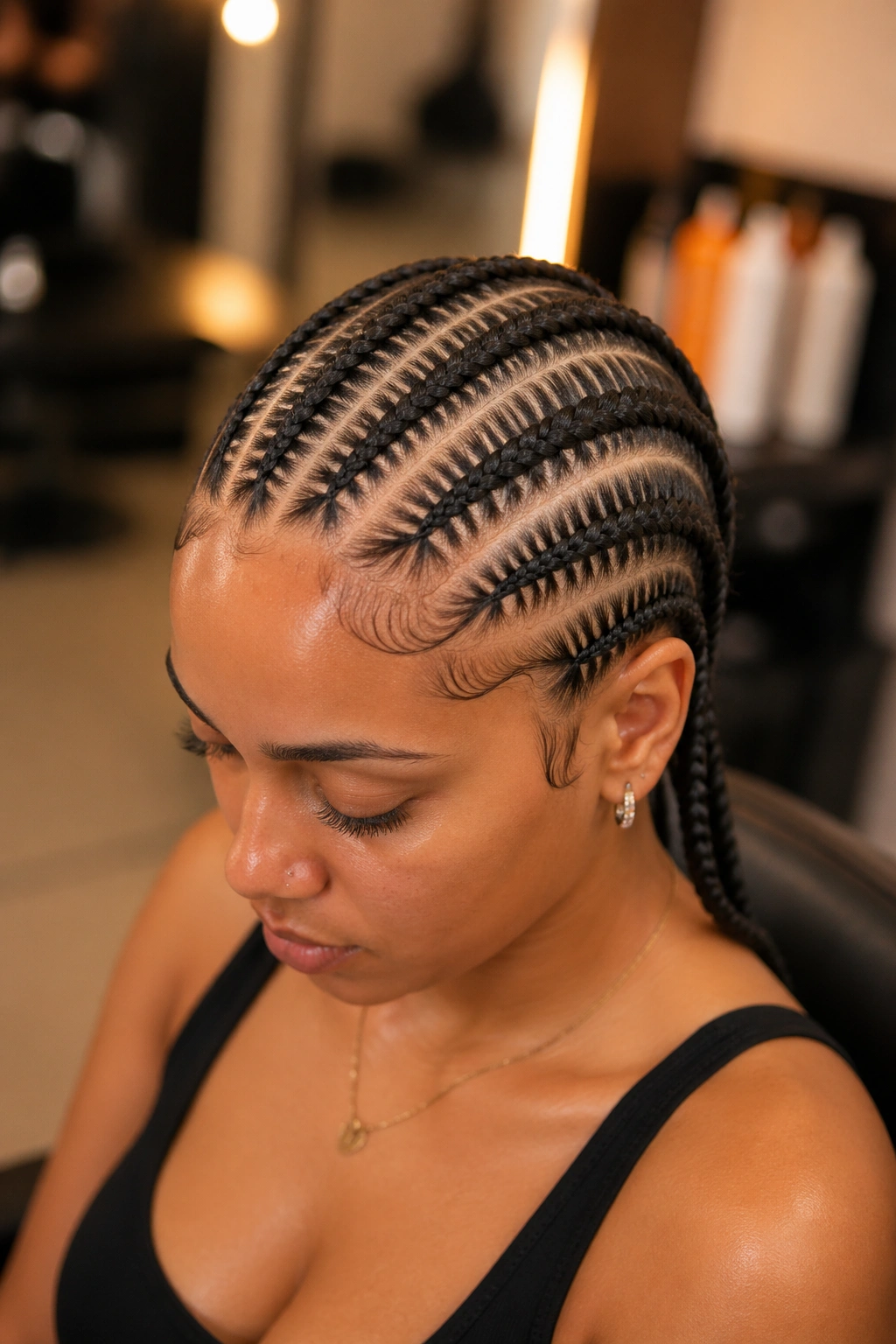
Visible five braids on top, smaller secret braids underneath. The underbraids aren’t visible when you’re looking at the top of the head, but they create extra structure and prevent the loose hair underneath from puffing up.
Underbraiding is a technique often skipped on adult installs but is worth the extra time for a polished overall look. The underlayer stays controlled, which keeps the visible top braids looking neater longer.
Add about 30 minutes to the install time for proper underbraids.
21. Five Straight Backs with a Twist Accent
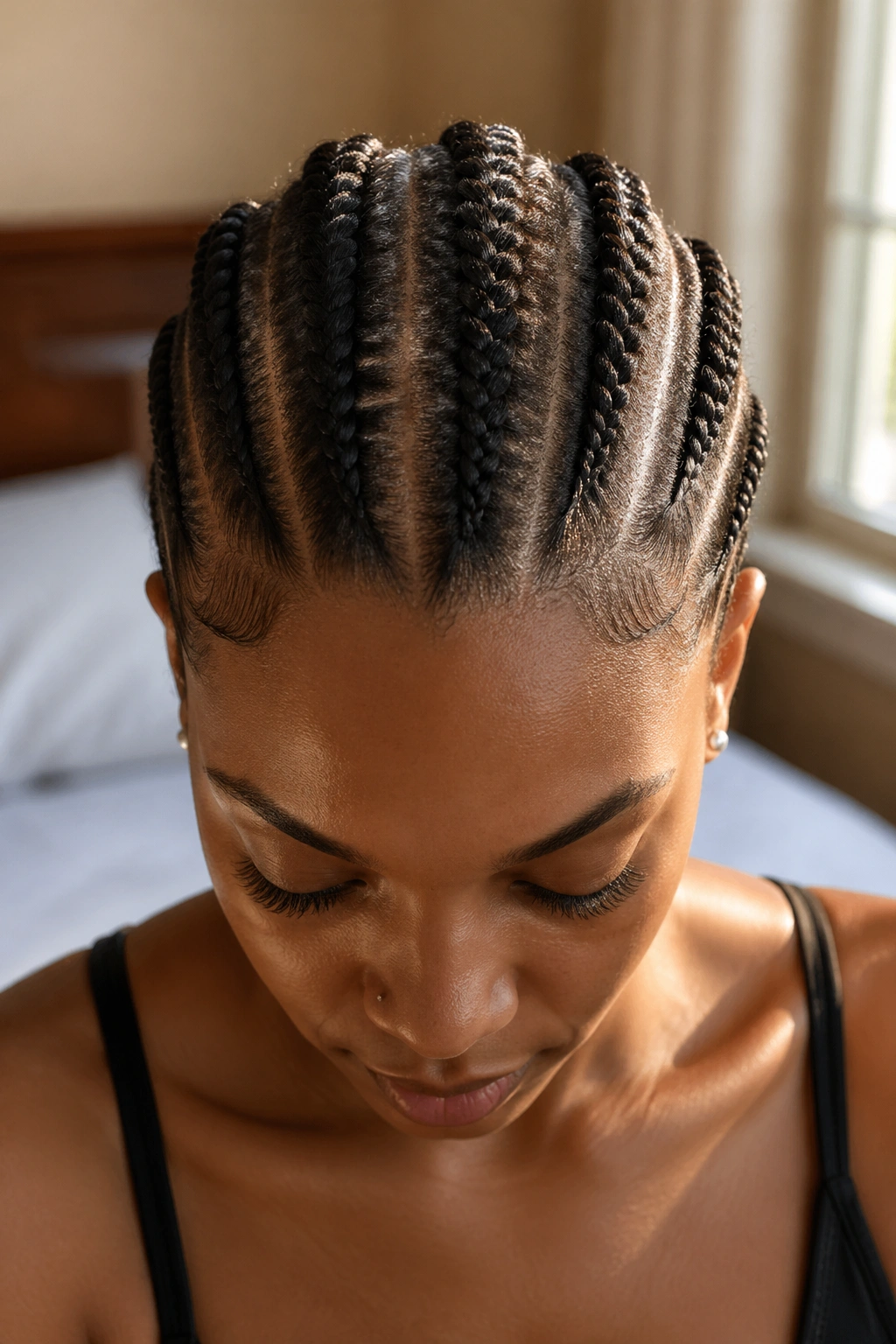
One of the five braids — usually the center — is a two-strand twist rather than a three-strand cornrow. The twist offers a different texture from the four cornrows.
The twist accent reads almost imperceptibly different from a distance. Up close, the texture difference becomes the showpiece.
This style suits women who want to break the monotony of identical braids without adding color or accessories.
22. Five Straight Backs Going to a Pony
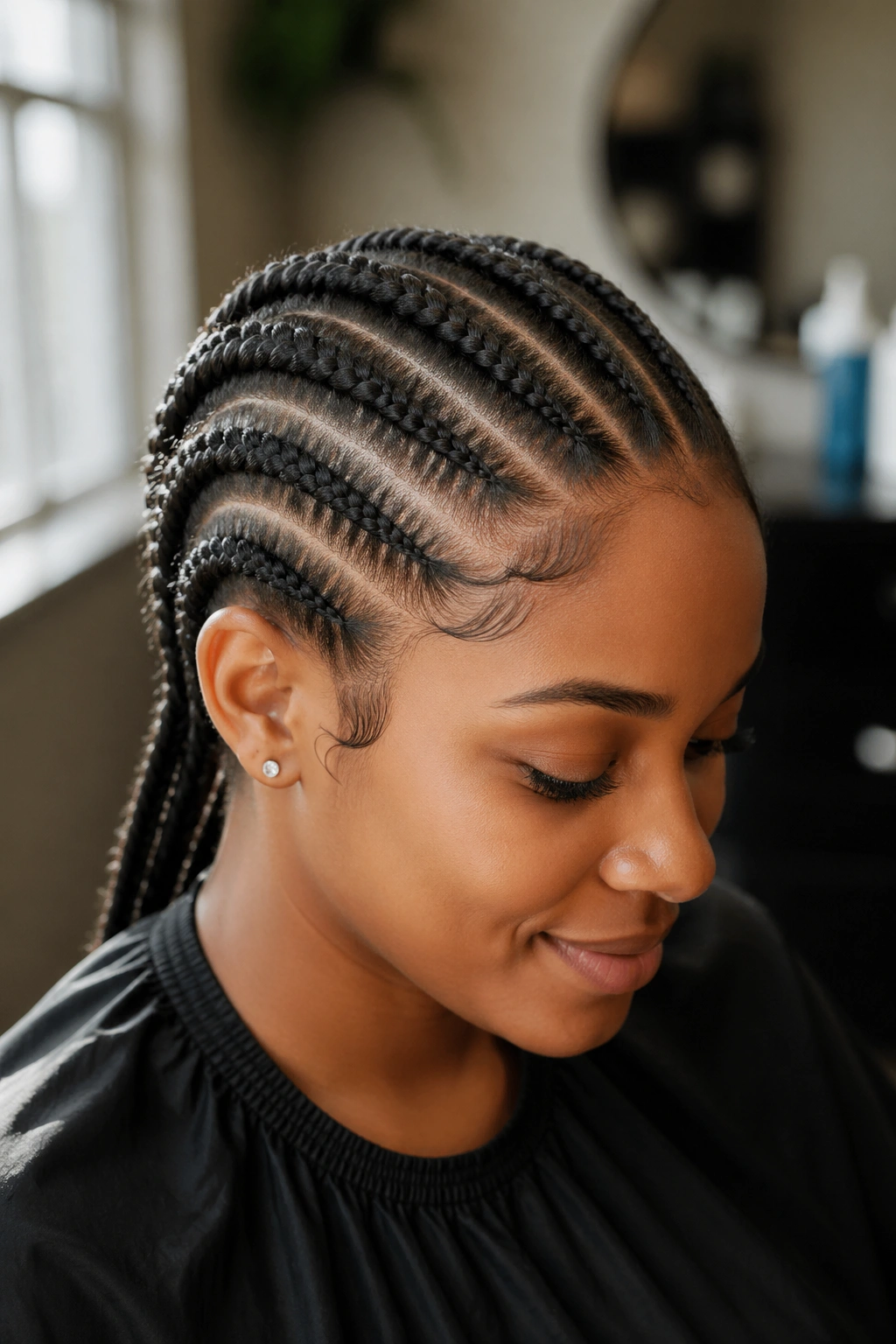
All five braids end at the back where they’re gathered into one high or mid-back ponytail. Different from the bun version because the ends remain visible and free-flowing.
How to Style It
Braid all five toward the desired ponytail position. Gather and secure with a small clear elastic. The braid ends fan out from the elastic point like a horse’s tail.
The ponytail gives movement that buns and tucked styles don’t. The braid ends sway when you walk. The visual reads confident and athletic.
A high ponytail elongates the face. A mid-back ponytail flatters most face shapes. A low ponytail reads more conservative.
Maintenance for Five-Braid Cornrows
Sleep with a satin scarf tied snug at the hairline every night. The scarf is the difference between a style that holds for three weeks and one that fuzzes by day five.
Moisturize the scalp every third day with a light oil — jojoba, sweet almond, or rosemary work well. Apply with a dropper directly to the parts. Avoid pouring oil generally over the head.
Refresh edges weekly with a small amount of edge gel and a soft brush. Don’t add fresh gel on top of old gel — it cakes. Wipe the hairline with a damp cloth first to remove old buildup.
Avoid washing the braids beyond a light scalp rinse with diluted apple cider vinegar (one part vinegar, three parts water) once a week. Full shampoos cause more frizz than they’re worth.
Picking Five-Braid Variations by Face Shape
Round faces: tapered ends or pulled-to-side variations elongate the face.
Oval faces: every variation works without modification.
Square faces: curved sides or fan variations soften the jawline.
Heart faces: bun or low ponytail variations balance the forehead width.
Long faces: avoid high ponytails. Choose halo wrap or beaded ends to add visual width at the cheeks.
Common Mistakes with Five-Braid Installs
Mistake one: uneven center. The center braid sets the symmetry. If it drifts off-center by even half an inch, the whole style reads crooked.
Mistake two: rushing the parts. With only five braids, each part line is a major design element. A wandering part is immediately visible.
Mistake three: braiding too tight at the front. The first stitch of each braid is where most edge damage starts. Keep tension moderate at the very front and increase only as you move back.
Mistake four: forgetting the night scarf. Five braids look sparser than eight or ten, which means each braid carries more visual responsibility. Frizz is more obvious.
Mistake five: wearing the style past four weeks. Even the cleanest five-braid install starts to shift past week four. Take it down on schedule rather than pushing for one more week.
Takedown for Five-Braid Cornrows
Spray each braid with diluted conditioner — two parts water, one part slip-heavy conditioner. Let sit ten minutes.
Unravel from the ends up. Use fingers, not a comb. The five-braid count means takedown is faster than higher-count installs — about 45 minutes for a full head versus two-plus hours for micros.
After takedown, shampoo gently in sections. Follow with a deep conditioner under a plastic cap for 30 minutes. Detangle the conditioned hair with a wide-tooth comb from ends to roots.
Give your hair 48 to 72 hours before the next install. The break lets your scalp recover from continuous tension and reduces the cumulative wear on your edges.
Five straight back cornrows are the count that grown women keep coming back to. The geometry works. The install is fast enough to do on a weekday evening. The style holds for weeks with minimal effort. Whether you wear them classic, beaded, colored, or extended into long feed-ins, the five-braid framework gives you a finished look that reads polished without feeling overdone. Pick your variation, install with care, and let the simple geometry of five braids do the heavy lifting.
