



Ghana cornrows earned their reputation as one of the most protective braiding styles ever developed. The technique — feed-in braiding with graduated thickness — distributes tension so evenly across the scalp that the hair underneath can rest for weeks without the strain that breaks edges and thins crowns. Ghana cornrows that protect hair work because the structure itself does the protective work. Your natural hair gets tucked tightly against the scalp inside each braid. The added kanekalon takes on the weight of length and styling. Your real hair stays safe from wind, sun, product buildup, and mechanical manipulation for the entire install period.
The style originated in West Africa and carries both a cultural legacy and a practical purpose. Over the years, Ghana cornrows have been adapted into many variations, but the core technique of feeding in small pieces of hair gradually along the row remains the same.
The protection is real and measurable. Hair that rests in properly installed Ghana cornrows shows less breakage, holds moisture longer, and retains length more effectively than hair manipulated daily.
What Makes Ghana Cornrows Protective
The feed-in technique starts each braid with just your natural hair. Small pieces of synthetic hair get added gradually — usually every inch or two — as the braid progresses. By the time the braid reaches the nape, most of the volume is extension hair, but the root is just your own hair braided close to the scalp.
This gradual addition means the tension at the scalp stays low. Traditional cornrows with big bulky extensions right at the root pull hard on the follicles. Ghana cornrows distribute that pull along the length of the braid, so no single point bears too much weight.
The tight braid structure also protects the hair shaft. Friction from pillowcases, clothing, and hands can’t reach hair that’s locked inside a tight braid. The cuticle stays closed and intact for the duration of the install.
The Difference Between Ghana and Standard Cornrows
Standard cornrows can be done with or without extension hair. When extensions are added, they usually enter at the very root — producing a bulky, thick braid from the first stitch.
Ghana cornrows always use feed-ins, and the feed-ins are always gradual. The root of the braid is thin. The braid grows thicker as it progresses.
This graduated thickness is what gives Ghana cornrows their signature look. Each braid starts delicate and builds to a full, substantial rope by the time it reaches the ends.
Why the Install Technique Matters for Protection
A poorly executed Ghana cornrow can be worse for the hair than no protective style at all. The tension needs to be even throughout. The feed-in pieces need to be small. The parting needs to be clean without pulling hair across multiple sections.
Find a braider who specializes in the technique. Ghana cornrows done by someone who only knows standard cornrows will produce a style that looks close but doesn’t deliver the same protective benefits.
Budget for the time. A full head of Ghana cornrows takes 4-6 hours to install properly. Shortcuts in this technique show both in appearance and in protection.
Prepping the Hair for Maximum Protection
Start with clean hair. A clarifying wash removes product buildup that can interfere with the braid’s grip.
Follow with a deep conditioner. Moisturized hair holds the braid pattern better and stays healthier during the install.
Detangle completely before the braider starts. Knots cause uneven tension during braiding and weak points in the finished rows.
Apply a leave-in conditioner throughout. The leave-in seals moisture inside each braid for the first week of wear.
Stretch the hair with a low-heat blow dry. Stretched hair gives the braider a smooth, workable surface.
What to Bring to the Appointment
Kanekalon that matches your natural color at the root. The first few inches should blend with your hair so the transition is invisible.
Pre-stretched kanekalon is best. Regular kanekalon needs to be stretched before the install, which adds time.
Edge gel for smoothing the hairline. Bring a small tub of a gel you know works with your hair.
A satin scarf or bonnet for the ride home. Fresh braids should be protected immediately.
1. Jumbo Ghana Cornrows
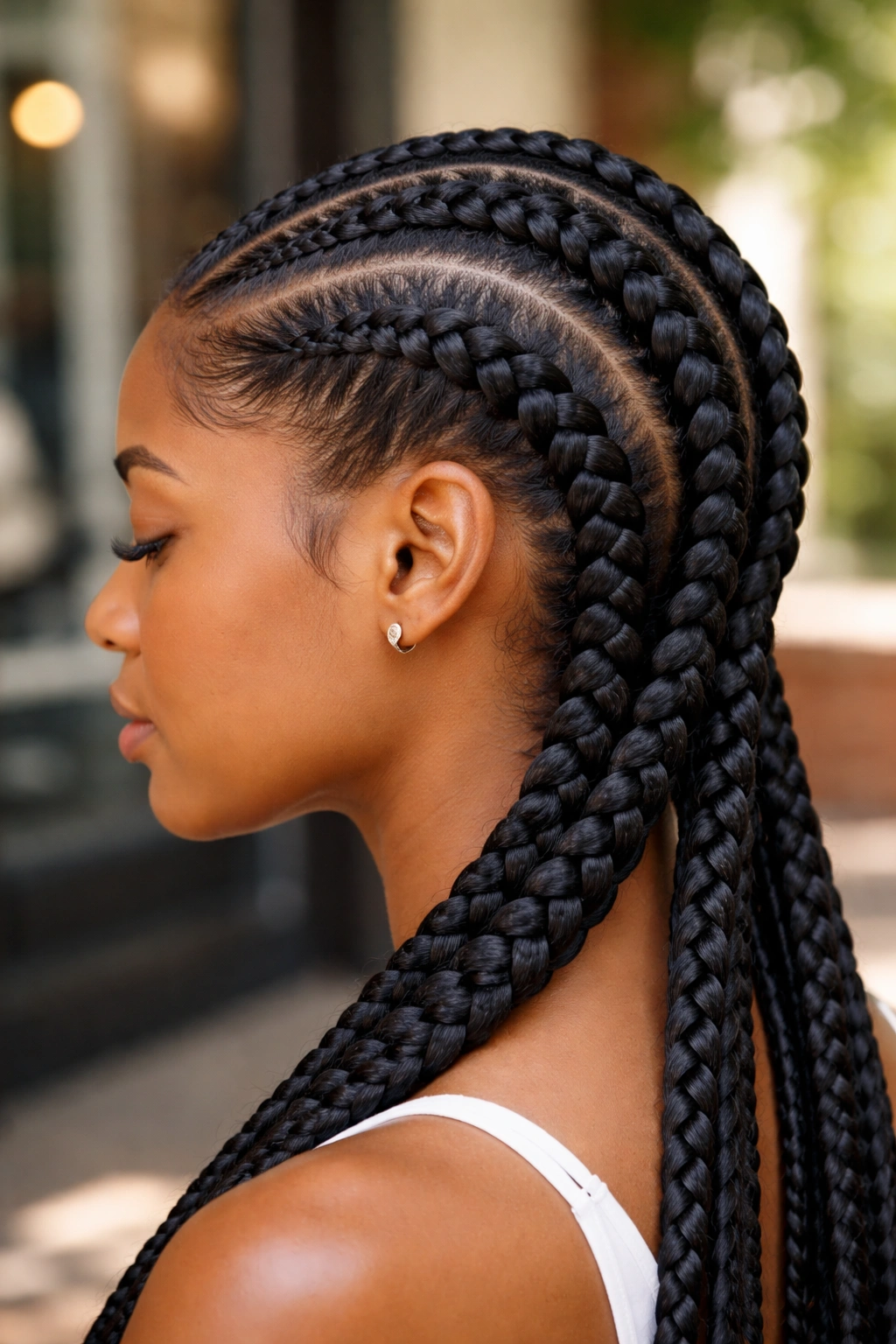
Four to six thick Ghana cornrows running straight back from the hairline to the nape. The jumbo size means each braid is substantial and the style is relatively low-maintenance.
Why It Works
- Low braid count means faster installation
- Each braid can hold significant length without tension
- Suits people who want cornrows without intricate patterns
- Lasts 4-6 weeks with proper care
Tip: Choose kanekalon that’s slightly heavier than standard for jumbo braids. The added weight makes the braids feel substantial rather than wispy.
2. Lemonade Braids
Side-swept Ghana cornrows running diagonally across the head. The style became widely recognized through music videos but has roots in traditional African braiding techniques.
The diagonal pattern creates visual movement across the face. The braids cascade over one shoulder, which reads as both elegant and casual depending on styling.
This is one of the most requested Ghana cornrow styles because it suits many face shapes and works in many settings.
3. Straight-Back Ghana Cornrows With Beaded Ends
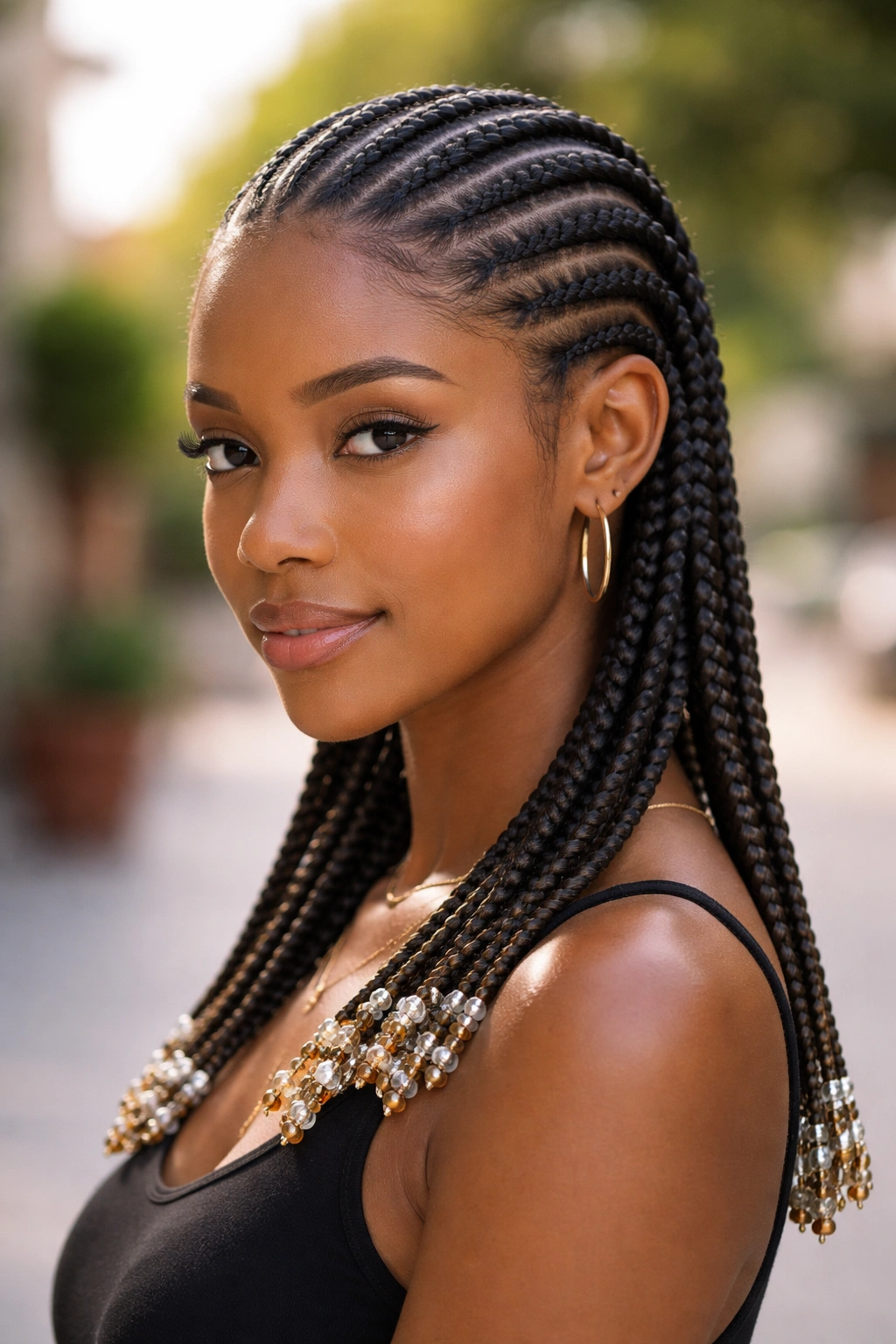
Classic straight-back Ghana cornrows finished with small beads at the tips. The beads catch light and add movement to an otherwise simple style.
Bead placement should be deliberate. Too many beads weigh the braids down. Three to five beads at the end of each braid gives interest without adding strain.
Wooden beads feel natural and earthy. Glass beads add shine. Metal beads catch light most dramatically.
4. Ghana Cornrows Into a Low Bun
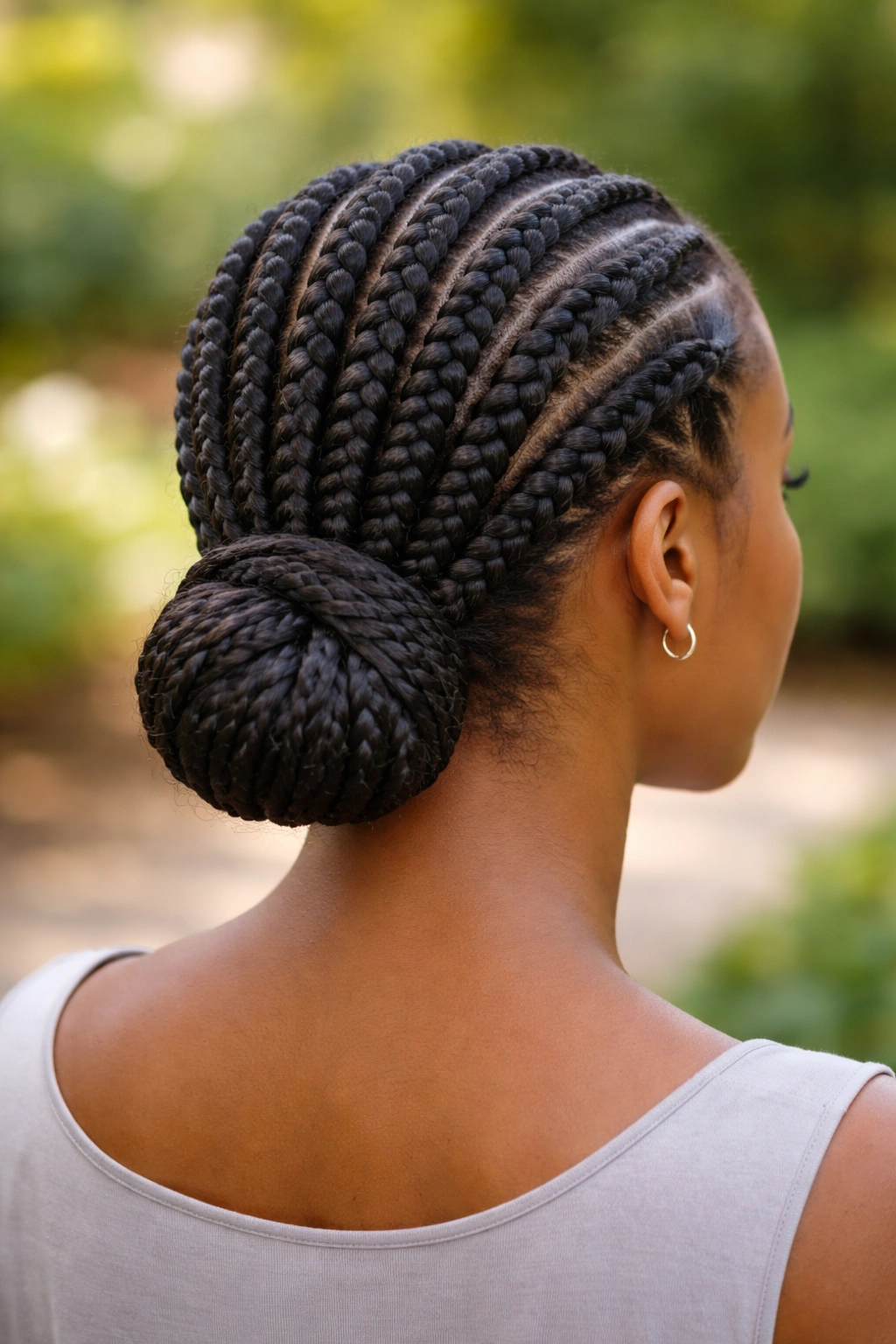
Braid pattern: eight Ghana cornrows running front to back. Finish: low bun at the nape that contains all the braid ends.
The bun finish keeps the braid ends contained and protected. No loose ends to fray against clothing or collect lint.
This style suits professional environments well. It reads as polished and intentional.
The bun needs secure pinning to hold the weight of the extension hair. A small amount of gel smooths any flyaways where the braids enter the bun.
5. Ghana Cornrows With a Curved Pattern
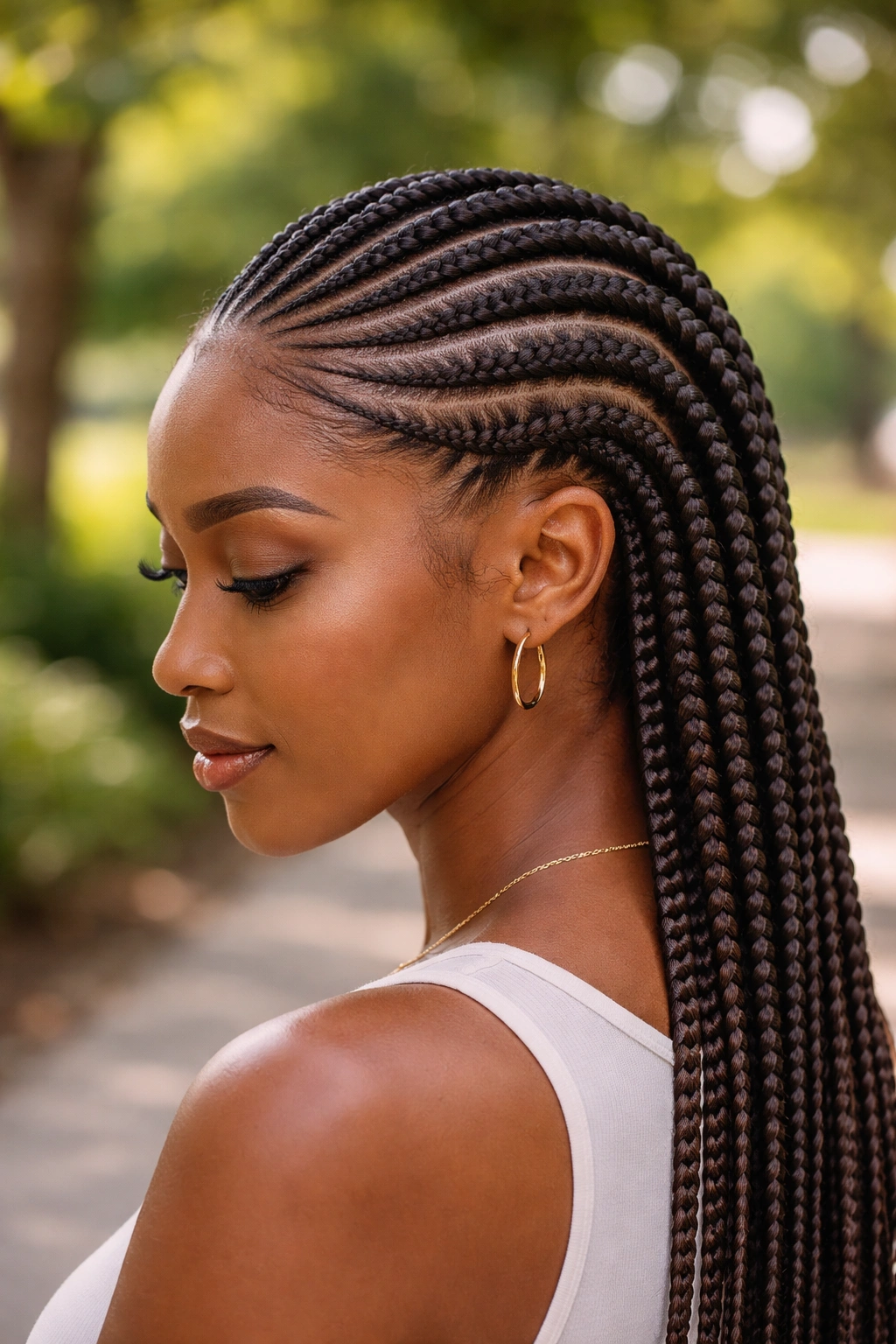
What if the Ghana cornrows don’t run in straight lines?
Curved Ghana cornrows follow an arc pattern across the head. Some versions have all the braids curving in one direction. Others have them meeting at a central point like the spokes of a wheel.
How to Use It
Curved patterns show off the braider’s skill. The parting work required to create clean curves is more difficult than straight parting.
Curved Ghana cornrows take longer to install than straight ones — add 45-60 minutes to the typical time. The result is a more dynamic, visually interesting style that photographs beautifully from any angle.
6. Fulani-Inspired Ghana Cornrows
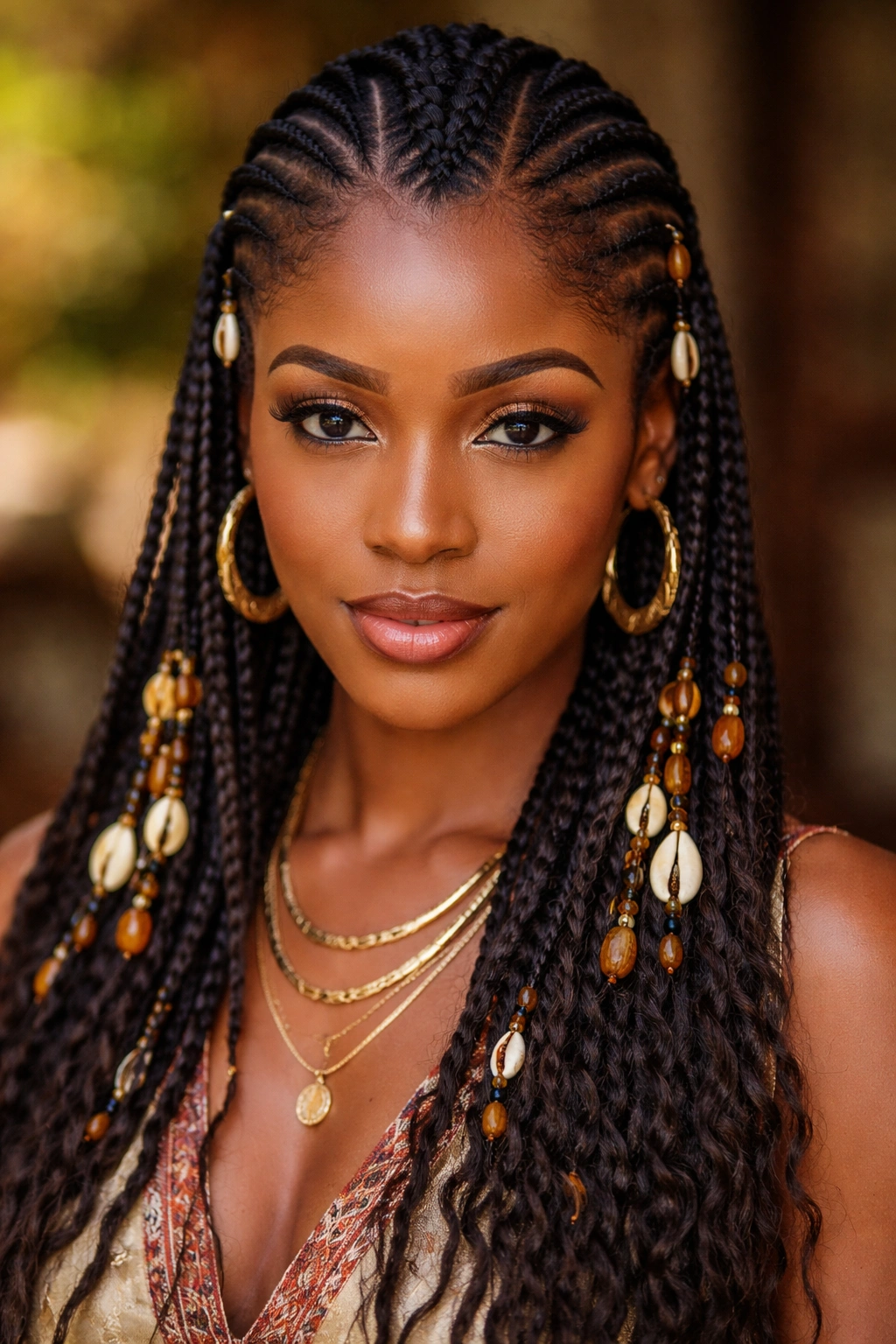
Traditional Fulani braiding combines Ghana cornrows with specific accent placement. One thick center braid runs down the middle of the head, flanked by smaller braids on each side.
Beads, cuffs, and shells decorate specific rows. The accents follow traditional Fulani patterns rather than random placement.
This style carries cultural significance. Wearing it with respect and understanding of its origins matters.
7. Ghana Cornrows With a Ponytail Finish
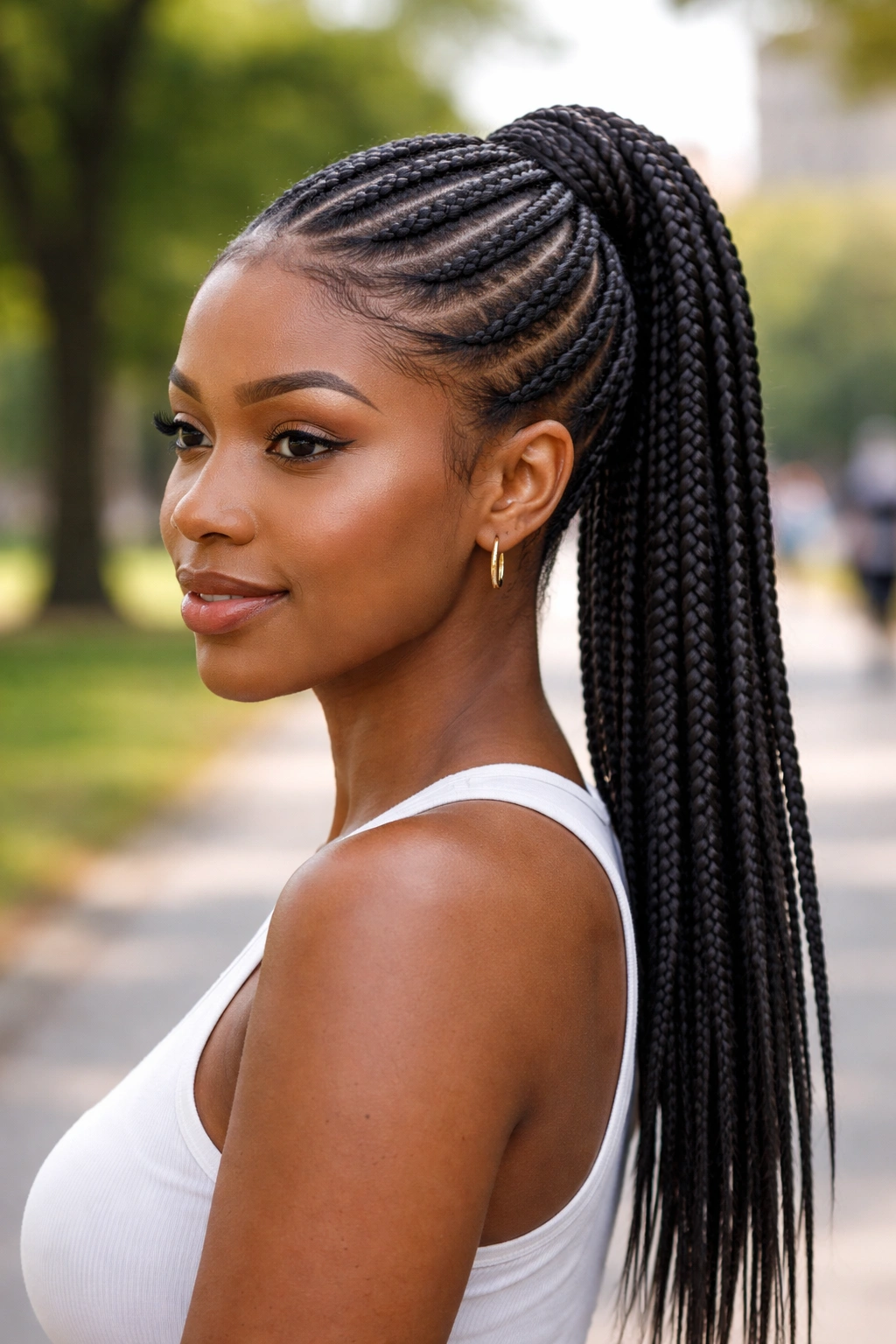
The braids converge at a gathering point — usually at the nape, crown, or side — and the ends hang free as a ponytail.
This is one of the most versatile Ghana cornrow styles. The gathering point can be positioned for different looks: low for professional, high for sporty, side for elegant.
The ponytail can be further styled — curled, wrapped at the base, or left straight — to match different occasions.
8. Ghana Cornrow Bob
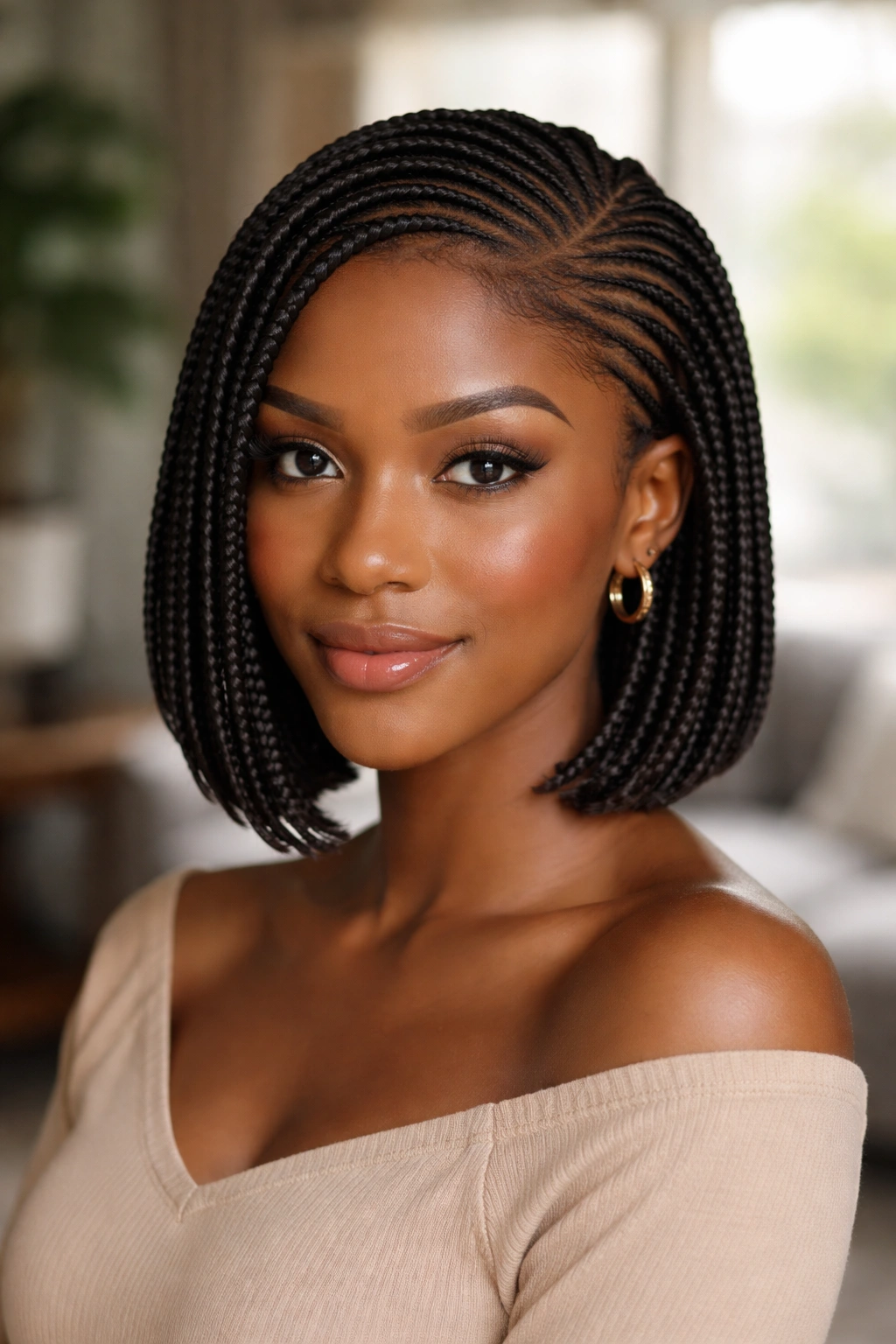
Shorter Ghana cornrows that end at the jawline or just below. The bob length is unusual for Ghana cornrows, which typically extend to mid-back or longer.
The bob version uses shorter kanekalon for a chic, modern look. It requires less maintenance than longer styles and suits people who prefer shorter hair.
This style photographs particularly well from the front, where the bob line frames the face cleanly.
9. Ghana Cornrows With Feed-In Bangs
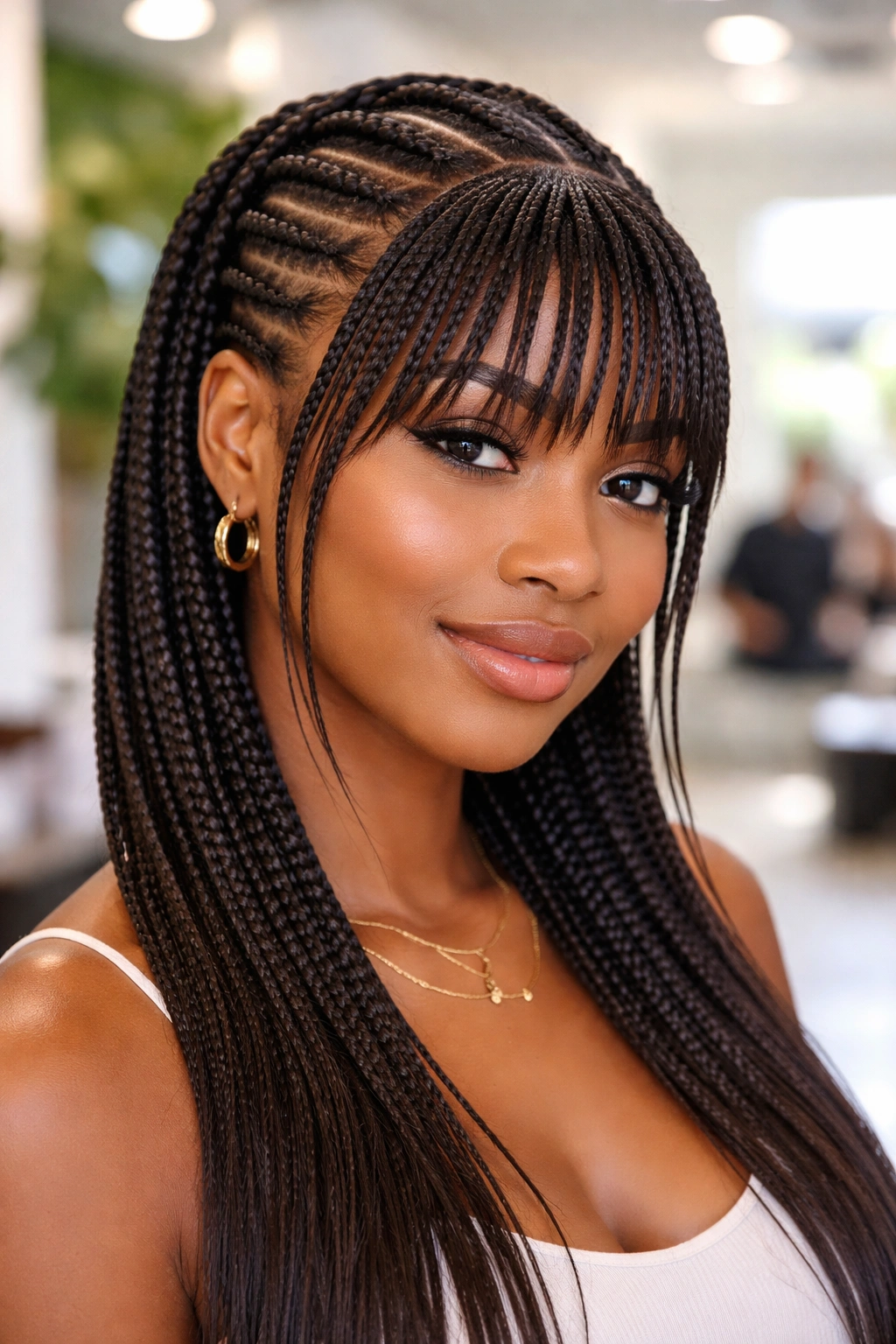
A fringe of shorter extension hair falls across the forehead. The fringe is integrated into the front Ghana cornrows rather than added as a separate piece.
The bangs soften the face and add a youthful element to the style.
Curtain bangs that part in the middle and sweep outward are the most flattering version. Full straight bangs work for some face shapes but not all.
10. Zigzag Ghana Cornrows
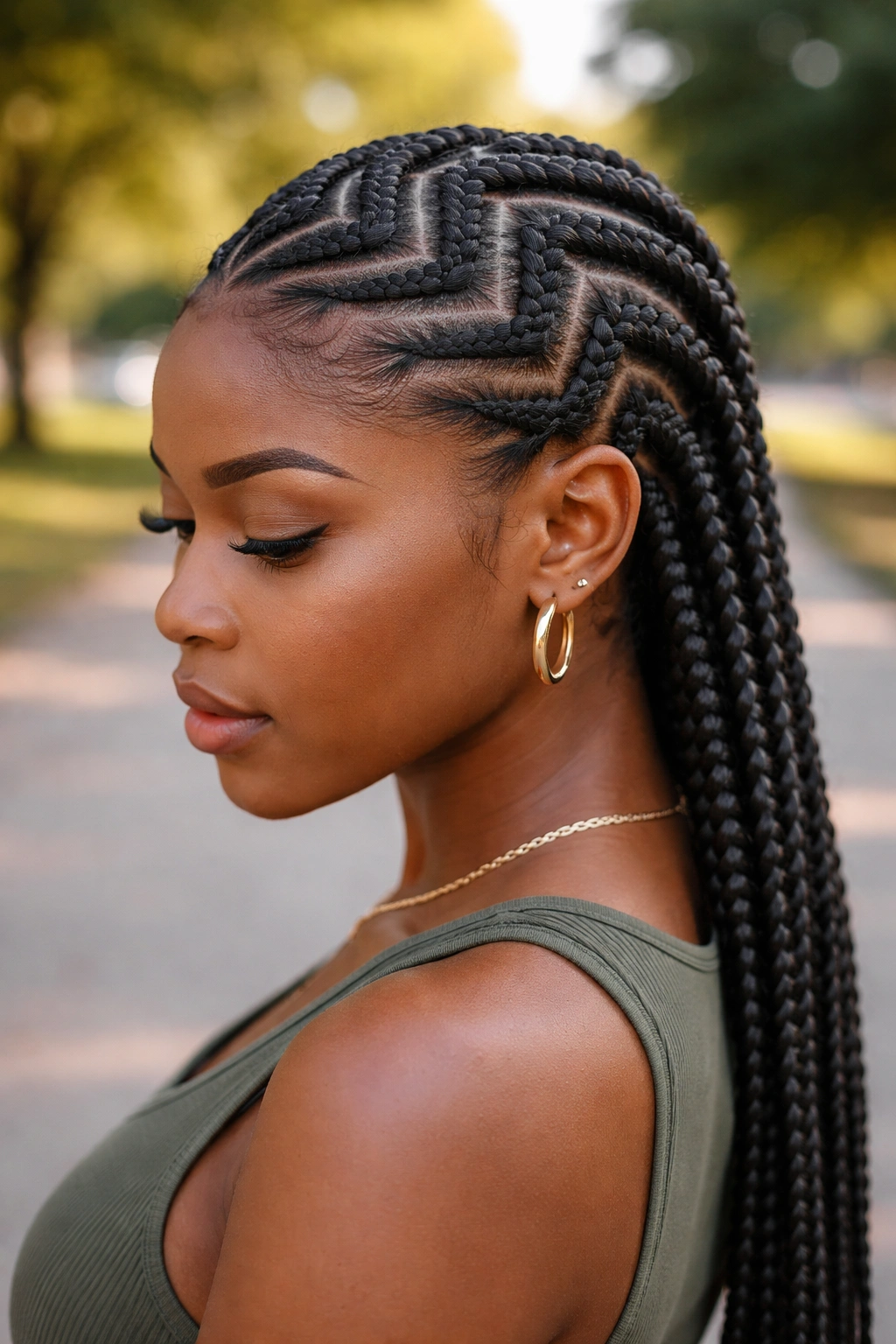
Instead of running in straight lines, the Ghana cornrows zigzag across the head. Each braid follows a sharp angular path from front to back.
Zigzag patterns are challenging to install. The braider must create consistent angles without the braid becoming uneven at the turns.
The finished look is bold and graphic. It suits wearers who want cornrow styles that stand out.
11. Ghana Cornrows With a Side Part
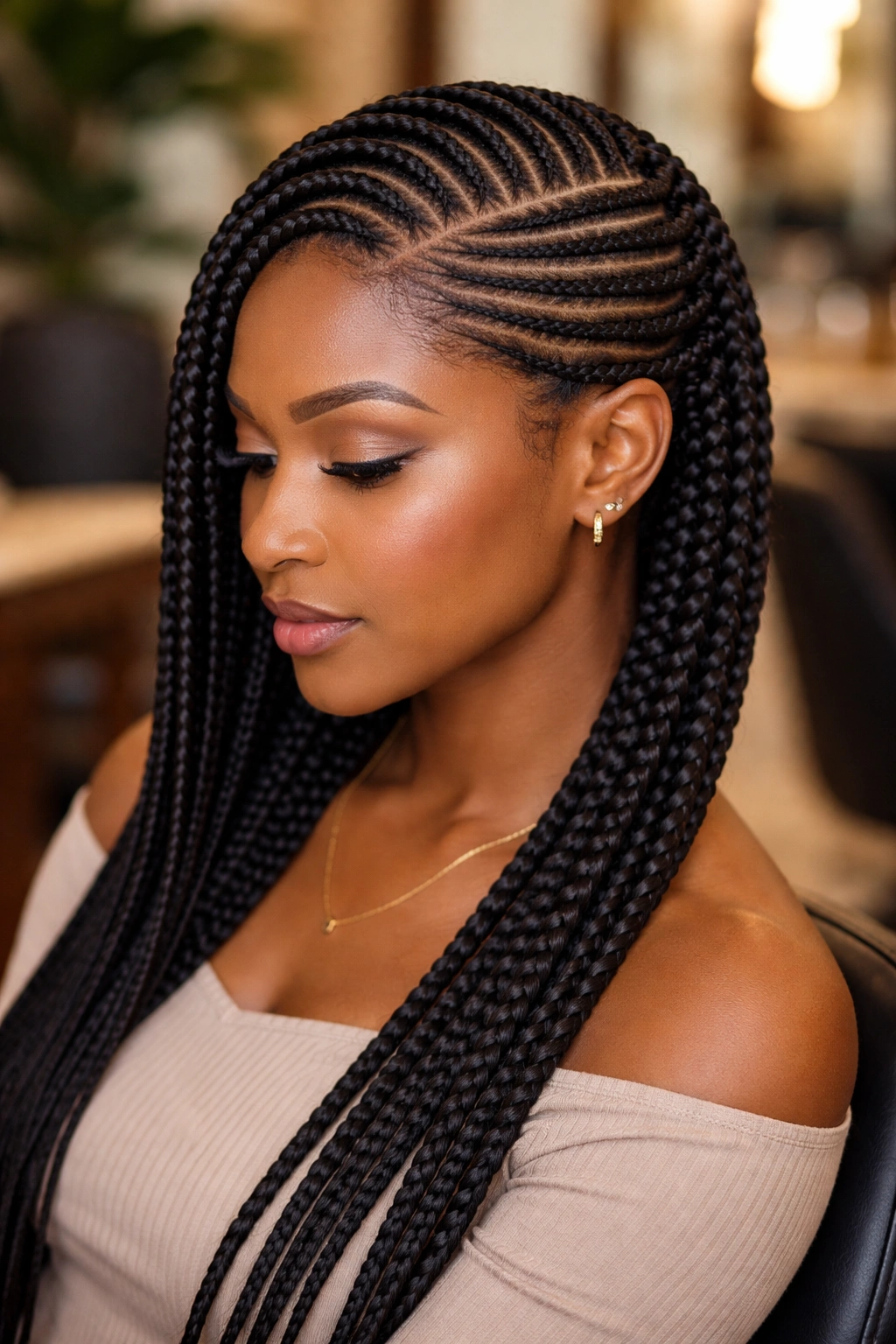
A deep side part defines the front of the style. The Ghana cornrows flow from the side part across the head, with one side having more braids than the other.
The asymmetry feels intentional and polished. It suits faces that benefit from visual balance rather than pure symmetry.
The part itself should be drawn cleanly with a rat-tail comb. A sharp part signals a skilled installation.
12. Ghana Cornrows With Heart-Shaped Parting
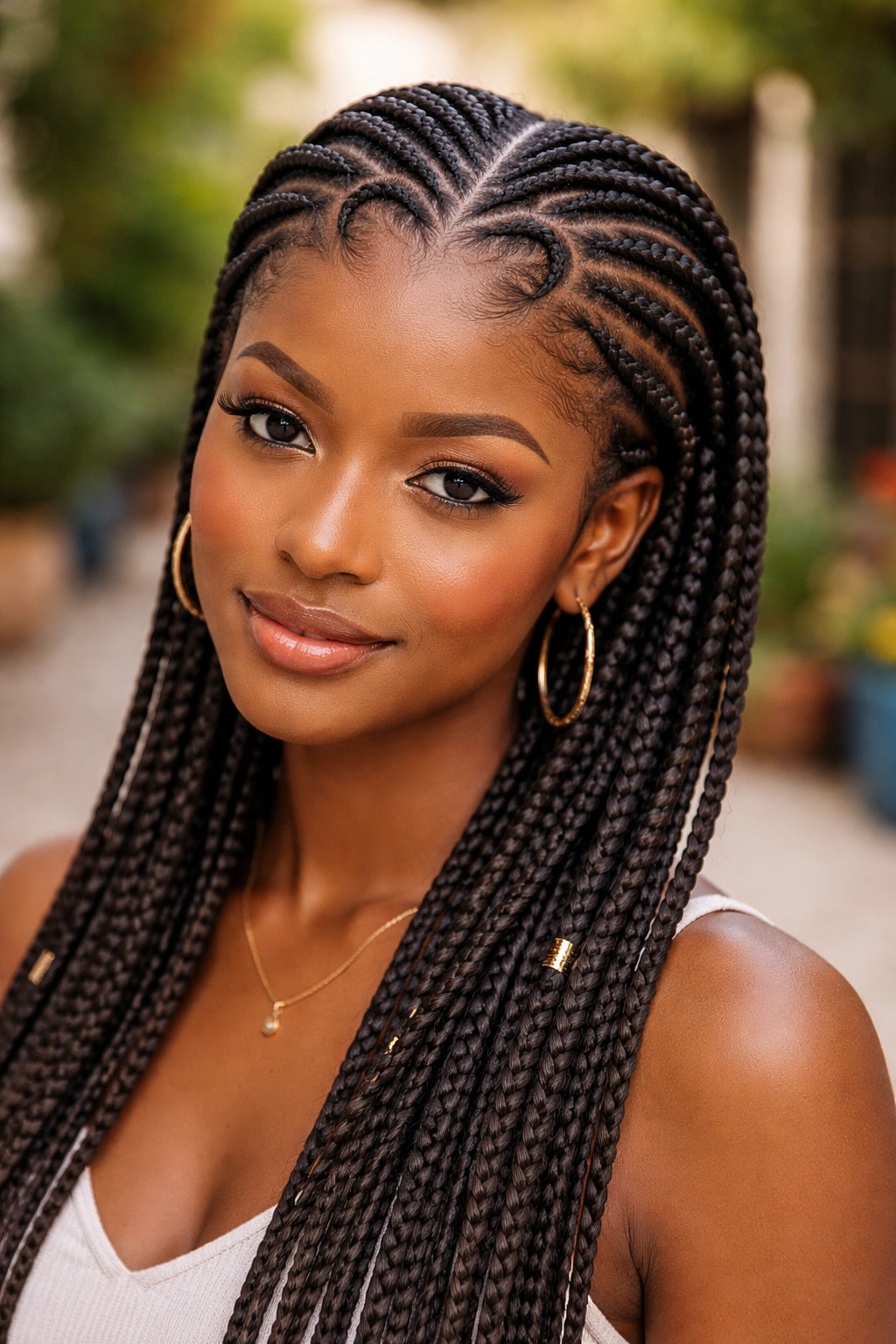
The parting at the front of the head forms a heart shape. The braids flow out from the heart in both directions.
This is a playful, feminine style. It suits casual and creative environments.
The heart shape requires precise parting at the front. A sloppy heart looks like a random curve rather than a deliberate design.
13. Ghana Cornrows With a Braided Crown
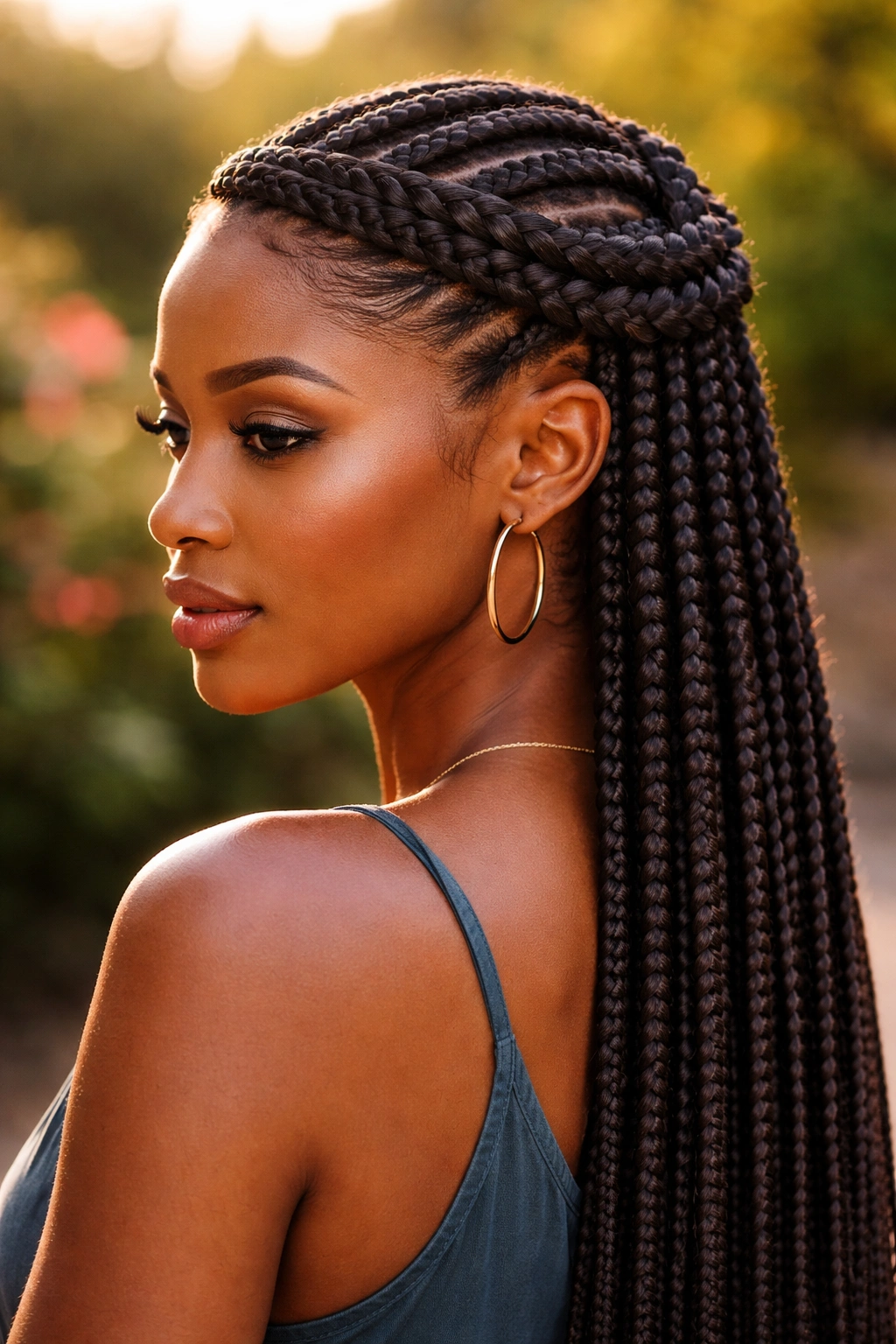
The braids wrap around the top of the head like a crown before flowing down the back. The crown adds a decorative element to an otherwise flowing style.
The crown can be narrow — one row wrapping around — or wide — multiple rows creating a thick band across the top.
This style works well for formal occasions. The crown reads as regal and intentional.
14. Ghana Cornrows With Color Accents
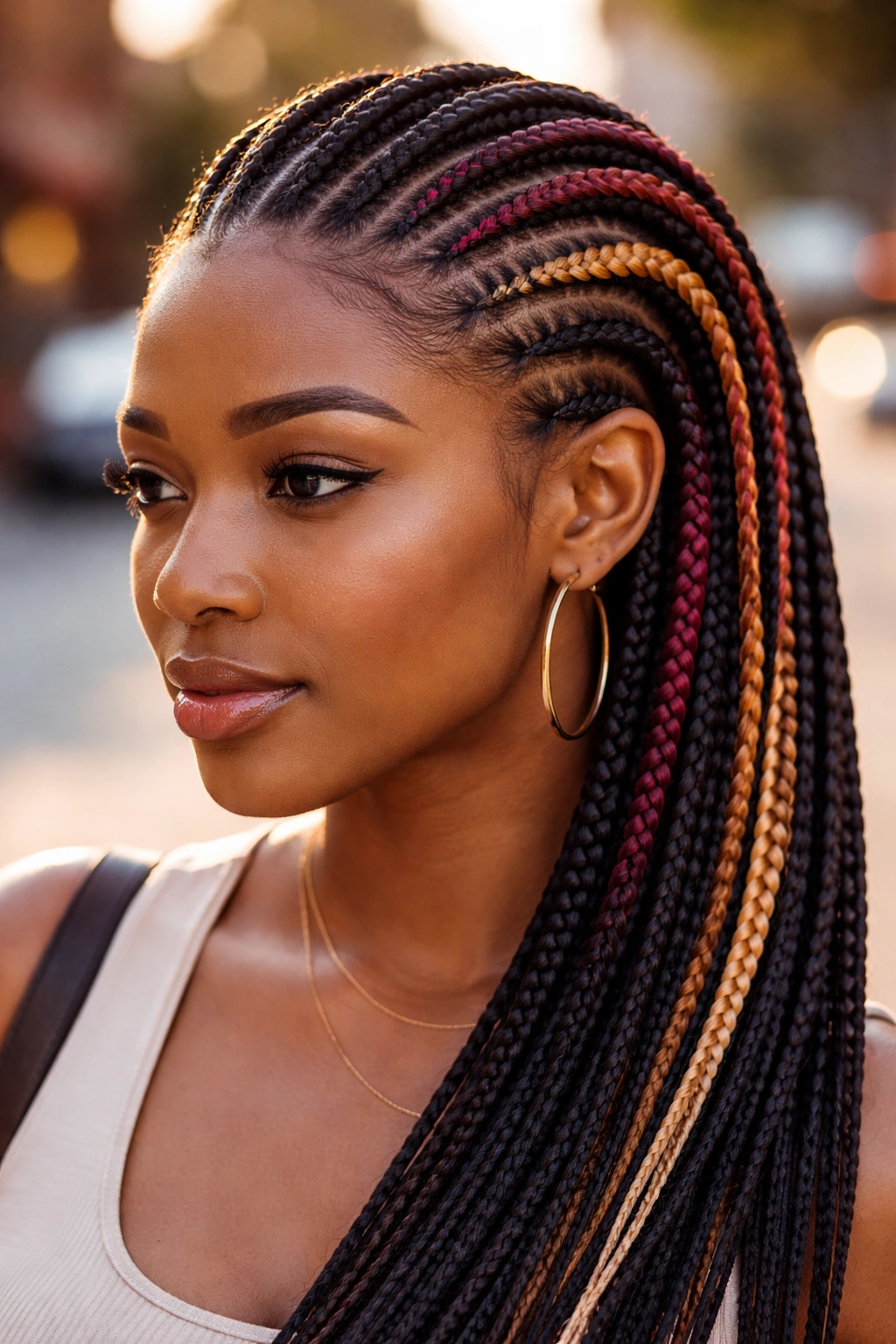
Most rows stay natural color. A few selected rows use colored kanekalon — burgundy, copper, honey blonde — for accent.
The color placement should be asymmetric rather than centered. Asymmetric color placement looks intentional and stylish. Centered color can feel awkward.
This style is a gentle introduction to colored cornrows for wearers who aren’t ready to commit to full color.
15. Ghana Cornrows With Stitched Detail
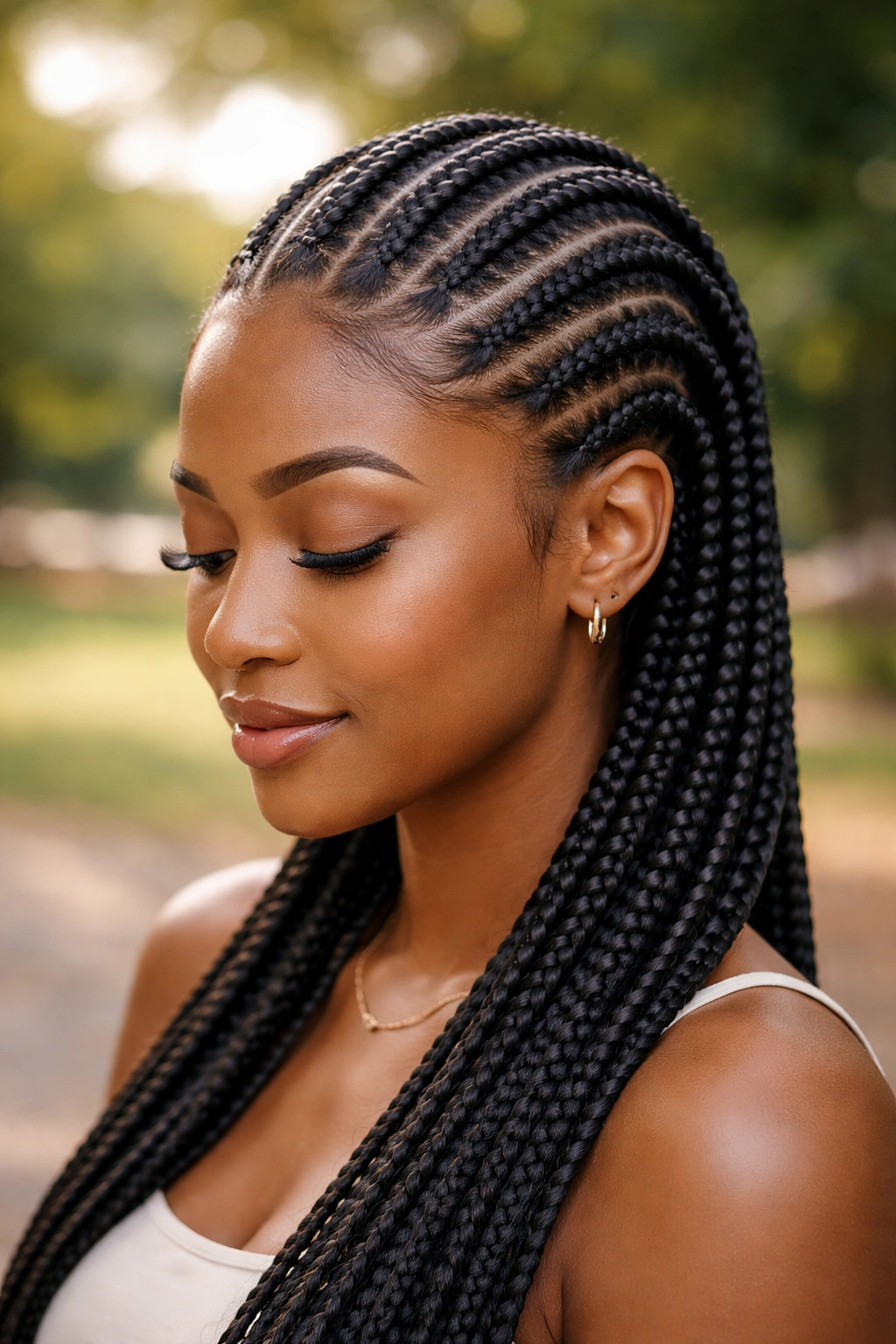
Stitch braiding adds small horizontal ridges along each cornrow. The stitches happen during braiding — the braider creates small hitches in the pattern every half inch or so.
Combined with the Ghana cornrow’s graduated thickness, stitching creates a highly textured finish that catches light and reads as detailed.
This style takes longer to install — add an hour to the typical time. The result holds up well for 3-4 weeks.
16. Ghana Cornrows With a Thick Middle Braid
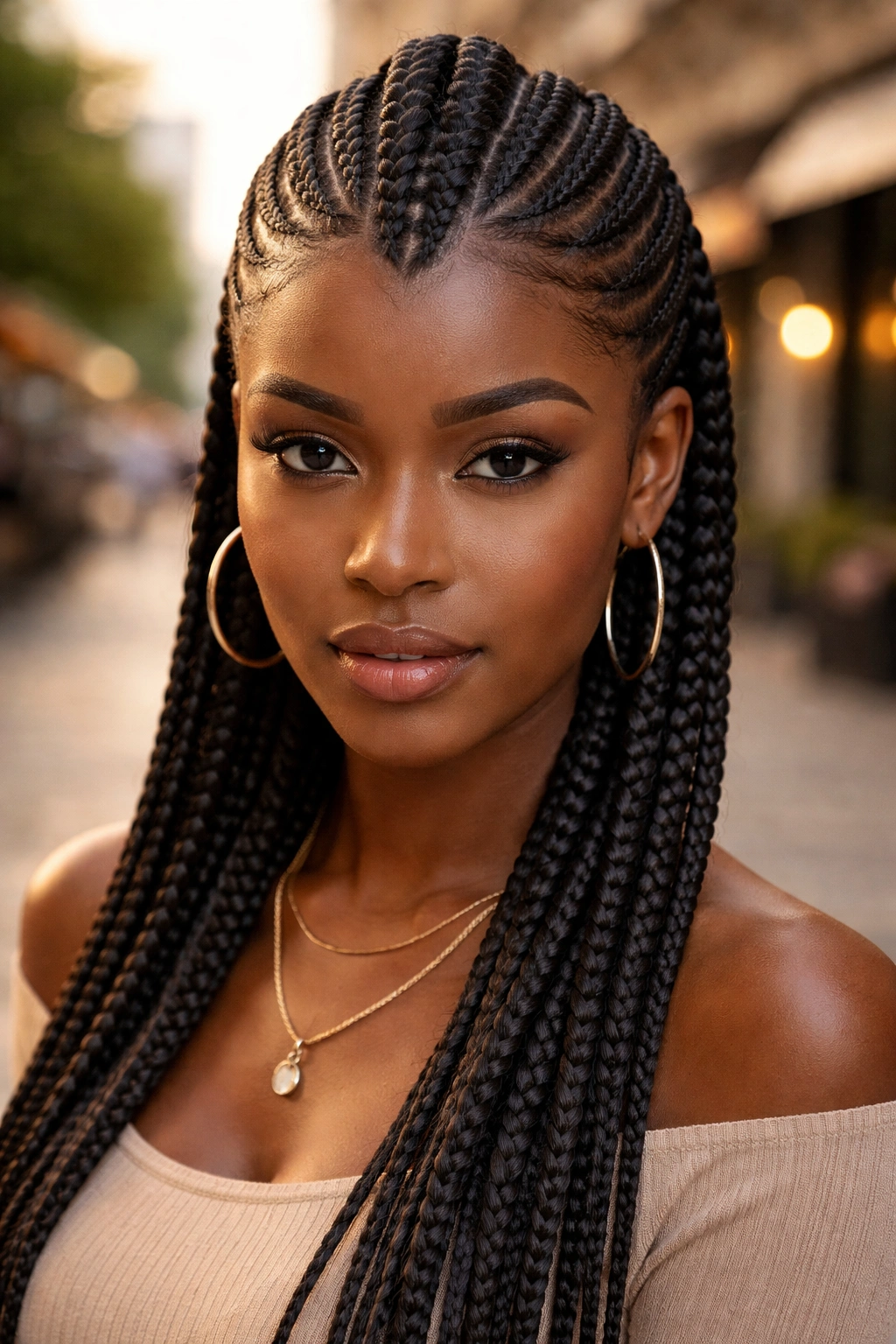
One central braid is thicker than the rest. Usually it’s the middle braid along a straight-back pattern, made thicker by including a wider section of natural hair and more feed-ins.
The thick center braid acts as a spine for the style. It draws the eye down the center and anchors the overall composition.
This is a traditional Fulani-adjacent styling choice. It nods to African braiding traditions.
17. Ghana Cornrows With a Swoop
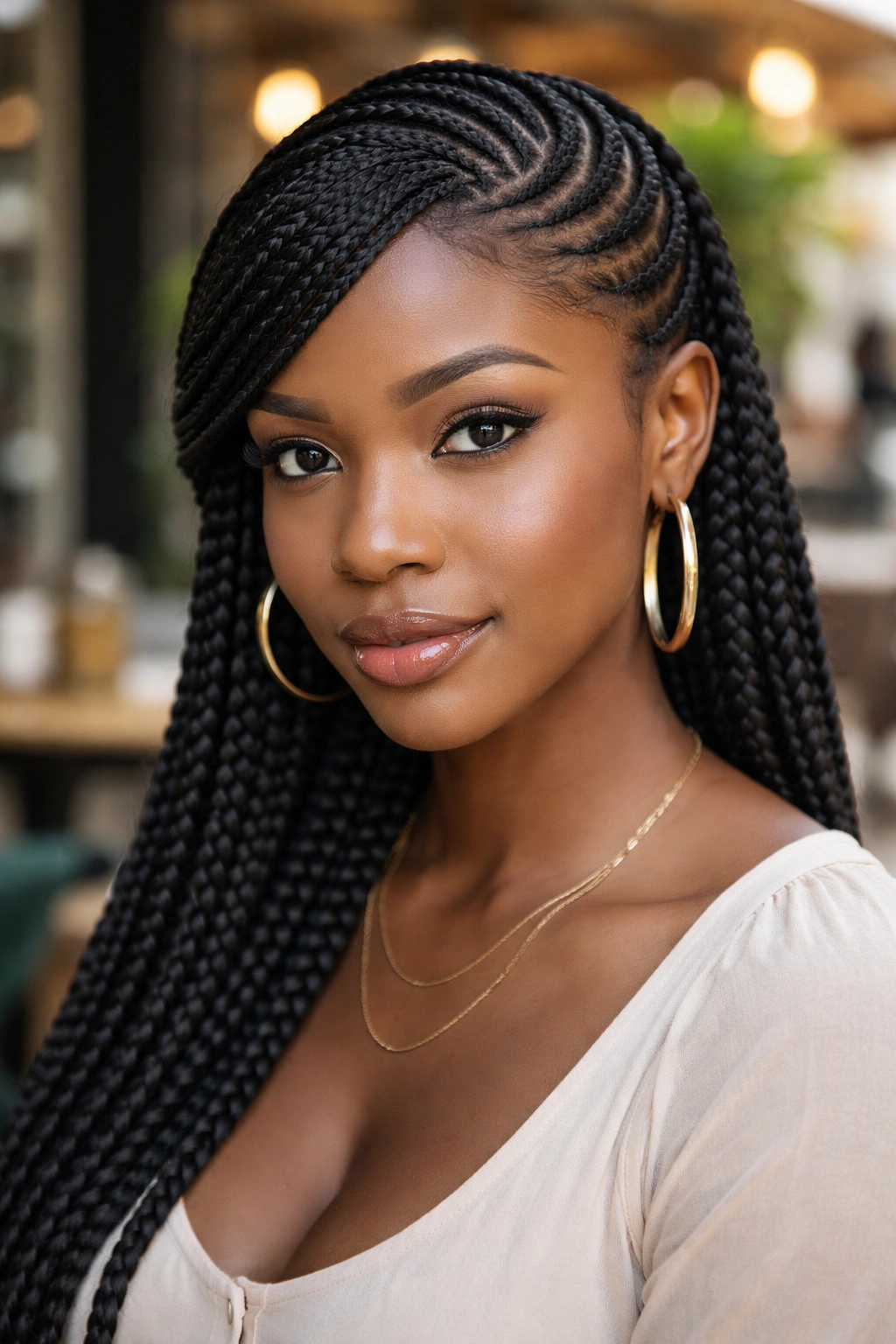
A swoop of hair from the front section is styled to sweep across one side of the forehead before joining the main Ghana cornrows. The swoop adds softness at the face.
The swoop can be a single thick piece or multiple thinner pieces arranged into a curve.
This styling is a good option for wearers who want structured braiding with face-framing softness.
18. Ghana Cornrows With an Asymmetric Parting
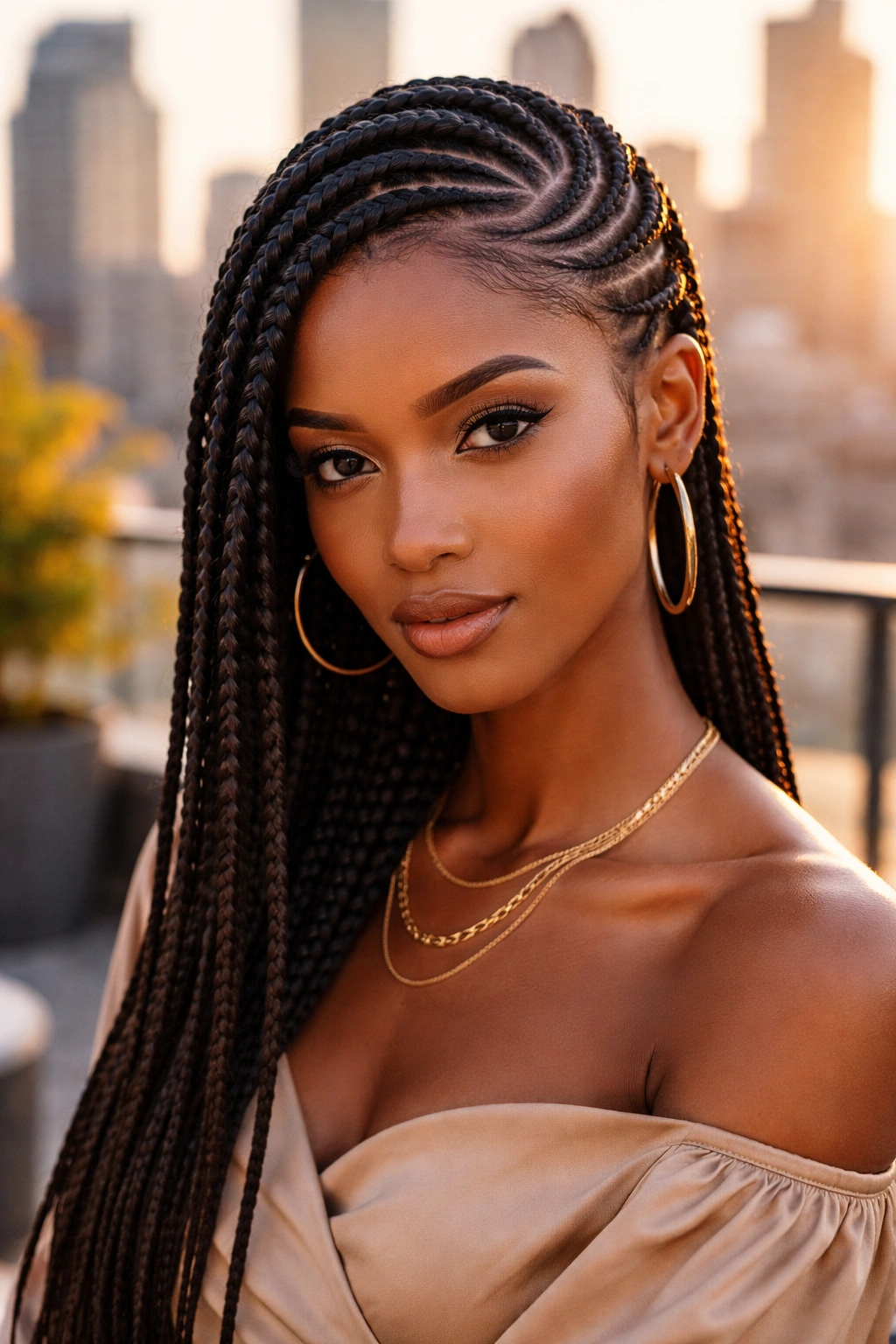
Instead of a centered part or a simple side part, the parting follows an irregular path. One side might have a diagonal line while the other has a curve.
The asymmetric parting creates visual interest without requiring complex patterning throughout the braids.
This style reads as editorial and intentional. It suits wearers who want cornrows that feel fashion-forward.
19. Half-Up Ghana Cornrows
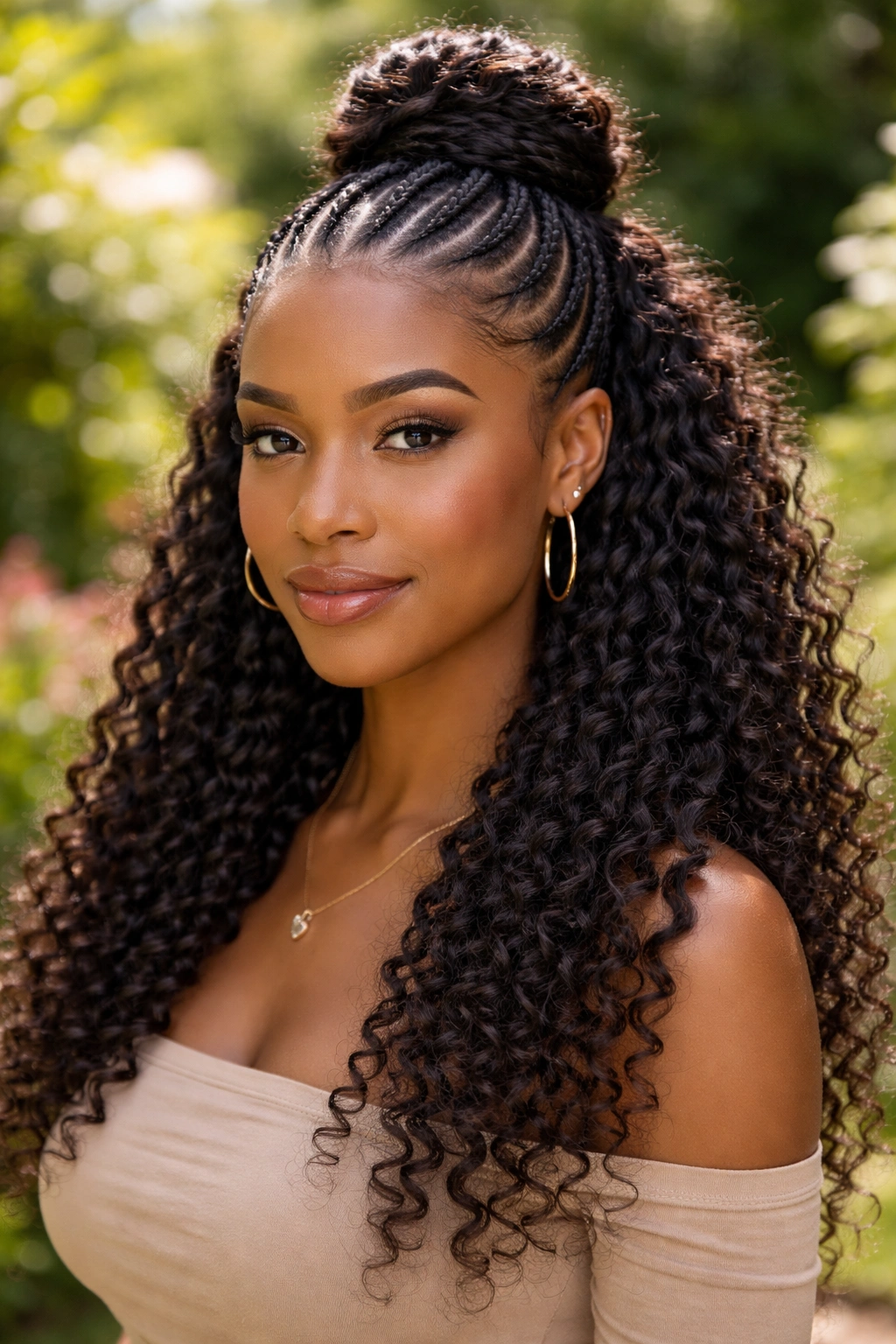
Only half the head has Ghana cornrows. The other half — usually the back or bottom — stays in a different style, often loose curls or twists.
The half-up approach gives you the protection of cornrows at the top where manipulation typically happens most, while showcasing natural texture below.
This is a creative compromise for wearers who want cornrow benefits without committing to full coverage.
20. Ghana Cornrows Gathered Into a Side Pony
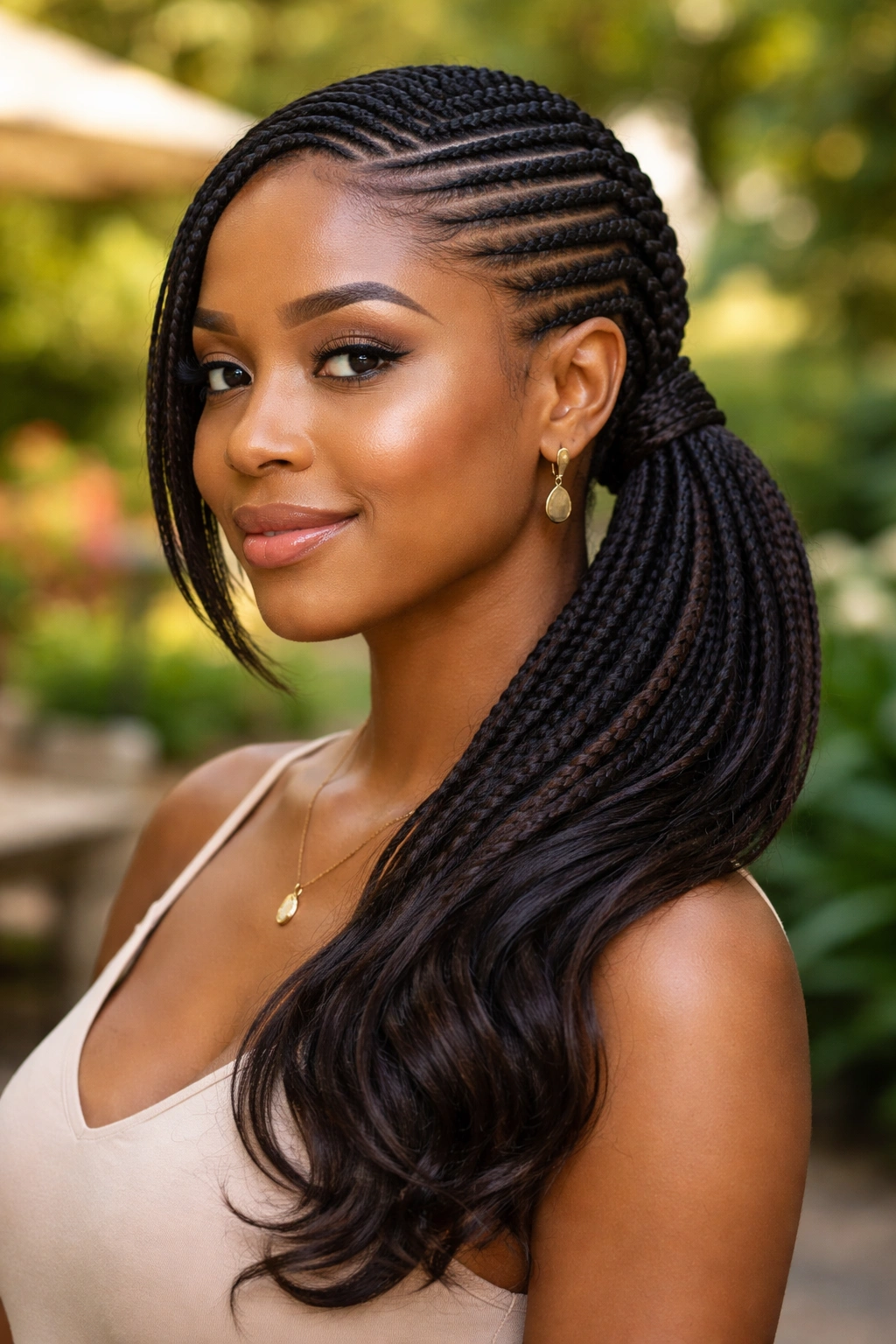
Similar to a standard Ghana cornrow pony but with the gathering point positioned to one side behind the ear. The ponytail drapes over the shoulder on that side.
The side pony feels elegant and feminine. It works for both casual and dressy occasions depending on styling.
Wear larger earrings on the exposed side to emphasize the asymmetric composition.
21. Ghana Cornrows With a Twisted Finish
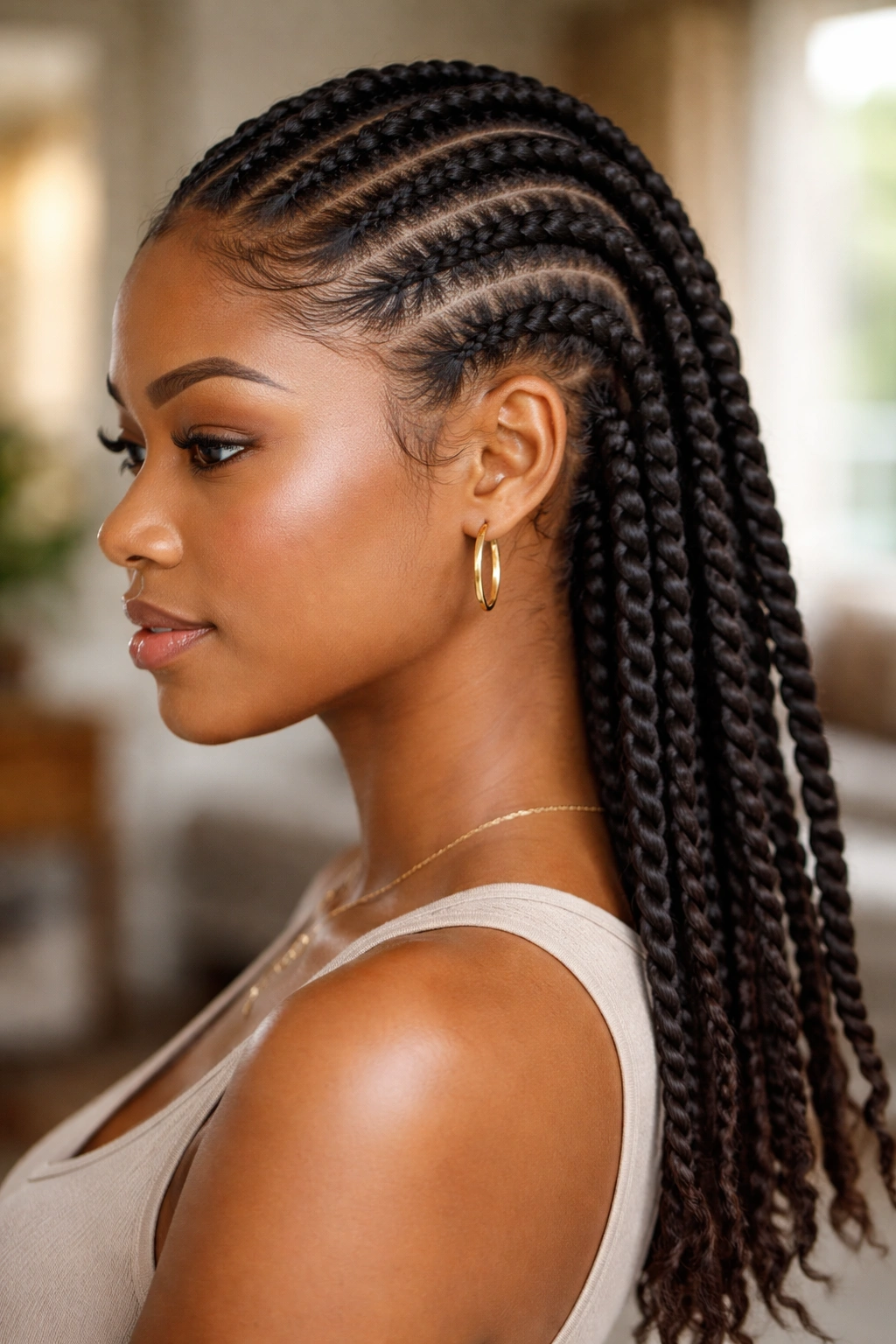
Instead of ending in straight braided tips, the ends transition into two-strand twists for the last several inches.
The twist finish adds texture to the ends and changes how they hang. Twists have more movement than braids.
This styling works well for wearers who want variety without complexity in the main pattern.
22. Ghana Cornrows With a High Updo
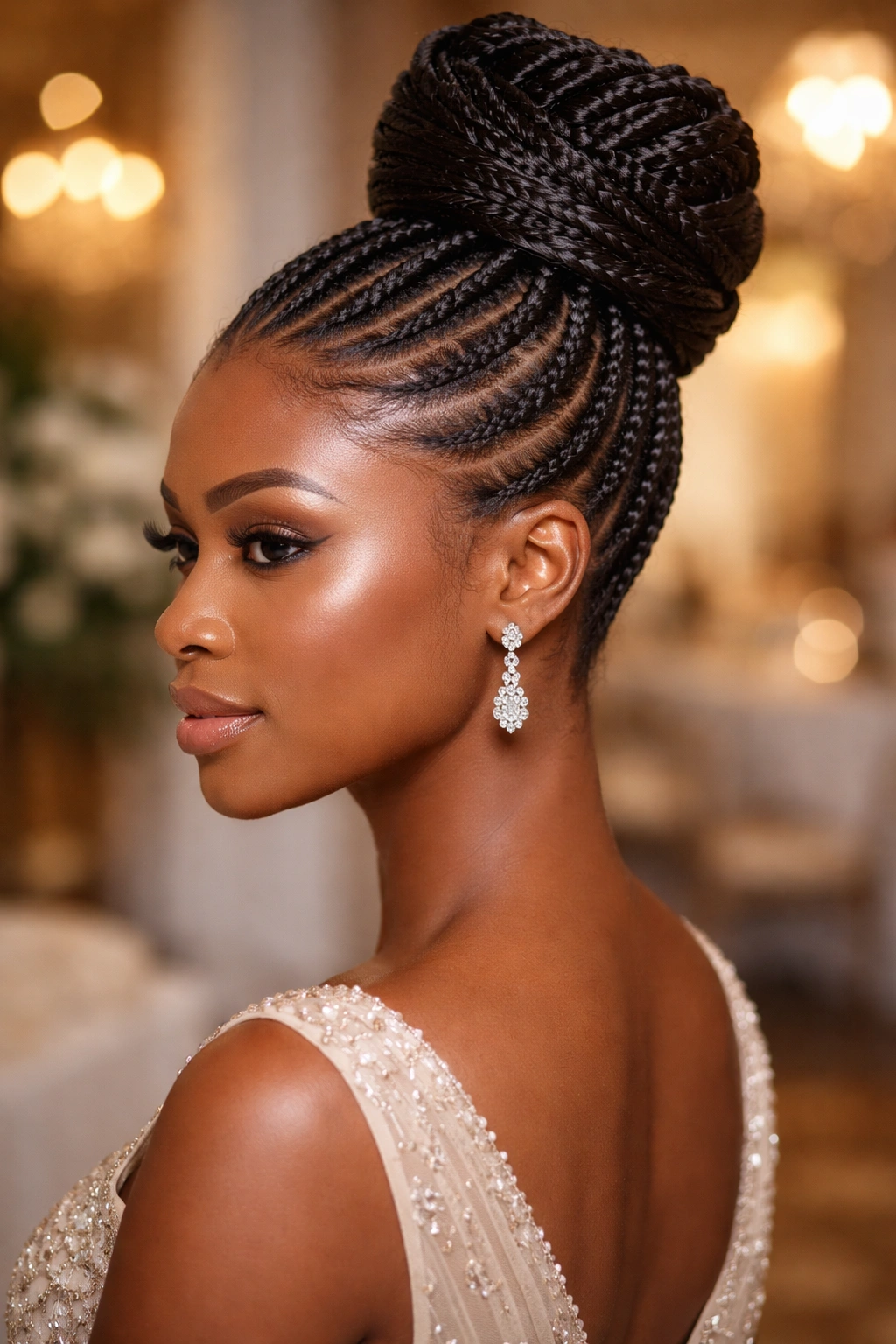
Rather than leaving the ends free, the Ghana cornrows feed into a high bun or updo at the crown. All the extension length gets contained in the updo structure.
This is the most formal version of the style. It suits weddings, galas, and high-dressy events.
The updo can be smooth and sleek for elegant occasions, or textured and voluminous for more dramatic looks.
Daily Care Routine for Ghana Cornrows
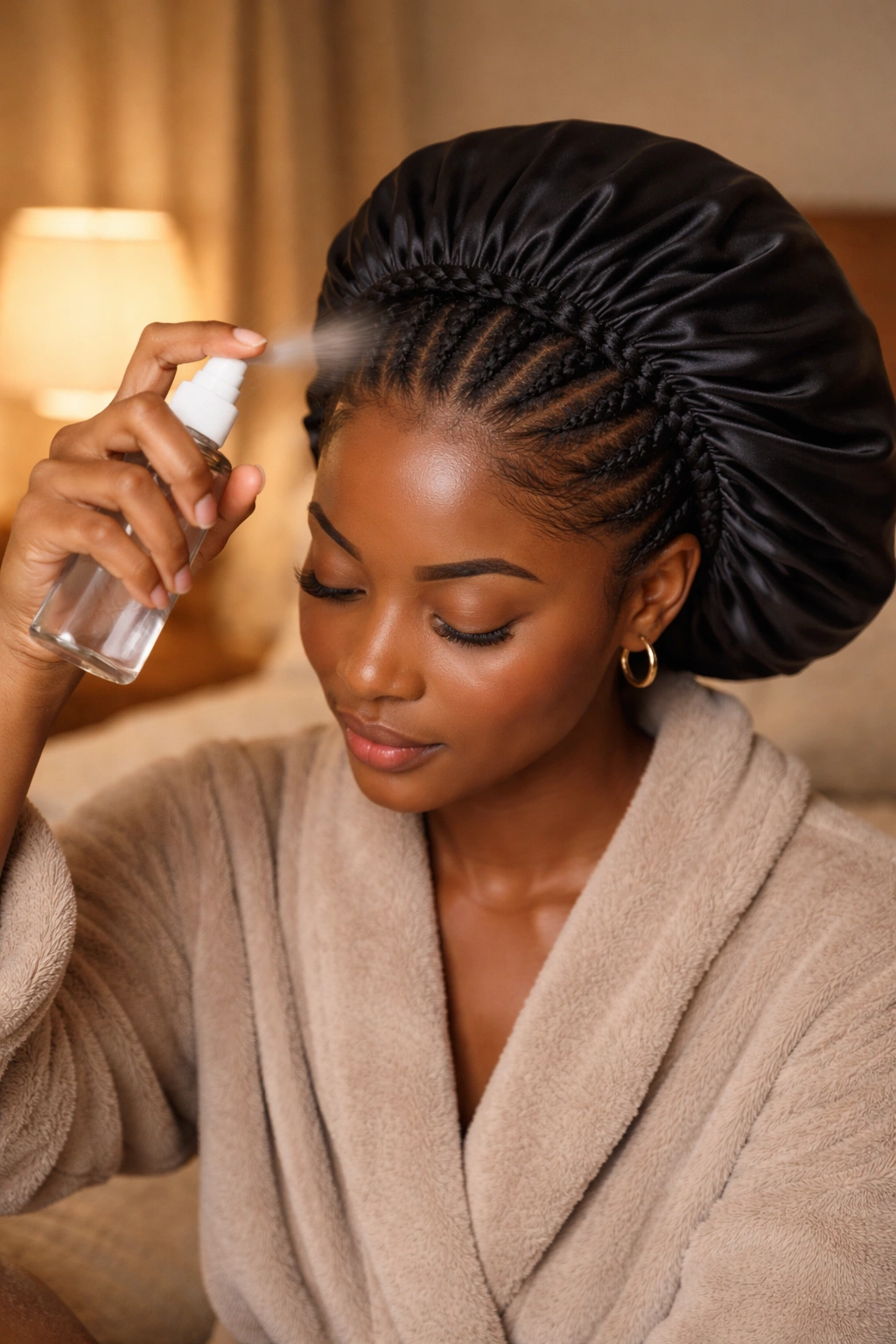
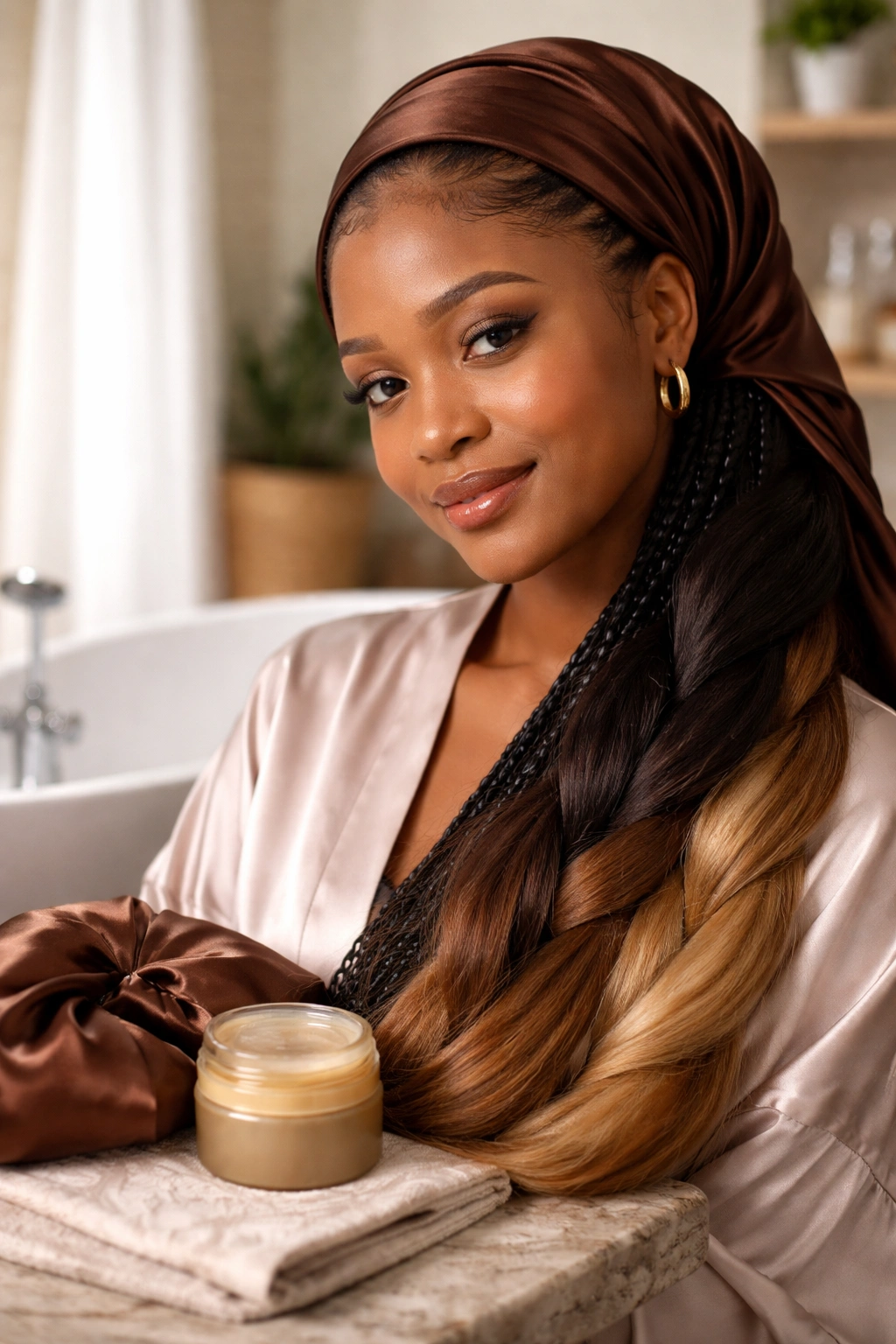
A satin or silk bonnet every night. The bonnet protects both the braids and the hair underneath.
A light moisturizing spray every 2-3 days on the scalp. Target the scalp itself, not the braids. Dry scalp causes itching and buildup.
Avoid heavy oils and creams. Heavy products make the braids look greasy and collect lint and dust.
Edge gel along the hairline as needed. Smooth any fuzz that develops along the front.
Washing Ghana Cornrows Safely
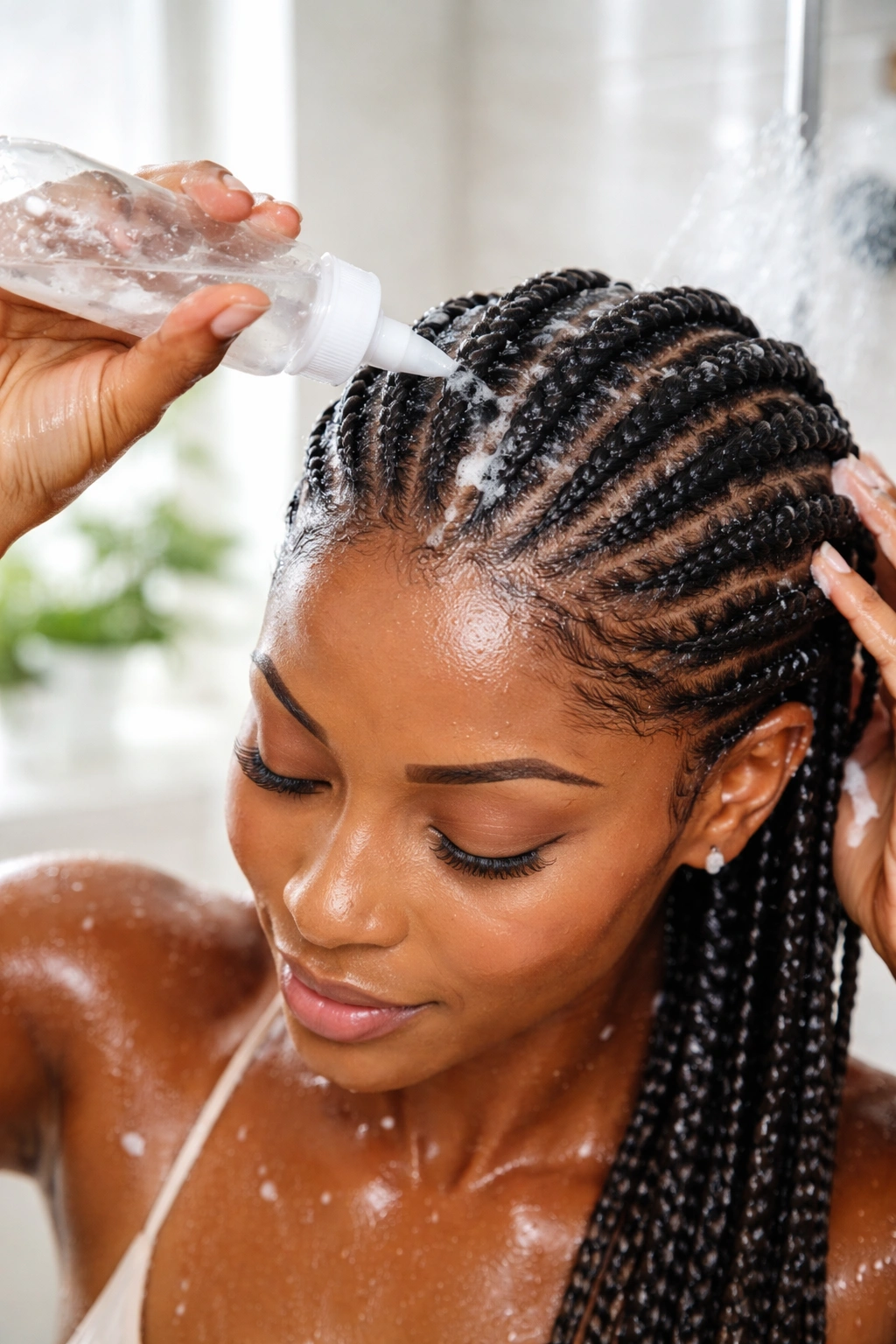
Diluted shampoo is the gentlest approach. Mix one part sulfate-free shampoo with three parts water in a squeeze bottle.
Apply directly to the scalp, not the braids. Focus on cleansing the roots where oil and product buildup actually accumulate.
Rinse with the showerhead aimed at the roots. Let water flow down the braids naturally rather than scrubbing them.
Pat dry with a microfiber towel or cotton t-shirt. Don’t rub. Rubbing causes frizz and can loosen the braids.
Sleep Protection Matters Most

Cotton pillowcases are the single biggest threat to protective styles. The friction between cotton fibers and braids creates fuzz, breakage, and loss of moisture.
A silk or satin bonnet is the best primary protection. Bonnets stay in place throughout the night if sized correctly.
Silk pillowcases work as a backup. They reduce friction when the bonnet shifts or slips off during sleep.
For extra security, tie a silk scarf around the bonnet edge. This creates a second barrier and reduces the chance of the bonnet moving.
Avoiding Tension Damage
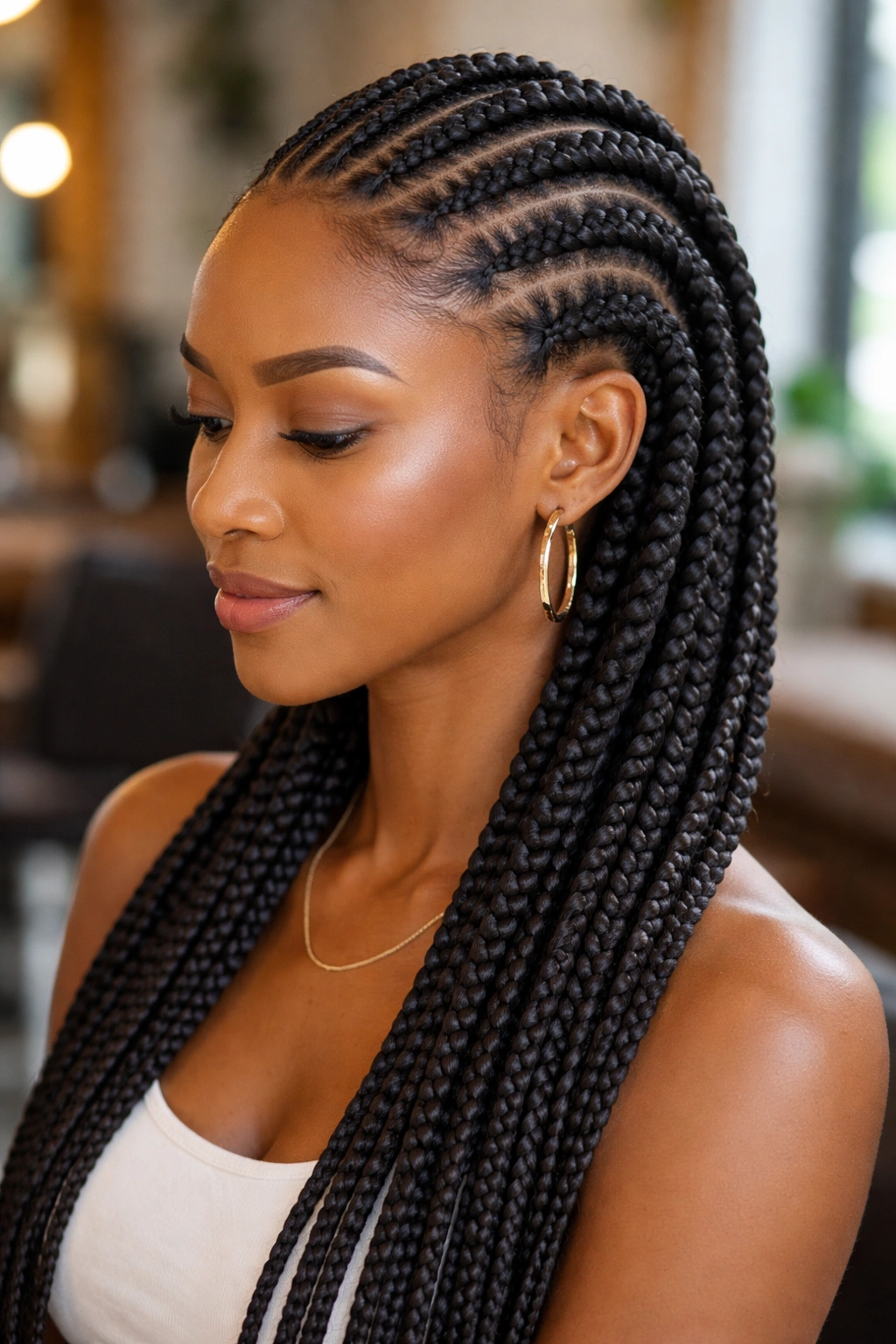
Even protective styles can cause damage if tension is too high. Signs include soreness beyond the first 48 hours, bumps along the hairline, small hairs breaking along the parts, and visible thinning at the temples.
If tension hurts beyond day two, some rows may be too tight. A skilled braider can loosen specific sections or redo them entirely.
Don’t wear Ghana cornrows back to back without breaks. A minimum of 1-2 weeks between installs lets the scalp recover.
How Long to Keep Ghana Cornrows In
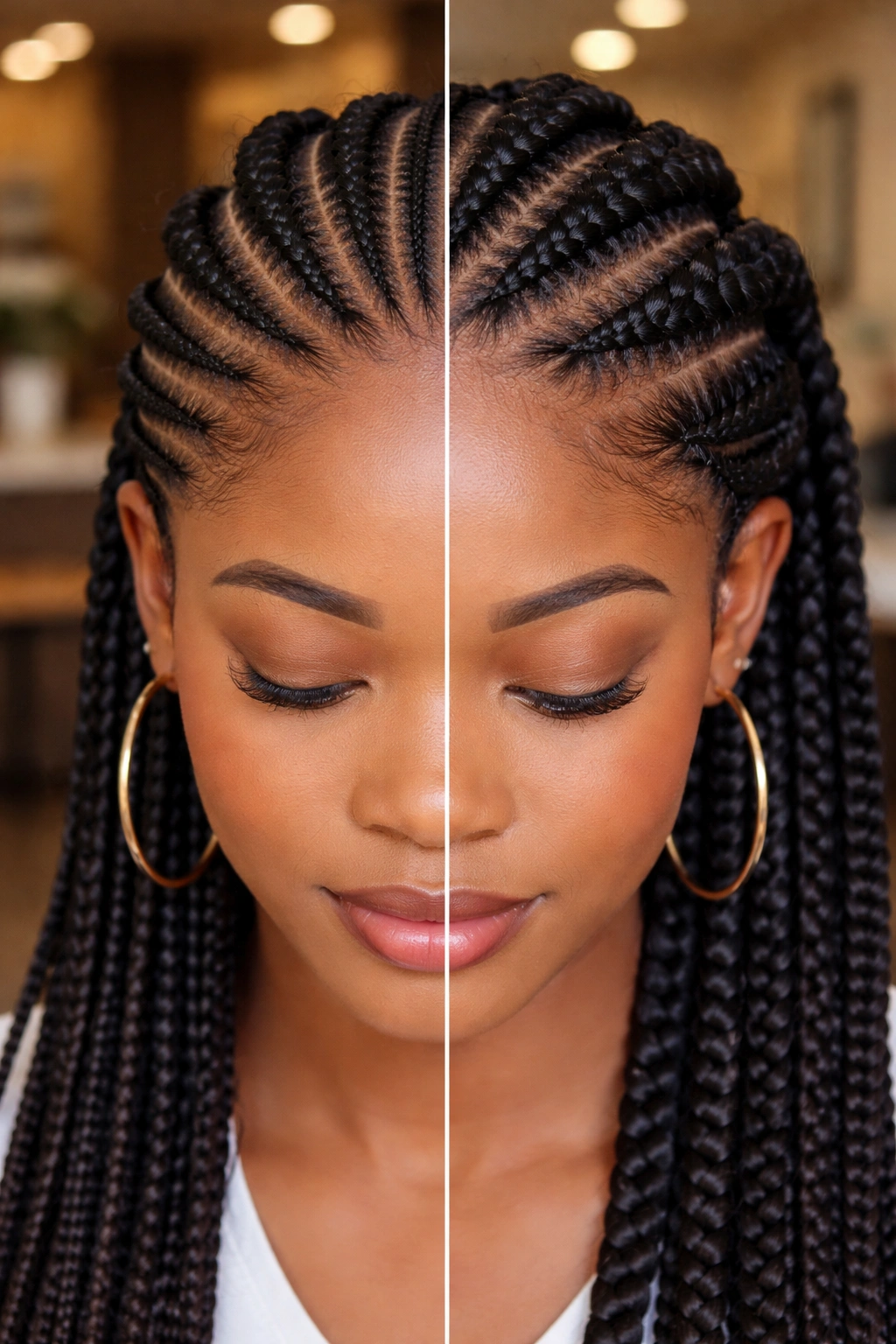
The typical window is 4-6 weeks. Going longer risks matting, buildup, and potential damage.
Signs it’s time to take them out: visible root growth creating fuzz at the scalp line, itching that doesn’t respond to oiling, loose braids at the roots, and matted sections at the back of the head.
Some people push to 8 weeks. The risk of damage at that point outweighs the convenience.
The Right Way to Take Them Down
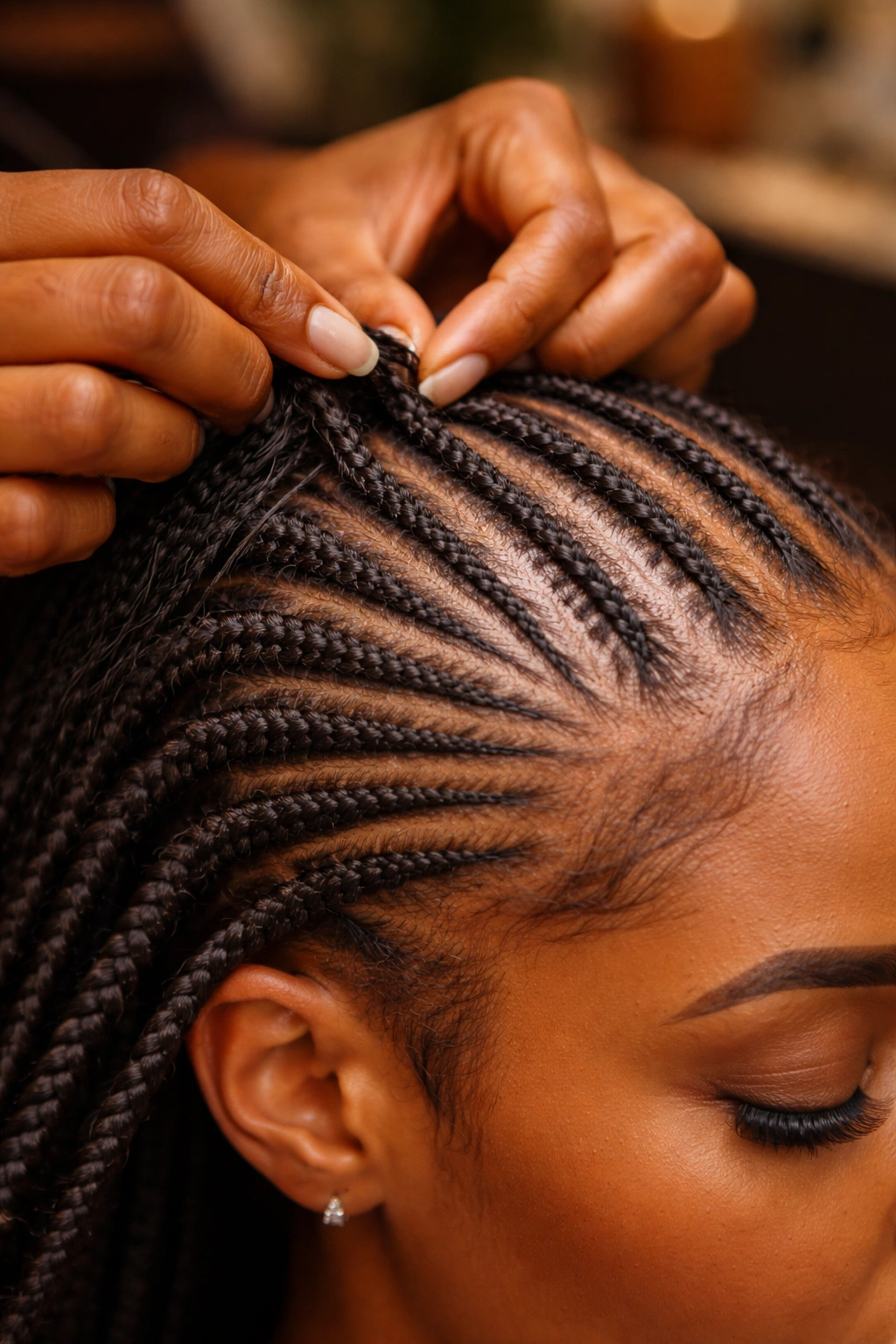
Start with ends. Each braid should be unraveled from the tip upward, not pulled apart from the middle.
Use a moisturizing spray on each braid before unraveling. The moisture softens the hair and makes the process gentler.
Work in sections. Finish one area completely before moving to the next.
Don’t rush. Ripping through the takedown tears cuticles and causes the breakage that protective styles are supposed to prevent.
After all braids are out, soak the hair in a conditioning spray. Let it sit for 10-15 minutes before detangling.
Post-Takedown Hair Recovery
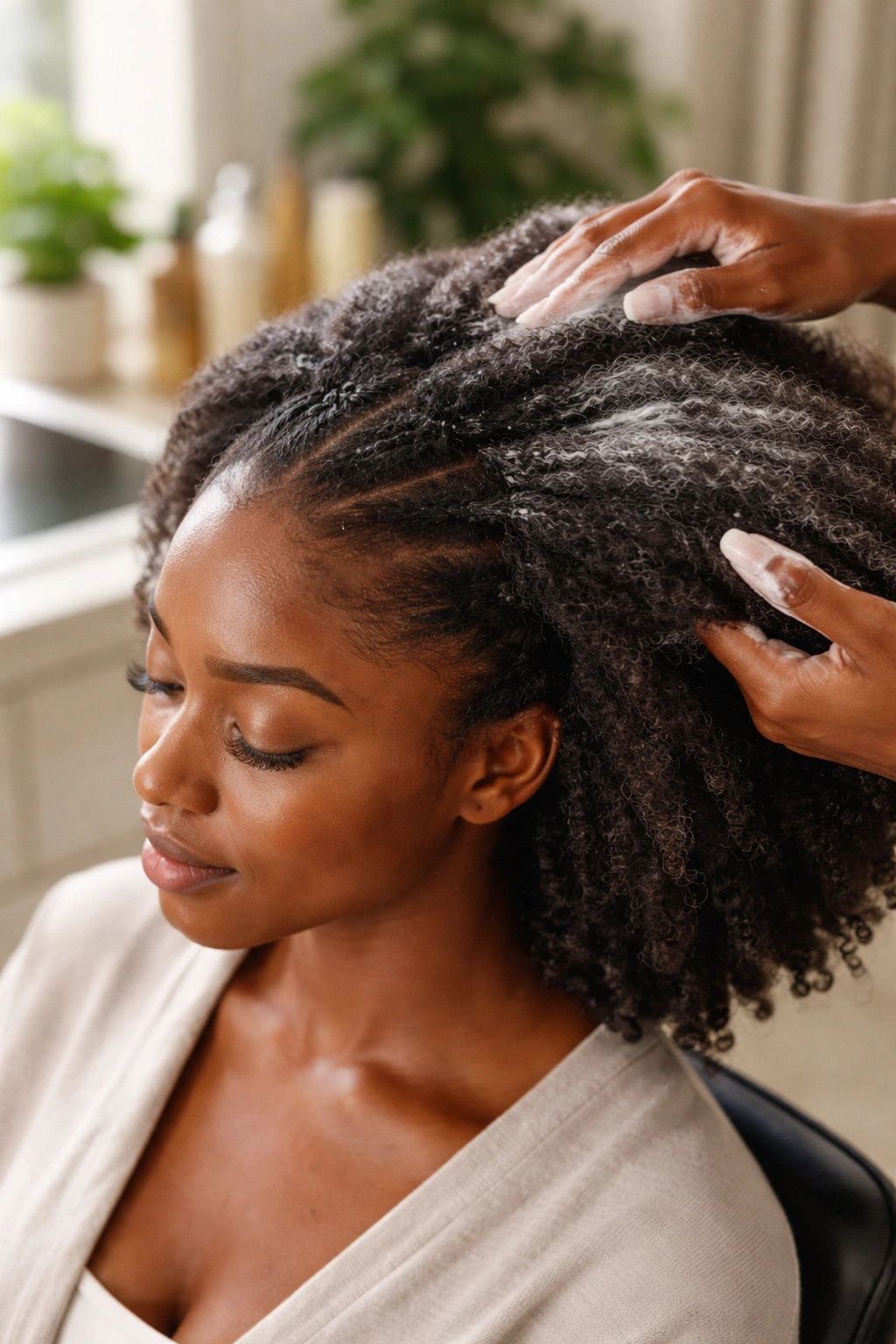
Expect significant shedding. Weeks of accumulated shed hair comes out all at once when the braids come down.
Deep condition immediately. Your hair has been tucked for weeks and needs concentrated moisture.
Trim any damaged ends. Protective styles don’t prevent all damage — ends may still need a small trim to stay healthy.
Wait at least a week before installing new braids. The scalp needs a rest period.
Common Mistakes That Undermine Protection
Going too tight during install. Pain is not a sign of a good install. It’s a sign of damage in progress.
Wearing them too long. Past 6 weeks, the risks outweigh the protection.
Skipping the bonnet. One night of cotton pillowcase friction can undo weeks of protection.
Using heavy products. Heavy products build up on the braids and the scalp, causing irritation and the need for more frequent washing.
Yanking during takedown. This is when most takedown damage happens. Slow down.
Going back-to-back. The scalp needs recovery time. Stacking protective styles without breaks causes cumulative damage.
When to Skip Ghana Cornrows
If your scalp is inflamed or you have active dandruff, wait until conditions improve before installing.
If you’ve had severe tension damage before, consider smaller, lighter braids that put less weight on the hair.
If you can’t commit to nighttime protection, consider a different style that’s more forgiving of cotton pillow use.
If you’re not willing to pay for a skilled braider, don’t install Ghana cornrows. Bad installs damage hair more than they protect it.
Picking the Right Variant for Your Hair
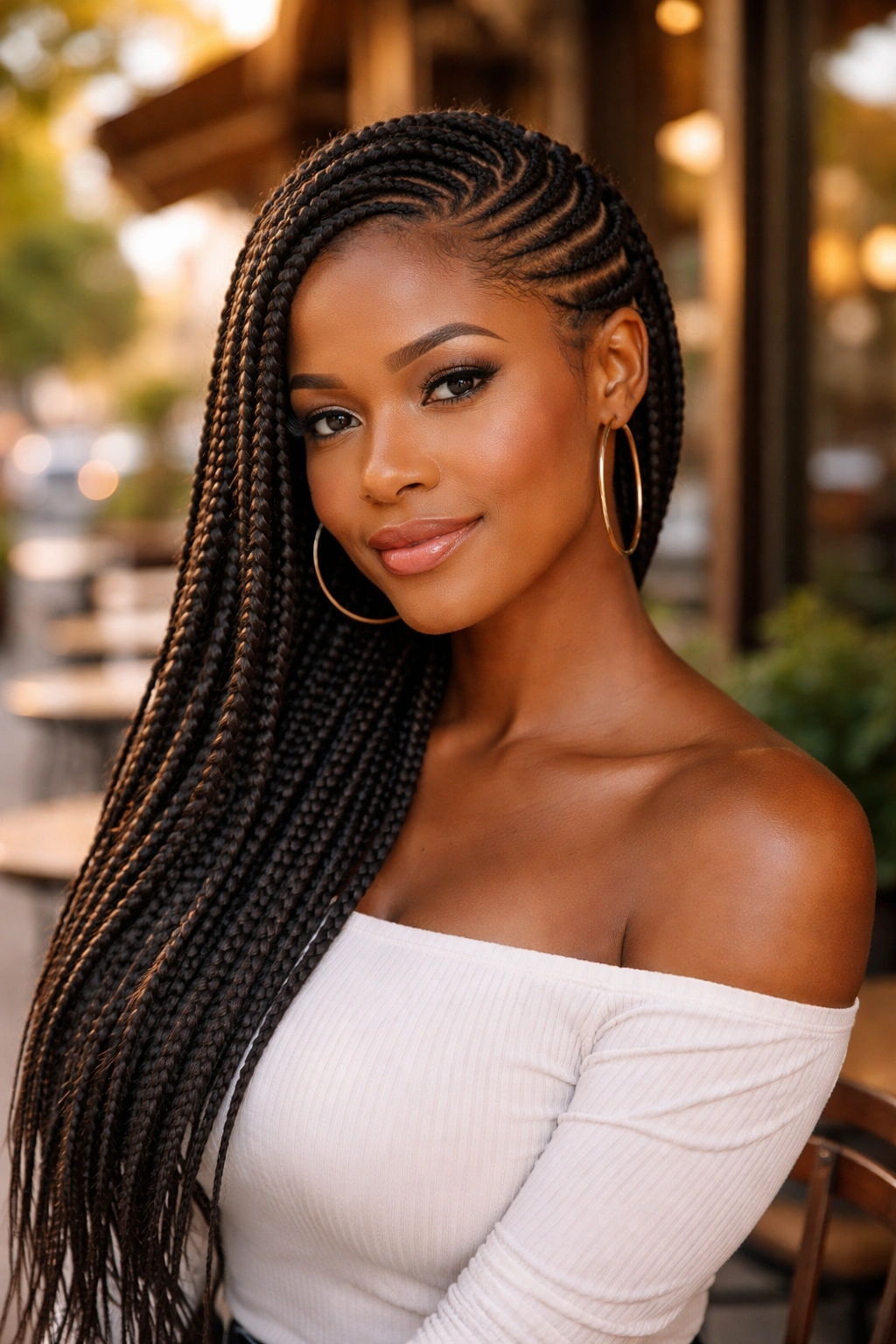
Fine, fragile hair does best with smaller, thinner Ghana cornrows. Large jumbo braids can strain fine hair.
Thick, coarse hair handles jumbo styles well. The bulk matches the natural thickness.
Edges prone to breakage benefit from styles with minimal front tension. Avoid styles with heavy braiding at the hairline.
Longer natural hair gives you more options because the root section of each braid is longer before feed-ins are needed. Shorter natural hair works too — the braider just starts feed-ins sooner.
Ghana cornrows offer real, measurable hair protection when installed and maintained properly. The technique respects the hair underneath, distributes tension sensibly, and gives the scalp a break from daily styling. That’s why the style has lasted across generations and continents — it delivers on its promise.
