Brown is the color most braiders skip past on the color chart. Black gets picked because it’s safe. Blonde gets picked because it’s loud. Burgundy gets picked because it photographs well. Brown sits in the middle, quietly waiting. And every time a client does pick it, I watch them end up more flattered by their cornrow style than the people who went bold.
There’s a reason for that. Brown, across its range — honey, caramel, chestnut, auburn, chocolate, mocha — matches almost every skin undertone without demanding attention. It lets the braid pattern do the talking. Where a platinum cornrow reads “LOOK,” a rich brown cornrow reads “look closer.” The style wins on substance instead of volume.
What follows is twenty-five cornrow styles done in the brown family. Not one style repeated with different shades. Twenty-five genuinely different approaches — different partings, different techniques, different finishes — paired with the brown tone that works best for each.
Why Brown Works on Cornrows
Brown hides transition lines. When you’re installing feed-in extensions, the point where your natural hair meets the kanekalon is always a potential weak spot visually. Black extensions on black hair can still show the join because textures differ. Brown extensions blended across your natural shade give a more seamless transition because the eye tracks color shift before texture shift.
Brown also photographs well in most light conditions. Platinum blonde washes out in bright sun. Jet black loses detail in shadow. Medium to dark browns hold their dimension across nearly every lighting scenario — indoor fluorescent, outdoor golden hour, flash photography, all of it.
And brown makes cornrows look expensive. The richer tones — mahogany, espresso, chestnut — pick up light in a way that reads like salon dye jobs cost more than they actually did.
Understanding Brown Shades for Braiding
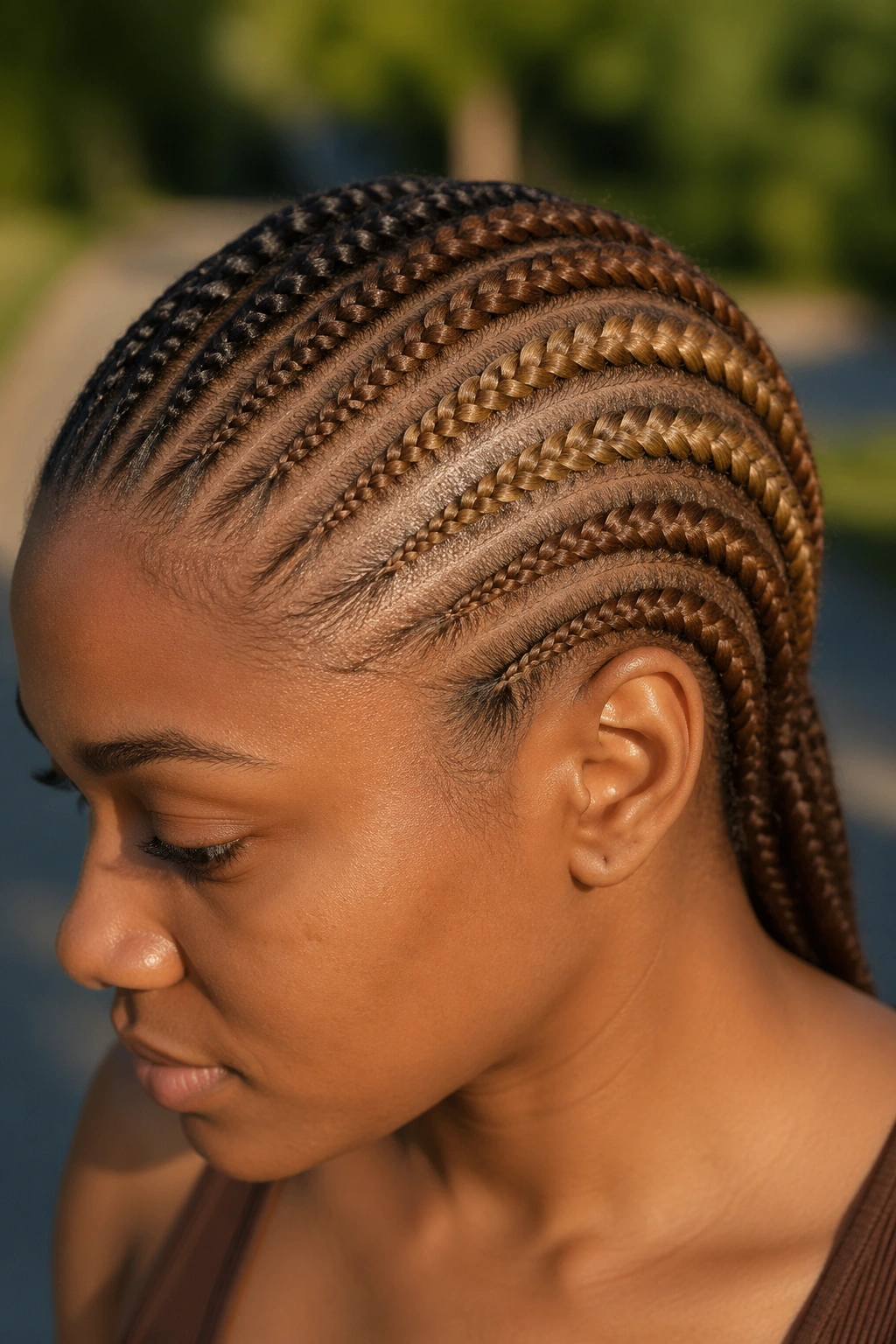
Not all brown extensions are created equal. Kanekalon labeled “brown” varies wildly between brands. Here’s a working shade map:
Light brown (#27, #27A): Honey tones. Warm. Works on lighter skin and medium-dark skin both.
Medium brown (#30, #4): Classic chocolate. The safest brown pick.
Dark brown (#2, #1B): Almost black but with warmth. Great for subtle brown accents when you don’t want to commit to visible contrast.
Mahogany (#33): Reddish brown. Pulls red in direct sunlight.
Chestnut (#8): True warm brown, neutral to warm-pull, very flattering on deeper skin tones.
Mocha (#6): Muted brown. Cooler undertone. Suits cool-toned skin.
When buying, check the brand name and exact number. Never assume “dark brown” from Brand A matches “dark brown” from Brand B.
Prep for Brown Installs
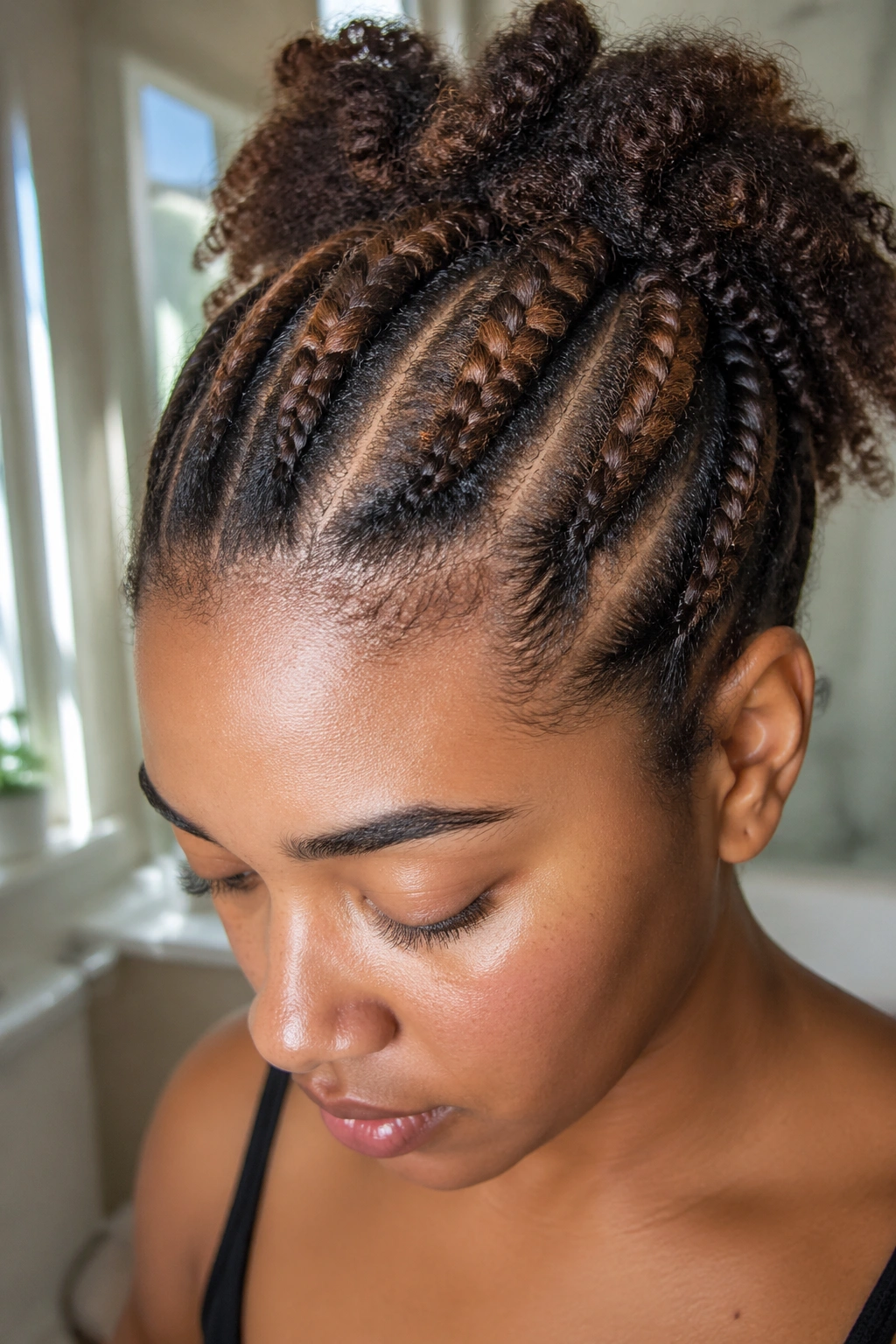
Pre-stretch your kanekalon before install. Boiling pre-stretched hair locks the color and reduces shedding at the tips. A quick dip — 5 seconds in near-boiling water, then cold rinse — is the standard method.
Wash your natural hair with a clarifying shampoo 2-3 days before install, not the day of. Day-of washes leave the hair too slick for a grip. A 48-72 hour window gives the scalp time to produce a light natural oil coating that helps the cornrow hold.
Moisturize lightly. Heavy butter application before a brown install can cause the lighter brown shades to dull within a week. A thin leave-in is enough.
Pattern and Tool Considerations
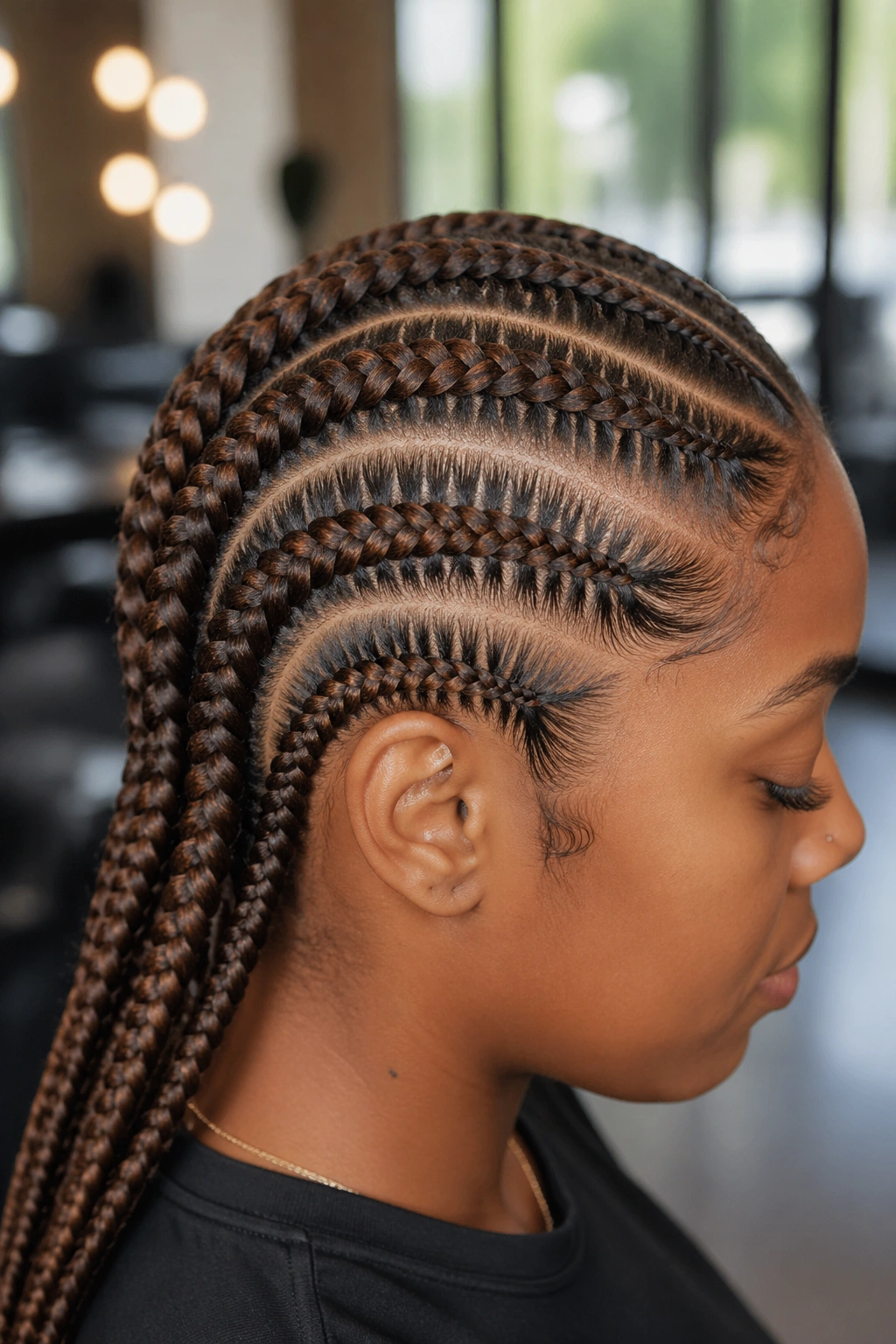
Parting accuracy matters more with brown than with black. Dark partings on brown hair show every mistake. The contrast makes uneven parts obvious.
Use a comb with a long metal tail, not plastic. Metal glides through kanekalon more smoothly and leaves cleaner scalp lines.
Clip carefully. Some metal clips rust, and rust transfers to light brown extensions fast. Plastic jaw clips are the safer bet for any brown install longer than medium brown.
Timing Notes
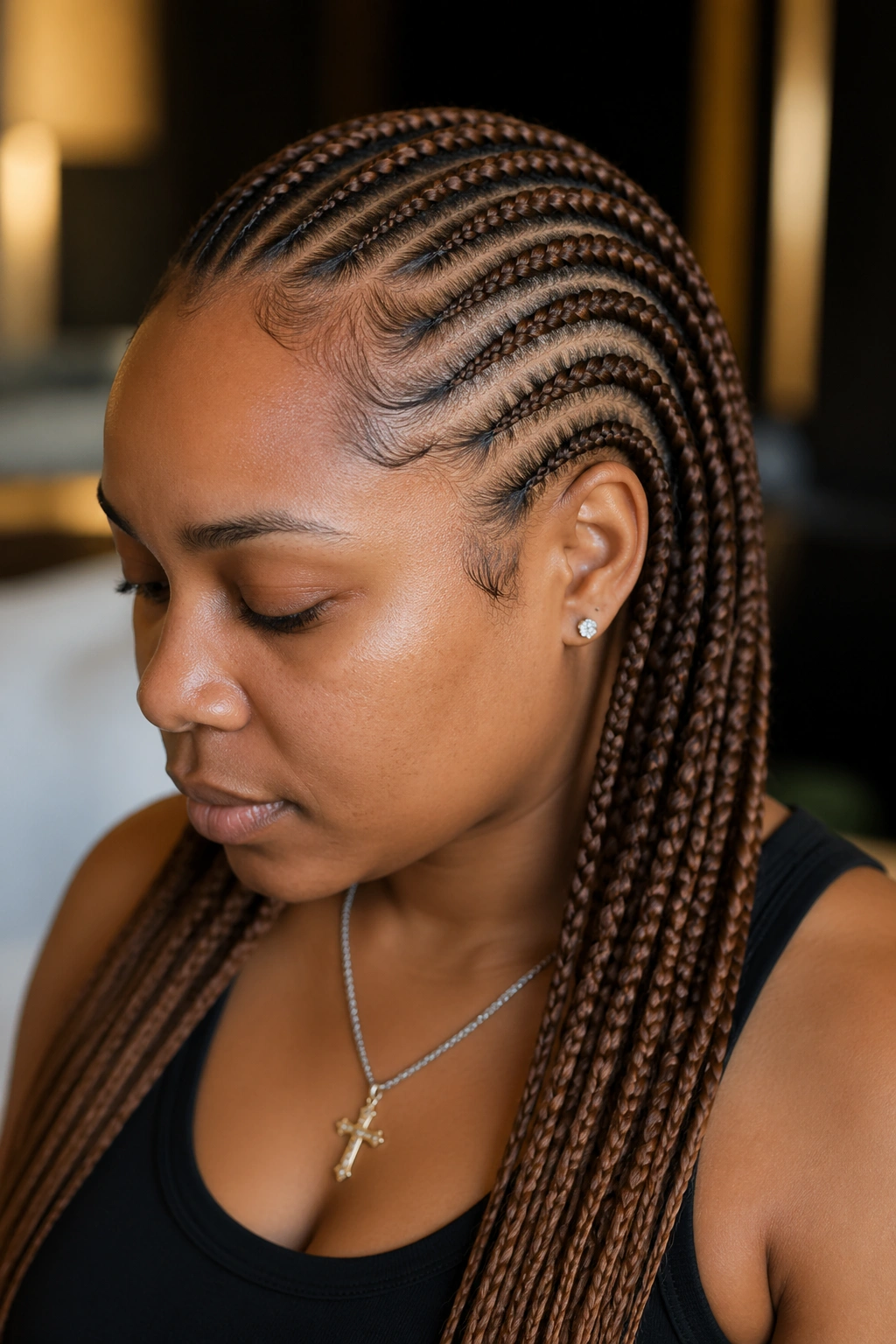
Brown installs take the same time as black ones — the color doesn’t change install speed. What changes is touch-up time. Brown oxidizes slightly over 4 weeks. The shade you installed will be about 1-2 shades lighter at takedown. That’s normal. That’s the nature of the fiber.
1. Honey Brown Feed-In Cornrows
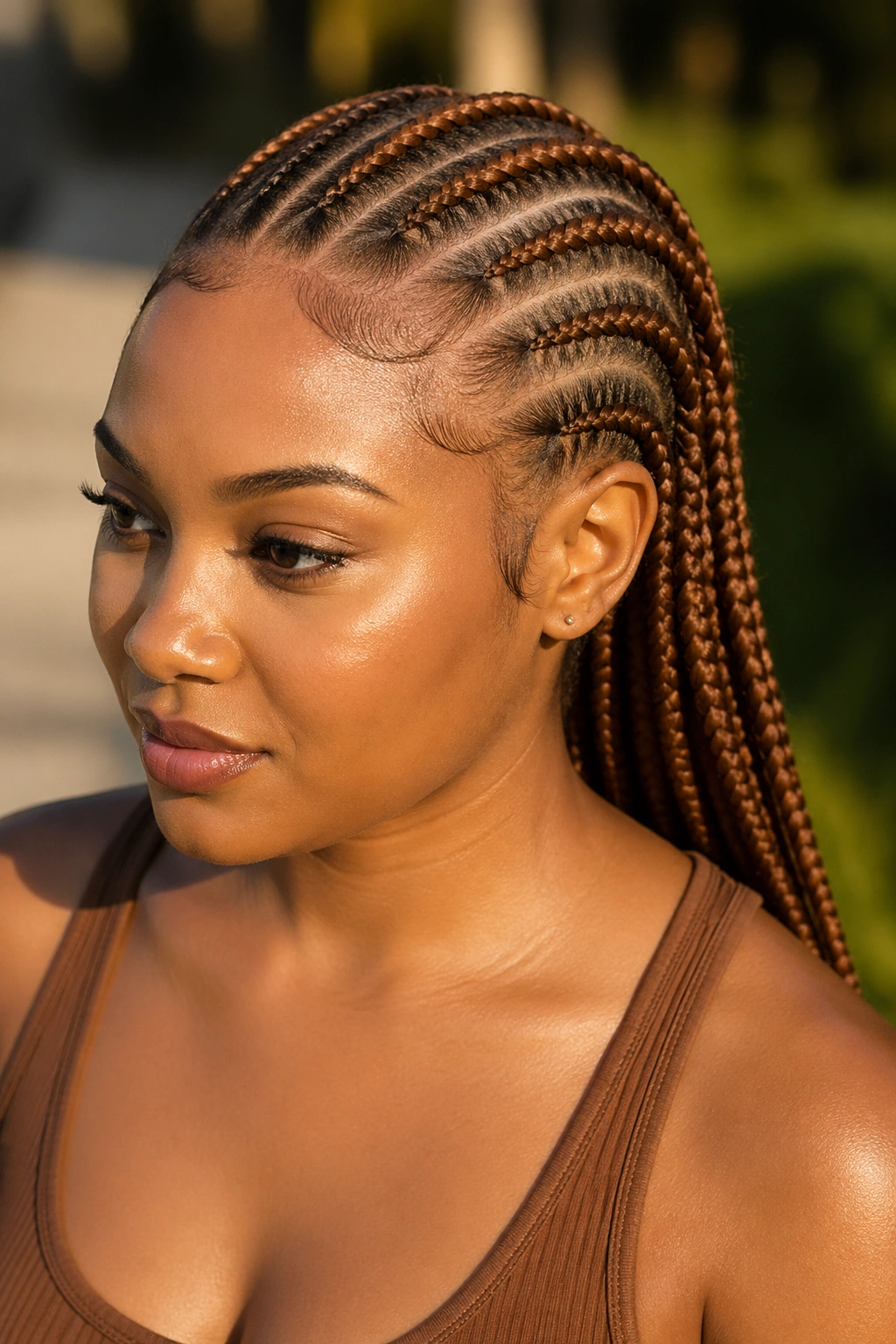
Six straight-back feed-in cornrows in a honey brown. Warm. Sunlit. Easy on the face.
Why It Works
Honey brown flatters almost every undertone because its warmth pulls gold rather than red or ash. On medium-dark to deep skin, it creates a subtle glow effect. On lighter skin, it keeps the cornrow from reading as harsh as black would.
- Use shade #27 kanekalon
- Keep cornrow tension medium — honey brown shows every tight spot
- Seal ends with a light oil, not heavy butter
Tip: Blend honey brown with a small ribbon of #30 at the front two cornrows for added face-framing depth.
2. Chocolate Brown Stitch Braids
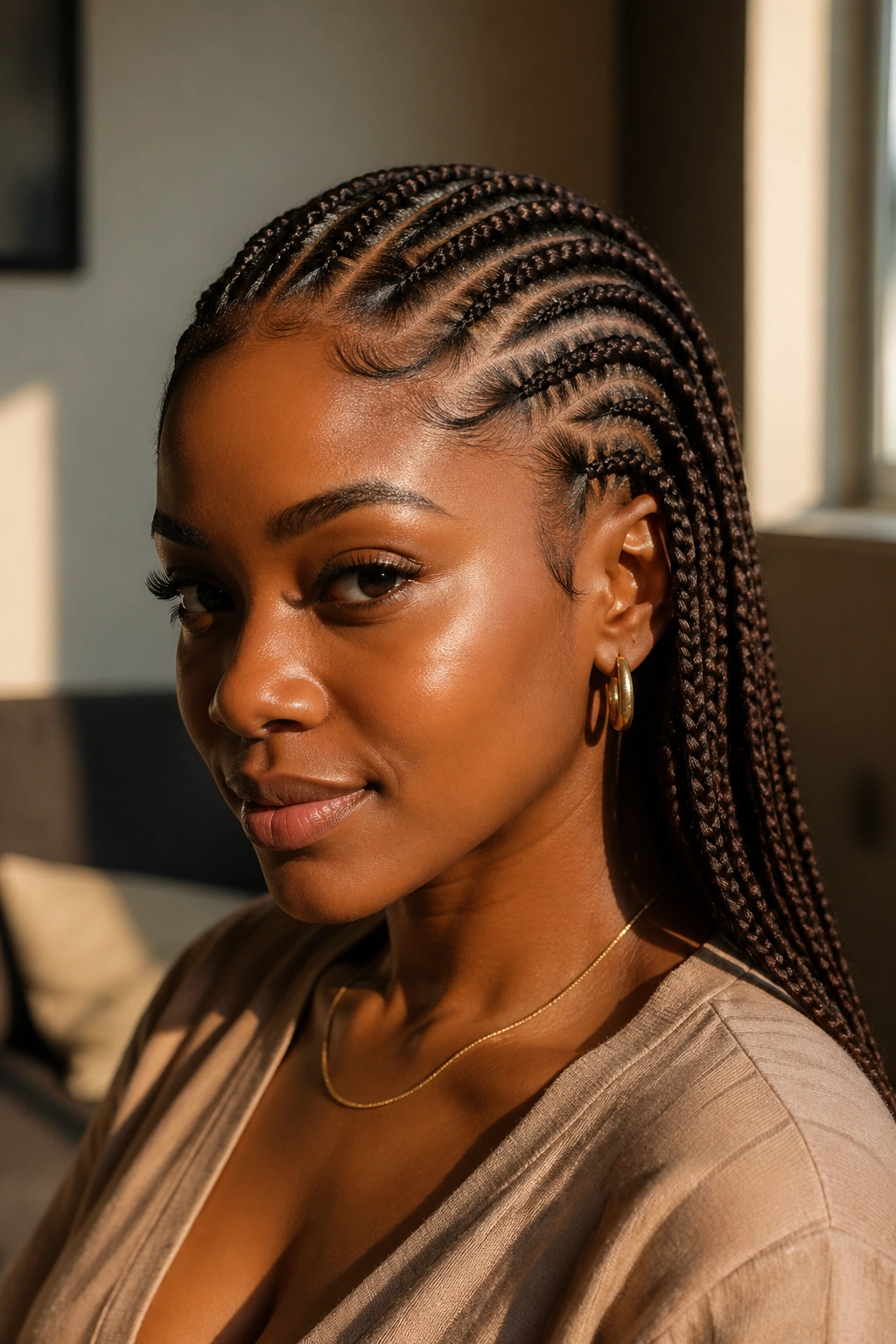
Stitch braids done in a deep chocolate brown. The horizontal ridge pattern catches light differently than straight cornrows, and chocolate brown shows it beautifully.
Stitch braids work best in medium to dark shades because the ridges create their own shadow lines. A lighter brown can flatten out those shadows and lose the visual ridge effect. Dark chocolate gives the ridges the contrast they need.
Plan for 5-6 hours of install time. Stitch patterns are slower than feed-ins by about 30%.
3. Caramel Ombré Cornrows
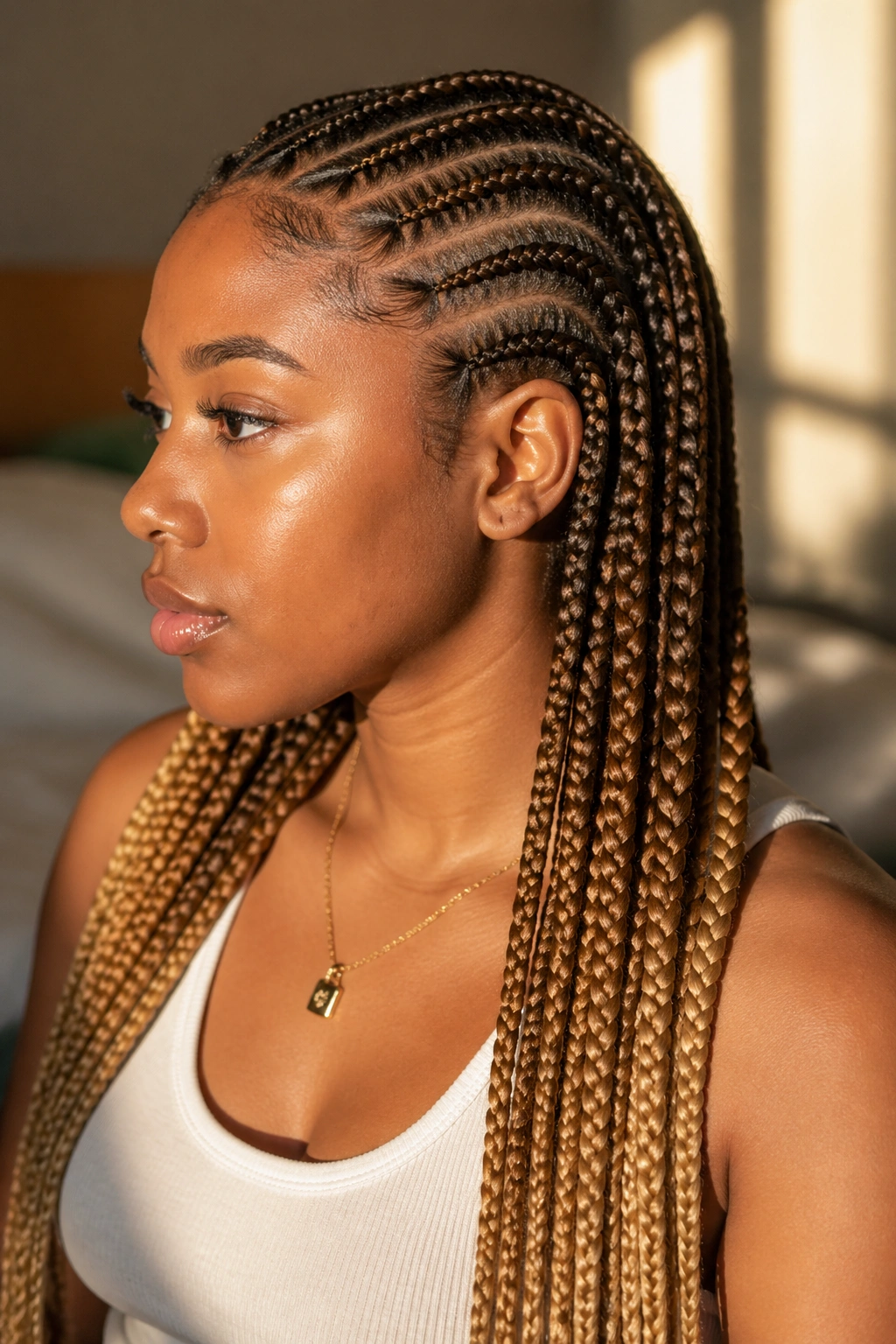
Roots in dark brown, fading into caramel mid-shaft, finishing with a golden honey at the tips. Ombré cornrows sound complicated and look expensive.
The technique is actually straightforward if you braid with three pre-blended kanekalon bundles — one dark brown, one caramel, one honey — feeding in each color at the right point along the cornrow length. The blend happens in the feed-in, not in the dye.
Timing: 5 hours minimum. The color transitions need to be even across all cornrows, which means checking each cornrow against the last before you proceed.
4. Espresso Brown Jumbo Cornrows
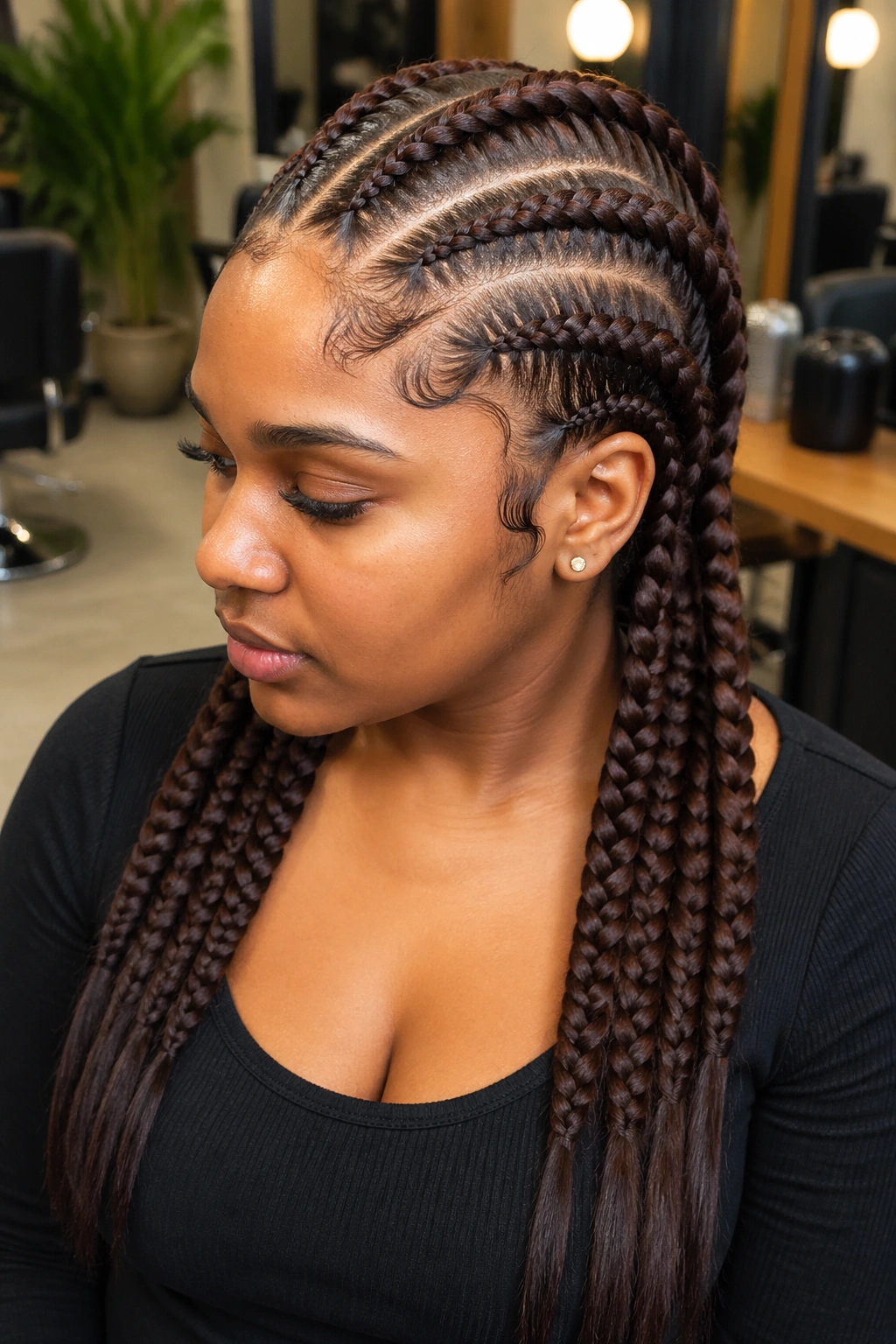
Four jumbo cornrows in rich espresso. Dark, glossy, structured.
Chunky cornrows in very dark brown read as sophisticated rather than aggressive. Straight black jumbo cornrows can look severe on some face shapes. Espresso softens that effect just enough to flatter without losing the bold silhouette.
Finish ends in simple straight extensions, not curled. Curled ends on jumbo cornrows tend to overwhelm the scale.
5. Chestnut Fulani Cornrows
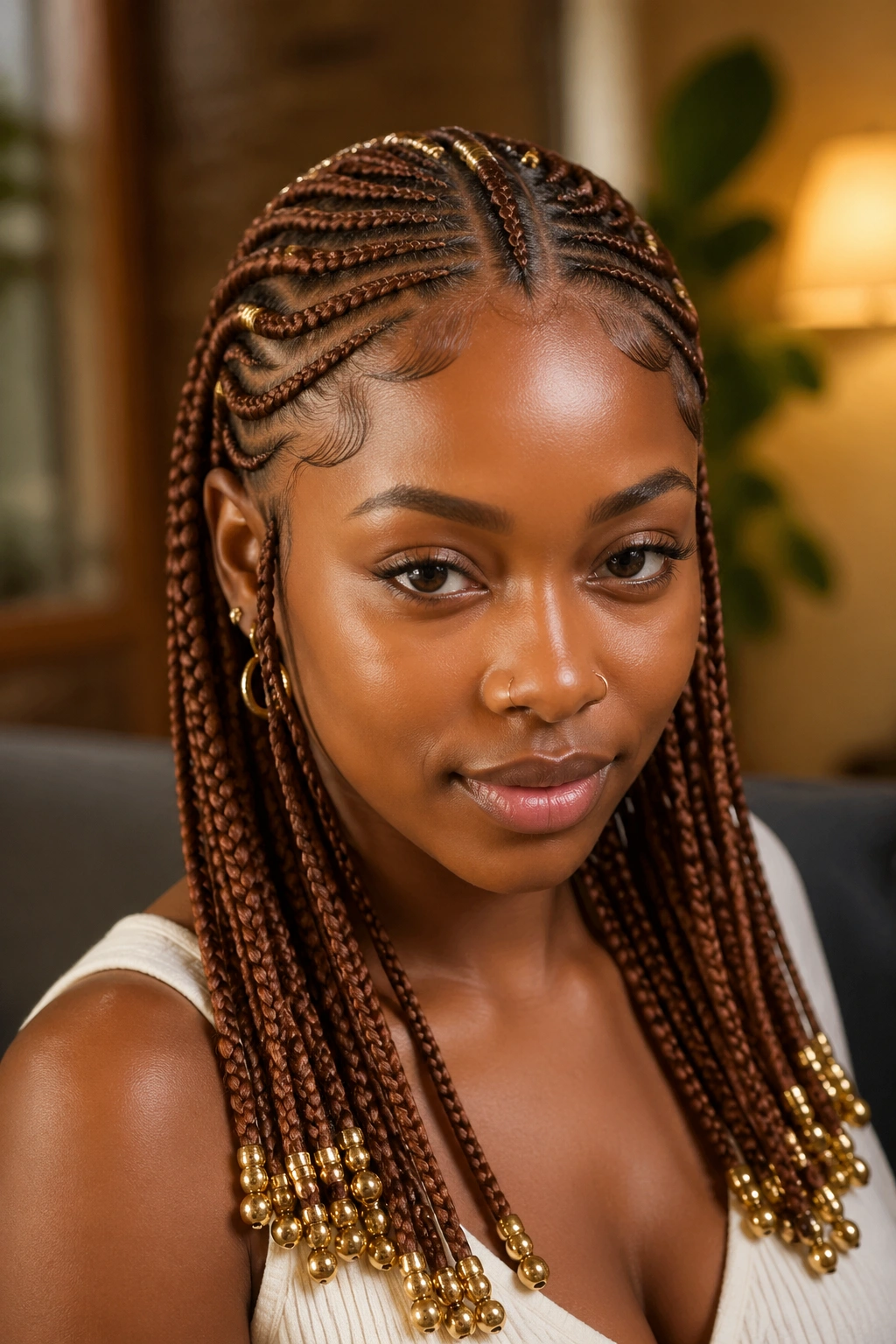
Traditional Fulani parting — center cornrow with side-swept angled cornrows — in chestnut brown. The warm undertone of chestnut pairs naturally with the golden beads classically used in Fulani styling.
Chestnut sits in the middle of the brown spectrum. It’s not trying to be blonde, not trying to be black. It’s confident brown, and that suits the cultural confidence of the Fulani parting pattern.
How to Use It
Use chestnut for the full length. Don’t ombré this one. The traditional Fulani silhouette relies on color uniformity to let the parting pattern dominate the visual.
Beads should be gold or warm bronze, not silver. Silver against chestnut creates an unflattering cool-warm clash.
6. Auburn Cornrow Bob
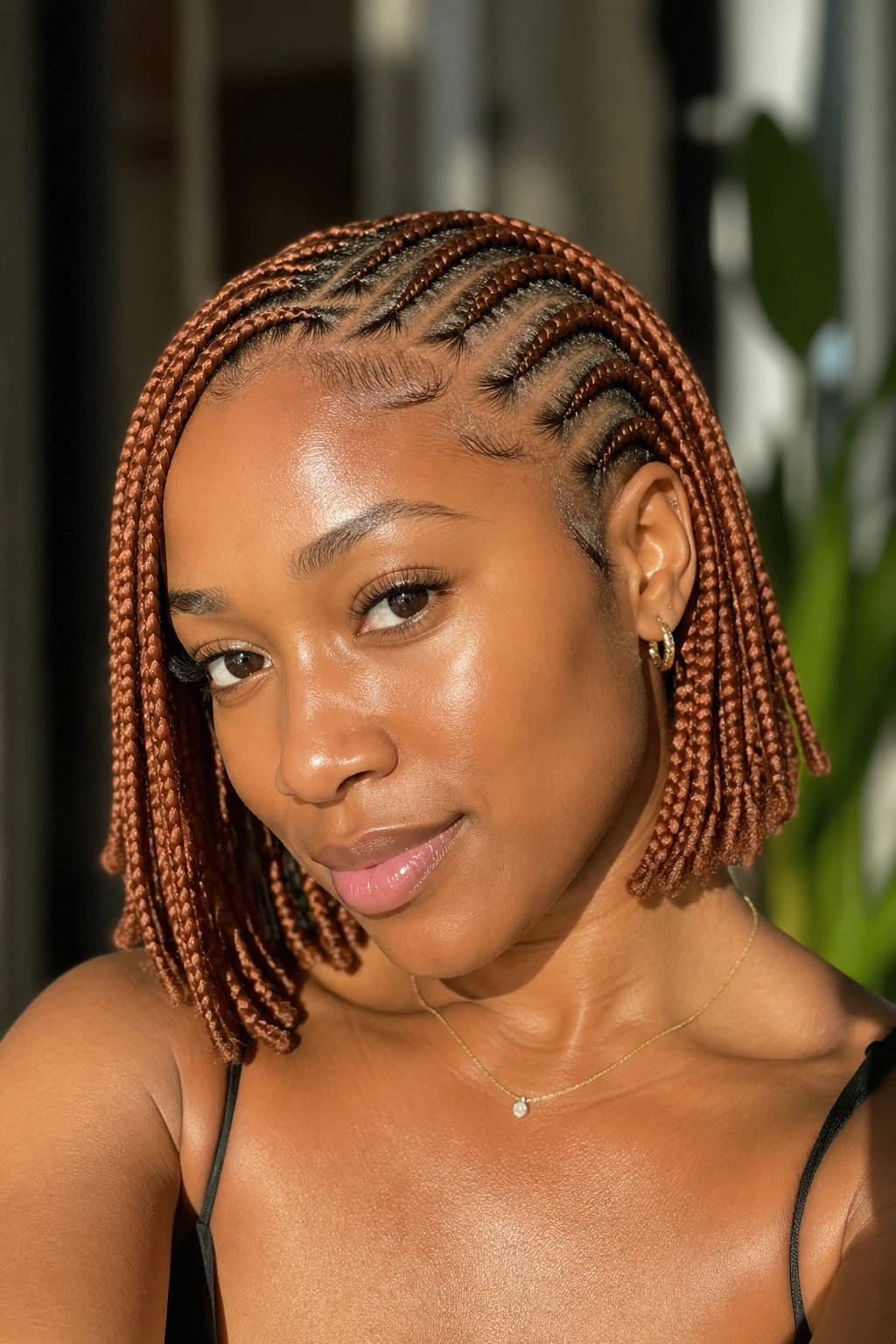
Cornrows cut at bob length — roughly chin to shoulder — in auburn brown. The bob length keeps the style light and easy.
Auburn pulls red. It’s the warmest brown on the chart before crossing into burgundy territory. On deep skin, auburn reads vibrant. On lighter skin, it can read almost copper in sun.
The bob length makes this easier to wear than longer cornrow styles. Less weight, less hairline stress, less takedown time.
7. Mocha Cornrows with Invisible Part
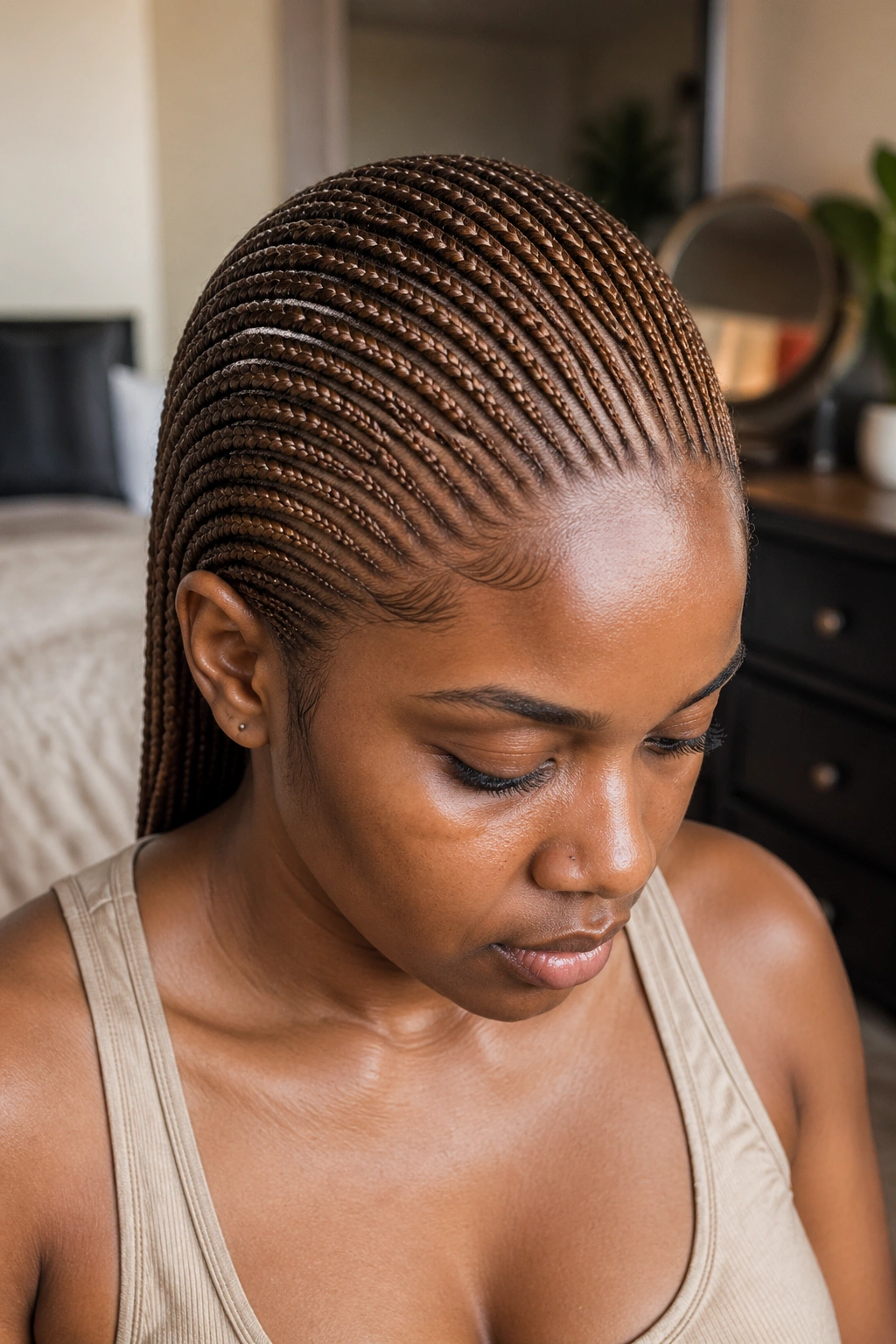
Single-part cornrows with parts so subtle they nearly vanish into the hair. Mocha’s muted tone makes this possible in a way bolder browns can’t.
The “invisible part” effect comes from using slightly tighter cornrow sections with narrower parts — about 3mm wide instead of the typical 5-6mm. The cornrow tops meet more closely, and from even a few feet away, the parts blur into a continuous brown surface.
8. Medium Brown Zigzag Cornrows
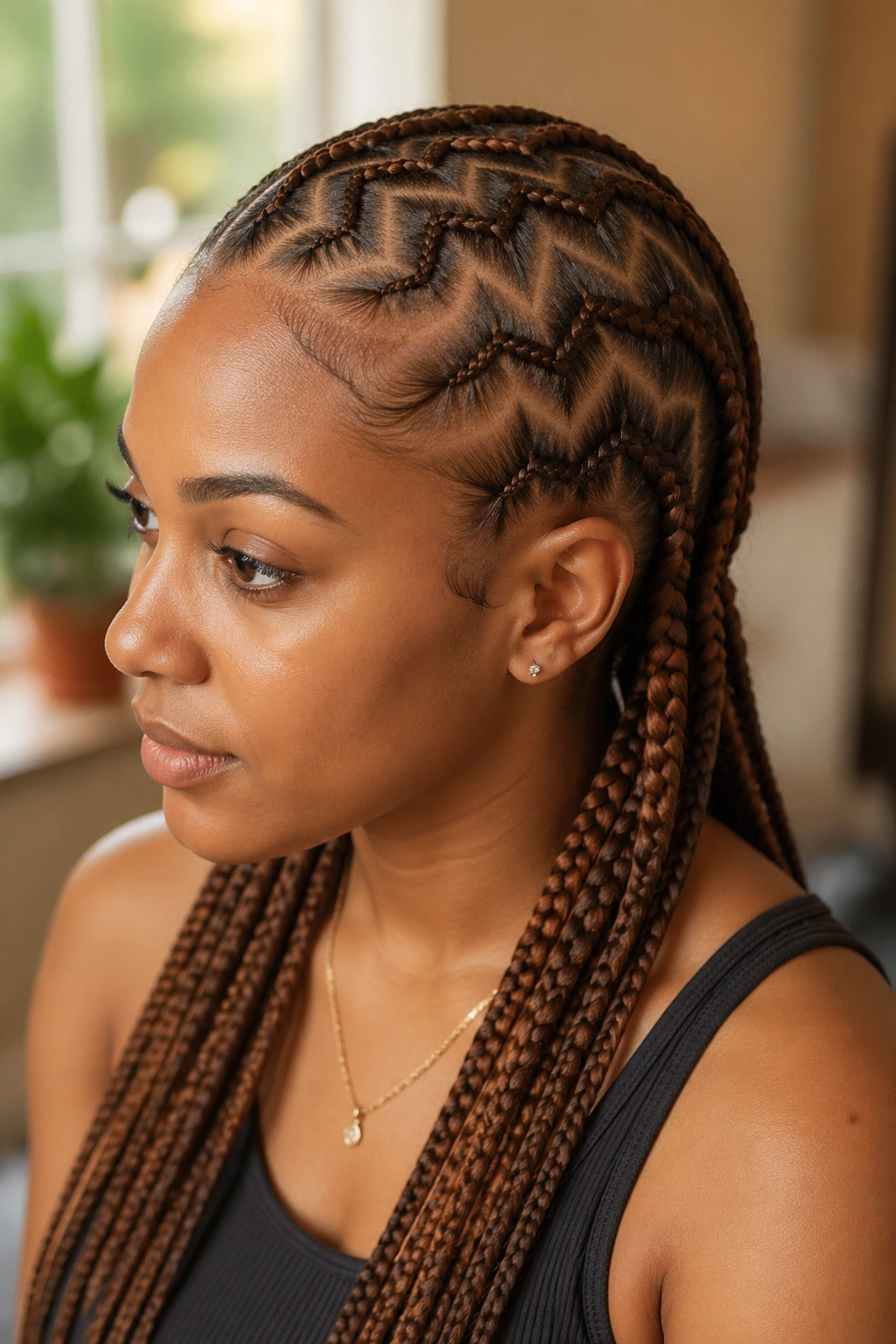
Zigzag parting in medium brown. The geometric part pattern stands out more against brown than against black — which is the point.
Most people do zigzag cornrows in black because it’s the default. Medium brown zigzags read friendlier and more playful. The sharp angles feel less aggressive when the color itself is warm.
Styling Tips
Keep the zigzag peaks modest — about half an inch each way. Wider zigzags turn into full waves and lose the geometric crispness.
9. Dark Brown Cornrow Updo
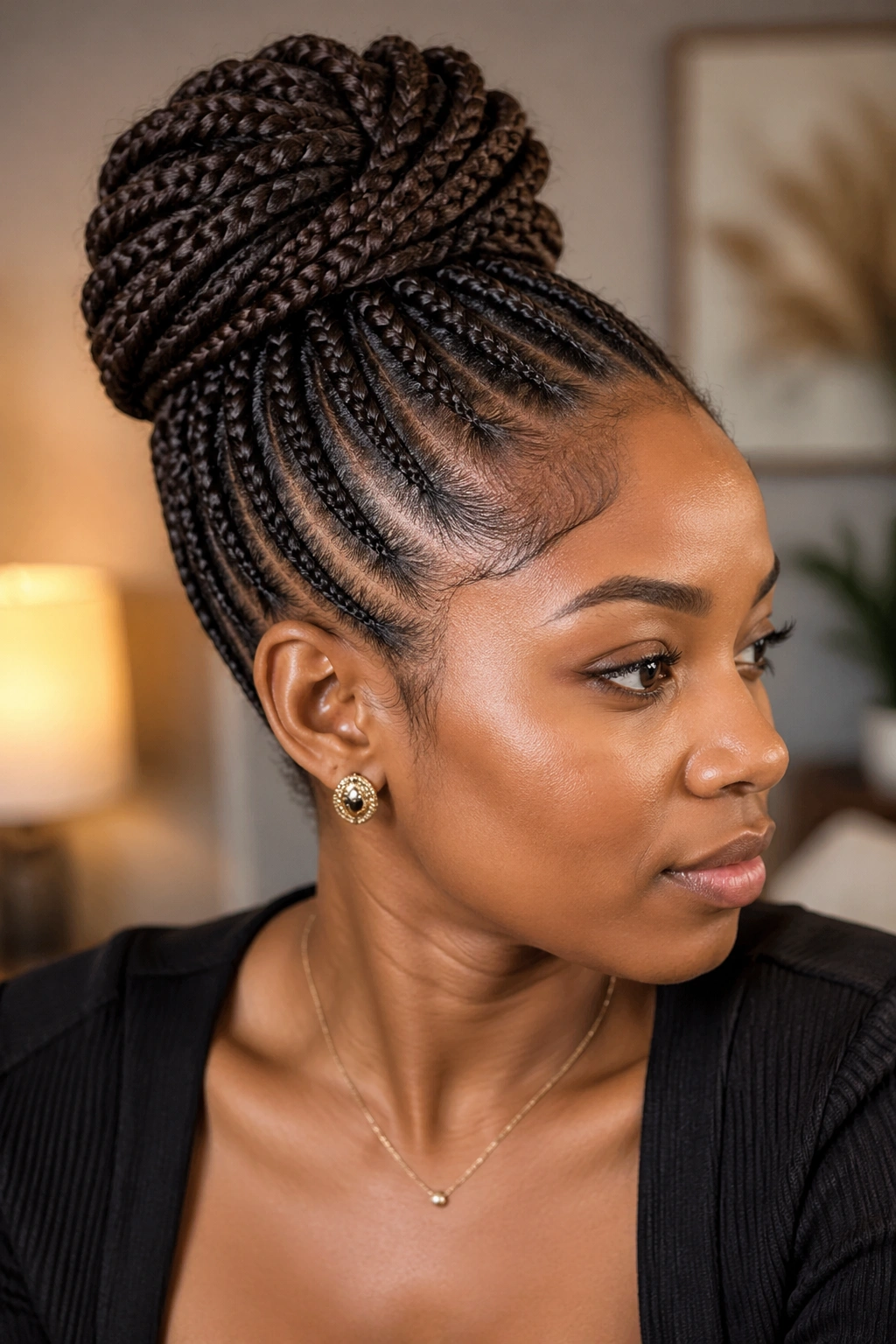
Cornrows swept upward into a braided bun, all in dark brown. The dark tone gives an updo gravity and presence without the harshness of pure black.
The bun can be formed from the cornrow tails wrapped and pinned, or built with additional braids stitched in for volume. Dark brown is forgiving — you can mix the original kanekalon bundle with a slightly different dark brown shade for the bun and the mismatch won’t show.
10. Caramel Cornrow Ponytail
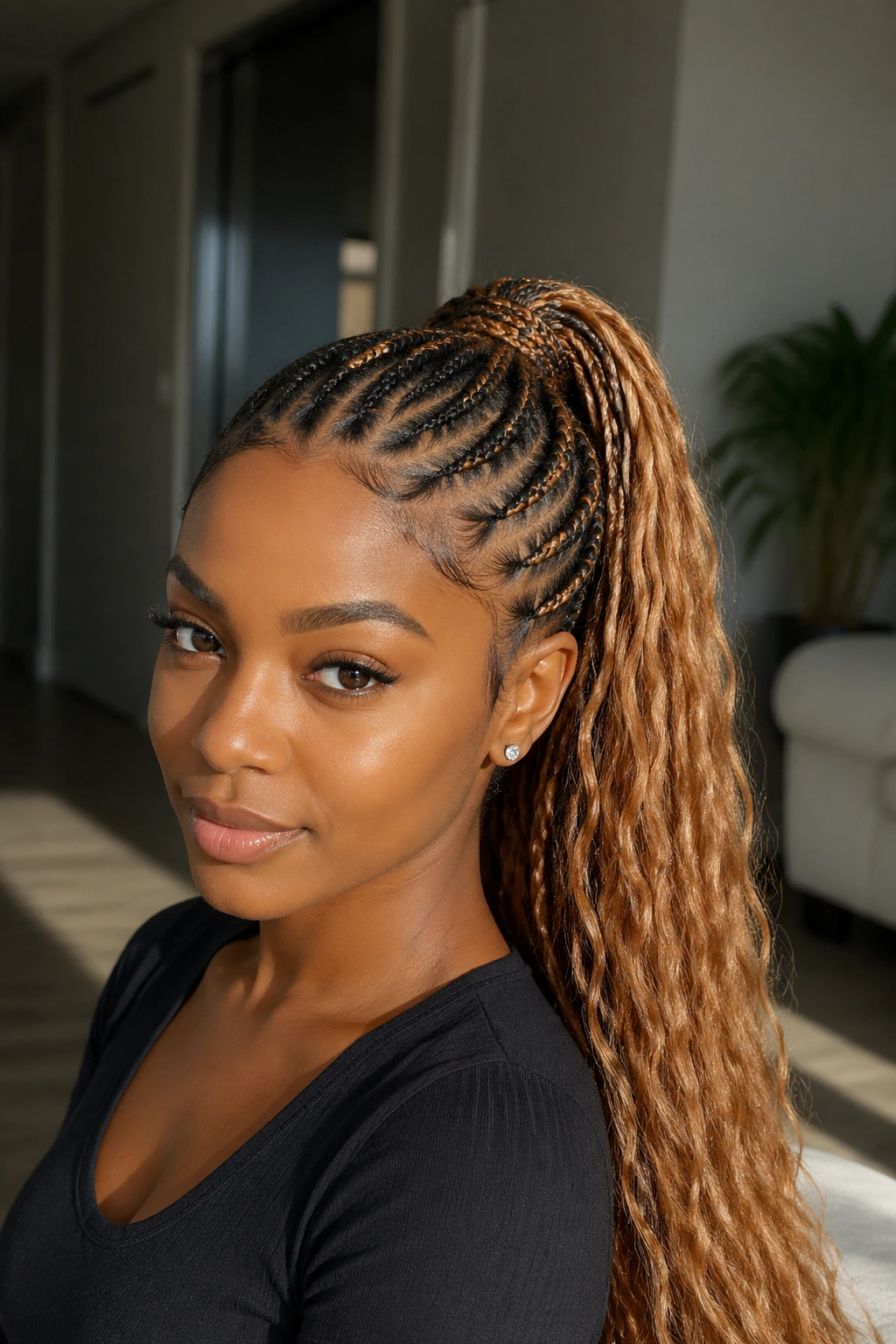
Cornrows all gathered into a high or mid-ponytail, flowing out in straight or gently wavy caramel extensions.
Caramel is light enough to catch light at the ponytail length. Dark brown ponytails can look like a single heavy mass. Caramel breaks that mass into visible strands, which adds dimension.
Keep the base cornrows in a matching caramel. Two-tone bases look choppy unless the transition is very carefully placed.
11. Toffee Brown Cornrow Mohawk
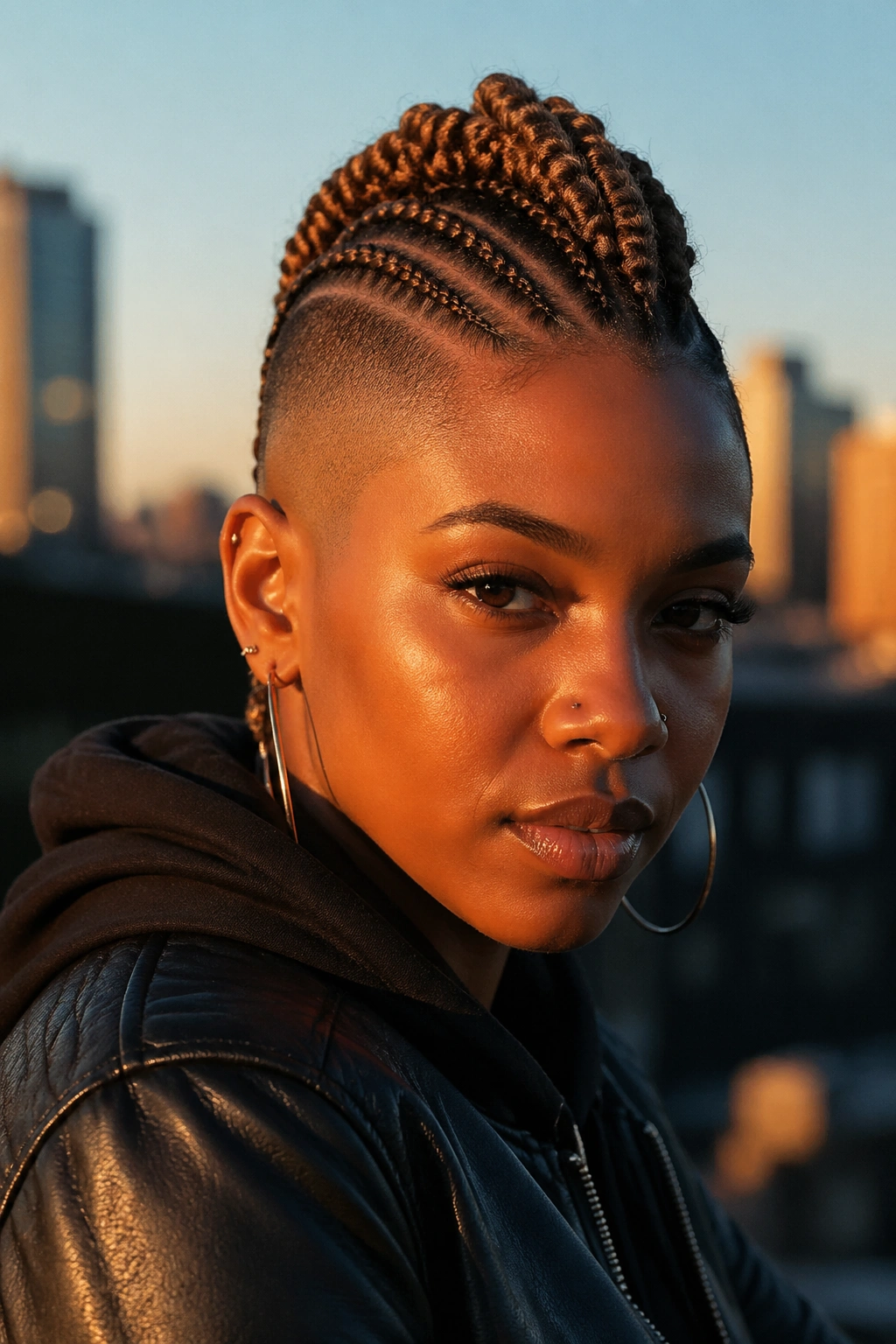
Center-strip cornrows in toffee brown, with the sides shaved or very short. A cornrow mohawk in this shade has punk energy without losing elegance.
Toffee brown pulls slightly warmer than honey — there’s more amber in it. On shaved or faded sides, the warm tone pops more than any cooler brown would.
The mohawk strip width matters. Three to three-and-a-half inches at the crown, tapering slightly toward the nape, reads most balanced.
12. Chocolate-Caramel Stripe Cornrows
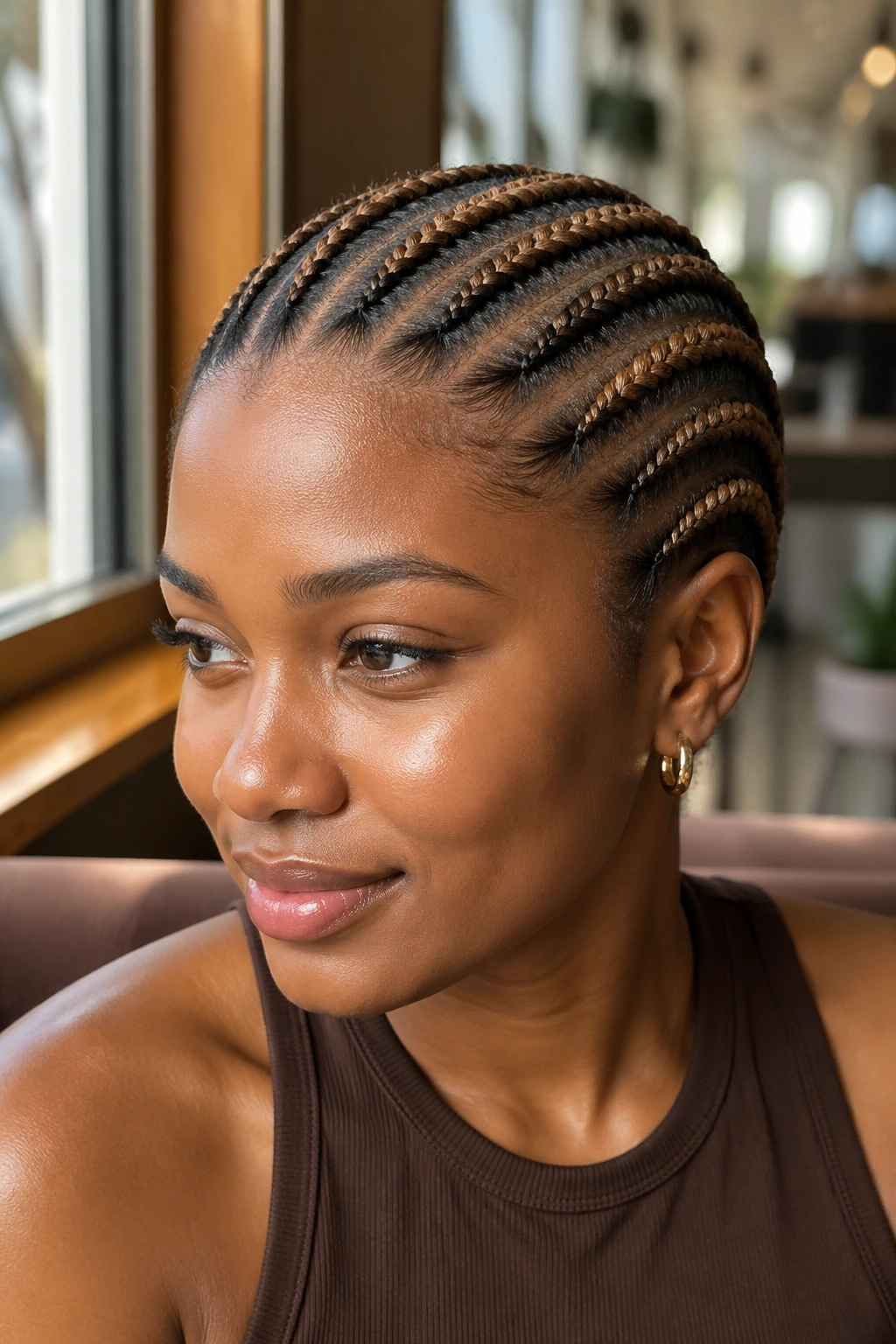
Cornrows where specific ones are braided in chocolate and others in caramel, creating a stripe effect across the head.
Pick your stripe pattern before install. Alternating every cornrow gets busy. Alternating every second or third cornrow — so you see a caramel stripe every inch and a half — reads cleaner.
The contrast between chocolate and caramel is visible but not jarring. This is the palette for people who want highlights without stark platinum or red.
13. Cinnamon Brown Cornrows with Beads
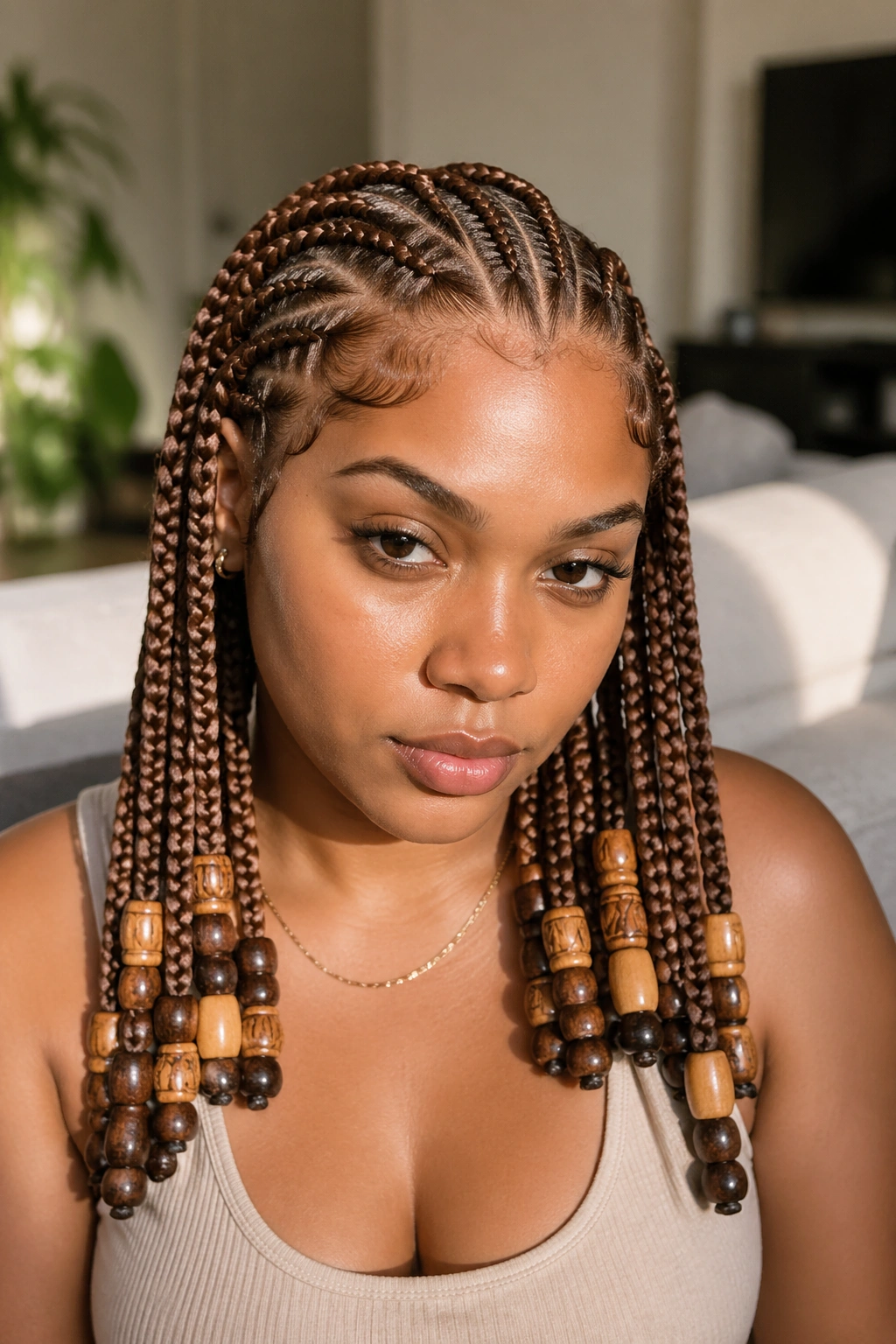
Cinnamon brown cornrows decorated with wooden beads along their length.
Cinnamon sits between chestnut and auburn. It has warmth but pulls less red than pure auburn. Wooden beads in natural finishes — pine, cedar, bamboo — complement cinnamon without competing.
The Catch
Bead weight is a real consideration. Cinnamon cornrows tend to be installed with lighter kanekalon (lower-density fiber), which means the extensions can’t support as many beads before the cornrow starts lifting. Four to five beads per cornrow maximum.
14. Cocoa Brown Feed-Ins with Curved Paths
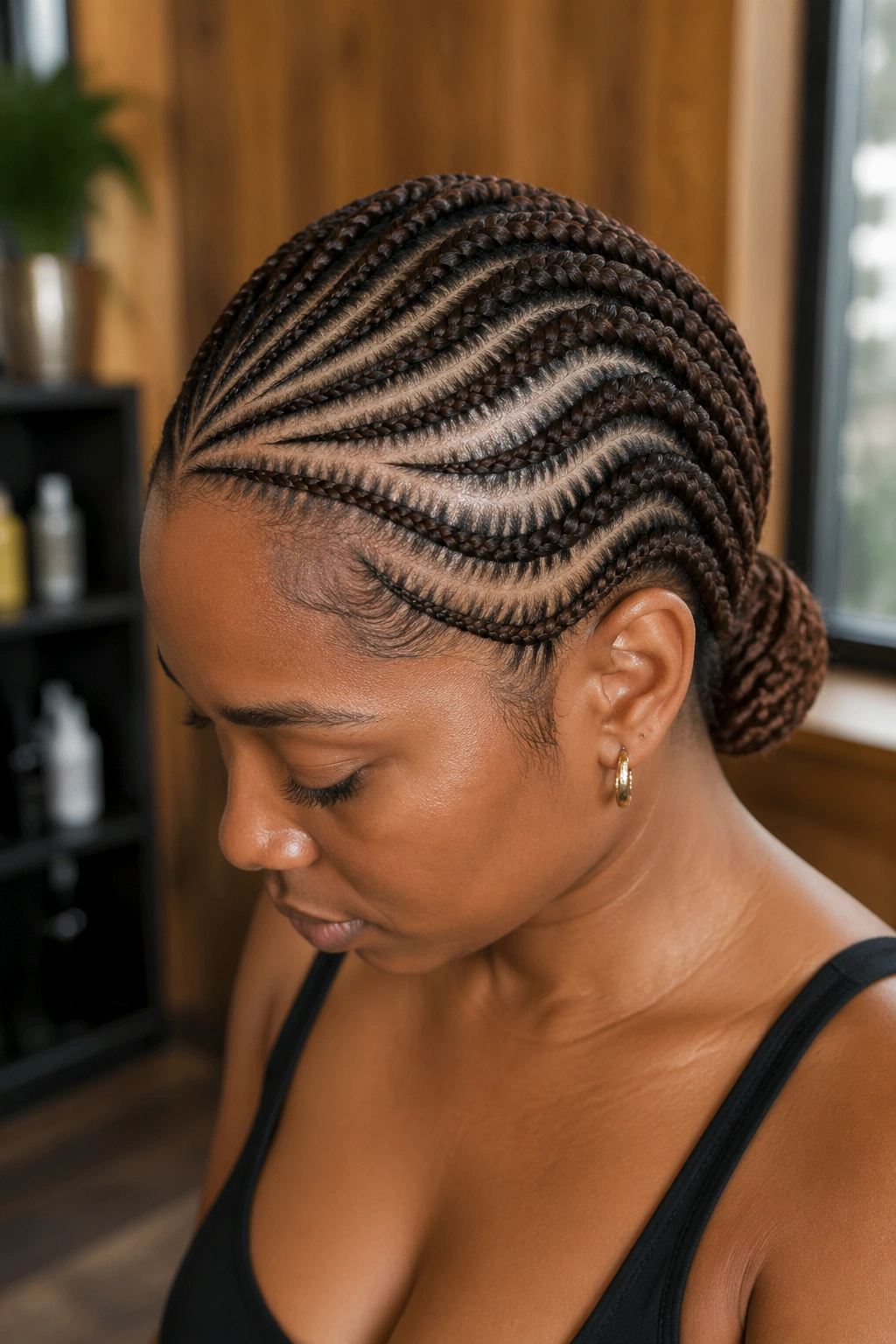
Cornrows in cocoa brown, parted in curved rather than straight paths. The curves flow toward a single focal point — usually the back crown.
Cocoa brown is a flat, matte medium brown. No red pull, no gold pull, just clean brown. That neutrality lets the curved parting pattern be the star.
Curved parting is harder to get right than straight. Uneven curves show immediately on cocoa because there’s no other color interest distracting the eye.
15. Dark Mocha with Side Swoop
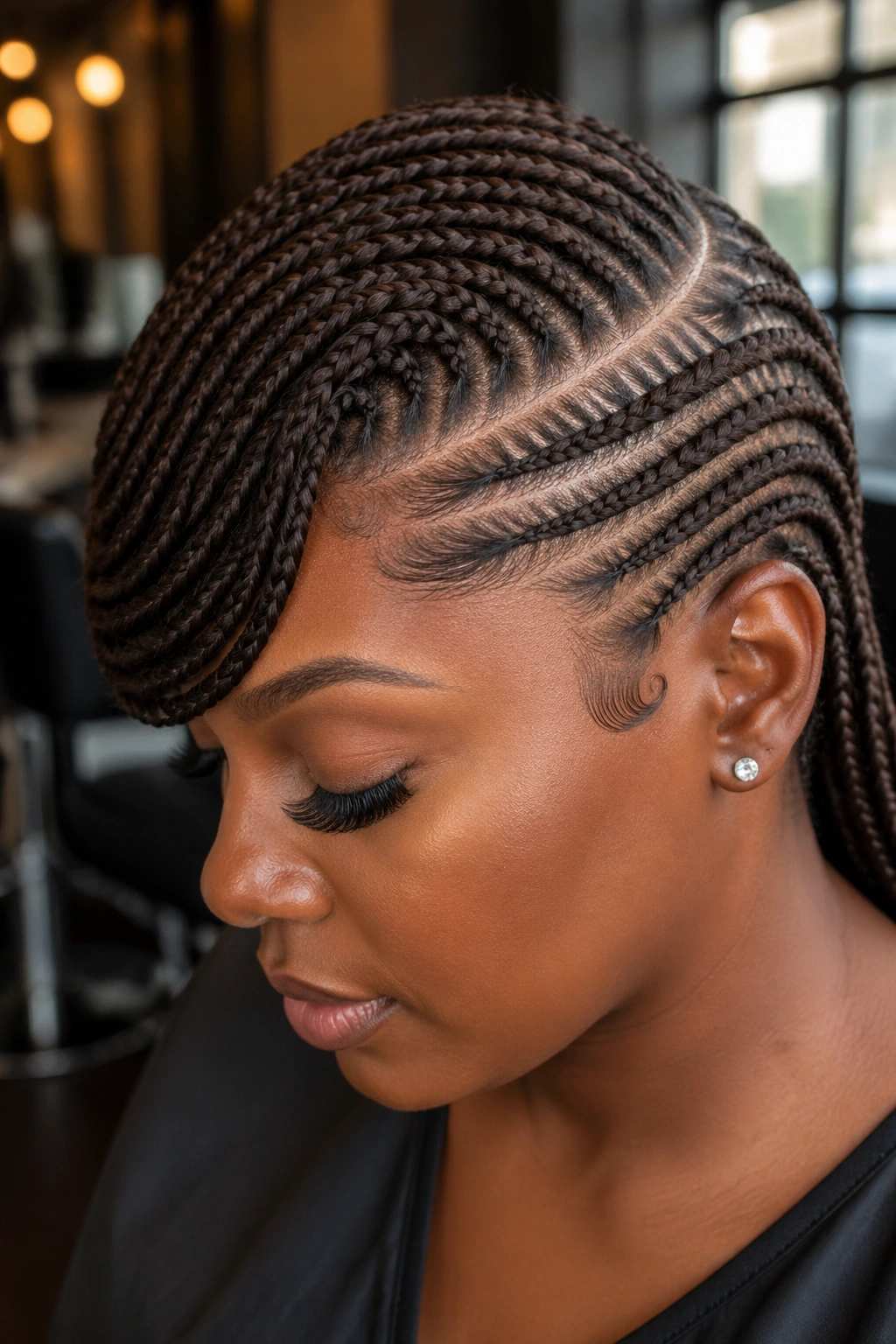
Dark mocha cornrows with a deep side part and an exaggerated side swoop — the front cornrows angling dramatically across the forehead.
Bold move. The swoop works best when the cornrow angle is at least 45 degrees off the vertical. Less than that and the swoop reads as accidental.
Dark mocha suits this style because the subtle grey undertone of mocha adds sophistication to what could otherwise look overly theatrical.
16. Maple Brown Cornrows
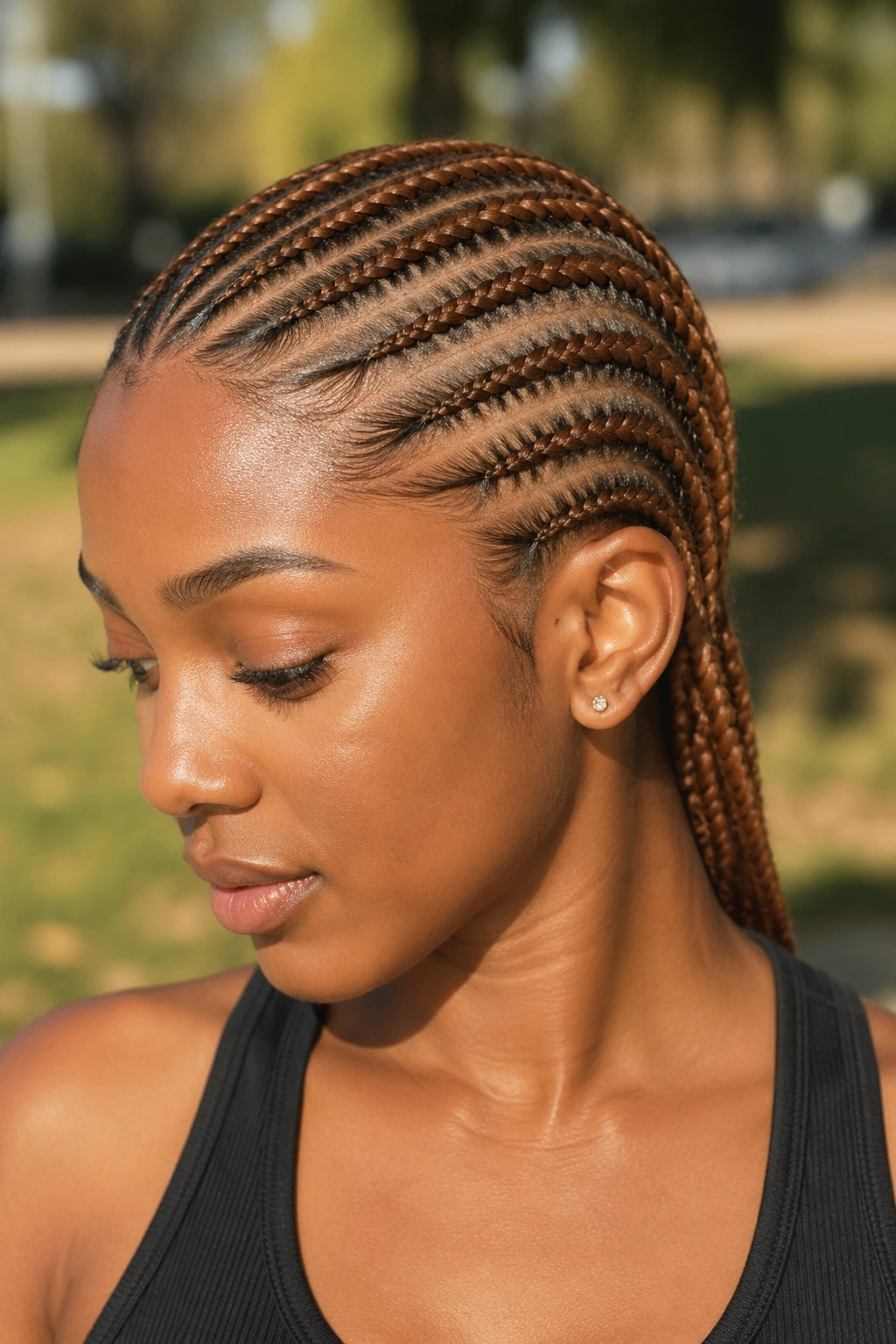
Maple brown — a warm brown with a hint of amber — works particularly well for cornrow styles with feed-in extensions because it mimics sun-lightened natural hair.
The natural-hair appearance of maple is what sells this style. Strangers will assume you dyed your natural hair. That’s the compliment you’re after.
Use straight-back feed-ins, not freestyle parting. The natural effect reads best when the cornrow pattern is understated.
17. Gingerbread Cornrow Halo
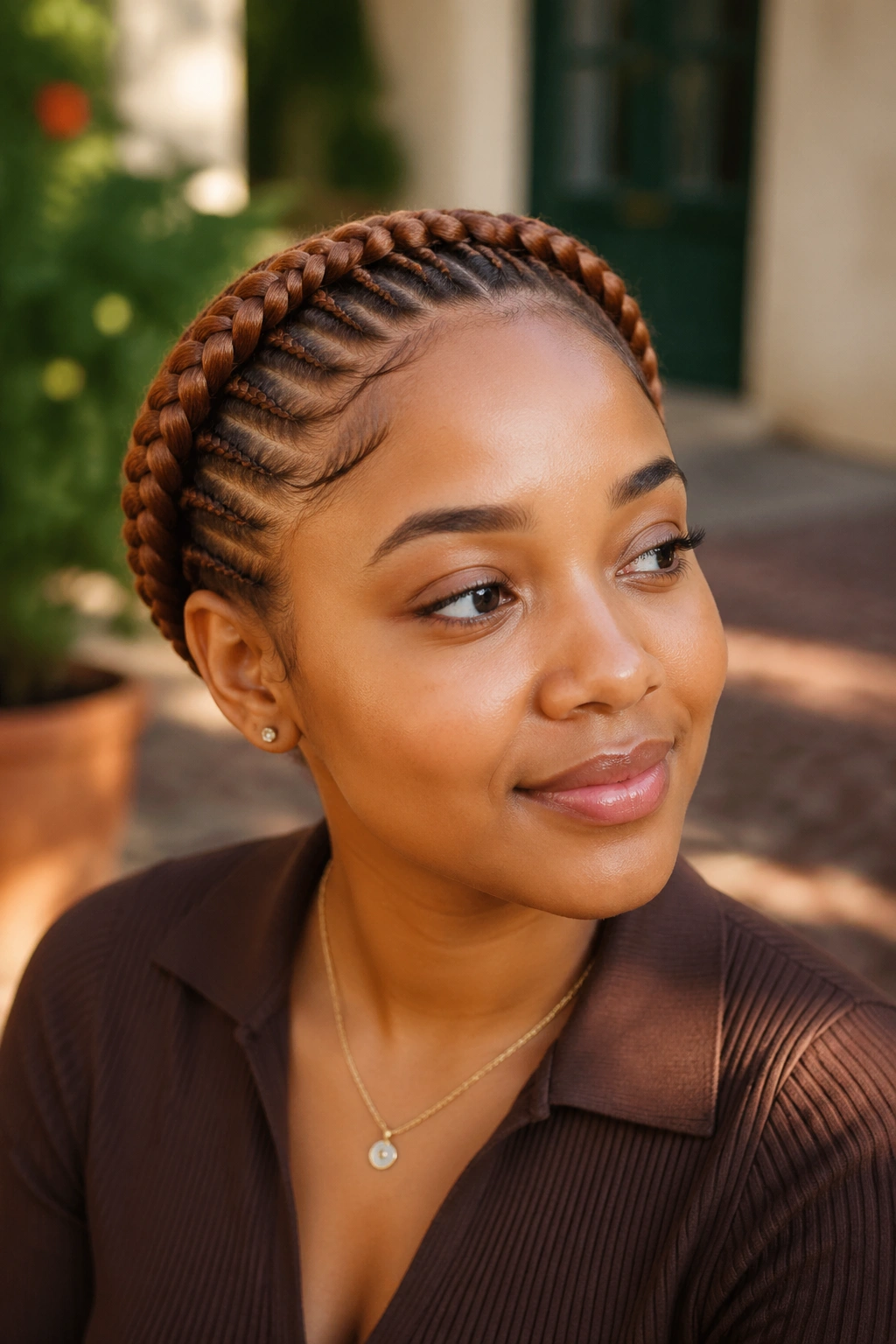
A halo cornrow circling the head in gingerbread brown — a warm brown with orange undertone — with the center of the halo left in natural hair or short twists.
Gingerbread is a statement shade. It’s warmer than toffee, more orange than auburn. A halo in this color reads like a crown because of how the warm brown catches light from above.
This is not a style for people who want to blend in. It’s meant to be seen.
18. Walnut Brown Box Cornrows
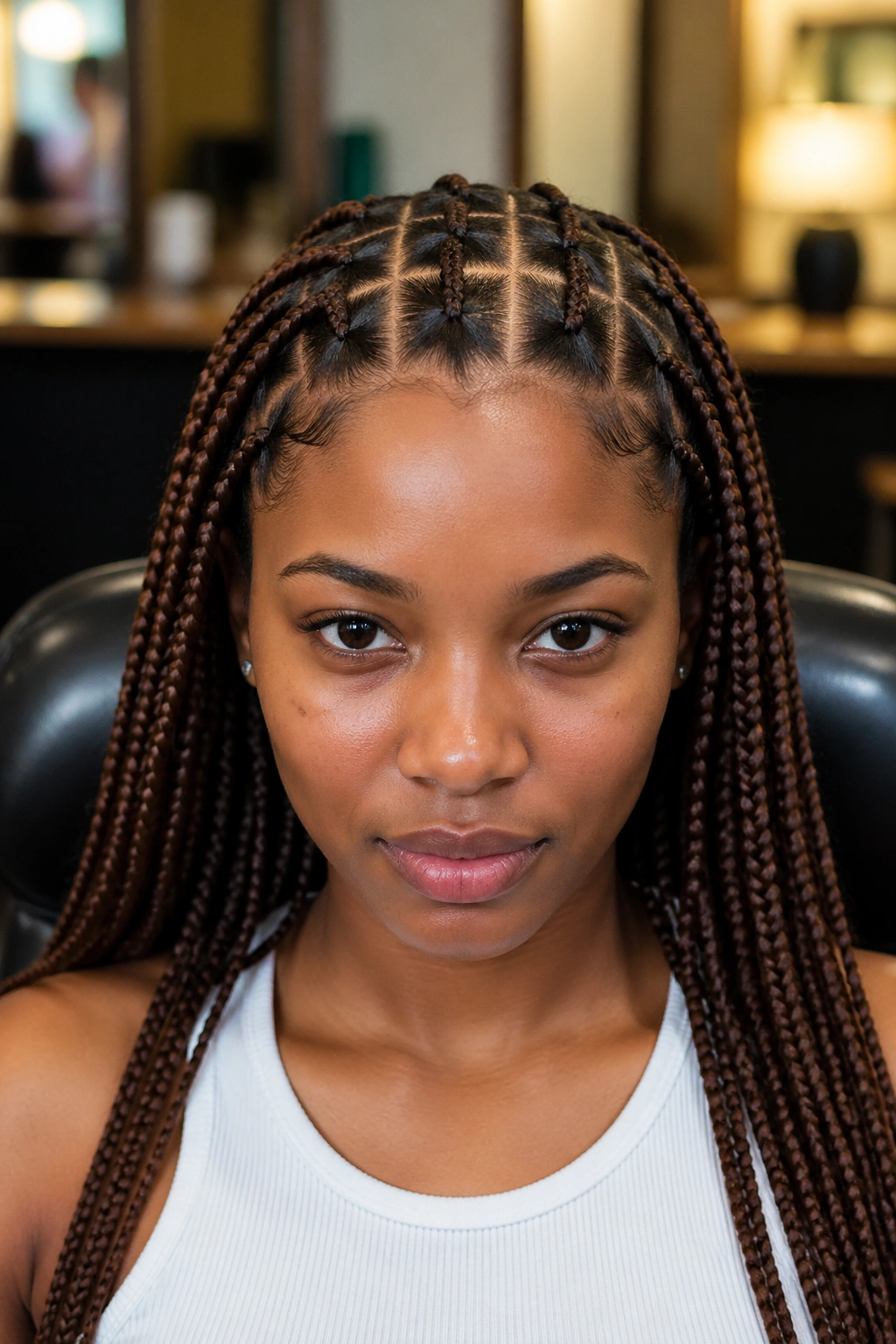
Cornrows sectioned in a grid pattern — even boxes rather than linear rows — in walnut brown.
Walnut is cool brown. Matte. Earthy. It pairs with boxy grid parting because both share a geometric, architectural quality.
Box cornrows require precise parting. Every intersection of horizontal and vertical parts should meet at right angles. Sloppy intersections kill this style faster than anything else.
Maintenance Notes
Box cornrows fuzz faster at the intersection points than at the cornrow body. A small amount of edge gel applied with a toothbrush at each intersection every 4-5 days keeps the grid looking sharp.
19. Sienna Brown Mini Cornrows
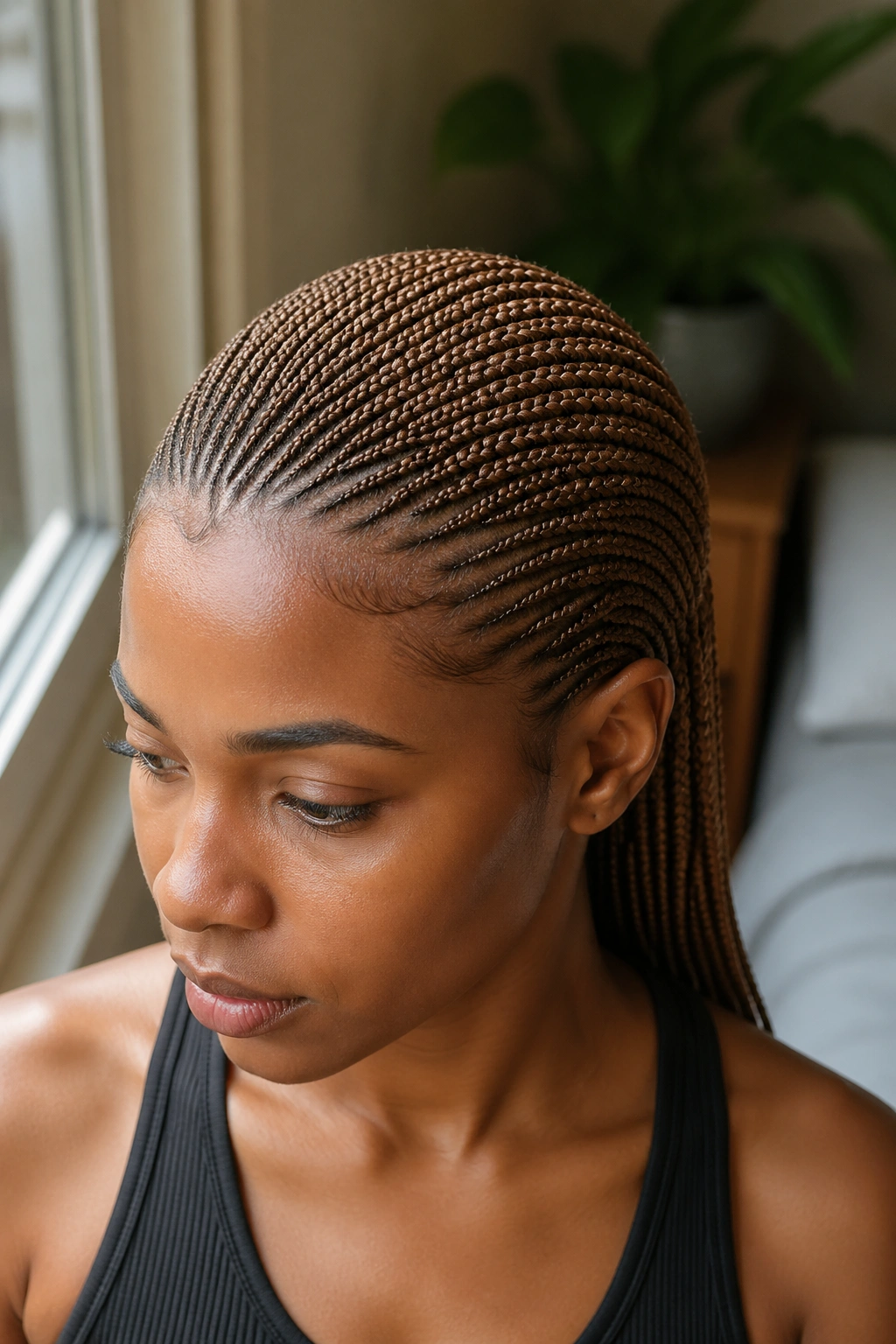
Micro cornrows in sienna — a slightly red-leaning brown — across the entire head.
Micro cornrows in any color are labor-intensive. Sienna micro cornrows particularly so, because the color shows every imperfection. Budget 6-8 hours for install and expect a 4-6 week wear window.
The density of micro cornrows hides scalp coverage needs. If you have thinning spots, sienna micros can help camouflage them better than larger cornrow formats.
20. Tobacco Brown Lemonade Cornrows
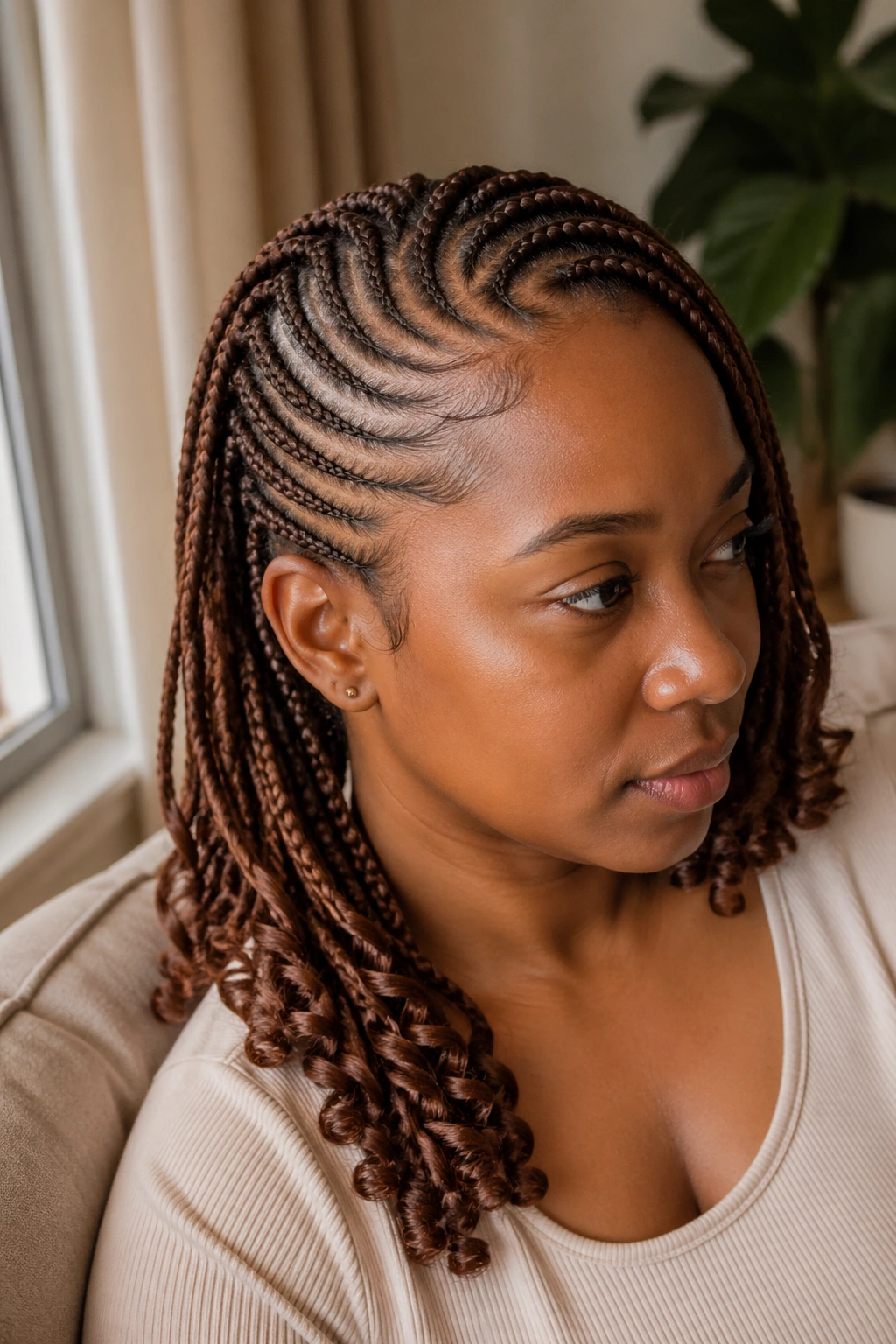
Side-swept lemonade-style cornrows in tobacco brown — a muted, smoky brown with subtle green undertone.
Tobacco is an unusual pick. Most people don’t think of it for cornrows. It has a vintage feel, almost sepia, that pairs well with the swept-across lemonade silhouette.
Finish the tails with a slight curl — a bumped end achieved with flexi-rods overnight. The curl softens tobacco’s smoky flatness.
21. Mahogany Cornrow Crown with Natural Pompadour
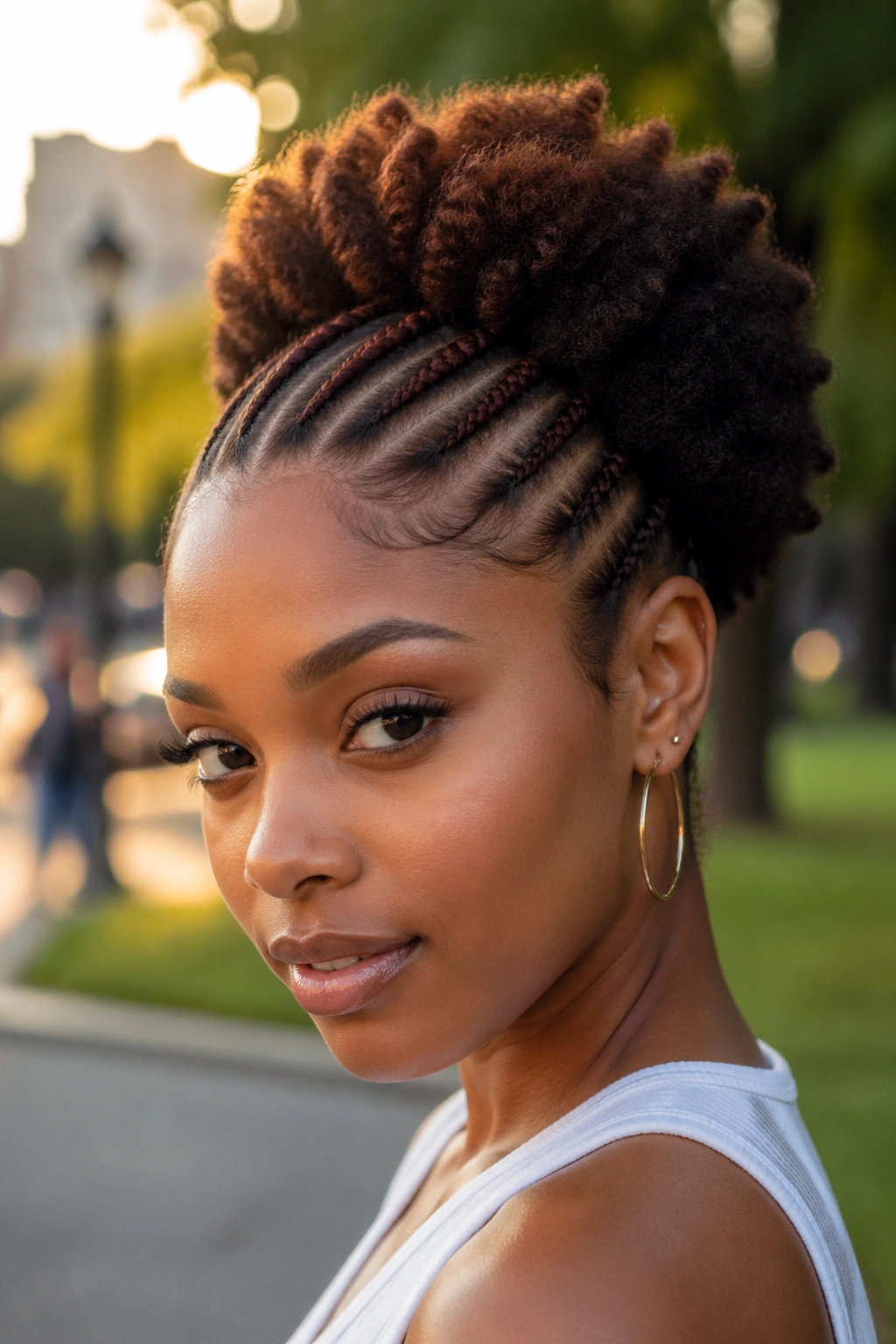
The front half of the head is cornrowed in mahogany. The back half is left natural and styled into a pompadour.
Mahogany is red-brown. Against natural 4C hair, it creates visible contrast without the aggression of true red or burgundy. The cornrow crown reads put-together, and the natural pompadour reads freeform.
This style works particularly well for people transitioning from protective styles back to wearing their natural texture. It’s a bridge style.
22. Bronze Brown Twisted Cornrow
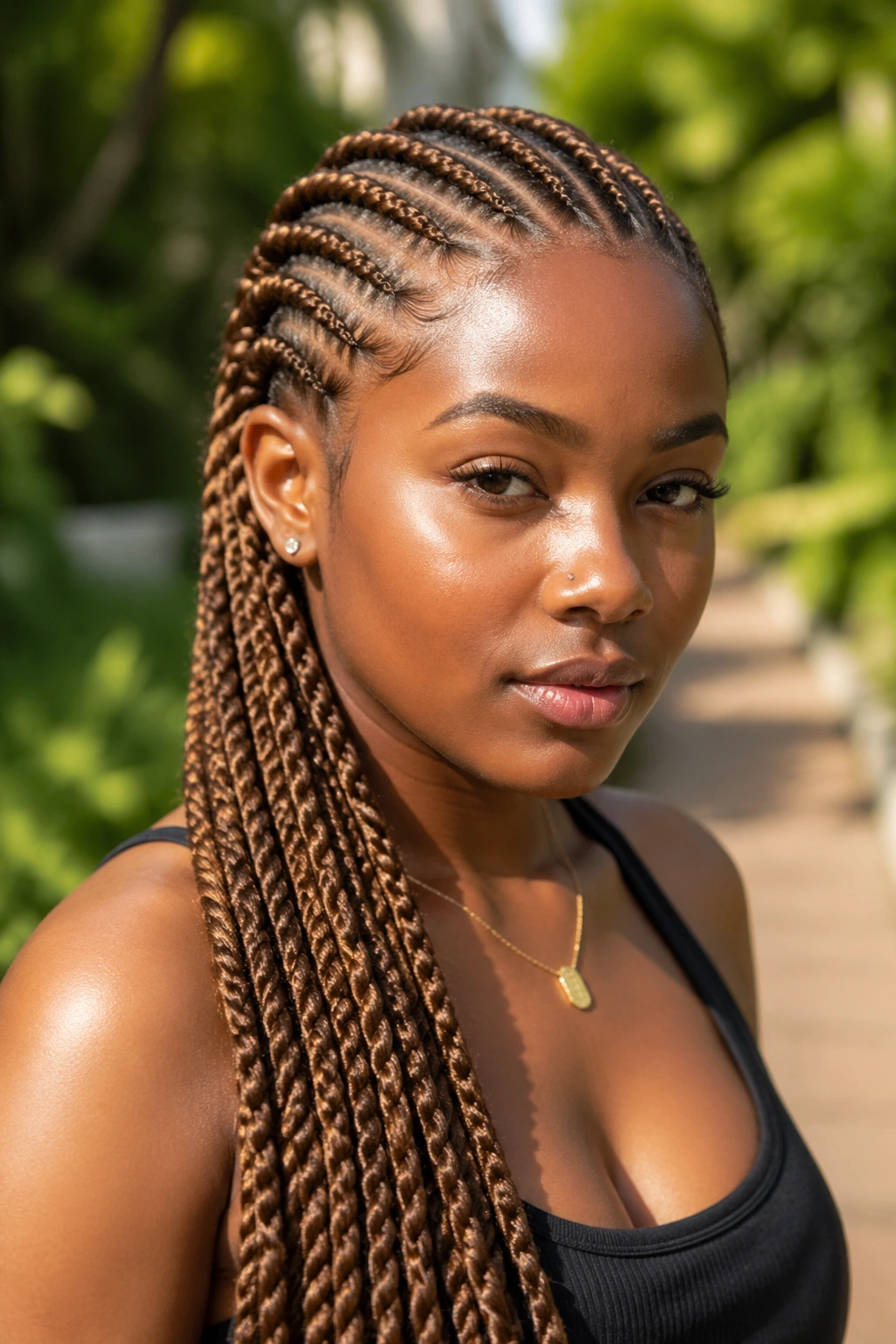
Cornrows braided with a twisting technique where two of the three strands are twisted before plaiting. This gives a rope-like look to each cornrow. In bronze brown — a metallic-leaning warm brown — the twist effect catches light along the length.
Not every braider can execute this twisted cornrow technique well. If you’re commissioning, ask to see examples. The twist should be visible but not dominant. Over-twisting creates a coiled rope that doesn’t lie flat.
23. Coffee Bean Cornrow Bob with Bangs
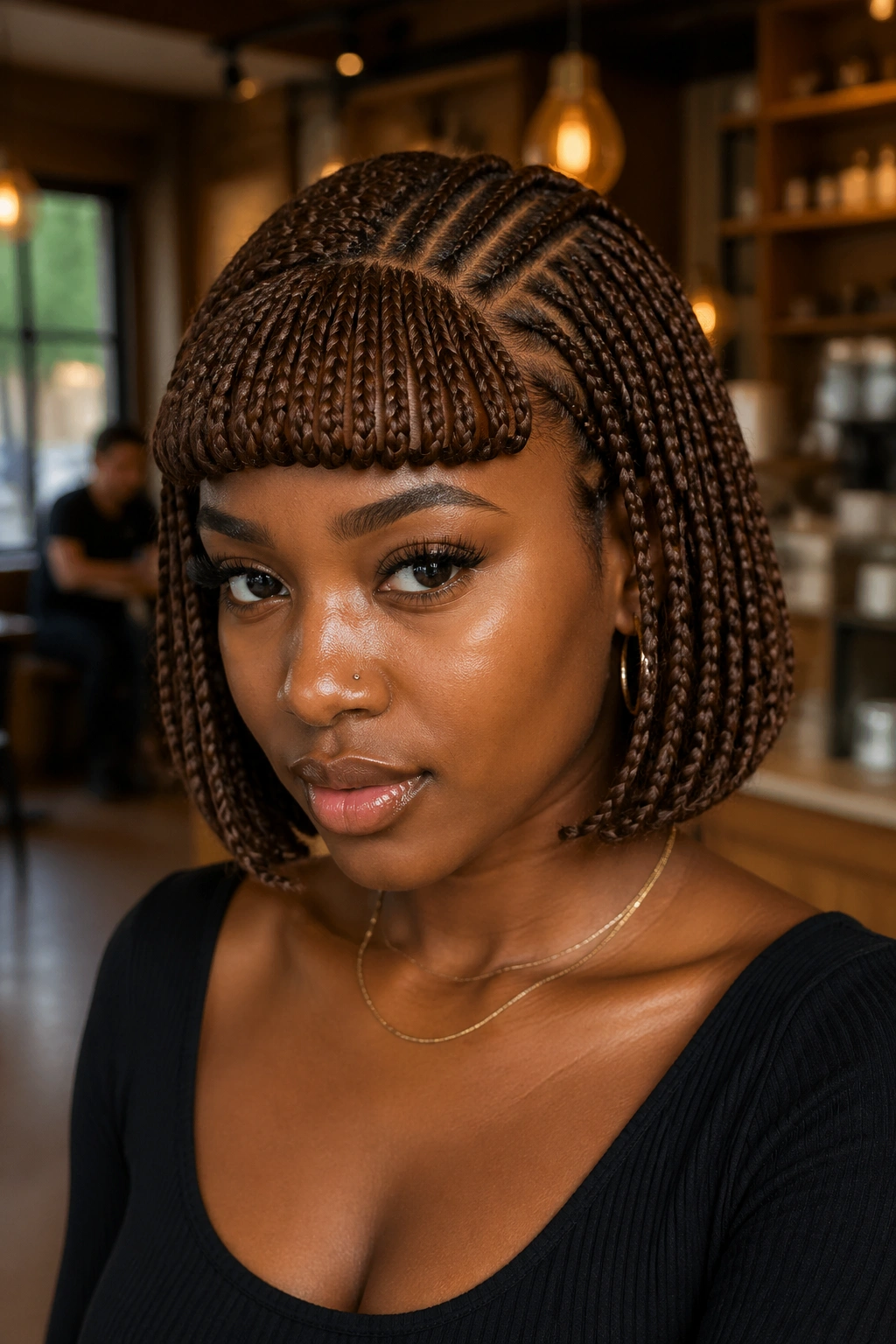
Chin-length cornrow bob in rich coffee brown with a cornrow-style bang.
Coffee brown is darker than mocha but not as black as espresso. On a bob-length cornrow style, coffee reads classic and polished.
The bang should be a single thick cornrow running horizontally across the forehead. Multiple thinner cornrow bangs look fussy at this length.
24. Hazelnut Brown Spiral Cornrows
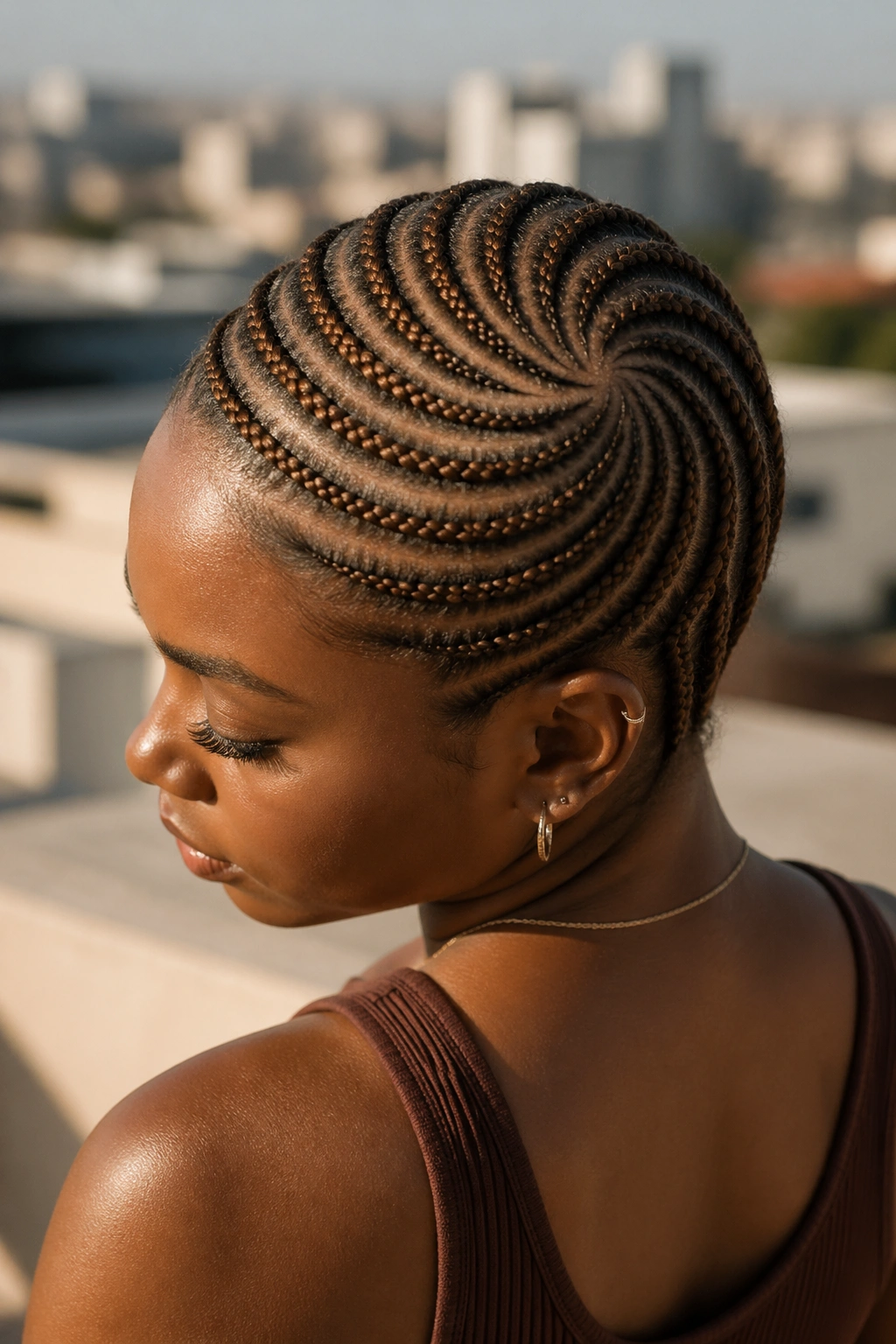
Spiral cornrow paths that wind from a central crown point outward in a flat spiral pattern. Hazelnut brown — a muted, slightly golden medium brown — shows the spiral path clearly without overwhelming it.
Spiral cornrows are an advanced braider technique. The curves have to be continuous and consistent. Hazelnut is forgiving of minor irregularities because its warmth softens the visual lines.
Who This Is For
Anyone who’s already had feed-in cornrows, fulani, lemonade, and standard straight-backs and wants something new. Spiral cornrows are the next step in visual complexity, and hazelnut is the color that makes the complexity look intentional.
25. Two-Tone Coffee and Caramel Freestyle
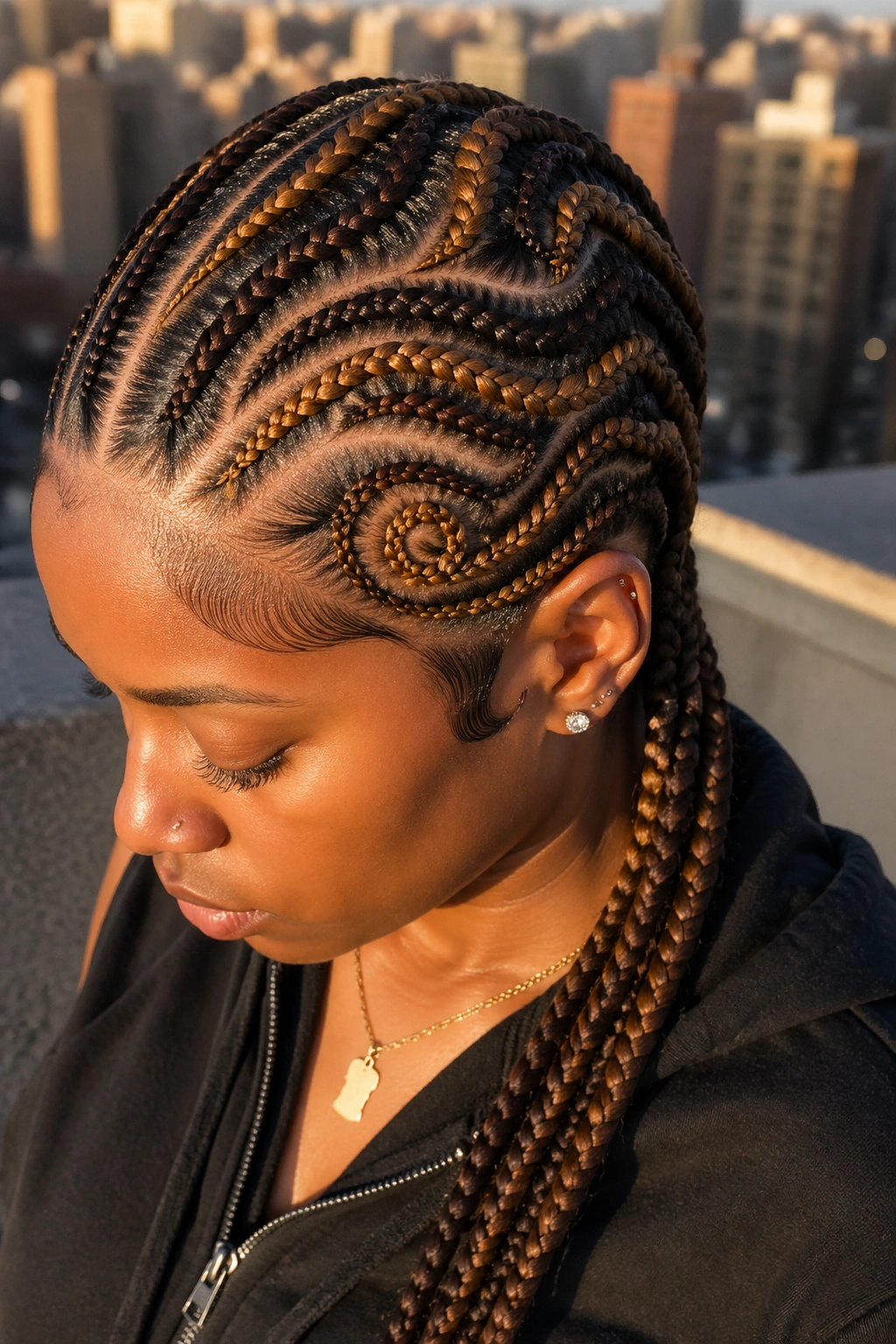
A freestyle cornrow pattern that uses alternating cornrows in coffee brown and caramel — no symmetry, no grid, just flowing curves with alternating color.
This is the most visually complex style on this list. It combines unpredictable parting with intentional color blocking. Done poorly, it looks chaotic. Done well, it looks like wearable art.
Find a braider with freestyle portfolio experience. Freestyle without experience is where cornrow styles go to look accidental. Freestyle with experience is where cornrow styles go to look iconic.
Caring for Brown Cornrows
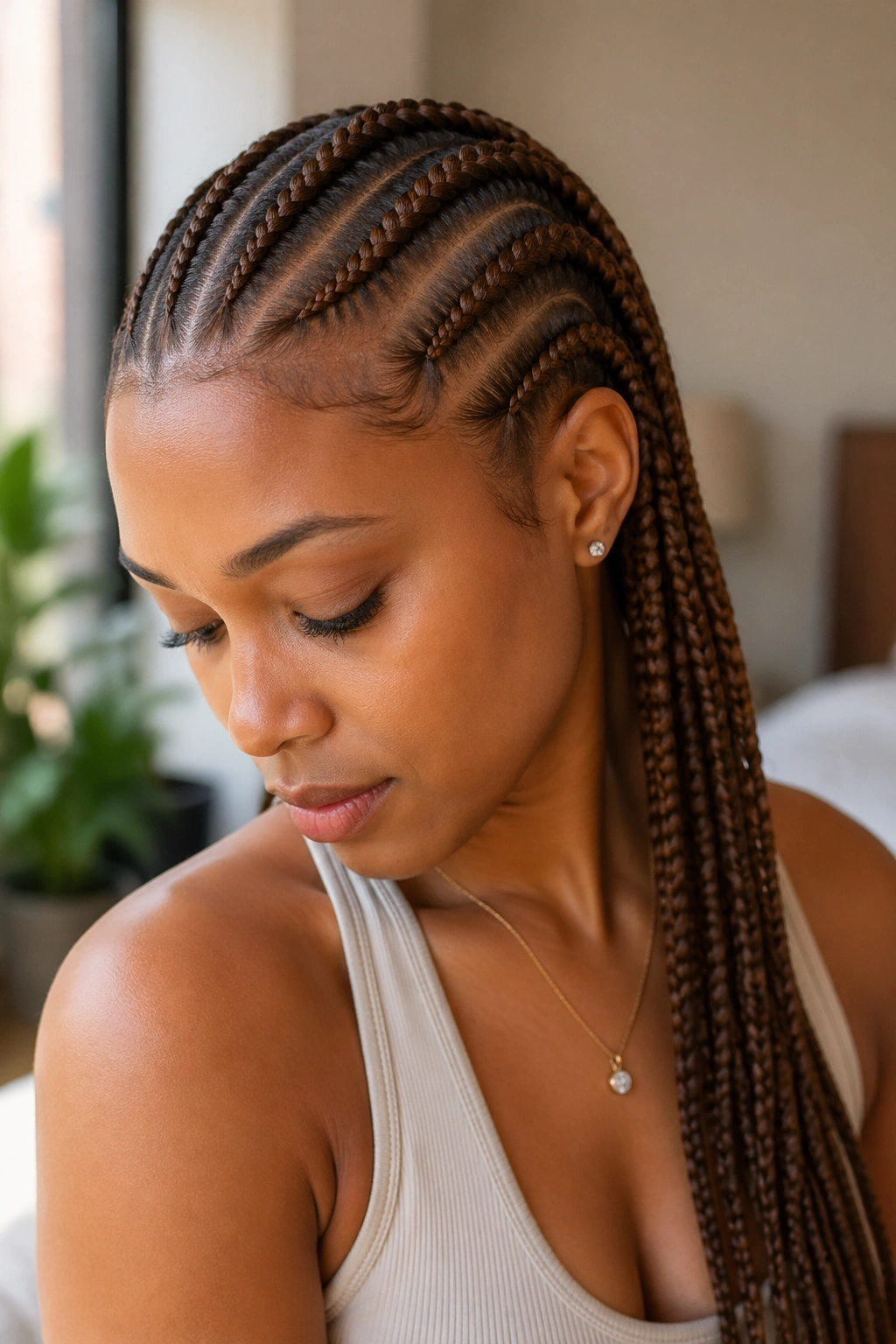
Brown fades faster than black. That’s just how the fiber chemistry works. Even the best kanekalon will shift 1-2 shades lighter over 4 weeks of wear.
Protect against premature fade with a leave-in spray containing UV filters. Not sunscreen — a specifically formulated UV protectant for hair. Sun exposure is the main culprit behind brown fade.
Limit chlorine exposure. Pool swimming with brown cornrows will push them toward green within a single session. If you have to swim, pre-wet the hair with tap water before entering the pool — pre-saturated hair absorbs less chlorine.
Heavy butters, as mentioned earlier, dull the sheen of lighter browns. Stick to lightweight serums and oils.
Scalp Health in Brown Installs
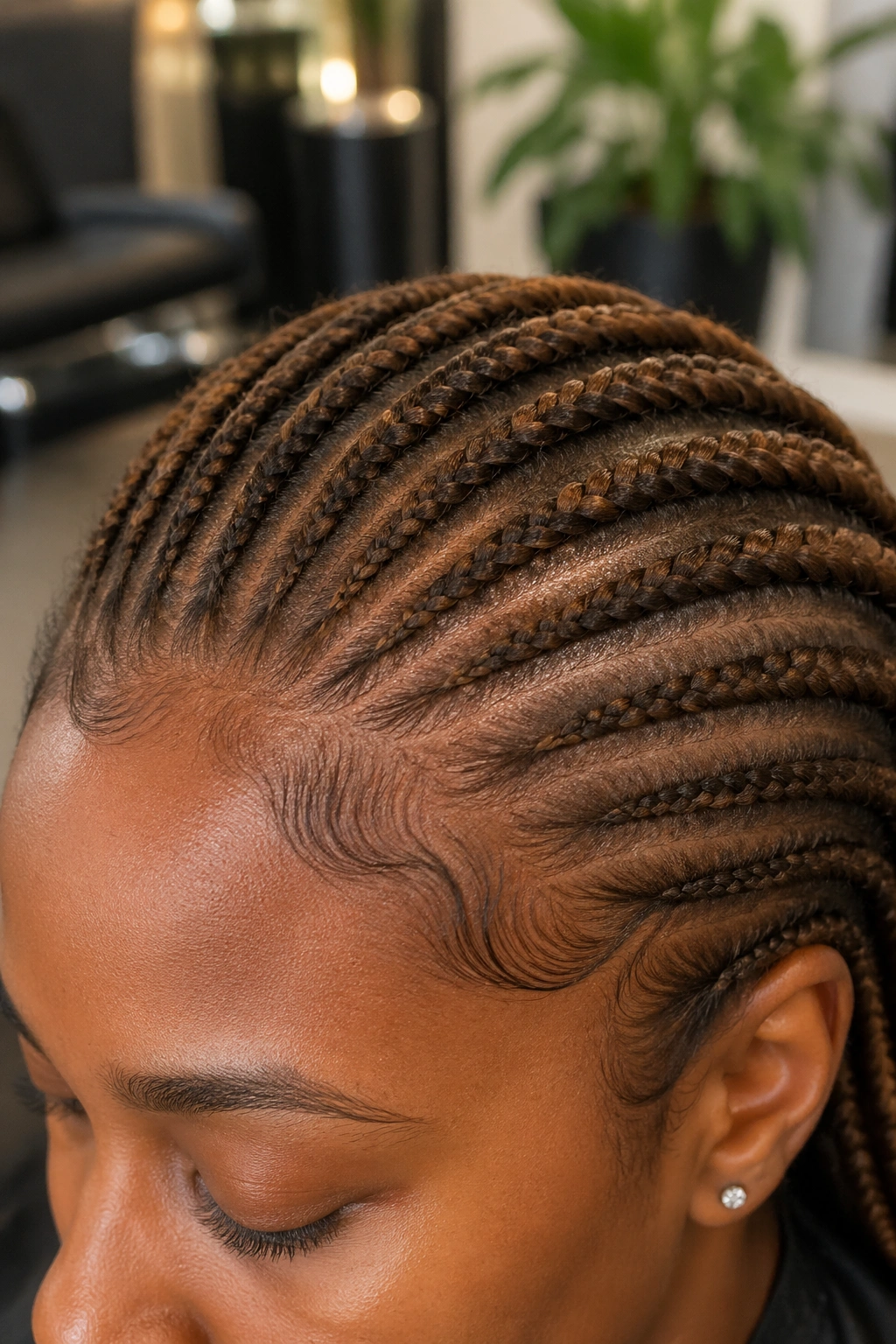
Itch is the biggest complaint with any long-term install. Brown installs can itch more than black because the lighter dye used in processing some brown kanekalon can trigger sensitivity.
Rinse new extensions in apple cider vinegar water before install. One part ACV to three parts water, soak bundles for 20 minutes, dry thoroughly. This removes excess alkaline residue that causes itch.
Scalp oil routine: tea tree, peppermint, jojoba blend, three drops applied to different scalp points daily. Not more — over-oiling creates buildup that dulls the brown color.
Avoid sulfate shampoos during wear. They strip brown kanekalon color even faster than they strip natural hair color.
When to Take Them Down
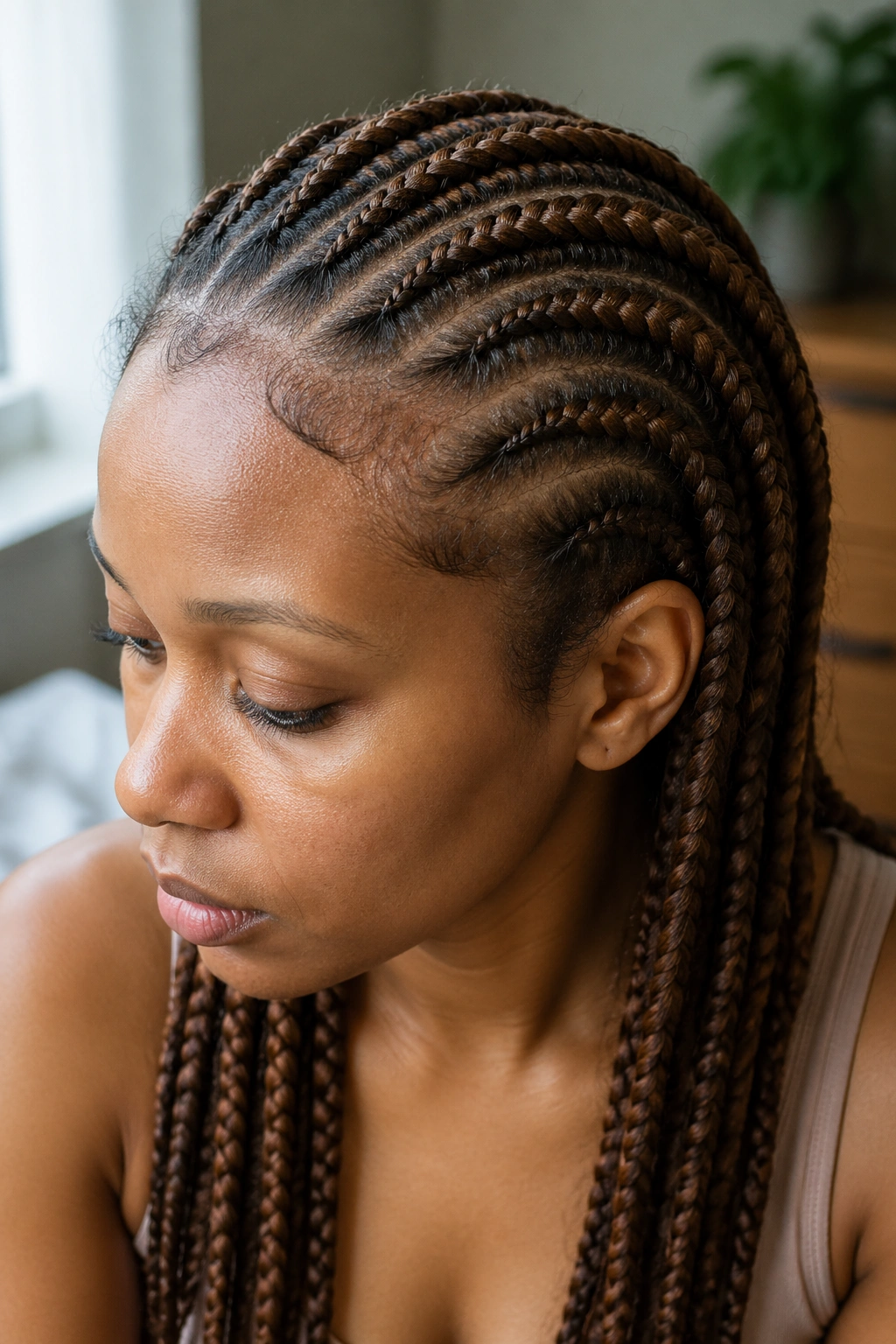
Four to six weeks is the window for most brown cornrow styles. Brown kanekalon holds up structurally for that long, but visually it starts looking worn after week five on most wearers.
Signs it’s time:
- Color fade is noticeable compared to install day
- Roots show more than an inch of new growth
- Cornrows are lifting at the scalp on one side of the head
- The base is itchy even with regular scalp care
Don’t stretch brown styles past six weeks for color reasons alone. Faded brown can look dingy rather than softly lightened, which undermines the whole look you installed.
Takedown Specifics for Brown
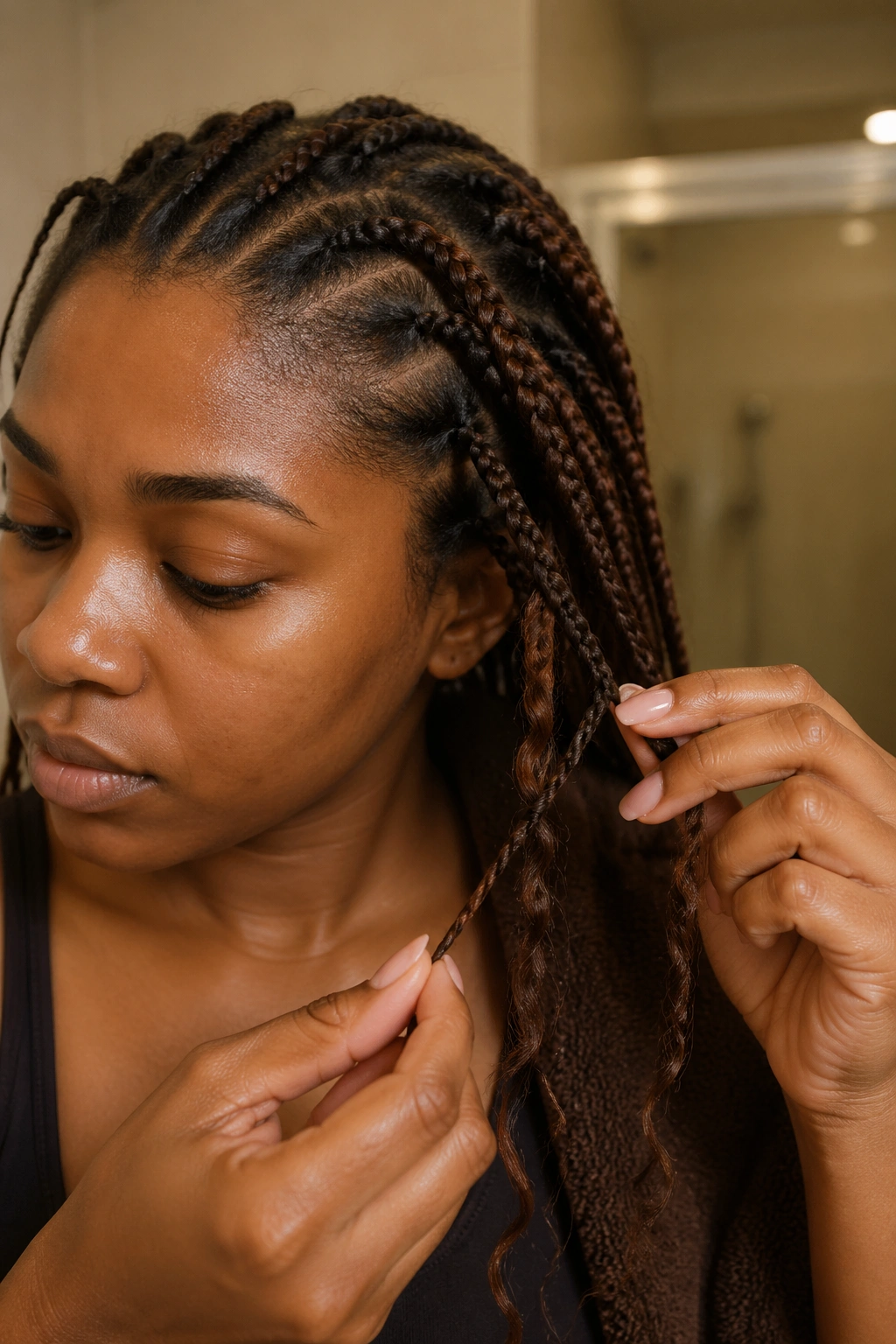
The unwinding process is the same as with black extensions, but the cleanup is different. Brown kanekalon sheds more color during takedown. You’ll notice staining on light towels and pillowcases during the takedown session.
Use a dark towel. Work over a surface you don’t mind staining. Bathroom tile is better than carpet.
Wash in sections after takedown. A clarifying shampoo — not your regular shampoo — on the first wash after removal. This clears any kanekalon residue from your natural hair before normal moisturizing resumes.
Picking Your Brown
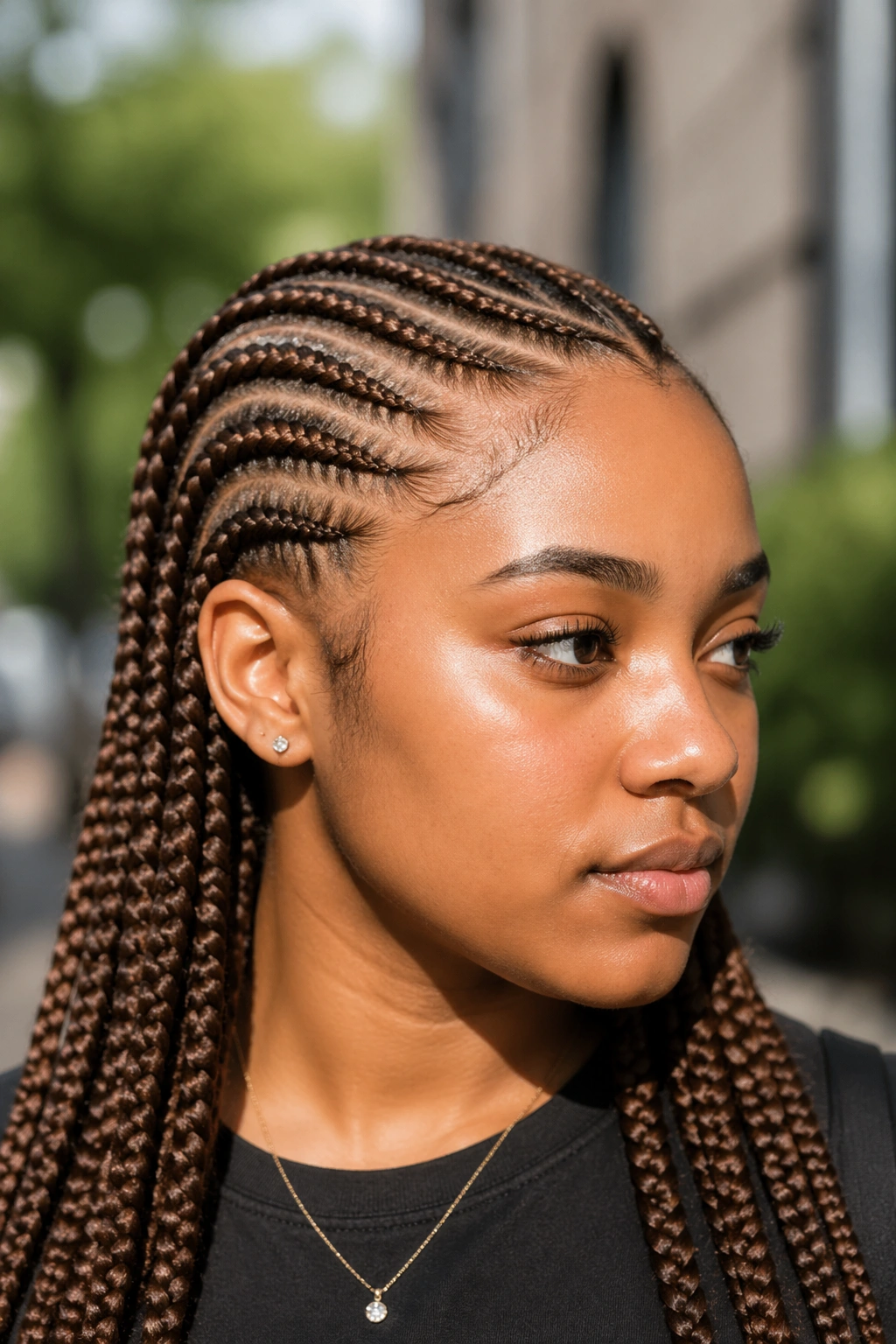
Honey and caramel for warm skin tones with golden undertones.
Mocha, walnut, and coffee for cool skin tones.
Chestnut, chocolate, and cocoa for neutral undertones — the safest bets if you’re unsure.
Mahogany and auburn for people who want red without full commitment to burgundy.
Dark brown and espresso for people who want near-black with added depth.
Try shades against your skin in daylight before committing. Fluorescent lighting distorts brown tones more than any other color, and many braiders’ salon lighting is fluorescent. Step outside with the color sample before you approve it.
Common Errors That Kill Brown Styles
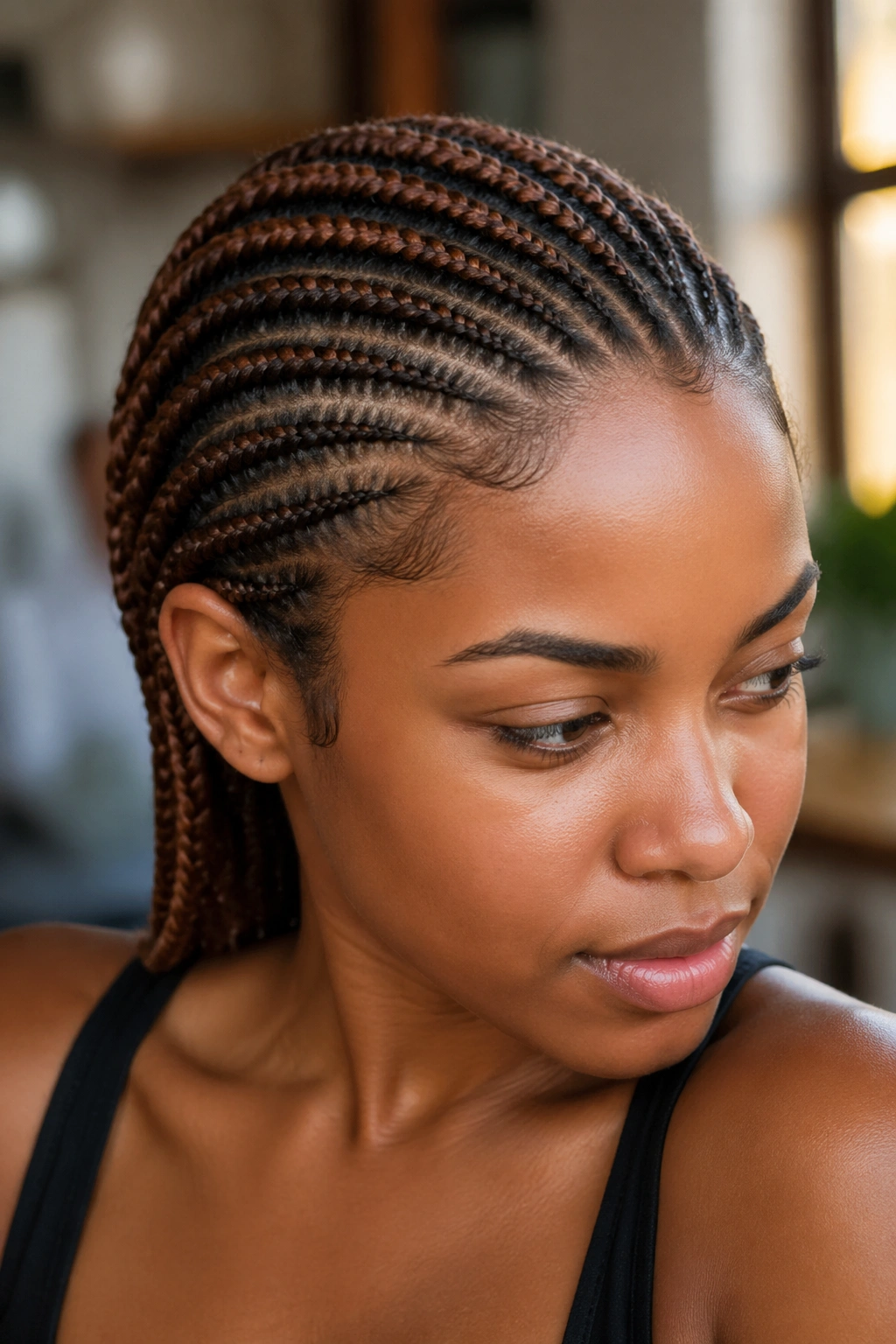
Shade mismatch at feed-in. Using a different brown for the feed-in extensions than the end extensions creates a visible color break. Match the entire length.
Over-washing. Brown installs don’t need weekly shampoo. Every 10-14 days with a low-sulfate formula is plenty.
Heat styling on already-fading brown. Flat irons and curling wands accelerate color loss. Set the look at install and don’t heat-style after.
Product buildup at the parts. Looks especially dingy on lighter browns. Weekly gentle scalp cleanse prevents it.
Dark undergarments on install day. Not about the hair — about you. Kanekalon sheds some fiber and color during the first day. Wear a dark shirt or a robe that you don’t mind picking up brown shed.
Brown cornrow styles give you range that bolder colors can’t match. Office-appropriate without being boring. Photo-friendly without being loud. Flattering across skin tones without trying too hard. Worth the extra care they need at every stage — install, wear, takedown — because the finished look is worth it.