


Fulani cornrow styles carry centuries of history in their pattern. The Fulani people — spread across West Africa from Senegal to Cameroon — developed a braiding tradition that used specific placement, beadwork, and accessories to communicate status, age, marital status, and tribal affiliation. Fulani cornrows for Black women honor that heritage while adapting the classic elements for contemporary wear.
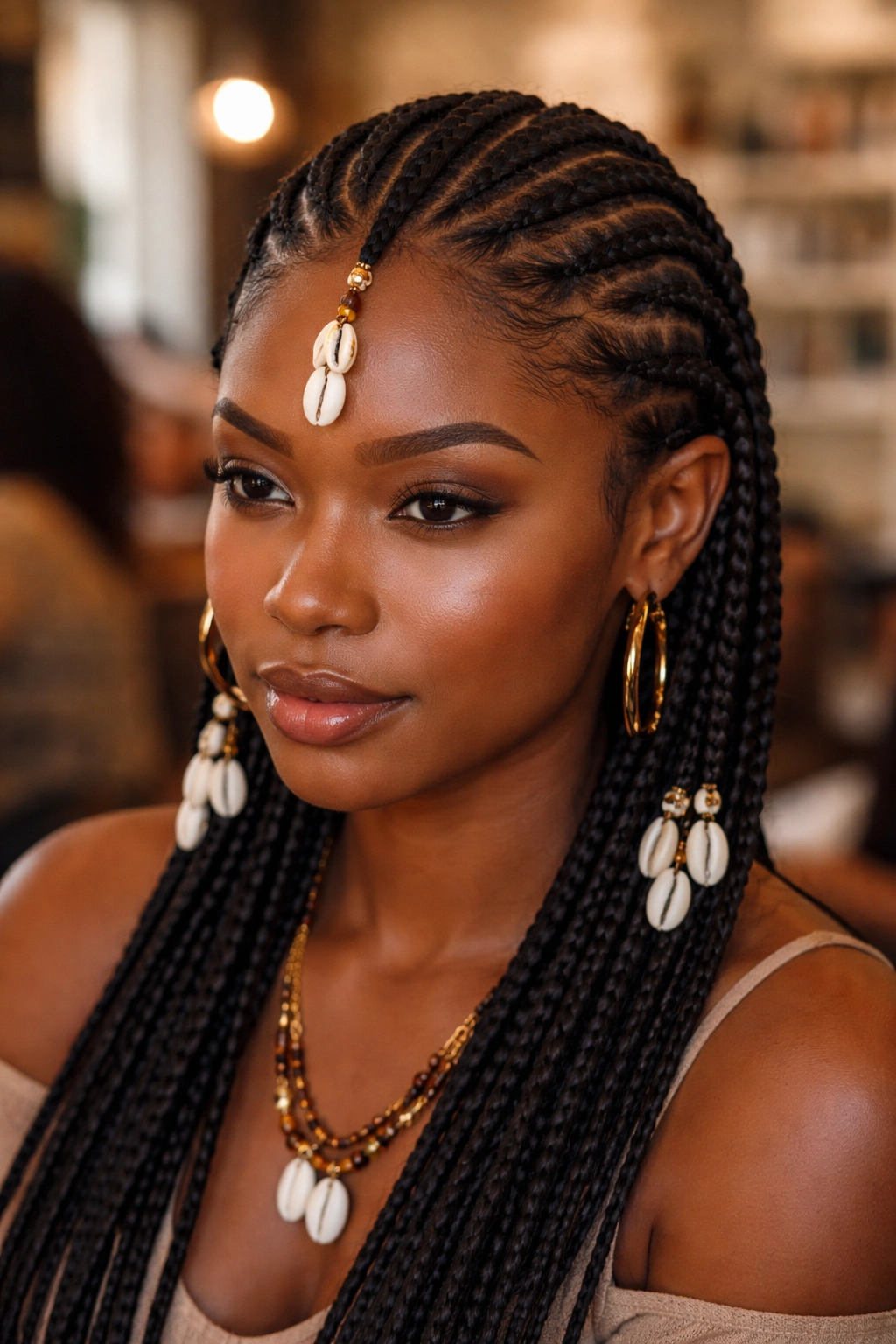
The recognizable features are specific. A center cornrow running from the forehead back. Braids framing the face on each side, often angled inward. Gold accents, cowrie shells, or beads at specific points. A braid at the hairline that sometimes drops down in front. These aren’t arbitrary design choices — each element originated in cultural practice.
What I’m offering here is 25 adaptations of that foundation. Some stay close to the traditional Fulani aesthetic; some blend Fulani elements with other braid techniques. All acknowledge where the style comes from, while giving you real options for your own install.
A Brief Historical Note
The Fulani are a semi-nomadic people whose hair traditions emerged from centuries of pastoral life across West Africa. Women braided intricate styles that held up during long journeys, grazing cattle, and daily labor. The styles needed to stay neat for weeks because washing was impractical on the move.
Beads and cowrie shells were woven into braids as status markers. Gold accents signaled wealth. Specific braid patterns identified clan or age group.
Over the years, these styles have spread through African and African diaspora communities globally. Modern Fulani-inspired braiding retains core elements — the center cornrow, face-framing braids, beaded accents — while incorporating contemporary touches.
Wearing these styles respectfully means acknowledging their origin, even if you’re not Fulani. Don’t call a box braid a Fulani braid just because you added a few beads. Learn which elements are specifically Fulani and credit the tradition when asked about your hair.
Core Elements of Fulani Cornrows
Five elements distinguish Fulani-style braiding from generic cornrows:
- Central cornrow: A single cornrow running from the center forehead straight back to the crown or nape.
- Face-framing braids: Braids angled toward the face on each side, typically thinner and more numerous than in plain cornrows.
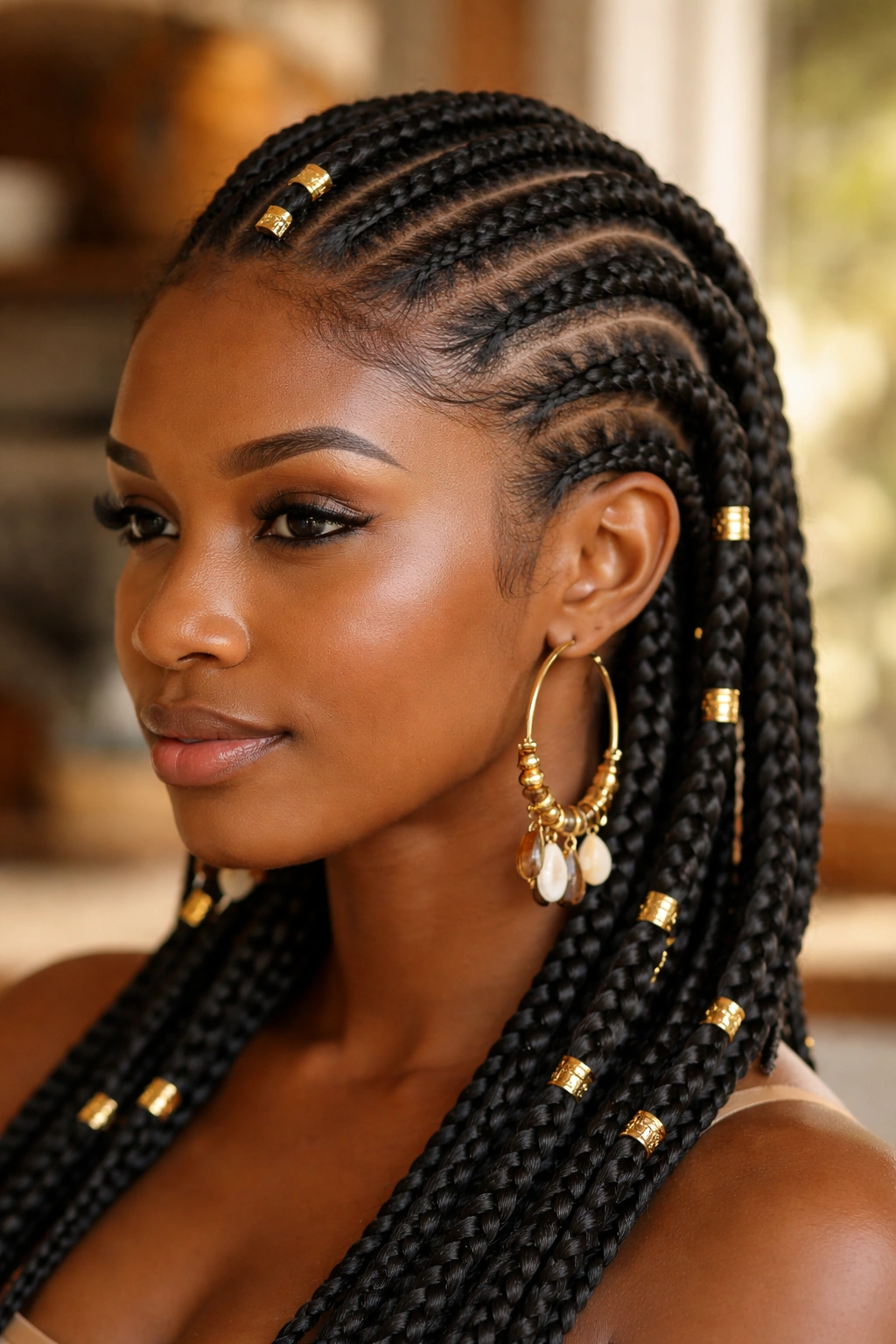
- Beaded or accessorized accents: Gold cuffs, cowrie shells, wooden beads, or colored thread integrated into the braid pattern.
- A dropped front braid: Sometimes a single braid or two braids hanging loose in front of the face or along the cheekbone.
- Specific geometric parts: The parts between braids often form diamonds, triangles, or curves rather than simple straight lines.
A true Fulani-inspired style will include at least three of these elements. Fewer than three, and you’re looking at generic cornrows with some accessories added.
Materials for a Fulani-Inspired Install
Cornrow tools: rat-tail comb, edge gel, hair clips, spray bottle, kanekalon hair for feed-ins if needed.
Fulani-specific accessories:
- Gold or metal hair cuffs
- Cowrie shells (available pre-drilled for hair)
- Wooden beads in traditional tones (black, brown, natural wood)
- Embroidery thread in gold or warm earth tones
- Small gold rings or jewelry findings
The accessories are the defining element. Without them, you have cornrows — with them, you have Fulani-inspired cornrows.
How Cowrie Shells Get Attached
Cowrie shells pre-drilled for hair use have a small hole near the opening. The shell is threaded onto the braid using the hole, then secured with a small wire or thread knot.
Placement matters. Cowrie shells in clusters read as authentic. Single cowries scattered randomly read as decorative without intention.
Traditional Fulani placements:
- A cluster of 3-5 shells at the end of the central cornrow
- Pairs of shells at the temples, facing forward
- A row of shells along the hairline braid
Gold Cuff Placement Conventions
Gold cuffs (metal rings that slide over the braid) are placed at specific points:
- At the root of the braid, sitting against the scalp
- At the midpoint of the braid
- At the end of the braid, just above the braid termination
For Fulani-inspired styles, 2-3 cuffs per prominent braid is standard. More than 5 cuffs per braid reads as excessive.
Cuffs should match metal tones. Mixed gold and silver cuffs on the same braid look uncoordinated. Choose one metal and commit.
Prepping for a Fulani Cornrow Install
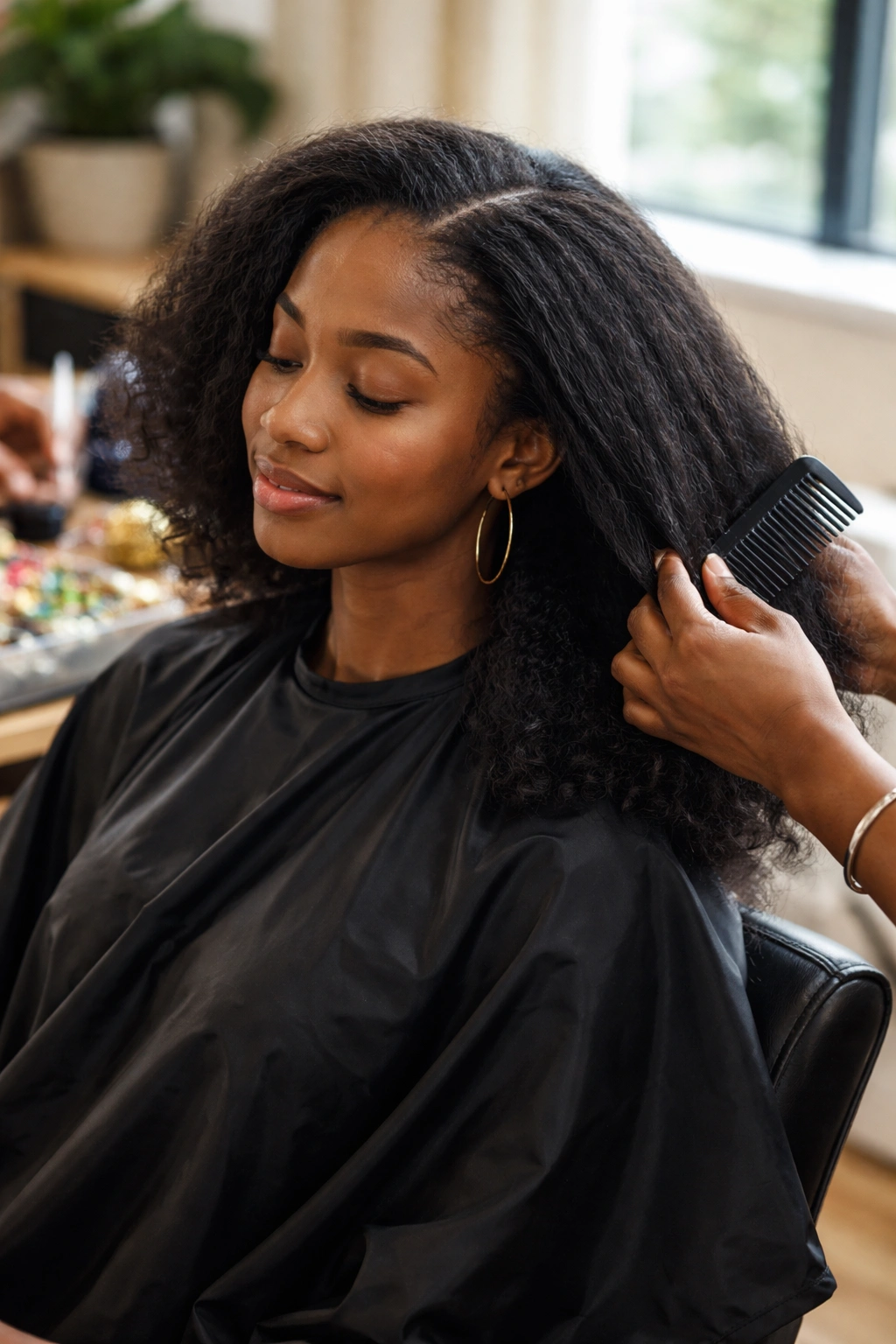
Standard cornrow prep: wash 2-3 days before, deep condition, stretch the hair.
Gather all accessories before the install begins. Bring them to the braider in a small case or bag so you can check placement together during the install.
Decide on specific braid placements before the install. Fulani patterns benefit from pre-planning because the braid count, direction, and accessory placement all need to coordinate.
Install time ranges from 3 to 6 hours depending on complexity. Accessories add install time — every bead or cuff takes 1-2 minutes to place correctly.
1. Classic Fulani With Center Cornrow and Beaded Ends
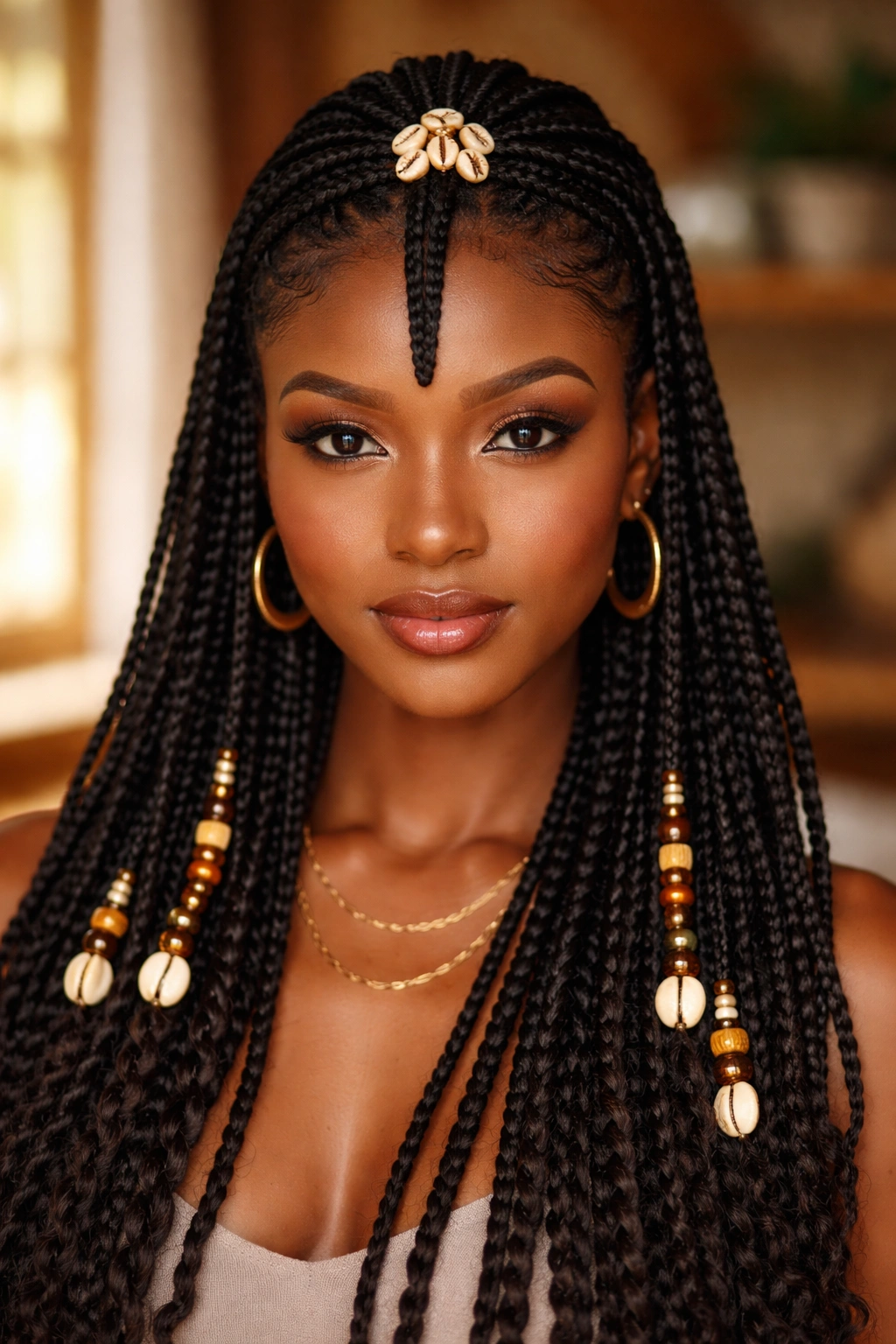
The most recognizable Fulani style. A single cornrow runs down the center of the head from forehead to crown. Face-framing braids flow on each side. Beaded ends on most braids, with a cluster of cowrie shells on the central cornrow.
Why It Works
This style is immediately identifiable as Fulani-inspired. The central cornrow creates a strong vertical line, the face-framing braids balance it, and the beaded accents complete the aesthetic.
- Central cornrow: 1 thick braid from center forehead to crown
- Side braids: 4-6 on each side, angled toward the face
- Accessories: cowrie cluster at center cornrow end, wooden beads on side braids
- Install time: 4-5 hours
The central cornrow must be perfectly centered, not slightly off-axis. A crooked center cornrow ruins the whole style’s symmetry.
2. Fulani Style With Diamond-Part Pattern
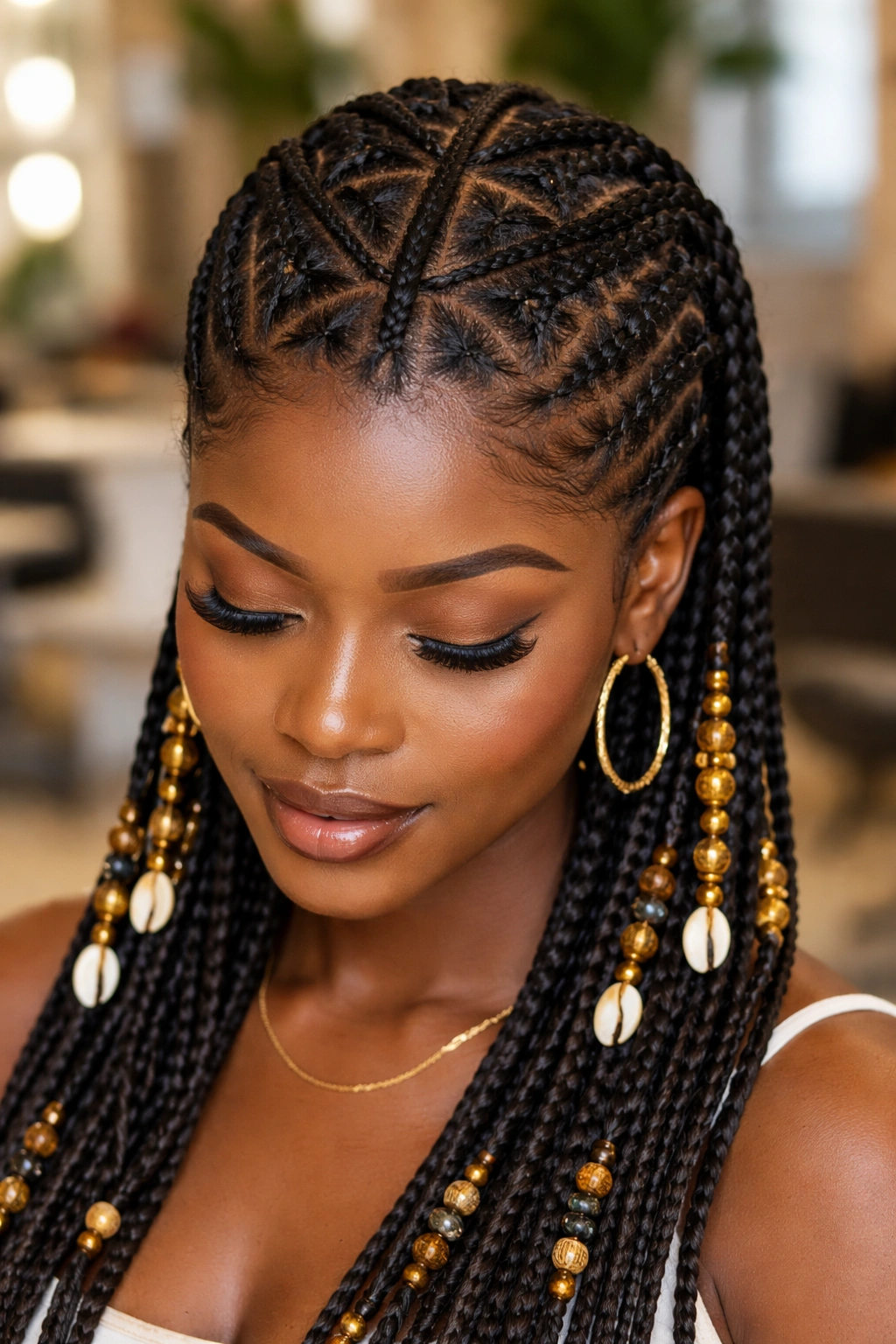
The parts between the braids form diamond shapes across the top of the head. The central cornrow runs through the diamond pattern, with braids angling from each diamond side toward the nape.
This is a more advanced variation that requires precise parting. The diamond parts show off braider skill and add geometric interest to the traditional Fulani foundation.
The diamond pattern typically covers the front third of the head, transitioning into plain parallel parts behind the diamond section.
3. Fulani With Two Dropped Front Braids
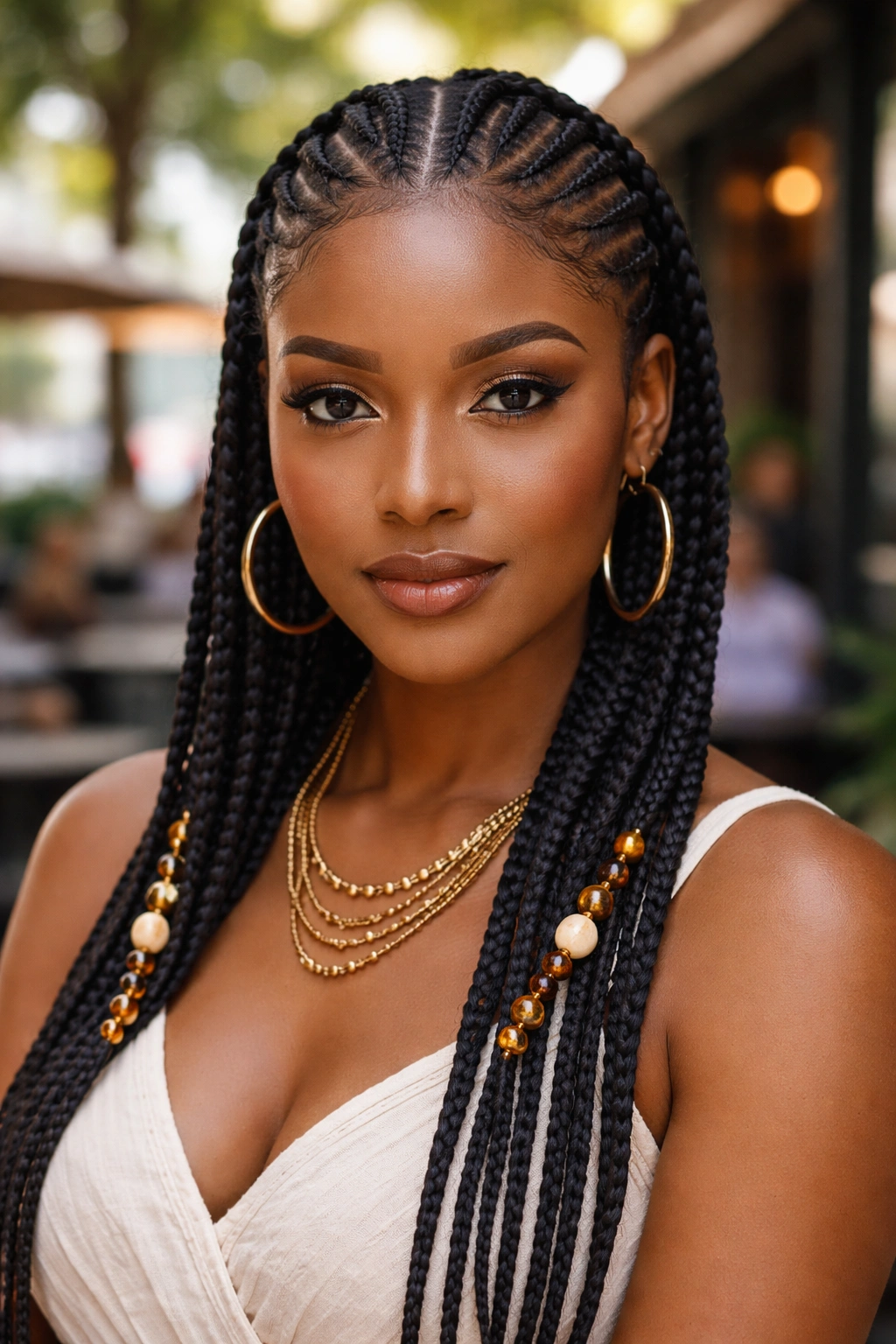
Two braids drop loose in front of the face, falling to about cheekbone or jaw level. The braids frame the face without covering it, creating a characteristic Fulani silhouette.
The dropped braids originate from the front hairline section. They’re braided with kanekalon to reach the desired length and can be finished with beads or cuffs.
The rest of the head is cornrowed in a traditional Fulani pattern — central cornrow, face-framing side braids, beaded accents.
4. Fulani With Cowrie Shell Accents Along the Hairline
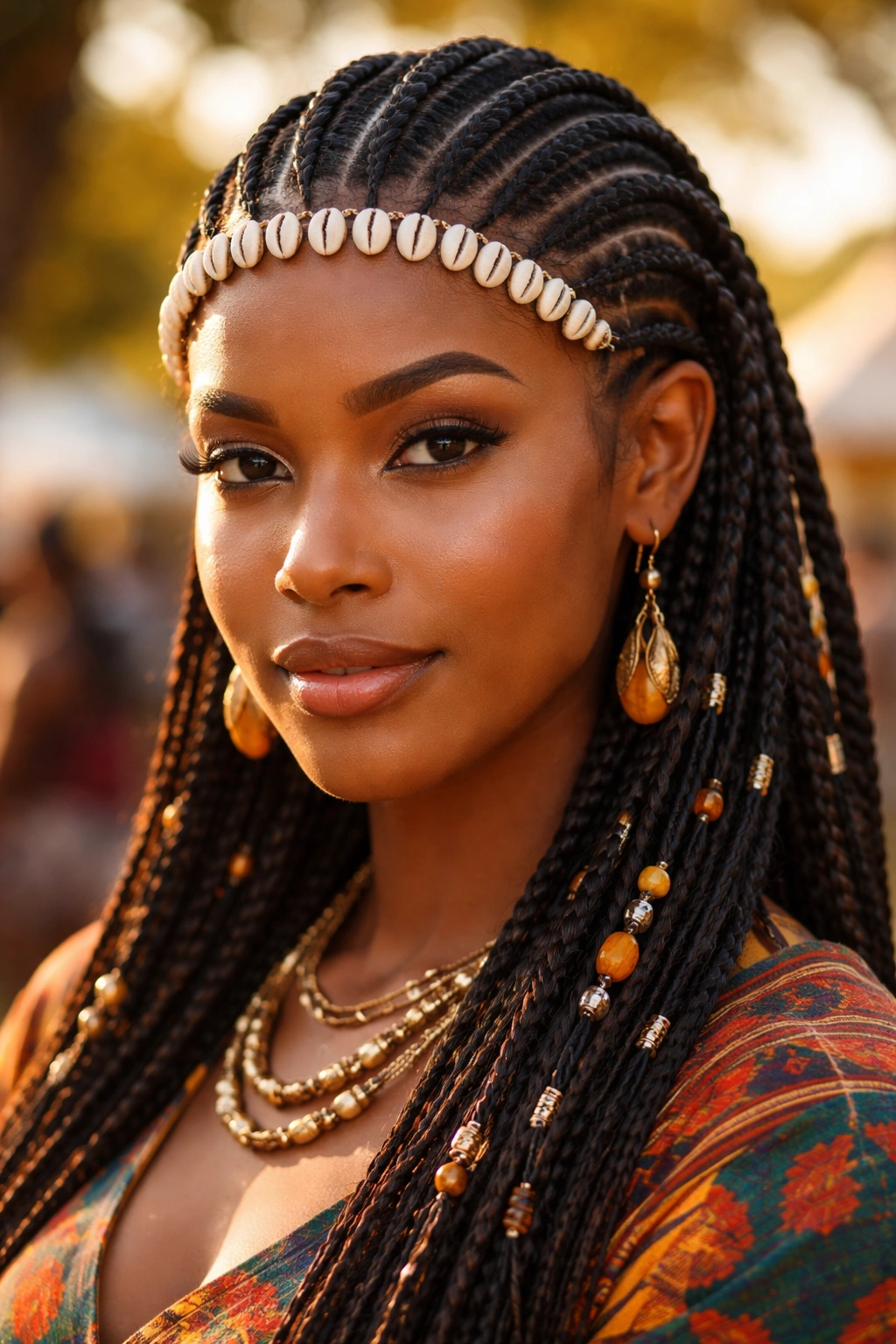
Scenario: you want Fulani styling but with the cowrie shells as the focal detail. A line of cowrie shells runs along the front hairline, attached to the hairline braid. The shells face forward, facing the viewer.
The mechanism is placement concentration. Instead of scattering cowries throughout, you cluster them at the hairline where they catch attention first.
- Hairline braid: 1 braid running along the entire front hairline
- Cowrie placement: 8-12 shells spaced along the hairline braid
- Rest of head: traditional Fulani pattern with wooden beads or cuffs
- Cowrie facing: forward-facing for maximum visual impact
Best for cultural events and celebrations where the cowrie detail carries specific significance.
5. Fulani Cornrows With Gold Thread Wrapping
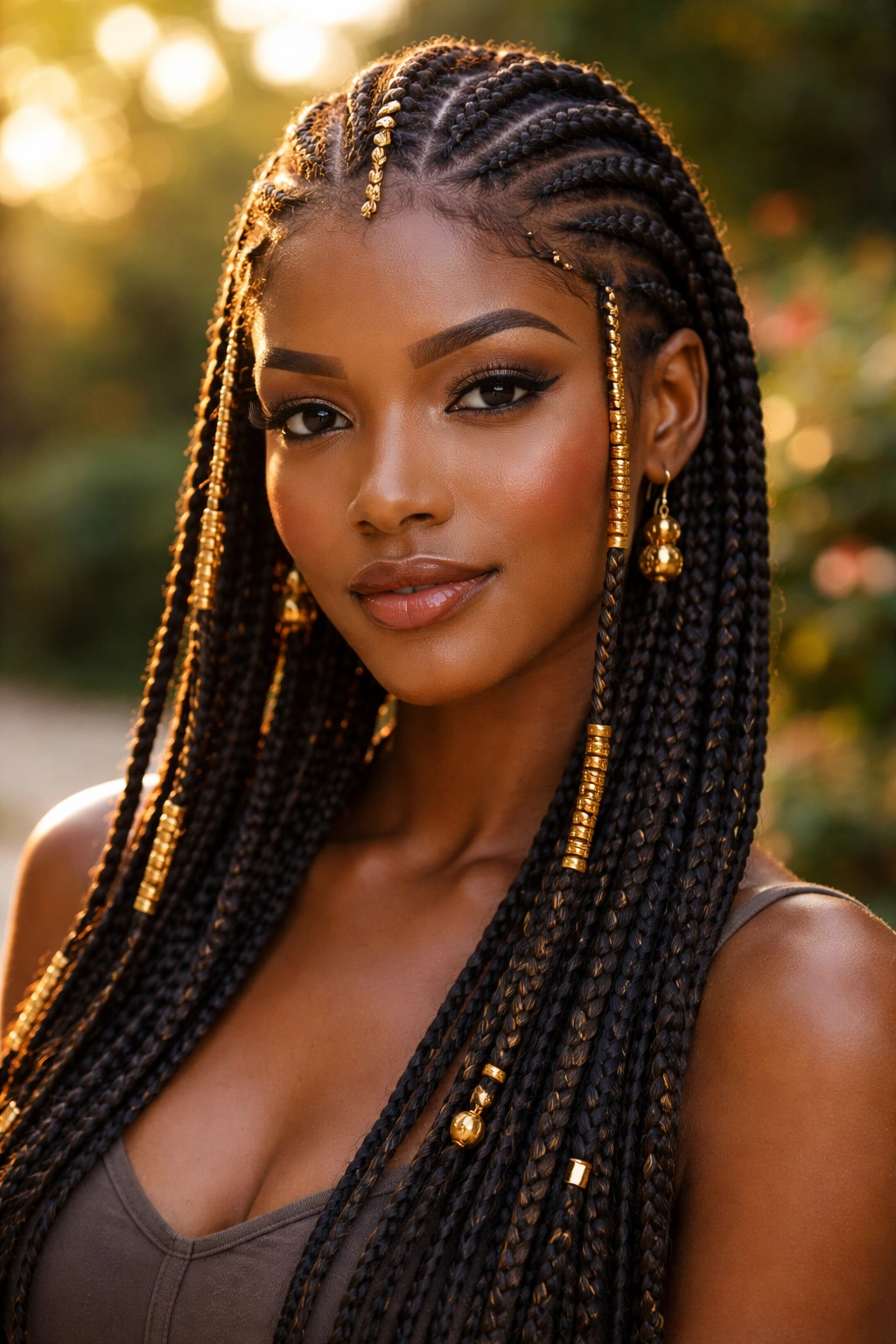
Gold embroidery thread wrapped around specific braids in the Fulani pattern. The thread adds metallic shine without the weight of gold cuffs.
Thread placement: 2-3 inches wrapped on the central cornrow, and 1-2 inches wrapped on select face-framing braids.
Gold thread pairs with gold jewelry. The thread can be cotton or polyester embroidery floss; polyester holds shine longer than cotton.
Refresh thread wraps at week 2 if they start to fuzz. Cut off the fuzzy sections and rewrap with fresh thread.
6. Fulani Cornrows With High Ponytail Finish
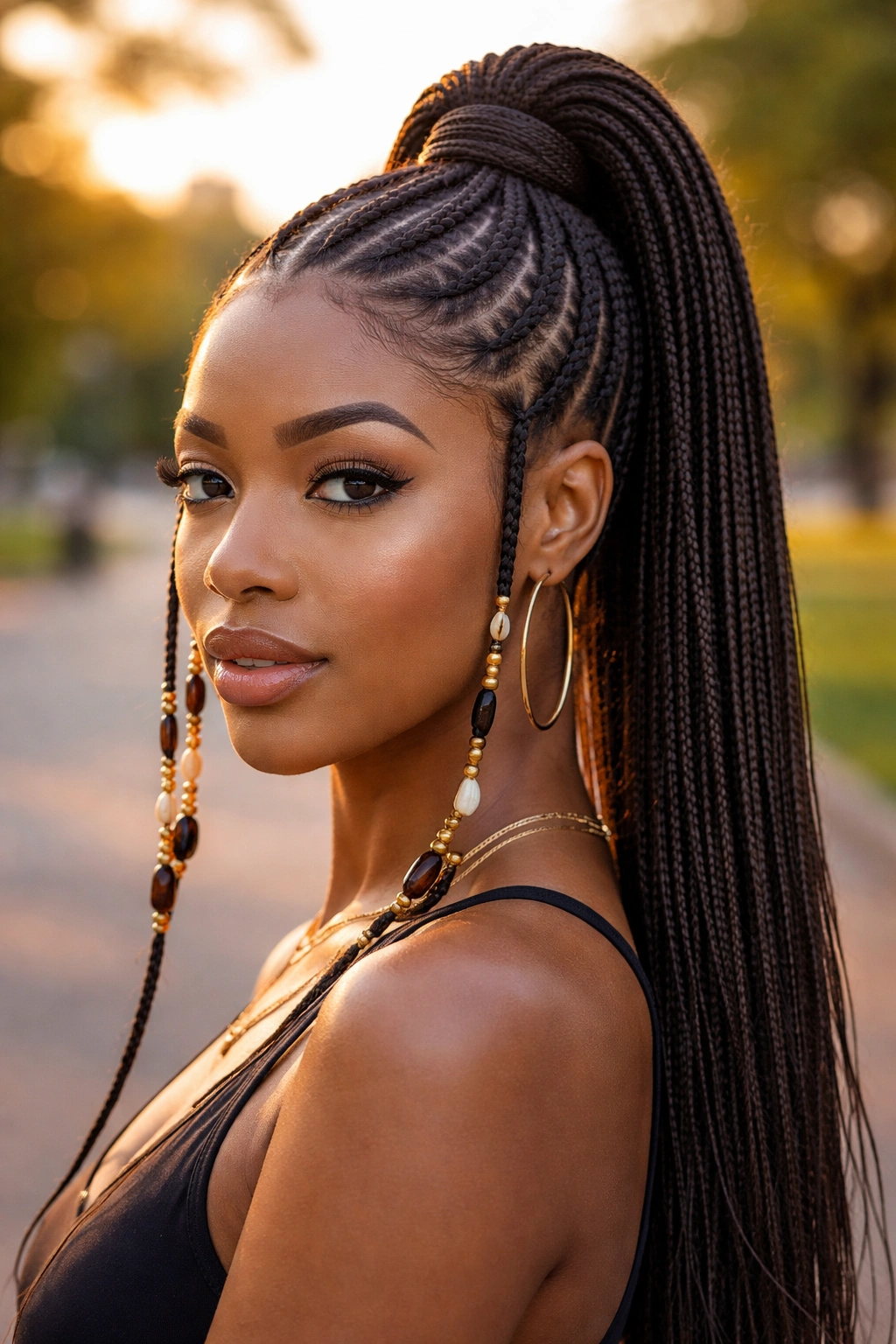
Fulani pattern at the top, all gathered into a high ponytail at the crown. The central cornrow and face-framing braids feed into the ponytail, creating a structured Fulani front with a flowing ponytail back.
The ponytail can be left as individual braids or wrapped into a single thick braid for a more unified look.
Ponytail length varies by preference. Shoulder-length reads as casual; waist-length reads as dramatic.
7. Fulani With Geometric Braid Shapes at the Crown
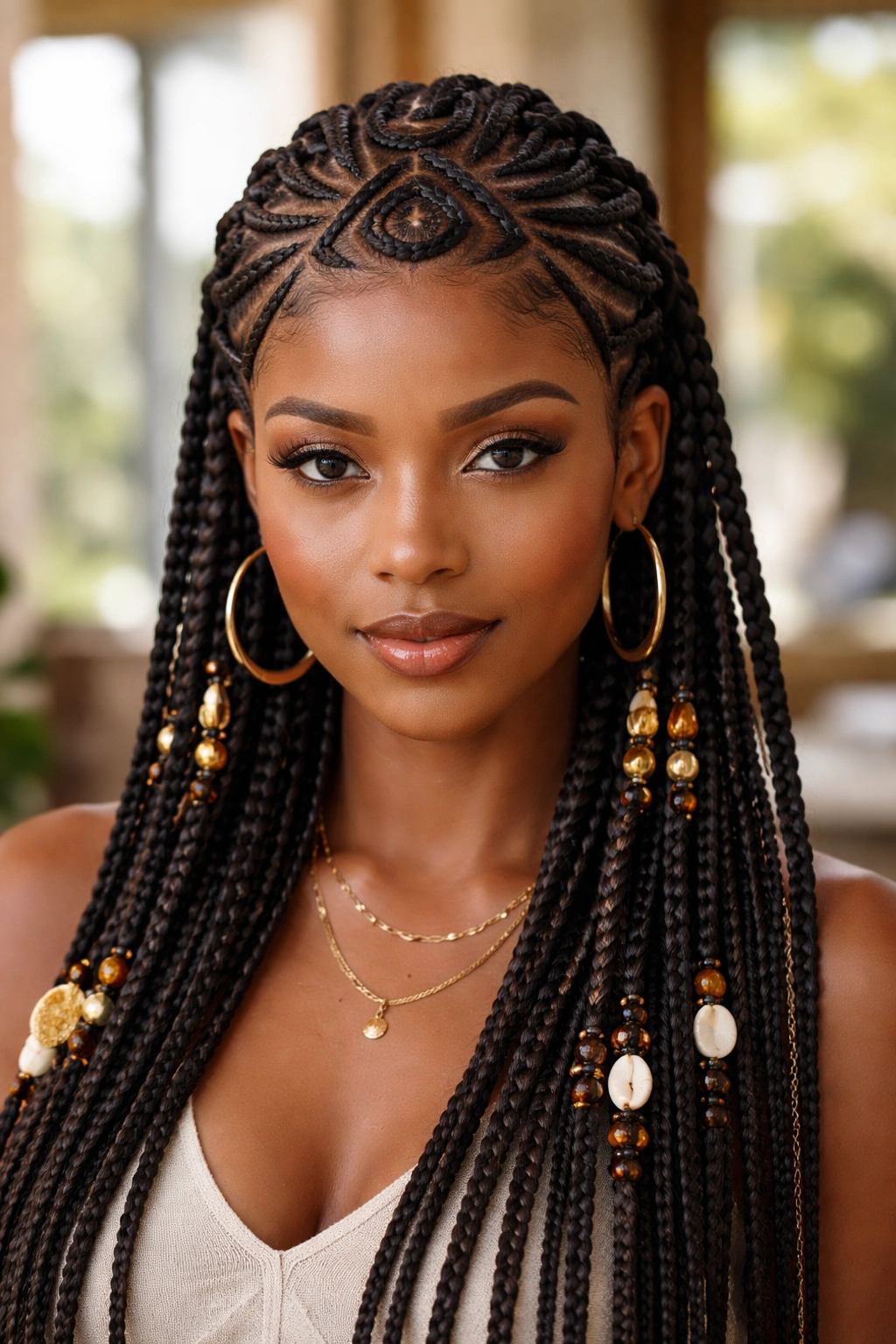
Unlike simple parallel braids, this variation uses geometric shapes at the crown. Triangles, circles, or symmetrical patterns formed by the braid placement.
The geometric crown section contrasts with the simpler front Fulani pattern. The eye moves from the classic Fulani front elements to the crown geometric detail.
Best for braider showcases and events where detailed styling is appreciated.
8. Fulani Cornrows With Burgundy Accent
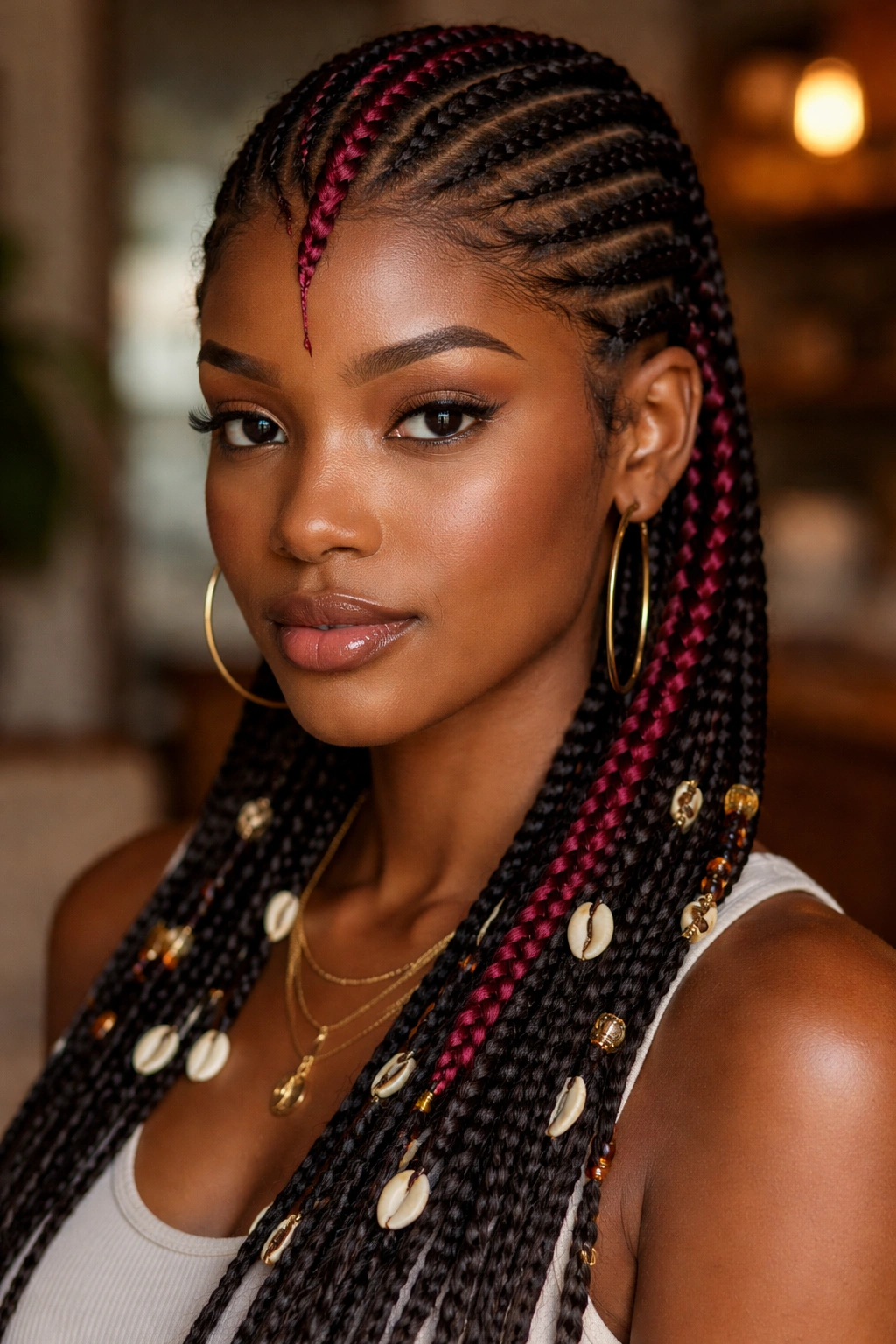
One or two braids in the Fulani pattern are done in burgundy kanekalon instead of the natural base color. The burgundy braids can be the central cornrow, the dropped front braids, or select face-framing braids.
Color accent placement matters for visual balance:
- Central cornrow burgundy: creates a strong central focus
- Dropped front braids burgundy: creates face-framing color accents
- Face-framing braids burgundy: distributes color across the style
The burgundy should complement the overall tone, not clash with it. Warm burgundy goes with warm skin tones; cooler burgundy goes with cool undertones.
9. Fulani Cornrows With Wooden Beads
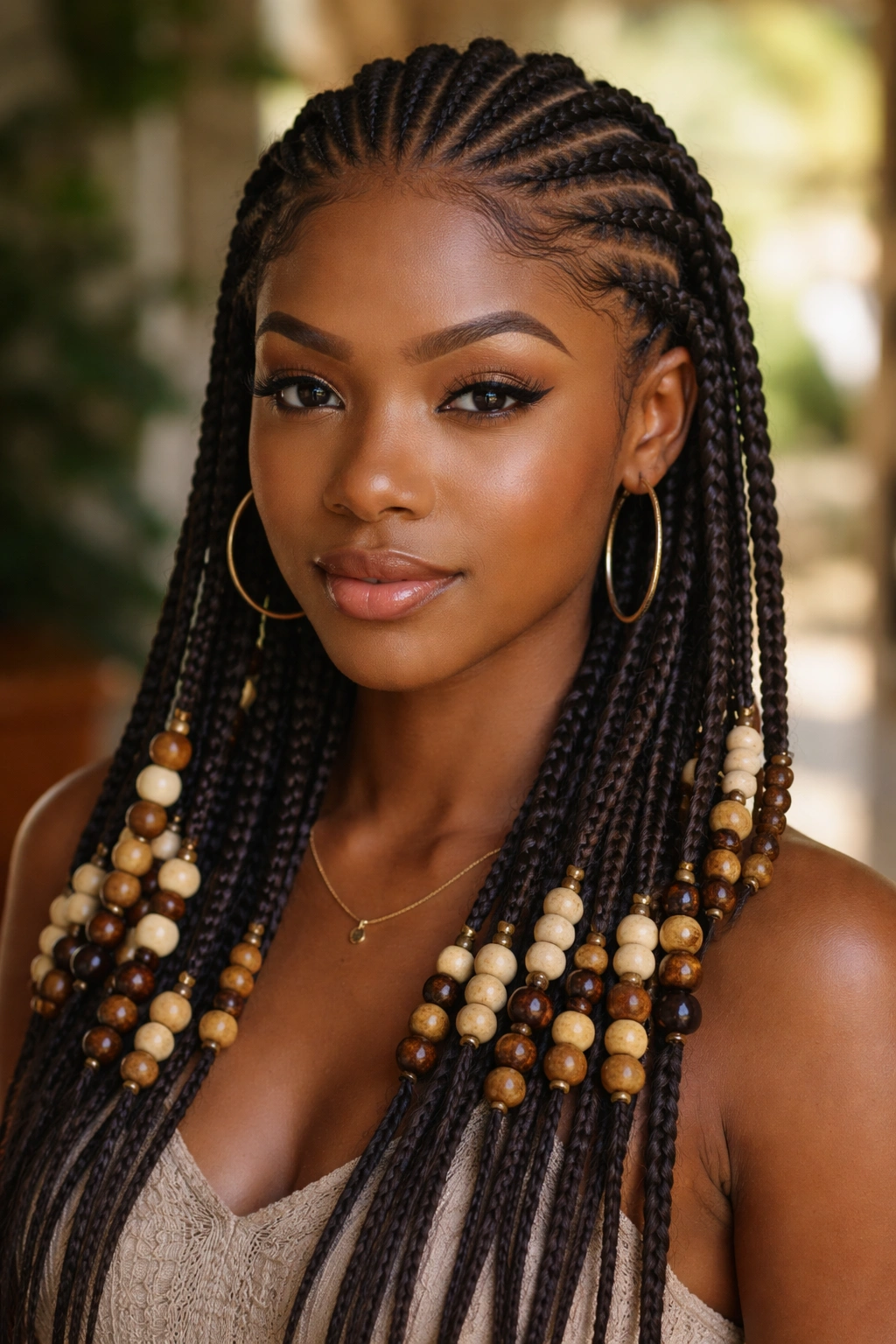
Wooden beads — in natural wood tones, black, or dark brown — placed throughout the Fulani pattern. Wooden beads are lighter than gold cuffs and acoustic metal cuffs, making them more comfortable for long wear.
How to Style It
- Bead placement: 3-5 beads per braid, clustered at the ends
- Bead size: 10-14mm for face-framing braids, 14-18mm for the central cornrow
- Color: match bead tone to clothing color palette or keep neutral
- Install: beads are threaded onto the braid before the end is tied off
Wooden beads are a classic Fulani accessory choice. They read as traditional and respectful of the original style’s aesthetic.
10. Fulani Cornrows With a Halo Braid
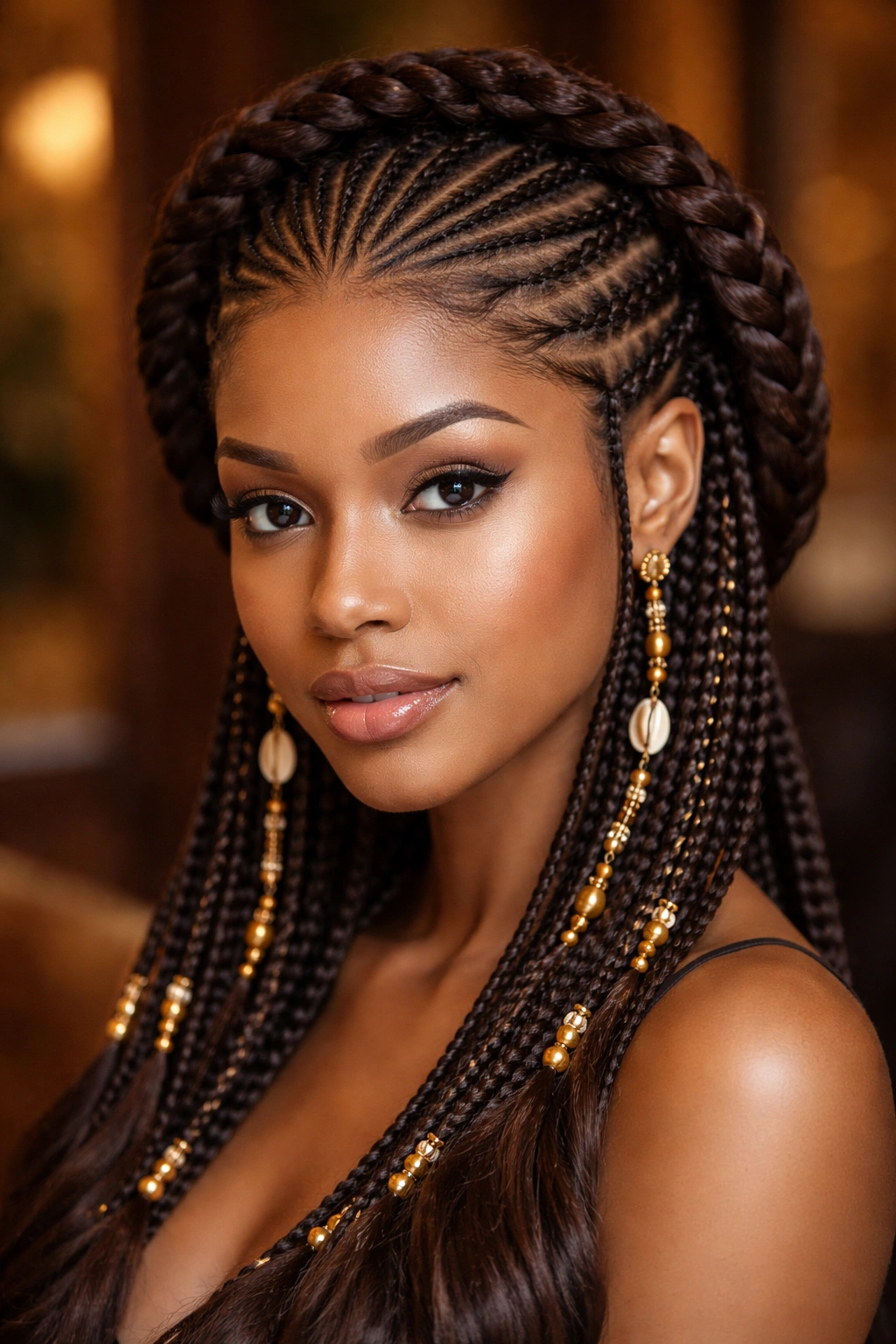
A thick braid runs around the perimeter of the head as a halo, with Fulani pattern inside the halo. The halo braid is made from kanekalon and pinned into place.
The halo adds a regal frame to the Fulani pattern. It’s especially good for formal events and cultural celebrations.
The halo braid should match the Fulani braid color. Contrast halos read as incongruent.
11. Stitched Fulani Cornrows
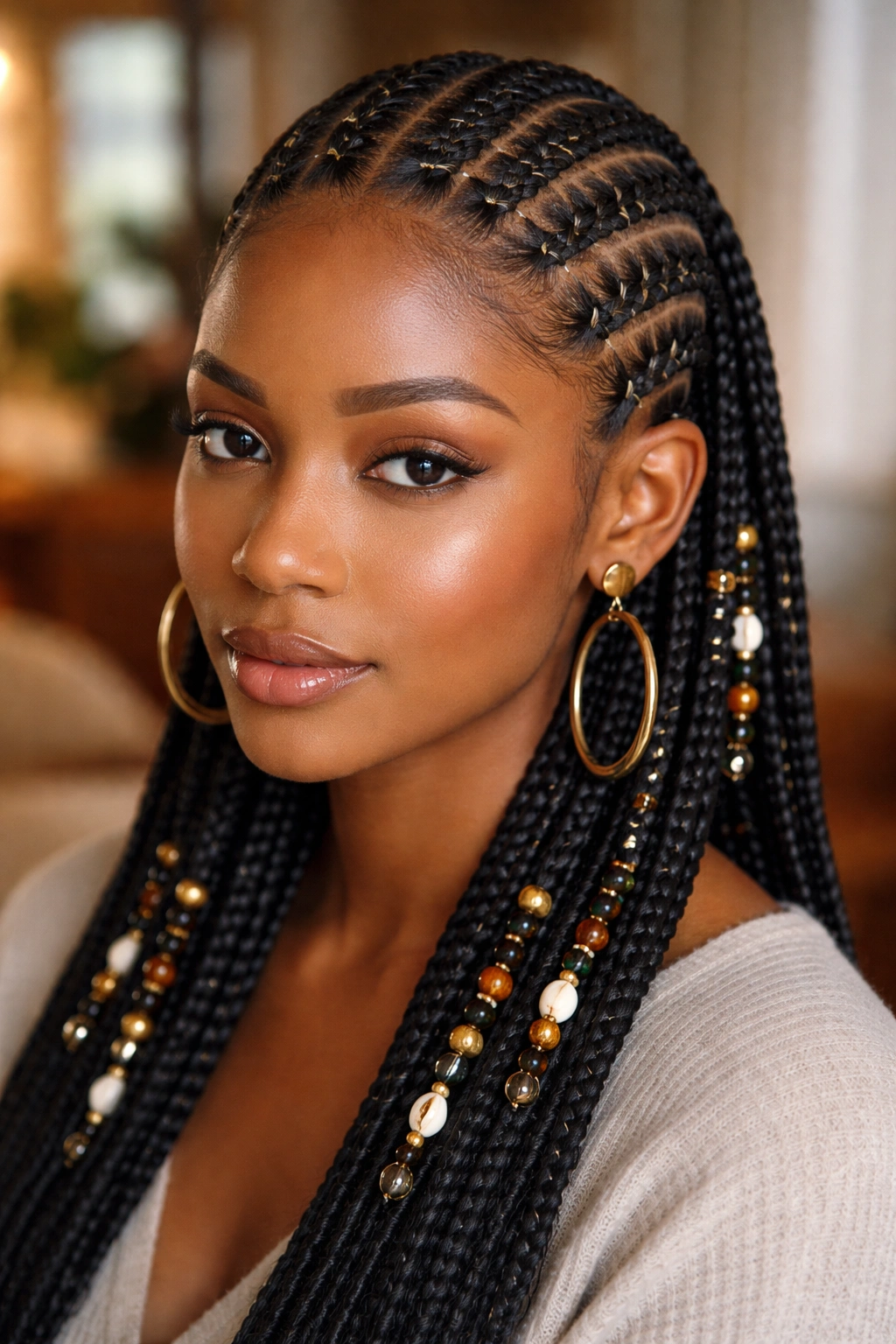
The cornrows in the Fulani pattern use stitched technique — horizontal mini-braids crossing each cornrow at intervals. Stitches add texture to the traditional Fulani pattern.
Stitch count: 3-5 per cornrow is balanced. More than 6 looks cluttered.
Stitches should match across all cornrows. Inconsistent stitch placement reads as messy.
12. Fulani Cornrows With Side Swooping
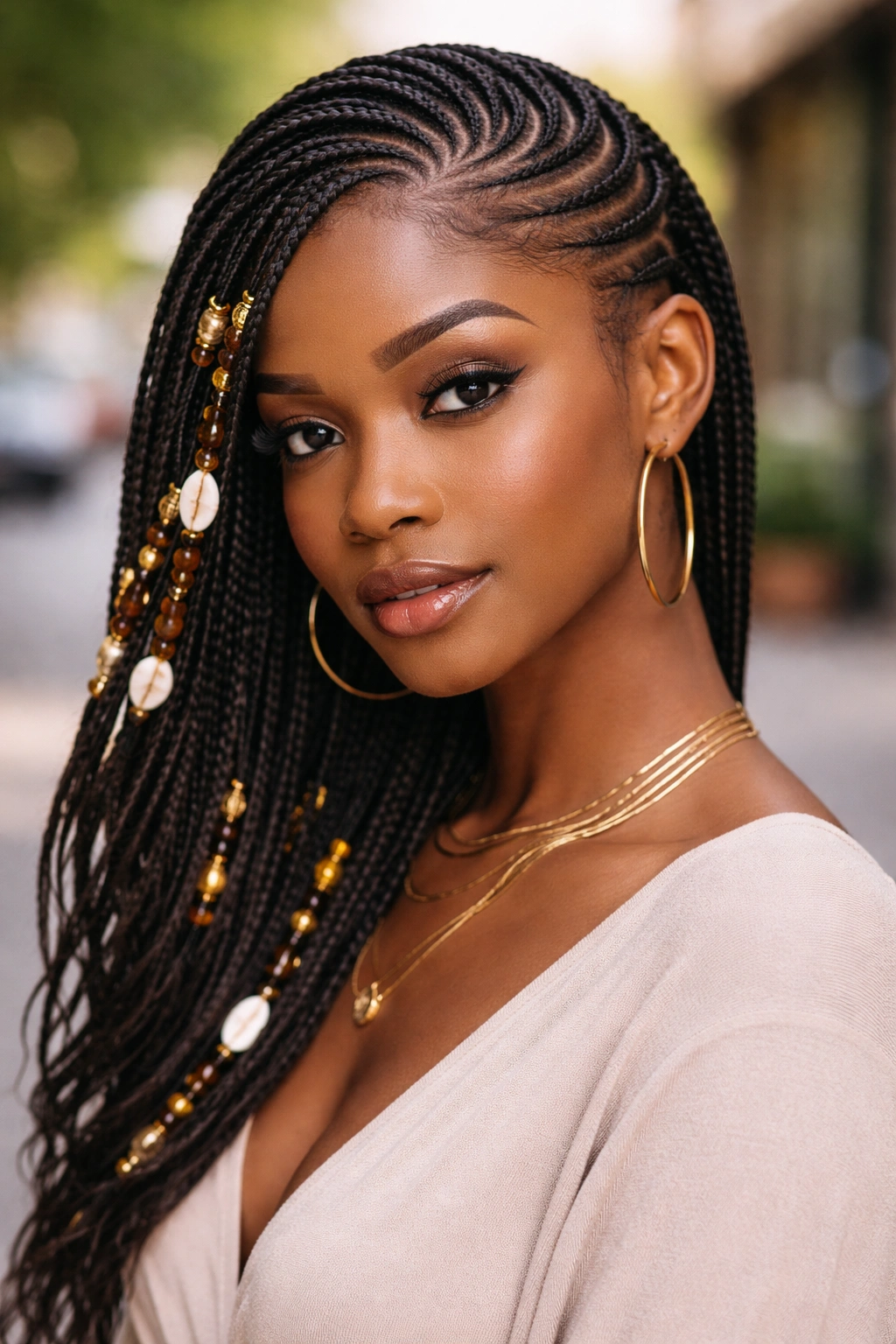
The Fulani pattern is rotated 30-45 degrees so that the braids sweep to one side rather than running straight back. The central cornrow angles toward one temple; the side braids follow the angle.
This adaptation suits oval and heart-shaped faces and creates a more asymmetric, fashion-forward silhouette.
The side swoop direction is a personal choice. Right-swooping for face-right photography, left-swooping for face-left photography.
13. Fulani Cornrows With Mohawk Center Strip
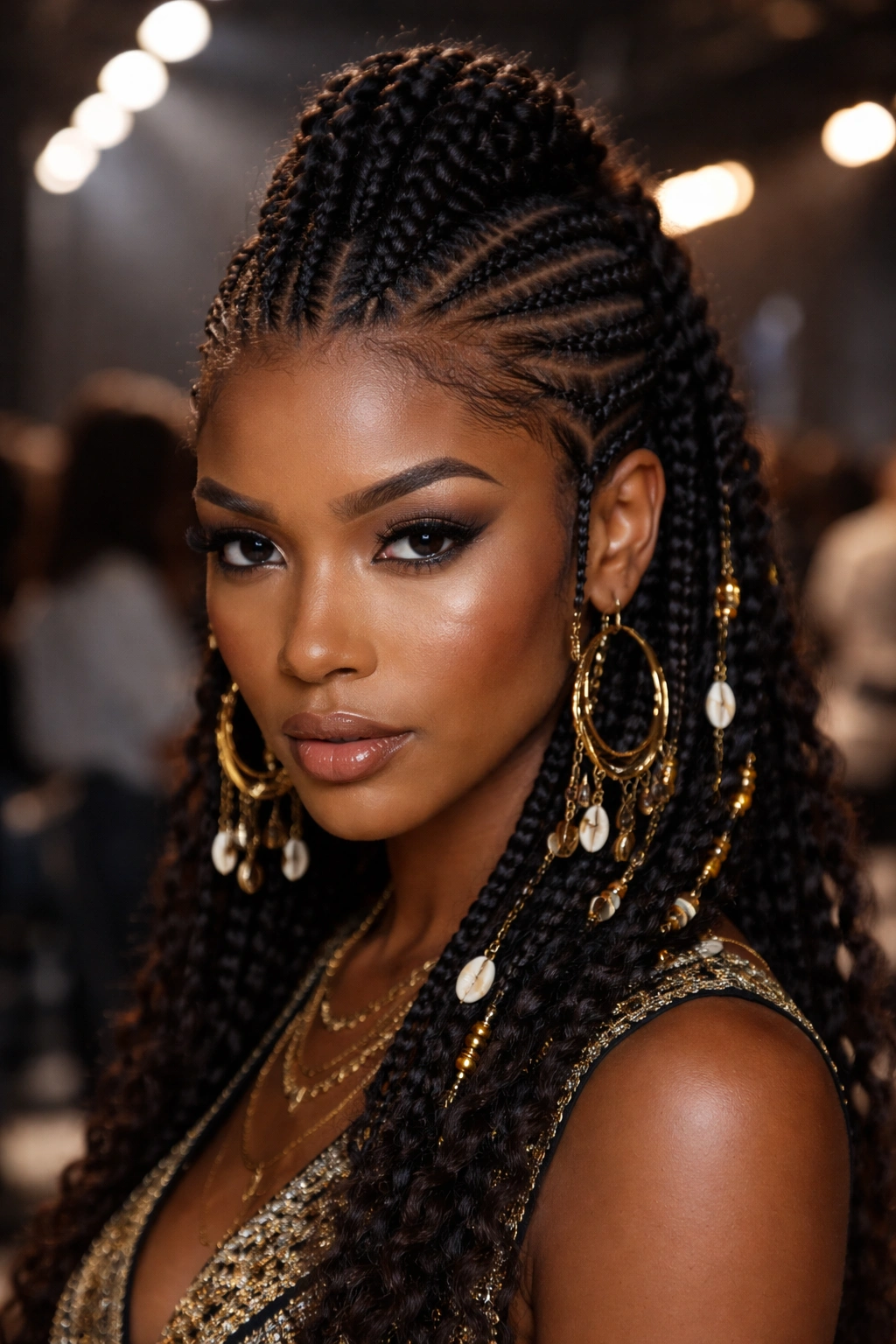
A central mohawk strip replaces the traditional single central cornrow. The strip is 2-3 inches wide with multiple smaller cornrows running through it. The sides of the head are styled in traditional Fulani side-braid patterns.
This is a fashion-forward adaptation that borrows punk aesthetics. It reads as edgy while retaining the Fulani framework.
Best for fashion events and contexts where bold styling is welcome.
14. Fulani Cornrows With Curved Hairline
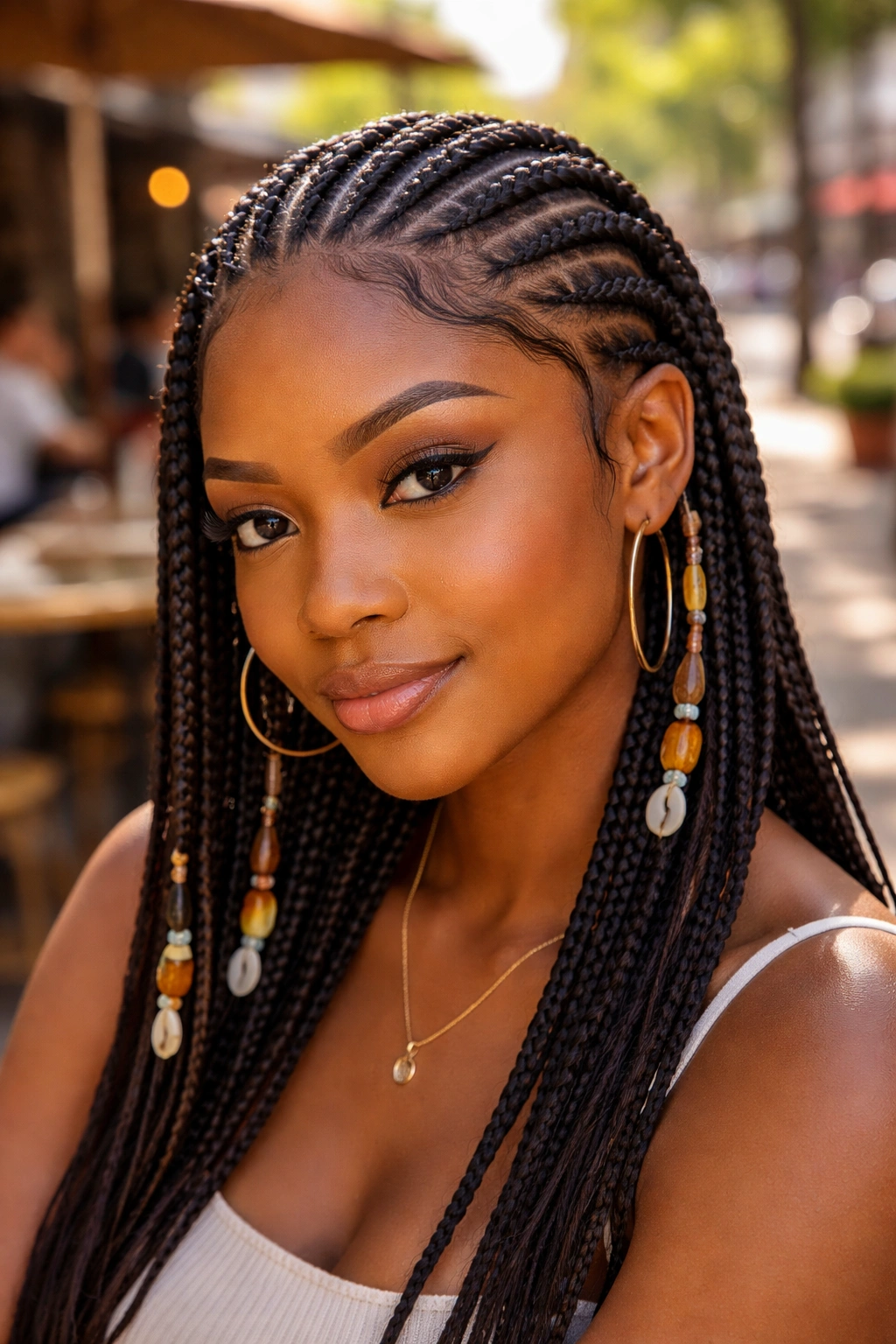
The front hairline braid curves along the natural hairline instead of running straight across. The curves create a softer frame for the face.
Curved hairlines suit round faces and soften angular features. They’re a contemporary adaptation of the traditional straight-line hairline braid.
The curves should follow your natural hairline shape — never force a curve that doesn’t match your head’s architecture.
15. Fulani Cornrows With Silver Accents
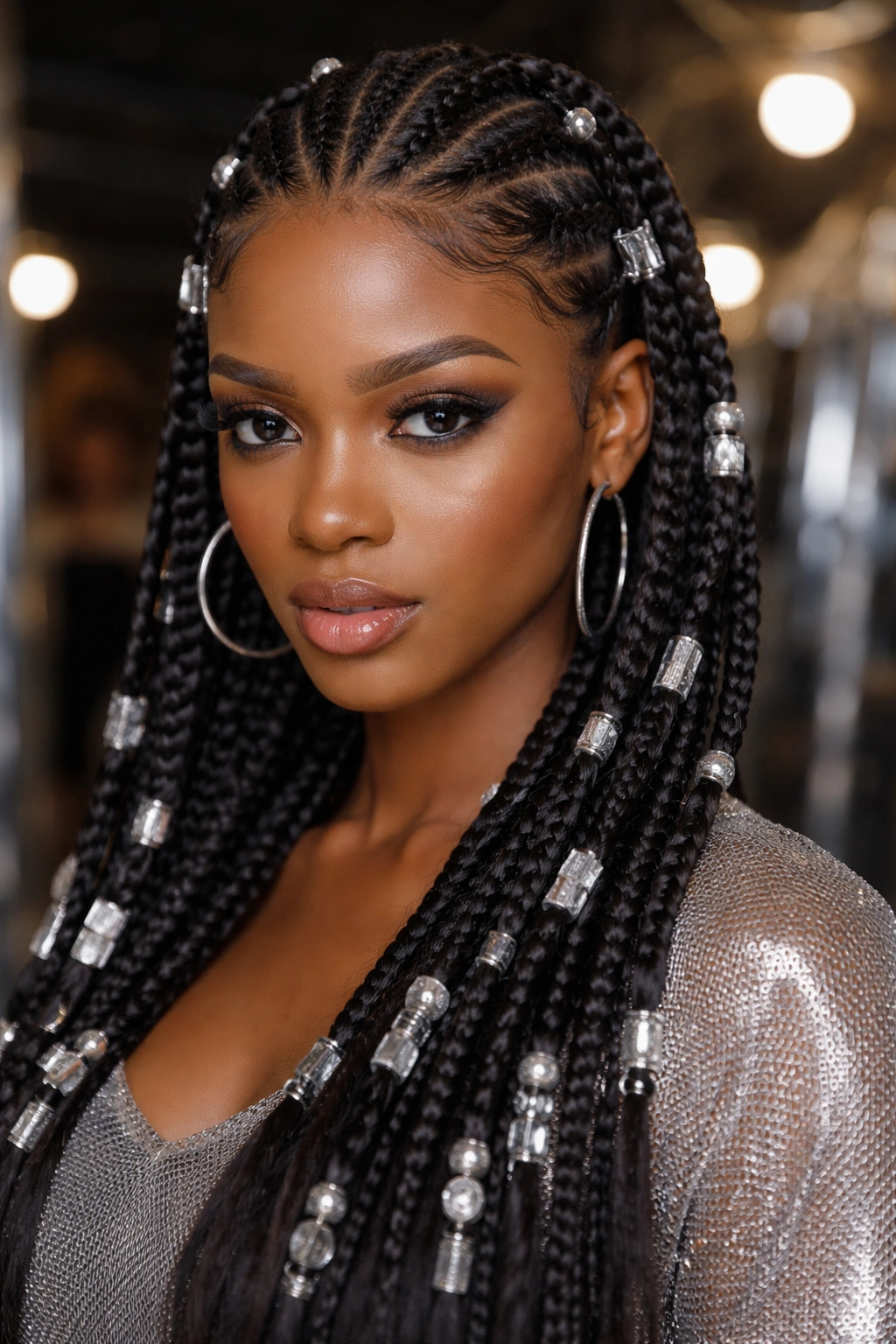
Silver cuffs and beads replace the traditional gold. Silver reads as modern and edgy; gold reads as classic and traditional.
Silver pairs with silver jewelry. Don’t mix silver Fulani cuffs with gold earrings or necklaces.
Cool skin tones especially flatter silver accents. Warm skin tones can wear silver but may prefer gold for visual warmth.
16. Fulani Cornrows With Central Bun
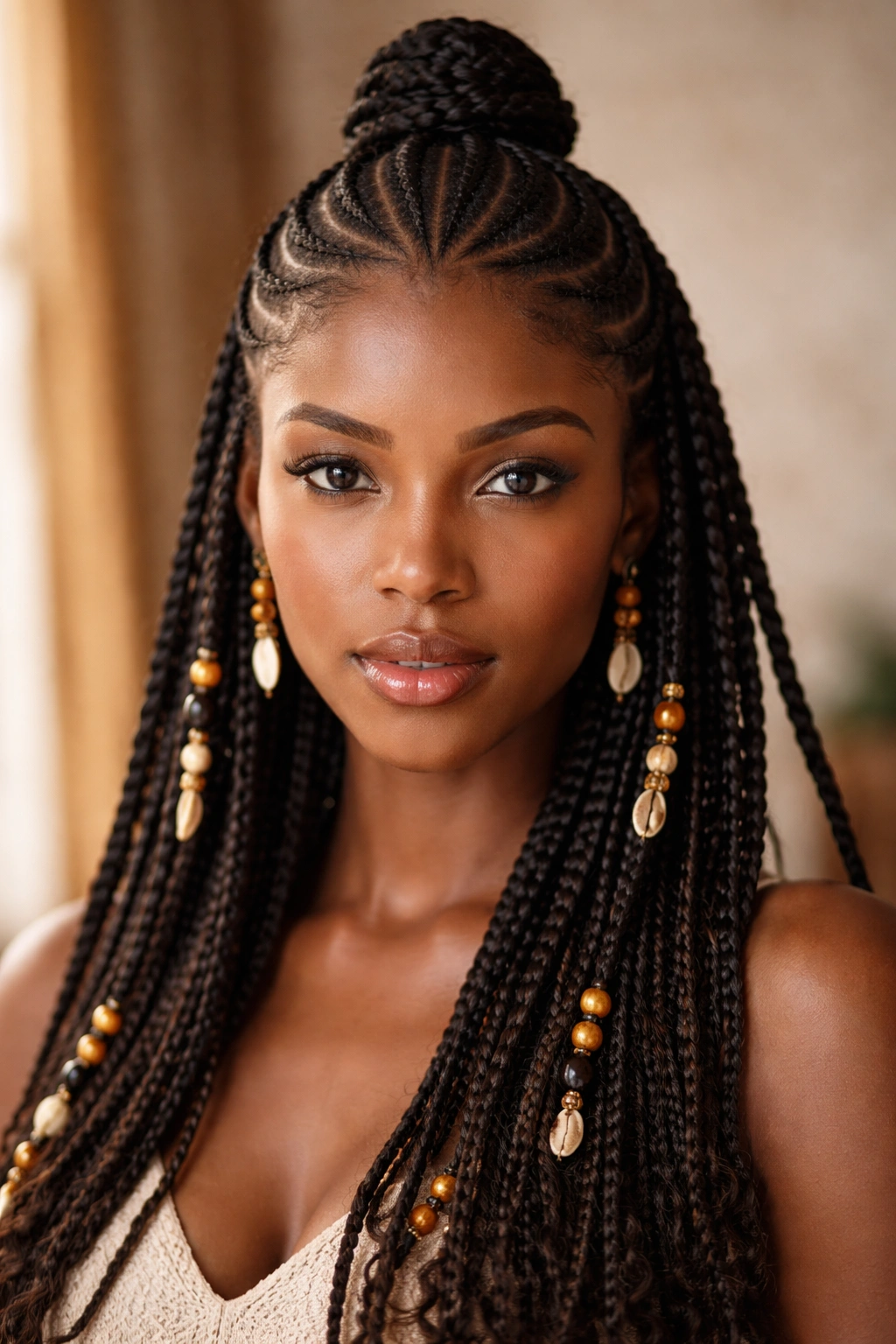
The central cornrow ends in a small bun at the crown instead of continuing to the nape. The bun becomes a central focal point with face-framing braids surrounding it.
The bun can be small (golf-ball size) or medium (tennis-ball size). Larger buns compete with the Fulani pattern’s detail.
Secure the bun with U-pins and a light setting spray. Rework the bun each morning to maintain its shape.
17. Fulani Cornrows With Ombré Color
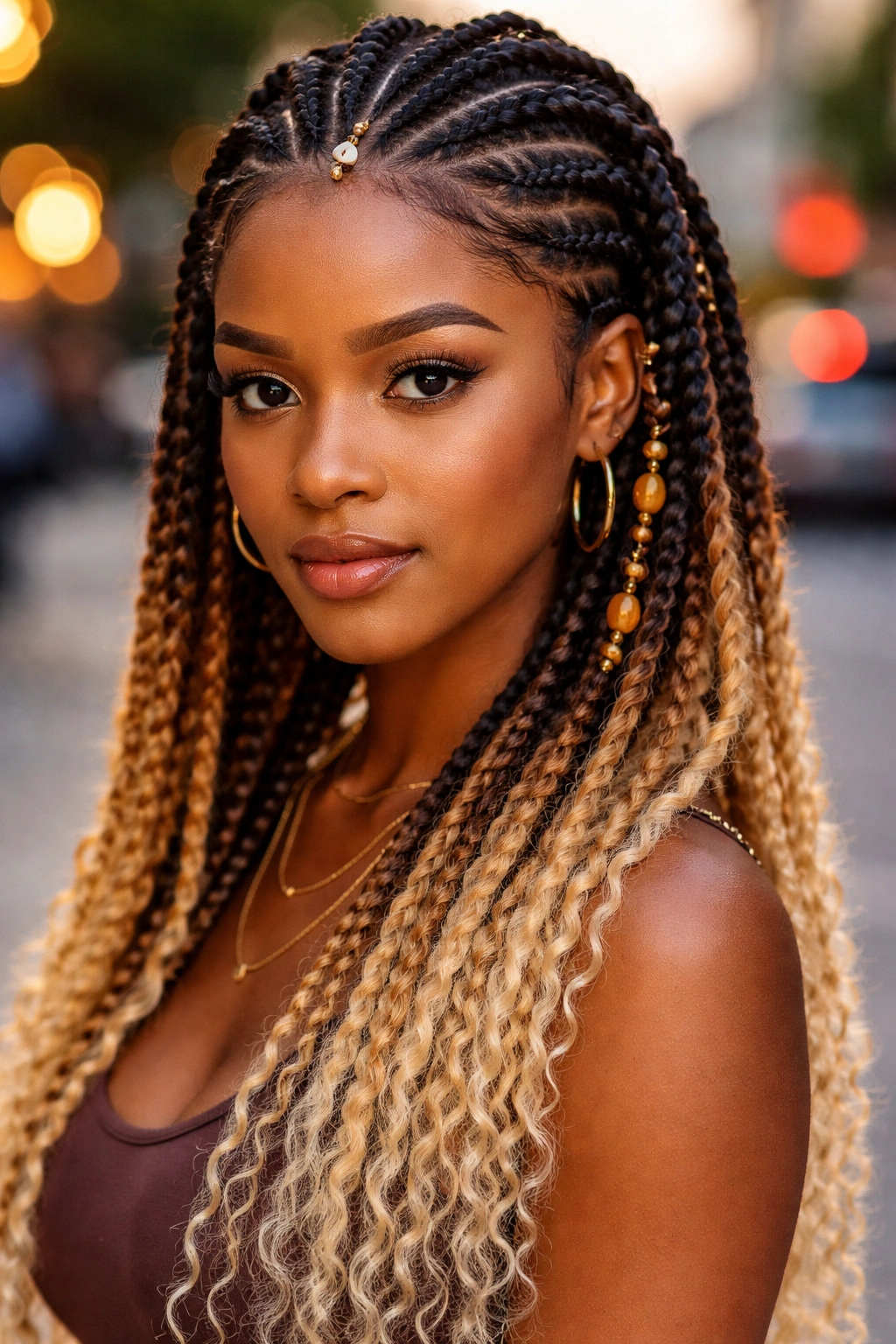
The Fulani pattern transitions from a dark color at the roots to a lighter color at the ends. The ombré creates visual interest within the traditional Fulani structure.
Common ombré combinations:
- Black to honey blonde
- Dark brown to caramel
- Burgundy to copper
- Natural to deep red
The ombré requires pre-colored kanekalon hair. Braiders can also custom-blend ombré from two packs of different colors.
18. Fulani Cornrows With a Long Single Braid at Center
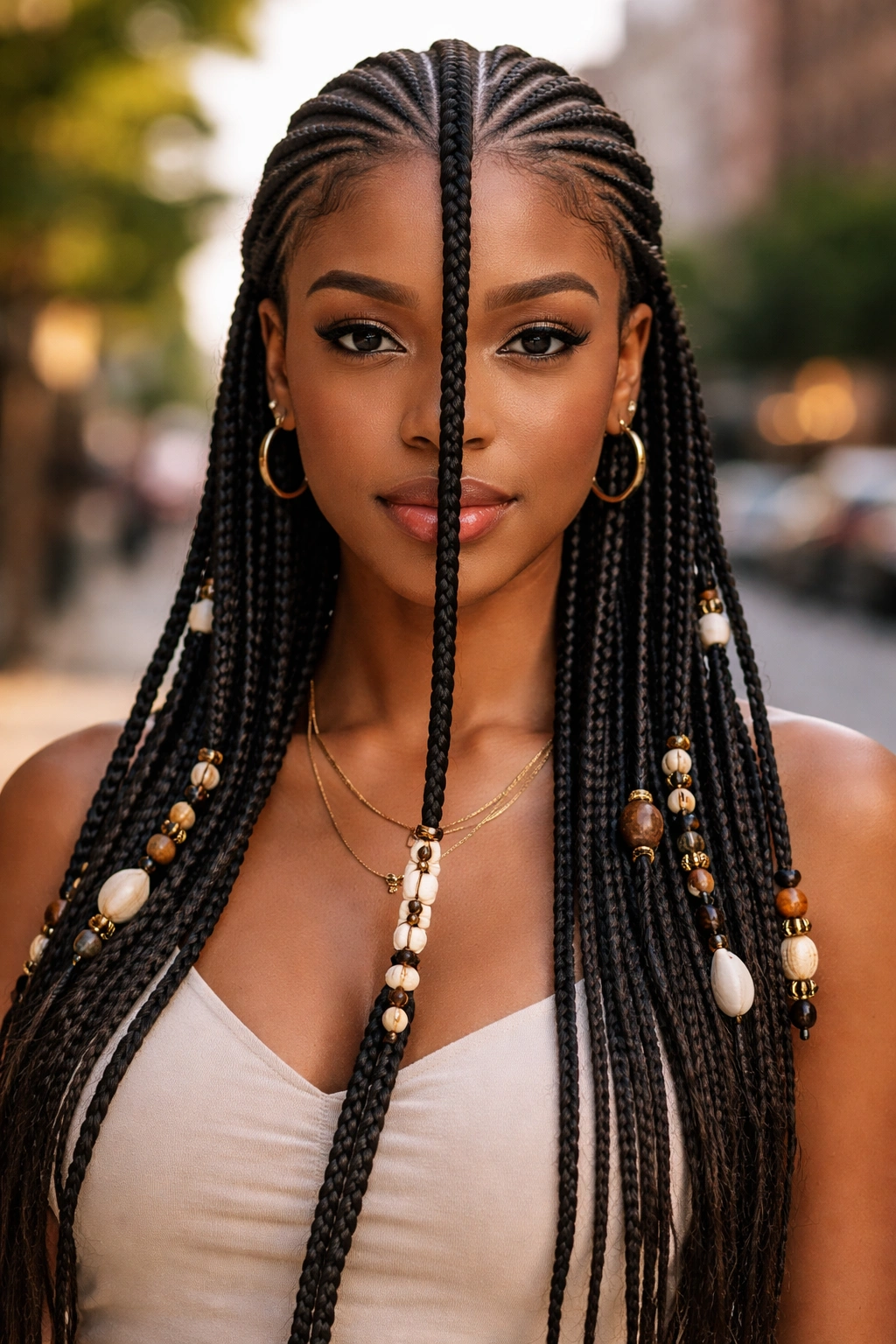
Unlike the standard center cornrow that ends at the crown or nape, this variation extends the center cornrow into a long single braid that hangs past the shoulders. The side braids are shorter, ending at chin or shoulder level.
The long central braid becomes the signature detail. It’s often accessorized with clusters of cowries or beads at the end.
This style references specific Fulani traditions where a single long central braid indicated specific status or age.
19. Fulani Cornrows With Heart-Shape Part
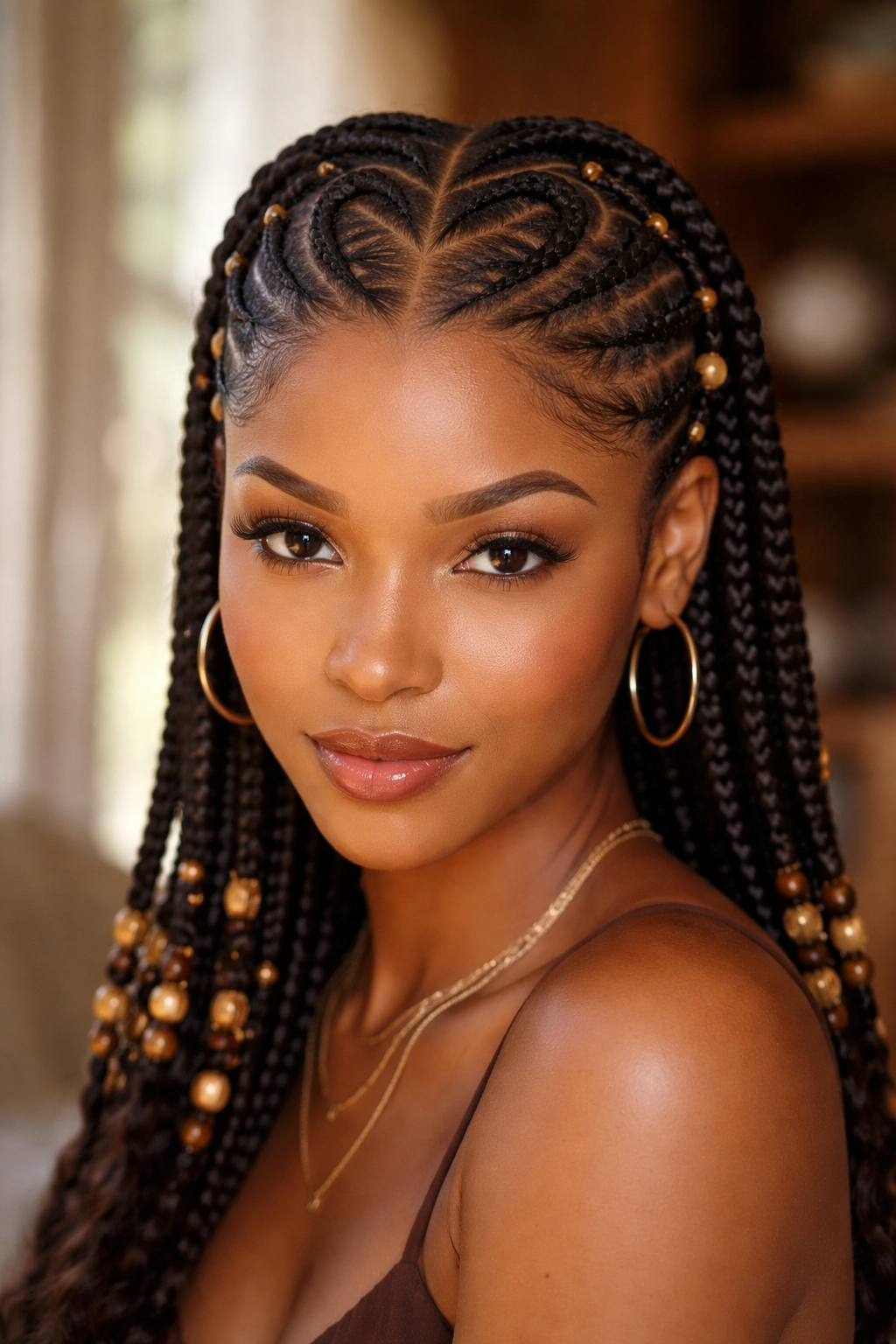
Bold claim: a heart-shape part at the crown, with Fulani elements surrounding it, is one of the most visually striking adaptations of traditional Fulani braiding. The heart adds a contemporary romantic touch to the classic structure.
The heart is parted into the crown area, with cornrows following the heart outline. The central Fulani cornrow runs down to the heart, where it splits or redirects around the heart shape.
- Heart size: 3-4 inches wide
- Heart position: top of the crown
- Cornrows: follow heart outline, then continue to the nape
- Accessories: subtle — simple wooden beads or small cuffs
Best for events with a romantic theme or photoshoots with a fashion focus.
20. Fulani Cornrows With Tribal Stitching
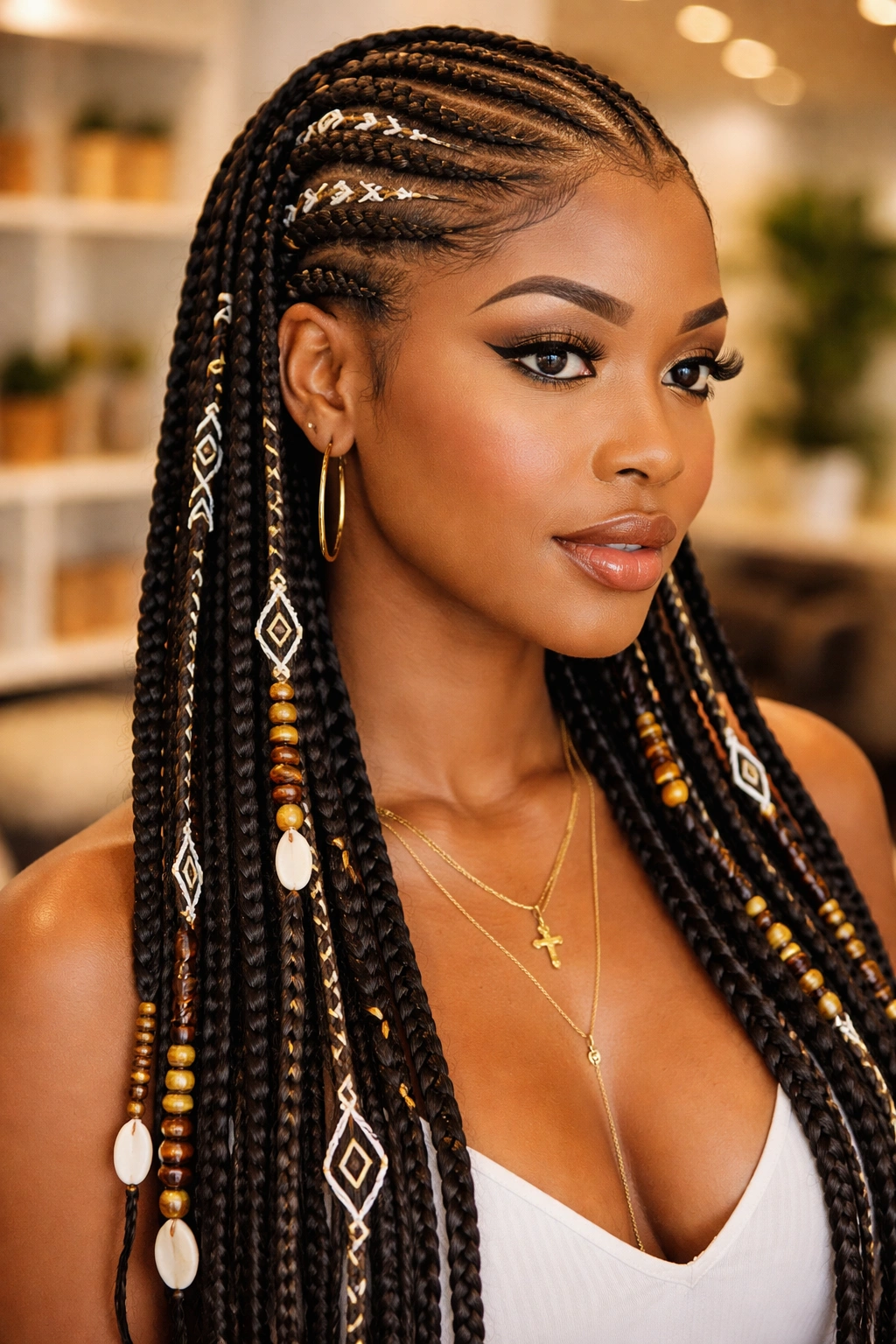
Small tribal-patterned stitching added to the braids — not just horizontal stitches, but stitches that form specific motifs across the braid length.
Common motifs: diamonds, triangles, waves, crosses. The stitching is done during the braiding process by the braider using small pieces of contrasting kanekalon.
This is skilled braider territory. Most braiders don’t do tribal stitching regularly; ask for examples before booking.
21. Fulani Cornrows With Chunky Beaded Ends
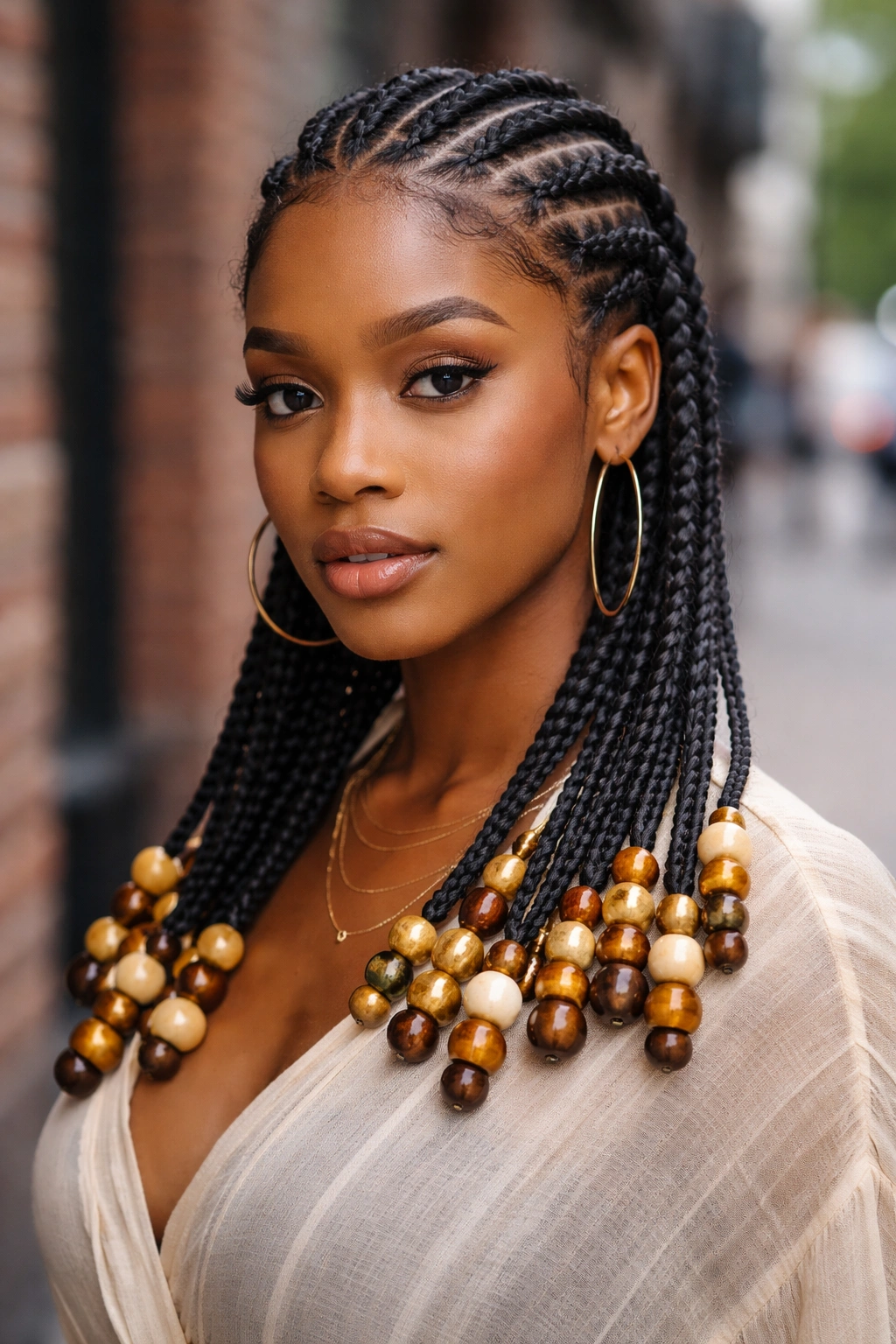
Instead of small beads throughout, this variation uses chunky large beads (15-20mm) at the ends only. The beads weigh the braid ends, adding structural drape and visual weight.
Chunky beads read as bold and statement. They’re most impactful on shorter Fulani braids where the bead-to-braid ratio is noticeable.
Limit chunky beads to 2-3 per braid. More than that becomes uncomfortable and visually heavy.
22. Fulani Cornrows With Face-Framing Curls
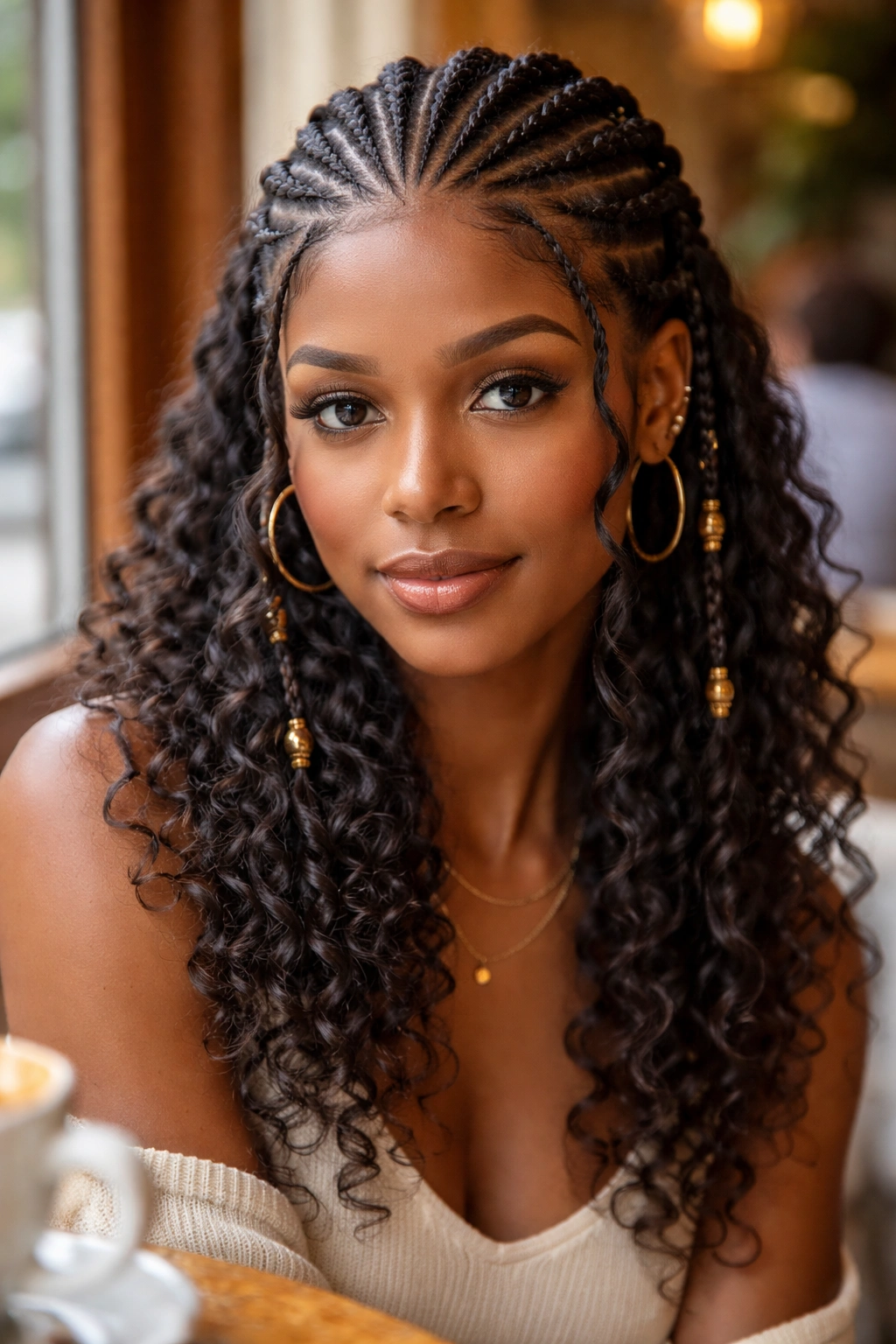
Fulani pattern at the top, with loose curly hair pulled out at the temples and cheeks to frame the face. The loose curls come from face-framing sections that weren’t fully braided.
The curls soften the sharp Fulani cornrow structure and add movement to the face-framing area.
This is a hybrid style that references bohemian cornrow techniques within a Fulani framework. It reads as softer and more contemporary than strict traditional Fulani.
23. Fulani Cornrows With Cross Pattern at Nape
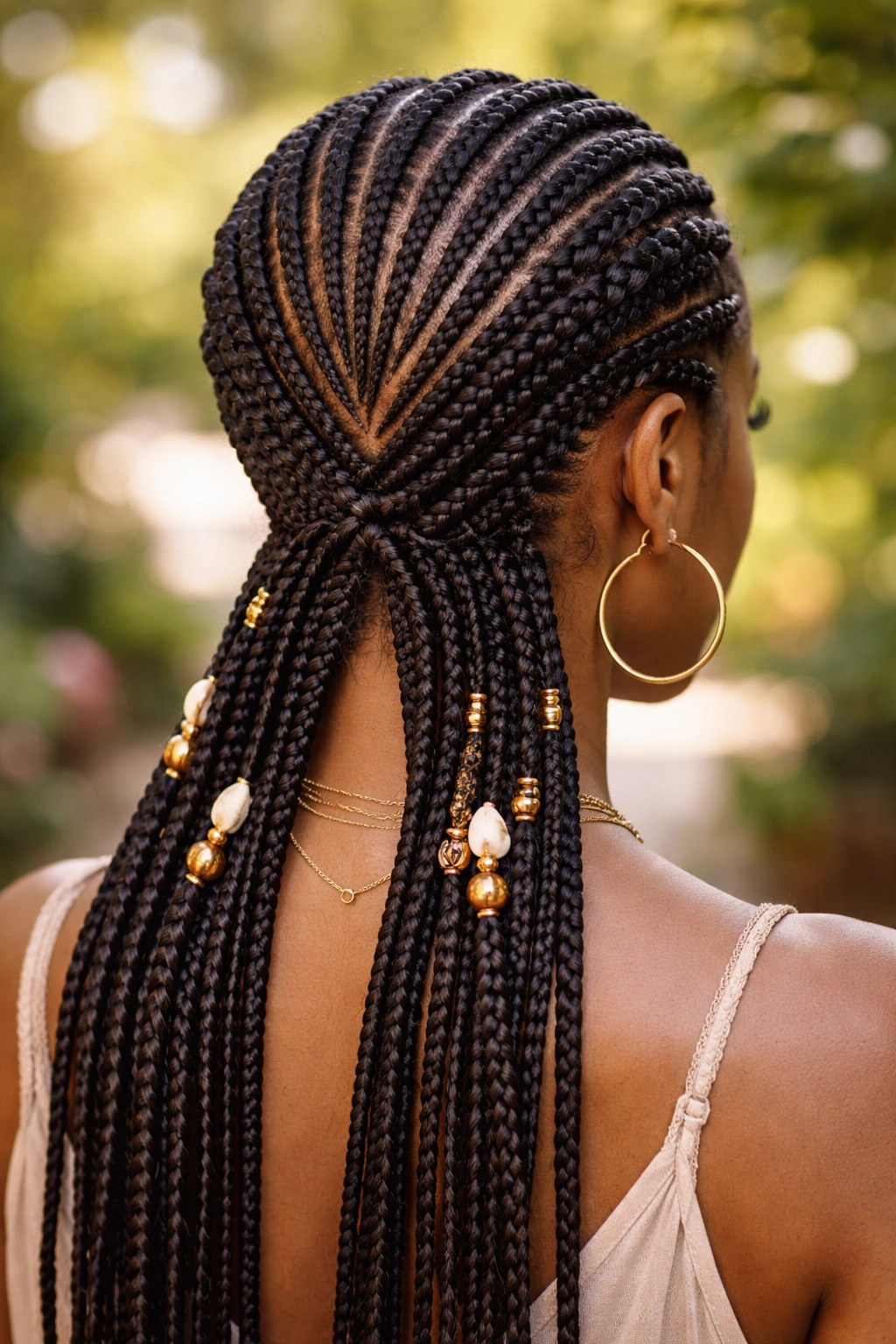
A cross-shaped braid pattern at the nape where the cornrows meet. The central cornrow and side cornrows converge in a cross shape at the back of the head.
The cross is subtle — not a pronounced crucifix shape, but a clear X where the braids intersect.
This detail shows off braider skill and adds interest to the back of the head, which is often overlooked in cornrow styling.
24. Fulani Cornrows With Twisted Sections
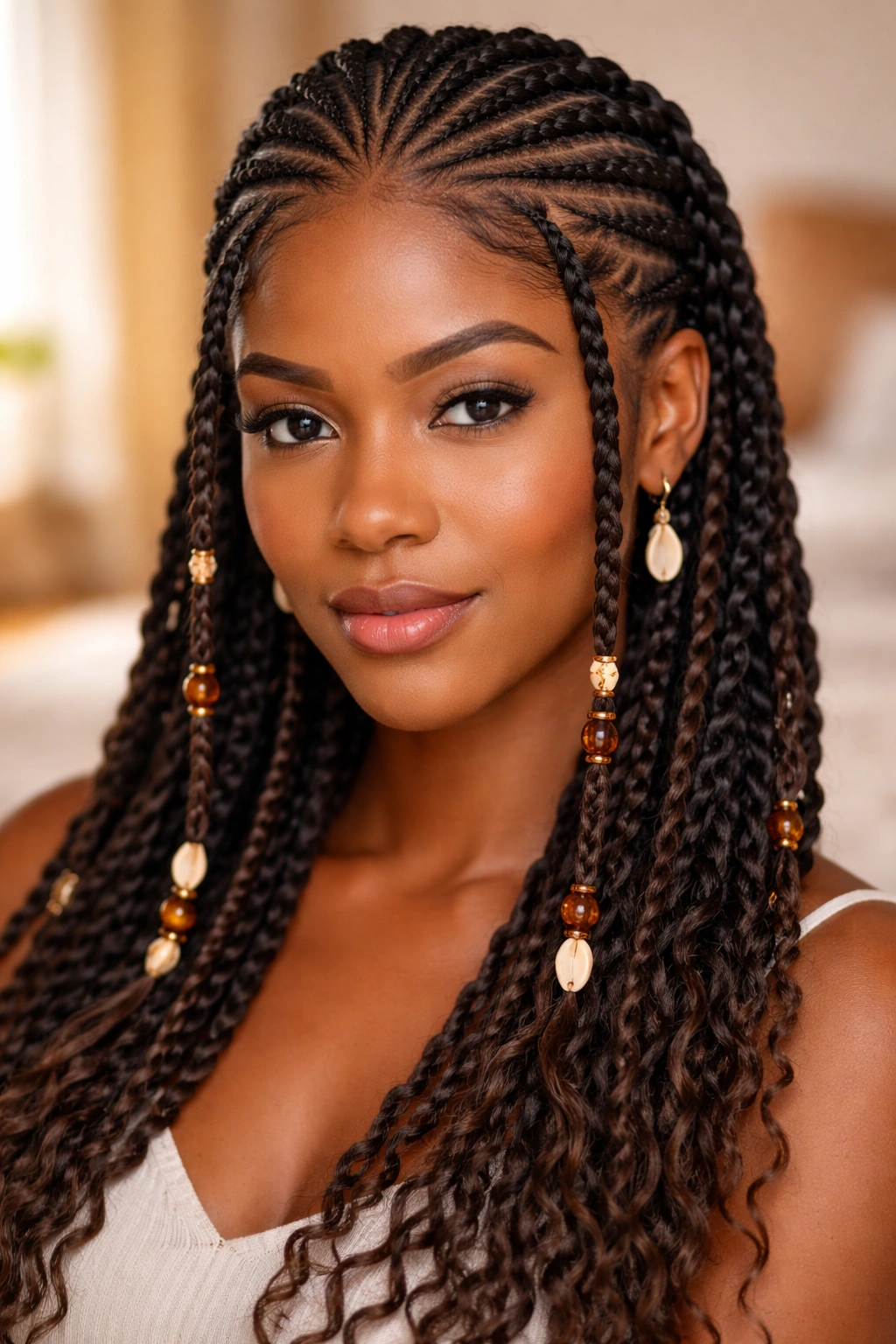
Some braids in the Fulani pattern are replaced with two-strand twists instead of cornrows. Typically the dropped front braids and one or two face-framing braids become twists, while the main pattern stays as cornrows.
The twist texture contrasts with the cornrow texture, adding dimensional variety.
Twist placement: decide before the install. Twists in the right spots add variety; twists in the wrong spots break the Fulani silhouette.
25. Fulani Cornrows Finished in a Low Bun
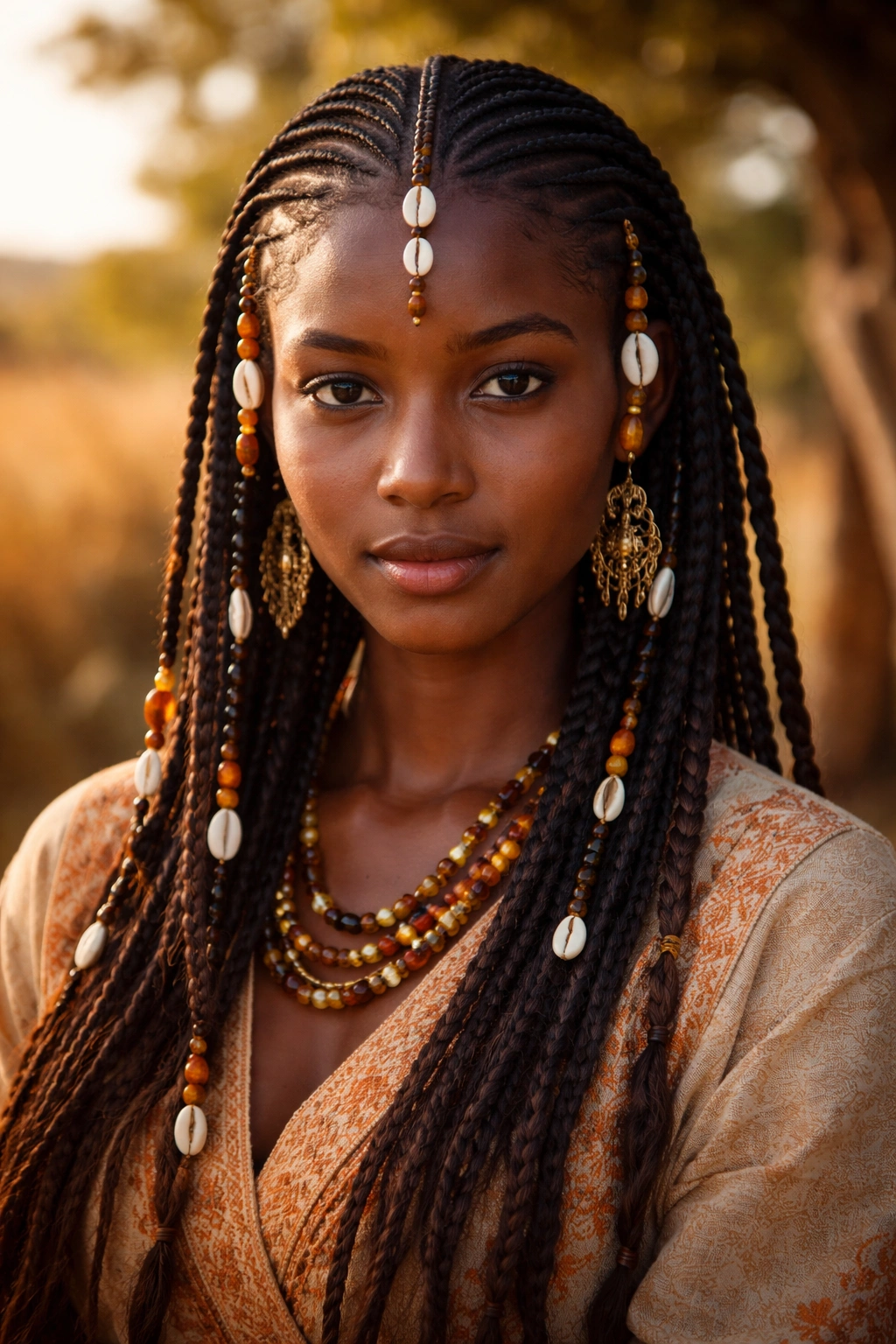
The Fulani pattern leads to a low bun at the nape rather than leaving ends loose. The central cornrow and side braids all gather at the nape bun.
Low buns suit formal events and classic contexts. They read as timeless and elegant.
The bun size should match the Fulani pattern’s scale — smaller buns for delicate patterns, larger buns for bolder patterns.
Who This Is For
Anyone wanting a complete Fulani look for formal events. The low bun finishes the style cleanly and removes the need to manage loose ends.
- Cornrow all hair into Fulani pattern
- Gather ends at the nape into a low bun
- Secure with U-pins and setting spray
- Finish with a final smoothing of the front hairline
Sleep Care for Fulani-Inspired Installs
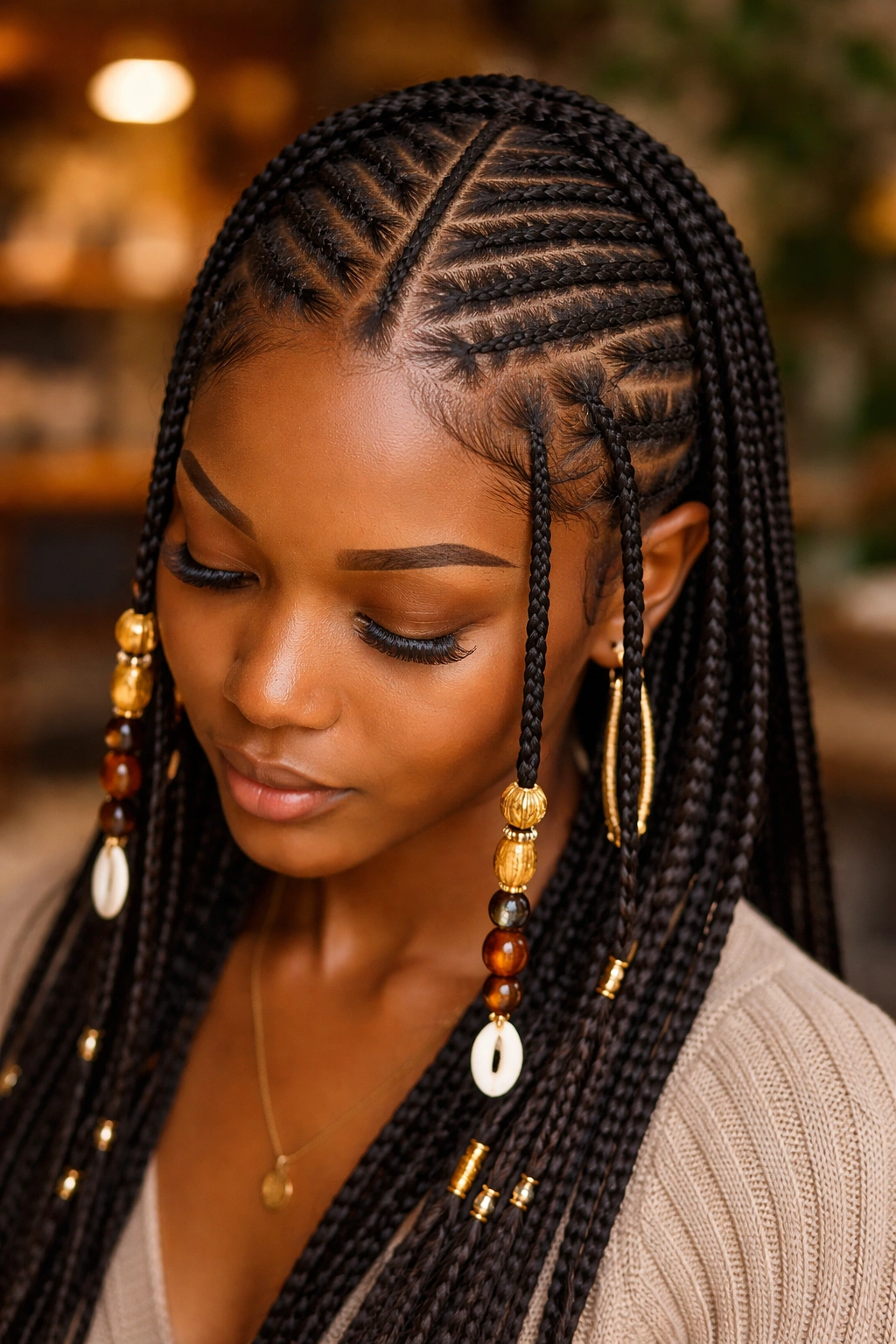
Accessories need protection. Beads and cuffs can press uncomfortably against the scalp during sleep.
A deep bonnet that accommodates the accessories. Standard bonnets may compress beads against the scalp, causing sore spots.
Alternatively, remove heavy accessories before sleep and reattach in the morning. This adds 5-10 minutes to the morning routine but preserves the scalp.
Satin pillowcases help if a bonnet falls off during sleep.
Cleaning Beads and Accessories
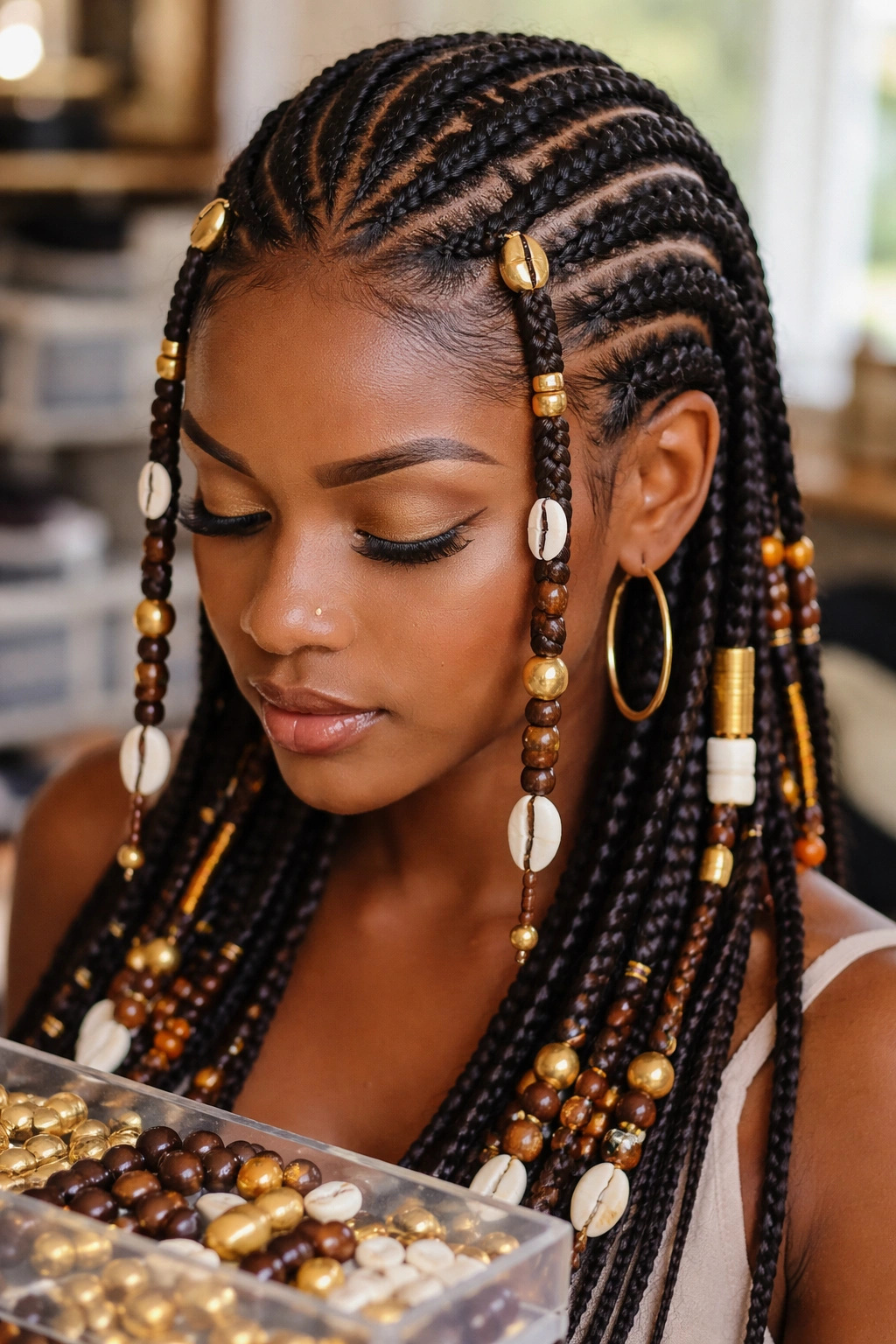
Cowrie shells and wooden beads absorb oils and odors over weeks of wear. Clean them mid-install:
- Remove from the braid
- Wipe with a damp cloth and mild soap
- Dry thoroughly before reattaching
Gold and silver cuffs can be polished with a jewelry cloth. Remove tarnish and fingerprints before reattaching.
Colored thread wraps cannot be cleaned — replace them when they fuzz or discolor.
Refreshing the Fulani Pattern Mid-Install
Edge gel touch-ups every 3-5 days keep the hairline sharp.
Smooth the central cornrow if it starts to fuzz along the top. Apply edge gel and press flat with a soft brush.
Re-tighten or replace any beads that have loosened. Loose beads can fall off and need to be re-threaded.
Check accessory placement every few days. Beads can shift along the braid, changing the original design.
Common Fulani Cornrow Mistakes
Using too many accessories. Fulani styles benefit from restraint. Over-accessorizing makes the style look cluttered and less intentional.
Mixing metals. Gold cuffs and silver cuffs on the same head clash. Choose one metal family.
Ignoring the central cornrow. The central cornrow is the defining element. If it’s not present or not prominent, the style loses its Fulani identity.
Treating Fulani as generic cornrows. Fulani has specific elements. Without the central cornrow, face-framing braids, and accessories, it’s not Fulani-inspired.
Culturally disrespectful framing. Don’t call your style Fulani unless it includes the Fulani elements. Don’t dismiss the cultural origin when someone asks about the style.
Fulani cornrows carry weight — both aesthetic and cultural. Wearing them well means committing to the elements that make them Fulani, not just borrowing the name. When you get it right, the style communicates something real: an appreciation for the braiding traditions that shaped modern African hair culture, executed with care for the specific details that distinguish Fulani from any other cornrow variation.