


Eight cornrows hits a styling sweet spot most other braid counts miss. It’s enough braids to create density and visual rhythm, but few enough that each braid stays substantial and clearly defined. Compare to four braids (which can look sparse) or twenty braids (which take forever to install) — eight is the workhorse number that fits actual lives.
Eight braids also distributes weight evenly across the scalp. With added hair, the load gets shared across enough rows that no single braid pulls hard at the edges. With natural hair only, each braid carries enough hair to look full without being chunky.
These 20 styles all use exactly 8 braids as the foundation. The variety comes from parting patterns, finishing techniques, accessories, and added length — proving that the same braid count can produce dramatically different aesthetics.
Why 8 Is the Magic Number
Eight braids divides the head naturally. Four on each side, parted down the middle. Or three on top with five at the back for a different distribution. Or any other thoughtful eight-braid arrangement. The number is small enough to play with proportions without losing coherence.
Install time for 8 cornrows: 60-120 minutes depending on whether you’re adding extensions, beadwork, or specialty parting. That’s a manageable commitment that doesn’t eat the whole day.
Eight braids also takes down faster than denser styles. About 30 minutes for unwinding, plus detangling time. Quick enough to do at home without dread.
How to Decide Between 8 and Other Counts
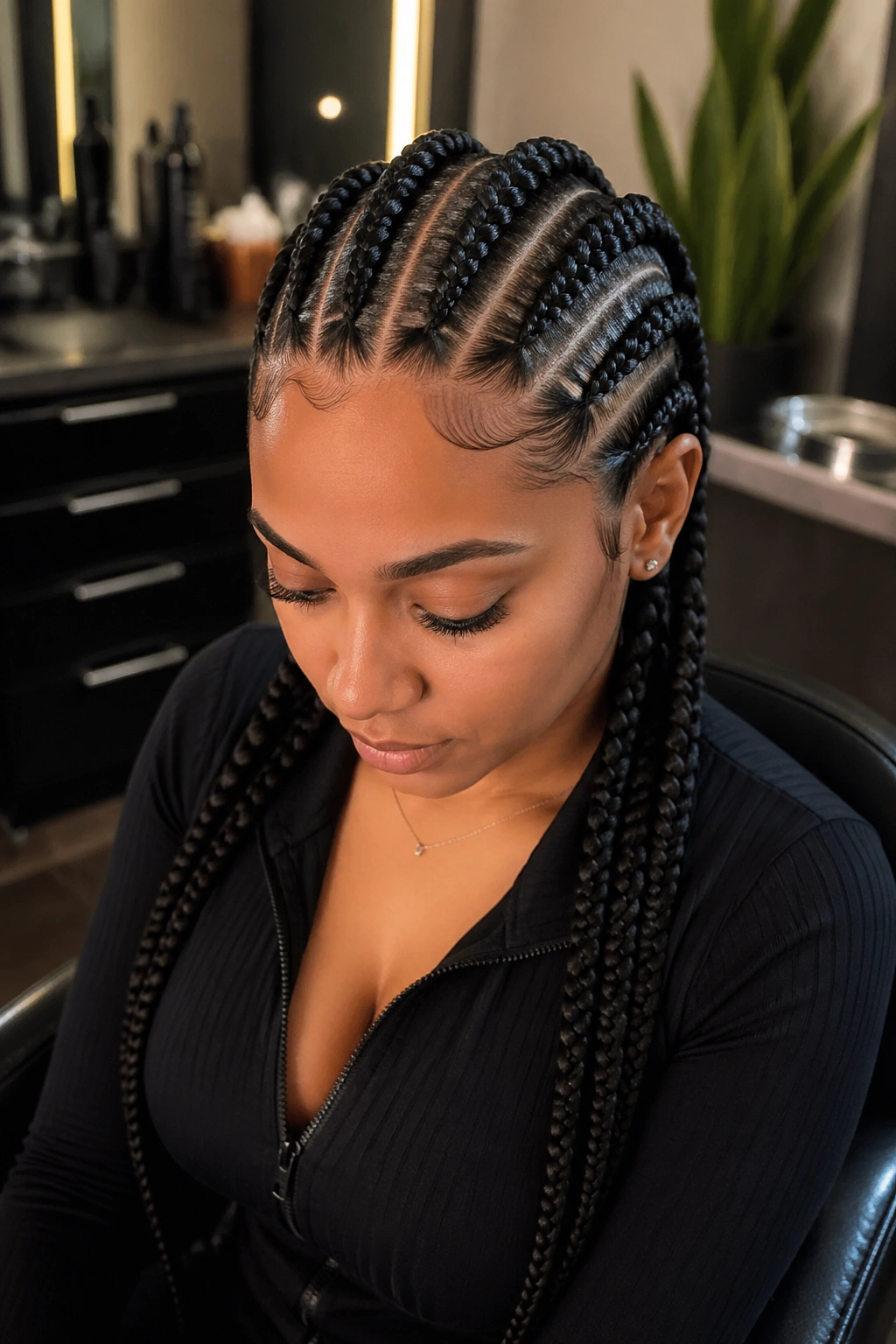
Eight cornrows works best when:
- You want defined, visible braids rather than fine, dense rows
- You’re adding length and want each braid substantial enough to hold the hair
- You don’t want to commit to a 4+ hour install
- The style benefits from clear visual separation between braids
Eight cornrows works less well when you want intricate parting patterns (need more braids for complexity) or a sleek, ultra-polished look (fewer braids read more refined).
Hair Length Requirements
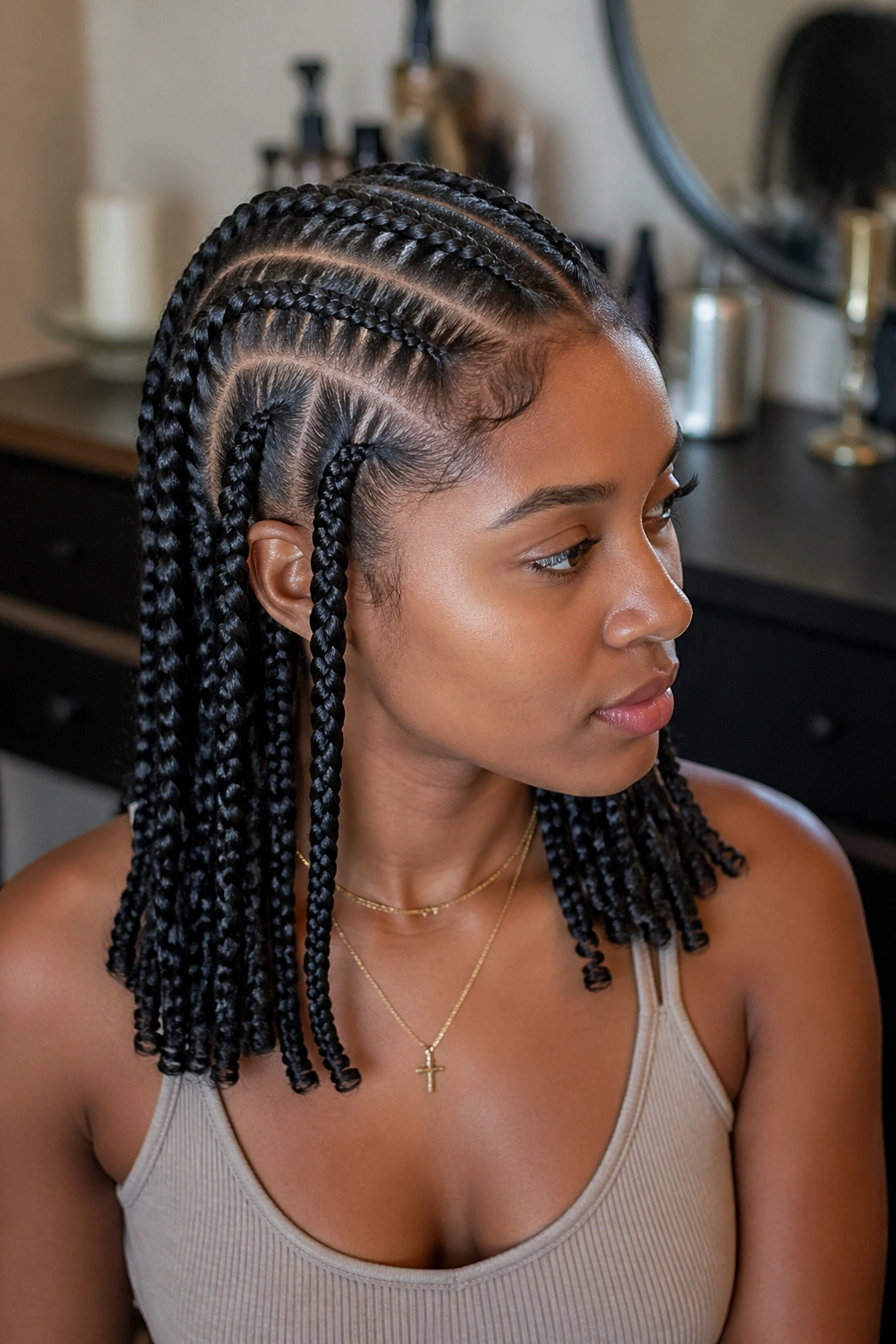
For 8 cornrows on natural hair only, you need at least 4-6 inches of stretched length. Less than that and the braid lengths look stubby and underwhelming.
For 8 cornrows with extensions, your natural hair only needs about 2-3 inches at every section to anchor the added hair. The extensions provide the visual length.
The hairline and nape are the most-common length challenges. A skilled braider can adapt — using thinner extensions in those zones, or designing the style so those areas have shorter braids by intent.
Prep Work for Eight-Braid Styles
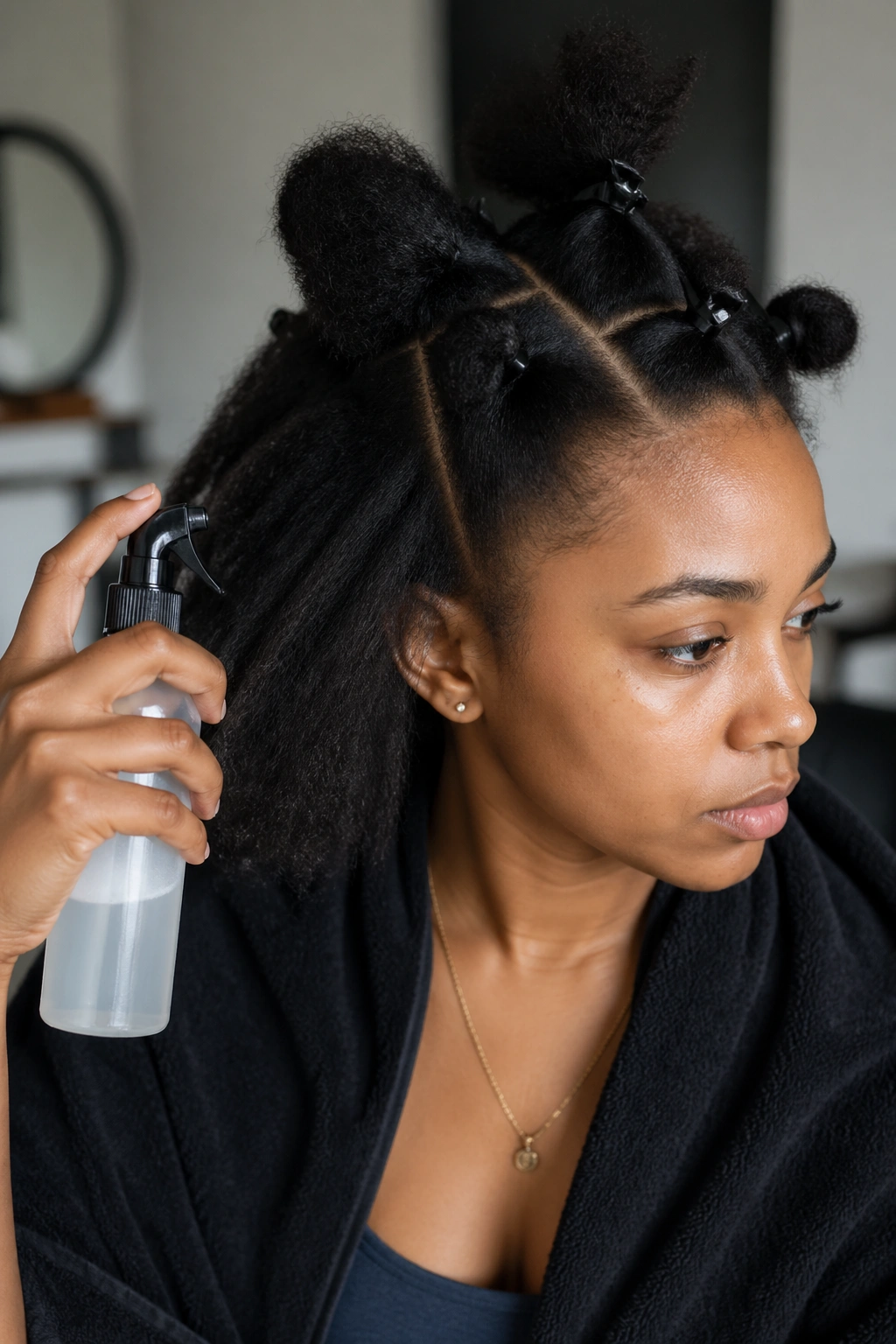
Wash with sulfate-free shampoo 1-2 days before. Deep condition for 30+ minutes. Detangle thoroughly with a wide-tooth comb. Stretch overnight.
The morning of the install, apply a lightweight leave-in spray. Avoid heavy butters or thick creams — they make the braider’s grip slippery.
If you’re adding extensions, pre-stretch the kanekalon by dipping in hot water and air-drying. This removes the plasticky shine and helps the kanekalon blend with natural hair.
Tools That Help With 8 Cornrows
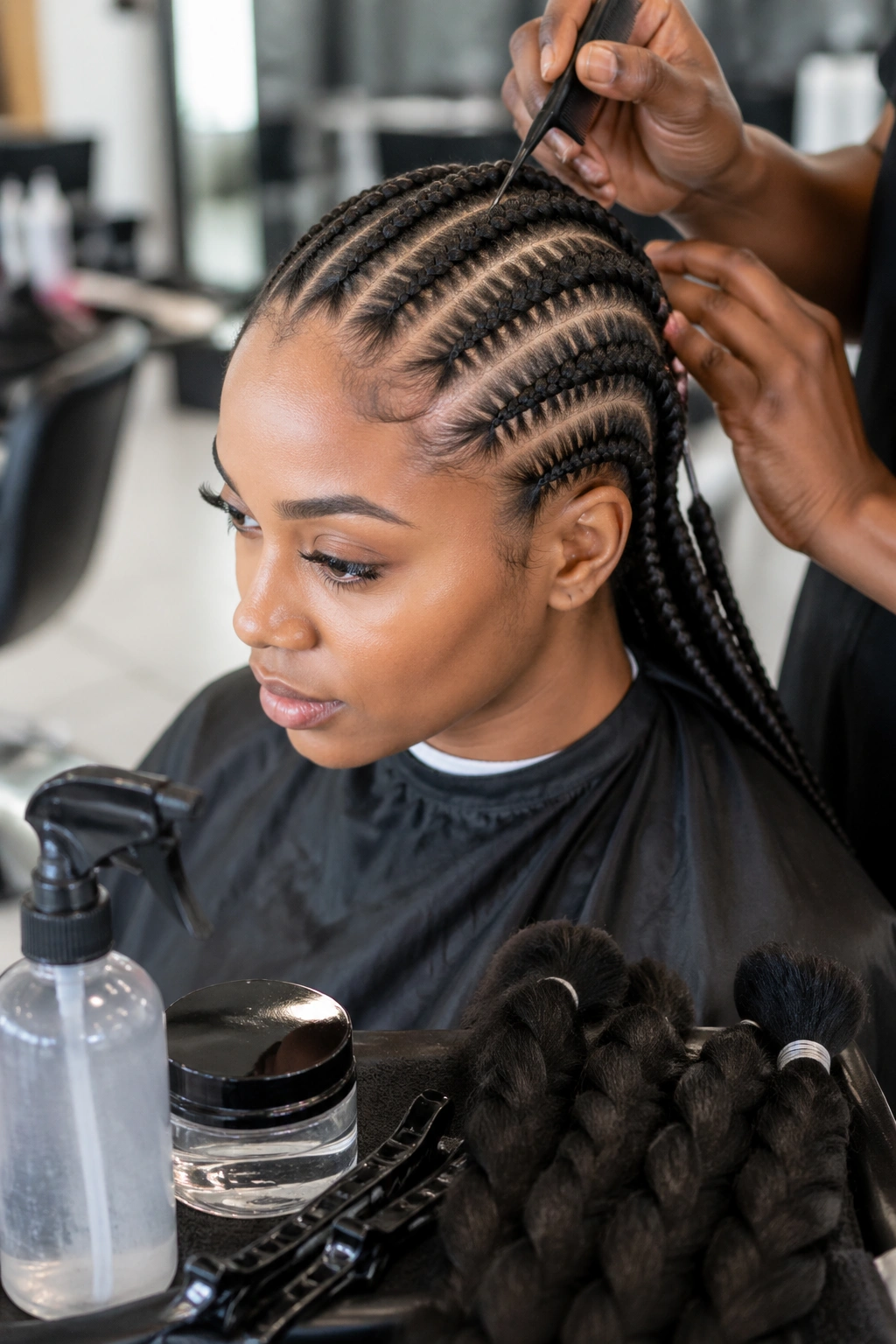
A pin-tail rat-tail comb for sharp parts. Sectioning clips with teeth (flat clips slip on long sections). Edge gel for the hairline. A spray bottle with water and a touch of conditioner to keep sections workable.
For added hair: pre-cut kanekalon into sections roughly the length needed. Cutting on the fly slows everything down.
1. Eight Straight-Back Cornrows
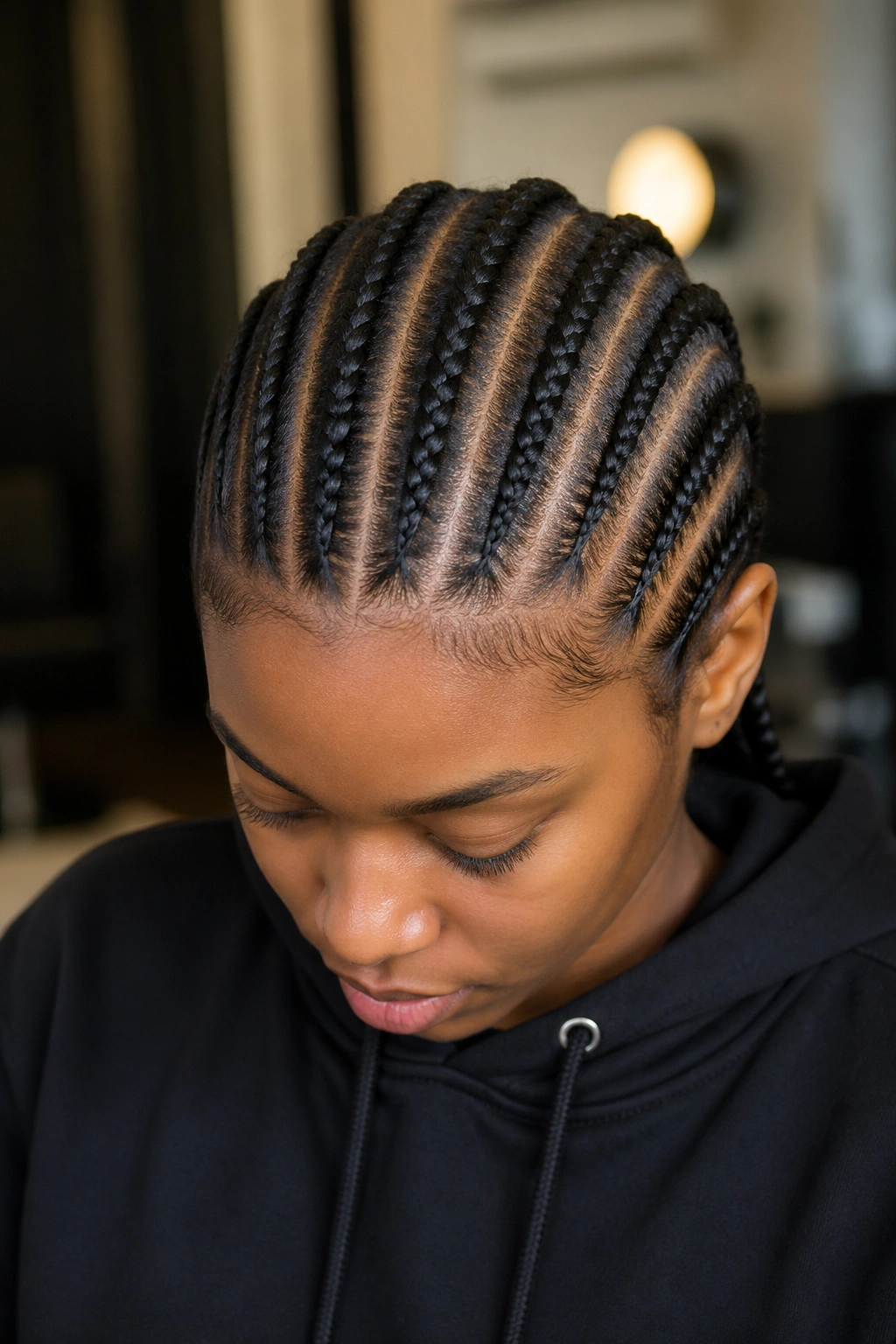
The classic. Eight clean cornrows running straight from the hairline to the nape, all parallel and even. Nothing fancy, nothing trying to be more than it is.
Why It Works
- Quickest 8-braid style to install (60 minutes for natural hair)
- Easy to maintain at home
- Suits every face shape and skin tone
- Versatile foundation for adding extensions, beads, or color
Tip: Ask for parts that are slightly thicker at the front (where edges are sensitive) and slightly thinner toward the back. The proportional shift creates a more flattering finish than uniform parts.
2. Eight Cornrows With a Deep Side Part
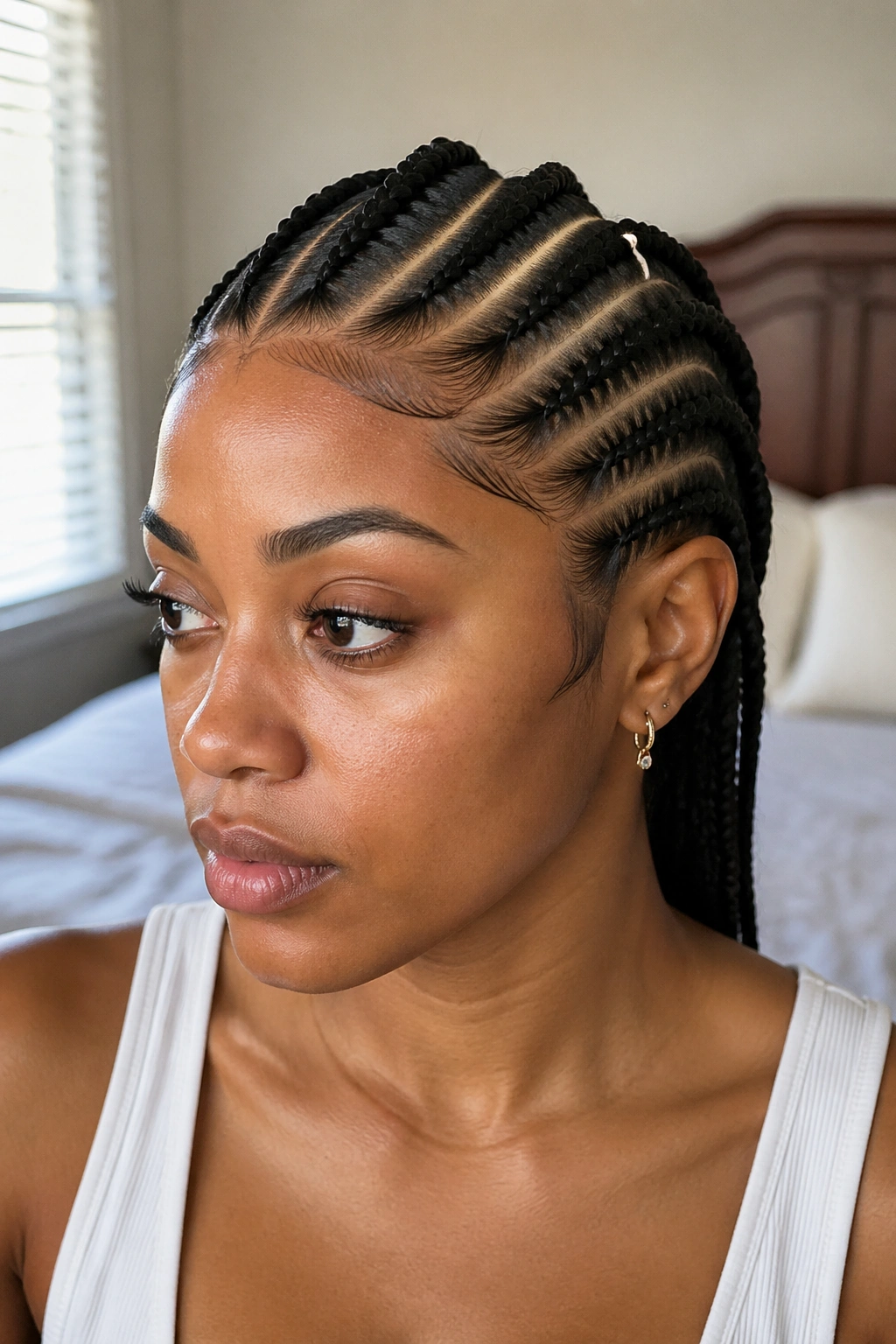
Same eight cornrows, but a deep off-center part dramatically shifts the balance. Five braids on one side, three on the other. The asymmetry adds personality without changing the braiding technique.
The deep part needs maintenance. A line of edge gel along the part keeps it sharp through the week.
Best worn parted toward the side that better frames your face. If you’re not sure, try both sides and check the mirror.
3. Eight Cornrows Into a Single Ponytail
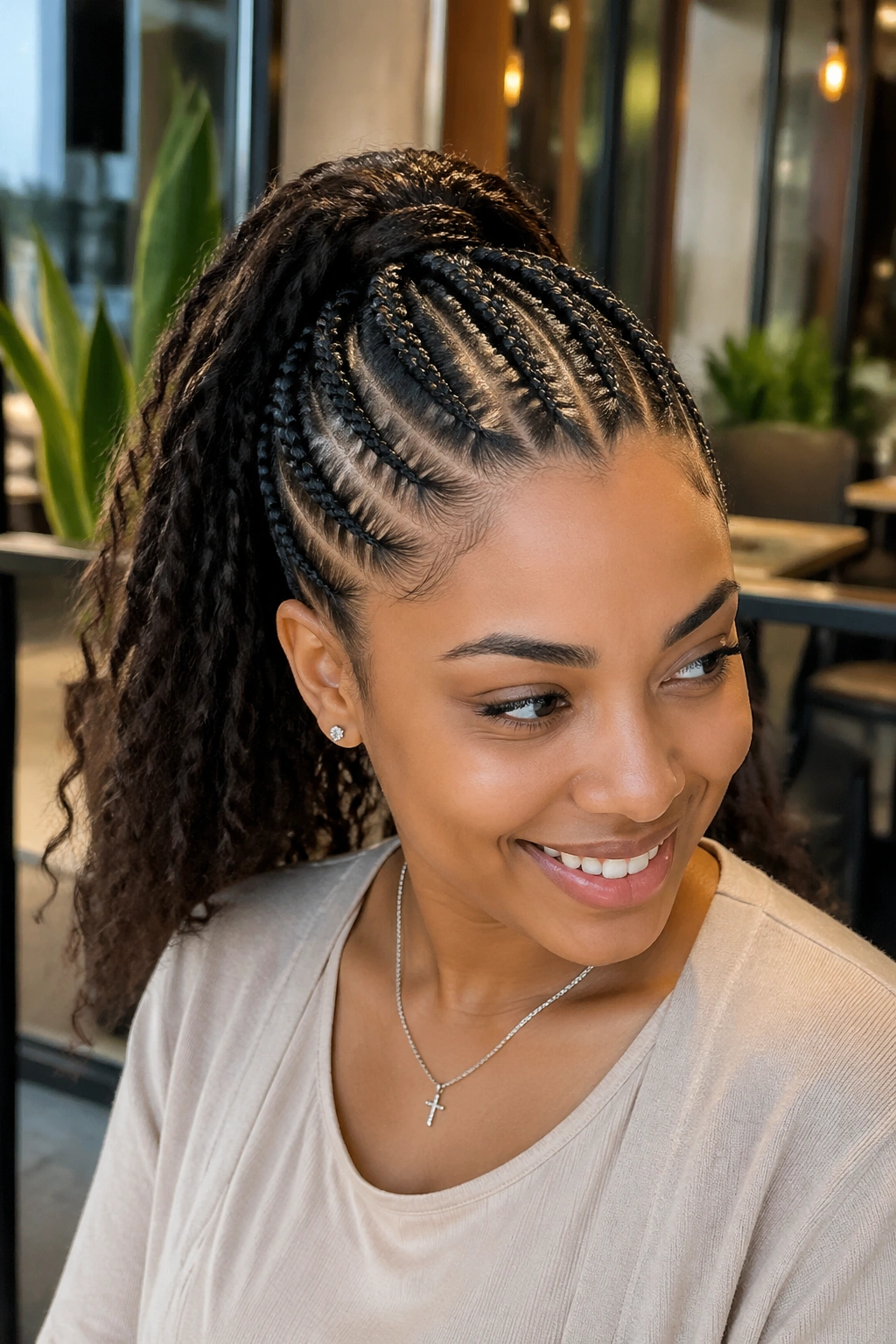
All eight braids cornrowed back and gathered into one ponytail at the crown or back of the head. The ponytail can be natural hair, a puff, or extended kanekalon.
A versatile style. Works for athletic days, work, casual outings, and dressed-up nights depending on the pony’s finish.
The ponytail needs to sit at the crown for a youthful, perky look. A low pony reads more sophisticated.
4. Eight Cornrows With a Curved Hairline
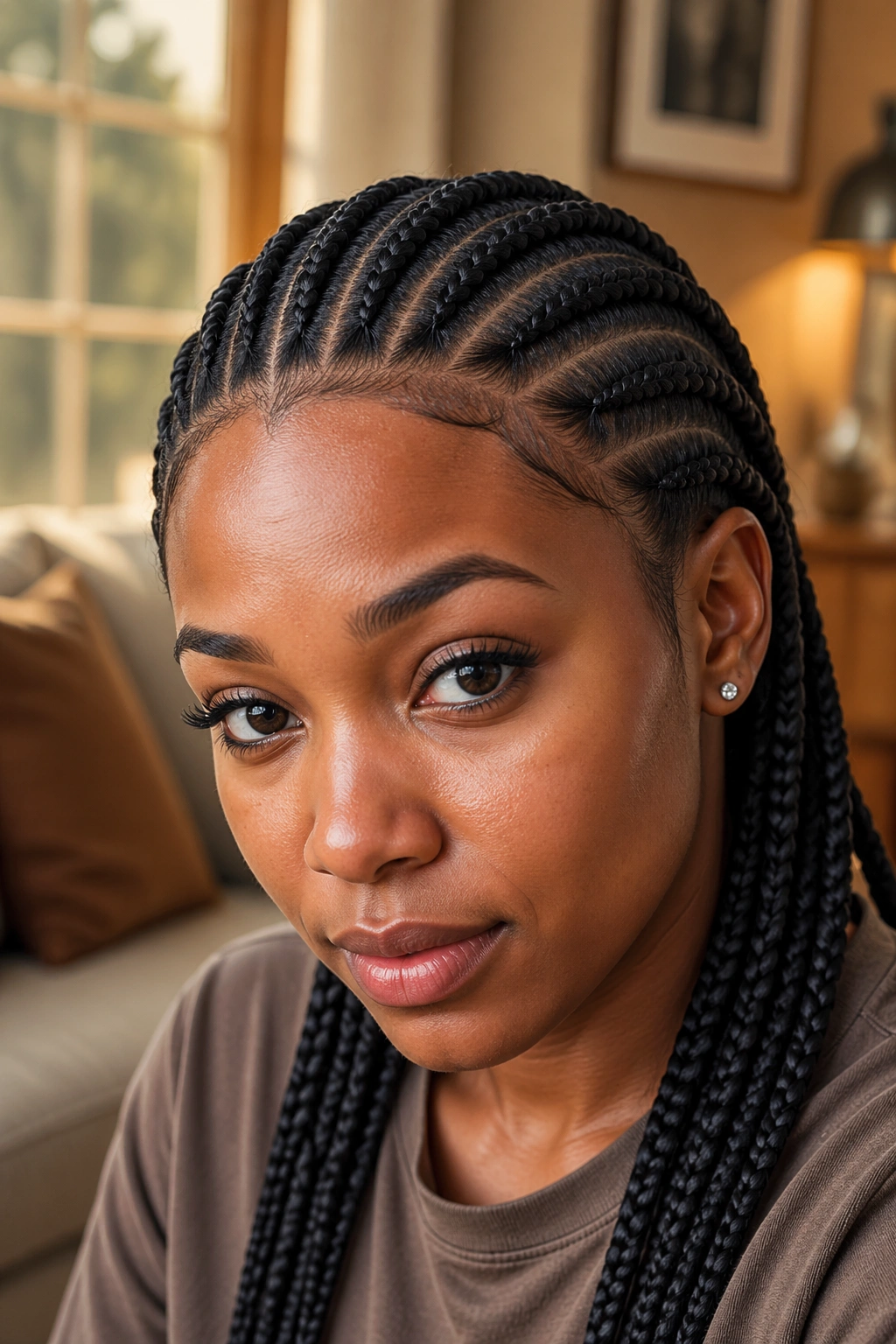
The front cornrows curve to follow a softened hairline arc rather than going straight back. The curve frames the face and softens the geometry.
Beautifully flattering on heart-shaped, oval, and oblong faces. The curve complements the natural face shape.
The arc has to be even on both sides. Asymmetric arcs read like errors instead of styling.
5. Eight Cornrows With Mixed Sizes
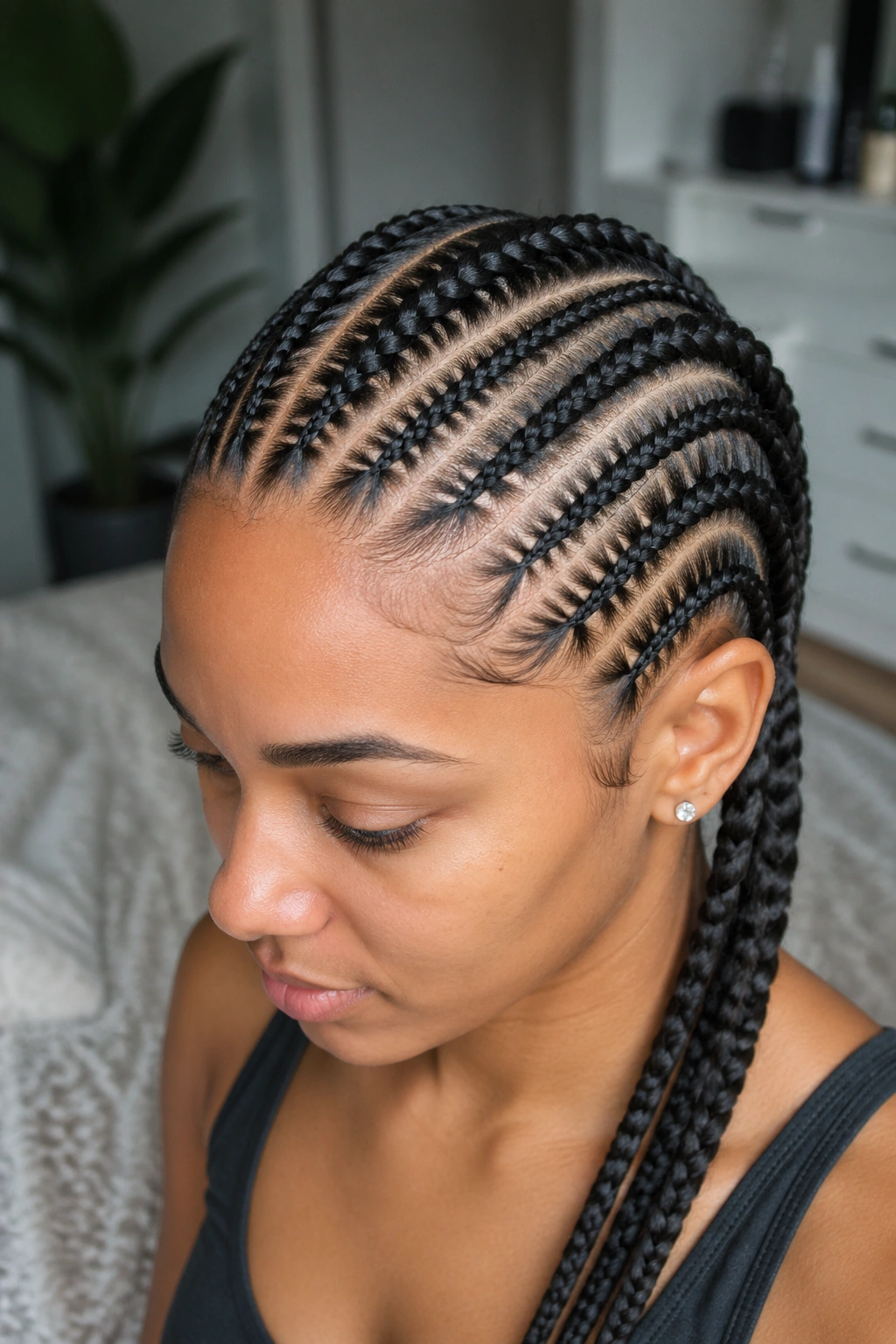
Six standard-width cornrows and two thicker accent cornrows. The thicker ones can run down the center, sit on the sides, or alternate through the eight-braid pattern.
The mixed sizes add visual hierarchy. Single-size styles read uniform; mixed sizes read intentional.
Place the thicker braids strategically — symmetric placement looks calculated, while three-and-three asymmetric placement looks more organic.
6. Eight Cornrows With Beaded Tips
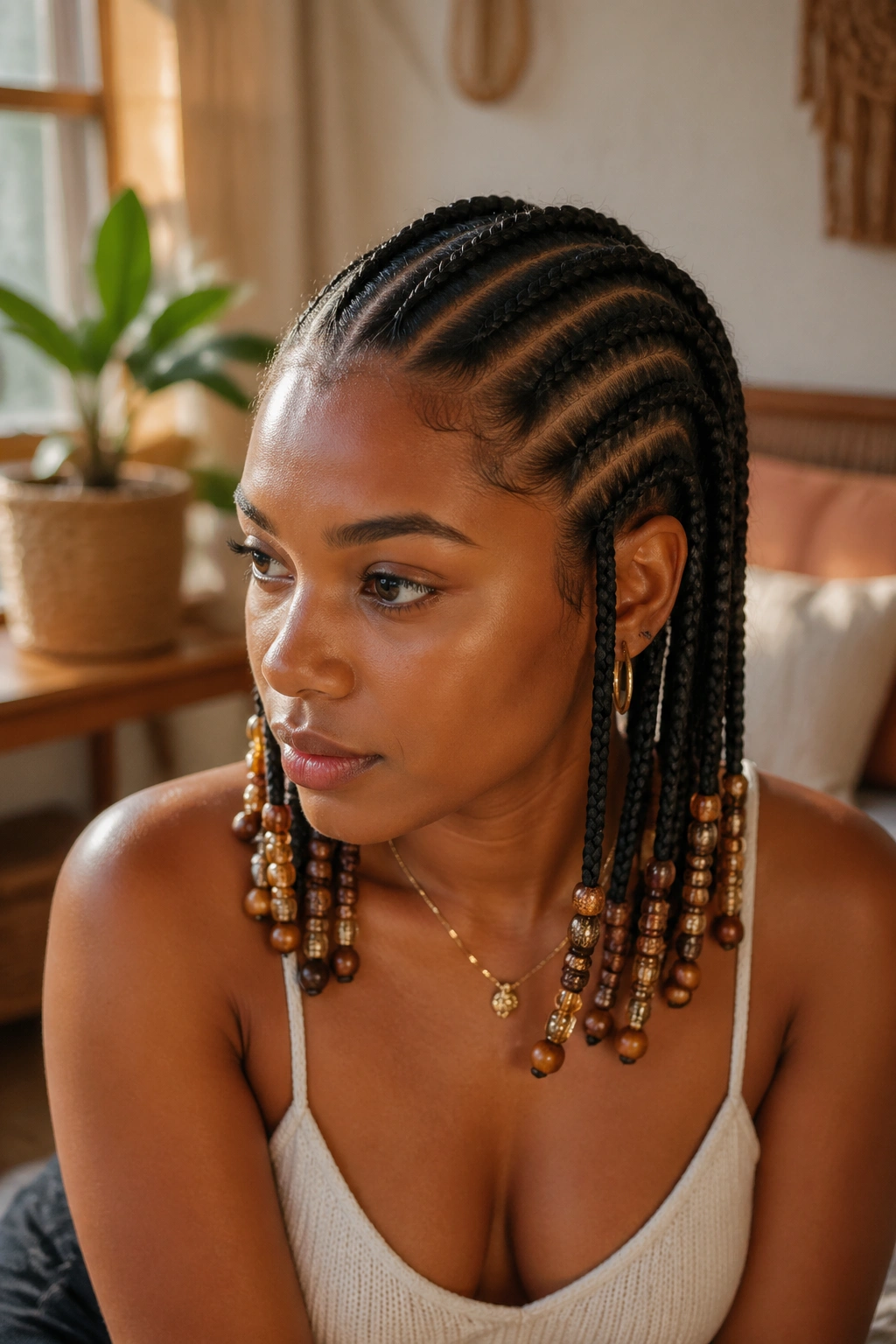
All eight braid tips finished with beads. Wooden beads in earth tones for a tribal-influenced finish. Glass beads in metallics for a glam look. Plastic beads in bright colors for playful styling.
Use a beader threading tool — threading beads by hand on eight braids takes too long.
Two to four beads per braid is the sweet spot. More gets visually heavy.
7. Eight Lemonade-Style Cornrows
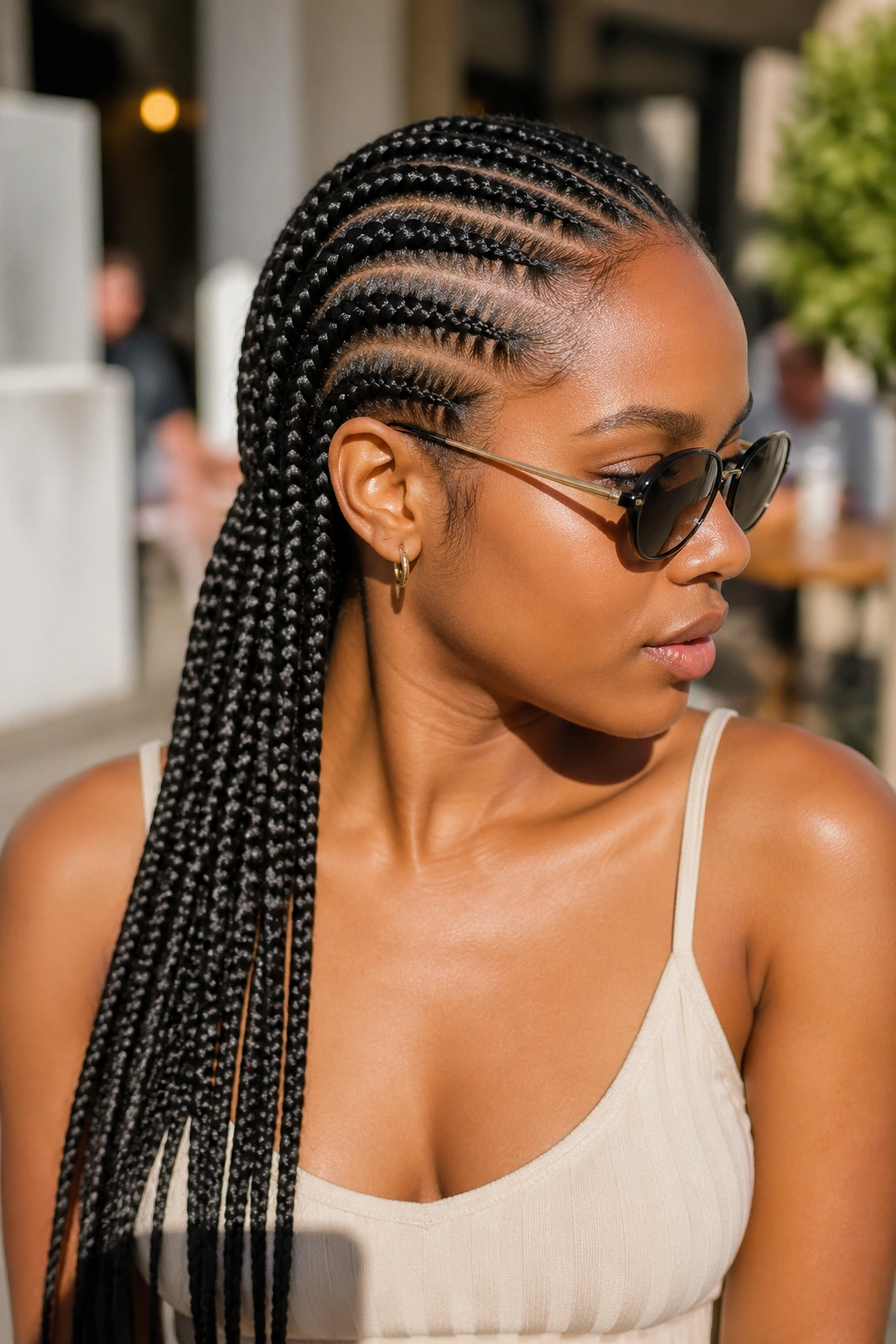
All eight braids angle to one side, draping over a single shoulder. Made famous by a certain album cover and still a go-to lemonade style.
The angle has to be committed. Half-hearted sweeps look sloppy.
The shoulder-side braids carry more weight, which can pull at the temples on that side. Anchor those front braids loosely enough to stay comfortable all day.
8. Eight Cornrows With a High Bun
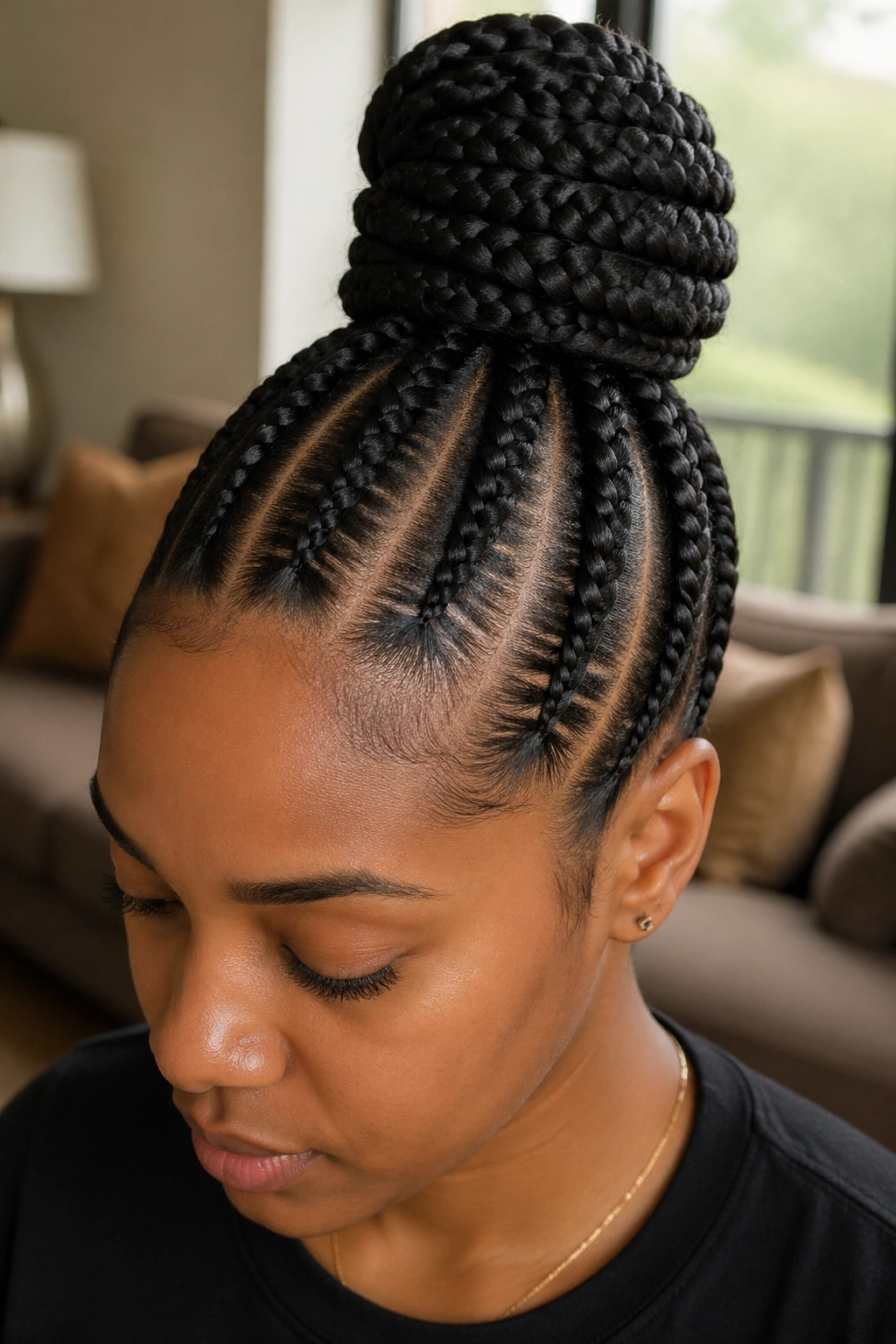
All braids cornrow up to the crown, where the natural or extension hair gathers into a high bun. The bun sits prominently at the top of the head.
A youthful, perky styling. Reads ballet-class meets street.
For extensions, use a hair donut underneath to give the bun shape and substance.
9. Eight Cornrows With Loose Hair Front
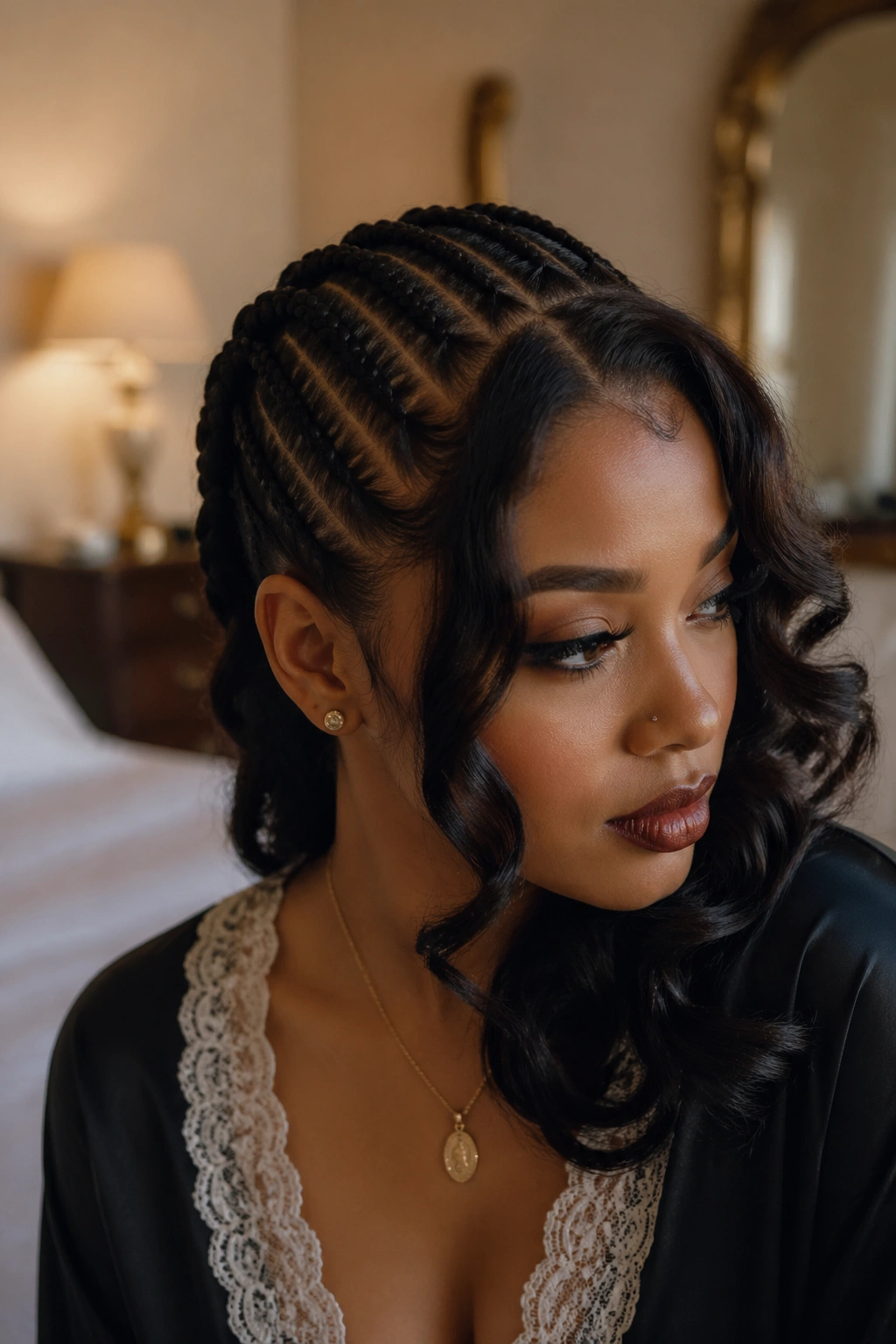
Eight cornrows from the crown back, with the front section left loose and curled or finger-waved. The contrast between braided back and loose front creates layered visual interest.
Reads like pin-up styling. Vintage-glam finish.
The loose front needs daily styling. Without curl maintenance, the front goes flat fast.
10. Eight Cornrows With Goddess Curls
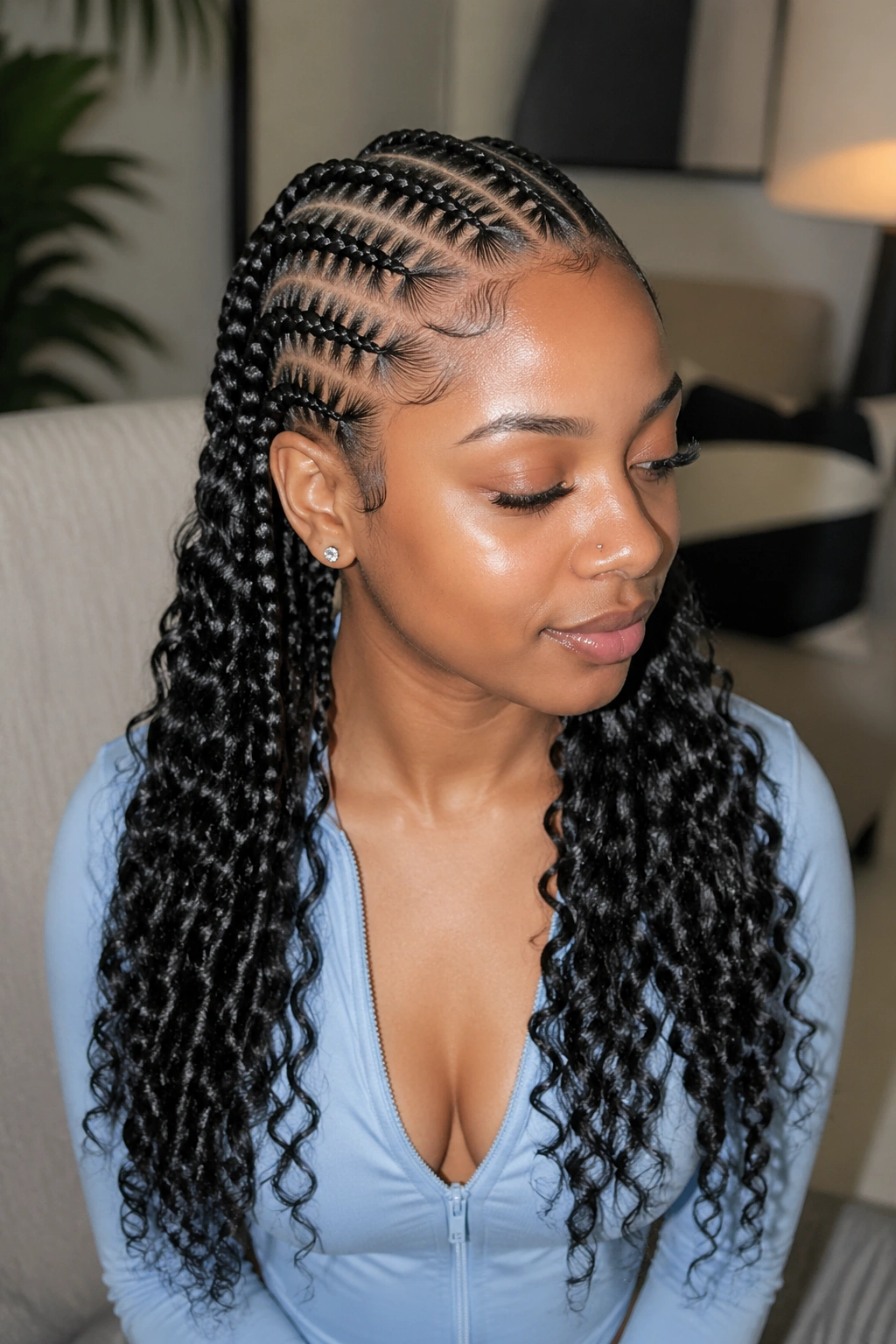
Each cornrow ends in loose, curly hair extensions instead of being braided to the tip. The flat cornrows at the scalp transition into wavy or curly ends that flow loose.
The defining goddess style. Combines braided structure with curled softness.
Use pre-curled kanekalon rather than straight kanekalon you curl yourself. Pre-curled holds longer.
11. Eight Cornrows With a Deep V-Shape Part
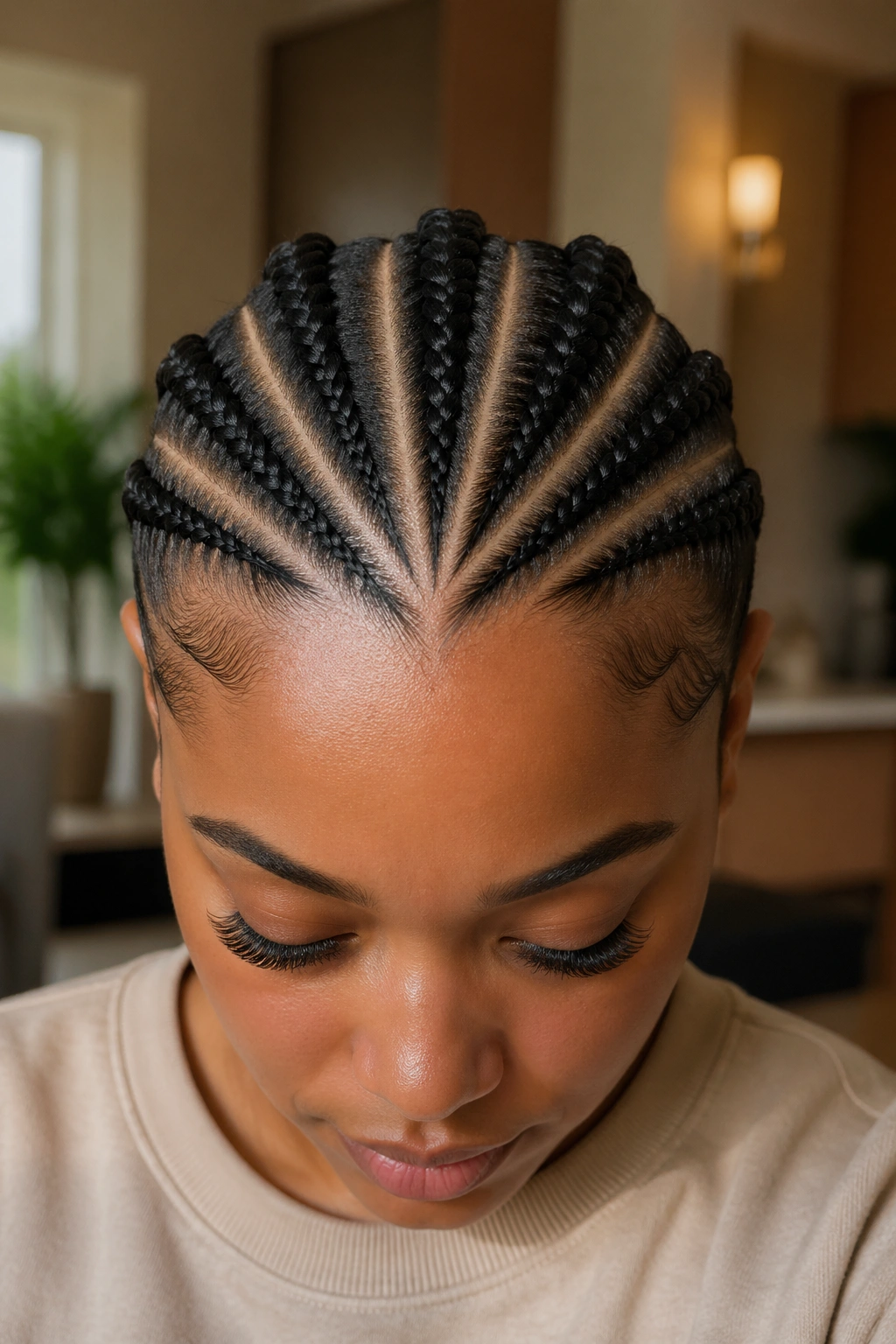
The eight cornrows split around a center V-shape that points toward the forehead. Four braids on each side angle away from the V’s center line.
A geometric styling. Reads architectural and confident.
The V’s depth determines the drama. A subtle V (1-2 inch depth) reads casual. A deep V (4+ inch depth) reads bold.
12. Eight Cornrows With Color Accents
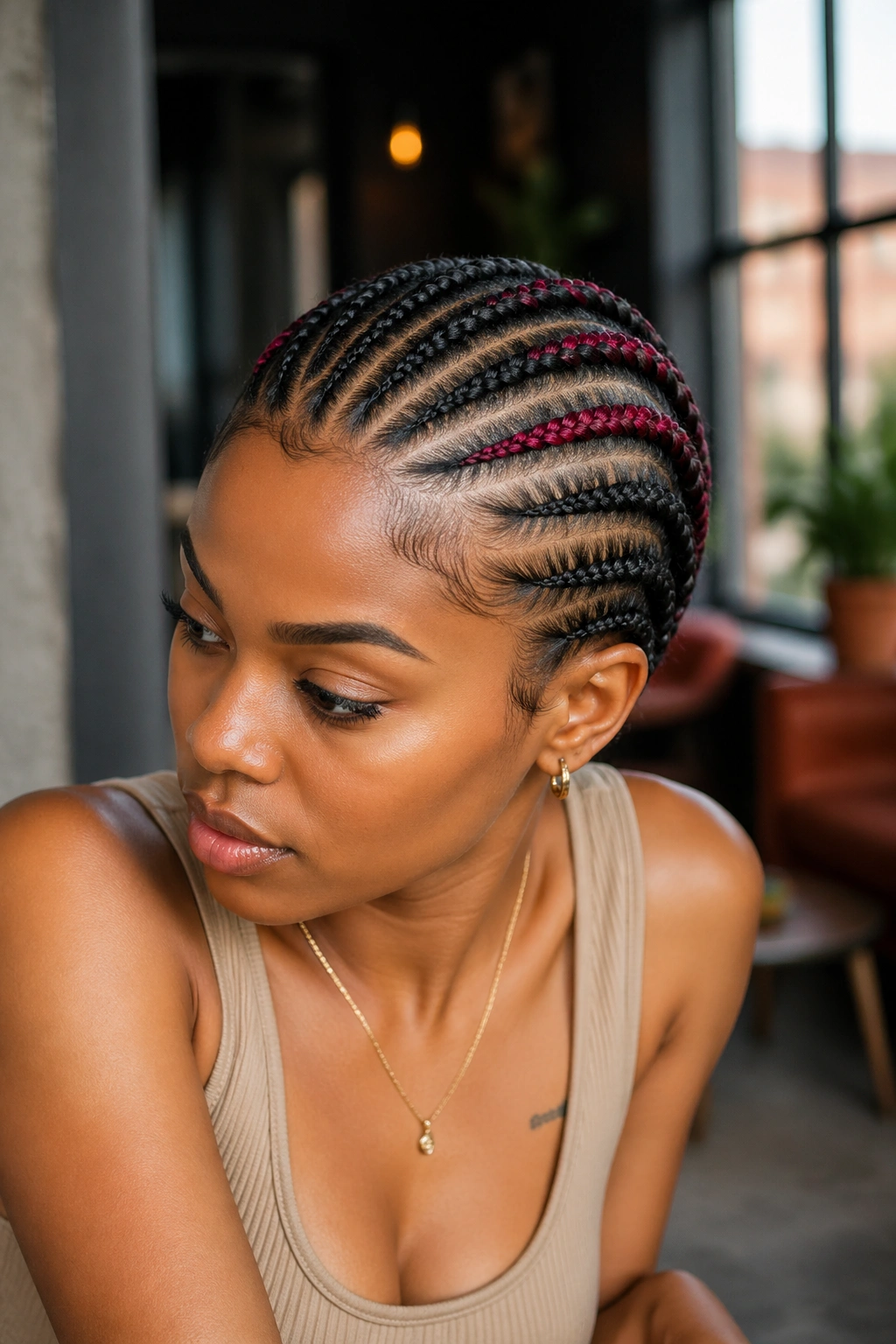
Six natural-color cornrows and two colored cornrows. The colored braids can be honey blonde, burgundy, copper, or any contrasting shade.
Place the colored braids asymmetrically — say, two together on one side, or one in front and one in back. Symmetric color placement reads stripey.
A subtle color statement that doesn’t require committing to all-over color.
13. Eight Cornrows With a Mohawk Section
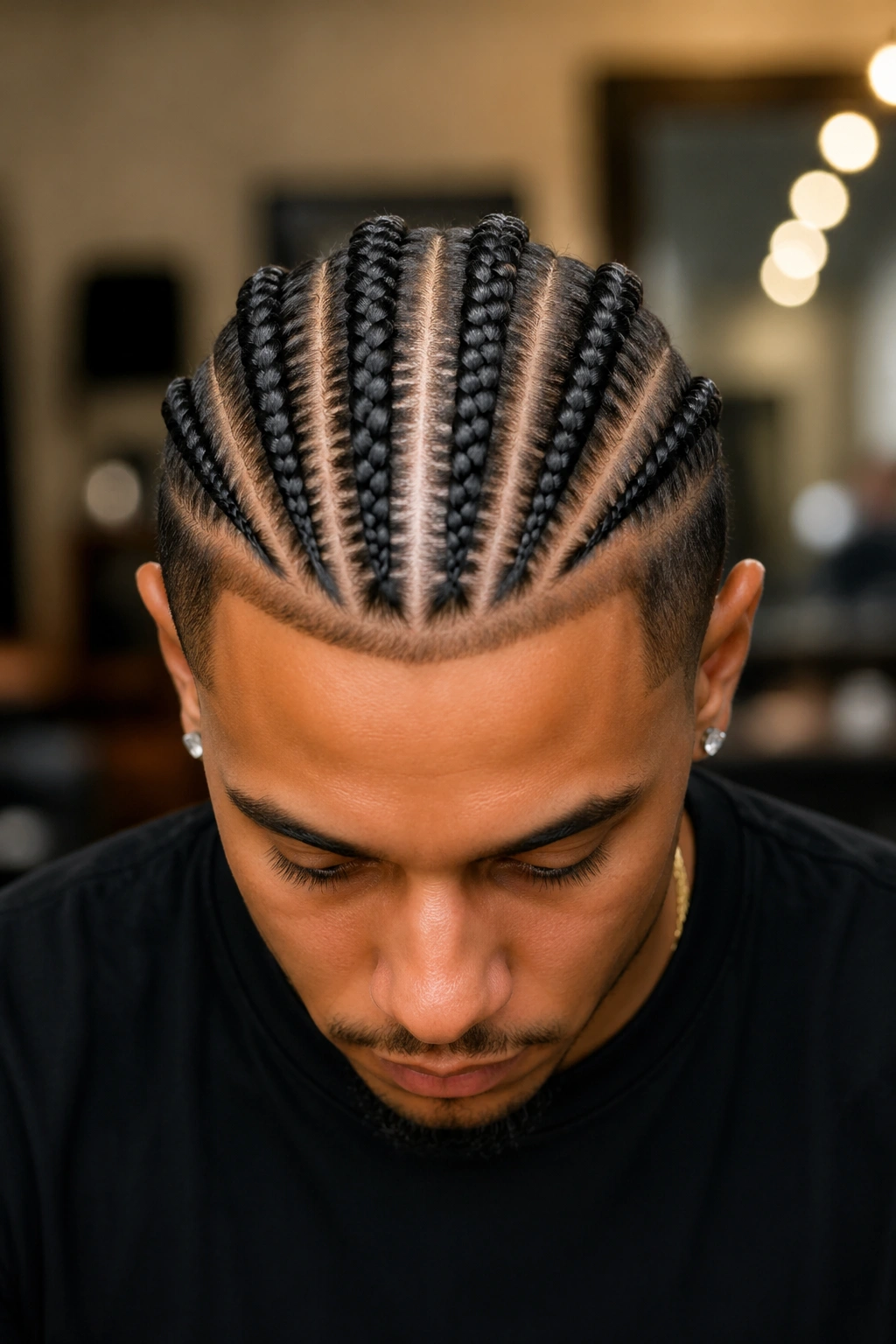
Four braids running down the center mohawk-style, with two braids on each side angling away from the center. The mohawk shape stands out against the swept-aside flanking braids.
Bold without being a true mohawk.
Best on confident wearers — the mohawk silhouette draws attention and isn’t subtle.
14. Eight Cornrows With a Crown Detail
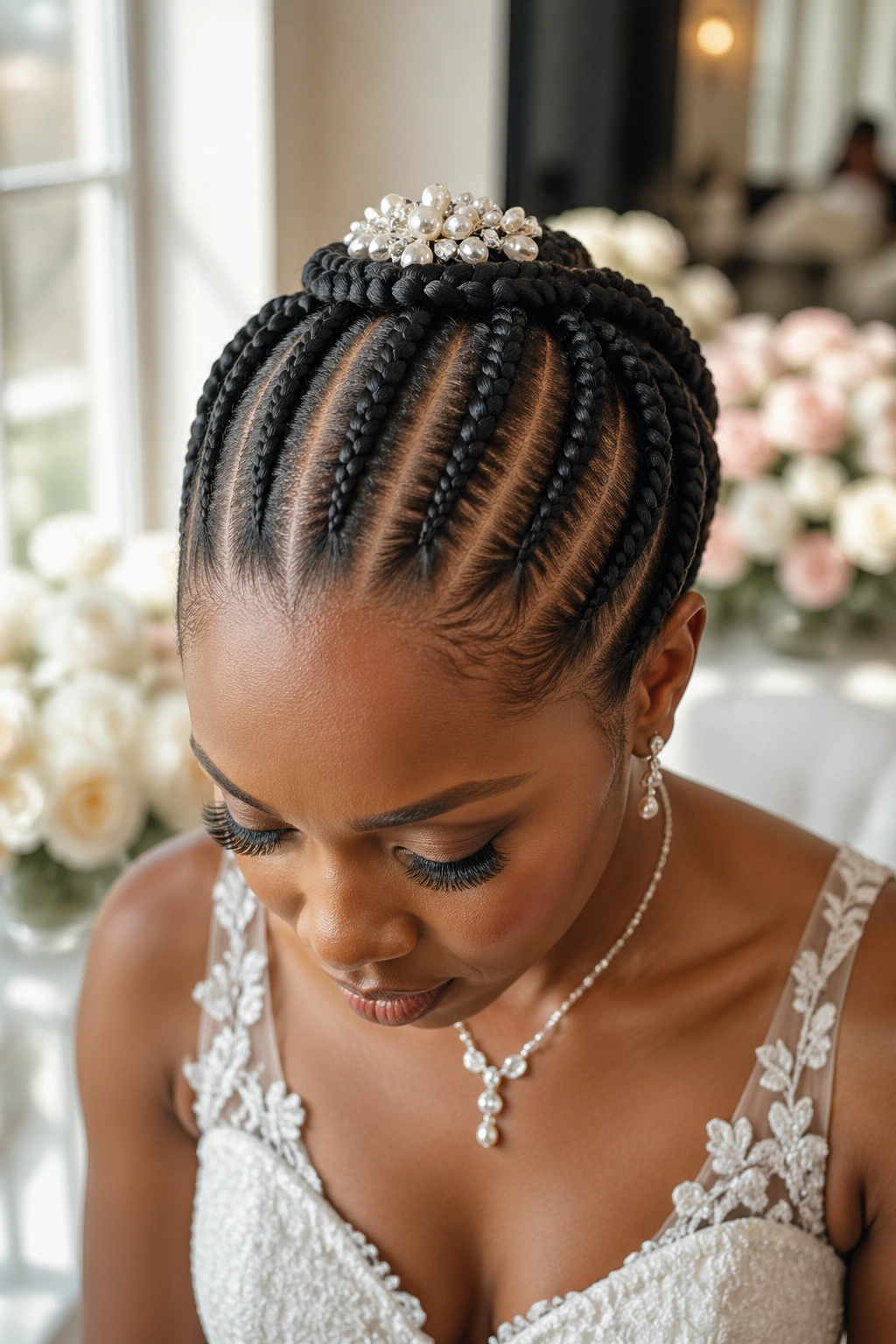
The eight cornrows include a decorative crown element — could be a thicker accent braid wrapping the crown, beadwork along the crown line, or a single jeweled clip placed at the crown’s apex.
The crown becomes the focal point. Everything else supports it.
A wedding or event styling. The crown detail elevates the whole look.
15. Eight Long Box-Length Cornrows
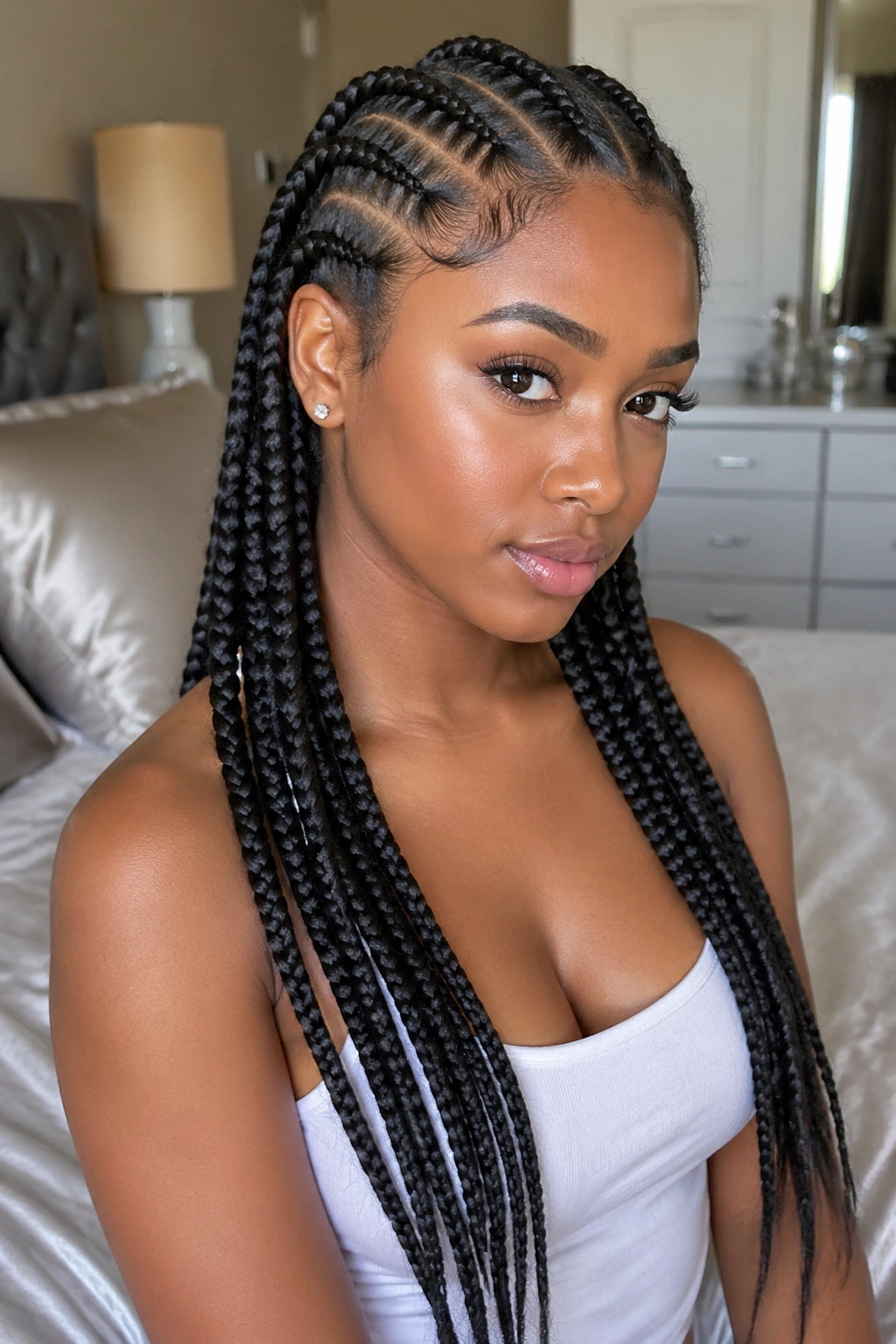
Eight cornrows extended to box-braid length using kanekalon — usually mid-back to waist length. The dramatic length transforms what would be a simple style into a statement.
Longer cornrows hold up well under everyday wear. They sleep more easily than shorter braids and don’t snag on as many surfaces.
The braids need a satin pillowcase or wrap at night to prevent friction at the lengths.
16. Eight Cornrows With Hair Cuffs
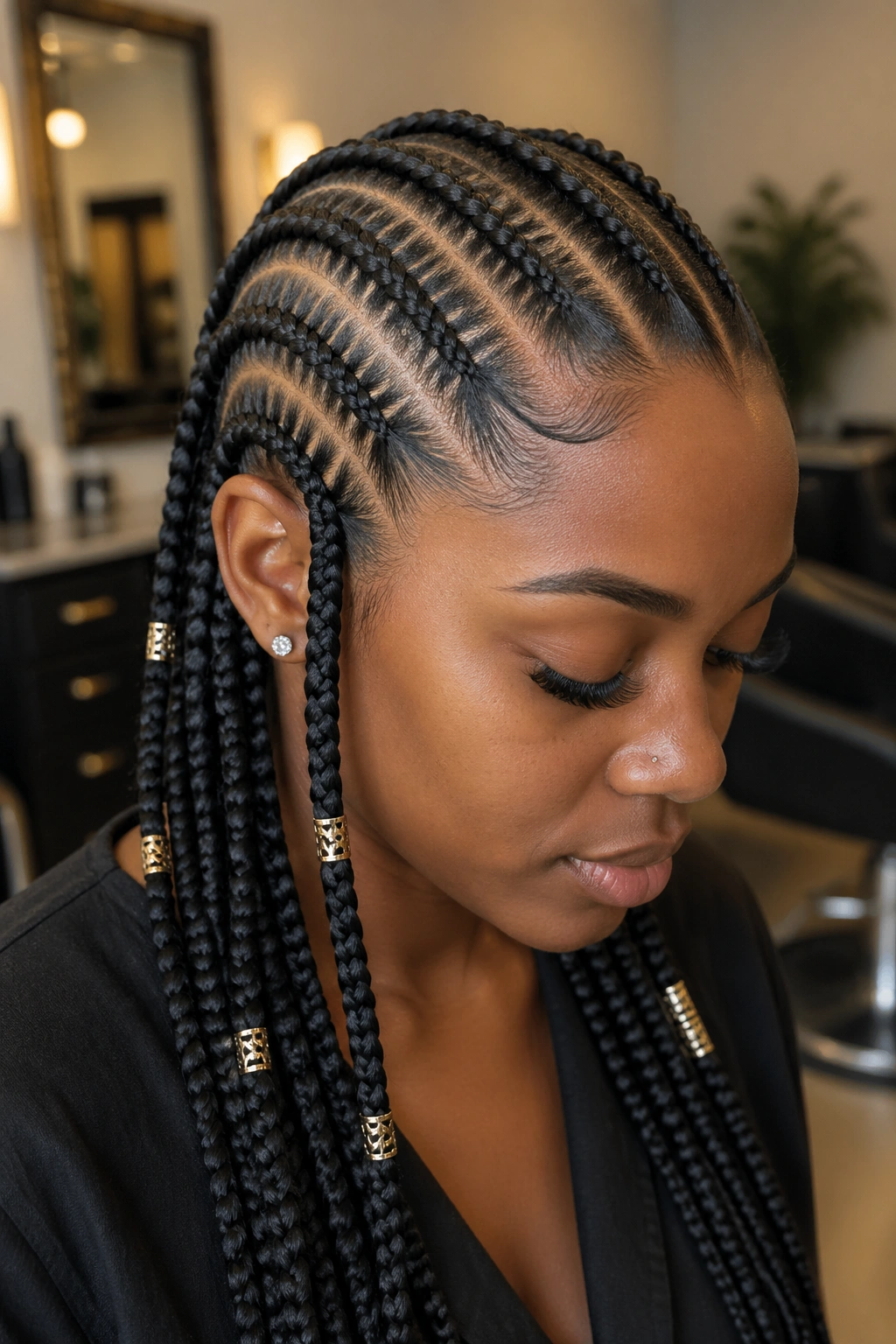
Gold or silver hair cuffs slid onto each braid, placed about halfway down the length. The cuffs add metallic shine without the weight or noise of beads.
One cuff per braid is plenty. Multiple cuffs per braid look cluttered.
Mixed gold and silver cuffs read intentional and modern.
17. Eight Cornrows With Ribbon Weave
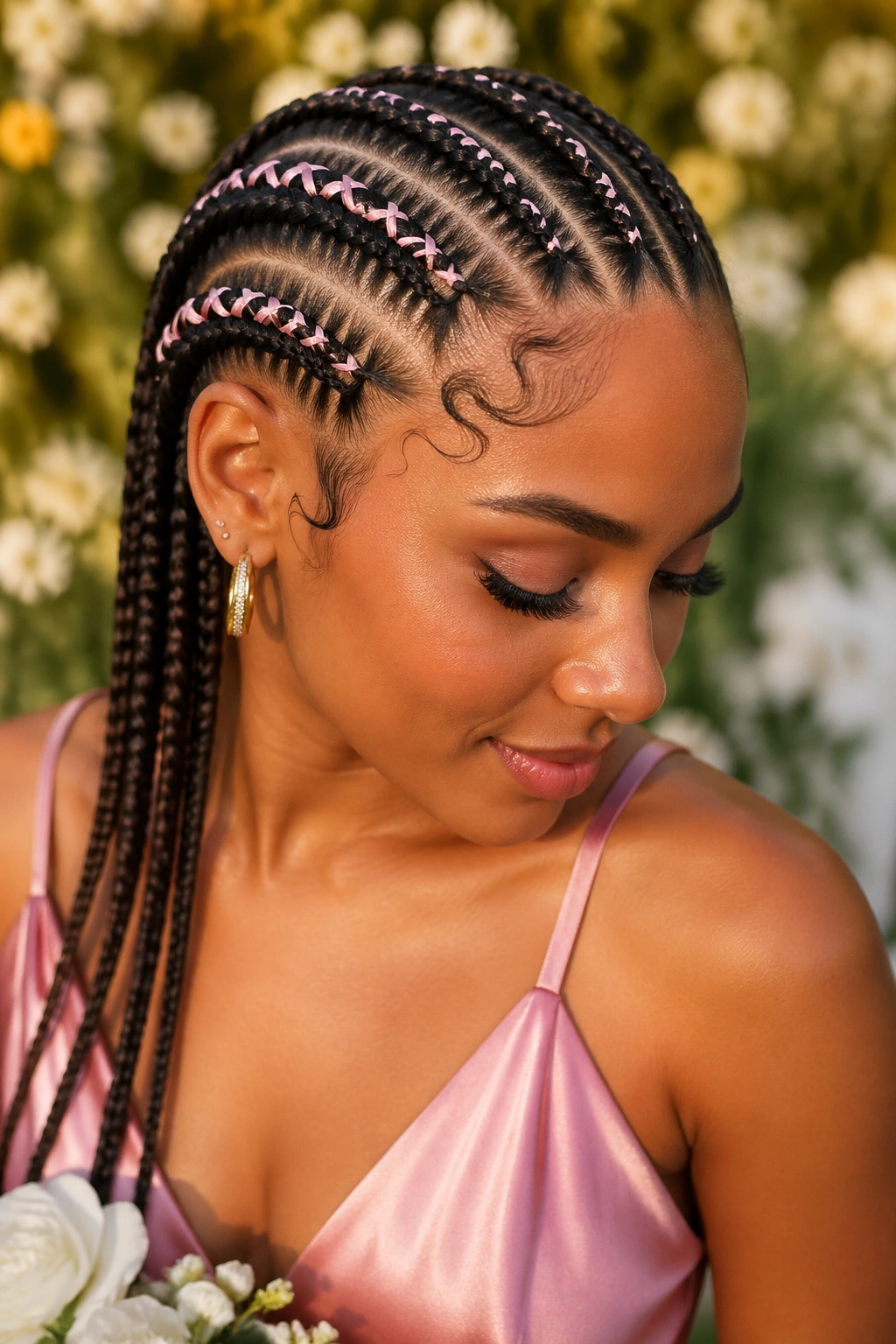
Ribbons woven into select cornrows during the install. Usually 2-3 ribboned braids out of the eight, not all eight.
Thin satin ribbons (¼ inch) work best. Wider ribbons bunch awkwardly.
Choose ribbon colors to match an outfit, an event theme, or just a mood. Velvet ribbons read more formal; grosgrain reads more casual.
18. Eight Cornrows With Two Side Buns
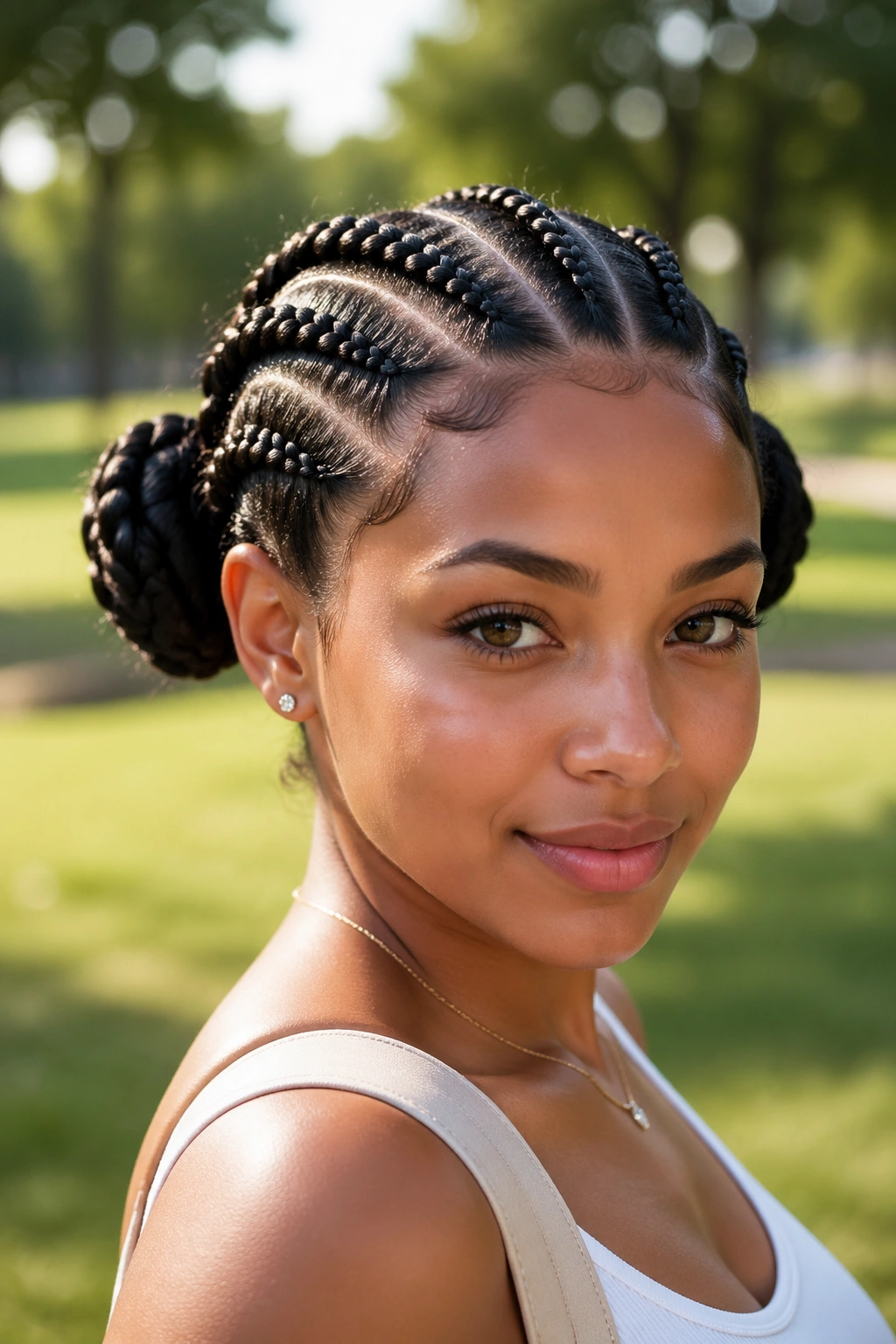
Eight cornrows leading into two buns — one on each side at the back of the head. The double-bun finish reads playful or sporty depending on bun size.
A weekend or summer styling. Not formal.
The buns should match in size and placement for cohesion. Mismatched buns look like accidents.
19. Eight Cornrows With Asymmetric Pattern
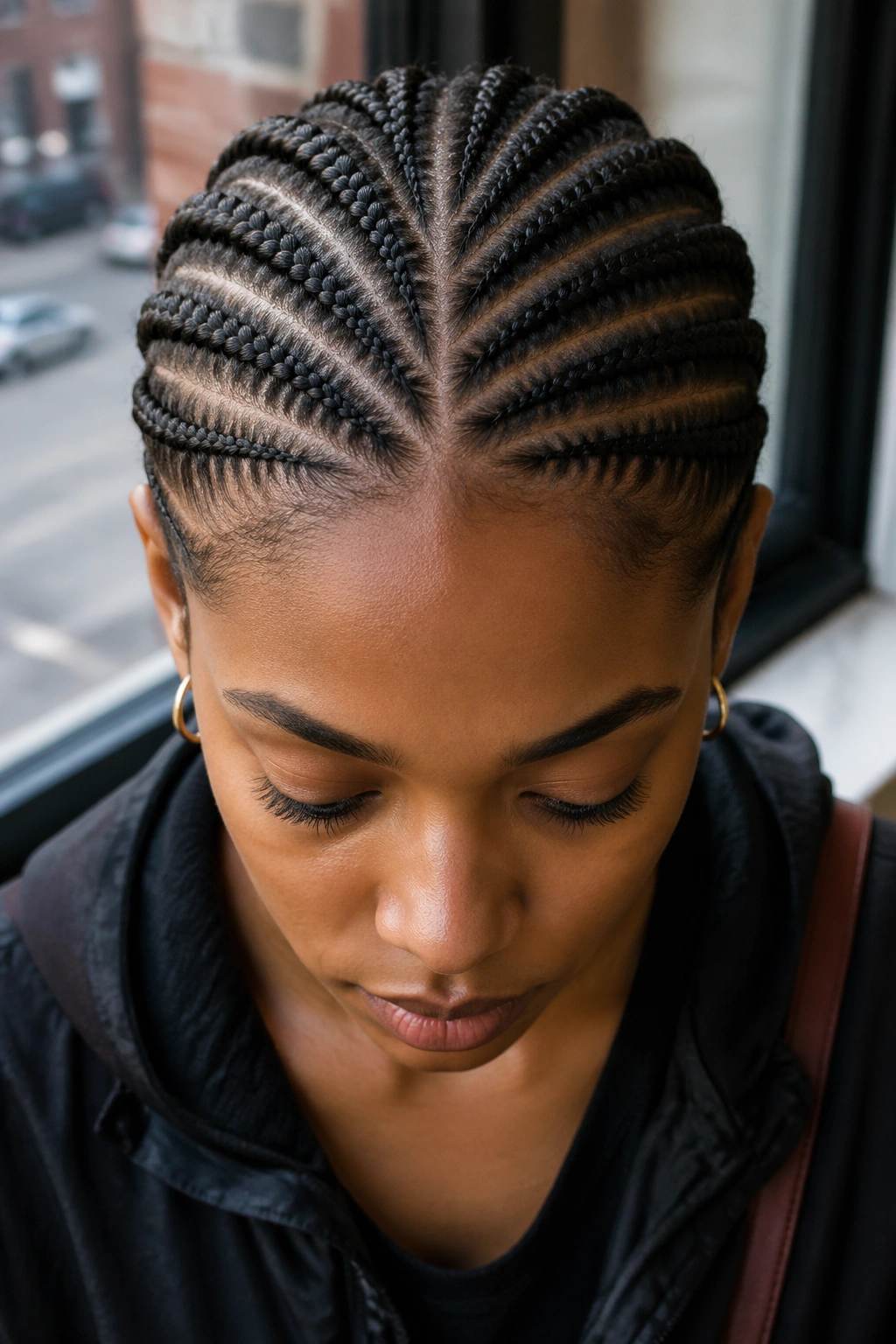
The left side has four cornrows in one direction; the right side has four cornrows in a contrasting direction. Could be vertical versus diagonal, or curved versus straight.
The asymmetry takes planning. Both sides need to feel intentional and balanced even though they don’t match.
Best worn with a decisive part down the middle — the part becomes the boundary that legitimizes the asymmetric design.
20. Eight Cornrows With Hidden Pony Updo
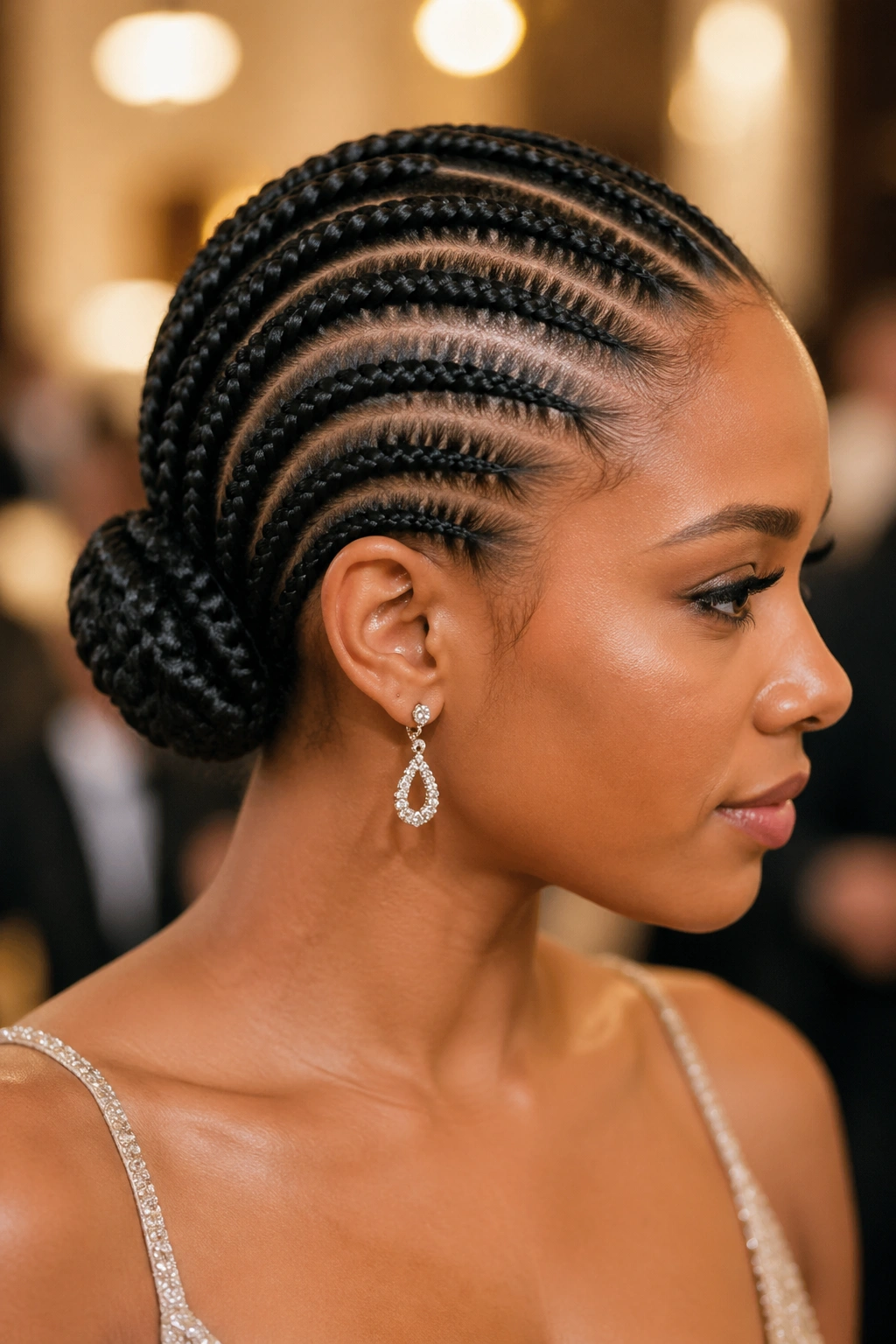
All eight braids cornrowed back to a low ponytail, then the ponytail is wrapped under and pinned, creating an updo without any visible pony. The look reads as elegant updo, not ponytail.
A formal styling. Wedding, gala, or any high-event occasion.
The pinning has to be solid — clear elastics underneath plus bobby pins through the wrap. Without firm anchoring, the updo collapses into a regular ponytail mid-event.
Maintaining Eight-Cornrow Styles
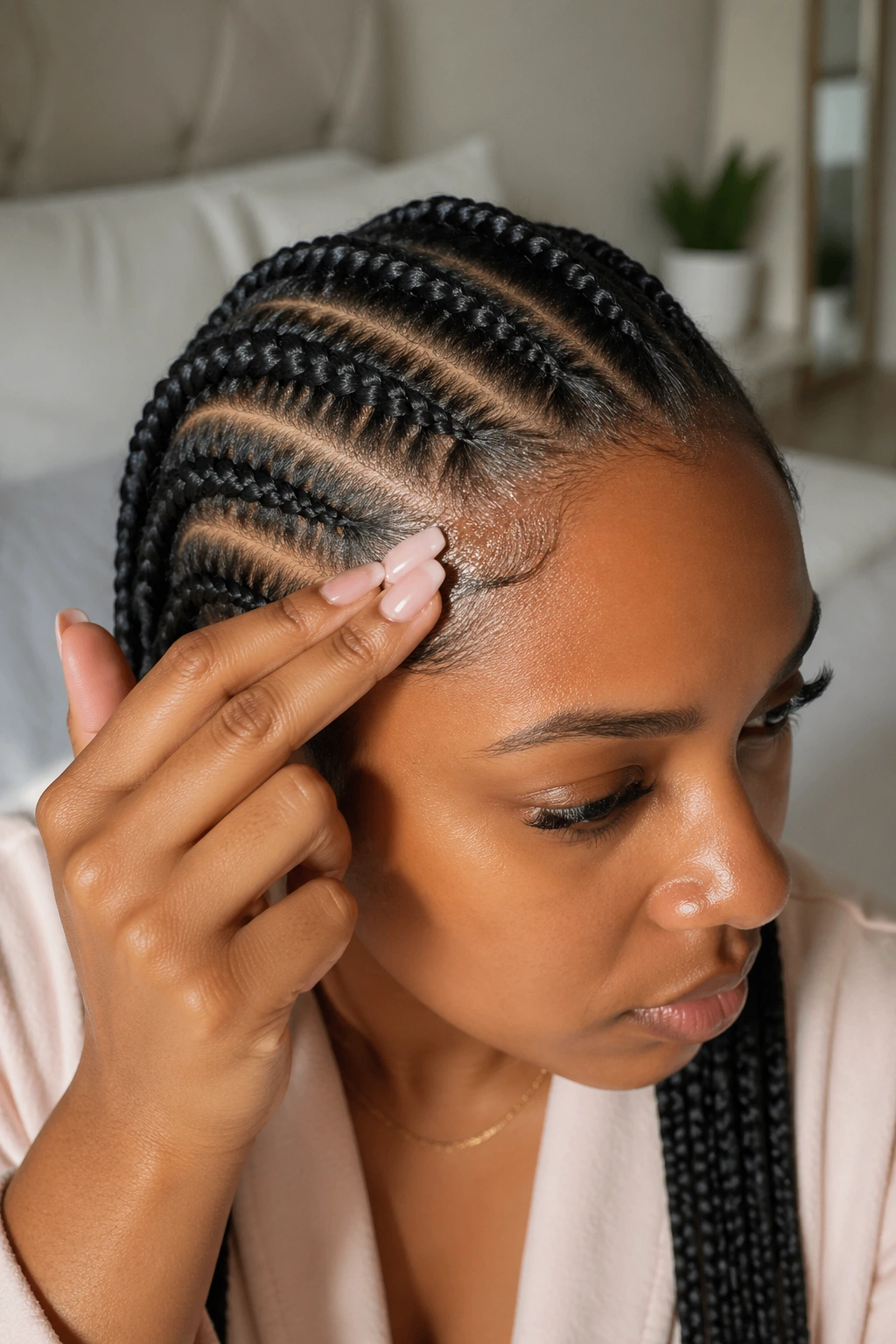
A satin bonnet at night is the single most important thing. Cotton pillowcases shred the braid edges and create flyaways within days.
Edge gel and a soft brush in the morning takes 60 seconds and adds a week to the style’s freshness. Don’t skip it.
Spray a water-and-leave-in mix on the scalp 2-3 times a week. The scalp dries out under braids; this rehydrates without buildup.
Refreshing Mid-Wear
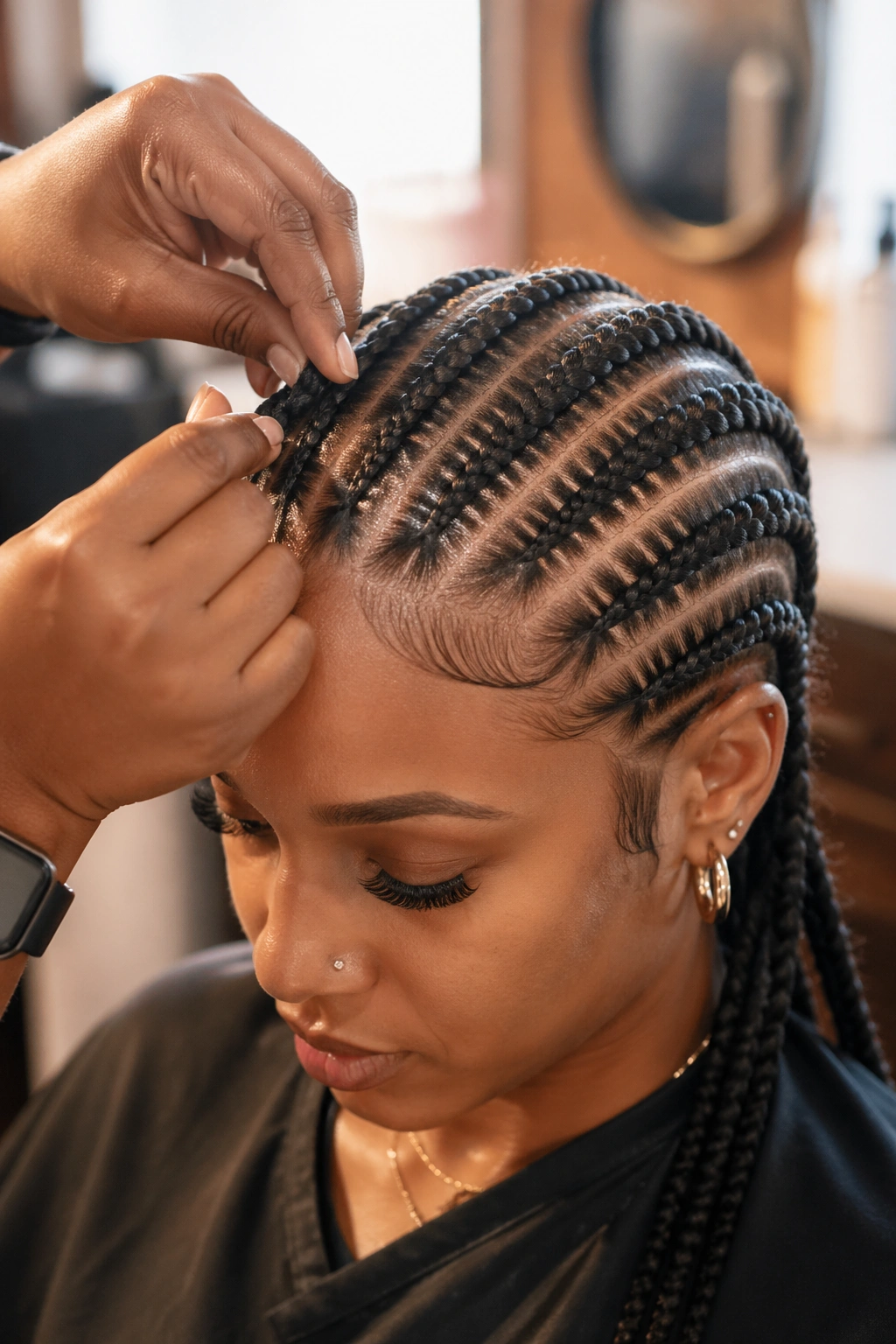
By week 2, the front braids usually loosen. Two options: take down just the front 2-3 cornrows and re-braid them, or smooth them with edge gel and accept slightly fluffy edges.
For longer wear, the front-only redo is worth the 30-minute investment.
If the entire style feels tired by week 3, take everything down and reinstall. Trying to extend past the natural lifespan rarely looks good.
Scalp Care Between Washes
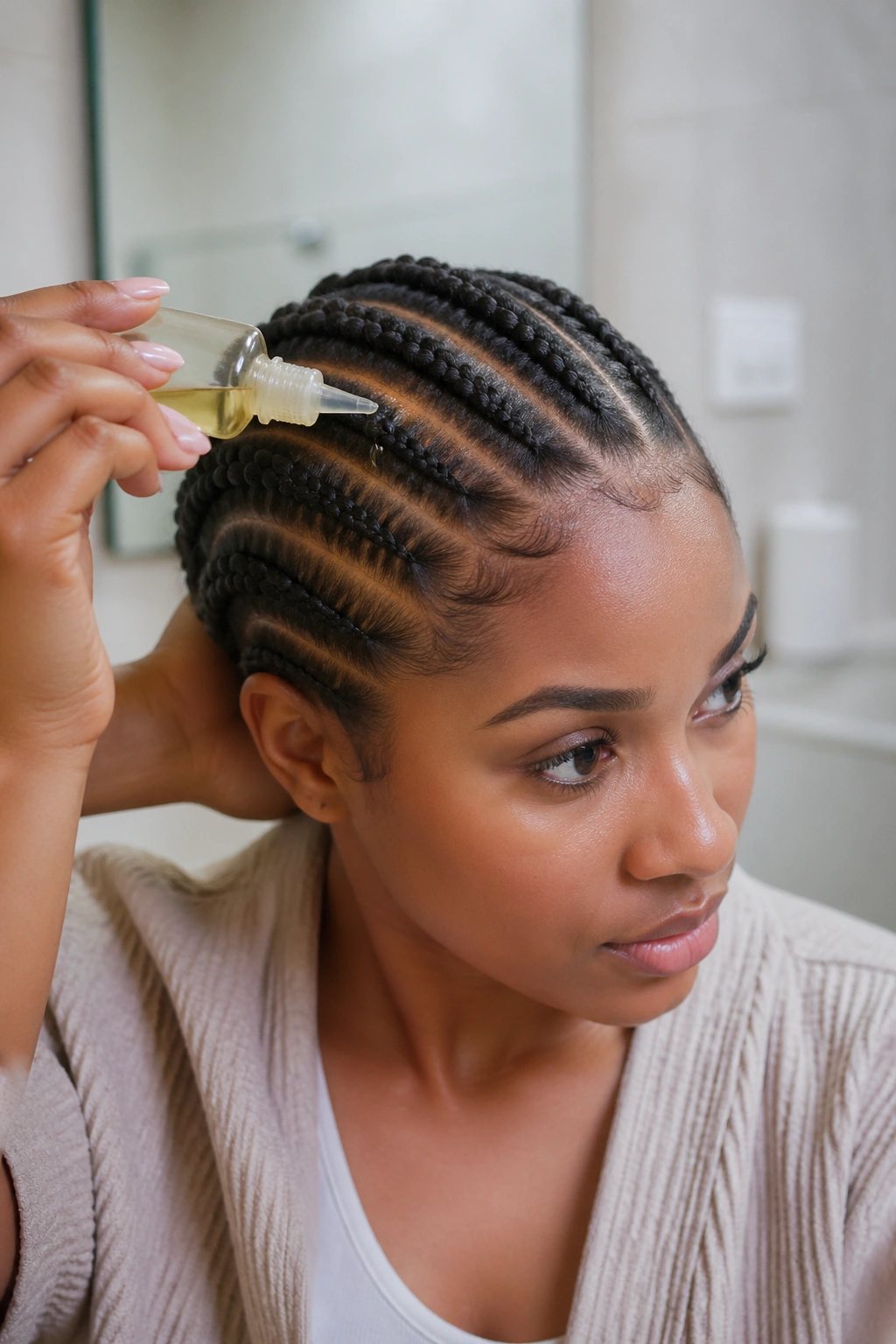
Apply a lightweight scalp oil 2 times a week. Jojoba, argan, or sweet almond oil. Use a nozzle bottle to direct oil to the scalp without coating the braids.
Massage the scalp gently with fingertips for 30 seconds during application. This stimulates circulation and helps with itching.
Avoid heavy butters and oils — they build up on the scalp and braids, causing odor and flaking after a week.
Washing Eight Cornrows
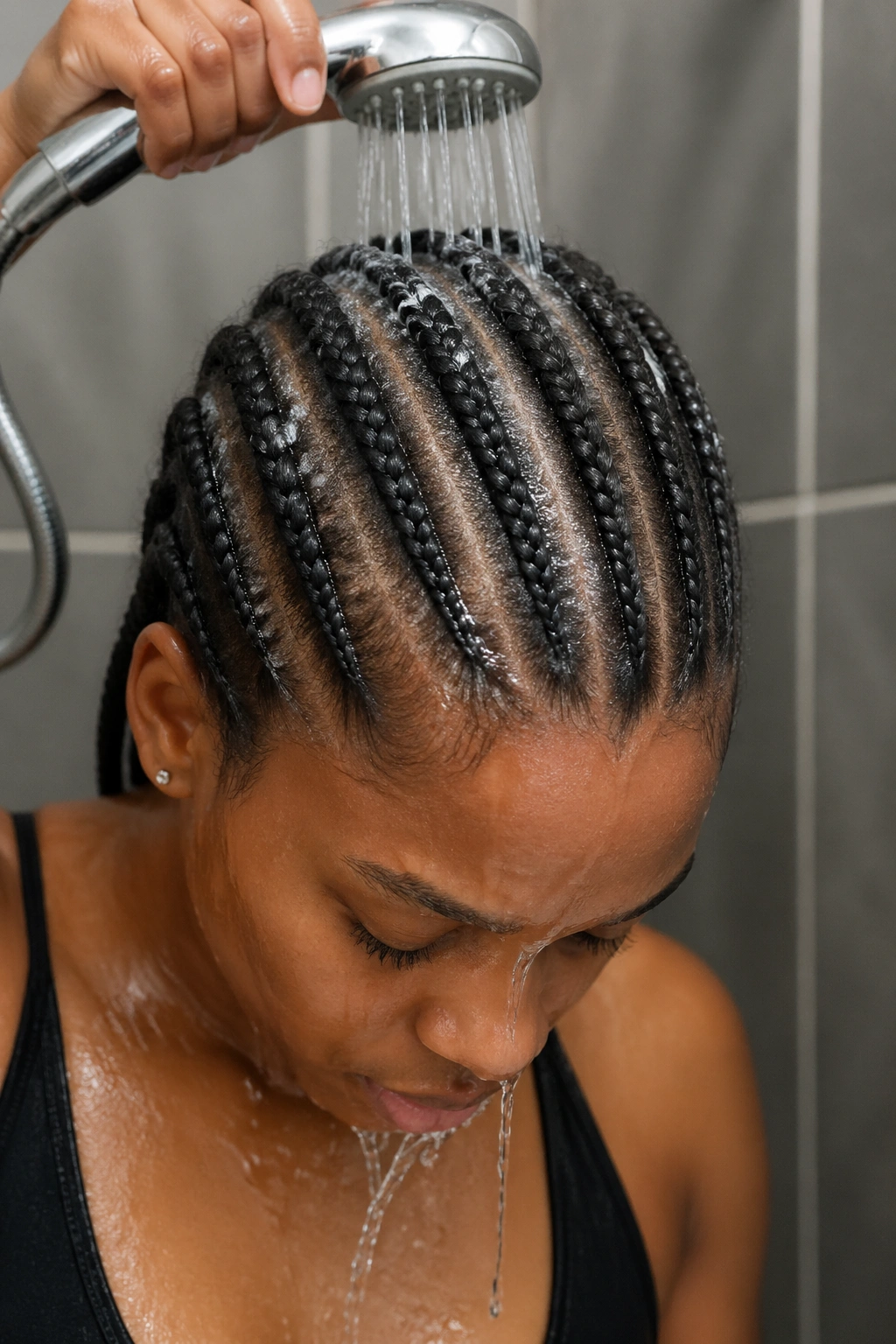
Wash every 10-14 days. Diluted shampoo applied to the scalp via a nozzle bottle. Massage gently. Rinse thoroughly with cool water.
Follow with a light scalp rinse (water and a small amount of leave-in conditioner). Don’t apply heavy conditioner — it won’t rinse out fully and will sit between braids.
Air-dry the scalp completely before bedtime. Damp hair under a bonnet for 8 hours leads to mildew and odor.
When to Take Them Down
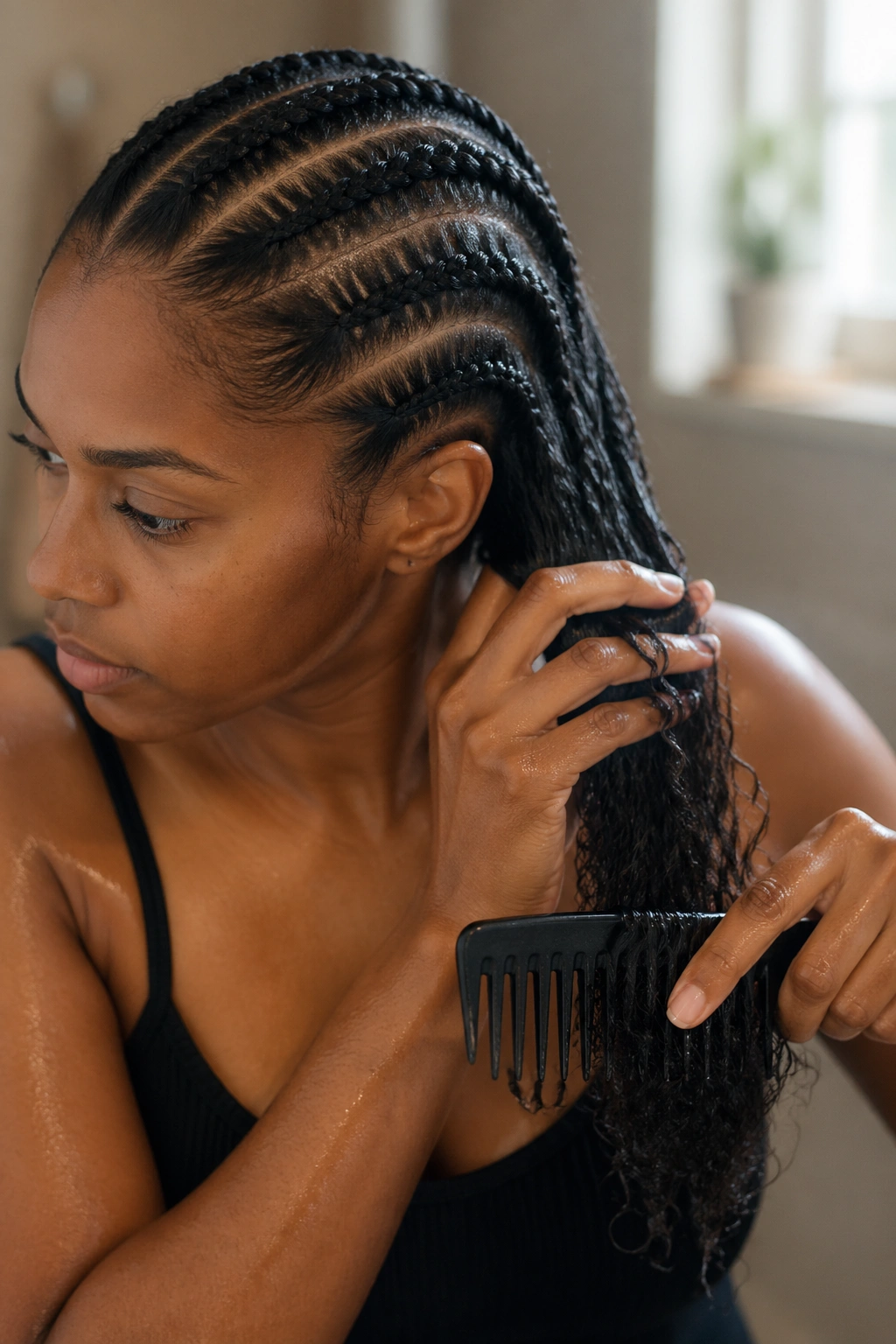
Eight cornrows last 4-6 weeks comfortably with good care. Pushing past 6 weeks risks new growth tangling with the established braid structure, which makes takedown harder and risks breakage at the demarcation line.
Take down on damp hair using slippery conditioner. Section by section, unraveling from tip to root. Detangle each freed section with fingers first, then a wide-tooth comb. Plan on 1-2 hours for full takedown.
Picking Your Eight-Cornrow Style
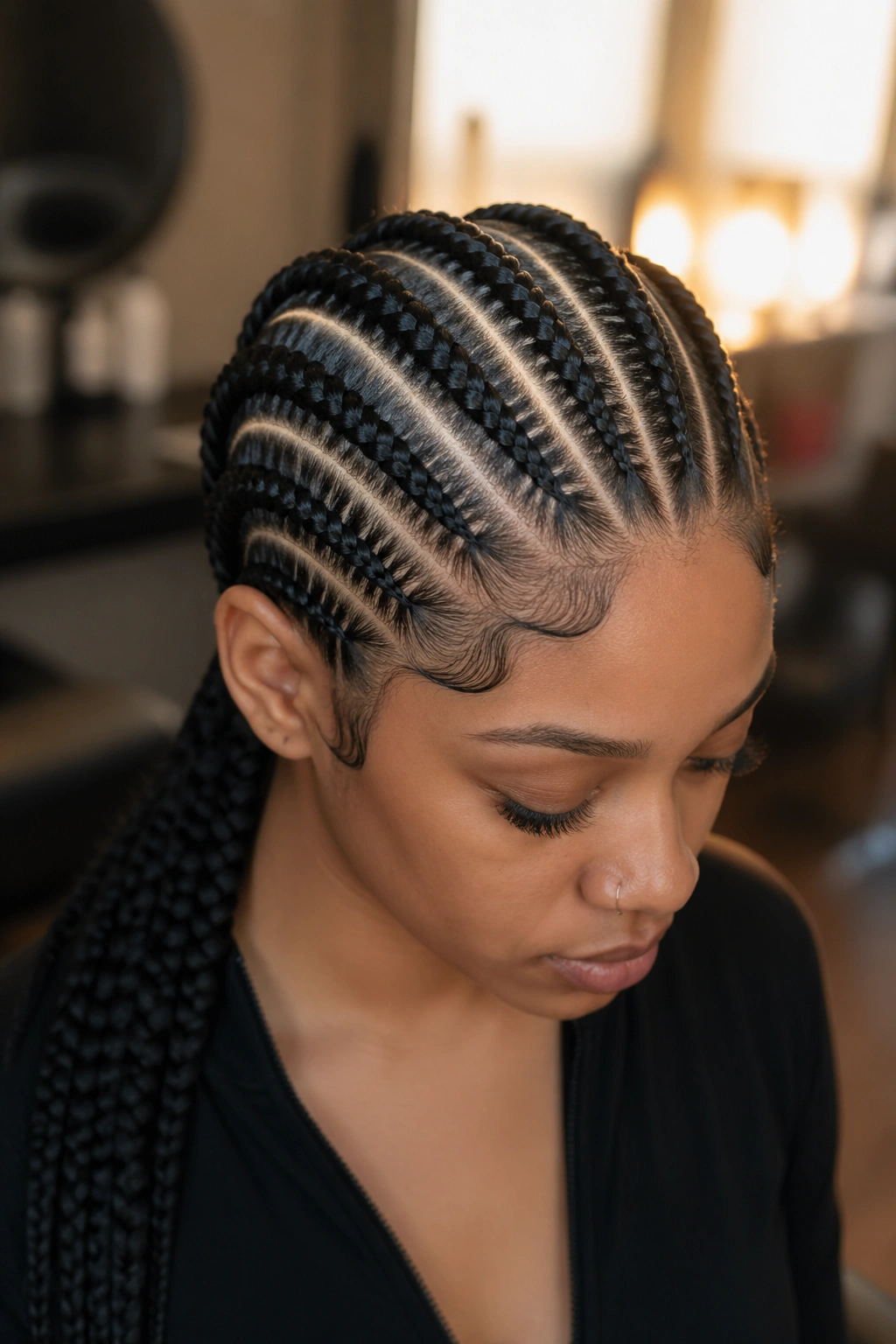
If you’re new to wearing cornrows, start with classic straight-backs or a deep side part. The simpler styles let you learn how cornrows feel and behave on your specific head before investing in elaborate versions.
For active days, choose the high bun, side pony, or pigtails. Anything that keeps the braids contained survives workouts and play.
For events, pick the goddess curl ends, hidden pony updo, or beaded crown. These styles photograph beautifully and read elevated.
Eight cornrows offers a thoughtful balance — enough braids to feel substantial, few enough to install without losing your day. The styles span casual to formal, simple to elaborate. Whatever your lifestyle, there’s an eight-cornrow style that fits.
Keep coming back to the count when you want a styled look that doesn’t take six hours to achieve. Eight braids has earned its place in regular rotation for a reason.