


Eight braids. Not six. Not ten. Eight. That specific count matters more than most people realize when they’re planning straight back cornrows with 8 braids. Six reads chunky and bold — which can be the goal, but reads heavy for formal settings. Ten reads delicate and can thin out on lower-density hair. Eight sits in the sweet spot where the braids are substantial enough to carry weight and detail without overwhelming the head, and delicate enough to photograph well and work for settings that demand polish.
The math isn’t complicated. Divide the head into eight equal parts from hairline to nape, going front to back. Four on each side of the center part. Each part sits roughly half an inch to three-quarters of an inch wide depending on head size and hair density. The parts should form parallel lines running from front to back, not fanning outward from the crown.
This count has become the default for good reason. It hits the ratio of structure to softness that works across nearly every face shape, head size, and hair texture.
Why Eight Is the Perfect Number
Most braiders I’ve talked to have opinions on braid counts for straight-backs, and the consensus clusters around eight for the vast majority of heads.
Six cornrows create very wide sections. On medium-density hair, the parts can look too exposed. The scalp shows more than the braid. On very high-density hair, six braids get too chunky and read unbalanced.
Ten cornrows work but demand more precision. The parts are narrower, which means small errors in part placement are more visible. And the braids themselves are thinner, which means they hold less weight if feed-in extensions are added.
Eight threads the needle. Parts are wide enough to carry density, narrow enough to look refined. Braids are thick enough to support feed-ins but thin enough to curve and drape naturally.
The proportions also work for most face shapes. Eight vertical braids from front to back visually lengthen the face without overwhelming it. Six can read too bold; ten can read too busy.
Parting Technique for Clean Eight-Braid Cornrows
Start with damp, stretched hair. Fully shrunken natural hair hides the actual parting surface and causes wavy parts that can’t be fixed without starting over.
Find the center of the head at the front hairline. Use the rat-tail comb to create a clean center part running from hairline to the crown.
Measure the head from center part to each ear at the temple line. Divide that measurement by four — this gives you the part spacing for the four sections on each side.
Tip: Use a measuring tape or ruler for the first install if you’re doing this yourself. Freehand parting works once you’ve done it dozens of times, but early attempts benefit from actual measurement.
Part the hair section by section, starting with the outermost part on one side, working inward to the center, then repeating on the opposite side. Clip each section with a duckbill clip as you work so hair doesn’t cross into the next part.
The parts should all be parallel to each other, not fanning out from the crown. Parallel parts create clean lines that read professional. Fanning parts create wedge-shaped sections that can look uneven.
Tools and Products for Professional Results
A rat-tail comb with metal tip, preferably something with a long handle for reaching the back sections without awkward arm positioning.
A quality edge gel — not hair gel, not hair spray. Edge gel specifically. Eco Styler, Got2B, or similar. The difference matters for the crisp parting lines that define eight-braid styles.
A spray bottle with water mixed with a small amount of leave-in conditioner for keeping hair damp during braiding.
Small hair elastics in black, clear, or a color matching the hair. One for the end of each braid, plus spares.
Braid spray for finishing. Mix equal parts water, aloe vera juice, and a few drops of light oil. Apply lightly after braiding to set the look and tame any flyaways.
Prep Steps That Make or Break the Install
Wash the day before. Fresh-washed hair is too slippery for clean cornrows. Day-old washed hair holds grip while still being clean and detangled.
Deep condition during the wash. Hair about to be in protective style for weeks benefits from intense moisture upfront.
Stretch the hair overnight. African threading, banded stretching, or blow-drying on cool setting all work. The goal is damp, stretched hair on install day.
Eat before installing. Sounds random, but eight cornrows takes 2-3 hours depending on feed-ins. Hunger makes you rush the last few braids, which show the worst work.
1. Classic Eight Straight-Backs Without Extensions
The foundation style. Eight cornrows going straight from front to back, no feed-in extensions, using natural hair only.
Why It Works
- Shows off natural hair length without embellishment
- Install time under 2 hours for most textures
- Takedown is fast — usually 15-20 minutes
- Low tension on edges compared to styles with added hair
- Reads clean, honest, and low-maintenance
Tip: If your natural hair is under 6 inches, the ends of the braids will be short and choppy. Use a small amount of hair mousse at the ends to hold the plait together without obvious elastics.
This style suits anyone wanting a protective style that genuinely protects without adding weight or tension. Great for hair recovery weeks, between heavier protective styles, or as a travel-ready look that doesn’t need extensive maintenance.
2. Eight Feed-In Braids to Mid-Back
Feed-ins added gradually to extend the length to mid-back (around 26-28 inches from crown).
The feed-in technique: start with natural hair for the first inch, then add small pieces of pre-stretched kanekalon in increasing amounts. First feed: 2 grams. Second: 4 grams. Third: 8 grams. By the fourth feed, each braid contains significant extension hair.
The gradual build creates a natural taper at the hairline that reads clean rather than abrupt.
Mid-back length is the most popular choice for eight-braid feed-ins. Long enough to read dramatic, short enough to stay comfortable for daily wear. Waist-length and longer options work but add weight that can cause neck strain.
3. Stitch Pattern Eight Braids
Eight cornrows with pronounced stitch detailing — horizontal lines running across the surface of each braid.
The stitch technique requires pulling thin sections horizontally across the braid as you work. Each stitch should be roughly the width of a chopstick tip.
Stitch cornrows take longer than plain cornrows. Budget 3-4 hours for a full head of eight stitch braids with feed-ins.
The visual effect is worth the time. The stitches catch light and create depth that plain cornrows don’t have. Reads polished, sculptural, and intentional.
4. Eight Braids With Curved Parts
Instead of straight parallel parts, the eight parts curve slightly — usually arcing outward from the center before flowing straight down the back.
The curves are subtle. Not dramatic. Maybe a 15-degree arc at most. Too much curve reads like a different style entirely.
This variation works for faces with angular features. The soft curves soften the angularity and add visual interest without breaking from the straight-back format.
Technique note: the curve happens in the first third of each braid. The remaining two-thirds run straight back. This maintains the overall straight-back silhouette while adding the curve detail at the hairline.
5. Eight Cornrows With Beaded Ends
Each of the eight braid tips finished with three to five beads of varying sizes.
Styling Tips
- Wooden beads are traditional and lightweight
- Mix bead sizes within each braid for dimension
- Use odd numbers of beads per braid — looks more natural than even
- Secure the bottom bead with a small elastic to prevent sliding
Beads add cultural reference and visual interest to the simple eight-braid format. The contrast between the clean straight lines of the cornrows and the ornamental beaded ends creates a traditional-meets-modern aesthetic.
Works well for cultural celebrations, weddings, graduations, and events where the styling should reference heritage without committing to highly elaborate braiding.
6. Eight Braids With Thread Wrapping
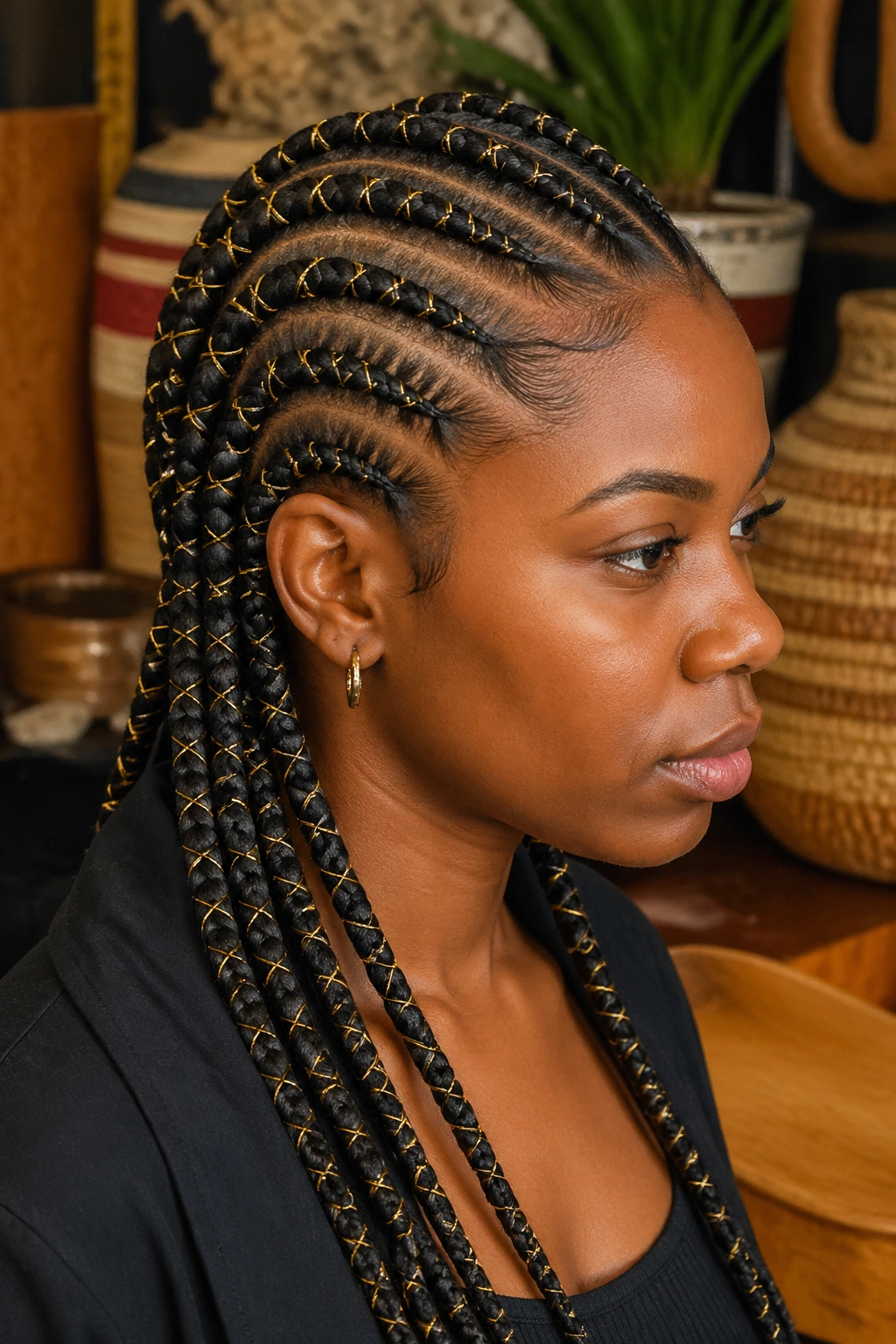
Colored thread wrapped around sections of each braid at intervals — usually three to four wraps per braid, spaced about 4 inches apart.
Traditional thread wrapping uses cotton or silk thread in colors that contrast with the hair. Gold thread on dark hair is classic. Red, green, white, and multicolored thread all have cultural significance in different traditions.
The thread adds weight to specific points of each braid, which creates subtle movement and visual accent points. The braids look more structured and composed with thread wrapping than without.
7. Eight Low Ponytail Braids
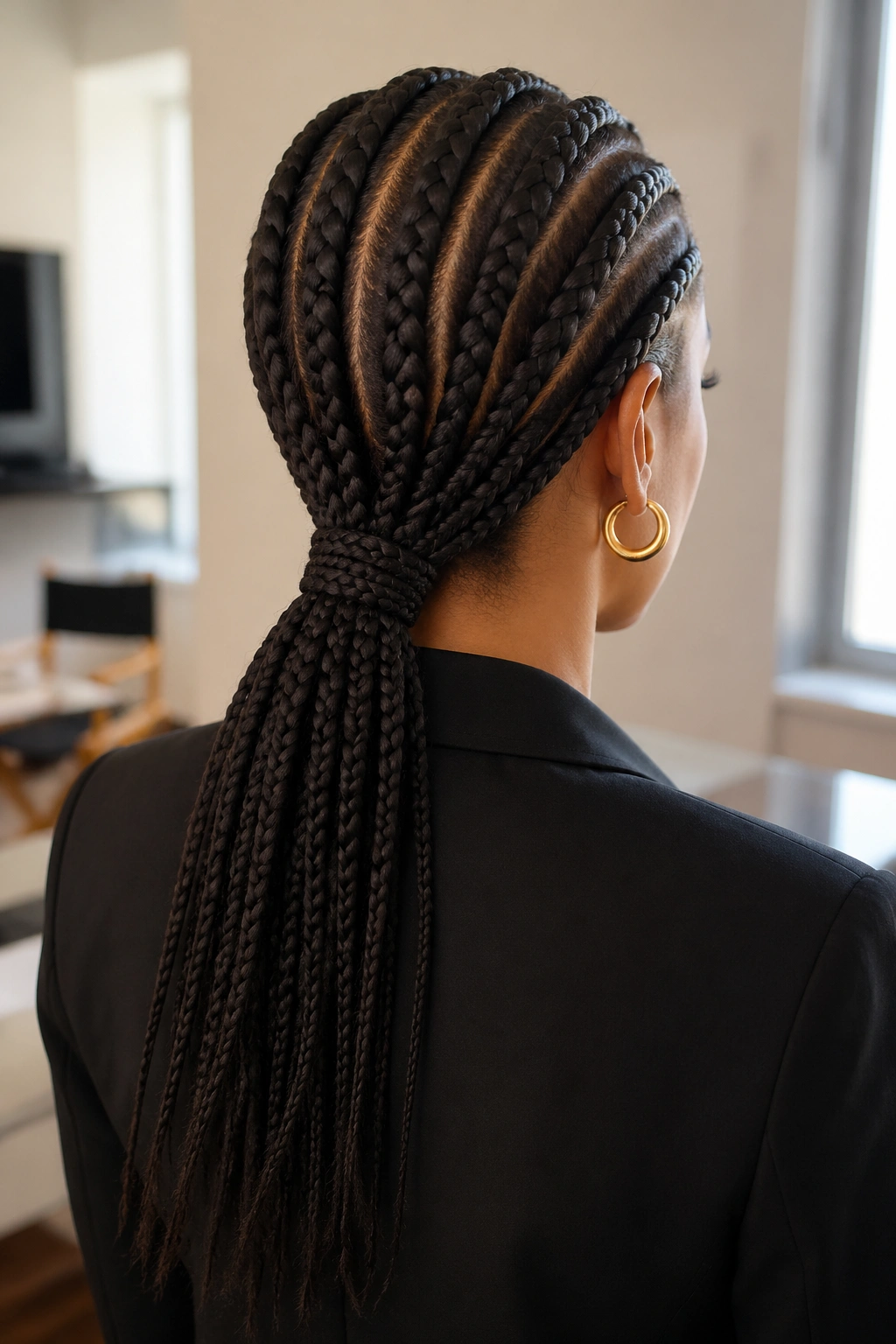
Eight cornrows that gather into a low ponytail at the nape. The ponytail itself can be natural hair (if long enough), a drawstring piece, or feed-in extension hair left loose from the braids.
The ponytail gathering point needs to be clean. All eight braid ends should meet at a single point rather than spreading out.
For a fuller ponytail, leave the last 2-3 inches of each braid loose and gather the loose ends into the ponytail rather than the braided portion.
This style reads professional and polished. Works for offices, business events, and settings where a contained hairstyle matters more than hair movement.
8. High Bun With Eight Cornrows
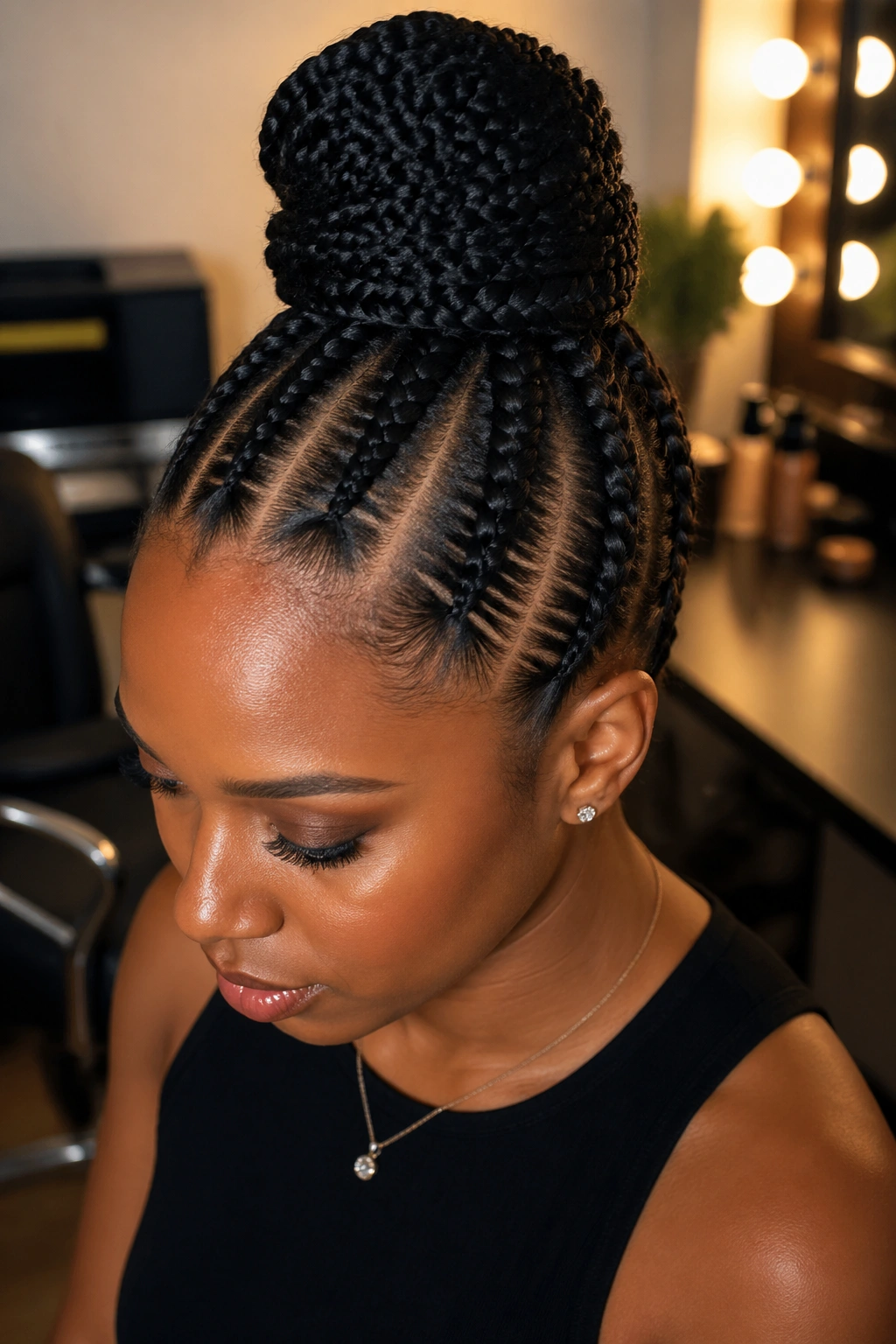
Eight cornrows gathered at the crown and formed into a high bun. The bun can be created from the braid ends themselves, or from a separate bun piece wrapped and pinned at the crown.
The high position sits between the top of the head and the crown — not at the very top, which reads costume-y, and not at the crown, which defeats the “high” concept.
For braid-ends buns, the length needs to be adequate. Short braids create a tiny bun that looks disproportional to the head. If the braids are under 12 inches from the crown gathering point, use a separate bun piece for volume.
9. Eight Braids With Two-Strand Twisted Ends
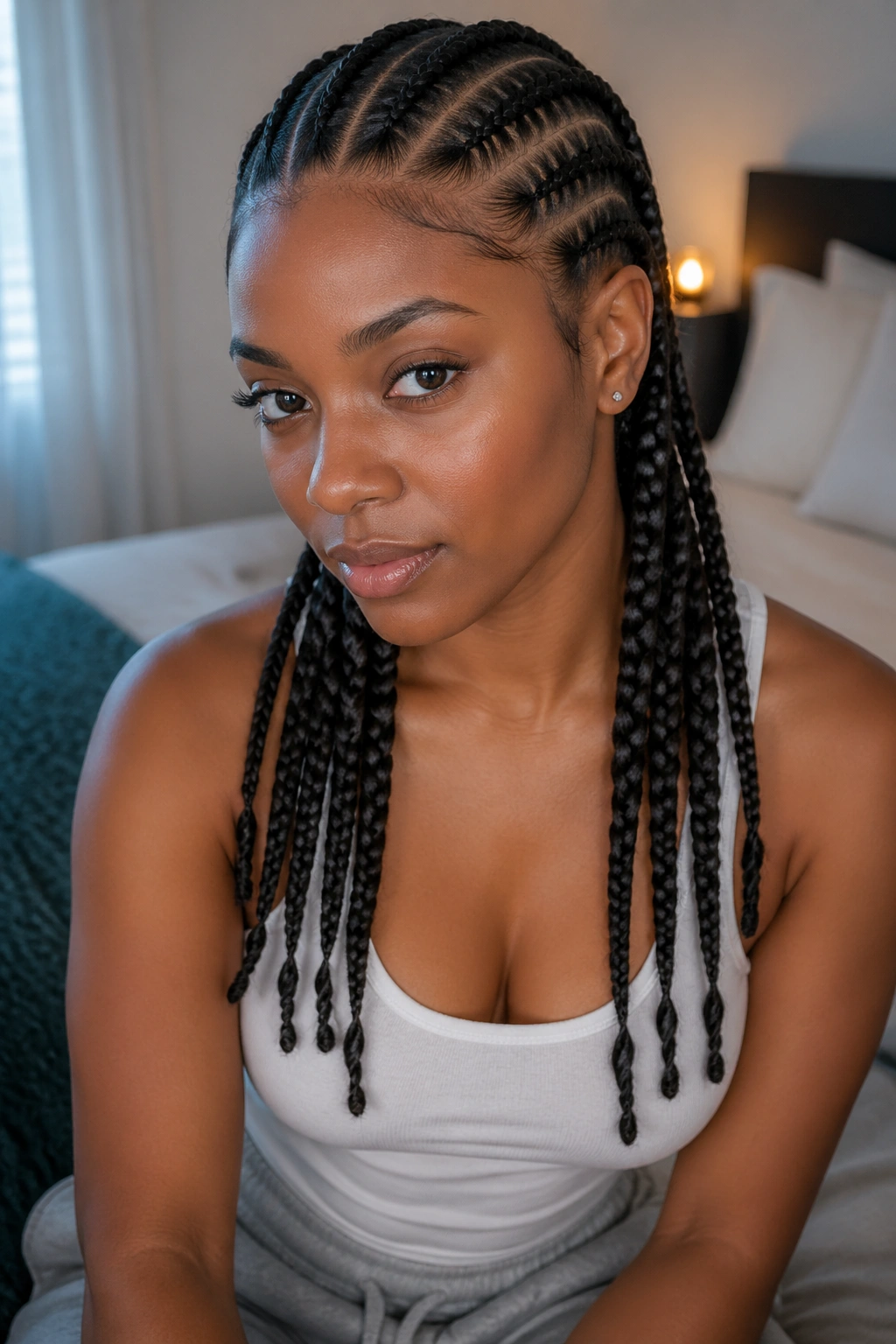
The braided portion of each cornrow stops a few inches before the end. The remaining length is twisted into a two-strand twist rather than plaited.
This creates a textural variation at the ends that reads organic. The twist pattern is visually different from the braid pattern, which adds interest without changing the overall silhouette.
Best for wearers wanting a style that reads slightly less formal than pure cornrows without moving into fully loose hair territory.
10. Eight Braids With Curly Feed-Ins
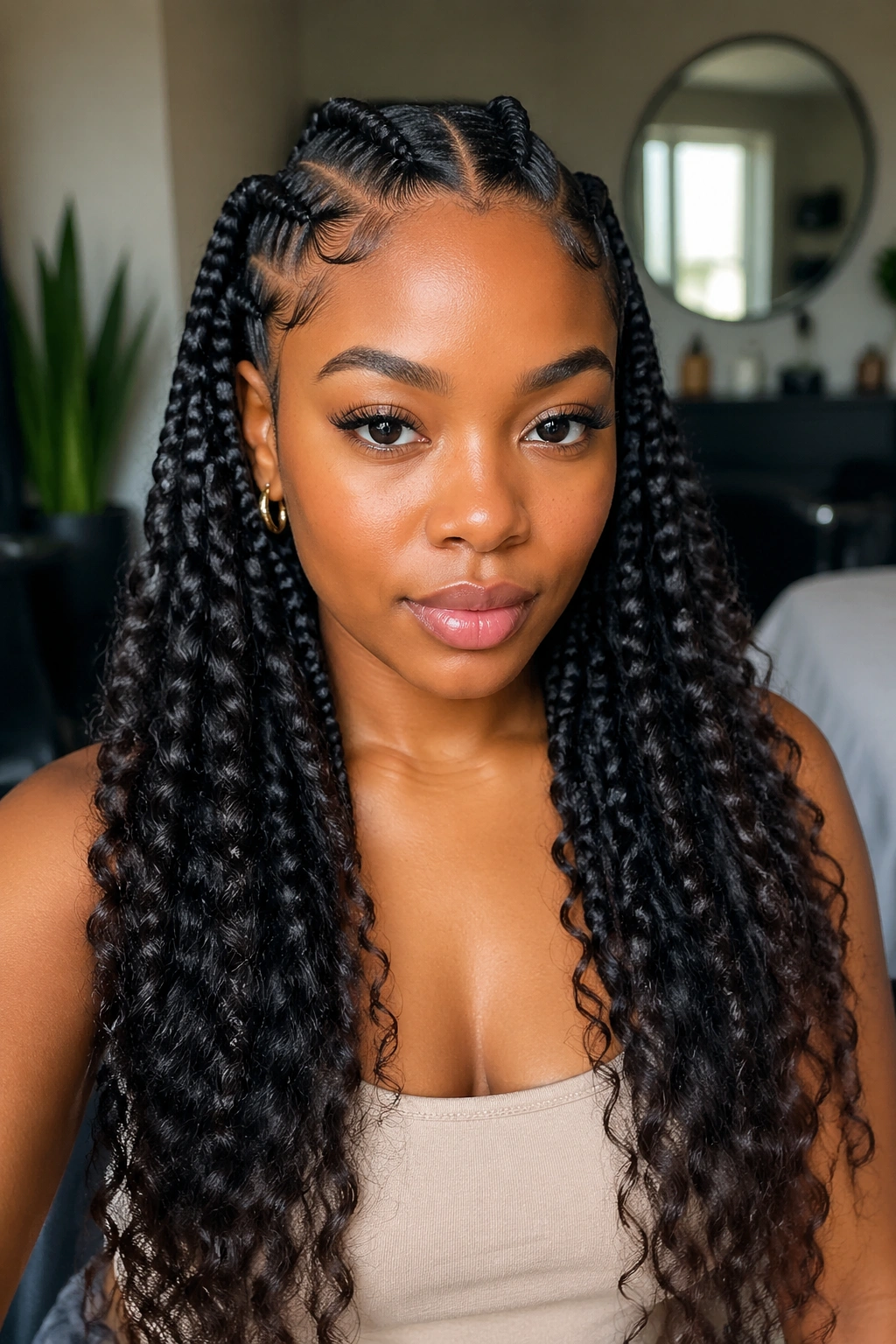
Feed-in extensions using pre-curled kanekalon or human hair rather than straight synthetic fiber.
The curly extensions match 4A-4C natural hair textures more closely than straight kanekalon, which means the install reads more natural and less obviously extended.
The feed-in process for curly hair is slightly different. The curly fiber can catch on itself during feeding, so each piece should be pre-stretched by hand before integration.
Finished length with curly feed-ins typically reaches mid-back with significant volume. The curls fluff out beyond the braid width, creating a more voluminous silhouette than straight feed-ins.
11. Eight Cornrows With Cowrie Shell Accents
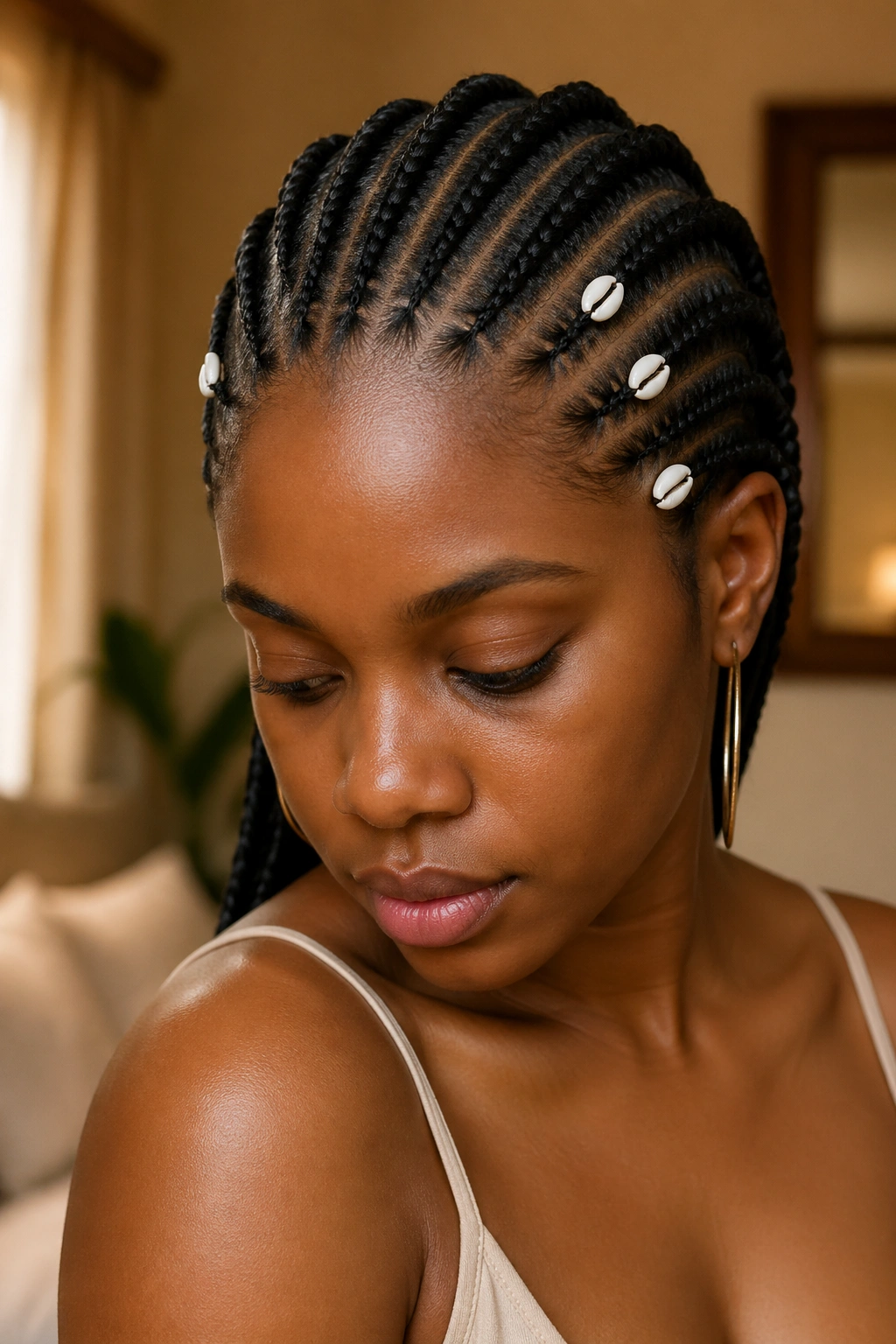
Cowrie shells — small white shells with a distinctive oval shape — threaded onto specific braids at intervals.
Unlike beads, cowrie shells have a flat profile that lies close to the braid rather than weighing it down in the round. The visual effect is more subtle than heavy beading.
Place cowrie shells on three or four of the eight braids rather than all eight. Over-shelling reads costume; selective placement reads intentional.
Cowrie shells have deep cultural roots in West African traditions. Wearing them honors that history and adds meaningful dimension to the style.
12. Eight Braids With Rubber Band Accents
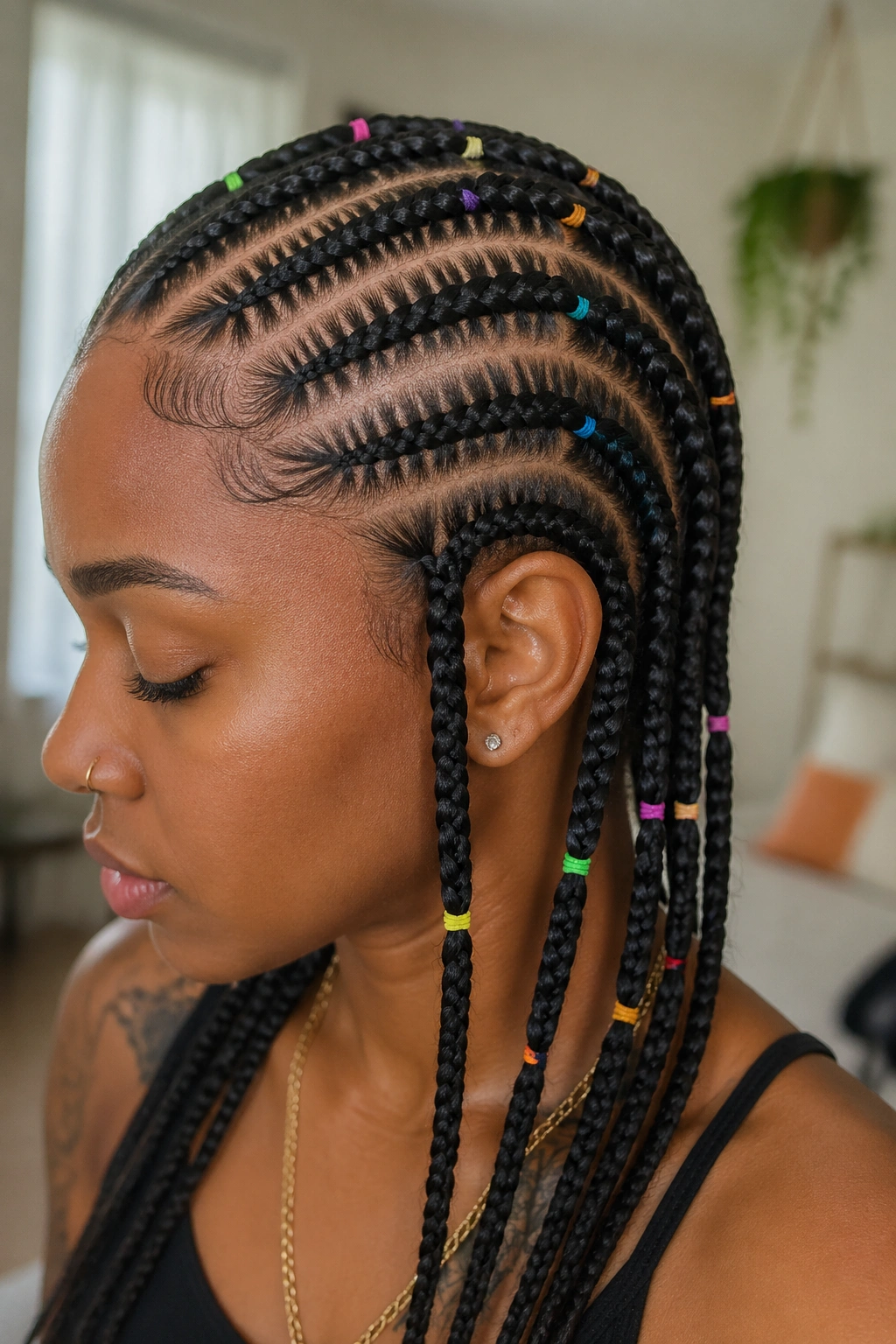
Small colored rubber bands placed at intervals along each braid to create visual segmentation.
The rubber bands serve dual purpose: decorative accent and tension reinforcement for braids that tend to loosen mid-length.
Use small, flat rubber bands (not round elastic). Colors should match the desired aesthetic — clear bands disappear for subtle effect, colored bands become a design element.
Works especially well on children’s cornrows and casual adult styles. Reads youthful and playful.
13. Eight Micro-Stitch Braids
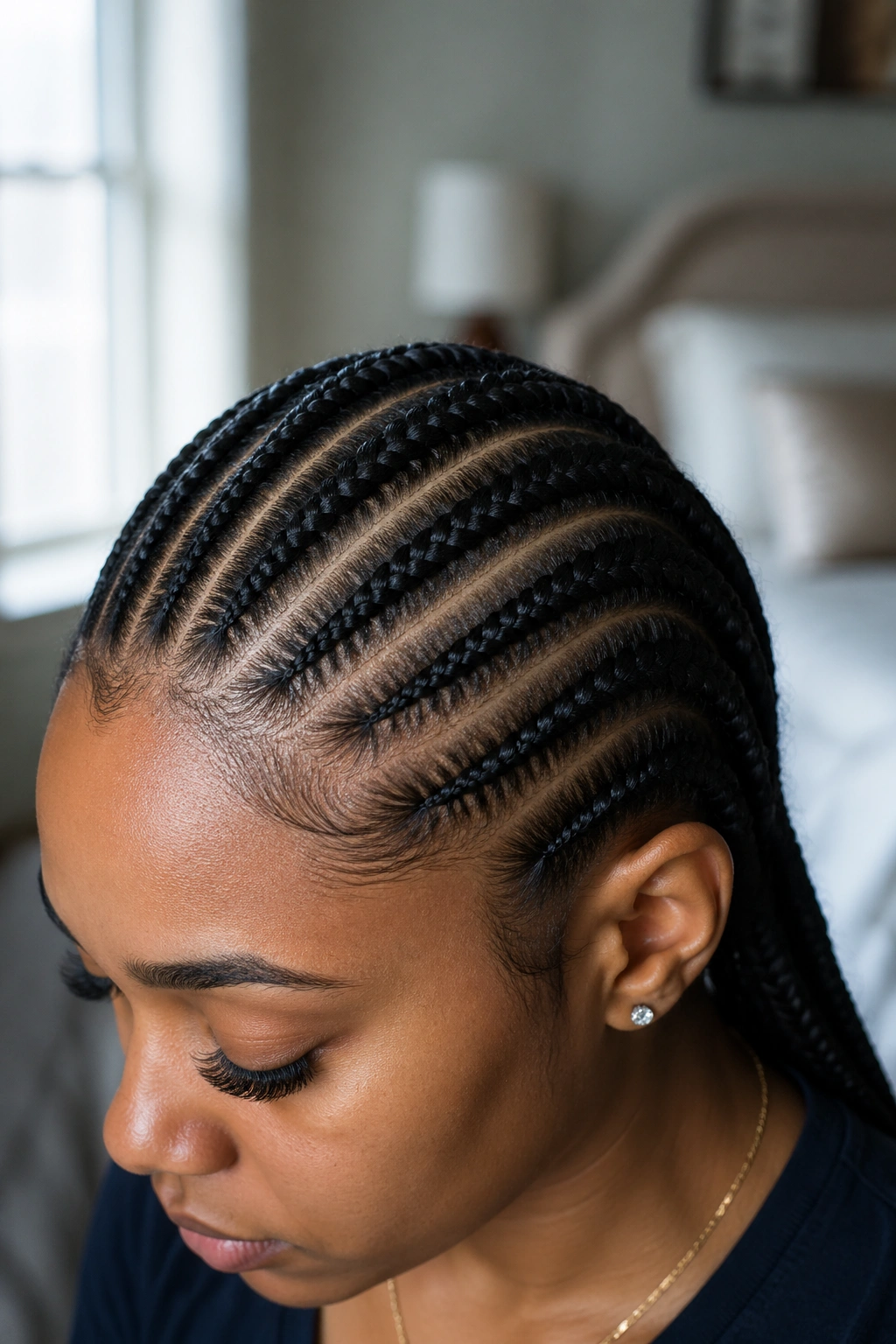
A finer version of the stitch cornrow technique. The stitches are smaller — about half the size of standard stitches — and positioned closer together.
The effect from a distance reads like textured braids. Up close, the intricate stitching reveals itself as a design detail.
Micro-stitch work takes 4-5 hours for a full head of eight braids. This is a commitment style, not a quick install.
The extra time pays off in longevity. Micro-stitch work holds shape and detail for 4-5 weeks rather than the 2-3 weeks of standard stitch work.
14. Eight Braids With Side Swoop
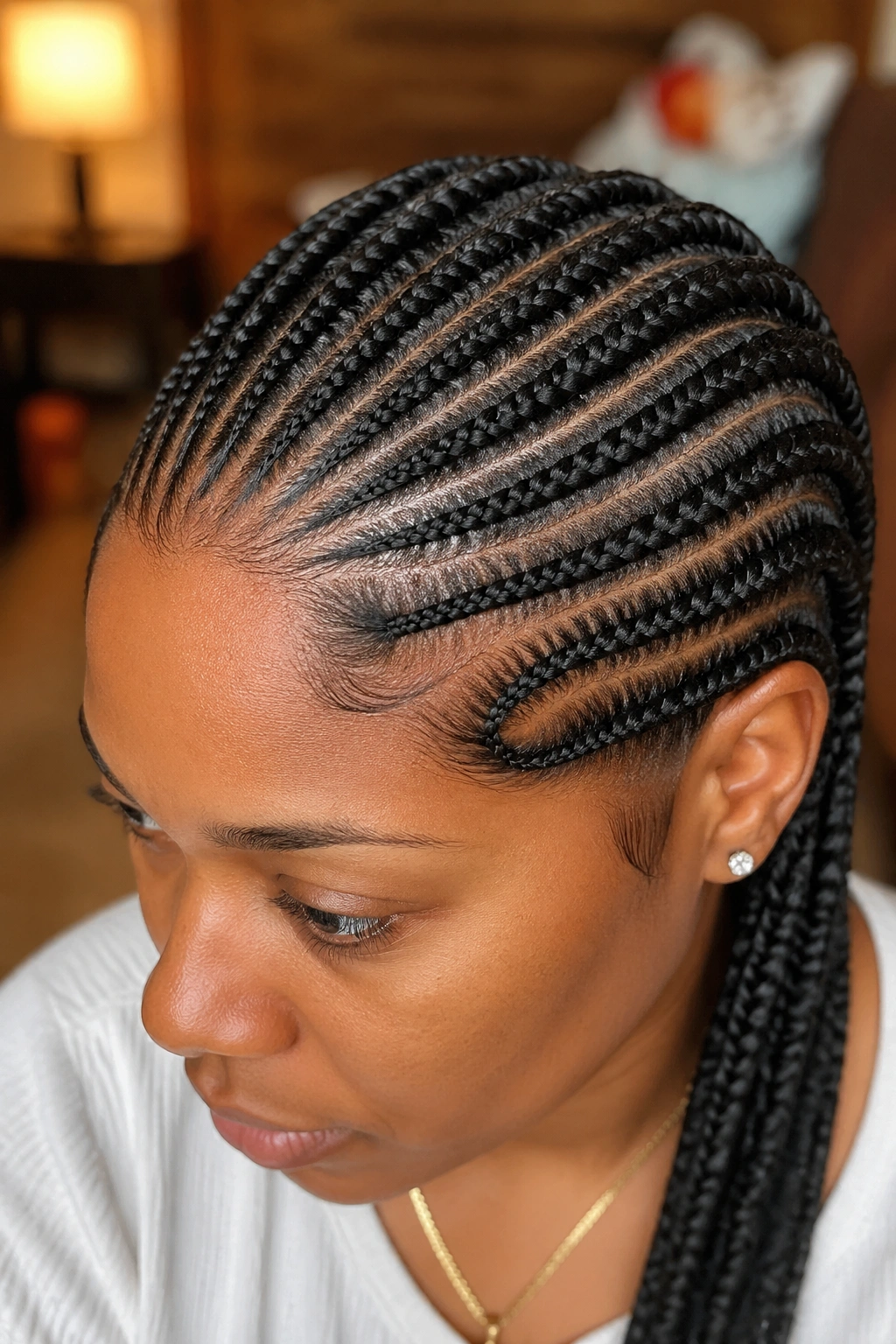
All eight braids start on one side of the hairline and sweep diagonally before continuing straight back. The side swoop creates dramatic asymmetry while maintaining the straight-back structure.
The swoop happens in the first 4-5 inches. After that, all eight braids run parallel to each other down the back of the head.
This variation suits anyone who wants the structure of straight-backs with more personality than the standard parallel format.
15. Eight Cornrows With Gold Cuffs
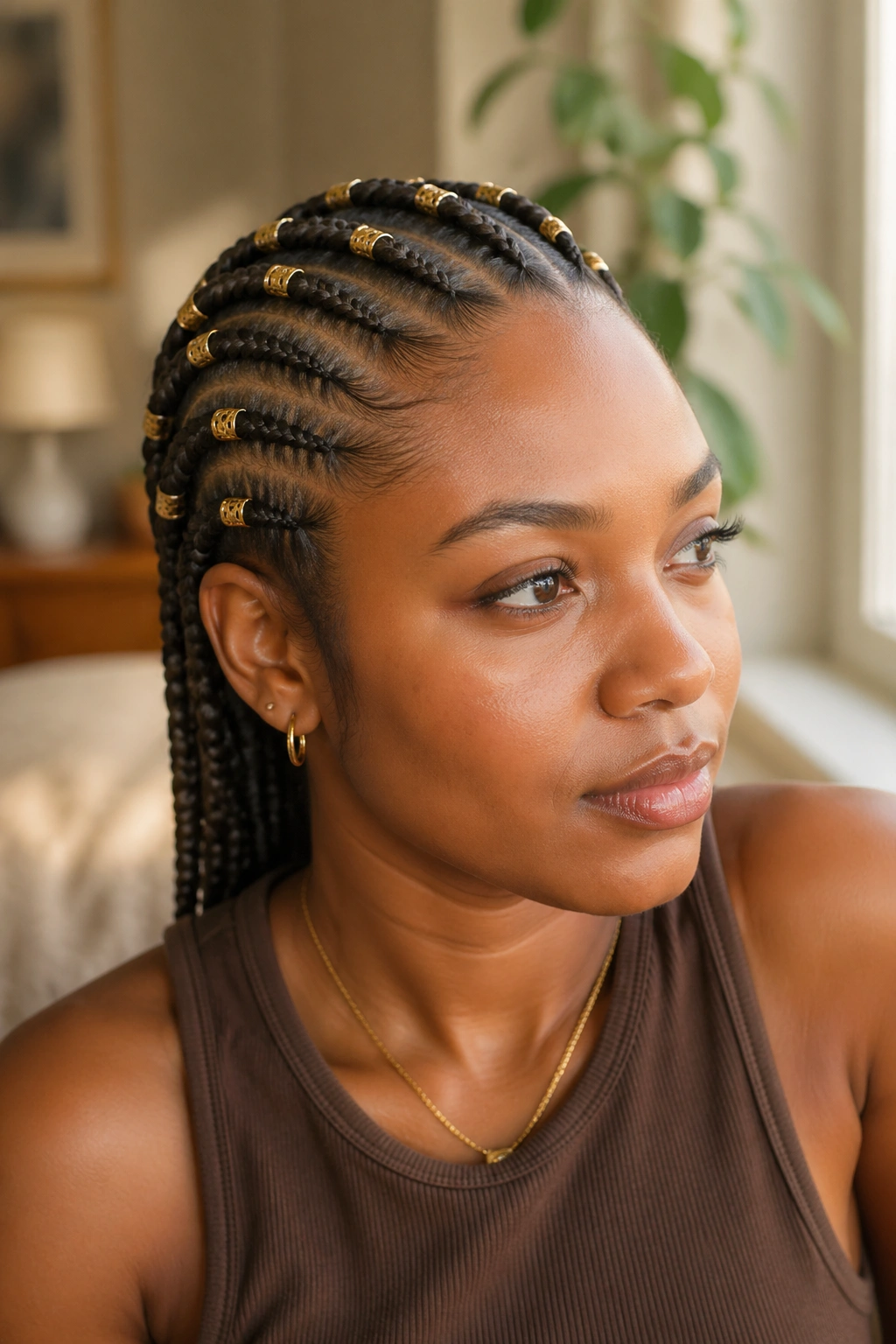
Metal cuffs — typically gold, silver, or bronze — applied to the braids at various points.
How to Style It
- Apply cuffs to all eight braids for maximum impact, or selectively on four for subtle detail
- Place cuffs at the start of each braid (at the hairline) or at the ends
- Cuff sizes vary; choose proportionally to braid thickness
- Tighten gently with needle-nose pliers — too tight breaks braids, too loose slides off
The gold cuffs elevate straight-backs to event-appropriate styling. Reads polished, sophisticated, and prepared for formal settings.
16. Eight Braids With Contrasting Color Feed-Ins
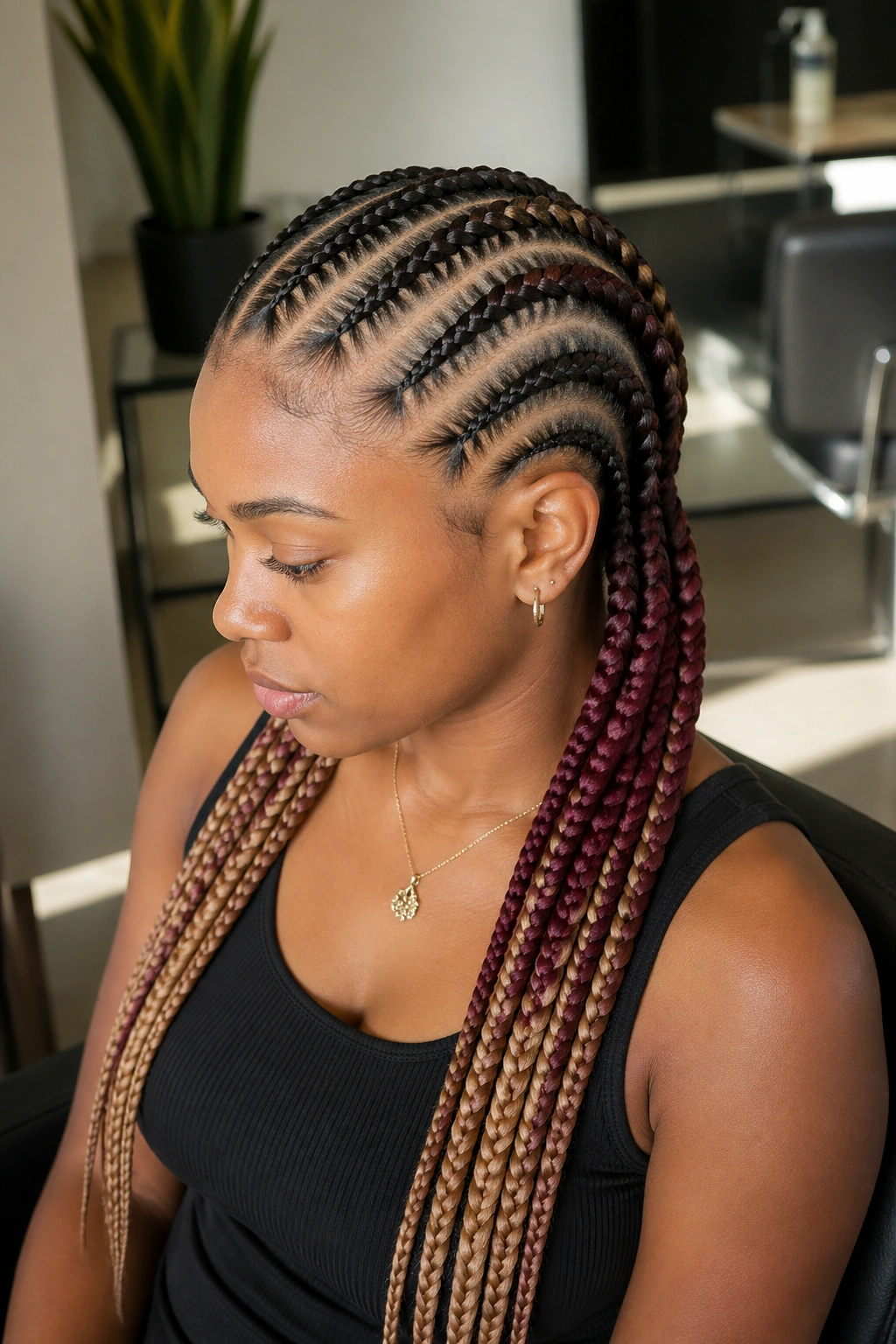
The base of each braid uses natural hair color; the feed-in extensions are a contrasting color (blonde, burgundy, copper, etc.).
The result is cornrows that transition from natural at the root to colored at the length. The transition point can be abrupt (feed in the color at the first addition) or gradual (start with matching color, then shift to contrasting color after several inches).
Gradual transitions read more natural. Abrupt transitions read more fashion-forward.
Works for anyone wanting colored cornrows without committing to full colored installation. The natural root creates a grown-out rooted look that many people prefer aesthetically.
17. Eight Cornrows With Heart-Shaped Parts at the Front
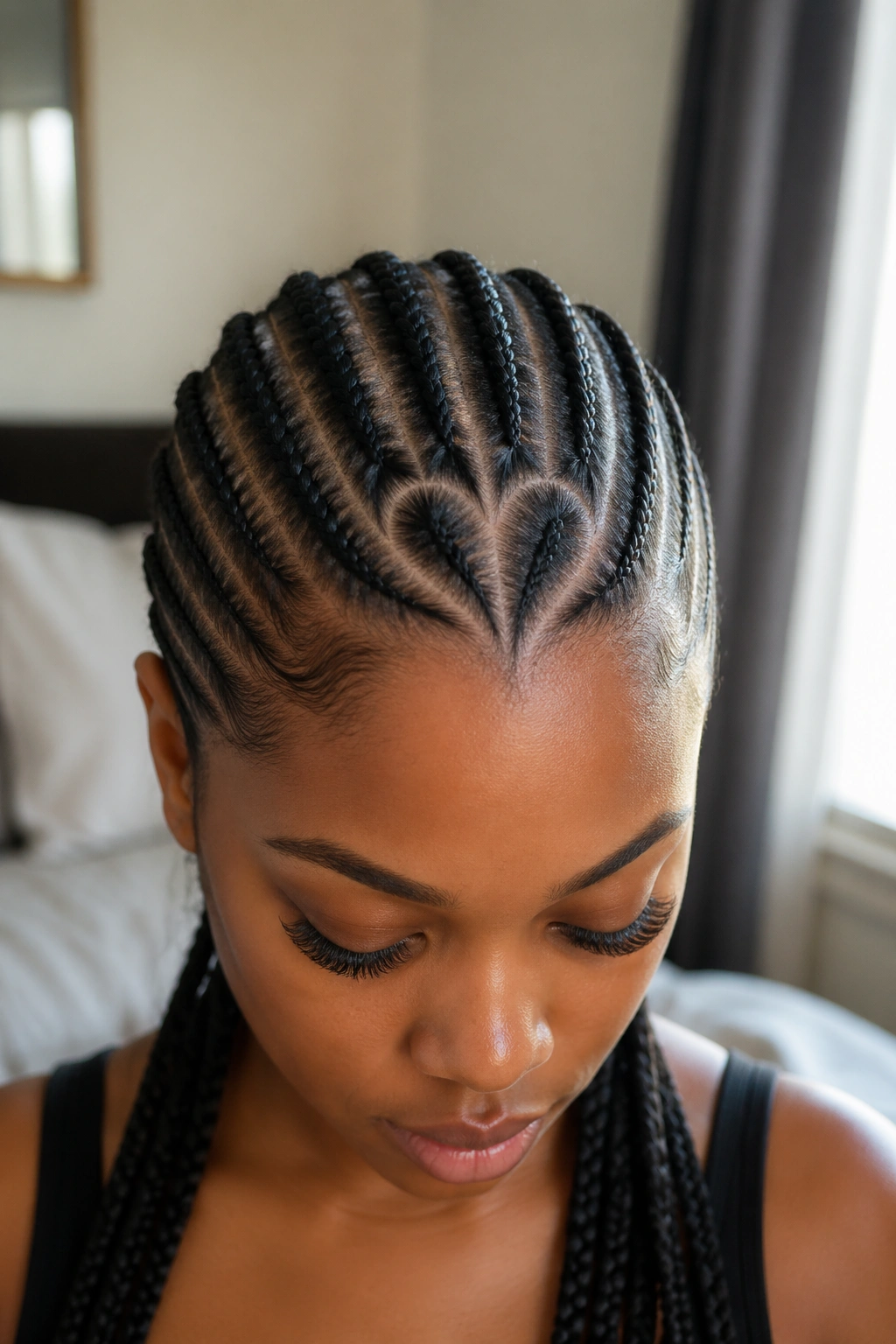
Traditional straight parts at the back, but the first inch at the hairline forms a heart pattern before straightening.
The heart is created by angling the first two parts inward toward the center at the front, creating a V-shape that opens into the parallel straight-back format.
This detail reads playful and feminine. Works for Valentine’s events, romantic occasions, or anyone whose personal aesthetic leans softer and more feminine.
18. Eight Braids With Fish Scale Detail
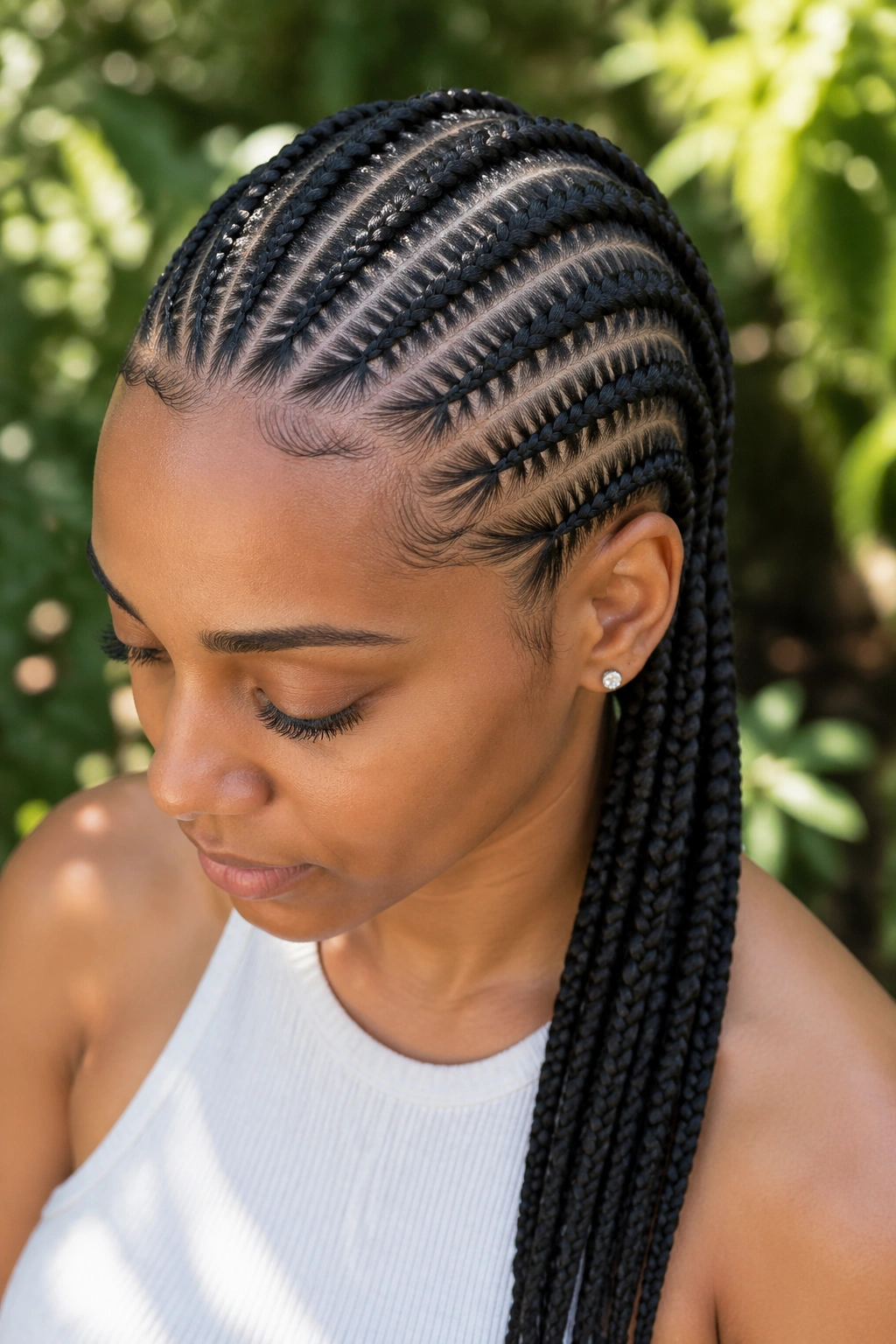
Fish scale detailing is a parting technique where the sections at the hairline overlap slightly, creating a scaled texture visible at the front.
The detailing only appears in the first 2-3 inches of each braid. The remaining length runs as standard straight-backs.
Best for wearers who appreciate intricate detail visible only on close inspection. The subtlety rewards attention without screaming for it.
19. Eight Cornrows With Thin Accent Braids Between
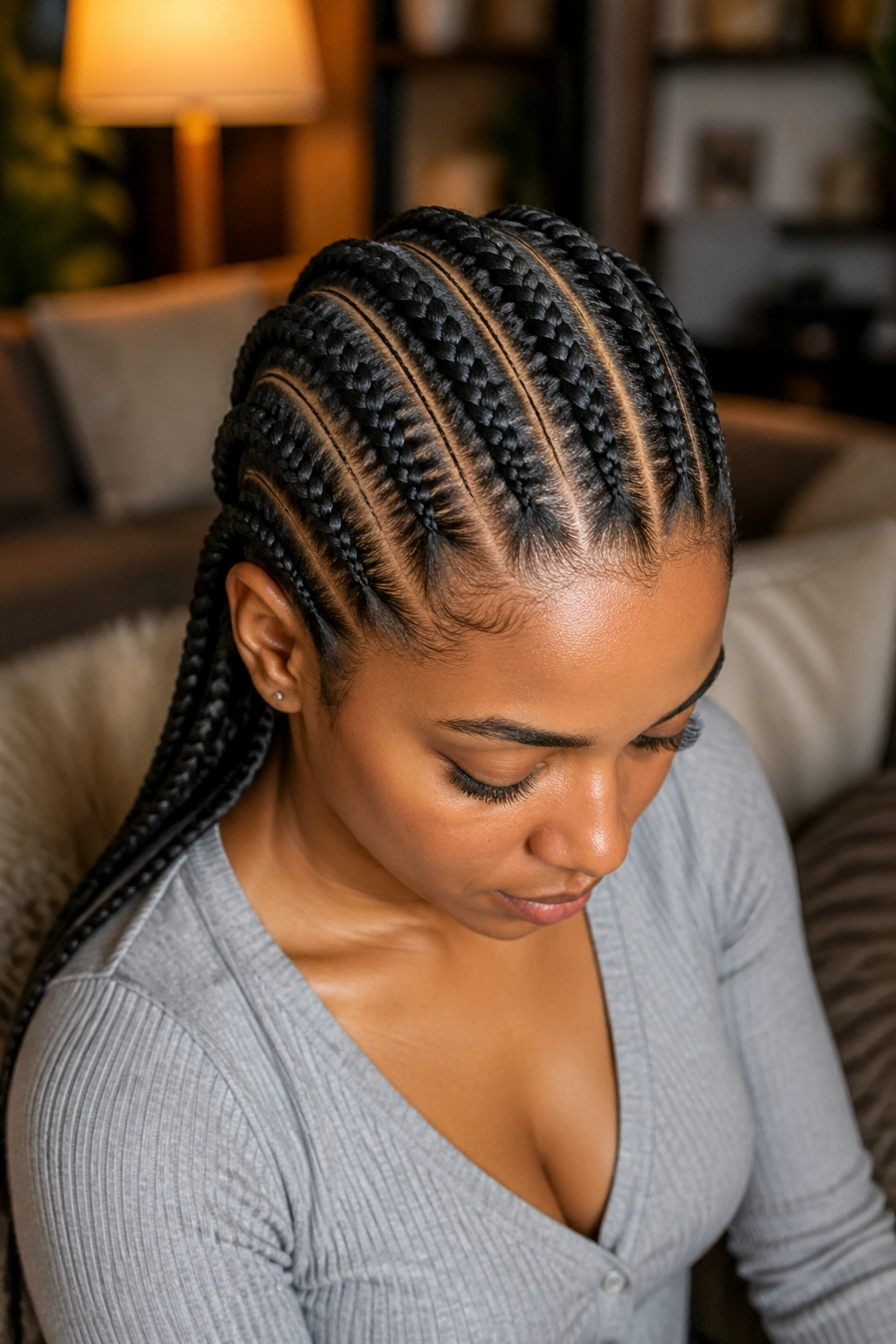
Between each of the eight main cornrows, a thin accent braid — about half the thickness — sits in the parts.
The accent braids add texture to the scalp area without adding to the overall braid count. The visual effect reads more intricate than eight braids alone but less busy than sixteen equal braids.
This variation suits wearers who want more visible complexity while keeping the main braid count at the manageable eight.
20. Eight Braids With Trailing Ribbon
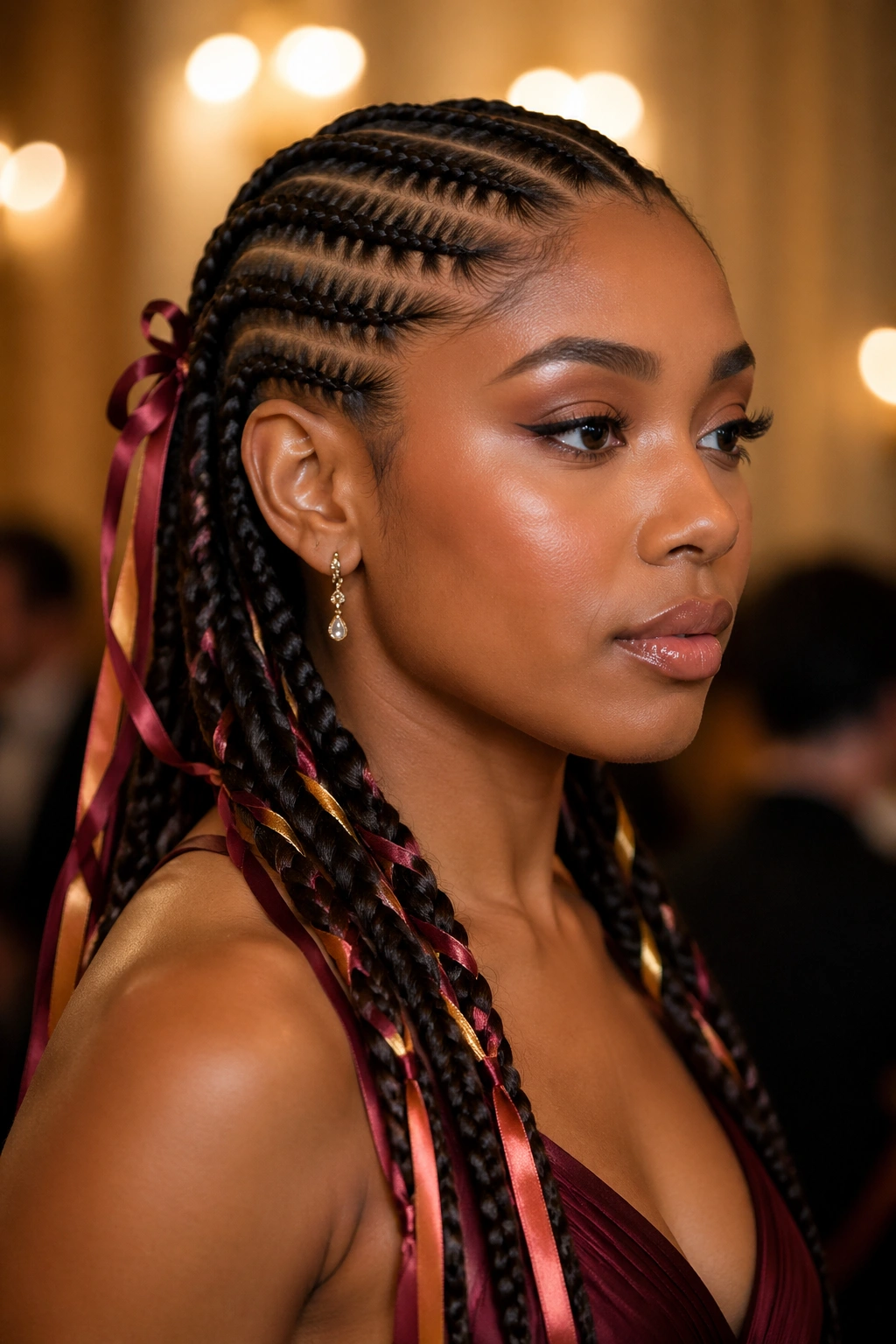
Satin ribbons woven into the braids as they’re plaited. The ribbons trail from the ends of the braids along with the braid length.
Ribbon width: about quarter-inch for subtle detail, half-inch for bolder statement.
Ribbon colors should match or complement the occasion — white for weddings, red for Valentine’s, school colors for sporting events.
This is a style for specific events rather than everyday wear. The ribbons get tangled and damaged with regular activity.
21. Eight Cornrows With Center Back Bun
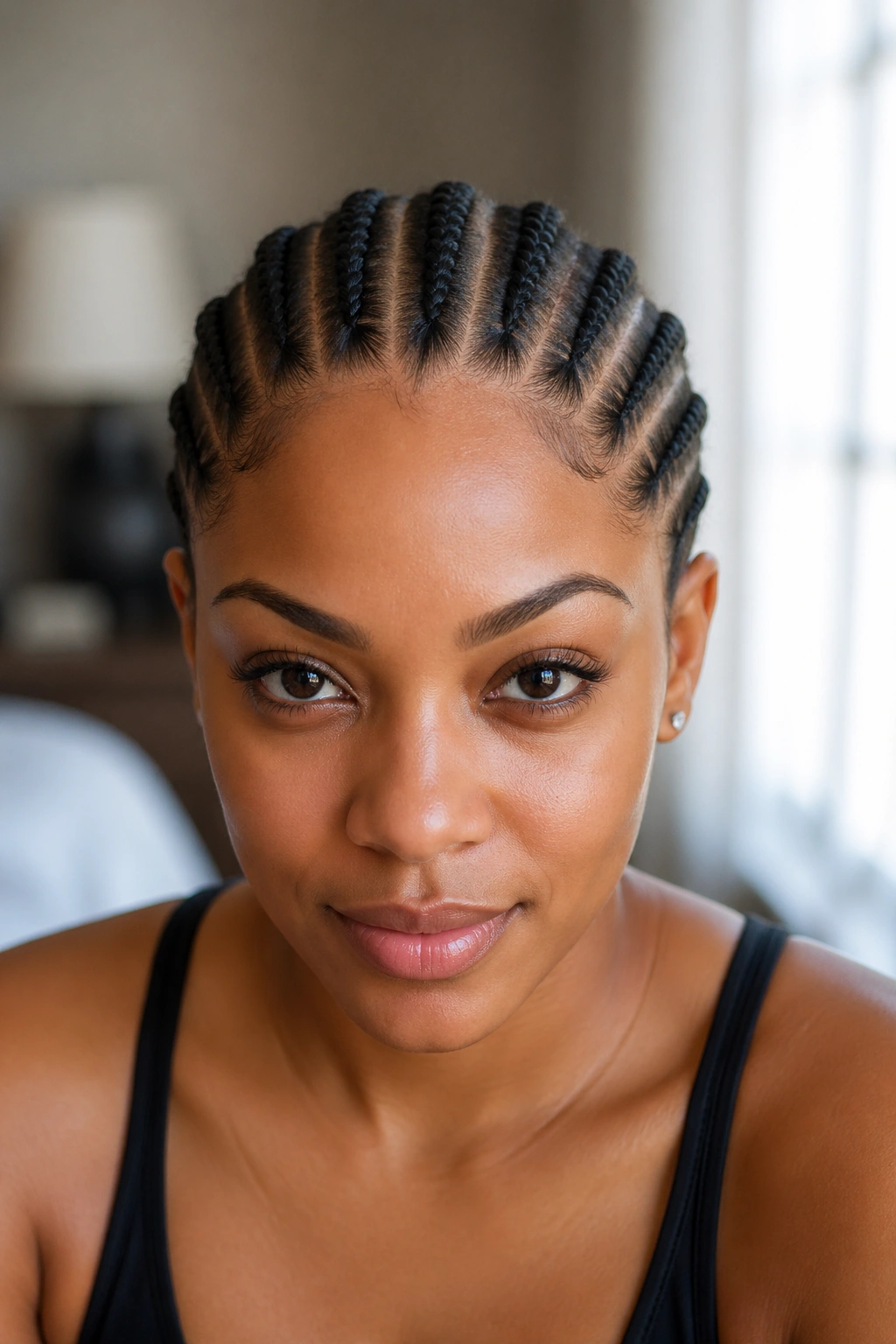
The eight braids gather at a single point at the center back of the head — not the crown, not the nape, but directly in the middle of the back of the head.
The gathering point creates a bun at this unusual position. The placement reads intentional and modern.
Works for wearers who want a polished style with an unexpected twist. The center-back position differentiates this from standard high or low bun placements.
22. Eight Long Cornrows to the Waist
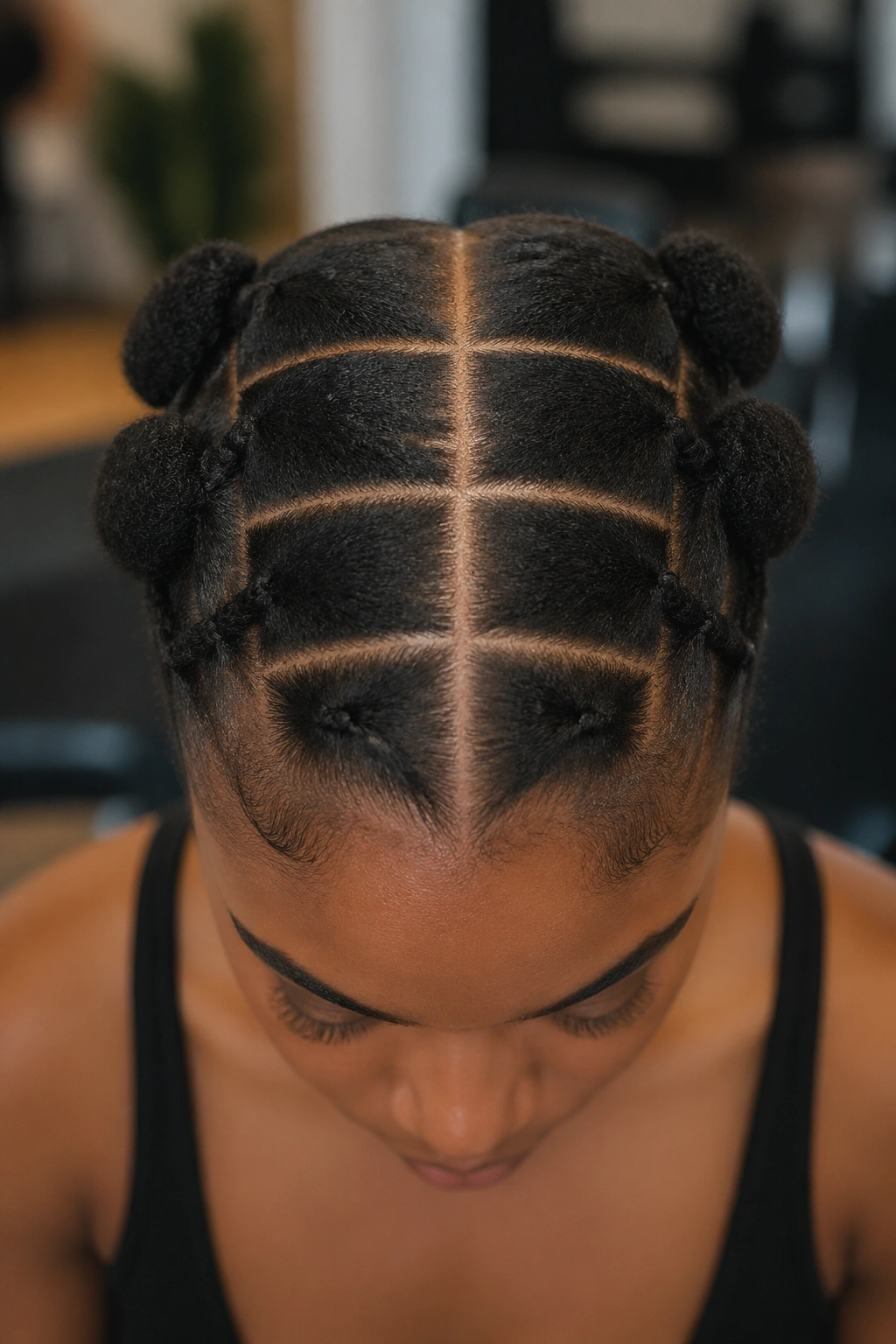
Feed-in extensions extending the eight braids to full waist length (32-36 inches).
Waist-length cornrows require careful planning. The weight at this length causes fatigue on the neck and crown if the install isn’t evenly distributed.
Sleep management is critical. Wrap the length with a long satin scarf before bed. Side sleeping means the braids must come over the shoulder to prevent tangling.
This length reads dramatic and attention-getting. Reserve for events, photography, or periods when you want maximum hair presence.
Maintaining Eight-Braid Cornrows Long-Term
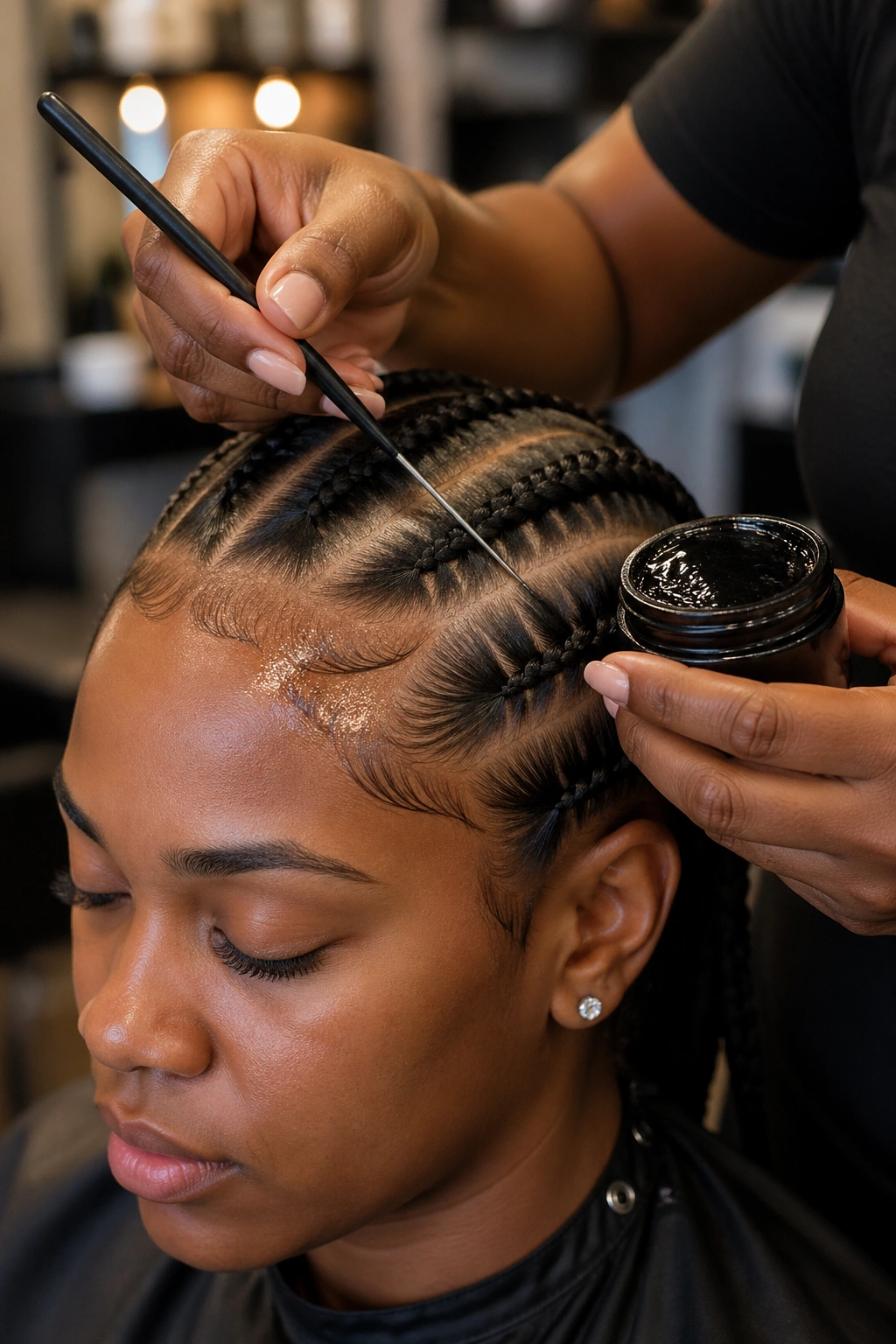
Daily care for eight-braid cornrows is straightforward since the simple pattern doesn’t trap products or moisture the way complex styles do.
Spritz the scalp with a water and leave-in conditioner mix every morning. Light application — not saturated.
Edge control applied to new growth at the hairline as it comes in. Apply with a soft bristle brush and press gently along the hairline.
Oil the scalp with a dropper along the parts twice a week. Jojoba, grapeseed, or argan oil all work well without heavy buildup.
Bonnet or satin scarf every night. Skip this and fuzziness develops within a week.
Wash Day for Eight Straight-Backs
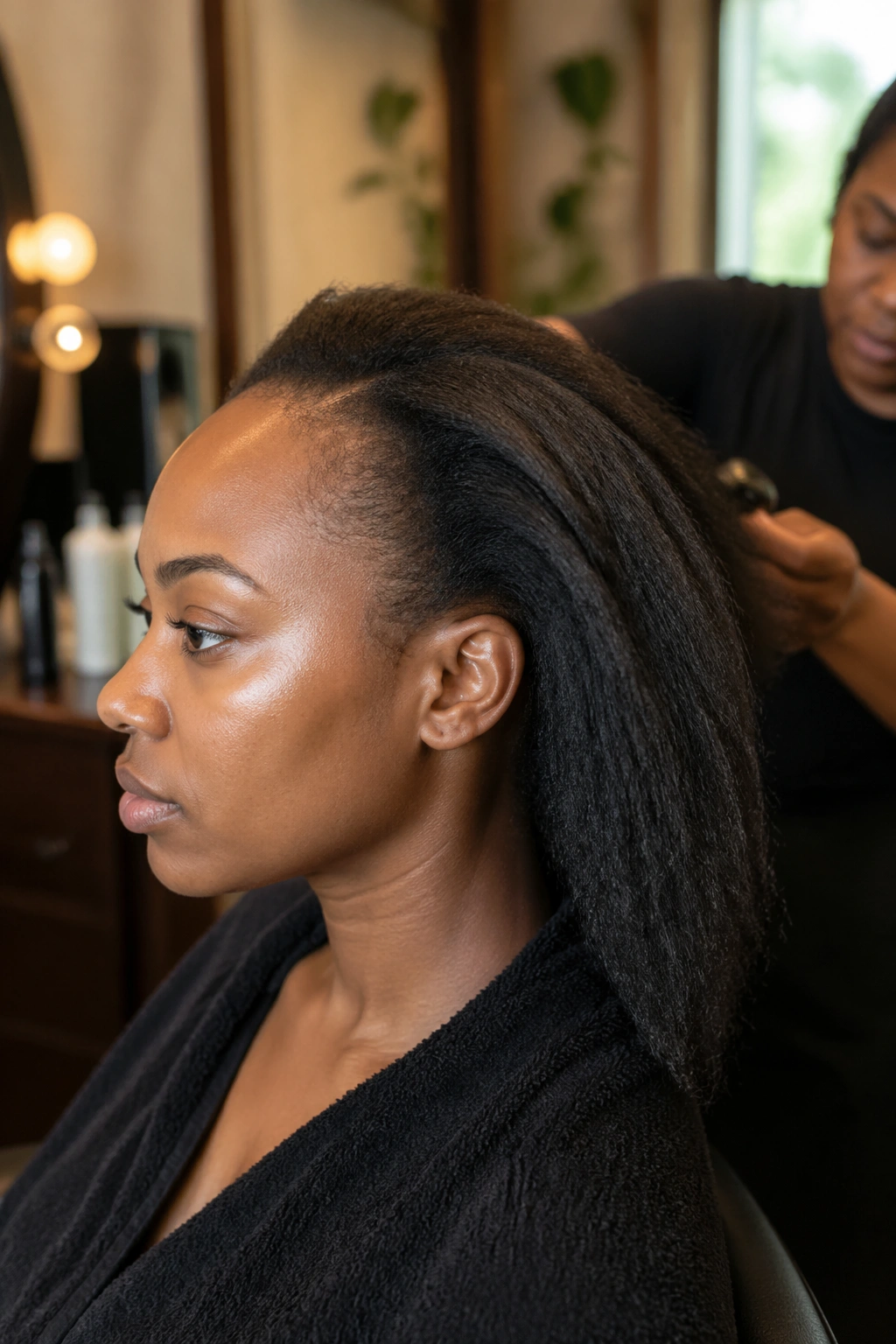
Eight cornrows are easier to wash than more elaborate styles. The wide parts provide access to the scalp without disturbing the braid pattern.
Dilute sulfate-free shampoo 1:2 with water in an applicator bottle. Apply along the seven parts, focusing on the scalp.
Massage with fingertips — not nails. Nail scratching damages the scalp and can loosen the braid bases.
Rinse thoroughly with lukewarm water. Soap residue causes itching within 24 hours if not fully rinsed.
Pat the braids dry with a microfiber towel. Let the scalp air dry. Sitting under a dryer on low cool setting speeds the process but isn’t necessary.
Takedown and Post-Install Care
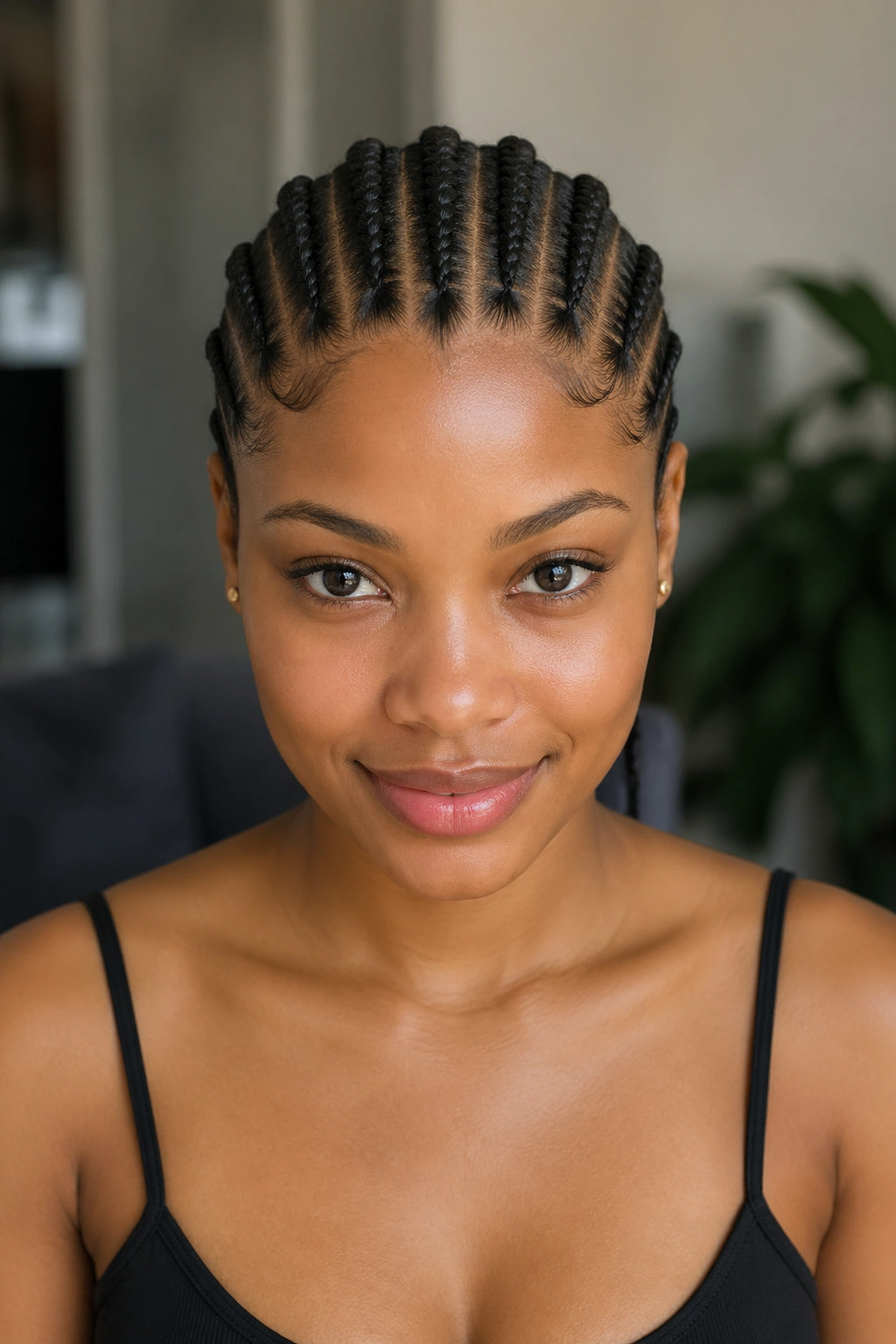
Takedown on eight-braid cornrows is faster than most styles. Under 30 minutes for a full head, even with feed-ins.
Start by removing any beads, cuffs, or accessories. Then spray each braid with a conditioner and water mixture to soften the tension.
Unbraid from the ends toward the roots. Working from the bottom lets you gently release each plait without pulling on the scalp.
For feed-in styles, the extensions come out as you unbraid. Collect them and discard — synthetic kanekalon can be reused but rarely installs as cleanly the second time.
After all braids are out, detangle the whole head in sections with conditioner on damp hair. Deep condition for at least 45 minutes before any new styling.
Choosing the Right Eight-Braid Style for Face Shape
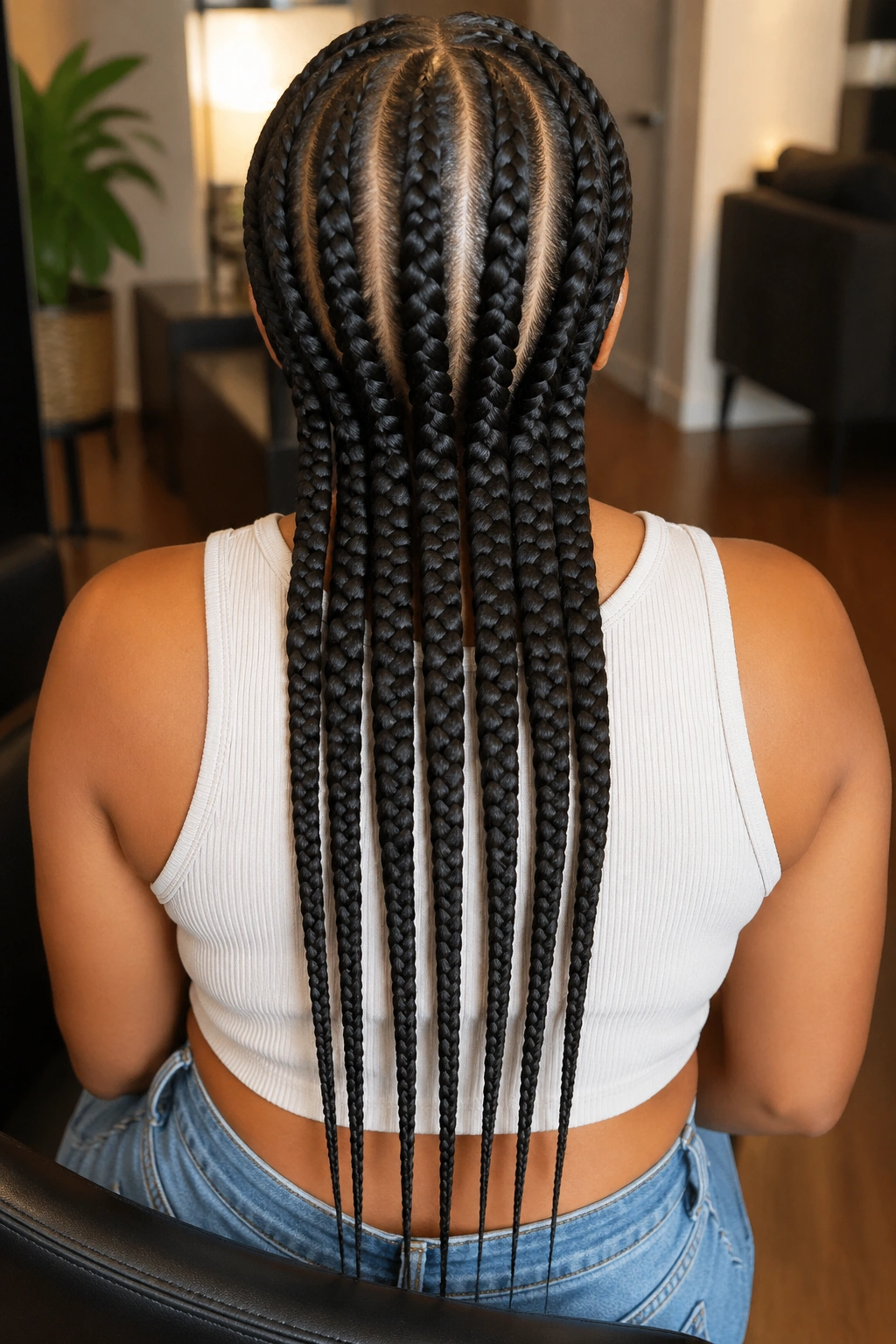
Oval faces can wear any of the 22 variations. The shape is balanced enough to carry anything from the simplest to the most elaborate.
Round faces benefit from styles that add vertical length — waist-length braids, high bun variations, or styles with height at the crown.
Square faces soften with curved parts, heart-shaped fronts, or the softer silhouettes created by curly feed-ins.
Heart-shaped faces balance with volume at the chin and shoulder level — styles ending with beads or curled feed-ins at the shoulder work especially well.
Long faces benefit from horizontal breaks — thread wrapping at specific points, multiple sets of beads, or thicker jumbo feed-ins that create width.
Eight Braids for Different Hair Lengths
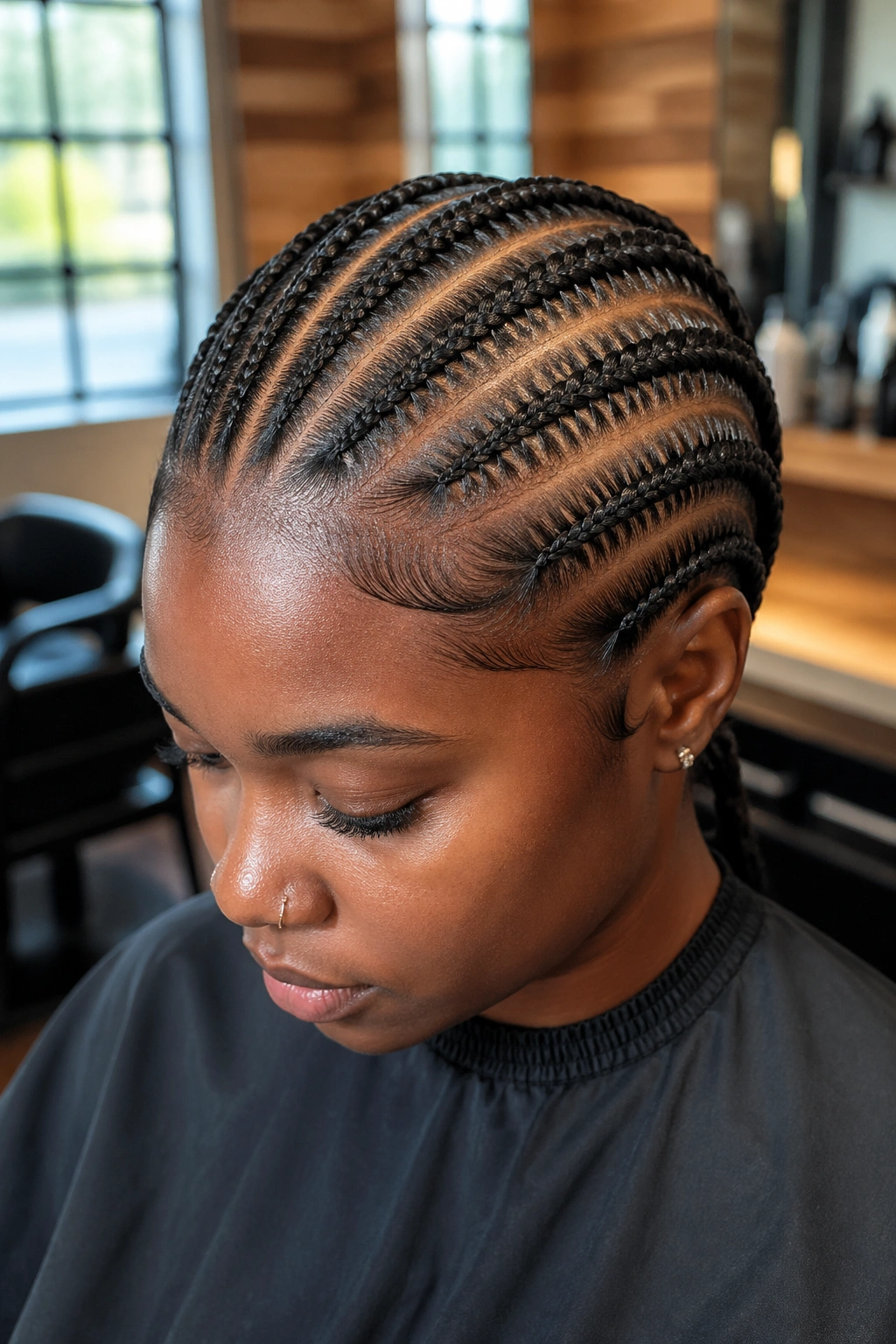
Short hair (under 6 inches): eight braids work but will be very short. Consider not adding feed-ins if the goal is showcasing short natural length. Alternatively, heavy feed-ins from the first inch extend length dramatically.
Medium hair (6-12 inches): the sweet spot for eight braids. Length is adequate for clean braiding, feed-ins are optional but work well.
Long hair (12+ inches): eight braids create substantial length without feed-ins. The braids themselves become statement features.
Consider the goal before committing to feed-ins. If you’re using cornrows to protect natural hair growth, feed-ins add tension that can undermine the protective purpose. If the goal is the finished look, feed-ins extend options significantly.
Eight Braids for Different Hair Densities
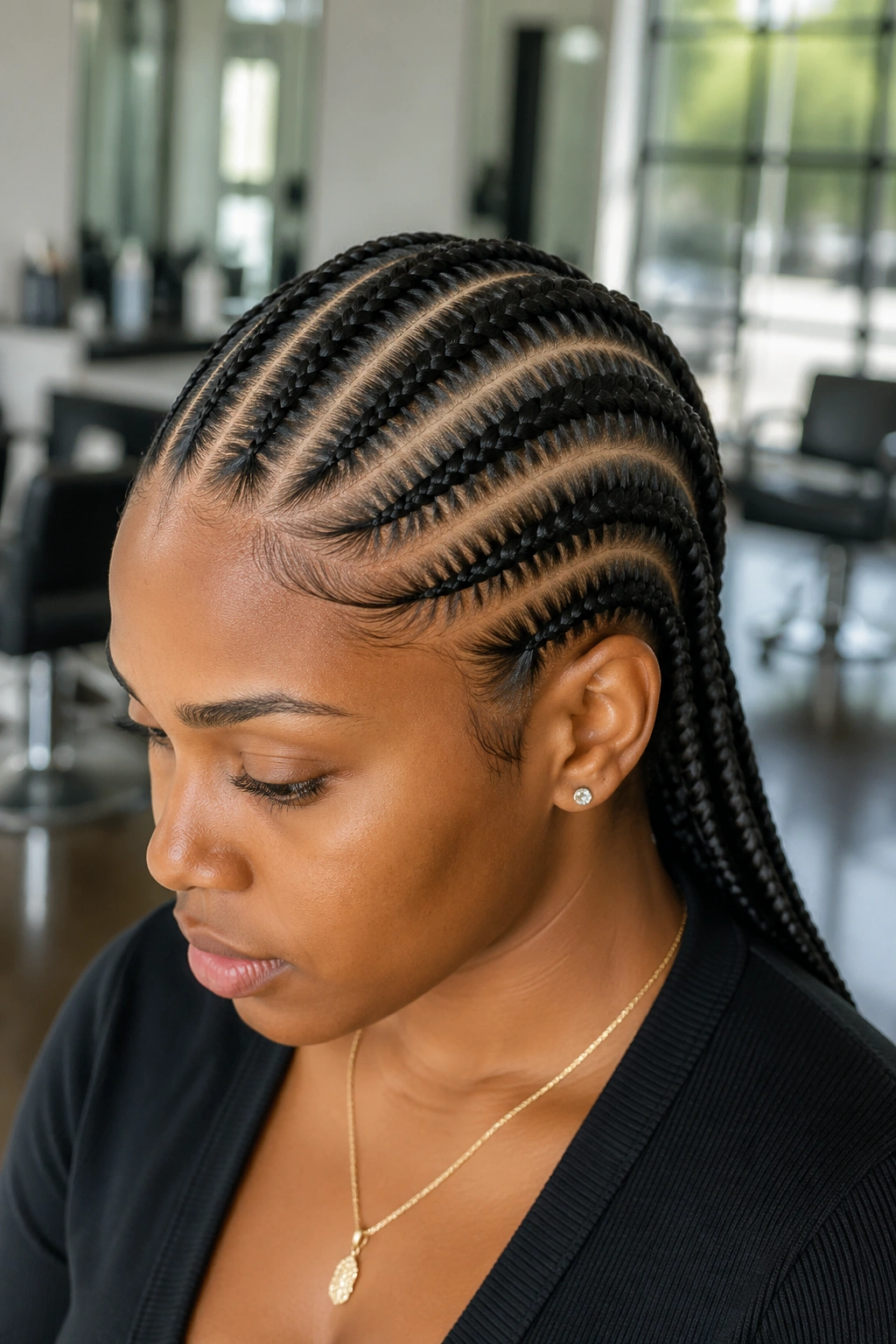
Low density: eight braids may look thin. Consider feed-ins to add bulk, or reduce to six braids so each contains more hair.
Medium density: eight is optimal. Each braid carries enough hair to look substantial without overwhelming.
High density: eight works but may look chunky. Consider ten or twelve braids to distribute the volume more evenly.
Very high density: sixteen braids may work better than eight. The sheer volume needs more division to look proportional.
Assess density before starting. Pull the hair back into a ponytail and measure the circumference of the ponytail at the base. Under 3 inches is low density; 3-4 is medium; 4-5 is high; above 5 is very high.
Picking the Right Moment for Eight Straight-Backs
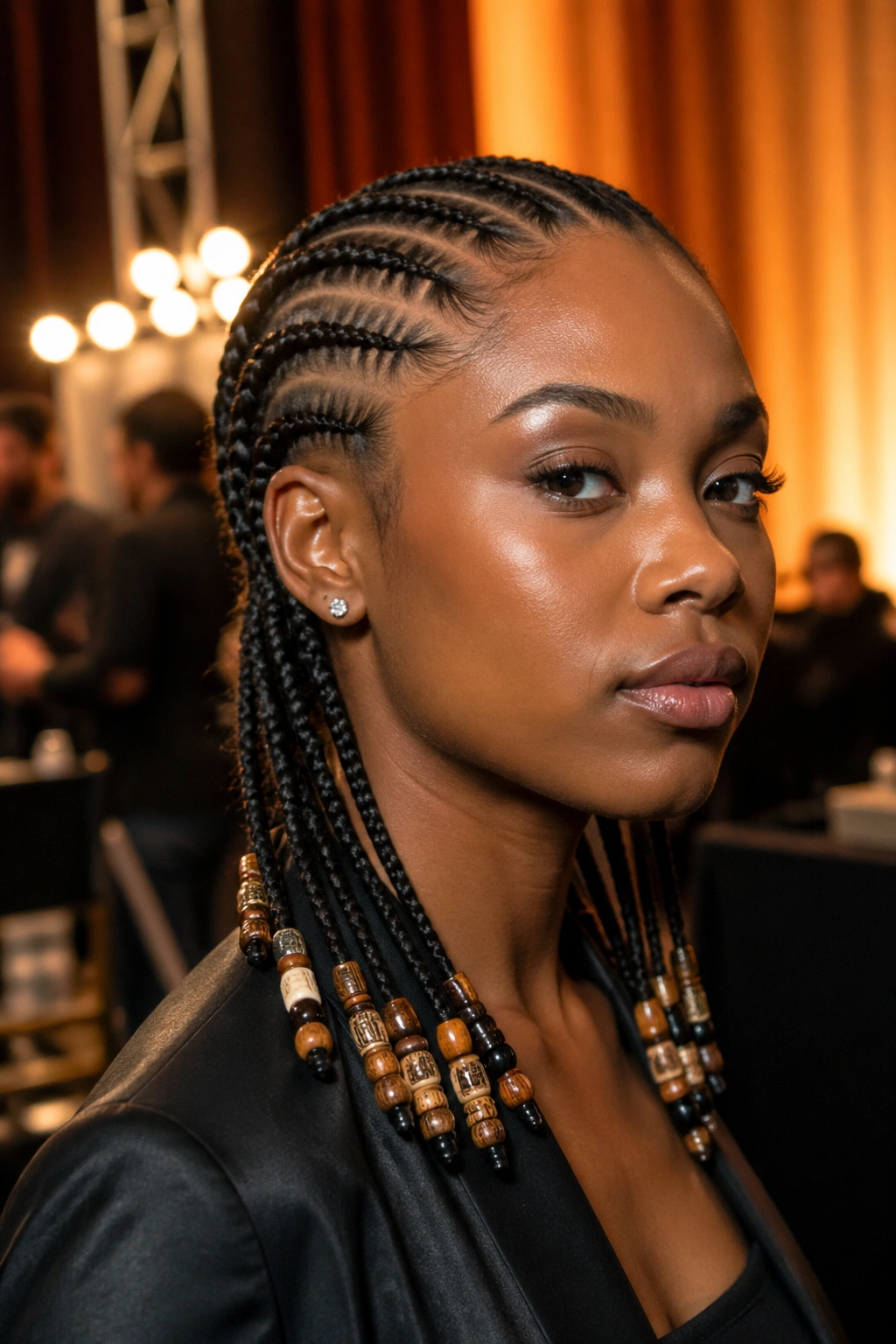
Eight-braid cornrows work across more settings than almost any other braid style. The count reads professional without being overly formal, and the straight-back format reads clean without being boring.
Wedding guest: eight-braid styles with elegant accents (gold cuffs, thread wrap, clean feed-ins) read appropriate without competing with the bride.
Job interview: plain eight straight-backs with no extensions or minimal feed-ins reads polished and professional.
Festival or concert: eight-braid variants with beads, color, or ribbons work well for high-energy events.
Vacation: waist-length eight-braid feed-ins handle humidity and water activities while staying maintained.
Everyday: basic eight cornrows without embellishment provide weeks of low-maintenance styling that works for any daily activity.
The eight-braid count is a workhorse style. Master this one, and variations on the theme carry you through nearly every occasion life presents.