


Knotless cornrows paired with box braids solve a specific problem — the tension at the scalp that traditional braid installs create. The knotless technique starts each braid with natural hair and gradually feeds in extension over the first inch of length. The result is a braid that lays flat without the hard bump at the base that knotted installs produce. Combine that with the flowing length of box braids at the back, and you have a style that looks sculptural at the top and cascading below.
The hybrid approach is what makes this style so wearable. Cornrows cover the scalp, holding the hair close to the head in controlled channels. Box braids take over where the cornrows end, freeing the length to swing, wrap, or gather as the wearer chooses. It’s the best of both braid worlds without compromising either.
These 22 styles cover every major variation — short cornrow crowns flowing into knee-length box braids, elaborate geometric cornrow sections framing classic mid-length box braids, asymmetric cornrow patterns paired with waist-length box braid tails, and more. Each style is chosen because the combination of cornrow structure and box braid freedom creates a look that neither technique alone can match.
What Makes Knotless Different From Traditional Cornrows
A traditional cornrow install grips a chunk of extension hair at the base of the natural section and braids from there. That grip creates a small bump where the extension attaches — the “knot” in the non-knotless name. The knot sits proud against the scalp and can create pressure points, especially when the braider works tightly.
Knotless cornrows start with natural hair only at the base. The first inch or two of braid is pure natural hair. Extension hair feeds in gradually as the braid moves away from the scalp, with small sections added at intervals rather than all at once.
The result feels dramatically different at the scalp. No bumps. No pressure points. The braid lays flat and pulls evenly along its full length rather than pulling hardest at the base. Pain levels during install are lower. Longevity of the install is longer because the scalp doesn’t fatigue from localized tension.
Why Cornrows Plus Box Braids Works So Well
Cornrows are attached to the scalp along their entire length. Box braids hang free from their attachment point. Those two behaviors serve different styling needs.
Cornrows keep hair controlled — flat, shaped, architectural. Box braids let hair move — swing, flow, gather into ponytails or buns or updos. A style that uses both gets to shape the top of the head with cornrows and free the length below with box braids.
The transition point is where the cornrows end and the box braids begin. A clean transition makes the style look deliberate. A messy transition makes the style look like two different projects that didn’t quite meet in the middle.
Hair Type and Length Considerations
This style works best on hair that’s at least shoulder-length. Shorter hair can pull off the combination, but the cornrow section has to end close to the natural hair length for the knotless technique to blend cleanly into box braids. Hair shorter than 6 inches often needs extension hair even at the cornrow roots, which defeats the knotless purpose.
Hair texture matters less than you’d think. The knotless technique grips every natural texture from 4C to 2A with proper tension management. The key is matching extension hair to natural texture — kanekalon for most 4-type hair, softer Marley hair for looser curl patterns, smooth premium hair for relaxed or straight natural hair.
Install Time Expectations
Six to ten hours is standard for a knotless cornrow and box braid combination. That’s a real commitment. The cornrow section takes two to four hours depending on complexity. The box braid section takes four to six hours depending on length and braid count.
Split the session if needed. Some braiders do the cornrow work one day and the box braids the next day. The client comes home with cornrow prep and ponytailed natural hair behind it, then returns for the box braid portion.
Eat beforehand. Hydrate. Use the bathroom. Bring entertainment. This isn’t a quick appointment.
Tip: Tell the braider in advance about any neck or back issues. The seating position for long installs is brutal on bodies with chronic pain. Some braiders can accommodate reclined work positions or take more frequent breaks for clients who need them.
Prep Specific to This Style
Deep condition the week before. The hair will be in tension for four to six weeks with a style this elaborate. Start with maximum hydration and strength.
Wash two days before install — not the day of. Day-of-wash hair is too slippery for clean knotless work. Day-two hair has just enough natural grip to hold sections during the early braiding.
Blow out to stretch the hair. Not straighten — stretch. Loose curl pattern, no kinks. The knotless technique needs visible section edges, which shrinkage obscures.
Bring more extension hair than the braider requests. Running out mid-install means either a shorter style than planned or a second appointment to finish. Extra hair can always be returned or saved for the next install.
1. Jumbo Knotless Cornrow Crown Into Long Box Braids
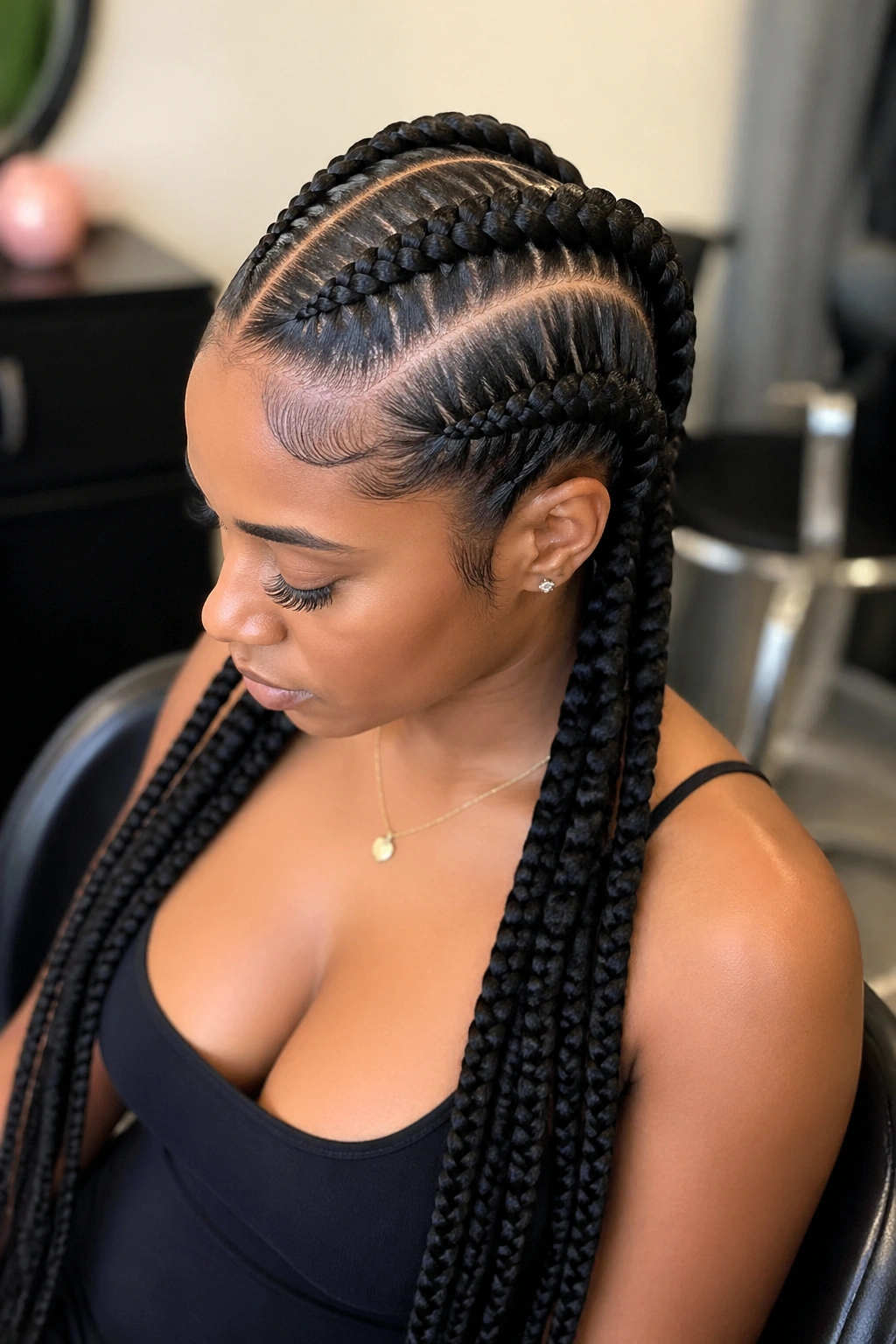
Three thick knotless cornrows cover the top of the head from forehead to crown. At the crown, the three cornrows split into six box braids that fall down the back. The box braids extend to the mid-back or longer.
Why It Works
- Minimal cornrow count means faster scalp section
- Long box braid tail gives maximum movement and versatility
- Jumbo cornrows read as bold and deliberate
- Easy to style by gathering the box braids into ponytails or buns
The three cornrows need to be visibly substantial. Jumbo in this context means about 2 inches wide per cornrow — thick enough to read as statement pieces rather than accent braids.
Tip: Use darker kanekalon at the roots and slightly lighter kanekalon at the box braid tips for a subtle gradient effect. The dip-dye look reads as intentional color without committing to dyed hair.
2. Five Knotless Cornrows With Shoulder-Length Box Braids
The classic count. Five knotless cornrows run from hairline to crown. Each cornrow transitions into a single box braid that falls to shoulder length.
The transition from cornrow to box braid happens at the crown — about 5-6 inches back from the hairline. This keeps the cornrow section compact enough to look controlled while leaving most of the length as box braids.
Shoulder-length box braids are the most practical length. Long enough to swing and feel substantial. Short enough to sleep on without getting tangled. Short enough to keep out of the way during exercise or daily tasks.
This is the everyday-wear version. It’s the style to choose if you want the combination but don’t need dramatic length or complex cornrow patterns.
3. Knotless Cornrow Crown With Waist-Length Box Braids
Similar to style 2 but with box braids extended to waist length. The extra length transforms the style from practical to dramatic.
Waist-length box braids swing. They pool on furniture when seated. They catch in door handles and backpack straps. They’re beautiful but they require more awareness of environment.
What to Watch For
- Weight of the installation — waist-length adds significant weight to the scalp
- Sleeping arrangements — braids this long need to be gathered or they’ll tangle
- Washing time — longer braids take twice as long to wash and dry as shoulder-length
- Maintenance — daily pineapple wrap is non-negotiable for this length
Wear this length when the life surrounding the hair can accommodate it. Sedentary work, formal settings, photo-heavy weeks. Not the right choice for a week of hot yoga or outdoor physical labor.
4. Diagonal Knotless Cornrows Into Side-Swept Box Braids
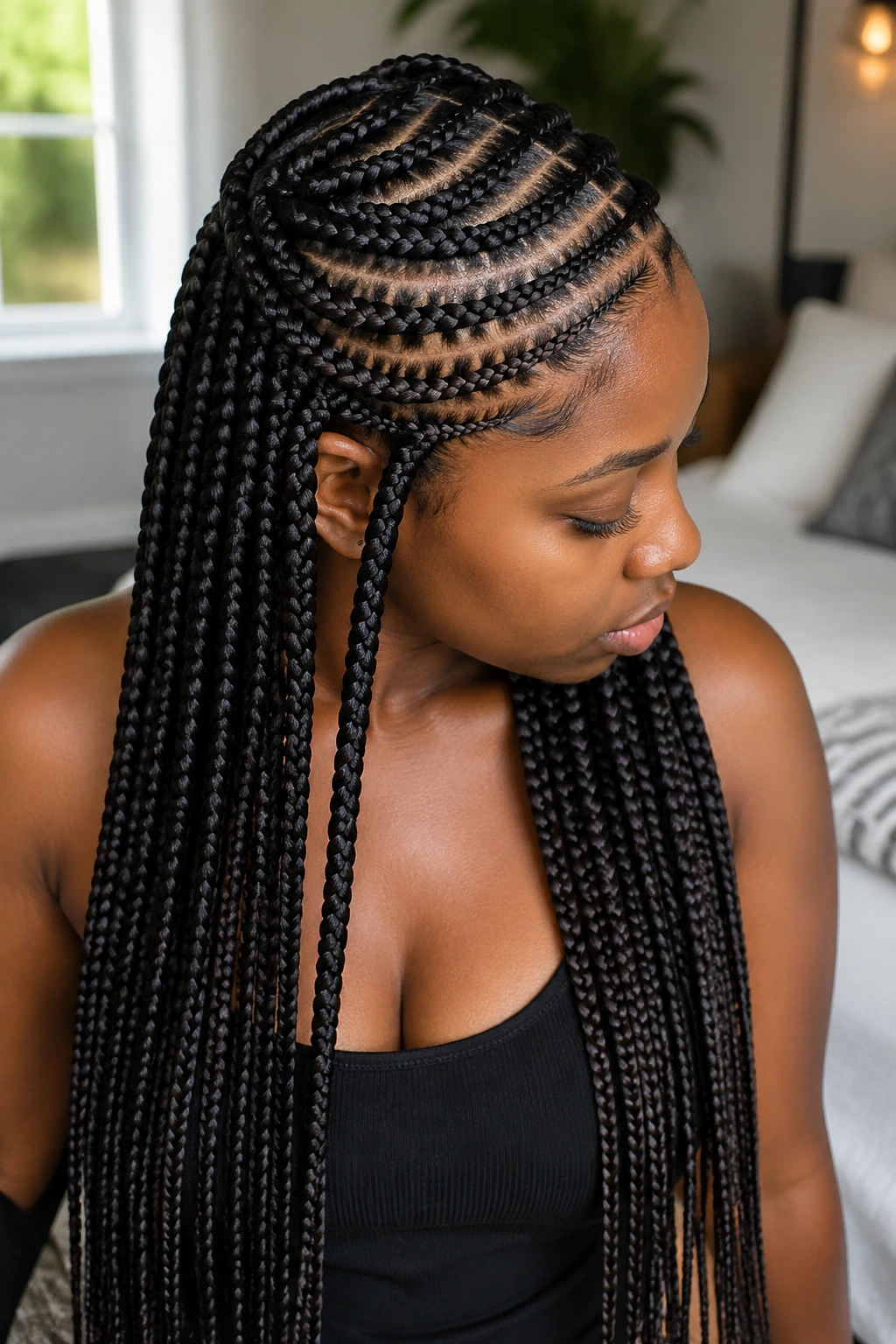
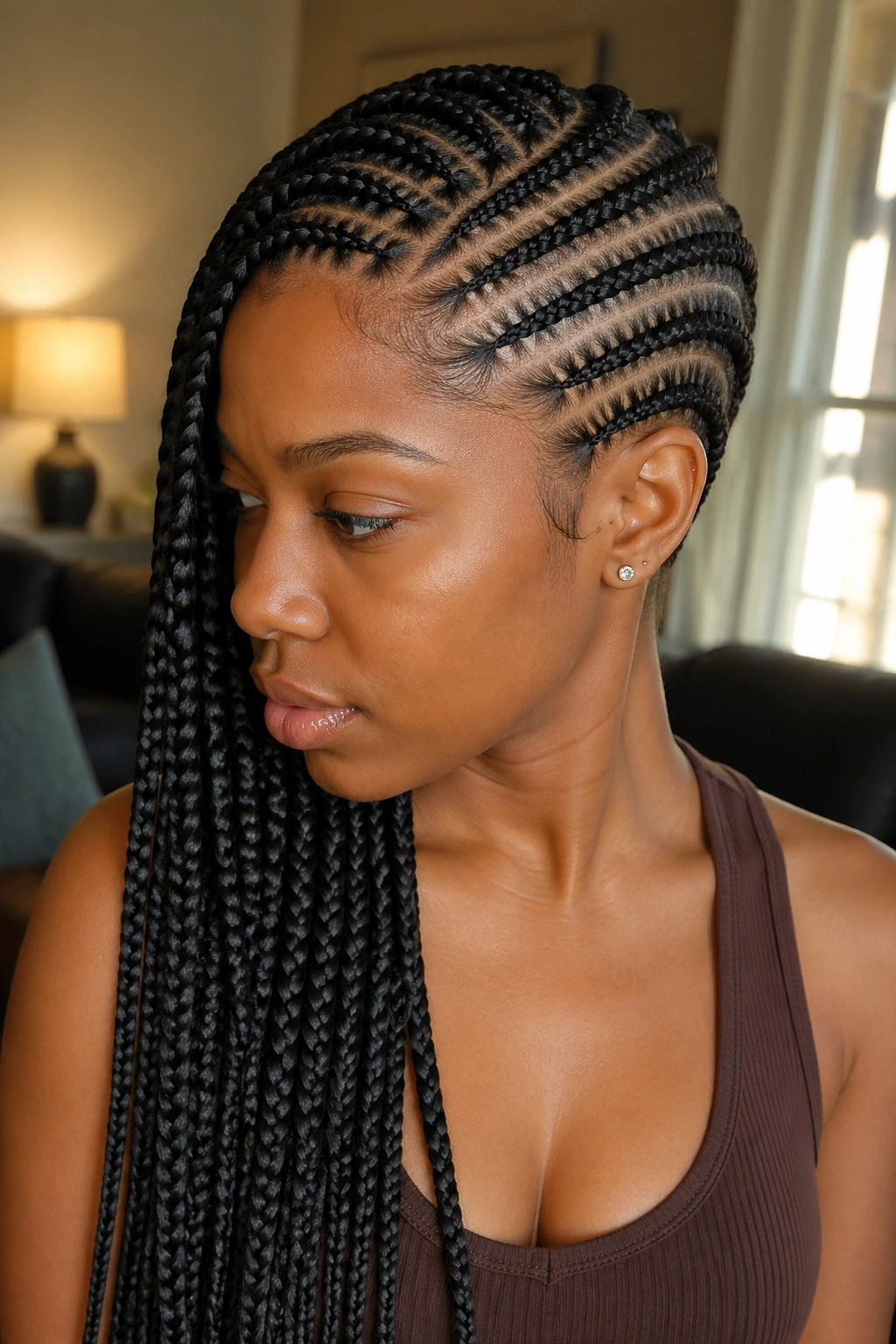
The cornrows run diagonally across the head from one temple to the opposite side of the nape. At the nape, the cornrows fan out into box braids that sweep to one side.
The diagonal direction creates movement from the top of the head through to the box braid tails. The whole style reads as flowing in one direction.
This style is flattering for face shapes that want to de-emphasize width. The diagonal direction draws the eye from one side of the face to the other, creating a more elongated silhouette.
The box braids should all fall over the same shoulder. Splitting the braids between two shoulders breaks the diagonal flow. Commit to one side and style all the braids that direction.
5. Zigzag Knotless Cornrows With Medium Box Braids
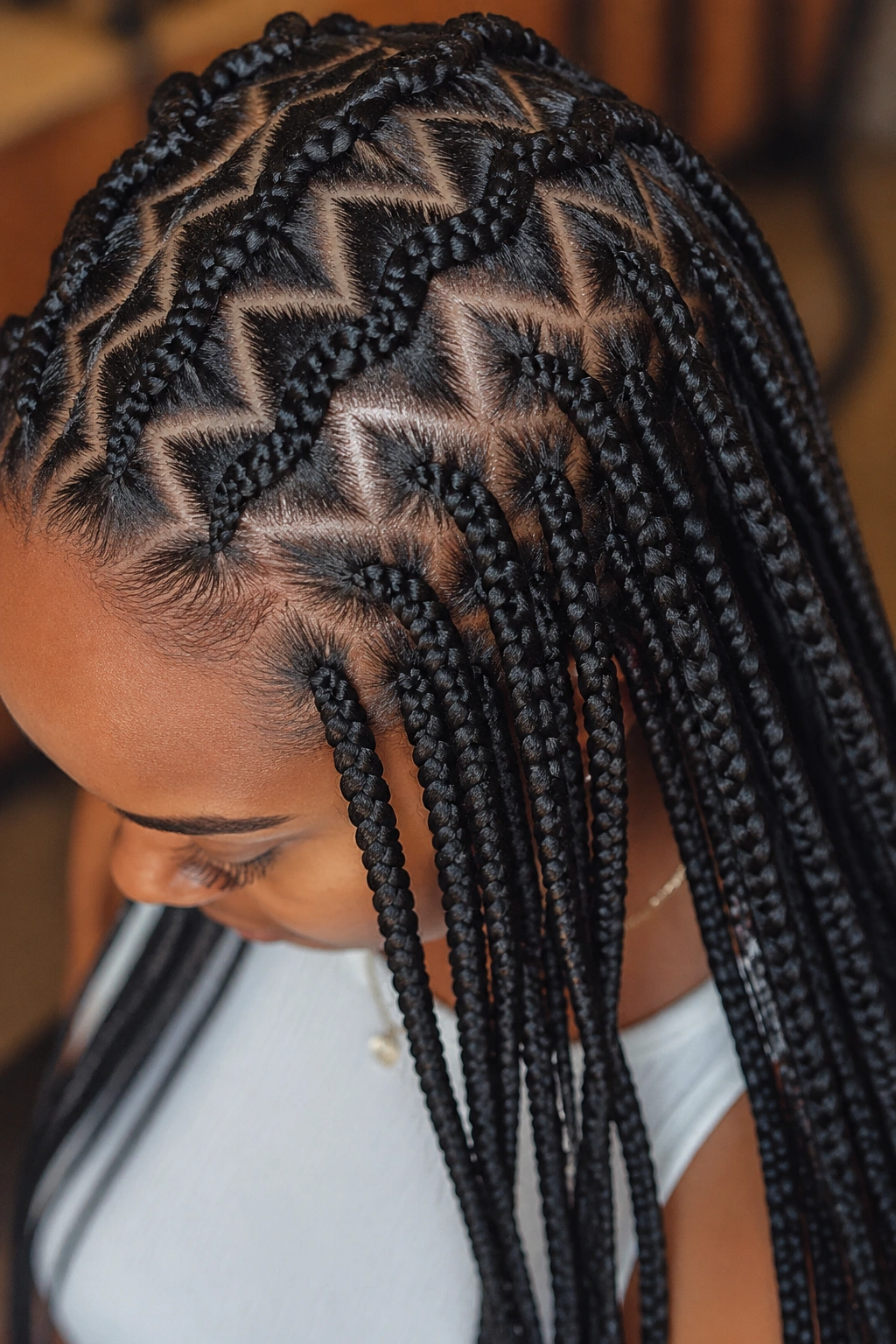
Why stick to straight cornrow paths when they can zigzag?
The cornrow section features zigzag parts running front to back. Each cornrow traces a Z pattern across the scalp before transitioning into a box braid at the crown. The box braids hang straight down.
How to Use It
The zigzag serves as visual interest in the controlled scalp section. When the box braids begin, the linear braids provide a calm contrast to the zigzag above. The contrast is the design.
Zigzag angle matters. Sharp 90-degree angles create a harsh pattern. Softer 45-degree angles flow more organically. Choose based on desired aesthetic — bold and architectural vs. soft and decorative.
This works well on thicker hair that can support the visual density of the zigzag pattern. Very fine hair can’t show the zigzag clearly because the sections are too narrow.
6. Half-Up Knotless Cornrows With Loose Box Braids Behind
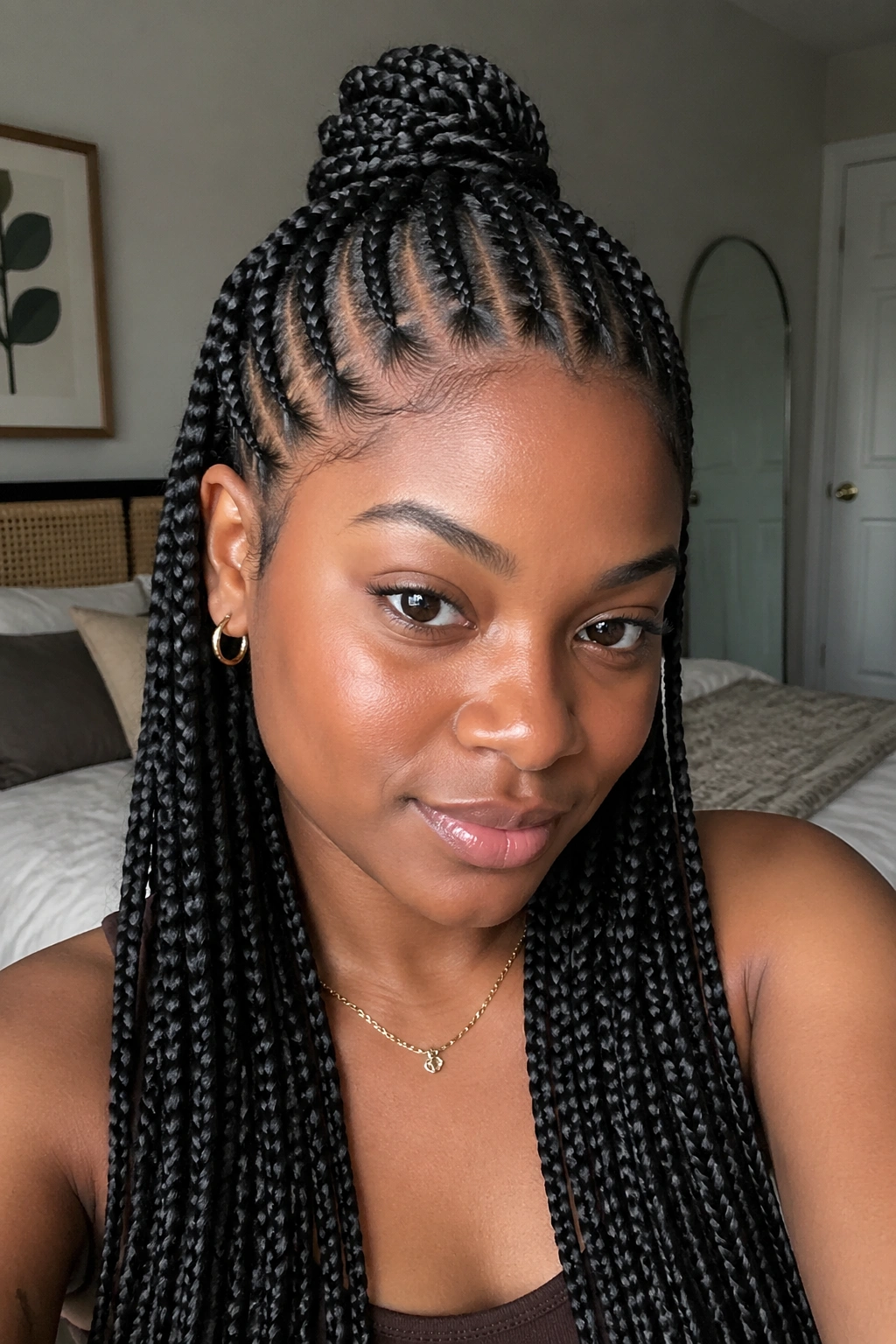
The cornrow section covers only the top half of the head — from hairline to crown. Below the crown, the hair is installed as box braids without additional cornrow structure.
The effect is “cornrows on top, box braids everywhere else.” The cornrows stop where most half-up hairstyles would split. Below that line, the hair transitions entirely to box braids that hang free.
This style is easier to install than full-head cornrow plus box braid combinations. Only half the scalp needs knotless cornrow work. The lower half goes directly into box braids from natural hair sections.
Install time drops to five to seven hours. The maintenance is the same as any other knotless style.
7. Star Pattern Cornrows Into Medium Box Braids
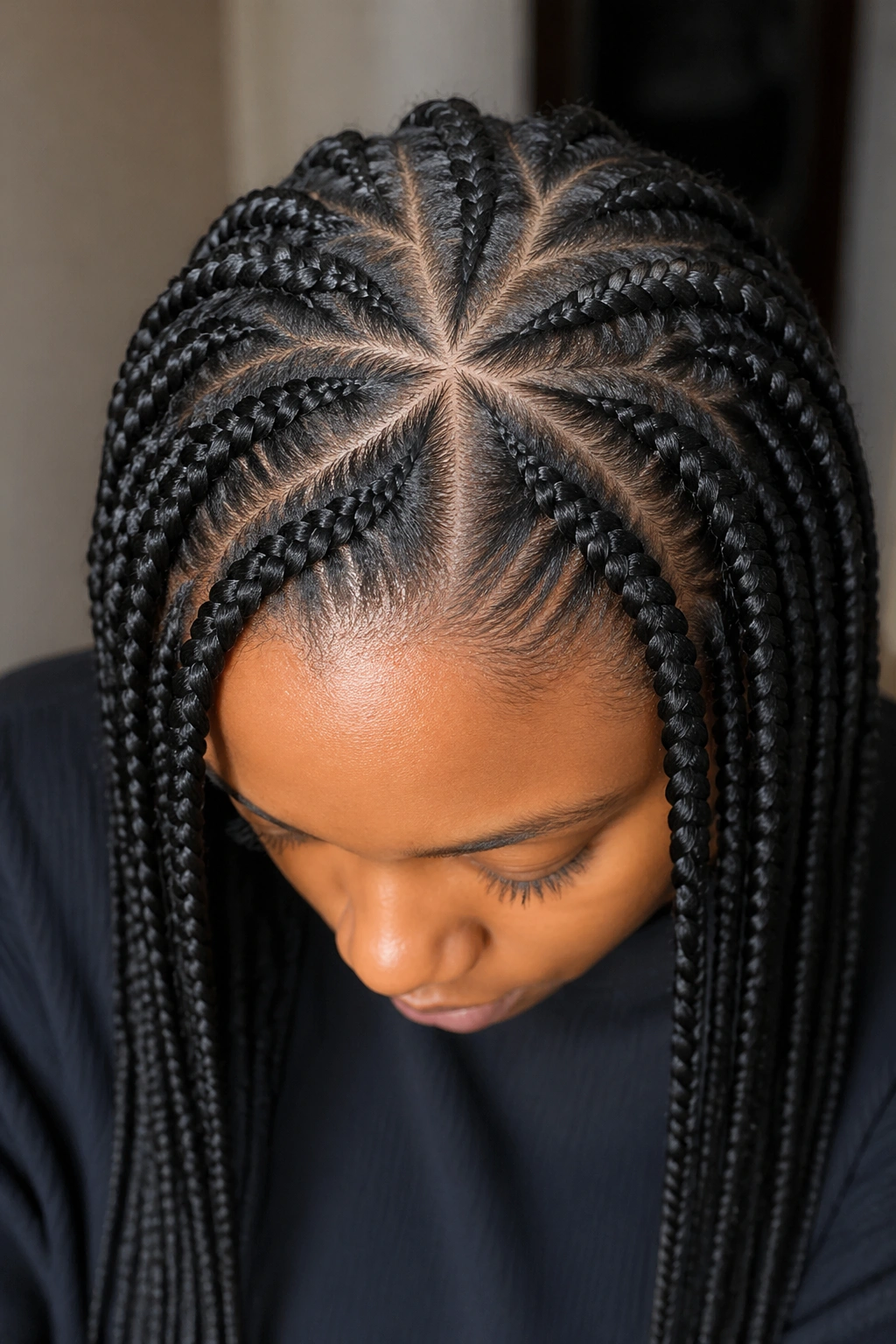
Five knotless cornrows radiate from a center point at the crown, forming a star pattern across the scalp. The braids end at different points on the head based on the star’s shape, then transition into box braids that all fall to similar medium lengths.
The star pattern is unusual enough to stand out in any room. Five cornrows pointing outward from the crown like rays of light create a dramatic radial shape.
The box braids should all be the same length despite the varying cornrow lengths. Match kanekalon amounts at each transition point so the finished box braid ends align. Uneven braid lengths would make the star pattern read as messy rather than intentional.
8. Knotless Cornrow Mohawk With Box Braid Sides
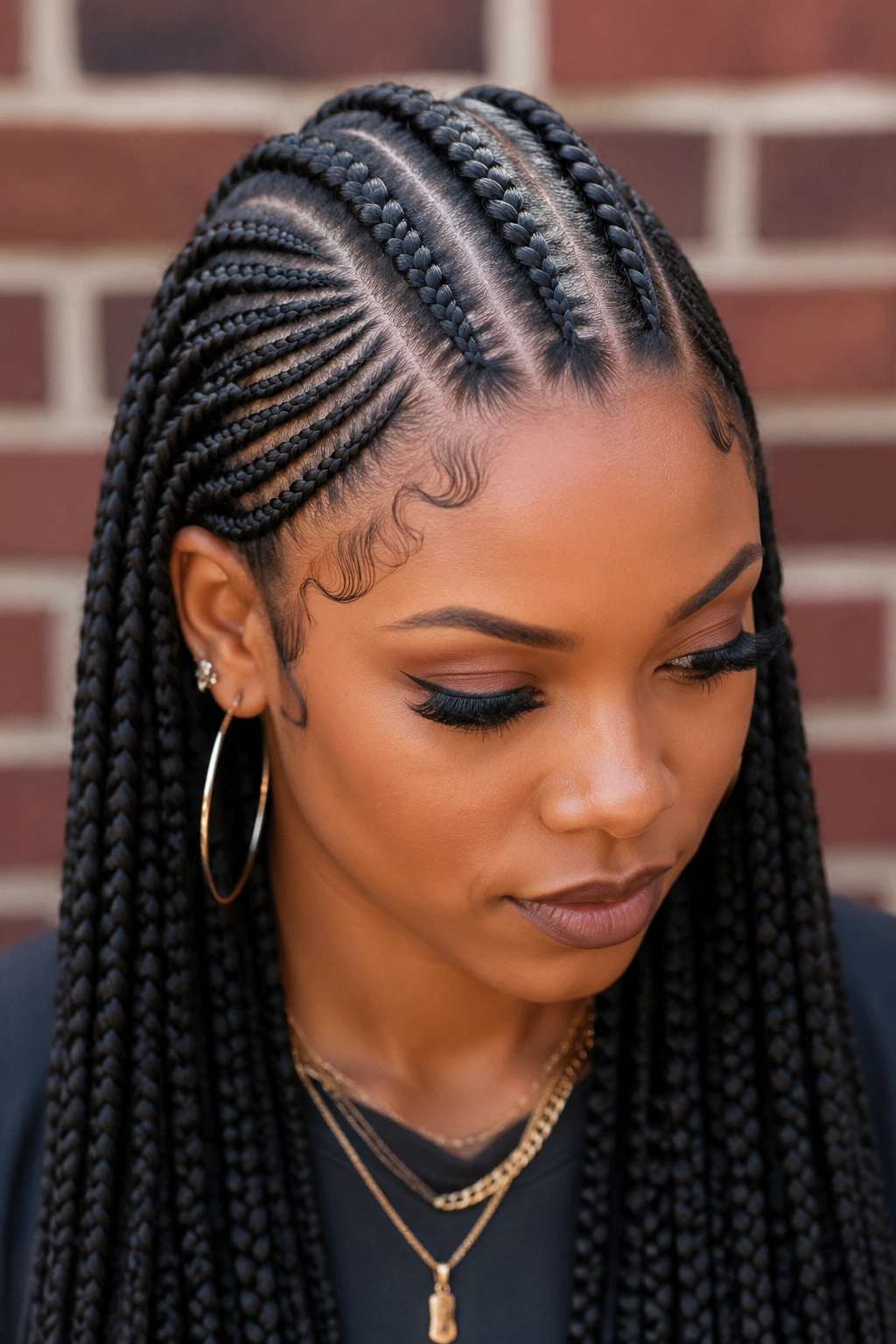
The top center of the head features a knotless cornrow mohawk — three to four parallel cornrows running from forehead to nape along the center strip. The sides of the head are installed as box braids directly from the natural hair.
The mohawk creates a strong vertical line across the top. The box braids on the sides hang freely, framing the face.
This is an edgy, fashion-forward style. It reads as bold and confident rather than traditional. Best for those whose style leans toward statement pieces.
The mohawk strip width should be 3-4 inches. Narrower and the mohawk disappears. Wider and the sides lose their box braid presence.
9. Feed-In Knotless Cornrows With Bohemian Box Braids
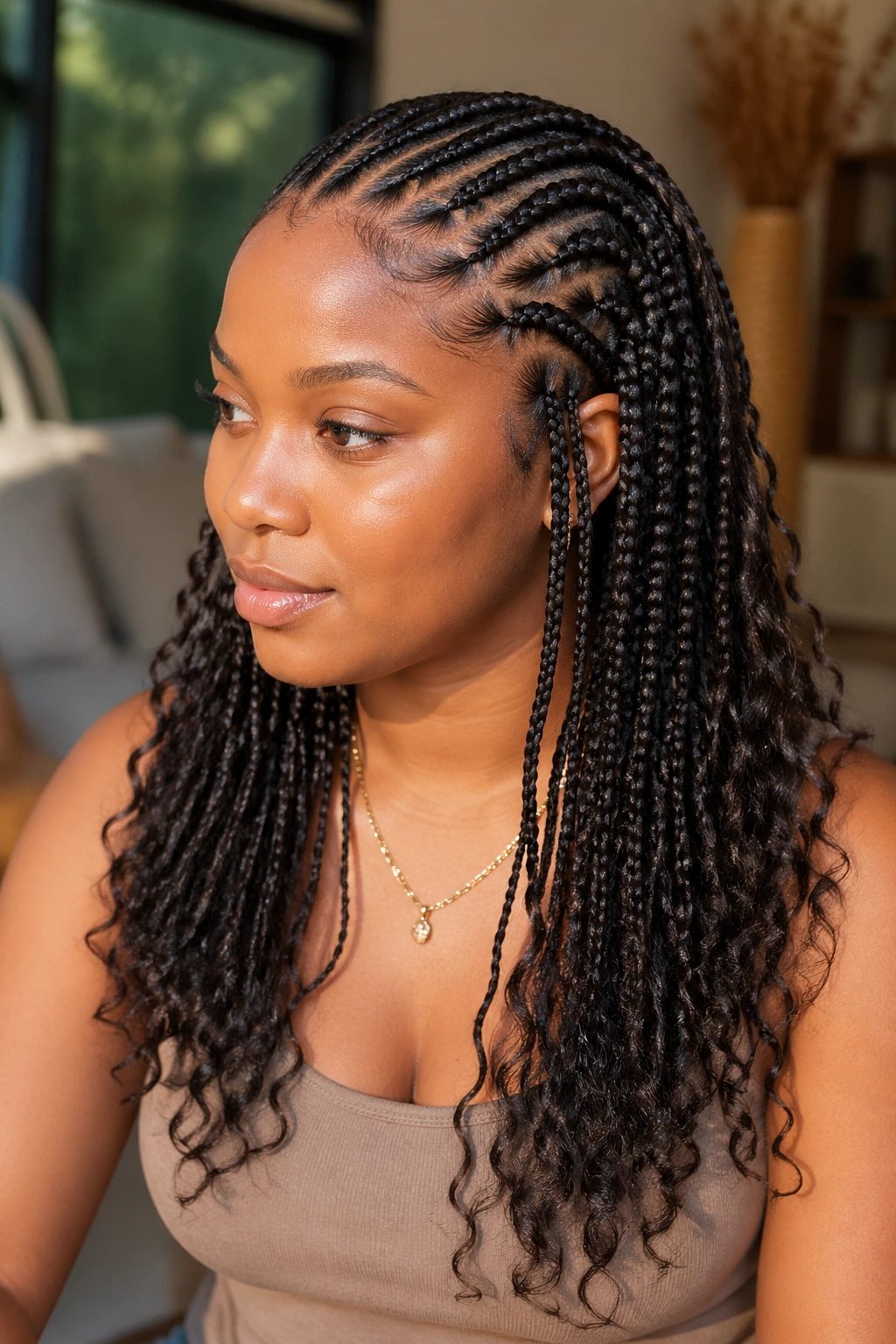
The cornrows use a graduated feed-in technique that adds slight wave and texture as they progress. The box braids are styled with intentional loose curls at the ends — “bohemian” style rather than sleek.
The loose curl ends at the box braid tips require specialty curly extension hair or heat styling of standard kanekalon with boiling water to set the curls.
This style reads as relaxed and effortless despite its install complexity. It’s the right pick for someone whose personal style tends toward flowing, natural aesthetics.
The bohemian curls need refreshing every 10-14 days. Dip the box braid ends in hot water, then let them air-dry. The curl pattern reforms as the kanekalon cools.
10. Knotless Cornrows Into Jumbo Box Braids
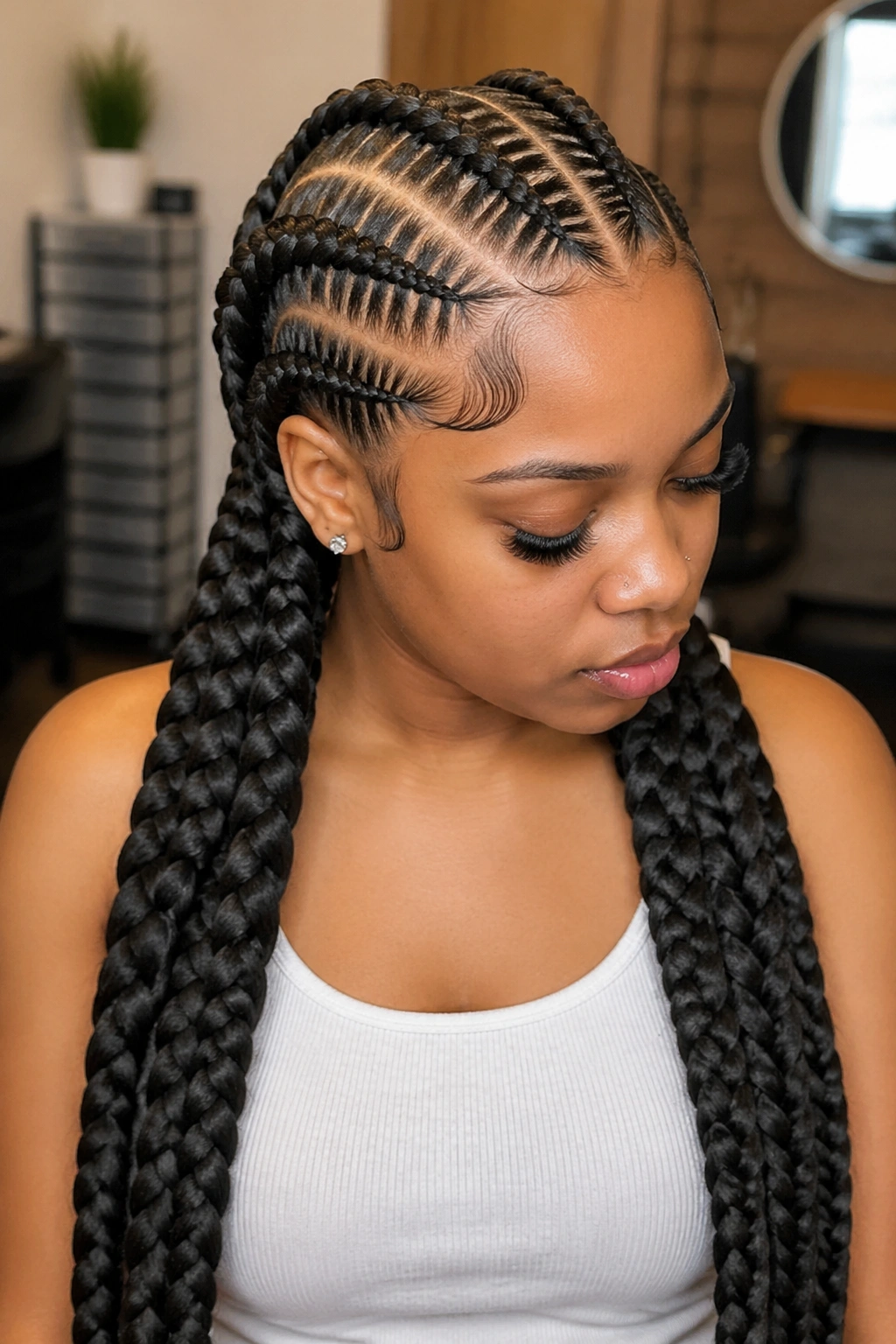
Unlike standard 1-inch box braids, jumbo versions are 2-3 inches wide per braid. The cornrow count stays traditional — five cornrows feeding into five jumbo box braids.
Jumbo box braids install faster than standard-width braids. Fewer braids overall means less time per braid but more dramatic weight per braid.
Who This Is For
Anyone who wants the box braid aesthetic but doesn’t want to commit to 8-10 hours of install time. Jumbo box braids can cut install time to 5-6 hours total.
The look reads as statement-scale. Jumbo braids catch the eye and communicate deliberate styling. They’re not subtle. Not trying to be subtle.
11. Knotless Cornrows With Micro Box Braids
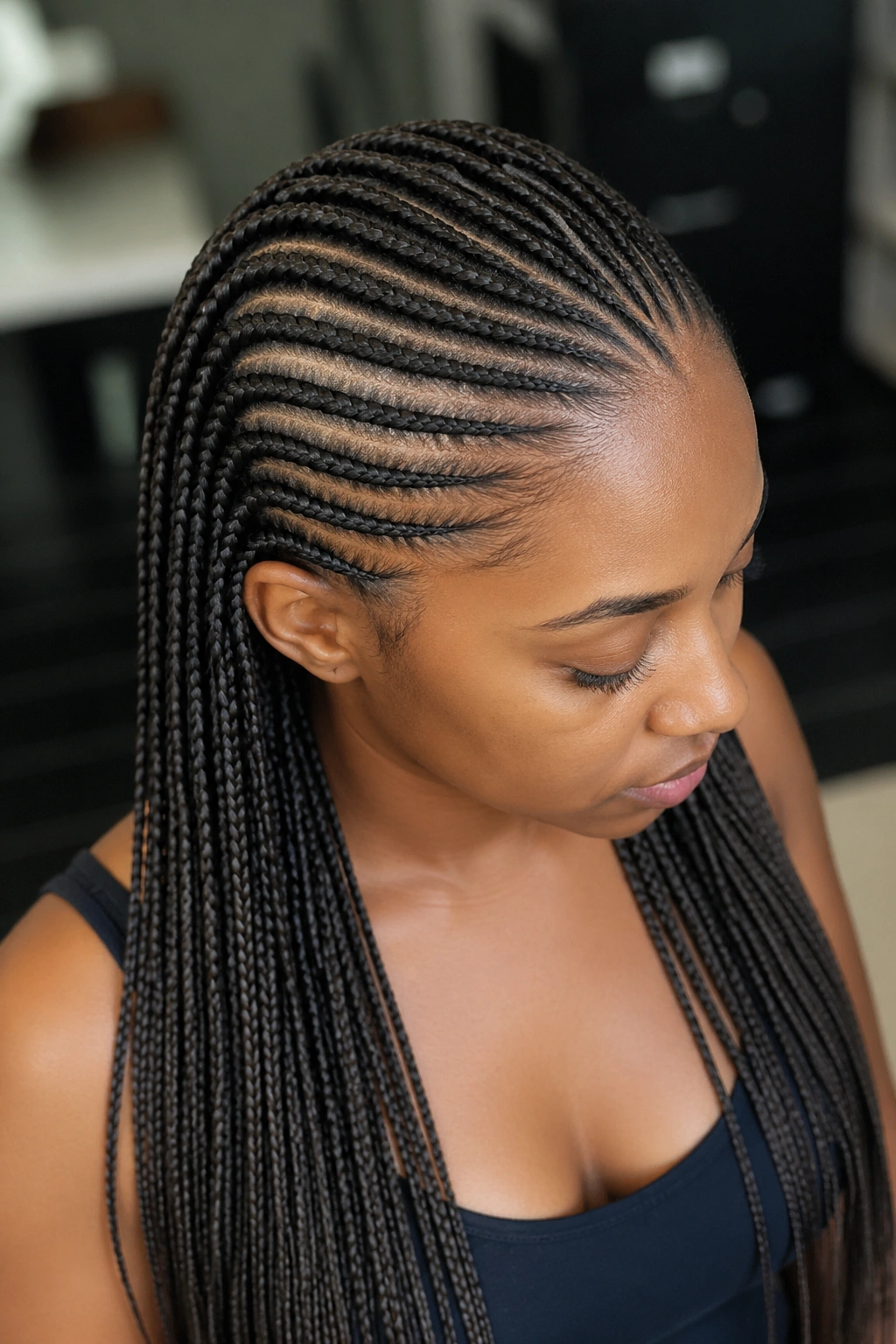
The opposite of jumbo. Very thin box braids — smaller than pencil width — hang beneath a knotless cornrow crown.
Micro box braids are labor-intensive. A full-head install with micros can run 12-15 hours. Combining micros with cornrows pushes the total to 14-18 hours.
The reward is a hair density that no other style matches. A head of micro box braids moves like real hair — each braid is thin enough to flow individually. From a distance, the effect is indistinguishable from very long, very thick natural hair.
This is a commitment style. Install is a full day or split across two days. Wear time can extend to 8-10 weeks with diligent care. Takedown is a multi-hour project.
12. Knotless Cornrows With Ombre Box Braids
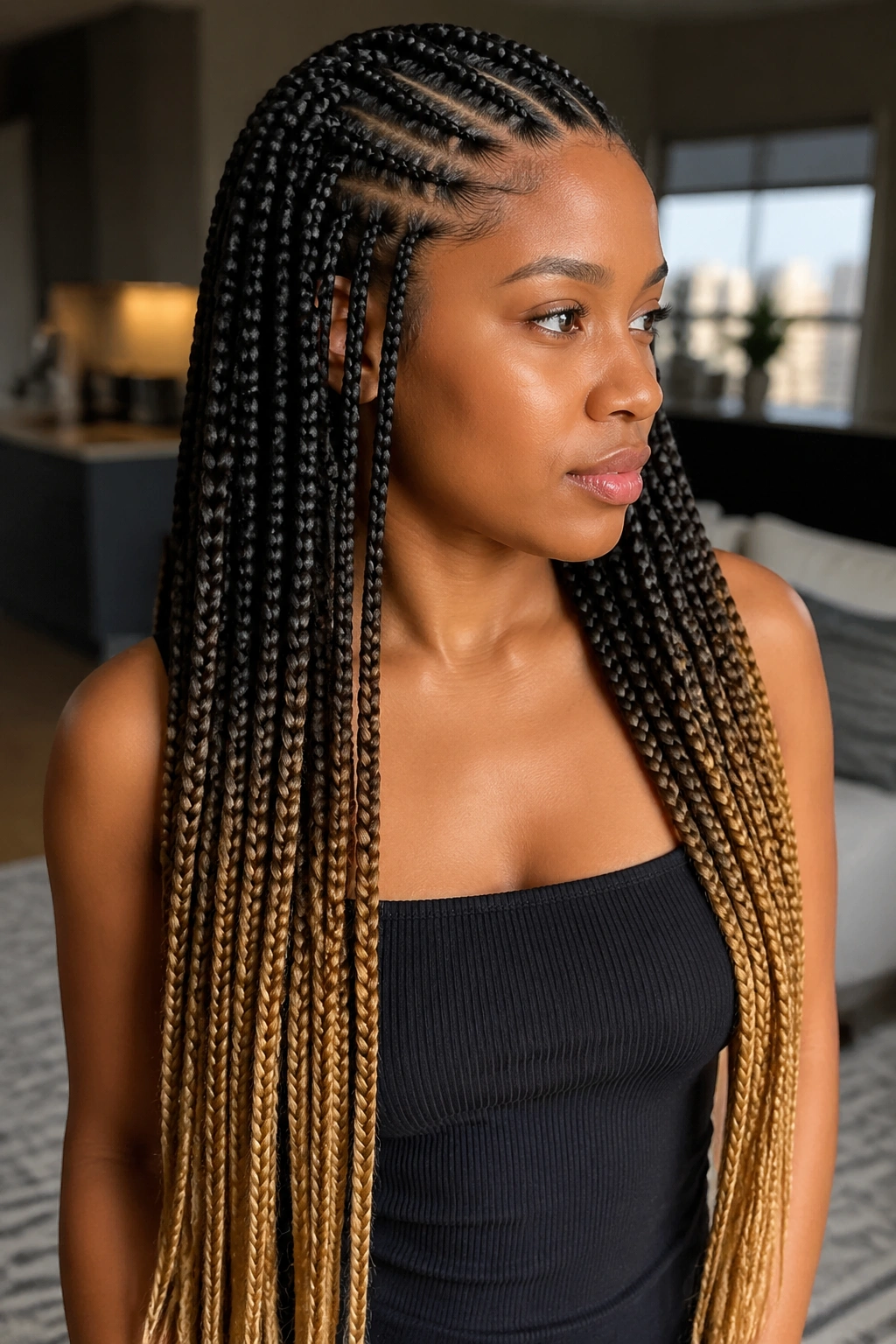
The cornrows are natural-color roots. The box braids transition to a lighter color — honey blonde, caramel, auburn, silver — starting about six inches down from the cornrow end.
Ombre is installed using two different kanekalon colors. Dark kanekalon at the root transitioning to light kanekalon in the length. The transition point is where the second color begins feeding in.
The color change should be gradual, not abrupt. A sharp dark-to-light line looks like two separate installs. A smooth transition reads as styled dye work.
Ombre works on any base color but reads most dramatically on dark natural hair with a light extension. Dark-to-lighter creates more contrast than same-tone variations.
13. Knotless Cornrows Into Curly-End Box Braids
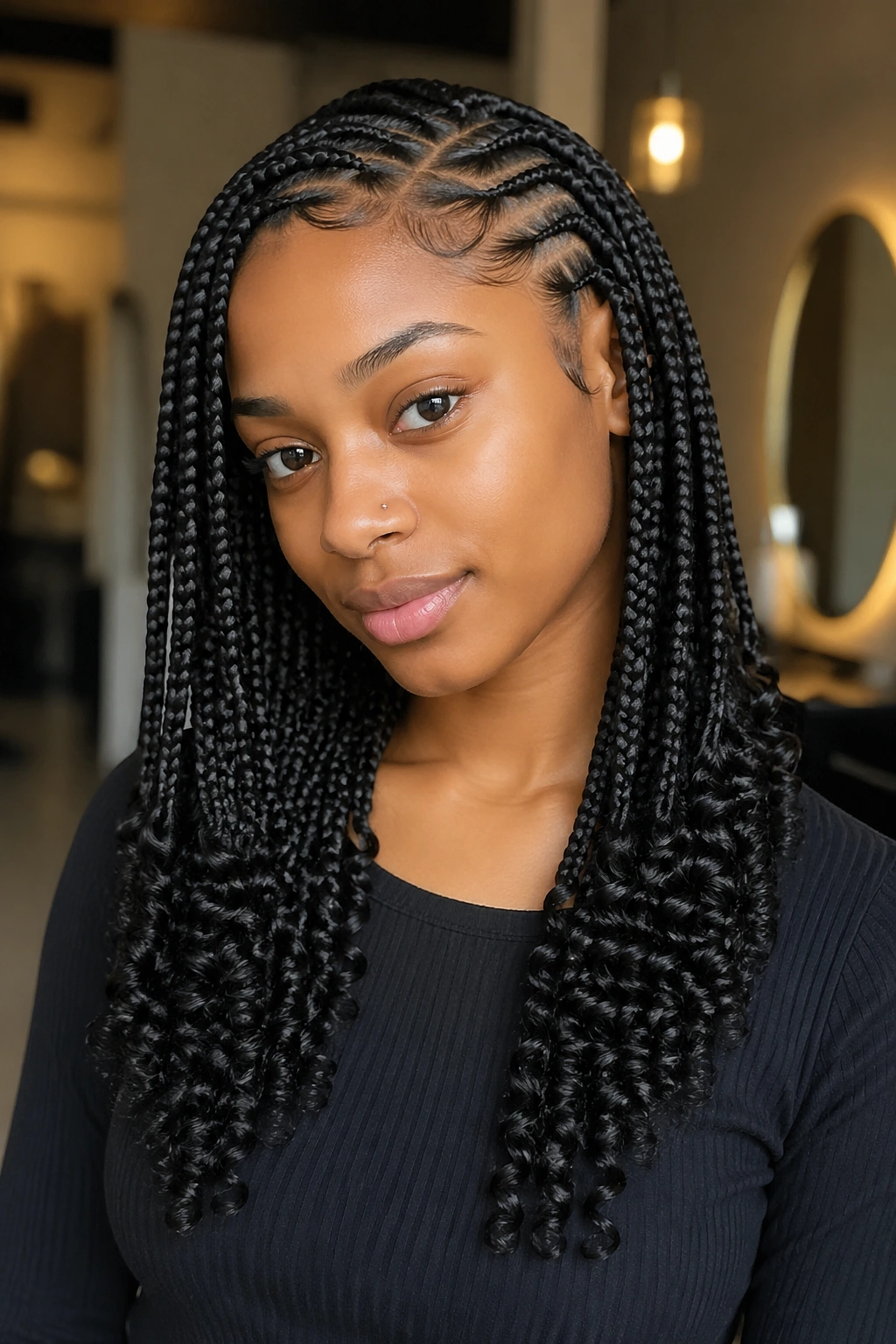
Most of the box braid length is the straight-braid standard. The last two to three inches of each braid are installed as loose curls rather than continued braids.
Why It Works
The curl at the end gives the style a softer finish than a blunt braid end. It’s feminine without being fussy. It reads as “I styled this carefully” rather than “I just got braided.”
Styling Tips
The curl ends are created by leaving kanekalon unbraided at the braid tip and using hot water to set the curl pattern. The curls will last as long as the braids do.
Curl ends add about 45 minutes to the install time. They’re worth it for most wear occasions.
14. Knotless Cornrow Crown With Side-Part Box Braids
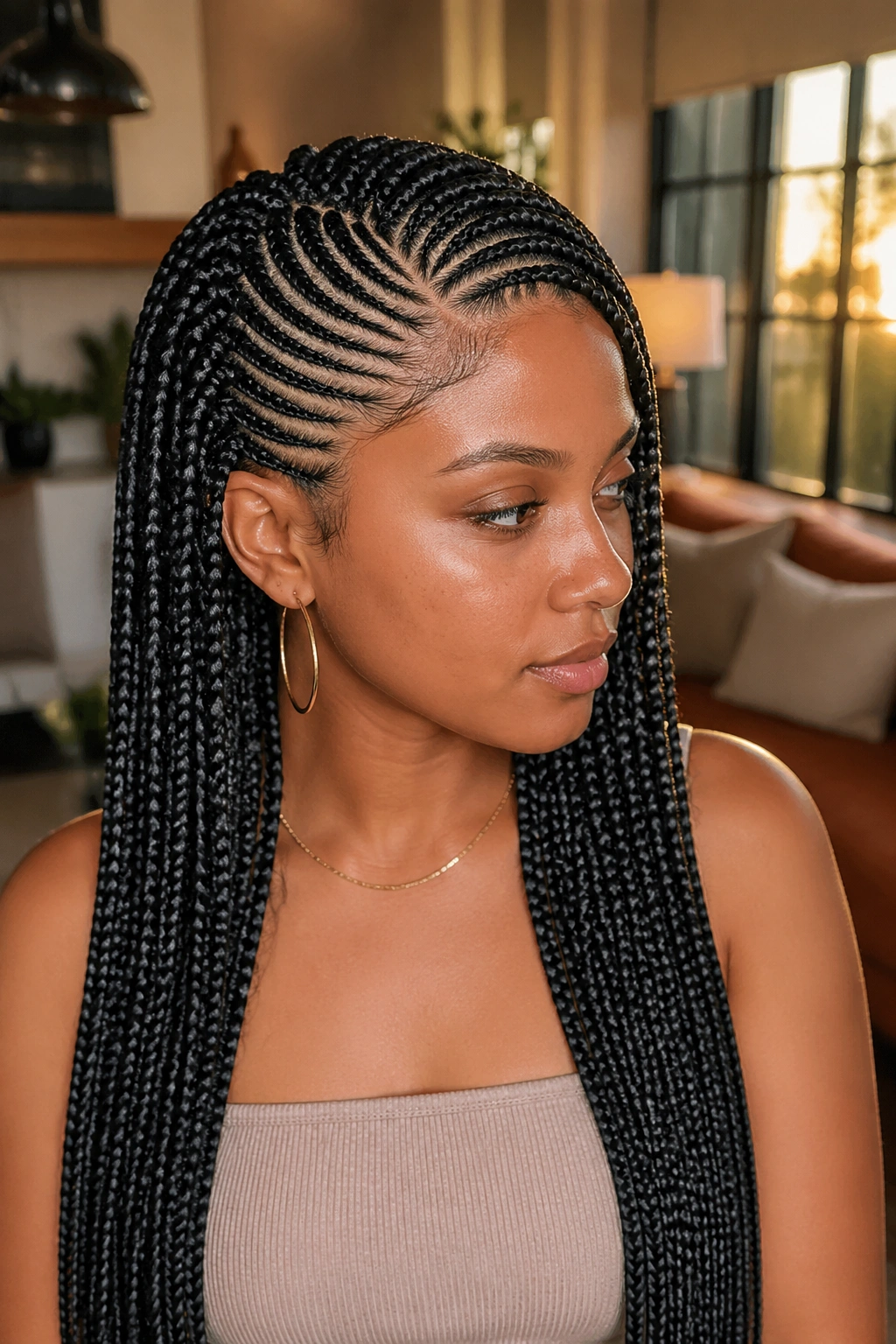
A deep side part runs through the cornrow section. The cornrows on each side of the part angle away from each other — the left-side cornrows angle left, the right-side cornrows angle right. At the crown, the cornrows transition into box braids that hang in the direction they were last angled.
The side-part detail gives the cornrow section a grown-up, polished quality. It’s dressier than symmetric straight-back cornrows.
The box braids naturally fall asymmetrically based on their origin point. This creates an organic side-swept silhouette without forcing the style with extra product.
15. Knotless Cornrows With Beaded Accent Braids
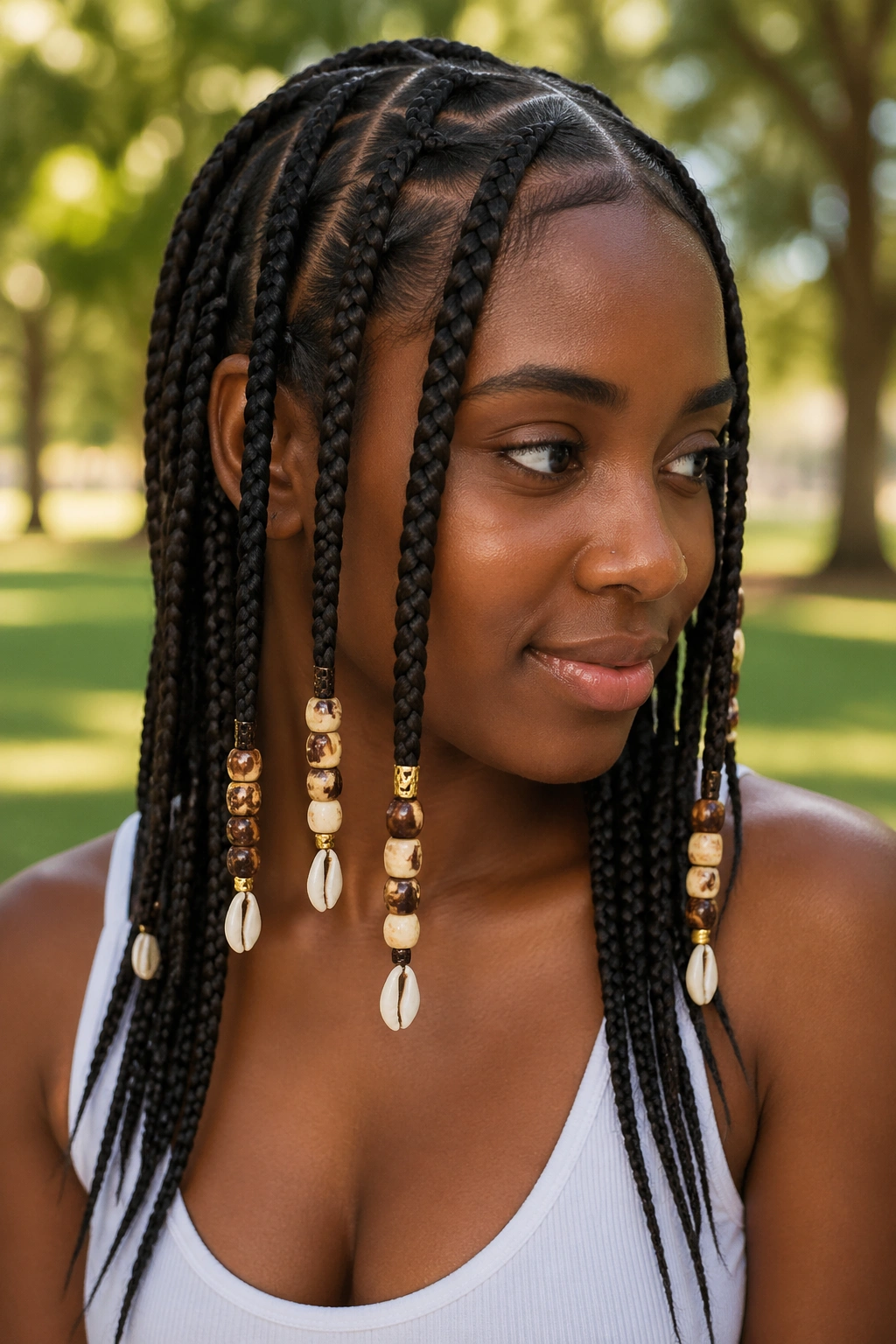
Most of the box braids are plain. Three to five box braids feature beads along their length — wooden beads, cowrie shells, or metal cuffs placed at regular intervals.
The beaded braids stand out against the plain surrounding braids. They become the styling focal point without requiring elaborate install techniques.
Place the beaded braids symmetrically — two on each side of the head, one at the center. Asymmetric bead placement looks unplanned. Symmetric bead placement looks designed.
Use lightweight beads. Heavy beads on specific braids pull those braids down at different rates than the unbeaded braids, which throws off the symmetry of the overall style.
16. Knotless Cornrow Up-Do With Loose Box Braid Tails
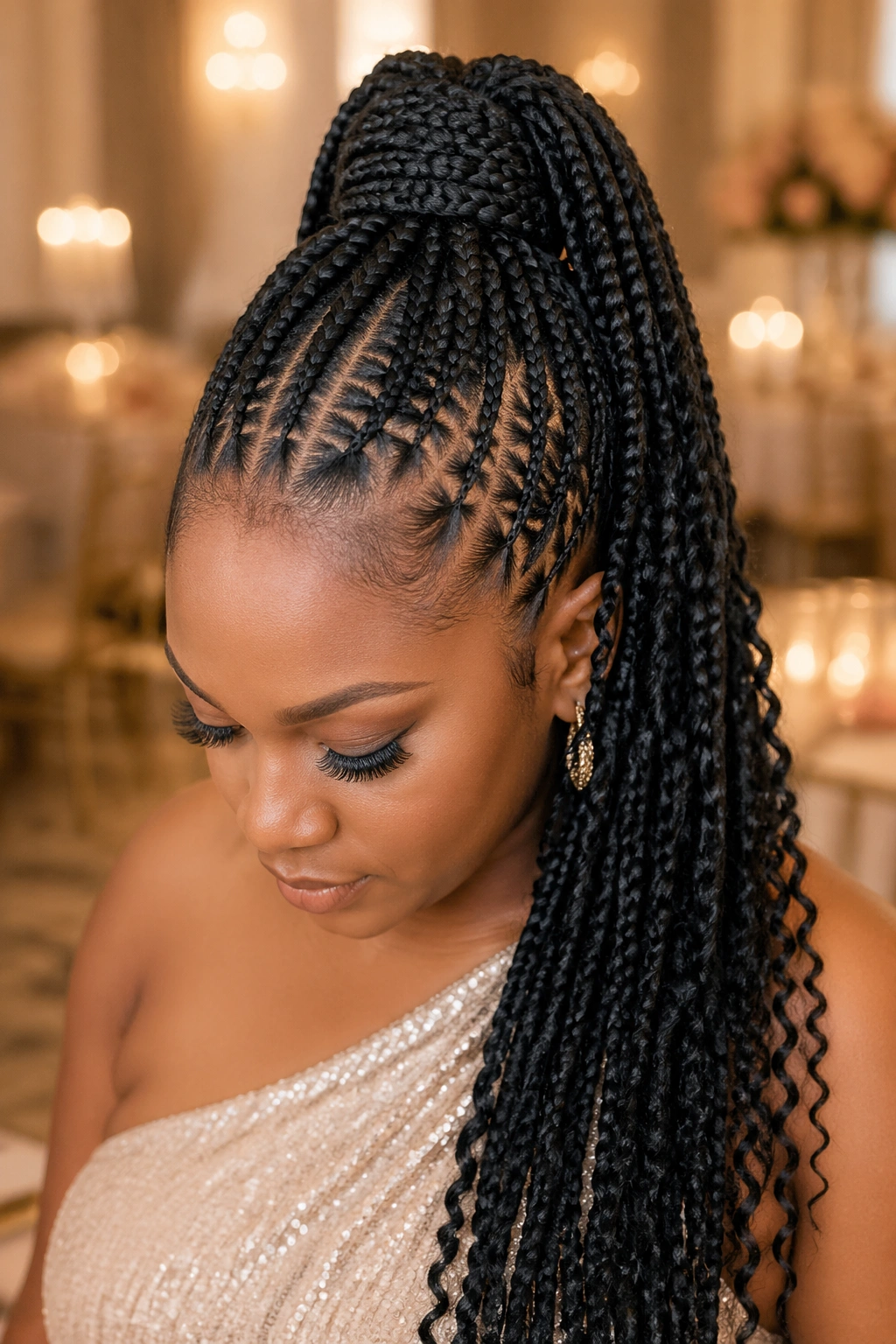
The cornrows and box braid transitions are all gathered at the top of the head into a single high crown or top knot. The box braid lengths hang down from the crown, pooling around the shoulders.
This is a formal variation. Up-do cornrows with flowing tails look appropriate for weddings, galas, and evening events.
The up-do needs to be styled after the cornrow section is complete but before the box braids have been fully installed. Work with the braider to set up the up-do structure before the box braid weight is added.
17. Knotless Cornrows With Staggered Box Braid Lengths
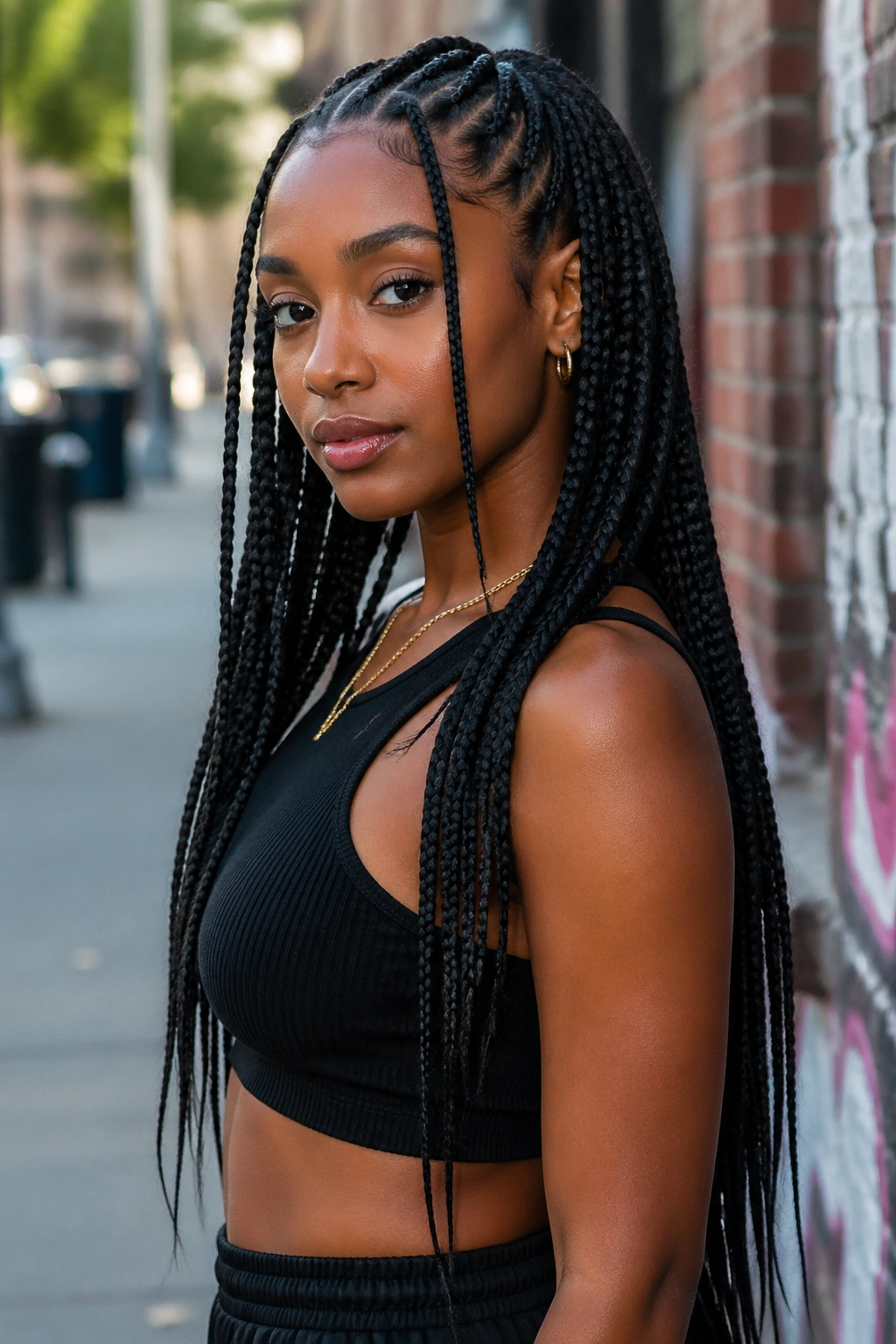
Not all box braids reach the same final length. Some end at the shoulders. Some end mid-back. Some extend to the waist. The staggered lengths create a layered look.
Staggering is intentional. Each braid is planned for its final length during the install. The kanekalon amount per braid varies to create the layered effect.
This style reads as dynamic and fashion-forward. It’s not traditional, but it’s striking. Particularly flattering for those whose face shape benefits from visible length variation around the face.
18. Knotless Cornrows With Dark Roots and Blonde Tips
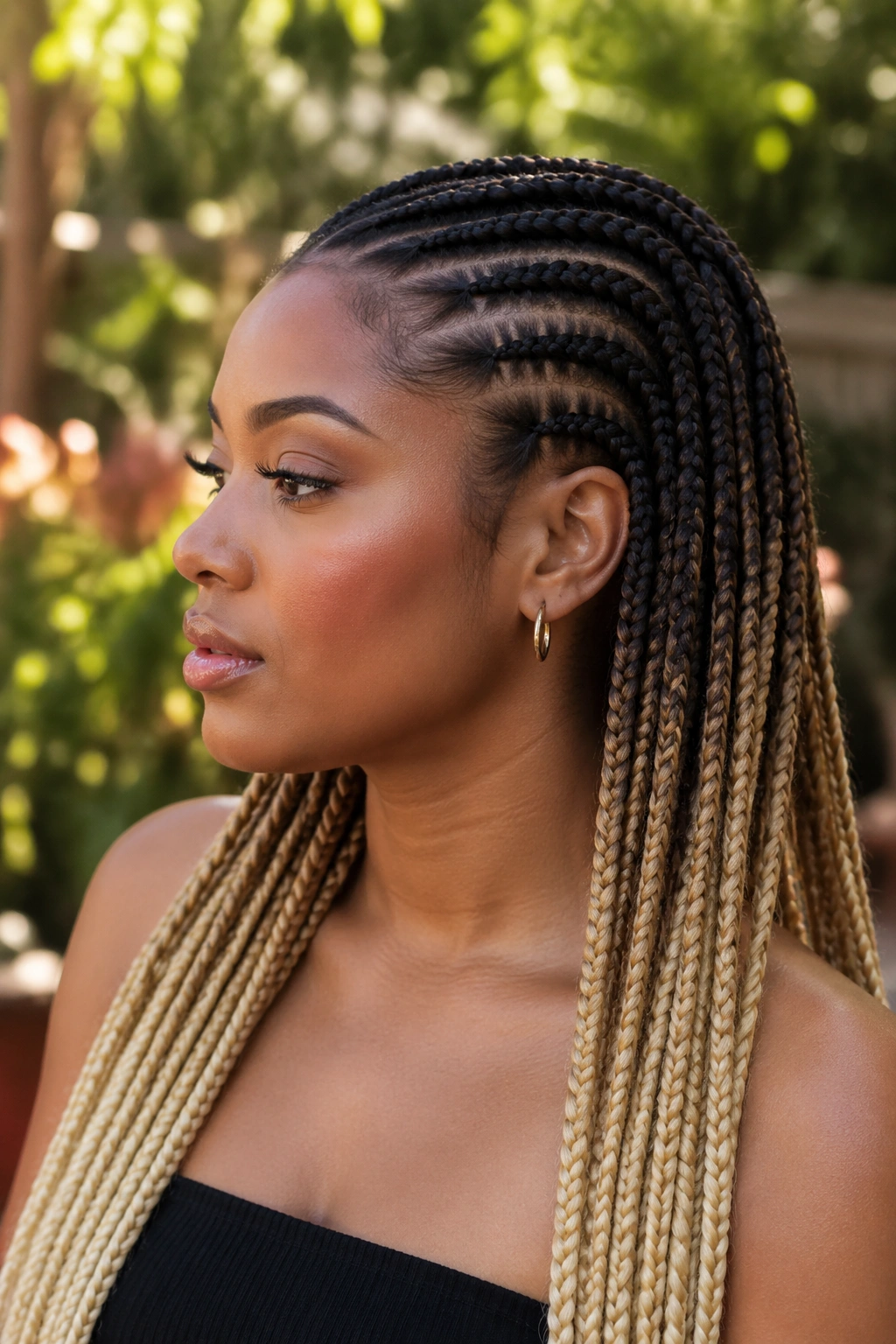
The cornrow section is 100% natural color. The first few inches of box braid are also natural color. Then the blonde color fades in over the next several inches and dominates the remaining box braid length.
The effect is “natural scalp, blonde length.” The dramatic color change between the cornrow section and the box braid tails becomes the whole visual statement.
Blonde kanekalon varies widely in quality. Cheap blonde kanekalon turns brassy or orange within two weeks. Premium blonde kanekalon holds true color for the full wear time. Invest in quality blonde for this style specifically.
The length of dark root preserved before the blonde begins affects the overall look. Long dark root sections read as more natural. Short dark root sections read as more stylized.
19. Knotless Cornrows With Braided Bun and Free Ends
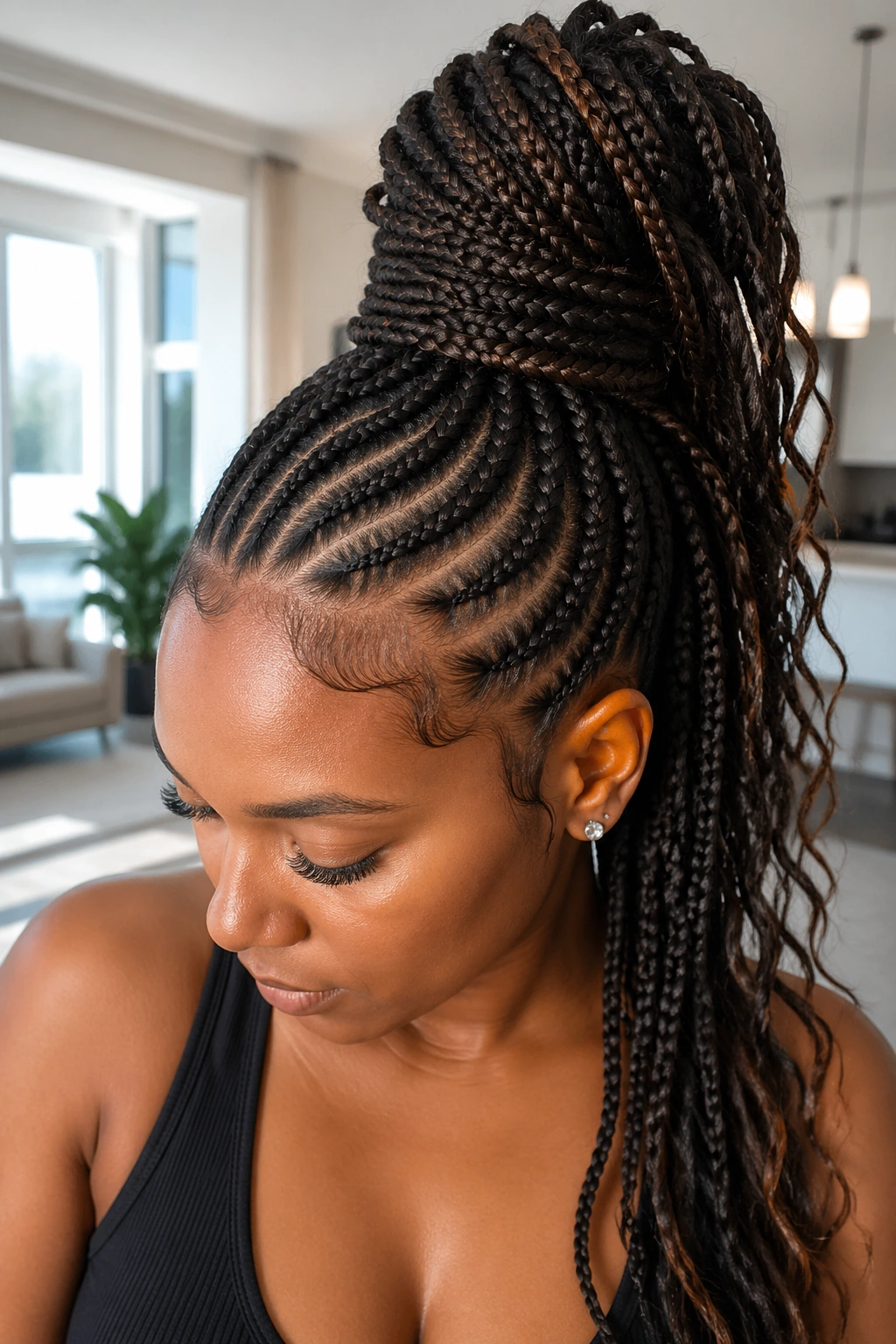
The cornrows feed into box braids that are all gathered into a high bun at the top of the head. The box braid ends that extend past the bun fall freely, creating a sculpted bun with cascading braids coming out of it.
What’s Different
Unlike a clean topknot, this style leaves the braid ends visible and flowing rather than tucking them neatly into the bun. The flowing ends soften the bun and give movement to what would otherwise be a rigid silhouette.
This works best with medium-length box braids — shoulder to mid-back. Shorter braids don’t cascade properly once the bun takes up most of the length.
20. Knotless Cornrow Perimeter With Exposed Center Box Braids
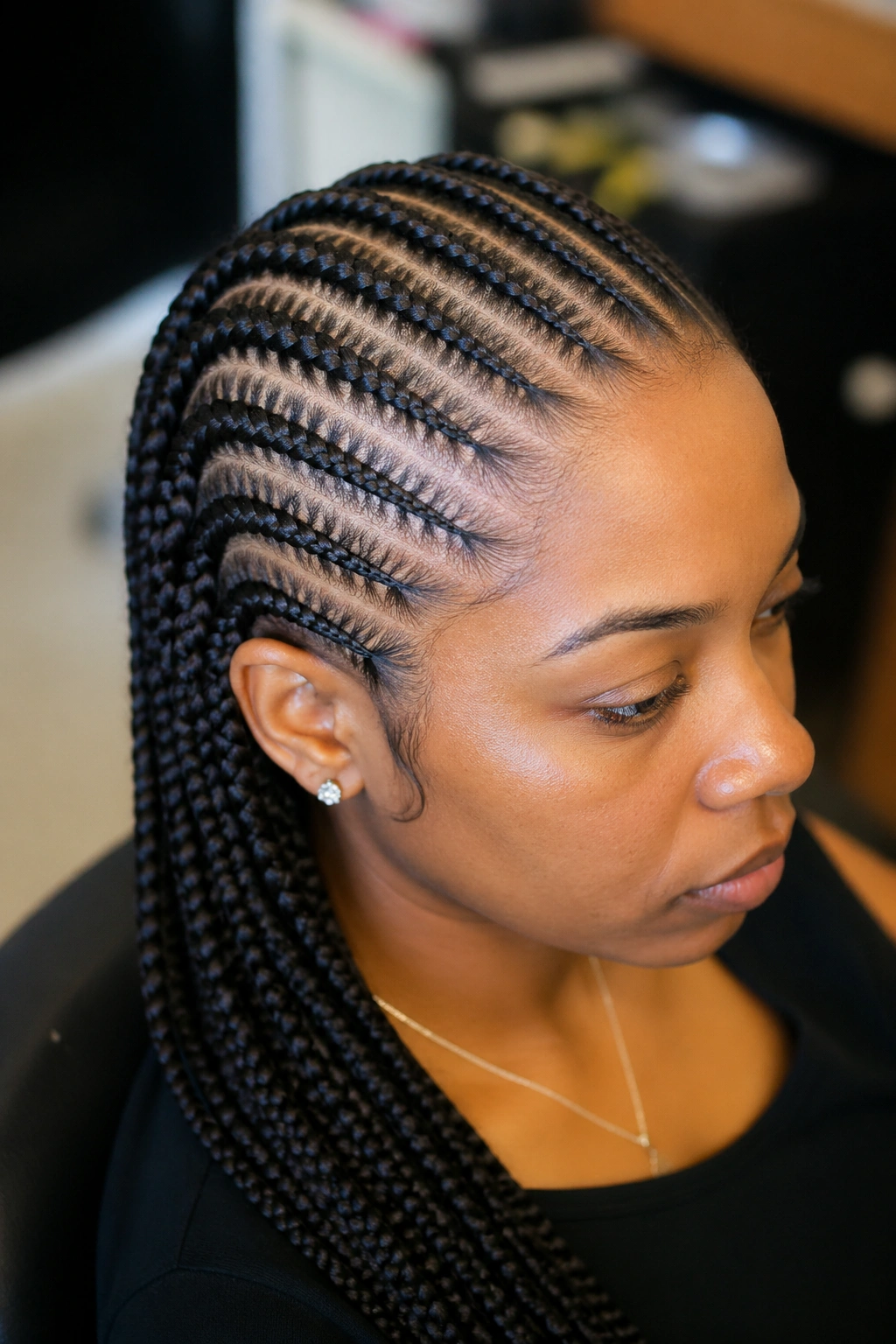
Cornrows run around the perimeter of the head — along the hairline, sides, and nape — framing the entire head. The center of the scalp features box braids that emerge from natural hair without cornrow structure.
This reverse approach makes the box braids the focal point rather than the cornrows. The cornrow frame is subordinate to the box braid filling.
The style works best on thicker hair densities. Thin hair in the center doesn’t have enough mass to make the box braid filling look substantial against the cornrow frame.
Visually, this style reads as a crown effect. The cornrow frame acts like a diadem around the box braids in the middle.
21. Knotless Cornrow Pattern With Pop-of-Color Box Braids
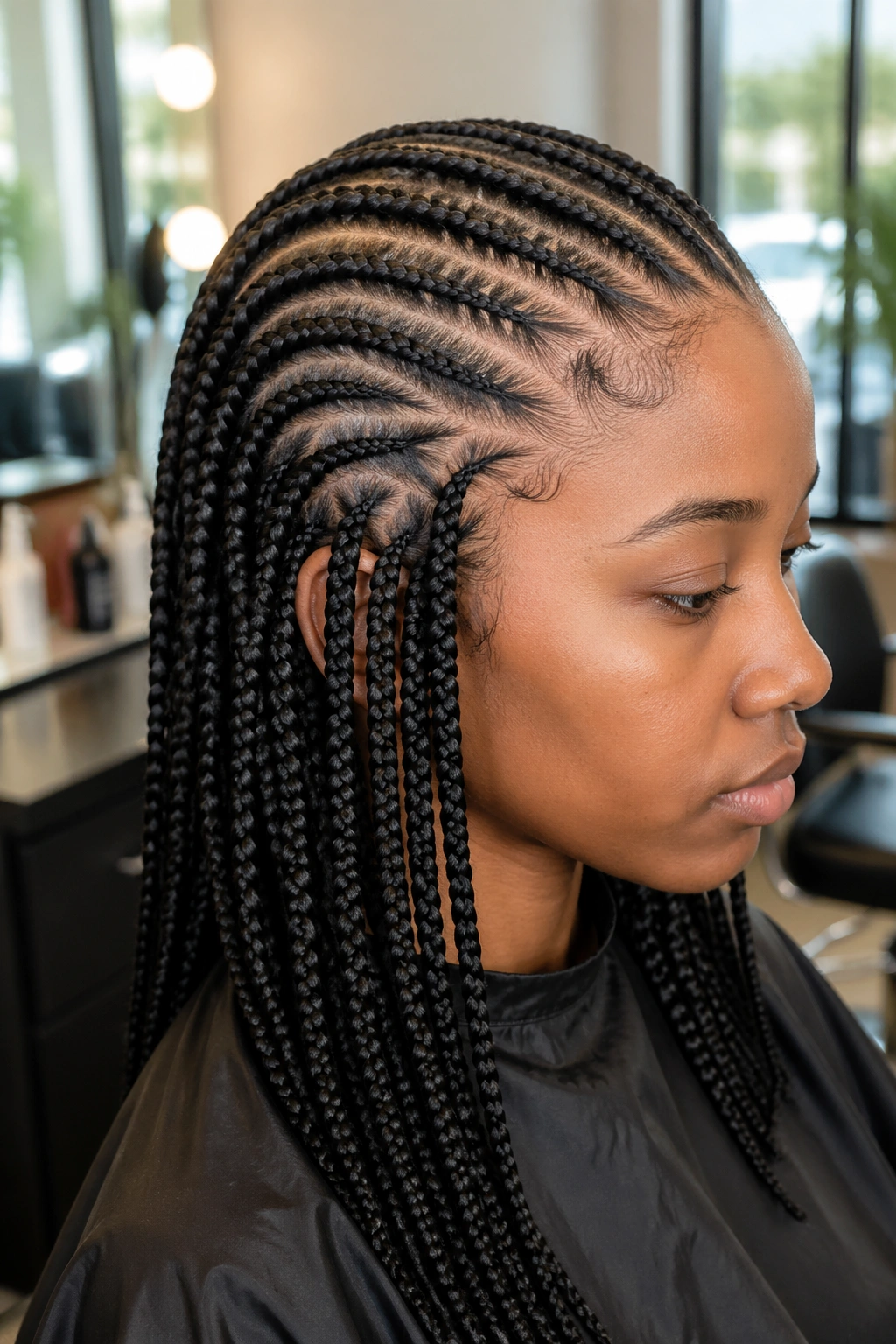
The cornrows and most of the box braids are natural hair color. One or two box braids in the collection feature a bold accent color — red, blue, purple, or pink — that stands out against the surrounding natural-color braids.
The accent color braids are installed using standard knotless technique but with colored kanekalon. The colored braids last the full wear time without fading if the kanekalon is quality.
Position the color braids carefully. They should be visible from face-on angles but not so prominent they dominate the whole style. Two positions that work well: directly behind each ear, where the color peeks through but isn’t overwhelming.
22. Knotless Cornrows Into Shoulder-Grazing Bob Box Braids
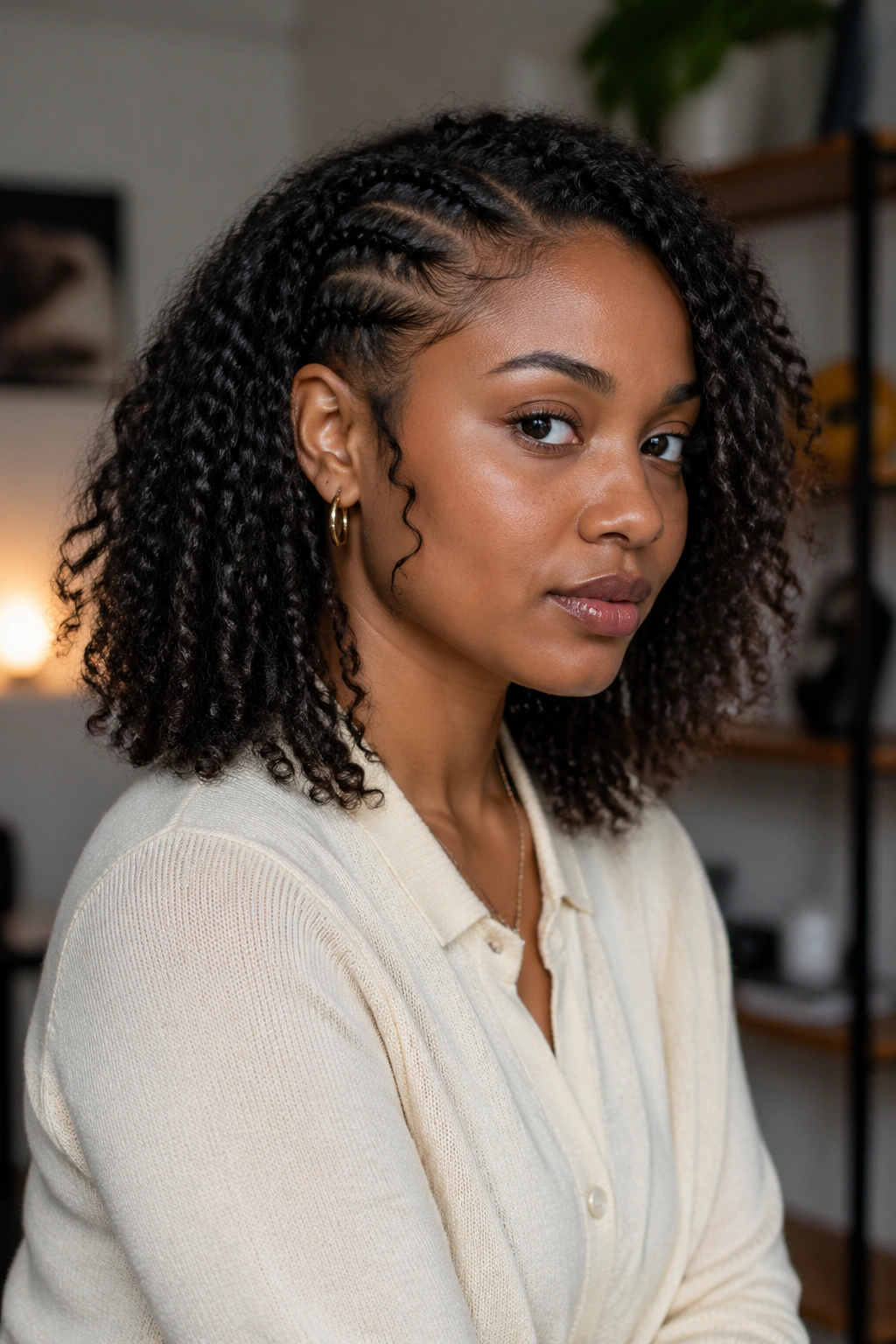
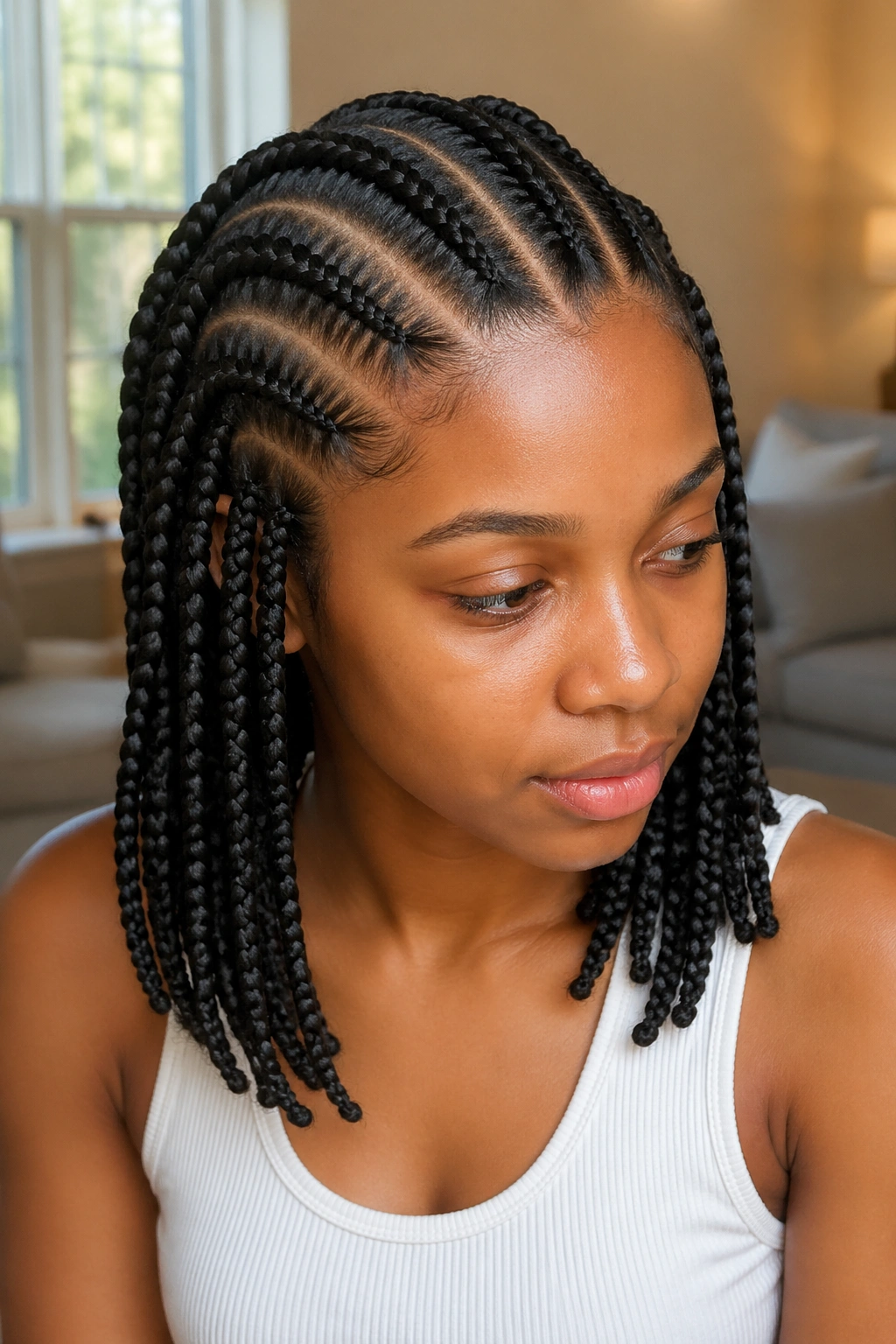
The box braids are cut short — chin to shoulder length — creating a blunt bob silhouette. The cornrow crown provides structured top while the short box braid bob frames the face.
The bob length is flattering for many face shapes because it calls attention to the jaw and neck area. It’s a modern, sophisticated look that reads as intentional styling.
Short box braids take less time to install than long ones. The total style install drops to four to six hours instead of the usual eight to ten.
Maintenance is simpler too. Short braids don’t tangle the way long braids do. Wash day is faster. Daily care is lighter.
Daily Maintenance for the Combined Style
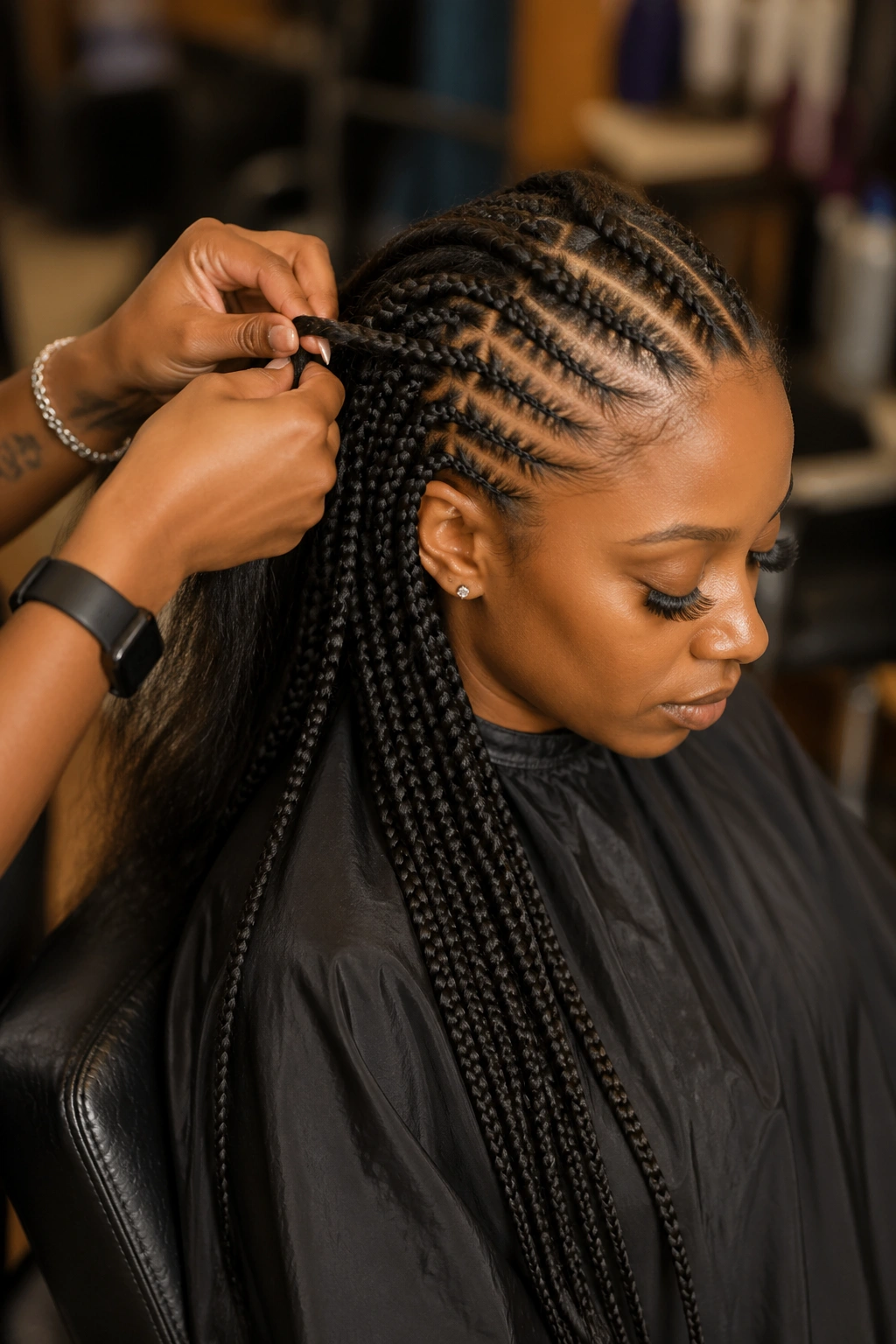
Spritz the scalp along the cornrow parts every morning. A mixture of water, light leave-in, and a drop of oil keeps the scalp hydrated without weighing down the box braids.
Oil the scalp two to three times per week. Focus on the cornrow section; box braids don’t need scalp oil because they extend away from the scalp anyway.
The box braid length needs different care. A light hair oil applied with hands, smoothed over the braids from root to tip, once or twice per week prevents the kanekalon from drying out and frizzing.
Sleep Care for Cornrow Plus Box Braid Styles
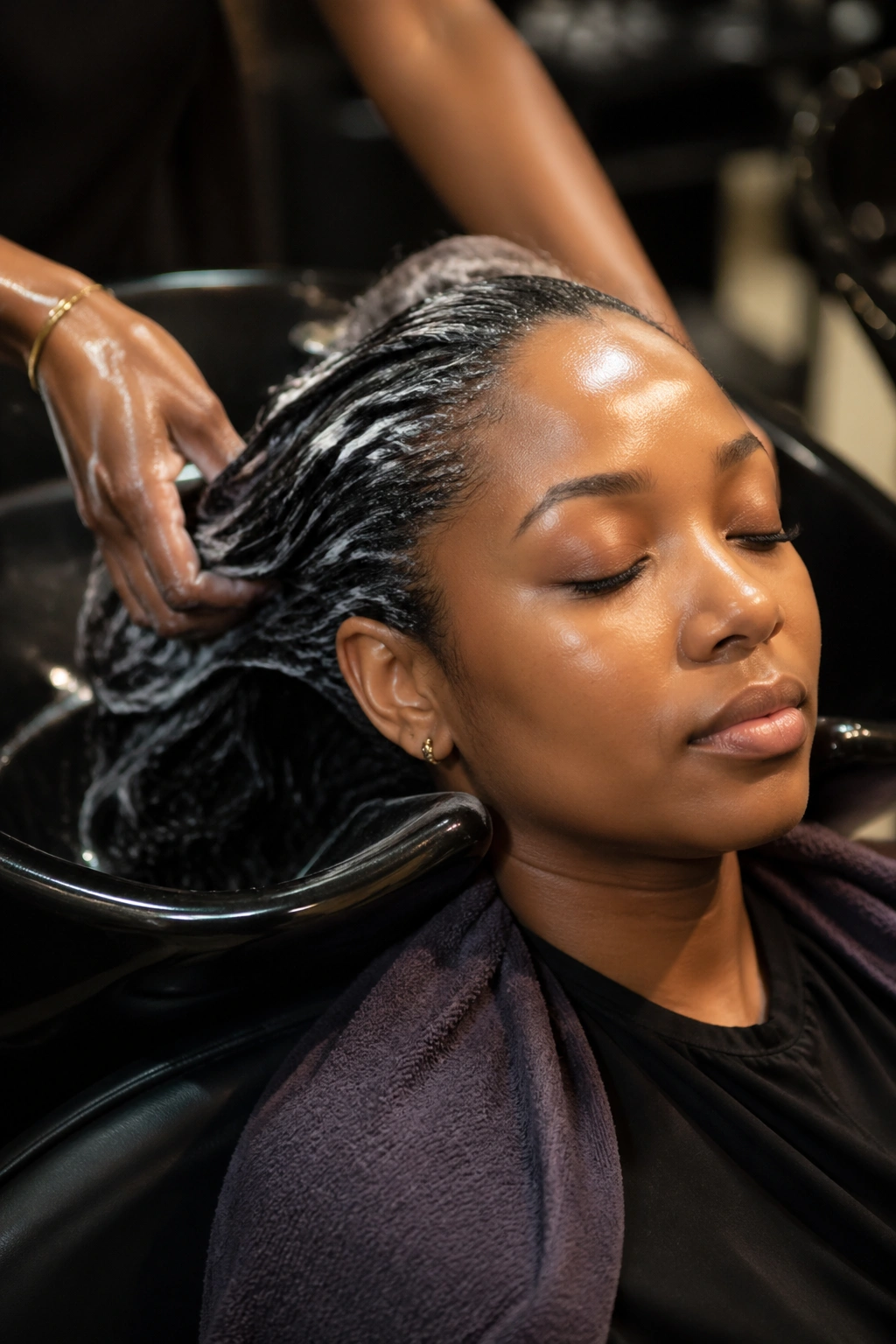
Pineapple wrap the box braids at the top of the head before sleep. Use a fabric scrunchie — never a tight elastic — to gather the braids loosely at the crown.
Satin bonnet or satin scarf covers the whole head including the pineapple wrap. The bonnet should be spacious enough to contain the gathered braids without compressing them.
For very long box braids, a satin pillowcase as the second line of defense catches any braids that escape the bonnet during sleep.
Wash Day Protocol
Wash every 10-14 days. More frequent washing damages the kanekalon and ages the style faster. Less frequent washing leads to scalp buildup and itch.
Dilute a sulfate-free shampoo with water in a squeeze bottle. Apply along the cornrow parts, massage gently. Work shampoo down the box braid length by squeezing — never rubbing, which tangles the braids.
Rinse thoroughly under medium-pressure water. Lift and separate the braids to allow water to reach the scalp and flush product completely.
Air-dry for at least four hours before any bonnet or wrap. Wet braids in a wrap smell and grow bacteria. Complete drying is non-negotiable.
When It’s Time to Take the Style Down
Four to six weeks is the standard wear time. Some wearers stretch to seven or eight weeks with meticulous care, but the cornrow section starts fuzzing by week six and the style begins to look aged.
Signs it’s time: significant new growth lifting at the cornrow roots, fuzzy fly-aways around the cornrow parts, tangling or matting at the base of the box braids near the scalp, scalp itch that doesn’t resolve with proper cleaning.
Don’t push past the right takedown moment. Matted takedowns are miserable and damage the hair.
Takedown Technique for the Hybrid Style
Start with the box braids. Unravel each braid from the tip up to where the knotless cornrow begins. Remove all kanekalon from the length before moving to the cornrow section.
The cornrow section takes down easier once the box braid weight is gone. Unbraid each cornrow from the crown back toward the hairline.
Detangle with fingers and plenty of slippery conditioner. Don’t force any tangle. Work patiently, and most knots release without breakage.
Deep condition immediately after takedown. The hair has been through a long commitment; it needs reward.
Picking the Right Cornrow Plus Box Braid Style
For everyday wear, choose styles with moderate box braid length and classic cornrow patterns — shoulder-length box braids with straight-back knotless cornrows, for example.
For events, consider dramatic length variations or color elements. Waist-length box braids or ombre color both deliver high visual impact.
For busy lifestyles, choose shorter box braid lengths and simpler cornrow patterns. A chin-length bob with five straight-back cornrows is low-maintenance while still looking polished.
For first-time experiences with the combination, try the standard five knotless cornrows into shoulder-length box braids. It’s the benchmark style — a good reference point for whether the combination works for your preferences before committing to more elaborate variations.
This braid combination has become popular because it delivers something that pure cornrows or pure box braids can’t deliver alone. Structure at the top. Freedom at the length. Protection throughout. Worn well, maintained carefully, and removed at the right time, it’s a hair investment that pays returns in how polished, versatile, and comfortable the wear truly feels.