



Passion twists changed how I wear protective styles. The texture sits somewhere between locs and goddess braids — wavy, loose at the ends, with a bohemian looseness that regular twists never quite capture. Pair them with cornrows, and the whole thing becomes something else entirely. The cornrows handle structure. The passion twists bring flow.
This guide covers twenty-two passion twist cornrow styles worth considering. Each one plays with the relationship between braided sections and twisted sections differently. Some use cornrows as a base for a twist crown. Others layer twists between rows of cornrows. A few flip the pattern entirely.
What Passion Twists Actually Are
Passion twists are a two-strand twist made with a specific type of hair — pre-stretched, bohemian-textured, and slightly wavy. The wave in the hair gives the twist its signature shape. It moves, it catches light differently than a flat twist, and it looks undone in a deliberate way.
The most popular hair brand for this style is Freetress Water Wave or Freetress Beach Curl. The wave is soft and loose. Other options include Boho Babe, which tends to have a tighter pattern, and various salon-brand alternatives.
A twist takes less time than braids. Because it’s two strands instead of three, and because there’s no weaving, an install moves faster than equivalent box braids.
Why Mix Twists with Cornrows
Pure passion twists can look heavy at the scalp. Cornrows at the base lighten that area. The contrast between the flat cornrow texture and the voluminous twist texture adds depth.
Cornrows also act as a scaffold. They give the twists something defined to anchor to — a cleaner parting pattern, a more intentional look. Without the cornrow structure, passion twists sometimes read as random.
And the combination is easier to wear in rotation. A cornrow base can support different hairstyles on top — buns, ponytails, puffs — while the twist portion stays the same.
Choosing Your Hair
The right hair for this style has to have the right texture. Too straight and you’re just making regular twists. Too curly and the twists get tangled during install.
Water wave and beach curl are the go-to options. Each pack is usually 18 to 22 inches. Expect to use 6 to 8 packs for a full head.
Pre-stretched means the hair is already prepared for use — no need to separate clumps. It saves time. The cheaper, non-pre-stretched options are worth it only if you enjoy the fiddle of prepping each section.
Prep Your Hair
Passion twists grip better on slightly moisturized hair. Not wet. Not dry. In between.
Wash, condition, and let your hair air-dry for a few hours. Apply a leave-in spray and a light cream. Stretch the hair with braids or bantu knots overnight. The next day, your hair is primed for the install without being slippery.
Clean edges are a must. A clarifying rinse at the hairline the day before removes any gel or oil buildup.
Tools and Timing
- 6 to 8 packs of water wave braiding hair
- Rat-tail comb for parting
- Small hair clips to section off twists
- Hot water in a bowl for sealing ends
- Edge gel
Block out 5 to 8 hours. Longer styles and more complex cornrow patterns push toward the upper end. A straightforward install with simple cornrow sections and shoulder-length twists can finish in 5.
1. Cornrow Crown with Passion Twist Back
Why It Works
The front of the head wears a cornrow pattern — usually 4 to 6 rows — while the back releases into passion twists. It’s the cleanest version of this style and a good entry point if you’ve never combined the two.
- Cornrows should extend from the hairline to roughly 4 inches back from the crown
- Transition point is where the cornrow ends and the twist begins — make this seamless by starting the twist with hair from the end of the cornrow
- Twists should be uniform in size, usually medium (about a quarter inch wide at the scalp)
Tip: Face the cornrow ends away from the face so they blend into the twists cleanly.
2. Side-Parted Cornrows with Twist Mane
A deep side part splits the cornrows into uneven sections. The larger side holds 3 to 4 cornrows sweeping diagonally back. The smaller side holds 1 to 2 cornrows. Everything releases into passion twists at the nape.
The side part creates an asymmetric silhouette that softens round face shapes. Because the cornrows angle rather than run straight, the visual emphasis shifts to the twist side where volume collects.
This works best with shoulder-to-mid-back twist length. Too long and the asymmetry gets lost in the mass of hair.
3. Middle Part with Two Cornrow Clusters
Two symmetric groups of cornrows flank a central part, with twists flowing from where the cornrows end. Usually 3 cornrows per side, all running parallel to the part.
The symmetry is simple and clean. It frames the face without requiring complicated parting.
This version is easy to sleep on because the cornrow sections are small and balanced. Nothing pushes uncomfortably against the pillow.
4. Cornrow Mohawk with Twist Sides
The mohawk style runs cornrows down the center of the head, while the sides are entirely twists. The center cornrows emphasize the vertical line. The twists on the sides add volume and movement.
The center strip is usually 3 inches wide. Four to five cornrows fit in that space. The twists on each side hang loose or can be partially braided back for a more contained look.
It photographs striking because the textures are so different.
5. Bun on Top with Passion Twist Flow
What Makes It Different
Cornrows gather the top half of the hair into a high bun. Passion twists hang from the bottom half, creating a two-tier silhouette. The bun anchors the look. The twists soften it.
The bun can be built from the cornrow extensions themselves or created by wrapping a section of loose hair around the base. Both work. The wrap version is fuller.
Styling Tips
Pin the bun low on the crown rather than at the top — a too-high bun looks like a pineapple over the twists. Low placement balances the visual weight better.
6. Waist-Length Twists with Diagonal Cornrows
Diagonal cornrows running across the crown create angles that long passion twists drape against. The diagonals add interest to a style that might otherwise feel like “just twists.”
The cornrows are thin — about half an inch wide — and they angle from the right temple to the left nape. Three to four cornrows cover the cornrowed section.
The twists flowing down reach past the waist. Block out 7 to 8 hours for this length.
7. Cornrow Fringe with Twist Crown
A fringe of tight cornrows sits over the forehead. Behind, passion twists fill the rest of the head. The fringe is unexpected — it doesn’t usually show up in passion twist styles.
The cornrow fringe is short, ending just above the eyebrows. The twists start right behind the fringe and hang at shoulder length or longer.
This reads youthful and playful. It’s a great option for people who want something different without committing to a dramatic cut.
8. Half-Up Half-Down with Cornrow Base
The front sections of hair stay in cornrows that pull into a high ponytail or half-up bun. The back sections hang loose in passion twists. The split between up and down sits at the crown.
The cornrows feeding into the up section should be uniform — usually 5 to 7 rows converging at a single gathering point. The twists below hang free.
Long twists with the up section look especially good because the contrast between lifted and flowing is stronger.
9. Cornrows to Twists Ombre Blend
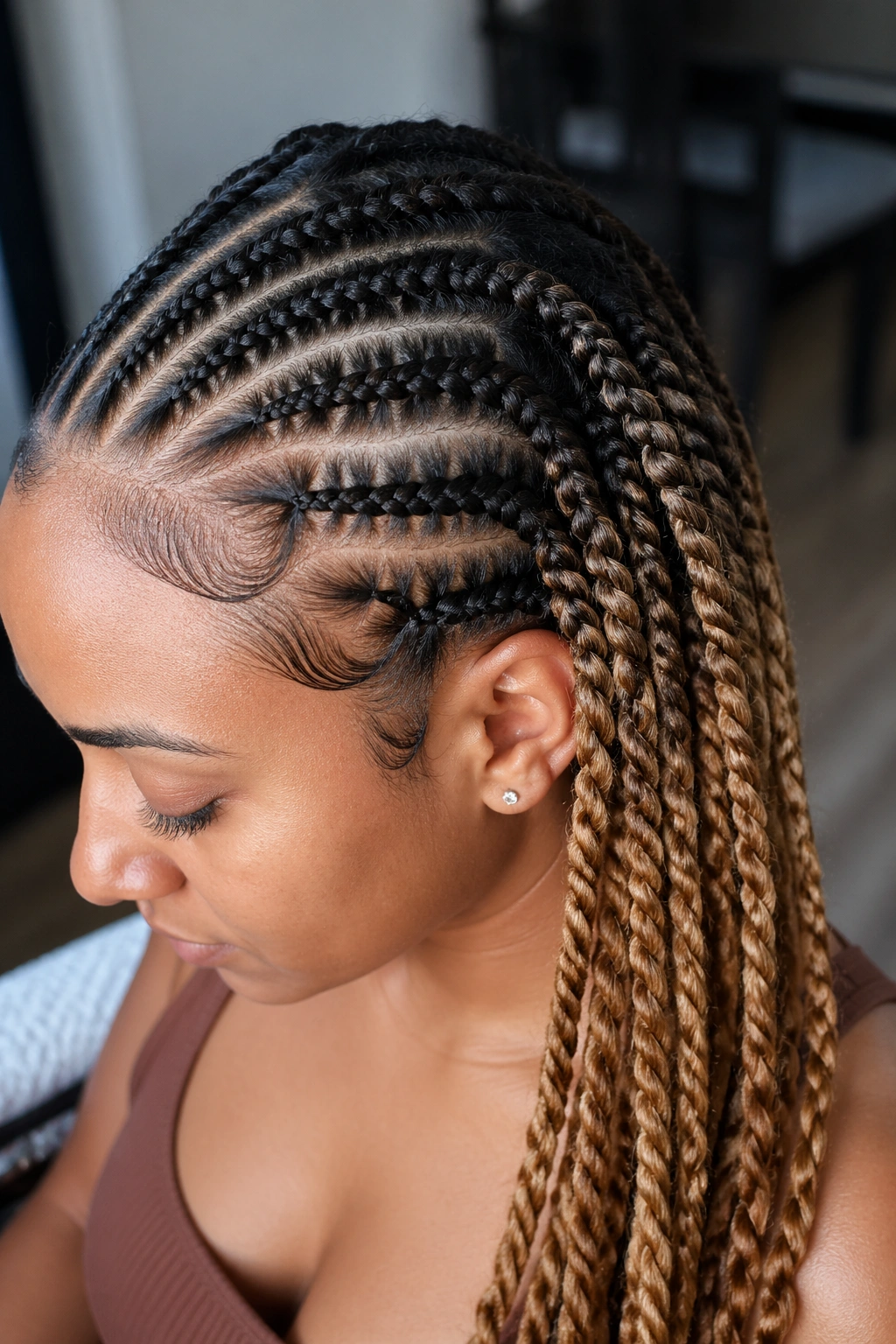
An ombre effect blends darker hair at the cornrows with lighter hair at the twists. The color transition happens where the cornrow ends and the twist begins.
Feeding in the lighter hair at the transition point lets the color change without a harsh line. Honey blonde ends on a dark base is the most common pairing. Copper or burgundy also work.
The cornrow section shows the darker color. The twists showcase the lighter one. The result is like a canvas split between two moods.
10. Chunky Twists with Thin Cornrow Base
The cornrow base is made of thin, neat rows. The passion twists are chunky — about an inch wide each. The contrast in scale between the thin braids and thick twists creates visual drama.
Fewer chunky twists mean more scalp is visible between them. That’s part of the style, not a flaw. The show of scalp makes the texture of both elements more visible.
Chunky twists install faster than thin ones — maybe 4 to 5 hours total — which is a point in favor for anyone short on time.
11. Cornrows with Twist Accent Sections
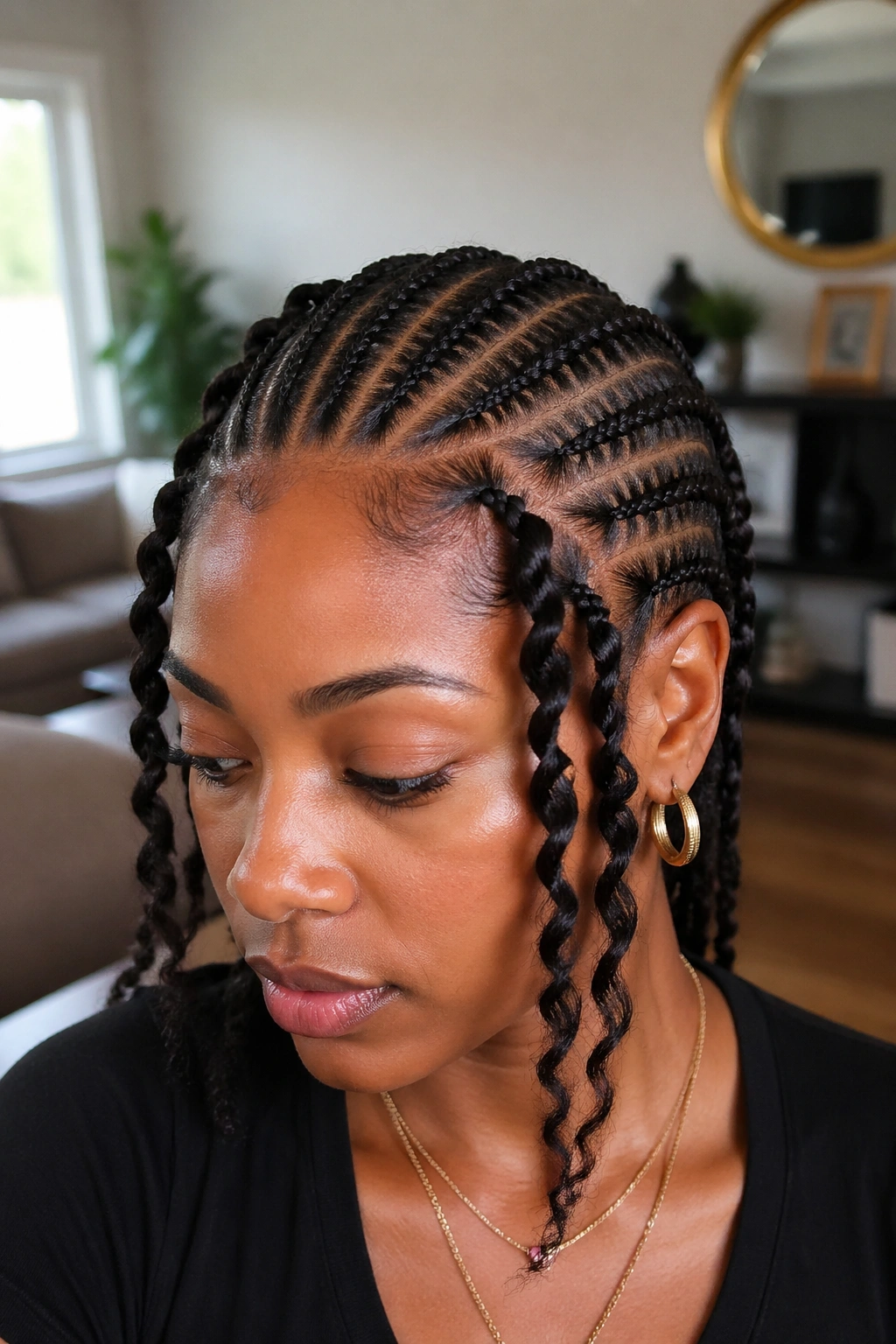
What happens when cornrows dominate the style, and passion twists appear only in specific sections? The whole head is cornrowed except for a few sections left as twists — maybe one near each temple, or a small section at the crown.
The twist sections read as intentional accents rather than the main event. It flips the usual ratio and creates an unexpected look.
How to Wear It
Three twist sections works best — one at the crown and one behind each ear. Any more and the look reads scattered.
12. Jumbo Cornrows with Fine Twists
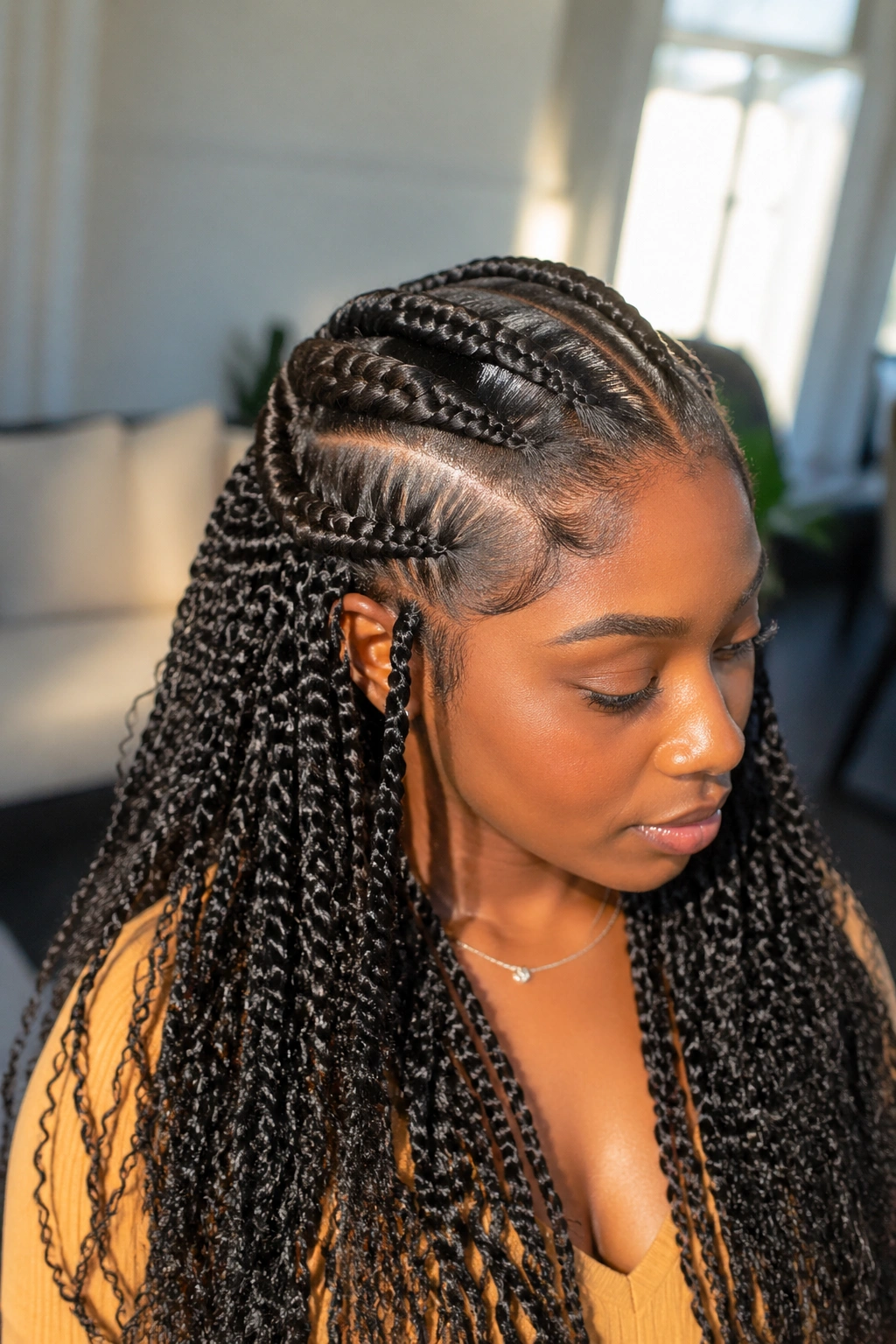
Jumbo cornrows are thick, dramatic rows — two to three inches wide each. Fine passion twists, about half the usual size, flow from the ends. The contrast between the massive cornrow and delicate twist is the focus.
Only 3 or 4 jumbo cornrows fit across the crown. That limited count means the parting has to be sharp — any wobble shows.
Fine twists take longer to install than regular passion twists. Expect an extra 1 to 2 hours.
13. Asymmetric Cornrow Pattern with Twist Tail
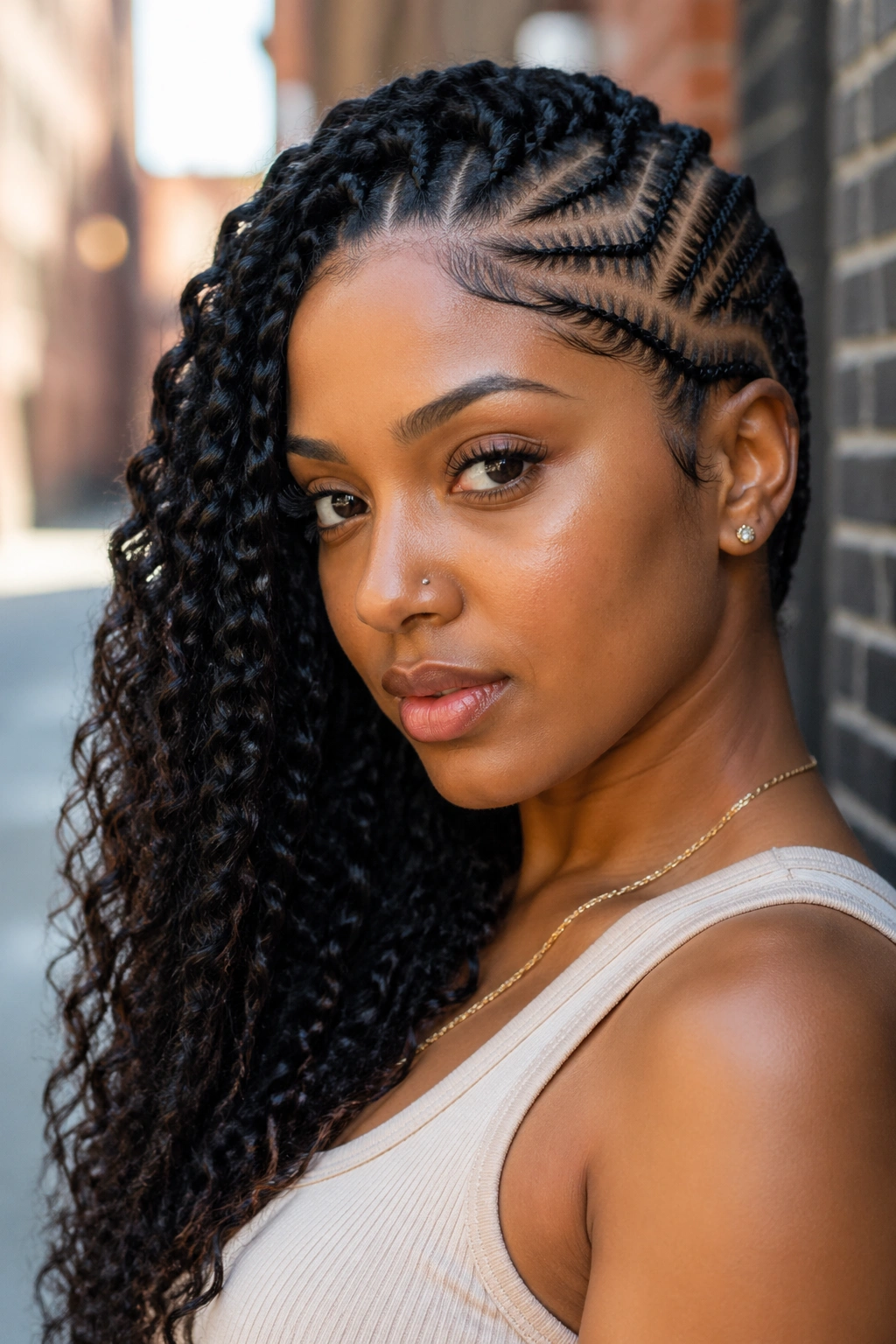
One side of the head is fully cornrowed in a complex pattern. The other side flows into a passion twist cascade. The two halves don’t mirror each other.
The cornrow side might feature 5 to 6 rows in a curved or geometric pattern. The twist side has no braiding at all — just loose twists starting at the scalp.
Look at reference photos carefully before committing. Asymmetric styles can look amazing or unbalanced depending on execution.
14. Short Passion Twists with Cornrow Fade Illusion
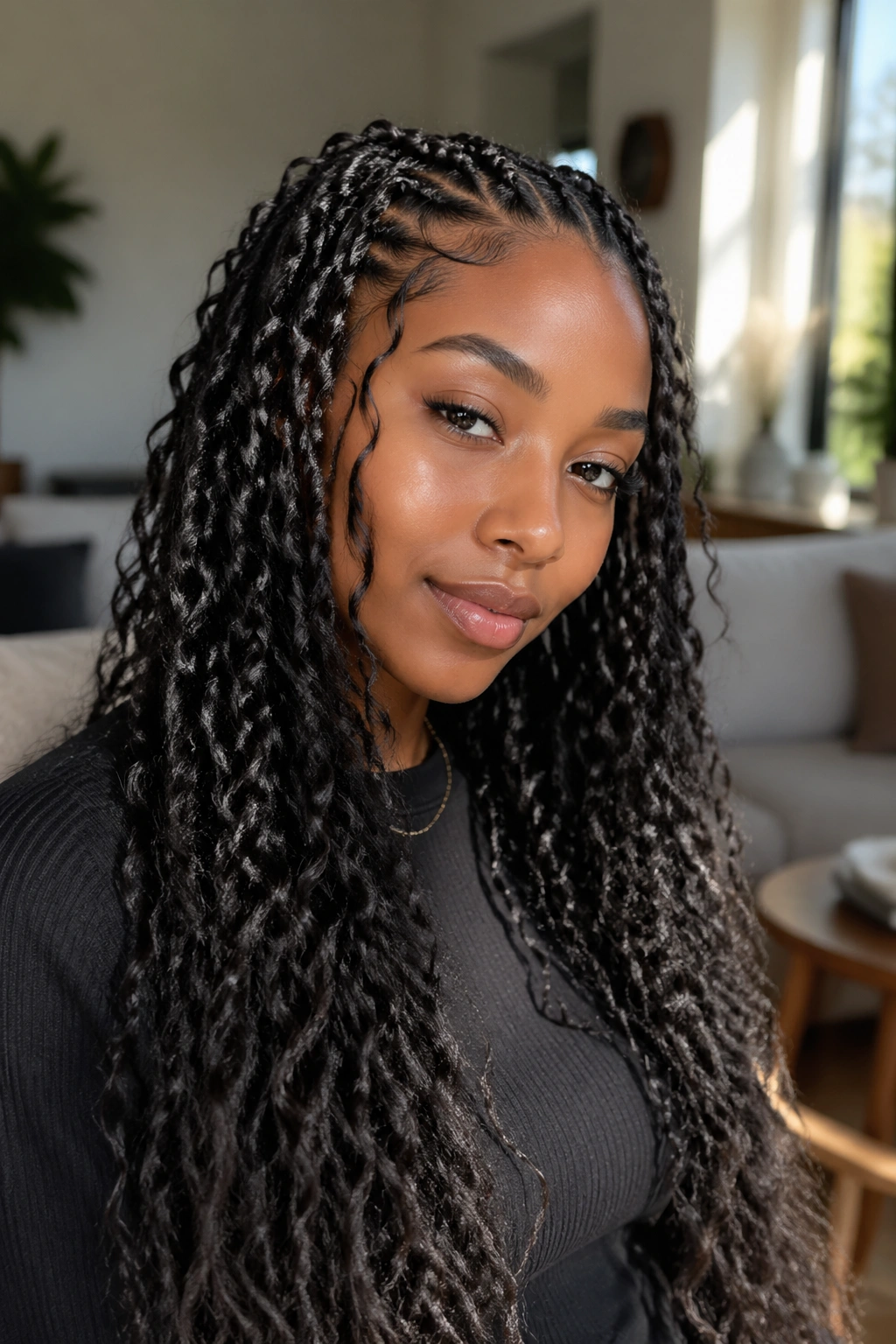
A fade-illusion style keeps cornrows tight against the sides of the head, simulating a fade. The top has short passion twists that hit around the jawline.
The side cornrows are 6 to 8 thin rows, flat against the scalp. The twist section on top is short — usually 6 to 10 inches of twist length.
This reads edgy without actually requiring a fade cut.
15. Twists Cascading Over Cornrow Bun
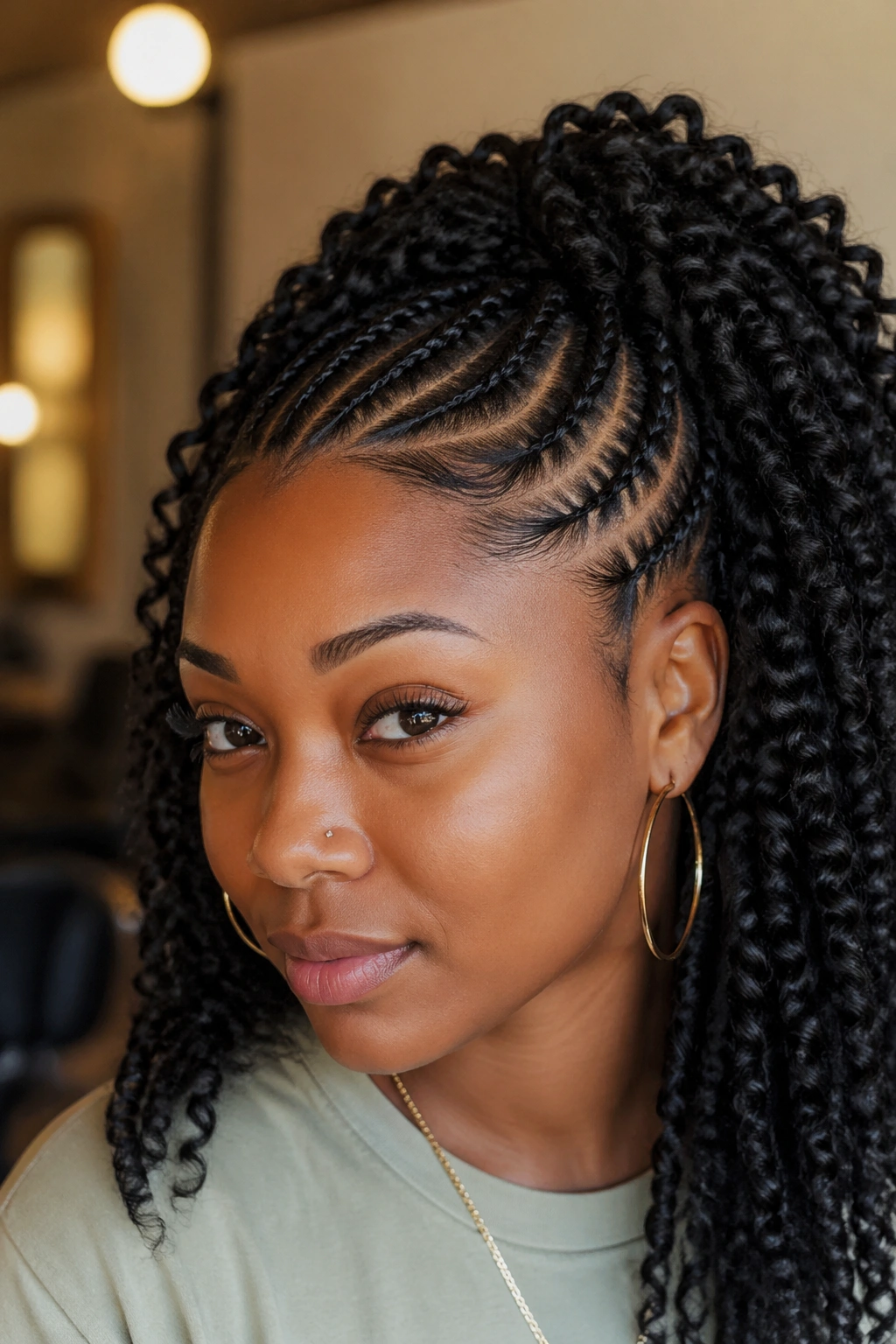
The cornrows gather into a small bun at the crown while passion twists cascade down from the rest of the head. The bun is a small accent, not the main feature.
The bun sits flat — built from the cornrow ends wrapped into a circle. It adds dimension without competing with the twist volume.
This is a sophisticated version of the half-up look. Less dramatic, more subtle.
16. Cornrows with Beaded Twists
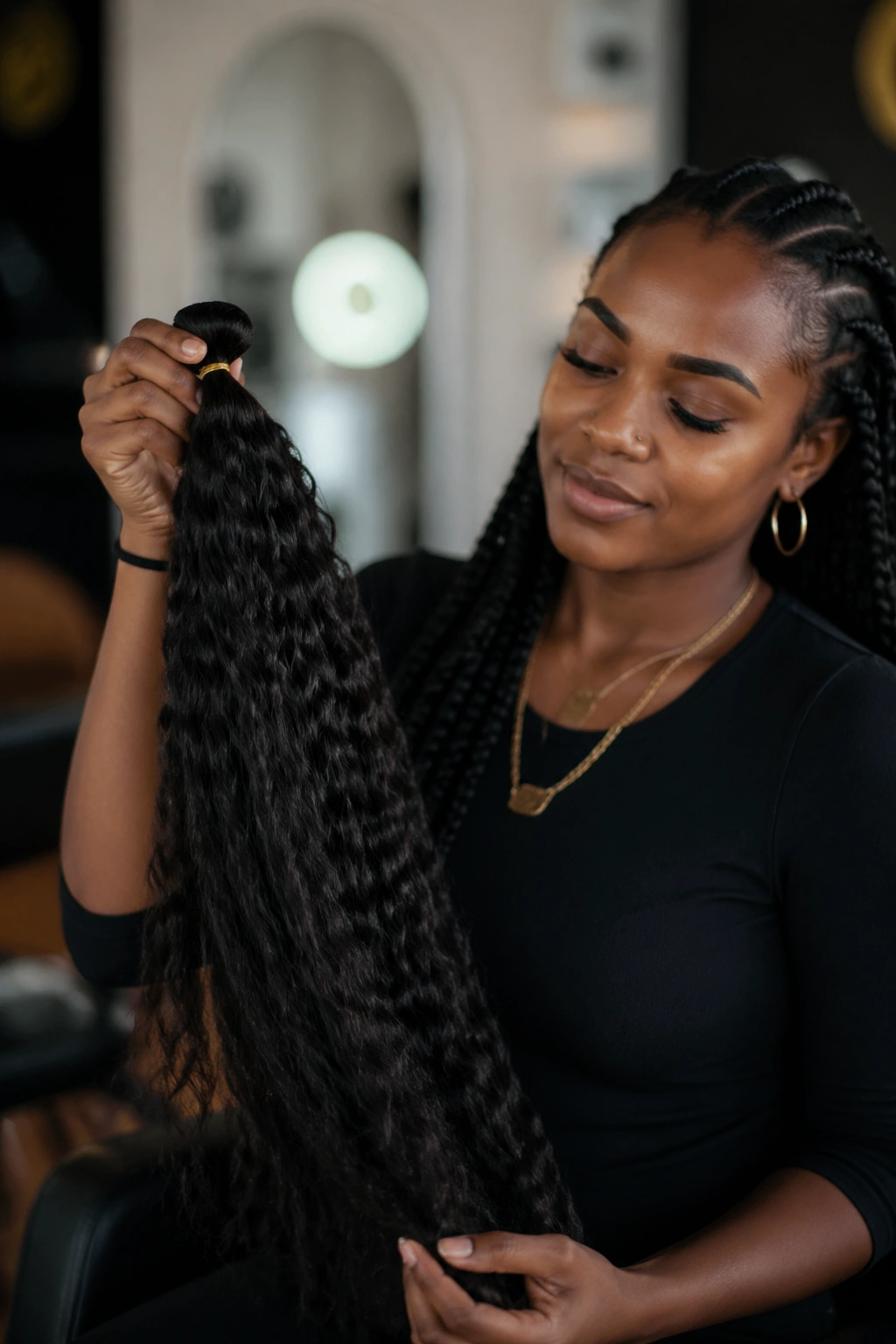
Beads on passion twists add weight and sound. The weight pulls the twists into a more defined shape. The sound — soft wooden clicks when you move — is a small sensory pleasure.
Space the beads unevenly. Some twists get no beads. Others get 2 or 3 at varying heights. The visual asymmetry looks more natural than matched bead placement.
- Small wooden beads, 6 to 8 mm, work best with passion twist texture
- Thread each bead with a bead tool, then secure with a small hair band below
- Skip plastic beads — they look cheap against the organic twist texture
Tip: Wooden beads darken with the natural oils from your scalp over time. They’ll look richer after a week of wear.
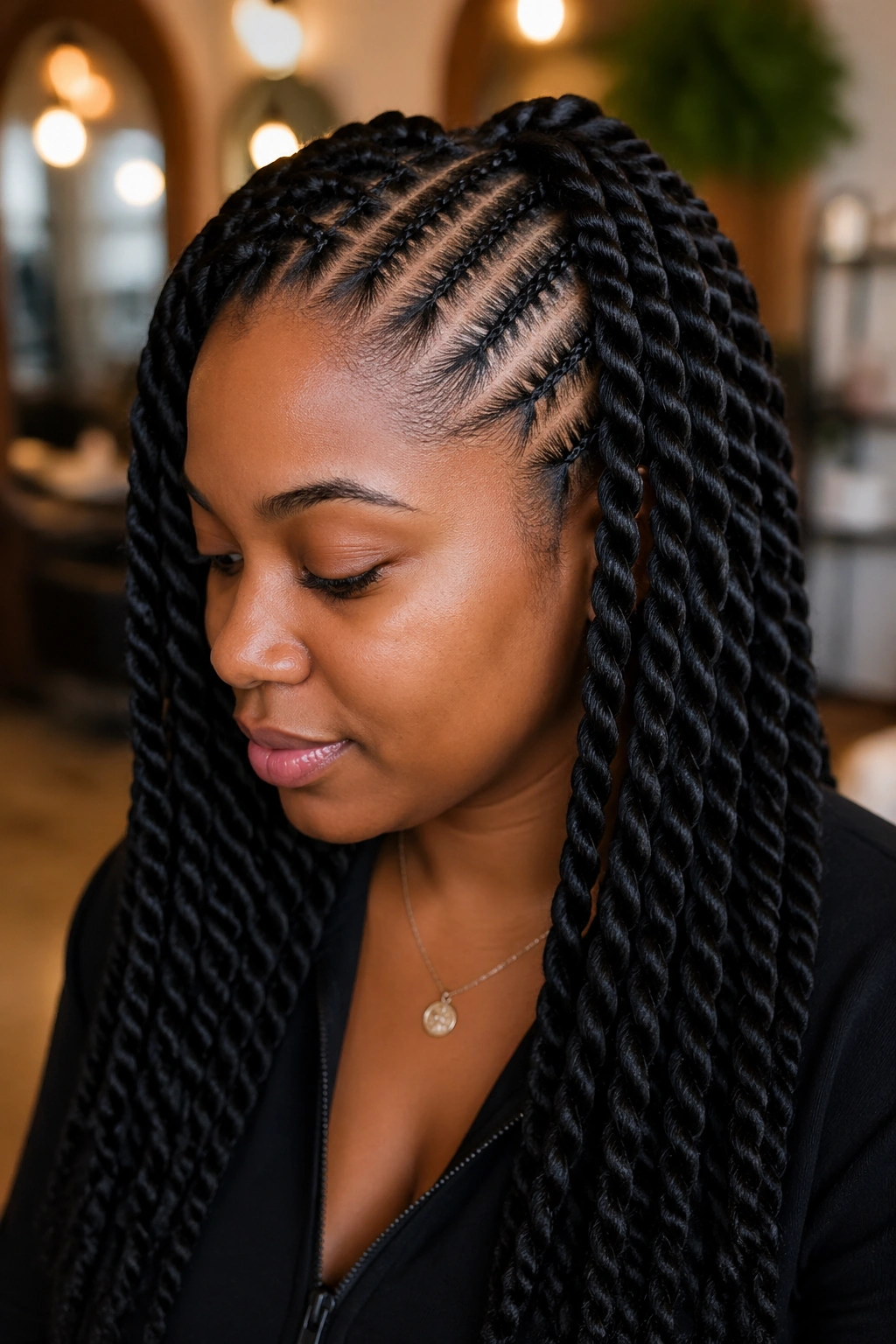
17. Side-Swept Twist with Cornrow Under
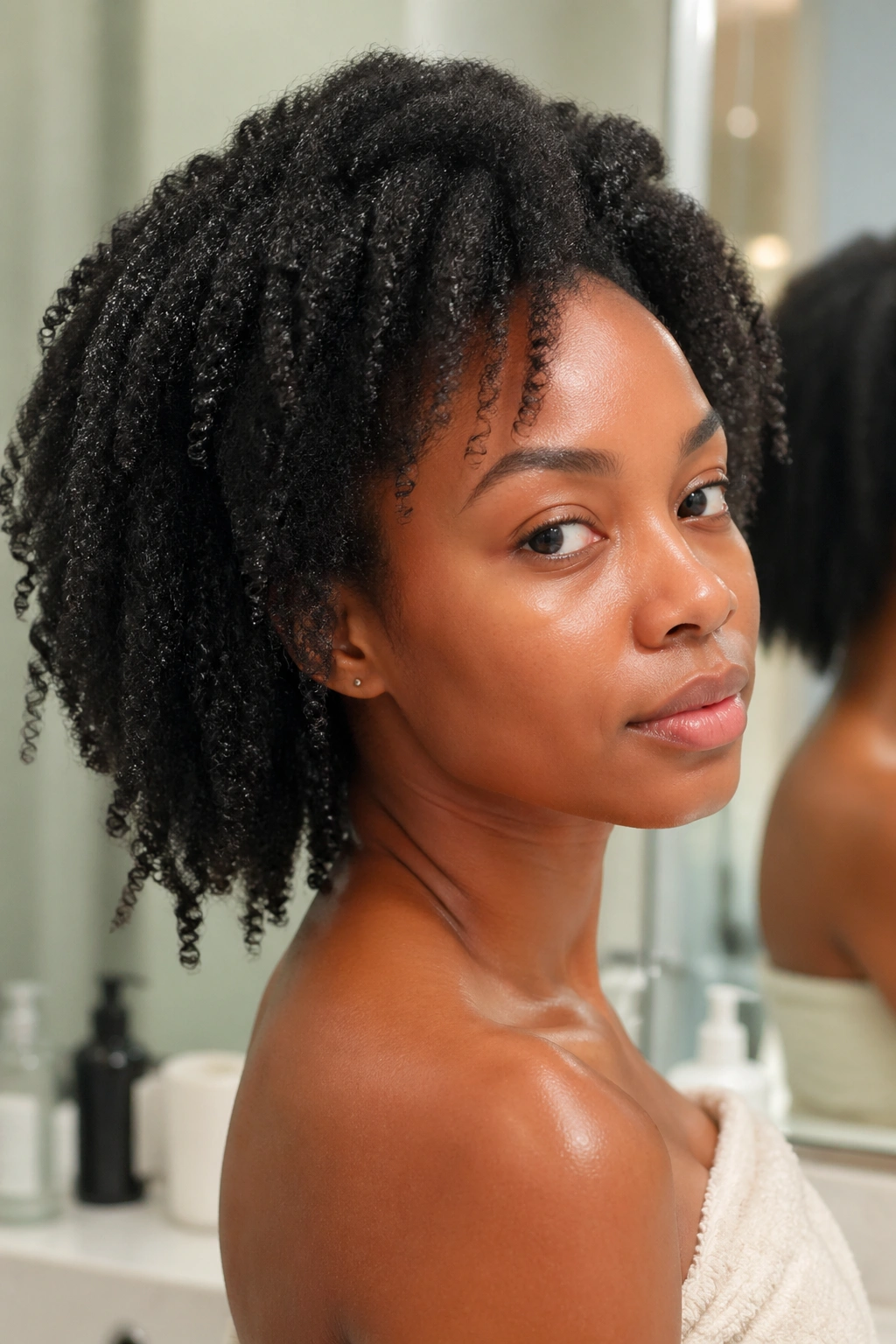
A side-swept style sweeps passion twists to one side, while cornrows underneath anchor the sweep. The cornrows pull tight toward the sweep direction, directing the twists to flow over that shoulder.
The cornrows are mostly hidden under the twist cascade. They show at the hairline but disappear under the mass of twists as the style flows.
This is a good choice for formal events. The sweep reads dressed-up without over-complication.
18. Pineapple Top with Twist Cascade
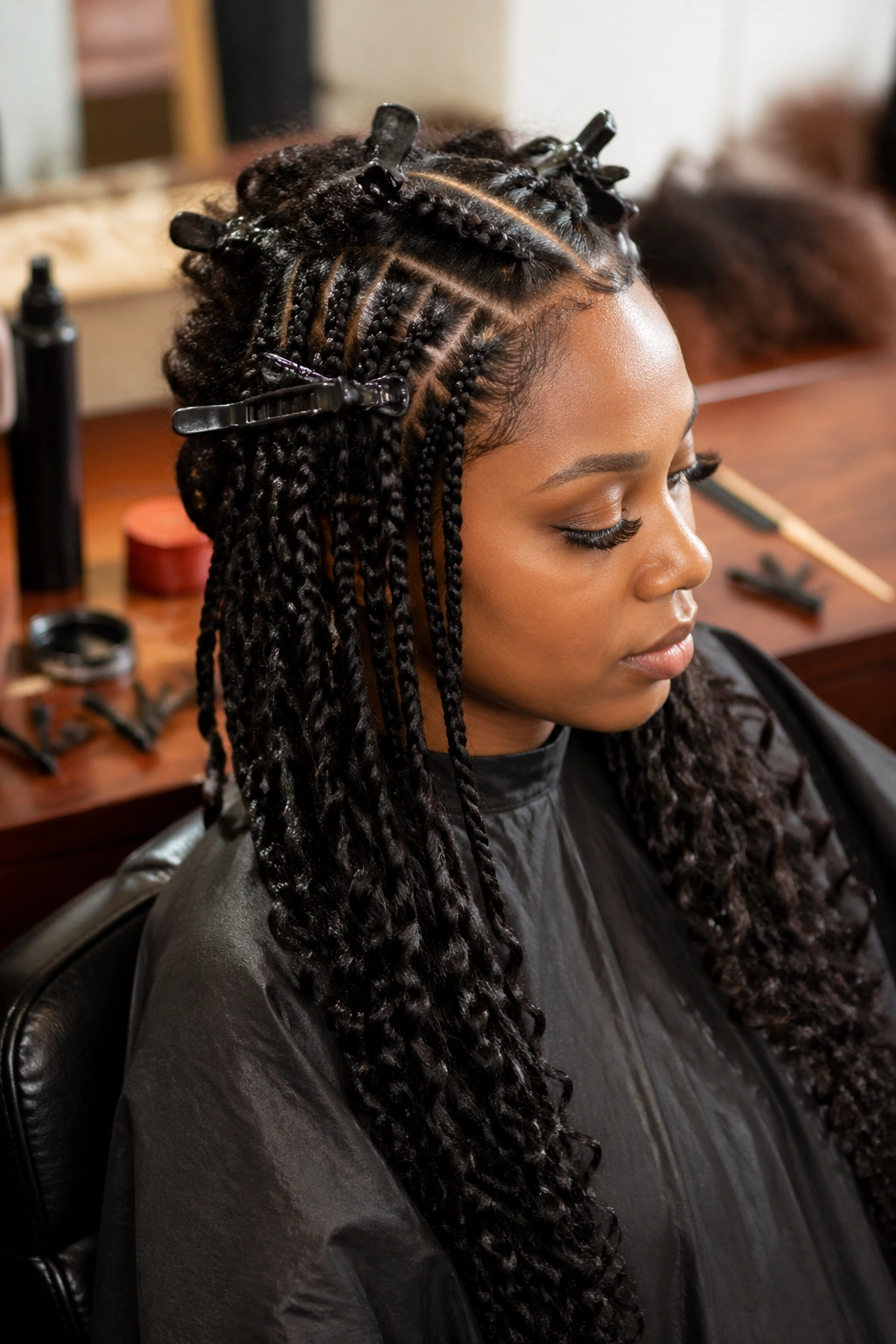
A pineapple gathers all the twists loosely at the top of the head in a high, puffy ponytail shape. Cornrows underneath keep the style controlled at the scalp. The pineapple is a relaxed style — not a tight bun, not a strict ponytail.
The cornrows are mostly hidden but important. They ensure the pineapple sits high on the head instead of flopping.
The pineapple is great for workouts or humid days. It keeps the twists off the neck without crushing them.
19. Cornrows with Twist Fringe
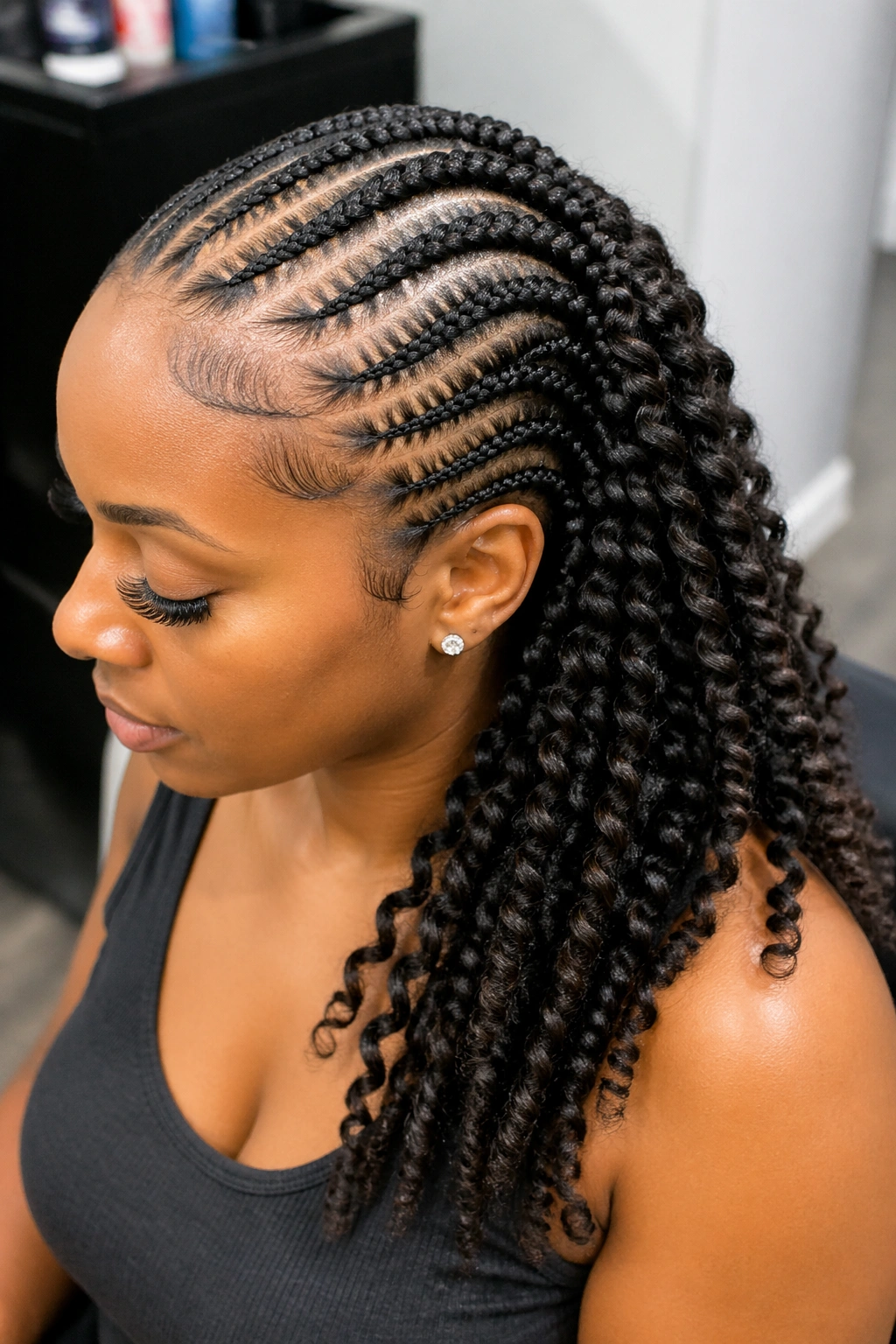
A front fringe of short passion twists over the forehead, with cornrows running back from that fringe. The reverse of a cornrow fringe.
The twist fringe is 2 to 3 inches long — short enough to not hang into the eyes, long enough to see the twist texture. Behind it, 5 to 6 cornrows run to the nape.
This is a gender-neutral-leaning style. It reads as cool rather than cute.
20. Goddess Cornrows with Passion Twist Ends
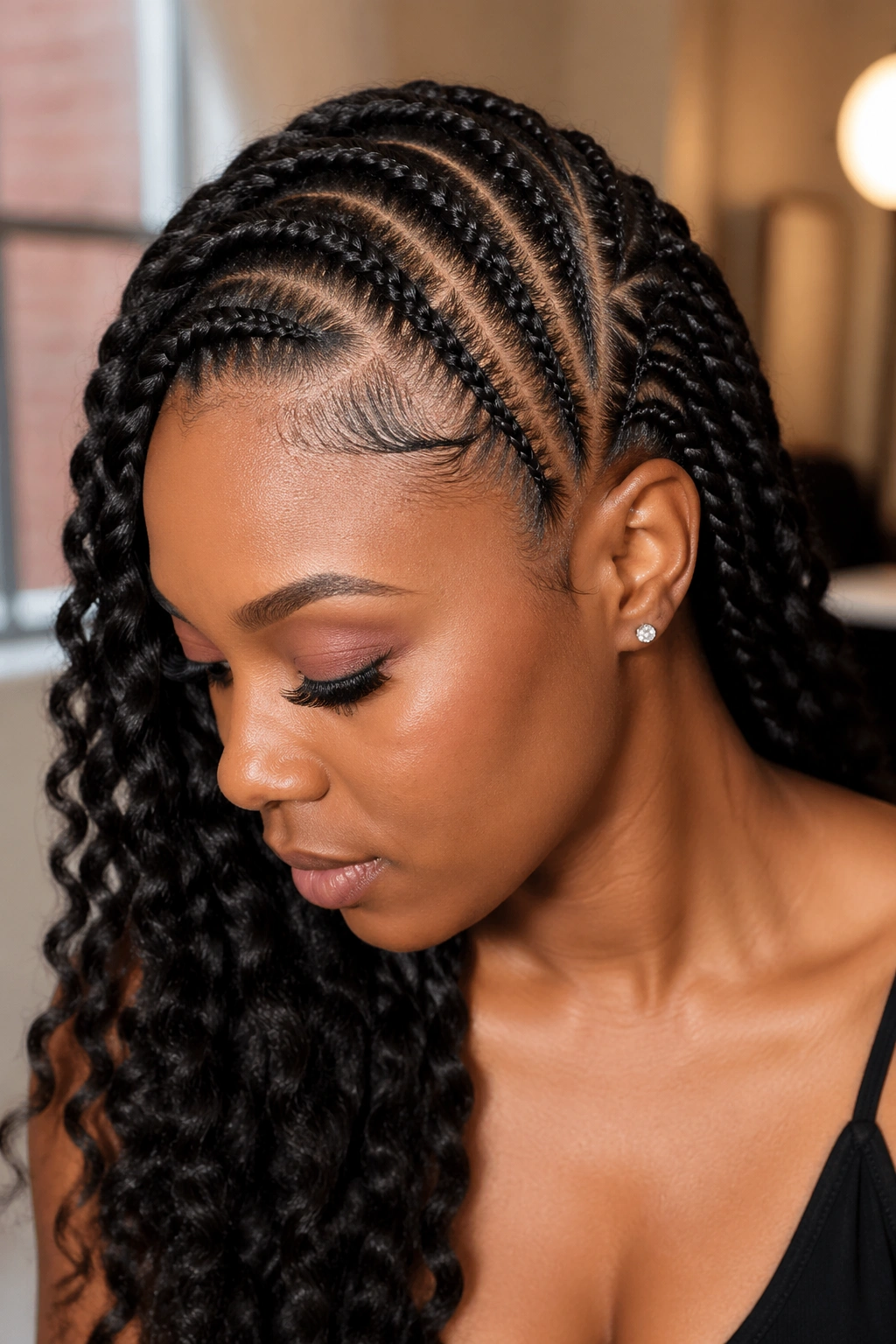
Goddess cornrows feature wavy hair curling out of the cornrow itself, giving the braids a softer, messier look. Pair them with passion twists at the ends, and you get a style that’s all flow and texture.
The wavy hair poking out of the cornrows matches the twist texture. Everything ties together visually.
This is a high-effort style. The loose wavy sections need pinning during sleep to keep their shape.
21. Cornrows to Twists with Tapered Ends
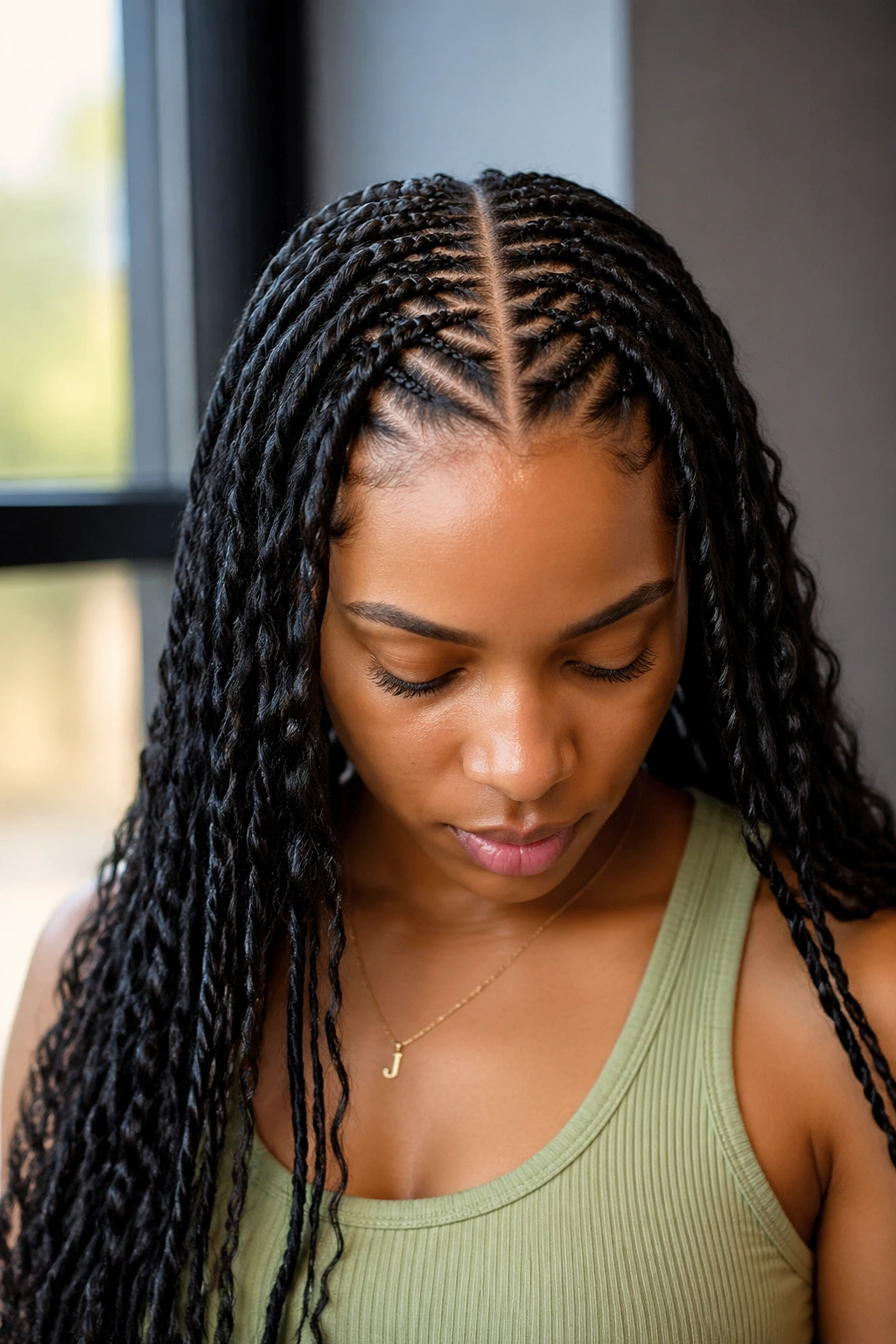
Tapered ends means the twists get thinner toward the tips. Instead of uniform thickness from scalp to end, the twists taper down. The effect is more organic.
Start each twist at medium thickness. Taper the added hair as you twist down the length. Seal the ends in hot water so the taper holds.
It’s a subtle detail most people won’t name but will notice. “Something about those twists looks natural.”
22. Cornrow Halo with Twist Center
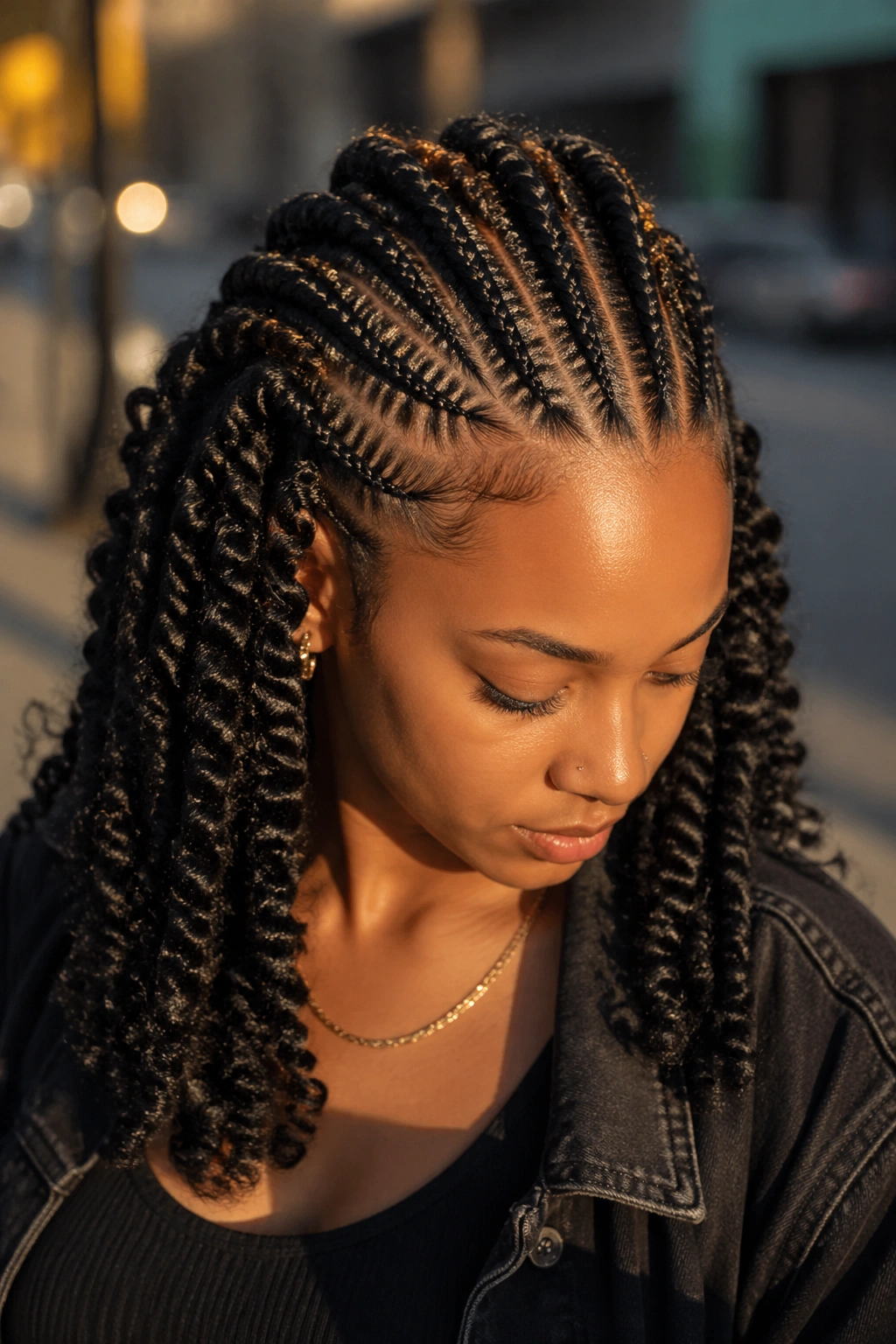
A halo of cornrows rings the perimeter of the head. Inside the halo, passion twists gather at the crown. The style flips the usual pattern — cornrows on the outside, loose twists in the center.
The halo cornrows run parallel to the hairline. Usually 2 rows deep. The twist section inside forms a puff or low bun.
It’s a creative variation that photographs from the side especially well.
Maintaining Passion Twist Styles
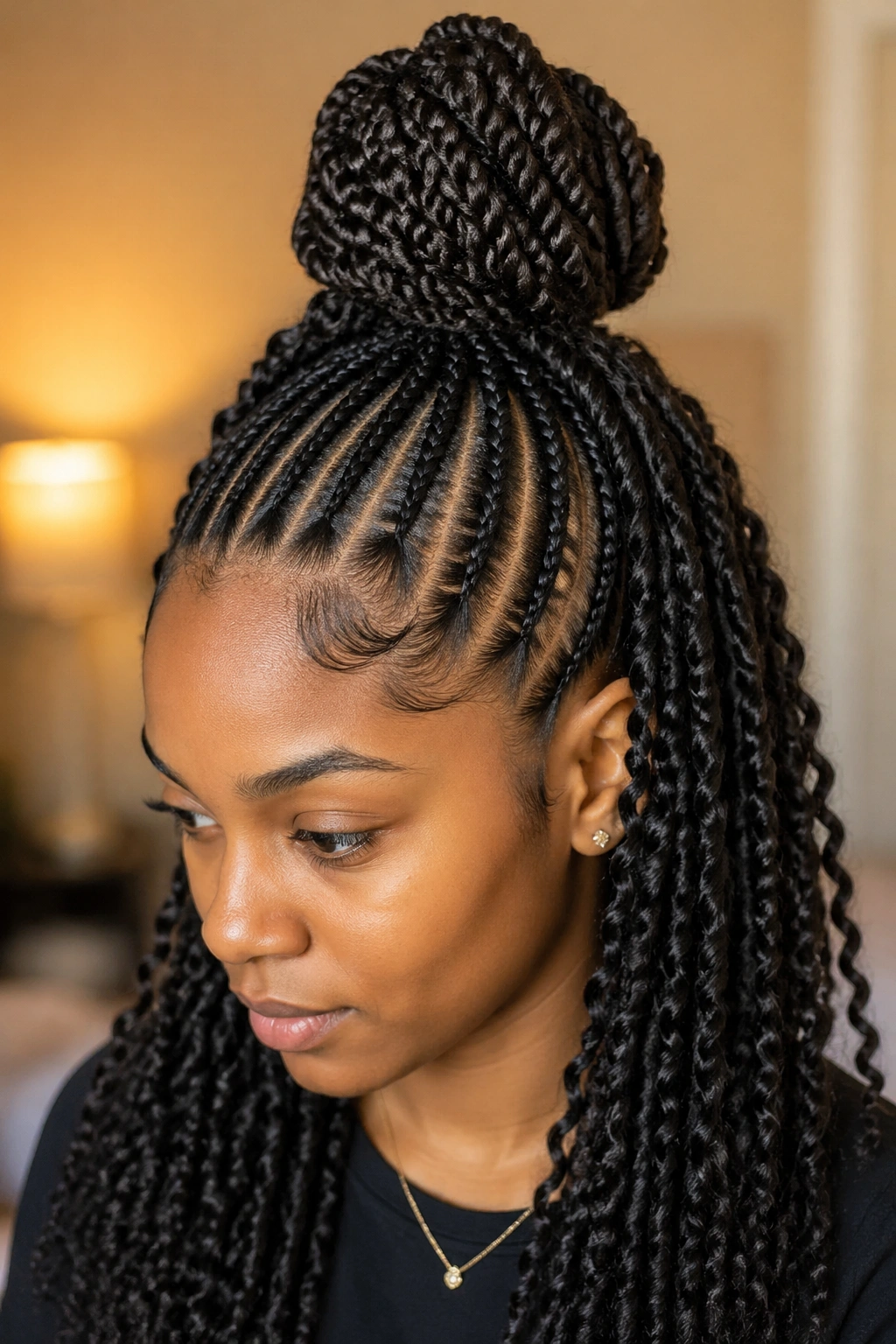
Daily care isn’t complicated. Most of it happens at night.
- Spray the twists with a light water and leave-in mix every 2 to 3 days
- Apply a scalp oil along the cornrow parts twice a week
- Wrap the whole head in a satin scarf or bonnet at night
- Let twists air-dry completely if they get wet (avoid dryers, which can frizz the texture)
A light mousse applied sparingly to the twists refreshes them in the morning if they look flat. Don’t over-do it — mousse builds up.
Scalp Health Through the Wear
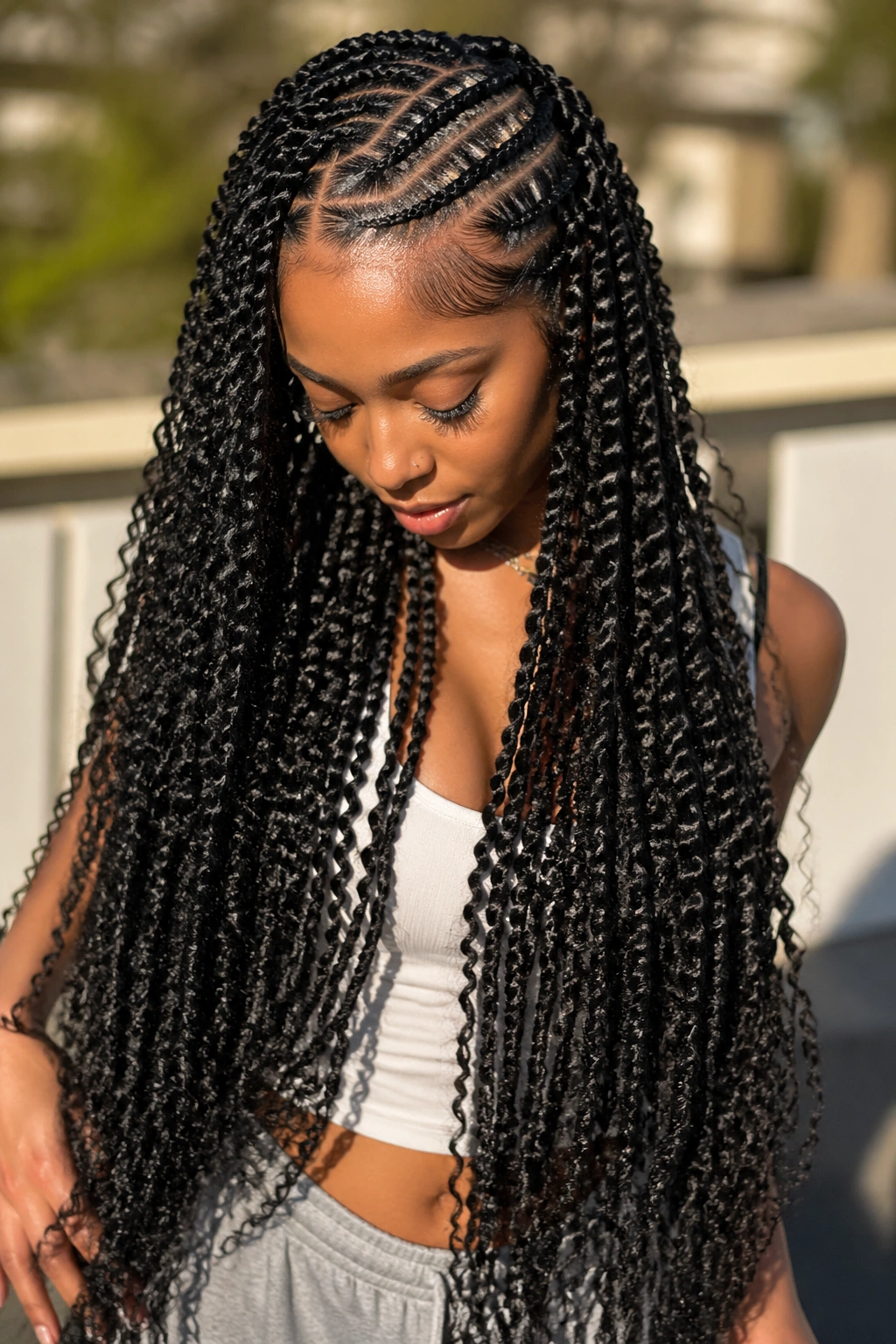
Your scalp is doing a lot of work under an install. It supports the weight of twists, holds up to daily wear, and needs to stay moisturized through all of it.
Use a scalp tonic with witch hazel or tea tree every 3 to 4 days. Apply with a dropper directly to the parts. Massage gently with the pads of your fingers — no scratching, no rubbing.
If you feel a specific itch or sore spot, address it immediately. A small amount of dilute shampoo on a cotton swab can treat spots without disturbing the twist install. Ignoring itch spots leads to rashes and premature takedown.
Taking Down Passion Twists
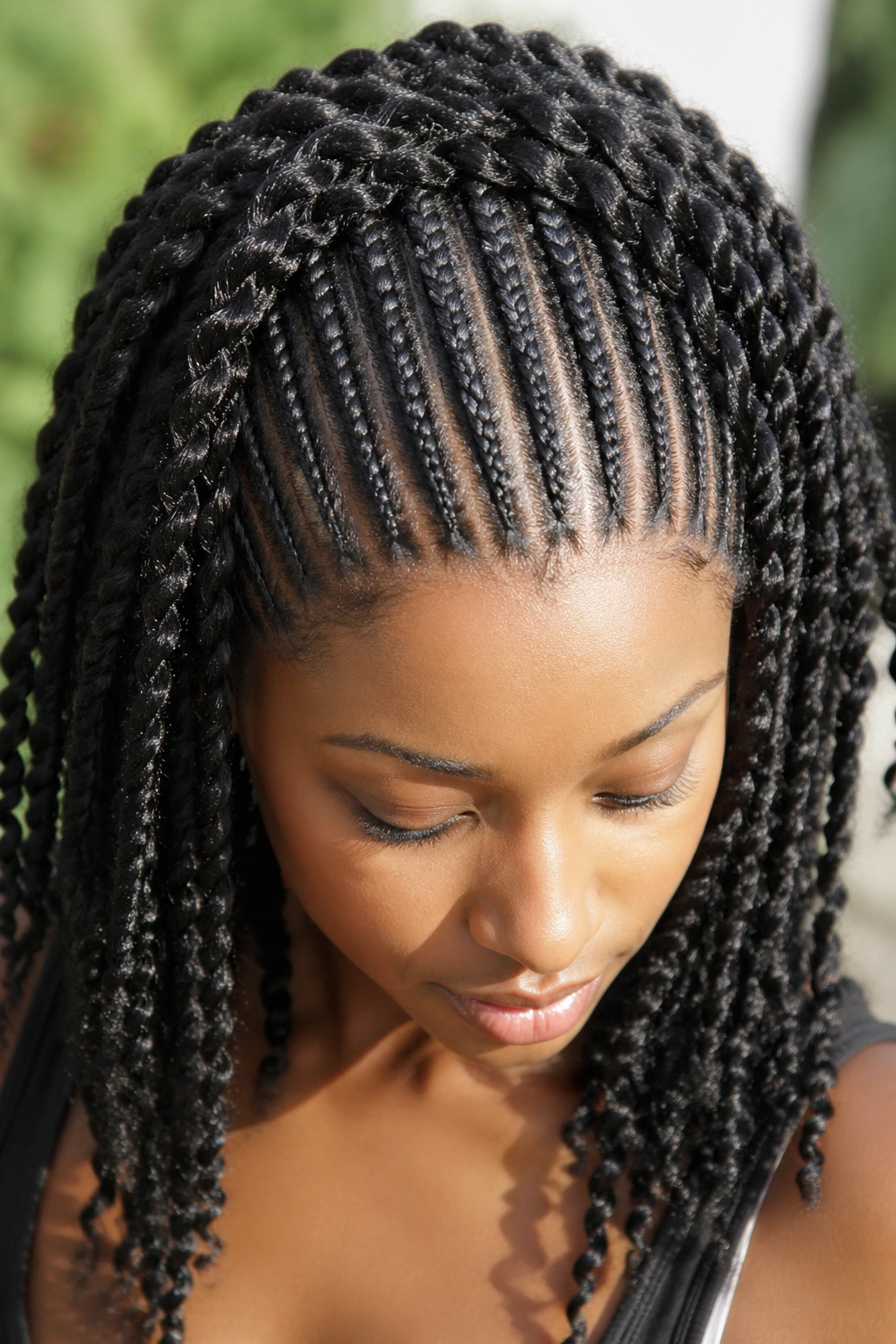
Passion twist takedown is faster than box braid takedown because there’s no interlocking weave. Unravel the twist from the bottom up.
Start by spraying the full install with water and conditioner. Wait 15 minutes so everything softens. Begin untwisting at the ends — the twist should come apart in your hands.
When you reach the cornrow section, switch to undoing the braid. Work from the base out. Finger detangle throughout. A rat-tail comb can help part the shed hair from the remaining braid, but don’t pull through with it.
Budget 2 hours for a full takedown.
Choosing the Right Style for You
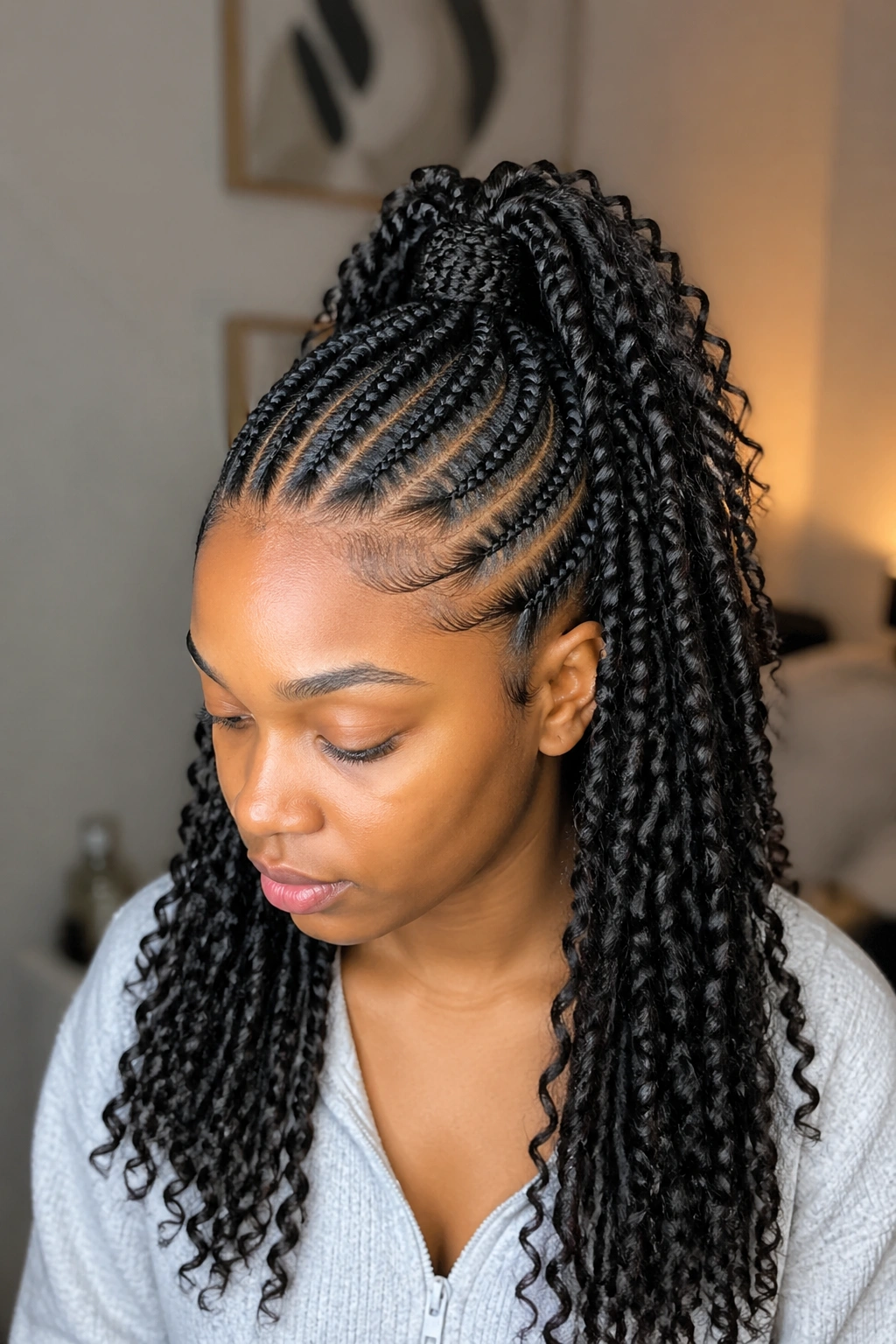
Face shape, hair density, and commitment level all steer which version fits.
- Oval faces suit almost any pattern — the face shape is balanced enough to handle anything
- Round faces benefit from longer twists with cornrows that add vertical visual lines
- Long faces pair well with styles that add horizontal volume — jumbo twists, shoulder-grazing cuts
- Square jaws soften with flowing asymmetric looks
Your routine matters too. If you shower every day, choose a cornrow base that’s less complex — simpler patterns hold up better to frequent dampening. If you’re active and sweat often, avoid intricate cornrow crowns that need daily styling maintenance.
Hair density affects appearance. Fine hair shows the cornrow scalp more, so dense parting patterns can look sparse. Switch to chunkier parts. Thick hair can handle almost any pattern, though too-thin cornrow sections look crowded.
Common Install Issues and Fixes
Passion twists that look too tight from the start need adjustment. Loose twists are the signature look. If your braider is pulling the hair tight, ask her to ease up. A tight twist will loosen on its own, but a too-tight one causes scalp pain for days.
Twists that split at the scalp are a sign of improperly anchored hair. The braider didn’t secure the hair into the natural root strand well enough. Those twists will keep splitting. Best to re-do them during the install rather than wait.
Frizzy twists at the roots by day three usually mean the install was too dry. Keeping the hair slightly moisturized during install helps. Too dry = frizz. Too wet = slippery and won’t hold.
Mistakes to Avoid with Passion Twists
Over-moisturizing is common. Daily product application makes passion twists heavy and dull. The hair is already loose and slightly undone — adding weight makes it look limp instead of bohemian.
Ignoring the base cornrows while caring for the twists. The twists get all the attention, but the cornrows underneath need moisturizing and scalp care too. Spray a scalp mist along the parts every few days.
Using heat tools on passion twist hair. The water wave hair loses its pattern with heat. Avoid flat irons, curling irons, and hot blow dryers. The twist is meant to stay soft — don’t try to make it more defined.
Sleeping without protection. Passion twists compress against pillows without a bonnet. By day four, you’ll see lopsided sections. Bonnet nightly, always.
Passion twist cornrow styles are a study in contrast — the structure of cornrows meeting the softness of twists. Each of the twenty-two versions here plays with that contrast differently. Pick the one that matches how you want to wear your hair this install cycle. Book the time. Bring snacks. Then enjoy the few weeks of flow that follow.
