
Peekaboo cornrows sit in that sweet spot between classic protective styling and something a little more playful. You part the hair, braid most of it flat, and leave a hidden strip of color or contrast tucked underneath — revealed only when you flip, pin, or move your head a certain way. That’s the whole point. It’s not a loud style. It’s a surprise. And for anyone who has spent a few years cycling through the same straight-backs, the peekaboo variation feels like a genuine break from the pattern.
What makes peekaboo cornrows work so well is the control. You choose how much color shows. You choose where it lives. You choose whether it’s subtle (a strip of burgundy along the nape) or dramatic (a full underlayer of honey blonde that spills out whenever you move). The technique itself is old — braiders have been hiding sections of hair under other sections forever — but the way people are wearing it keeps shifting, and that’s worth paying attention to.
I’ve worn peekaboo cornrows off and on for about a decade, through a few hair color phases I’d rather not revisit. What I’ve learned is that the style lives or dies on two things: the part placement and the contrast ratio. Get those right, and even a simple peekaboo looks considered. Get them wrong, and the color reads like an afterthought.
Below you’ll find 22 peekaboo cornrow variations that each bring something specific. Some lean minimalist, some go big, some use no color at all and instead rely on texture or length contrast. The goal is to give you options that actually differ from each other — not 22 ways to wear burgundy underneath black.
A Quick Word on Peekaboo Mechanics
Before the list, understand what’s happening structurally. Peekaboo styling requires a horizontal part somewhere on the head — usually between the crown and the occipital bone. The hair above that part gets braided one way (or left loose). The hair below gets braided with the contrast element — color, length, or texture. When the top layer lies flat, the bottom stays hidden. When it moves, the hidden layer peeks through.
The part line is everything. Too high and the color shows constantly, defeating the surprise. Too low and it never shows at all. The standard placement sits about 2 inches above the nape, following the curve of the occipital bone. That’s your baseline. Adjust from there based on how dramatic you want the reveal.
Prep Work That Actually Matters
Peekaboo cornrows need clean hair. Not squeaky-clean — just product-free enough that the braids grip tight and the part lines stay sharp. Wash with a clarifying shampoo 24 hours before braiding, then follow with a light leave-in. Skip heavy oils the day of. They’ll make the parts slide and the finished braids look greasy at the roots.
If you’re adding extension hair for the underlayer color, pre-stretch the kanekalon first. Soak it in hot water with a capful of apple cider vinegar, hang to dry overnight, then shake loose. Pre-stretched hair braids smoother and holds a cleaner line.
Tools You’ll Actually Use
Keep it simple. A fine-toothed rat-tail comb for parting. A wide-tooth comb for detangling. Strong edge gel — the kind that stands up when you dip the spoolie in, not the watery stuff. Clips to hold sections out of the way. Sheen spray for the final finish.
You don’t need 17 products. You need four good ones.
Choosing Your Contrast
This is where most people mess up. The contrast between the top layer and the hidden peekaboo should be obvious enough to register at a glance, but not so aggressive that it looks like two separate hairstyles. A rule I use: the peekaboo color should be 3-4 shades lighter or darker than the main hair. Platinum under jet black reads cleanly. Caramel under dark brown reads softer. Red under red-brown barely reads at all.
If you’re using length instead of color — leaving some braids much longer than others, for example — the ratio shifts. Aim for at least 6 inches of difference. Anything less disappears.
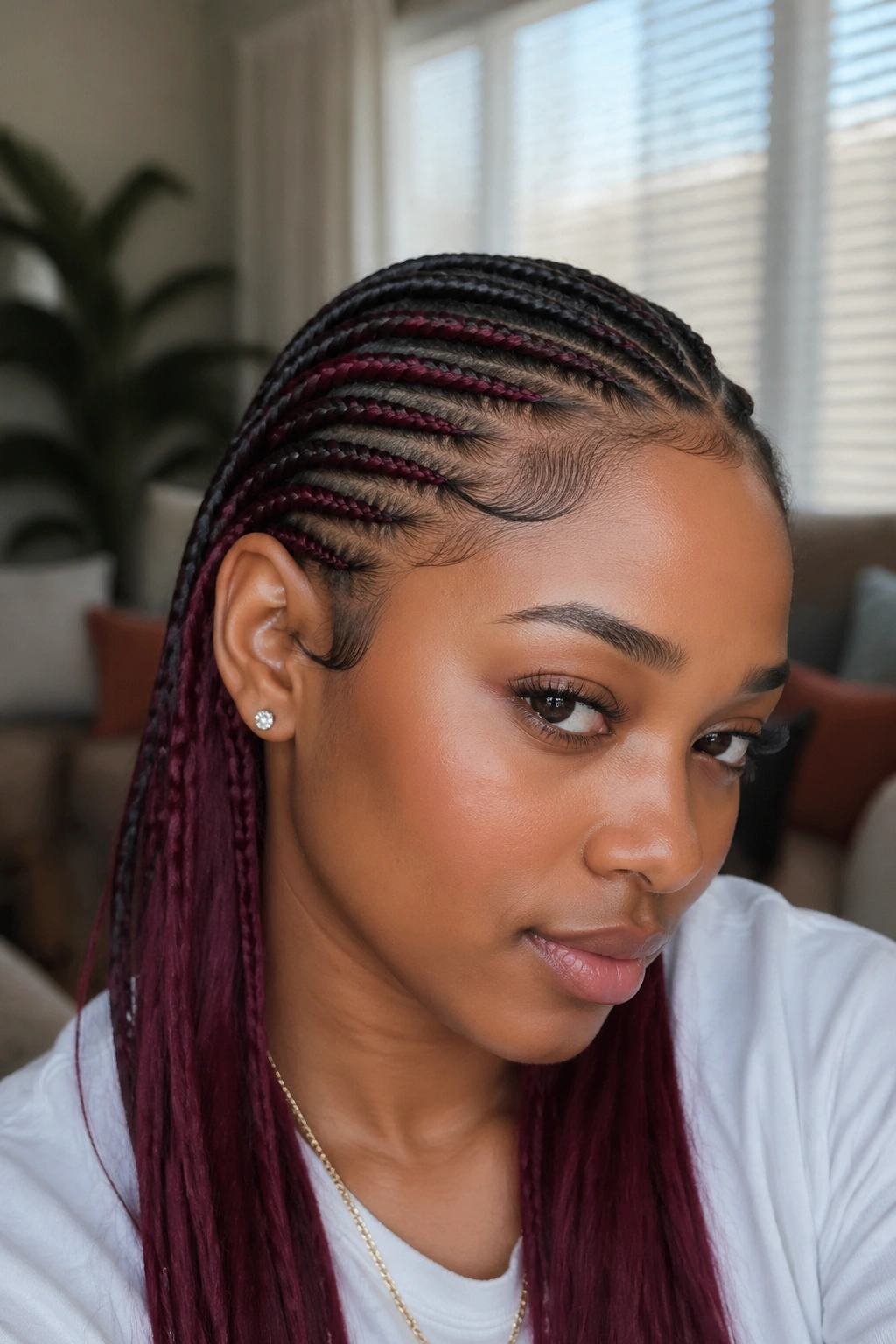
1. Classic Burgundy Underlayer
The one that started the trend for a lot of people. Medium-sized cornrows across the top, all straight back, with the bottom third braided in burgundy kanekalon. When you tie the top half up, the burgundy spills out underneath like a hidden lining.
Why It Works
Burgundy against natural dark hair hits that 3-shade contrast almost automatically. The color reads as intentional without feeling loud.
- Part line about 2.5 inches above the nape
- 8-10 cornrows on top, same count underneath
- Finish the underlayer braids with light curl for movement
- Pin the top section into a loose bun to reveal
Tip: Ask for the underlayer braids to start an inch back from your natural hairline on the sides — not right at the ear. That placement keeps the color hidden in profile.
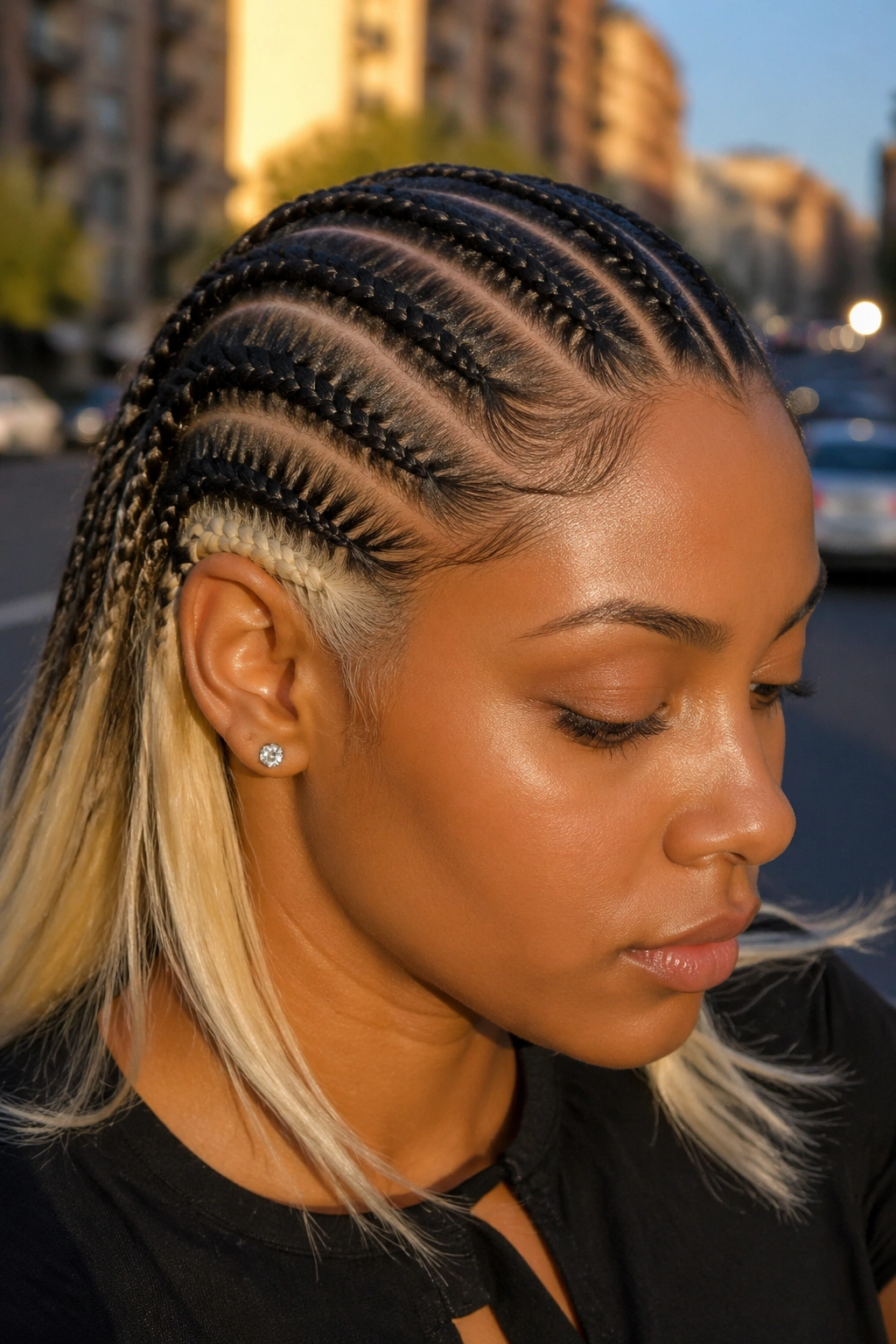
2. Platinum Peekaboo With Straight-Backs
High contrast. Not subtle. Platinum blonde under jet black creates a reveal so sharp it almost looks photoshopped when you flip your head.
This one demands commitment. The platinum has to be bright — dull platinum reads as gray and kills the effect. If you’re using extensions, go for 613 kanekalon rather than dyeing your own hair. The bleached natural hair underlayer approach sounds good but leaves you with damaged strands once the style comes down, and you still have to grow it out.
The top cornrows should be tighter and smaller than the underlayer, something like 12-14 small straight-backs. This visual density on top makes the loose platinum underneath feel more like a surprise. If you braid both layers the same size, the contrast feels less intentional.
Best for anyone with at least shoulder-length hair or who doesn’t mind adding length with extensions. Short hair makes the reveal too small to register.
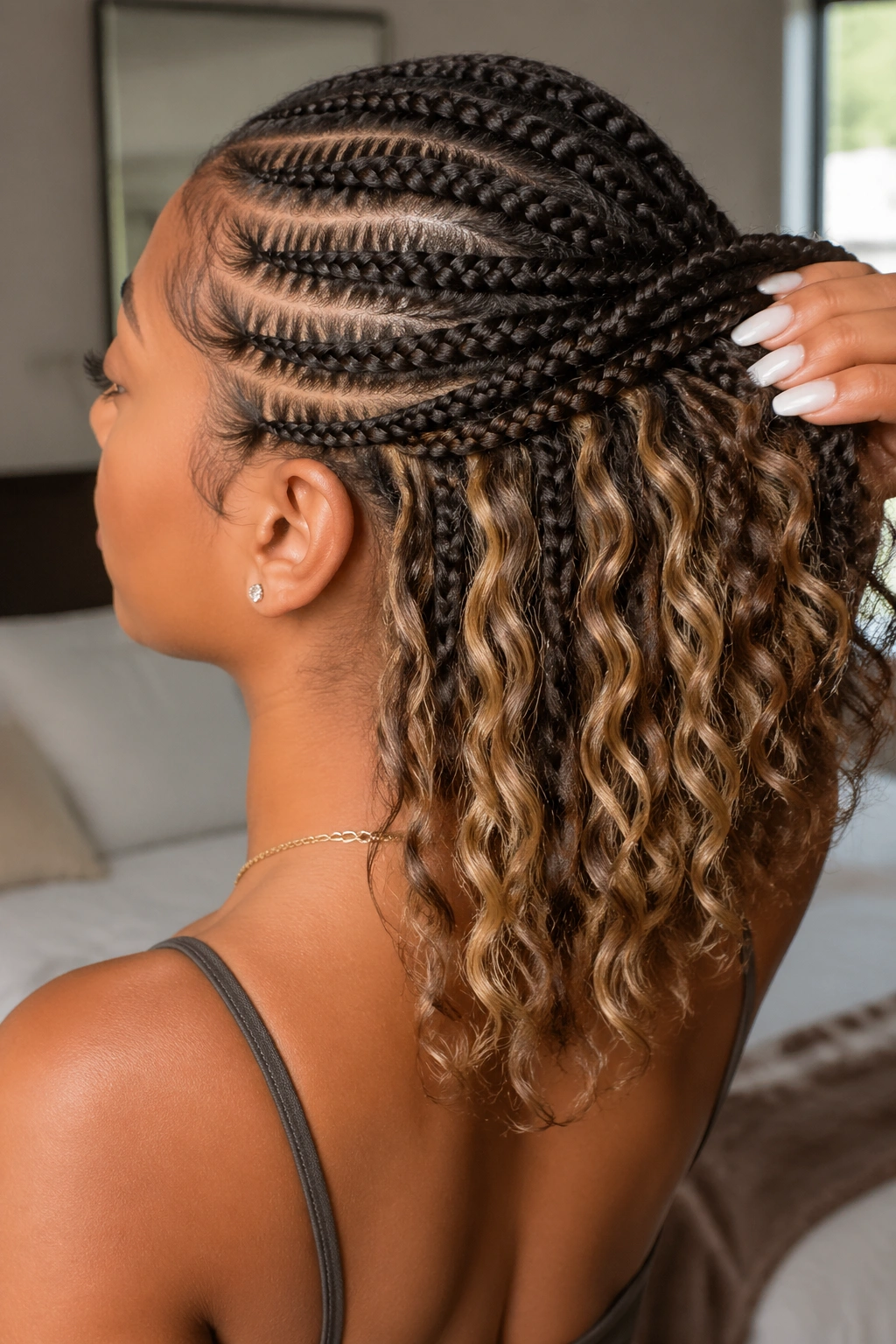
3. Honey Highlights Underneath
Rather than a full block of contrast color, this variation uses honey-toned highlights scattered through the underlayer. Some braids are fully honey, some are natural, some are half-and-half.
What Makes It Different
The effect is softer and more dimensional. Instead of looking like you have one hidden color, it looks like sunlight is catching the back of your head.
Mix three tones when prepping extension hair: your base color, honey, and a medium caramel. Pre-stretch all three together, then separate into loose sections. Braid each underlayer cornrow with a mix — some with more honey, some with more caramel, some mostly base. The uneven distribution is what sells it.
This works especially well on anyone with warm undertones who doesn’t want committed blonde but still wants brightness. It photographs differently in every light.
4. The Half-Up Reveal
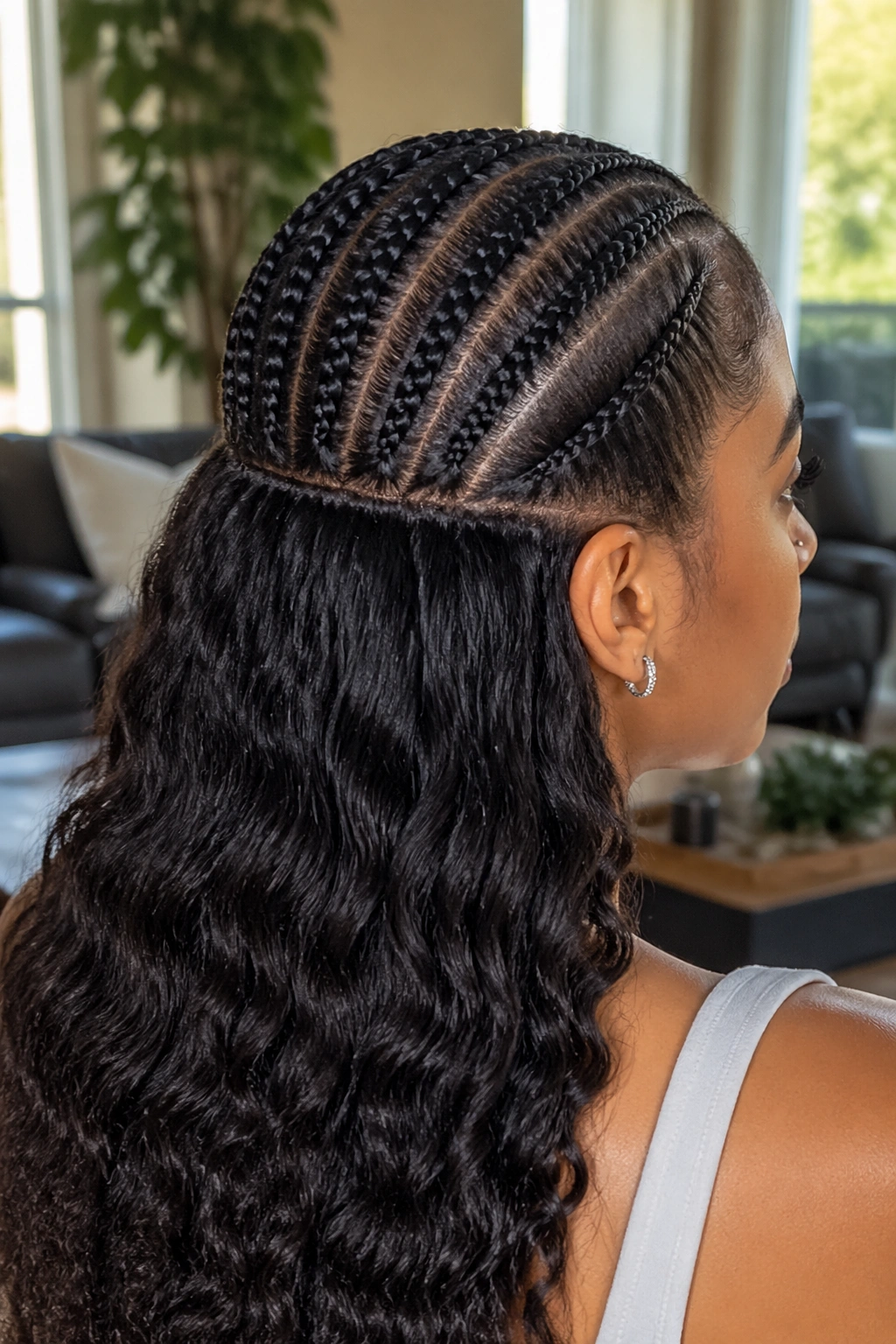
Not a color peekaboo — a structural one. The top half of the hair is braided in straight-back cornrows. The bottom half is left out in its natural texture, then the two sections meet at a horizontal ridge around the crown.
When the hair is down, the whole thing looks like natural hair with some decorative braids at the top. When you pull the loose section up into a puff or bun, the clean cornrow pattern reveals itself.
The magic here is the transition point. A clean horizontal part across the head separates the two zones. If that line zigzags or blurs, the style loses its architectural quality.
Best for 4A-4C natural hair where the loose section has enough texture to contrast against the smooth braids.
5. Cherry Red With Jumbo Cornrows
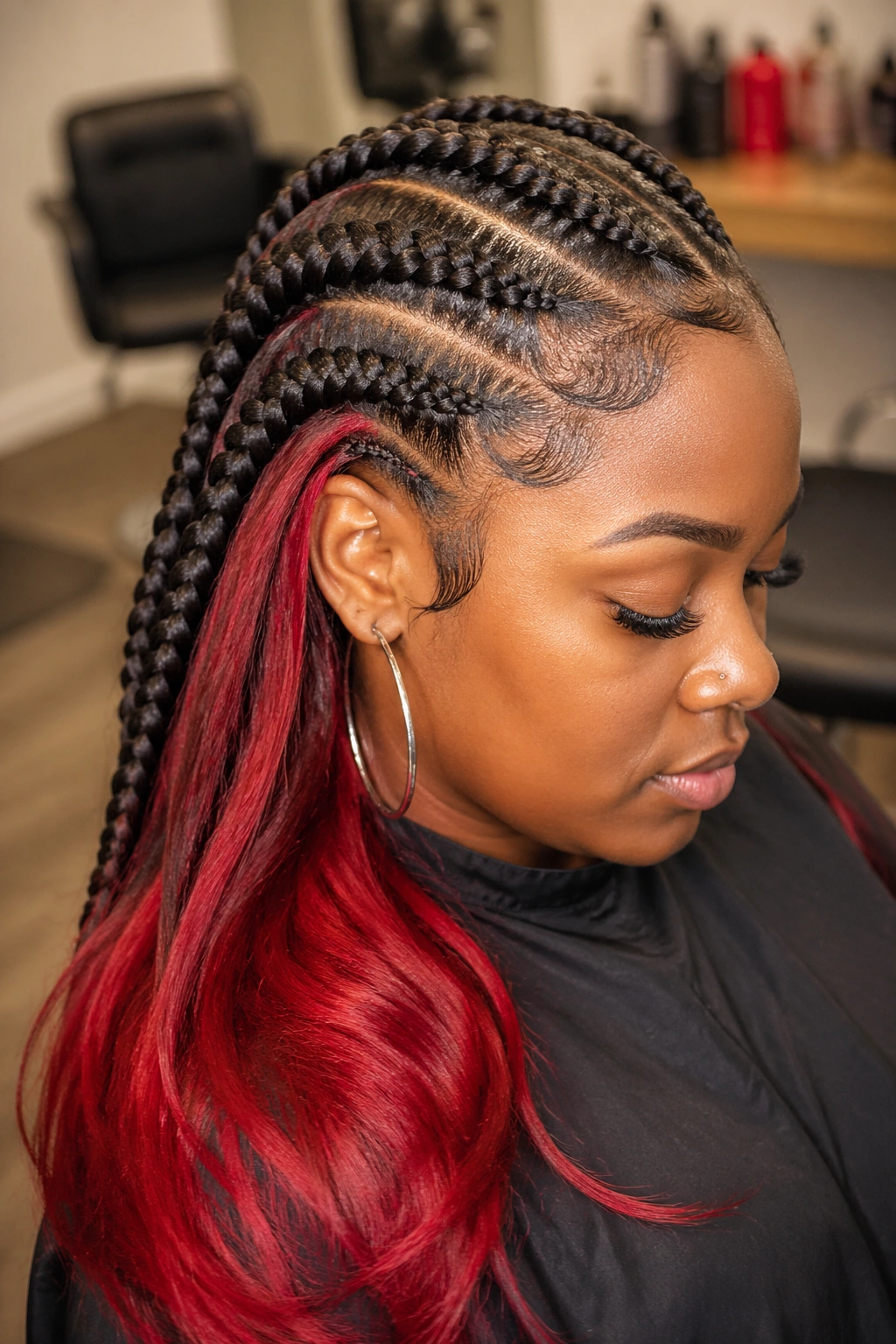
Big, fat cornrows on top — maybe 5-6 total — with a cherry red underlayer. The scale of the top braids makes the reveal feel more like a statement than a whisper.
Jumbo cornrows mean each braid is about an inch wide at the root, sometimes more. They finish faster than medium-sized ones (3-4 hours total for a full head of peekaboo) and they’re easier to undo. Downside: they don’t last as long. Expect a solid week of clean look, then some frizz by day 10.
Cherry red kanekalon has a slightly orange undertone that reads warmer than burgundy. It pairs well with medium-brown base hair more than with jet black. If your natural color is very dark, consider a deeper crimson instead.
6. Caramel Peekaboo With Zigzag Top
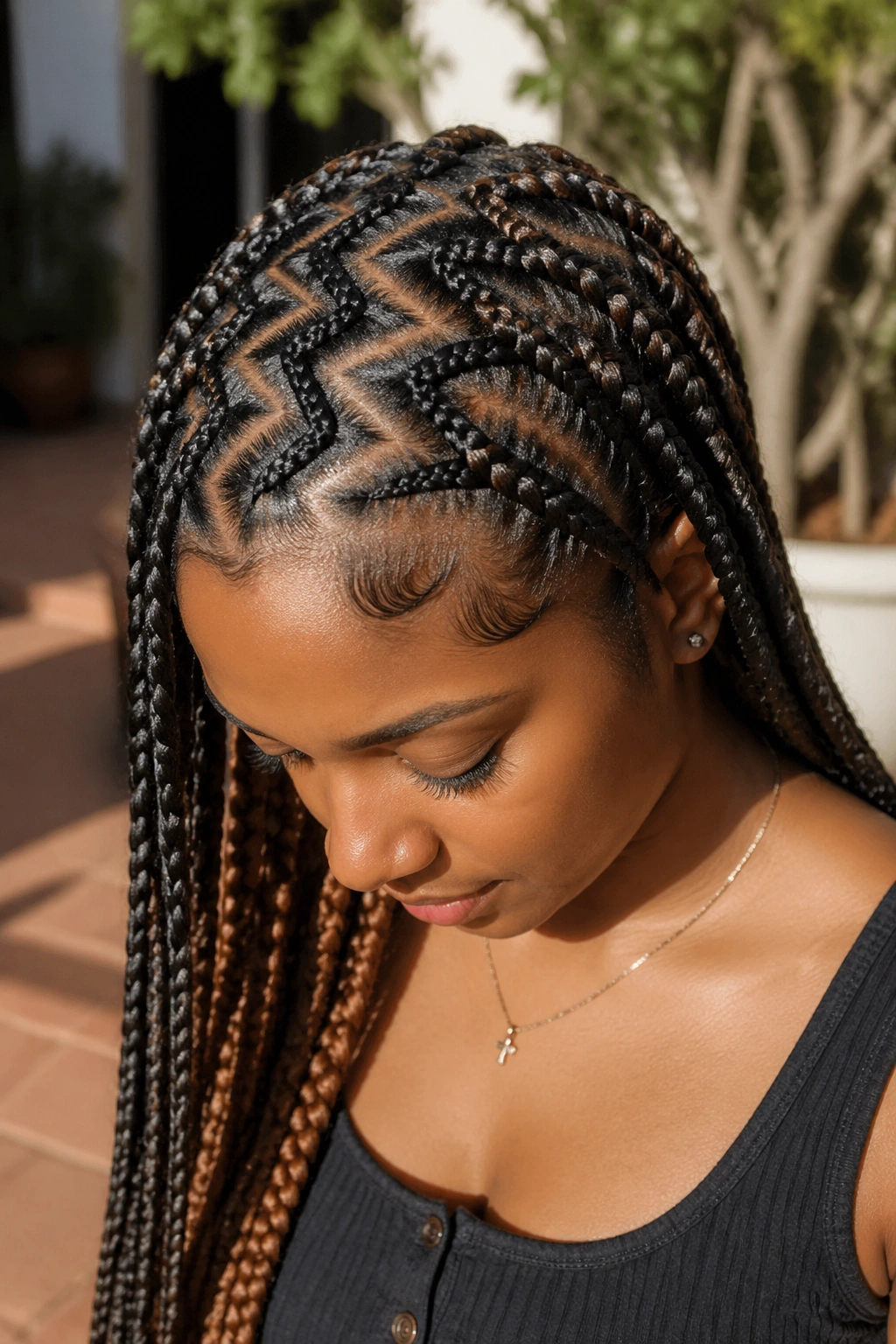
Here’s where the parting pattern carries the style. Instead of straight-backs, the top cornrows follow a gentle zigzag path from the front hairline to the crown. Underneath sits a caramel-toned underlayer.
Zigzag parts take longer. A skilled braider can finish a full head in 4-5 hours; an average one will take 6+. The extra time is in the parting, not the braiding itself. Each zigzag section has to be carved cleanly with a rat-tail comb and edge gel to hold the line.
When you move your head or lift the top section, the caramel doesn’t peek through as a block — it appears in gaps between the zigzags. The effect is more playful than the standard horizontal reveal.
7. Peekaboo With Beaded Tips
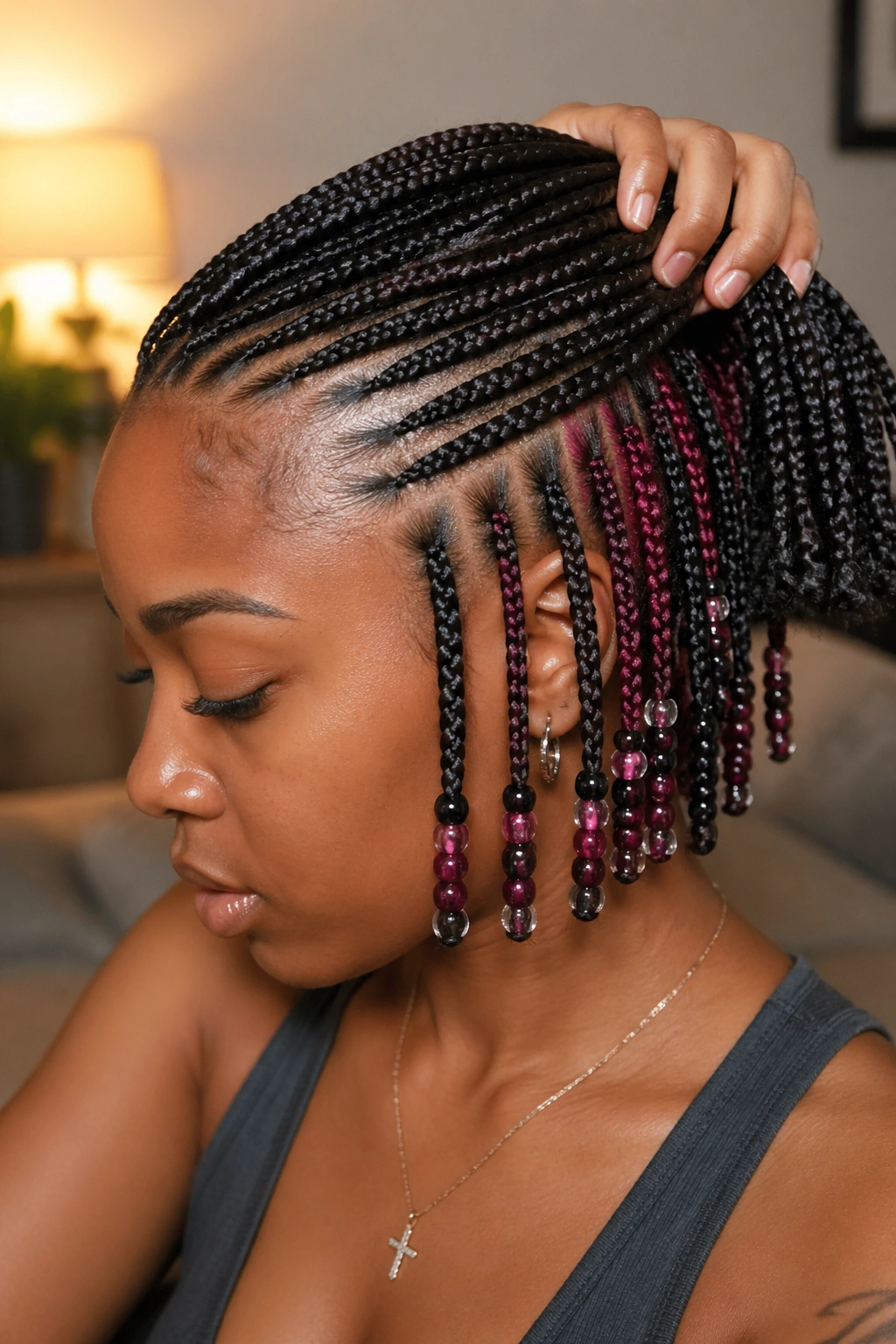
Classic cornrow-with-beads, but the beads are all on the hidden underlayer. So when the top is down, you only hear the faint clack of beads before you see them. When the top goes up, rows of colored glass beads show underneath.
Pick beads that match the contrast color. If you’re doing burgundy underneath, wooden beads in a matching tone look more grounded than glass. Glass beads in clear or crystal tones work for everyone — they catch light without committing to a specific color story.
String 3-5 beads per braid, secured with a rubber band or a figure-eight knot at the tip. Too many beads weigh down the braid and pull at the scalp. Too few and the sound disappears.
8. Two-Tone Peekaboo (Color on Color)
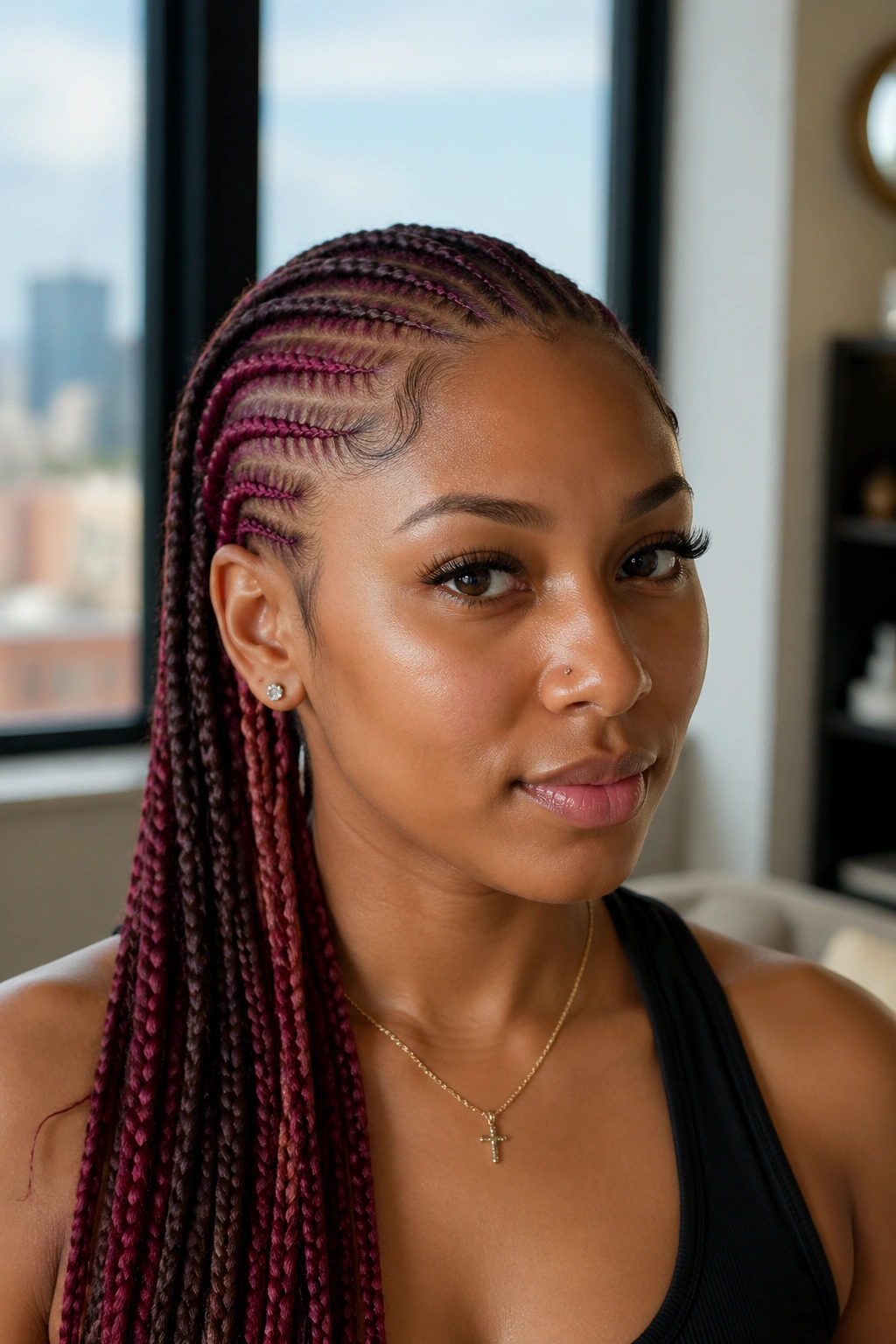
Instead of hiding color under natural hair, this approach layers two different colors. Purple on top, teal underneath. Or deep green on top, gold underneath.
How to Style It
The key is keeping both colors in similar tonal families (both jewel tones, both pastels, both earth tones). Wildly different saturation levels read as chaotic.
This is a longer commitment. You’re dyeing or extending both layers, so takedown takes more time and product cost is higher. But the end result is the most visually distinct peekaboo option on this list.
Two-tone peekaboos photograph best in even lighting. Harsh sunlight washes out the top layer; dim lighting erases the underlayer entirely.
9. Micro Cornrows Over Bright Underlayer
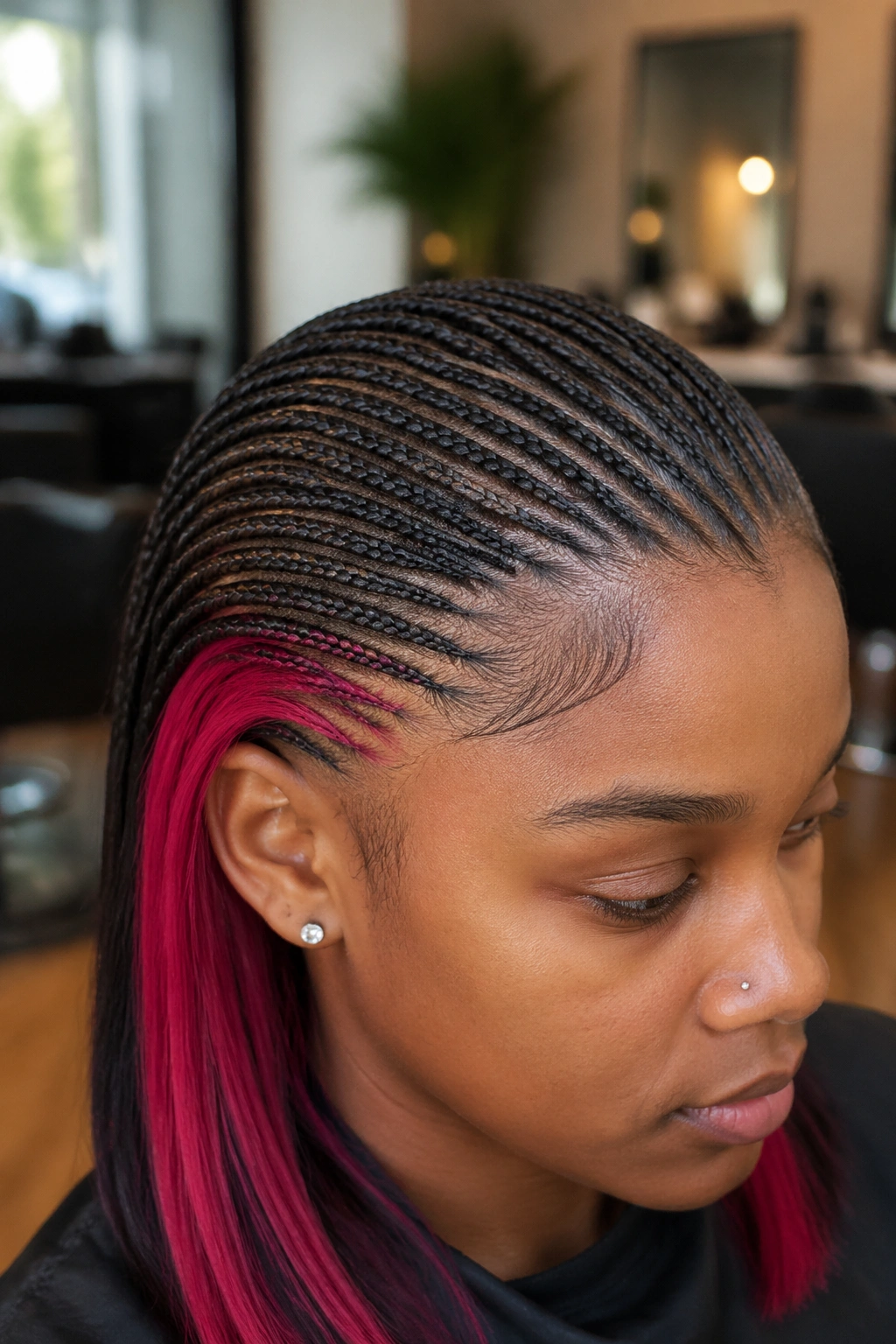
Very small cornrows on top — 20+ braids across the head — with a single block of bright underlayer color. The density of the top creates a tight, almost crocheted-looking surface that makes the hidden color feel even more hidden.
Micro cornrows take the longest of any variation on this list. Budget 6-8 hours. The braider has to maintain tension consistently across every tiny section, and any lapse in concentration shows.
Scalp tension is real with this one. The first night is genuinely uncomfortable. By day 3 it settles down. If you’re tension-sensitive, ask your braider to skip the edges and do a few of the front rows slightly looser.
10. Peekaboo With Swirl Parts
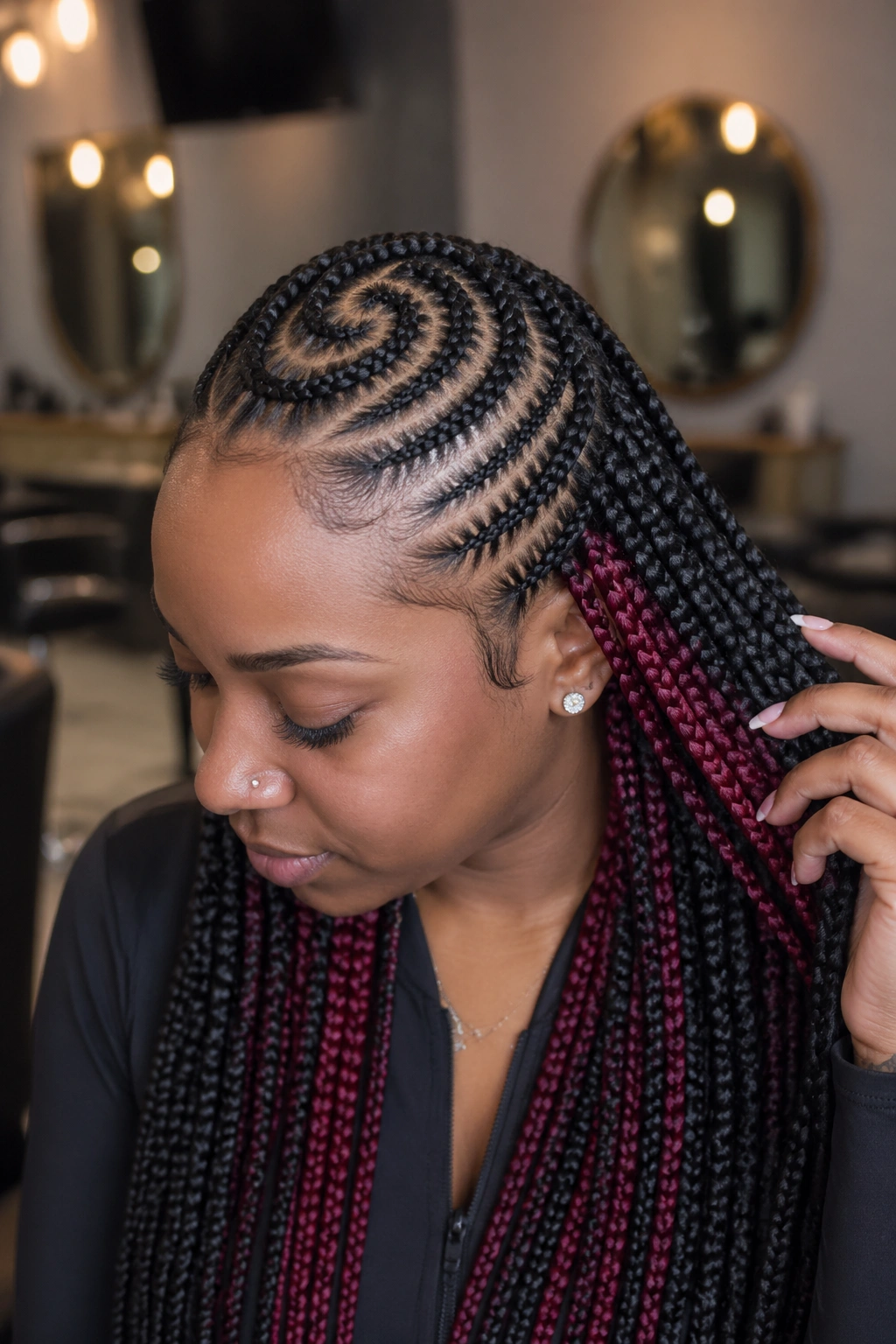
A single or double swirl pattern on top — think of a spiral radiating from the crown — with contrast color tucked underneath. The swirl gives the top layer movement even when the head is still.
Swirl parts are technical. They require a braider who understands how to guide a cornrow along a curve without losing tension at the turning points. Ask to see previous work specifically featuring swirls before booking.
Under a swirl pattern, a single bold color (electric blue, hot pink) works better than a multi-tonal underlayer. The curved top is already busy. Keep the underneath simple.
11. The Nape-Only Peekaboo
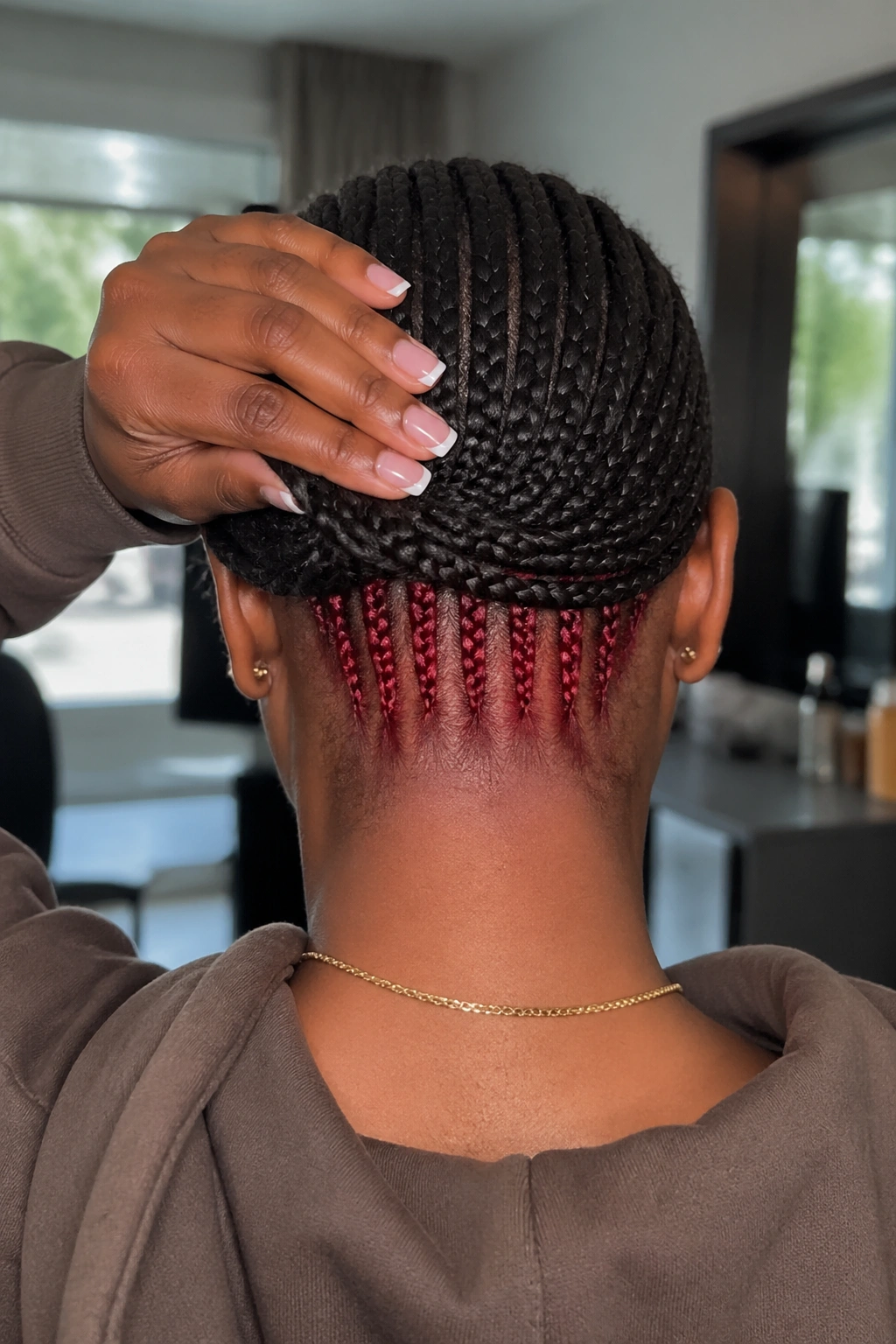
Minimalist version. The top two-thirds of the head is braided in normal straight-backs without any color. Only the bottom 2-3 inches — just the nape strip — is braided with color or highlights.
This is the most wearable peekaboo for anyone in a conservative work environment. The color only shows when you lift your hair completely off the neck, which happens briefly rather than constantly.
Pick richer, deeper colors for nape-only. Burgundy, deep purple, forest green. Bright colors disappear at such a small scale and look accidental.
12. Peekaboo Feed-Ins With Natural Ends
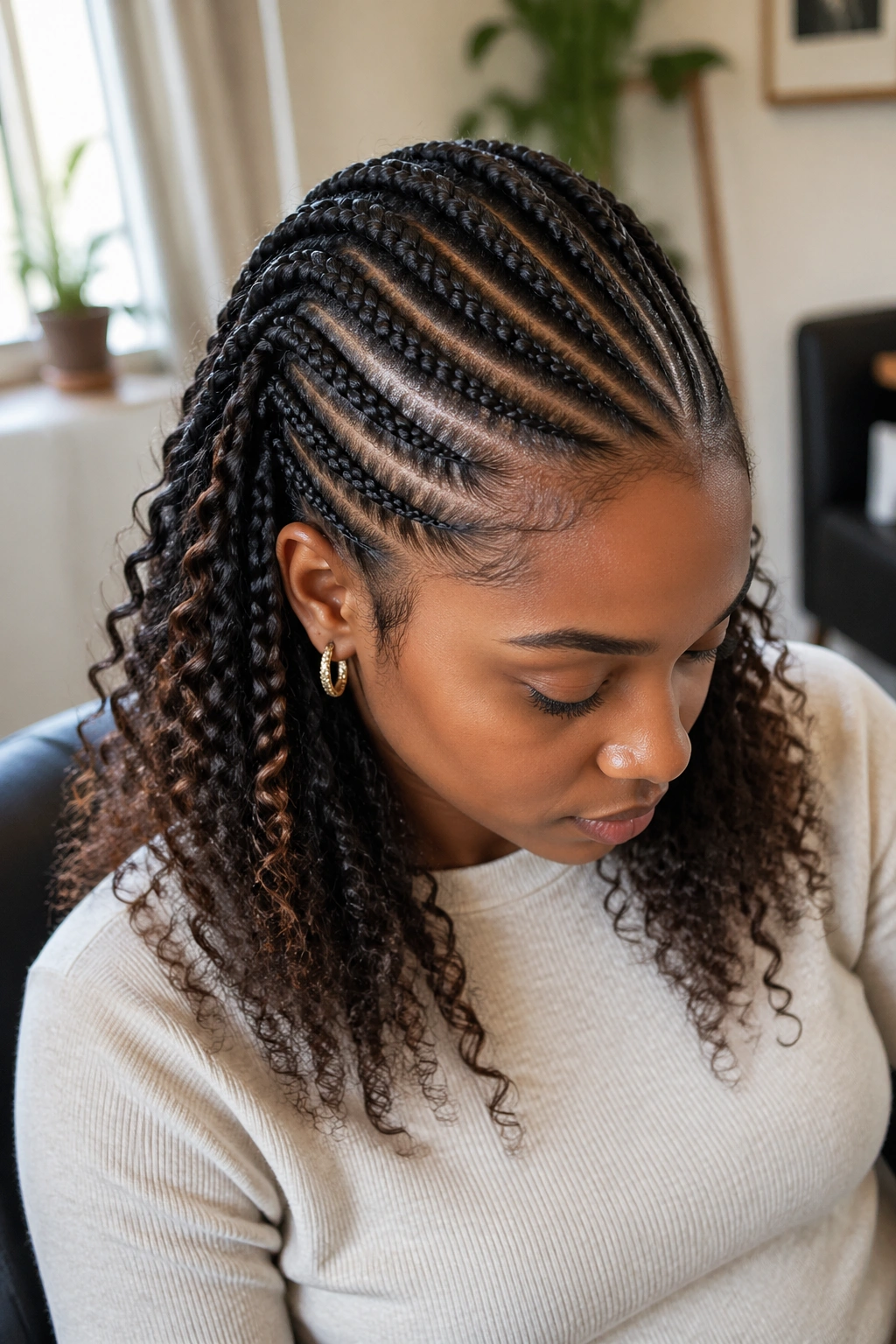
Feed-in cornrows on top — gradually adding extension hair as the braid progresses — and left to hang free at the ends in your natural texture. The “peekaboo” is that the roots look smooth and sleek, but there’s curly, natural hair at the tips.
Who This Is For
Anyone with 4A-4C hair who wants a cornrow look but isn’t ready to commit to straight extensions all the way down. Feed-ins with natural ends last about 3 weeks before the natural texture starts to blend into the extension portion.
The transition from braid to free texture should be clean. Ask your braider to finish each braid with a small rubber band and then release just the last 2 inches of natural hair. No feather-out blend. The sharp transition is part of the style.
13. Burgundy and Black Alternating Underlayer
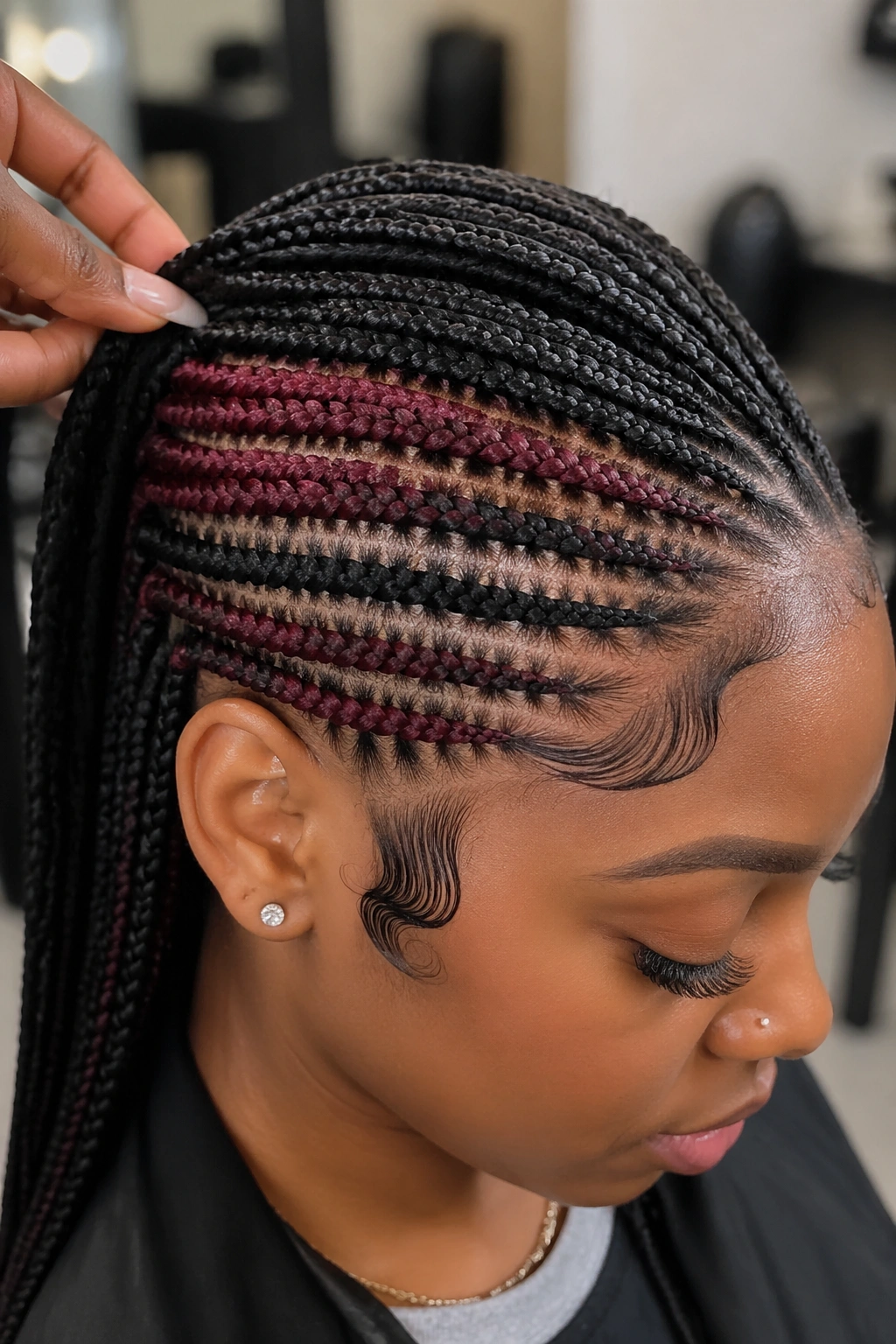
Instead of a single color underneath, this one alternates: black, burgundy, black, burgundy. The stripe pattern reveals itself whenever the top moves.
The trick is matching braid widths between layers. If the top cornrows are medium-sized (say, 10 across the head), the underlayer braids should match that count and width. When you lift the top, the alternating color braids line up with the top braids visually, creating a grid-like effect rather than random stripes.
This variation works best with horizontal ponytail styling. When you pull the top layer up and back, the black-burgundy stripes hang down in a fan shape that reads as intentional pattern.
14. Peekaboo Crown Braid
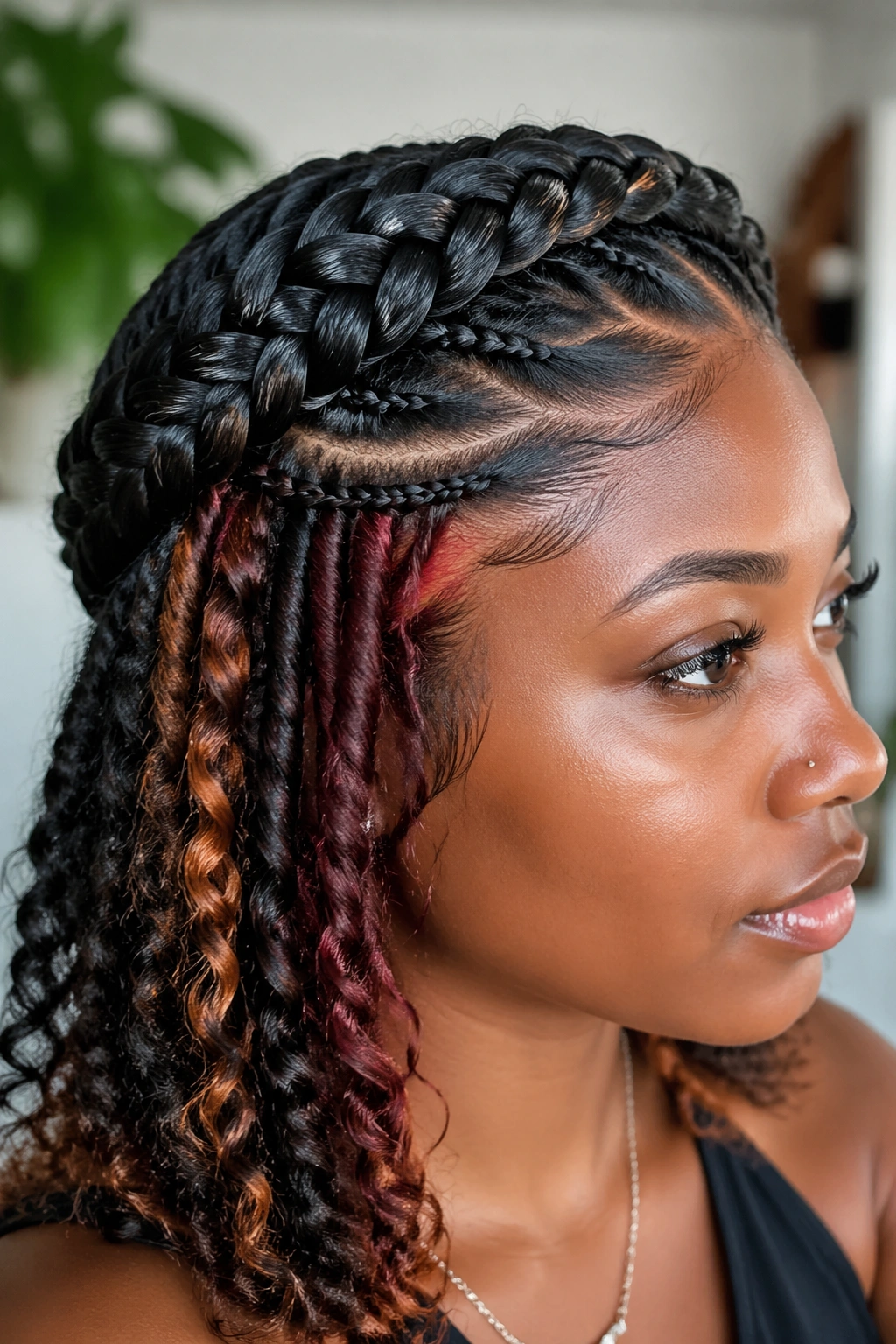
The top is cornrowed into a crown — a single braid that circles the head like a halo. Underneath, the hair is free or lightly plaited in a contrast color.
Crown braids need length. Shorter hair will only make it halfway around the head before running out. If you have less than shoulder-length hair, add extensions specifically for the crown portion.
The underlayer here can be more relaxed. Since the top is doing the structural work, the hidden layer can be loose twists, two-strand braids, or even free natural hair. The contrast is between “sculpted” and “soft” rather than between two precise braid patterns.
15. Silver Peekaboo Under Dark Brown
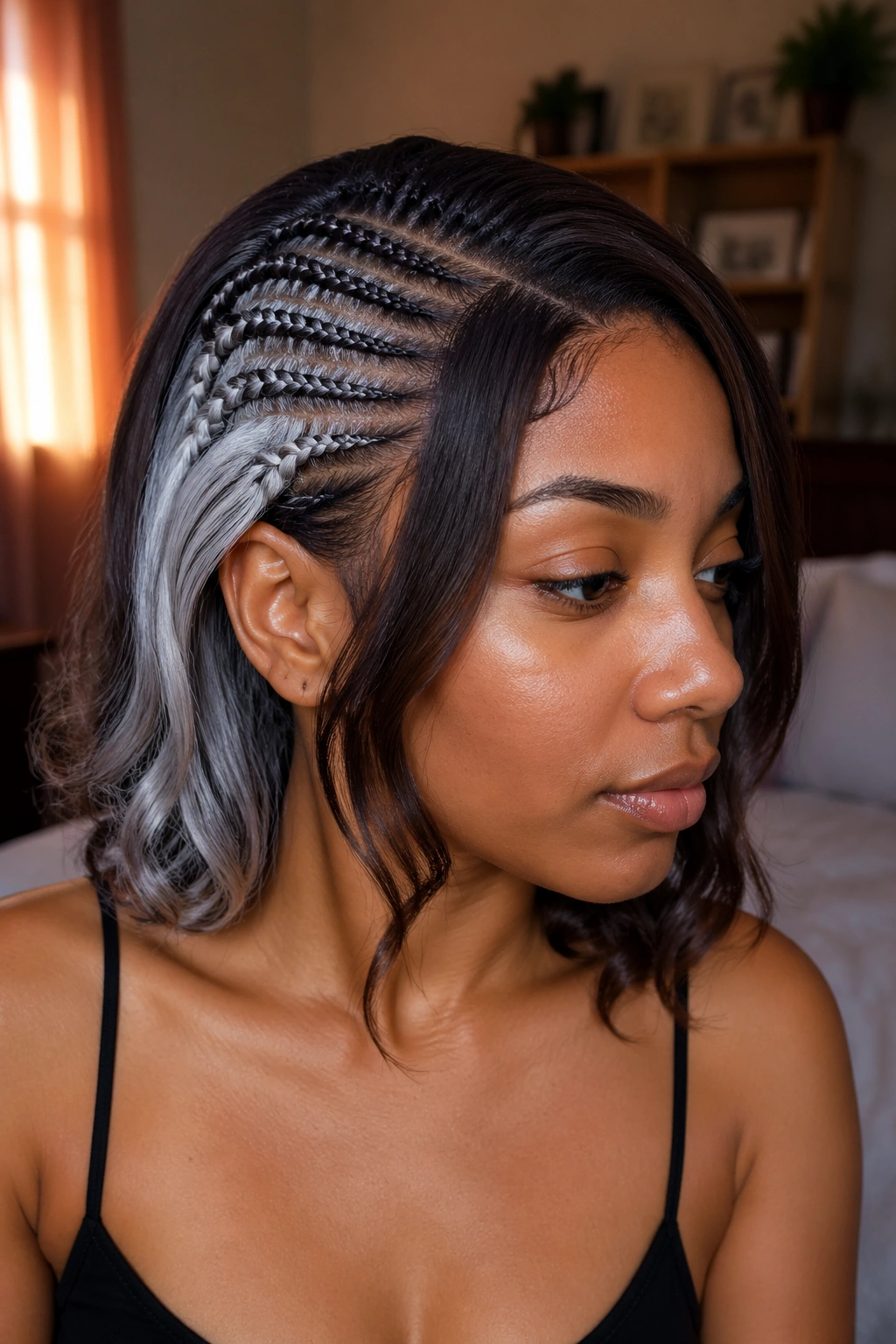
Silver/gray is underused in peekaboo styling. It reads cooler than platinum, sharper than white, and it sits unusually against dark brown base hair.
The color temperature difference is the draw. Warm browns on top, cool silver underneath — the mismatch catches the eye without being as loud as bright color contrast.
Silver extension hair tends to tangle faster than other tones. Invest in slightly higher-quality kanekalon for this one, or consider synthetic blends marketed as “premium” rather than the basic stuff. The extra $8-12 per pack makes a real difference.
Plan for shorter wear. 3 weeks max before the silver starts looking dingy from product buildup and oil transfer. A bright purple shampoo rinse at week 2 helps.
16. Peekaboo With Thread Wrap Accents
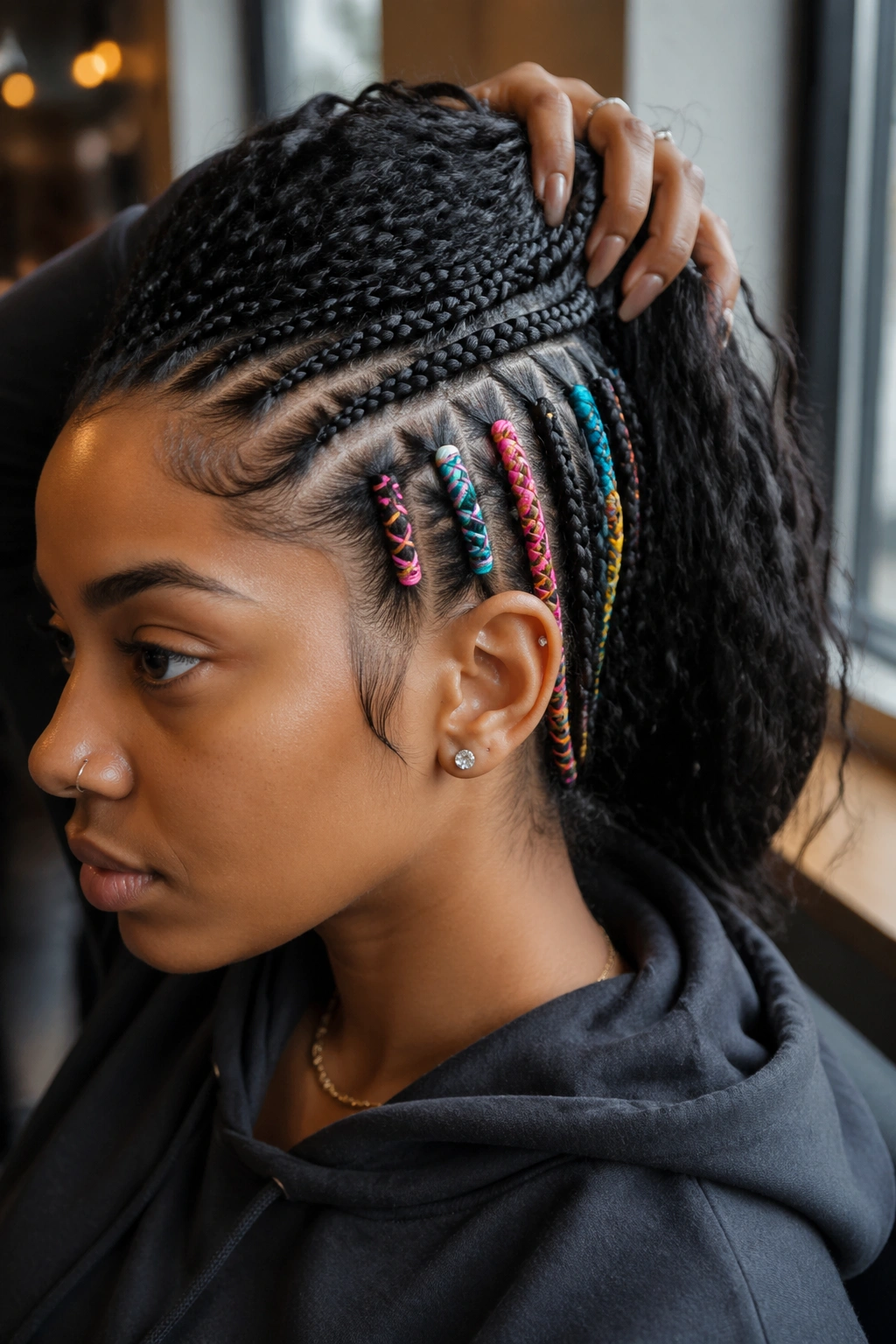
No color in the hair itself. Instead, colored thread is wrapped around a few of the underlayer braids at intervals. The thread shows when the top layer moves, creating a hidden decorative element.
Embroidery floss works best. It’s cheap, comes in endless colors, and wraps tighter than yarn. Pick 3 colors that complement each other rather than match. Secure each thread wrap with a knot and a dot of clear nail polish.
This is the most customizable peekaboo on the list. The thread stays in for as long as you want, can be cut off and replaced without redoing the braids, and lets you change the hidden color story weekly.
17. Peekaboo With Scalp Designs
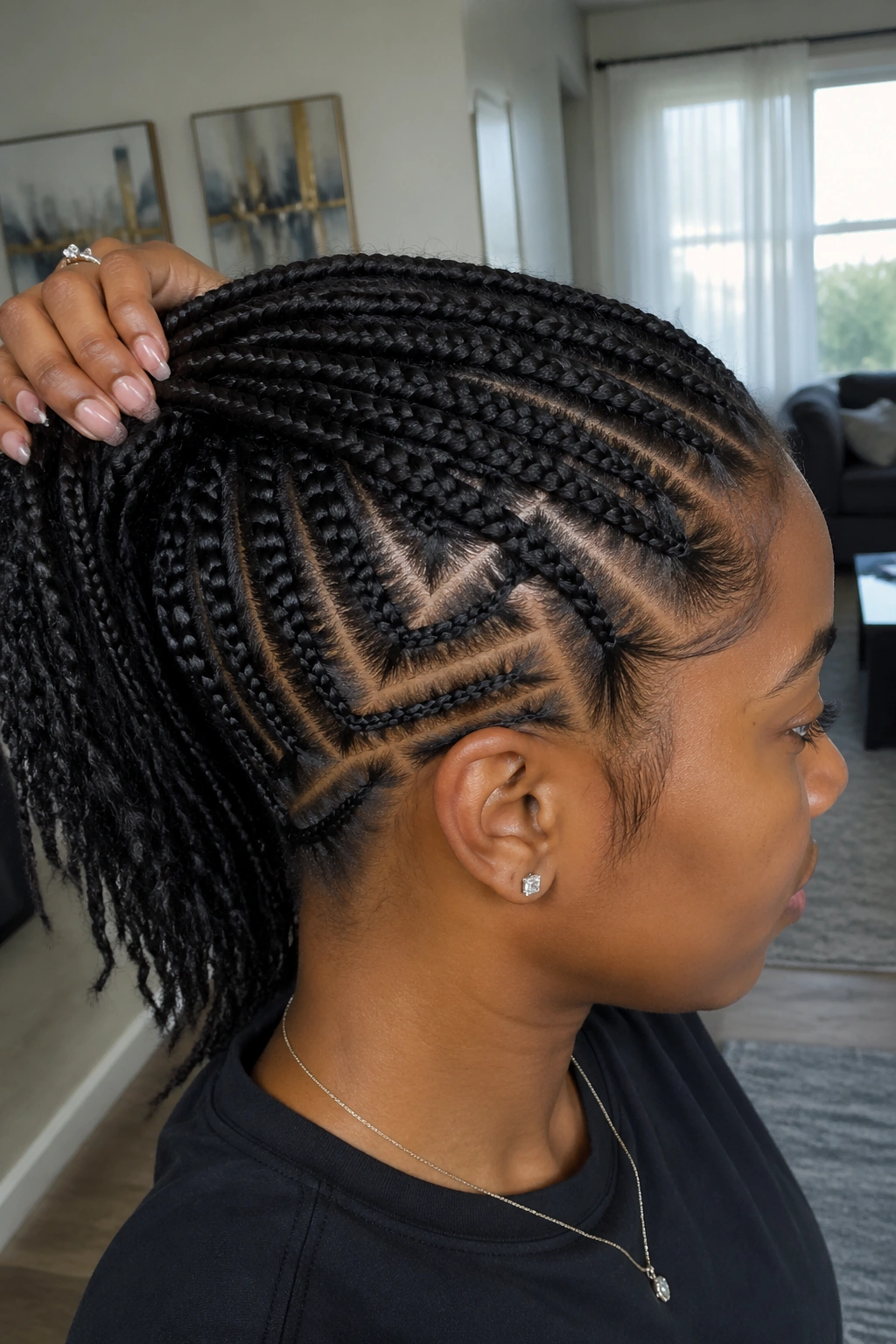
The underlayer itself isn’t the contrast — the scalp between the braids is. The top cornrows are tight and close together. The underlayer braids are spaced wider, with geometric parts between them that form visible shapes (chevrons, diamonds, curves).
You need good scalp condition for this one. The parts will be visible, so any flakes, dryness, or discoloration will show. Do a thorough scalp exfoliation 2 days before the braiding appointment using a scalp scrub or even just fine sugar mixed with jojoba oil.
Maintenance Notes
The geometric parts on the underlayer need refreshing every 4-5 days. A small amount of edge gel on a clean toothbrush, smoothed along each part line, keeps the scalp designs sharp. Without maintenance they’ll blur within a week.
18. Peekaboo With Ombre Underlayer
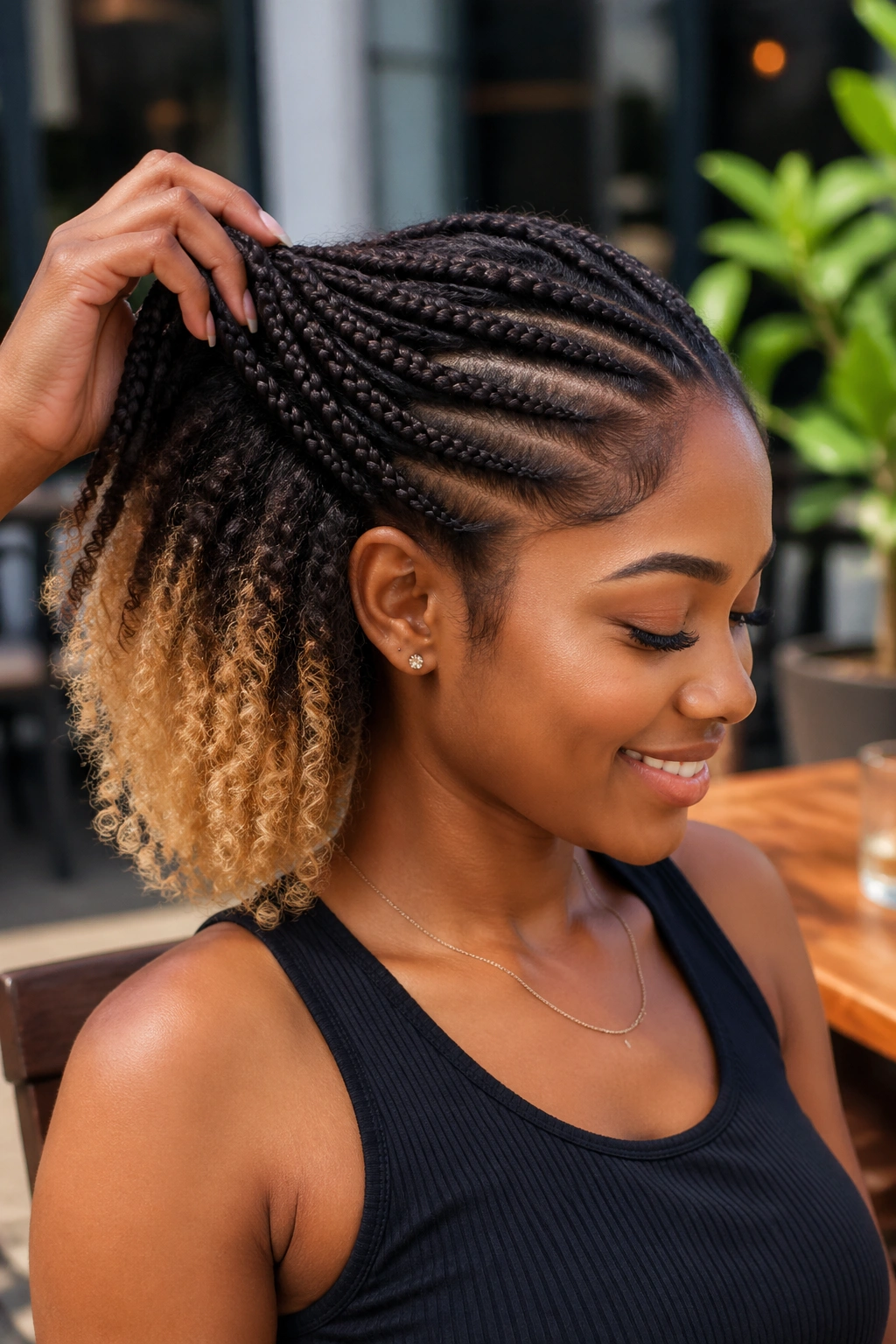
The underlayer hair goes from dark at the roots to light at the tips — an ombre effect within the hidden section. When you flip your hair, the reveal isn’t one color but a gradient.
Pre-dyed ombre kanekalon is available in standard color combinations (black to blonde, brown to burgundy, etc.). You can also dip-dye regular extensions at home with warm water and semi-permanent dye, though the results are less predictable.
The gradient should span at least 6 inches for the ombre to register. Shorter lengths compress the color transition and make the ombre look muddy.
19. Peekaboo With Decorative Hair Cuffs
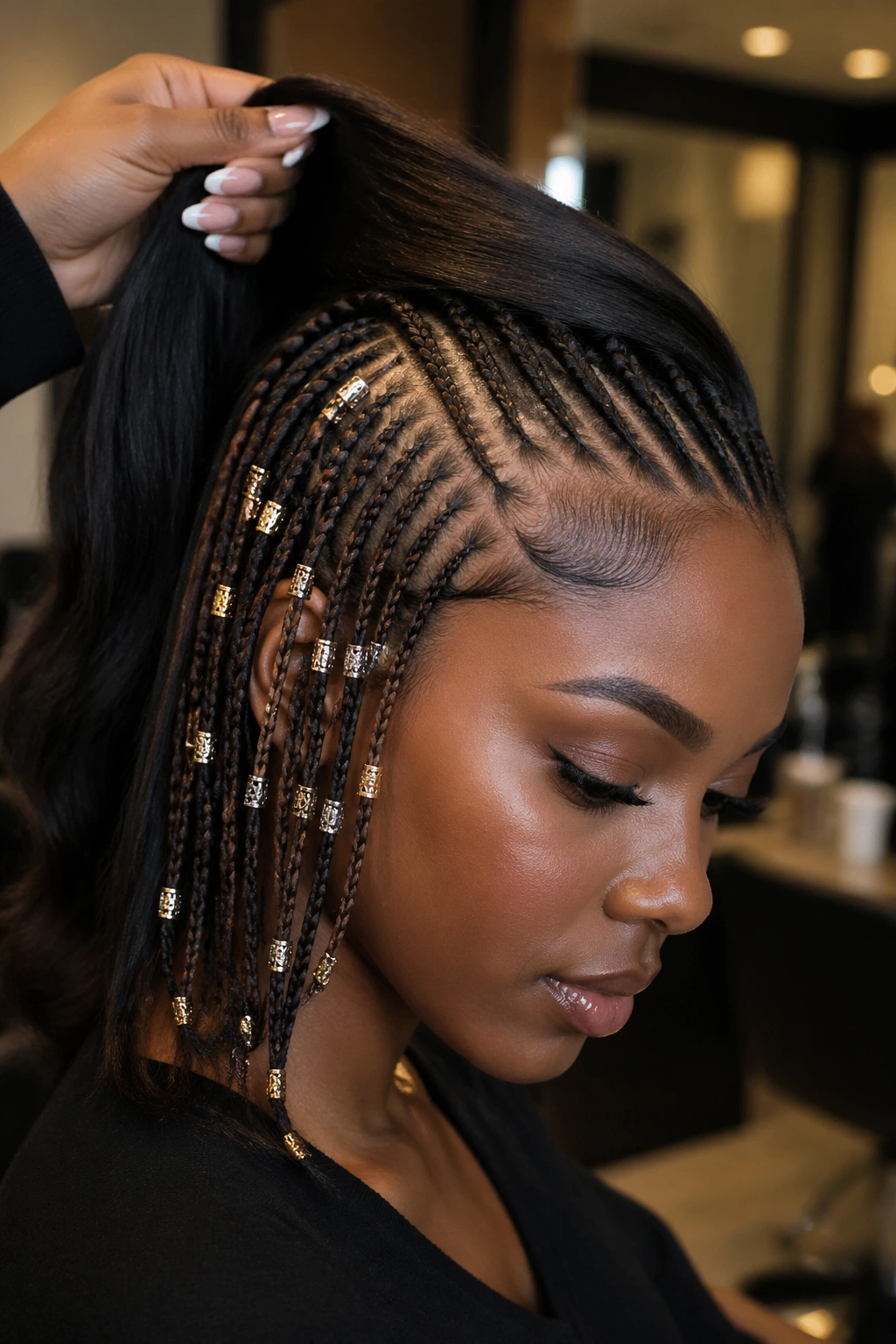
Metal cuffs on the underlayer braids only. Gold, silver, or mixed metal cuffs slide onto the braid and clamp shut, adding weight and visual punch to the hidden portion.
3-4 cuffs per braid is the sweet spot. Any more and the braid swings weirdly. The cuffs on the underlayer create a slight sound when you move — a very faint metallic shift that’s part of the experience.
Cuffs can scratch your neck and shoulders if they’re sharp-edged. Check every cuff with your finger before wearing, and file down any rough spots with a nail file. One bad cuff can leave a red mark all day.
20. Peekaboo With Extremely Long Underlayer
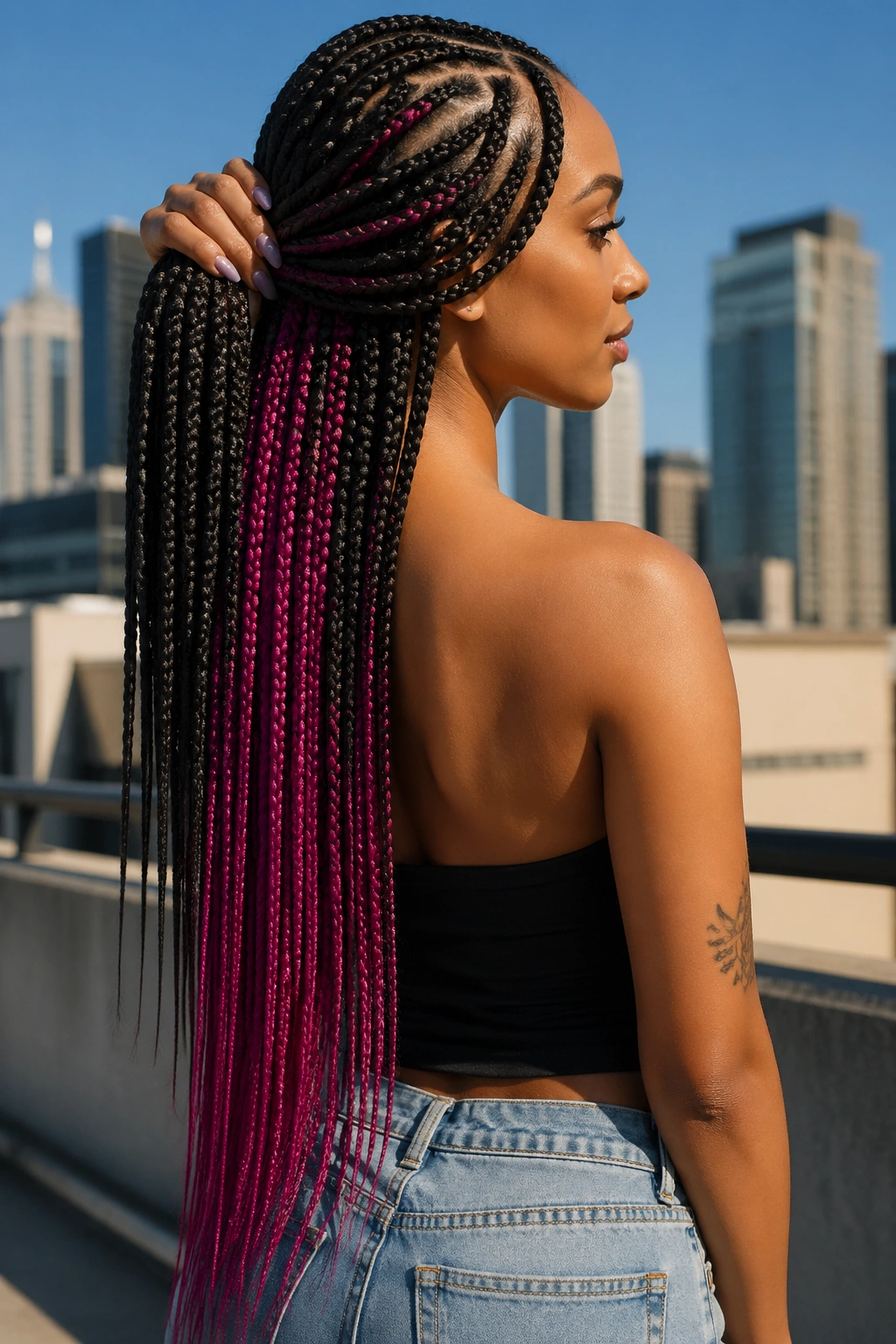
The top cornrows end at shoulder length. The underlayer extensions hang to the mid-back or longer. When you lift the top, the underlayer drops out almost comically longer, like a mullet in reverse.
This is a playful, maximalist style. It works for anyone who wants a conversation piece rather than a subtle accent.
The weight math matters. Very long extension hair puts real tension on the nape braids. Ask your braider to use slightly thicker underlayer cornrows (not ultra-thin) to distribute the weight, and to anchor each extension piece with a double feed-in at the base rather than a single insertion.
Expect a slight pulling sensation for the first 2-3 days. If it hasn’t eased by day 4, see your braider about loosening the nape section — that kind of persistent tension leads to traction damage over time.
21. Side-Part Peekaboo With Heart Pattern
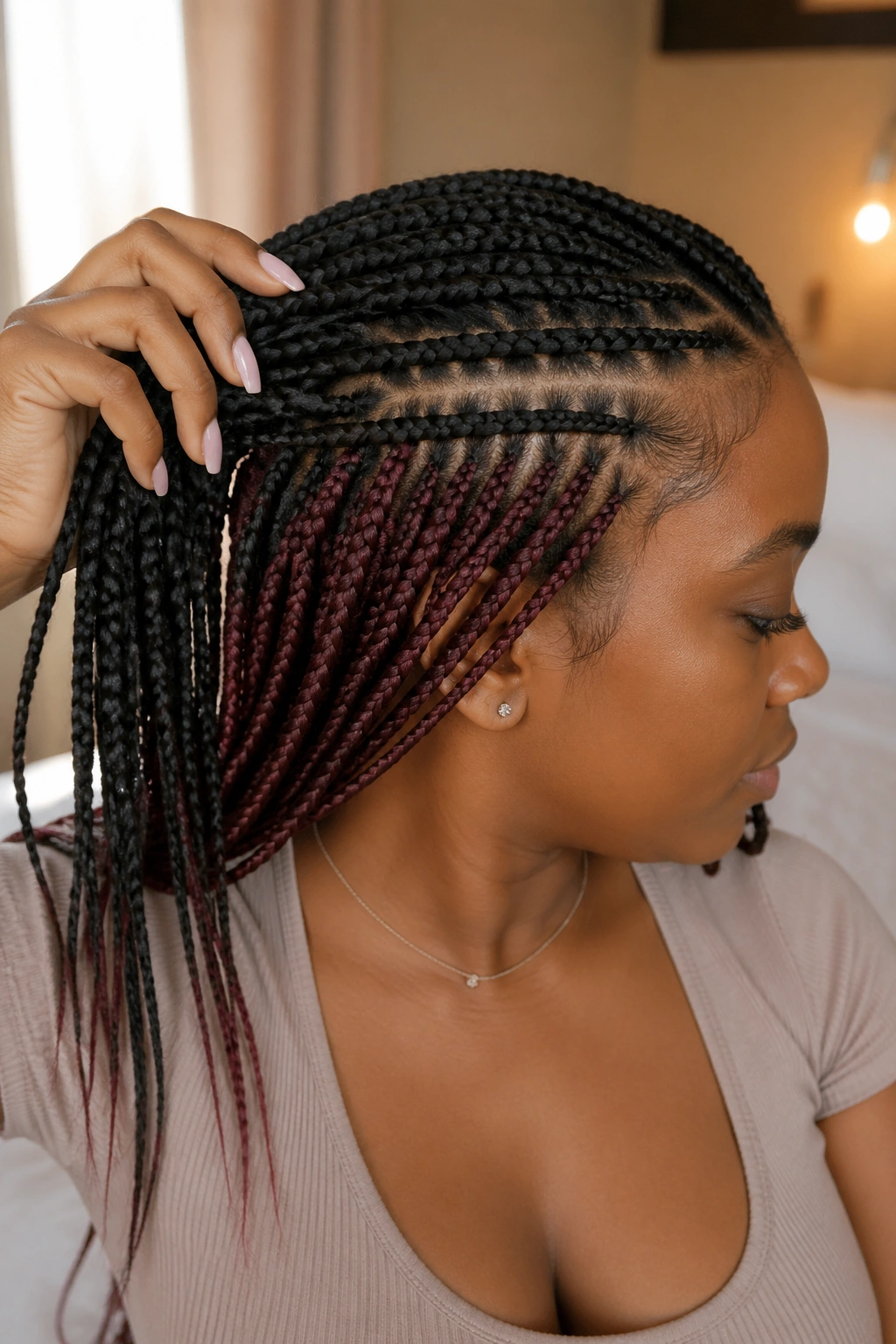
A deep side part on top, with the cornrows fanning from the part across the head. One hidden underlayer braid in the shape of a heart, pressed flat against the scalp and invisible until you sweep the top section up.
The heart cornrow is genuinely difficult. It requires a braider who can work a sharp curve while maintaining scalp contact. This detail usually comes up as a custom request rather than a standard service.
The heart should be placed where someone would see it if you sat in front of them at a restaurant booth and leaned forward — roughly at the upper back of the head, 2-3 inches below the crown.
22. Full Color Block Underlayer (No Contrast)
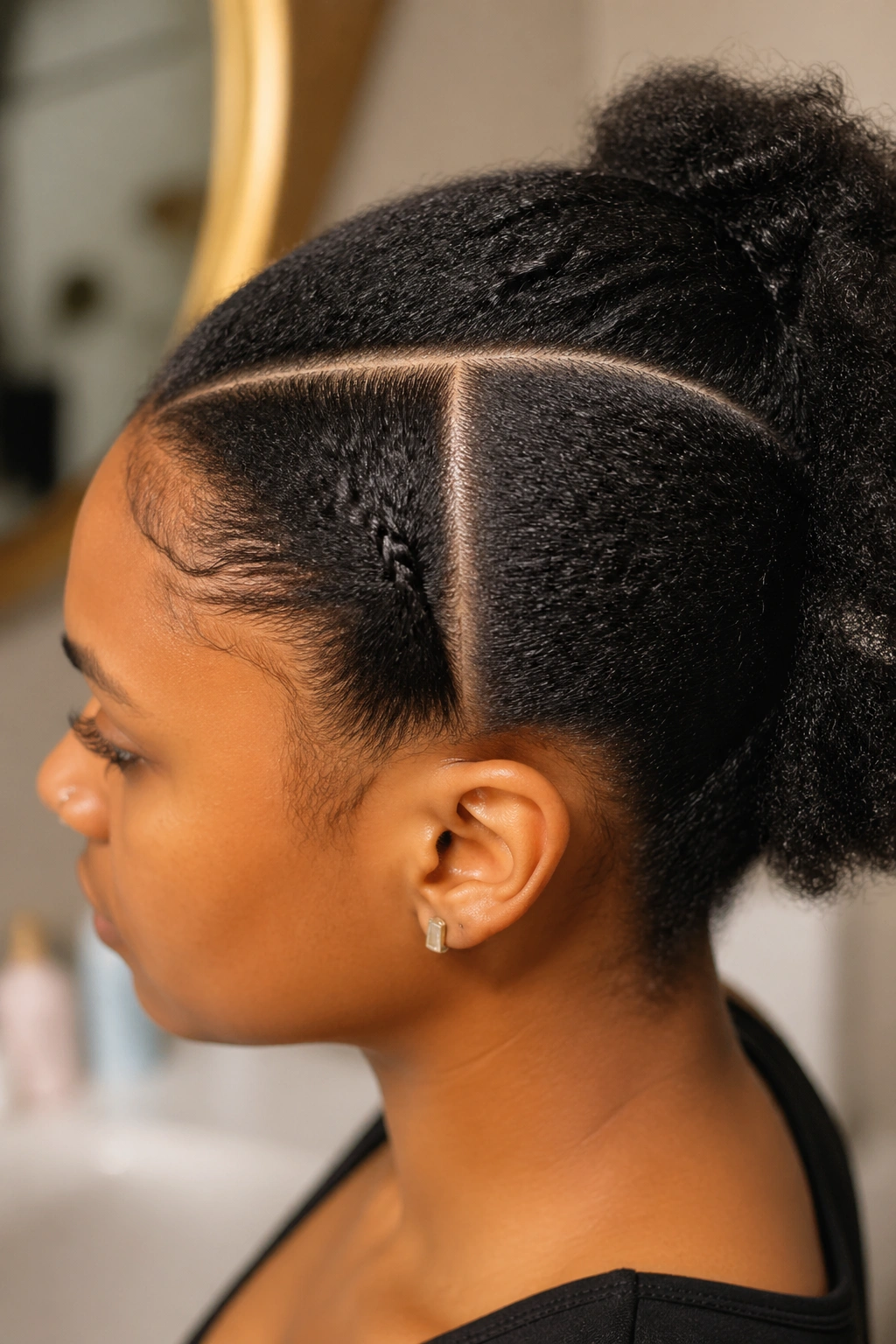
The final variation flips the concept. Instead of hiding color that contrasts with natural hair, both layers use the same dramatic color. A full head of cornrows in, say, deep emerald green. The peekaboo effect comes from length difference only — the top layer is shoulder length, the underlayer extends past the waist.
This is a maximalist statement. No subtlety. It’s for anyone who wants the full commitment of color cornrows but likes the shifting visual drama that peekaboo parting provides.
Green, deep purple, and electric blue all photograph well at this scale. Red and orange tend to wash out under most indoor lighting and only read correctly outdoors.
The main challenge is upkeep. Colored kanekalon fades faster than dark, and the longer pieces underneath catch more environmental wear — rubbing against bags, jackets, seat backs. Wash with cool water only and air dry. Hot water and blow-drying strip the color within weeks.
Maintenance Without Making Your Life Harder
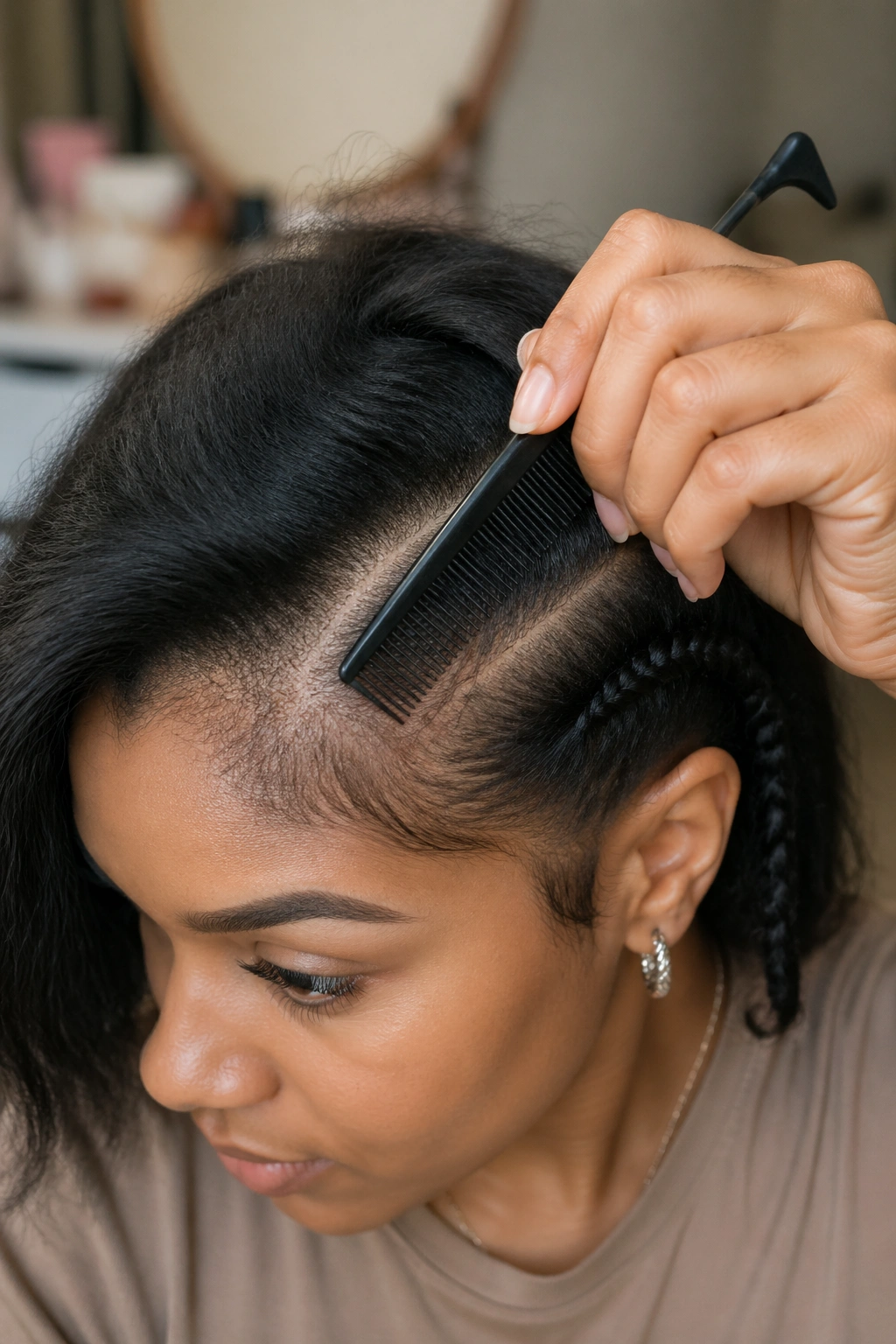
Peekaboo cornrows maintain easier than most people think. Because the top layer is the part you see daily, that’s where your attention goes. A light mist of water and leave-in spray every other morning keeps the top braids from frizzing. Sheen spray twice a week. Edge gel on the edges only — skip the rest of the scalp.
The underlayer needs almost nothing. It doesn’t see as much air, friction, or sun, so it stays cleaner longer. A quick spray of sheen before you’re going somewhere specific is enough.
Wrap at night. A silk or satin scarf, tied around the head after you’ve gathered the braids into a loose ponytail or gathered them to one side. This is the single most important habit. Sleeping uncovered cuts the wear time of any peekaboo style in half.
Scalp Care During the Wear Period
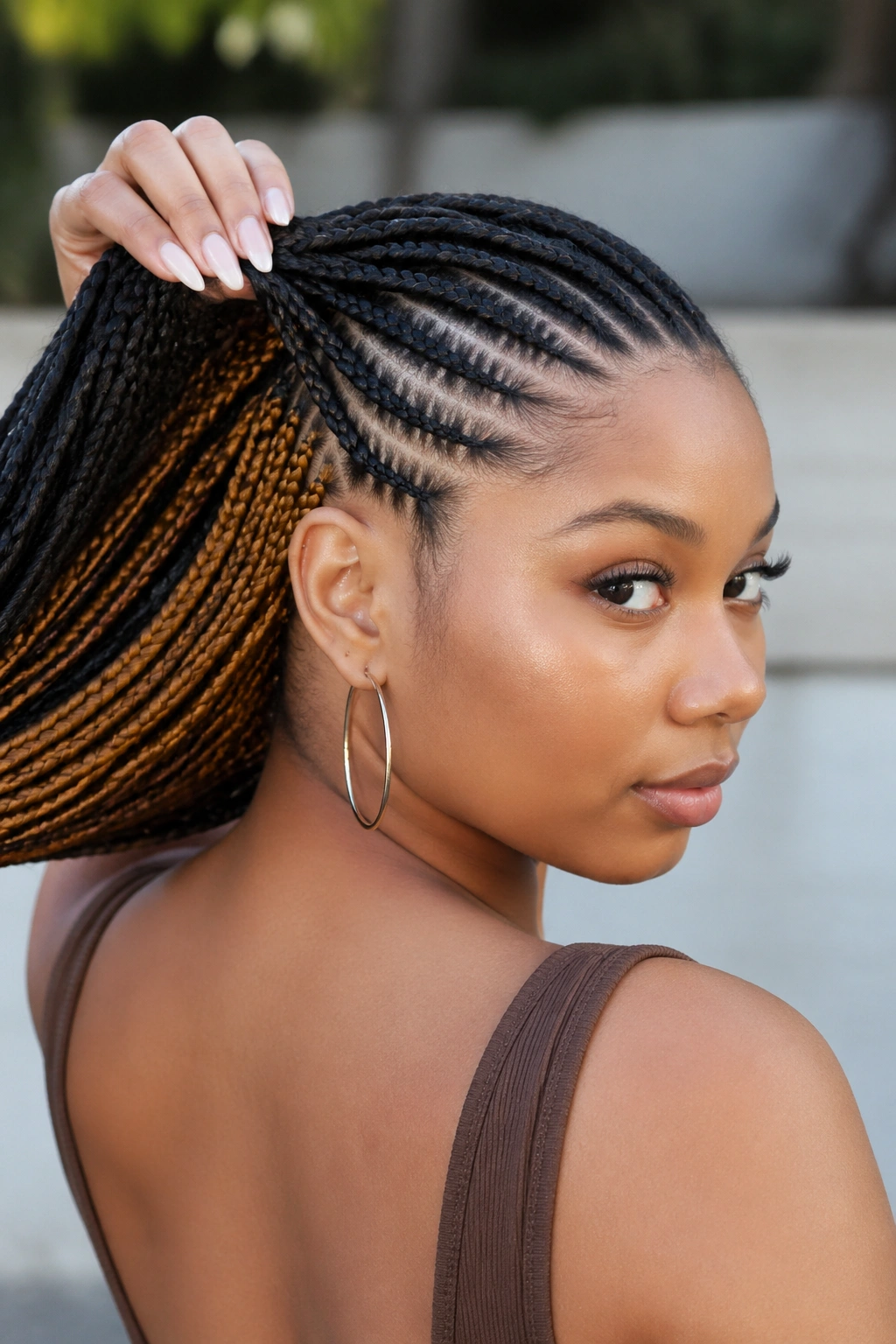
A few weeks into any braided style, scalp buildup becomes an issue. Dead skin, product residue, oil — they collect at the roots and create that dull, slightly itchy feeling.
Mix equal parts apple cider vinegar and water in a small squeeze bottle. Once a week, part your hair along a few sections and apply the mixture directly to the scalp. Let it sit for 10 minutes. Rinse with cool water if possible, or wipe with a damp cloth if you can’t rinse.
Follow with a light oil — jojoba or argan, not coconut — applied with a squeeze bottle or dropper to each part line. Not slathered. A few drops per section. Too much oil will make the braids look dirty within hours.
If the itching gets serious, it’s almost always a buildup issue rather than a scalp condition. Try a second vinegar rinse before moving to anything stronger.
Taking Them Down Without Damage
Takedown is where most people damage their hair. They rush. They pull. They skip the oil step.
Start from the ends. Unravel each braid slowly, working your fingers through the extensions first, then into your natural hair. Apply conditioner generously as you go — the slip reduces tangling at the root, which is where most breakage happens.
Budget 2-3 hours for takedown of a full head of peekaboo cornrows, longer if you had extensions in both layers. Watch something you actually want to watch. Rushing turns into pulling. Pulling turns into damaged hair.
After all the braids are out, don’t immediately comb through. Wash first with a gentle cleansing conditioner (co-wash), then detangle in the shower while the conditioner is still in. The water softens the shed hair that’s been sitting in the braids and makes combing much easier.
Picking the Right Peekaboo for Your Hair
The last thing to think about is whether the style suits your actual hair, not the hair in the reference photo. A few honest checks:
If your natural hair is short (less than 6 inches), go with extensions for both layers or stick to the nape-only peekaboo. Trying to fake length with creative parting doesn’t work.
If your hairline is thin or recovering from traction, skip any variation with micro braids on top. The density and tension pull against the most vulnerable part of the scalp. Go jumbo instead.
If you work somewhere with a conservative dress code, the nape-only peekaboo or the thread-wrap version gives you the styling interest without visible color most days.
If you’re prone to scalp sensitivity, avoid anything with long extension hair on the underlayer. The weight aggravates sensitive scalps more than the braiding itself.
Common Mistakes That Ruin Good Peekaboos
Three mistakes show up constantly:
Color contrast is too subtle. If you can’t see the peekaboo from 6 feet away in normal lighting, it’s not doing its job. Go a shade bolder than you think.
Part line is placed wrong. Too high and the hidden layer shows constantly. Too low and it never shows. Have your braider place it 2 inches above the nape as the starting default.
Overworking the top layer. The top cornrows should be clean but not fussy. Too many tiny braids, too many zigzags, too many accessories — it all distracts from the peekaboo reveal. The whole point is that the underneath surprises. If the top is already doing too much, the surprise has no room to land.
Good peekaboo cornrows feel balanced. Simple on top, interesting underneath, and the contrast does the talking. Pick the variation that matches your hair length, your style commitment, and your maintenance tolerance. The one that fits all three is the one you’ll actually keep in for the full wear period.