



Wavy hair does not need to be wrestled into a flat, stiff ponytail to look polished. In fact, the best ponytails for wavy hair in black usually do the opposite: they keep the crown neat, leave the length with some movement, and let the texture do half the work. That balance is the whole trick.
On deep black strands, a ponytail can look almost lacquered when the light hits the base and then softer through the tail. Too much brushing kills that effect fast. Too much product does, too. The sweet spot is a clean base, a secure hold, and enough looseness in the lengths that the wave pattern still shows up instead of disappearing under a helmet of gel.
I always think wavy hair gives you a little extra room to play. You can go sleek, messy, lifted, braided, wrapped, or side-swept and still keep the style believable. The same head of hair can look office-ready at noon and relaxed by dinner, which is one reason ponytails work so well here.
The styles below lean into that range. Some are sharp and structured. Some are soft and easy. A few are the kind you can throw together with a black elastic, a comb, and two minutes of patience, which, honestly, is often the best kind of hairstyle anyway.
1. Sleek Low Black Ponytail
A sleek low black ponytail is the cleanest place to start because it shows off the shine in dark hair without asking the wave pattern to disappear completely. The crown stays smooth, the base sits close to the nape, and the tail can keep a soft bend through the lengths. That contrast is what makes it look finished instead of flat.
The detail that matters most is the brush work. Smooth the top and sides firmly, but do not rake every inch of the tail into the same shape. Leave the wave in the ponytail itself. A black elastic keeps the base quiet, and one wrapped strand over the band makes the whole style look more deliberate. Tiny touch. Big difference.
I like this one for days when the outfit is doing a lot of talking already. A crisp shirt, hoop earrings, maybe a strong lip, and the hair can stay simple. It also sits neatly under coats and scarves, which is a small mercy when collars and long hair start fighting each other.
2. High Ponytail with Airy Crown Volume
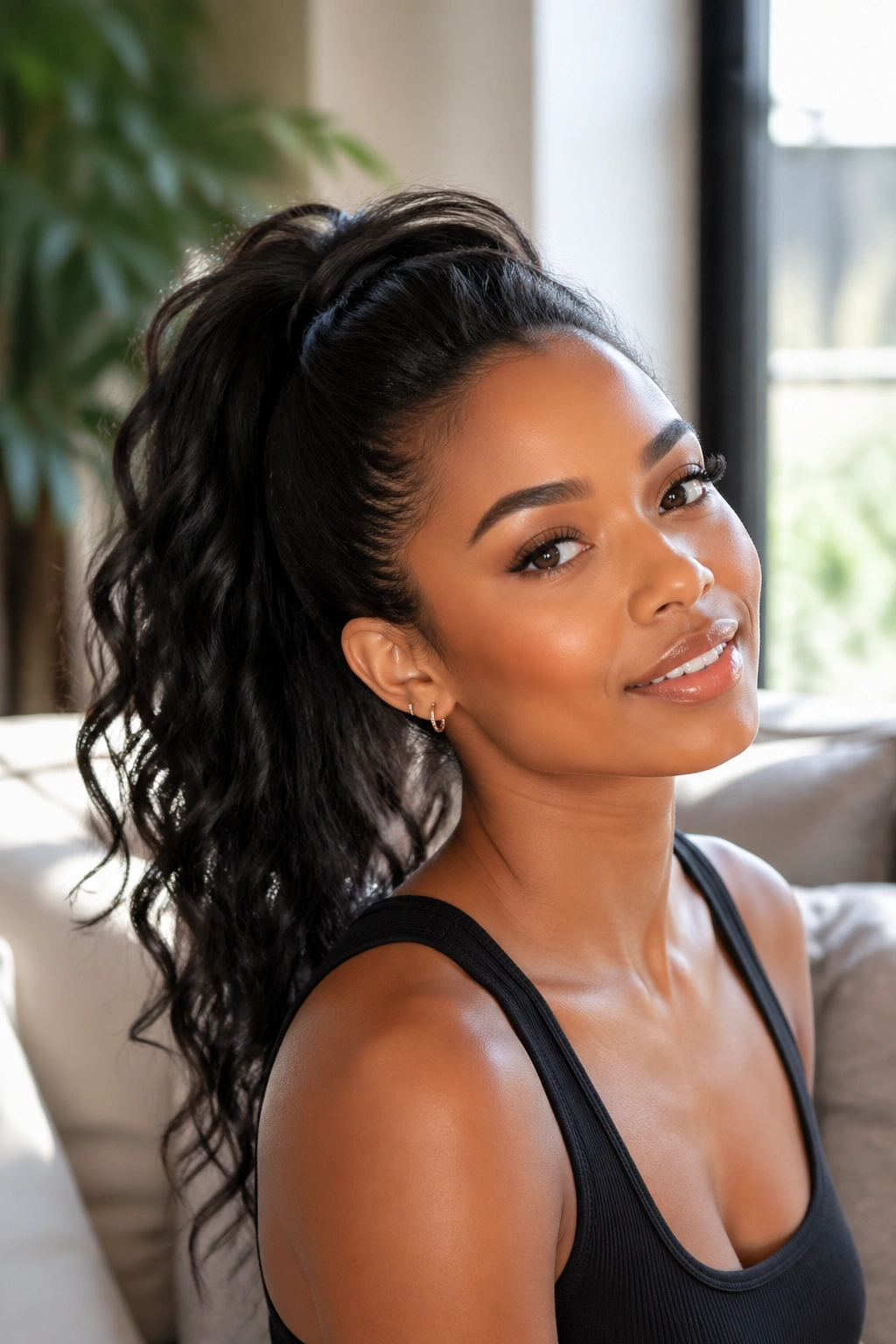
Why does a high ponytail look so good on wavy hair? Because the lift at the crown gives the texture somewhere to go. Instead of forcing the roots down, you let them rise a little, which makes the ponytail look fuller from the first glance. On black hair, that bit of height can make the whole style read richer and more dimensional.
How to Keep the Crown Lifted
Start with a light mist of texturizing spray or dry shampoo at the roots. Then tilt your head back slightly while gathering the hair so the crown does not get pulled tight and shiny in the wrong way. A soft bristle brush helps smooth without flattening every bump.
- Place the ponytail slightly above the highest point of the head, not dead center.
- Pull the top section snug, then stop. Tight is not the same as lifted.
- Scrunch the tail with a little mousse if the waves need help finding themselves.
- Wrap a small strand around the elastic for a cleaner finish.
It is a lively look. Not fussy. And if you leave two tiny face-framing pieces out, the height feels even softer.
3. Bubble Ponytail with Black Elastics
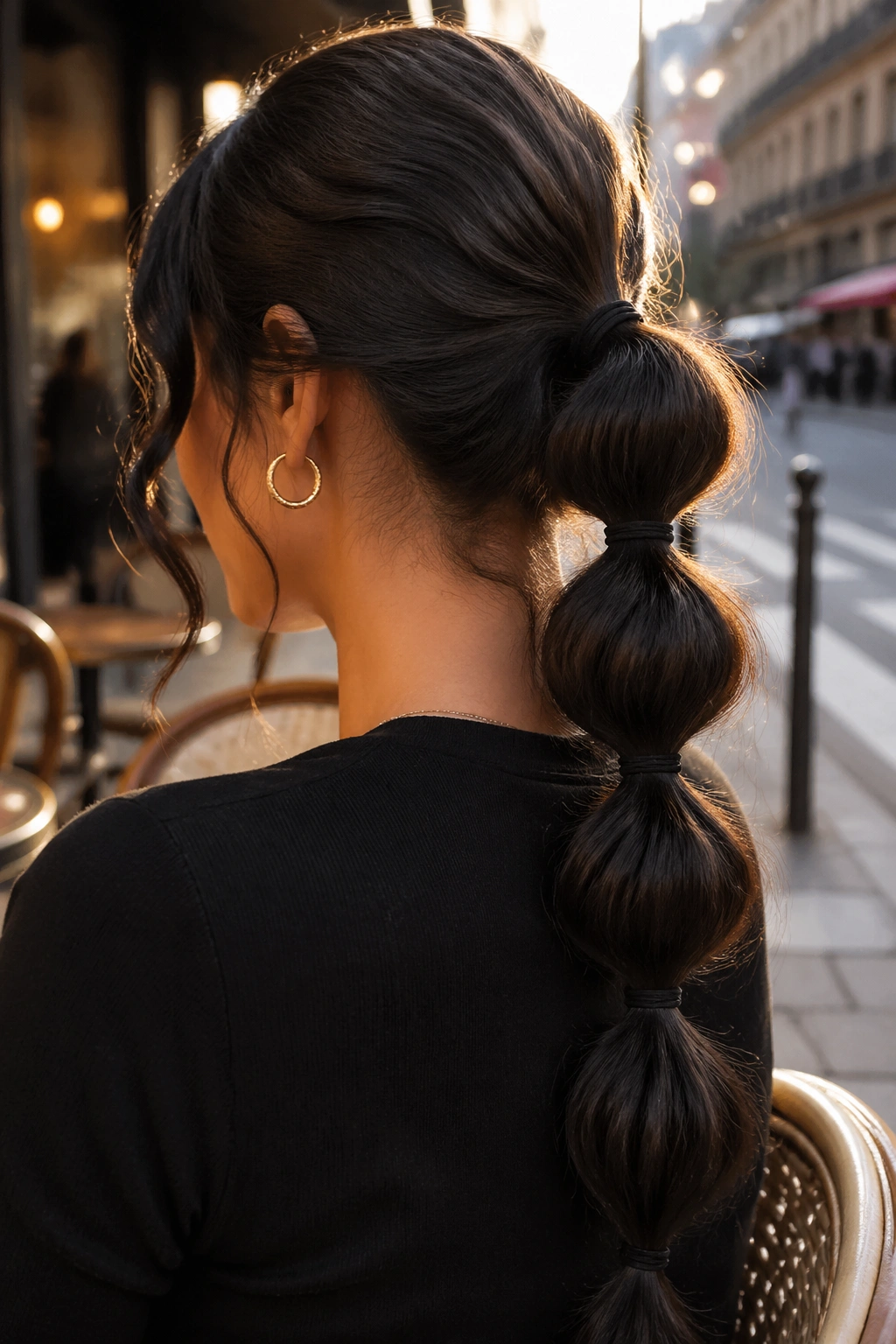
Picture a bubble ponytail on hair that already has a little wave in it. It starts with one long line, then breaks into rounded sections that look playful instead of childish when the spacing is right. Black elastics keep the structure crisp, and on dark hair they almost disappear into the style, which is handy.
The spacing does matter. If the sections are too close, the “bubbles” collapse into one bulky shape. Too far apart and the ponytail looks choppy. I usually keep the gaps between bands around 2 to 3 inches, then gently tug each section outward until it rounds out. Not much. Just enough to create shape.
This style is especially good when your waves are finer and need a visual boost. It gives the illusion of fullness without demanding a curling iron or a pile of hair spray. That said, it also works on thicker hair if you want a more structured, almost editorial feel. Clean base. Soft tail. Easy win.
4. Side-Swept Ponytail with a Deep Part
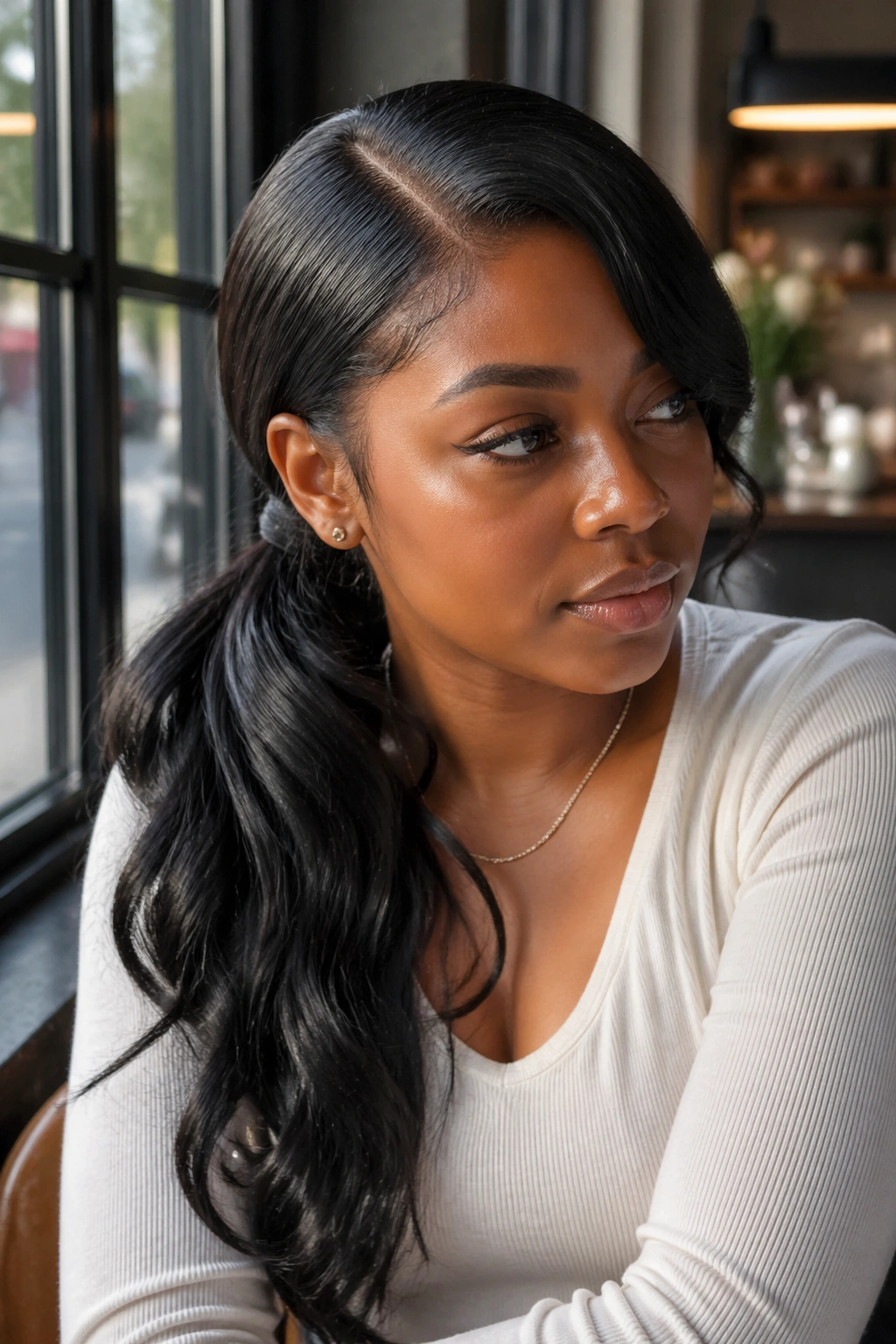
Unlike a straight-back ponytail, a side-swept version gives wavy hair somewhere to fall naturally. The deep part pulls the eye across the face, and the length drapes over one shoulder in a way that feels a little more relaxed. It is one of those styles that looks intentional even when you did not spend very long on it.
The best part is how forgiving it is. If one side of your waves is a bit looser or puffier than the other, the side sweep hides that nicely. You do not need perfect symmetry here. You need a clear part, a low or mid anchor point, and a tail that rests where it wants to instead of being fought into place.
A black ribbon tied around the base can sharpen the whole thing without making it feel stiff. I especially like this for long earrings or open-neck tops because the hair and the neckline do not compete. The style moves when you move. That sounds small. It is not.
5. Half-Up Ponytail with Loose Waves
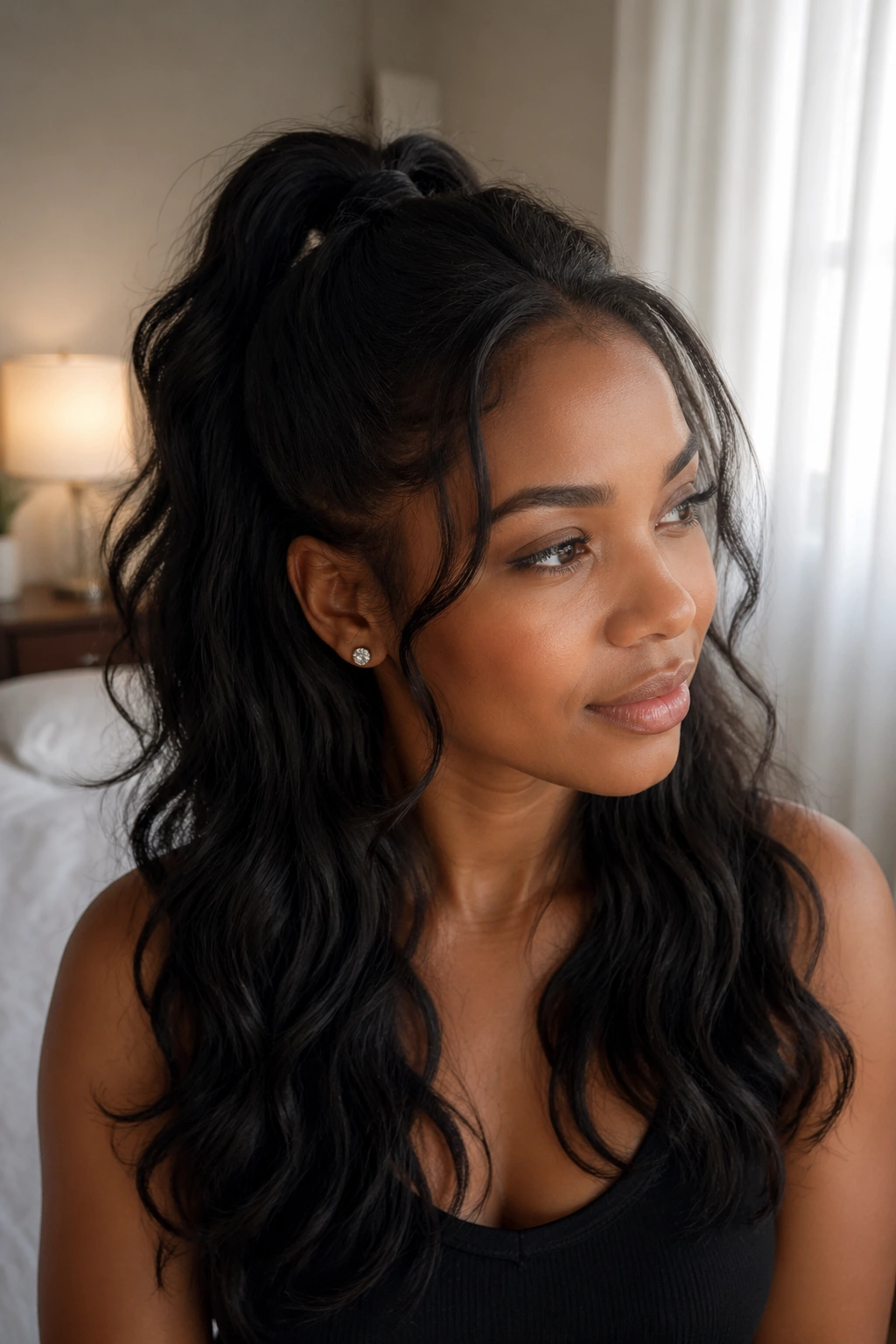
The half-up ponytail is the easiest way to keep waves visible without letting them fall all over your face. It takes the top section and lifts it just enough to open up the features, then leaves the rest of the hair loose so the texture can do its thing. On black hair, that contrast between lifted crown and flowing lengths looks especially rich.
What I like about this style is how little it asks of you. You can make it neat and small, or bigger and more playful. You can keep the part centered or push it slightly off to one side. The bottom half still frames the shoulders, which gives the whole look a softer shape than a full ponytail.
There is also a practical side. If your hair tends to frizz at the roots but stays pretty through the ends, a half-up ponytail lets you control the top without dragging the rest into a tight hold. A black clip or elastic keeps the base quiet, and a few loose bends around the face keep it from feeling too polished.
6. Braided-Base Ponytail
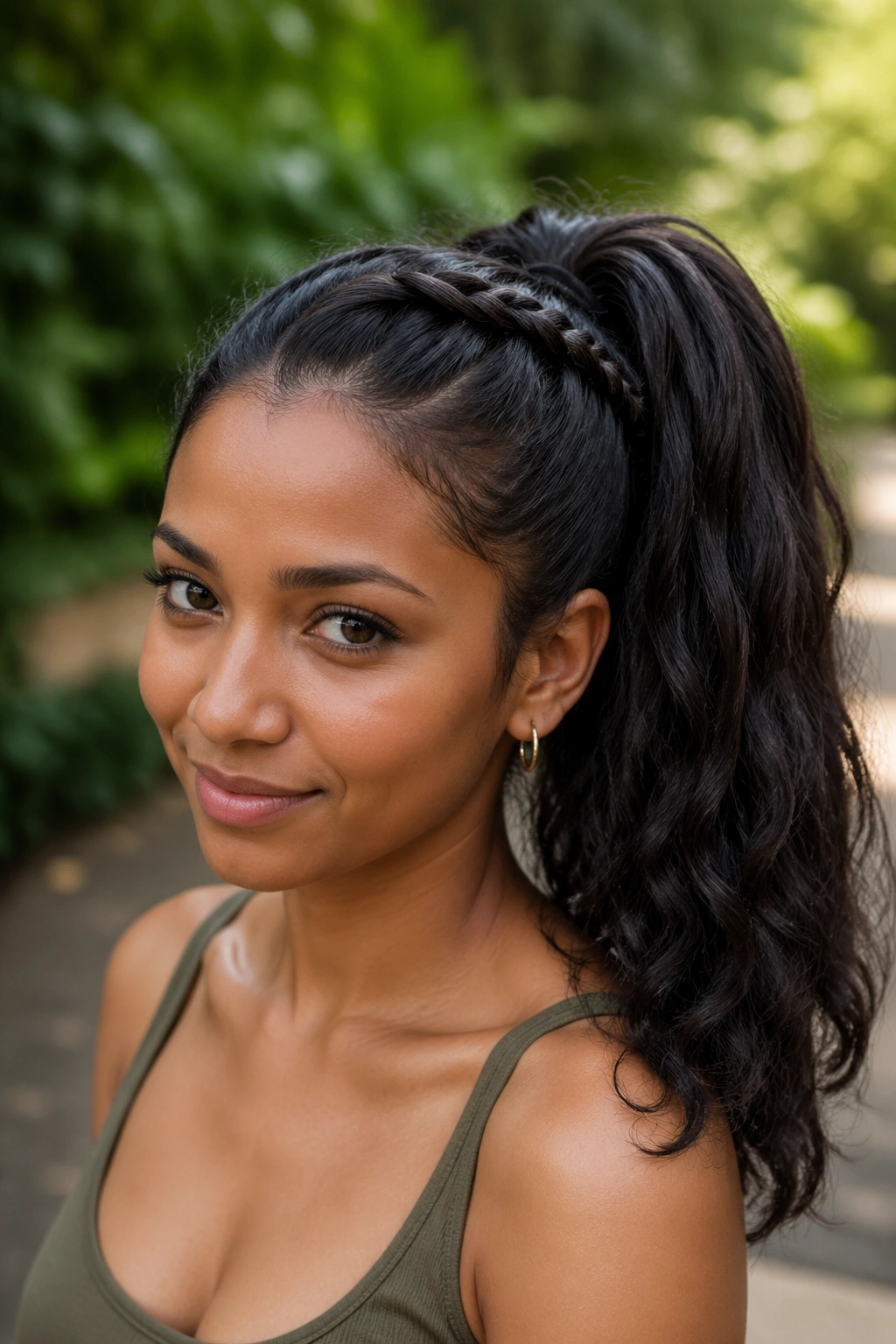
Can a braid make a ponytail sturdier? Absolutely. A braided base gives wavy hair a little more grip, especially if the hairline tends to slip or puff out during the day. It also looks better than a plain elastic when you want the style to feel a bit more finished.
Where the Braid Should Sit
You have two good options. Braid a short section along the front hairline and fold it into the ponytail, or braid a small piece around the base after the ponytail is secured. Either way, the braid acts like a frame. It gives the style shape without adding much bulk.
The trick is to keep the braid snug but not tiny. If it is too tight, it can pull at the scalp and look hard. If it is too loose, the detail disappears. I usually stop when the braid lies flat against the head and the waves in the tail still have room to move.
This one works especially well when you want black hair to show off both texture and shine. The braid catches light differently from the rest of the ponytail, and that little shift makes the whole style more interesting.
7. Twisted Low Ponytail
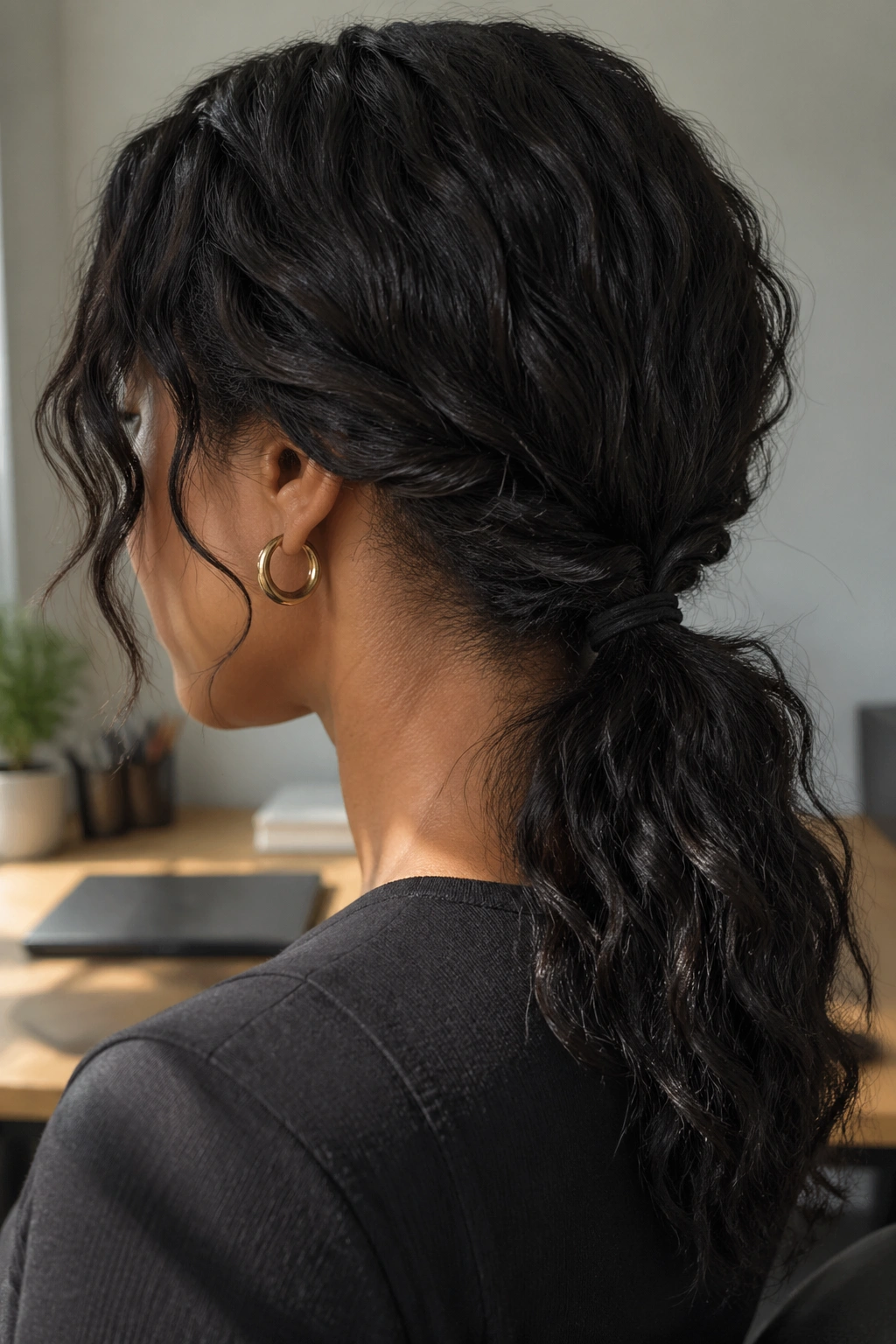
The twisted low ponytail is the one I reach for when I want clean lines without committing to a full sleek style. Two sections twist back toward the nape, meet at the elastic, and let the tail fall with its natural wave. It feels softer than a braid and a little less expected than a standard low ponytail.
Why It Works
Twists hold shape better than loose sections, but they do not lock the hair in as tightly as a braid. That matters if your waves are thick or a little slippery. The twist gives structure near the head, while the ponytail length keeps the movement.
A few things help it sit well:
- Use a light styling cream on the front sections so the twist looks smooth.
- Keep the twists the same thickness on both sides.
- Secure them at the nape with a black elastic before wrapping the base.
- Leave the tail loose enough that the wave pattern stays visible.
It is a good style for long workdays because it looks tidy from morning to evening. And it does not scream for attention, which is sometimes the nicest thing a hairstyle can do.
8. Curved Ponytail with a Soft Side Part
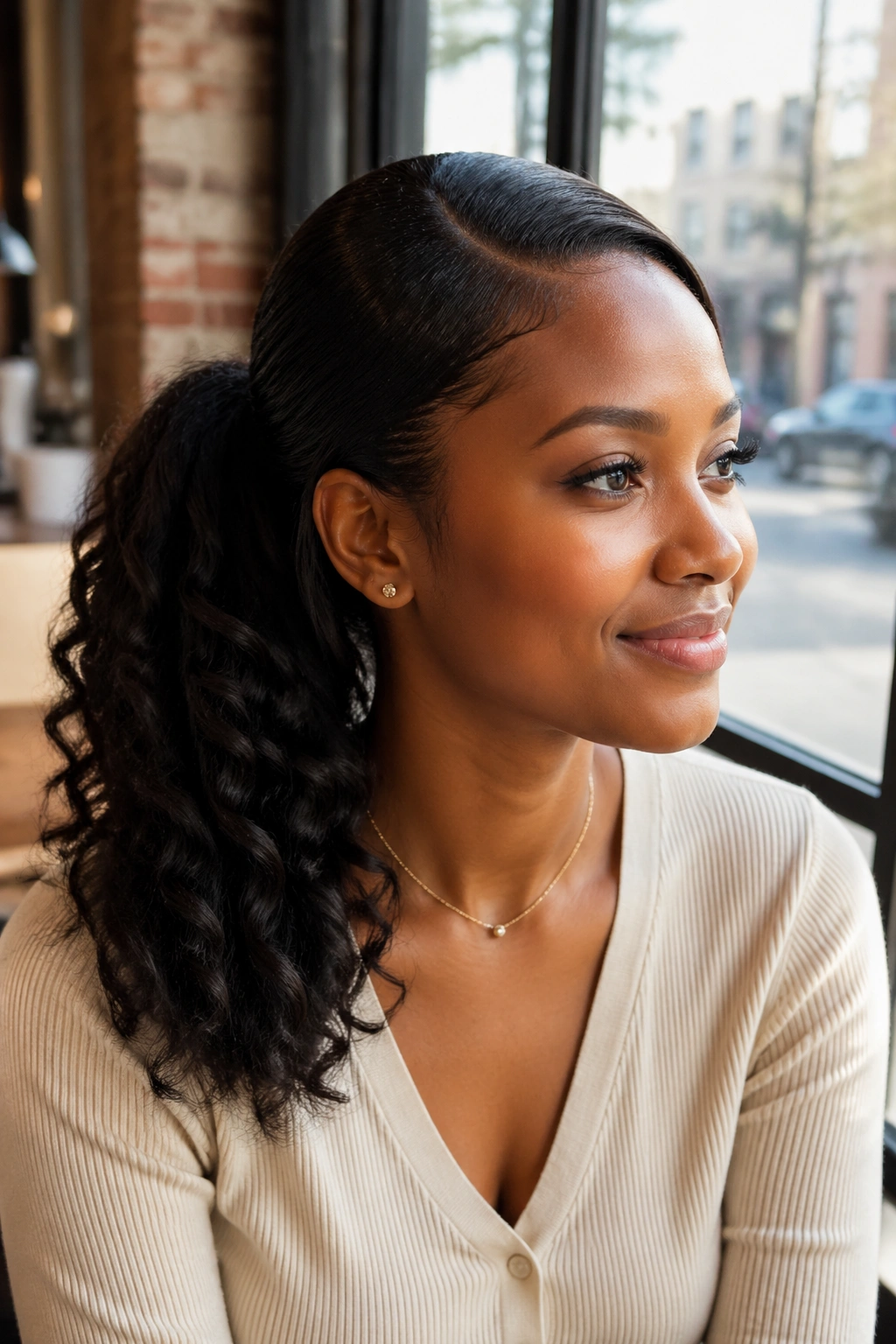
A curved ponytail is a small change that makes a bigger difference than people expect. Instead of pulling the hair straight back, you let the part sweep gently and guide the ponytail into a curved line. That soft angle suits wavy hair because the hair already wants to bend; you are just cooperating with it.
Compared with a centered, straight-back ponytail, this version looks less severe around the forehead and temples. The curve creates a sense of motion before the tail even starts. On black hair, that sweep looks especially smooth if the top is brushed with a light hand and the ends stay airy.
I like it for square or angular face shapes, but that is not a hard rule. If anything, it is just a nice way to stop a ponytail from feeling too blunt. A matte black clip at the base can give the style a finished look without making it shiny or overworked. A small thing, but the eye notices.
9. Mid-Height Ponytail for Busy Days

A mid-height ponytail sits in that easy zone between polished and casual. It is high enough to keep hair off the neck, low enough to avoid the tug and bounce of a top-heavy style, and friendly to wavy texture because the tail has room to breathe. If you have ever tried to force waves into a tight, high anchor point and regretted it by lunch, this is the fix.
I usually think of this as the “life is happening” ponytail. Work, errands, school pick-up, a quick dinner, whatever. It stays in place without looking like it was built for a red carpet. The shape is simple, but the waves keep it from feeling plain.
A black elastic and a little smoothing cream at the crown are enough for most days. If you want more lift, gently lift the ponytail after securing it and nudge the base upward by a quarter inch. That tiny move keeps the style from sitting too flat. Tiny again. Important again.
10. Voluminous Crown Ponytail
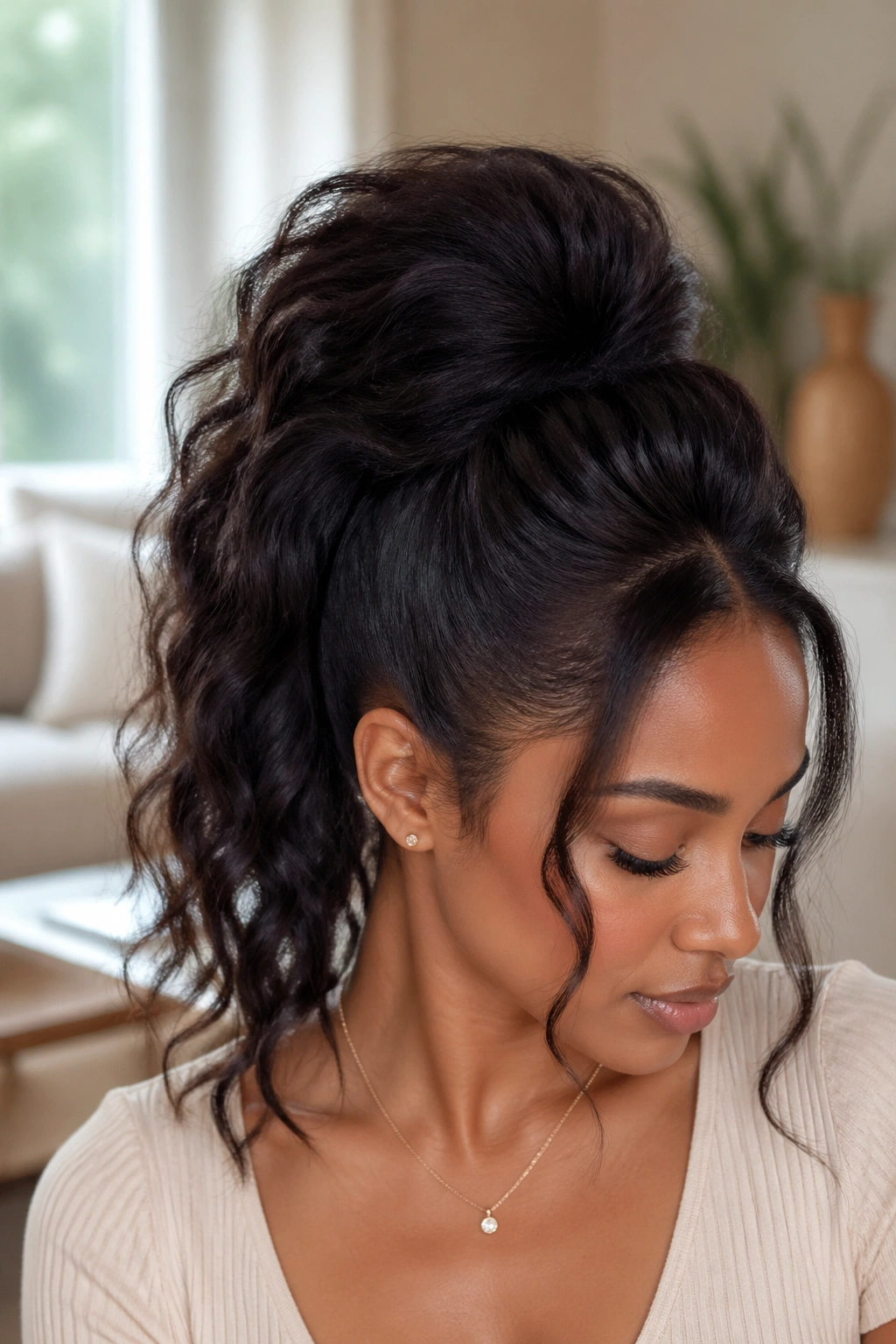
Volume at the crown changes everything. A ponytail with a bit of lift at the roots makes wavy hair look fuller, and black strands tend to show that fullness in a nice way because the light catches the curves instead of bouncing off a flat surface. The result is softer, not puffier.
The mistake people make is going after volume by roughing up the entire head. That just creates frizz where you wanted shape. Better to focus on the top half only. A little dry shampoo, a quick backcomb at the crown if needed, then smooth the outer layer back so the surface stays neat. The ponytail itself can stay loose and textured.
This style feels especially good when the hair is medium to long. The lifted crown balances the weight of the tail, so the ponytail does not drag down by noon. And if your waves are a bit uneven that day, volume hides the problem better than a slick style ever could.
11. Rope-Braid Ponytail
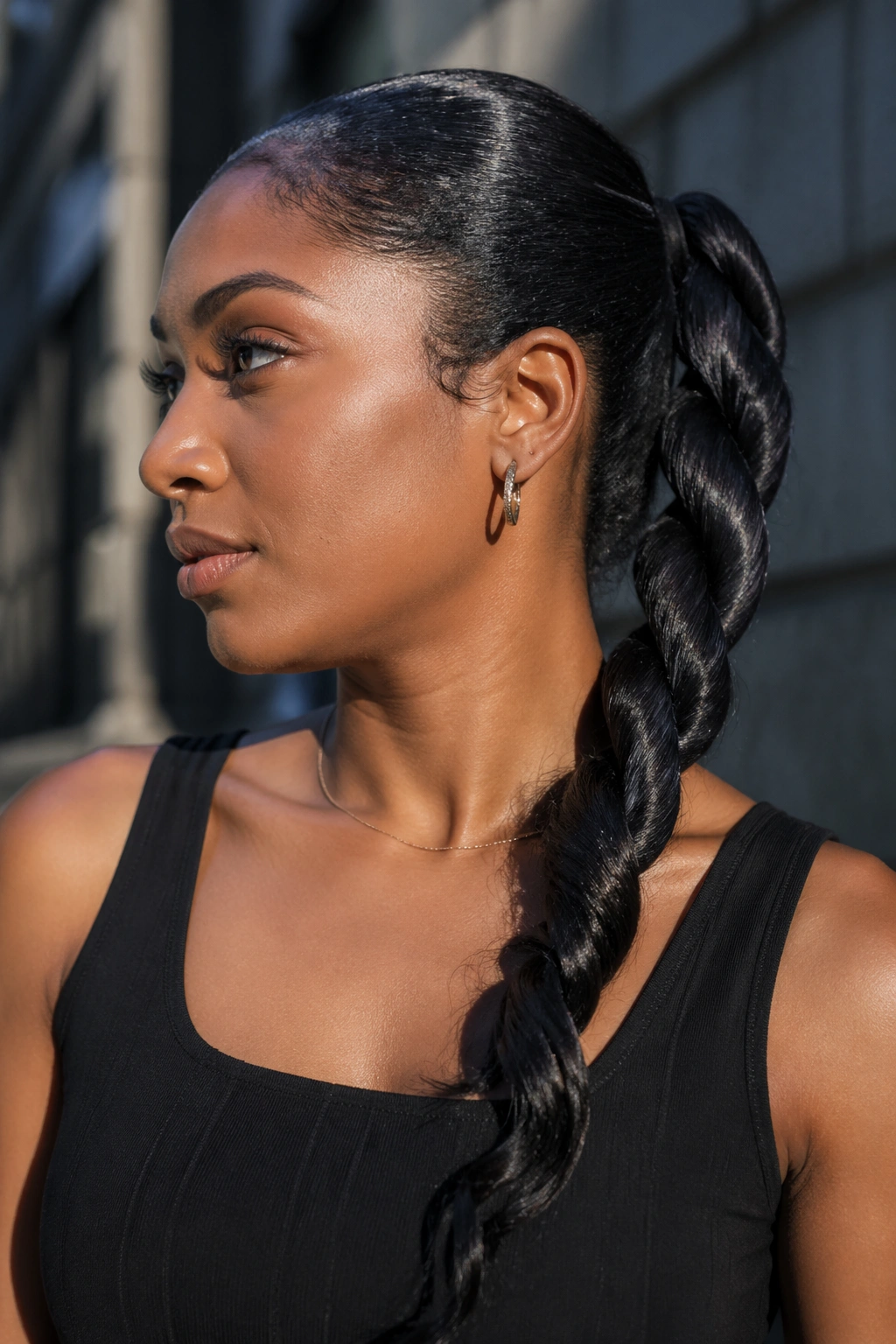
Does a rope braid work on wavy hair? Better than most people think. A rope braid uses two sections twisted around each other, which gives the ponytail a tighter, more rope-like texture without needing a full three-strand braid. On dark hair, the twist pattern reads cleanly and looks almost glossy when the light hits it.
How to Wear It
You can rope-braid the tail itself, or use the rope braid as a wrap around the base. I prefer the wrap when the goal is a chic finish. It keeps the crown smooth and turns the ponytail into the focal point. If the waves are long enough, the rope braid can continue for several inches before loosening into soft ends.
The key is even tension. If one side twists more tightly than the other, the braid starts to tilt. Keep both sections the same width and twist them in the same direction before crossing them over. That keeps the shape stable and neat.
This style is one of those sneaky useful ones. It looks detailed, but it does not take forever once your hands learn the rhythm.
12. Scarf-Tied Ponytail
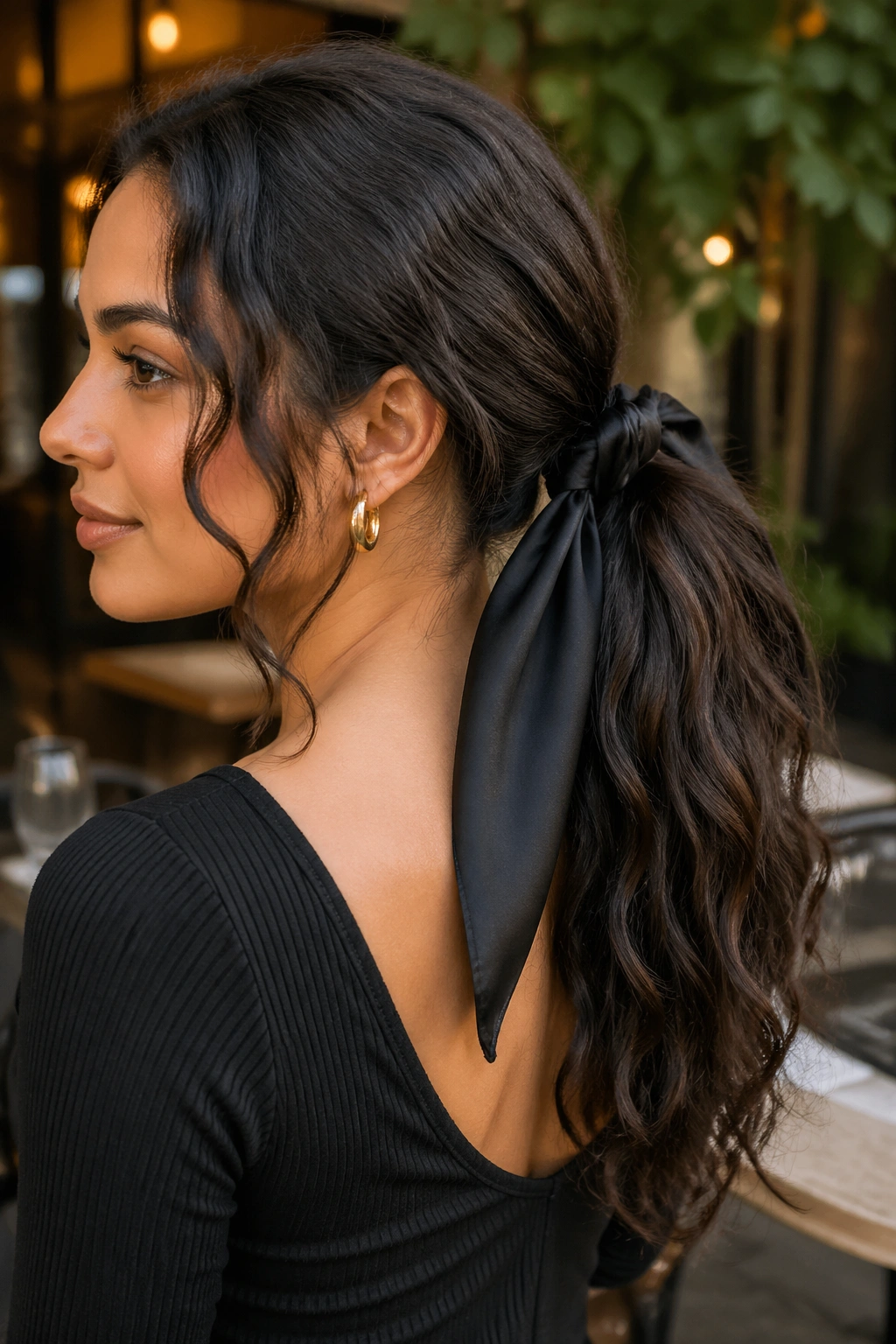
A scarf can rescue a ponytail that feels too plain. Tie a black silk scarf around the base and let the tails drape down, or knot it into a small bow if you want a softer finish. On wavy black hair, the scarf adds contrast without needing a lot of extra styling.
- Choose a scarf that is narrow enough to sit neatly at the base, usually around 1.5 to 3 inches wide.
- Tie it over a black elastic so the knot has something solid to anchor to.
- Keep the ponytail itself loose if the scarf is bold, or sleek if the scarf is printed.
- Let the ends of the scarf hang at different lengths for a less rigid shape.
I like this style because it does not ask much from the rest of the hair. You can leave the tail naturally waved, which keeps the whole thing relaxed. A scarf also hides a slightly messy elastic better than almost anything else. Handy. And pretty.
13. Curled-Ends Ponytail
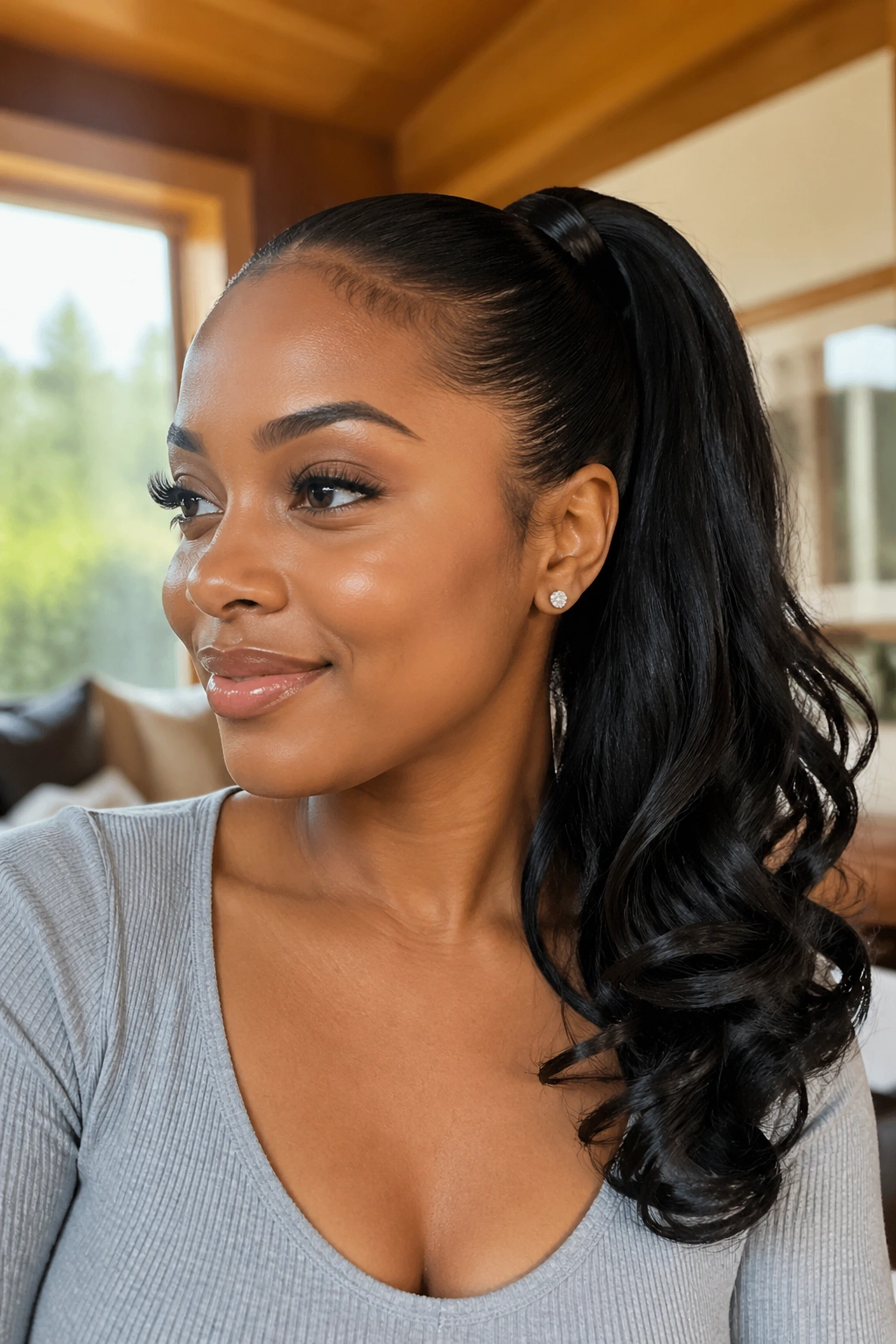
The curled-ends ponytail is the polite cousin of the fully natural ponytail. The crown can stay smooth or softly brushed, but the ends get a little more shape, either with a wand, rollers, or a quick set of bends. That little extra polish helps wavy hair look intentional from base to tip.
Compared with a ponytail that stays loose all the way through, this one has a cleaner silhouette. The ends do not fray out as much, which is useful if your waves tend to separate into uneven pieces near the bottom. On black hair, curled ends also catch light in a nice way, especially if the tail is long.
I would not make this one too tight or too perfect. A few airy pieces keep it from looking rigid. The goal is controlled movement, not a formal prom curl. If you want the style to last, pin the curled ends lightly while they cool or set before you shake them out. That helps the shape hold without making it stiff.
14. Stacked Double Ponytail
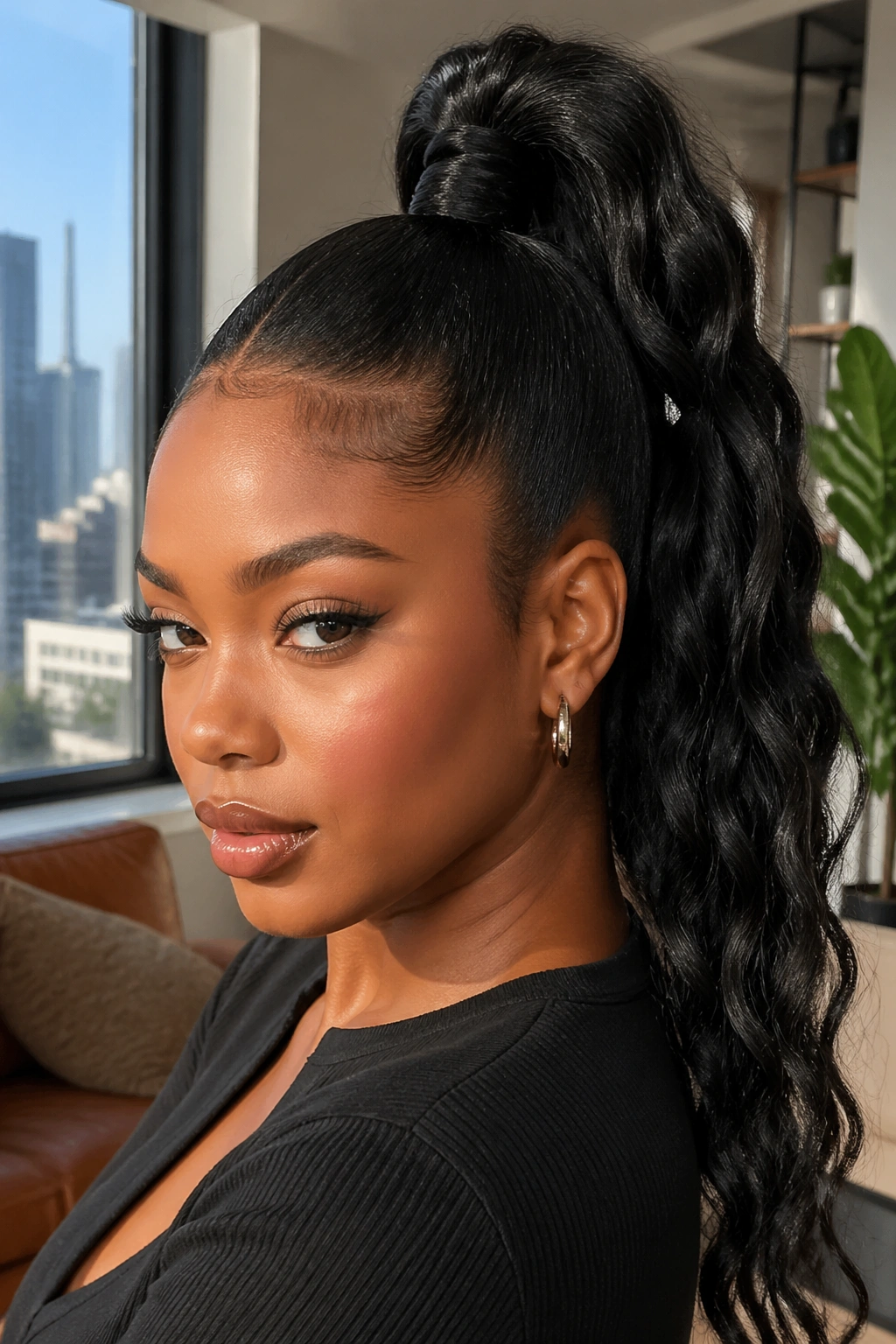
Long wavy hair can get heavy fast, and a stacked double ponytail solves that in a way that looks clever instead of obvious. You make one ponytail at the crown, another just beneath it, then blend them so the top one helps lift the bottom one. The result is more height and less sag.
Why the Trick Works
A single ponytail carries all the weight from one point. A stacked version spreads that weight out. The top section gives the illusion of a fuller, higher base, while the lower ponytail keeps the length moving naturally. It is a neat little structural trick, and it works best when the hair is thick or long.
Keep the divide between the two ponytails soft. You do not want a harsh shelf line. The top anchor should be hidden by the lower layer, and a black elastic helps both pieces blend more easily into dark hair. If the ends are wavy, leave them alone. They already do enough.
This style is especially good when you want a high ponytail but your hair keeps sliding down by midafternoon. It cheats the weight, which is exactly why it feels so useful.
15. Face-Framing Ponytail with Soft Pieces
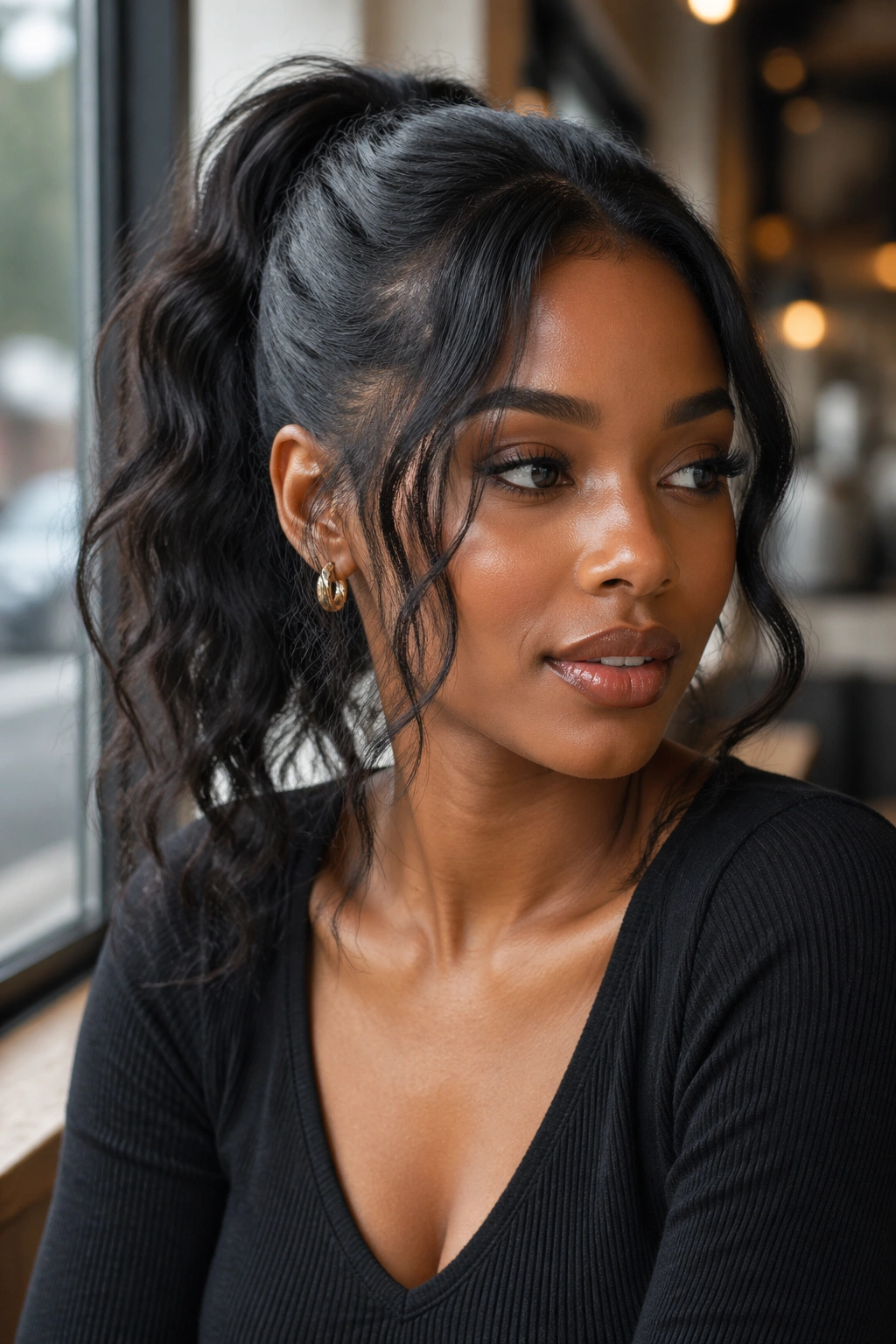
A ponytail with face-framing pieces is one of the easiest ways to make wavy hair look softer around the face. Those loose front sections break up the shape, especially if the rest of the hair is pulled back neatly. It keeps the ponytail from reading too severe, which matters when the rest of your look is simple.
I like this style because it works with a lot of face shapes without needing much adjustment. You can leave the pieces thin and wispy, or a little fuller if you want more softness. On black hair, the contrast between sleek roots and loose front waves gives the whole style more depth.
Do not over-style the front pieces. That is where people get fussy for no reason. A small bend with a curling iron or even a touch of cream can be enough. Let them sit where they want around the cheekbones and jaw. That relaxed placement often looks better than trying to force a symmetrical curl on both sides.
16. Criss-Cross Base Ponytail
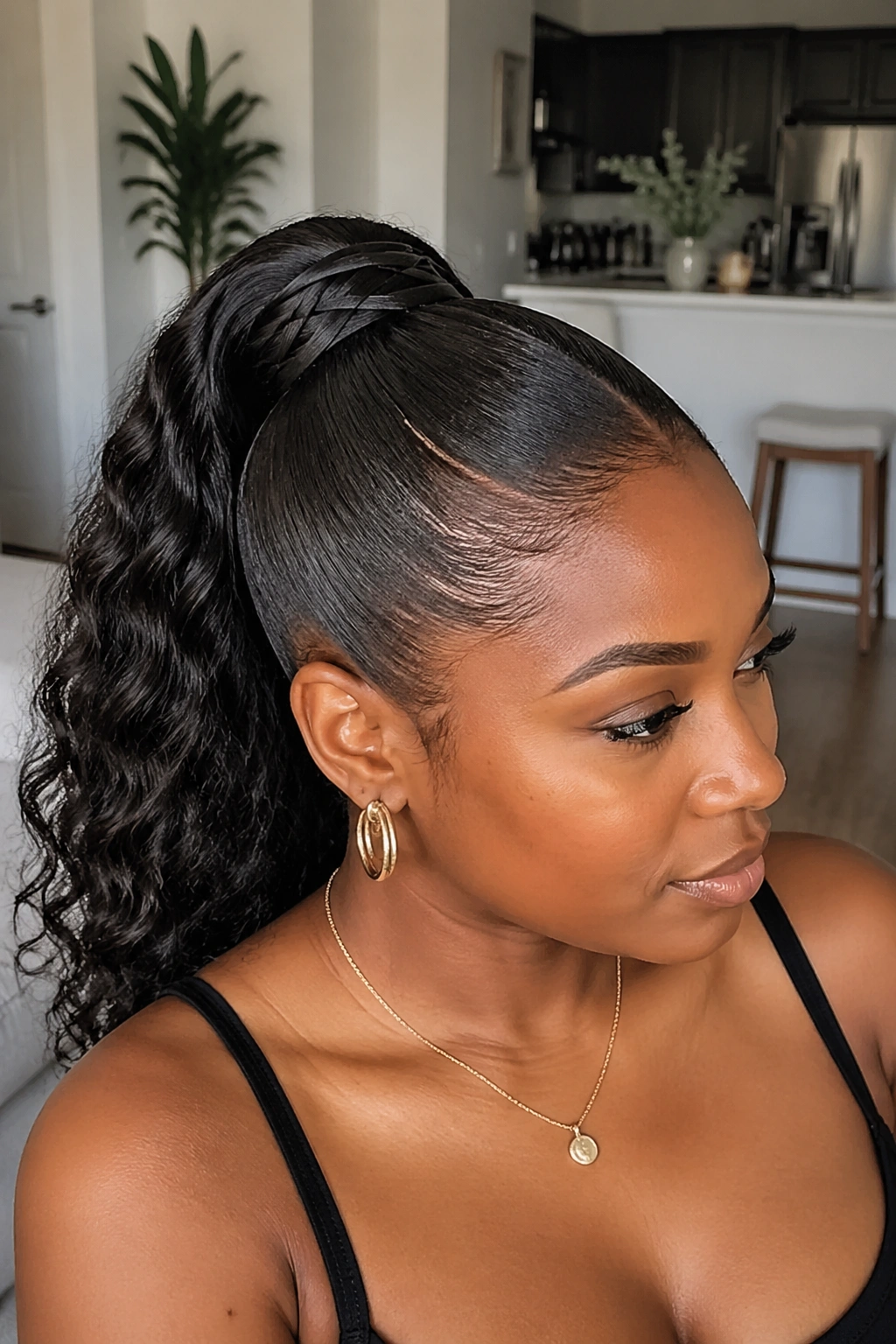
Why do criss-cross ponytails look so polished? Because the base hides the elastic in plain sight. Instead of one straight band around the hair, you cross two small sections over the anchor point, which creates a clean little lattice effect. On wavy black hair, that detail stands out without needing a big accessory.
The style feels more finished than a plain ponytail, but it is not complicated once you split the sections properly. Pull back two pieces from each side, cross them over the base, and pin or tuck them beneath the elastic. If the hair is slippery, a tiny bit of styling cream on the crossing pieces helps them stay put.
I like this one for dressier days when I still want the texture to show. It has a little structure, but the length can remain soft. That balance is what makes it useful. If the waves in the tail are uneven, the criss-cross base distracts the eye in a good way.
17. Knotted Ponytail
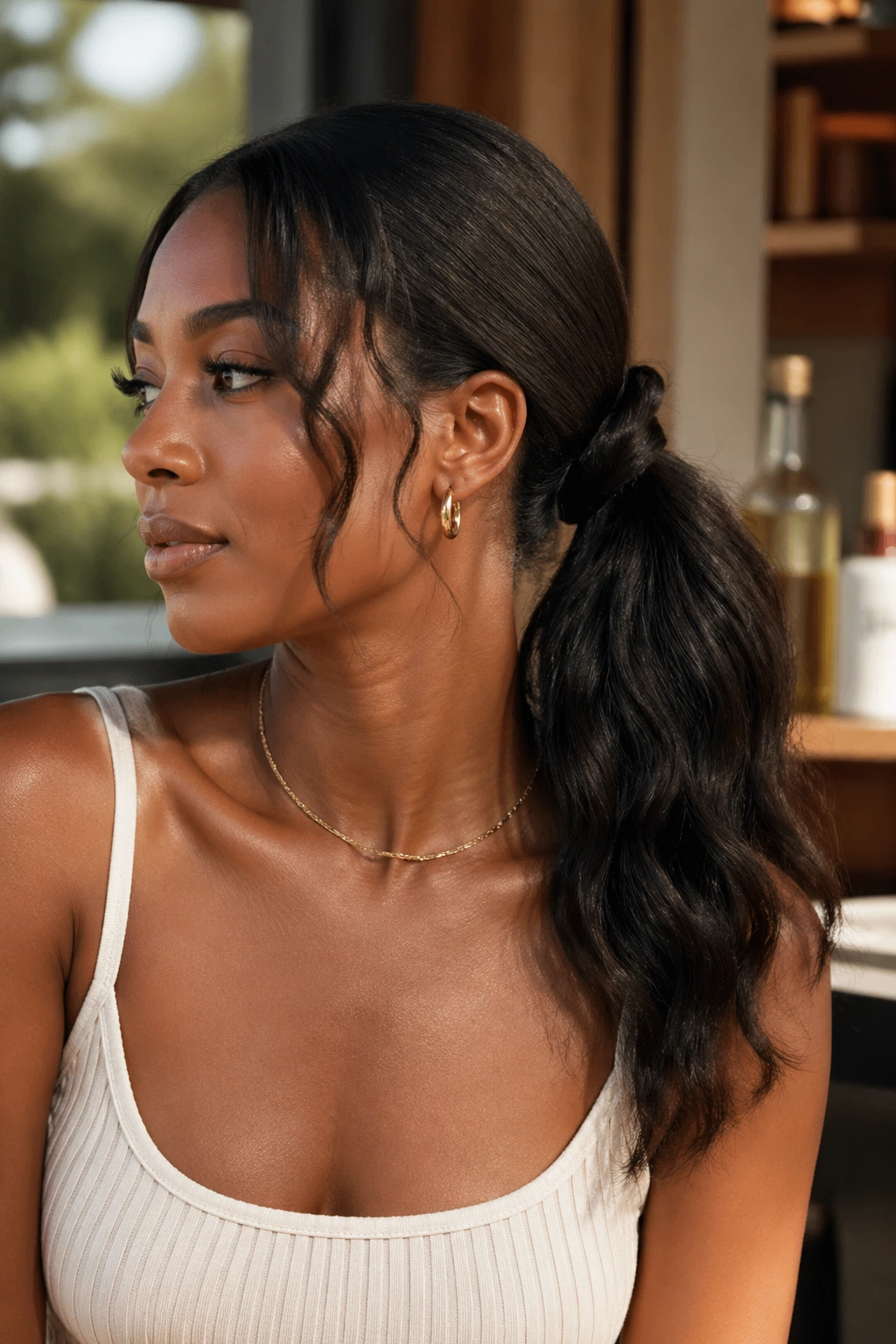
A knotted ponytail sounds more complicated than it is. Two sections tie over one another at the base before the rest of the hair is secured, and the result looks a bit like a built-in accessory. On black hair, the knot shows clearly, especially if the surface is smooth and the tail stays wavy.
Small Details That Help
- Keep the two sections the same size so the knot sits centered.
- Tighten the knot only enough to hold. Do not yank it hard or the top will flatten awkwardly.
- Place a black elastic underneath the knot if you need extra security.
- Leave the tail slightly loose so the wave pattern softens the front detail.
This is one of those styles that looks more styled than it feels. It works on medium-length hair, long hair, and extension looks too, which makes it pretty flexible. I would use it when I want something with a little shape but not a full braid or wrap. Clean, quick, and not boring.
18. Loose Low Ponytail
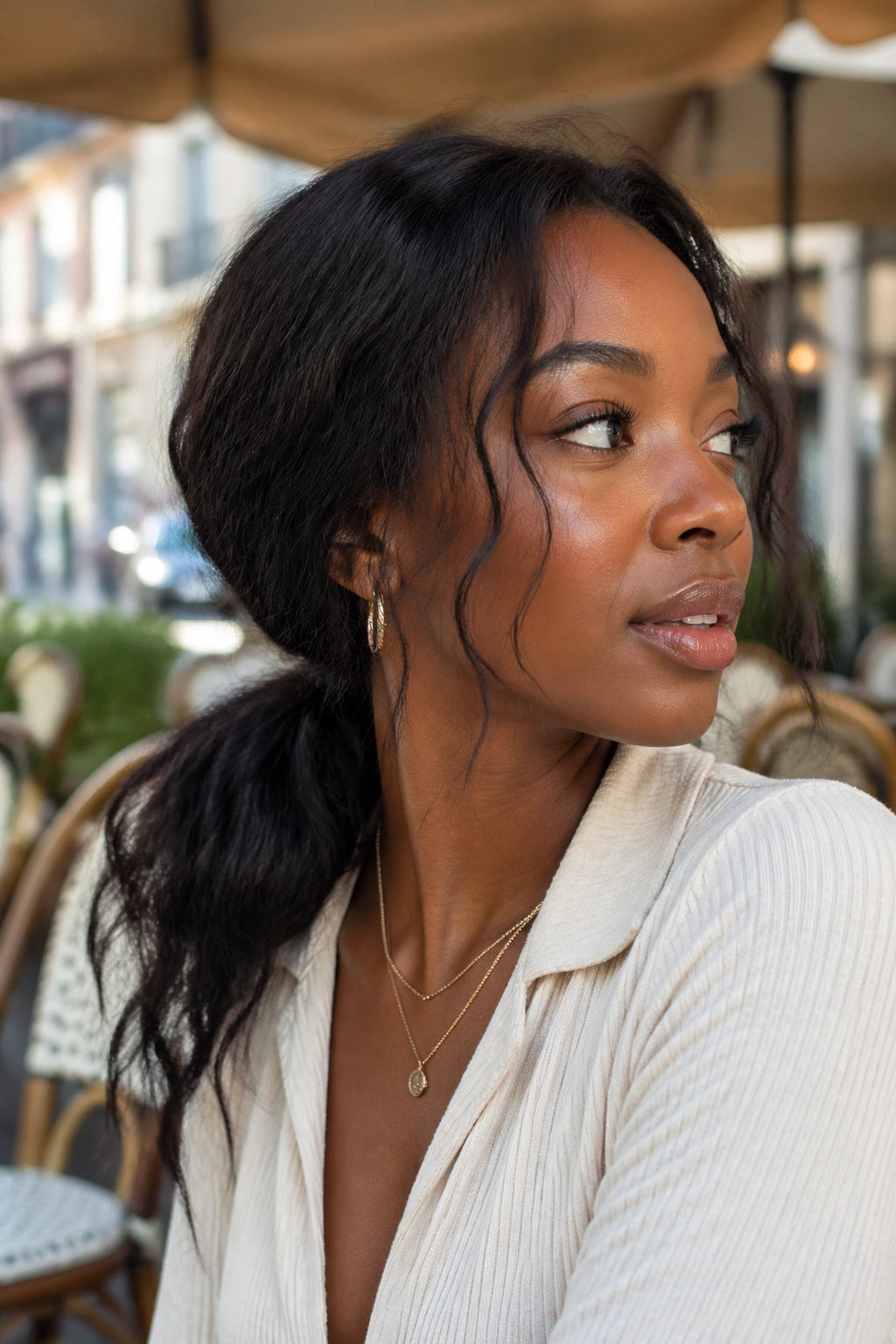
A loose low ponytail is the opposite of the sleek version, and that is the point. Instead of smoothing every bit of texture into a shiny shell, you keep the nape relaxed, let a few waves escape, and give the whole style a softer shape. It feels easier, which means it often looks easier in a good way.
Compared with a highly polished low ponytail, this one forgives frizz and uneven wave patterns. That makes it useful when the weather is humid or your hair has already decided what it wants to do. A satin scrunchie or black fabric tie keeps the base from looking harsh, and the tail can fall over the shoulder with a little movement.
This is the ponytail I would choose for lazy Saturdays, long drives, or days when your hair just needs to behave enough. It does not pretend to be formal. It does not need to. Sometimes a little looseness reads better than perfection ever does.
19. High Braided-Wrap Ponytail
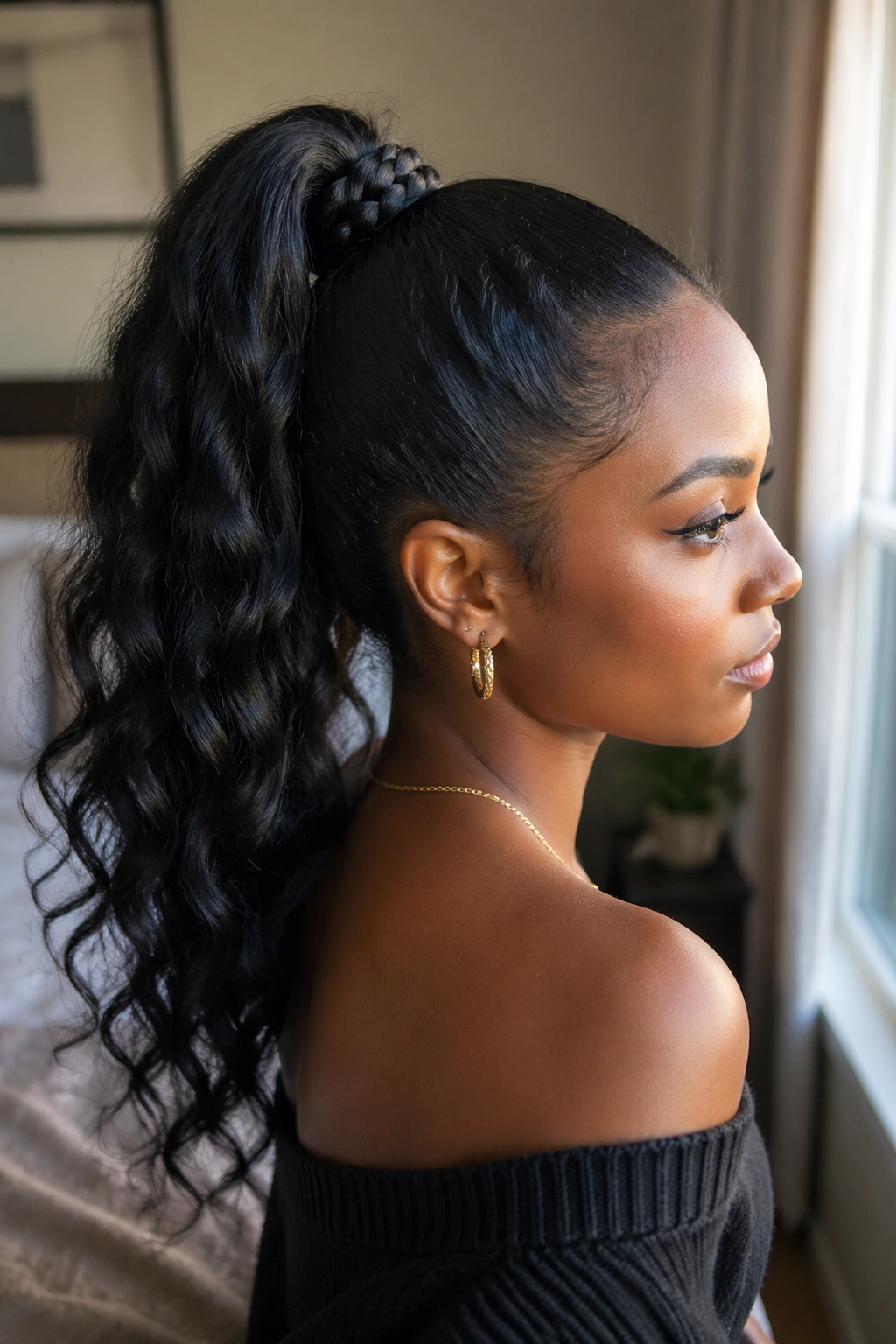
A high braided-wrap ponytail gives you two things at once: lift at the crown and a wrapped detail at the base. The braid circles the ponytail or the hairline and makes the whole style feel more complete, while the high placement keeps the wave pattern bouncy through the length. It is a strong choice for black hair because the texture and the shape both show up.
The secret is keeping the braid narrow enough that it does not swallow the ponytail. A thick wrap can crowd the style and make the head look smaller than it is. A slim braid, though, adds just enough interest. If your waves are long, let the ends stay loose after the braid section so the movement does not disappear.
This is one of the few ponytails that works for dressy nights and active days. It can handle motion. It can handle shine. And if you keep the base secured with a black elastic under the braid, the whole thing looks cleaner than it has any right to.
20. Ponytail with Matte Black Accessories
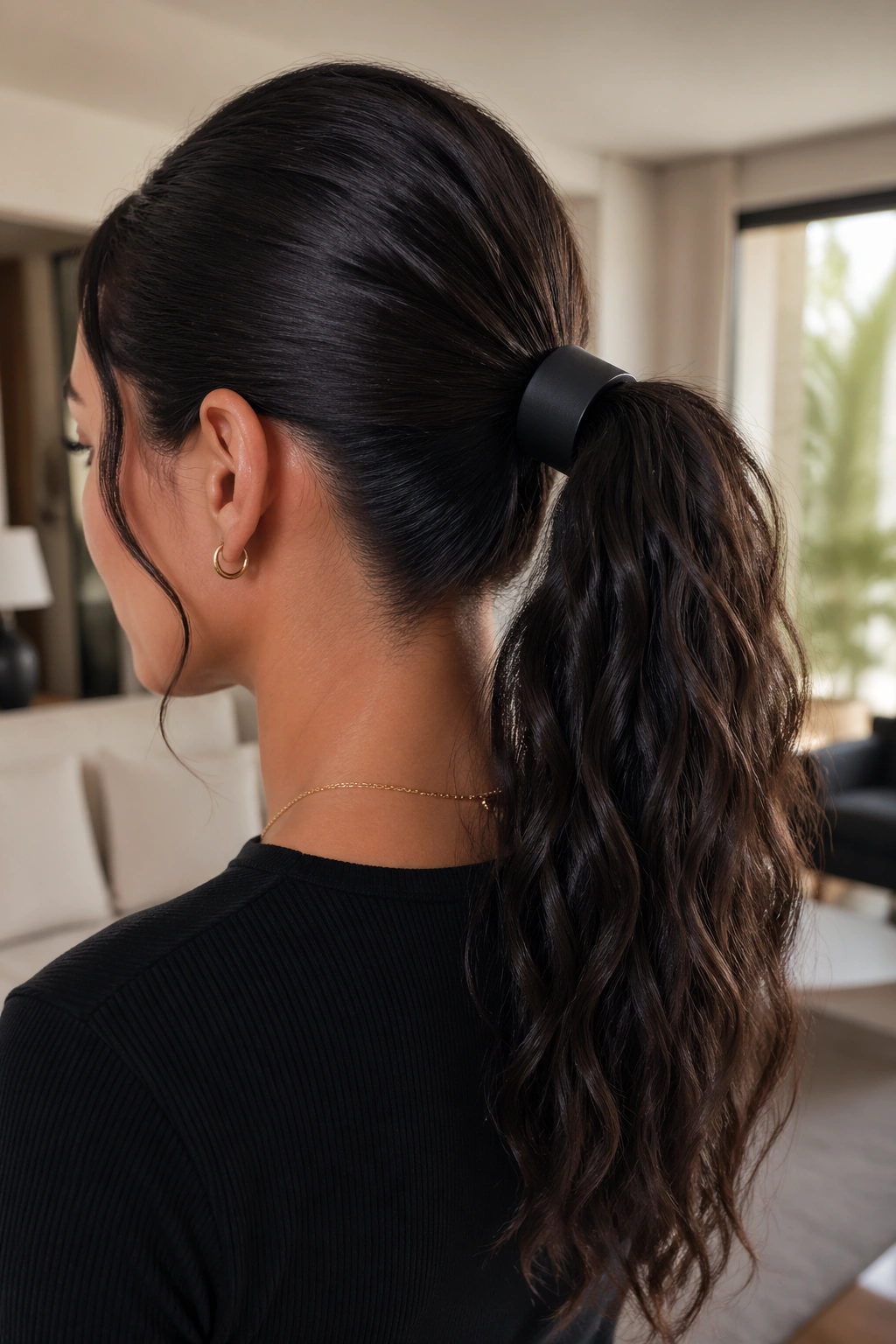
Matte black accessories can do more for a ponytail than most people expect. A matte cuff, a black claw clip used as a base support, or a satin-black band can make wavy hair look intentional even when the styling itself stays simple. The finish matters here. Matte reads softer than glossy plastic, especially against dark hair.
I like this route when the ponytail itself is uncomplicated. Maybe the crown is brushed back, maybe the tail is left loose and textured. The accessory becomes the focal point. It gives the style a little design element without adding bulk or glitter, which is useful if you prefer clean lines.
A small caution: do not overload the style with three different black pieces all fighting for attention. One strong accessory is enough. The point is to frame the hair, not bury it. With black wavy hair, a restrained accessory often looks richer than a loud one anyway.
21. Sporty Textured Ponytail
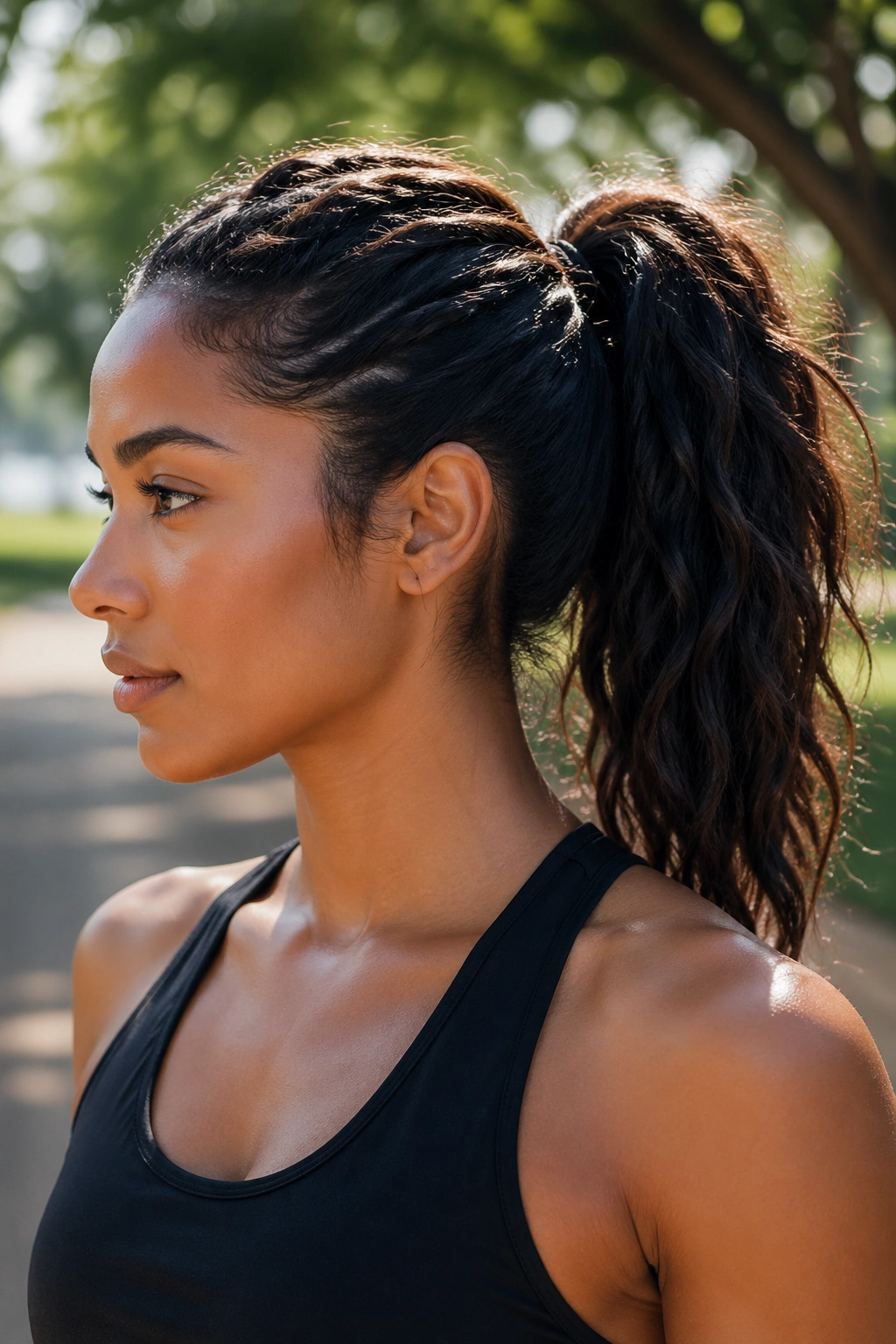
Can a sporty ponytail still look good outside the gym? Definitely. If the crown has enough texture and the tail keeps a natural bend, this style works for errands, travel, and long days when you need your hair off your neck. It is the most honest ponytail on the list. No pretending. Just hold and movement.
What Keeps It from Falling Flat
A little texture at the root gives the elastic something to grab. A light mist of sea-salt spray or dry shampoo can help, especially if your hair is silky and likes to slip. The ponytail itself should sit mid to high so the neck stays clear and the waves can bounce instead of dragging.
- Use a firm black elastic rather than a decorative tie.
- Pull the hair through once, then tighten in stages.
- Leave the tail slightly undone so it does not look stiff.
- Add a tiny bend at the front pieces if the face needs softness.
It is not the fanciest style here, and that is fine. It earns its spot by being reliable.
22. Everyday Signature Ponytail
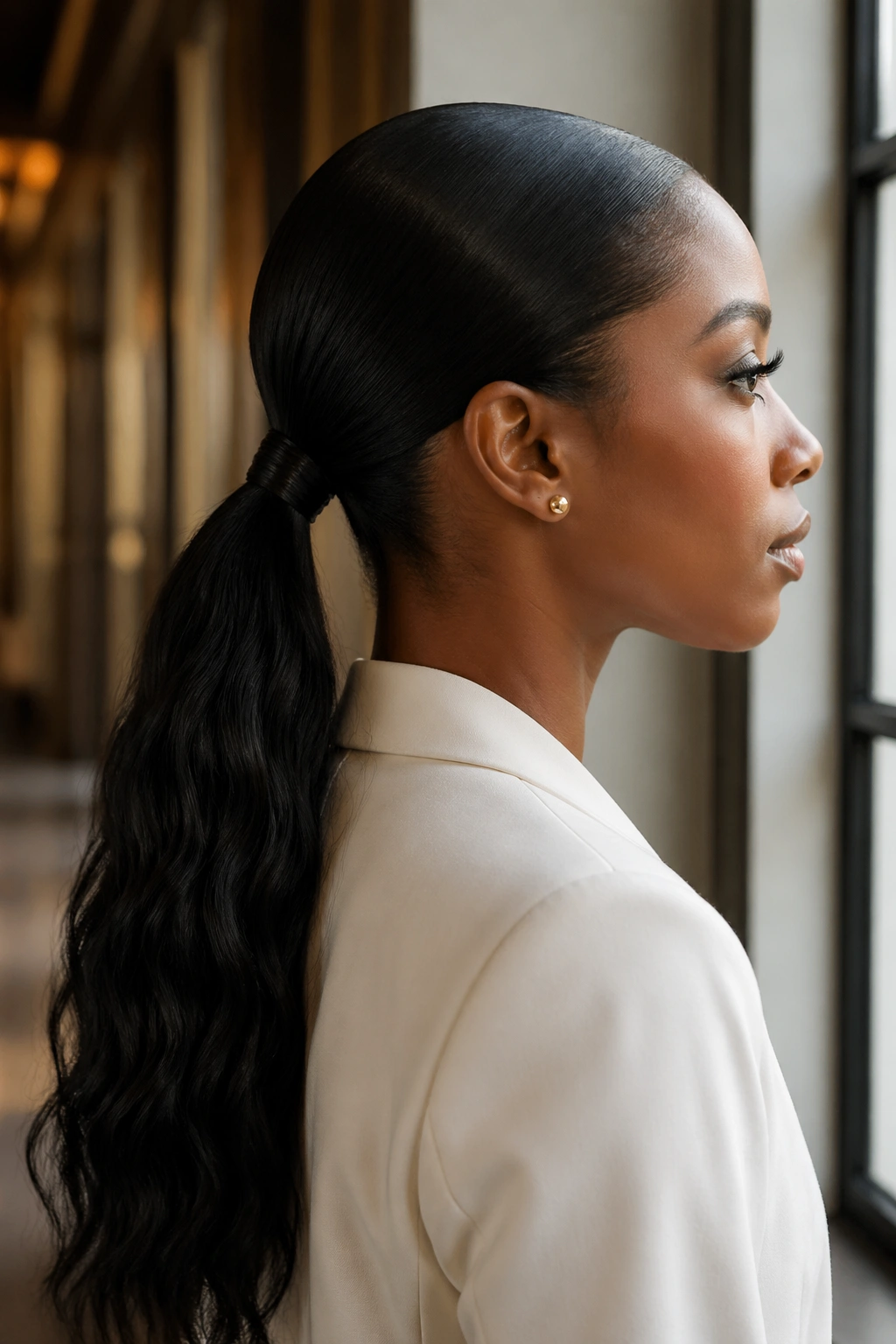
The best everyday ponytail is the one you can repeat without thinking too hard. For wavy hair in black, that usually means a shape that respects the texture instead of flattening it: a smooth or lightly brushed crown, a secure black elastic, and a tail that still looks alive when it moves.
I think people waste too much time chasing a ponytail that looks perfect from every angle. A better goal is clean at the base, soft through the lengths, and comfortable enough that you stop adjusting it every ten minutes. If you can turn your head, tuck your sunglasses on, or throw on a jacket without the style fighting back, you have the right one.
Try the shape that matches your day, not the one that looks hardest to explain on a mood board. Some mornings call for sleek. Some call for volume. Some just need a ponytail that stays put and looks good in plain daylight. That is usually enough.
