



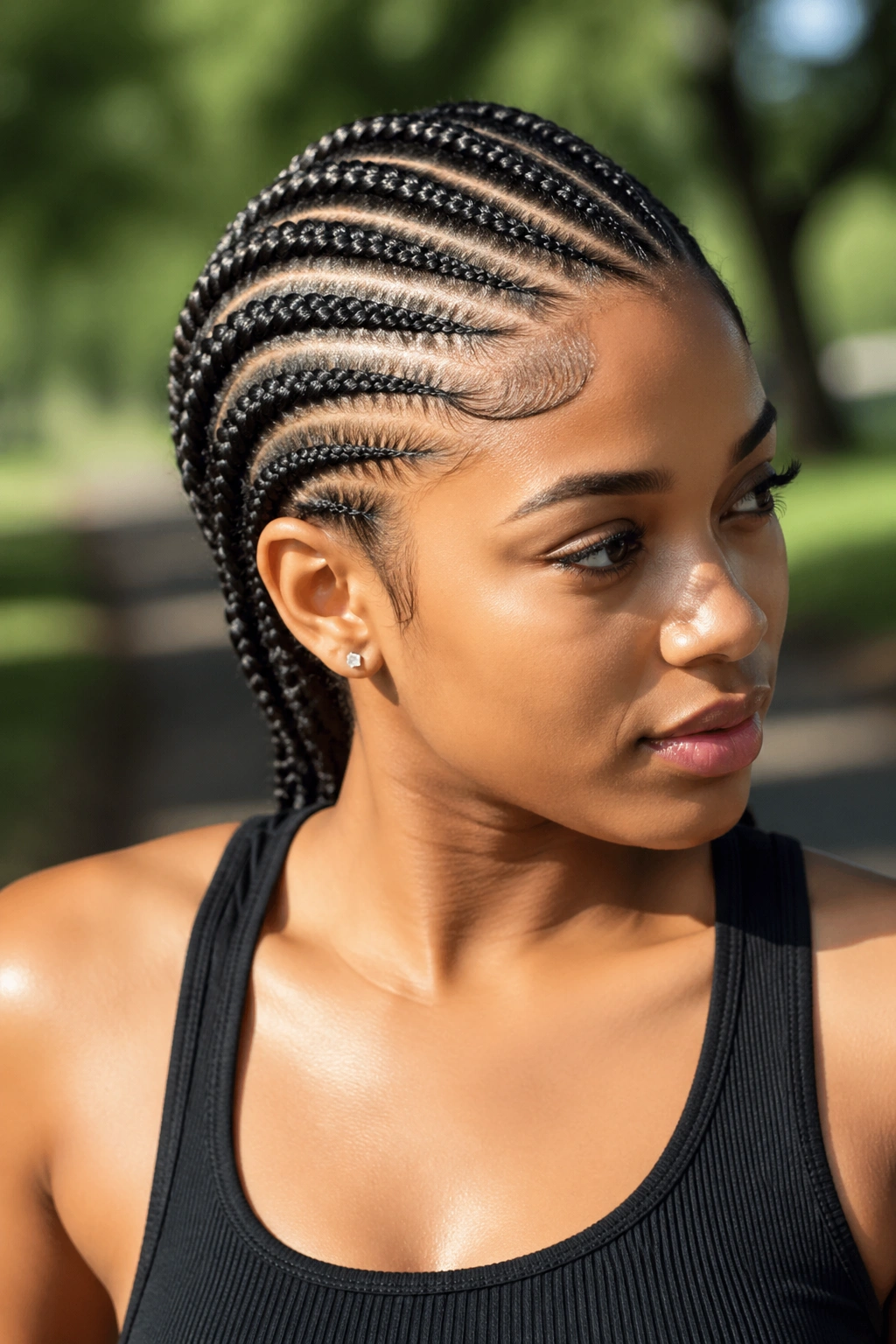
Straight back cornrows with 10 braids hit a specific sweet spot in cornrow installations. The number ten balances density and visibility — enough braids to cover the head completely without each section being so thick that the braids look chunky, and enough negative space at the parts to keep the install from reading too dense. Ten braids running clean from forehead to nape is a count that braiders trust, that hair holds well, and that suits almost every face shape and head size. Straight back cornrows with 10 braids are the install I recommend most often when someone wants a classic look that won’t read dated, won’t strain the scalp, and won’t take a full day to install.
The math works in your favor at ten. The parts space out roughly an inch to an inch and a half apart on most adult heads, which means each braid sits in a comfortable channel without crowding its neighbors. Five braids would be too thick and bulky. Twenty would be too tight and time-consuming. Ten is the Goldilocks count.
Why 10 Braids Specifically
Hair geometry favors certain numbers. On most adult heads, a straight back install uses 8-12 cornrows to cover the full hairline width comfortably. Within that range, 10 sits at the visual midpoint — neither so few that the braids dominate as thick lines, nor so many that the parts blur together.
Ten braids also give an even count, which means clean symmetry. Five on each side of a center part. Or five and five reading from each ear toward the midline. Even counts photograph as balanced; odd counts often look slightly off without the viewer being able to articulate why.
How Long the Install Takes
Two to three hours for an experienced braider working on stretched, clean hair. First-time installers can take longer — 3-4 hours is normal for someone learning. Solo installs at home run 4-5 hours because doing the back of your own head adds time.
Compared to feed-ins or knotless variations, straight-back cornrows with 10 braids is on the faster end of cornrow installs. The technique is straightforward; the count is manageable.
Tools and Setup
- Rat-tail comb with a metal tip for clean parts.
- A sectioning comb or duckbill clips to hold parted sections.
- Edge gel that holds without flaking.
- Pre-stretched kanekalon if adding length, or just braid your natural hair.
- Small rubber bands for tail tips.
- A handheld mirror to check the back.
Tip: Pre-cut your kanekalon into 10 equal portions before starting. Mid-install fumbling for the right amount of hair slows down the process and breaks rhythm.
Prep That Affects the Final Look
Stretched, clean, moisturized hair lays flatter and braids tighter without strain. The prep cycle:
- Wash with a clarifying sulfate-free shampoo.
- Deep condition with heat for 30 minutes.
- Stretch via overnight twists, banding, or a low-heat blowout.
- Apply leave-in conditioner morning of.
- Skip heavy butters that build up under braids.
Skipping prep is the most common reason straight-back installs look fuzzy by day three. Don’t cut the corner.
How Long They Last
Two to three weeks for natural-hair-only braids. Three weeks if extensions are added — the kanekalon adds structure that helps the braids hold their shape longer.
Past three weeks, the hairline starts to fuzz, the parts widen, and the install reads worn. Time to take down.
When 10 Braids Isn’t the Right Count
Smaller heads — kids, petite adults — sometimes do better with 8 braids because 10 makes each section too thin. Larger heads with thick, dense hair sometimes need 12 to cover comfortably without forcing the parts.
Ten is the default. Adjust up or down by one or two based on the specific head you’re working with.
1. Classic 10 Straight-Back
Ten cornrows running straight from forehead to nape, evenly spaced, ending in long extension tails. The reference install for the entire category.
Why It Works
Symmetric, clean, professional. Reads serious without reading severe. Works for interviews, first dates, family photos, day-to-day wear.
- Install time: 2-3 hours.
- Lasts: 14-21 days.
- Best for: any occasion.
Tip: Make the front two braids slightly thicker than the back ones. The visual balance keeps the face frame from looking thin.
2. 10 Braids Ending in Curls
The 10 cornrows are standard; the tails are set on flexi-rods or perm rods to create curls at the ends. The structure of the install is conventional; the curls add personality.
The curls can be tight spirals, loose waves, or beachy crimps depending on the rod size used. Larger rods give looser curls; smaller rods give tighter ones.
3. 10 Braids with Beaded Tails
Wooden or metal beads threaded onto the bottom inch or two of each tail. Each braid wears 2-4 beads. Total bead count across the install: 20-40.
Bead choice affects the read. Wood reads grounded. Brushed metal reads modern. Glass reads playful. Stick to one material across the install for cohesion.
4. 10 Braids with Tribal Parts
Instead of straight parts between the cornrows, the parts curve in tribal patterns — wave shapes, oval seeds, gentle arcs. The cornrows themselves still run straight back; only the parts curve.
The curved parts add cultural depth and visual interest without changing the base installation. Heritage-rooted aesthetic.
5. 10 Braids with Stitch Texture
Each cornrow is stitch-braided rather than standard. The horizontal stitch bars give each braid a ribbed, structured appearance that catches light differently than smooth cornrows.
Stitches add 30-60 minutes to install time. Worth it for events; maybe overkill for everyday wear.
6. 10 Braids with Side Part
Instead of a center axis, the parts are organized around a deep side part. Four braids on one side, six on the other (or three and seven for more drama).
How to Style It
- Mark the side part — usually 1-2 inches off center.
- Section into 4 braids on the smaller side, 6 on the larger.
- Install all braids straight back from the part line.
- Lay edges with a swoop on the larger side.
Tip: Asymmetric installs photograph better than symmetric ones for casual content. The diagonal energy reads more dynamic.
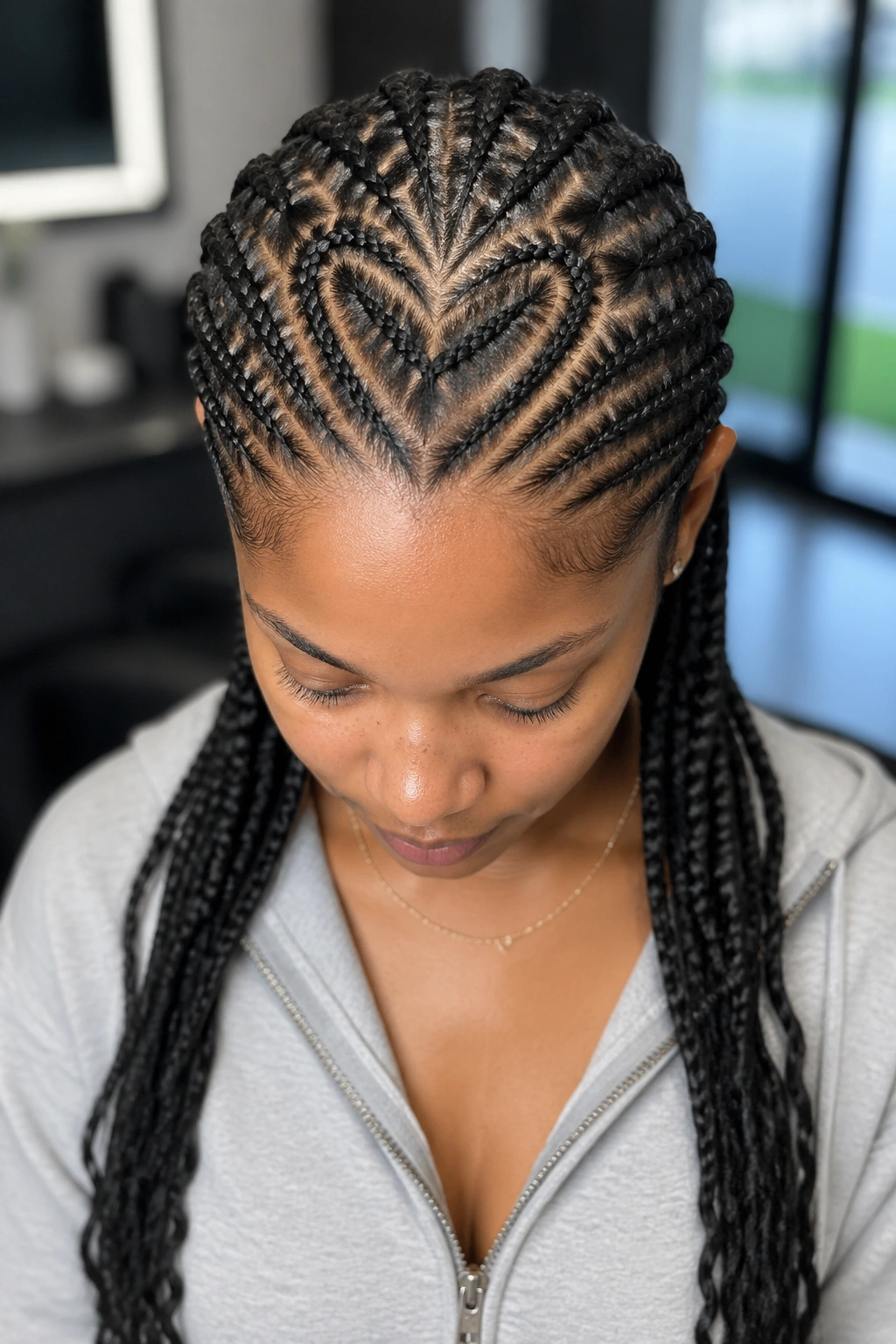
7. 10 Braids with Heart-Shaped Crown
A heart at the crown of the head, with the 10 cornrows feeding back from the heart’s outline. The heart is the focal point; the cornrows are the structure.
Best for special occasions. The heart is whimsical enough that it limits how often you’d wear the install.
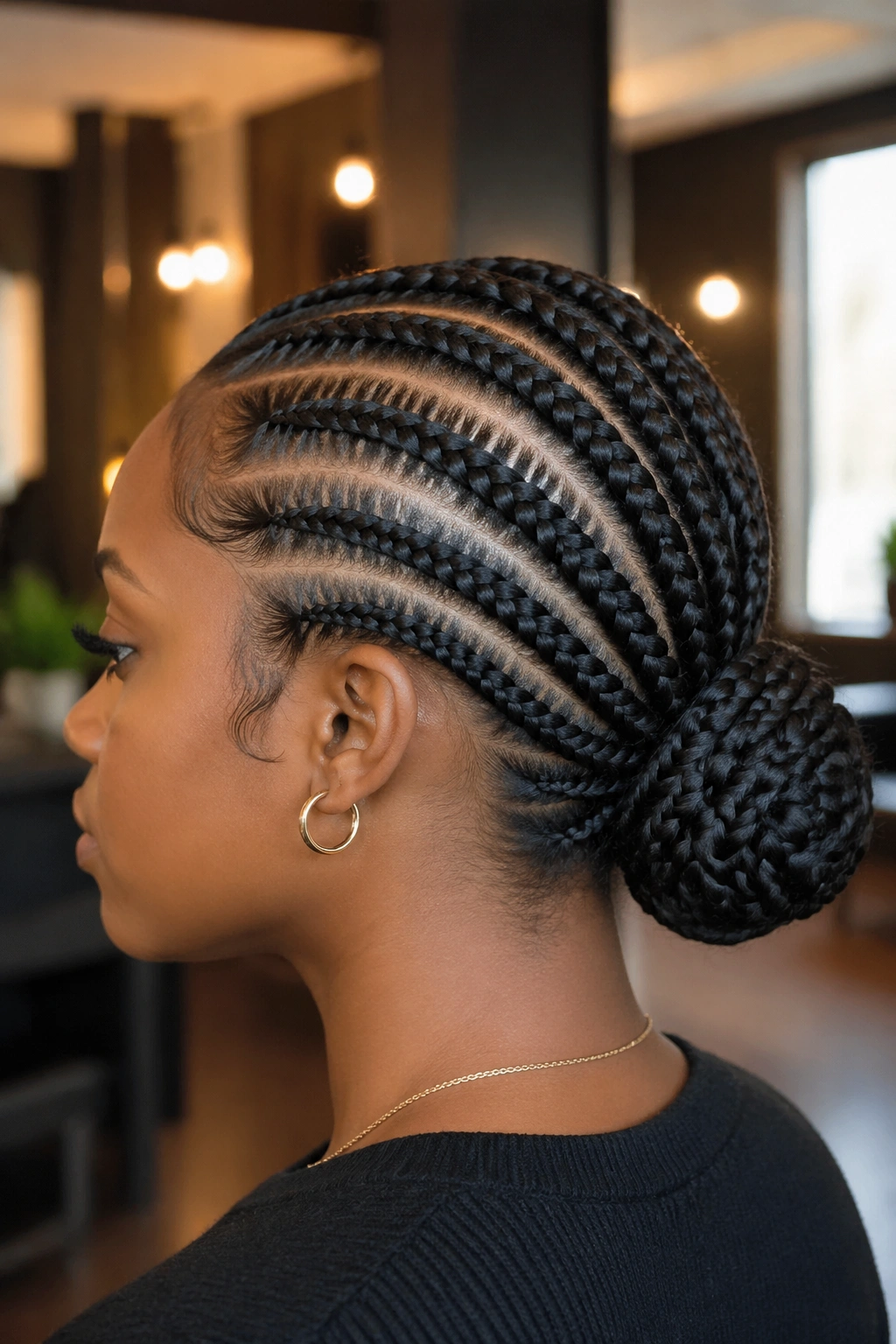
8. 10 Braids with Bun
All 10 cornrows gather at the back into a low or medium-height bun. The bun consolidates the tails into a single sculptural element.
Bun size is the main variable. A small bun reads tight and professional. A large bun reads dramatic and statement.
9. 10 Braids with Curved Side Sweep
The 10 cornrows don’t run straight back — they all curve slightly to one side as they progress, ending in a side sweep at the back. The sideways flow gives motion to an otherwise static silhouette.
Light variation on the standard. Reads more designed without major install changes.
10. 10 Braids with Color Pop
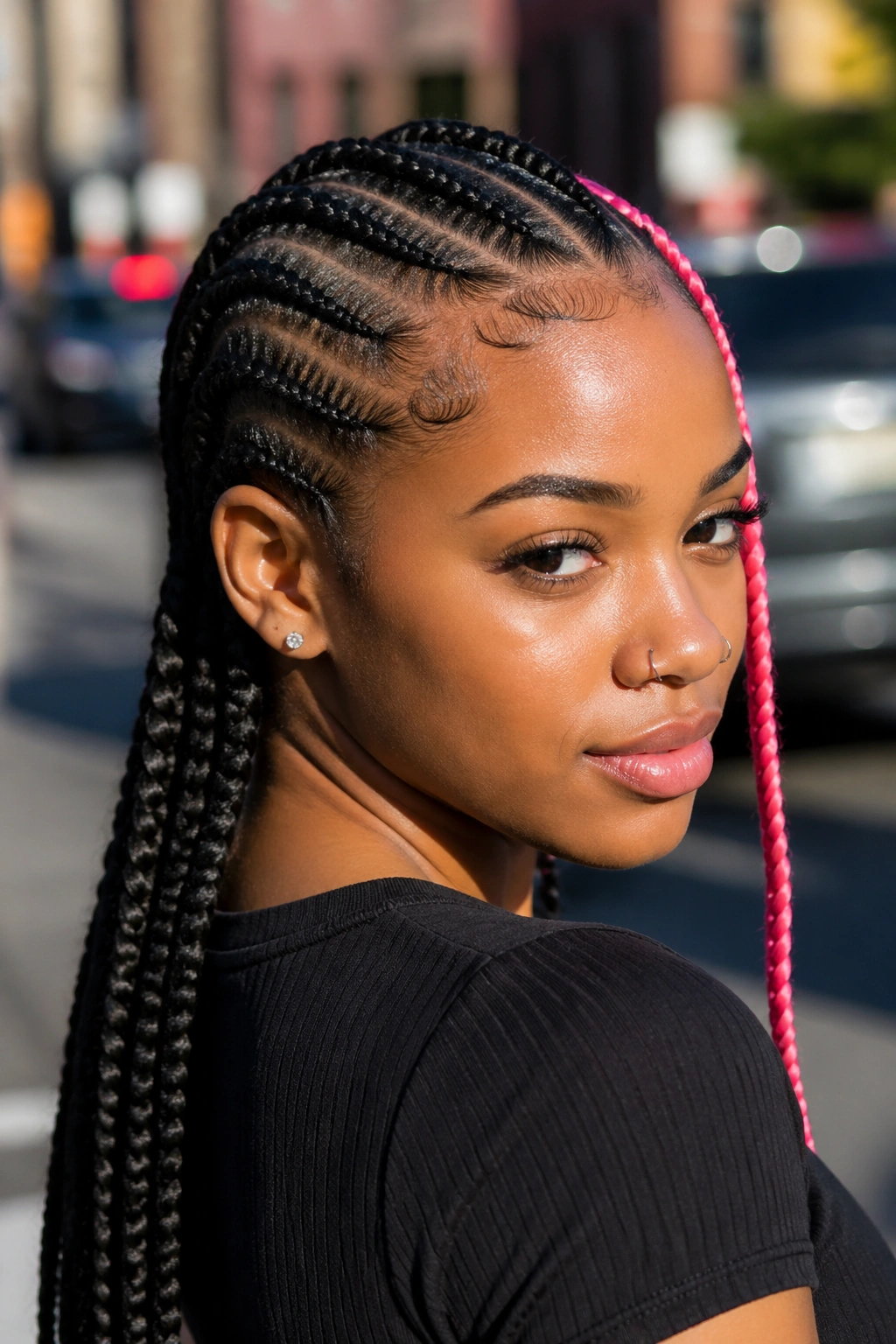
Nine braids in natural color (1B black or 2 dark brown), one braid in a contrasting color — burgundy, rose gold, copper, or honey. The single colored braid stands out without overwhelming.
Pick the placement carefully. A colored braid at the front frames the face. A colored braid in the middle adds an unexpected accent. A colored braid at the side reads as deliberate asymmetry.
11. 10 Braids with Half-Up Pony
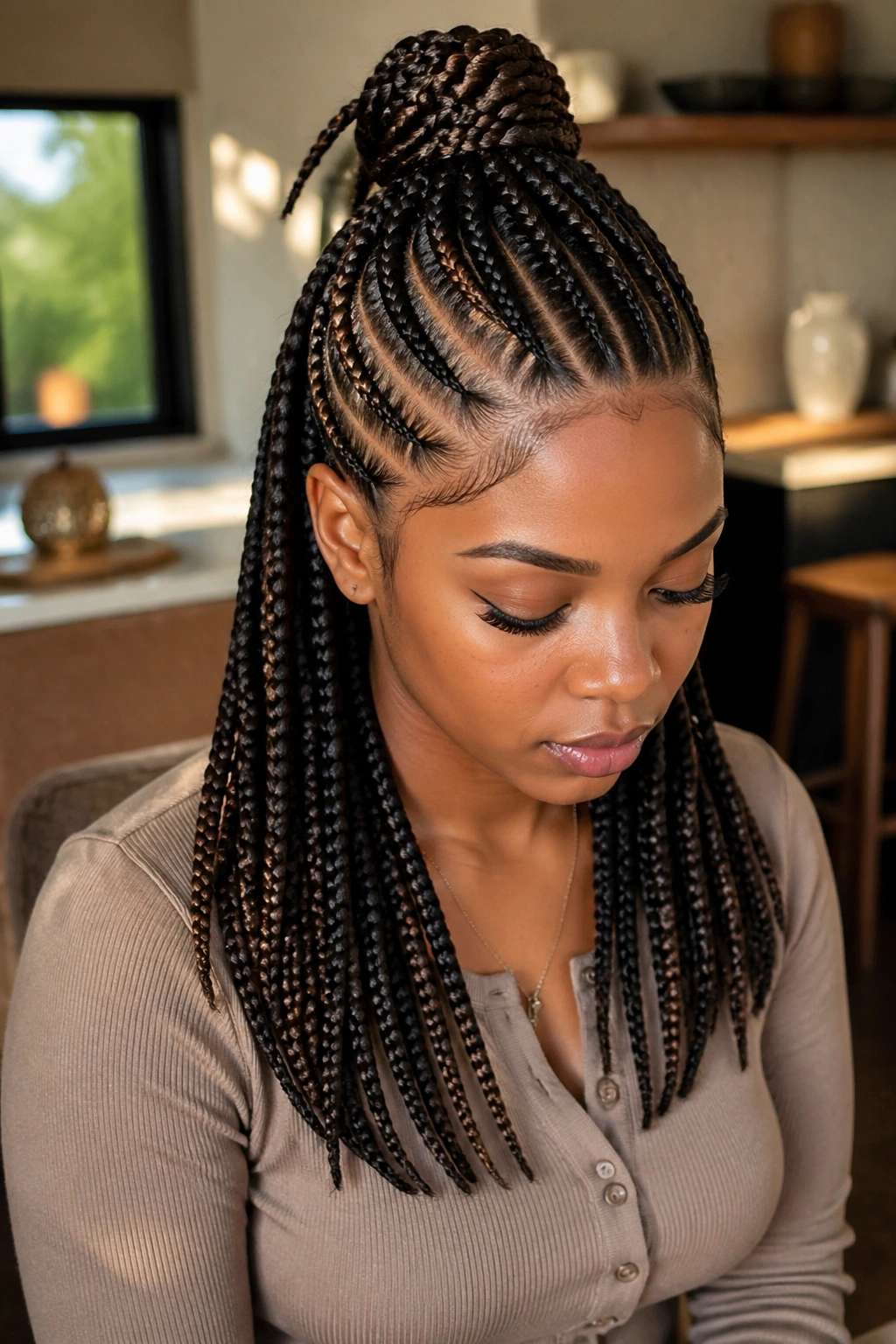
The top half of the braids gather into a half-up ponytail at the crown; the bottom half hangs free. Hybrid silhouette that combines updo and down styles.
Good for transitioning from work to evening — pull the half-up out for a fully-down look as the day shifts.
12. 10 Braids in Box Format
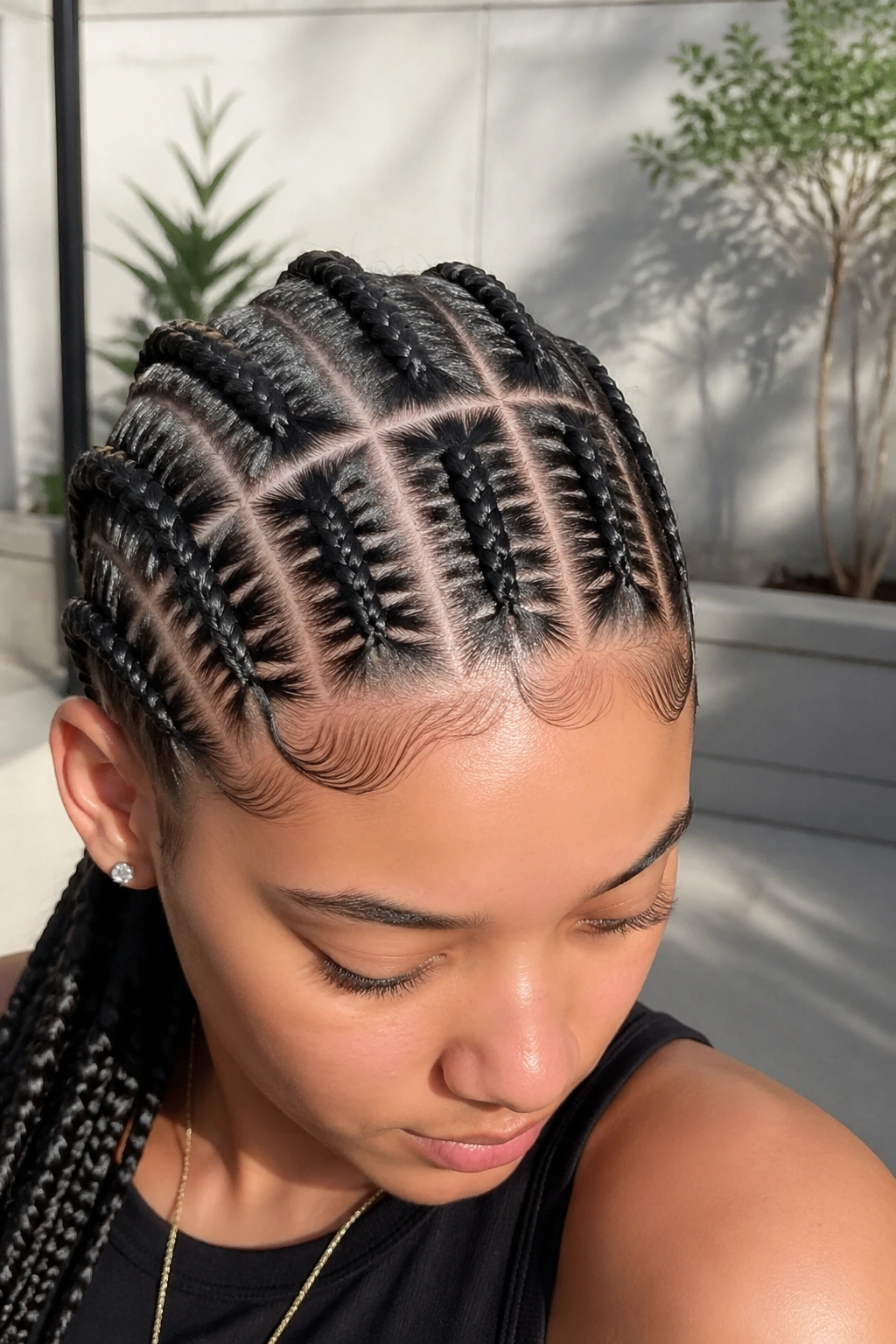
The 10 braids are arranged in a box pattern — two rows of five, or five rows of two — instead of all running parallel from front to back. The geometric arrangement adds structure.
Limited use case. Best for editorial photoshoots and statement events. Reads too constructed for everyday wear.
13. 10 Braids with Beaded Front
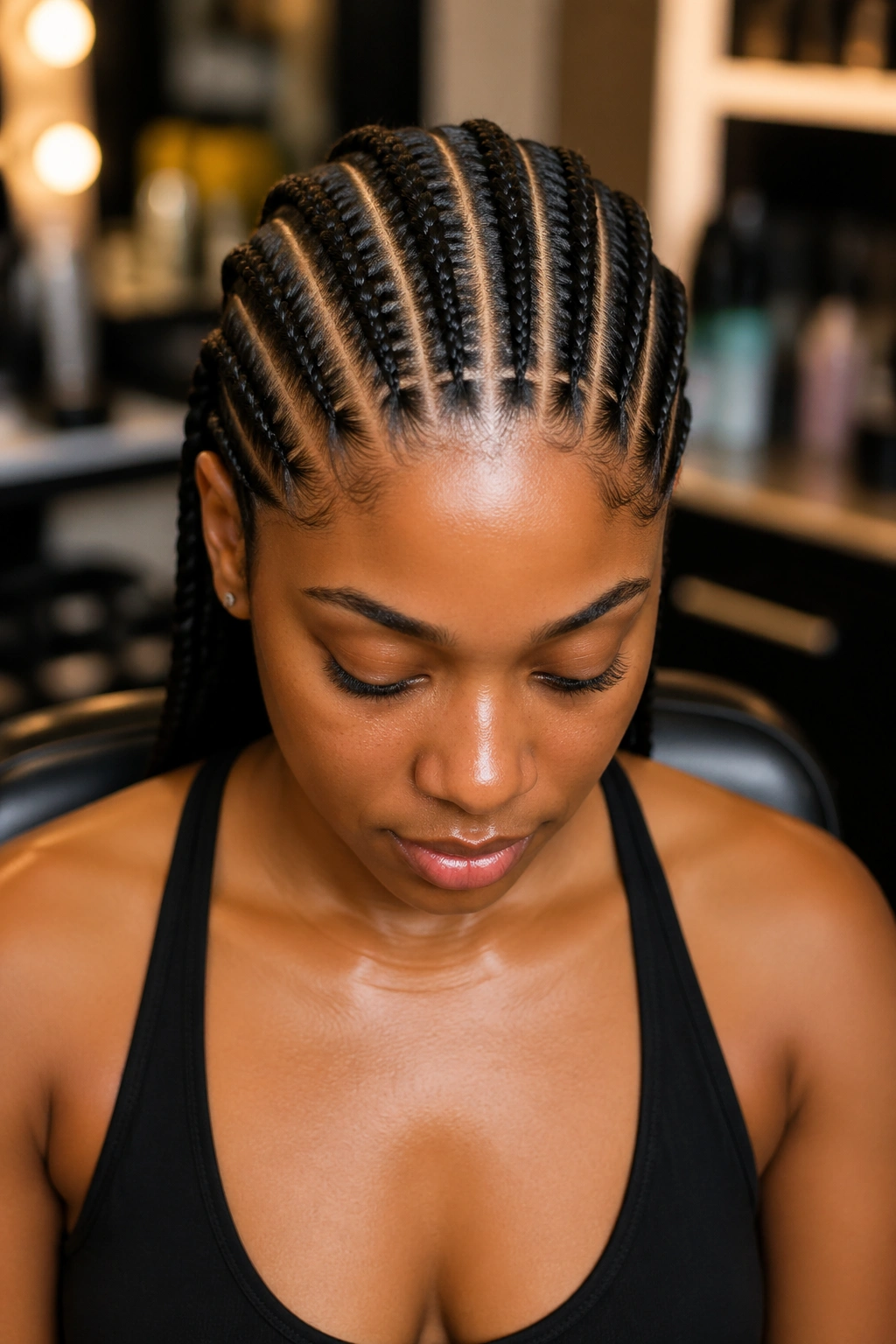
Beads only on the front 2-4 cornrows; the back 6-8 are plain. The beads frame the face without adding weight to the rest of the install.
Smart compromise for women who like beads but don’t want the full-install bead weight. Lighter on the scalp; visually balanced.
14. 10 Braids with Extended Length
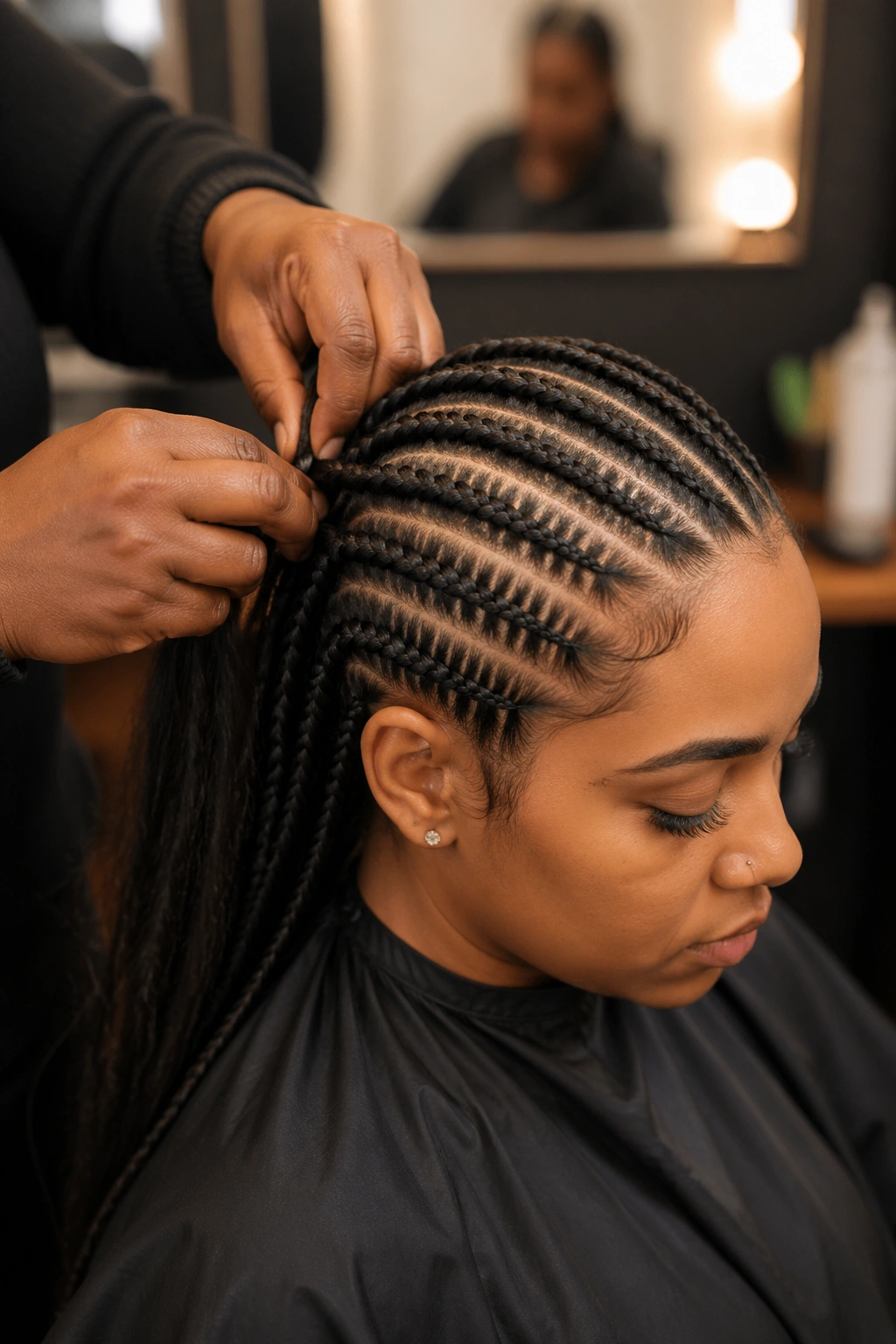
Standard 10-braid install with very long extensions — waist-length or longer. The braids themselves are conventional; the dramatic length carries the look.
What Makes It Different
Long extensions transform a standard install into a dramatic one. Same technique, same parts, same count — but the visual impact is doubled.
- Install time: same as standard.
- Lasts: 14-21 days.
- Best for: events, vacations, photoshoots.
Tip: Long braids weigh more than short ones. The first few days will feel heavy. Sleep with a satin pillowcase to ease neck strain.
15. 10 Braids with Curled Front, Straight Back
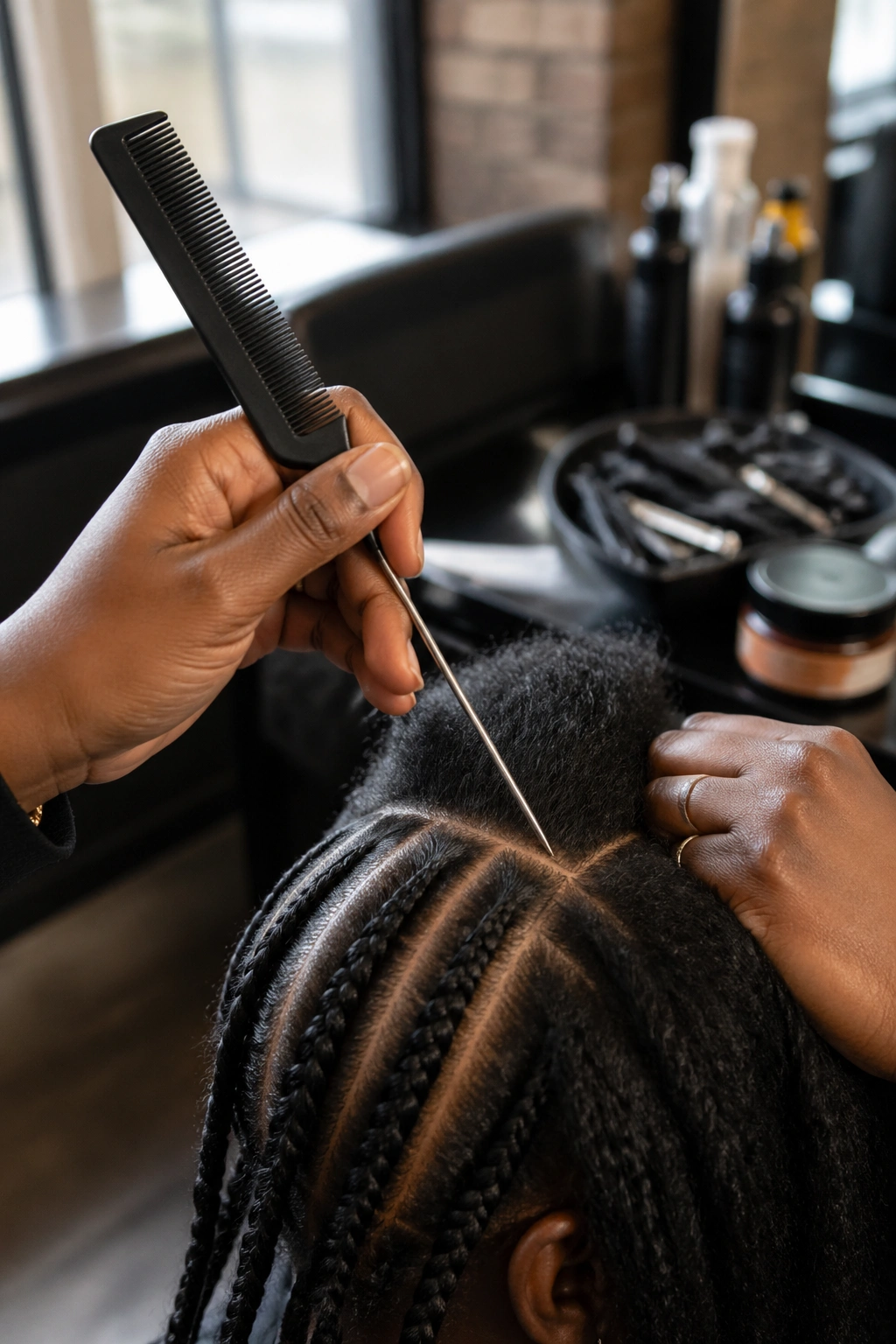
The front 4-5 cornrows have curled tails; the back 5-6 stay straight. Visual contrast between front softness and back structure.
Reads designed without being heavy-handed. Works for evening events where you want detail at the face but simplicity behind.
16. 10 Braids with Geometric Edge Art
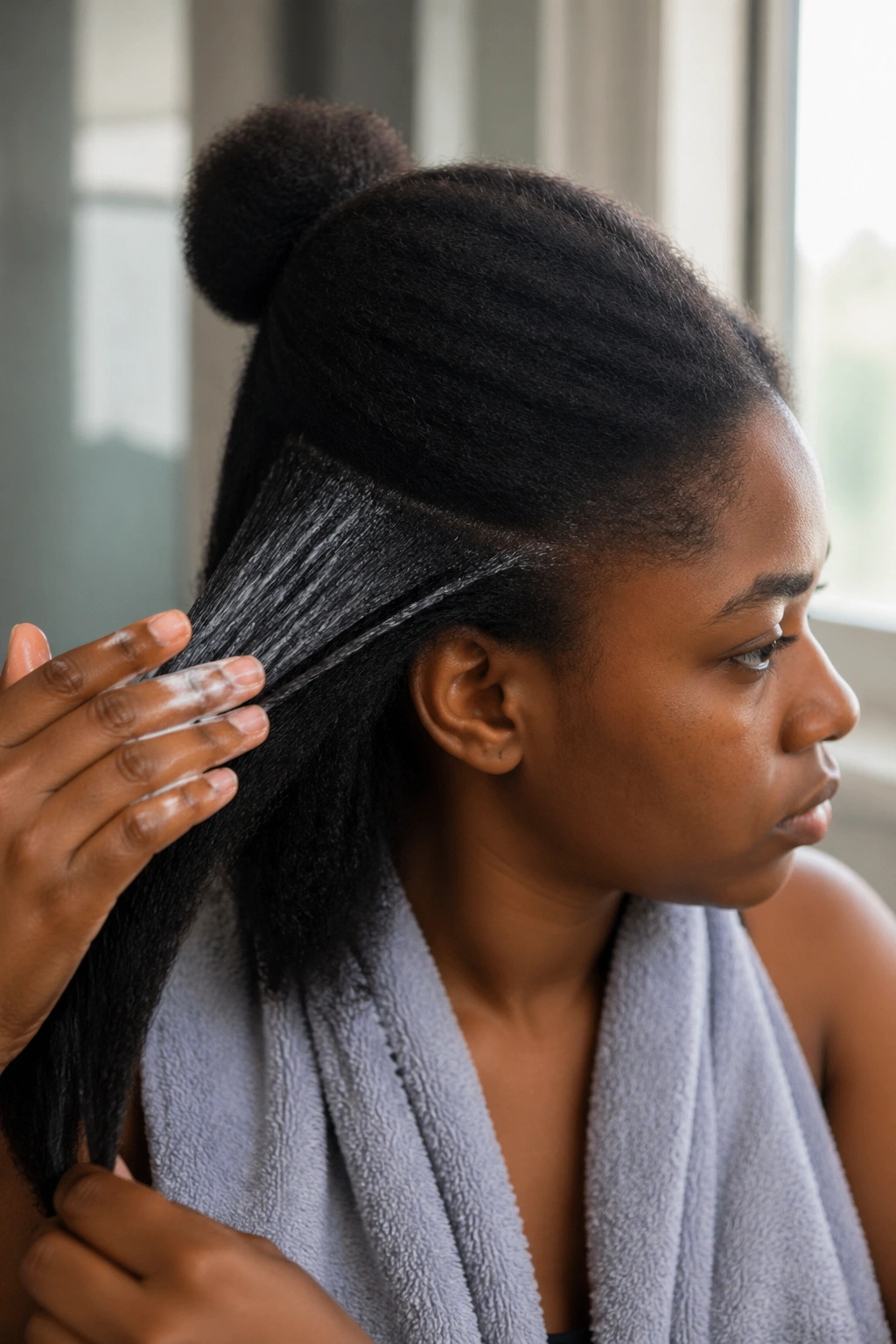
Standard 10-braid install with geometric edge art — sharp angular swoops, lines, or shapes — at the hairline. The braids are conventional; the edges are the statement.
Edge art needs daily maintenance. The first few days look sharpest; by day five, the edges need re-laying. Commit if you’re willing to maintain.
17. 10 Braids with Cuffs Throughout
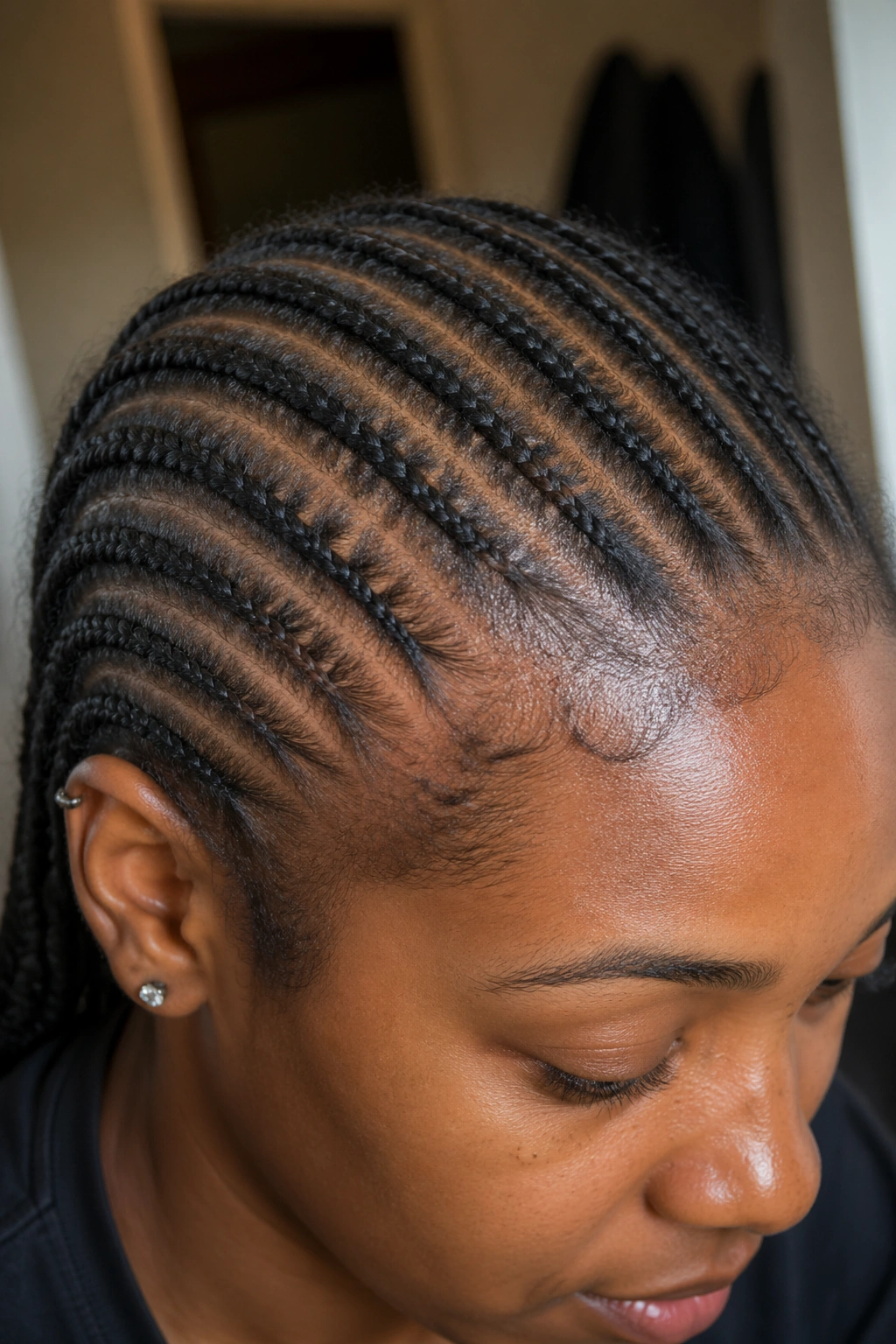
Small metal cuffs slid onto each cornrow at the same height across all 10 braids. The uniform cuff line creates a horizontal accent across the install.
Cuff position matters. About one-third from the top reads balanced. Halfway down reads heavy. At the very top reads accessory-forward.
18. 10 Braids with Cornrowed Bangs
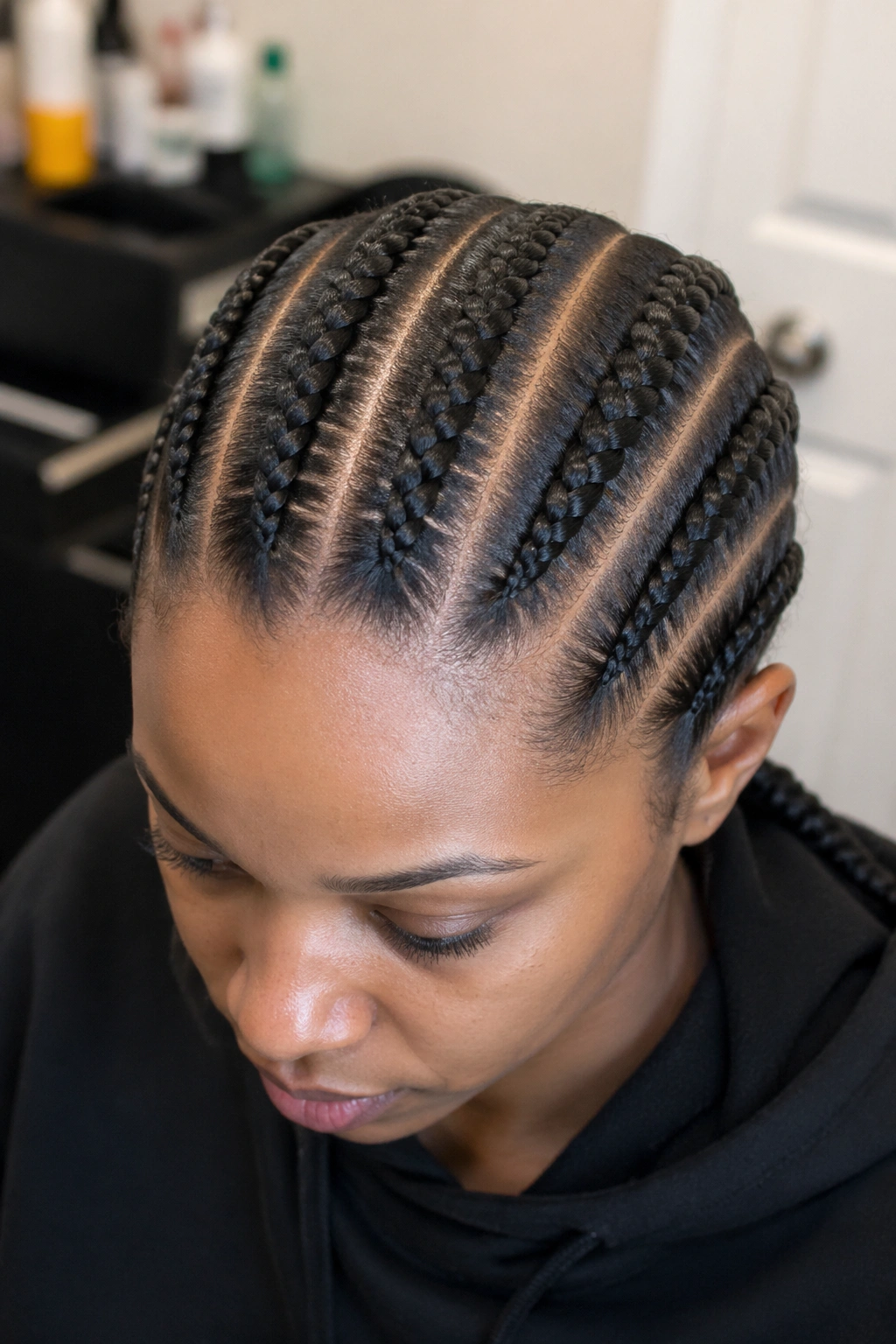
The front 2-3 cornrows are short, cornrowed bangs that stop at the eyebrows. The remaining 7-8 are standard length.
Throwback aesthetic with retro 90s energy. Reads bold and a bit unusual. Not for the timid.
19. 10 Braids with Loose Crown
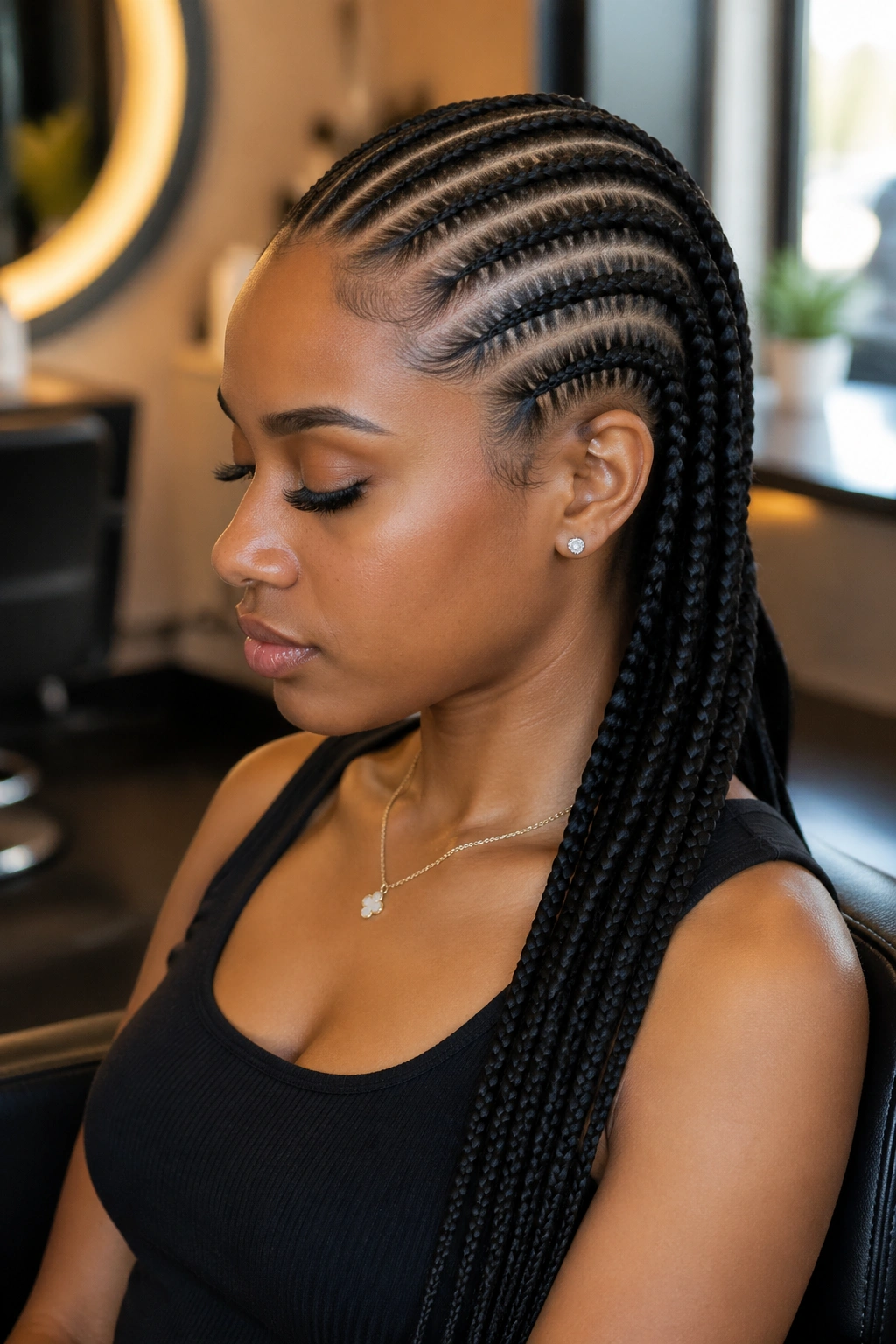
The 10 cornrows stop at the crown of the head; the crown itself is left as natural hair pulled into a small puff or twist. The cornrowed sides plus loose crown create vertical contrast.
Mohawk-adjacent silhouette without the shaved sides. Reads bold, creative, slightly punk.
20. 10 Braids with Wrapped Tails
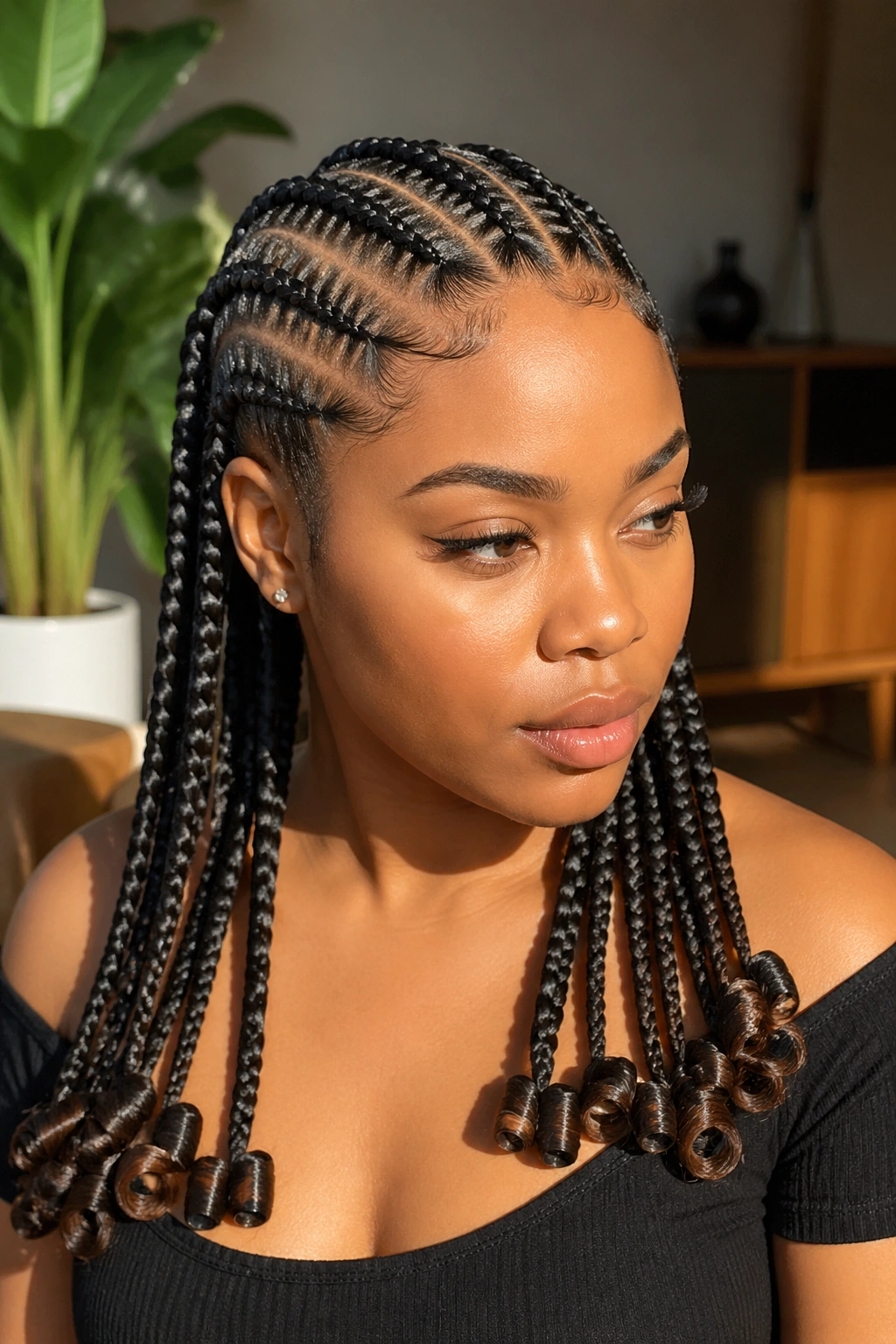
The bottom third of each braid tail is wrapped in colored thread, ribbon, or contrasting kanekalon. The wraps create a uniform color block at the ends of the braids.
Wraps to coordinate with outfits or events. Earth tones for daily wear; metallic for evening; bright colors for festivals.
21. 10 Braids with Curved Crown Outline
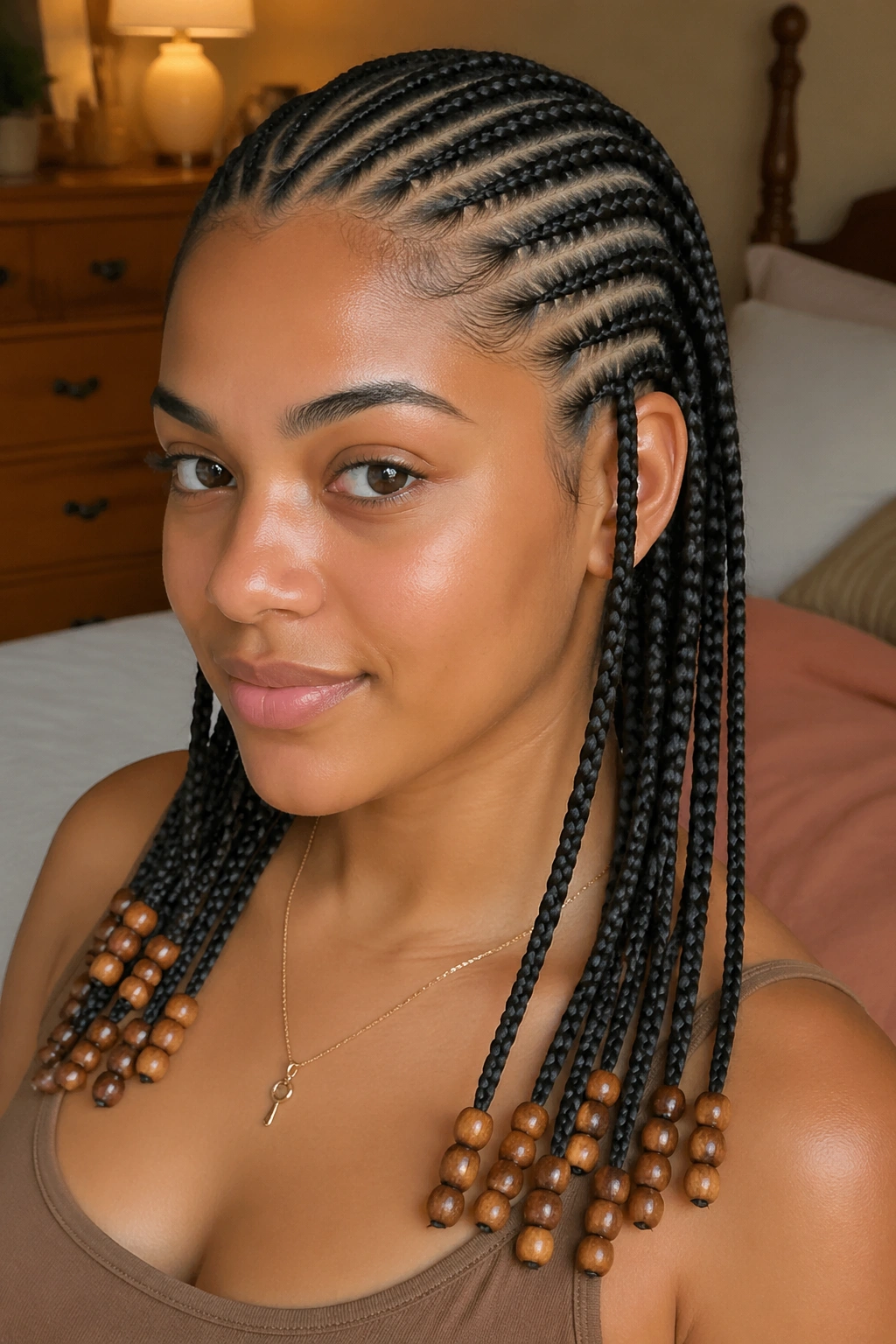
The hairline at the crown is curved into a wave or arc shape rather than a straight line. The 10 cornrows feed from the curved hairline back to the nape. The curve adds softness to the front of the install.
Subtle structural choice. Most viewers don’t consciously notice the curve, but the install reads softer than a standard straight-hairline version.
22. 10 Braids with Mixed Sizes
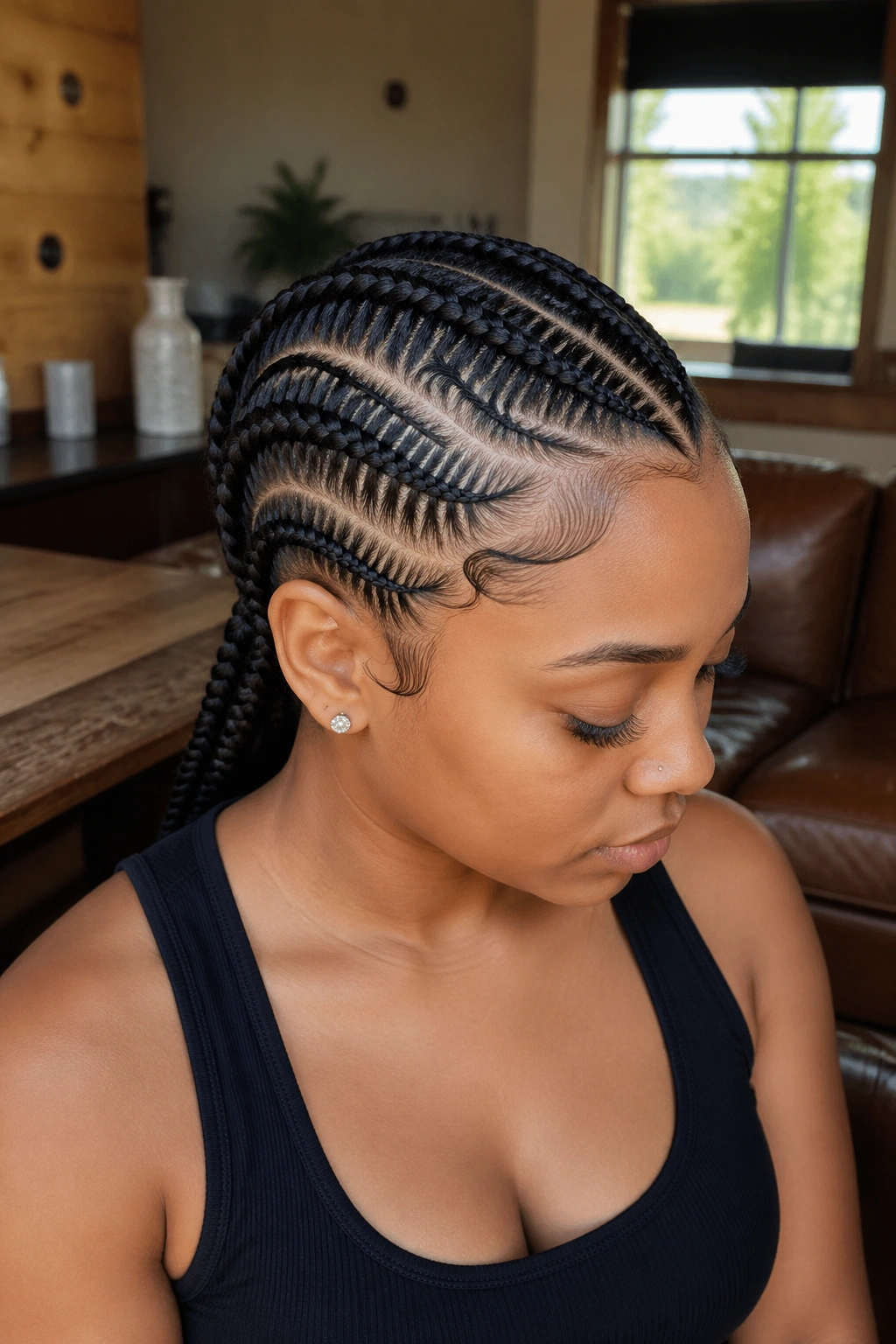
Five thick cornrows alternated with five thin cornrows, all running straight back. The variation in braid size creates rhythm and dimension across the install.
Who This Is For
Anyone bored of uniform-braid installs who wants visual variety without changing the basic structure. The mixed sizes read as designed without being overly elaborate.
- Install time: 2-3 hours.
- Lasts: 14-21 days.
- Best for: women who want a designed look but a familiar silhouette.
Tip: Place the thicker braids in the middle of the install — front, middle, back, middle, front pattern. Keeps the visual weight centered.
Maintenance for 10-Braid Installs
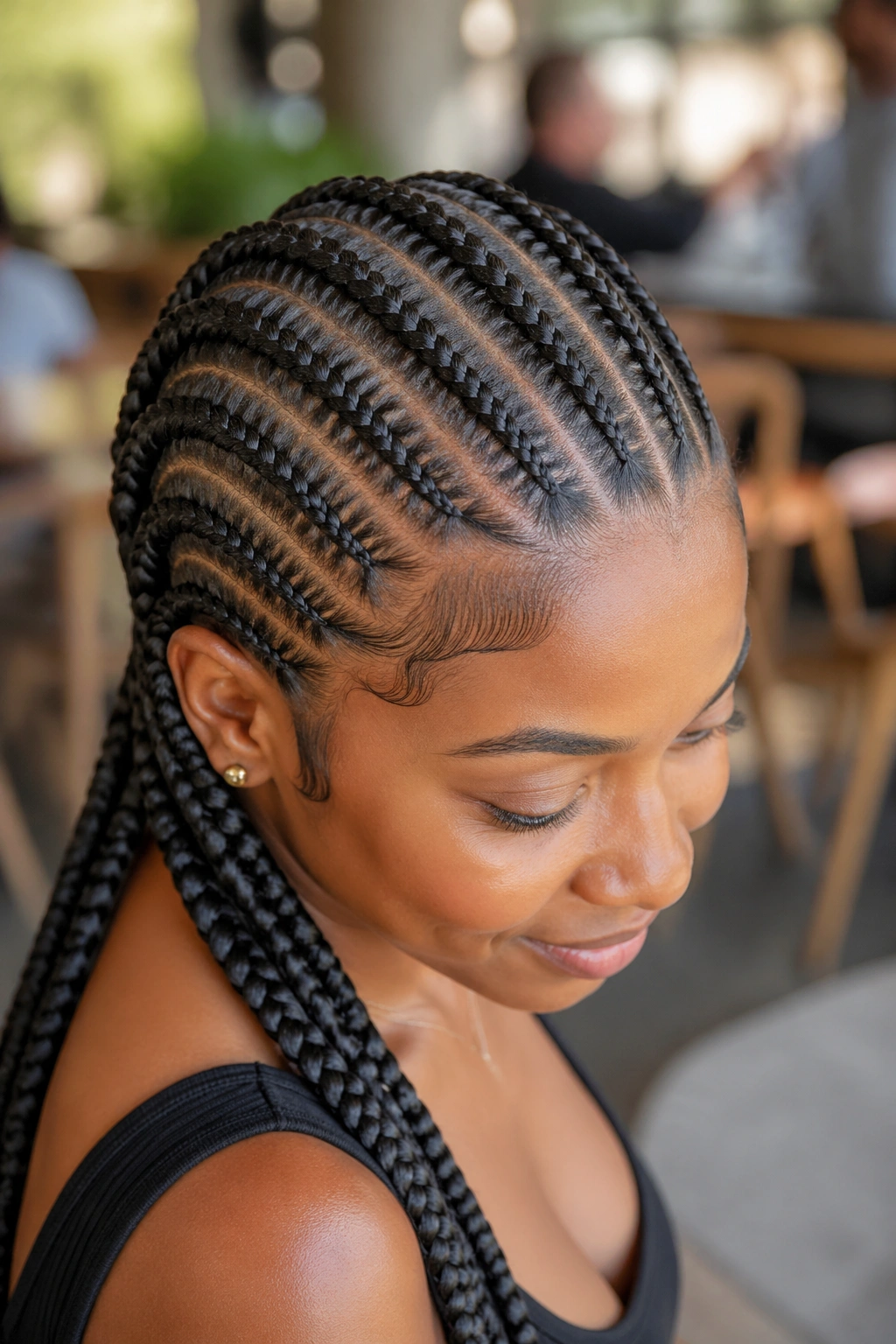
The bonnet routine matters as much as for any cornrow install. Satin bonnet at night, silk pillowcase as backup, satin scarf around the hairline before bed.
A light braid spray every 2-3 days for moisture. Spray from a distance; don’t drown the braids in product.
Avoid heavy oils and creams. They build up at the parts and turn clean lines into greasy ones.
Edge Care Between Weeks
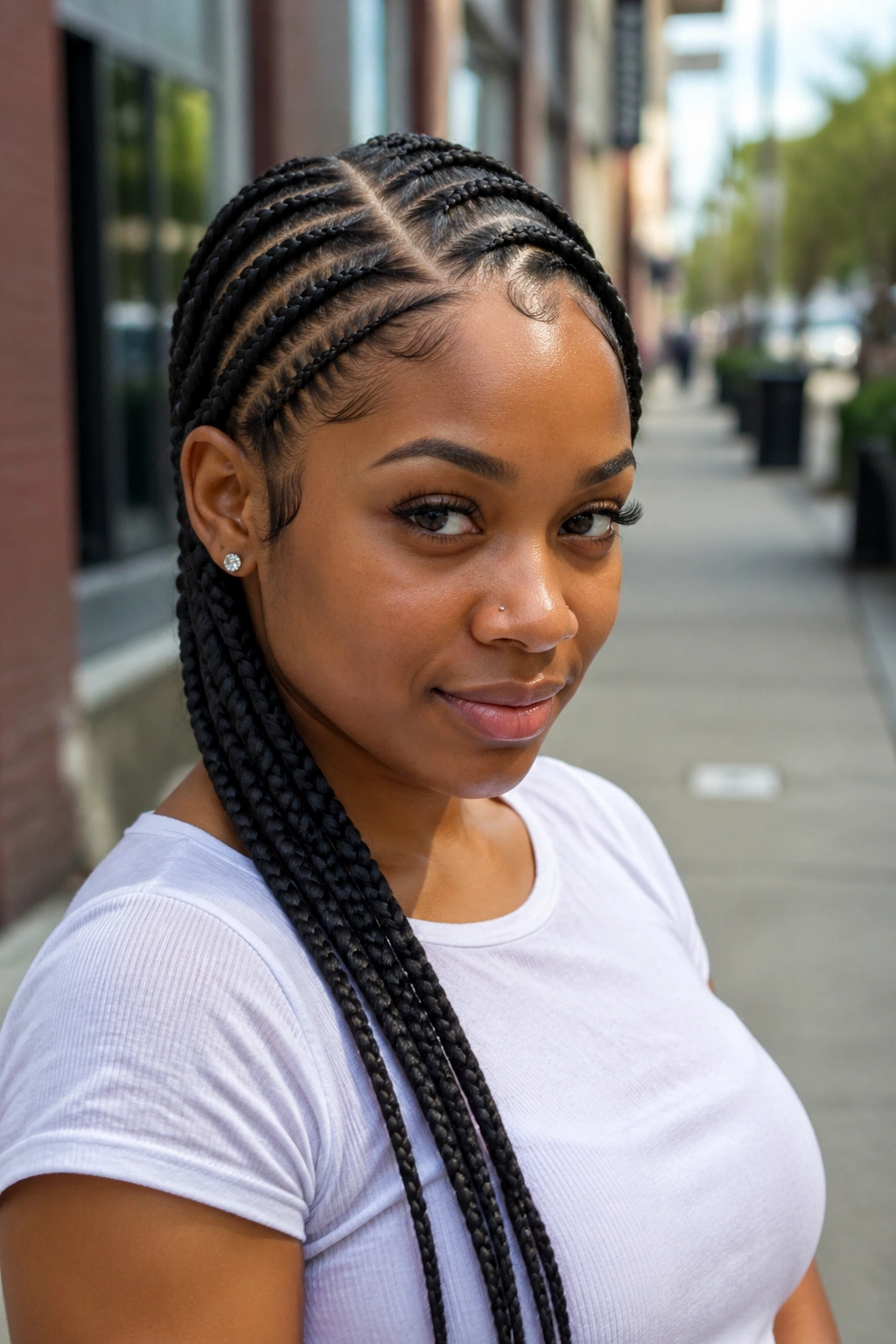
Edges fuzz first. Lay them every 3-4 days for the install duration.
Use minimal edge gel — a pea-sized amount per side is plenty. Tie down with a silk scarf for 15-30 minutes after laying. The set time is what makes the laying hold longer than the gel alone.
Scalp Care Under the Cornrows
A light hair oil applied to the part lines twice weekly keeps the scalp moisturized without buildup. Jojoba, grapeseed, or argan are good choices.
If itch appears, dilute apple cider vinegar (1 tablespoon to 1 cup water) and spritz the parts. Settles itch quickly without disrupting the install.
Don’t scratch with nails. Use the back of a comb or a scalp scratcher tool if you must scratch.
Takedown Procedure
Saturate each braid with a conditioning detangler or spray. Remove any rubber bands or accessories first. Unravel from the tail upward, one braid at a time.
Finger-detangle each section before reaching for a comb. Combing through unraveled but tangled braids is where most breakage happens.
Wash and deep condition immediately after takedown. The hair has been in one shape for weeks and needs movement and moisture to recover.
Picking the Right 10-Braid Variation
Lifestyle filters the choice first. Active lifestyles favor variations with bundled tails — buns, ponytails, half-up styles — that keep braids from swinging around.
Work environment filters second. Conservative workplaces lean toward classic straight-back, side parts, or low buns. Creative workplaces welcome stitches, color pops, edge art, and beaded variations.
Face shape filters third. Round faces benefit from height — the top knot or high bun versions. Long faces work with horizontal accents like a heart-shaped crown. Square faces soften with side sweeps. Oval faces handle anything.
Length preference filters fourth. If you don’t want to mess with extensions, the natural-hair-only version works fine if your hair is at least shoulder-length. For dramatic length, extensions transform the install without changing the technique.
The right 10-braid style is the one that matches your week — your work, your social calendar, your sleep schedule, your budget. Pick that one and the install will work for you. Pick a fancy variation when your routine can’t sustain it, and you’ll be cutting it down by day five. Honest self-assessment beats Pinterest envy every time.
