


Zig zag cornrow styles flip the rules of standard braiding. Where traditional cornrows travel in straight parallel lines, zig zag versions snake across the scalp in jagged Z-patterns. The parts themselves become design features. The contrast between the wavy paths and the smooth braided rows creates visual rhythm that catches the eye instantly.
The technique demands skill. Wobbly zigzags read sloppy. Crisp, intentional Z-patterns read as art. Finding a braider who can execute clean zigzag parts matters more than any other variable in this style category.
Below are 22 distinct zig zag cornrow styles. Each one offers a different parting approach, row count, finish, or accessory choice that sets it apart. The zigzag base is constant; the variations come from everything around it.
What Makes Zigzag Different From Standard Cornrows
Standard cornrow parts travel in straight lines from one point to another. Zigzag parts travel in alternating diagonal segments — left, right, left, right — creating a Z-pattern as they move across the scalp.
The braided row itself follows that zigzag path, curving with each direction change. The result is a row that reads as wavy or zigzagged rather than perfectly straight.
The visual effect is striking. The scalp shows through the zigzag parts in jagged lines that contrast with the smooth braided sections.
The History of Zigzag Parting
Zigzag parts aren’t new. They appear in traditional African braiding patterns from various tribes across West Africa, often used to denote occasion, tribe affiliation, or social rank.
In contemporary Black hair culture, zigzag parts gained widespread popularity through music videos, magazine spreads, and braider portfolios that elevated parting itself as a form of art.
Wearing zigzag cornrows connects to that tradition. The pattern on your scalp has roots that go back generations.
Why Zigzag Cornrows Demand a Skilled Braider
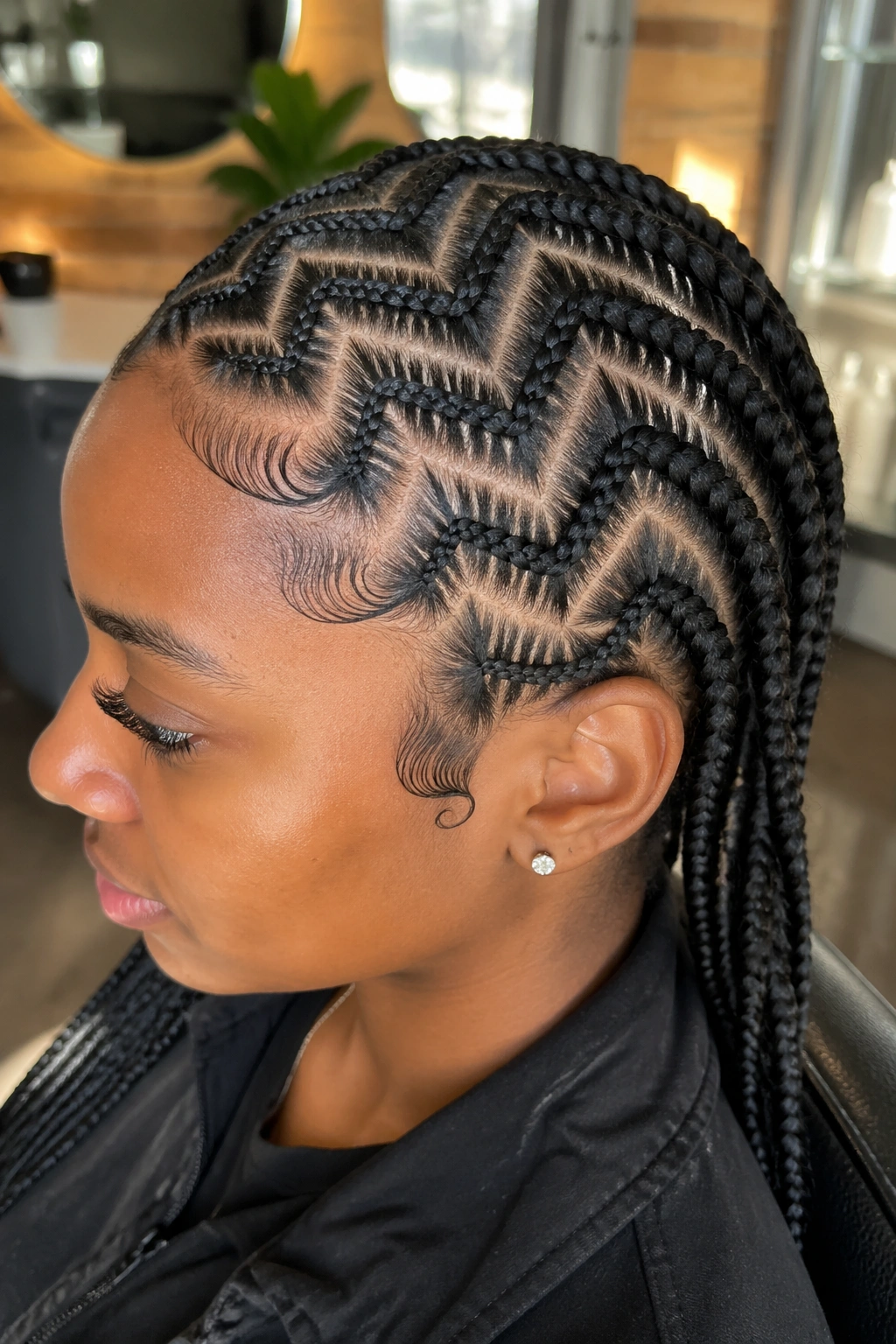
Standard cornrows can be installed by almost any experienced braider. Zigzag cornrows require additional skill — specifically, the ability to part hair in clean Z-shapes and to maintain consistent zigzag spacing across the entire head.
A wobbly zigzag part destroys the look. Asymmetric zigzags between rows create visual chaos. Inconsistent angles between Z-segments make the pattern read accidental rather than intentional.
Look at portfolios. Find braiders who specifically advertise pattern work and parting skill. Don’t accept “I can probably do it” — get someone with proven zigzag examples.
Tools That Make Zigzag Parts Possible
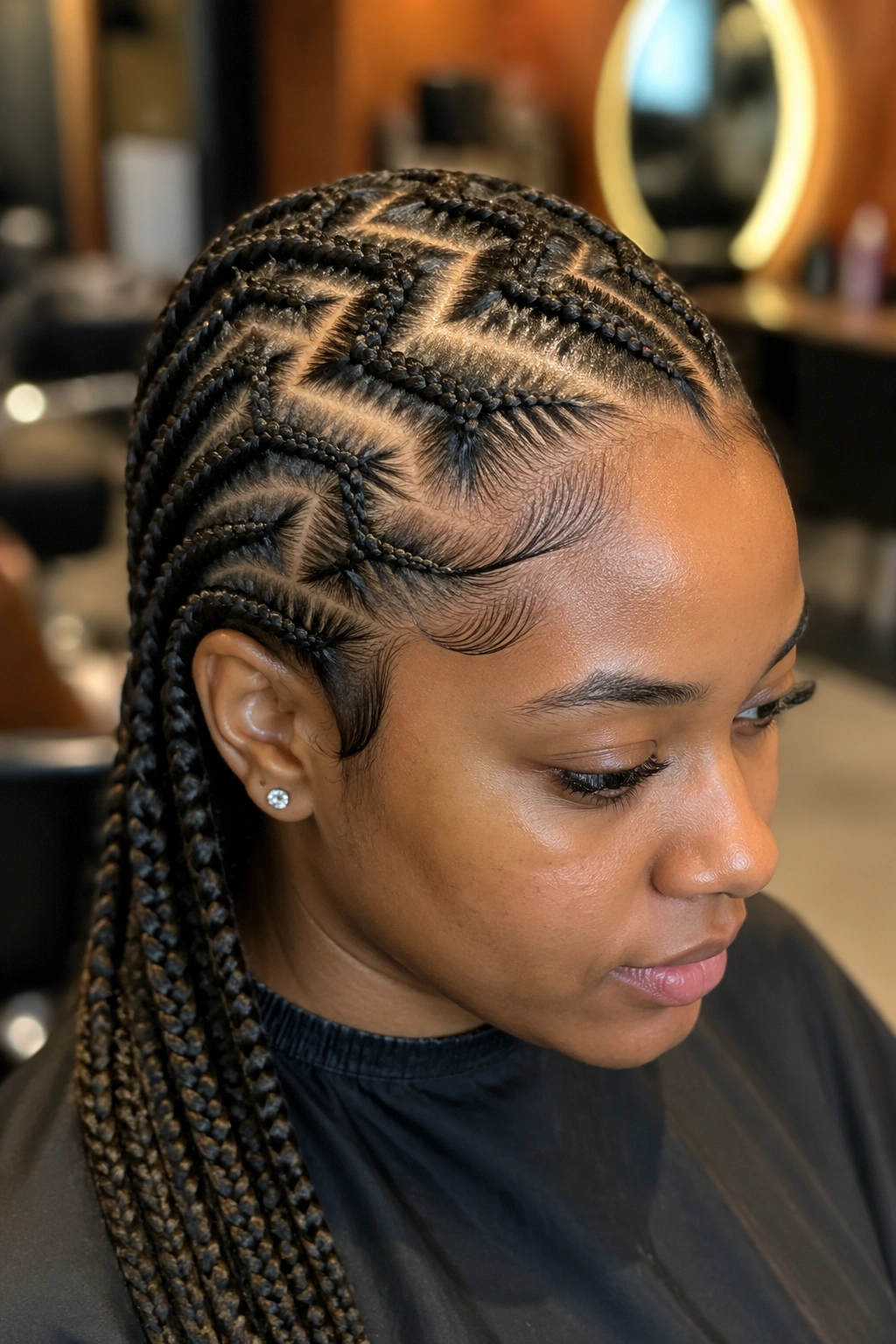
A rat-tail comb is the primary tool. The pointed end traces the zigzag path; the comb teeth then create the actual part along that traced line.
Some braiders use a rat-tail comb with a metal pin tail for extra precision. The metal pin can trace finer zigzag patterns than plastic.
Strong-hold edge gel helps control the parted sections so they stay where placed during the braiding process. Without product, the parts can shift as the braider works.
How Zigzag Width and Spacing Affect the Look
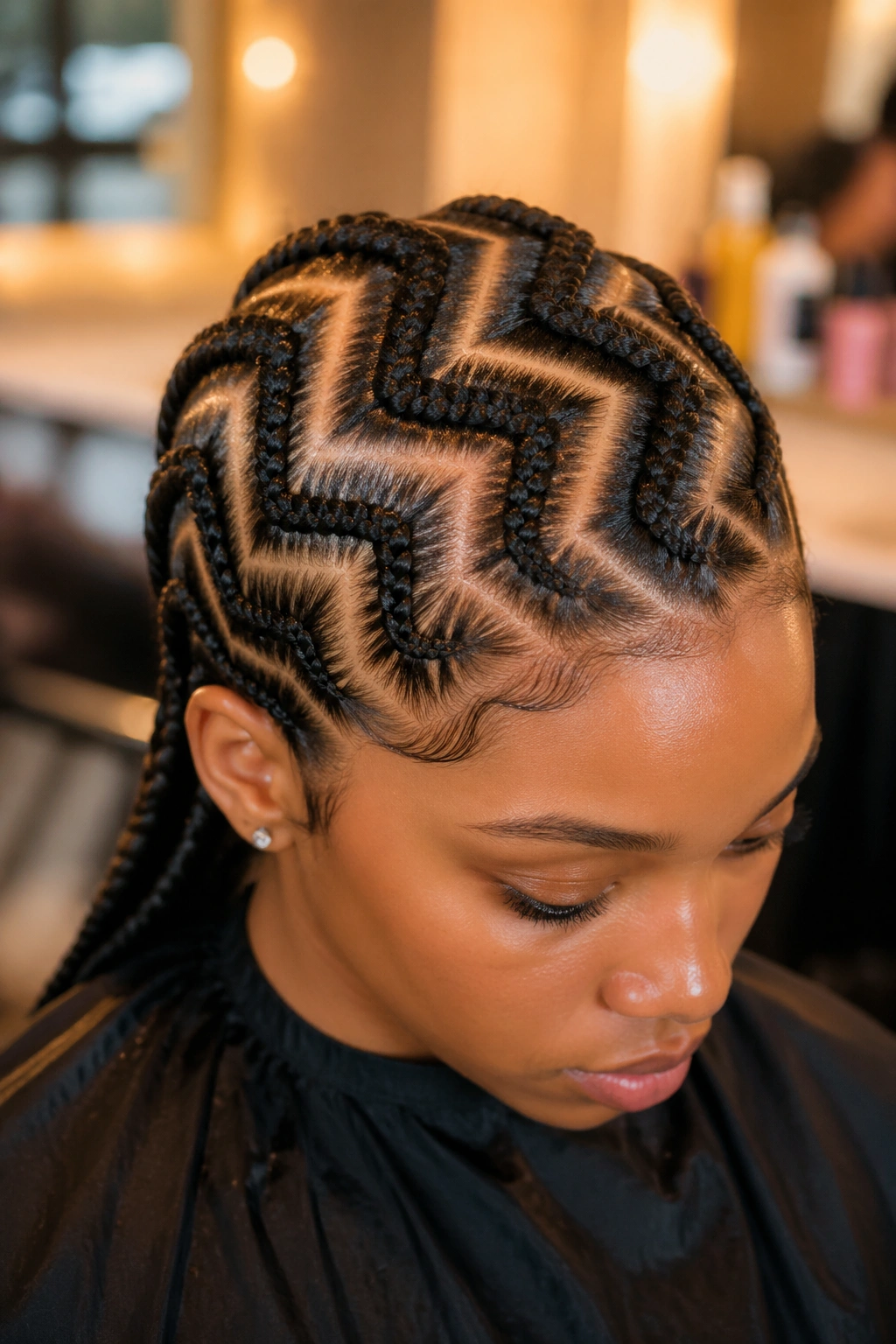
Tight zigzags — where the Z-segments are short and close together — create a busy, intricate pattern. Best for women who want maximum visual interest.
Wide zigzags — where the Z-segments are longer with bigger angle changes — create a more dramatic, statement-making pattern. Best for women who want bold rather than busy.
Spacing between zigzag rows matters too. Tight spacing reads delicate. Wide spacing reads bold and exposes more scalp design.
1. Classic Six-Row Zigzag
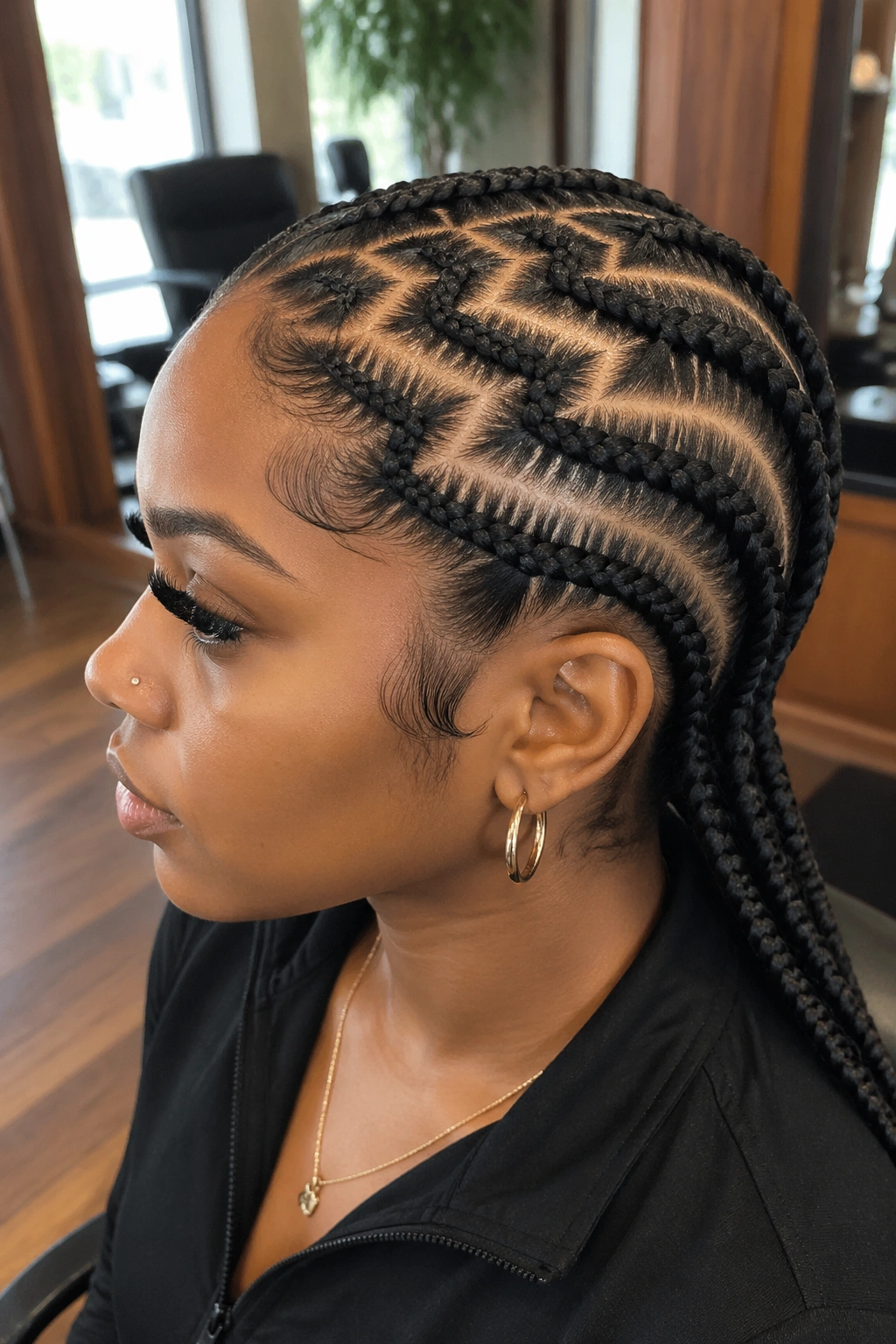
Six rows running back, each with zigzag parts between them. The Z-pattern is consistent across all five parts.
Why It Works
- Bold without being overwhelming
- Six rows balance visual weight
- Lasts 2-3 weeks with care
- Photographs well from any angle
Tip: Have your braider measure the zigzag spacing before starting. Consistent angle changes between Z-segments matter more than perfectly straight rows.
2. Zigzag Cornrows With Beaded Ends
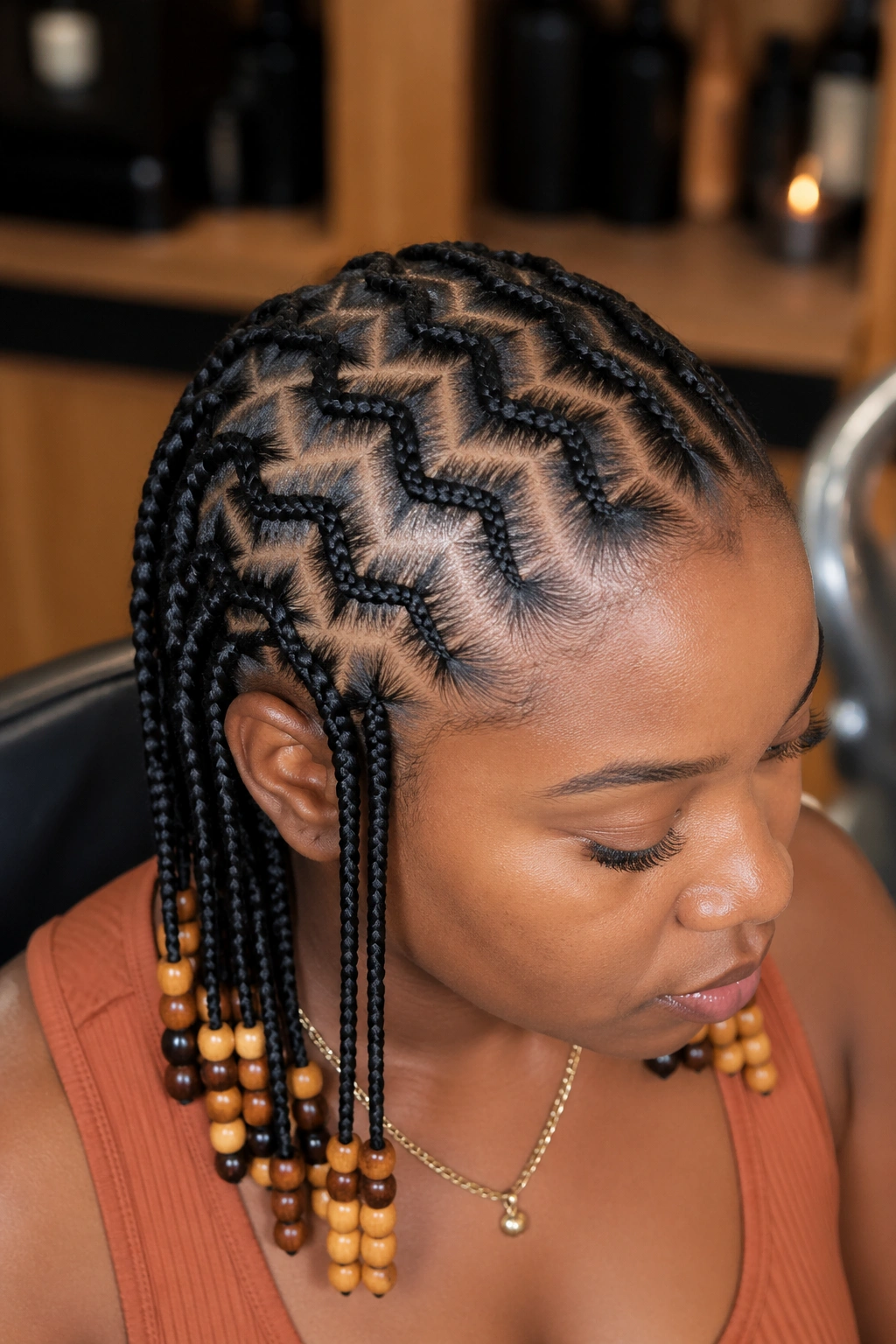
Six rows with zigzag parts, ends finished with wooden, brass, or glass beads. The beads add weight to the ends and complement the artistic parting work.
The combination of crafted parts and decorative ends creates a fully designed look. Both the scalp and the tips contribute to the final aesthetic.
Pick bead colors that complement the zigzag pattern. Earth tones work for cultural-rooted vibes; brights work for playful energy.
3. Zigzag Cornrows Into a High Bun
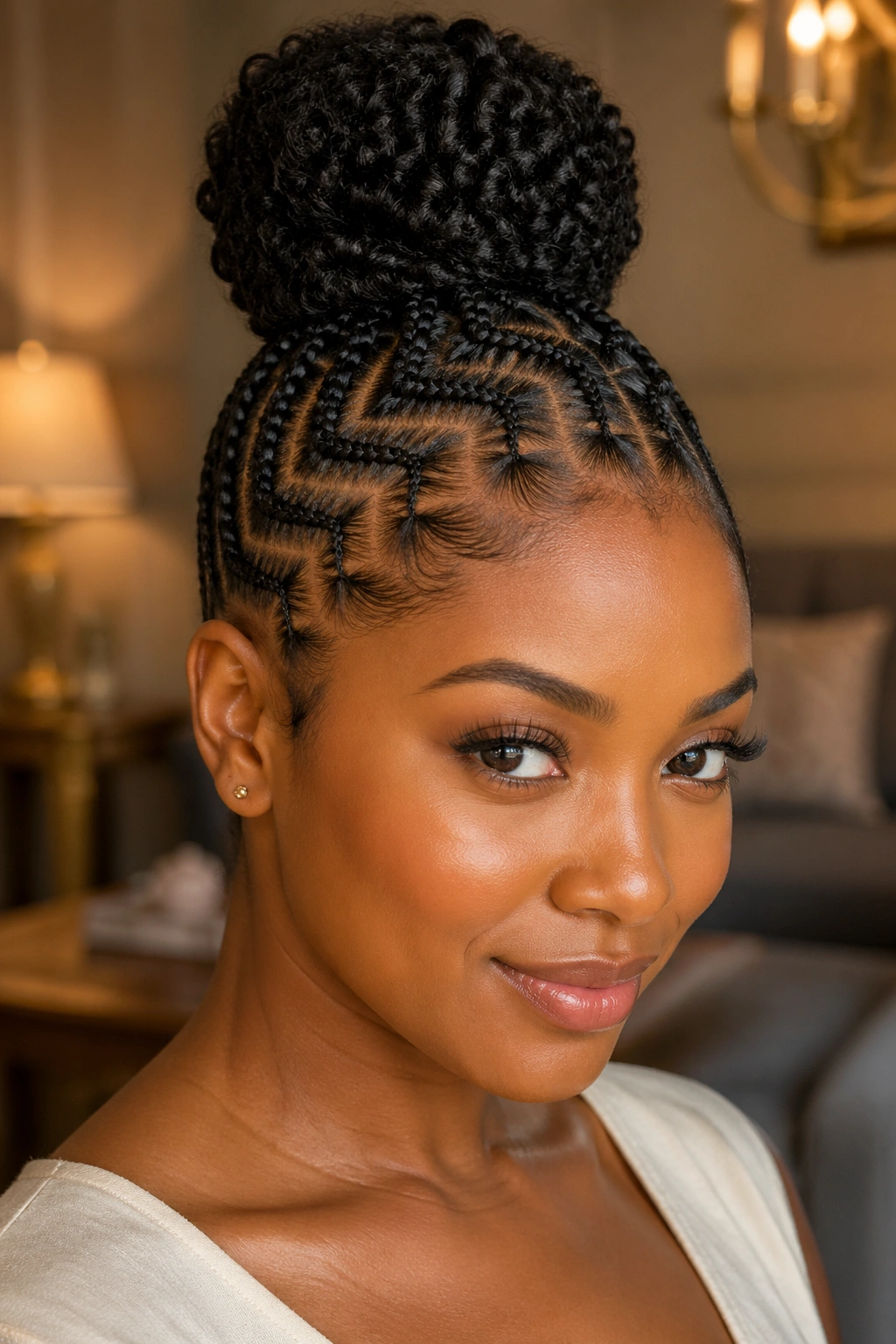
All zigzag rows lead upward to a high bun at the crown. The bun can be your own length or a kanekalon piece for added volume.
The high bun lifts the face. The zigzag parts add design interest below. Together, they read polished and artistic.
Best for events where you want your hair to be a focal point — weddings, photo shoots, special dinners.
4. Zigzag Side Part With Straight Rows on One Side
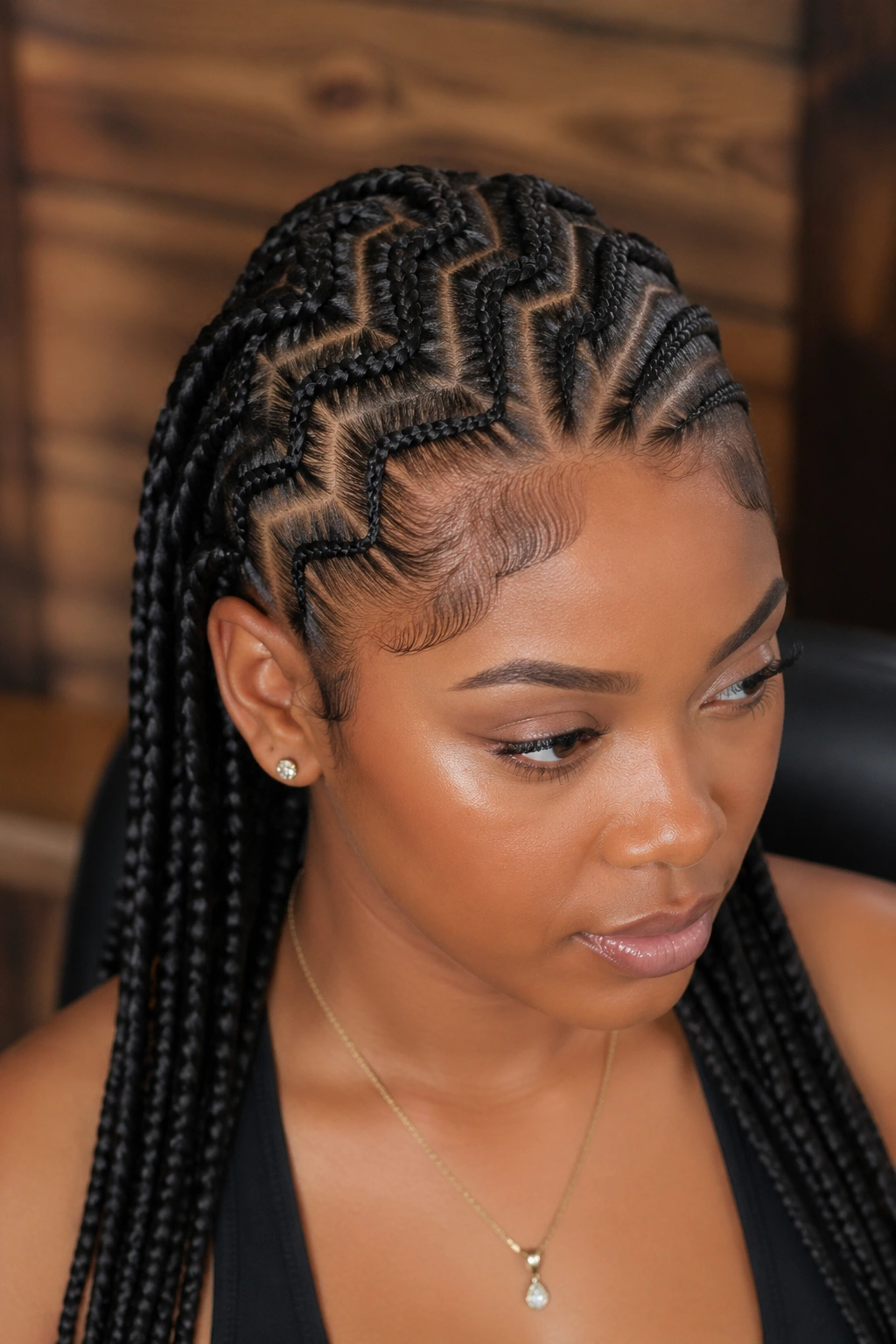
Asymmetric design. One side of the head has standard straight back rows. The other side has zigzag rows. The transition happens at the part line.
The contrast between the two pattern types reads as artistic and intentional. From the front, you see one side at a time, doubling the visual impact.
Hard to install well. Find a braider comfortable with mixed pattern work in a single head.
5. Mini Zigzag All Over
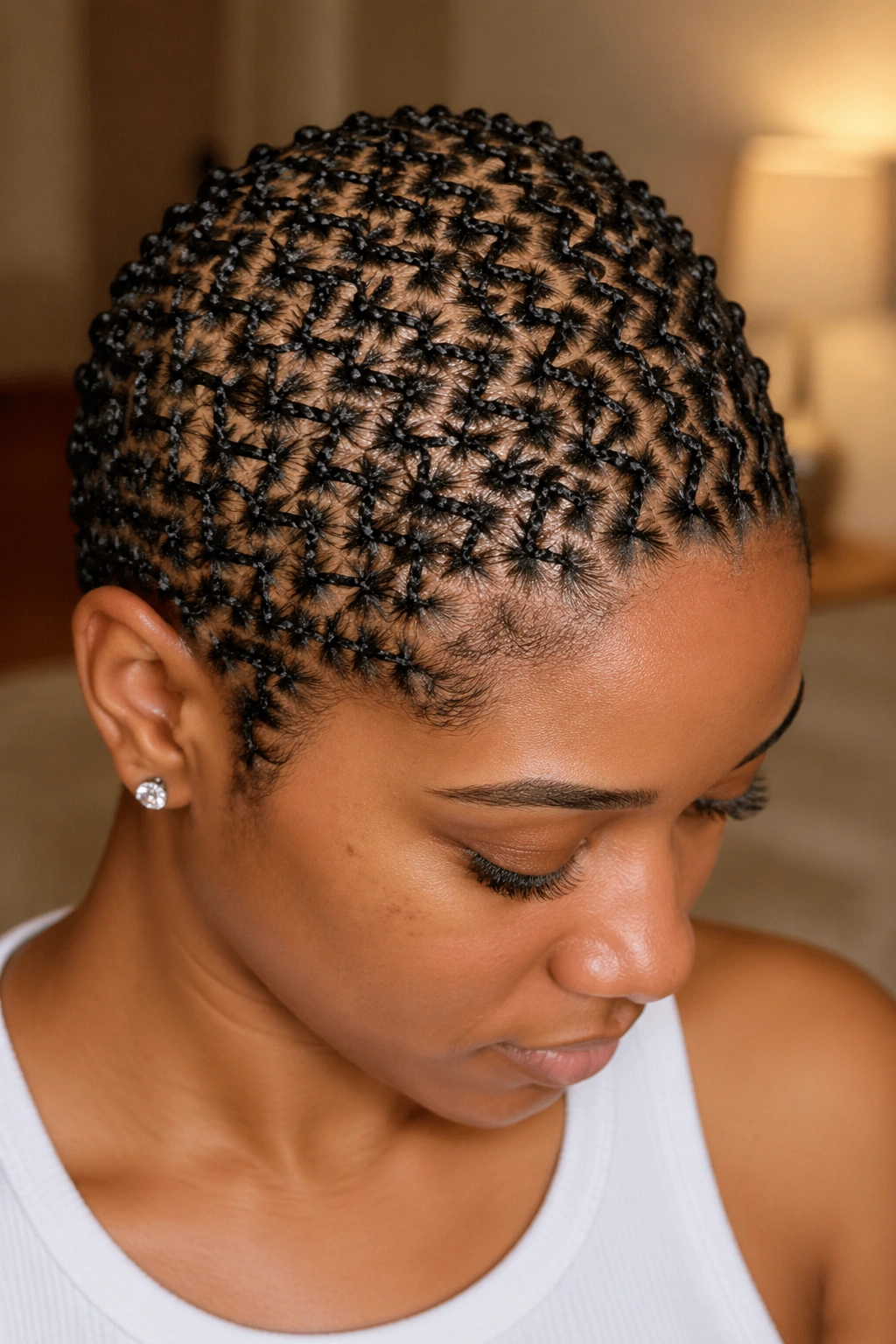
Small, tight zigzag parts across the entire head with thin cornrow rows between them. The result reads as a fully patterned scalp with intricate Z-detail throughout.
Install takes 4-6 hours. Holds 3-4 weeks. Worth the investment for women who love finely detailed work.
The mini scale makes the zigzag pattern read almost like crocheted lace across the scalp.
6. Zigzag Cornrows With Color Block
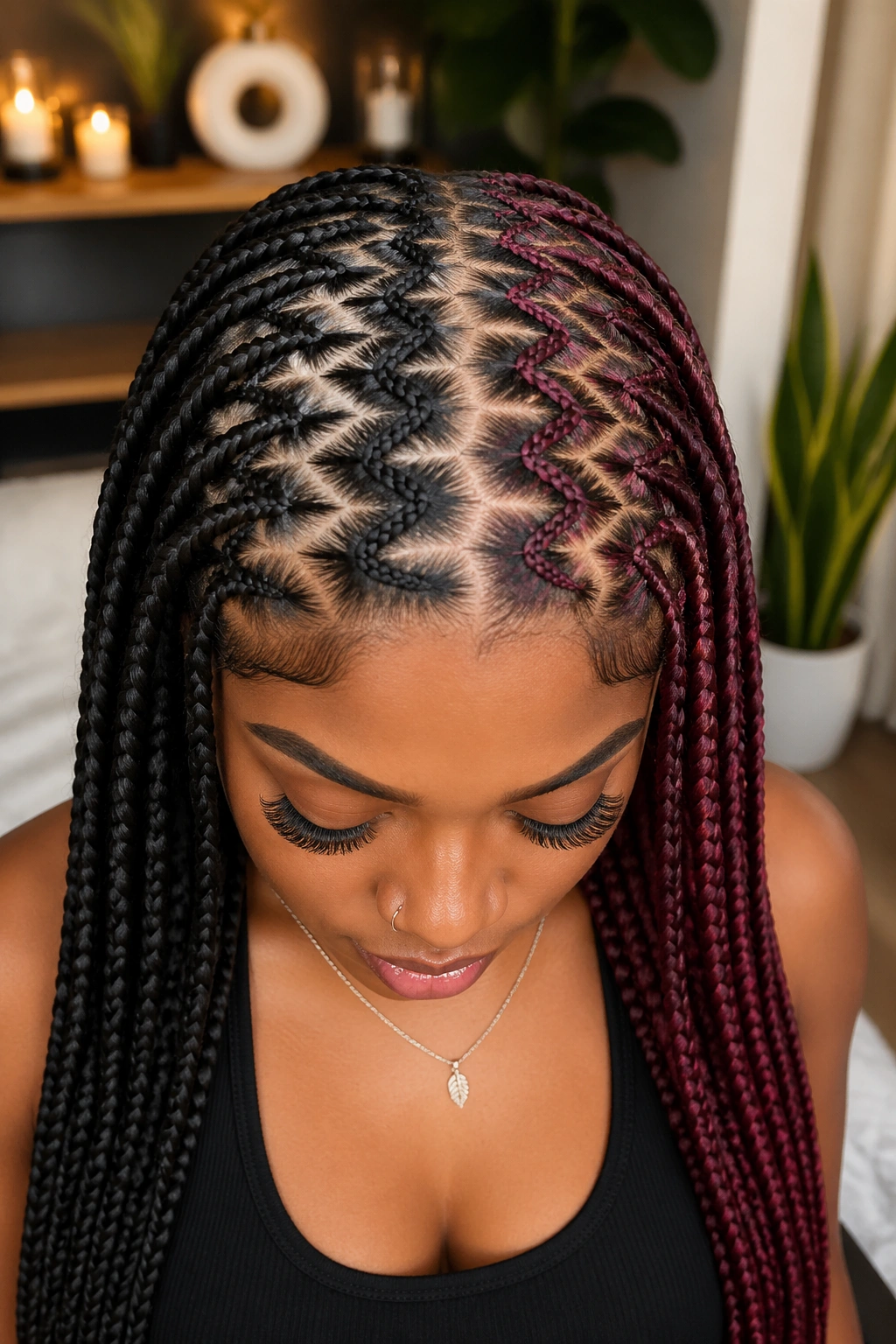
Half the head has natural-color zigzag rows, the other half has colored zigzag rows. The split happens at the center part.
Pre-colored kanekalon makes this possible without dyeing your real hair. Pick contrasting tones — black and burgundy, brown and honey, dark and silver.
The color block emphasizes the zigzag pattern by giving the eye more contrast to follow.
7. Zigzag Cornrows With Heart Detail
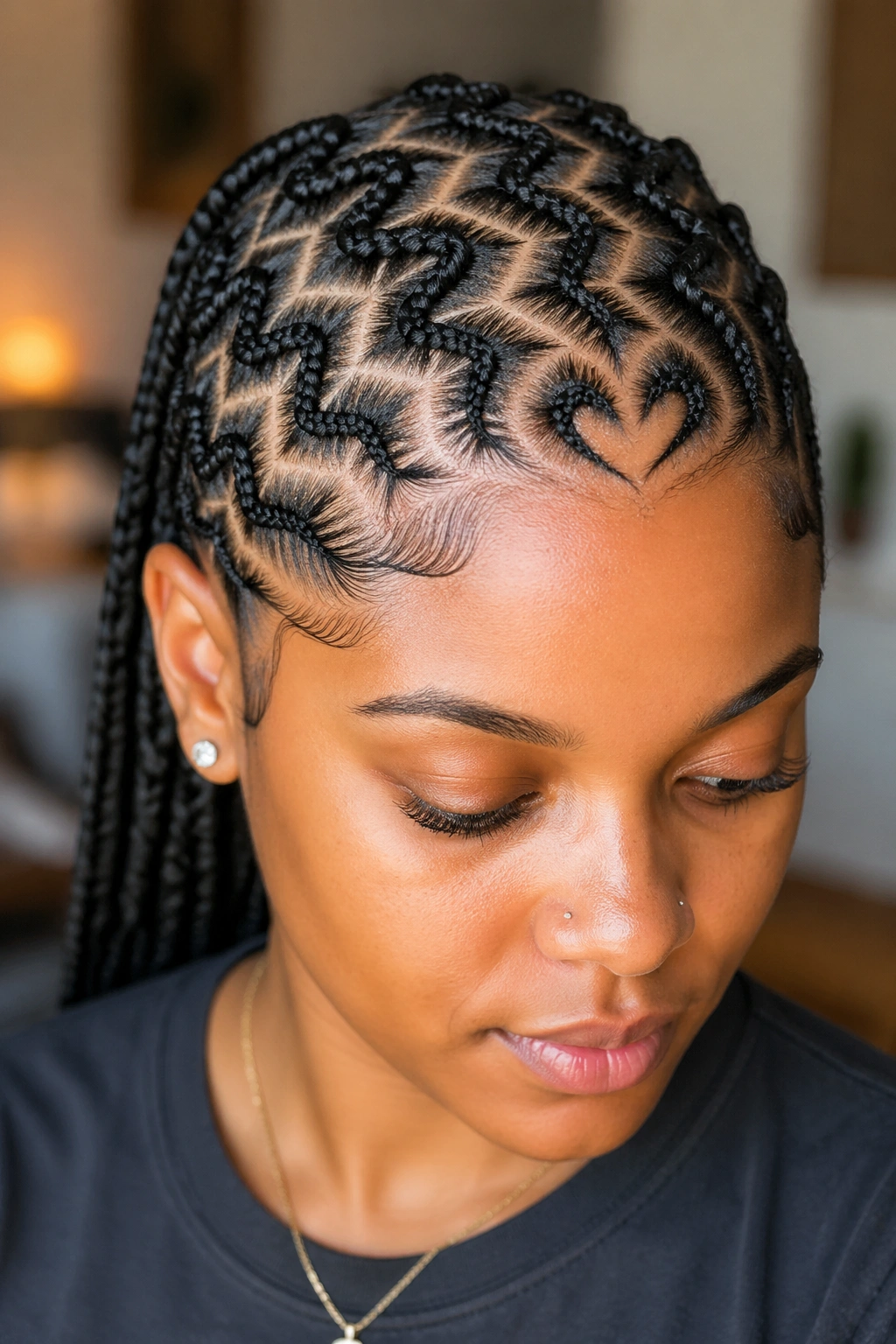
Standard zigzag rows with a heart shape carved into the front hairline using parts. The heart sits above the forehead as a focal point.
The heart adds femininity and personality to the otherwise bold zigzag pattern. Reads soft and intentional simultaneously.
How to Style It
Have your braider mark the heart shape first with a comb. The heart should be slightly larger than feels comfortable — small hearts get lost in the pattern.
8. Diagonal Zigzag Rows
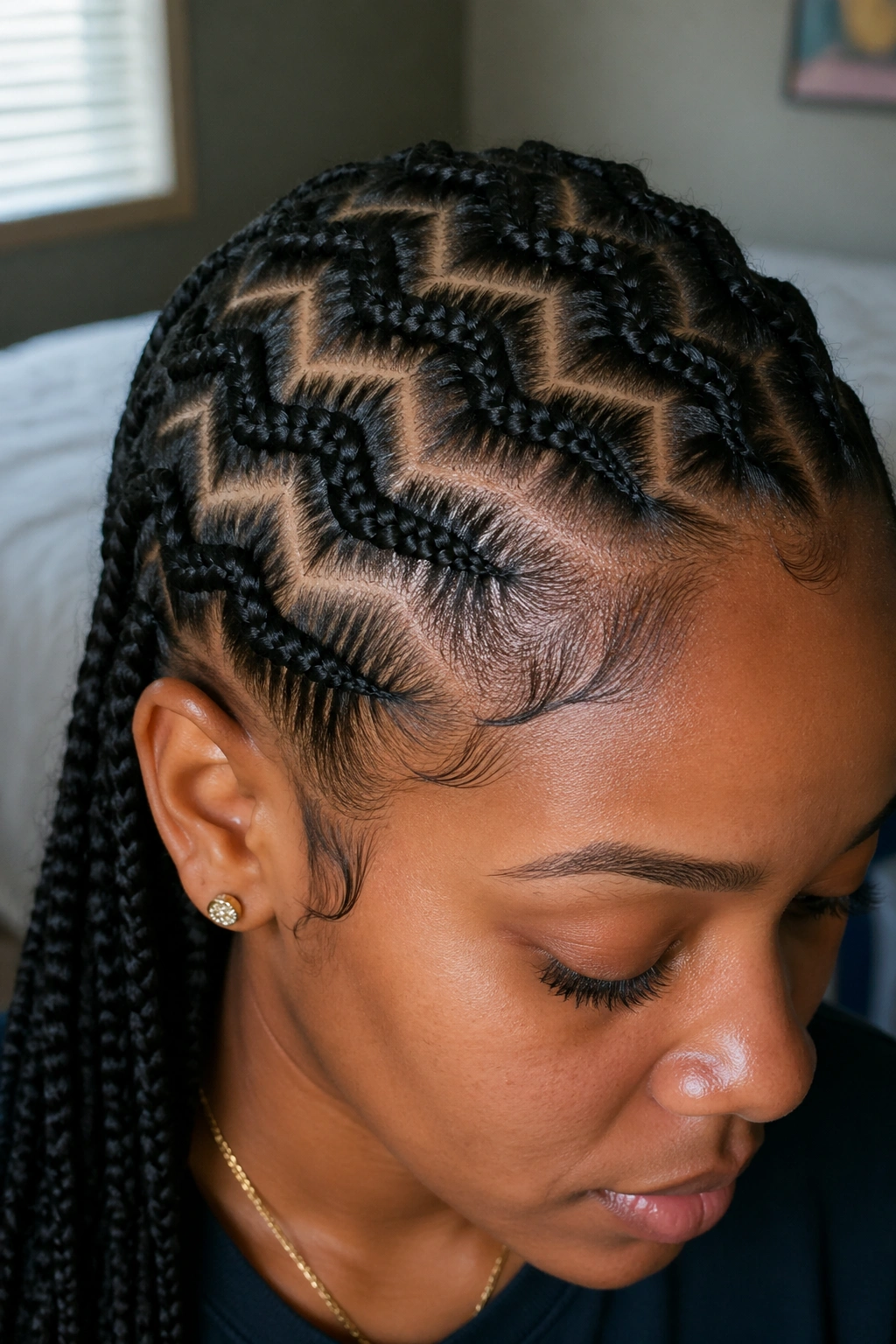
Zigzag rows that travel diagonally across the head rather than straight back. The Z-pattern flows from one corner of the head to the opposite corner.
The diagonal direction adds movement to the already dynamic zigzag pattern. Double the visual interest.
Best on hair with enough length to braid the diagonal path. Short hair won’t have enough material for the angled sections.
9. Zigzag Cornrows Into a Side Bun
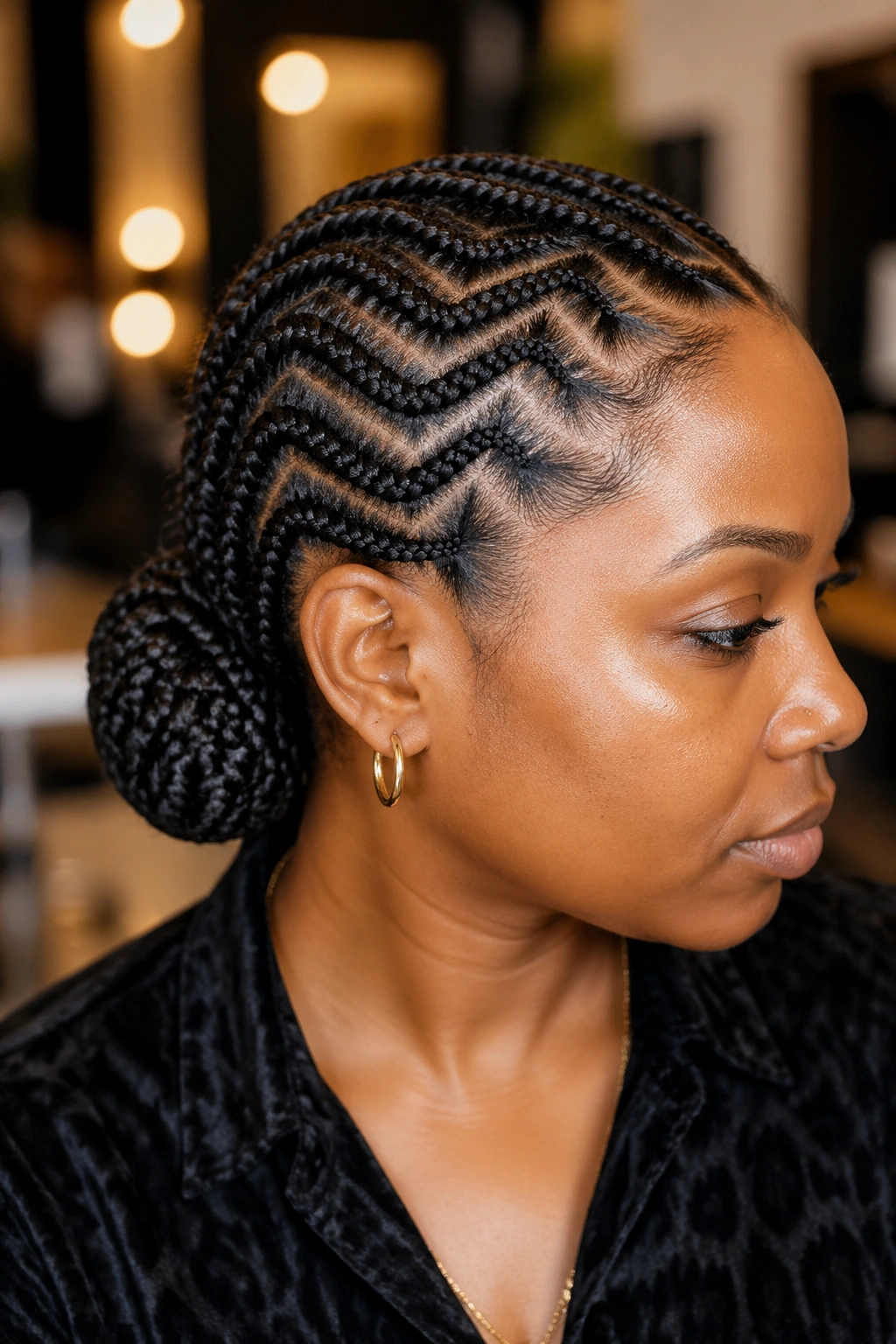
All rows lead to one side, ending in a low side bun behind one ear. The zigzag parts maintain their pattern as they travel diagonally.
The side bun adds romance to the artistic zigzag base. Works for formal events, dinners, and dates.
Pin securely with hair-color-matching bobby pins.
10. Zigzag Cornrows With Cuff Accents
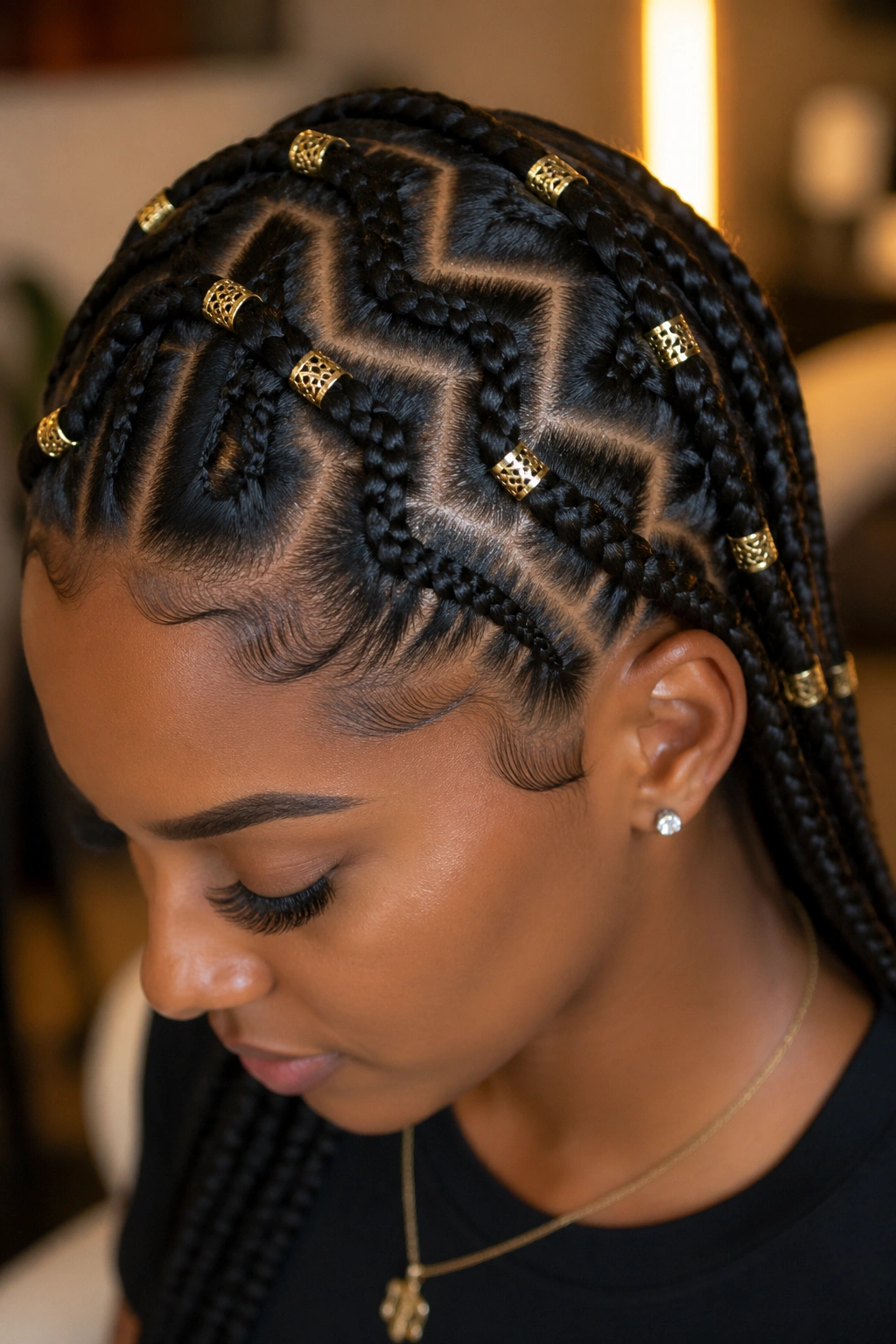
Standard zigzag rows decorated with small metal cuffs along the braid bodies. Gold, silver, brass, or copper cuffs that clip into place.
Cuffs stay where placed, unlike beads that hang freely. That precision lets you create patterns within the zigzag — three cuffs evenly spaced down a single row.
Pick cuff metals that match your jewelry for cohesion.
11. Wide Zigzag With Big Angle Changes
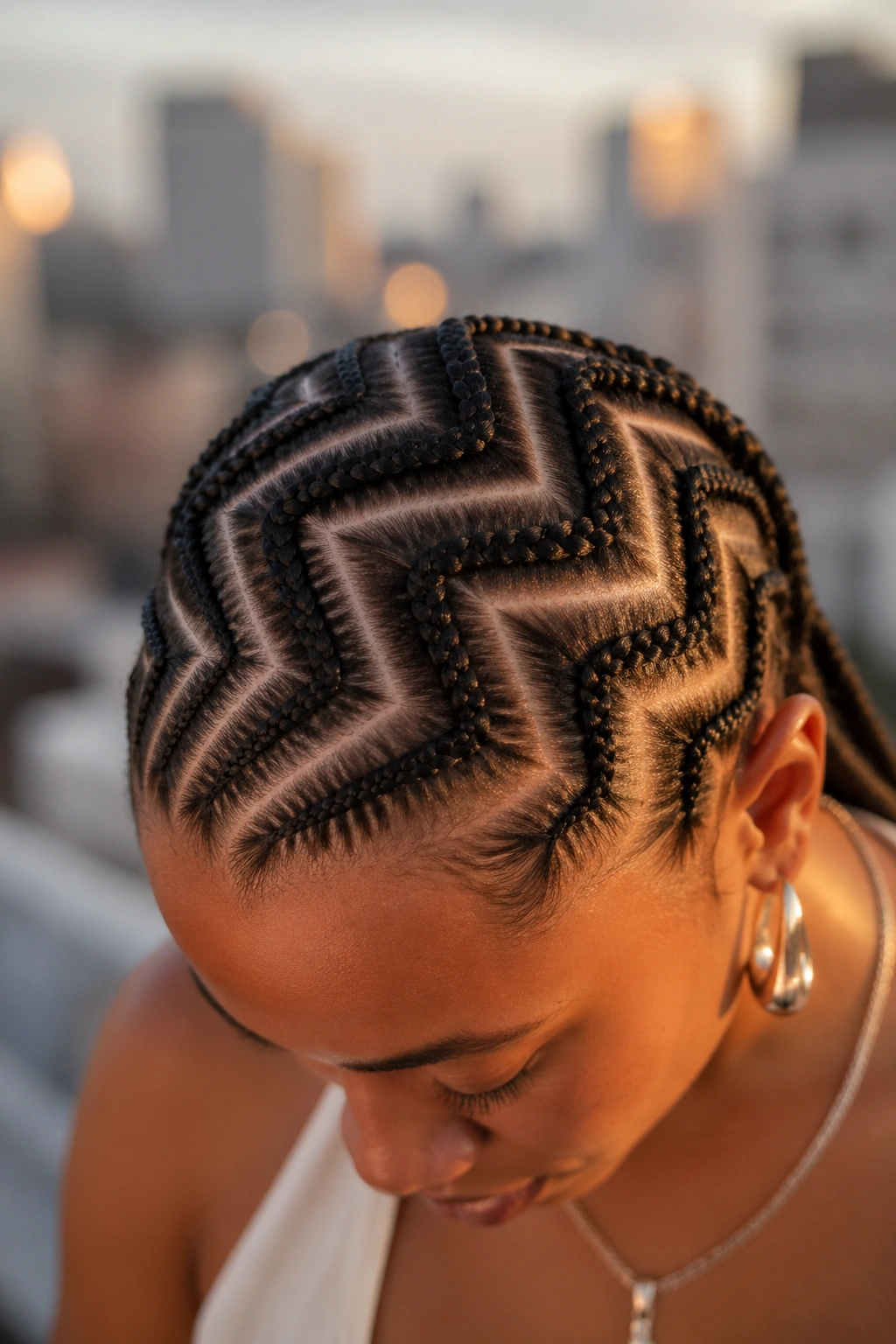
Bold zigzag pattern where each Z-segment is long and the angle changes between segments are dramatic. The pattern reads big and statement-making.
The wide zigzag exposes more scalp than tighter patterns. The visible scalp design becomes a feature rather than just a part line.
Best for women with healthy scalps that won’t be self-conscious about showing more skin.
12. Zigzag Cornrows With Curly Tips
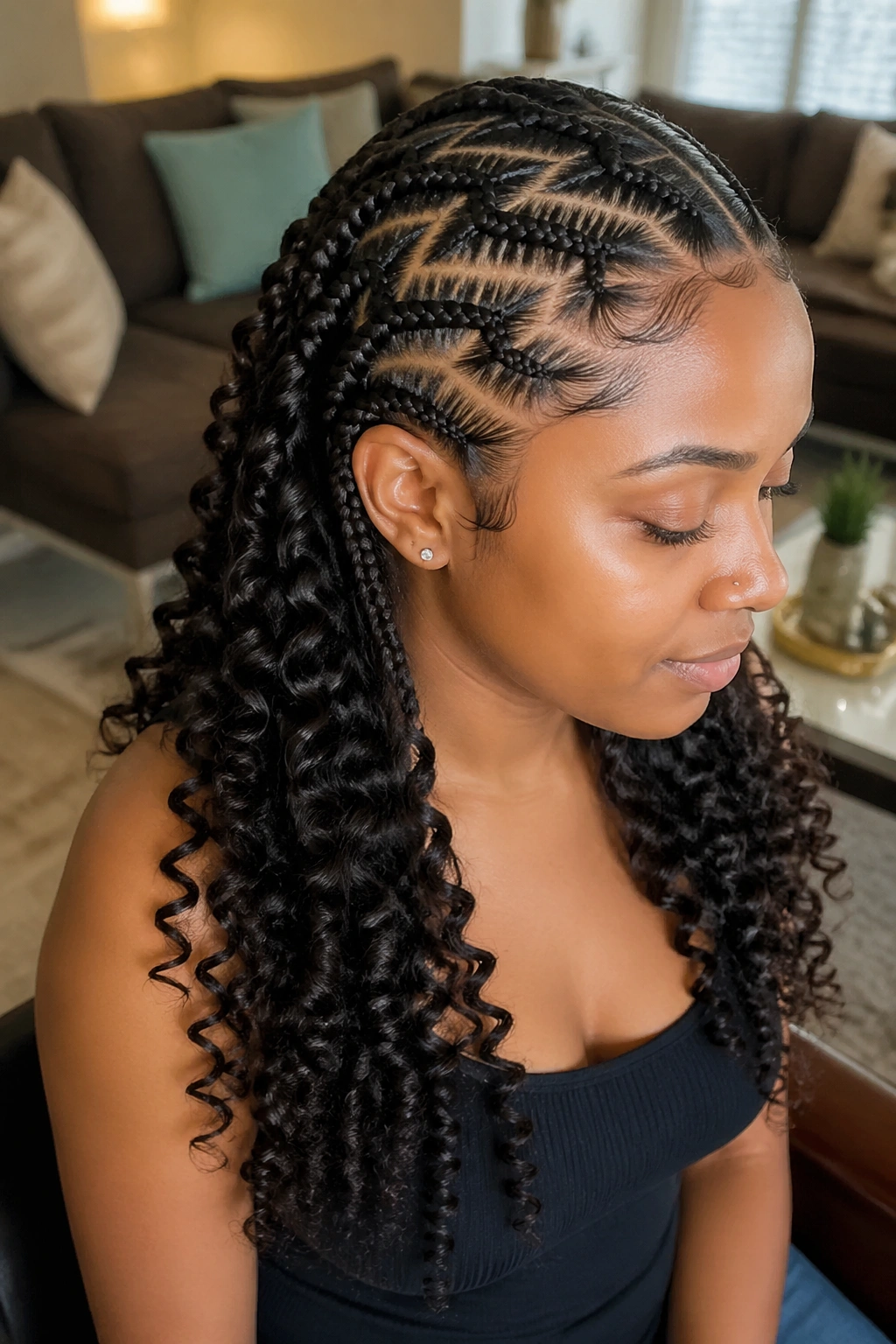
Zigzag rows fed with kanekalon, but the extension tips are pre-curled rather than straight. The combination of jagged scalp pattern and soft curly ends creates contrast.
The curly tips can be loose waves, tight spirals, or beachy curls. Pick based on the vibe you want.
Dip curly ends in warm water to refresh the curl pattern as needed.
13. Zigzag Crown With Straight Back Below
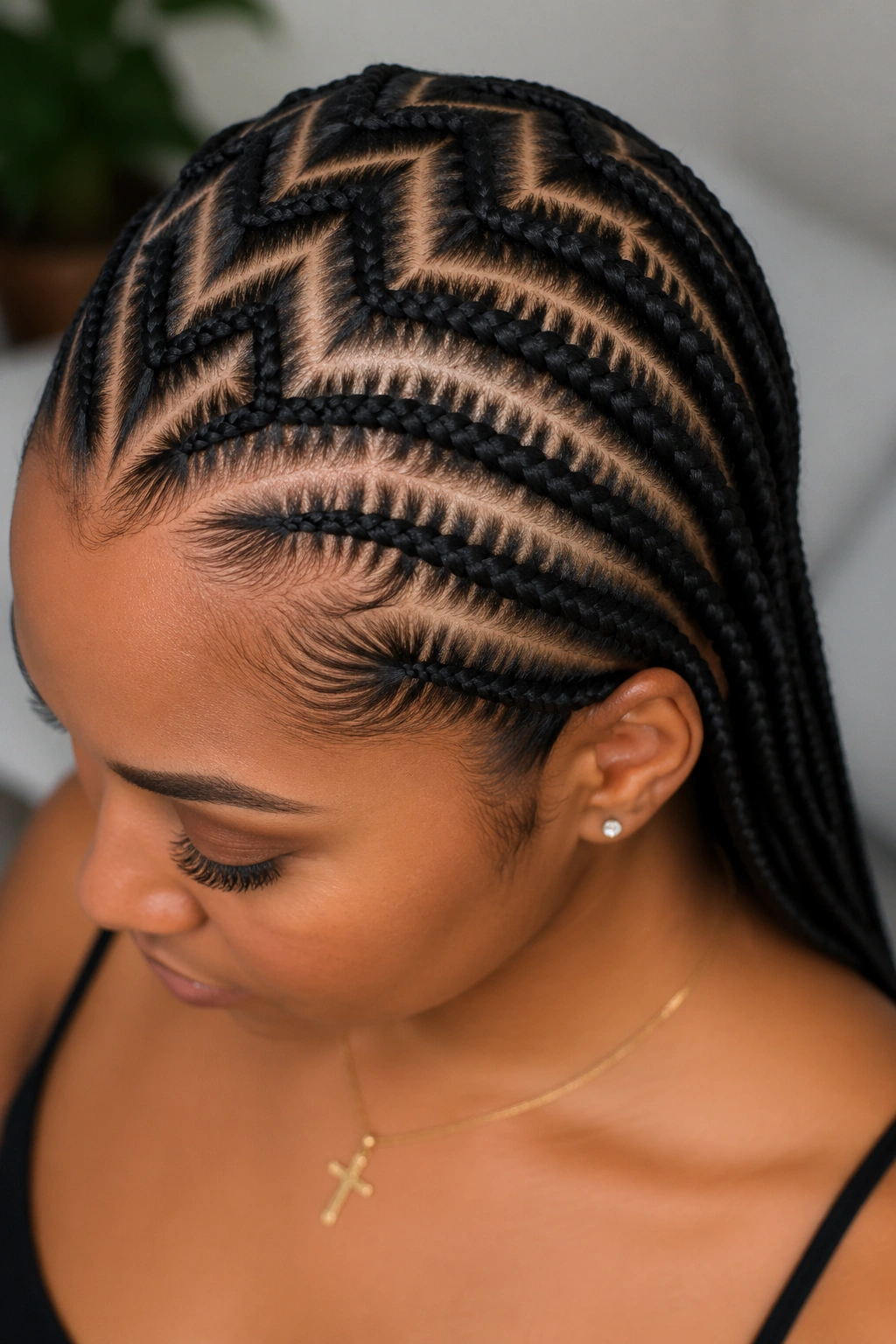
Zigzag pattern only on the crown of the head. Below the crown, standard straight back cornrows take over. The transition happens at the back of the crown.
The mixed pattern reads as intentional design. The crown becomes the artistic focus while the rest stays clean.
Best for women who want zigzag detail without committing to full-head pattern work.
14. Zigzag Cornrows With Cowrie Shells
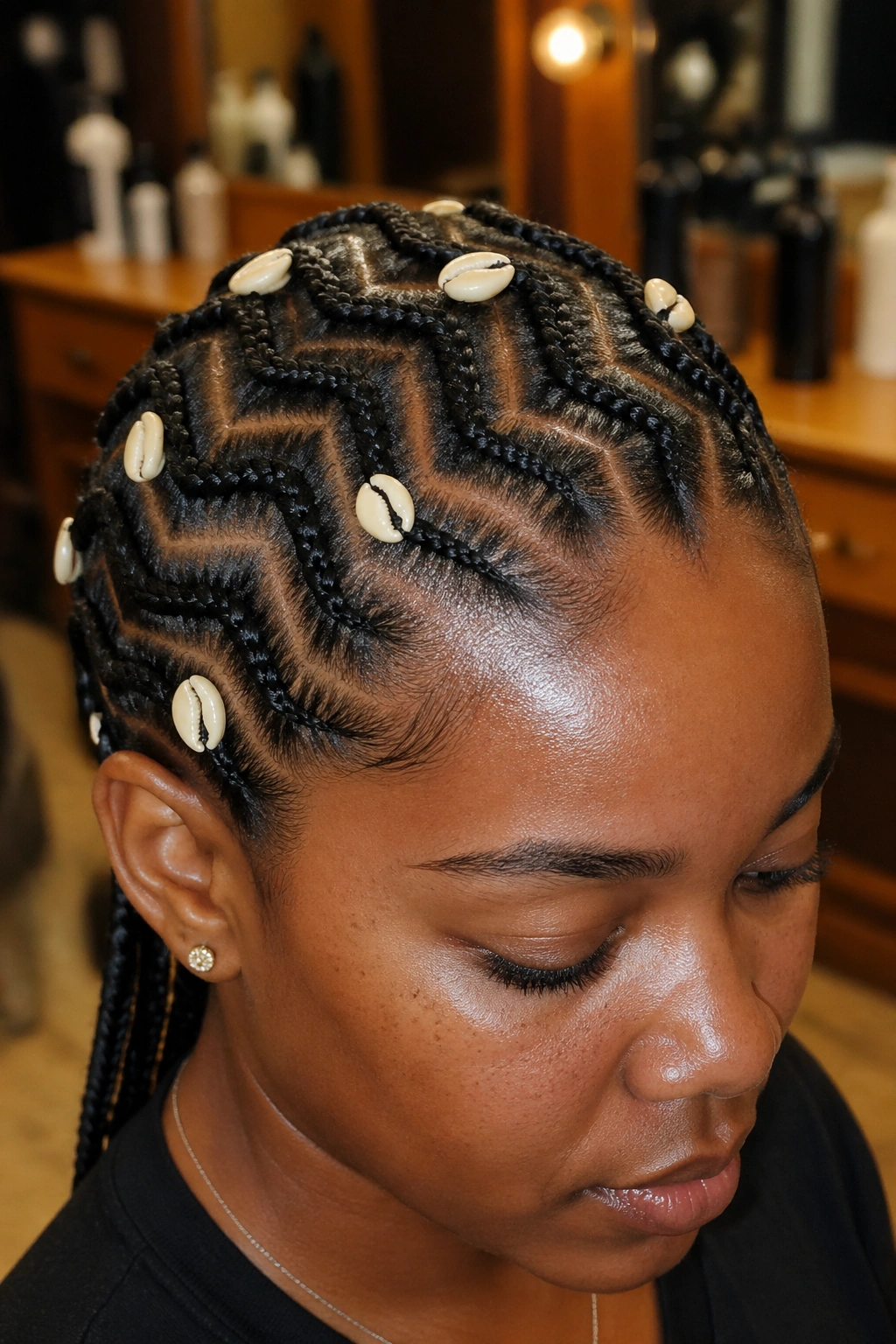
Zigzag rows with cowrie shells woven into the braid bodies. The shells add cultural significance and visual texture to the artistic pattern.
The cowries play well with the zigzag pattern because both elements have cultural roots in West African traditions.
Use real cowries. Plastic versions don’t carry the same weight or hold up as well.
15. Tight Zigzag Mohawk
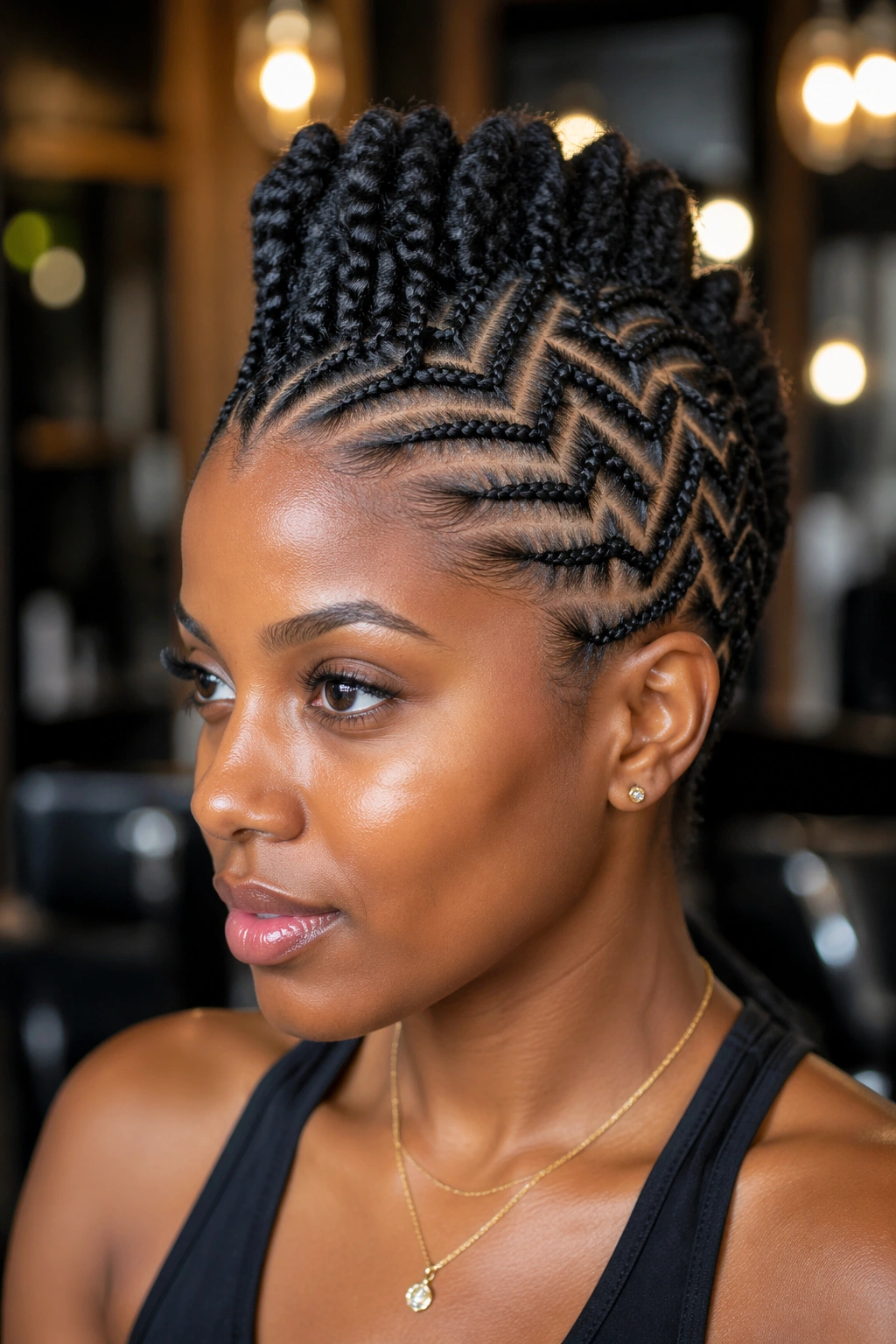
Zigzag pattern on the sides, raised center strip down the middle. The contrast of detailed zigzag sides and a bold center creates a mohawk effect.
Who This Is For
- Women who want edgy with artistic detail
- Anyone comfortable with bold statements
- Those willing to invest in skilled installation
The mohawk shape combined with zigzag parts reads bold-on-bold without being chaotic.
16. Zigzag Cornrows With Front Bangs
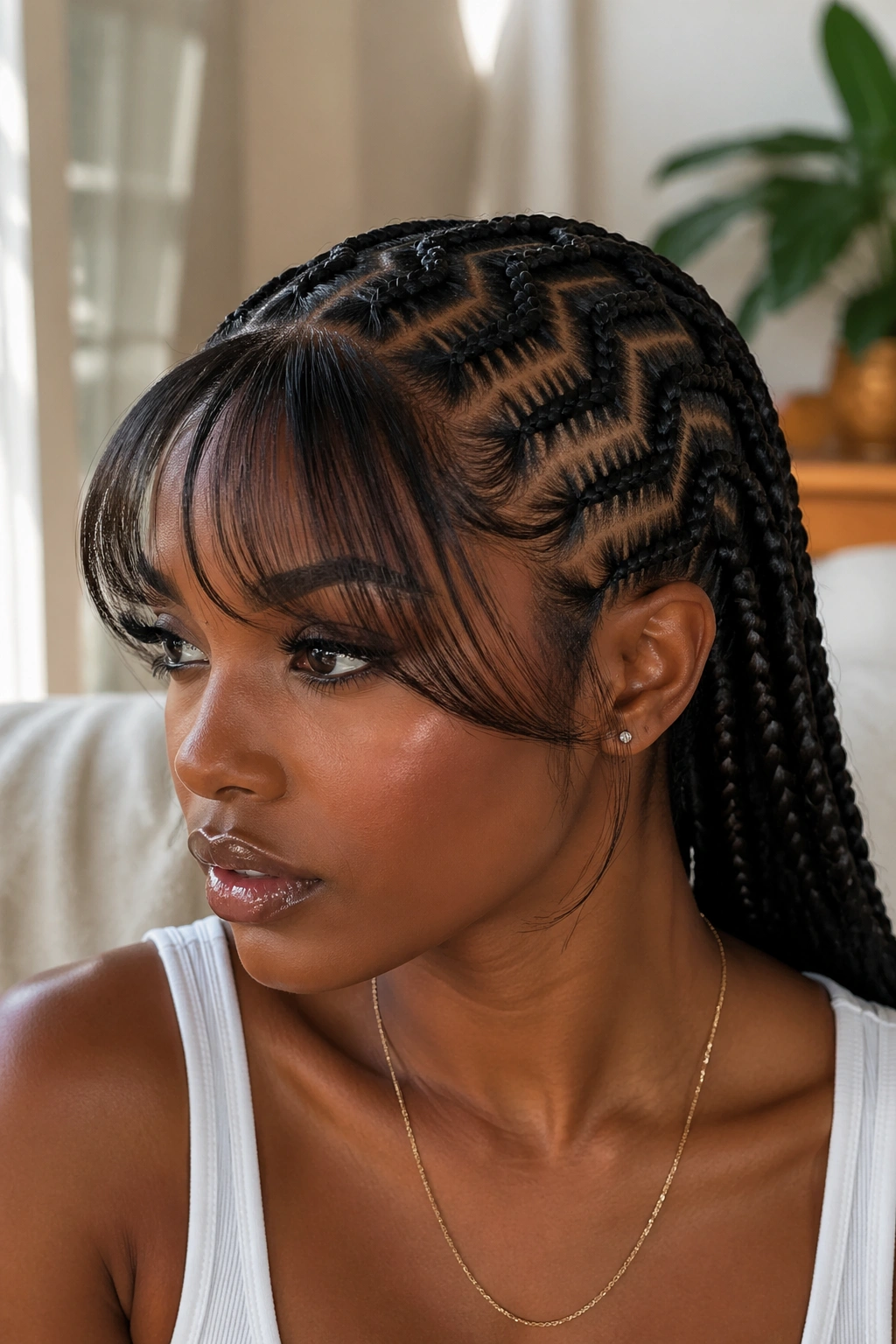
Zigzag rows behind, front section left out as bangs. The bangs can be straight, curly, or swept to one side.
The contrast of jagged scalp pattern and soft front bangs softens the overall look. Best for women who want artistic detail without losing face frame softness.
Keep the bangs hydrated separately. Spray with water and leave-in every few days.
17. Zigzag Cornrows With Decorative Wraps
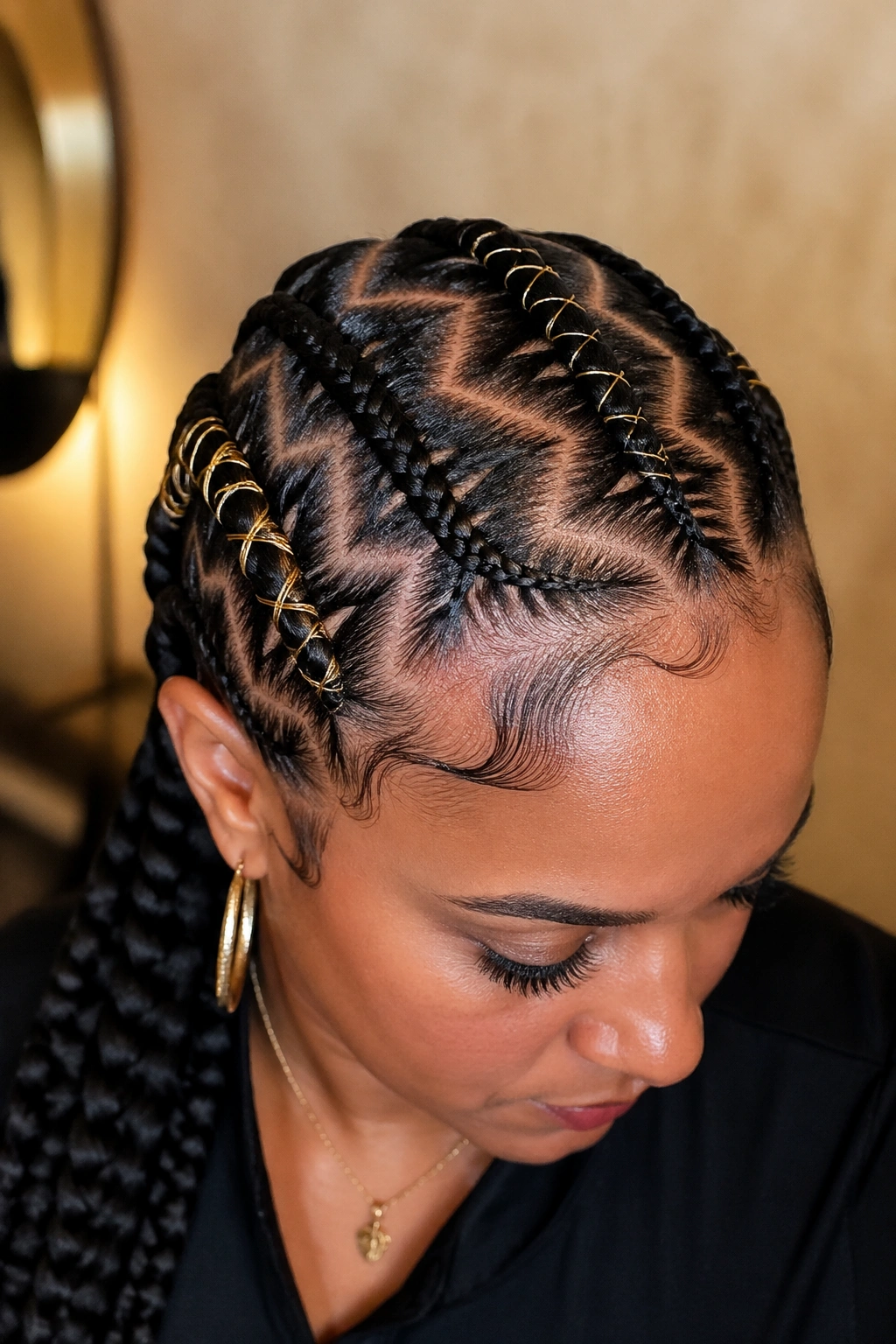
Zigzag rows with select braids wrapped in metallic thread or fabric from root to tip. The wraps add a decorative layer to the pattern work.
Don’t wrap every braid. Two or three strategic wraps read as accent. Wrapping all of them reads costume-y.
Pick wrap colors that contrast with the hair for visibility.
18. Zigzag Cornrows Into Two Buns
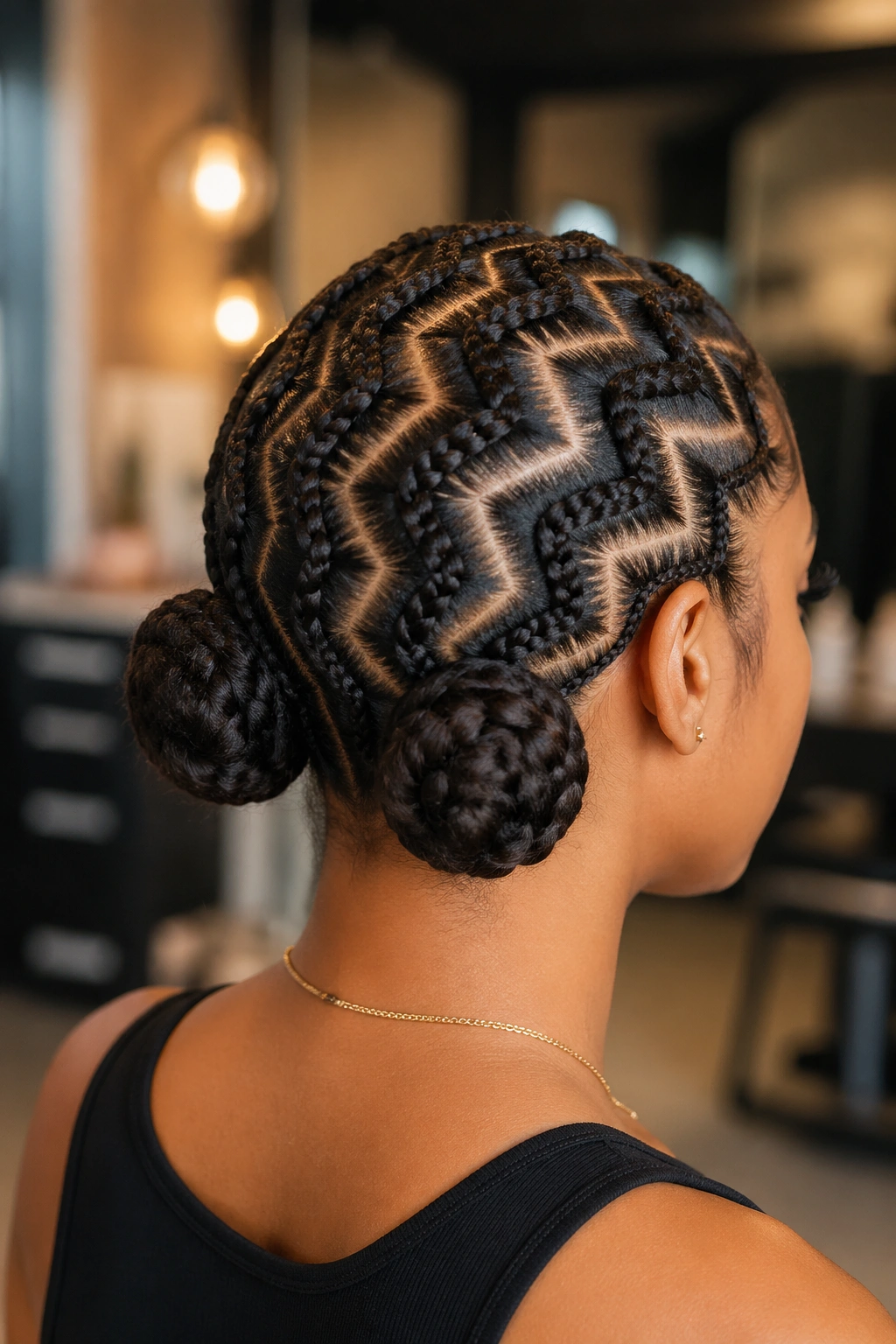
All zigzag rows lead to two buns at the back of the head. The buns sit symmetric and low, framing the back of the neck.
The dual bun finish adds femininity and balance to the bold zigzag pattern.
Best on hair with enough length to fill out two even buns.
19. Mixed Width Zigzag Rows
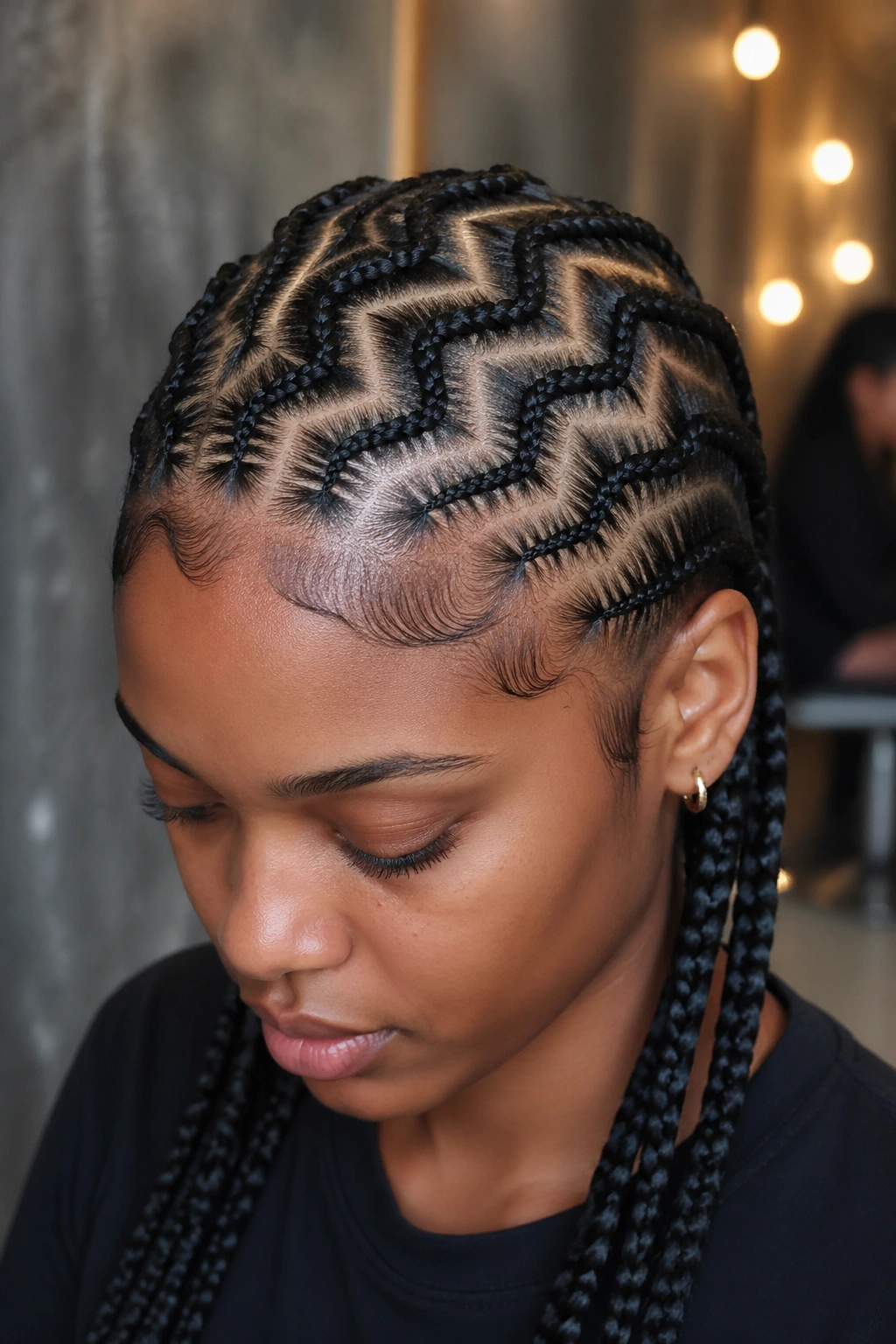
Some zigzag rows thick, others thin, all in the same head. The mixed widths add another layer of design complexity.
Pre-plan the pattern. Random width changes look accidental; planned alternation reads as intentional design.
Best installed by braiders comfortable with multi-width work.
20. Zigzag Cornrows With Hair Charms
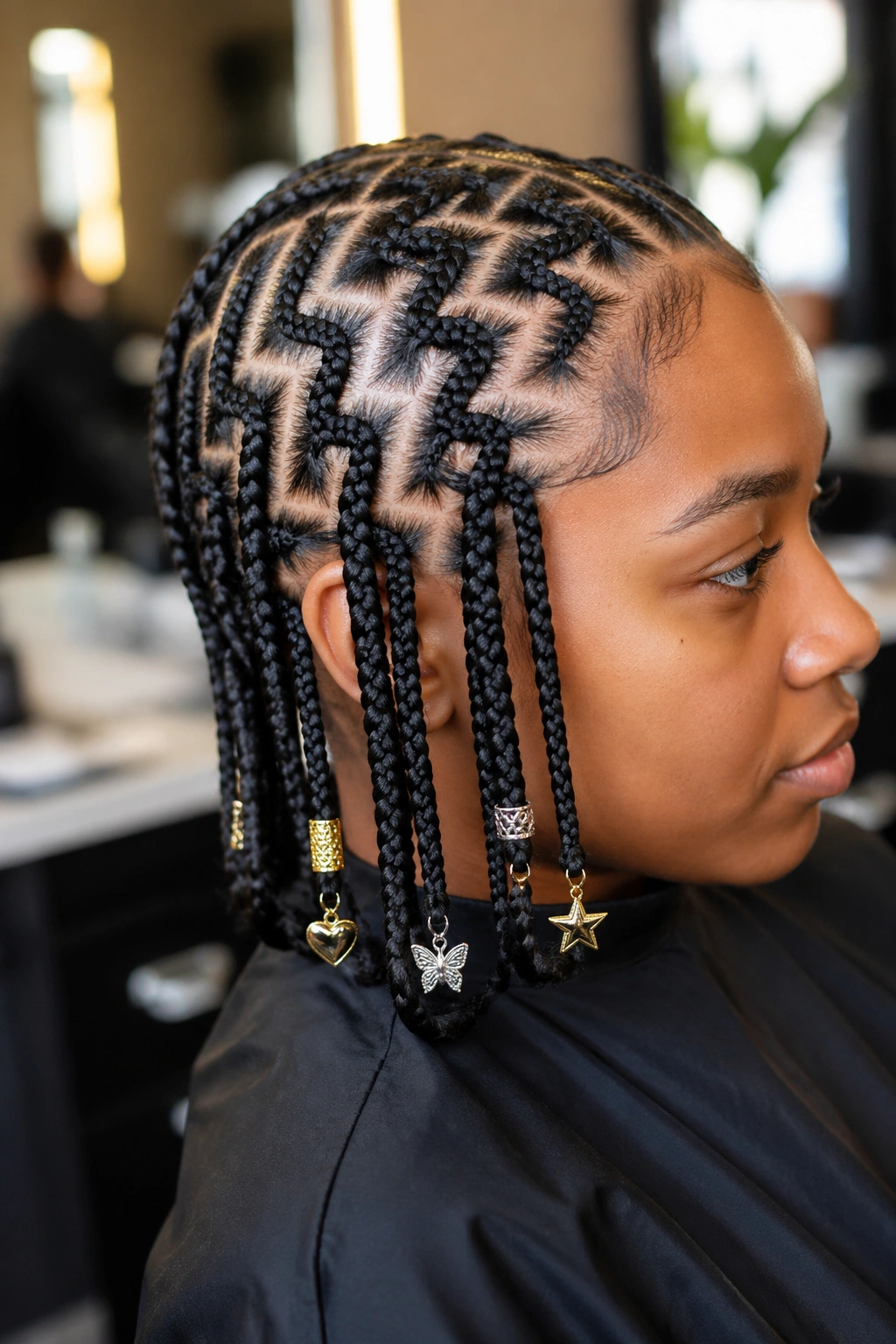
Standard zigzag rows decorated with small gold or silver charms — stars, moons, hearts — clipped onto select braid ends.
The charms add personality without competing with the zigzag pattern. Limit to three to five charms across the whole head.
Pick charms with personal meaning for added depth.
21. Long Zigzag Cornrows With Honey Tips
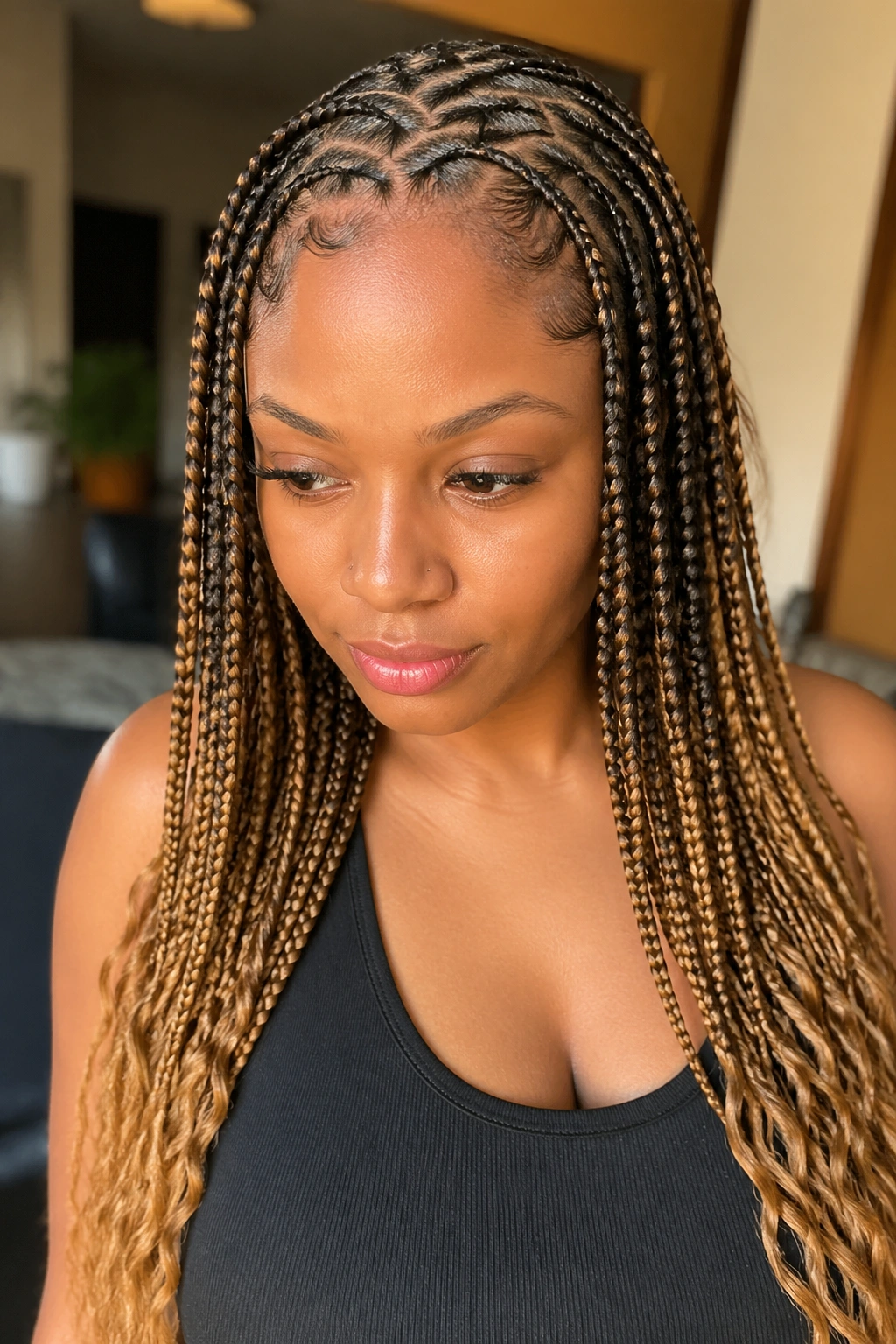
Zigzag rows extended with kanekalon, the tips colored honey blonde or caramel. The color contrast adds warmth to the bold pattern.
Pre-colored ombre kanekalon makes this happen without chemicals on your real hair.
Pair with bronze-toned makeup or warm jewel tones for cohesion.
22. Zigzag Cornrows With Side Shave
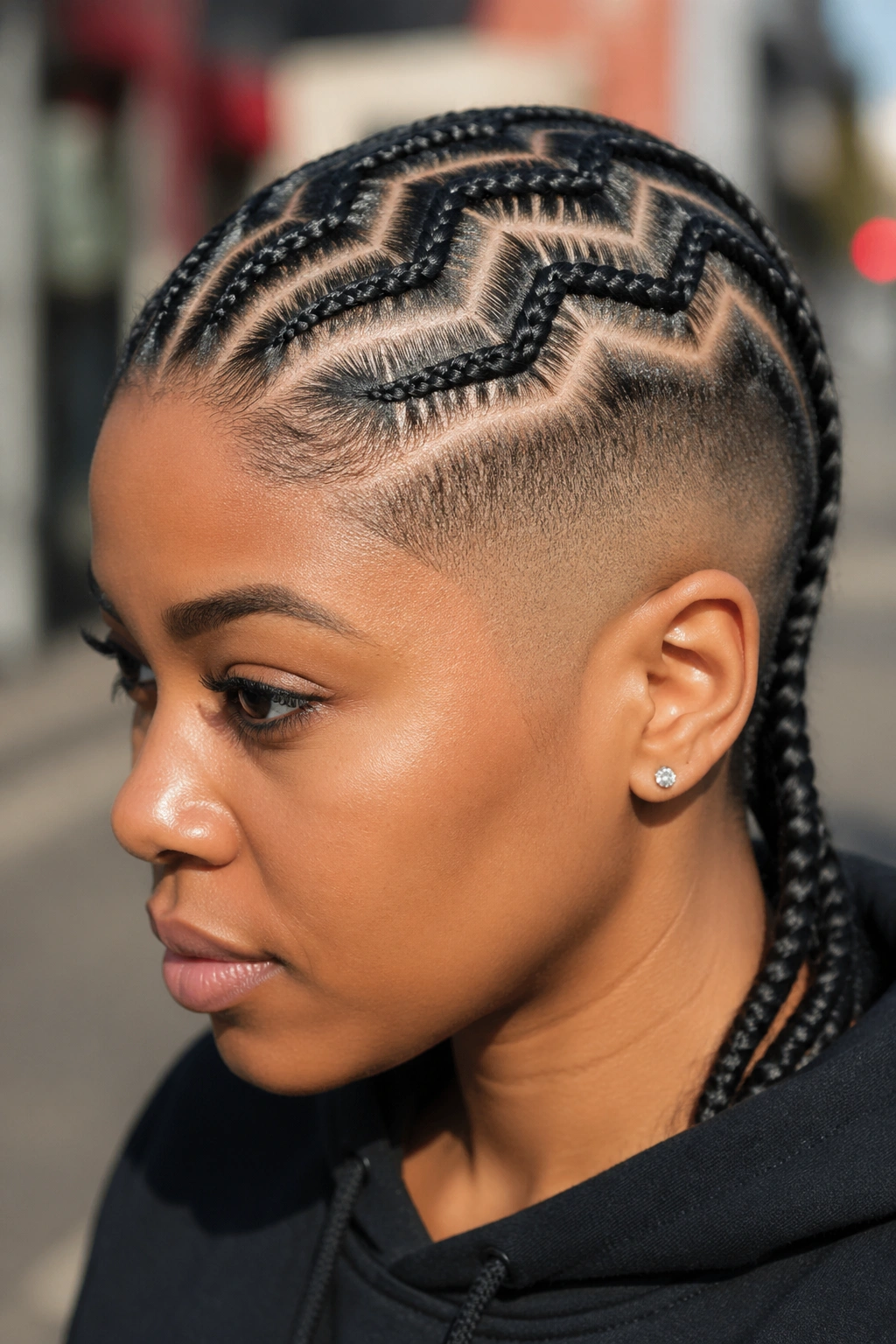
Zigzag rows on top, shaved or faded section on one side. The contrast between detailed pattern and bare skin reads bold and architectural.
The shave needs touch-ups every 1-2 weeks to keep the contrast crisp.
Best for women who already wear shorter sides or are ready for a major commitment.
Maintaining Crisp Zigzag Parts
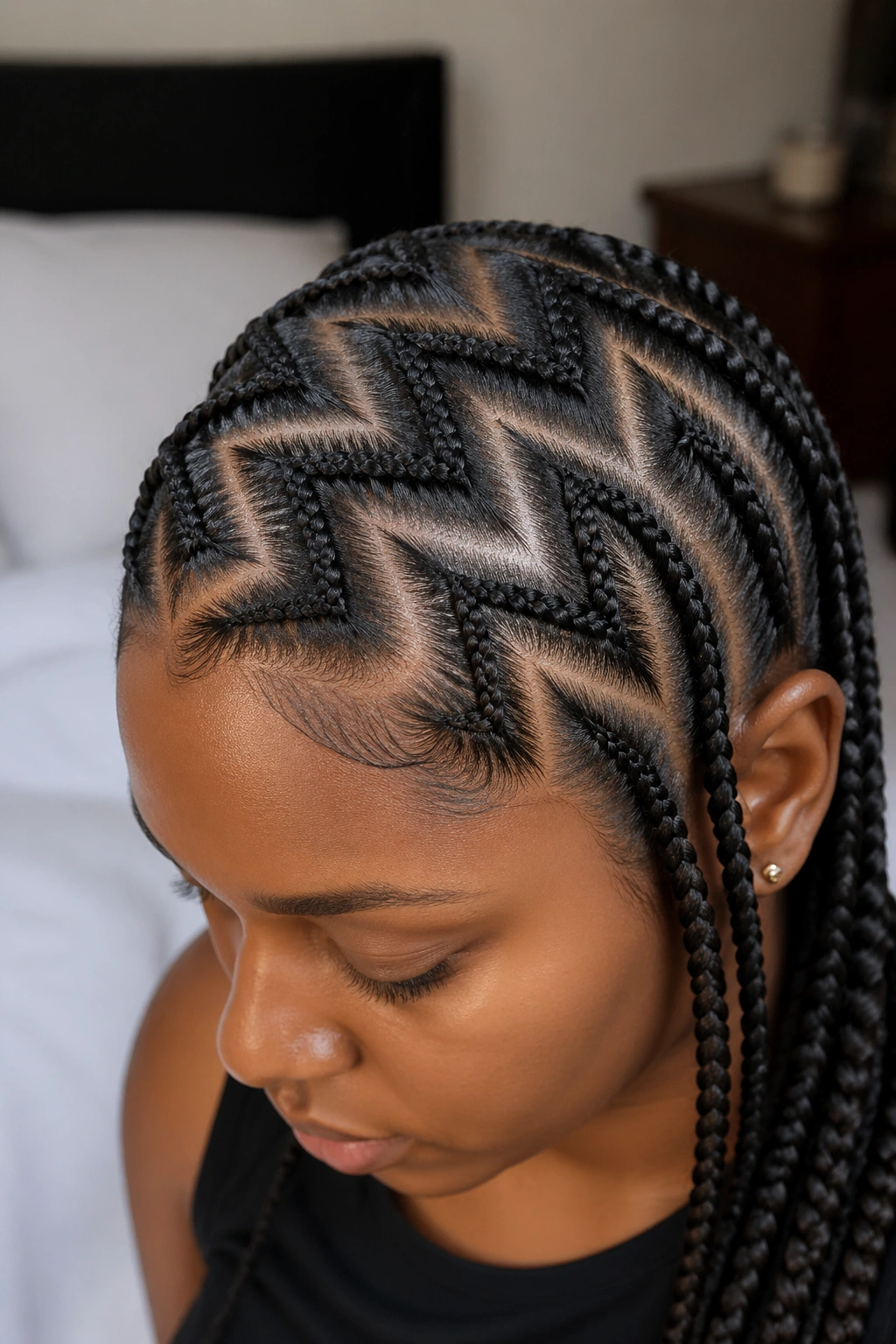
The zigzag parts are the entire point of this style. Maintaining their definition through the wear cycle takes care.
Avoid heavy products that build up along the parts and obscure the Z-pattern. Stick to water-based mists and light oils.
Re-set any flyaways with a small amount of edge gel and a soft toothbrush. Don’t overload — too much gel crusts and dulls the pattern.
Washing Zigzag Cornrows Without Frizz
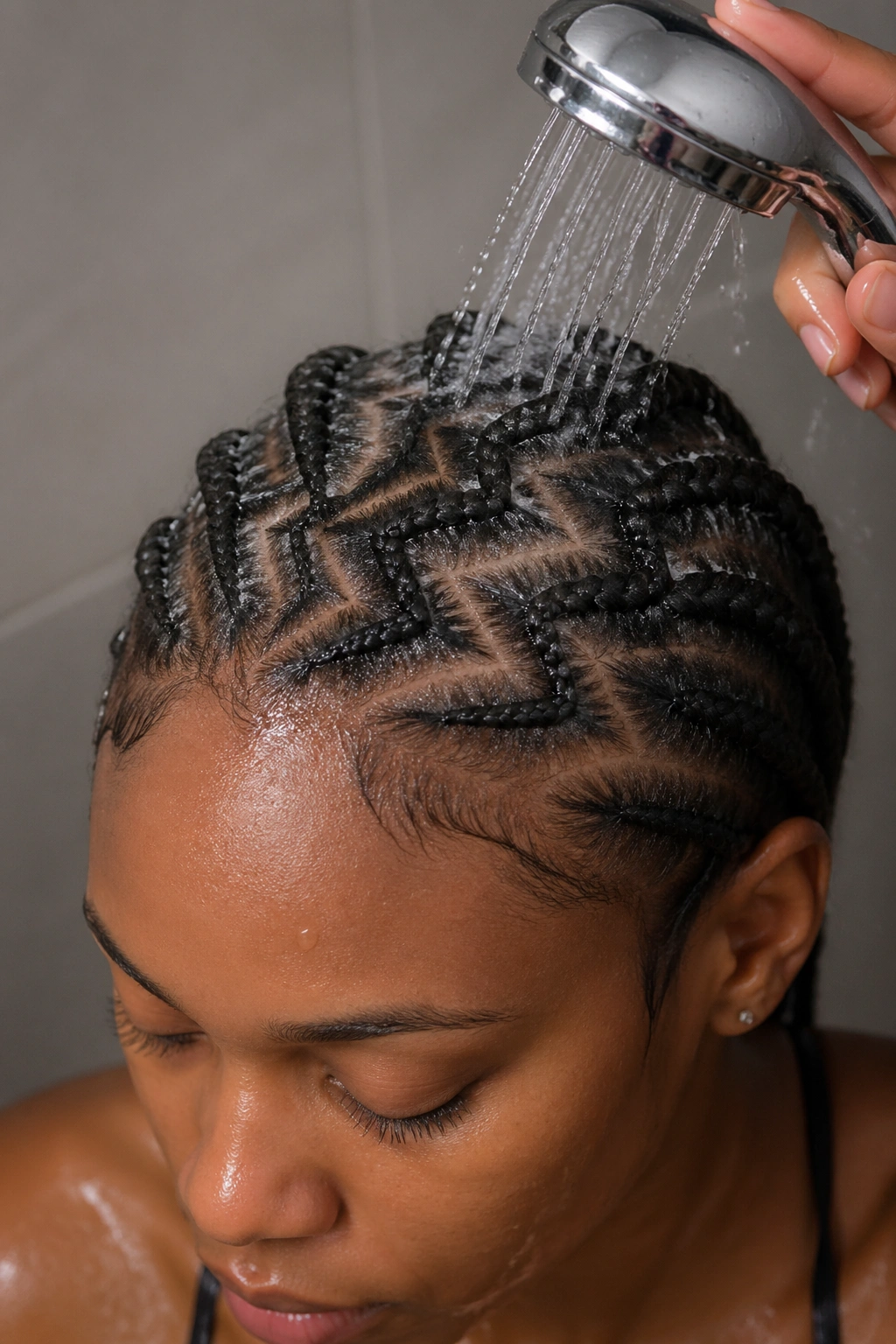
Dilute sulfate-free shampoo with water in a squeeze bottle. Apply along the part lines — being careful not to disturb the zigzag work. Massage gently with fingertips.
Rinse thoroughly with cool water. Air-dry to prevent frizz that would obscure the zigzag pattern.
Frequency: every 7-10 days. The zigzag parts can collect debris if washing is delayed too long.
Sleep Care for Zigzag Patterns
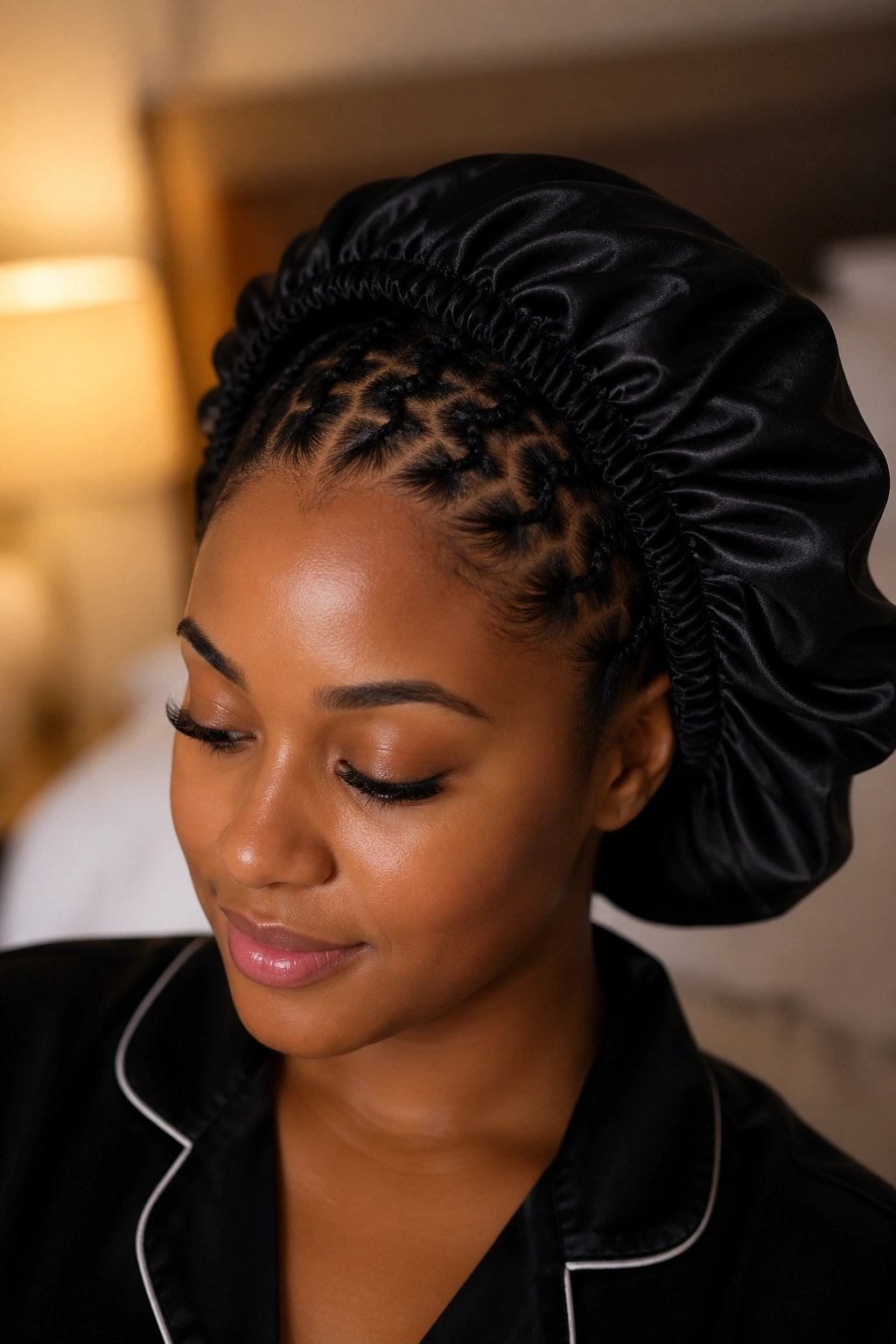
Satin bonnet over the head every night. Tie snug enough to protect the zigzag parts but not so tight it crushes them.
For zigzag styles with high buns or detailed crown work, use a larger bonnet that gives the bun room to sit without compression.
Pillowcase should be silk or satin even with bonnet wear. Backup if the bonnet shifts overnight.
When Zigzag Cornrows Need to Come Down
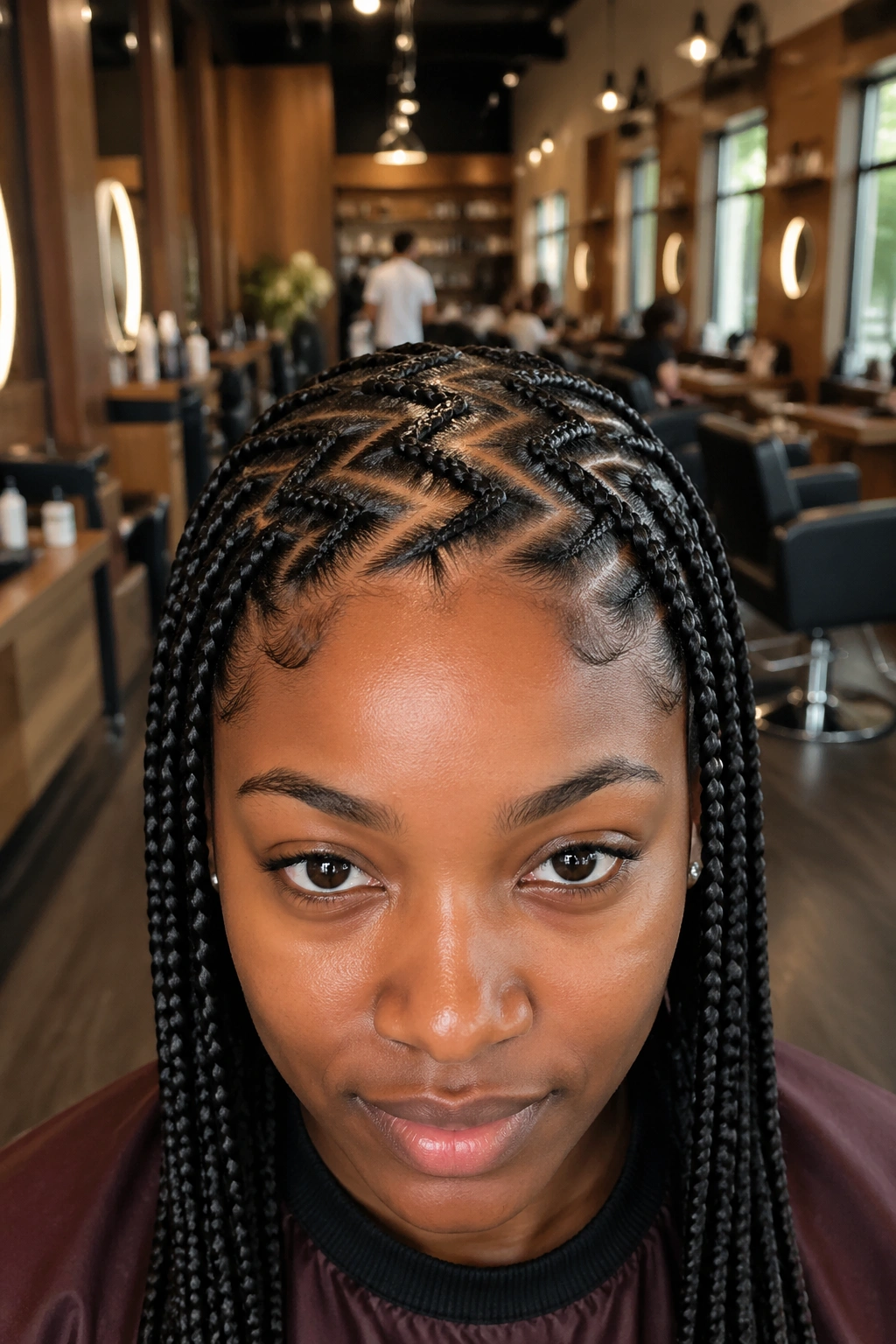
Zigzag patterns lose their crispness over time. Roots grow out, parts fuzz, and the once-clean Z-pattern starts reading wavy rather than zigzagged.
Watch for the breaking point. Some women can stretch zigzag styles to four weeks. Others find them looking tired by week three.
Take them down at the right time. Continuing past the lifespan loses the artistic effect entirely.
Picking Zigzag Styles for Your Lifestyle
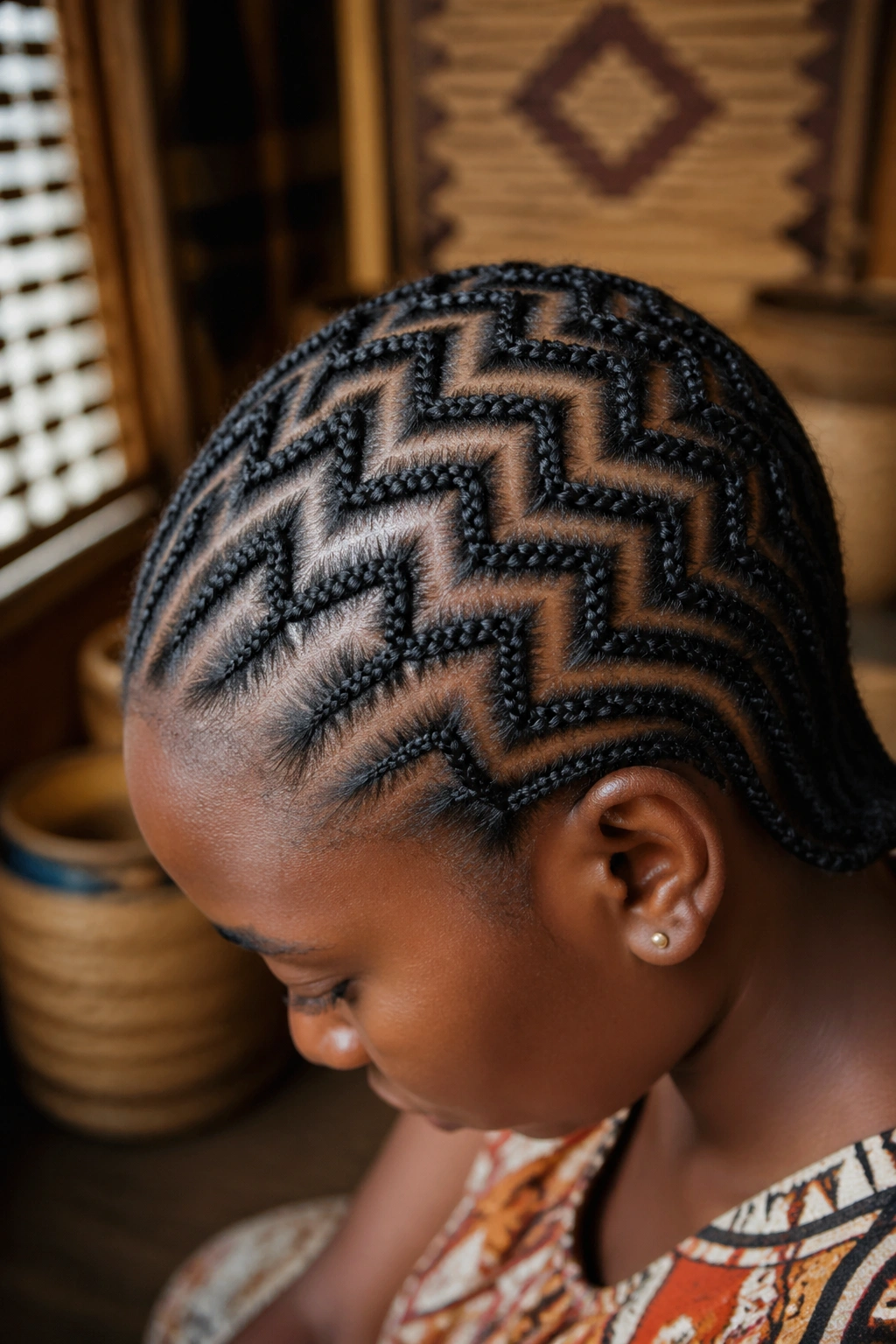
Detailed zigzag styles need preservation. Heavy gym workouts can sweat out the parts and frizz the rows.
Match the style to your week. Office workers and students can wear elaborate zigzag patterns. Daily gym-goers might prefer simpler zigzag bases with less detail work.
Consider how often you’ll be in the gym, in the rain, or out swimming. Match the style’s complexity to the maintenance you can commit to.