


Small cornrows paired with box braids give you the best of two worlds. The cornrows handle the front section with sleek, scalp-hugging structure. The box braids take over from a defined transition point and give you length, movement, and the freedom to style the loose braid section however you want.
This combination has been around for a long time, but the techniques have refined steadily. The transition between cornrow and box braid used to be clunky — a visible bump where the styles met. Modern execution hides that transition almost completely, so the style reads as a single continuous look rather than two separate techniques stitched together.
Small cornrows specifically refer to thin braids — around 1/4 to 1/2 inch wide at the base. They’re more time-intensive than larger cornrows but offer better longevity and a more refined finish. When paired with box braids, the small scale of the cornrows complements the medium-to-large diameter of the boxes nicely.
I’ve worn this combination through long stretches of work travel, photoshoots, and just normal daily life. The 22 versions below represent the spread of what’s possible — from minimal cornrow sections paired with full box braid mass, to extensive cornrow patterns that flow into shorter box braid lengths.
Why This Combination Works So Well
The cornrow-to-box-braid transition solves several styling problems at once. Front cornrows keep your hairline neat and prevent the loose braid mass from pulling on edges. Back box braids give you length and styling versatility — you can wear them up, down, half-up, in a ponytail, anything.
The protective value is high. Both halves of the style protect your hair from manipulation. The cornrow front prevents fly-aways at the hairline; the box braids keep your ends tucked and secure for weeks at a time.
The look reads polished and intentional. Loose braids alone can feel casual; pure cornrows can feel restrictive. The hybrid lands in the sweet spot — structured enough for professional environments, soft enough for casual wear.
Picking Cornrow and Box Braid Sizes
Small cornrows typically run 1/4 to 1/2 inch wide. The smaller end suits short installs (under three weeks) where intricate detail matters most. The larger end suits longer wear (four-plus weeks) where the cornrows need to hold up over time.
Box braid sizes range from micro (3 mm) to jumbo (over 1 inch). For pairing with small cornrows, medium box braids — about 1/2 inch in diameter — strike the best visual balance. Micro box braids look too matched to the small cornrows; jumbo box braids overwhelm the cornrow front.
Match the small cornrow scale to your face proportions. Smaller faces suit smaller cornrows; larger or fuller faces can carry slightly larger ones without the cornrows getting lost.
Prep for Combined Styles
Wash and deep condition thoroughly. Combined styles take 8-10 hours to install, and you don’t want to skip prep steps that compromise the foundation.
Clarify if you have product buildup. Combined installs sit on the scalp for weeks, and any buildup at the scalp creates itch and flaking that’s harder to address once braids are in.
Detangle ruthlessly. Any matting or tangling will translate into trouble at the cornrow base or at the cornrow-to-box transition point.
Stretch the hair fully. Tension drying or banding is the right approach. Heat-stretching with a flat iron weakens the hair shaft and isn’t recommended for protective installs.
The Cornrow-to-Box Transition Done Right
The transition between cornrow and box braid is where this style succeeds or fails. A clean transition has the box braid emerging from the cornrow’s end without an obvious connection bump.
Technique: as the cornrow approaches its endpoint, the braider stops feeding in additional cornrow hair and instead introduces the box braid as a continuation. The box braid uses the same kanekalon as the cornrow but is braided with the box braid technique (three-strand without the under-and-over weaving) from that point forward.
The transition point should fall at the same horizontal level across all cornrows that feed into box braids. Inconsistent transition heights make the style look uneven.
Tools and Setup
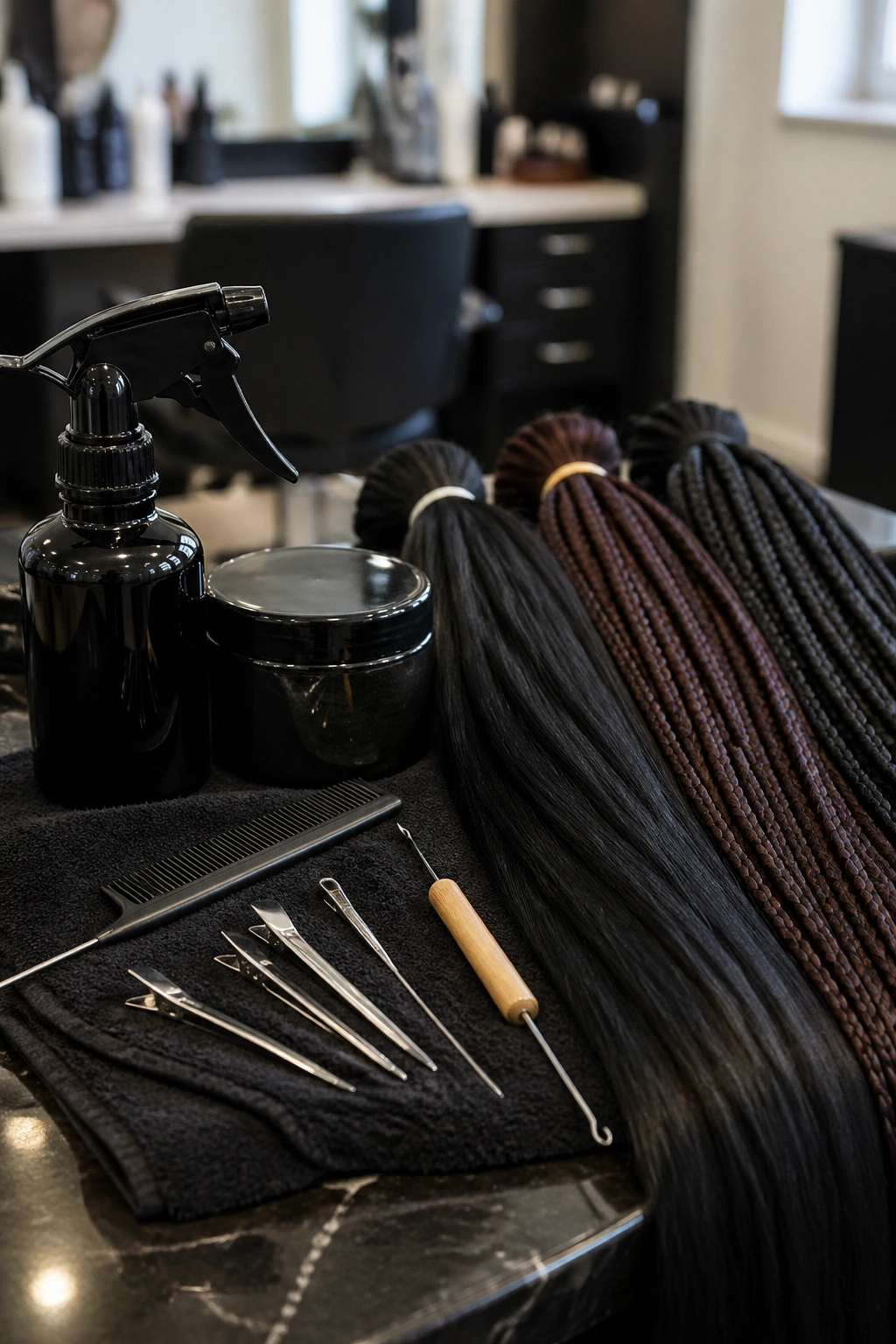
Standard cornrow tools — rat-tail comb, butterfly clips, water spray, edge gel — plus a few additions for the box braid section. Long kanekalon packs (24-30 inches) to give the box braids enough length. Hair shears for trimming the box braid ends to a clean line at the end of the install.
Hot water for sealing box braid ends. The traditional method dips the braid tip into nearly boiling water for 5 seconds, which fuses the kanekalon and prevents unraveling. A steam-set spray works as a milder alternative.
Edge gel and a small brush for the front cornrow section’s hairline finish. The edge work matters more here than in pure box braid styles because the cornrow front is the visible structural element.
1. Half-Up Cornrows With Box Braid Length
Front and crown sections cornrowed in small parallel rows. Cornrows transition into medium box braids at the crown. The box braids fall freely below.
Why It Works
The half-up structure gives you cornrow protection where it matters most (hairline, edges, top) while preserving the styling flexibility of loose box braids below.
- Cornrow section: front to crown, approximately 8-12 small cornrows
- Transition point: at the crown, roughly the highest point of the head
- Box braid count: matches cornrow count (one box braid per cornrow)
- Length: shoulder to mid-back depending on preference
Tip: Take a photo of yourself from behind midway through install to verify the transition line falls evenly across the back of the head. A crooked transition line is the most common flaw in this style.
2. Full Head Small Cornrows Into Box Braids
Every cornrow on the head — front, sides, back, and nape — transitions into a box braid. This is the full version of the style, with no loose hair anywhere on the scalp.
The full head version provides maximum protection. Every section of natural hair is enclosed in either cornrow or box braid structure. There’s no exposed hair to dry out or break.
Plan for 10-12 hours of install time. The combination of small cornrow density across the whole head and box braid finishing is time-intensive.
Wear time: 5-7 weeks comfortably with maintenance. The protective value is highest in the first month; after that, new growth at the cornrow bases starts showing.
3. Side Cornrows With Front Box Braids
Reverse the typical layout. Cornrows run along the sides of the head while the front section is left as box braids that fall over the forehead area.
This works for people who want to keep their face partially framed by braids while still getting the cornrow side structure. The box braid front can be swept aside, parted center, or left to fall naturally.
The cornrow sides should be tighter than usual to compensate for the lack of front cornrow structure. Sloppy side cornrows in this layout undermine the whole look.
The front box braid section is small — maybe 8-10 box braids in a 4-inch wide front strip. Don’t make it too wide or the style loses balance.
4. Diagonal Cornrows Into Box Braids
Cornrows run diagonally across the head — from one temple toward the opposite shoulder — before transitioning into box braids on that side.
The diagonal pattern reads dynamic and modern. It also flatters most face shapes by drawing the eye along an angle rather than straight down or straight back.
The box braids that emerge from diagonal cornrows fall naturally over one shoulder. This asymmetric fall is a signature feature of the style.
Pair this with chunkier box braids (closer to 3/4 inch diameter) since the diagonal layout reduces total braid count and the larger boxes balance the cornrow mass.
5. Curved Cornrows With Box Braid Cascade
What if the cornrows curve in patterns rather than running straight? Curved cornrows — gentle S-shapes or C-curves — flow toward a center point at the crown, where they transition into a cascade of box braids falling all the way down.
How to Style It
The curves should be smooth and intentional. Sharp angle changes mid-cornrow look unfinished. A gentle continuous curve from temple to crown reads polished.
The cascade of box braids from a single gathering point creates visual fullness. The braids spread outward from the crown and fall in a fanned shape.
This style takes more skill from the braider. Curved cornrows require more confident parting than straight ones.
6. Cornrow Mohawk Into Box Braid Tail
Mohawk-style cornrows down the center of the head, sides shaved or kept very flat against the scalp, transitioning at the back into a tail of box braids.
The mohawk strip is typically 3-4 inches wide at its broadest point. Within that strip, 4-6 small cornrows run from the front to the crown’s back, where they transition into the box braid tail.
The tail can be dramatic length (waist-length box braids) or shorter (shoulder-blade length). Pick based on how much statement you want.
This style is a strong choice for people with shaved or undercut sides who want to integrate their existing cut with a protective braid style.
7. Cornrows With Knotless Box Braids
Knotless box braids start with no knot at the base — the kanekalon is fed in gradually rather than tied in. Pairing knotless boxes with small cornrows reduces tension at the cornrow-to-box transition.
The knotless technique results in less weight pulling at each braid base. This is gentler on the hairline and reduces traction over the wear period.
Knotless installs take longer than traditional knotted boxes. Plan for an extra hour or two compared to standard installs.
The box braids hang more naturally with knotless construction. They lay flatter and move more freely than knotted boxes, which can have a slight bump at each base.
8. Cornrows With Long Box Braids
Long box braids — extending past the waist — paired with small cornrows at the front and crown. The contrast between the structured cornrow front and the dramatic length of the boxes creates an editorial look.
Length below mid-back puts strain on the cornrow bases. Make sure the cornrow installation is firm and well-anchored. Loose cornrows under heavy long boxes will sag within days.
Sleep care for long box braids requires either a satin pillowcase or careful arrangement of the braids on the pillow. Tangling the braids together during sleep creates unrecoverable matting.
For daily wear with long box braids, a low ponytail or loose tuck up keeps the length out of the way during work or activity.
9. Cornrows With Bob-Length Box Braids
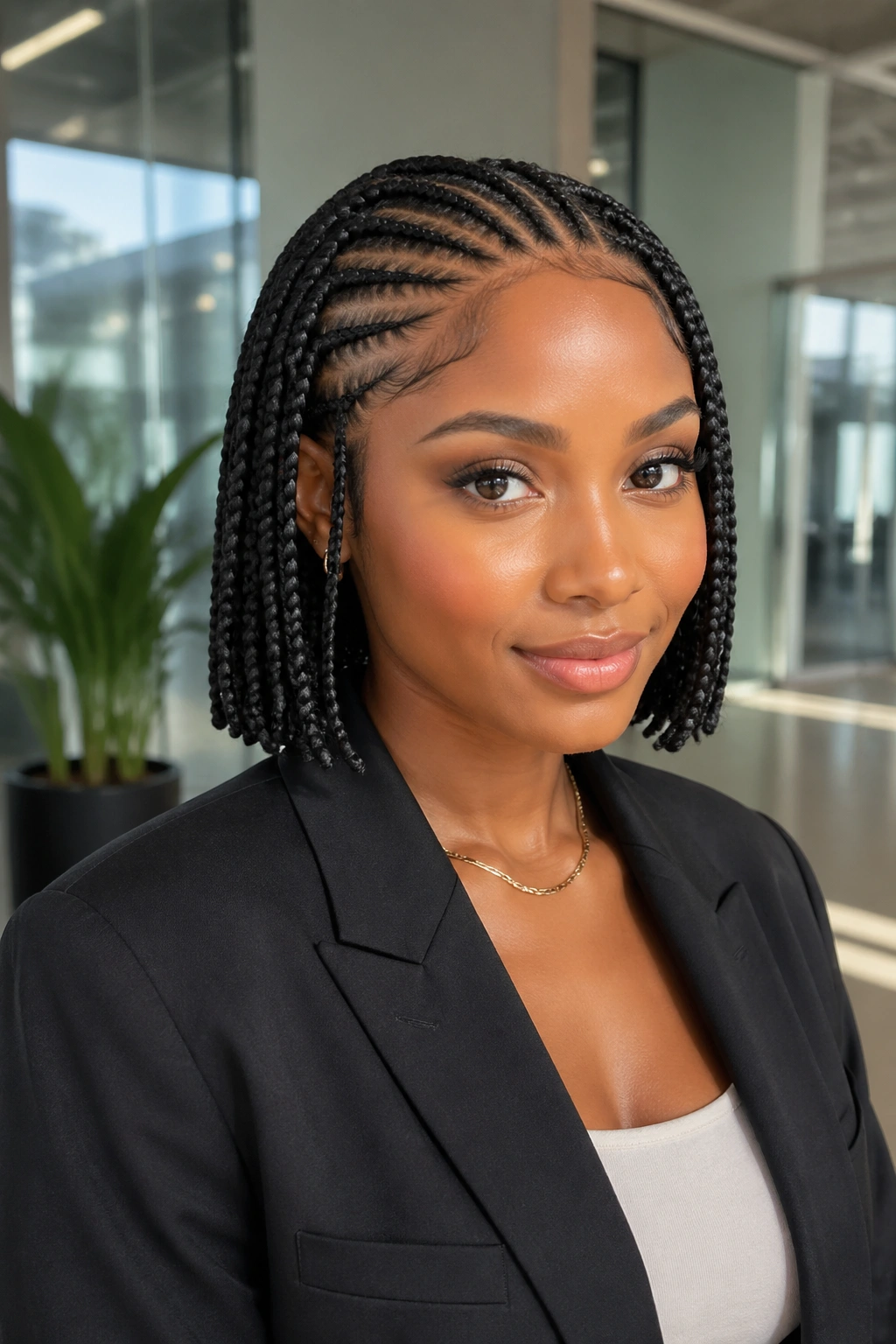
Going short instead of long. Bob-length box braids — chin to shoulder length — paired with cornrows give a sleek, polished look that reads professional and contemporary.
Bob-length boxes are easier to maintain than long ones. Less tangling, less weight, less time at takedown. Good for first-time wearers of combination styles.
The cornrow front should be precise. With short box braids, the cornrow structure becomes more visible relative to the overall style mass. Sloppy cornrows show more.
This length suits people who haven’t worn protective styles before and want to ease into the technique.
10. Cornrows With Crochet Box Braids
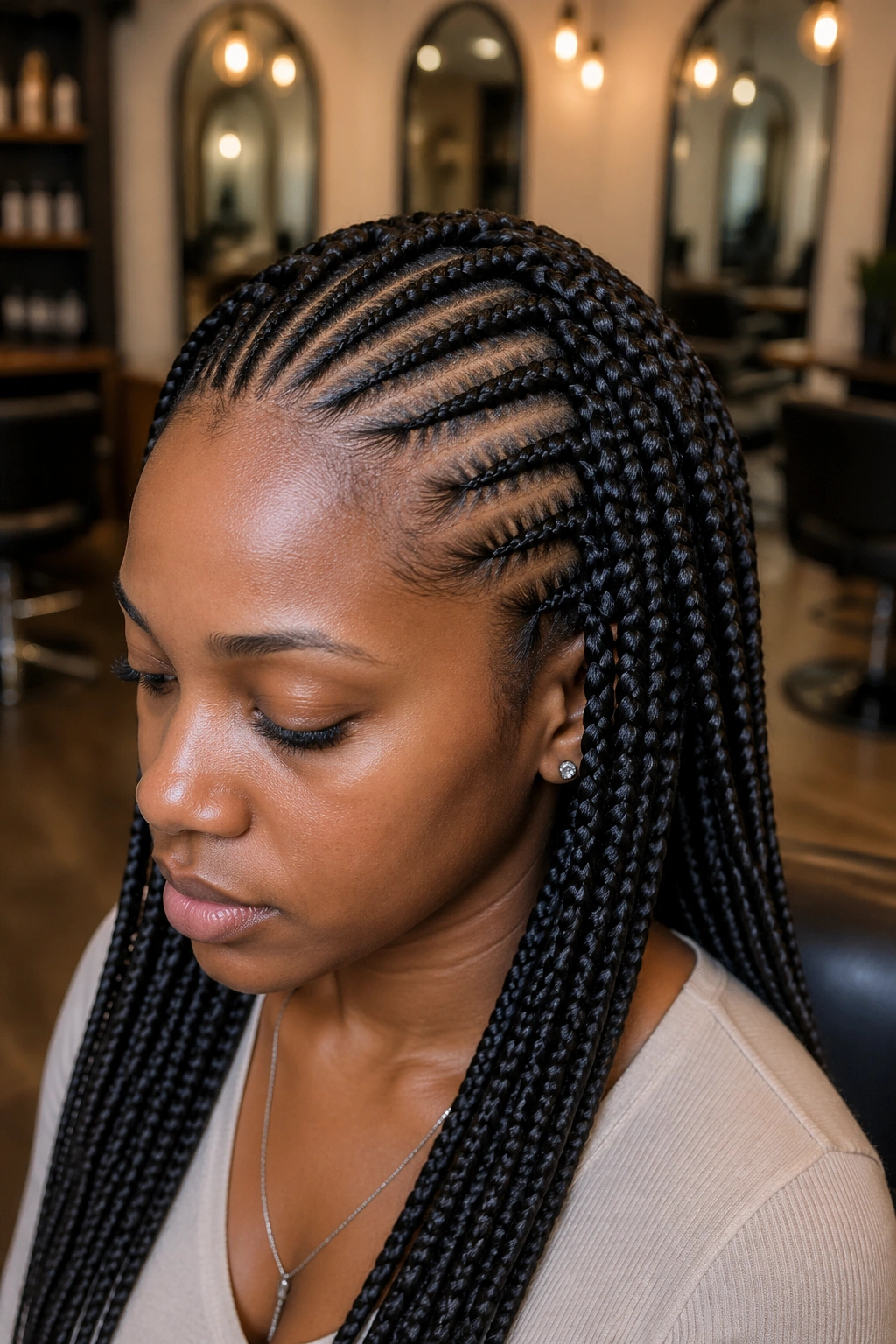
Crochet box braids are pre-made box braids attached to a base of cornrows using a crochet hook. Pairing crochet boxes with visible front cornrows gives you the look of a full install with reduced installation time.
The cornrows under the crochet section need to be small and tight. They serve as the foundation for the crochet hooks and need to hold the weight of pre-made braids without slipping.
Crochet installs take 3-5 hours total versus 8-10 for traditional installs. The trade-off is slightly less natural look — crochet boxes can read more uniform than hand-braided ones.
Wear time matches traditional boxes — 4-6 weeks with care.
11. Cornrows With Curly Box Braid Ends
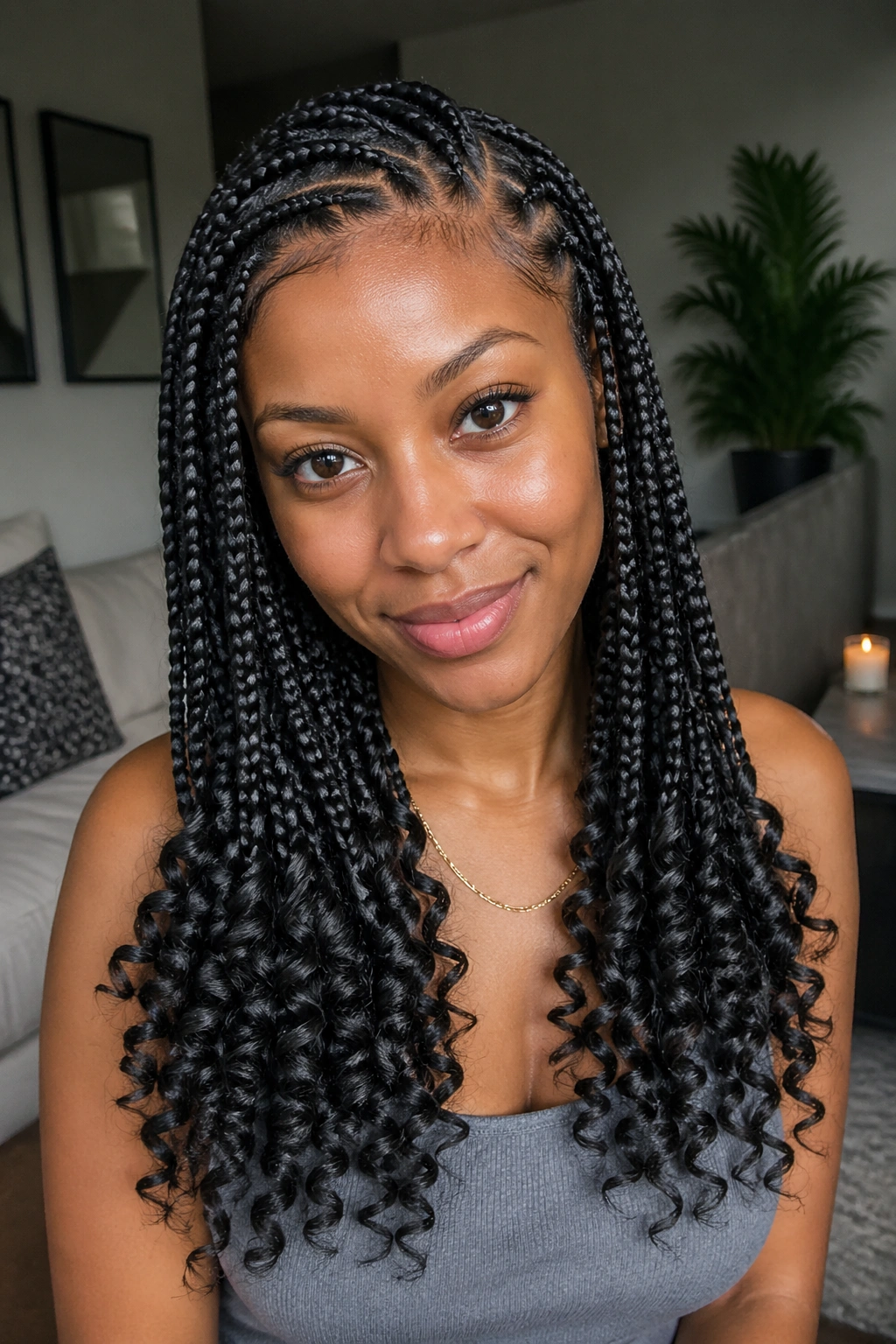
Box braids that finish in curly ends. The kanekalon used for the box braids has a wavy or curly texture in the bottom 4-6 inches.
The curly ends add movement and feminine softness to what would otherwise be straight box braids. Pair with structured front cornrows for the full contrast.
Curl-tipped kanekalon comes pre-made. Look for packs labeled “spring twist” or “wavy bulk” with curl at the ends. Some packs require you to dip the box braid ends in hot water to activate the curl after installation.
The curly ends frizz faster than straight ones. Use a curl spray every other day to maintain definition.
12. Cornrows With Burgundy Box Braids
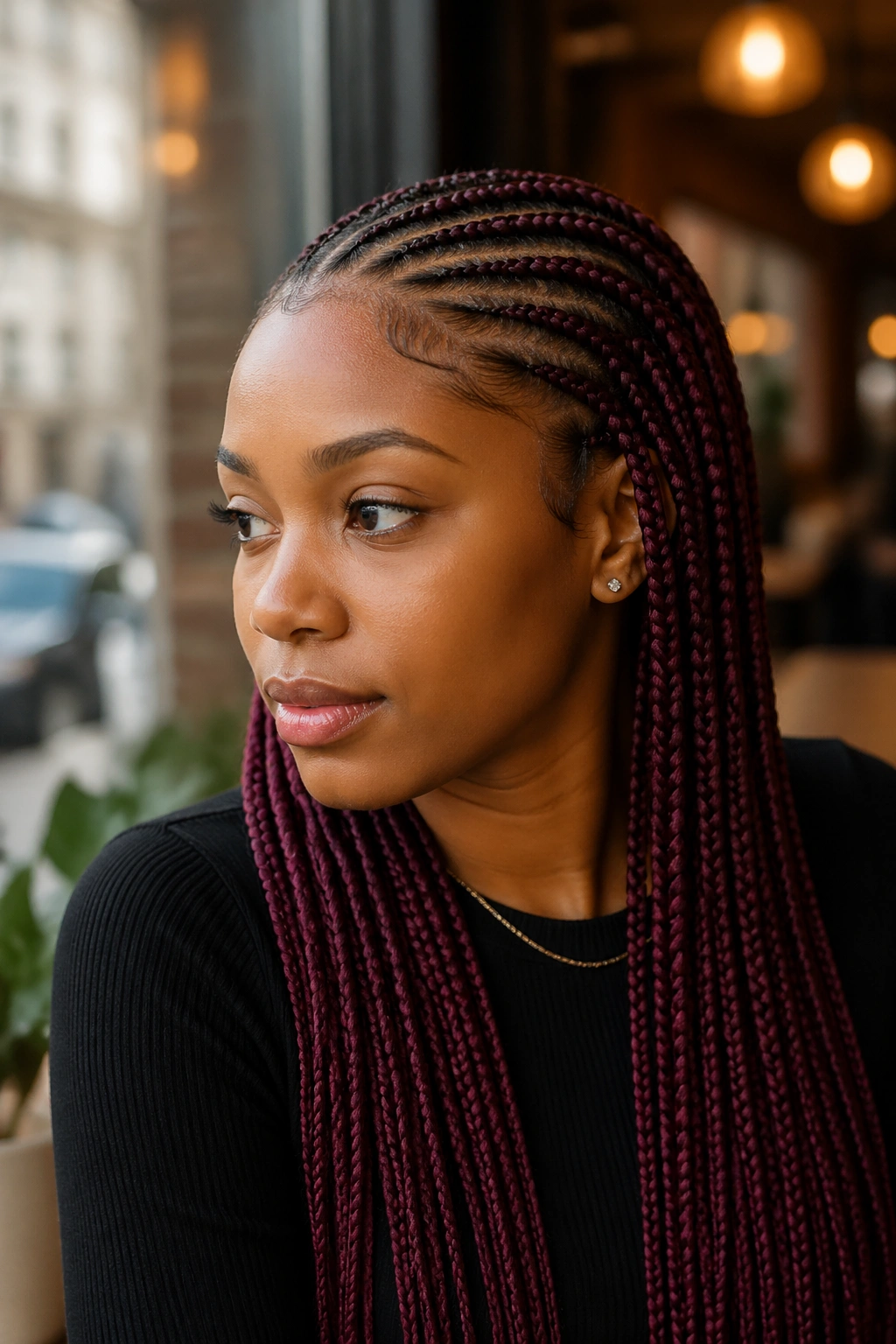
Standard small cornrows in natural color paired with deep burgundy box braids. The color contrast at the transition point creates intentional drama.
Burgundy works on most skin tones. The wine-red shade flatters warm and cool undertones alike. It reads sophisticated rather than loud.
The cornrow section can also be done in burgundy for a fully colored look, but keeping the cornrows natural and reserving the color for the box braids creates more visual interest.
For maximum contrast, use a burgundy that’s noticeably different from your natural color — not a subtle dark cherry, but a clear burgundy red.
13. Cornrows With Box Braid Bun Option
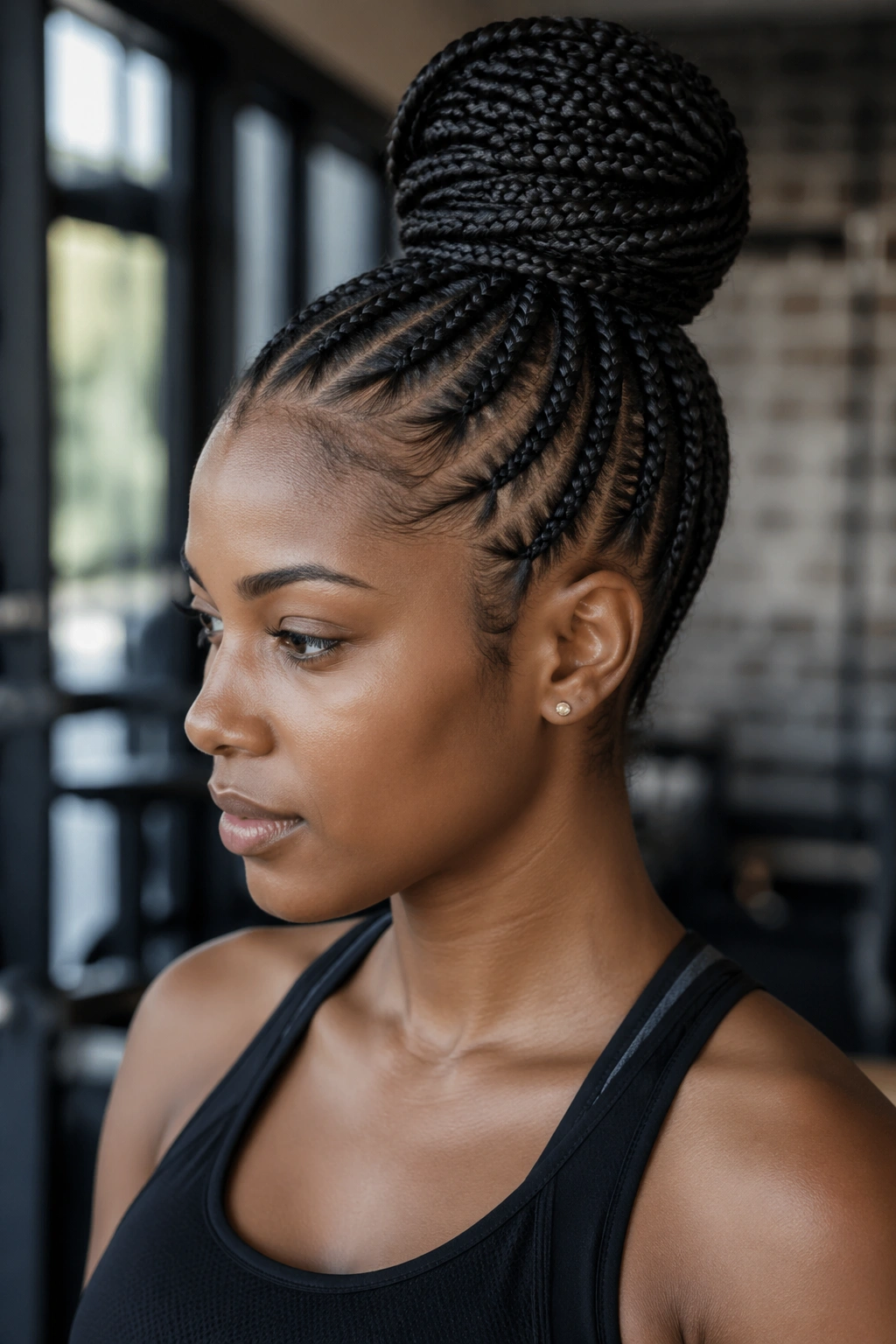
The combination styled into a high bun for daily wear. The cornrow front lays flat against the head; the box braids gather at the crown into a tall bun.
This is more about styling than installation. Once your combination is in, you can wear it as a bun, half-up, ponytail, or down. The bun option works especially well for active days, exercise, or formal events.
Bun construction: gather all box braids at the crown, secure with a thick elastic, then wrap the loose box braid mass around the elastic to form the bun shape. Pin generously around the bun’s perimeter.
Don’t keep the bun in continuously. Alternate between bun and down to give the cornrow bases a rest from the upward pull.
14. Cornrows With Layered Box Braids
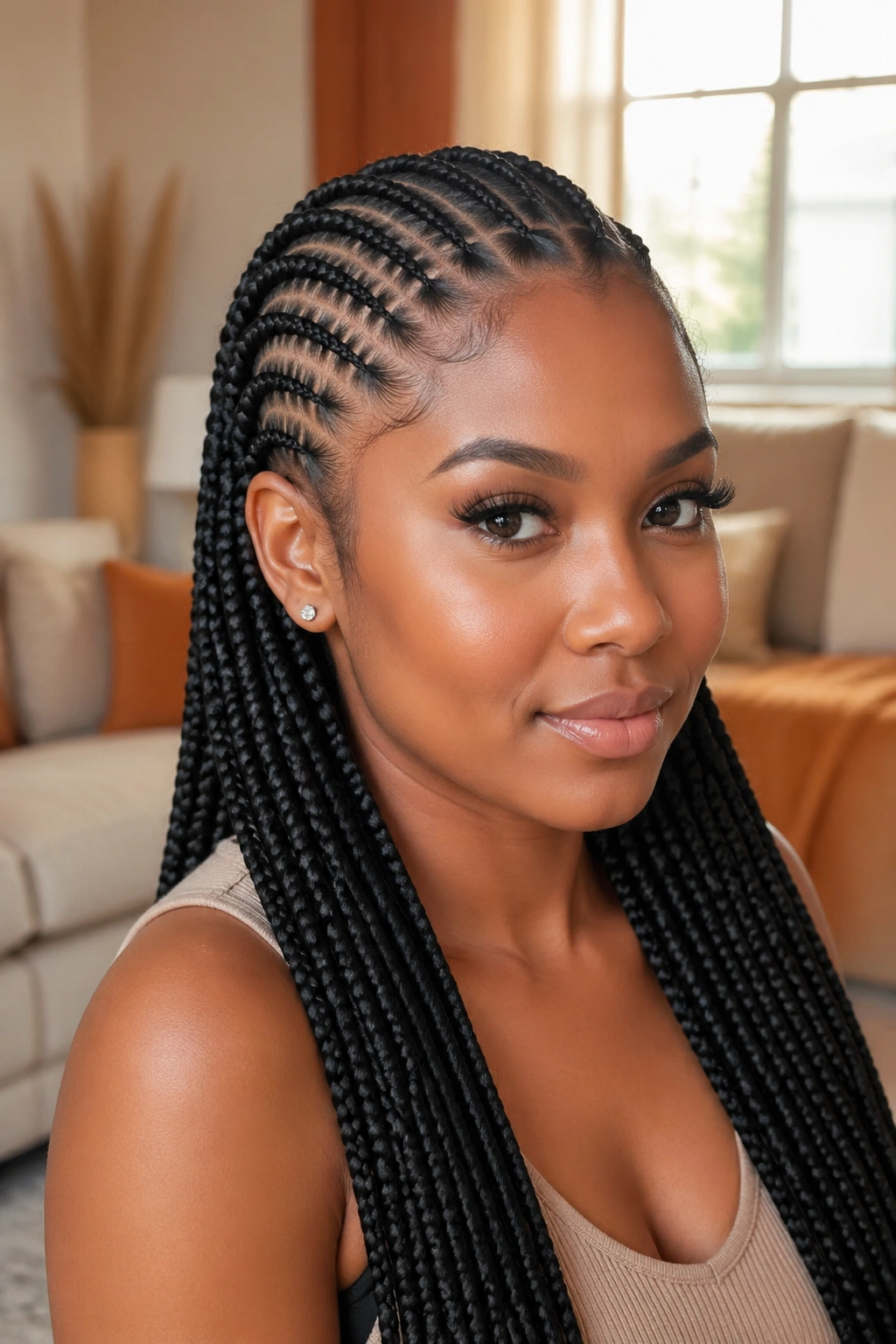
Layered means the box braids are cut to graduated lengths after installation. Front box braids are shorter (chin-length), middle braids are medium (shoulder), back braids are longest (mid-back). The graduation reads modern and dimensional.
The layering should be subtle. Dramatic layering looks stylized but can also look uneven if not executed precisely. Aim for 2-3 length variations rather than constant change.
Have the box braids cut by someone experienced with kanekalon. Cutting synthetic hair requires sharp shears and a steady hand. Uneven cuts show clearly.
Layered styles photograph beautifully. The graduated lengths create movement and dimension that uniform-length boxes don’t have.
15. Cornrows With Box Braid Pony
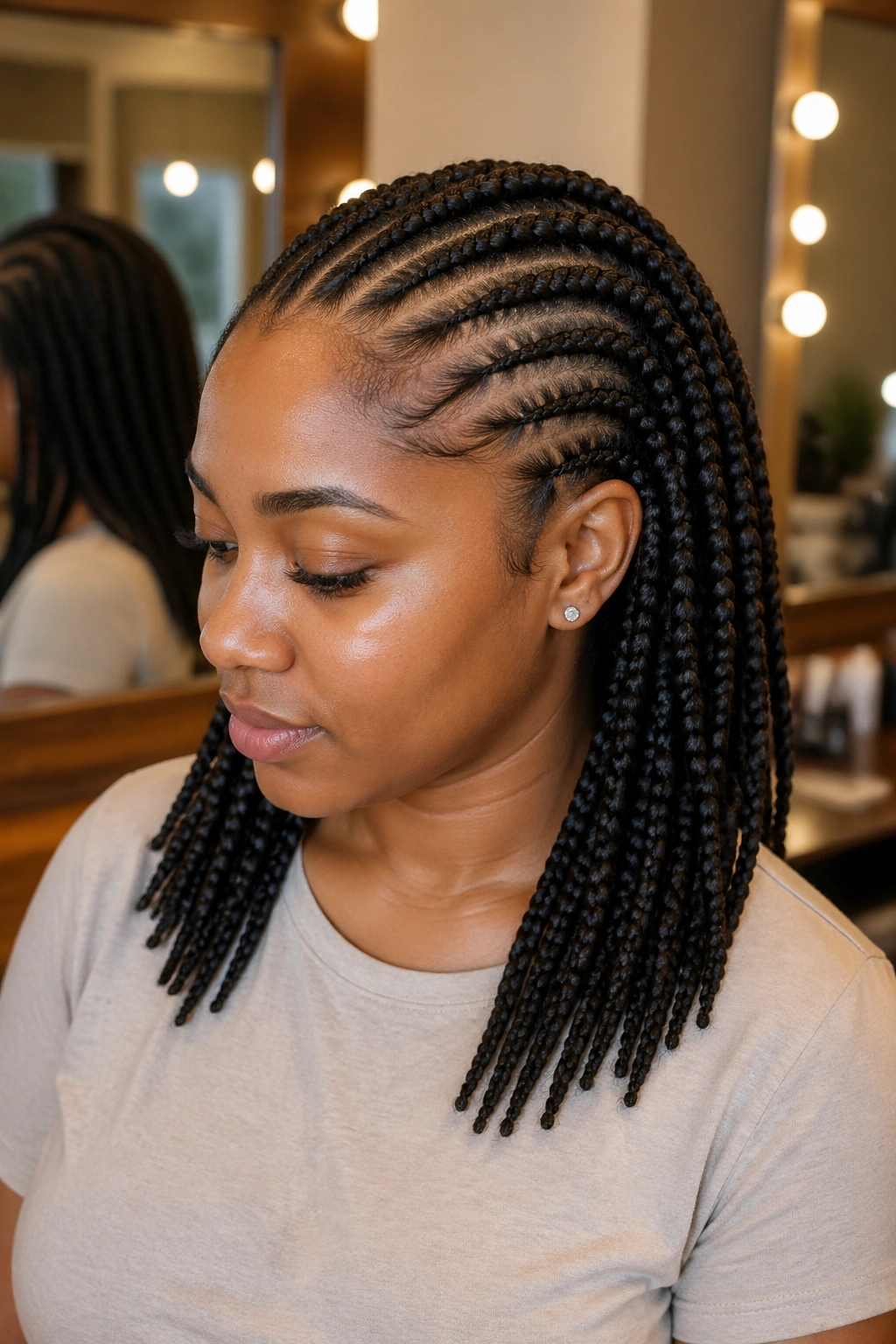
The combination styled into a single high or low ponytail. All box braids gathered at one point and secured with a wrap of additional braid hair.
Pony styles work for both casual and formal contexts. A high pony reads sporty and youthful. A low pony reads polished and professional. The cornrow front stays the same in both versions.
The wrap at the ponytail base — using a piece of kanekalon to wrap around the elastic and hide it — gives the style a finished appearance. Without the wrap, the elastic looks utilitarian.
Pony styling is gentle on the cornrow front since the weight pulls back rather than down. This is one of the more cornrow-friendly ways to wear the style.
16. Cornrows With Side Box Braid Sweep
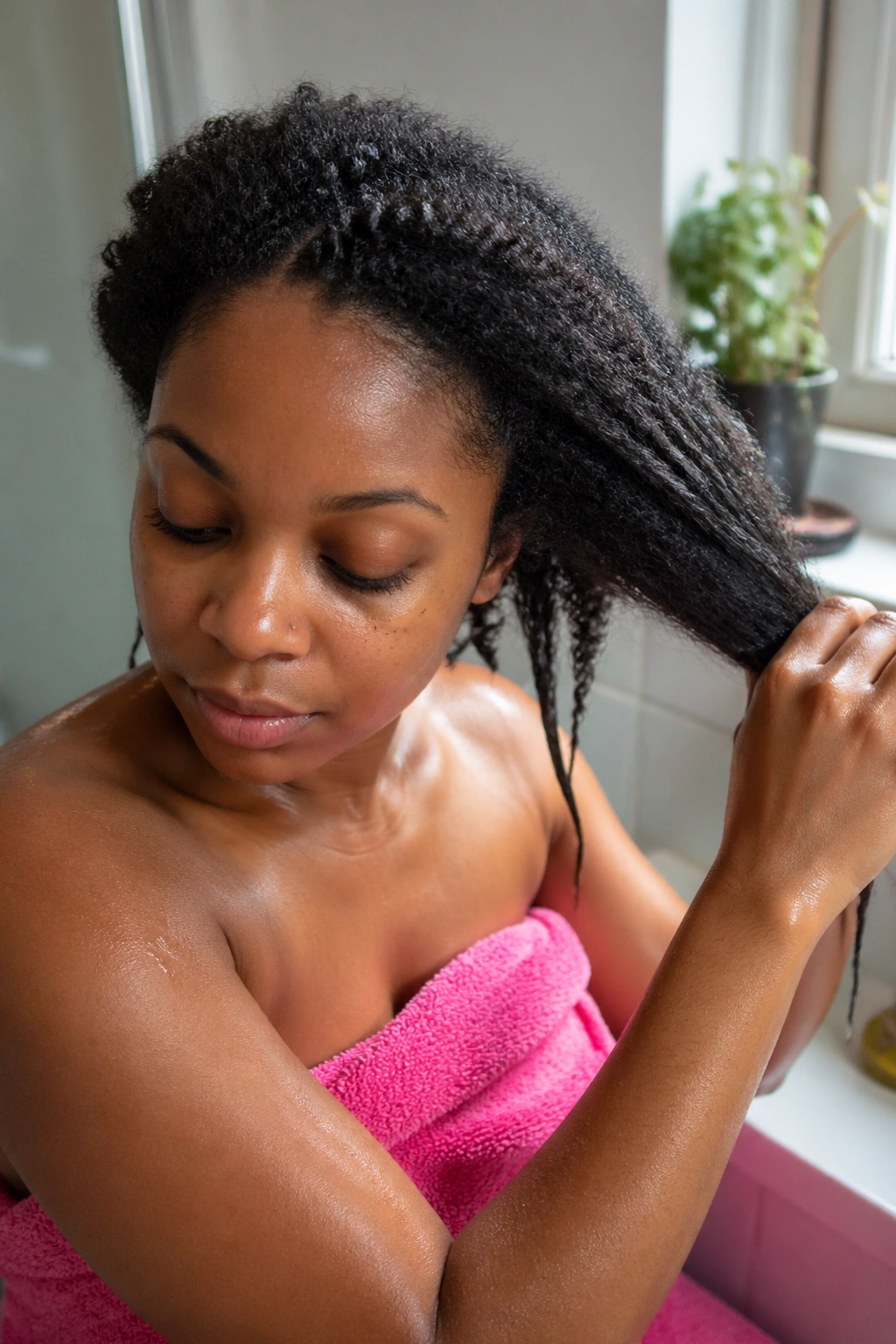
Box braids gathered to one side and swept over a shoulder. The cornrow front stays as installed; the box braids are styled by simply pulling all of them to one side and securing loosely with a hair tie or pin.
This look reads romantic and feminine. It works for date nights, social events, or any time you want a softer styling than down or in a bun.
The side that the boxes sweep to should be the side opposite your natural part if you have one. The sweep creates asymmetry that balances the part visually.
For a held-in-place version, twist a section of box braids together at the shoulder and pin to the cornrow underneath.
17. Cornrows With Box Braid Half Bun
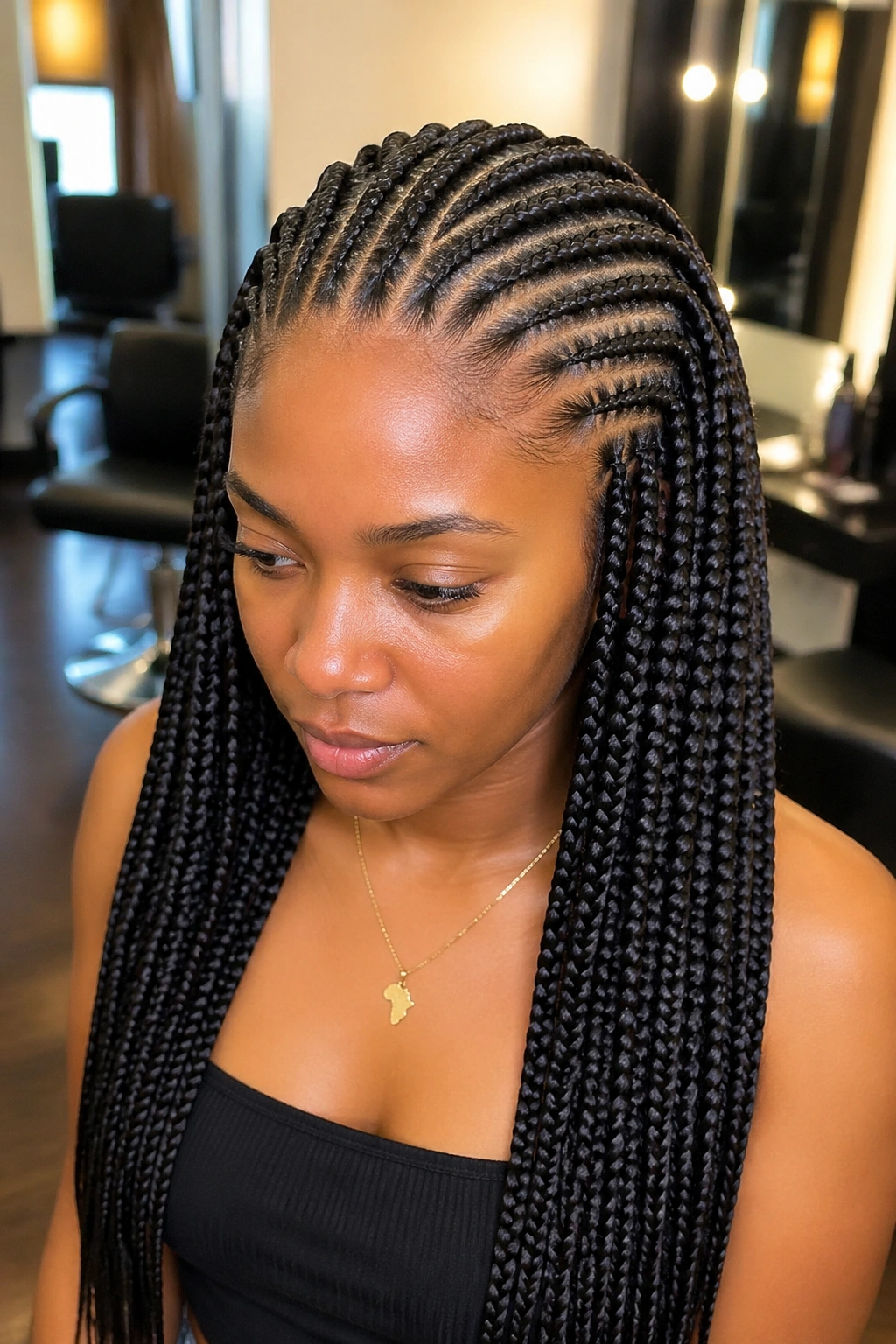
Half of the box braids pulled into a bun at the crown; half left loose to fall over the shoulders. The cornrow front stays consistent.
The half-up creates dimension without committing to a full updo. It frames the face with the loose half while keeping the structure of the bun visible from behind.
The bun should be small to medium. A massive half-bun overwhelms the loose section. A tight, neat half-bun reads more polished.
This style works well for transitional weather and seasons where temperature changes through the day make a flexible style desirable.
18. Cornrows With Box Braid Fringe
A fringe of box braids falls across the forehead, with cornrows running back from the fringe over the rest of the head, and box braids continuing from the cornrow ends.
The fringe can be styled various ways — straight across the brow, swept to one side, or parted in the middle. Each gives a different facial framing effect.
Fringe length should hit at or just below the brow. Too short reads accidental. Too long covers the eyes and requires constant adjustment.
For the cornrow section behind the fringe, take care to make the transition between fringe and cornrow seamless. The fringe should appear to grow from the cornrow’s beginning rather than being attached separately.
19. Cornrows With Box Braid Updo
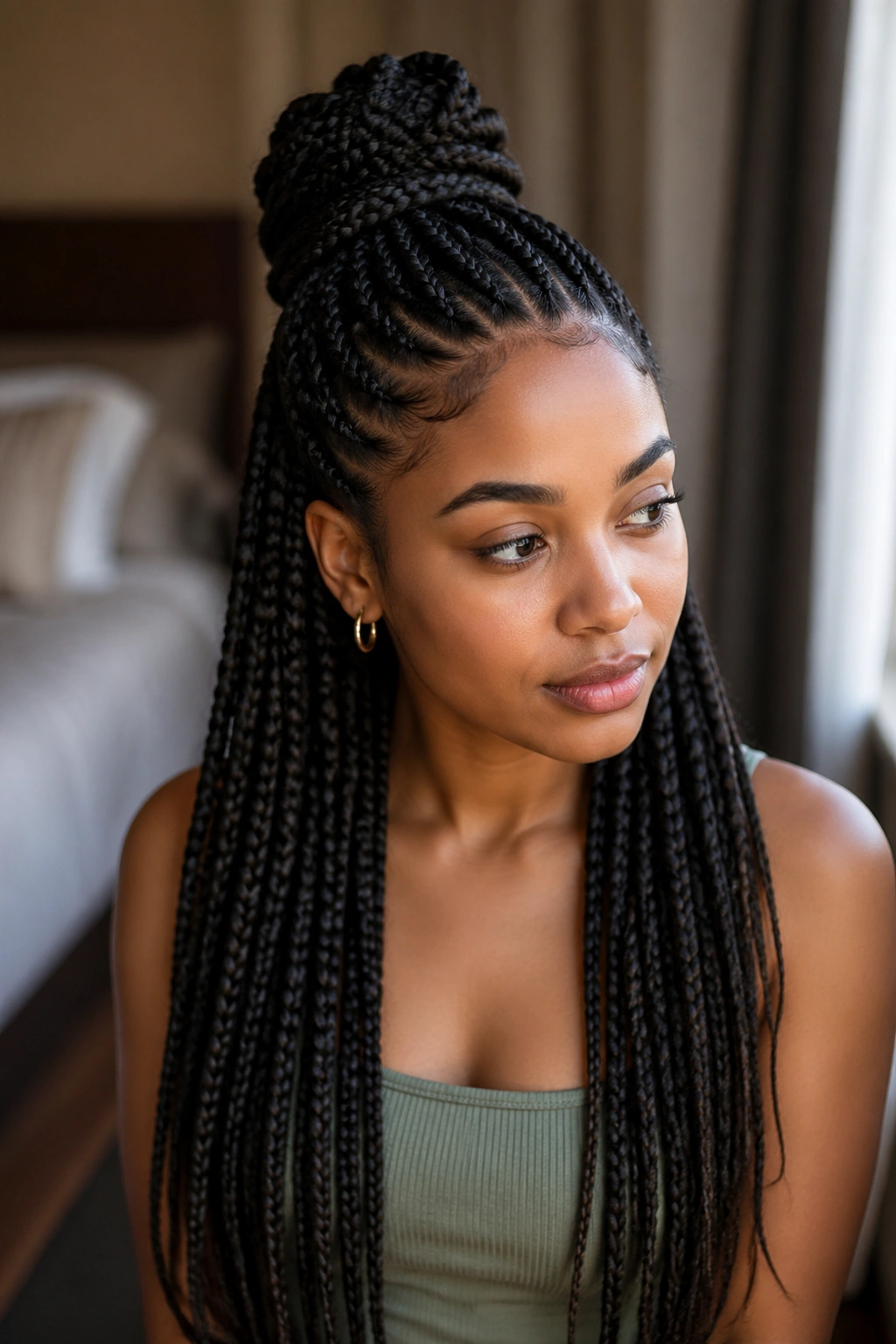
The combination styled into a full updo. Cornrows feed into box braids that are then fully gathered, twisted, or coiled into an updo at the crown or back of the head.
Updo styles maximize protection. Every braid end is tucked into the updo structure. No loose ends rub against fabric.
Updo wear time on a combination install runs 2-3 weeks before the updo needs to be redone (the cornrow base lasts longer; the updo styling ages faster).
For event styling, the updo can be elaborate — twists, loops, woven sections. For daily wear, a simple gathered bun works fine.
20. Cornrows With Color Pop Box Braids
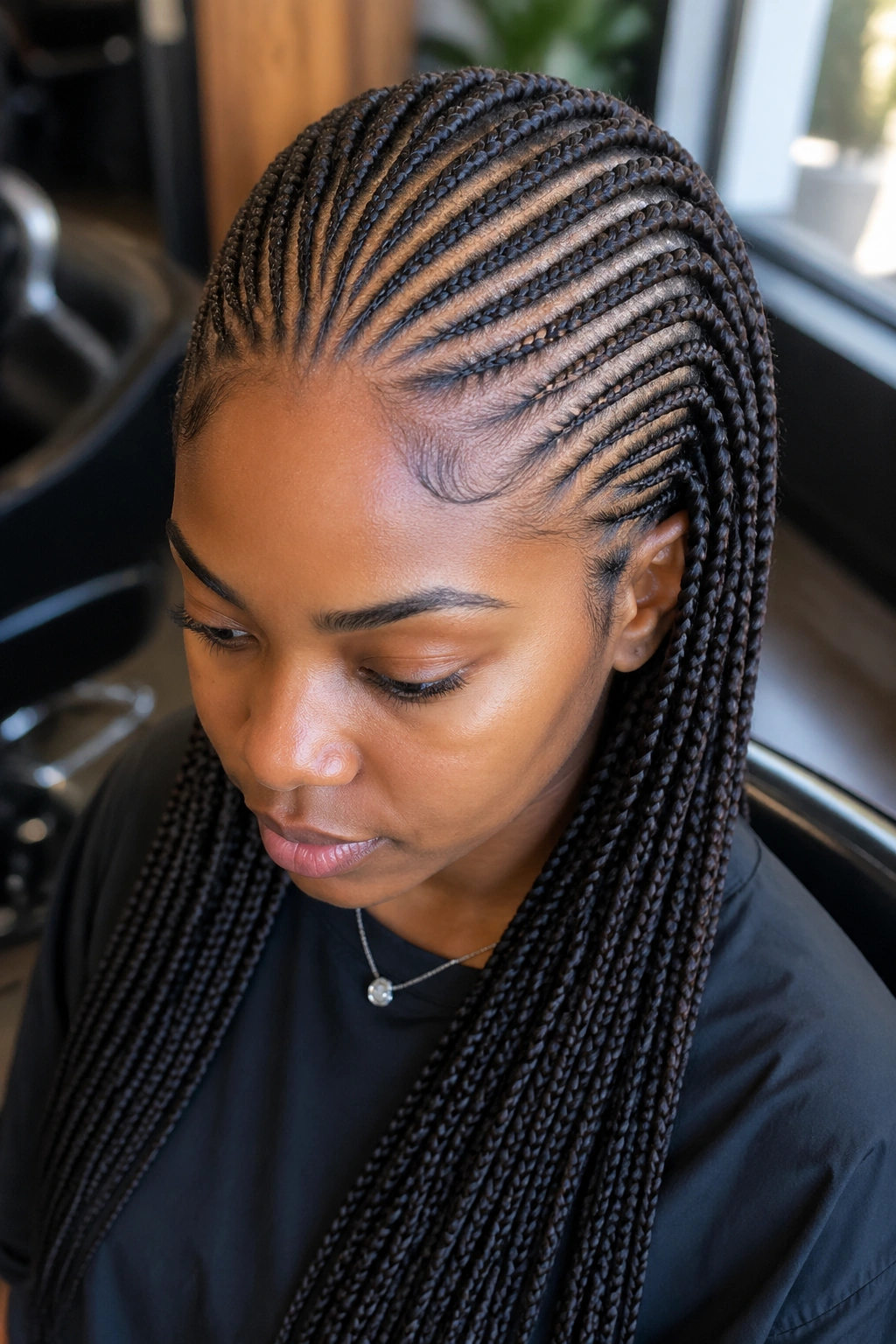
Mostly natural-colored box braids with a few box braids in a contrasting color woven throughout. The color pops are not concentrated in one area but scattered across the back and sides for an even visual effect.
Common color pop choices: blonde streaks through black, red strands through brown, blue or purple highlights through black for a more dramatic look.
Limit the color pops to 10-15% of the total box braid count. More than that becomes a multicolor look rather than a pop. Less reads accidental.
The cornrow front should stay natural. The pops are entirely within the box braid section, which keeps the front of the style classic and the back of the style expressive.
21. Cornrows With Beaded Box Braid Ends
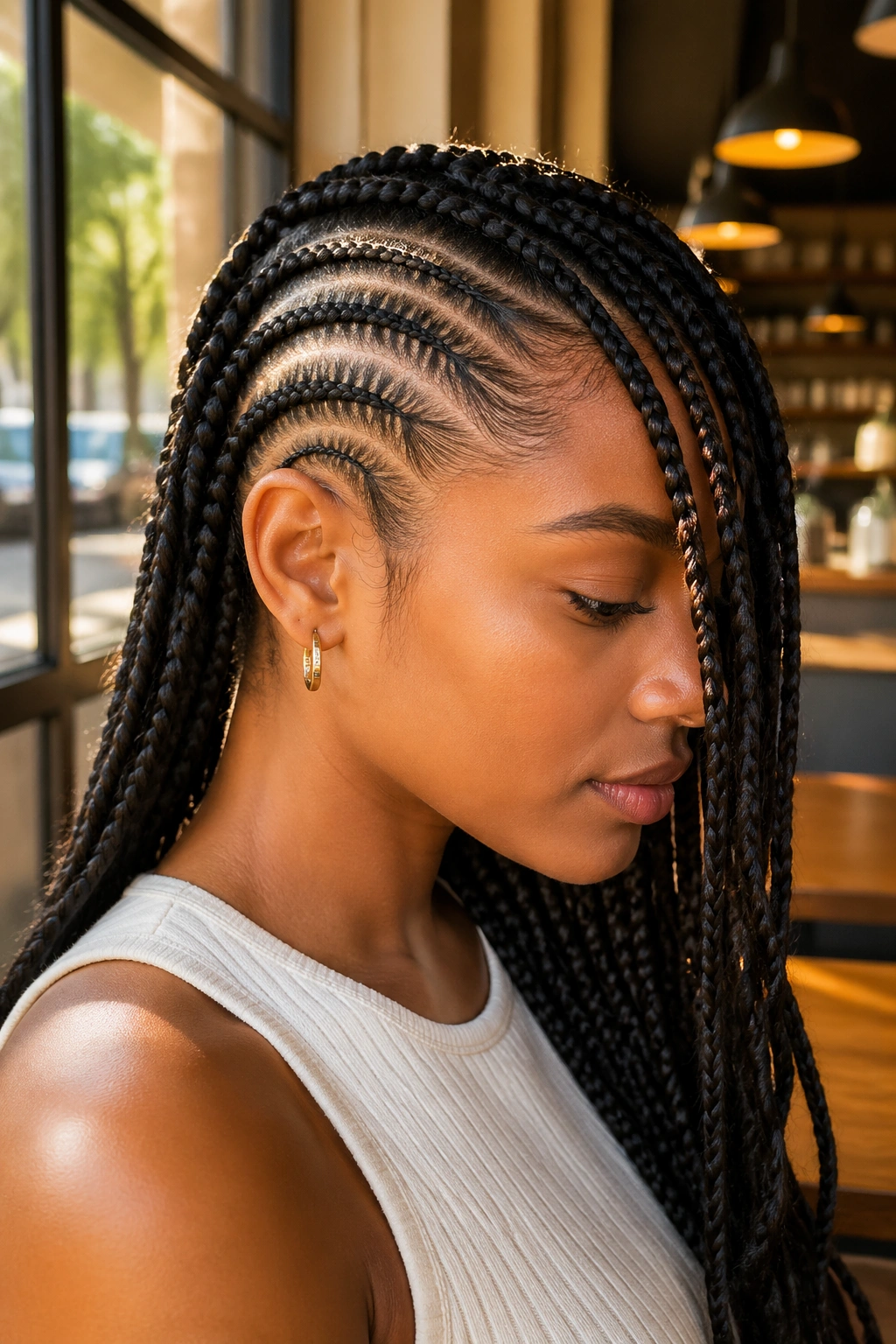
Beads added to the ends of selected box braids. Wooden, glass, or metal beads strung onto the bottom of box braids and secured with a small braid loop or rubber band.
Beaded ends add weight, sound (beads click together when you move), and decoration. They also lengthen the style visually and frame the body.
Limit beaded braids to 6-10 across the whole style. Beading every braid creates excessive weight that pulls on the cornrow front bases.
Bead colors should coordinate with any color pops elsewhere in the style. Wooden beads work with natural and warm tones; glass or metal works with cool tones.
22. Cornrows With Box Braid Bob
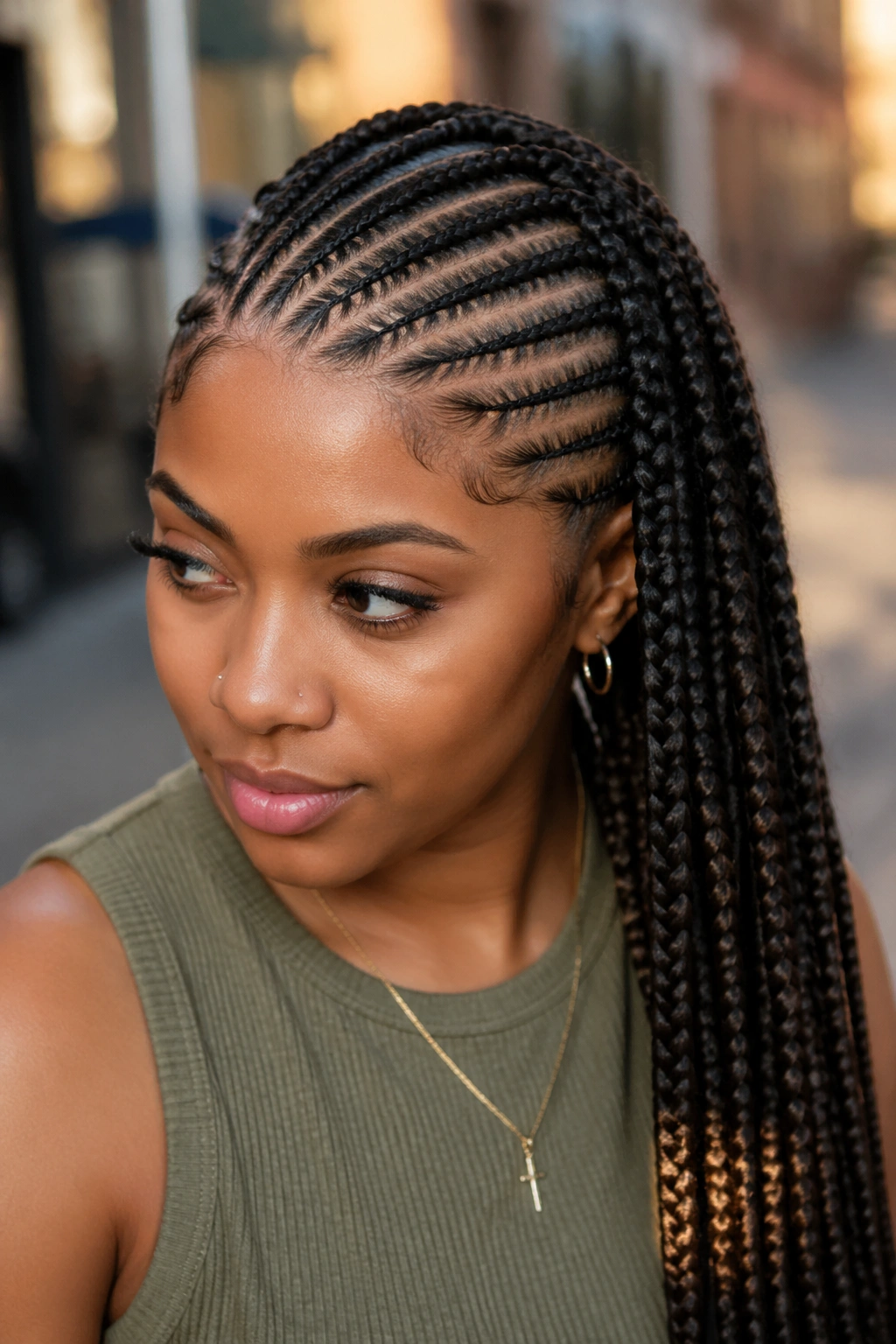
A short, blunt bob made entirely of box braids paired with cornrow front structure. The boxes are cut to a uniform length at the chin or jaw line for a sharp, geometric finish.
The blunt cut creates a striking edge that contrasts with the soft texture of individual braids. It reads modern and editorial.
Bob lengths require precise cutting. The line at the bottom should be straight and even. Have the cut done by a professional who’s experienced with kanekalon — a poorly cut blunt bob shows every inconsistency.
This style suits people with strong jawlines or who want to emphasize their facial structure. It frames the face directly.
Maintenance for Combination Styles
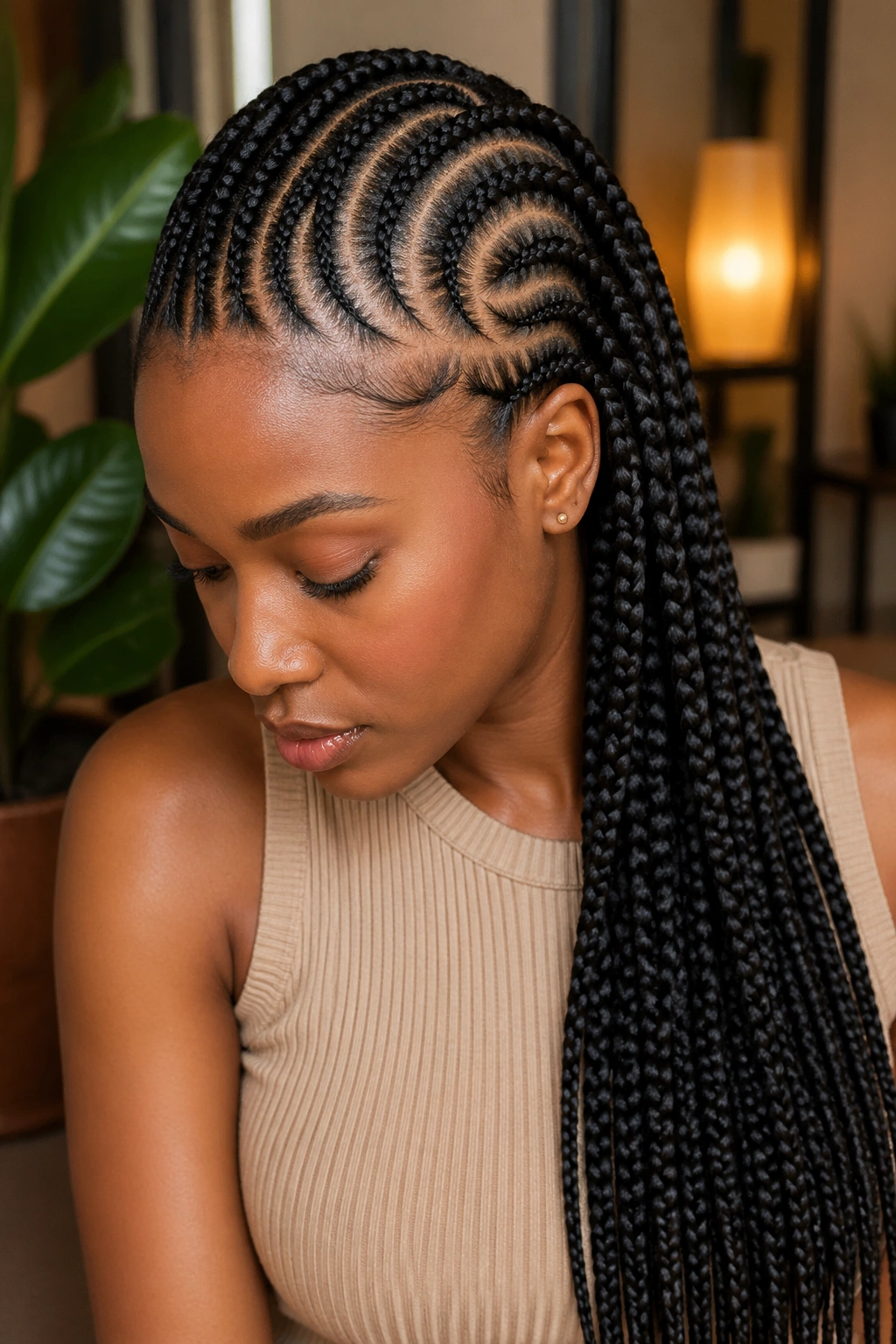
The cornrow front needs more attention than the box braid back. Front sections rub against pillowcases more, get more contact with hands and clothing, and are visible all day. Mist the cornrow front with leave-in spray every other day.
Box braid maintenance is mostly about preventing tangling at the bottom. Sleep with the box braids loosely gathered or in a satin scarf. Never sleep with them spread across the pillow.
Refresh edges weekly with a small amount of edge gel. Don’t over-gel. A light touch keeps the front looking fresh without buildup.
Wash the style every 2-3 weeks using a diluted sulfate-free shampoo applied in sections. Focus on the scalp; don’t scrub the braids themselves. Rinse thoroughly and air dry.
Avoiding Common Combination Style Problems
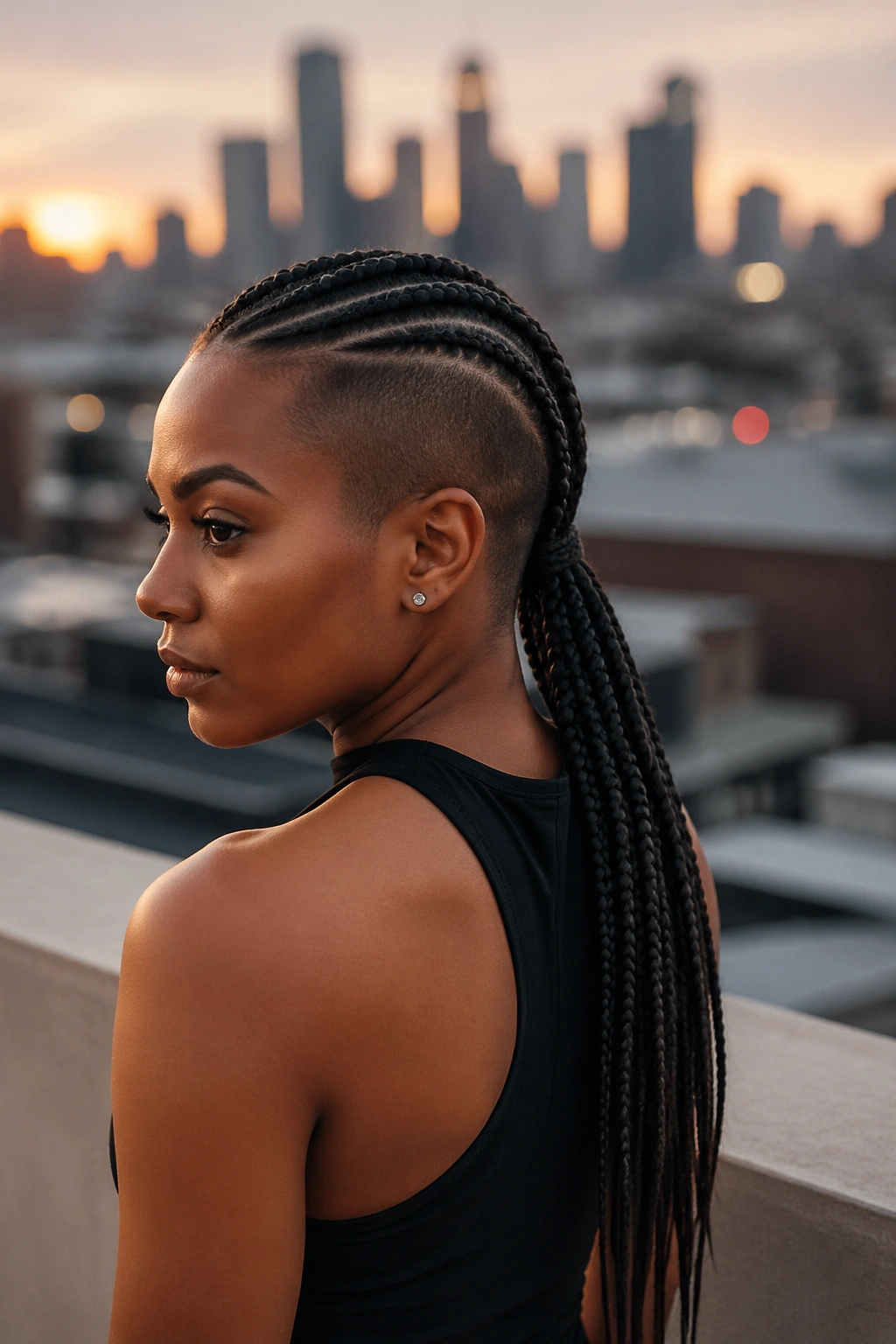
Slippage at the cornrow-to-box transition. Caused by inadequate braiding tension or mismatched kanekalon between sections. Fix by reinforcing the transition with a small wrap of additional kanekalon.
Frizzing at the cornrow base. Caused by friction (sleeping on cotton, rough handling, hat wear without protection). Fix by switching to satin sleep care and being gentler with the cornrow front.
Itchy scalp under the install. Caused by buildup, dry scalp, or new growth pulling at the cornrow base. Fix with a scalp soothing oil applied between cornrows weekly and a clarifying scalp wash every 3 weeks.
Box braid breakage. Caused by overly tight cornrow installation pulling at the box braid base. Fix by easing the cornrow tension on next install (your braider should know).
Choosing Between Combination Styles and Pure Box Braids
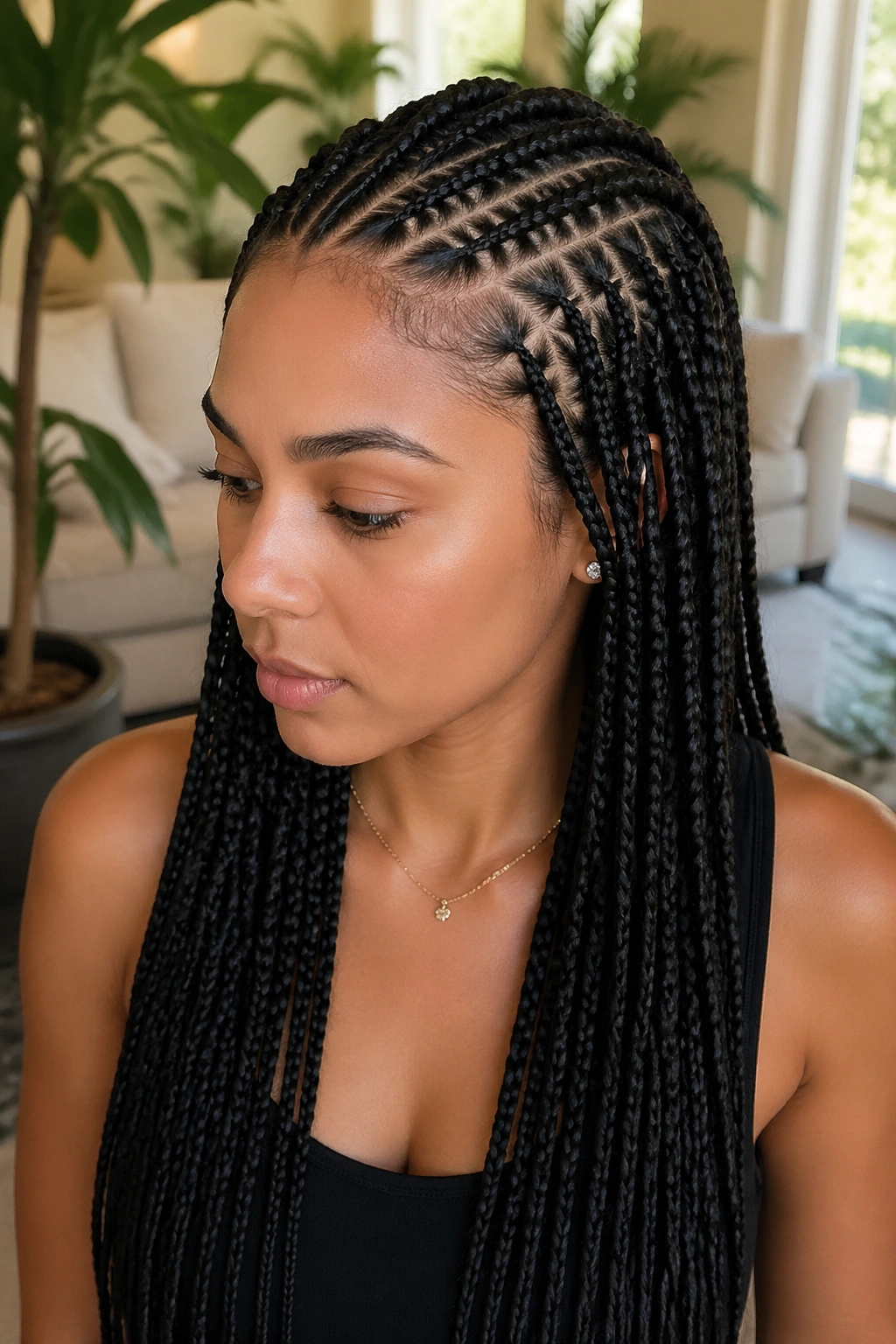
Pure box braids give you maximum styling flexibility for the loose section but no front structure. Combination styles trade some flexibility for the front cornrow polish.
Pick combination if you want a more put-together front, if you have edges that need extra protection, or if you want to work in professional settings where loose front braids might feel too casual.
Pick pure box braids if you want maximum styling flexibility, if you frequently wear hairlines forward (bangs, swooping front), or if you find cornrow tension uncomfortable along the front hairline.
Length Choices and Body Proportions
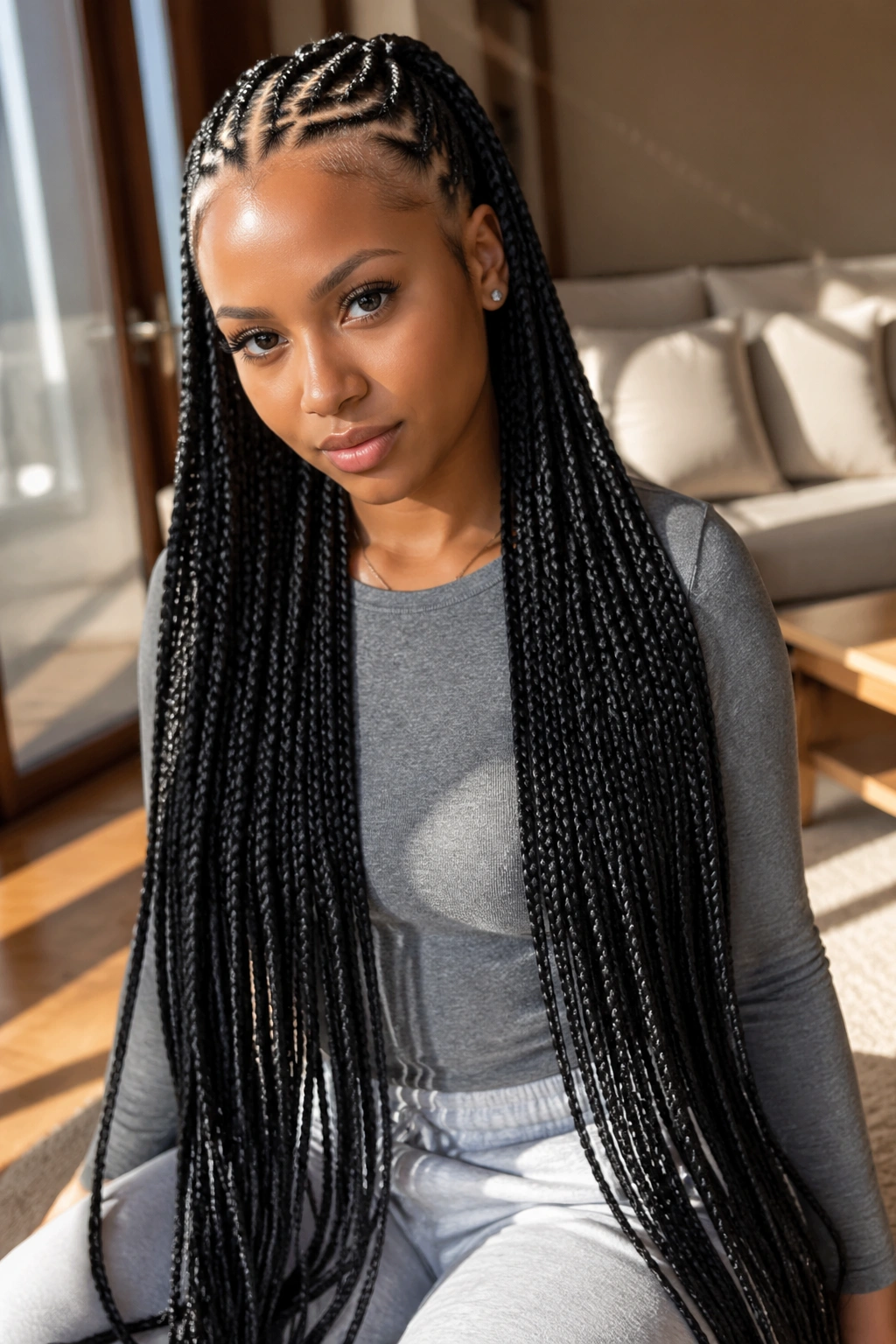
Short combination styles (above the shoulder) suit people who want low-maintenance wear and don’t want the weight of long braids. They work for active lifestyles.
Medium-length combinations (shoulder to mid-back) suit most body types and work for the widest range of occasions. This is the most versatile length.
Long combinations (waist-length and beyond) suit people who specifically want long hair drama and are willing to manage the weight and tangle risk.
The 22 styles above range across all these lengths and styling options. Pick one based on your wear duration, your styling preferences, and the occasions you’re dressing for. The combination of small cornrows and box braids gives you a polished, protective install that holds up for weeks.