



Let me be blunt. The fake-wig look is usually not about the wig itself — it’s about the lace, the density, the baby hairs, and whether the style matches what a real head of hair would actually do. I’ve been styling, reviewing, and wearing afro wigs for longer than I’d like to admit, and the ones that pass the sniff test share a handful of traits. They don’t shine like plastic. They don’t sit too high on the forehead. And they don’t have that perfectly uniform curl pattern that screams factory.
The afro wig styles that look natural tend to lean into messiness. A little frizz at the crown. A slightly irregular edge. Curls that don’t all face the same direction. That’s what real Black hair does, and that’s what a wig needs to mimic if you want people to do a double-take instead of a side-eye.
Below, I’m walking through twenty-three specific styles that pull this off. Some are short. Some brush your shoulders. Some are coily, some kinky, some loose and bouncy. I’ll tell you what I like, what’s worth the money, and where people mess up. Read the prep sections first — they’ll save you from a lot of rookie mistakes before you ever pull a wig on.
What Makes an Afro Wig Actually Look Natural
A wig looks fake for predictable reasons. The lace is the wrong shade. The hairline is too perfect. The density is too thick. The curls are too uniform. Fix those four things and you’re 80% of the way there.
Real afro hair has variation in curl pattern — a 4B crown with softer 4A edges isn’t unusual. Real hairlines have baby hairs that grow in different directions, not a glossy row of identical swoops. And real density gets lighter at the perimeter and denser at the crown, not the same all the way around.
Then there’s the scalp question. A good lace front with tinted melting spray can disappear completely, but a cheap one with no customization looks like a helmet. I’ll show you the difference in the styles below.
Choosing Between Human Hair, HD Lace, and Synthetic Blends
Human hair reigns supreme for longevity and versatility — you can wash it, dye it, heat style it, reshape it. But it’s expensive, and if the texture isn’t right for 4B or 4C looks, it still reads wrong. Synthetic has come a long way. The newer heat-friendly synthetic fibers hold curl patterns beautifully, and some of them are honestly hard to tell apart from real hair at a glance.
HD lace changed the game for people who struggled with traditional lace melting into their skin. It’s thinner, sheerer, and disappears against a wider range of complexions. Transparent lace still works great for lighter skin tones but can look grayish on deeper complexions if you don’t tint it.
Bold tip: If you’re new to wigs and nervous about the lace, start with a U-part or a headband wig. You skip the lace customization drama entirely and still get a convincing look. Work your way up to full lace once you’ve got the basics down.
Prep Work — Your Braid-Down, Edge Control, and Lace Tint
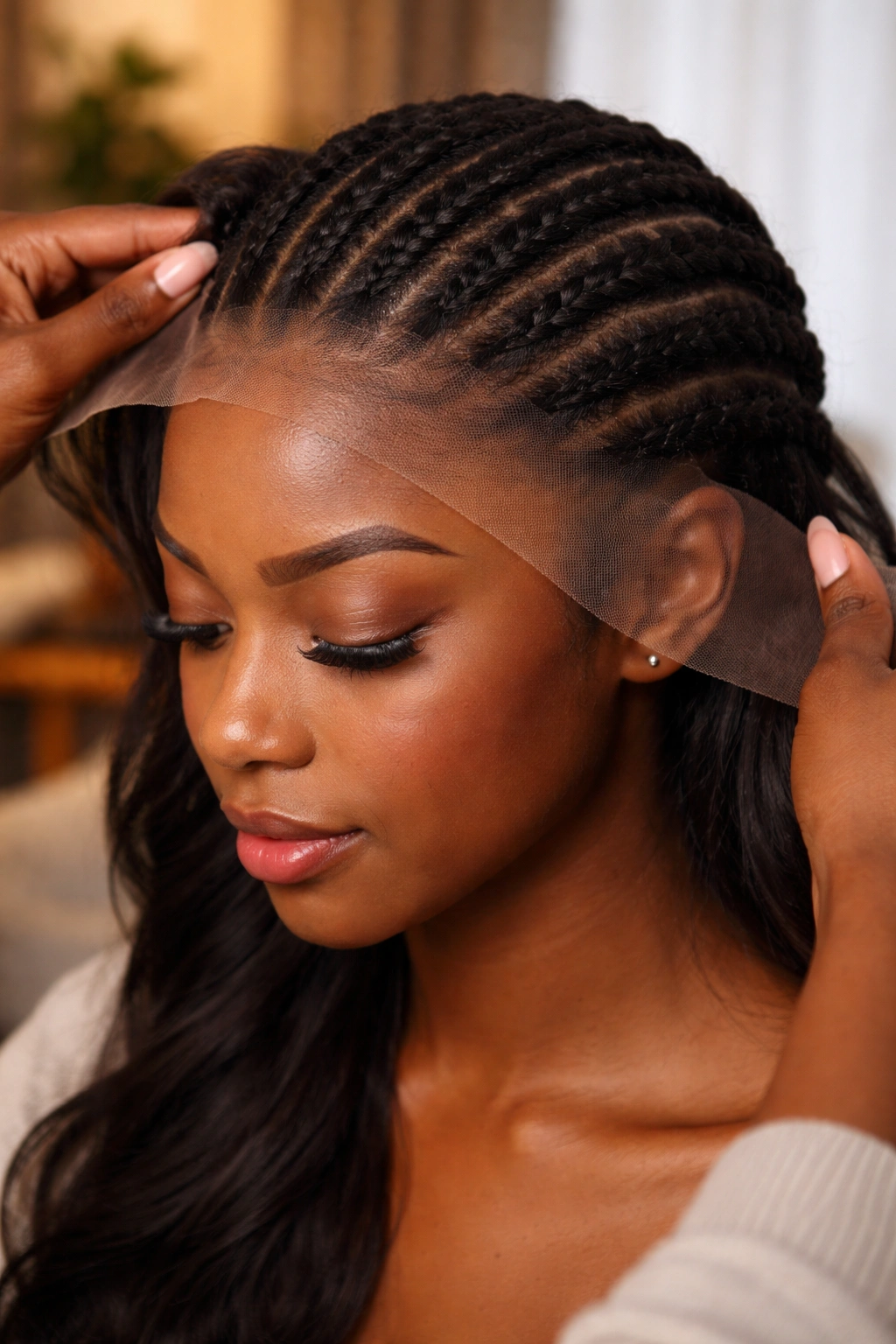
No wig will look natural over a poorly prepped head. Your braids need to be flat. No bumps, no lumps, no stray pieces poking out. I cornrow mine straight back or into a beehive pattern depending on the parting I want on the wig.
The lace needs tinting before install on most deep skin tones. I use a foundation-based tint — liquid foundation about two shades darker than my skin, mixed with a few drops of rubbing alcohol, sprayed onto the underside of the lace and patted dry. The alcohol sets it and keeps it from rubbing off during wear.
Edge control matters too. A thick edge gel helps blend the lace into your real hairline, and picking one that doesn’t flake is half the battle. Eco Styler is cheap and reliable. Got2b Glued is stronger but can flake on certain hair textures. Try both and see what your hairline likes.
Density, Parting, and the Hairline Reveal
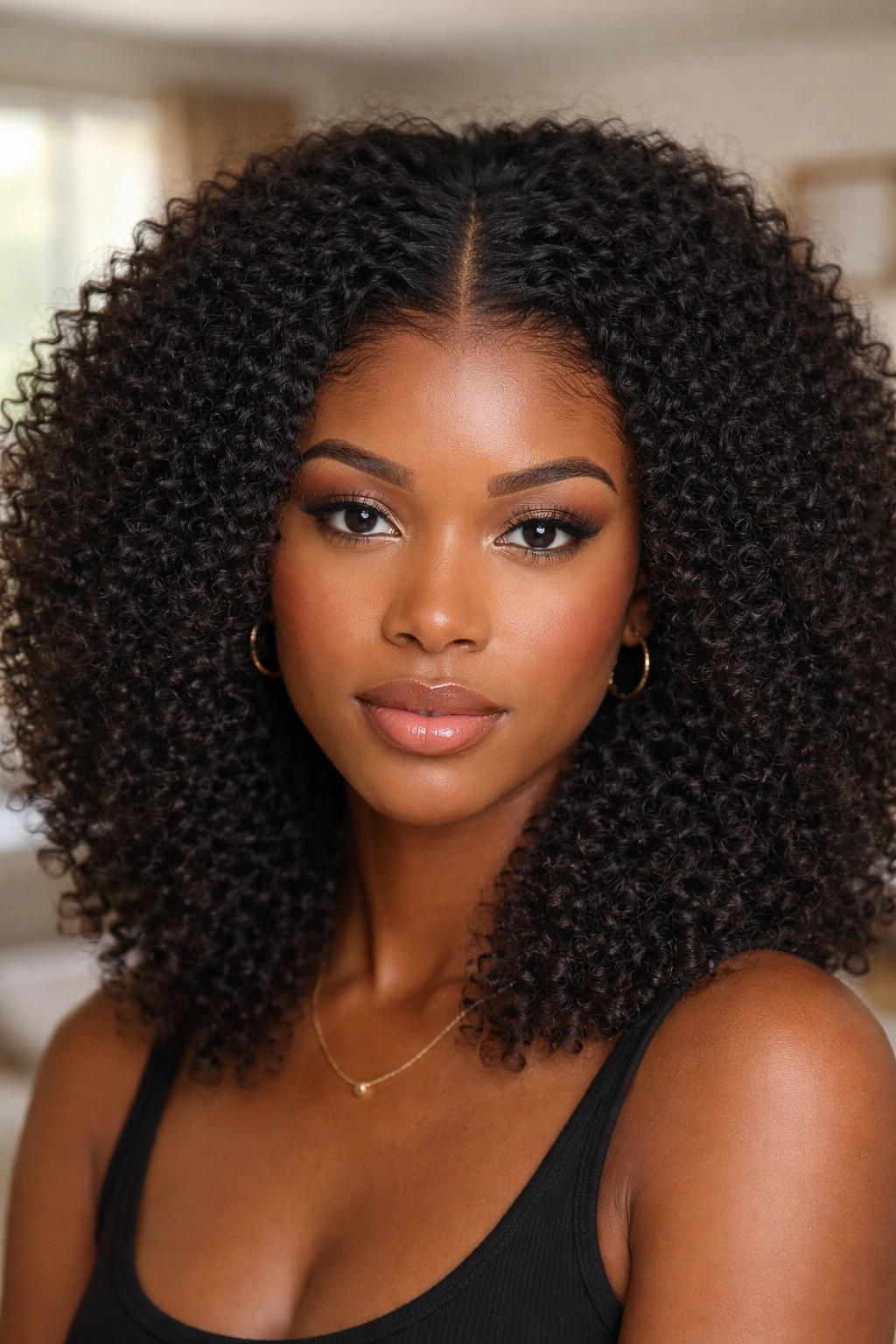
Density is measured by percentage — 130%, 150%, 180%, 200%. For natural-looking afro styles, I rarely go above 150%. Anything denser and it reads costumey unless you’re going for a giant retro vibe on purpose.
The parting tells your brain whether something is real. A clean, straight part with visible scalp through the lace is what sells a wig. If your part is blurry or bumpy, your brain registers “wig” before it even processes the rest.
And the hairline — baby hairs matter, but so does the shape. A natural hairline is rarely a perfect arc. It has widow’s peaks, uneven density, and tiny inconsistencies. The best wig customization videos teach you to pluck the hairline irregularly on purpose. Follow that advice.
1. The Jumbo Round Afro With Soft Edges
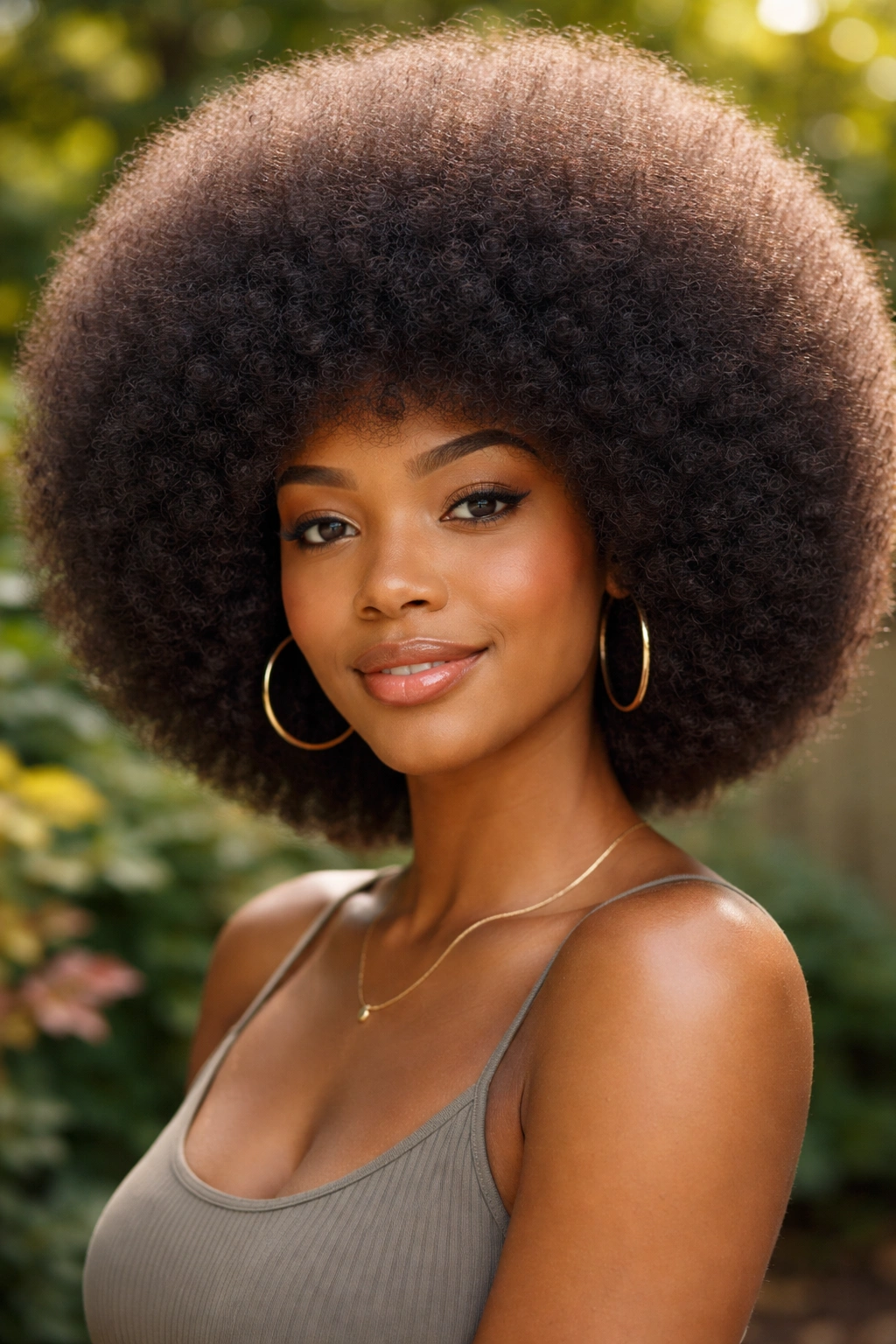
The classic round afro done right is still one of the most commanding looks a wig can pull off. The trick is in the edges — they can’t be helmet-sharp. When you pull the wig on, the perimeter should feel slightly fuzzy, slightly irregular, like a real afro that’s been patted into shape but not carved.
Why It Works
This shape reads immediately as confident and intentional. The roundness is flattering on almost every face shape, and the soft edges prevent it from looking like a costume.
- Go with 150% density maximum — denser looks fake
- Pick the wig up to about chin-length for the best roundness
- Pat the perimeter with an afro pick, don’t brush it
Bold tip: If the curls are too tight out of the box, a quick spritz with warm water and a scrunch opens them up and gives you a softer, fuller silhouette.
2. Shoulder-Length Kinky Curly With Side Part
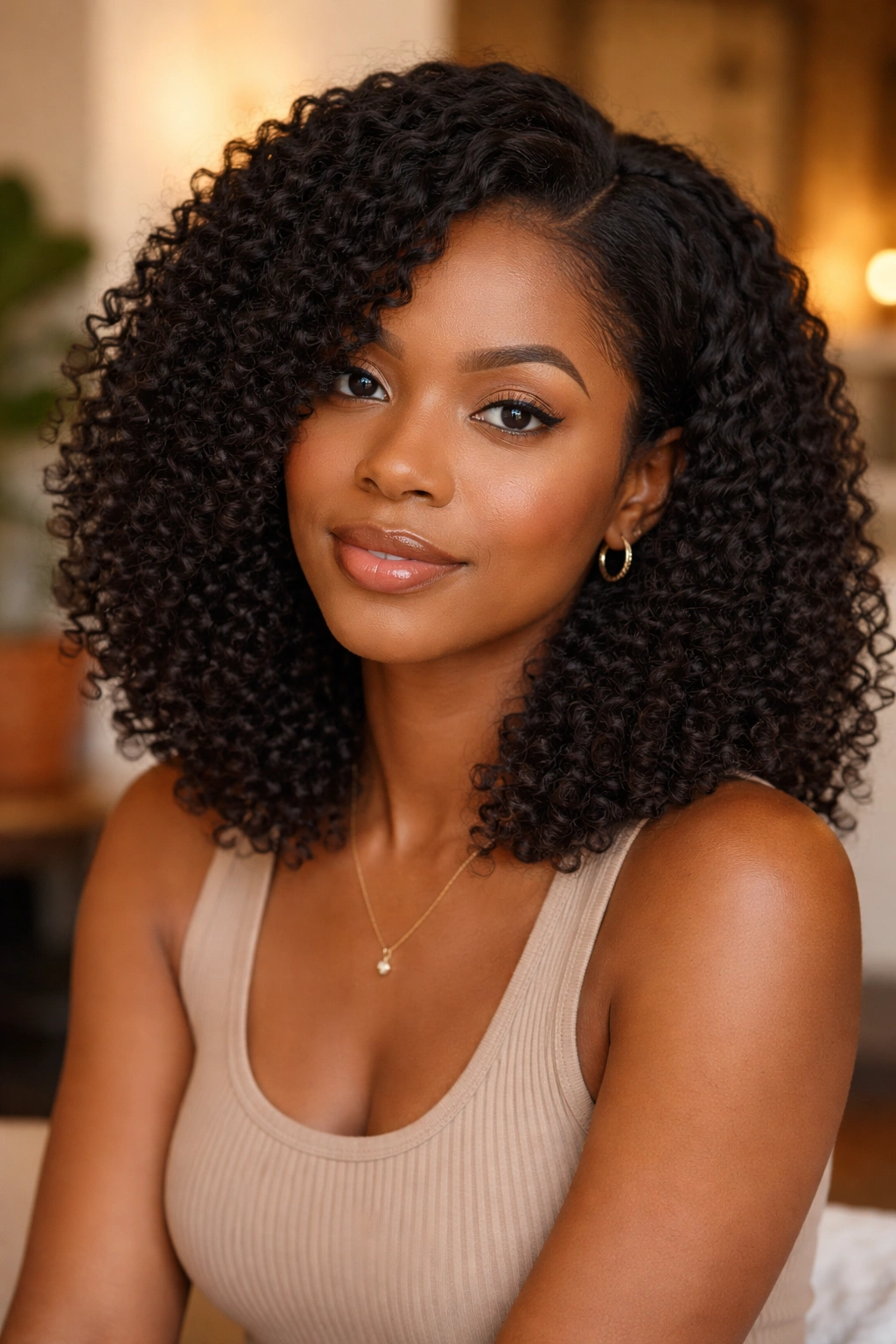
Here’s a truth people don’t tell you — a deep side part covers a lot of wig sins. If your lace isn’t perfect or you’re struggling with the hairline, shifting the part to the side hides the section where most people look first.
The shoulder-length cut keeps it believable. Longer than this and you need near-perfect customization. Shorter than this and you lose the movement that makes it look alive. I find shoulder-length the sweet spot where the curls bounce naturally and the weight hangs right.
The kinky curly texture is softer than a true 4C pattern but tighter than 3C. It mimics what a lot of naturals look like with a twist-out that’s been out for two days — slightly loose, defined but not crunchy, and full of volume without being stiff.
You want to finger-style this one. Brushes will flatten the curl pattern. Your fingers break up sections, add texture, and create that lived-in look that reads as real hair.
3. The Mini Afro Pixie Cut
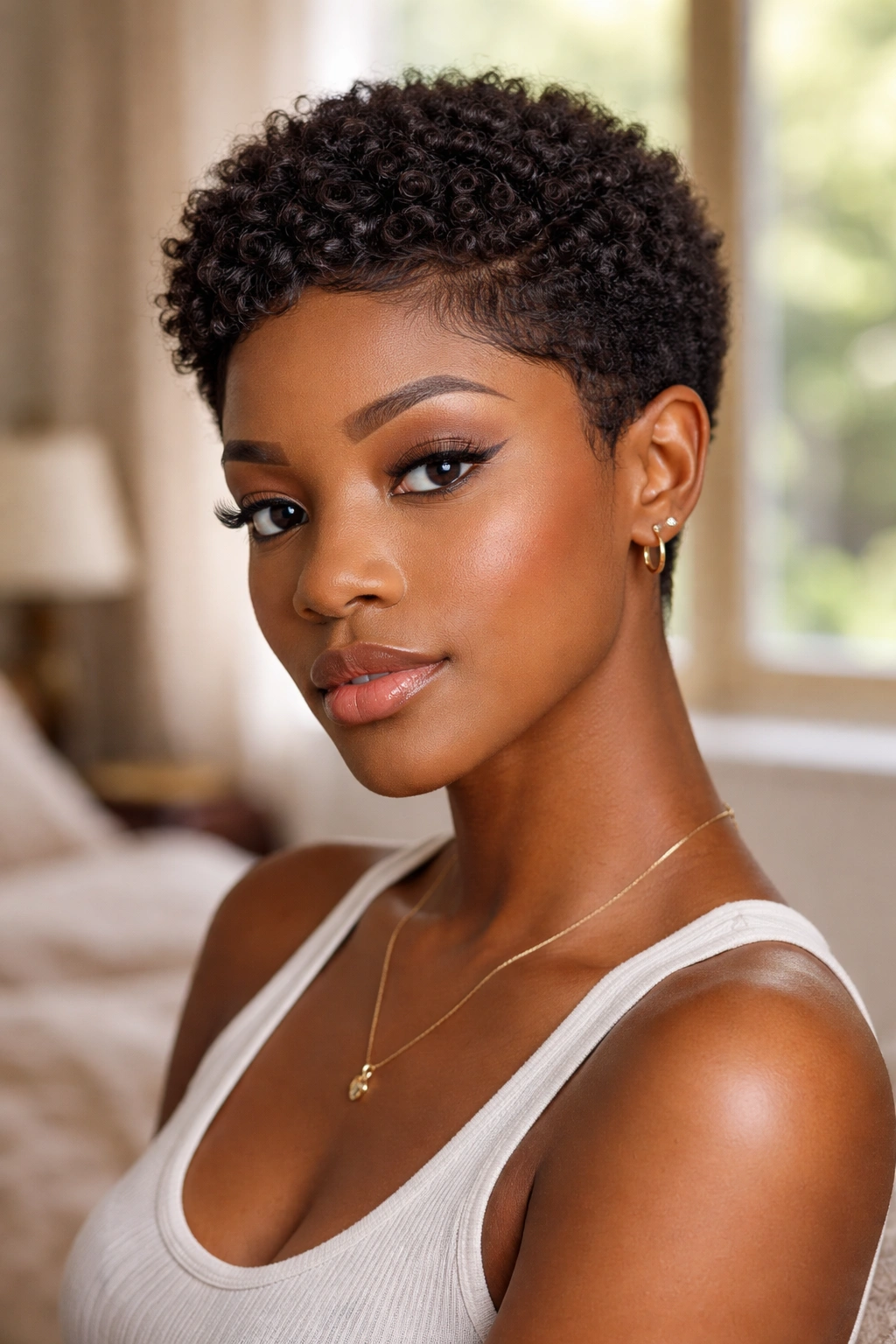
Short afro wigs are unforgiving. There’s nowhere to hide. If the lace is off, everyone sees it. If the density is wrong, it looks like a cap.
But when they work, they really work. A mini afro pixie cut sits just above the ears, maybe two to three inches of curl, and it’s one of the most striking looks you can put on a head. The shape is so intentional, so sharp, that it commands attention without trying.
Unlike longer wigs where you can hide behind volume, this one demands a well-customized lace and a clean edge. You cannot cut corners here. If you’re not confident plucking a hairline and tinting lace, save this style for after you’ve built some skill.
4. Freeform Curl With Undefined Edges
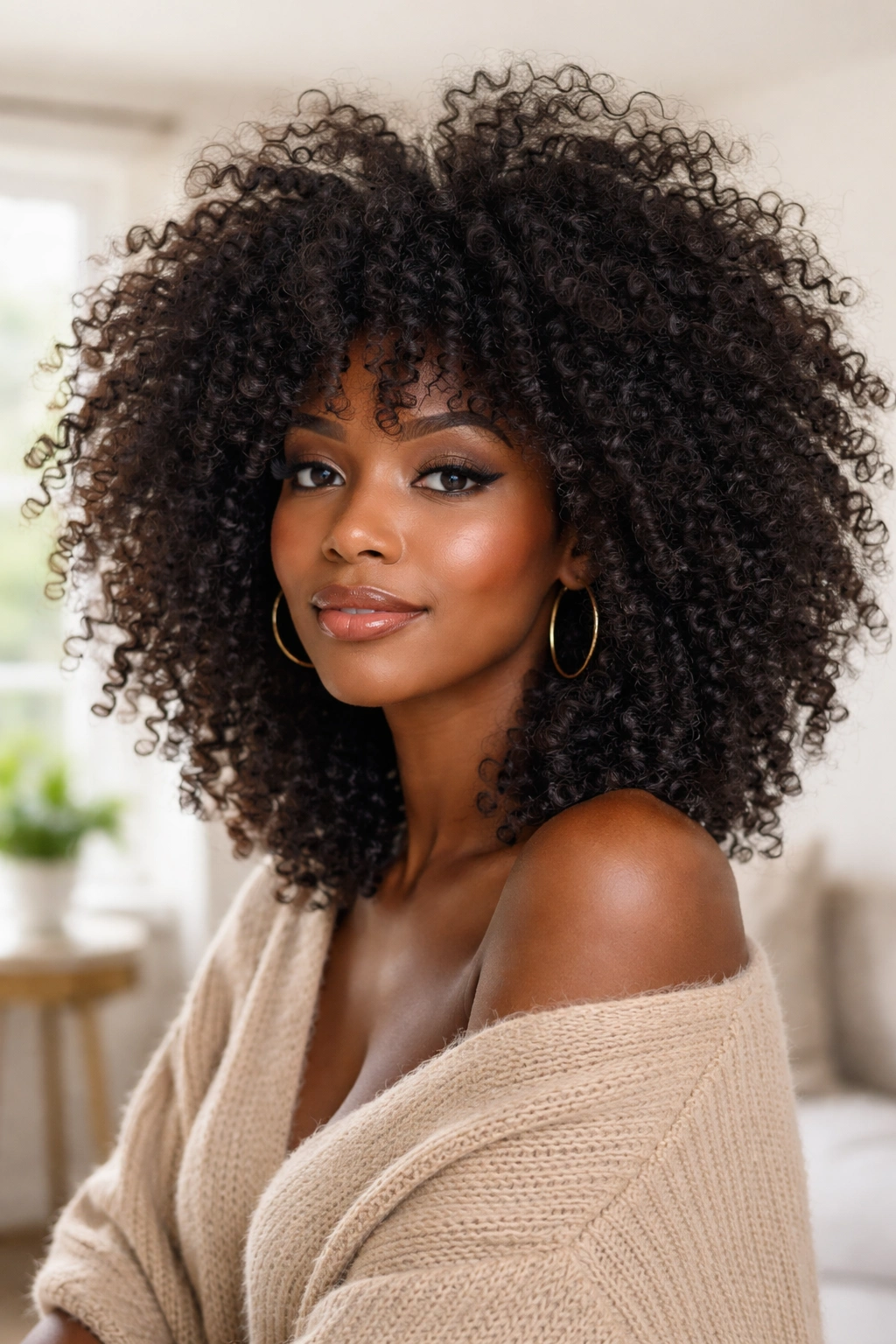
Sometimes the most natural look is the least styled one. Freeform curl wigs have no clean shape, no cut edges — they’re just a cloud of curl that follows wherever gravity and the roots take it.
I love this style because it’s the opposite of uniform. The curl pattern varies across the wig, some tighter, some looser. The perimeter is soft and uneven. The crown is fuller than the sides. It looks like hair that has grown in naturally and been left to do its thing.
The catch: freeform wigs can look unfinished if your proportions are off. Make sure the overall shape still flatters your face — if it looks lopsided, you need to trim or pick it out more on one side.
Who this is for: anyone who wants the afro look without the effort of constantly shaping and maintaining a geometric silhouette. Also great if you’ve been doing a long-term natural hair journey and want your wig to look like a continuation of that.
5. The Half-Up Bun Afro
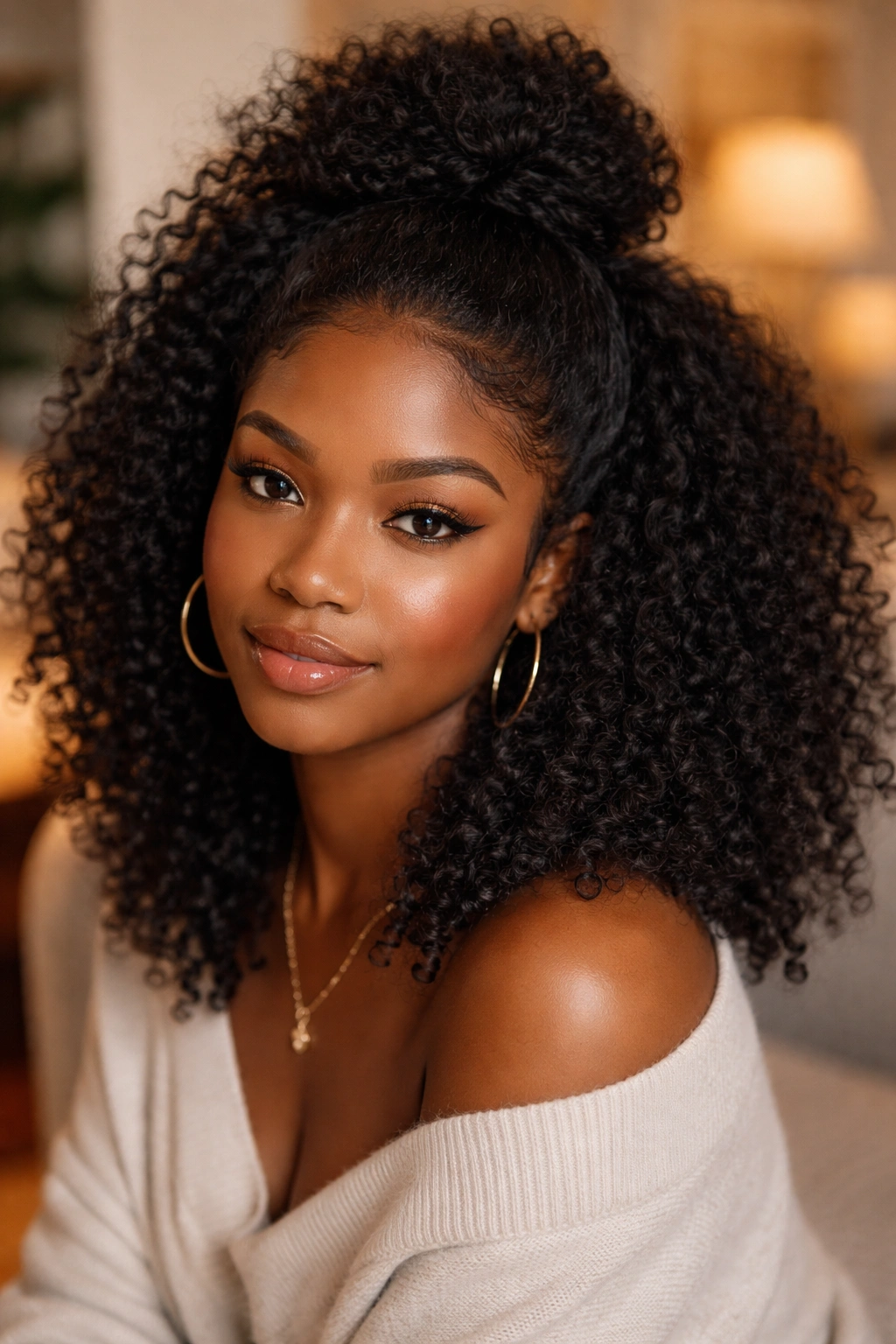
Bold claim — the half-up half-down afro is one of the most slept-on wig styles there is. You pull the top portion into a small puff or bun at the crown, and the rest hangs down in a full curl halo. The combination creates dimension that a plain afro can’t match.
The half-up move also serves a practical purpose. It keeps the hair out of your face while still showing off volume, and it creates a visual peak at the top of your head that’s flattering on rounder face shapes. The crown puff also hides any thinness in the wig cap near the top, which is where some cheaper wigs show their seams.
I usually secure the top portion with a small elastic covered by a few twisted pieces of the wig hair itself. Don’t use a visible scrunchie — it breaks the illusion instantly. Tuck and pin.
6. Tapered Sides With Crown Volume
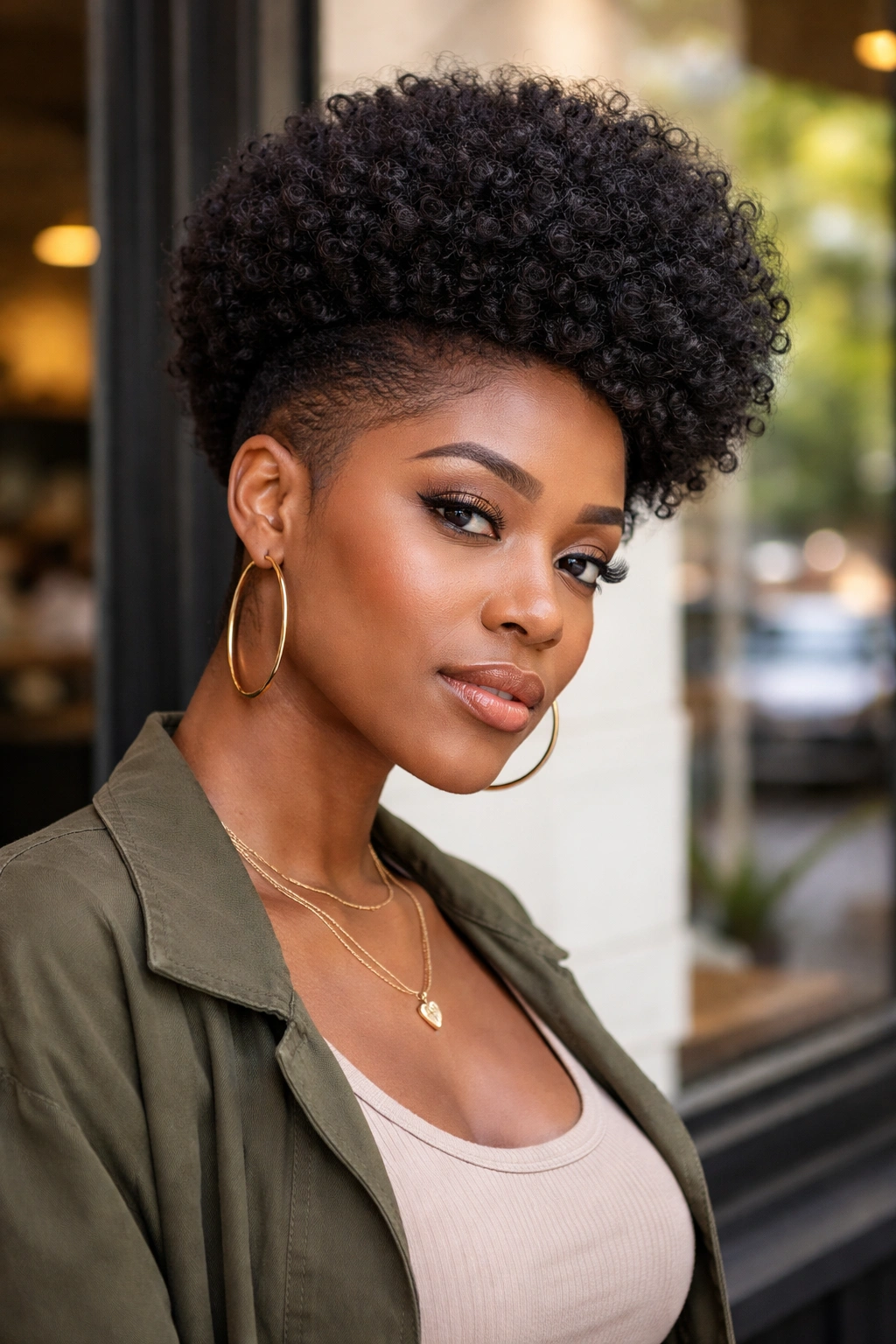
This is a barbered look adapted to wigs. The sides are short, almost faded, and the crown has full afro volume. It reads masculine or androgynous depending on how you wear it, and it’s a great option for anyone who wants the taper look without actually cutting their real hair.
What Makes It Different
Most afro wigs have uniform length all around. This one doesn’t, and that asymmetry is exactly what makes it look real and intentional. Real tapered cuts never look like wigs because your brain doesn’t expect a wig to be barbered.
- Look for wigs labeled “tapered” or “fade style” specifically
- The crown should be at least 4 inches for proper volume
- Edge work is critical — the lace transition needs to be flawless
Plucking the sides slightly to reveal a bit of scalp through the lace sells it even harder. This is a high-effort style, but the payoff is enormous.
7. Curly Mullet Afro
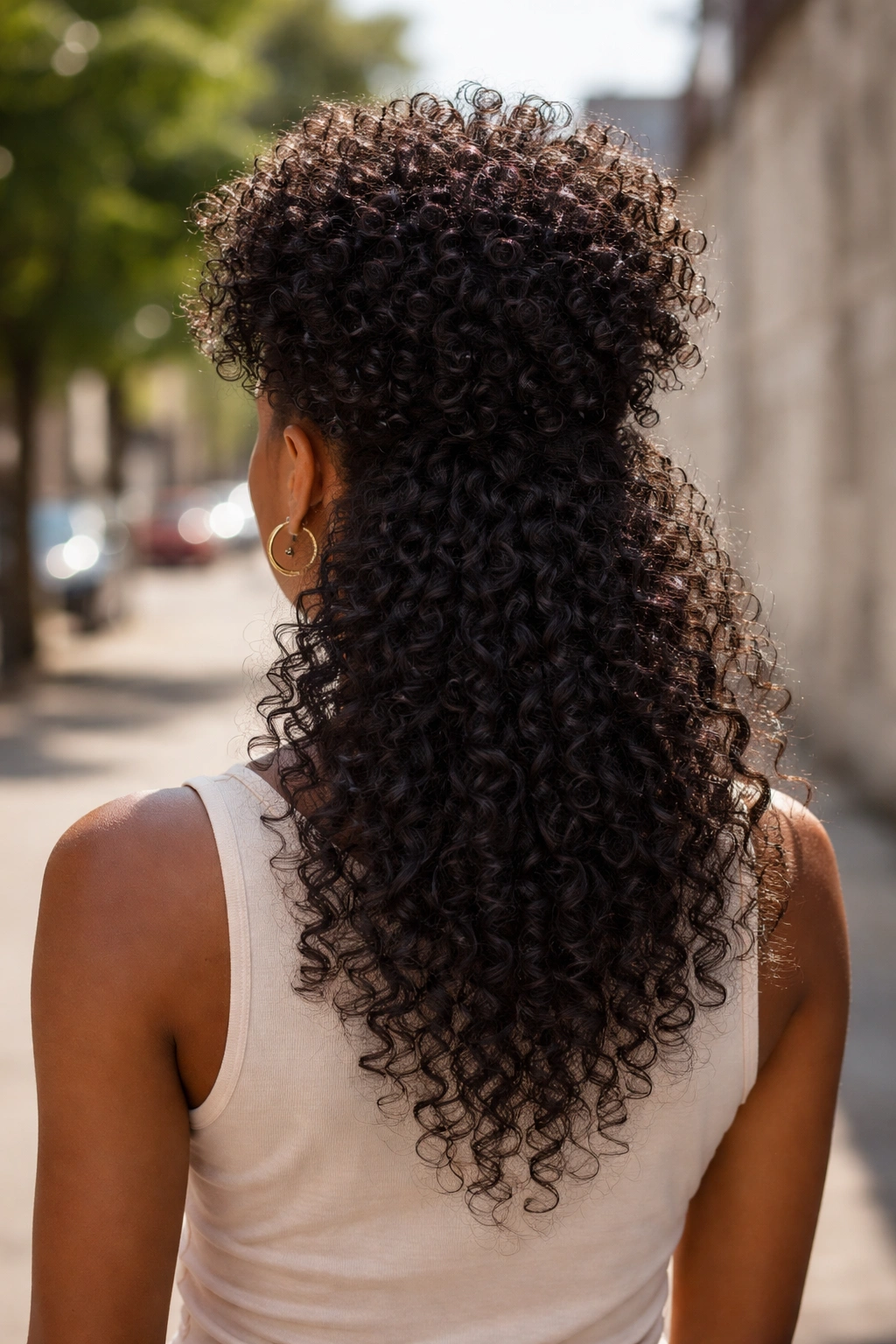
Mullets are divisive. I get it. But a curly afro mullet — short and full on top, long and cascading at the back — is having a real moment in the natural hair space and for good reason. It’s dramatic, it’s different, and it’s surprisingly flattering when the proportions are right.
The wig version of this is easier than the cut version because you don’t have to commit. You can wear it for a night and put it away. The key is finding a mullet wig with enough length disparity between top and back — at least four inches of difference. Anything less and it just looks like a shag.
Wear it with bold earrings. The proportions need a counterweight at the ears, and simple studs get swallowed by the volume.
8. Kinky Straight Blown-Out Look
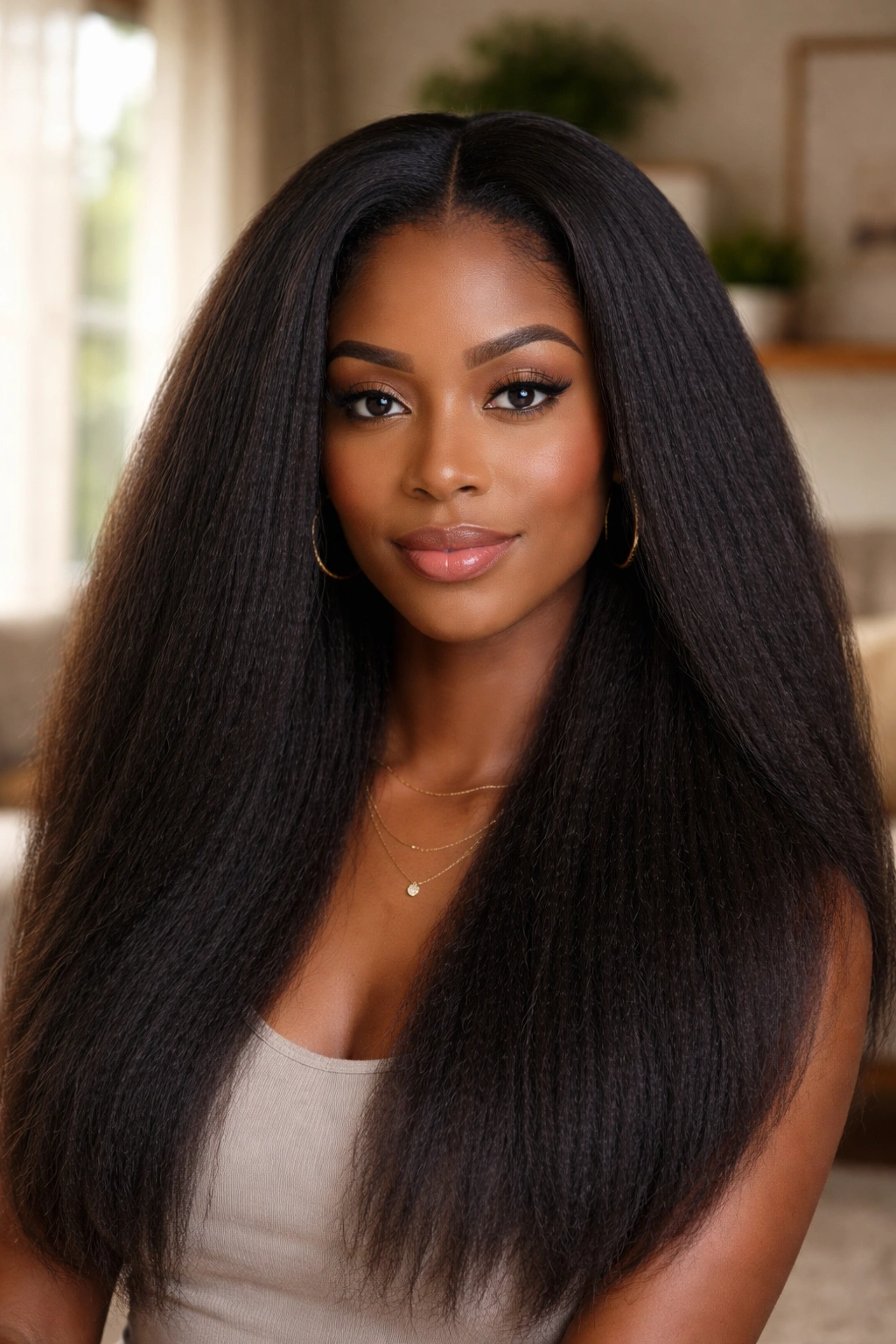
Kinky straight wigs mimic the texture of naturally straightened 4C hair — not silk pressed, not blown out smooth, but stretched just enough that the kink softens without disappearing. This is what a lot of people with natural hair look like after a banding session or a braid stretch.
The reason this style reads so natural is that it has a little coarseness to it. Your brain expects Black hair to have some body and texture, not slick sheen. Kinky straight delivers that believably.
Unlike straight wigs, which can look like costume pieces on women of color, kinky straight looks like your hair just got a gentle press. It moves differently. It catches light differently. You can run your hands through it without it feeling like plastic.
Pair it with a middle part for the cleanest look, or a deep side part if you want drama. Either way, the kinky texture covers a multitude of parting sins.
9. Twist-Out Textured Bob
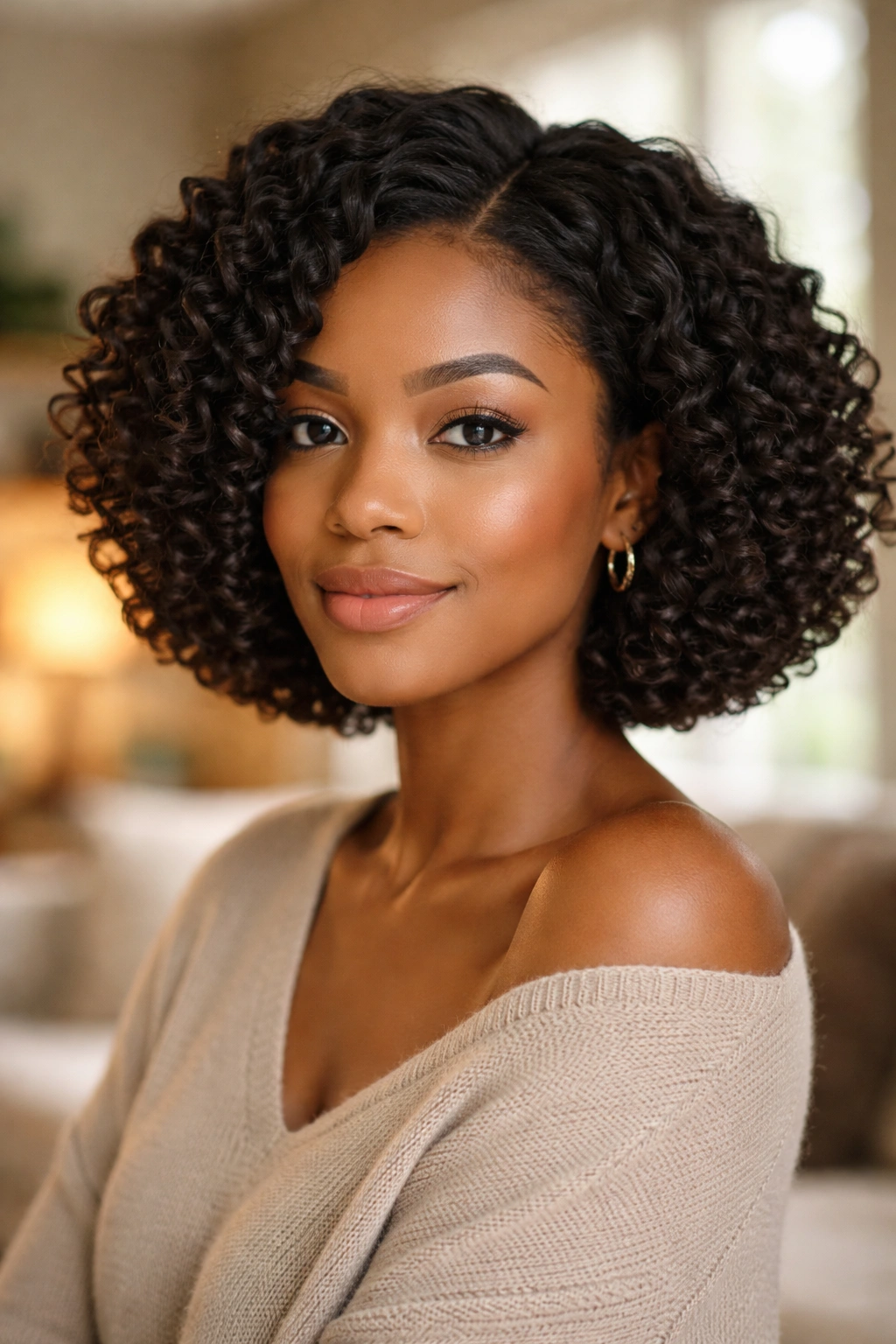
A chin-length bob with twist-out texture is one of my favorite everyday wig styles. It’s professional enough for work, cute enough for a date, and short enough to be low-maintenance. The twist-out texture means it’s not too defined and not too loose — it hits the exact middle ground that looks effortless.
The bob length is forgiving. Wigs in the 10-12 inch range are easier to work with than longer pieces. They don’t tangle as much. They sit better on the head. And they’re usually less expensive because there’s less hair involved.
How to Get the Most From It
Finger-coil a few pieces around your face to give it dimension and break up the uniform curl pattern. Add a tiny bit of curl cream to the front pieces to smooth them just slightly. Leave the back pieces wild. That front-to-back contrast is what makes it read real.
10. Long Coily Halo With Middle Part
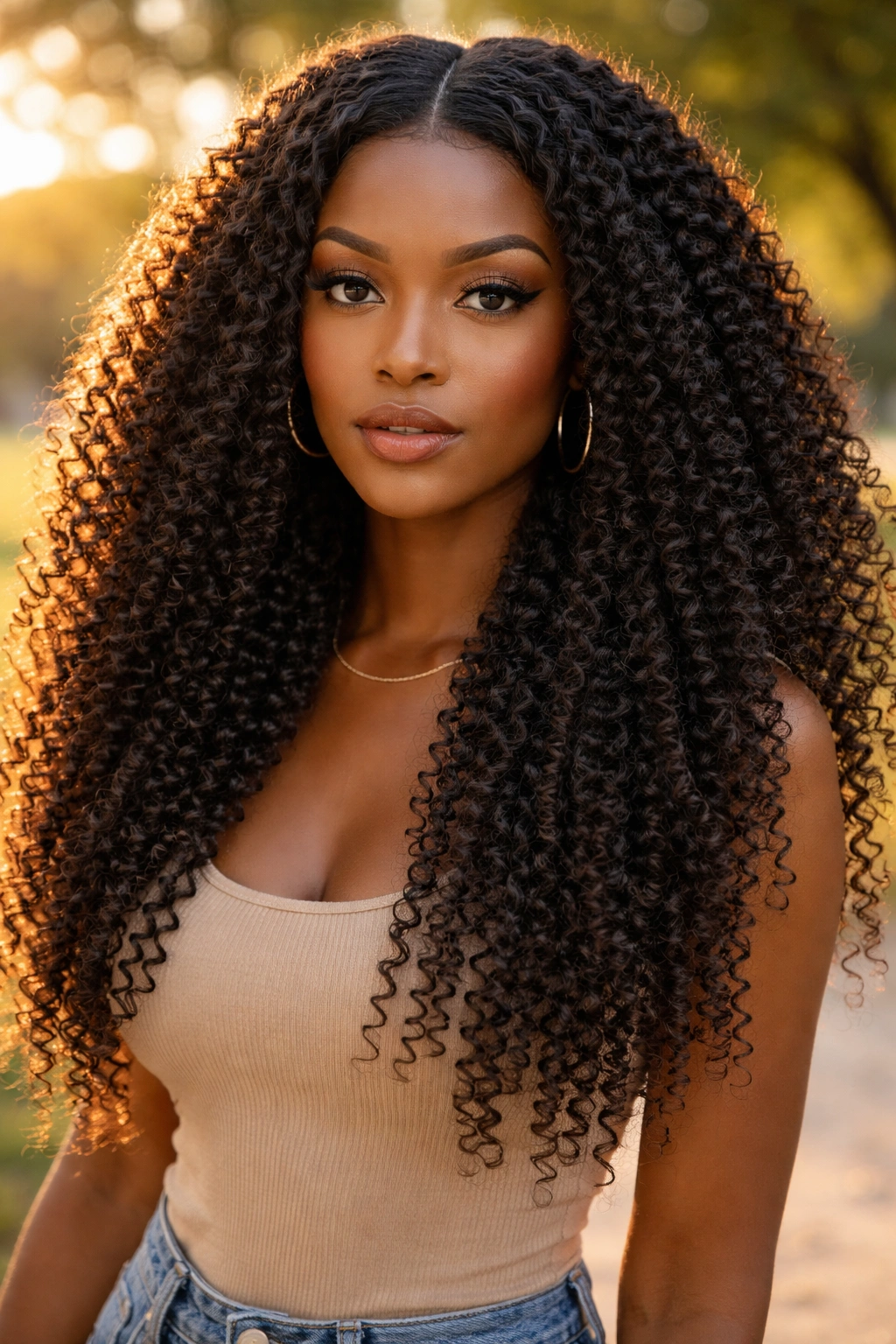
If you’re going long, go specific. A long coily halo that falls to the chest with a clean middle part is dramatic in the right way. The length adds presence, the middle part adds symmetry, and the coil pattern adds believability.
This style lives or dies by density. Too much and it looks like a lion mane. Too little and it looks scraggly. 180% density at the crown tapering to 150% at the ends is the ideal — which is why custom wigs are worth the investment for this look specifically.
The middle part needs to be sharp but not surgical. I use a rat-tail comb to section it and a tiny bit of edge gel on the first row of hair to keep it laying flat without looking stiff.
11. The Curly Afro Bob With Bangs
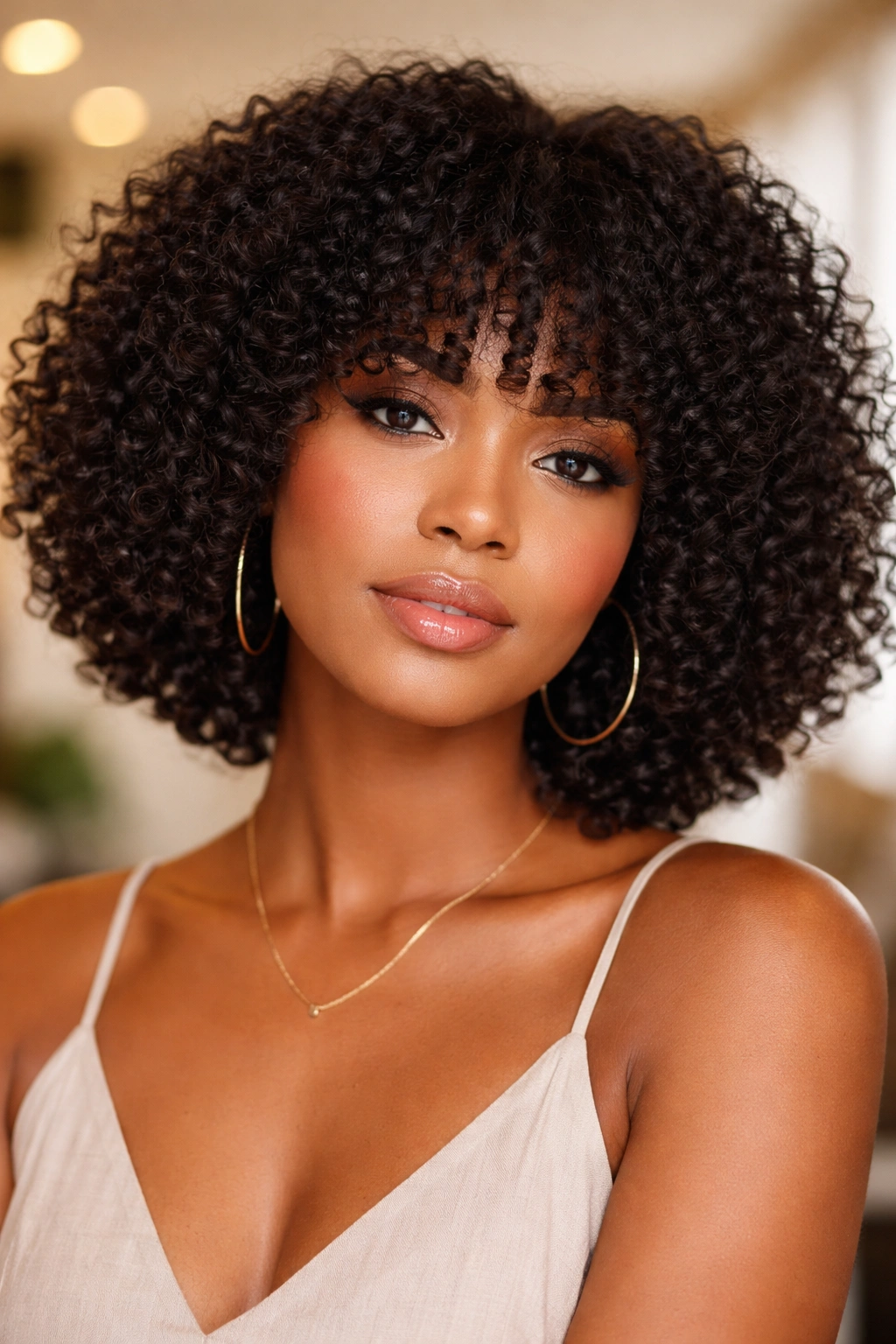
Bangs on an afro wig feel risky but pay off when done right. A curly afro bob with bangs frames the face, adds visual interest, and draws attention to the eyes rather than the hairline.
Scenario — you’re at a wedding, you don’t feel like committing to lace customization, and you want something striking. A curly bob with built-in bangs solves all three problems. The bangs cover the hairline completely. No plucking, no tinting, no stress.
The mechanism is simple. Bangs obscure the part of the wig where mistakes are most visible. You trade a little of your forehead real estate for a lot of peace of mind.
- Pick bangs that fall just above the eyebrows for the most flattering look
- Curly bangs should be slightly longer than you think — they shrink up
- Trim them wet, then let them dry to see the true length
If the bangs come out too heavy, thin them with texturizing shears. Don’t cut length — that’s the trap most people fall into.
12. Afro With Glued-Down Finger Waves in Front
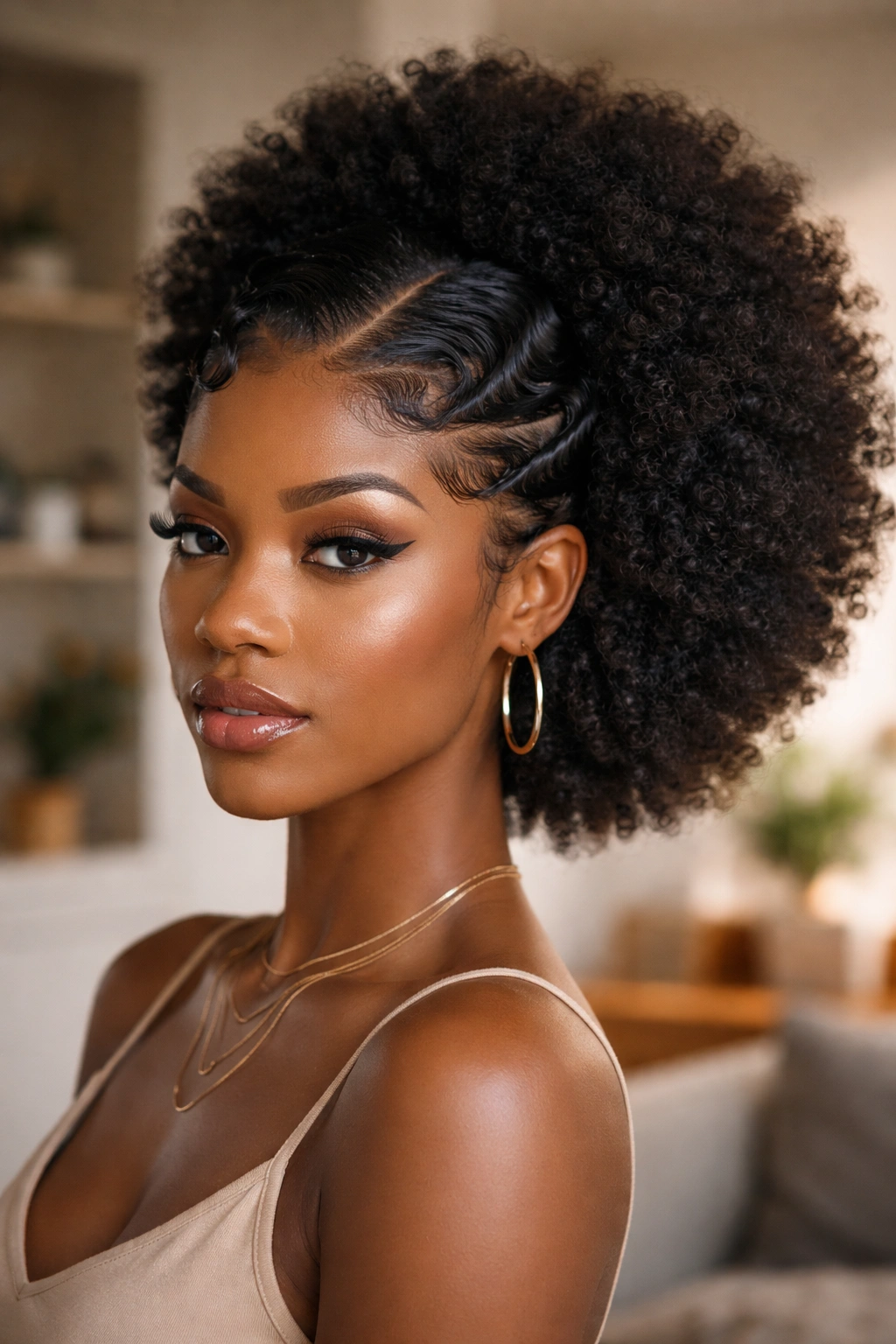
This is a hybrid look that fuses old-school glamour with modern texture. The front section — from the hairline back about two inches — gets finger-waved flat against the scalp. The rest of the wig stays in its natural afro shape. The contrast between sleek waves and wild volume is striking.
I’d argue this is one of the hardest wig styles to pull off, and also one of the most rewarding. The finger waves need to be tight and clean. The afro portion needs to be full and textured. The transition between the two zones has to be smooth, not abrupt.
You’ll need a good setting gel, small duck clips, and patience. Maybe twenty minutes of work once the wig is on. But when it’s done, it looks like a sculpture sitting on your head. People don’t look at this and think “wig” — they think “hair artist.”
13. The High Puff Pineapple Style
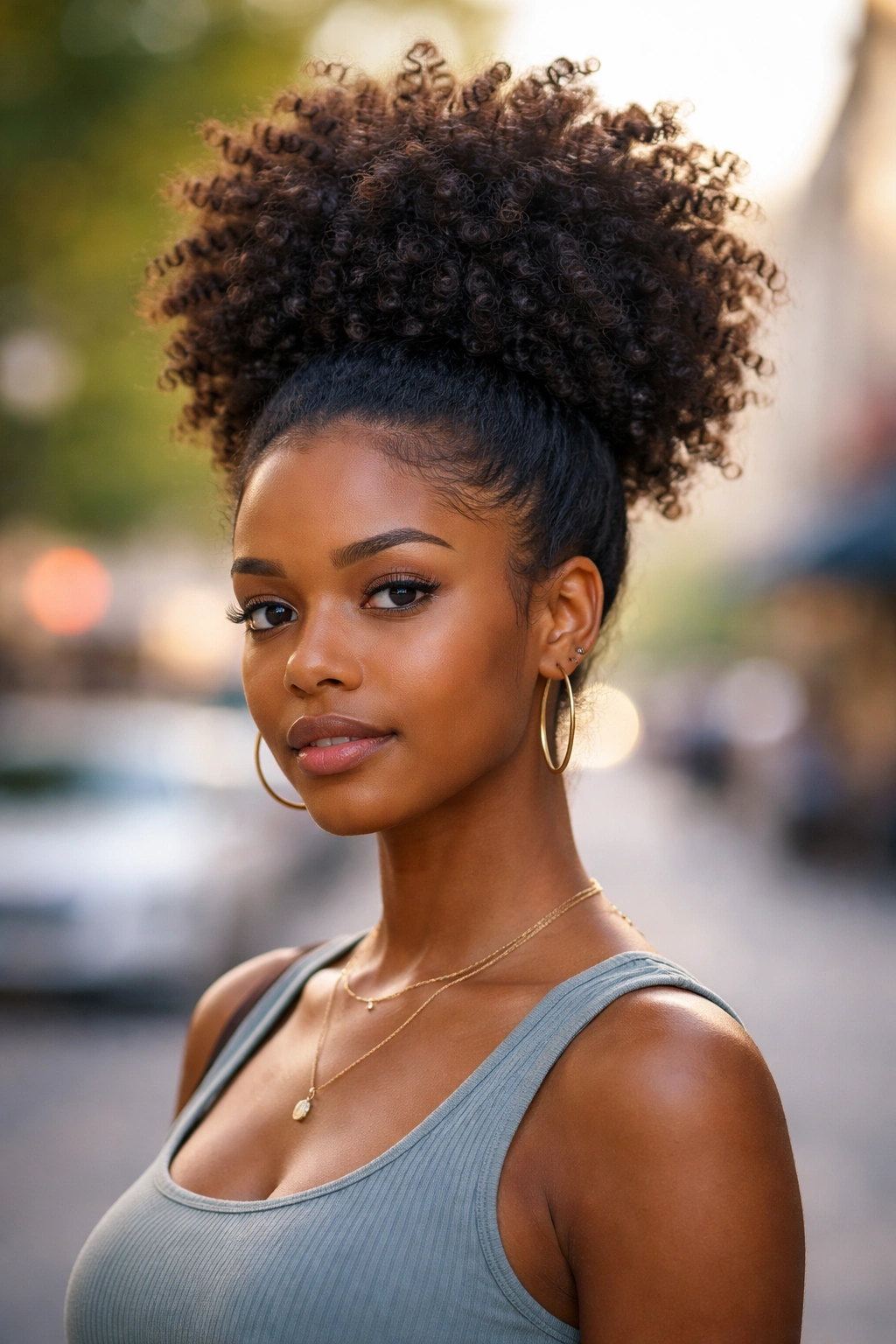
Bold move — take a long curly wig and just pull it all up into a high puff. The pineapple style works because it draws attention upward, elongates your neck, and puts the full volume of the wig on display.
The trick is getting the base of the puff tight without showing the wig construction. I use a satin scrunchie wrapped three times, then cover the scrunchie itself with a few twisted pieces of wig hair pinned over it.
This style is also great for days when your wig is a little past its prime. Once the curl pattern starts to relax, pulling it up into a puff hides the roughness and gives you one more wear before you need to wash and restyle.
14. Cornrowed Front With Afro Back
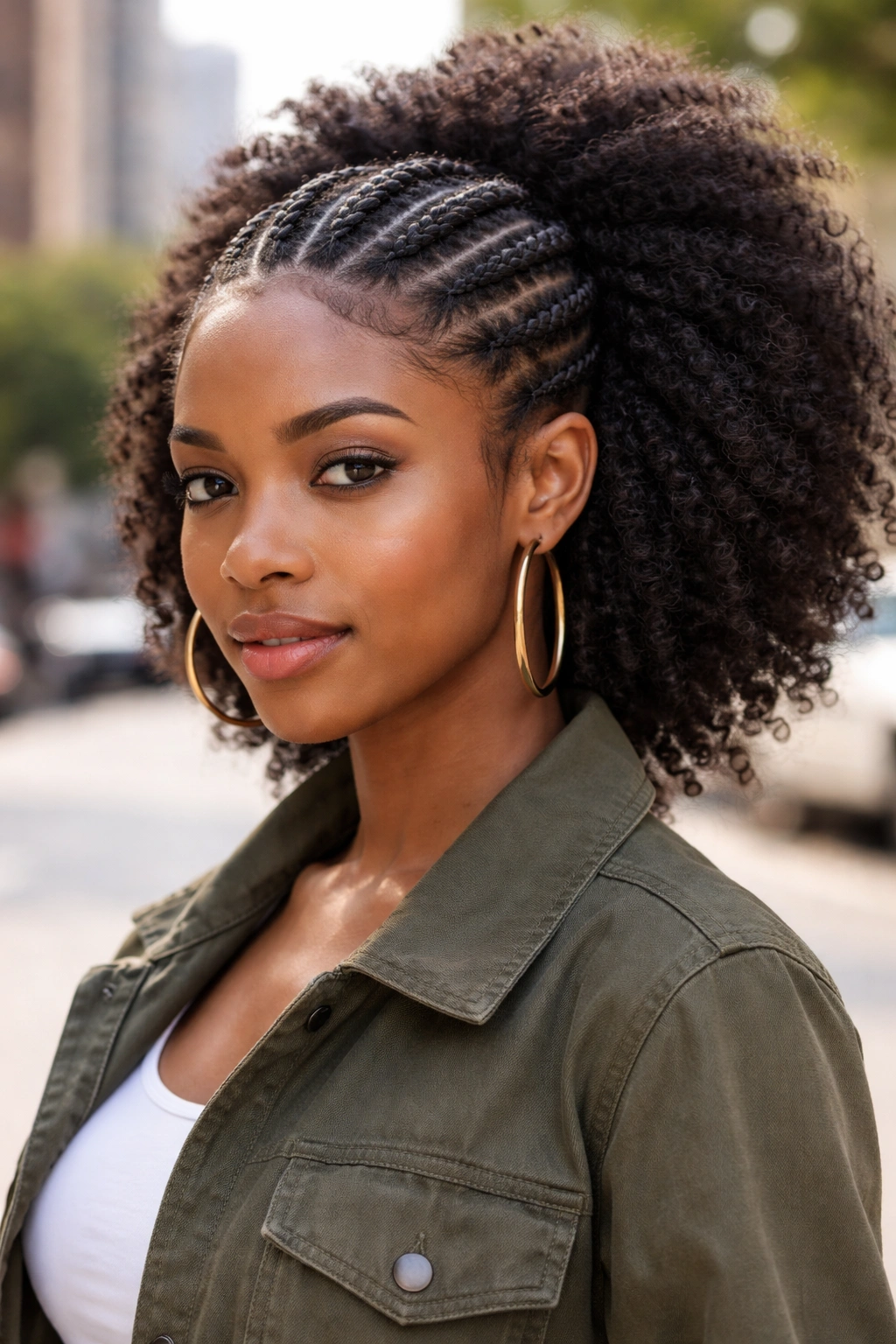
Think of this as the wig version of a half-protective style. The front section is cornrowed flat against the wig cap — usually three or four braids going straight back — and the back half remains in a loose afro texture.
Who This Is For
People who want the look of a protective style without the commitment, or anyone who gets headaches from traditional cornrows. The cornrowed section reads as intentional and adds a sporty, edgy vibe to the overall look.
- You’ll need to actually braid the front of the wig — this isn’t a style you buy pre-done
- Use water and a small amount of gel to smooth each braid as you go
- Secure the ends by tucking them into the afro portion and pinning
Bold tip: Loosen the braids slightly as you go. Tight braids on a wig look stiff. Slightly loose braids with a little volume at the top of each look like they grew out of your head.
15. The Washed-and-Gone Coil Wig
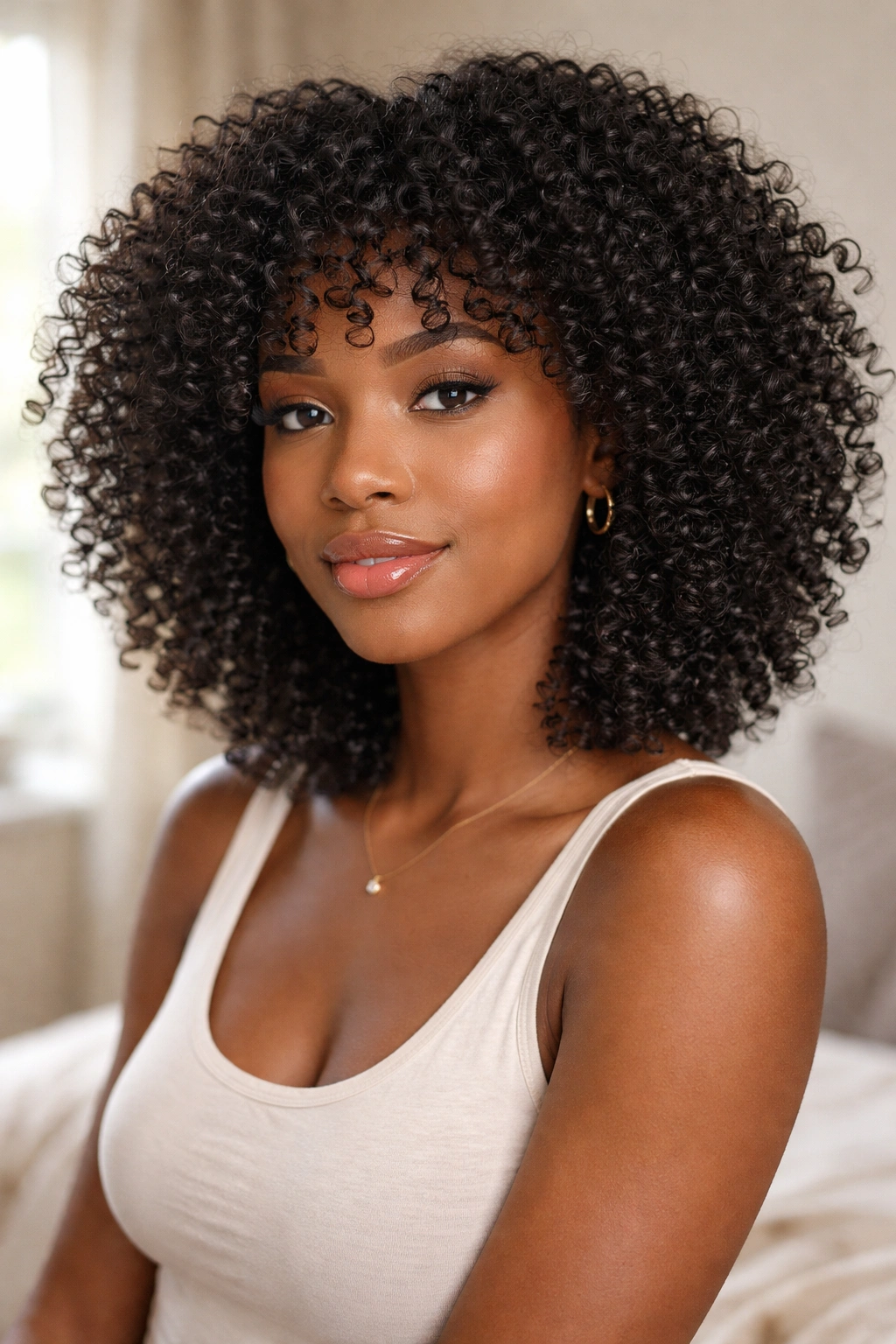
Some wigs come labeled “wash and go” because the curl pattern is so defined that you don’t need to do much styling. These are usually marketed as 4A or 3C textures with shiny, loose coils.
Unlike heavily styled wigs, the wash-and-go coil look is about minimal manipulation. You spritz it with water, add a little leave-in, scrunch, and let it air dry. The result is a fresh, bouncy, defined curl that looks like you just got out of the shower.
This style is best for people who want a low-effort daily wig. You’re not doing twist-outs every night. You’re not finger-coiling pieces. You wake up, shake it out, maybe add a spray of water, and go.
The downside — if the curl pattern relaxes, you have to re-wet and restart. There’s no in-between state where this style looks good.
16. Red Ombre Curly Afro
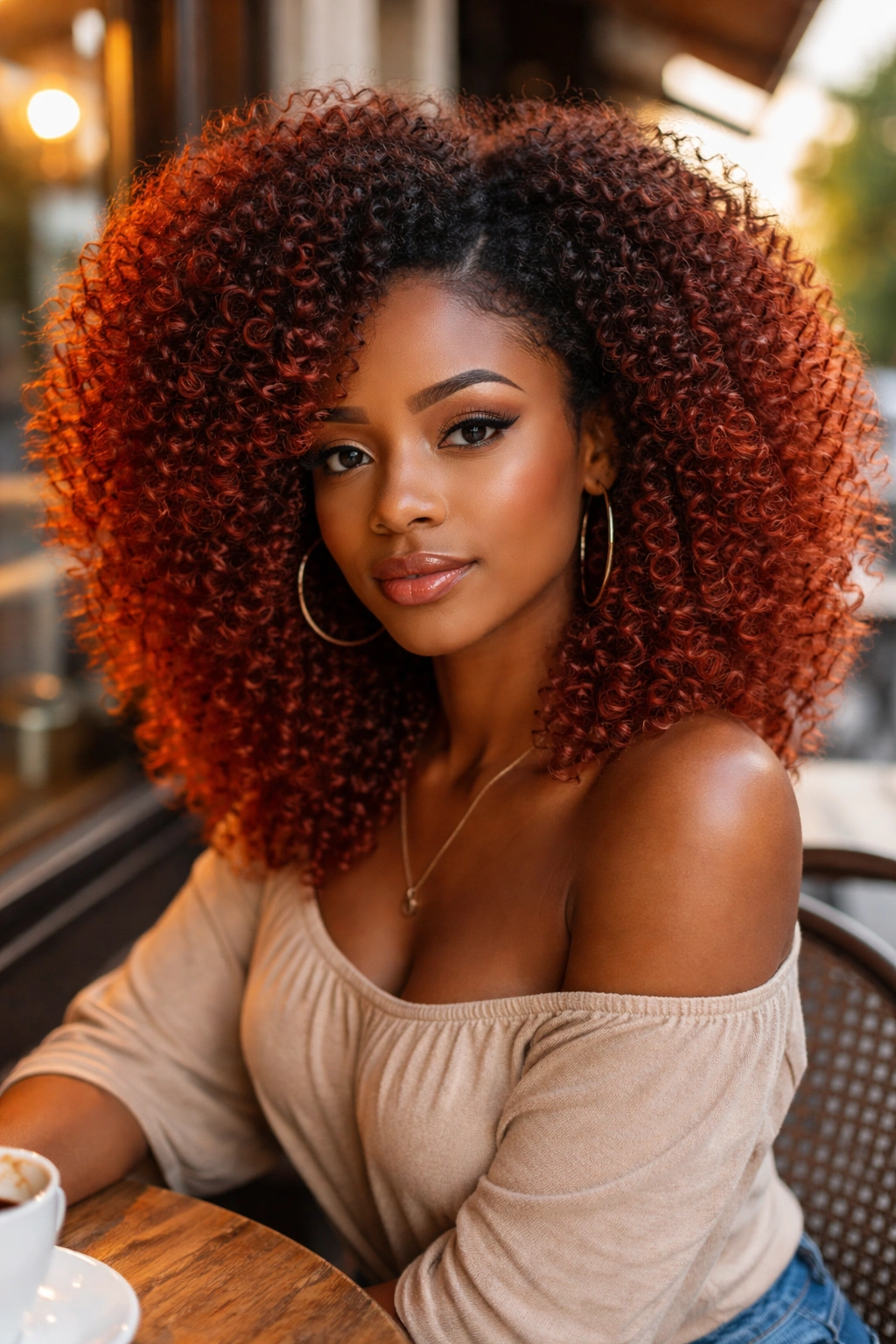
Color changes everything. A curly afro with a warm red ombre — darker at the roots, fading to copper or auburn at the tips — gives the style depth and dimension that a flat black wig can’t match.
Natural hair catches light unevenly. A solid color wig reflects light uniformly, which is part of why cheap wigs read as fake. Ombre breaks up that uniformity and mimics the way real hair catches sun at the ends.
I lean toward subtle ombres for natural looks. A dramatic platinum ombre reads as wig-y. A soft warm ombre, just a few shades lighter at the tips, reads as real hair that’s been out in the sun.
You can buy these pre-ombred or dye a human hair wig yourself. The DIY route gives you more control but requires real coloring skill. Don’t try it on a synthetic wig — heat and bleach will melt it.
17. The Side-Swept Afro
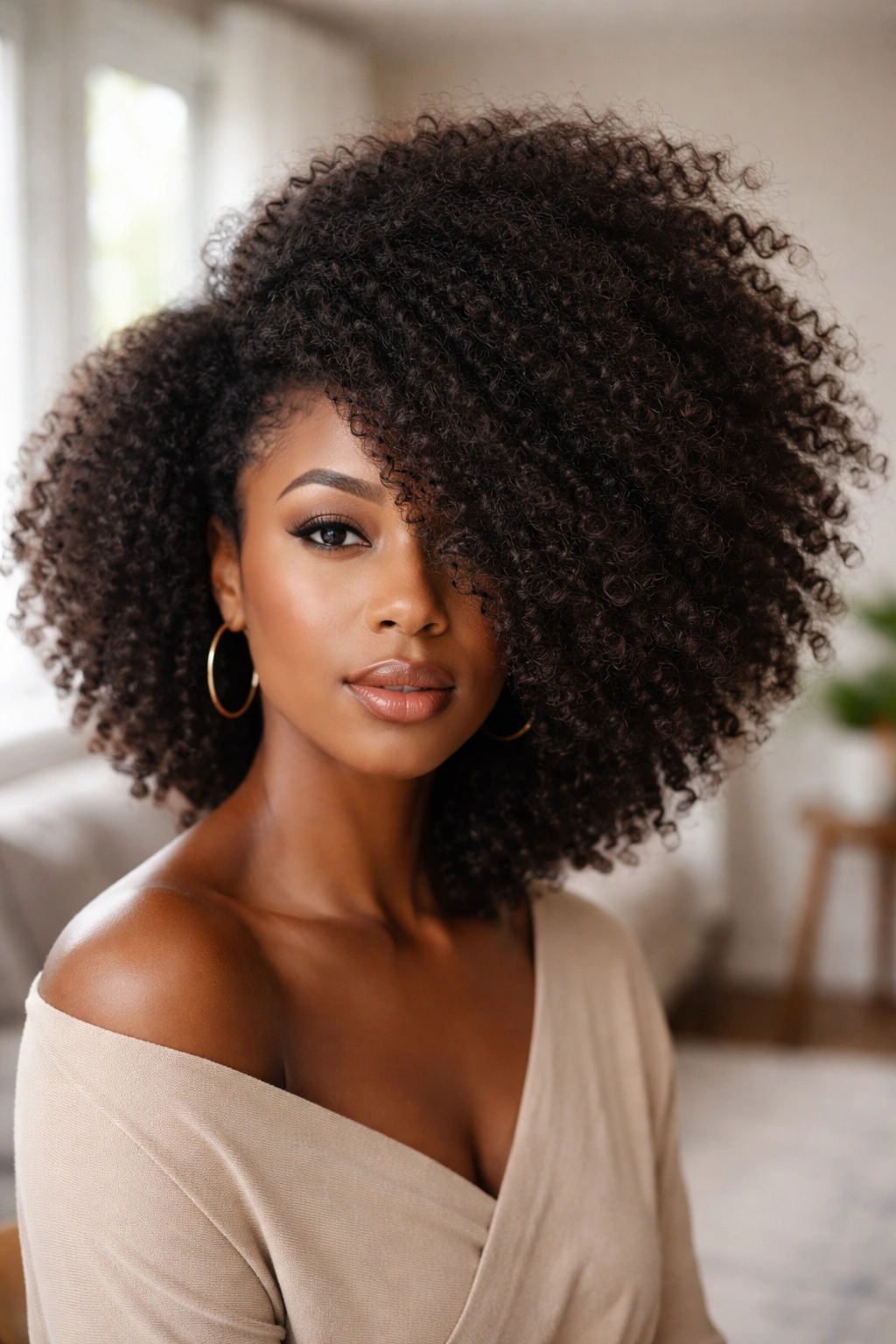
Not every afro has to be symmetrical. A side-swept afro — where the volume is pushed to one side and the opposite side sits closer to the head — creates asymmetry that reads as stylish and intentional.
The trick is in the swept direction. Pick one side and commit. Pat the chosen side to build volume. Gently press the opposite side down with your palm to create the contrast. Secure with a few bobby pins hidden inside the wig if needed.
This look works especially well for oval and heart-shaped faces. The asymmetry adds dimension and draws attention to one eye, which is a classic beauty move. It also gives the wig movement — when you turn your head, the volume shifts in a way that static symmetrical afros can’t match.
18. Jet Black Shiny 4A Curl Pattern
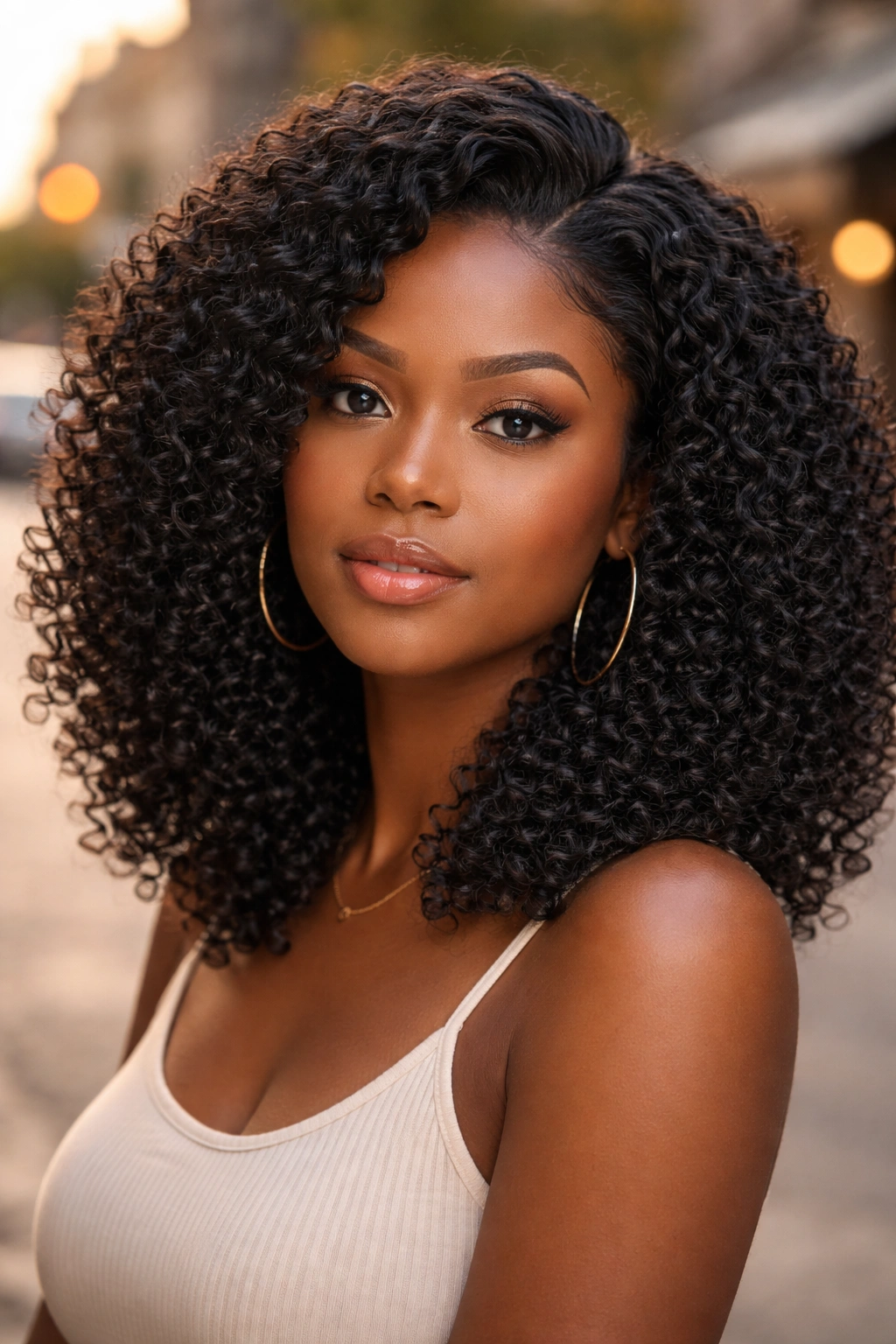
A lot of cheap wigs have a plastic shine that instantly betrays them. But real Black hair, especially freshly washed and moisturized, has its own natural sheen. The trick is matching that specific kind of shine — soft, healthy, slightly oily — rather than the harsh reflective shine of cheap synthetic fiber.
A jet black 4A curl pattern wig with the right fiber has a gentle luster that looks like you just finished your wash day routine. The 4A pattern is loose enough to show definition but tight enough to read as natural Black hair.
This is a good “first wig” for people who are nervous about getting it wrong. The curl pattern is forgiving, the color is classic, and a 4A texture at shoulder length covers most face shapes well.
19. The Faux Locs Afro Hybrid
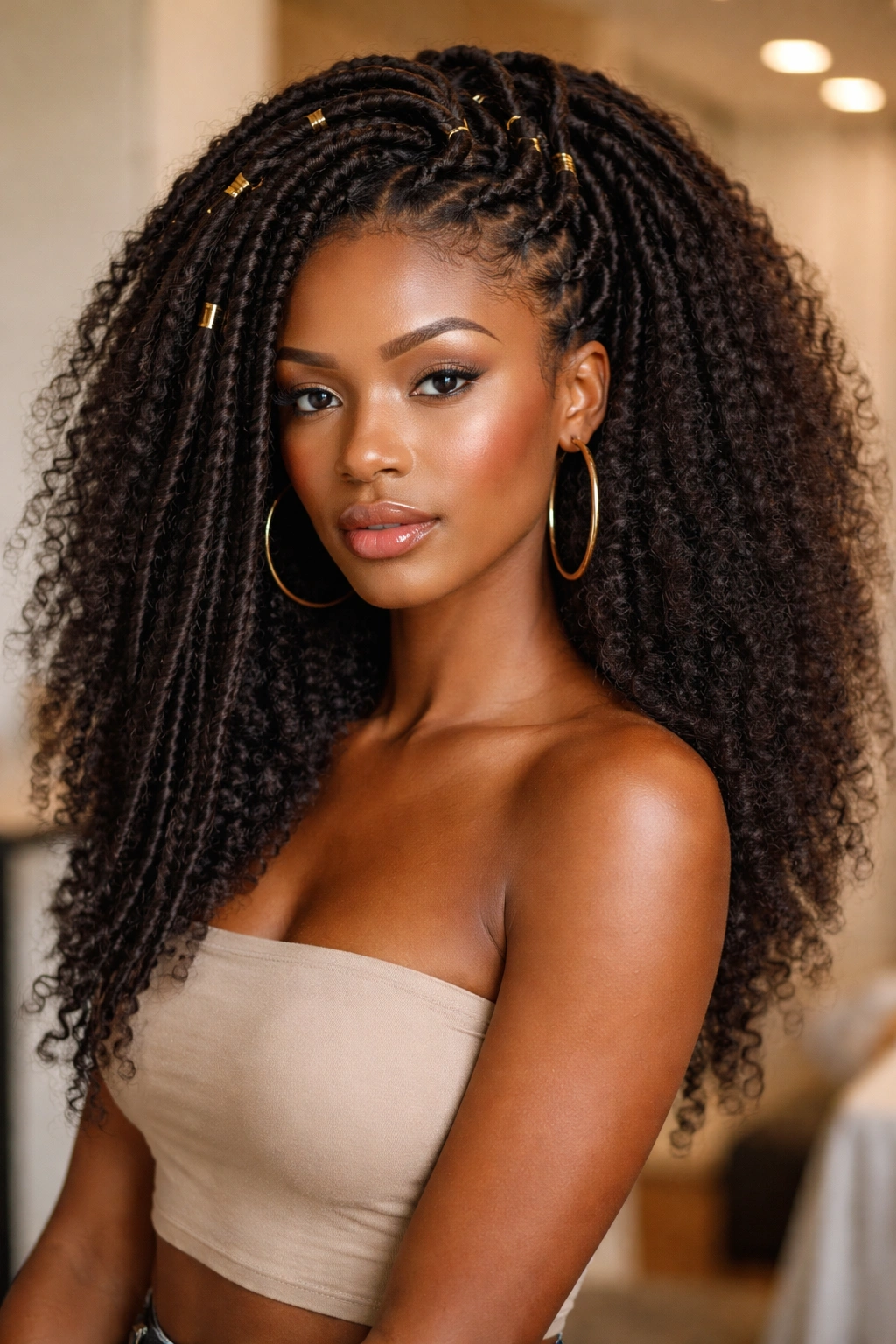
Comparison angle — unlike a traditional faux locs wig, the afro-locs hybrid mixes chunky locs at the crown with a loose afro texture underneath. The visual effect is like locs that have been pulled back to reveal a natural curl pattern below.
This is a relatively new style, and it’s divisive. Some people love the drama. Others find it cluttered. I’m in the love camp, specifically because it gives you two textures in one wig, which creates visual interest without needing color contrast.
Who this is for: anyone who wants a statement look for an event, not an everyday wig. The construction is complex enough that it won’t hold up to daily wear and tear like simpler styles will.
Pair with minimalist jewelry. The wig does all the work — earrings and necklaces just get lost in the texture.
20. Bantu Knot Set Curl Result
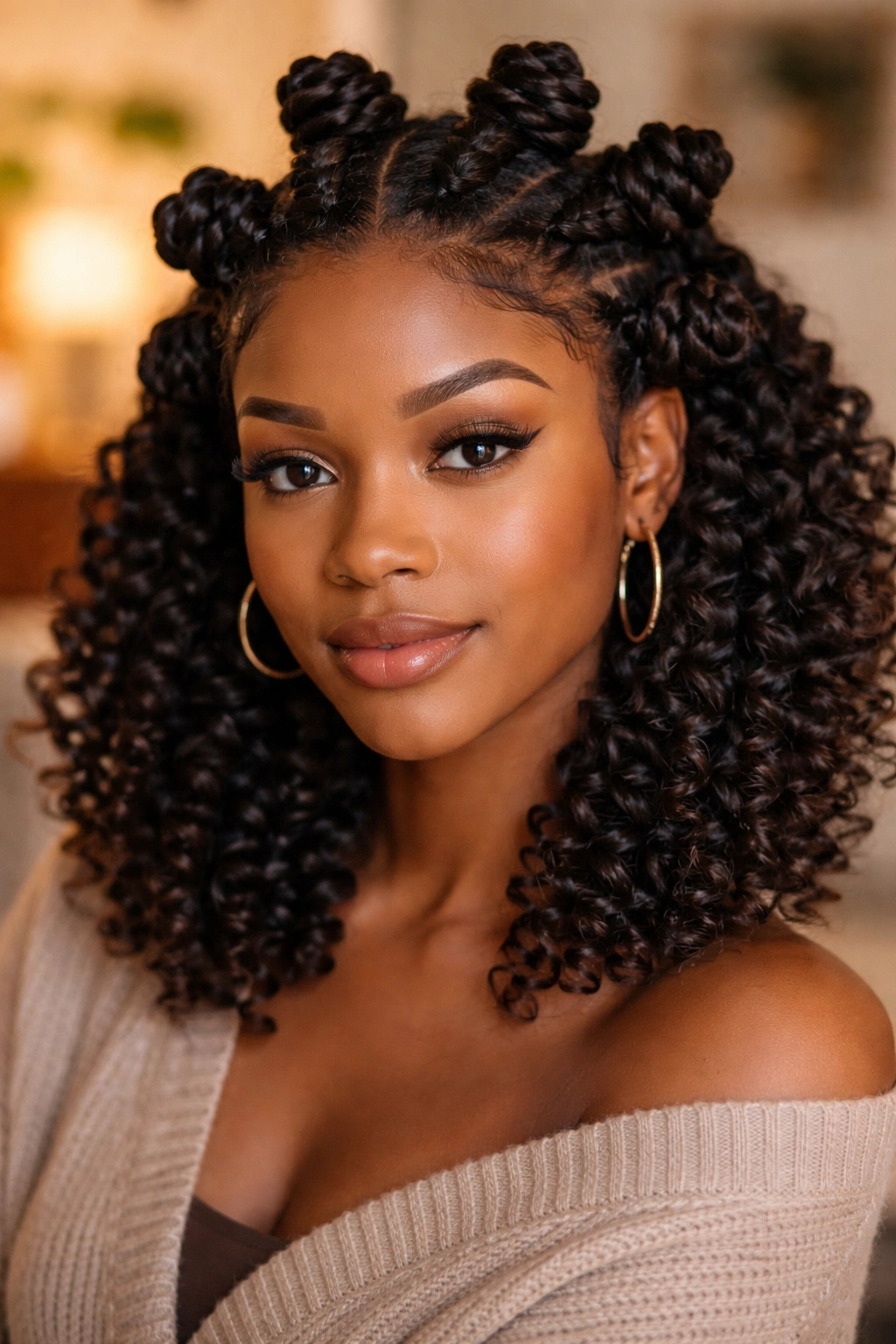
Bantu knots create a specific kind of spiral curl — tight at the roots, loosening as they fall, with a distinctive zigzag texture at the ends. A wig styled as a Bantu knot-out looks like you went through the whole styling process yourself.
You can buy wigs pre-styled this way, or you can do it yourself on a human hair wig. The DIY route is more work but gives you the most control. Section the wig into small parts, twist each section tightly, and wrap it into a knot at the base. Let it set overnight, then unravel gently.
The unraveling is where most people mess up. Don’t pull. Don’t comb. Just unwind each knot with your fingers, let the curl fall, and separate the sections only slightly. Over-separation kills the definition.
21. Short Teeny Weeny Afro Look
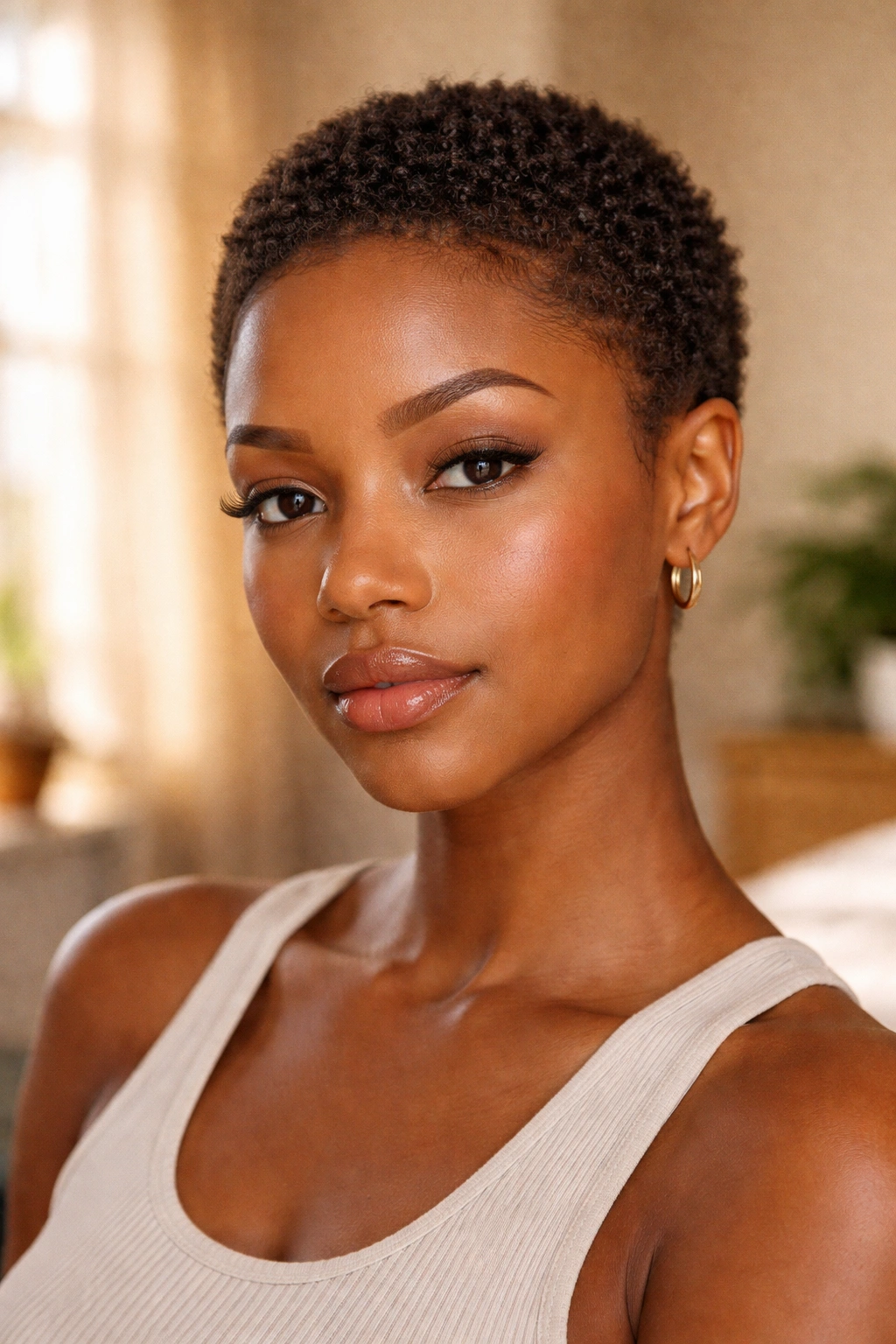
The TWA look on a wig is for people who love the aesthetic of freshly big-chopped natural hair without actually cutting their own. It’s also great for anyone in the middle of a transitioning journey who wants to see what a short cut would look like before committing.
A TWA wig is usually 1-2 inches of hair, tight coils, and a completely exposed head shape. There’s nowhere to hide. The lace has to be perfect. The ear tabs have to lay flat. Every edge matters.
But the look itself is powerful. There’s something about a well-worn TWA that radiates confidence. It’s unapologetic, clean, and completely feminine in a way that surprises people who haven’t seen it done well.
One practical note — TWA wigs are lighter than longer styles, which means they shift easily if your install isn’t tight. Use extra adhesive or an elastic band to keep it locked in place.
22. Soft Coily Wash-Day Refresh Look
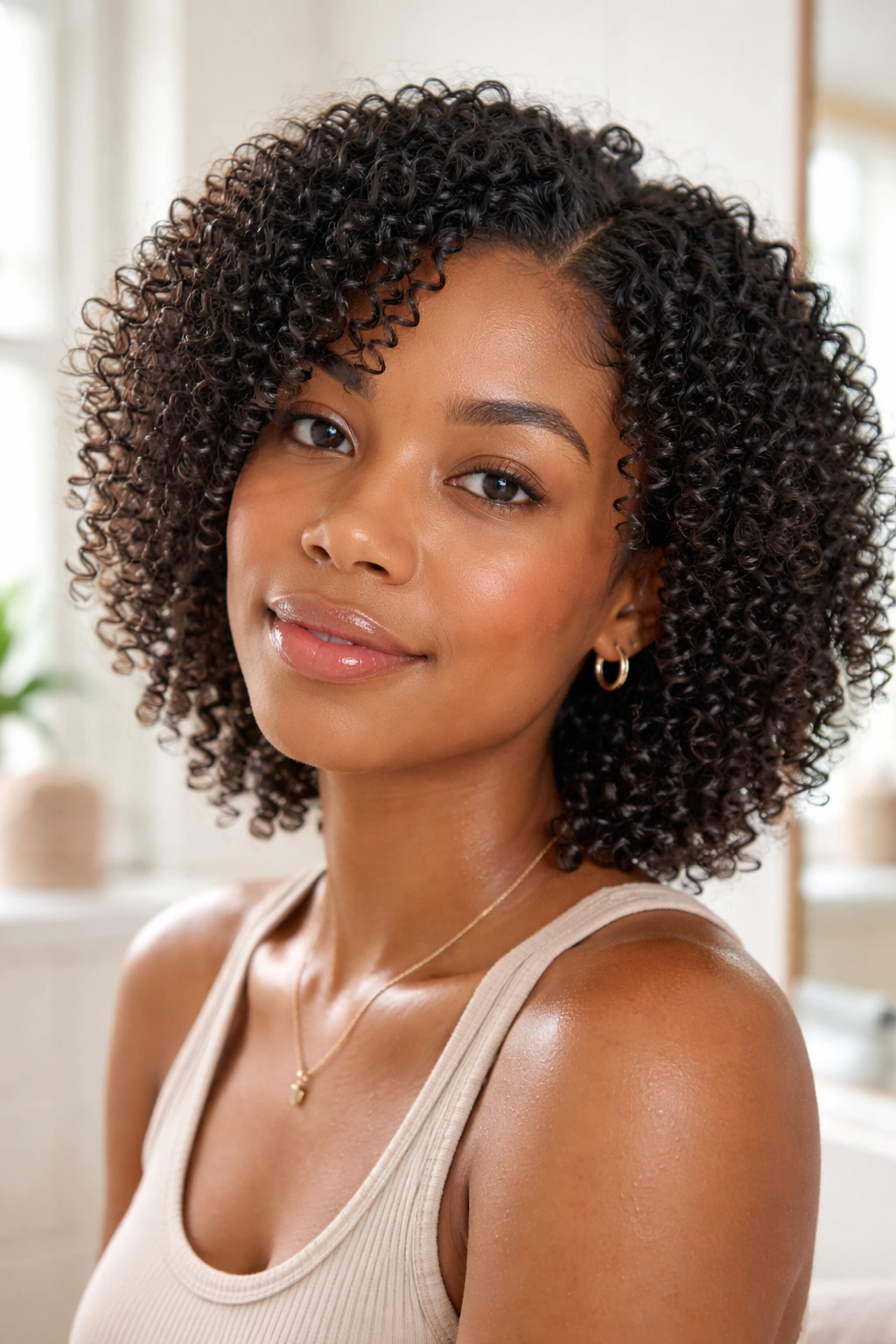
This is the wig equivalent of fresh wash-day hair. Soft, defined coils. A little moisture sheen. Not overly voluminous, not overly sleek — just that happy middle where your hair looks like it’s been cared for recently.
The texture is usually somewhere in the 3C to 4A range. Tight enough to read as coily, loose enough to have bounce and definition. Most human hair wigs labeled “curly” sit in this zone.
You’ll want to spritz it lightly before wearing to reactivate the curl pattern. Use a water bottle mixed with a tiny bit of leave-in conditioner — about a tablespoon to a full spray bottle. Scrunch gently, don’t rub.
The payoff: this style is so natural-looking that people compliment “your hair” without realizing they’re looking at a wig. And honestly, that’s the gold standard.
23. Chunky Twist-Out Afro
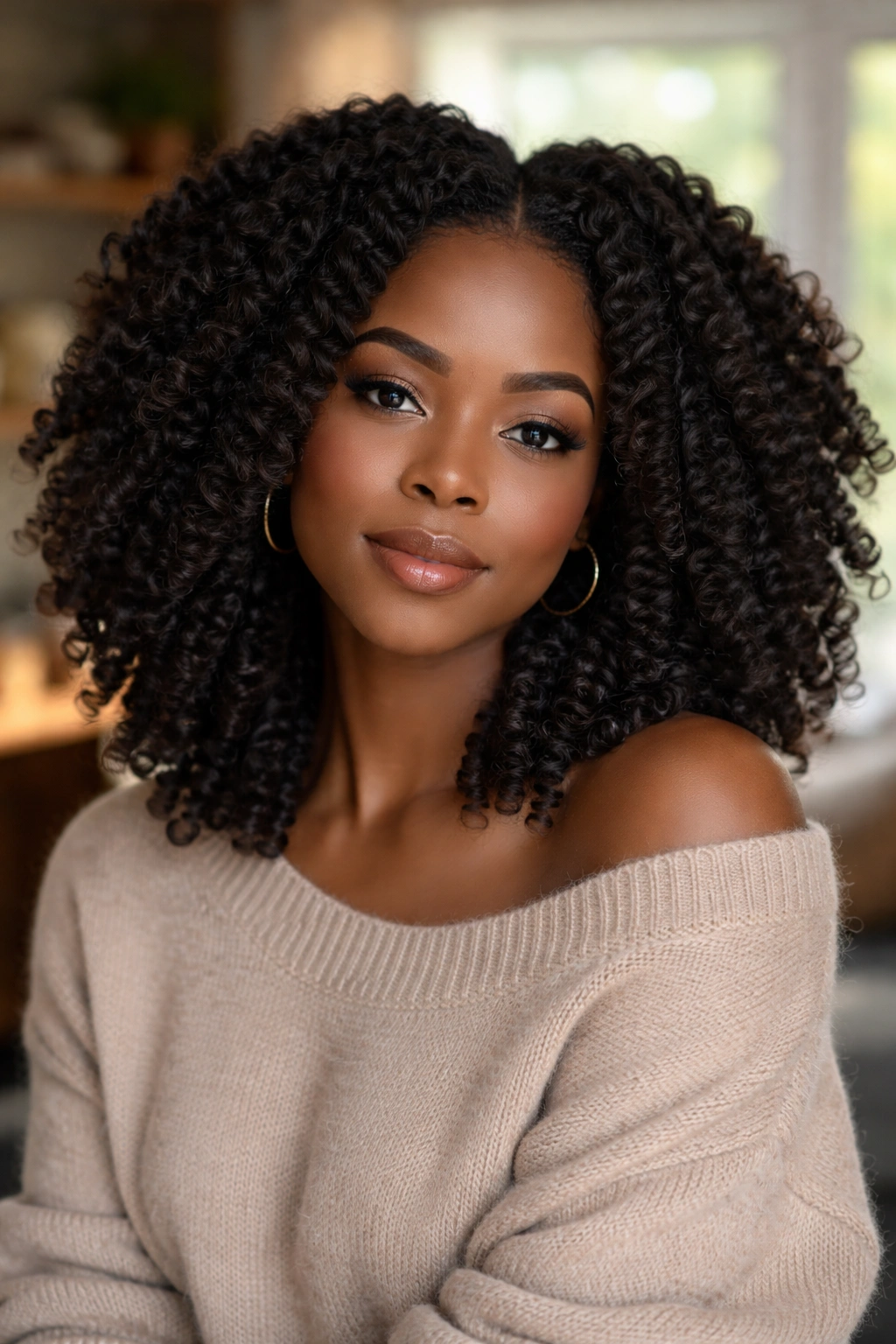
The final style is one I come back to again and again. A chunky twist-out texture — created from larger sections rather than small twists — gives you defined waves that are closer to shoulder length with real volume.
Unlike a small twist-out which produces tight, uniform spirals, chunky twist-outs create looser, more organic waves with variation in size. That variation is what makes it look like real hair styled at home rather than a factory curl.
You can buy wigs with chunky twist-out texture built in, or you can do it yourself on a straight wig. The DIY version takes a few hours plus overnight setting time, but the results are worth it. Section the wig into about 12-15 parts. Twist each section in two strands. Let it set. Unravel with fingers. Separate slightly for volume.
The final look is full, textured, and definitely-not-from-a-box. And that’s exactly the point — every style on this list should pass the “is that a wig?” test, and this one passes with flying colors.
Maintenance — How to Keep Your Afro Wig Looking New
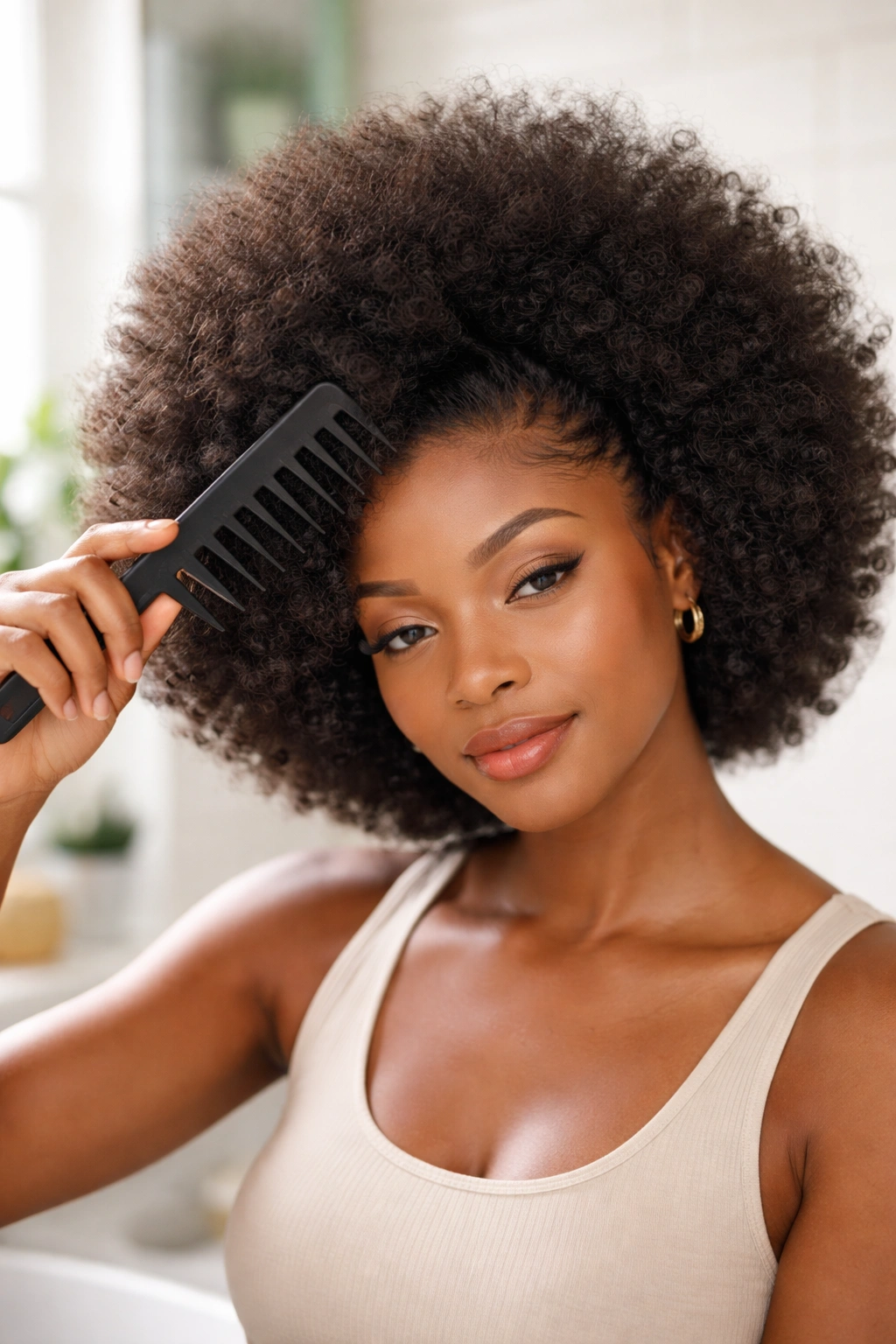
Washing is where most wigs go to die. People either wash too often and strip the fiber, or don’t wash enough and the buildup makes the wig stiff and tangled. The sweet spot for daily-wear wigs is once every 6-8 wears.
Use sulfate-free shampoo diluted in water — about a quarter cup of shampoo in a basin of cool water. Swish the wig gently. Don’t scrub. Rinse thoroughly until the water runs clear, then condition with a light leave-in, squeeze (don’t wring), and lay flat to dry on a towel.
Between washes, spritz with a water-and-conditioner mix every few days to keep the curls fresh. Store the wig on a mannequin head or in a satin bag. Never stuff it in a drawer — it’ll tangle beyond repair.
Mistakes That Make Even Expensive Wigs Look Fake
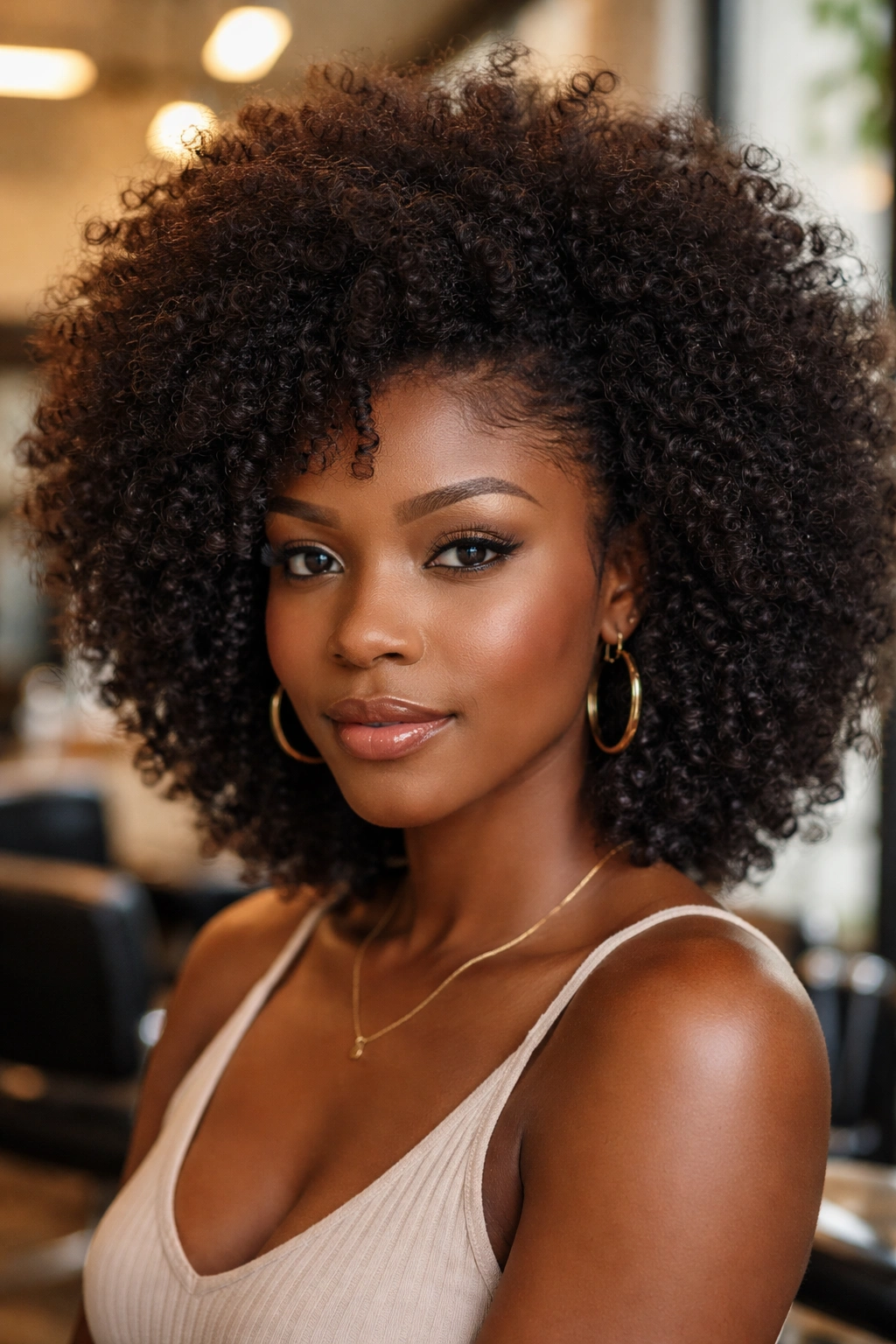
I’ve seen women spend four hundred dollars on a wig and still look like they’re wearing a costume. The expense isn’t the problem. The customization is. A cheap wig with a tinted lace, plucked hairline, and soft edges looks more real than an expensive wig straight out of the box.
The other killer is over-styling. Edges that are too gelled. Parts that are too sharp. Baby hairs that look painted on. When the styling is that perfect, it reads as fake even though everything is technically correct. Ease up on the product. Leave some pieces slightly messy. Let the wig breathe.
And please, please, stop buying wigs in “jet black 1B” when your natural hair is closer to a dark brown 2. The color mismatch at the neckline gives it away every single time. Match the wig color to your natural hair as closely as you can — including the ends, if your ends are sun-lightened.
Picking the Right Afro Wig for Your Face Shape
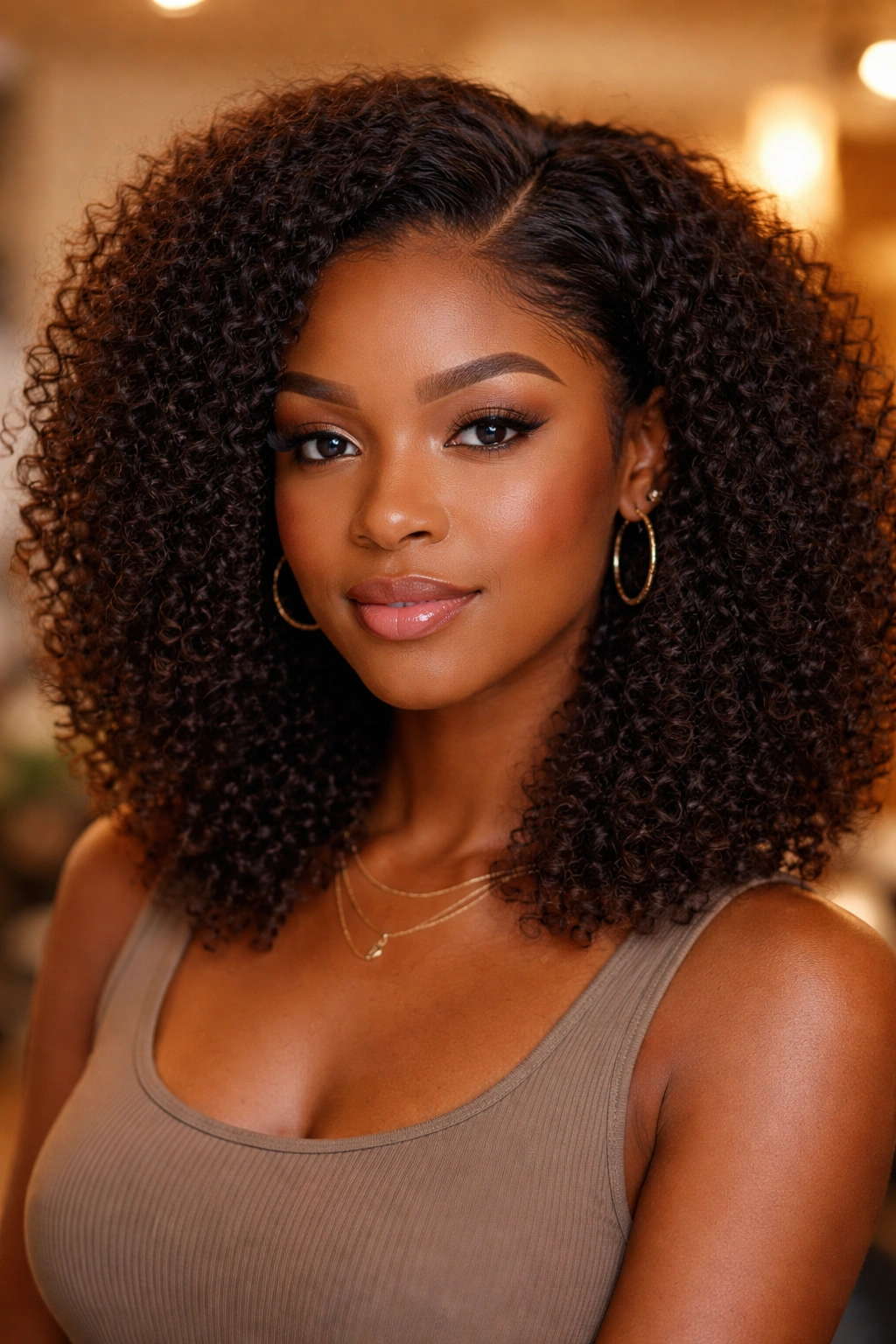
Round faces look best with styles that add height at the crown — think tapered sides, high puffs, or asymmetric shapes. Oval faces can wear almost anything but look especially good with shoulder-length defined curls. Heart-shaped faces are flattered by chin-length bobs and styles with volume at the jawline. Square faces soften with curls that curve inward around the face.
Don’t overthink it. If you love a style and it feels like you, wear it. Face shape guidelines are suggestions, not rules. I’ve seen women break every “rule” and look incredible because they owned the look with confidence.
The best wig is the one you feel like yourself in. That’s the real test — not whether it passes detection, not whether it matches your face shape on a chart, but whether you catch your reflection and think “yes, that’s me.” When you hit that feeling, you’ve found the right wig, and everyone around you will be able to tell it’s the right one too.
