



The bedroom is the one room in the house that’s entirely yours. No guests, no compromises, no having to explain your aesthetic to anyone. And afro boho bedroom design — that particular meeting point between natural materials, African textile heritage, warm earthy color, and bohemian layering — is one of the most satisfying spaces you can create. It doesn’t read as a trend. It reads as a home that was built slowly and intentionally by someone who actually knows what they love.
The budget question is real and worth addressing head-on. Afro boho style is actually one of the more achievable looks on a limited budget, precisely because its character comes from texture and layering rather than expensive statement furniture. A mudcloth pillow from a small African textiles seller, a sisal rug from a home goods clearance, a woven basket hung on the wall — none of these individually cost much, but together they create a room with depth, warmth, and a visual richness that a designer space full of matching furniture often lacks.
This isn’t about copying a look from a design magazine. It’s about understanding which elements create the afro boho atmosphere and finding affordable versions of those elements that actually fit your space, your taste, and your existing pieces. The 21 ideas below range from complete decorating approaches to individual design moves — and they’re all achievable without breaking into serious savings.
Understanding the Afro Boho Design Language
Afro boho is not a single defined style. It’s more accurate to call it a sensibility — an approach to decorating that draws from multiple traditions. The “boho” component brings layered textiles, collected objects, loose and organic arrangements, plants, and a certain intentional imperfection. The “afro” component brings the specific materials, patterns, and cultural references of African design: mudcloth and kente prints, woven sisal and seagrass, terracotta earth tones, carved wood, basketry, and the geometric and abstract patterns that run through West and East African visual traditions.
When these two vocabularies merge in a bedroom, the result is a space that feels both collected and cohesive — like the room has been accumulated over time rather than designed in an afternoon. The color palette leans warm: deep browns, burnt siennas, terracotta oranges, forest greens, off-white and cream. Black, used as an accent in mudcloth patterns or woven basket borders, gives the whole palette an anchor.
Understanding the underlying logic means you can make smart budget decisions. You’re not looking for specific products — you’re looking for the right materials, textures, and visual relationships. That opens up thrift stores, import shops, discount fabric sellers, and online marketplaces as equally valid sources alongside boutiques.
Why Texture Is the Foundation of the Whole Look
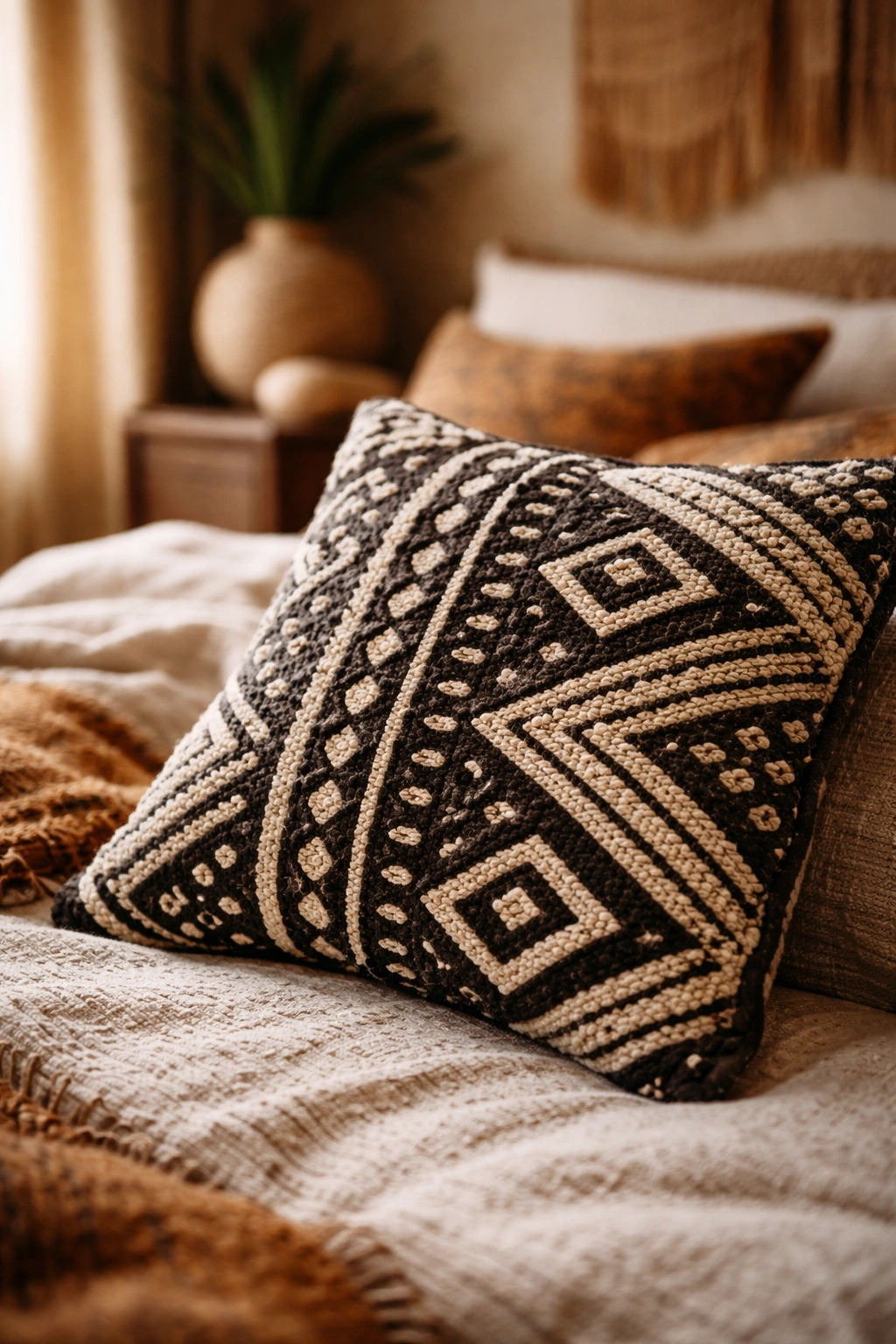
Before color, before pattern, before any individual decorative object — texture is what makes afro boho work. A bedroom with smooth painted walls, a simple frame bed, and minimal surfaces can still feel afro boho if the textiles have enough physical variety: a nubby mudcloth throw on the bed, a rough-woven sisal rug underfoot, a cotton macramé piece on the wall, a smooth clay pot on the nightstand, a woven grass basket in the corner.
The eye reads all of these as different surfaces, different materials, different processes — and that multiplicity of texture signals warmth, handcraft, and intention. No amount of pattern or color achieves this if everything you touch feels the same.
The budget implication: prioritize tactile variety over price. A $15 woven basket beats a $15 mass-produced smooth box. A $25 rough-textured lumbar pillow beats a $25 printed satin one. Spend money on what you can touch, because that’s what the room will actually feel like.
How to Source Materials Affordably Without Losing Authenticity
Before shopping anywhere else, look at what you already have. A vintage or inherited piece — a grandmother’s woven blanket, an old wooden tray, even old fabric — often has the genuine handmade quality that defines afro boho better than anything purchased new. If you have African fabric in storage, pull it out. Even a scrap draped over a lamp or pinned as a headboard backing counts.
For new purchases on a budget, some specific places consistently deliver. African import shops, often found in cities with large diaspora communities, carry mudcloth, kente strips, and hand-dyed fabric at prices far below boutique retail. Discount home goods stores cycle through woven baskets and textured rugs regularly. And thrift stores are genuinely underrated for baskets, clay and ceramic pieces, and wooden objects.
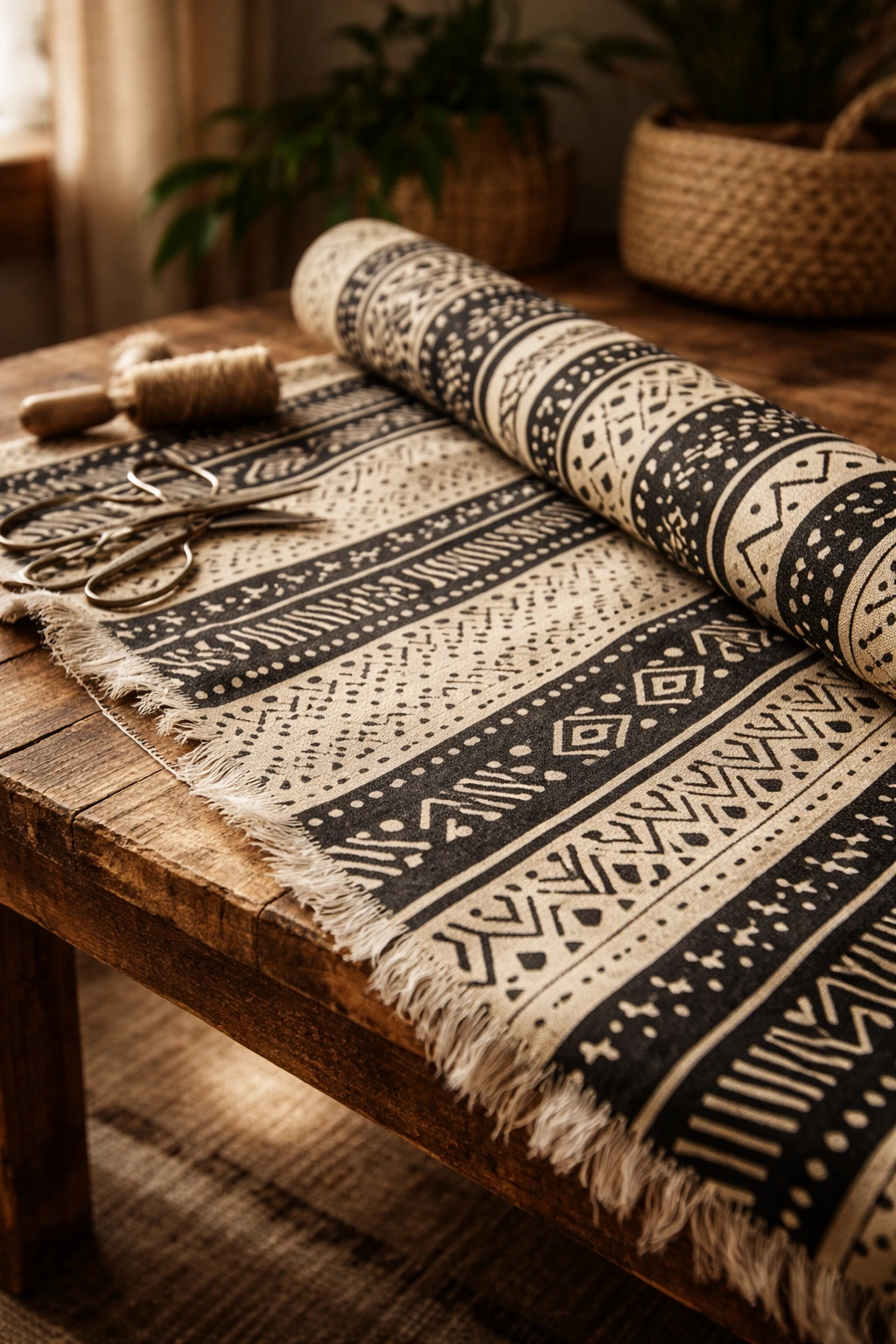
Online, search specifically for mudcloth fabric by the yard rather than pre-made pillows — you’ll get significantly more material for the same price and can sew simple pillowcases yourself. Even hemming a rectangle of fabric into a pillow cover requires nothing more than a straight stitch.
1. Mudcloth Accent Pillows as a Starting Point
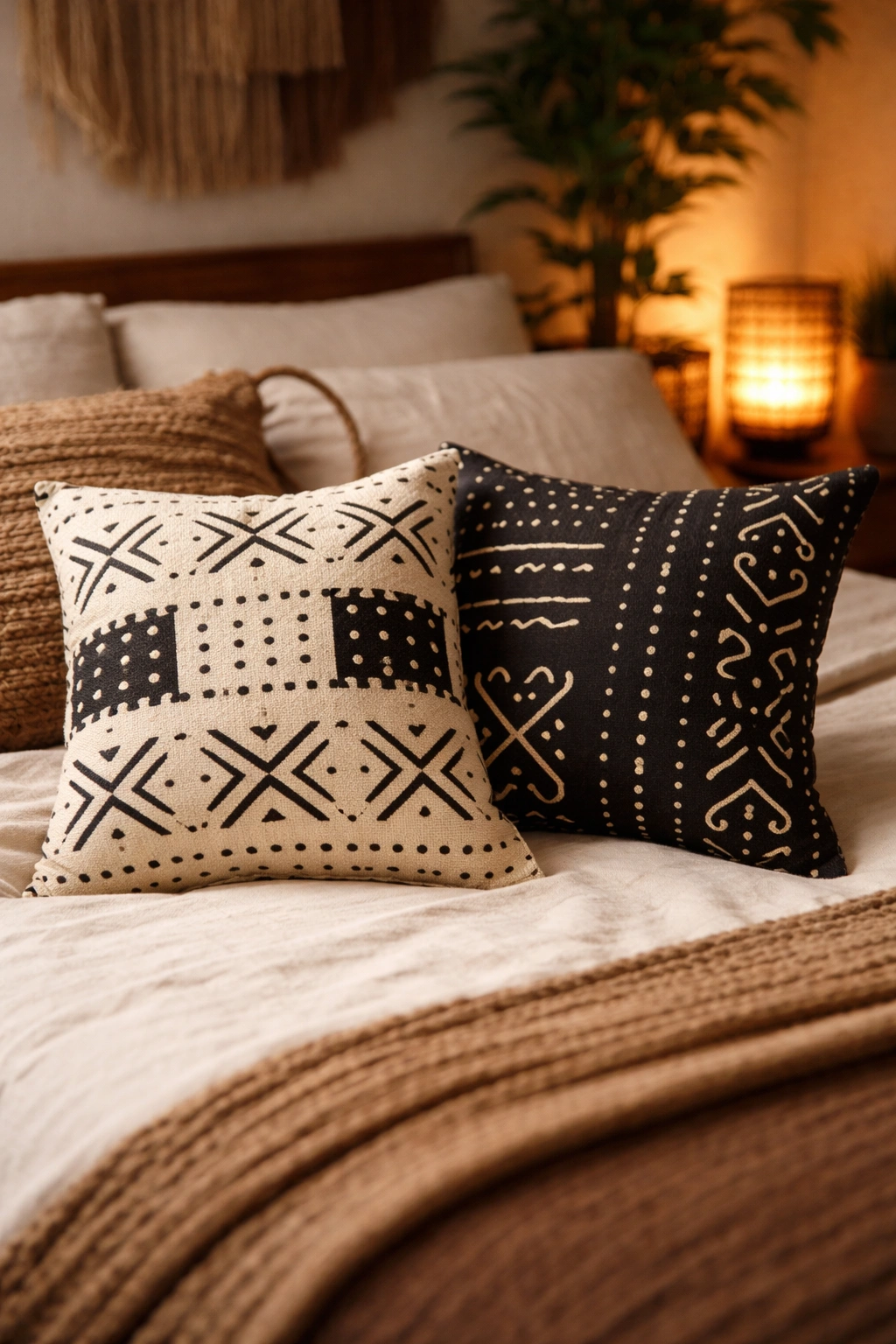
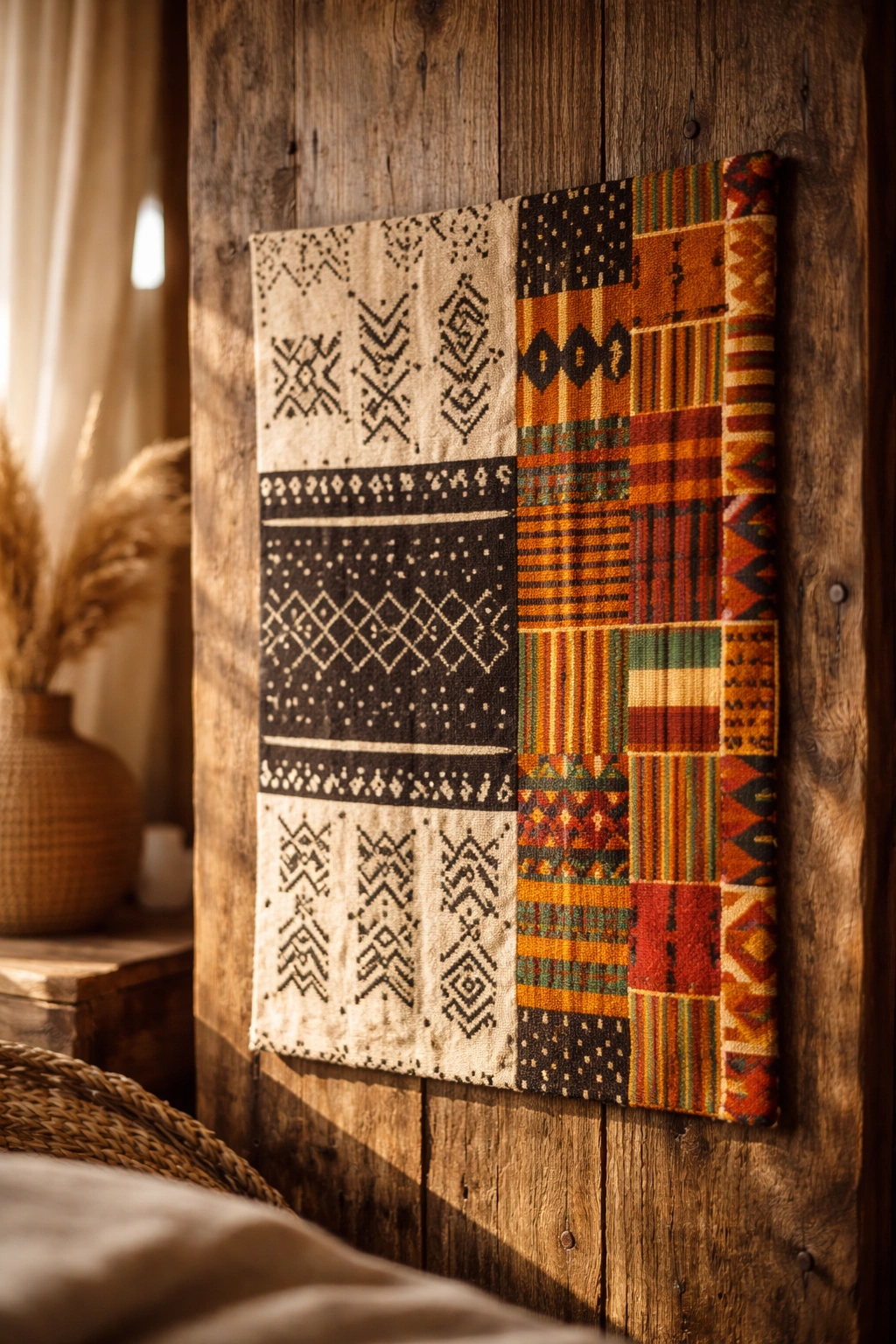
Mudcloth — or bògòlanfini — is a hand-painted cotton fabric from Mali, traditionally dyed with fermented mud to create its distinctive matte black and cream geometric patterns. Each piece is genuinely one-of-a-kind because the patterns are applied by hand. The contrast between the rough cotton ground and the painted geometric designs gives mudcloth a visual weight that most printed fabric can’t match.
On a bed or a reading chair, even two mudcloth pillows transform the whole feel of the space. The geometric patterns are bold without being loud — they have a quiet authority that works with almost any base color.
Budget note: A single 18-inch mudcloth pillow cover from a fair-trade African textiles seller typically runs $20 to $40. If you find mudcloth fabric by the yard, a full yard at $15 to $25 gives you enough for two pillow covers with minimal sewing. Buy a cheap pillow insert at any discount home store — they’re not visible, so quality here doesn’t matter.
2. Sisal or Jute Area Rug as the Anchor
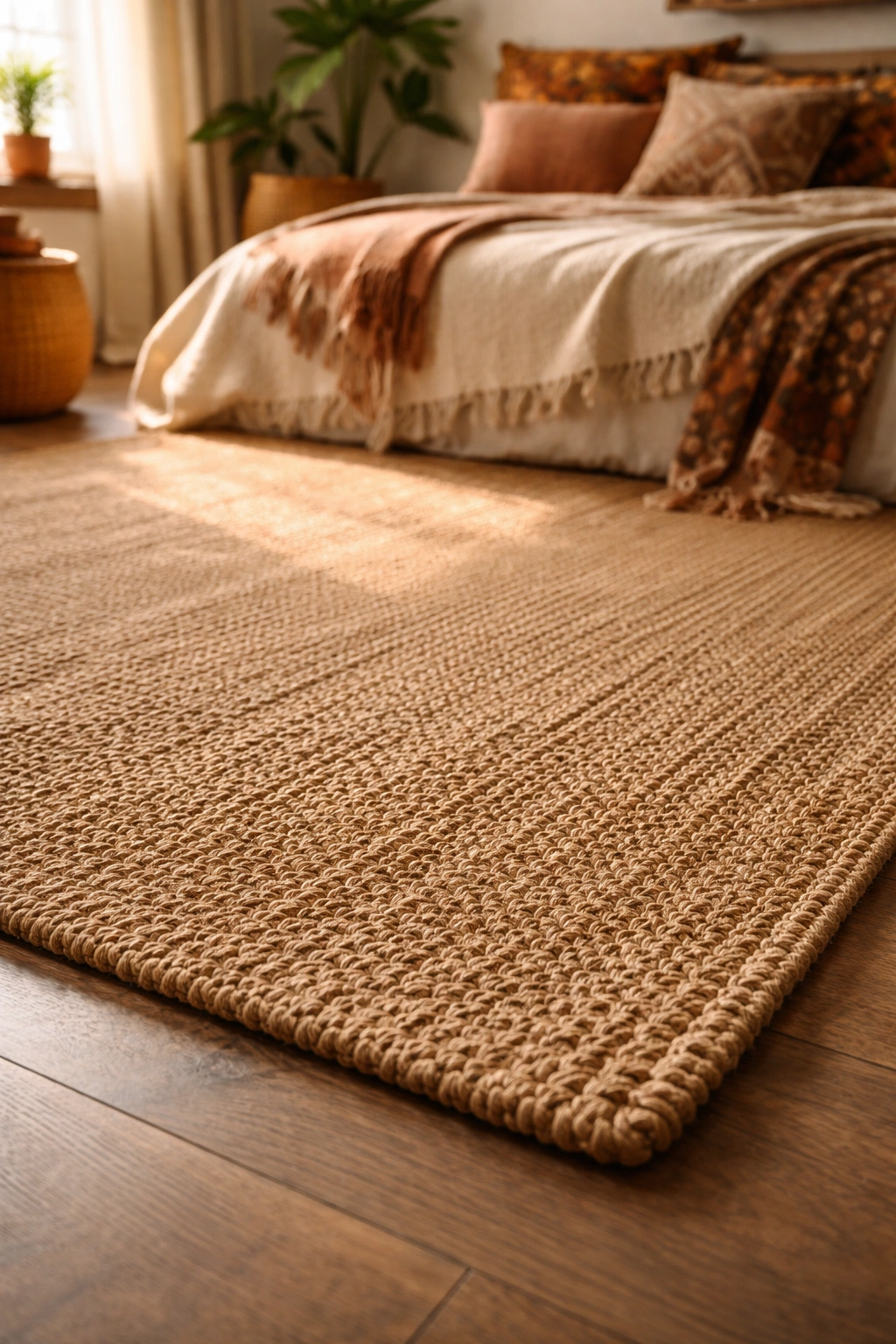
The floor is the largest surface in a bedroom, and what you put on it affects the entire visual temperature of the room. Sisal and jute rugs — natural plant fiber woven into flat, textural mats — are one of the most affordable and effective anchors for an afro boho space. The rough, warm surface reads as natural and grounded. It connects the room visually to earth and craft.
A 5×8 jute rug can be found at discount home stores for $40 to $80. That’s real value for a surface that changes the character of the whole floor.
What to Watch For
Sisal and jute are not soft underfoot the way synthetic or wool rugs are. They’re satisfying to stand on — firm and textured — but they’re not the right choice for bedrooms where you want to sink your feet into something plush first thing in the morning. Layer a small, softer rug over the jute beside the bed if that’s a concern.
Also, natural fiber rugs shed slightly when new. This is normal and stops within a few weeks of regular vacuuming. Don’t let the initial shedding discourage you — the rug settles into itself.
3. A Gallery Wall of African-Inspired Art
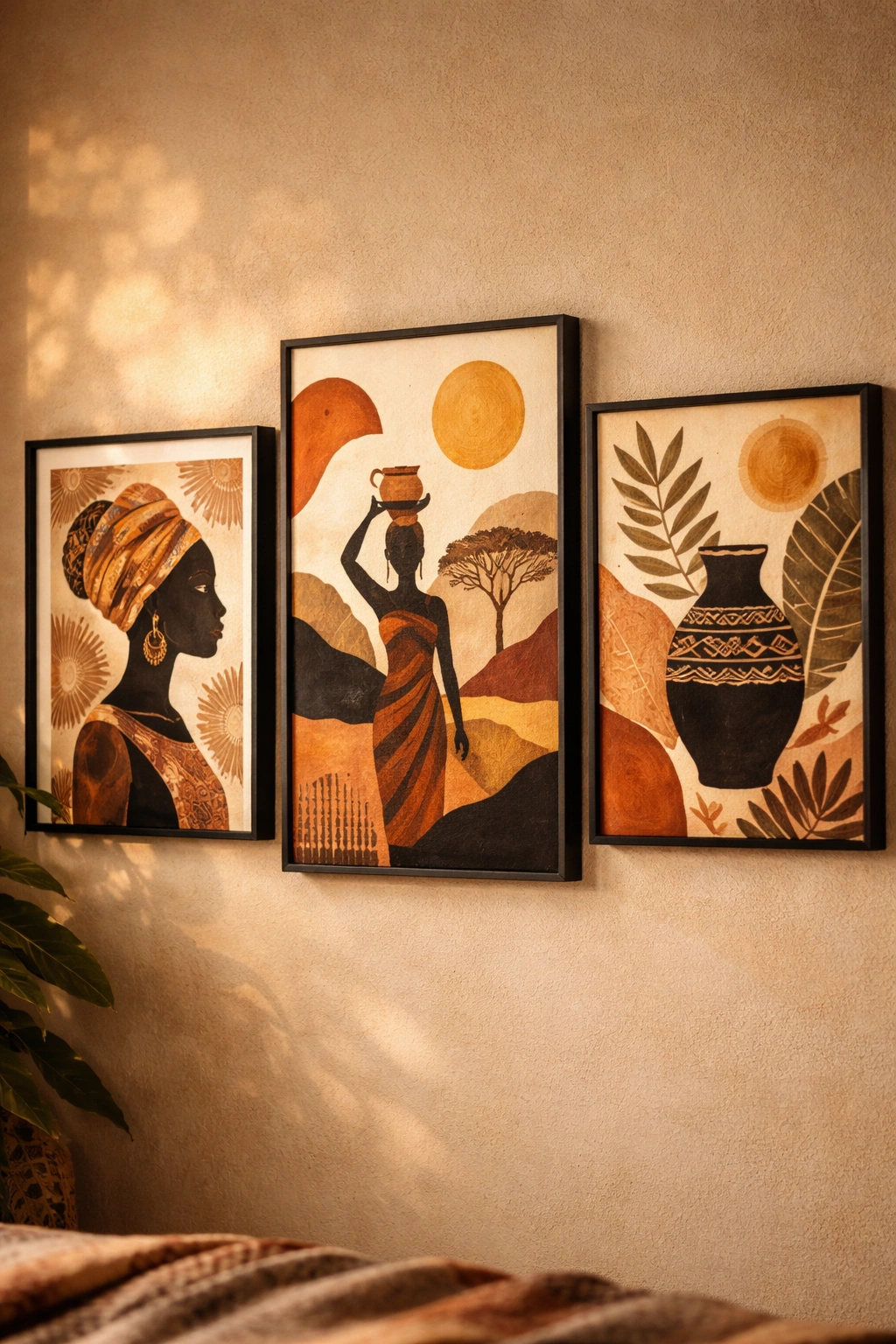
Gallery walls are cheap to execute and visually transformative. The key for afro boho is curating with intention — you want art that connects to African visual traditions, whether that’s actual African art, Afrocentric photography, abstract work by Black artists, or prints of traditional textiles and patterns.
Mix frame sizes and styles deliberately. A combination of matching frames with different-sized prints, and a few unframed stretched canvases or fabric pieces, looks collected rather than store-bought. Eclectic frames — some wood, some black metal, some painted gold — work here in a way they might not in a more formal space.
Sources: Printable art on Etsy from Black artists means you pay for the digital file and print it yourself for a few dollars. Black-and-white photography of African landscapes or portraiture. Fabric stretched over a canvas frame. Batik fabric pieces in simple clip frames. A single large textile — a kente strip or adinkra-printed cloth — framed as the anchor with smaller pieces surrounding it.
The rule: odd numbers of pieces look more natural. Three, five, or seven pieces. Not four or six.
4. Terracotta Pots and Clay Vessels as Decorative Anchors
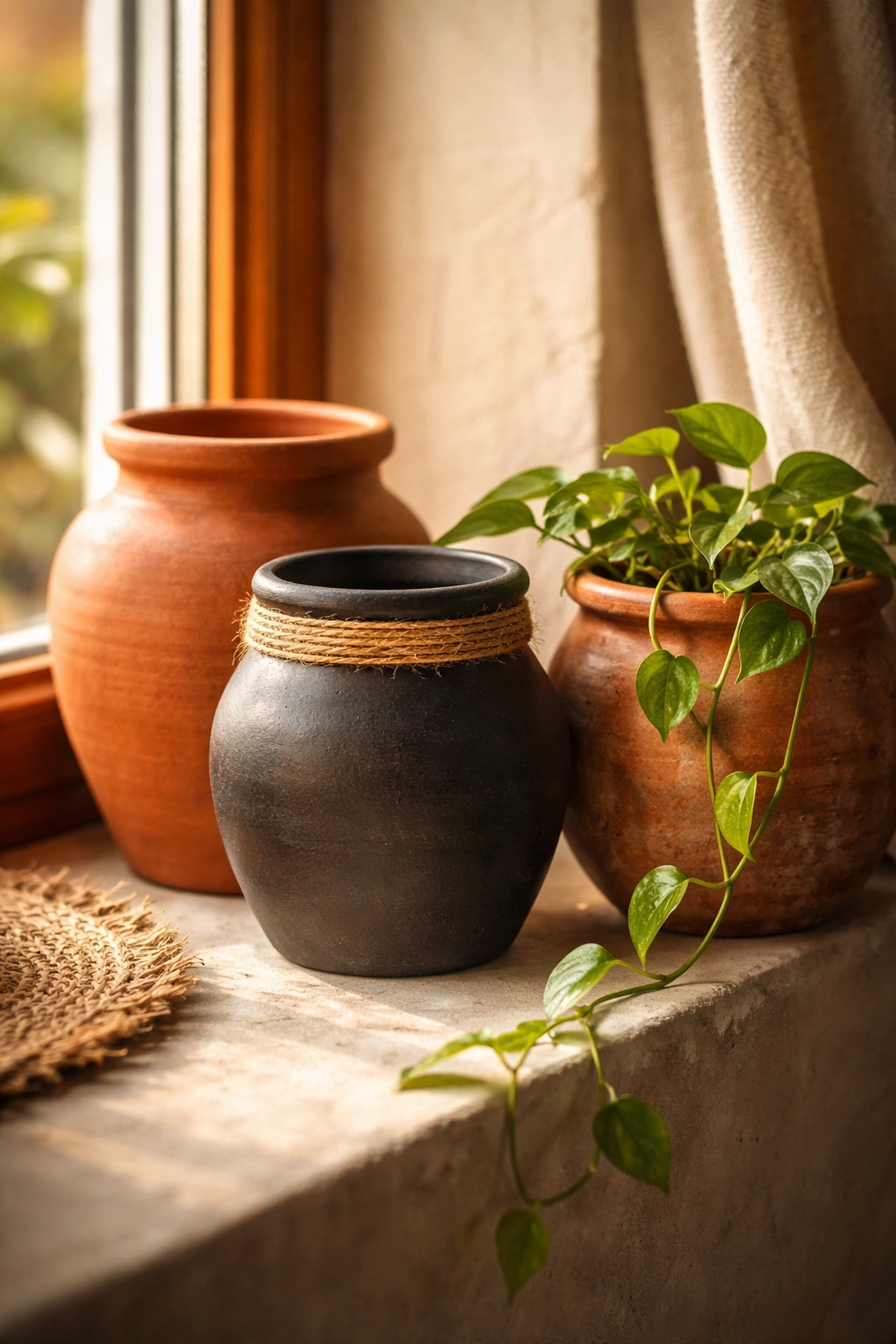
Terracotta — that classic fired red-orange clay — is one of the most culturally resonant and budget-friendly materials in afro boho decorating. It appears across African pottery traditions from North Africa to West Africa to the Great Lakes region, and its warm orange-brown color anchors the entire earth-toned afro boho palette.
A grouping of terracotta pots on a windowsill or dresser top costs almost nothing — especially if you source them from garden centers or dollar stores rather than home decor boutiques. What matters is the grouping: three pots of different heights look intentional. One pot looks like you forgot to buy the others.
Styling note: You can paint terracotta pots with matte black paint to add graphic contrast, or leave them completely plain for the most organic look. A little jute twine wrapped around the rim of a plain pot adds texture in about two minutes flat. Plants in the pots make the whole thing live — trailing pothos, a small snake plant, or dried pampas grass are all low-maintenance options.
5. Woven Wall Baskets as Statement Art
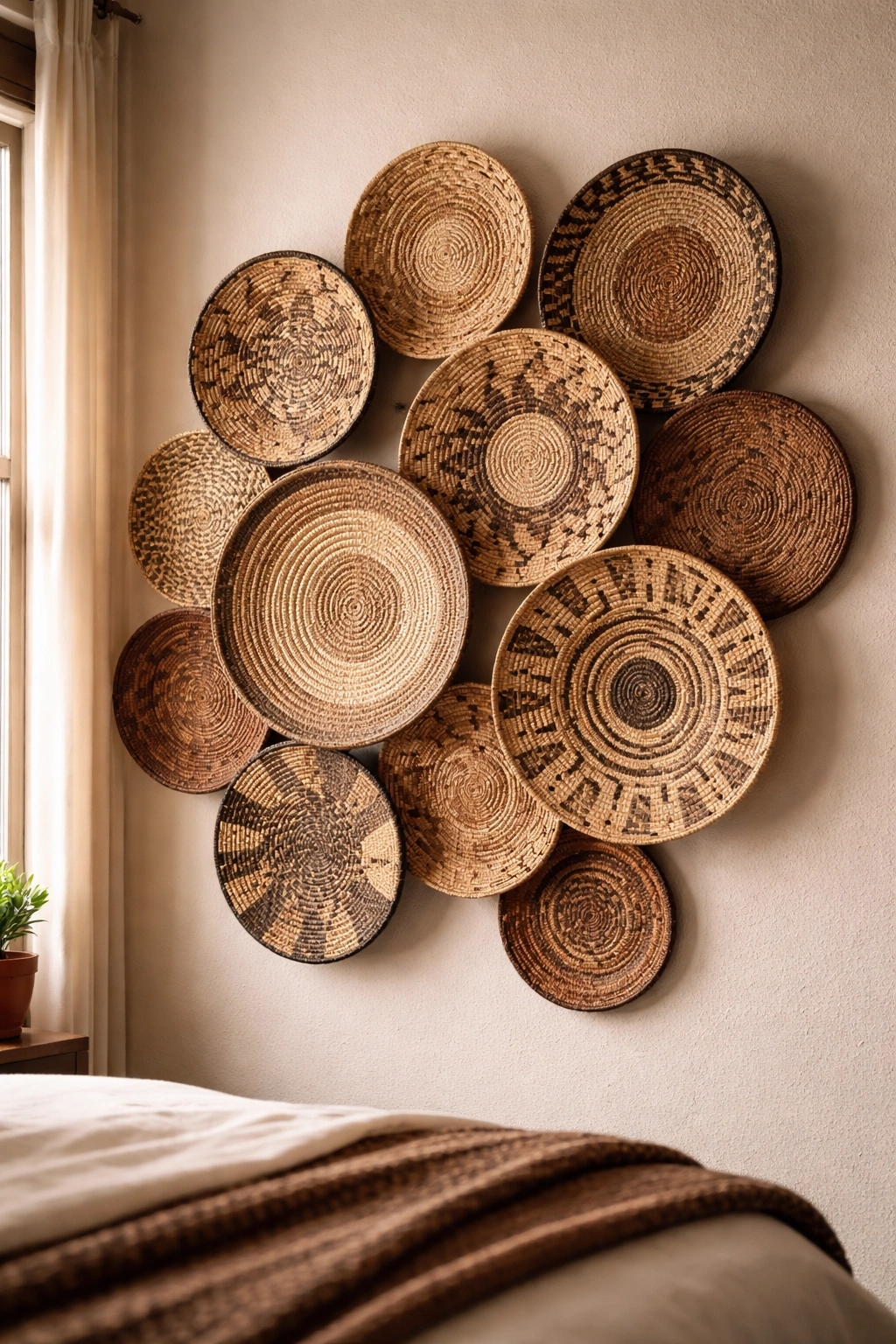
Woven baskets as wall art — not just as storage — is a design move with real roots in African interior traditions. Flat-woven grass or reed baskets, mounted on walls in overlapping clusters, create a textured installation that’s more interesting than most framed prints at a fraction of the cost.
You need a couple of things to pull this off well: variety in basket size (one large and four to five smaller ones is a classic arrangement), variety in weave pattern or color, and proper mounting. Baskets are hung using sawtooth hangers hot-glued to the back, or by threading a ribbon or thin leather cord through the weave. No special hardware needed.
The Look It Creates
A basket wall installation in a bedroom reads as a focal point. It works above a bed as a headboard alternative, on a blank wall beside a window, or across from the door where it’s the first thing you see entering the room. The handcrafted surface adds texture that catches light differently at different times of day — early morning light, lamplight in the evening — which gives the installation a dynamic quality no flat print achieves.
6. Kente Strip Fabric as Headboard Accent
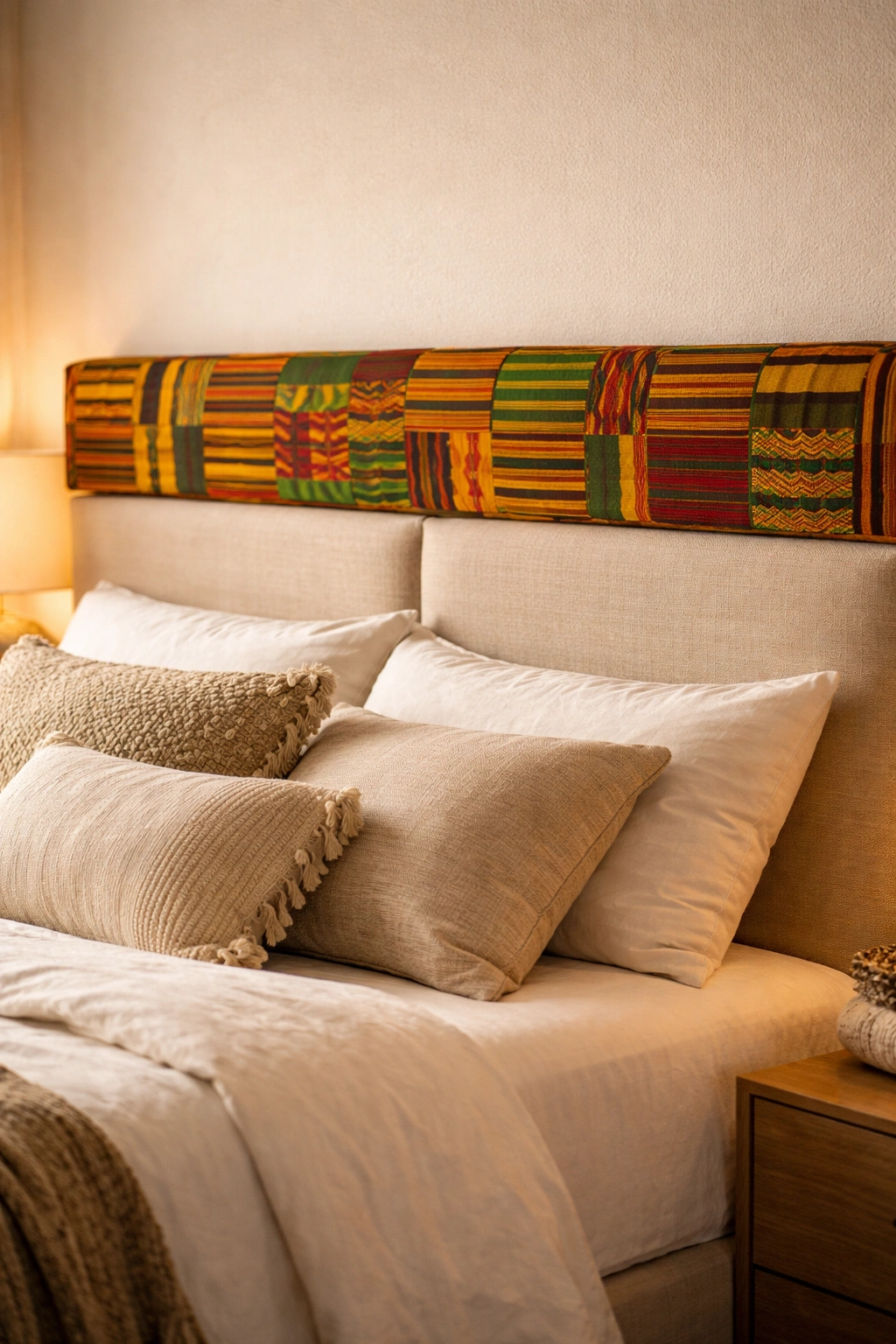
Kente cloth — the woven strip fabric associated with Ghanaian royal and ceremonial tradition — is one of the most visually distinctive African textiles, with its interlocked blocks of brilliant color and geometric pattern. Rather than using it as a garment, a length of kente fabric stapled to a fabric-padded headboard or simply draped across the wall behind the bed becomes an extraordinary design statement.
The color in kente — deep golds, forest greens, royal reds — is more saturated than most afro boho palettes, so use it as an accent rather than the dominant surface. A single strip of kente fabric above a bed with an otherwise neutral palette is enough. It will hold the entire wall.
Kente strip fabric by the yard is available from West African textile importers at moderate prices. A two-yard piece is more than enough for a twin headboard accent and some leftover for pillow trim.
7. Layered Bedding in Warm, Earthy Tones
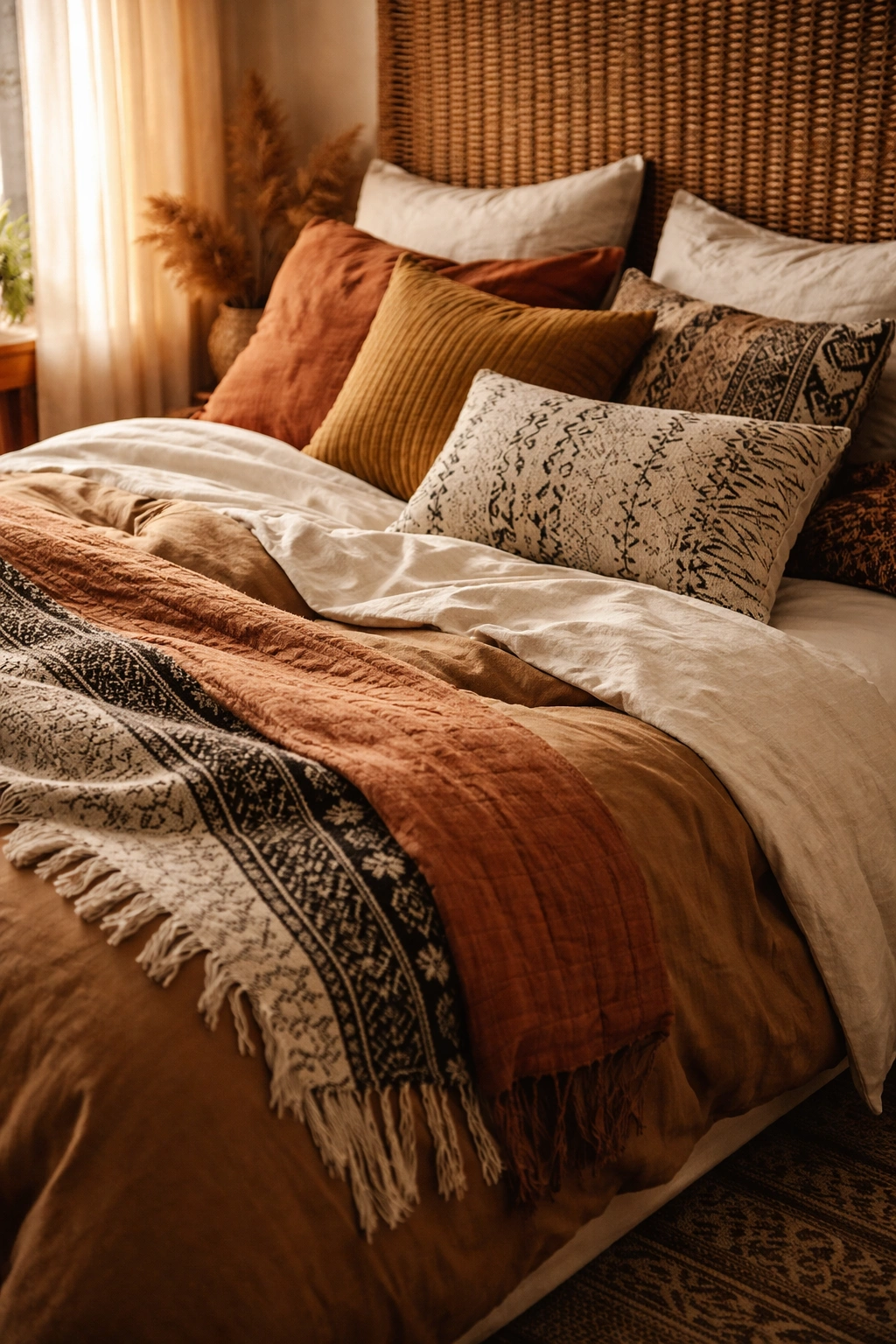
Afro boho bedding isn’t about a perfectly matched set. It’s about layering. Start with a neutral base — cream, warm white, or soft tan sheets. Add a textured quilt or duvet in a deeper tone — camel, rust, terra brown. Then layer a throw or blanket in a mudcloth or African wax print over one third of the bed. Add mismatched pillows in complementary textures and patterns.
The layered approach looks more expensive than it is because the variation and depth create visual richness. A $30 throw from a discount store, layered over a basic white duvet, reads as deliberately styled rather than budget-conscious.
The rule for mixing patterns: Keep the scale varied. A large geometric pattern (mudcloth), a medium stripe or block print (kente trim), and a small texture (knit or linen) work together because they don’t compete at the same visual frequency. Three large patterns fight. Three different scales layer.
8. Macramé or Knotted Fiber Wall Hanging
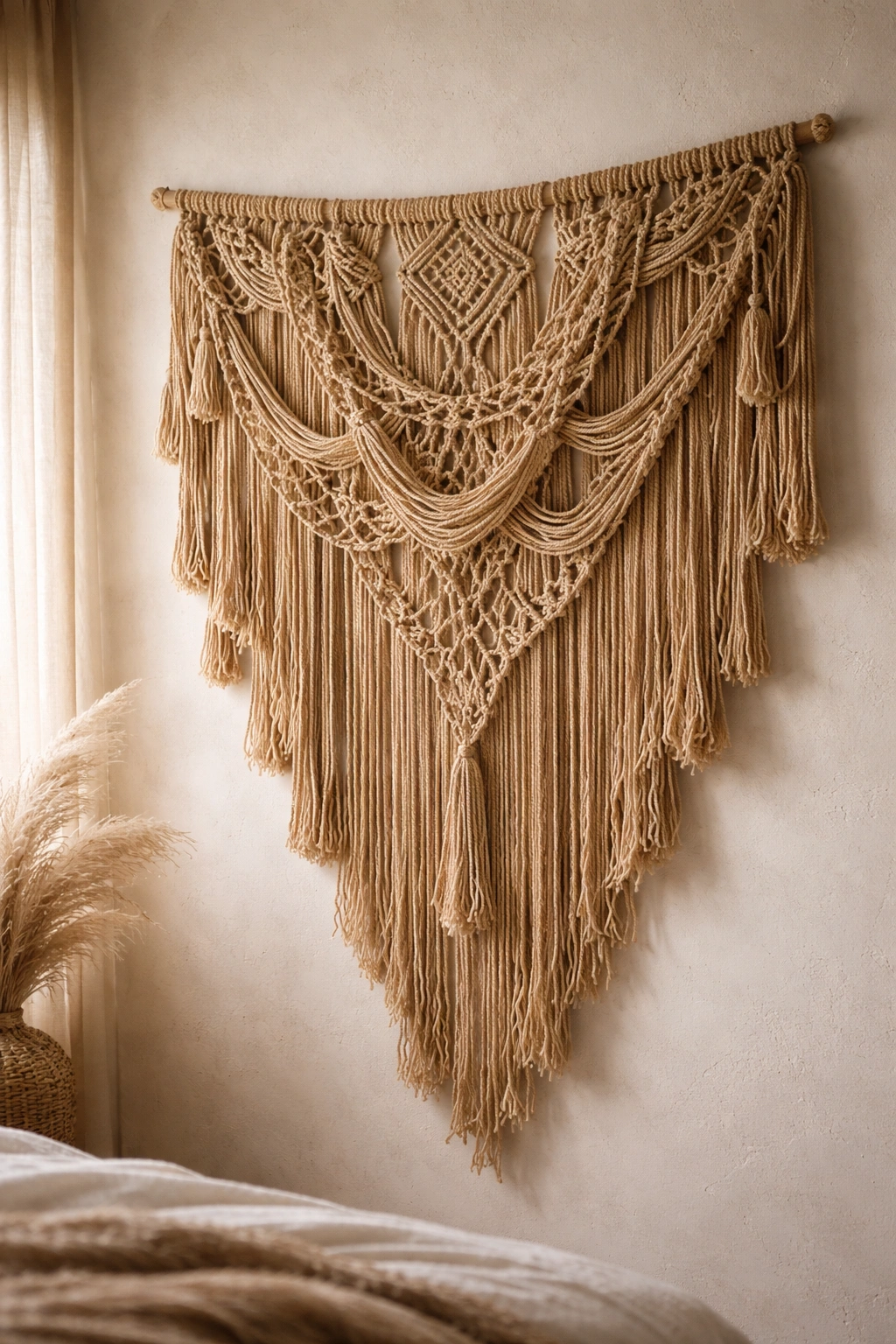
Macramé is associated with bohemian style broadly, but it earns its place in afro boho specifically when it’s executed in natural jute or sisal rather than bright white synthetic cord, and when its design references organic, irregular forms rather than the symmetrical grid patterns of mid-century craft macramé.
A large, irregular macramé wall hanging — wide at the top, loose and trailing at the bottom — adds both texture and vertical height to a wall. Height is particularly useful in bedrooms where the ceiling feels low or the space feels boxed in.
Making your own macramé requires only jute cord, a wooden dowel, and a few basic knots — square knots and lark’s head knots cover most designs. A tutorial and an afternoon is enough to produce something genuinely usable. The cord is cheap. The dowel is cheap. The result is authentic to the tactile spirit of afro boho in a way that manufactured wall art often isn’t.
9. Carved Wooden Decorative Objects
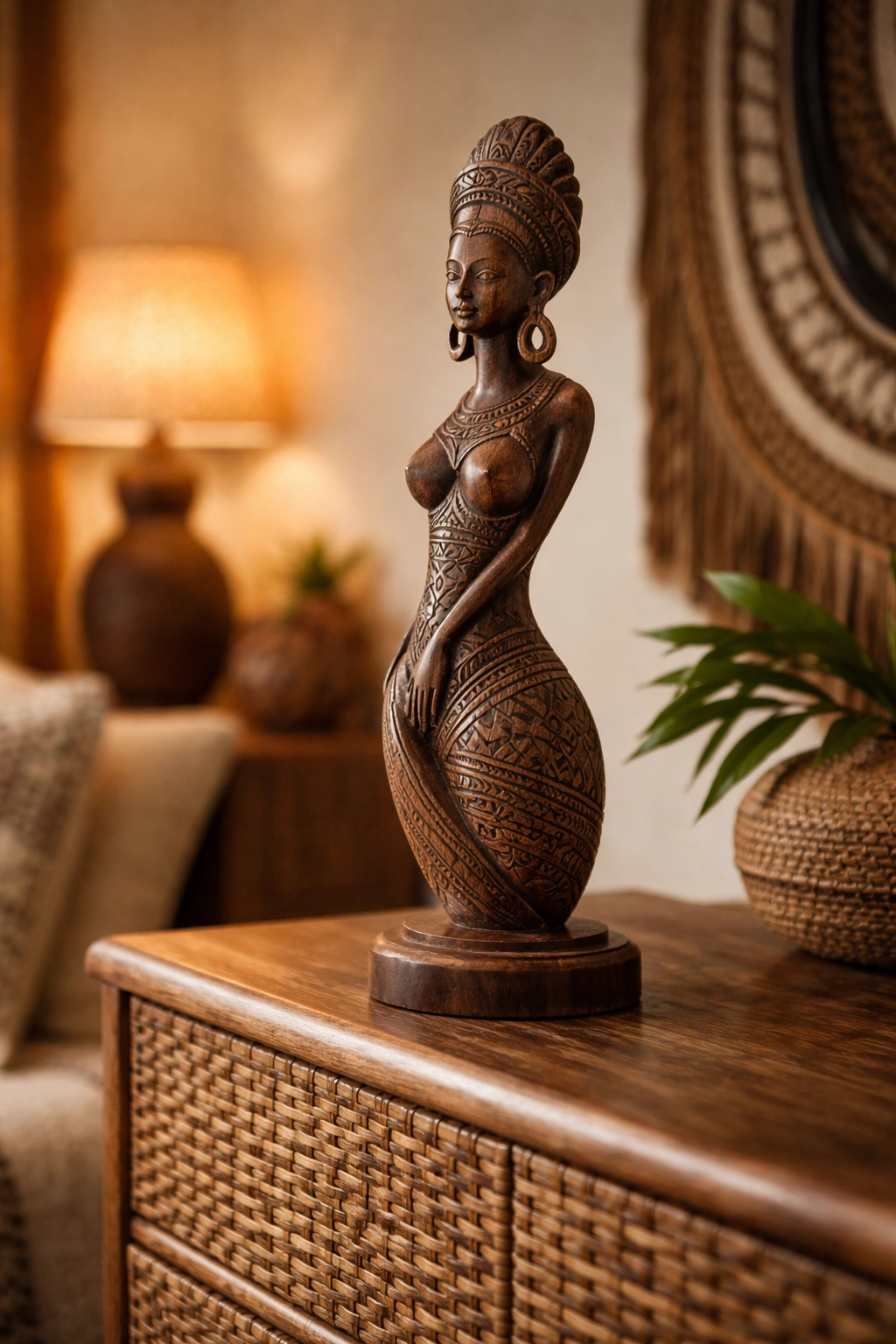
Carved wood objects — small figurines, geometric sculptures, abstract forms, animals — are one of the most distinctive elements of African decorative tradition across the continent. In a bedroom, a few well-chosen carved wood pieces on a dresser or floating shelf add cultural weight without cluttering.
The key word is “few.” One beautiful carved piece with space around it reads as intentional. Seven pieces crowded on a surface look like a souvenir shop.
African carved wood objects can be found at import shops at prices ranging from modest to significant. For a budget approach, look at wood objects with abstract geometric forms rather than specific figurative pieces — those tend to cost more. A geometric carved bowl, a simple abstract figure, a carved wooden candle holder — all of these serve the same design function.
10. Hanging Plants and Greenery
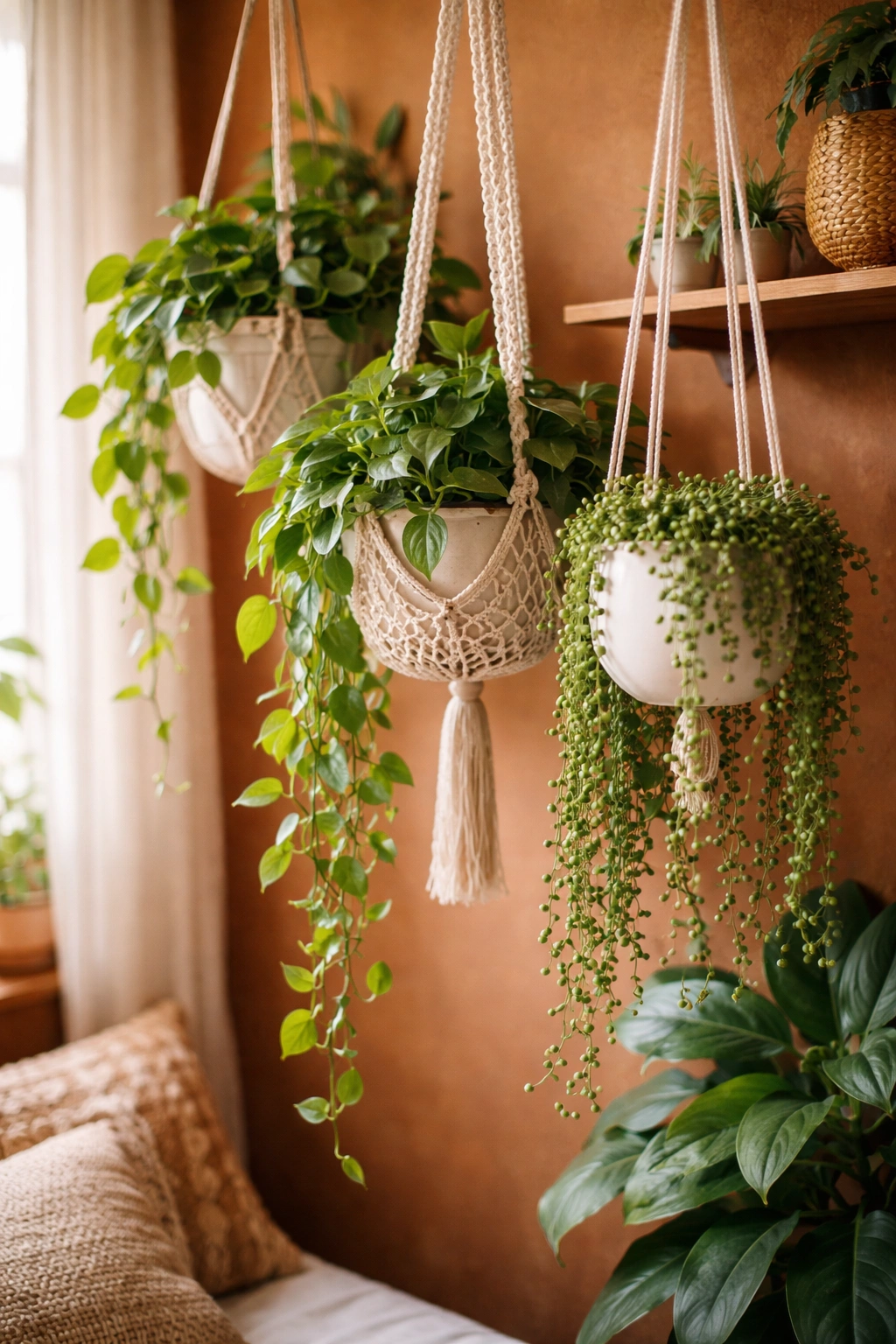
Plants are not peripheral to afro boho design. They’re essential. Living greenery in a bedroom softens the hard angles of furniture, adds organic life to a space full of handcrafted inanimate objects, and contributes to the layered, collected feel of the whole room.
Hanging plants — in macramé hangers, mounted to the ceiling in ceramic pots, or trailing from high shelves — add vertical life that ground-level plants don’t. A trailing pothos, a string of pearls, or a wandering dude in a macramé hanger beside a window is a design element as much as a living thing.
Budget: a small pothos from a grocery store or discount garden center costs $5 to $10 and trails aggressively once established. Propagate from a single plant to fill multiple pots. This is one of the highest-return investments in afro boho bedroom decorating.
11. Adire or Indigo-Dyed Fabric Accents
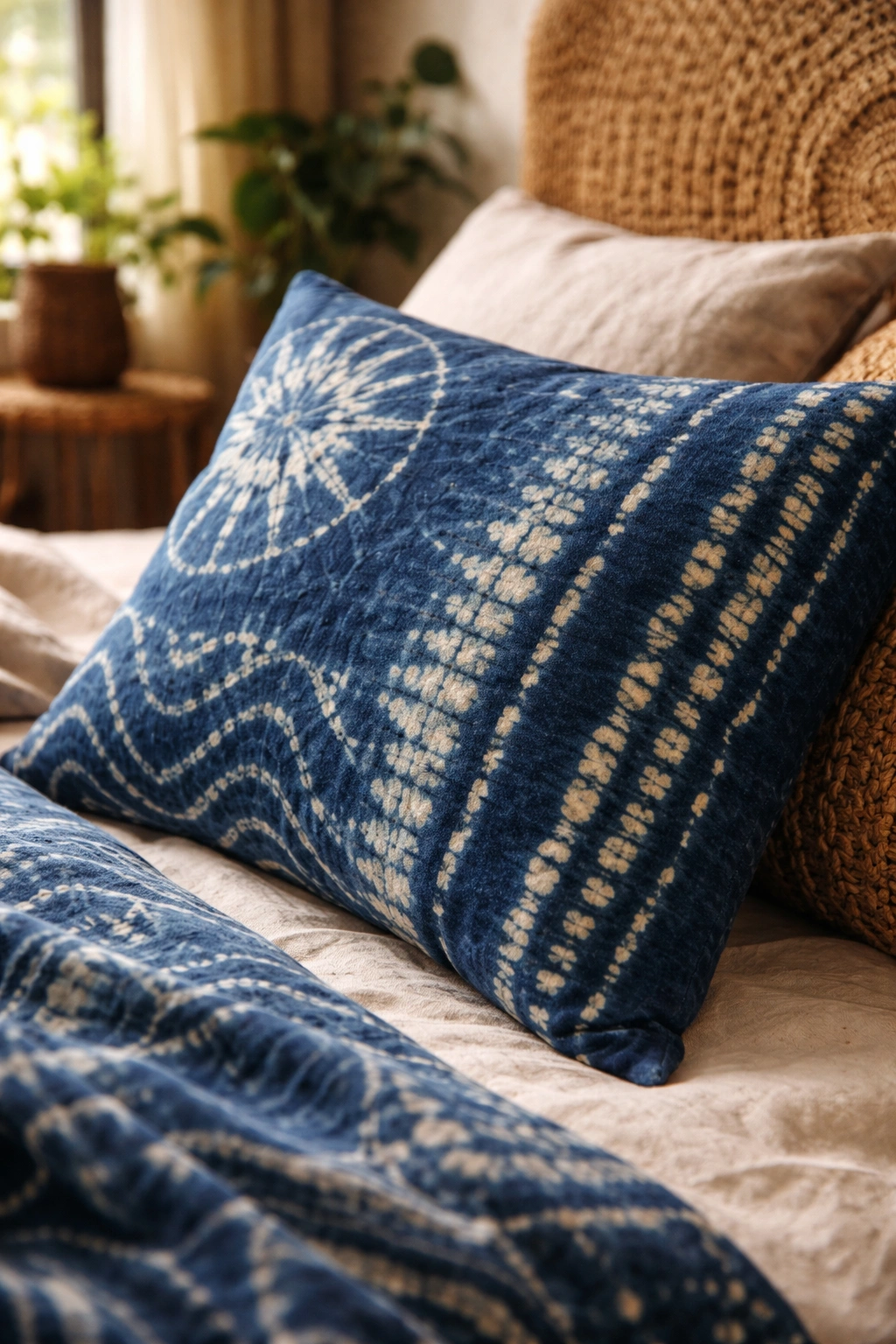
Adire is a Yoruba textile tradition from Nigeria involving indigo dyeing — fabric is resist-dyed or tie-dyed with indigo to create deep blue and white patterns that range from geometric grids to abstract batik-style designs. The specific indigo blue of adire is unlike commercial navy — it has a depth and organic variation that makes the fabric look genuinely old, saturated, and handmade.
In a bedroom that leans warm and terracotta-toned, a single adire blue accent — a pillow cover, a folded throw on the bed, a framed piece of adire on the wall — provides the cool contrast that prevents the palette from feeling one-dimensional. The indigo-and-cream combination also works independently as a full color palette if you prefer cool tones over warm.
This fabric is sold by the yard at African textile shops and online. A yard of adire fabric for a pillow project costs significantly less than buying a finished pillow in the equivalent quality.
12. Low Platform Bed or Bed on the Floor
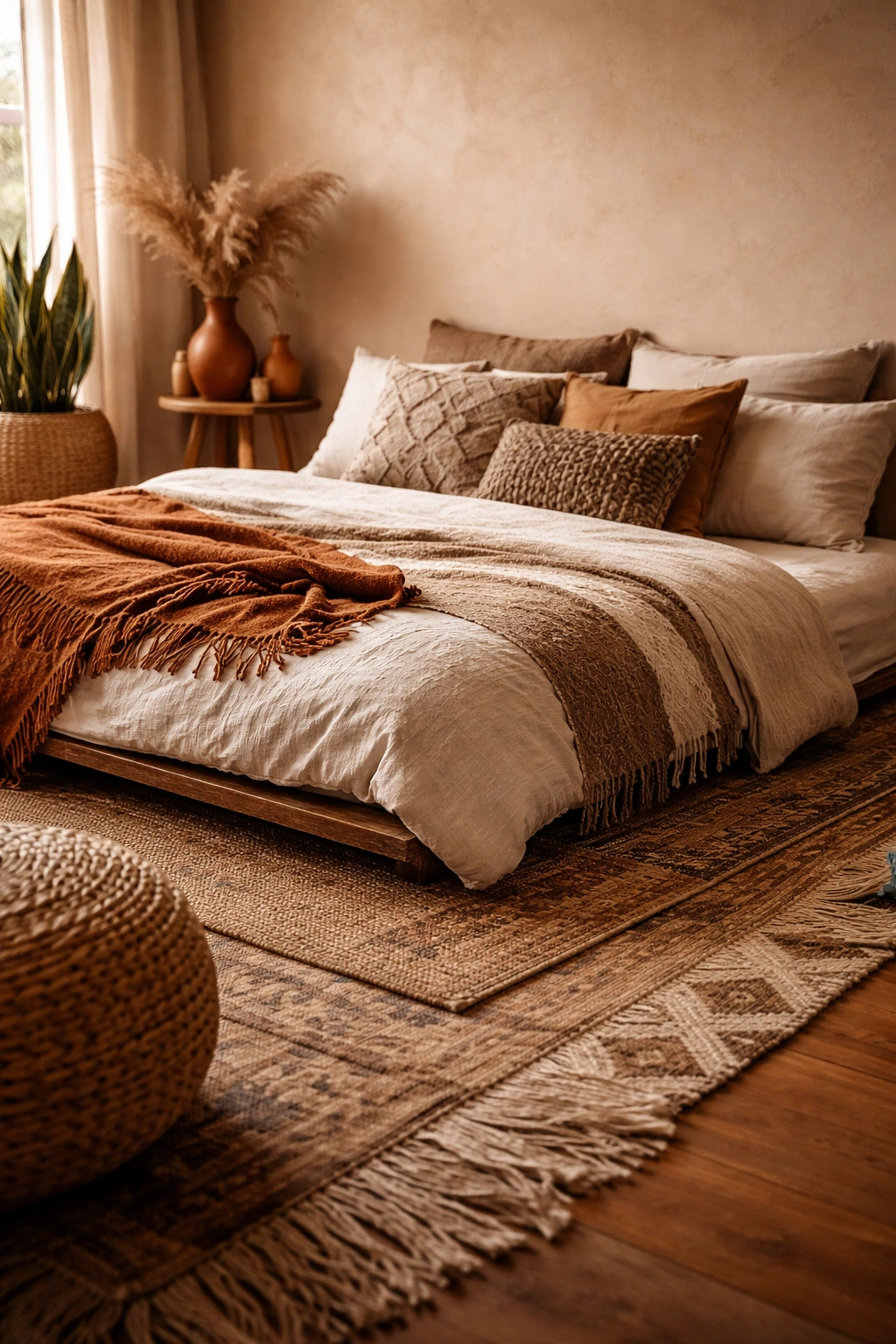
Platform beds — especially low-profile ones close to the floor — are central to many African and global boho bedroom traditions. A bed frame that sits 10 to 15 inches from the floor rather than the standard American 25-inch height changes the entire scale relationship of the room. Everything feels more relaxed, more grounded, literally closer to the earth.
A very low platform bed frame is often cheaper than a standard raised frame because it requires less material. Some afro boho bedrooms use no frame at all — just a quality mattress directly on the floor or on a tatami-style mat, surrounded by layers of rugs and textile.
Who This Works For
Be honest about your body here. Getting up from a very low bed is harder than from a standard height — worth considering if you have joint issues or mobility concerns. And a mattress directly on the floor needs adequate airflow underneath to prevent moisture buildup. A simple wooden pallet base or a roll of wooden slats is enough to provide that gap.
13. String Lights and Warm Ambient Lighting
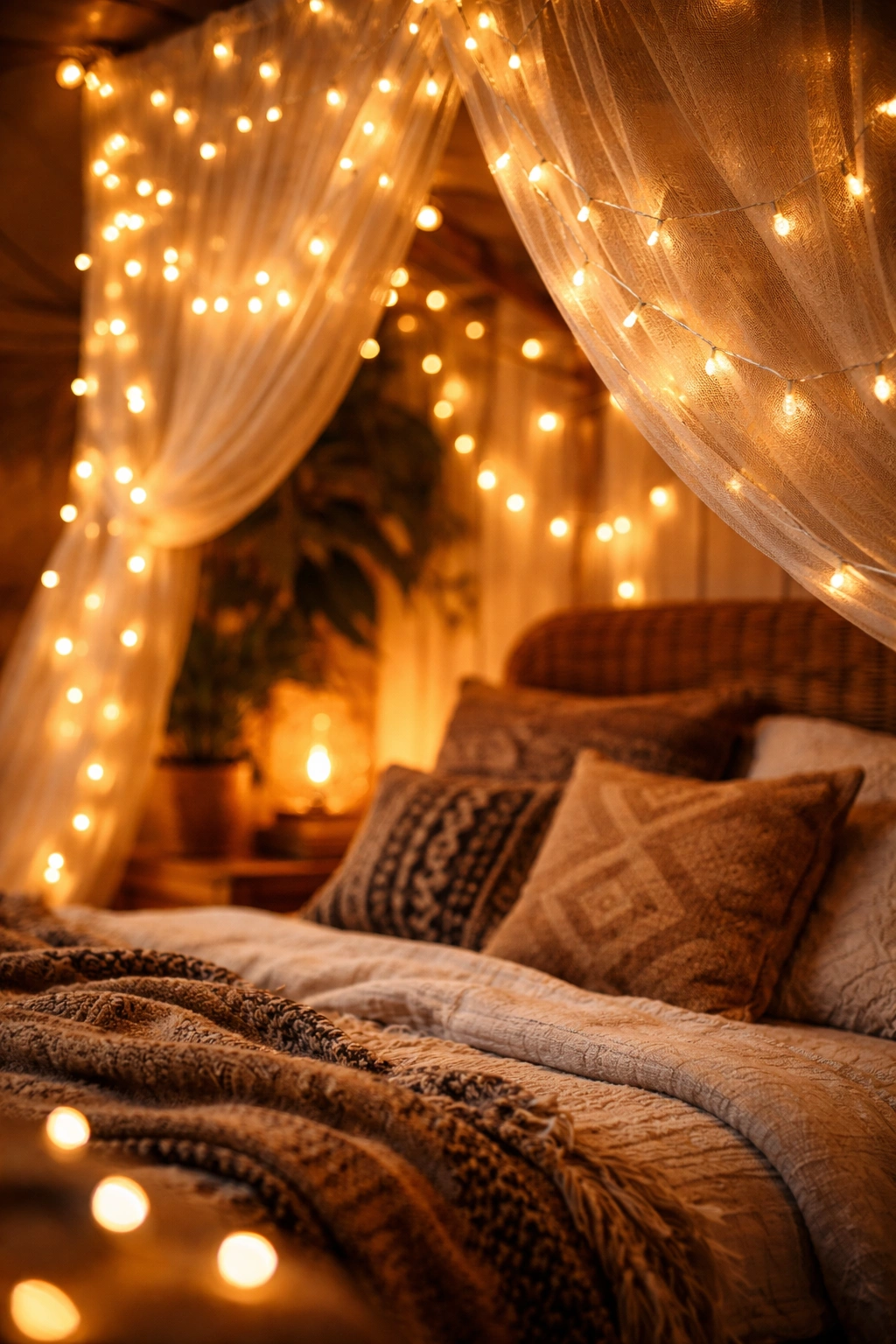
Overhead lighting makes most bedrooms look harsh and flat. Warm ambient lighting — string lights draped around a canopy or strung along the wall, table lamps with warm-white bulbs, a cluster of pillar candles on a tray — transforms the same room into something genuinely inviting.
String lights specifically are one of the cheapest and most effective lighting interventions you can make. A strand of warm-white (2700K color temperature — look for this on the box) lights draped over a bed canopy or looped along a gallery wall costs $10 to $20 and changes the whole mood of the room at night.
The light color matters enormously. Cool white or daylight LEDs look clinical in a bedroom. Warm white or amber bulbs give the walls and textiles the golden quality that makes earth tones glow rather than look dull.
14. Batik-Printed Curtains or Window Panels
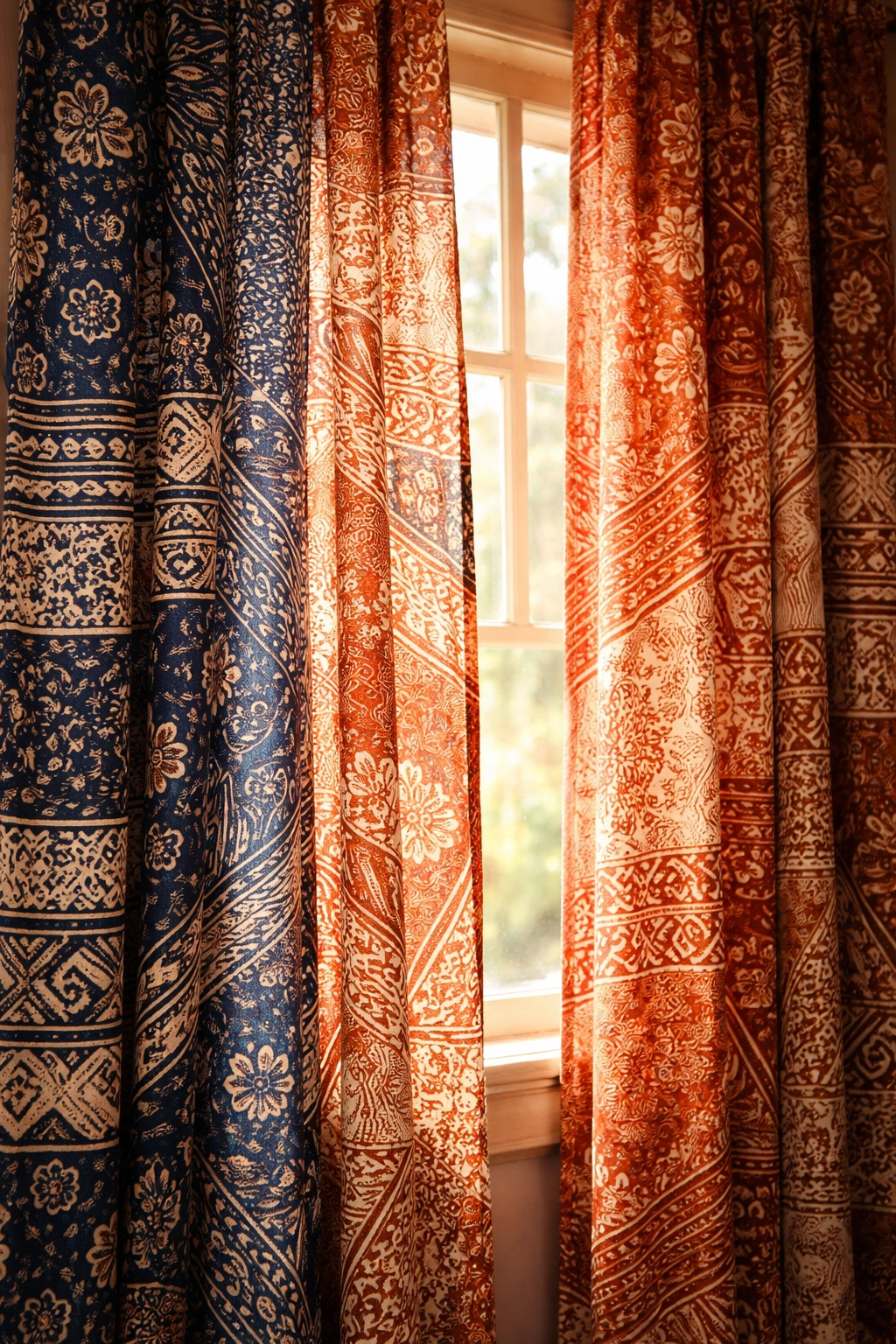
Curtains are one of the most impactful and underestimated elements in bedroom design. They cover a large vertical surface, frame natural light, and define the visual character of the whole room when you walk in. Batik-printed curtains — hand-dyed or printed in the organic, flowing patterns associated with West and Southeast African batik traditions — bring pattern and warmth to a bedroom wall area that most plain curtains leave blank.
Batik fabric by the yard is affordable. Unhemmed fabric panel curtains can be made from two rectangles of batik fabric, hemmed on three sides and sewn with a simple rod pocket at the top. Sewing skill level: absolute beginner. No patterns needed.
If sewing isn’t an option, look for printed curtain panels in botanical or abstract patterns in warm tones — not literal African print specifically, but any organic, hand-printed looking pattern in terracotta, rust, or ochre reads within the palette.
15. Vintage African Market Finds
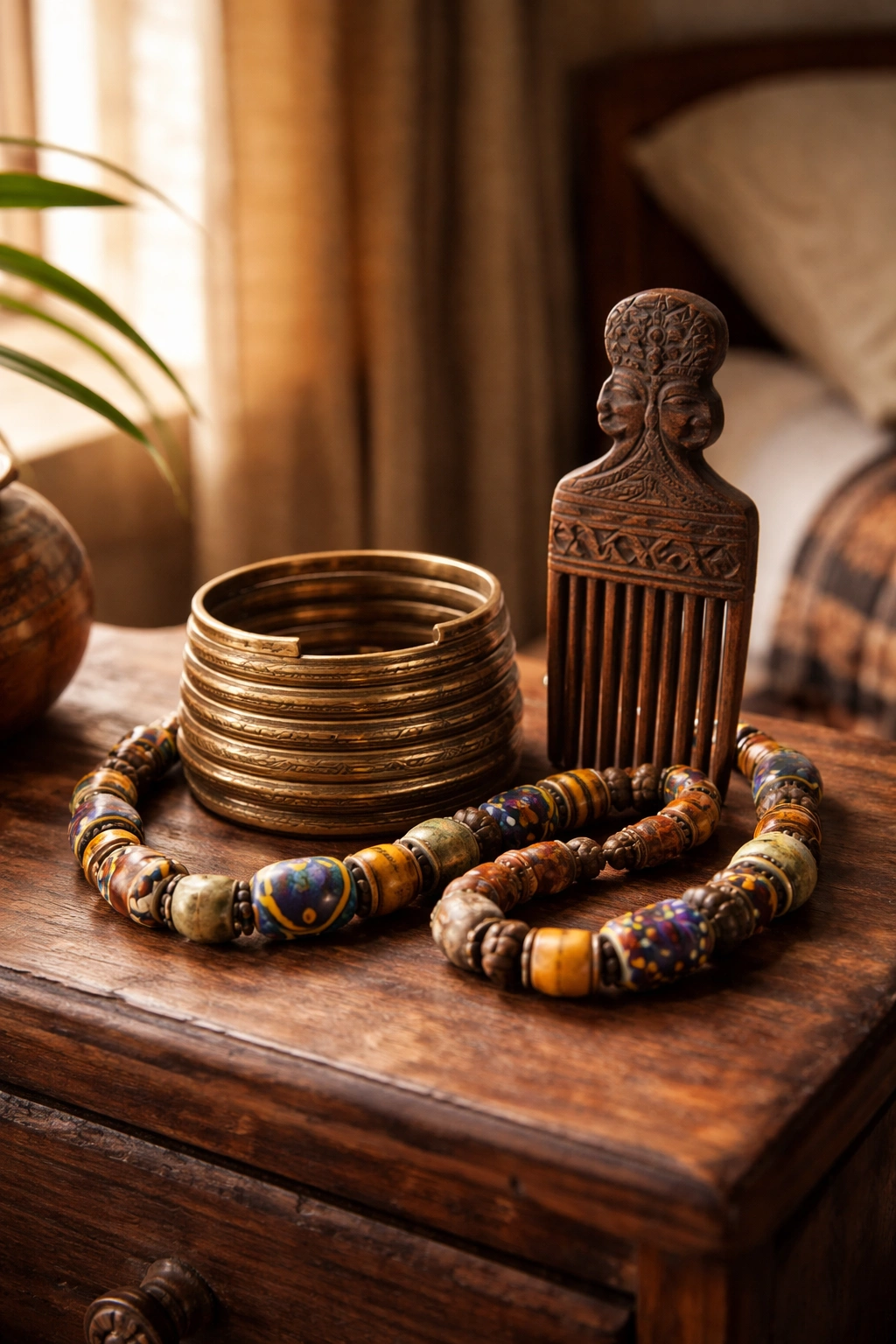
There’s a category of afro boho bedroom decorating that requires no money at all if you’re willing to do the searching. Vintage and secondhand shops in cities with African diaspora communities often have genuine African decorative objects — old brass jewelry, wooden combs, woven fans, clay beads, vintage photographs — that find their way into thrift store donation piles.
A vintage brass bracelet coiled in a small tray on a nightstand. An old woven fan mounted flat on the wall. A string of trade beads hung in a window. None of these are intended as mass-market decorative objects, which is exactly why they read as authentic and specific rather than generic afro boho.
The mindset: Approach vintage shopping for these pieces with patience and a specific visual language in mind rather than looking for anything particular. The pieces that work present themselves when you know what you’re looking for.
16. Natural Wood Furniture With Unfinished or Oiled Surface
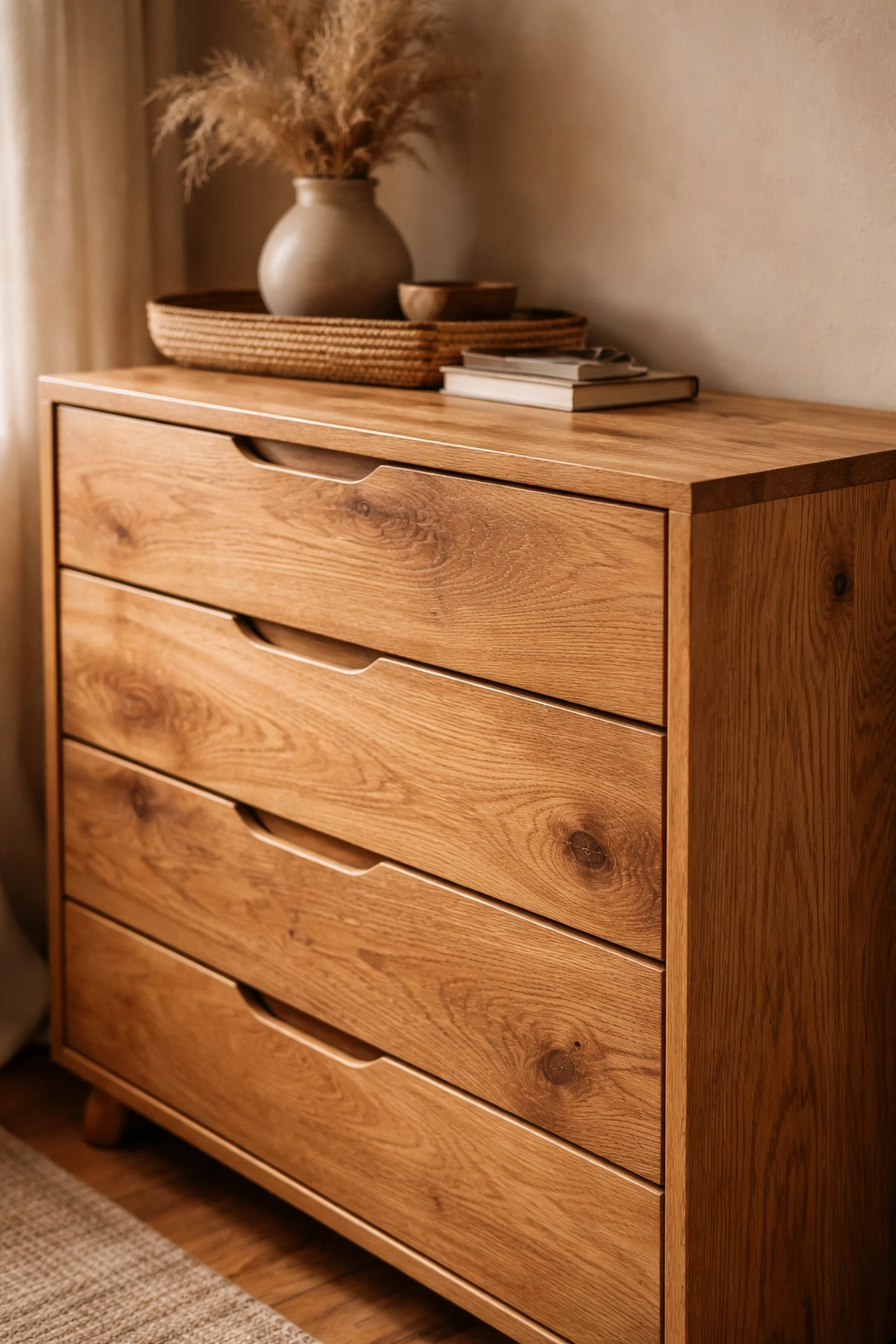
Heavy lacquered furniture — high-gloss finishes, shiny factory surfaces — fights the natural, handmade quality of afro boho textiles. Natural wood furniture with an oiled, waxed, or lightly sealed surface that shows the grain and imperfections of the wood is a better fit. It’s also often cheaper, because you’re looking at unfinished or lightly finished pieces rather than showroom-polished furniture.
A wooden dresser with a warm oil finish, a simple wooden side table, even reclaimed wood floating shelves — all of these contribute the “natural found material” quality that anchors the whole afro boho aesthetic.
If you have existing furniture in lacquered or painted finishes, you can lightly sand and apply teak oil or linseed oil to transform the surface. This is an afternoon DIY project that costs $15 in materials and changes the character of a piece significantly.
17. Pampas Grass and Dried Botanicals
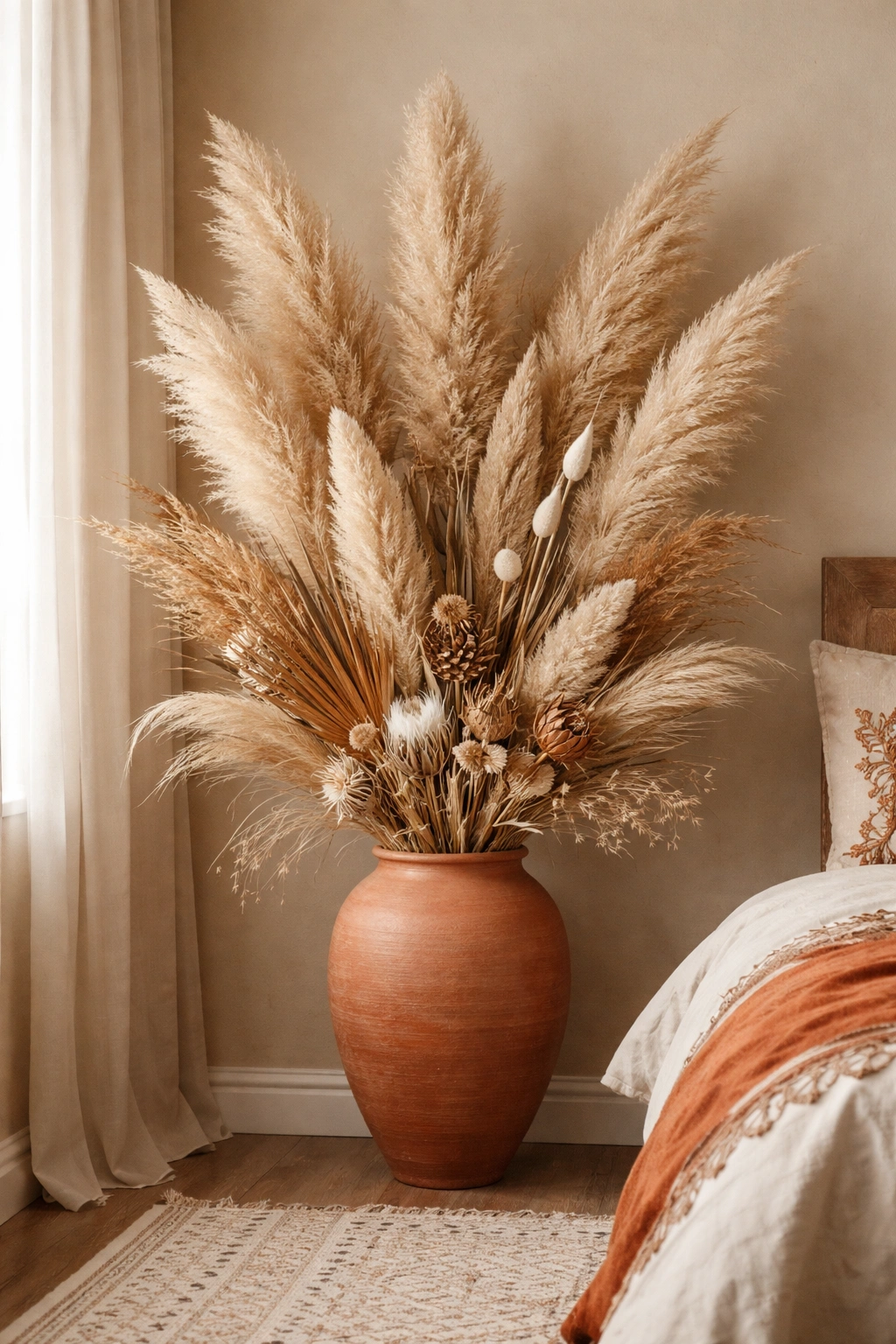
Dried botanicals — pampas grass, dried proteas, cotton stems, dried eucalyptus, sorghum stalks — have become common in boho design broadly, but they fit genuinely well in afro boho because dried plant material has a long tradition in African interior decoration. They’re honest about what they are — seeds, stems, husks — and their muted, sun-bleached colors fit the warm, dusty afro boho palette.
A large arrangement of dried pampas grass in a terracotta floor vase makes an impact disproportionate to its cost. Dried pampas is available online, often from farm-direct sellers at fairly reasonable prices. It doesn’t need water, doesn’t need sunlight, and doesn’t die. One arrangement can last years without looking ragged.
The scale matters: small dried arrangements get lost in a bedroom. Go large. A floor vase with multiple stems reaching above the dresser height is a statement. A small vase with three stems on a nightstand is a detail, not a feature.
18. Sheer or Gauze Bed Canopy
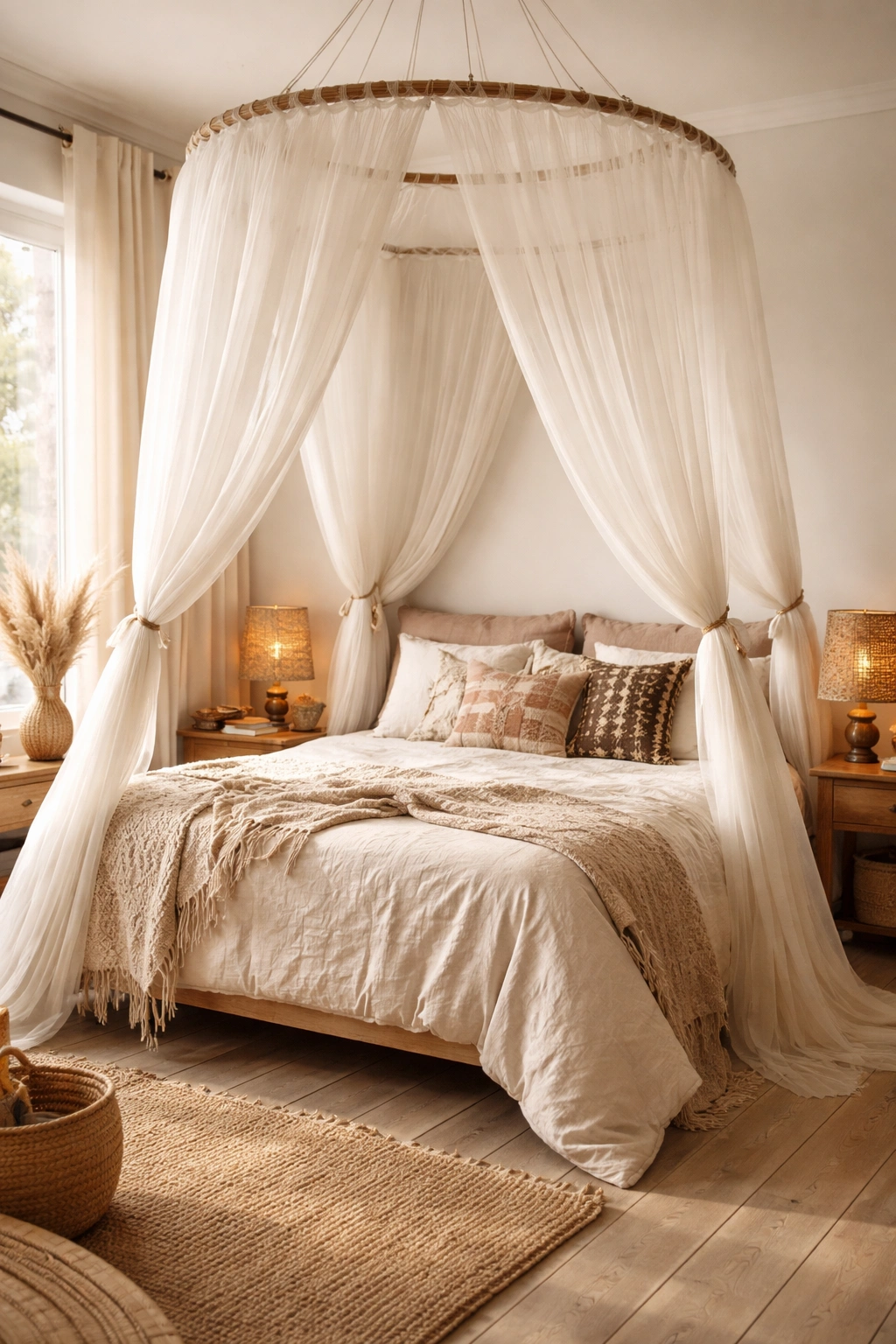
A bed canopy — a lightweight fabric draped from a ceiling hook or a four-poster frame — instantly softens a bedroom and creates an enclosed, intimate feeling around the sleeping space. In afro boho design, a canopy in cream, off-white, or dusty gauze fabric combines with the layered textile bedding beneath to create a cocooning, protective atmosphere.
The canopy doesn’t need to be elaborate. Four curtain panels hung from a ceiling-mounted curtain track around the bed, or a circular hoop with fabric draped down from a single hook above the headboard, are both achievable in an afternoon.
Budget reality: Four panels of sheer fabric from a discount fabric store, a single ceiling hook, and a wooden hoop from a craft store total $20 to $40. That’s genuinely accessible.
The fabric color should stay light and neutral — the canopy is a frame, not a pattern statement. The pattern and color come from the bedding and walls beneath.
19. Geometric Mudcloth-Inspired Wall Stencil
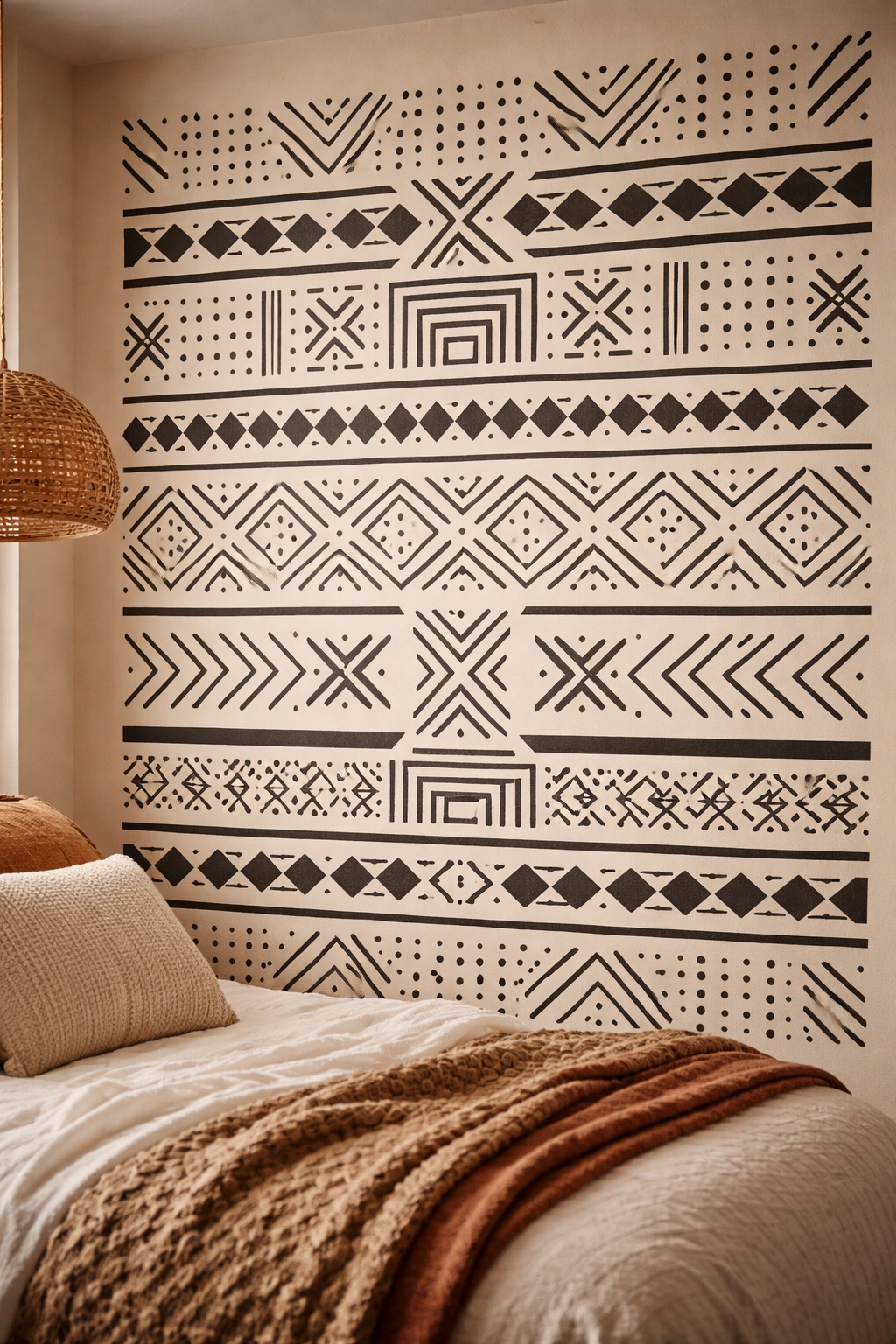
If buying textiles and art isn’t in the budget right now, paint a wall. Specifically, use a geometric stencil inspired by mudcloth patterns to create a painted accent wall that evokes the mudcloth visual language in a permanent, zero-cost-to-maintain way.
Mudcloth patterns are based on geometric grids, X shapes, diamond motifs, and horizontal stripe compositions. A stencil in matte black paint on a warm cream or terracotta wall captures the graphic quality of the textile without the expense. The stencil itself — available online as a laser-cut plastic sheet — runs $15 to $25.
This is a committed choice. Unlike a textile accent you can change, a painted wall is a bigger decision. But done with confidence, a geometric stenciled accent wall is one of the most striking elements an afro boho bedroom can have.
20. Knitted or Woven Chunky Throw Blanket
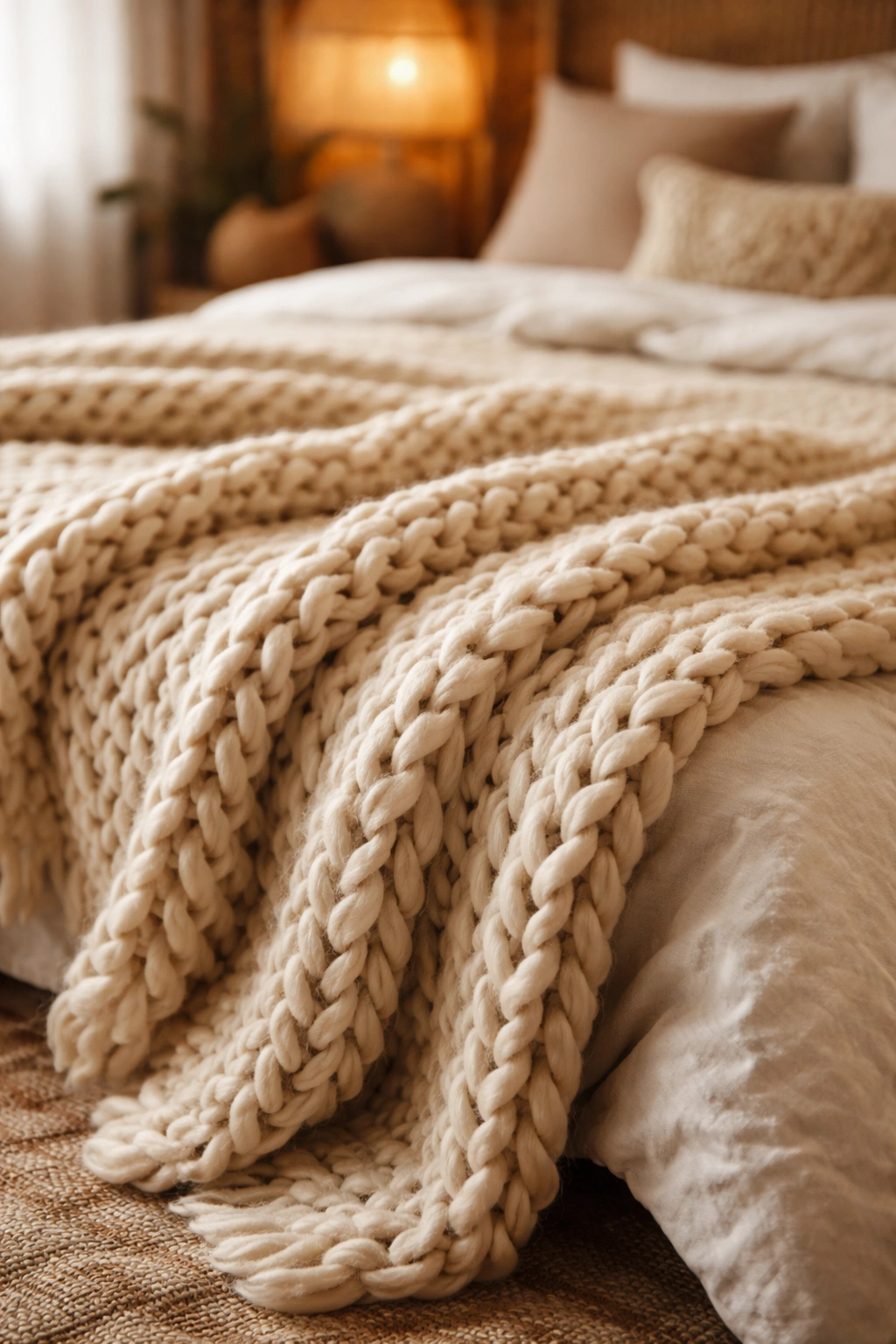
A chunky knit or woven throw blanket in a warm neutral — cream, camel, rust — draped over the foot of the bed or folded over a chair creates the kind of casual, layered visual that makes a bedroom look genuinely lived in and welcoming. The scale of a chunky knit — its exaggerated texture, its visual weight — communicates comfort before you’ve even touched it.
The budget route: Chunky throws from discount home stores like HomeGoods or TJ Maxx run $20 to $40 and are genuinely indistinguishable from more expensive versions. The texture does the work, not the brand. Look for natural color tones — avoid grey, which pulls the palette cold, and bright primary colors, which fight the earth tones.
Drape it loosely. A perfectly folded throw looks stiff. A casually thrown throw looks inviting.
21. Repurposed African Fabric as a Headboard
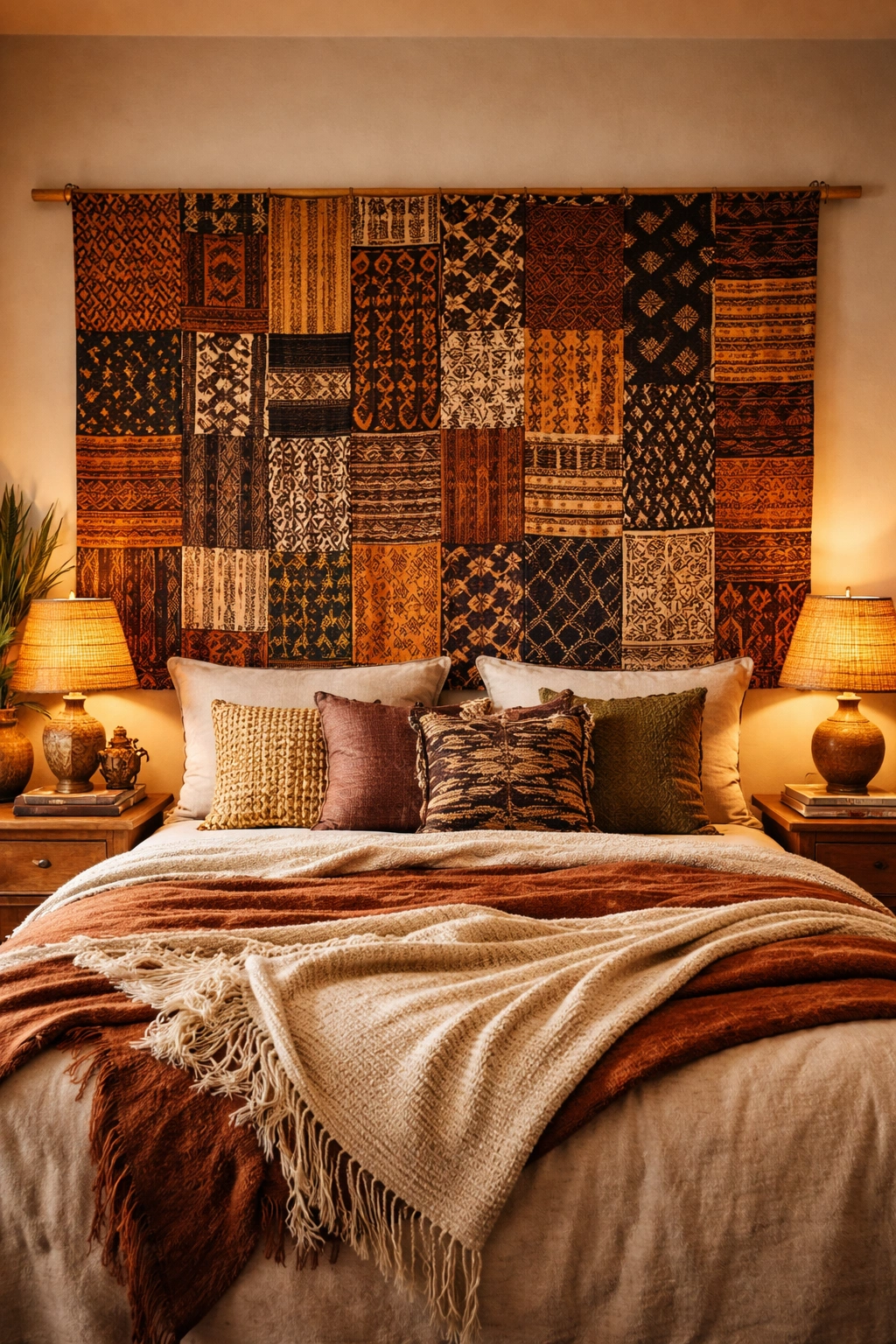
No frame. No upholstery. A rectangle of beautiful African fabric — mudcloth, adire, batik, wax print — stretched across the wall behind your bed and secured with a dowel at the top and bottom is one of the most striking and affordable headboard alternatives available.
The fabric should be at least as wide as your bed and tall enough to visually anchor the space above the pillows — roughly 36 to 48 inches tall for a queen-sized bed. Stretch it taut using small staples into the wall or suspend it from a wooden dowel hung on two hooks.
The result is a deeply personal design statement. No two fabric headboards look alike because no two pieces of African fabric have the same pattern. And unlike an upholstered headboard that costs hundreds of dollars, this can be updated whenever you find a new fabric you love — remove, swap, re-hang.
Making It All Work Together
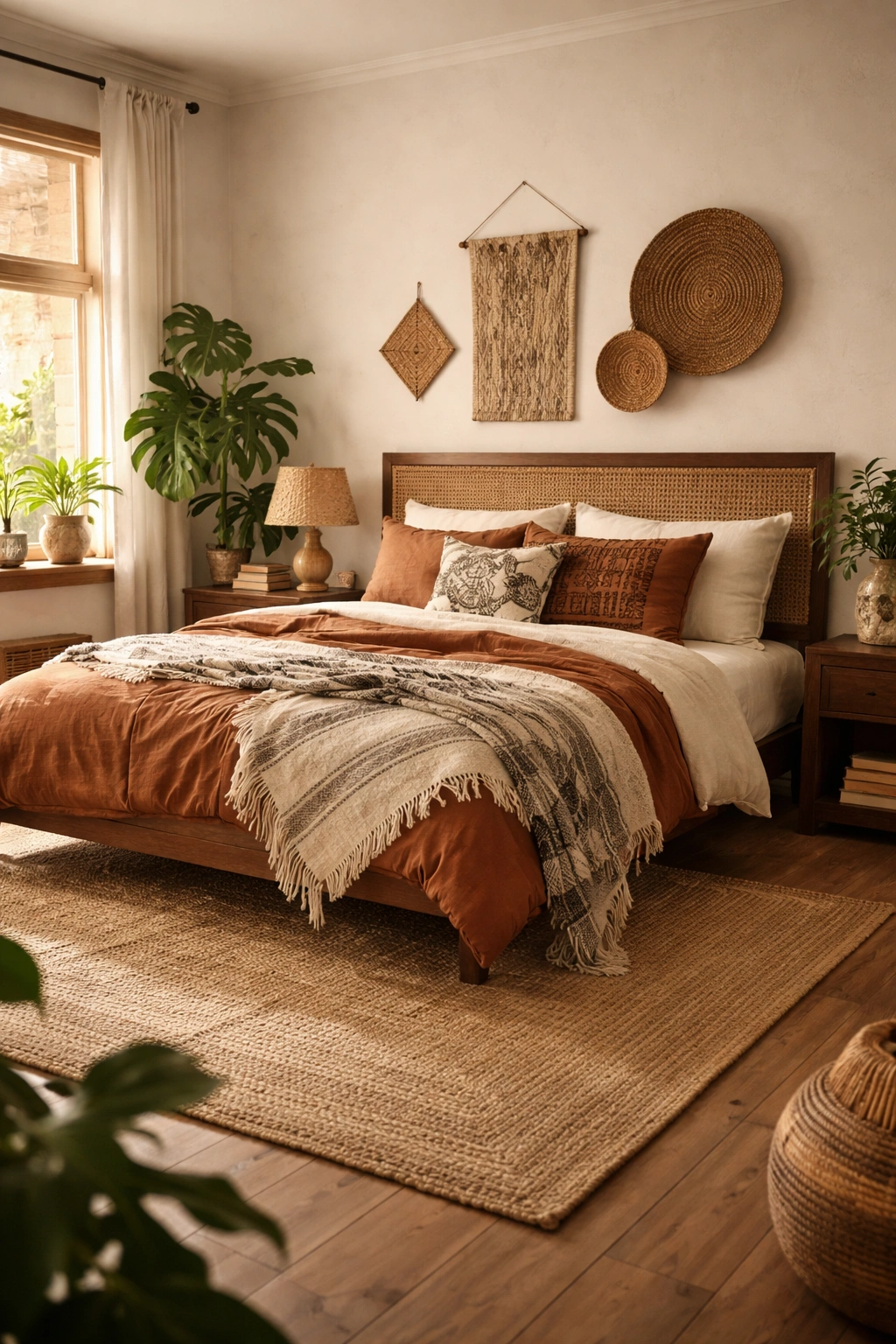
The most common mistake in afro boho decorating is accumulating pieces without editing. The aesthetic thrives on layering, but layering without restraint becomes visual noise. After adding each piece, step back and assess the room from the doorway. Does the new piece add or compete? Does the room feel more gathered or more cluttered?
Restraint is itself a design skill. Not every surface needs an object. Not every wall needs art. Empty space — a bare wall beside a busy gallery wall, a clear dresser surface beside a layered nightstand — gives the eye a place to rest and makes the filled areas feel more intentional.
Work from the floor up: rug first, then furniture, then bedding, then walls, then accessories. Each layer informs what comes next, and you’ll make smarter purchasing decisions if you’re building gradually rather than trying to complete everything at once.
Keeping the Space Functional as It Grows
An afro boho bedroom on a budget is built over time, not bought all at once. That’s actually part of its character — it looks genuinely accumulated because it is. Give yourself permission to live in a partially decorated room while you find the right pieces rather than filling every spot with something that doesn’t fit just because there’s a gap.
Function matters in a bedroom above any other room. Storage baskets double as decorative elements — a set of woven grass baskets under a bed or in the corner holds everything from extra blankets to out-of-season clothing while contributing to the aesthetic. A wooden tray on the dresser corrals small items while looking deliberate. Beauty and utility can genuinely be the same thing.
The overall goal is a bedroom that feels like yours — rooted in Black design tradition, warm and livable, built from real materials by real hands. That’s worth taking the time to get right, piece by piece.
