



Small afros on 4C hair get dismissed as a transition phase. That’s a mistake. Some of the sharpest, most feminine, most striking hair looks I’ve seen on anyone — full stop — were small afros styled with intention. The curl pattern does things at short length that longer 4C hair can’t. You get texture definition at eye level. Every coil, every ridge, every bit of sponge-curl pattern reads clearly because there’s no length weighing it down or hiding it.
Small afro styles for 4C hair are also incredibly practical. Less breakage, less tangling, shorter wash days, and you stop fighting your curl pattern and start working with it. The small afro forces you to embrace what your hair actually does, and that shift — from styling against the grain to styling with it — changes everything.
This list covers twenty-one specific small afro styles that work beautifully on 4C texture. Some are sponge-curled. Some are freeform. Some are shaped into geometric silhouettes, others left wild and messy. I’m giving you the techniques, the products I actually trust, and the honest assessments of what holds up versus what falls flat by lunchtime.
Why Small Afros Work Especially Well on 4C Hair
4C hair has the tightest curl pattern of any texture, and it shrinks more aggressively than any other — often 70-80% when dry. At long lengths, that shrinkage can work against definition. Short hair makes the shrinkage an asset. The coils look dense, defined, and intentional because they haven’t had room to pull on each other and break apart.
There’s also less weight to manage. 4C hair at medium length needs constant moisture and manipulation to hold a style. Short 4C hair holds definition for days with minimal effort. You can literally wake up, spritz, and go.
And the drama. A well-shaped small afro on 4C hair is one of the most head-turning looks a Black woman can wear. It’s bold, it’s unapologetic, and it announces itself without saying a word.
Tools You Actually Need — Keep It Simple
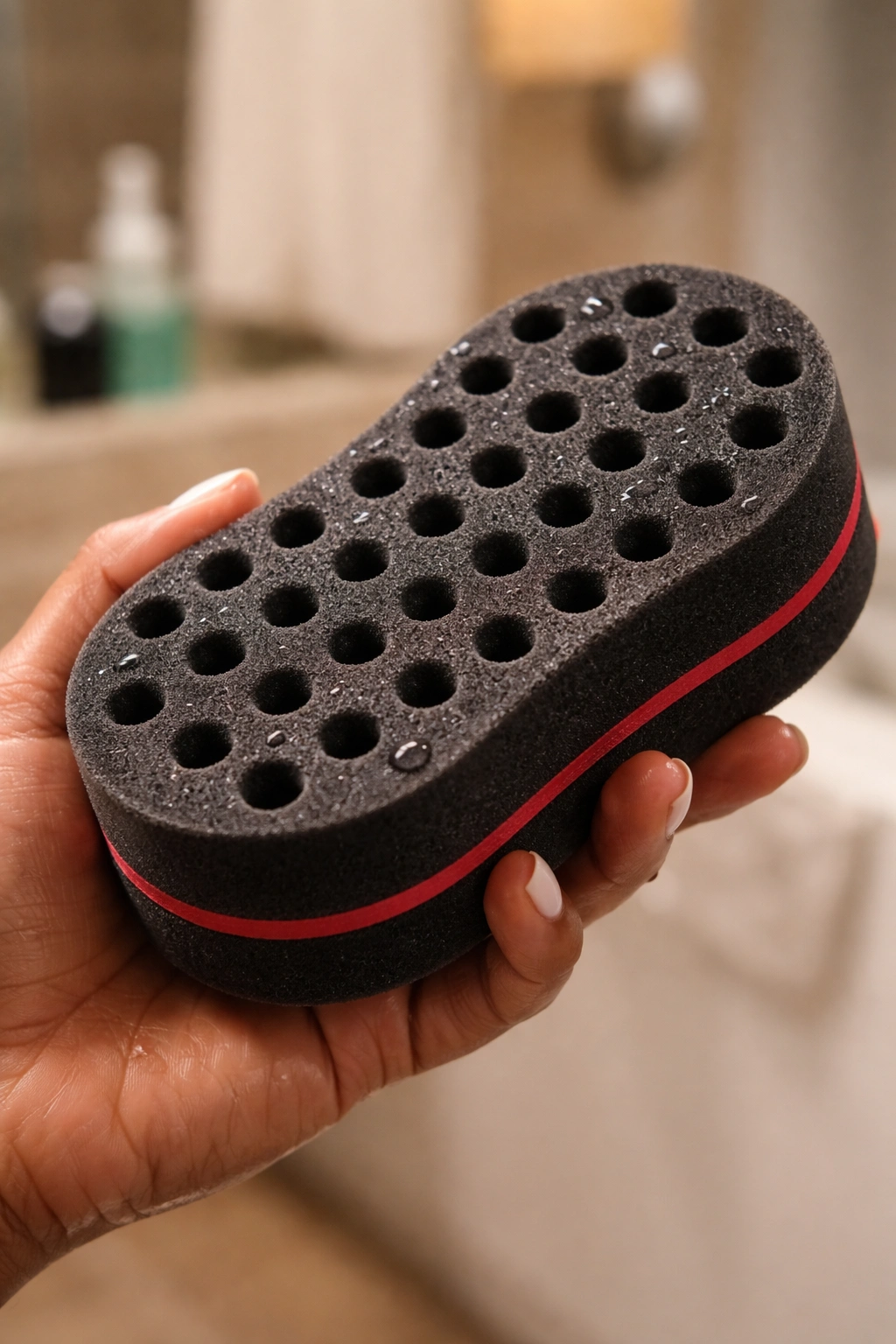
Forget the twenty-piece styling kit. For small afro styles on 4C hair, you need maybe five tools total.
- A hair sponge (the curved kind with holes — $8 at most beauty supplies)
- A denman brush or a soft boar bristle brush
- A wide-tooth comb with flexible teeth
- A spray bottle for daily moisture
- A pick with wide metal teeth for fluffing
That’s it. You don’t need a hot comb for most of these styles. You don’t need a blow dryer unless you’re stretching the hair first. And you definitely don’t need fifteen different products — two or three good ones will take you further than a cabinet full of stuff that doesn’t work together.
The Product Stack That Actually Holds a Small Afro
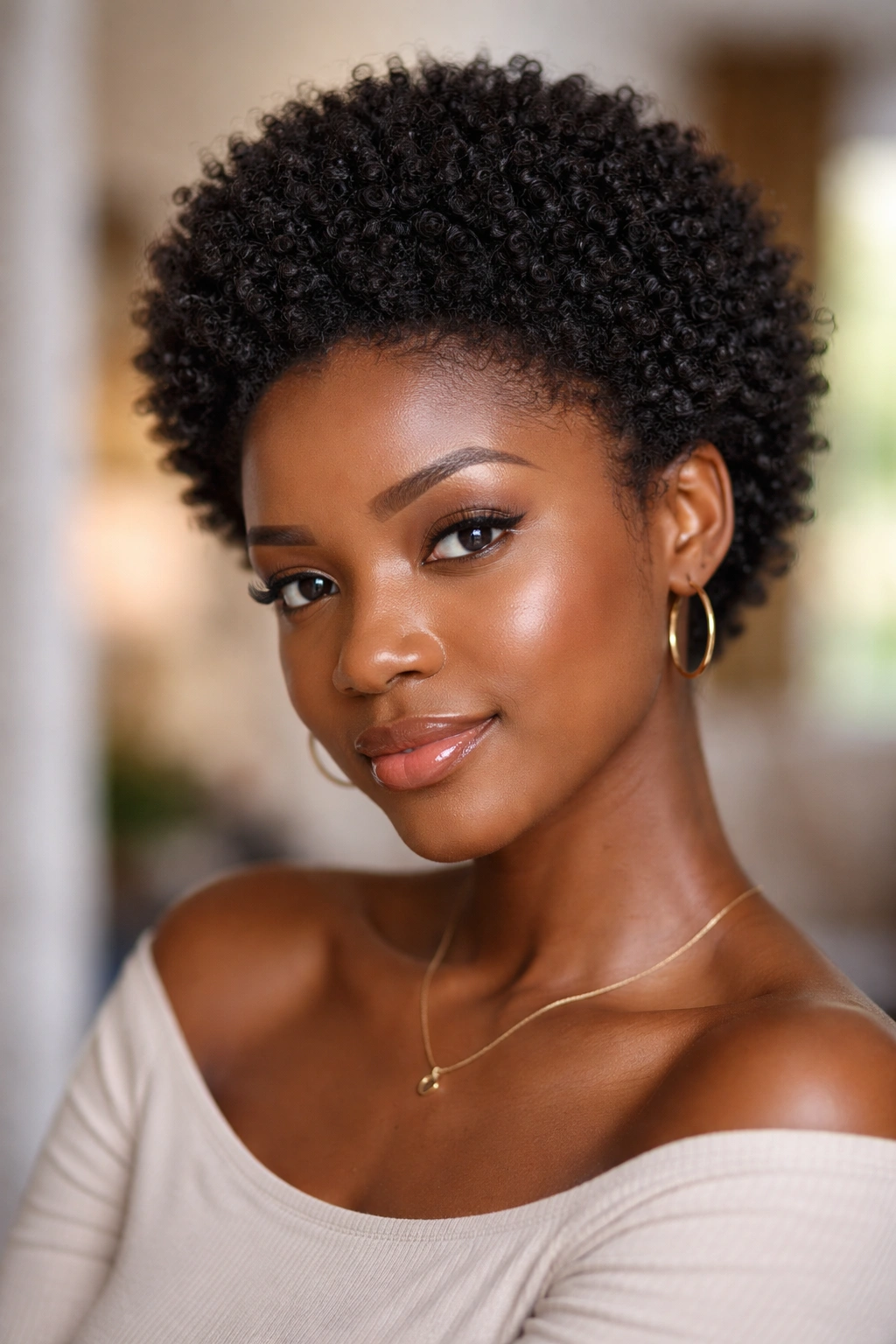
Here’s the honest truth about product. Light, water-based leave-ins give 4C hair the moisture it needs without weighing down short coils. Heavy butters and creams are better for longer lengths — on a small afro, they flatten the curl pattern and make the hair look greasy.
I lean toward a water-based leave-in spray as my base layer. Then a curl custard or gel-cream hybrid for definition. Then a finishing spray of water and a tiny bit of oil for sheen. Three products total. That’s the ideal small-afro routine.
Bold tip: Avoid pure gels on small afros unless you want a very sculpted, wet-look finish. Gels flake, dry crunchy, and get dusty looking within a day. Cream-gel hybrids hold the shape without the crunch.
Prepping 4C Hair for a Small Afro Style
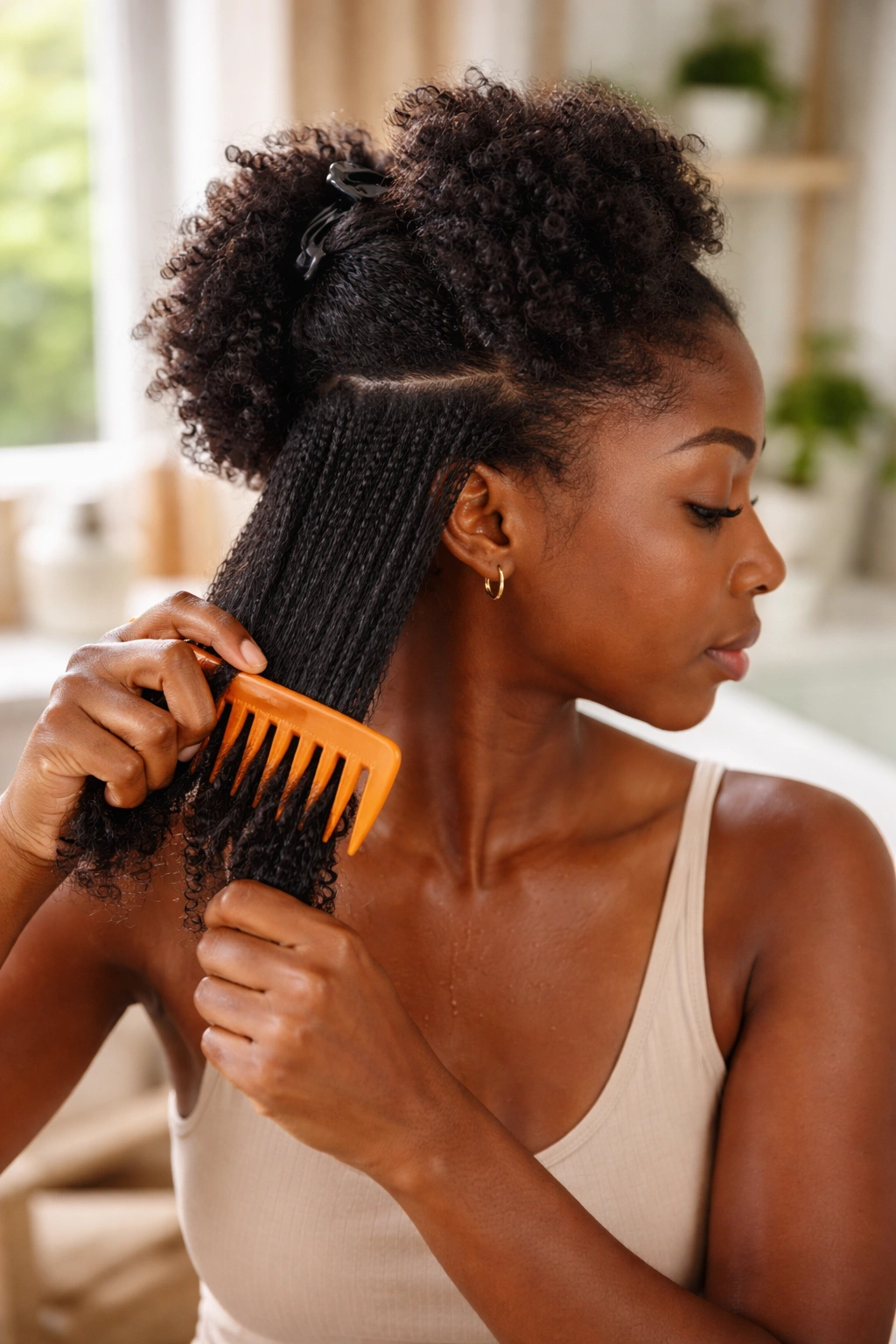
Whether you just big-chopped or you’ve grown your TWA out a few inches, the prep is similar. Start with clean, damp hair. Not soaking wet — damp. Hair that’s too wet dilutes your products and takes forever to dry. Hair that’s too dry won’t absorb anything evenly.
Detangle gently with your wide-tooth comb, working from ends to roots. 4C hair is fragile, and aggressive detangling causes breakage even when the hair is short. Be patient. Take small sections. Finger-detangle first if there are knots.
Once the hair is detangled and evenly damp, apply your leave-in in sections. Rake it through with your fingers. This step matters — uneven leave-in creates patchy definition later.
1. The Classic Sponge-Curled Coil
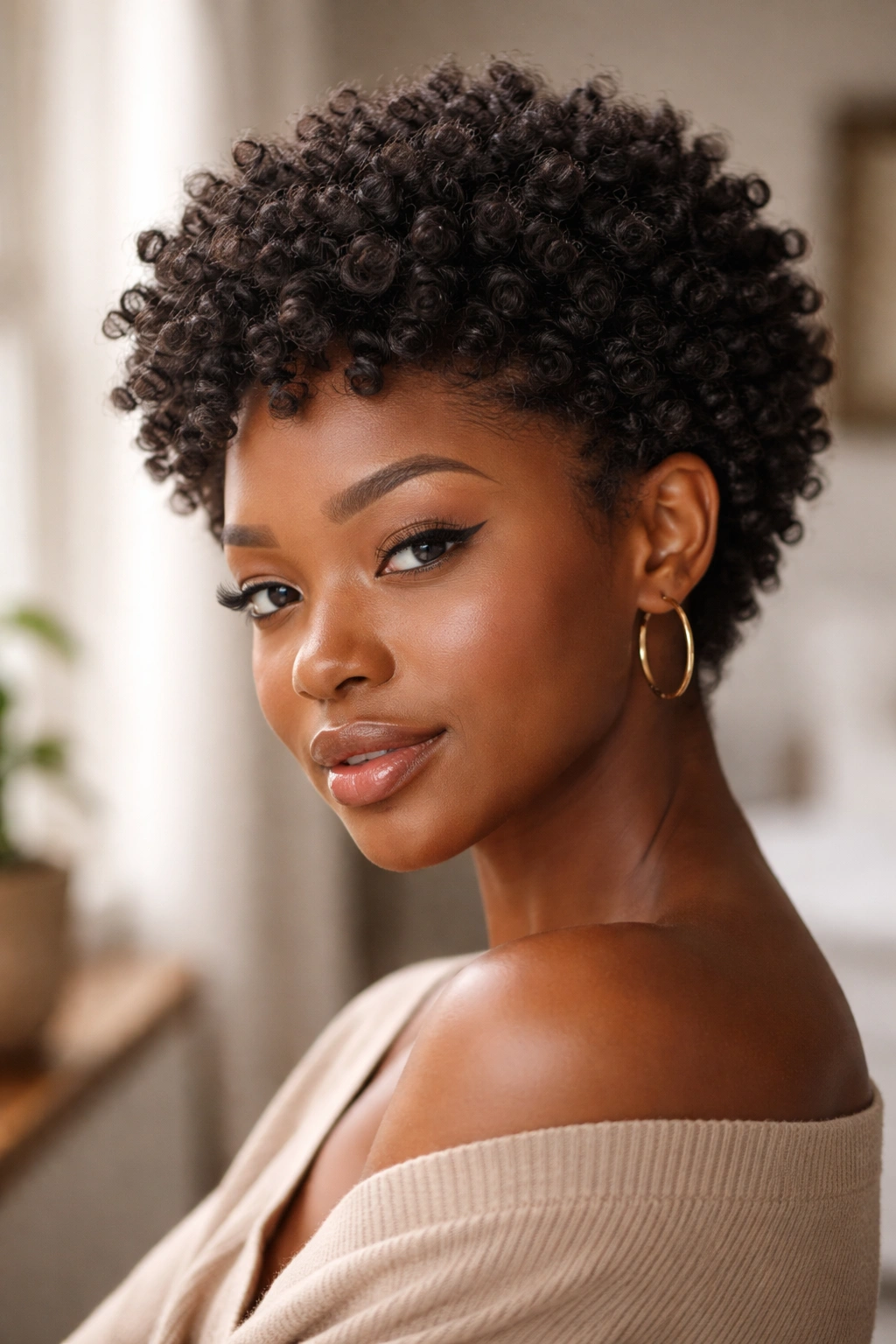
The sponge coil is the gateway small afro style. If you’ve never tried one, start here. The texture it creates on 4C hair is unlike anything else — tight, defined little coils all over, each one catching the light separately.
You rub the sponge in small circles over damp hair until the coils form. Takes about ten minutes for a full head. The coils stay put for three to four days with minimal maintenance, and a quick spritz of water and re-sponge brings them back to life.
Why It Works
The holes in the sponge match the tightness of your 4C curl pattern, so instead of fighting your hair, you’re enhancing what it already wants to do. It’s the laziest high-impact style in the small afro category.
- Use the sponge on damp hair, never dry
- Circle in one direction consistently for clean curls
- Apply leave-in before sponging, then light oil after
Bold tip: Different sponges have different hole sizes. For 4C hair, the medium or large hole sponge works best. Small holes create coils so tight they almost disappear into the mass of hair.
2. The Fluffed Teeny Weeny Afro
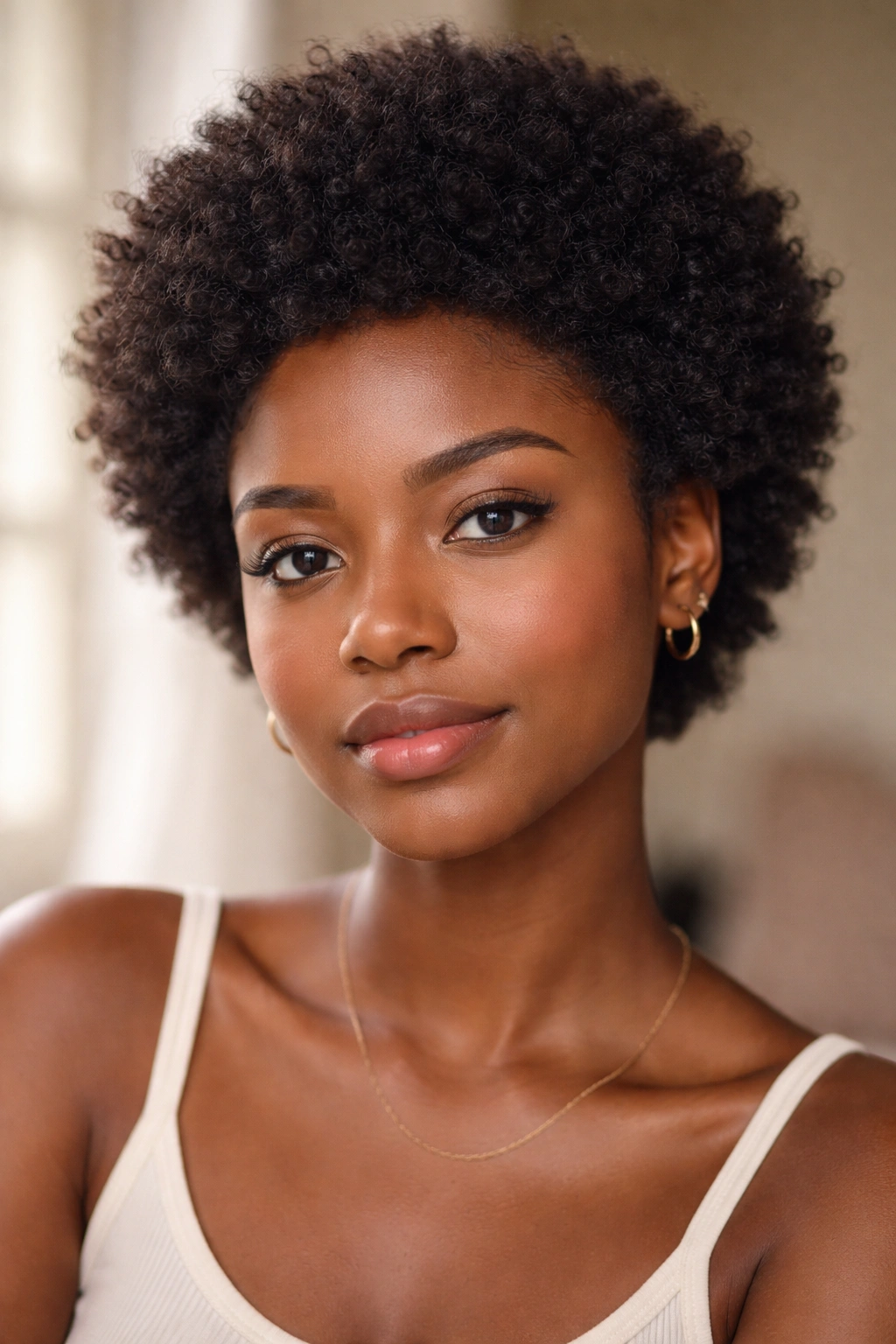
This is the classic TWA taken to its most voluminous extreme. You fluff rather than define. The texture isn’t about visible coils — it’s about overall roundness and a soft cloud effect.
You start with damp hair, apply a light cream, pat dry, and then pick the hair outward gently. Not aggressively. Just enough to lift it from the scalp and create roundness without breaking up the natural coil pattern.
The payoff is a shape that looks effortless but actually requires a specific touch. You want the hair to look like it just decided to do this on its own — soft, full, and completely natural. It’s the kind of style people don’t realize took effort until they try to recreate it themselves.
3. The Side-Parted Small Afro
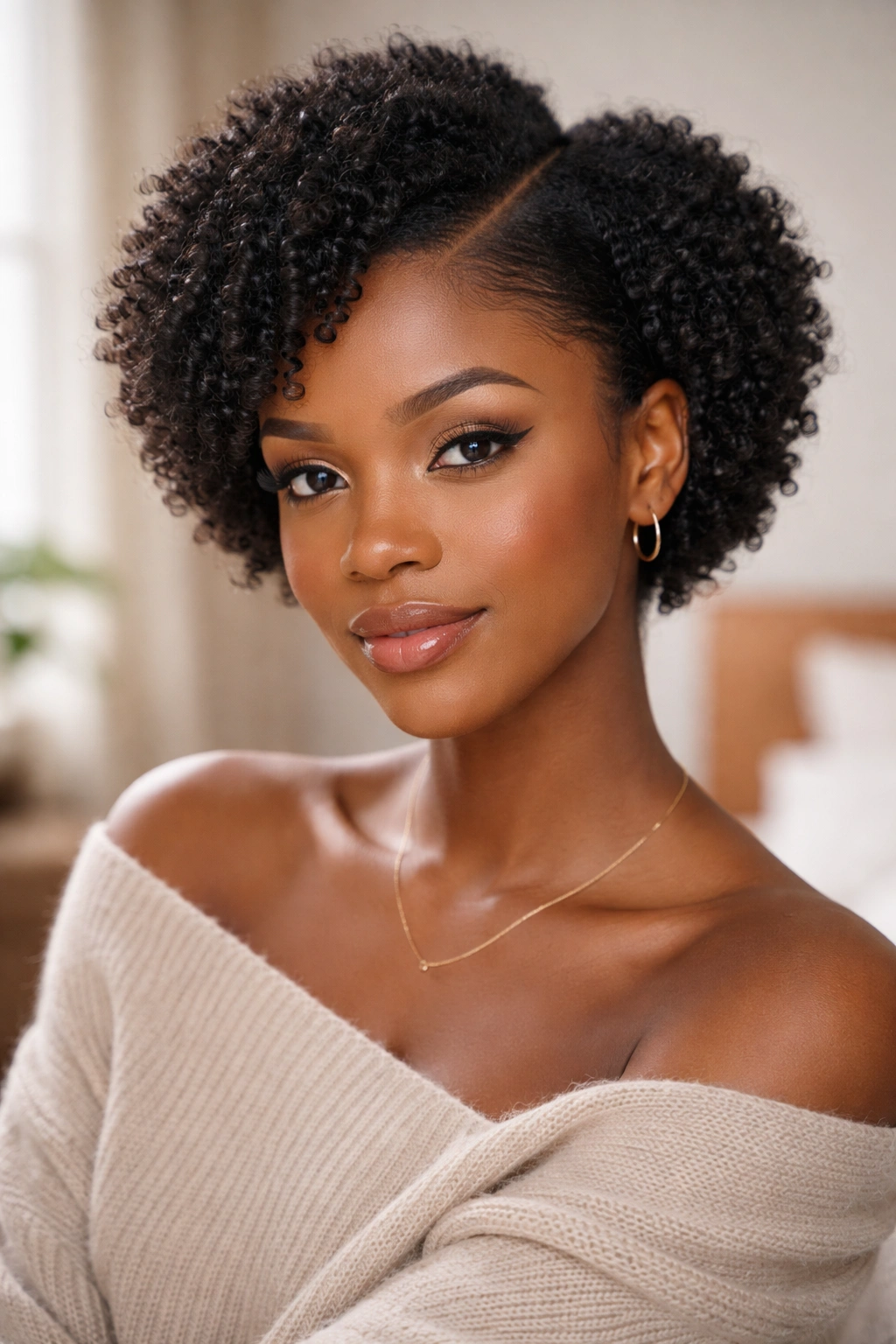
A simple part changes a small afro entirely. Running a deep side part from your forehead back about three inches creates asymmetry that reads as polished and deliberate. Suddenly a casual puff becomes a styled look.
Use a rat-tail comb to make the part clean. Apply a tiny amount of edge gel to the hair on either side of the part to keep it laying flat. Then shape the rest of the hair as normal — fluffed, picked out, or coiled.
The side part also has a face-slimming effect for rounder faces. It breaks up the symmetry that round faces already have, which creates visual length and balance.
4. Finger-Coiled Small Afro
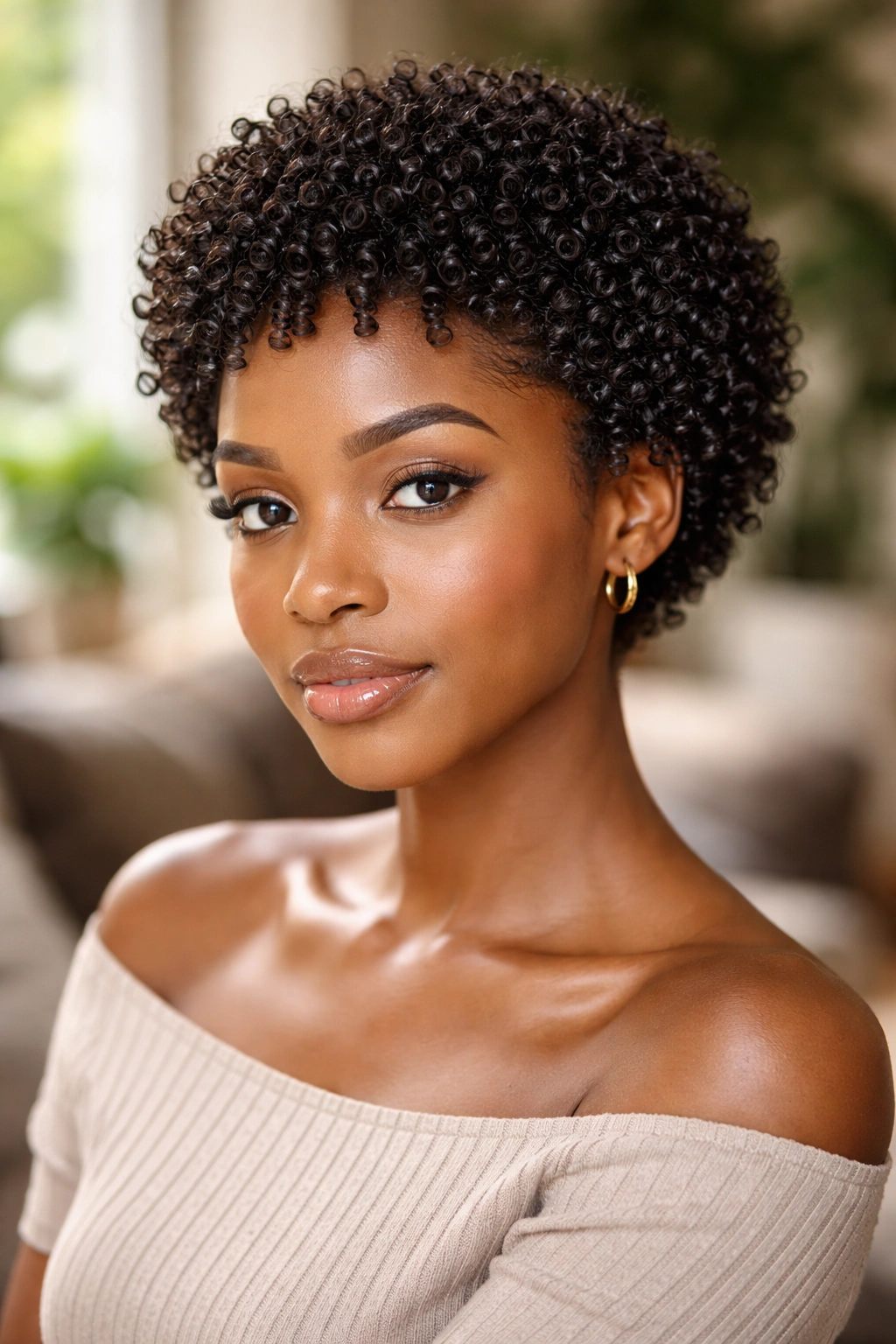
Question — how do you get 4C hair to show the most defined curl pattern possible? Answer: finger coils. Not sponge coils, not twist-outs, but literal finger-twirling small sections of damp hair around your index finger one at a time.
It’s tedious. I’m not going to pretend otherwise. A full head of finger coils takes about an hour on a small afro, maybe longer. But the result is the most precise, sculpted, defined coil pattern possible on 4C hair. Each coil reads individually. The texture is unreal.
How to Use It
- Work in tiny sections — about the width of your pinky
- Hair should be fully saturated with curl cream before coiling
- Let it air dry completely; do not touch until dry
Finger coils last three to five days if you sleep with a satin bonnet. When they start to relax, you can refresh with water or transition into a fluffed style for a second wear.
5. The Afro With Tapered Sides
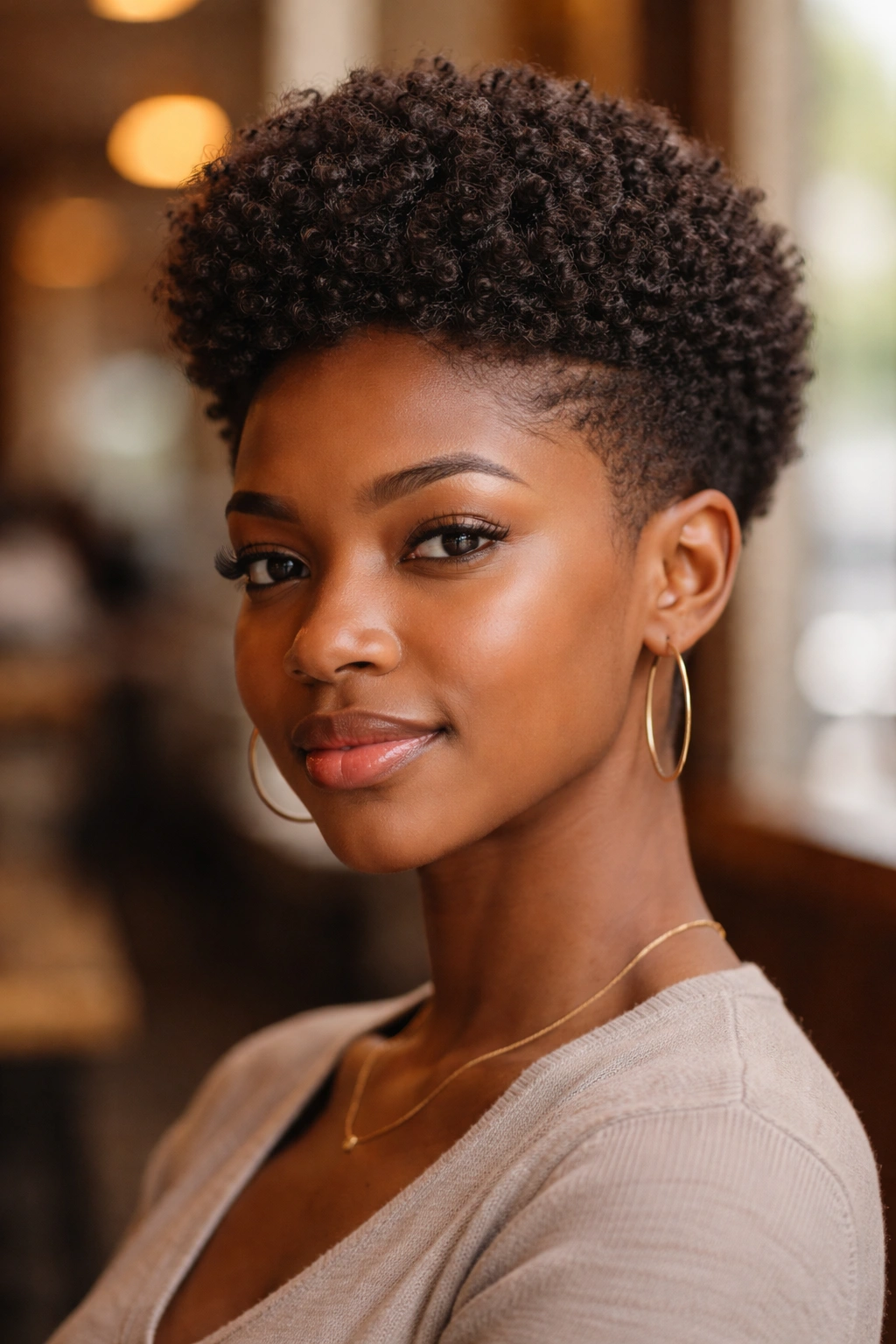
Taper the sides, keep the top full. This small afro style borrows from barbering and gives the hair a structured, intentional shape. It’s especially striking on rounder face shapes because the narrow sides create length where there wasn’t any before.
You can taper with clippers if you’re comfortable, or just wear the sides closer to the scalp while fluffing the top outward. Not every taper needs a real cut — styling alone can create the illusion on 4C hair with enough product control.
Pair this with bold earrings. The narrow sides expose your ears, which is an invitation to show off statement jewelry that would get lost in a fuller afro.
6. The Wet-Look Small Afro
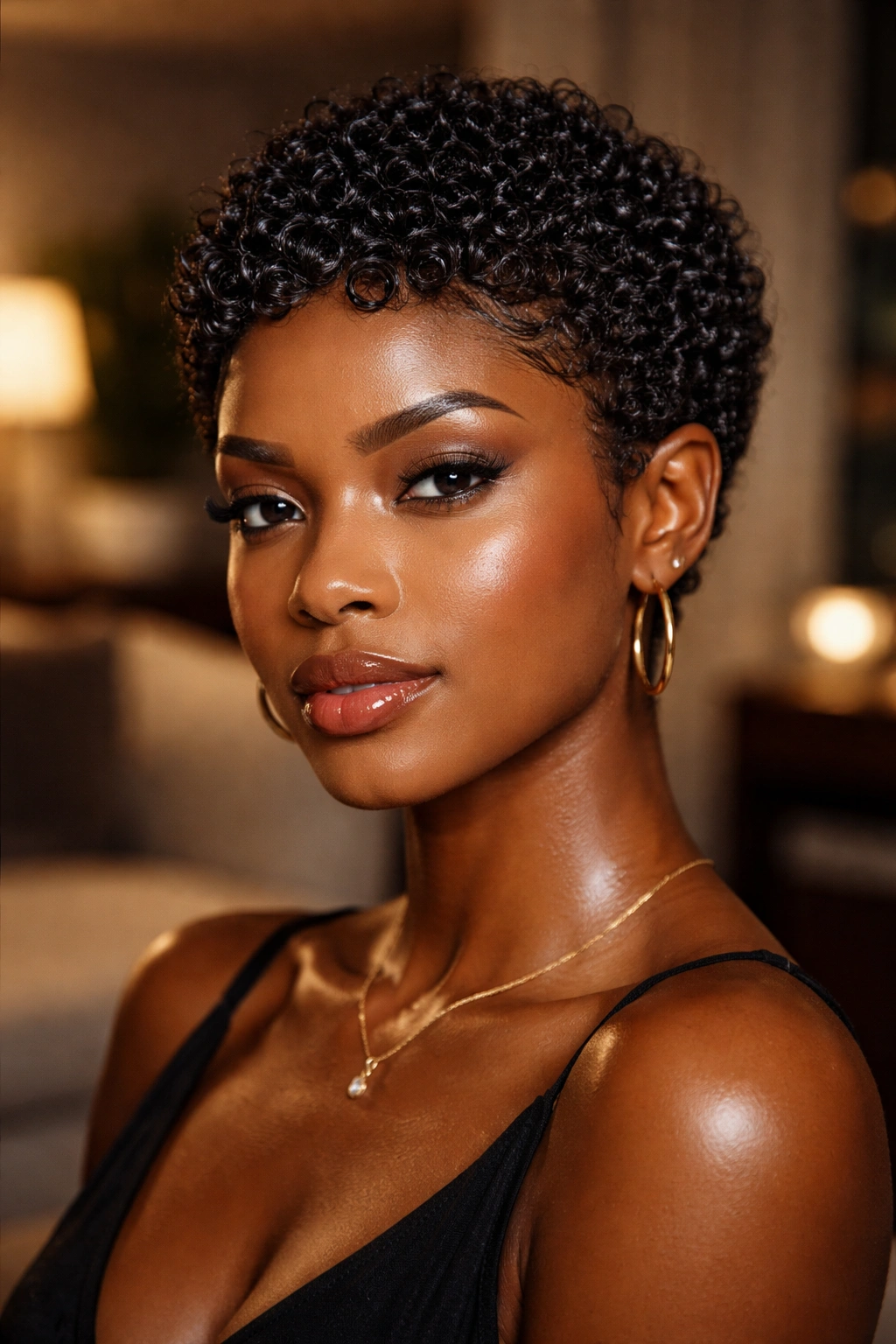
Some days you want shine. A wet-look small afro is created by saturating damp hair with a gel-cream hybrid, then shaping and leaving it slightly wet-looking rather than fully dry. The result is a glossy, sculpted small afro that catches every bit of light.
The product choice matters here. A cheap gel will crunch and flake. A good curl custard creates shine without stiffness. Apply generously, shape with your fingers, and walk out the door while it’s still setting.
This is a great evening style. It photographs beautifully and reads as glamorous without being overdone. During the day, you might want something softer — wet-look can feel slightly costumey in natural daylight depending on your crowd.
7. The Pick-Fluffed Retro Small Afro
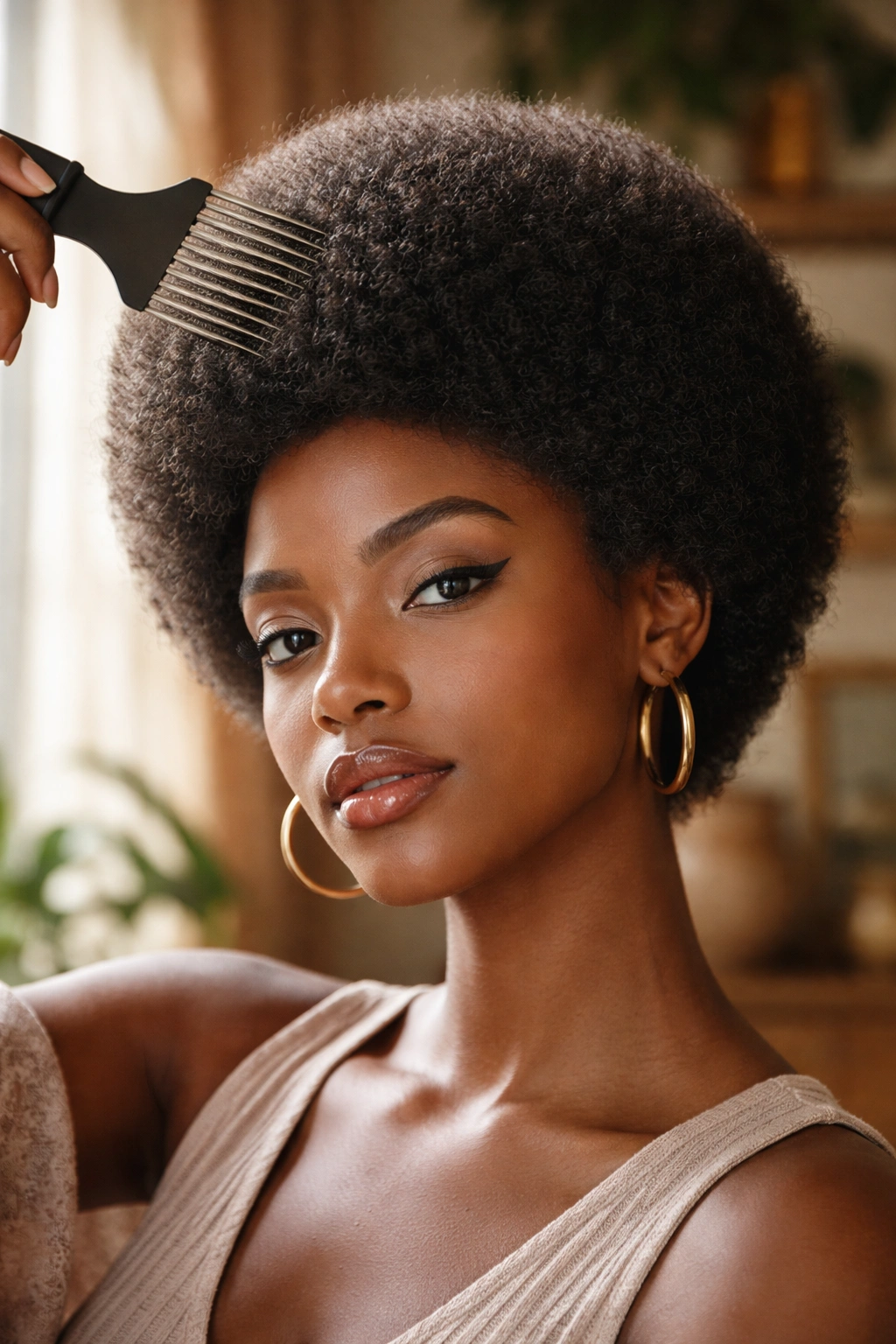
Picture 1970s afro styling but scaled down. You pick the hair out with a metal afro pick to create maximum volume in a short shape. The picking action separates the coils and lifts them away from the scalp, giving you that classic rounded silhouette on a smaller canvas.
Unlike fluffing with your fingers, which creates a softer shape, picking creates a more defined, geometric roundness. The pick teeth physically lift and separate in a way fingers can’t replicate.
Do this on fully dry hair. Wet hair pulled with a pick breaks. Once your coils are set from your initial wash-day routine, wait until they’re bone dry before reaching for the pick. Start from the ends and work toward the roots, lifting gently.
Who this is for — anyone who loves the classic afro aesthetic but wants it in a smaller, more manageable scale.
8. The Defined Twist-Out on Short Hair
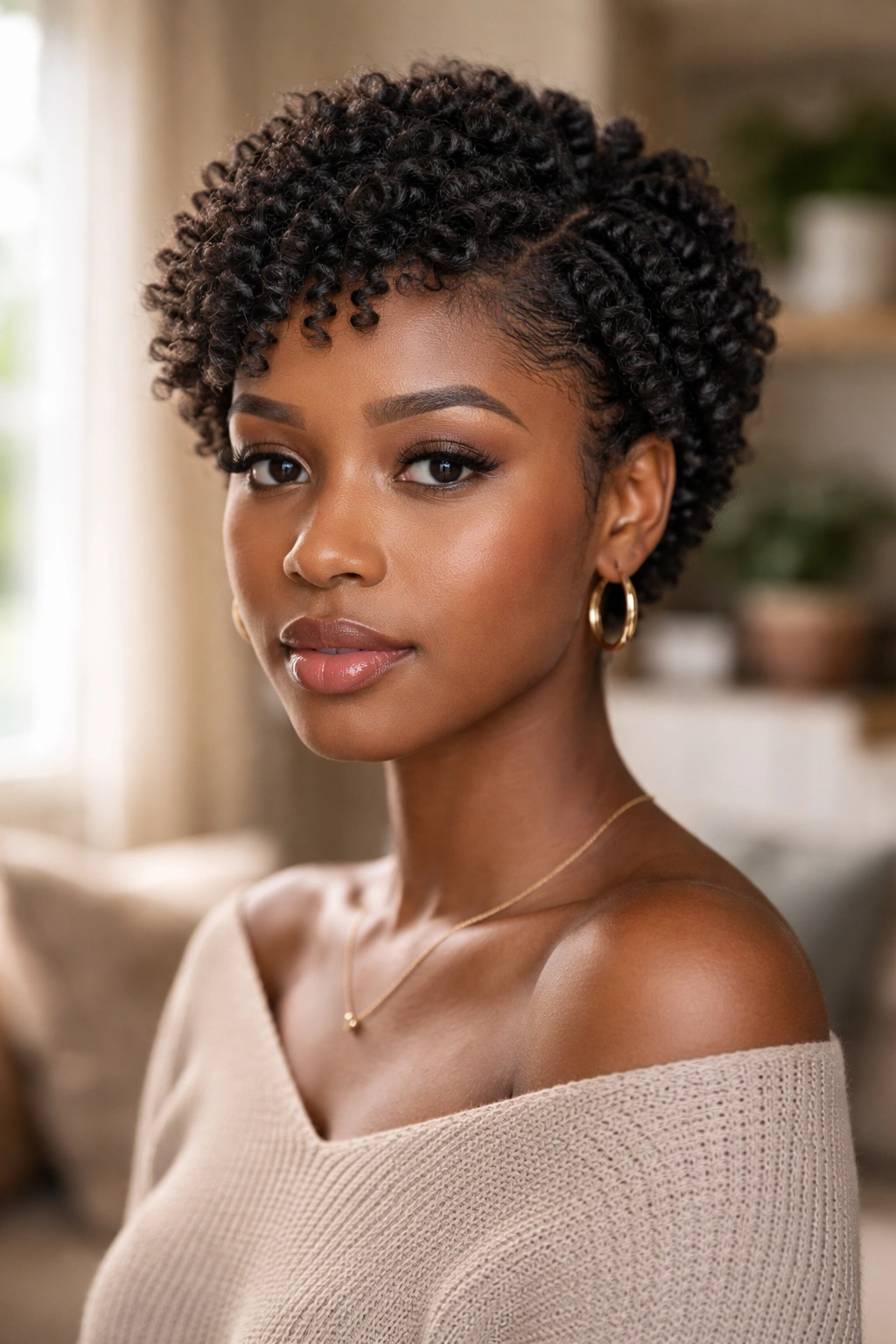
Twist-outs on short 4C hair produce a specific kind of texture that’s different from the mass of small defined coils you get from finger coiling or sponge curling. Twist-outs create waves. Longer, looser waves that lay slightly flatter against the head and move more like traditionally styled hair.
You part the hair into sections, two-strand twist each section tightly, and let it dry fully. Then you unravel each twist carefully and separate slightly for volume.
Twist-outs last longer than finger coils — usually four to six days before refreshing. They also produce a softer visual effect. If finger coils look “done” and “precise,” twist-outs look “effortless” and “lived-in.”
9. The Freeform Shape — No Product, Just Pat
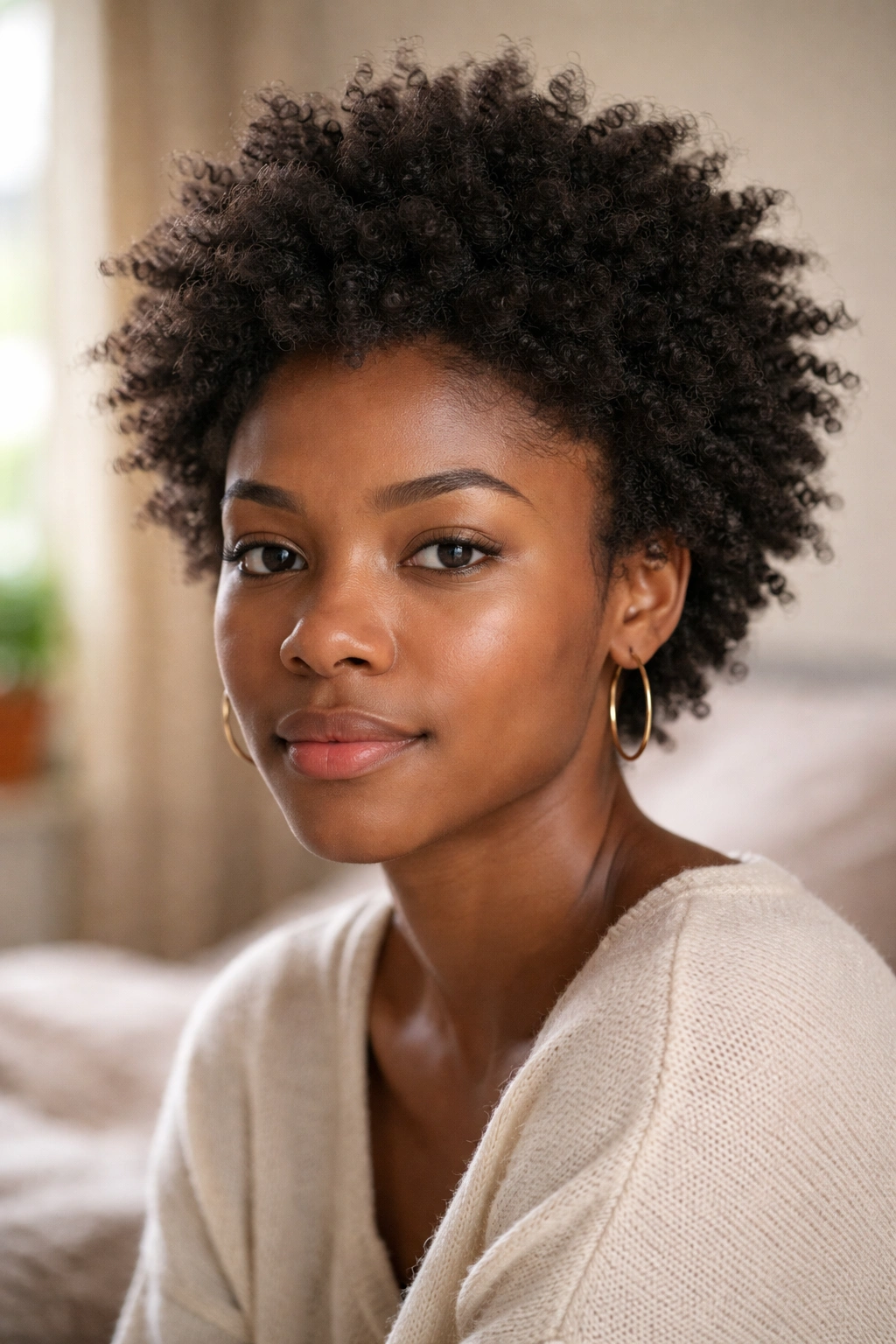
Bold position — the most natural small afro style is the one that uses zero styling product. You wash your hair, let it air dry, pat it into a rough shape with your hands, and walk out the door.
This only works on healthy, moisturized 4C hair. If your hair is dry and brittle, it’ll look scraggly without product. But if your baseline moisture is solid, freeform small afros have a texture and authenticity no styled look can replicate.
The rough shape is the whole point. No sharp edges, no defined curls, no sculpting. Just hair doing what hair does when you leave it alone. This is the ultimate low-maintenance look, and the ultimate signal that you’re comfortable in your natural texture.
10. The Afro With a Halo Scarf
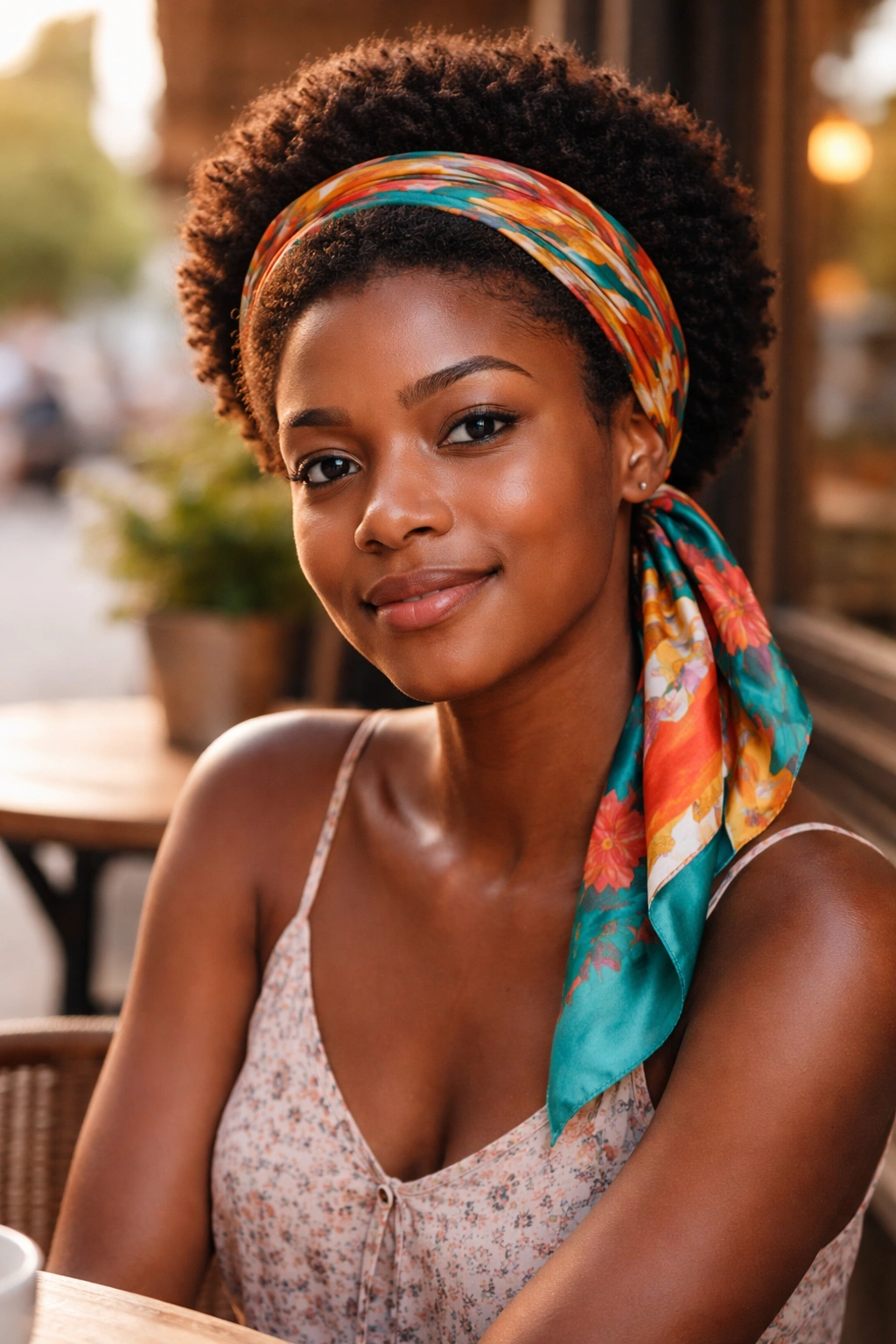
Bold claim — adding a scarf turns any small afro into an outfit. A wide fabric headband or scarf tied around the front of the hairline adds color, pattern, and polish without touching the hair itself.
The scarf serves double duty. It hides unfinished edges on days when you don’t feel like doing edge control. It also covers the thinnest part of your hairline if you’re growing out thinning edges from years of tension styling.
Scenario — you wake up late, your hair isn’t sitting right, you have twenty minutes to get out the door. A silk scarf tied around the front edge of your small afro, volume picked up at the back, and you’re styled in under a minute. It’s the emergency-save move every 4C naturalist should have in their arsenal.
- Use silk or satin scarves, not cotton — cotton absorbs moisture from your hair
- Tie in the back or the side, not the top
- Loosen before bed so you don’t wake up with a dent
11. The Faded Small Afro Silhouette
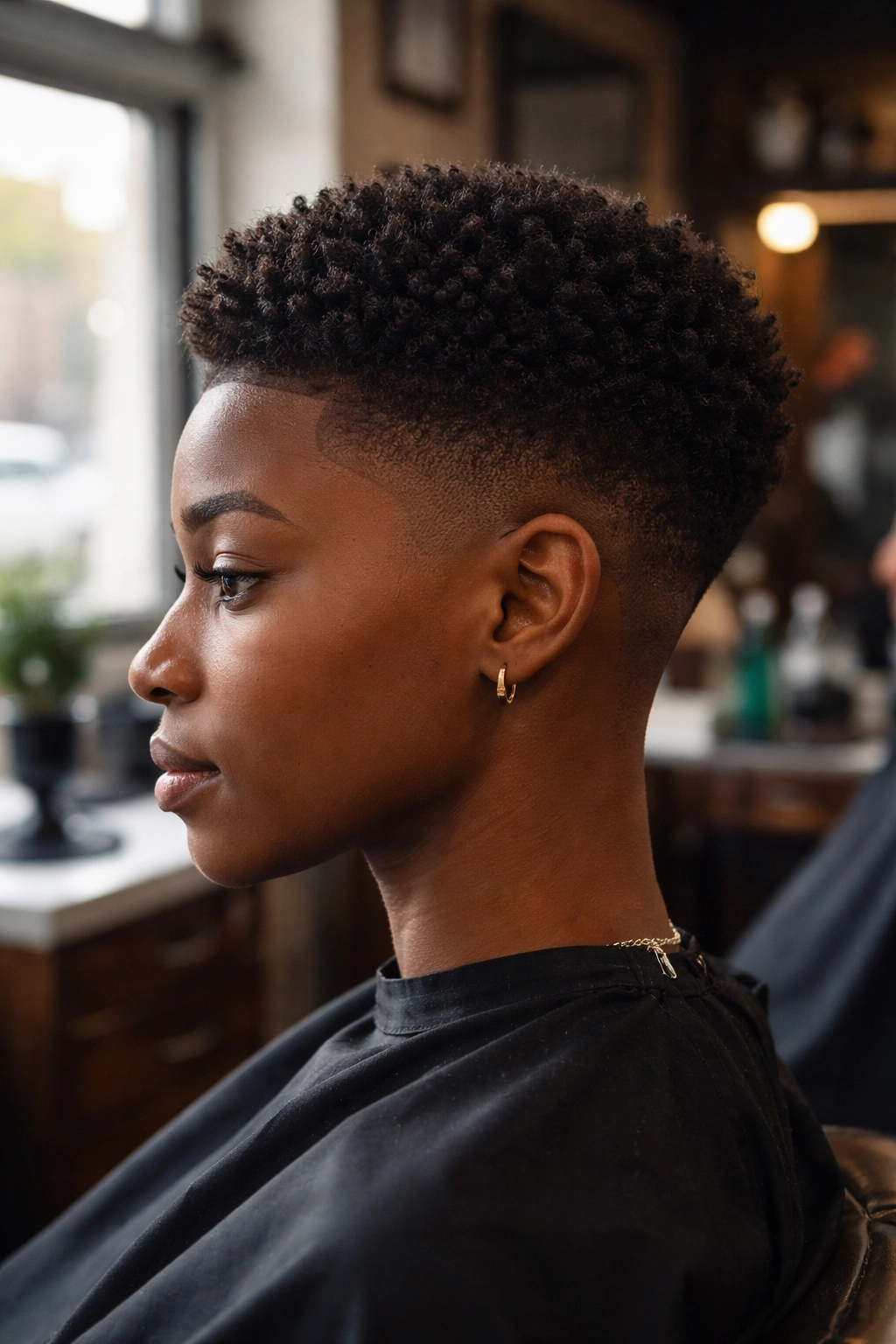
Fades create drama on small afros because they play with proportion. A high fade with a tight top creates a sharp geometric silhouette. A low fade keeps the transition softer and the overall shape rounder.
You need clippers and some confidence for this one, or a barber you trust. Fades on textured hair require more skill than fades on straight hair because the curl pattern masks the line transitions. A good barber can blend the fade seamlessly into the natural coil at the top.
Maintenance is more frequent with fades — every two to three weeks to keep the line crisp. Growing out a faded small afro is also an awkward phase, so commit to the look or don’t start. In-between fades look scruffy.
12. The Crown-Puffed Small Afro
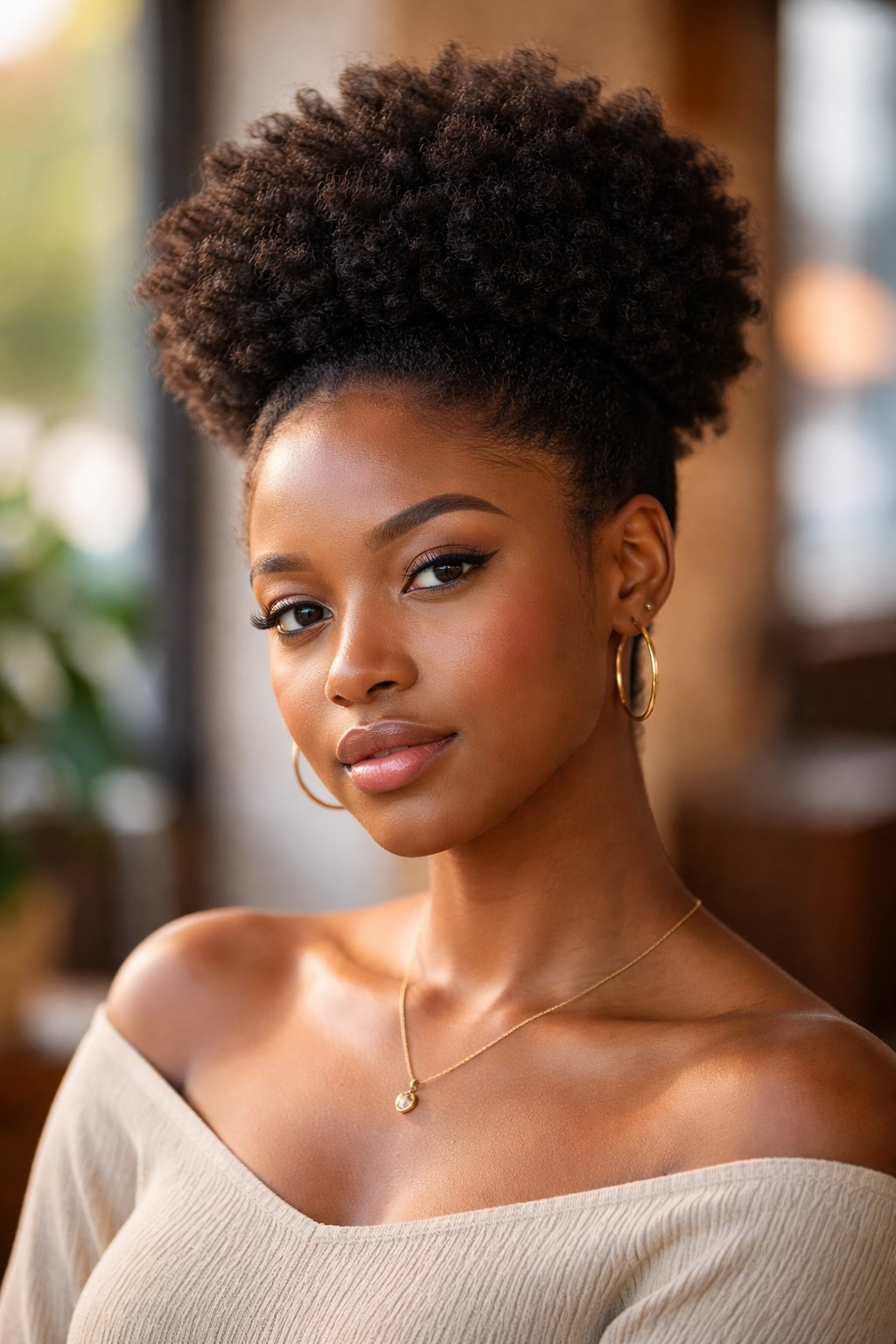
This style creates a focal point at the top of the head. You pull the crown hair upward and slightly forward, pick it out for volume, and let the sides and back stay closer to the scalp. The result is a peaked shape that adds height to your silhouette.
Crown puffing is flattering on petite faces because it creates vertical interest. It’s also a great way to work with asymmetric growth patterns — if your hair grows longer at the crown than the sides, this style plays to that strength instead of fighting it.
No special tools needed. Pick and fingers and patience. The whole thing takes about five minutes once your hair is already moisturized and defined.
13. The Edge-Controlled Sleek-Front Small Afro
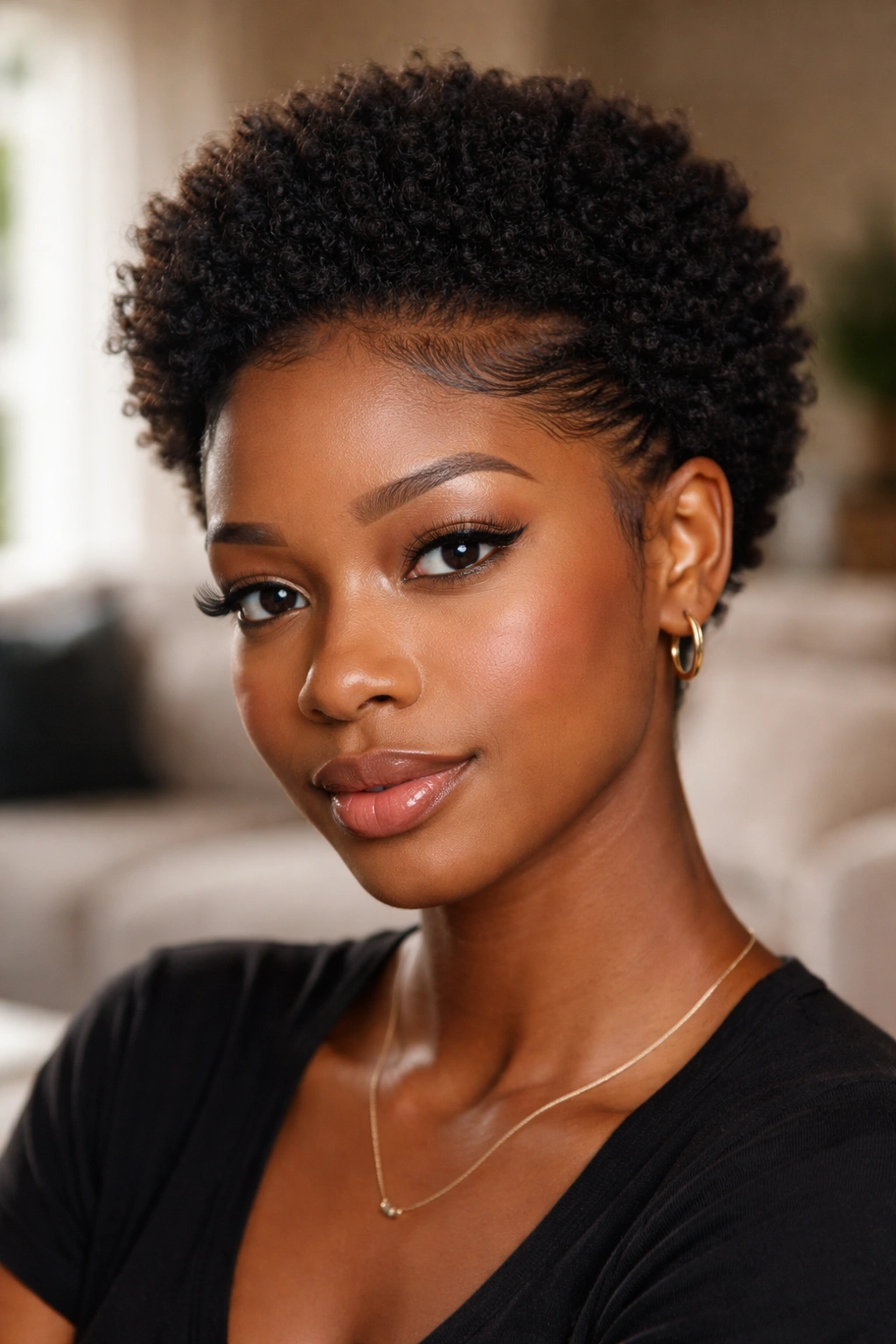
Clean edges transform a small afro from casual to polished. You use a brush with a little edge gel to smooth the perimeter hair flat against your skin, creating a defined edge line that contrasts with the fluffy volume above.
The Catch
Edge control on short hair is trickier than on longer hair because there’s less hair to work with, and the line between your hairline and the rest of the hair is more visible. Small mistakes show more.
- Use a small natural-bristle edge brush, not a plastic one
- Apply gel sparingly — a little goes a long way
- Smooth in the direction of natural hair growth, not against it
Bold tip: If you’re struggling with flaking edge gel, try a product that lists glycerin or aloe as a top ingredient. These hold without the chalky drying effect of cheaper gels.
14. The Asymmetric Swoop Small Afro
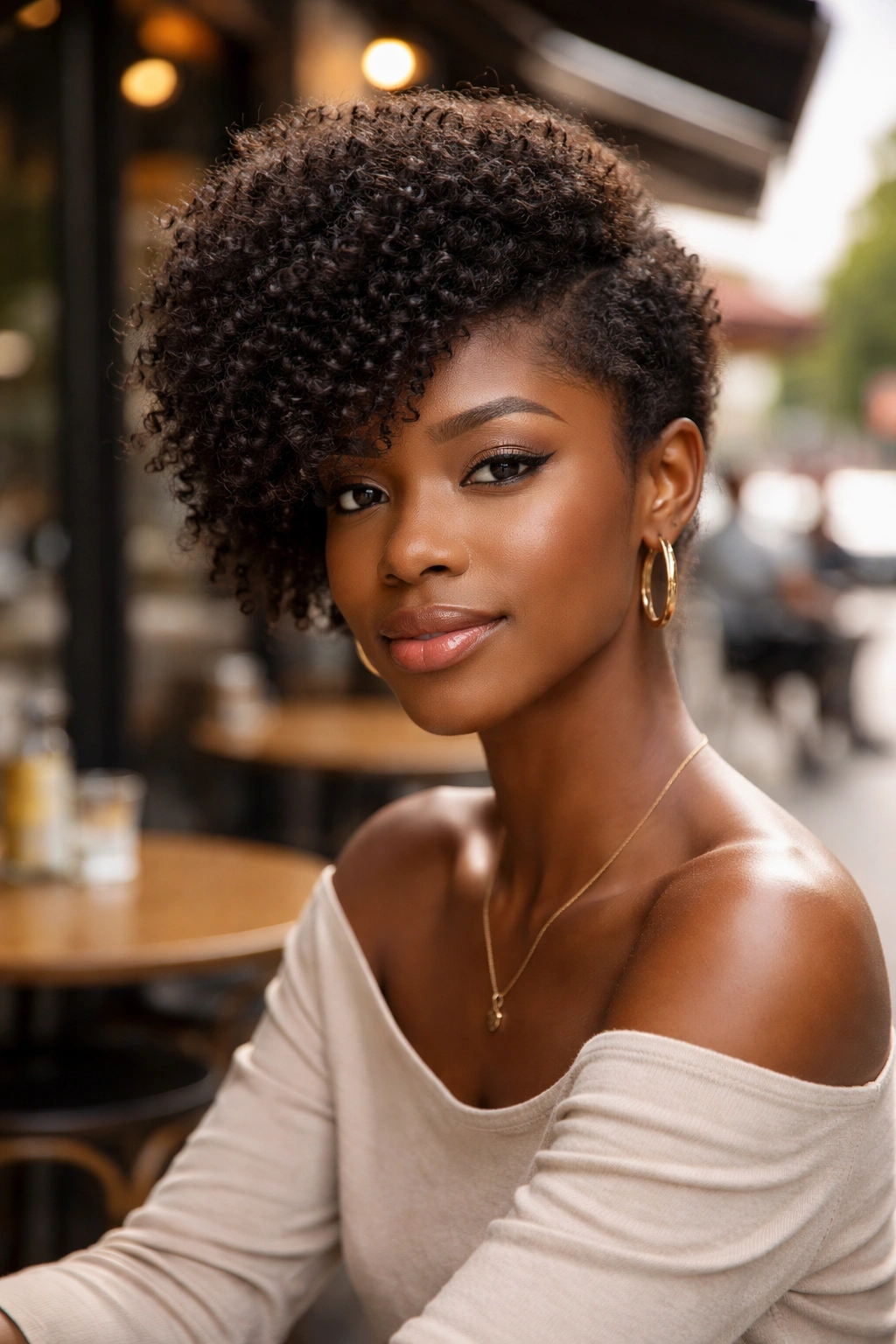
Asymmetry creates movement. An asymmetric small afro has more volume on one side and less on the other, often with hair swept or pressed into a subtle swoop across the forehead.
This style reads as high-fashion and editorial. It’s not your everyday school run look — it’s the look you wear when you want to be noticed and you want people to register “intentional” instead of “casual.”
The sweep across the forehead needs a light touch. Too much product and it looks like a hard-crusted wave. Too little and it falls apart as the day progresses. A cream-gel hybrid hits the sweet spot. Shape it once, let it set, and don’t mess with it.
15. The Coily Pompadour-Inspired Small Afro
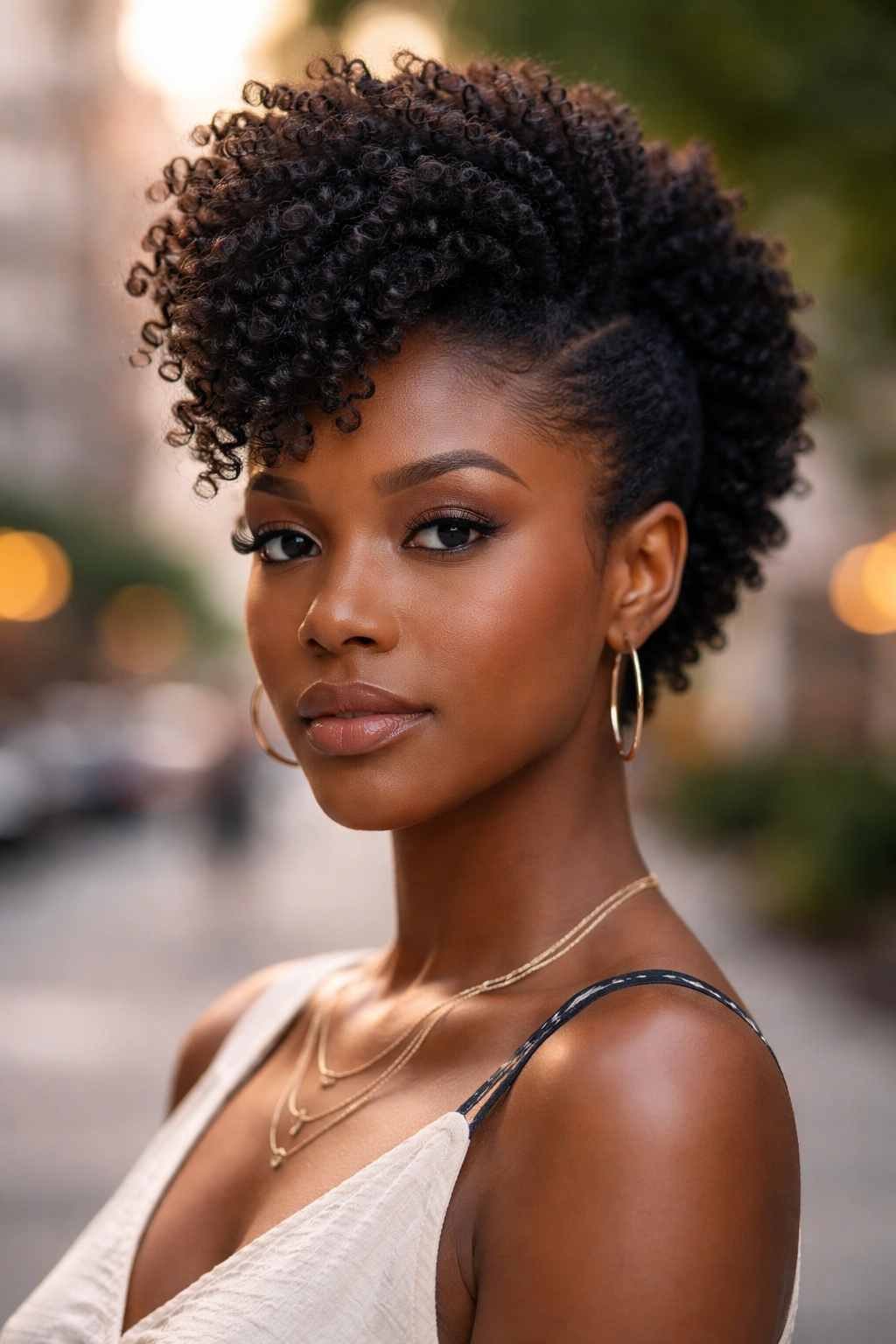
A pompadour is traditionally straight-hair territory, but the concept translates to 4C hair surprisingly well. The idea is to pull the front section up and back, creating height at the forehead that tapers down into the rest of the small afro behind it.
Unlike a regular pompadour which relies on smooth hair and heavy product, the 4C version uses the natural curl pattern to add visible texture at the peak. You’re not trying to slick it smooth — you’re building a voluminous peak that happens to have coils.
The result is a modern, androgynous, high-impact look that works for both daytime and evening. It’s especially flattering for faces with strong features because it balances the bold front with the softer volume behind.
16. The Small Afro With Bantu Knots at the Crown
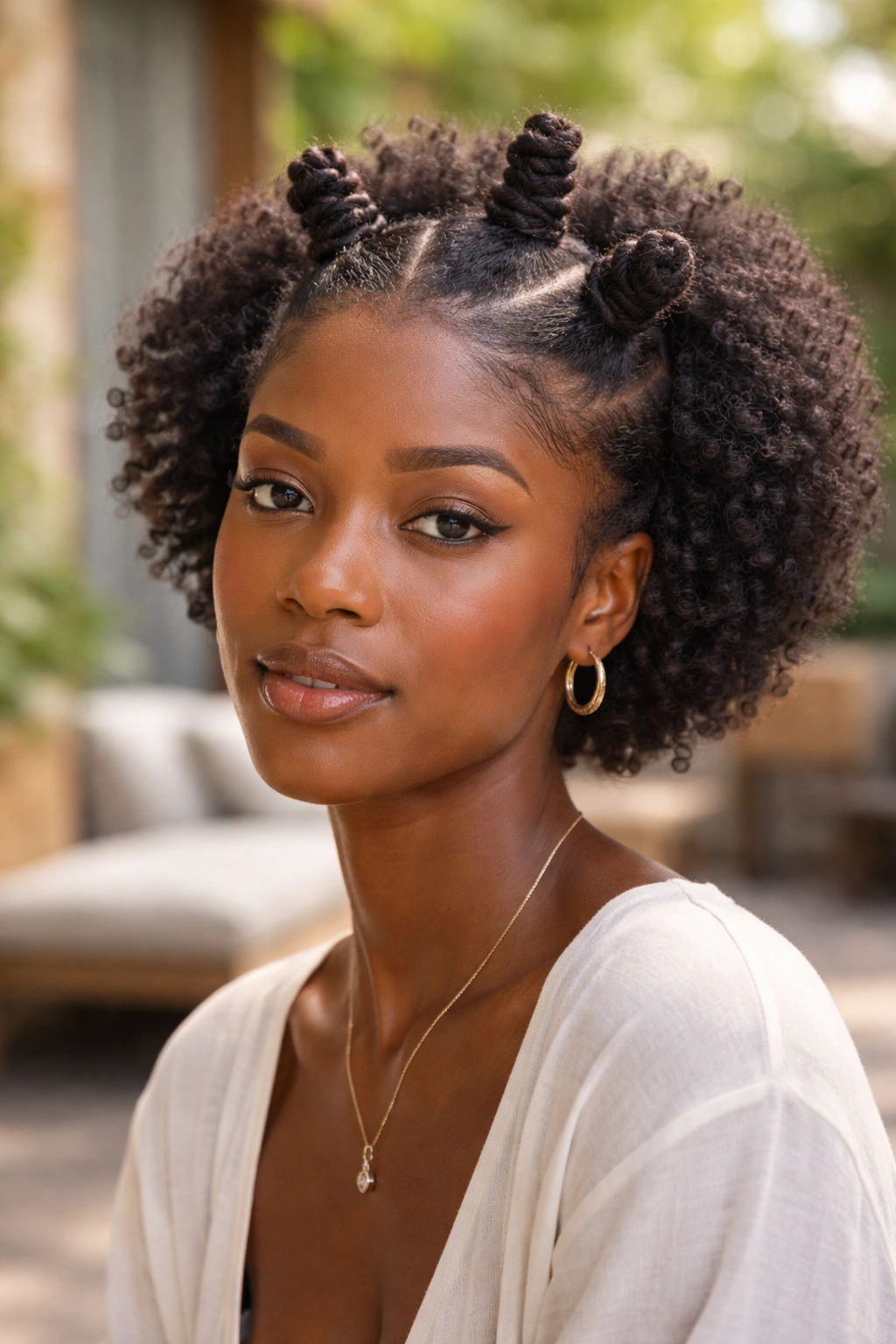
Bantu knots at the crown plus loose small afro elsewhere equals a style with dimension and cultural roots. You section just the top of the head into three or four squares, Bantu-knot each square, and leave the rest of the small afro alone.
You can wear it with the knots as-is for a sculptural, statement look. Or you can unravel them later for a mixed-texture effect — coils from the Bantu knot-out at the crown, regular small afro texture around it.
Either way, the contrast between the knot shapes and the rounded small afro creates visual interest that flat styles can’t match. It’s also protective — the knotted sections are tucked away and safe from manipulation.
17. The Low-Profile Everyday Small Afro
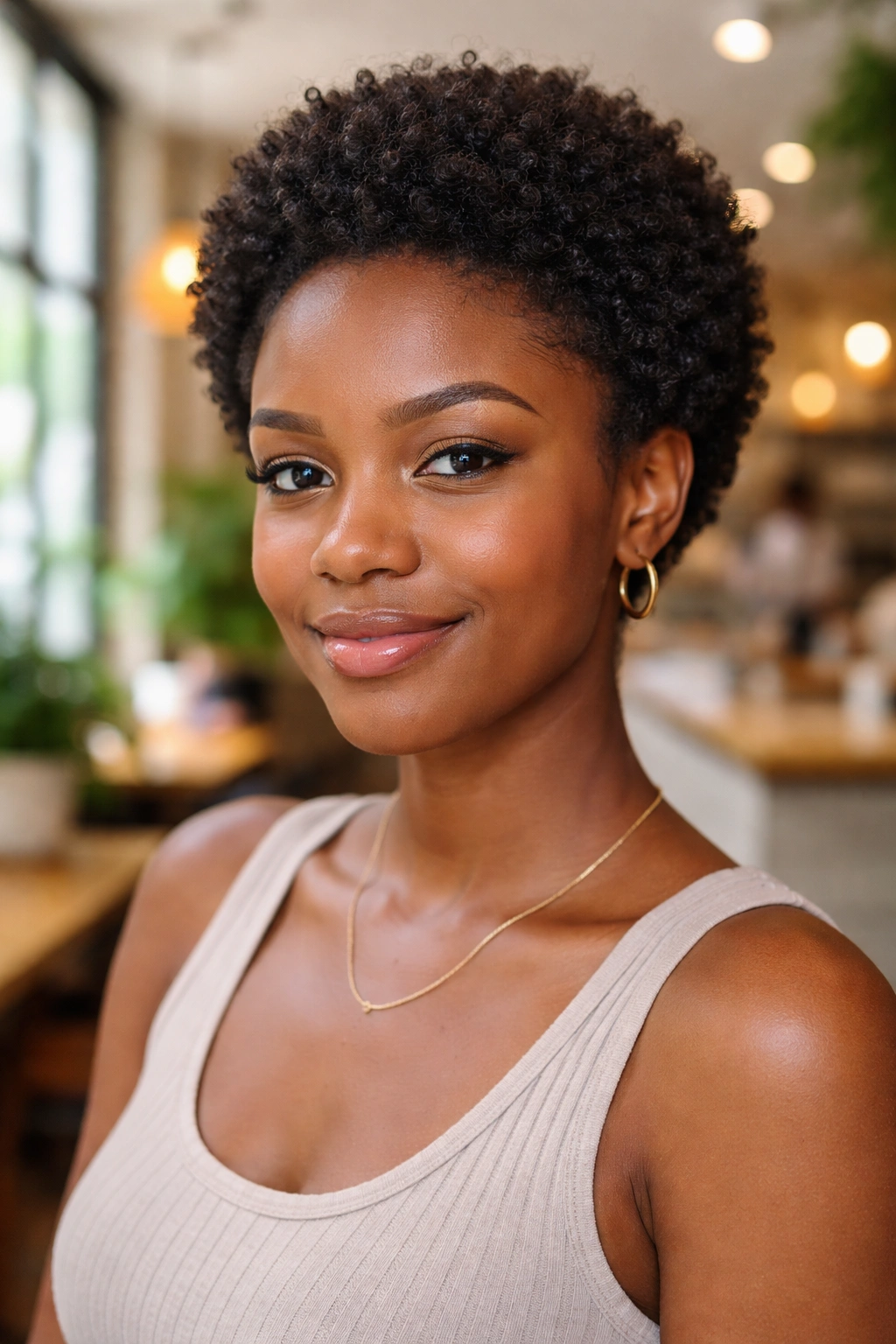
Not every small afro needs to be styled to the nines. The low-profile everyday version is the one you wear for errands, work, school, and ninety percent of your life. It’s defined but not sculpted. Voluminous but not extreme. Moisturized but not shiny.
Here’s my honest take — this is the most important style on the list. Because if you can nail a good everyday small afro, you’ve solved eighty percent of your 4C styling needs. The fancy looks are for special days. The everyday look is for the other three hundred.
You build it with a basic leave-in, a light cream, and fingers for shaping. No fancy techniques. No long styling sessions. Just a reliable routine that takes under ten minutes and produces hair that looks good every time.
18. The Glazed Wet-to-Dry Small Afro
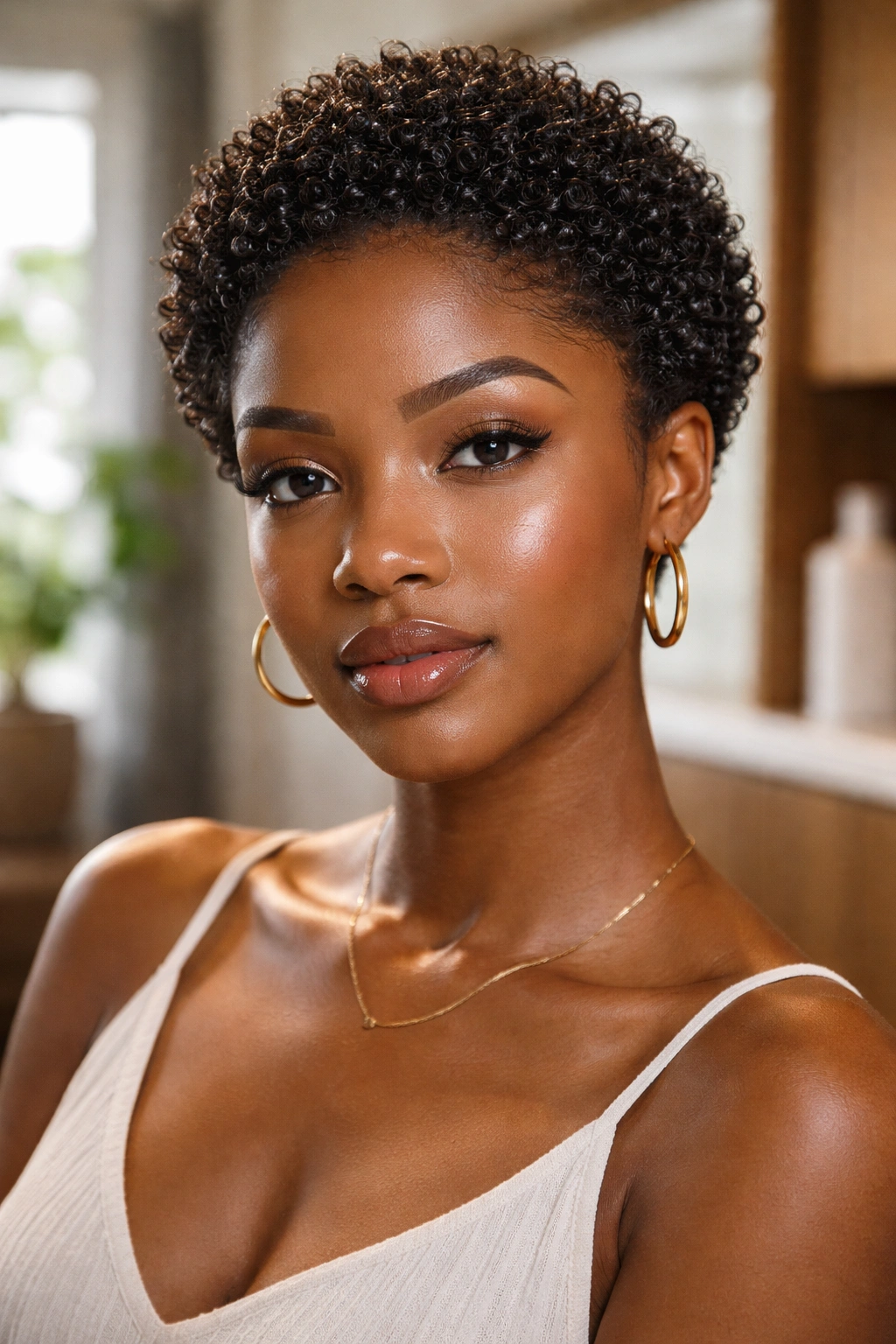
This is my refinement on the wet-look style — instead of keeping the hair visibly wet all day, you apply the product, shape while wet, and let it dry to a glossy finish that’s neither wet-looking nor dull. The glaze sits in the middle.
The product choice is what determines the finish. Look for curl definers labeled “glaze” or “gel-cream.” They dry with a soft sheen rather than the hard shine of pure gel.
Wet-to-dry styles are practical because they don’t keep wet-looking hair against your clothes all day. The glazed finish means you can leave the house confidently and trust the style to hold without needing constant touch-ups.
19. The Tucked-Back Small Afro With Statement Earrings
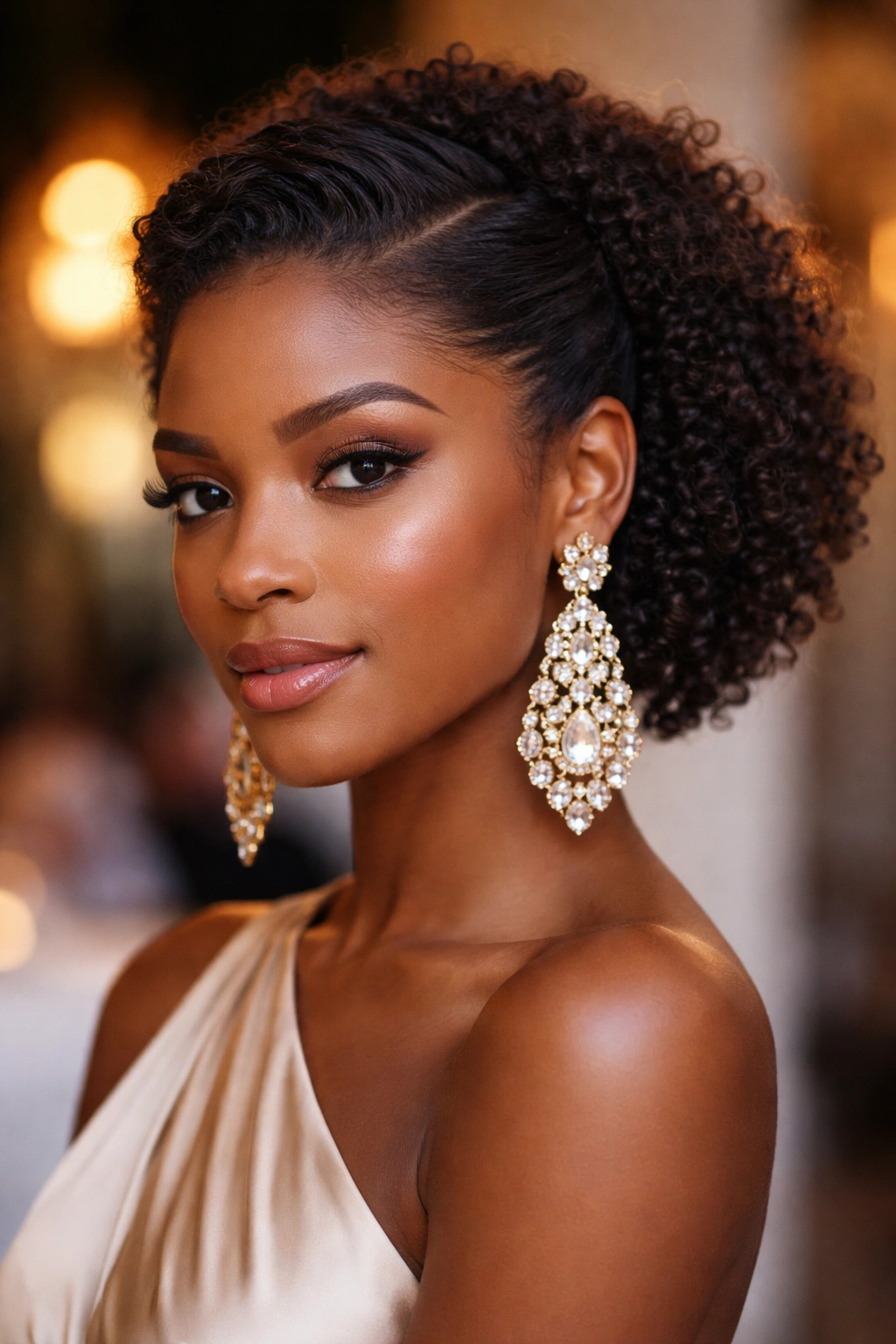
Pull the front of your small afro back away from your face, secure it loosely at the crown with bobby pins, and leave the rest of the hair in its natural shape. Then load up on statement earrings that the exposed ears show off.
This style is about showcasing your face and your accessories. The hair becomes a backdrop rather than the main event. It’s especially useful for events where you want to highlight makeup, jewelry, or a great outfit.
Unlike a full updo, the tucked-back small afro keeps the natural texture visible. You see the curls at the back and sides even though the front is pulled away. It’s a middle ground between “hair down” and “hair up.”
Who this is for — anyone whose earring collection deserves center stage.
20. The Color-Highlighted Small Afro
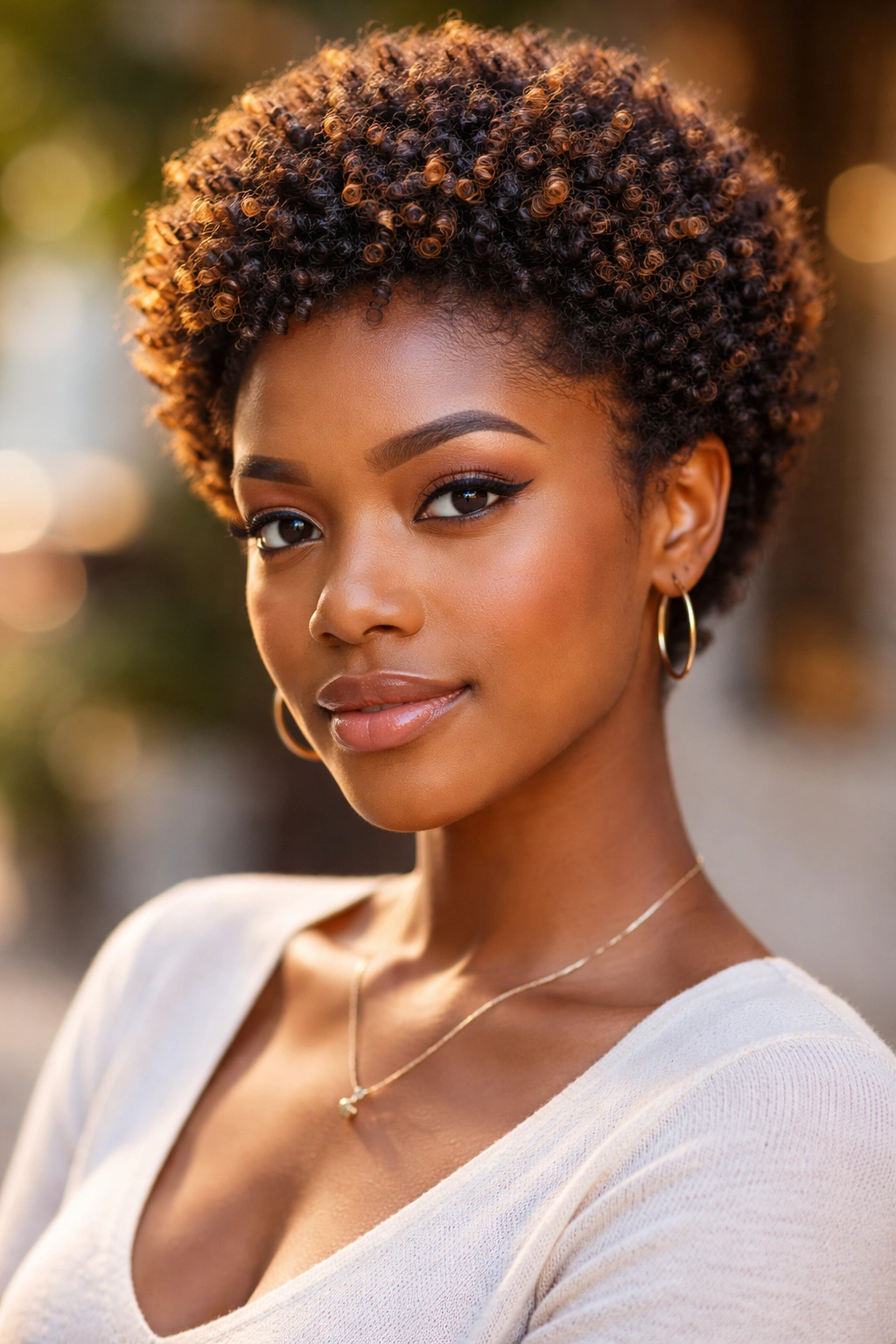
Color breathes life into 4C hair. Highlights, streaks, or full color transformations on a small afro create visual interest that flat black hair can’t achieve on its own.
The most flattering options for 4C hair are warm tones — honey, copper, caramel, auburn. These complement brown skin and catch light in ways that enhance the natural coil pattern. Cool tones like ash blonde and silver can work but require more careful application to avoid looking brassy.
Here’s the real talk — coloring 4C hair requires either a skilled professional or a lot of DIY research. The hair is fragile, and bleach destroys weakened strands quickly. If you’re going to color, deep condition religiously and use protein treatments to rebuild strength between processes.
21. The “I Woke Up Like This” Small Afro
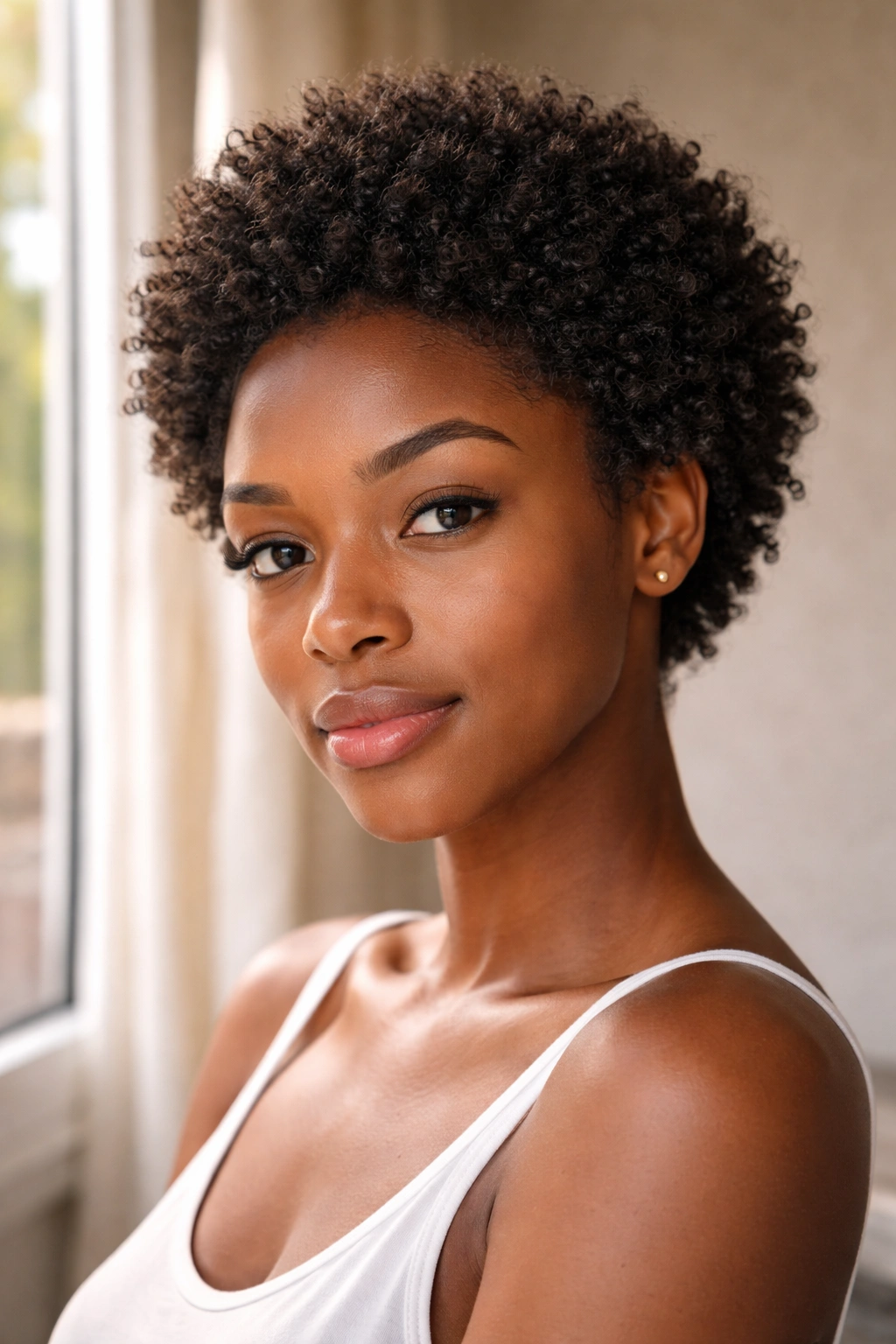
The final style is more of a philosophy. It’s the small afro that looks completely unstyled but is actually the result of a solid wash-day routine, consistent nighttime maintenance, and the confidence to walk out the door without touching it.
The prep happens the night before. You sleep with a satin bonnet or on a satin pillowcase. You spritz lightly with water in the morning if needed. You fluff with your fingers. That’s the entire routine.
This works because 4C hair that’s been properly moisturized holds its coil pattern for days. The trick is trusting the hair and not over-manipulating. Every time you touch a small afro, you risk breaking up definition. The less you touch, the longer the style lasts.
The payoff: mastering this “non-routine” is what separates experienced naturals from people still struggling to make 4C hair work. Once you trust your hair to do its own thing, the daily styling stress evaporates.
Nighttime Maintenance to Wake Up With Good Hair
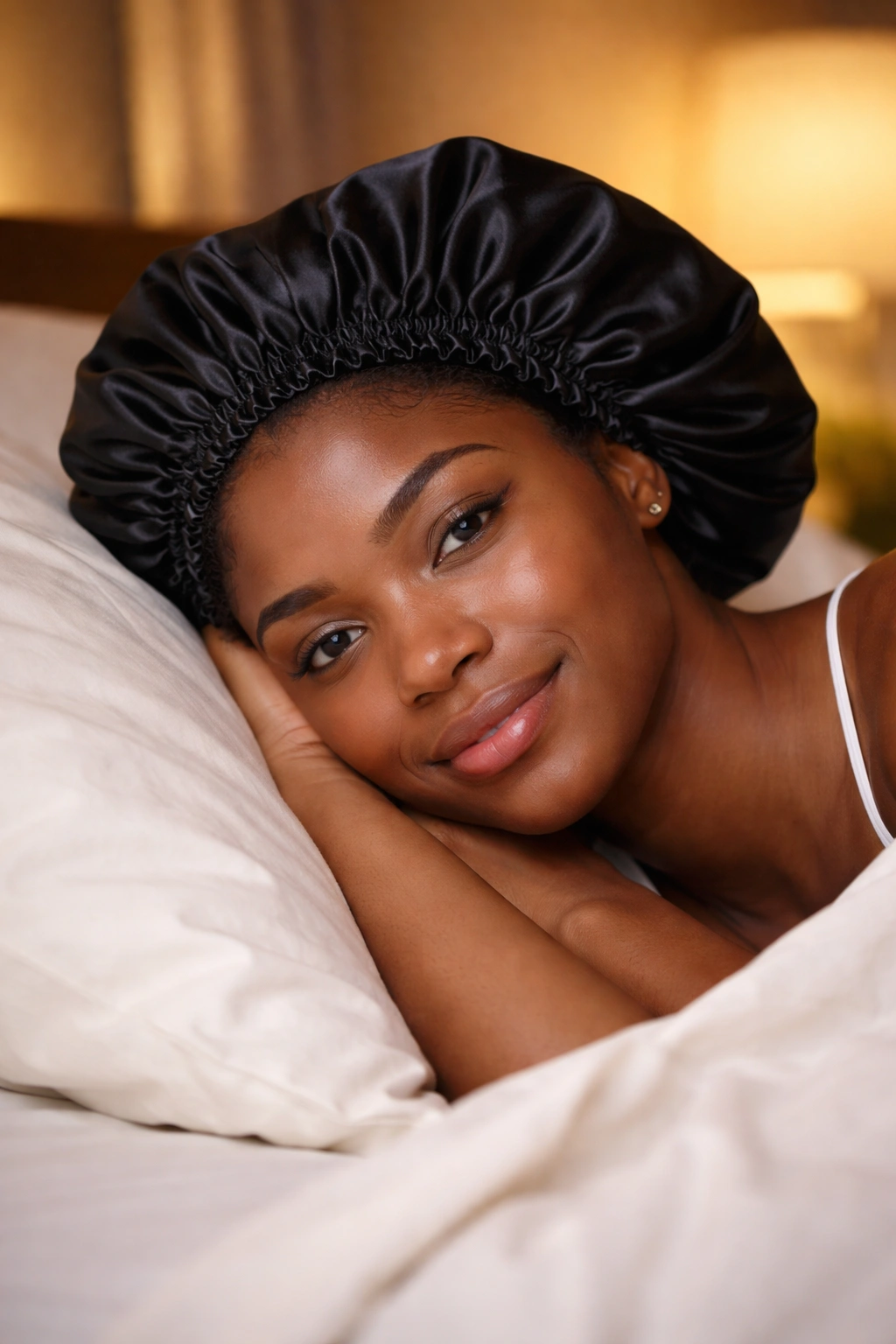
Here’s the one routine that matters more than any styling technique — what you do at night. 4C hair is fragile while you sleep. Cotton pillowcases suck moisture out and create friction that breaks curls apart. A satin bonnet or a satin pillowcase solves both problems.
I prefer the bonnet over the pillowcase personally. It’s more reliable because it actually stays on your hair while you move around. Pillowcases only work if you’re a still sleeper, and most of us aren’t.
Before bed, spritz lightly with water if your hair feels dry. Don’t over-wet it — just a few pumps. Then tuck into the bonnet and go to sleep. In the morning, shake out the coils, pat into shape, and you’re ready to go.
Common Mistakes That Ruin Small Afro Definition
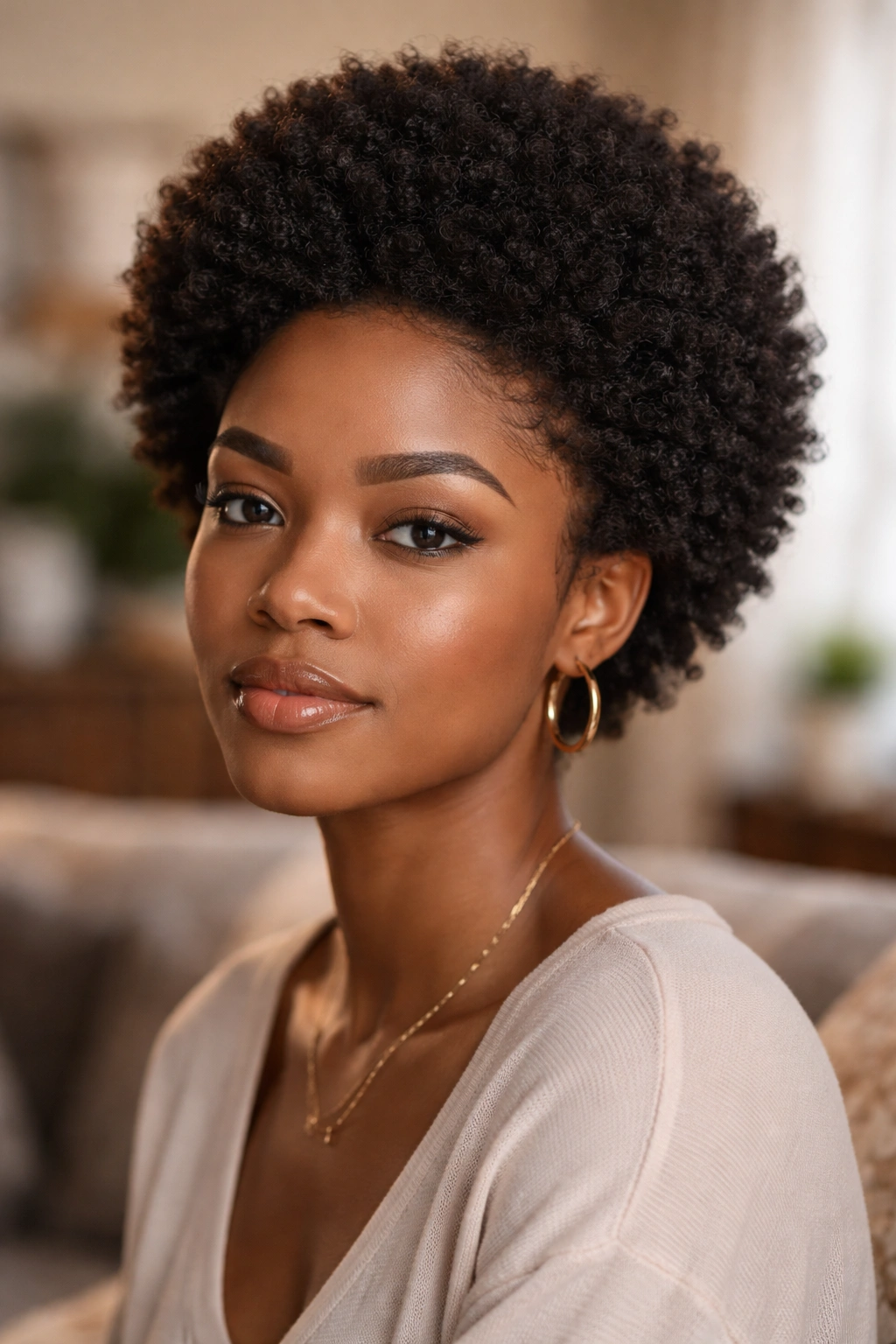
Over-washing. 4C hair doesn’t need daily washing. Once a week is plenty for most people, sometimes every ten days or two weeks. Daily washing strips the natural oils and leaves your hair dry and fragile.
Heavy products. Small afros don’t need thick butters. They weigh the hair down and flatten the coil pattern. Stick to light leave-ins and water-based creams.
And over-manipulation. The more you touch your small afro, the faster it falls apart. Pat, don’t pull. Shape once, then leave it alone. Resist the urge to keep adjusting throughout the day.
When to Refresh, When to Rewash
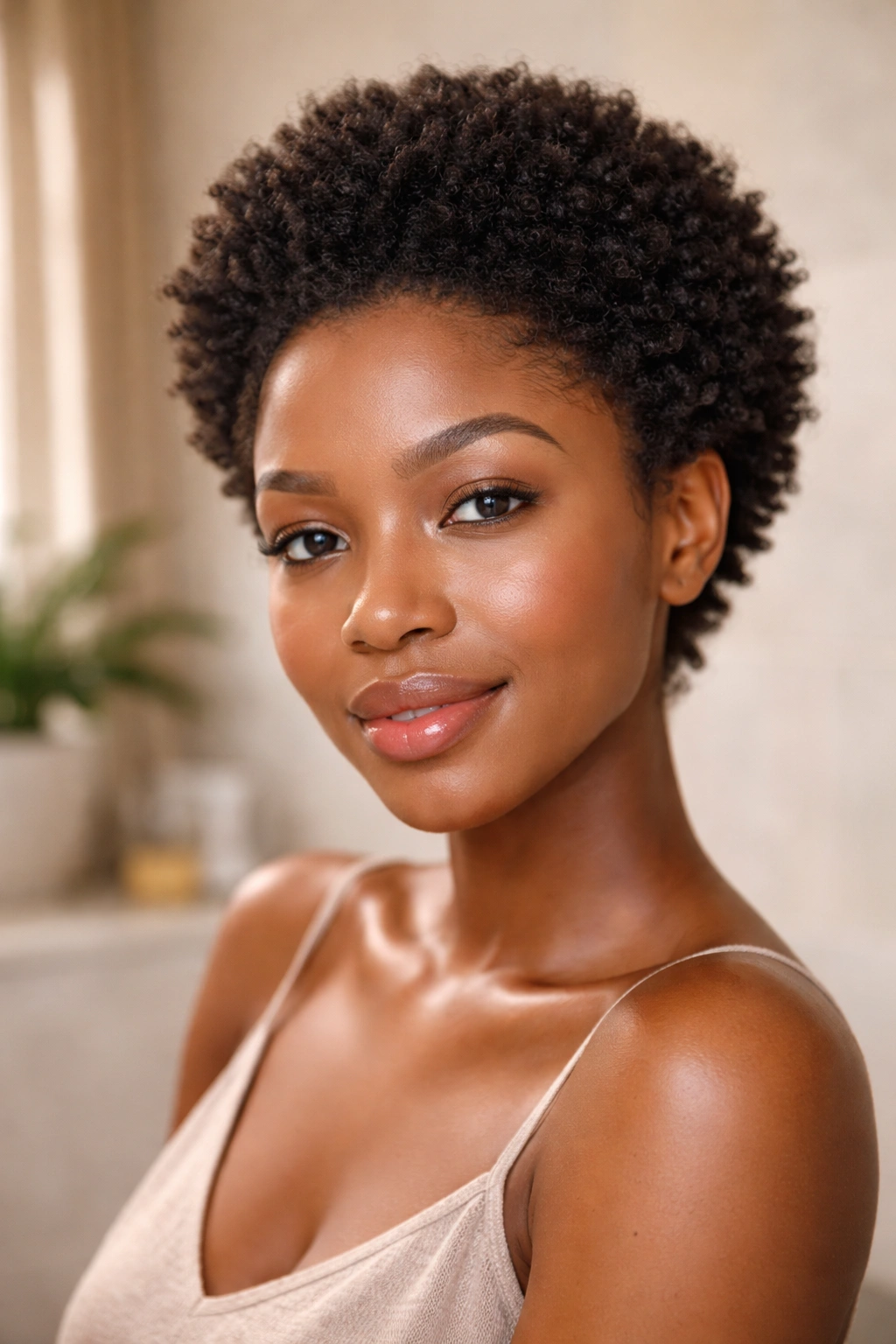
A small afro that’s four to five days old starts looking dusty, frizzy, and undefined. You have two options — refresh it or rewash it.
Refreshing takes five minutes. Spritz with water and a tiny bit of leave-in, scrunch the coils gently, and pat into shape. Good for days five through seven.
Rewashing takes longer but gives you a fully reset style. Cleanse with a co-wash or a mild sulfate-free shampoo, condition, rinse, detangle, and redo your styling routine. Do this every seven to ten days depending on how dirty your hair feels.
The signs it’s time to rewash — your scalp itches, product buildup is visible at the roots, or the hair simply won’t respond to spritzing and shaping anymore. When in doubt, wash. Clean 4C hair is happy 4C hair.
Picking Your Go-To Small Afro Style
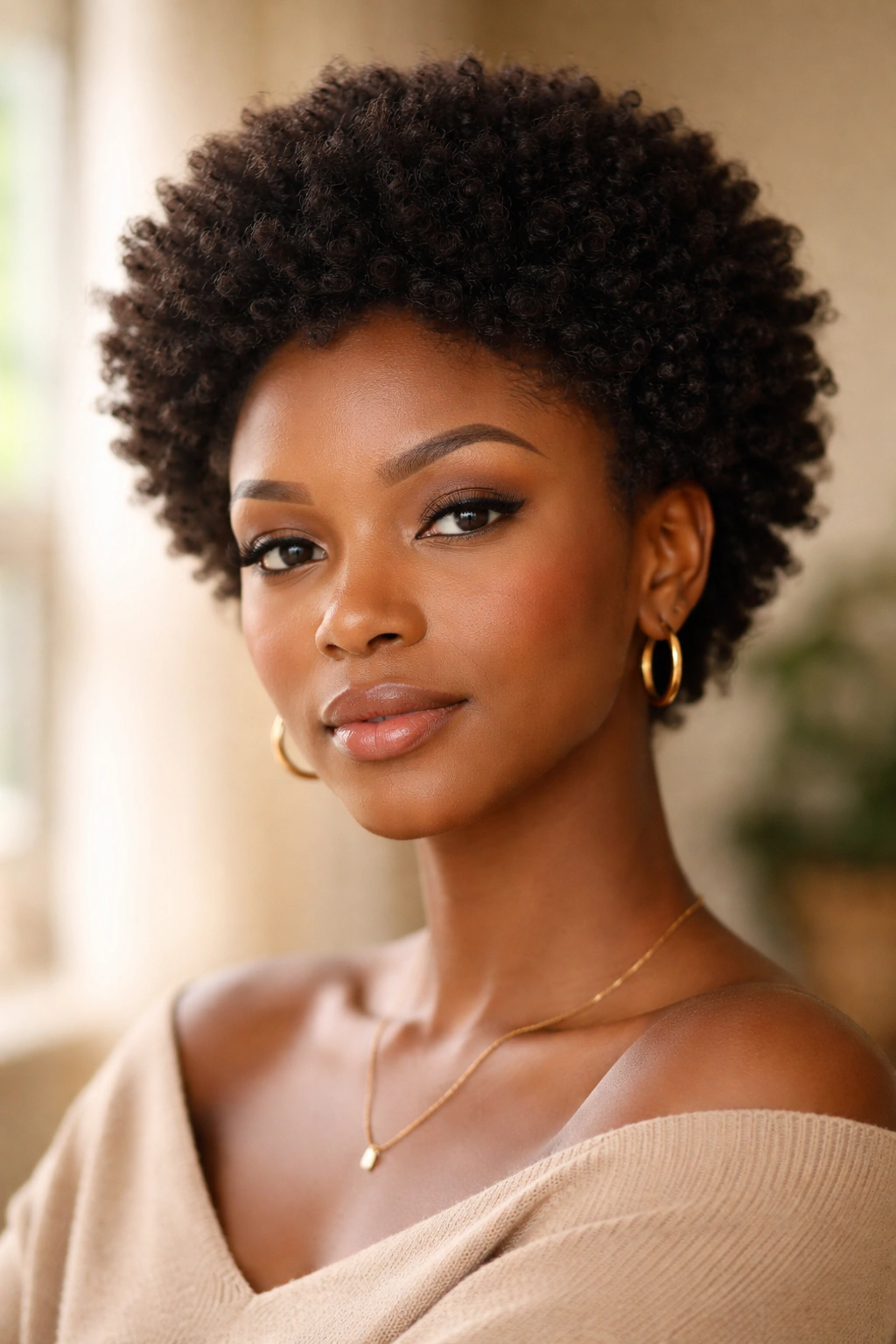
Out of twenty-one options, you don’t need all of them. You need one reliable everyday style and maybe two or three special-occasion looks you can pull out when needed.
My recommendation for the everyday — the low-profile moisturized small afro with a simple leave-in and cream routine. Ten minutes, no fancy tools, works every time.
For special occasions — pick something with more definition or structure. Finger coils for photoshoots. Wet-look for date nights. Bantu knot-outs for events where you want to stand out. Build your repertoire slowly. Master one technique at a time. Don’t try to do all twenty-one styles in your first month.
The best small afro is the one you can execute in your own bathroom, with your own hands, using products you already own. Start there. Build from there. And trust that 4C hair, when treated with care, can do things other textures only dream of.
