



A side part changes the whole mood of curly hair. Shift the part a few inches, smooth the roots, and the ponytail stops reading as casual in the messy sense and starts reading as deliberate.
That’s the sweet spot here: sleek at the scalp, textured at the tail. The contrast is what makes the style work. You get clean lines where the eye lands first, then all that curl pattern and movement down the back where it belongs.
The mistake most people make is flattening every curl on the head. That leaves the crown looking pressed down and the ponytail looking tired. Better to smooth just the first inch or two at the roots, then leave the lengths alive.
A good side-part ponytail can pull a look together fast. It can sharpen a round face, soften strong cheekbones, hide day-two roots, and keep curls looking intentional instead of wild. Some versions are sharp and glossy. Others keep a little softness around the temples. The best ones know exactly where to stop.
1. Deep Side Part Low Ponytail
A deep side part and a low ponytail are a strong pair because they keep the whole style grounded. The part gives you shape; the low placement keeps the curls from puffing out at the crown. It’s one of those looks that feels calm without looking flat.
Use a rat-tail comb to draw the part cleanly, then smooth the heavier side down with a light layer of gel or edge control. Keep the ponytail just below the occipital bone, where the back of the head starts to curve. That spot matters — too low and it drags, too high and the whole shape changes.
A soft boar bristle brush helps here, but don’t chase every curl into submission. Leave the tail defined and bouncy. It should look polished, not shellacked.
2. High Side Part Ponytail With Crown Lift
Want more energy? Push the ponytail higher. A high side part ponytail gives curls room to bounce, and the side part keeps it from drifting into basic high-pony territory. It has a little lift, a little attitude.
Start by misting the roots with water or leave-in so the hair is easier to smooth. Then gather the ponytail at the upper back of the head, slightly off-center, and secure it snugly. If your curls are long enough, let them fall in a full curtain. If they’re shorter, define the tail with cream and a bit of gel so it still looks full.
This version works especially well when the crown needs a lift. Flat roots disappear. Volume does not.
3. Wrapped Base Side Part Ponytail
A wrapped base makes a side-part ponytail look finished in about ten seconds. It hides the elastic, cleans up the silhouette, and gives the whole style a more dressed-up feel.
Take a small section of hair from underneath the ponytail, smooth it with a touch of styling cream, and wrap it tightly around the base until the band is covered. Pin the end underneath with a bobby pin that matches your hair color. If your curls are thick, use a larger pin and tuck it deeper so it doesn’t pop out.
The trick is tension. Tight enough to stay put, not so tight that it dents the curls. A wrapped base is one of those little details that makes people think you spent longer than you did.
4. Bubble Side Part Ponytail
Bubble ponytails look playful, but on curly hair they can also look neat and modern. The side part keeps the shape from feeling too sweet, and the sections down the tail make the curls read as intentional.
Secure the ponytail first, then add clear elastics every 2 to 3 inches down the length. Gently pull each section outward so it forms a rounded “bubble.” If your curls are dense, pinch the sides a little more carefully so the bubbles stay even. A light mist of holding spray helps, but use it sparingly.
Best for longer curls: the shape shows up better when there’s actual length to break into sections. Shorter tails can still work, but the effect is softer and less dramatic.
5. Sleek Side Part Ponytail With Laid Edges
Some looks don’t need extra pieces, braids, or accessories. They just need clean edges and a strong part.
This style puts the focus on the hairline. Smooth the side part with gel, brush the front back in tiny strokes, and shape the edges with a small brush or edge tool. Keep the rest of the hair simple. Let the tail stay curly and full while the front stays sleek.
A little goes a long way here. Too much edge control can make the front look stiff and chalky, especially on darker hair textures. Use enough to hold the shape, then stop. The clean contrast is what makes it work.
6. Side Braid Feed-In Ponytail
A side braid feeding into a ponytail gives curly hair extra structure without killing the texture. It’s a smart choice when you want the front to stay neat for hours and you don’t want to keep touching your hair.
Why the braid helps
A braid along the side part locks the front section in place, which cuts down on frizz around the face. It also gives the style a built-in design line, so the ponytail feels more styled even if the tail itself stays loose and curly.
- Start the braid at the side part, not far behind it.
- Braid toward the ponytail base, keeping the tension even.
- Use a thin elastic to secure the braid before combining it with the tail.
- Add a curl cream to the ponytail ends so they stay defined.
This one lasts. That’s the part I like most.
7. Twisted Temple Ponytail
Two-strand twists at the temples are softer than braids and faster to do. They also sit nicely under a side part, especially if you want the front to look tidy without feeling too structured.
Divide the front section on the heavier side of the part, then twist it back toward the ponytail base. Repeat on the other side if you want balance, or keep one side bare for a more asymmetrical look. Secure the twists under the ponytail and pin any loose ends flat.
This style is kind to short layers. Twists keep the little pieces from escaping around the face, which is often the annoying part of curly ponytails. They also add a little texture of their own, which never hurts.
8. Wet-Look Side Part Ponytail
A wet-look side part ponytail is all about shine and control. The front is sleek and glossy; the tail can be glossy too, or softly defined if you want less stiffness.
Work on damp hair. Apply gel from the roots through the mid-lengths, then comb the part clean and smooth the sides back with a fine-tooth comb. Secure the ponytail while the hair is still pliable, because that is when the shape settles best. If you wait until it dries halfway, you’ll fight the frizz the whole time.
The result is sharp. It’s a strong look for evenings, photos, or any day when you want curls to read polished instead of airy. Just don’t overload it with product or the finish gets sticky fast.
9. Low Side Part Ponytail With Ringlet Ends
Ringlet ends make a low ponytail look far more finished than a simple loose tail. When the curls are defined all the way through the ends, the whole style feels intentional from root to tip.
Set the tail with finger coils, flexi rods, or a small curling wand if your hair takes heat well. Then gather the ponytail low and off to one side, leaving enough slack for the curl pattern to spring. A satin scrunchie is nicer than a tight elastic here because it leaves less of a dent.
If your curls frizz at the ends first, this is the version to try. You’re not just tying hair back. You’re shaping the curl pattern so the ponytail keeps its structure.
10. Mid-Height Side Part Ponytail
A mid-height ponytail sits in that useful middle zone between formal and relaxed. It’s high enough to show off the side part, but low enough that the curls don’t pull too hard on the crown.
This shape is good when you want balance. The front stays smooth, the tail stays full, and the overall look works with almost any outfit. On naturally dense curls, it helps to smooth the top in sections rather than all at once. A small amount of gel at the roots is usually enough.
No drama. That’s the charm. It’s the kind of ponytail you can wear to work, then keep on for dinner without feeling overdone.
11. Curly Bangs Side Part Ponytail
Can a ponytail still feel soft when the front is pulled back? Absolutely, if you leave curly bangs or a small fringe in front.
The trick is restraint. Pull most of the hair into the side-part ponytail, then leave a narrow section at the front to fall naturally or curl it slightly away from the face. Keep that fringe light with cream or leave-in, not heavy gel, so it keeps movement. If the tendrils are too stiff, the whole style loses its charm.
- Let the bangs land at brow level or just below.
- Use a fine mist of water to reset the curl shape.
- Keep the ponytail base smooth so the front pieces stand out.
This is one of the easiest ways to soften a sleek look.
12. Scarf-Wrapped Side Part Ponytail
A silk or satin scarf can change the whole mood of a side-part ponytail. Wrap it around the base, knot it to one side, or thread it through the ponytail for a little color and movement.
Use a scarf that is wide enough to show, usually around 2 to 4 inches. Thin scarves disappear too easily in thick curls. Satin works well because it glides over the hair instead of catching on it. If you’re wrapping the base, keep the knot a little off-center so it lines up with the side part instead of fighting it.
This style is useful on days when the ponytail itself is simple but you want one detail to carry the look. The scarf does the talking.
13. Cornrow-Start Side Part Ponytail
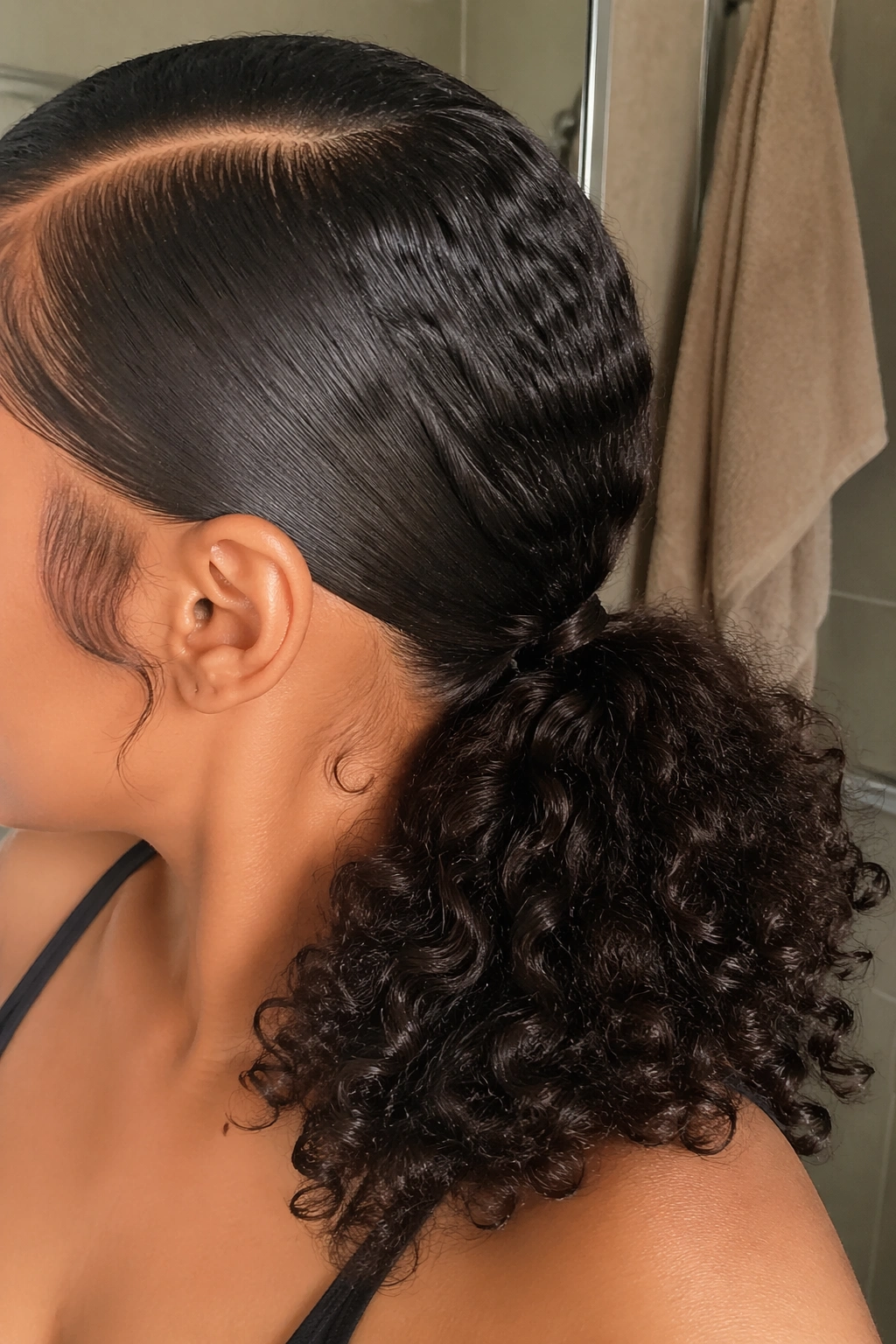
A few small cornrows at the front give curly ponytails extra staying power. They also create a sharp line that makes the side part look even more deliberate.
You can braid one or two cornrows along the heavier side of the part, or run them from the temple back into the ponytail base. Keep the braids snug, but not tight. If your scalp feels pulled, the tension is too high and the style will not age well through the day.
This works especially well for thick, dense curls that tend to puff up at the front. The braids control the perimeter while the ponytail handles the volume. Clean front, full back. Good combination.
14. Faux Hawk Side Part Ponytail
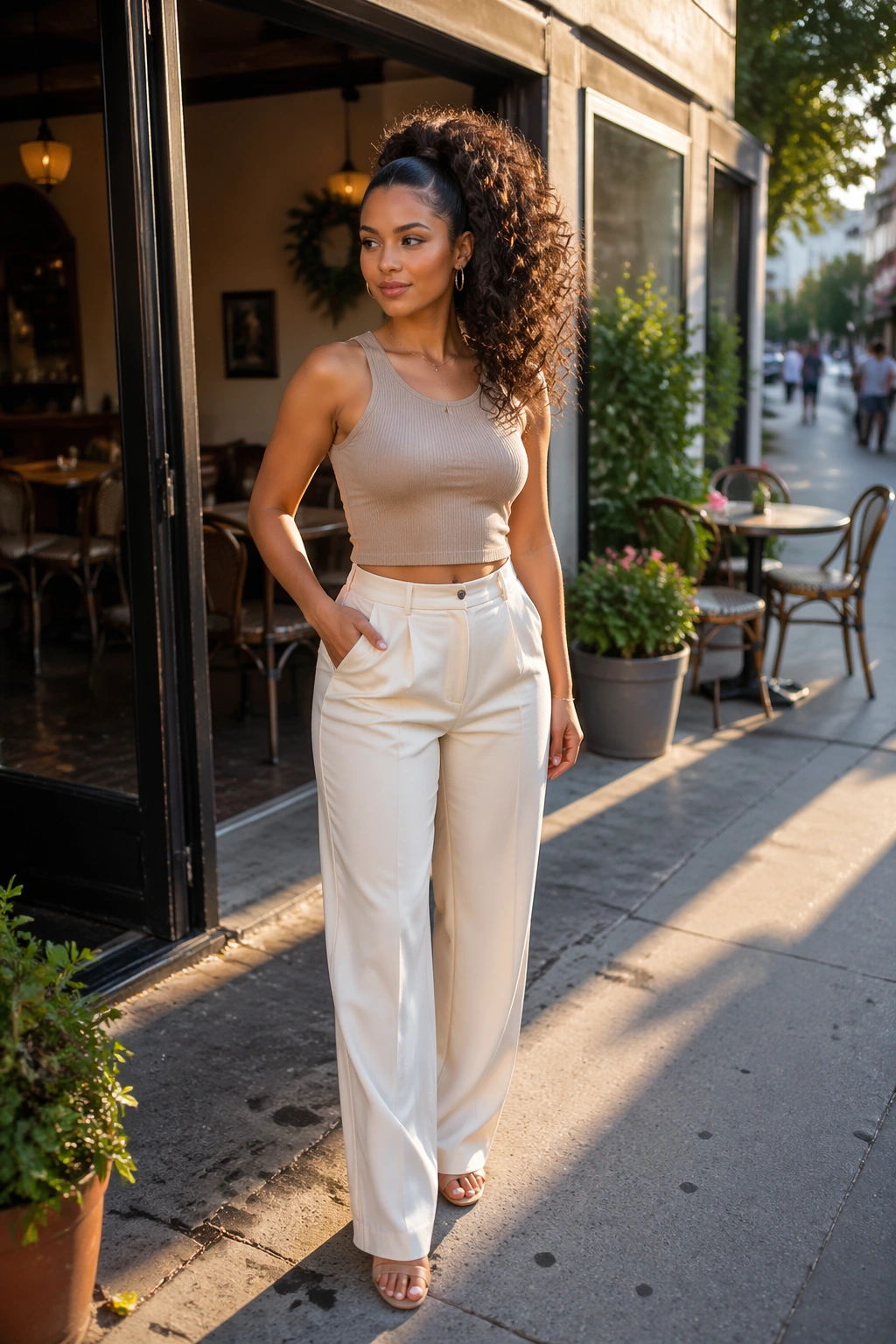
A faux hawk ponytail has edge without needing a full mohawk cut. The center section stays lifted, the sides get smoothed down, and the side part keeps the shape from looking too severe.
Where to keep the lift
Think of this as a ridge running from the front toward the ponytail base. Clip or pin the side sections low, then build a little height through the middle with mousse or a light root spray. Once the ponytail is secure, the top should still have some shape, not collapse into the scalp.
- Use a firm brush on the sides.
- Keep the lift centered, not lopsided.
- Let the tail stay curly so the style doesn’t feel stiff.
It’s a good choice when you want a ponytail with a bit of bite.
15. Flipped-End Side Part Ponytail
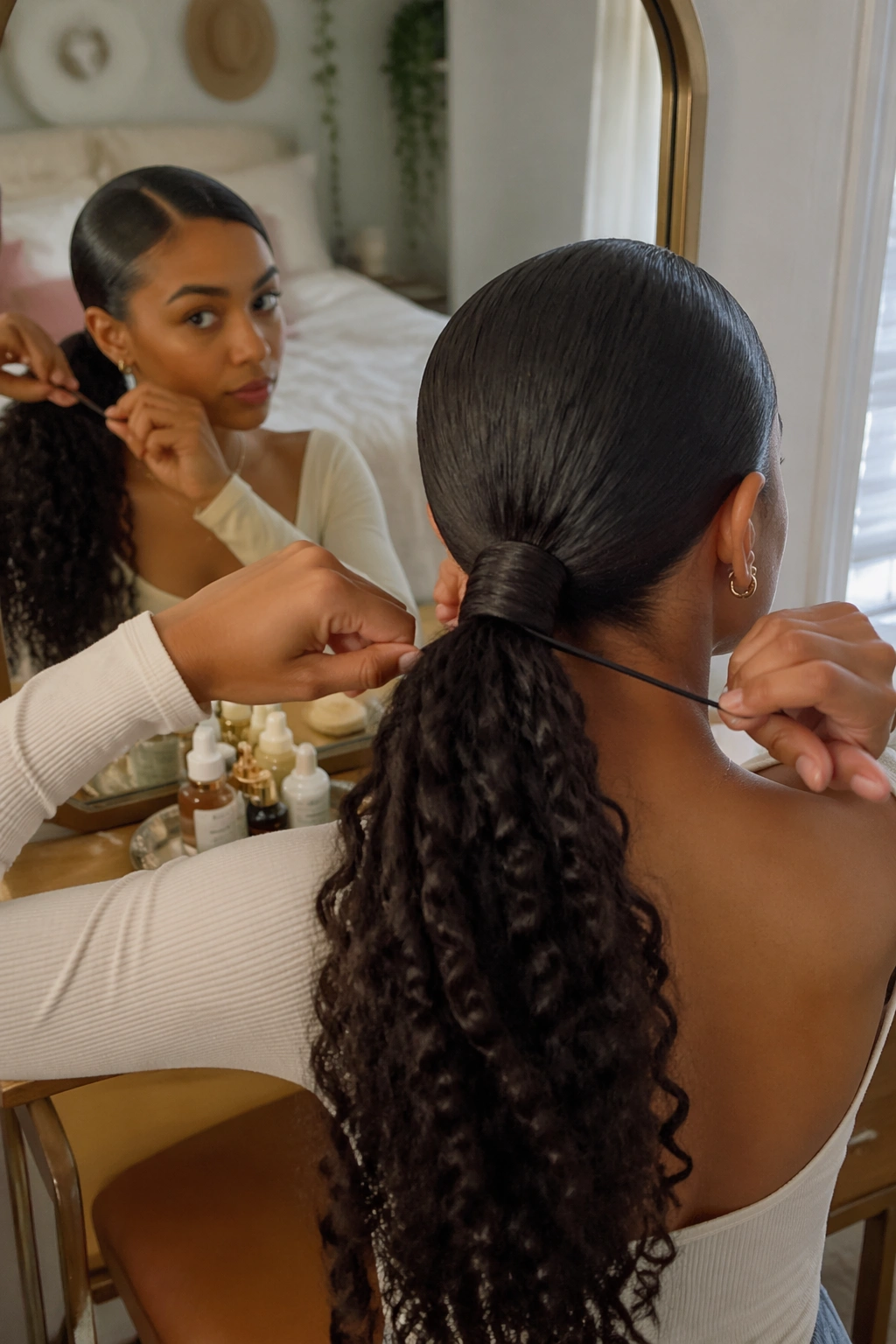
Flipped ends bring a retro feel to curly ponytails, and they look especially clean when the roots are sleek. The side part keeps the shape modern; the ends bring the mood.
If your curls are long enough, use a large barrel curling iron or rollers on the last few inches to create an outward bend. If you prefer heat-free styling, set the ends in big flexi rods and let them dry fully before releasing. The goal is not a tight curl. It’s a soft flip.
That little bend changes the whole tail. Straight down the back can look plain. A flipped end makes the ponytail feel styled on purpose.
16. Side Part Ponytail for Tighter Coils
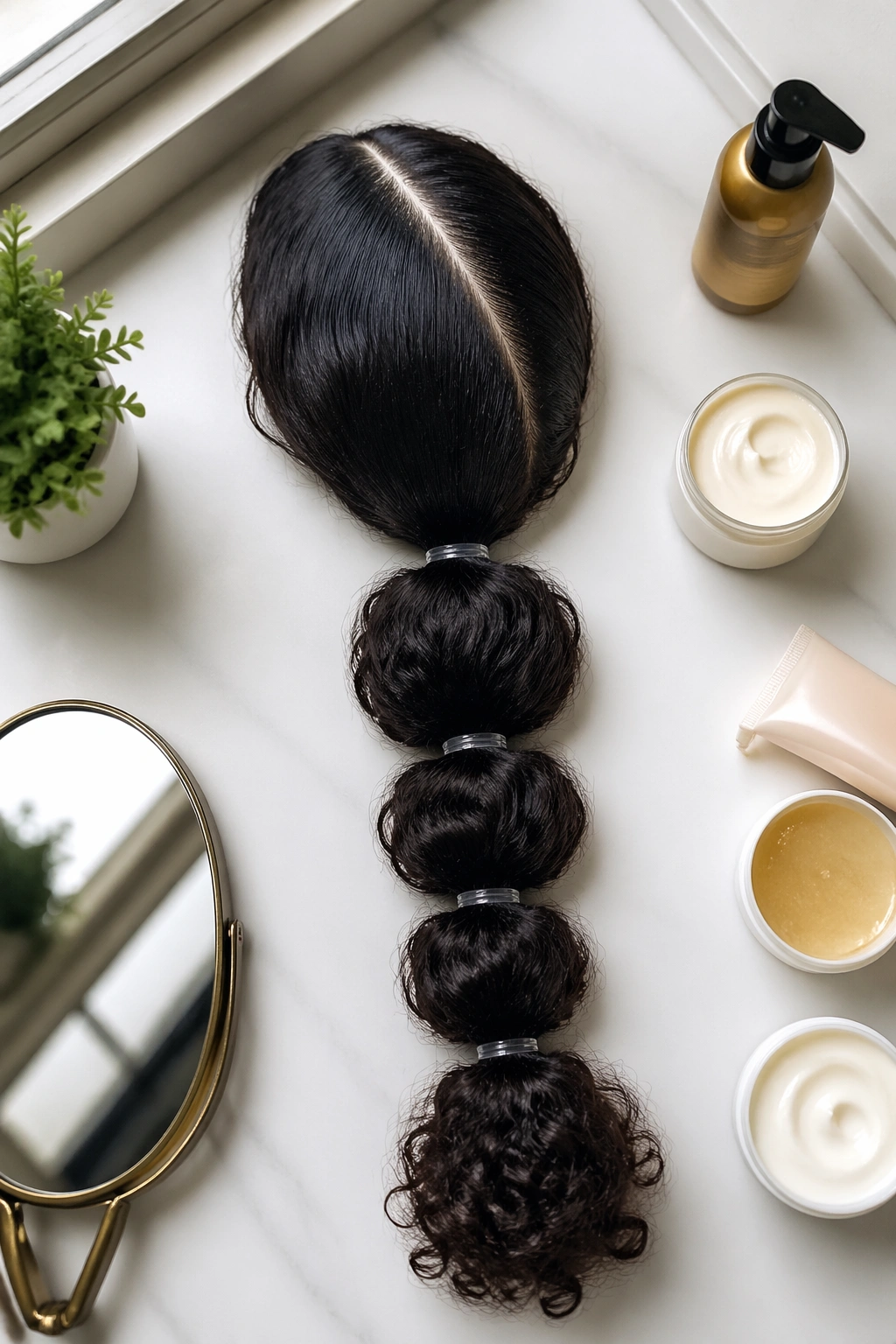
Tighter coils need a different touch. Less brushing. More patience.
A side part ponytail on 4B or 4C hair often looks best when the roots are stretched a little first, either with banding, a low-heat blow-dry, or a twist-out that has been gently gathered. Use a cream-and-gel combo to smooth the top without stripping the coil pattern. Then gather the ponytail at a spot that doesn’t tug the edges.
The tail can stay soft and full, but don’t force it into one uniform texture. Let the coil pattern do what it already does well. The style ends up looking rich instead of overworked.
17. Side Part Ponytail for Loose Waves
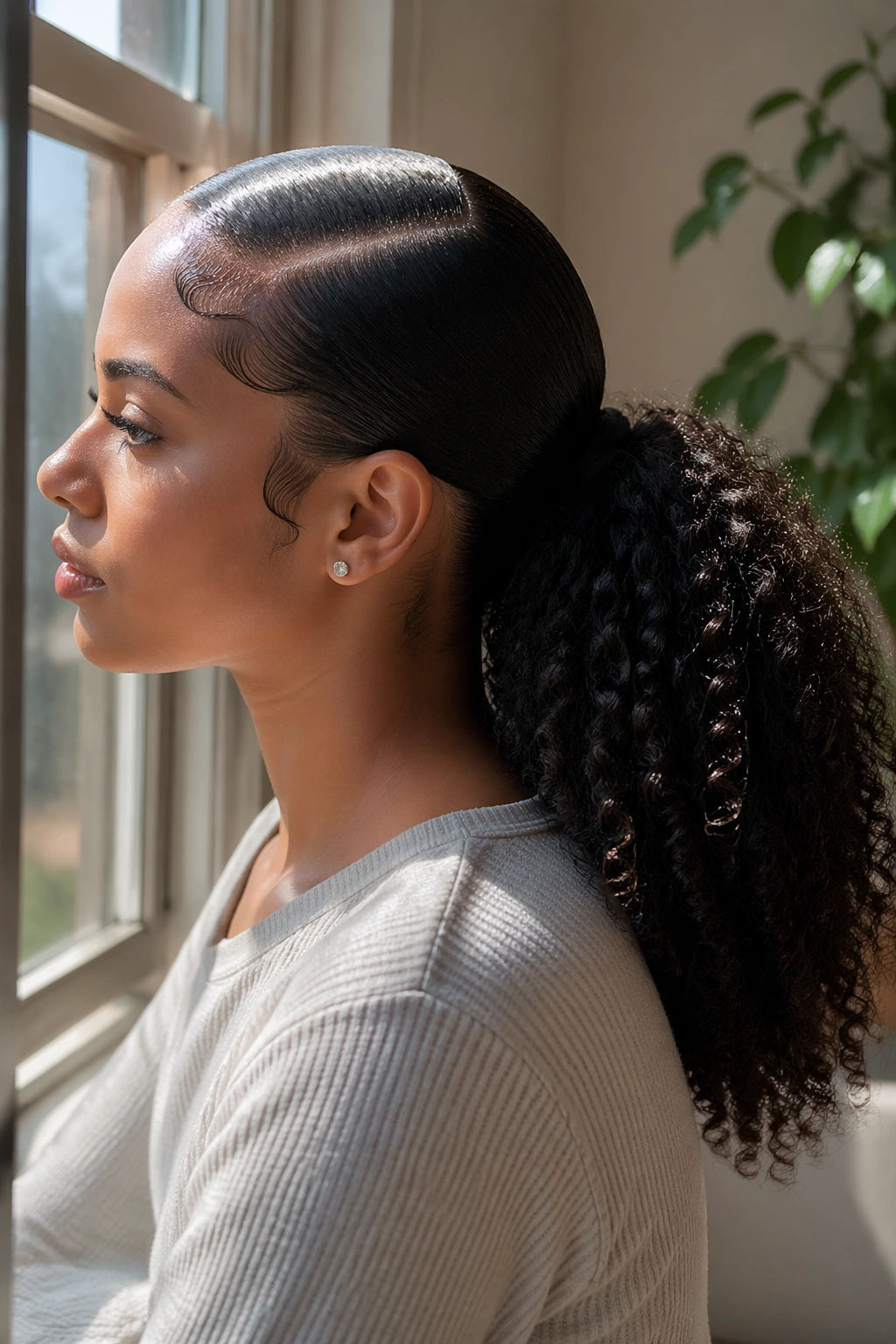
Loose waves need less hold than tighter curl patterns, and that’s where people often go wrong. Too much gel flattens the front and makes the tail look stringy.
Use a light mousse or a cream with soft hold, then comb the side part into place and smooth the roots with your hands. A side-part ponytail on wavy hair should still move. If it freezes in place, the whole thing loses that easy swing that makes waves look good.
A few loose face pieces can help, but keep them tidy. The point is to look controlled, not fussy.
18. Statement Clip Side Part Ponytail
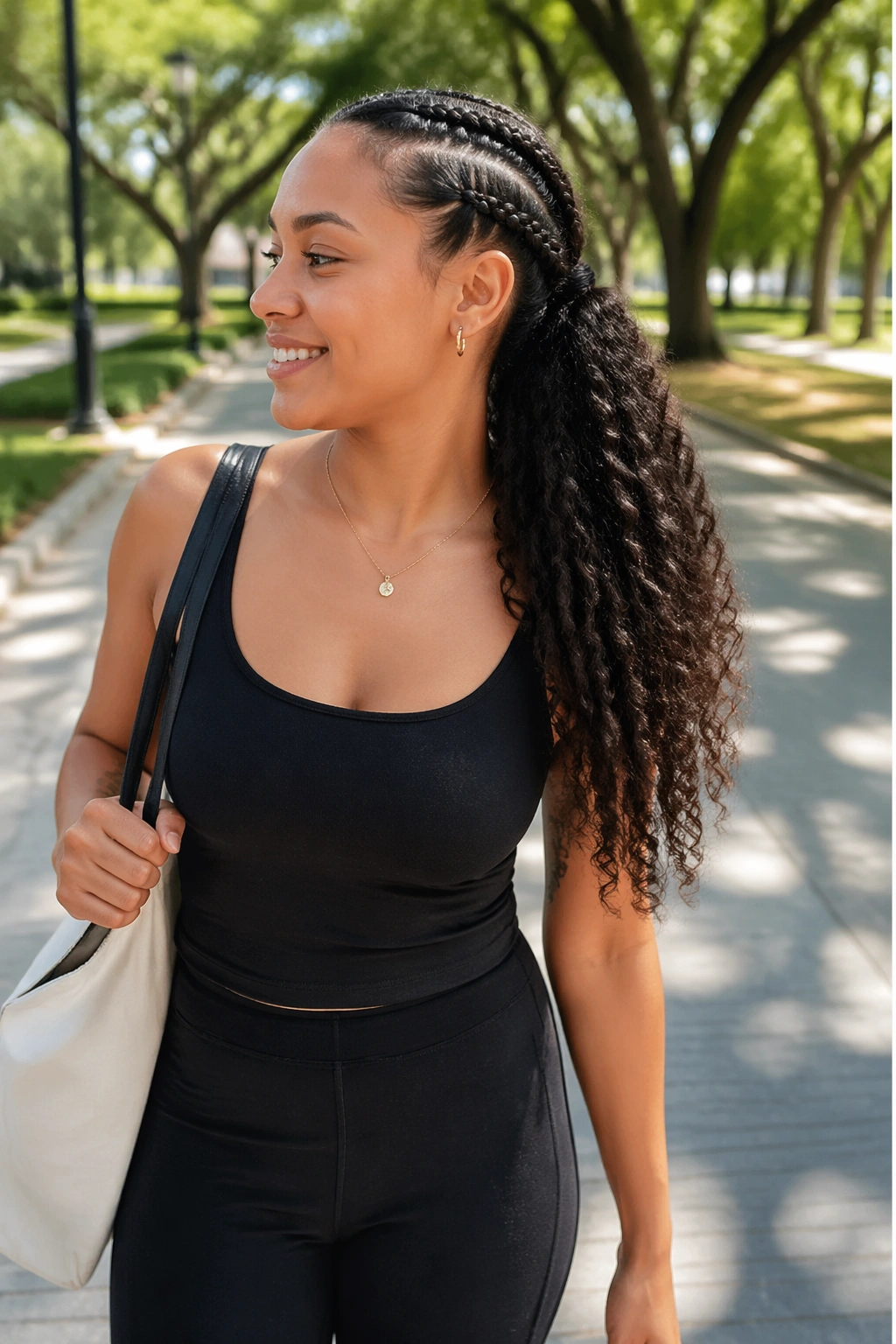
A statement clip does a lot of work for very little effort. One strong barrette, comb clip, or pearl pin can turn a plain side-part ponytail into something more finished.
Place the clip right above the ponytail base or just behind the part, where it can catch the eye without crowding the face. Big clips work best when the rest of the style is smooth. If the hair is already busy, the accessory gets lost.
I like this option when the ponytail itself is simple. Let the clip carry the visual weight. Keep everything else clean and let the curly tail stay soft.
19. Long-Length Extension Ponytail
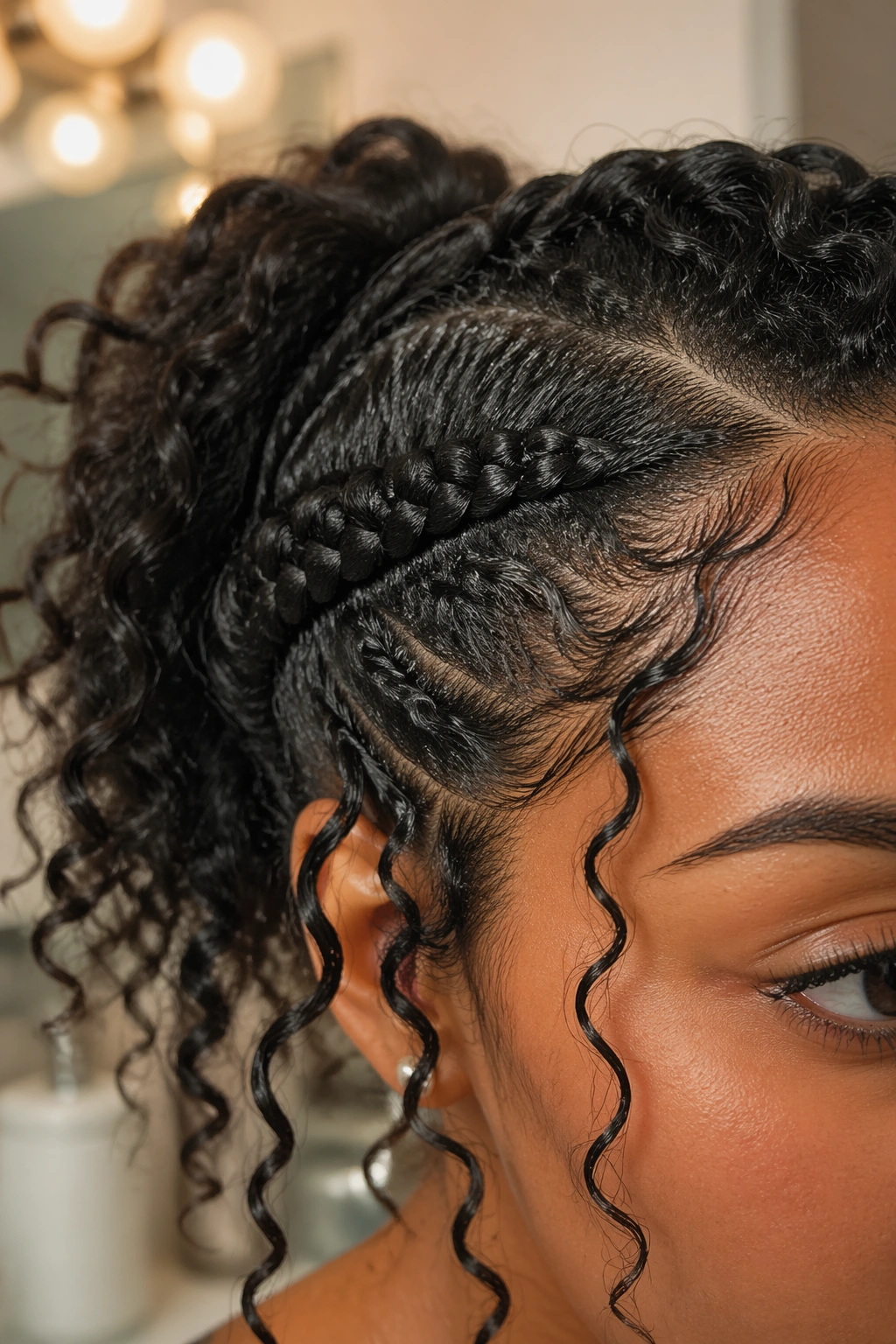
Long curly ponytails can be built with extensions when your own hair needs a little help in the length department. The key is matching curl pattern and density, not just color.
Choose extensions that mimic your natural texture close enough to blend at the base and through the tail. Secure your own hair in a small, flat base first, then anchor the ponytail piece tightly. Wrap the attachment point with a section of hair or a matching piece so the join disappears. If the base is bulky, the whole style looks off.
This kind of ponytail gives you drama fast. It also keeps the side part looking clean because the weight of the added length helps the tail fall in a smoother line.
20. Side Part Drawstring Ponytail
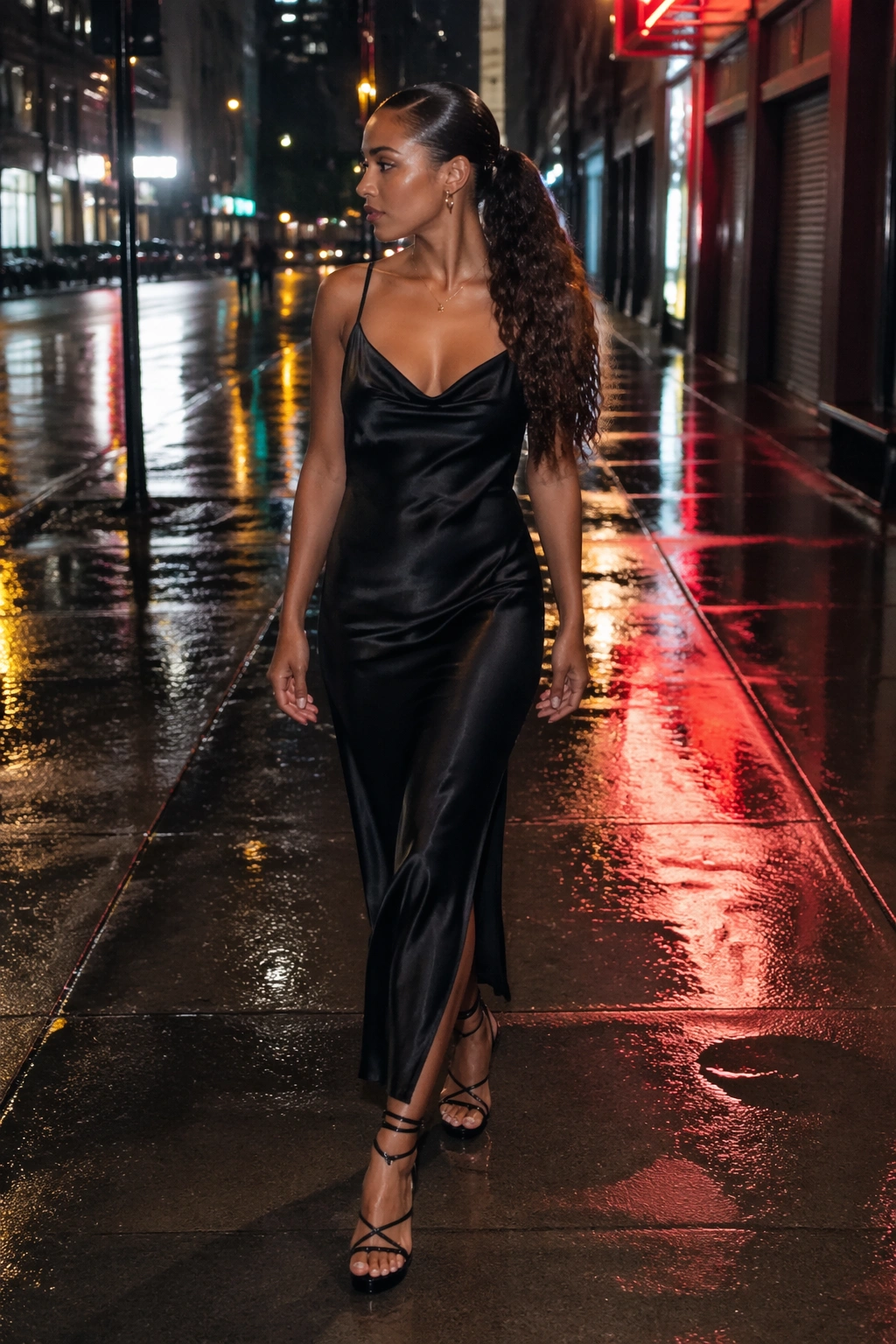
A drawstring ponytail is a shortcut, but it can look polished when it’s installed well. The side part gives the style shape; the drawstring piece brings length and fullness without a long styling session.
What makes it useful
It’s a good option when your natural curls are having a stubborn day or when you want to protect your own hair. Tuck your hair into a flat base, secure it with pins if needed, then attach the drawstring piece and tighten it gradually until it feels snug. Don’t yank it too hard. That creates an odd bump that shows through the style.
- Smooth the front before attaching.
- Match the curl texture as closely as you can.
- Check the back in a mirror before you leave.
Fast does not have to look sloppy.
21. Gel-Sculpted Side Sweep Ponytail
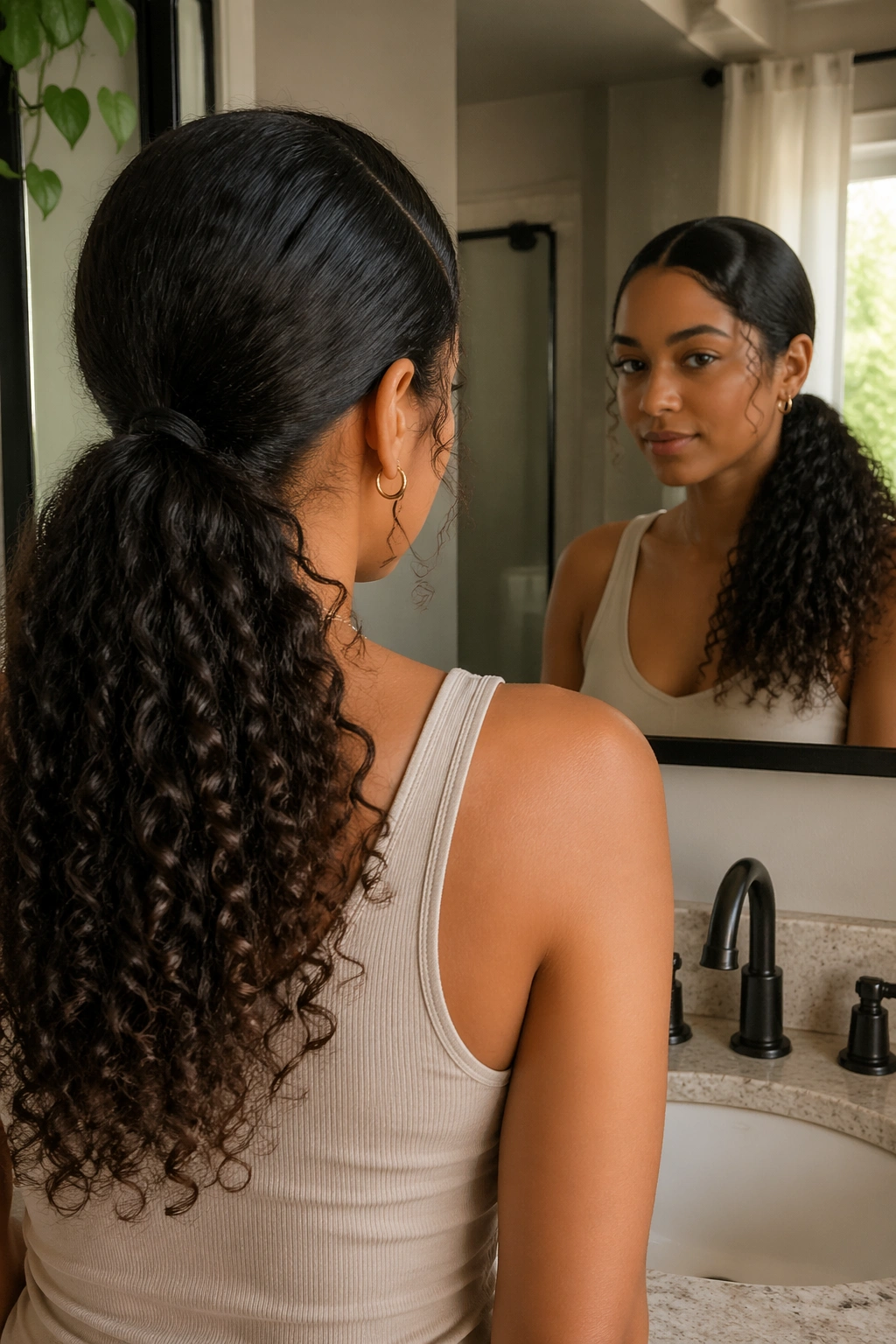
A gel-sculpted side sweep has a strong front line, almost like the hair is being directed across the face into the ponytail. It’s sleek, polished, and a little dramatic in a good way.
Use a rat-tail comb to carve the side part, then sweep the top section in one clean motion toward the ponytail base. Smooth it with gel as you go, not after everything is already gathered. That keeps the front from breaking into little bumps. The finish should look glossy, not crunchy.
One sentence says it all: the front does the framing, the tail does the movement. That balance is why this version keeps showing up in formal styling.
22. Face-Framing Tendrils Side Part Ponytail
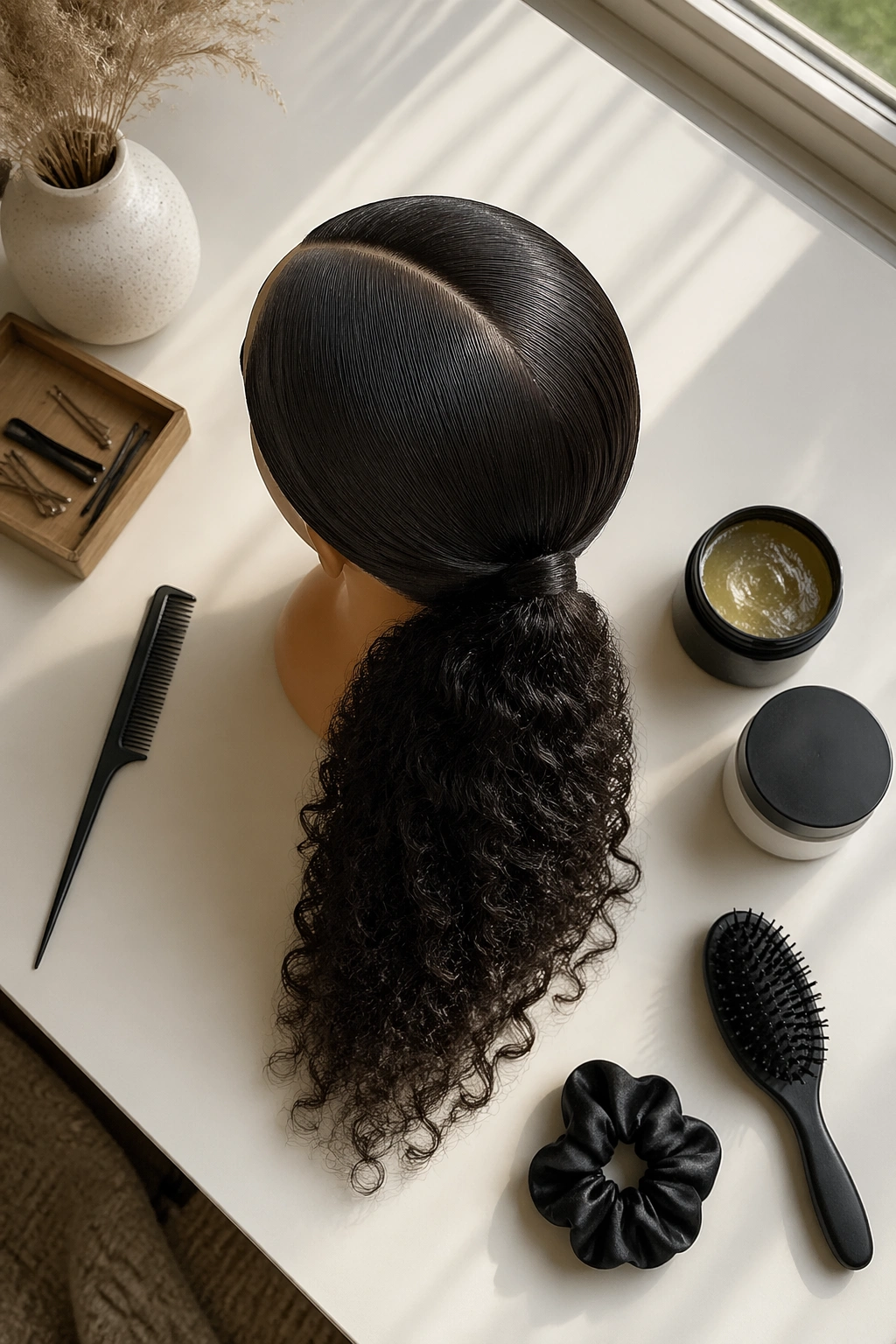
A few face-framing tendrils can soften a sleek ponytail immediately. They’re especially useful when the side part is deep and the overall shape leans sharp.
Leave two narrow sections out near the temples or just in front of the ears. Curl them away from the face with a wand, or finger-coil them if your texture already holds shape well. Keep the pieces light. Thick tendrils can crowd the face and make the style feel heavy.
This is one of those small changes that changes the whole read of the look. It goes from strict to flattering fast.
23. Side-Braided Bang Ponytail
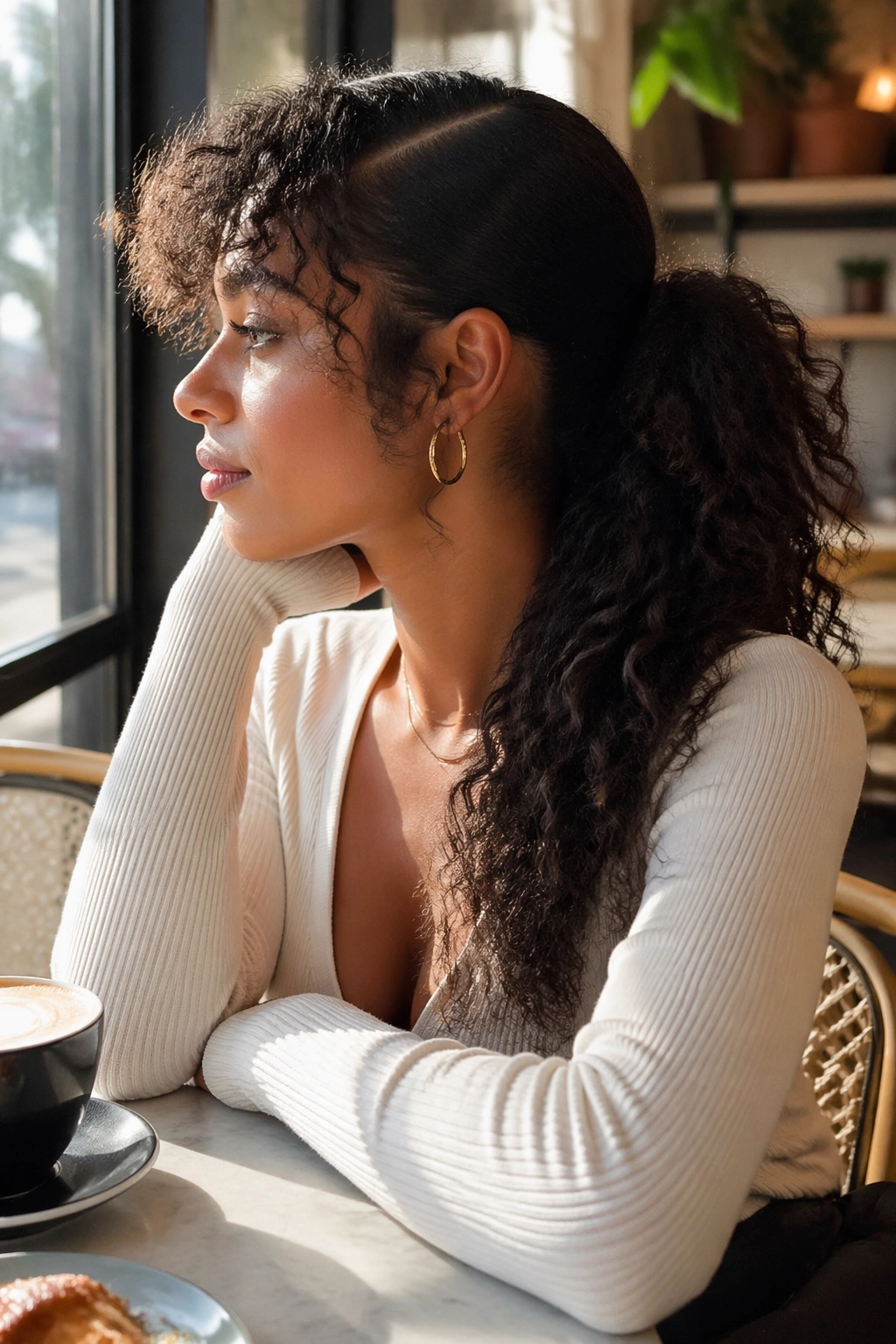
A braided bang gives you control over the front without fully hiding the side part. It works well when the fringe area wants to frizz or when you want something more detailed than a plain slick-back.
Braid the section that starts at the part and runs along the hairline, then tuck it back into the ponytail base. A French braid gives more structure; a simple three-strand braid is quicker and still does the job. Keep the braid close to the scalp so it doesn’t float away from the head.
- Braid while the hair is lightly damp for cleaner grip.
- Use a small elastic that won’t bulk up the join.
- Smooth flyaways with a dab of cream, not a heavy coat of gel.
It’s neat, practical, and quietly pretty.
24. Crown-Volume Side Part Ponytail
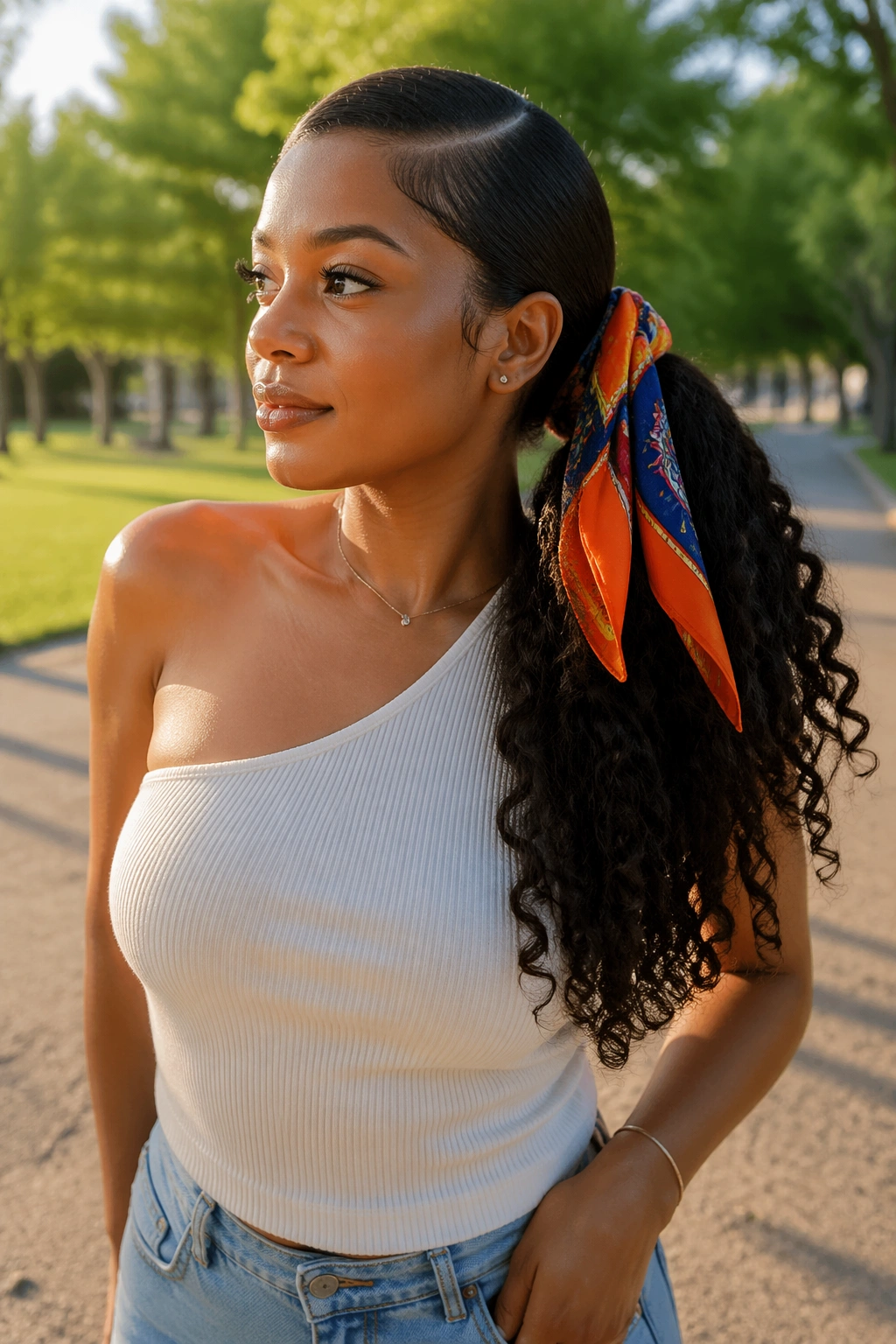
Fine curls often need a little lift at the crown so the ponytail doesn’t collapse flat. A side part plus crown volume solves that problem without turning the style into a puffball.
Keep the lift soft
Backcomb only the root area you need, maybe half an inch to an inch at most, then smooth the surface lightly so the teasing does not show. A small root clip at the base can also help if your hair falls flat fast. You want shape, not a nest.
The tail should still look curved and full. If the crown gets too big, the side part gets lost. The best version has a gentle rise, then a clean drop into the ponytail.
25. Tapered Nape Side Part Ponytail
A tapered nape makes the neck area look tidy while the ponytail stays full. It’s a sharp, flattering shape on layered curls because the shorter pieces at the back sit close to the head instead of poking out.
Brush the hair downward at the nape before securing the ponytail. The side part should lead the eye into the shape rather than fight the taper. If you have shorter layers, tuck them with a pin or two under the base so they do not stick out from the elastic.
The result feels neat from every angle. That matters more than people think, especially when the back of the head is visible.
26. Ribbon-Tied Side Part Ponytail
A ribbon changes the tone of the whole look in a softer way than a clip or scarf. Satin feels romantic. Velvet feels heavier and more winter-friendly. Either way, the ribbon gives the ponytail a point of focus.
Choose a ribbon at least 1 inch wide so it shows against curly hair. Wrap it around the base once or twice, then tie it to one side so the ends fall down naturally. If the ribbon is too thin, it disappears into the hair and loses the effect.
This version is nice when you want the ponytail to feel polished but not severe. The ribbon keeps the style from looking too hard.
27. Mini Twist Detail Side Part Ponytail
A few mini twists can turn a plain side-part ponytail into something more textural without making it busy. Think of them as small accents, not the main event.
Twist one or two narrow sections along the part side and guide them back toward the ponytail base. Leave the rest of the hair smooth so the detail stands out. You can place the twists near the temple, above the ear, or right at the part line depending on how much face framing you want.
- Keep the twists tight enough to last, but not so tight they shrink unevenly.
- Use a little cream on the ends so they don’t puff out.
- Pin the twist ends under the ponytail base for a clean finish.
Tiny detail. Big payoff.
28. Sleek Roots, Puffy Length Ponytail
This is one of my favorite ways to wear curly hair in a side part ponytail because it respects both textures at once. The roots are smooth and controlled, while the length stays full and airy.
The trick is not to overbrush the tail once it’s secured. Smooth the top with gel or cream, gather the ponytail, then stop touching it. Let the curls expand a little. If you keep manipulating them, they lose that full, cloud-like shape that makes the style look rich.
It’s a good everyday option. Clean at the front, generous at the back. Nothing fussy.
29. Side-Swept Puff Ponytail
A side-swept puff ponytail leans a little more relaxed, but it still fits the side-part ponytail family because the shape starts with a clean directional part. The side sweep gives the front form, while the puff gives the style body.
This look works well when curls are thick and naturally voluminous. Smooth the part and the front edge, then let the back sit fuller and softer than a tight ponytail would. A satin scrunchie helps because it holds without leaving a harsh dent.
It’s less polished than the wet-look version, sure. But it’s easier to wear, and sometimes that matters more.
30. Evening Side Part Ponytail
A side part ponytail can absolutely hold its own for an evening event if the finish is tight and the curl pattern is clean. The style looks best when the roots are smooth, the base is tucked, and the tail has enough shine to read intentional under dim light.
How to finish it for evening
Use a fine-tooth comb for the part, then brush the top flat with controlled strokes and a small amount of gel. Wrap the base if you want the shape to look more refined. If the hair is long, define the tail with a curling wand or roller set so the ends hold their shape for hours.
This is the version I’d reach for when the outfit is already doing a lot. The ponytail should support the look, not fight it.
Final Thoughts
The strongest side-part ponytails for curly hair do one thing well: they keep the front clean and let the texture live in the tail. That contrast is the whole point. If you smooth everything, you lose the personality of the curls. If you smooth nothing, the style can get messy fast.
Start with the version that matches your curl pattern and your patience level. Low and wrapped is easy to control. High and lifted gives more energy. Braids, twists, scarves, clips, and extensions all change the mood, but the base idea stays the same.
And that’s the useful part. Once the part is clean and the roots are settled, curly hair can do the rest on its own.
