



Long hair changes everything about a pondo. The weight, the swing, the sheer visual drama of braids or extensions falling past your shoulders — afro pondo styles for long hair hit different than their shorter counterparts, and anyone who’s worn one knows exactly why. There’s a particular kind of confidence that comes with a full, long pondo bouncing behind you as you walk.
The pondo is rooted in South African hair culture, deeply tied to townships, salons, and Black women who refused to keep their hair small. Over the years, the style has traveled far beyond its origins, picked up by natural hair communities across the continent and the diaspora. But the long-hair version? That’s a specific art form. Getting it right takes technique, the right extensions, and an understanding of weight distribution that not everyone talks about upfront.
This isn’t a quick scroll-and-forget list. Every style here has something specific to offer — a different extension type, a different base, a different occasion. Whether you’re sitting in a salon chair or attempting to self-style at the kitchen table with a mirror propped up on a stack of books, you’ll find options that match where you actually are.
What Makes a Long Pondo Different
A standard pondo — any long braided or extension ponytail — is fundamentally about length and volume. But when that length becomes truly long, past the mid-back or reaching toward the waist, you’re dealing with a different set of challenges. Weight becomes a real factor. The base where extensions are anchored takes on a lot of tension, which means your cornrow foundation has to be built carefully.
The braid pattern underneath matters more than most people realize. A poorly laid cornrow base will mean your pondo sits crooked, or worse, the tension concentrates in one spot and causes pain by day two. A flat, neat cornrow base — whether it’s a simple 4-section pattern or something more elaborate — distributes the weight of extensions across your scalp rather than letting all of it hang from one anchoring point.
Long ponies also need stronger hold at the top. Elastic bands, drawstring bases, or wrap-around hair methods each have their advantages, and the right choice depends on how heavy your extension hair is and how long you plan to wear the style.
Choosing the Right Extension Hair for Length
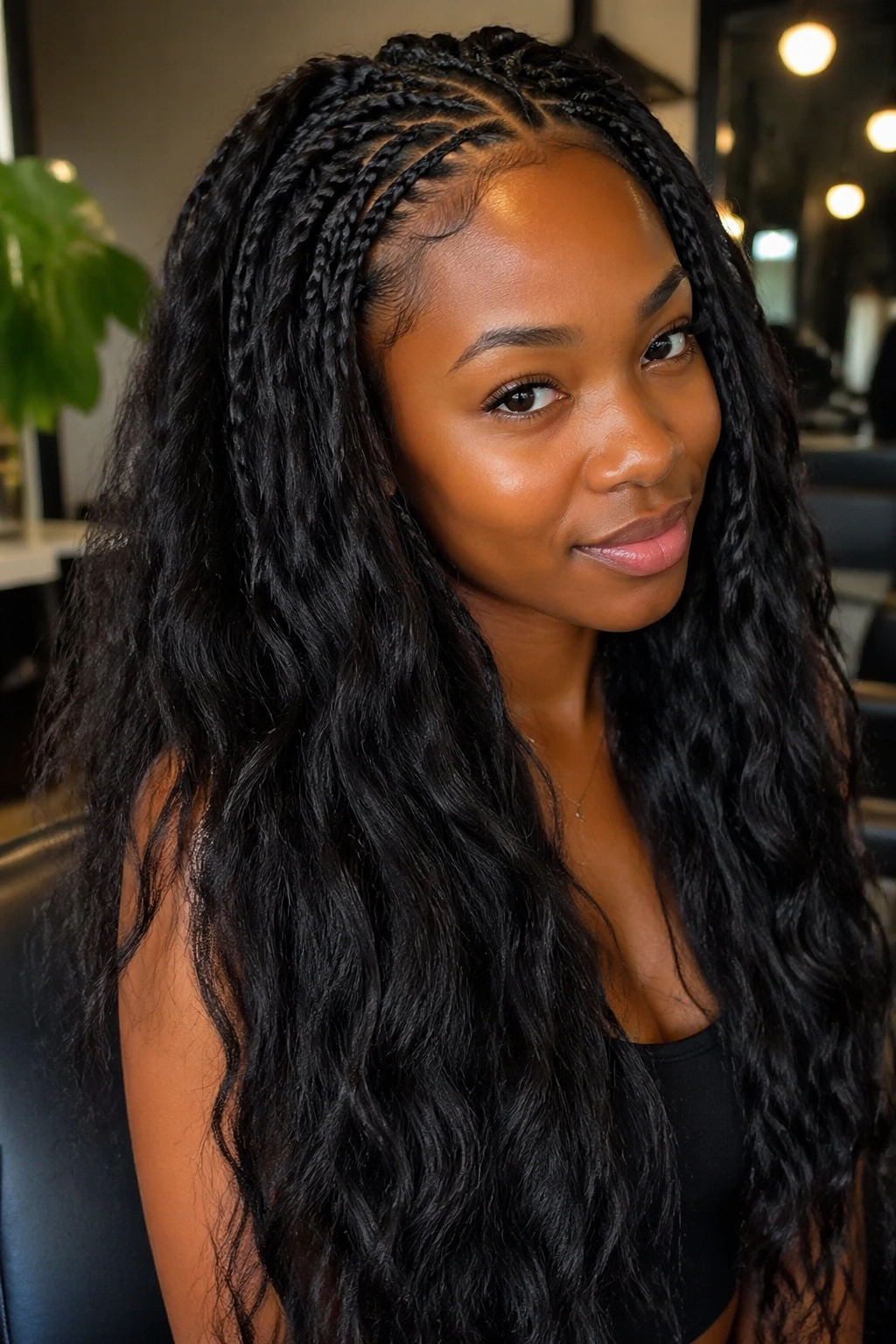
Not all extension hair performs the same way once it crosses a certain length. Synthetic hair that feels silky and lightweight at shoulder length can become stiff and unmanageable at waist length. Kanekalon blends tend to handle longer lengths better than ultra-cheap synthetic options — the fiber has more give, it blends with your edges more naturally, and it doesn’t feel like you’re carrying a rope.
Human hair extensions for pondos are the gold standard, but the cost reflects that. If budget allows, human hair bundles give you the most natural movement and last the longest when properly cared for. For most people working with a reasonable budget, a high-quality Kanekalon blend or a jumbo braid hair specifically designed for ponytails is perfectly adequate.
Weight is real. A pondo that hits mid-thigh on your body can weigh anywhere from 200 to 400 grams depending on volume. That’s not nothing. Your neck and scalp will feel it, especially on days one through three before the style settles. Headache-free long ponies start with lighter, airier extension choices — layering thinner bundles rather than packing in thick ones.
Building the Foundation: Cornrows and Wrapping Techniques
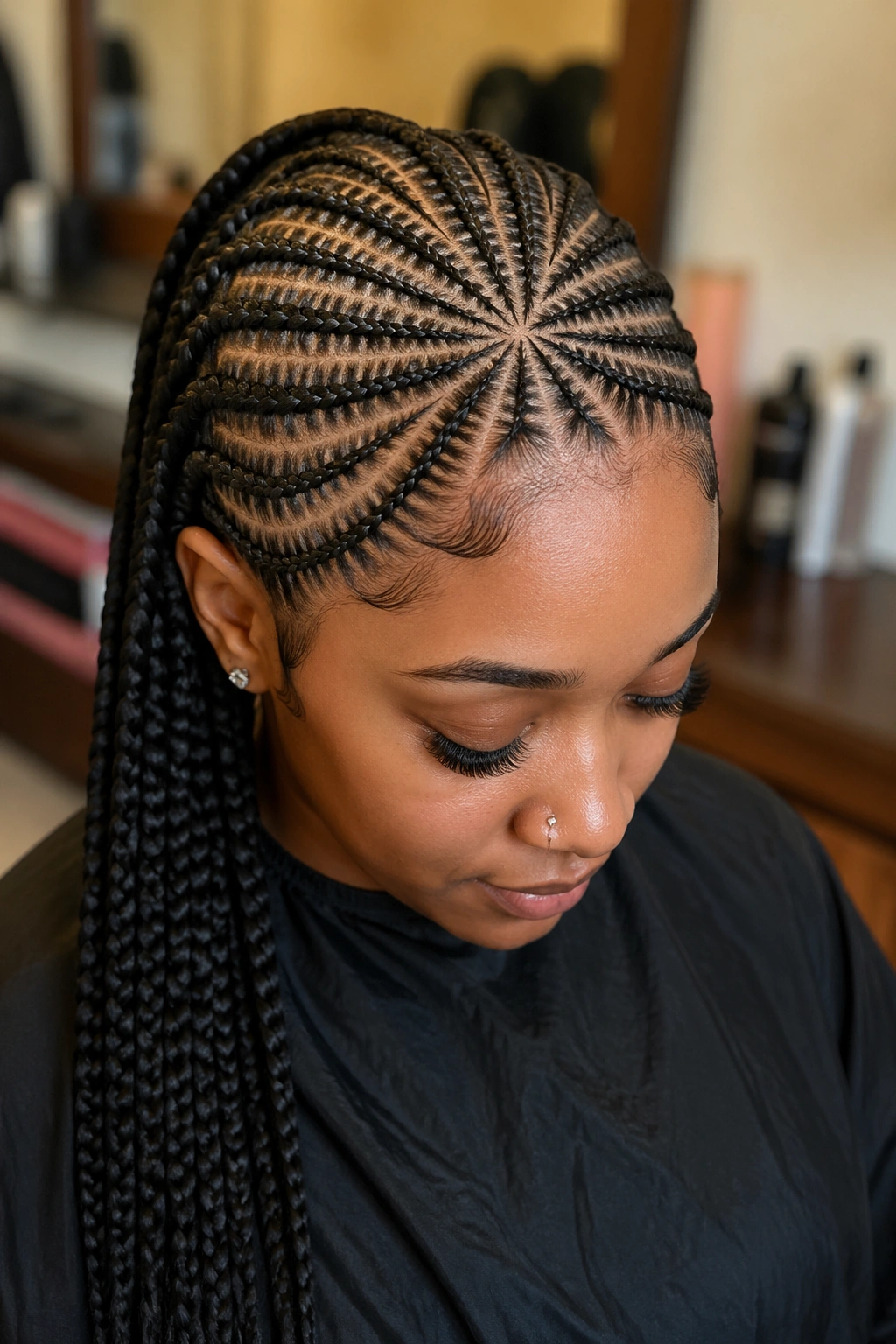
The two most common bases for long pondos are cornrows and a flat bun wrap. Cornrows give you a flatter, more secure base and tend to last longer without slipping. The bun wrap method — where you braid or twist your own hair into a flat bun at the crown — works better for shorter natural hair that doesn’t cornrow as neatly.
For length beyond shoulder level, the cornrow base should ideally run in a star pattern — sections radiating from a central point at the back of the crown. This spreads tension more evenly than simple front-to-back rows. Your stylist should know this, but if you’re self-styling, it’s worth the extra setup time.
After the base, the connection method matters. Some people use a drawstring ponytail piece, which makes the daily removal process much easier. Others hand-sew the extension bundles directly into the base braid, which creates a more seamless look but makes removal a project. For very long styles, hand-sewing tends to hold better over time.
How to Protect Your Edges While Wearing Length
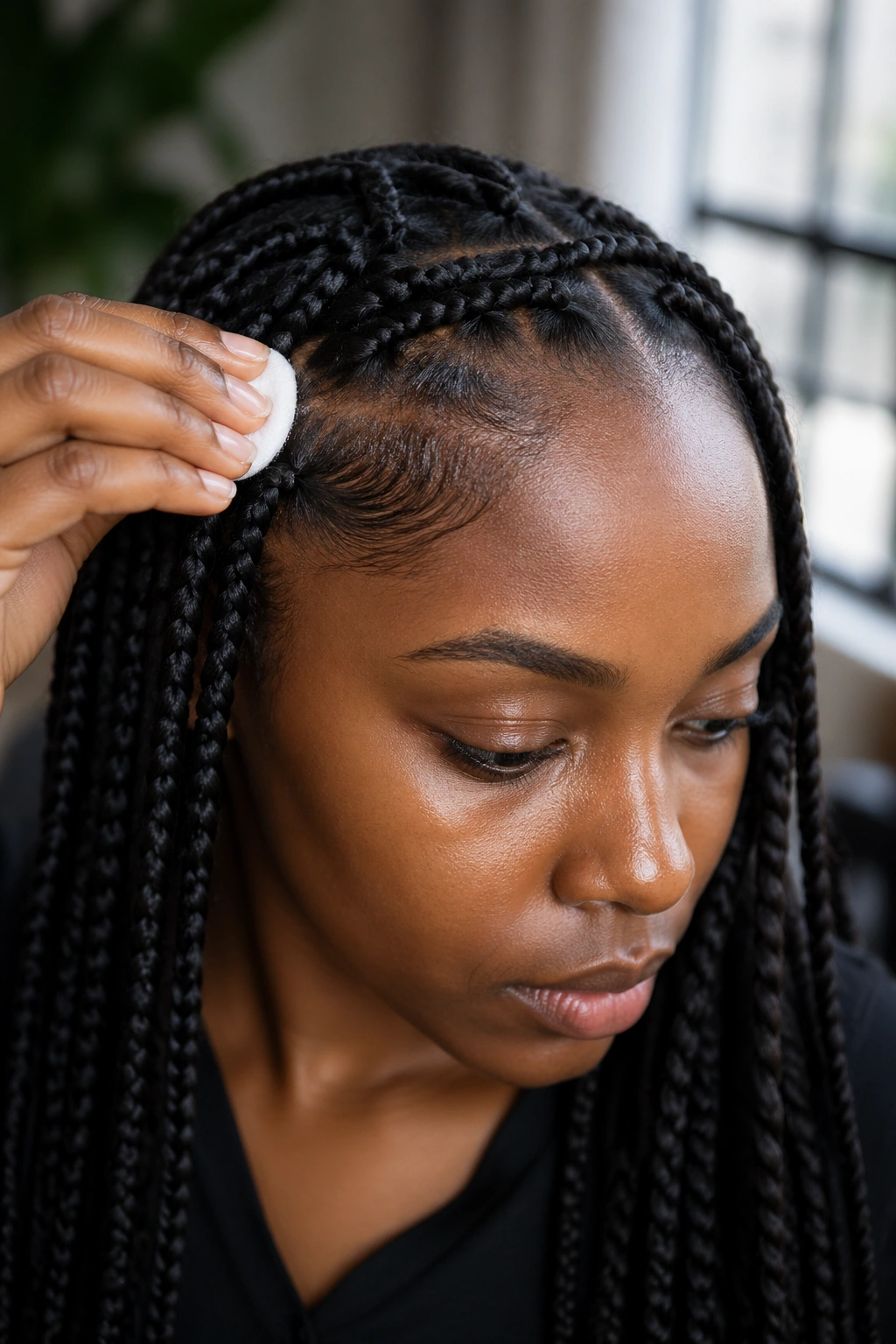
Long pondos pull at the hairline harder than shorter ones simply because of the added weight swinging at the ends. Edge protection is not optional. Before your installation, apply a good edge protector or butter to your hairline — something thick enough to create a barrier, like a shea butter blend or a dedicated edge control with hold. Not gel. Gel dries stiff and can cause breakage with repeated application over days.
At night, wrap the pondo loosely in a satin scarf or lay it over a silk pillowcase. The goal is reducing friction at the hairline, which is where most damage from ponytail styles accumulates. Many long pondo wearers find that a light spritz of water and a small amount of oil applied to the edges every two to three days keeps the perimeter looking fresh without causing buildup.
Take the pondo down after three to four weeks maximum. Long styles look beautiful, but they need regular breaks.
1. Classic Jumbo Blowout Pondo
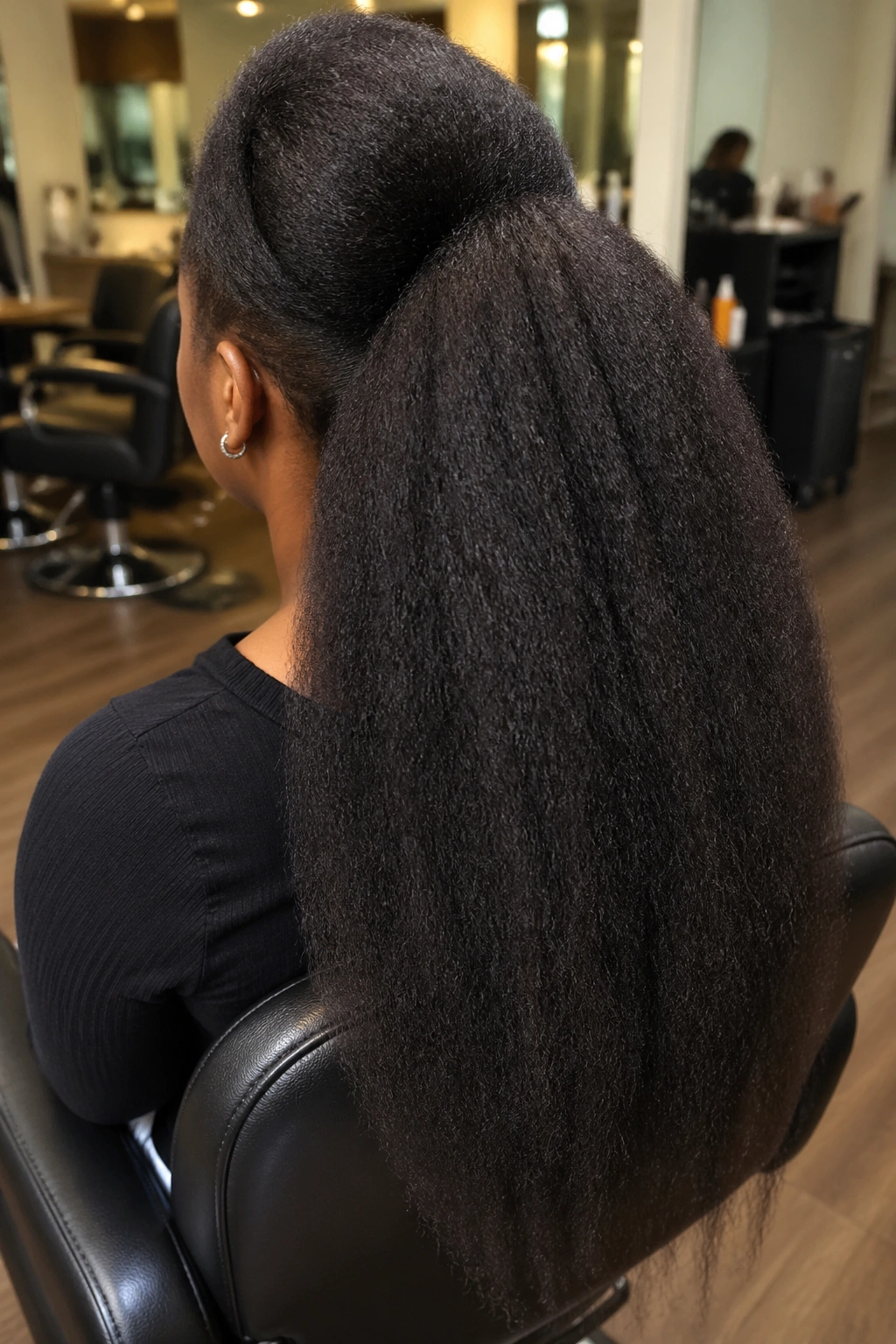
The jumbo blowout pondo is the original statement — thick, voluminous, and unapologetically big. This style uses pre-stretched or blown-out Kanekalon extension hair attached at a cornrow base, with the extensions left loose and fluffy rather than braided. The result is a massive, freeform puff that falls down the back and fans out at the ends.
Why It Works
The blowout texture mimics stretched natural hair, so the blend between your edges and the extensions reads as more seamless than a sleek, straight pondo would. Volume at the bottom adds drama without requiring complicated braiding skill — the beauty of this style is in the hair preparation, not the execution.
Pre-stretching the Kanekalon before attaching it is the key step that most first-timers skip. Un-stretched synthetic hair has a different texture than stretched — it clumps, it frizzes unevenly, and it looks clearly artificial. Stretch the hair by hand or with a blow dryer on low heat before bunching it into your pondo base. Work in sections, stretching each piece gently without snapping the fiber. Takes about 20 minutes for a full set, but the visual payoff is obvious.
The finished style works beautifully with a slicked or slightly ruffled edge. For a sleek finish, apply edge control to your hairline and smooth with a soft brush. For a wilder look, leave the baby hairs natural and let them blend into the overall texture of the pondo.
Tip: Use a large drawstring hair piece as the base anchor instead of a traditional elastic — it makes removing and re-styling without re-doing your cornrows much easier.
2. Sleek High Pondo With Bone Straight Extensions
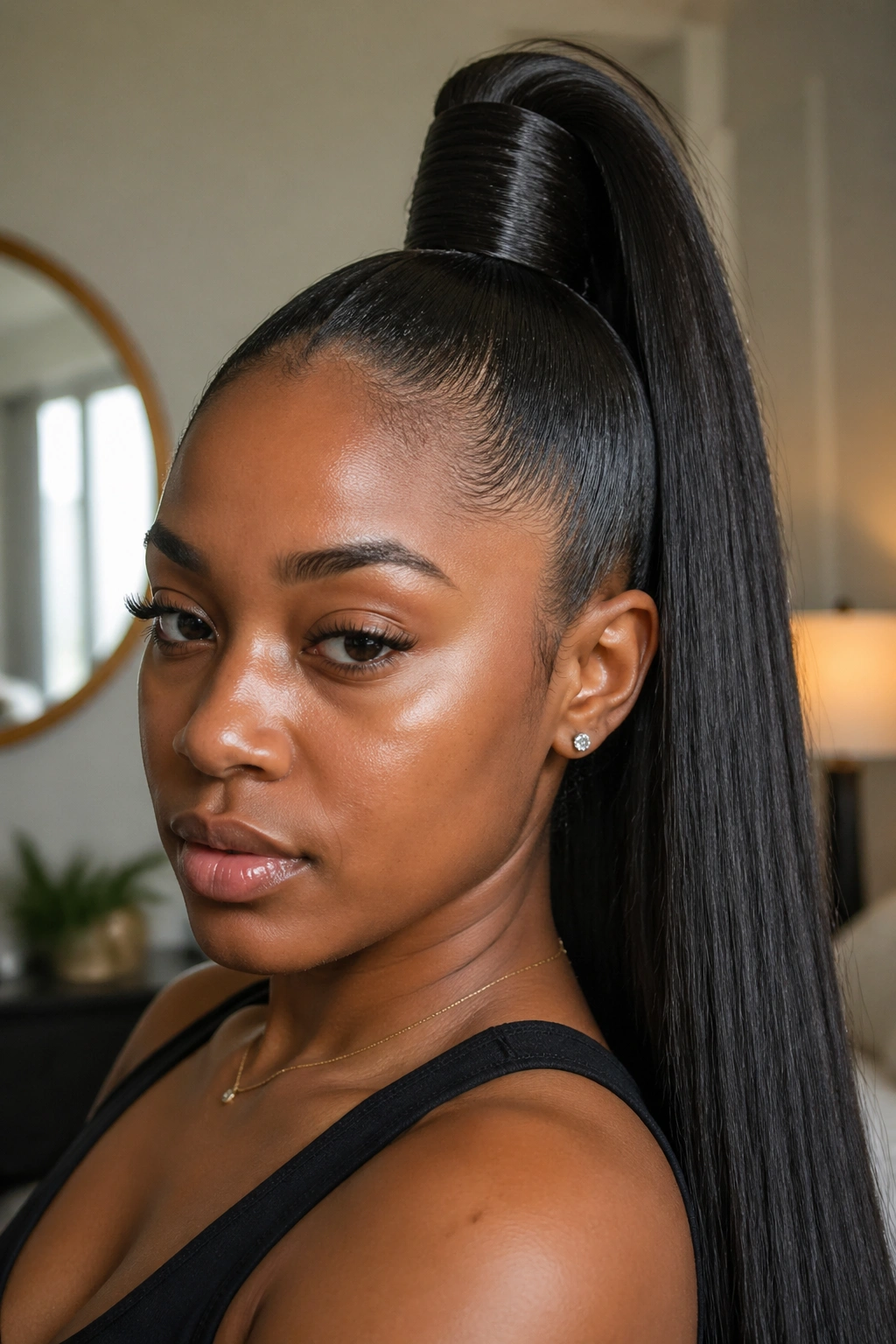
Unlike the blowout, this pondo is all about polish. Bone straight extensions — silky, shiny, and falling in a perfectly smooth curtain down the back — worn high on the crown. It’s a style that photographs exceptionally well and holds up in both professional and evening settings.
Getting the sleekness right requires two things: a smooth base and low-frizz extensions. The cornrow underneath should be laid flat with no bumps, and the junction between your natural hair and the extensions needs to be wrapped tightly. A thin piece of extension hair wrapped around the elastic point several times, then pinned or sewn in place, creates the smooth transition that makes this style look polished rather than stuck-together.
The extensions themselves need to be quality bone straight synthetic or human hair. Budget straight hair often develops kinks at the attachment point after a few days because of moisture and movement. Human hair or a heat-resistant synthetic can be lightly flat-ironed at the top few inches to reset any crimping.
Bone straight ponies sit heavy. If yours is reaching past your waist, consider going for a slightly thinner silhouette rather than maxing out the volume — a slim, sleek pondo actually shows more length than a thick one, and your scalp will thank you.
3. Braided Box Braid Pondo
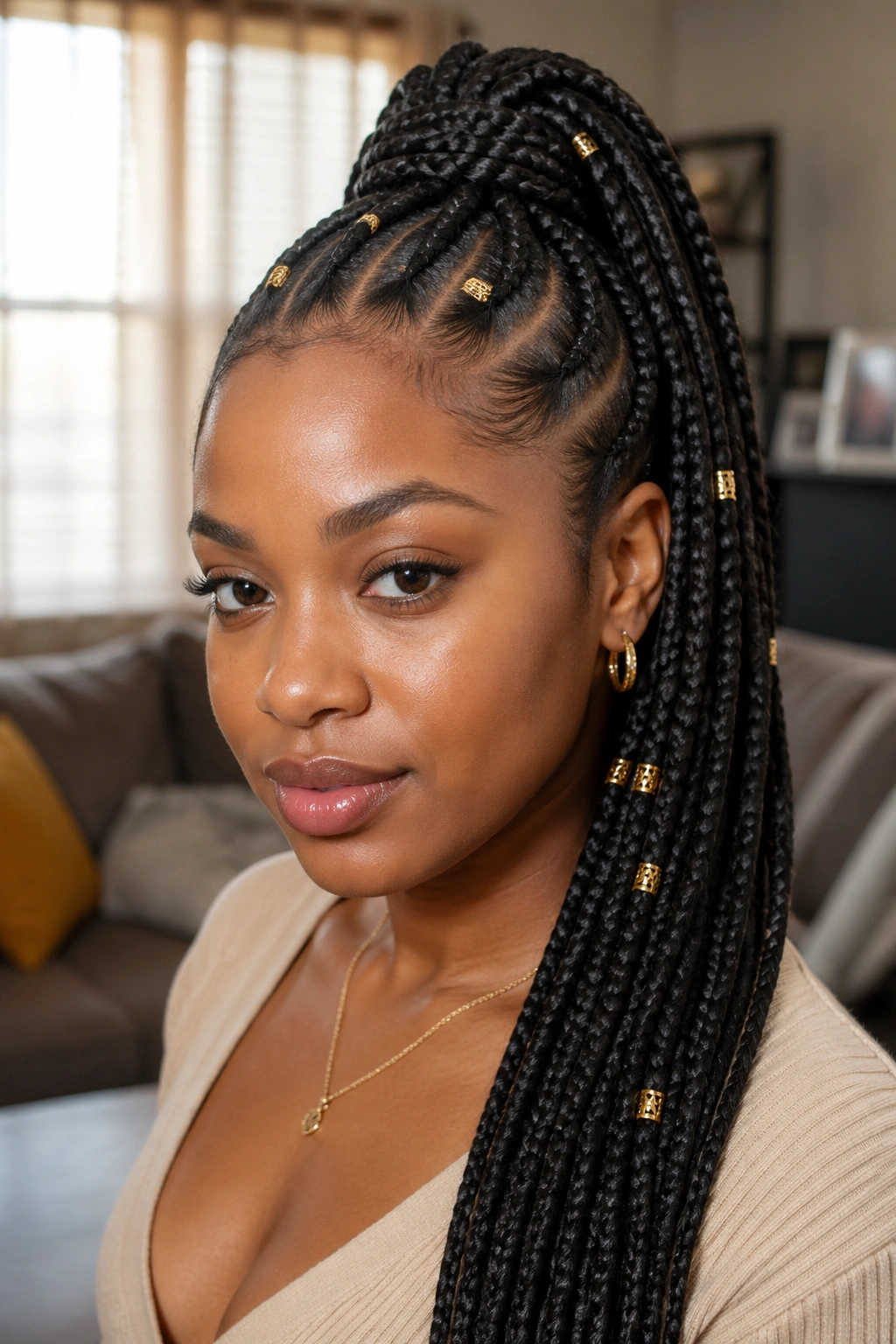
This is the style where the pondo itself is made up of individual box braids rather than loose extension hair. Your natural hair is cornrowed or twisted flat to the scalp, and a cluster of pre-braided box braids — hand-braided separately or purchased as a pre-made ponytail piece — is attached to form the ponytail.
The flexibility here is significant. Box braid ponies can be uniform (all braids the same thickness and length) or mixed (some thicker, some thinner, varying lengths). They can be left plain or accessorized with gold cuffs, thread wraps, or beads at intervals along the braids. They hold their shape for weeks longer than loose extension styles because the braid structure doesn’t require re-smoothing or re-fluffing.
For very long lengths — think waist-to-hip — box braid ponies are actually one of the more comfortable options because the weight is distributed along the length of each braid rather than pulling as one heavy mass. The braids move slightly independently of each other, which reduces the sensation of a single heavy weight dragging at the base.
A common issue with pre-made braid ponytail pieces is that they can look obviously uniform — every braid exactly the same size, exactly the same length. If you want a more organic look, buy the extension hair and hand-braid the ponytail braids yourself before attaching them. Even small variations in braid thickness and end length read as much more natural.
4. Twist Pondo With Marley Hair
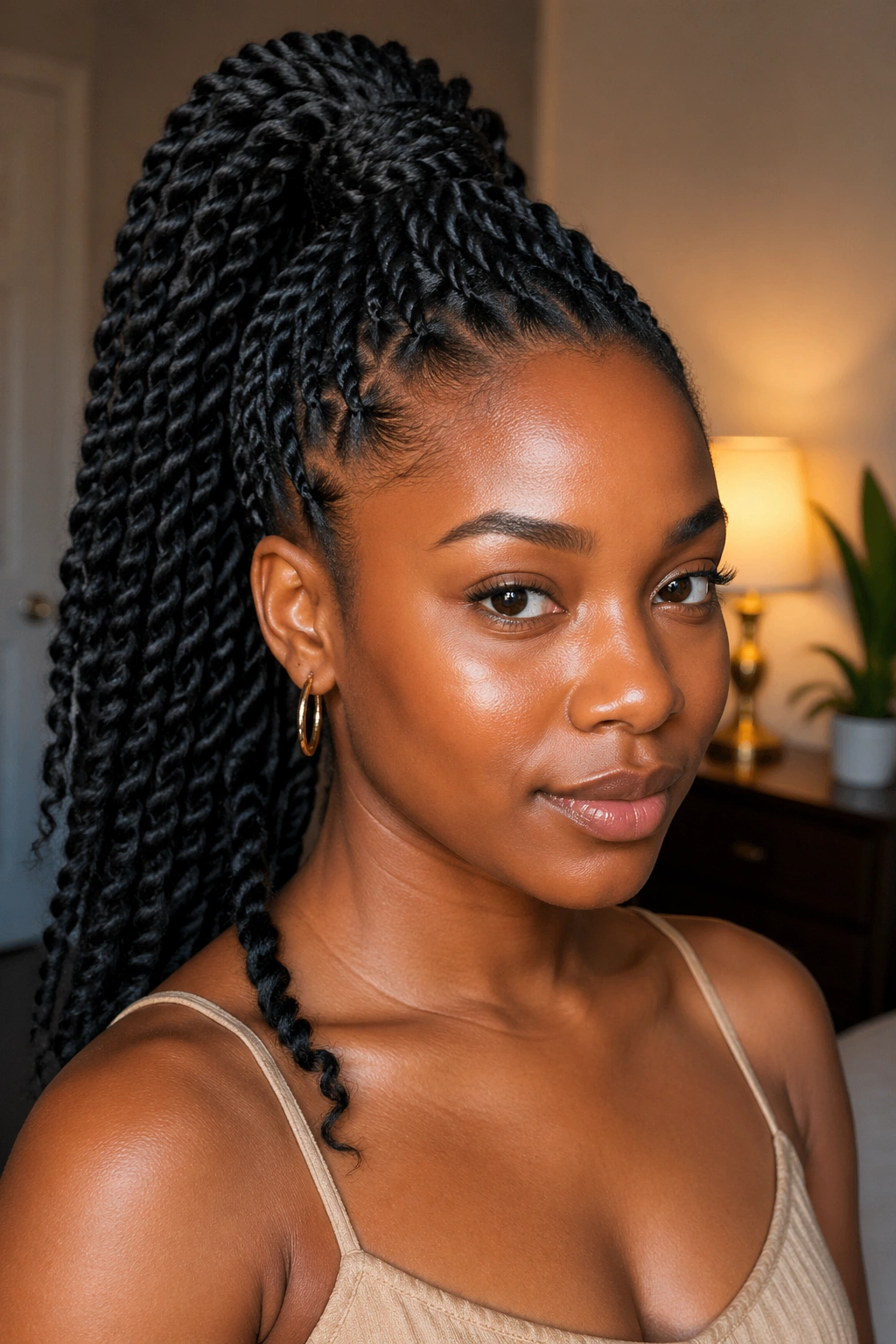
Marley hair — that textured, coiled, matte synthetic fiber that mimics Afro-Caribbean natural hair — makes a pondo that looks genuinely organic. The twist version involves either pre-twisted extension pieces or hand-twisting sections of Marley hair into two-strand twists before attaching them to the base.
How to Get the Most From It
Two-strand twists done with Marley hair hold their shape without any additional product, which is one of the reasons this style is so low-maintenance once it’s installed. The texture doesn’t need re-smoothing, doesn’t pick up humidity frizz the way synthetic straight hair does, and blends beautifully with 4A to 4C natural hair textures.
For the longest wear — up to four weeks — twist the individual extension pieces tightly and seal the ends by twirling them between your fingers while applying a very small amount of hair mousse. The mousse helps the twist hold at the tip without making the whole extension look stiff or crunchy.
Length options with Marley twists are slightly more limited than with straight hair simply because extremely long Marley hair can develop a loop or curl that reads oddly. Most stylists cap Marley twist ponies at mid-back for the most balanced look. Going longer works but requires consistent end care.
- Use three to four packs of Marley hair for a full, dense pondo
- Twist sections about the thickness of a pencil for balance
- Lightly pull apart each twist after twisting for added volume
- Pin or sew the cluster at the base using a large hair needle
The matte texture is part of the charm — resist the urge to add shine spray, which will make Marley hair look plasticky rather than natural.
5. Passion Twist Pondo
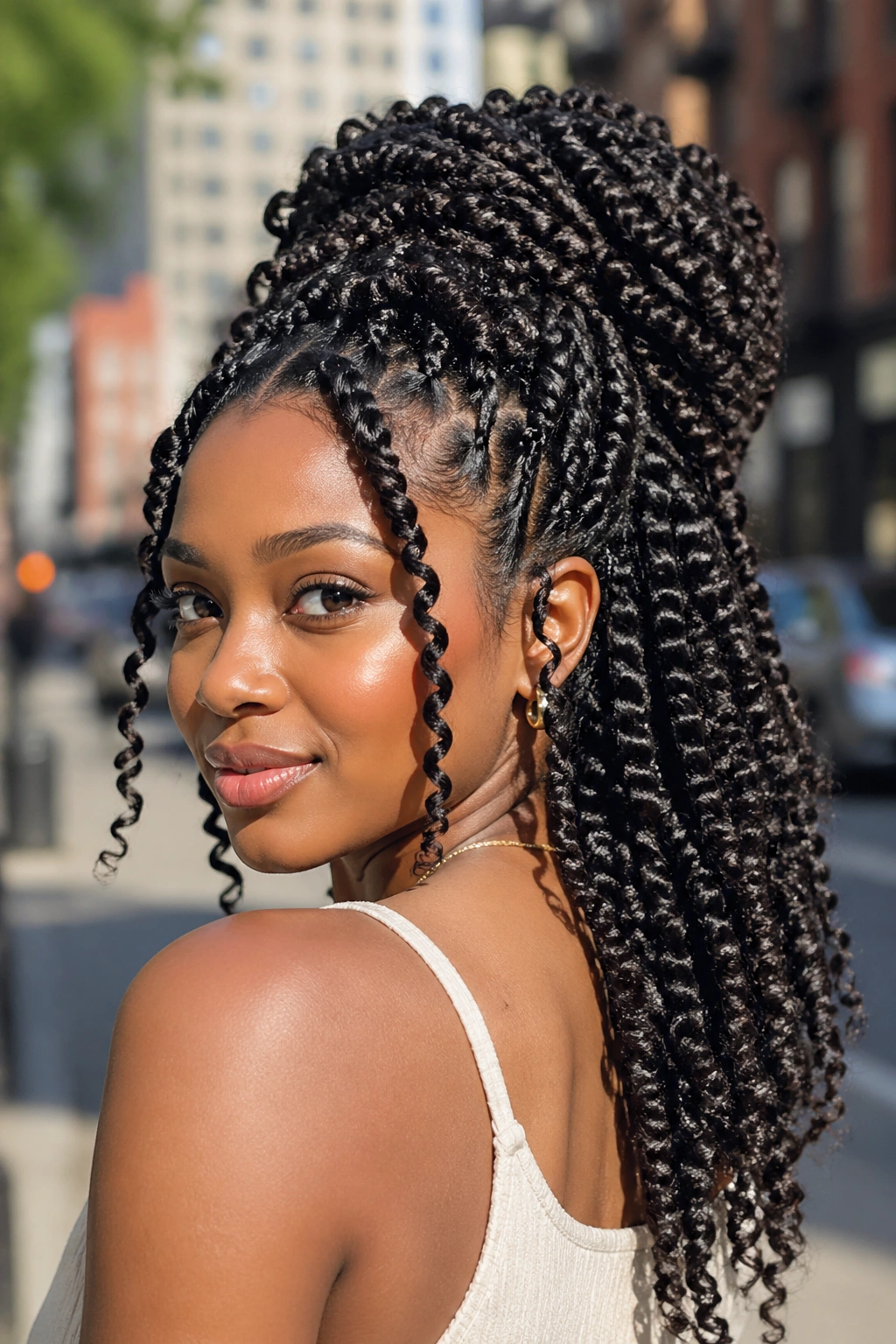
Passion twists occupy an interesting middle ground between box braids and regular twists. They’re made by wrapping a water wave or freetress water wave hair around a loose two-strand twist base, creating a springy, textured coil that’s somewhere between a twist and a tiny braid. In pondo form, they create a style that looks elaborate but behaves simply.
A passion twist pondo is eye-catching precisely because each individual piece has its own coiled personality. When you gather them all into a pondo, the collection of textured spirals creates a silhouette that’s more interesting than flat straight hair and more defined than a blowout. The texture catches light differently throughout the day.
The key technical detail for this style is keeping consistent tension when wrapping. If some passion twists are wrapped tightly and others loosely, the pondo will look uneven when gathered. Practice on a few strands before doing the full set, and work to keep your wrapping tension consistent across every piece.
Longer passion twist ponies do tend to loosen over time as the weight stretches the wraps. A light mist of water and a gentle re-coil of any loose ends every week keeps them looking fresh.
6. Knotless Braided Pondo
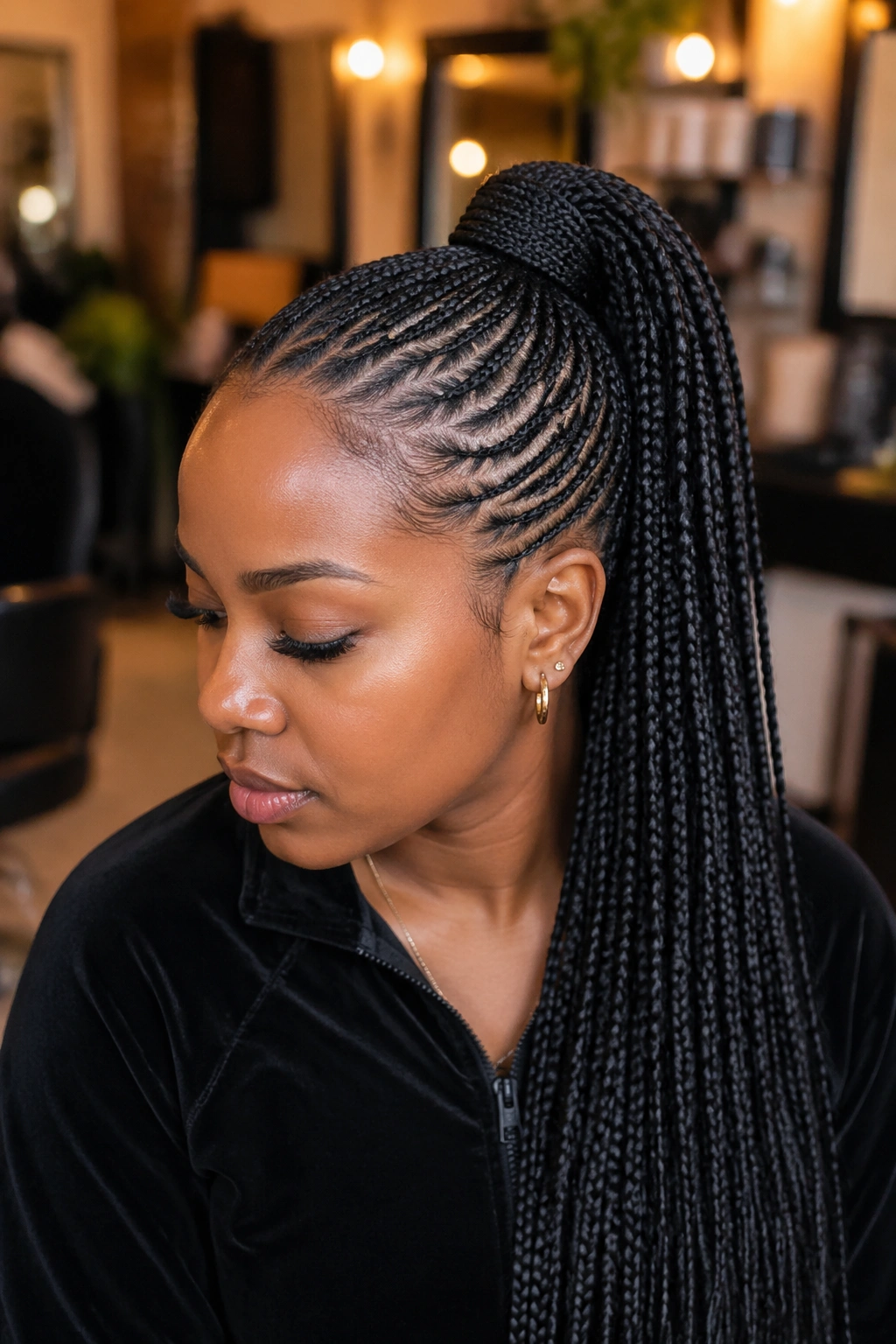
The knotless braid technique — adding extension hair gradually into the braid rather than knotting a bunch at the root — translates beautifully into pondo form. A knotless braided pondo has a much flatter, smoother top section than a standard box braid pondo, and the tension at the base is significantly reduced.
This matters a lot for long, heavy styles. When you’re carrying a pondo that hits mid-thigh, every reduction in tension at the attachment point helps. Knotless attachment distributes the weight more gradually as it enters the braid, rather than concentrating all of it at a single knotted base point.
What Makes It Different
The installation process takes longer than standard braids — budget at least 30% more time with your stylist. But the result holds up better under the weight of long extensions, causes less tension-related scalp pain, and looks cleaner at the attachment zone.
Knotless pondo pieces also lay flatter against the scalp for the first inch or two, which makes the transition between your natural hair and the extensions look particularly seamless. For people with looser curl patterns around the hairline, this style blends better than knotted alternatives.
7. Loc Extension Pondo
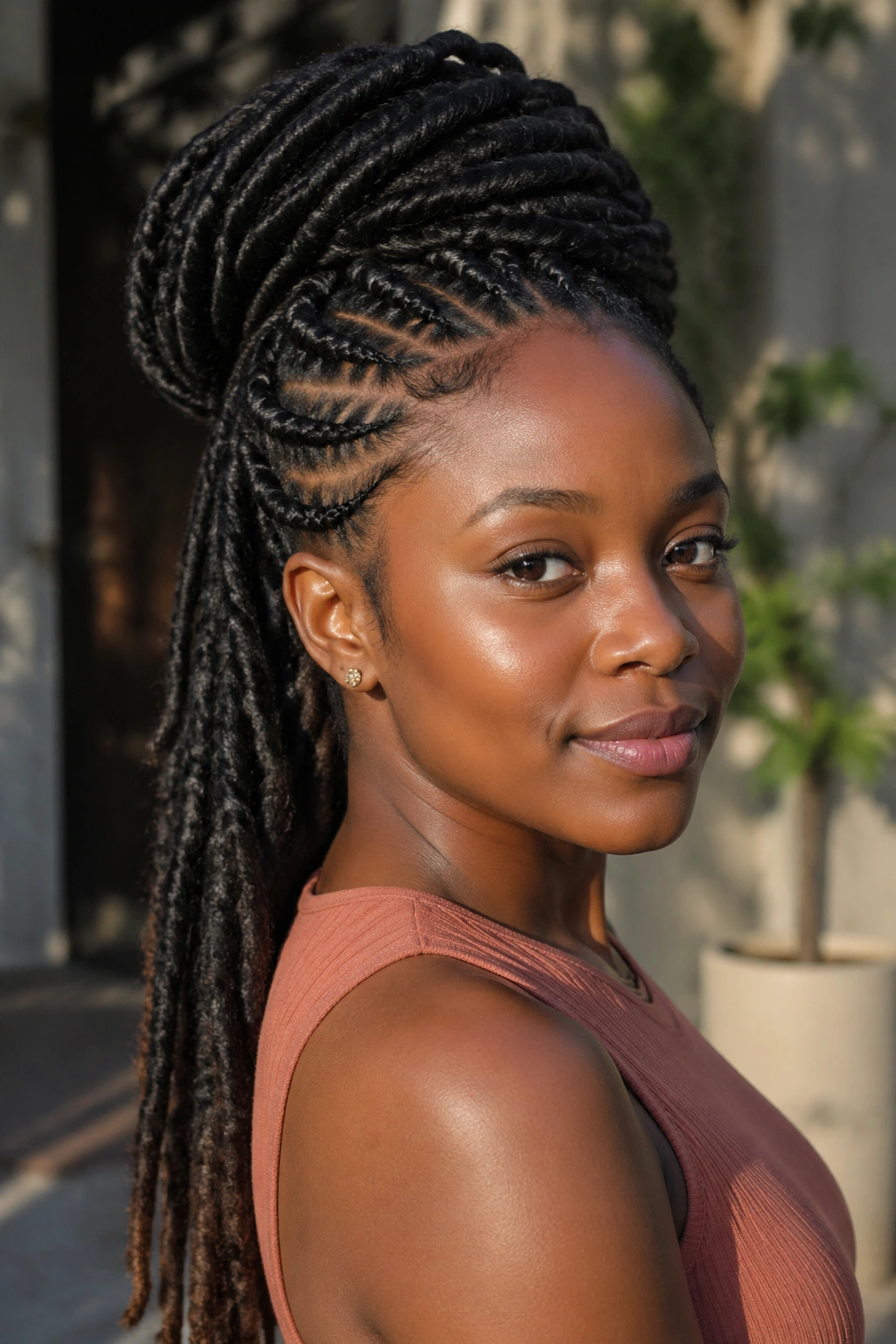
Faux locs in pondo form is a style that doesn’t get enough credit. Pre-made faux loc extensions — the kind with a textured, slightly rough exterior that mimics natural dreadlocks — gathered and attached at the crown create a pondo with serious weight and drama.
The visual impact is substantial. Faux loc ponies have a rougher, more organic texture than any other extension type, and at long lengths, they swing with a kind of gravitational authority that smoother styles don’t have. They’re also one of the heavier styles, so base preparation and scalp health are non-negotiable.
Wrap the base point in extension hair tightly before attaching your loc cluster. The locs themselves should hang freely from the base rather than being pinned or tied at intervals — any additional points of tension can cause kinking or uneven hang.
8. High Bun-to-Pondo Hybrid
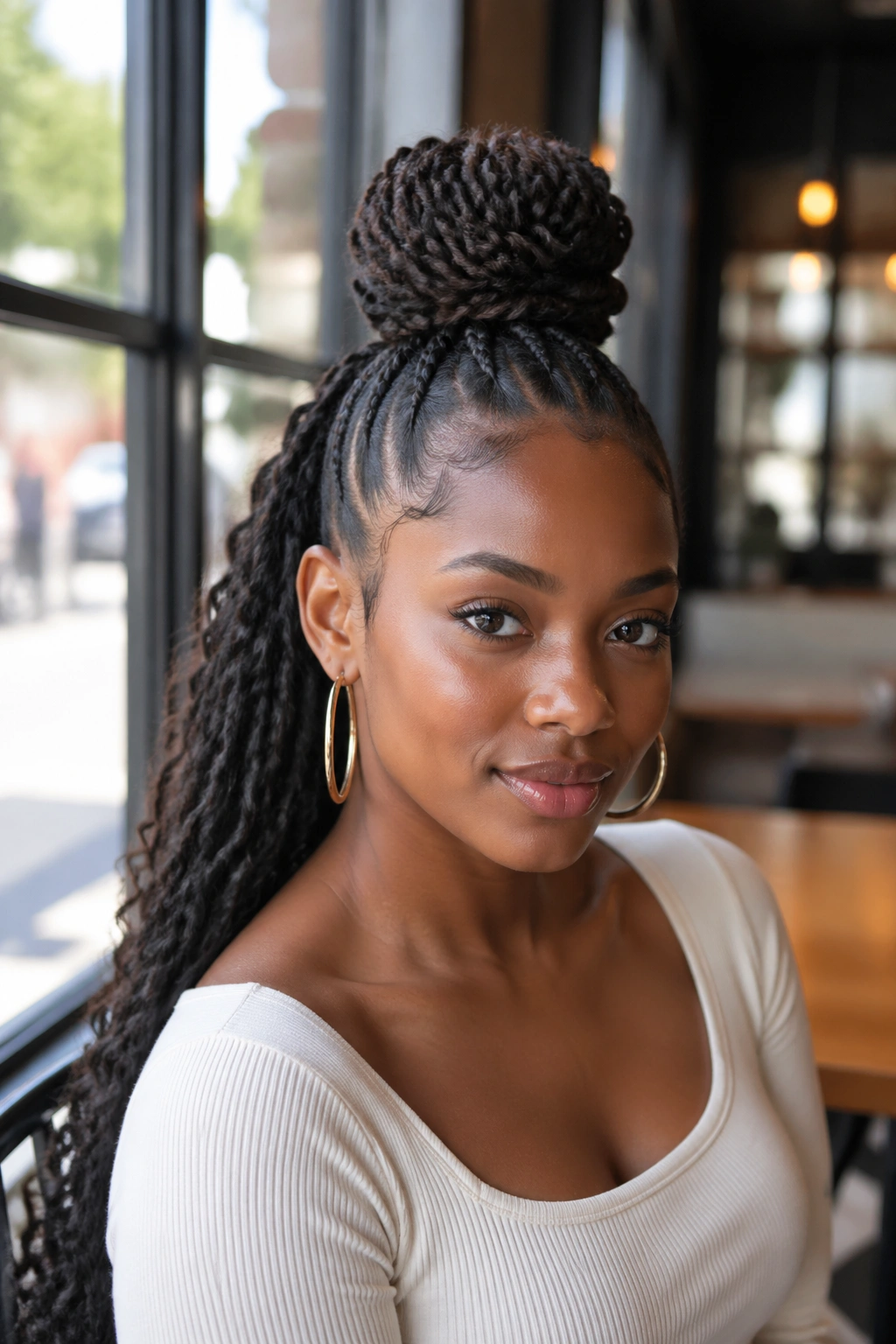
This style starts as a sleek top knot and transitions into a long, flowing pondo — the bun and the tail are one continuous piece, created by attaching a ponytail extension through the center of a bun structure. From the front, you see a neat, polished bun. From behind, the pondo drops dramatically down the back.
It’s one of the more sophisticated pondo silhouettes and photographs beautifully from a three-quarter angle. The dual structure — bun on top, tail behind — creates the impression of an elaborate style without requiring significantly more technical skill than a standard pondo.
The critical step is hiding the attachment point inside the bun. After cornrowing your natural hair, build a small bun shape at the crown using a small donut-shaped hair form, then thread your pondo extension up through the center of the bun. Fold the fabric or base of the extension up and pin it into the bun so it’s completely hidden. The tail hangs from within the bun, appearing to be one continuous structure.
9. Butterfly Locs Pondo
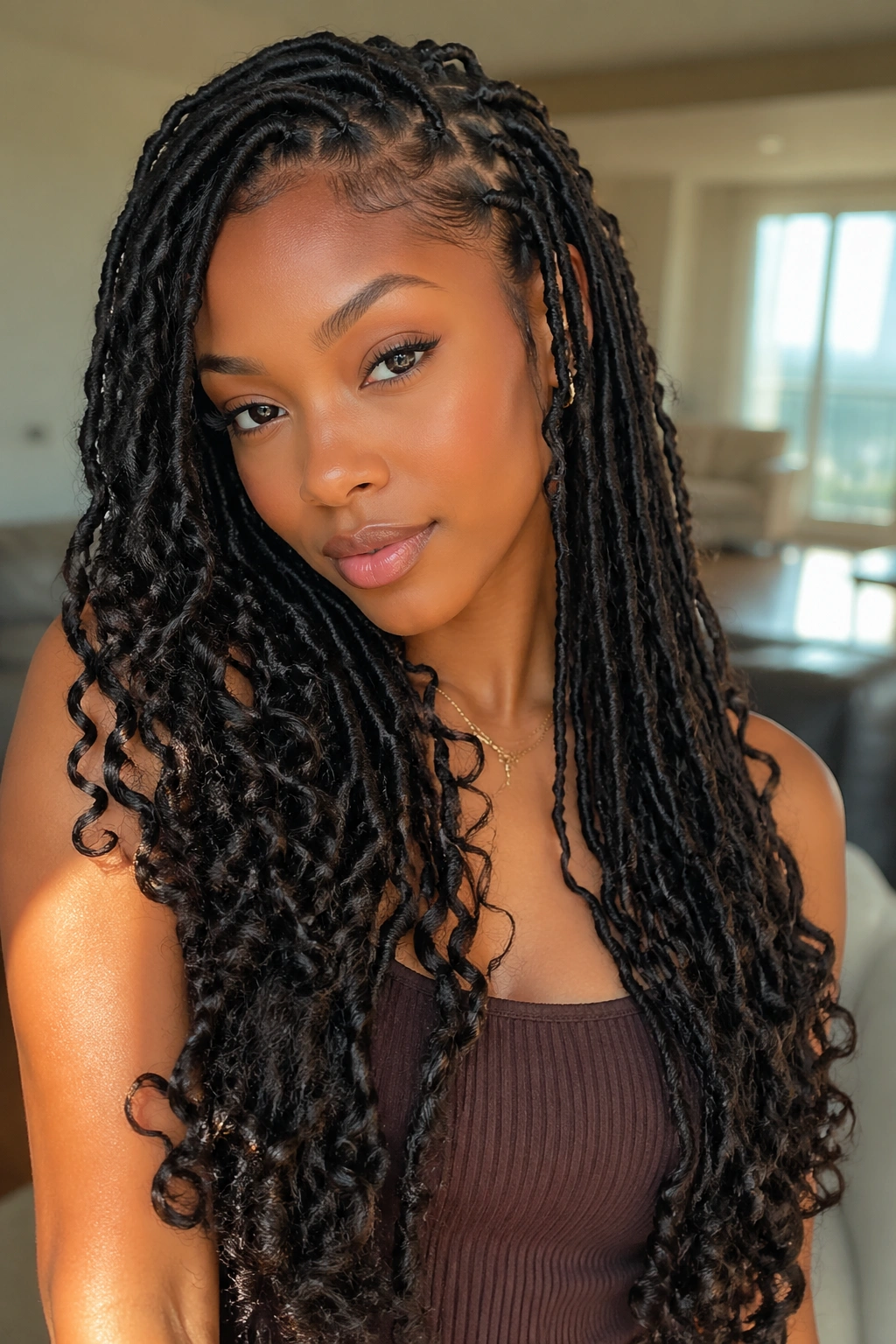
Butterfly locs — made by looping extension hair around a cornrow or twist base to create soft, boho-textured faux locs — translate into a pondo style that’s simultaneously romantic and dramatic. The looped technique creates irregular, frayed-looking texture that’s intentionally imperfect.
Who This Is For
Butterfly loc ponies work best for people who want the length and volume of a pondo but find straight or sleek styles too polished for their aesthetic. The deliberately undone texture reads as effortful-but-cool rather than painstakingly neat. It’s a style that’s comfortable in both casual and dressed-up contexts.
The texture does require a bit more upkeep than smoother styles. After sleeping, the outer loops of the butterfly locs can shift and flatten slightly. A quick finger-massage through the pondo — gently separating and re-puffing any flattened sections — restores volume in under two minutes.
10. Senegalese Twist Pondo
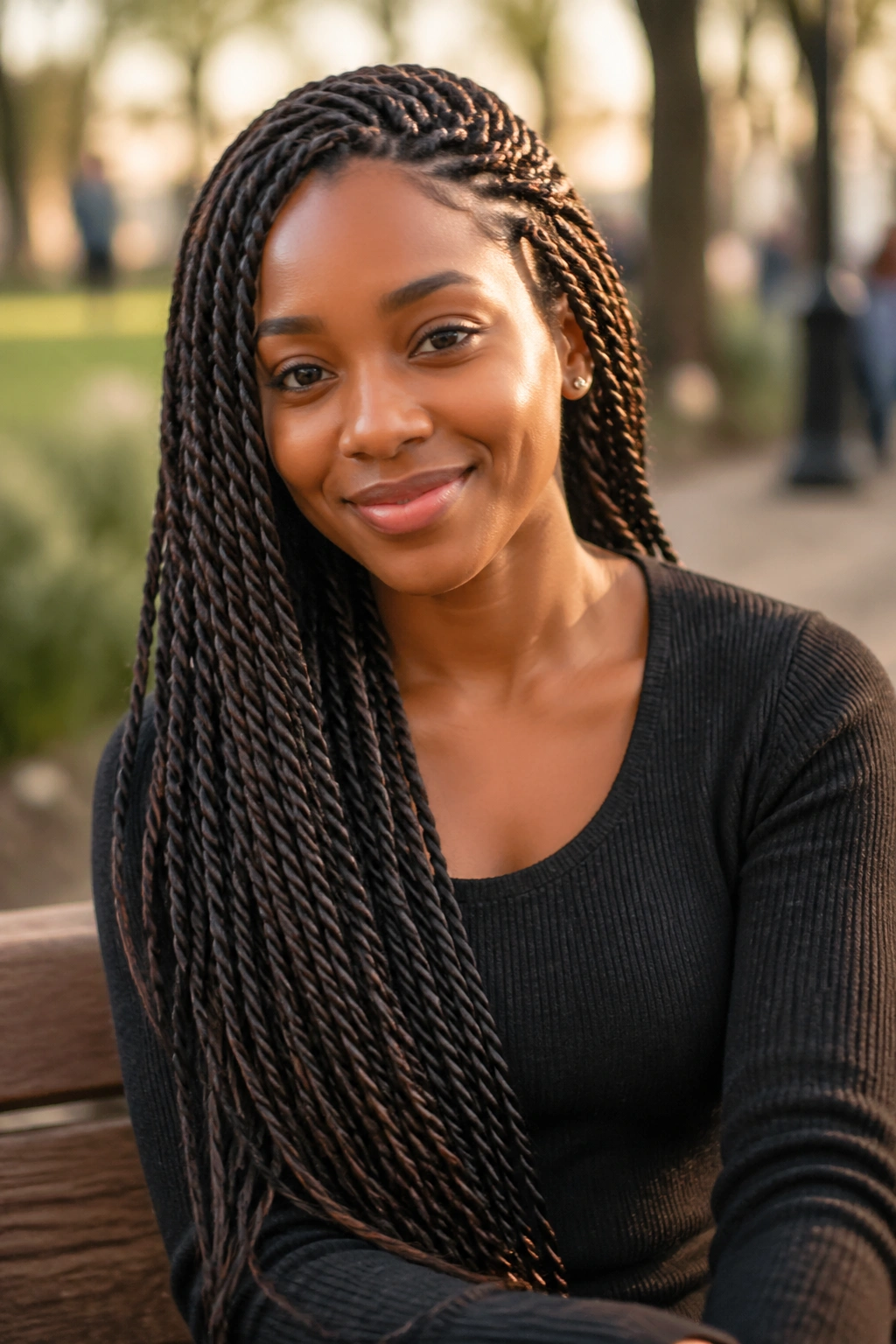
Senegalese twists — that silky, two-strand style made with straight or wavy extension hair twisted tightly in flat, even ropes — make a pondo that’s sleek enough for formal settings but textured enough to carry personality. The tight twist structure gives each piece a natural corded look that sits differently than a box braid or a loose extension.
At long lengths, Senegalese twist ponies have an incredible swing. The weight of each tightly twisted extension creates a pendulum effect as you move, and because each twist is relatively slim, the overall mass of the pondo can be quite substantial without the style looking heavy or clumped.
The color play possible with Senegalese twists is particularly interesting in pondo form. Ombre coloring — darker at the root, lighter at the ends — is amplified by the pondo structure, where the lighter ends fan out at the bottom and the darker roots converge at the base. Two-tone or three-tone color gradients look especially striking in long styles.
11. Jumbo Cornrow Pondo
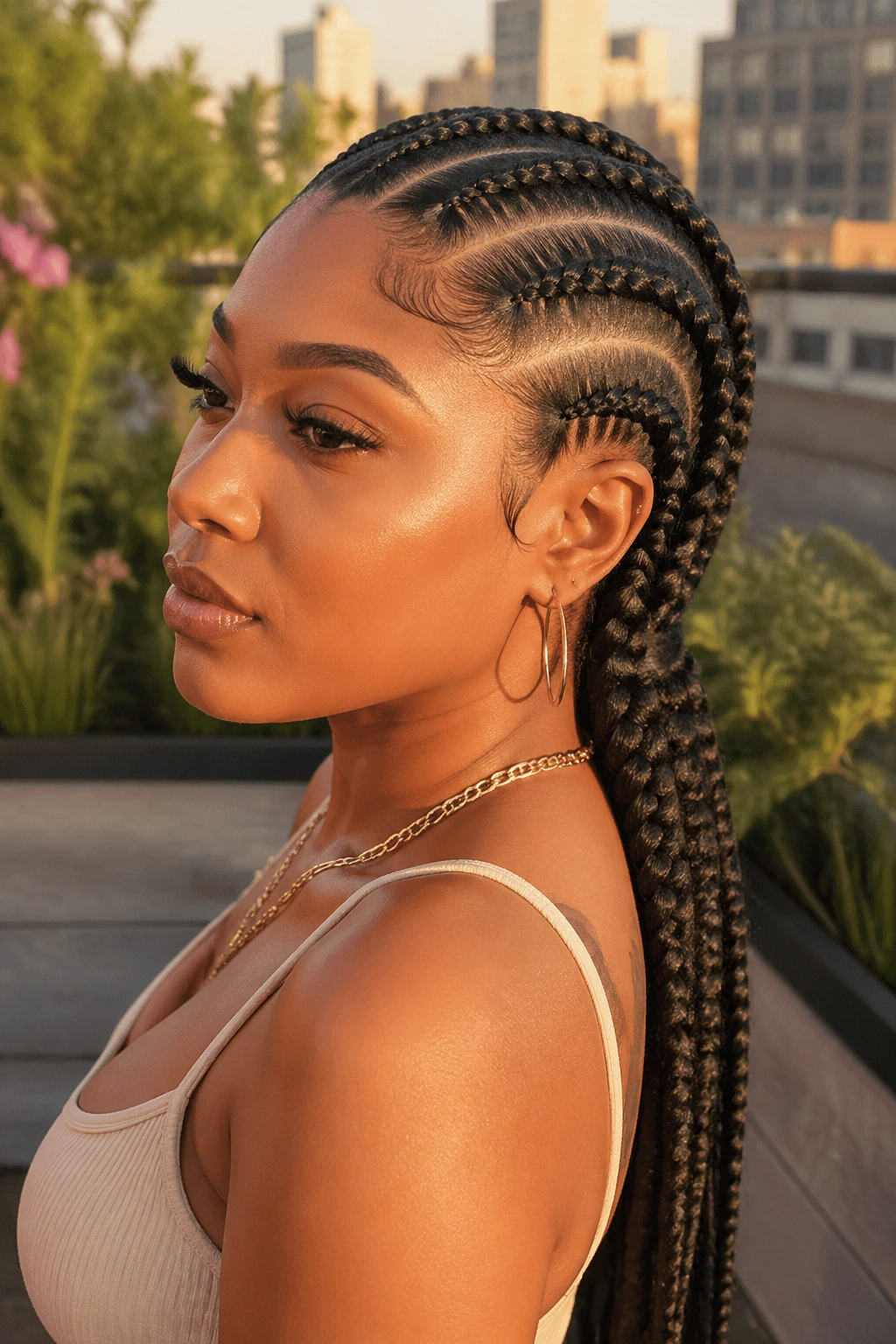
Instead of individual braids or twists, this pondo uses large, flat cornrows as the pondo itself — essentially, your scalp braiding pattern continues downward off the scalp and becomes the pondo. The result is a sleek, graphic, bold style where the braiding structure is fully visible from root to tip.
This requires braiding skill that goes beyond basic box braids. The cornrow pattern needs to be neat, even, and pulled tight enough to hold the weight of the extension length. Very long jumbo cornrow ponies — waist length or beyond — need extra reinforcement at the point where the braids transition from on-scalp to off-scalp, because that’s where the most stress occurs.
The graphic quality of this style is its defining characteristic. Wide, flat cornrow rows converging at a central point and then dropping as one sculptural structure is genuinely striking. It works especially well with minimal accessories — let the braid work speak for itself.
12. Wavy Kinky Texture Pondo
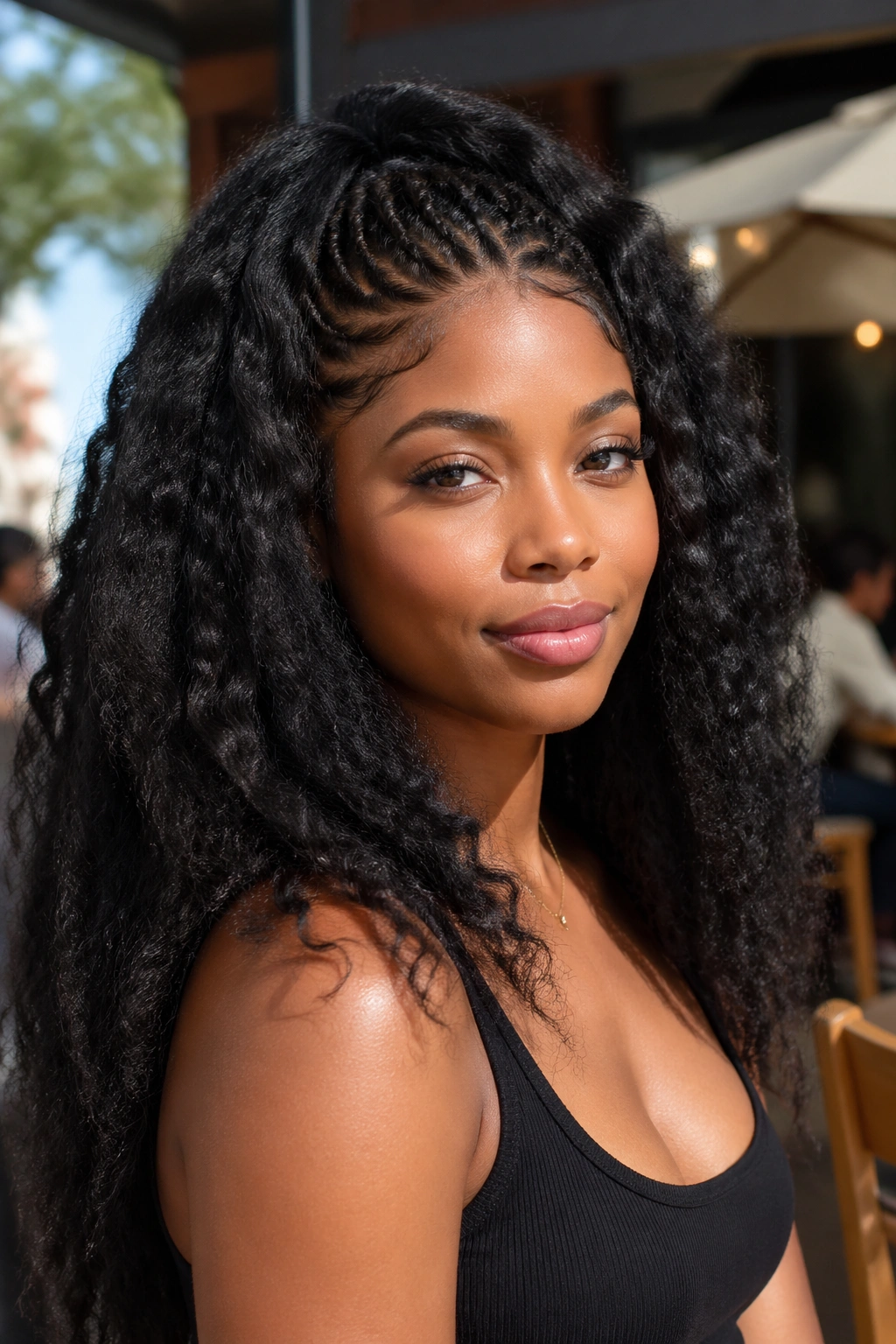
Kinky or wavy extension hair — that crimped, zig-zag or wavy synthetic fiber with lots of volume — creates a pondo with a full, airy texture that’s completely different from anything you’d get with straight hair. The irregular wave pattern gives the pondo a wild, free quality that reads more like stretched natural hair than any other extension type.
For type 4 natural hair wearers, this style blends into their own hair texture at the hairline better than any other option. The visual match between kinky extension texture and natural 4C hair means there’s no jarring difference between the natural edges and the extension body.
Volume is the word here. A kinky texture pondo uses significantly more extension hair than a straight pondo to achieve the same visible length, because the texture takes up more visual space. Budget for at least one extra pack of extension hair compared to what you’d use for a straight pondo of equivalent length.
13. Accessorized Bead Pondo
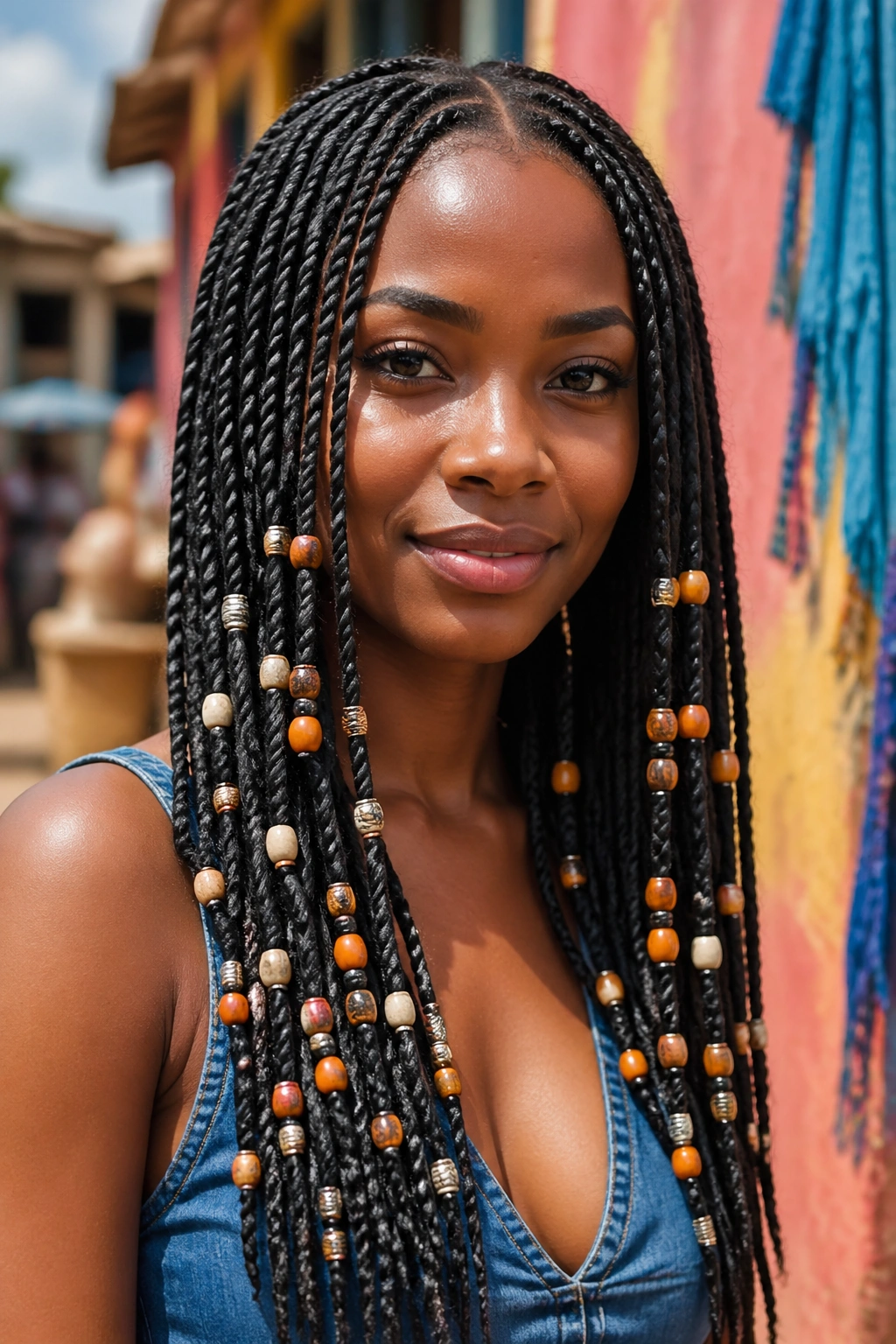
This is less about a specific texture or technique and more about decoration as the defining feature. The pondo itself can be braids, twists, or even straight extensions — but it’s loaded with wooden beads, metallic rings, or shell beads at intervals throughout the length, turning the pondo into a moving, textural sculpture.
The Catch
Threading beads onto individual braids or twists in a long pondo is a project. For a waist-length style with dozens of beads, plan on one to two hours just for the decoration process. But the payoff in visual richness and sound — beads clicking softly as you move — is something no other style provides.
Use beads with holes large enough to slide over the braid without forcing. Forcing beads that are too small creates unnecessary friction and can damage the braid structure. Wooden beads are the lightest choice; metal beads add weight but have a more polished look. Remove beads before washing or before the style comes down to avoid getting them stuck on wet, expanded hair.
14. Crochet Extension Pondo
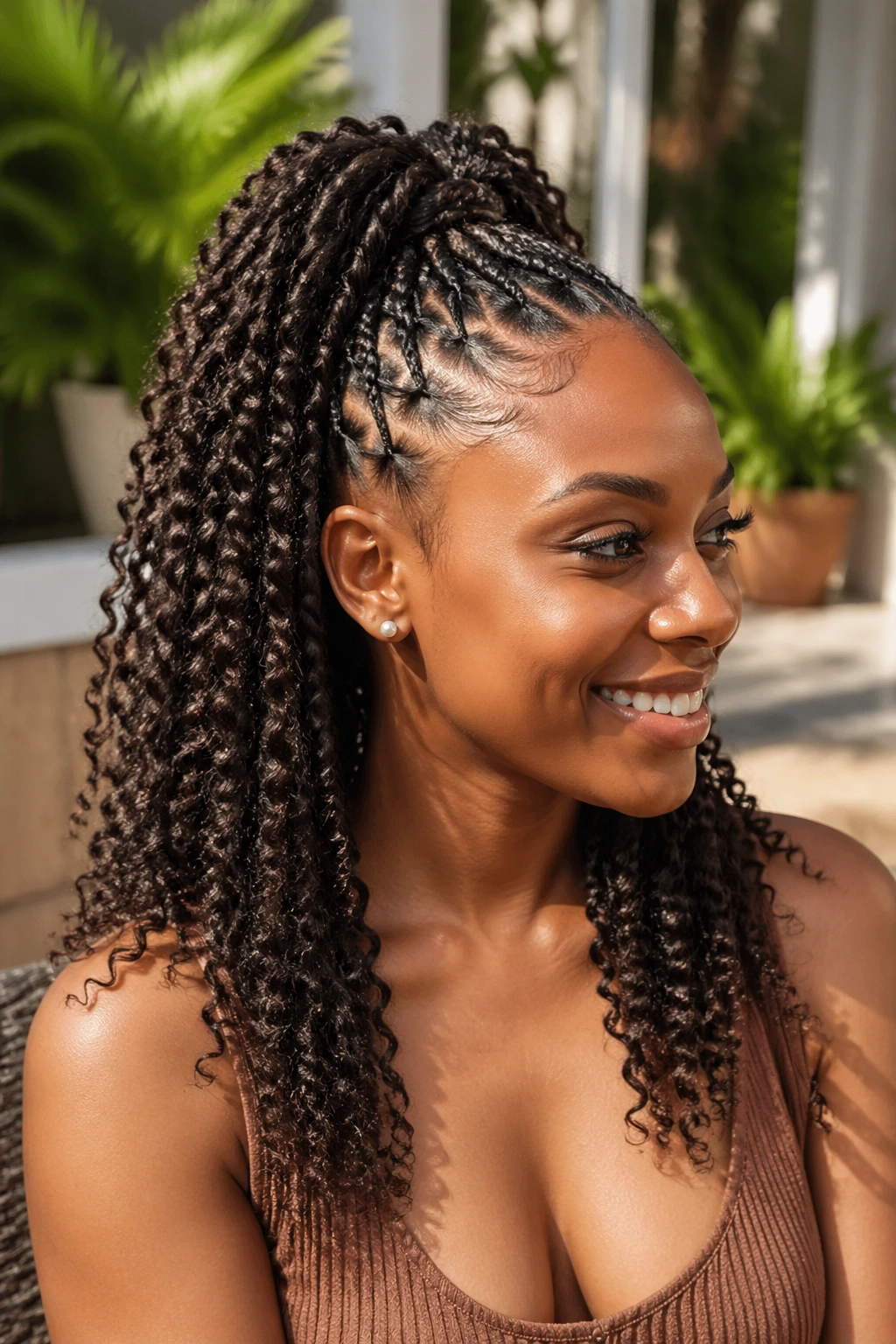
Crochet braids as a pondo style means using the crochet method — looping extension hair through cornrows using a small latch hook — to create the body of the pondo rather than a full head of crochet braids. The crochet texture options are massive: you can use pre-looped Afro kinky, wavy, straight, or twist extensions to create any look you want in the pondo structure.
The installation advantage is real. Crochet attachment is faster than hand-sewing individual extension bundles, and the result is often more even. Because the loop method distributes hair from multiple points along the cornrow rather than all at one central anchor point, the weight is more evenly spread.
Long crochet ponies do loosen faster than hand-sewn styles because the loop attachment can slip slightly over time. Check your anchor points weekly and tighten any loose loops before they cause the style to look disheveled.
15. Half-Up Half-Down Pondo
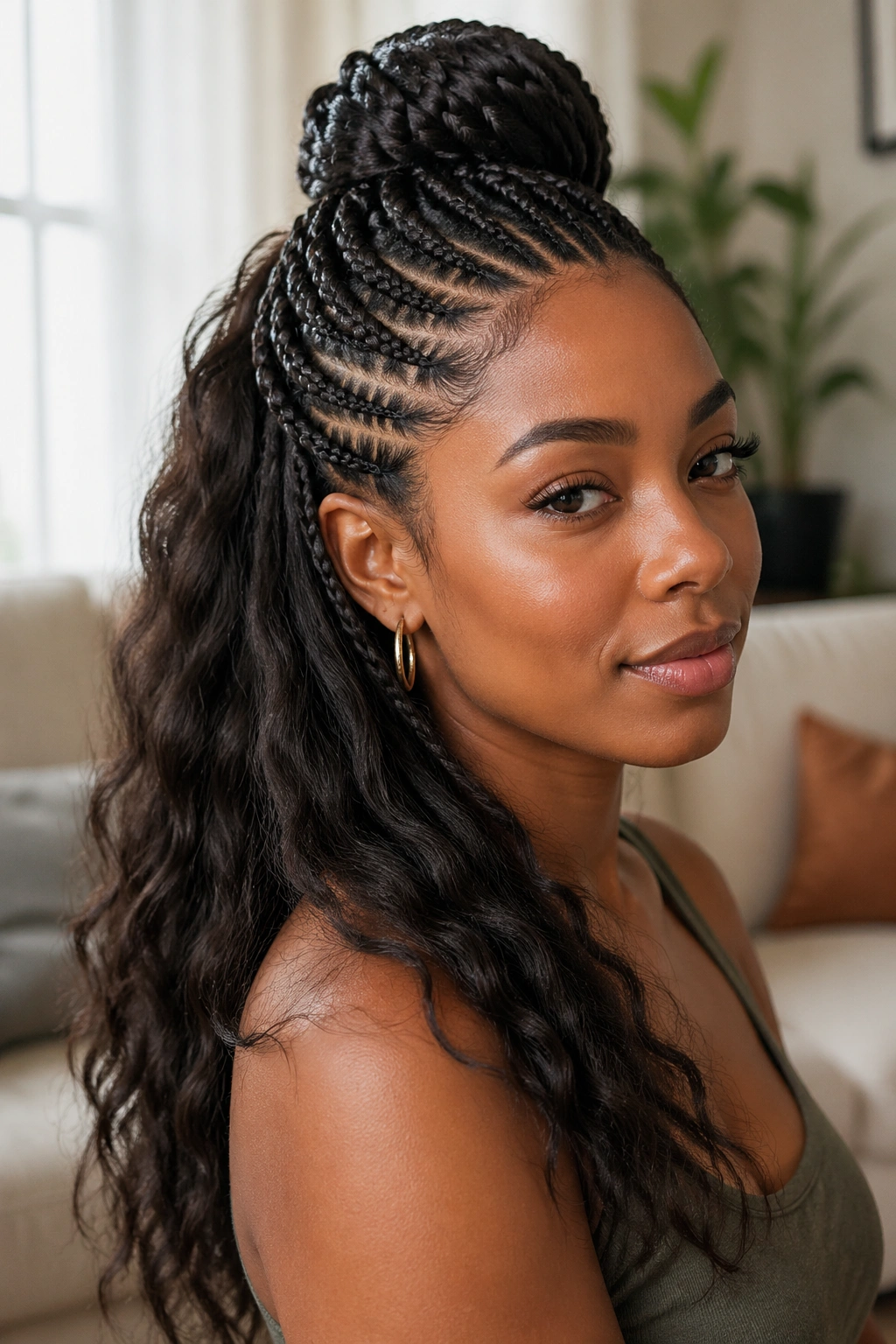
The half-up half-down pondo takes the top half of the hair — extensions included — and gathers them into the pondo, while the bottom half of the extension hair is left loose and falls as a second layer behind it. The result is a layered, dimensional silhouette that shows two textures simultaneously.
This works particularly well when the loose bottom section has a different texture than the gathered top section. Straight extensions gathered at the top with a wavy or curly extension layer hanging loose underneath creates visual layering that a single-texture pondo can’t achieve.
The technical complexity here lies in blending the gathered and loose sections seamlessly. The loose layer needs to be laid flat against your back and neck so it doesn’t bunch at the nape, and the pondo needs to be positioned high enough that the loose section beneath it has room to fall naturally.
16. Thread-Wrapped Pondo
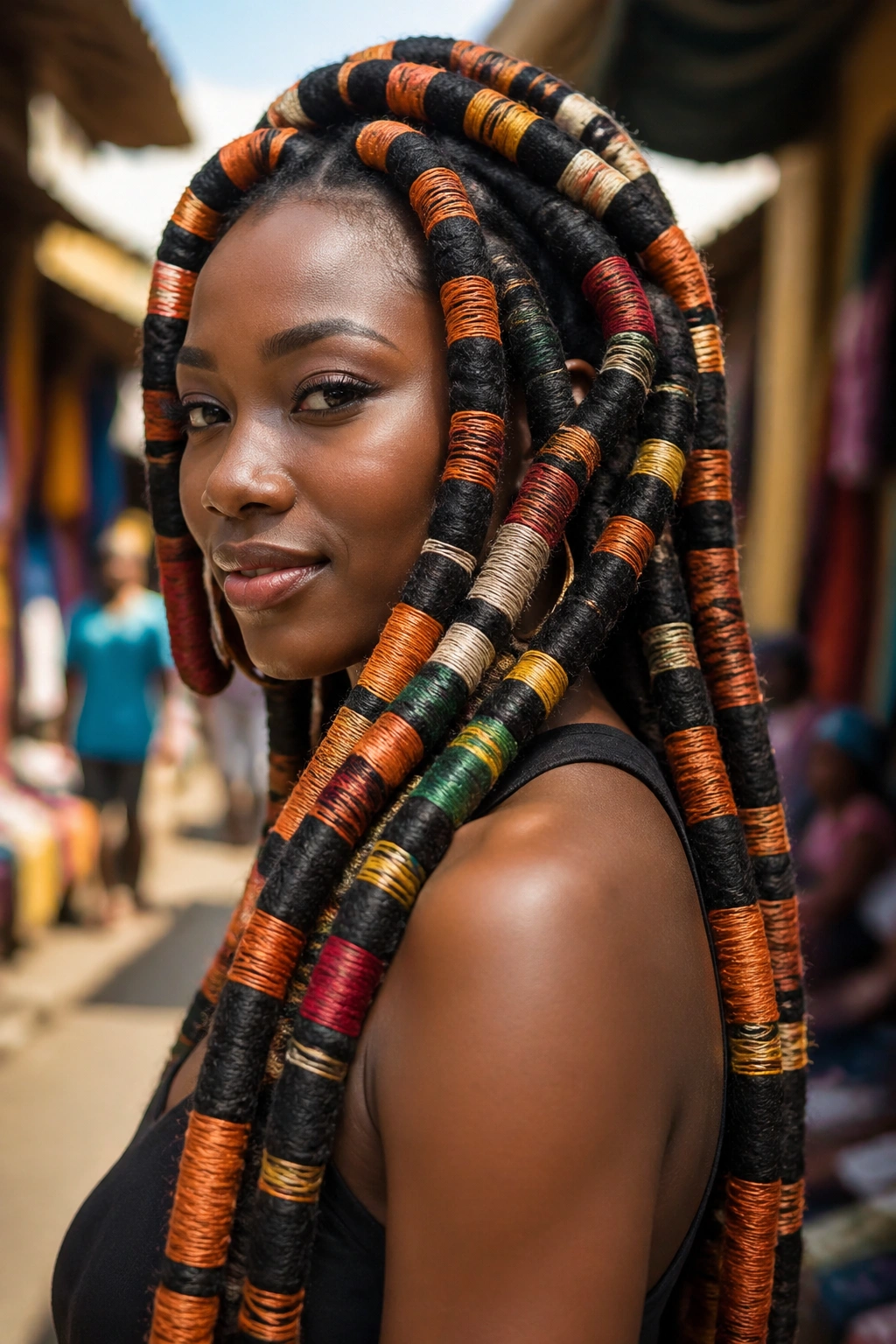
Thread wrapping — using colorful thread or yarn to wrap sections of the pondo in tight, colorful spirals — transforms a basic pondo into something visually complex. Each braid or section of the pondo gets portions of it wrapped in thread, creating a pattern of color and texture throughout the length.
This technique has deep roots in African hair art, particularly in West and East African cultures where thread wrapping of natural hair has been practiced for generations. Using it on a long pondo adds cultural resonance alongside the visual interest.
The wrap process is meditative and slow. For a fully threaded long pondo — with thread at regular intervals throughout a waist-length style — expect a four to six hour process if you’re doing it yourself. Many women do partial wrapping, just the top third of the pondo or every other braid, to get the visual effect without the full time investment.
17. Curly Afro Pondo
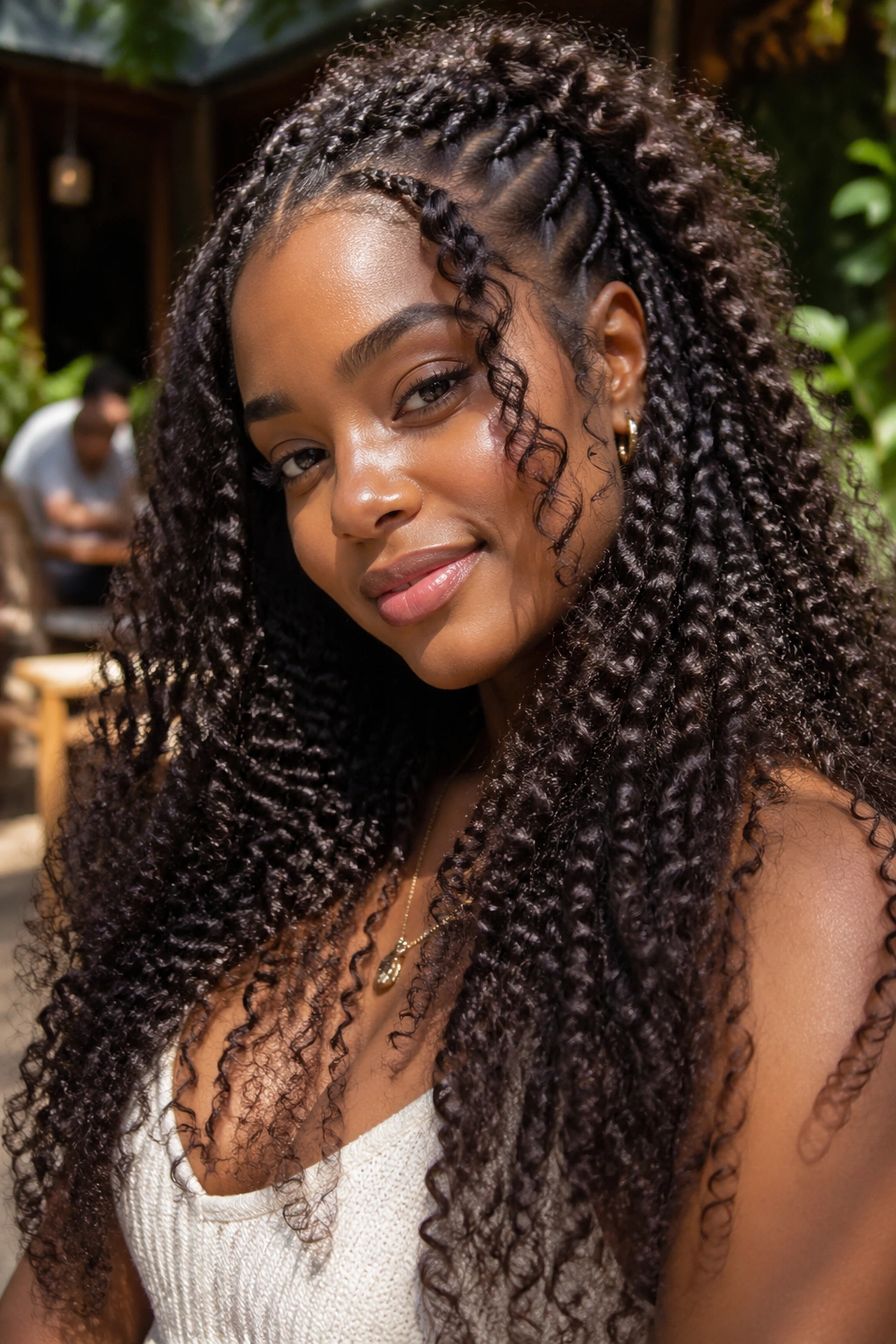
Curly extension hair — specifically the bouncy, defined-curl extensions designed to mimic natural Afro-textured coils — creates a pondo with volume and life that straight or blowout styles can’t replicate. The individual curls spring and bounce as you move, giving the pondo an energy that’s entirely its own.
At long lengths, curly extension ponies are simultaneously one of the most visually dramatic and most comfortable options. The spring in each curl means the extensions don’t feel as physically heavy as their actual weight would suggest — the bounciness cushions the pull at the base.
What to Watch For
Curly extension hair does tend to tangle over time. At long lengths, the individual curls can catch on each other, especially at the ends, and form knots that are difficult to separate without causing damage to the extensions. Applying a light leave-in conditioner to the ends every few days and gently finger-detangling from bottom to top keeps the curls separate and wearable.
18. Color-Blocked Pondo
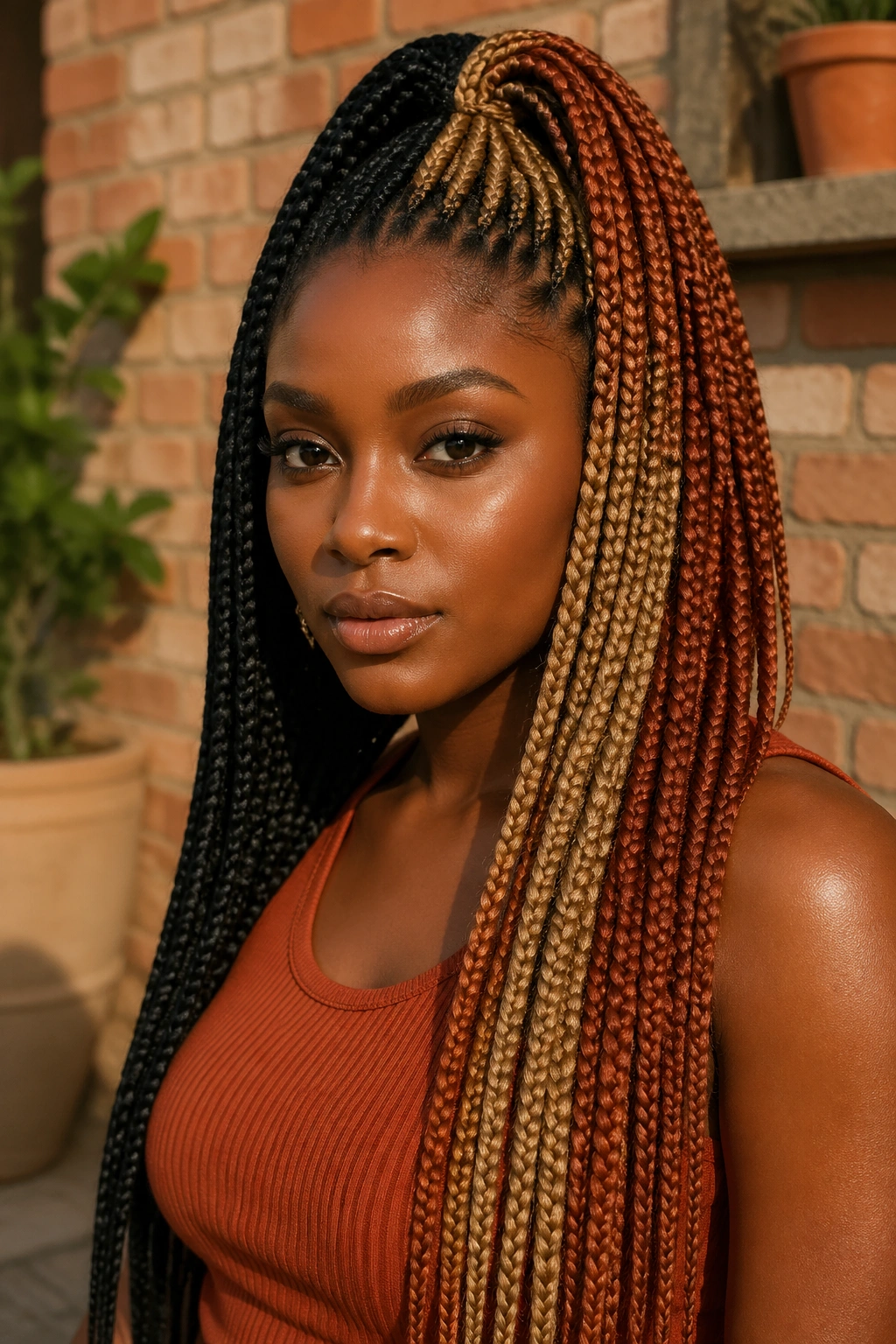
Color blocking in a pondo means deliberately using multiple, distinctly different colors in different sections of the style rather than blending them into an ombre. Half the pondo might be jet black, the other half white. Or three distinct sections — caramel, auburn, dark brown — each occupying their own space within the pondo.
The visual impact of color blocking is graphic and intentional. It reads as a style choice rather than an accident, which means the sections need to be clearly defined. Mixing colors randomly within a single pondo creates a muddy, unclear look; true color blocking requires committing to the geometry of where each color lives.
Sectioning the cornrow base by color zone before installing is the cleanest approach. Install the black section over one set of cornrows, the contrasting color over another, so the color division starts at the base and runs cleanly through the full length.
19. Low Pondo at the Nape
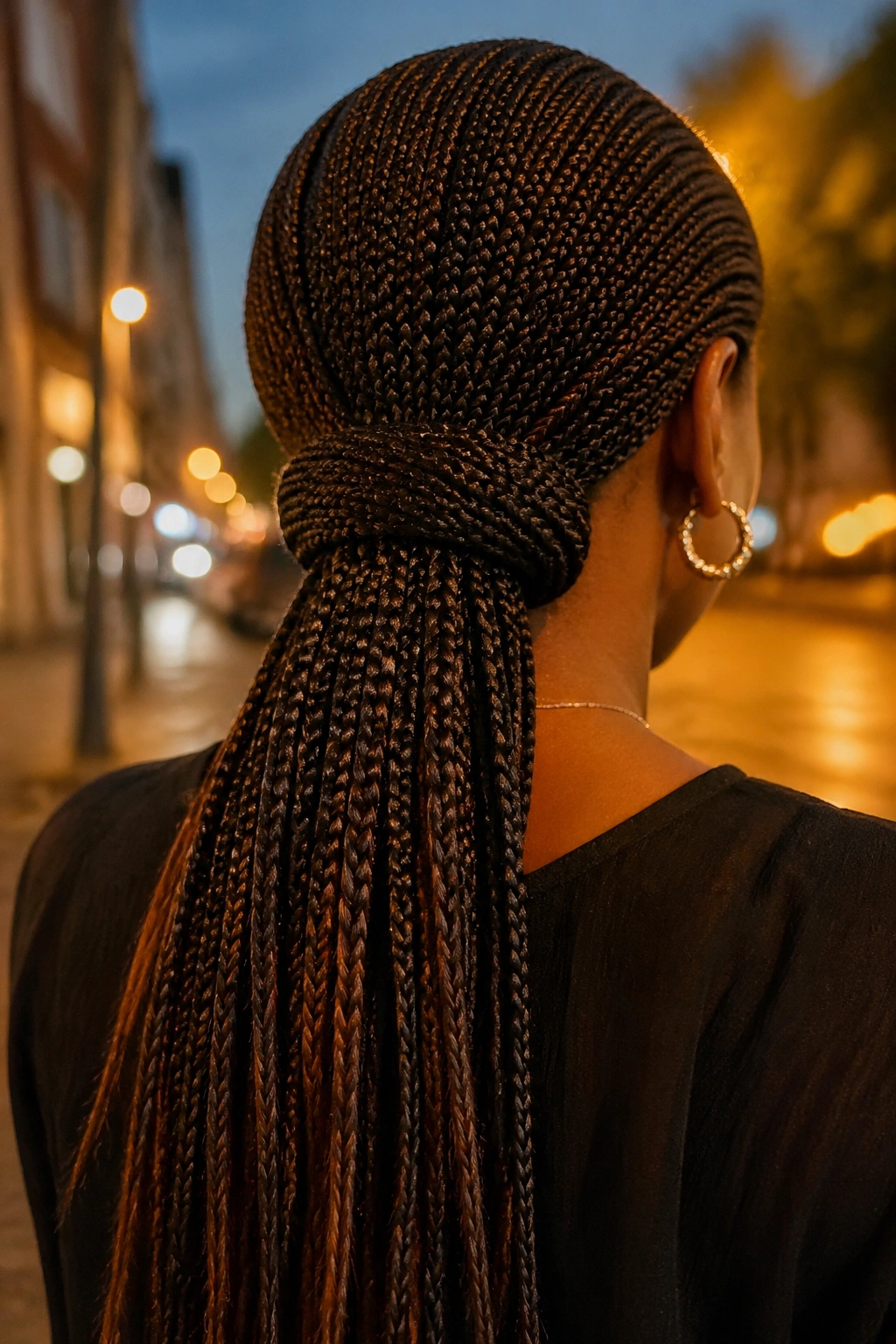
Most pondo styles position the base at the top of the head or the mid-crown. The low nape pondo flips this — the base sits at the nape, and the extensions fall from the back of the neck rather than the top of the head. The change in positioning completely transforms the silhouette.
A low nape pondo sits closer to your back rather than bouncing behind your head, which makes it a more comfortable choice for all-day wear. The weight distribution is different — instead of pulling slightly backward at the crown, the pull is downward at the nape, which most people find less fatiguing over a long day.
The style reads slightly more mature and architectural than a high pondo. It works exceptionally well for professional settings or evening events where a high bouncy pondo might feel too playful. The length drapes rather than swings.
20. Braided Crown Pondo
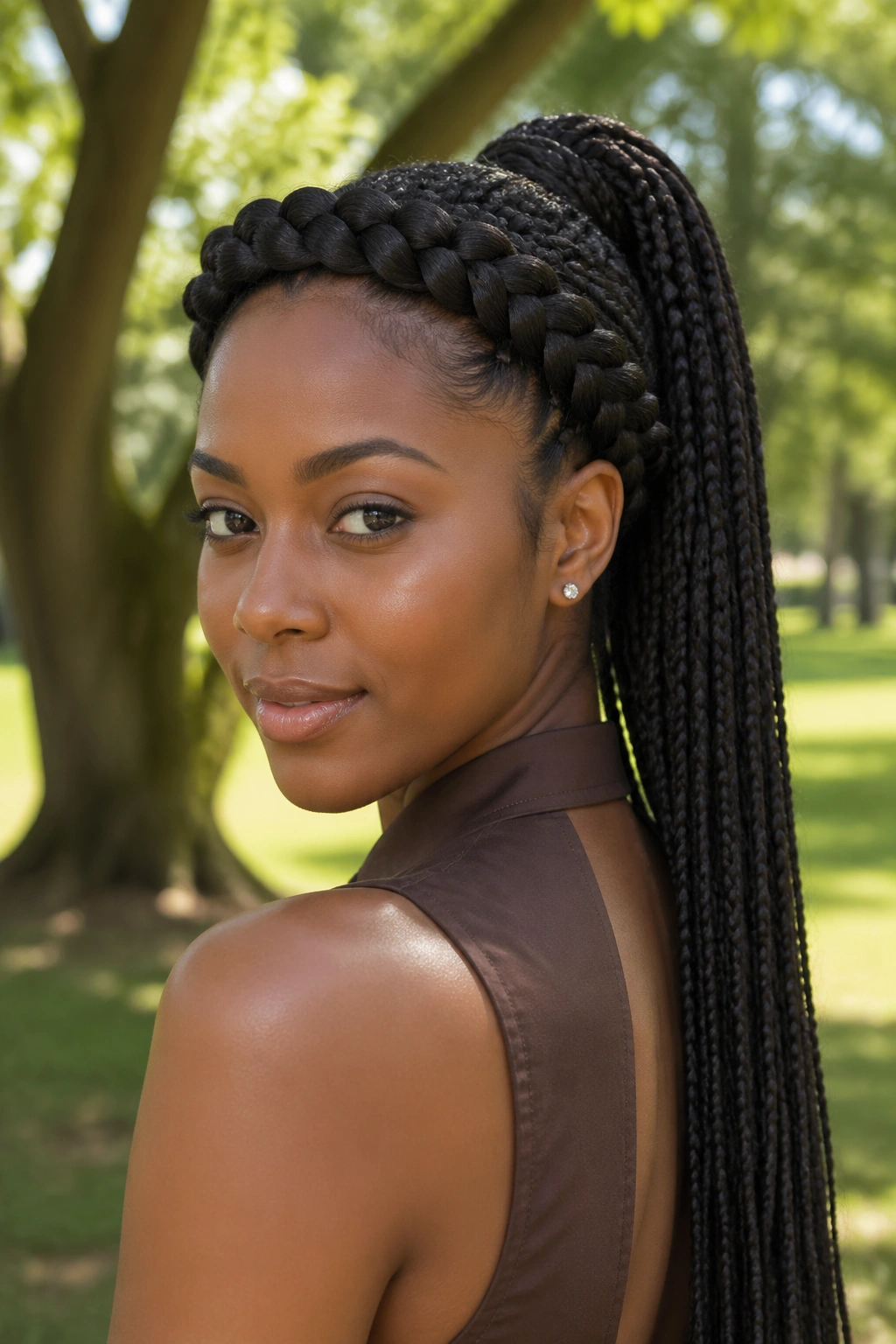
The braided crown pondo combines two styles: a crown braid — flat braids running along the perimeter of the head — with a long pondo extending from the back. The crown braid frames the face and adds complexity to the top section, while the pondo provides the length and drama from behind.
This style requires the most technical skill of any on this list. The crown braid needs to be flat and neat, the cornrow base under the pondo needs to be set correctly, and the two sections need to meet cleanly at the back without a visible gap or bump where one style ends and the other begins.
For people with longer natural hair who are adding length extensions only for the pondo portion — not the crown braids — this style makes particularly elegant use of what’s already there.
21. Feathered Layered Pondo
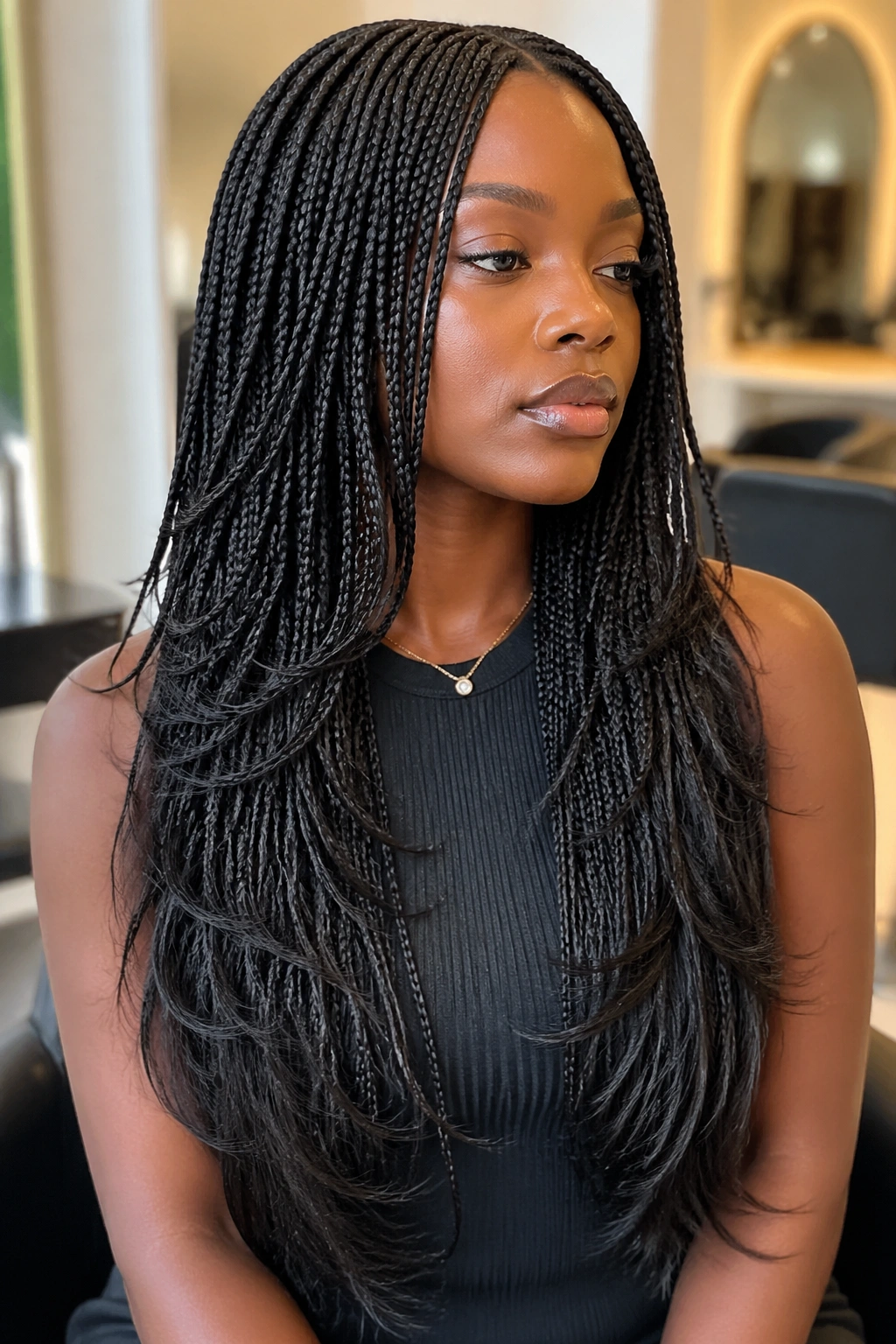
Feathering the ends of a pondo — cutting or trimming the extension hair so it tapers from longer center layers to shorter outer layers — creates a shape that moves differently than a blunt-ended style. The tapered ends lift and float as you move, creating a softer, more organic silhouette.
Most pondo extensions come pre-cut in a blunt line. Creating the feathered effect requires trimming the outer extensions shorter than the center pieces after installation, using sharp hair scissors at a slight angle. Work in small sections, cutting less than you think you need to — you can always take more off, not put it back.
The feathered pondo works especially well with straight or slightly wavy extensions. Kinky or tightly coiled textures don’t show feathering as clearly because the texture itself creates volume at the ends naturally.
22. Ombre Color Pondo
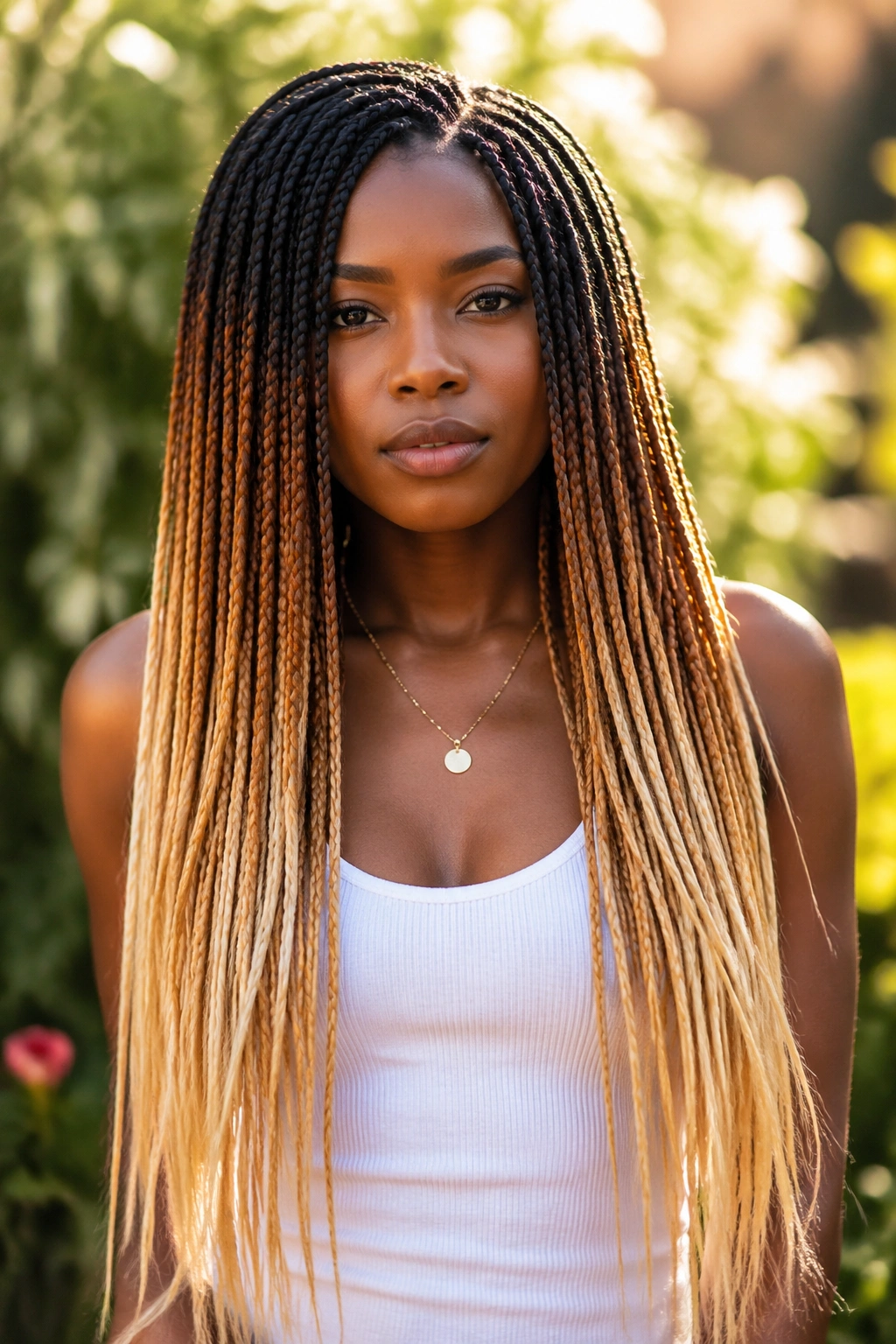
Unlike the color-blocked approach, ombre blends from dark at the base to light at the ends — or vice versa — in a smooth gradient. For a long pondo, this gradient has a lot of canvas to work with, and a well-executed ombre can show three or four distinct color transitions across a waist-length style.
The most common direction is dark root to lighter end — typically black or dark brown transitioning through caramel into honey blonde or even platinum at the very tips. Reversed ombre — light at the base, darkening toward the end — is less common but visually striking in the right lighting.
Pre-colored extension hair in ombre patterns is widely available, but the color transitions on pre-made options are often abrupt rather than gradual. For a true gradient, source extension hair in three or four related colors and blend them during installation, positioning each shade at its correct zone within the pondo.
23. Wet Look Pondo
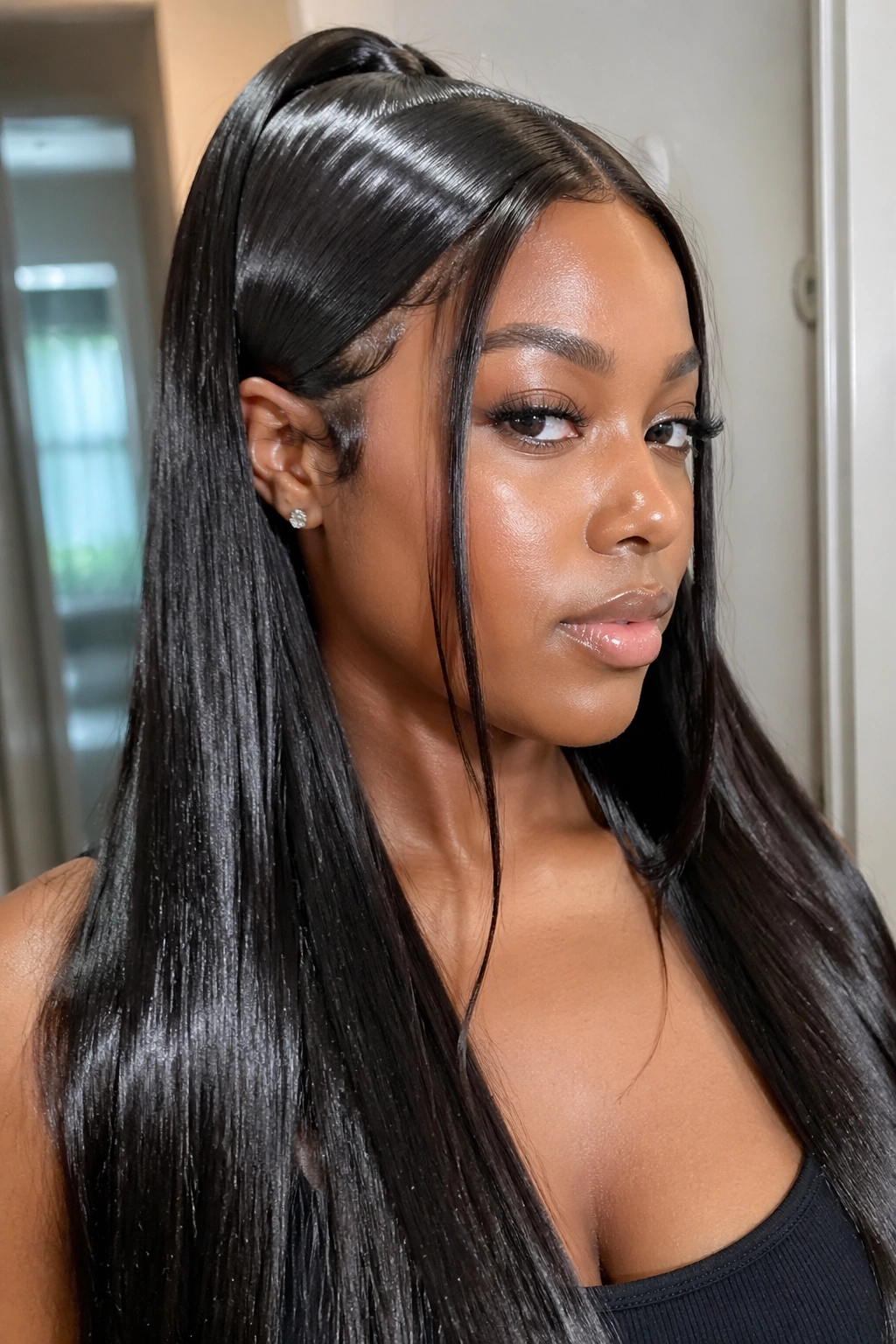
The wet look pondo uses shine-boosting products applied to smooth, sleek extension hair to create the appearance of wet, damp hair. The style looks glossy, intentional, and polished without actually being wet — the extensions are coated in a light oil or a shine serum that catches light uniformly.
This is a look that needs the right extension type. It works with straight, sleek synthetic or human hair — not with kinky, curly, or Marley textures, which absorb rather than reflect light. The extensions should be pre-smoothed before installation and then lightly treated with a non-greasy shine oil (argan or jojoba are ideal) starting from midshaft to ends.
How to Use It
Apply the shine product after installation is complete, not before. Working in sections, apply a thin film of oil using your hands, smoothing from the attachment point downward. Don’t saturate — a little goes a long way. The goal is a uniform sheen, not dripping.
The wet look does not translate well to very humid weather unless you’re working with high-quality human hair. Synthetic hair that gets damp from rain or sweat can absorb moisture unevenly, which creates patchy shine rather than the consistent gloss you’re going for.
24. Full Jumbo Afro Pondo
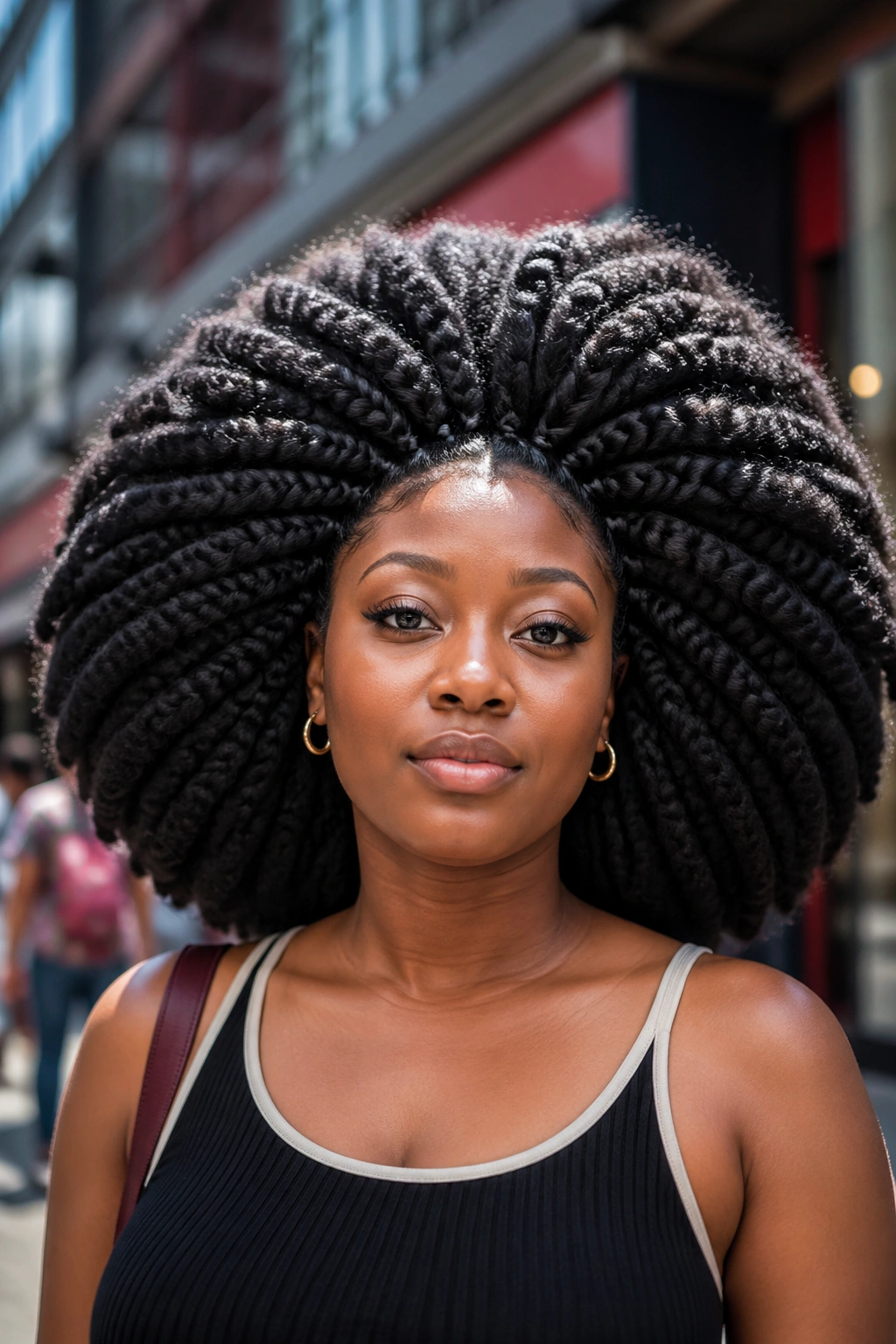
The full jumbo Afro pondo is the maximalist endpoint of every long pondo style. Massive volume, maximum length, full blowout texture — this is the style that stops people on the street. The base is usually a tight cornrow star pattern, and the extensions are pre-stretched Kanekalon or Afro kinky fiber attached in the largest possible quantities for full, globe-like volume that also runs long.
This is not a subtle style. It is not for the days when you want to go unnoticed. It is the style you wear when you want the room to know you walked in.
The installation process for a genuine full jumbo Afro pondo is significant — four to six hours at minimum, often with two people working simultaneously to achieve the volume. The weight is real and the attention is guaranteed, so commit fully when you’re going for it.
Maintenance is daily: a light mist of water to refresh the texture, gentle finger combing to separate any flattened sections, and a satin bonnet at night to protect the perimeter. The style can last two to three weeks with consistent care. And when it’s fresh? There is genuinely nothing like it.
Managing Scalp Health Under a Long Pondo
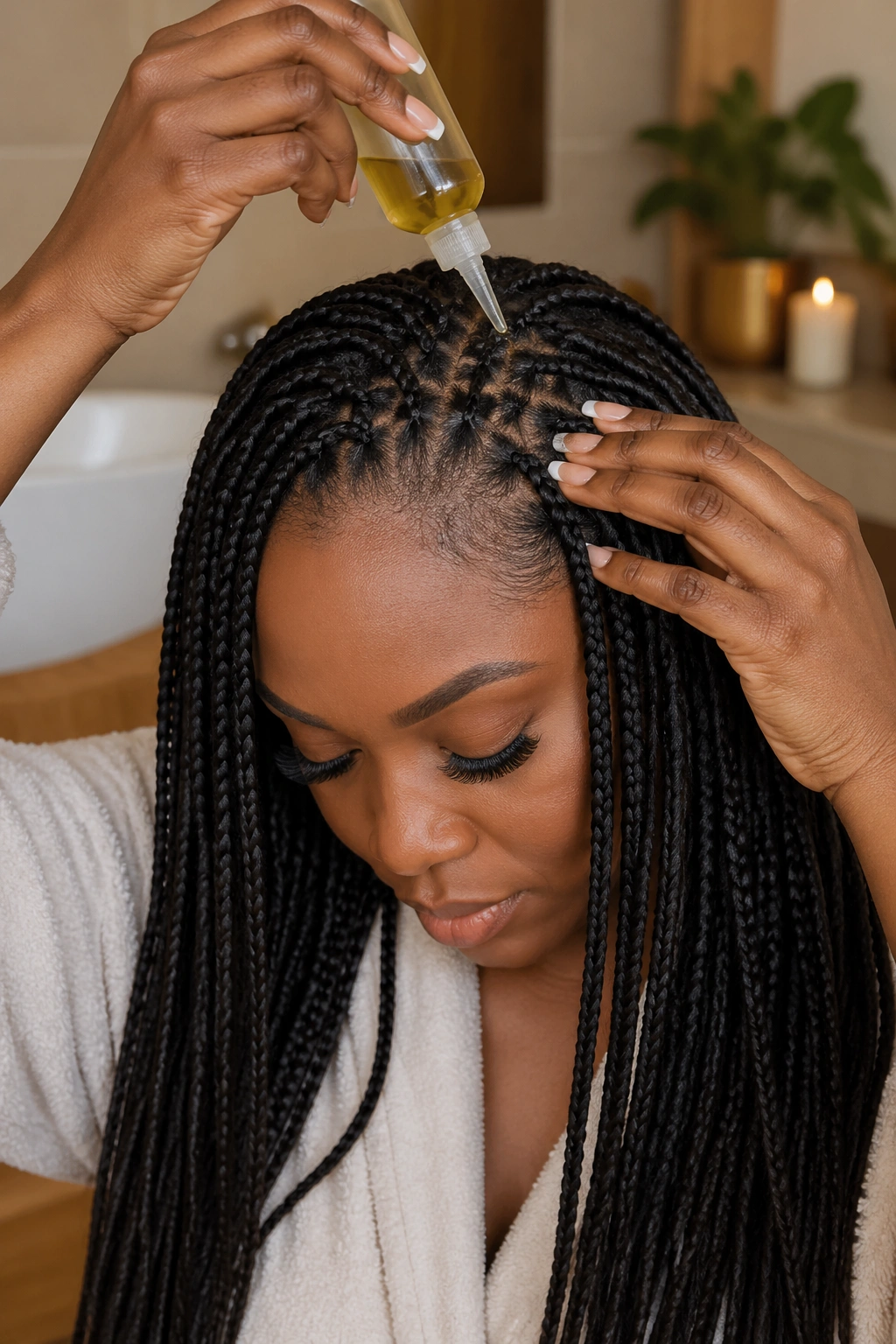
Wearing heavy extensions for any extended period creates specific scalp conditions that need active management. The scalp can’t breathe as freely under a dense pondo installation, which sometimes leads to product buildup, sweat accumulation, and — if the tension is too high — follicle stress that can cause temporary thinning at the edges or crown.
Direct scalp access is limited with most pondo styles, but not impossible. A small bottle with a thin nozzle — the kind used for braiding hair — lets you apply a diluted oil or scalp serum directly to your roots without disturbing the extensions. A mixture of jojoba oil and tea tree oil diluted in water is effective for reducing buildup and managing any itch without causing the extensions to go limp.
Don’t go past four weeks with any heavy long pondo. Your scalp needs a break, your hair needs conditioning, and taking your style down before the hair starts to mat or lock in place means your natural hair comes out in better condition.
When to Take It Down and How to Do It Right
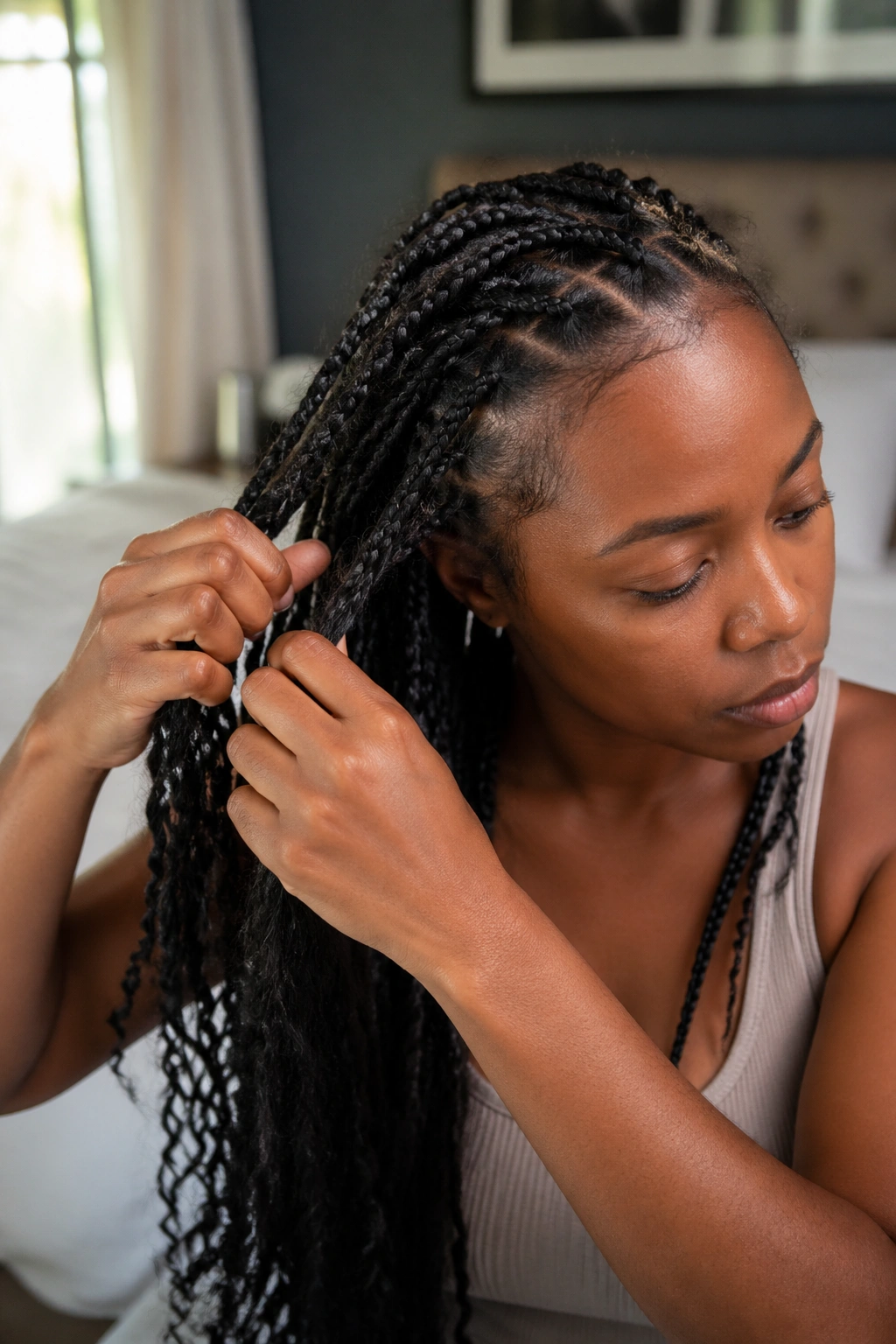
Taking down a long pondo wrong is how you lose hair. The temptation to rush — especially if the style has been in for weeks — leads to pulling, which tears at the natural hair that’s grown slightly since installation.
Start by applying a generous amount of conditioner or detangling spray to the entire pondo, focusing especially at the base where the extensions attach to your cornrows. Let it soak for five to ten minutes. Then cut any thread or elastic at the attachment point carefully, using scissors with the blade pointing away from your scalp. Work slowly, separating extension hair from natural hair with your fingers before attempting to slide anything out.
After removal, resist the urge to immediately wash. Apply a deep conditioner or oil treatment to your natural hair, cover with a plastic cap, and let it sit for 30 minutes before washing. Your hair has been compressed and potentially stressed — it needs moisture before the physical process of washing begins.
Final Thoughts on Building a Long Pondo Rotation
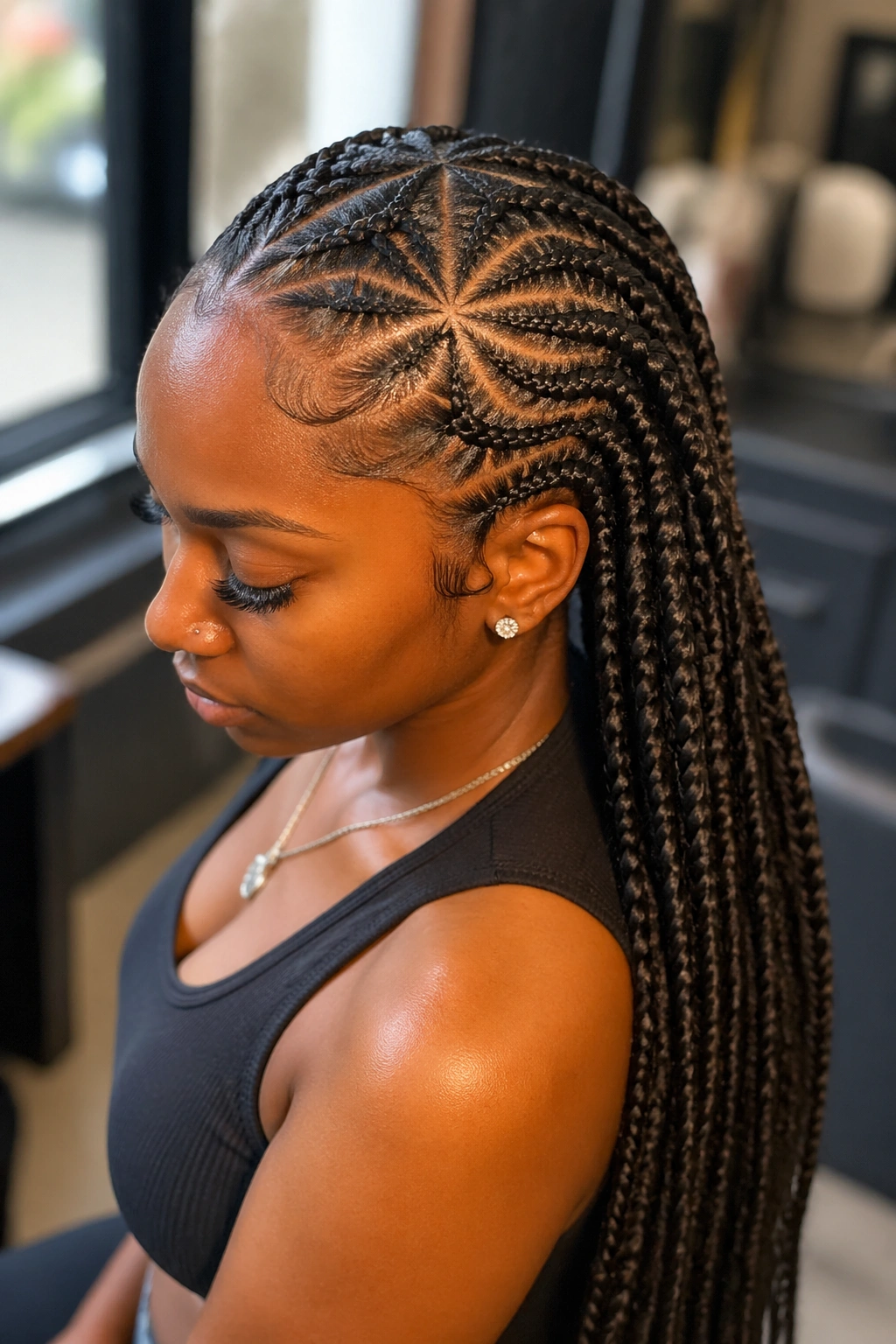
The most important thing about long pondo styles is knowing that they work best as a rotation, not as a permanent solution. Each style in this list pulls differently at your scalp, uses different parts of your hairline, and stresses different sections of your natural hair. Moving between styles — a high cornrow pondo one installation, a low nape pondo the next, a blowout pondo the one after — keeps any one area from bearing too much repeated tension.
Give your natural hair two weeks to breathe between installations. Use that time for deep conditioning, protein treatments if your hair has been feeling weak at the ends, and scalp massages with castor oil or peppermint oil to stimulate circulation and encourage growth. The long pondo is a commitment, but it rewards the women who treat the underlying hair with the same care they give the installed style.
