
Let’s start with the premise that shouldn’t need stating but still does: curvy women don’t need different fashion principles than anyone else. They need the same things — fit, fabric, color, and intention. What curvy women actually need is fashion guidance that doesn’t spend its first paragraph apologizing for existing, or treating clothing as a concealment project rather than an expression one. Afro fashion ideas for curvy women exist in the full spectrum of aesthetic possibility. Bold prints. Fitted silhouettes. Flowing volume. Structured cuts. The only question that matters is what you want to look like and feel like — not what you’re trying to hide.
The intersection of afro fashion and curvy bodies is a rich one. The clothing traditions and aesthetics that run through West African, East African, Caribbean, and Black American style have always celebrated full-figured beauty — wax prints cut for curves, silhouettes that honor rather than resist the body, embellishments and drape that read differently on a body with volume and presence. Working with those traditions rather than defaulting to Western fashion’s long-standing narrowness about bodies opens up an enormous range of genuinely exciting options.
Natural afro hair and a curvy body together create a silhouette with both volume and definition — a combination that’s visually powerful when the clothing supports it intentionally.
Why “Flattering” Needs to Mean Something Specific
The word “flattering” in fashion has been so misused — almost always meaning “makes you look smaller” — that it’s worth reclaiming its actual meaning. Flattering means making the person wearing it look like their best, most intentional, most fully realized self. That might mean smaller in some cases. In many cases it means richer, more vibrant, more defined, more powerful.
When we talk about afro fashion ideas for curvy women in these terms, the question becomes: what makes your natural hair and your body together create the most compelling visual? What fabrics match the richness of your hair texture? What colors honor your skin’s undertone? What silhouettes give your proportions the definition or the flow that makes you feel most yourself?
Those are the real questions. The rest — “am I too big for this” — isn’t fashion thinking. It’s fear thinking.
Understanding Visual Weight and How to Work With It
Visual weight — the amount of visual attention a garment commands — is a useful concept when dressing any body, and particularly useful for curvy women with afro hair because your hair already carries significant visual weight. The combination creates a powerful visual presence that you can either balance or amplify depending on your aesthetic goals.
High visual weight at the top (a full natural afro) reads differently with high visual weight clothing (a bold print, a statement neckline, heavy embellishment) versus low visual weight clothing (a solid fitted top, a clean dark-colored shell). Neither is wrong — they create different effects.
If your goal is balance: clean, minimal clothing against a full afro is a tried and true approach. Solid colors, precise fit, simple silhouettes. The hair does the talking.
If your goal is amplification: bold prints, rich colors, textured fabrics, and statement accessories against the afro create a maximalist look that’s powerful when committed to fully.
Fit Is the Non-Negotiable Foundation
Clothes that don’t fit correctly undermine every other choice. This is true for every body, and it’s particularly true for curvy bodies because off-the-rack sizing routinely fails to account for the relationship between bust size, waist definition, and hip width that many curvy women actually have.
The most common fit problem: tops and dresses that fit across the bust or hips but gap or pull at the waist, creating a shapeless silhouette. The second most common: trousers and skirts that fit the hips but gap or bunch at the waist.
The solutions: tailoring is the most effective option for significant issues. A tailor shortening a dress or taking in a waist seam costs between $15 and $40 and transforms a piece completely. Stretch fabrics in the right weight can accommodate curves without the gap and pull problems, but they must be heavy enough to drape rather than cling to every contour.
Fabric Choices That Honor Curvy Bodies
Not all fabrics work equally well for curvy silhouettes. The general principle: fabrics with drape and some substance are more flattering than fabrics that are either too stiff or too thin.
Too stiff (heavy canvas, thick denim, structured grosgrain): these fabrics hold their own shape rather than following the body’s curves, which can add perceived volume where you may not want it.
Too thin (sheer chiffon alone, thin jersey, flimsy polyester): these fabrics cling to and highlight every contour — which is fine if that’s your intention, but often reads unintentional and can show undergarment lines or skin in ways you didn’t plan.
The sweet spot: crepe, ponte knit, medium-weight jersey, structured cotton, satin in a substantial weight, and lined fabrics that have interior structure. These fabrics flow over curves without clinging or creating excess volume.
1. The Wrap Dress
The wrap dress is the most reliably effective silhouette for curvy bodies across the entire history of fashion. Full stop. The reason isn’t magic; it’s geometry. The wrap construction creates a V-neckline that opens toward the face, drawing the eye upward. The tie waistband hits the natural waist and creates definition — always at the smallest point of a curvy frame rather than at the widest. And the wrap construction accommodates a wide range of bust-to-waist-to-hip ratios because it’s adjustable.
Why It Works Specifically for Afro Fashion
In afro fashion, the wrap dress reaches its full potential when cut in Ankara wax print, bold solid jersey, or richly textured crepe. The print’s energy meets the silhouette’s geometry. The V-neckline creates a clean line that draws the eye upward toward your natural afro, creating a full composition where hair, face, neckline, and waist are all clearly defined.
- Choose a wrap that ties securely — not just a visual wrap but an actual functional tie. Gaps at the bust or at the hip opening undercut the look.
- The hem length matters: midi length (just below the knee to mid-calf) works more consistently across body types than mini or floor-length.
- Bold is better than timid here: a wrap in a vibrant solid or a large-scale wax print photographs dramatically.
2. High-Waisted Wide-Leg Trousers with a Fitted Top
High-waisted wide-leg trousers are structurally designed to emphasize the narrowest part of the torso (the waist) while creating a long, flowing line below. For curvy women, this means the visual proportion tips toward waist definition and vertical length — two things that make any silhouette read as long and deliberate.
The top above must be fitted — not tight to the point of restriction, but close enough that the shirt doesn’t bunch over the trouser waistband and lose the definition the high waist creates. A structured bodysuit is ideal for this reason.
The trouser volume: wide-leg trousers with more fabric flow beautifully when the fabric is chosen right. Avoid lightweight jersey in wide-leg trousers — the fabric collapses and clings rather than flowing. Ponte, structured linen, and medium-weight crepe hold the wide-leg shape correctly.
3. Ankara Print Maxi Dress
A maxi dress in Ankara print — full-length, bold repeat, cut with a defined waist or empire line — is one of the most specifically powerful afro fashion looks for curvy women because the wax print’s graphic boldness and the maxi’s floor-length silhouette create visual presence at every scale.
Unlike many fashion looks that rely on revealing or defining specific body parts, the Ankara maxi reads as powerful and intentional because the print itself carries the statement. The body inside the dress provides the foundation; the dress provides the architecture.
Look for Ankara maxis with a fitted or defined bodice rather than a fully loose shapeless cut. A slight definition at the waist — even if achieved through a seam rather than a belt — keeps the silhouette from reading as a tent. The skirt below can be as full as the fabric allows.
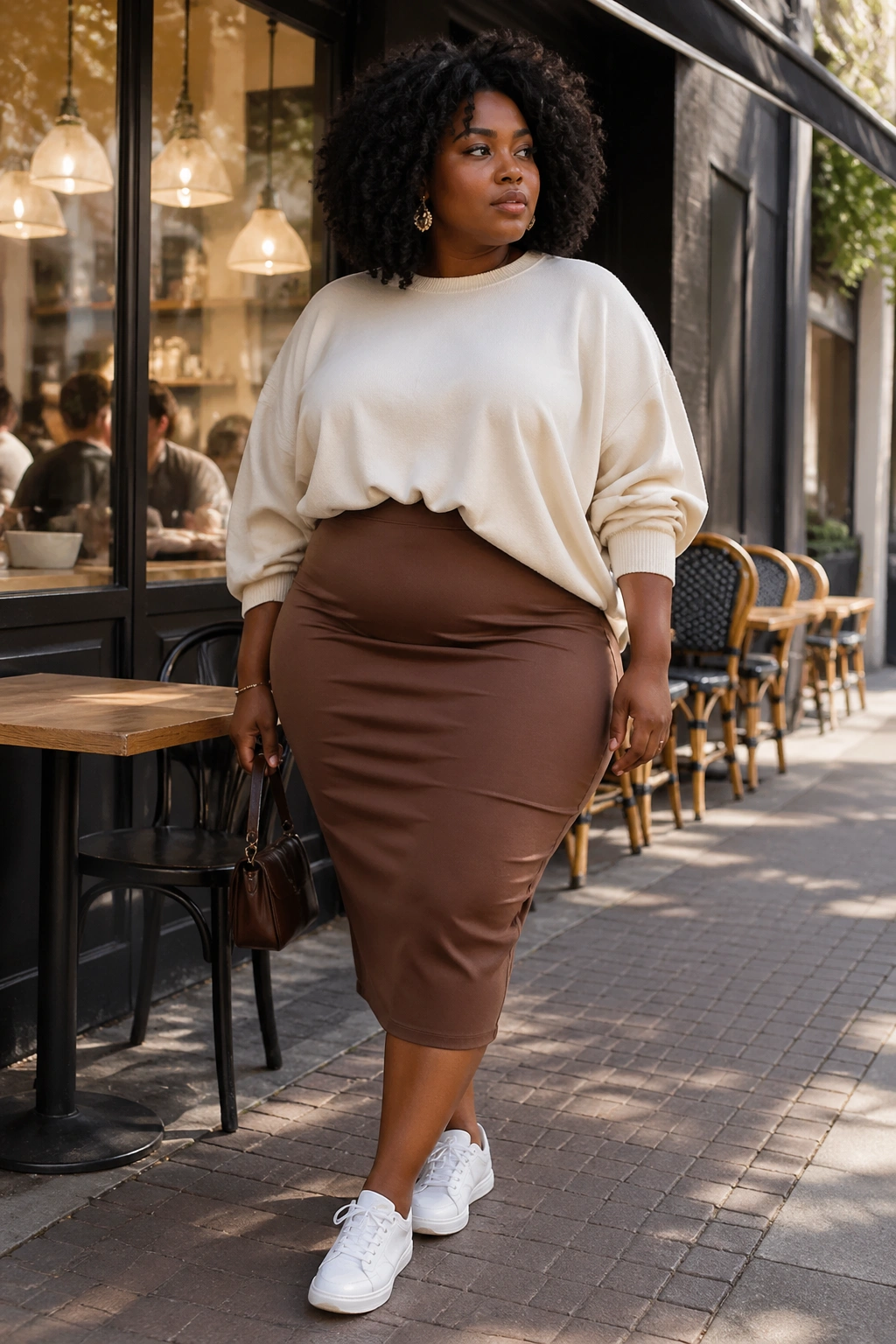
4. The Bodycon Midi Skirt with an Oversized Top
Counter-intuitive: the bodycon skirt — a fitted, stretch fabric skirt that follows the hip and thigh shape closely — paired with an oversized top is a silhouette combination that works distinctly better on curvy frames than on straight ones.
The reason: the oversized top creates volume and visual mass at the torso, while the fitted skirt defines the lower half. On a curvy body, this creates an exaggerated hourglass that reads as bold and intentional rather than uncertain. On a straight frame, the same combination often looks unbalanced.
The skirt should hit below the knee or at mid-calf — midi length — so the combination of the oversized top and the fitted lower half reads as a deliberate fashion choice rather than an ill-fitting accident.
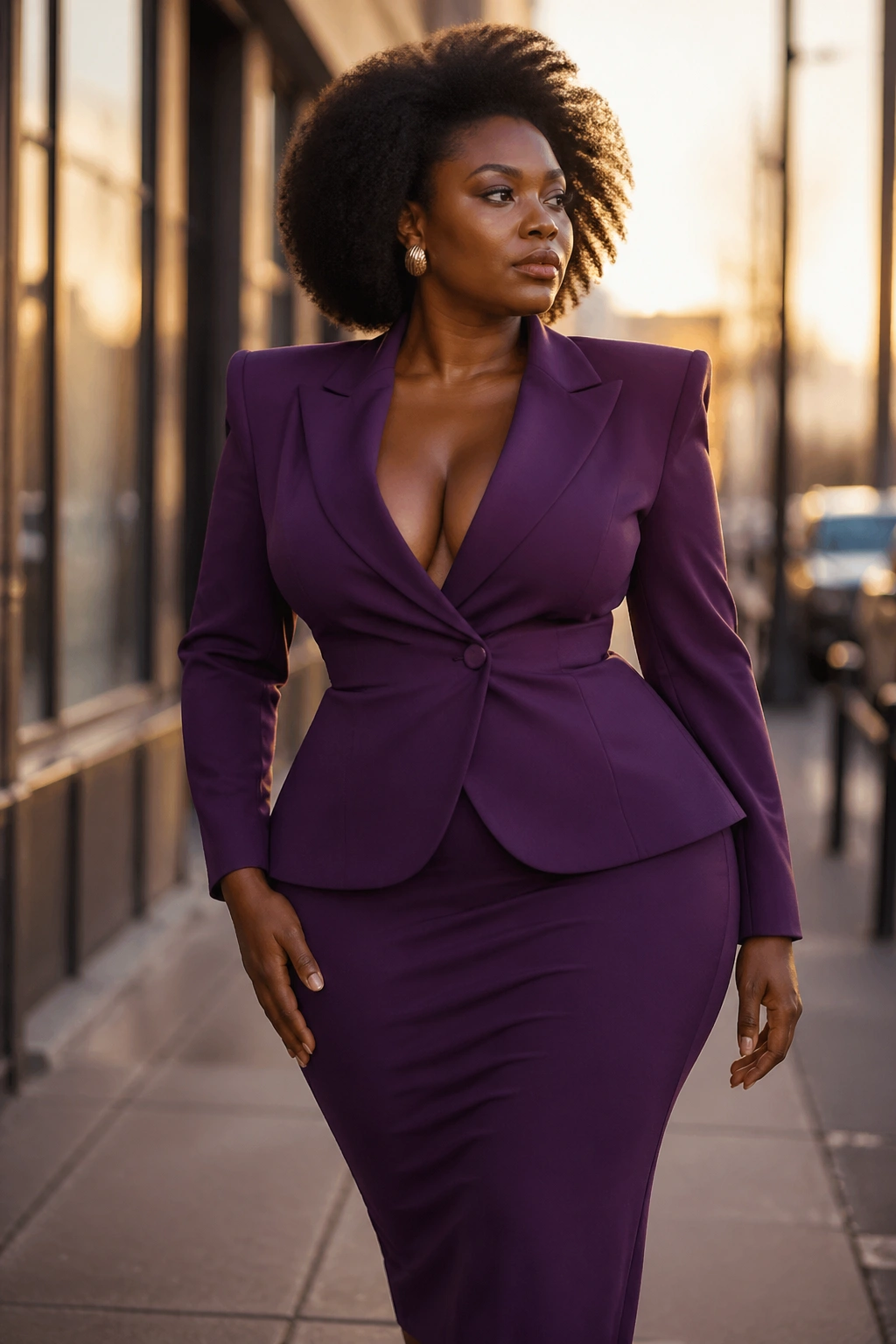
5. Tailored Wide-Shouldered Blazer and Skirt Set
A power set — blazer and matching skirt — where the blazer has wider, slightly structured shoulders is a look that commands a room. For curvy women with a full natural afro, the addition of shoulder width above and the natural hip width below, framing a defined waist in the center, creates a silhouette that reads as architecturally strong.
The Power Set Psychology
This isn’t about dressing for others’ approval. It’s about the very real experience of wearing something structured and intentional that makes you walk differently. The power set has that effect on most people who wear it. The combination of the blazer’s structure and the natural afro’s volume creates a presence that is impossible to ignore.
- Match the blazer and skirt in the same fabric and color — a true set, not two coordinating pieces.
- The skirt length: pencil at knee to just below the knee, or A-line at midi length. Both work; the pencil is sharper; the A-line is more comfortable for a full day.
- A fitted mock-neck or simple blouse under the blazer, not a wide-collar shirt that competes with the lapel.
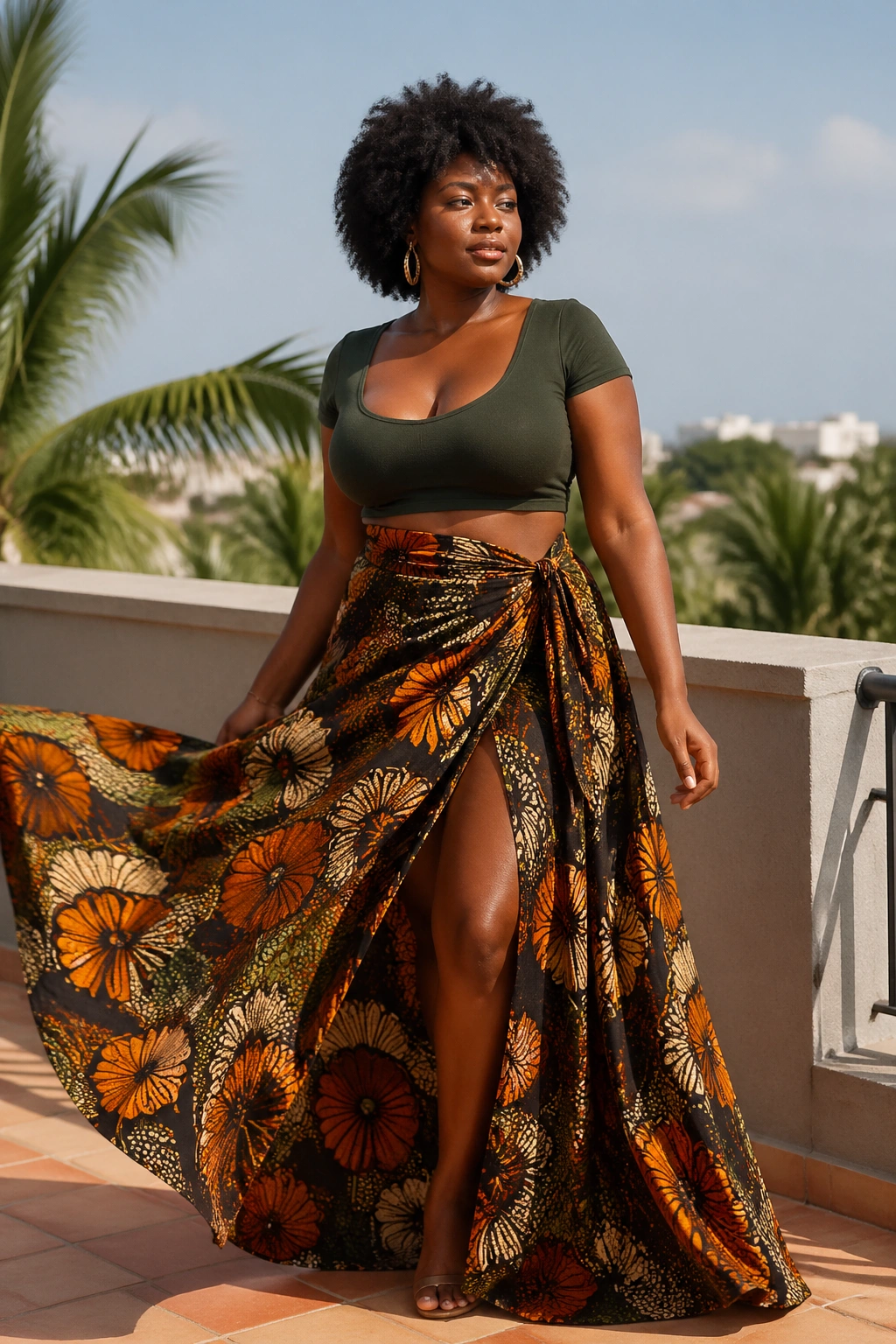
6. Maxi Wrap Skirt with a Fitted Crop
Separate from the wrap dress: a wrap skirt that ties at the natural waist and falls to the floor, worn with a fitted crop top. The skirt’s tie creates waist definition while the full floor-length silhouette creates dramatic movement.
This works beautifully in wax print skirt with a solid-colored fitted crop, or an embroidered or otherwise embellished solid skirt with a clean basic top. The print does its visual work from the waist down; the simple top keeps the upper half clean.
For curvy women specifically, the wrap tie gives you control over where exactly the skirt sits and how it falls — you’re not locked into a fixed waistband that may not hit your natural waist correctly.
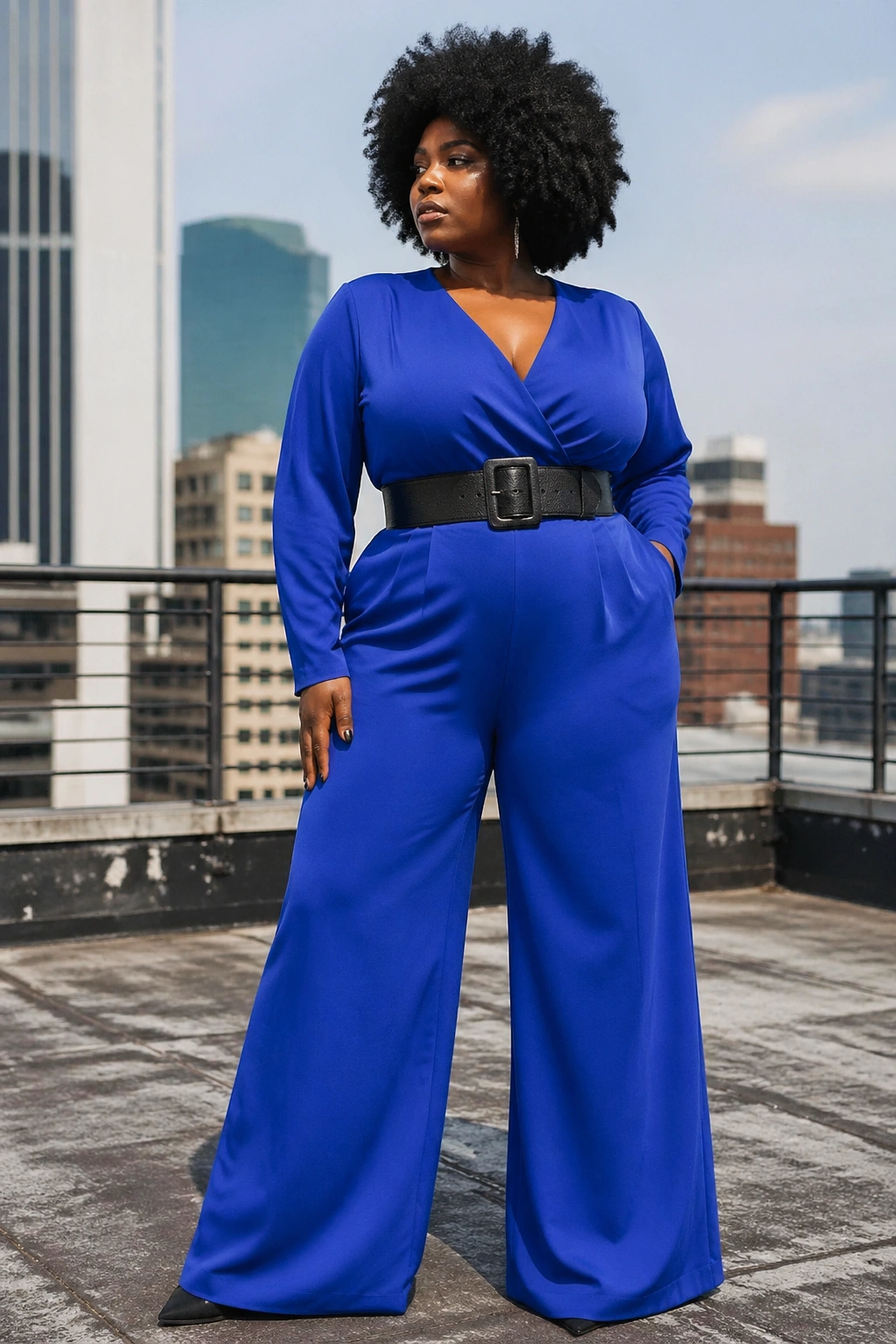
7. Bold Solid Jumpsuit with a Wide Belt
A jumpsuit in a strong solid — cobalt, forest green, deep burgundy, burnt orange — belted at the natural waist with a wide structured belt transforms a single piece into a clearly defined composition. The belt is the critical element: a thin belt or no belt leaves the jumpsuit as a single long column; a wide belt creates a waist and makes the upper and lower halves read as two distinct sections.
Choose a belt that’s a contrast color or a deliberate tone match — either reads well. A black wide belt on a cobalt jumpsuit. A gold or caramel belt on a forest green jumpsuit. A deep wine belt on a burnt orange jumpsuit.
The jumpsuit’s leg cut: wide-leg for maximum drama, straight-leg for daily wear versatility, and cropped wide-leg for a silhouette that shows the footwear clearly.
8. Off-Shoulder Midi Dress with Volume at the Hem
An off-shoulder neckline and a voluminous midi hem sounds like it should be too much — and on a poorly fitted base, it is. But when the bodice fits precisely (doesn’t slip, doesn’t pull at the chest) and the skirt volume is distributed intentionally below a defined waist, this silhouette creates the kind of fully volumetric look that’s simultaneously romantic and fashion-forward.
For curvy women, the off-shoulder draws the eye to the collarbone and shoulders — two areas that have natural visual interest regardless of body type — while the volume of the skirt creates balance. The defined waist in between anchors the whole composition.
The practical concern: off-shoulder garments need to stay in place. Look for built-in elastic or boning at the chest that grips rather than a simple tube top that requires constant repositioning. Nothing makes a look fall apart faster than obvious adjusting.
9. Ruched Stretch Dress in a Jewel Tone
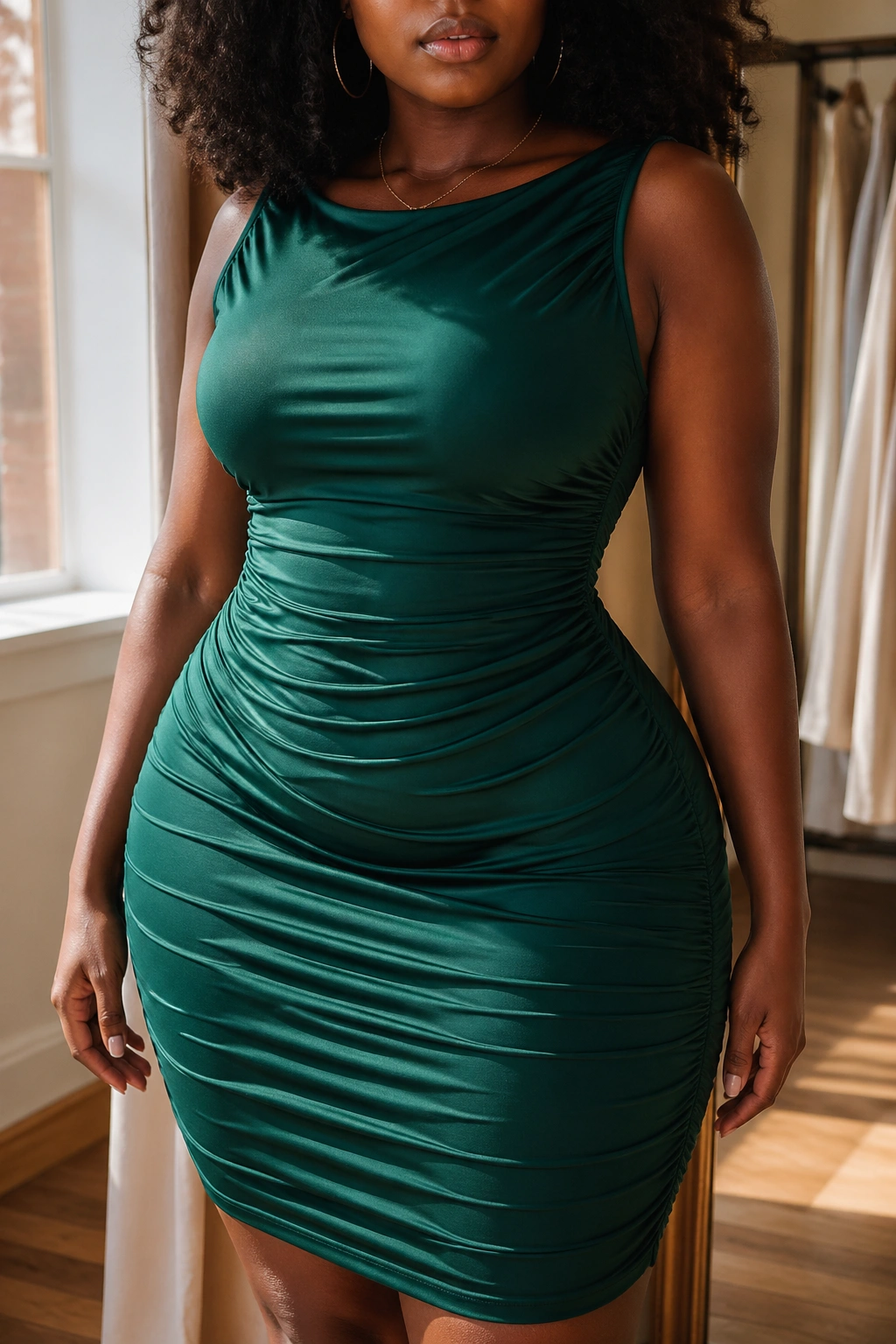
Ruching — gathering fabric into horizontal or diagonal folds — creates a specific effect on a curvy body: it distributes the visual weight of the fabric evenly, smoothing over the transitions between different body zones rather than creating tight constriction in some places and excess fabric in others. For curvy women, a well-ruched stretch dress is often more consistently flattering than a non-ruched equivalent in the same fabric.
Jewel tones — deep emerald, amethyst, sapphire, ruby — against the visual backdrop of a natural afro create a richness and warmth that pastels or neutrals don’t achieve in the same way.
The dress length: midi is the most consistently wearable for daily life. Floor-length reads formal. Mini reads casual-to-date-night. The midi works across the widest range of contexts.
10. Linen Coord Set with a Bold Print
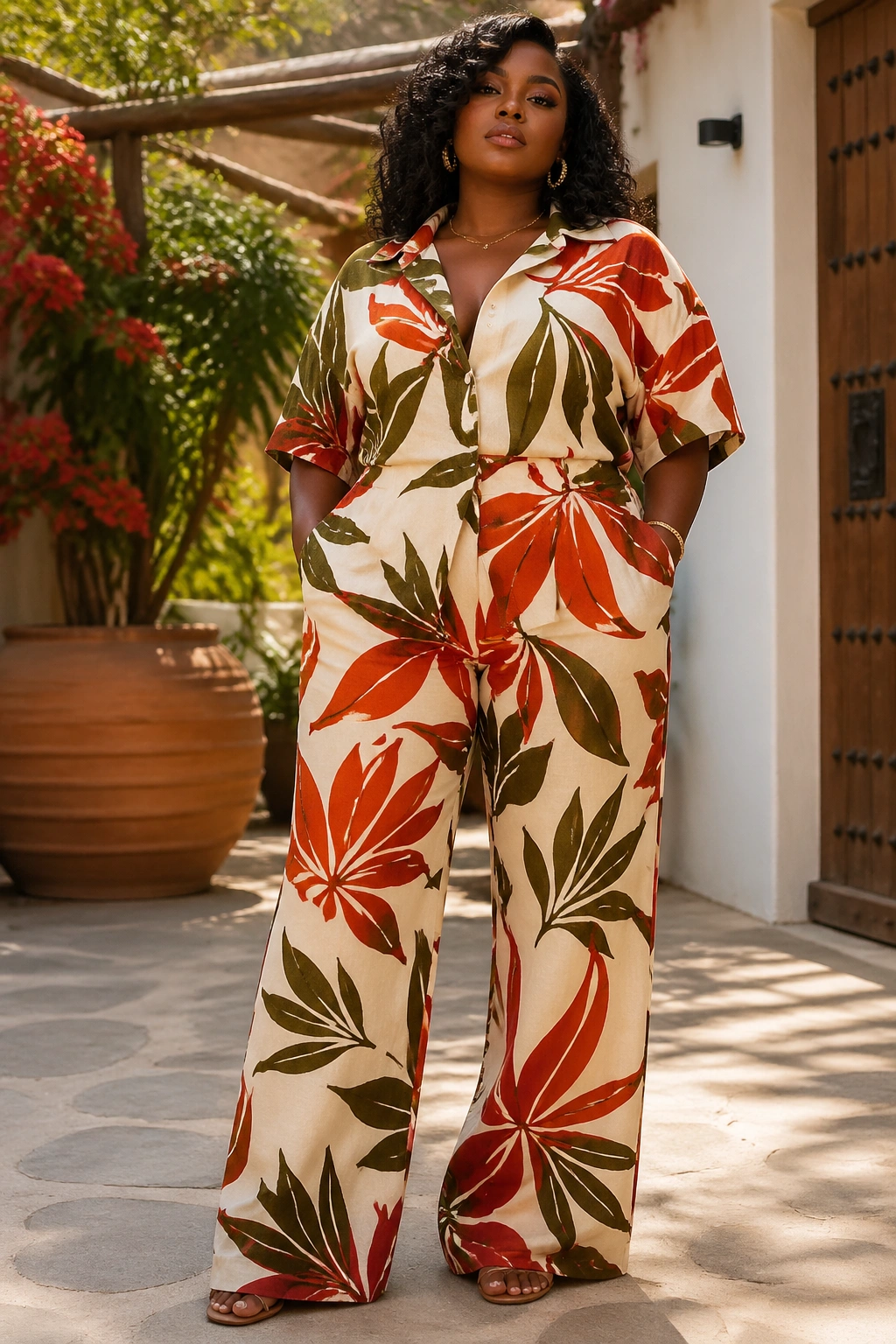
Two-piece coord sets — matching top and trousers, or matching crop and skirt — in a bold printed linen are one of the most wearable afro fashion looks for warm weather. The matching nature of the set creates a unified, curated appearance without requiring any additional styling effort. The print does the visual work.
For curvy women choosing sets: look for sets that offer the top and bottom in separate sizes, not one-size-fits-all. A set that fits your hips may run large at the bust; a set sized for your bust may not close at the hip. Being able to size the pieces independently removes this problem entirely.
Linen is a practical and beautiful fabric choice: it breathes, it has structure without weight, and it carries print beautifully. The slight crinkle that develops in linen throughout the day adds lived-in texture rather than detracting from the look.
11. Empire-Line Maxi with Embellishment at the Neckline
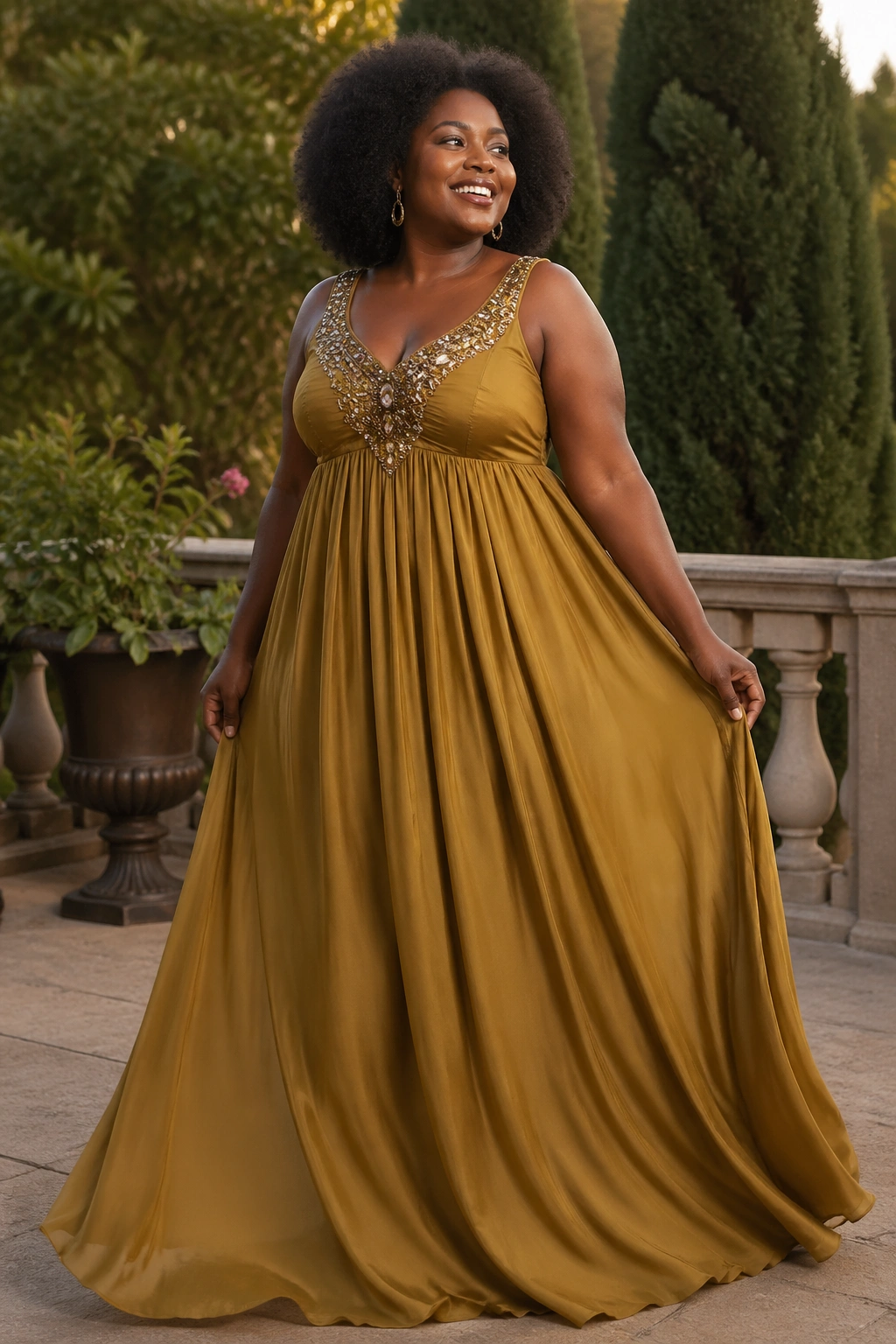
The empire-line silhouette — where the waist seam sits at or just below the bust rather than at the natural waist — creates a long, vertical sweep from chest to floor. For curvy women with fuller midsections, this silhouette is effective precisely because the seam hits above the fullest point of the body, creating a long uninterrupted line below.
Embellishment at the neckline — beading, embroidery, a richly textured trim — draws the eye immediately upward to the face, the collarbone, and the natural afro. The rest of the dress creates architecture below that eye-catching point.
This silhouette is most effective in fabrics with drape: a flowing jersey, a soft silk blend, a structured georgette. It fails in stiff or heavy fabrics that hold their own shape rather than flowing from the empire seam.
12. Bold Stripe Top and Wide-Leg Denim
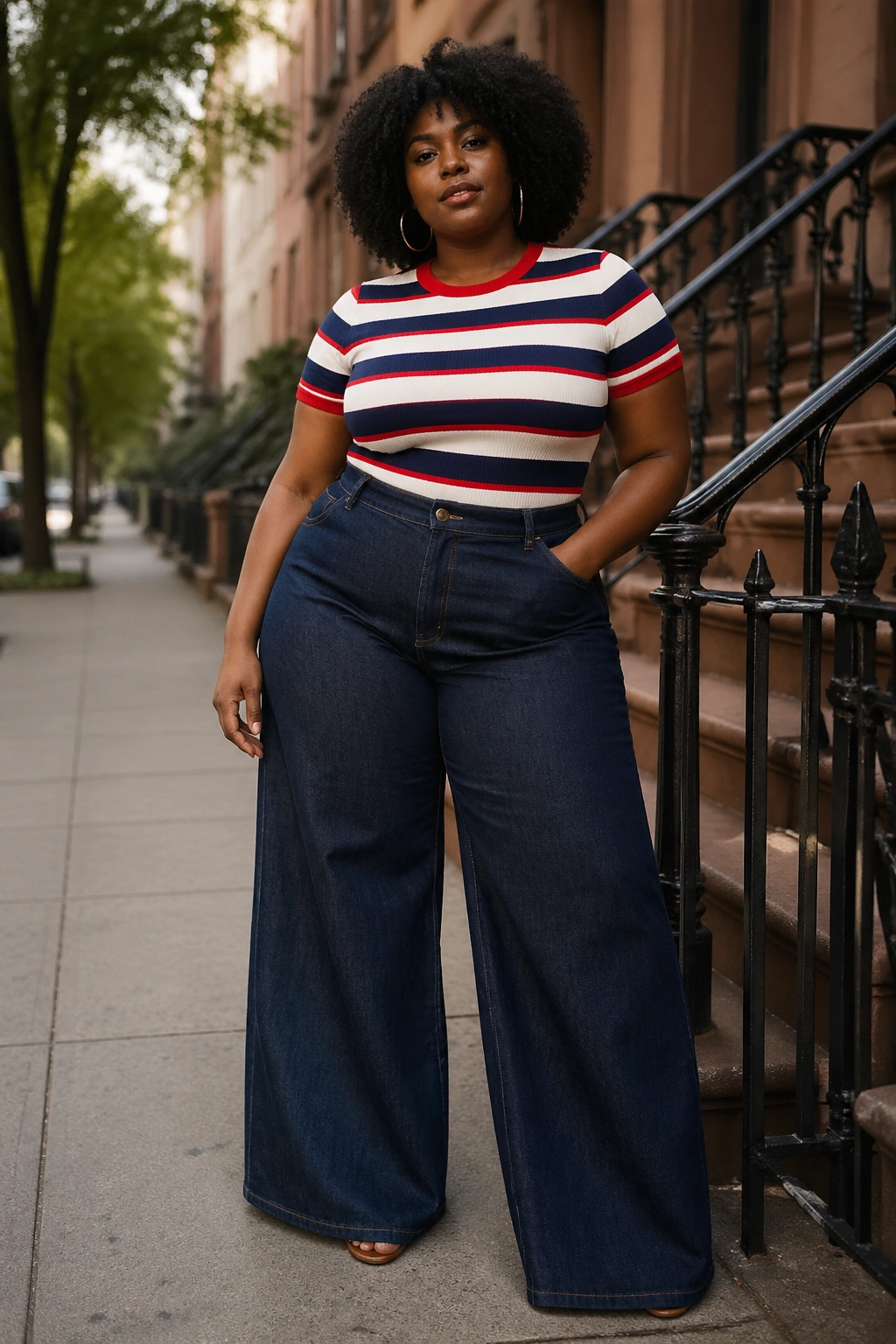
Horizontal stripes. Yes. The rule against horizontal stripes on curvy bodies is one of the oldest and least warranted fashion prescriptions in existence. Bold horizontal stripes on a fitted top — particularly when the stripes are wide and the colors high-contrast — create a graphic, intentional statement that reads with confidence, not uncertainty.
The stripes work because they tell a clear story about visual intention. You didn’t accidentally put on a striped top; you chose it. That confidence reads in the whole look.
Pair with wide-leg dark-rinse denim and flat sneakers or block-heeled mules. Keep the accessories simple — the stripe is already saying something.
13. Printed Blazer as the Statement Piece
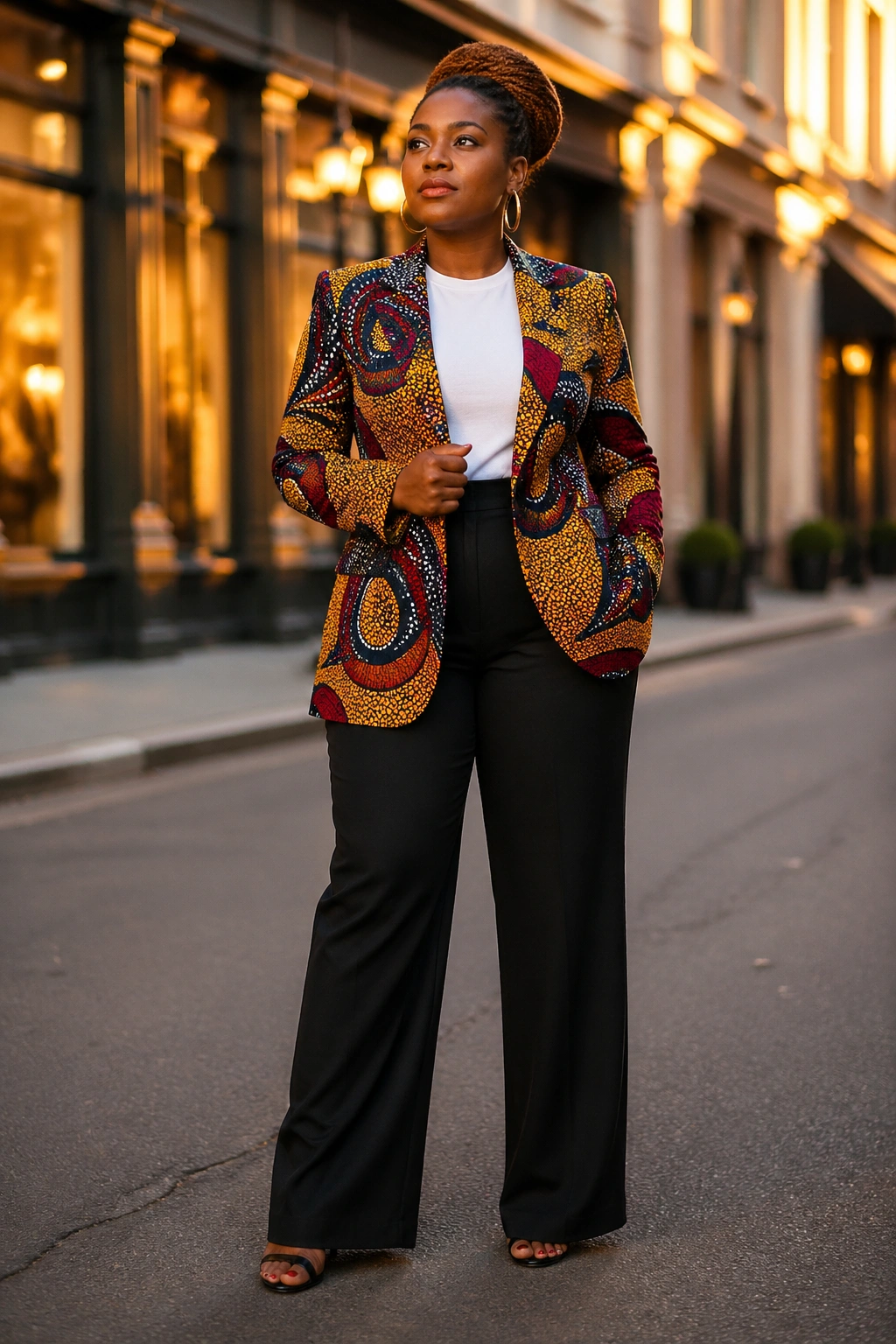
Instead of using a blazer as a neutral layer over a statement outfit, reverse the equation: a printed blazer — bold floral, graphic geometric, large-scale abstract — over a simple base. White fitted tee, high-rise black trousers, clean footwear. The blazer is the outfit.
For curvy women, a well-fitted blazer (particularly important: the shoulders must hit exactly right, and the button stance should sit at or above the natural waist) in a bold print creates a look that reads as editorial and intentional without requiring any additional pieces to carry the look.
Finding the Right Blazer Fit
Blazers are among the most difficult garments to fit across curvy bodies off the rack because the cut assumes a specific bust-to-shoulder width ratio that doesn’t match many women’s actual proportions. A blazer that fits the shoulders may not button across the bust; a blazer that closes at the bust may sit too wide on the shoulders. Seek out brands that specifically design for curvy fits, or plan on tailoring for any blazer you love.
14. Monochromatic Burgundy Head to Hem
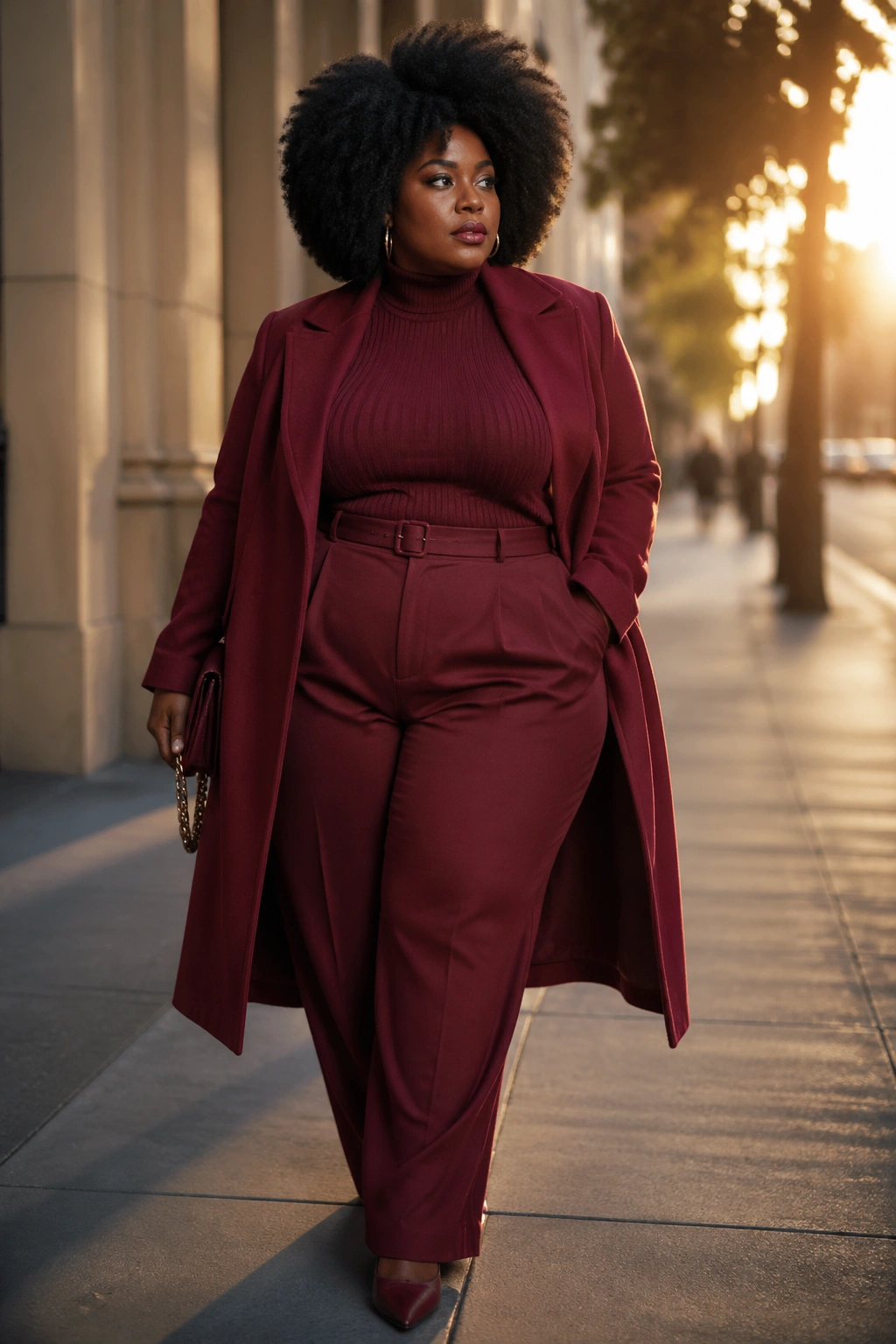
A single-color outfit — from the lip color to the wrap, the blouse, the trouser, and the shoe — in a deep, warm burgundy is a power move in afro fashion for curvy women because it creates one unified visual presence rather than breaking the eye at multiple points across the body.
Monochrome in a deep color is the visual equivalent of wearing one large, cohesive piece. The eye moves from top to bottom without interruption, reading the full height and presence of the body as a single entity. On a curvy body with a full natural afro, this effect is dramatic.
Allow subtle variation in shade and texture: matte burgundy trouser, slightly wine-tinted satin top, deeper wine lip color. The variety in tone and texture within the color family creates depth without breaking the monochrome story.
15. Kaftan with Defined Waist Sash
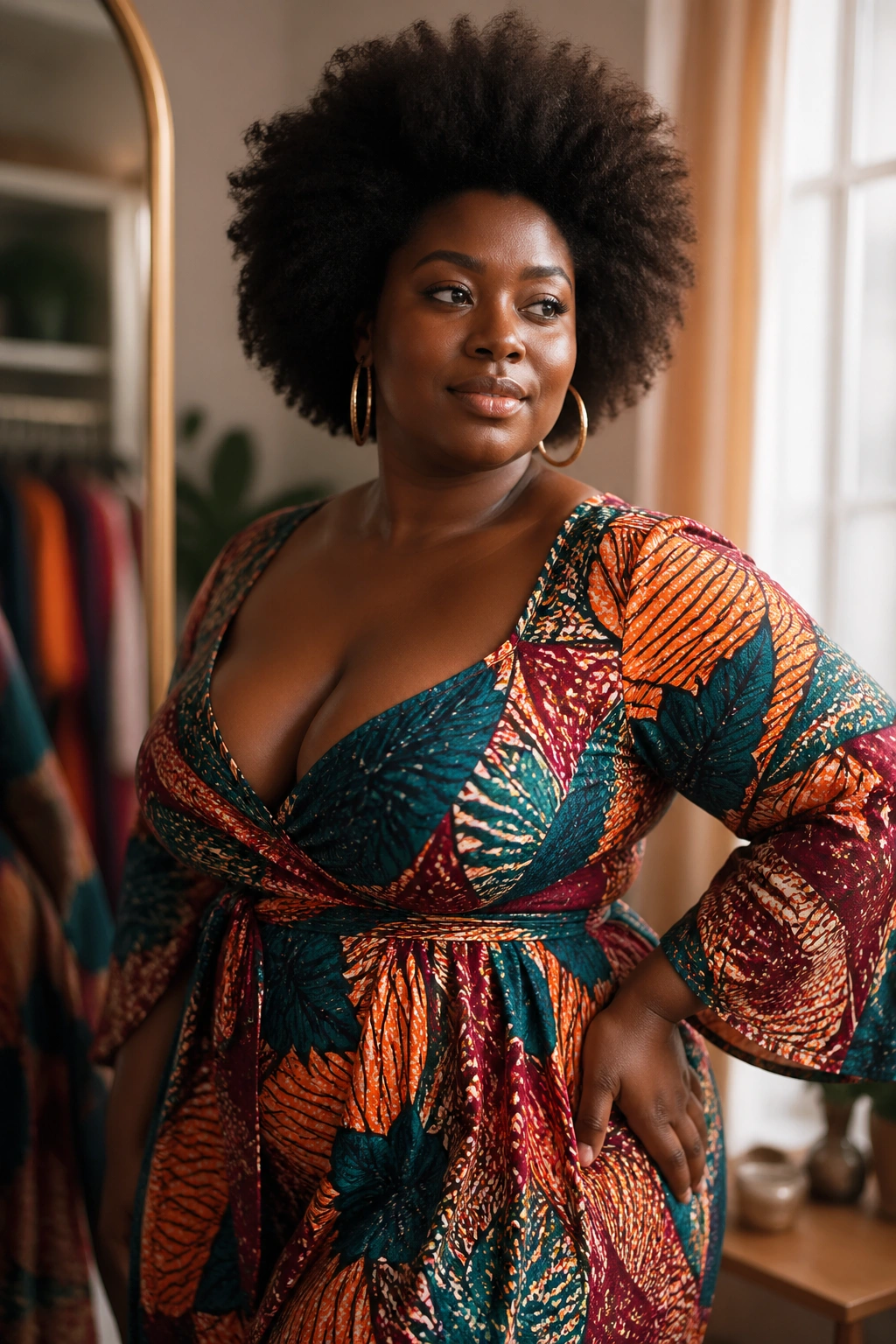
A kaftan in an embroidered or printed fabric, worn as a dress with a matching fabric sash or wide contrast belt at the waist, transforms the garment’s silhouette from loose and flowing to gracefully defined. For curvy women, this is the kaftan at its most effective: you get the comfort and drama of the full garment while maintaining the waist definition that keeps the look from reading as formless.
The sash should be tied in a way that creates a bow or knot with visual interest rather than a simple flat tie. A large side bow, a loose wrap knot that rests at the hip, or an elegantly tied front knot all add a finishing element that makes the belt itself part of the composition.
16. Tailored Shorts Suit
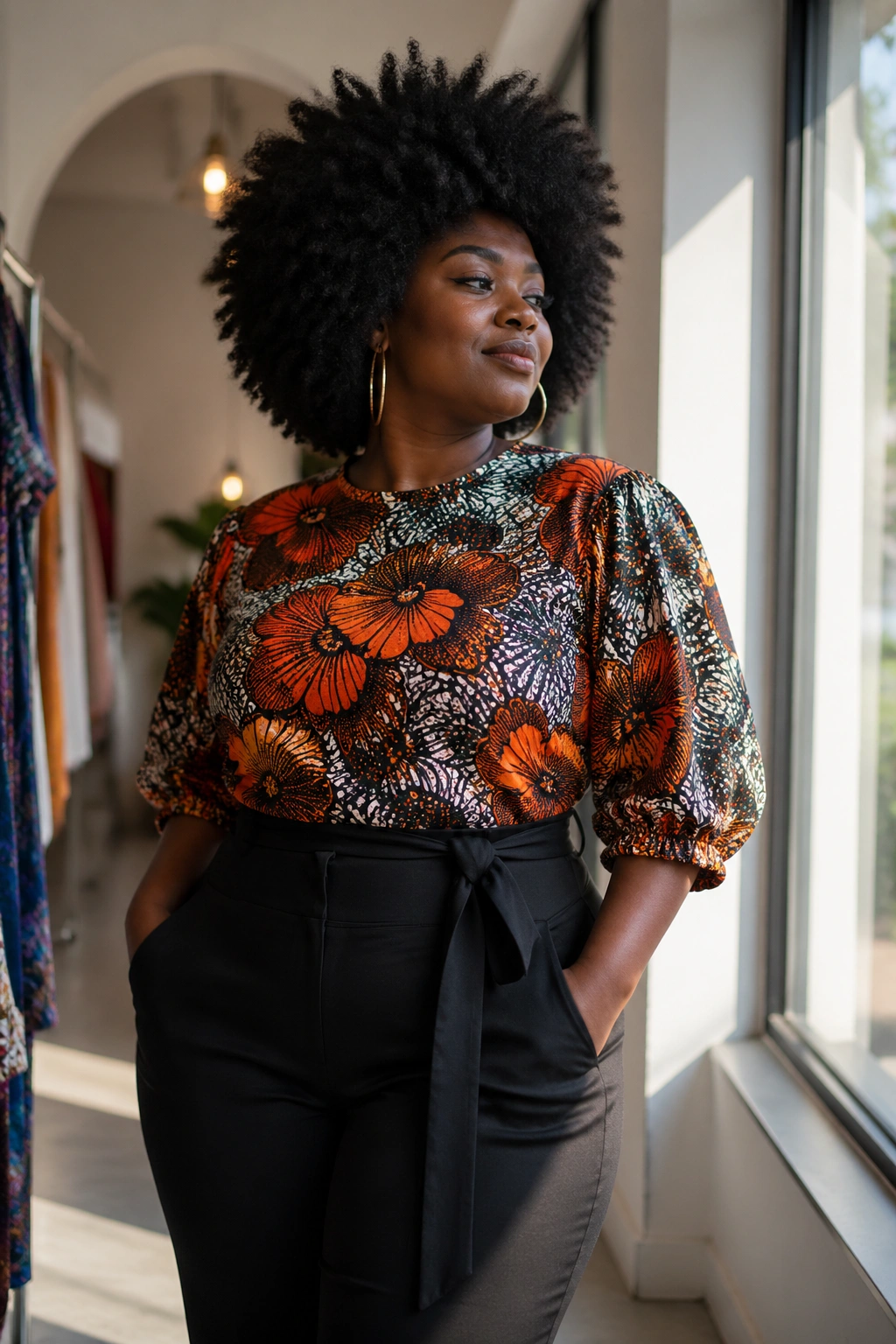
The shorts suit — matching blazer and tailored short, cut as a coordinated set — is a look with genuine fashion power when the fit is right. For curvy women in warm climates or at summer events, it solves the practical problem of being dressed up without being uncomfortably hot, while still reading as clearly intentional.
The shorts in a shorts suit for curvy frames should hit mid-thigh or just above the knee — not mini-short. The length creates coverage and allows the leg to read as part of a complete silhouette rather than the outfit ending abruptly. Well-fitted shorts at this length look tailored; micro-shorts can undercut the intentional quality of the blazer.
Bold color — electric blue, terra cotta, rich green — or a striking print elevates this from a practical summer look to a genuine fashion statement.
17. Statement Sleeves on a Simple Base
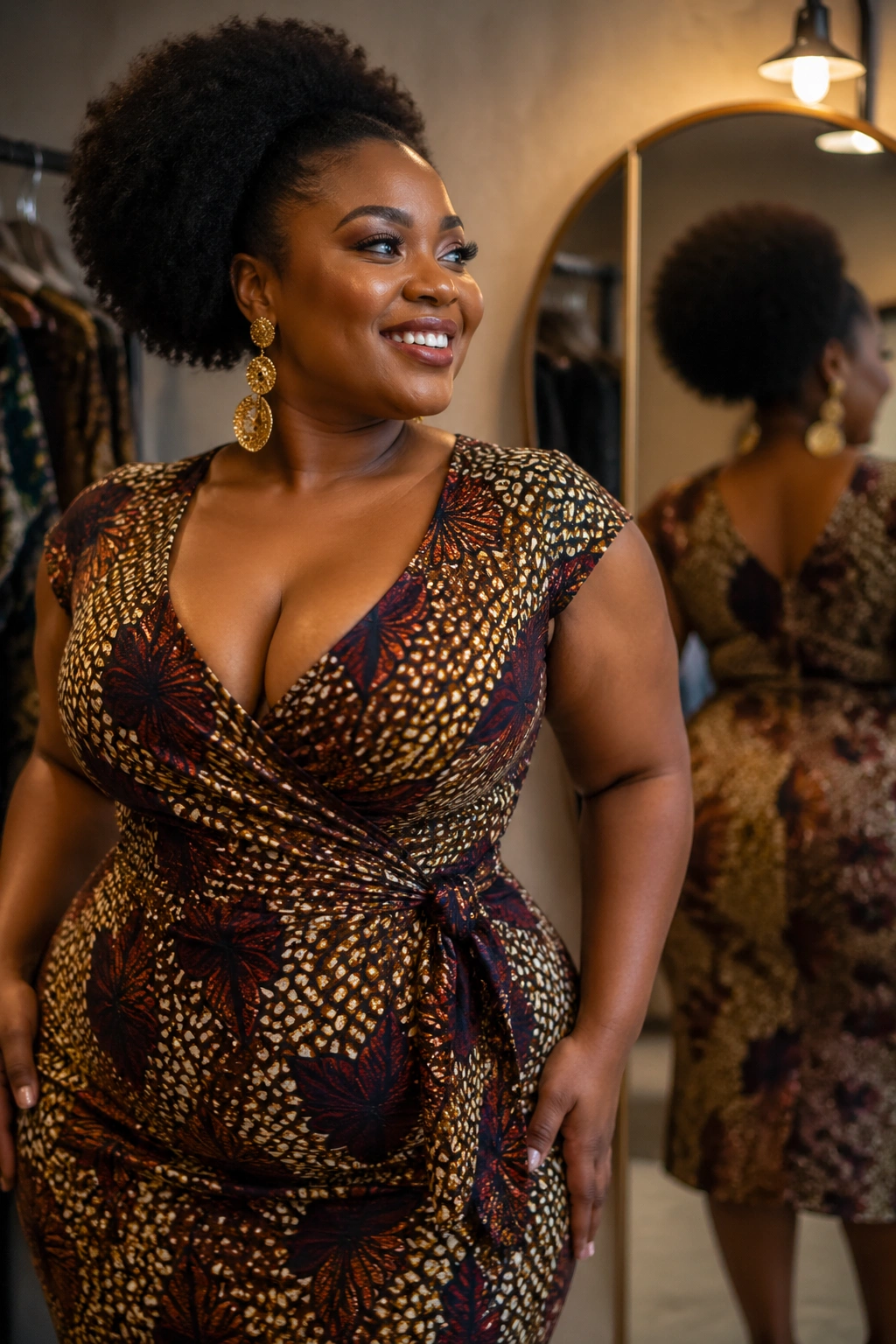
Dramatic sleeves — bishop sleeves that balloon at the forearm, puff sleeves at the shoulder, bell sleeves that flare from the elbow — are a place where afro fashion and curvy bodies intersect particularly powerfully. The sleeves add width and drama at the upper arm and shoulder; your natural afro adds height and width at the head. Together they create a full-volume upper silhouette that reads as theatrical and intentional.
Below the waist, keep everything clean and contained: a high-rise fitted trouser or a sleek midi skirt. The drama lives at the top; the rest is grounding.
The practical check: statement sleeves need enough armhole room to be comfortable and allow full range of movement. Try them before committing, specifically by raising your arms and checking that the sleeve’s puff or bell retains its shape rather than collapsing.
18. Tiered Midi Skirt with a Fitted Tank
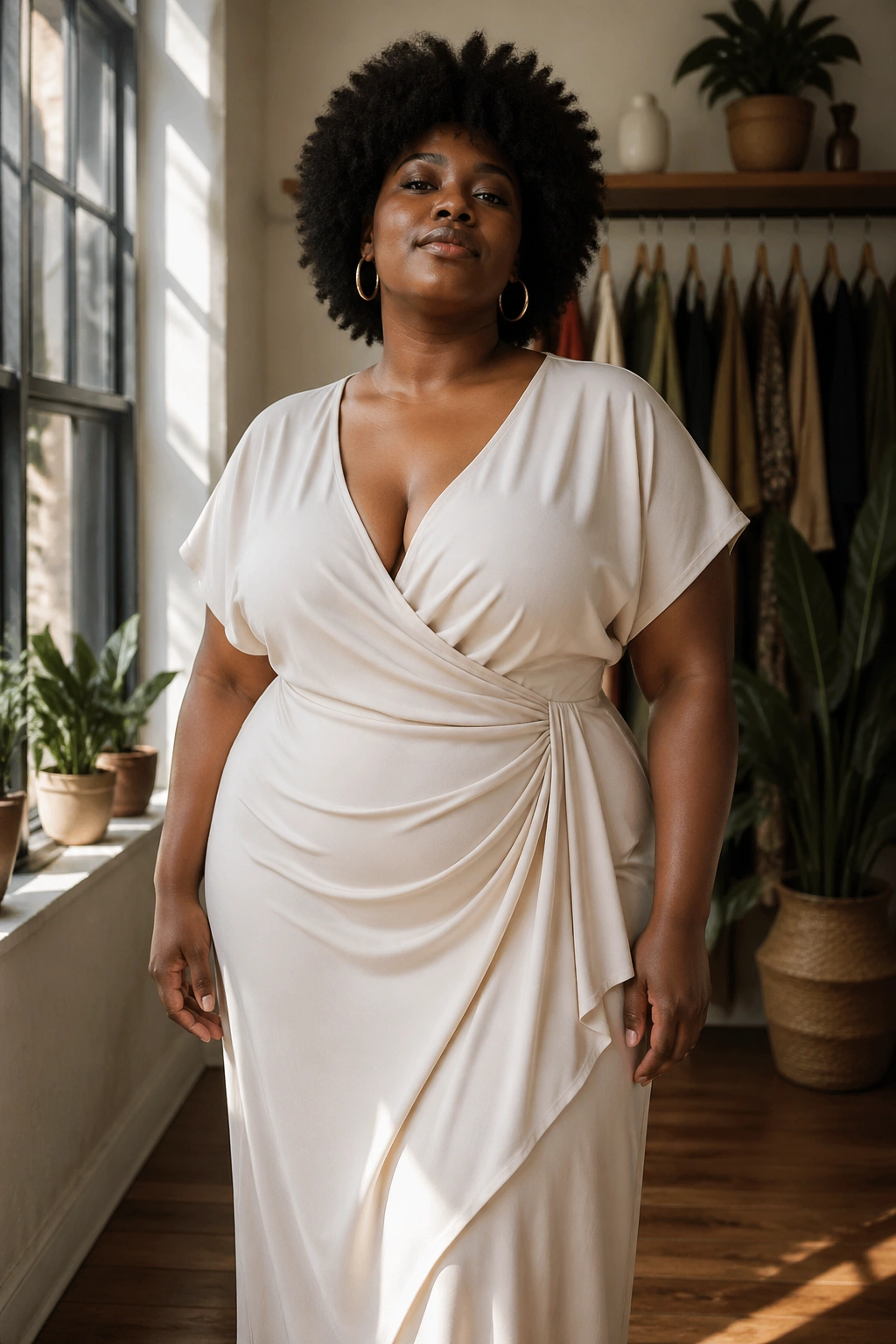
A tiered skirt — multiple horizontal layers of gathered fabric, each slightly longer than the one above — creates volume and movement below the waist in a way that’s exuberant rather than structured. In a bold print or a deep solid, it’s a skirt that rewards movement: the tiers swing with each step.
For curvy women, the tiered skirt works because the gathering of each tier distributes fabric evenly around the hips without creating a single high-volume point that reads as emphasis. The eye moves across multiple horizontal bands rather than reading the width of any single section.
Pair with a fitted tank or ribbed crop in a color pulled from the print. Block heeled sandals or wedges add height without the difficulty of stilettos on a skirt that generates its own momentum.
19. Ankara Peplum Top with Wide-Leg Trousers
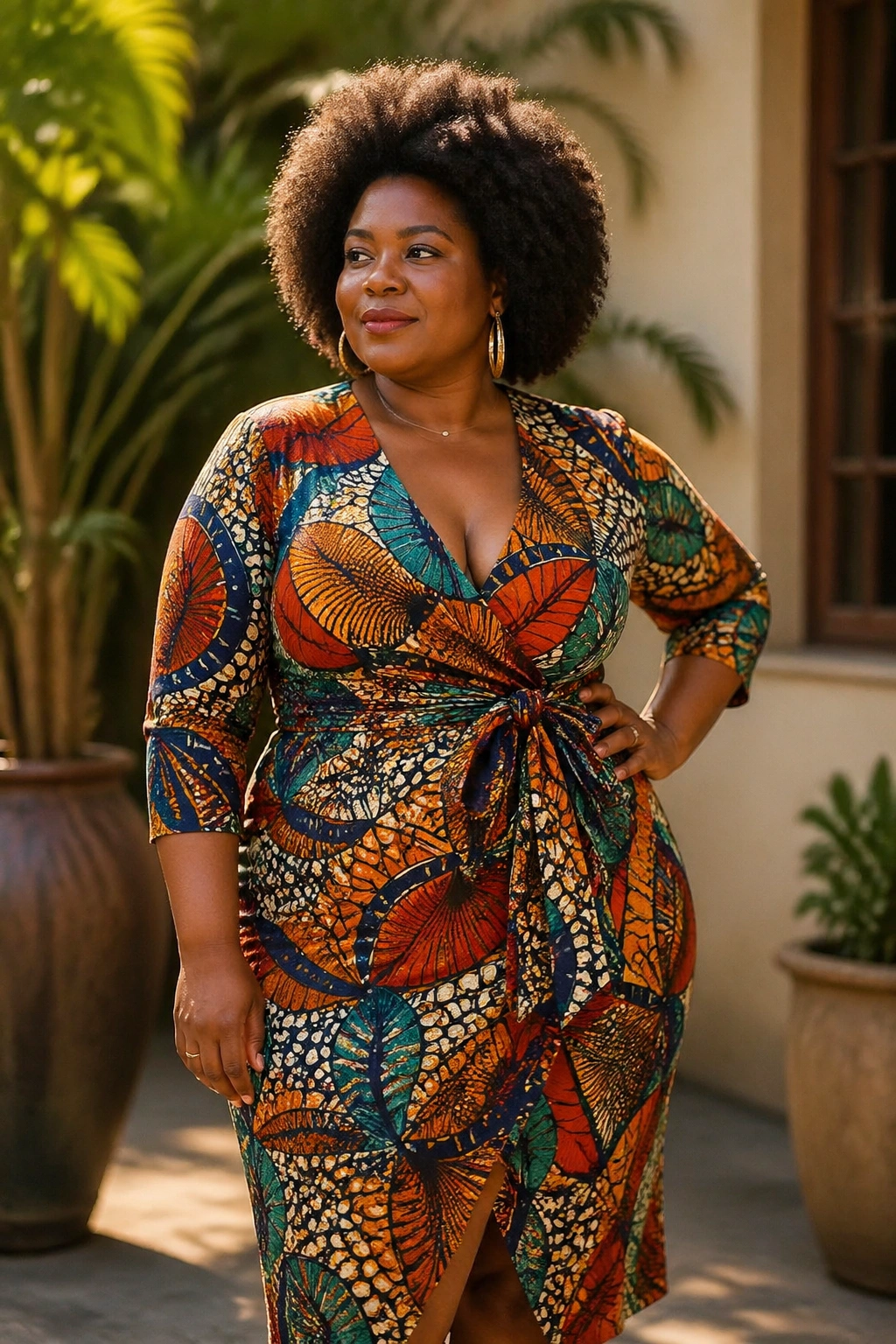
The peplum — a short, structured flare of fabric attached at the waist of a top or jacket — creates a specific silhouette effect: it covers and softens the hip-to-waist transition while creating visual emphasis at the waist itself.
An Ankara peplum top (the peplum adding structural interest and the print adding color and pattern) over wide-leg trousers in a solid color is a highly specific and consistently successful look for curvy women. The peplum handles the mid-section question while the wide-leg trouser creates length and flow below.
The top should fit through the bodice without pulling and the peplum should flare naturally from the waist seam rather than being pulled out by hip width underneath.
20. A-Line Midi Skirt in a Vivid Solid
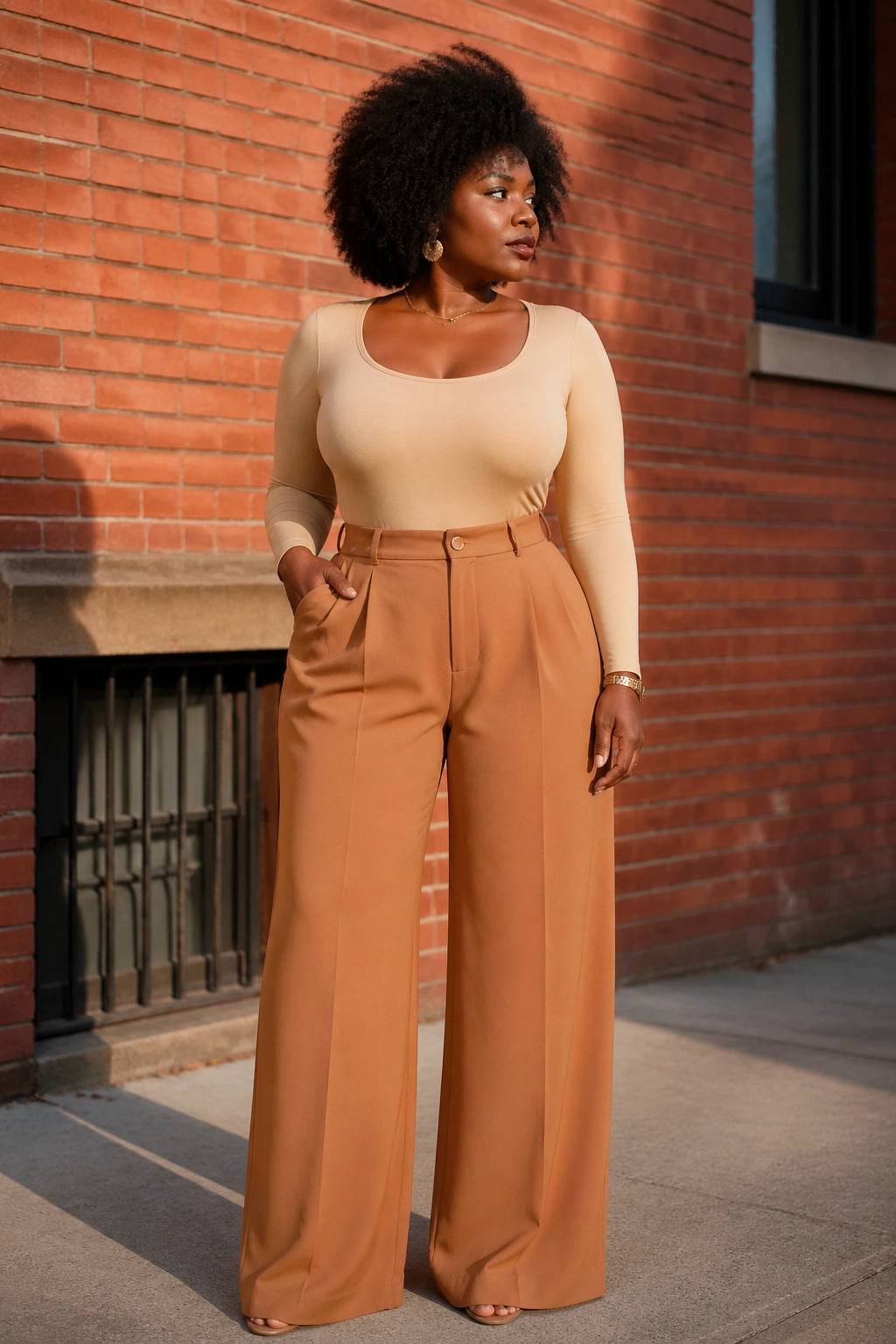
An A-line skirt — fitted at the hip and waist, then gradually widening in a smooth A-shape to the hem — is one of the oldest and most consistently effective silhouettes for curvy bodies. Not because it “hides” anything but because the gradual widening echoes the body’s natural curves without adding excess volume at any specific point.
In a vivid solid — cobalt, tangerine, chartreuse, magenta — and at midi length, this is a foundation piece that can be worn with almost anything and consistently looks considered.
The top: a simple fitted blouse, a structured bodysuit, or a fitted turtleneck depending on the weather. The skirt is doing the work; the top just needs to stay out of the way.
21. Cowl-Neck Midi Dress in Satin
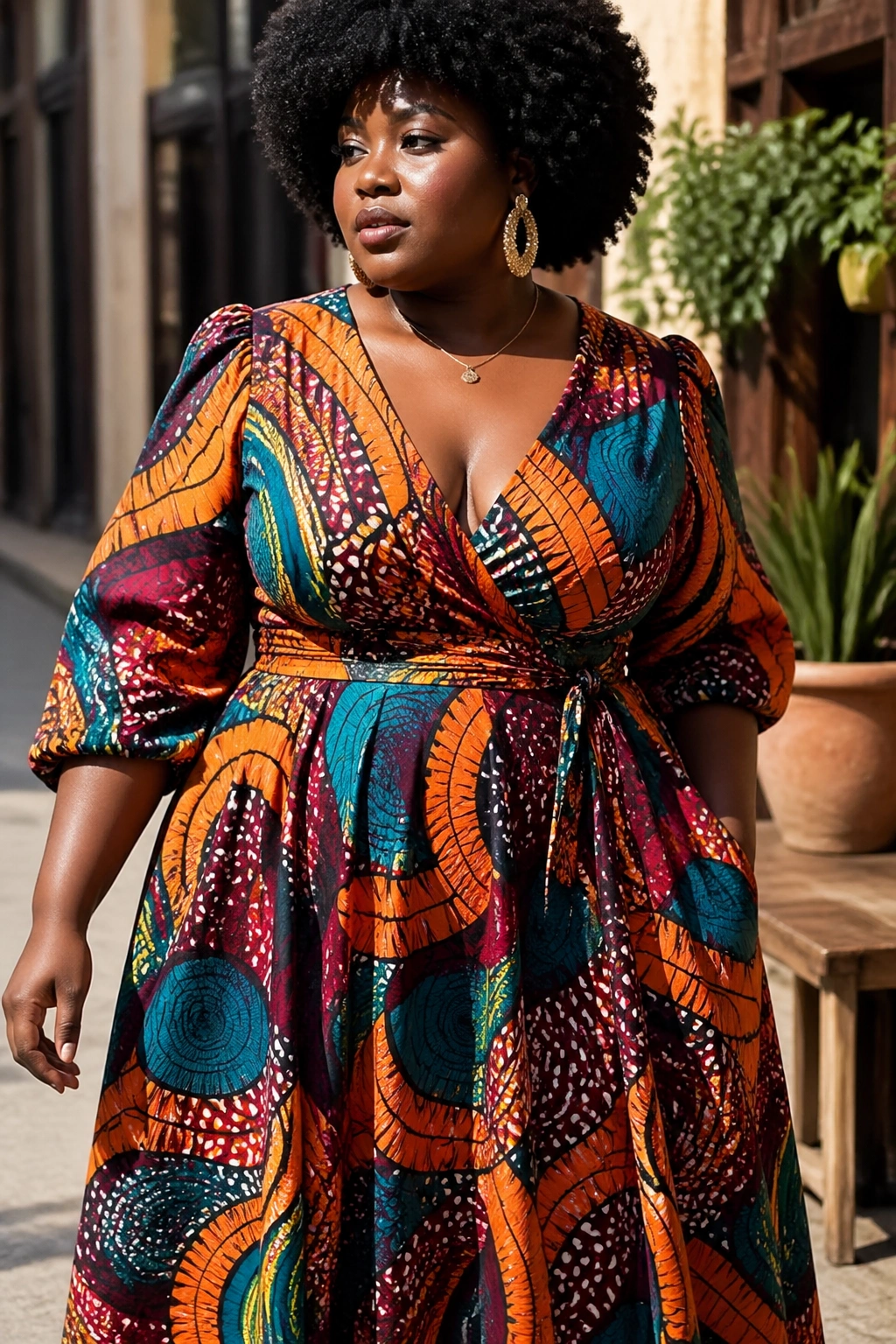
Satin cowl-neck dresses have a specific elegance that works across body types because the cowl draping at the chest creates soft, gathered fabric that doesn’t pull or cling across the bust in the way that a straight neckline often does. For curvy women with fuller busts, this is the neckline equivalent of breathing room.
The satin’s reflective quality adds richness and visual depth. In a midnight navy, deep emerald, or black, this dress photographs dramatically against the natural texture and volume of afro hair.
The length needs to be midi: satin at floor length is formal-only; satin at mini length reads cocktail. The midi strikes the practical balance for everyday events, work functions, and social occasions.
22. Head-to-Toe Bold Print Maximalism
The final idea isn’t a specific garment — it’s a commitment. Wearing a bold print from head to toe (a full-length Ankara maxi dress, a matching head wrap, statement earrings that echo a color in the print) is a maximalist declaration that centers your natural afro hair and your curvy body as the architecture around which a full, complete, unapologetic look is built.
This is afro fashion for curvy women at its most complete expression. No neutrals to play it safe. No single-statement piece with everything else toned down. Everything in the conversation at once — print, hair, body, jewelry — and the whole greater than the sum of the parts.
Who This Is For
This is for women who’ve stopped negotiating with fashion about whether their bodies or their hair are too much. It’s for women who’ve arrived at the understanding that more is more when the pieces are chosen with knowledge and intention. Wear it like you know exactly what you’re doing. Because you do.
Accessories That Work Specifically With Curvy Silhouettes and Afro Hair
Accessories operate differently on curvy bodies than they do on straight silhouettes, and understanding those differences saves you from expensive mistakes.
Belts are your most powerful accessory tool. A wide belt — four to six centimeters — in a quality leather or structured fabric, placed precisely at the natural waist rather than floating somewhere over the hips, defines the waist and creates a visual anchor for the whole look. Thin belts on curvy frames often read as afterthoughts rather than choices, particularly over flowing fabrics. The width of the belt needs to match the visual weight of the outfit.
Bags: the proportion of your bag relative to your body matters. A tiny micro-bag that disappears in the visual mass of a curvy frame reads as lost. A very large oversized bag can interrupt the silhouette you’ve built. The sweet spot is medium: a structured tote, a medium crossbody, or a clutch sized to be visible but not overwhelming. Bold bag choices — a brightly colored leather, an embellished clutch — work as accent pieces that punctuate the look.
Jewelry scale on curvy bodies with afro hair: both the hair and the body create visual presence. Jewelry has to compete — or intentionally contrast — with that visual mass. Small, delicate jewelry often disappears. Statement earrings, chunky rings, and layered necklaces register. This isn’t about compensating for anything; it’s just about scale matching.
Shoes have proportional relationships too. A very pointed, narrow flat on a curvy body with a full natural afro can read as visually imbalanced — too small and delicate at the base of a powerful silhouette. Shoes with more visual weight — a chunky sole, a block heel, a wide strap, a boot — ground the look more effectively.
Navigating Color as a Curvy Woman With Natural Afro Hair
The old rule — dark colors minimize, light colors expand — has been so thoroughly debunked by so many brilliant curvy women in vivid prints that it barely deserves mention. But the useful kernel inside the bad advice is worth extracting: strategic color placement can direct the eye.
If you have a specific feature you want to highlight — a defined waist, your collarbone, your shoulders — placing your most vivid or lightest color there draws the eye to that point. If you want the eye to move through the entire look without stopping at any single zone, a monochromatic palette does exactly that.
Your natural afro’s color — which ranges from deep black to warm brown to reddish-auburn in natural states, depending on your genetics — interacts with your clothing colors. Jewel tones create warmth against dark hair; bright pastels can create contrast; bold primaries create graphic, editorial effect. Try colors against your hair and skin together before buying — a swatch on your hand in a store doesn’t tell you how the color reads next to your face and hair together.
Finding Brands That Actually Work for Curvy Afro Fashion
The practical gap between fashion editorial and shopping reality is real. Not every brand that produces beautiful afro-inspired prints does so in a size range that includes curvy women. Seeking out brands that specifically design for a full size range — and that include curvy fit testing in their design process rather than just adding inches to a straight-size pattern — is worth the research time.
Black-owned fashion brands, particularly those working with African print traditions, are often ahead of mainstream fashion in this regard. The aesthetic tradition they’re working from has always included full-figured bodies rather than treating them as exceptions.
When mainstream brands don’t carry your size in the garment you want: custom tailoring is the alternative. A tailor who works with your preferred fabrics and understands your silhouette goals can produce something better than off-the-rack and at a cost that may surprise you.
Dressing With Your Hair, Not Alongside It
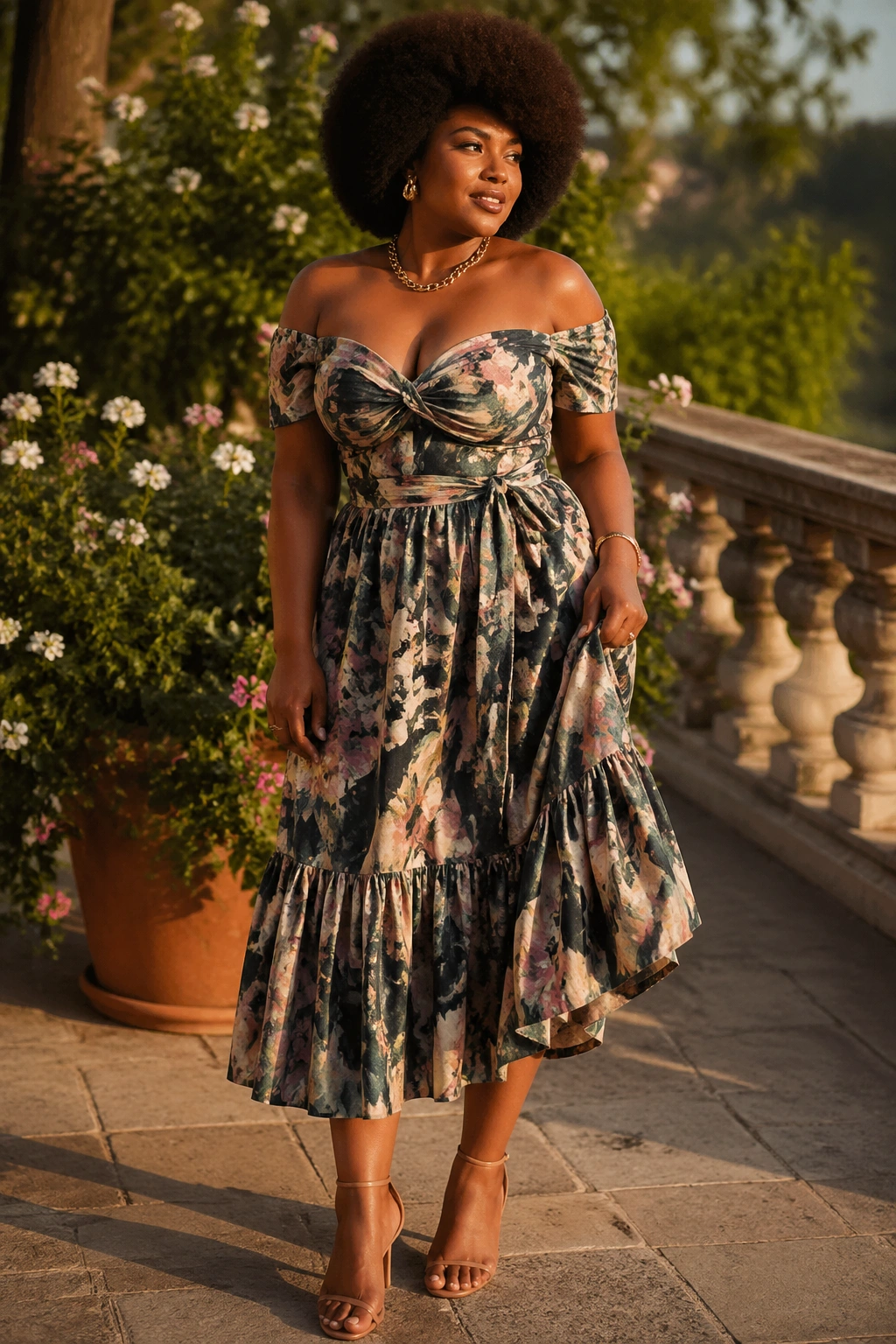
The principle worth carrying across all 22 ideas: your natural afro isn’t a separate consideration from your outfit. It’s part of the look. The height, volume, texture, and shape of your hair influence how every garment reads. When you make clothing choices that account for what your hair is doing — matching the visual weight, creating balance or amplification as you choose — the result is a complete look rather than an outfit with a hairstyle sitting on top of it.
That integration is what makes afro fashion for curvy women genuinely exciting. You’re not dressing in spite of your hair and your body. You’re dressing because of them.