



Loc styles for women with afro hair cover a range that most people dramatically underestimate until they’re actually in locs themselves. From the outside, locs can look like one style — long, rope-like sections of hair that hang down. From the inside — from the perspective of someone who’s been growing them for years — locs are one of the most versatile hair forms possible. The styling potential changes with every inch of growth, and the looks available at five years in are completely different from the looks at six months.
What locs offer that no other style does: they’re simultaneously a protective style, a statement of identity, and a permanent (or semi-permanent) commitment to a specific way of wearing your hair. They ask something of you. They take time to mature, they require consistent care, and they change character dramatically as they progress through stages — starter, budding, teenage, maturing, mature. Each stage has its own styling range and its own challenges.
Understanding Loc Stages and Why They Matter for Styling
You cannot wear every style on this list at every stage of your loc journey. This is worth saying clearly because it’s one of the most common sources of frustration for people new to locs. The starter-loc stage — roughly months 1-6 depending on your starting texture and method — produces locs that are essentially just sections of twisted or braided hair that haven’t yet tightened into a solid, locked cylinder. They’re delicate. They unravel easily at the ends. They can’t hold complex updos without loosening at the base.
The budding stage — roughly months 6-12 — is where your locs start to tighten noticeably. You can feel the difference between the tighter root-to-mid section and the still-loose ends. Styling options expand here but are still limited. The locs need to be handled with care.
Maturing locs — beyond 12-18 months depending on your texture and locking method — are where the real styling freedom begins. The loc is solid from root to tip. You can twist, pin, fold, braid, and pull with confidence that the loc itself won’t come undone.
Starting Methods That Affect Later Styling
The method you use to start your locs has a lasting effect on their texture, thickness, and how they can be styled.
Two-strand twist starter locs produce a twisted, ridged texture along the length that remains even as the loc matures. When mature, these locs have a slightly irregular surface that catches light in interesting ways.
Comb-coil or sister locs produce tighter, more uniform locs with a coiled surface. They tend to be thinner and finer, which affects the range of updos you can attempt — finer locs pack more tightly into buns and updos but may slip out of pins more easily.
Freeform locs — allowed to mat and lock organically without manipulation — produce locs with organic variation in size and shape. Some merge, some branch, and the surface is irregular in a way that looks distinctly natural. These are the most unique-looking locs but also the ones with the least control during formation.
Interlocked locs (using a latch hook through the root) produce a very tight, uniform root formation. They resist slippage and are popular for active naturals who wash frequently. But they can be more difficult to manipulate in certain updos because the root is tightly locked in one direction.
How Loc Length and Thickness Determine Your Styling Range
Thin locs — sometimes called sisterlocks or micro locs — open up styling options that thick locs can’t manage. You can curl thin locs on small rollers, braid them into intricate patterns, pin individual locs in detailed configurations. The trade-off is installation time (micro loc installations can take 8-12 hours) and fragility — thinner locs can break if stressed.
Thick locs are bolder and more dramatic visually. Individual locs have weight that helps them maintain a shape when gathered into updos. They can’t be curled on small rollers effectively, but their weight actually helps with voluminous updo styles that require substance.
Length is more straightforward: more length means more styling options, simply because there’s more hair to work with. Hip-length locs can be braided, coiled, piled, knotted. Chin-length locs have fewer options but still significant versatility — buns, half-ups, pins, and accessories.
Daily Loc Care That Supports Styling Success
Locs that are properly maintained are easier to style, full stop. Dry, neglected locs become brittle and difficult to manipulate without breakage. Well-hydrated locs bend and fold without resistance.
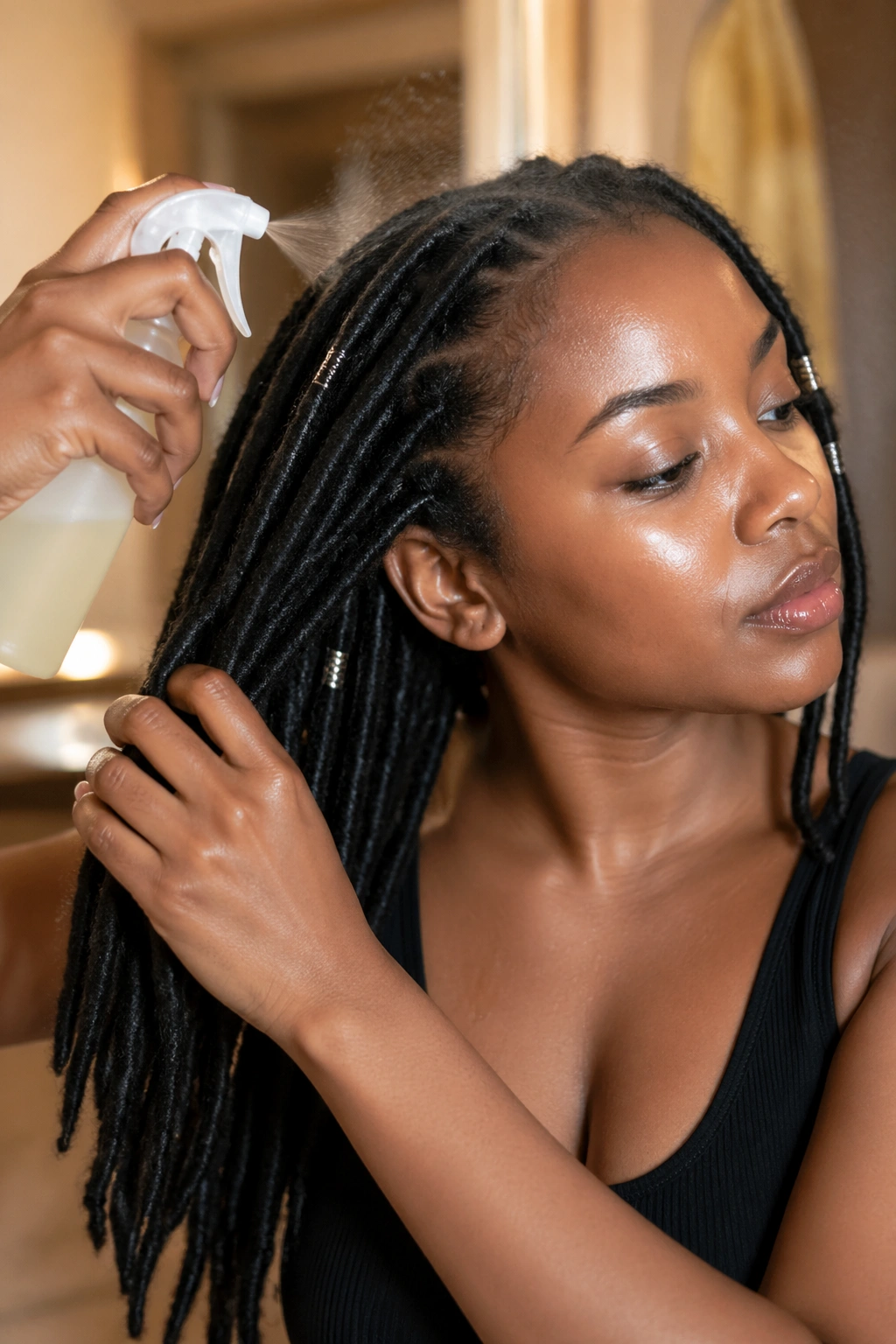
The primary maintenance task is moisture. Not oils — moisture. Many people make the mistake of coating their locs in heavy oil products, thinking this constitutes moisturizing. Oil seals but it doesn’t moisturize. Water moisturizes. A spray bottle of water with a few drops of a lightweight oil — aloe vera juice is an excellent addition — applied to the locs every 2-3 days is more beneficial than a weekly heavy oil treatment.
Scalp care is separate. Your scalp still needs regular cleaning — aim for every 1-2 weeks. Diluted shampoo or a purpose-made loc shampoo applied directly to the scalp, worked in with fingertips, and rinsed thoroughly. Rinse carefully — product residue left in locs contributes to buildup and mildew smell. Dry thoroughly after washing. This matters: wet locs that stay wet inside develop a musty odor that is very difficult to reverse. Sit under a hooded dryer, or air dry in a well-ventilated space for as long as it takes.
Accessories That Work Best with Locs
Locs are one of the most accessory-friendly hair forms. Their length and texture hold clips, pins, wraps, beads, and rings with much more reliability than loose natural hair.
Large flat clips and bobby pins work best on mature locs — starter locs are too delicate for heavy pinning. Loc jewelry — small metal cuffs, rings, or charms threaded onto individual locs — can be left on for extended periods and becomes part of the loc’s visual story. Scarves and head wraps work with any loc length because you’re not pinning into the hair, just tying around it.
1. Classic Long Locs Worn Down
Fully mature, long locs — waist length or longer — worn completely loose. No pinning, no gathering, no accessories. Just the locs themselves.
Why It Works
There is something genuinely awe-inspiring about a full head of long mature locs worn loose. The weight, the movement, the way each loc behaves slightly differently from the others — no two move exactly alike. This is arguably the most powerful presentation of locs and requires nothing from you except having grown them to that length.
It also represents the culmination of years of commitment. Long locs worn loose are a statement that doesn’t need to say anything.
2. Loc Updo Bun
Gather all locs at the crown, nape, or center of the head and secure with a strong elastic or by wrapping one loc around the base of the gathered section and pinning it. Fan the gathered locs out or let them pile on themselves — the resulting bun has significant visual weight and texture.
The height of the bun changes the look considerably. A crown bun reads formal and regal. A low nape bun reads professional and understated. Both are achieved in under 3 minutes once your locs are long enough to reach the gathering point.
3. Half-Up Loc Style
Top section of locs gathered and secured — either at the crown or higher — bottom section left loose. The gathered section can be a simple bun, a twisted knot, or left as a loose fountain. The loose bottom section shows the length and natural hang of the locs.
The easiest variation on this list. It requires nothing except a fabric-covered elastic that can hold the weight of mature locs. Make sure the elastic is wide and strong — standard thin hair elastics will break under the weight of long, thick locs. A large, thick satin scrunchie is the correct tool.
4. Loc Ponytail
All locs gathered at the nape and secured to hang freely — identical in concept to a hair ponytail but with the weight and texture of locs. The texture of the hanging locs makes this look nothing like a standard ponytail. The individual locs hang separately rather than as one smooth mass, creating visible depth and movement.
For very long locs, the ponytail may reach past the waist. For shoulder-length locs, the gathered bunch sits at the nape and fans outward. Both look completely different and both read distinctly as loc styles.
5. Loc Crown Braid
Take a section of locs from one temple and weave them under and over locs from the opposite side, creating a simple braid effect across the top of the head. Pin the ends on the opposite side. Do the same from the other direction if desired. The locs themselves are the braiding material — you’re braiding locs with locs.
How to Get the Most From It
This only works on locs that are long enough to reach across the crown — typically 8+ inches of loc length. Shorter locs won’t reach, and forced styling results in tension that damages the root. Wait until you have the length, then use it. The result is a detailed crown that frames the face without any tools other than a few pins.
6. Loc Space Buns
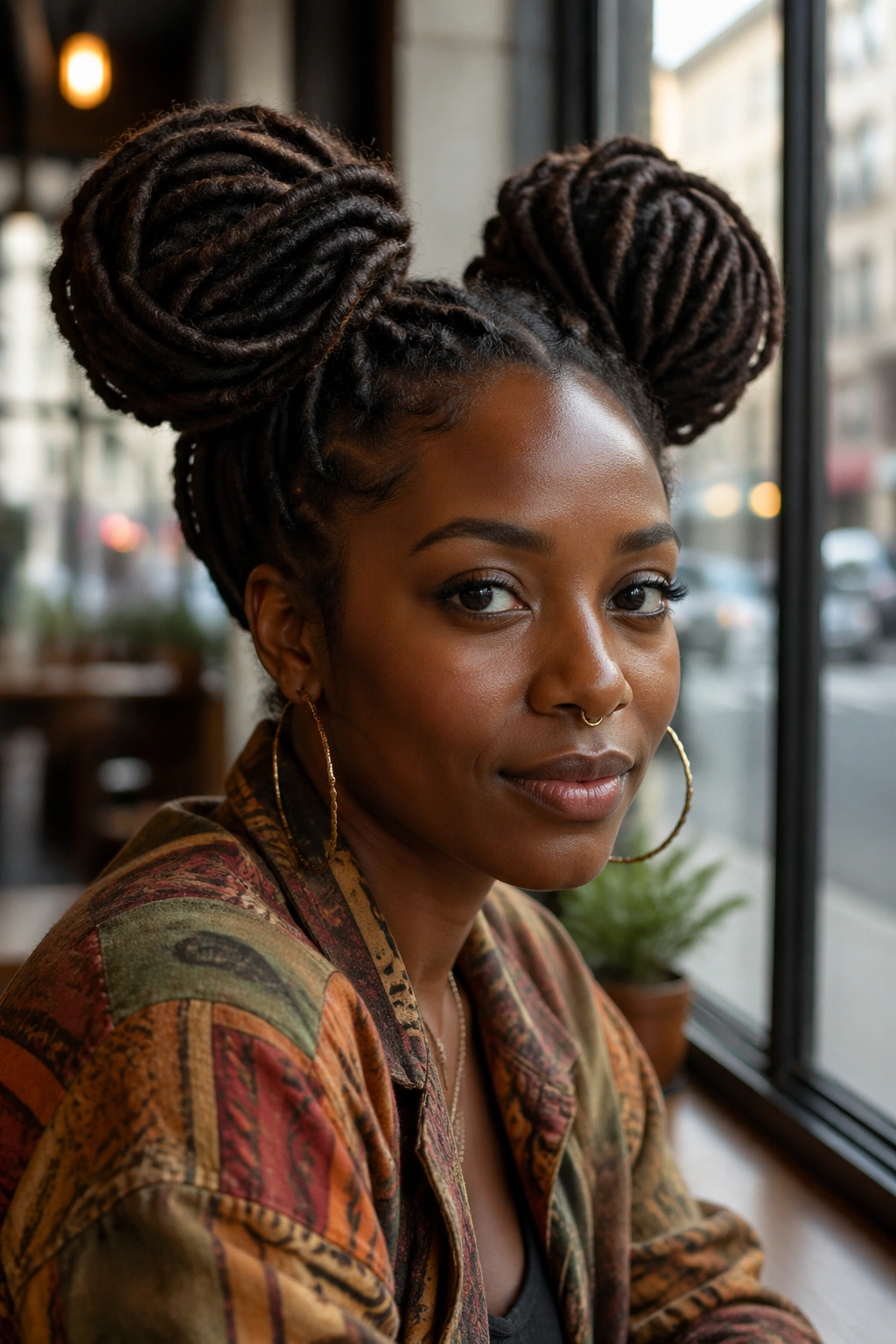
Two high buns — one on each side of the head — made entirely of locs. Split your locs down the center, gather each side into a high bun and secure. The loc texture makes these buns more sculptural and interesting than the same style done with straight hair. They have visual mass.
This is a deliberately playful style that works on any loc length from chin to shoulder. Short locs create small, compact buns. Longer locs create rounder, more substantial ones.
7. Freeform Loc Bun with Tendrils
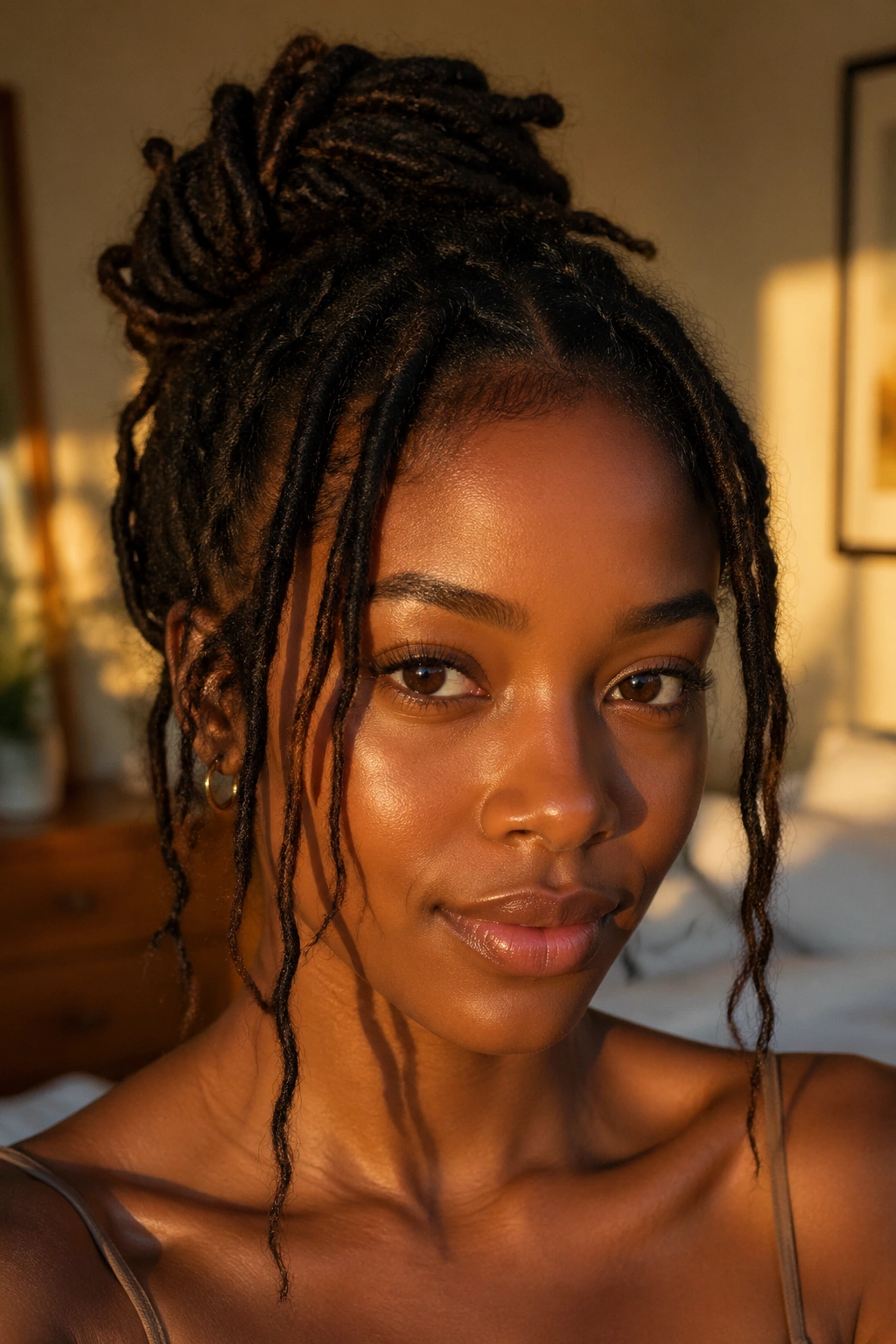
Gather the majority of your locs into a loose bun at the crown or nape and leave 4-6 individual locs loose around the face — hanging at the temples, behind the ears, or draped at the nape. These loose locs frame the face and soften what would otherwise be a tight, structured updo.
The deliberate looseness is the design element. Choose which locs to leave out intentionally — the ones that frame your face most naturally when loose. Pull them free after securing the bun rather than trying to gather them away first.
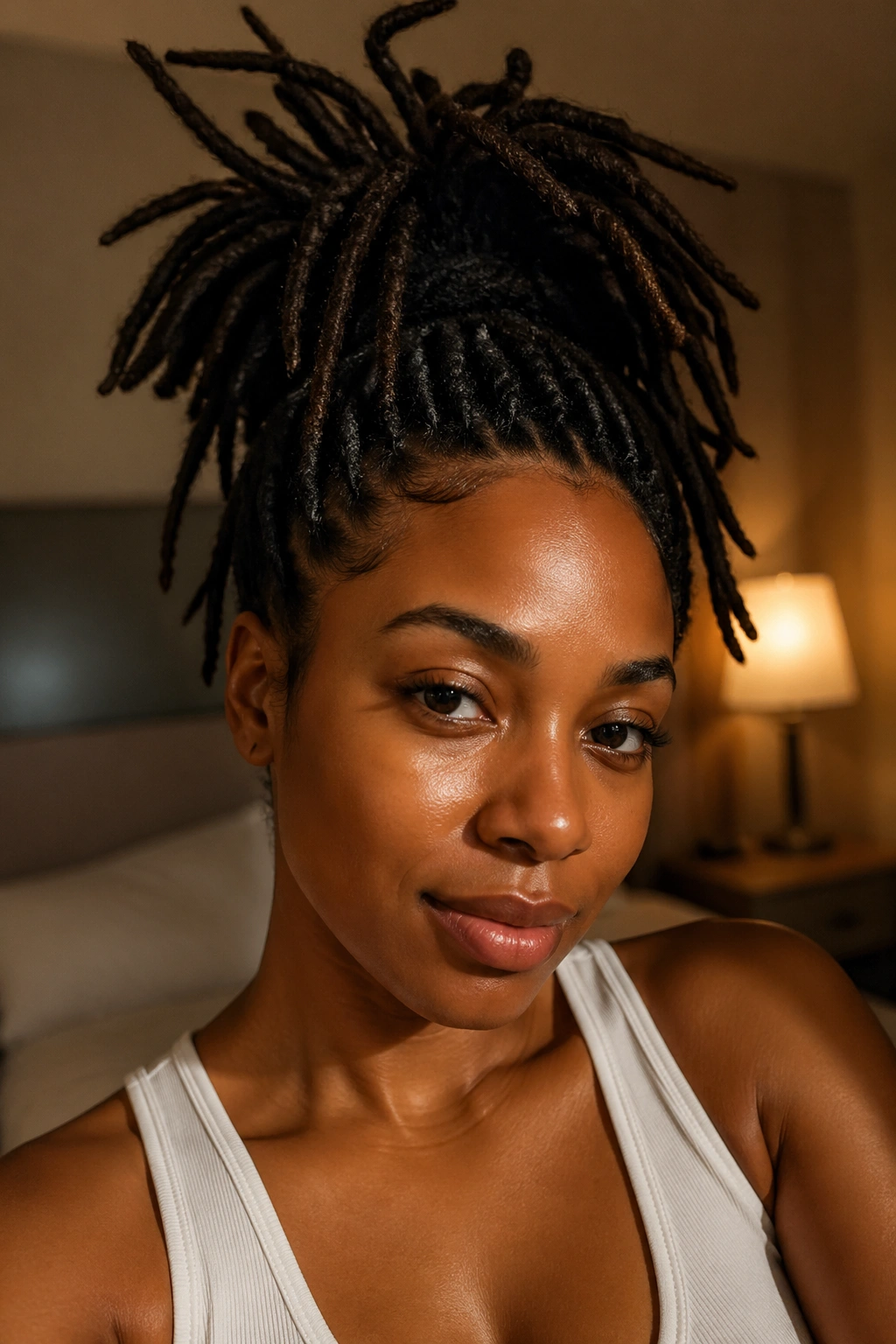
8. Locs in a High Pineapple
Gather all locs to the very top of the head — as high as possible — and secure loosely. The locs cascade from the gathered point in all directions, creating a pineapple or fountain effect. Shorter locs stand out from the gathered point; longer ones arch and fall.
This is primarily a nighttime preservation style — it keeps the locs off the pillow and neck during sleep — but it’s also a legitimate daytime look. A loose pineapple worn with comfortable clothes reads casual and completely effortless. The key word is loose — the gathering should not be tight enough to cause tension at the hairline.
9. Braided Locs
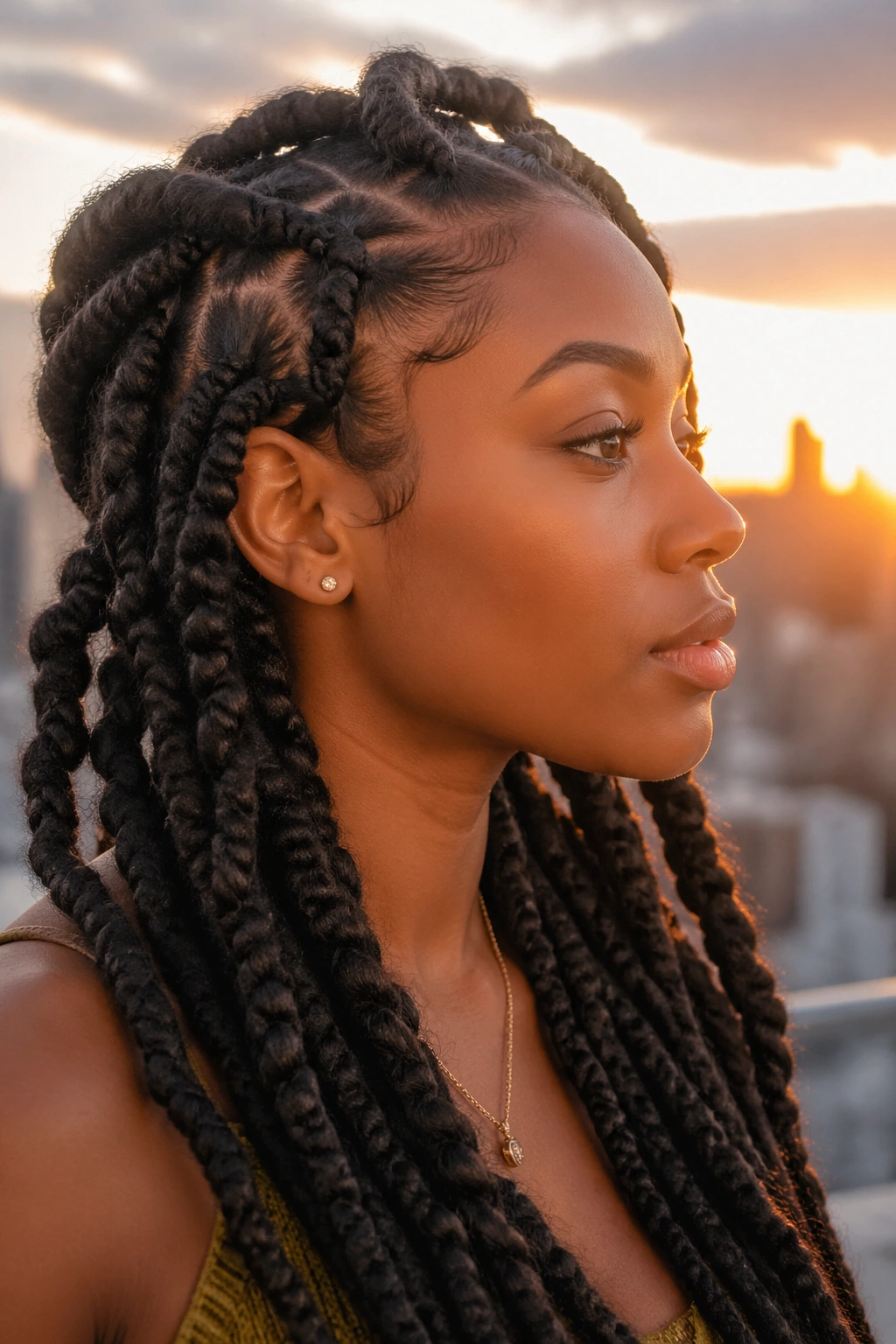
Take individual locs — or groups of 2-3 locs — and braid them together. The resulting braid is thick and textured, with the individual loc surface visible through the braid. When the braid is released, the locs return to their normal form — no damage done. This is a temporary style within the loc journey.
Braiding with locs rather than hair produces a much more organic, irregular result than braiding with natural hair. The locs themselves are already formed cylinders; braiding them together creates a multi-textured rope that has both braid pattern and loc texture simultaneously.
10. Loc Bantu Knots
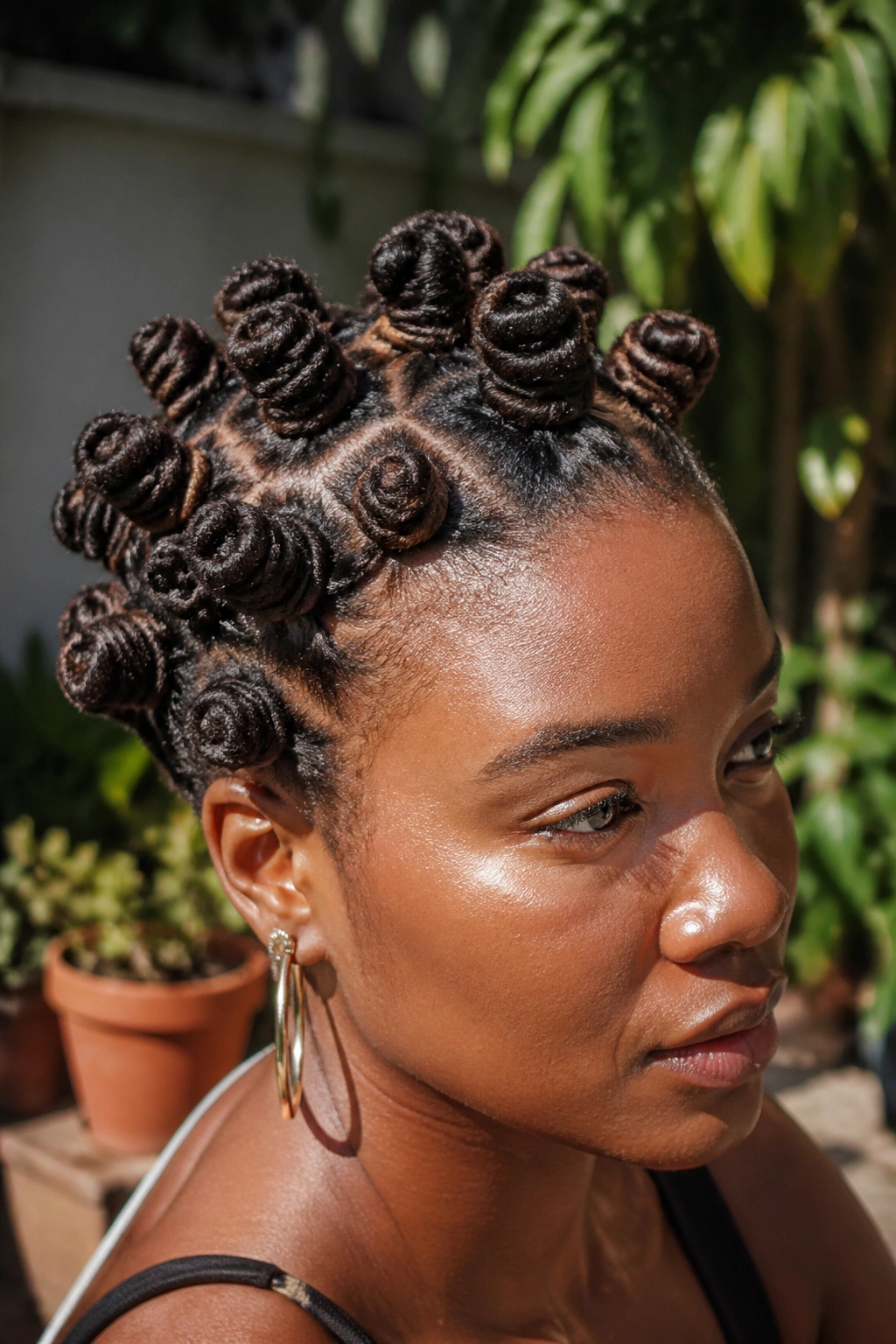
Take individual sections of locs — or small groups — and coil them into Bantu knots, tucking the ends under. The resulting knots are rounder and more sculptural than standard Bantu knots because the loc has more rigidity than loose natural hair. When the knots are released after drying, the locs retain the coiled memory in a soft curl pattern.
What to Watch For
Loc Bantu knots require mature locs — the loc needs to be flexible enough to coil without resistance but not so fresh that the coiling damages the loc formation. If you’re in the early budding stage, skip this. At 18+ months of loc growth, this is a beautiful option that temporarily changes the character of your locs dramatically.
11. Locs in a French Twist
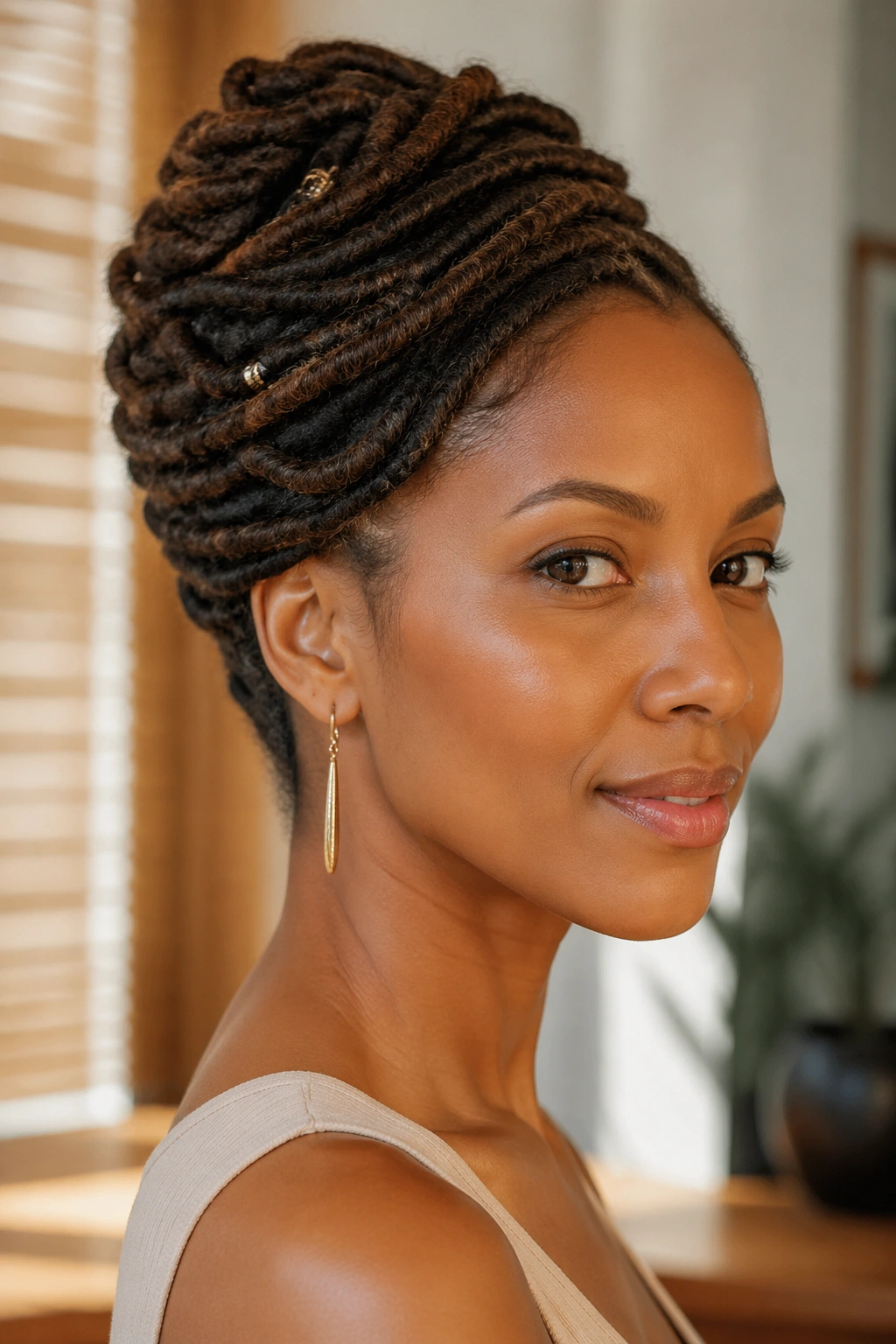
Sweep all locs to one side and roll them into a vertical French twist — the same technique as a standard French twist but with the weight and texture of locs creating a much more substantial roll. Secure with U-shaped pins along the twist. The loc texture grips the pins better than straight hair, so this holds without a lot of reinforcement.
This is one of the most elegant updo options for locs. It works for formal occasions, professional settings, or any time you want maximum impact from a polished updo. The individual locs visible at the top of the twist add texture that prevents it from looking severe.
12. Locs Worn with a Head Wrap
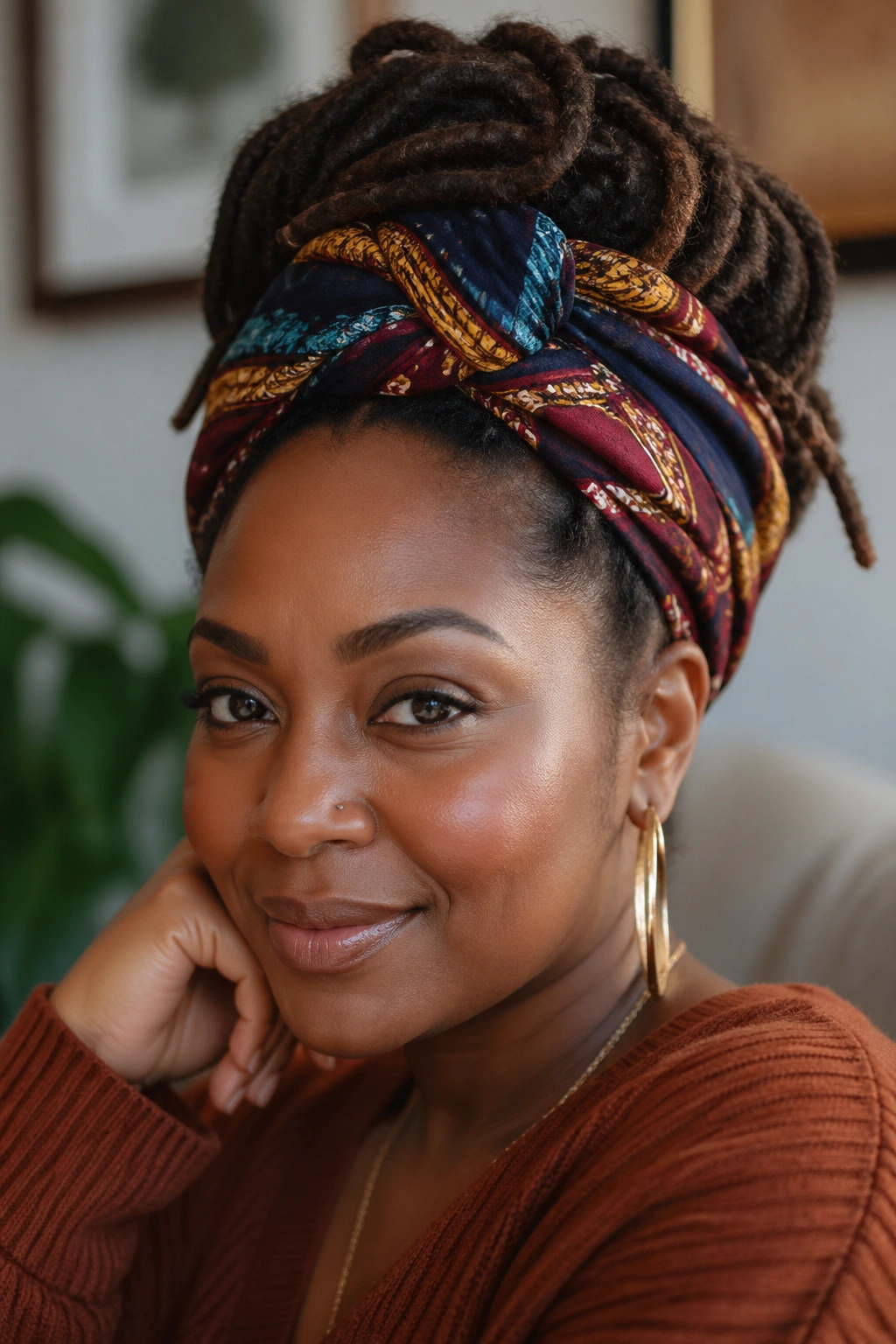
Gather your locs into any updo — pineapple, bun, or low gather — or leave them loose with the front section pulled back, and then tie a large head wrap over and around the style. The wrap can completely conceal the locs or leave them peeking out at the top and sides.
Head wraps with locs are a whole discipline of their own. The weight of mature locs changes how the wrap sits and how it needs to be secured. Start with the locs in a stable updo before wrapping — trying to wrap over loose locs results in the wrap slipping constantly. Once the locs are gathered, the wrap has something stable to anchor on.
13. Loc Ponytail with Wrapped Accent
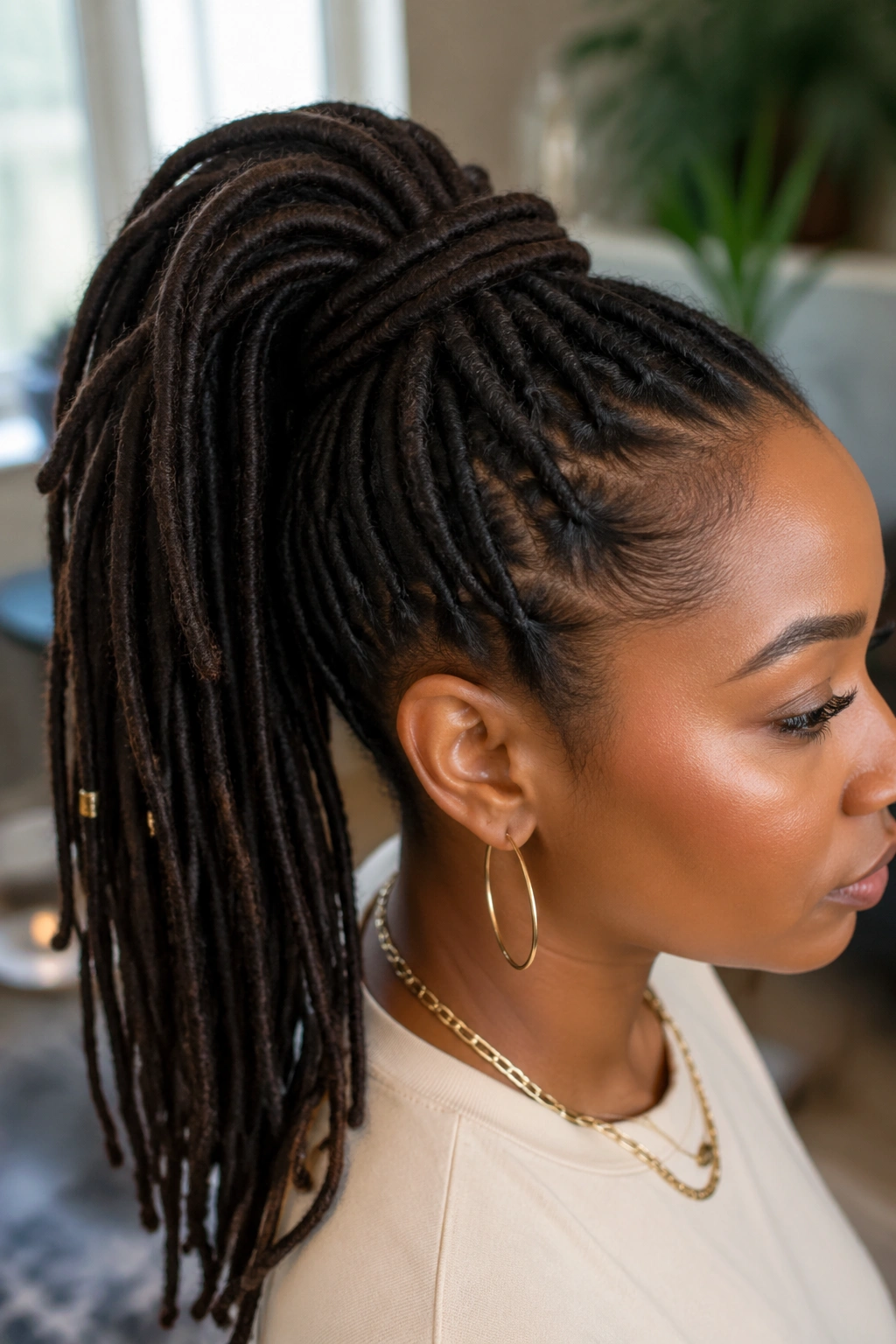
Pull all locs into a ponytail and then take one individual loc — ideally a longer, thinner one — and wrap it repeatedly around the elastic at the base of the ponytail. Tuck the end underneath the wrapped coils or pin it in place. The single loc wrap creates a decorative “tie” that completely covers the elastic and looks intentional.
This takes about 90 seconds. It’s one of the simplest upgrades to a basic loc ponytail and the effect is disproportionately polished. Anyone who notices it will think you spent much longer on it than you did.
14. Individual Loc Pinning (Sculptural Updo)
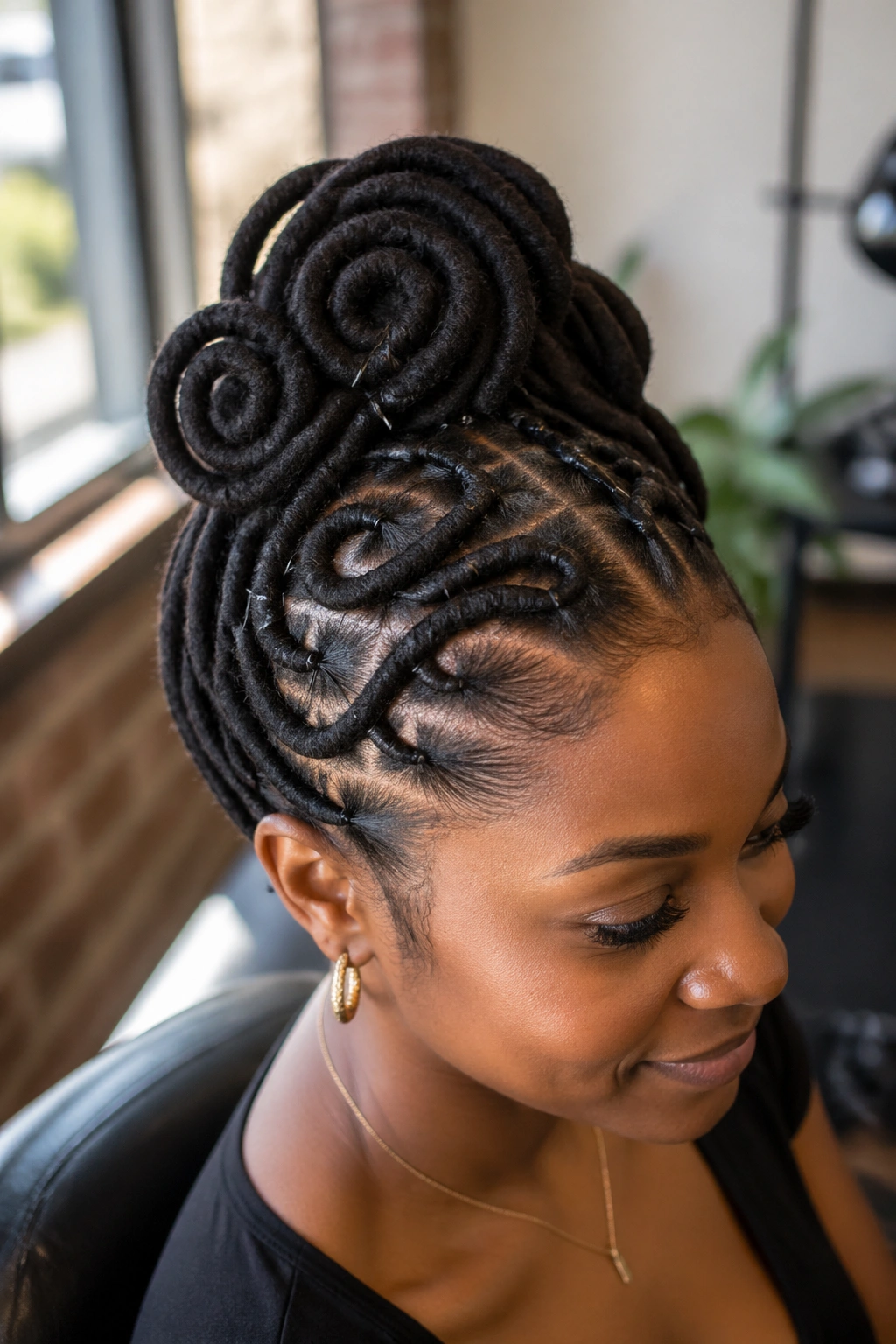
Pin individual locs against the head in a deliberate arrangement — coiled flat against the scalp in a spiral, folded over each other in a geometric pattern, or fanned across the crown like rays. Each loc is pinned separately. The result is a detailed, sculptural updo that reads almost like loc art.
This requires patience and mature locs. It can take 20-30 minutes but the result is genuinely unlike anything else on this list. No two people do it exactly the same way — the arrangement is personal, shaped by which locs you have, how long they are, and where you choose to pin them.
15. Locs in a Side Sweep
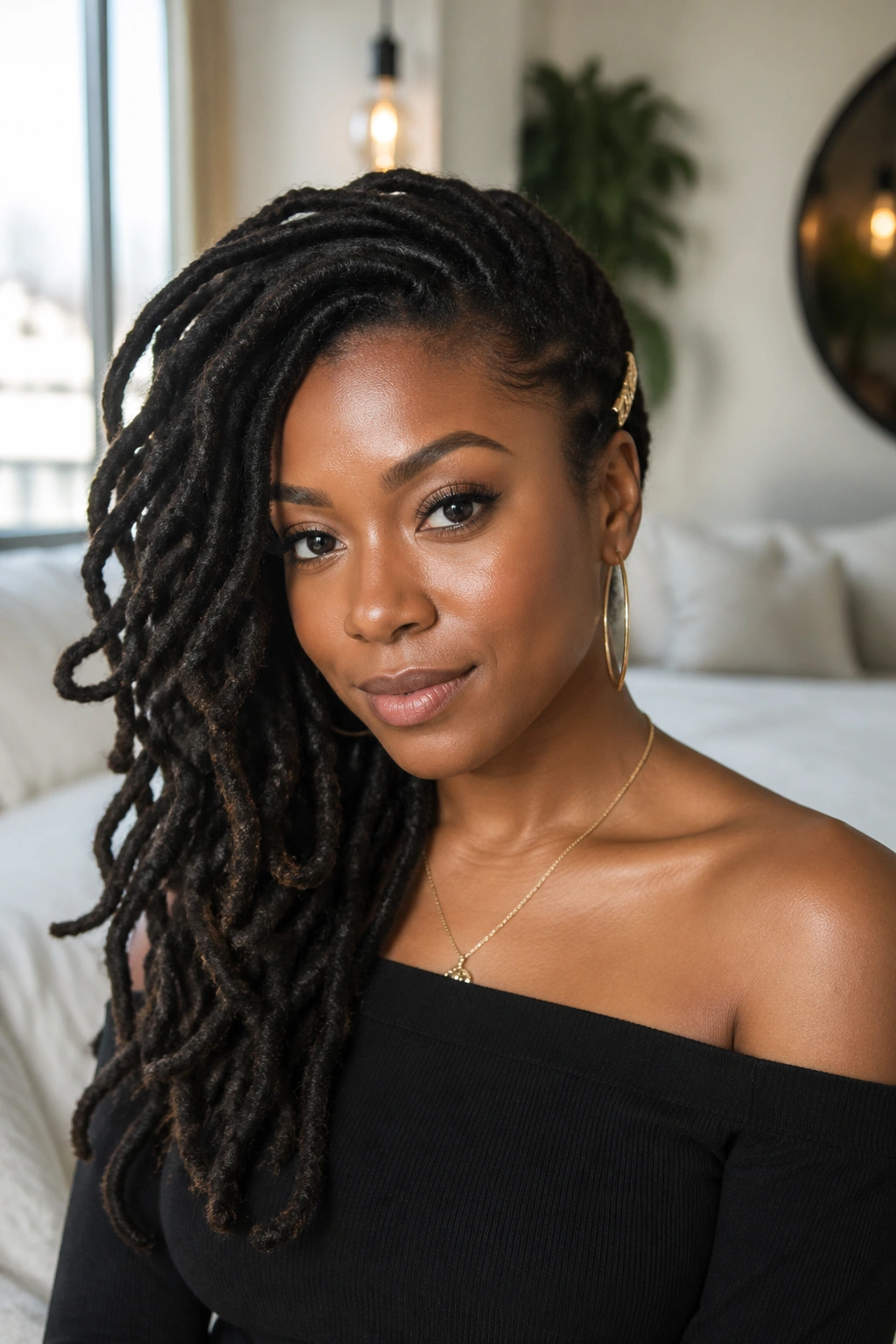
Pull all locs to one side and drape them over one shoulder. Use a single pin at the opposite temple to anchor the locs in the swept position. The resulting silhouette is asymmetrical and dramatic — all the volume on one side, clean space on the other.
This works especially well with very long locs, where the swept mass has enough length to drape past the shoulder and cascade down the arm. It’s a style that photographs beautifully from the front because the volume and the exposed neckline create a strong graphic contrast.
16. Loc High Top
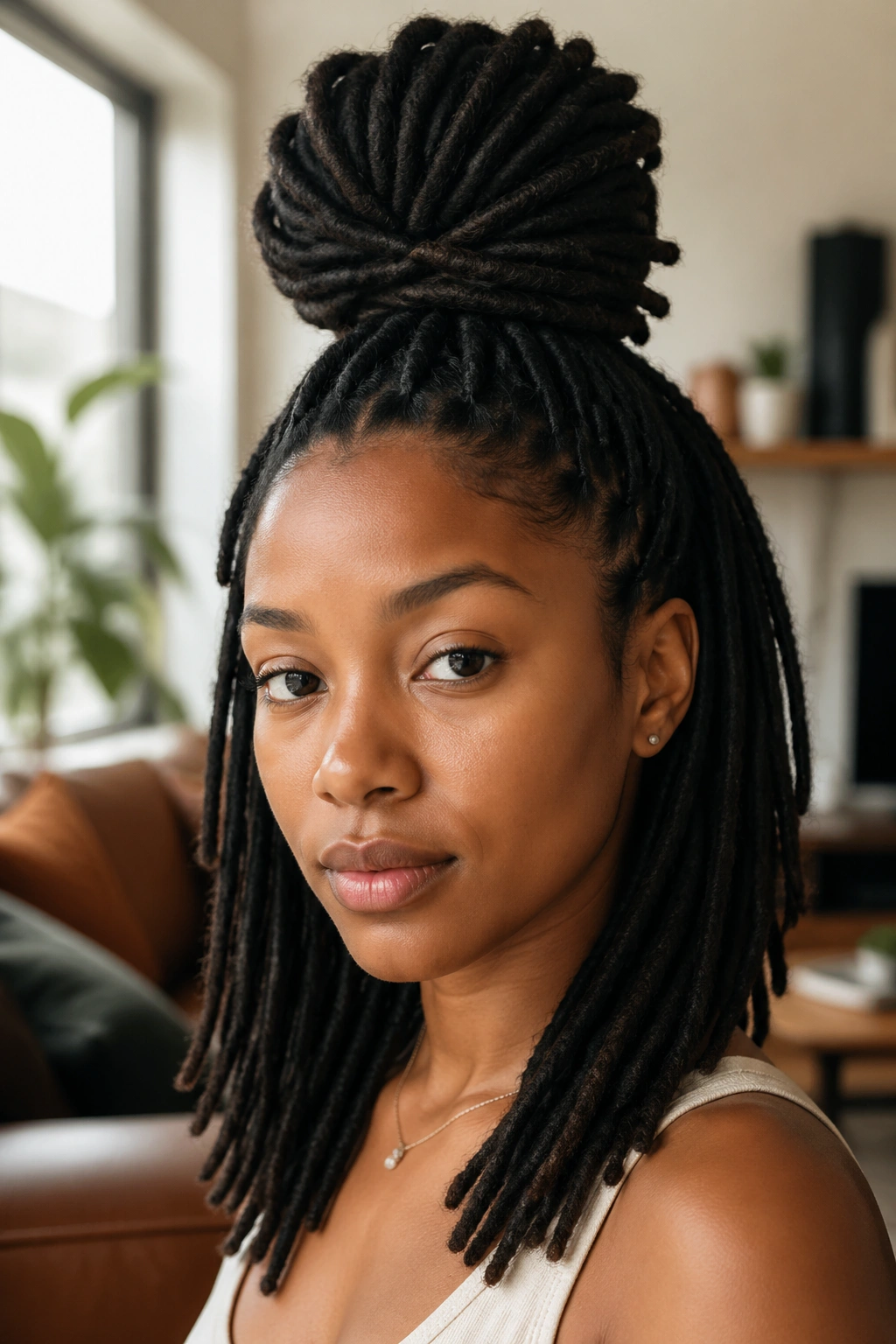
Gather only the locs from the top and crown sections — leaving the sides and nape free — and pile them high. The top section becomes a tall, voluminous fountain while the side and nape locs hang loose. The contrast between the vertical gathering on top and the free-hanging sides reads like a cross between a mohawk and a puff.
This works best when the locs on the top of the head are noticeably longer than those at the sides and nape. Natural growth patterns often produce exactly this — more protected growth at the top. Use what you’ve got.
17. Locs with Beads Throughout
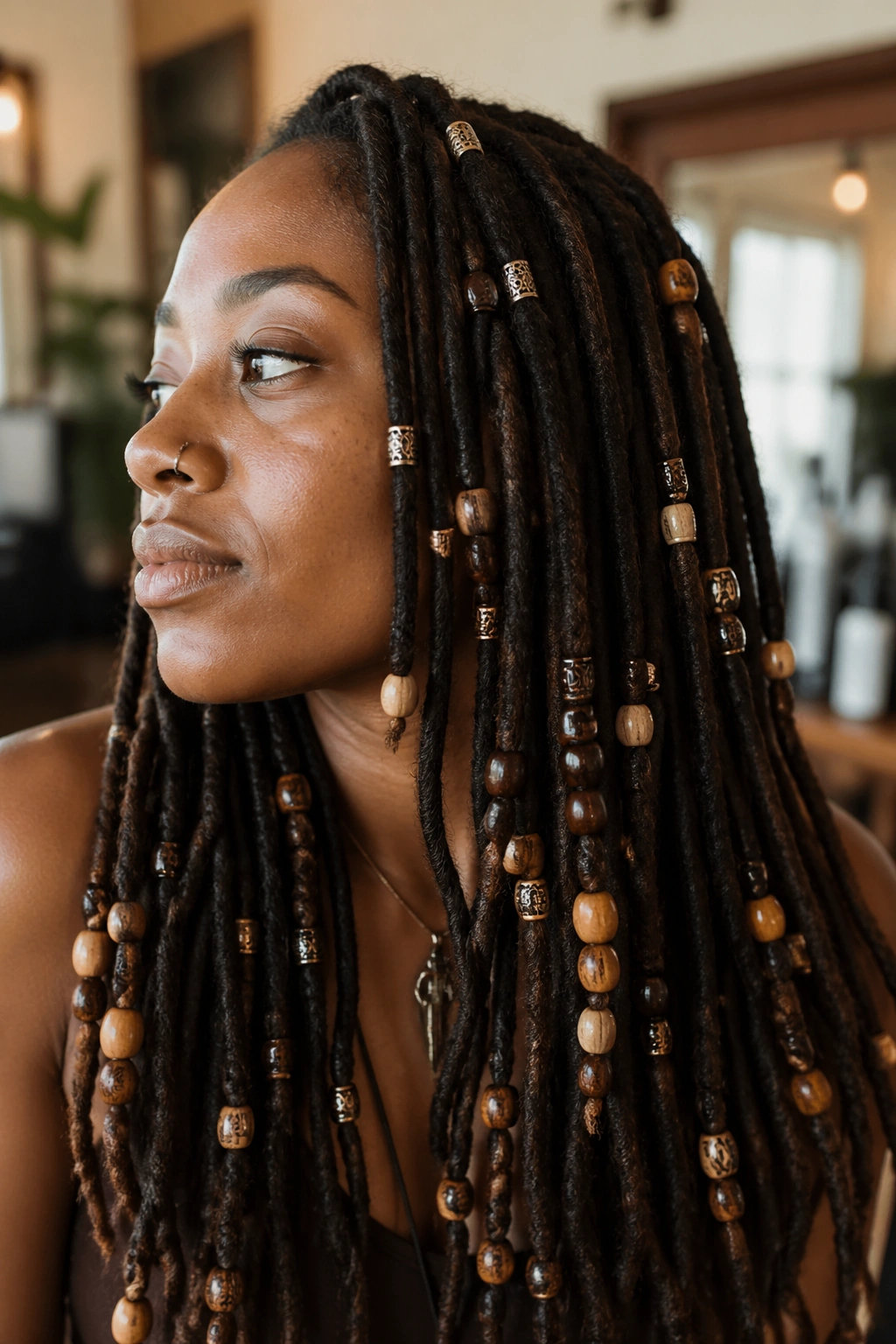
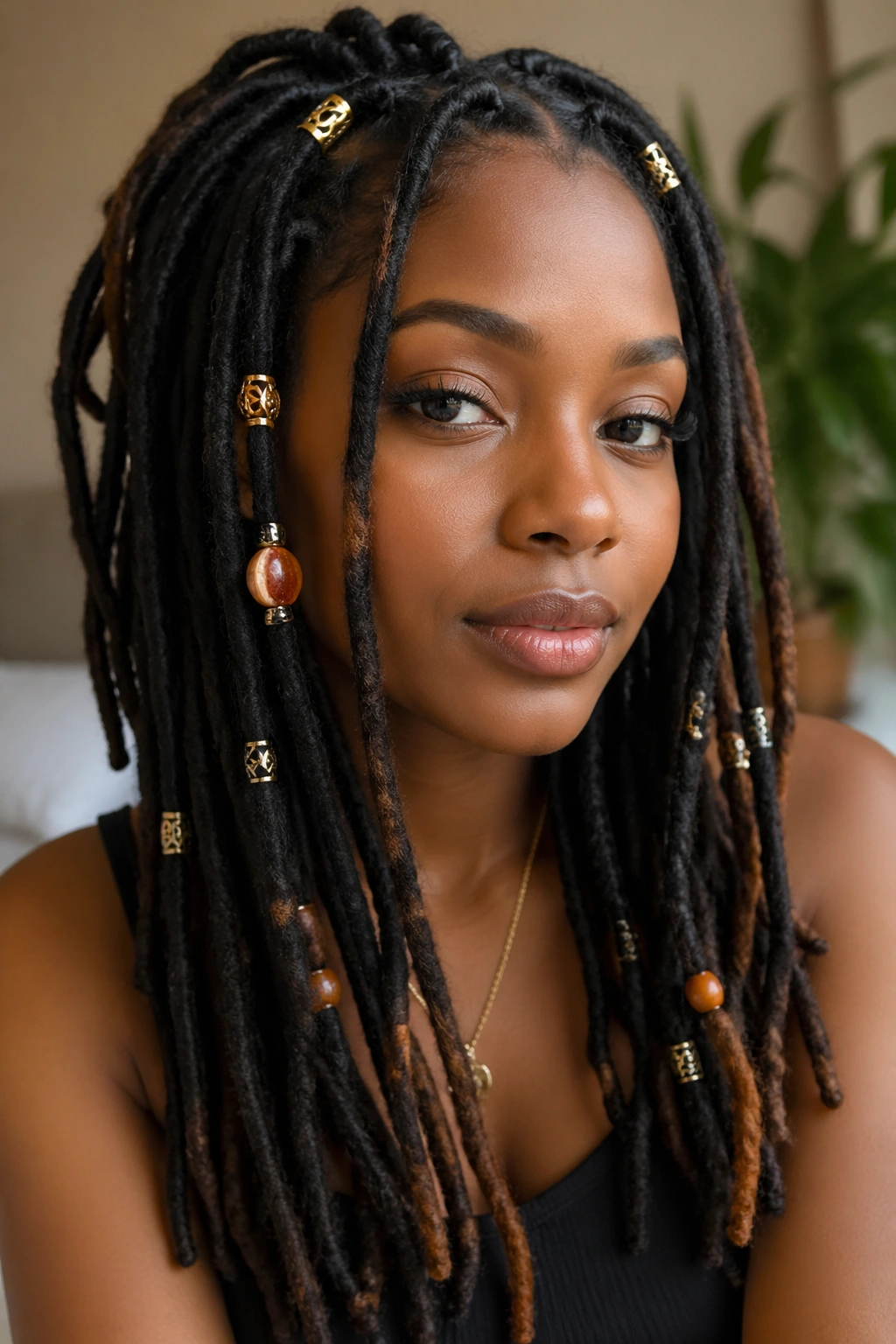
Thread small wooden or metal beads onto individual locs throughout the head — not just at the ends but at different points along each loc’s length. The beads stay in place because the loc’s rough surface creates friction against the bead interior. They don’t slide freely the way they would on smooth braided hair.
Beads on locs become semi-permanent additions. They can be left on for weeks or months. Over time, the bead positions shift as the locs grow and settle, which is part of the charm. The sound they make when your head moves is a feature. The visual is maximalist but organic.
18. Locs with a Braided Crown Across the Front
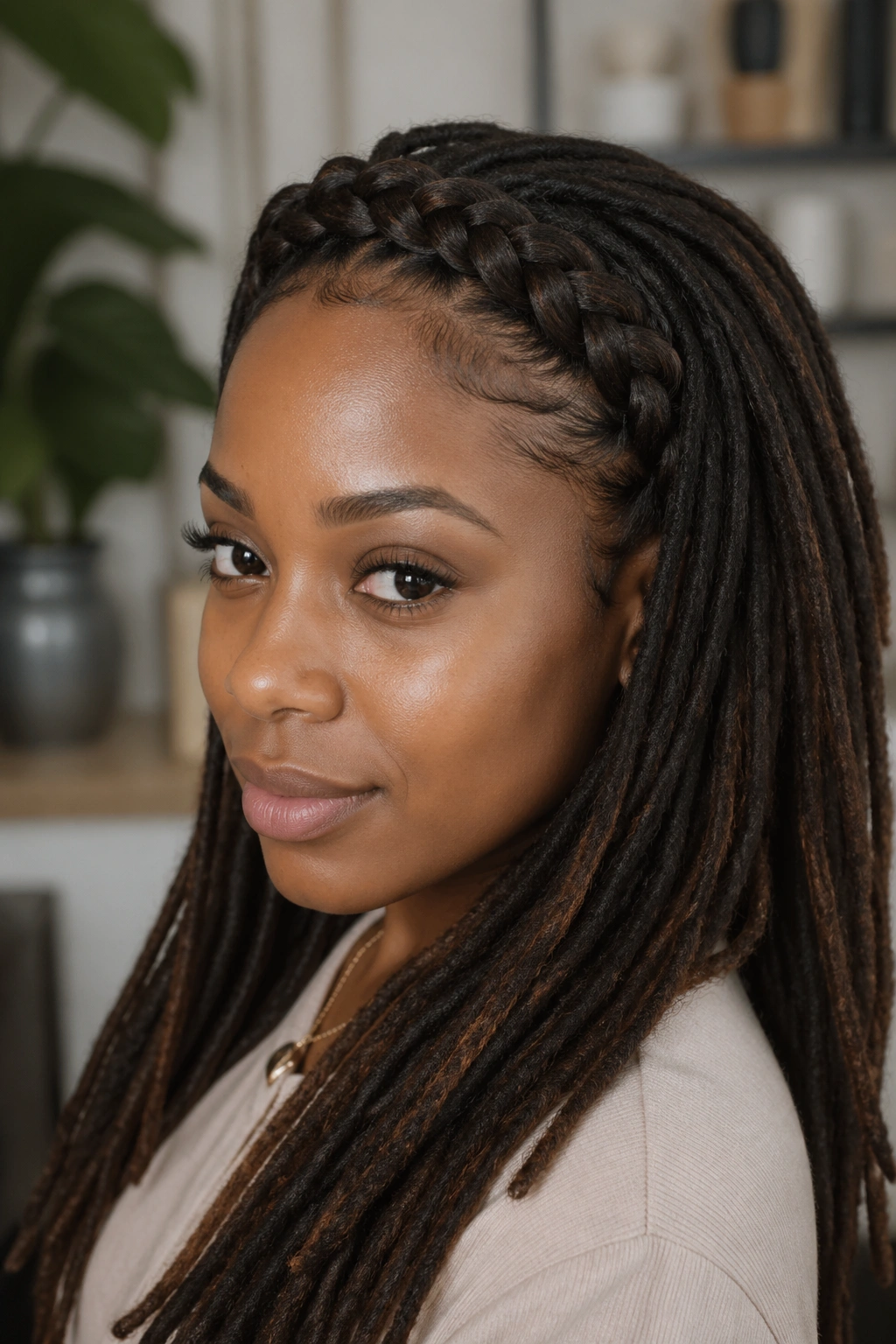
Take the locs near your front hairline — from temple to temple — and braid them across the front of the head, keeping the braid tight to the scalp. Pin the end of the braid on the side where you started or tuck it under the body of the braid. The braided front acts like a built-in headband, framing the face cleanly while the rest of the locs hang free.
The technique is the same as for a simple cornrow across the front, except you’re braiding with locs rather than natural hair. The result is more textured and graphic than a smooth cornrow — each loc section in the braid is clearly visible as an individual loc.
19. Two Loc Buns
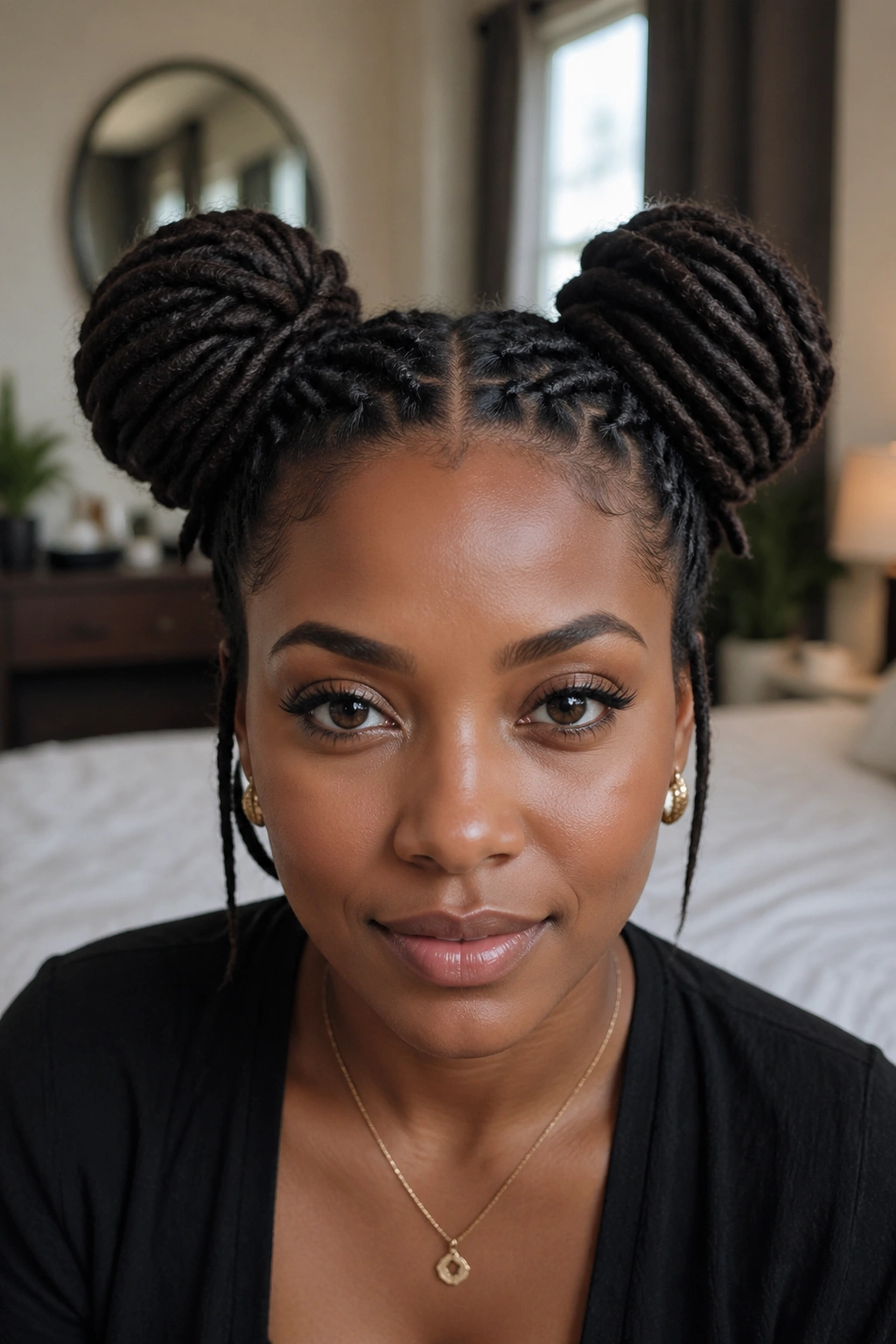
Instead of one central bun, create two buns — one on each side of the head at roughly the same height. Split your locs down the center, gather each side, and coil into a bun. Secure each bun separately. The two-bun silhouette is balanced, playful, and reads very differently from the single bun.
For shorter locs that won’t form a large bun, let the excess fan outward from each gathered point rather than forcing it into a tight bun — the fanned-out version is equally valid and sometimes more visually interesting.
20. Freeform Locs Worn Loose
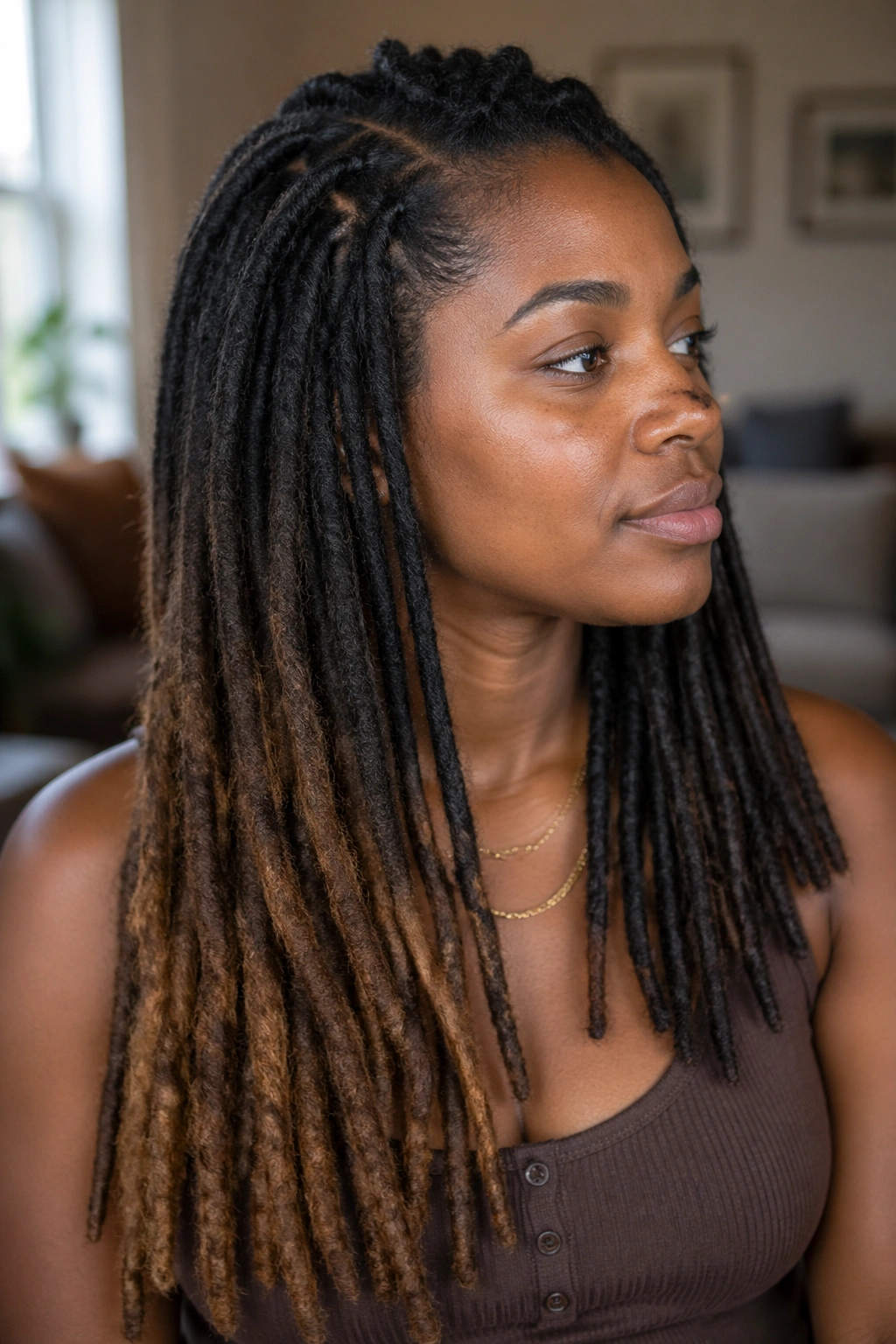
Freeform locs — those allowed to grow and merge organically without manipulation — have their own distinct aesthetic when worn loose. The irregular sizes, the merges, the variance in texture from loc to loc — it’s all part of the look. Wearing freeform locs fully loose is the purest expression of this path. No styling intervention, no product beyond moisture maintenance. The locs simply exist.
This is worth including because it deserves to be treated as a distinct style rather than a lack of styling. Choosing freeform locs and wearing them loose is a fully intentional decision with its own visual language.
21. Loc Updo with Loc Wrap
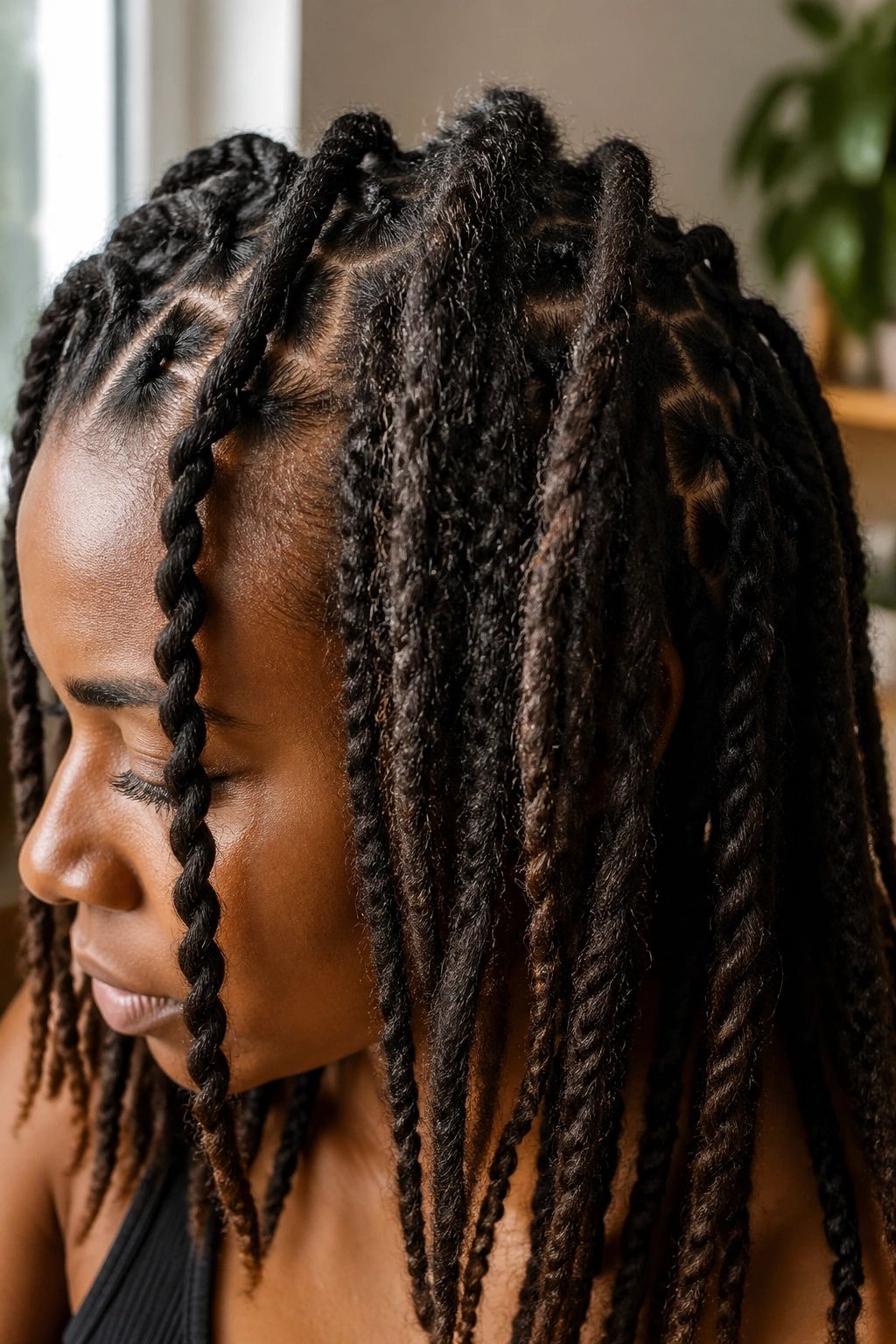
Gather your locs into a high bun, then take the longest loc you have — or one you designate for this purpose — and wrap it around the circumference of the bun several times. Tuck or pin the end. The wrapped loc acts as a decorative tie, the way a fabric scrunchie would, but it’s part of your own hair.
The wrapped loc has loc texture — it doesn’t look smooth or uniform. The slight irregularity of the wrap is what makes it interesting. The bun is your hair; the wrap around it is also your hair. Nothing added, nothing external.
22. Starter Locs — Low Manipulation Styles
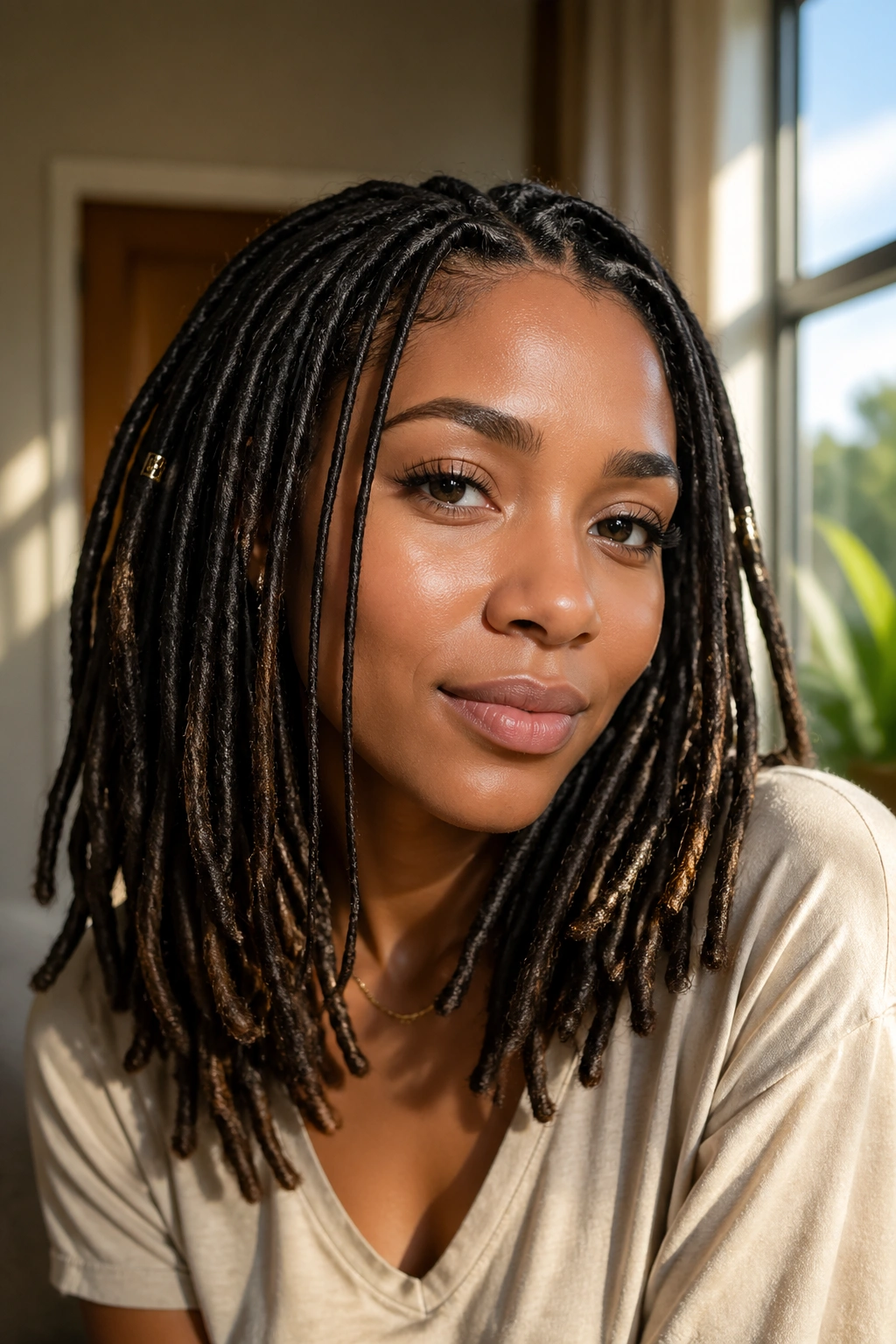
For those in the early stages of their loc journey, styling options are limited — and that’s okay. Low manipulation is the priority. The best styles at this stage: a simple pineapple held with a very loose elastic, two-strand twists left in as the starter method continues to tighten, or a simple low gather with a wide scrunchie. Anything that requires pinning through the loc body or tight manipulation of the root risks unraveling or thinning locs that are still forming.
Patience is the strategy at this stage. Every month of leaving locs relatively undisturbed is a month of progress toward the mature stage where the real styling range begins.
23. Locs in a Twisted Updo
Rather than gathering your locs into a simple bun, twist the gathered section. Hold the gathered locs, twist them around each other so the group rotates on itself, then fold the twist over itself and pin at the base. The twist creates a more interesting, three-dimensional bun shape than a simple gather.
The visual difference is subtle from a distance but very clear up close — the twisted structure creates surface variation in the bun itself, rather than the flat, smooth surface of a simple gathered bun.
24. Locs with Loc Extensions for Length
If your locs aren’t yet at the length you want, loc extensions can add length immediately. A trained loc specialist splices synthetic or human loc extensions onto the end of each existing loc, extending it to the desired length. The extension material needs to match your loc texture as closely as possible.
This is a significant time and financial investment — loc extension installation can take 8-12 hours — but it means you have immediate access to the styling range of long locs without waiting for years of growth. The extensions will gradually be phased out as your natural locs grow to the added length.
25. Locs in a Side Braid
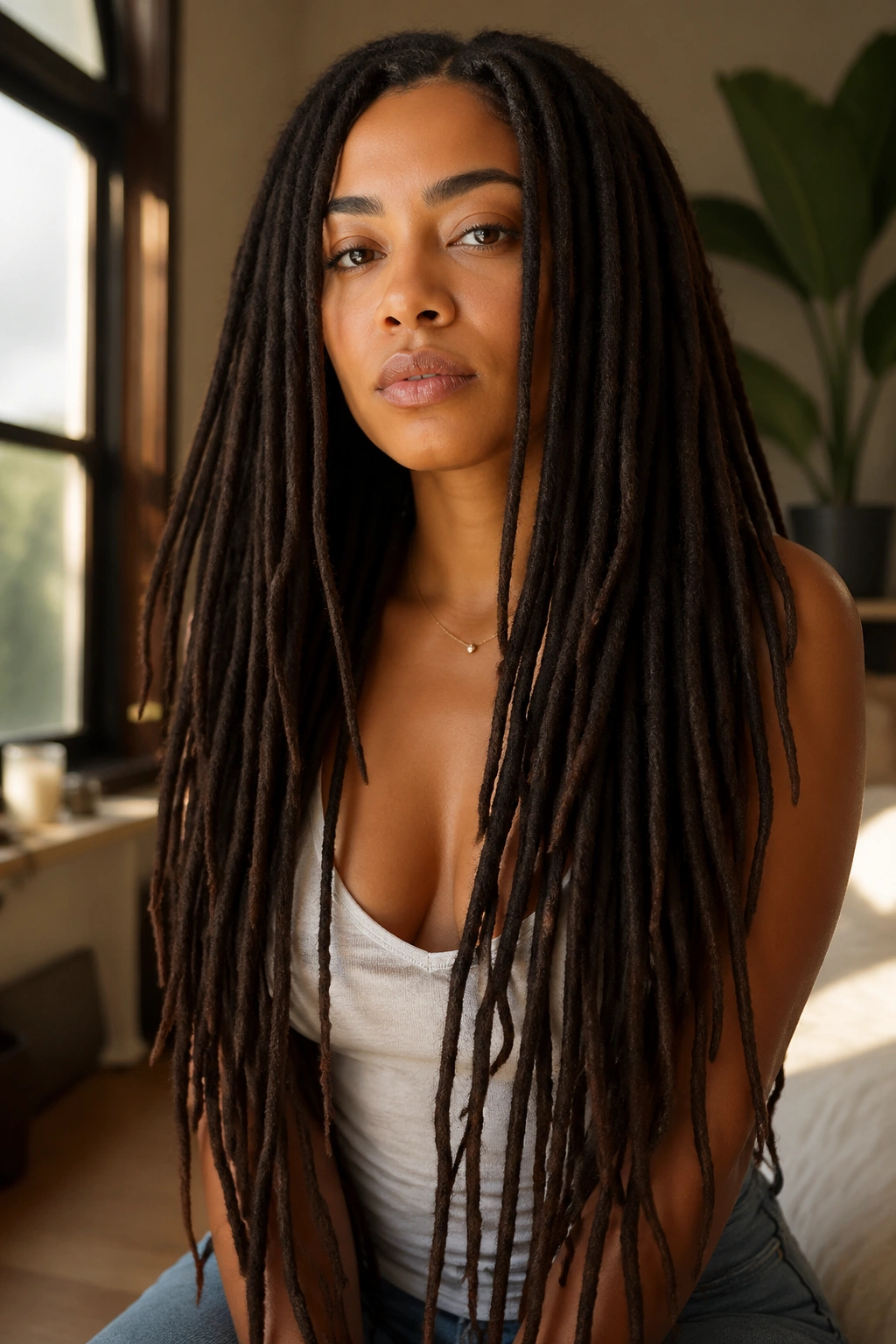
Take all your locs and braid them together into one large, thick braid that sits to one side — gathered at the nape and braiding downward, then moved to one shoulder. The braid is made of locs rather than natural hair strands, so the individual loc texture is visible within the braid structure.
This produces one of the most dramatic single-element styles possible with locs. The braid is thick, heavy, and unmistakably made of locs. It reads like a statement piece.
26. Locs with a Turban-Style Wrap
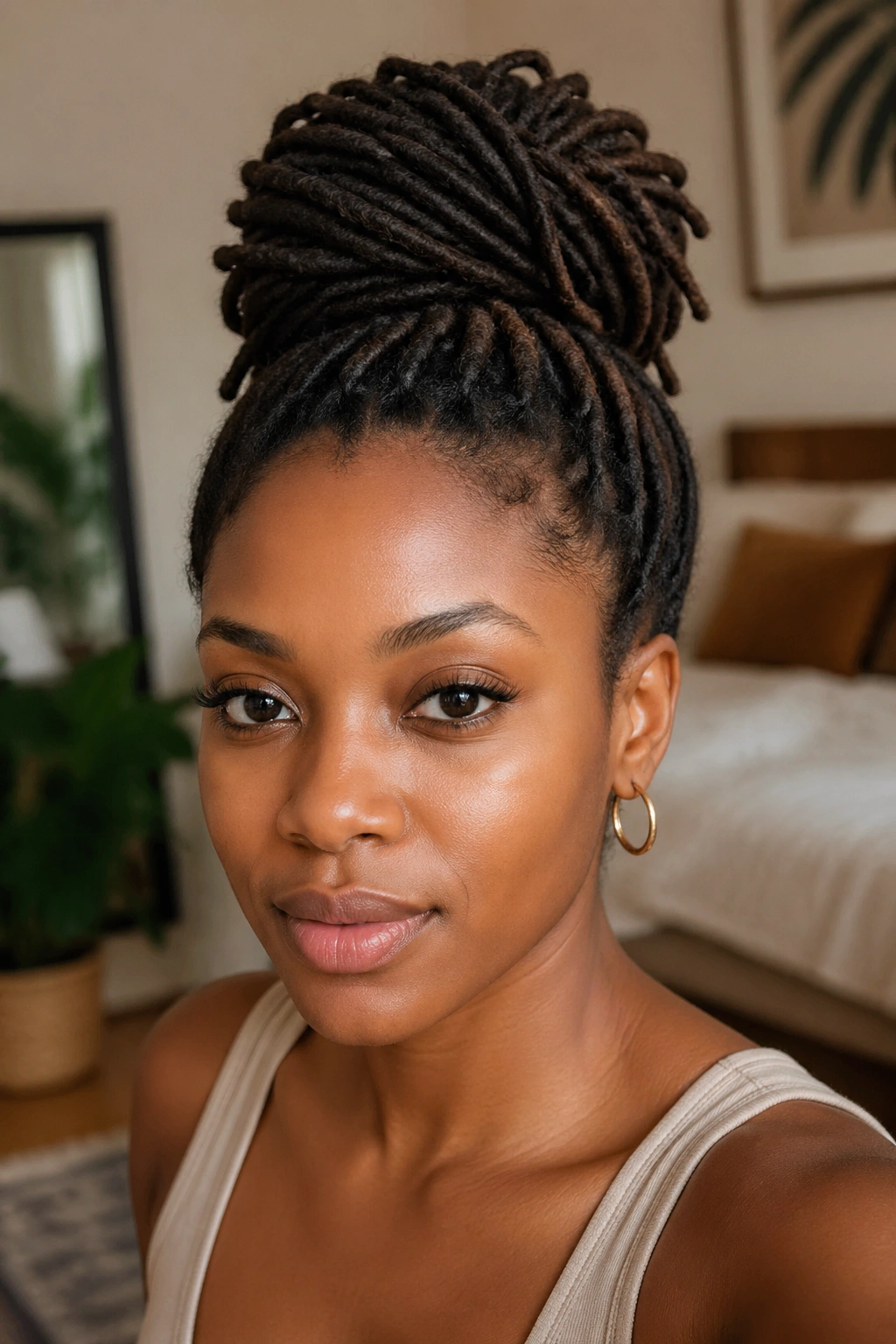
Rather than a loose head wrap, wrap a scarf or turban fabric tightly around the head in a deliberate turban formation, leaving only the tips of the longest locs visible at the top or side. The turban covers the roots completely, giving the look of a wrapped crown from which locs emerge.
The technique for a turban with locs is slightly different from a turban without them — you need to secure the locs first (either piled on top of the head or tucked under themselves loosely) before wrapping. The fabric anchors around the gathered loc mass. The ends of the locs that peek out above or beside the wrap are intentional — they’re the visual proof that there’s a full head of locs beneath the wrapping.
27. Loc Bob
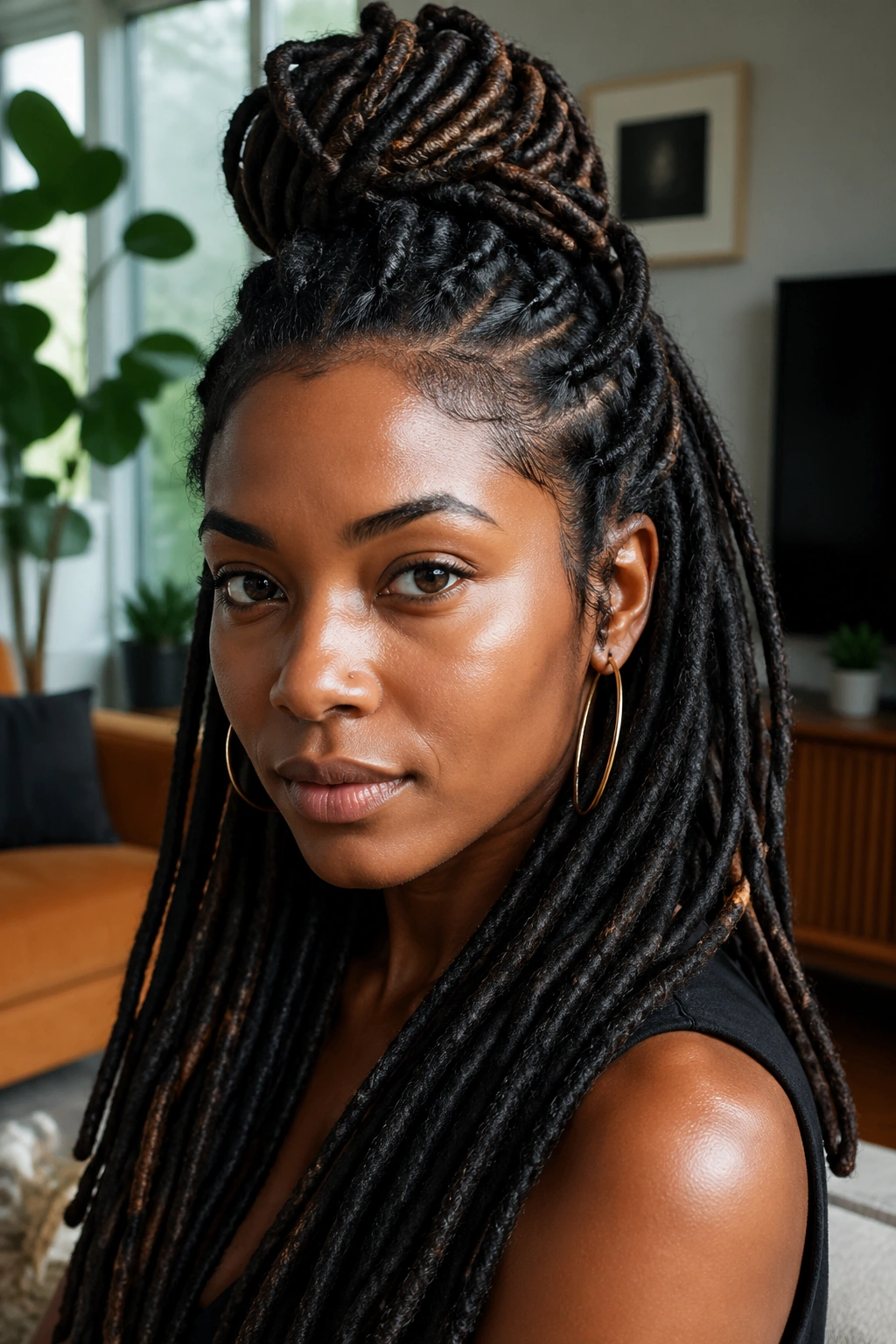
For those with long locs who want to try a shorter length without cutting — gather your locs at the back of the head and fold them upward and under, pinning them so the ends are tucked against the nape. The pinned, folded locs create the illusion of a shorter loc bob without any permanent length reduction.
To commit fully, some people do cut their locs into a true bob. But the folded version is a completely reversible trial. If you love it, book the appointment. If you don’t, unpin and your length is back immediately.
28. Locs Adorned with Fabric Wraps on Individual Locs
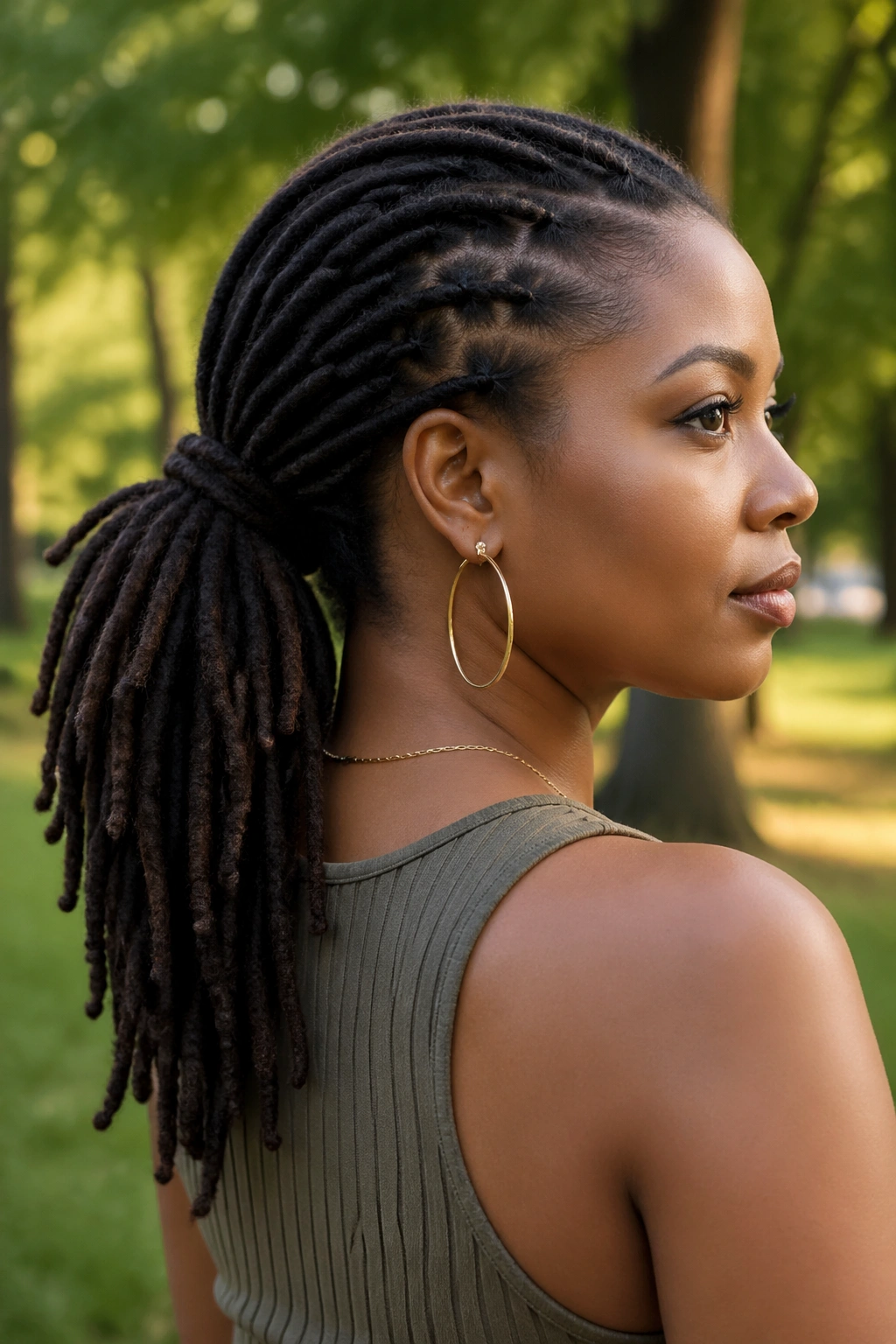
Take small strips of fabric — silk, cotton print, or leather — and wrap individual locs throughout the head, tying off the ends. The wrapped locs stand out as individual, decorated elements among the unwrapped ones. The pattern of which locs are wrapped, and in which fabrics, creates a personalized design.
This is the loc equivalent of customizing individual jewelry pieces — each wrapped loc is a distinct element. Use complementary fabrics for a cohesive look or deliberately mismatched fabrics for a maximalist effect. The wraps can be moved to different locs over time, changed with outfits, or left in place for extended periods.
How to Retwist and When
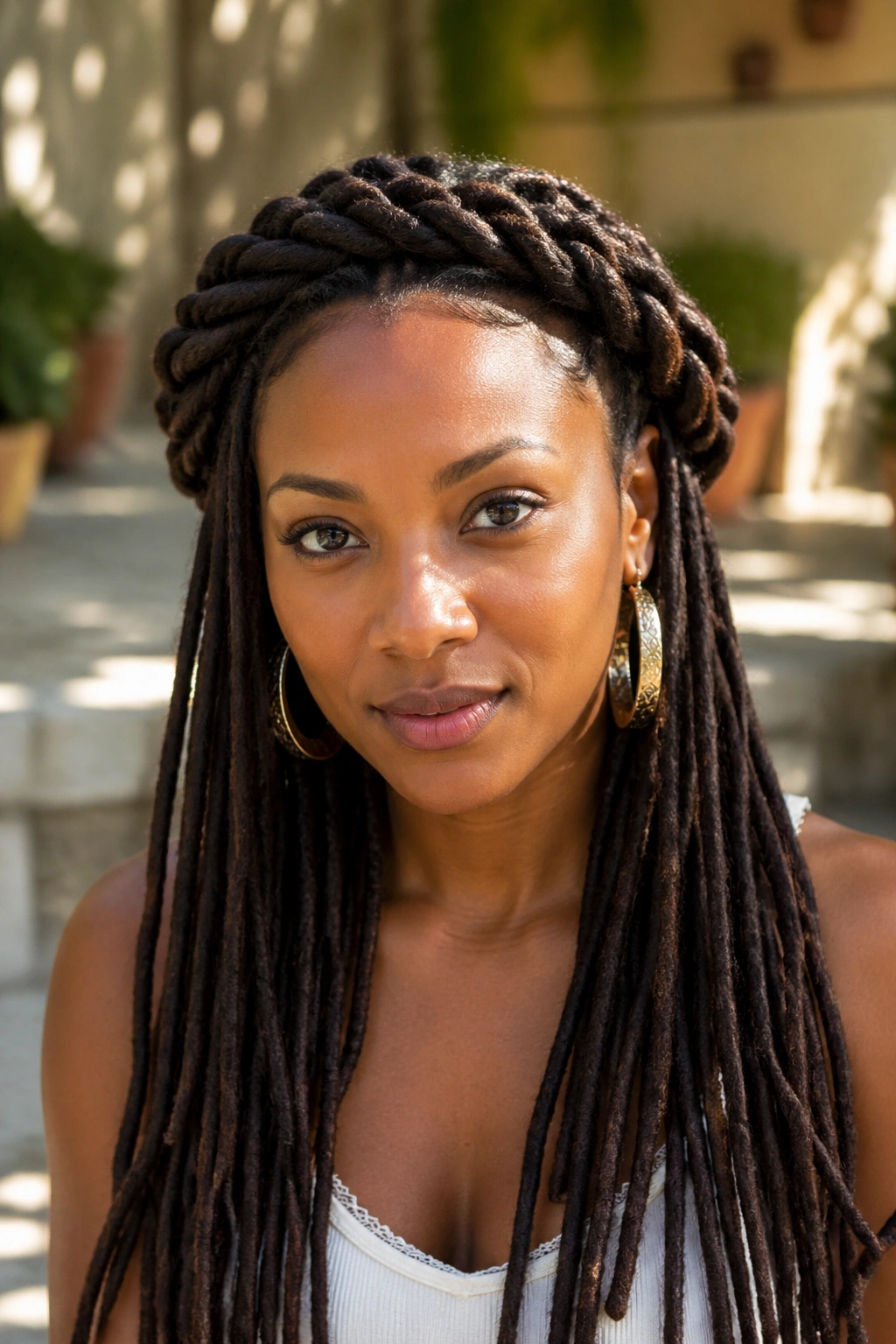
Retwisting — using a clockwise rotation to tighten new growth at the root of each loc — is the primary ongoing maintenance task for most loc wearers. How often you do it depends on your hair’s growth rate and texture. Most naturals retwist every 4-6 weeks. Waiting too long allows new growth to interlock with neighboring locs, causing merging. Doing it too frequently can put repetitive stress on the same root section, contributing to thinning.
The retwist itself should be done on clean hair. Apply a small amount of loc butter or a light holding product to the new growth at the root, then twirl the loc clockwise between your fingers, working from root toward the existing body of the loc. The new growth should feel tightened but not squeezed. Sit under a dryer for 30-45 minutes after retwisting to help the roots set.
Caring for Locs Long-Term
The most common mistake in long-term loc care is underestimating how much moisture locs need. The loc structure — tightly matted hair — can feel dry and brittle at the core while the surface looks fine. Regular hydration, not just surface product application, is what keeps locs flexible, healthy, and breakage-free for years.
Loc budding — where the middle of a loc thins slightly due to stress — is the most common structural issue. It happens most often at the point where the loc is gripped by an elastic repeatedly, or where a loc has been manipulated excessively over time. If you notice thinning at any point along a loc, stop manipulating that section immediately. Allow it to rest and strengthen.
Length retention in locs depends on avoiding breakage more than it depends on growth speed. Locs that are well-moisturized, not over-manipulated, and not subjected to tight gathering repeatedly will hold their length. The growth happens either way — it’s the preservation of that growth that makes long locs possible.
Choosing a Style Based on Your Loc Length
Short locs — chin length and under — have fewer styling options but still more than most people expect. Puffs, two-bun styles, freeform loose wearing, headband and scarf styling, and simple pinning all work at this length. Updos that require significant wrapping or folding need more length to execute cleanly.
Medium locs — chin to shoulder — open up the full range of ponytails, buns, half-ups, and most pinned updos. This is the range where the greatest number of styling options become available simultaneously. Most people find that medium-length locs are their most versatile daily-wear stage.
Long locs — shoulder and beyond — offer everything: the full braid potential, elaborate sculptural updos, dramatic sweeps, crown wraps, and the visual impact of worn-loose length that shorter locs simply can’t produce. The styling investment increases with length — more hair to manage in any updo — but the payoff in visual range is worth it.
Very long locs — waist, hip, floor — are their own category. At this length, the locs become a defining feature of your physical presence. Every style decision is amplified. A simple puff at waist-loc length is an entirely different visual experience than the same puff at shoulder-loc length. The weight alone changes how styles sit and move.
What to Wear Your Locs Down For
Locs worn completely loose and down are often under-appreciated as a deliberate style choice. They work best for casual environments, creative or cultural contexts, or simply personal days where you want your hair to exist without any intervention.
But “down” doesn’t mean unstyled. Even wearing locs loose can be done with intention — parted to the side, separated into front and back sections that drape differently, enhanced with a single loc accent piece at the temple, or worn with accessories that complement without competing. The goal is always the same: your locs look intentional because you thought about them, even for thirty seconds, before walking out the door.
Locs reward patience above everything else. The styling range grows with the hair. The relationship between you and your locs deepens with time. And the looks available at year five are things year-one you could not have imagined — which is one of the genuinely exciting things about committing to this path.
