



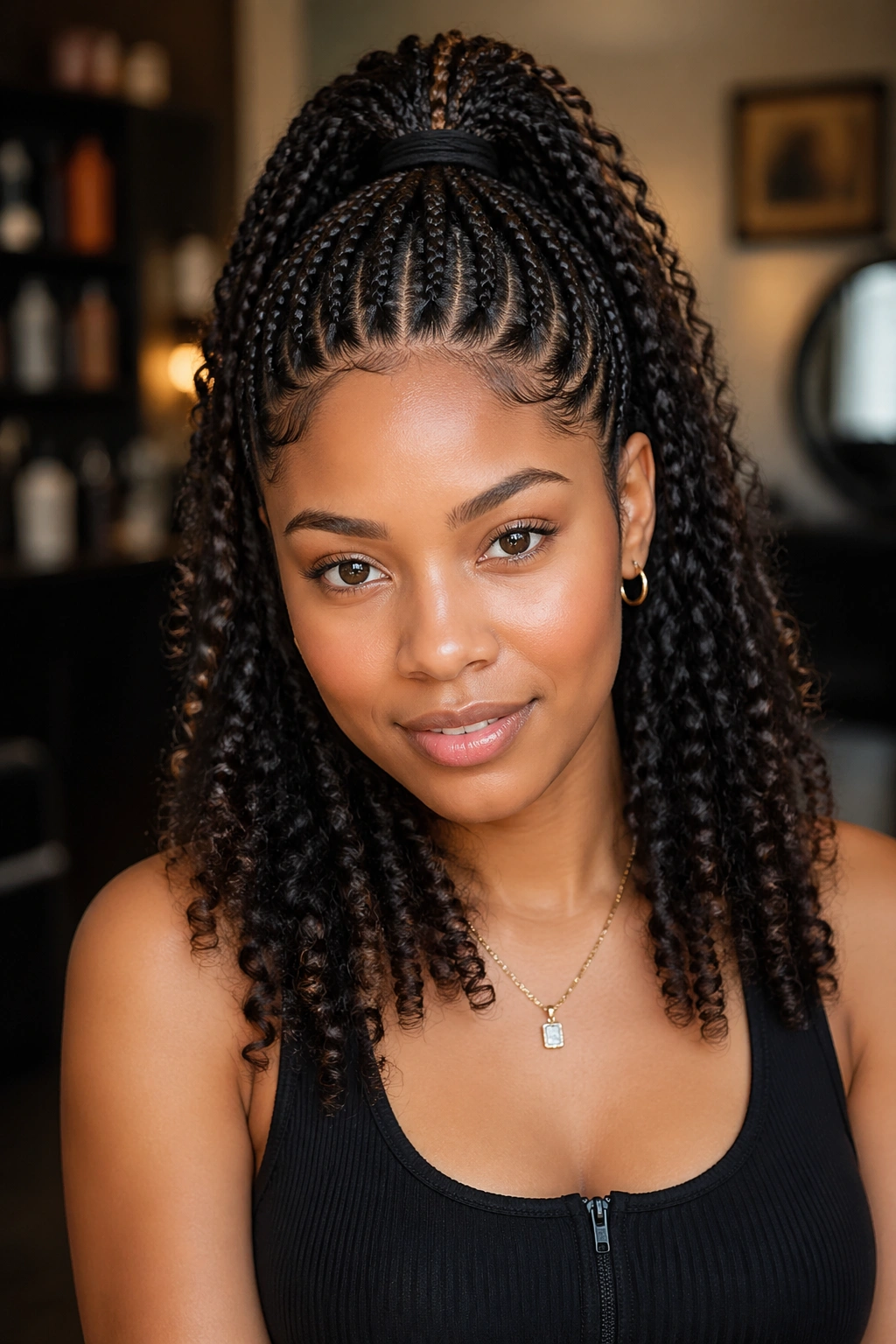
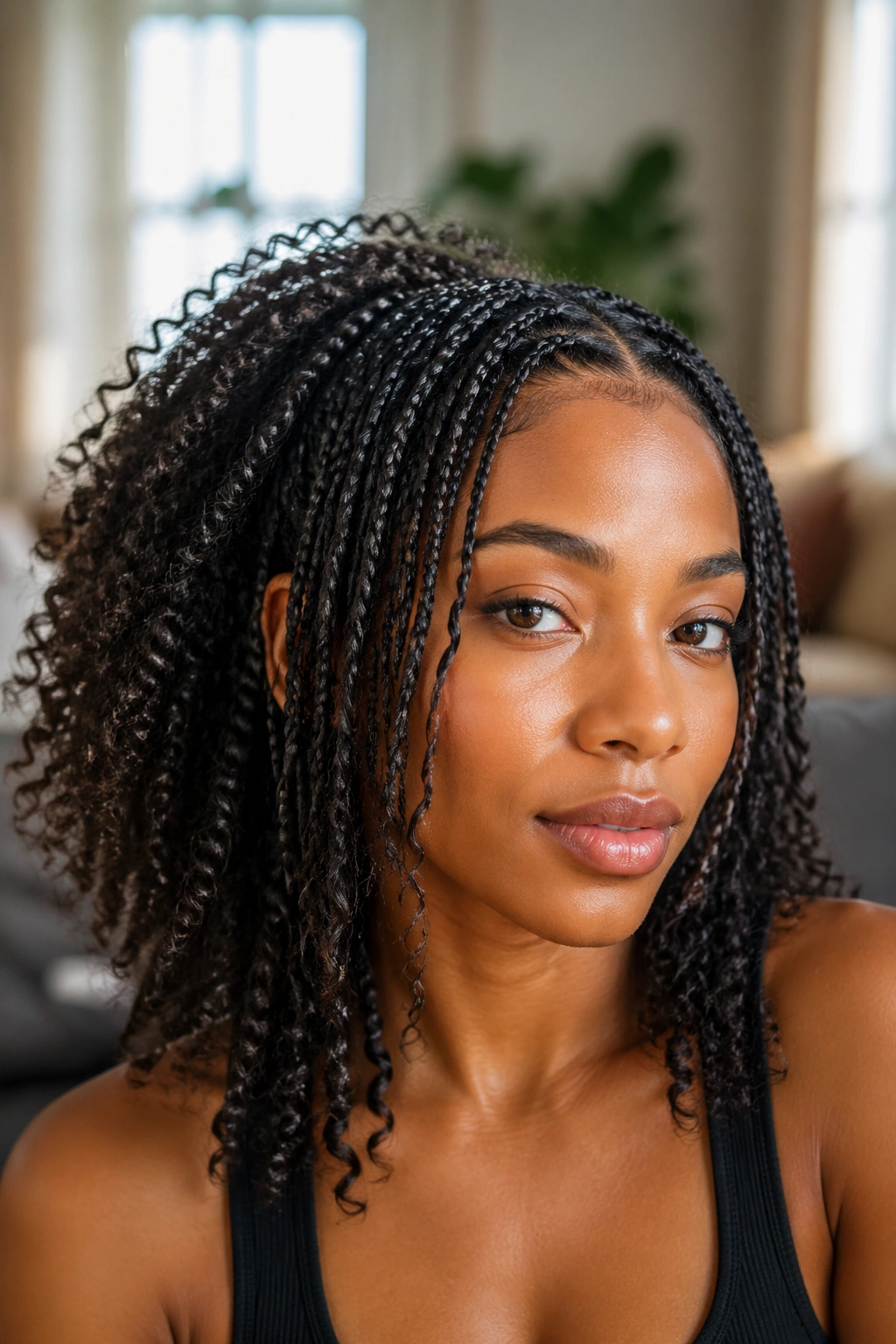
Half braids half curls for natural hair is a styling category that brings together two of the most beloved elements of Black hair culture in a single, cohesive look. The combination reads as effortless, but there’s real artistry behind every version of it. When protective braiding meets free-flowing natural curl texture — whether at the top and bottom, the front and back, or the sides and center — the result is visually rich, structurally interesting, and entirely unique to natural hair.
The Cultural Roots of Half Braids Half Curls
The relationship between braids and curls in Black hair styling is centuries old. African hair braiding traditions have always incorporated contrasting textures and structures, using braids as a form of both art and meaning while letting natural curl texture complete the composition. The half braids half curls look that’s widespread in natural hair communities today is a living continuation of that tradition — adapted to the tools, products, and styling techniques available now, but rooted in the same creative impulse.
More and more women with natural hair are choosing styles that combine braided and unbraided sections because these styles do multiple jobs at once. The braided sections protect the hair at the scalp, reduce manipulation, and retain length in those areas. The free curl sections celebrate the natural texture and provide movement. Together, these two elements create a style that’s simultaneously protective and expressive.
There’s also a practical dimension. A half braids half curls style can last significantly longer than a fully loose natural hair style. The braided sections stay neat for weeks; the curl section can be refreshed with water and product as needed. For women who want low-manipulation styling without giving up their natural texture entirely, this combination is a genuinely smart approach.
Planning Your Half Braids Half Curls Look
Before you sit down to style, you need to make two key decisions: where the braids will be and what kind of braids they’ll be.
The placement options are roughly divided into four configurations. Top braids, bottom curls: braids in the crown and front section, curls in the back and lower sections. Bottom braids, top curls: braids from the nape upward, curls in the top and crown section. Front braids, back curls: braids from the front hairline backward to the ears, curls from the ears back. Side braids, center curls: braids along the sides and nape, free curls down the center.
Each configuration creates a completely different visual character. Top braids with bottom curls reads as structured and intentional — the organized crown transitions into free-spirited curls. Bottom braids with top curls creates the opposite feeling — grounded base, expressive crown. Front braids with back curls is the Fulani-inspired look that has become one of the most recognizable styles in natural hair communities. Side braids with center curls creates a mohawk-like central volume that’s bold and graphic.
The type of braid matters equally. Cornrows create flat, graphic lines. Flat twists create raised ridges with a softer appearance. Two-strand twists are thicker and more textured. Box braids and individual braids stand separately and have the most volume. Feed-in braids can be taken to lengths or thickness that natural hair alone can’t achieve. Your choice of braid type determines the overall character of the finished look.
Preparing the Natural Curl Section
The curl section of a half braids half curls style requires just as much care as the braided section — perhaps more, since it’s the part that needs to look defined and moisturized throughout the style’s lifespan.
Wash and deep condition the hair before beginning any braiding. Clean, moisturized hair braids more smoothly and the braided sections last longer. The curl section also holds definition better when the hair is freshly washed and conditioned.
Apply a leave-in conditioner to the sections that will remain as curls. Then apply a curl defining cream or gel to those sections while the hair is still damp. Encourage the curl formation by scrunching upward — never raking downward, which separates curl clusters and creates frizz.
Allow the curl section to dry completely before finalizing the style. If the braided sections are done first, you can allow the curl sections to dry while the braids are being set. But don’t rush this — wet curls next to finished braids are likely to frizz and lose definition as they dry.
Braid Prep for Longevity
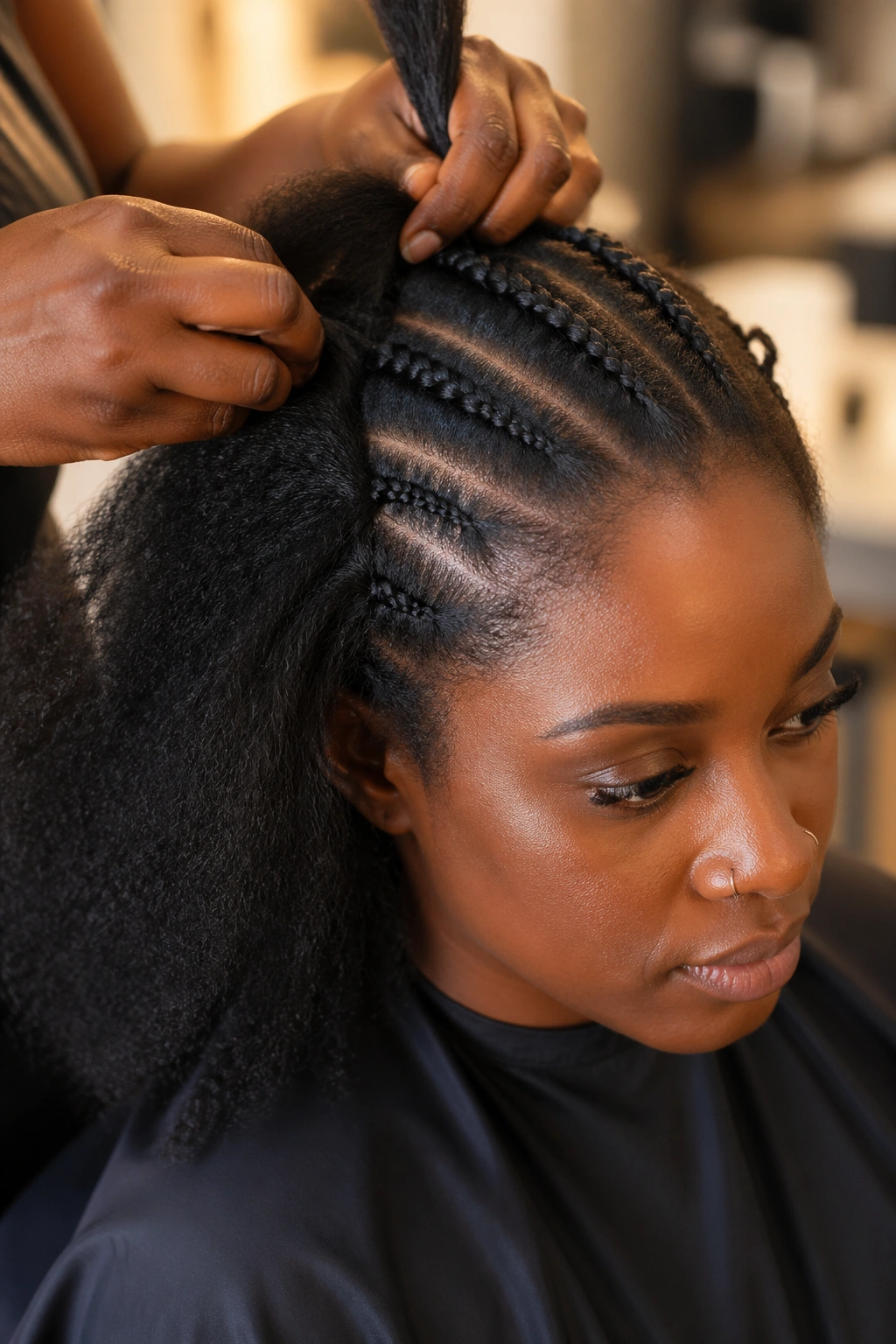
The braided sections of a half braids half curls style need to be executed with longevity in mind. Braids that are done too loosely slip out quickly; braids done too tightly cause tension, pain, and potential traction alopecia along the hairline.
The ideal tension is firm but comfortable — you should feel a gentle pull during braiding but no pain or scalp soreness after the session is complete. If the scalp is sore the next morning, the braids were too tight and should be taken down immediately.
Before braiding, apply a light detangling product or a small amount of water and conditioner to each section you’re about to braid. This creates slip that makes the braiding process smoother and reduces breakage from friction during braiding.
For styles that will include braiding hair (Kanekalon, synthetic extensions), prep the braiding hair by soaking it briefly in diluted apple cider vinegar. This removes the alkaline coating from most synthetic braiding hair, which can cause itching and scalp irritation when it comes into contact with the skin.
How to Make the Style Last
Half braids half curls styles can last anywhere from one week to four or more weeks depending on your maintenance routine and the type of braids used. The braided sections will outlast the curl section in terms of looking fresh, so your maintenance focus should primarily be on the curl section.
Refresh the curl section every two to three days by spritzing with water mixed with a small amount of leave-in conditioner and scrunching upward. Avoid applying too much product, which causes buildup that makes the curls heavy and dull-looking. A light oil applied to the surface of the curl section once a week adds shine and seals in moisture.
Sleep with the curl section protected using a satin bonnet or silk wrap. The braided sections are more resilient overnight, but the curl section needs protection from friction and moisture loss during sleep.
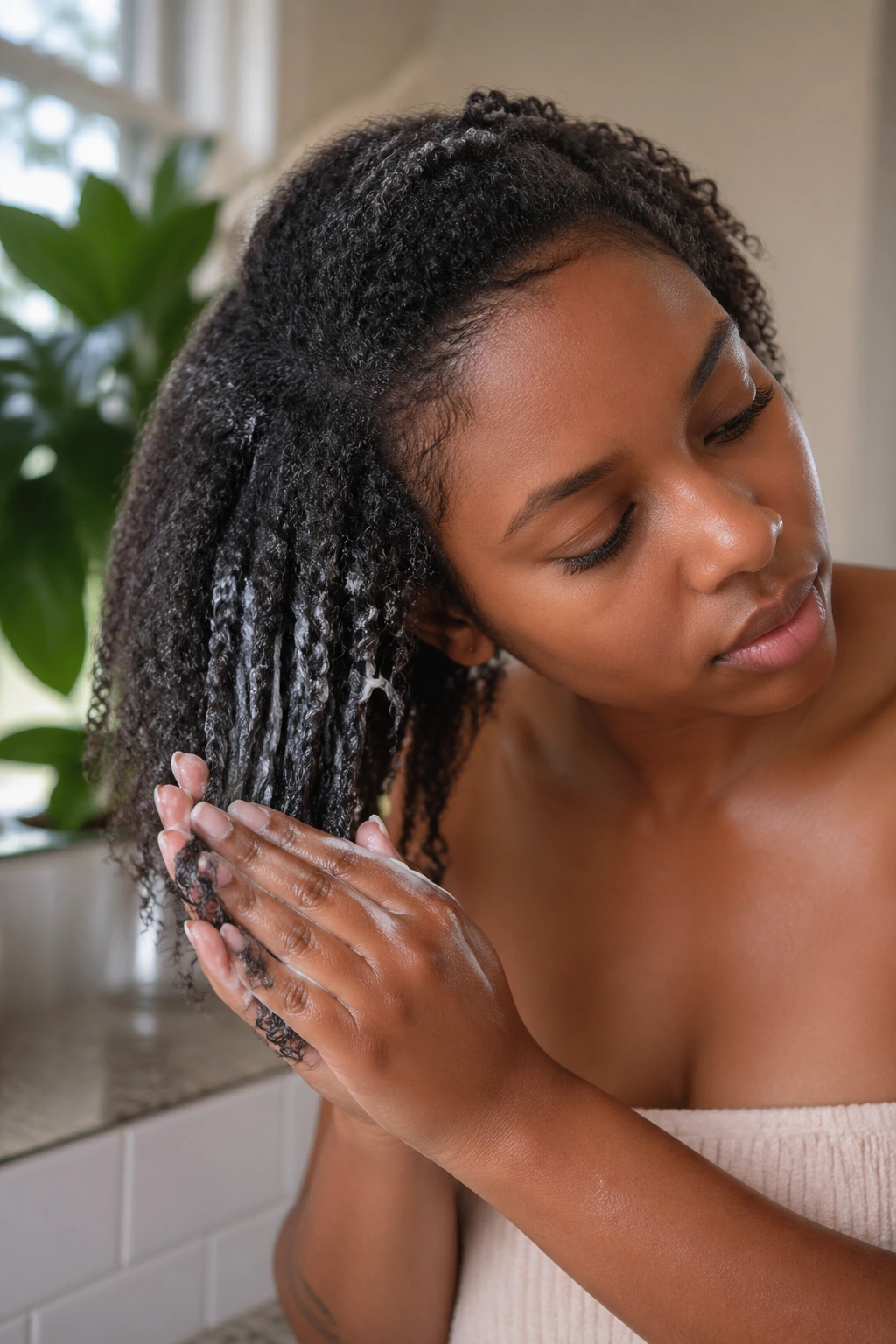
Wash the style carefully — you can typically wash a half braids half curls style by focusing shampoo on the scalp in the braided section (diluted shampoo applied through the braids using a squeeze bottle works well), then washing the curl section normally. Avoid rubbing the braided sections together, which causes frizzing.
1. Cornrow Crown With Natural Curl Cascade
Six to eight cornrows swept back from the front hairline to the crown, releasing into a free-flowing natural curl cascade down the back and sides. This is the foundational half braids half curls look — classic, widely loved, and genuinely beautiful on every curl type.
The Visual Story of This Style
The cornrows create clean, graphic lines that draw the eye from the forehead back to where the natural curls begin. That transition point — where controlled braids meet free curls — is the most visually interesting moment of the style. Position it at the crown for maximum impact.
The cornrows should be even in width and spacing for the most polished appearance. A rat-tail comb is essential for creating clean, straight parts between each cornrow.
Add small gold cuffs at the ends of the cornrows before the curls begin — this detail marks the transition point and adds visual interest right at the style’s focal moment.
2. Fulani-Inspired Front Braids With Curls Behind
A single cornrow running from the center forehead backward along the center part, with one or two side braids running from the temples toward the back — all releasing into natural curls behind the ears and down the back. This is the Fulani-inspired configuration, and it’s one of the most striking half braids half curls looks available.
The Fulani braiding tradition originates with the Fula (Fulani) people of West Africa and has influenced hair styling across the African diaspora. The characteristic center braid and side braids, often decorated with beads and cuffs, are now widely seen throughout natural hair communities as an expression of cultural pride.
Add cowrie shells, gold cuffs, or wooden beads to the braids for an authentic nod to the tradition’s origins.
3. Box Braid Mohawk With Curls on the Sides
A row of box braids running from the front hairline straight back to the nape along the center of the head — the mohawk strip — while the sides and back are left as free natural curls. The box braids create a structured center line; the curls create volume and softness on both sides.
Box braids in the mohawk position add incredible height. When the braids stand upright or slightly elevated, the center strip becomes a towering, graphic element that makes this one of the most dramatic looks on this list. Pull the braids upward for maximum height, or let them fall back naturally for a softer take.
4. Dutch Braid Half Up With Curl Cascade
Two Dutch braids running from the front of each side of the head toward the center back — raised, three-dimensional, and bold — releasing into a natural curl cascade at the nape. The Dutch braids create a raised crown effect that frames the top of the head dramatically.
Dutch braids are more prominent and eye-catching than French braids or flat twists because they sit on top of the hair rather than beneath it. On natural hair, the texture at the scalp along each braid adds dimension that smooth hair Dutch braids don’t have.
This style is particularly beautiful when the curl section has significant volume — the raised Dutch braids at the top contrast with the full, free curl section below.
5. Knotless Box Braids Crown With Curls Down
Knotless box braids in the crown and top section, tapering into natural curls in the back and lower sections. Knotless braids — which begin with your natural hair and gradually incorporate extensions — are gentler on the scalp than traditional box braids and create a more natural-looking start at the root.
The knotless top section looks incredibly clean and modern. The transition to natural curls in the lower section feels organic rather than jarring. This is a style that wears well for two to four weeks with proper maintenance.
6. Lemonade Braid Side With Curl Side
Lemonade braids — cornrows that sweep to one side of the head rather than going straight back — on one side, with the other side left as free natural curls. The contrast between the side of the head covered in neat, side-swept cornrows and the side filled with free curls is visually dynamic and asymmetric.
This style reads as bold and creative. The asymmetry is the whole point — two completely different textures and structures, one on each side of the head, creating a cohesive look through color and overall silhouette.
7. Ghana Braids Front With Curls Back
Ghana braids — feed-in cornrows that are thicker and more dramatic than standard cornrows — in the front section, transitioning into natural curls in the back. Ghana braids typically begin thin at the hairline and widen as they move backward, creating a tapered, dimensional appearance.
The dramatic visual weight of Ghana braids in the front section creates a strong contrast with the lighter, more fluid curl section in the back. This is a style that commands attention from the front while offering movement and softness from behind.
8. Two-Strand Twist Section With Natural Curls
The top or front section of the hair is in two-strand twists — either individual twists or twisted sections — while the rest of the hair remains as free natural curls. Two-strand twists have a softer, more organic appearance than cornrows or box braids, making this combination feel more casual and relaxed.
This works exceptionally well as a protective style for the crown or front section. The twists protect those areas from manipulation and weathering while the curl section remains expressive and free.
9. Feed-In Ponytail Braids With Curl Ends
A gathered section at the crown features feed-in braids — braids that start at the scalp and are extended with additional hair — while the ends of the gathered section are left as natural curls rather than extending the braids all the way to the tip. The result is braids transitioning into curls at the ponytail’s end.
The curl ends at the bottom of each braid create a textural shift that’s unexpected and beautiful. The braids provide structure and length; the curl ends add naturalness and movement.
10. Half Micro Braids Half Natural Curls
Micro braids — very thin individual braids that look almost like natural hair when they’re dense enough — in the front half of the hair, with full natural curls in the back half. From a distance, the micro braids read as a different hair texture rather than clearly defined braids.
This style is extremely protective for the braided section. Micro braids can last for several months with careful maintenance. The natural curl section provides visual contrast and keeps the overall look from appearing too uniform.
11. Bantu Knot Crown With Curls Below
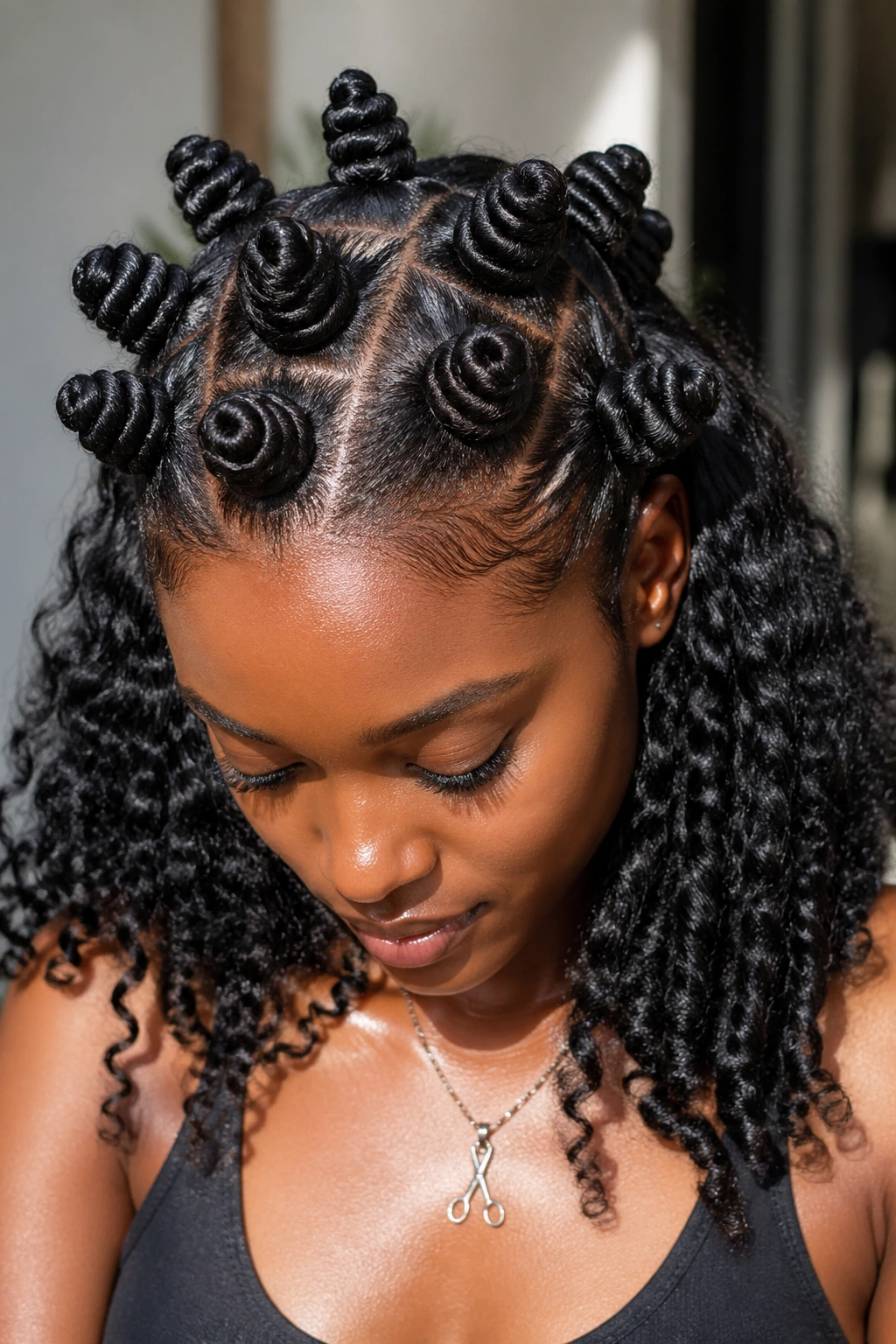
The crown and front section of the hair is in Bantu knots — small, coiled knots created by sectioning the hair, twisting each section, and coiling it against the scalp. The sides and back remain as free natural curls.
Bantu knots create a sculptural, architectural effect in the crown section that’s completely distinctive. The coiled knots have a geometric quality that looks intentional and precise. Against the soft, organic natural curls below, the knots stand out dramatically.
12. Cornrows in Back With Curls on Top
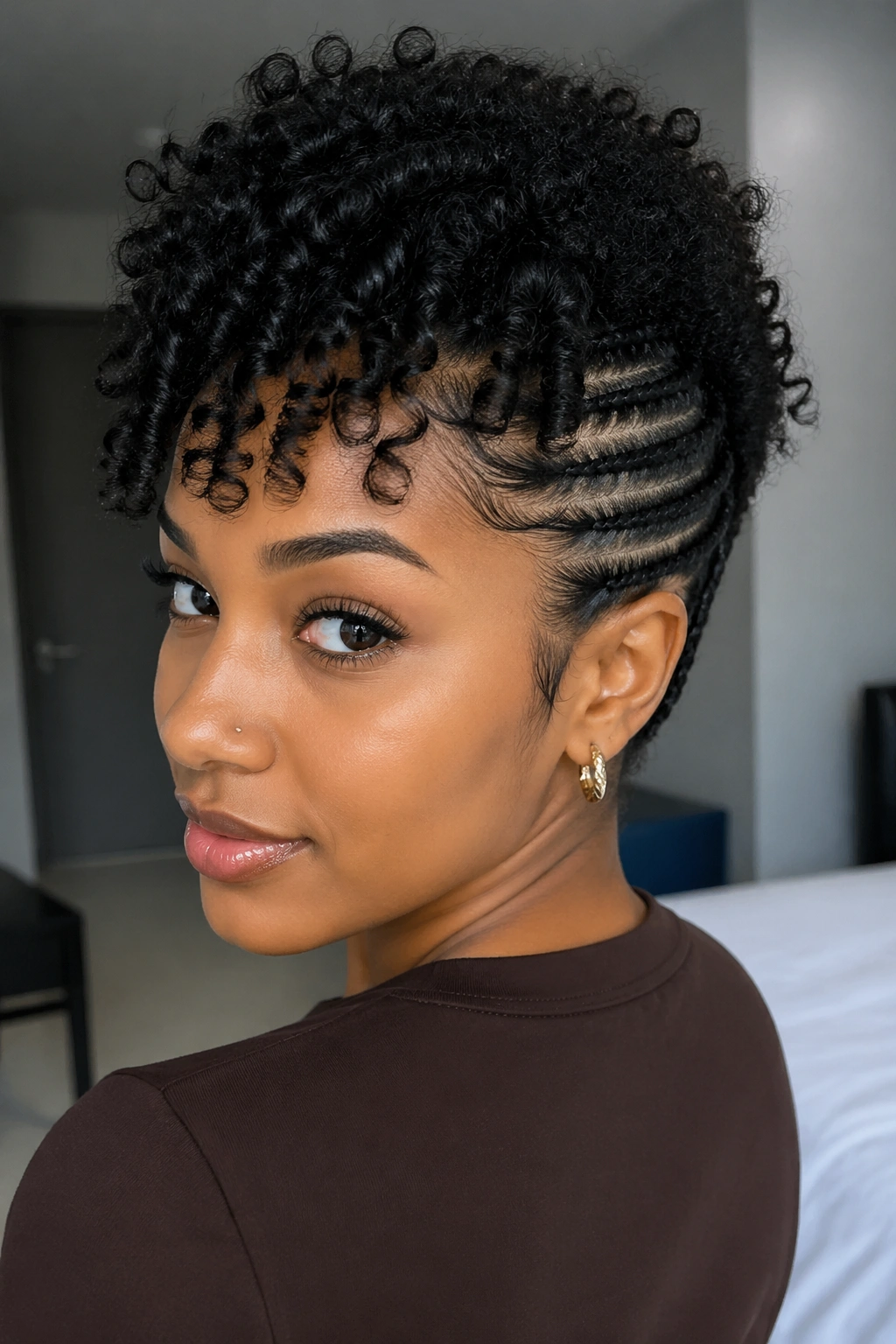
This reverses the typical configuration: instead of braids on top and curls below, this style features cornrows along the nape and lower back section while the top and crown section remains as free natural curls. The curly crown is the visible, expressive element; the cornrows below are the protective foundation.
This configuration is especially flattering because the natural curl volume at the crown gets to shine without competition. The cornrows underneath create a clean foundation without showing prominently when viewed from the front.
13. Individual Braids on One Side, Curls on the Other
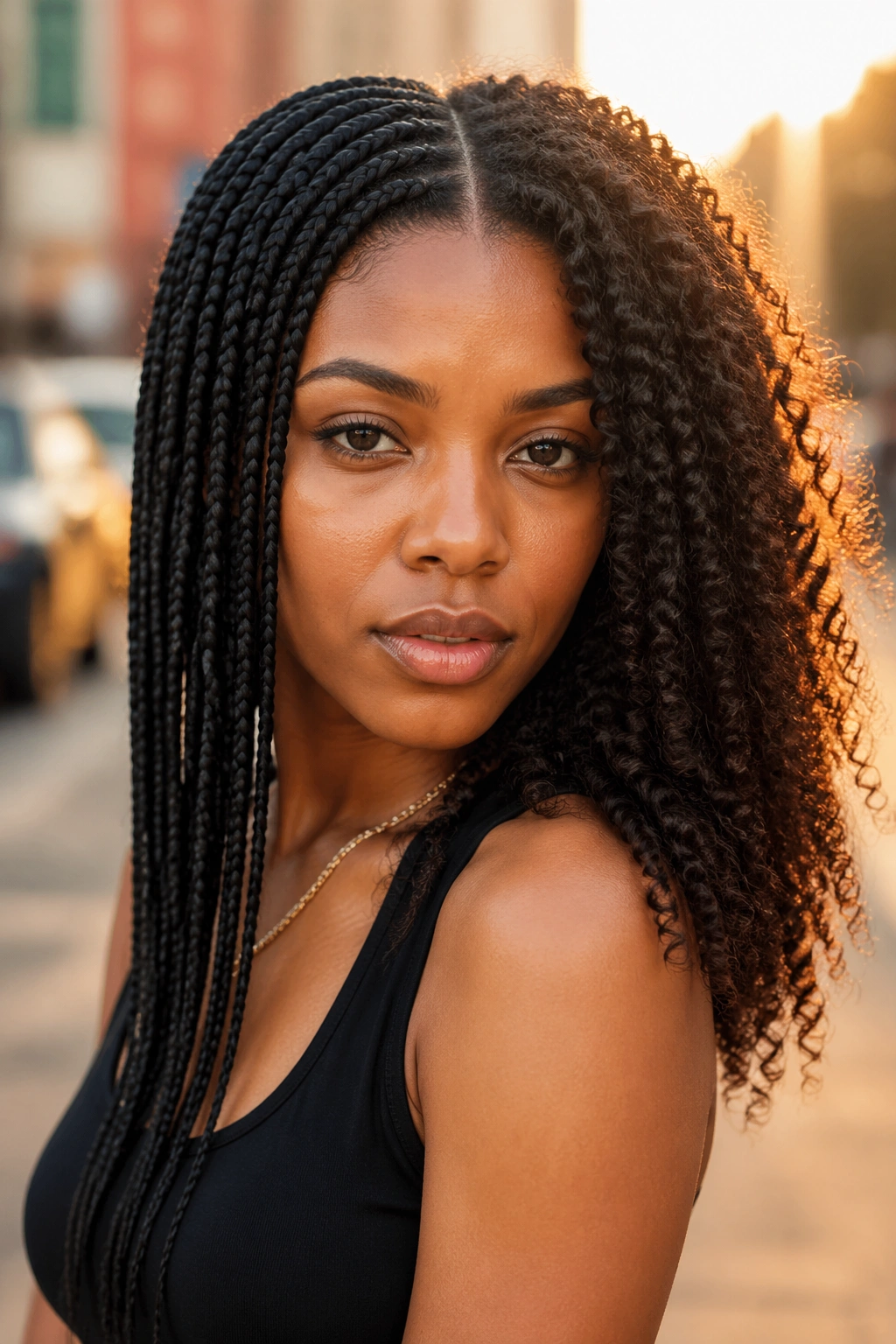
A dramatic split: the left side of the head features individual box braids or cornrows, the right side features free natural curls. No blending, no gradual transition — a clear, definitive line down the center.
This asymmetric approach is one of the most creative and bold interpretations of half braids half curls. It requires a straight center part that extends from the forehead all the way to the nape, dividing the head clearly into two sections.
14. Goddess Braids With Curly Ends
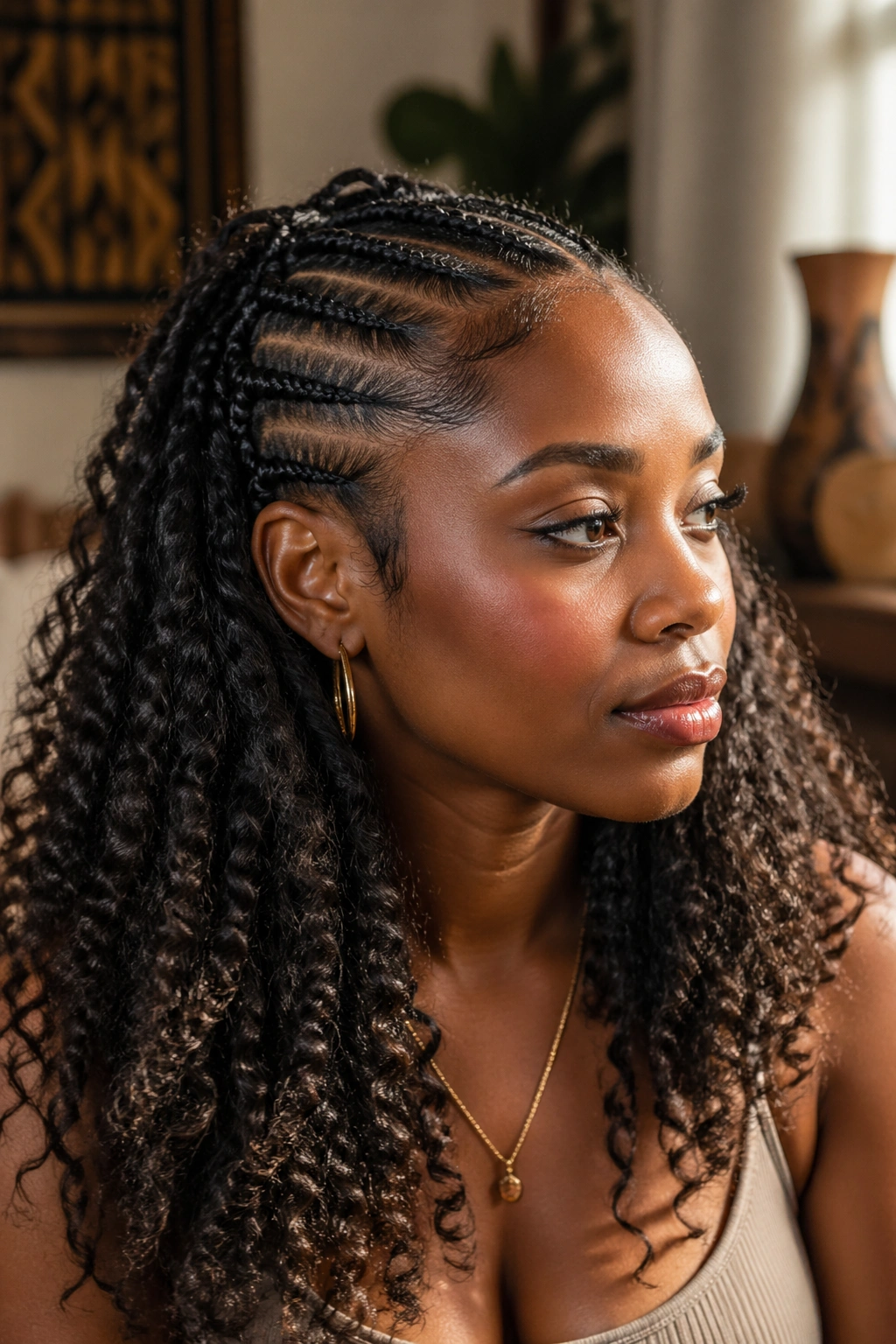
Goddess braids — thick, raised braids that incorporate natural hair into the braid so some strands poke out along the length — with the ends left as natural curls rather than braided all the way to the tip. The goddess braid structure gives each braid a textured, lived-in quality; the curly ends add a romantic finish.
The pulled-out strands along the goddess braid create a wispy, airy look that’s different from the flat appearance of traditional cornrows. Combined with curly ends, the overall style feels more bohemian and less geometric.
15. Crochet Braid Sections With Natural Curl Sections
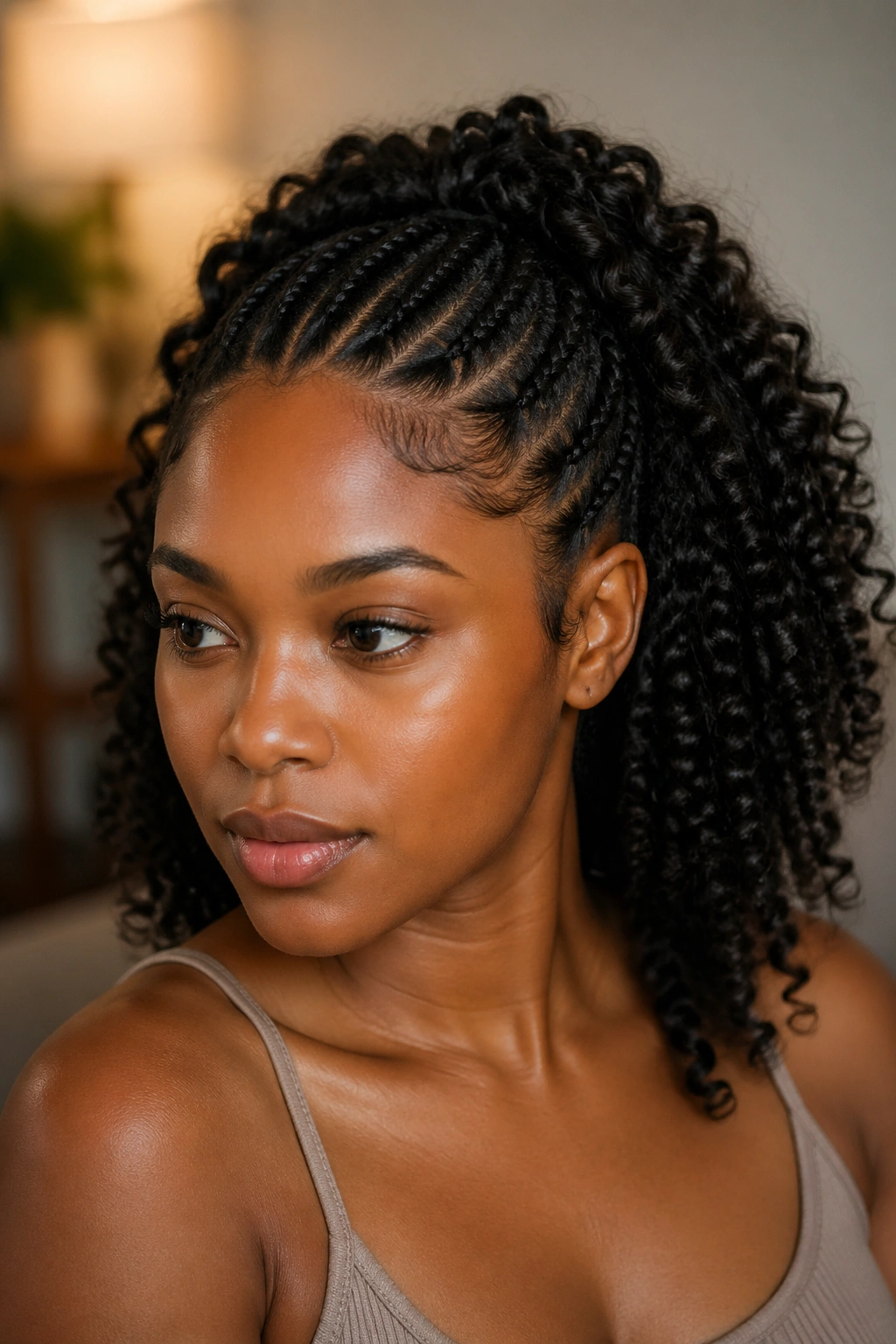
Crochet braids — hair extensions looped through cornrows using a crochet hook — in some sections of the hair, with natural unextended hair in other sections. This creates a mix of natural and extension texture within the same style.
The crochet braid sections can use any curl type of extension — tight coils, loose waves, defined spirals — and when chosen to complement the natural curl pattern, the two sections blend surprisingly well. The contrast in texture between the extension curls and the natural curls can be the style’s most interesting feature.
16. Spring Twist Half Section With Natural Curls
Spring twists — small, springy twists created using a texturizing braiding hair that mimics natural curl patterns — in the front or top section, with natural curls in the back or bottom section. Spring twists look remarkably similar to natural two-strand twists but offer more consistent definition and length.
The spring twist sections and the natural curl sections often complement each other so well that the transition between them is seamless. This makes spring twist half styles one of the most beginner-friendly half braids half curls approaches.
17. Braided Top Knot With Curly Sides
The crown section is gathered and braided into a top knot — a bun made of braids rather than simply gathered hair. The sides and back are left as free natural curls. The braided top knot provides structure and height; the curly sides and back provide volume and movement.
This style works particularly well at formal events where the braided top knot reads as polished and the curly sides add softness. The transition from braided knot to curly sides has a visual flow that looks entirely natural.
18. Boho Braids With Loose Curls Throughout
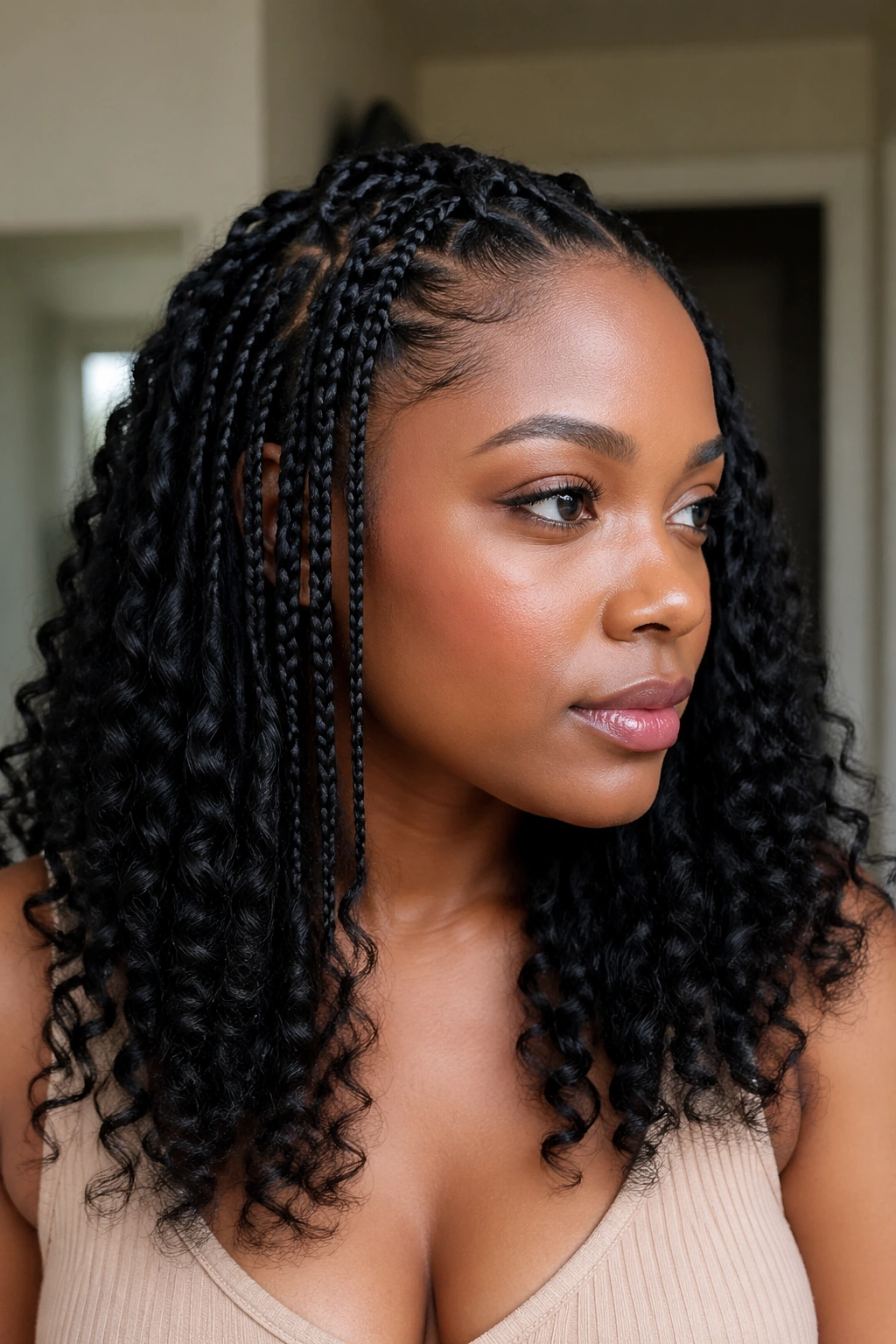
Boho braids are braids with intentionally pulled-out, wispy pieces along their length — creating a loose, undone appearance that’s the opposite of the tight, flat look of traditional cornrows. Combined with loose, undefined curls throughout the unbraided sections, the result is a completely bohemian, relaxed style.
The key to boho braids is deliberately loosening the braid after it’s been created — gently pulling the outside edges of each stitch to widen and soften it. The more you pull, the more undone it looks. For this style specifically, err on the side of over-loosening rather than under.
19. Knotless Braids Top Half With Curls Bottom Half
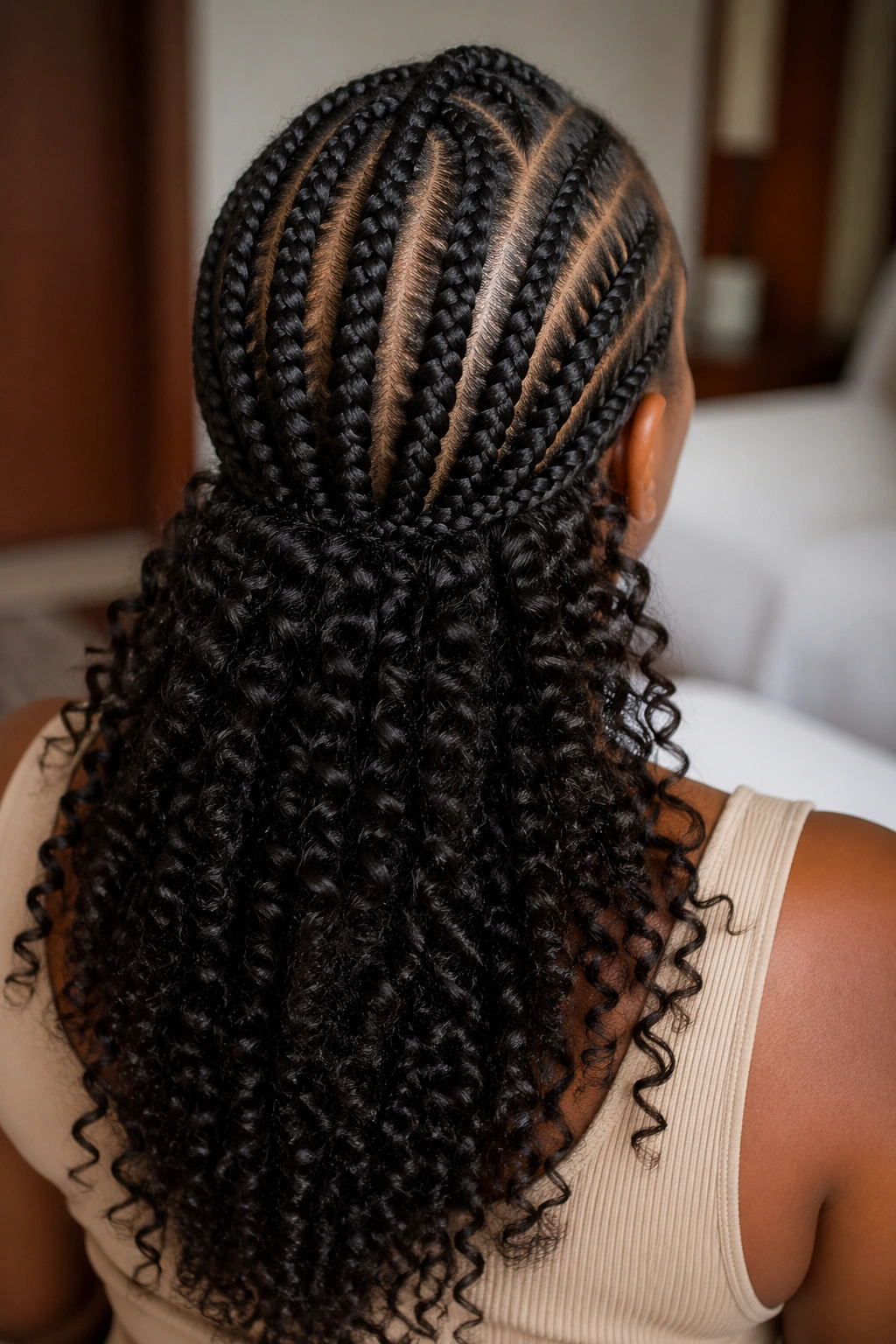
Knotless individual braids in the top half of the hair — from the crown to just behind the ears — with natural curls in the bottom half from the ears down. The braided top half creates a clear, defined upper section; the curl section below adds volume and naturalness.
This configuration creates the visual impression of wearing both a braided style and a curly style simultaneously, but without the awkwardness of a true transition area. The ear serves as a natural dividing line that feels organic rather than arbitrary.
20. Flat Twist and Curl Combo Throughout
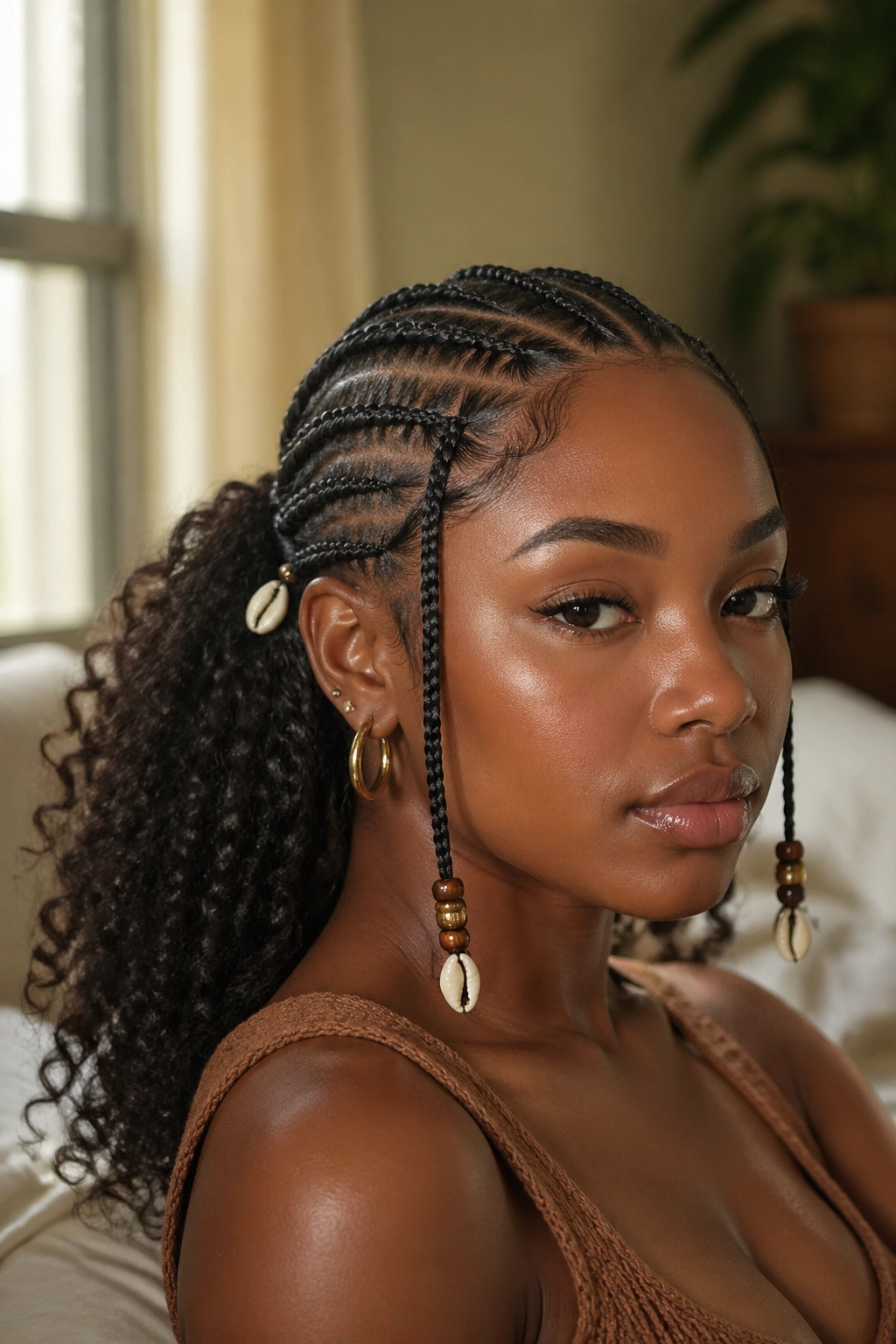
Instead of concentrating braids in one section and curls in another, this style scatters flat twists throughout the hair — some in the crown, some along the sides, some mixed throughout — with untwisted curl sections filling the spaces between. The result is a mosaic of twisted and curly sections across the entire head.
This approach requires more planning than a simple half-and-half division, but the result is a uniquely textured style that looks completely different from any standard configuration. The scattered twists act almost like highlights — drawing the eye to different parts of the head as the overall look moves.
21. Side Cornrows Into Natural Curl Puff
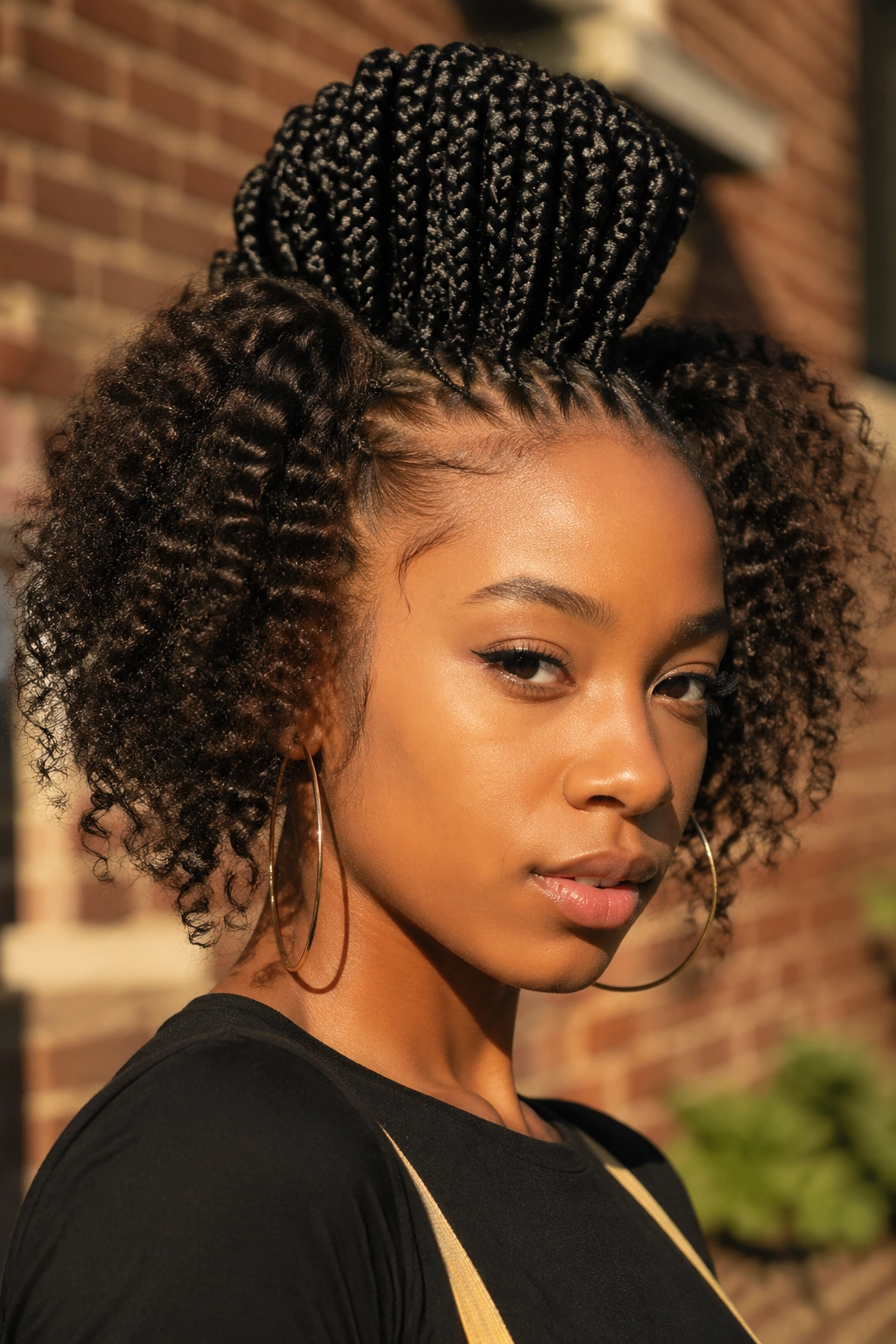
Two or three cornrows running along each side of the head — from the temple toward the back — meeting at the nape where they release into a natural curl puff. The cornrows sweep toward the center from both sides, gathering the visual weight of the style into the voluminous puff at the back.
The puff at the back becomes the style’s focal point — all that braided work converges and releases into a single, full curl explosion. This style is most effective when the puff is large and well-defined.
22. Passion Twists Back With Natural Curls Front
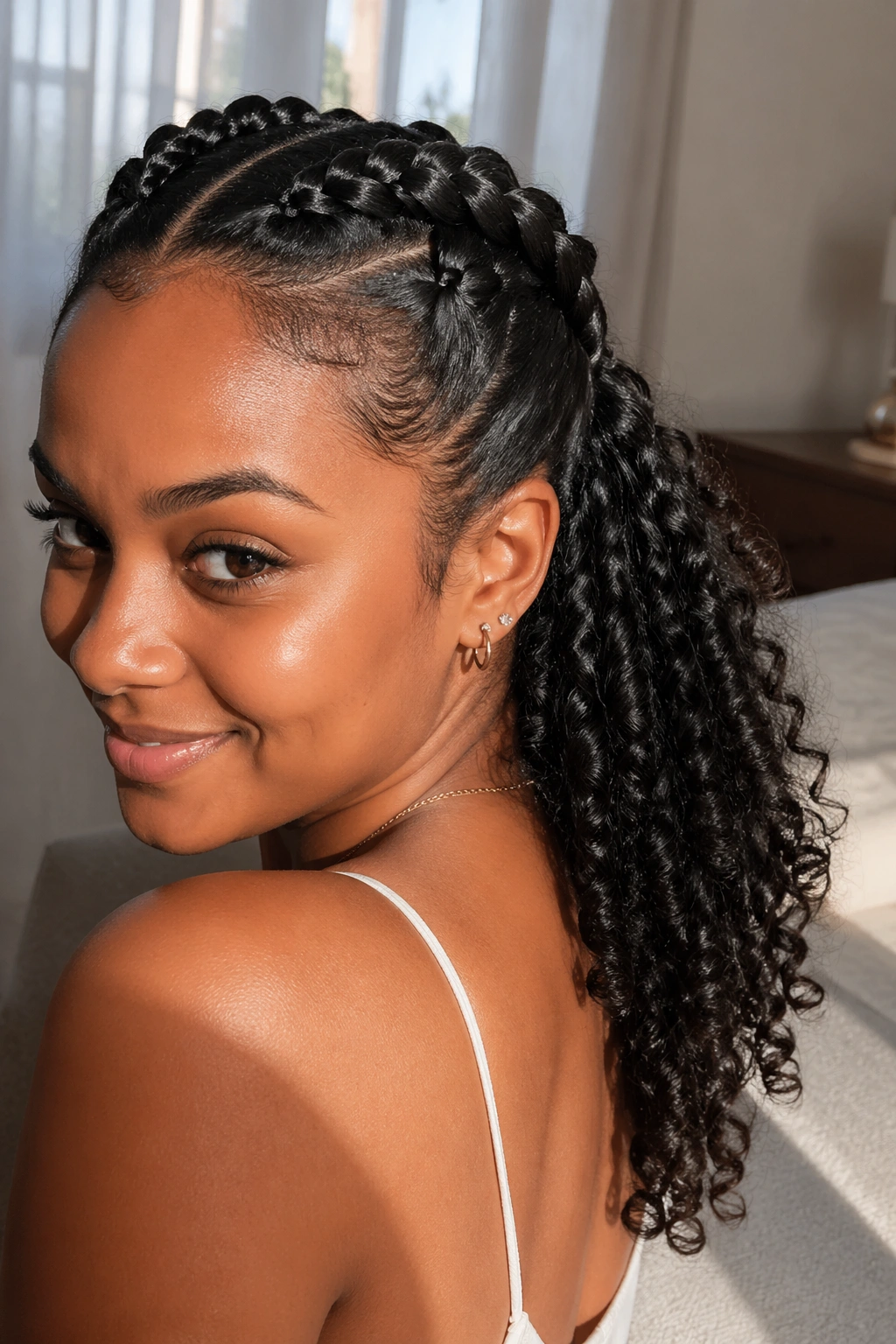
Passion twists — individual twists that use a water wave or curly texture extension, giving each twist a slightly frayed, textured appearance — in the back section, with natural curls in the front and top. The passion twists blend seamlessly with natural curls because their extension texture is designed to mimic natural curl patterns.
This configuration highlights the natural curls at the front where they’re most visible from face-on. The passion twists in the back add length, volume, and protection where they’re needed but slightly less visible.
23. Loc and Curl Combination
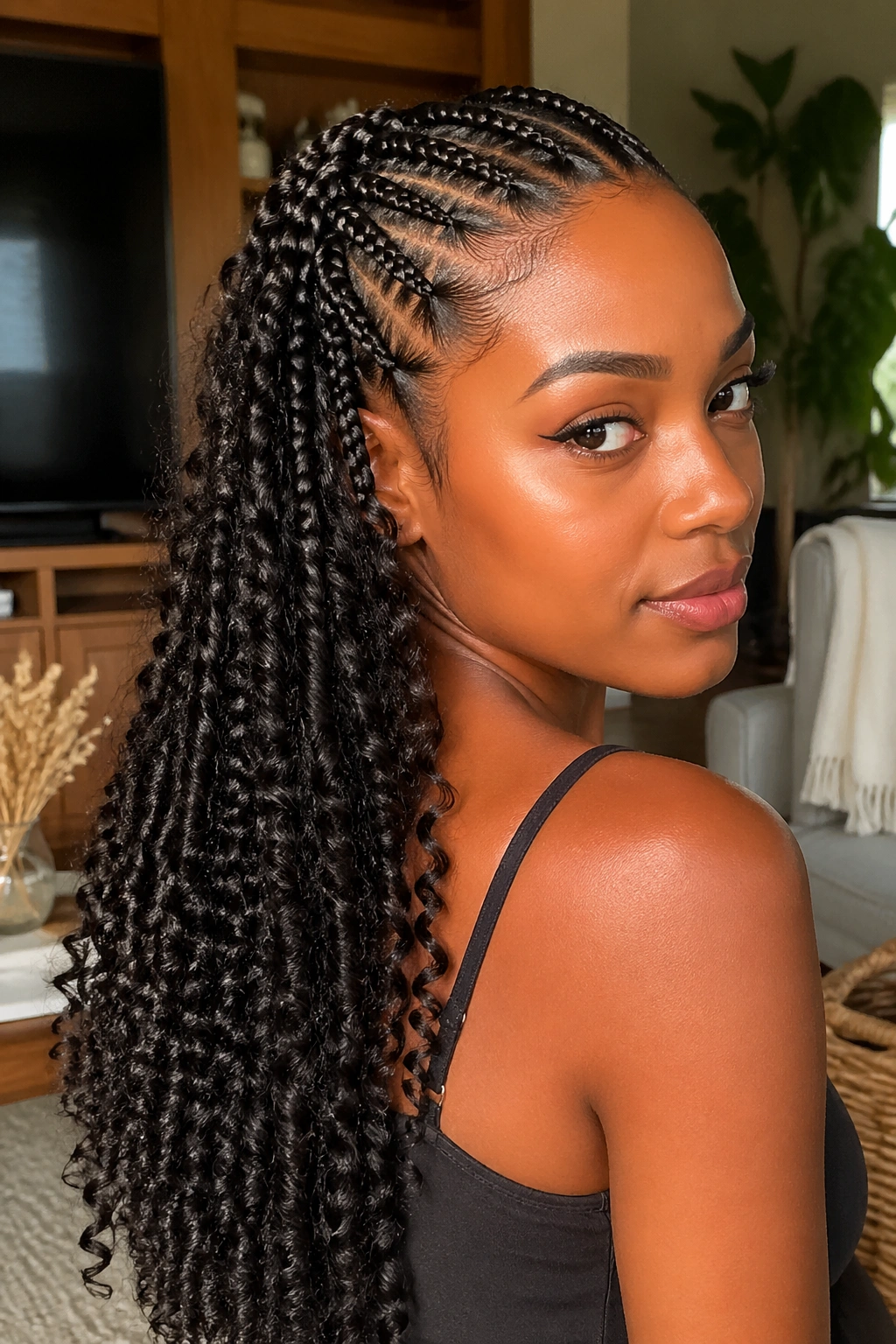
For women with locs, a half locs half curls style combines the mature, heavy texture of the locs with the lighter, spring texture of any remaining unloced natural hair. This happens during the loc journey when some hair has formed locs and some hasn’t, but it can also be a deliberate styling choice using partial loc installations.
The texture contrast between locs and curls is one of the most dramatic in natural hair styling. Locs are defined, rope-like, and heavy. Natural curls are springy, light, and constantly in motion. Together, they create a completely unique visual composition.
24. Braided Base With Twist-Out Curls
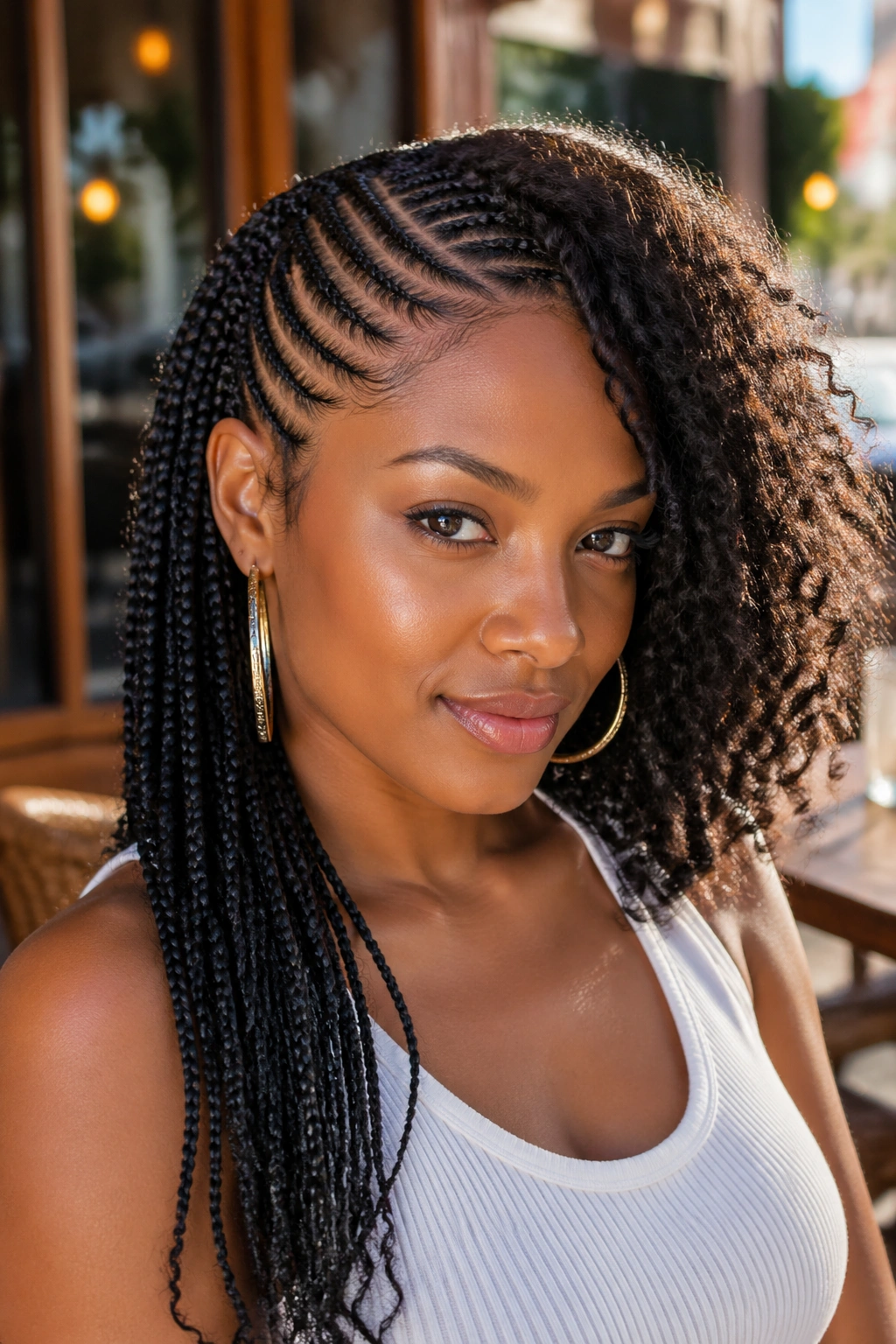
The scalp is fully cornrowed — flat, clean cornrows covering the entire head. But the ends of each cornrow are left free and unbraided, then finger-coiled or twist-out-styled into defined curls. From above, you see the braided scalp. From the sides and back, you see the curly ends floating free.
This style protects the scalp completely while still displaying natural curl texture. It’s one of the most protective versions of a half braids half curls look because the entire scalp section is braided.
25. Fulani Braids With Crown Curls
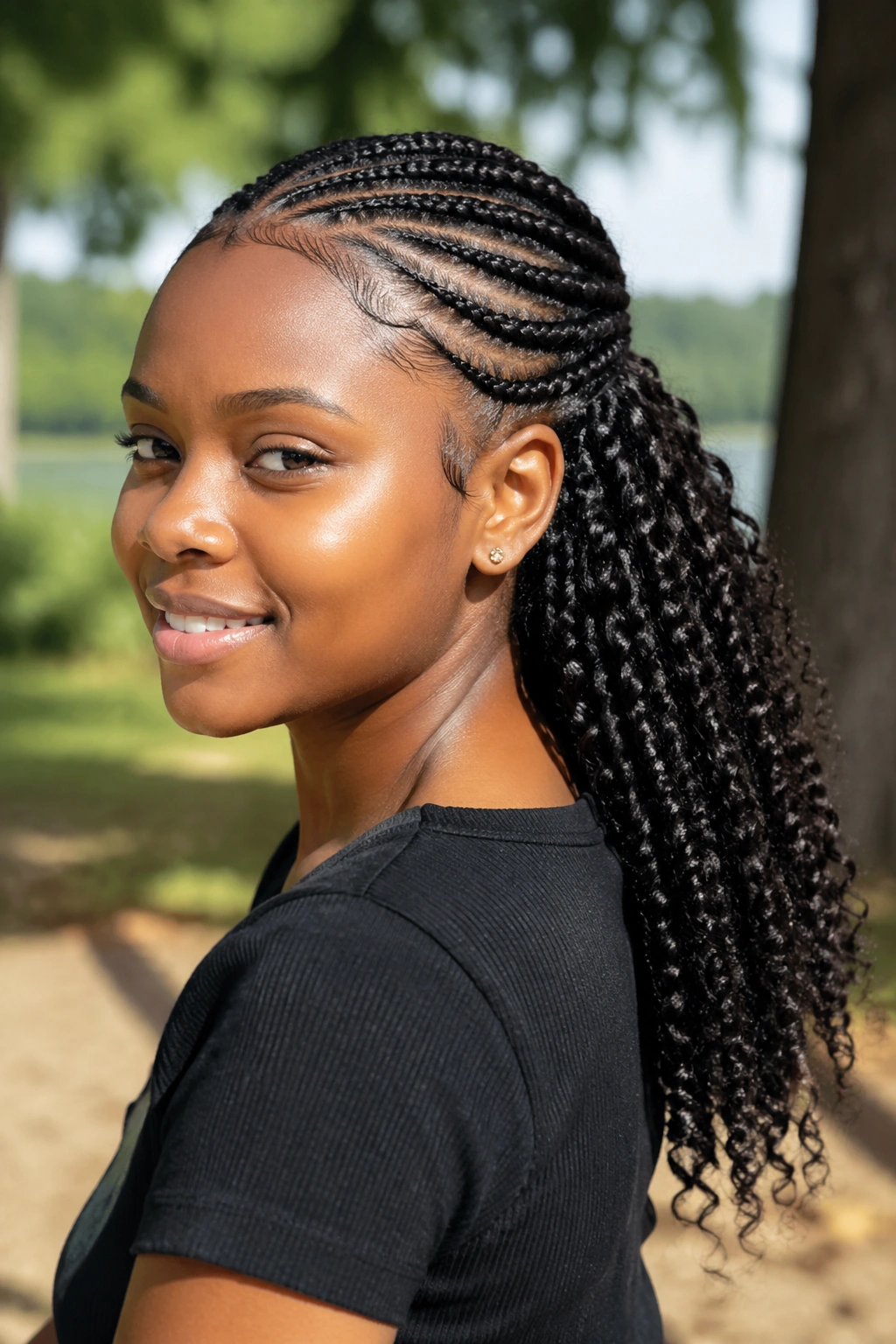
The characteristic Fulani braid configuration — center braid, side braids, decorated with beads and cuffs — combined with a large, full natural curl section at the very crown of the head. The Fulani braids frame the face and sides while the crown curls create height and volume at the top.
This combination adds three-dimensional interest to the classic Fulani look. The crown curls transform it from a fully braided style into a dynamic half braids half curls composition that keeps the cultural elements front and center.
26. Braids With Curly Freeform Sections
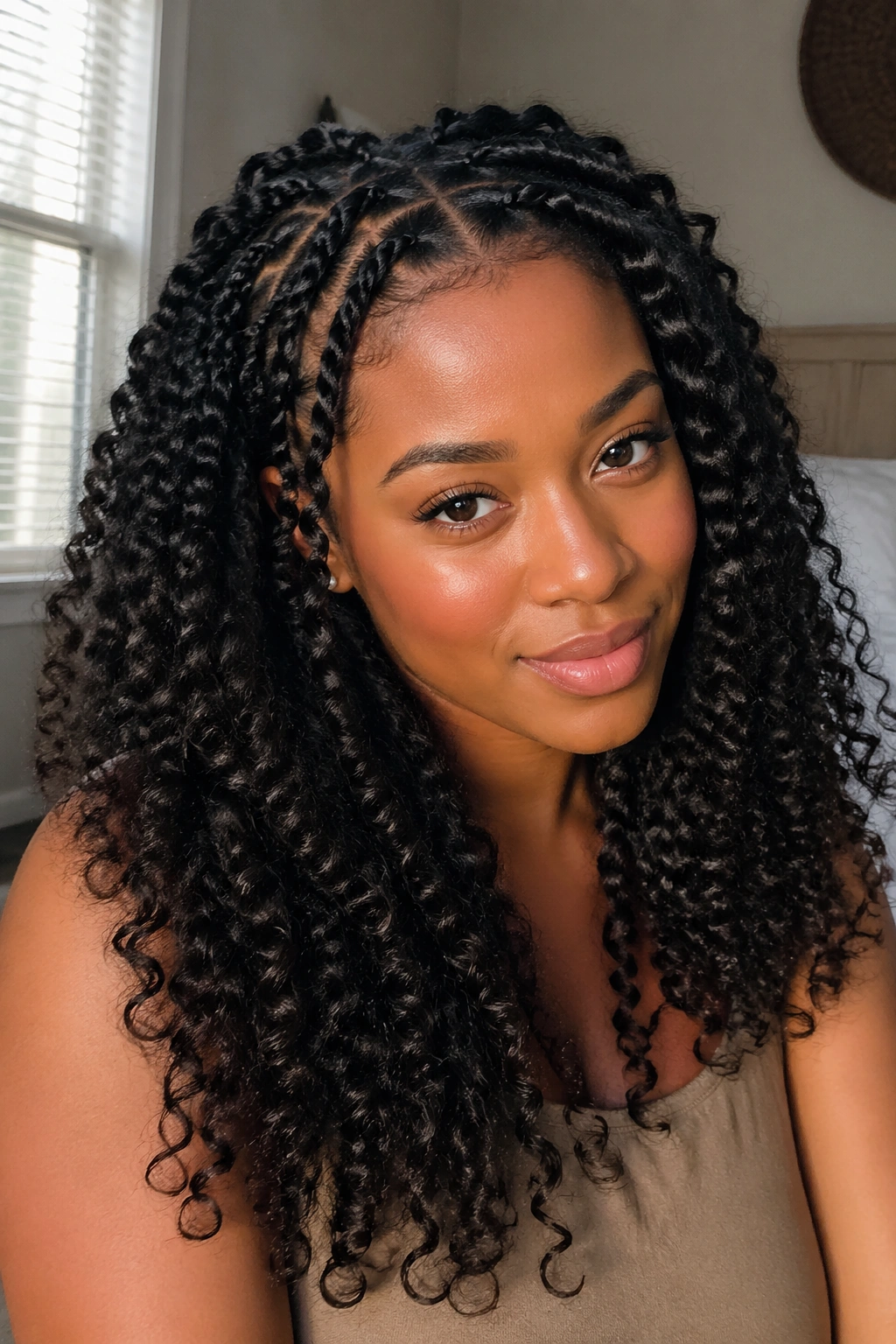
There are no rules about exactly where braids end and curls begin in this style — it’s deliberately freeform. Braids appear in unexpected places: a single braid at the temple here, two cornrows at the nape there, a twist at the crown somewhere else. Curls fill in all the space between them.
The freeform approach requires confidence but rewards creativity. It’s the most personal and least repeatable version of half braids half curls — no two executions look exactly alike, which makes it the most genuinely individual style on this list.
Caring for the Braided Sections
Clean scalp is the most important maintenance task for the braided sections of a half braids half curls style. Use a diluted shampoo — two to three squirts of shampoo mixed with water in a spray bottle — and apply it directly to the scalp between each braid. Massage gently with your fingertips, then rinse thoroughly.
Avoid heavy conditioner on the braided sections; it causes slipping and loosening. Focus conditioner on the curl sections instead.
Apply a light scalp oil — jojoba, tea tree, or peppermint — to the scalp along the braided sections every few days. This keeps the scalp moisturized and reduces itching without making the braids look greasy.
When to Take the Style Down
Braided sections should generally be removed before eight weeks to prevent tangling, matting, and potential hair loss from the weight of old extensions or lint accumulation in the braids. Natural hair that’s been braided for too long without removal can experience significant breakage when the braids are finally taken out.
Take down the style carefully — never pull or yank. Use a small amount of oil on each section before removing braids to add slip and reduce breakage. After removing all braids, detangle very gently with your fingers before washing.
The curl section can be refreshed and re-defined immediately after removing the braids. The braided sections will need moisturizing attention — deep conditioning sessions for at least two weeks after a long braided style helps restore elasticity and moisture balance.
