



Ombre cornrows take the gradual color blend that revolutionized loose hair coloring and apply it to braided structure. The result is a style that has the discipline of cornrows at the roots, where your natural color sits, and the visual drama of color shift at the ends, where the kanekalon transitions into a different shade. Cornrow styles in ombre work because the structure of braids reads the color gradient cleanly — each row becomes a thin painted line that fades from one tone to another, multiplied across the head into a coordinated pattern. You can go subtle or bold, warm or cool, single-shade or multi-stage, and the cornrow base keeps everything tidy.
The reason ombre works so well on cornrows is that the braid concentrates color into a clear line. On loose hair, ombre can look fuzzy and undefined. On a braid, the fade is visible and intentional.
The technique itself hasn’t changed much over the years. The braider feeds in pre-dyed kanekalon at strategic points along each row, blending the color transition naturally rather than abruptly.
What Ombre Means in the Cornrow Context
Ombre is a French word for “shaded” or “shadowed.” In hair, it refers to a gradient where one color fades into another, usually darker at the roots and lighter at the ends. The transition is gradual, not abrupt.
In cornrow ombre, the color shift happens within the kanekalon. Your natural hair stays at the root for the first few inches. Then the braider feeds in extension hair that has been pre-dyed in a gradient — dark at the top of the piece, lighter at the bottom.
When fed in correctly, the color shift looks seamless. The eye registers the transition as a soft fade rather than a sharp line.
Why Ombre Suits Cornrows Better Than Other Braid Styles
Box braids show ombre well, but the rounded shape of each braid distributes the color around its surface. Cornrows lie flat against the scalp, which means the color reads as horizontal lines.
Those horizontal lines compound across the head. With twelve rows of ombre cornrows, you get twelve gradient lines running in parallel. The visual impact is layered and rhythmic.
Loose hair ombre can look chaotic when wind moves it around. Cornrow ombre stays where you put it. The color pattern is locked in until takedown.
Color Pairings That Work Best
The strongest ombres pair colors that have either close visual relationship or strong contrast. Awkward middle-ground pairings — where two colors are similar but not quite matching — read as accidental rather than intentional.
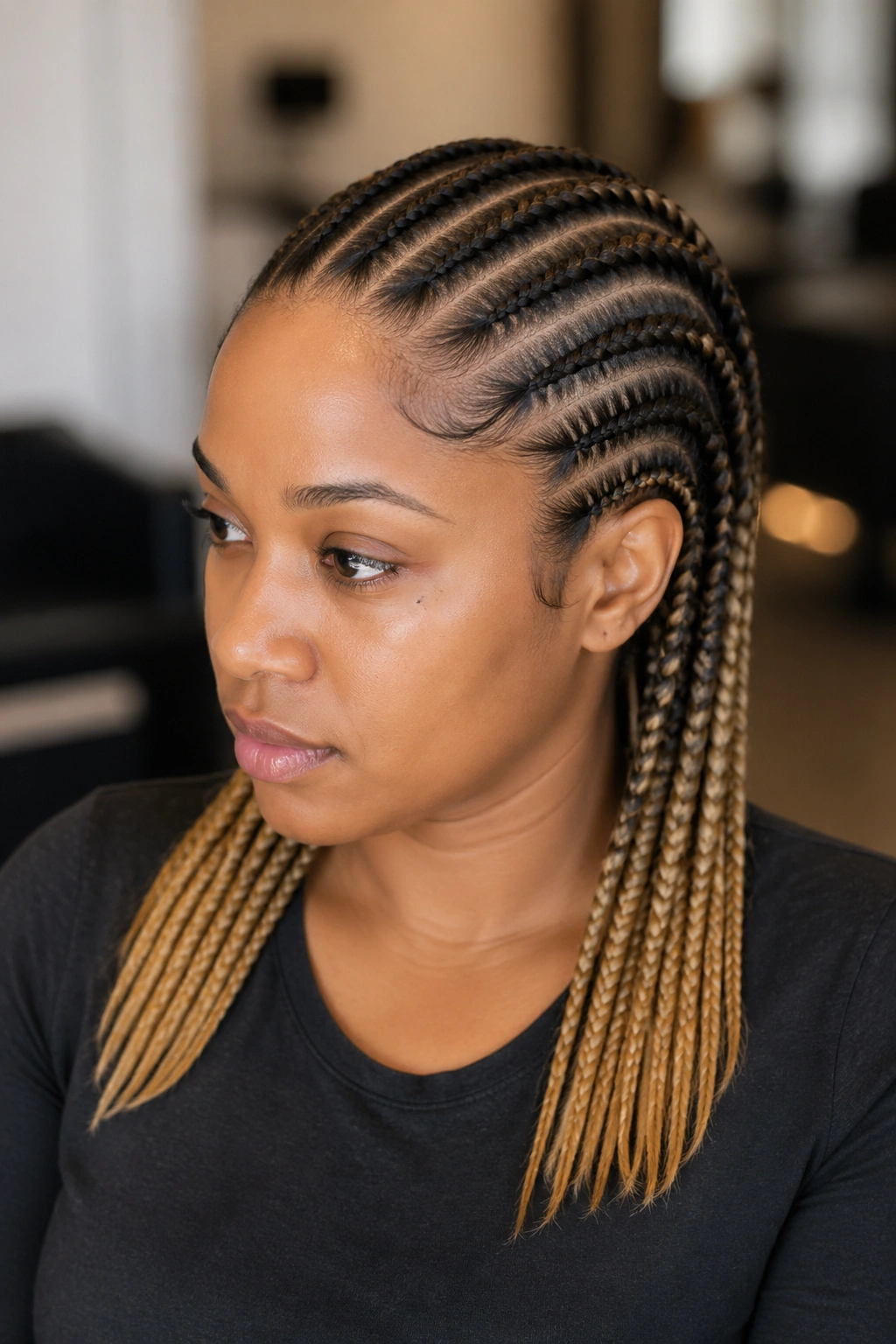
Strong pairings include: black to honey blonde, dark brown to copper, jet black to platinum, dark brown to caramel, burgundy to gold.
Less effective pairings: brown to dark blonde (too close), black to muted gray (too close), bright red to bright orange (too similar in tone).
Cool tones flatter cool skin. Warm tones flatter warm skin. Neutral tones work for both.
How the Color Transition Is Built
The kanekalon arrives pre-dyed in gradient packs. Some packs are split exactly in half — half dark, half light. Others have a true gradient with a transition zone in the middle.
A skilled braider chooses where on each row the gradient starts. Starting too high means the color shows close to the scalp and competes with the natural hair. Starting too low means the color barely shows in the finished braid.
The standard placement starts the gradient at roughly the jawline level when the braid hangs straight down. That position keeps the roots looking natural and shows off the color across the visible length.
Prep Work for an Ombre Cornrow Install
Wash your natural hair clean with a clarifying shampoo before the install. Any product buildup at the scalp can affect how cleanly the kanekalon attaches.
Detangle thoroughly. Knots in the natural hair create irregularities at the start of each braid that the eye picks up against the smooth color line.
Stretch the hair using a low-heat blow dry. Stretched hair holds the kanekalon better and the rows lie flatter.
Don’t apply heavy oils right before the install. The synthetic hair needs a slightly grippy texture to attach cleanly. A thin layer of edge gel along the front is enough.
1. Black to Honey Blonde Straight-Back Cornrows
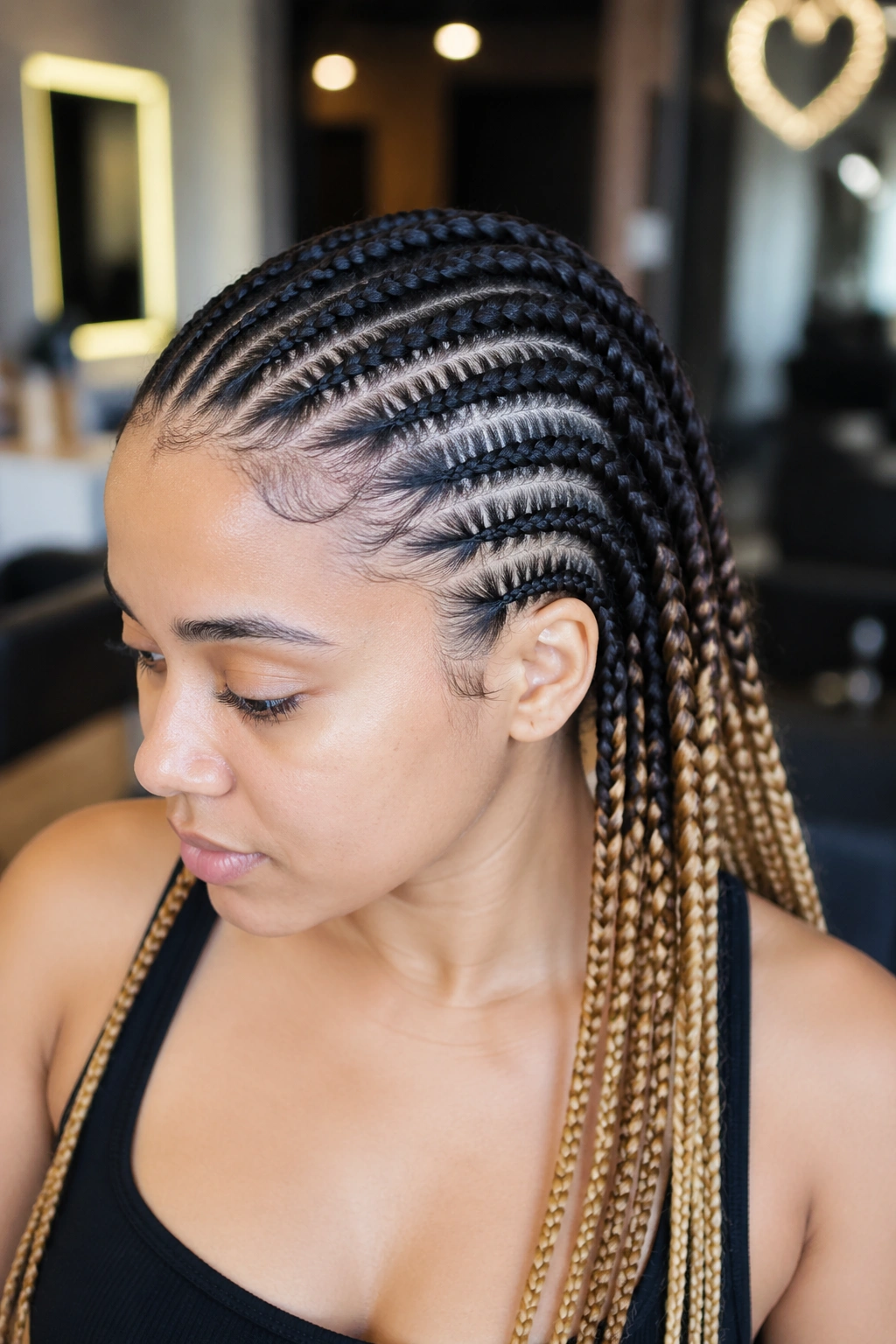
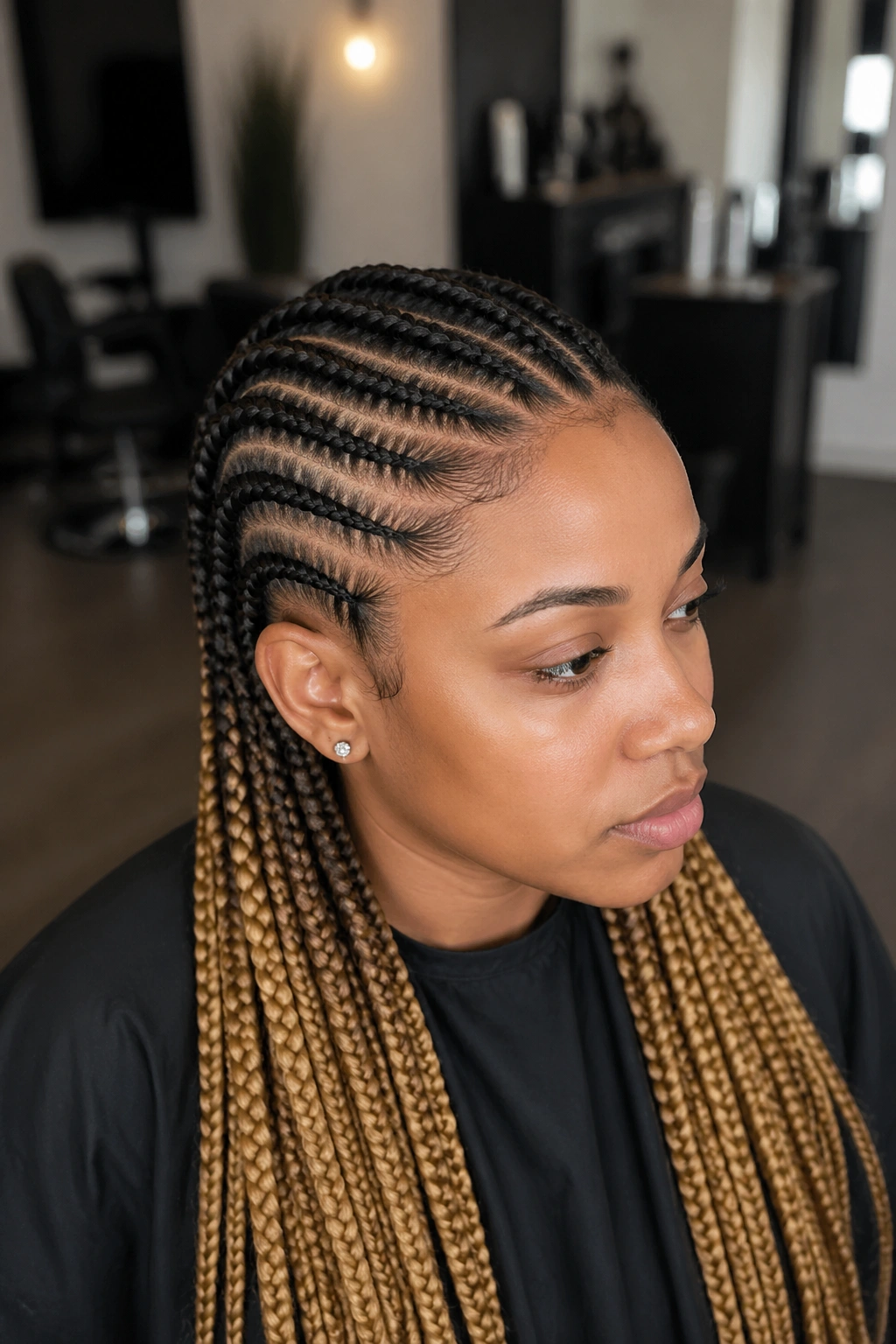
The starter ombre style. Eight to ten straight-back rows fading from natural black at the roots to a warm honey blonde at the ends. The contrast is strong but the warmth keeps it from feeling stark.
Why It Works
- Honey blonde flatters most skin tones in the medium-to-deep range
- The color shift photographs well in both natural and artificial light
- Easy to maintain because the rows are simple and parallel
Tip: Ask for the gradient to start about 8 inches down from the scalp. This keeps the color visible in the back without crowding the face at the front.
2. Dark Brown to Copper Cornrows
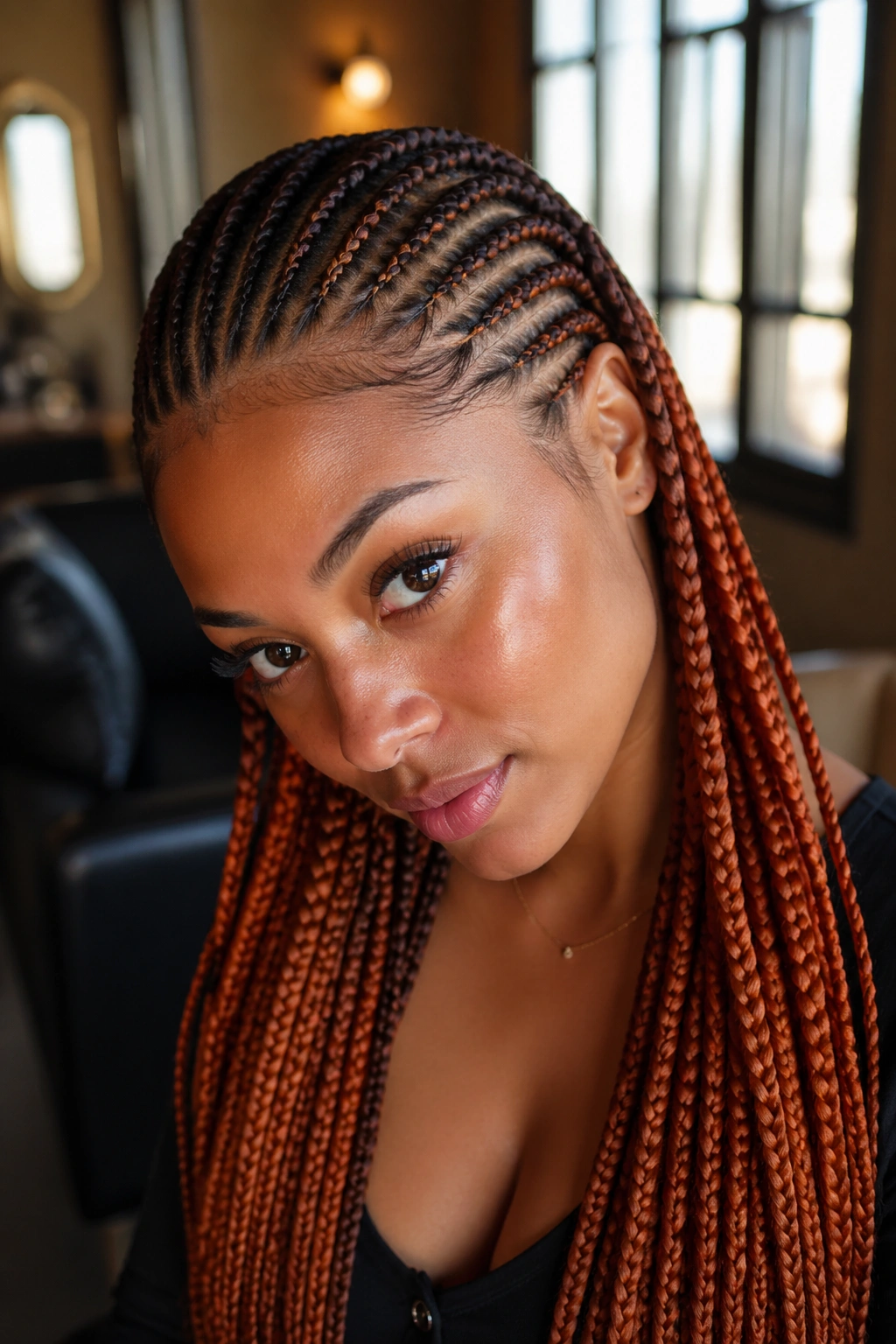
Copper has presence without being loud. Paired with dark brown roots, the result reads as warm and rich rather than flashy.
This style suits autumn-themed outfits and works equally well for office and weekend wear. The brown roots blend with most natural hair colors, so the install looks like a natural color change rather than an extension job.
The copper takes on different shades depending on lighting. Indoors under warm bulbs, it reads as caramel. Outdoors in sunlight, the copper notes come forward.
3. Jet Black to Silver Gray Ombre
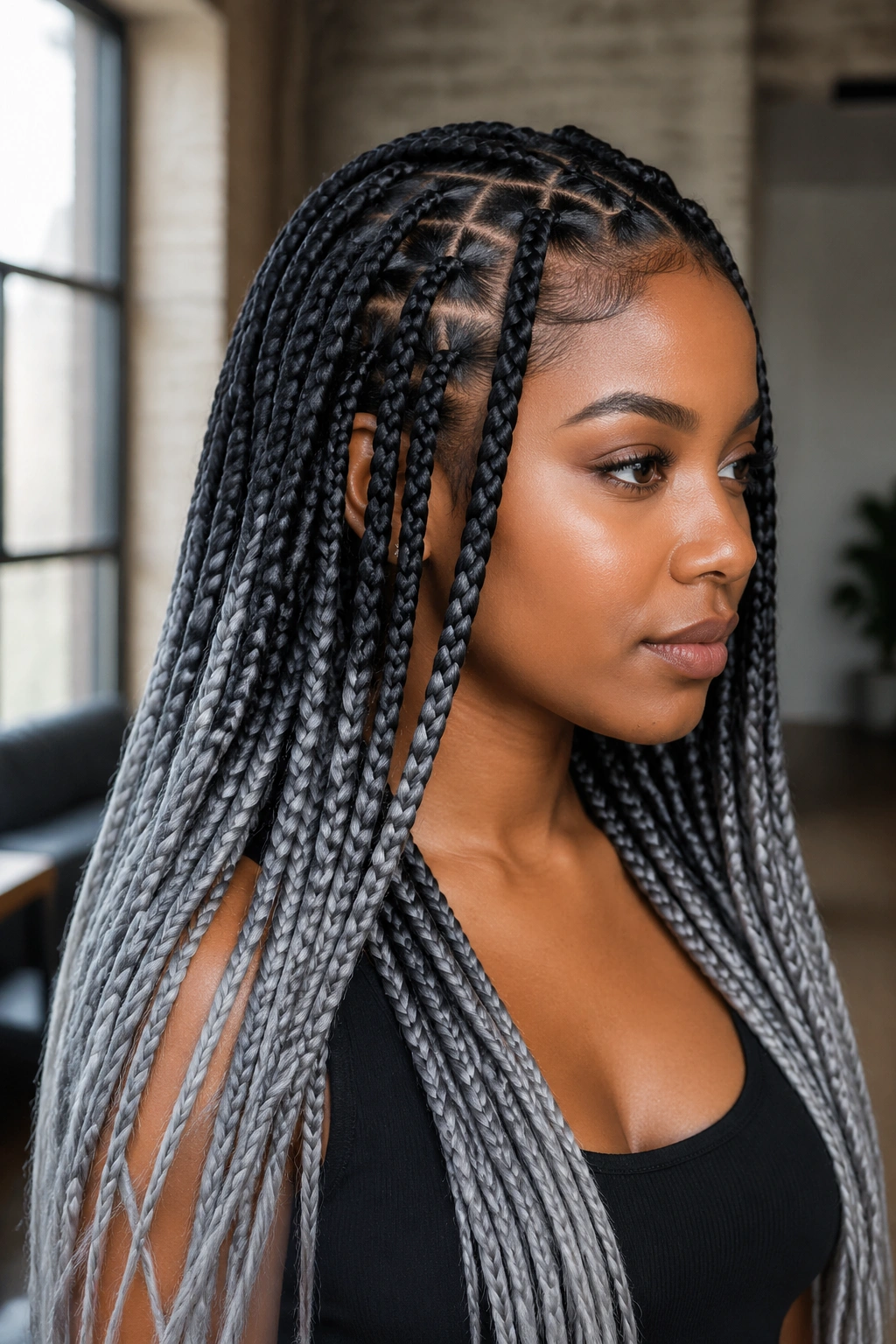
A bold, high-contrast option. Jet black at the roots transitions into a cool silver gray at the ends. The effect is striking and modern.
Silver gray kanekalon needs to be high quality to avoid looking like cheap costume hair. Look for brands that specifically formulate gray for natural-looking results.
This style suits people who want their hair to be the focal point of any outfit. The silver catches light dramatically and stands out in any setting.
4. Burgundy to Rose Gold Cornrows
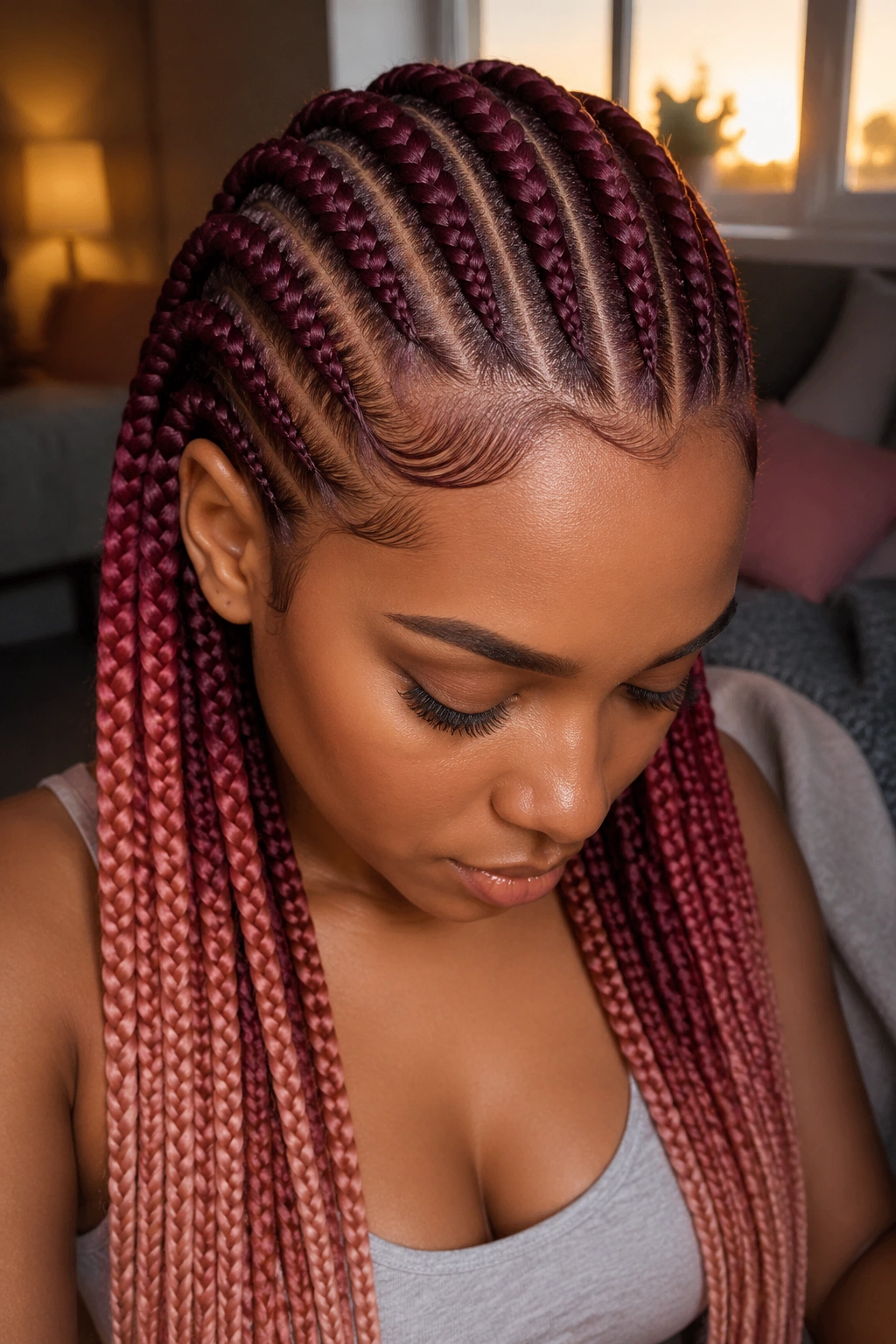
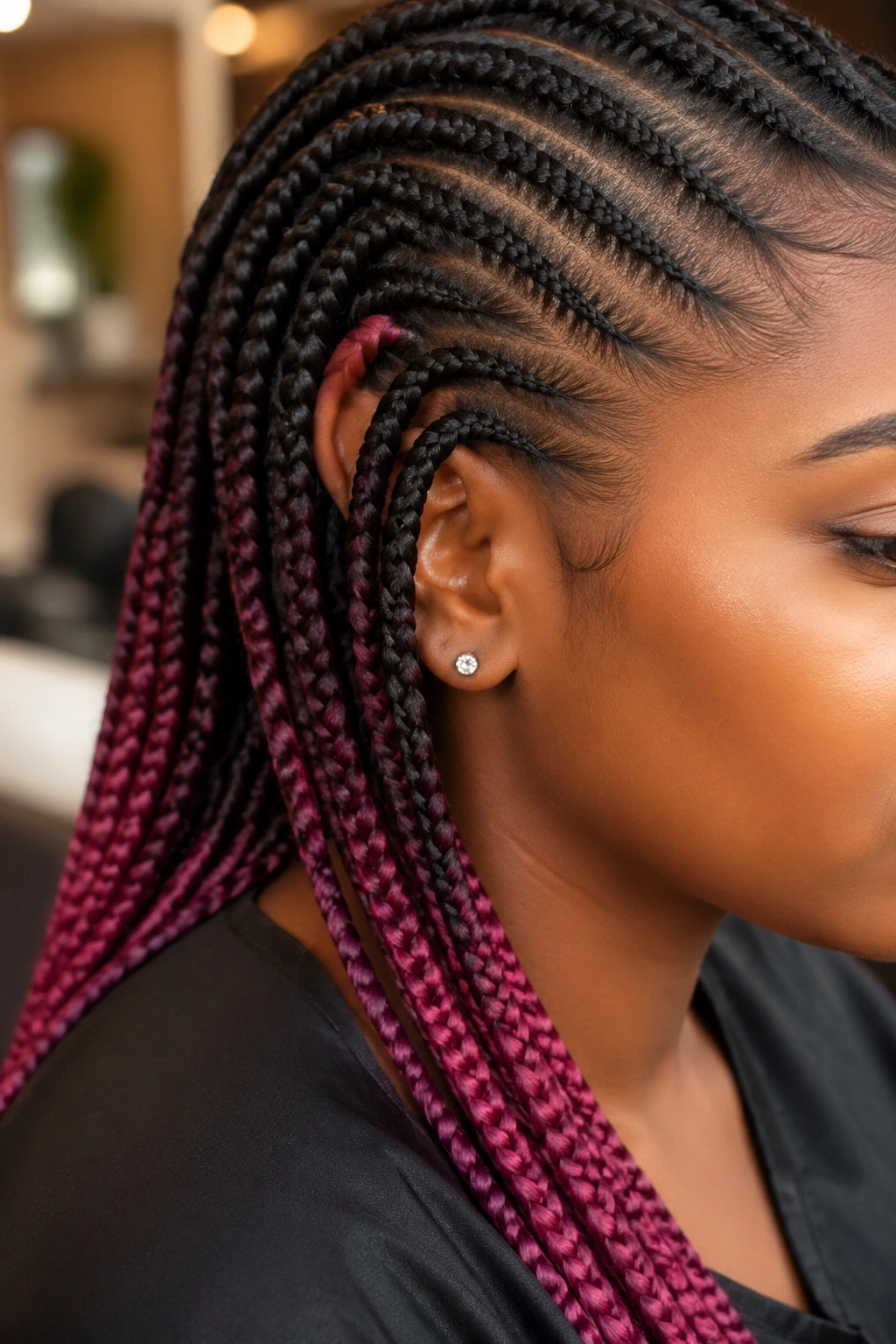
Burgundy roots fading into a soft rose gold at the ends. Both colors share a warm pink-red undertone, which makes the transition feel cohesive.
Rose gold has been a popular hair color choice for years because it flatters a wide range of skin tones. Combined with burgundy roots, the effect is romantic and feminine.
The two colors photograph particularly well in soft lighting. Sunset shots, indoor candlelit settings, and golden-hour photography all flatter this combination.
5. Three-Stage Ombre With Center Transition
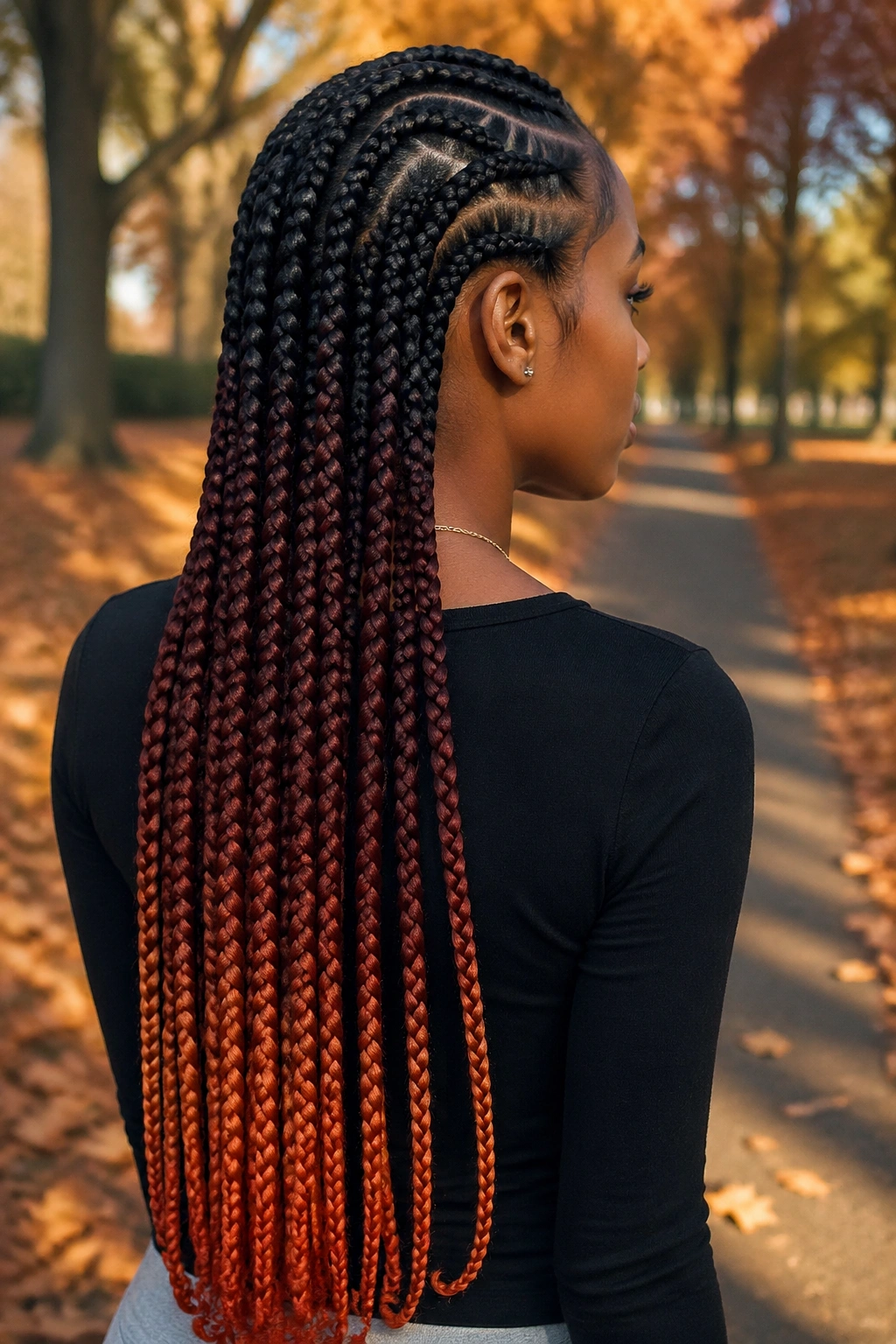
What if the ombre has more than two colors? A three-stage ombre adds a middle transition tone between the root color and the end color.
The classic three-stage runs from black at the roots, through a deep auburn in the middle, and into a bright copper at the ends. The middle color softens what would otherwise be a stark transition.
How to Use It
This works best on longer cornrows — at least mid-back length. Shorter installs don’t have enough room to show all three stages clearly.
The middle color should be roughly halfway between the root color and the end color in tone. Skipping the middle creates a jarring jump.
6. Ash Brown to Platinum Blonde
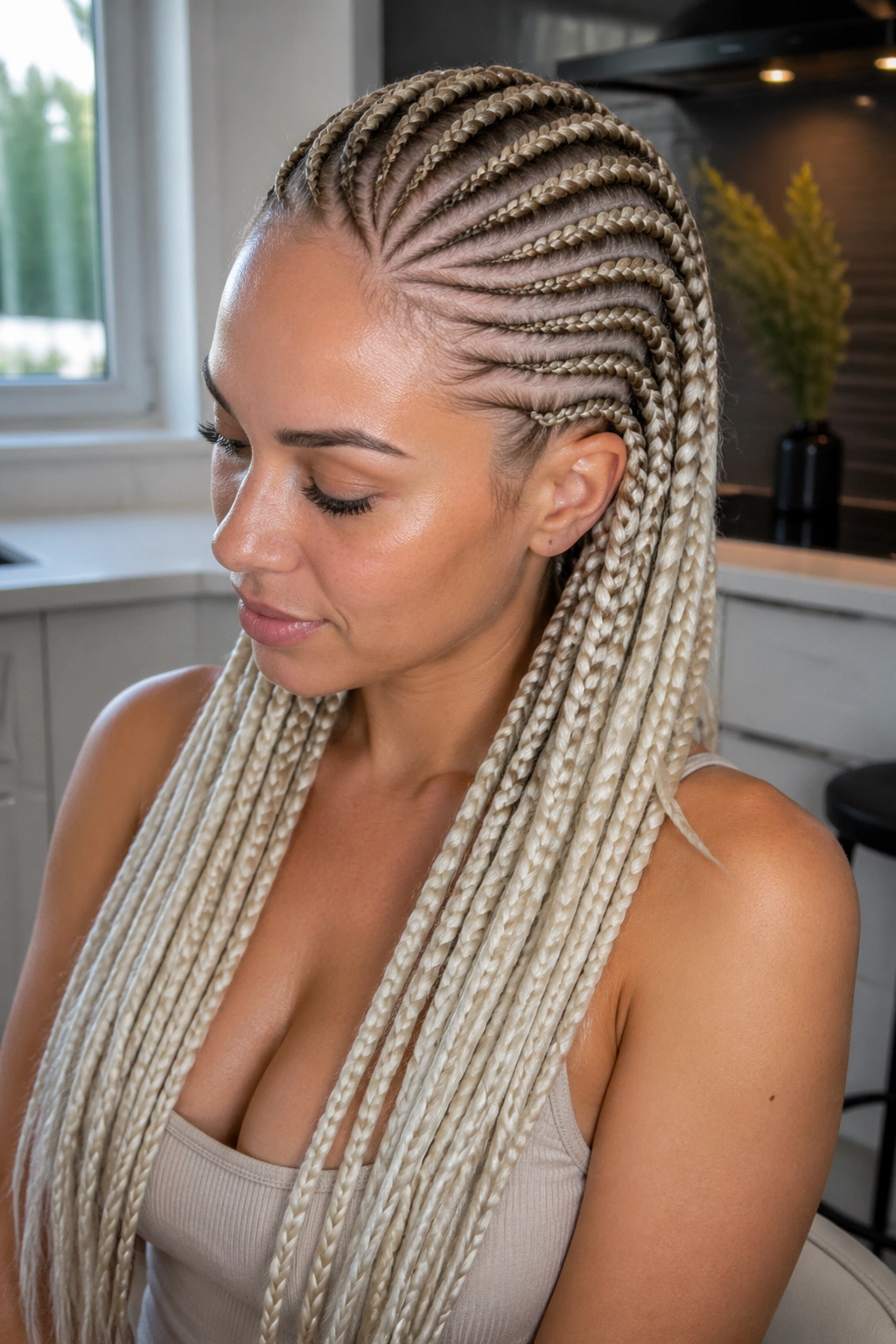
Cool tones throughout. Ash brown at the roots — slightly darker than your natural color — fading into platinum blonde at the ends.
Platinum is challenging on synthetic hair. Cheaper kanekalon often reads yellow rather than true platinum. Quality kanekalon holds the cool tone properly.
This style suits cool skin undertones. Warm undertones can clash with the ashy quality of the colors and make the skin look sallow.
7. Subtle Ombre With Two-Shade Brown
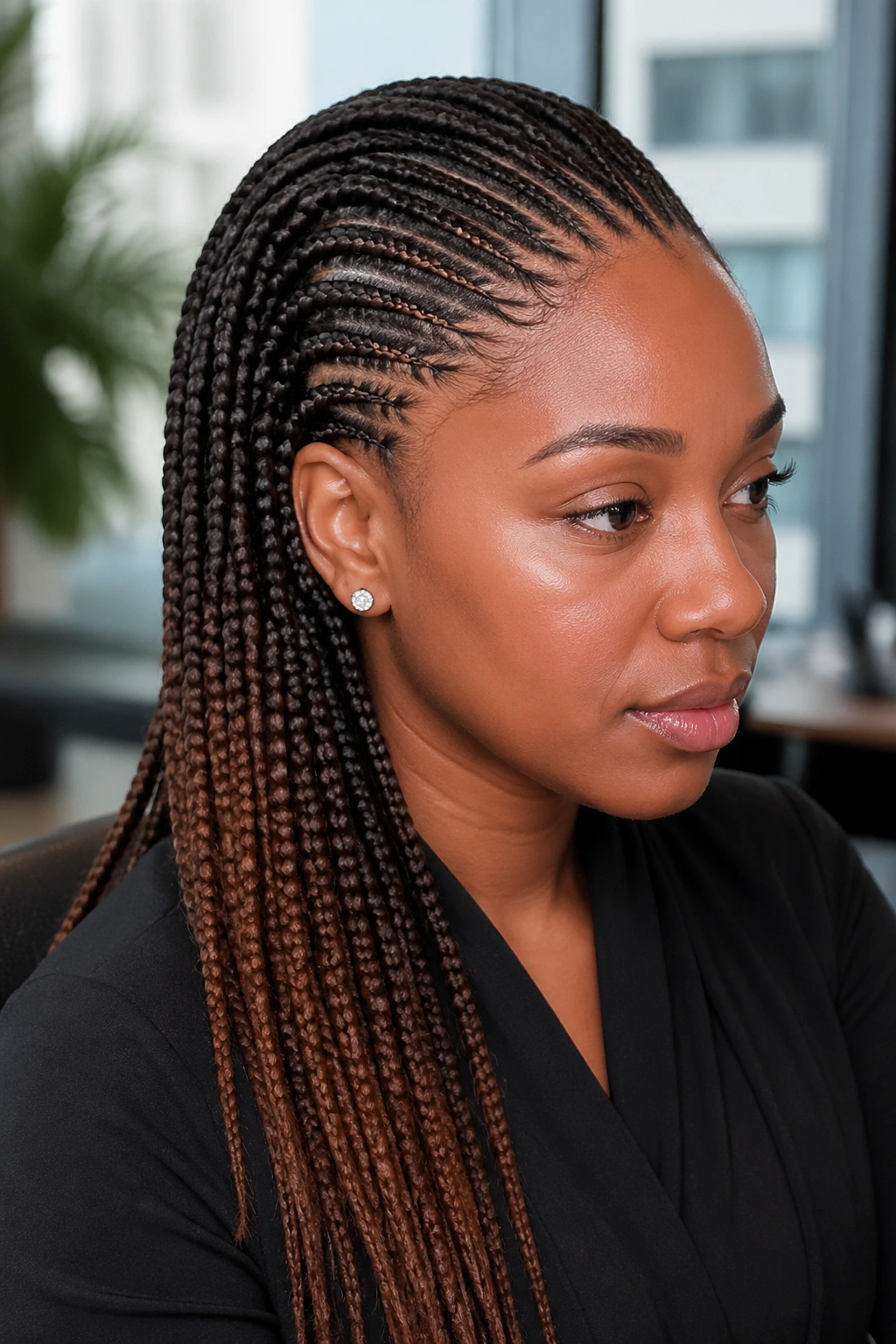
Not every ombre needs to be dramatic. A subtle version keeps both colors in the brown family — a darker chocolate brown at the roots transitioning into a lighter chestnut at the ends.
The shift is barely noticeable in some lighting and clearly visible in others. The look feels expensive rather than dramatic.
This is the ombre to pick for professional environments where bold color might not be appropriate. The subtlety keeps it office-friendly.
8. Pop Color Ombre With Vivid Ends
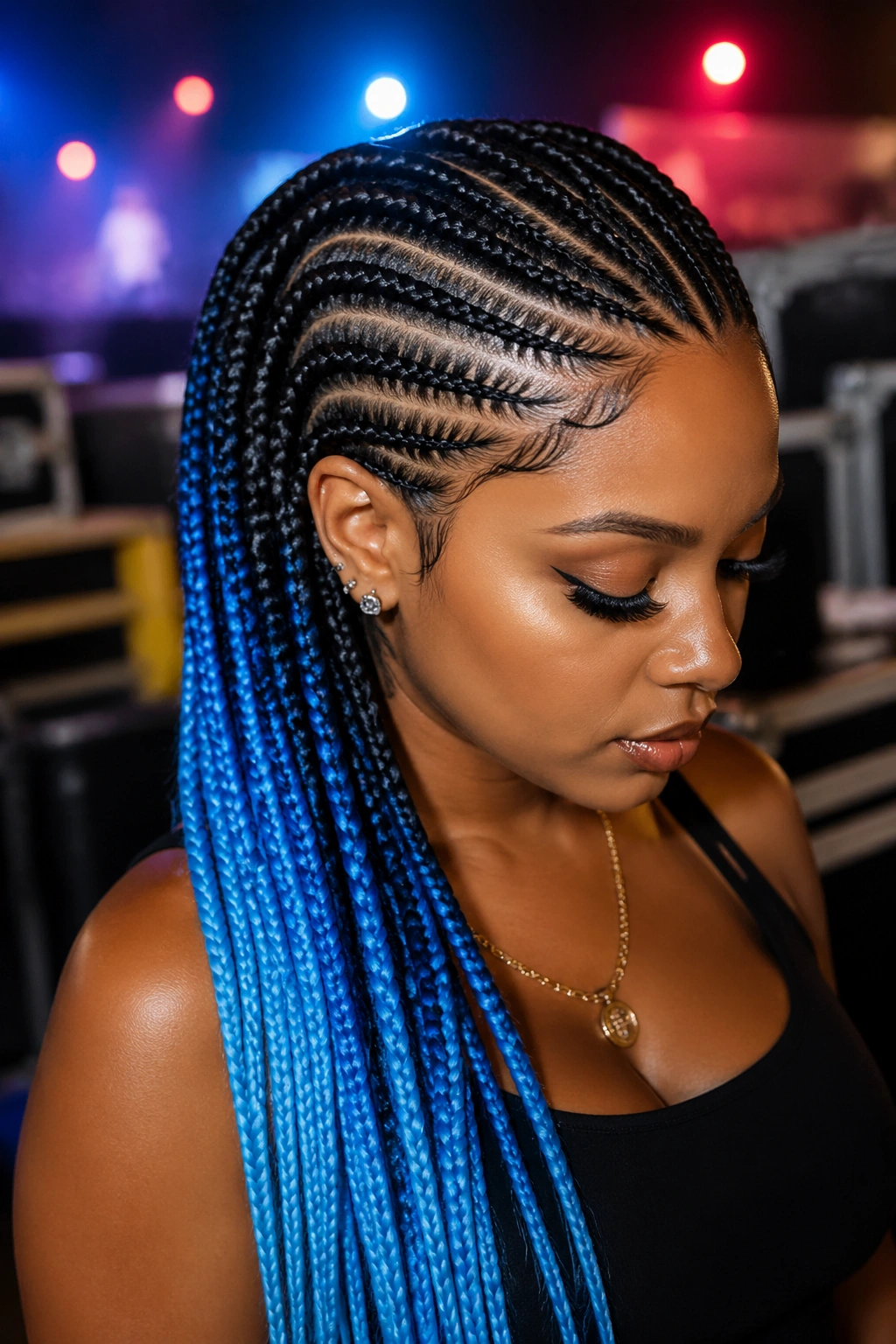
The base is your natural color. The ends transition into a vivid color — electric blue, hot pink, neon green, vibrant purple. The contrast between natural roots and saturated ends is the entire point of the style.
Vivid colors need full saturation to look right. Pastel versions of the same colors look washed out and dingy.
The pop color suits occasions where you want maximum impact — concerts, festivals, photo shoots, parties. For everyday wear, pop colors can feel too much.
9. Reverse Ombre With Light Roots
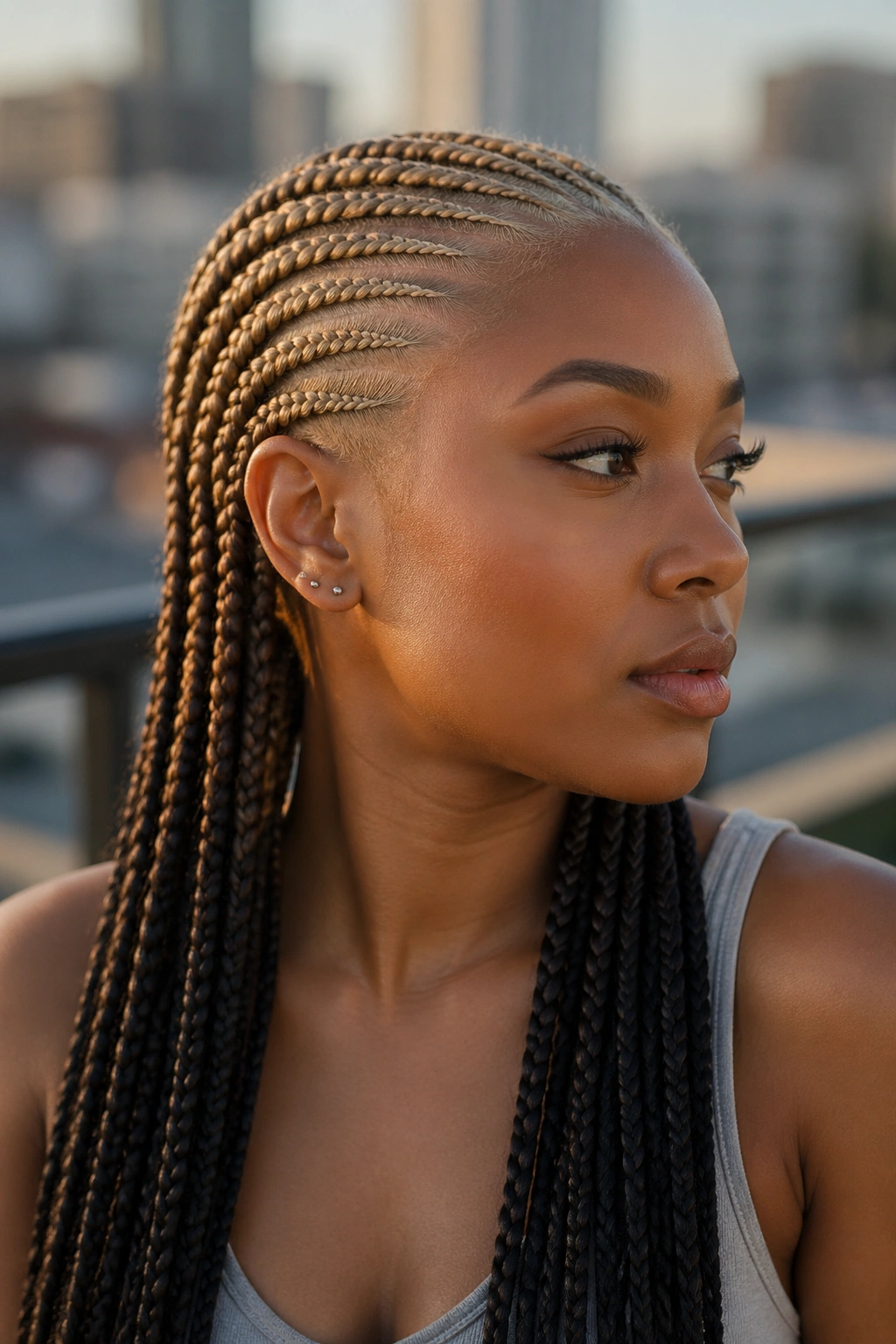
Most ombres go dark to light. Reverse ombres flip the gradient — light at the roots, dark at the ends.
This is unusual and reads as deliberate when done right. The light roots make the scalp appear brighter, which can be flattering in photos.
Reverse ombres work best when the root color is a soft, natural-looking blonde rather than a stark white or platinum. The transition into a darker end shade should feel earned.
10. Bronze to Champagne Cornrows
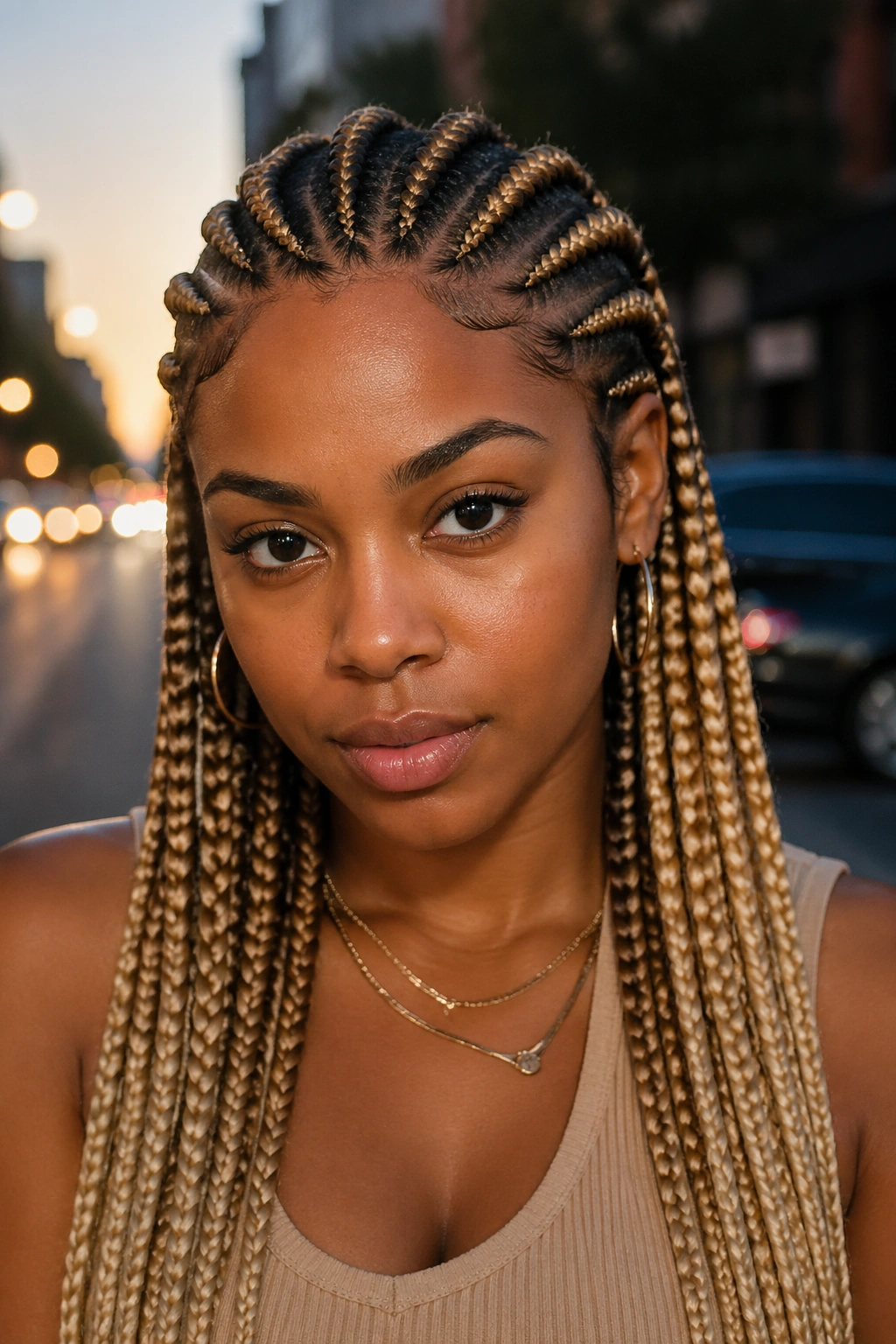
Bronze and champagne sit close in tone, which makes the gradient feel like a single warm wash of color rather than two distinct shades.
The result is sophisticated and works for both day and evening wear. Bronze flatters warm skin tones. Champagne lifts and brightens.
Pair this style with gold jewelry to amplify the warm metallic feel. Silver jewelry creates an unintentional clash.
11. Multi-Tone Sunset Ombre
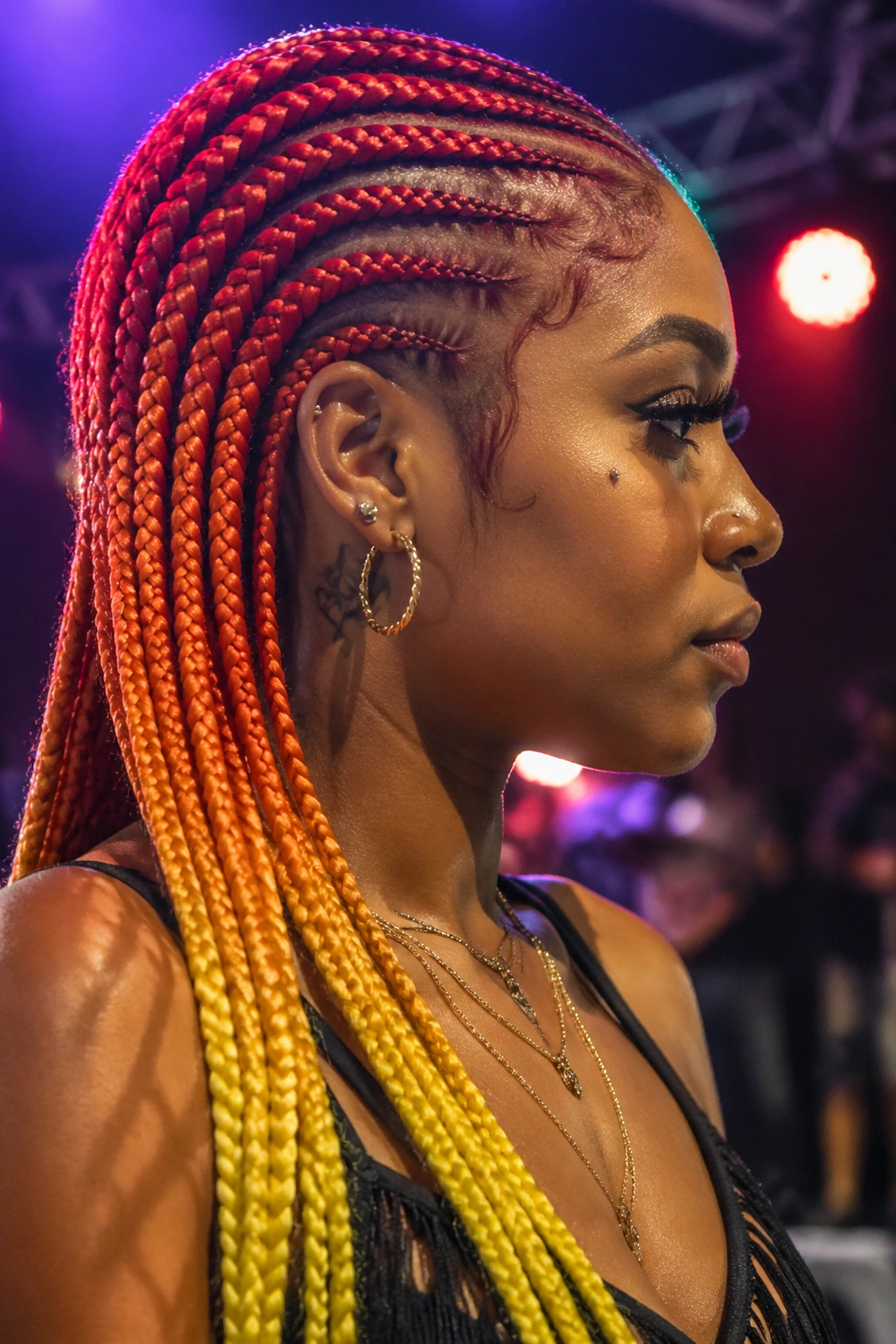
The full color palette of a sunset — deep red at the roots, transitioning through orange in the middle, and ending in golden yellow at the tips. A maximalist take on ombre.
This is a statement piece. It works for editorial-style photography and creative environments. It’s not subtle and isn’t trying to be.
The kanekalon for this style is harder to find pre-dyed. Some braiders dye their own using fabric dye or hair dye on white kanekalon.
Best Occasions
Music festivals. Photo shoots. Themed events. Anywhere expressive color belongs.
12. Dark Roots With Smoky Lavender
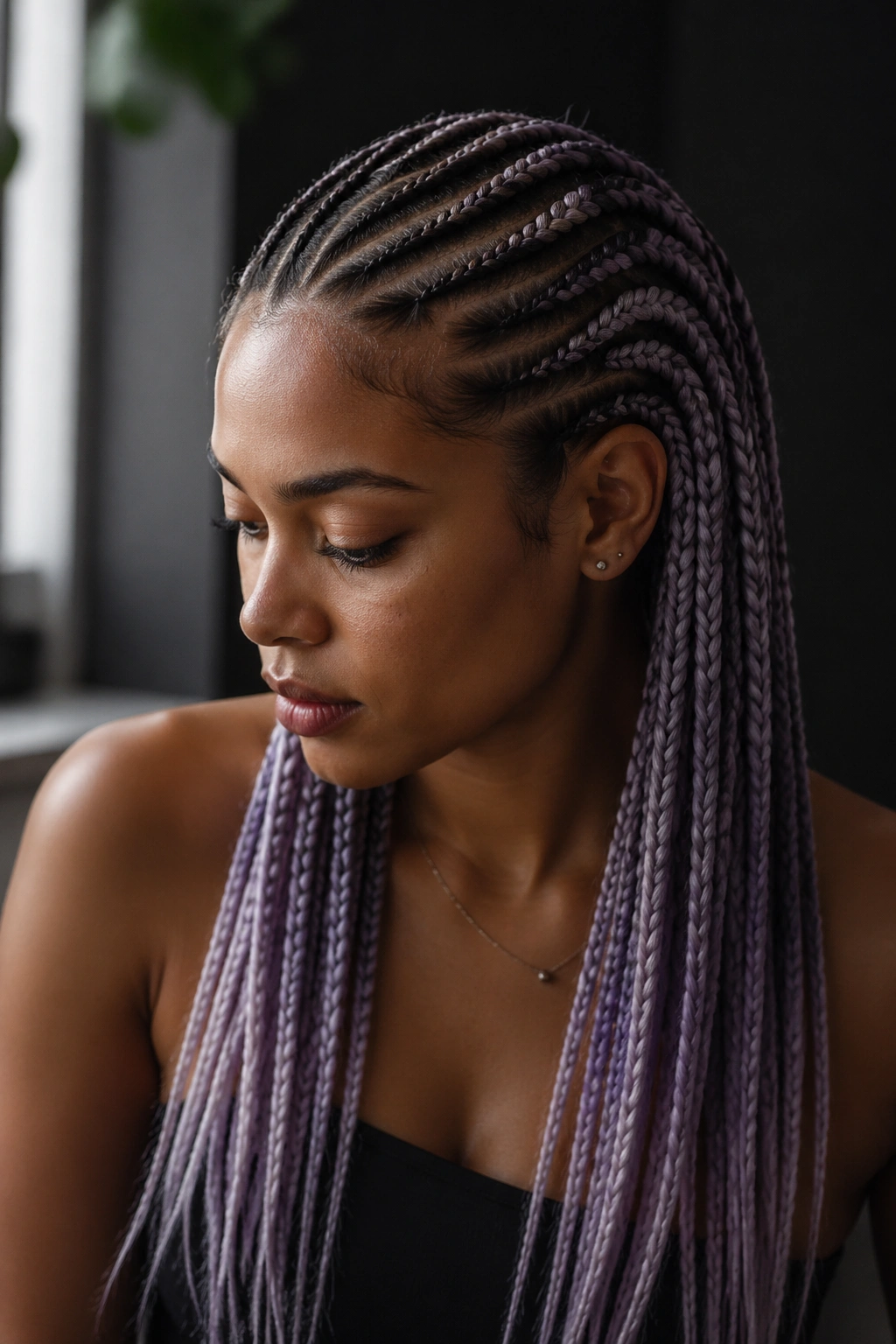
Lavender is having a long moment in hair color. The smoky version — muted rather than bright — pairs well with dark brown or black roots.
The smoky finish keeps the lavender from feeling too sweet. It reads as moody and editorial rather than girly.
This color combination flatters cool skin tones particularly well. Warm undertones can fight the cool quality of the smoky lavender.
13. Warm Ombre With Caramel Highlights
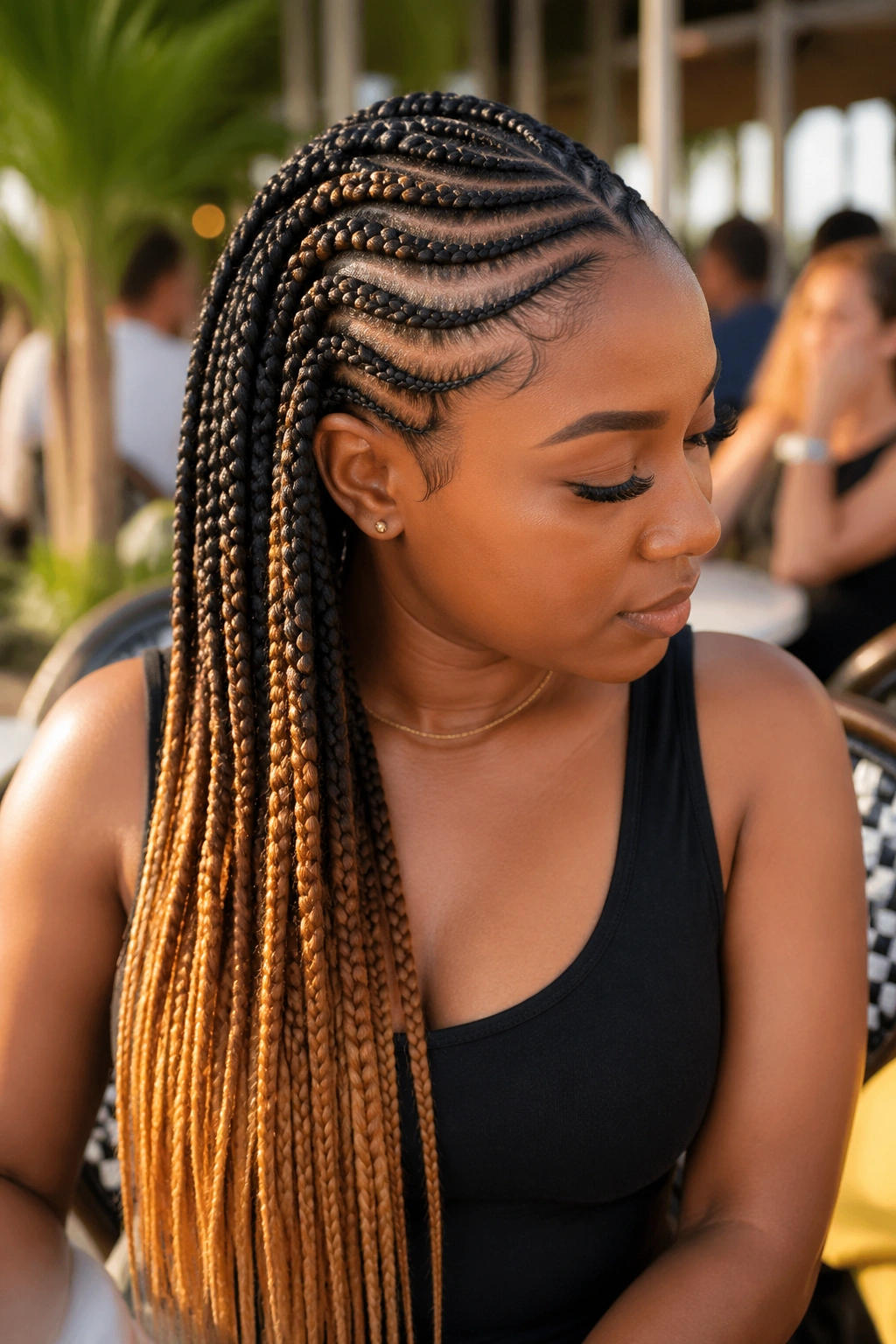
Some rows fade into solid caramel ends. Other rows include caramel highlights woven through dark brown extensions. The mix creates dimension that pure single-color ombre doesn’t have.
Highlights add complexity to the gradient. The eye sees movement and depth rather than flat color blocks.
This style takes longer to install because the braider has to alternate between different kanekalon types throughout the install. Budget an extra 30-45 minutes.
14. Cool Ombre With Smoky Blue Tips
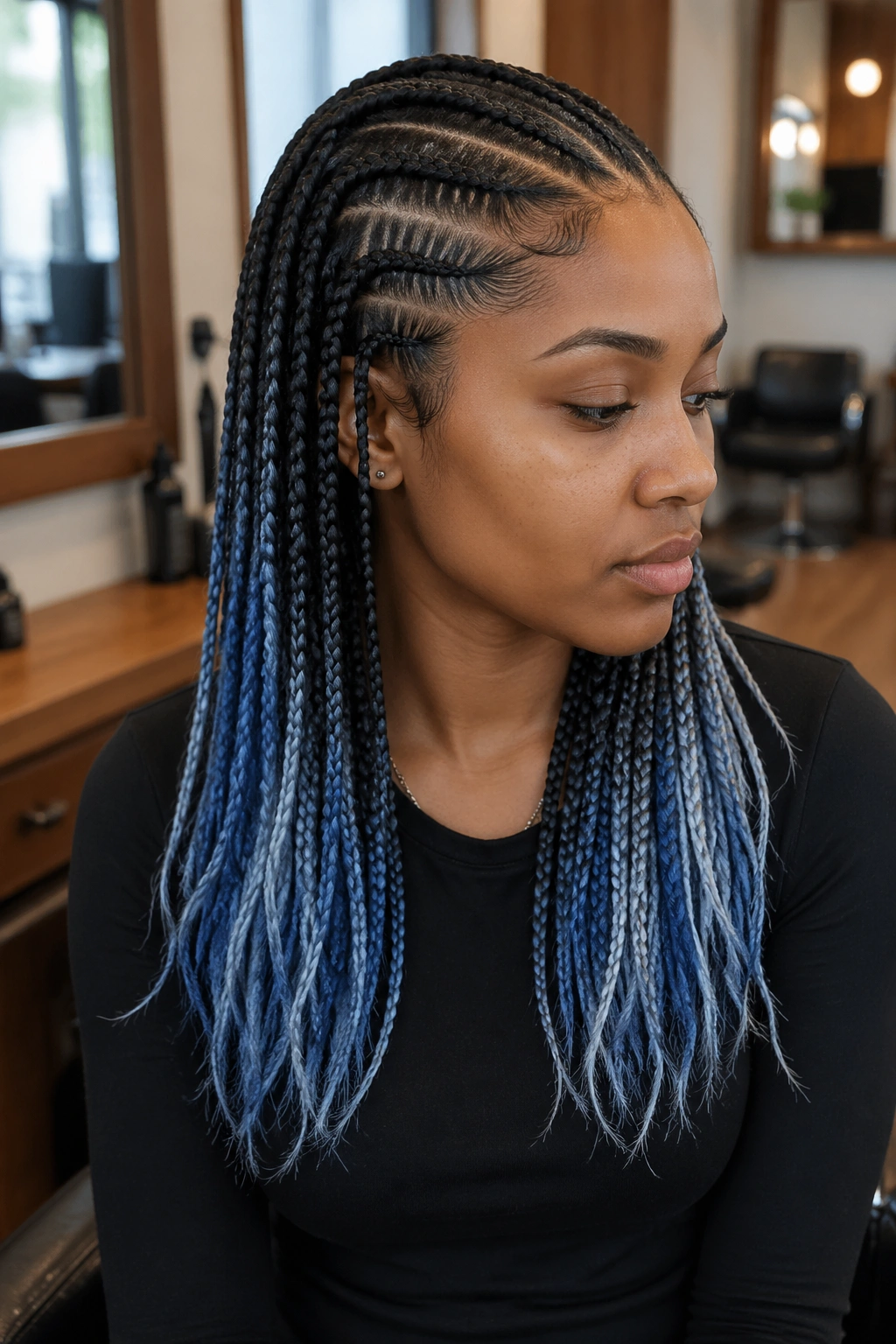
A bold but wearable cool option. Black or dark brown roots transitioning into a smoky blue at the ends. The blue is muted enough to read as edgy rather than costumey.
Smoky blue works best on kanekalon that has been dyed with multiple tones rather than a single flat blue. The depth keeps it interesting.
This style pairs well with cool-toned outfits — gray, navy, white, soft pink. It clashes slightly with warm browns and oranges.
15. Gradient With Hidden Pop
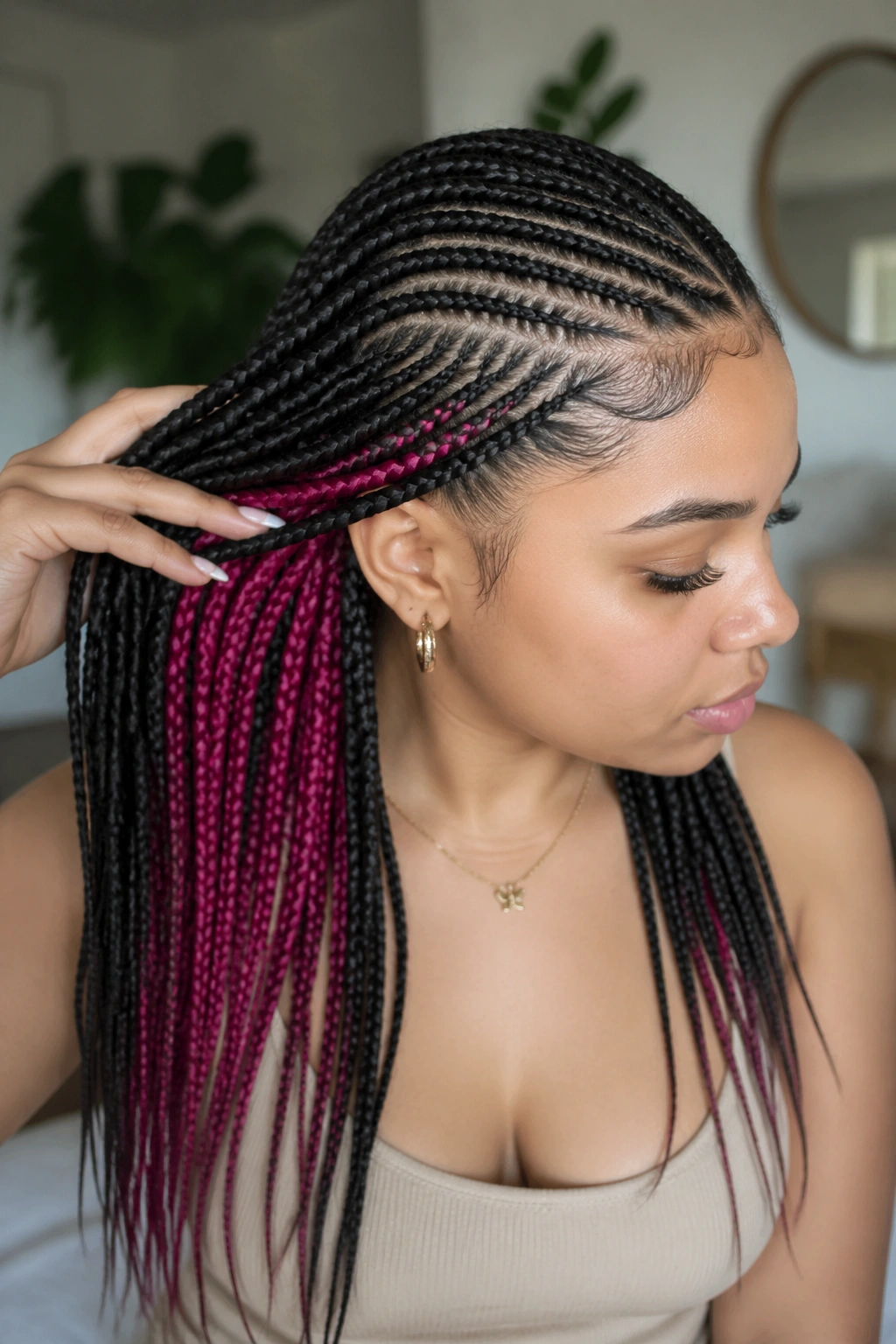
Unlike standard ombres where the color is visible all over, a hidden ombre places the bright color underneath the top layer. The top stays natural; the bottom layers reveal pop color when the hair moves.
This is a sneaky style. People only notice the color when you toss the braids or pull them up.
Cornrow versions of hidden ombre arrange the colored rows underneath the natural-looking top rows. The bright rows show only at the back when you turn your head.
16. Soft Pink Ombre on Dark Roots
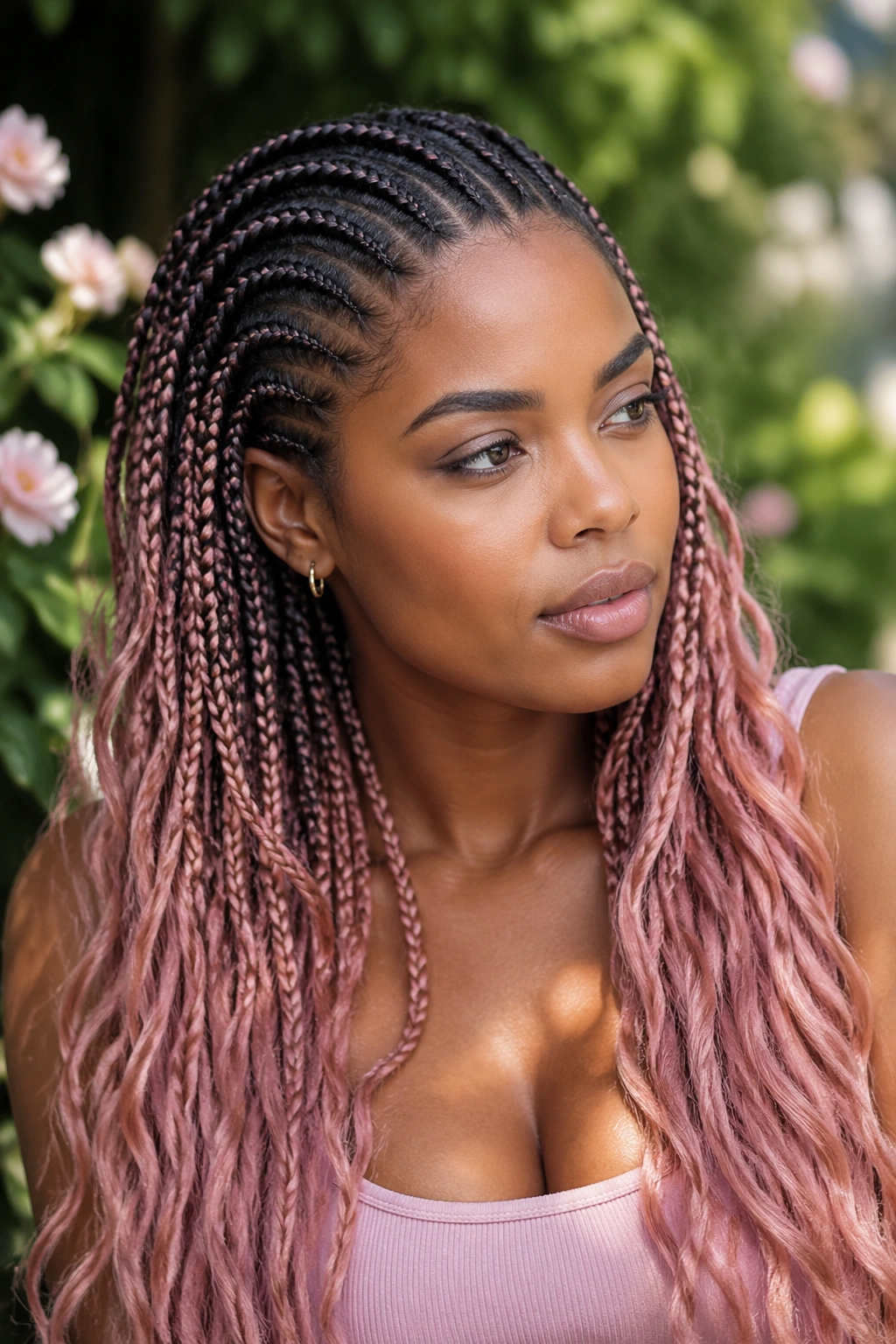
A romantic option. Dark brown or black roots fading into a soft, dusty pink at the ends. The pink is muted enough to feel sophisticated rather than playful.
Soft pink flatters skin with warm or neutral undertones. Cool undertones can make the pink read as washed out.
This style works for spring-themed events, garden parties, and brunches. It’s not built for harsh lighting or formal evening events.
17. Two-Tone With Natural Auburn
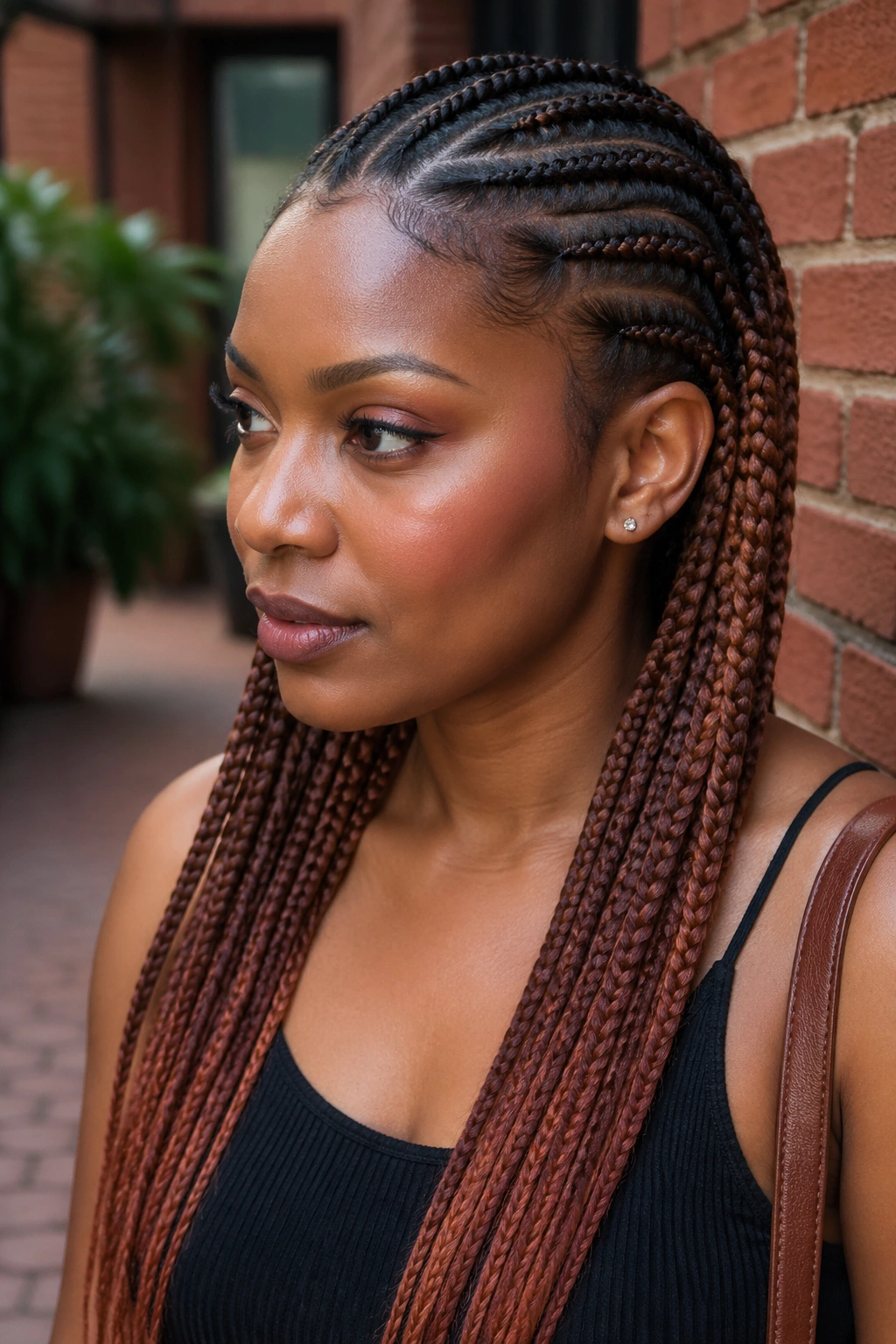
Some heads have natural auburn highlights mixed into dark brown. An ombre cornrow style can play to that by using auburn as the transition color rather than a starkly different shade.
The result looks like the hair has been sun-bleached naturally rather than dyed. The effect is subtle and reads as expensive lowlights rather than installed extensions.
This is a good option for people who don’t want their cornrows to look obviously extended. The natural-looking color shift keeps everything cohesive.
18. Dramatic Black to White Ombre
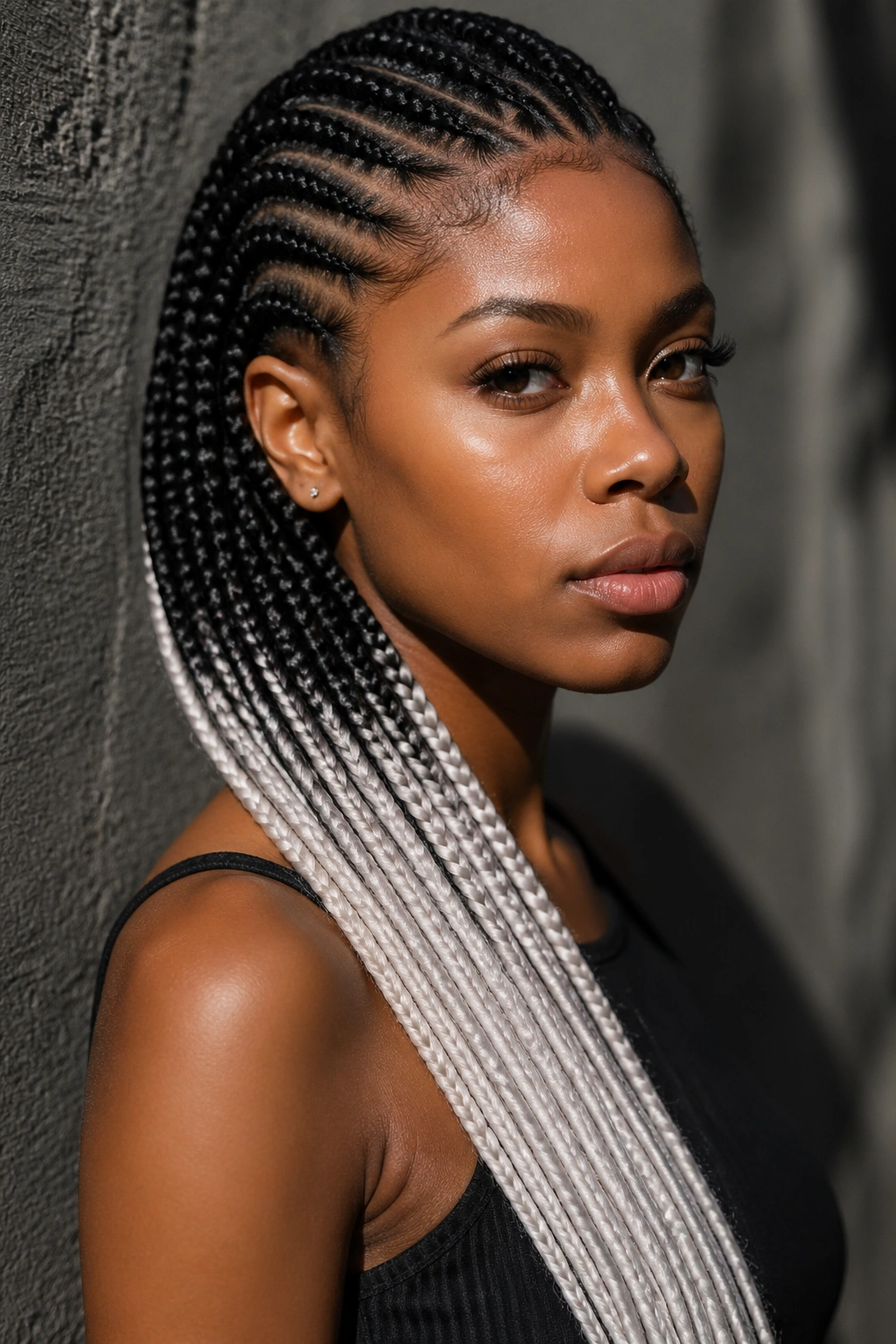
The highest contrast option on this list. Pure black roots transitioning into stark white ends. No middle color, no warm tones — just the maximum tonal jump possible.
This style is for impact. It photographs in stark contrast and stands out in every setting.
White kanekalon is brittle compared to colored versions. The white ends need extra care to avoid breakage. Avoid heat tools entirely.
19. Mocha to Caramel With Streaks
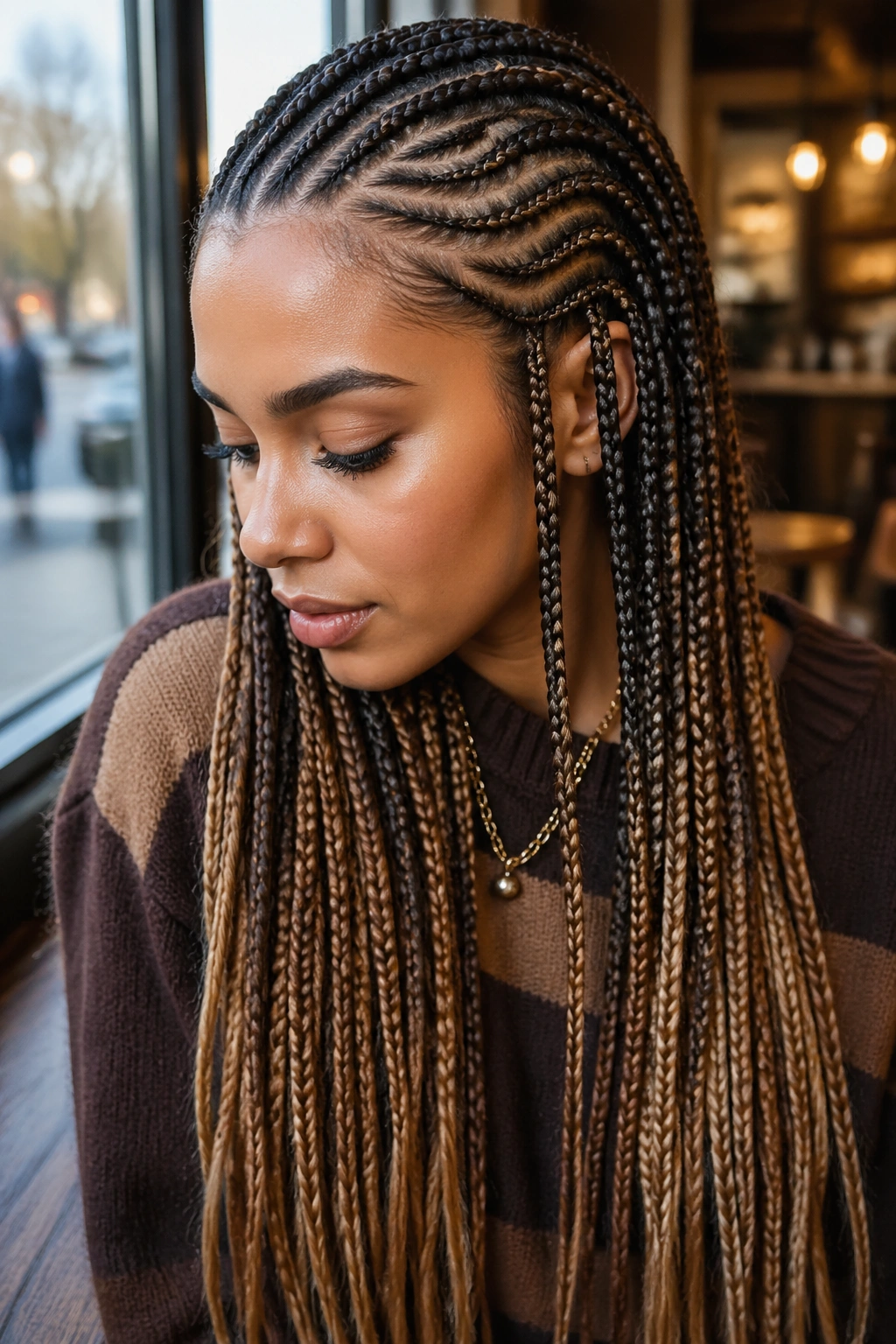
The base ombre is mocha to caramel. Throughout the style, thin streaks of darker espresso brown run vertically through certain rows.
The streaks add complexity. Without them, the style would be a simple two-tone gradient. With them, it has visual depth that catches the eye.
Streaks need precision installation. A sloppy braider creates streaks that look like mistakes. A skilled braider makes them look intentional.
20. Subtle Mauve at the Tips
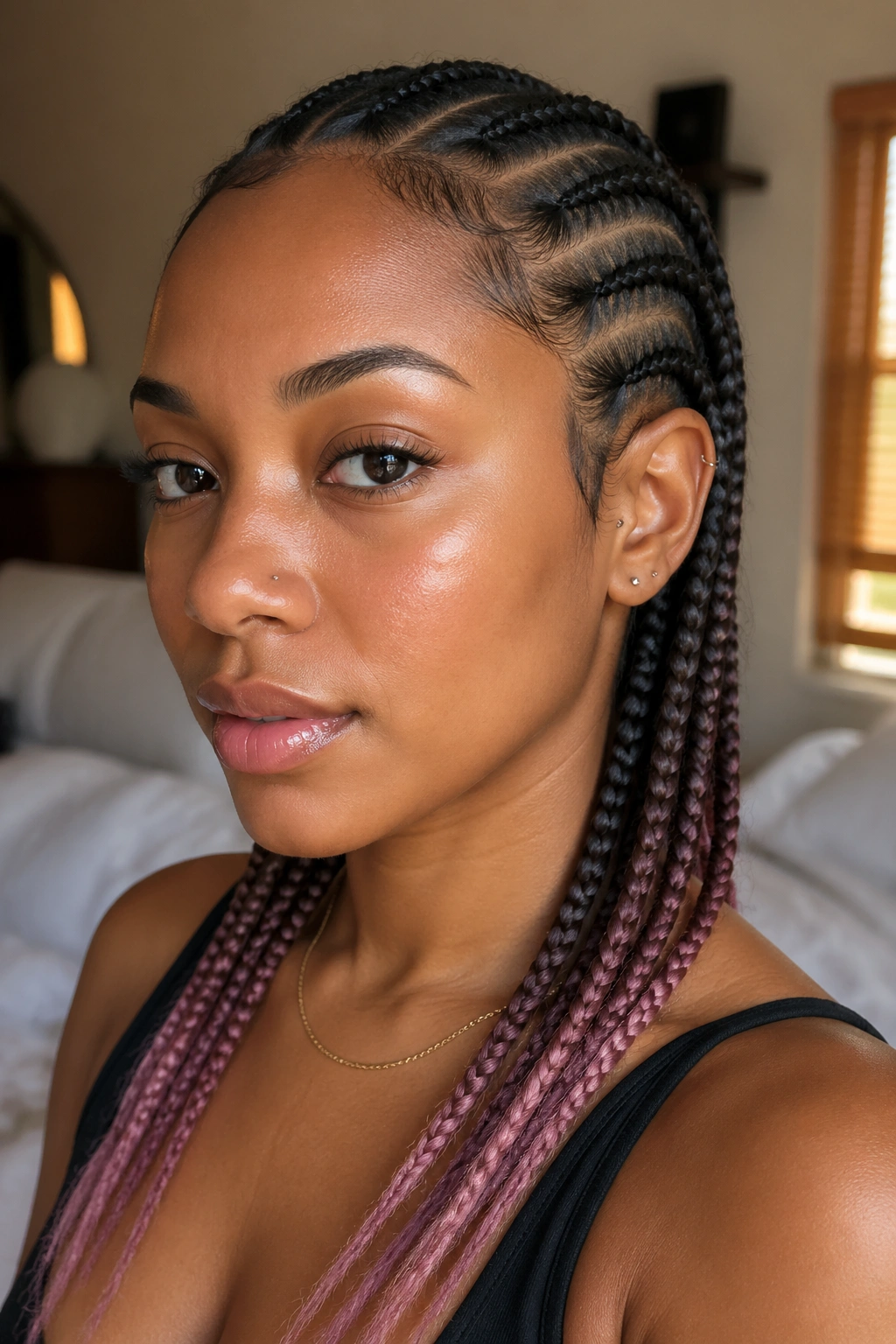
Most rows stay your natural color. Only the ends — the last 4-5 inches — fade into a soft mauve. The color is concentrated at the bottom rather than running through the gradient.
This is the most subtle color option on the list. From a distance, the mauve barely registers. Up close, it adds an unexpected detail.
Mauve flatters most skin tones. It’s less aggressive than pink, less moody than purple, and works as a year-round color.
21. Honey to Champagne Light Ombre
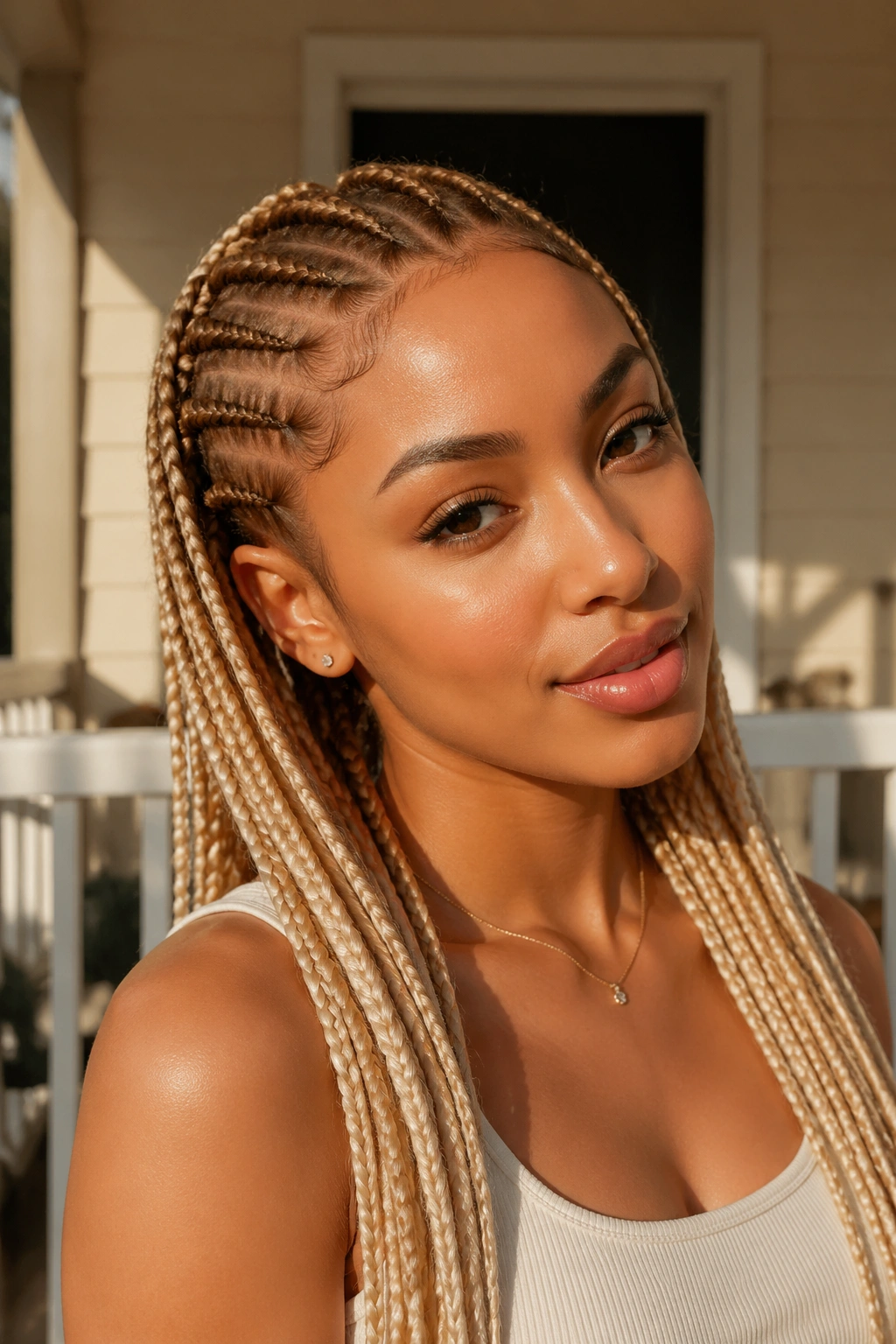
For people whose natural hair is on the lighter side, an ombre that stays in the warm light range can feel more cohesive than dark-to-light versions.
Honey at the roots transitioning into champagne at the ends. Both colors are warm and pale, so the gradient feels seamless.
This style works well in golden hour photography. The colors echo the warm sunlight and create a glowing effect.
22. Ombre With Beaded Ends
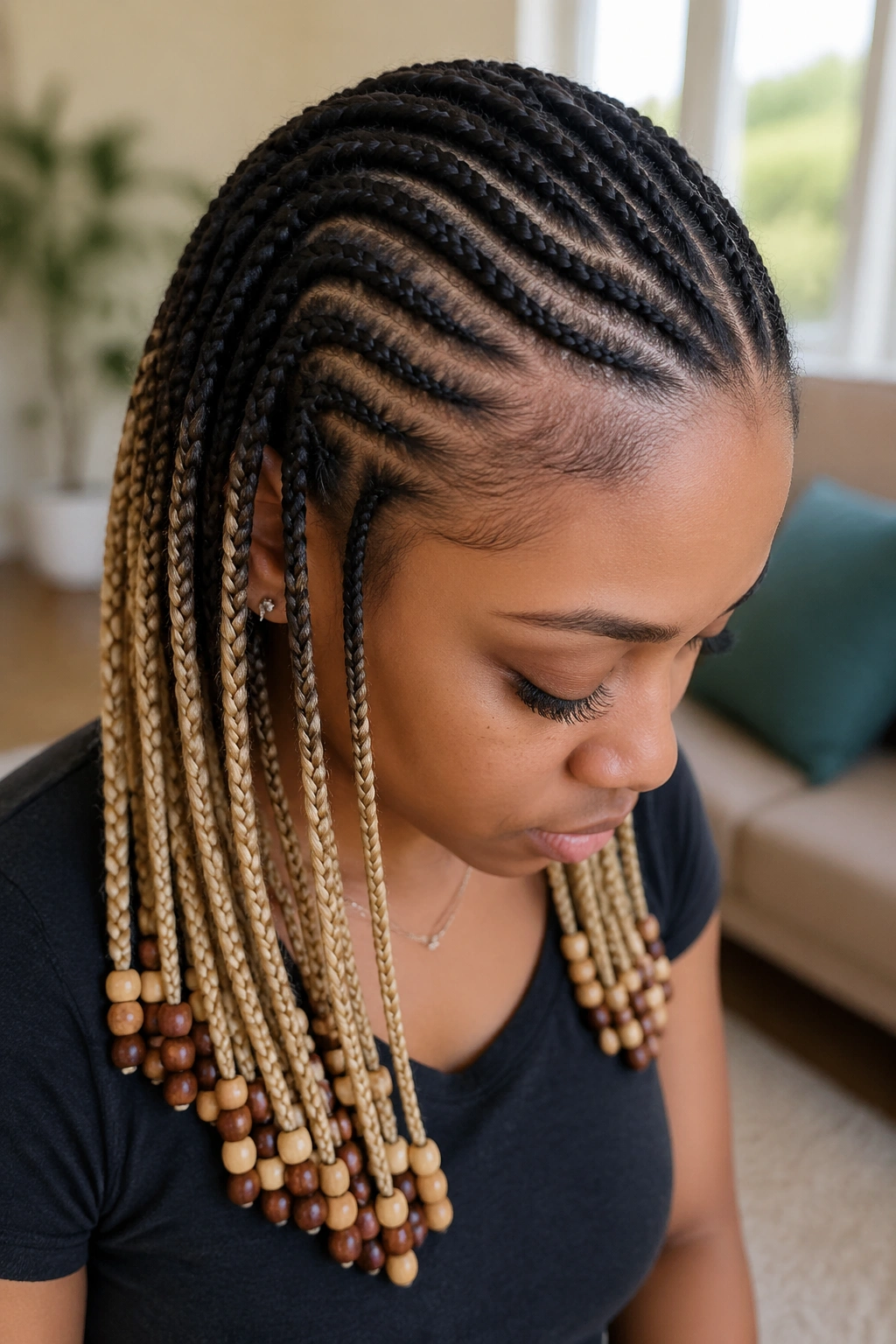
Wooden, glass, or metal beads finish the ends of the cornrows. The beads can be the same color as the end shade — for cohesion — or a contrasting color — for accent.
Beads add weight, which affects how the rows hang. Heavy beads can pull the cornrows downward and create tension at the roots.
Choose lightweight beads. Wood is lighter than glass. Hollow metal cuffs are lighter than solid ones.
23. Smoky Ombre With Gunmetal Tones
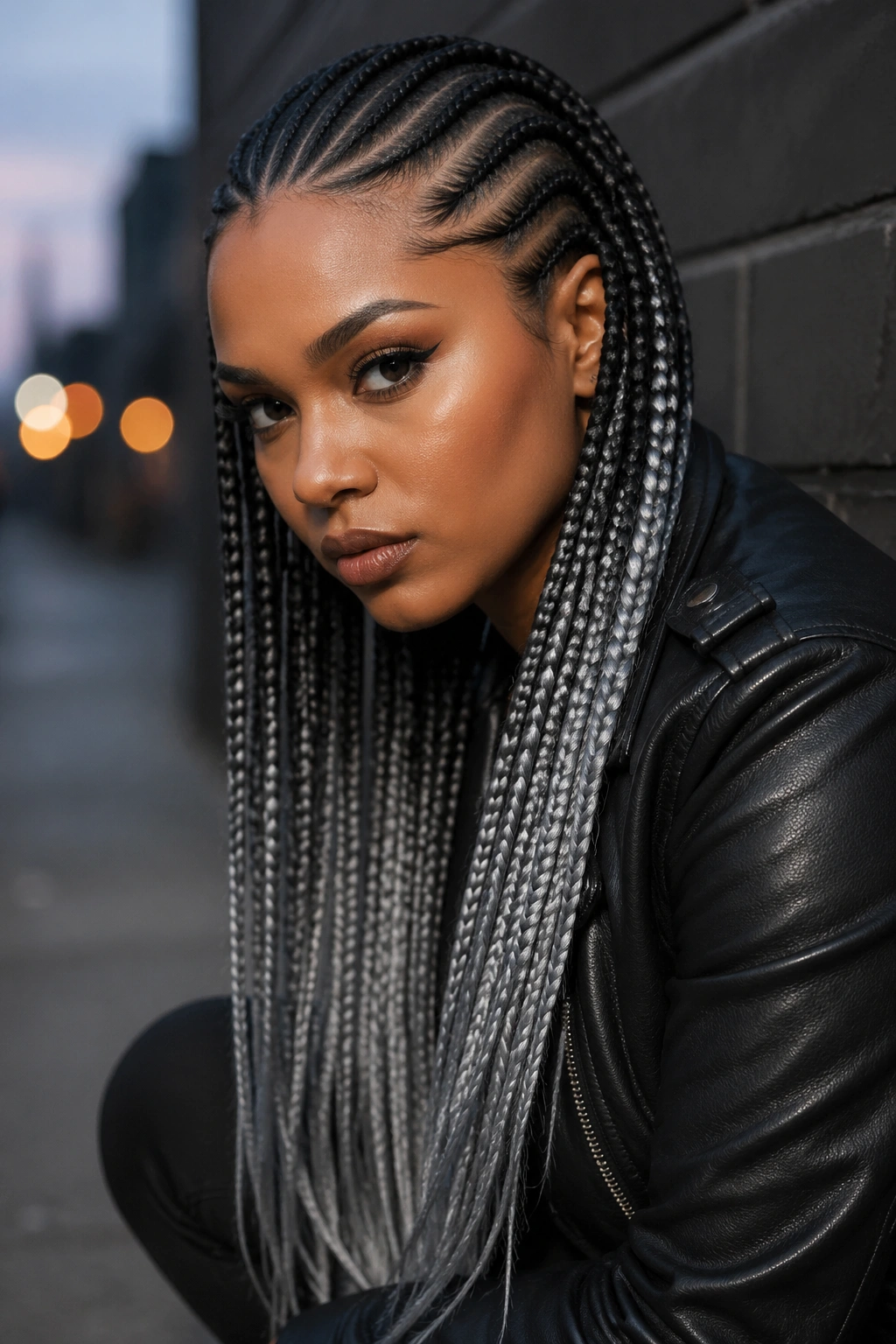
Gunmetal is a deep cool gray with hints of blue. Paired with dark roots, it creates a sophisticated, edgy look.
Gunmetal kanekalon is rare. Many braiders mix two shades — black and silver — to achieve the gunmetal effect.
This style pairs well with leather jackets, dark denim, and structured outfits. It feels cooler than warm metallic ombres.
24. Tonal Ombre Within Single Color Family
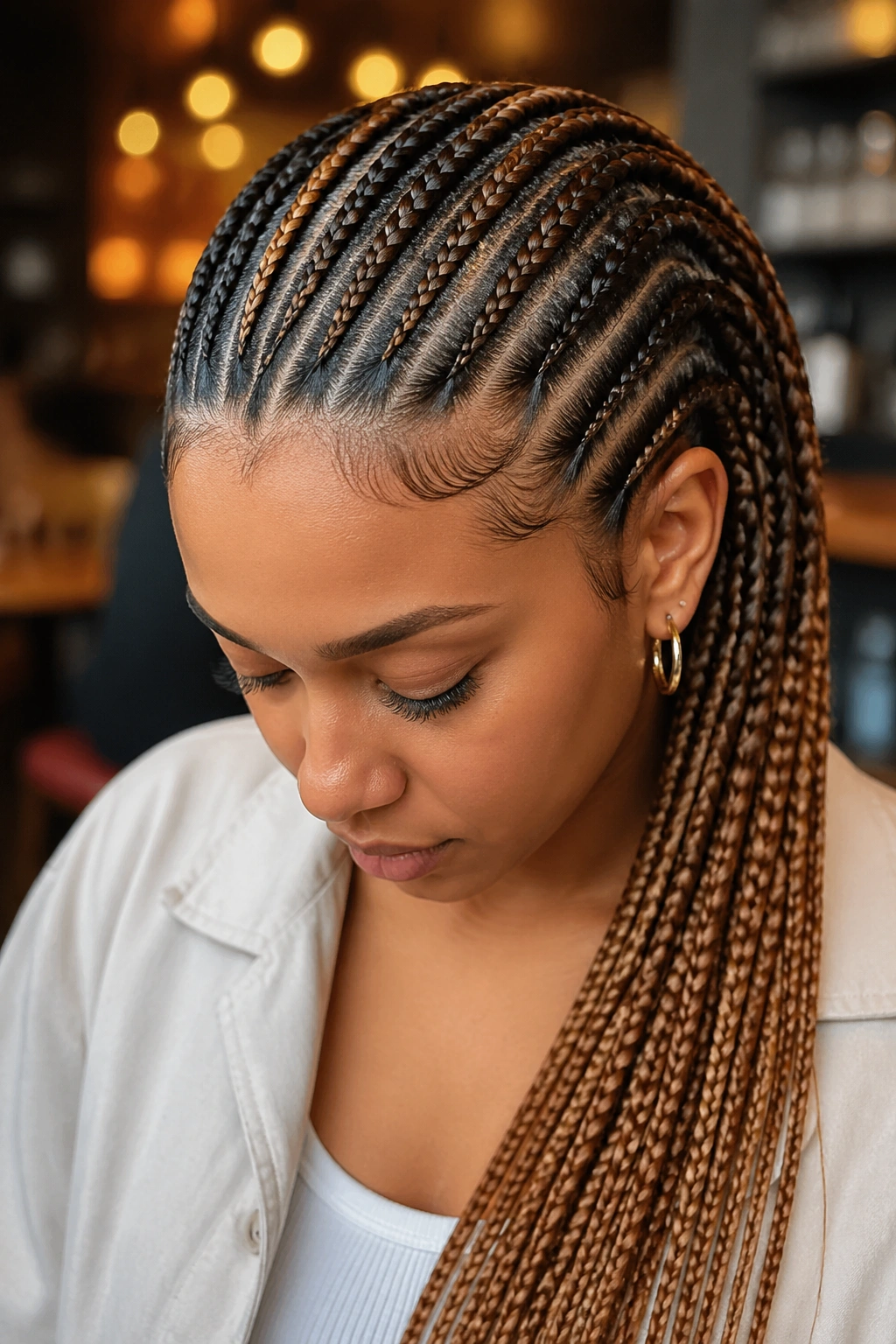
A monochromatic approach. The entire ombre stays within a single color family — different shades of brown, or different shades of red, or different shades of gray. The gradient is entirely about depth rather than color shift.
Tonal ombres feel sophisticated because they don’t rely on contrast. The eye reads the depth as natural variation in color.
This is a good option for people who want color movement without the boldness of dramatic shifts. The result feels expensive and curated.
25. Ombre Pony With Accent Colors
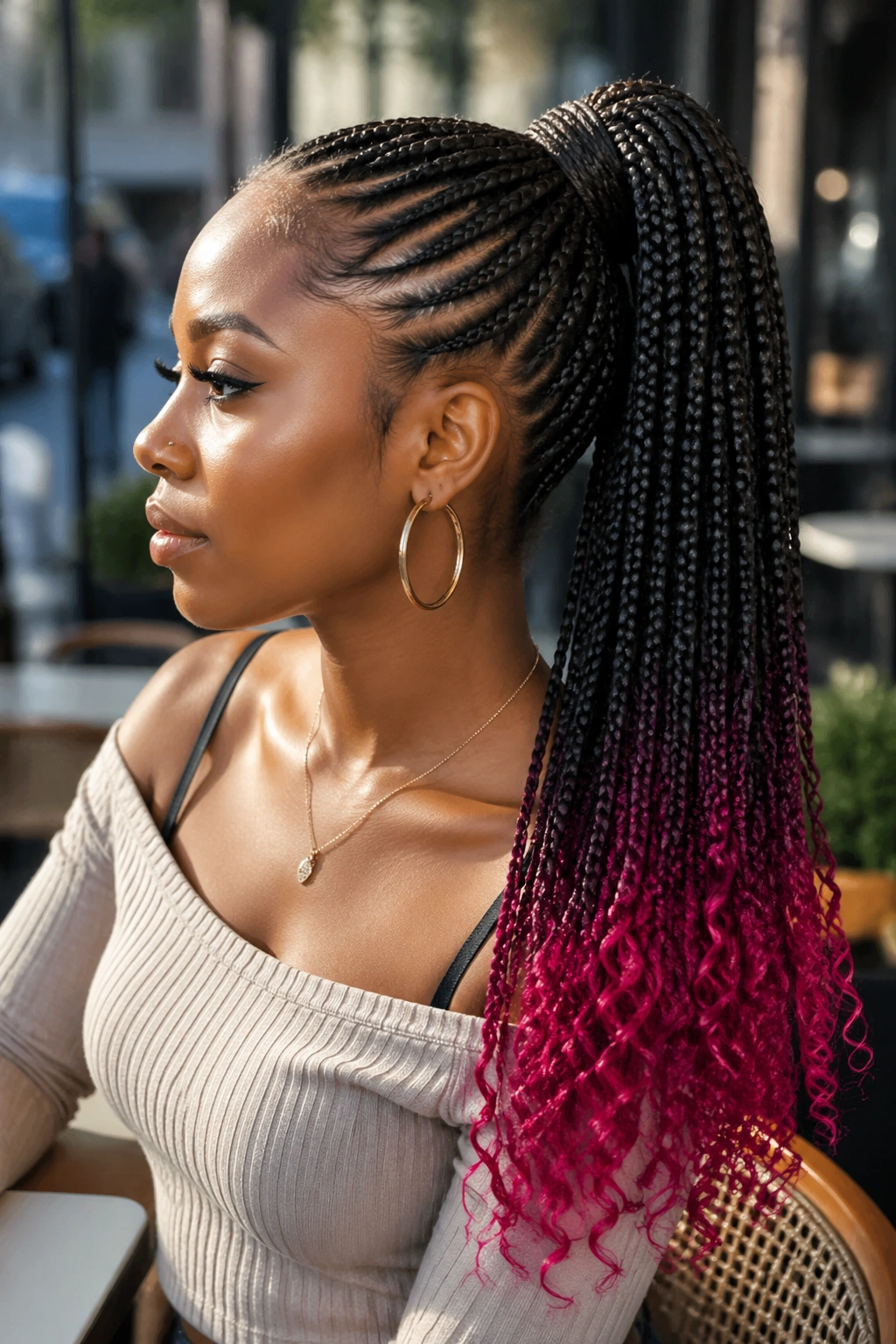
The cornrows lead into a feed-in ponytail. The ombre happens within the ponytail itself — natural color at the base, transitioning into a bright accent color at the tips.
This concentrates the color drama in the ponytail rather than spreading it across the rows. The cornrows themselves stay simple and natural-looking.
The pony gets all the visual attention. The base looks understated by comparison, which can be useful for environments where bold cornrow colors might not be appropriate.
Caring for Color in Ombre Cornrows
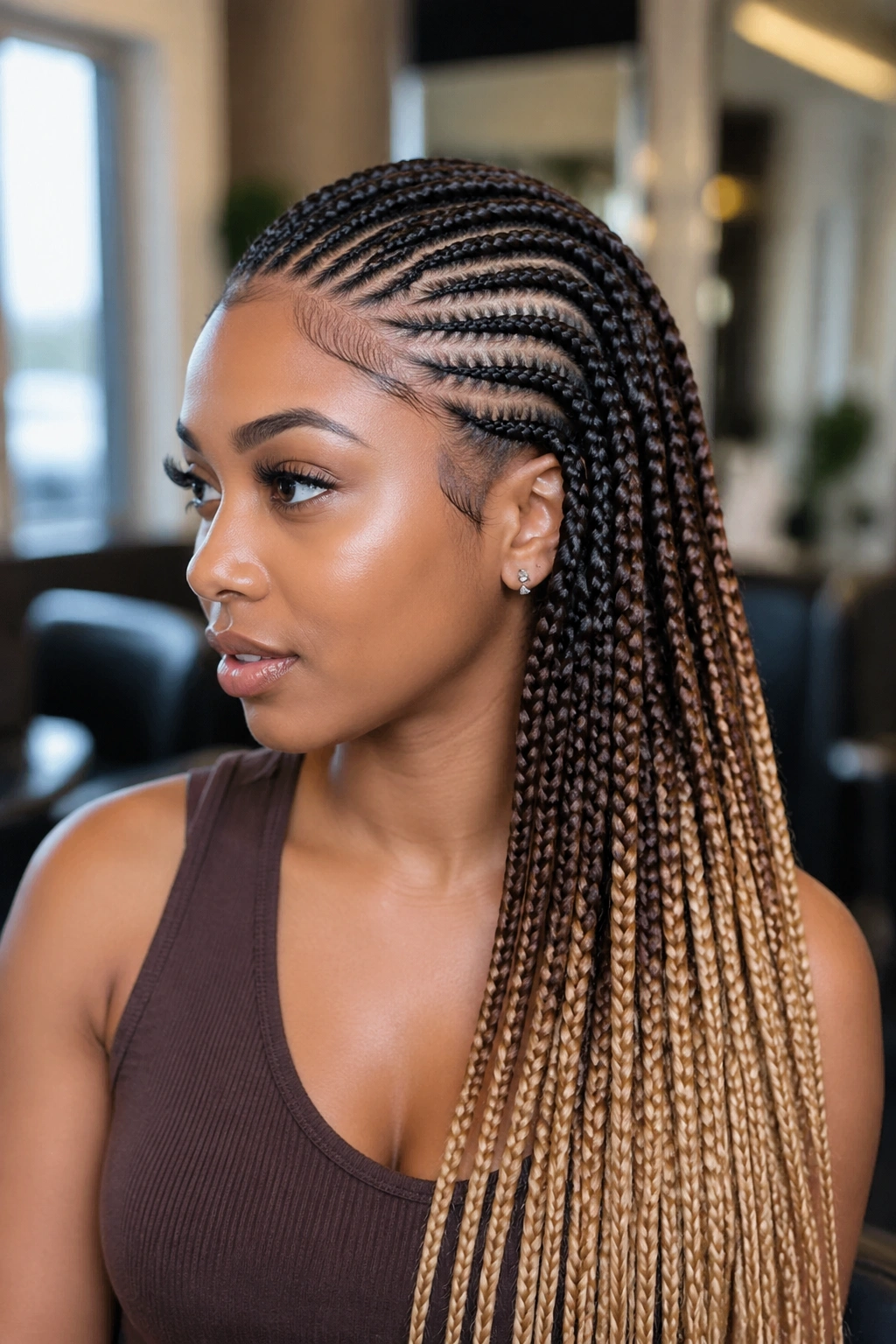
The biggest threat to ombre color is fading. Synthetic hair doesn’t fade as fast as natural hair, but UV exposure and friction can dull the color over time.
Wear a hat or scarf in direct sun for extended periods. The lighter ends fade fastest because they have less pigment to begin with.
Avoid heavy oils on the colored ends. Oils can make the color appear dingy and attract dust and lint.
Wash with cool water rather than hot. Hot water opens the cuticle on natural hair and can affect how the synthetic hair holds color.
Sleep Care for Ombre Cornrows
A satin bonnet large enough to cover both the rows and the colored ends. Cotton pillowcases create friction that fuzzes the colored ends.
If you can’t commit to a bonnet every night, a silk pillowcase is a backup. But the bonnet does a better job.
Loosely braid or twist the colored ends before bed if they’re particularly long. This keeps them contained inside the bonnet.
Refreshing the Ombre Mid-Wear
By week 2 or 3, the colored ends may look slightly faded or dusty. A quick refresh restores them.
Mix a teaspoon of fabric softener with a cup of water in a spray bottle. Spritz the colored ends and let them air dry. The fabric softener softens the kanekalon and restores some of the original sheen.
Alternatively, dip the colored ends in warm water for 60 seconds. The heat resets the cuticle of the synthetic hair and brings back the smooth finish.
When to Take Down Ombre Cornrows
Most ombre installs hold up for 2-3 weeks. Past that, the natural roots have grown in noticeably and the contrast at the scalp becomes obvious.
Some people extend to four weeks by re-braiding just the front rows. This refreshes the visible portion without redoing the whole install.
Watch for fading in the colored ends. If the color has dulled significantly, takedown might be the better call rather than continuing to wear a faded version.
Taking Down Ombre Cornrows Without Damage
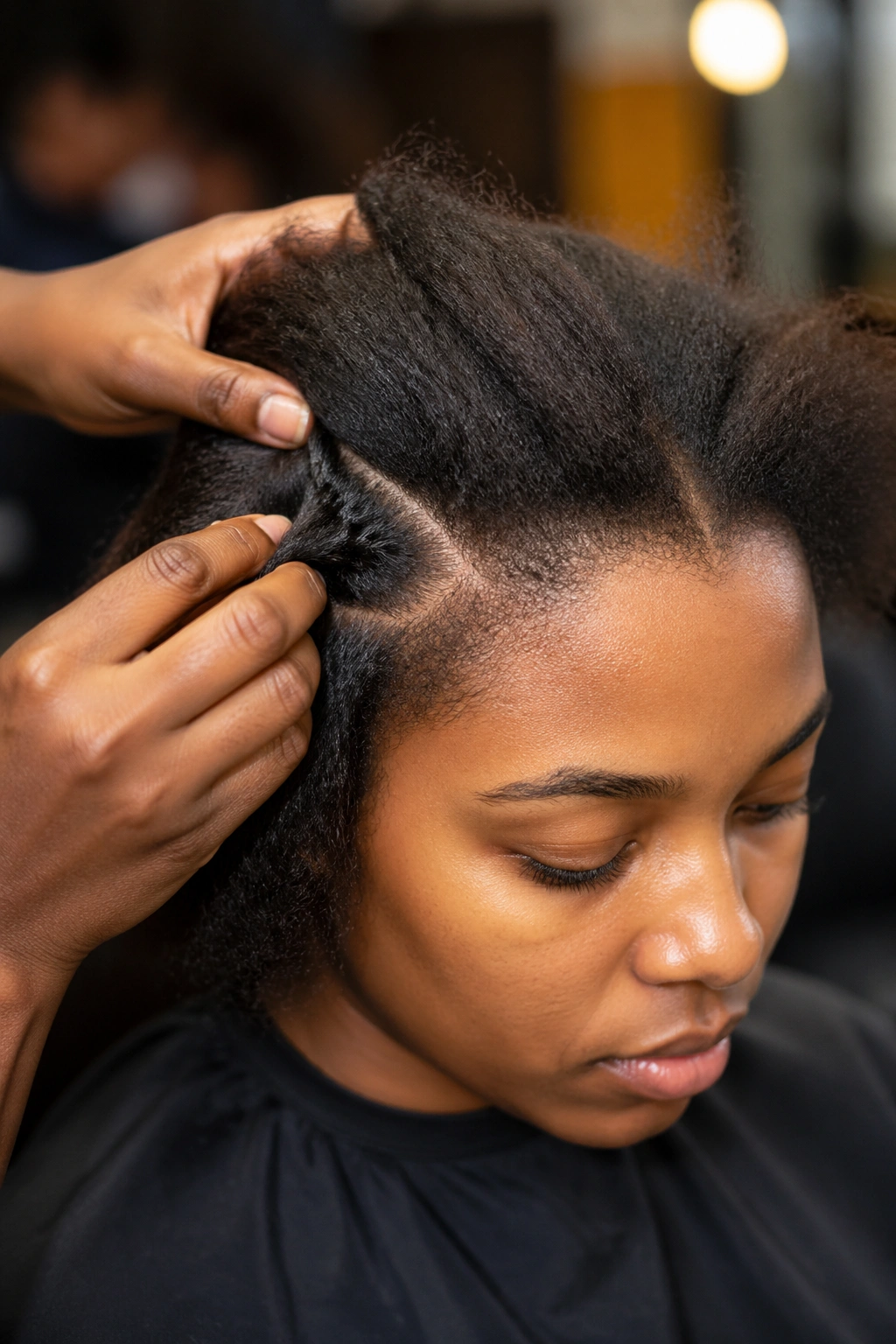
The takedown for ombre cornrows is the same as for any cornrow style with extensions. Start at the ends and work upward.
The colored ends can be saved if you want to reuse them. Carefully unravel from the tips, separating the synthetic hair from the natural hair. Clean and condition the kanekalon for future installs.
After all the cornrows are out, deep condition your natural hair. Two to three weeks of being braided puts your hair in a vulnerable state.
Picking Colors That Work for You
Skin tone matters. Warm undertones flatter warm colors — copper, honey, caramel, gold. Cool undertones flatter cool colors — silver, ash, smoky lavender, blue.
Lifestyle matters too. Bright colors don’t suit conservative work environments. Subtle ombres work everywhere.
Personal style is the final filter. Pick what feels like you, not what’s having a moment in the color world. The best ombre is one you actually want to wear.
Common Mistakes With Ombre Cornrows
Picking colors that don’t have a natural relationship. Random color combinations look chaotic rather than curated.
Going too pale at the roots. The roots should match or be close to your natural color. Light roots look fake.
Buying cheap kanekalon for a bold color. Cheap synthetic hair fades fast and looks plasticky from day one.
Skipping the bonnet at night. The colored ends fuzz and dull faster than natural-color ends without proper protection.
Trying to wash out fade with hot water and shampoo. This damages the kanekalon further. Use the fabric softener spray method instead.
