



Color in cornrows changes the entire personality of a style. Where natural-color cornrows read as classic and protective, cornrow styles with color become statement pieces — bold, playful, sophisticated, or rebellious depending on what shade you choose and how you place it. The braided structure of cornrows displays color in a way that loose hair can’t match, because each row becomes a clean line of color stretched across the head. Cornrow styles with color can mean a single bold shade throughout, accent stripes woven through natural rows, or full multi-color compositions that turn your head into a piece of wearable art.
The decision isn’t just what color, but how much. A single bright row through otherwise natural cornrows reads as accent. Full-head color saturation reads as commitment.
Color quality matters more than color choice. Cheap synthetic hair fades and frays quickly, which makes any color choice look bad. Quality kanekalon holds the shade and the shape for the full duration of the install.
How Color Works in Cornrows
Color usually comes from pre-dyed kanekalon fed into the braids during installation. The natural hair stays its original shade at the roots, and the colored extensions take over from a few inches down.
Some styles use full-color extensions throughout each braid — color from root to tip. Others reserve color for specific rows or specific sections of rows.
The placement matters. Color at the roots competes with the natural hair color. Color at the ends acts as an accent. Color in the middle of the braid creates a band effect.
Choosing Color That Suits Your Skin Tone
Warm undertones — gold, peach, yellow underneath the skin — flatter warm hair colors. Honey blonde, copper, golden brown, warm red, terracotta. These colors light up warm skin.
Cool undertones — pink, blue, red underneath the skin — flatter cool hair colors. Ash brown, smoky lavender, cool gray, blue-black, platinum.
Neutral undertones can wear most colors. Test by holding the color sample next to your face in natural light. If your skin looks brighter and clearer, the color works. If your skin looks dull or sallow, it doesn’t.
How Bold Is Too Bold
Bold color is a personal choice with no universal rule. What feels bold to one person feels conservative to another.
For work environments with strict appearance guidelines, subtle accent colors — burgundy, dark auburn, soft mauve — work without violating policies. For creative environments, bright pop colors are usually accepted.
Consider your daily life. Will the color show in every photo for the next 3 weeks? Will it match your existing wardrobe? Will it draw attention in settings where you’d rather blend in?
The Quality of Synthetic Hair Matters
Cheaper kanekalon comes pre-dyed in a wider range of colors but holds the color poorly. Bright colors fade to dingy versions within a week. Pastels look chalky from day one.
Higher-quality brands cost more but hold color throughout the install. The vibrancy at week 2 is comparable to day 1.
Look for brands with strong reputations in the natural hair community. Avoid the cheapest options for any colored install.
Prep Work Before a Color Cornrow Install
Wash with a clarifying shampoo to remove buildup. Clean hair holds the install better.
Detangle thoroughly. Knots create issues during braiding that show in the finished style.
Stretch the hair using low heat. Stretched hair gives the braider a smoother surface to work with.
If you’re concerned about your natural hair color clashing with the chosen extension color, pick an extension color that complements rather than clashes. The transition between root and extension shouldn’t fight the eye.
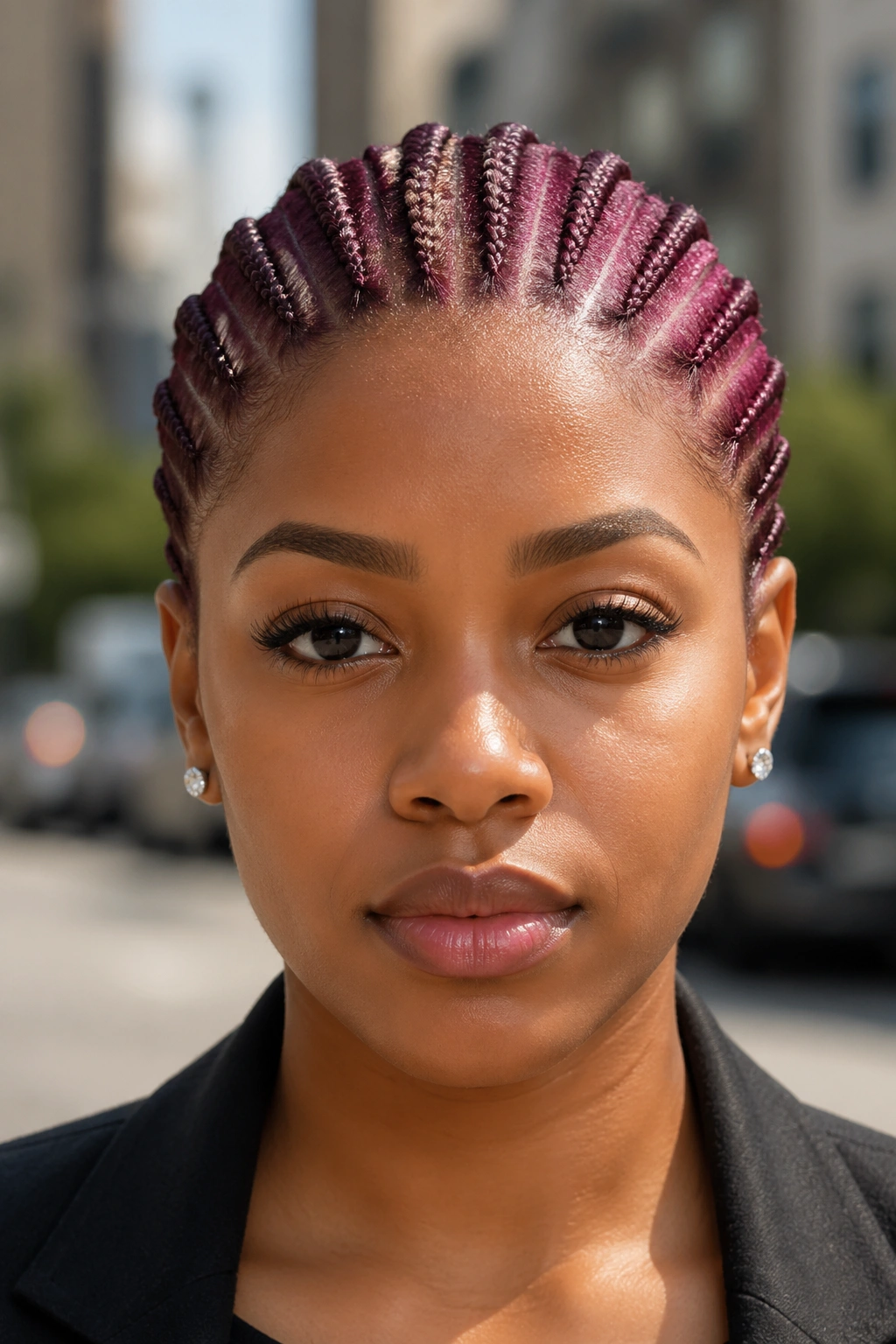
1. All-Burgundy Straight-Back Cornrows
Burgundy is a deep red-brown with purple undertones. As an all-over color for cornrow extensions, it adds warmth and richness without going as bright as a true red.
Why It Works
- Flatters most skin tones
- Reads as sophisticated rather than loud
- Photographs well in both warm and cool lighting
- Suits most professional environments
Tip: Burgundy reads especially well against warm-toned outfits — earth tones, mustard, deep green, terracotta.
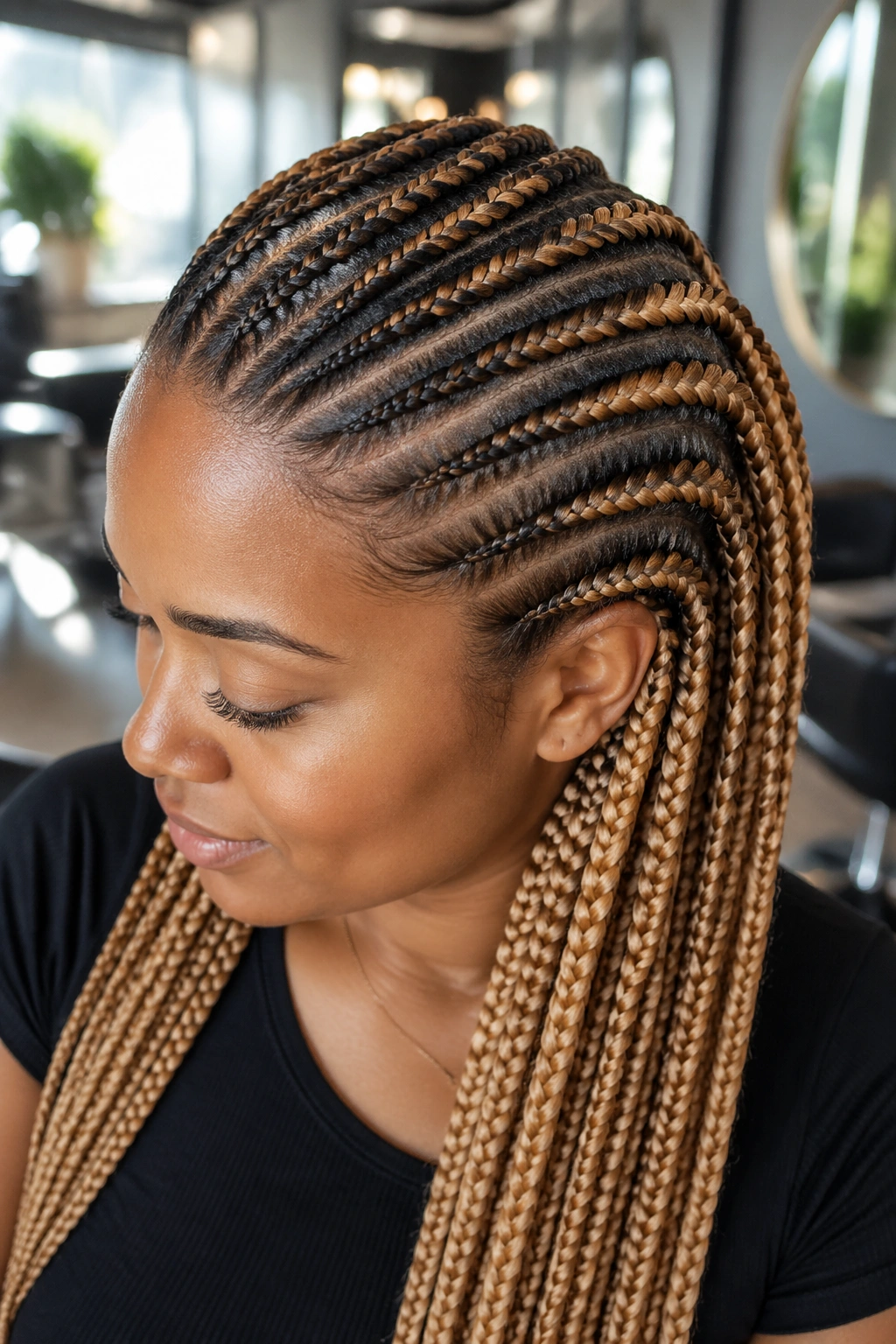
2. Honey Blonde Cornrows With Dark Roots
The roots stay dark — your natural color — and the cornrow extensions are honey blonde from the feed-in point onward. The contrast between dark roots and warm blonde ends creates depth.
Honey blonde flatters warm skin tones particularly well. The golden warmth complements gold undertones in the skin.
This style suits both casual and dressy occasions. The blonde reads as refined rather than wild.
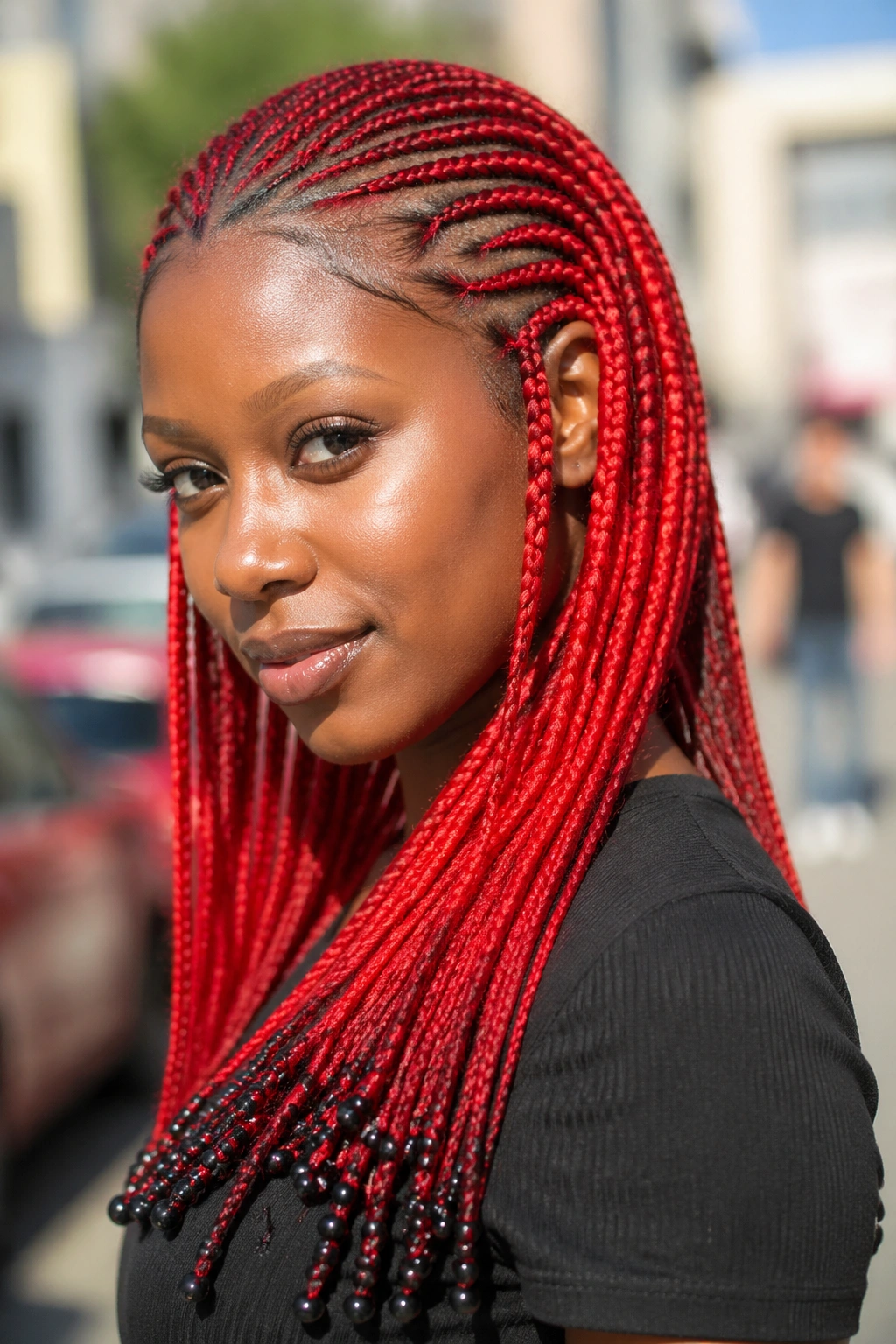
3. Bright Red Cornrows With Beaded Ends
A statement shade. Bright red kanekalon feeds into the cornrows from the roots, creating an all-red look. Wooden or glass beads finish the ends.
Red is a high-impact color that demands attention. It works for confident wearers comfortable being seen.
The beads should be a complementary color — black, dark wood, gold — rather than competing with the red.
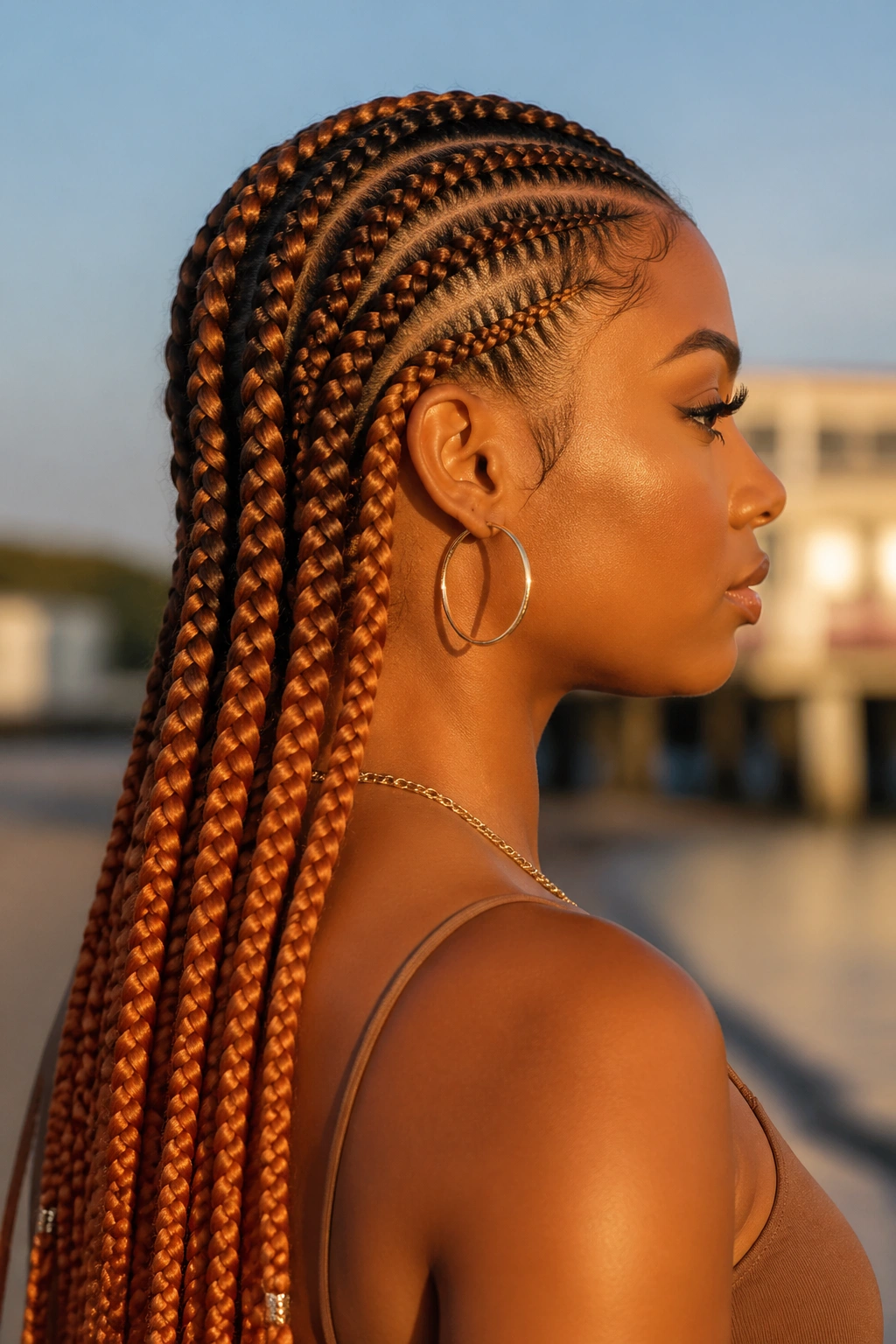
4. Copper Ombre on Long Cornrows
Cornrow style: ten rows running the length of the back. Color: copper gradient with darker roots fading to lighter ends.
Copper has the warmth of orange with the depth of brown. As an ombre, it shifts subtly from a darker copper at the top to a lighter, almost peachy copper at the ends.
This color combination flatters skin with red or warm undertones. It can wash out cool-toned skin.
Copper photographs beautifully in golden hour lighting. Outdoor photo shoots love this color.
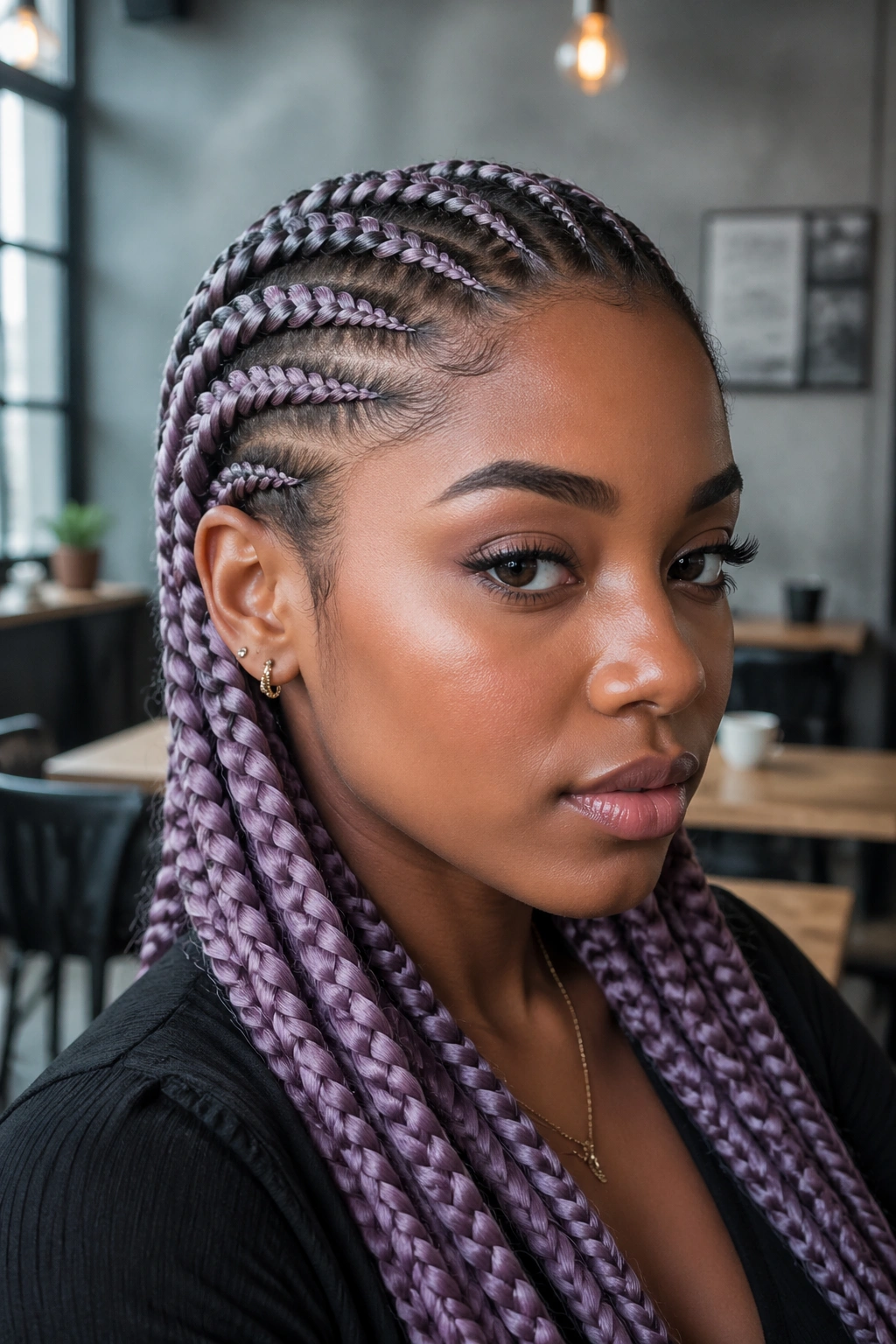
5. Smoky Lavender Cornrows With Dark Roots
What does smoky lavender bring that bright purple doesn’t?
Smoky lavender is muted — softer and more wearable than vibrant purple. The grayish undertone keeps it sophisticated rather than playful. Paired with dark roots, the color reads as edgy and modern.
How to Use It
This color suits cool skin tones particularly well. Pair with cool-toned outfits — gray, navy, black, soft white. Avoid pairing with warm browns and golds, which clash with the cool quality of the lavender.
Smoky lavender works for creative environments and weekend wear. It’s harder to wear in conservative offices.
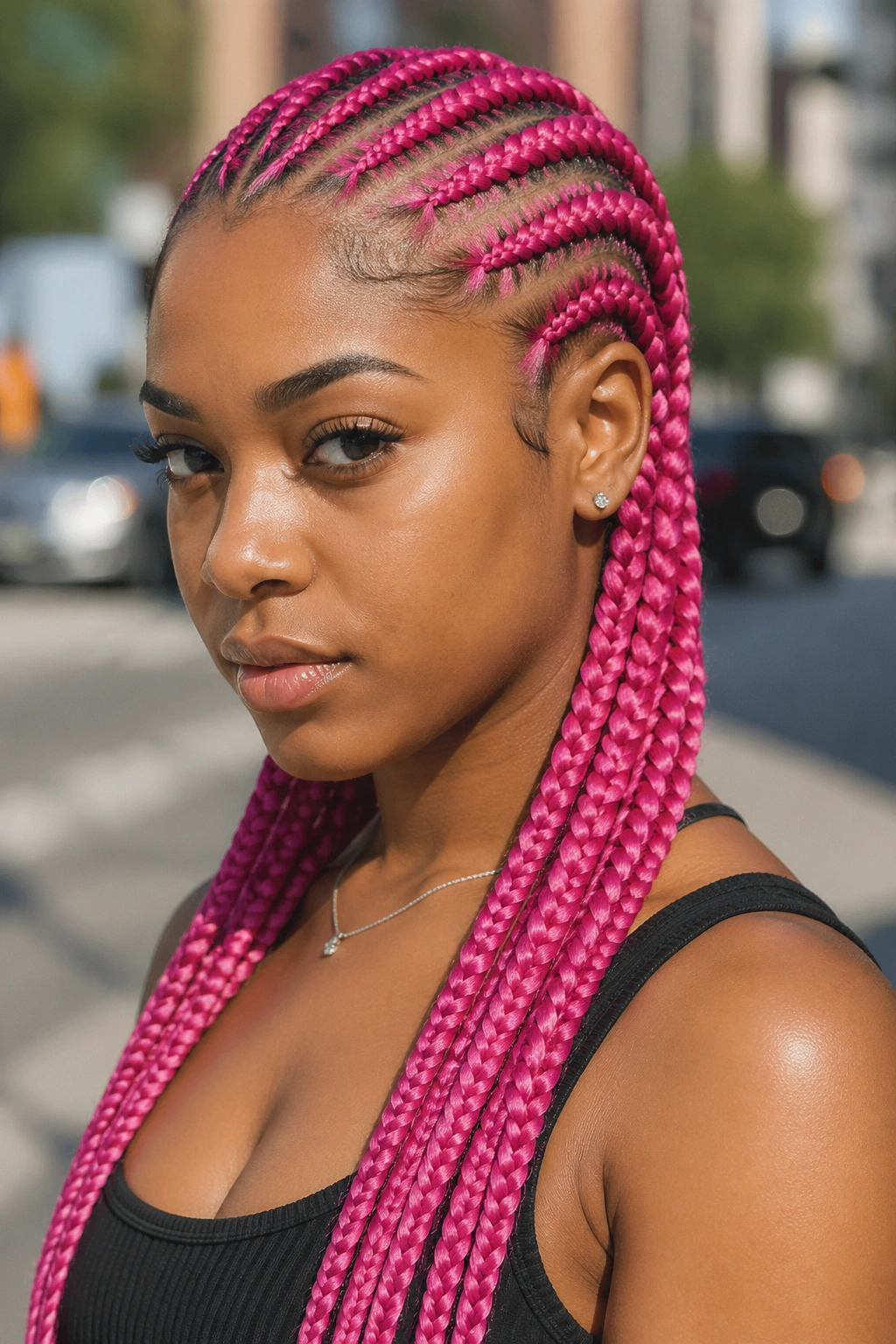
6. Bold Pink Throughout
Hot pink kanekalon braided into all the cornrows creates a fully pink look. The roots stay natural — the pink starts at the feed-in point.
This is for confident wearers who want maximum impact. Pink photographs well in any lighting and stands out in every setting.
Hot pink fades faster than darker colors. Plan for refreshing the color or accepting that the pink will dull over time.
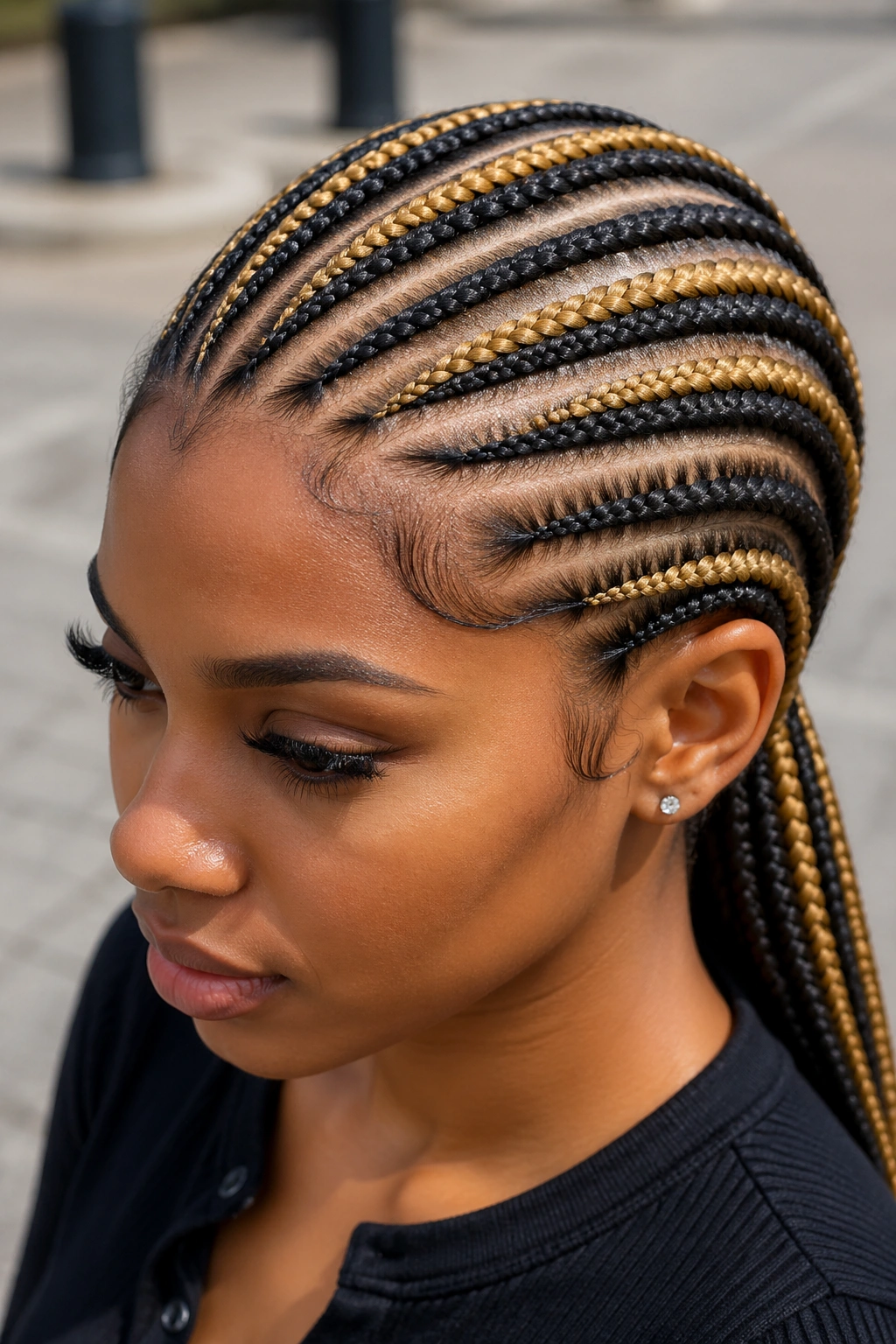
7. Two-Color Cornrow Braids
Some rows use one color, other rows use a different color. The colors alternate to create a striped effect across the head.
Common combinations: black with gold, black with red, brown with copper, black with blue.
The alternating pattern can be strict — every other row a different color — or staggered for a more organic look. Strict alternation looks geometric. Staggered looks organic.
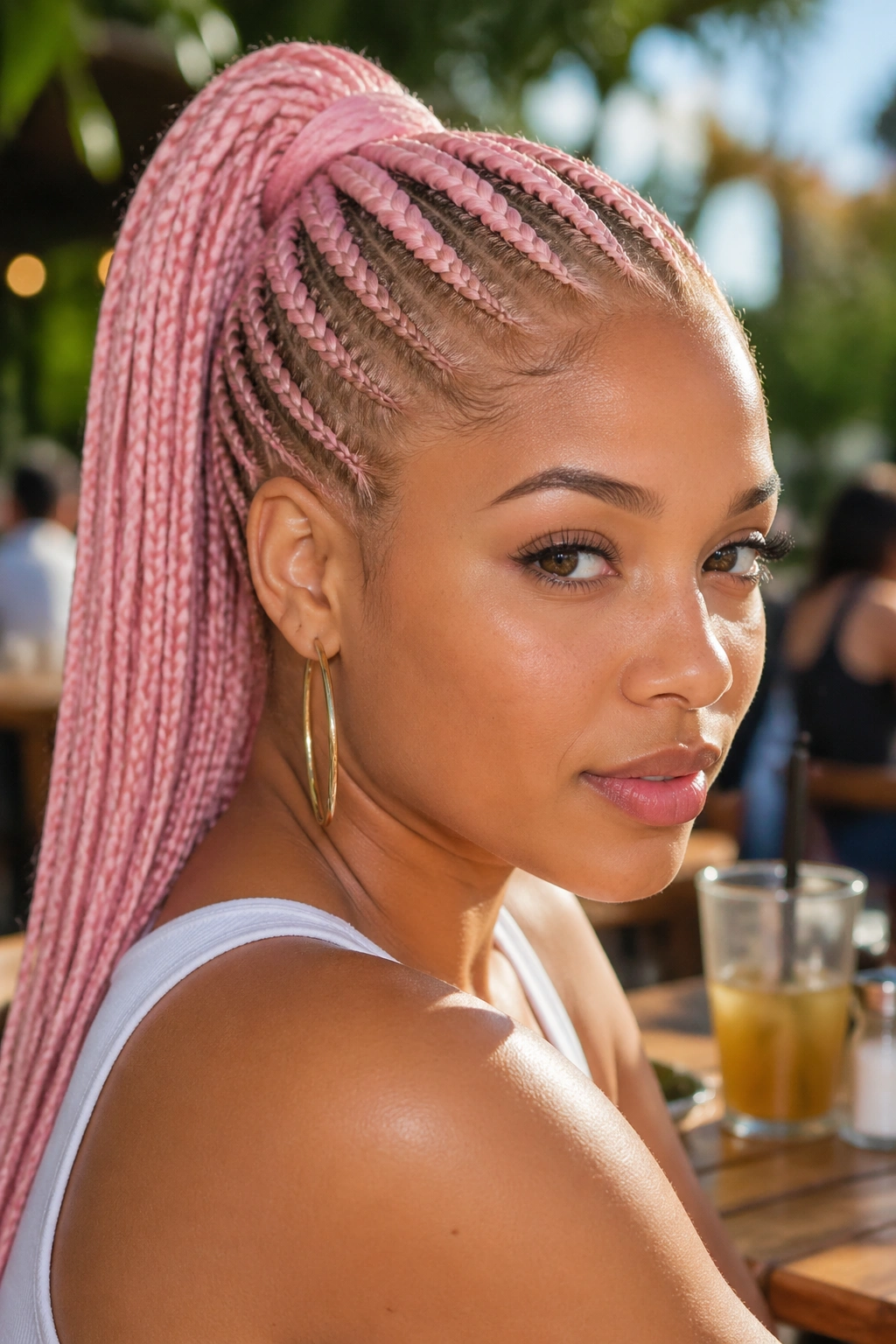
8. Pastel Pink Cornrow Pony
A soft, dusty pink in the cornrows leading into a pink ponytail. The whole style stays in the pink family for a cohesive monochromatic look.
Pastel pink flatters fair to medium skin tones. Deeper skin tones can wear pink, but the contrast against deeper skin requires brighter pink to read clearly.
This style suits spring and summer occasions. It can feel out of place in winter contexts.
9. Rainbow Cornrows
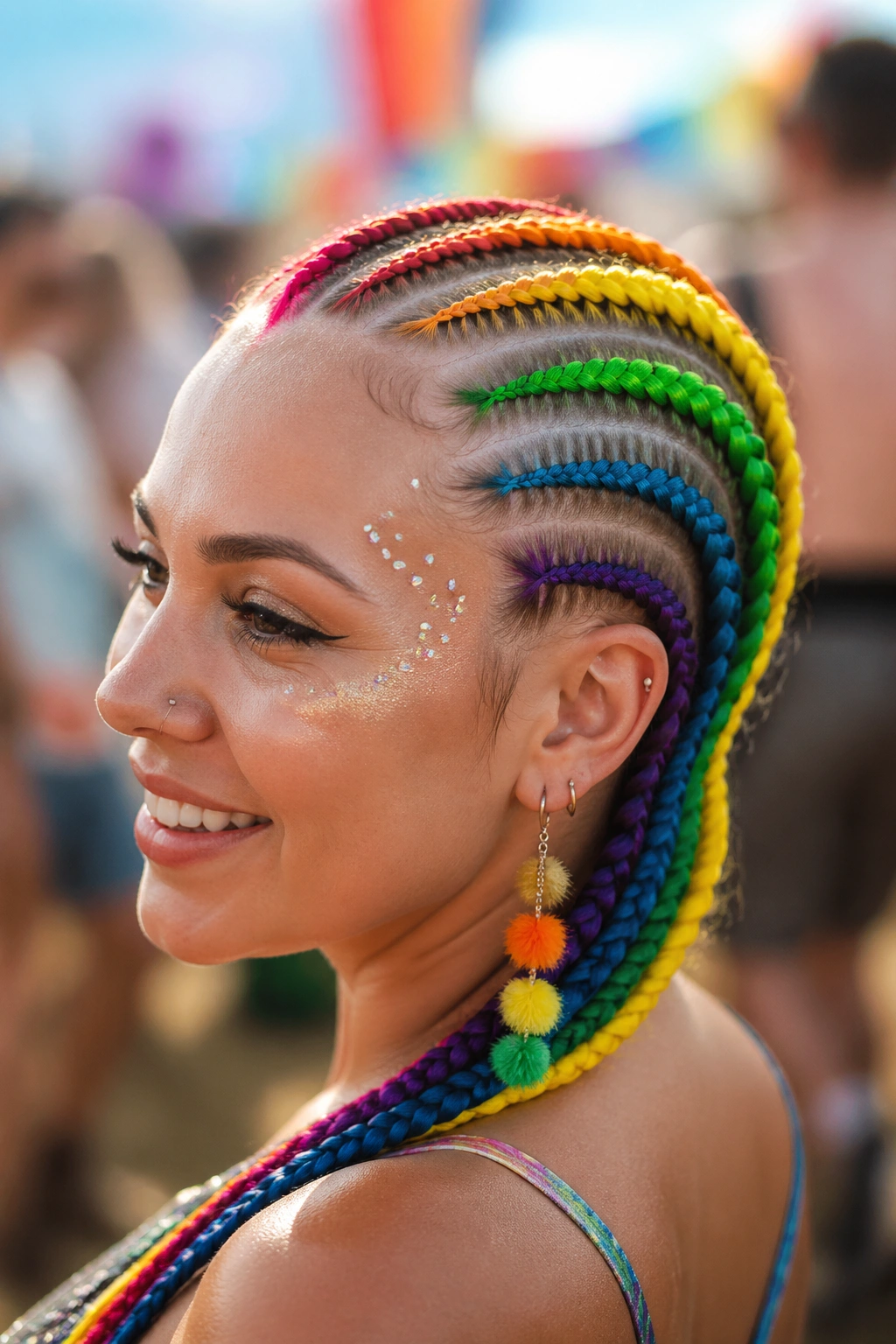
Each row is a different color. Red, orange, yellow, green, blue, indigo, violet — or any selection of bright colors arranged in sequence.
Rainbow cornrows are a maximalist statement. They suit festivals, photo shoots, themed events. They’re not built for everyday wear in most environments.
The colors fade at different rates. Brighter colors like yellow and pink fade fastest. Plan for the rainbow to look uneven by week 2.
10. Subtle Auburn Highlights Throughout
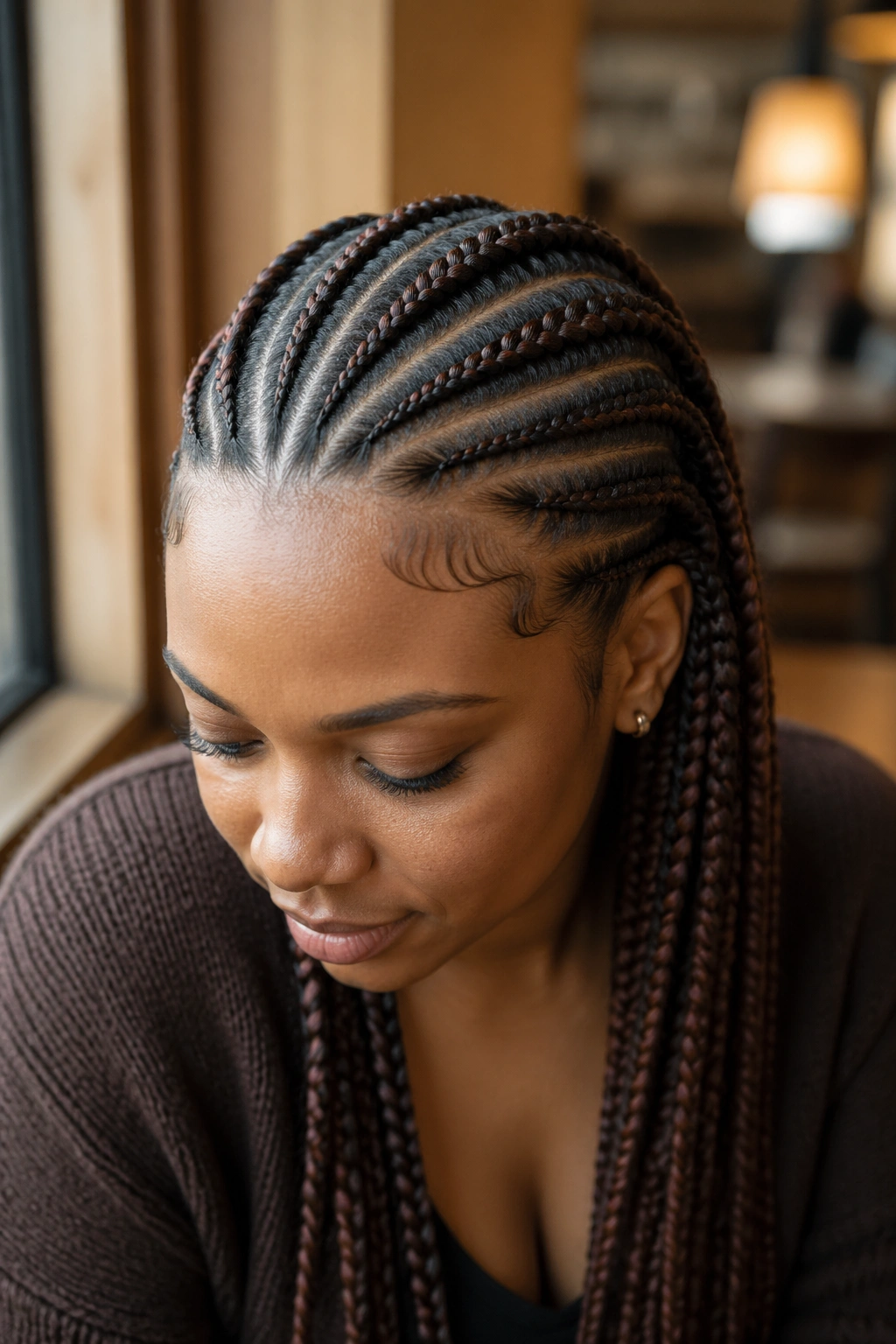
Auburn highlights are woven through dark brown cornrows. The auburn shows as thin streaks of color rather than full-color rows.
This style reads as natural sun-kissed hair rather than installed color. It’s the most subtle color option on the list.
Auburn flatters warm skin tones. It can also work for cool skin tones because the brown base anchors the color.
11. Gray Cornrows for a Modern Look
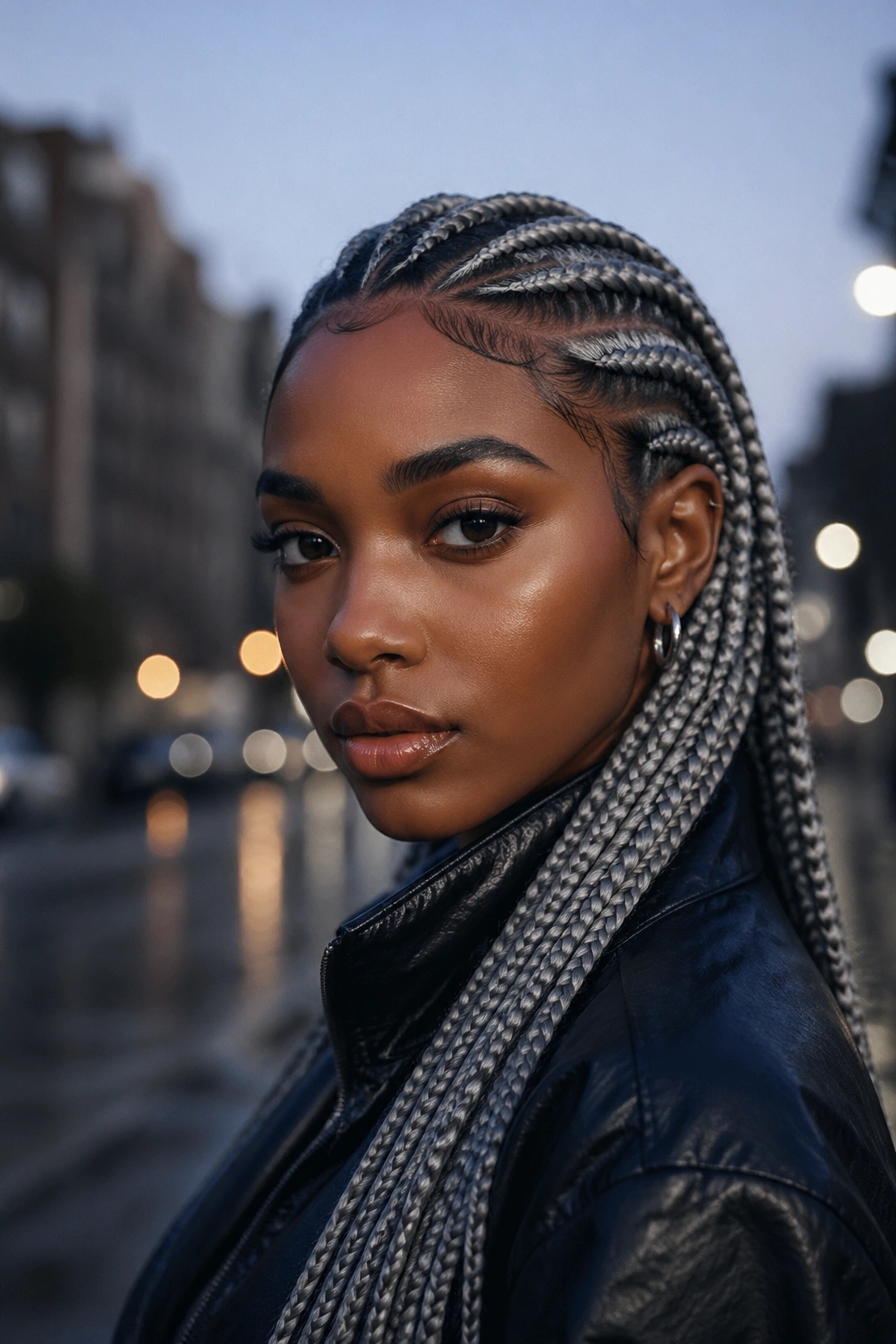
True gray kanekalon — neither silver nor white — used throughout the cornrow extensions. The look reads as cool, sophisticated, and slightly edgy.
Gray hair on younger wearers reads as a deliberate style choice. The contrast between youthful skin and gray hair creates visual interest.
Gray photographs well in monochromatic settings. Color-saturated environments can make gray look dingy by comparison.
12. Royal Blue Cornrows
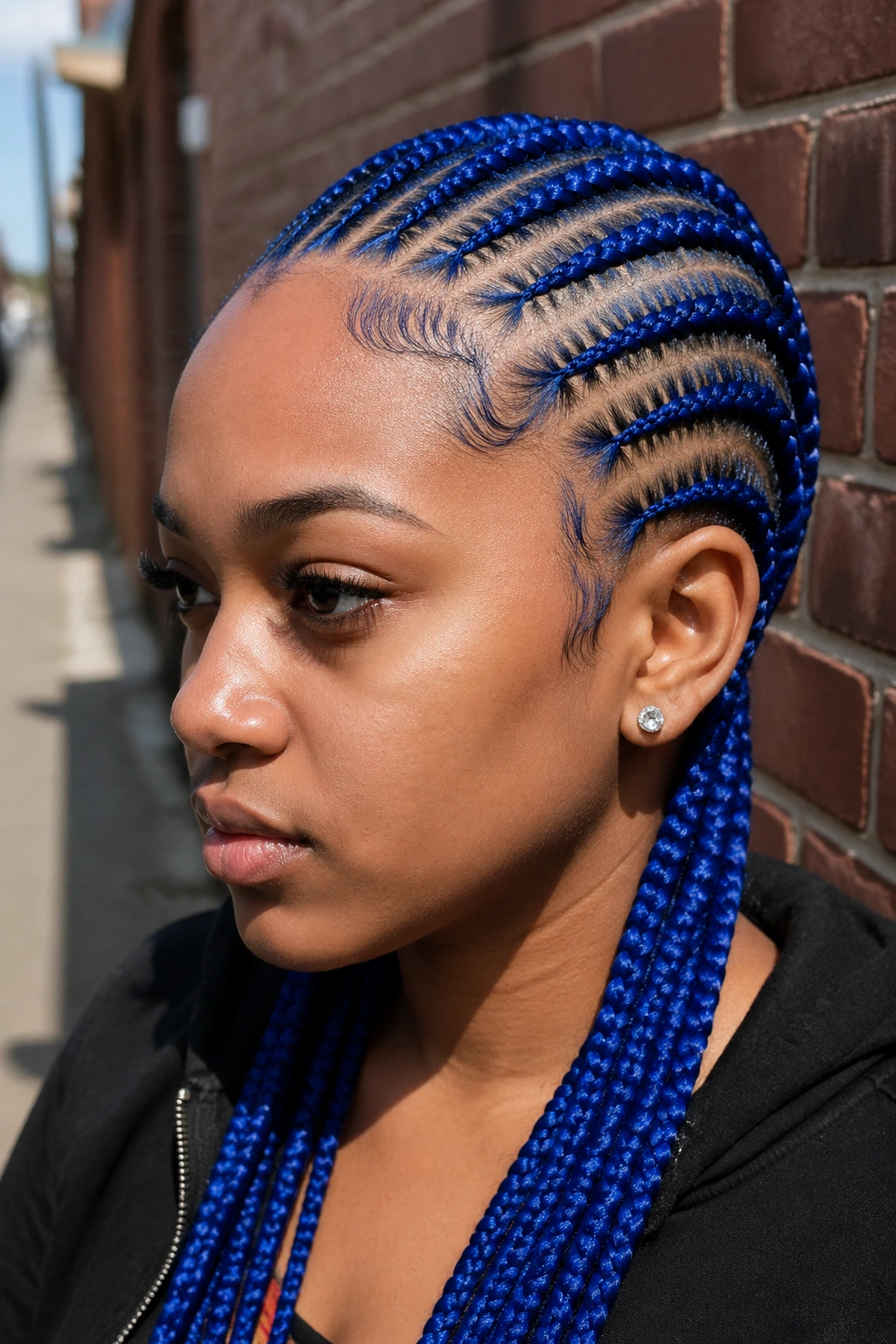
A vibrant blue throughout the cornrows. Royal blue is the most wearable shade of blue — bold but not as harsh as electric blue.
Blue kanekalon comes in many shades. Royal blue sits in the middle — saturated enough to be clearly blue but not so dark as to read as black or so light as to read as washed out.
This color suits creative wearers who want bold without going neon.
13. Two-Tone Black and Burgundy
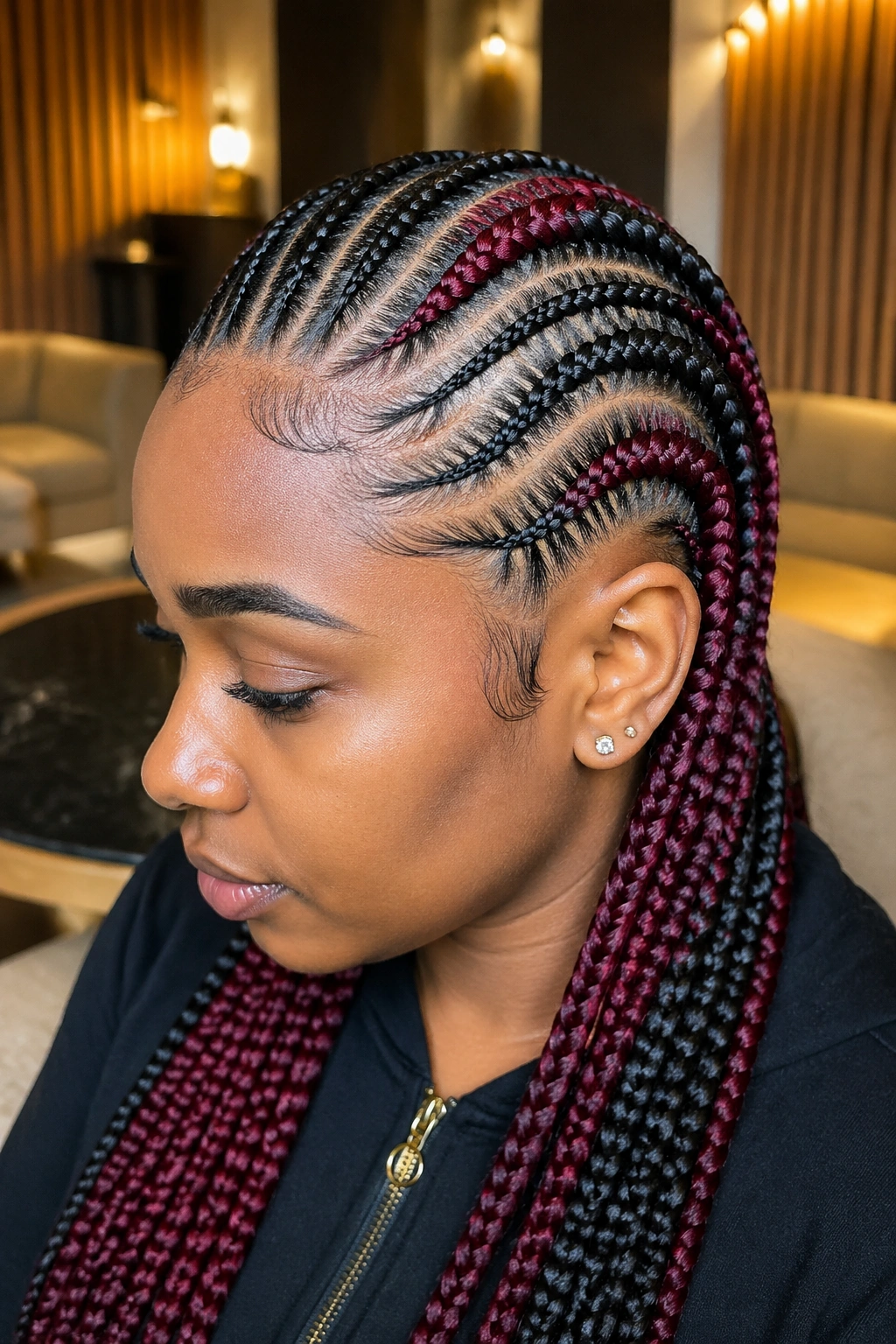
The base color is black. Selected rows have burgundy extensions instead. The contrast is subtle — both colors are dark — but the burgundy adds richness and depth.
This style works for almost any environment. The black base keeps it professional. The burgundy adds personality.
The burgundy rows can be placed in a pattern or scattered randomly. Pattern looks intentional and structured. Scattered looks organic and asymmetric.
14. Champagne Cornrows With Dark Roots
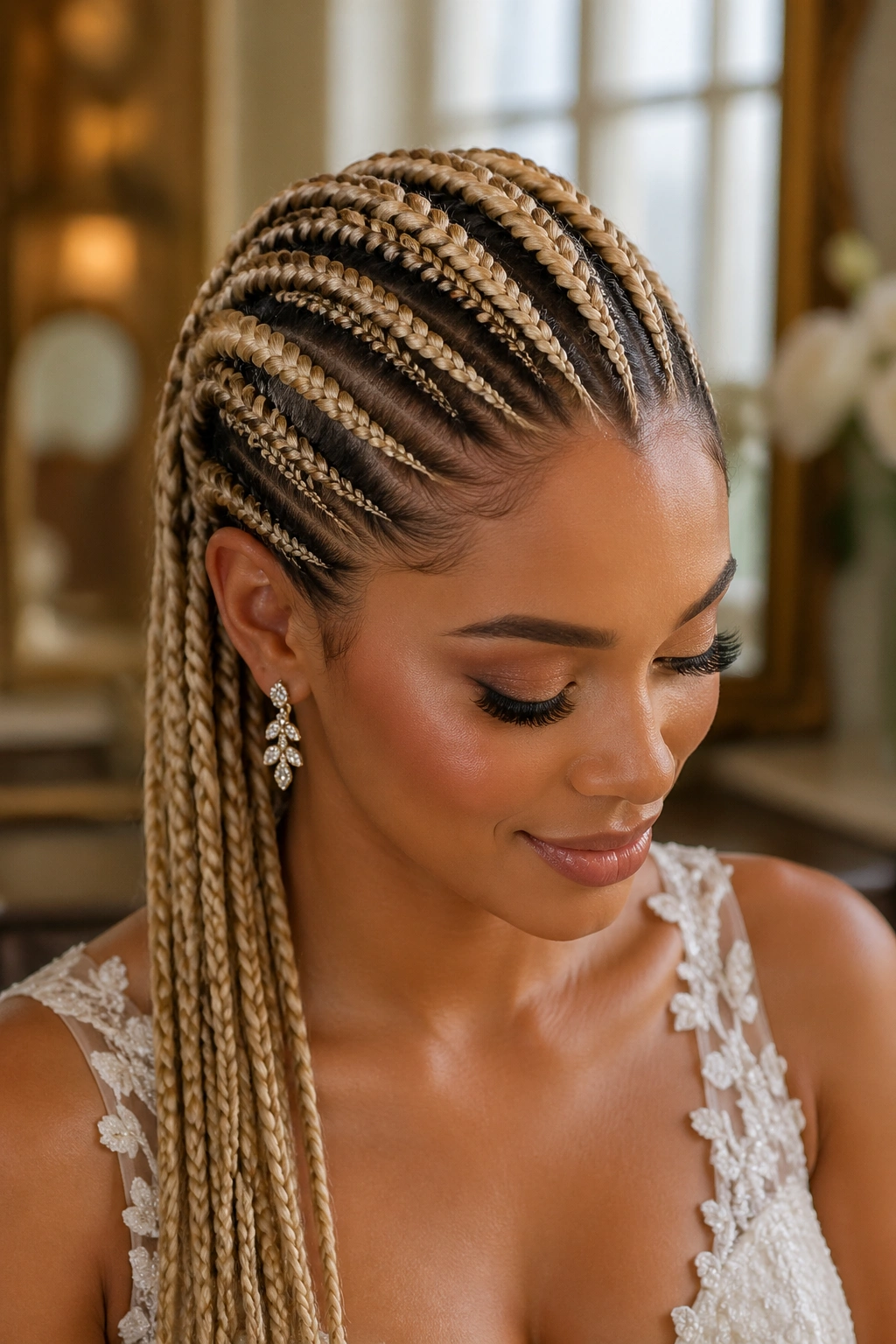
A pale, almost beige blonde for the extensions. The dark roots create contrast that anchors the lighter color.
Champagne is sophisticated and reads as expensive. It flatters most skin tones because the warmth-coolness sits in the middle of the spectrum.
This color suits weddings, dressy events, and elegant settings. It feels less casual than honey blonde.
15. Bold Orange Cornrows
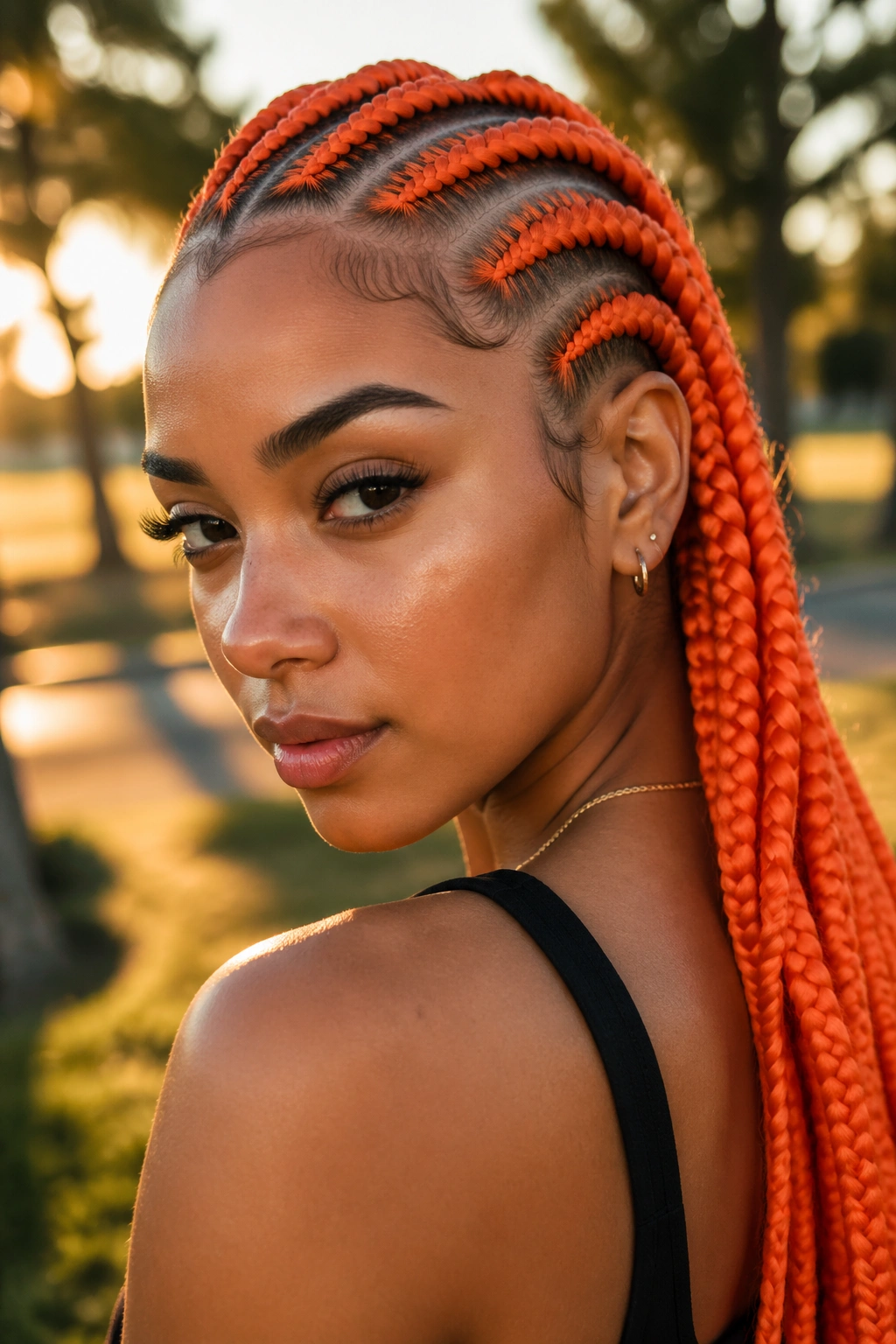
Orange — the actual orange of citrus fruit — used throughout the cornrows. This is a bold, attention-getting choice.
Orange flatters warm skin tones with red or gold undertones. It can wash out cool-toned skin.
The brightness of orange means it shows up clearly in photos and from a distance. This style is for wearers who want to be seen.
16. Subtle Blue Streaks in Brown Cornrows
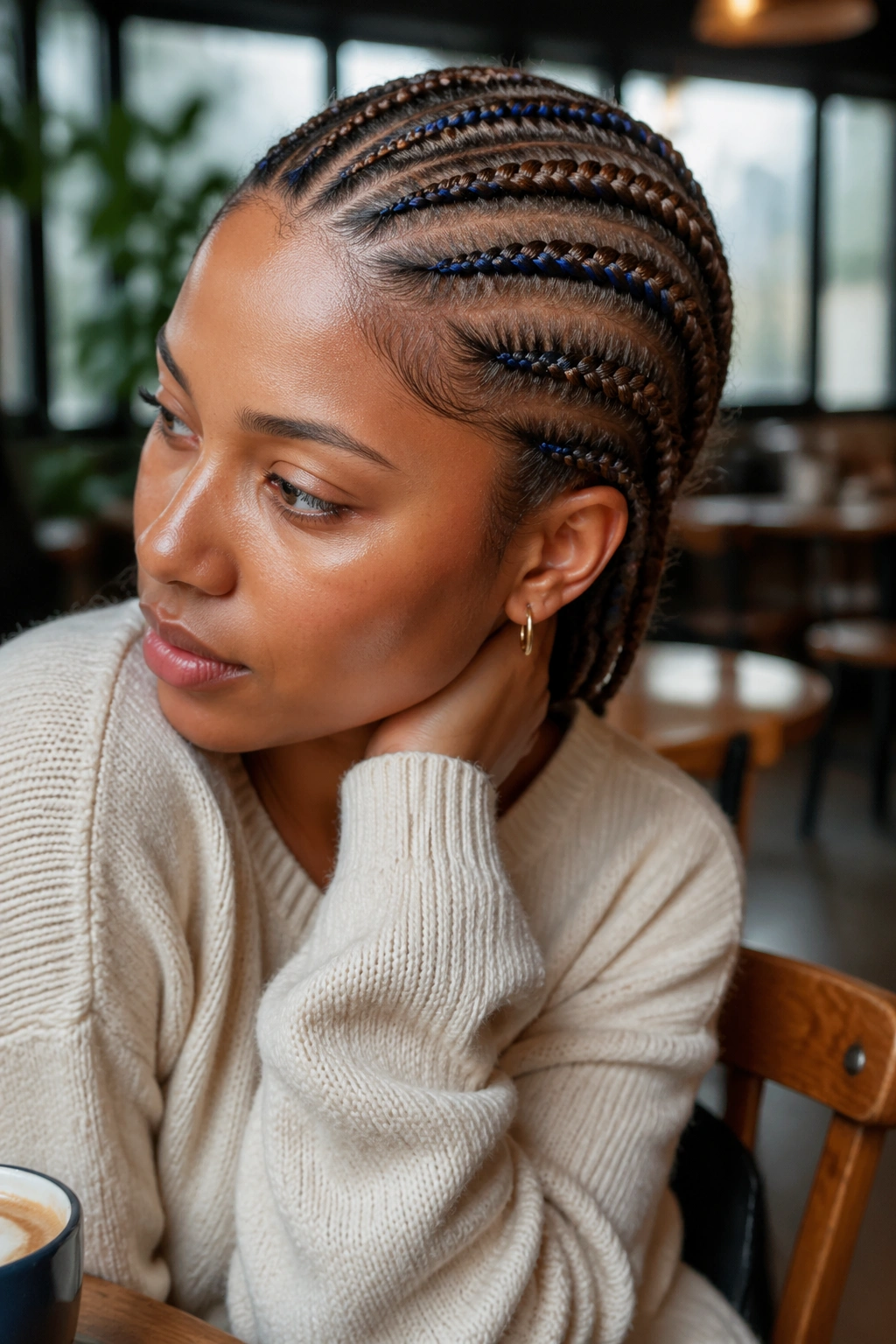
The base color is dark brown. Thin streaks of blue — usually denim blue or muted teal — run through specific rows.
The blue is subtle enough that it might not be obvious from a distance. Up close, it adds an unexpected element.
This is a sneaky way to incorporate color. The brown base reads as conservative; the blue streaks reveal a more playful side.
17. Multi-Tone Brown Cornrows
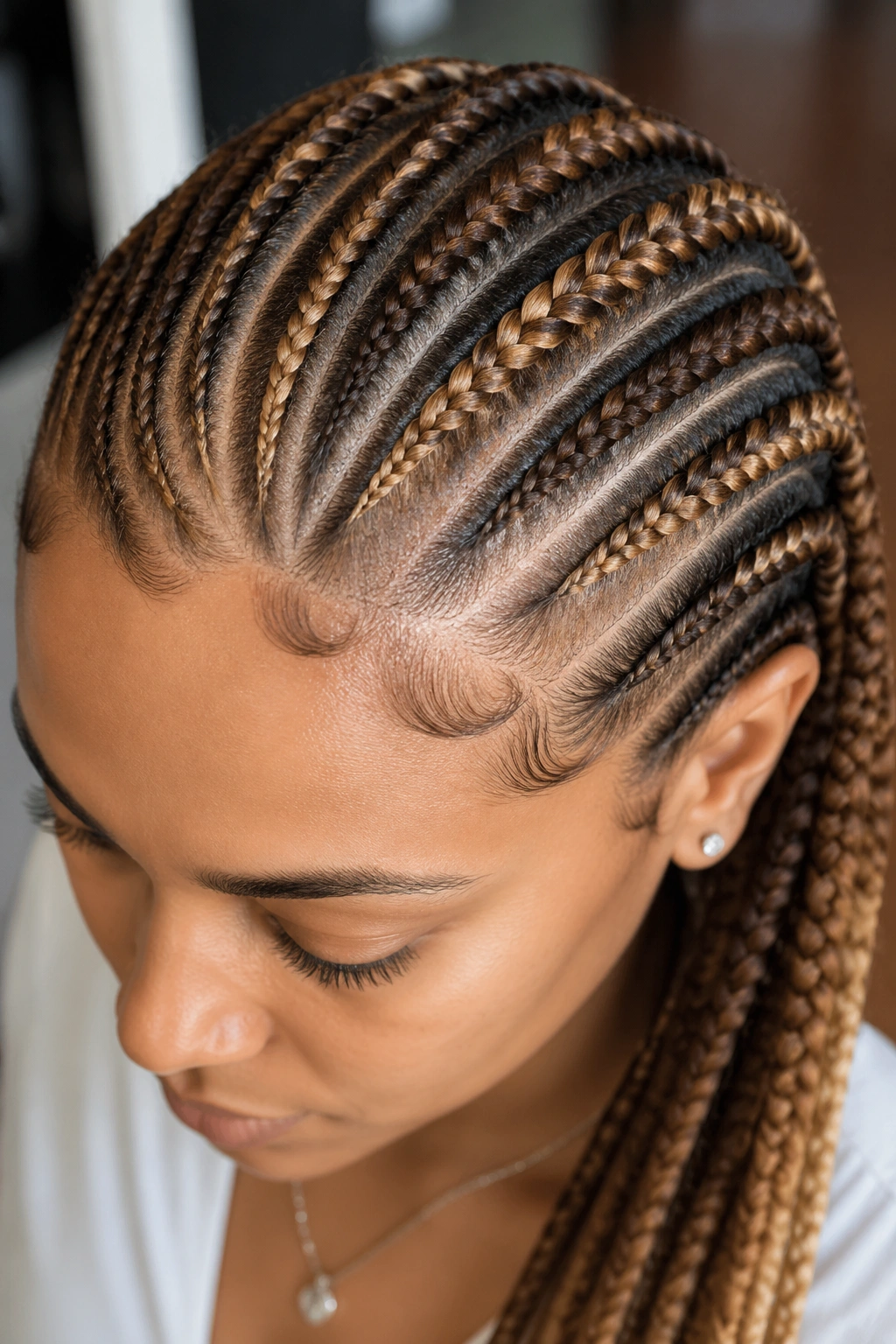
The cornrows use three or four shades of brown — dark chocolate, medium brown, caramel, and maybe a touch of honey. The browns are arranged so adjacent rows differ slightly.
The result has dimension that single-color brown can’t match. The eye reads natural variation rather than installed color.
This style flatters most skin tones because brown is universally flattering. The variation adds interest without adding boldness.
18. Bright Yellow Cornrows
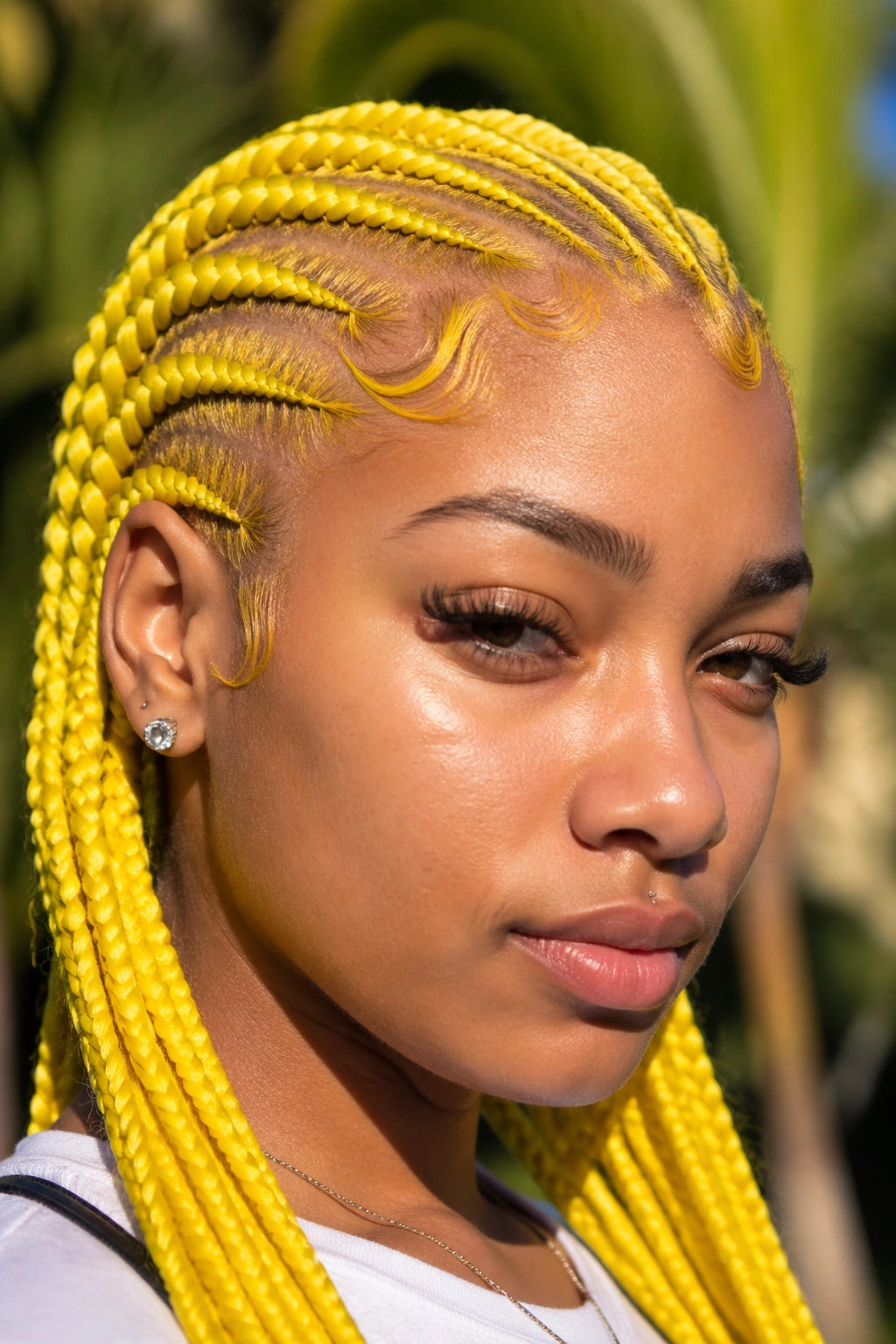
Pure yellow cornrows are an unusual choice but striking when done well. The color reads as bold and joyful.
Yellow kanekalon is hard to find in quality versions. Many cheap yellows look chalky or dingy. Invest in a quality brand for this color.
Yellow flatters skin with golden undertones. Cool-toned skin can find yellow challenging.
19. Black Cornrows With Gold Thread
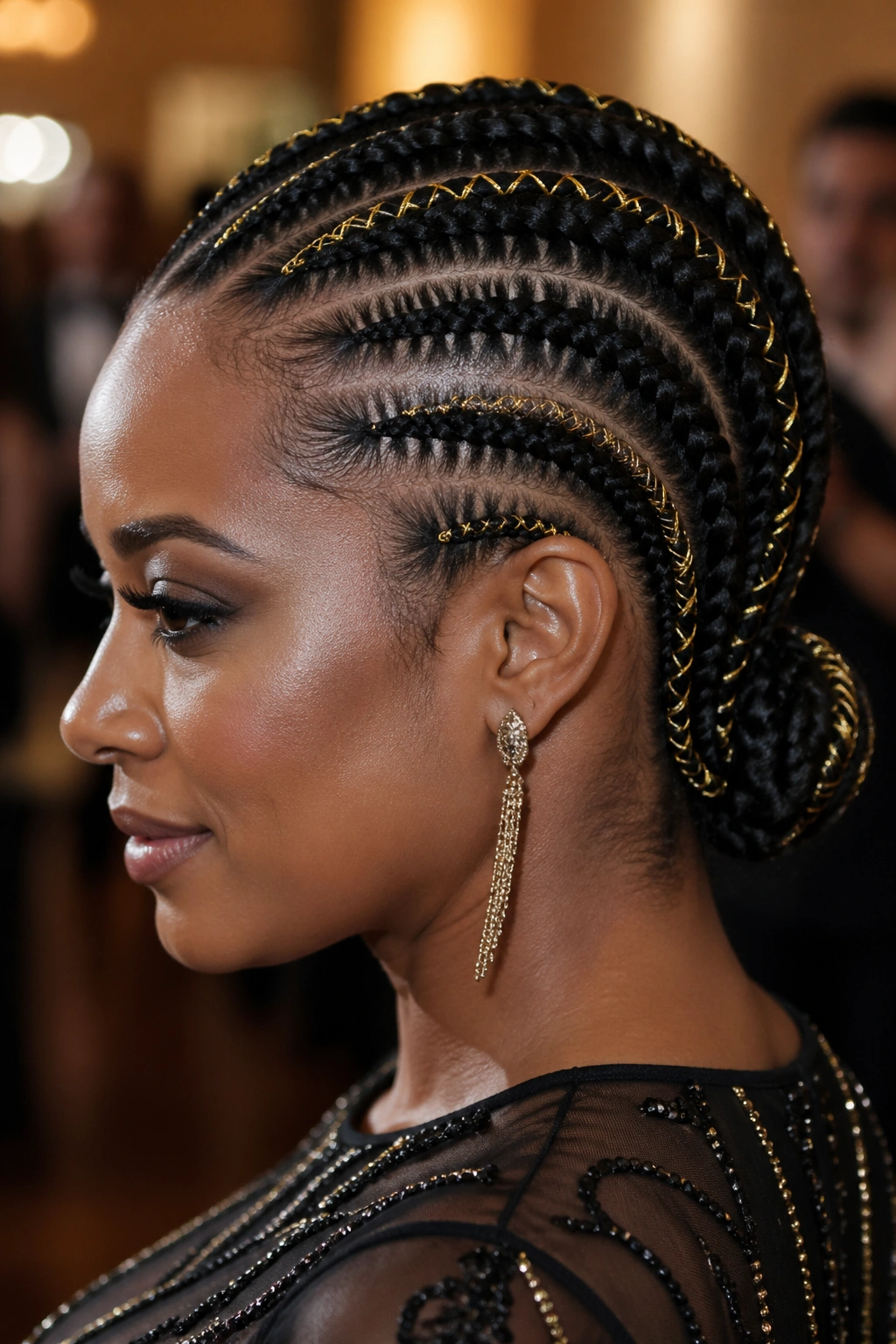
The cornrows are black throughout. Gold metallic thread is woven into selected rows during installation.
The thread adds shimmer without adding color. The look is sophisticated and subtle.
Gold thread suits formal settings — weddings, galas, holiday events. The shimmer catches light in a way that flat color can’t.
20. Mint Green Cornrows With Soft Roots
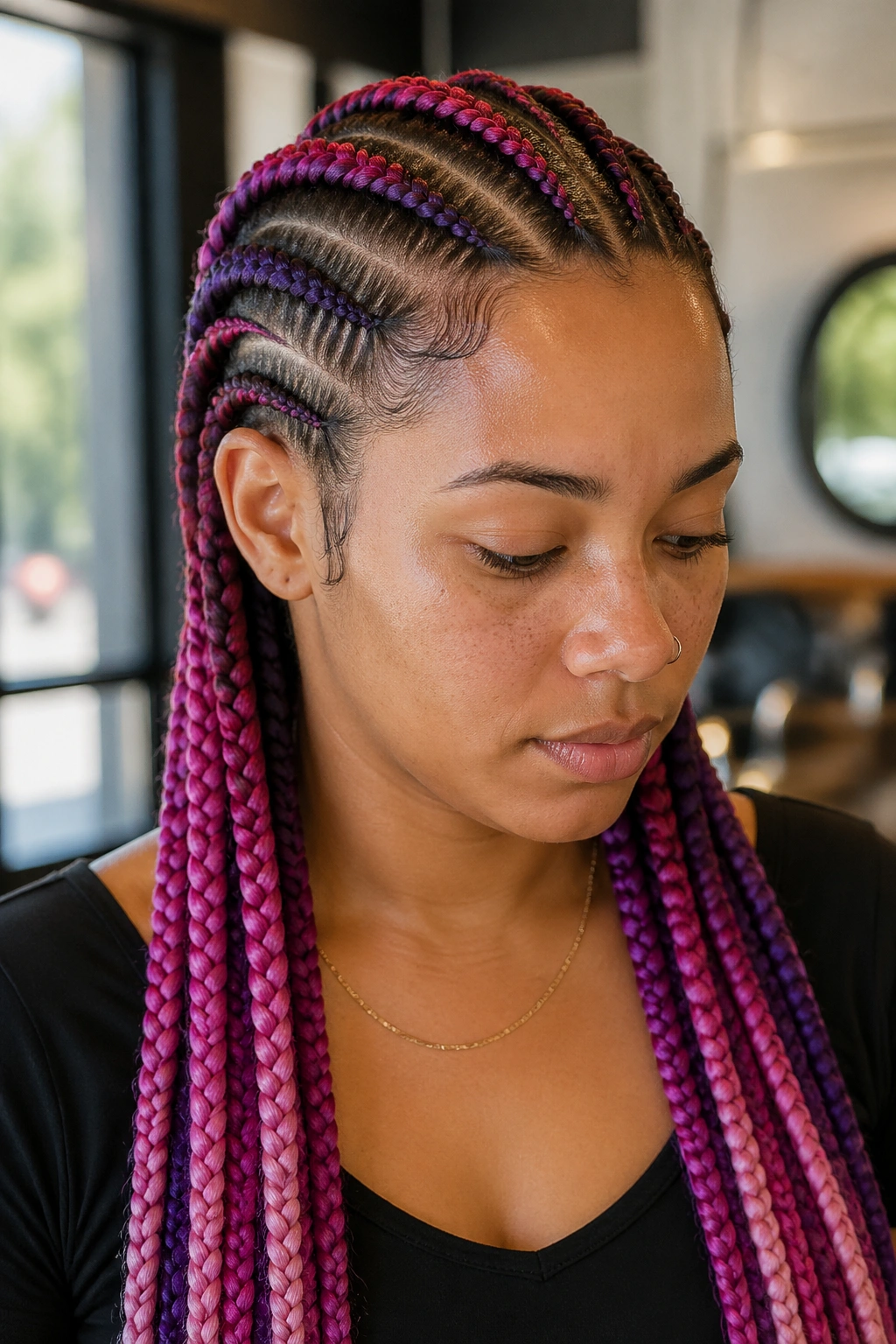
Mint green is a pale, cool green that sits between teal and pastel. The cornrow extensions are mint throughout, with the natural roots blending into the cool color.
Mint flatters cool skin tones. It can read as fresh and modern when properly placed.
This color suits creative environments and casual settings. It feels less appropriate for conservative workplaces.
21. Two-Color Diagonal Pattern
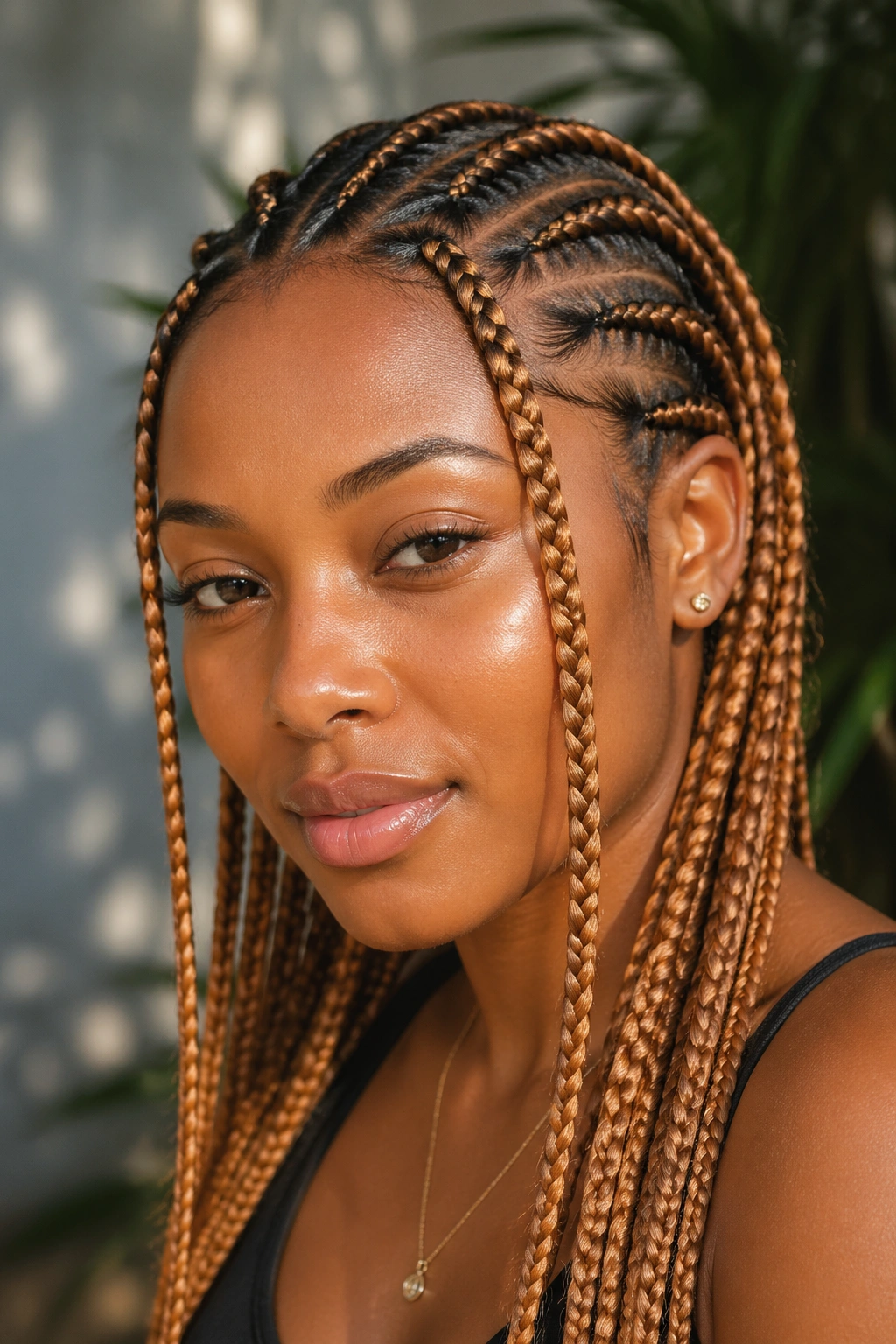
The cornrows are arranged in a diagonal pattern, with the colors changing along the diagonal. One half of the head might be all black; the other half all red; and the diagonal line where they meet creates a clear color boundary.
This styling concept is more advanced than scattered or alternating color. It requires planning during installation to ensure the diagonal lands correctly.
The result is bold and graphic. It photographs well from the side, where the diagonal is most visible.
22. Caramel Cornrows for Warmth
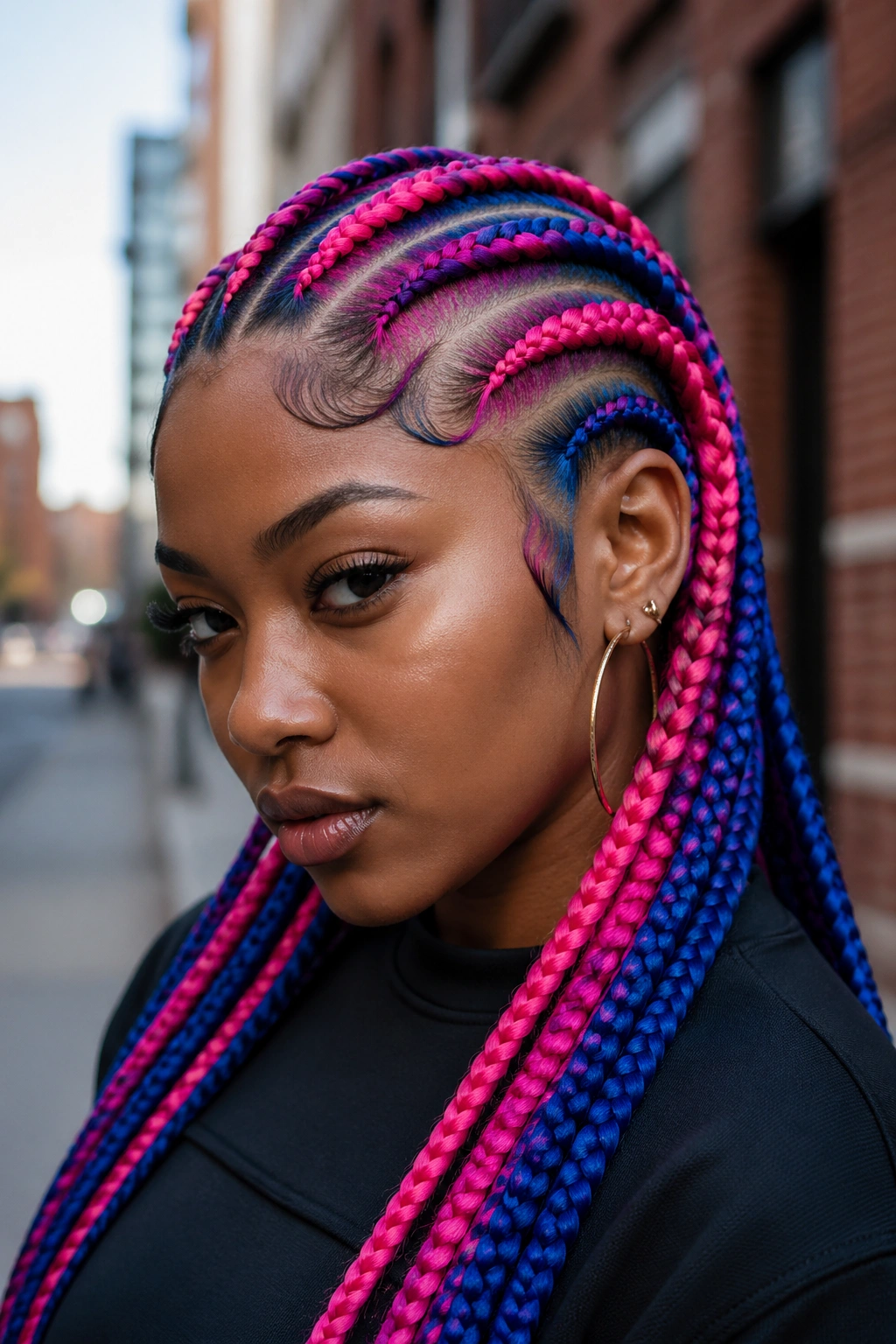
Caramel sits between honey and brown — warmer than blonde, lighter than brown. The cornrow extensions are caramel from the feed-in point.
This is a flattering color for almost everyone. The warmth complements skin tones across the range.
Caramel reads as natural sun-lightened hair. It’s a good choice for wearers who want color but don’t want to look obviously dyed.
23. Black Cornrows With Single Color Pop Row
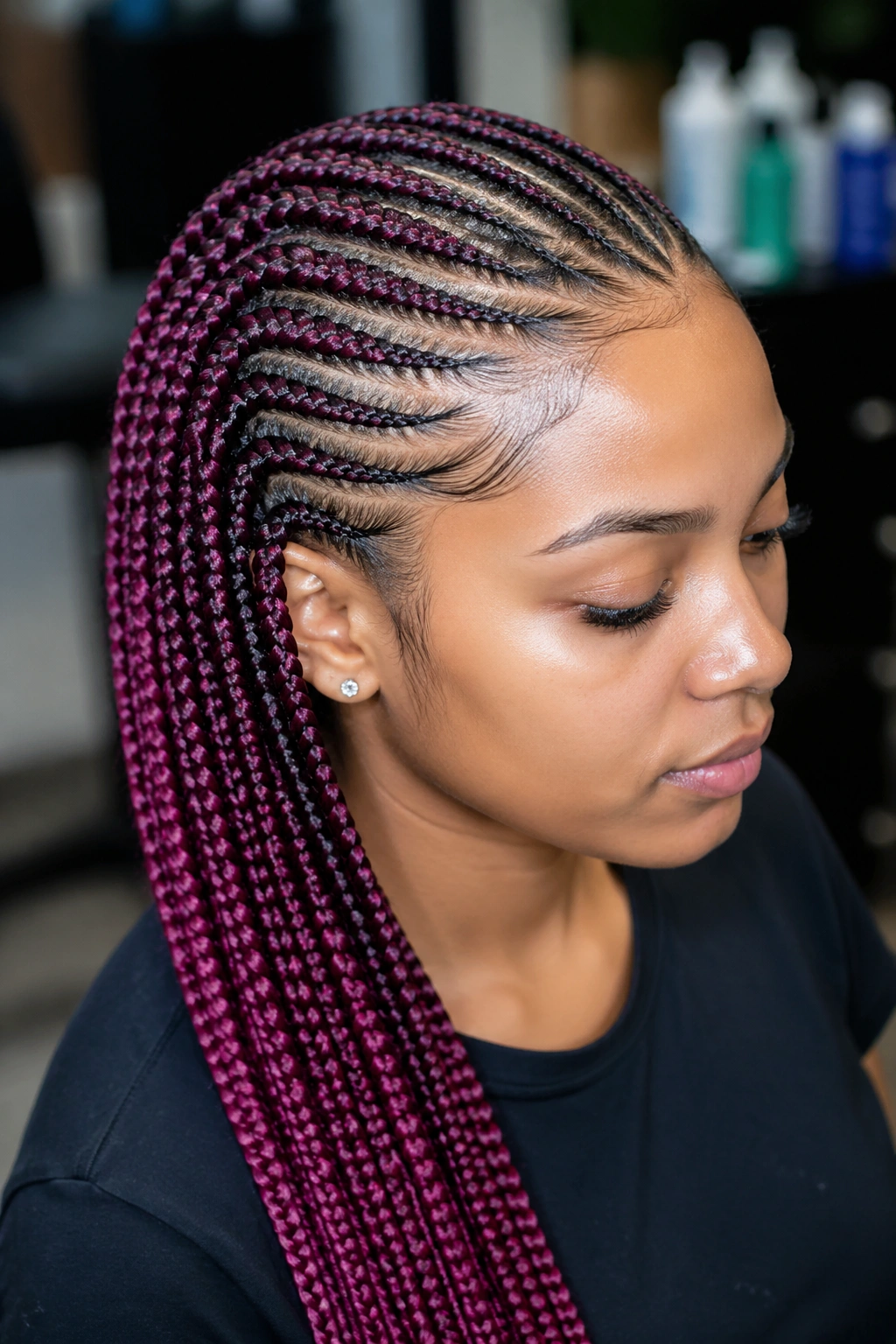
The whole style is black except for one bright row — pink, blue, red, or another vivid color. That single row becomes the focal point.
This is a sneaky color choice. The black base reads as conservative; the single pop row reveals personality.
The pop row can be placed strategically — along the side, through the center, or at the back — depending on how visible you want it to be.
24. Wine Red Cornrows With Cuff Accents
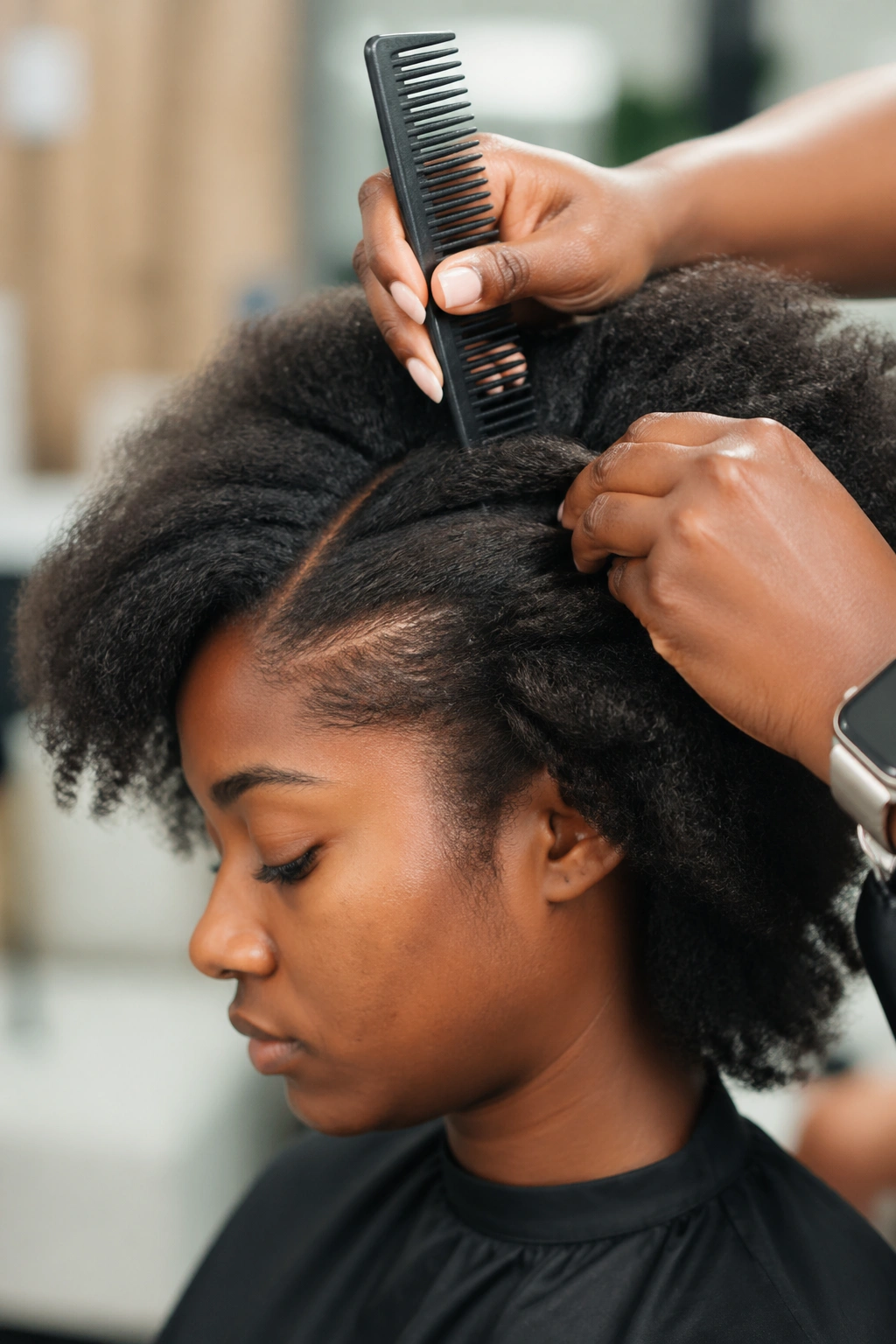
A deep, dark red — wine rather than bright red — used throughout. Small gold or silver cuffs slide onto selected rows for accent.
Wine red is sophisticated and works for dressy occasions. The cuffs add metallic shine without competing with the color.
This style suits autumn aesthetics — rich colors, warm settings, layered outfits.
25. Soft Peach Cornrows With Subtle Highlights
A light peach shade with even lighter peach highlights woven through. The color is in the warm pink-orange family but stays muted rather than bright.
Peach flatters warm skin tones particularly well. The warmth complements gold undertones.
This is a romantic, soft color choice. It suits weddings, garden parties, and other gentle occasions.
How to Make Color Cornrows Last
Cool water rinses are kinder to color than hot water. Use the coldest water you can tolerate when rinsing the rows.
Avoid heavy oils on colored extensions. Oils can dull the color and attract lint.
Keep the cornrows out of direct sun for extended periods. UV exposure fades color over time.
Sleep in a satin bonnet to reduce friction. Friction breaks down the color over time.
Refreshing Faded Color
Fabric softener spray restores the smoothness of synthetic hair and can revive faded color. Mix one teaspoon of fabric softener with a cup of water. Spritz the colored rows and let them air dry.
For more dramatic restoration, dip the colored ends in warm water for 60 seconds. This resets the cuticle of the synthetic hair and brings back some of the original sheen.
Do not use color refresh products designed for natural hair on synthetic extensions. The chemistry doesn’t work the same way.
Sleeping in Color Cornrows
A bonnet is mandatory. Cotton pillowcases create friction that breaks down both the color and the structure of the rows.
Loosely braid or twist long colored ends before bed. This keeps them contained and protected.
Silk pillowcases work as a backup if the bonnet shifts. But the bonnet is the better primary protection.
Washing Color Cornrows
Diluted shampoo applied to the scalp only. The colored extensions don’t need shampoo — the synthetic doesn’t accumulate the same kind of dirt as natural hair.
Mix one part shampoo with three parts water. Apply directly to the scalp using a squeeze bottle. Rinse with cool water.
Conditioner can be applied lightly to the colored rows if they feel dry. Avoid heavy conditioning that weighs them down.
Removing Color Cornrows
The takedown is the same as for any extension cornrow style. Start at the ends and work upward.
The colored extensions can be saved if you want to reuse them. Carefully unravel and clean. Some colors hold up to multiple installs; others fade after one use.
After takedown, deep condition your natural hair. Color extensions can dry the natural hair slightly because of the products used during installation.
Picking the Right Color for the Right Occasion
Bright colors suit casual and creative occasions. They’re not appropriate for most professional settings.
Subtle colors — burgundy, auburn, dark brown variants — work in almost any setting. They add personality without violating workplace norms.
Pastel colors suit spring and summer events. They can feel out of place in winter formality.
Metallic accents — gold thread, copper highlights — work for evening events and formal occasions. They don’t suit casual daytime contexts.
The right color is the one you actually want to wear. Trends come and go. Your preference is what matters.
Common Color Mistakes
Picking colors that fight your skin tone. Test before committing.
Buying cheap kanekalon for bold colors. The result looks cheap from day one.
Skipping the bonnet. Color fades faster without protection.
Washing too often. Each wash dulls the color slightly.
Trying to dye natural color cornrows after install. The chemistry of hair dye doesn’t work the same on synthetic hair, and you’ll likely damage both the natural and synthetic hair.
