


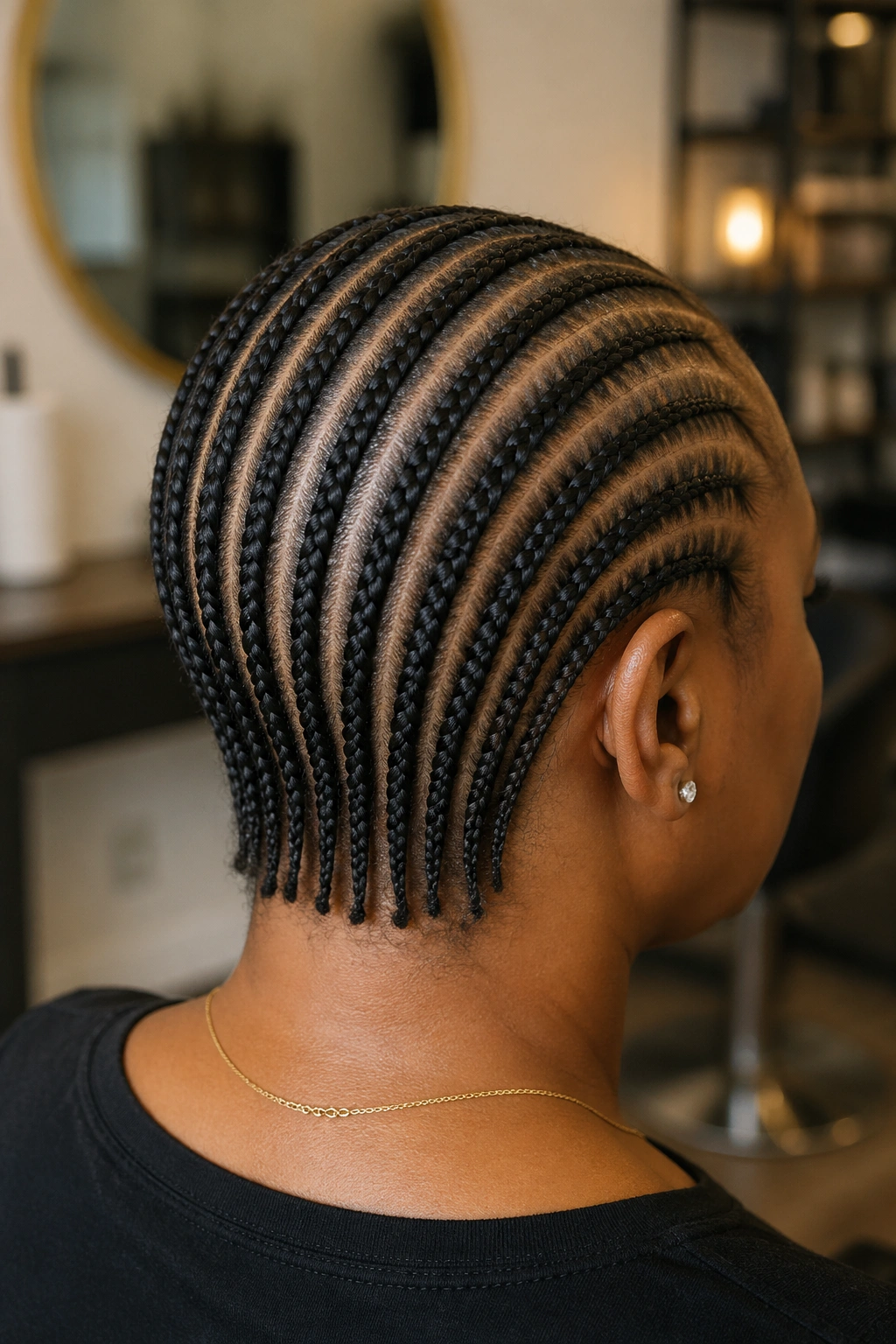
Small all back cornrow styles are the workhorses of protective styling for Black women. Tiny, tight rows running from hairline to nape — the kind of style that sits on a head for three weeks and looks better at the end of that run than it did the day after install. There’s a reason small all back cornrows show up at every age, every occasion, and every length of natural hair. The format is durable. The look is timeless. The variations are nearly endless.
Small all back cornrows aren’t a single style. They’re a category. Within that category, the difference between a 12-row install and a 30-row install is enormous. The difference between feed-in small cornrows and natural-hair-only small cornrows is enormous. Add in styling choices — the bun, the ponytail, the loose ends, the beaded ends, the colored sections — and the small all back cornrow opens into 25 genuinely different looks.
The 25 styles below cover the practical span. Each one offers something the others don’t — different braid count, different finishing detail, different intended occasion, different commitment level.
Why Small Specifically
Smaller cornrows mean more rows. More rows mean more visual density. The scalp pattern reads as woven texture rather than as a few defined lines. From a distance, small all back cornrows look almost like fabric — a continuous textured surface running back across the head.
The longevity argument matters too. Small cornrows distribute tension across more attachment points. No single braid carries excessive weight. The result is less hairline stress and longer-wearing installs — small cornrows can hold cleanly for 4-6 weeks if the natural hair underneath is healthy.
The trade-off is install time. A small cornrow install runs 4-8 hours depending on row count. That’s the price of the style.
All Back As a Direction
All back is the simplest cornrow direction. Hairline to nape. No side parts, no center parts, no diagonal sweeps. The whole head reads as one unified pattern flowing from front to back.
The simplicity is what makes the style work for daily wear. Side and diagonal parts can read styled or formal. All back reads ready for anything — work, gym, dinner, sleep, travel.
For face-flattering reasons, all back also slims and elongates because the eye follows the lines from face to back of head. Round face shapes especially benefit from the lengthening visual.
Prep Specific to Small Cornrows
Small cornrows demand more prep than larger styles because every imperfection is amplified by the tight scale.
- Wash with clarifying shampoo to remove all buildup.
- Deep condition for 30-45 minutes.
- Stretch the hair fully — air-dry in chunky plaits, blow-dry on low, or use bands for maximum stretch.
- Trim split ends before install. Splits caught in tiny braids unravel from within.
Don’t install on damp hair. The shrinkage as it dries pulls the small braids tight enough to cause discomfort within the first day.
The Tools That Matter at Small Scale
A high-quality rat-tail comb with a sharp pin. The smaller the cornrow, the more precise the parting needs to be.
A pintail comb in addition to the rat-tail. Pintail combs have longer, finer pins that excel at separating tiny sections.
Sectioning clips — small claw clips work better than large ones at this scale.
A small mirror you can hold up to the back of your head, plus a wall-mounted mirror in front. Phone camera as a third tool to check the back as you work.
Edge gel and a small detail brush for the front hairline.
Nothing fancy. Just precise.
Time Budget Honesty
Plan for the install. A 12-row small all back takes 3-4 hours. A 20-row small all back takes 5-6 hours. A 30-row small all back can run 7-8 hours or more.
Self-installs of small cornrows are achievable but slow. Most people find 8-12 hours over two days more realistic than trying to finish in one sitting.
If hiring a stylist, ask about row count upfront. The price difference between 15 rows and 30 rows is real because the labor difference is real.
1. Twelve-Row Classic Small All Back
The clean entry point. Twelve small cornrows running from hairline to nape with even spacing. Each braid is about three-quarters of an inch wide.
Why It’s Foundational
- Twelve rows is enough for the dense small-cornrow look without becoming overwhelming.
- The size is forgiving for self-installs while still reading as small.
- Suits any face shape and any occasion.
Tip: Start the parts at the same distance from the hairline on both sides — using a tape measure or finger spacing — to keep the symmetric look consistent.
2. Twenty-Row Tight Small All Back
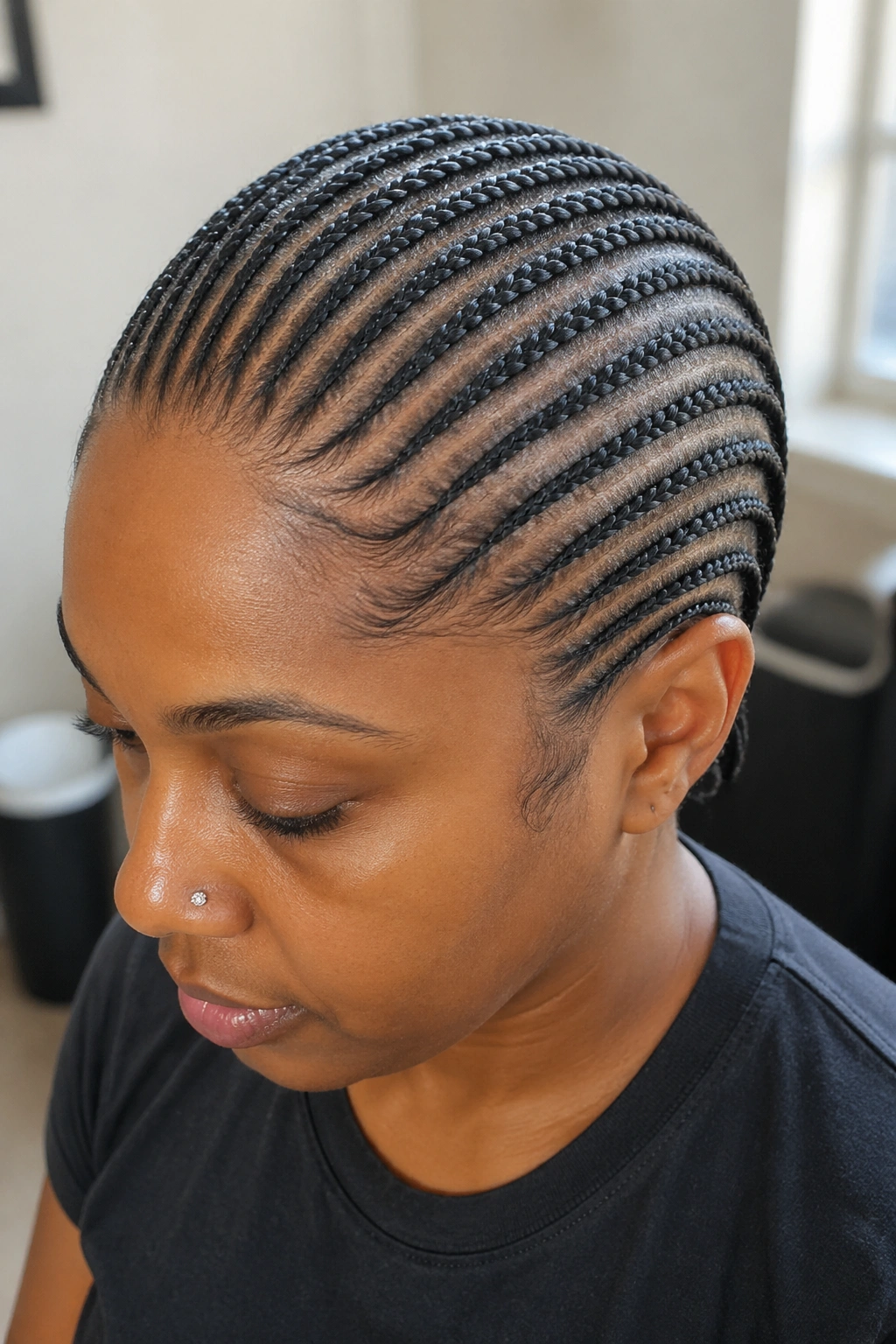
Stepping up from twelve. Twenty cornrows, each about half an inch wide. The scalp pattern reads as woven density rather than individual rows.
The twenty-row count is where small all back cornrows really start to deliver their visual signature. Photographs at this scale show texture that looks almost embroidered.
Install time jumps to 5-6 hours. The payoff is a finished style that reads as professional-level work.
3. Twenty-Five Row Micro All Back
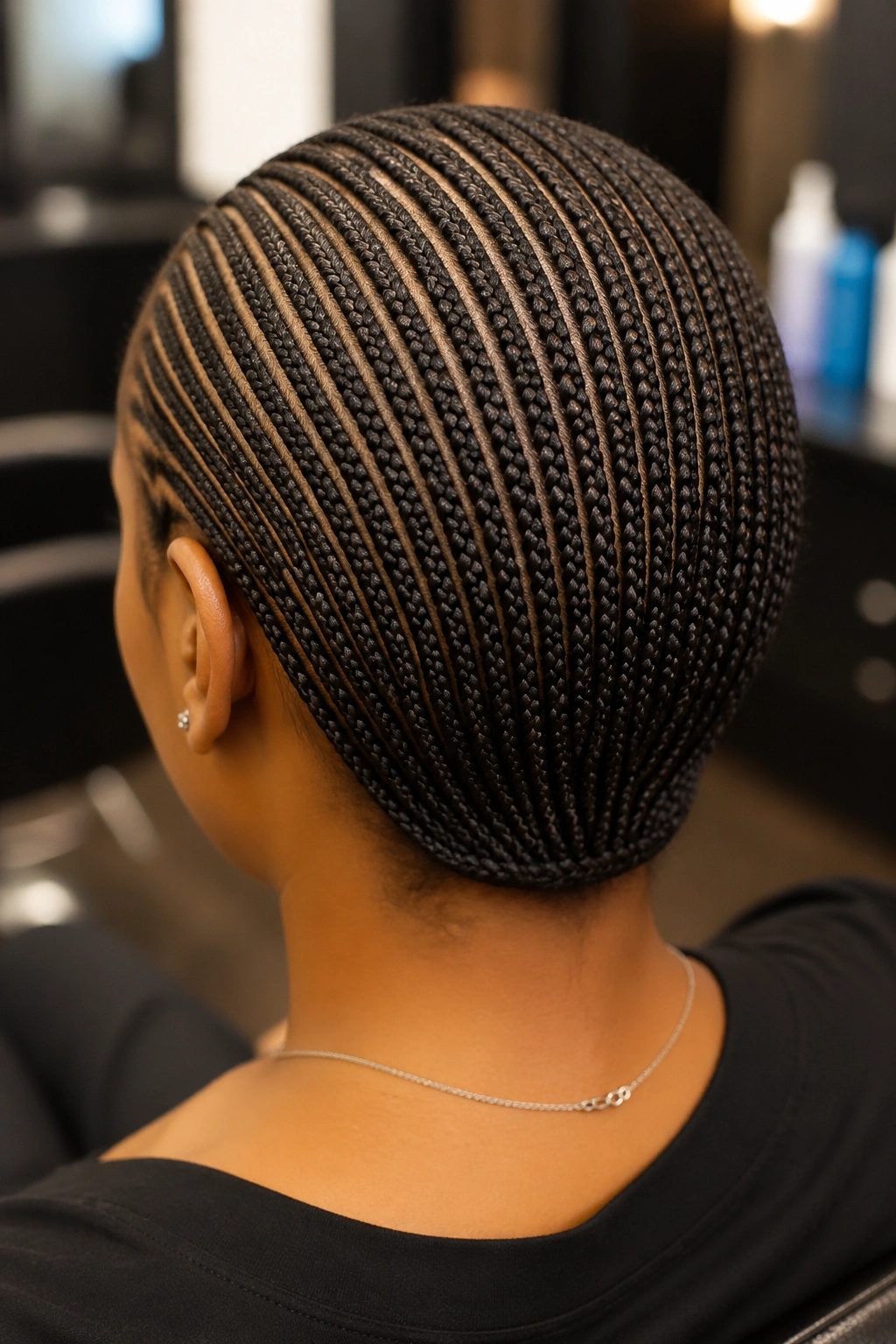
Twenty-five rows pushes into micro territory. Each braid is about a third of an inch wide. Sections are tiny. Precision is everything.
This is the most sophisticated version of the small all back format. The whole head reads as a textile pattern. From the back, it looks like a fine basket weave.
Best done by a stylist on the first attempt. Self-installs at this scale are achievable but require multiple days.
4. Thirty-Row Detailed Small Cornrows
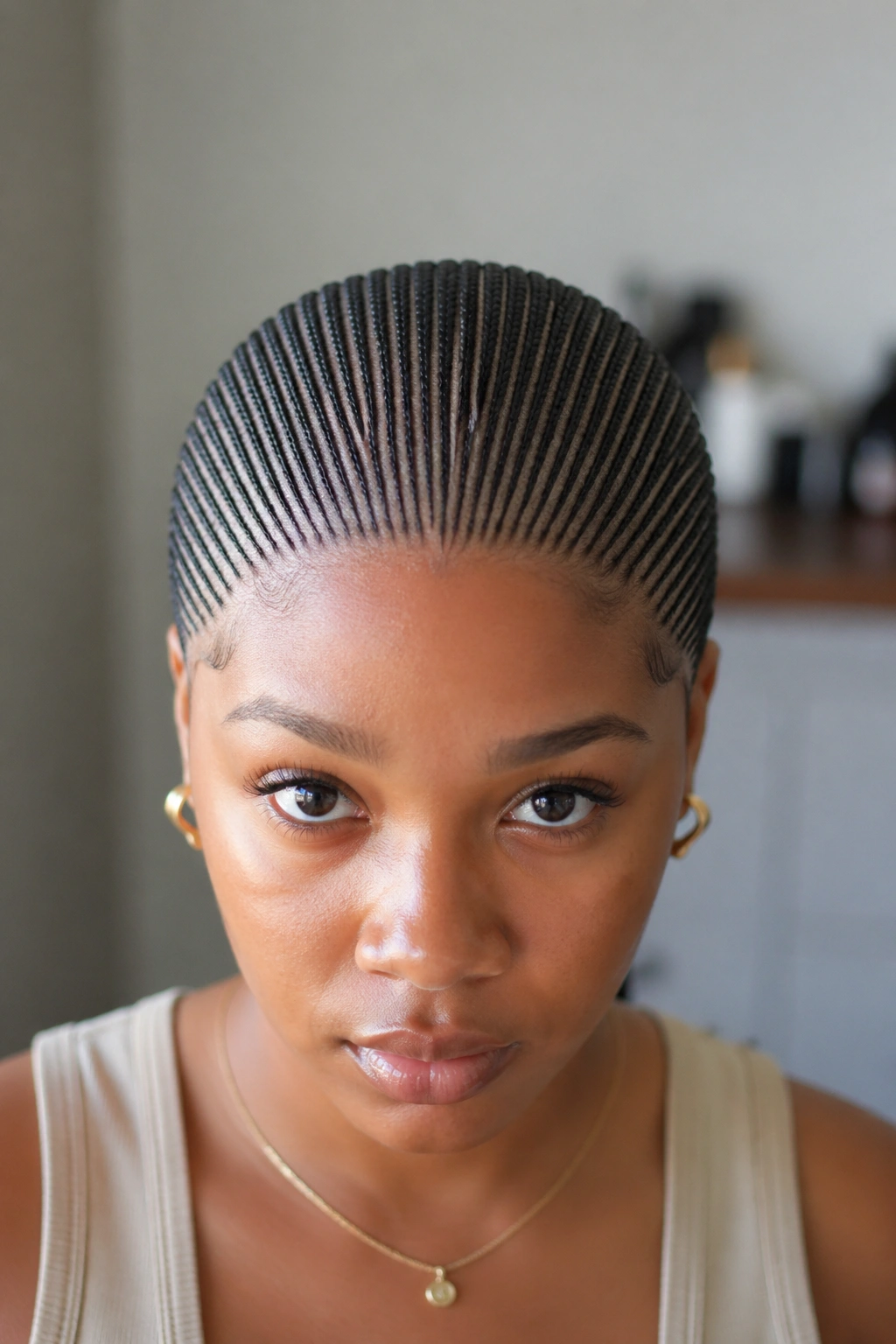
The maximum end of the small cornrow spectrum. Thirty rows means each braid is a quarter inch wide or less. Total install time runs 7-9 hours.
The finished look is jewelry-like. Every braid contributes to a unified textured surface across the entire head. Nothing else in the cornrow category produces quite this density.
Reserve for events worth the install time. Don’t commit to thirty rows for a casual week.
5. Small All Back With Single Beaded Braid
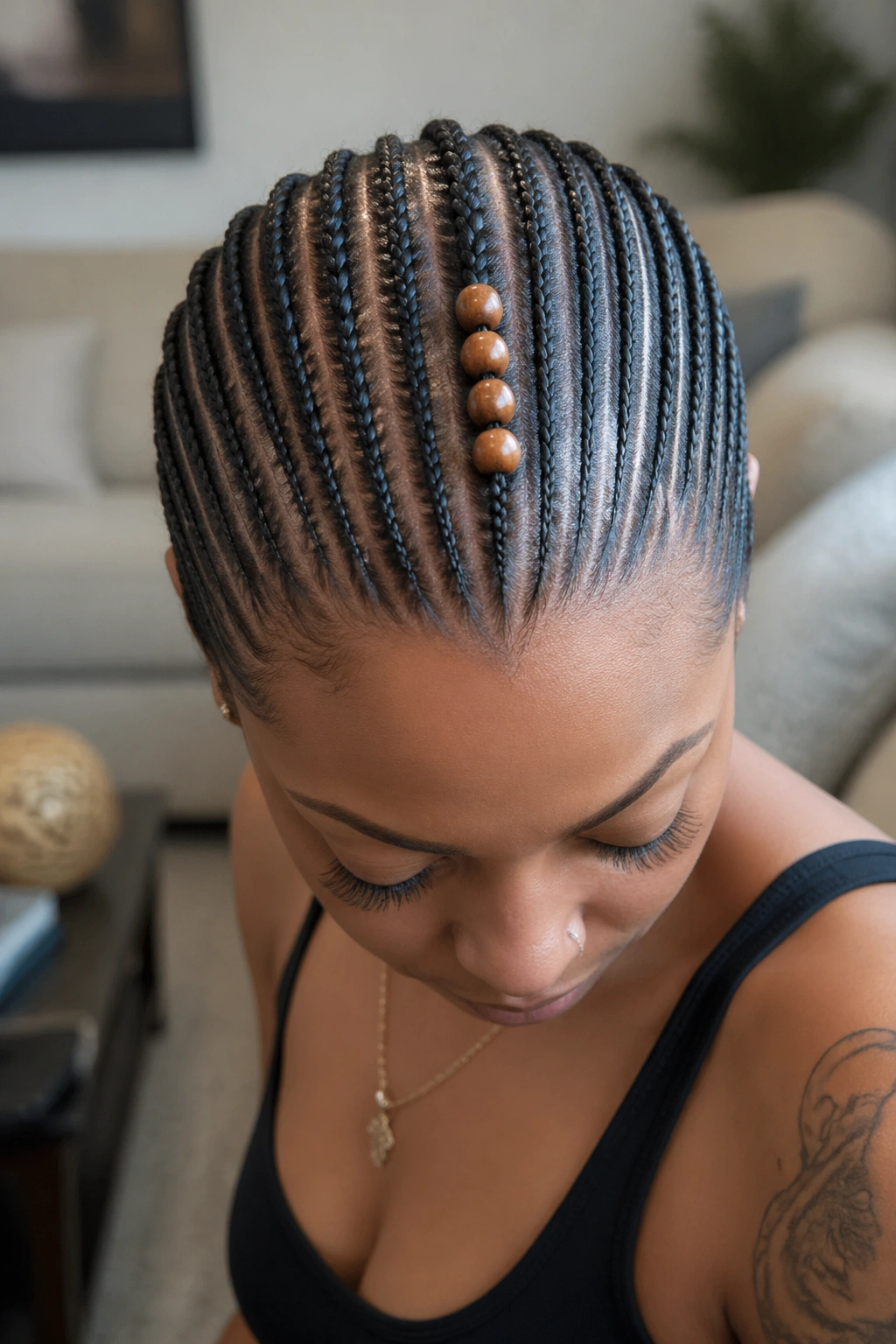
Twelve to twenty small cornrows all back, with a single braid threaded with three or four beads. The beaded braid sits in any position — center, off-center, or at one of the edges.
The beaded accent draws the eye to a specific point in an otherwise unified pattern. Restraint is the styling principle. One beaded braid reads intentional. Multiple beaded braids dilute the focal effect.
Wooden beads in a tone matching your skin work best for everyday wear. Brass or silver beads read more decorative.
6. Small All Back Into Low Ponytail
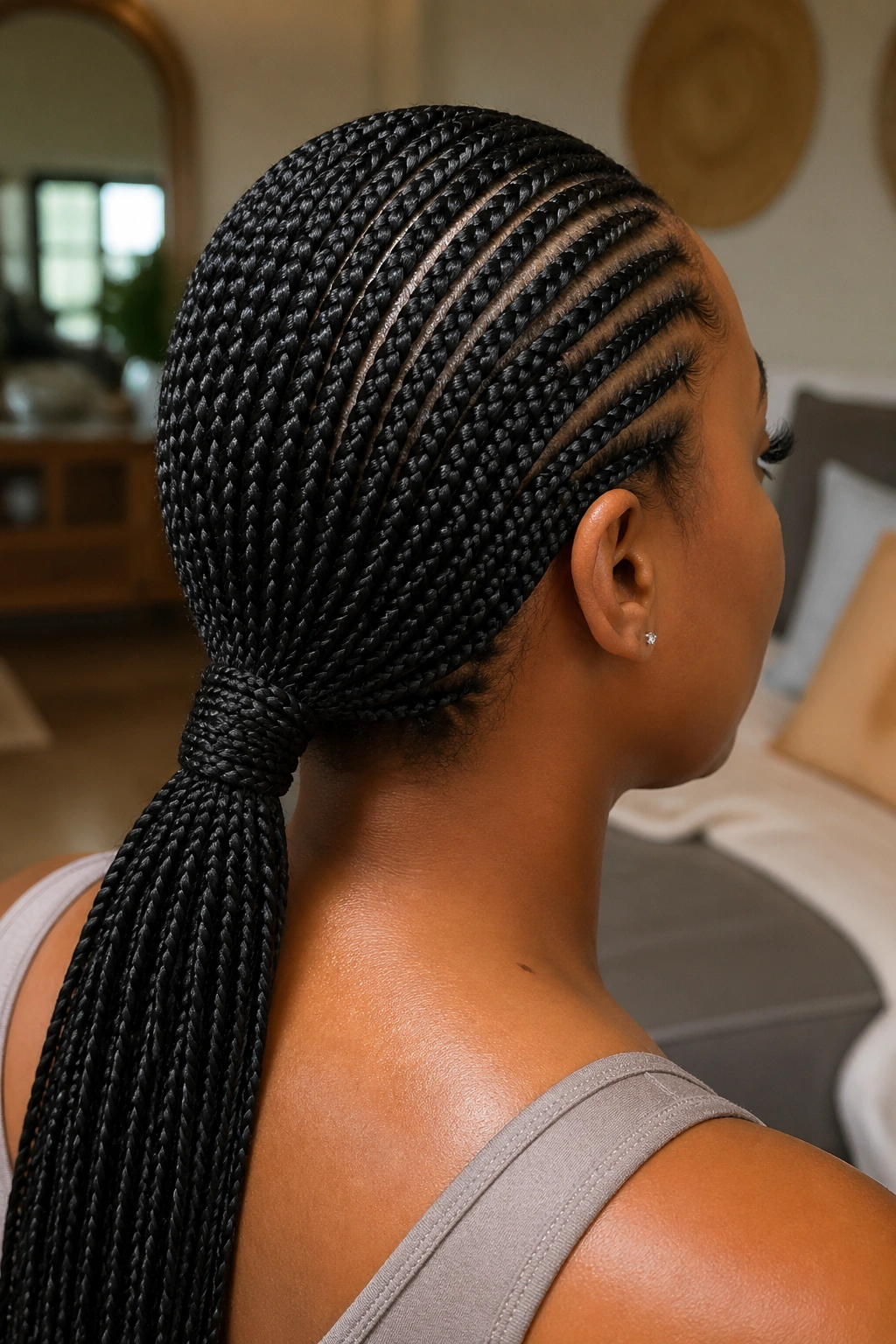
Standard small all back installation finished with all braids gathering into a single low ponytail at the nape. The ponytail itself can be left loose, wrapped with thread, or tied with a satin ribbon.
The low ponytail finish gives the style closure at the back. Without it, small all back cornrows can read unfinished from the rear angle. The ponytail provides visual conclusion.
Use a satin-covered elastic to avoid snagging the small braid ends.
7. Small All Back Into High Ponytail
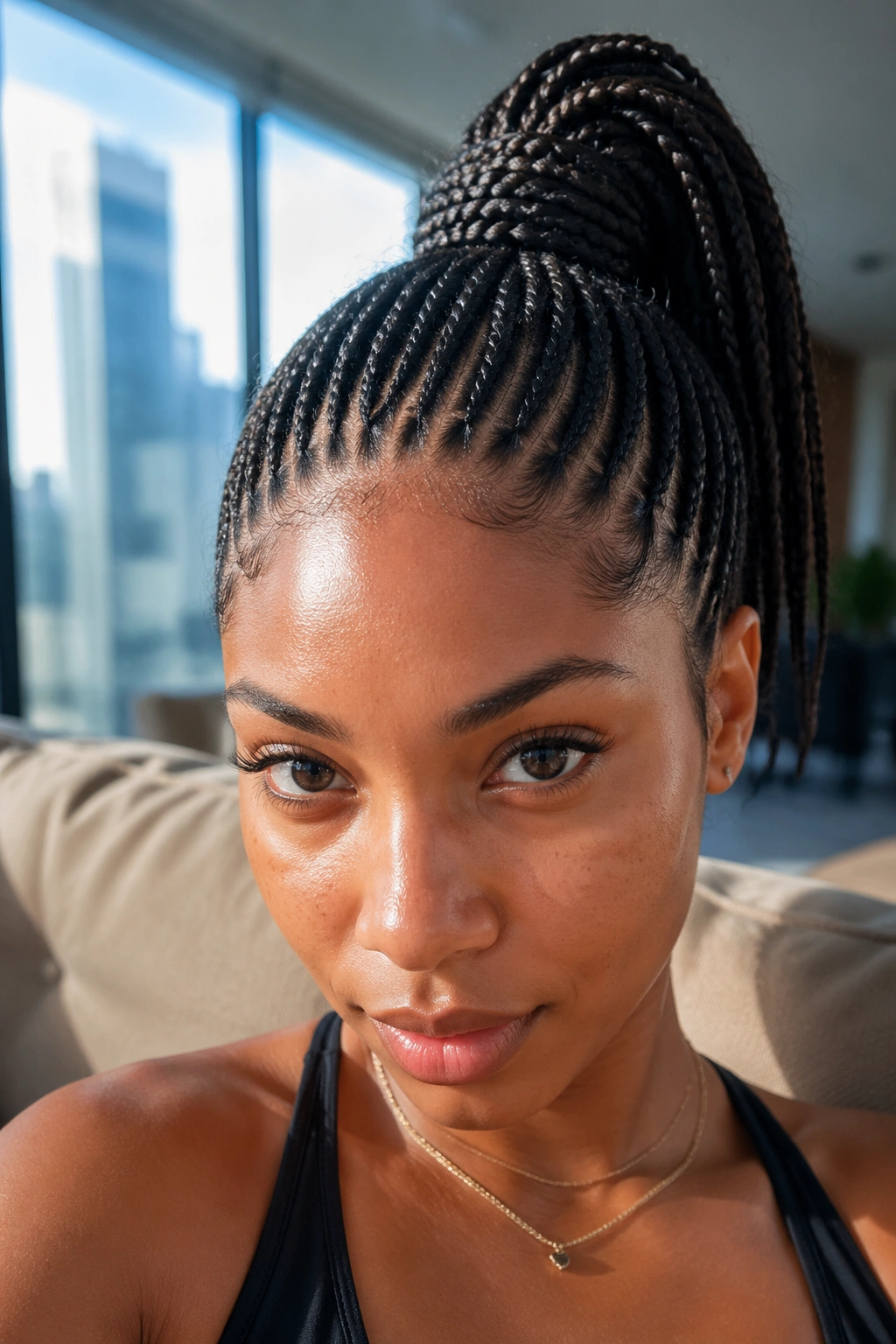
The same install pattern, but the ponytail collects high on the head — at the crown rather than the nape. The lift at the crown changes the silhouette dramatically.
High ponytails work best on heads where the small cornrows have been parted to converge upward — the natural curve of the rows leads the eye up toward the gathering point.
Read more youthful, more energetic than low ponytails. Suits sportier and more active wear.
8. Small All Back With Wrapped Ends
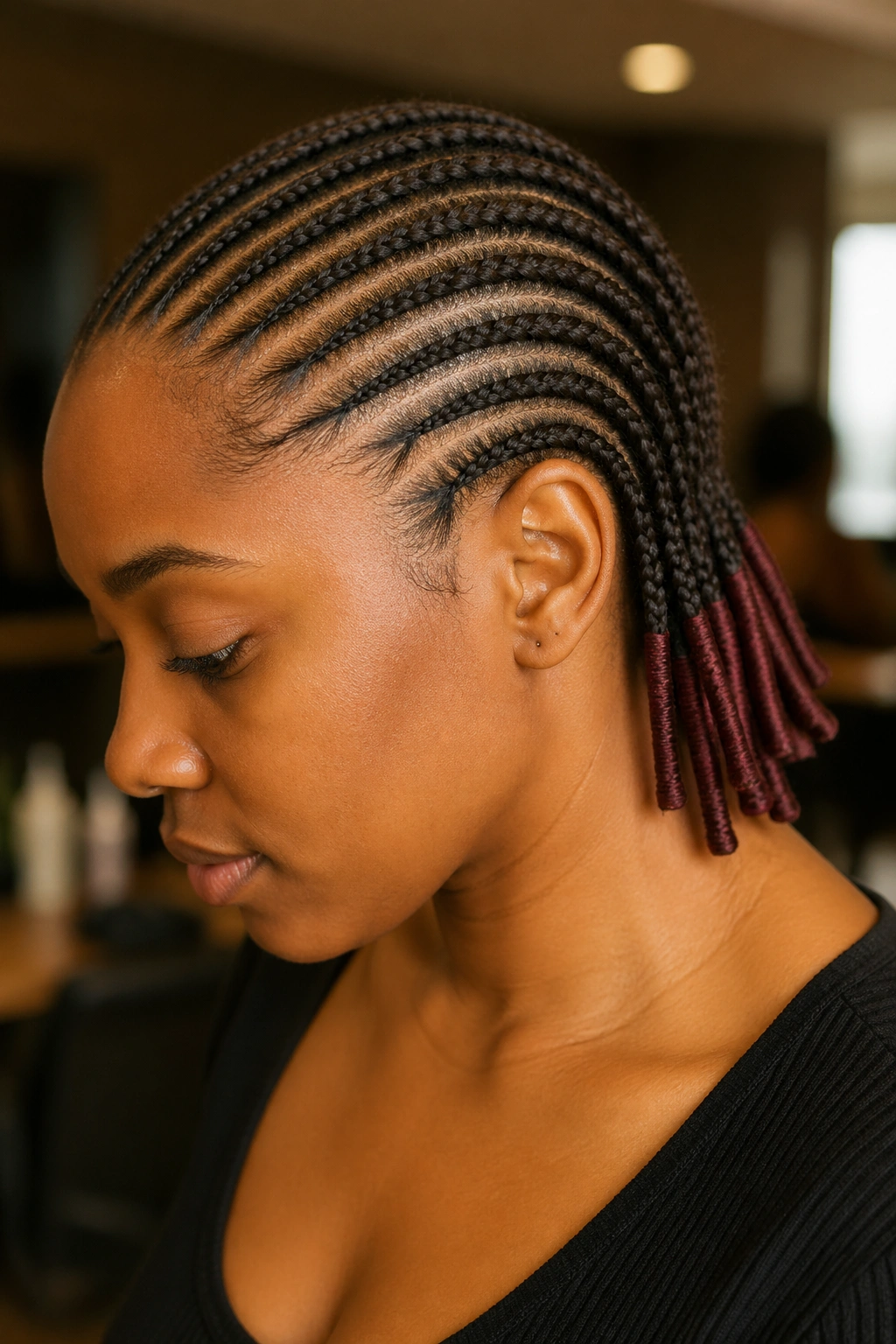
Small cornrows finished with the ends wrapped in colored thread or yarn. Each braid end has 2-3 inches wrapped tightly with embroidery floss or thin yarn.
The thread wrapping is a traditional African styling element. Colors can match — burgundy, gold, deep brown — or contrast deliberately with reds, oranges, and blues.
Thread wrapping takes 30-60 additional minutes after the cornrow install is complete. Worth the time for cultural styling and for installs that don’t include extensions.
9. Small All Back With Feed-In Length
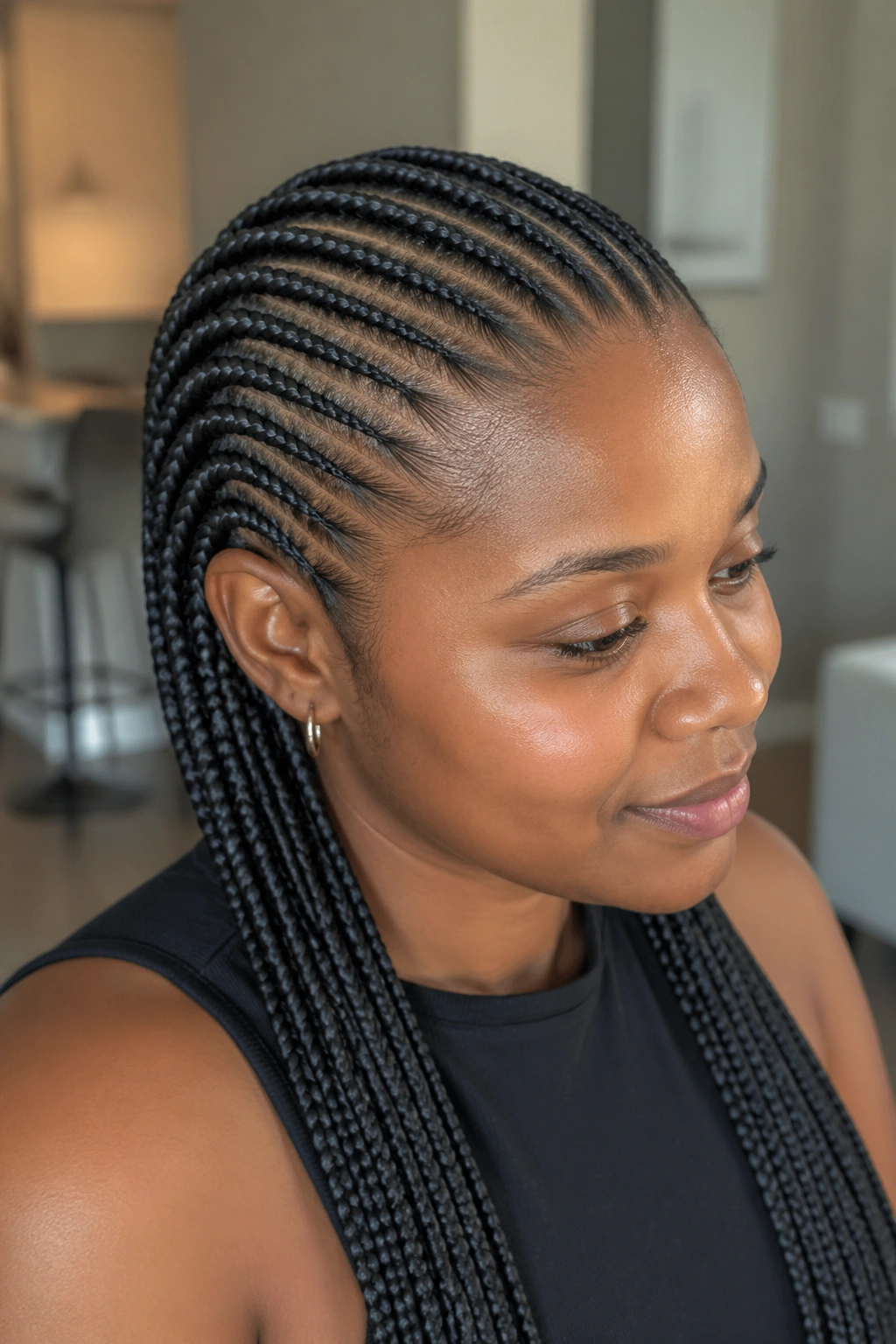
Small cornrow technique combined with feed-in extensions for length. The natural hair section is tiny, but the braid continues with kanekalon for several extra inches.
Feed-in small cornrows work for short natural hair lengths that wouldn’t otherwise produce a meaningful braid tail. The feed-in starts about 2 inches into the braid and continues to the desired length.
Use as little extension hair as possible while still achieving the length. Over-stuffed small cornrows look chunky rather than refined.
10. Small All Back Into Bun
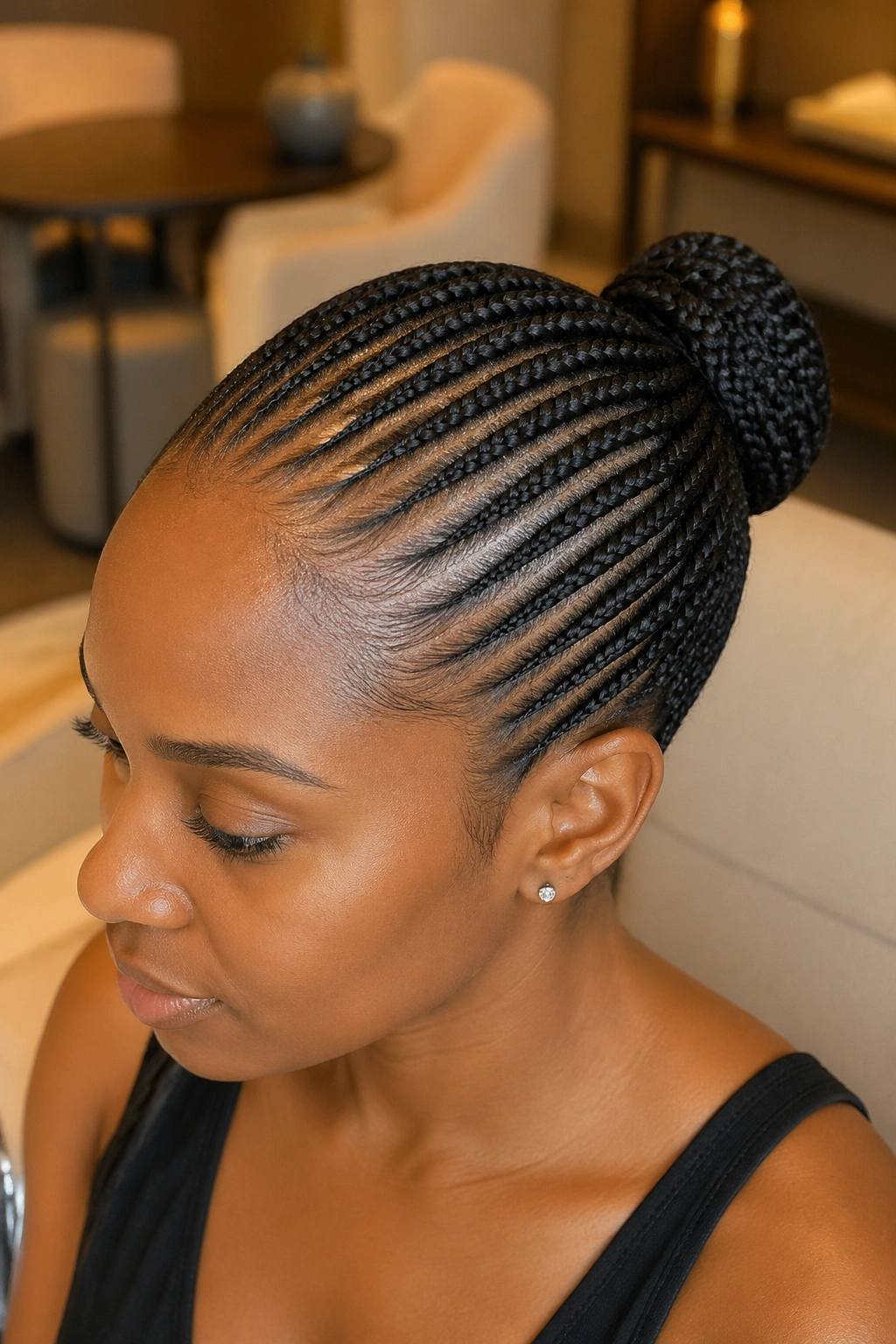
Small cornrows installed all back with all braids feeding into a single bun at the back of the head — typically positioned mid-crown or low at the nape.
The bun finish elevates small all back into formal-event territory. The contrast between the small uniform cornrows and the rounded bun creates visual interest.
For shorter natural hair, a hair donut filler can give the bun substance the natural braid length wouldn’t achieve alone.
11. Small Cornrows With Color Streak
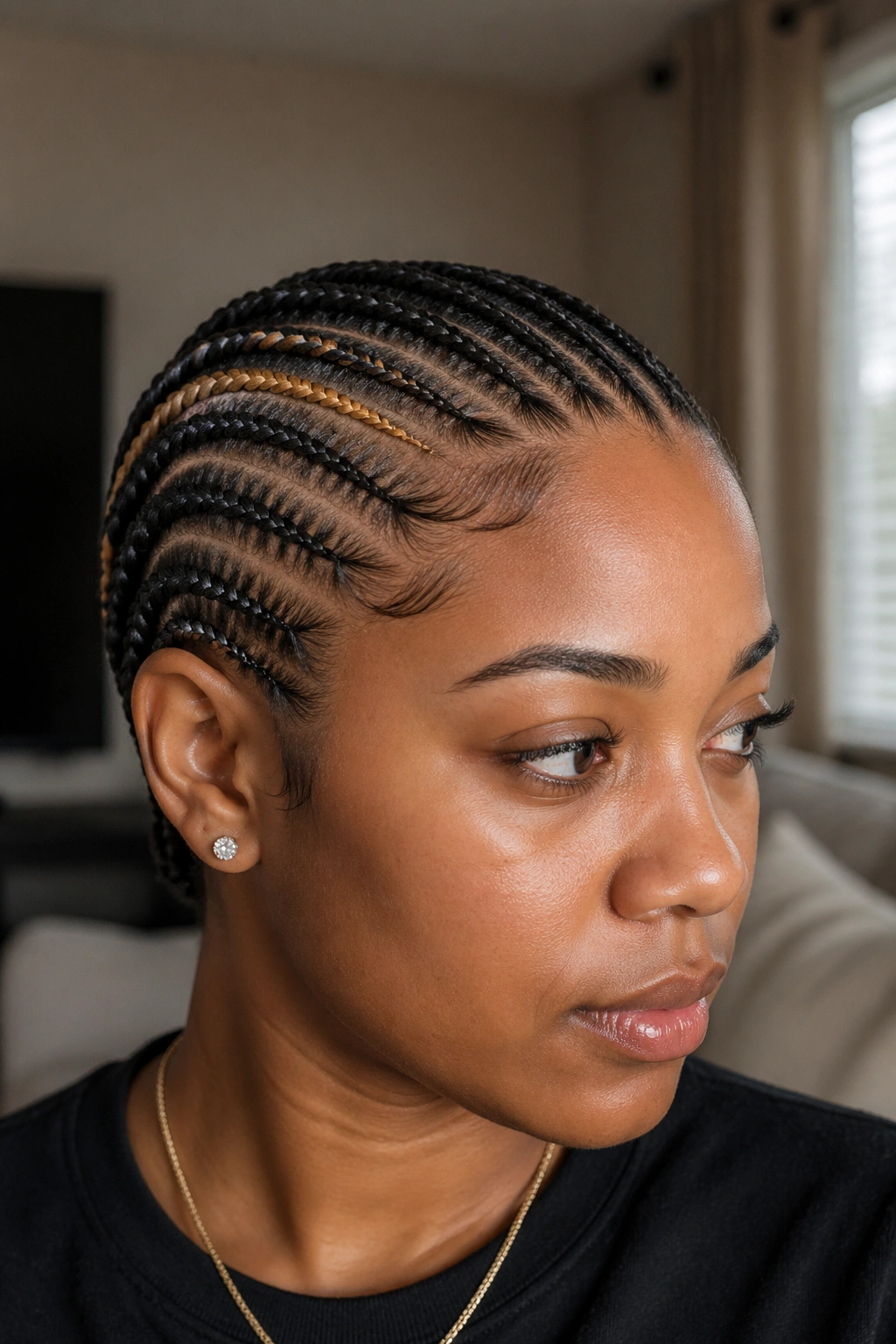
Small all back with one or two cornrows installed with pre-colored kanekalon — typically honey blonde, copper, burgundy, or deep auburn — creating a streak of color in an otherwise natural-toned install.
The streak is the styling decision. Position matters. A streak right of center reads styled. A streak at the edge reads accidental.
Pre-colored kanekalon is easier to work with than coloring after install. The color stays vibrant for the duration of the wear.
12. Small All Back With Side Cuffs
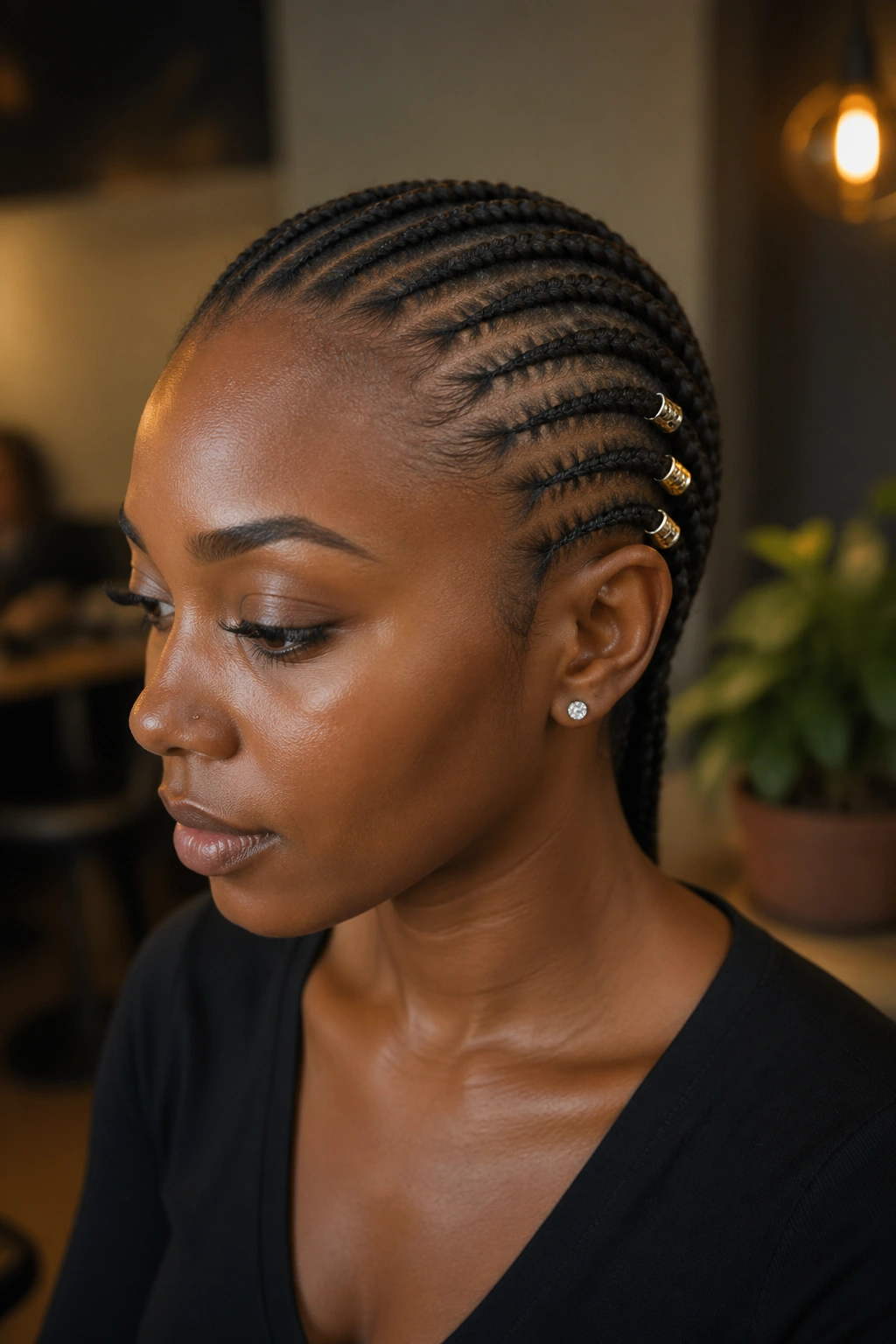
Small cornrows in standard all back configuration, with metal cuffs (gold, silver, brass) clipped onto specific cornrows in a curated pattern. Three to five cuffs total, distributed in an asymmetric or symmetric arrangement.
Cuffs sit at the section where the cornrow braid emerges from the scalp behind the ear, marking the side profile.
Easier to add and remove than beads. Can be changed for different events without redoing the install.
13. Small Cornrows With Curly Tail Out
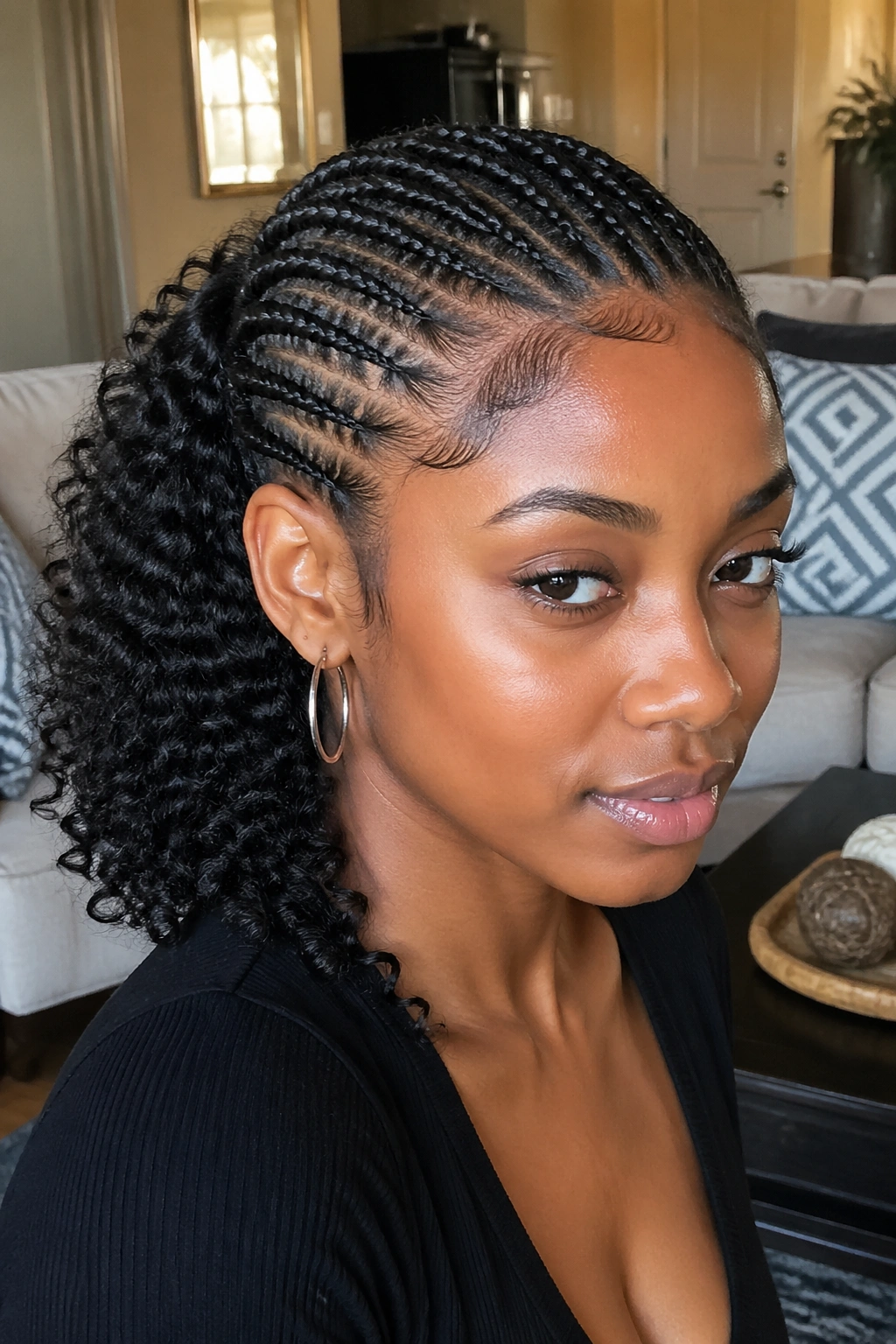
Small cornrows from hairline to mid-crown only. At the point where the cornrows end, the natural hair is released into defined curls — wand-set, flexi-rod set, or curl-creamed.
The combination shows protective styling at the top and natural texture at the bottom. The curly tail out softens the strict precision of the small cornrows.
The transition point should be smooth — no abrupt edge between cornrow and loose hair.
14. Small All Back With Center Spine
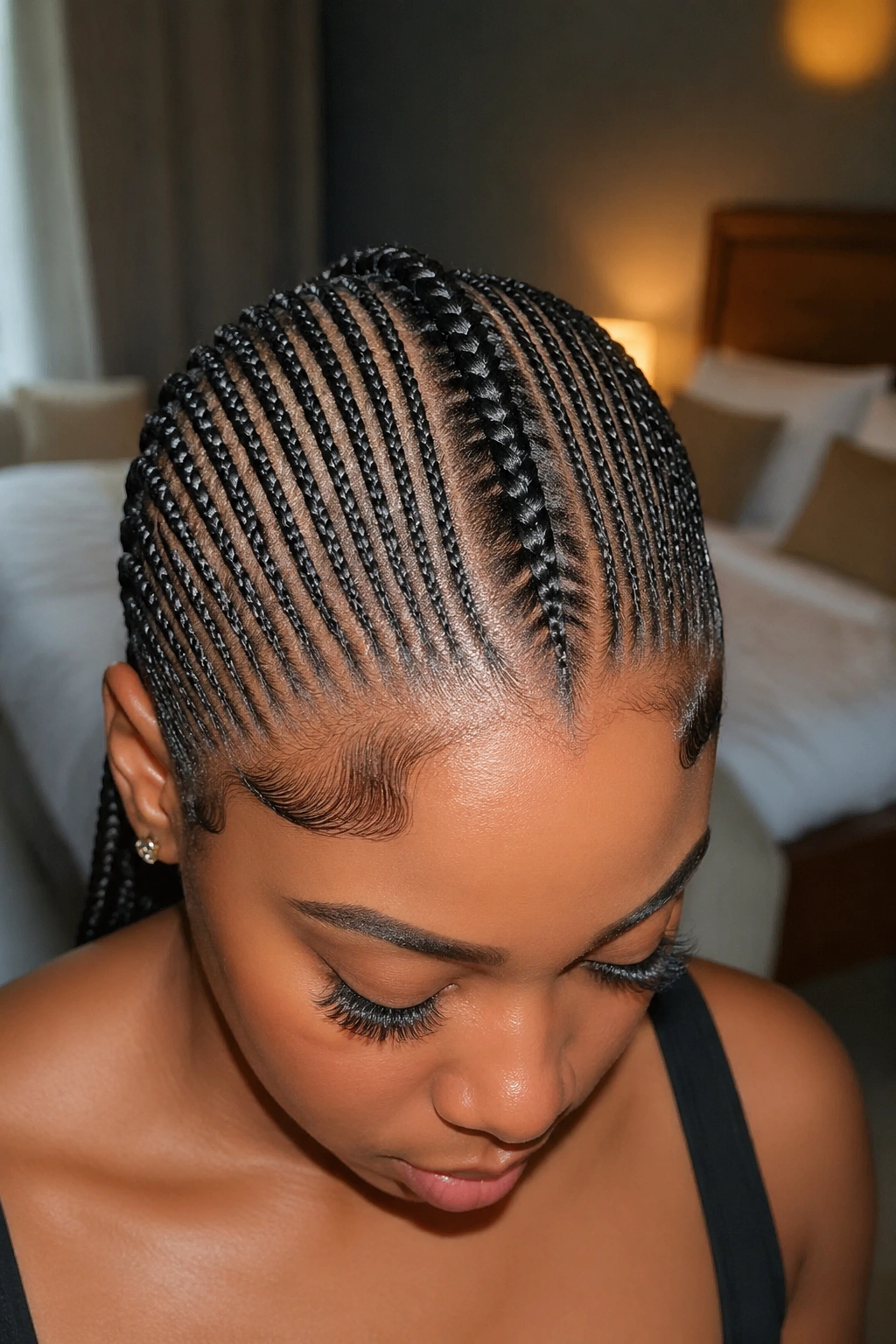
A series of small cornrows runs all back, but a single thicker cornrow runs down the exact center, dividing the head into two visual halves.
The center spine functions as a dividing line. The small rows on either side flank it like ribbing. The composition reads architectural.
Pick the thicker center cornrow about 50-100% larger than the surrounding small cornrows. Too similar and the spine doesn’t read distinct.
15. Small Cornrows Into Loose Twists
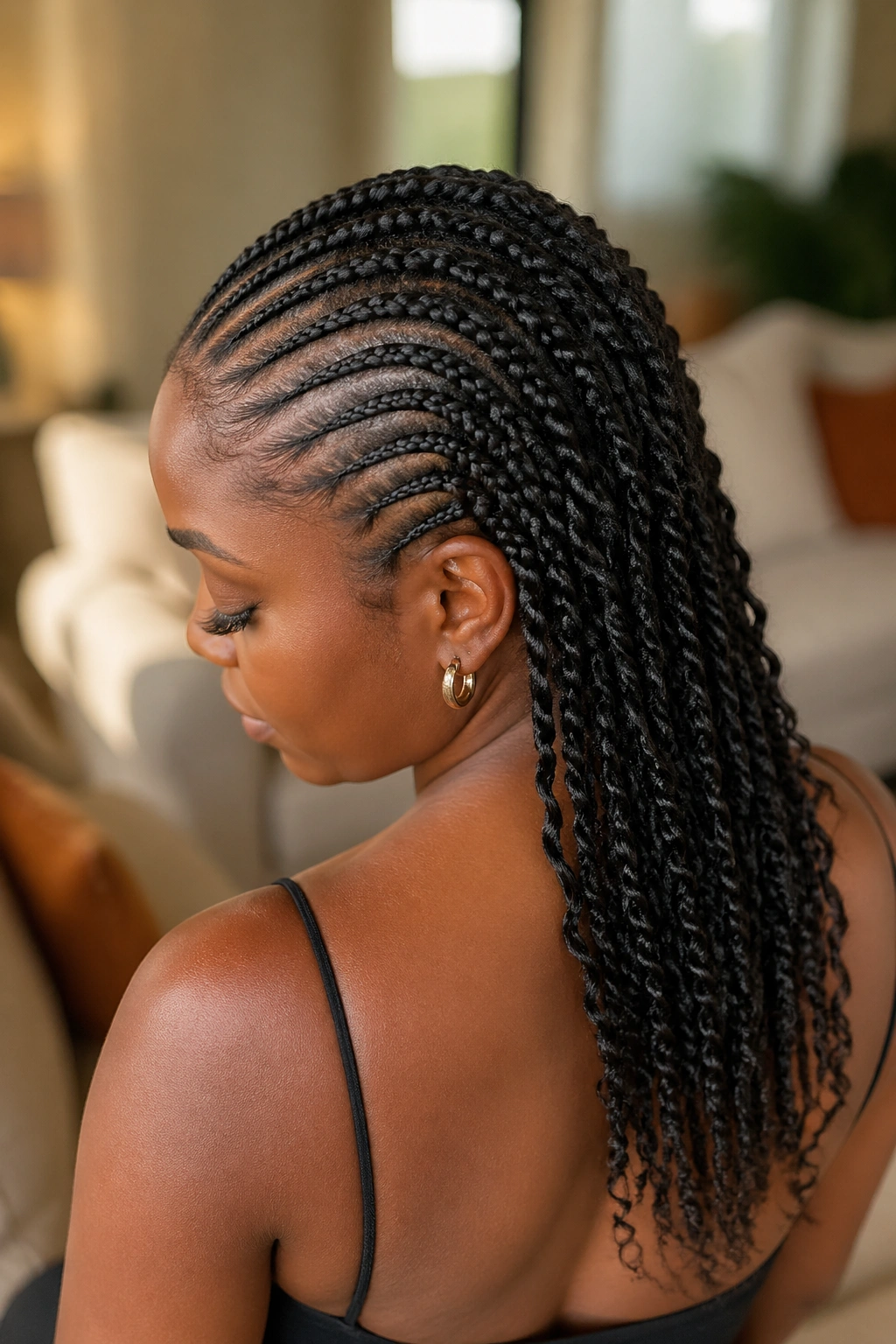
Small cornrows from hairline to mid-crown, then unraveled and continued as small two-strand twists down the back. The transition happens at the back of the head.
The twist tails fall in a way that small cornrow tails don’t. Twists swing. Cornrows hang stiff. The movement quality changes which face shapes and necklines the style flatters.
Best on hair long enough that the twist portion has visible length and movement.
16. Small All Back With Beaded Edges
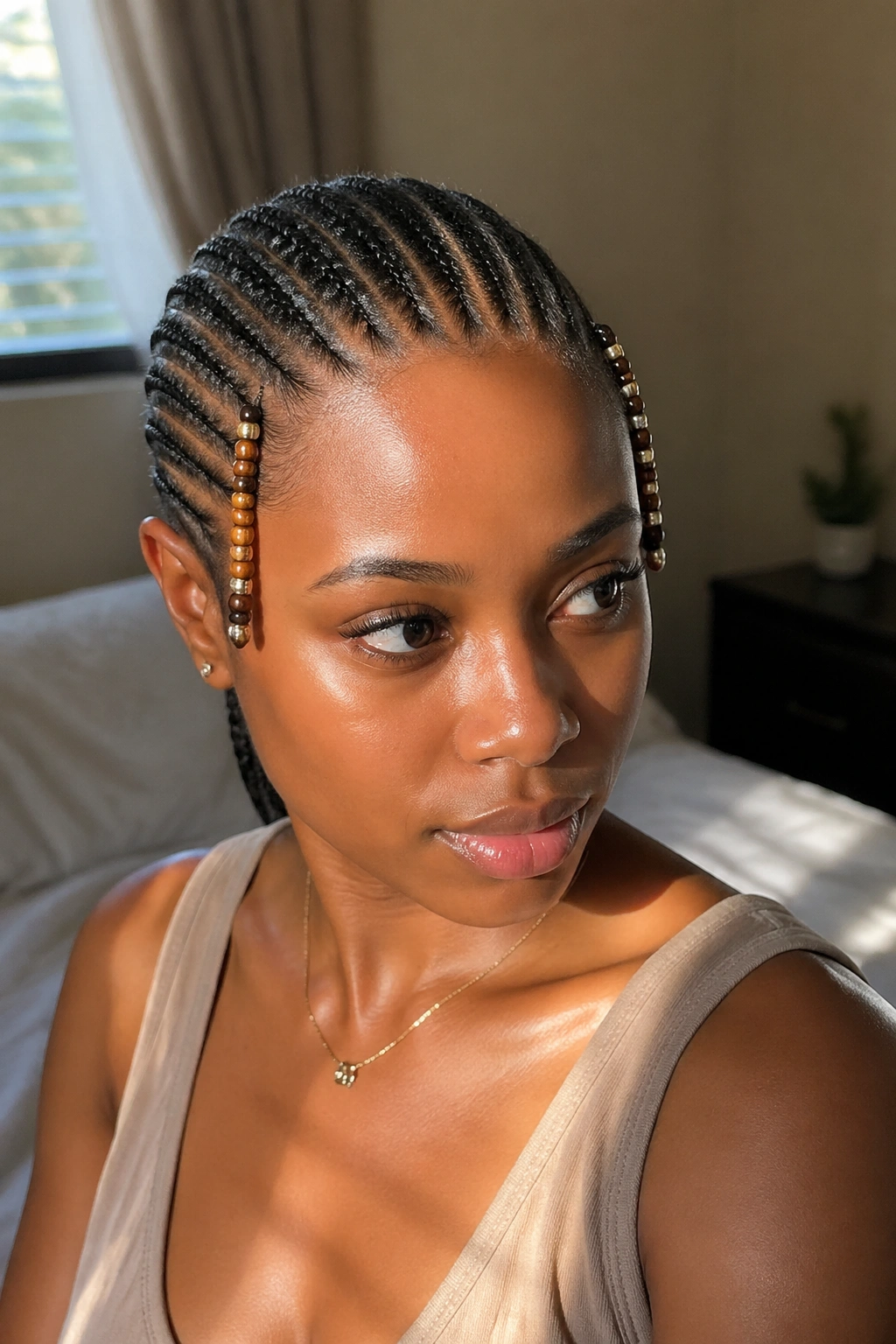
Small cornrows in classic all back layout. Beads applied only to the cornrows along the edges of the head — typically the two outermost cornrows on each side. The center cornrows stay plain.
The edge beading frames the install without overwhelming it. Reads polished from front and side angles.
Use small beads (4-6mm) that don’t compete with the small cornrow scale.
17. Diagonal Small Cornrows All Back

The cornrows run all back but at a slight diagonal — about 15-20 degrees off true vertical. The diagonal angle gives the style a sense of motion.
Subtle. The diagonal is just enough to register without reading as a deliberate side-sweep style.
The diagonal angle should sweep away from your face’s stronger angle. Reinforces your best photo direction.
18. Small Cornrows With Hidden Section
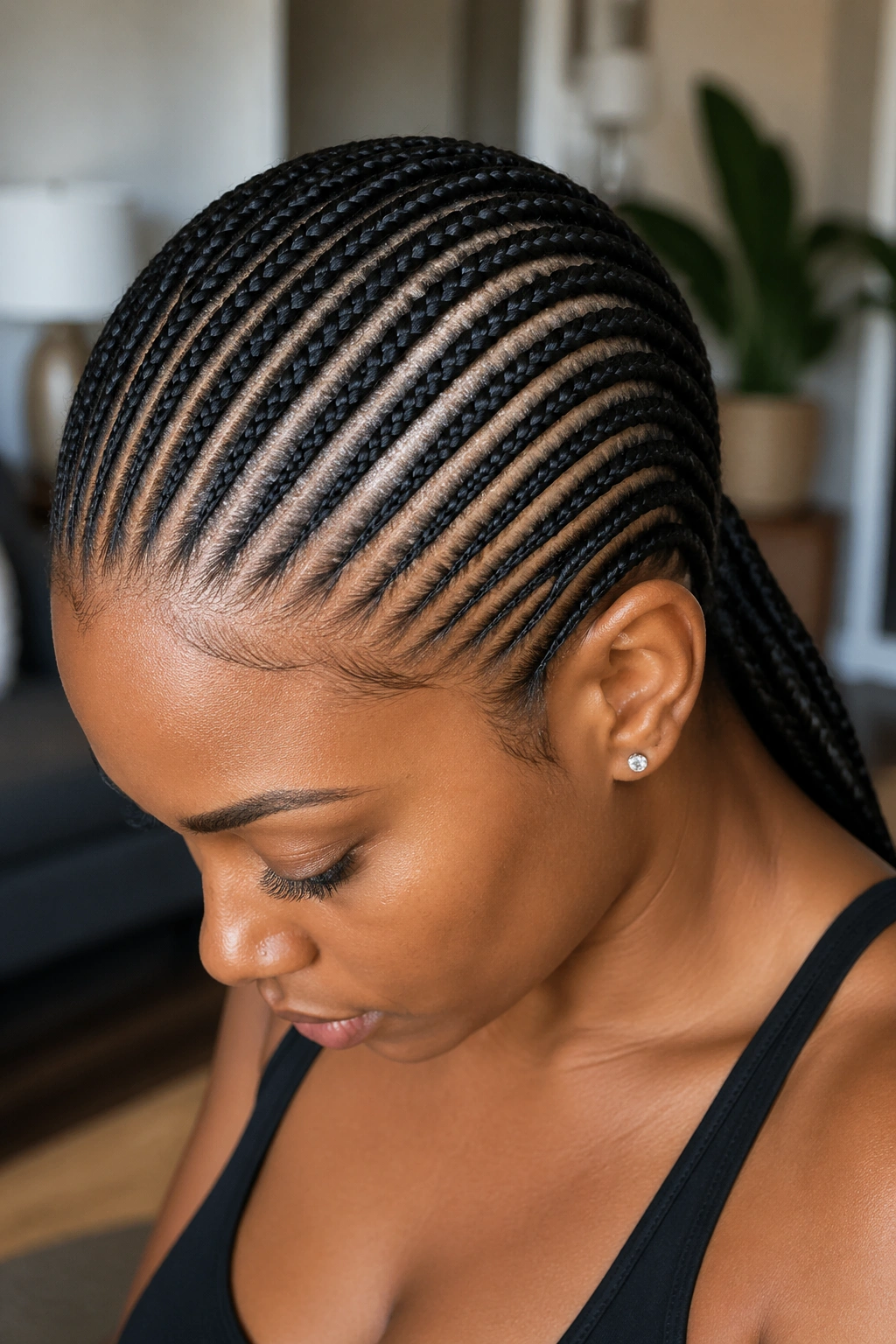
Twenty small cornrows visible on the surface with a few smaller hidden cornrows underneath at the crown. The hidden cornrows secure thicker natural sections that would otherwise lift the surface braids.
The hidden braid technique is professional-level work. Most viewers won’t notice. The effect is a cleaner, flatter surface than would otherwise be possible with naturally voluminous hair.
19. Small All Back With Thread Accent
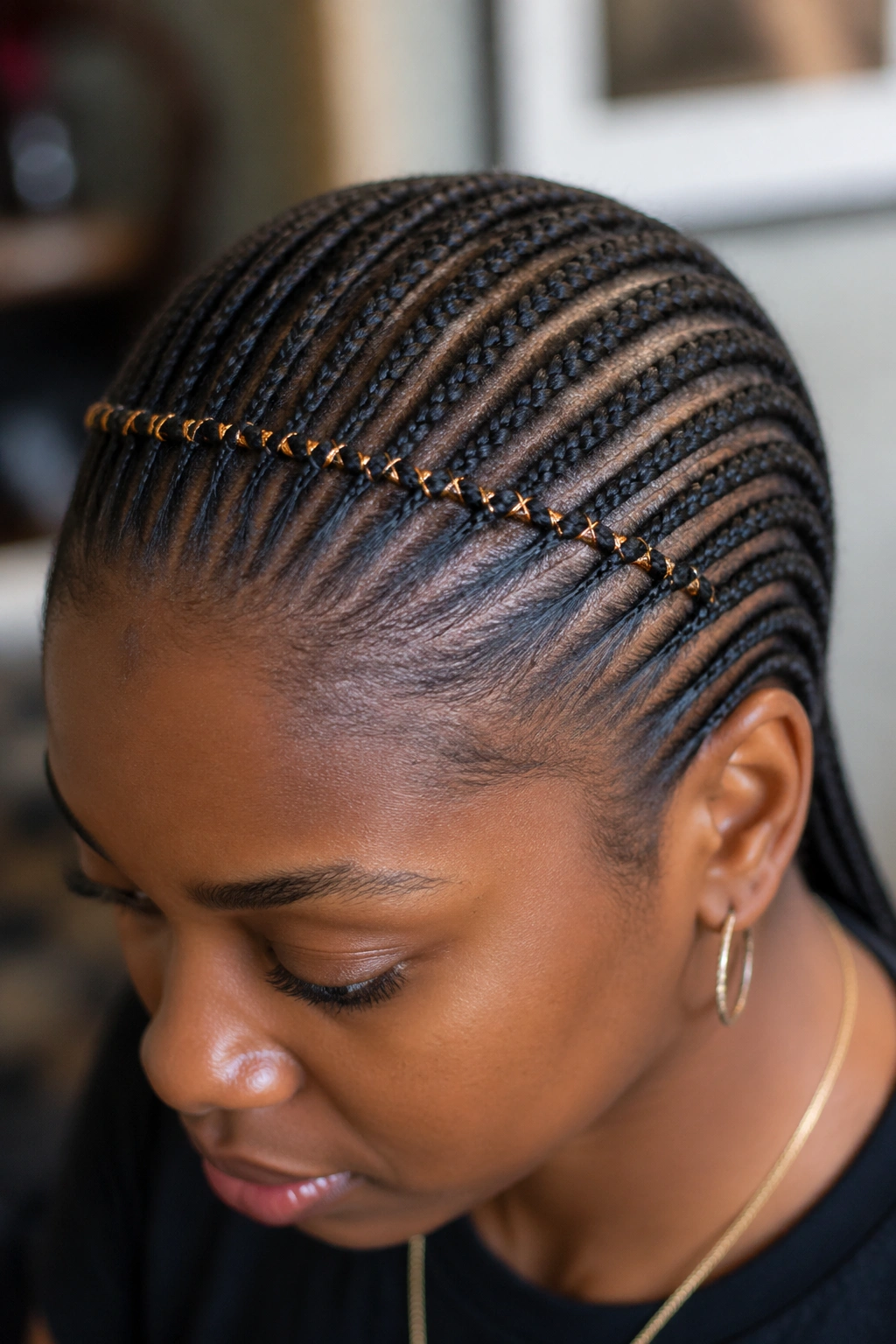
Small cornrows finished with a single piece of decorative thread or ribbon woven through several braids horizontally — creating a band of color or texture that crosses the install.
The thread work is decorative finishing, not structural. Comes off easily for variety.
Velvet ribbon, satin cord, or African wax-print fabric strips all work depending on the look you want.
20. Tiny Cornrows With Cuffs at Every Row
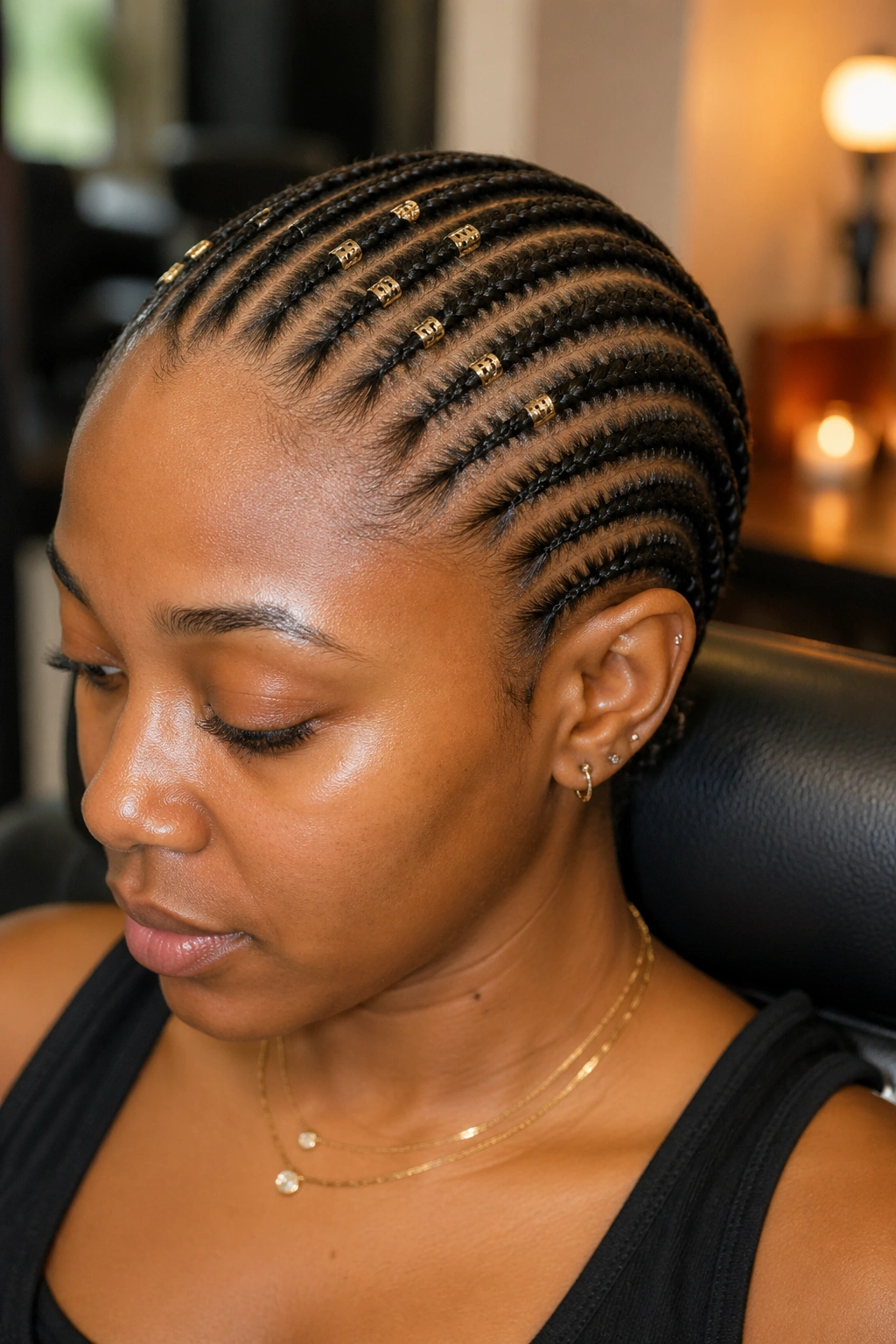
Small all back cornrows with a single small cuff on every braid — clipped at the same height across all the cornrows, creating a horizontal line of metal across the install.
This is the maximum cuff density. The horizontal line of cuffs reads as a band of metal jewelry across the head. Striking. Photographs beautifully.
Cuff color choice matters. All gold, all silver, or alternating in a deliberate pattern. Random cuff colors look chaotic.
21. Small Cornrows With Decorative Front
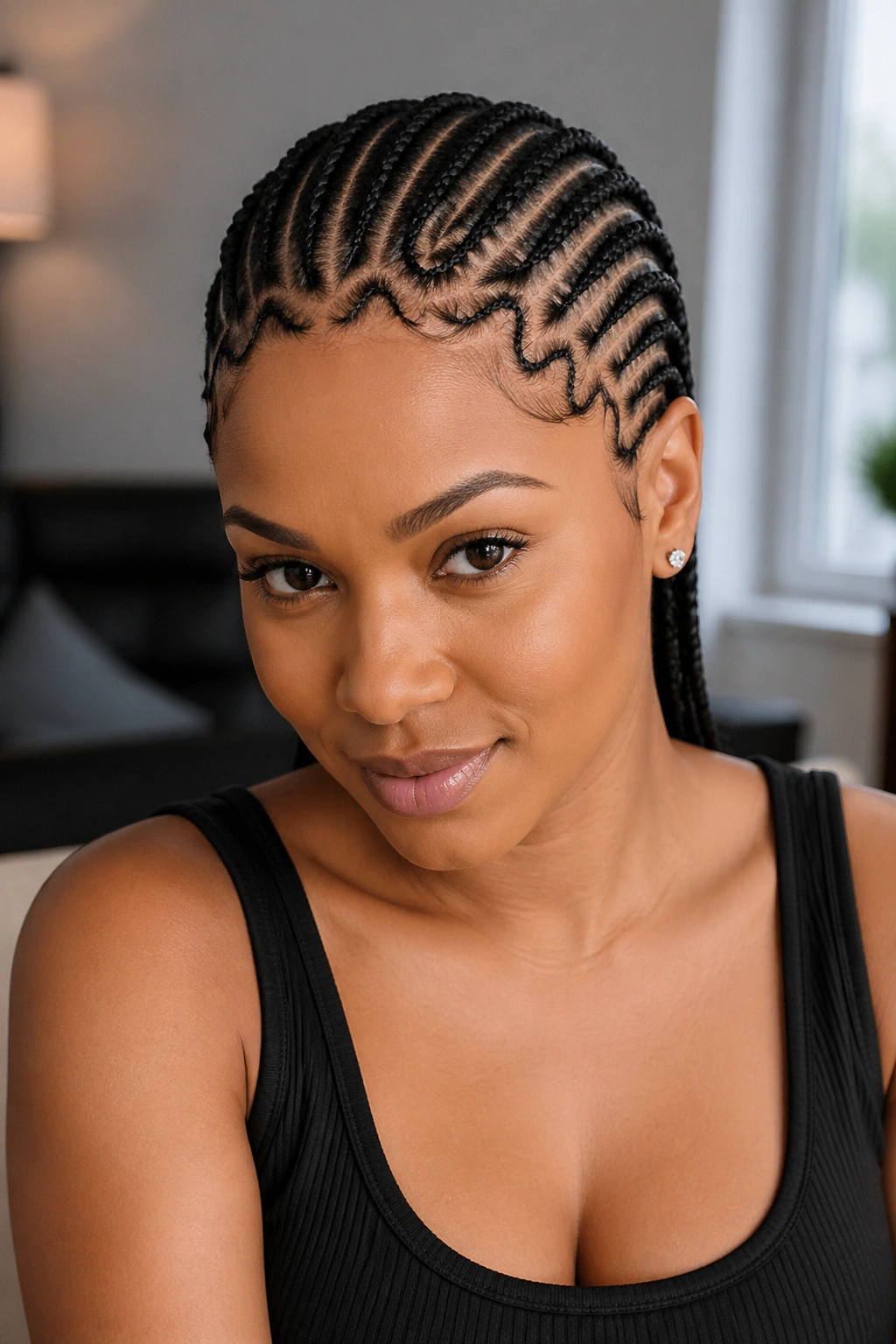
Small all back cornrows in standard configuration, with the front 2 inches near the hairline featuring a more decorative parting — small zigzags, triangle parts, or curved sweeps — before the cornrows begin their straight all back path.
The decorative front reads as a styled detail. The standard back keeps install time reasonable.
Best for: occasions where you want statement front-of-head styling without committing to full-head decorative parting.
22. Mini Cornrows With Loose Bottom
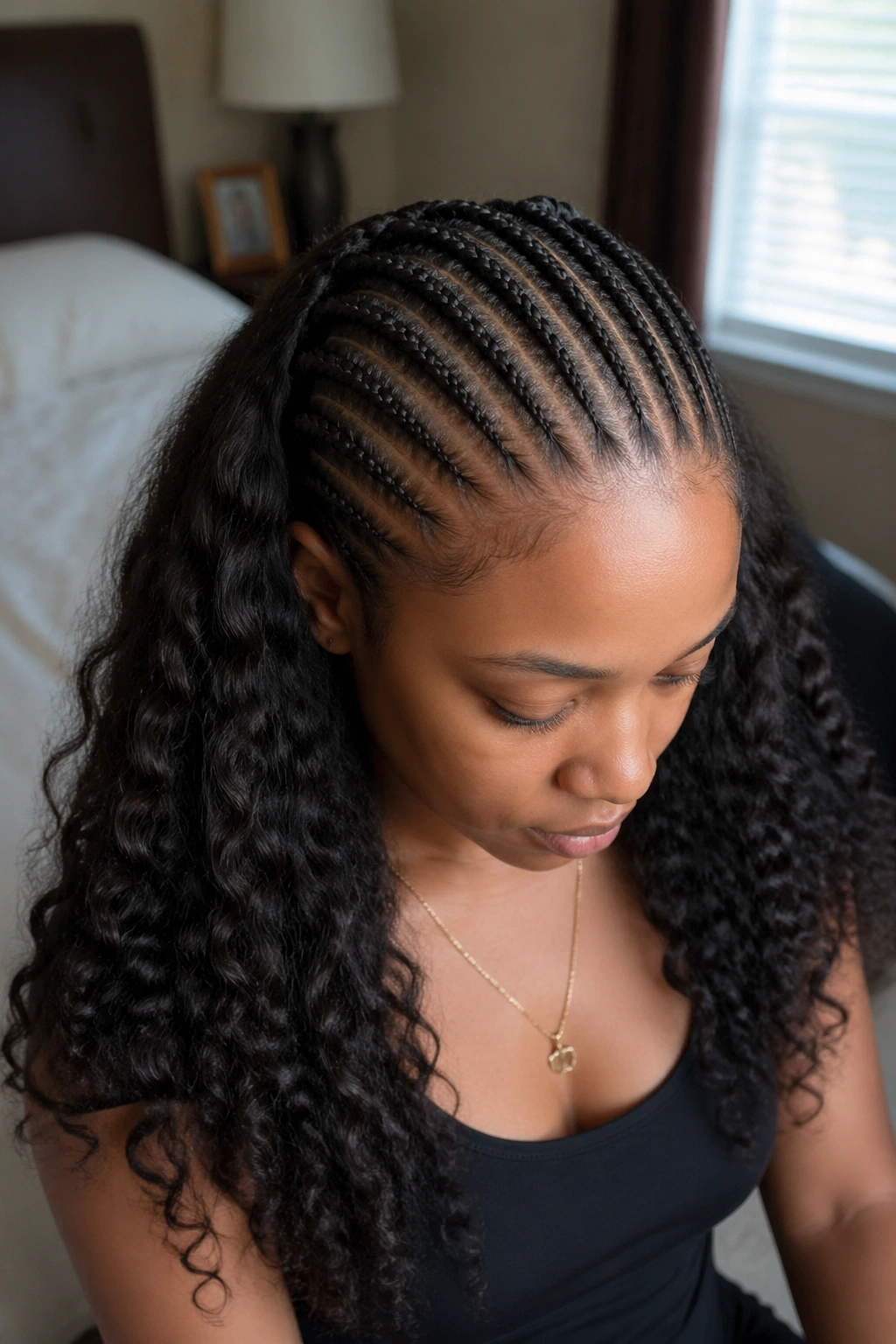
Small cornrows installed in the upper third of the head only — from hairline to mid-crown. The lower two-thirds of the hair stays loose in natural texture.
This is the half install version. Install time drops significantly because you’re only braiding part of the head. The visual reads as small cornrow accent rather than full small cornrow style.
Pair with a defined wash-and-go or twist-out on the loose bottom for full effect.
23. Small Cornrows Into Side Bun
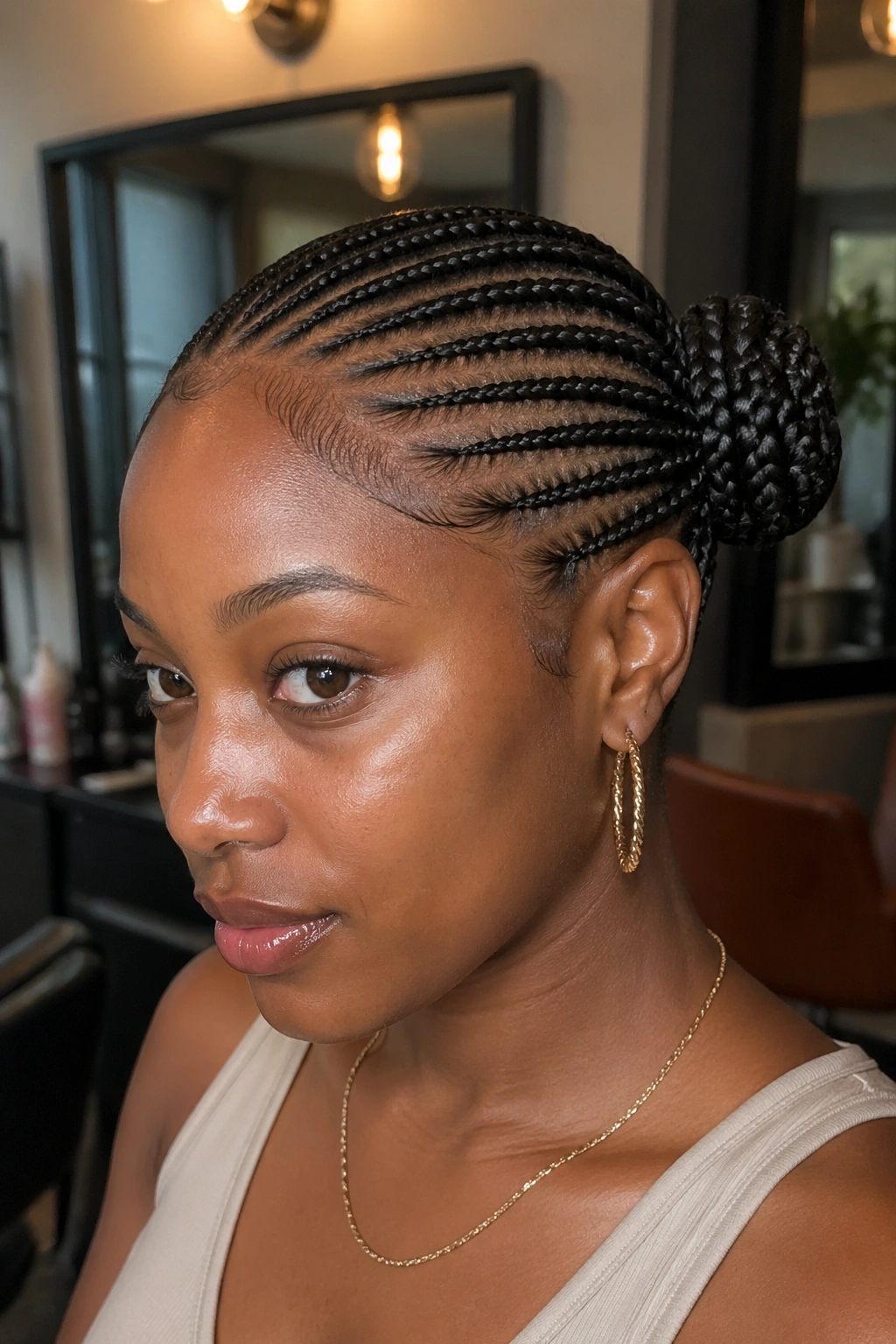
Small all back cornrows angled subtly to the side, all gathering into a single bun positioned just above the ear rather than center back.
The side bun placement adds asymmetric interest to the standard small all back format. Reads more styled than center-back buns.
The side you pick should be the side you tend to photograph from — the bun acts as a profile feature.
24. Small Cornrows With Mixed Bead Sizes
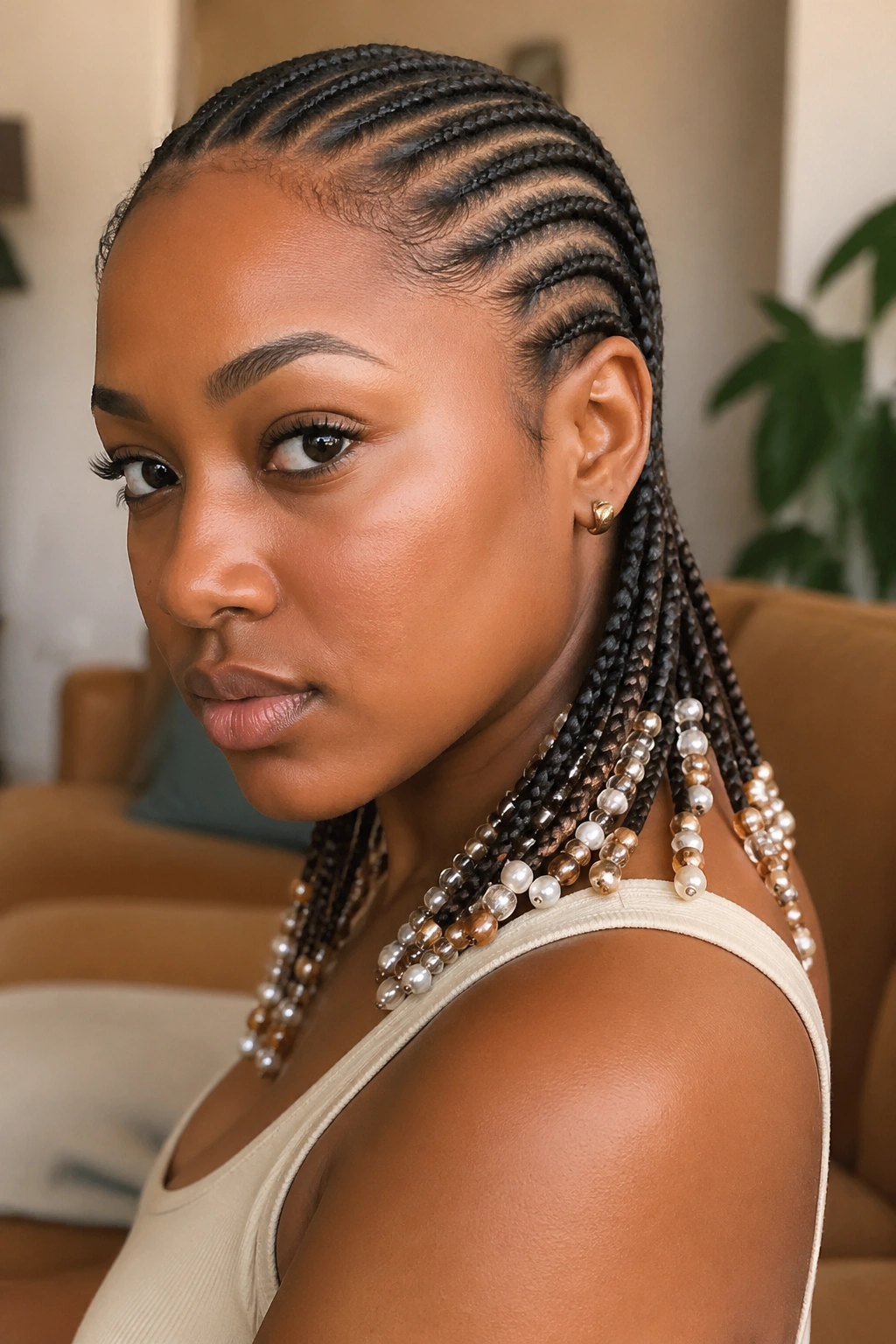
Small all back cornrows finished with beads of different sizes scattered throughout the braid ends — small (4mm), medium (6mm), and a few large (10mm) accent beads at strategic points.
Mixed sizes read more curated than uniform sizing. The variety suggests intention rather than mass application.
Distribute the larger beads in a pattern — every fourth braid, or at the outermost edges only. Random distribution looks accidental.
25. Small All Back With Decorative Crown Knot
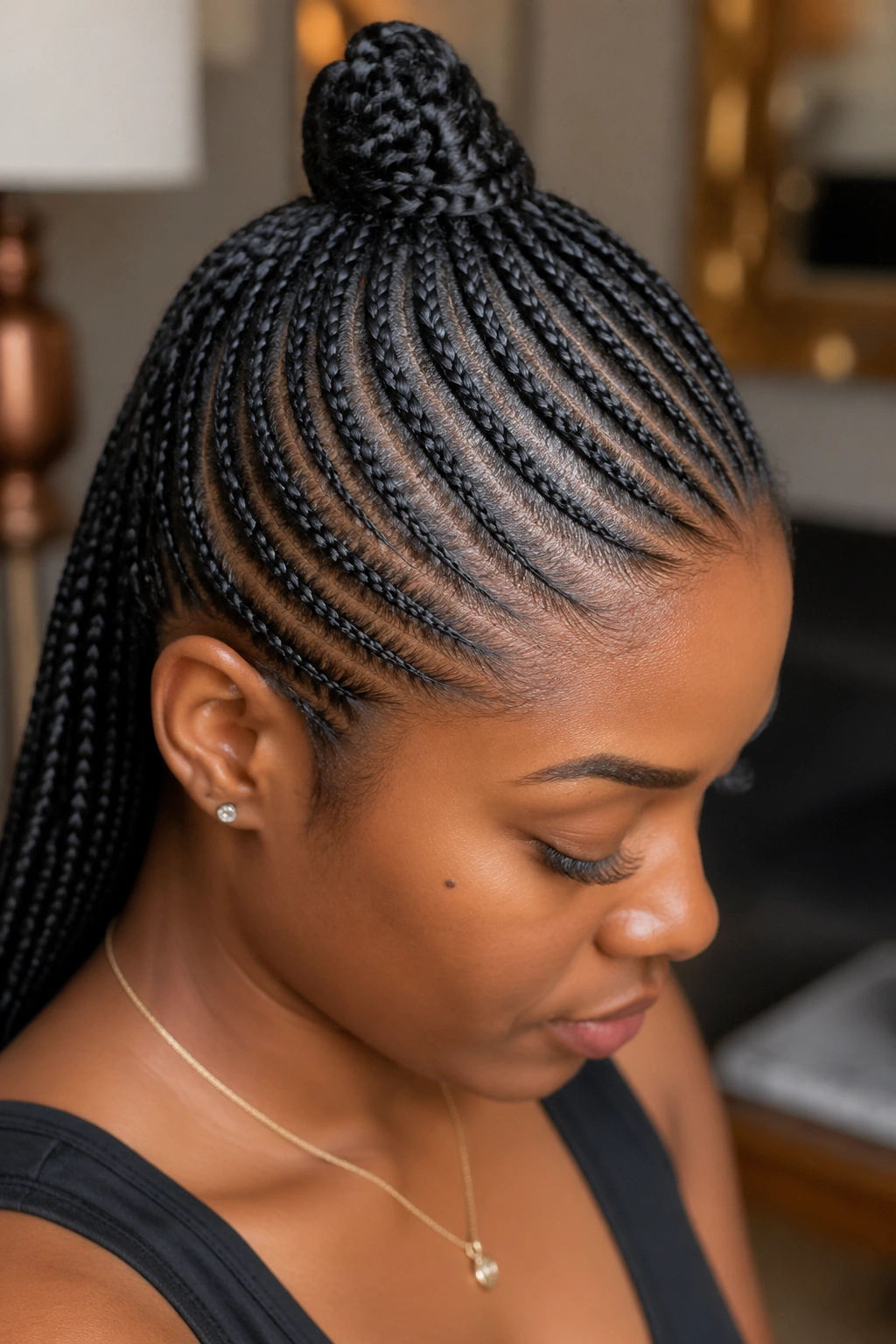
Small cornrows in classic all back layout, with the crown section featuring a small knot or twist arrangement that the cornrows feed into before continuing down the back.
The knot at the crown is a styling detail. It interrupts the unified flow of the cornrows with a single architectural element. The eye lands on the knot before traveling along the rest of the install.
Reserve for events. The knot adds install time and complicates daily wear.
Maintenance for Small All Back Longevity
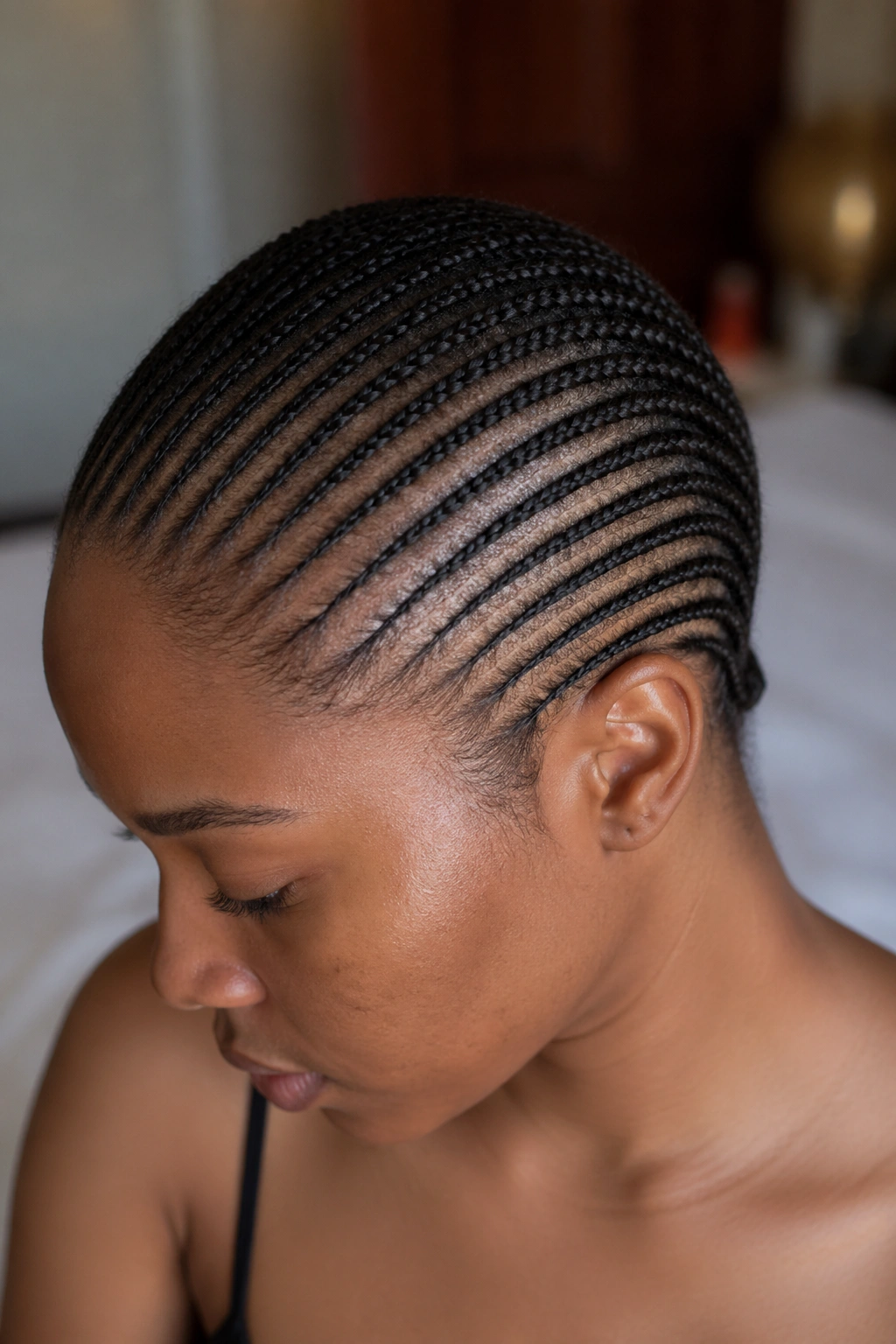
Small all back cornrows can hold for 4-6 weeks. Maintenance is what makes that range achievable instead of optimistic.
Satin bonnet every night. Larger size that doesn’t compress the small braid pattern. Silk pillowcase as backup.
Lightweight scalp oil — jojoba, grapeseed, sweet almond — applied every 3-4 days with a dropper directly to the parts. Avoid the braid surface itself; it doesn’t need oil.
Daily refresh: a light mist of water mixed with a teaspoon of leave-in conditioner spritzed over the install. Light, not soaking.
Edge Care for Long Wear
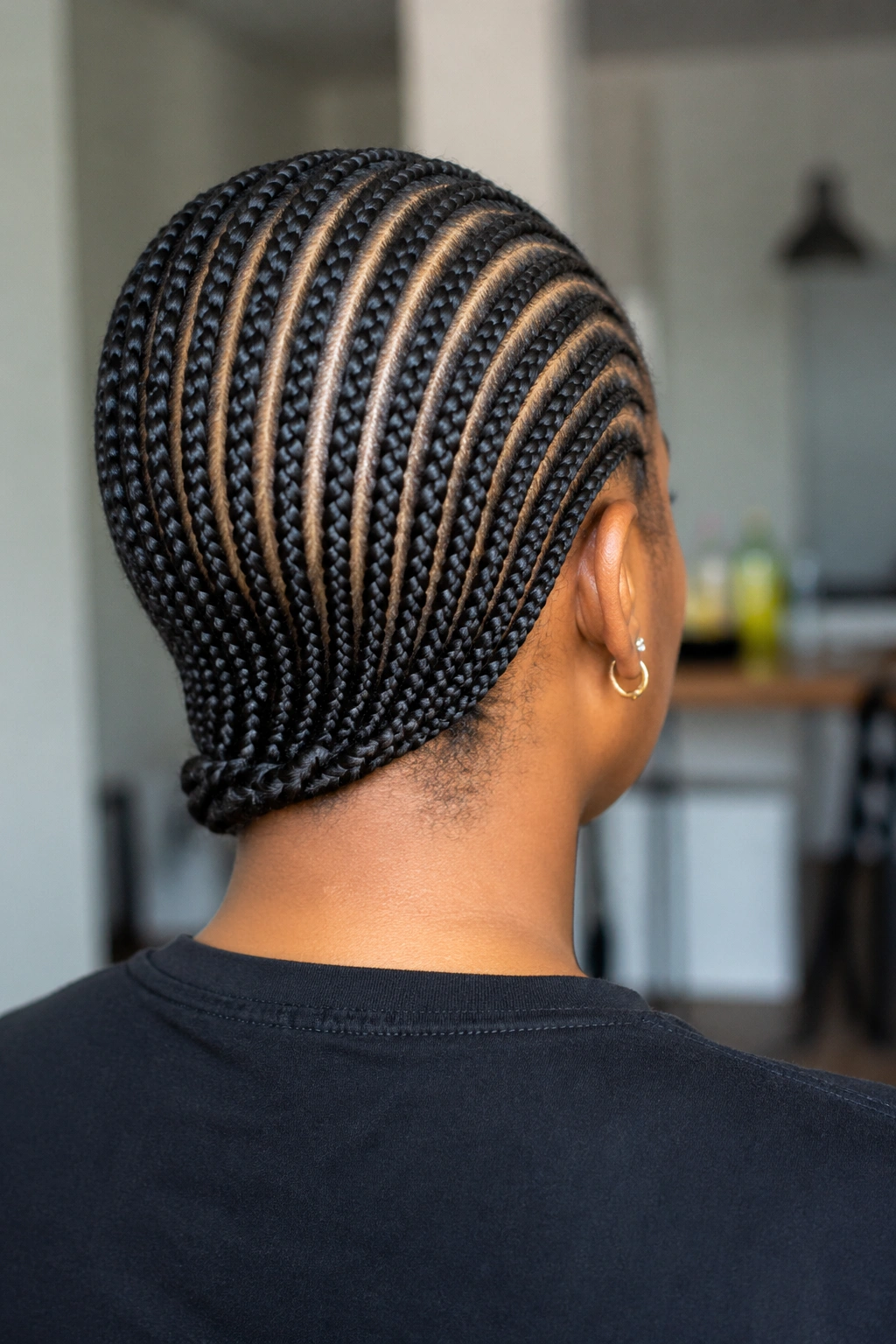
Edges are the visible front of the install. Their condition decides whether the whole style reads fresh or worn.
Re-lay edges every 3-4 days during the install life. A small detail brush, edge gel, and a satin scarf for setting. Ten minutes of work for a noticeable refresh.
Avoid using too much edge gel. Heavy edge product flakes within days of application. Thin layers reapplied frequently outperform thick layers applied once.
Scalp Care Under Small Cornrows
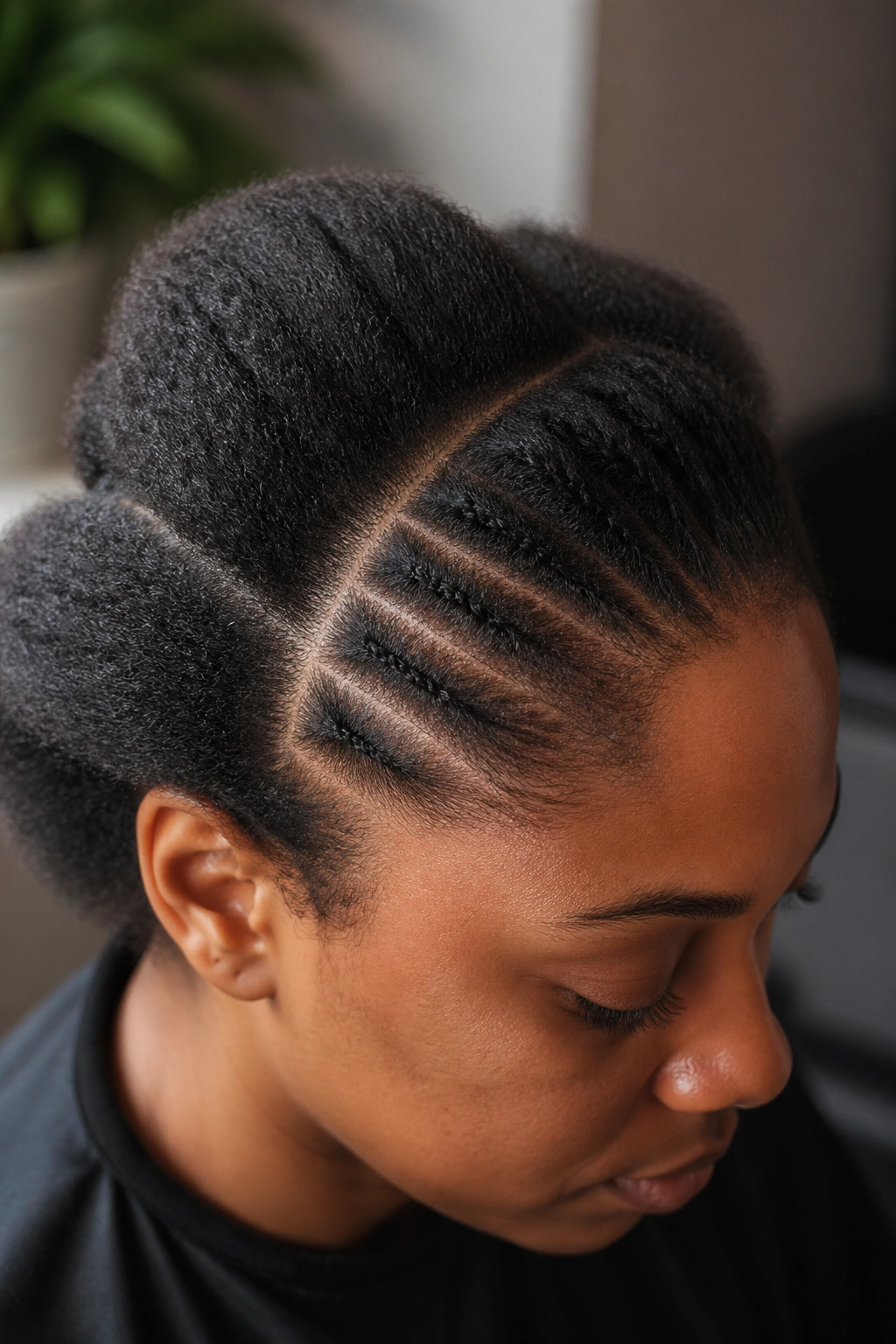
The scalp under small cornrows experiences distributed tension — many small attachment points rather than fewer large ones. That’s good for hairline health but doesn’t eliminate the need for active scalp care.
Weekly scalp cleanse: diluted apple cider vinegar (1 tablespoon ACV in 1 cup water) sprayed along the parts and blotted with a microfiber cloth. Removes buildup without disturbing the install.
For itching: tea tree or peppermint essential oil diluted in jojoba carrier (5 drops in 2 tablespoons carrier) applied to itchy areas with a dropper. Cooling and antimicrobial.
If the scalp shows redness, persistent flaking, or bumps, the install may have gone in too tight or product has built up beyond what spot-cleaning can handle. Take down and reset.
Takedown of Small Cornrows
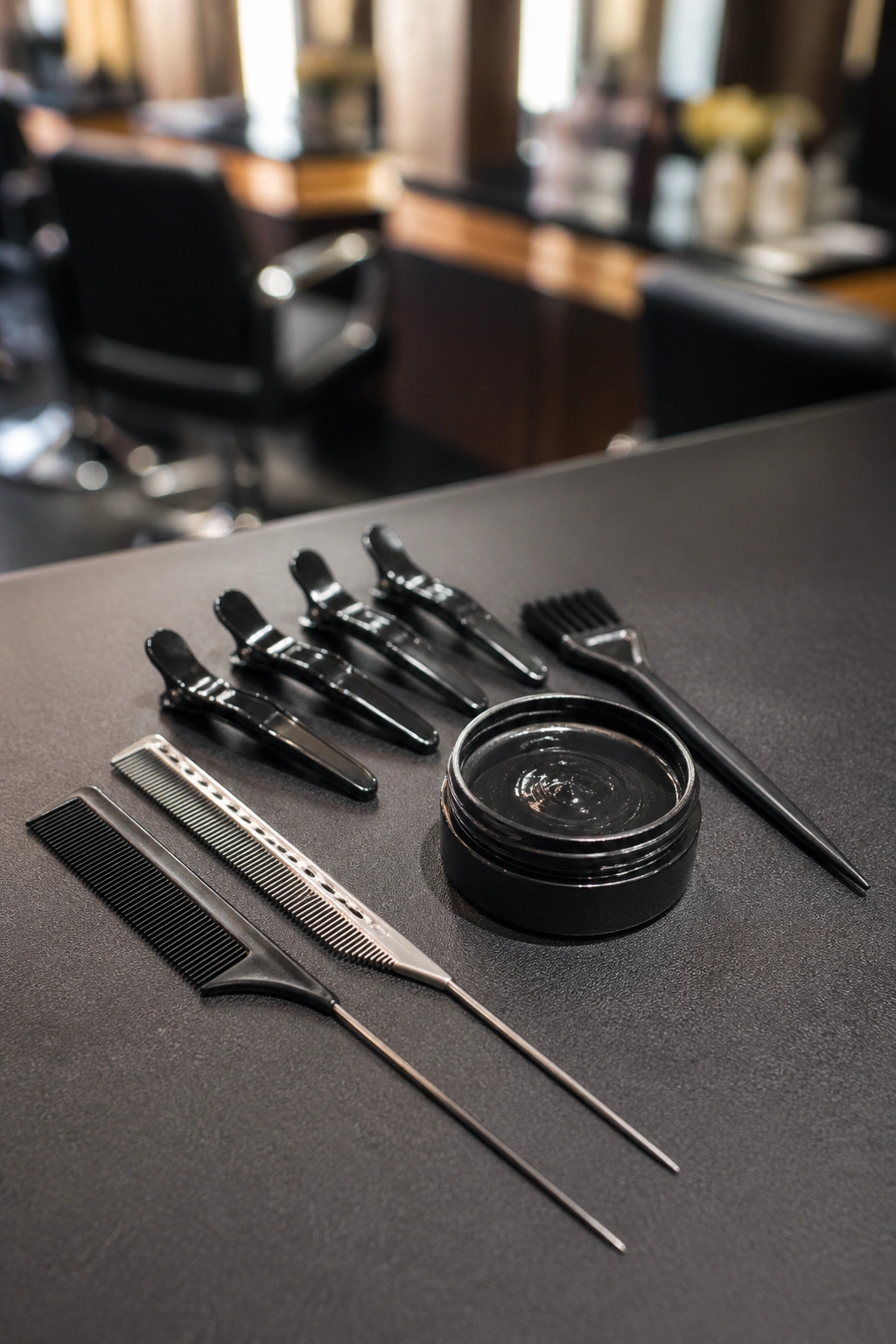
Small cornrow takedowns are slow. Plan for 2-3 hours minimum.
Saturate each braid with a slip-rich conditioner or oil-based detangler. Let sit 15 minutes before unraveling.
Unravel from tip to root. Slowly. Each small braid has more crosses per inch than a thicker braid, which means more opportunities for breakage if you rush.
Finger-detangle each section as it releases. Skip the comb until the entire install is down. Then wide-tooth comb through wet, conditioned hair before washing.
After full takedown, wash with clarifying shampoo, deep condition for 30-45 minutes, and let the hair rest at least 48 hours before the next install.
Picking the Right Small All Back Style
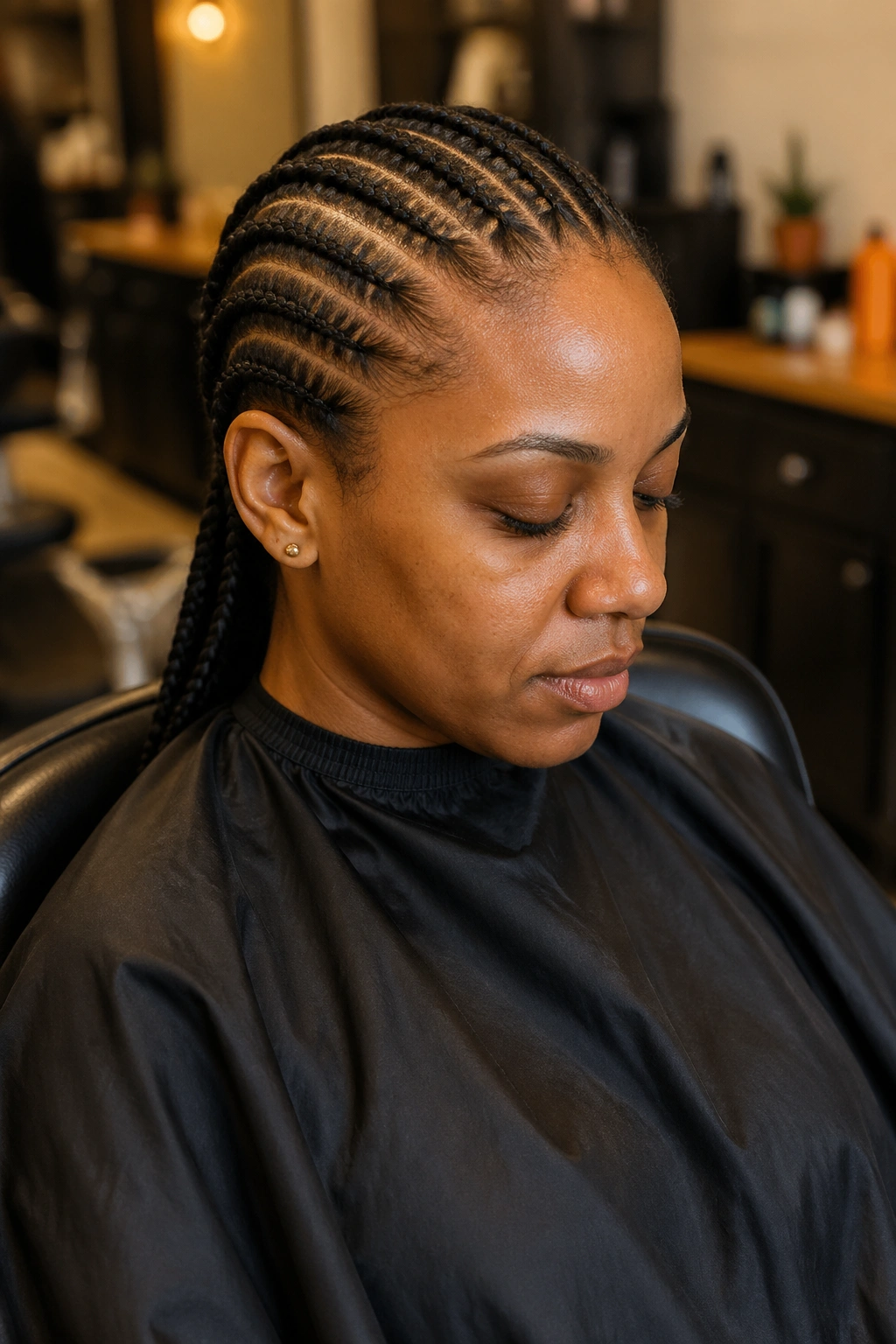
Daily wear and work: twelve-row classic small all back, small all back with single beaded braid, or small all back into low ponytail.
Formal occasions: small all back into bun, small all back with decorative crown knot, or thirty-row detailed small cornrows.
Travel and active days: twenty-row tight small all back, small cornrows with thread accent, or mini cornrows with loose bottom.
Statement looks: tiny cornrows with cuffs at every row, small cornrows with color streak, or small all back with center spine.
Maximum protective wear: twenty-five row micro all back or thirty-row detailed small cornrows — both hold for 5-6 weeks with proper maintenance.
Mistakes to Avoid With Small All Back
Installing on insufficiently stretched hair. Small cornrows on shrunken hair pull tight and uncomfortable as the hair air-dries.
Inconsistent row width. Some parts at half an inch, others at three-quarters. The eye sees inconsistency at small scale instantly.
Skipping the back inspection. Self-installs often have inconsistent back sections because mirrors are awkward. Take phone photos and zoom in.
Over-product. Small cornrows show buildup faster than larger styles. Less is more on the daily refresh.
Excessive wear time. Small cornrows can hold for 4-6 weeks but pushing past that increases hairline stress and matting risk. Stick to schedule.
Skipping deep conditioning before and after. Small cornrow installs and takedowns put real stress on each strand. Conditioning brackets are non-negotiable.
Get the prep right, the install precise, and the maintenance consistent — small all back cornrows will repay the work with weeks of clean, photogenic, low-effort daily styling.