



Half cornrows are the compromise everyone needs to know about. Cornrowed sections handle structure, control, and protection. Loose sections show off your natural texture, length, or styled curls. Half cornrows for Black women have become a favorite for transitioning hair, second-day wear, gym days, and anyone who can’t decide between fully braided and fully natural.
I came to half cornrows after a too-tight box braid install left my edges sore for a week. I needed protective styling but couldn’t handle full-coverage tension. Half cornrows let me secure the front and crown while leaving the back loose, where it could breathe and recover.
This list covers 25 distinct half-cornrow approaches — different cornrow placements, different loose-section treatments, different finishing techniques. Some take 90 minutes. Some take three hours. The variation comes from which half is cornrowed and how the loose half is styled.
What “Half Cornrows” Actually Means
The term covers any style where part of the head is cornrowed and part is left loose. The most common splits:
Top half cornrowed, bottom half loose. Cornrows from forehead to crown; natural or styled hair from the crown down.
Front half cornrowed, back half loose. Cornrows from hairline to mid-head; loose hair behind that line.
One side cornrowed, other side loose. Cornrows on one half of the head; loose hair on the other half.
Top section cornrowed in a strip, surrounded by loose hair on all sides.
Each split gives a different visual effect and serves different practical needs.
Why Half Cornrows Make Sense
Lower install time. Half cornrows take roughly half the time of full cornrows. A full cornrow install at 4 hours becomes a 2-hour half cornrow install.
Lower scalp tension. Cornrowing only part of the head means tension distributes across fewer anchor points, but the loose section completely escapes any pulling. If your scalp is sensitive, half cornrows are easier to wear than full installs.
Styling versatility. The loose section can be worn in different ways — afro, twist-out, curly puff, slicked back. The cornrow section stays consistent while the loose section changes daily.
Half cornrows let you show off your natural hair texture while still getting the protection cornrows offer. That’s a hard combination to beat.
When to Choose Half Cornrows Over Full
Choose half cornrows when:
- Your scalp is recovering from a tight previous install
- You’re transitioning from relaxed to natural and want to keep some natural texture visible
- You need a protective style but want styling flexibility day to day
- You have a 2-3 week event timeline and don’t need a 6-week install
- You want to show off curl pattern, length, or color on the loose section
Skip half cornrows and choose full when:
- You need maximum protection (winter dryness, very fragile hair)
- You’re traveling and won’t have time to style the loose section daily
- You want a uniform polished look across the entire head
- You have a long event timeline (4-8 weeks) and don’t want to maintain a loose section
Tools for a Half Cornrow Install
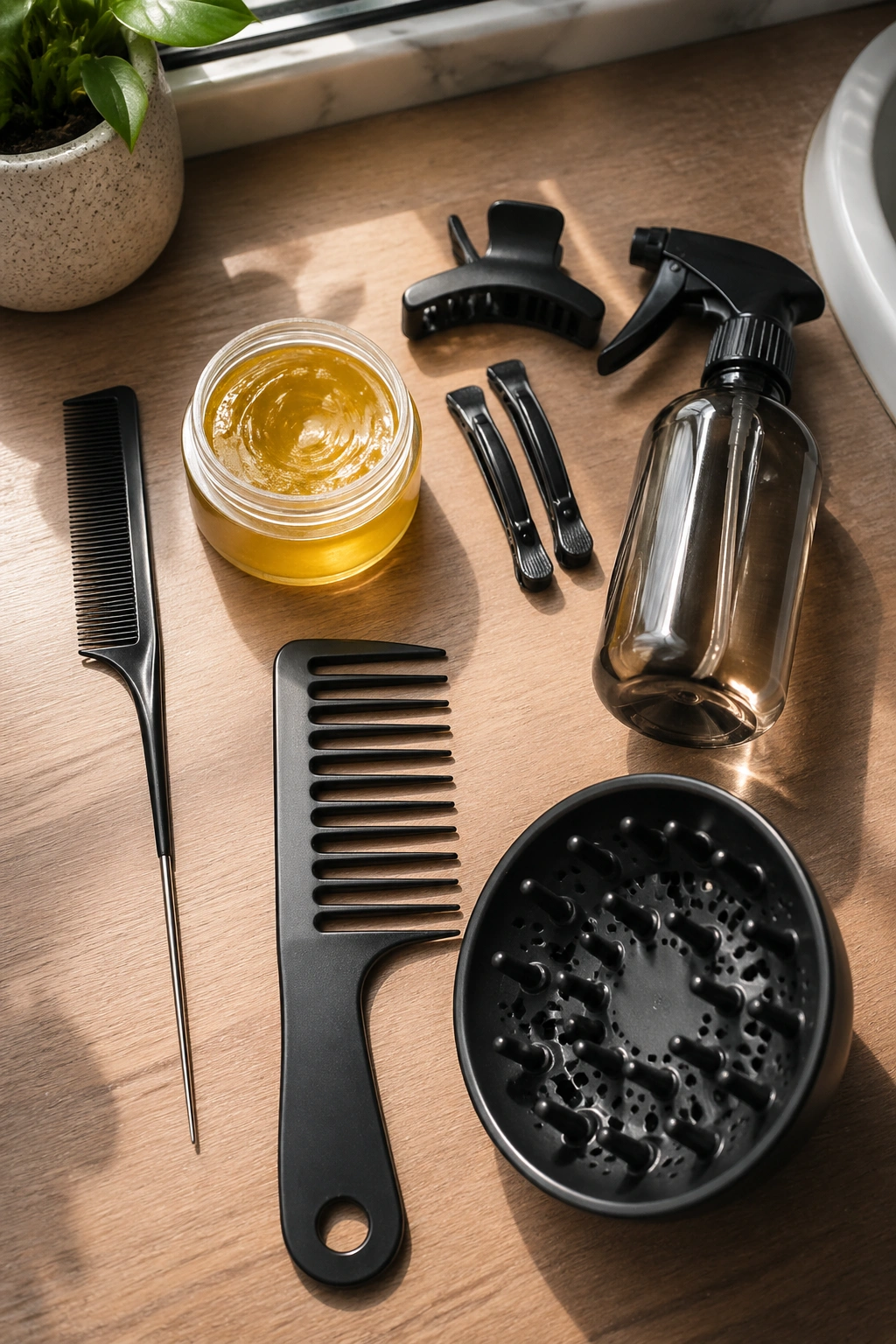
Standard cornrow tools apply: rat-tail comb, edge gel, hair clips, spray bottle.
Plus tools for the loose section depending on how you’ll style it:
- Wide-tooth comb for detangling and shaping
- Diffuser attachment for blow-drying loose curls
- Curl cream or leave-in for moisturizing loose hair
- Hair tie or clip for sectioning the cornrowed area from the loose area during install
Prep for a Half Cornrow Install
Standard cornrow prep — wash 2-3 days before, deep condition, stretch, lightly moisturize.
For the loose section, decide your styling approach before the install. Will you wear it as an Afro? A twist-out? A wash-and-go? The styling affects how you should prep the hair and what products to bring.
Bring reference photos showing both the cornrow section and the loose section styled together. Braiders need to see the complete look, not just the cornrows.
How to Define the Cornrow-to-Loose Boundary
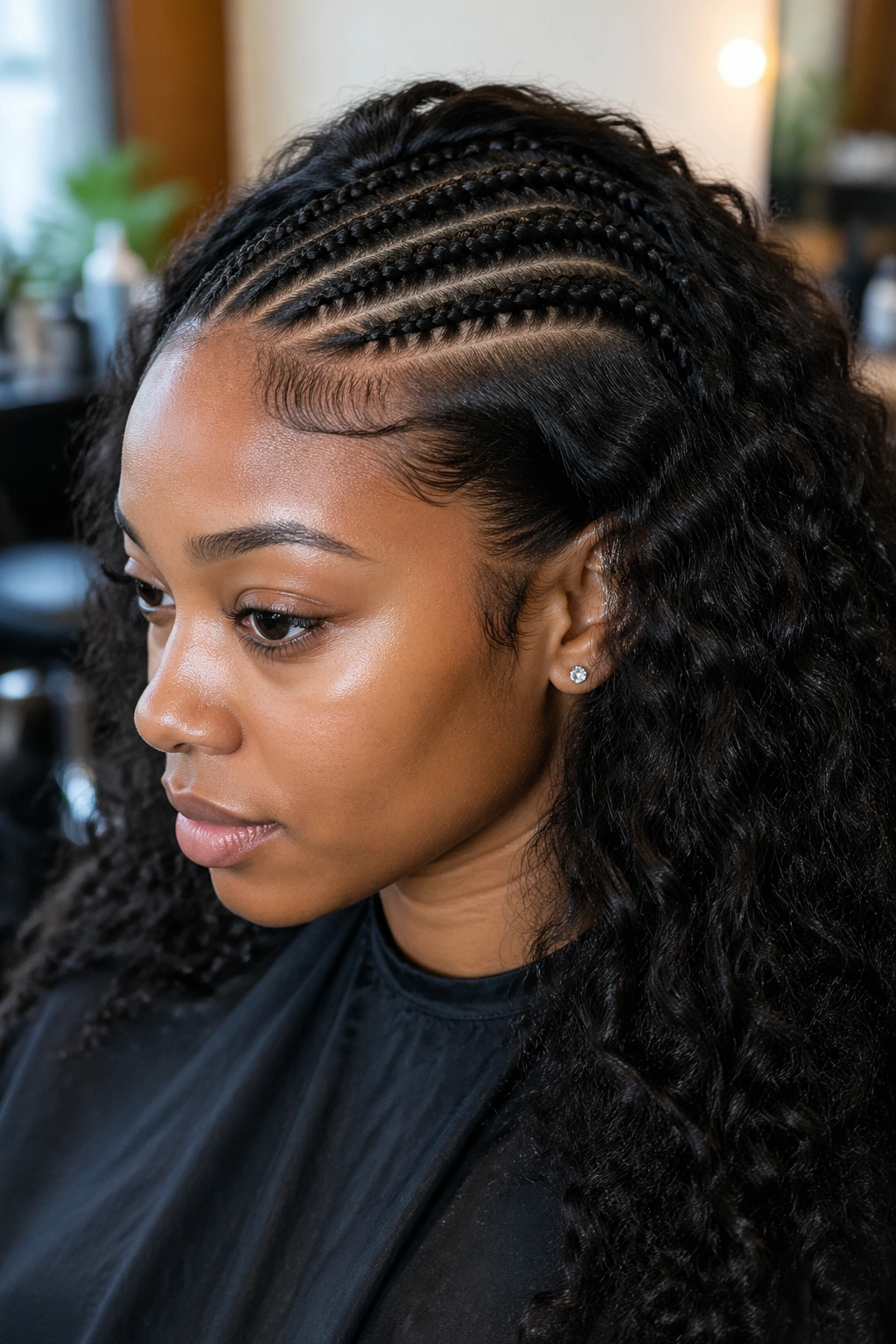
The line where cornrows end and loose hair begins should be clean. A sloppy boundary makes the whole style look unfinished.
The boundary should follow a clear part — straight horizontal across the head for top-cornrow styles, vertical down the middle for side-cornrow styles. The braider parts the boundary first, then cornrows on one side and leaves the other side loose.
Edge gel helps define the boundary. Apply along the part line to keep loose hair from creeping into the cornrow section.
For sleeping, cover only the loose section with a bonnet (or use a half-bonnet designed for partial coverage). Cornrow sections can stay exposed if you sleep on a silk pillowcase.
1. Top Half Cornrows With Loose Curly Bottom
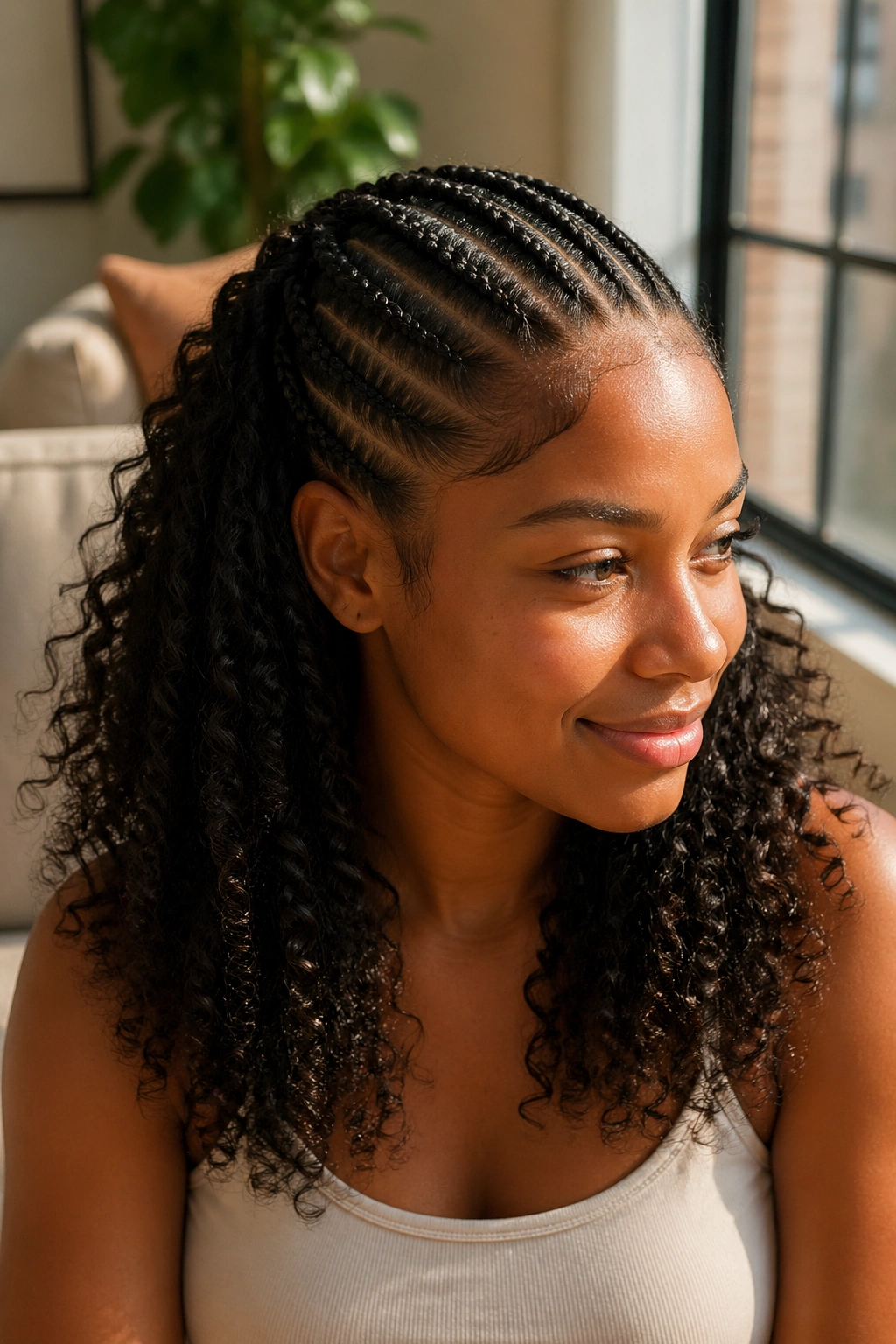
The starter style. Cornrows from forehead to crown — usually 6-8 of them. Below the crown, your natural hair hangs loose, styled into curls, twists, or an Afro shape.
Why It Works
Top cornrows control the front of the head where most face-framing happens. The loose bottom adds visible texture and volume that pure cornrow installs lack.
- Cornrow count: 6-8 across the top
- Boundary: a clean horizontal part at the crown
- Loose section styling: defined curls, twist-out, or Afro
- Install time: 90 minutes to 2 hours
The loose section needs daily refresh. Mist with water and leave-in conditioner each morning, fluff with a pick, and you’re set.
2. Front Half Cornrows With Loose Back
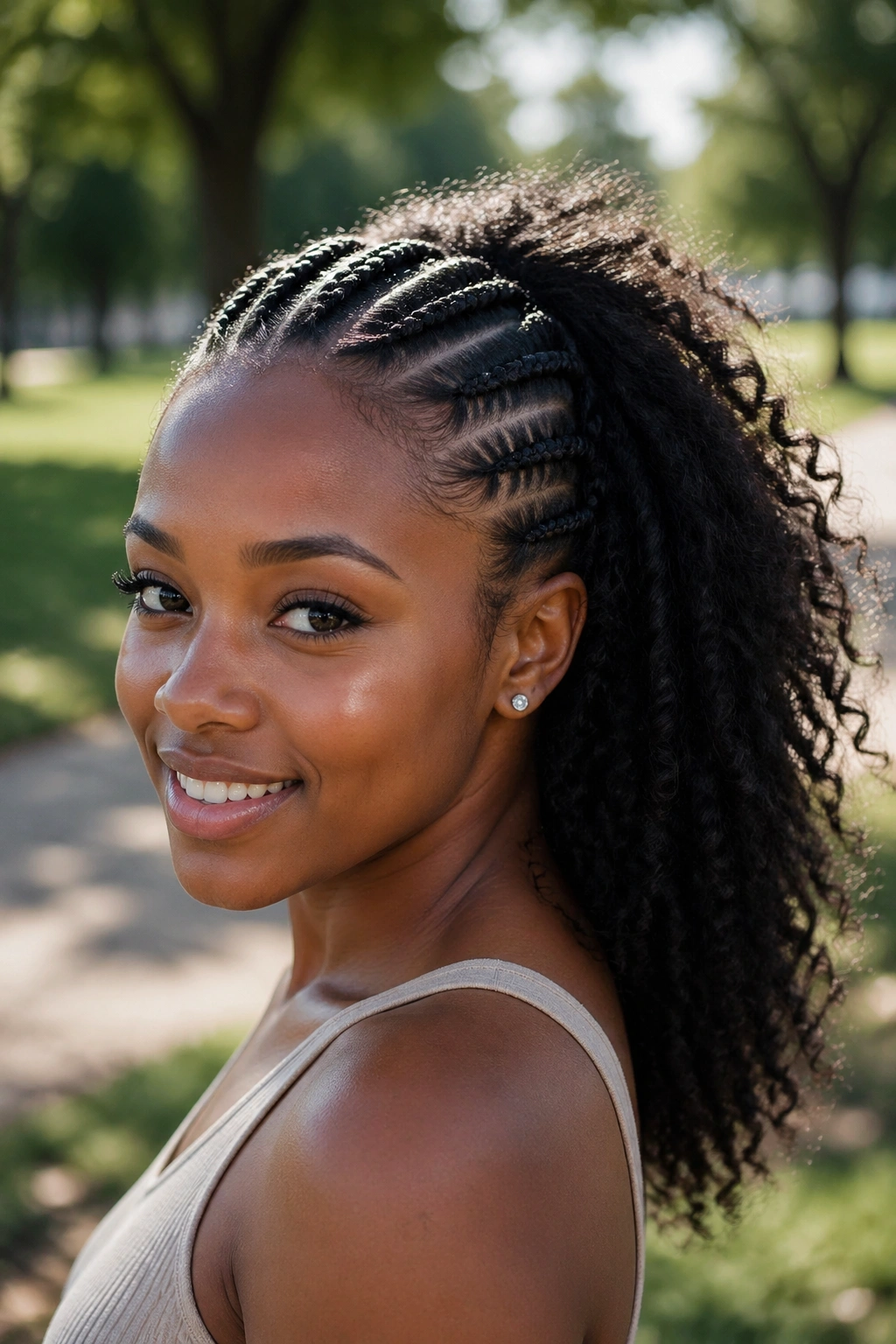
Unlike the top-half version, this style cornrows only the front section — from hairline to a horizontal part at the mid-crown level. The back half (from mid-crown to nape) hangs loose.
This works well for hair with strong curl definition because the loose back shows off curl pattern from any angle behind you.
The boundary line sits about 4-5 inches back from the hairline, depending on head size.
3. One Side Cornrowed, Other Side Loose
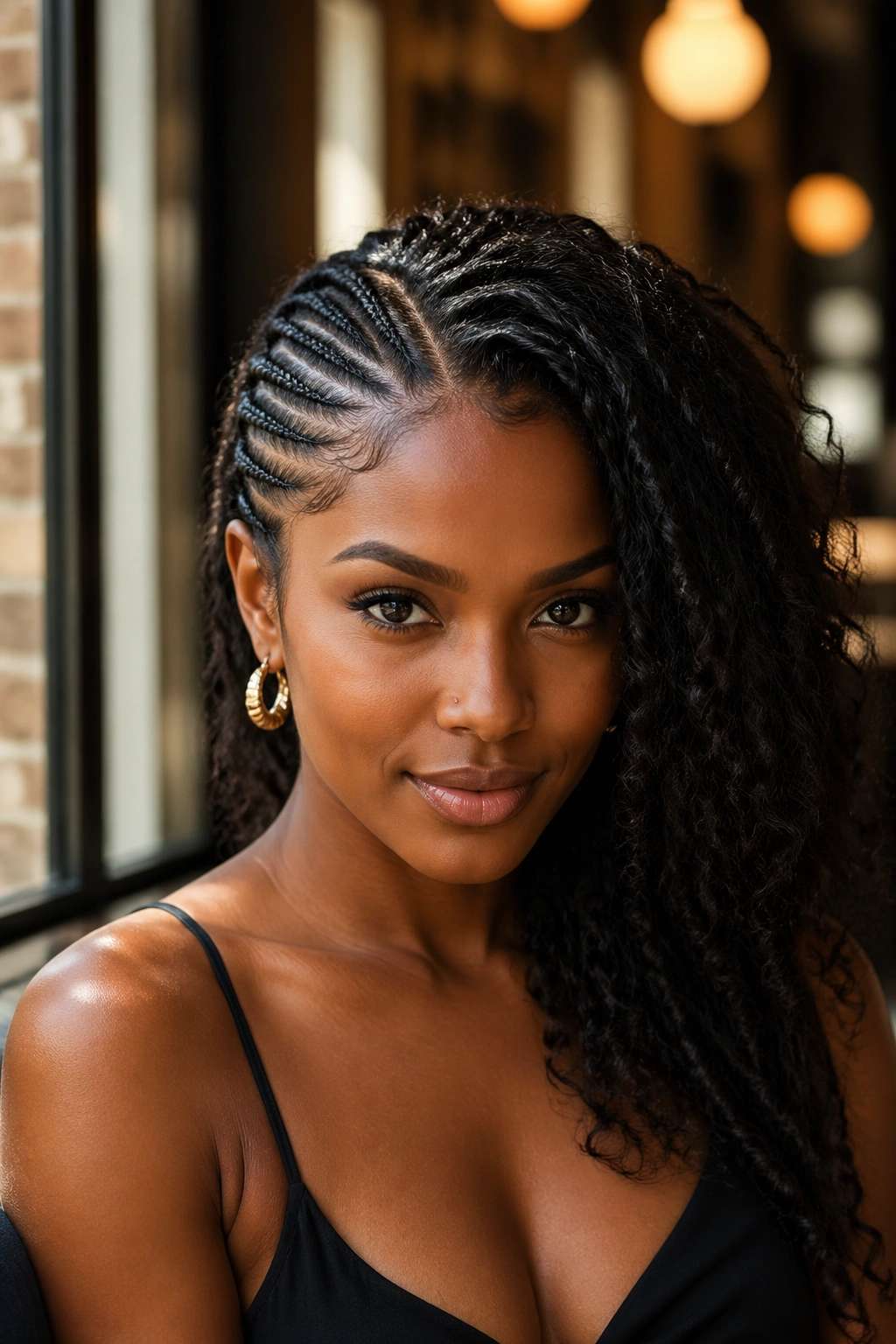
Cornrows on one half of the head, loose hair on the other half. The part runs from the front center down to the back center.
This is an asymmetric statement style. It reads as fashion-forward and works for events where you want to make a visual impact.
The loose side can be styled flat to one side (like a side-swept hairstyle) or left full and voluminous (more bohemian feel).
Best for oval and heart-shaped faces. Round faces should pair this style with a deep side part to elongate the face.
4. Cornrowed Mohawk Strip With Loose Sides
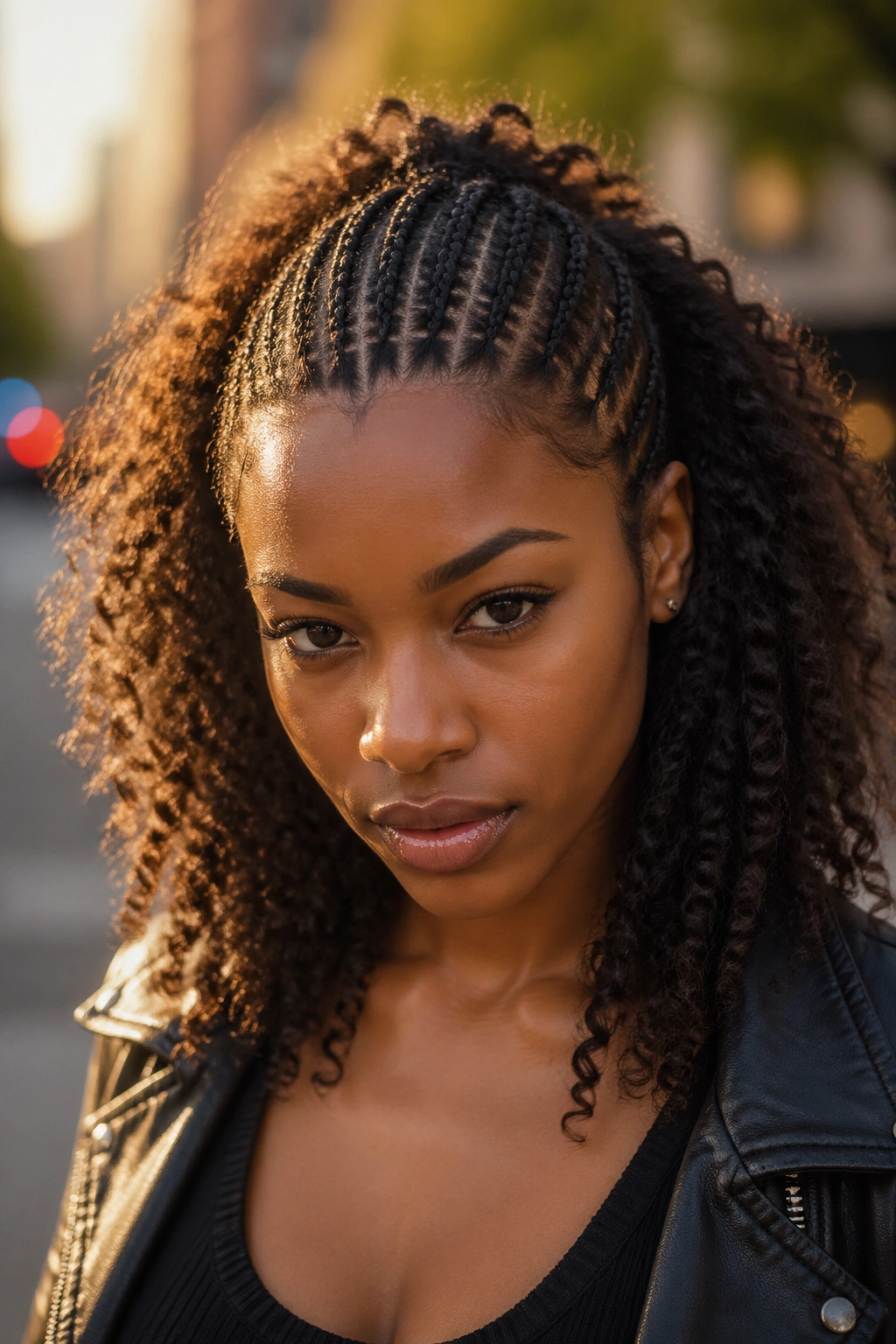
A central strip of cornrows running down the middle of the head, with loose hair on both sides. The mohawk strip can be 2-4 inches wide.
The loose sides can be left fully natural or styled into a side puff or pinned-back curls.
This style references mohawk aesthetics within a half-cornrow framework. It works for fashion contexts and edgy event wear.
5. Two Front Cornrows With Loose Everything Else
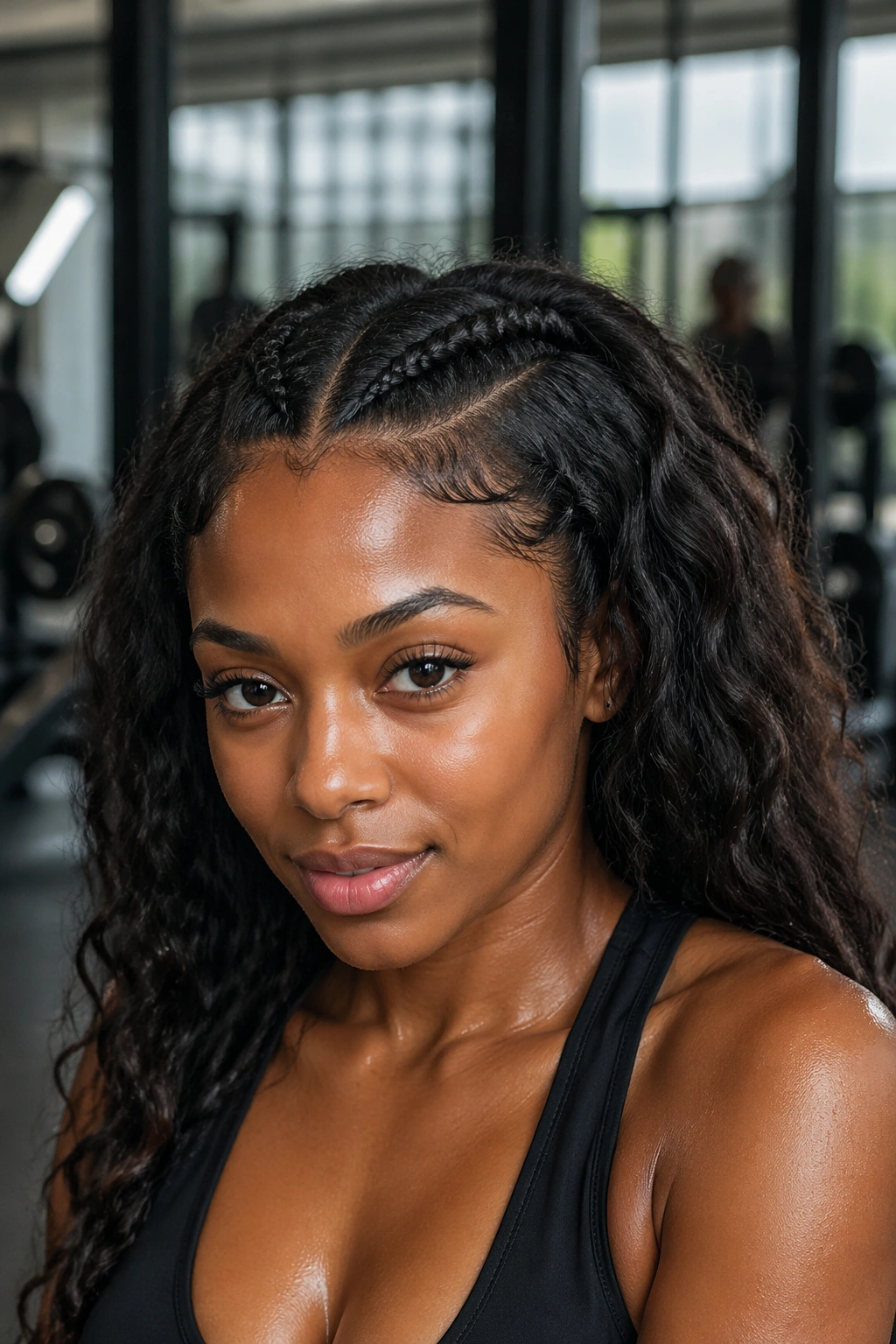
The minimal-effort option. Just two cornrows running from the front hairline back to about mid-head, with everything else loose.
Two cornrows take 20 minutes. The rest of the styling is whatever you do with your loose hair.
This works for everyday wear, gym days, and any context where you need to keep hair off your face quickly.
6. Cornrowed Crown With Loose Surrounding Hair
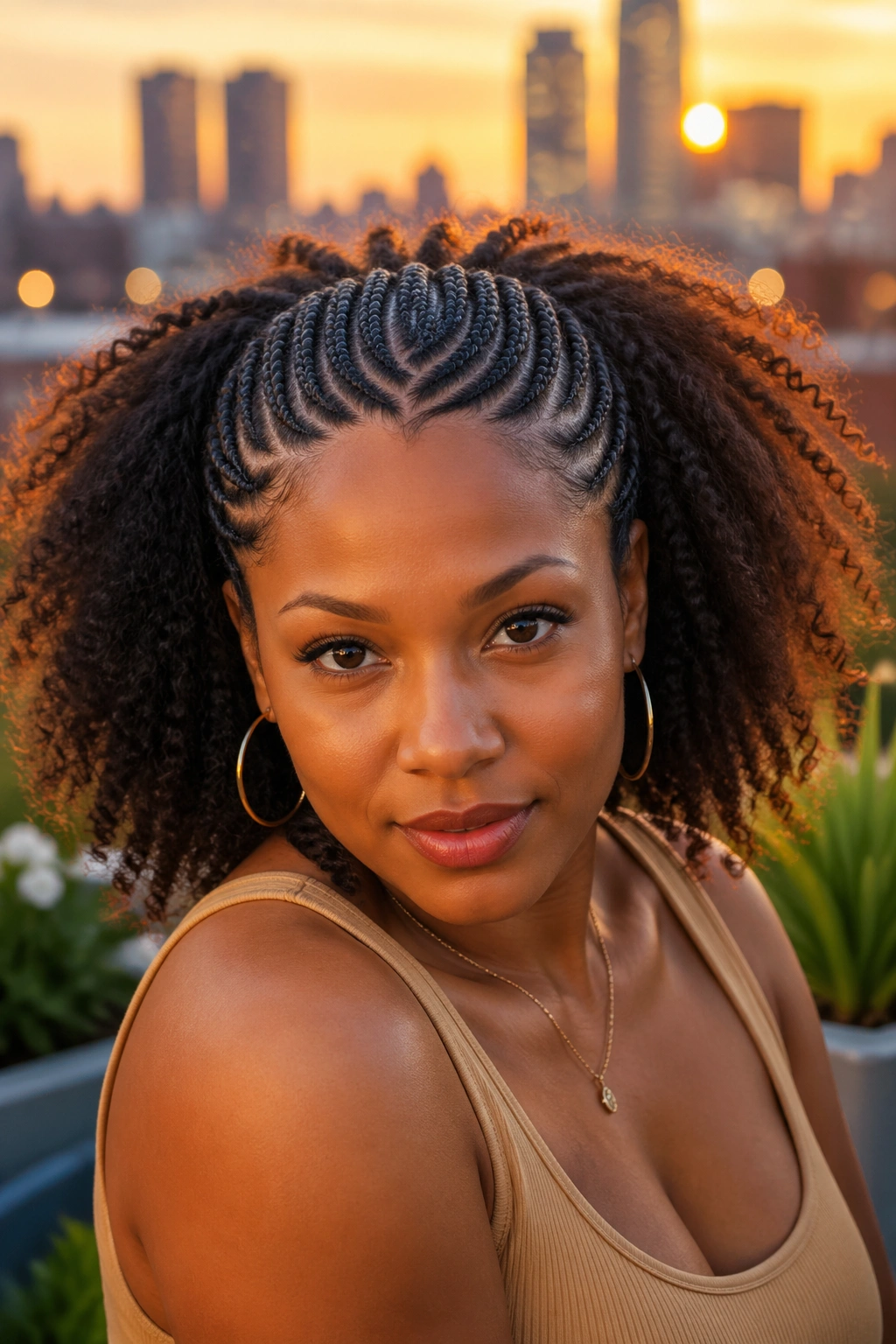
A circular section at the top crown is cornrowed in a tight pattern, with loose hair surrounding it on all sides — front, back, and both sides.
The cornrowed crown can be styled in a flat pattern or pulled into a small bun at the very top.
How to Style It
- Cornrow only the top 4-5 inches of the head
- Leave hair loose at the front, sides, and back
- Style loose hair down or pulled back as a half ponytail
- Add a headband if you want to define the cornrow-to-loose boundary
This style reads as creative and unconventional. It works for fashion events and contexts where you want to show off both braiding skill and hair texture.
7. Half Cornrows Into a High Puff
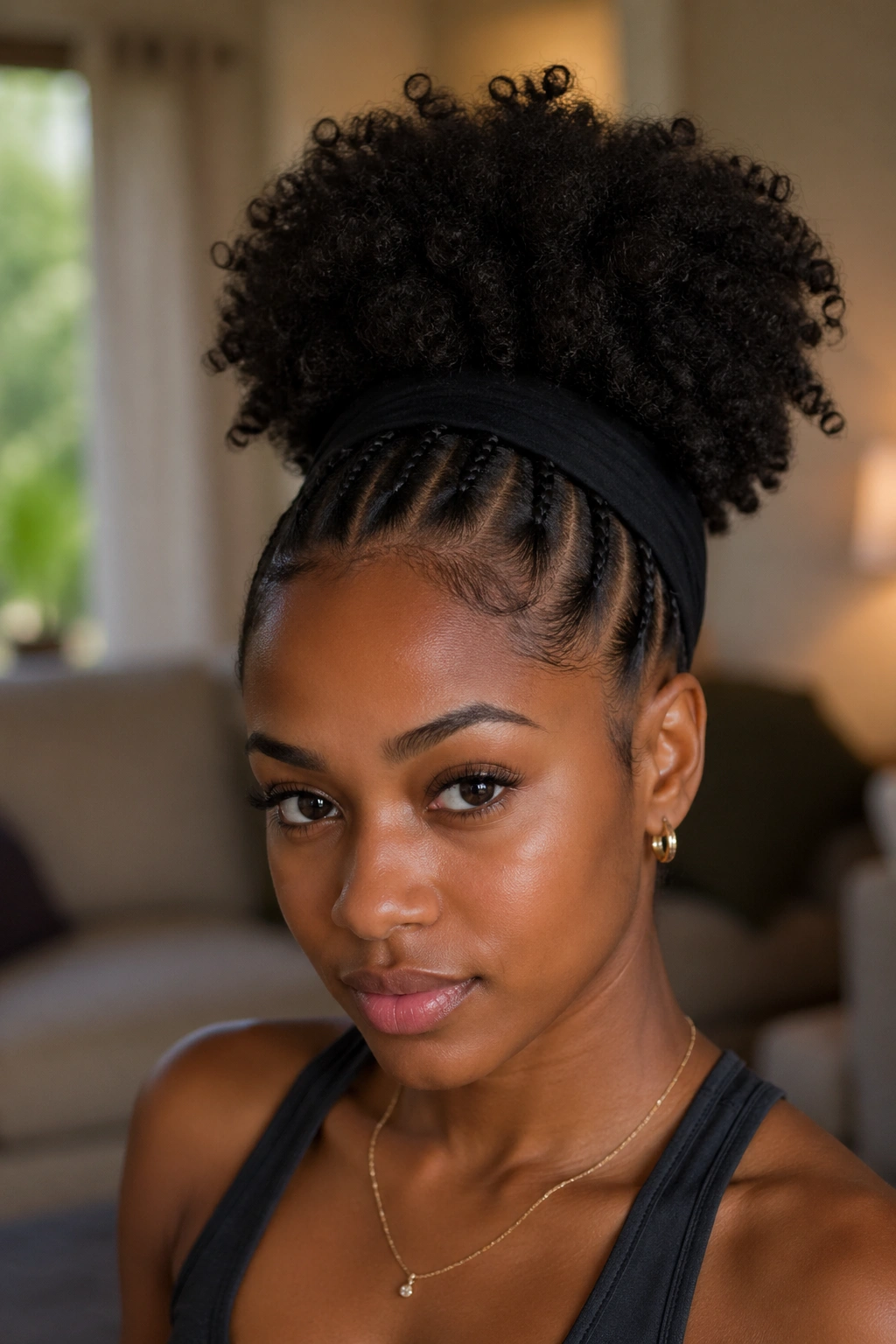
Cornrows on the front and sides, with the back gathered into a high Afro puff. The cornrows feed naturally into the puff, with the loose back hair forming the puff itself.
Puff size depends on hair density and length. Larger puffs read as bold and fashion-forward; smaller puffs read as understated.
The puff is held with a stretchy headband or large hair tie. Avoid tight hair ties that compress the puff base.
8. Cornrows With Loose Curtain Bangs
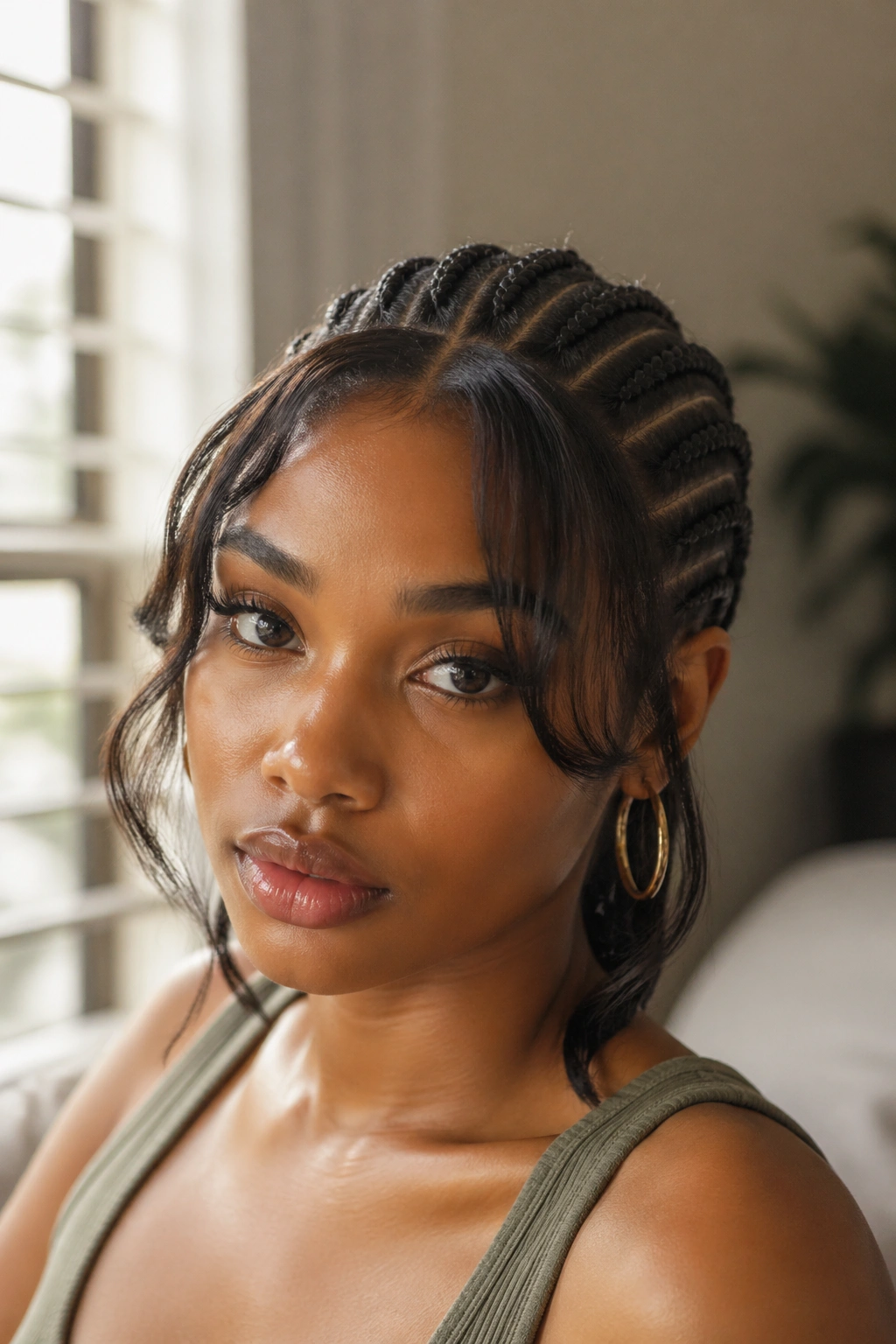
Cornrows on the top and back of the head, with loose curtain bangs framing the face. The curtain bangs are part of the front section that’s been left out of the cornrow pattern.
Curtain bangs sit at the brow level, parted in the center, falling on either side of the face.
This style softens the face and adds a touch of vintage hair styling to a cornrow base.
9. Half Cornrows With Burgundy Color on Loose Section
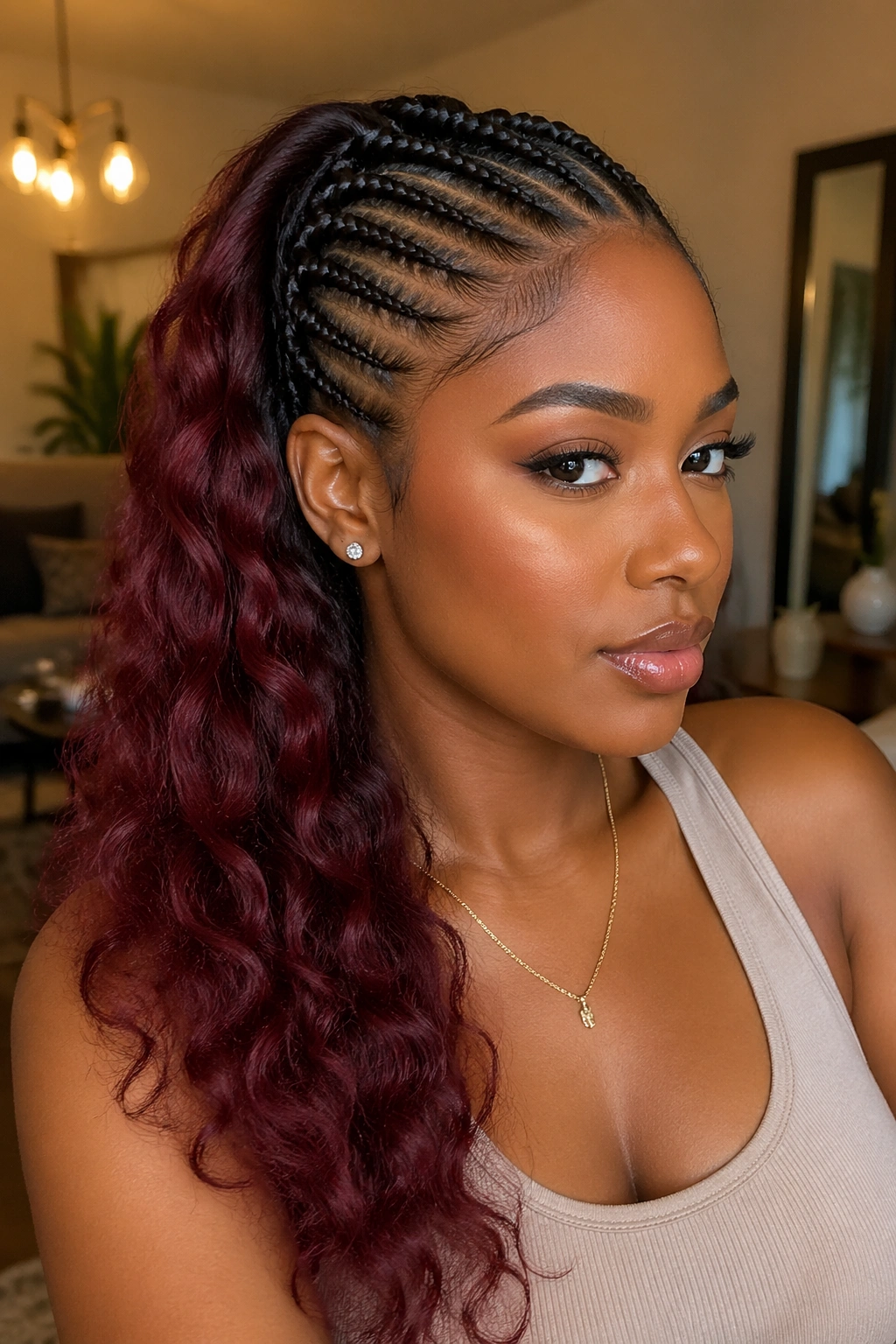
The cornrow section is in your natural color. The loose section is dyed burgundy or has burgundy temporary color sprayed on.
The contrast between natural cornrows and colored loose hair creates a dramatic visual division.
Burgundy is a flattering color across most skin tones. Pair with gold accessories rather than silver to complement the warm color tones.
10. Cornrows With Two-Strand Twist Loose Section
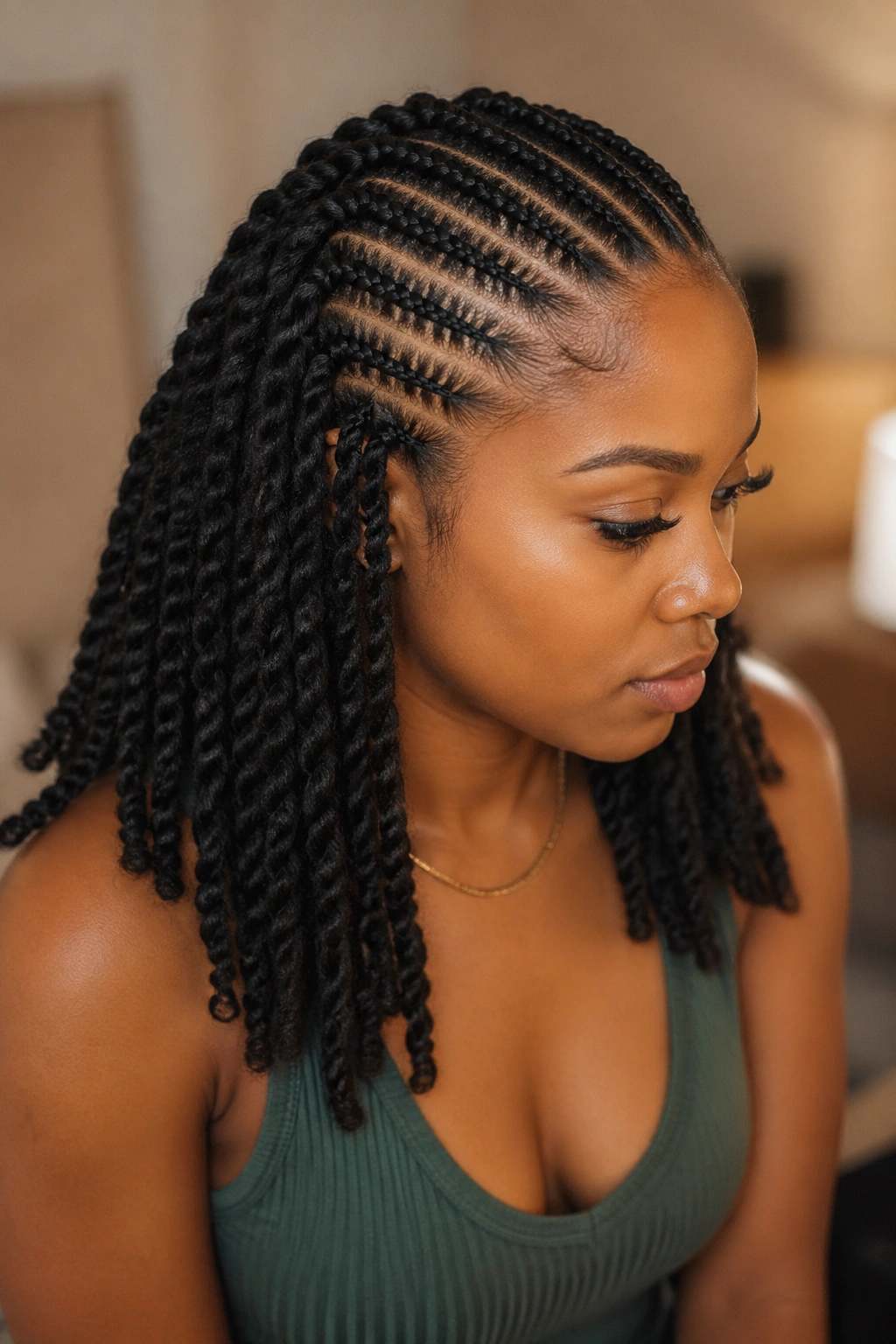
Bold claim: combining cornrows with two-strand twists in a half-cornrow style is the most underrated protective styling combination. The cornrows protect the front; the twists protect the loose section.
The loose hair is styled into chunky two-strand twists rather than left in its natural state. This adds protection to the loose section while still showing off braided texture.
- Cornrow section: 6-8 cornrows on top
- Twist section: 8-12 chunky twists on the bottom
- Twist size: pencil-thick or larger
- Twist length: should match the cornrow length when extended
The full style reads as cohesive — both halves are braided/twisted, just in different patterns.
11. Half Cornrows With Beaded Loose Ends
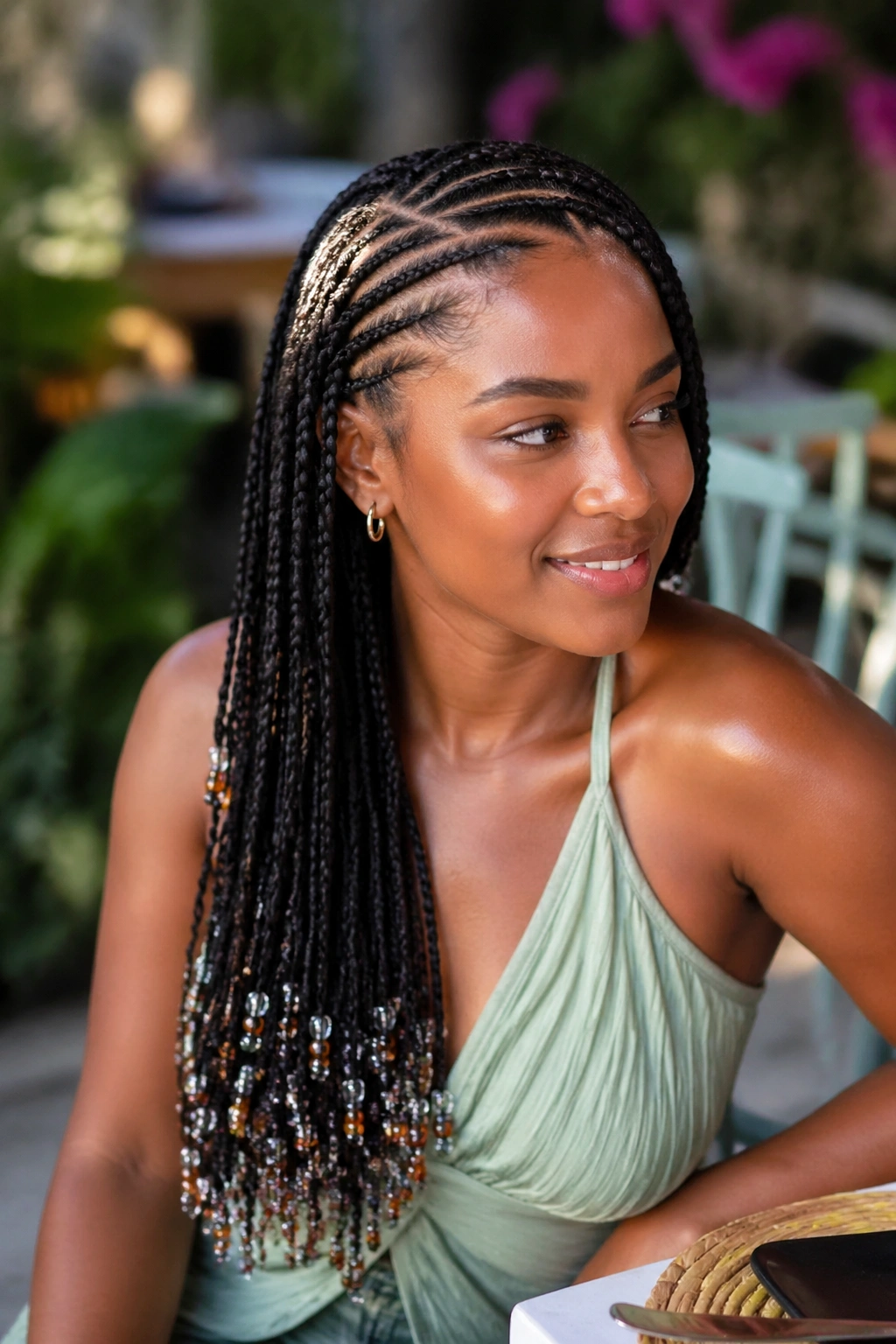
The cornrow section ends, and the loose section is styled into thin twists or braids with beads at the ends. The beads catch light and add visual interest to the lower half of the style.
This is a hybrid where the loose section gets some structure (the twists or thin braids) and the cornrows get a softer transition.
Best for bohemian-leaning events and casual styling.
12. Half Cornrows With a Pulled-Back Bun
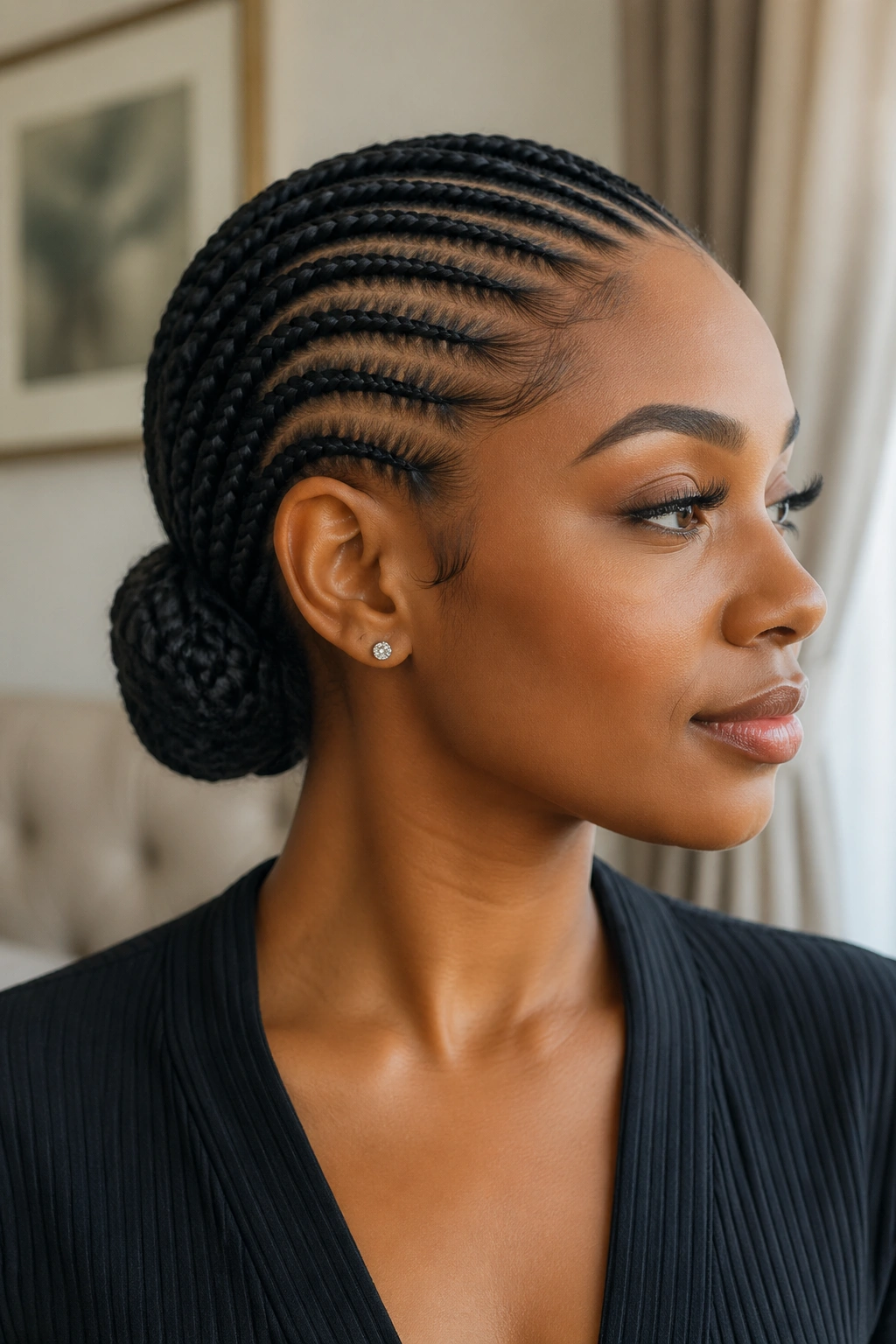
Cornrows on the top and sides, with the back gathered into a small bun at the nape. The cornrows feed into the bun, and any remaining loose hair is incorporated into the bun structure.
This works for formal events where a bun is appropriate but full cornrow coverage feels too heavy.
The bun should be small to medium — large buns require more hair than a half-cornrow style typically provides.
13. Cornrows With Loose Curly Side-Swept Section
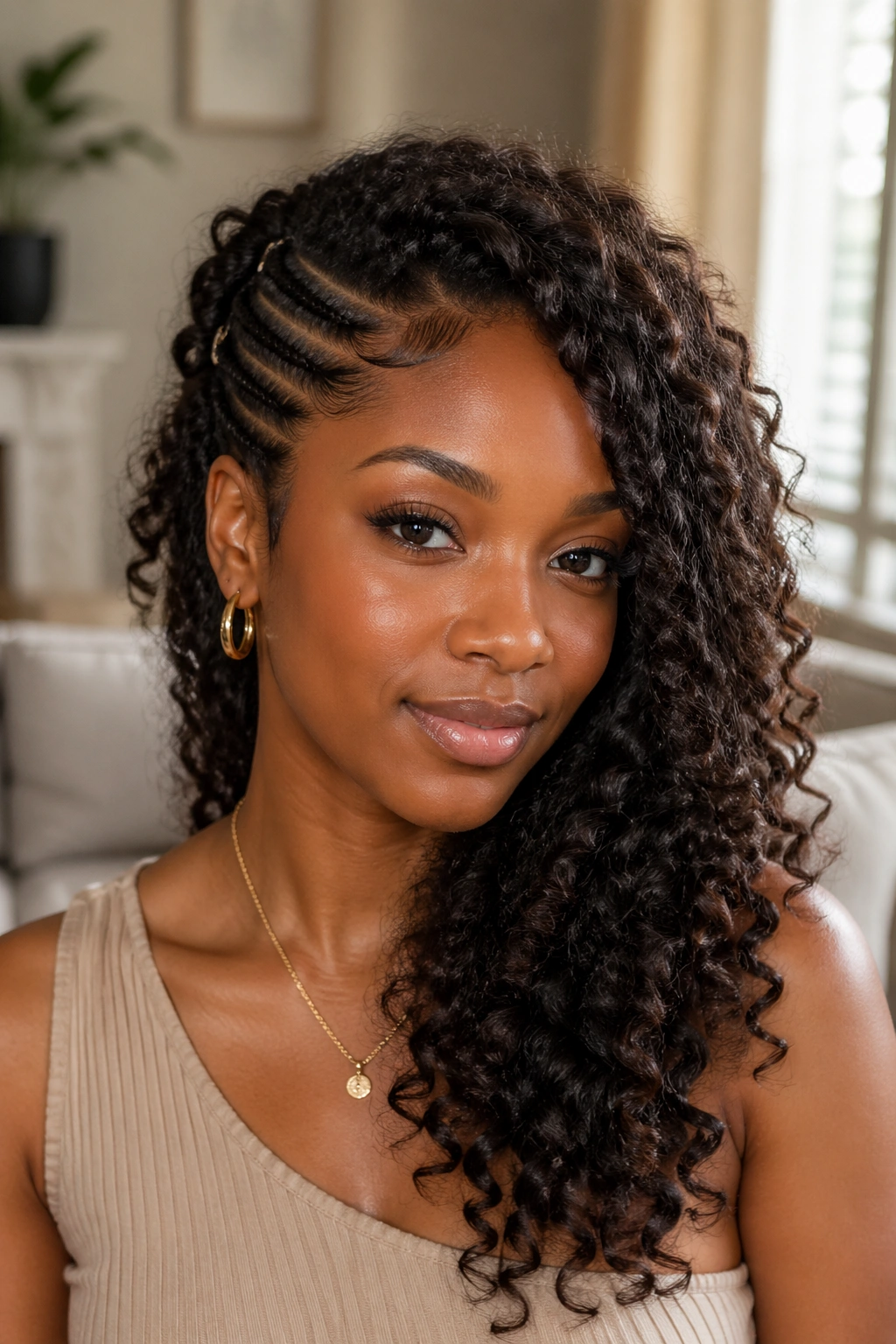
A deep side part — about 3 inches off-center. Cornrows on the deep side, loose curly hair swept across the head from the shallow side. The loose curls cascade across the cornrow section, creating layered visual depth.
What Makes It Different
Most half cornrow styles keep the cornrow and loose sections separate. This style intentionally lets the loose section drape over part of the cornrow section, creating overlap.
- Side part: 3 inches off-center
- Cornrows on deep side: 4-5 of them
- Loose curls on shallow side: pinned with a bobby pin near the temple to start the cascade
- Loose curls drape across the head down to the opposite shoulder
Best for events and contexts where you want a styled, intentional look without the time commitment of full cornrows.
14. Half Cornrows With Headband Accessory
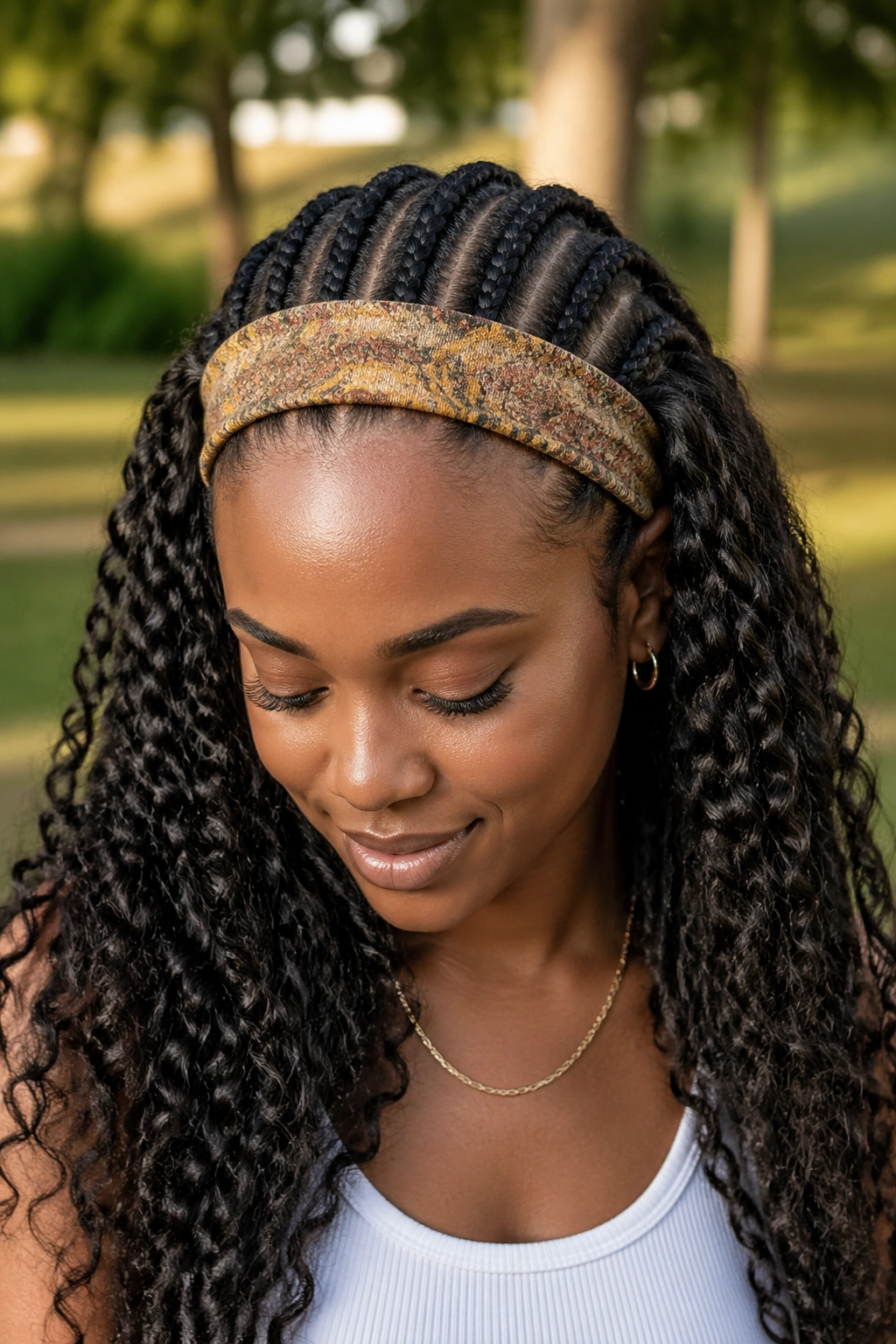
Cornrows installed at the top and back, with a wide headband worn at the boundary line between cornrows and loose hair. The headband visually defines the boundary and adds a styling accent.
Headband material affects the look. Cloth headbands read as casual; satin or silk read as elegant; beaded or embellished read as event-appropriate.
The headband should sit at the cornrow boundary, not on top of the loose section. Position it carefully so it covers any sloppy boundary line.
15. Half Cornrows With Hair Cuffs on Cornrows
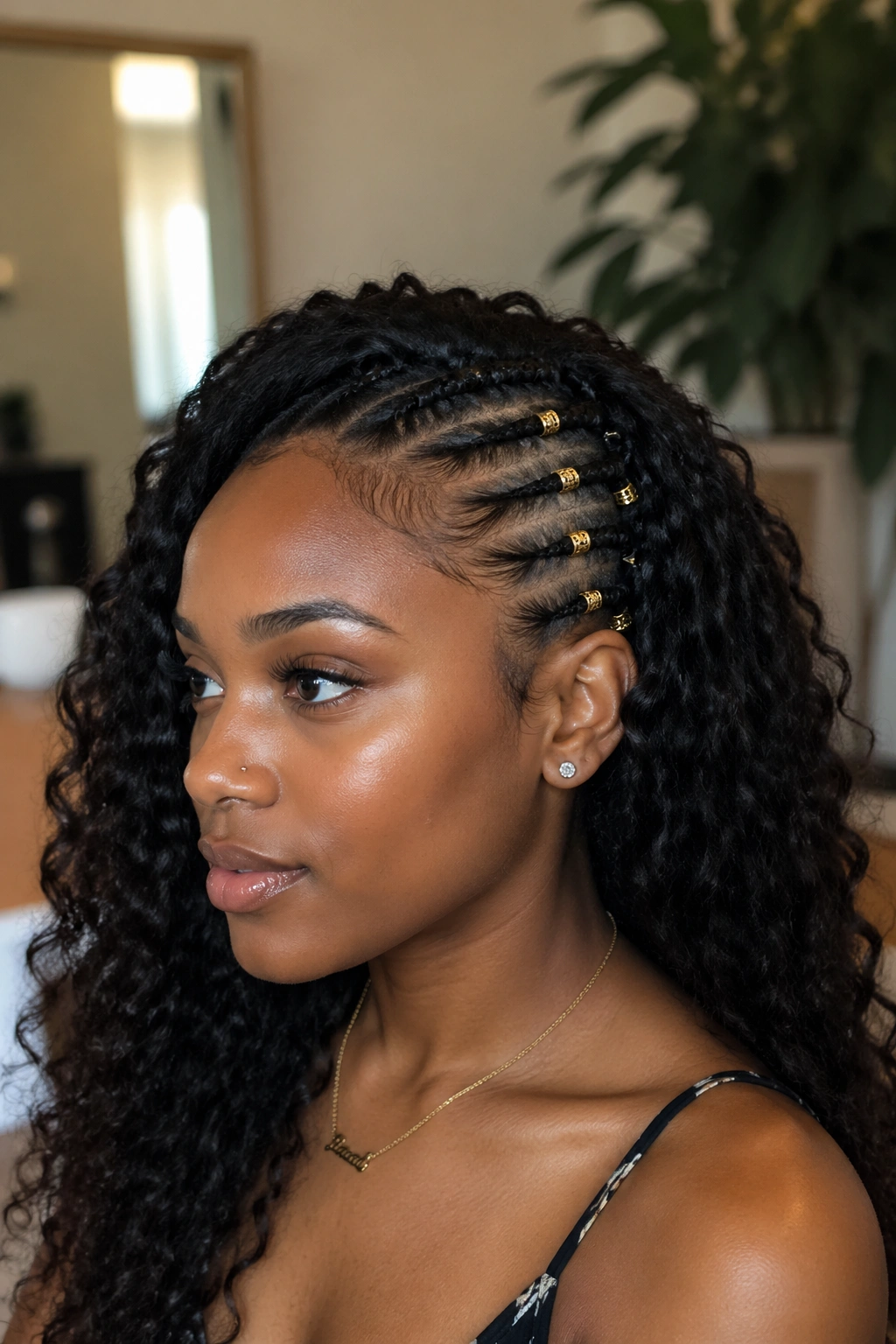
Gold or silver metal cuffs placed on the cornrow section. The loose section stays plain to avoid competing with the cuff details.
Cuff placement: 2-3 cuffs per cornrow, evenly spaced.
Pair with matching jewelry — gold cuffs with gold earrings, silver cuffs with silver pieces. Mixing metals reads as uncoordinated.
16. Half Cornrows With Loose Wash-and-Go
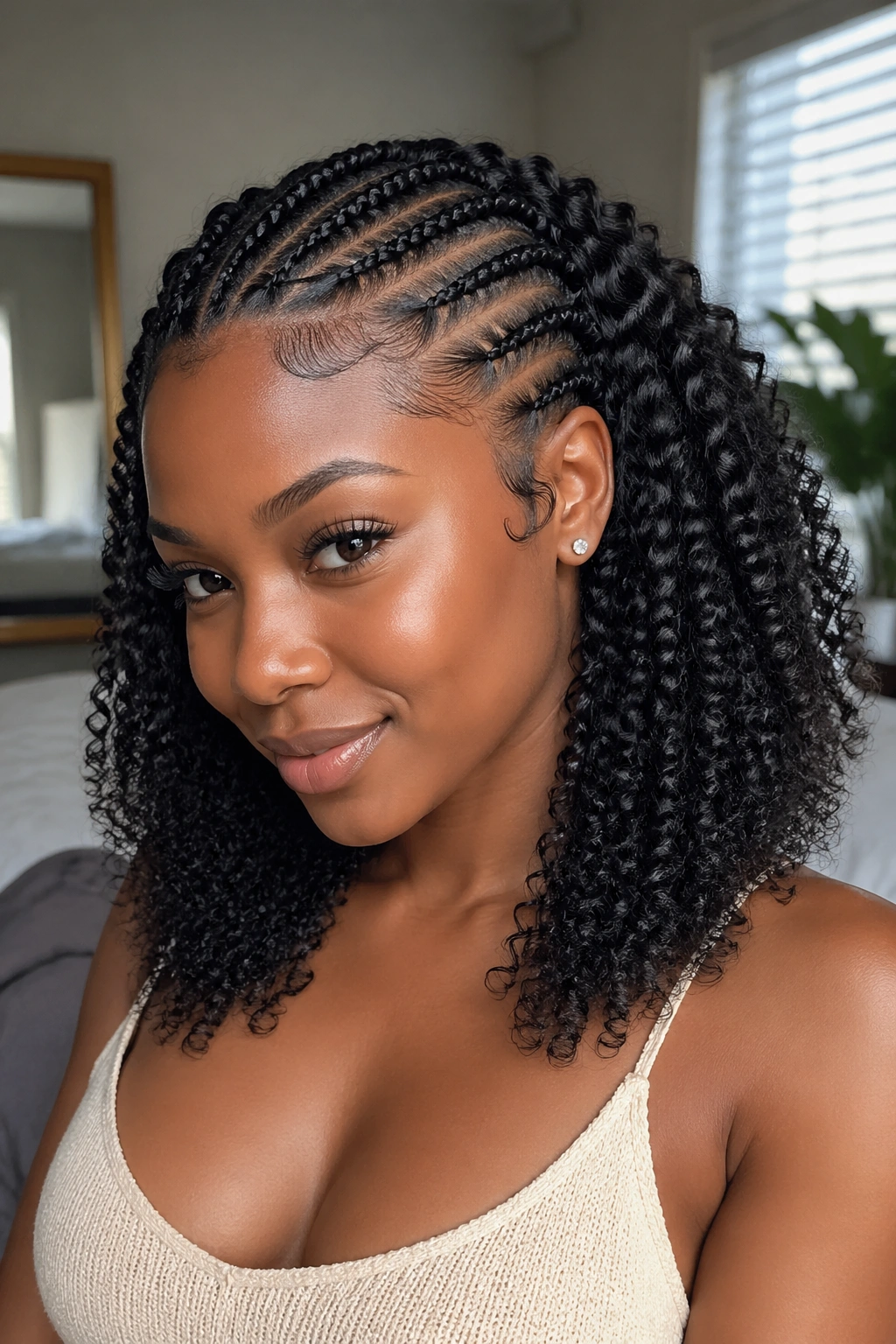
Cornrows on top, with the loose section in your usual wash-and-go style. The wash-and-go uses your natural curl pattern — defined with curl cream and gel — without any heat styling.
This is one of the lowest-maintenance half-cornrow styles. The cornrows handle the front; the wash-and-go handles the back without daily restyling.
Refresh the wash-and-go every 2-3 days with water and leave-in conditioner spray. Re-define curls with fingers.
17. Half Cornrows With Bantu Knots in Loose Section
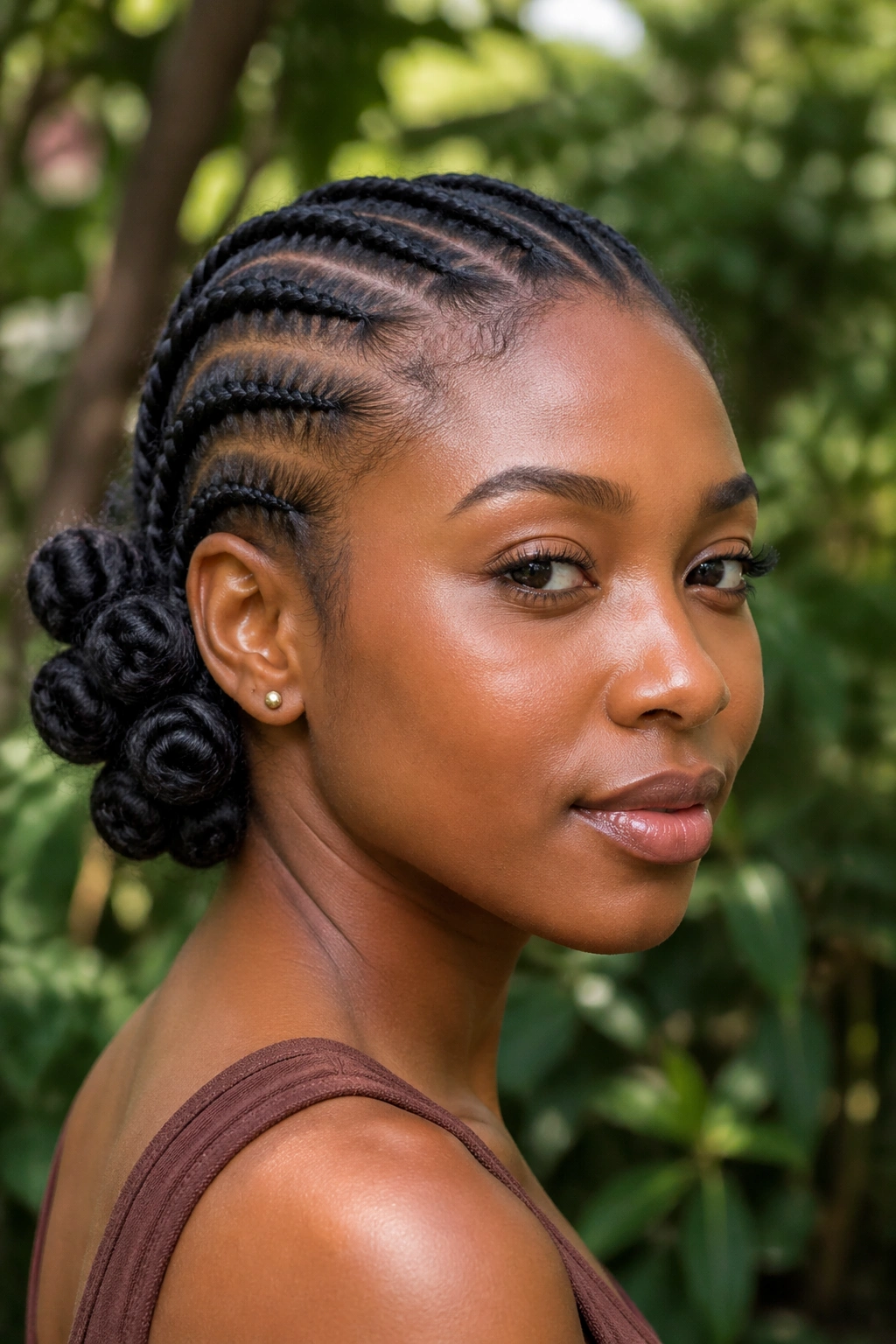
Cornrows on the top half, with the loose bottom half styled into bantu knots. Each bantu knot is a small coiled bun pinned to the scalp.
The bantu knots can be left as knots (worn for an event) or unraveled later for defined curls.
This is a 2-day style. Day 1: cornrows + bantu knots. Day 2: cornrows + curl-defined hair from unraveled knots.
18. Half Cornrows With Color-Blocked Loose Section
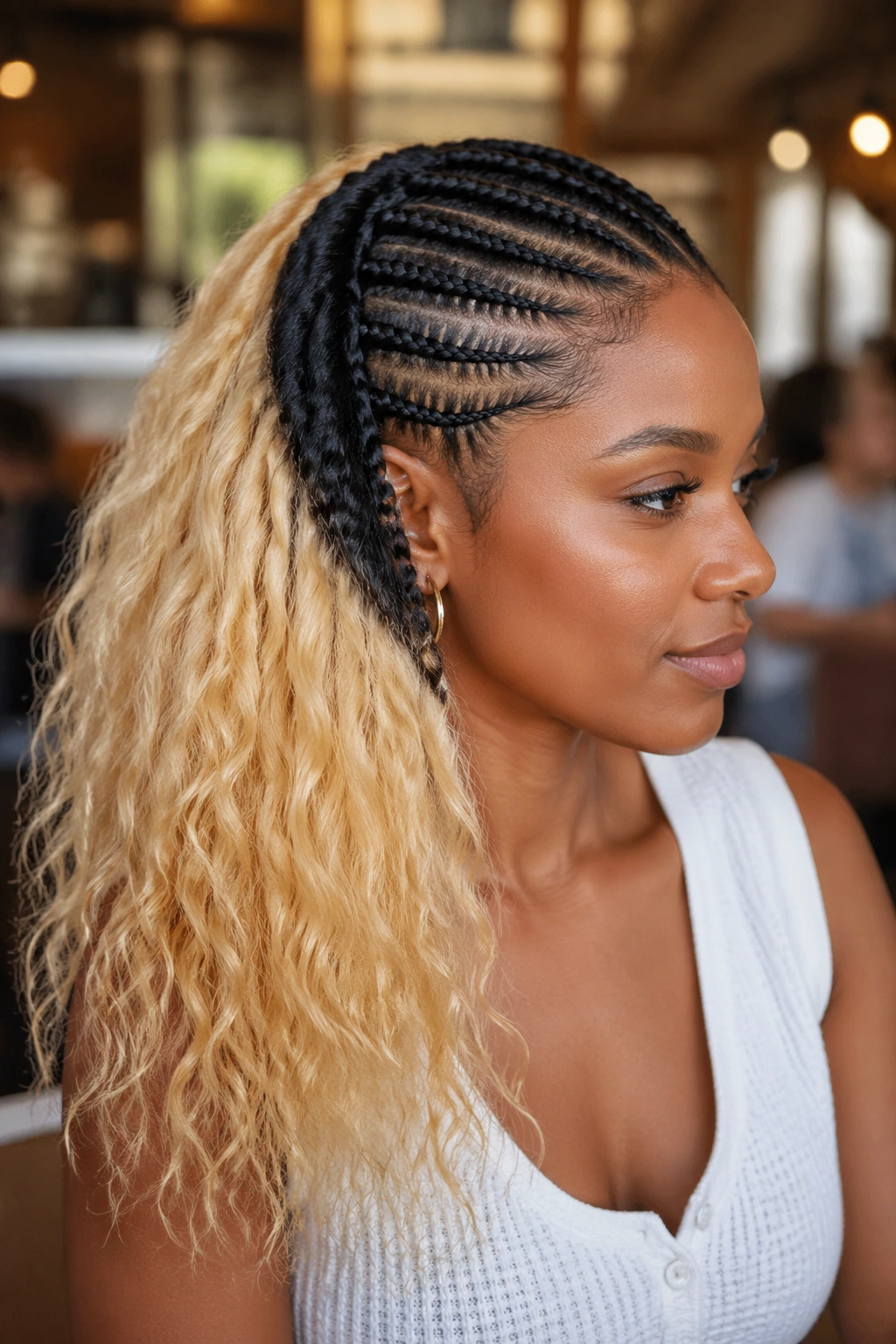
The cornrow section in one color, the loose section in another. The colors don’t blend — they block, creating a clear divide at the boundary line.
Common color blocks: black cornrows + blonde loose section, brown cornrows + burgundy loose section, natural cornrows + bright accent loose section.
The color blocking is achieved by dying the loose section before the install, leaving the cornrow section in its natural color.
19. Cornrowed Hairline With Loose Everywhere Else
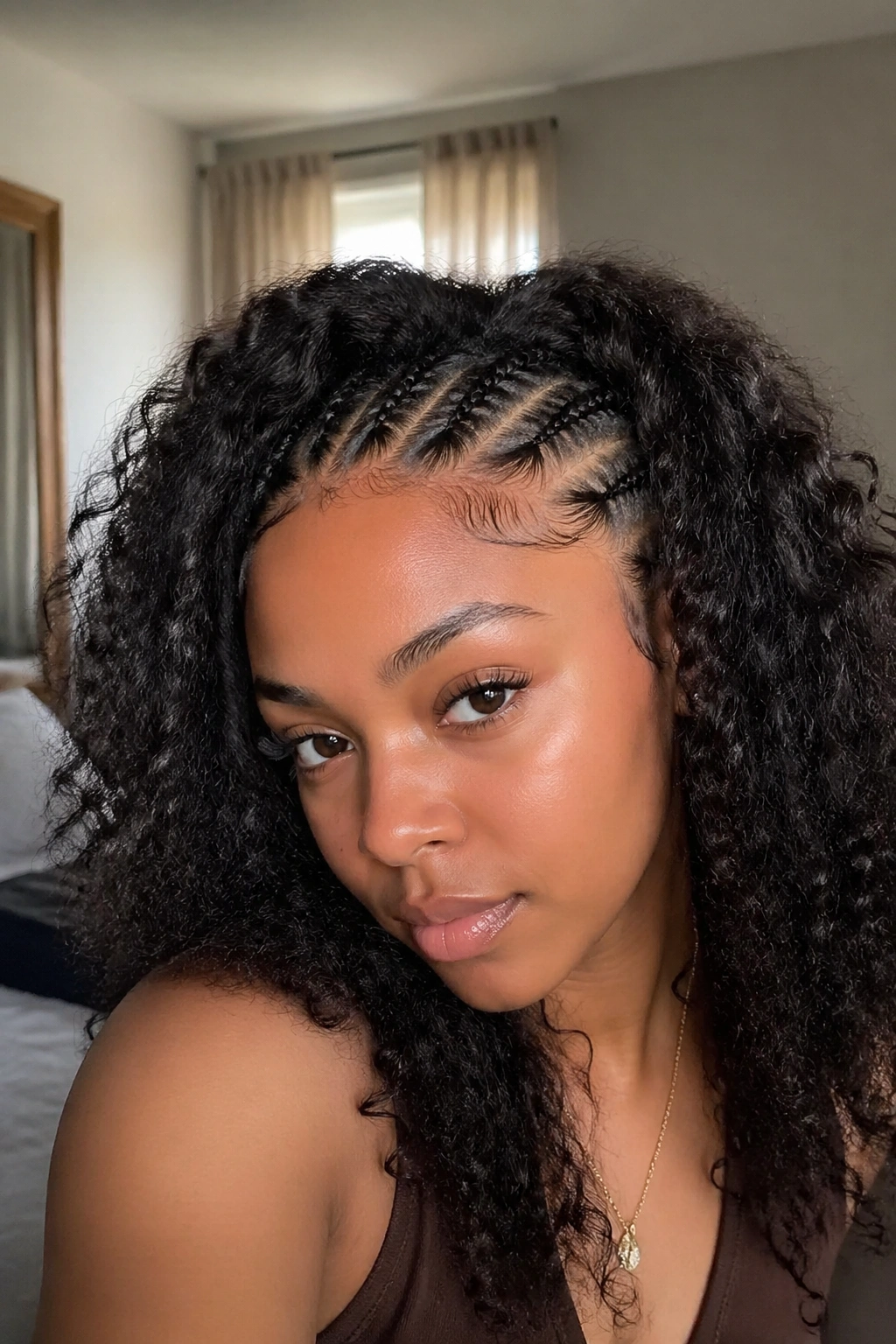
Just the front hairline cornrowed in 4-5 small cornrows that swoop along the hairline. Everything from those cornrows back is loose.
This is a minimal-cornrow, maximum-loose style. It defines the front of the face while keeping nearly all the hair loose for full natural texture display.
The hairline cornrows can be straight back, curved along the hairline, or angled in a side-swept direction.
20. Half Cornrows With Stitched Cornrow Section
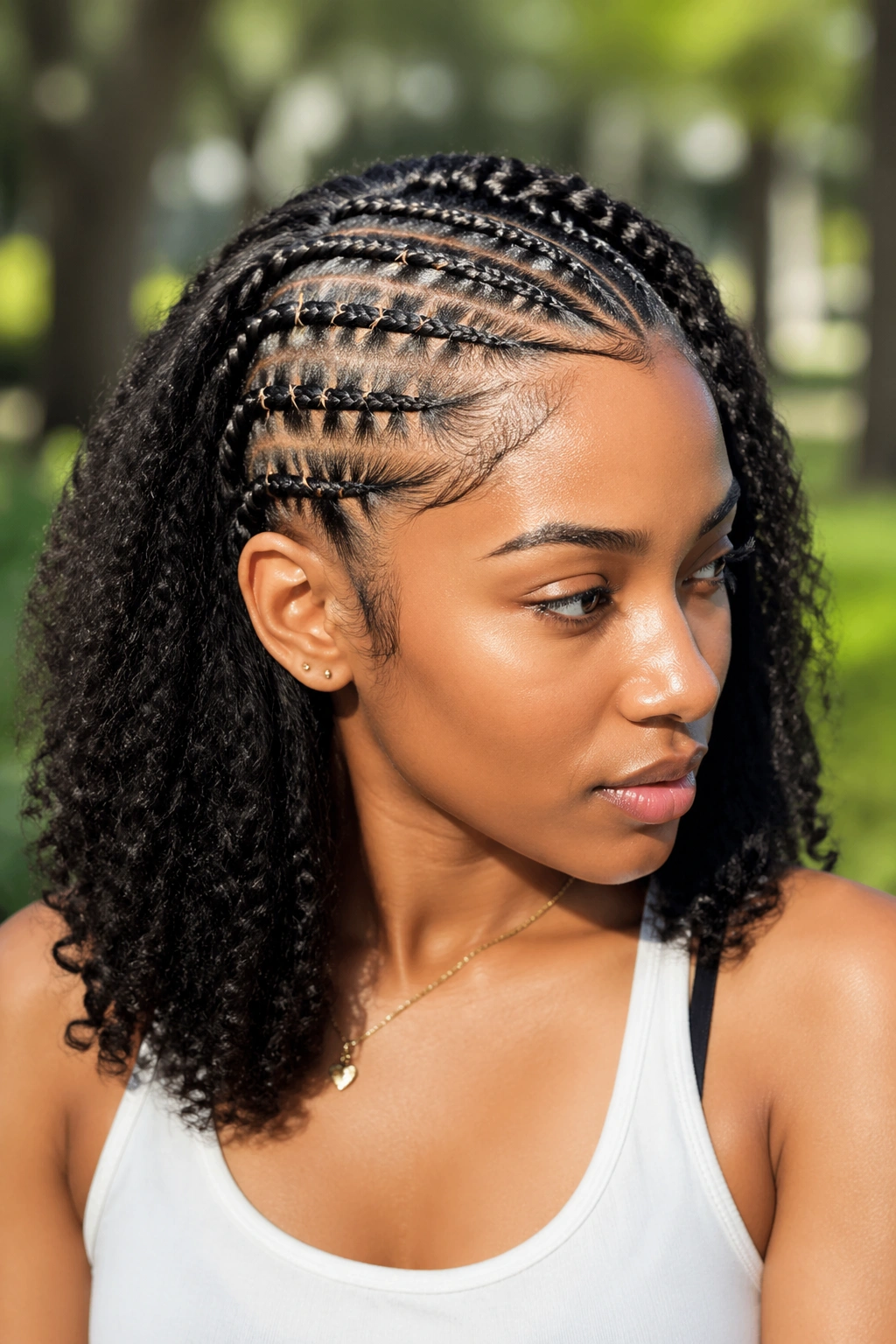
The cornrow section uses stitched cornrows (cornrows with horizontal stitch details). The loose section stays simple to avoid competing with the stitch detail.
Stitched cornrows add texture and visual interest to the half that gets the structural treatment, while the loose half showcases natural texture.
Stitch count: 3-5 per cornrow on a half-cornrow install.
21. Half Cornrows With Pinned-Back Loose Section
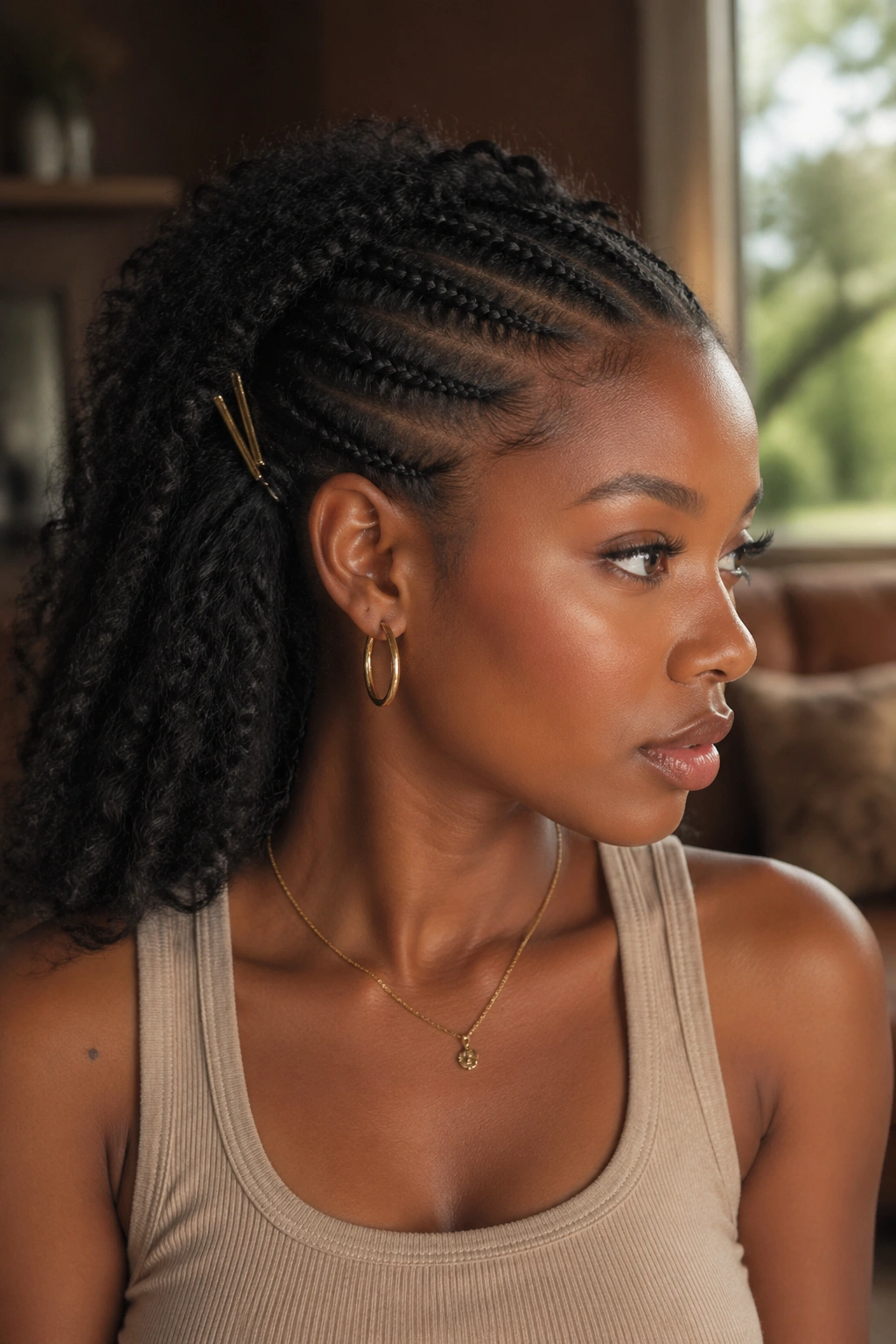
Cornrows on top, with the loose bottom section pinned back away from the face using bobby pins or decorative hair clips. The loose hair is gathered toward the back but not braided or styled into a bun.
This works for warm weather or active days when you want all hair off the face but don’t want a full cornrow install or full bun.
The pinning can be subtle (a few bobby pins hidden in the hair) or decorative (large clips or pins as visible accessories).
22. Half Cornrows With Loose Section in a Side Ponytail
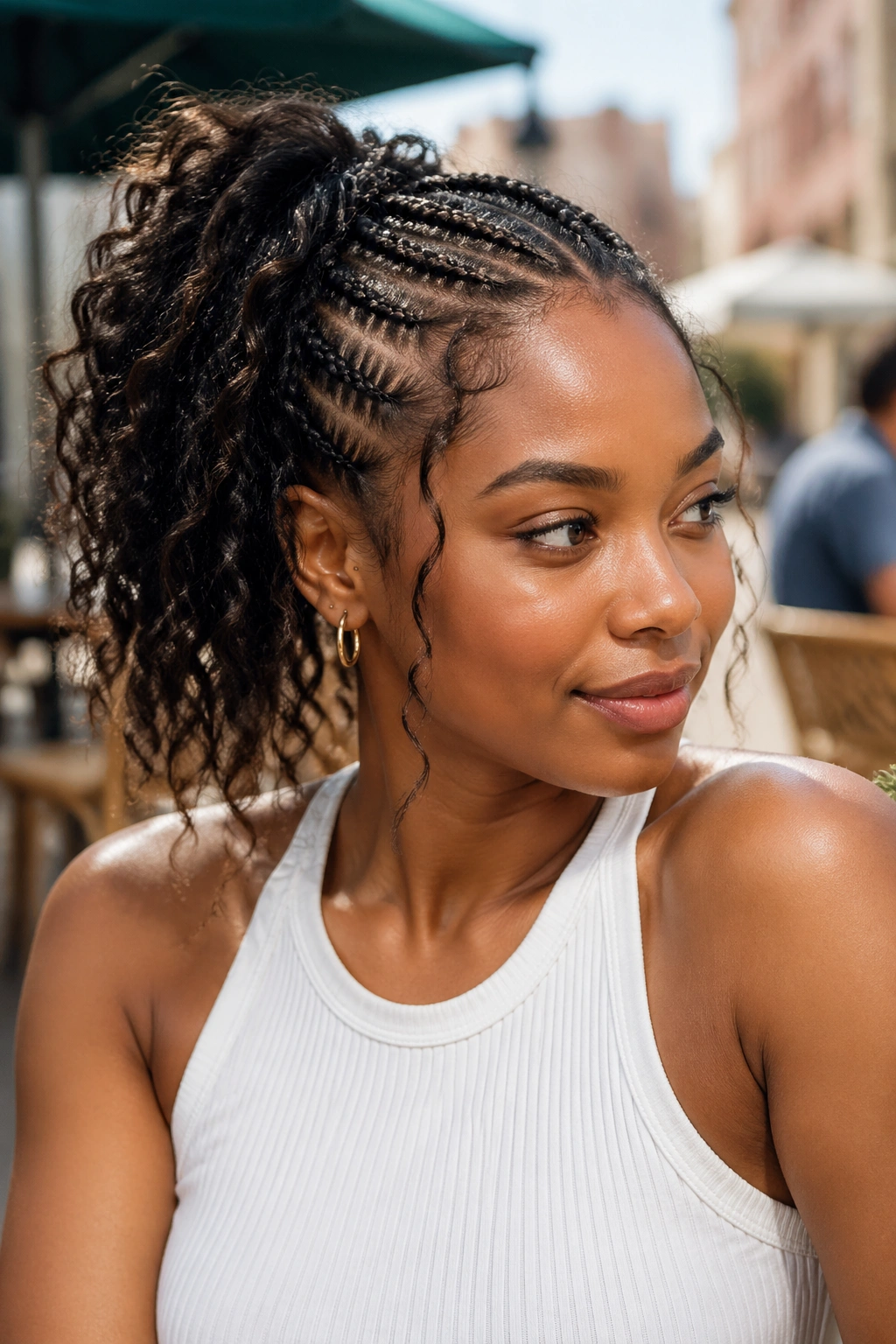
Cornrows on top and back, with the loose section gathered into a side ponytail above one ear.
The side ponytail position adds asymmetric styling to the half-cornrow base.
Best for casual events and weekend wear. The side ponytail reads as playful rather than formal.
23. Half Cornrows With Twisted-Out Loose Section
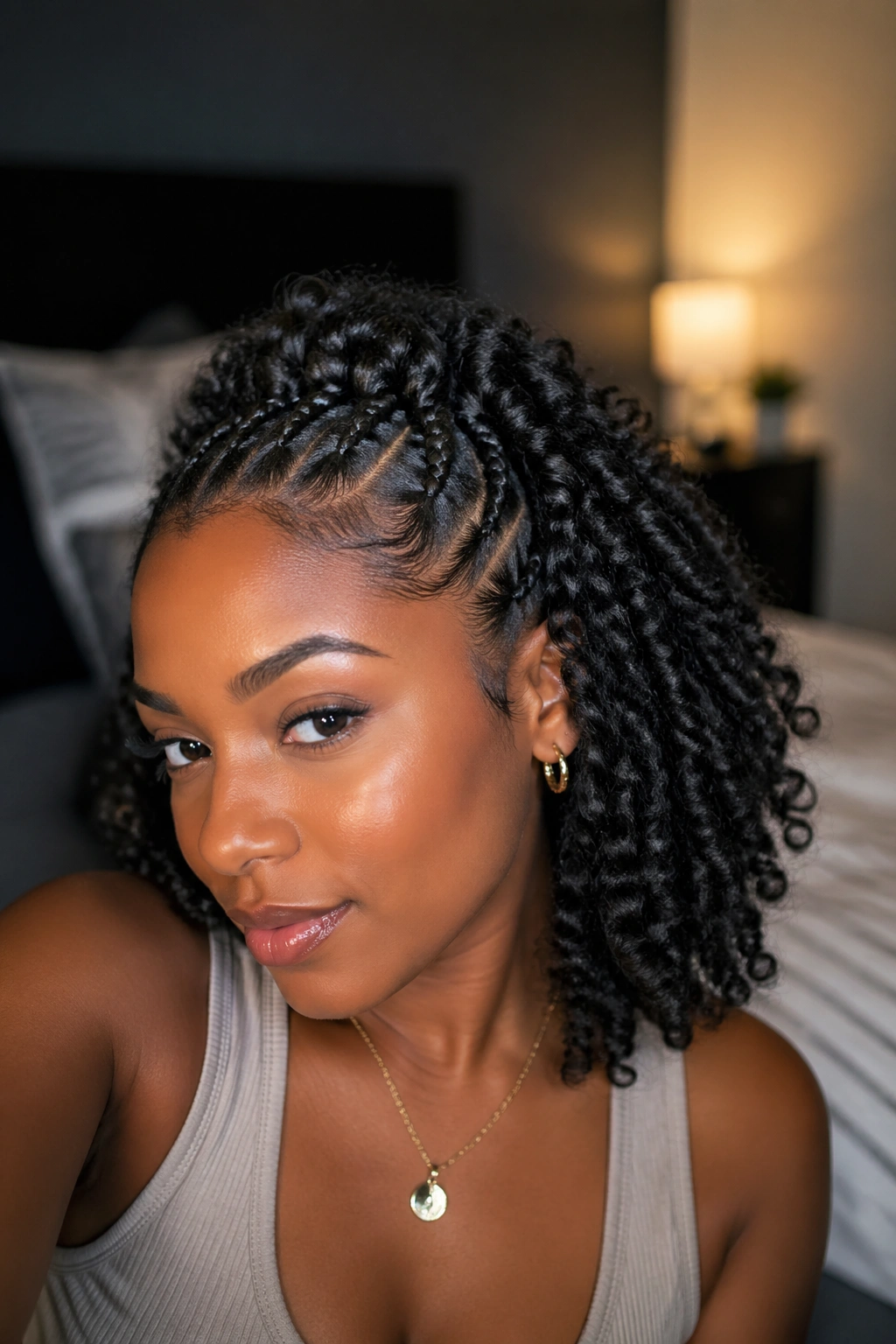
Cornrows on top, with the loose section styled into a twist-out for defined curls. The twist-out is set the night before the install, then unraveled before the loose section is styled.
This combines two styling techniques: cornrows for the front, twist-out for the back. The result is structured at the top and texturally defined at the bottom.
Twist-out maintenance: re-twist every 3-4 days to maintain definition. Sleep with the twist-out set in pineapple position (gathered loosely on top of the head).
24. Half Cornrows With Curls Pulled Forward
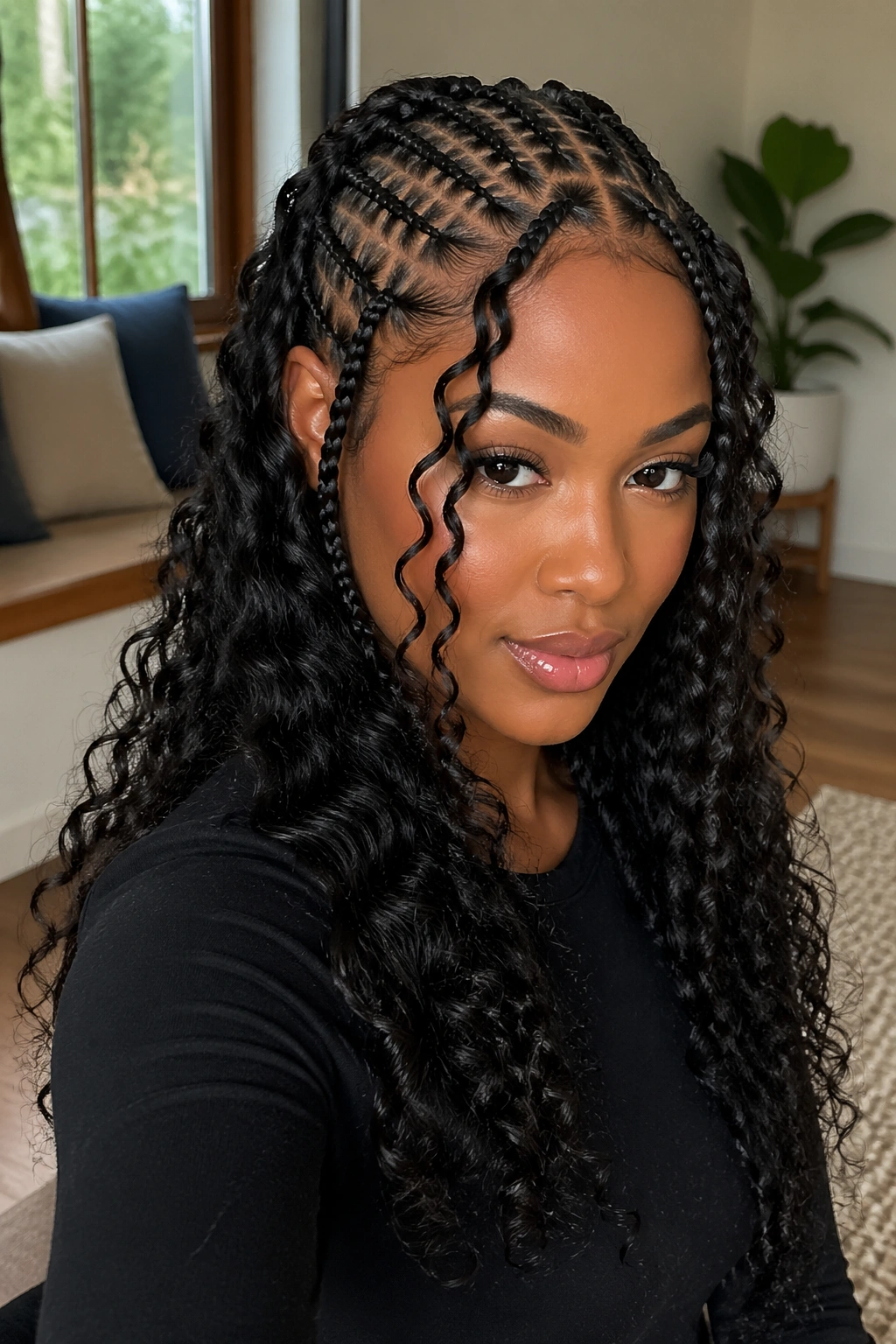
Cornrows on top of the head, with the loose section’s curls intentionally pulled forward to drape over the shoulders or frame the face. The curls aren’t pulled back — they’re styled forward as a deliberate face-framing element.
Who This Is For
Anyone who wants the front face frame of a half-up half-down style without the half-up structure.
- Cornrow only the top crown section
- Pull all the loose hair forward so it falls over the shoulders
- Style the loose hair into defined curls or waves
- Add face-framing curls at the temples for soft framing
This style reads as romantic and feminine. It works for date nights, casual weddings, and settings where soft styling is welcome.
25. Half Cornrows With Loose Section Tucked Behind Ears
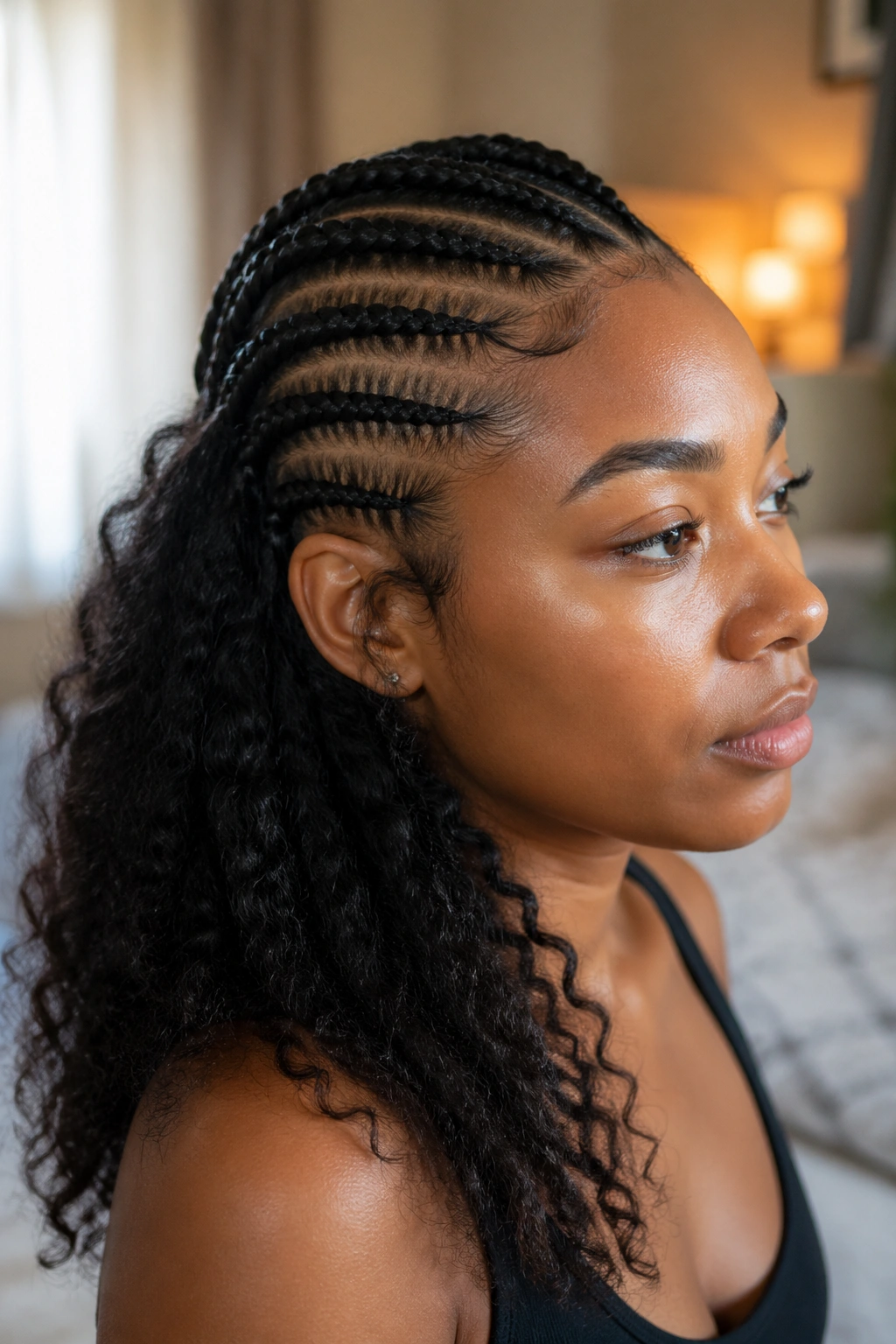
Cornrows on the top, with the loose section styled forward and tucked behind the ears. The ears stay visible and the loose hair flows down the back from behind the ears.
This is a clean, polished look that suits professional contexts and formal events.
The behind-the-ear tuck holds with a small dab of edge gel applied behind the ear, smoothing the loose hair against the head.
Sleeping in Half Cornrows
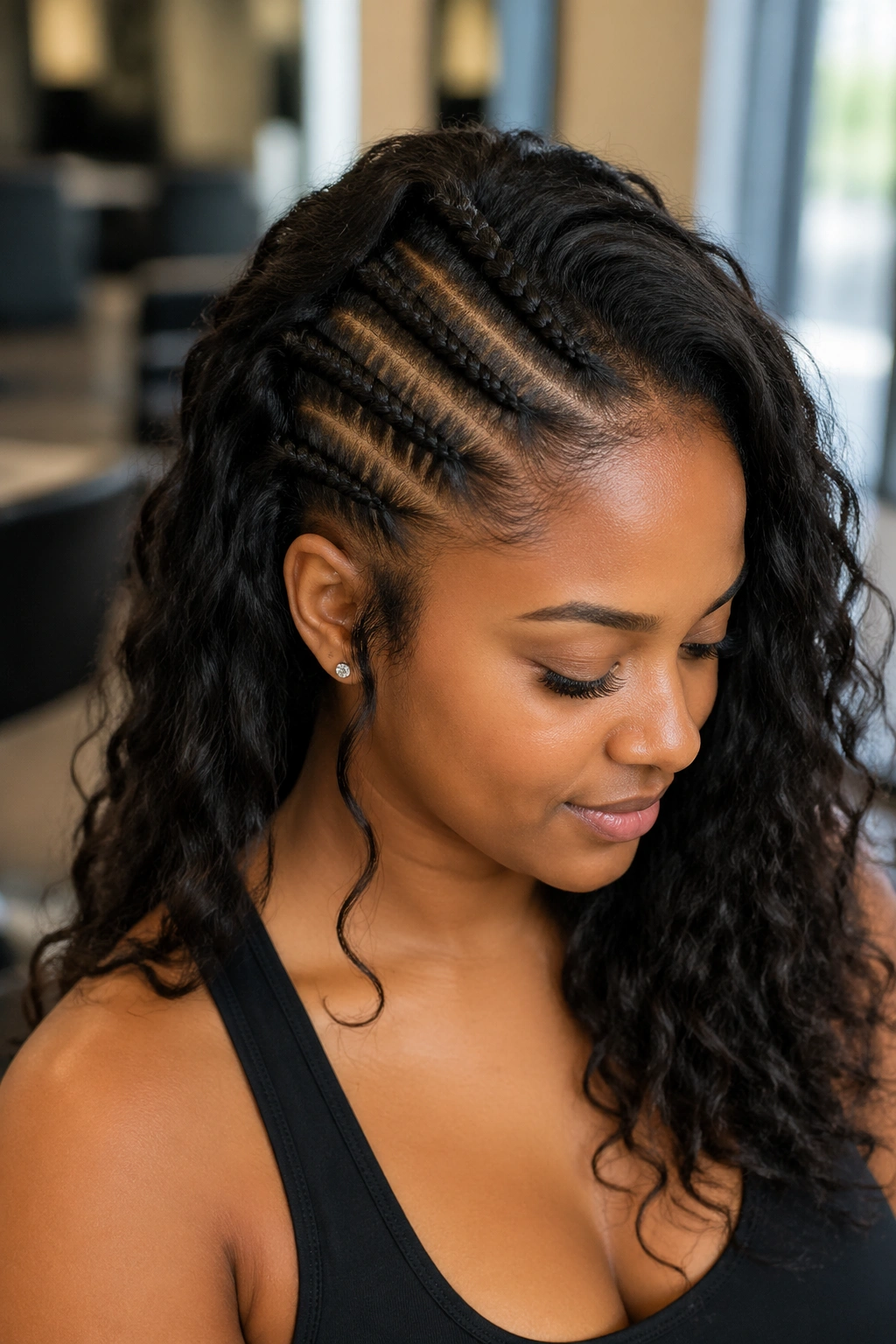
A half-bonnet that covers only the loose section is ideal. It protects the loose hair without compressing the cornrows.
Alternative: a full bonnet sized large enough to accommodate the loose section’s volume without flattening it. Standard bonnets work for most loose section styles.
The cornrows themselves can stay exposed if you sleep on a silk or satin pillowcase. Cotton pillowcases roughen up the cornrow pattern.
For the loose section’s care during sleep:
- Twist-outs: gather loosely into a pineapple at the top of the head
- Wash-and-go: stretch curls gently before bed to avoid flattening
- Afro: cover with a satin bonnet to prevent matting
Refreshing Half Cornrows Mid-Install
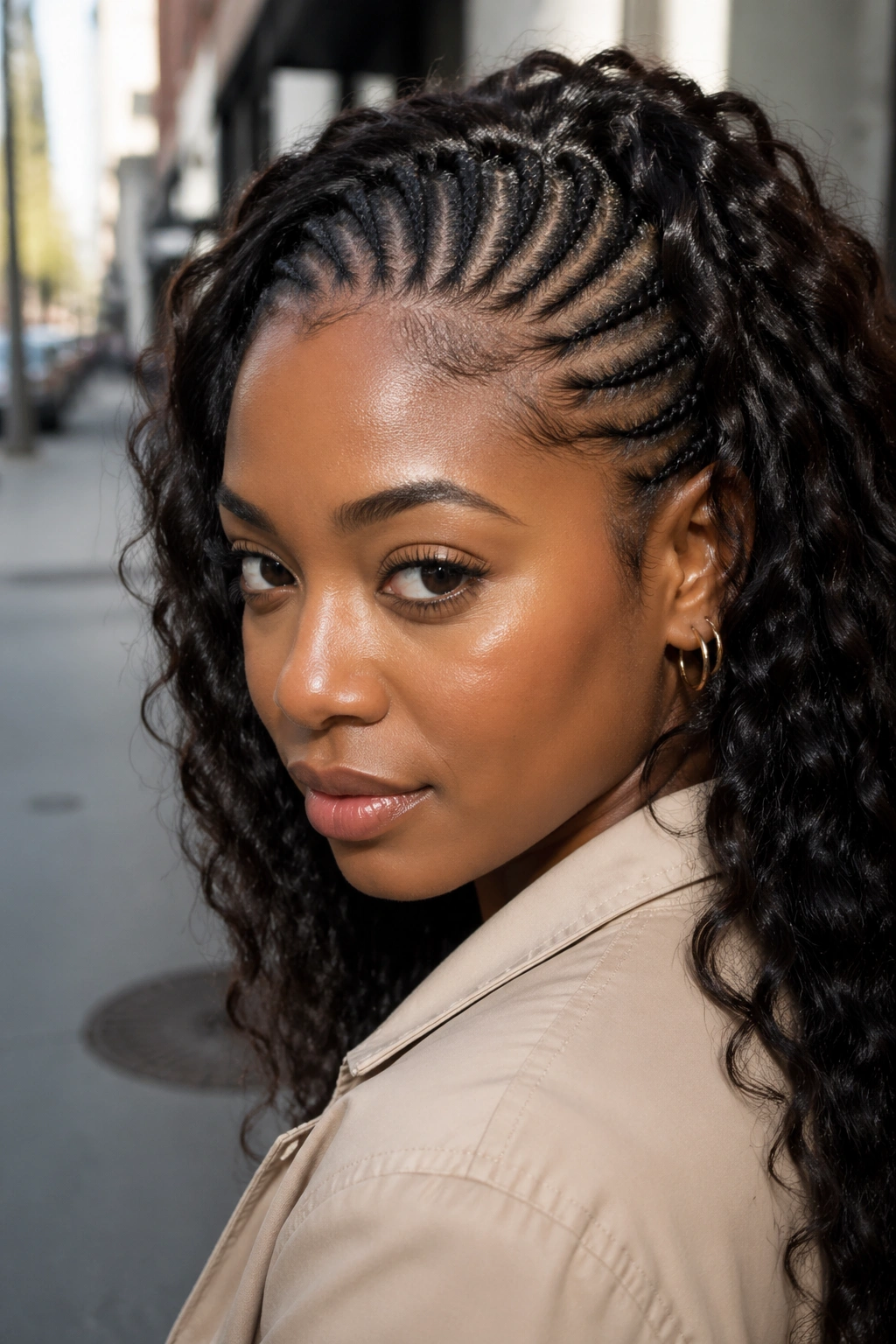
Cornrows: edge gel touch-up every 3-5 days. Smooth front edges with a soft toothbrush.
Loose section: depends on style.
- Twist-out: re-twist every 3-4 days
- Wash-and-go: re-moisturize every 2-3 days
- Afro: fluff with a pick daily
The cornrow side of the install lasts 3-4 weeks. The loose side can be restyled or refreshed indefinitely as long as you maintain the natural hair properly.
Common Half Cornrow Mistakes
Sloppy boundary line. The cornrow-to-loose boundary should be a clean, defined line. Sloppy parts make the whole style look unintentional.
Mismatched product use. The cornrow section needs minimal product (light leave-in only). The loose section may need curl cream, gel, oil. Don’t apply cornrow products to the loose section or vice versa.
Forgetting to refresh the loose section. Half cornrows aren’t a “set it and forget it” style. The loose section needs daily or every-other-day attention.
Wrong style for hair type. If your natural hair doesn’t hold curl definition well, a half cornrow style with a defined curl loose section won’t last long. Match the loose styling to your hair’s natural behavior.
Cornrow section too small to show. If you only cornrow a tiny strip, the cornrow detail gets lost in the loose volume. Cornrow at least a quarter of the head’s hair for the cornrow detail to read.
When Half Cornrows Aren’t the Right Call
Travel periods. Maintaining the loose section daily becomes a hassle on the road. Choose full cornrows or full braids for travel.
Long event timelines. Half cornrows work for 2-3 weeks max. For longer events, choose full cornrows or full braids that can hold for 6+ weeks.
High humidity or rainy environments. The loose section frizzes and flattens in humid conditions. The cornrows hold but the loose half loses shape.
Highly active lifestyles. Sports, swimming, intense workouts. The loose section can’t handle the same activity level as a fully braided install.
Half cornrows are about balance. They give you protection where you need it (the front and crown) while letting your natural texture or styled hair shine where it shows best (the loose section). They’re forgiving on tender scalps, friendly to transitioning hair, and adaptable to almost any styling preference. The challenge is knowing what your hair needs from each section and treating each accordingly.
