



A sleek weave ponytail can do a lot with very little drama. One clean part, one flat base, and a bundle that moves well at the ends can make the whole face look sharper, the outfit look more finished, and the hairline look intentional instead of rushed.
The part people miss is the base. A ponytail only looks polished when the crown is smoothed all the way down, the seam is hidden, and the extension has enough body to swing. Too much product at the roots turns the style stiff. Too little control leaves fuzz and frizz where you wanted shine. That balance matters even more on textured hair, because the style has to respect curl pattern, density, and the edges without turning the scalp into a tug-of-war.
Black women wear weave ponytails so well because the style can be strict or soft, dramatic or simple, long or just shoulder-grazing. High ponytails change the whole mood. Low ponytails feel calm and expensive-looking without trying too hard. Braided bases add structure. Curled ends bring back movement. And when the install is right, you get that clean line from the hairline to the finish that makes people look twice.
A good slicked ponytail should look smooth from the front and still move when you turn your head. That sounds easy. It isn’t. But once you know which shape suits your face, how much length you actually want, and how much tension your scalp can take, the options open up fast.
1. The Classic High Sleek Weave Ponytail
A classic high weave ponytail is the one that never needs an apology. It lifts the face, shows off cheekbones, and gives you that sharp, clean finish that works with hoops, red lips, or a plain T-shirt and great lashes. When the base is tight but not painful, the whole style reads polished in a second.
How to keep the crown flat
- Use a tail comb to part the hair cleanly from ear to ear, then smooth the front and sides back in small sections.
- Lay the roots with a light gel or foam, not a thick pile of product. Heavy buildup makes the base look dull and crusty.
- Wrap the hair with a silk scarf for 10 to 15 minutes before attaching the ponytail piece. That pause matters.
The best version of this style has height at the crown and a neat wrap around the base so the attachment disappears. It looks especially good when the ponytail falls past the shoulder blades and the ends stay soft, not chopped off bluntly.
Use this one when you want confidence without extra fuss. It is loud in the right way. A little edge, a little lift, no mess.
2. The Low Center-Part Weave Ponytail
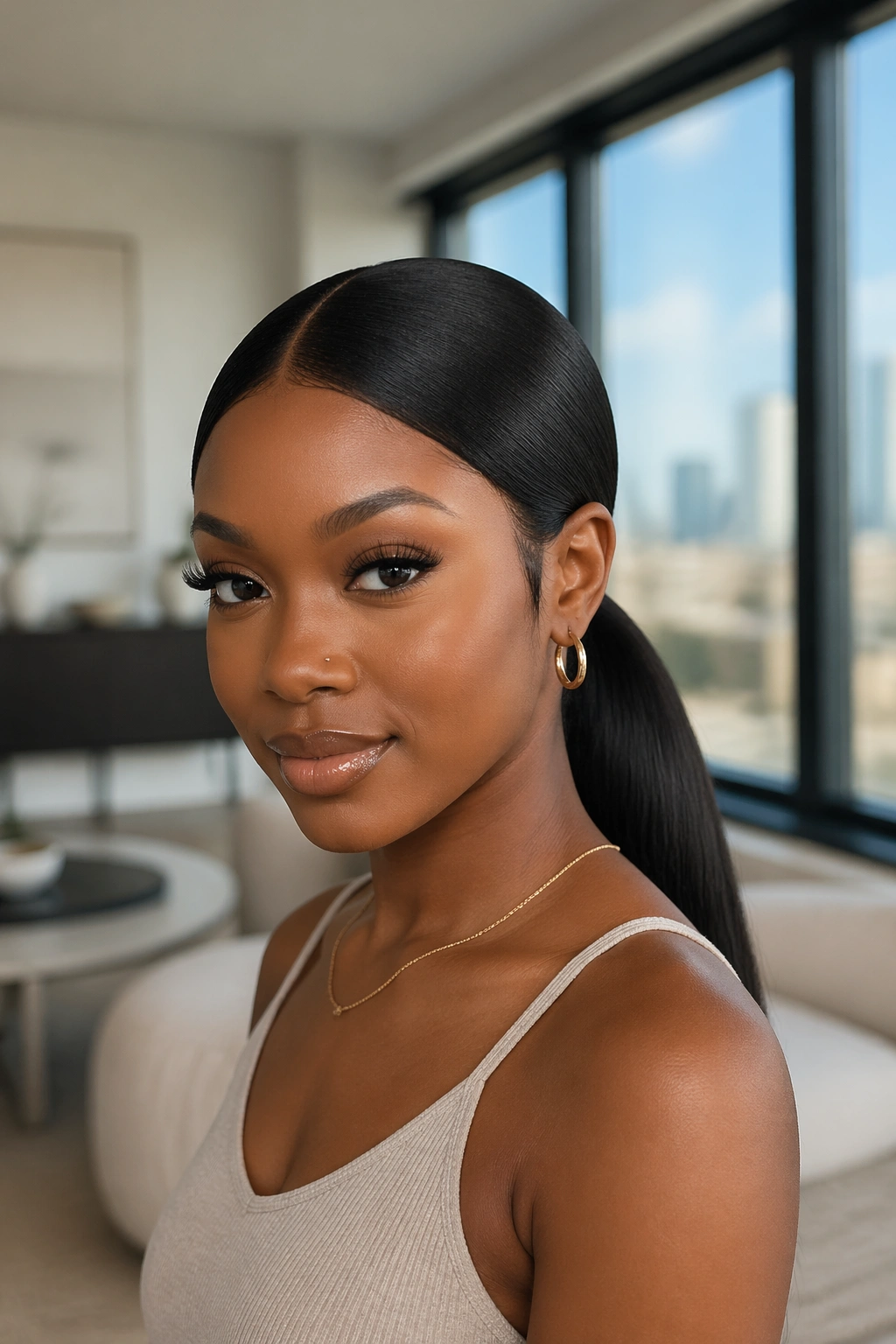
A low center-part ponytail has a calm, clean look that never gets old. It sits at the nape, which means the face stays open and the style feels balanced instead of top-heavy. On Black women, this cut works beautifully with straight bundles because the middle part creates a long line that looks neat from every angle.
The nice thing about this version is that it does not fight the face. It frames it. If your features are sharp, the middle part softens them a bit. If your jawline is rounder, the long drop of the ponytail gives the eye somewhere to travel. That little bit of length does a lot.
Keep the part precise. A crooked center line throws the whole style off, and you can see it immediately. A narrow wrap of hair around the base keeps the install polished and hides the tie or elastic. Clean, simple, done.
3. The Deep Side-Part Low Ponytail
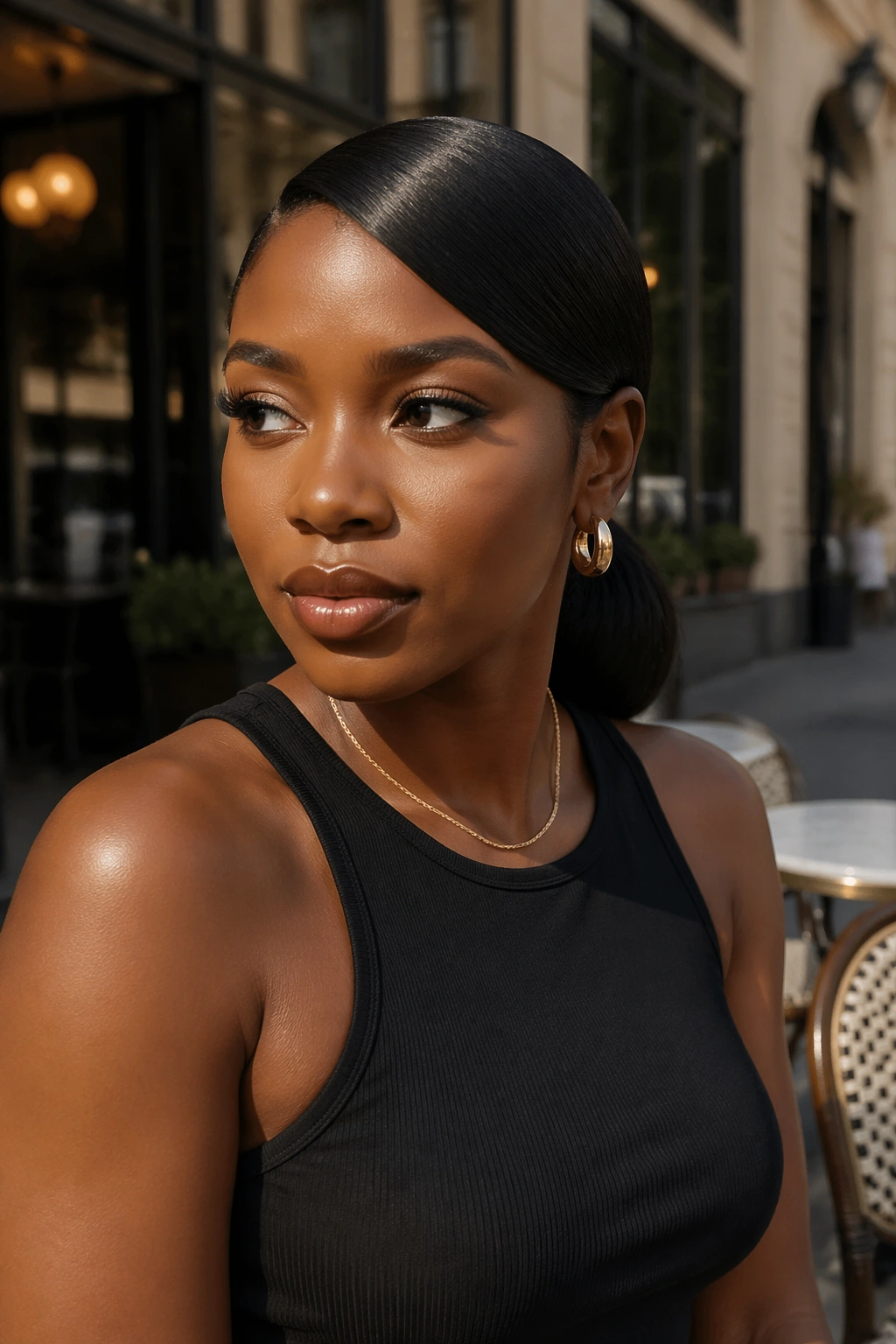
A deep side-part low ponytail gives you movement before the hair even starts to swing. The part creates shape at the front, and the ponytail sitting low keeps the style grounded. It feels softer than a straight middle part, which is why a lot of people reach for it when they want elegance without the stiff look.
This style works well when the front section is pressed smooth and tucked just enough to follow the curve of the head. The side part should be deep enough to matter, not just a tiny shift of an inch or two. That is the difference between “I changed my part” and “I changed the whole vibe.”
If you like earrings, this one is a solid pick. The open side shows them off, and the ponytail can rest over one shoulder or down the back. It’s a small thing, but it makes the style feel finished.
4. The Wrapped Base Ponytail
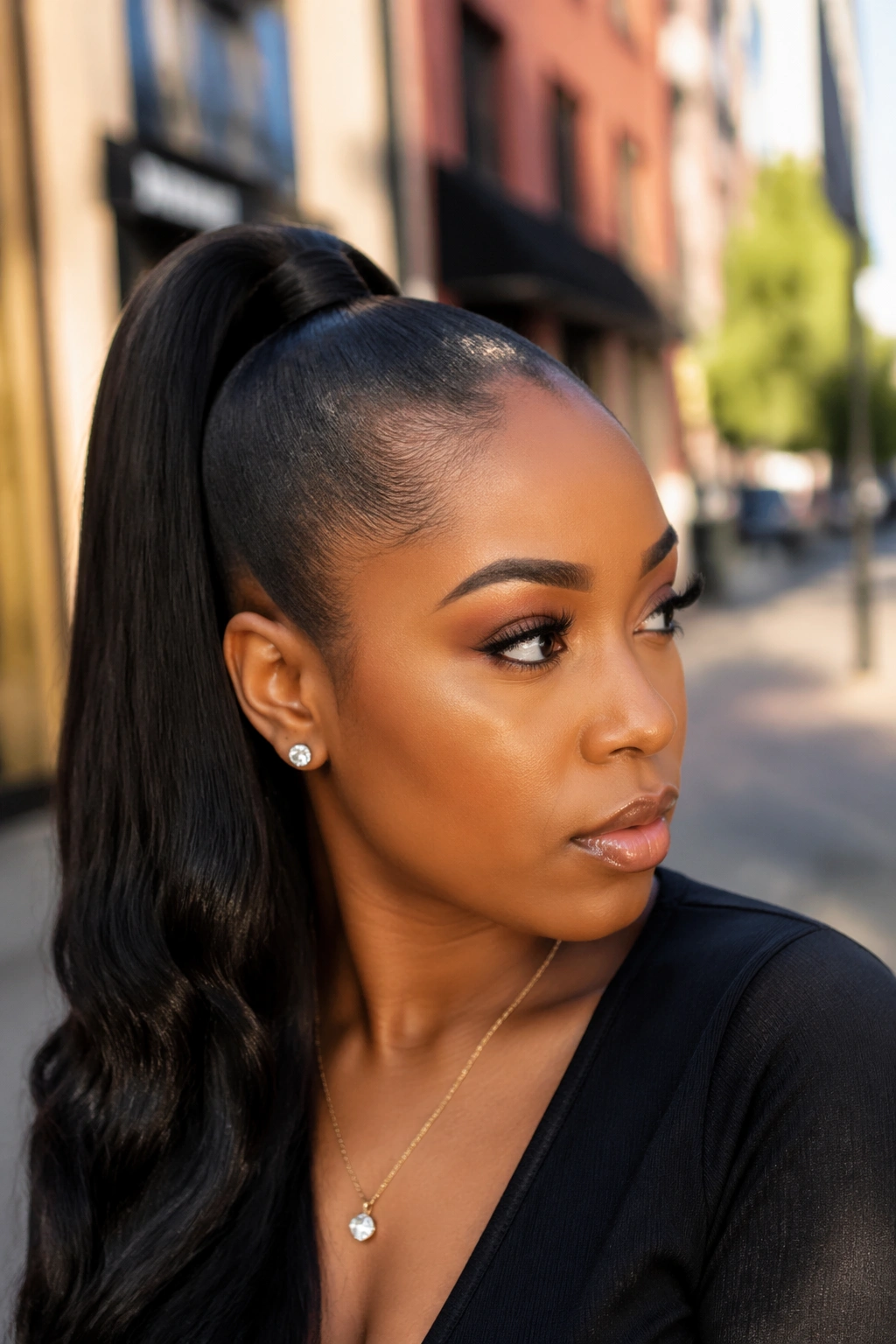
The wrapped base ponytail is for anyone who hates seeing a tie, a track, or a rough seam. A small strip of hair wrapped around the base hides the attachment and makes the ponytail look more expensive than it really is. That wrap is doing a lot of quiet work.
Why the wrap hides the seam
The wrap covers the exact spot where the ponytail starts, which is usually the part that gives away a quick install. When the wrap is snug and pinned under the ponytail, the eye moves straight to the length instead of the mechanics. That’s the whole trick.
- Choose a wrap piece that matches the bundle texture and color closely.
- Secure it with bobby pins pushed upward, not sideways.
- Mist the wrap lightly so flyaways don’t stick out.
This style is smart when the base is not perfect. It covers minor roughness and makes the finish look intentional. A wrapped ponytail can be sleek, braided, curly, or bone-straight. The base stays the same. Neat is the point.
5. The Bone-Straight Waist-Length Ponytail
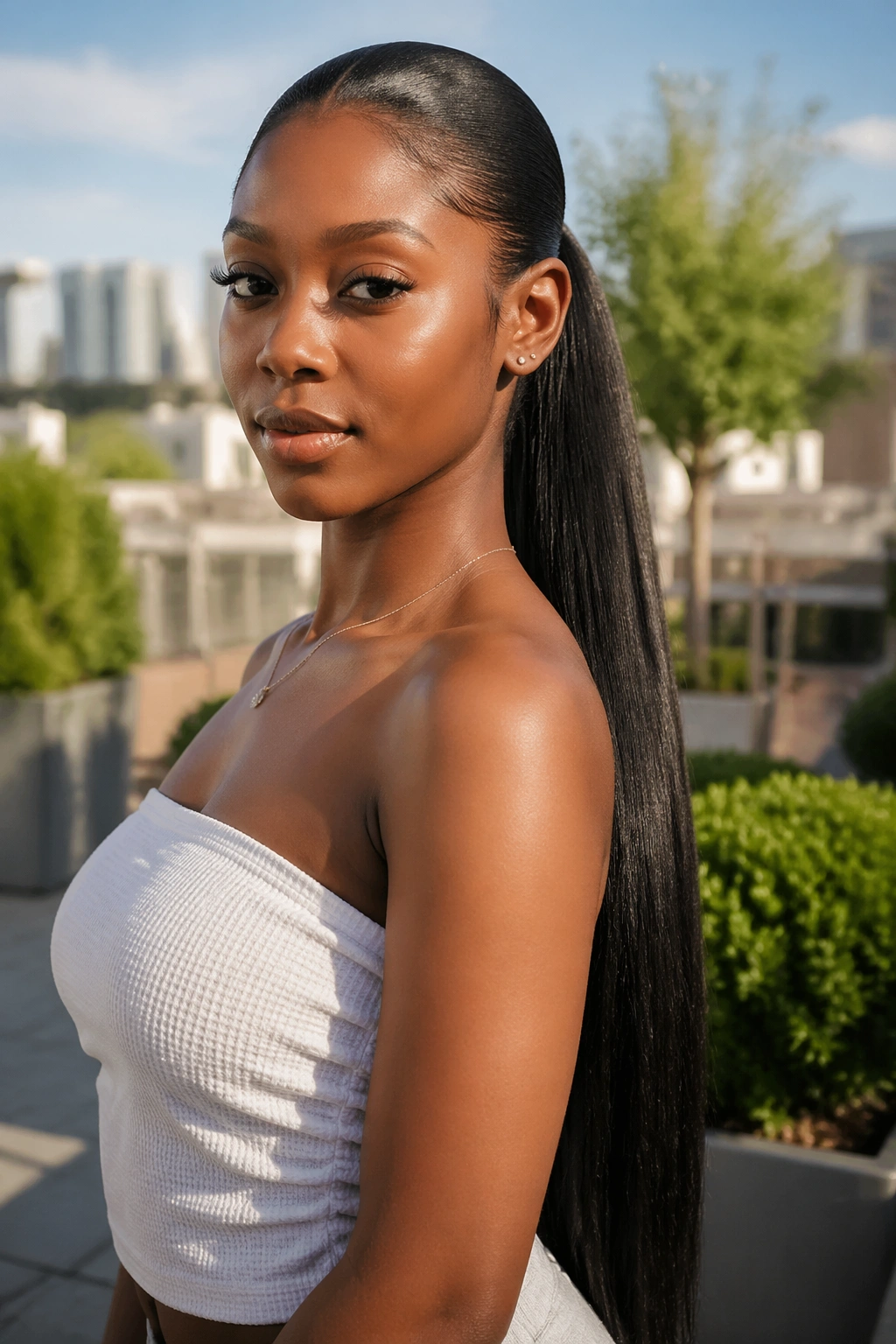
A bone-straight waist-length ponytail is all about length and shine. The hair should fall in one clean line with almost no bend, which makes the bundle feel dramatic even if the outfit is simple. It is one of those looks that gets attention because it moves with a little weight.
The biggest mistake here is using hair that is too thin or too dull. A long straight ponytail needs density, or the ends look stringy fast. If you like that glassy finish, the extension should be smooth but not so silky that it slips and tangles every ten minutes. There is a difference.
This look is especially sharp when the natural hair at the top is kept flat and the ends are trimmed evenly. Uneven bundle ends show more than people think. Straight hair tells on you. Every little flaw appears in the light.
6. The Curled-End High Ponytail
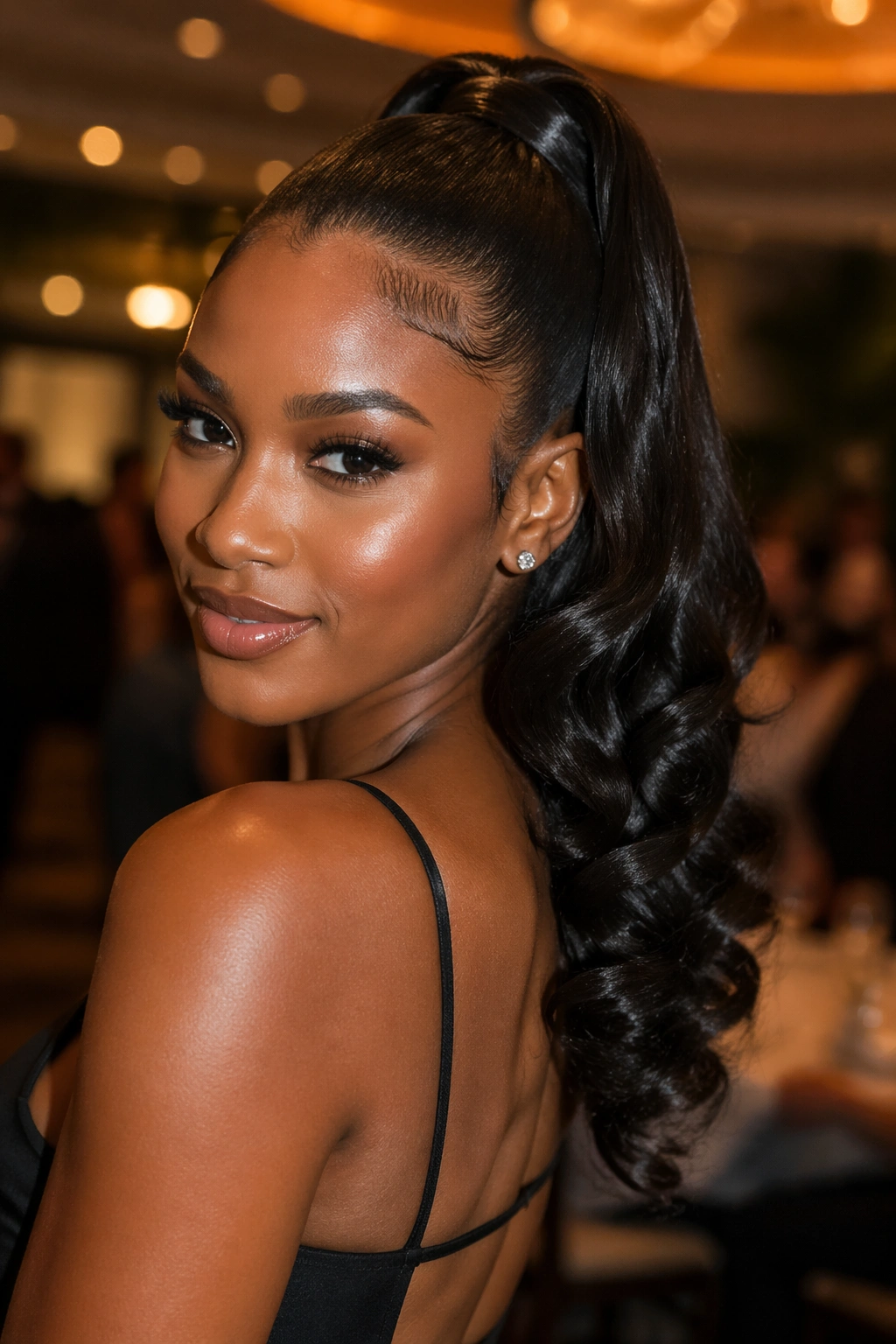
A curled-end high ponytail gives you the best of both worlds: a sleek base and some movement at the bottom. The top stays neat, but the curls at the ends keep the style from looking too hard. That softness matters. A flat, straight ponytail can look severe if the face or outfit already has strong lines.
Barrel curls or spiral curls both work, but they should start low enough that the ponytail still reads long. If the curls begin too high, the style turns puffy at the wrong place. You want lift at the crown and bounce at the ends. That’s the sweet spot.
This is a nice choice for events where you want shape without a full curly look. It photographs well from the side and gives you a little motion when you walk. Small detail, big payoff.
7. The Bubble Ponytail With Smooth Roots
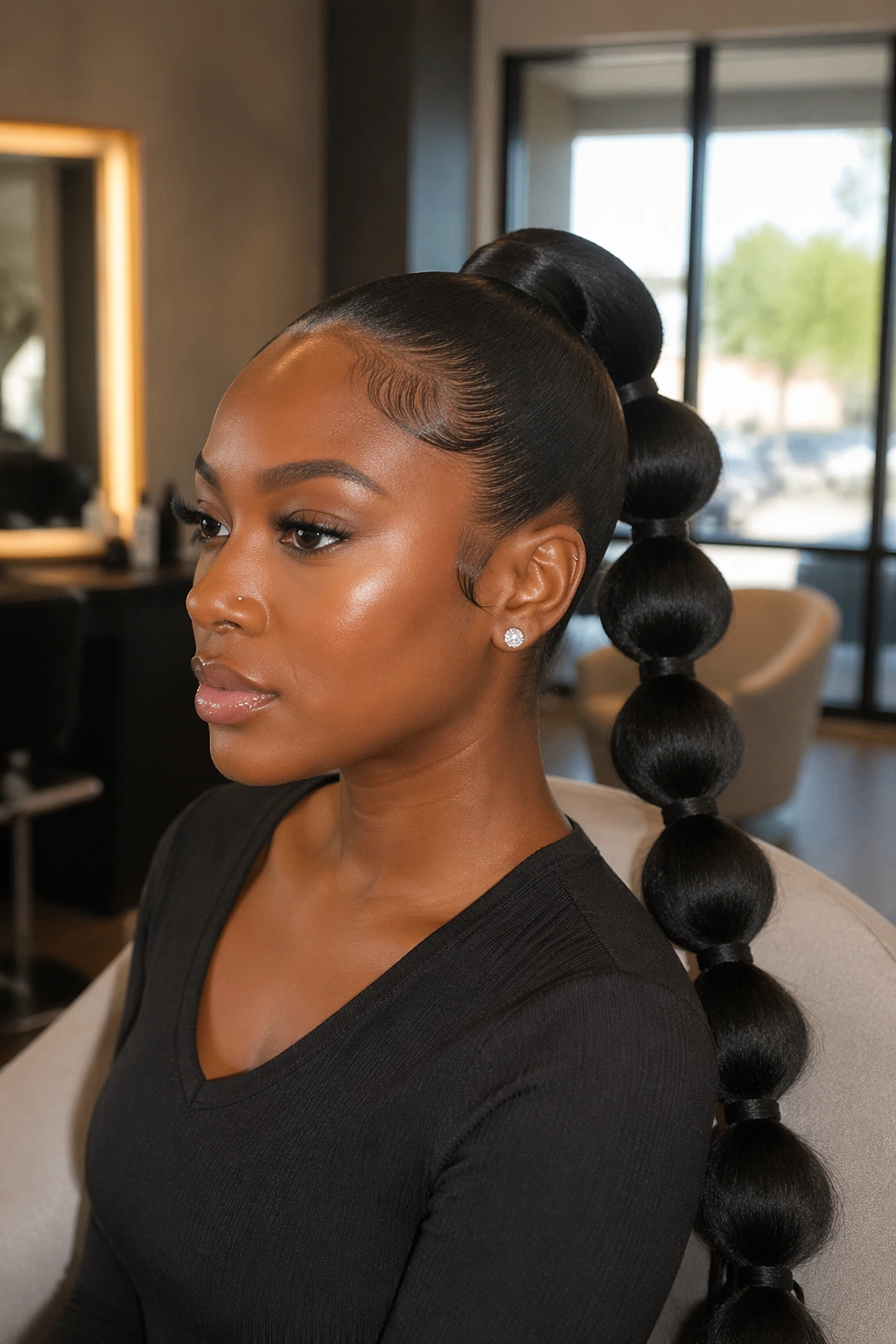
A bubble ponytail sounds playful, but on a sleek base it can look sharp and grown. The sections break the length into round segments, and each band gives the eye a clean pause before it moves to the next one. Done right, it feels modern without looking fussy.
Best spacing for the bubbles
- Place the first elastic about 3 to 4 inches below the base.
- Keep the next bands evenly spaced so the bubbles look intentional.
- Gently pull each section outward after tying to create shape.
The roots need to stay smooth, or the whole style loses the contrast that makes it interesting. I like this one for medium to long lengths because the sections have room to breathe. Shorter lengths can work too, but the bubbles need enough hair to look full.
It is also one of the few sleek styles that feels a little playful. Not childish. Just lighter.
8. The Feed-In Braided Ponytail
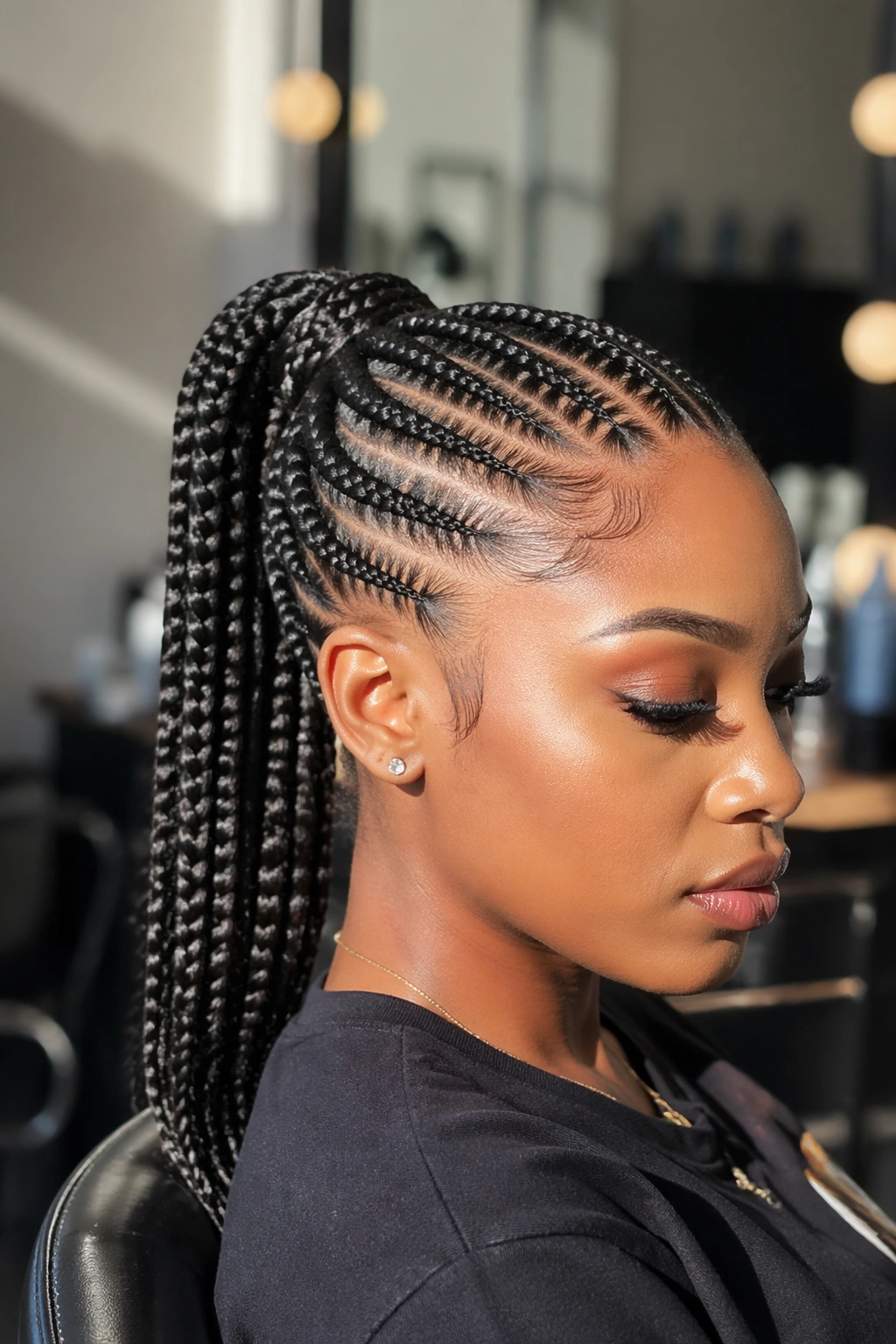
A feed-in braided ponytail brings structure to the front and stays neat for a long stretch. The braid starts small and gets fuller as hair is added, which keeps the base from feeling bulky. That gradual build matters when you want a sleek look rather than a heavy one.
This style is a good fit if you like control. It keeps the natural hair tucked in and gives the ponytail a strong anchor. The braid can run straight back or start with a middle part and merge into one long ponytail braid. Either way, the finish is clean and sturdy.
A braided ponytail also handles movement well. The braid at the base keeps everything together, and the length can be worn straight, curled at the end, or finished with a little thread wrap. It holds up well when you don’t want to keep fixing your hair.
9. The Side-Swept Face-Framing Ponytail
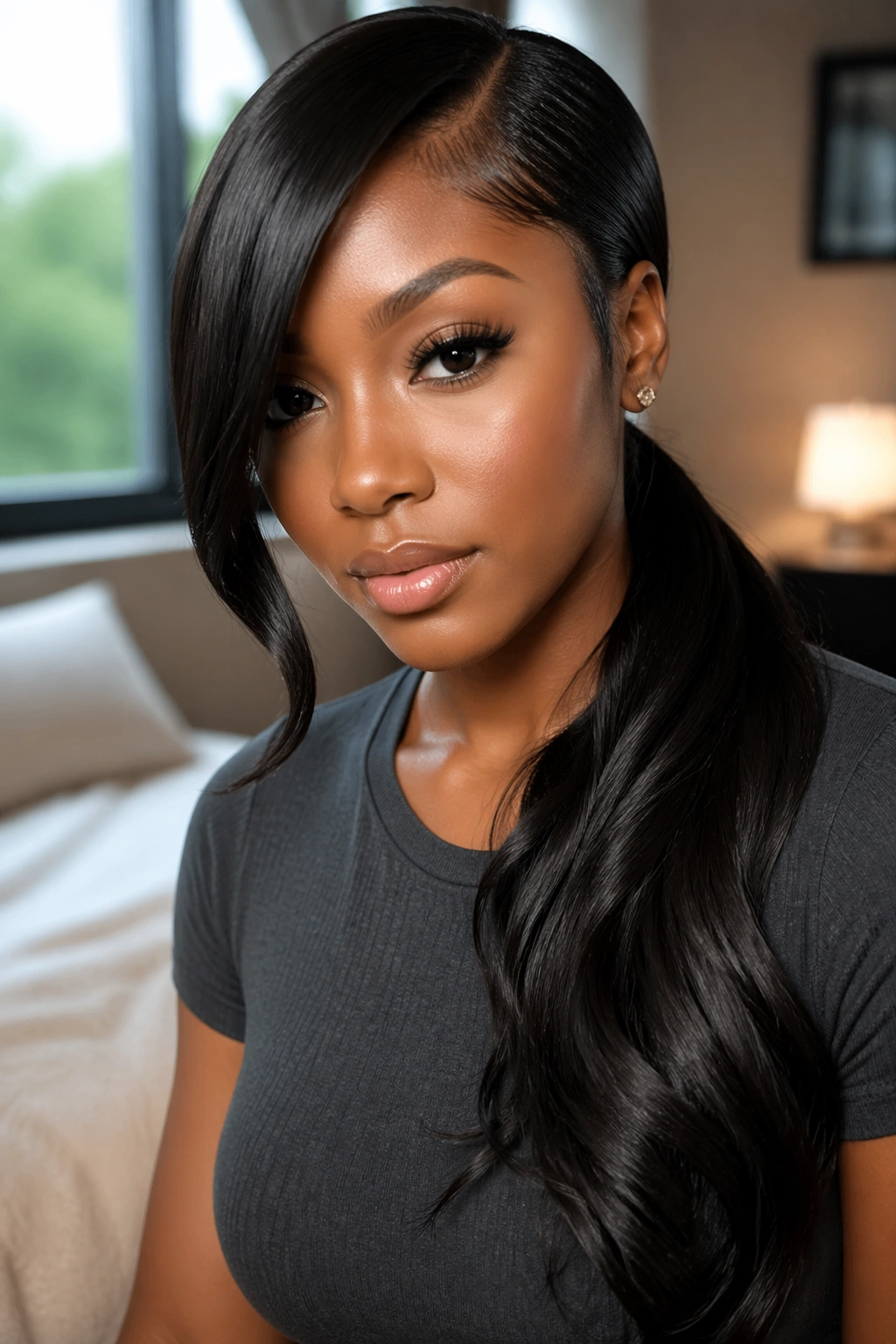
A side-swept ponytail gives the face a gentler line than a straight-back style. The ponytail sits off to one side, and that shift changes the whole mood. It looks soft, but not weak. There’s still polish there.
This one works especially well when you want front pieces that skim the cheekbone or jaw without covering too much. The side sweep creates motion at the front, which helps if you don’t love the look of a strict center part. Some people feel more like themselves with a little asymmetry. Fair enough.
Keep the part and the sweep clean. If the front is messy, the style turns dated fast. If the front is smooth and the ponytail falls heavy over one shoulder, it looks deliberate and elegant without trying too hard.
10. The Wet-Look Weave Ponytail
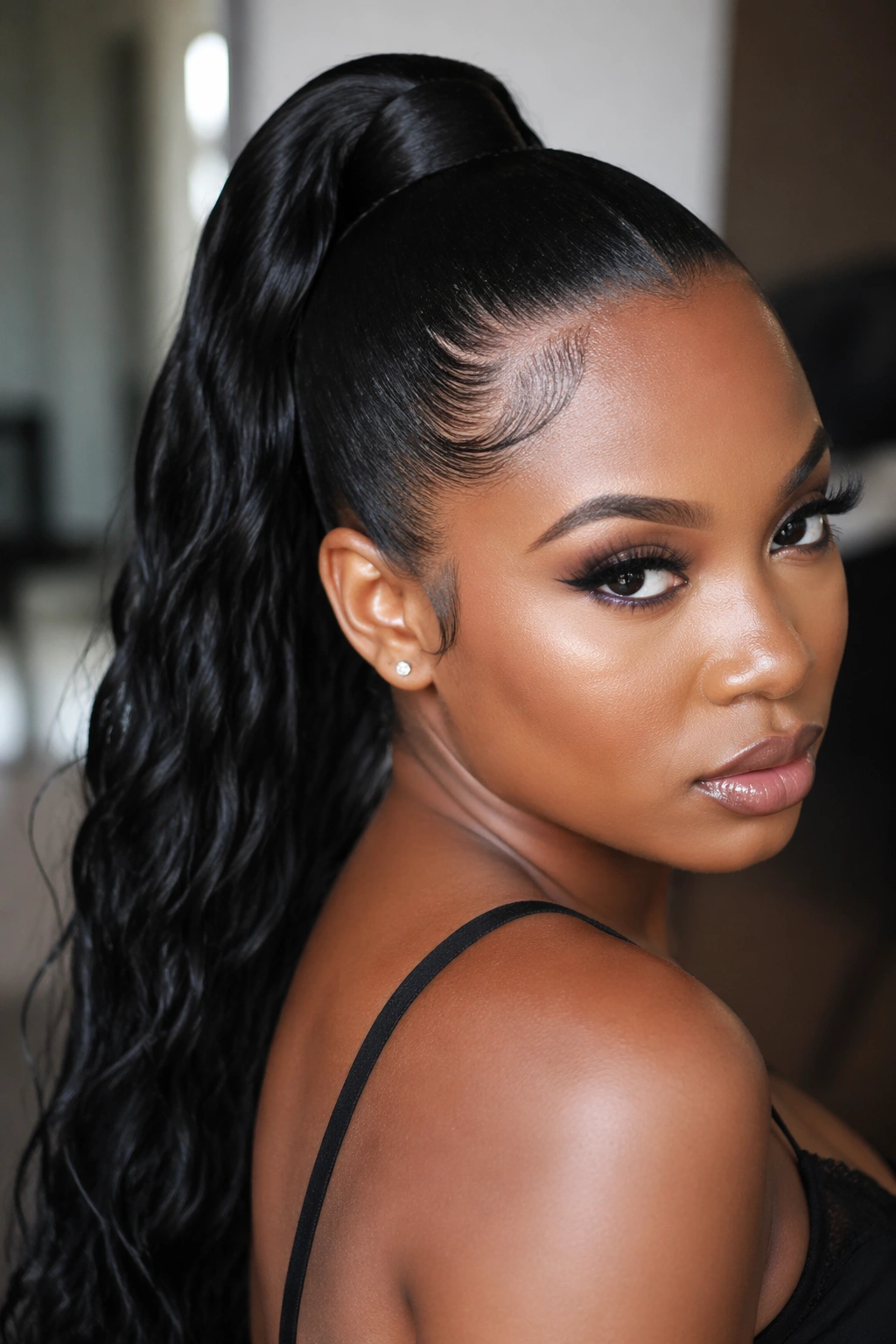
A wet-look weave ponytail is glossy on purpose. The roots are molded flat, the surface has that shiny finish, and the whole style can feel a little editorial if that’s your thing. It is not the same as greasy. Not even close.
What gives it that wet finish
The shine comes from layering the right kind of product lightly and smoothing it while the hair is still pliable. A mousse or gel with a clean finish works better than a sticky one that flakes once it dries. The hair should look slick, not crunchy.
This style needs discipline. Once the base is smoothed, leave it alone and let it set. Poking at it after the fact ruins the finish faster than almost anything else. I like this one for evenings, photo-heavy events, and outfits that already have structure.
It is bold, yes. But there is something satisfying about a ponytail that looks almost liquid at the crown and then drops into a clean length.
11. The Curly-End Low Ponytail
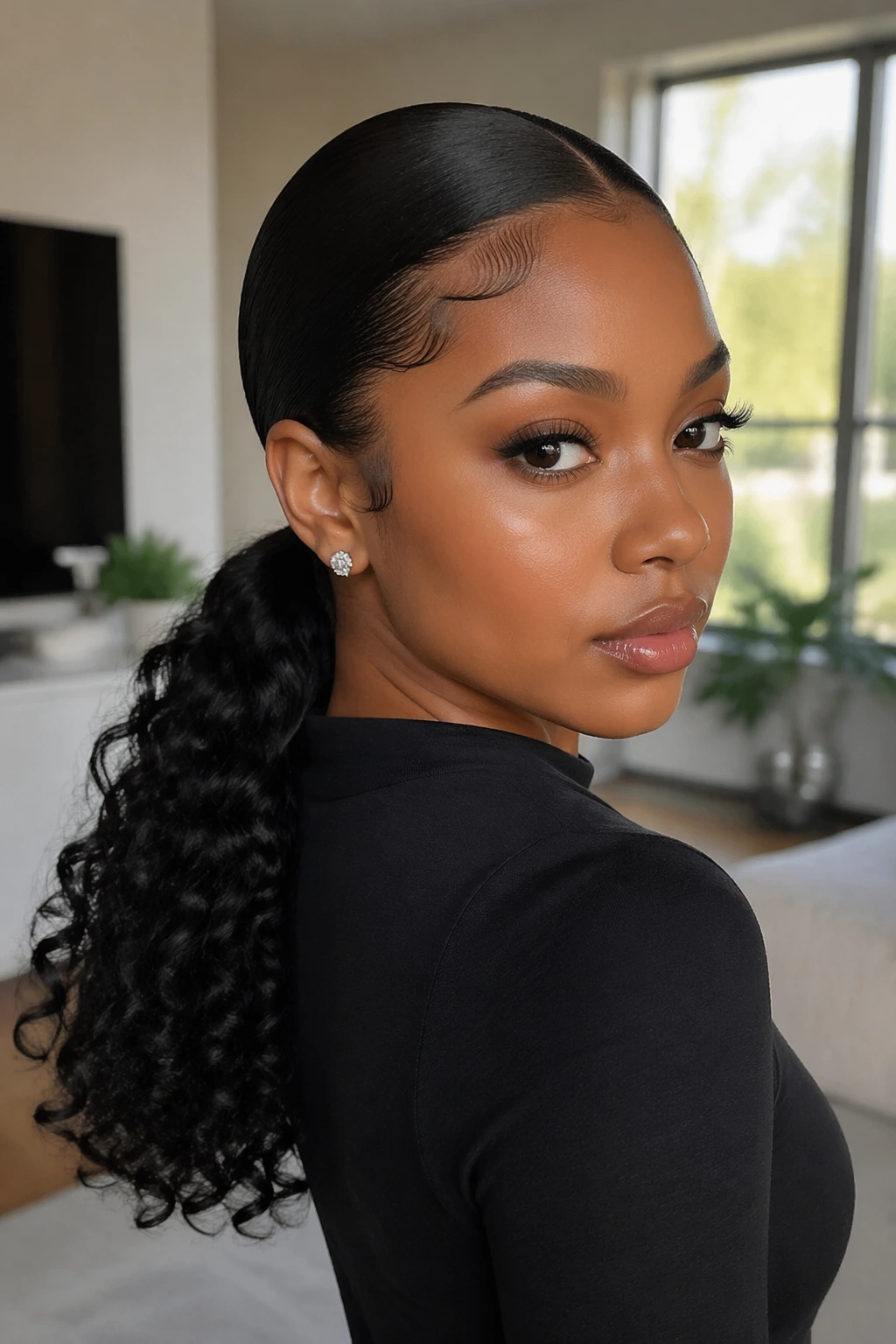
A low ponytail with curly ends softens the whole shape. The base stays tidy and close to the neck, while the ends add bounce. That little split between smooth and textured gives the style a nicer rhythm than a straight drop all the way through.
If you like movement but still want a polished base, this is an easy favorite. The curls can be loose and brushed out or tighter and springy. Loose curls feel more relaxed. Tighter curls feel a little dressier. Neither one is wrong.
This version is kind on the eye because it doesn’t shout. It sits quietly at the back, then surprises you with texture when the hair moves. Sometimes that’s all a style needs.
12. The Crisscross Base Ponytail
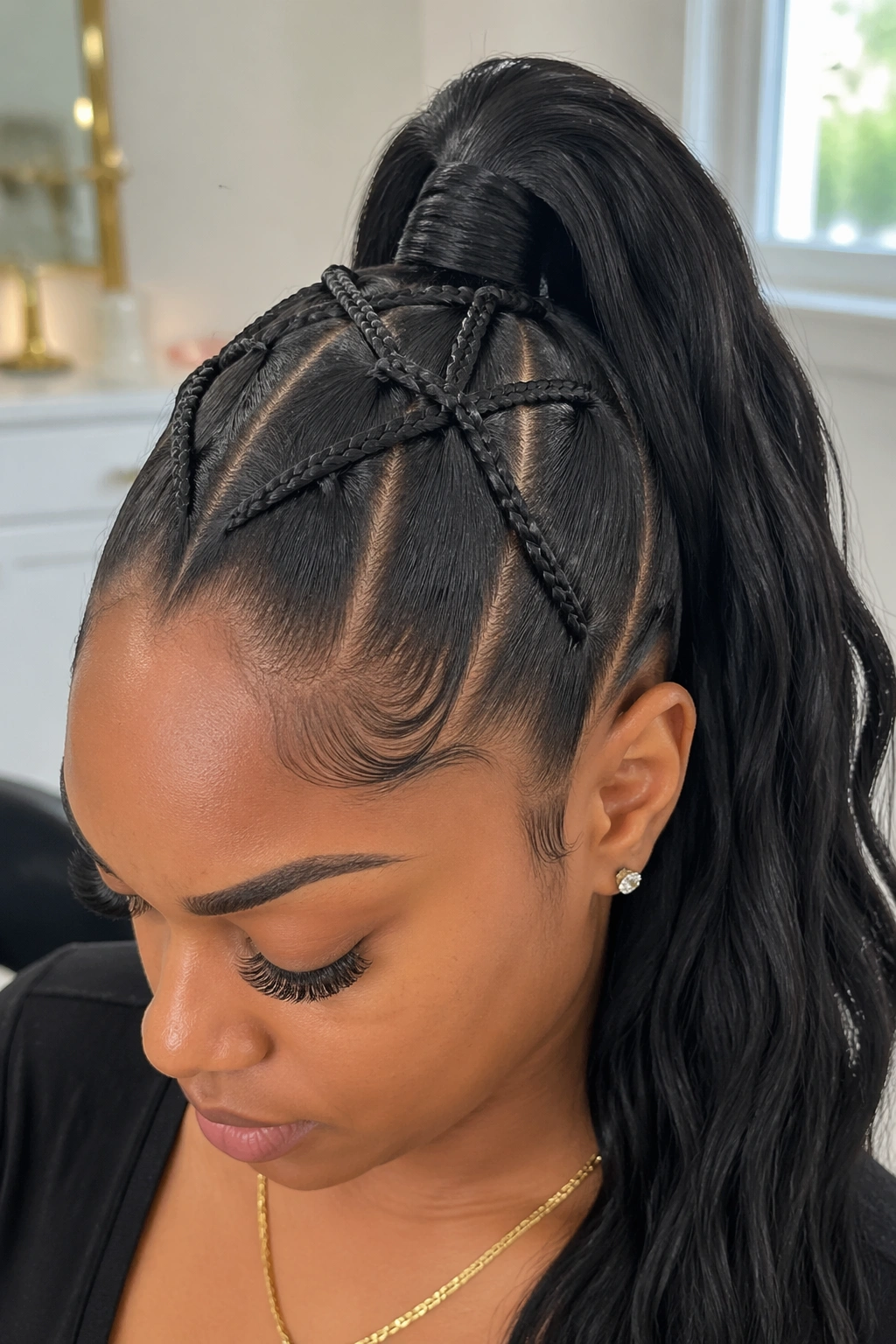
The crisscross base ponytail gives the crown a built-in design instead of relying only on the length. Small sections are crossed over one another before they’re secured into the ponytail, and that pattern makes the front look finished even before the bundle is attached. It’s a neat trick.
This style is useful when you want something sleeker than a full braided front but more interesting than a plain pulled-back ponytail. The crisscross detail breaks up a big smooth surface and makes the base feel a little more custom. That’s the charm.
Keep the sections even. If one side is thicker than the other, the pattern loses its clean look fast. The best versions are tidy enough to notice but not so tight that they feel stiff. There’s a balance there, and it matters.
13. The Loose Wave Weave Ponytail
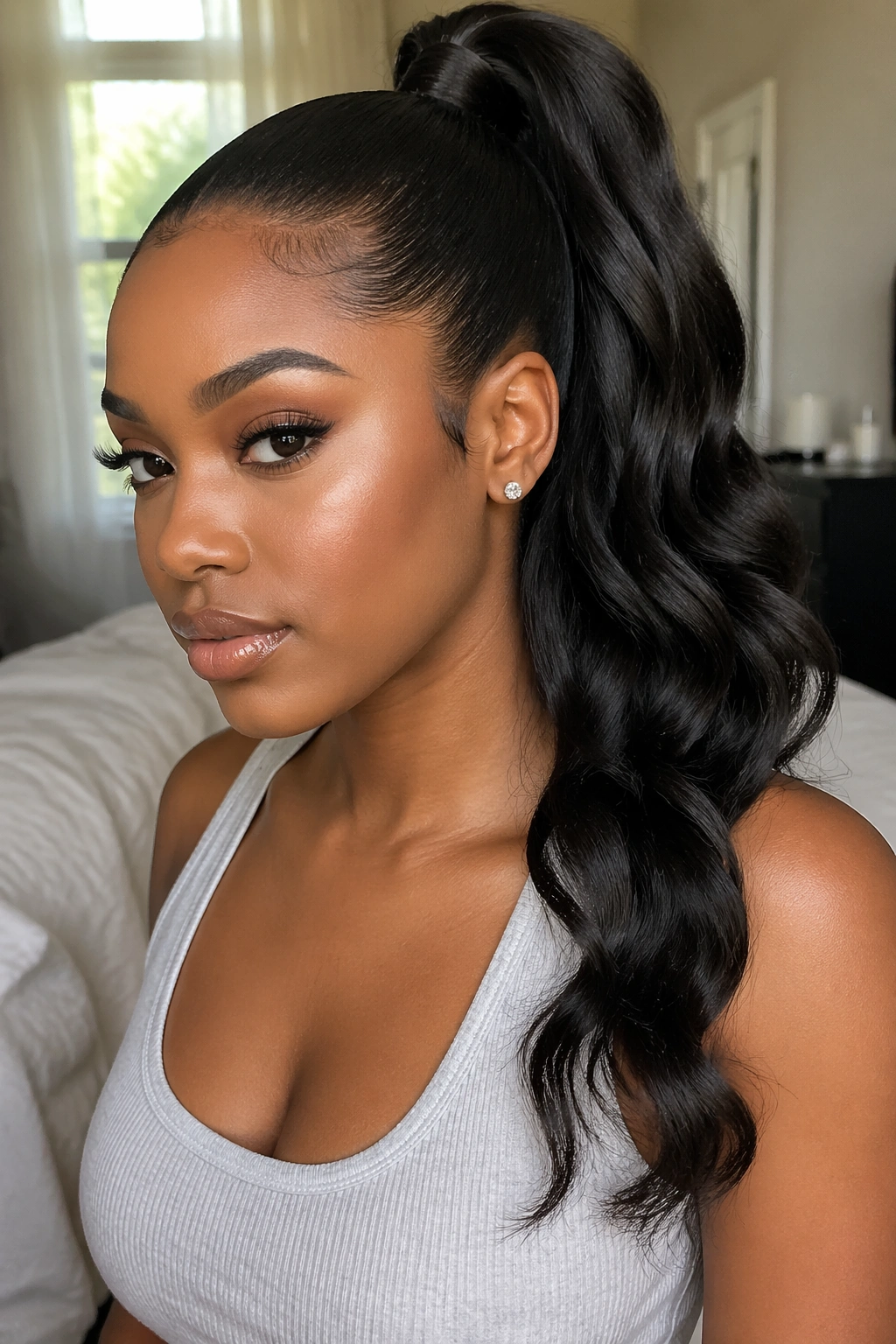
A loose wave ponytail is one of the easiest ways to make a sleek style feel softer. The roots stay smooth, but the bundle has body from top to bottom, so the finish never looks flat or severe. It gives you motion without the full commitment of curls.
How to keep the wave pattern neat
- Brush the top smooth with a soft-bristle brush so the root area stays flat.
- Use a wave pattern with enough bend to show, but not so much that it tangles fast.
- Comb only the top layer of the ponytail when you need to freshen it.
This style is good when you want length and softness in one shot. It works on a daytime look, a dinner look, even a simple bun-and-jacket kind of outfit. That versatility is why it gets worn so often.
The waves also hide tiny imperfections better than straight hair does. If a bundle is a little older, loose waves can still look fresh.
14. The High Ponytail With Swoop Bang
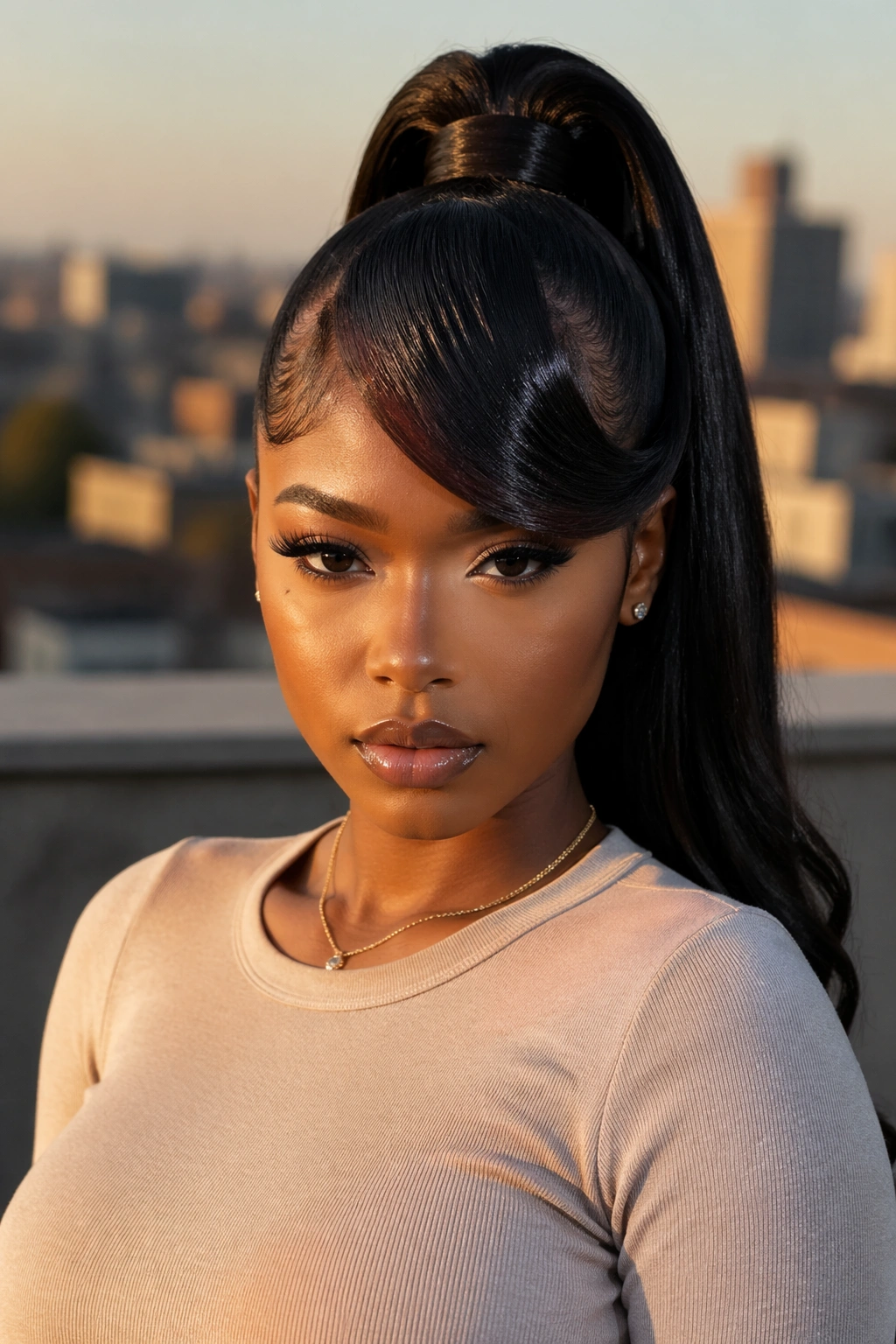
A high ponytail with a swoop bang gives shape to the forehead area and takes some of the edge off a fully slicked crown. The bang creates a curved line at the front, while the ponytail keeps the back dramatic. It’s a nice contrast.
This is the style for people who want the lift of a high ponytail but do not want everything pulled straight back. The swoop softens the face, especially if you like a little framing near the temples. It can also make a simple ponytail feel fuller because there is more going on at the front.
The bang should be smooth and intentional, not floppy. If it droops or separates, the whole look falls apart. Keep it sculpted, then let the ponytail do the rest of the work.
15. The Floor-Length Ponytail
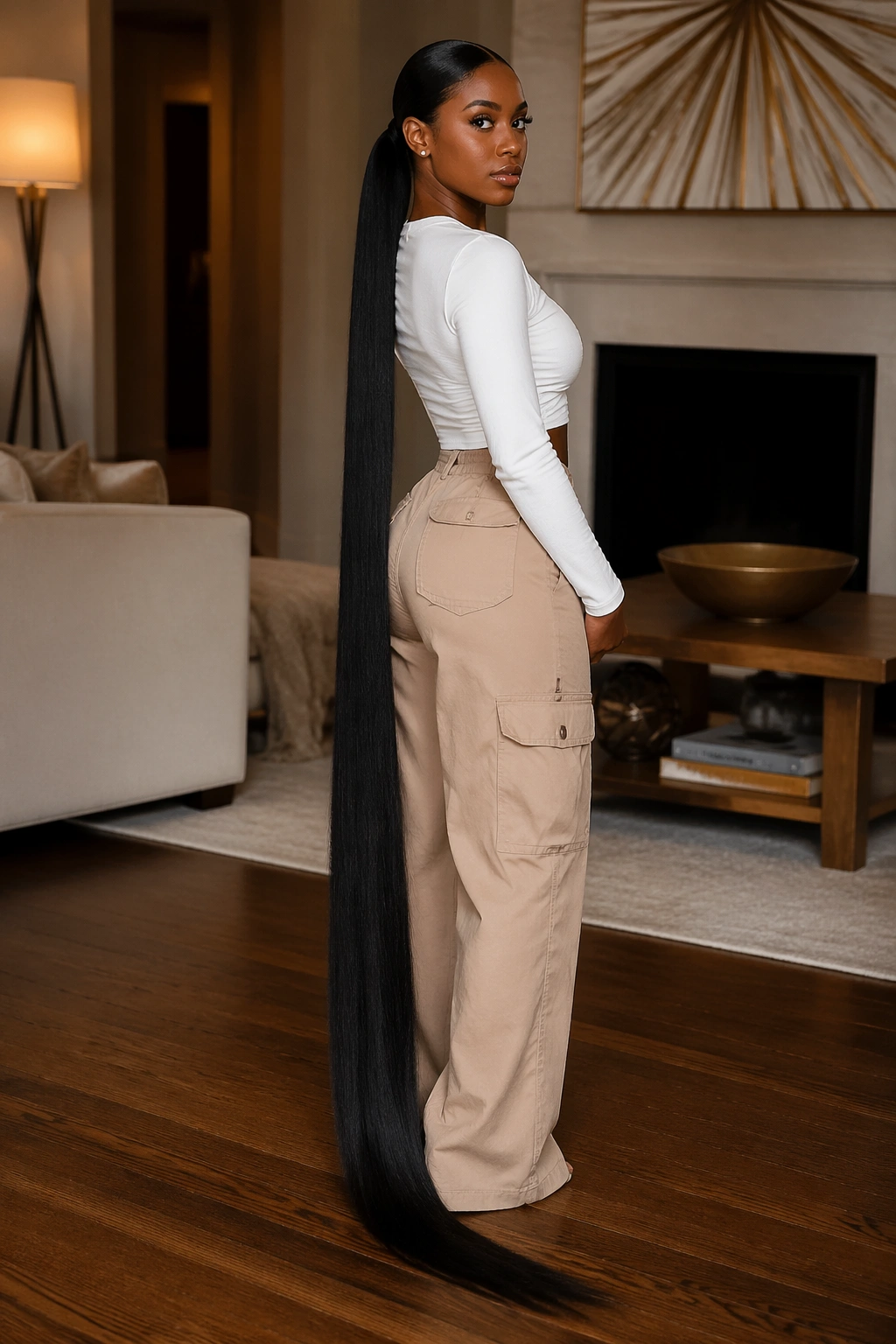
A floor-length ponytail is not subtle. That’s the point. The length creates instant drama, and because the base is sleek, the eye goes straight from the crown to the ends without interruption. It feels bold in a way that is hard to ignore.
This style needs good support at the base. A long ponytail gets heavy fast, and if the anchor is weak, you’ll feel it by the end of the day. That weight can be part of the appeal, though. It swings differently. It lands differently on the back and hips. It has presence.
The best version is still wearable, not costume-like. That means neat parting, a firm attachment, and bundles that keep their finish. When all three are there, the style can feel almost sculptural.
16. The Two-Tone Ponytail
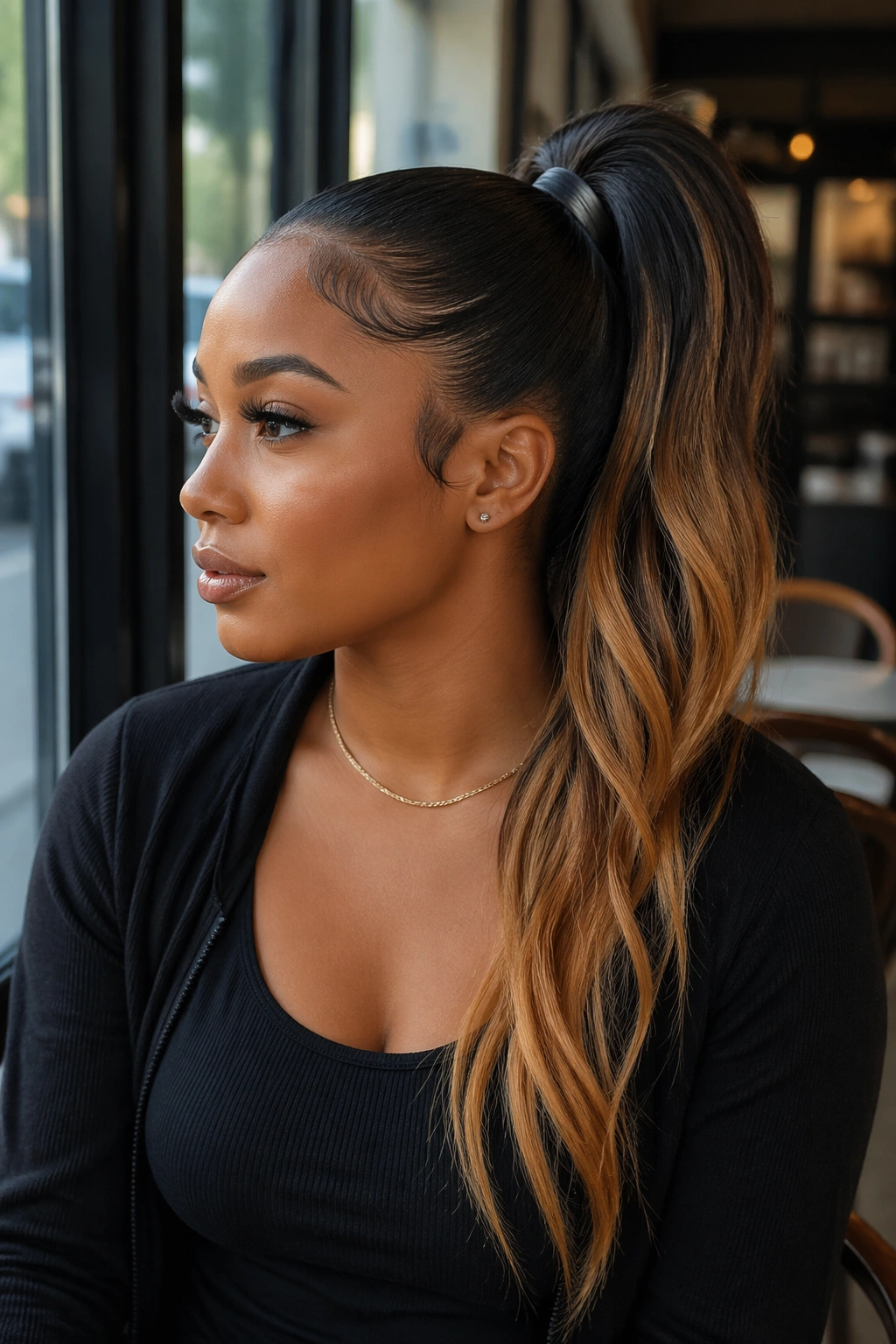
A two-tone ponytail adds color without making the whole head loud. Dark roots paired with honey, caramel, burgundy, or chestnut ends can change the mood of a sleek weave ponytail fast. The contrast shows movement even in still photos.
What works here is keeping the color transition smooth enough to feel planned. Harsh stripes can look busy unless that is the point. A softer blend usually reads better on a sleek base because the ponytail already has a strong shape. The color should support the shape, not fight it.
This is a smart choice if you want interest but not a full color commitment. The ponytail can carry the color while the natural hair stays darker and easier to match day to day. Less stress, more payoff.
17. The Half-Up Weave Ponytail
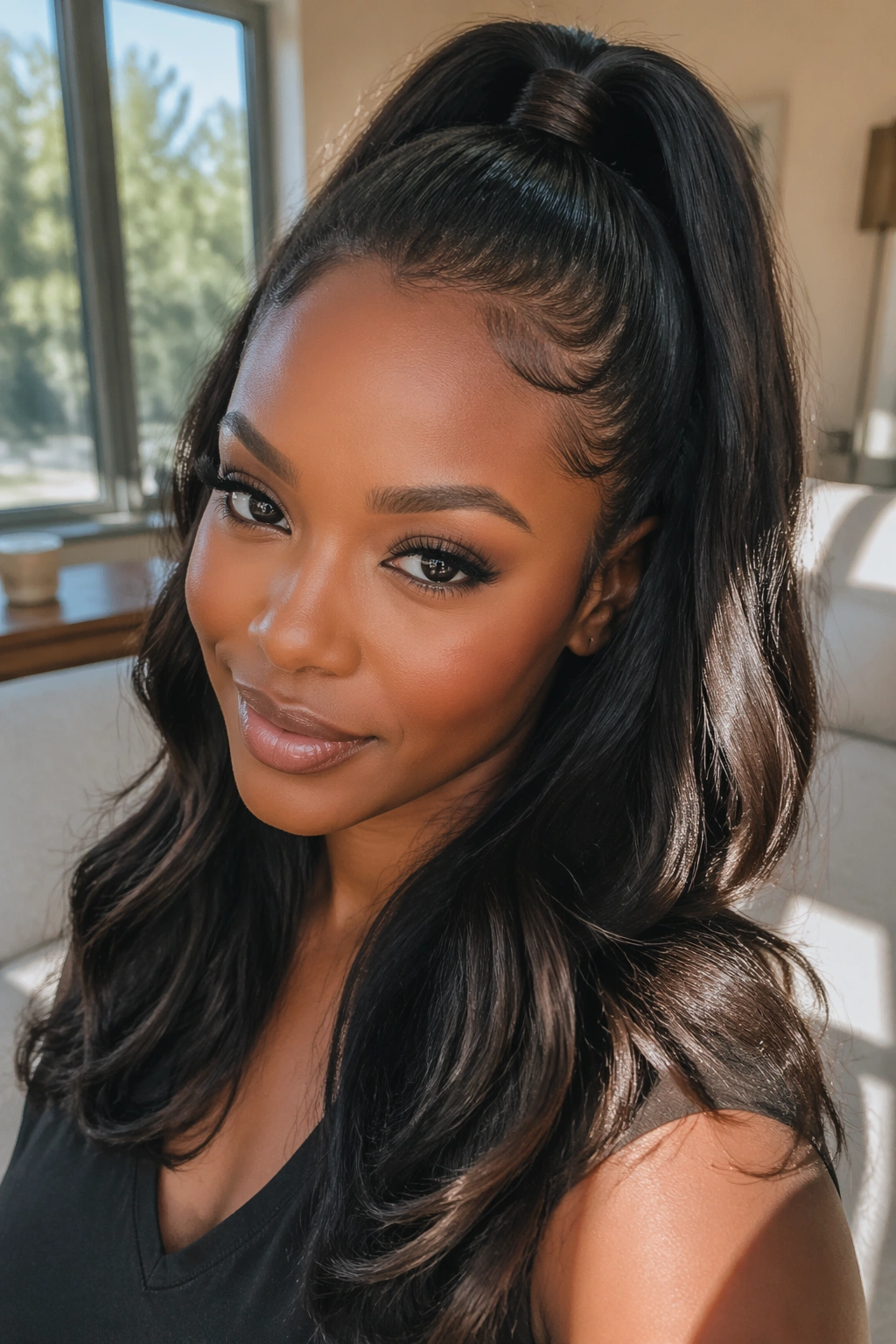
A half-up weave ponytail keeps some hair down while lifting the top section into a sleek ponytail. It gives you height without fully exposing the face or neck. That middle ground is useful when you want polish but also want softness around the shoulders.
This style works especially well with long bundles because the top ponytail adds lift and the lower hair adds fullness. The contrast between the two sections keeps the style from looking flat. If the lower section is wavy or curled, even better. It adds a little ease.
It’s also one of the easiest ways to shift a look from casual to dressed-up. The same outfit can feel more finished just because the crown is pulled up and cleaned off the face. Small change. Big effect.
18. The Braided Crown Ponytail
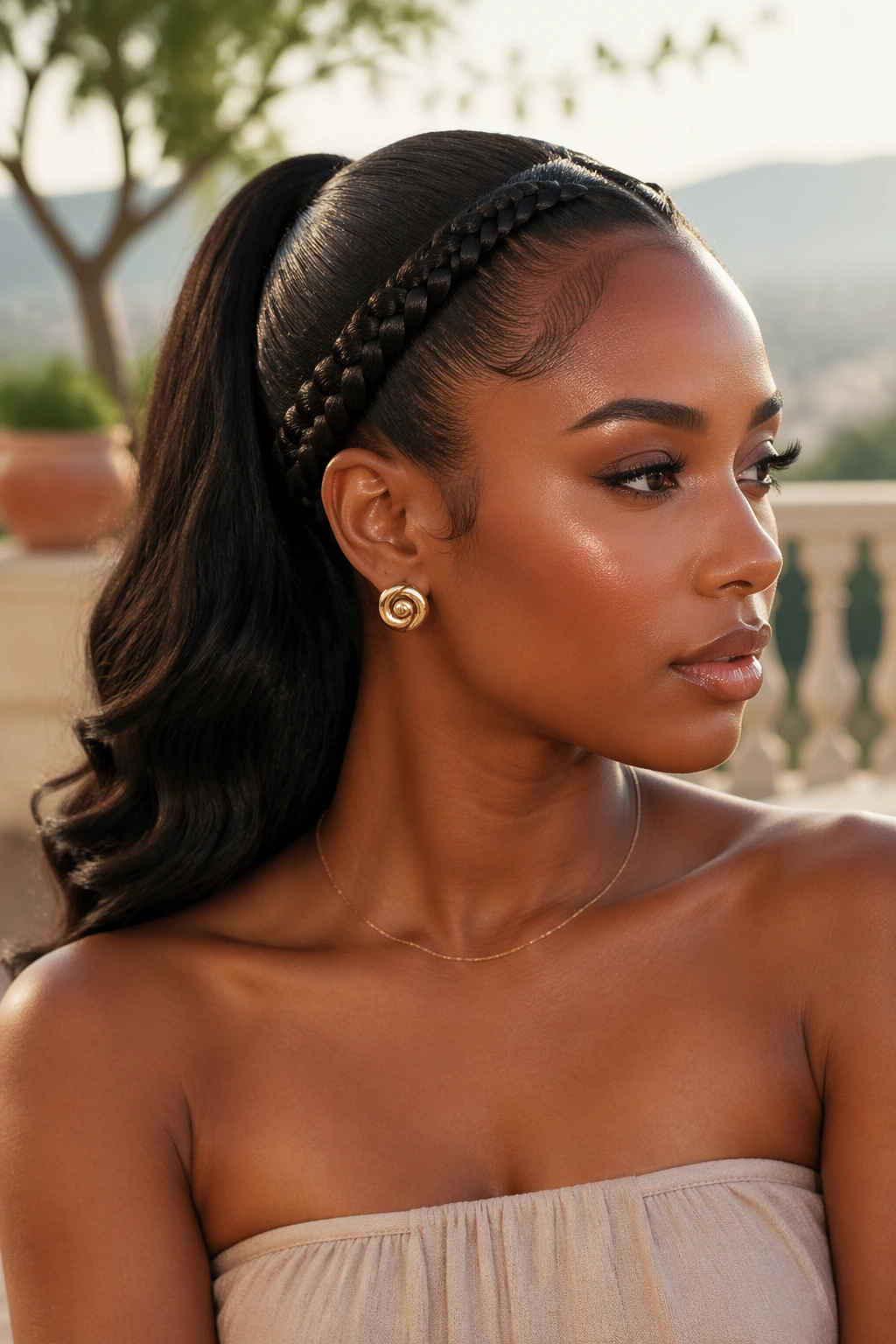
A braided crown ponytail turns the front of the style into the main event. Braids trace around the hairline or along the top before gathering into the ponytail, which gives the whole look a strong shape. It feels elegant and controlled.
How to braid the crown without bulk
- Keep the braid sections small and even so they lie close to the head.
- Pull each section snug, but stop before the scalp feels tight.
- Smooth the remaining hair before attaching the ponytail so the transition looks clean.
This style is a good fit when you want the front to carry the design and the back to stay simple. The braid acts almost like a frame. It can be neat and formal or slightly textured, depending on how tight you make it.
There’s a reason people keep coming back to braided crowns. They make a ponytail feel finished before the bundle even starts.
19. The Low Side Ponytail With Soft Curls
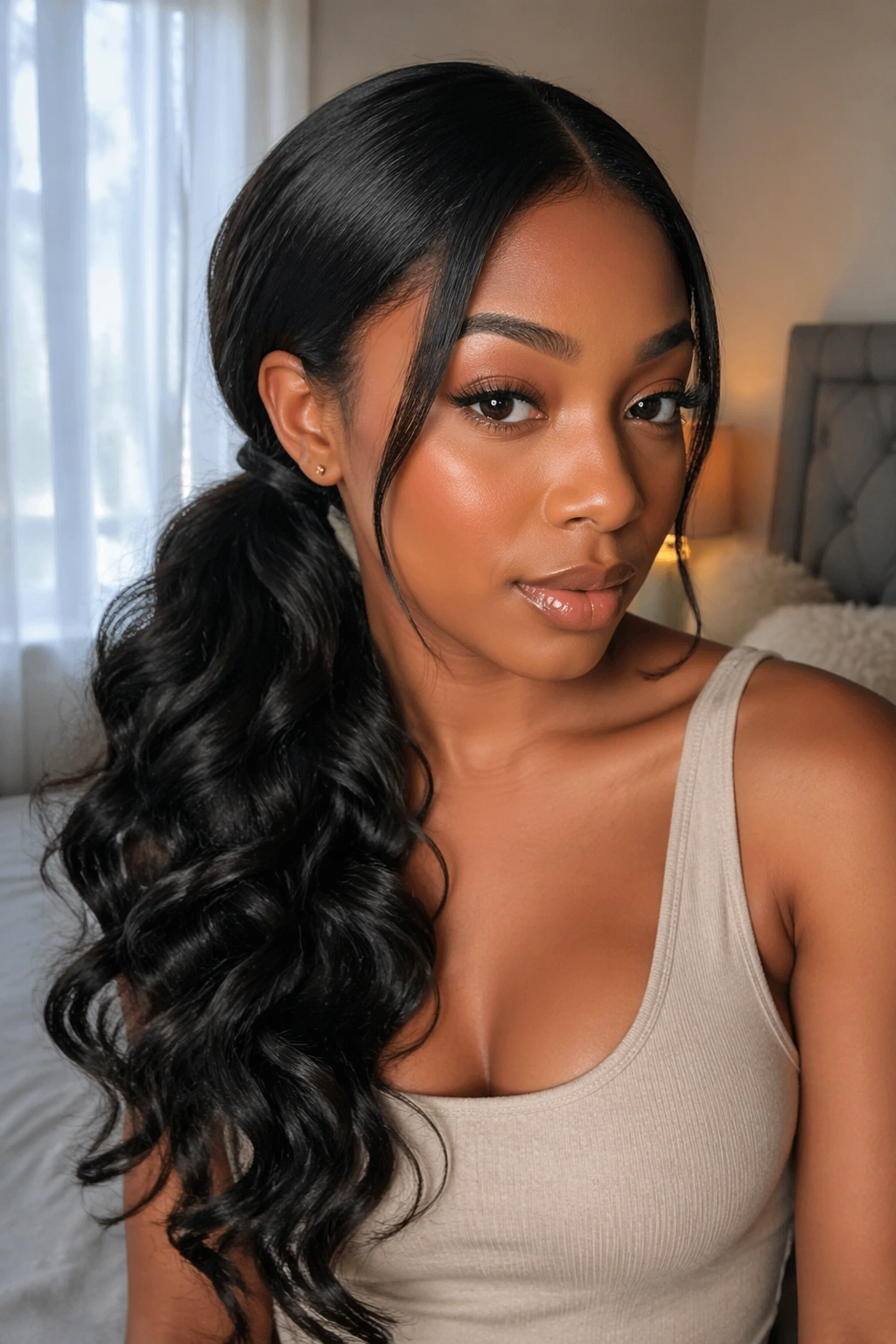
A low side ponytail with soft curls feels romantic without trying to be precious. The ponytail rests to one side, and the curls give it a bit of air. It is less strict than a straight low ponytail and less dramatic than a high one.
This style shines when the curls are brushed enough to stay soft, but not so much that they fall flat. The side placement also helps the hair sit naturally over one shoulder, which is a flattering line on a lot of face shapes. There is movement built into the shape.
If you want something that can work for a wedding, dinner, or a normal day when you still want to look pulled together, this one is safe in the best way. No fuss. No drama.
20. The Sculpted Baby Hair Ponytail
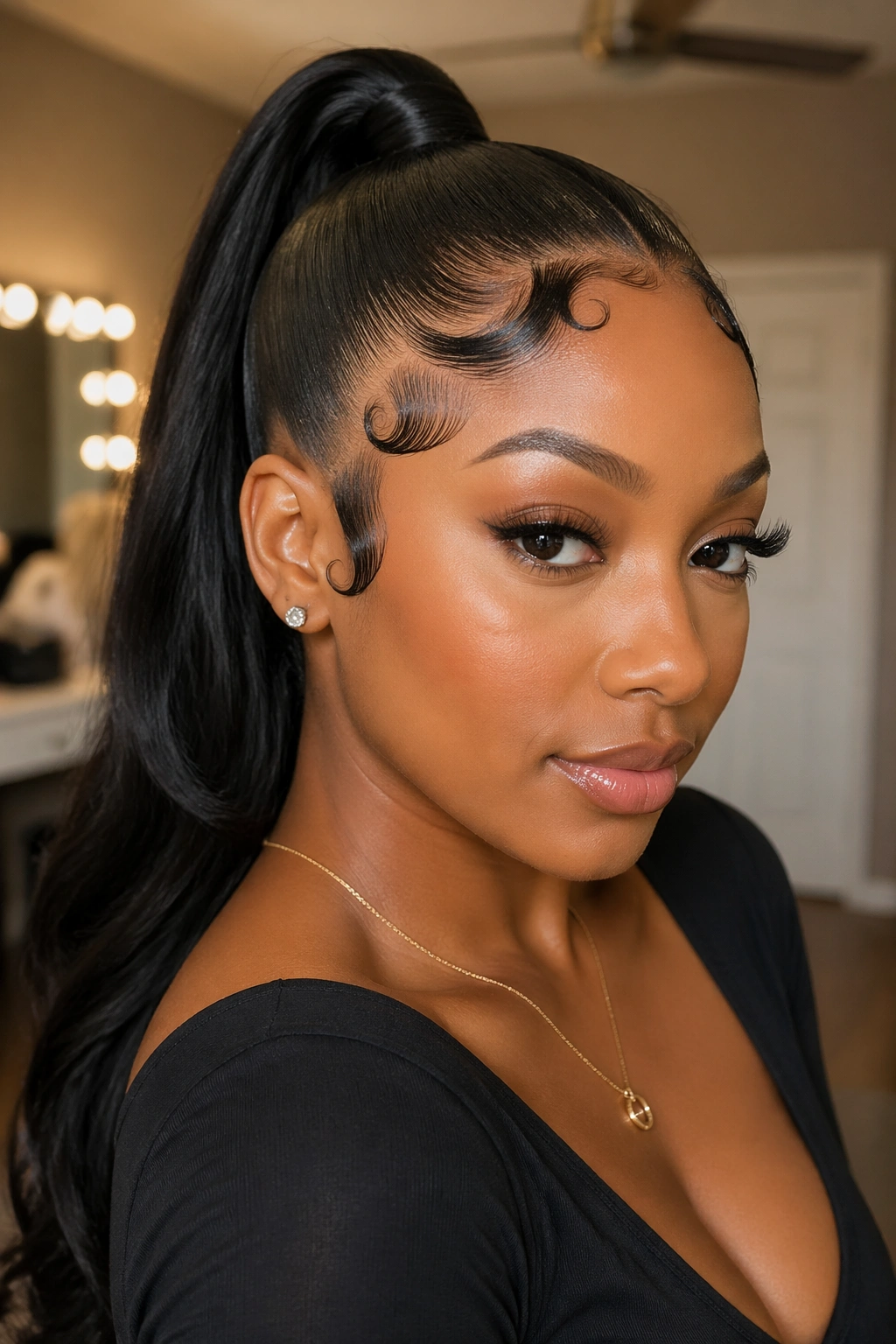
A sculpted baby hair ponytail makes the edges part of the design instead of an afterthought. The hairline is laid into curves, swoops, or small waves, and the rest of the ponytail stays sleek behind it. When done well, the front looks almost framed.
This style asks for a light hand. Too much gel can make the baby hairs look hard and shiny in the wrong way. Too little and the design disappears before lunch. You want definition, not plaster.
It is a strong choice when the ponytail itself is simple and you want the front to do the talking. Keep the rest of the style clean so the baby hair work doesn’t get lost. A busy base plus a busy hairline can look crowded fast.
21. The Drawstring Weave Ponytail
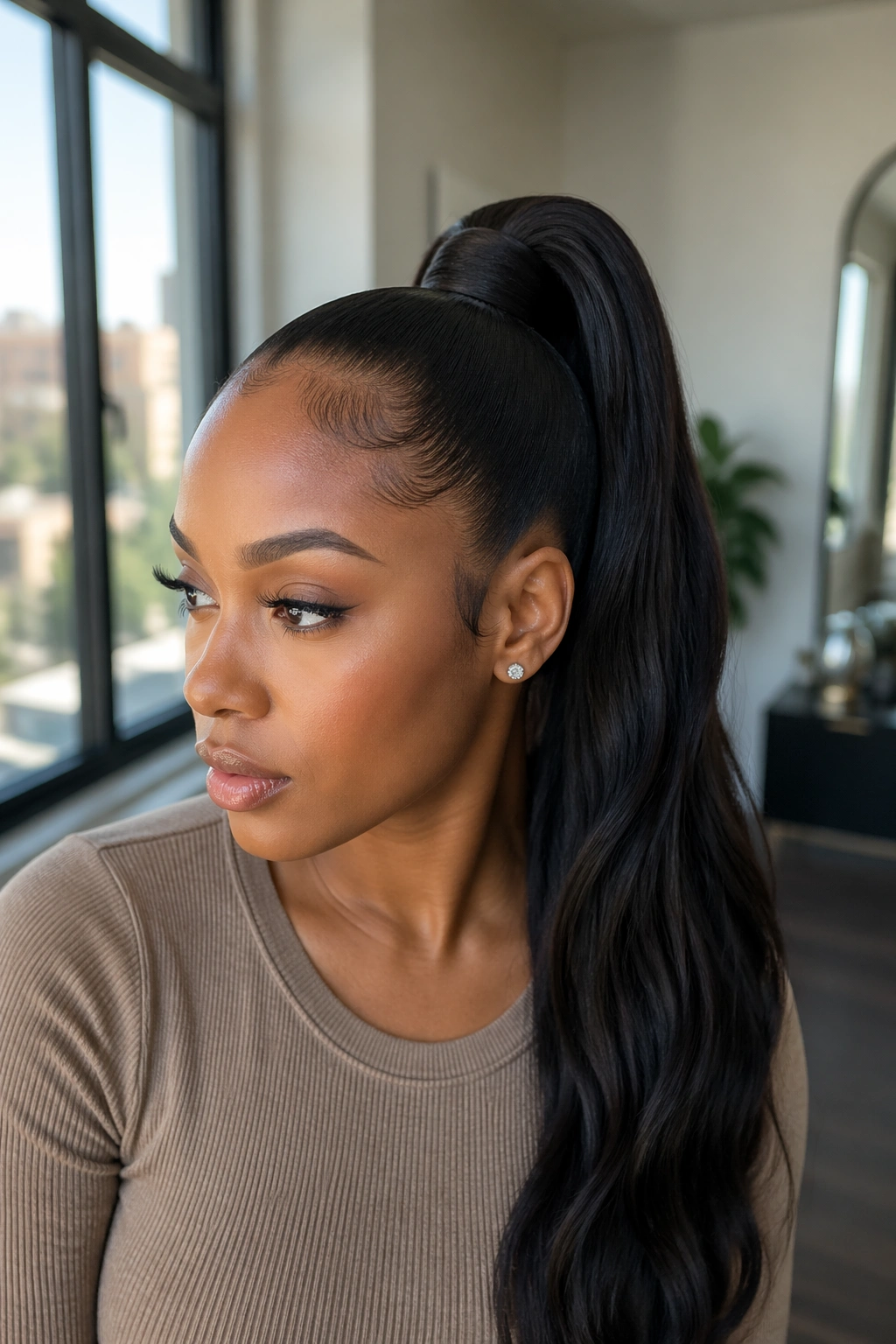
A drawstring weave ponytail is the quick-change version of the look. It is made for speed, which is why so many people keep one around when they want sleek hair without a full install. The ponytail piece clips or secures over the base and tightens with a drawstring.
When a drawstring piece makes sense
- You want a sleek ponytail for one event or a short stretch of wear.
- Your natural hair is already molded flat, so the attachment can sit neatly.
- You need a style you can take down without a long removal process.
The best thing about this option is flexibility. You can switch between high and low, straight and curly, or long and medium-length with less commitment. The tradeoff is that the base still has to be smooth, or the attachment will show.
A good drawstring ponytail is a shortcut, not a compromise. Use it when time matters.
22. The Sew-In Ponytail With Hidden Tracks
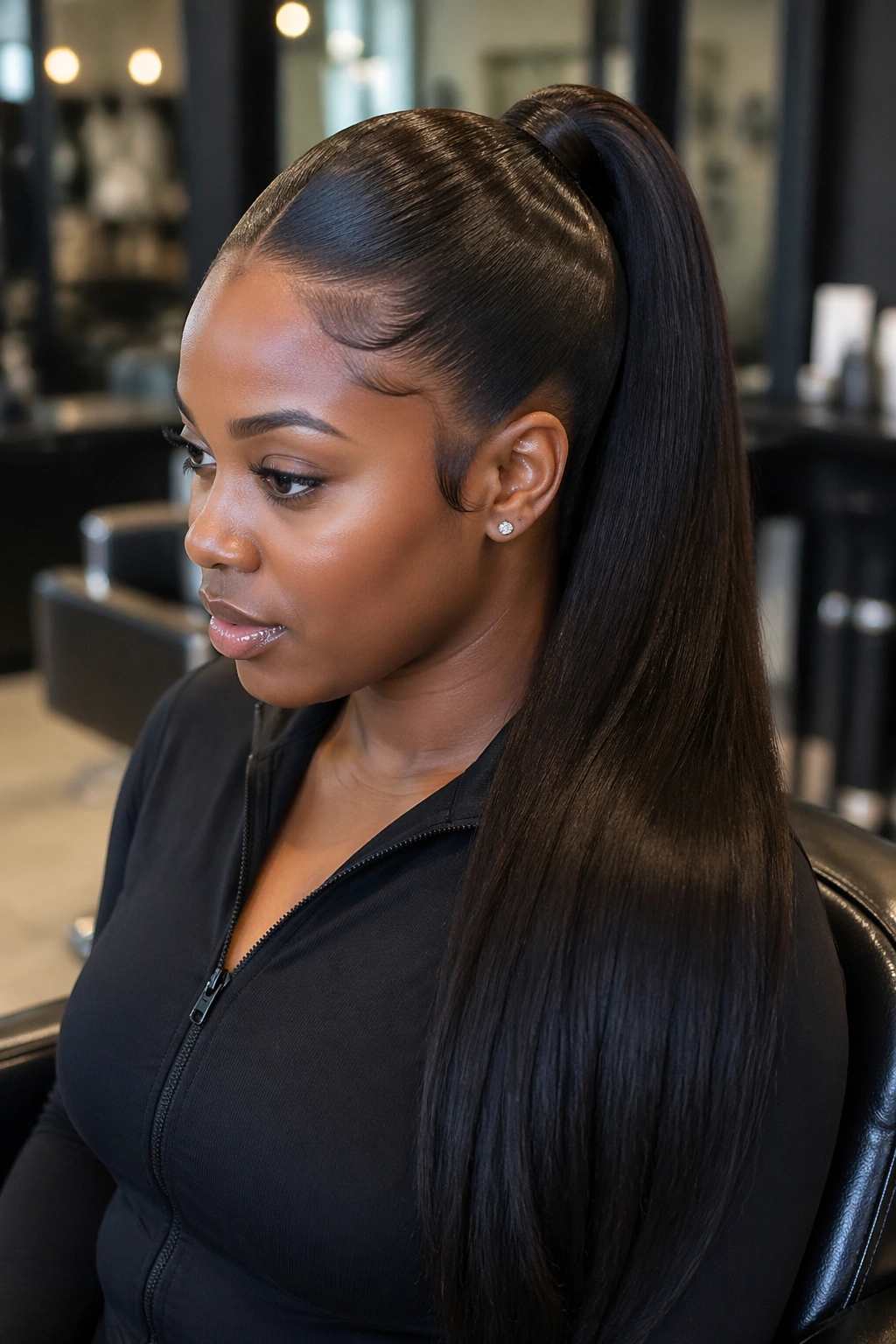
A sew-in ponytail with hidden tracks is the salon-style version people trust when they want the base to stay put. The braiding foundation supports the ponytail, and the tracks disappear under the smooth crown. It is one of the cleanest ways to wear a long weave ponytail.
Where the tracks should disappear
The tracks need to sit low and hidden under the finished style, not peek through the top or sides. If you can see them from the front, the install needs more smoothing or a different braid pattern. The whole point is concealment.
This style usually lasts longer because the anchor is more stable. That makes it a better option for people who want to wear the same ponytail for more than a quick outing. It also handles fuller bundles better, since the base has real support.
It does take more time and skill, though. There’s no shortcut around that. But when it’s done well, the result is clean enough to pass the side-view test, which is where a lot of ponytails fail.
23. The Ponytail With Wraps and Cuffs
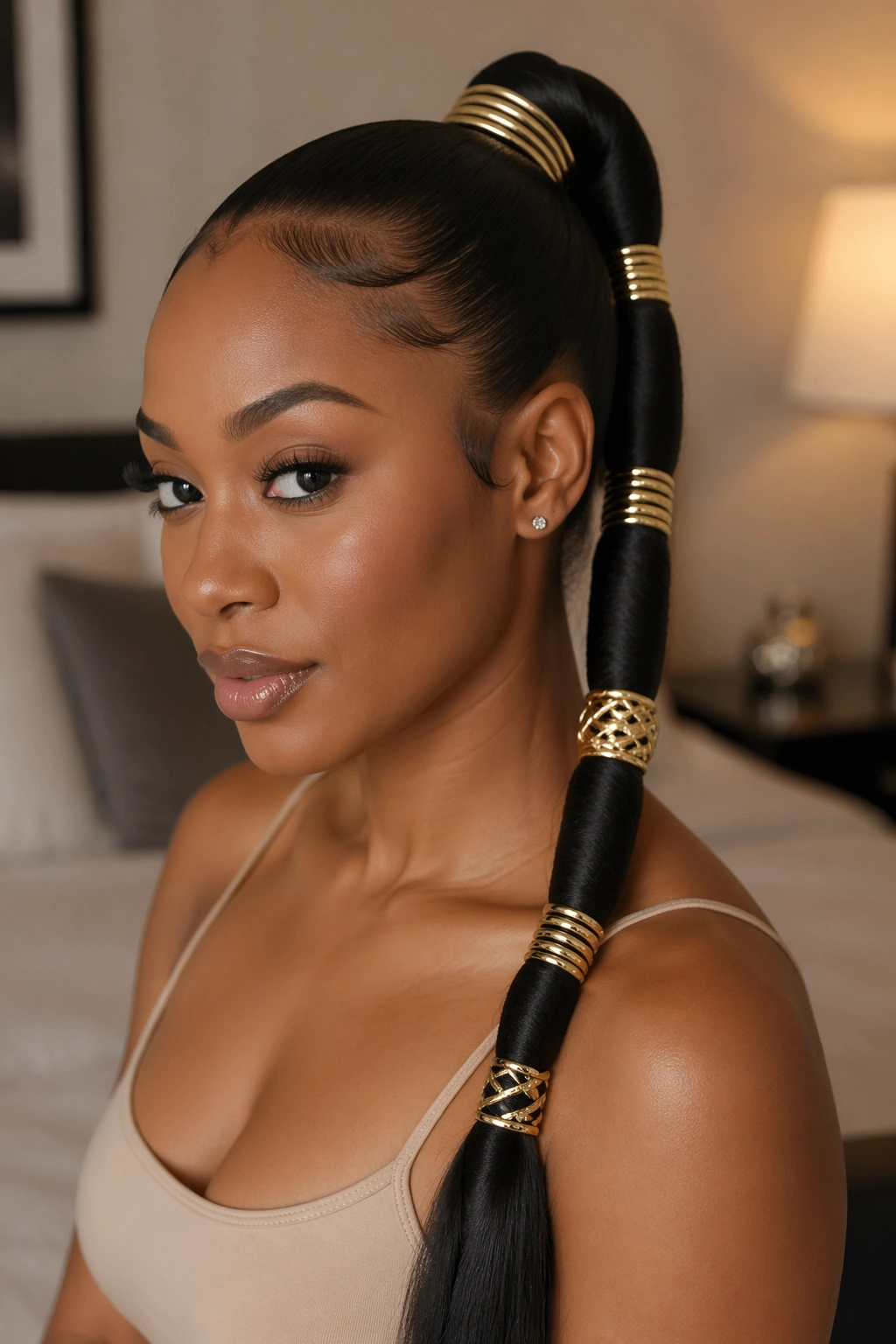
A ponytail with wraps and cuffs uses accessories as part of the style instead of tacking them on at the last minute. Thread wraps, gold cuffs, small rings, or a satin ribbon can change the mood of a sleek weave ponytail without touching the base much at all. That makes this one fun.
Keep the decoration near the base or spaced evenly down the length. If every inch is covered, the ponytail can start to feel crowded. A few well-placed pieces go farther. The eye needs room to rest.
This is a nice pick when the outfit is simple and the hair needs one extra detail. It also works when you want the ponytail to match jewelry or dress hardware. Small coordination, big payoff.
24. The Flipped-End Ponytail
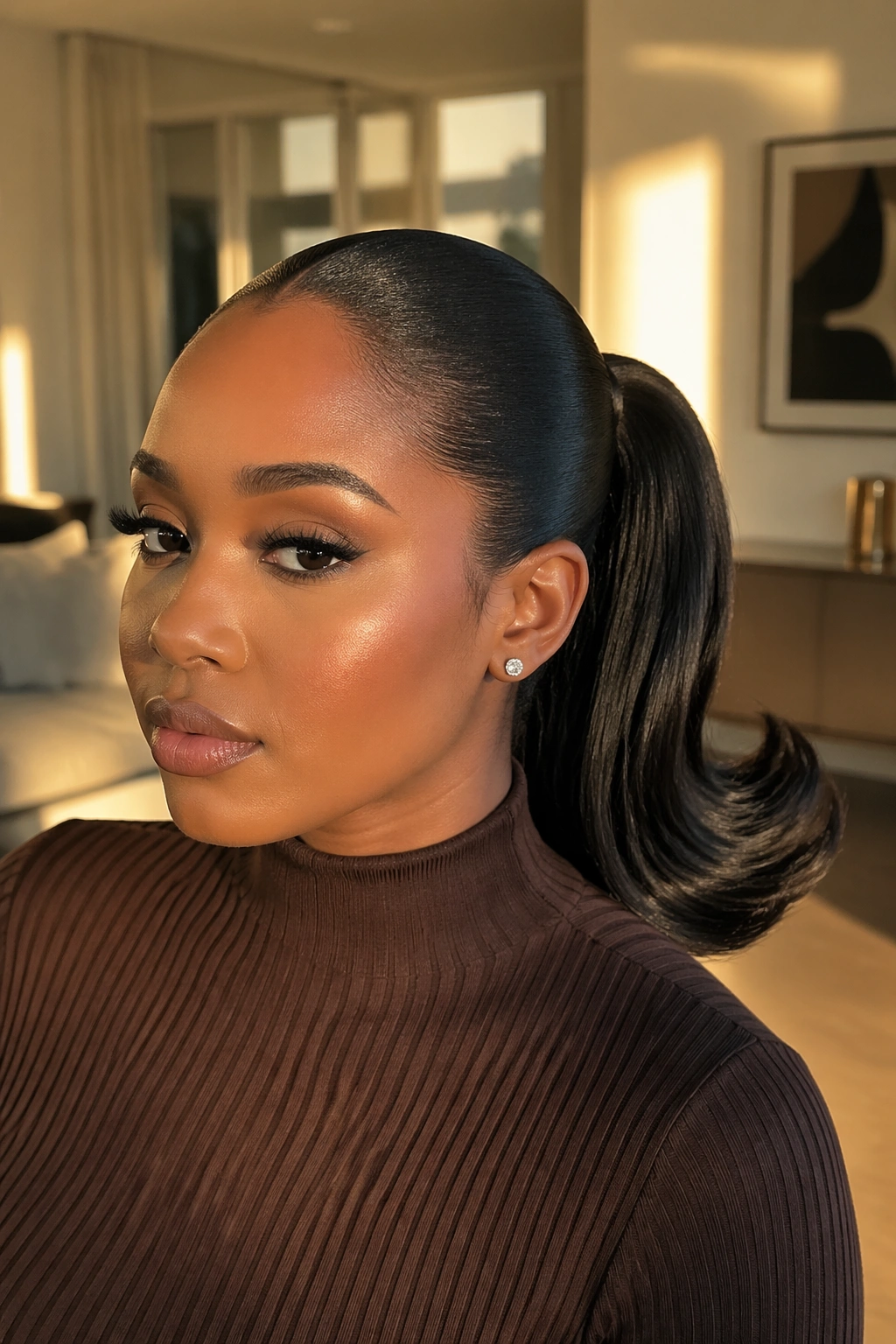
A flipped-end ponytail brings a little retro shape back into a sleek style. Instead of letting the ends hang straight, the finish turns under or flicks outward at the bottom. That small change makes the whole look feel more styled.
This works especially well on medium-length ponytails because the flip is easier to see. Too much length can hide the bend unless the ends are layered or curled first. The trick is giving the finish enough shape to matter.
It is one of those styles that looks simple until you notice the detail. Then it feels smarter. A clean root and a flipped finish are a good pair because the top stays controlled while the bottom gets a little movement.
25. The Soft Shoulder-Grazing Ponytail
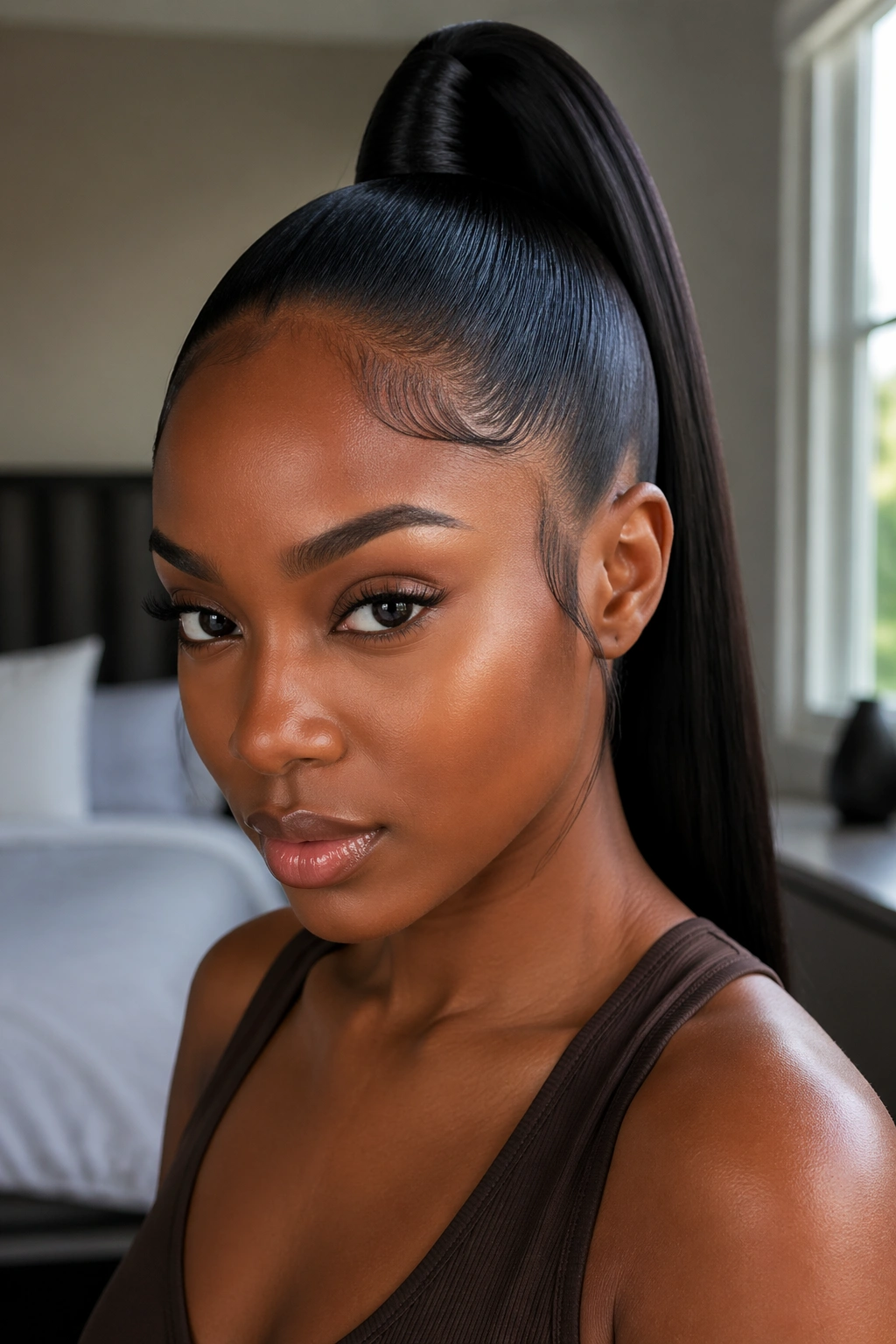
A shoulder-grazing ponytail is the one I keep coming back to when I want sleek without heaviness. It sits low enough to feel easy, but the length still gives the style shape and swing. You can wear it with a sharp part, a wrapped base, or a soft side sweep and it still works.
This length is kinder than the ultra-long options. It is lighter on the scalp, easier to maintain, and less likely to tangle at the ends. That matters more than people admit. Sometimes the smartest ponytail is the one you can actually keep neat for more than an hour.
Keep the finish smooth and the ends trimmed well. A shoulder-length weave ponytail can look expensive with very little effort, which is probably why it stays in rotation. It is polished, wearable, and not trying to outshine the person wearing it.
