



Your forties are when you stop apologizing. For most Black women who’ve been navigating natural hair care since before it was widely celebrated, there’s a particular clarity that comes with this decade — you know your hair, you know what works, and you have very little patience for styles that don’t serve you. Afro hairstyles for women over 40 should reflect exactly that: experience, intention, and the confidence to wear your hair in ways that feel genuinely like you.
The conversation around afro hair after 40 too often focuses on what’s lost — density changes, shifts in curl pattern, the way grey hair behaves differently than pigmented strands. What gets discussed far less often is what’s gained: a settled relationship with your own hair, the wisdom to choose styles that flatter your specific features and lifestyle, and the authority to set your own terms. That’s worth building on.
How Hair Changes After 40 — What’s Actually Happening
After 40, several things tend to shift simultaneously. Estrogen levels begin to decline, which affects how much sebum the scalp produces — many women notice their scalp becoming drier and their hair needing more moisture than it did a decade ago. The diameter of individual hair strands often narrows slightly, which can change how the hair behaves in styles that rely on density. And for many women, grey strands begin to appear — either gradually woven through the natural color or in clusters at the temples and crown.
Grey hair has a different texture than pigmented hair. It’s often coarser, more resistant to moisture, and less responsive to the products that worked beautifully on darker strands. This isn’t a problem — it’s useful information. It means your product selection and styling approach may need to evolve.
None of this requires dramatic changes. Often it means adding a deeper moisture step to your routine, switching to heavier sealants, or adjusting which products you use on the grey sections specifically. The hair is still beautiful. It just needs a slightly different approach to stay that way.
Why Protective Styles Matter More in Your 40s
Protective styles — braids, twists, updos that tuck the ends away — reduce daily manipulation, limit friction damage, and allow the hair to retain length and moisture between styling sessions. This matters at every age, but it matters more as the hair becomes finer and more fragile with hormonal shifts.
The key distinction: protective styles should protect, not damage. A style that’s too tight, too heavy, or installed too frequently at the same points along the hairline will cause traction alopecia over time. This is especially worth watching in the 40s when hairlines may already be showing some thinning from decades of styling. Cornrow rows should lie flat without pulling the skin. Extensions should not add significant weight stress to your own strands. And styles should be worn with breaks in between — not installed over and over in the same sections with no rest.
Embracing Grey as a Design Element
This is worth naming directly: grey afro hair is extraordinary looking. The texture of grey afro coils — often coarser, more defined, higher-contrast against your skin — is visually striking in ways that dark hair isn’t. Many women over 40 who go fully natural and stop coloring find that their grey is actually the most interesting thing about their hair.
You don’t have to choose between coloring and not coloring. But if you’re fighting your grey, it might be worth stopping to look at it clearly before committing to a lifetime of color sessions. The contrast between grey temples and natural dark hair at the crown is a genuinely beautiful, distinctive look that doesn’t require any product or styling to achieve.
If you are coloring, choose colors that work with your undertones and complement your skin at this stage. Warm honey tones and auburn work differently on skin in the 40s than they did at 25. A good colorist who understands afro hair texture will make a real difference.
Moisture Strategy That Actually Works at This Stage
Deep conditioning is not optional at this point. Once a week, on every wash day — a penetrating treatment that sits on the hair for at least twenty minutes under heat (a hooded dryer, a heated cap, or a shower cap with steam). The heat opens the cuticle slightly and allows the conditioner to work deeper into the strand rather than just coating the surface.
After conditioning, seal with a heavier butter than you may have used in your 20s. Shea butter, mango butter, or a shea-based hair milk applied to each section while the hair is still damp keeps moisture locked in. On grey sections specifically, you may need to re-seal every two to three days — grey hair releases moisture faster than pigmented strands.
Between wash days, mist with water and a light leave-in to refresh, smooth with your hands or a wide-tooth comb, and re-seal the ends if they look or feel dry.
1. Full Free Afro With Defined Shape
The full, free afro — worn large, unconfined, and shaped carefully at the perimeter — is one of the most powerful statements a woman in her 40s can make. There’s nothing tentative about it. Done well, with proper moisture and defined edges, it’s one of the most flattering styles for mature face shapes.
Why It Works
As the face matures, structure becomes more important in hairstyling. A full, round afro adds volume at the crown and sides that balances changes in facial structure. The shape also draws the eye upward and outward, creating a striking silhouette.
The key is shape maintenance. A free afro needs regular trimming at the perimeter to stay even and full rather than scraggly. Every six to eight weeks, have a professional trim the afro’s perimeter while it’s dry — this is important, because wet afro hair shrinks and trims made on wet hair often take more length than intended. Defined edges with a soft brush and light edge gel complete the look daily.
2. Low Manipulation Twist Style
Individual two-strand twists worn as a finished style — not as a prep for a twist-out but as the actual look. Chunky, defined, and full on long hair; neat and deliberate on shorter lengths.
What makes it different: This is the twist as destination, not process. Many women do twists only to unravel them later. Worn as-is for a week or two, twists are a genuinely polished look that requires almost no daily maintenance — just a satin bonnet at night, a moisture spritz mid-week, and a light re-twist of any loose sections at the front.
On hair with a mix of grey and natural color, twist patterns show the color variation beautifully — the grey and dark strands catch light differently within the same twist, creating a tonal complexity that’s genuinely stunning.
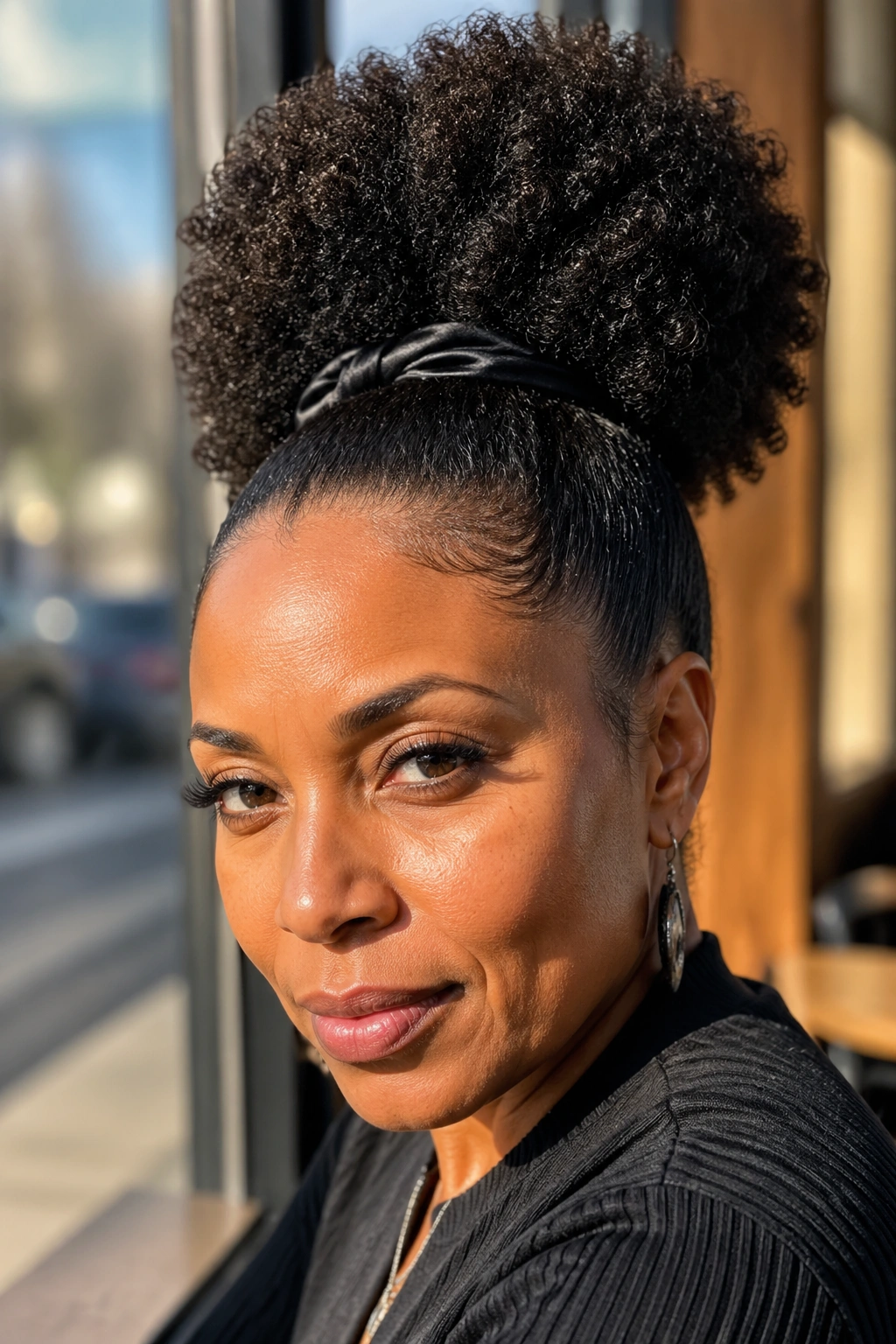
3. The Classic Afro Puff
Gathered high at the crown with a soft scrunchie, the puff is a style that works from the gym to the boardroom depending on how it’s executed. For a more polished version: smooth the perimeter with a soft brush and a small amount of shea-based defining cream, then gather and secure at the exact center of the crown. For something more casual, gather loosely and fluff aggressively from below.
On mature hair, the puff can have a lot of visual impact if the hair has retained its density. If density has decreased, adding a little product to give the hair more definition and lift before gathering helps create fullness.
A satin-lined hair tie prevents the breakage that standard elastics cause at the gathering point — the hair wraps most tightly at that single point, and a rough elastic or rubber band will gradually break strands there over time.
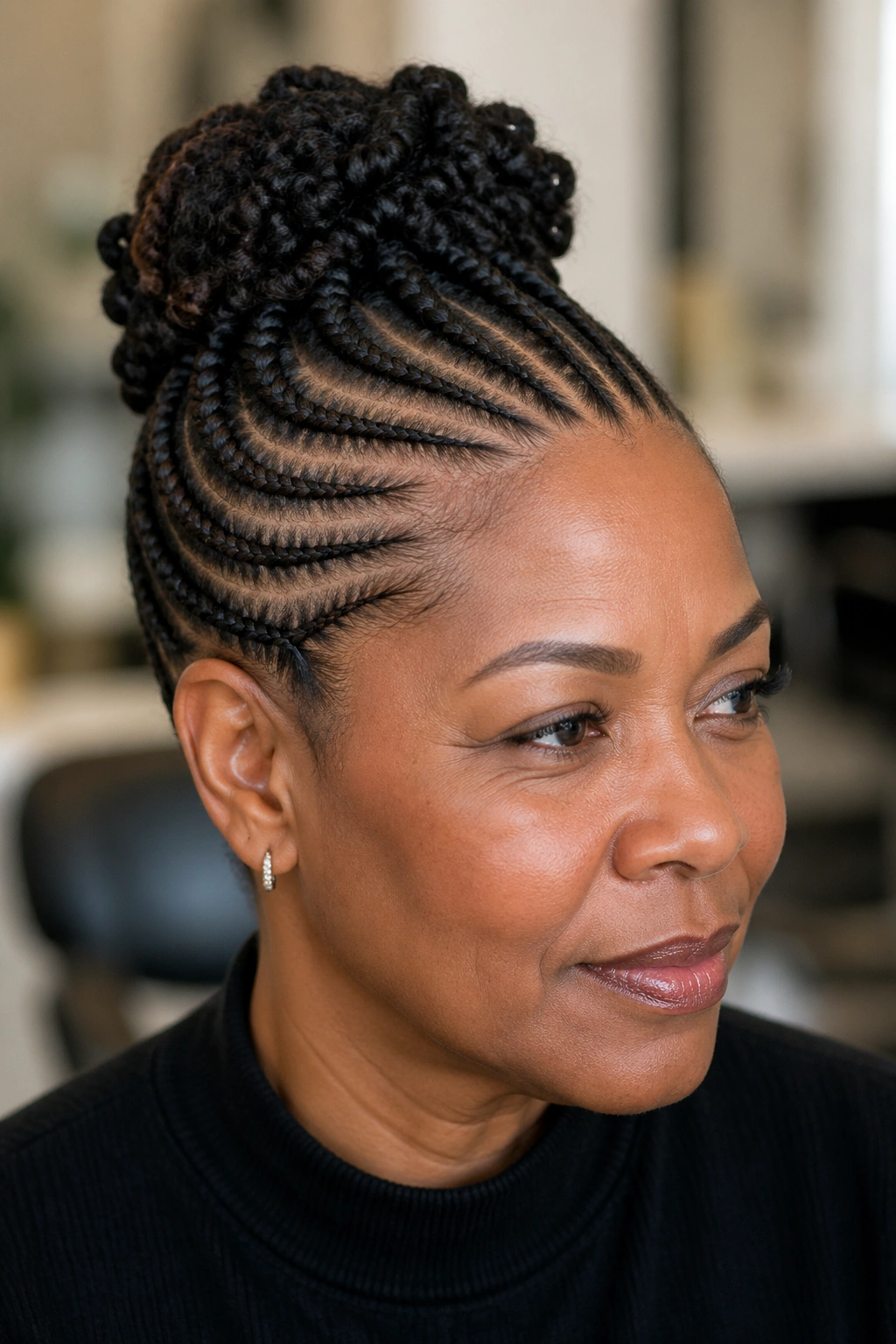
4. Cornrowed Updo With Gathered Crown
Cornrows braided upward from the nape and sides, all converging at the crown and feeding into a gathered puff or loose bun at the top. The cornrowed sections lie flat and neat at the sides and back; the crown does the decorative work.
What to Watch For
The tension at the crown matters here — if all the cornrows are pulled tightly upward to a single point, the stress on the scalp at the convergence point can be significant. Ask your stylist to leave the last few inches of each cornrow slightly looser as they approach the crown, or transition the cornrows to free twists before gathering. It should feel completely comfortable throughout.
Worn for up to two weeks, this style is low-maintenance and appropriate for professional settings.
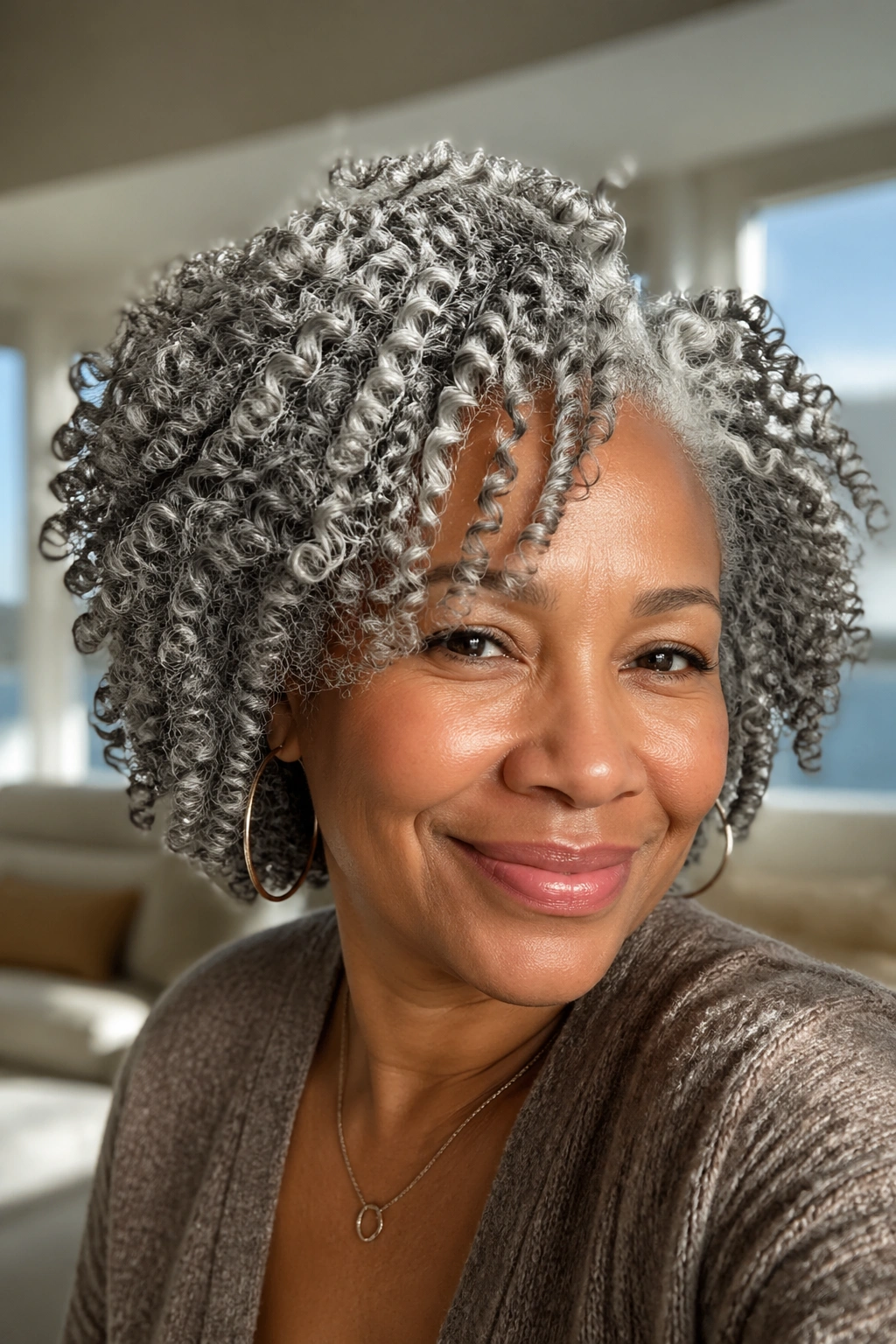
5. Natural Gray Twist-Out
A twist-out on hair that’s at least fifty percent grey produces a look that’s visually arresting — the grey strands catch light differently from the pigmented ones, so the unraveled spirals have an almost metallic shimmer when they move. This is not a side effect. This is the look.
Install the twists on damp hair with a good moisturizing twist butter. Let dry completely overnight — grey strands often take longer to dry than pigmented hair, so plan accordingly. Unravel carefully, separating the spirals from the tip upward with oiled fingers. The result is full, defined, and two-toned in the most elegant possible way.
Do not rush back to color sessions to cover this. Let people see it at least once before you decide.
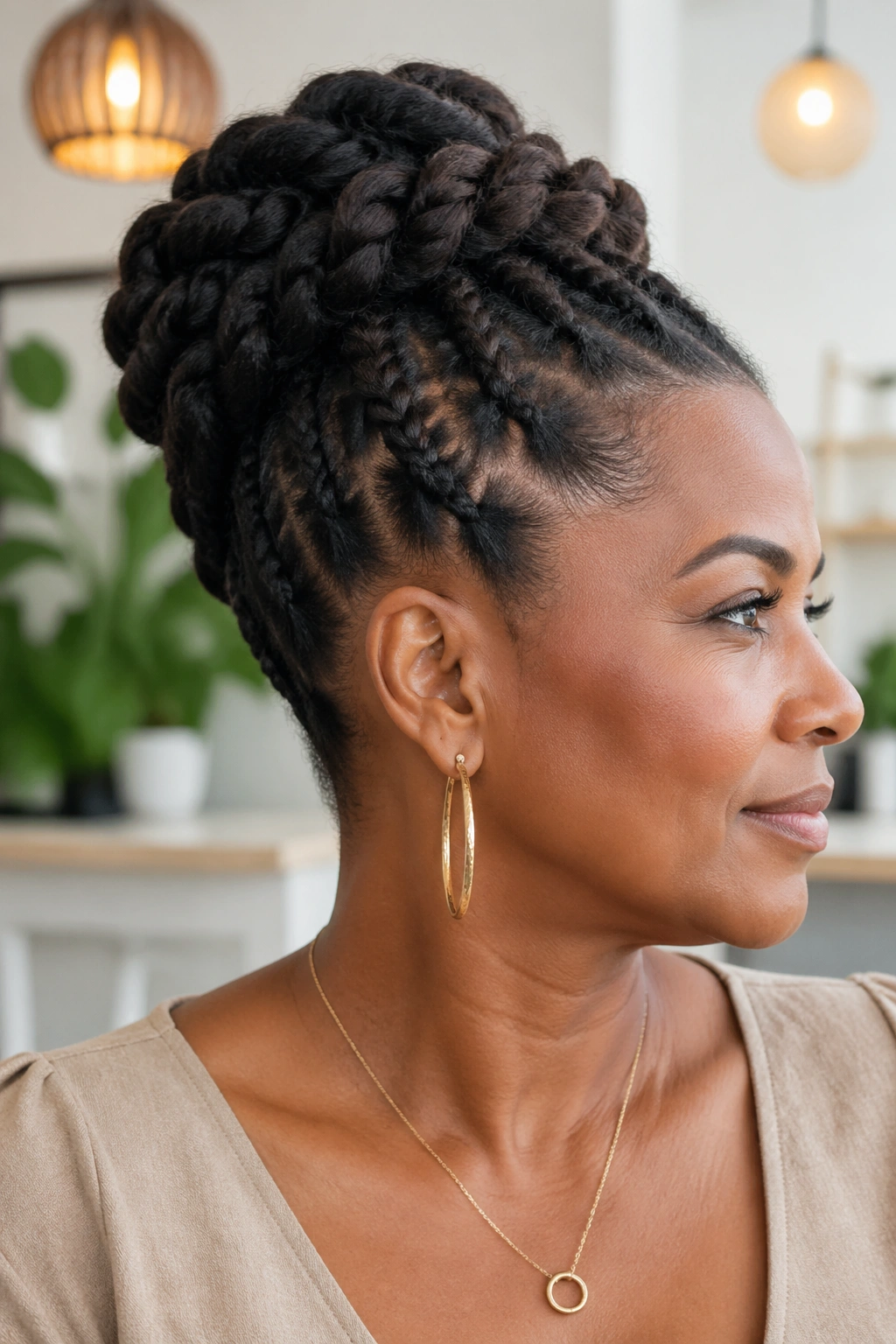
6. Flat-Twist Crown Updo
All the hair gathered into a crown updo via flat twists from the perimeter inward. Each flat twist travels from the hairline toward the center of the top of the head, where the ends are gathered and secured. The result looks structured, intentional, and polished — the flat twists create visible lines across the scalp that become a design element of the style.
This style exposes the back of the neck and the ears completely, making it ideal for showing off earrings and jewelry. A pair of substantial gold hoops with this style is a complete look.
Longevity: Expect five to seven days from this style. The edges are the first thing to soften; refresh them with edge gel every two to three days.
7. Braid-Out on Long Afro Hair
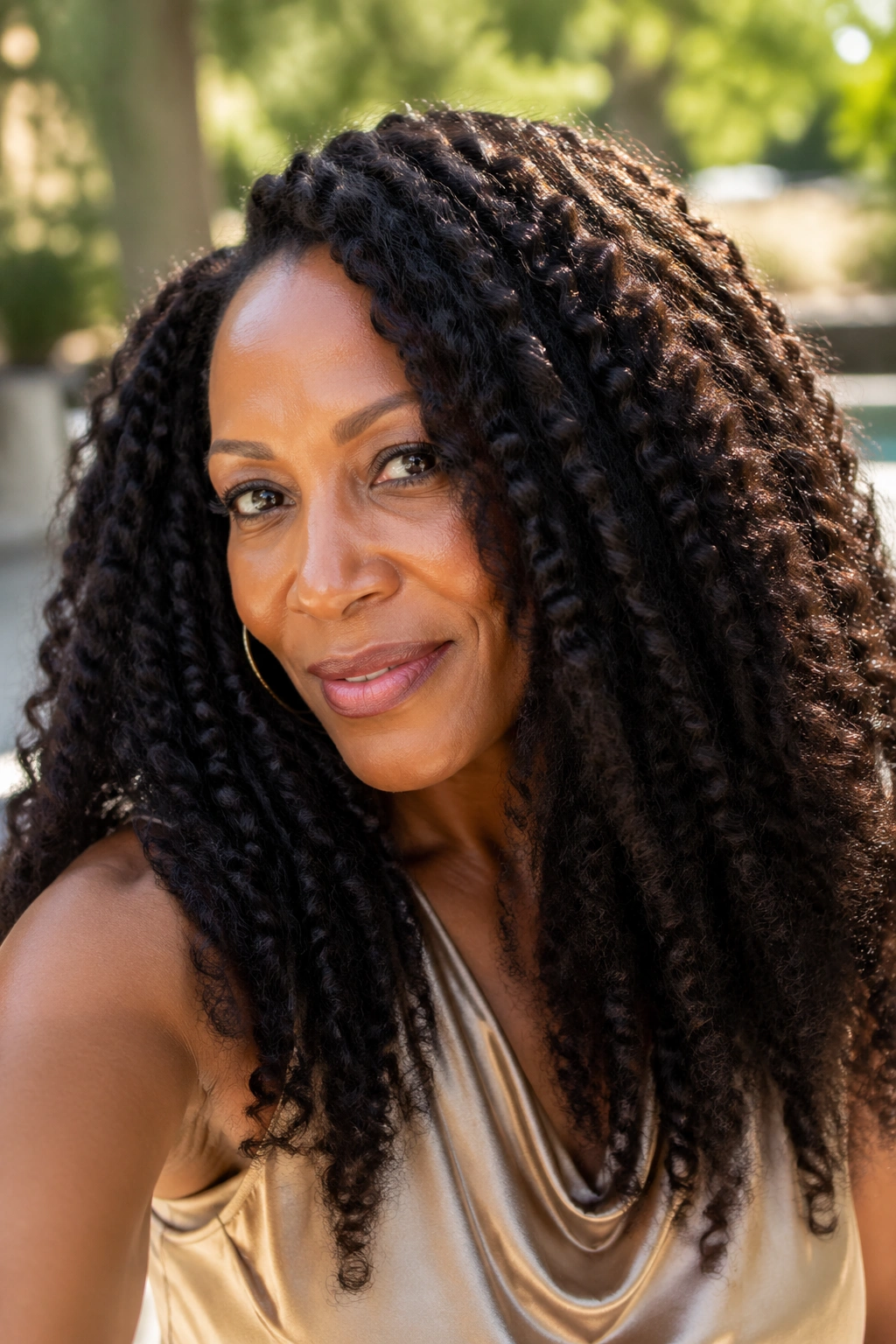
Three-strand braids installed overnight, unraveled in the morning for a textured, crimped look. The braid-out pattern is different from a twist-out — more angular definition, a slightly rougher surface texture, and more volume overall.
On long hair over 40, a braid-out produces an incredibly full result. The crimped pattern adds visible texture to every strand, and the volume from the unraveled braids is substantial. For a polished version, separate with oiled fingers rather than a comb — combing a braid-out breaks the definition and creates frizz.
This style holds well for two to three days and transitions gracefully to a bun or puff on days two and three.
8. Side-Swept Natural Updo
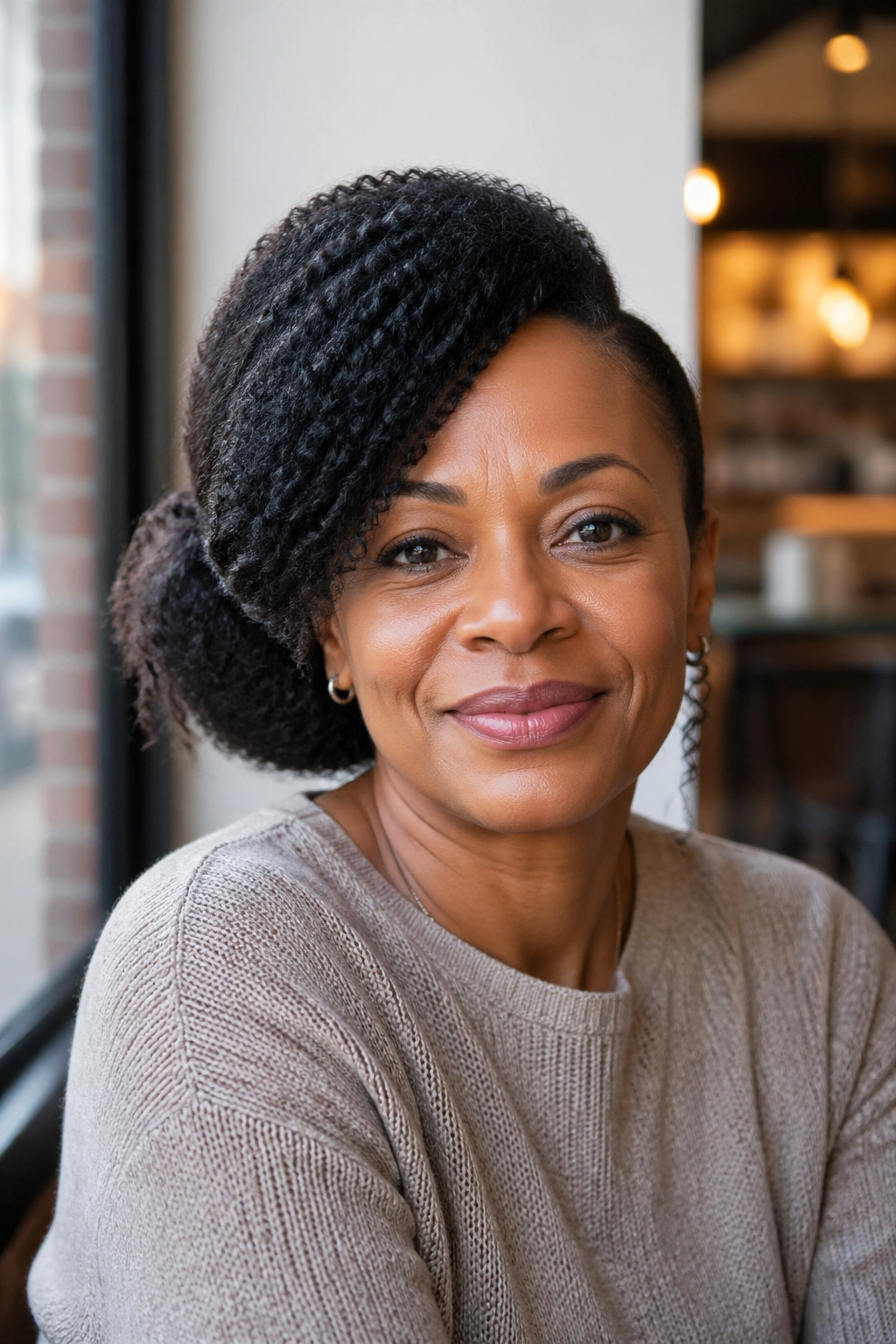
All the hair swept to one side and gathered in a low, loose updo at the side of the head rather than centered at the nape. The asymmetry — the hairline on one side cleanly exposed, the other side full and gathered — creates a dramatic silhouette that flatters oval and square face shapes particularly well.
Gather the hair with a soft scrunchie at a position just below and behind the ear on your preferred side. Let the bun be slightly messy — overly neat side buns look stiff. A few loose pieces at the temple on the gathered side and a clean, gelled edge on the exposed side balance the look.
This one looks effortless and takes about four minutes to put together, which makes it one of the most practical styles for professional and social settings alike.
9. Stretched and Shaped Afro Puff
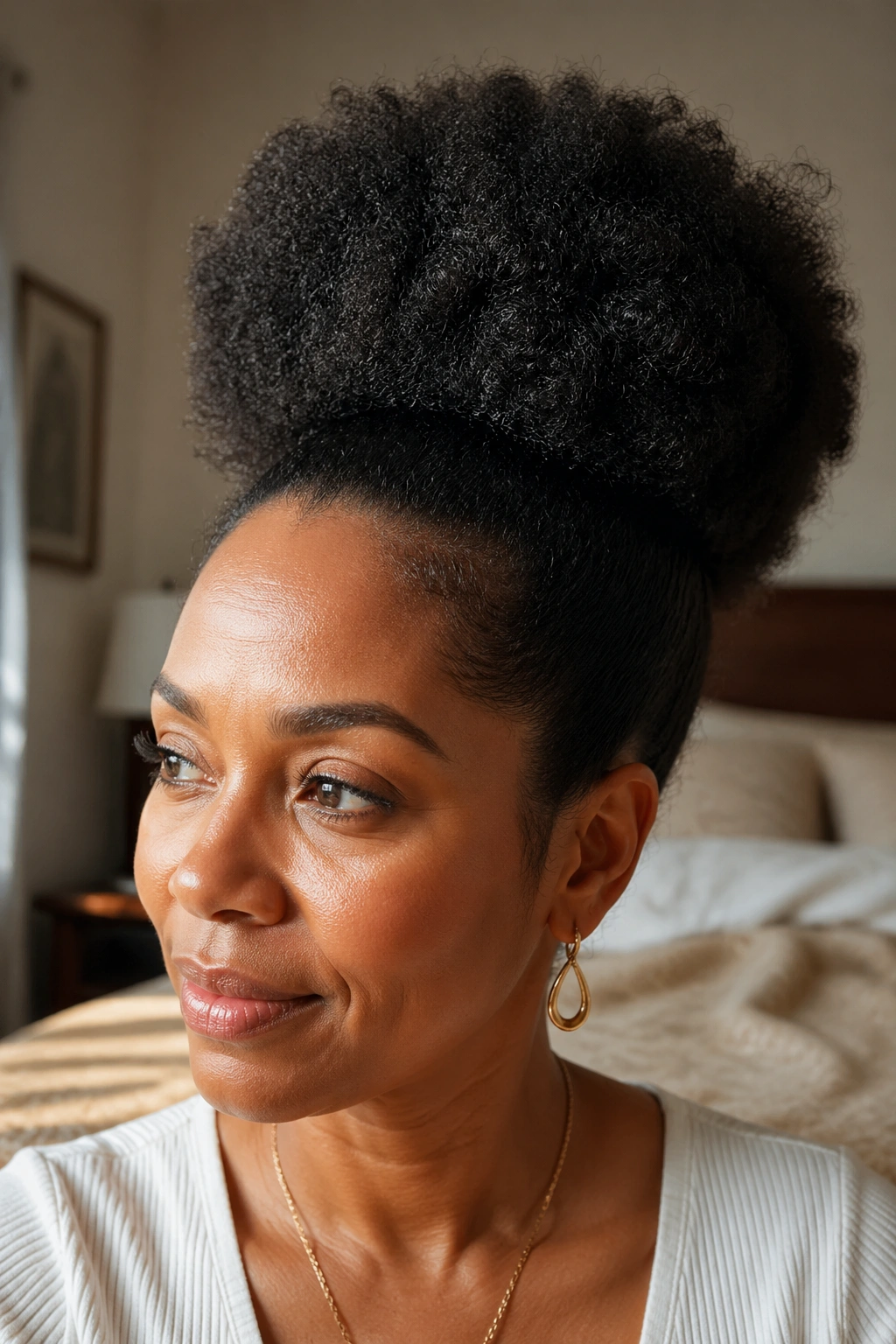
A step beyond the standard puff: stretch the hair before gathering. Braiding the hair overnight into two or three large braids, then unbraiding and gathering into a puff produces a stretched-out, elongated version of the puff that has more visual height and takes up more space. On mature hair where density has decreased, the stretched version creates a fuller appearance than a puff on unsttretched, fully shrunk hair.
The stretch also softens the texture slightly, giving the puff a looser, more flowing quality at the edges. It’s a useful approach for hair that’s in between styles — not defined enough for a twist-out, not full enough for a dramatic free afro.
10. High-Neck Bun With Afro Texture
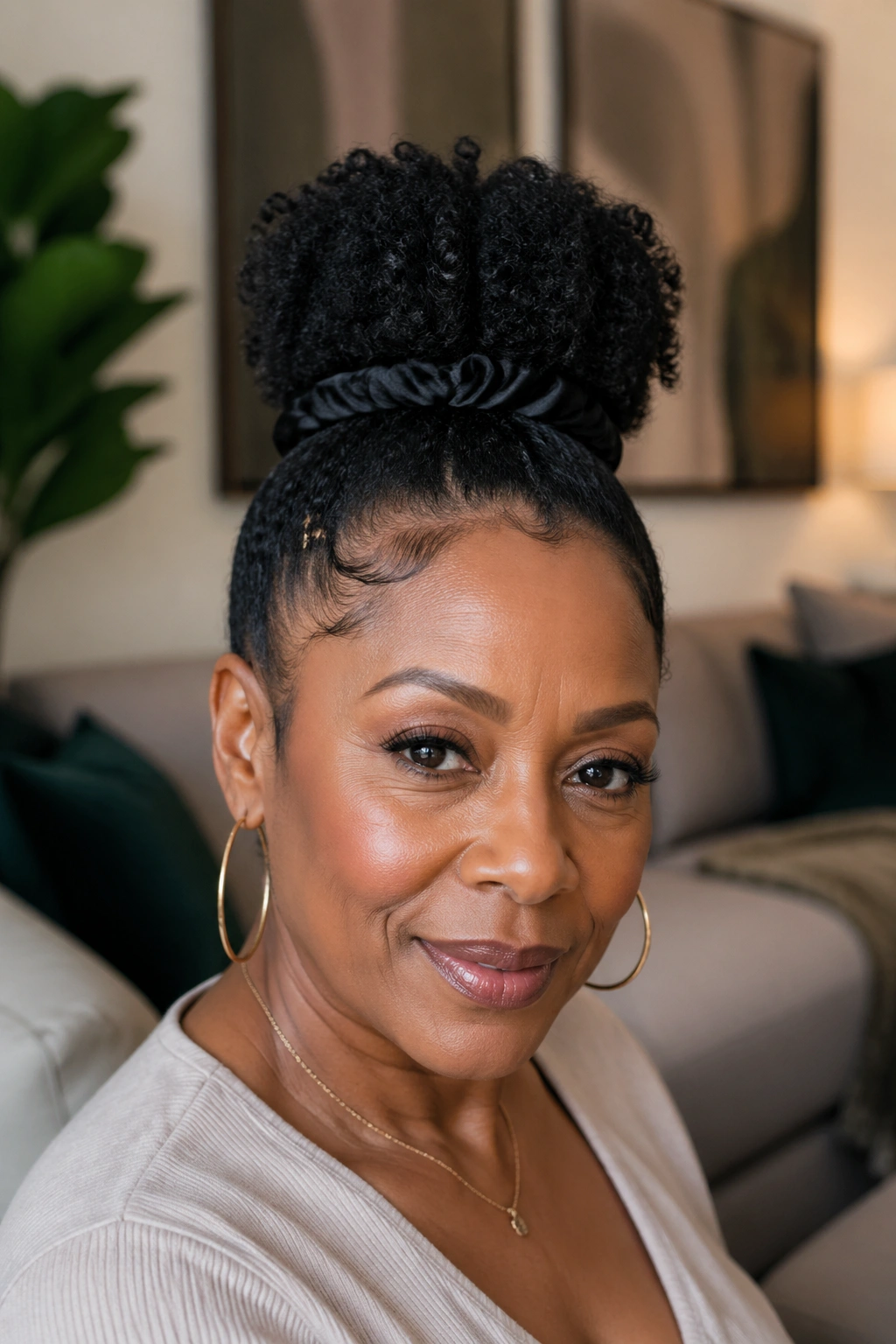
A bun at the very top of the head, sitting high and centered, made from afro-textured hair without smoothing or straightening. Unlike a ballet bun on straight hair, an afro bun has natural texture visible in the gathered sections — individual coils and curl patterns visible within the bun itself.
The How and Why
Gather the hair at the crown, secure with a satin scrunchie, and wind the gathered section around the base loosely — not tightly wound, but loosely wound so the texture shows. Secure with pins around the perimeter. Fluff the top and front of the bun slightly to add volume.
This is one of the most professional-looking natural styles and one that reads as deliberate and polished in formal settings.
11. Rope Twist Half-Up Half-Down
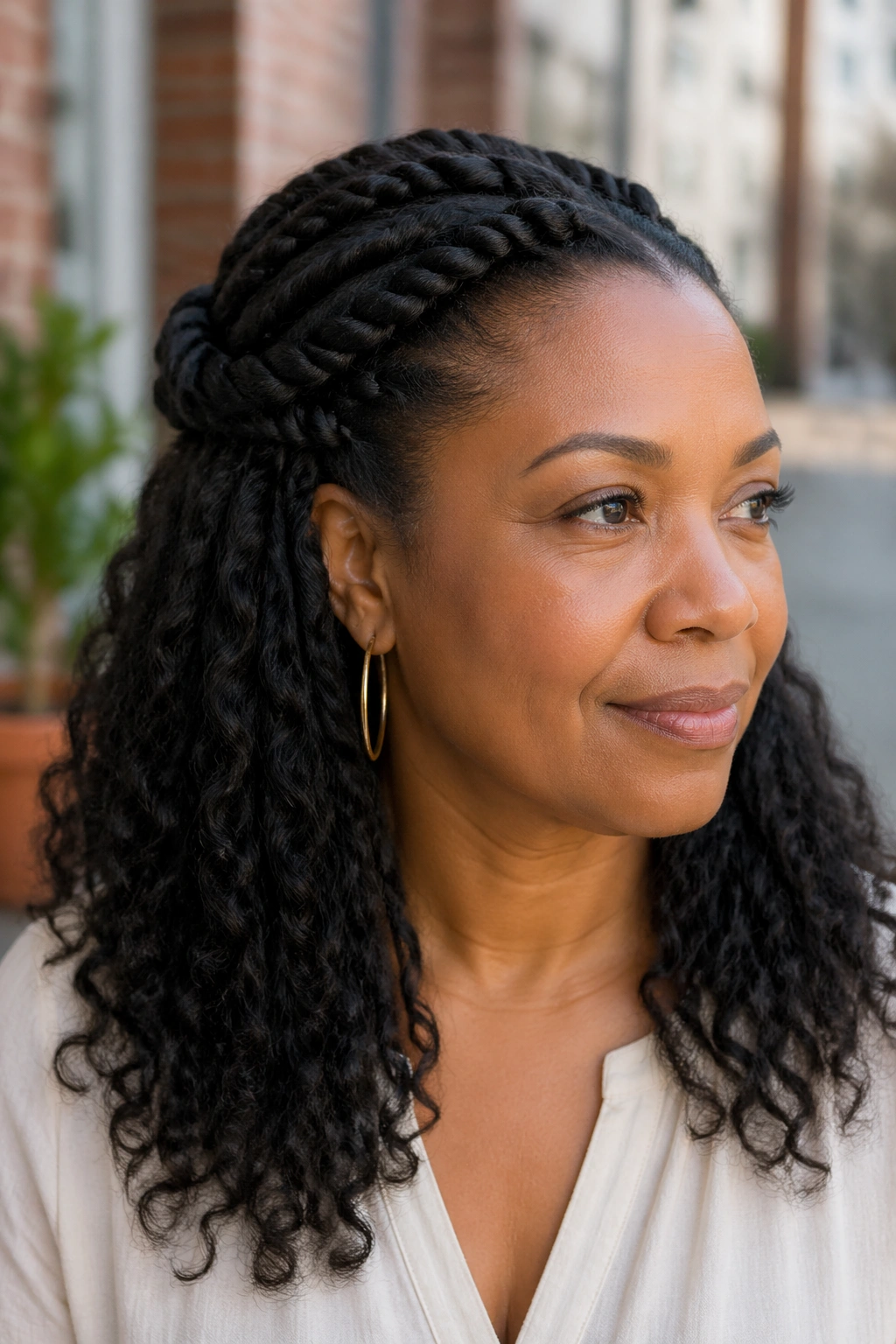
Two large rope twists at the front sections of the hair, pulled back and secured at the center of the crown, with the back sections left completely free. The rope twists serve as a headband-style accent — they add structure to the front while the full natural hair flows behind.
Unlike two-strand twists, rope twists have a tighter, more uniform appearance with less visible texture — they read as more polished and deliberate, which makes them a good choice for semi-formal contexts.
The free back section can be in any state — wash-and-go, twist-out, or defined natural curls. The rope twists in front pull the whole look together regardless of what the back is doing.
12. Tapered Afro Shape
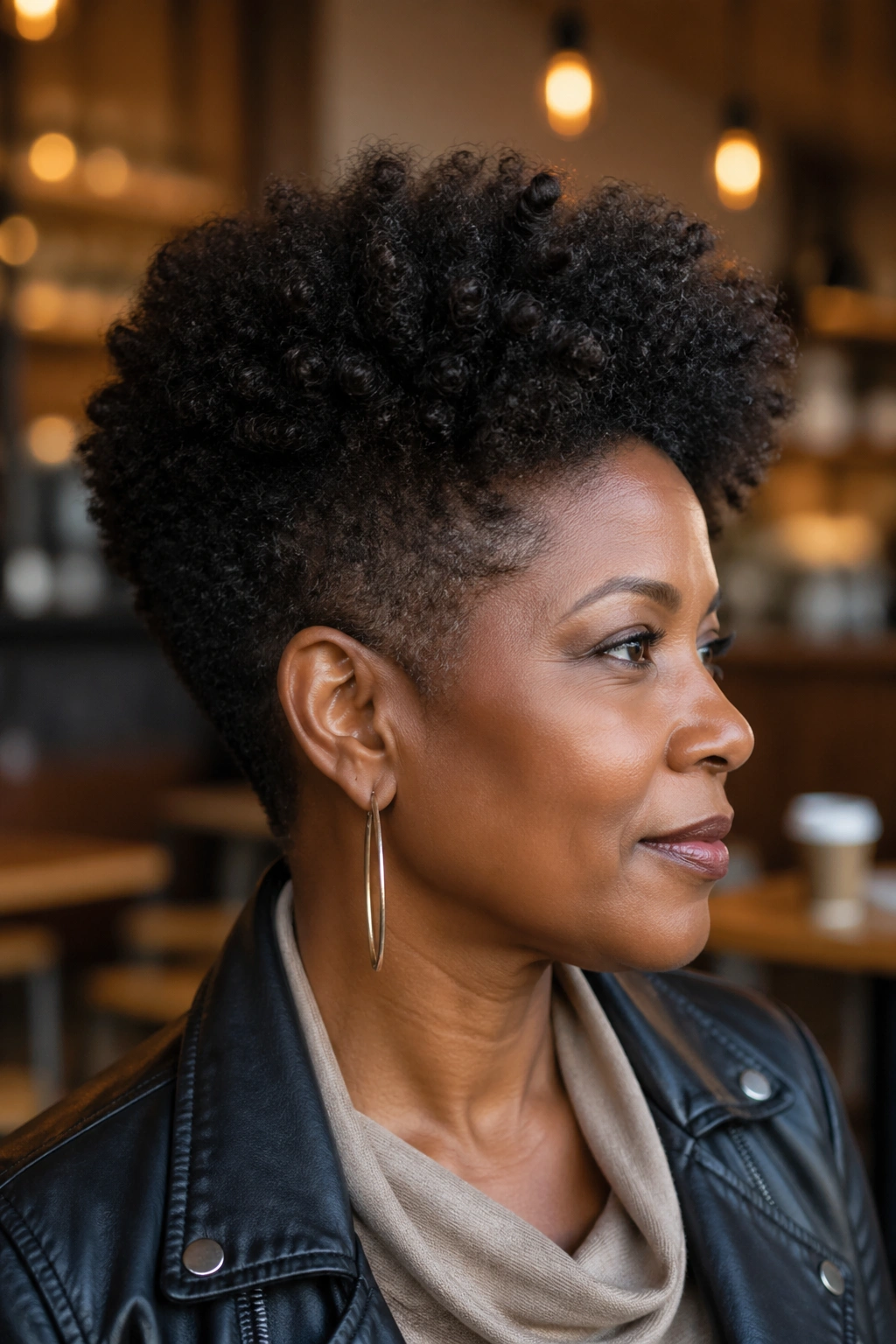
If your natural hairline has thinned slightly at the temples or nape, a tapered afro shape — shorter at the perimeter, fuller at the crown — works with that natural pattern rather than against it. A skilled barber or natural hair stylist can cut your afro to have a deliberate taper that slims the sides and creates a more concentrated volume at the top.
The frank truth: Many women over 40 avoid the barber for fear of losing length they’ve worked to grow. But a well-executed taper on afro hair is one of the most flattering possible shapes — it creates visual height, reduces bulk at the sides if that’s a concern, and gives the afro a clean, defined silhouette rather than an amorphous cloud. The length at the crown is preserved; the perimeter is shaped.
See it as sculpting rather than cutting.
13. Flat-Twists Into Loose Ends
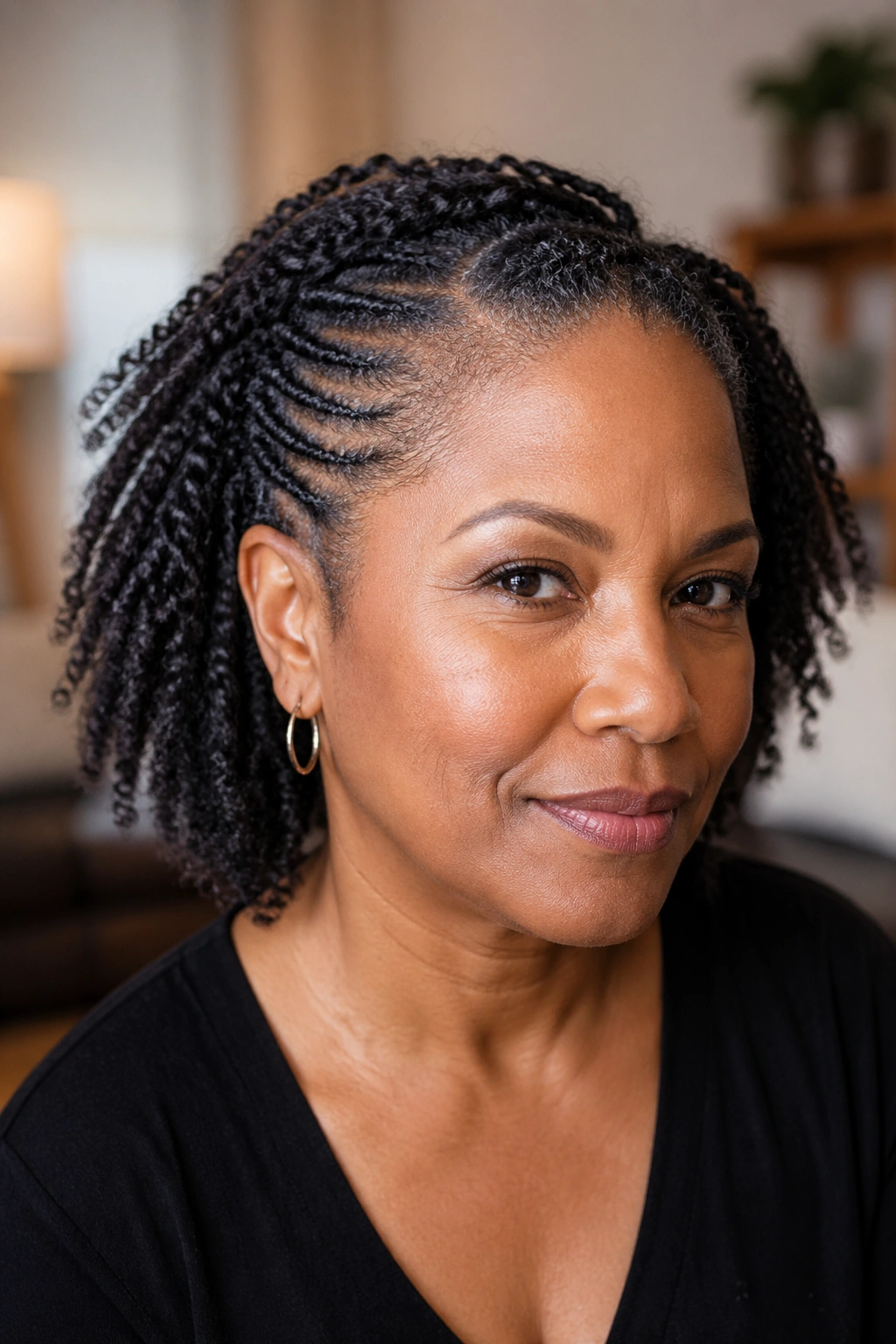
Flat-twist the perimeter of the hair — the front hairline, the sides, and the nape — leaving the interior and crown sections free and loose. The flat twists create a neat frame around the face and edges while the free interior gives volume and movement.
This hybrid approach is particularly useful when the hair’s overall density has decreased — the flat twists at the perimeter look controlled and deliberate, while the free interior section benefits from whatever volume the hair naturally has.
Install in roughly thirty minutes. Holds for five to seven days. The loose interior can be refreshed with a spritz and re-shaped with your hands.
14. Chunky Senegalese Twists — Medium Length
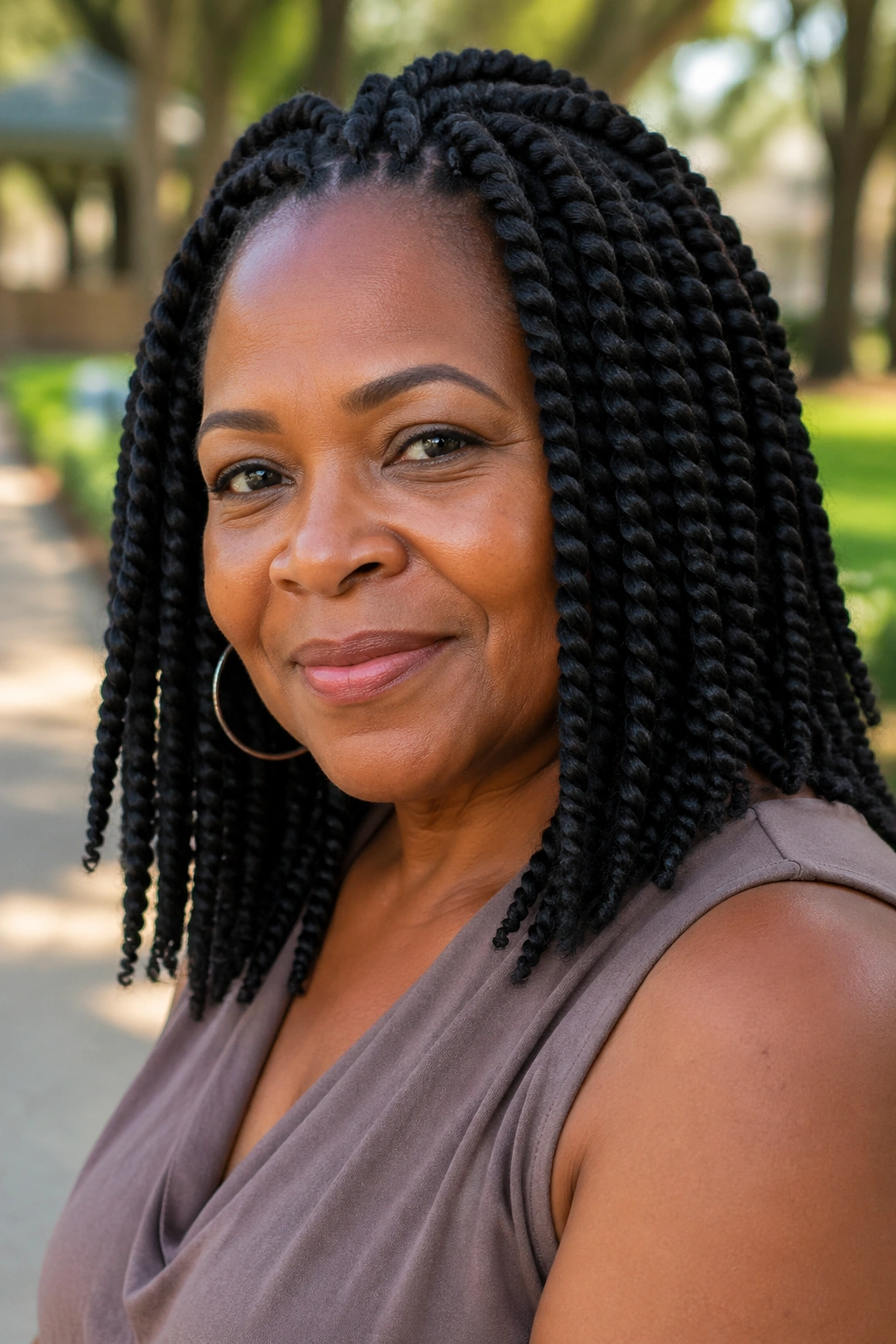
Senegalese twists — smooth rope-style extensions braided in with your natural hair — on medium length give you a full, substantial look without the weight of very long extensions. Choose chunky sections — fewer, larger twists rather than many small ones — to reduce per-strand tension.
This is a protective style with real staying power. Four to eight weeks is typical. During that time, the hair underneath is resting, retaining moisture, and growing without daily manipulation. Monthly maintenance: re-twist any sections that have started to unravel at the root, oil the scalp lightly, and sleep with a satin bonnet.
Who this is for: Women who want a weeks-long break from daily styling without sacrificing a polished look.
15. Natural Afro With Statement Accessories
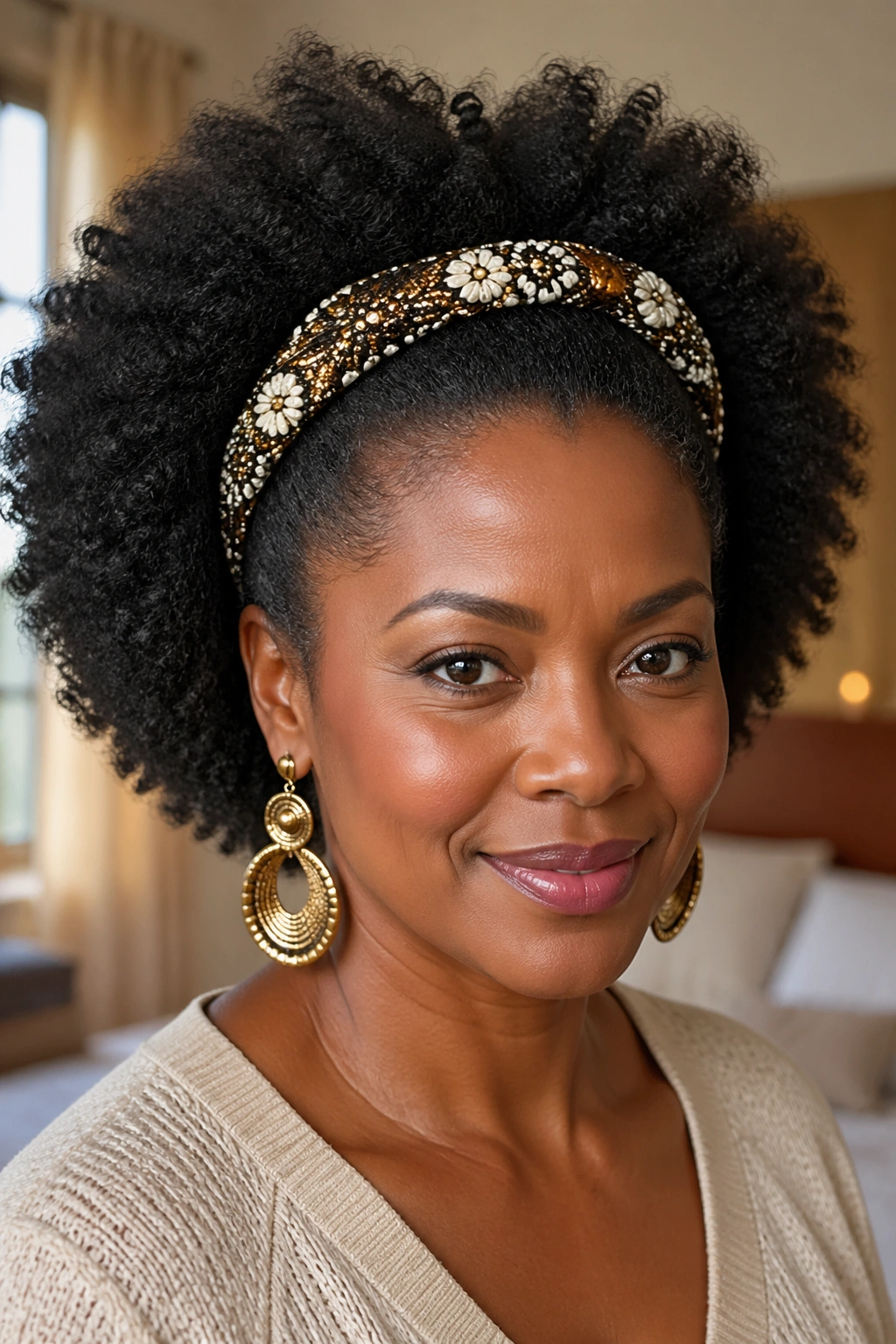
Your afro in its best possible natural state — moisturized, shaped, edged — plus one deliberate accessory. A wide, decorative headband. An ornate hair comb pushed into the side of the afro. A cluster of gold pins throughout. A single large statement clip at the crown.
The accessory does the styling. Your hair does the rest.
This approach works particularly well for women over 40 because it works with your hair rather than requiring extensive manipulation. The natural state of your hair is the canvas; the accessory is the choice. There’s genuine editorial quality to a well-chosen hair accessory on a full afro — it reads as intentional and confident in a way that hours of styling sometimes can’t match.
16. Cornrow Braids Into a Bun
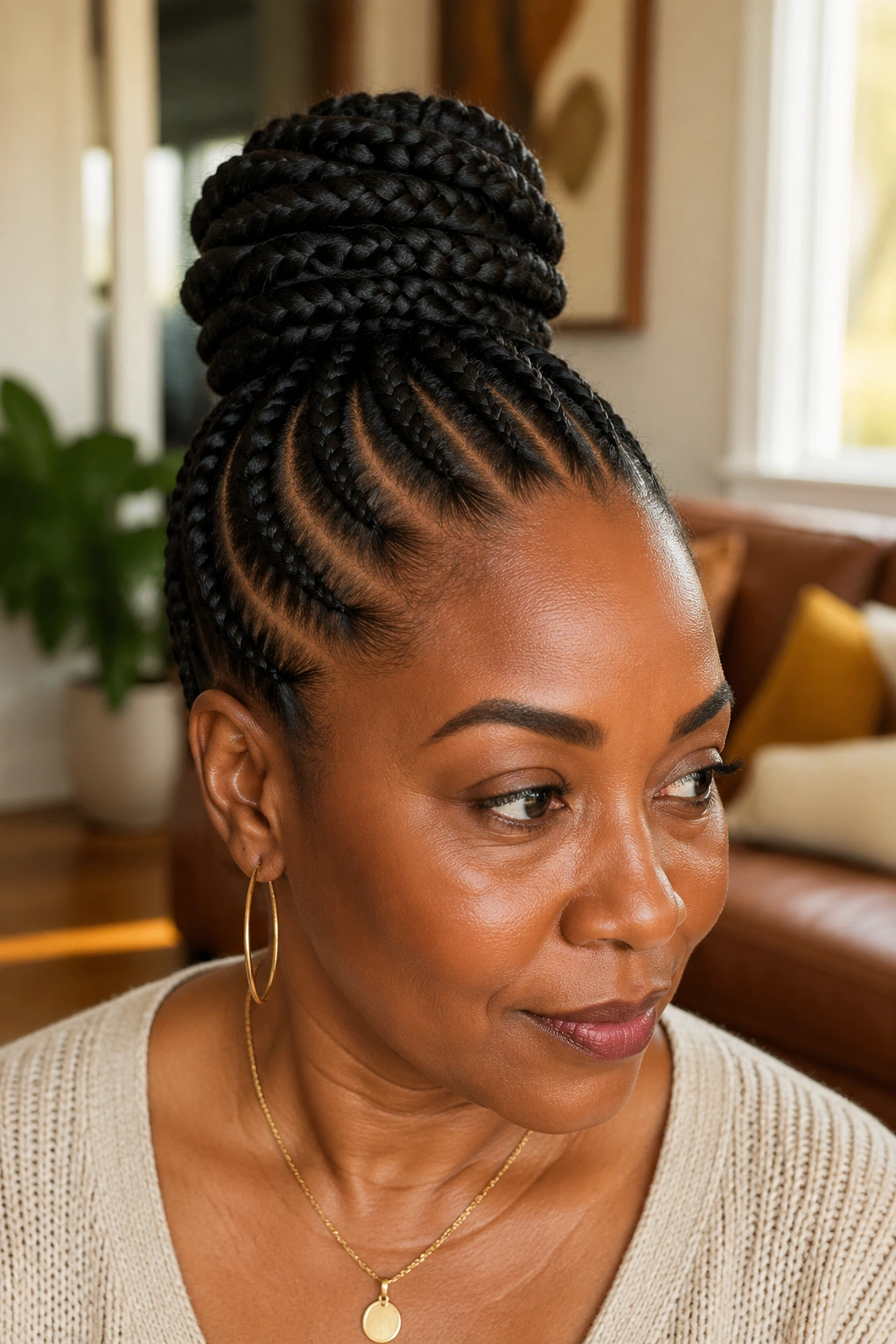
Cornrow the hair straight back from the front hairline to the crown, then gather all the cornrow tails into a bun at the top. Simple. Classic. Incredibly durable.
The bun portion can be styled different ways — piled loosely for a casual look, wound neatly for something more formal, or left as a puff rather than wound at all. The cornrowed base stays neat regardless of what the bun is doing.
For women who style their own hair, this is one of the most achievable salon-quality styles to DIY. The straight-back cornrows are more forgiving than patterned rows, and the bun at the top covers any inconsistencies in the braid tails.
17. Box Braids — Classic Shoulder Length
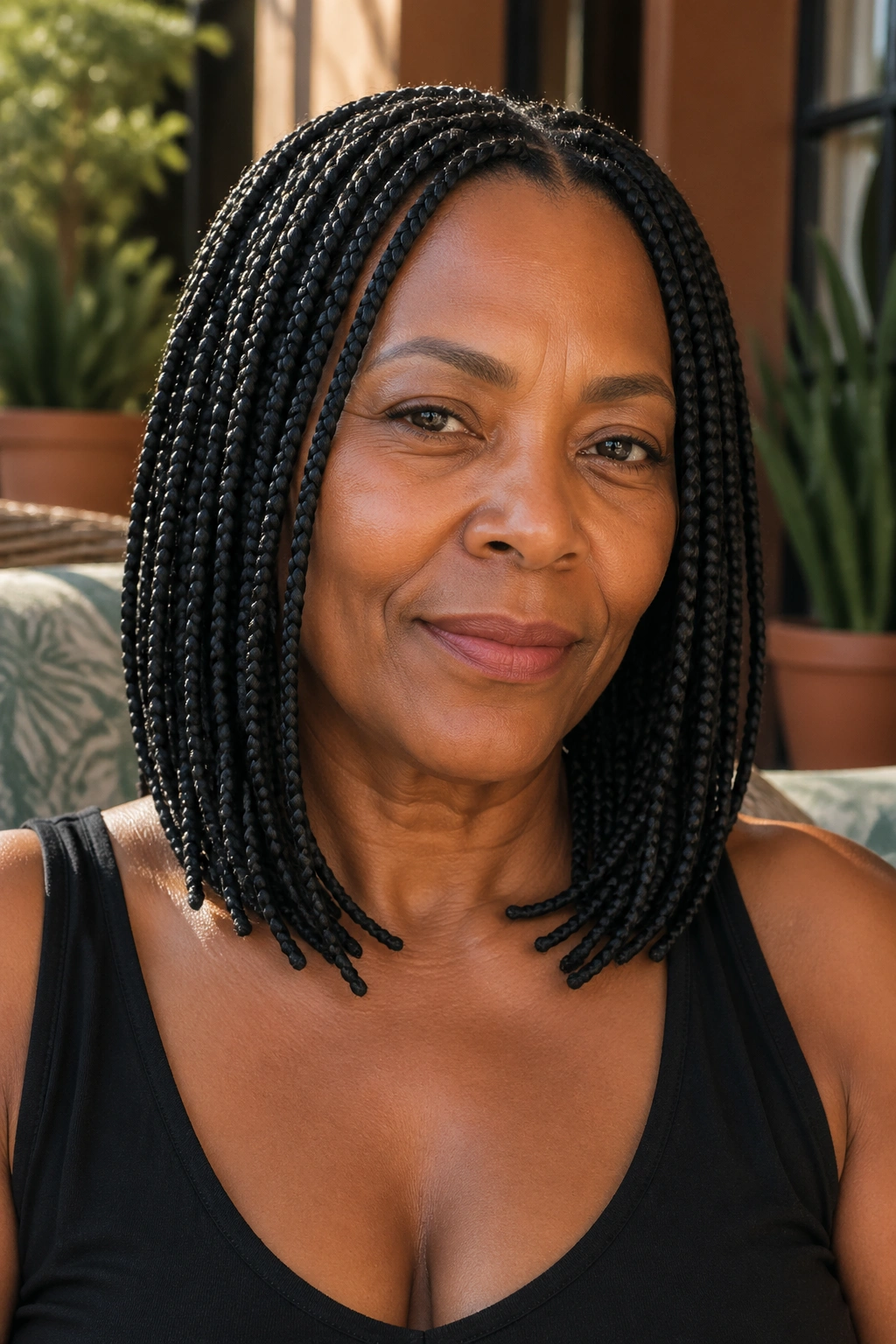
Box braids divided into clean square sections, braided from root to tip with or without extensions to add length and thickness. On shoulder-length natural hair, box braids sit just at the collarbone — long enough to move, short enough to stay manageable.
At this length, they’re lightweight enough to avoid scalp stress while still offering the protective benefits. They can be worn loose, gathered into a bun or puff for variation, or half-up for a different silhouette without reinstalling.
Practical note: Have them installed by a stylist who respects tension. Box braids should never feel tight at the root after the first day or two — if they do, that’s traction waiting to happen. The braid should feel secure, not painful.
18. Pineapple Bun With Coily Front Sections
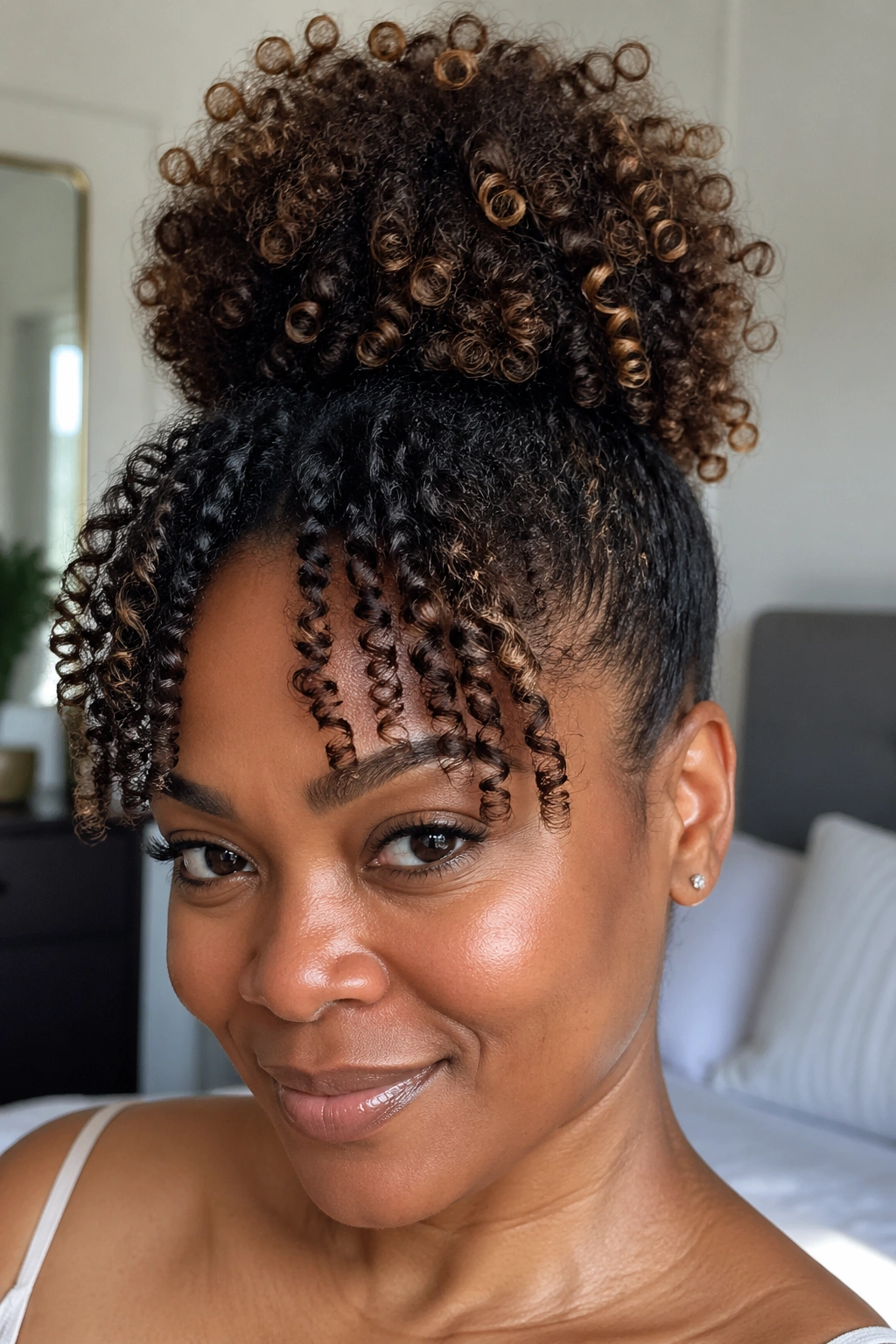
Gather most of the hair into a high pineapple bun at the crown, but leave the very front section — about two inches of hairline all the way across — free and coiled. Apply curl cream to those front sections and finger-coil each one deliberately, letting them spring forward as a deliberate fringe or frame.
The effect is a pineapple bun that has a coily curtain at the front — structured at the top, soft and defined at the front. The coiled fringe softens the look and makes the style feel more intimate and less severe than a straightforward pineapple.
This holds for one to two days before the coils start to loosen.
19. Halo Braid on Natural Hair
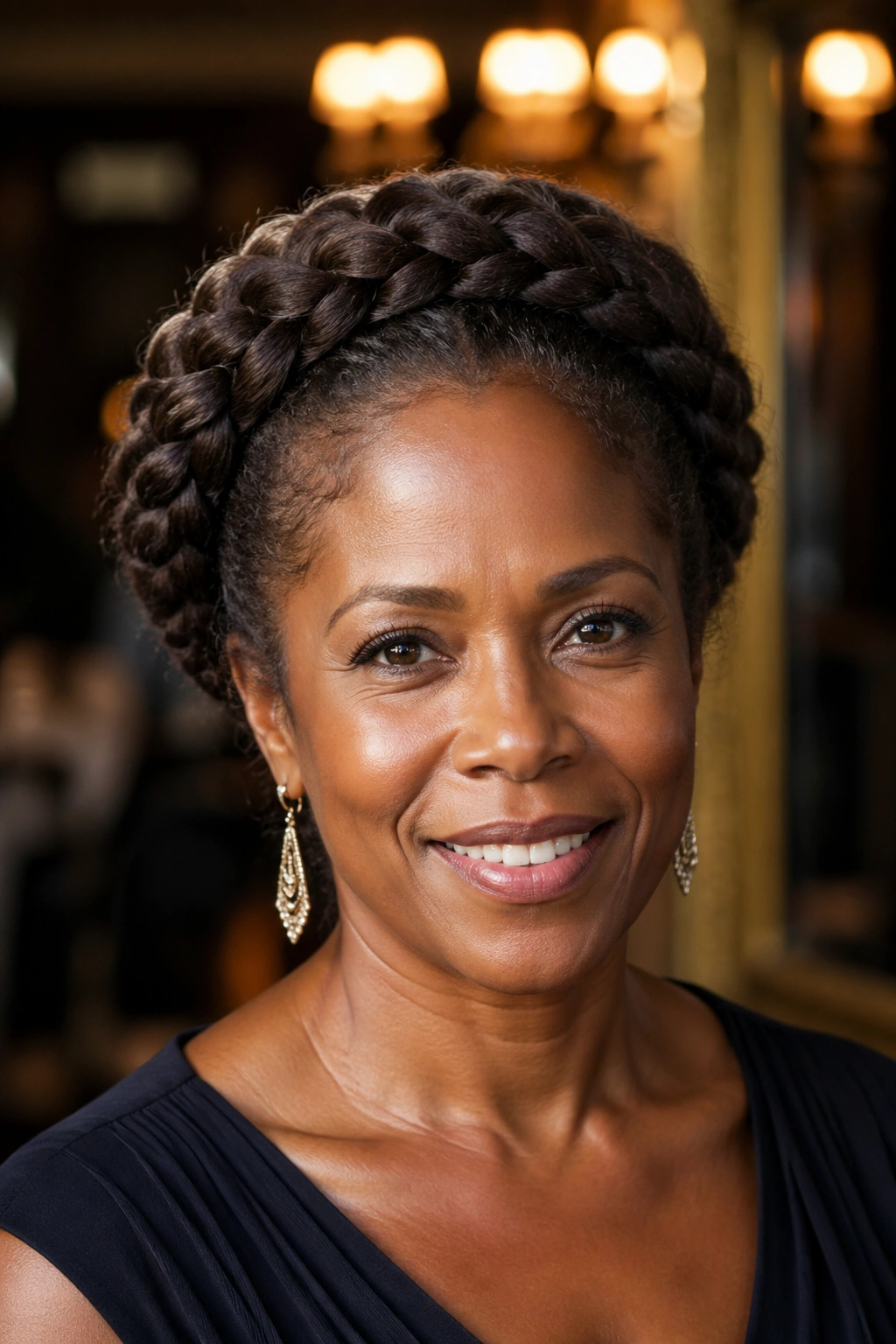
A single braid encircling the entire head at the hairline — taken from one section of hair, braided continuously around the perimeter, and pinned where the end meets the beginning. The remaining hair inside the halo is left free, gathered into a bun, or in whatever natural state it’s in.
On fully natural afro hair, the halo braid sits up slightly from the scalp rather than lying completely flat, which gives it a slightly elevated, crown-like quality. The thickness of natural hair makes the halo braid more substantial and dramatic than the same style on straight or wavy hair.
This takes about twenty minutes to install and lasts three to four days. Wear it to a formal event or a work presentation — it’s quietly formal without being boring.
20. Afro Twa (Teeny Weeny Afro) — Kept and Deliberate
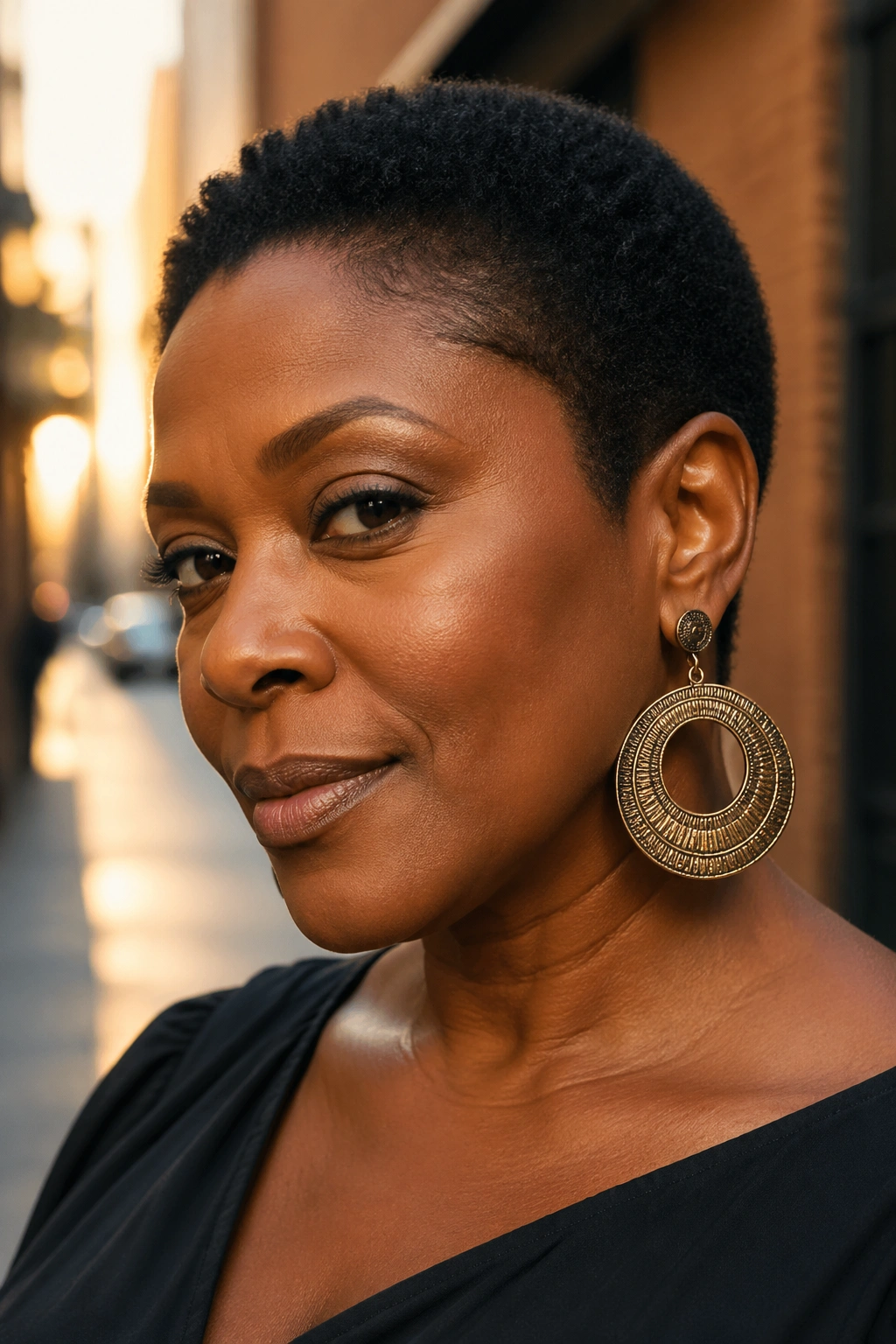
For women over 40 who’ve made a deliberate choice to wear short natural hair, a twa — teeny weeny afro, typically an inch or less of length — is not a transitional style. It’s a finished look that requires care and intention to pull off at its best.
What Makes It Different
A twa on mature skin reads completely differently than it did at 25. The face has more definition, the bone structure shows more clearly, and the hair’s close relationship to the scalp creates a graphic quality that requires confidence to wear — and rewards it. Strong earrings, deliberate skincare, and defined edges are the three elements that make a short twa look polished rather than undone.
The maintenance is actually minimal once you’ve committed — a weekly wash, daily moisture, and edge refresh every two to three days.
21. Flat-Twist Out — Large Sections
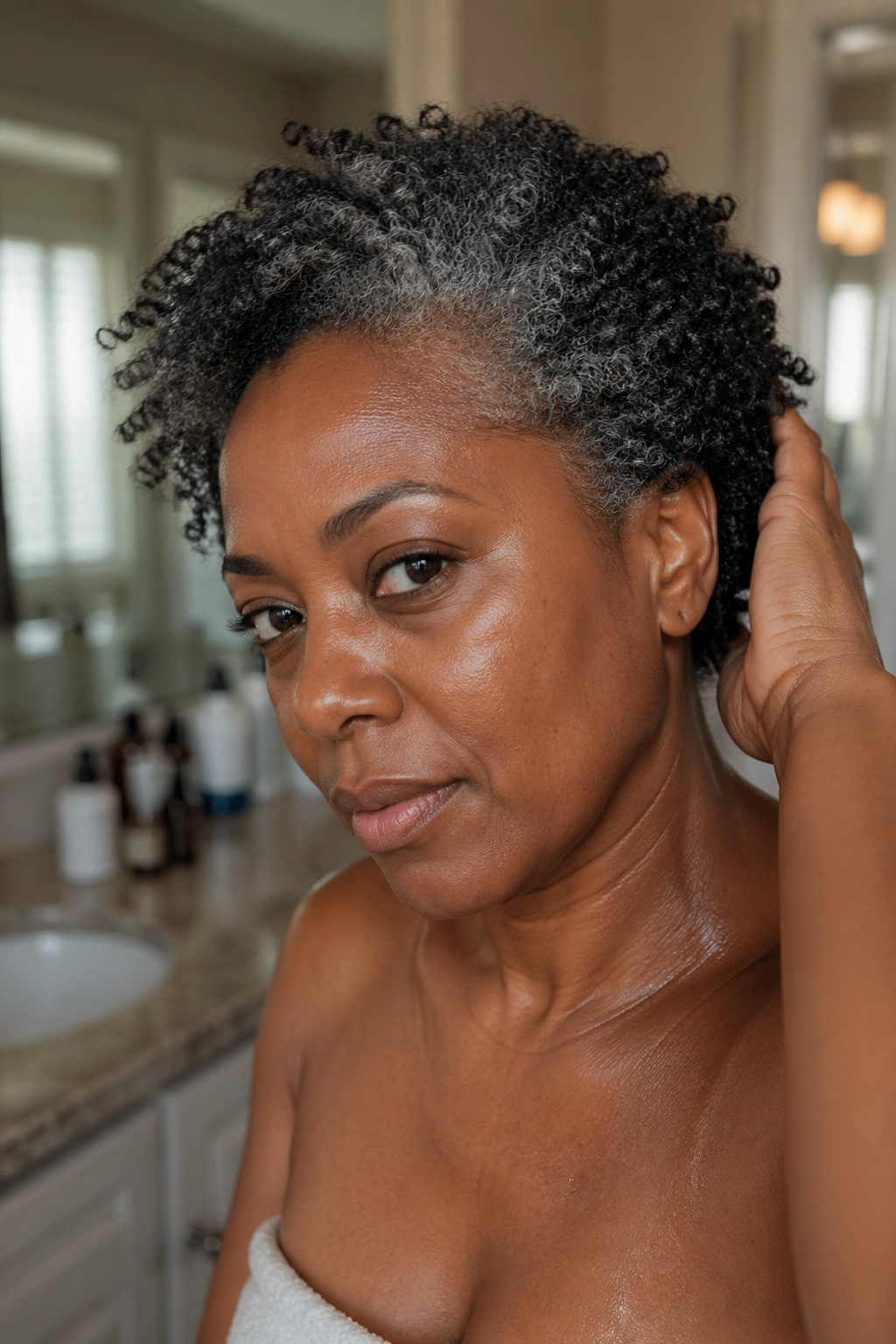
A flat-twist out on large sections — four to six sections across the whole head — produces wide, flat spirals rather than the thinner, more defined results of smaller sections. The scale of the spirals is larger and more dramatic, and the volume from the unraveled flat twists on long hair is substantial.
This is an underused style in the natural hair rotation. Most people who do flat-twist outs use small sections and get results similar to cornrow-outs. Larger sections produce a different result — almost wave-like in shape, with each unraveled section forming a wide, sweeping curve rather than a tight spiral.
On grey-streaked afro hair, the wave pattern from large flat-twist sections catches light in a way that highlights the color variation beautifully.
22. Jumbo Braids — Freeform Parting
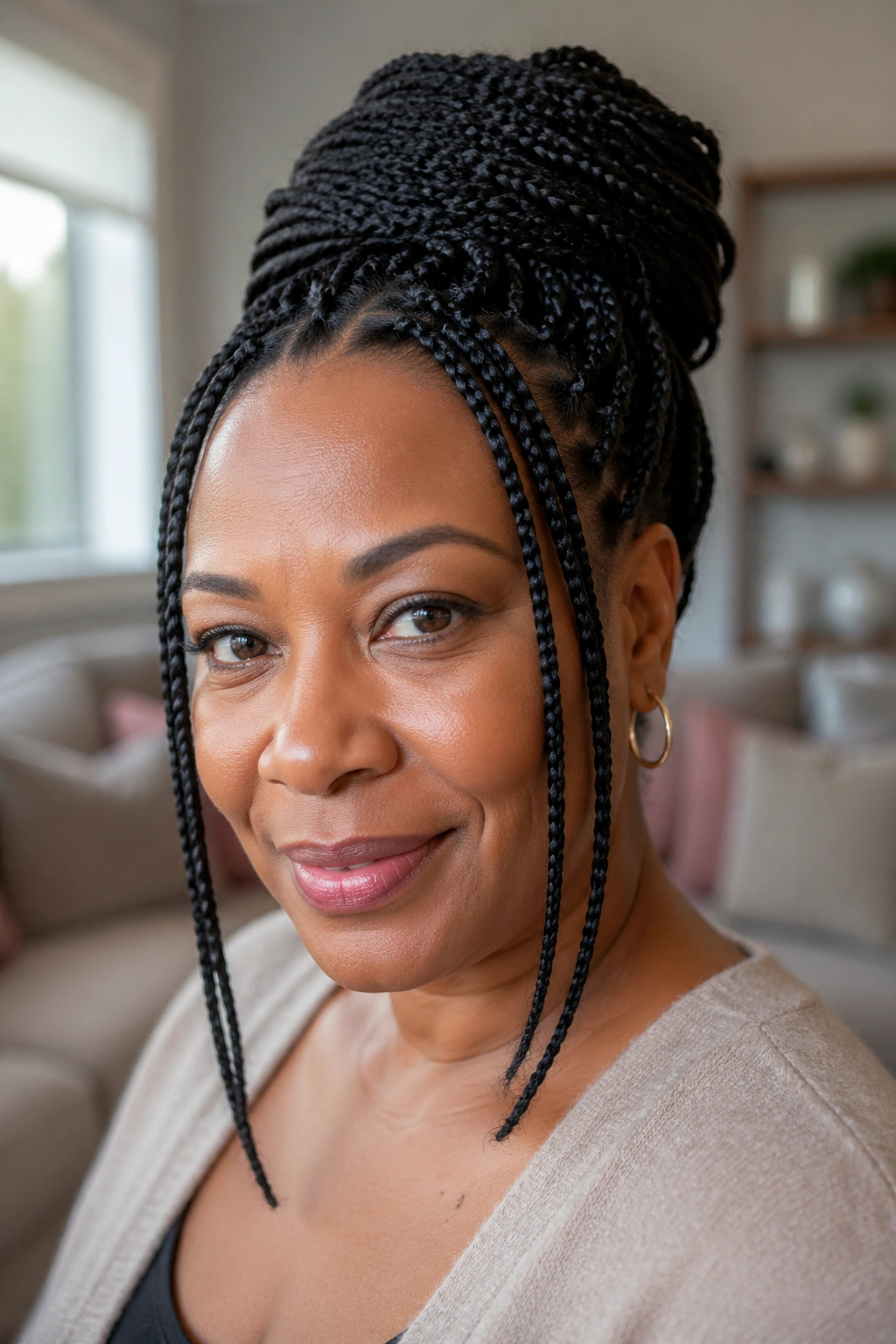
Jumbo braids with intentionally irregular, organic parting rather than precise geometric sections. The irregular parts make each braid slightly different in size and direction, which creates a more natural, handmade quality than perfectly uniform braids.
This is worth trying if you’ve always found precisely parted box braids too rigid-feeling. The freeform approach produces braids that look grown rather than installed — they feel more like they belong to the hair than like a geometric overlay.
Wear them loose or gathered; the irregular pattern works in any configuration.
23. Two-Tone Twist Style — Natural Plus Color
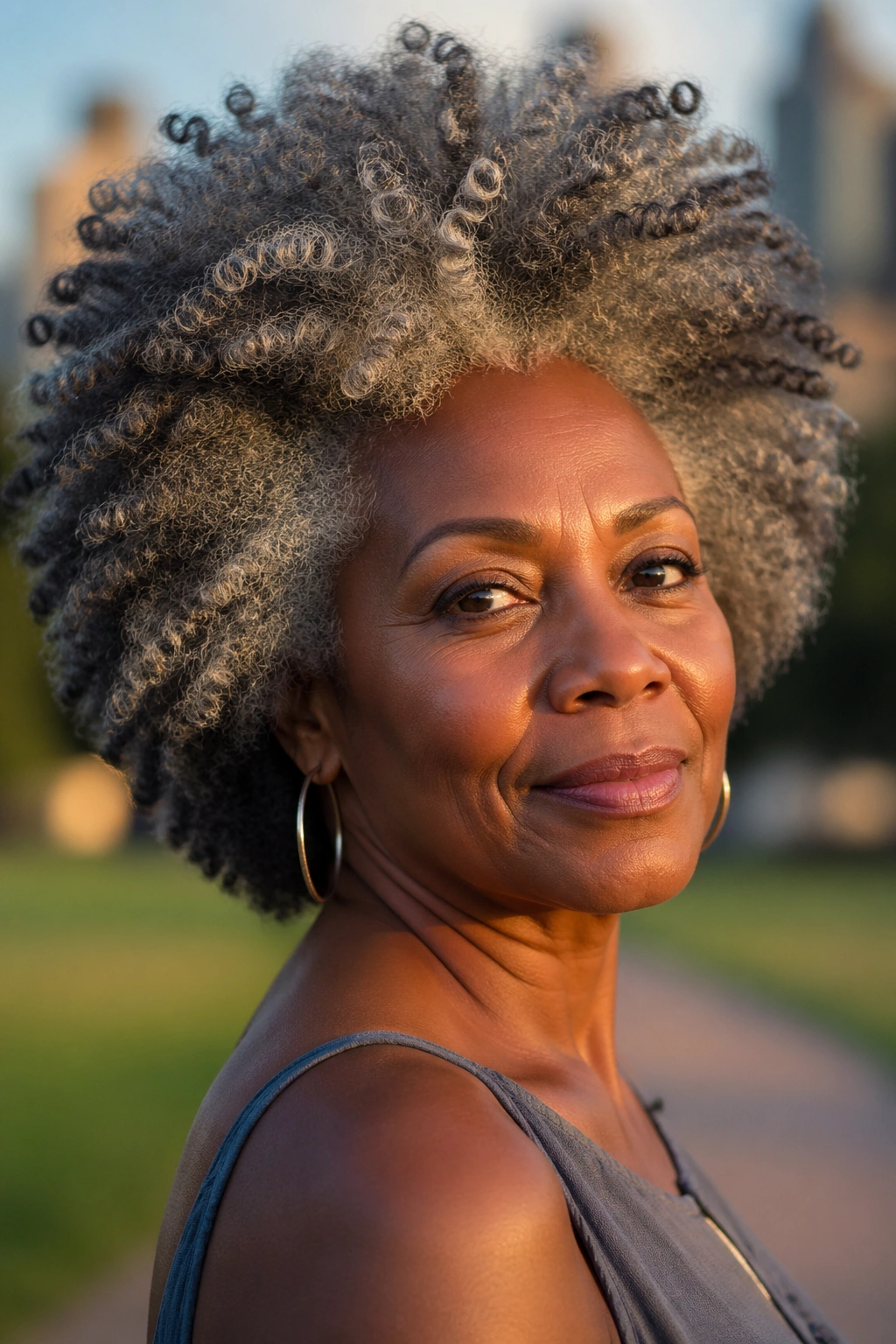
Install twists that alternate between your natural dark or grey hair and a strand of colored marley hair or wool yarn incorporated at the root. The result is a two-toned twist pattern — your natural color and a chosen accent color woven together throughout the style.
Choose an accent that works with your complexion at this stage. Warm auburn against deep brown skin. Honey blonde through silver-grey. Burgundy against dark natural hair. The accent color appears as thin stripes woven within each twist — visible but not garish.
This is a low-commitment way to play with color without chemical processing, which makes it particularly appealing for women over 40 who want to experiment without committing to a color regimen.
24. Afro Puff Low at the Nape
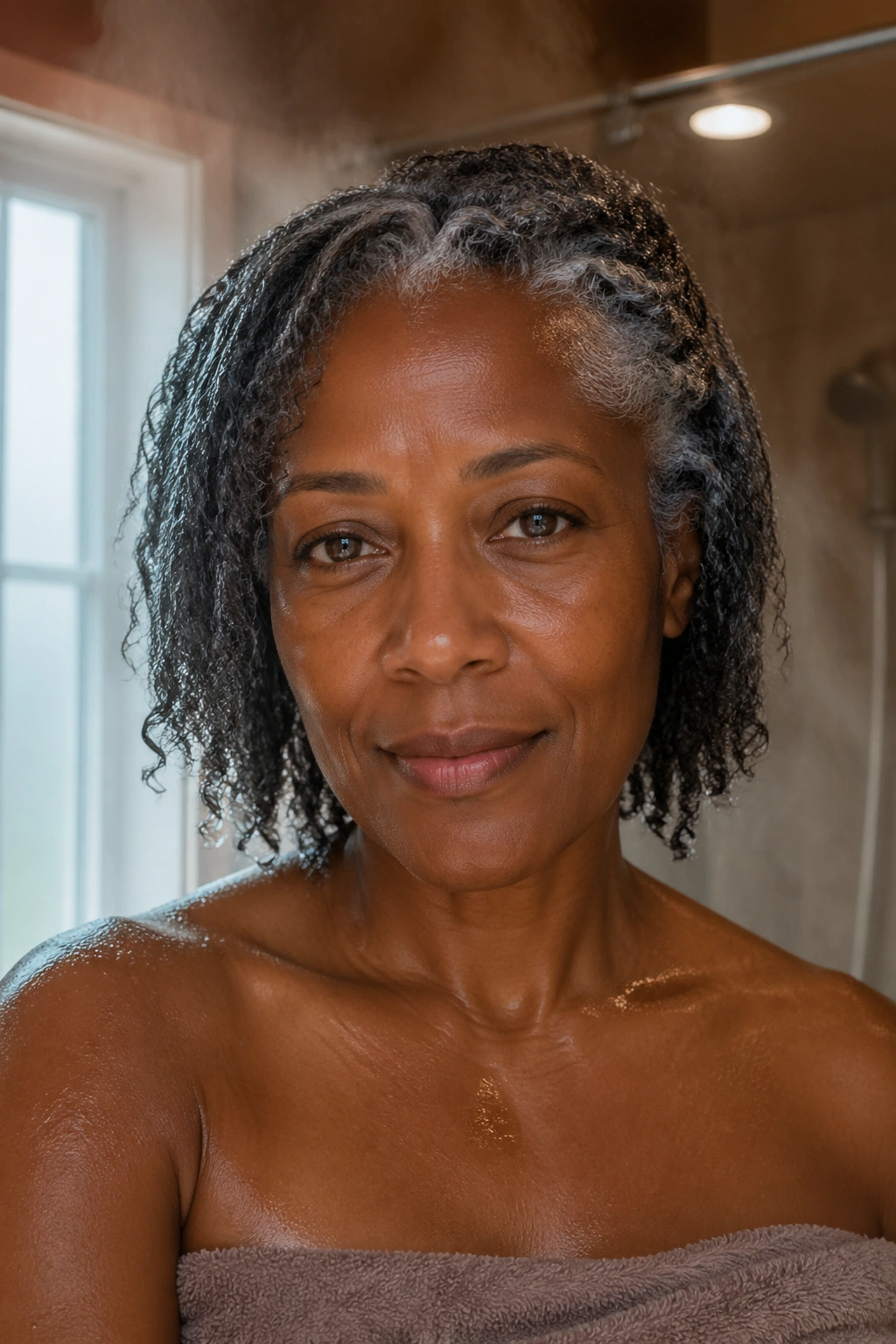
Most afro puffs sit high. This one sits low — gathered at the nape rather than the crown — and the effect is completely different. A low nape puff reads as more formal, more structured, and more mature than the high-sitting version. It’s close to a bun in its overall effect but keeps the full volume and texture of the afro.
Gather with a soft elastic at the nape, let the full afro volume sit behind the base of your skull, and edge the perimeter carefully. The result is clean at the front, full at the back, and elegant in its proportions.
This is the style for professional settings where you want to wear your natural hair without the puff reading as casual.
25. Crochet Locs — Medium Length
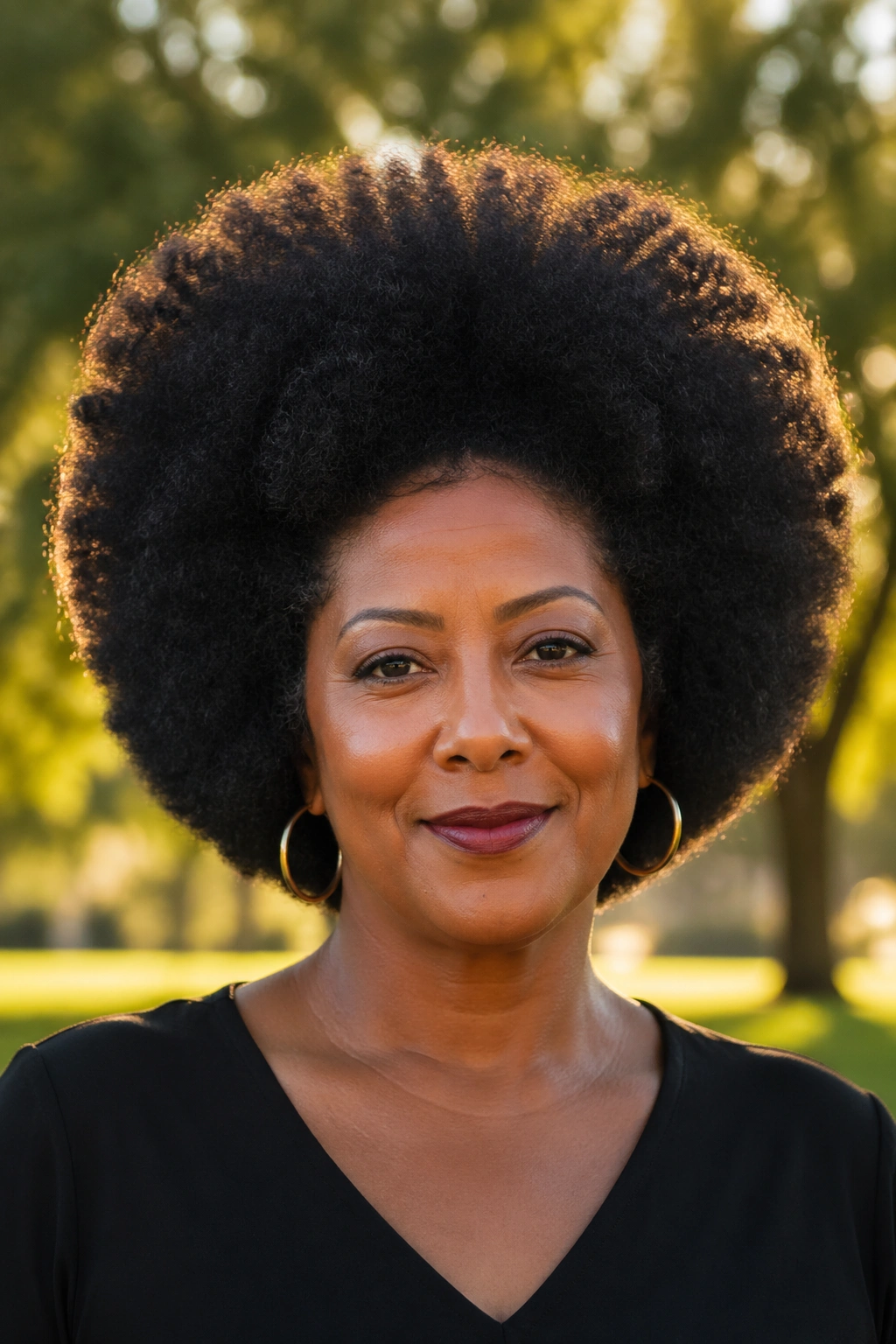
Crochet locs — synthetic loc extensions installed using a crochet hook through braided cornrow bases — create the appearance of natural dreadlocks without the years-long commitment of actual locs. At medium length, they’re manageable, versatile, and can be installed in a single salon session.
Why this works after 40: Many women in this age range who’ve been considering locs but not ready to commit to the full process find crochet locs a practical solution. They look convincingly real, they’re gentle on the natural hair underneath, and they come out cleanly when the look is done without any chemical alteration to your own hair.
Medium-length crochet locs — just past the shoulders — can be worn loose, gathered into a bun, or half-up. They hold their shape for four to six weeks before needing removal.
26. Bantu Knots as a Finished Style
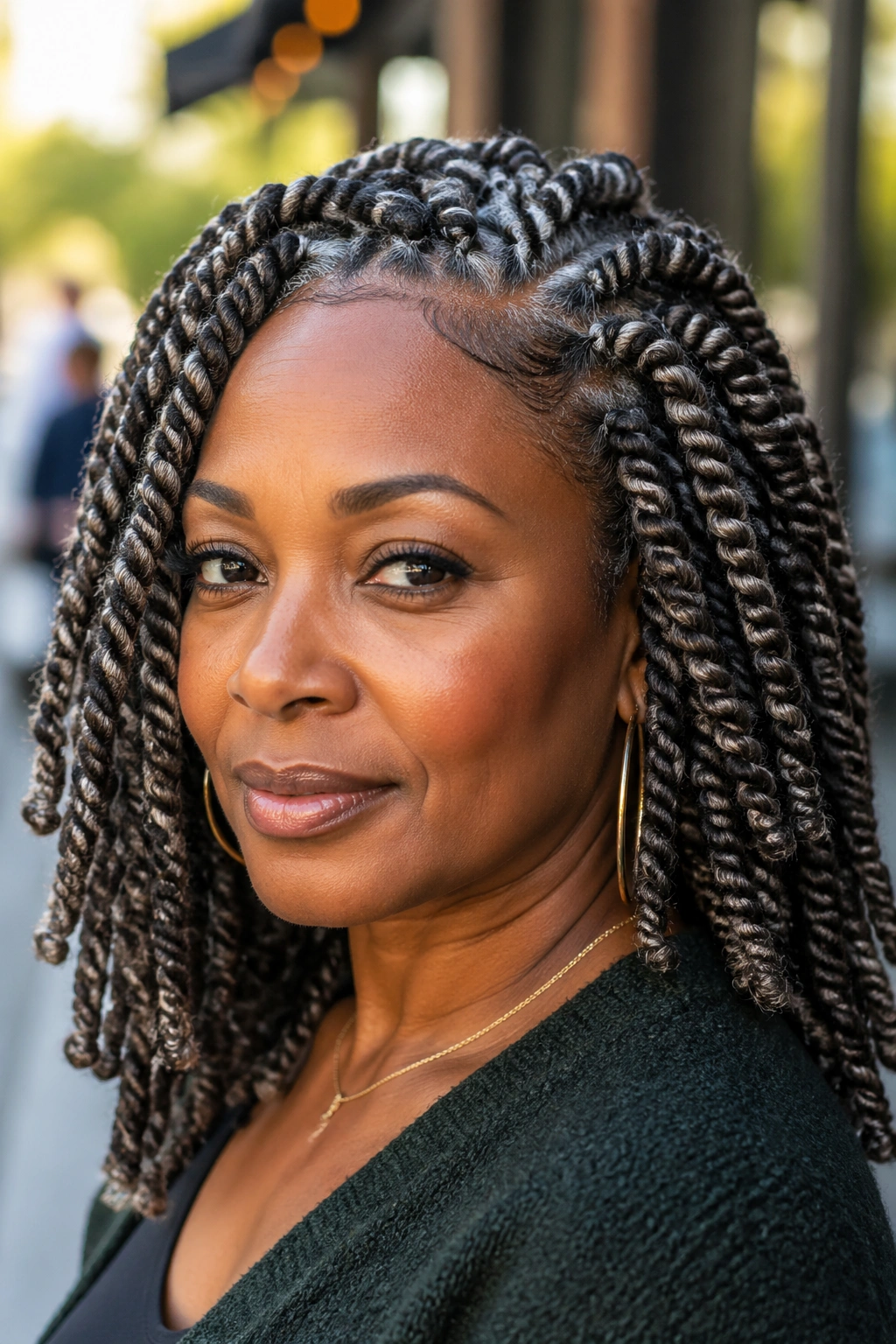
Not as prep for a knot-out — as the actual finished look. Bantu knots, neat and uniform across the entire head, worn for their own beauty rather than unraveled for a different result.
On mature hair, evenly sized and carefully installed Bantu knots are a geometric, sculptural look that photographs beautifully and reads as very deliberate. Eight to ten medium-size knots, each one tightly wound and secured, create a pattern that’s architectural without being stiff.
The style works particularly well with statement earrings — the exposure around each knot gives jewelry space to be seen. Wear them for three to five days, then optionally unravel for the bonus knot-out.
27. Full Locs — Natural and Mature
For women over 40 who have been wearing locs for years or who are considering starting the loc journey, fully established locs on mature hair are one of the most striking natural styles there is. Locs that have been maintained for years develop a unique texture and thickness — they taper naturally at the tips, darken at the roots, and have a lived-in quality that newer locs don’t yet have.
At this stage, locs that have greyed partially or fully are particularly extraordinary. The grey shoots through the length of each loc differently — some completely silver, some striped, some darkening at the newer growth and lighter along older length. Each loc becomes its own pattern.
The maintenance for mature locs is straightforward: washing every two to three weeks, re-twisting the roots periodically, and keeping the scalp moisturized and clean. The styling options are extensive — locs can be gathered into buns, braided together, piled high, worn loose, or accessorized endlessly.
If you’ve been thinking about starting locs, your 40s are a perfectly fine time to begin. They’ll be fully established and beautiful by the time you’re 50.
Choosing the Right Style for Your Lifestyle in Your 40s
The most useful filter is how much time you realistically want to spend on your hair each day. Protective styles — cornrows, braids, locs, box braids, crochet installs — require a longer initial investment but minimal daily effort. Free styles — puffs, wash-and-gos, twist-outs — require more frequent attention but offer more flexibility to change your look.
Think about your week honestly. If you’re in the office three or four days a week in a professional setting, styles that hold for at least five to seven days and look polished throughout are worth the install time. If you work from home or have more casual settings, more flexible options give you room to experiment.
Your hair in your 40s should work for your life, not against it.
Common Mistakes to Avoid After 40
Over-manipulating the hair is the biggest one. Every time you style, brush, comb, or pull your hair, you’re introducing the potential for breakage. In your 20s, hair that breaks at the same rate as it grows is annoying. In your 40s, when growth may be slightly slower and recovery takes longer, over-manipulation adds up more visibly. Style once, maintain gently, and commit to your look for several days rather than restyling every morning.
Using products that are too heavy is another common issue. As hair fines slightly with age, heavy waxes and butters that might have worked on thick 4C strands in your 20s can now leave the hair looking weighed down and greasy rather than moisturized. Switch to lighter versions — water-based leave-ins instead of thick creams, lighter oils like argan or jojoba instead of pure shea.
Skipping trims. The ends of afro hair accumulate damage — from styling, from friction, from dryness — and damaged ends do not grow. They break at the same point repeatedly, which means length can’t build. A trim every eight to twelve weeks is not losing progress; it’s maintaining the foundation for future growth.
The Mindset That Makes All the Difference
The women who wear their afro hair most beautifully in their 40s and beyond are the ones who’ve stopped treating their hair as something to be managed and started treating it as something to be celebrated. There’s a quality to that shift — the way they choose styles, the way they carry themselves, the way they respond to compliments — that’s entirely separate from the technical quality of any particular style.
That comes with time. It comes with having made mistakes and learned from them. It comes with having been told your hair was too much, and decided it wasn’t. It comes with the very particular authority of a woman who knows exactly what she’s doing and is not interested in anyone else’s opinion about it.
Your hair in your 40s is not a problem to be solved. It is exactly what it is — and that’s more than enough to work with.
