



Braided ponytails for 4C hair can look razor-clean or completely off, and the difference usually comes down to three small things: parting, tension, and how much hair you ask the base to carry.
4C hair does not sit in a ponytail the same way looser textures do. The coils compress, the roots puff, and a style can go from crisp to bulky fast if the foundation is sloppy.
The best versions work with that texture instead of fighting it. They give you structure at the scalp, enough stretch to keep the braids neat, and a shape that still feels comfortable after a few hours, not just for the first mirror check.
Start with the style that matches your hairline, your patience, and how much weight you want hanging off the back of your head.
1. High Feed-In Braided Ponytail
A high feed-in braided ponytail is the one people reach for when they want height, clean lines, and a little drama without piling on a lot of extra accessories. The braids rise from the front and sides, then gather into a ponytail high on the crown, which gives 4C hair a sharper silhouette.
Why It Works on 4C Hair
The crown area is usually where 4C hair shrinks the most, so lifting the ponytail up top keeps that shrinkage from swallowing the style. It also gives the braids room to fall instead of bunching at the nape.
What to Keep in Mind
- Keep the front rows snug, not tight.
- Ask for a high anchor point if you want visible length.
- Add braiding hair in stages so the base does not feel heavy too soon.
- A satin scarf at night helps the braid tracks stay neat.
My favorite part: this style looks polished even when the ponytail itself gets a little fuzzy, because the shape is doing most of the work.
2. Low Sleek Feed-In Braided Ponytail
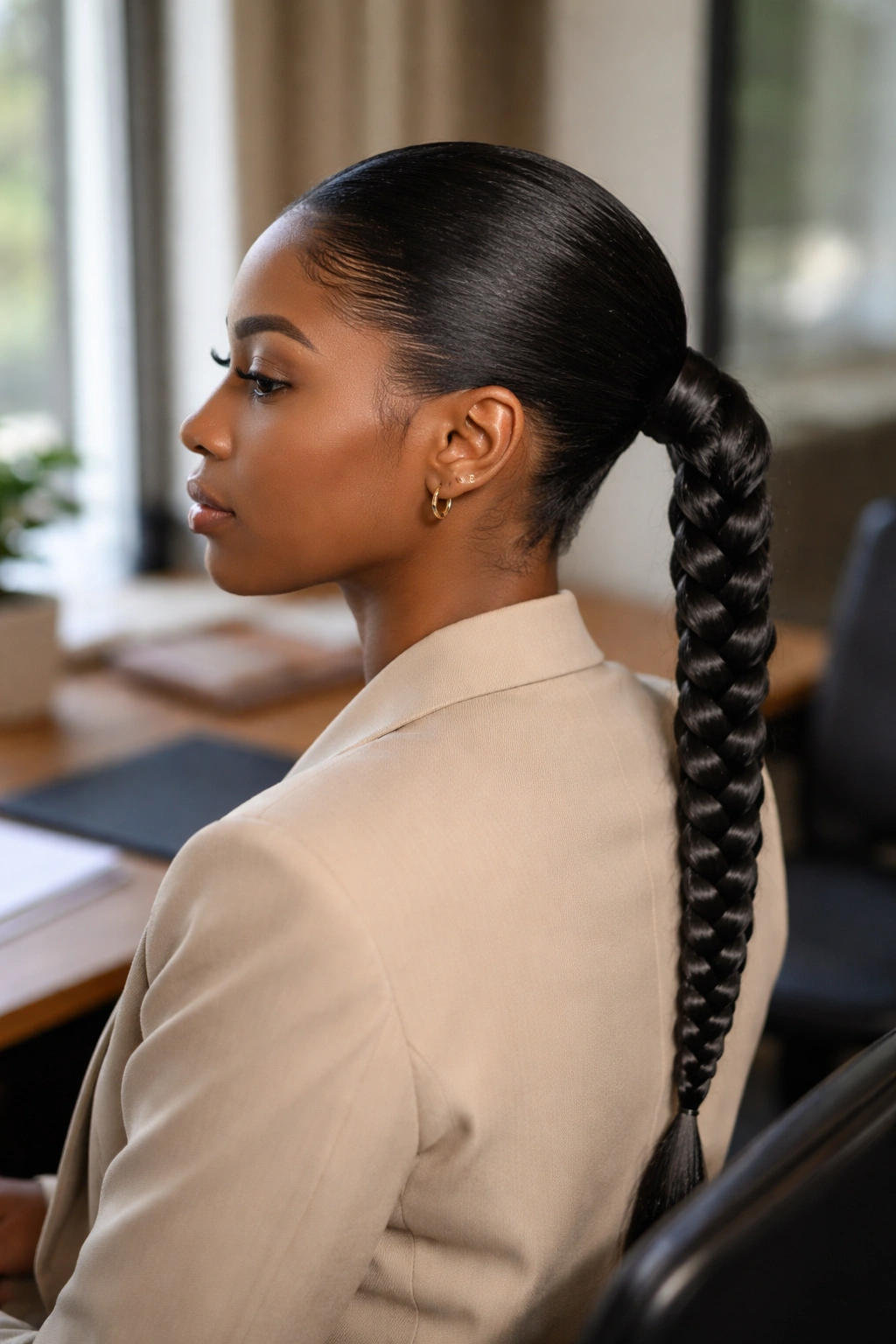
Why does a low braid ponytail work so well on 4C hair? Because it lets the braid do the talking and leaves the hairline out of the spotlight.
The low version sits closer to the nape, so it feels calmer and less weighty than a high style. That matters if your scalp gets sore fast or if you want something you can wear to work, a dinner, or a long day out without thinking about it every ten minutes.
The sleek base also plays nicely with stretched 4C hair. The roots can stay neat without needing to be pressed into a stiff helmet. A light mousse on the parting, a soft brush, and a small amount of gel around the perimeter usually get you there. Too much product turns the whole look gummy, and nobody wants that.
Best for: longer faces, softer makeup looks, and anyone who likes clean styling without a lot of height.
3. Side-Part Stitch Braided Ponytail
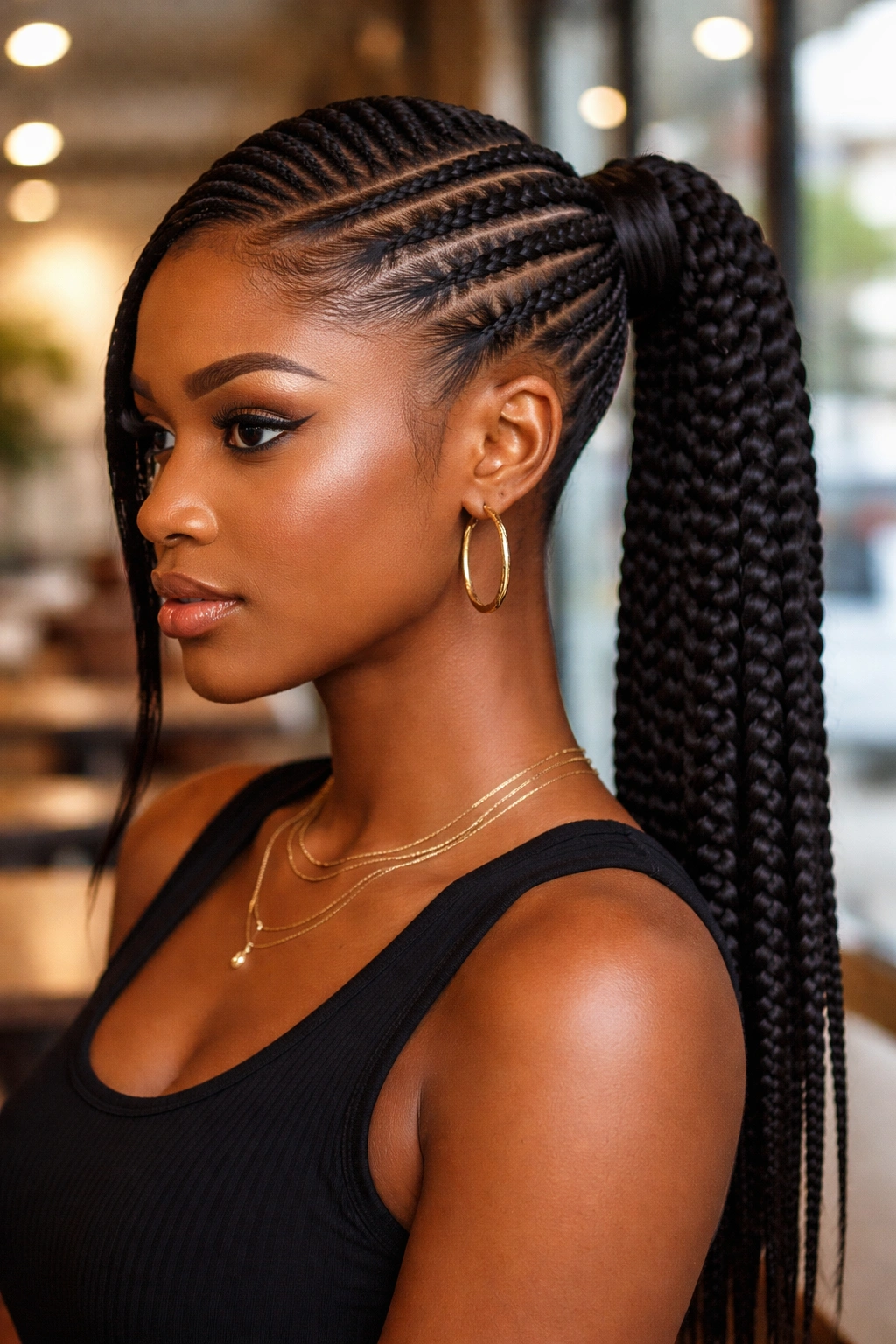
A side-part stitch braid ponytail has a little attitude built in. The stitch lines give the scalp a crisp, almost tailored look, and the side part breaks up the symmetry in a way that flatters 4C hair beautifully.
The trick is in the spacing. Wider sections make the style bolder and faster to install, while tighter stitch lines create a more detailed finish. I like this version when the rest of the outfit is simple and you want the hair to carry the look on its own.
How to Wear It
- Pair it with hoop earrings or a single bold cuff.
- Keep the ponytail medium to long so the side part still feels balanced.
- Use a clean tail comb for parting; messy lines show fast with stitch braids.
- Good choice if you want movement around the face without a full swoop.
4. Curved Cornrow Braided Ponytail
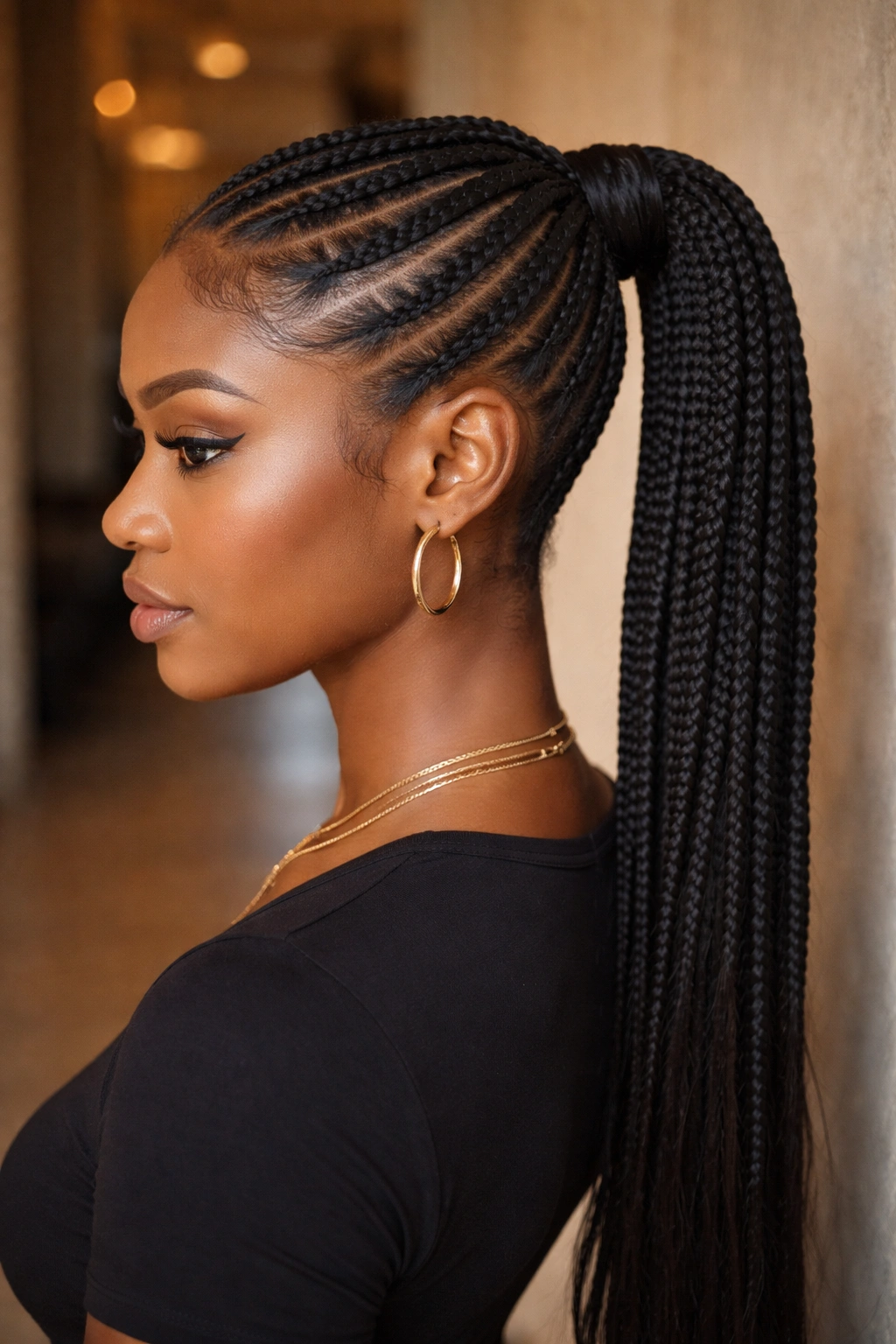
Straight rows are not the only neat rows. Curved cornrows feeding into a ponytail can soften the whole style and make 4C hair look more sculpted without feeling severe.
The curves matter more than people think. They guide the eye toward the ponytail instead of stopping at the scalp, which makes the style feel smoother and a little more expensive-looking — not because it’s fancier, but because the lines are doing something interesting.
Curved rows also help if your head shape feels hard to fit with a rigid center part. The braid path can hug the head in a way that feels less boxy. That said, the curves need to be even. If one side is tighter than the other, the whole thing looks accidental.
Pro tip: keep the curve shallow near the temples so you do not crowd the hairline.
5. Jumbo Braided Ponytail
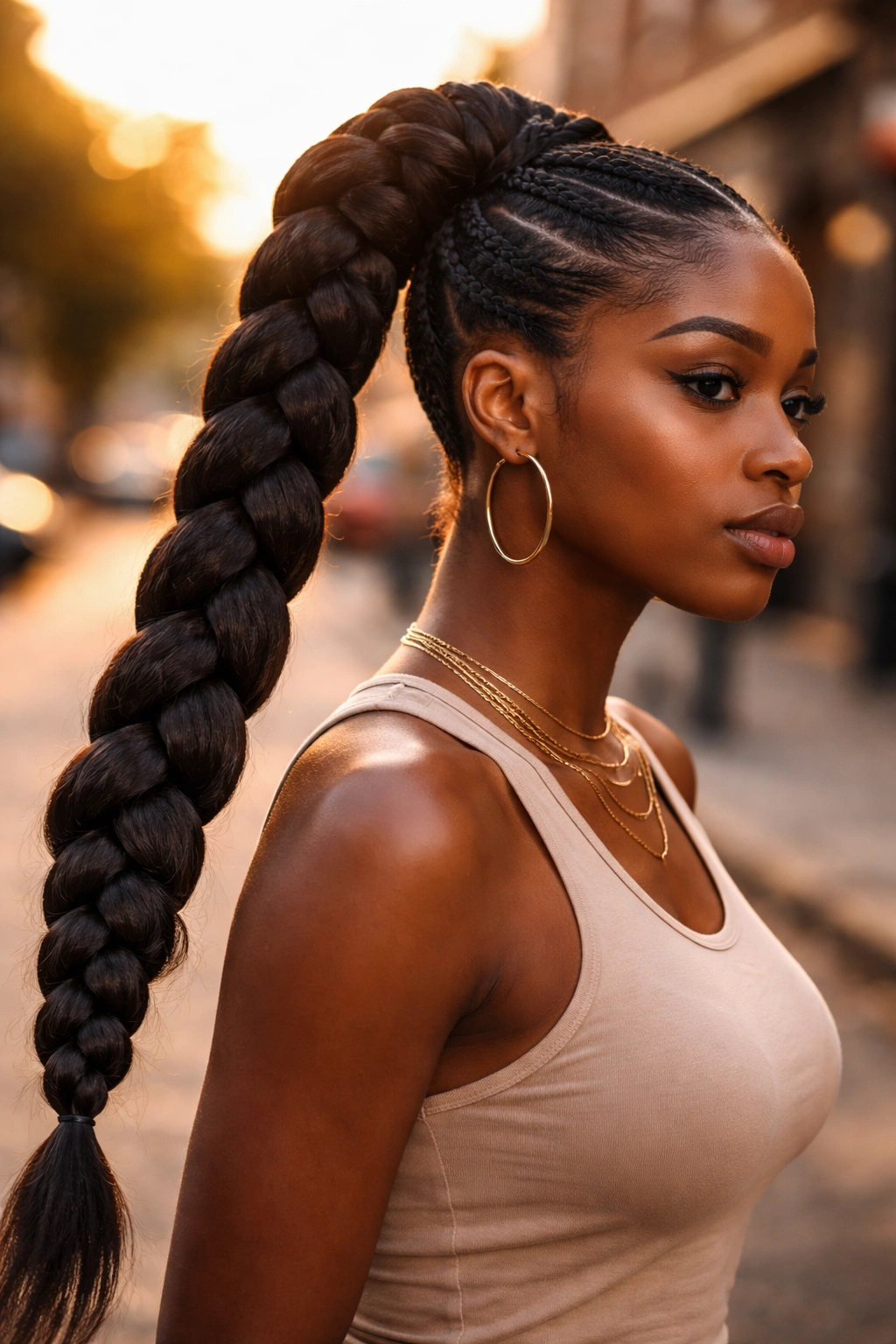
A jumbo braided ponytail is bold, fast, and unapologetic. It gives 4C hair a big shape with fewer sections, which means less time in the chair and less pulling across the scalp.
I’m partial to this style when someone wants a ponytail with presence but does not want a dozen tiny braids fussing around their head. One thick braid down the back, or a few large braids gathered into one ponytail, makes the silhouette clean and easy to read from across the room.
It does have a catch. Jumbo braids carry more weight, and if the hair is already tender, that weight can tug at the nape. So the base needs to be secure but not over-tight, and the sectioning should stay neat enough that the braid does not wobble while you walk.
This one looks best when the braid itself is smooth and the ends are finished cleanly. A rough parting will show every time.
6. Tribal Braided Ponytail
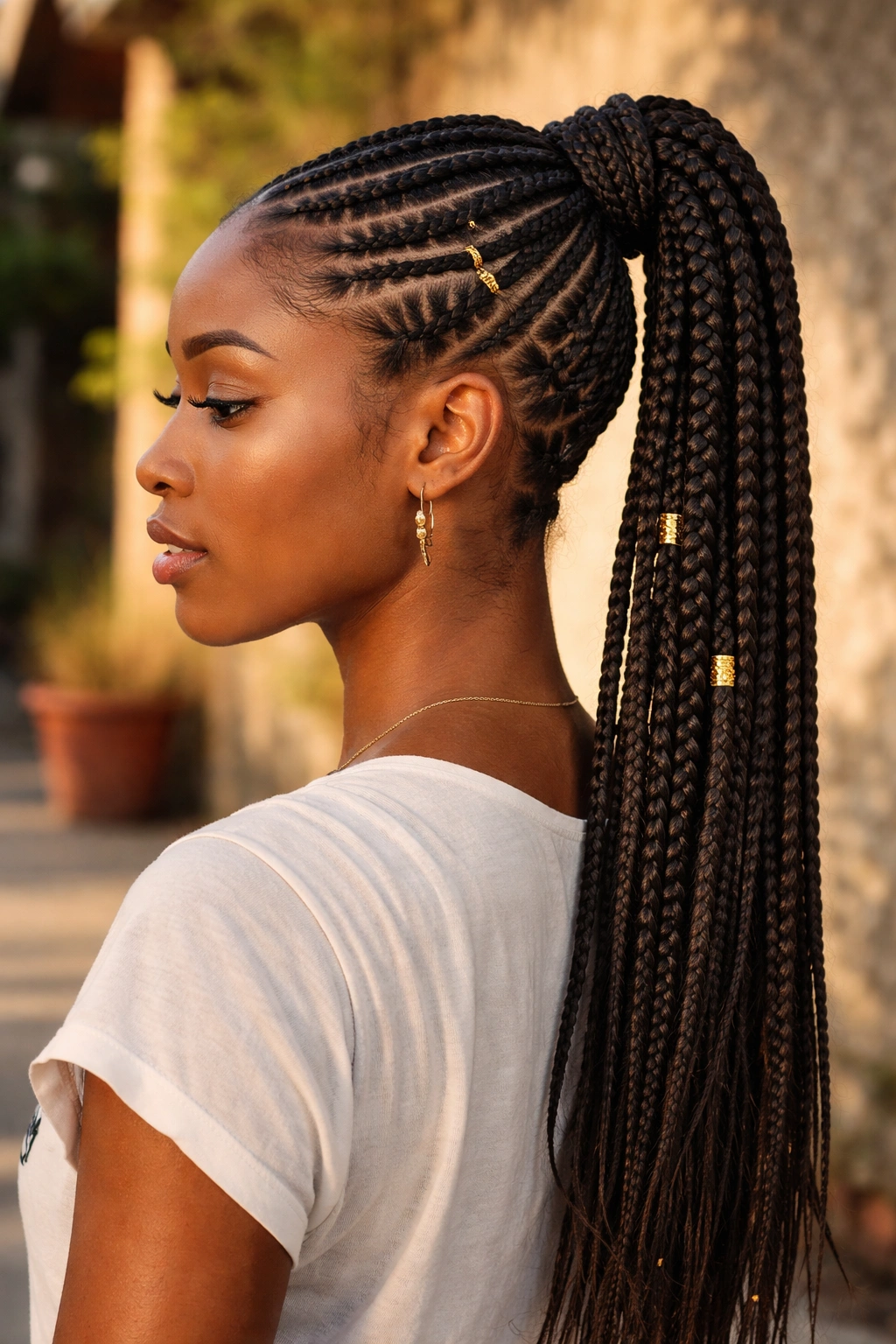
A tribal braided ponytail is what happens when you want pattern, not just placement. The style usually mixes feed-in rows, accent braids, and a gathered ponytail so the scalp work feels intentional instead of plain.
Unlike a single-track ponytail, tribal styling gives you room to play. You can add thinner accent braids between larger cornrows, switch up the direction near the hairline, or build tiny decorative pieces before everything folds into the ponytail. That’s why it works so well on 4C hair: the density gives the design something to hold onto.
This is the version I’d pick for photos, events, or any day when you want your braids to look like they were planned with a ruler. Beads and cuffs can help, but they are not required. The parting alone can carry the whole style if the rows are clean.
7. Goddess Braided Ponytail with Curly Ends
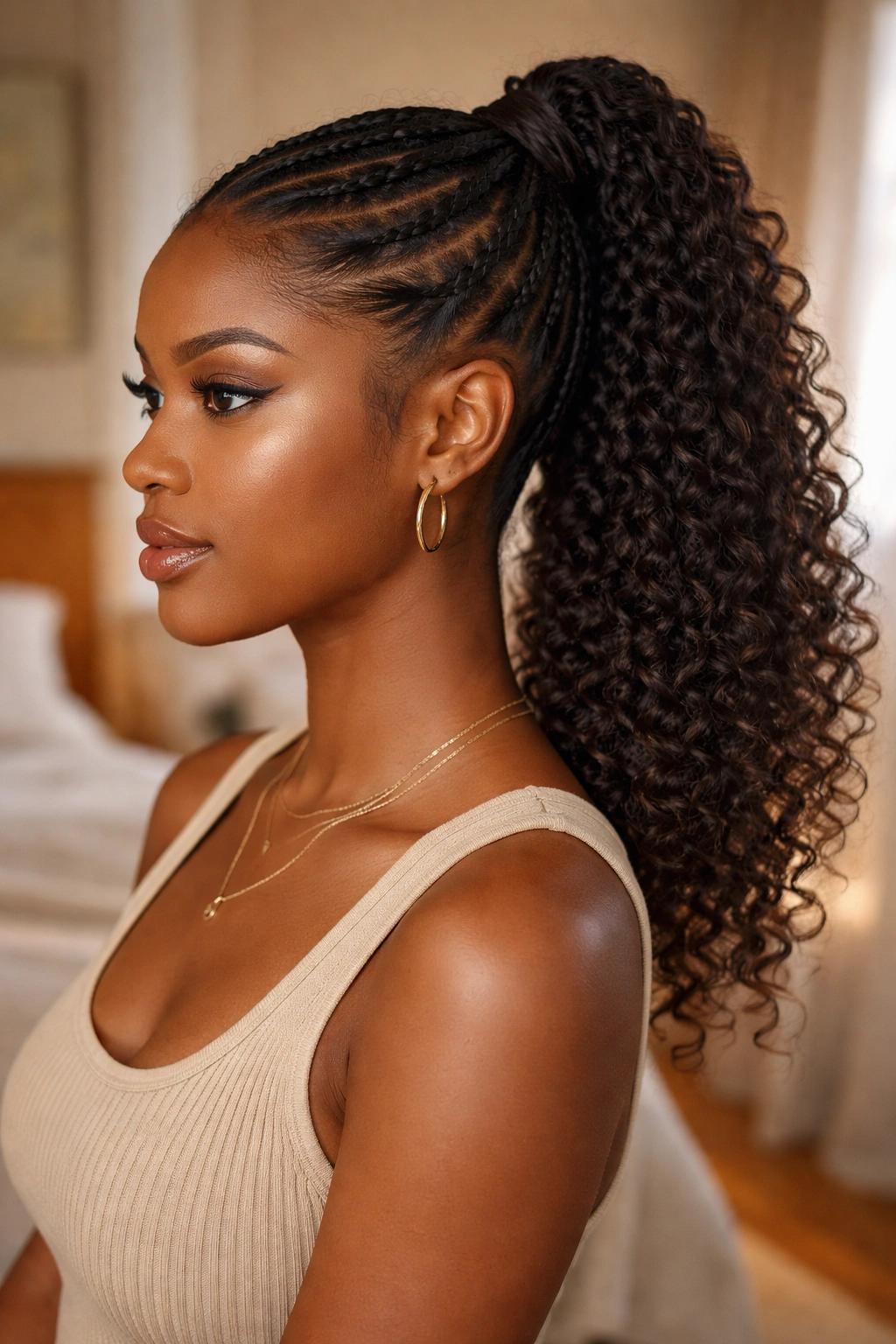
Texture breaks up sharpness, and that is exactly why a goddess braided ponytail with curly ends looks so good on 4C hair. The braids keep the base neat, then the loose curls at the end soften the finish and keep the whole style from feeling stiff.
What to Ask For
- Braids that stop before the full length of the extension hair.
- Curly human-hair or synthetic curly pieces blended at the ends.
- A ponytail base that sits where your head shape looks best, not where it feels easiest to grab.
- Moderate tension at the crown, because the curls already bring visual interest.
The curls are a small detail, but they change the mood of the style. Suddenly the ponytail moves more. It swings instead of hanging like a rope. That makes it a strong pick if you want something dressy without going full formal.
8. Wrapped-Base Braided Ponytail
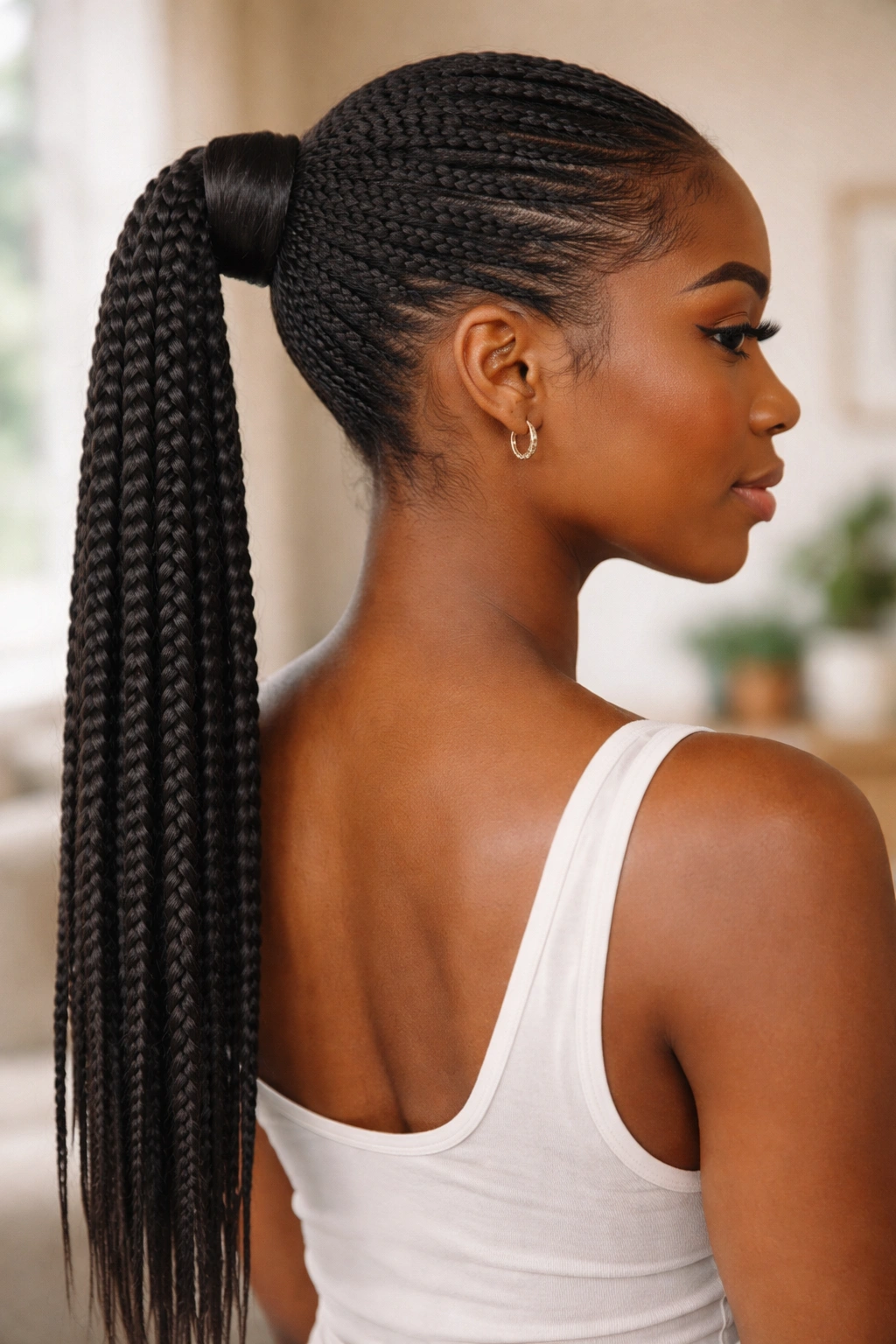
A wrapped-base braided ponytail is all about hiding the mechanics. The elastic, the pins, the joins — all of it gets covered by a strip of braid or extension hair so the ponytail looks like it grew that way.
That wrapping trick matters on 4C hair because the base can get bulky fast. Once you gather thick hair, every bobby pin and every elastic starts to show unless you disguise it. Wrapping the base also gives the style a cleaner transition, which is useful if the ponytail is long and you do not want the eye stopping at a messy knot.
Keep the wrap smooth and flat. If the wrap starts twisting, it can make the whole ponytail lean to one side. And use enough pins to hold it, because one pin is never enough once the style settles.
9. Lemonade Braided Ponytail
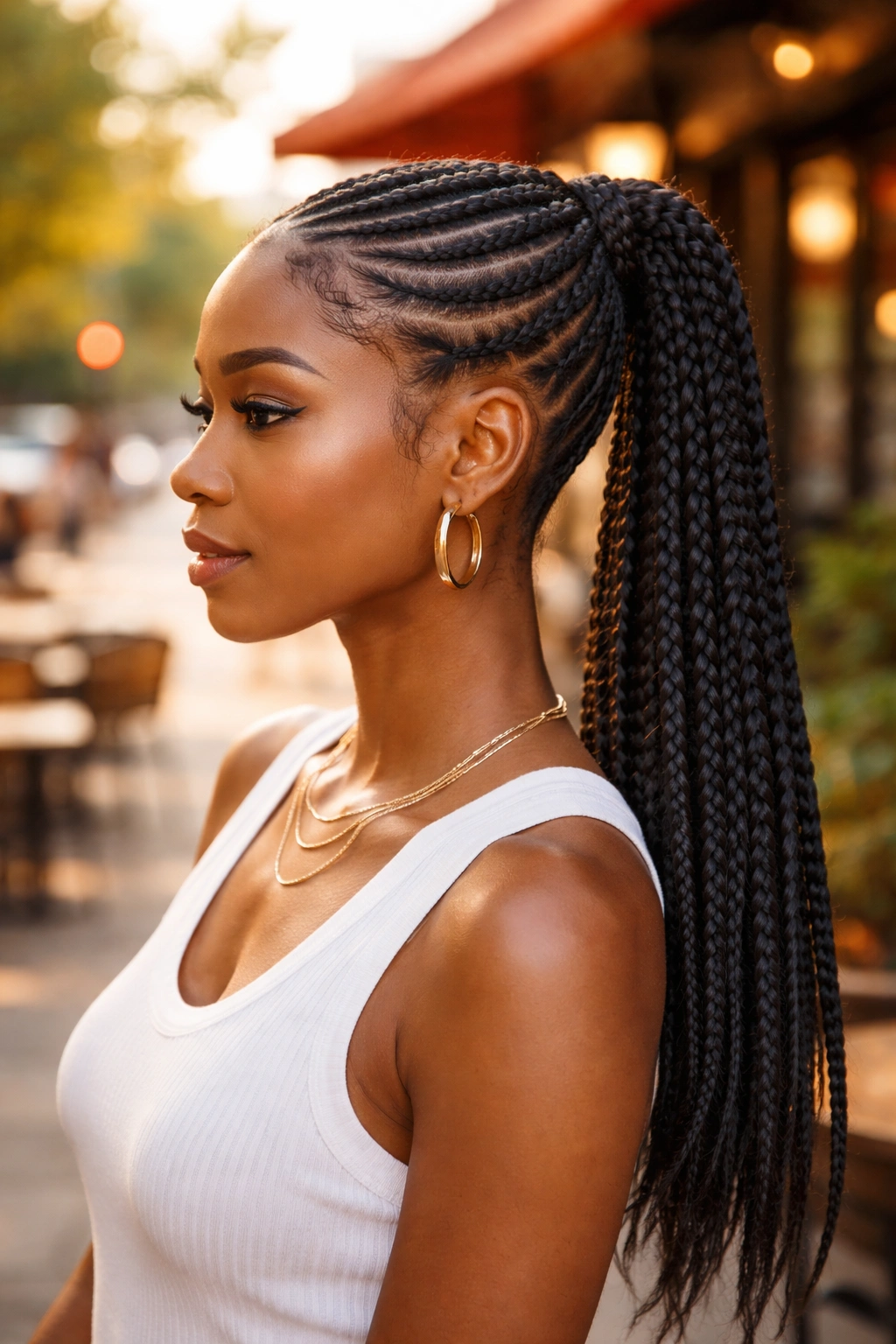
A side-swept braid ponytail gives 4C hair movement before the ponytail even begins. The front is angled, the rows lean in one direction, and the whole style feels a little faster than a straight-back version.
That sweep is the point. It draws attention across the face and keeps the style from looking too boxed in, which can happen with very rigid center parts. If your forehead is wider or your cheekbones are something you like showing off, this shape does that job well.
It also leaves room for a side swoop or a few tiny braids near the temple. I would not overload it. The best lemonade-inspired ponytails usually stay clean on top and let the side angle carry the personality. Too many extra pieces, and the style starts fighting itself.
10. Double Dutch-Braid Ponytail
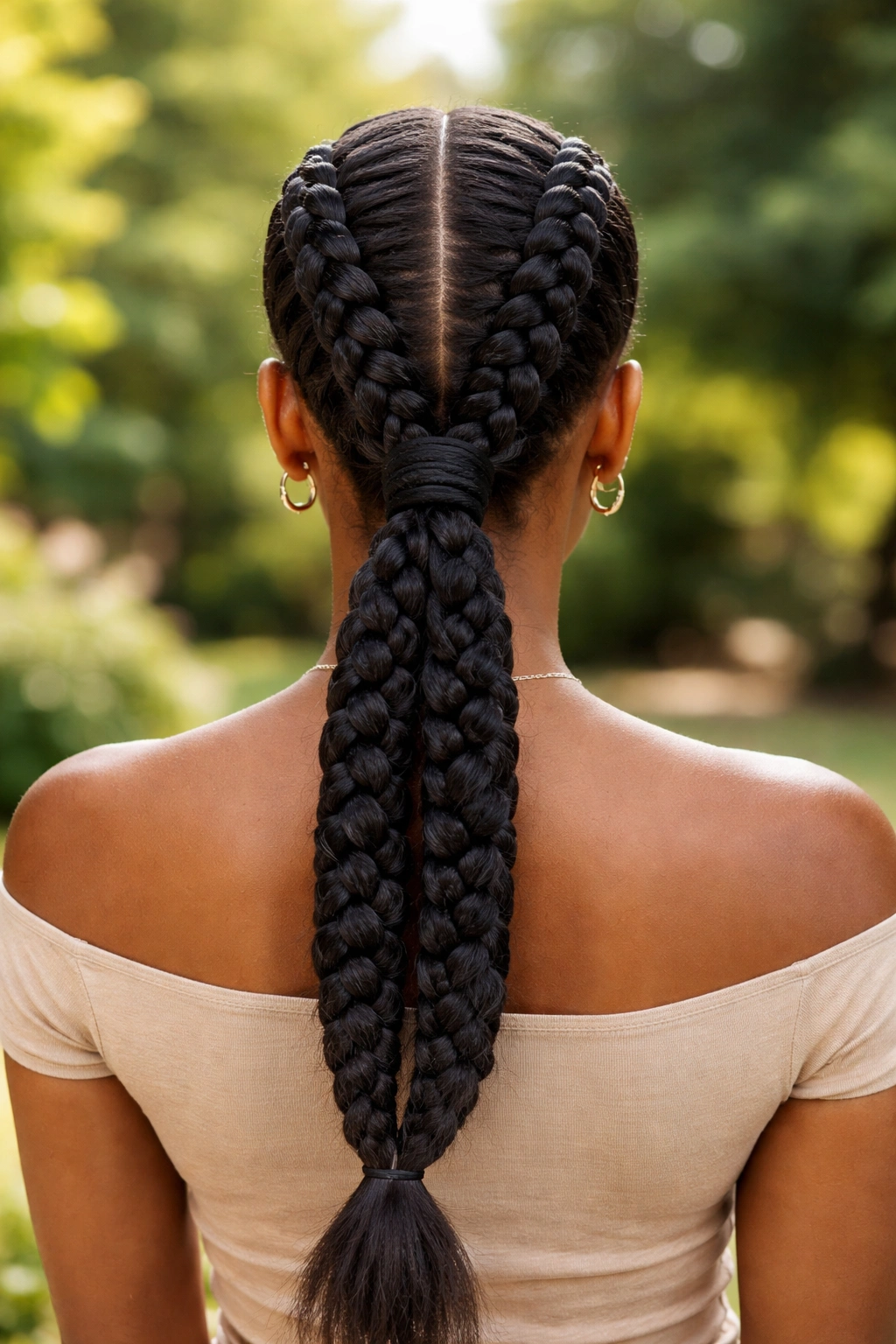
Two Dutch braids feeding into one ponytail are a simple answer when you want a sporty look that still feels polished. The ridges sit proudly on top of the scalp, so the style reads clearly even from a distance.
This one is especially useful on stretched 4C hair. The sections hold better, the braids stay visible, and the ponytail at the end does not need much fuss. I like it for busy weeks because it can look intentional without needing a fancy install.
The parting has to be even. If one braid sits lower than the other, your ponytail will feel lopsided no matter how nice the braid itself is. Keep the gathering point centered, then tie the tail with enough support that the braid does not sag after a day of moving around.
11. Center-Part Feed-In Braided Ponytail
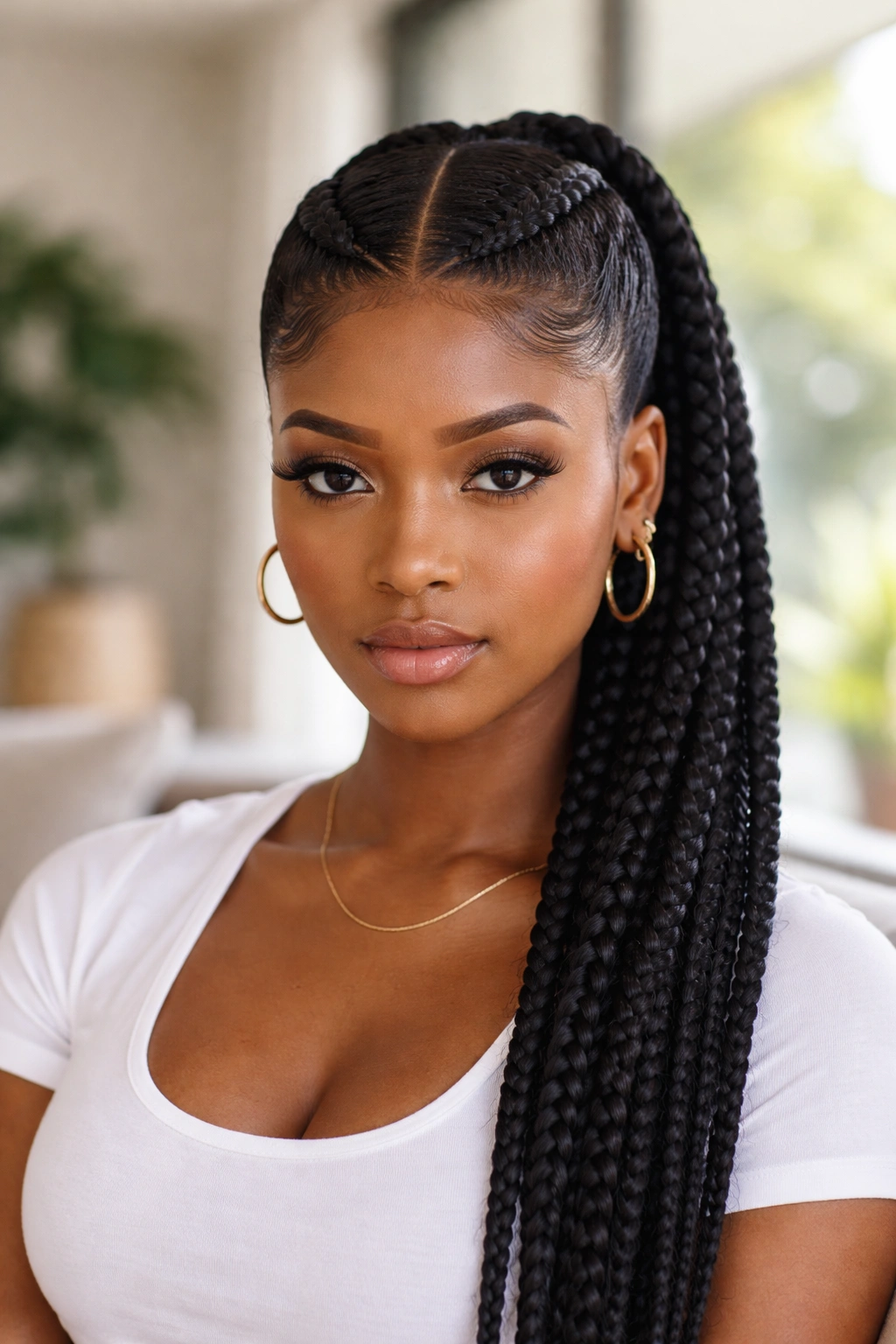
A center-part feed-in ponytail is the neatest kind of symmetry, and on 4C hair it can look almost architectural when it is done well. The part creates a clean line down the middle, then the braids mirror each other before meeting in the back.
This style is for people who like balance. Not softness, balance. There is a difference. The center part sharpens the face, opens the forehead, and makes the ponytail feel structured even when the tail itself is thick and full.
It can be a little unforgiving, though. A center part shows every wobble, every crooked row, every uneven edge. If your braider is precise, it pays off. If the parting drifts, you will notice it all day.
Best paired with: clear gloss, simple earrings, and a strong middle line in the rest of the look.
12. Heart-Part Braided Ponytail
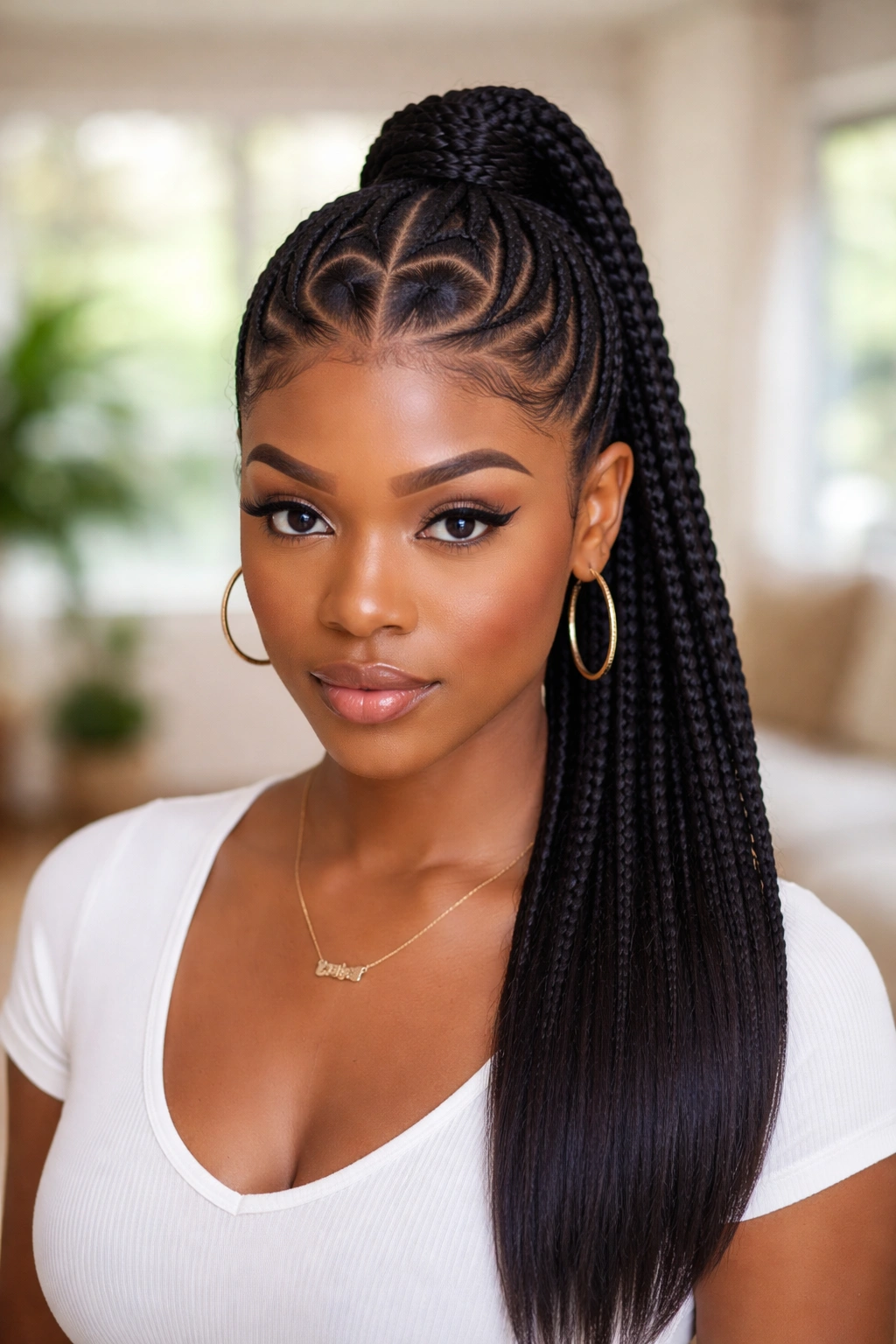
The part is the whole point here. A heart-part braided ponytail on 4C hair turns the scalp into the design, which is why this style feels more playful than a standard feed-in ponytail.
It takes patience, and I would not pretend otherwise. The heart shape has to be even on both sides, or it loses the effect fast. But when it lands, it gives the style a little romance without making it childish. That balance is harder than it sounds.
How to Make It Work
Ask for the heart to sit high enough that the ponytail can still fall cleanly beneath it. A heart that is placed too low gets lost once the hair is gathered. Keep the braid sizes consistent around the shape, too. Mixed thickness makes the outline look broken instead of crisp.
13. Beaded Braided Ponytail
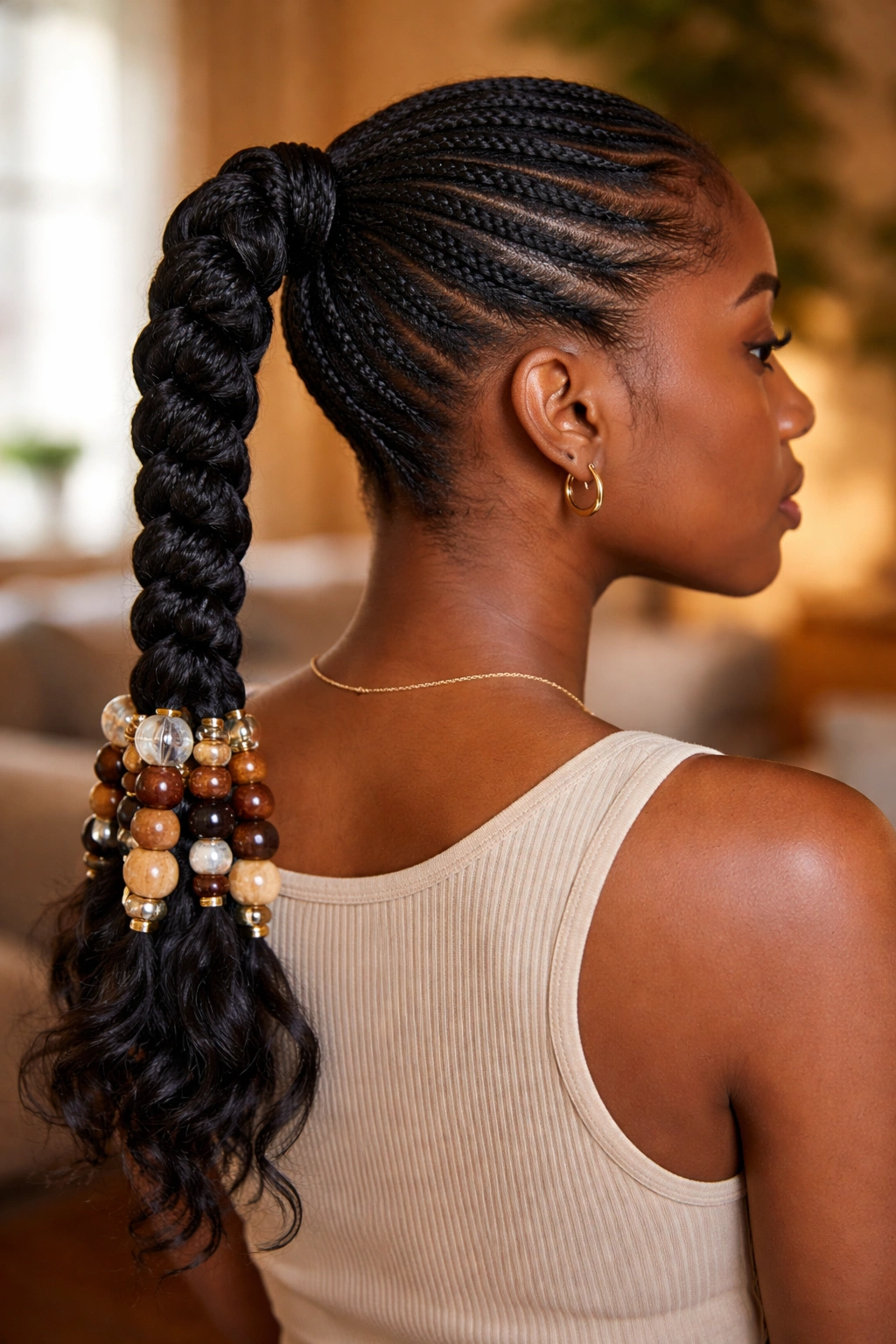
Beads change the sound of a style. They also change the weight, so a beaded braided ponytail on 4C hair needs a little judgment, not just enthusiasm.
When beads are used well, they give the ponytail rhythm and a bit of movement at the ends. I like them best on medium or jumbo braids, where there is enough thickness to support the hardware without feeling flimsy. Tiny braids with oversized beads can tip and slide, which is annoying and does not look as clean as people hope.
A few placement notes help here:
- Put heavier beads lower on the braid, not near the base.
- Use clear or rubber stoppers inside the bead if the braid slips.
- Keep the bead count moderate so the tail still swings naturally.
- If the ponytail is long, place the beads in clusters instead of all the way down.
That last part matters. Too many beads can make the tail feel stiff.
14. Stitch-Braid Ponytail
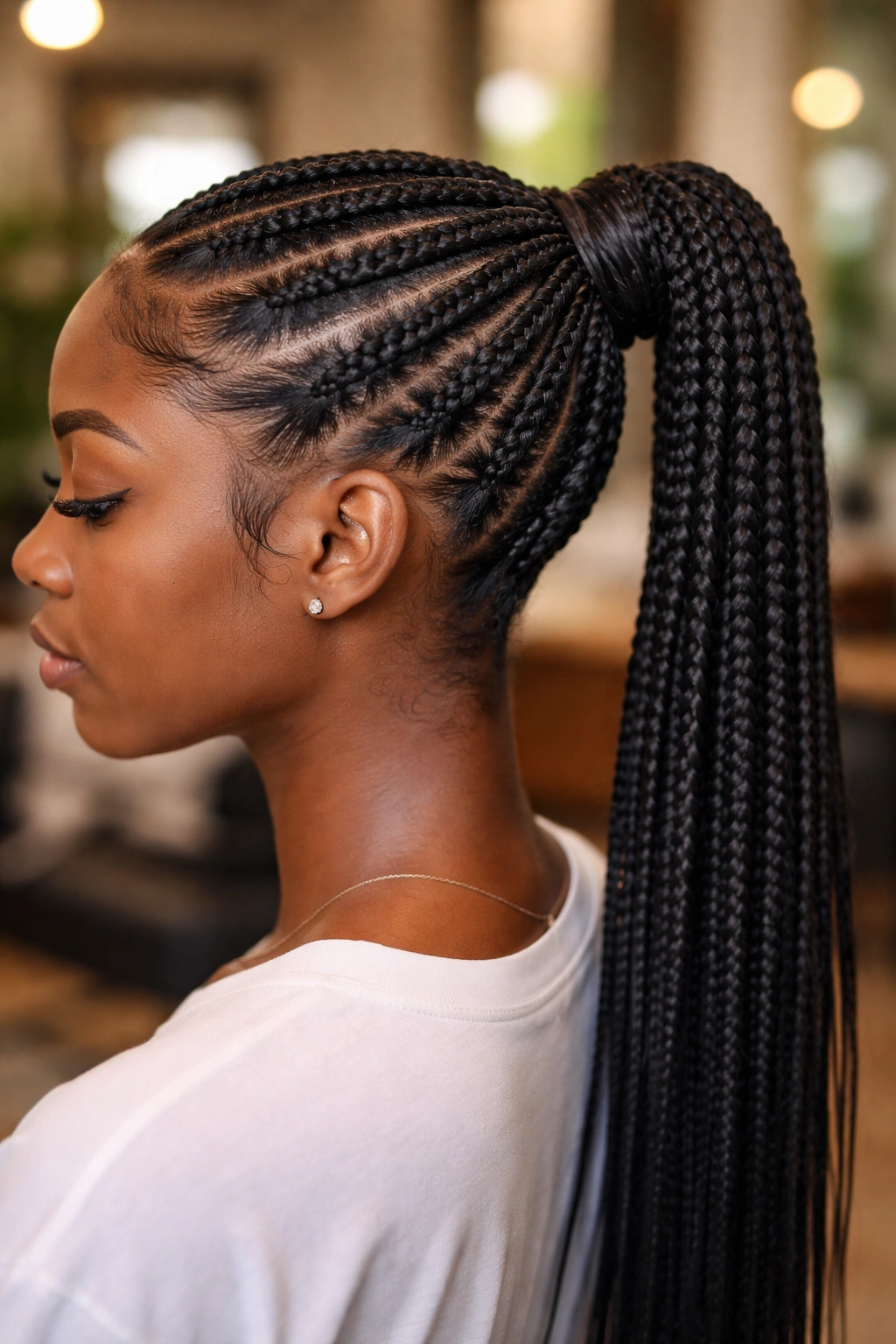
What makes stitch braids worth it? The lines. That’s the whole answer, really.
A stitch-braid ponytail gives 4C hair a very graphic look because the parts are sliced into little clean segments before they feed into the ponytail. The effect is neat, almost grid-like, and it holds up well in photos because the scalp pattern stays visible instead of melting into one blur.
This style is not the best choice if you hate sitting still. Precision takes time, and the install should not feel rushed. But if you want a ponytail that looks sharp without relying on accessories, stitch braids do a lot of the work for you. A little shine on the roots is enough. The parting is already busy, so the rest can stay simple.
15. Crown Braid Ponytail
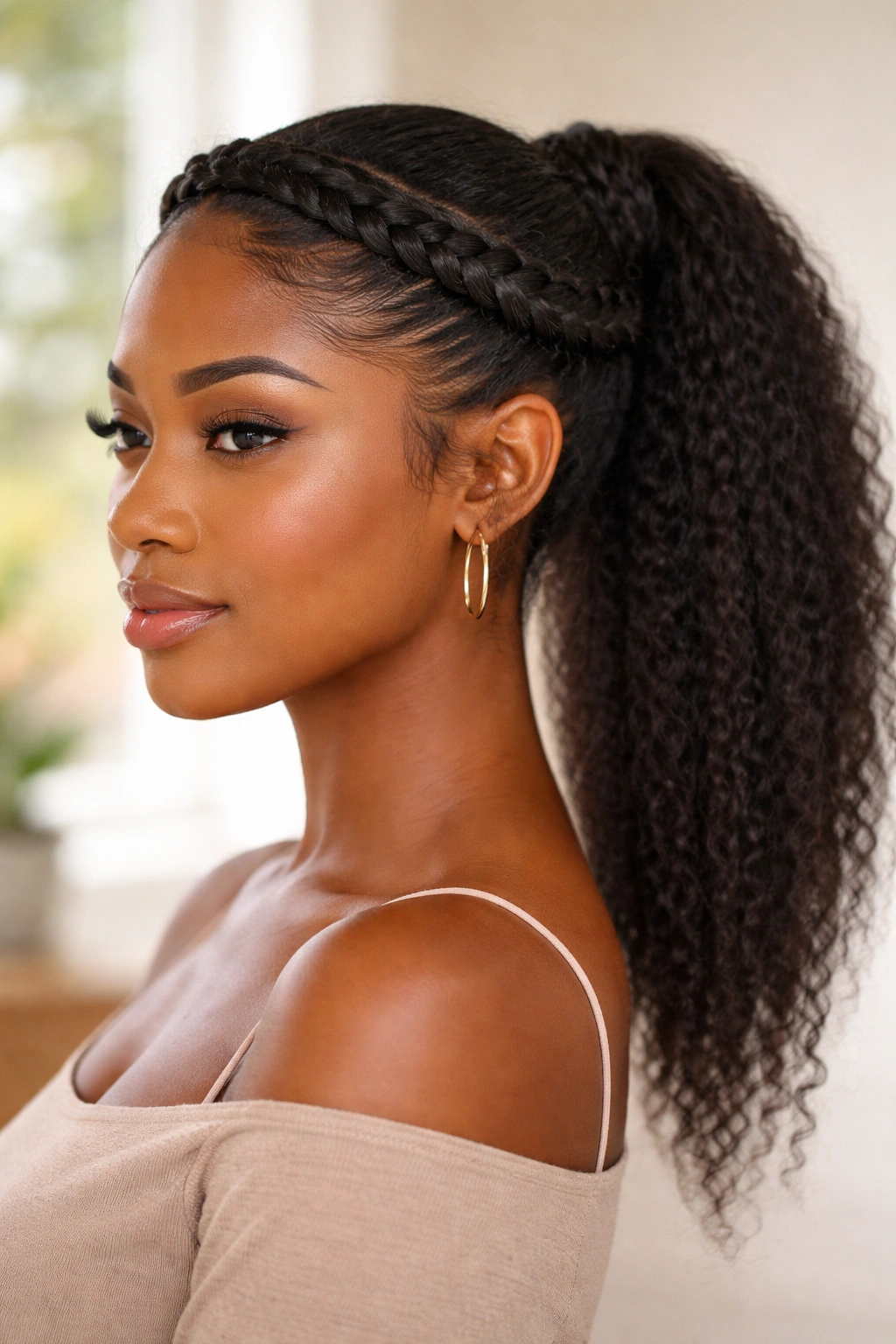
A crown braid ponytail wraps around the front of the head before dropping into a ponytail, and that gives 4C hair a soft, finished frame. It feels a little dressier than a straight-back ponytail without becoming a full updo.
The crown section helps balance out a thicker ponytail because it creates movement above the ears. That can be useful if your hair is dense and you do not want everything sitting in one heavy block at the back. The braid also keeps the front neat, which is handy on windy days or long events.
The main thing to watch is the temples. If the crown braid pulls too hard where it bends, you will feel it fast. A good version sits close enough to stay in place but loose enough to leave the hairline breathing.
16. Mohawk Braided Ponytail
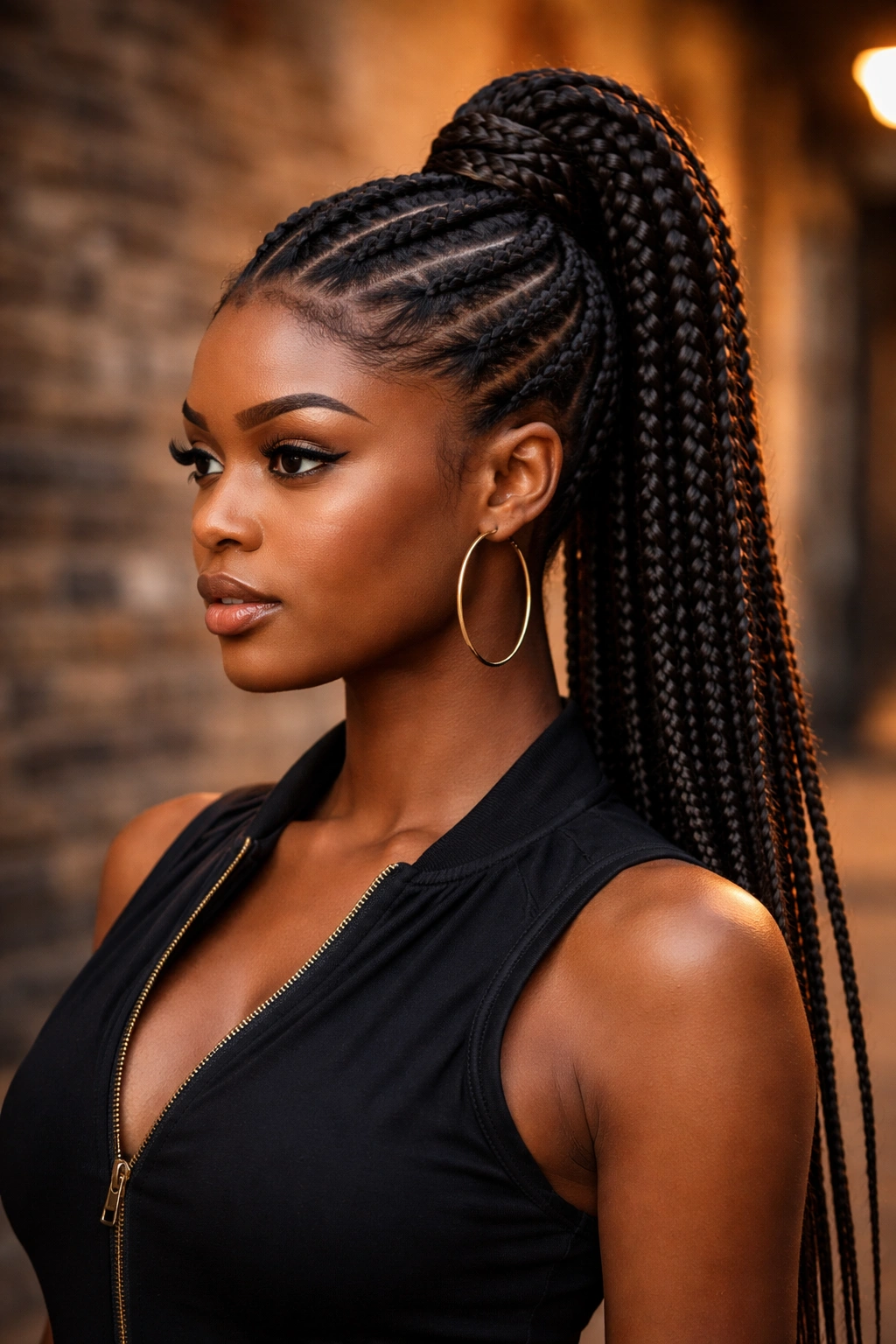
A mohawk braided ponytail is the bold one in the group. It runs straight through the center with the sides kept tighter or flatter, so the ponytail gets all the height and attitude.
This style works especially well on dense 4C hair because the middle section has enough body to look strong without needing a lot of extra hair. The sides act like a frame. They pull the eye upward and give the ponytail a longer, leaner shape than a full all-over braid pattern would.
I would recommend it for anyone who likes visible structure and does not mind a style that announces itself. It is not subtle. That is the point.
Watch for: too much tightness on the side rows. The style should look sharp, not painful.
17. Stacked Braided Ponytail
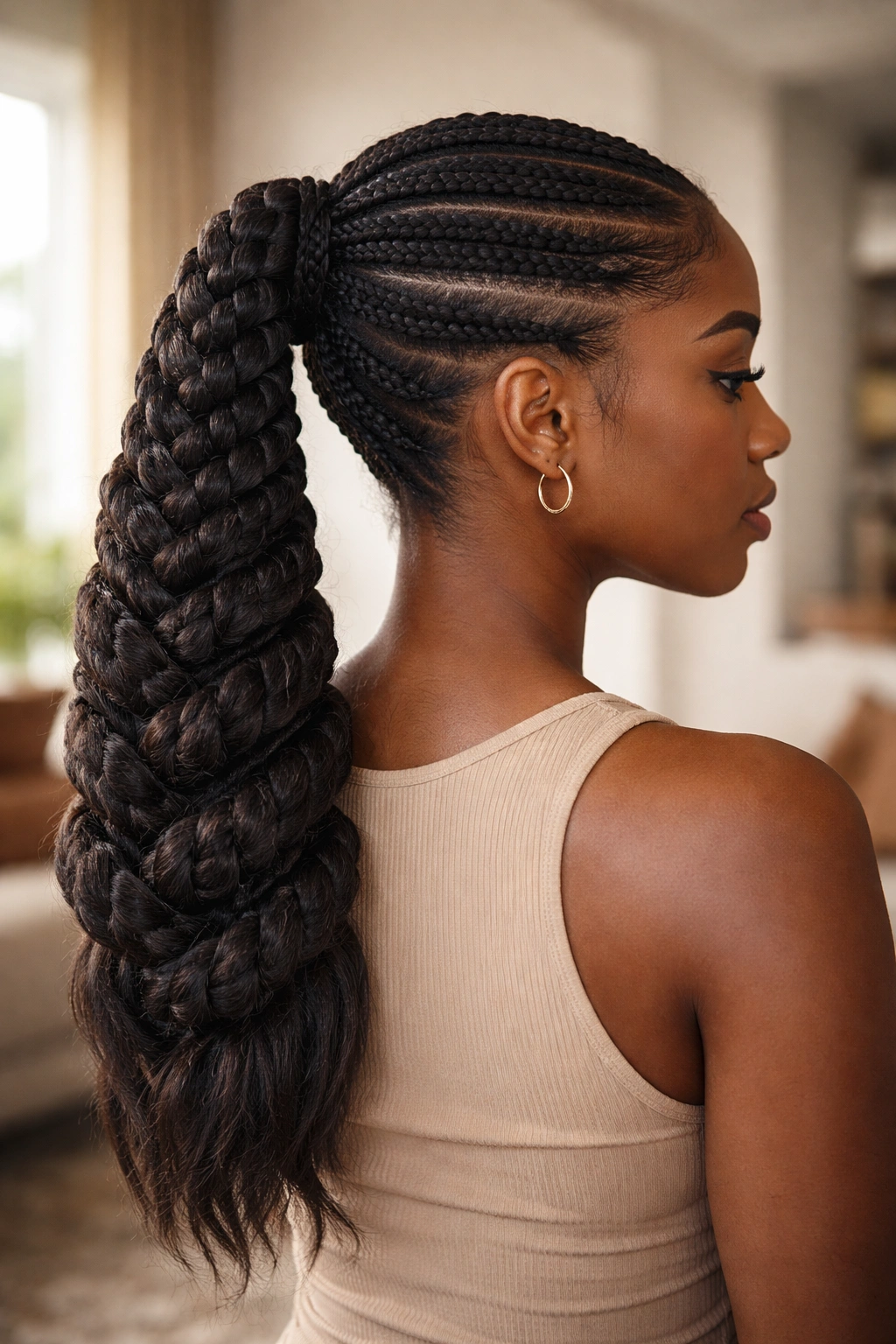
A stacked braided ponytail is built in layers, and that layering gives 4C hair a sense of depth that a single flat base cannot match. The braids sit in stages before they gather, so the style feels fuller from the side.
It reminds me a little of good tailoring. The shape is doing the visual work, not just the length. That makes it useful if your hair is medium-length and you want the ponytail to look richer without adding endless extension hair.
The sections need to be planned carefully because too much stacking can make the ponytail sit awkwardly high or push the braid pattern into a lump. When it is done right, though, it feels balanced and textured. Not busy. Just layered in a way that gives the eye something to follow.
18. Half-Up Braided Ponytail
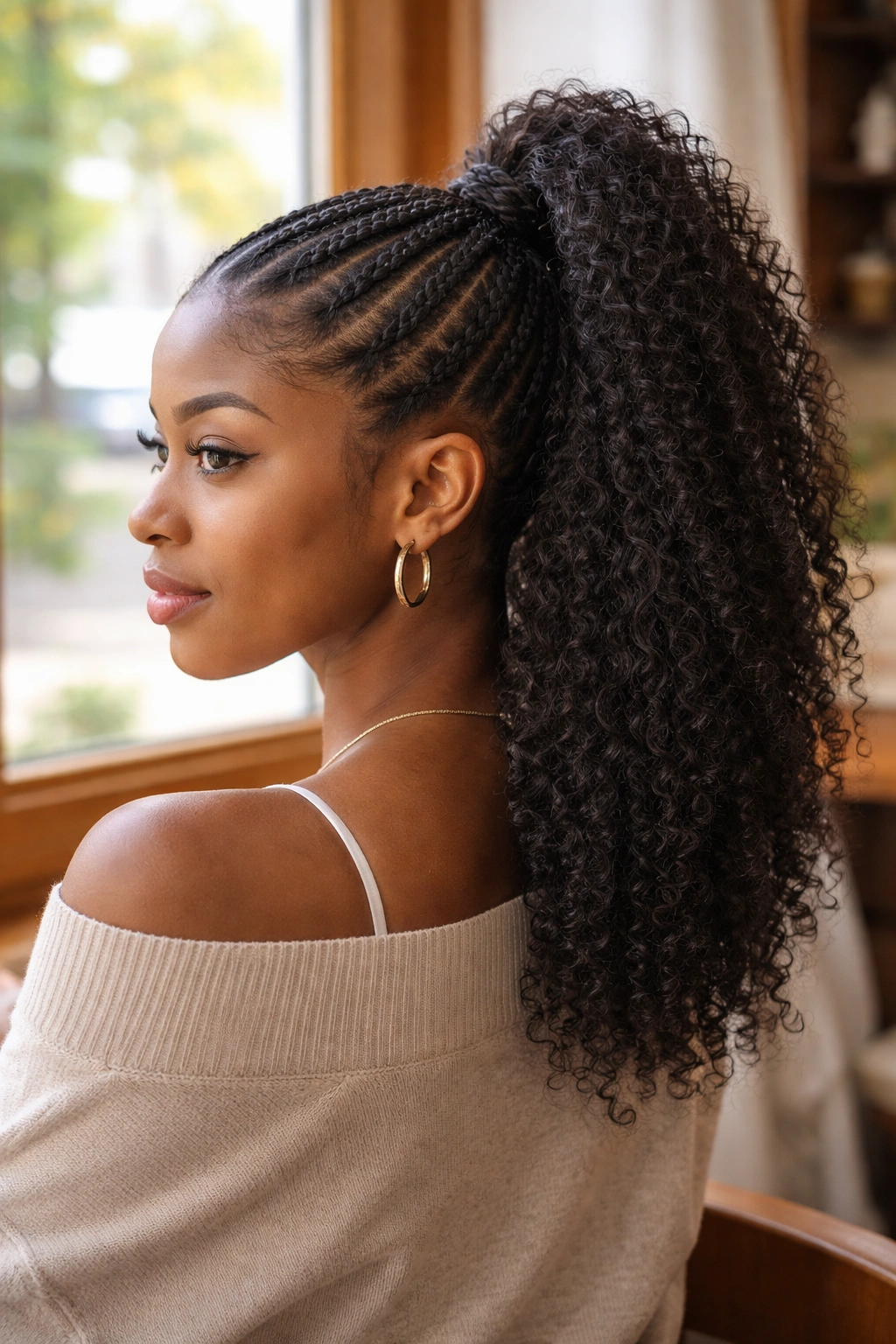
A half-up braided ponytail is a smart compromise if you like braid work but do not want all of your hair pulled back. The top section feeds into a ponytail while the rest can hang loose, stretched, twisted, or left in its natural state.
That split is useful on 4C hair because it reduces weight at the scalp. You still get the clean look around the crown, but you are not asking every strand to join the party. For people who wear their hair out often, this can feel like a gentler way to switch things up.
It also gives the ponytail a layered look, which is nice if the hair underneath has a lot of shrinkage. The contrast between the top braid and the lower texture makes the style feel more deliberate, not accidental.
19. Rope-Braid Ponytail
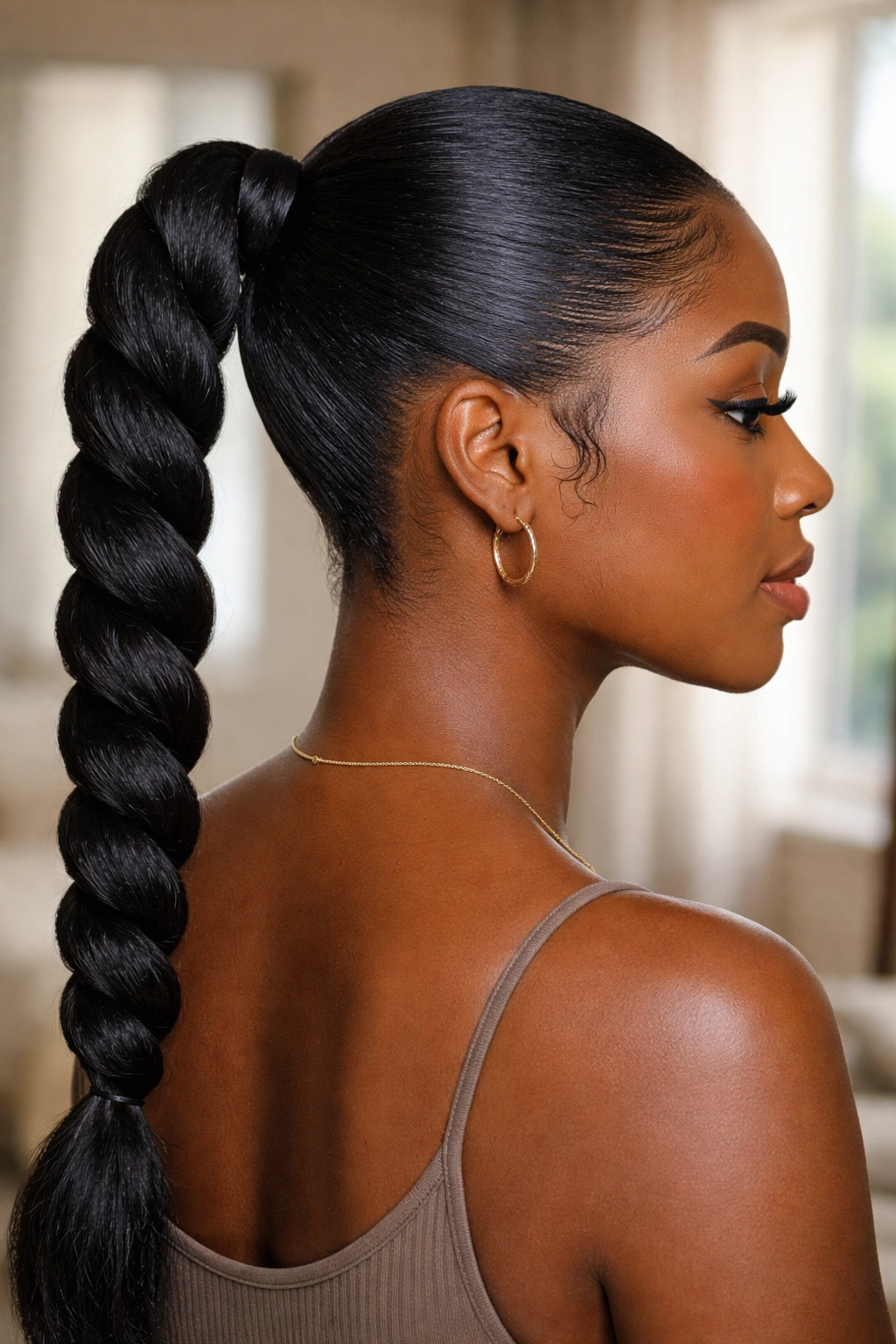
A rope-braid ponytail is not the most complicated option, and that is part of its charm. The braid path is clean, the finish is simple, and 4C hair gets to stay compact without needing a heavy install.
I like rope braids when the goal is control. They work well on stretched hair, they hold shape nicely, and they do not demand a lot of decorative extras to look finished. If your mornings are already full, this is the kind of style that can save your energy.
How to Get the Most From It
- Stretch the hair first so the twists stay smooth.
- Use two even sections for the braid so one side does not overpower the other.
- Secure the base before twisting the tail, or the whole thing loosens faster than you want.
- A silk tie at the end keeps the rope from fraying into fuzz.
20. Box-Braid Ponytail
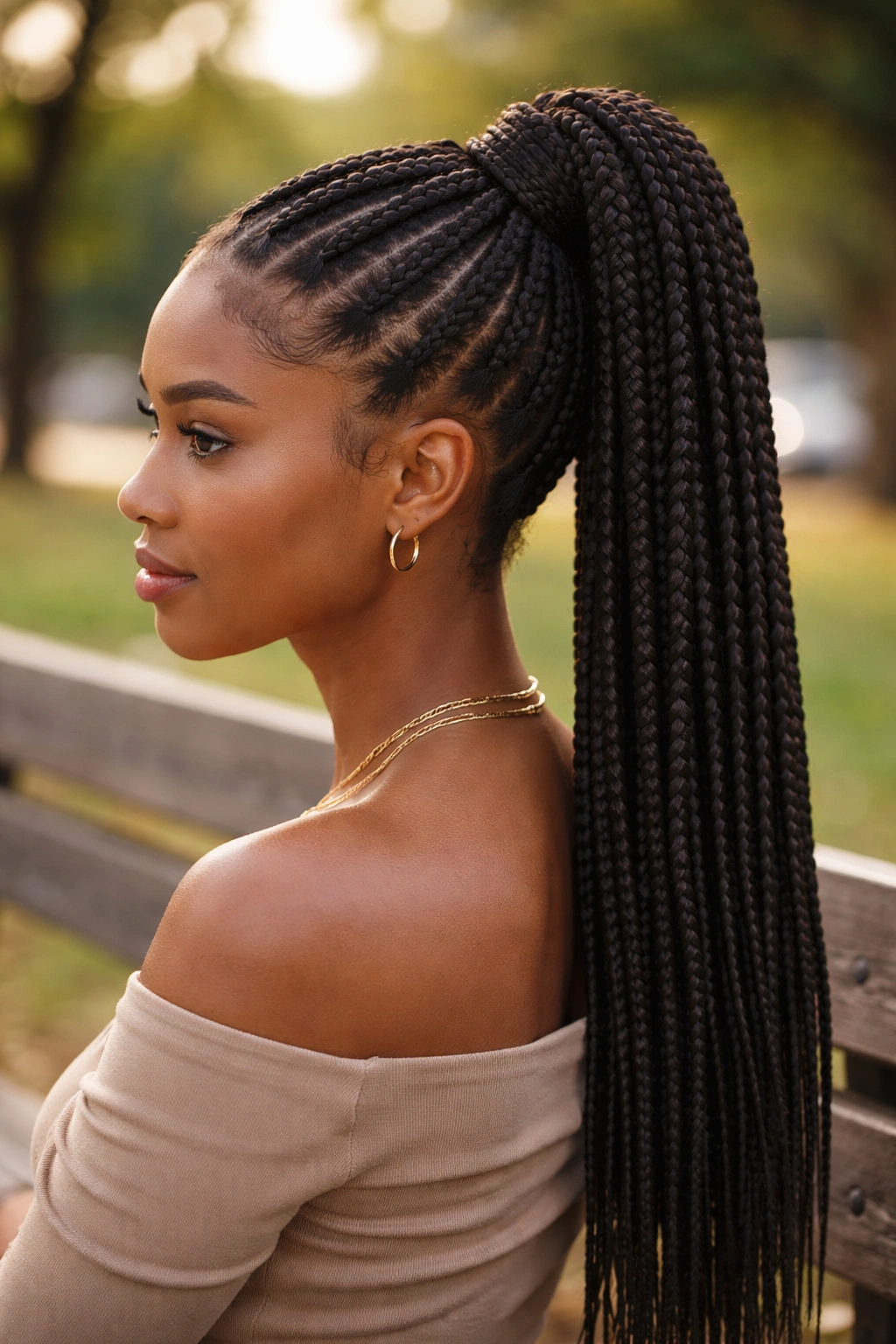
A box-braid ponytail gives 4C hair a lot of movement while keeping the scalp work straightforward. The braids themselves can be small, medium, or large, but the box parting keeps the whole style tidy and easy to read.
The benefit here is flexibility. You can wear the ponytail high, low, or off to the side, and the boxes make the roots look neat even when the rest of the hair has been in for a while. That matters because box braids age differently from cornrows. They soften at the base before they fall apart completely.
Weight is the main thing to respect. Long box braids in a ponytail can pull on the nape, especially if the sections are too thick. Keep the elastic strong and the gather point supported. A loose ponytail on box braids looks careless fast.
21. Triangle-Part Braided Ponytail
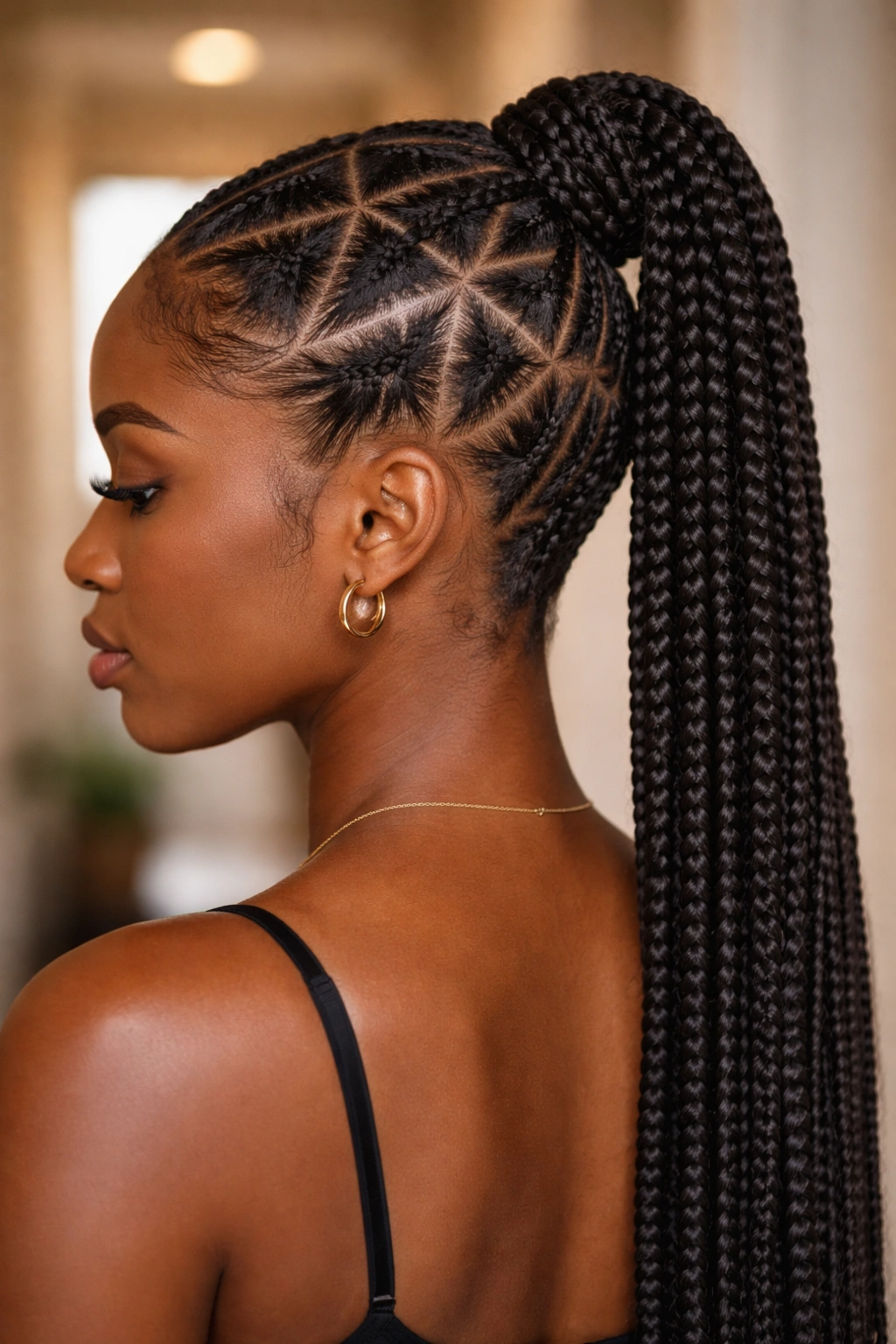
Triangle parts give a braided ponytail a sharper geometry than square parts do. The pattern is subtle from a distance, but up close it changes the whole mood of the style on 4C hair.
I reach for triangle parts when a standard grid feels too familiar. The triangular shape creates small shifts in angle, so the scalp design looks custom without needing extra decoration. It also helps the ponytail itself feel a little more dynamic because the parting does not march in straight lines from front to back.
There is a small practical upside, too. Triangle parts can sometimes hide grow-out better than obvious squares because the eye is not locked into one rigid pattern. That does not mean maintenance disappears. It just means the style can stay interesting longer.
22. Side-Swoop Braided Ponytail
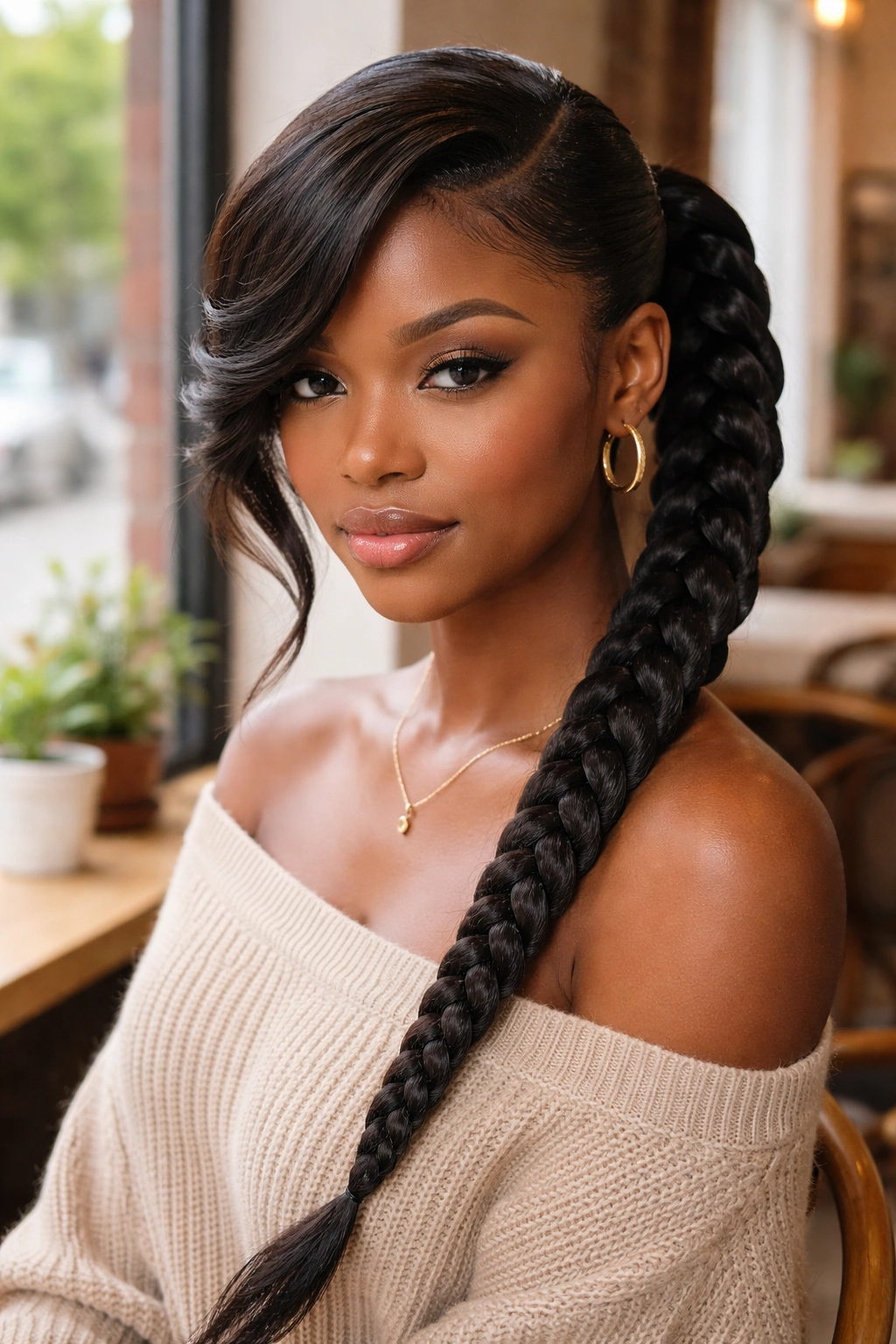
A side-swoop braided ponytail softens the forehead area and gives 4C hair a more face-framing shape. The front is angled or curved, then the braids gather into the ponytail with one side doing a little more of the visual talking.
This is the version I would suggest for someone who finds center parts too severe. The swoop breaks the line, adds motion, and makes the style feel less formal without making it messy. There is a small art to getting the swoop right, though. It should look like it belongs there, not like it was dropped onto the style at the last second.
If the swoop is too thick, it can swallow the rest of the braids. If it is too skinny, it disappears. The middle ground is the sweet spot.
23. Braided Ponytail with Cuffs
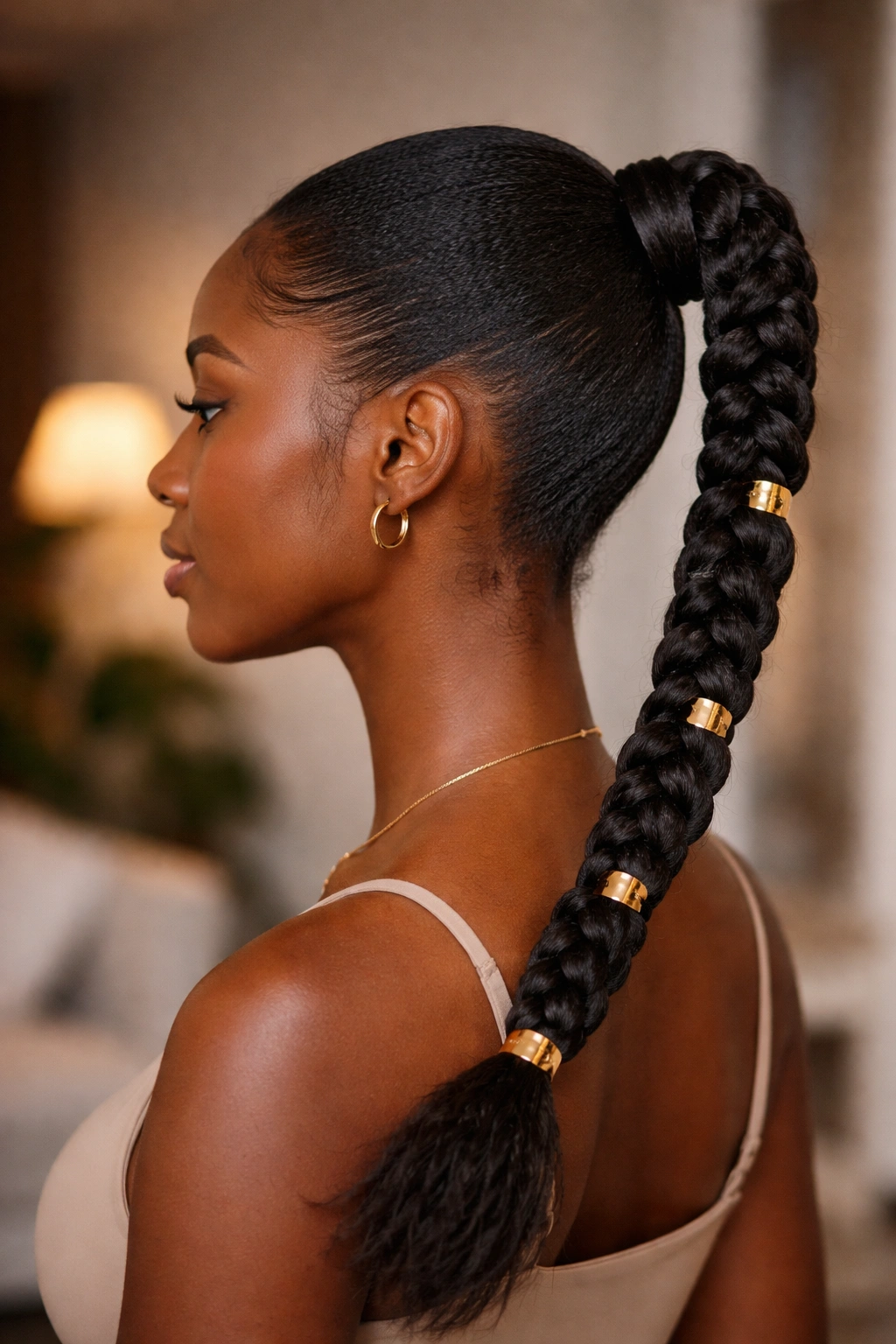
Accessories can rescue a simple style. A braided ponytail with cuffs on 4C hair takes one clean base and makes it feel more finished without changing the braid pattern at all.
The cuffs work best when they are placed with restraint. A few at the front, a few near the tail, maybe one or two along the side braids — that is usually enough. Piling on too many starts to look noisy, and the metal can tug if it is clamped too hard.
I like cuffs because they let you turn a practical ponytail into something a little more dressed up without rebuilding the whole thing. That makes them useful for last-minute plans. You can keep the braid the same and change the mood with three clips. Simple, and honestly, much smarter than redoing your entire head.
24. Low Nape Braided Ponytail
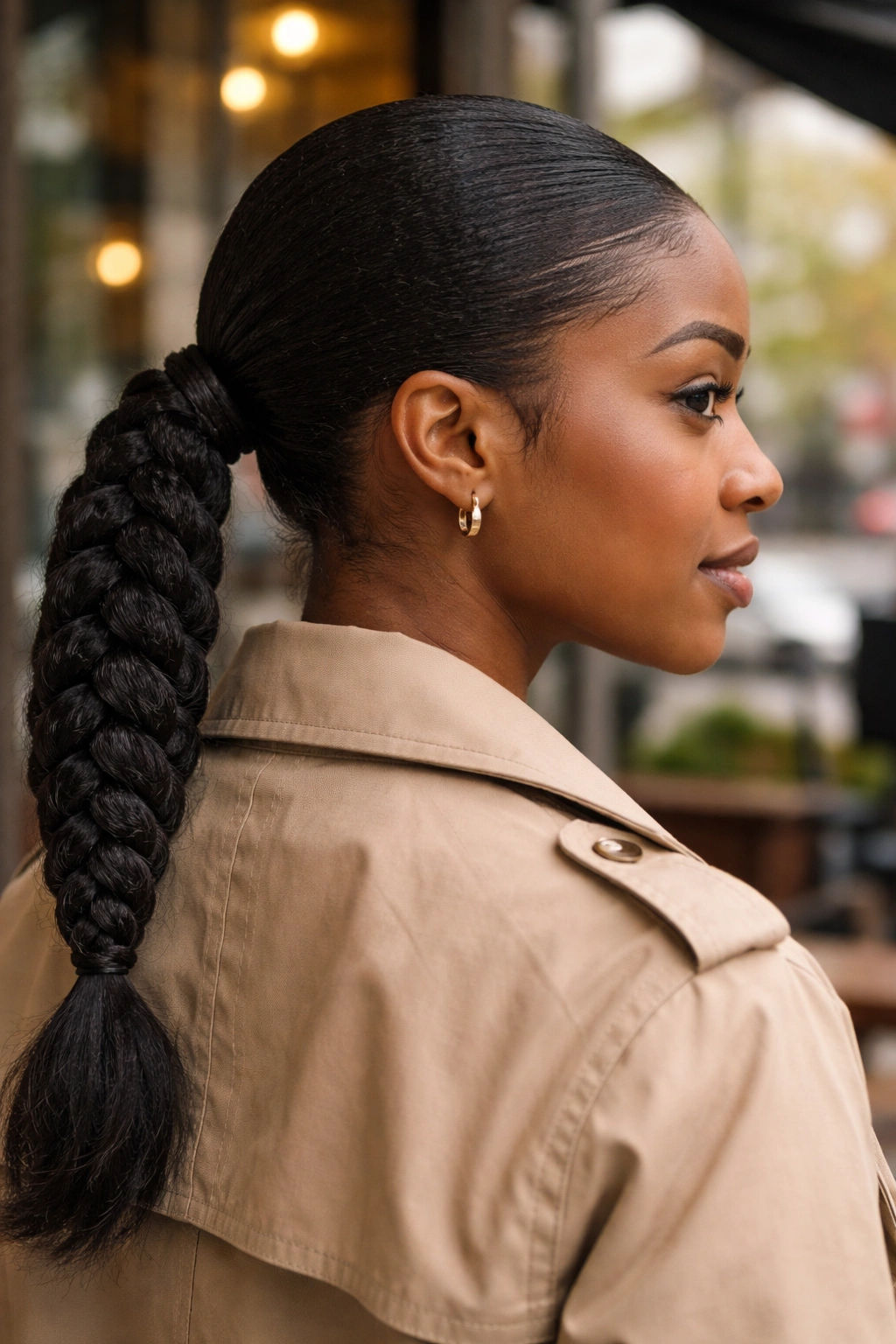
A low nape braided ponytail sits close to the neck, which is one reason it feels so comfortable on 4C hair. The style stays out of the way, the weight is centered lower, and the whole thing has an easy, grounded look.
This is the ponytail I’d choose when I want a braid style that behaves during a long day. It does not bounce around much. It does not make your head feel top-heavy. And because the braid falls lower, it can be tucked under a coat collar or scarf without getting mangled.
The nape version also tends to suit thicker hair better than people expect. The lower placement takes advantage of the natural bulk without shouting about it. There is a quiet confidence to that, though I know people like to overstate that phrase. Here, it really does fit.
25. Halo Braid Ponytail
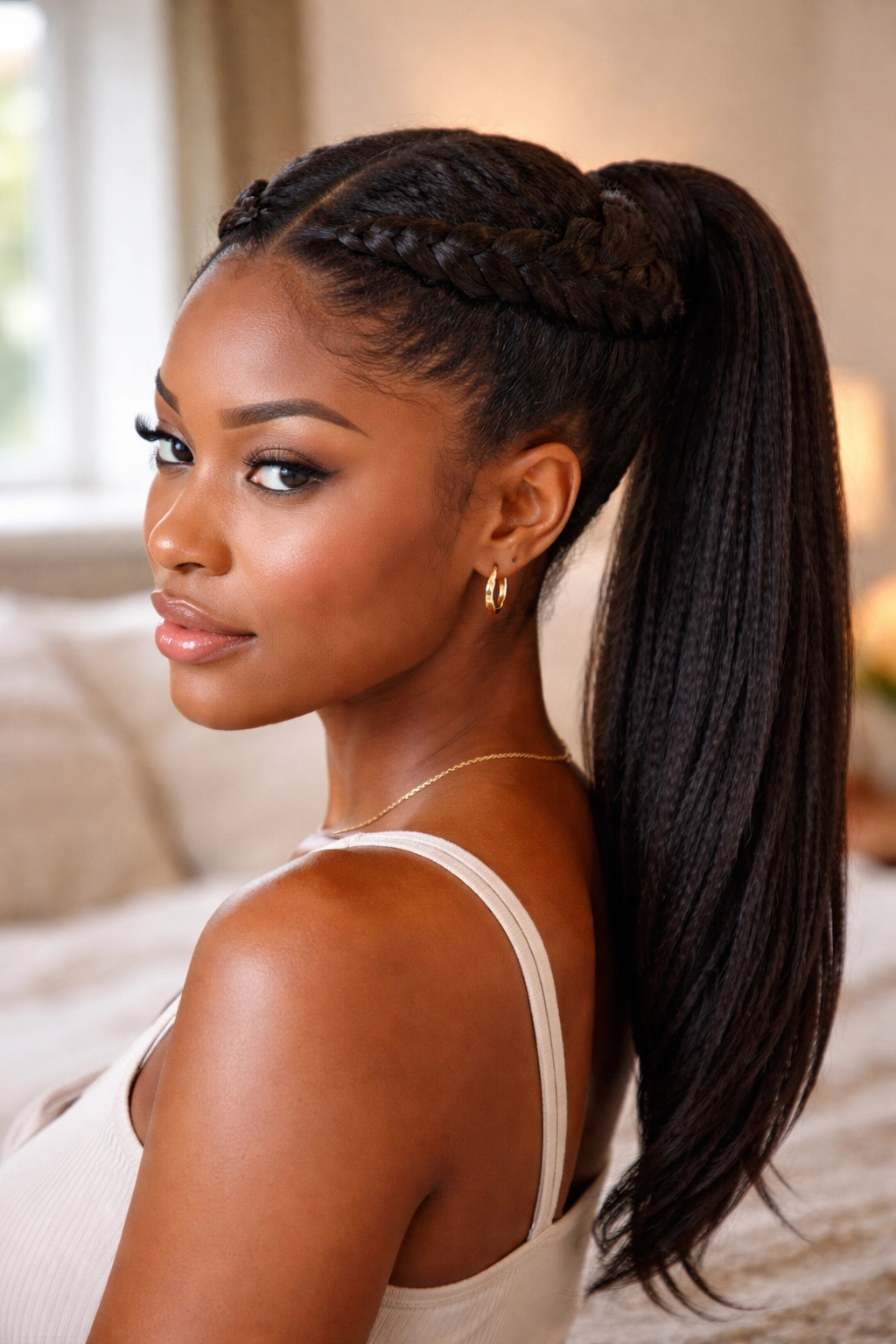
A halo braid ponytail circles the head before finishing into a ponytail, and that gives 4C hair a very polished frame. The look feels lifted, almost like a braided crown that decided to gather itself at the back.
The halo shape is useful because it keeps the perimeter tidy while still giving the ponytail room to hang. It is one of those styles that looks more involved than it actually is, which is handy when you want people to assume you spent all morning on your hair and you did not.
What to Watch For
The braid around the head needs to sit evenly, or the circle becomes obvious in the wrong way. Keep the front sections smooth, not squeezed flat. And if you add extensions, do not overload the front bend. That is where the tension shows first.
26. Micro-Braid Ponytail
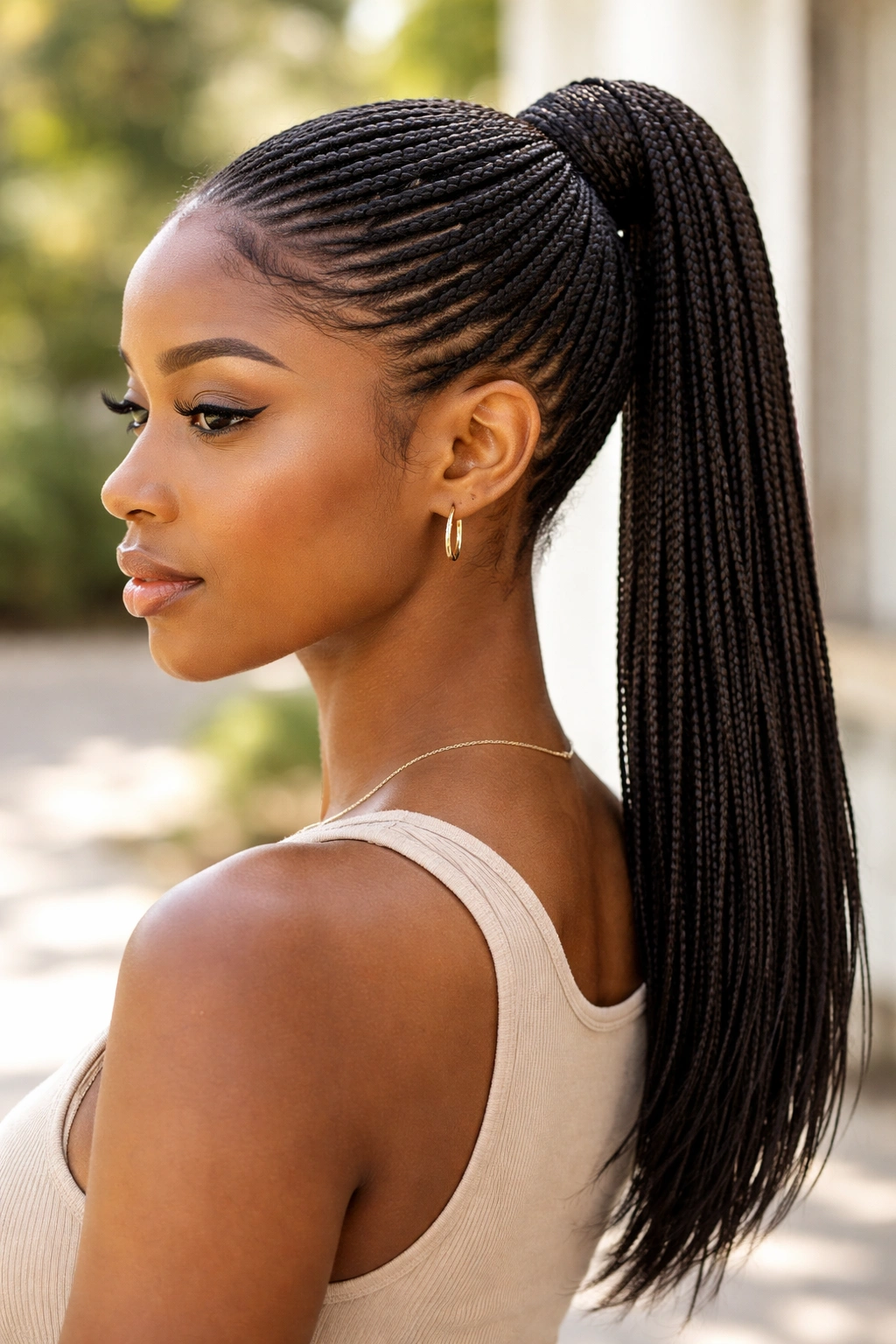
A micro-braid ponytail brings detail, texture, and patience in equal measure. The tiny braids create a woven look that sits beautifully on 4C hair, especially if you like long styles with lots of movement.
This is one of those choices that asks for commitment. Micro braids take longer to install, and the ponytail needs enough support at the base so all that small braid work does not feel flimsy. But the payoff is real: the tail has a fine, layered motion that larger braids cannot copy.
I would not recommend it if you like changing your hair every few days. Micro braids reward people who can live with one style for a while and keep it moisturized along the way. A little scalp oil, used sparingly, goes a long way here.
27. Scarf-Wrapped Braided Ponytail
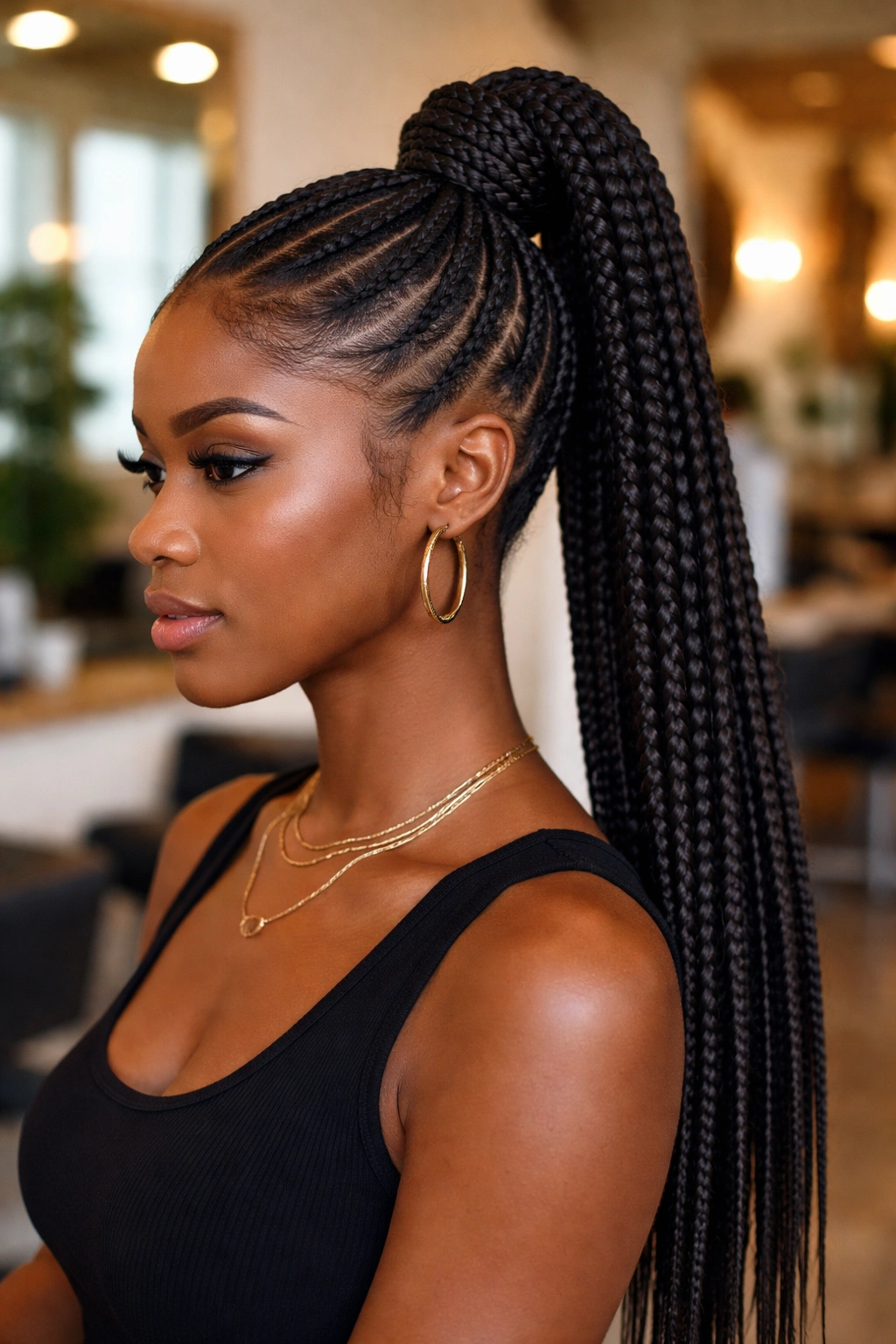
A scarf-wrapped braided ponytail is the kind of finish that makes a simple braid look considered. The scarf hides the base, adds a bit of color or print, and gives 4C hair a soft edge where a regular elastic would feel plain.
This style works especially well when the ponytail itself is straightforward. If the braids are clean and the scarf is chosen well, the result feels deliberate without needing extra parts, extra cuffs, or extra length. I like silk or satin because they sit smoothly and do not snag the braid the way rough fabric can.
The best thing about this version is that it can rescue a style that’s already been worn a few days. Wrap the base neatly, smooth the ends of the scarf, and the whole ponytail wakes back up. When you want the style to last and still look cared for, that little wrap does a lot of heavy lifting.
