

A high ponytail on a child has to do more than look tidy. It has to survive recess, a hoodie, a car seat, and the moment when your kid decides the hair tie feels “weird” after two minutes.
The best high ponytails for kids are the ones that stay put without making the scalp sore. That balance matters more than shine or perfect symmetry, and if you’ve ever had a child yank out a too-tight pony before breakfast, you already know why.
I always look at three things first: where the pony sits, how the front is brushed, and what kind of elastic holds it. A slick style can look neat on straight hair, but the same look on curls or thick hair can turn into a tug-of-war if you don’t leave enough room at the crown.
That’s why the styles below range from bare-bones and quick to braided, puffed, wrapped, and party-ready. Some take thirty seconds. Some need a few extra hands. All of them can work when you match the style to the child, not the other way around.
1. The Classic High Ponytail
The plain high ponytail earns its place for a reason. It’s the one you reach for when the morning is moving fast and your kid wants hair out of the face, not a project.
The sweet spot is high on the crown, not smashed flat at the very top of the head. Brush the sides up with your hands or a soft brush, gather once, then tighten only until the pony feels secure. If the hair is fine, a second elastic over the first one helps more than yanking the first band tighter.
- Best for school days, errands, and sports.
- Works on straight, wavy, or layered hair.
- Looks cleaner if you mist the hair lightly before gathering.
- A soft, snag-free elastic is kinder than a hard rubber band.
Tiny detail, big difference: leave the last inch of the tail a little loose so the pony doesn’t look stiff. That small slack keeps it moving.
2. The Sleek High Ponytail With a Middle Part
Want a look that feels neat without trying too hard? A middle part does most of the work here.
Draw a clean part from the center of the forehead straight back, then smooth each side toward the crown. A little water or leave-in spray helps the hair sit flat, but don’t soak it. Wet hair can swell, frizz, and make the whole front look fuzzy before lunch. I like using a fine-tooth comb for the part and then switching to the palms of my hands for the actual gather.
What Keeps It Smooth
A dab of lightweight gel or edge control at the hairline can calm flyaways, but use a small amount. Too much and the hair looks crunchy, which is not the look most kids want for a school day.
This style is especially good when your child likes a sharp shape and doesn’t mind a bit of brushing. It also works well for picture day because the symmetry reads clearly on camera. Keep the pony at the crown, not too low, or the whole thing loses its lift.
3. The Bubble High Ponytail
Bubble ponytails look playful fast. That’s the magic. You don’t need curling irons or complicated braiding; you just need a few small elastics and a little patience.
Start with a high ponytail, then place another elastic 1 to 2 inches down the tail. Gently pull at the hair between the two elastics until it puffs out into a round bubble. Repeat down the length. If your child has thick hair, the bubbles will look full. If the hair is fine, they’ll be smaller, which can still be very cute.
Quick Facts That Help
- Use clear or matching elastics so the sections stand out.
- Don’t pull the bubbles too hard or they flatten.
- A light mist of detangler keeps the sections from snagging.
- Longer hair gives you more bubbles, but three or four is enough.
This style has a nice side effect: it keeps the tail from swinging around all day. That means fewer hair-whips during cartwheels. Nice.
4. The Wrapped-Base High Ponytail
A wrapped base is one of those little touches that makes a simple style look finished.
After you gather the ponytail, take a thin strand from underneath the tail and wrap it around the elastic until the band disappears. Pin the end underneath with a bobby pin if the hair is long enough. If your child has fine hair, this trick can make the pony look thicker at the base than it really is.
This is a smart choice for birthdays, family photos, or any day when you want the hair to look neat without adding a bow or clip. It also helps hide a band that doesn’t match the hair color. Small win. Big visual payoff.
If the child has layers that pop out, smooth the wrap strand before you pin it. A loose wrap looks chic. A messy one just looks like you lost track of the elastic.
5. The Braided-Base High Ponytail
Braiding the base gives slippery hair something to hold onto. That’s why this version is such a good fix for fine or freshly washed hair that likes to slide out of a regular pony.
Make a small braid at the front or side, depending on where the pony sits, then pull the rest into a high tie. You can also braid a short section from the crown back into the pony itself. Either way, the braid gives texture and grip, and the pony feels more anchored.
The nice part is that it looks deliberate even when it was done in a hurry. If the hair is layered, a braid at the base also keeps shorter strands from escaping all over the place. Use a soft elastic at the end of the braid before you gather everything together; that keeps the braid from loosening while you work.
This one is good when you want a little more structure but not a full braided style. It’s neat. It’s practical. And it doesn’t ask for much.
6. The Rope-Twist High Ponytail
A rope twist sounds fancier than it is. Which is half the charm.
Split the front section into two pieces, twist each one in the same direction, then wrap them around each other in the opposite direction. That gives you a rope effect that holds together better than a plain twist. Pull the rest into a high ponytail, or twist the entire tail for a sleek, textured finish.
How to Keep the Twist From Unraveling
Start with hair that has a little grip. If it’s freshly conditioned and slippery, use a touch of mousse or light gel first. The twist should feel snug in your fingers, not loose and fluffy.
This style works well on medium-length hair and on kids who like texture but don’t want braids every time. It also survives motion better than a smooth pony because the twisted front section helps control flyaways. If the child likes to touch their hair a lot, this is sturdier than it looks.
7. The Bow-Top High Ponytail
A bow can save the whole look — and keep your kid from calling the ponytail “boring” before lunch.
Clip a bow right above the ponytail base, or tie a ribbon into a bow after securing the elastic. The bow can be large and playful or small and neat. Either way, it gives the ponytail a clear focal point, which is handy when the hair itself is simple.
This is one of my favorite choices for party outfits because it does not require the hair to be perfect. A few slight bumps on the crown vanish once the bow goes in. That’s useful on days when brushing opinions are not being negotiated calmly.
Choose a bow that sits flat. Hard, heavy clips can slide if the hair is fine. Softer fabric bows stay put better and feel kinder against the head.
8. The Ribbon-Woven High Ponytail
Ribbon changes the shape of a ponytail in a way that feels instantly special.
After you tie the pony, thread a narrow ribbon through one side of the elastic and weave it around the tail in spirals or simple loops. Satin ribbon gives a smooth look, while grosgrain has a bit more grip. If your child has a favorite color, this is the style that lets you use it without turning the hair into a costume.
Why It Works Better Than It Sounds
The ribbon adds visual structure, and it can also hide a thin tail if the hair is not very thick. Keep the ribbon soft and light. A stiff ribbon can poke or hold awkward bends in the hair, which defeats the point.
This style is lovely for concerts, birthdays, and family dinners. It also gives a plain ponytail more personality without needing hot tools. If the child is younger, tie the ribbon securely so it doesn’t slip loose during the day.
9. The Side-Swept High Ponytail
Off-center can be more flattering than dead center. A side-swept high ponytail softens the look and gives you a little movement at the front.
Brush the hair upward, but guide the pony slightly toward one side of the crown. That small shift changes the whole feel. If your child has a strong cowlick, this can also make the front easier to control because you’re working with the direction the hair already wants to go.
It’s a nice option for kids who don’t love a super tight front. A side-swept pony leaves space for a softer part or a loose fringe, and it looks especially good on layered cuts. The tail falls across one shoulder instead of hanging straight down the back, which gives the style a bit more shape.
A small side clip or flower pin can finish it without much effort. Keep the rest simple.
10. The Curly High Puff Ponytail
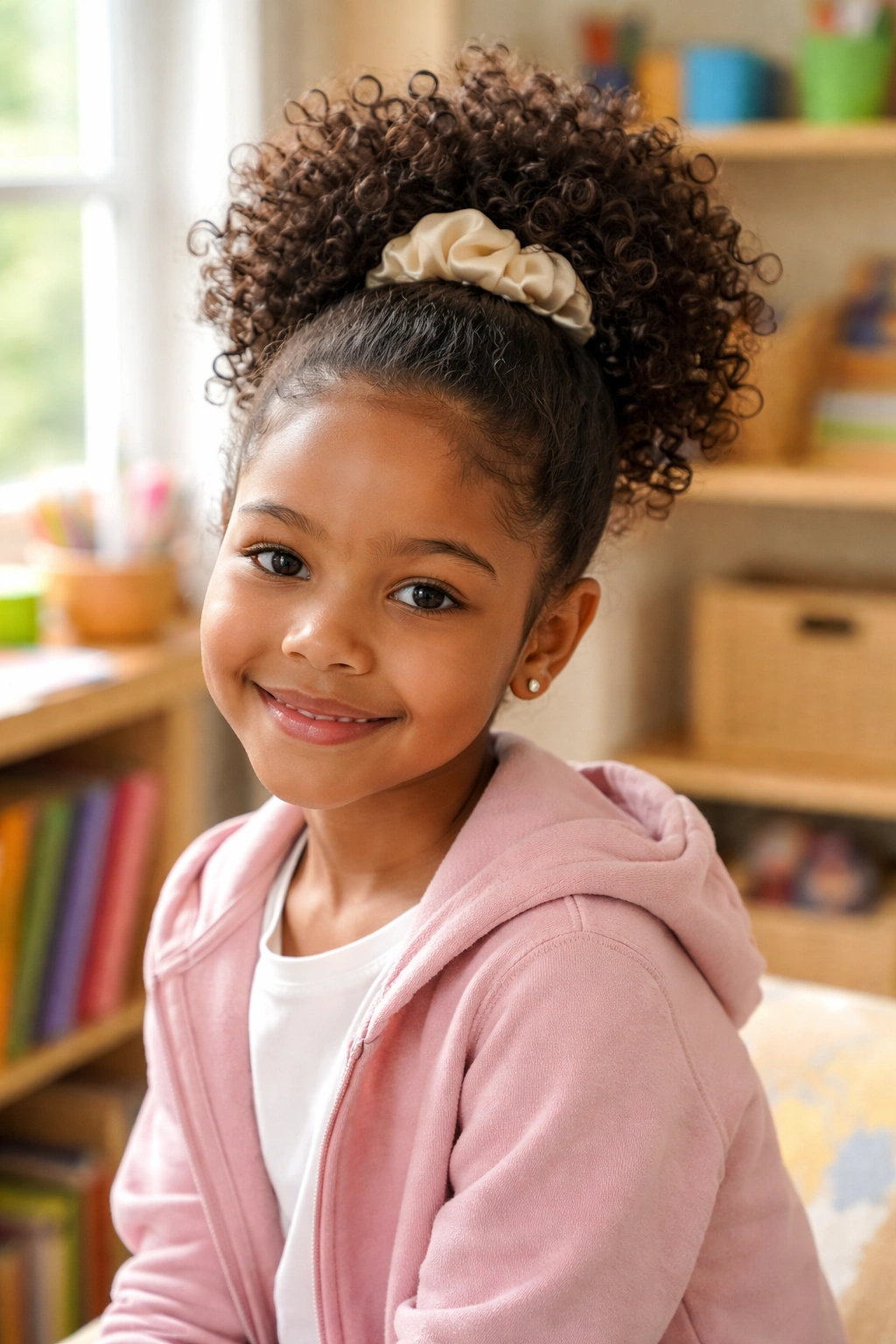
Curly hair does not need to be flattened to look neat.
A high puff ponytail keeps the curl pattern visible and lets the hair keep its shape. Gather the hair toward the crown, then use a stretchy puff cuff, satin scrunchie, or wide soft elastic so the curls are not crushed. You want the front smooth enough to look intentional, but the body of the puff should stay full.
This style is especially good when the child has dense curls or coils that shrink up when pulled back. A little moisture helps the curls gather more cleanly. If the hair is dry, the puff can look frizzy around the edges. A small amount of leave-in conditioner or curl cream usually solves that.
One thing I love here: the puff looks polished without stealing the curl. That matters. Kids often want their hair to feel like their hair, not a flattened version of it.
11. The Pineapple High Ponytail
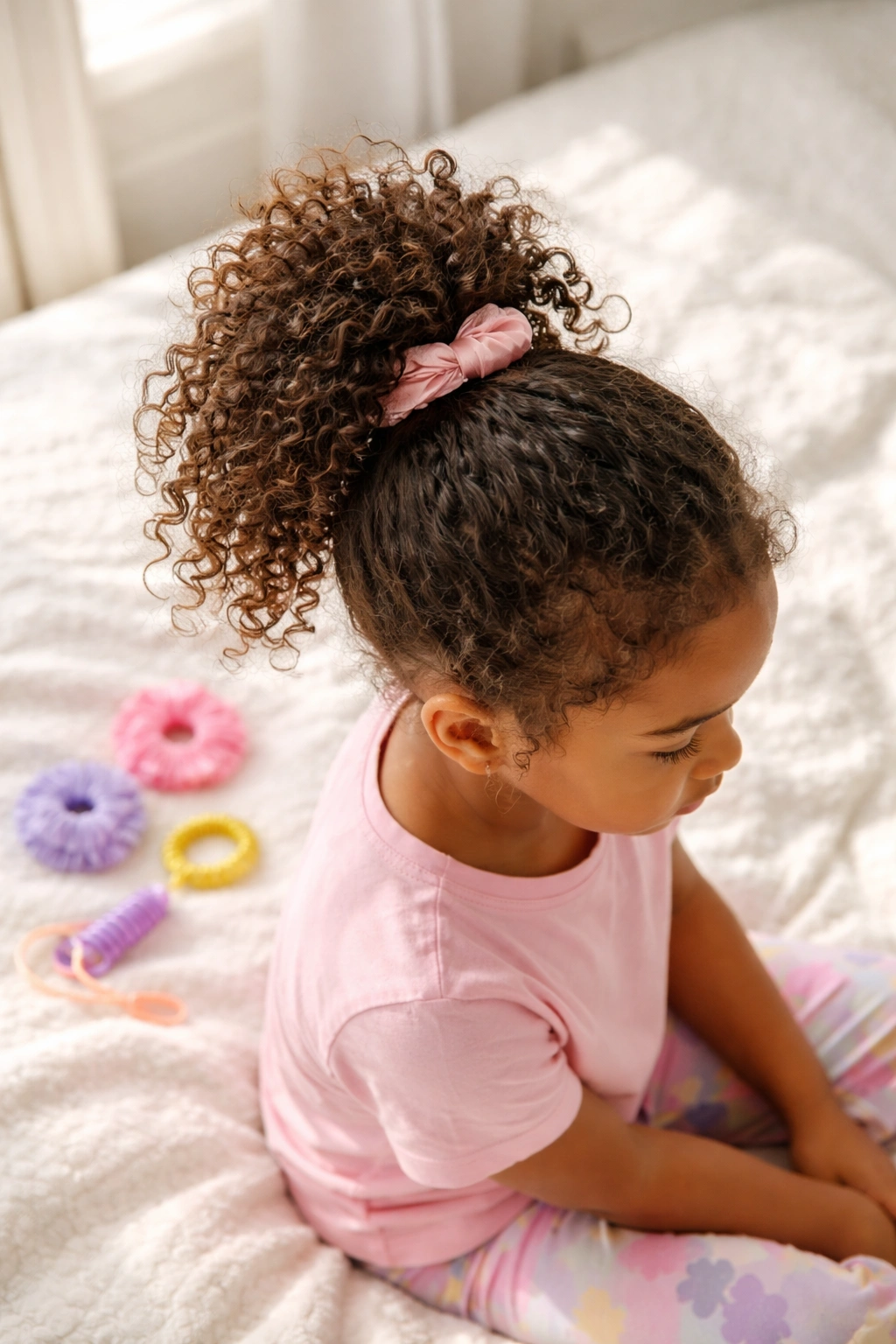
A pineapple is looser than a slick pony, and that’s the whole point.
Lift the curls high, gather them gently, and leave the curl pattern intact near the ends. The goal is to protect the shape rather than force it into a tight hold. This is the style many curly-haired kids already wear at night, but it also works in daylight when you want a quick, soft look.
It’s best for curly and coily hair that benefits from less tension at the roots. If the crown feels tender, this style is kinder than a tightly brushed ponytail. A satin scrunchie is a smart choice because it doesn’t snag the hair the way a skinny band can.
A pineapple pony can move from home to school to the playground without looking overdone. That’s part of the charm. It reads relaxed, but it still keeps the hair up and out of the face.
12. The Double High Ponytails
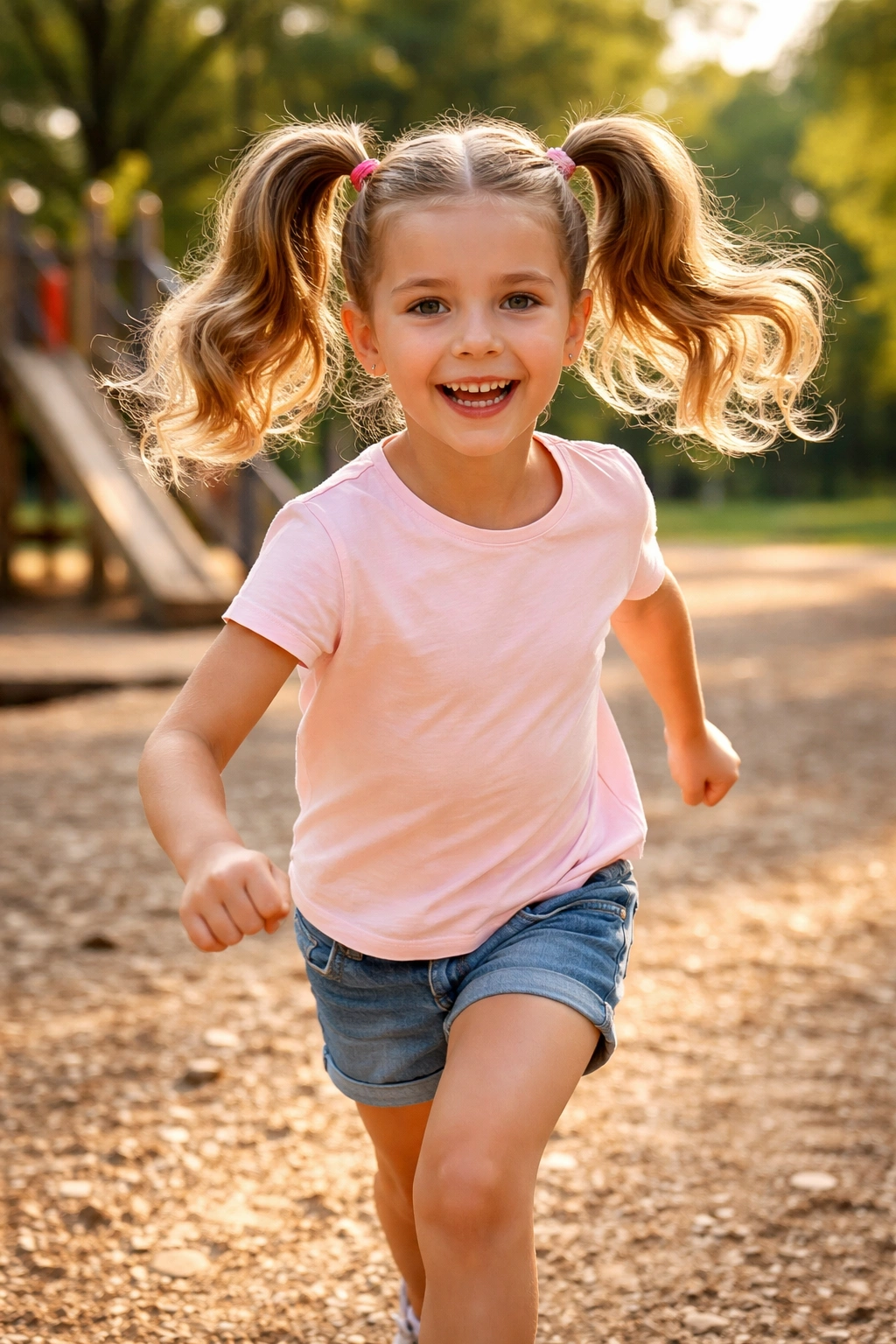
Two high ponies are playful without being fussy.
Part the hair down the center and gather each side high near the crown, either symmetrically or slightly angled outward. The style is cheerful and active, and it works especially well for kids who like movement in their hair. It also gives fine hair a little more visual volume because each pony sits up on its own.
This is a strong pick for gym class, birthday parties, and busy days when the hair needs to stay contained but not feel severe. If the hair is thick, keep the sections neat so the ponies don’t drag the scalp. If the hair is fine, the smaller sections can make each pony look fuller than one single tie would.
A pair of matching bows or small clips can make the look extra fun. Or skip accessories altogether and let the shape do the work.
13. The Crisscross Elastic High Ponytail
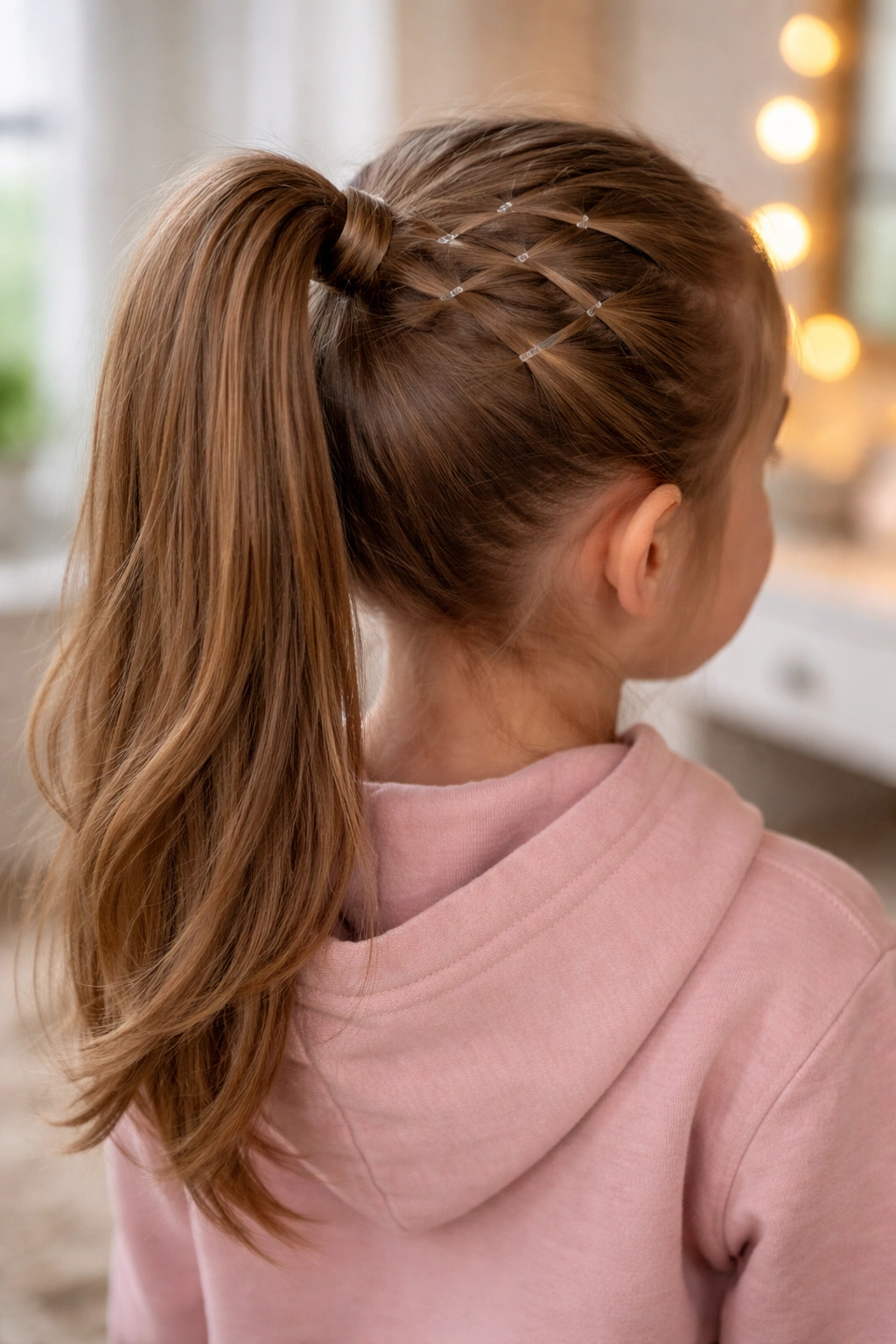
The crisscross is the style that looks detailed even before the ponytail starts. It’s a clever way to turn the front section into part of the hairstyle instead of hiding it.
Divide the top section into two or four small pieces, then cross them over each other and secure them with tiny elastics before gathering the rest into a high ponytail. The result is a pattern that sits neatly across the crown. It’s especially nice on straight or lightly wavy hair because the sections show clearly.
A crisscross style helps when the front layers are awkwardly growing out. Instead of fighting those pieces, you build with them. That makes the style useful as well as pretty, which is usually the sweet spot for kids’ hair.
Keep the elastics small and soft. If they’re too tight, the pattern digs into the scalp and turns into a complaint by afternoon.
14. The Zigzag-Part High Ponytail
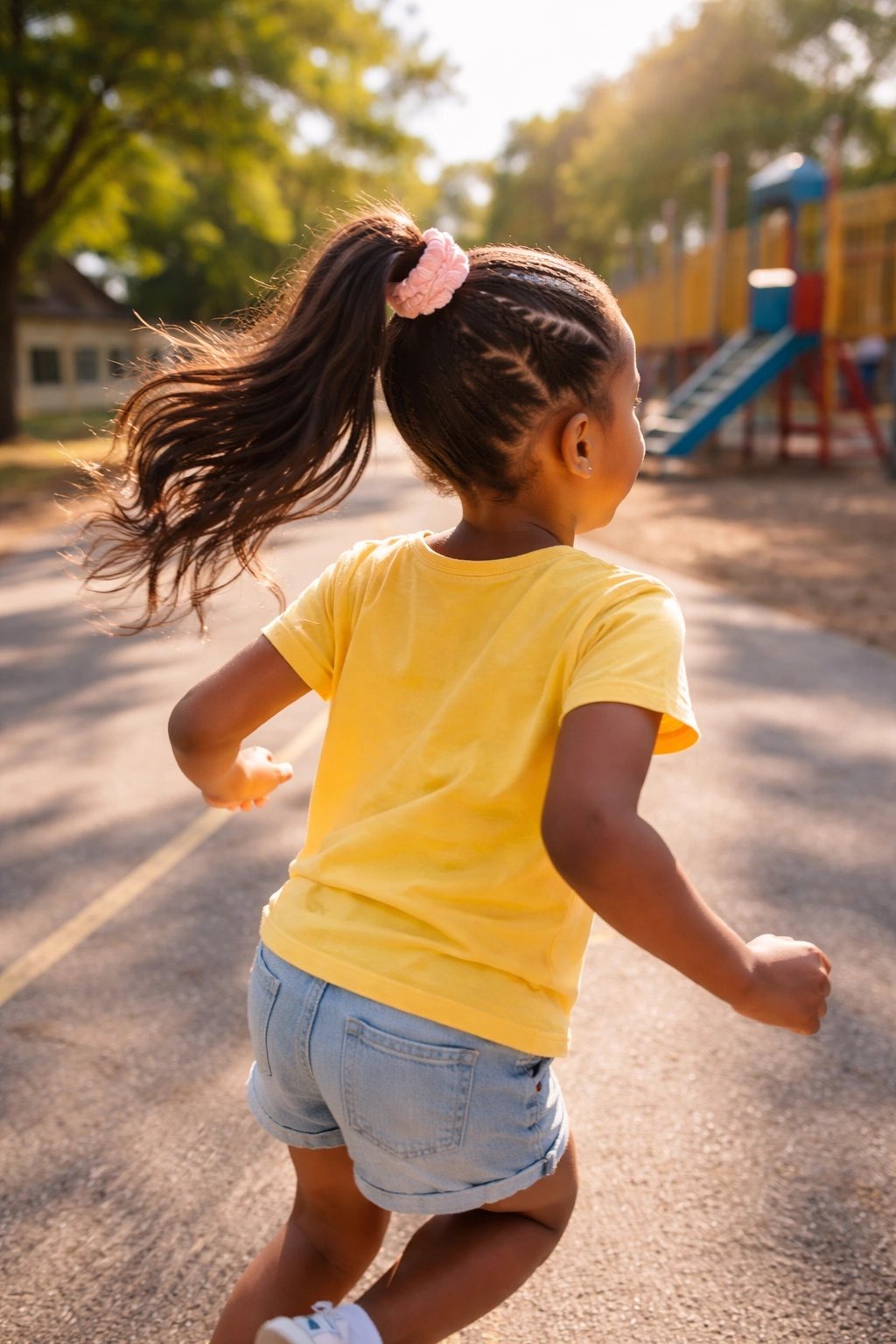
A zigzag part can make a plain ponytail feel playful in about three seconds.
Use the end of a rat-tail comb to draw the part in short diagonal lines instead of one straight line. Then gather the hair high, letting the jagged part stay visible at the front or along the crown. Kids tend to love this because it looks different without being complicated.
How to Draw It Cleanly
Start with damp or lightly misted hair. Dry flyaway hair makes the comb skip, and the part gets messy fast. Work slowly. A clean zigzag is all about the angles staying even enough to read from a few feet away.
This style is a good match for school spirit days, theme days, or any afternoon when a child wants something a little different. It pairs well with a simple ponytail because the part itself becomes the detail. No extra clips needed unless your child wants them.
15. The French-Braid Into High Ponytail
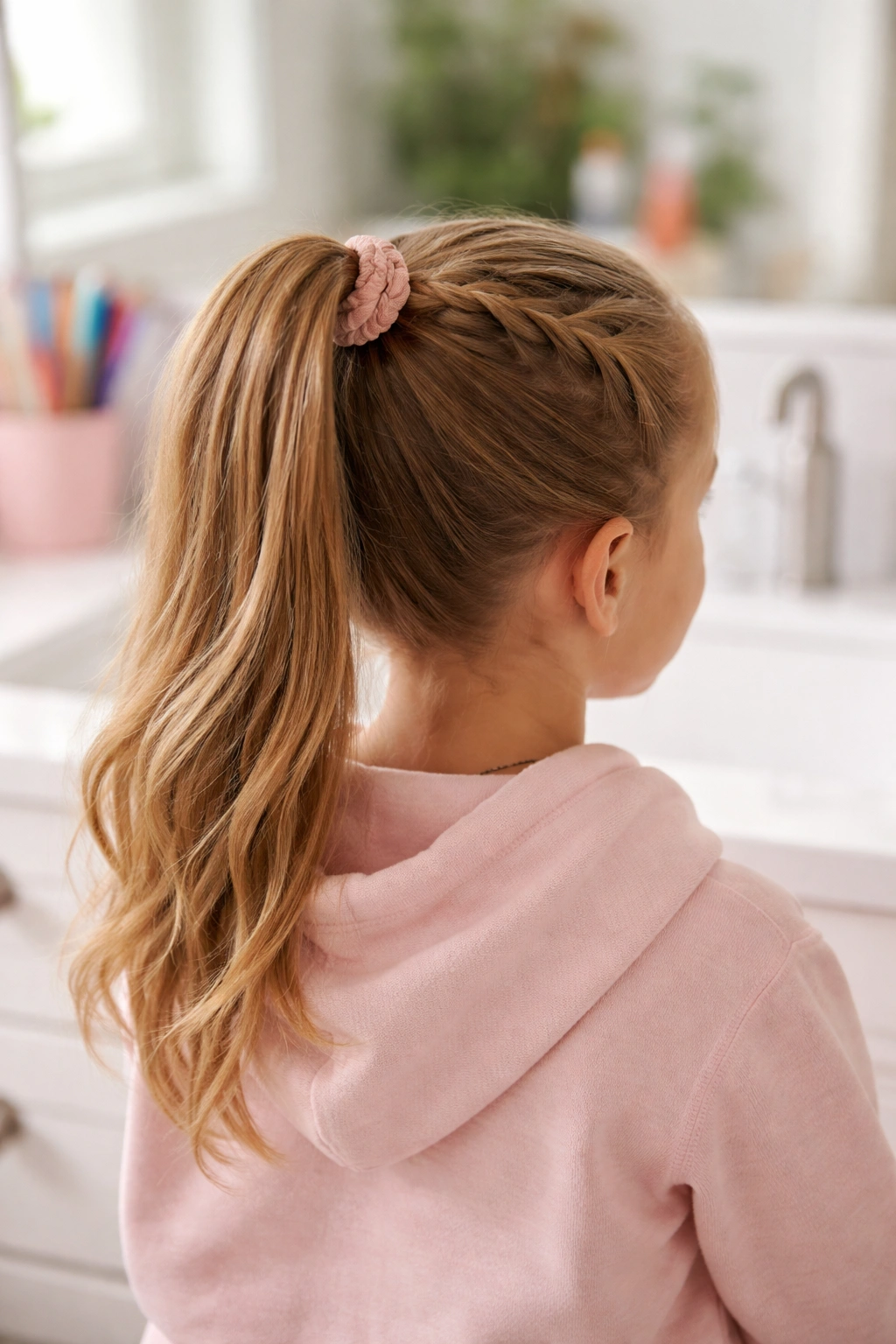
Need the front to stay put all day? A French braid is one of the best answers.
Braid from the hairline back toward the crown, picking up hair as you go, then secure the braid and gather the rest into a high ponytail. The braid acts like a built-in headband, which keeps shorter pieces from sliding into the face. That makes it a smart choice for active kids and for haircuts with layers around the front.
It also gives the ponytail a cleaner start. Instead of a loose front, you get a neat path into the tie. If the child has medium or thick hair, the braid can be wide and very visible. On fine hair, keep the sections small so the braid stays defined.
A French-braid ponytail is one of those styles that looks more involved than it really is once you’ve practiced it a couple of times. The first try may take patience. After that, it moves much faster.
16. The Dutch-Braid Into High Ponytail
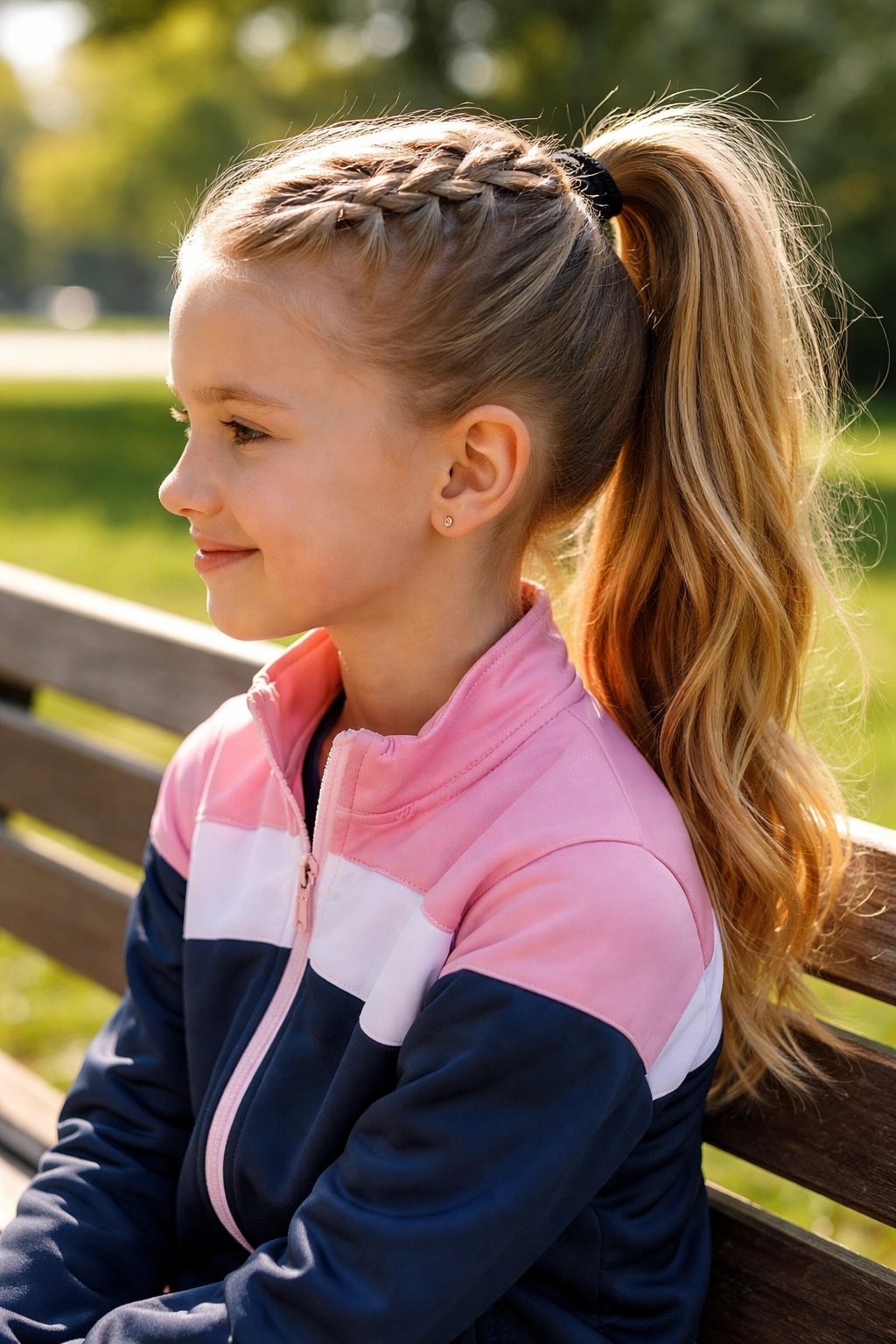
This one looks fancier than it is. Honest.
A Dutch braid sits on top of the hair instead of tucked into it, so the braid reads with more depth. Braid back from the front hairline into the crown, then tie the rest into a high ponytail. The raised braid gives the style a little extra shape, which is nice when you want the front to stand out.
Best For
- Thick hair that needs more hold.
- Kids who like sporty styles with a little detail.
- Days when the ponytail needs to stay tight through a lot of movement.
- Haircuts with layers that tend to slip out of plain ties.
The Dutch braid gives the ponytail a kind of built-in frame. If you want the style to feel neat but not flat, this is a strong choice. It also photographs cleanly because the braid line catches the eye from the front.
17. The Fishtail High Ponytail
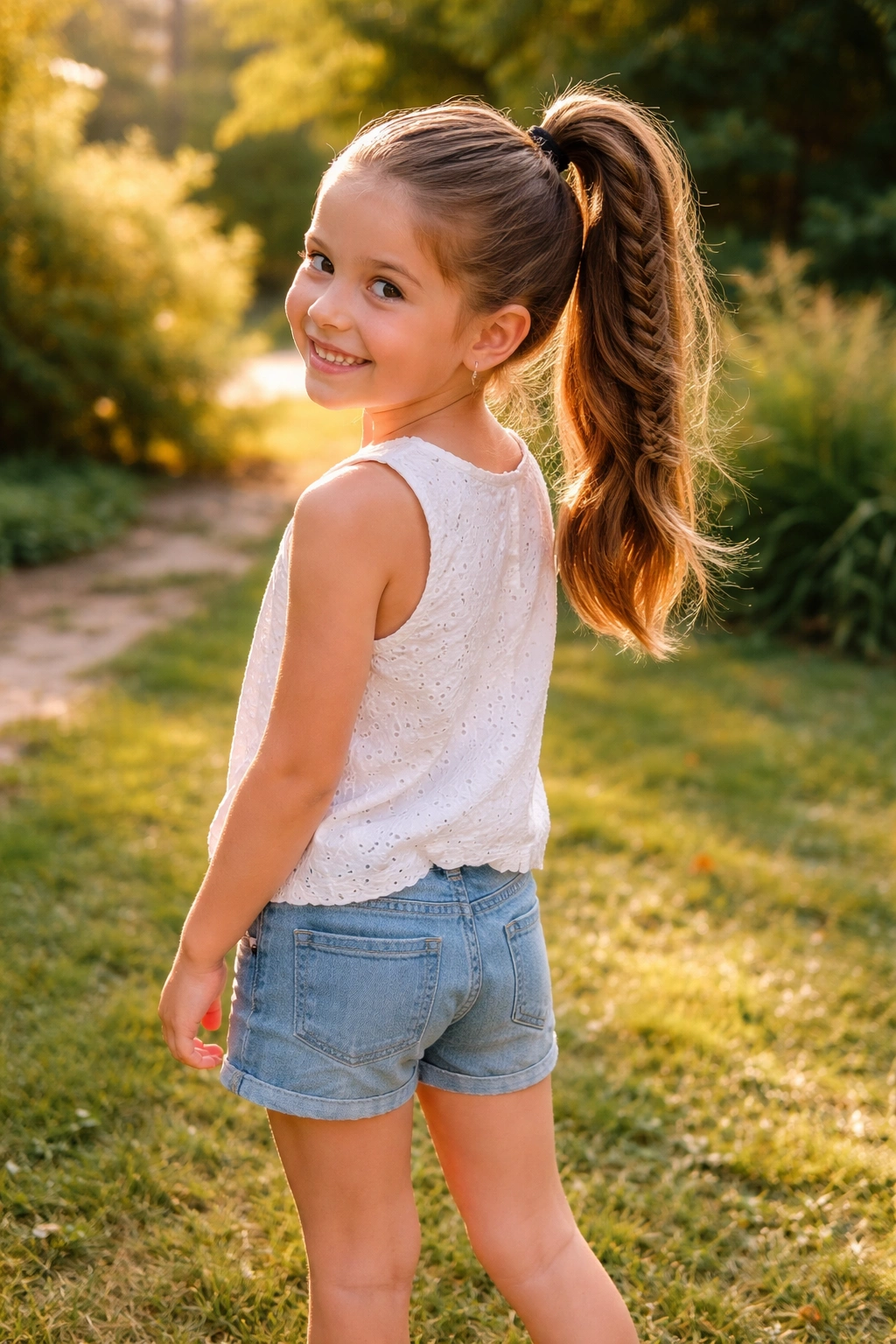
A fishtail sounds intricate, but the rhythm is simple once you get going.
Pull the hair into a high ponytail, then divide the tail into two sections. Pull small pieces from the outside of each section and cross them over to the opposite side. The smaller the pieces, the more detailed the braid looks. Big pieces make a chunkier braid that’s faster to do, and for kids that can be the better move.
This style is a nice pick when you want a ponytail that feels dressed up without using a bow or clip. It works well on medium to long hair because the braid shape shows best when there’s enough length to see it. If the ends are slippery, a tiny clear elastic at the bottom keeps the braid from loosening.
It takes a little more time than a plain pony. But the result is tidy, sturdy, and a little special.
18. The Cornrow-to-Ponytail
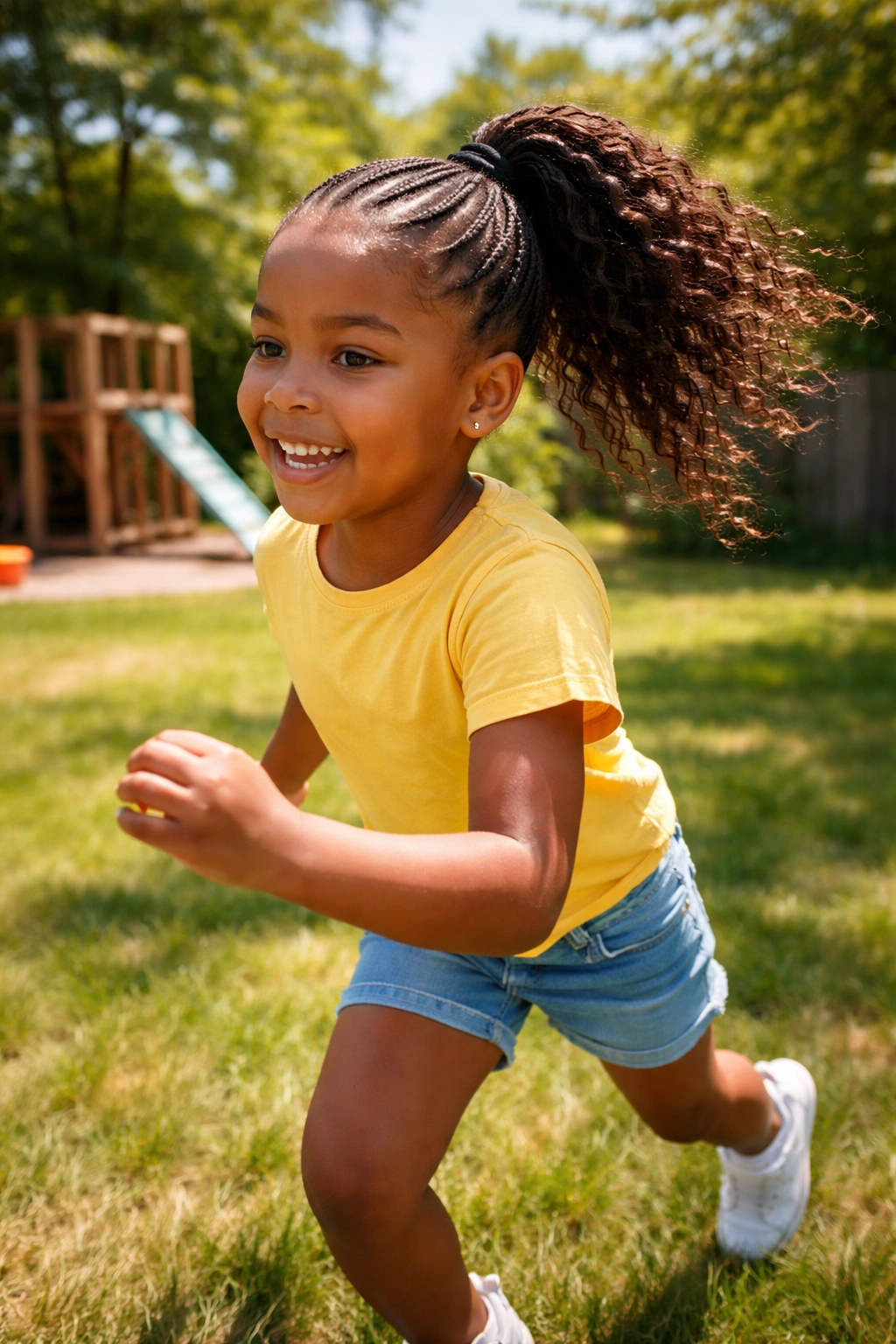
For coily and tightly textured hair, a cornrow base into a high ponytail can be both practical and beautiful.
The braids keep the front and sides secure, then the ponytail gathers the remaining length high at the crown. This reduces daily detangling and gives the style staying power. It’s a strong option when you want hair off the face with less repeated brushing.
What I like most is how flexible this style is. The cornrows can be straight back, curved, or patterned, and the pony can be full and fluffy or wrapped with braids. A soft band at the base helps prevent pulling, and a little oil or moisturizer on the scalp can keep the style comfortable.
This is one of the few ponytail styles that can hold up through a lot of play and still look deliberate at the end of the day. Not every style can say that.
19. The Mohawk High Ponytail
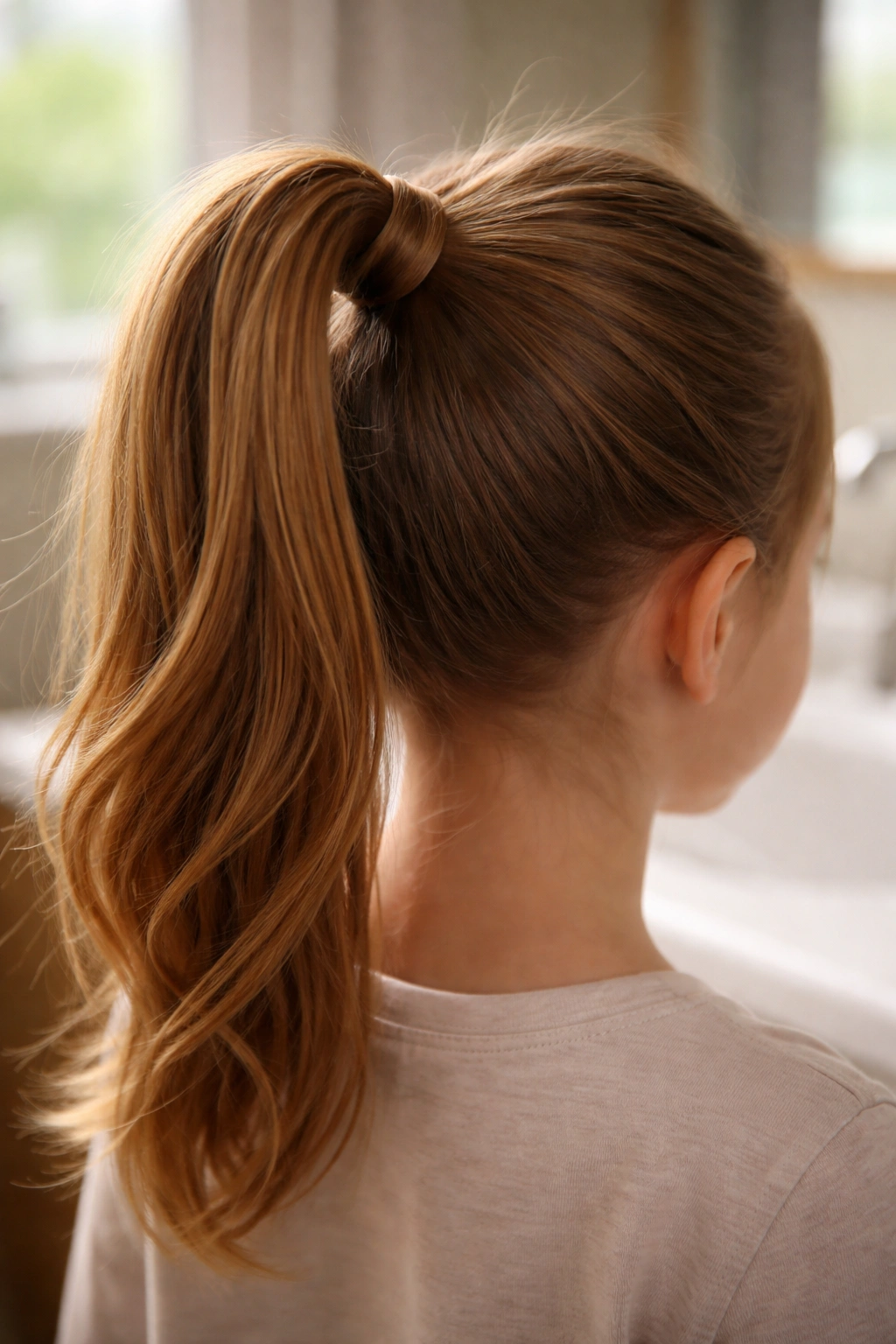
A high ponytail does not have to sit in the center. A mohawk-inspired version uses the middle strip of hair as the focus and keeps the sides sleek or braided down.
Brush the sides toward the head, then gather the center section into a high ponytail or puff. If the child wants more edge, braid the side sections close to the scalp before bringing the middle up. If they want softer volume, leave the sides smoother and let the center carry the shape.
This style is fun for kids who like a little attitude in their hair. It has lift. It has shape. And it still keeps the hair out of the face. A mohawk pony also works well when the crown has volume and you want to show it off instead of flattening it.
You can keep it casual or make it bold. That flexibility is why it earns a place in this list.
20. The Messy High Ponytail
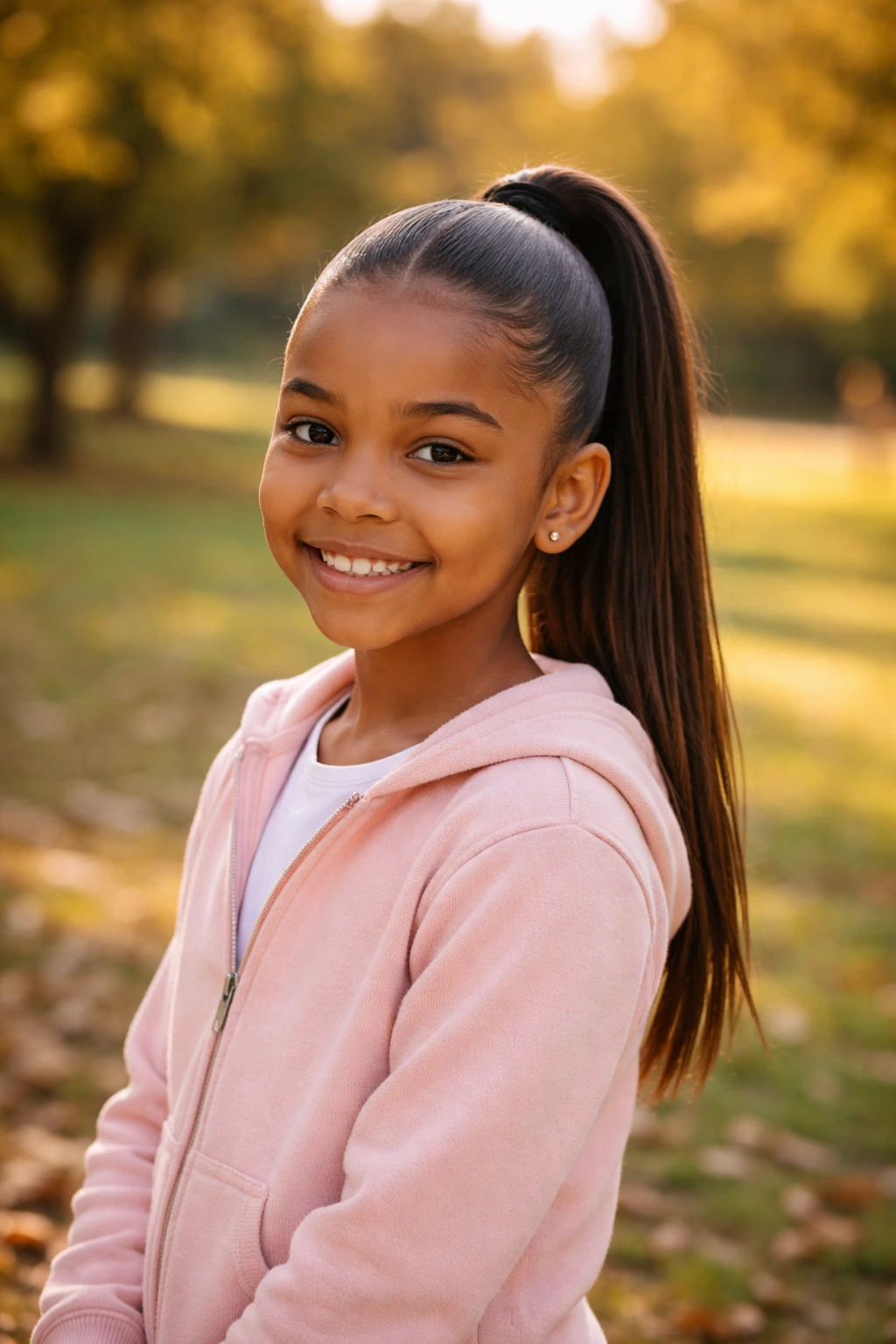
A little mess can look better than a lot of effort.
This version keeps the pony high, but you don’t press every strand flat. Leave a few soft pieces near the temples, loosen the crown slightly, and let the tail stay full rather than polished. Kids often wear this best because it looks relaxed instead of serious.
It’s a good rescue style for layered hair, second-day hair, or mornings when the brush is not winning the argument. A light spritz of water can tame the worst flyaways, but don’t overwork it. The charm here is softness, not strict control.
A one-sentence truth: not every kid wants a sleek finish.
That’s fine. A messy high ponytail can still look intentional if the elastic is secure and the front doesn’t puff up too much. It’s the easiest style on this list to make look like the child chose it themselves.
21. The Sporty High Ponytail With a Headband
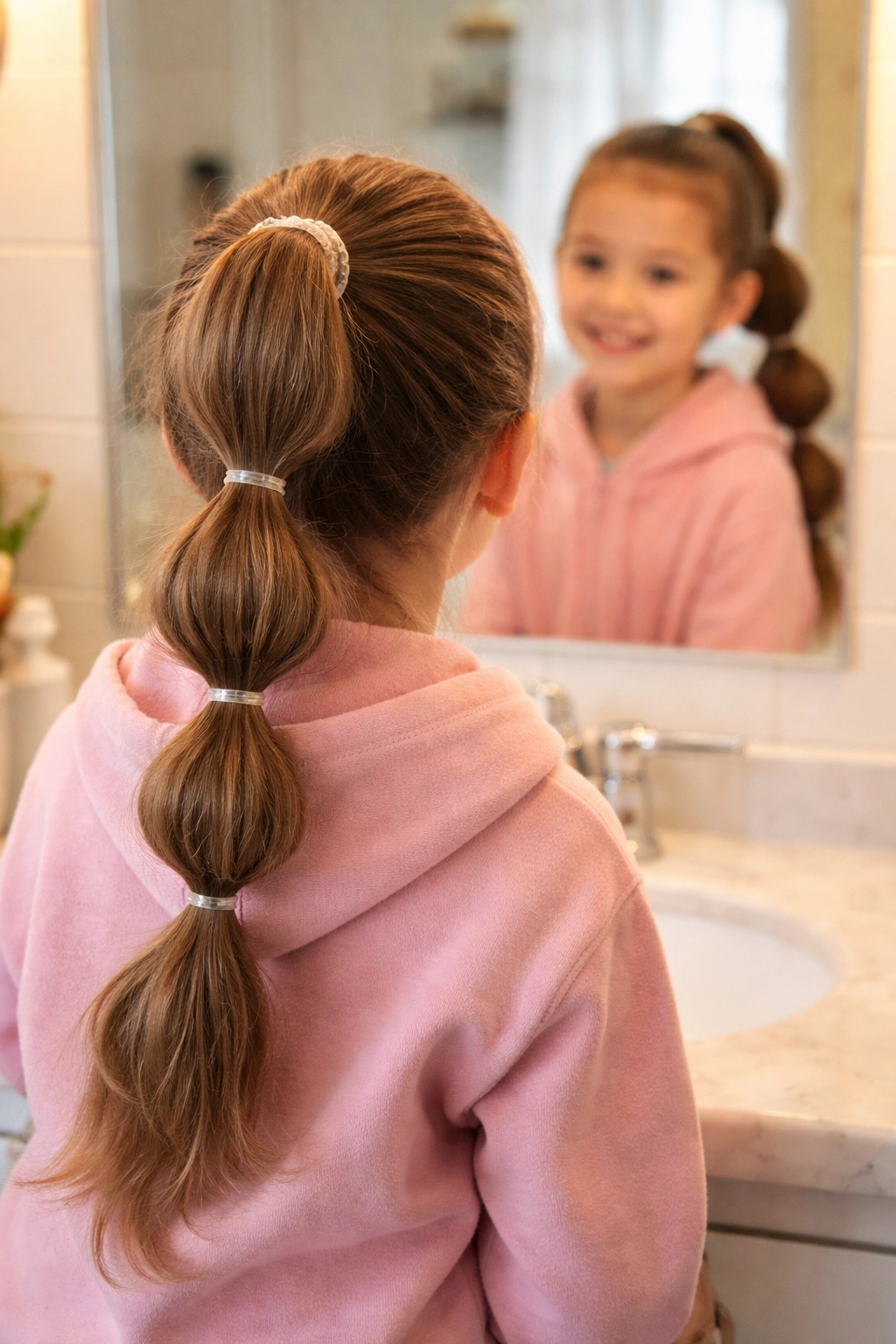
A headband changes the whole job of the ponytail.
Use the band to hold the front pieces back, then gather the hair into a high ponytail just behind it or slightly above it. Fabric headbands are usually kinder for kids than plastic ones, and a wider band helps keep short layers from escaping around the forehead.
What the Headband Is Doing
- It stops flyaways from dropping into the eyes.
- It keeps sweat off the face during play.
- It gives the ponytail a cleaner outline.
- It can hide uneven brushing at the hairline.
This is one of the best styles for sports, outdoor play, and busy school mornings. If the child wears glasses, the headband needs to sit comfortably behind the arms of the frames. That small detail matters more than people think.
Choose a headband that stays put but does not squeeze. If it leaves a mark after ten minutes, it’s too tight.
22. The Mini-Braid Accent High Ponytail
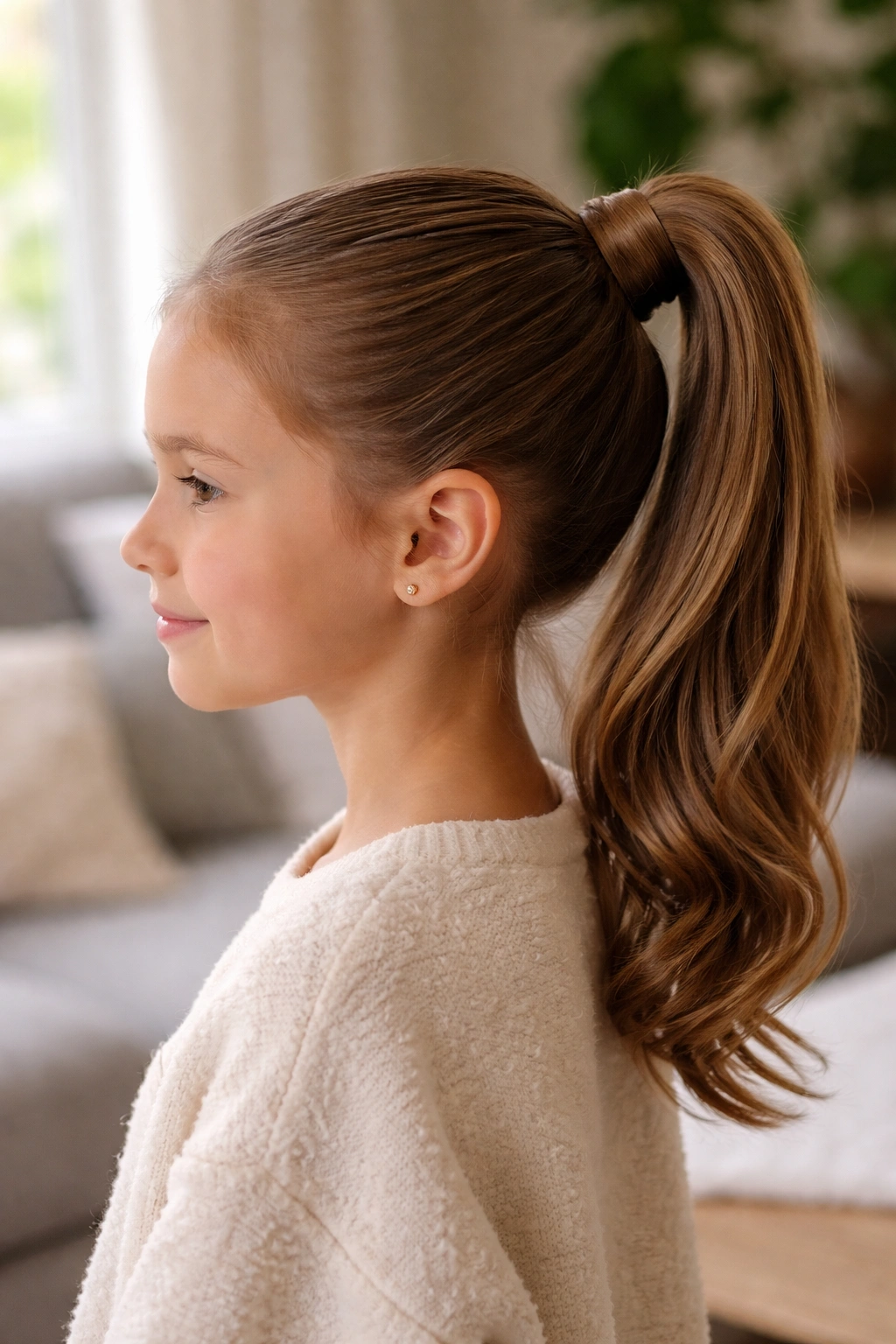
Sometimes a tiny braid is enough.
Add one or two small braids near the front hairline, above the ear, or close to the ponytail base, then pull the rest into a high pony. The little braids give the style texture without taking over. That’s useful when you want detail but do not have time for a full braided pony.
The accent braid also helps with layers that keep falling loose. It gathers the short pieces and makes them look chosen instead of accidental. That’s a nice trade on school days. If the child likes matching accessories, a tiny bead or mini elastic at the end of the braid can be enough.
This style sits in a sweet spot. It feels more interesting than a plain pony but stays simple enough for regular wear. I reach for it when I want the hair to look like I tried, even if I did not try very long.
23. The Beaded High Ponytail
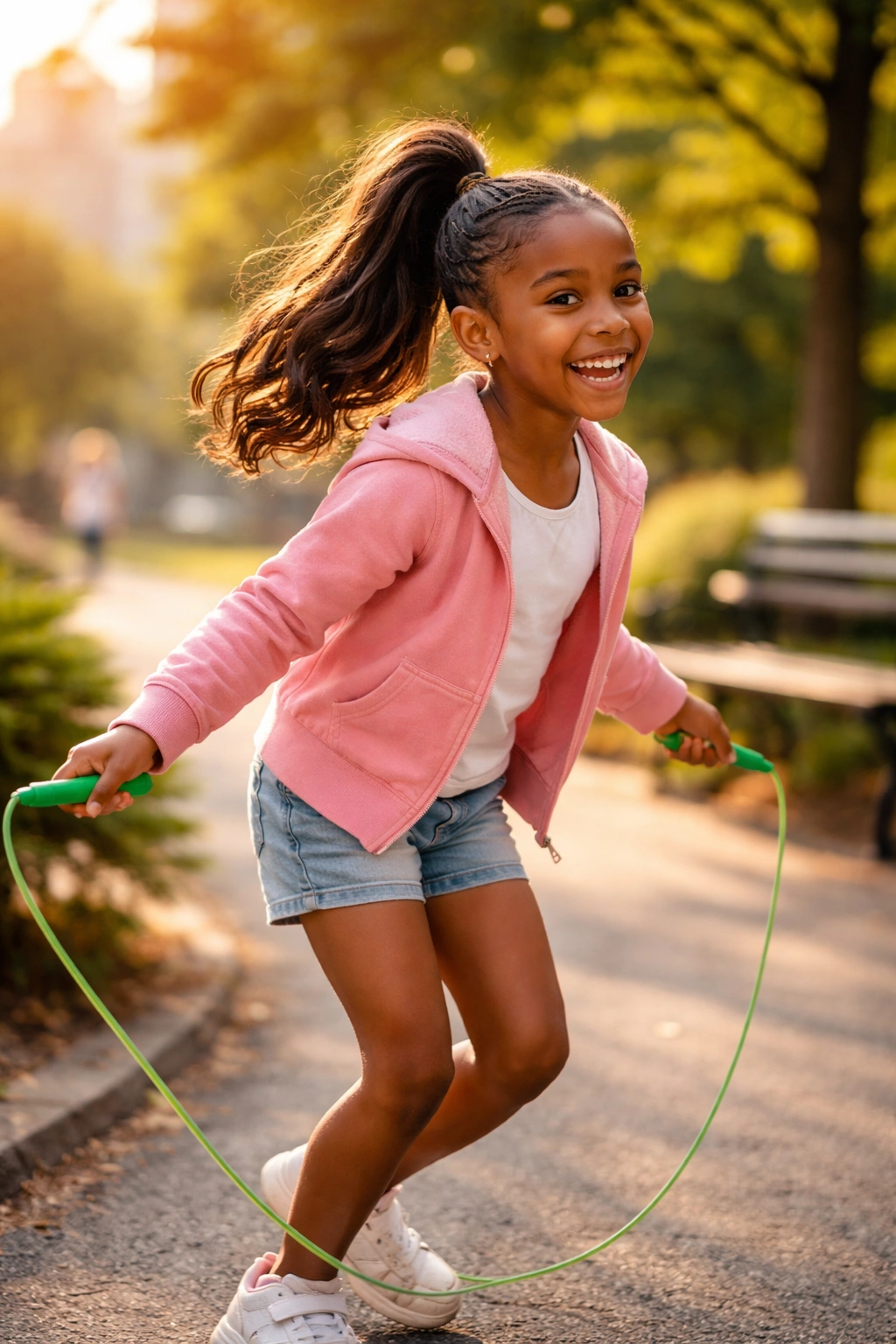
Beads can turn a ponytail into a little event.
Add them to braided sections feeding into the ponytail, or place a few at the ends of the tail if the hair is long enough. Keep the bead count modest. Too many beads weigh the hair down and make the style clack around during play, which is fun for about five minutes and then annoying.
If you use beads, secure the sections properly first. A good knot or elastic underneath matters more than the decoration itself. The style is especially cute on protective braids or small twists that end in a high pony. Bright colors work well, but neutral beads can look clean and neat too.
This is a nice choice for celebrations, cultural events, or any day when the child wants hair that feels festive. It should still move comfortably. If the beads feel heavy in your hand, they’ll feel heavy on the head.
24. The Scarf-Wrapped High Ponytail
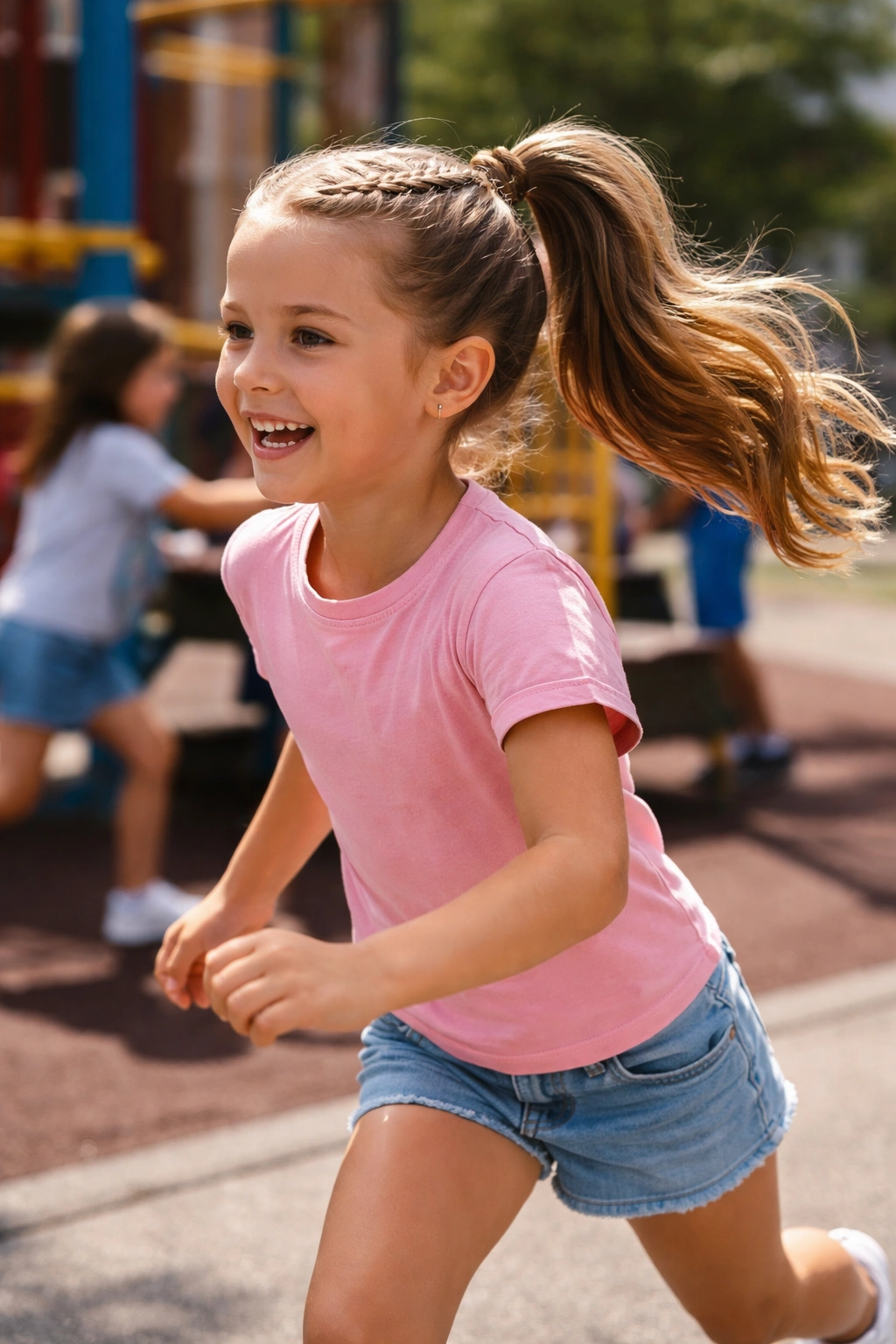
A scarf does the work of a bow, but softer.
Tie a small scarf around the base of the high ponytail, letting the ends fall to one side or tuck back behind the tail. You can also weave the scarf through the ponytail for a more decorative look. Cotton gives a casual feel, while satin leans dressier and slides more easily through the hair.
This style is helpful when you want color close to the face without adding a hard clip. It also works well on days when the ponytail itself is simple and needs one extra thing to feel finished. Just keep the scarf light. A thick scarf can overwhelm a child’s small head fast.
I like this version for little outfits that need one soft accessory. It’s gentle, easy to swap out, and more comfortable than many headpieces.
25. The Half-Up High Ponytail
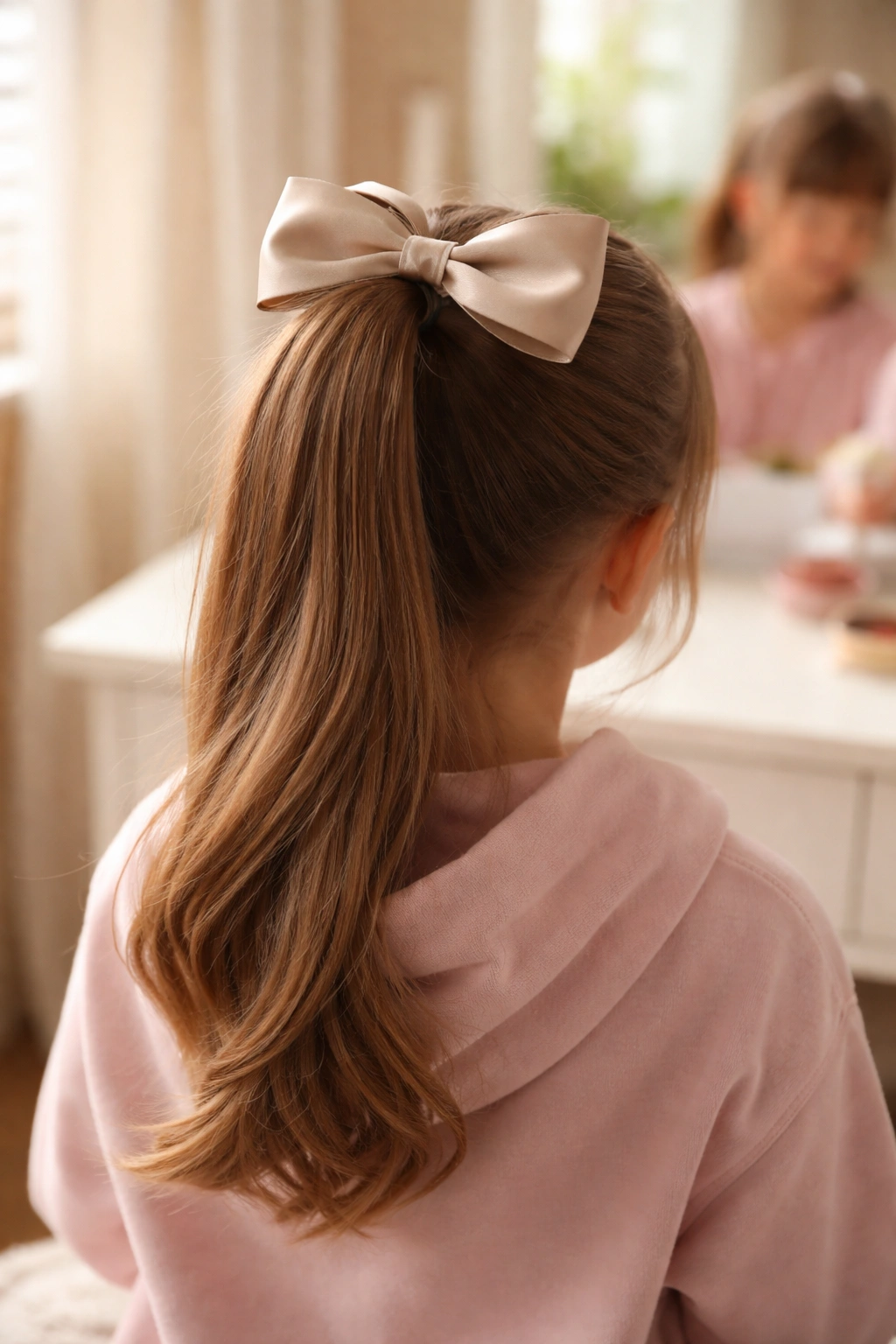
Half-up can be the smartest ponytail of all.
Instead of gathering every strand, take the top half of the hair and pull it high, leaving the rest down. That gives you the lift and face-clear shape of a high ponytail while keeping length visible. It’s a useful choice for growing-out bangs, mid-length cuts, and kids who want their hair down but not in their eyes.
This style also works when the bottom layers are too short for a full pony to feel balanced. A half-up high ponytail avoids that awkward heavy pull at the back. If the child has curls, the bottom section can stay defined while the top sits neatly in place.
A small bow or clip at the base is enough to finish it. Or nothing at all. Sometimes the shape is the whole point.
26. The Twisted-Crown High Ponytail
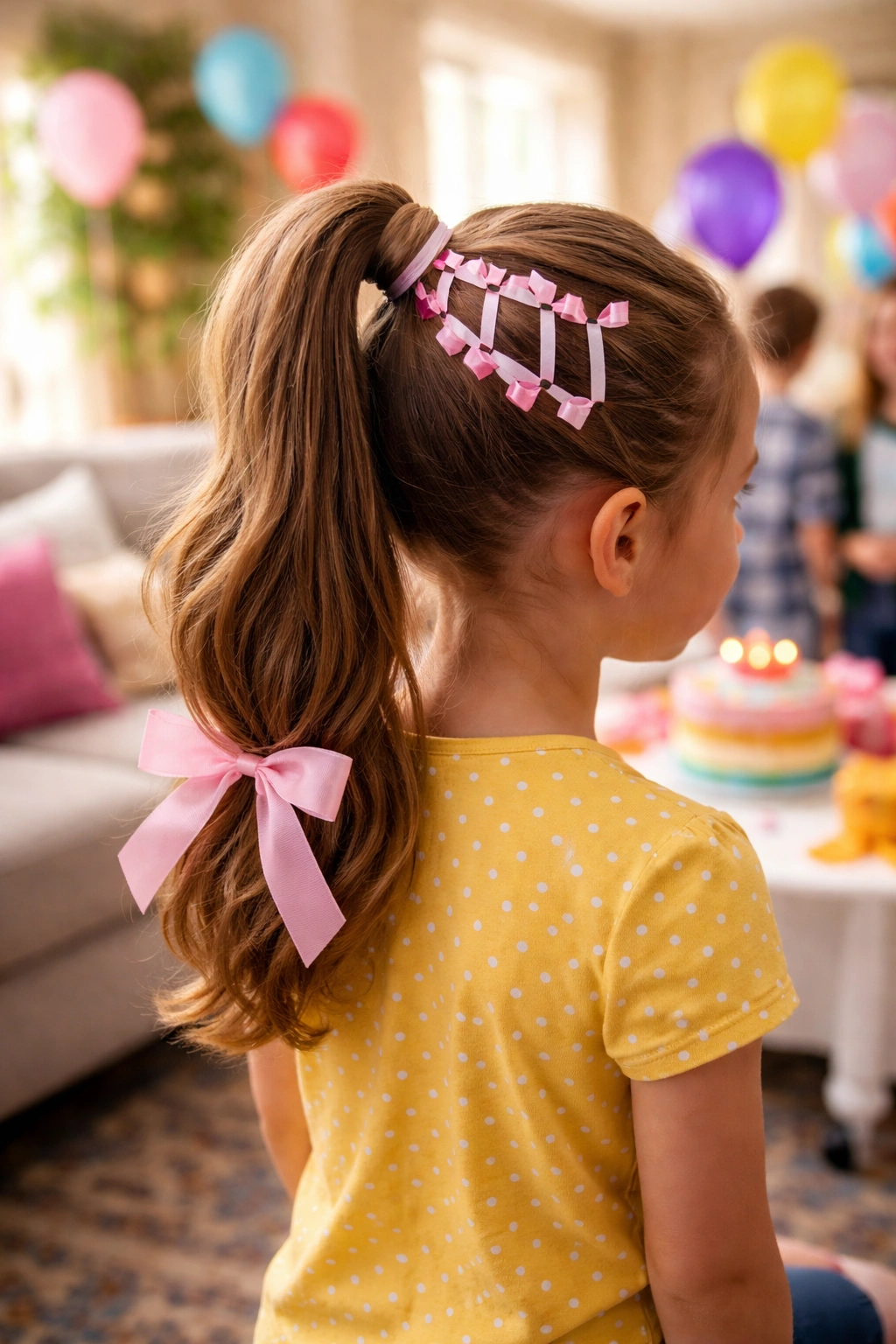
Why choose between a braid and a plain pony when a twist can do the job faster?
Take a section from each temple, twist it back toward the crown, and secure the twists into a high ponytail. The twisted front gives you the look of a built style without the time braid work usually needs. It’s especially handy when the hairline has shorter pieces that keep slipping loose.
Where to Focus
Pay attention to the temples and the top of the ears. Those are the areas that usually need the most control. Twist them snugly, but stop before the hair starts to pull. A child should be able to move their eyebrows without feeling the pony all the way to lunch.
This style has a nice balance of softness and order. It feels a little dressed up, but not fussy. Good for family visits. Good for school photos. Good for the kind of day when you want one hairstyle to carry the whole outfit.
27. The Stacked Elastic Ladder High Ponytail
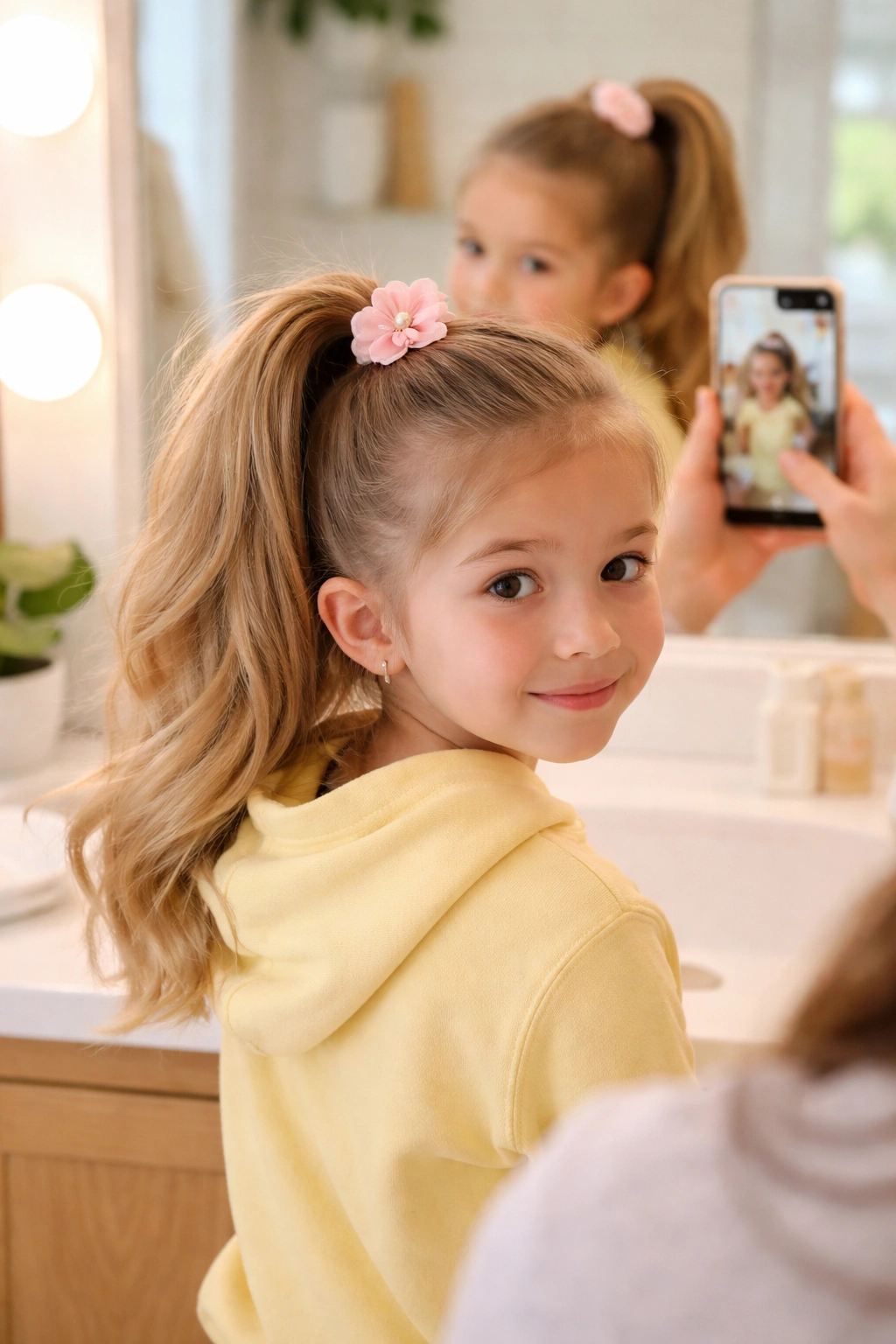
If you want a ponytail that looks neat, playful, and a little graphic, this is the one.
Start with a high ponytail, then place elastics down the length every inch or so. Gently puff each section between the bands to create a ladder effect. The shape is clean from far away and surprisingly sturdy up close, which makes it a good match for busy kids who keep moving.
It’s especially nice on thick hair because the stacked sections help control the bulk without flattening it. On finer hair, the repeated elastics give the tail the illusion of more body. Use soft bands in a color close to the hair or choose bright ones if your child likes the look of color in their hair.
This is the style I’d pick when I want one ponytail that can go from morning chaos to late-afternoon errands without needing a redo. It holds shape. It looks fun. And it doesn’t pretend to be fancier than it is.