



Messy ponytails for wavy hair work because the bend in your hair already gives you structure. You do not need a glassy, tight finish to make the style look polished. Pull it too taut and the waves lose their shape, which is half the point.
The sweet spot is a little lift at the crown, soft hold at the roots, and ends that stay piecey instead of puffed out. A small amount of mousse, texturizing spray, or light gel usually does the job; brushed-out waves often need less product than people think, while thicker, springier waves may need a touch more grip near the hairline.
What makes wavy hair fun is how much the mood changes with one small shift. Move the ponytail an inch higher and it feels sporty. Drop it low and suddenly it looks calm and a little romantic. Add a braid, a scarf, or a few loose tendrils, and the whole thing changes again.
A high ponytail is the easiest place to start.
1. High Messy Ponytail for Wavy Hair
A high messy ponytail for wavy hair is the style I reach for when I want lift without fuss. It takes advantage of your natural bend, so you do not have to fight for volume at the crown. That matters. Wavy hair looks best when the top has some air in it, not when it is crushed flat against the head.
Why It Works on Wavy Hair
The trick is to gather the hair at the top-back of the head, about level with the crown, and then pull the elastic slightly loose before you finish. Leave two thin face-framing pieces near the temples if you want softness. If your waves are flat at the roots, a quick blast of dry shampoo or texturizing spray before gathering helps the style hold shape all day.
- Tease just the top 2-inch section if the crown needs lift.
- Use a strong hair tie so the ponytail does not sag.
- Pull the sides outward by about ½ inch for a softer outline.
- Wrap a small strand around the elastic for a cleaner finish.
Best part: this one looks good when it is slightly imperfect. That is the whole point.
2. Low Nape Ponytail with Soft Volume
A low ponytail at the nape can look far more relaxed than a high one, and on wavy hair it has a nice, lived-in shape that feels easy without looking lazy. The key is to keep the top smooth enough to control frizz, then let the length do the real work. If your waves have a little texture left from the day before, even better.
Keep the part simple. Center parts make this version feel calm and even; a soft side part makes it feel a little more undone. I like to tug the crown lightly with my fingertips after tying it back, just enough to break the flatness. Not enough to make it messy for the sake of being messy.
A low ponytail also gives you room to let the ends breathe. If the tail is too brushed out, it turns puffy. If it still has bend, it looks intentional. That’s the balance.
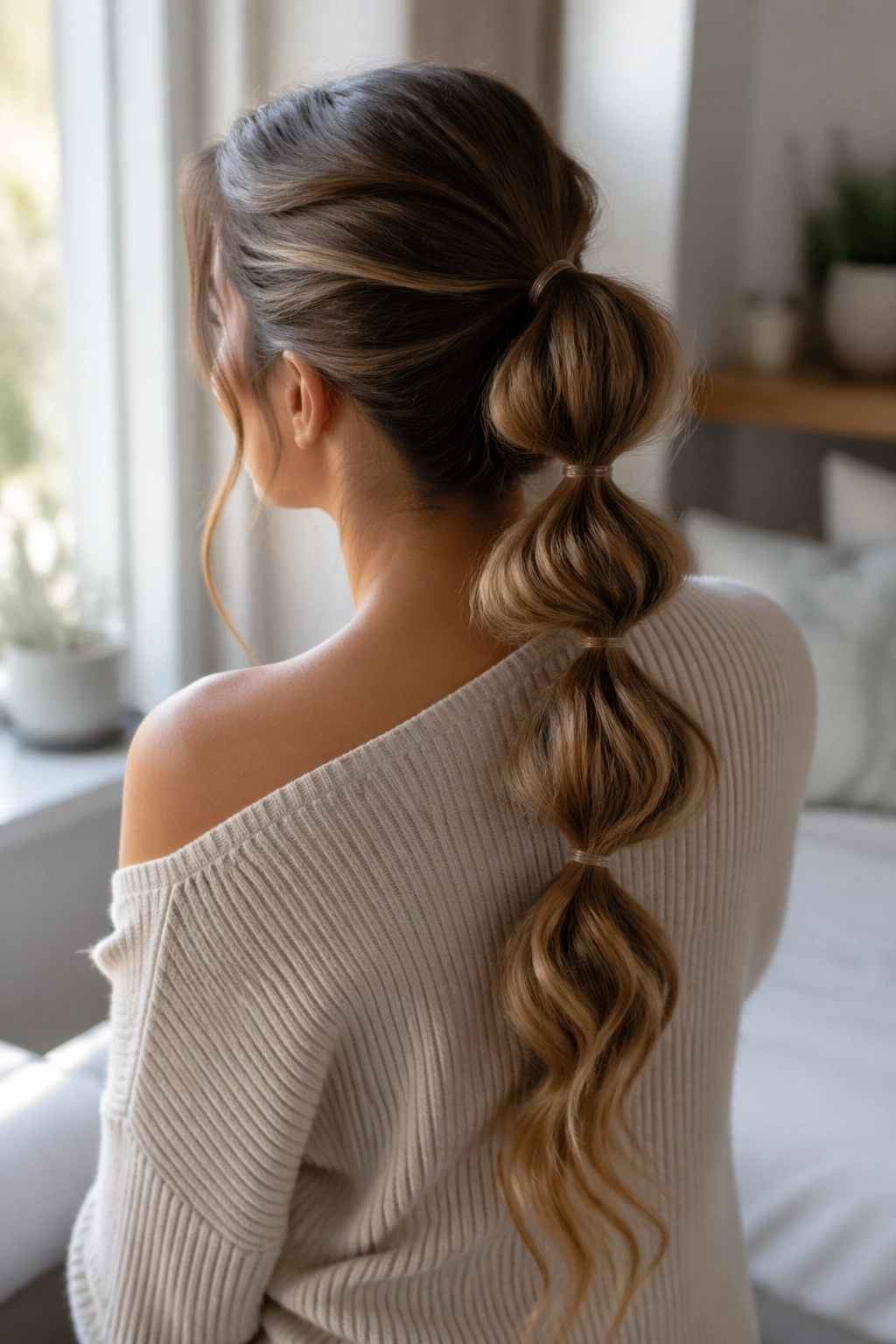
3. Bubble Ponytail with Wavy Lengths
Bubble ponytails are a gift for wavy hair. The natural curve of the hair fills out each section, so you do not have to fake much volume. You just set the structure, then let the texture do its thing. It is one of those styles that looks detailed even when the steps are simple.
How to Keep the Bubbles Even
Tie the first elastic where you want the ponytail to start, then add another elastic 2 to 3 inches down. Gently tug the hair between elastics until each section rounds out. If your waves are thicker, use clear elastics and a light mist of hairspray between sections so the shape holds without turning stiff.
- Start with a medium or high ponytail base.
- Place elastics about 2 inches apart.
- Tug each section from the sides, not the center.
- Leave the bottom section a little looser than the rest.
The nice thing here is that nothing has to be perfect. Uneven bubbles usually look better on wavy hair anyway.
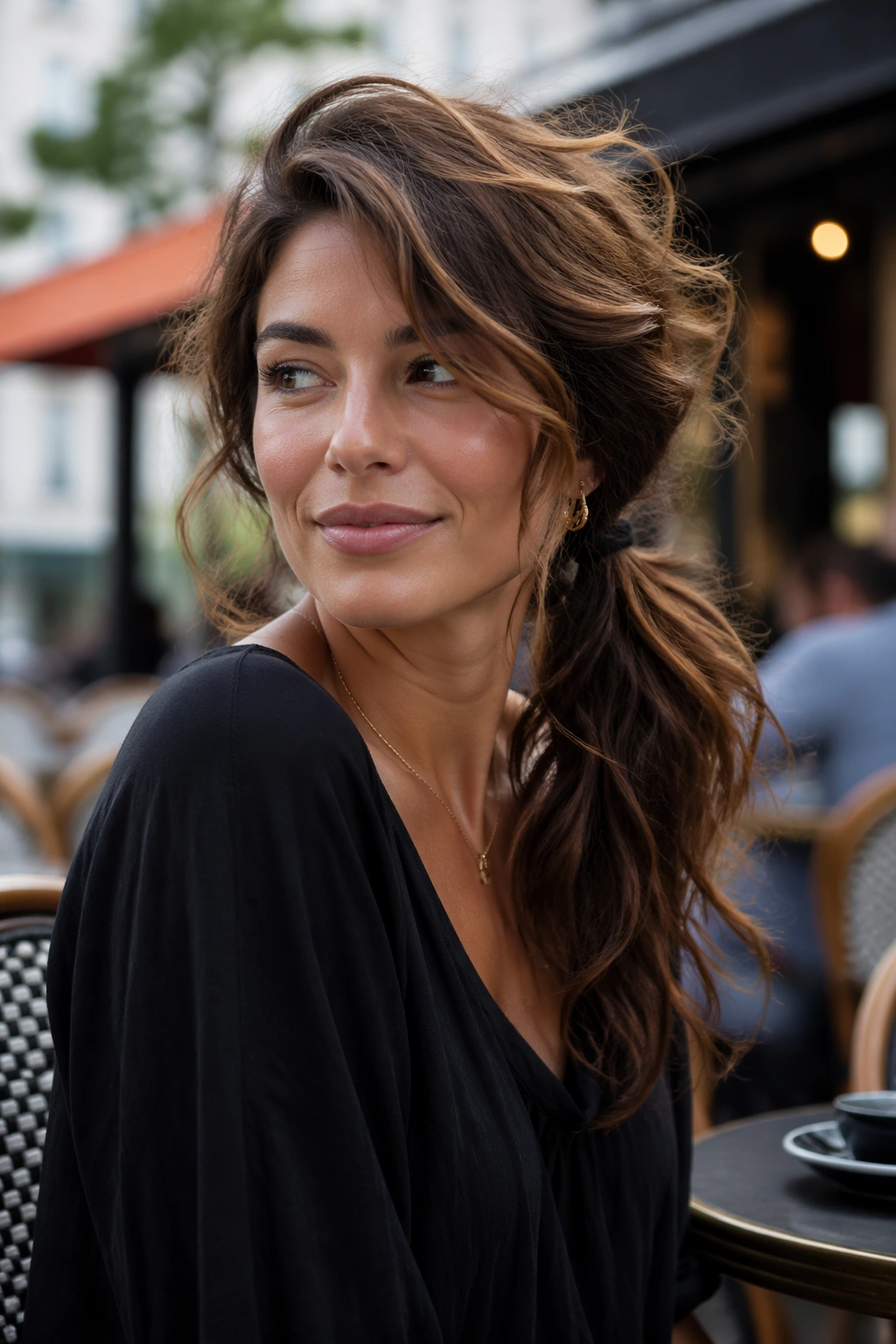
4. Side-Swept Messy Ponytail
A side-swept messy ponytail has a softer attitude than a straight-back version. It falls into place more easily when your waves have a mind of their own, and that can be a good thing. The style works because it uses the weight of the hair to create shape on one side instead of trying to split everything evenly down the middle.
I like this one for days when the hair has some texture but not enough to wear fully down. Pull everything to the area just behind one ear, then secure it low or mid-level. The opposite side should stay a little fuller, which gives the style a slight drape. If the front falls flat, lift the roots at the part with your fingers and a little dry shampoo.
This is a good option when you want something casual but not careless. A small strand wrapped around the tie makes it look finished. A few loosened ends near the jawline keep it from feeling too set.
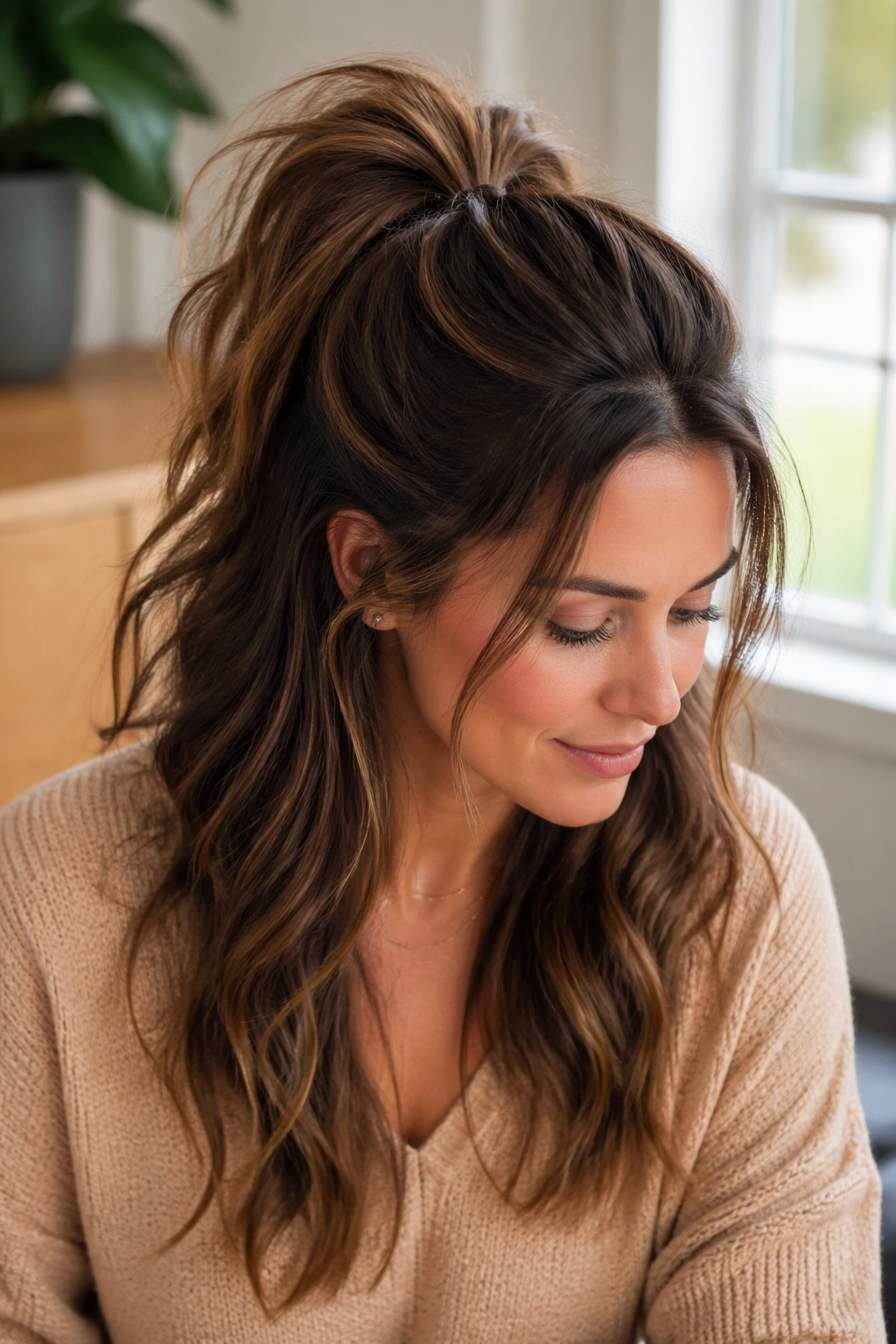
5. Half-Up Messy Ponytail
Half-up styles are where wavy hair gets to show off. You keep the top section lifted and playful, while the rest of the waves stay loose and visible. That contrast is the whole appeal. It gives shape without hiding the texture that makes the hair interesting in the first place.
For the best version, gather the top third of the hair from temple to temple and secure it at the back of the crown. Keep the hold slightly loose so the top can puff up a bit. If your waves are frizz-prone, smooth a pea-sized amount of cream over the crown before tying it off. Too much product will flatten the lift.
The lower half should stay soft and untouched, maybe with a few bent pieces around the shoulders. That mix of structured and loose makes this style feel easy to wear for work, errands, or a dinner where you want your hair to look like you thought about it.
6. Braided-Base Ponytail
A braided base gives a plain ponytail a lot more shape. Instead of just tying the hair back and calling it done, you build texture right at the point where the ponytail starts, which matters more than people think. Wavy hair already has movement, so a braid at the base gives that movement a place to land.
What Makes It Different
The braid can be tiny or full-size. A single three-strand braid across the crown into the ponytail keeps things neat, while a small side braid tucked into the elastic feels looser and more casual. Either way, the braid adds grip, which helps if your hair is soft and the ponytail tends to slide.
Use this style when the front layers are falling out of a regular ponytail. The braid keeps the top half together while the length stays messy and textured. That combination works especially well if the ends are slightly dry or air-dried.
My advice: keep the braid a little loose. Tight braids on wavy hair can look sharp in the wrong way.
7. Twisted Side-Section Ponytail
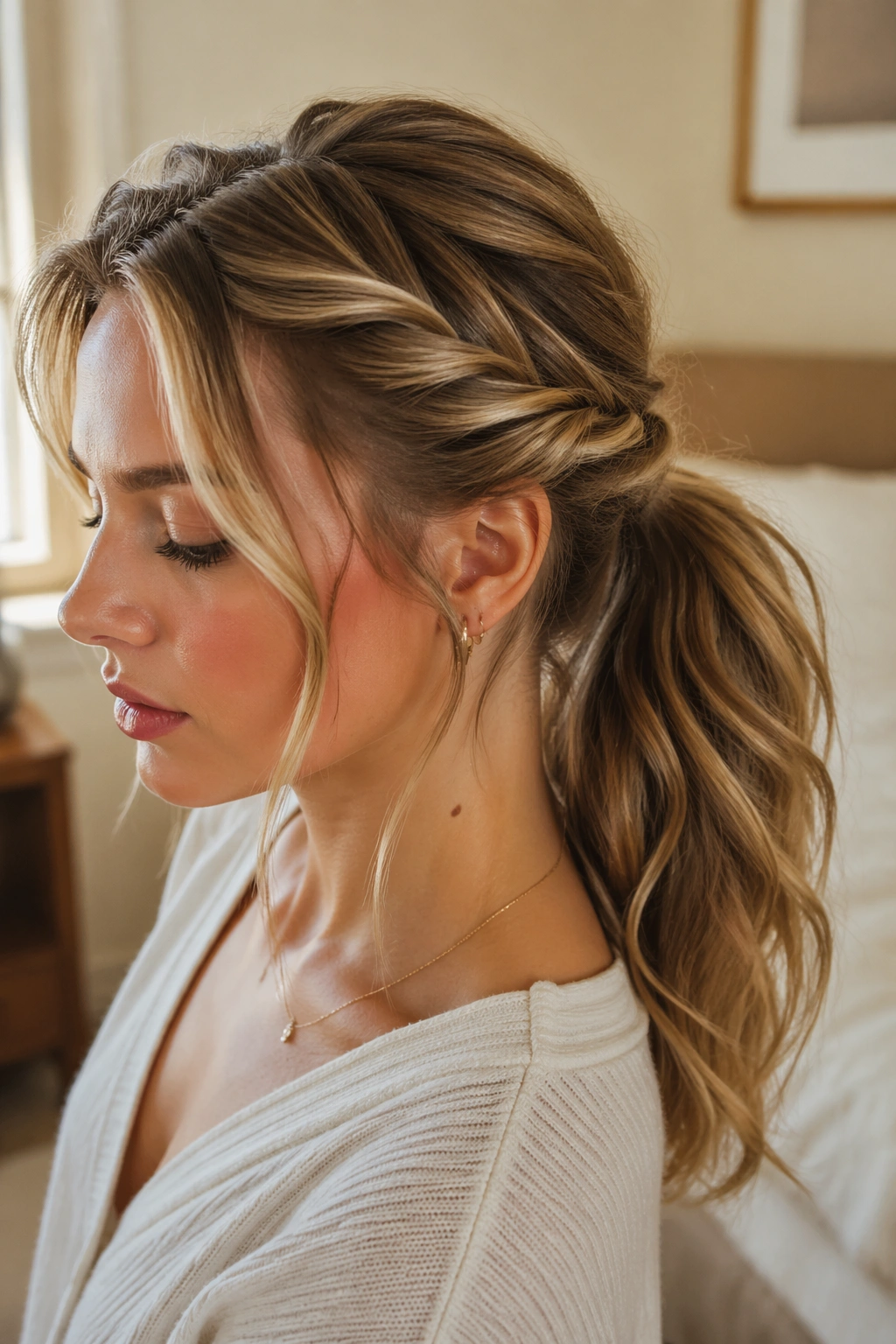
Twists are one of the easiest ways to make a ponytail feel styled without turning it into a production. Gather a side section from the temple, twist it back toward the ear, and pin or blend it into the ponytail base. Then repeat on the other side if you want symmetry, or leave one side softer for a more relaxed finish.
This works well when the front pieces are shorter or when you want to keep layers away from your face. The twist gives you control, and wavy hair fills in the rest. If the ponytail sits low, the style feels mellow. If you place it mid-height, it picks up a little more energy.
I like this option because it is forgiving. If one twist comes out chunkier than the other, it still reads as deliberate. That is rare, and useful.
8. Crown-Lift Ponytail
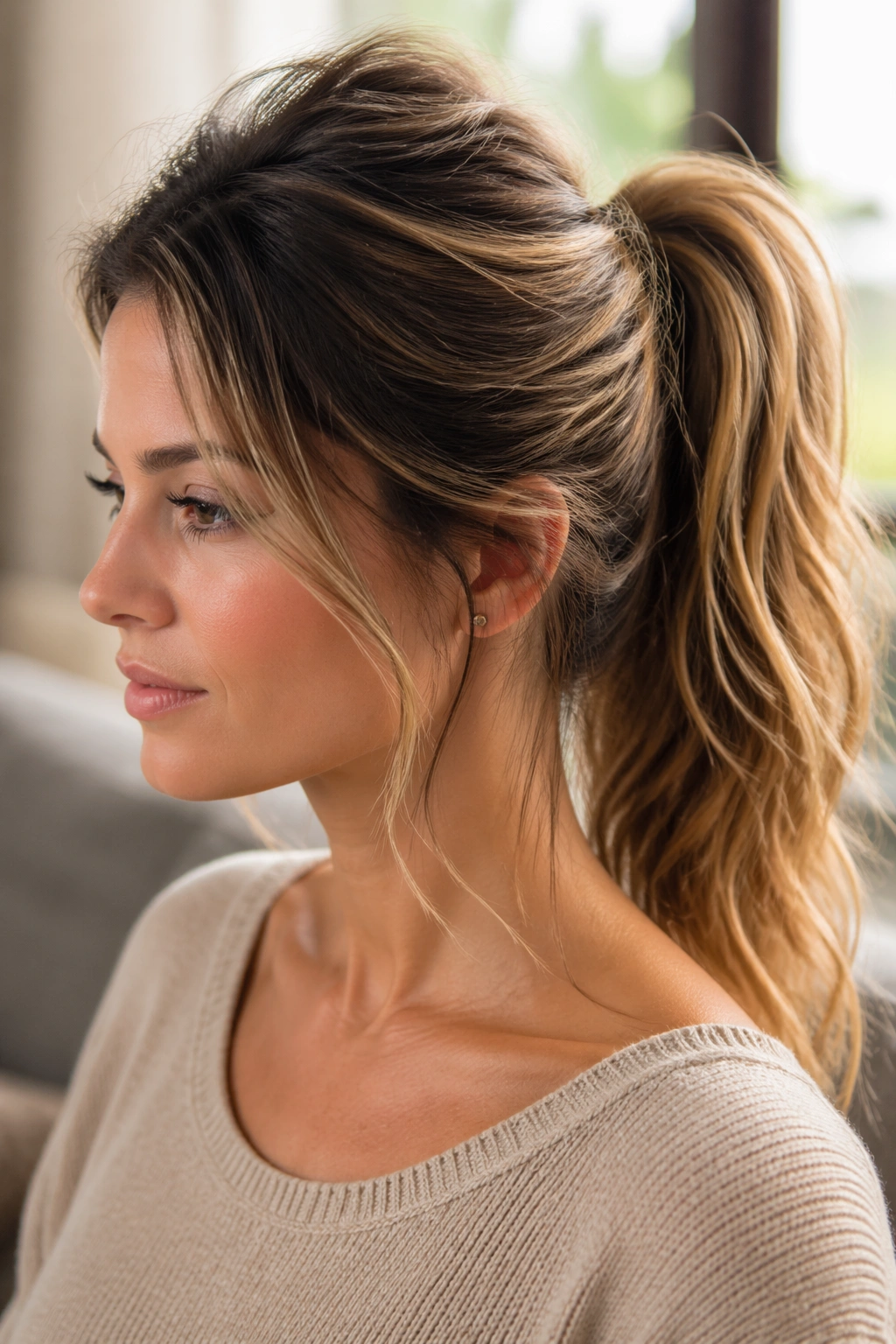
Why does this style look fuller than a regular ponytail? Because the volume starts before the elastic ever goes in. A crown-lift ponytail leans on a bit of teasing at the roots, which is perfect for wavy hair that tends to collapse at the top.
Backcomb a 2-inch section at the crown with a fine comb, then smooth just the outer layer over it so the lift stays hidden. Gather the hair into a medium-high ponytail and secure it without pulling too hard. After that, gently lift the hair at the crown with your fingertips until the top sits softly off the head.
How to Use It
This version is good when you want height but not a full high ponytail. It also helps if your waves lose shape near the roots after brushing. A tiny amount of hairspray at the teased section keeps everything in place without turning crunchy.
The result should feel airy. Not stiff. Not helmet-like. Airy.
9. Scarf-Wrapped Messy Ponytail
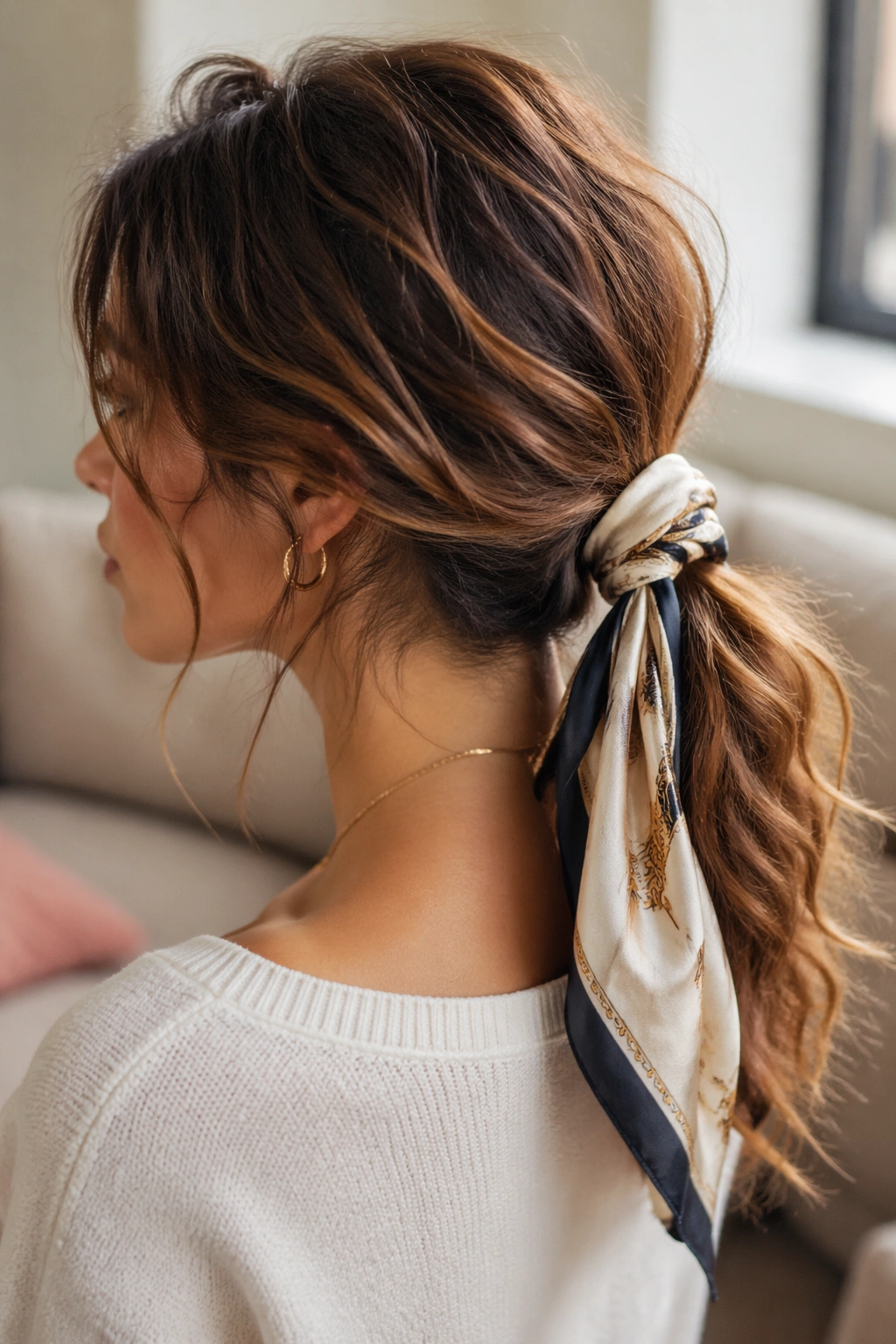
A scarf changes the whole mood of a ponytail in about five seconds. It hides the elastic, adds color, and gives the style a little extra personality without asking much from your hair. On wavy hair, that matters because the texture already does most of the work.
Try a silk or cotton scarf tied loosely around a low or mid ponytail. If the scarf is too thick, the base can look bulky. A thinner scarf lets the waves hang naturally and keeps the finish from feeling heavy. I like this most on days when the outfit is plain and the hair needs one deliberate detail.
- Tie the ponytail first, then knot the scarf over the elastic.
- Leave the ends of the scarf hanging, or tuck them under.
- Use a scarf that does not slip too much against your hair.
- Keep a few front pieces loose so the scarf does not dominate the whole look.
A scarf-wrapped ponytail feels styled, but not precious. That is its charm.
10. Sleek Roots, Textured Ends Ponytail
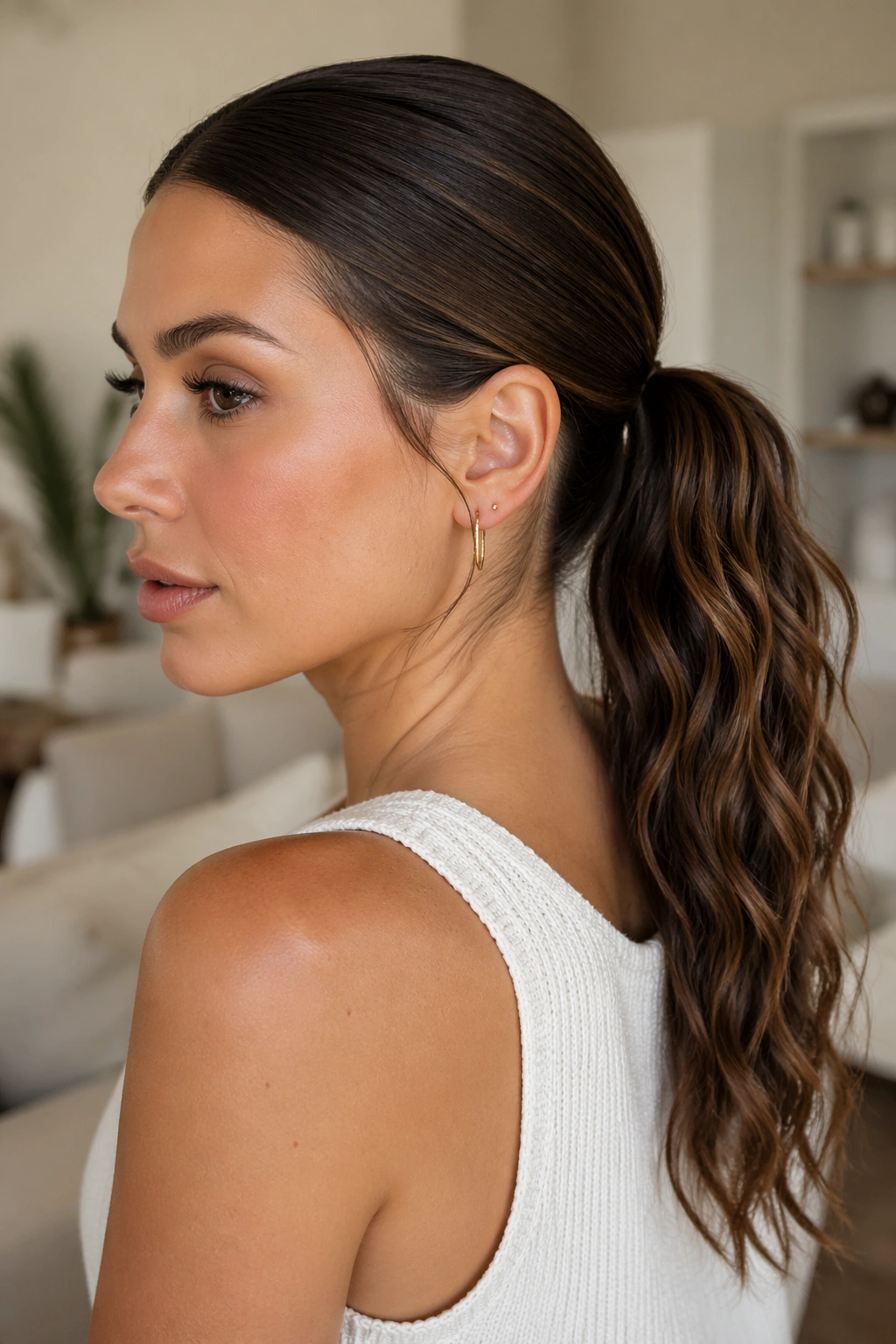
This is the version that saves a ponytail from looking too wild. The top stays smoother, the tail stays wavy, and the contrast gives the style a more polished edge. It is a nice choice when you want your hair to look intentional without sanding away all the movement.
Work a small amount of smoothing cream through the top section only, then brush the crown back with a boar-bristle brush or a soft paddle brush. Stop there. Do not chase perfect smoothness down the whole head, because the lengths need their bend. Tie the ponytail low or mid-height, then separate the tail into 3 or 4 sections with your fingers so the waves stay defined.
A tiny drop of serum on the ends keeps them from looking dry. That is enough. If you use too much, the wavy texture turns flat and oily in a hurry.
11. Dutch-Braid to Ponytail Combo
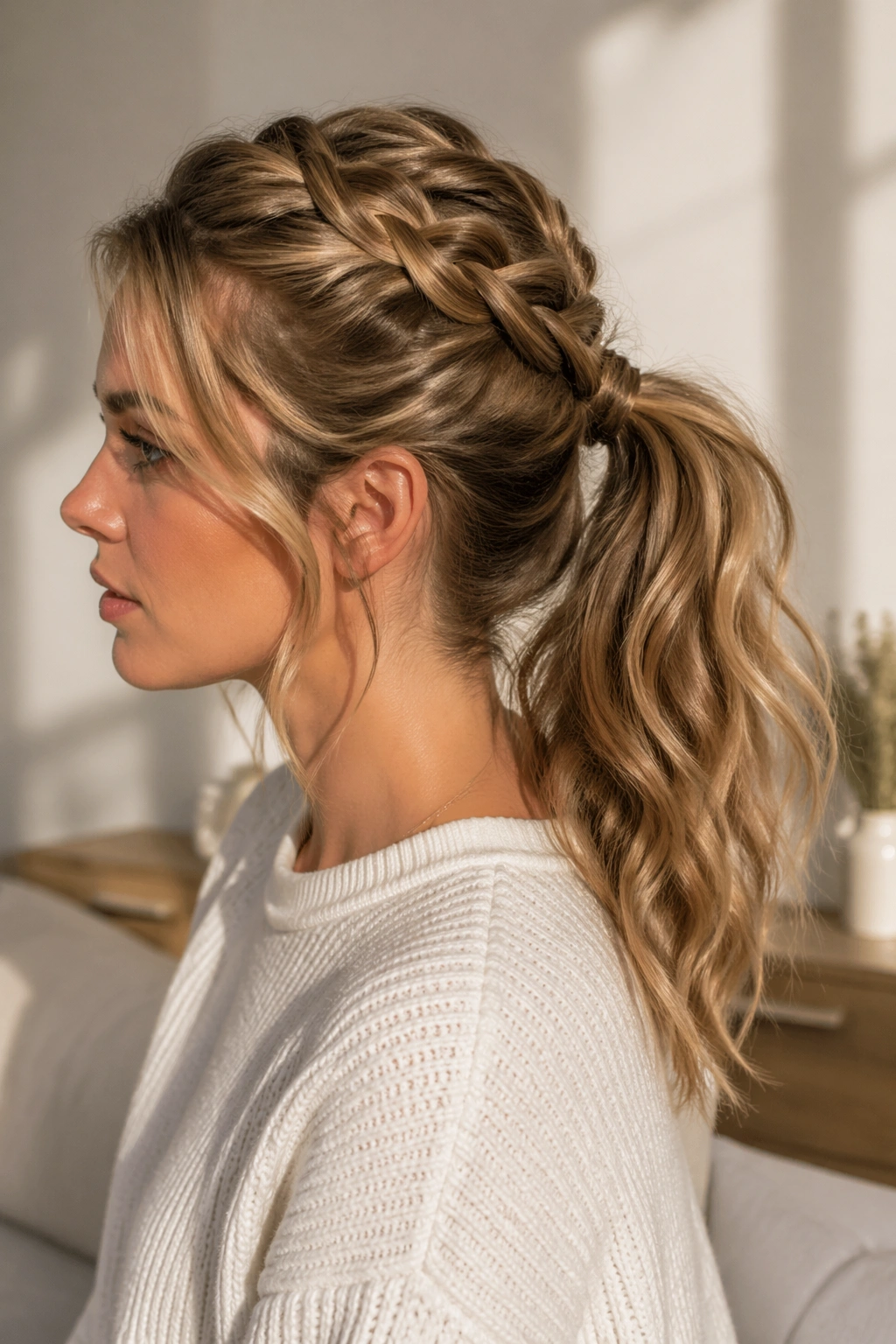
A Dutch braid into a ponytail gives wavy hair a little structure right where it needs it. The braid sits on top of the head, so the style has visible texture even before you get to the ponytail itself. That makes it useful for hair that feels too loose for an everyday ponytail but not quite right for a full braided style.
Start the braid at the front hairline or just behind the crown, depending on how much of the top you want covered. Braid back to the mid-head area, then gather the rest into a ponytail. If you want the braid to look fuller, tug the outer edges of each braid stitch after it is secured. Wavy hair usually gives that braid more body than straight hair ever would.
This style is especially handy for busy days. It stays put, the front stays controlled, and the tail still looks soft instead of rigid.
12. Rope-Twist Ponytail
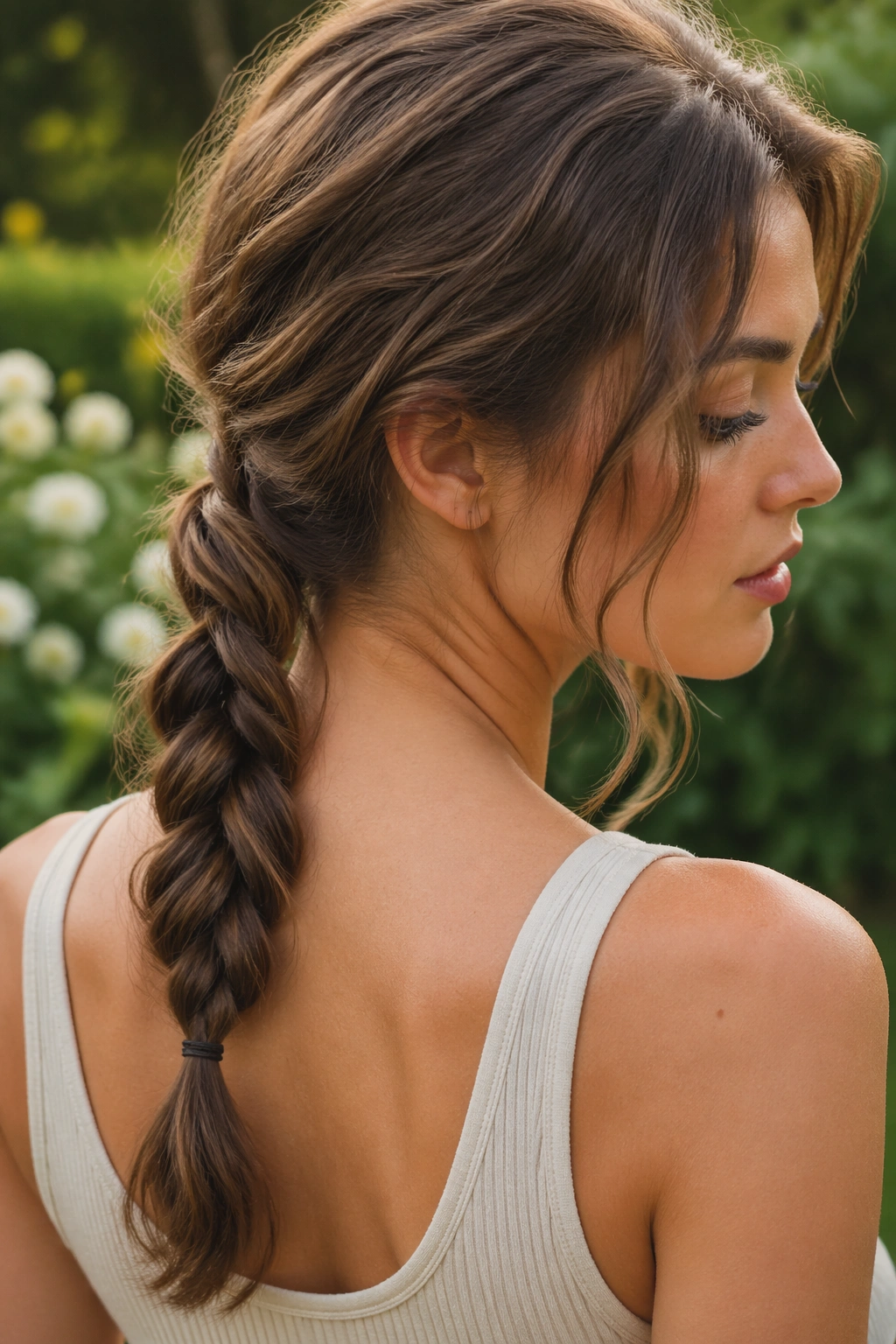
A rope-twist ponytail has a cleaner spin than a braid, which makes it a nice alternative when you want texture but not a lot of visible pattern. Split the tail into two equal sections, twist each section in the same direction, then wrap them around each other in the opposite direction. The result looks neat, slightly twisted, and less fussy than a braid.
Unlike a braid, a rope twist works with wavy hair instead of flattening it. The twist catches the bends in the hair and turns them into a smoother line. It is a good choice if your hair frizzes when it gets overhandled, because the style needs fewer passes and fewer touch-ups.
Use a small clear elastic at the end so the twist does not unravel. If the tail needs more shape, loosen the front a little and let the crown rise. Done right, it has a calm, pulled-together look.
13. Flipped Ponytail
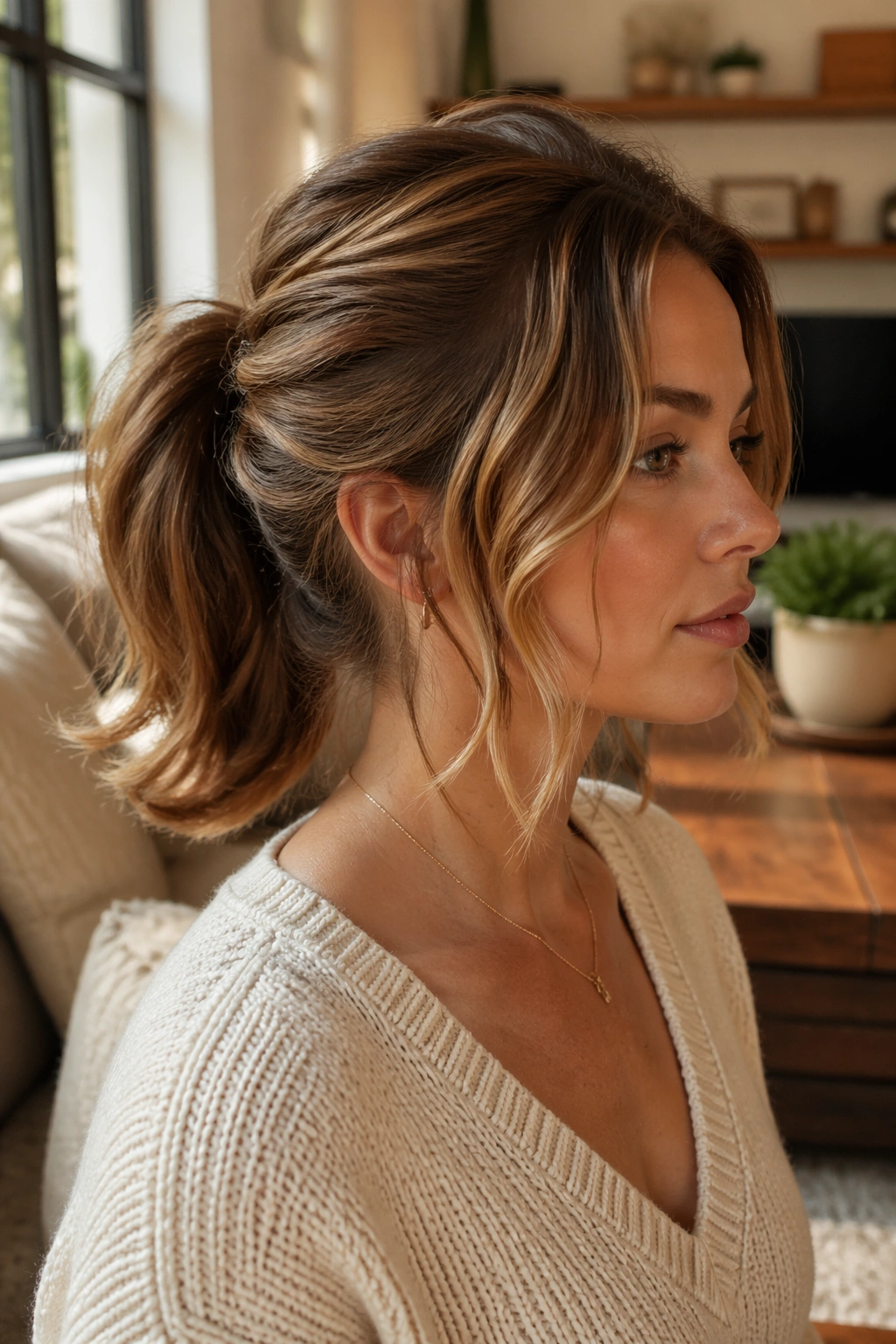
A flipped ponytail brings a bit of retro energy without asking you to curl your whole head. The trick is the lift at the base and the soft flip through the tail. Wavy hair does the second part naturally, which is why this style feels easier than it looks.
Pull the hair into a mid-height ponytail, leave a small gap above the elastic, and turn the tail through the opening so it flips downward. If your hair is long enough, the end will fall with a soft curve. If it is shorter, the flip still gives the base more shape. A touch of texturizing spray helps the twist hold without feeling dry.
This one is good when the hair has lost its bounce but still has enough body to cooperate. It looks especially nice with a slightly lifted crown and a few face pieces that fall free. Simple. A little charming, too.
14. Low Bubble Ponytail
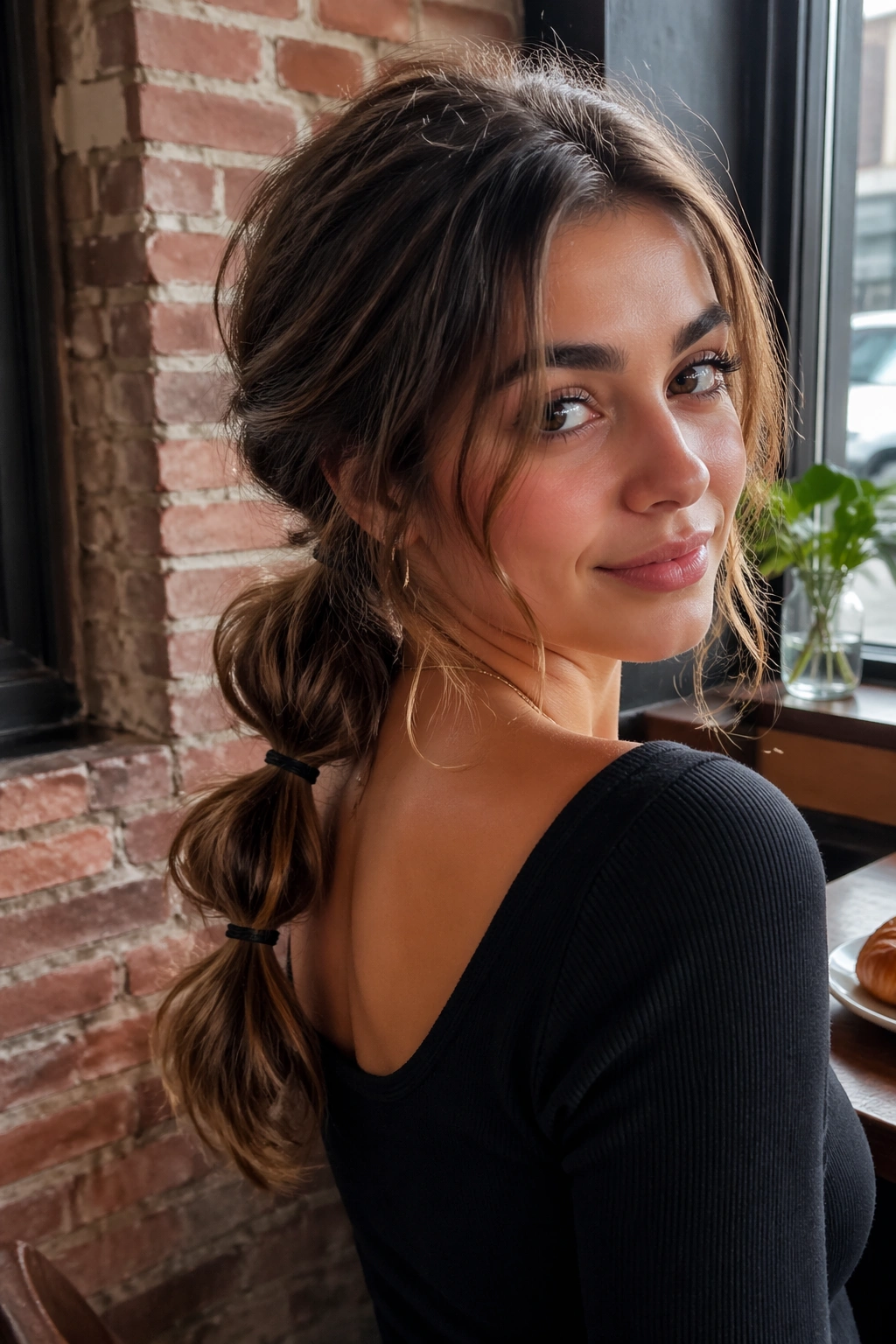
A low bubble ponytail feels calmer than a high one, and that makes it a strong choice for wavy hair when you want something soft but not boring. The low placement keeps the style close to the neck, while the bubbles bring in shape and movement.
Quick Shape Guide
Set the base at the nape, then add elastics every 2 to 3 inches down the tail. Tug each section gently until it rounds out. If the tail is thick, make the bubbles a little wider. If the hair is finer, keep the spacing tighter so the sections do not collapse.
- Best with medium to long wavy hair.
- Works well on hair that has been air-dried.
- Use clear elastics or thin coated ties.
- Pull a few strands at the ears for softness.
The low version feels more relaxed than the higher one, and that makes it easy to wear with sweaters, button-downs, or anything that sits a little closer to the neck.
15. Ponytail with Curtain Bangs
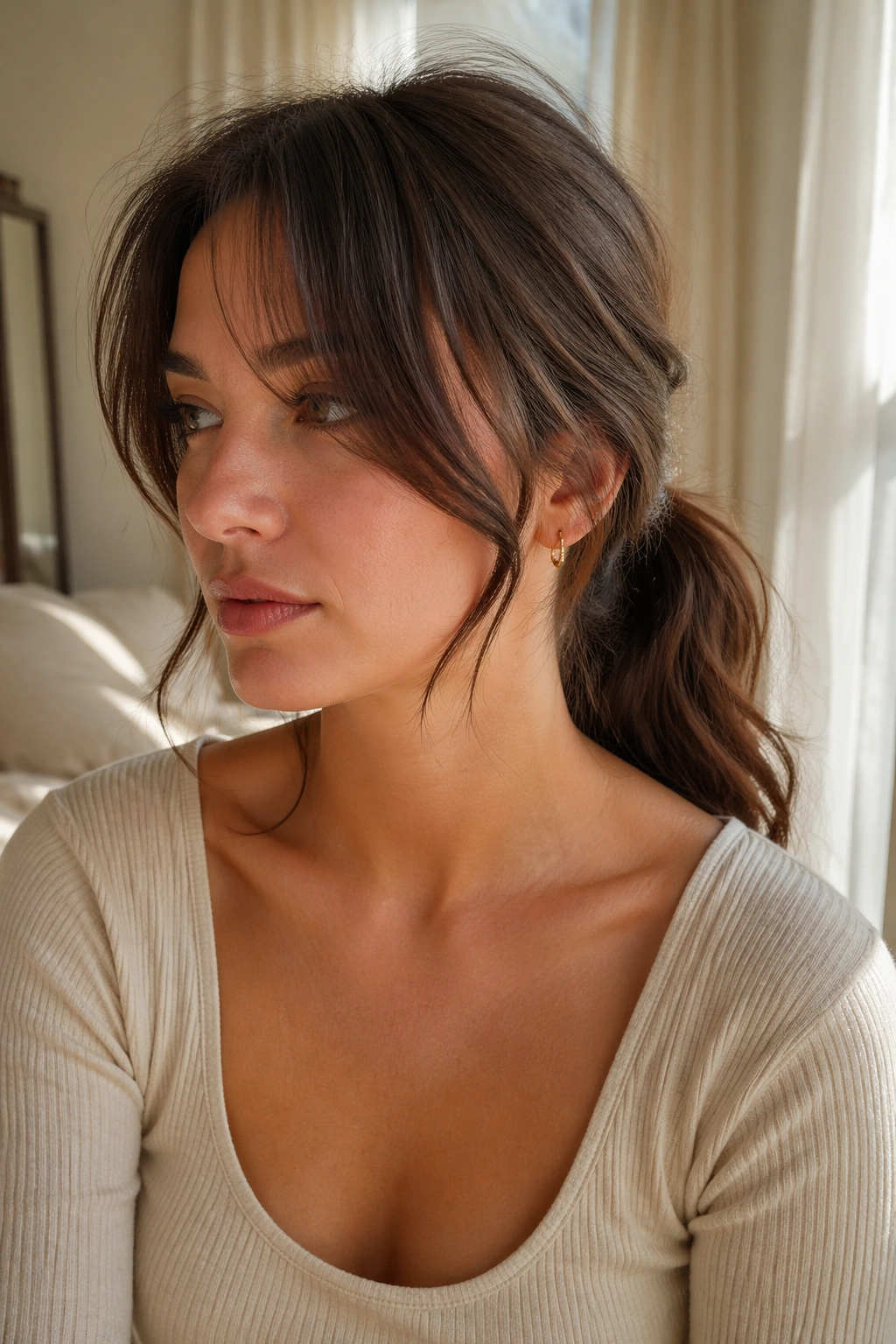
Curtain bangs change the whole story of a ponytail. They frame the face, soften the forehead area, and make a messy ponytail feel more finished without needing much extra styling. On wavy hair, that soft front shape usually works better than trying to flatten the bangs into the rest of the look.
Keep the ponytail mid or low so the bangs have room to fall naturally. If they separate too much, mist them lightly with water and twist them around your fingers for a few seconds. That usually brings them back into a soft bend. Do not overbrush them. Curtain bangs are happier with a little shape than with perfect symmetry.
What to Watch For
If the ponytail sits too high, the bangs can look disconnected from the rest of the hair. A lower tie makes the whole style feel more balanced. I also like to let one or two shorter pieces near the cheeks stay loose so the bangs have company.
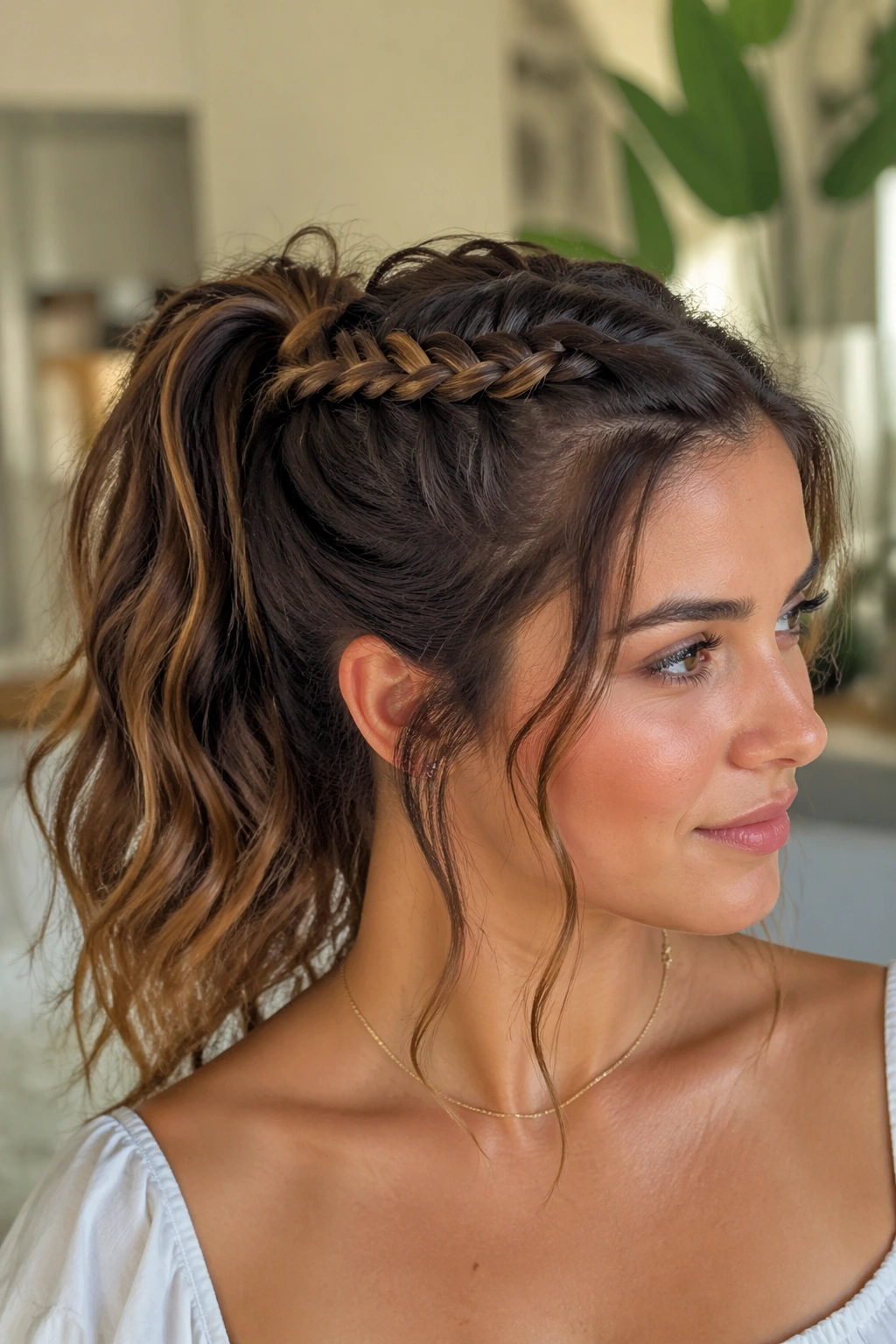
16. Braided-Accent High Ponytail
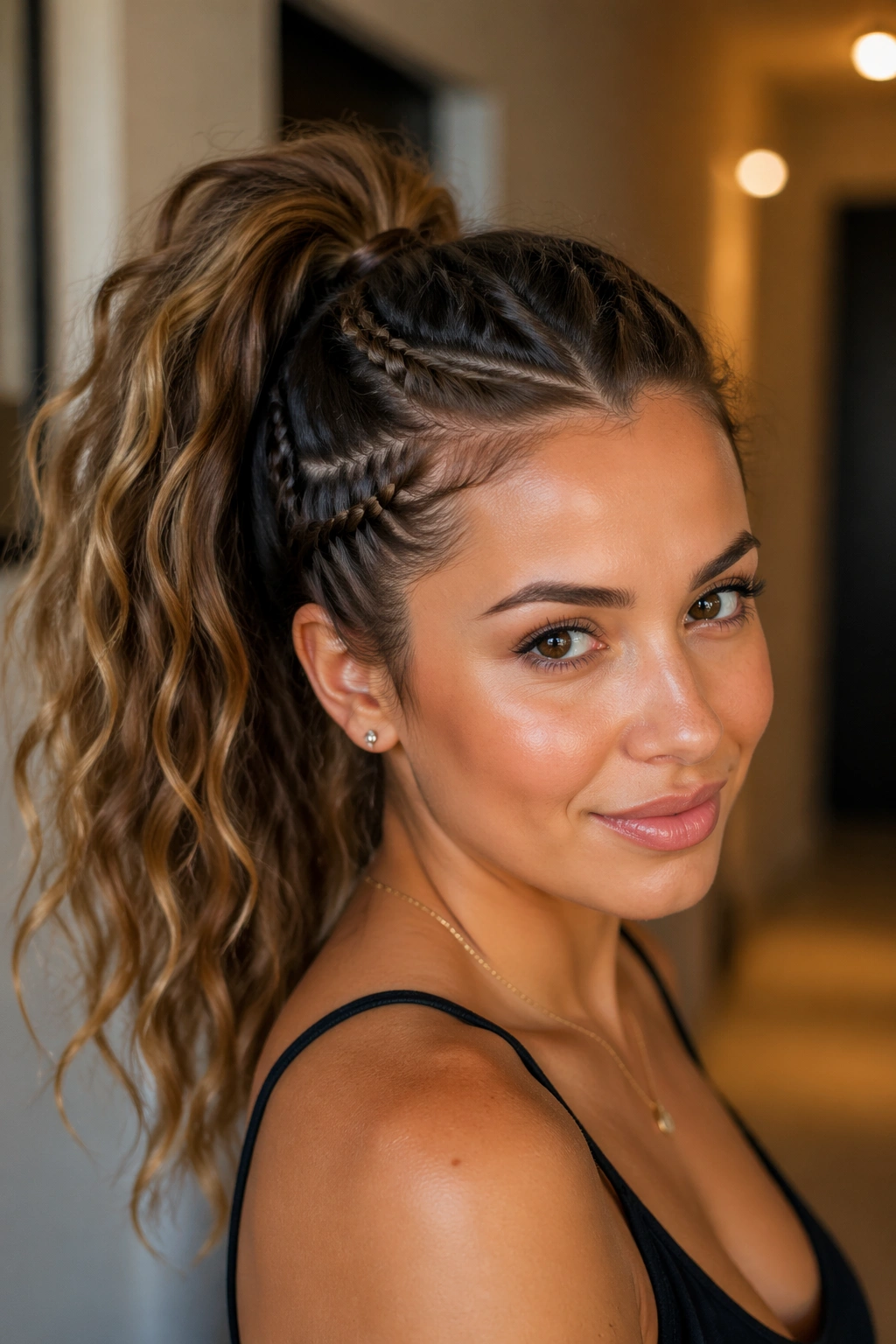
A braided accent near the temple or hairline gives a high ponytail more edge without making it feel crowded. It is the kind of detail that looks deliberate even if the rest of the hair is a little undone. Wavy hair does a lot of the visual work here, so the braid only needs to be a small section.
Braid one side from the front hairline back toward the ponytail base, then secure everything high. You can do a tight, slim braid if you want cleaner lines, or a loose braid if you want more texture. The ponytail itself should stay full and touchable, not brushed into submission. A little volume at the crown keeps the braid from looking too severe.
This style works well when you want the face opened up but still want movement around the back. It is also one of the easier ways to make a basic ponytail feel more styled on a day when you do not want to do much.
17. Gym-Ready Ponytail with Texture
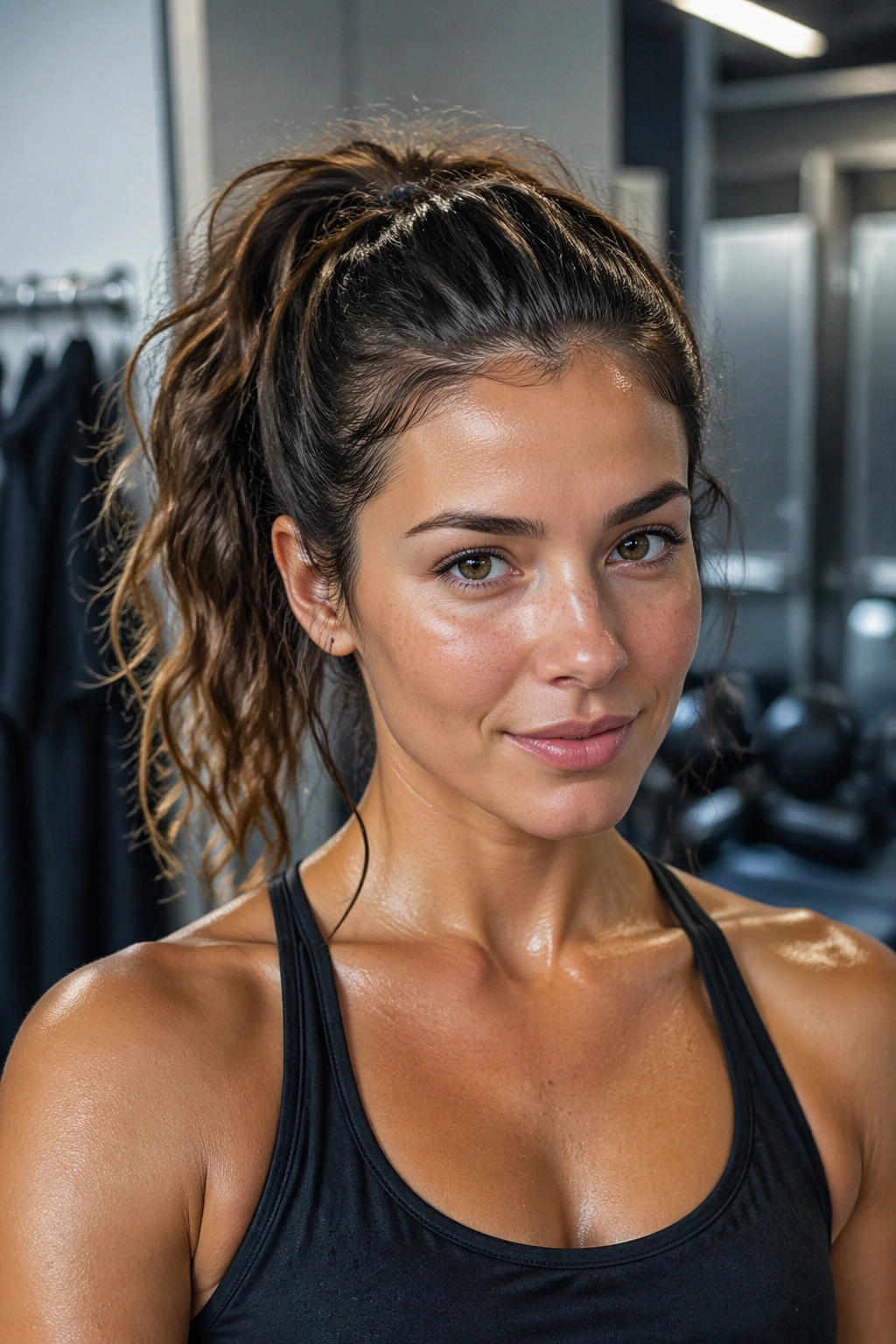
A gym ponytail does not have to look flat and scraped back. Wavy hair can keep its shape even when tied firmly, as long as you give it a little prep first. That makes this style useful outside the gym too, because it stays secure without losing all personality.
Use a strong elastic and gather the hair mid-high, then add a second elastic if your hair is heavy. A light mist of dry shampoo at the roots helps with grip, and a few bobby pins under the base can stop the ponytail from slipping during movement. If your waves are puffing up in the humidity, smooth the surface with damp hands instead of adding more product.
The tail should look active and loose, not polished. That is why this style works. It can handle sweat, movement, and a little mess without falling apart immediately.
18. Wrapped-Length Ponytail
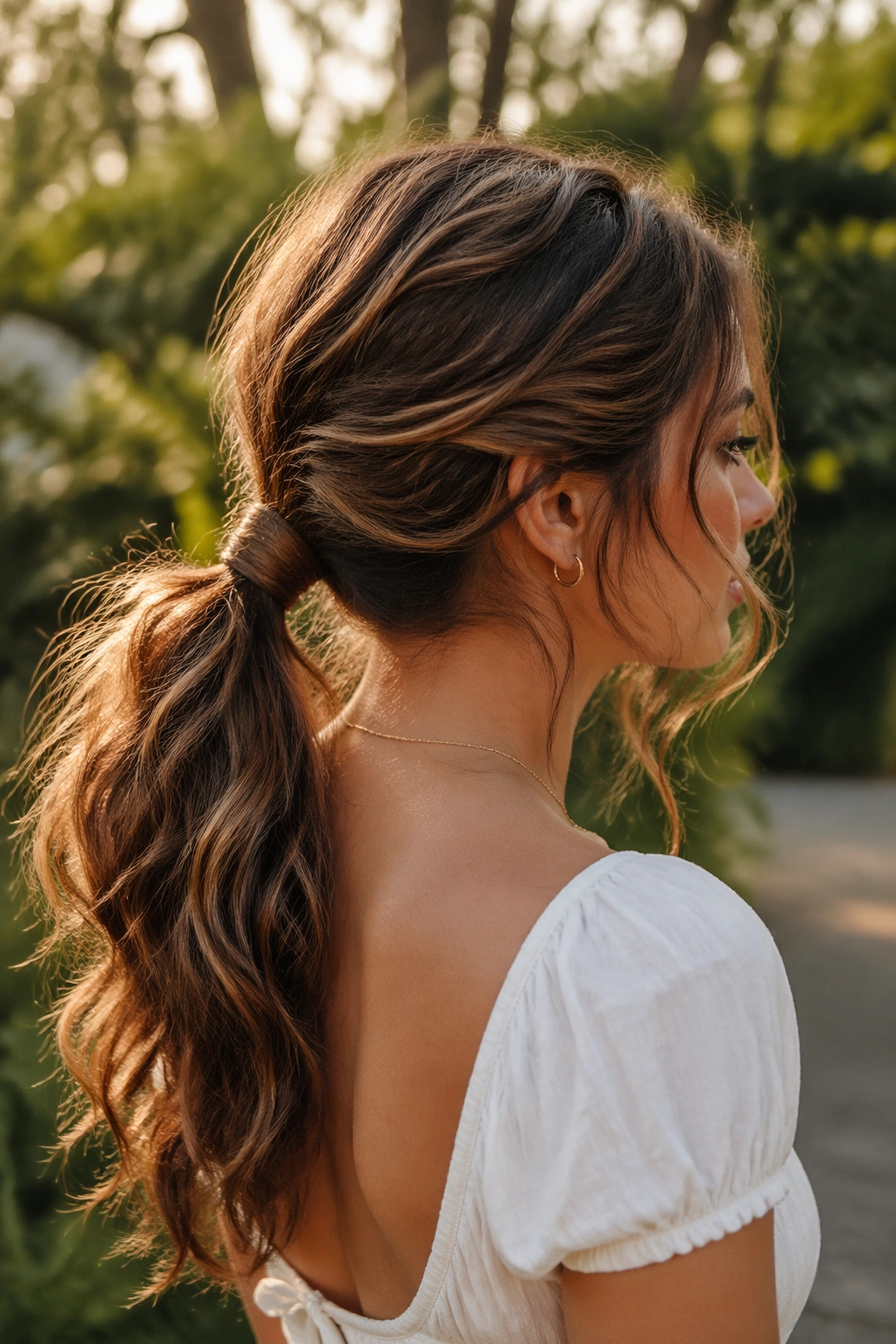
A wrapped-length ponytail uses one long section of hair to hide the elastic and create a clean line at the base. It is a small detail, but it changes the whole finish. On wavy hair, the wrapped piece sits against the texture in a way that looks soft instead of stiff.
Take a 2-inch section from under the ponytail, smooth it, and wind it around the elastic until only the tip is left. Pin the tip underneath with one bobby pin. The rest of the ponytail can stay loose and airy, which keeps the style from feeling too controlled. If the length is frizz-prone, use a tiny bit of serum on the wrapped section only.
Compared with a plain elastic, this version looks more finished. Compared with a slick wrap, it stays easier and less precious. That middle ground is where it shines.
19. Mini-Braid Ponytail
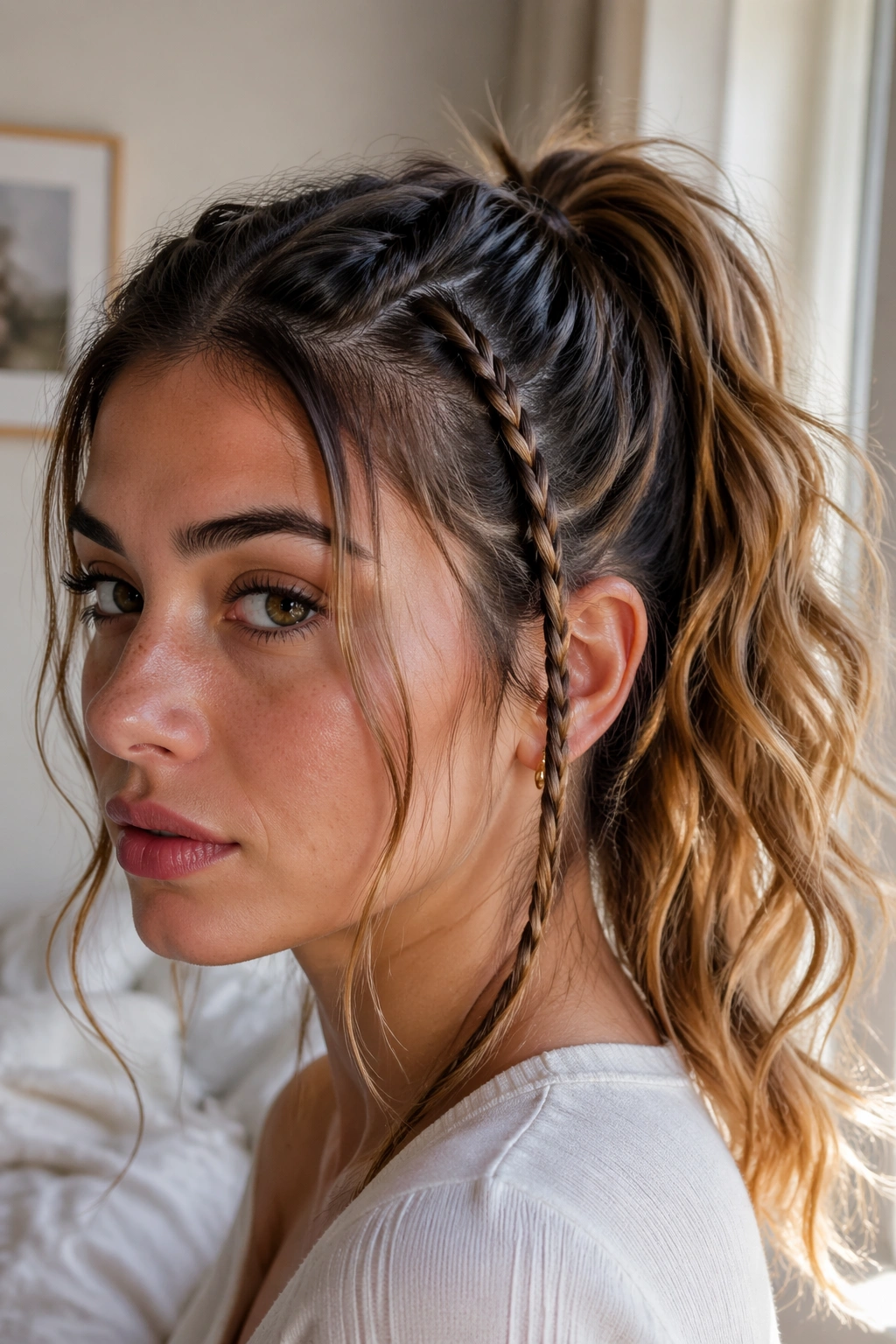
Tiny braids scattered through a ponytail can make wavy hair look playful without turning the whole style into a full braid. I like to tuck in one or two slim braids from the front or sides, then let the rest of the ponytail stay loose. The contrast is the point.
Placement Makes the Difference
Put the braids near the temples if you want them to frame the face. Place them lower if you want the ponytail base to feel fuller. Either way, keep them thin enough that they do not take over. Wavy hair already has enough texture; the braids should act like accents, not the main event.
- Try one braid on each side for balance.
- Leave the braid ends mixed into the tail.
- Use a small elastic that matches your hair color.
- Loosen the braid edges after tying them in.
This style is a good fit for days when plain feels too plain but elaborate feels like too much effort. Tiny braids solve that problem fast.
20. Faux-Hawk Ponytail
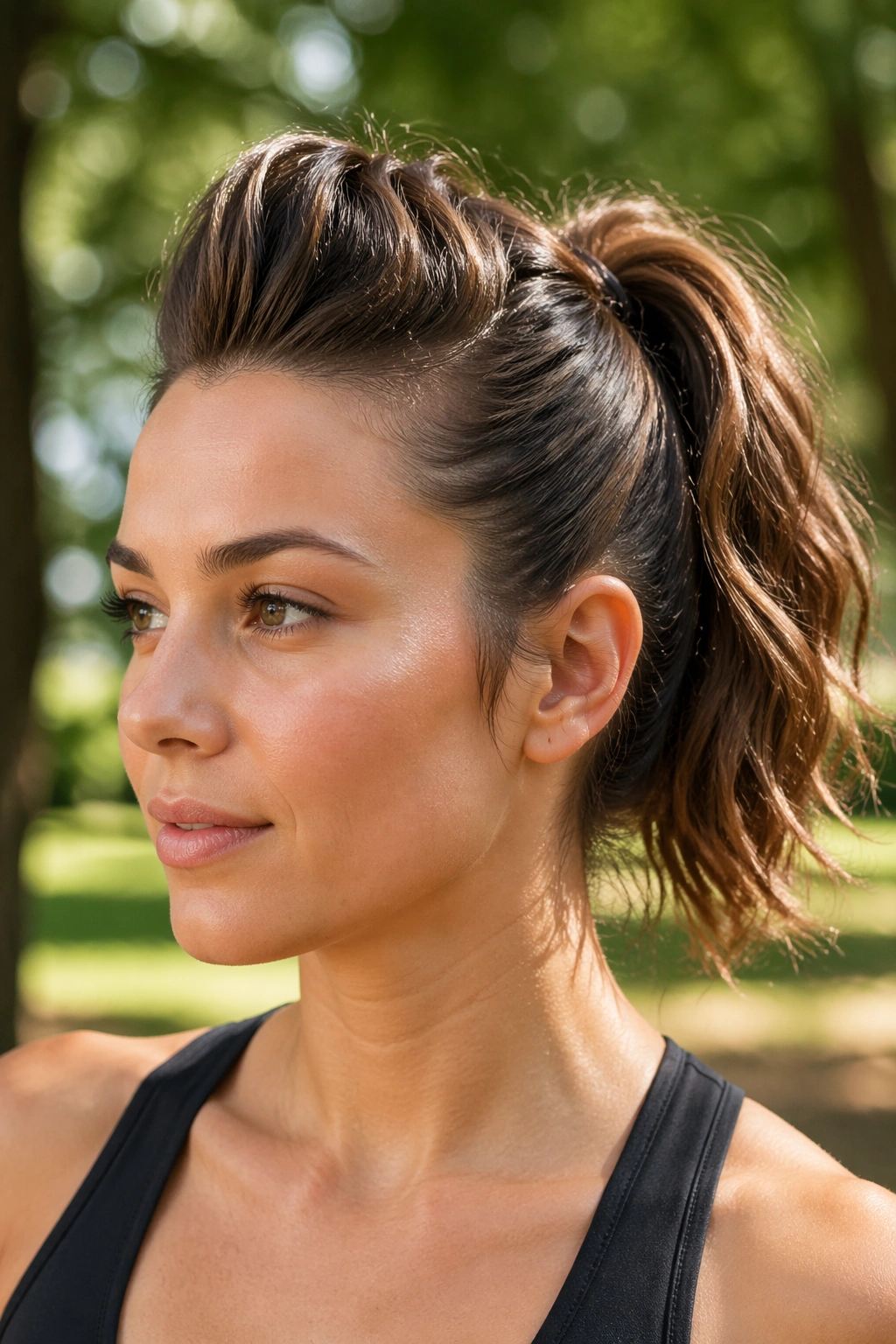
Can a ponytail look edgy without becoming a full mohawk situation? Yes, and this is how. A faux-hawk ponytail pushes the center section upward while keeping the sides smoother, so the whole style looks sharper and more directional.
Tease the top strip of hair from the forehead back to the crown, then smooth only the outer layer before gathering it into a high or mid ponytail. Pin the sides tighter against the head if you want more contrast. The center should stay a little puffed up. Wavy hair helps here because the natural bend gives the lifted section something to hold onto.
Why It Works
The style keeps the eye moving down the center of the head, which makes it feel bold even when the actual steps are simple. It is also one of the better choices for hair that falls flat on the sides. You are not trying to hide the waves. You are steering them.
21. Deep Side Ponytail
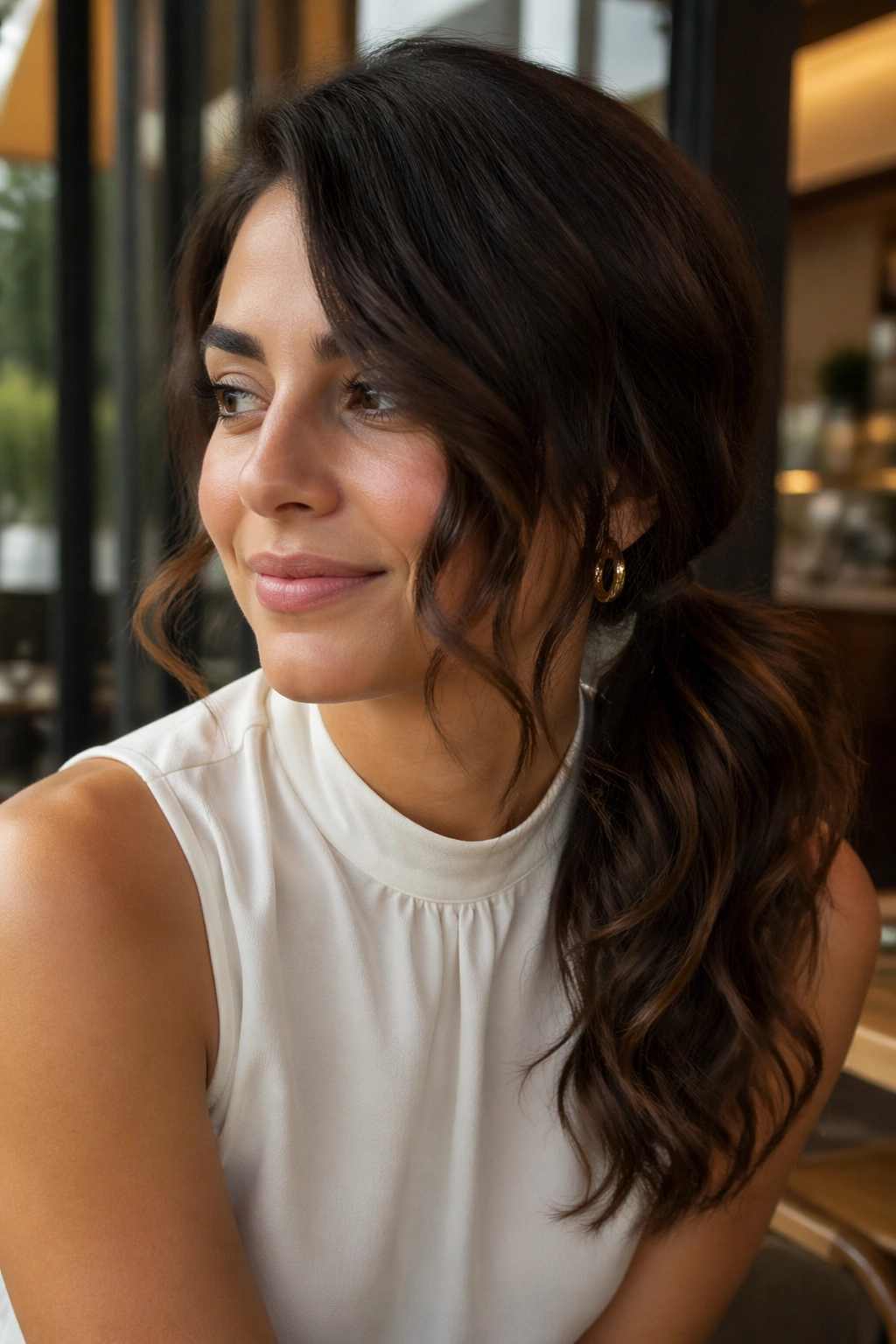
A deep side ponytail has an easy, almost casual elegance to it, and wavy hair sits in that shape naturally. Pull everything low and far to one side, just behind the ear or slightly below it. The style feels softer than a center-back ponytail because the weight hangs differently.
If the side part is deep enough, the front can fall into a nice sweep that frames the cheekbone. That matters more than people think. The line from part to ponytail gives the whole style direction. Use a medium hold spray at the roots if the top tends to puff out too much, but keep the lengths loose.
- Place the tie 1 to 2 inches behind the ear.
- Leave the shoulder-side front piece a little fuller.
- Keep the tail wavy, not brushed into one line.
- Add a small pin under the base if the ponytail slips.
It is a strong option when you want your hair to feel relaxed but still a little intentional.
22. Knotted Ponytail
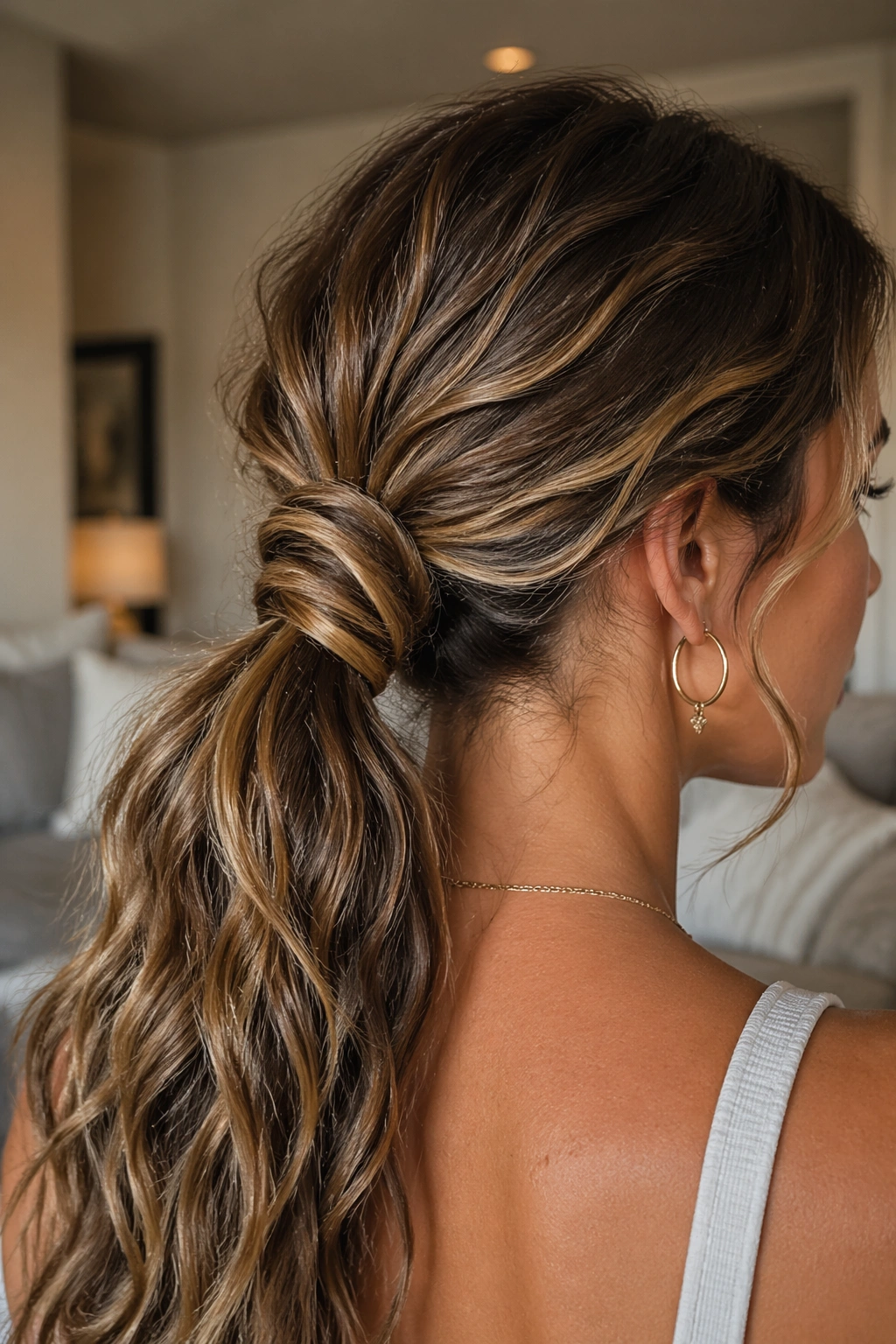
A knotted ponytail sounds more complicated than it is. You divide the hair into two sections, knot them together once or twice near the base, then secure the result with a hidden elastic or a few pins. The texture of wavy hair helps the knot stay visible, which is what makes the style interesting.
The main thing to watch is tension. If you pull too hard, the knot looks tight and the crown goes flat. If you keep it loose, the knot reads as soft and sculptural. I like this style best with medium-length hair that has enough bend to hold the shape but not so much slip that the knot comes undone.
This is one of those styles that looks custom, even though the mechanics are simple. That is usually a good sign. Simple is easier to live with.
23. Double-Elastic Lifted Ponytail
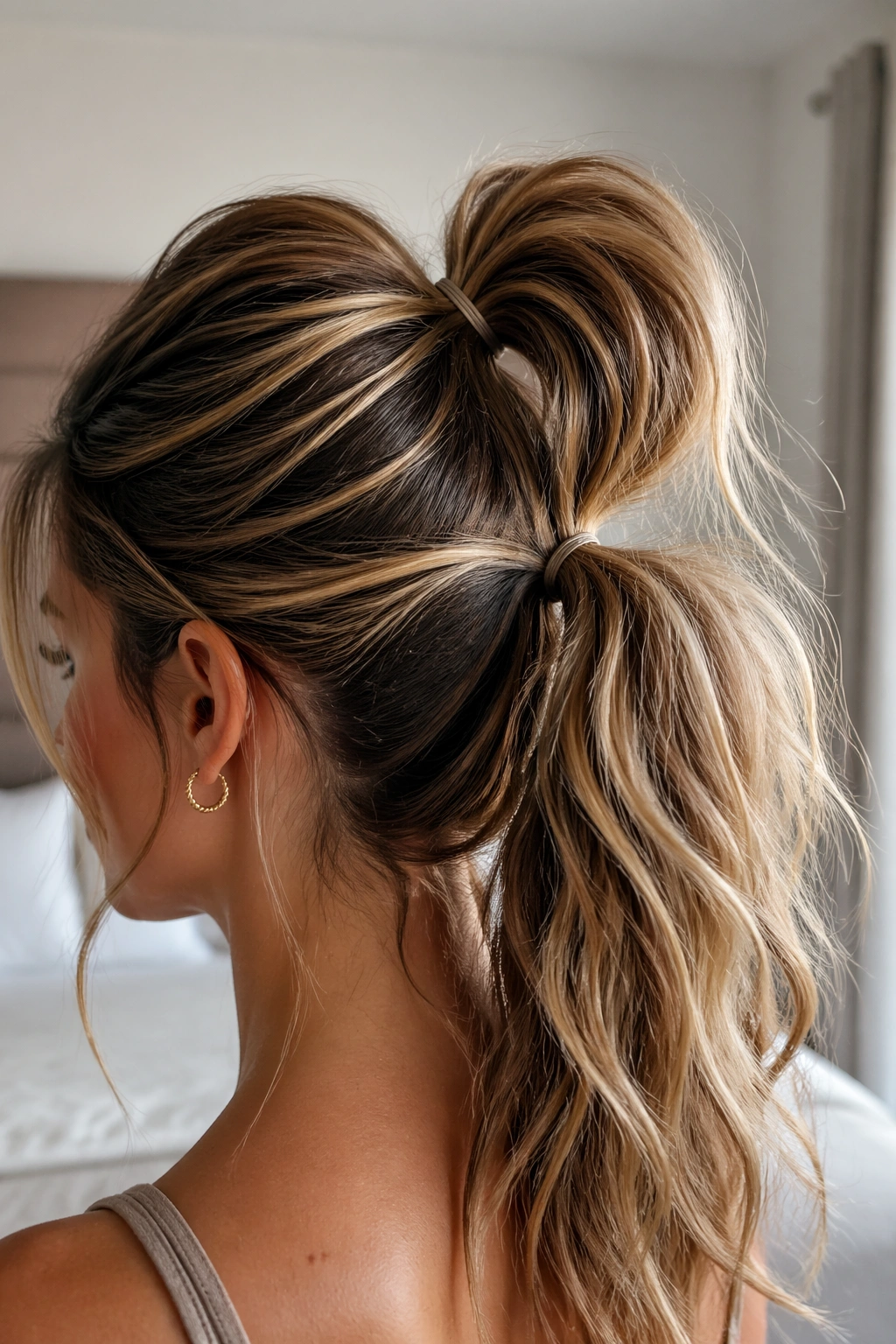
Heavy hair needs backup. If your wavy ponytail keeps sliding down, a double-elastic setup can save it. One elastic holds the top section, and a second one below keeps the full length lifted. That little bit of engineering makes a big difference in how the style sits.
Start by securing the first ponytail where you want the lift to live. Then add the second elastic just below it, around the same section of hair, to reinforce the height. Gently tug the top section outward so the crown stays soft. The ponytail should feel stable, not squeezed.
This style works especially well when the hair is thick or layered. It keeps the base from sagging and helps the waves show up in the tail instead of getting swallowed by the weight. Use it on days when you want the ponytail to stay put for hours.
24. Oversized Scrunchie Ponytail
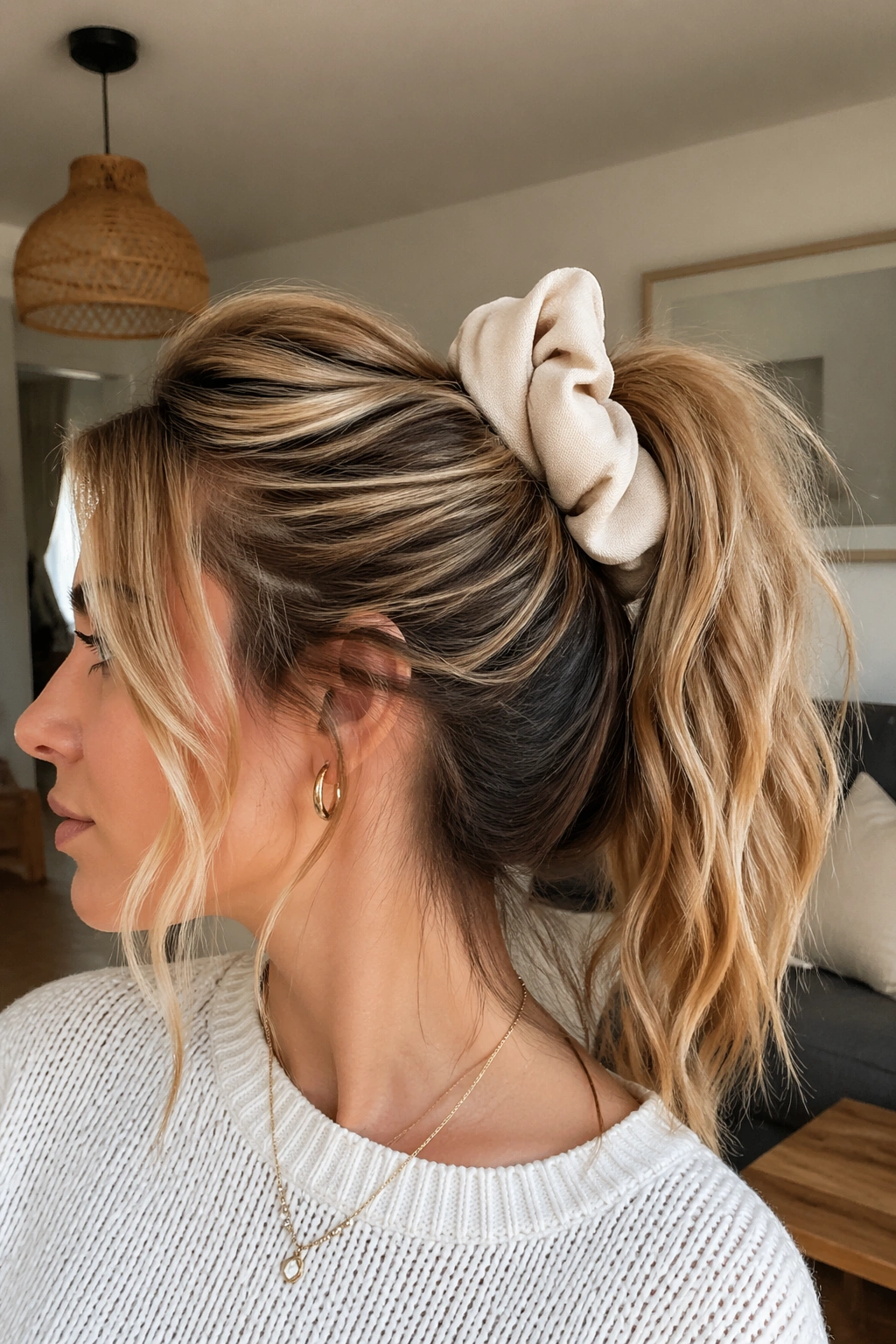
An oversized scrunchie can hide a lot of small imperfections in one move. That is why it suits wavy hair so well. The fabric softens the elastic line, holds the hair without tugging too hard, and gives the style a bit of volume at the base.
Choose a scrunchie that has enough structure to stay visible, but not so much bulk that it swallows the ponytail. Velvet feels richer, cotton feels more casual, and satin gives the whole style a smoother look. Put the ponytail in first, then slide the scrunchie over it and fluff the waves with your fingers.
What Makes It Different
A regular elastic can make wavy hair look a little severe if the rest of the style is messy. A scrunchie solves that by making the base look relaxed on purpose. It is also gentler on hair that tangles easily.
The result should feel soft and slightly nostalgic. Not costume-y. There is a difference.
25. Piecey Defined-Wave Ponytail
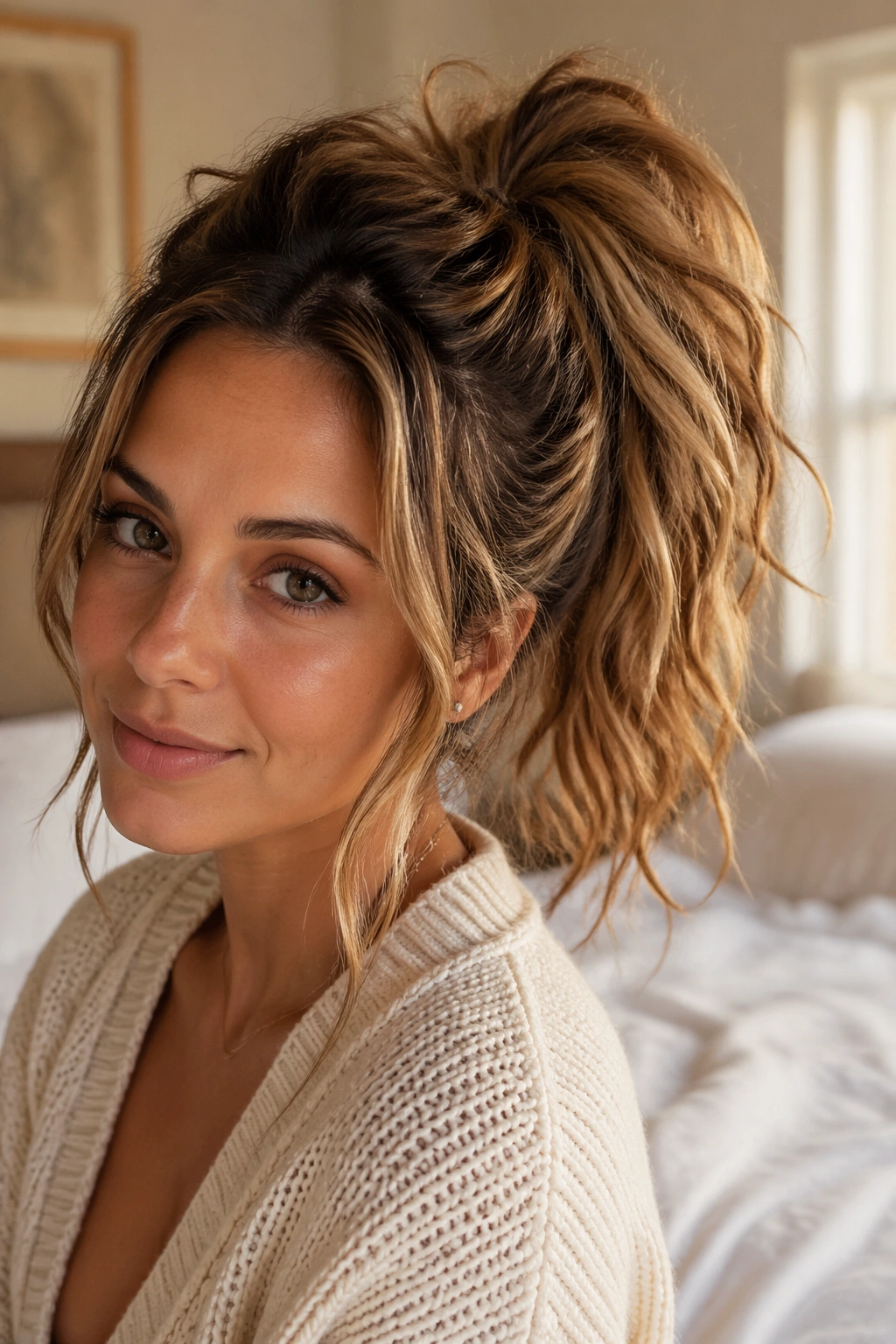
A piecey ponytail keeps the wave pattern visible instead of letting it blur into one fuzzy tail. That means a little pre-work before tying it back. Refresh the waves first, then gather the hair while the texture still has shape. A tiny amount of cream or spray on the mid-lengths keeps things separated in a good way.
How to Keep the Ends Piecey
After the ponytail is tied, split the tail into 3 or 4 larger pieces with your fingers. Then twist each piece just once or twice so the waves stay defined. If the ends start to puff, smooth them with a drop of oil on your palms and lightly press the frizz down.
- Refresh with water or mist, not a soak.
- Use fingers instead of a brush.
- Separate the tail only after tying it.
- Stop before the hair looks stringy.
This style is a strong choice when you want wavy hair to look rich and dimensional. It shows the texture, and that is the best part.
26. Romantic Low Ponytail
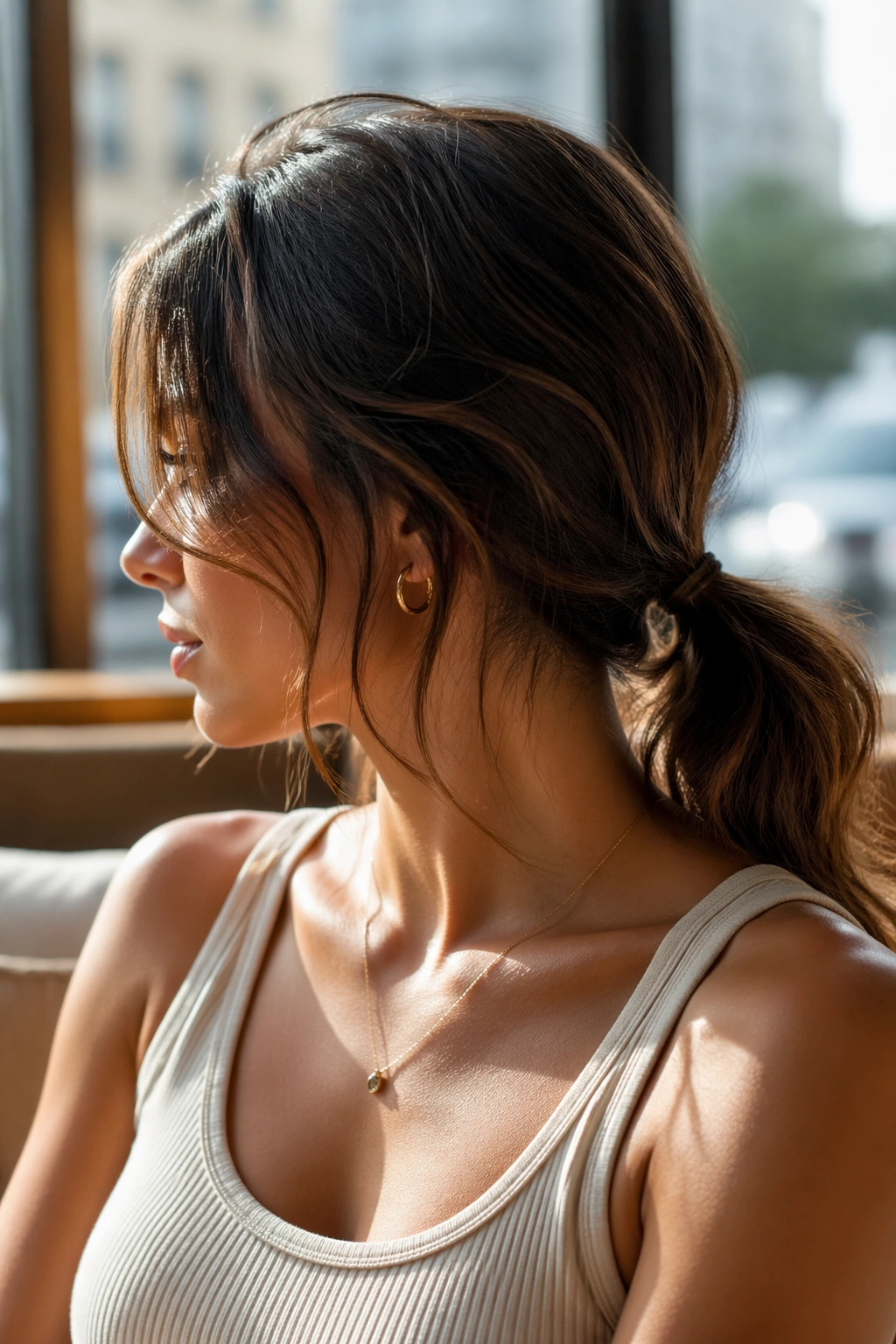
A romantic low ponytail leans soft, loose, and a little undone around the face. It is the version I would pick for dinner, a casual event, or any moment when the hair should look pretty without looking locked in place. Wavy hair makes this easier because the natural bend carries the softness for you.
Keep the ponytail at the nape and gently loosen the crown with your fingertips. Pull out two thin face pieces near the cheekbones, then let the tail fall in one soft sweep over the shoulder or down the back. If the ends are too sharp, a few seconds with a large-barrel curling iron can round them off. Not curls. Just a bend.
The style works because it leaves room for movement. It does not try to tame every strand, and that restraint is what makes it feel good.
27. Wet-Texture Ponytail
A wet-texture ponytail has a sharper edge than the softer styles in this list, and it can look excellent on wavy hair when you want a more modern finish. The key is using enough gel or cream to define the surface without soaking the lengths. Damp, not dripping. That is the line.
Start with hair that is about 70 percent dry, then smooth a small amount of gel through the top and side sections. Gather the hair into a low or mid ponytail and comb the top back with a fine-tooth comb. Leave the tail slightly textured, or separate it into chunky pieces if you want contrast. Too much product on the ends will make them cling together in a dull way.
This style is best when you want the top to look clean and the tail to look deliberate. It is bold, but not fussy. And it photographs with a lot of shape.
28. Pineapple Ponytail
A pineapple ponytail sits high and loose, with the ends falling up and forward in a way that protects the wave pattern. People often use the shape for overnight styling, but it also works as a daytime messy ponytail when you want volume on top and softness everywhere else.
Best Way to Set It
Gather the hair high on the head, near the front of the crown, and secure it with a soft tie or scrunchie. Do not pull the hair all the way through on the final loop if you want a looser puff. Let the tail stay full and slightly frayed.
- Keep the elastic loose enough to avoid dents.
- Let the ends fan out, not hang stiffly.
- Use this when your waves need protection from flattening.
- Fluff the crown with fingertips, not a brush.
The pineapple shape feels playful and practical at the same time. That is rare. It earns its place.
29. Half-Up Twisted Ponytail
Twisting the sides before tying the top half back gives this ponytail a little more dimension than a plain half-up style. The twists pull the front away from the face, while the loose lower section keeps the waves visible. It is one of the easiest ways to make wavy hair look styled in under five minutes.
Twist a section from each temple toward the back, then join them into a small half ponytail at the crown or slightly below it. Secure with a clear elastic and tug the twist gently so it looks fuller. If the lower waves are flat, shake them out with your hands instead of brushing them. Brushing usually ruins the shape faster than people expect.
The style is nice when you want the hair away from the eyes but do not want to lose the length. Clean up top. Loose below. Easy.
30. Soft Low Messy Ponytail for Wavy Hair
A soft low messy ponytail for wavy hair is the quiet version of the whole idea. No hard lines. No severe smoothing. Just a low tie, a little crown lift, and the kind of loose texture that makes the style feel easy in real life.
Keep the elastic at the nape, then loosen the top with two fingers on each side. Pull out a couple of thin face pieces and let the tail fall naturally. If the waves are collapsing, scrunch the ends once with dry hands and leave them alone. That last part matters more than people think. Touching the hair too much usually makes it frizzier, not better.
This is the ponytail I would choose when the rest of the outfit already has enough going on. It does its job quietly, and that is a good thing.
