



Short wavy shag haircuts have one big advantage over a lot of other cropped styles: they work with your wave pattern instead of fighting it. That matters more than people think. A blunt bob can go flat fast, and a stacked cut can turn into a helmet if the texture is off. A shag, done well, keeps the movement, takes some weight off, and gives the hair places to bend.
The trick is that “shag” is not one haircut. It can be soft and grown-in, choppy and rebellious, barely layered, or packed with texture all the way up to the crown. On wavy hair, those choices change everything. A few well-placed layers can make a chin-length cut swing and move. Too many can make the ends look thin. Too little and you miss the point entirely.
That’s why the best short wavy shag haircuts are the ones that match the hair you actually have, not the hair you wish you had after a round brush, a diffuser, and twenty extra minutes in the bathroom. Some waves want curtain bangs. Some want a razor finish. Some need the bulk removed at the nape. And some just need a smart perimeter and a light hand.
So the real question is not whether a shag works on wavy hair. It does. The real question is which version gives you the shape, ease, and attitude you want without making your mornings annoying.
1. Chin-Length Wavy Shag with Cheekbone Layers
This is the cut I point people to first when they want short wavy shag haircuts that still feel easy to wear. The length sits right around the chin, which gives the waves a place to bounce instead of collapsing into the neck. Cheekbone layers open up the face and stop the style from looking square or heavy.
Why It Works
The shape is doing most of the work. By keeping the perimeter at chin length, you get enough hair to show off the wave pattern without dragging the whole cut downward. The layers start high enough to create lift, but not so high that the ends look shredded.
Ask for a soft, rounded outline and internal layers that begin around the cheekbone. That keeps the movement concentrated where people actually see it. It also grows out cleanly, which matters more than it gets credit for.
A little mousse on damp hair and a rough dry is usually enough. If you want more separation, twist a few sections around your fingers while the hair is still damp. Easy. No wrestling.
Best tip: keep the bottom edge blunt enough to hold its shape. If the ends are too thinned out, the whole cut loses its spine.
2. Micro Shag with Baby Bangs
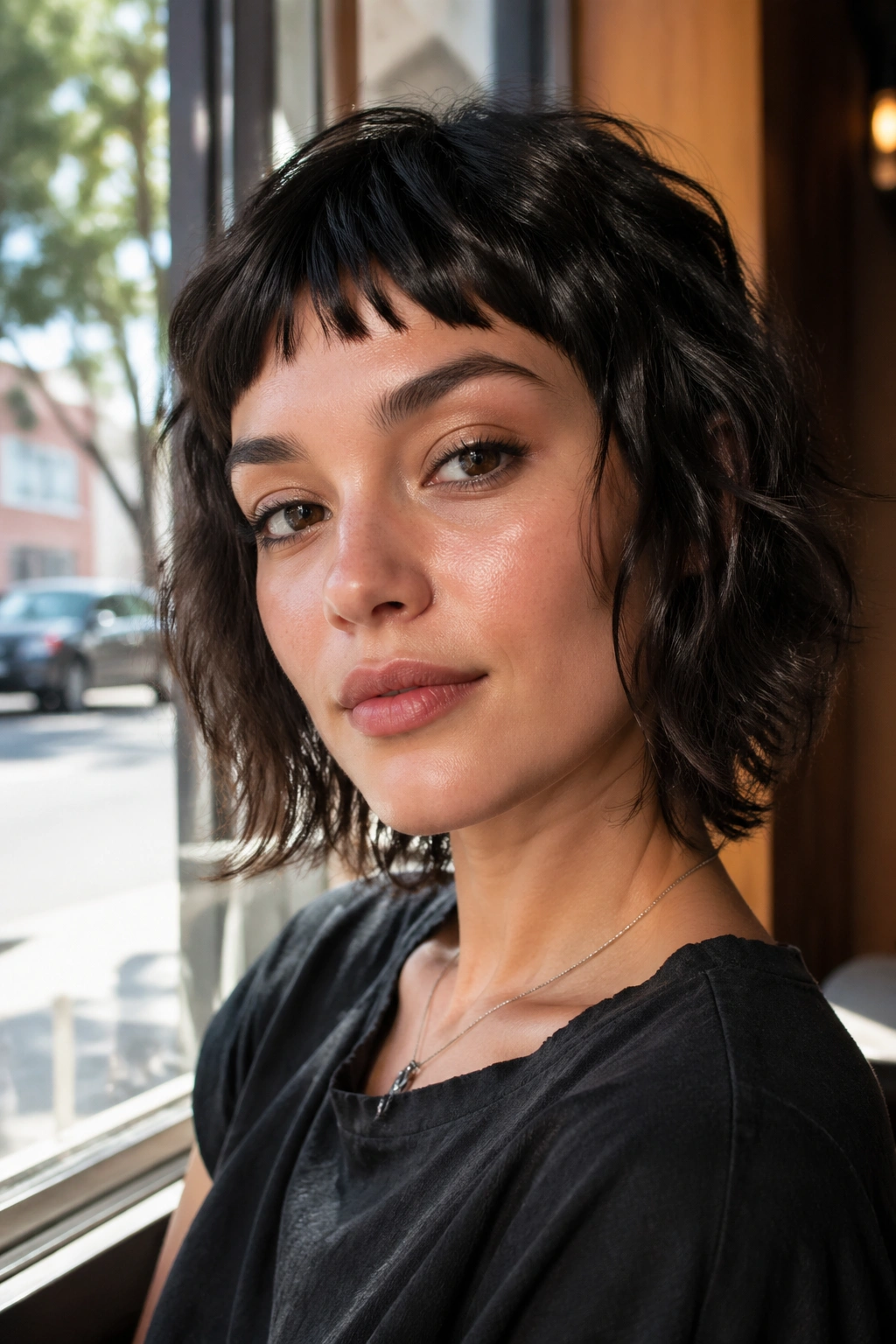
A micro shag with baby bangs is not shy hair. It has a sharp little front and a messy, layered body, and that contrast is the whole point. On short wavy hair, it can look edgy without needing a lot of styling time.
The danger is obvious: if the bangs are cut too heavy, the face can close in fast. Keep the fringe wispy and slightly broken up, and let the side layers stay soft. That keeps the cut from feeling like a helmet with texture pasted on top.
This version works best when the wave pattern is loose enough to move, not frizz out. If your hair puffs up at the root, ask for a tiny bit of root weight to stay in place. You do not want a triangle.
Trim the bangs often. Every 3 to 4 weeks is not overkill here. Baby bangs lose their shape fast.
3. Curtain-Bang Shag Bob
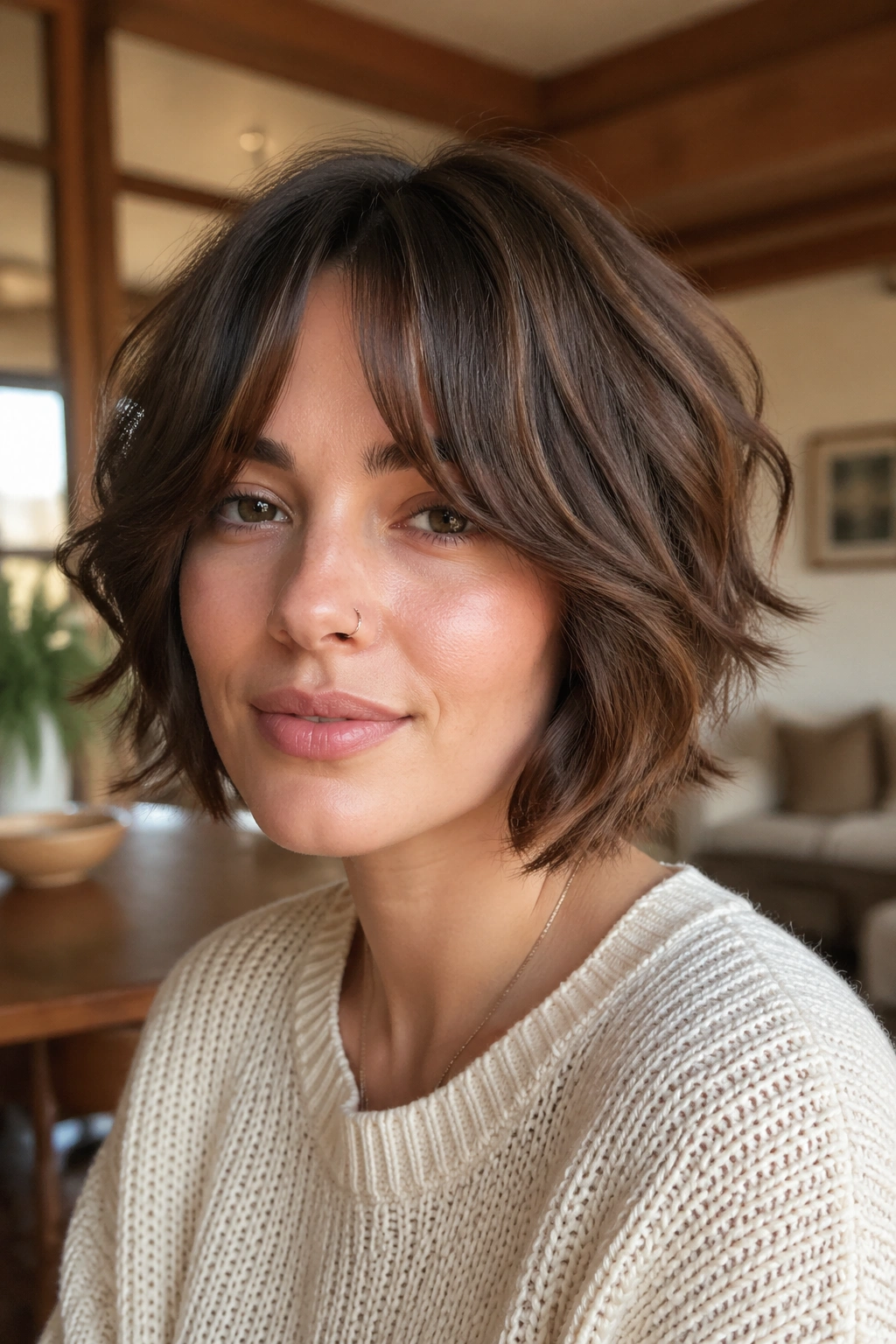
Need a short shag that softens a strong jaw or a longer face? This is the one. A curtain-bang shag bob gives you the lift and movement of a shag, but the fringe opens away from the face, which makes the whole cut feel less harsh.
How to Style It
- Blow-dry the bangs forward first, then split them down the middle while they are still warm.
- Use a round brush only on the front pieces if you want the fringe to curve a little more.
- Leave the rest of the hair alone unless the crown needs a quick lift from a diffuser.
The magic here is the balance between structure and looseness. The bob-length base keeps the shape controlled, while the curtain fringe lets the waves fall into place without looking too styled.
If you hate hair that sits flat around the temples, this cut is a smart move. It gives you motion right where people look first.
4. Piecey Razor-Cut Shag
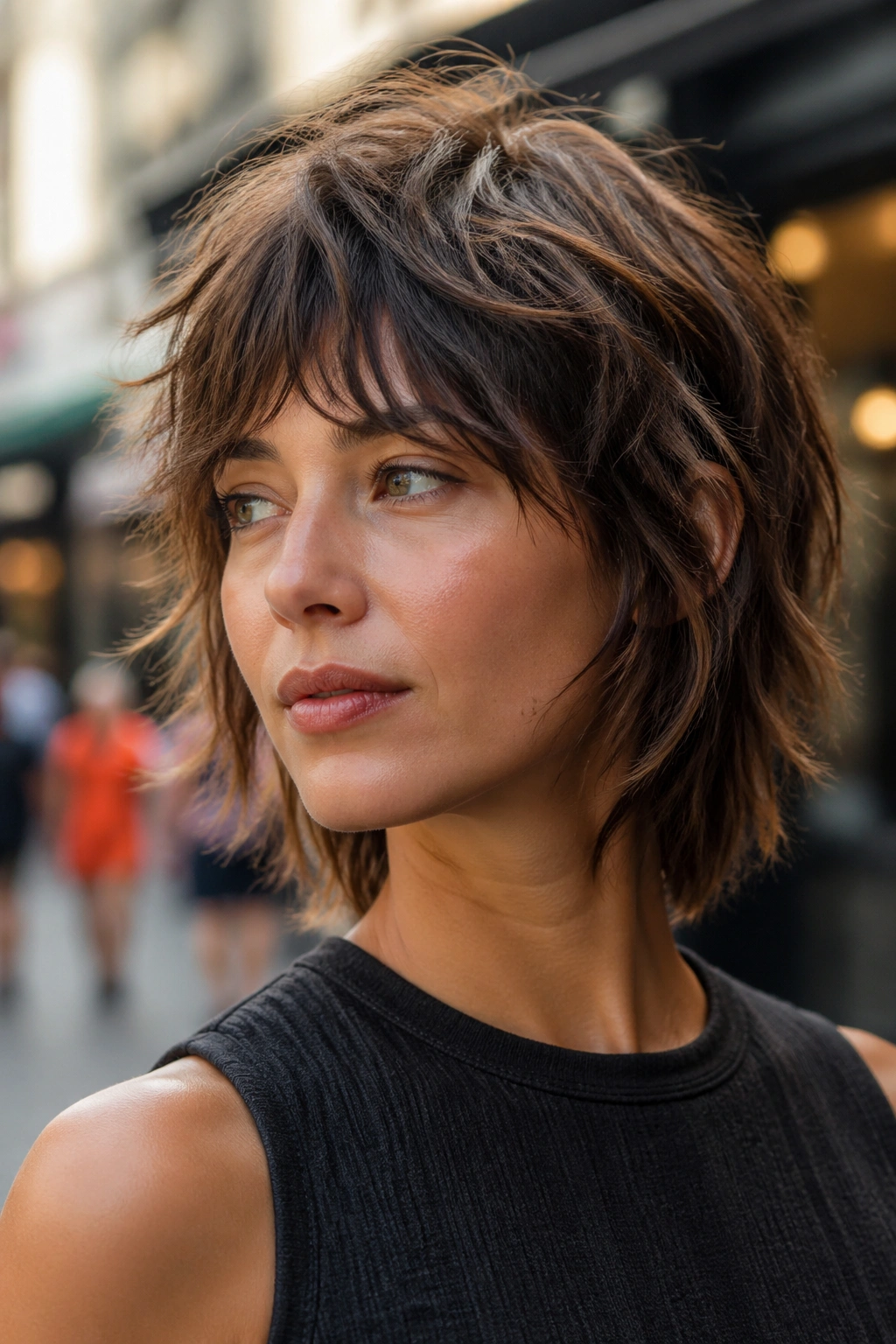
Some waves need permission to look messy. A piecey razor-cut shag gives them that. The razor breaks up the ends so the wave pattern separates into visible sections instead of sitting in one thick, heavy sheet.
This is a good choice for dense hair that tends to feel bulky at the sides. Razor cutting removes weight without making the shape stiff. That said, it needs a careful hand. If your ends are already dry or fragile, too much razor work can make them look frayed.
Ask for soft, shattered layers around the face and through the crown, with the perimeter left long enough to keep the cut from disappearing. The point is movement, not thinness. There’s a difference.
A pea-sized amount of texture cream on the mid-lengths is usually enough. Too much product and the piecey effect turns sticky.
5. French-Girl Short Shag
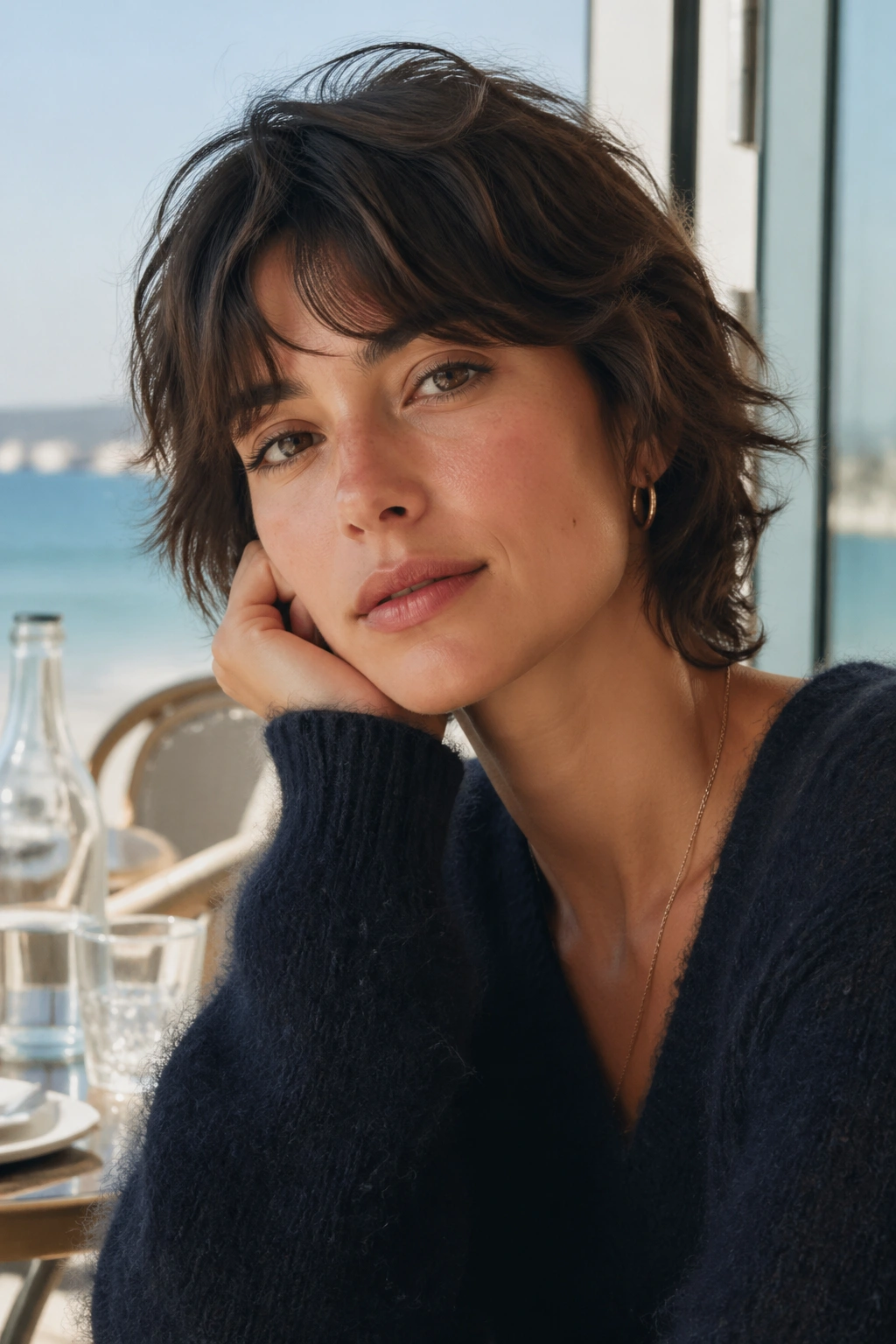
This is the cut people mean when they say they want something “undone,” though that word gets abused. A French-girl short shag keeps the layers soft, the fringe a little grown-out, and the whole shape close to the head without making it flat.
The best version does not look overworked. You should be able to finger-comb it and still have it fall into a decent shape. That’s the charm. It feels like hair that has lived a little, not hair that has been polished into obedience.
Ask for a short base with long face-framing pieces and feathered ends around the ears. The crown should have lift, but not a spiky one. If the layers are too aggressive, the cut stops looking effortless and starts looking choppy for no reason.
Air-drying is usually enough. A touch of salt spray at the roots can help, but do not drown it. The whole point is restraint.
6. Layered Lob Shag
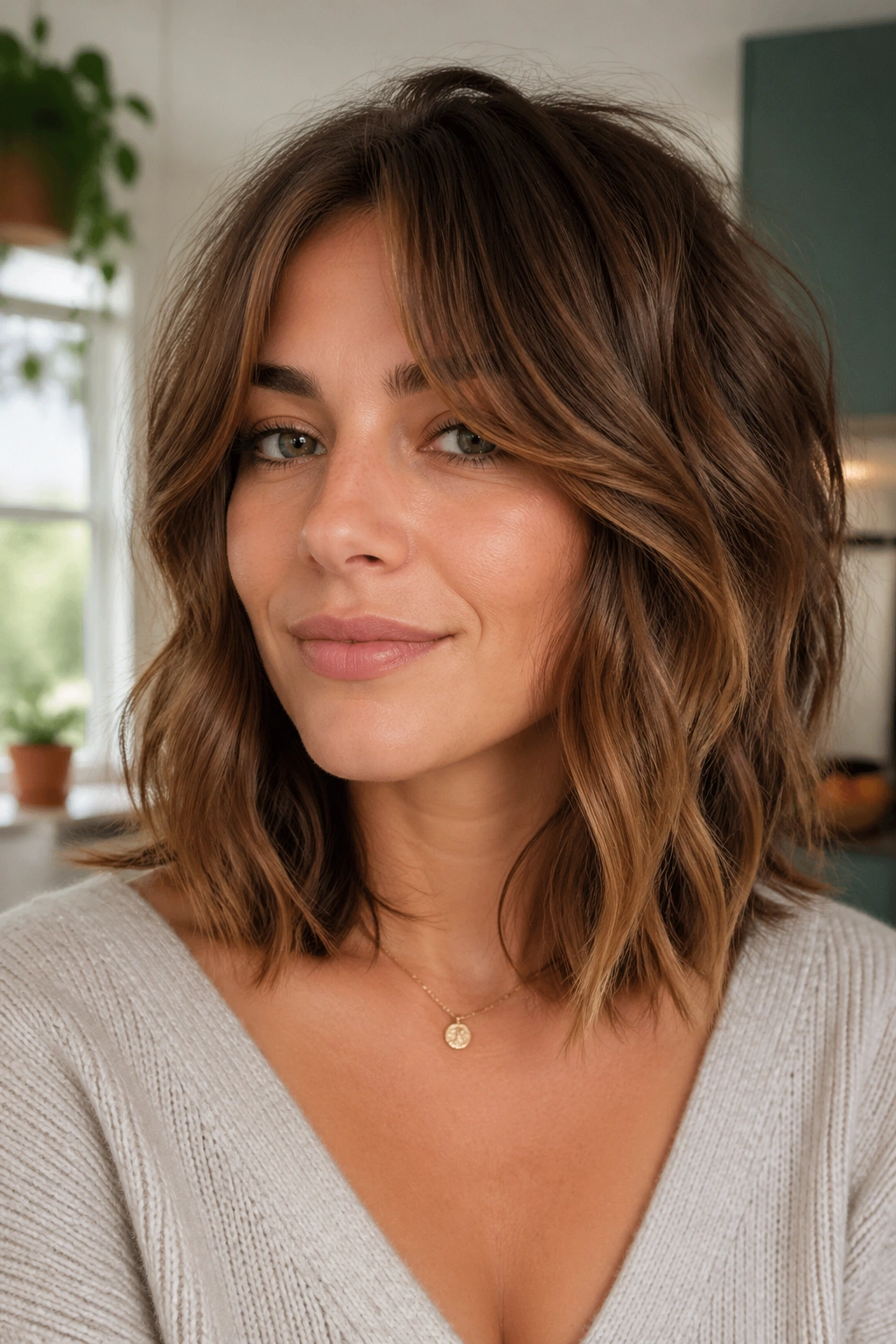
A layered lob shag sits in that sweet spot between short and “not actually short, but close enough.” It usually lands around the collarbone, which gives wavy hair room to move while still keeping enough length to tuck behind the ear or clip up when needed.
Unlike a chin-length shag, this version gives you a little more weight in the ends. That matters if your waves frizz easily or if your hair is medium-to-thick. The longer base keeps the silhouette calm, while the layers keep it from feeling blocky.
What to Ask For
- Collarbone length at the perimeter
- Long internal layers starting below the cheekbone
- Soft face-framing pieces that can fall forward or tuck back
- Light texturizing only at the ends, not all through the crown
If you like change but not drama, this is a sensible cut. It still reads as a shag. It just behaves better when you need it to.
7. Wolf Cut Short Shag
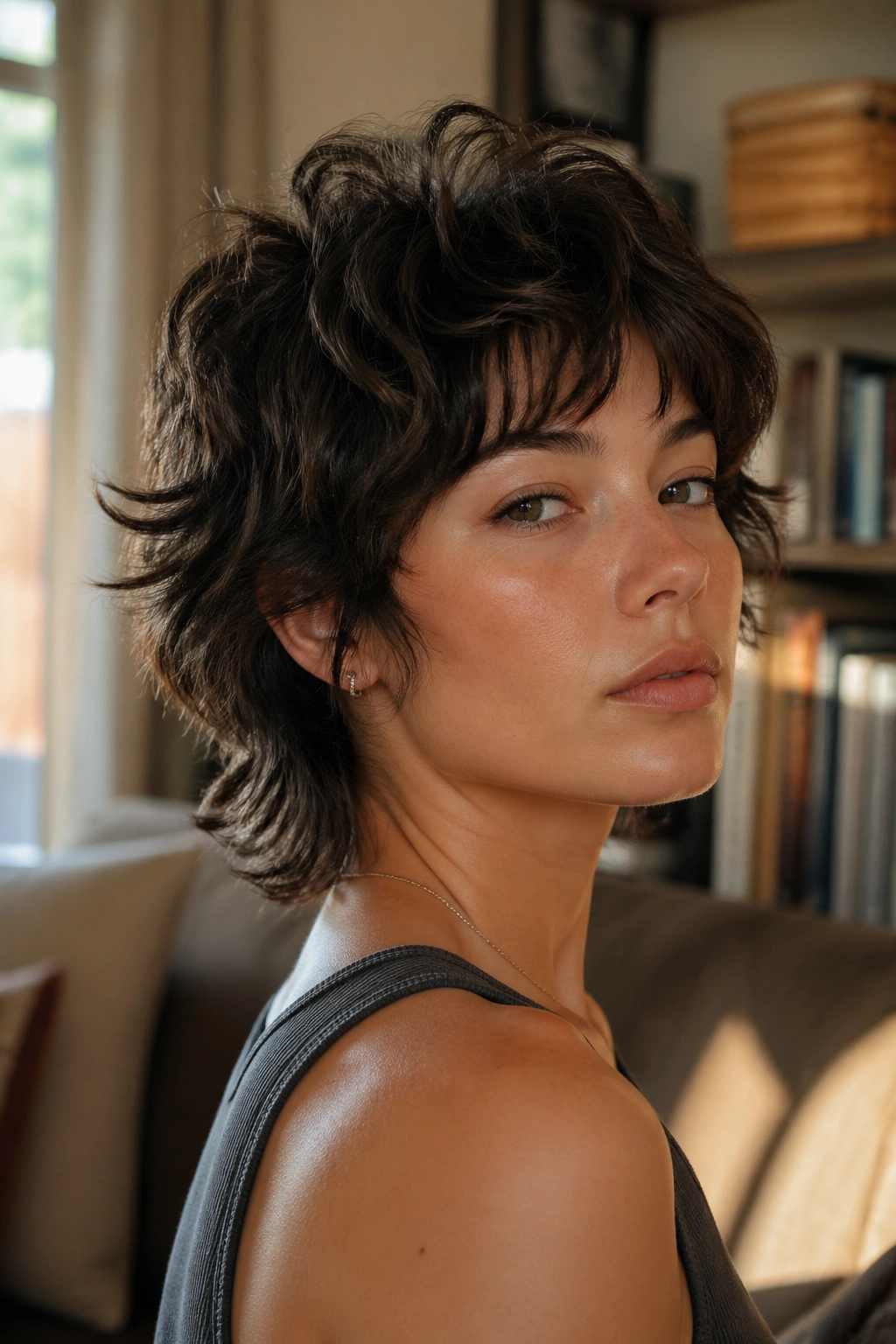
The wolf cut is the louder cousin in the shag family. On short wavy hair, it has a rougher crown, a more tapered neck, and stronger contrast between the top and the bottom. That’s the appeal. It looks like the hair has its own agenda.
This cut suits people who want volume on top and do not mind a little edge around the face. It is especially good for dense waves that can handle a lot of shape. Fine hair can wear it too, but the layers need to be handled carefully or the cut starts to look sparse.
The biggest mistake is asking for too much texture everywhere. You want pockets of movement, not a thousand tiny ends. Keep the sides a touch longer than the crown if you want the cut to hold together.
And yes, it needs styling. Usually not much. A diffuser, some root lift, and a bit of finger shaping are enough if the cut is done properly.
8. Grown-Out Pixie Shag
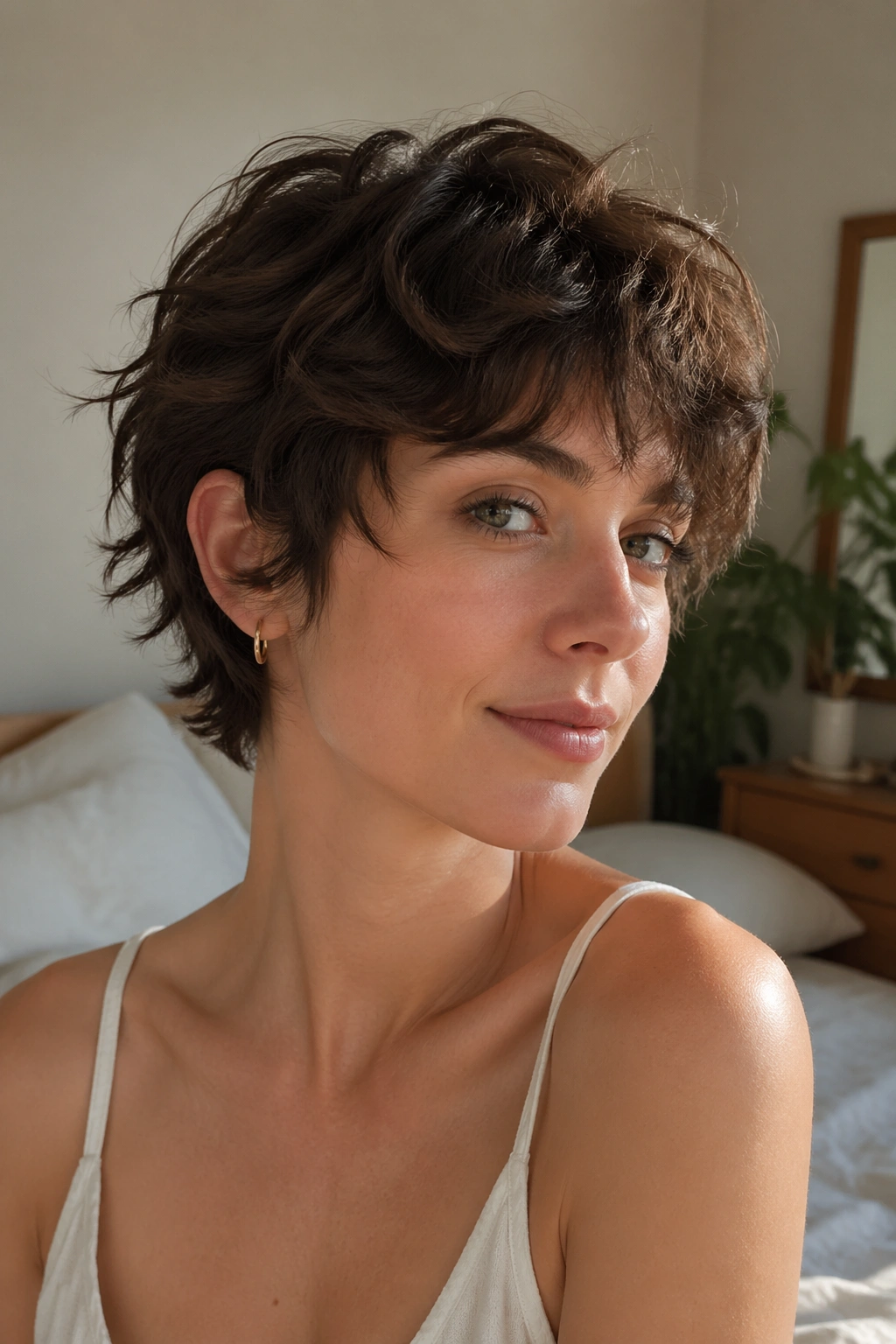
A grown-out pixie shag is what happens when a pixie starts acting like a shag and nobody argues with it. The sides stay short, the top gets longer, and the waves create a soft little halo instead of sitting tight to the head.
Why It’s Worth Considering
Because it solves that awkward in-between stage. You get enough length to make the waves visible, but not enough hair to feel weighed down. The result can be really flattering around the cheekbones and eyes.
Ask for short, tapered sides with longer layers left on top and through the fringe. If your hair grows fast at the nape, keep that area a little cleaner so the shape does not puff out. The back matters here. People forget that.
Styling is quick. A dab of curl cream and a five-minute scrunch is often enough. If the top goes flat, flip your part and let the hair dry in the opposite direction for a bit. That tiny trick gives the crown more life.
9. Side-Swept Fringe Shag

A side-swept fringe changes the mood of a short shag fast. It softens a forehead, slides nicely over waves, and makes the whole cut feel a bit more relaxed than a center-part version. If you want movement without a full curtain bang, this is a smart middle ground.
The cut works best when the fringe is long enough to tuck into the rest of the layers. Too short, and it acts like a separate haircut. You want the front to connect to the sides so the wave pattern can move across the face instead of stopping abruptly.
Quick Styling Notes
- Dry the fringe in the direction you want it to fall.
- Use a small round brush only if the bangs split too much.
- Keep a light hand with hairspray; stiffness kills the swing.
This style is a good fit for people who want a little face coverage without losing openness around the eyes. It is quiet, but not boring.
10. Feathered Short Shag
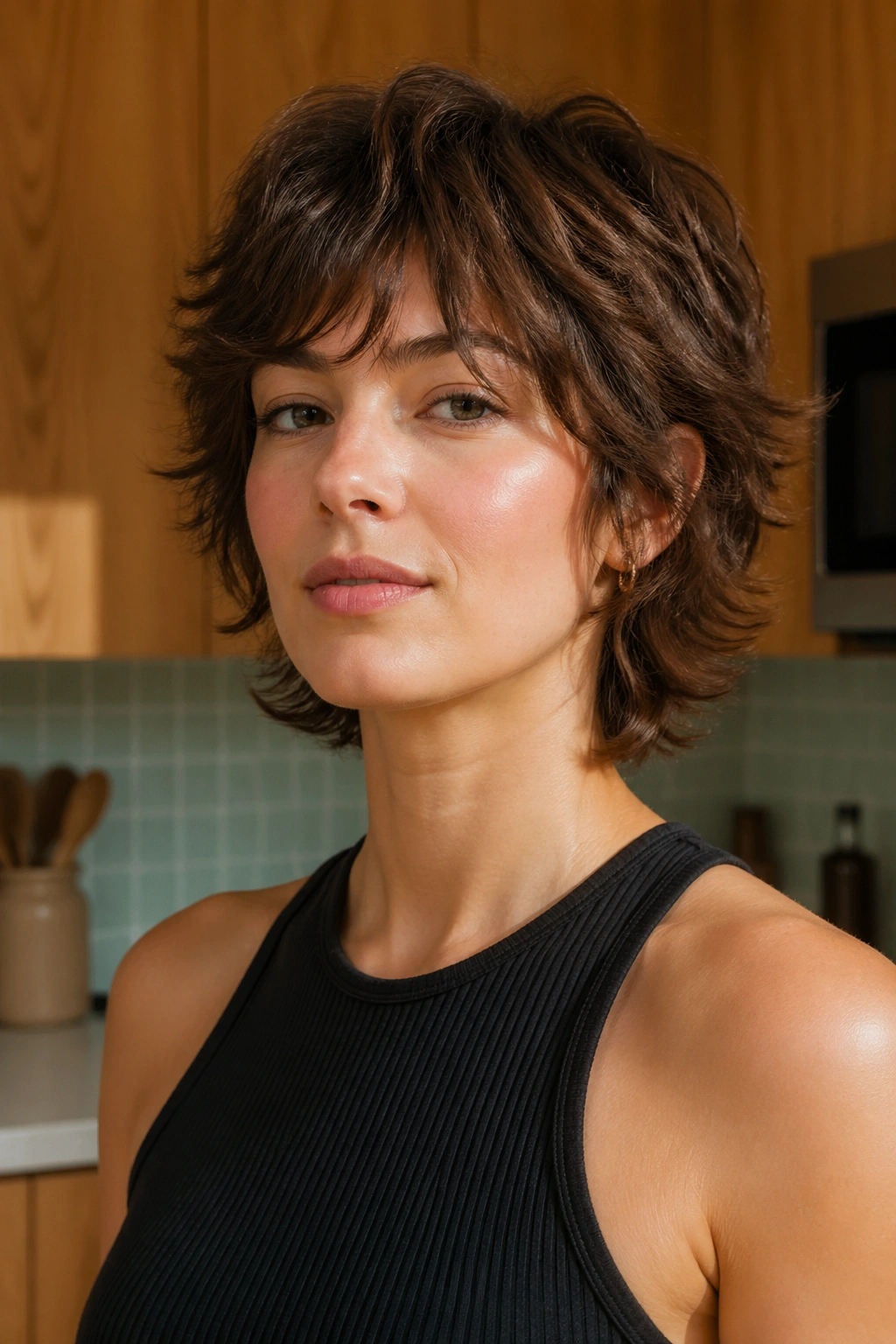
Feathered layers are one of those old haircut ideas that still make sense when they’re done with restraint. On wavy hair, feathering softens the edges and stops a short shag from looking blunt or boxy.
The real benefit is movement. Feathered ends let the wave pattern break apart in a gentler way, so the cut moves when you turn your head instead of sitting in one heavy shape. That can be a lifesaver for coarse hair, which often wants to look bulky near the bottom.
Ask your stylist to cut the layers so they taper softly into each other, especially around the ears and neckline. You want the ends to feel light, but not stringy. That’s the trap. Too much feathering and the haircut starts looking thinned out rather than airy.
A light cream on the mid-lengths and a bit of scrunching usually brings the shape back after washing. Nothing fancy.
11. Jaw-Skimming Shag with Flipped Ends
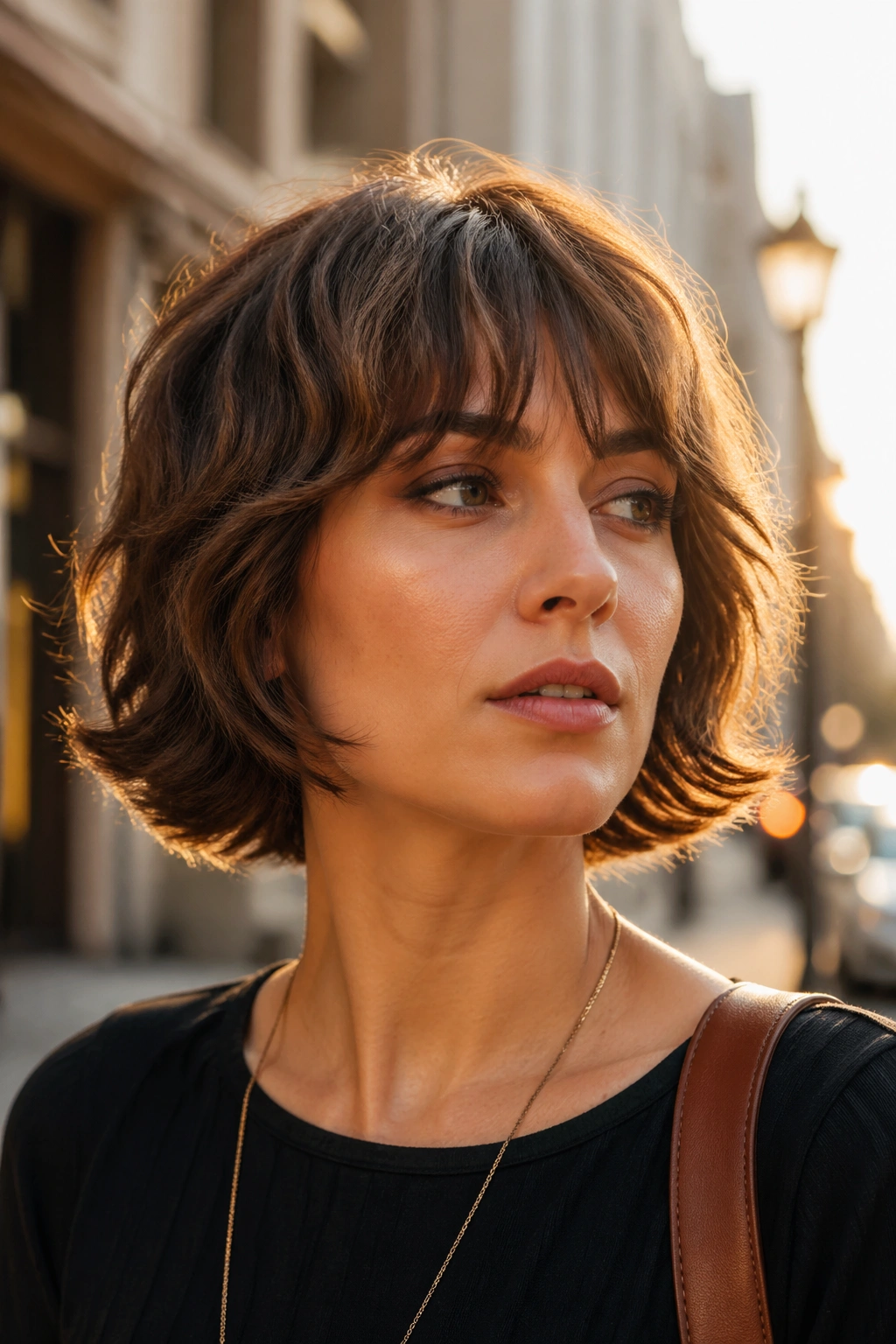
A jaw-skimming shag with flipped ends has a little swing to it. The ends kick outward instead of tucking in, which makes the haircut feel lively and slightly retro without turning into a costume piece.
This cut is useful if you want something that opens the neck and frames the jaw without clinging to it. On wavy hair, the flipped finish can happen naturally, or you can coax it with a round brush or a quick bend from a flat iron on the last inch only. No need to curl the whole head.
It works well on petite faces and on anyone who wants the haircut to show from the front and the side. The movement is part of the shape, not an add-on.
Keep the layers soft through the crown so the flipped ends do not fight a flat top. That balance matters. Otherwise the style can look split in half.
12. Deep Side-Part Shag
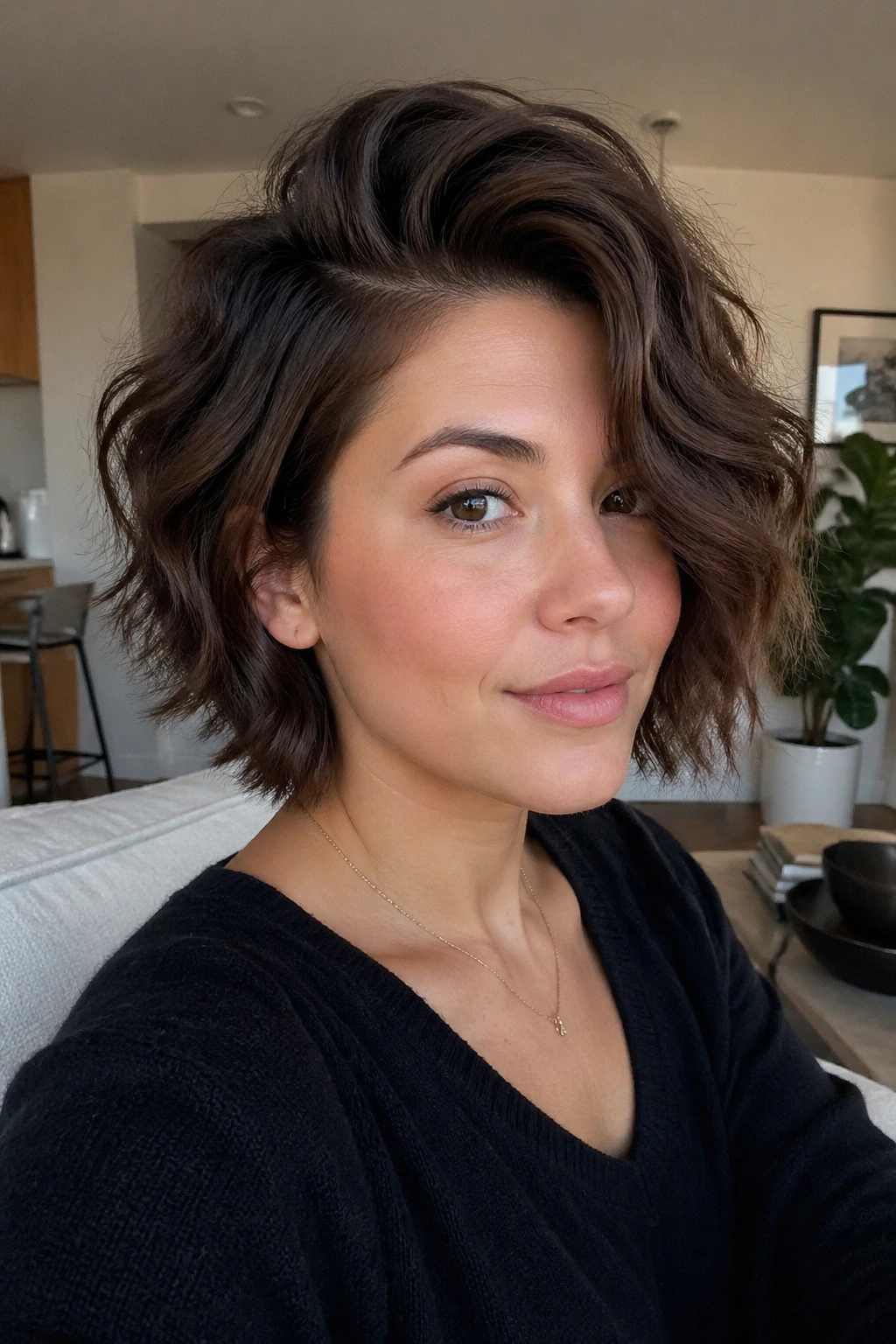
A deep side-part shag changes the whole haircut without changing the cut itself very much. Shift the part over, and the waves suddenly stack up with more lift on one side and more softness on the other. It is a small move with a big payoff.
This is one of the easiest ways to add height at the crown if your hair tends to lie flat. It also gives you a little asymmetry without committing to a full asymmetrical cut. If you have fine waves, that extra lift can make the hair feel fuller at the roots.
What Makes It Different
The part line creates a heavier side and a lighter side, which changes how the layers fall around the cheek and temple. That can soften a square jaw or balance a face that feels too symmetrical.
Use a root spray on the heavier side and dry the hair in the opposite direction first. Then flip it back. That little trick builds memory at the root. Small thing. Works.
13. Choppy Shag with Blunt Micro Fringe
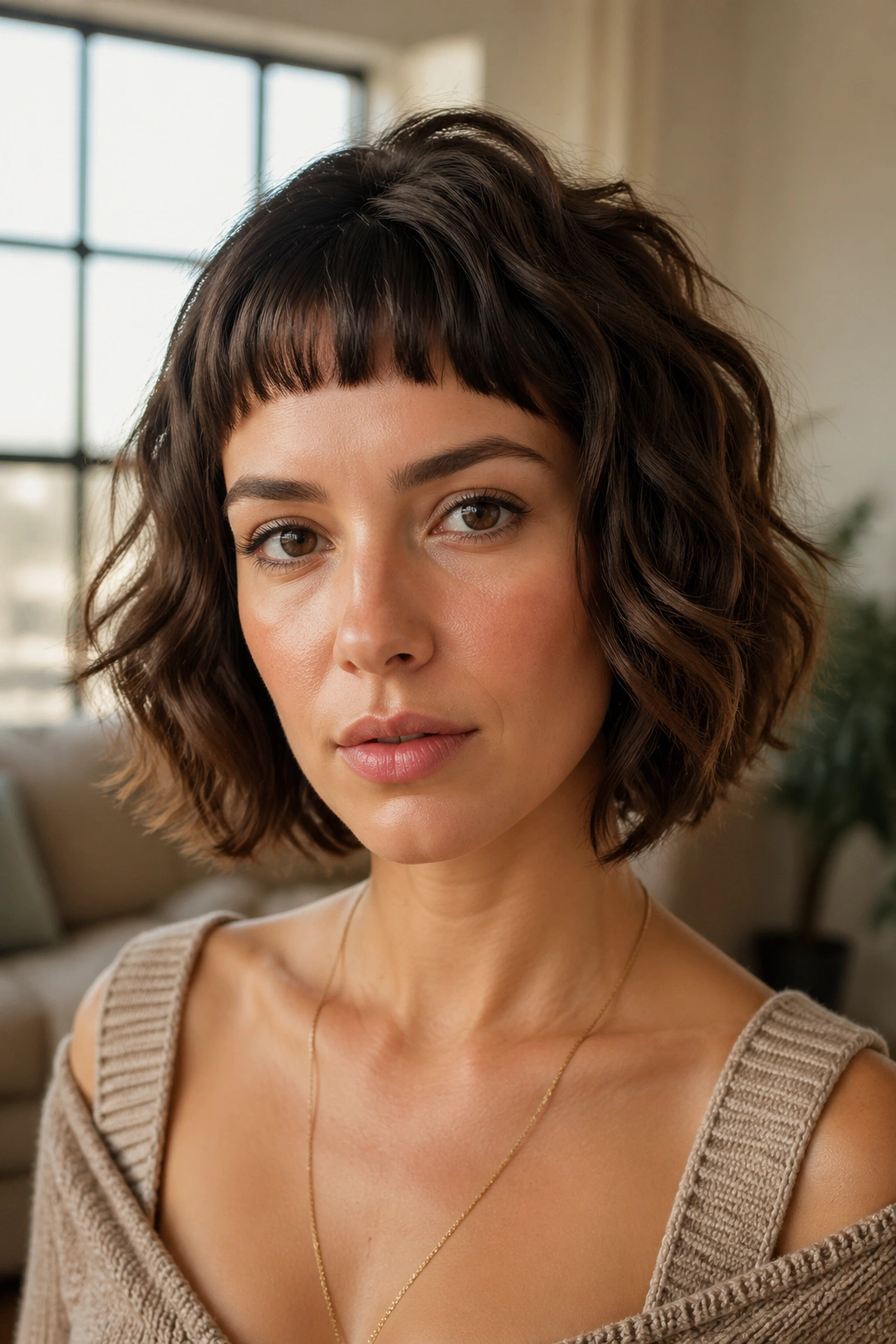
This cut has opinions. The choppy body says texture, while the blunt micro fringe says, “Yes, I meant this.” On wavy hair, that contrast can look sharp in a good way, especially if you want the haircut to read as bold instead of beachy.
The key is keeping the fringe clean while letting the rest of the haircut stay broken up. If the bangs get too wispy, the style loses its point. If the layers get too blunt, the haircut stops moving. You need both sides of the equation.
It suits wave patterns that are not too tight. Loose waves keep the front from looking heavy, and the choppy layers stop the head from looking rounder than it is. If your hair has a lot of frizz, this cut can still work, but the fringe will need a smoothing balm.
Not a soft haircut. That is the appeal.
14. Salt-and-Pepper Short Shag

Salt-and-pepper hair looks especially good in a shag because the texture helps the color read as depth instead of randomness. The waves catch the darker strands and the silver pieces in different places, which gives the cut more shape than a smooth style would.
A short shag keeps the color alive around the face. Long layers can hide the contrast. Shorter layers show it off. If you have natural gray coming in, this cut can make the transition feel intentional instead of patchy.
Ask for enough layering to keep the crown light, but not so much that the surface gets fuzzy. That’s the part people miss. Silver hair can be bright and coarse at the same time, so you want movement without stripping away all the body.
A shine cream helps here. So does a regular trim schedule. Gray and silver ends can look dry faster, and a shag depends on crisp edges.
15. Shag with an Undercut Nape
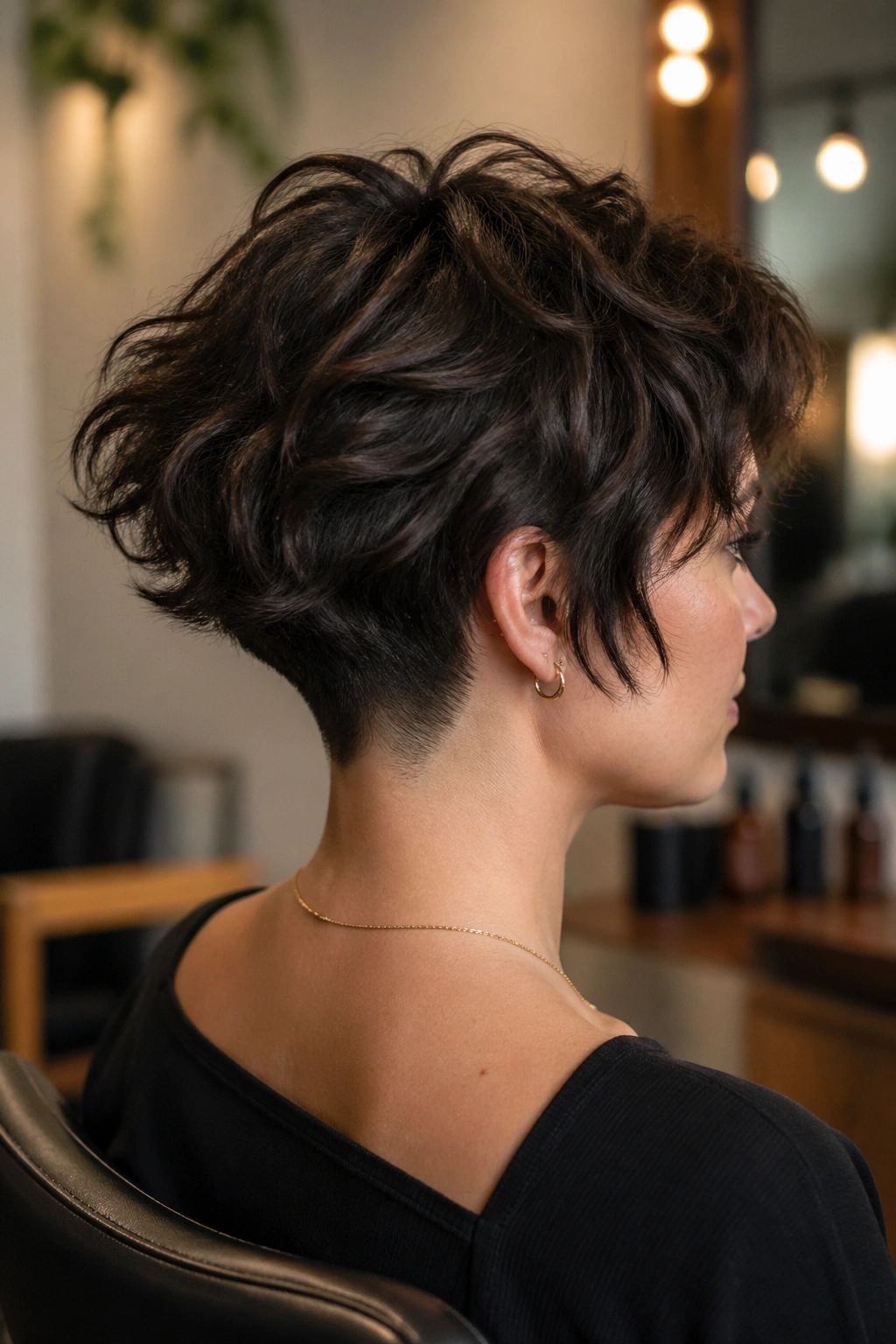
If your hair is thick and the back of your head turns into a puffball by noon, an undercut nape is worth a hard look. It takes bulk out from underneath so the top layers can sit better and the neckline stays cleaner.
This is not a tiny detail. It changes the whole behavior of the cut. The top can stay shaggy and wavy while the hidden underlayer removes weight where you do not need it. That’s especially useful for people with dense hair that swells out at the base.
You do not have to shave a dramatic section. Even a small hidden undercut can take enough weight off to make the silhouette sharper. If you want something discreet, ask for a narrow nape area only. If you want more edge, let it go higher.
The upkeep is simple, but the grow-out is real. Keep that in mind before going too short underneath.
16. Short Shag with Long Curtain Fringe
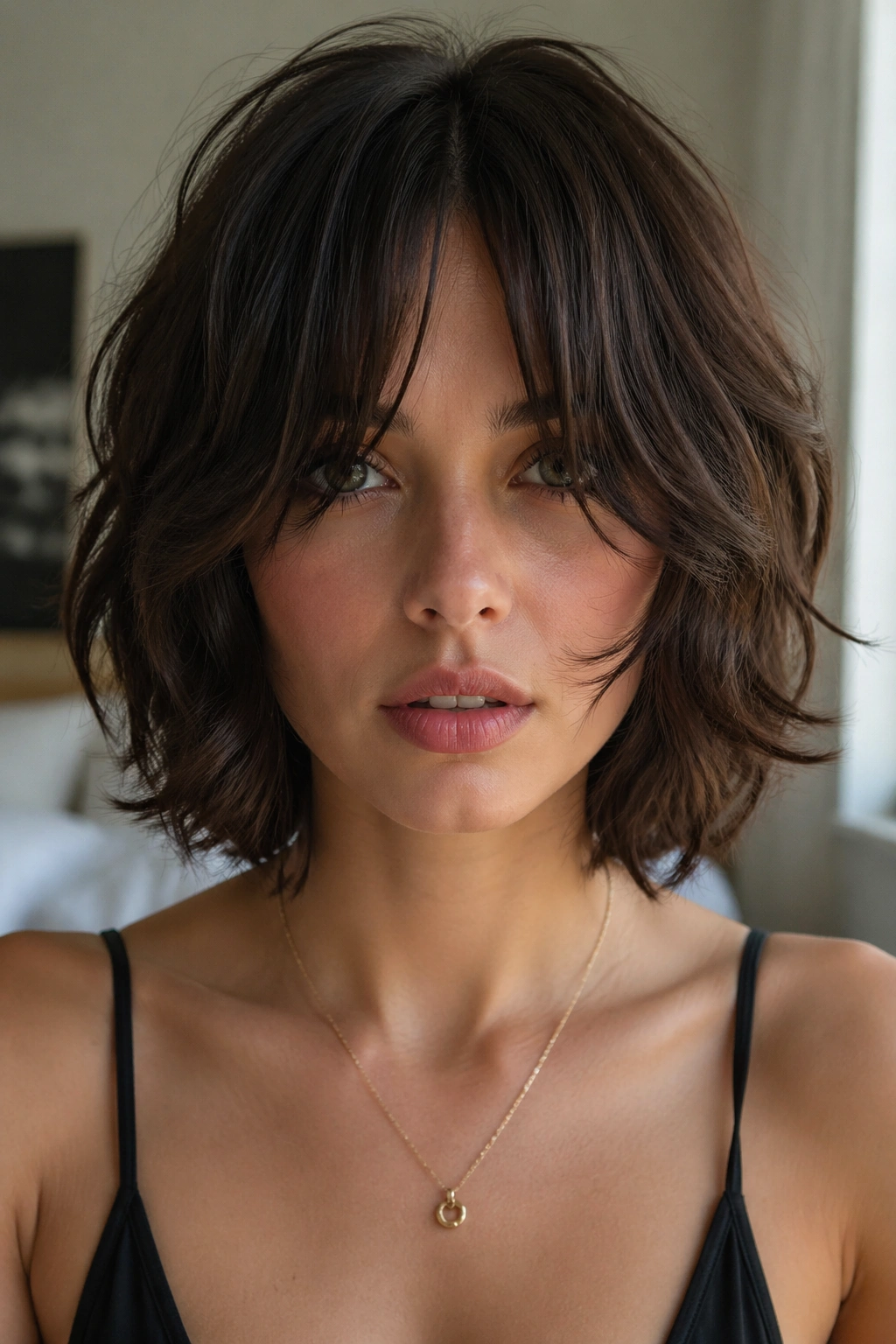
This is one of the easiest short wavy shag haircuts to live with because the fringe does a lot of the styling for you. Long curtain bangs fall from the center of the forehead and blend into the side layers, which gives the haircut a soft opening around the eyes and cheekbones.
The length matters. If the fringe is too short, it breaks apart. If it is too long, it drags into the mouth and gets annoying fast. The sweet spot is usually cheekbone to lip length, depending on face shape and wave strength.
Use a blow dryer and your fingers, not a heavy brush, if you want the fringe to stay loose. A round brush can polish it, but too much polish makes the rest of the shag look separate. You want it connected.
This version is friendly, honestly. It gives shape without demanding a perfect styling job every morning.
17. Rounded Shag Bob

A rounded shag bob is the quiet one in the room. It keeps the length close, usually around the jaw or just below, and uses soft layers to create a rounded silhouette instead of a sharp one. For wavy hair, that can be a relief.
The shape hugs the head a bit more than a fully layered shag, which makes it easier to wear if you do not want a lot of chaos around the sides. It still has texture. It just behaves. That makes it a good choice for people who want a shag, but not a haircut that feels like it’s jumping off the head.
Ask for a soft interior shape and a perimeter that stays clean. The layers should support the curve, not destroy it. A little volume at the crown and softer ends around the jaw are enough.
This is the cut for someone who likes movement but not too much mess.
18. Razor-Cut Shag with Soft Edges
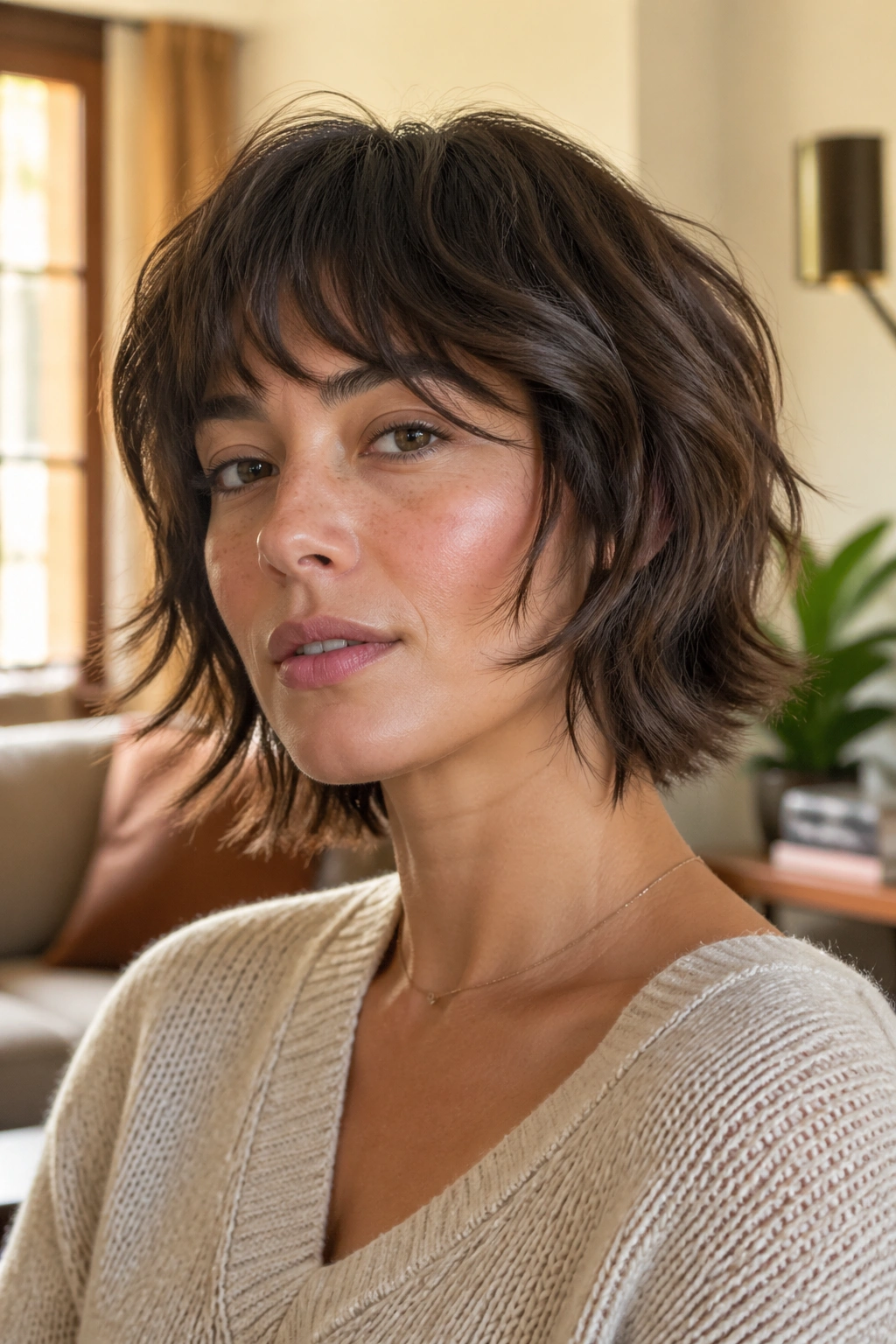
Can a razor-cut shag feel soft? Yes, if the razor is used lightly and with enough room left in the ends. That’s the part that matters. A lot of razor cuts fail because they are overdone, not because the tool itself is wrong.
On wavy hair, a soft-edged razor shag can take dense sections and turn them into airy movement. The trick is to keep the layers blended rather than sliced into obvious steps. If the hair already has some bend, the razor can help the texture separate in a natural way.
This cut tends to suit medium to thick hair best. Thin hair can wear it too, but the ends need to stay full enough to support the shape. If the haircut gets too wispy, it starts looking tired instead of light.
A quick mist of leave-in conditioner on the ends keeps the finish from feeling dry. Dry ends and razor work do not always get along.
19. Short Shag for Thick Wavy Hair
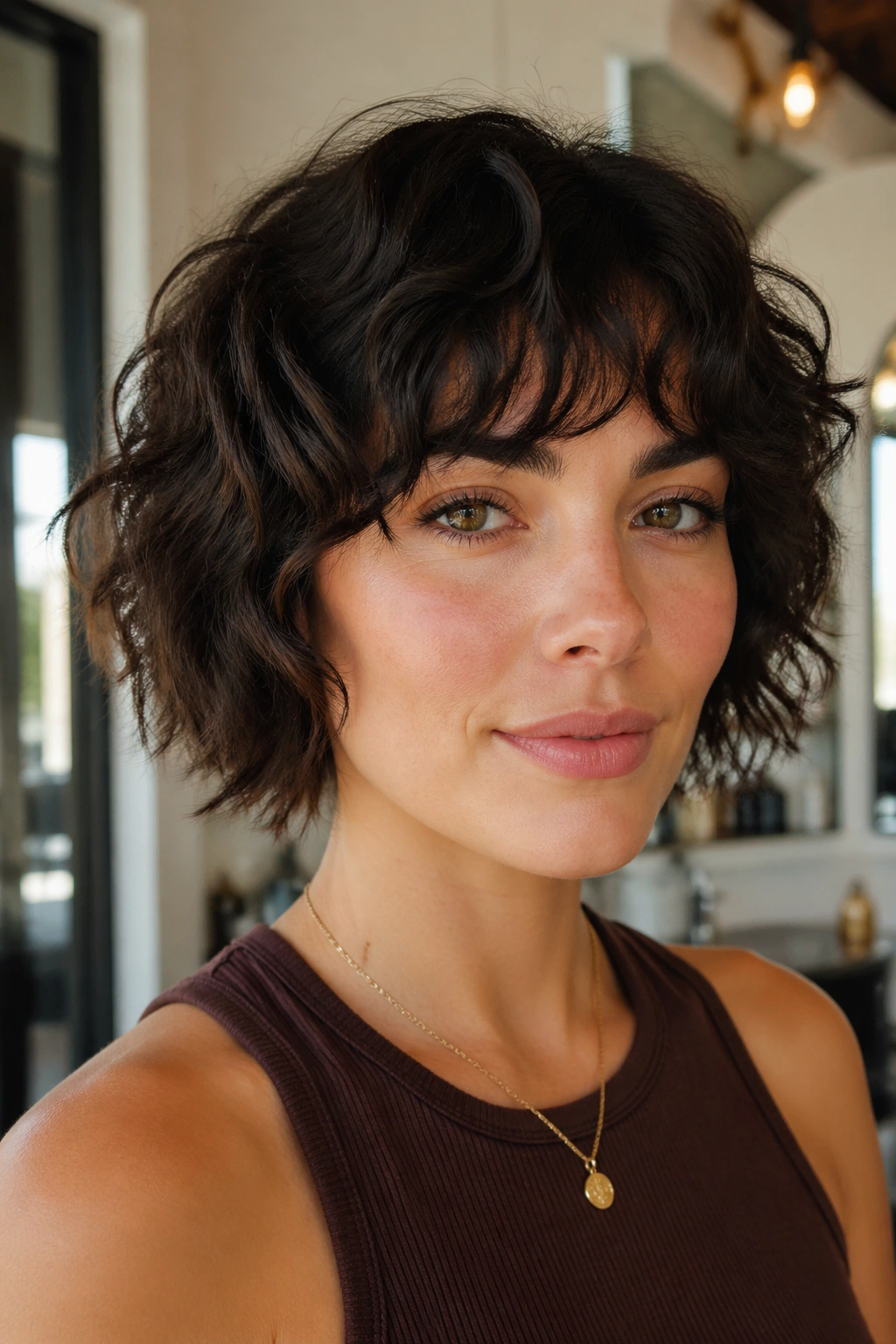
Thick wavy hair needs a different kind of shag. It is not about adding more texture. It is about taking the bulk out without turning the head into a halo of fuzz. The best short shag for thick hair does exactly that.
Ask for weight removal through the interior, not just at the ends. That keeps the outline strong while helping the waves sit closer to the head. If the stylist only texturizes the perimeter, the haircut can still feel bulky in the middle and you end up with a wide shape you did not ask for.
Salon Notes That Help
- Keep the perimeter around chin or jaw length.
- Ask for longer layers at the crown than you think you need.
- Avoid heavy thinning shears if your hair frizzes easily.
- Leave a little weight at the sides so the cut does not puff out.
This is one of those cases where precision matters. Thick wavy hair can take a lot, but not all at once.
20. Short Shag for Fine Wavy Hair
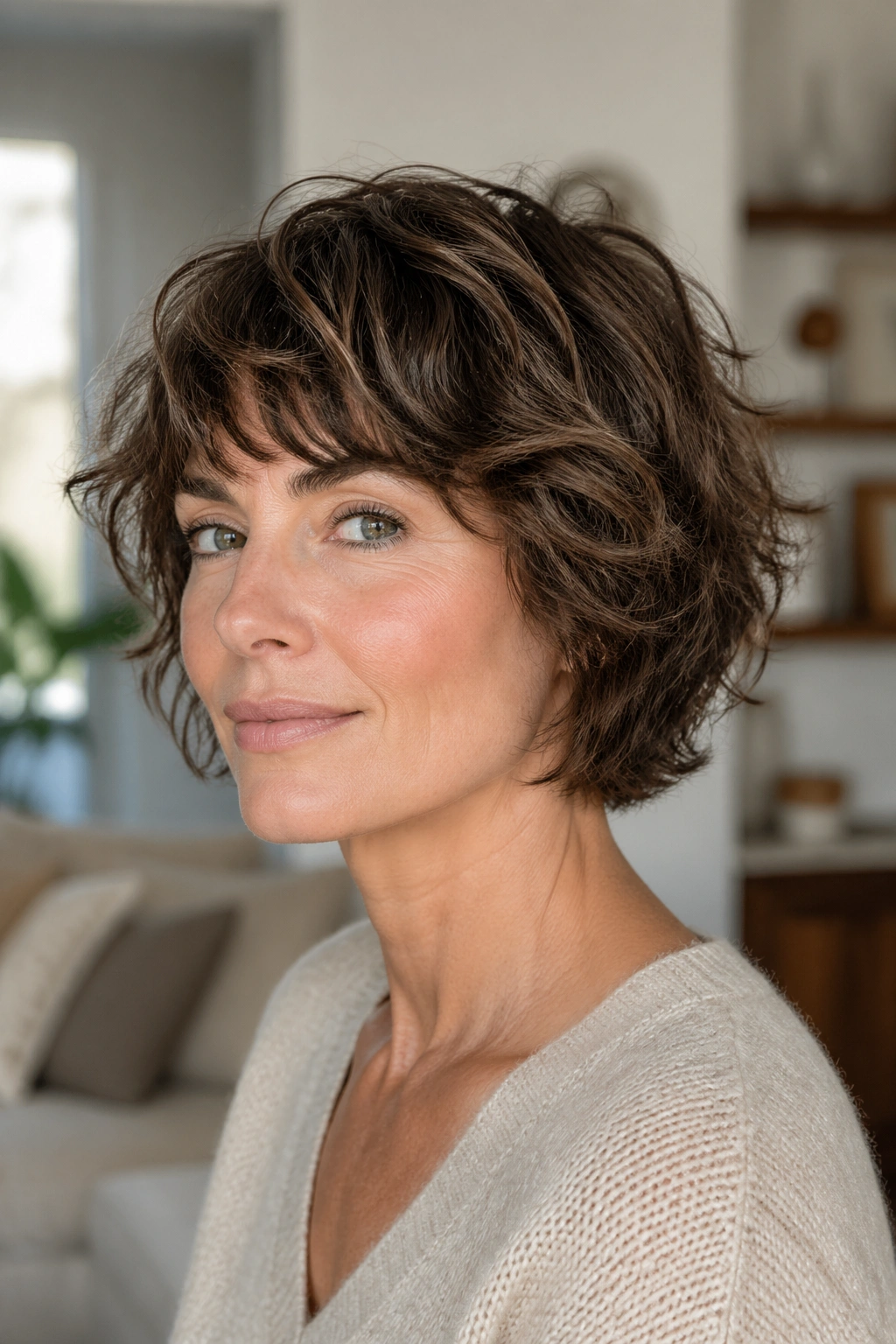
Fine wavy hair needs the opposite treatment: less slicing, more support. A short shag can make fine waves look fuller, but only if the cut keeps enough body in the bottom. Too much layering and the hair starts to look see-through at the ends.
The best version usually has a stronger perimeter with soft, selective layers around the crown and face. That gives the hair a little lift without draining the density. If you want the wave pattern to show, the layers should be spaced out, not stacked everywhere.
Styling matters here too. A mousse at the roots and a light diffuser dry can make a huge difference. Heavy creams are often too much. They make fine hair collapse faster than people expect.
If you’re nervous, ask for a shag that looks better on day two than day one. Fine wavy hair often does.
21. Asymmetrical Short Shag

A little asymmetry can wake up a short shag fast. One side sits a bit longer than the other, and the difference creates tension in the shape without needing a dramatic undercut or a bold color choice. It is subtle, but not boring.
This cut works well if you already part your hair to one side or tuck one side behind the ear most of the time. The asymmetry feels natural then, not forced. On wavy hair, it also helps break up roundness around the face.
The length difference does not need to be huge. Sometimes an inch or two is enough. More than that and the haircut can start to feel lopsided instead of intentional.
I like this cut for people who want the shag structure but want one side to have a little extra swing. It keeps the eye moving.
22. Bottleneck-Bang Shag
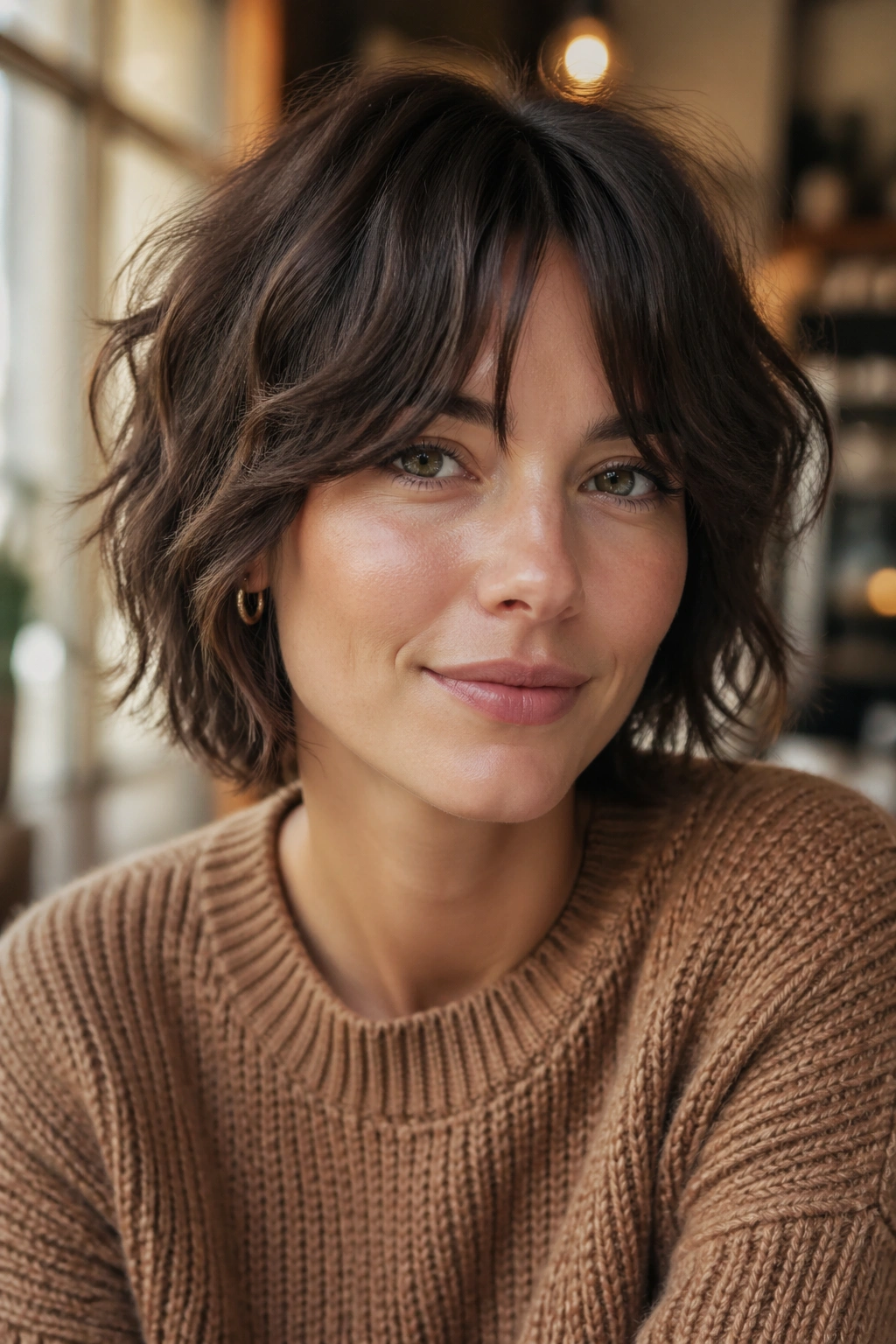
Bottleneck bangs are one of the better fringe choices for wavy shag haircuts because they have a narrow center and wider sides, which means they open up the face instead of closing it off. On a short shag, that shape gives you a soft front with enough structure to matter.
This fringe can be handy if your face is square, heart-shaped, or a little longer than you want it to look. The center is short enough to create a point of interest, while the sides lengthen into the shag layers. That blend is the whole trick.
The grow-out is kinder than a blunt bang. That alone makes it appealing. You can wear the fringe a little parted, a little swooped, or pushed aside when you need a break from it.
Ask for the shortest part to sit around the bridge of the nose or a touch higher, then let it curve outward. Too blunt, and you lose the softness.
23. Beachy Shag with Invisible Layers
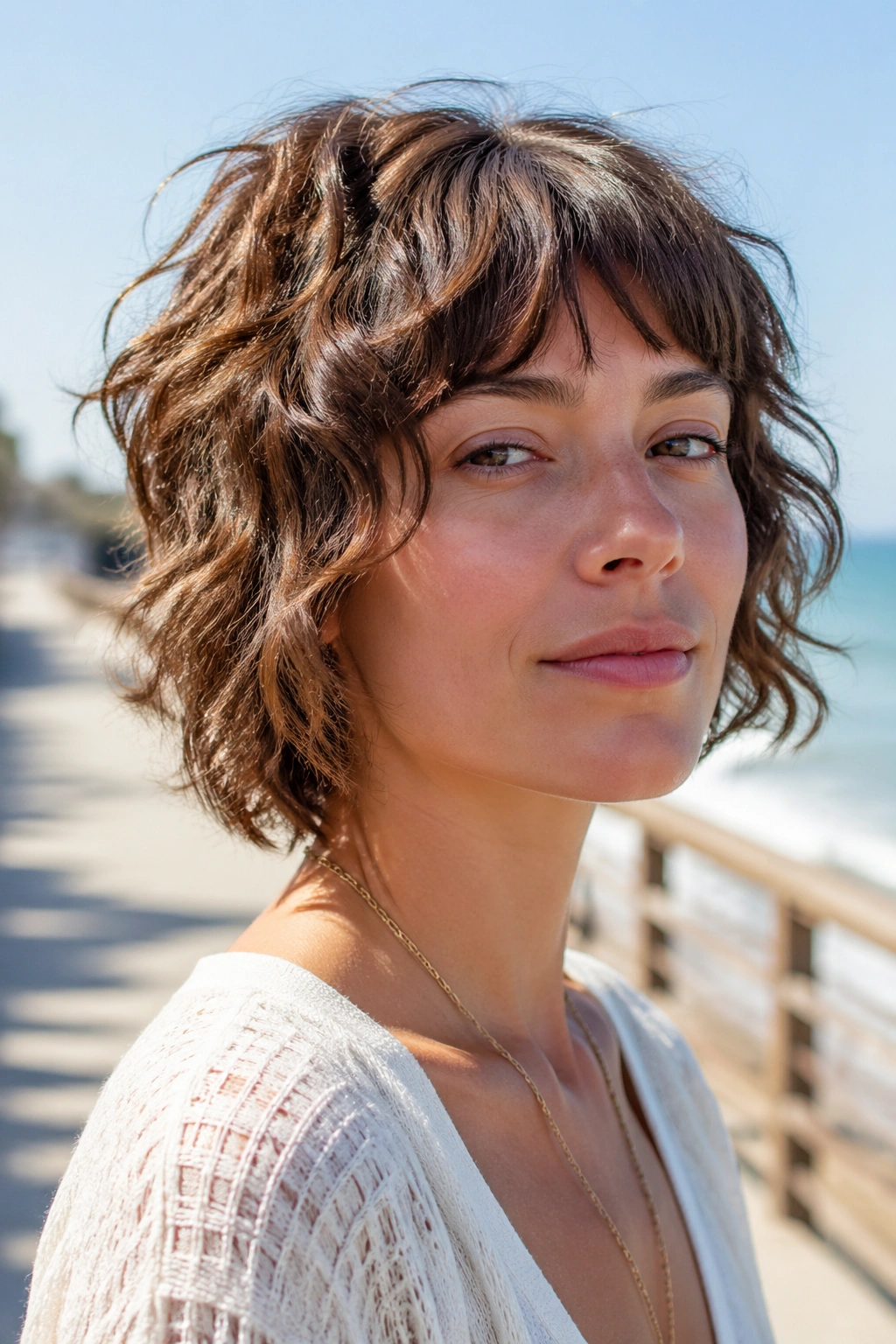
Invisible layers are for people who want movement without obvious chopping. Instead of seeing each layer as a separate step, the hair falls in a softer cascade that works with the wave pattern. The result looks lived-in, but not messy in a random way.
This is a good option if you like the beachy look but do not want the haircut screaming “layers” from across the room. The cut sits in a more natural way and relies on the wave itself to show the texture. That makes it a strong choice for medium-density hair.
How to Wear It
- Use a sea-salt spray on damp hair.
- Scrunch from the ends to the mid-lengths.
- Let the crown dry with a clip at the root if you need more lift.
- Avoid combing it once it starts to dry.
Invisible layers can be a little too quiet if you have very straight hair. On wavy hair, though, they make sense.
24. Layered Crop Shag
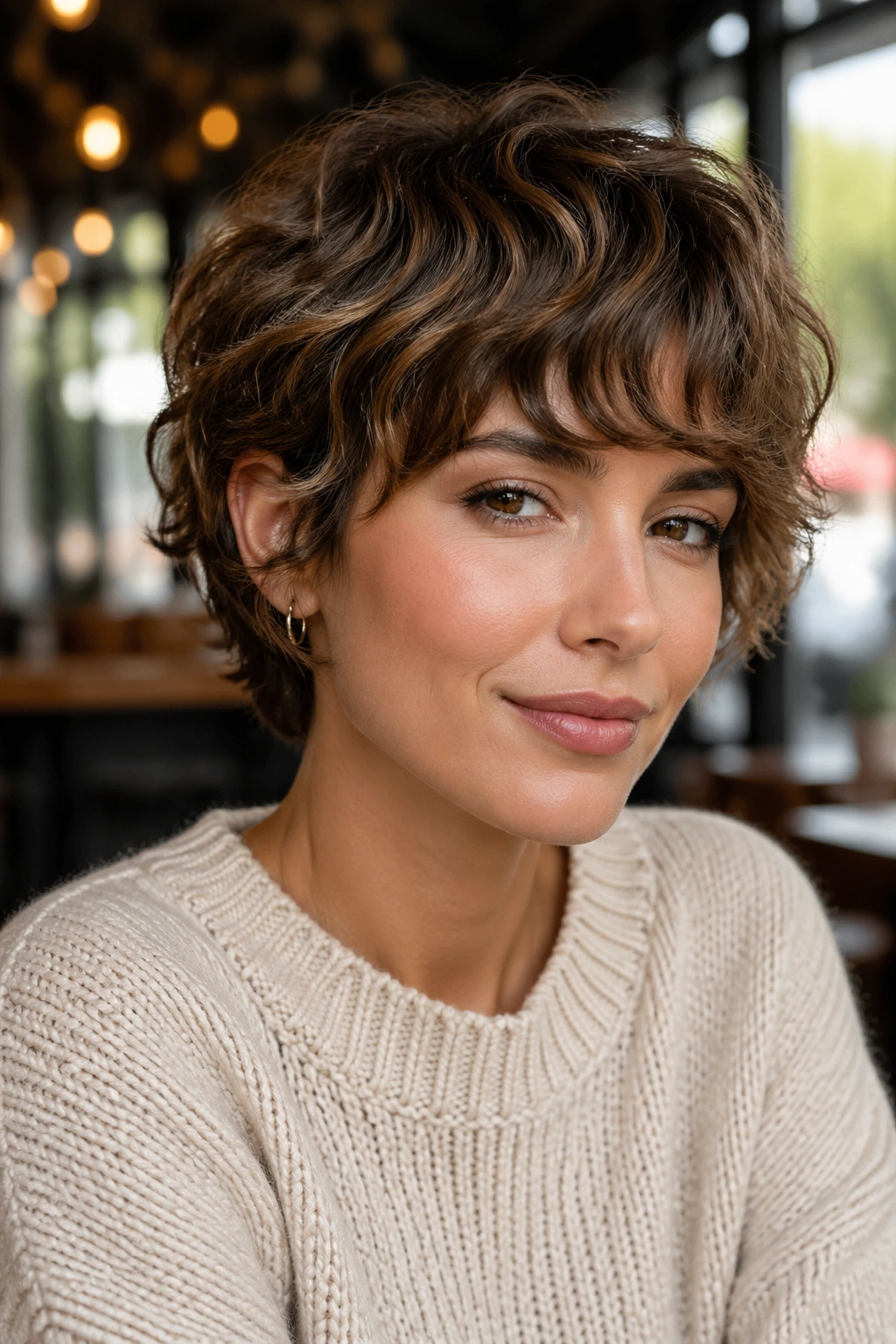
A layered crop shag is shorter than a bob and less exposed than a pixie. That in-between zone can be useful if you want a haircut that feels fresh but still leaves enough hair to play with at the front and sides.
The layers are the main event. They give the crop some lift and stop the top from lying flat against the scalp. If the nape is kept tidy and the crown stays airy, the shape can look clean without becoming strict.
This style suits people who want a faster morning routine. There is less hair to dry, and the wave pattern usually shows up with a quick scrunch and air-dry. That said, you do need to be comfortable with a cut that reveals the face more.
If you like glasses, strong brows, or earrings, this shape can really show them off. Small detail. Big effect.
25. Ear-Length Shag
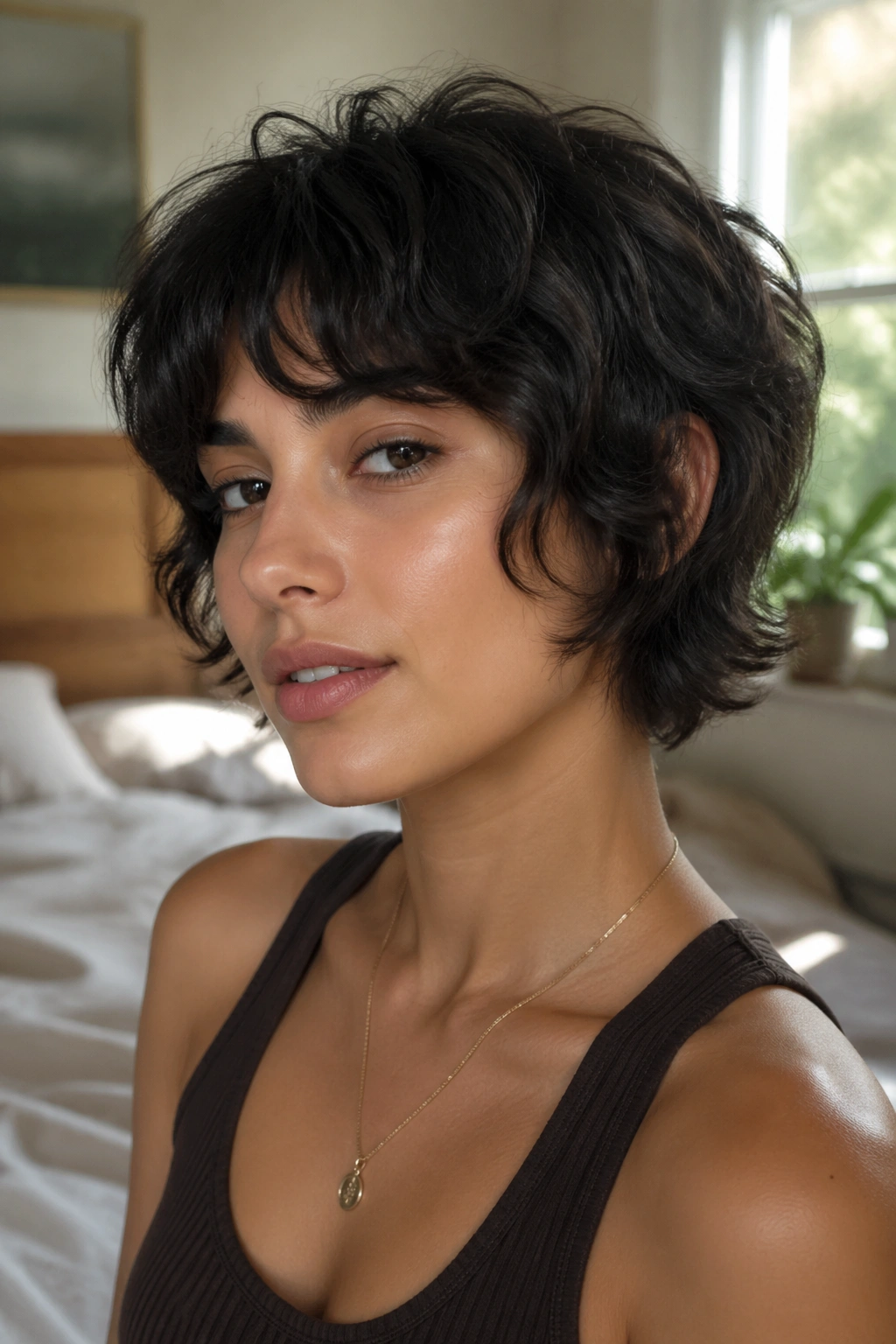
Ear-length hair is short enough to feel bold and long enough to keep some wave. A shag at this length is not trying to mimic a bob. It wants texture, movement, and a little edge around the temple and cheek.
This cut can look excellent on strong cheekbones because the short layers frame the bone structure instead of hiding it. It also works well if you want a haircut that dries fast and does not need a round brush to look finished.
The downside is obvious. It exposes everything. Growth patterns, cowlicks, and uneven wave sections all show up fast. So this is not the haircut to get if you want to hide behind your hair.
Still, if you want something small and sharp, ear-length shaggy layers give you a lot of personality in a tiny footprint.
26. Face-Framing Winged Shag
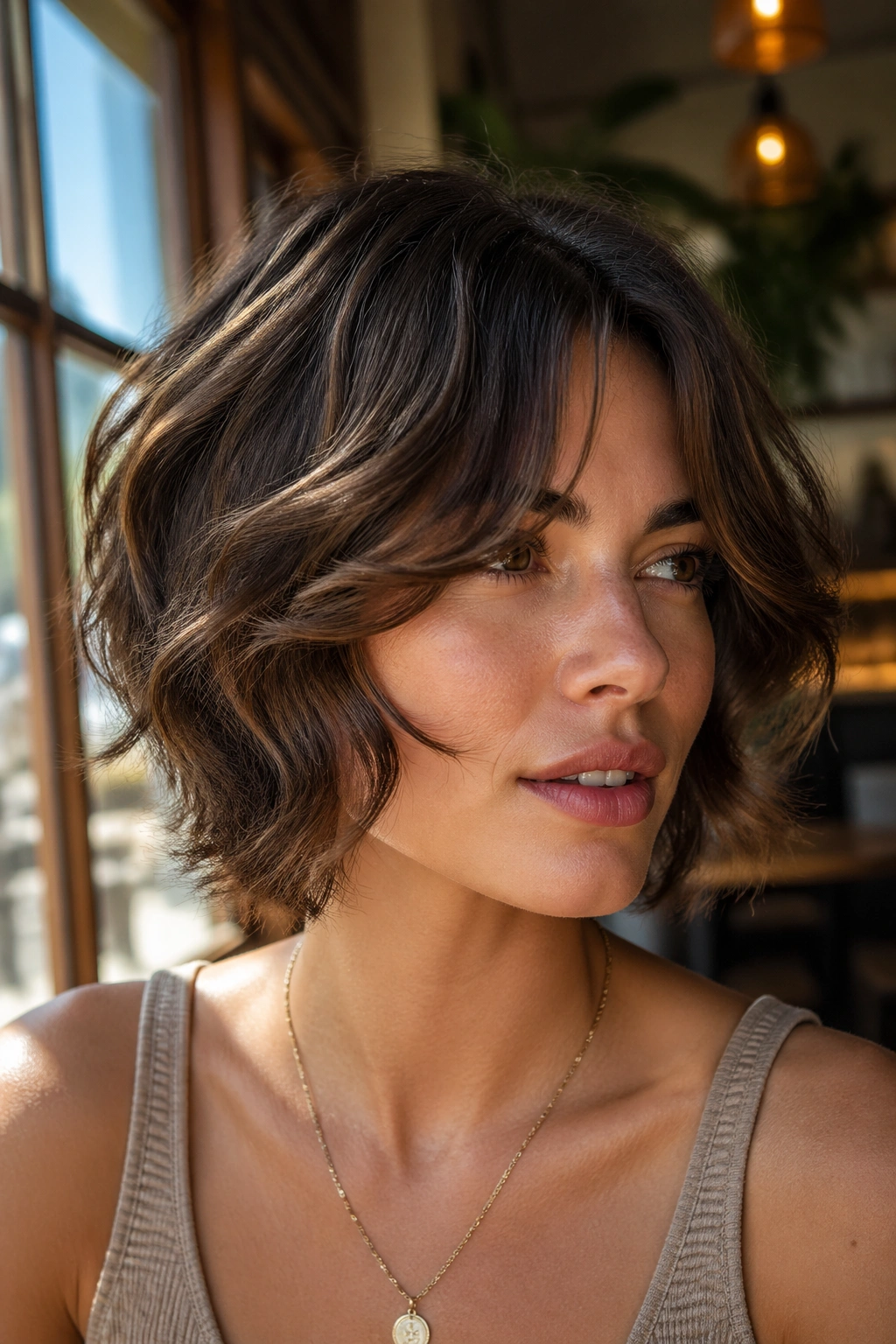
Winged layers sweep away from the face instead of falling straight down, and that little flare changes the whole mood of the haircut. On wavy hair, the ends can curve outward naturally or be nudged with a brush so the face opens up a bit more.
This cut is especially useful if you want to soften the jawline without burying it in hair. The wings make the front pieces feel airy, while the back can stay shorter and choppier. That contrast keeps the shape from looking too sweet.
What to Look For
- Front pieces cut to cheekbone or lip length
- Softer taper at the jaw
- Layers that can sweep back, not just forward
- Enough weight left at the ends to keep the wings from flipping randomly
If you wear statement glasses or earrings, this shape leaves room for them. It is one of those small details that changes how the haircut reads on the face.
27. Shaggy Bixie
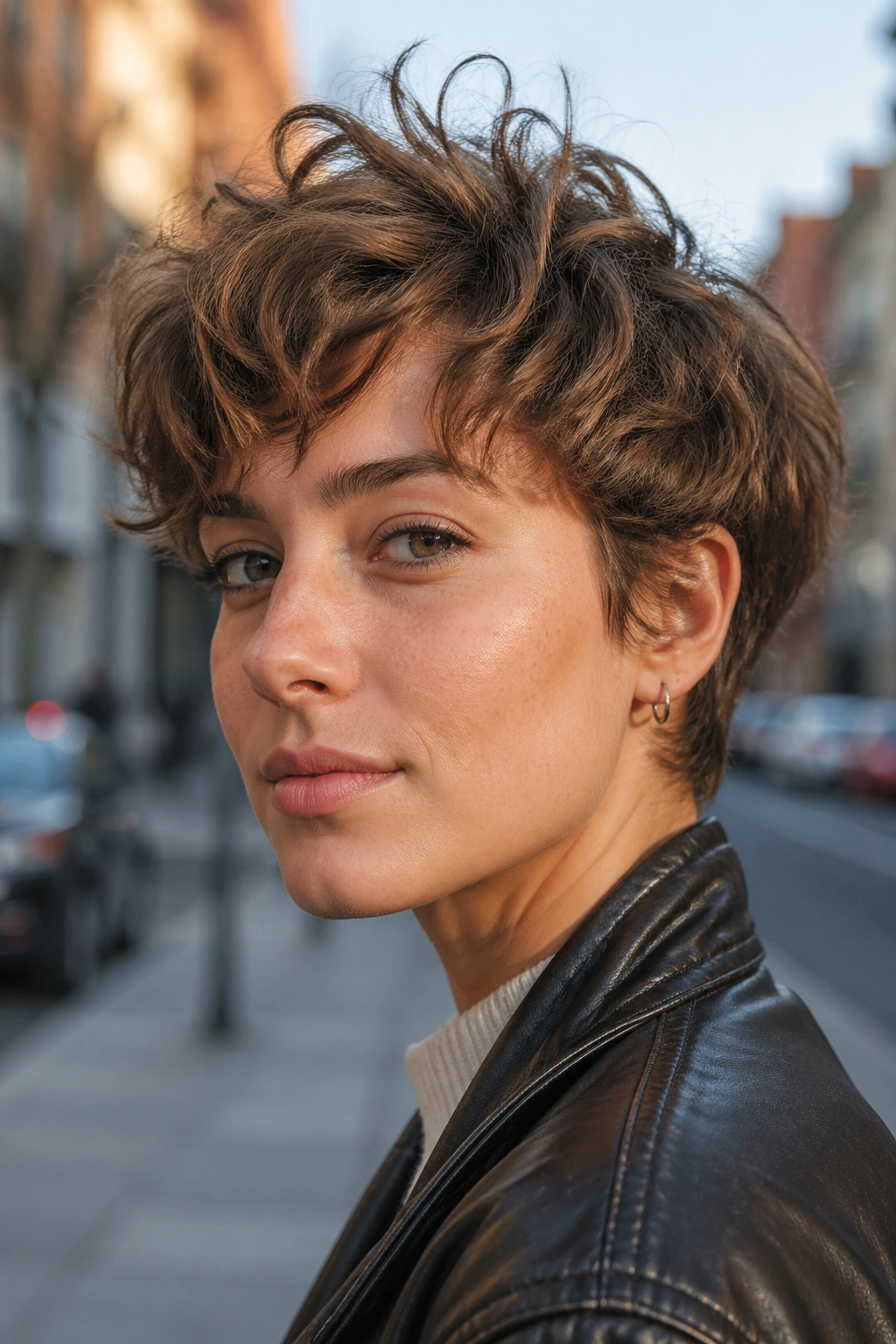
A shaggy bixie sits between a bob and a pixie, which is exactly why it makes sense for wavy hair. You get short sides, a little more length on top, and enough softness to stop the whole cut from feeling severe.
This is a useful option if you are growing out a pixie and want the transition to look intentional. The shag layers give the top some movement while the shorter back keeps the shape neat. It is a practical cut, but not a boring one.
Ask for the nape to stay tapered and the top to keep enough length to wave. If the top gets cut too short, the style loses the shag effect and becomes just a cropped pixie. That can be fine. It just is not the same thing.
For styling, a pea-sized bit of paste through the ends can add separation without making the hair crunchy. That’s usually enough.
28. Neck-Length Shag

Neck-length hair gives a shag room to move without entering bob territory. It sits low enough to feel substantial, high enough to stay light, and it tends to work well when you want the haircut to bend around the collar instead of resting on it.
This length is especially nice for wavy hair that falls flat when it gets too long. Once the weight is removed, the bends show up again. That is the simple part. The less obvious part is that the cut can also make the neck look longer and the shoulders a little lighter visually.
If you want it to read as shaggy rather than just layered, make sure the interior has enough broken-up texture. A smooth neckline with a rough top can look disconnected. A better version blends the layers through the side and back.
It is one of those cuts that can be dressed up with a tucked side or left loose and casual. No drama required.
29. Tapered Shag with Stacked Back
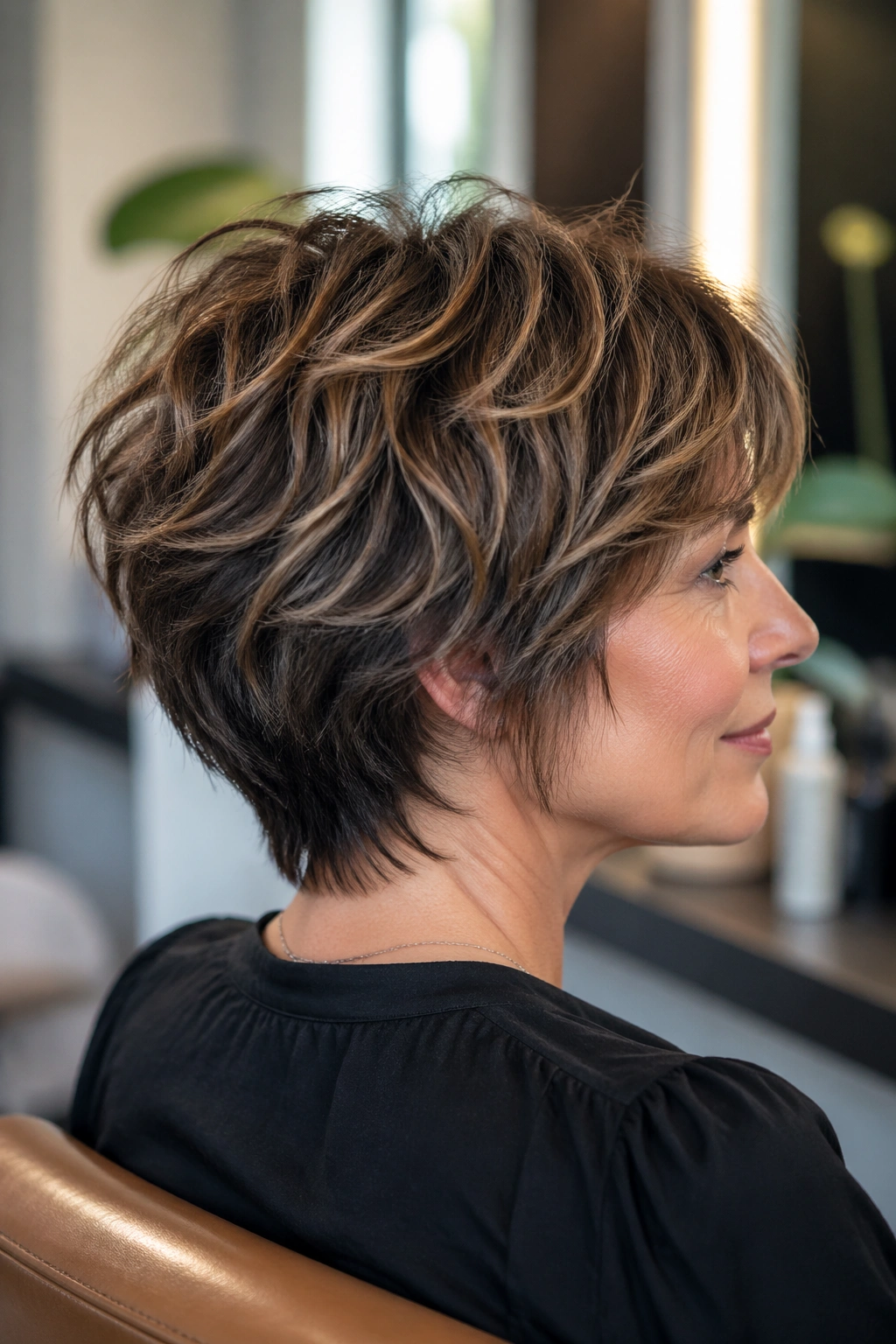
A tapered shag with a stacked back is a good answer for hair that lies flat at the crown and balloons at the sides. The stacked shape in the back adds lift and structure, while the taper keeps the outline from turning heavy.
This cut works especially well on wavy hair that needs direction. The layers build a little dome at the back of the head, which gives you shape from every angle. That can be a lifesaver if your profile tends to disappear when your hair gets too soft.
The stack should not be too dramatic. You want height, not a wedge. A soft graduation through the nape and crown gives the hair enough body to hold itself up without looking dated or stiff.
This is one of those cuts that looks more polished on purpose. It still has shag texture, but the silhouette feels controlled.
30. Flipped-Out Wavy Shag
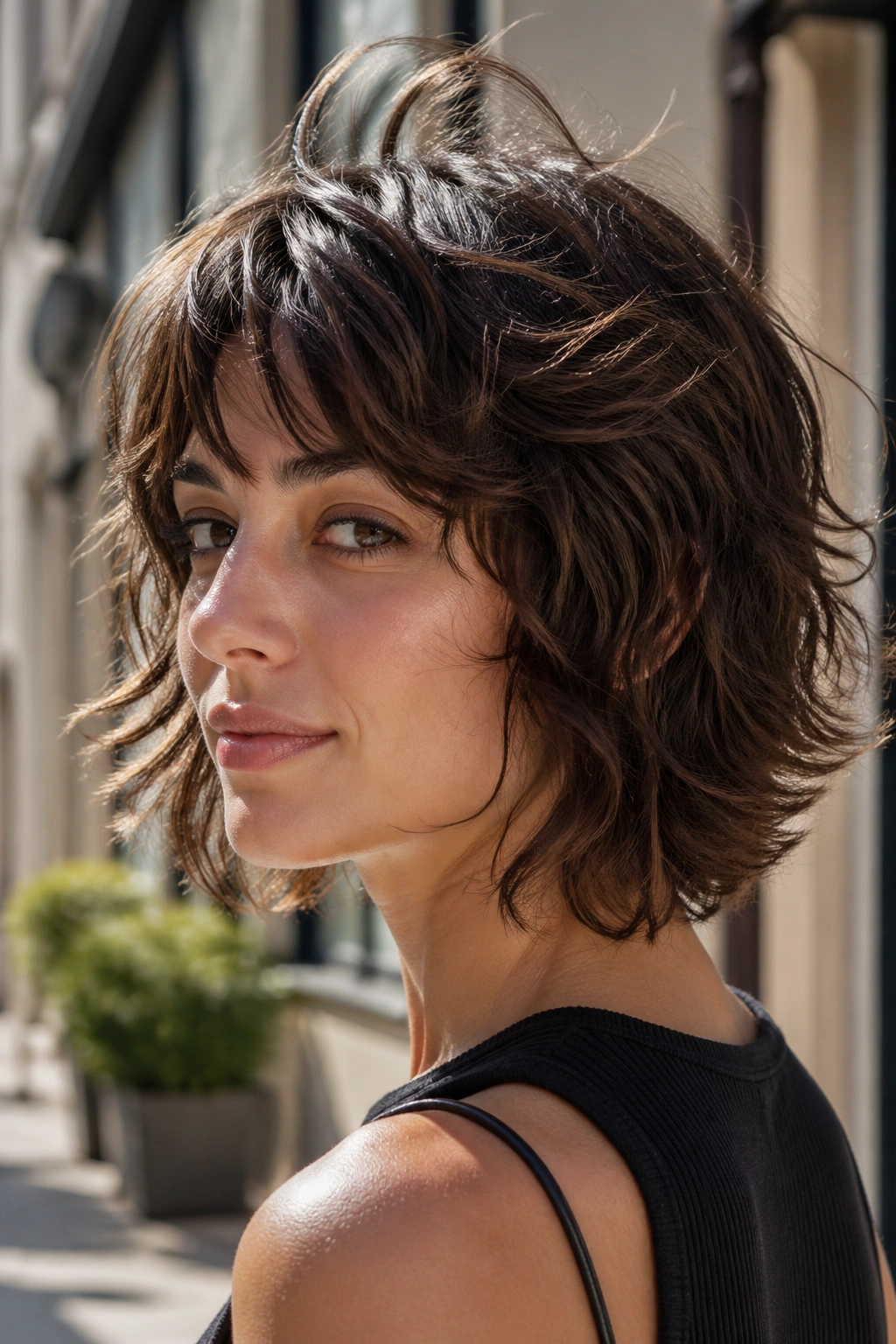
Flipped-out ends give a shag a little spring. They keep the haircut from folding inward and make the shape feel lighter around the shoulders and jaw. On short wavy hair, the flip can happen naturally, which is part of the charm.
You can get the effect with a round brush, a flat iron bend, or just the right cut. I like when the ends are left a touch blunt and the wave is encouraged to kick outward. That keeps the style from looking over-styled.
This cut is a good fit if you want movement that shows in photos and in real life, not just in a mirror. The flip gives the eye a place to land at the edge of the haircut. Small detail. Big visual payoff.
Keep the top layers loose so the ends stay the focus. If the crown gets too built up, the flip loses its clean line.
31. Minimalist Low-Maintenance Shag
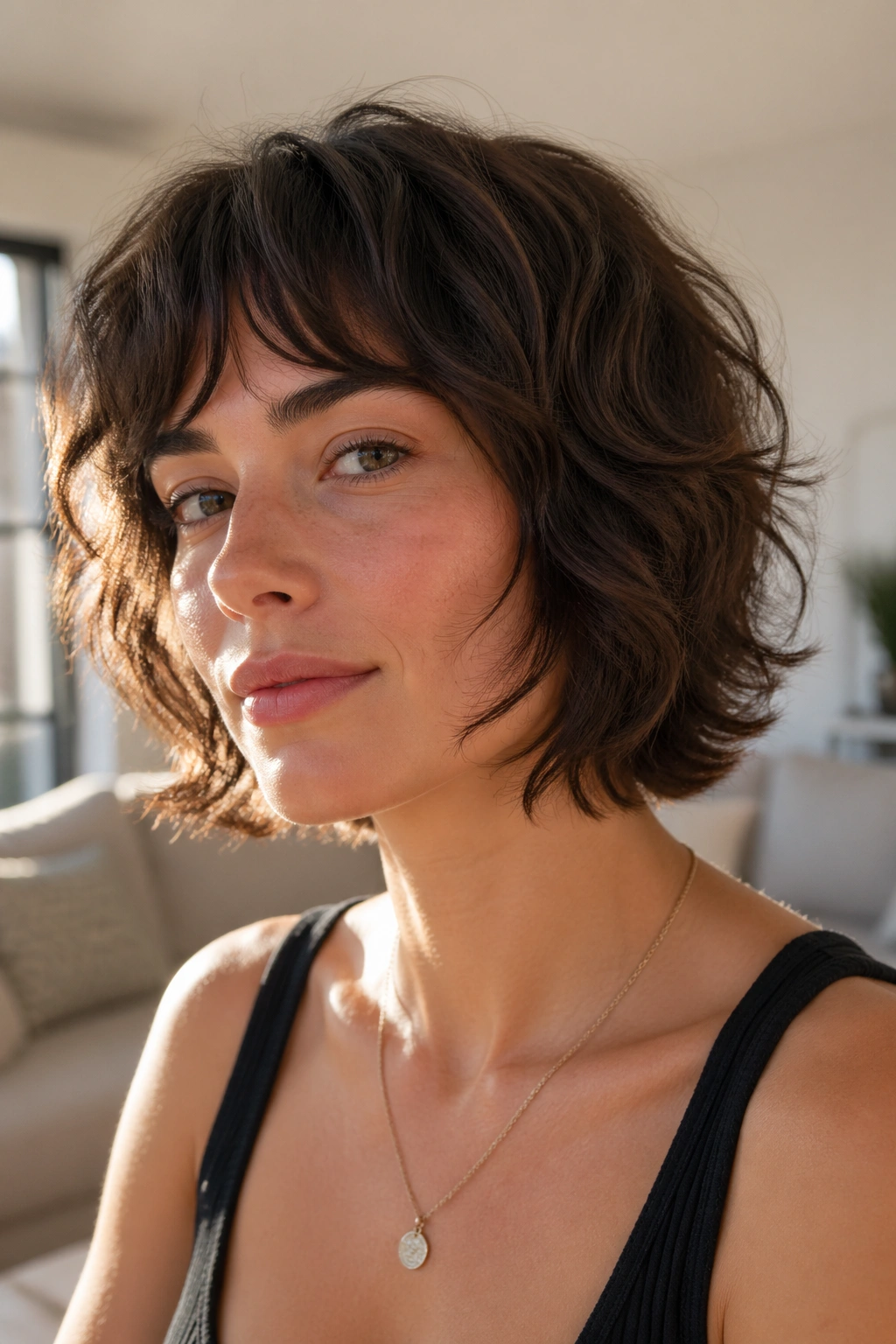
Not every shag needs to look wild. A minimalist low-maintenance shag keeps the layer count lower, softens the edges, and lets the wave pattern do most of the work. That is a very good thing if you want texture without a lot of fuss.
This version usually has a stronger base, fewer dramatic internal layers, and enough face framing to stop it from looking plain. It still counts as a shag because the movement is there. It just comes across in a quieter way.
Why People Like It
Because it does not demand a lot of styling tools. If you air-dry with a little leave-in cream and scrunch it once or twice, the cut usually lands in a decent shape. That is the appeal.
It also grows out nicely. You are not trapped in a high-maintenance cycle just to keep the haircut from losing its shape after a few weeks.
32. Bold Textured Shag with Dramatic Fringe

This one is for people who want the fringe to be the first thing anyone notices. A dramatic fringe can make a short wavy shag feel sharper, more styled, and a little more theatrical without needing a full color change or a dramatic length shift.
The key is not to let the fringe overpower the rest of the haircut. The texture through the body should still move, and the sides should still have enough softness to balance the front. If the bangs are too heavy and the rest is too thin, the cut reads unbalanced.
Ask for a fringe that can be worn forward or split slightly, depending on the day. A strong fringe is useful only if it can breathe a little. Nobody needs a slab of hair sitting on the forehead.
This cut suits people who like a little edge and do not mind being noticed. It is not subtle. That is the point.
33. Soft Romantic Short Shag
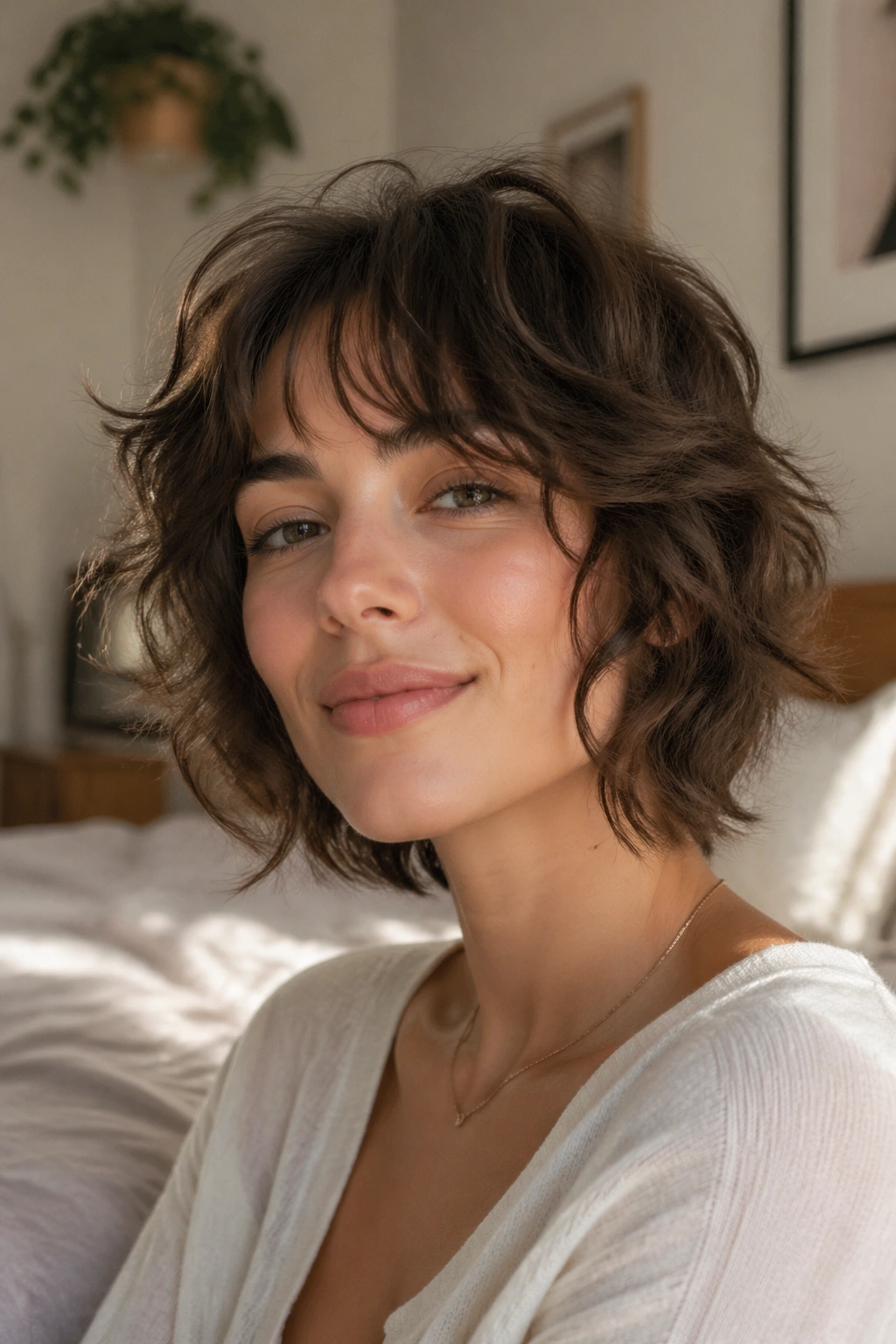
A soft romantic shag keeps the layers longer and the edges gentler, which gives wavy hair a more delicate finish. The front pieces usually sweep around the face instead of slicing into it, and the whole cut feels looser than a choppy shag.
This is a smart choice if you want movement but do not want the haircut to look rough. It flatters softer features, and it can be useful if you prefer hair that frames rather than interrupts. Think of it as the gentler side of shag styling.
A curling iron is not always necessary here. Many wave patterns will naturally bend into place once the cut removes enough weight. If you want a little more shape, wrap only the front sections around a large barrel and leave the rest alone.
The result should feel airy, not fussy. That is the line to keep in mind.
34. Shag with Shattered Ends
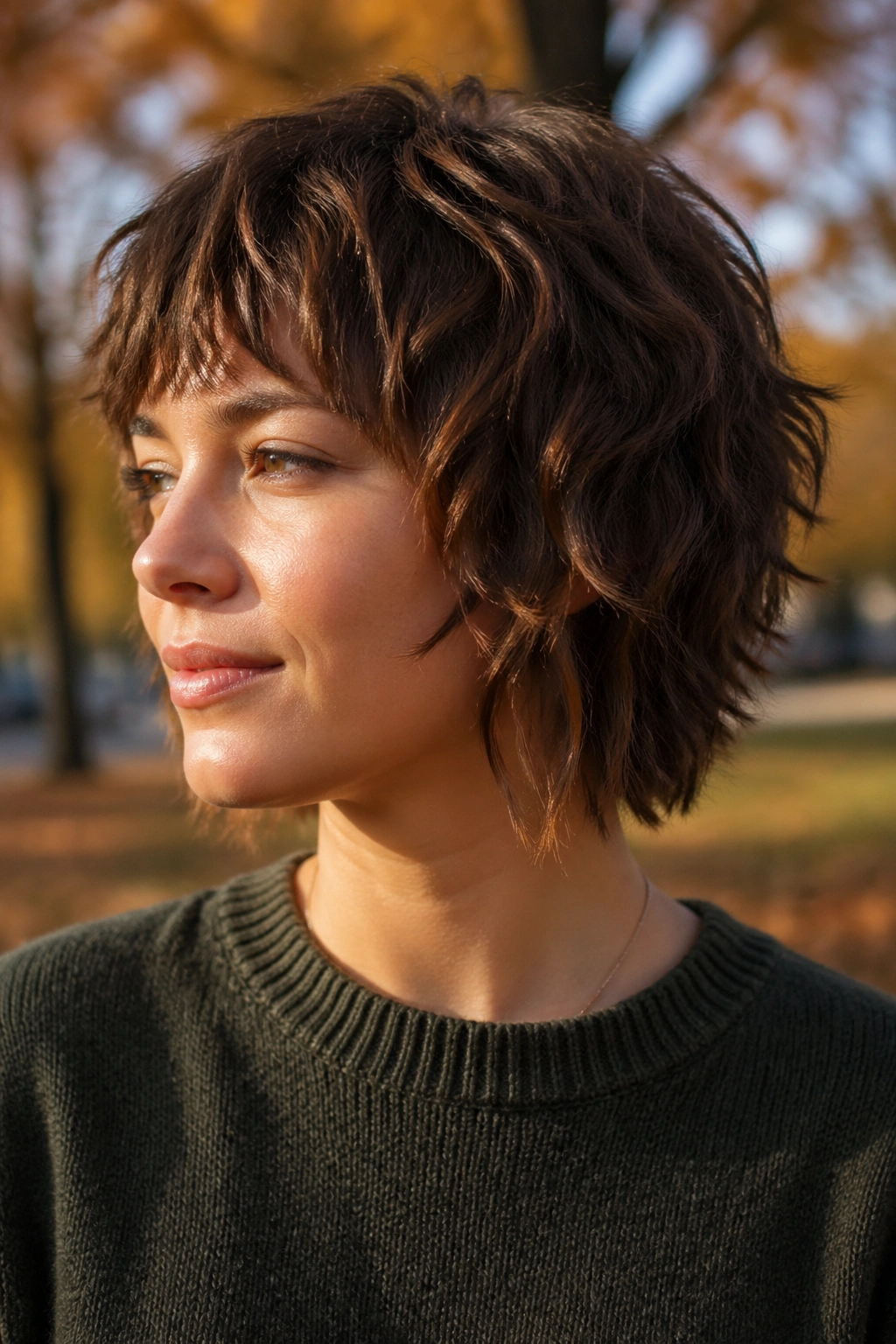
Shattered ends are exactly what they sound like: ends that have been point-cut or texturized so they do not sit in one solid block. On short wavy hair, that can make the entire cut feel lighter and more open, especially if the waves are thick or stubborn.
This is a useful option when the haircut looks too solid at the bottom. The shattered finish breaks up the edge just enough to let the waves separate. It is especially handy on hair that tends to puff out at the sides.
What to Watch
- Do not overthin the ends.
- Keep enough length to hold the shape.
- Pair the shattered edge with some interior layers so the cut stays connected.
- Use a small amount of cream, not a heavy balm.
The cut should feel broken up, not damaged. That distinction matters more than people admit.
35. Short Shag with Crescent Bangs

Crescent bangs are a nice compromise if you want fringe but do not want a heavy block at the front. They are shorter in the middle and longer at the sides, which creates a soft arc that works well with short wavy shag haircuts.
The curve helps the bangs blend into the rest of the haircut, and that makes the style easier to grow out. It also keeps the forehead visible enough that the cut does not feel closed in. On wavy hair, the bangs can follow the movement instead of fighting it.
This is a very good choice for people who want face framing without committing to a straight-across bang. The shape gives structure near the eyes and softness near the temples. That balance is useful.
If you try it, keep the center short enough to matter and the sides long enough to tuck into the layers. Too much of either one and the shape gets muddy.
Final Thoughts
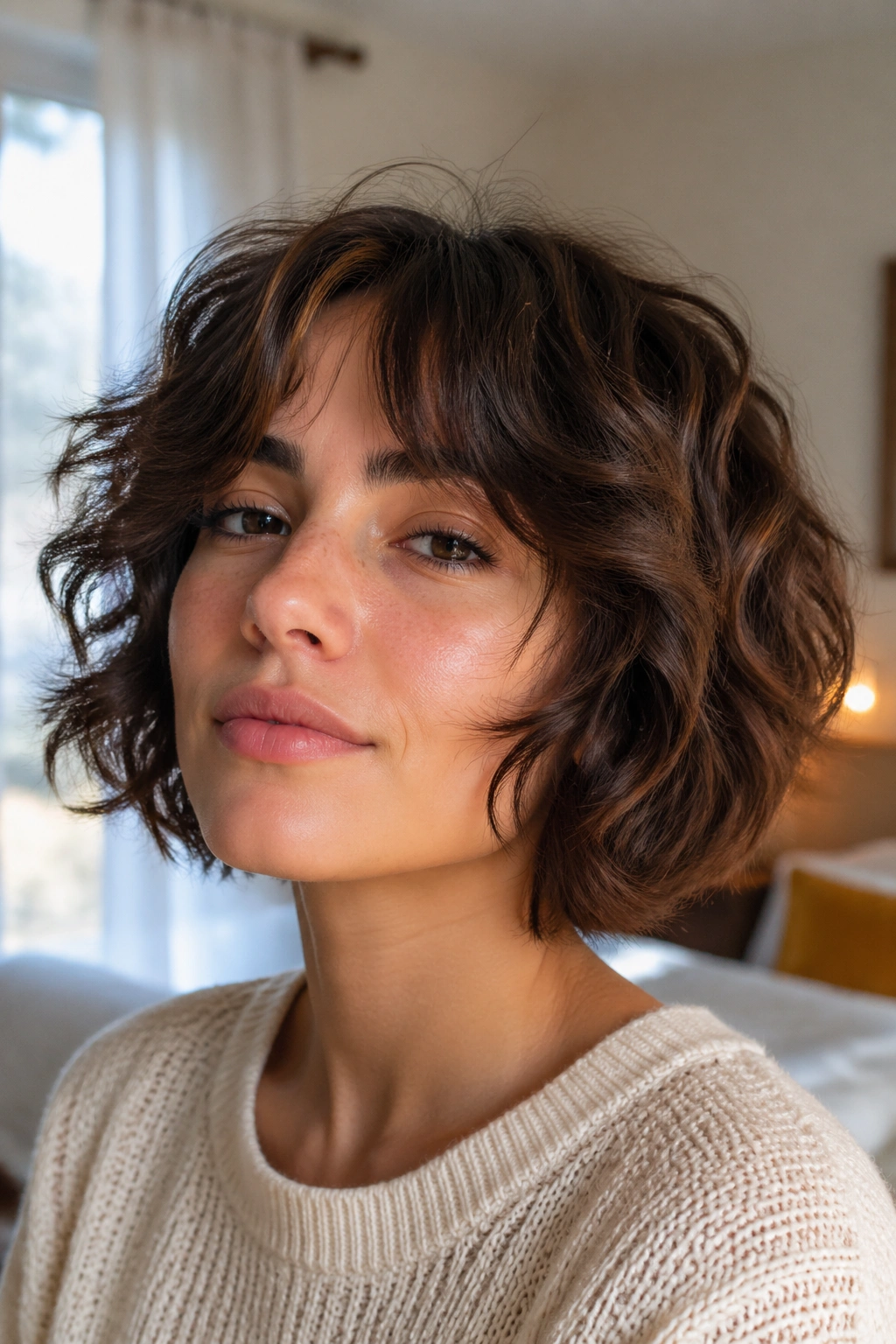
The best short wavy shag haircut is the one that matches your wave pattern, your density, and the amount of styling you’re willing to do before coffee. That sounds obvious, but it saves people from bad cuts all the time. A great shag on thick hair is not the same as a great shag on fine hair, and a fringe that looks casual on one face can feel heavy on another.
Bring photos, sure. But bring specifics too. Say where you want the length to hit, how much forehead you want covered, and whether you like the crown to sit high or low. Those details matter more than a vague “make it shaggy” request.
Short wavy shag haircuts work best when the cut leaves your hair room to bend. When that happens, the style feels alive instead of managed. And that’s the whole point.
