



Side bangs on natural curly hair are one of those styling choices that seem simple on paper but deliver outsized results in practice. The moment you sweep a section of curly hair to one side of the forehead, the whole face changes — the framing shifts, the proportions adjust, and the style takes on a directional energy that straight-across bangs simply don’t have. Side bangs for curly natural hair have a range of expressions, from a barely-there whisper of curl across one cheek to a dramatic, face-covering sweep that transforms the entire silhouette.
The Asymmetry Advantage
Side bangs are fundamentally about asymmetry — and asymmetry is one of the most powerful tools in styling. When a style is perfectly symmetrical, the eye tends to move straight to the center. When there’s asymmetry, the eye moves across the face, following the diagonal line created by the bang sweep. That movement makes the face look more dynamic, more interesting, and often more flattering than a perfectly balanced, centered style.
On natural curly hair, this asymmetric effect is amplified by the volume and spring of the curl pattern. A side bang isn’t just a flat swoosh of hair — it’s a curl cluster that moves, bounces, and frames the face with texture and dimension. The visual weight of a curly side bang is greater than a flat side bang, which means the asymmetry is more visible and more dramatic.
For women who feel their face looks flat or undefined when hair is pulled back, or who want to draw attention to their eyes and cheekbones, a side bang does this work efficiently and with minimal effort.
Which Side Is Your “Good Side”?
Most people have a preference for one side over the other — a side of the face they photograph better from, a side where the hair falls more naturally, or simply a side they feel looks better. A side bang should generally sweep toward the side you feel less confident about, since the bang’s job is to frame the face in a way that creates symmetry or softens features. But this isn’t a rule — it’s a suggestion.
If you’re genuinely unsure, look at photos of yourself from both sides and consider: which side has a feature you’d like to partially frame? A high or prominent forehead can be partially covered by a side bang. An asymmetric jawline can be softened on the more angular side. Acne, a scar, or any feature you’d prefer to minimize can be partially obscured by a side bang on that side.
The curl pattern also has opinions about which side it prefers. Hair typically has a natural growth direction, and on one side it may fall more easily than the other. Work with your hair’s natural direction rather than fighting it.
The Length Question — How Long Should Your Side Bang Be?
Side bangs on curly hair can be worn at a range of lengths, and the length significantly changes how the style reads.
Short side bangs — sitting at eyebrow level or above when stretched — create a bold, defined frame. On curly hair with shrinkage, these actually sit higher than you might expect once the curl springs up. Short side bangs are a commitment and a statement.
Mid-length side bangs — reaching the top of the cheekbone or the outer corner of the eye — create a soft, romantic frame that covers the side of the forehead and partially obscures one eye. This is the classic side bang length on curly hair and the most commonly requested.
Long side bangs — reaching the chin or even the shoulder on longer hair — blur the line between “bang” and “face-framing layers.” These long sweeping pieces have serious impact on natural hair, where the length is a statement about how much volume and texture is in the curl pattern.
Shrinkage Planning for Side Bangs
All the same shrinkage considerations from other bang styles apply here, but with a directional twist. On a side bang, the shrinkage affects not just the length but also the angle of the sweep. A bang that’s cut to fall across the forehead at a particular angle may spring up and create a different angle once the curl sets.
The fix: Ask your stylist to account for shrinkage by cutting the side bang slightly longer than the intended finished length. After the style is complete and the hair is dried in its natural curl state, assess the length and trim if needed. Starting too long is always better than starting too short.
If you wear the side bang with some degree of stretching — a light diffuse pulling the bang section down, or a slight tension during air drying — the shrinkage factor becomes less dramatic. Decide whether you want to wear the bang fully natural or with some stretching before telling the stylist what length to cut.
Styling and Holding the Sweep
Getting a side bang to stay swept in one direction on curly hair — a hair type that often has strong opinions about where it wants to sit — requires the right technique and products.
A light hold gel on the bang section while damp, smoothed in the direction of the sweep with your fingers or a soft brush, then diffused in that direction or pinned in place while air-drying, holds the sweep without stiffness. The gel creates a light structure that keeps the curls falling where you put them.
A soft pin or clip at the temple, placed just behind the ear on the sweeping side while the bang dries, helps train the hair to fall in the intended direction. Remove after the hair is fully dry.
On humid days, a stronger hold gel or a light anti-humidity spray applied over the styled bang section can prevent the curls from reverting or frizzing and losing their sweep direction.
Maintenance Between Washes
Side bangs on curly hair require daily attention, but not a daily wash. A morning refresh routine keeps them looking defined and swept: lightly dampen the bang section with a water spray bottle, apply a small amount of curl cream, coil any separated curls back with your fingers, and let dry naturally or use a diffuser briefly. This restores definition and re-establishes the sweep direction.
At night, pin the side bang section in its sweep direction with a soft clip or bobby pin before putting on a satin bonnet or scarf. This prevents the bang from drying in a random direction overnight and saves you the refreshing time in the morning.
1. Classic Side-Swept Curl Bang
The most straightforward side bang expression on curly hair: a section of curls swept from one side of the forehead to the other, across the brow line. The curls stack on top of each other slightly as they sweep across, creating a layered, textured diagonal across the forehead.
Apply curl cream and light gel while damp. Use your fingers to sweep the bang section in the desired direction. Clip in place at the temple while air-drying. Release when fully dry.
The result is effortless once you learn the direction your hair wants to go. This is the foundation look that all other side bang variations build from.
2. Long Side Bang Over One Eye
A bang that’s long enough to partially cover one eye — reaching from the temple to somewhere between the nose and chin on the cheek side. On curly hair, this means a long, defined curl or cluster of curls that falls across the eye, creating a slightly mysterious, fashion-forward look.
This bang length requires more product for hold and more styling attention to ensure the curl falls cleanly rather than frizzing out over the eye. A stronger-hold gel or a serum to define and smooth the curl section is essential.
Edgy, bold, and undeniably cool. Not for everyday wear for most people, but incredible for creative settings and events.
3. Side Bang on a Natural Afro
A side bang on an afro creates a directional element on a style that’s otherwise fully rounded and symmetric. Pick out the afro to its full volume, then use your fingers or a comb to encourage the front section to fall to one side of the forehead.
The afro’s natural volume means the “bang” is a section of the afro that falls differently from the rest — not a distinct fringe, but a directional shift that creates visual asymmetry. On a large afro, this subtle shift has enormous impact because the overall volume amplifies every detail.
4. Braid-Out Side Bang
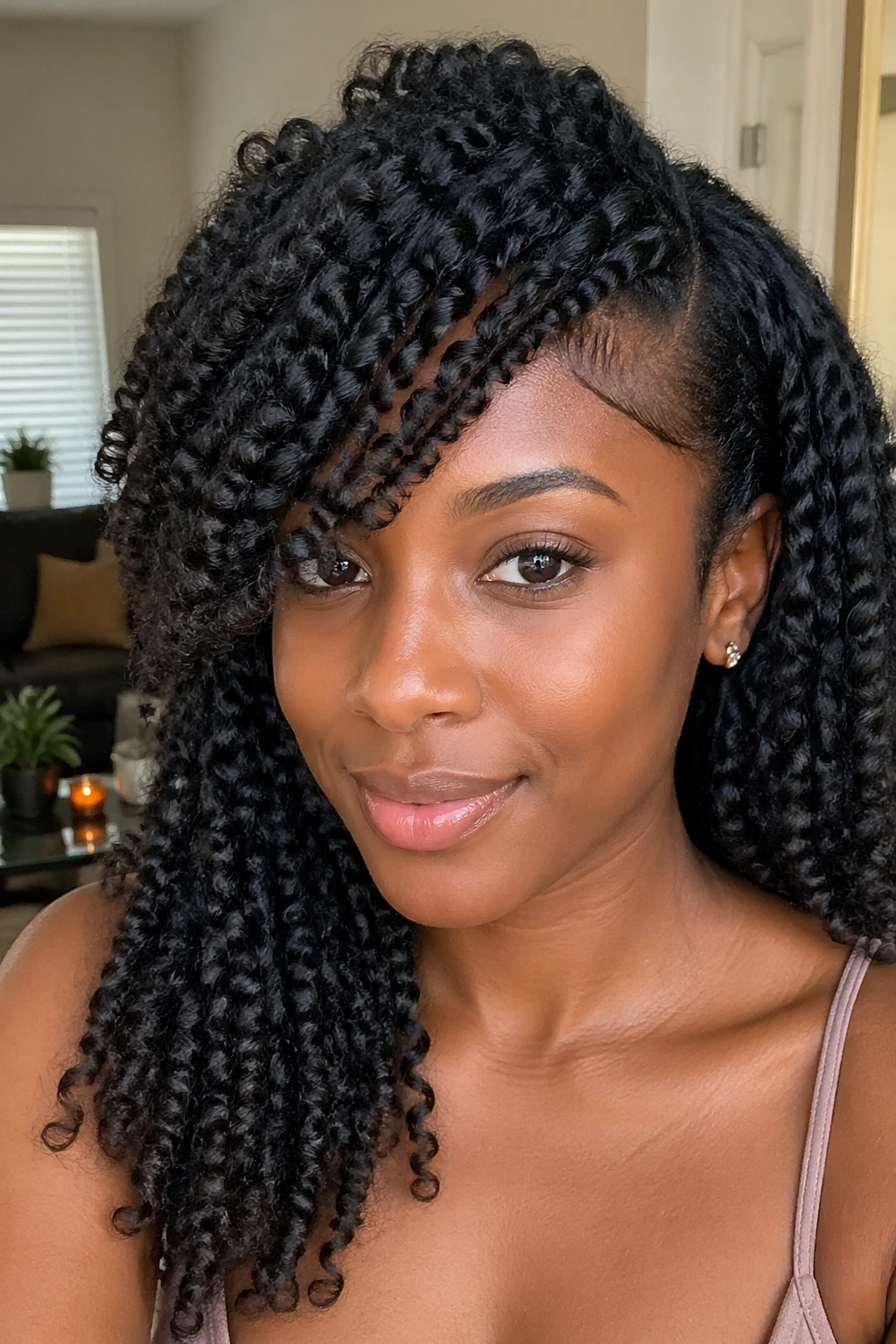
After doing a braid-out on the rest of the hair, the front section of the braid-out falls in a wavy, defined pattern that can be swept to one side as a natural side bang. The braid-out wave pattern in the bang section is different from a wash-and-go curl — it’s stretched, defined, and more predictable in how it falls.
The braid-out side bang on type 4 hair gives you a defined, elongated bang section that sits more consistently at the forehead than a fully natural coil would. This is a great option for naturals who want a side bang without heat and without the extreme spring of an unstyled coil.
5. Twist-Out Side Bang
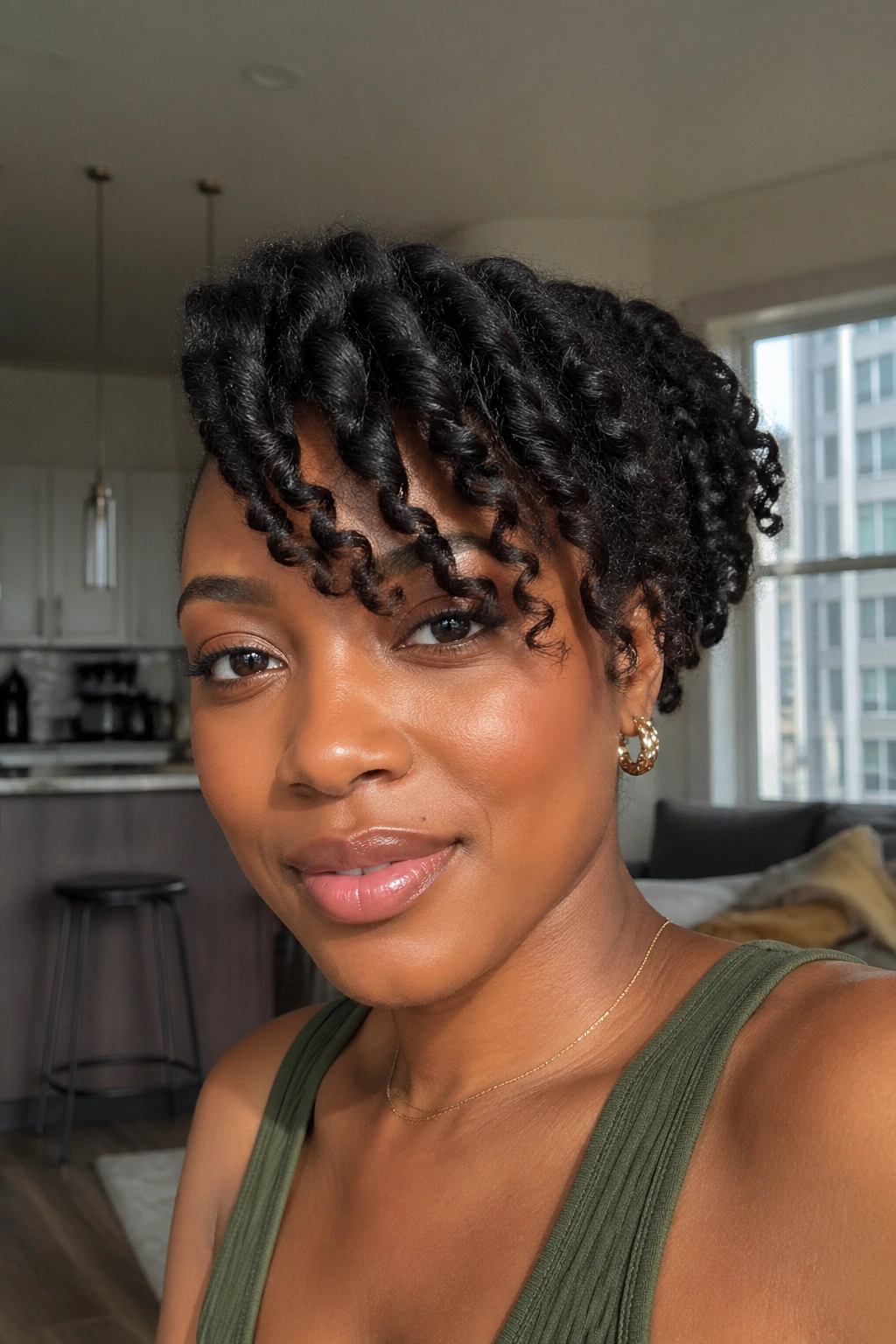
Similar to the braid-out version but with the wave pattern of a twist-out — a softer, more spiraling wave than the angular braid-out pattern. The front section of the twist-out is encouraged to fall to one side of the face while the rest of the style stays in its twist-out shape.
On type 3C to 4A hair, twist-out side bangs have a particularly beautiful quality — the defined S-wave spirals across the forehead in a flowing, graceful sweep that looks like it required much more effort than it did.
6. Side Bang With Baby Hairs
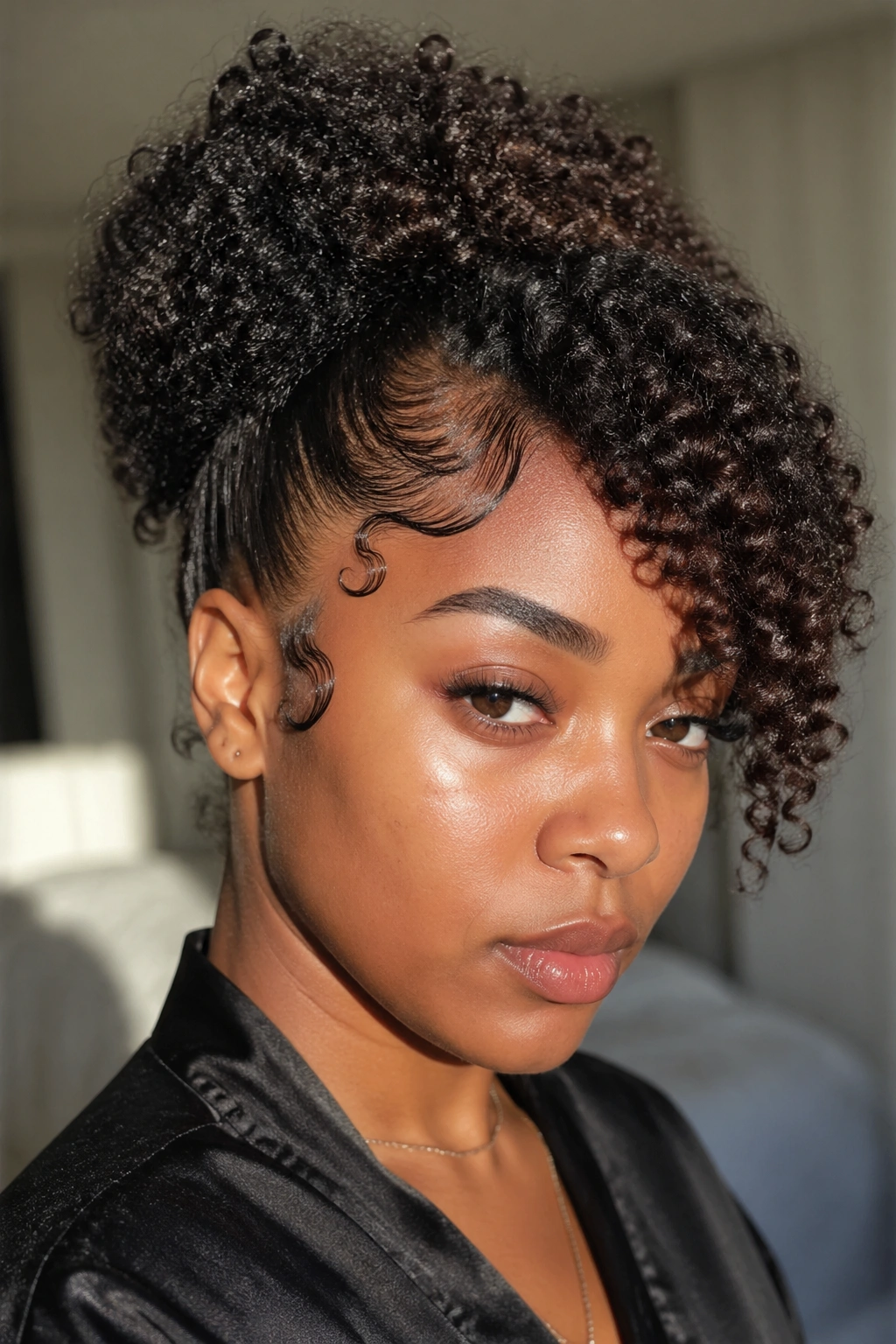
The side bang itself frames the upper portion of the face. Baby hair art at the temple on the banged side frames the lower portion. Together, the side bang and the styled baby hairs create a complete, detailed framing system for the face.
Styling Both Elements
- Style the side bang first, swept in the intended direction
- Let it dry completely before touching the baby hairs
- Apply edge control to the baby hair area and use a fine brush for the design
- Classic swoops, waves, and letter-C patterns at the temple look best with a side bang
The combination is detailed and expressive — a style that’s clearly been thought through.
7. Asymmetric Side Bang With Protective Style
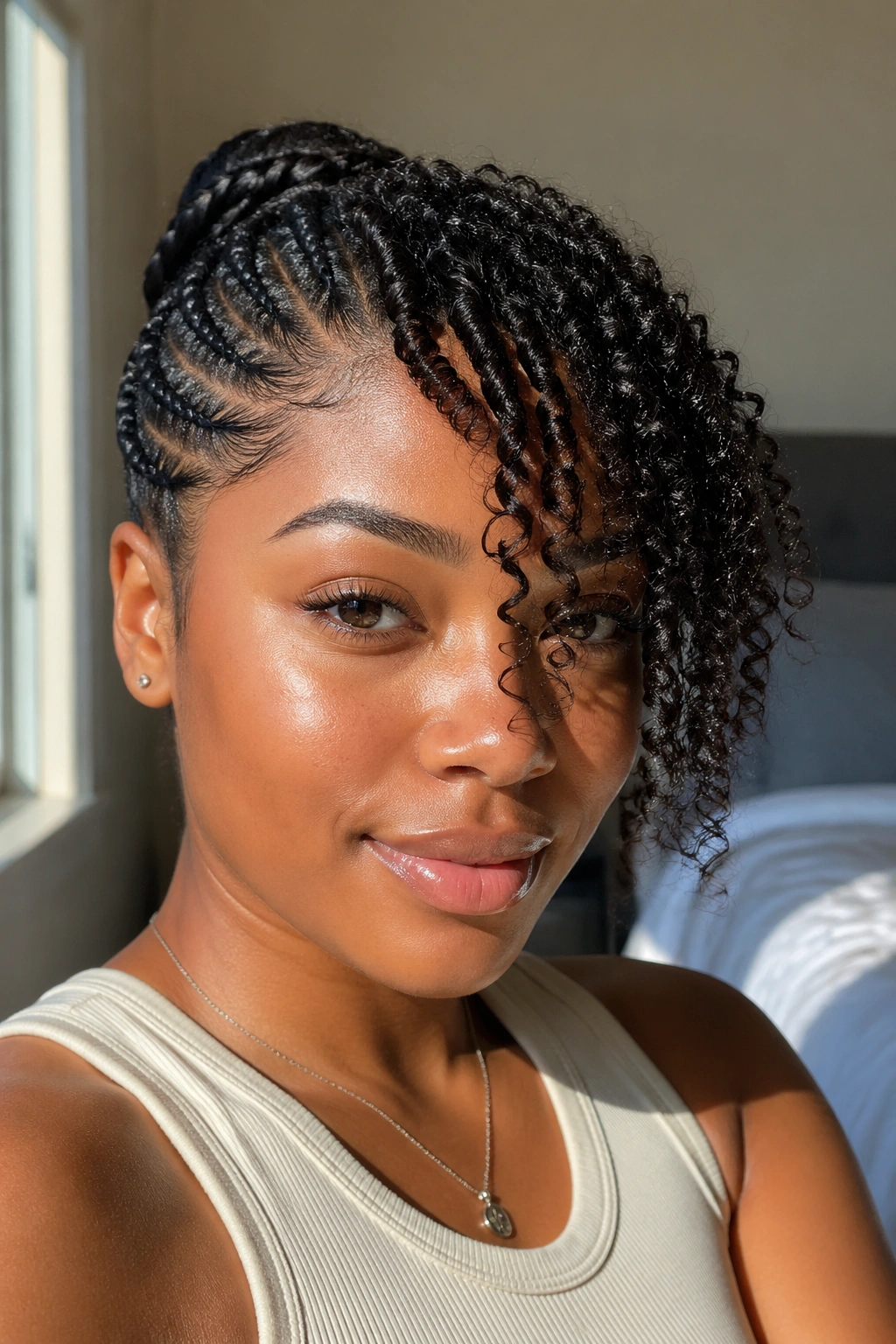
A side bang left free while the rest of the hair is in a protective style — braids, twists, or a bun. The protective style is neat and contained. The side bang is the single textured, free element that provides visual interest at the front.
This combination is practical and stylish simultaneously. Your natural hair is protected at the back and sides while the front bang showcases your curl texture. It also means less of your hair is exposed daily, which makes this a lower-manipulation week style.
8. Bold Single Curl Side Bang
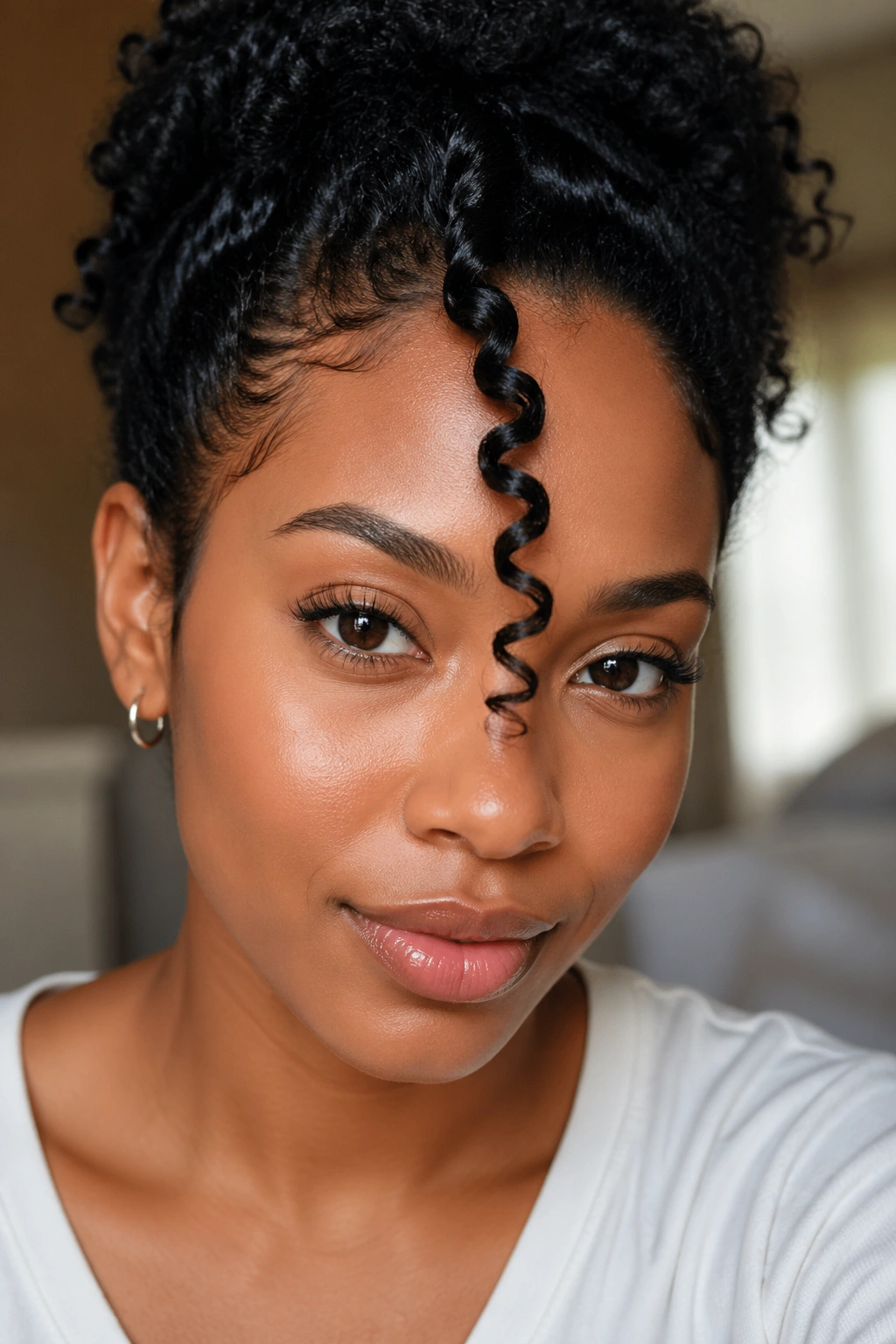
Rather than a full section of swept curls, a bold single curl side bang is one large, defined ringlet hanging from the temple across the forehead. This is deliberate and minimal — one curl, placed precisely, doing all the work.
Create the single curl by sectioning out a strip of hair from the temple, applying curl cream heavily to it, coiling it around your finger or a small rod, and letting it set. The rest of the hair is styled in its normal way. The single curl side bang is the sole framing element.
It reads as artistic, precise, and confident. Minimalism at its most intentional.
9. Side Bang on a High Puff
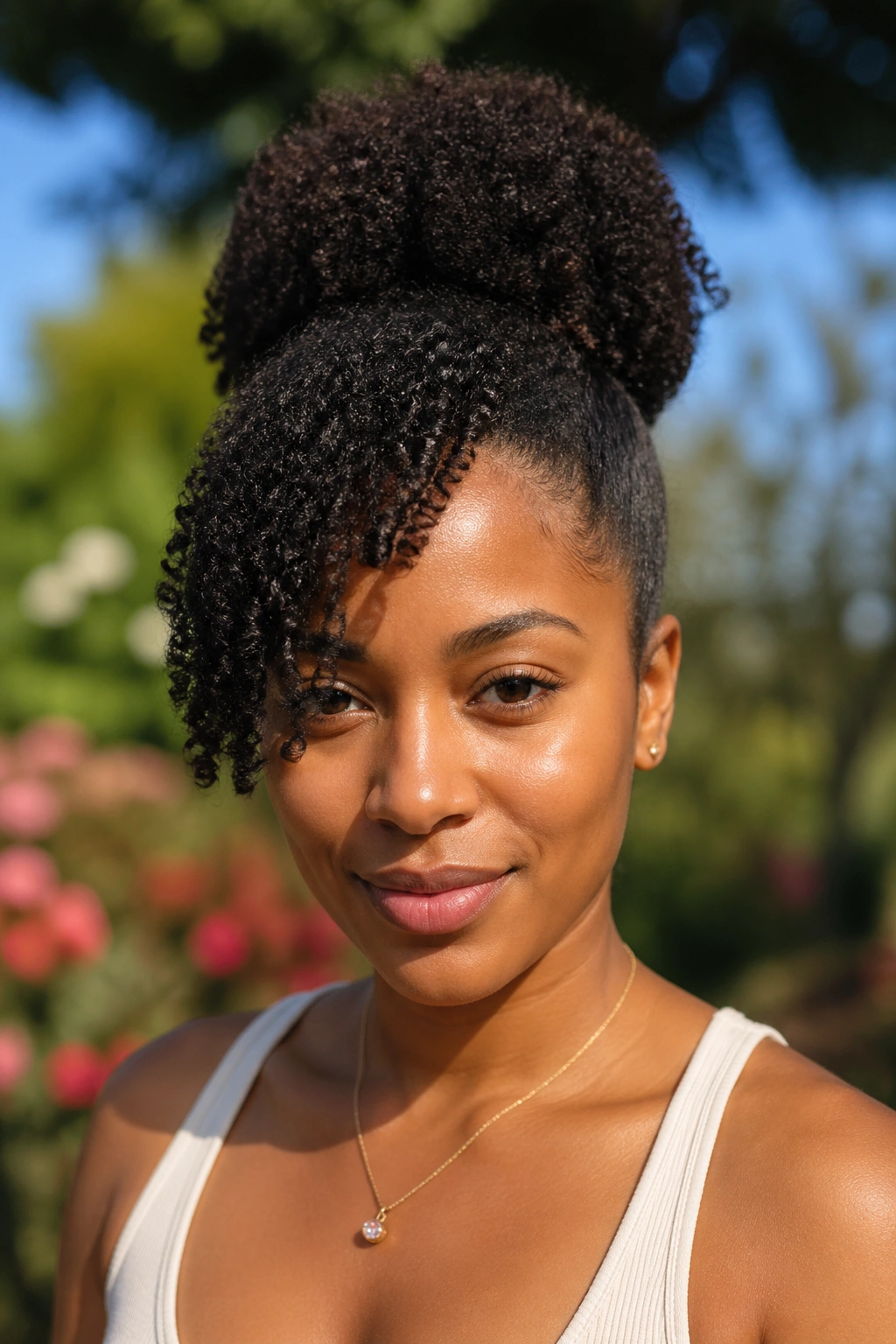
A high puff with a side bang — where the bang section is left out of the puff and swept to one side at the forehead. The puff rises at the crown in its rounded, full shape. The side bang frames the forehead on one side, creating an asymmetric contrast with the centered puff above.
This is a playful combination that works especially well on type 4 hair. The bang section is the only truly “down” part of the style, which gives it maximum visibility against the upswept puff.
10. Curly Side Bang at Mid-Cheek Length
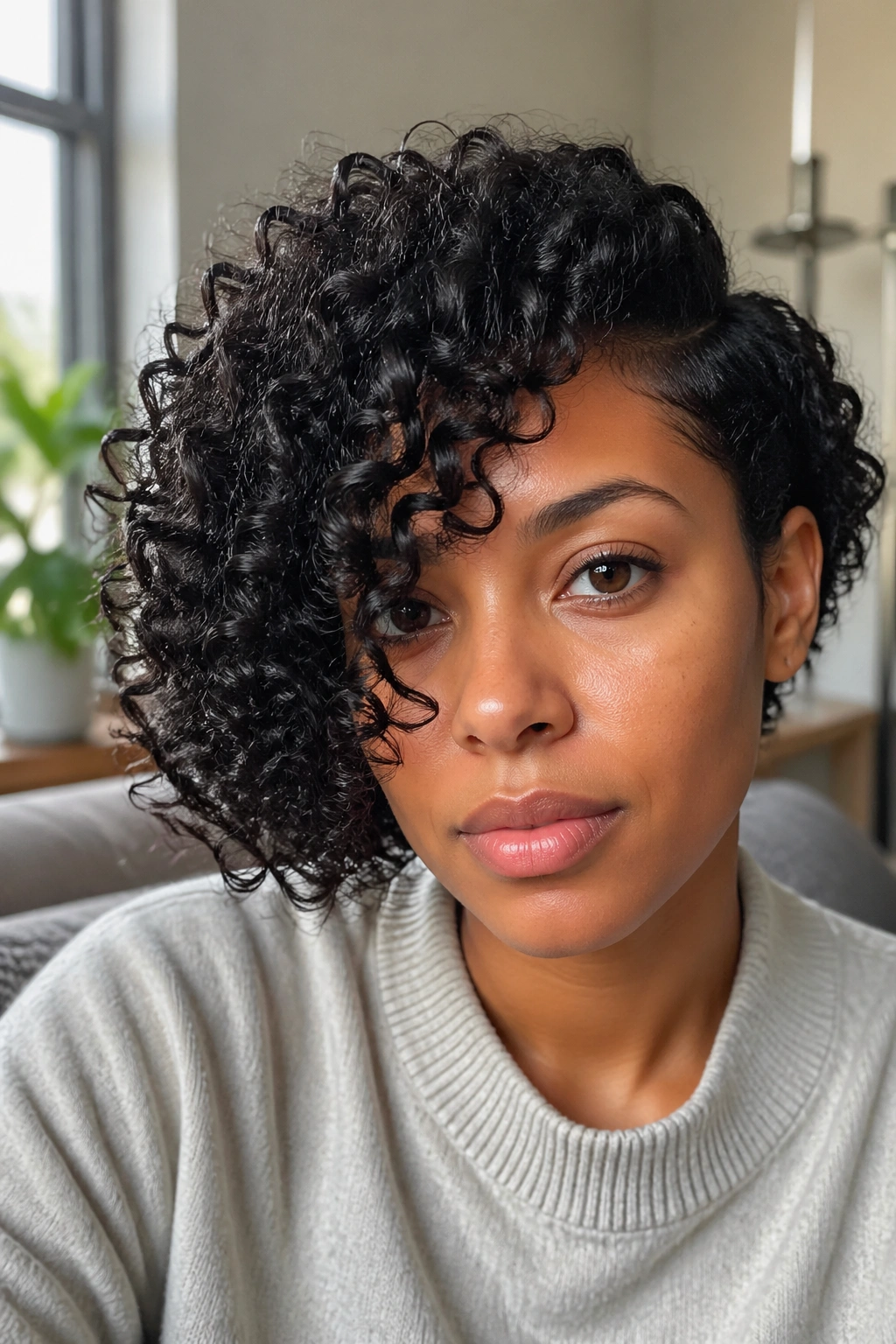
A medium-length side bang that falls to mid-cheek — long enough to be dramatic without completely covering the face. The curls cascade across the forehead from one temple to the opposite cheek, sweeping in a diagonal arc that covers a significant portion of the forehead.
At mid-cheek length, the side bang adds significant visual softness to the face, particularly on square or angular face shapes where forehead and jaw width are similar. The diagonal line the bang creates visually narrows the face — a flattering effect for most face shapes.
11. Roller Set Side Bang
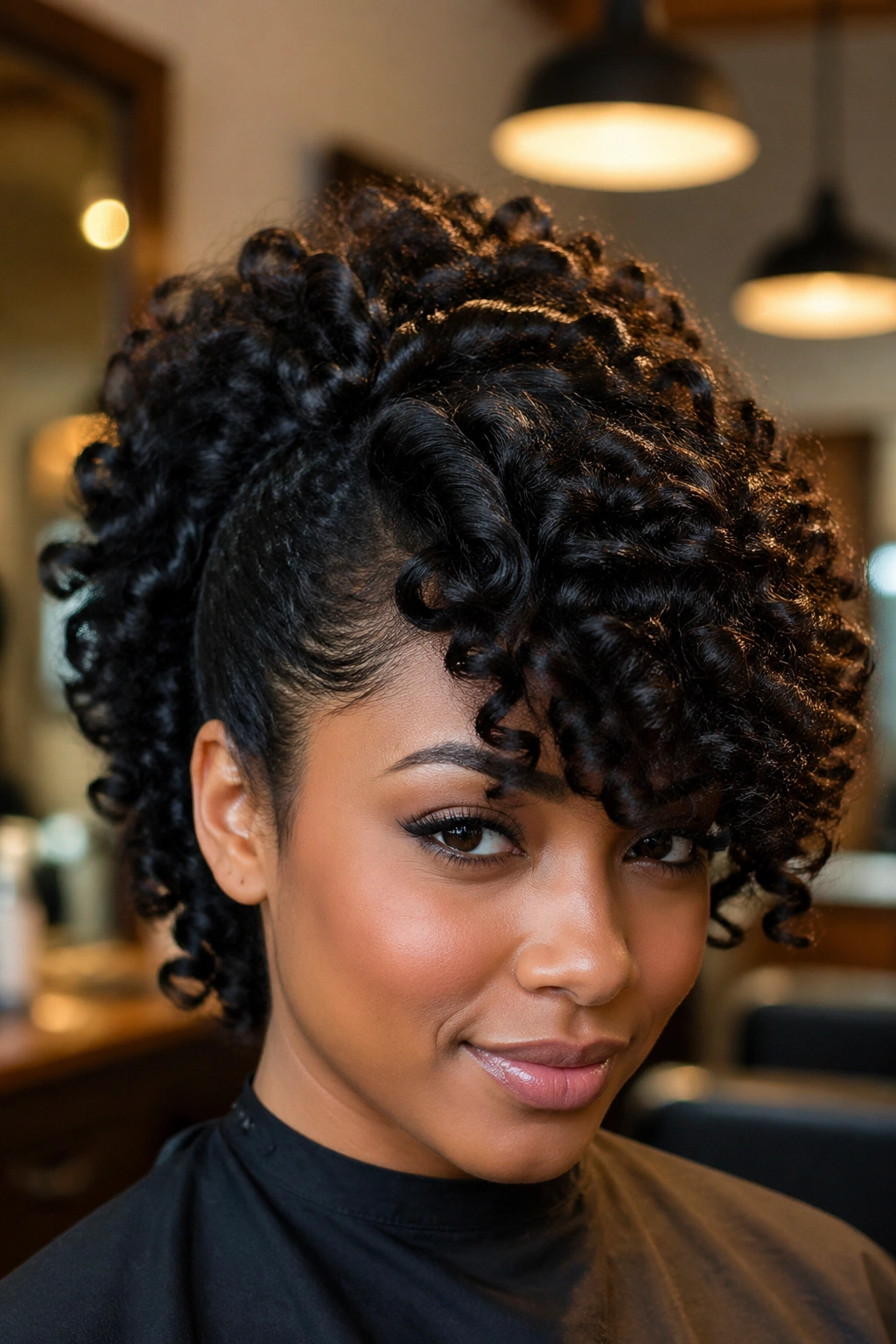
Set the side bang section on a medium-sized roller while damp, directing the roller in the sweep direction. Allow to dry completely — longer than you think is necessary. Release the roller gently and let the curl unfurl naturally in the sweep direction.
A roller-set side bang is rounder, more defined, and more predictable than a wash-and-go or braid-out bang. The roller gives the curl a precise, uniform shape that holds throughout the day.
12. Natural Side Bang Without a Cut
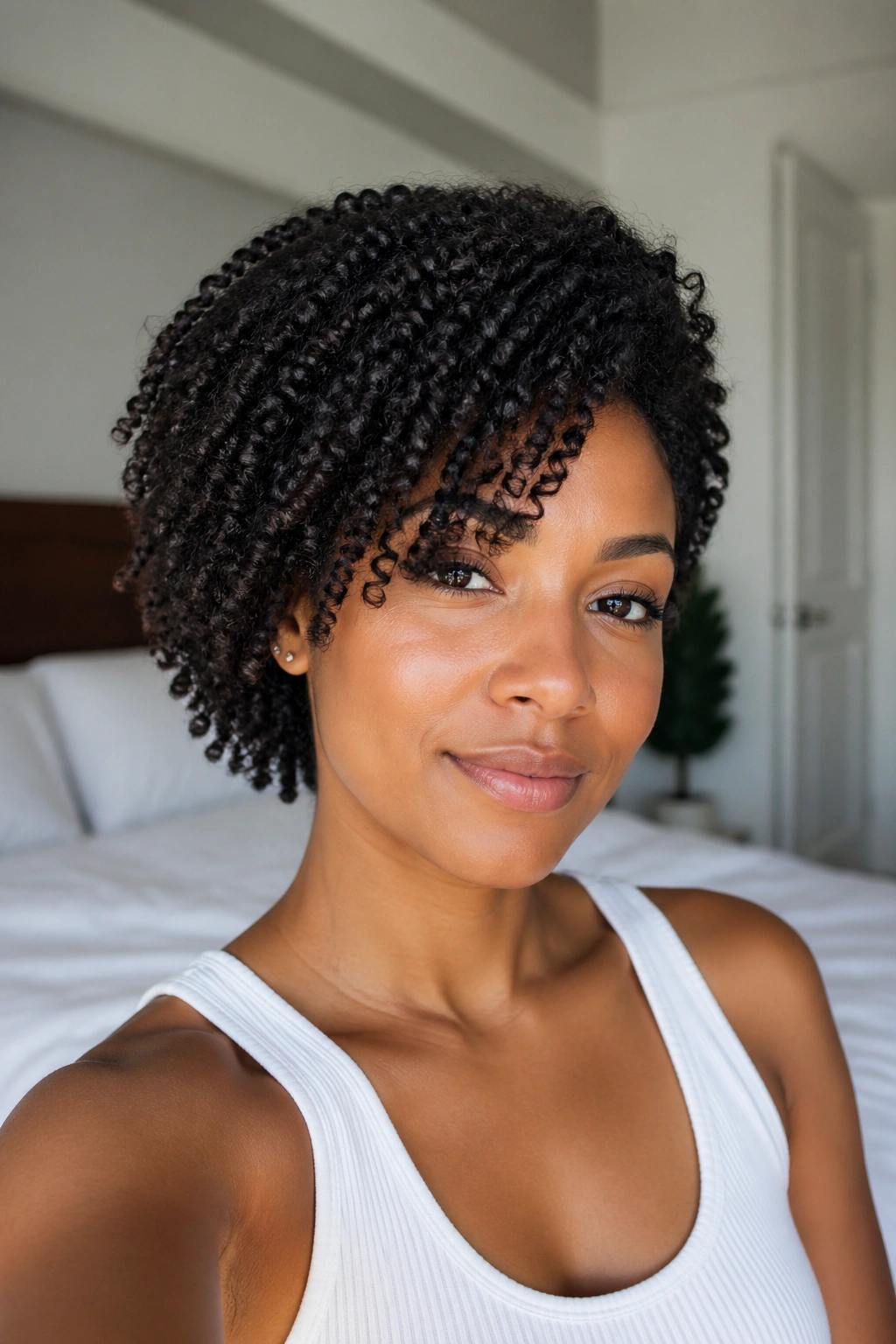
No scissors required. Encourage the front section of your wash-and-go or twist-out to fall to one side by applying products in the sweep direction, pinning in place while damp, and directing the diffuser airflow toward the sweep side.
Over time, with consistent styling in the same direction, the front section of your hair naturally falls that way — developing a kind of muscle memory. This is the commitment-free side bang — all the visual effect, none of the scissors.
13. Side Bang With a Deep Side Part
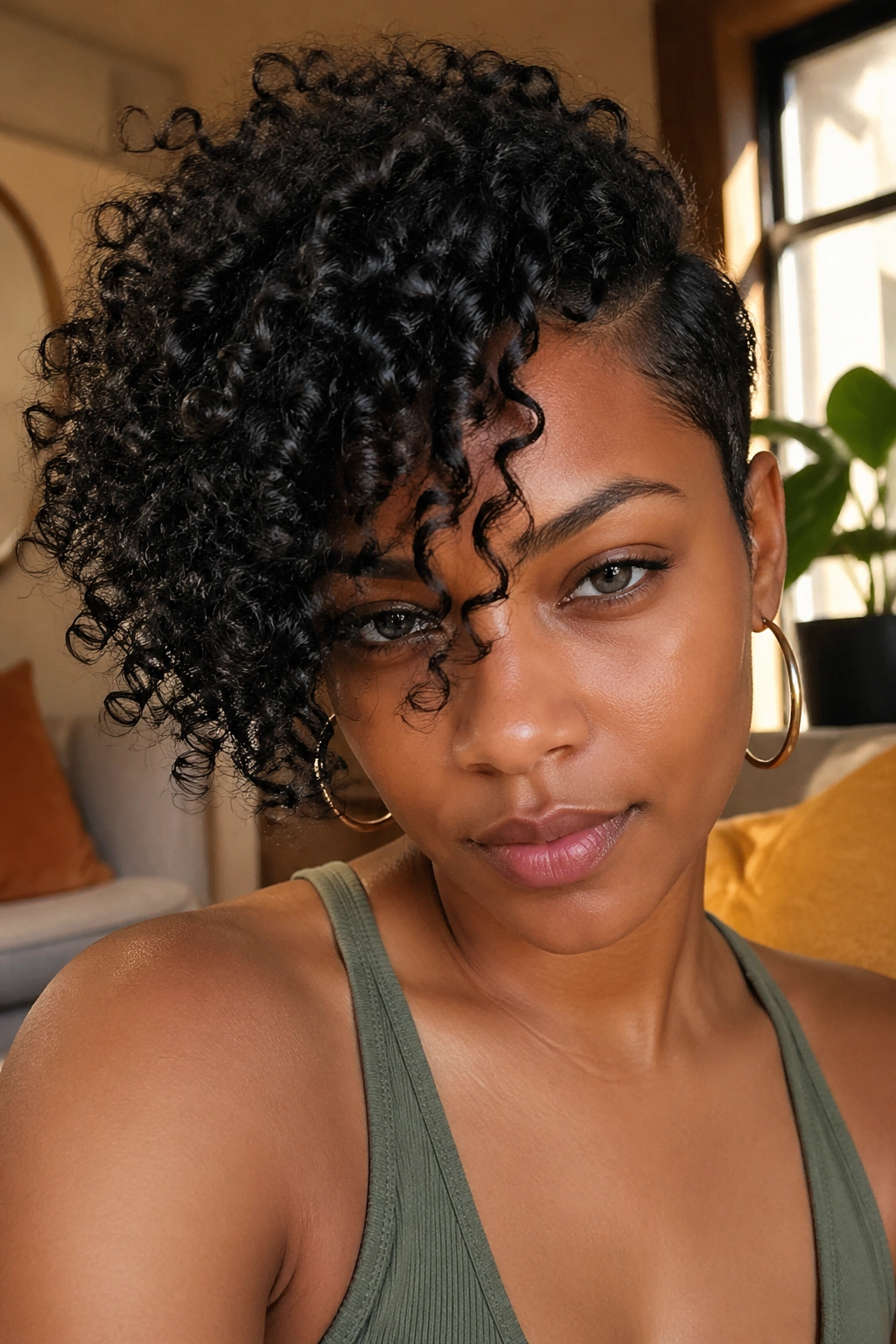
Combining a side bang with a deep side part creates the most dramatic asymmetric look. The deep side part places all the volume on one side of the head, and the side bang sweeps in the same direction — so the fuller, more voluminous side of the head and the side bang direction are the same.
This creates a unified, sweeping directional look rather than competing elements. The deep side part and the side bang reinforce each other’s visual direction.
14. Textured Cloud Side Bang on Type 4 Hair
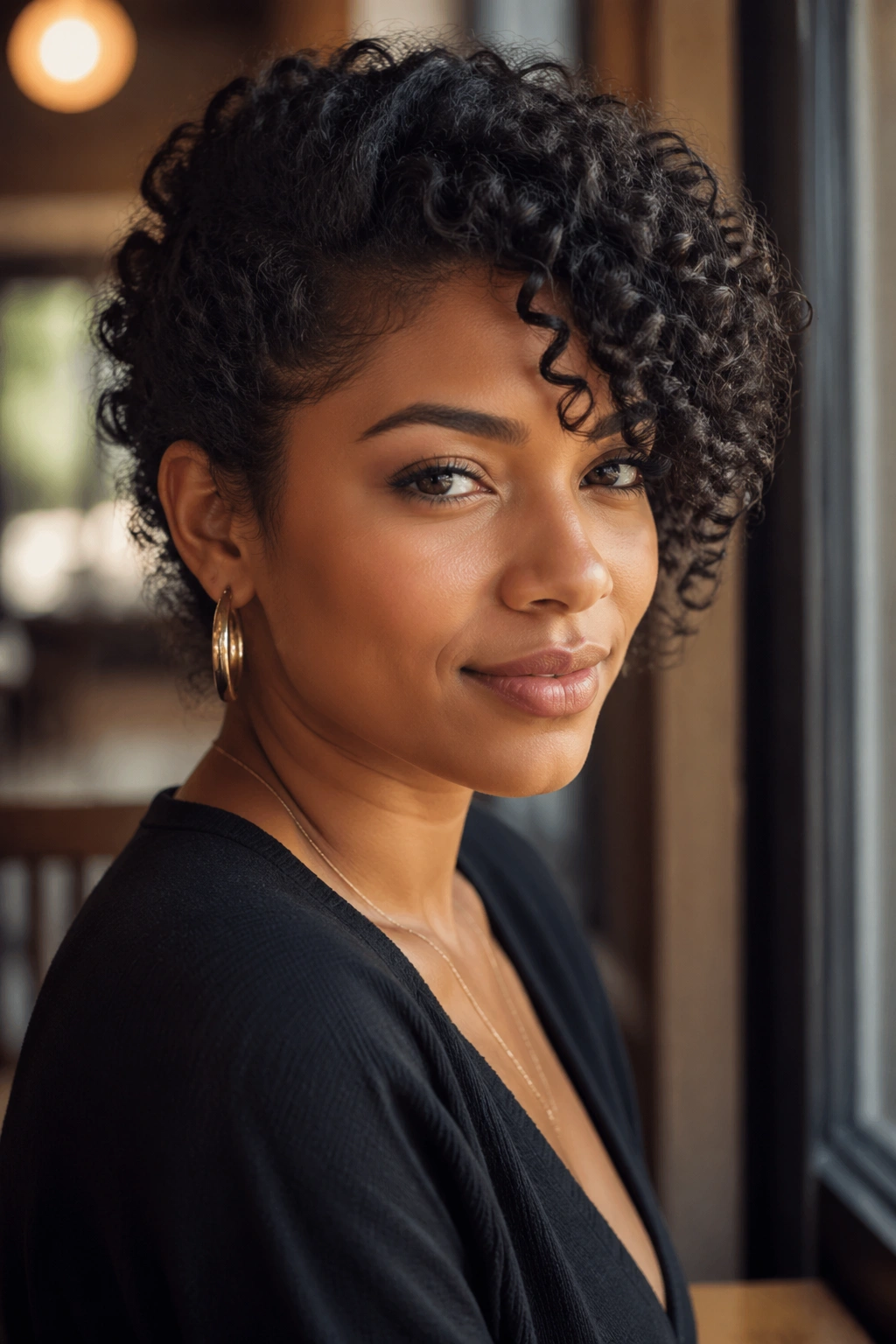
On type 4 hair, a side bang takes on a uniquely textured, cloud-like quality — the coils spring forward from the temple rather than hanging down across the forehead. The “sweep” is more of an expansion outward and to the side than a flat diagonal.
Embrace this. The springy, textured cloud that type 4 hair creates as a side bang is entirely its own beautiful thing — distinct from the smooth sweep on looser curl types. Style by applying curl cream in sections, encourage the bang to spring in the general direction of the sweep, and let the coils do what they naturally want to do.
15. Side Bang Under a Headband
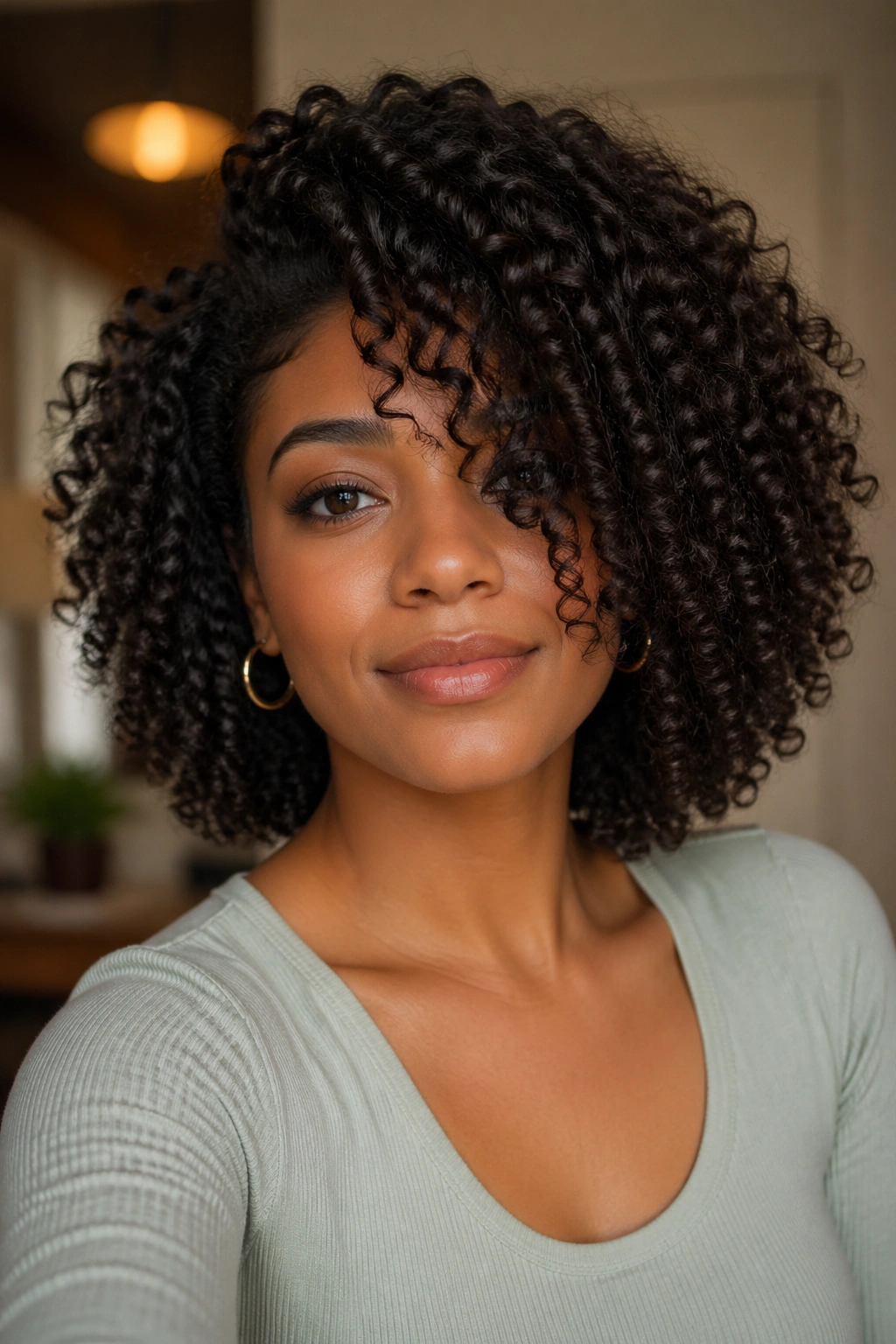
A headband placed at the back of the head, behind the side bang, frames the bang as its own distinct element in front of the headband. The headband holds the rest of the hair back or down. The side bang sweeps forward and across the forehead in front of the headband.
This creates a layered effect — headband at the back, curly side bang at the front — where the two elements interact visually. A satin or embellished headband makes this combination feel polished rather than casual.
16. Pinned Side Bang for a Formal Look
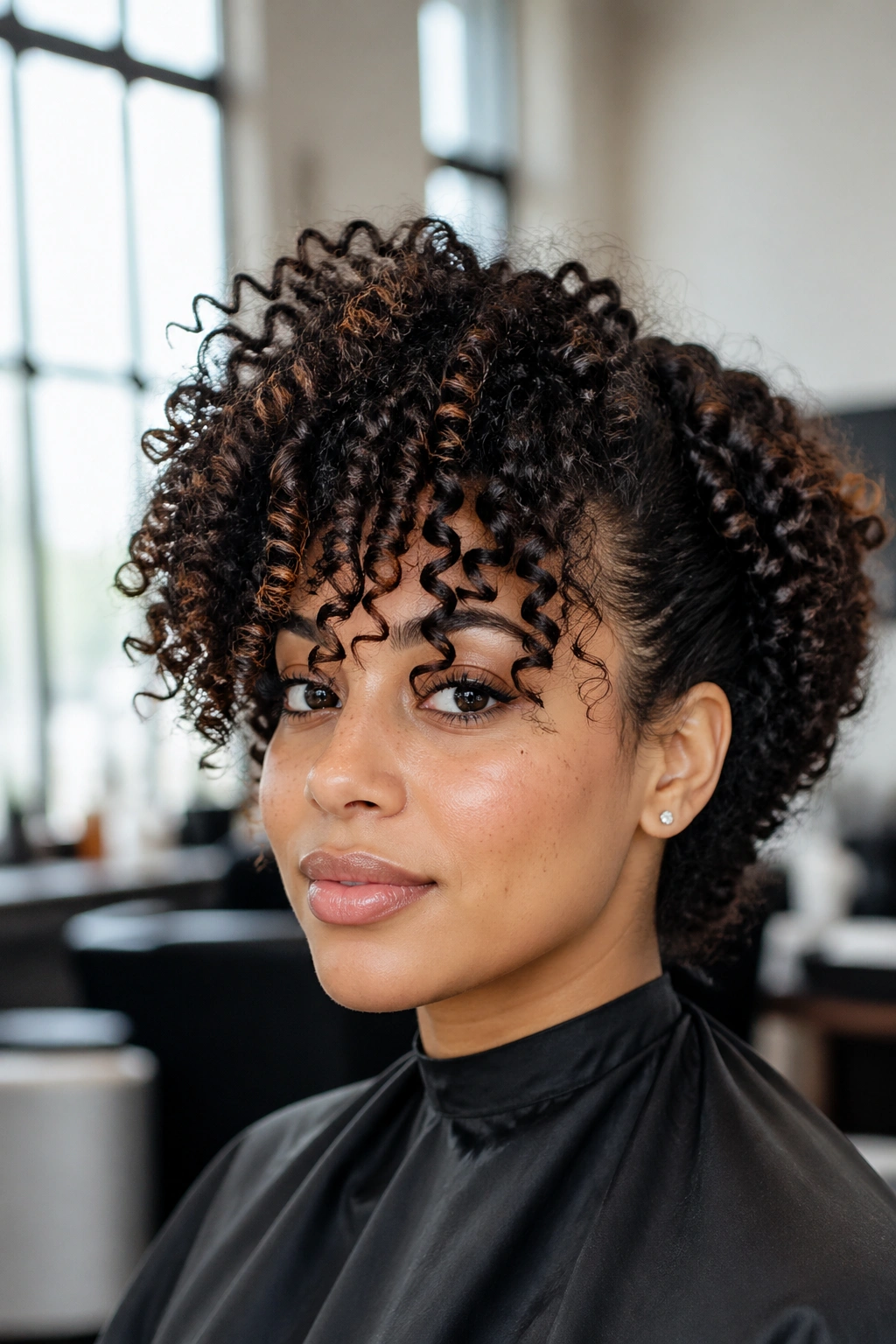
On formal occasions, take the side bang and add a decorative pin or clip at the point where it crosses the temple. The clip holds the bang in place in its swept position and acts as an accessory — a jewel, a floral pin, a gold clip — that adds elegance to the style.
This works particularly well when the rest of the hair is in an updo, since the pinned side bang becomes the primary decorative element at the front of the style.
17. Side Bang Braid Leading Into Free Curls
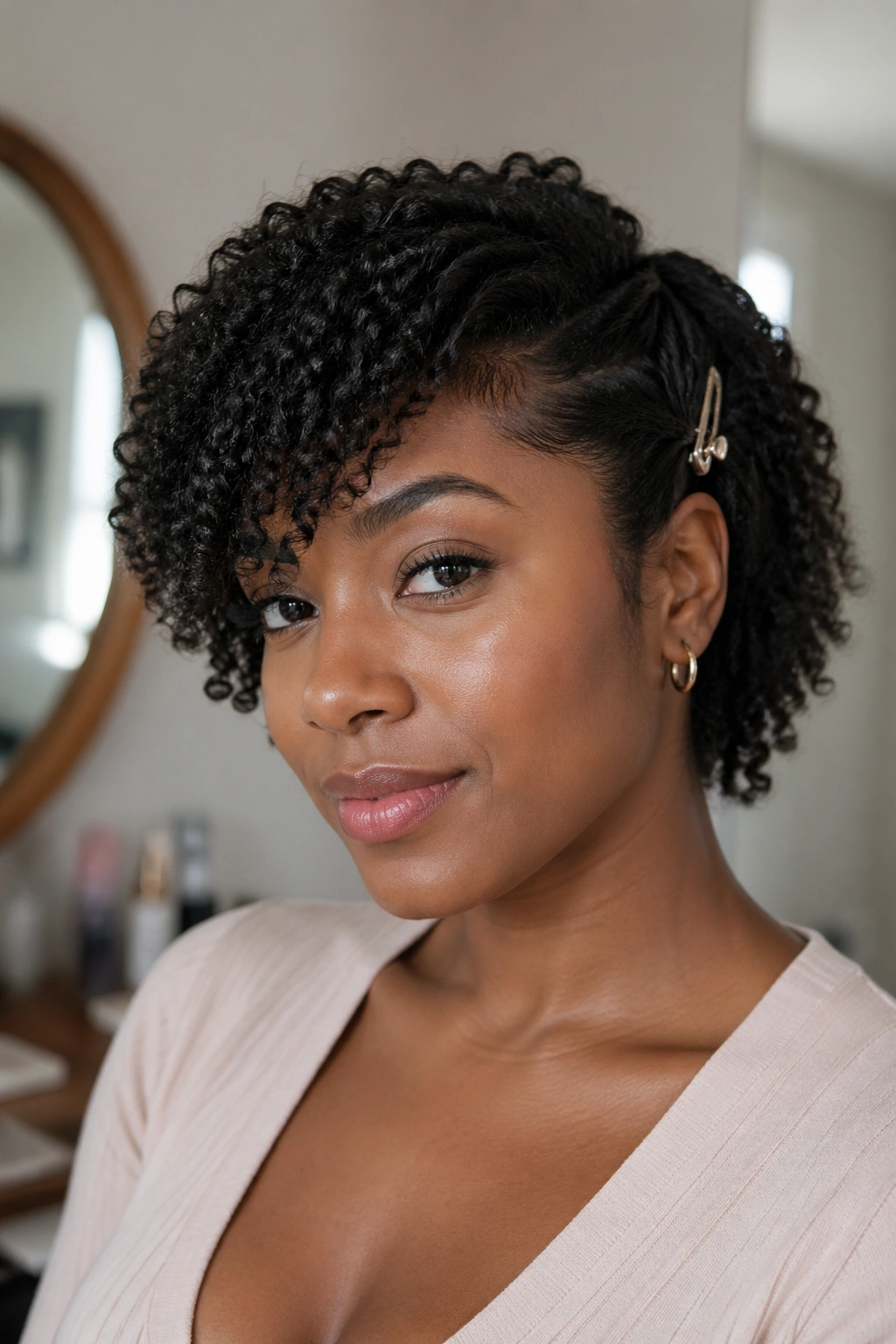
A thin braid at the front hairline, following the line of the side bang from the temple toward the opposite side of the forehead, that then releases into free curls at the cheek. The braid portion provides structure and visual detail, while the released curl ends add texture and movement.
This combination of braid and curl in the bang section is a more creative, detailed version of the side bang. It requires a bit of skill to execute but creates a genuinely distinctive look.
18. Side Bang With Gel-Defined Curls
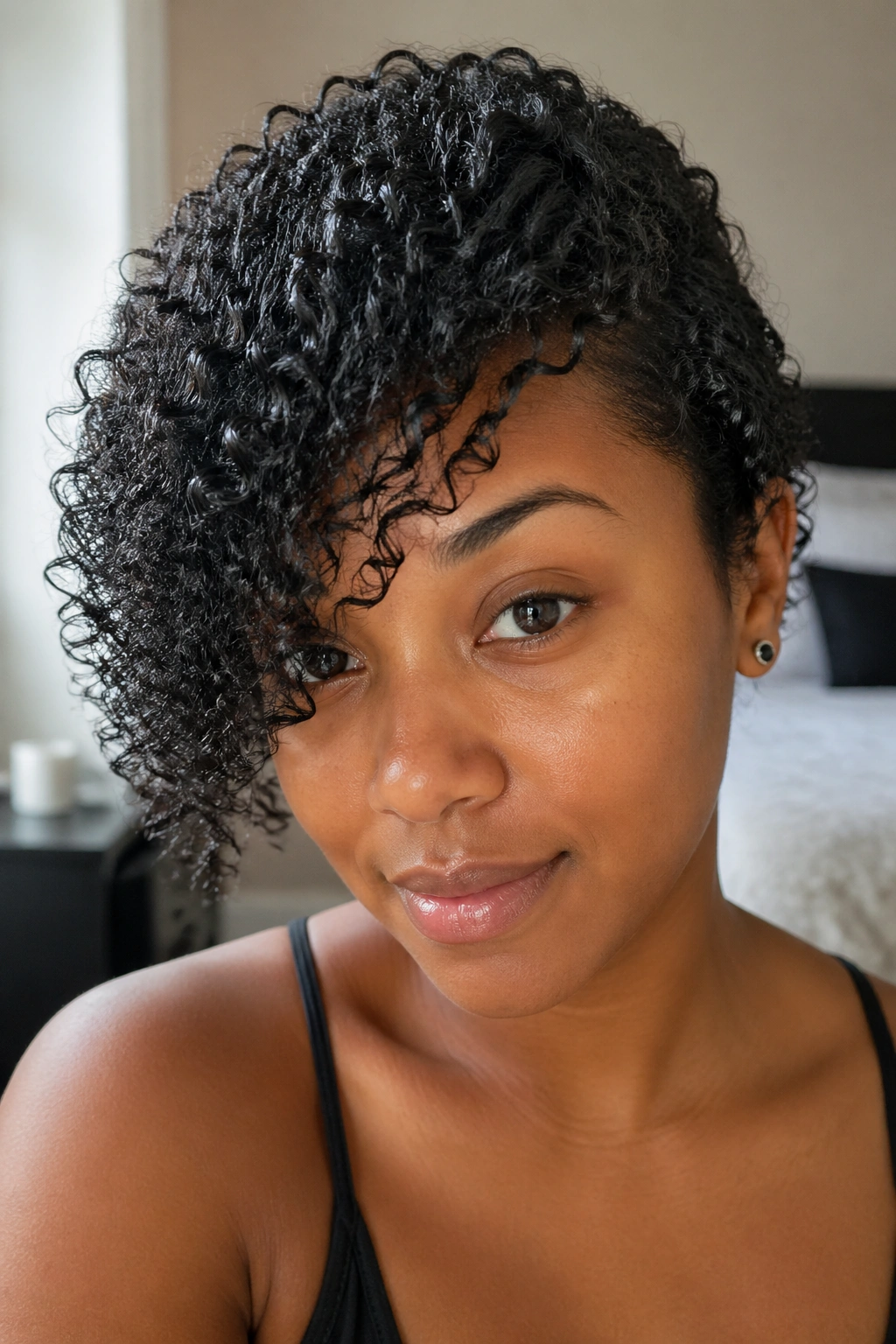
The glossiest, most defined version of a curly side bang — achieved with a generous application of strong-hold gel applied to a damp bang section, smoothed in the sweep direction, and left to dry without touching. The gel creates a cast over the curls that, once broken by scrunching or gentle fingering, leaves defined, glossy curls that hold their sweep all day.
The gel cast method produces the longest-lasting side bang definition and is particularly useful on humid days.
19. Side Bang on a Twist-Out Updo
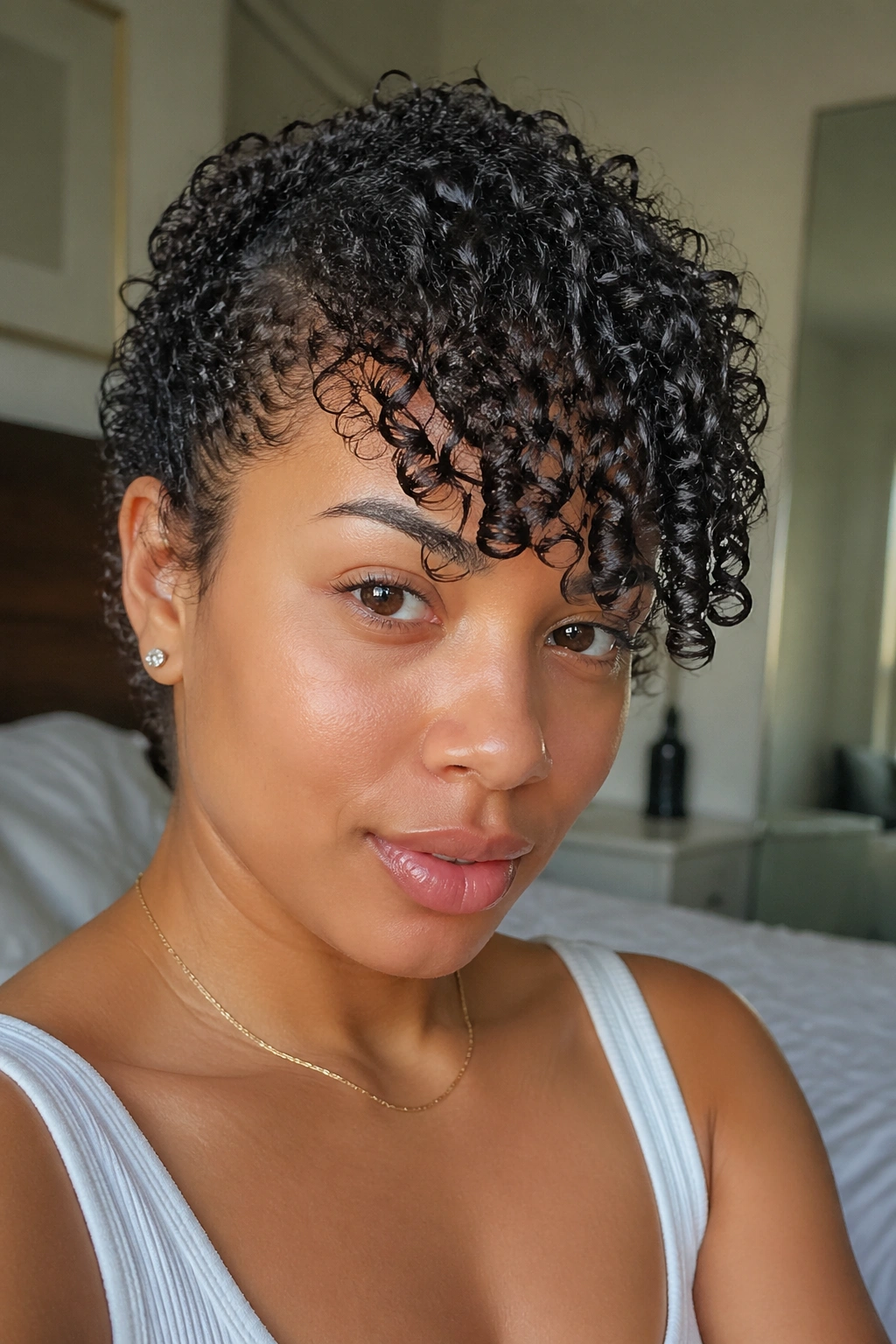
A twist-out styled into an updo — bun, pineapple, or pinned-up style — with the front section left free as a side bang. The twist-out pattern in the bang section provides defined, textured movement, while the updo keeps the rest of the hair managed and off the face.
This is a versatile style that works for both casual and semi-formal occasions. The updo is the practical element, the side bang is the expressive one.
20. Full Face-Framing Side Bang on Long Natural Hair
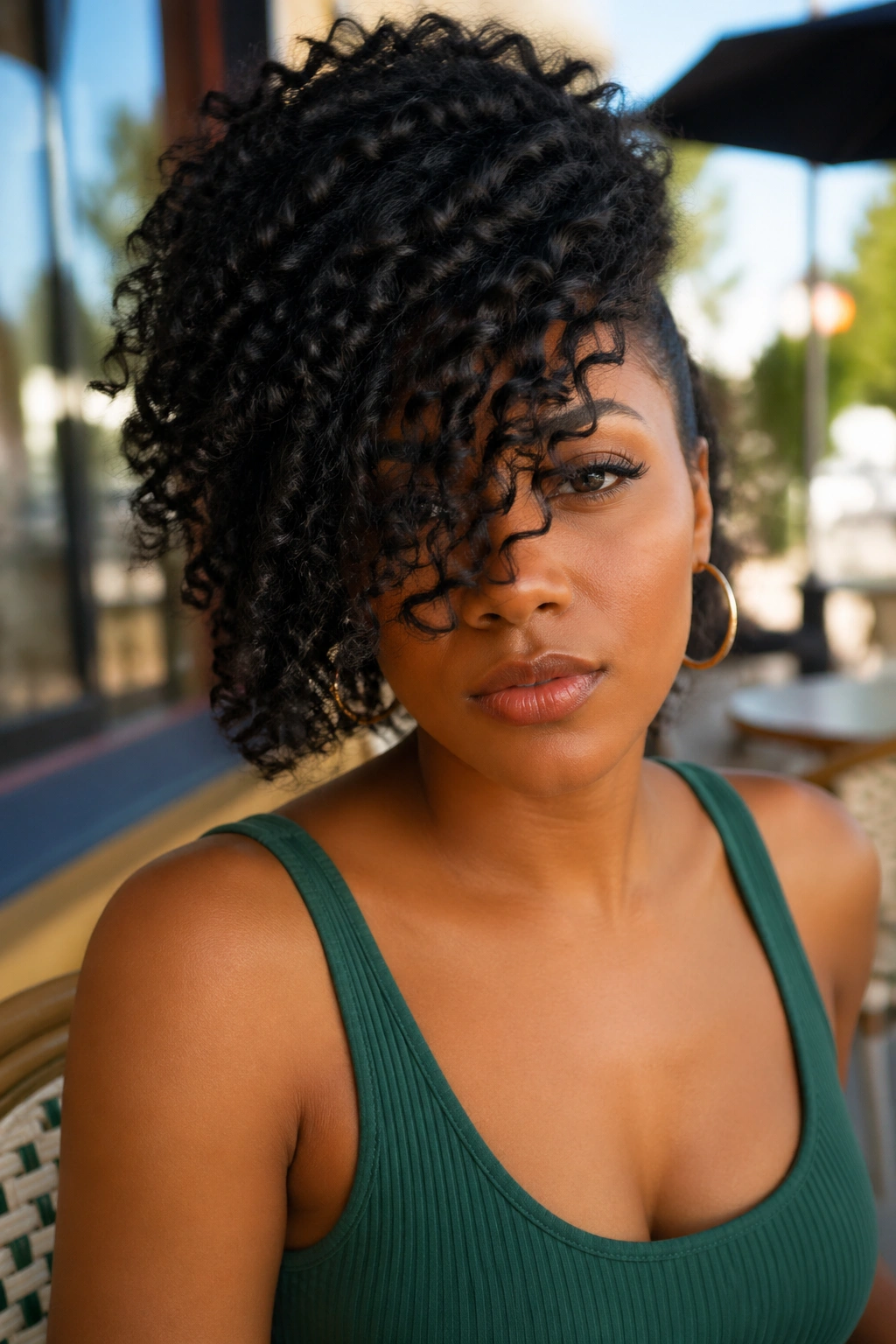
On long natural hair — hair that reaches the shoulder or below — a side bang can be long enough to sweep completely across the forehead and fall past the cheekbone, nearly reaching the jaw. At this length, the side bang becomes a genuine face-framing element, covering a significant portion of the forehead and one side of the face.
The visual impact of this length on curly natural hair is significant. The curl pattern means the sweep isn’t flat — it’s textured, dimensional, and full — creating a lush, dramatic frame for the entire face.
21. Side Bang as the Signature Element of Your Style
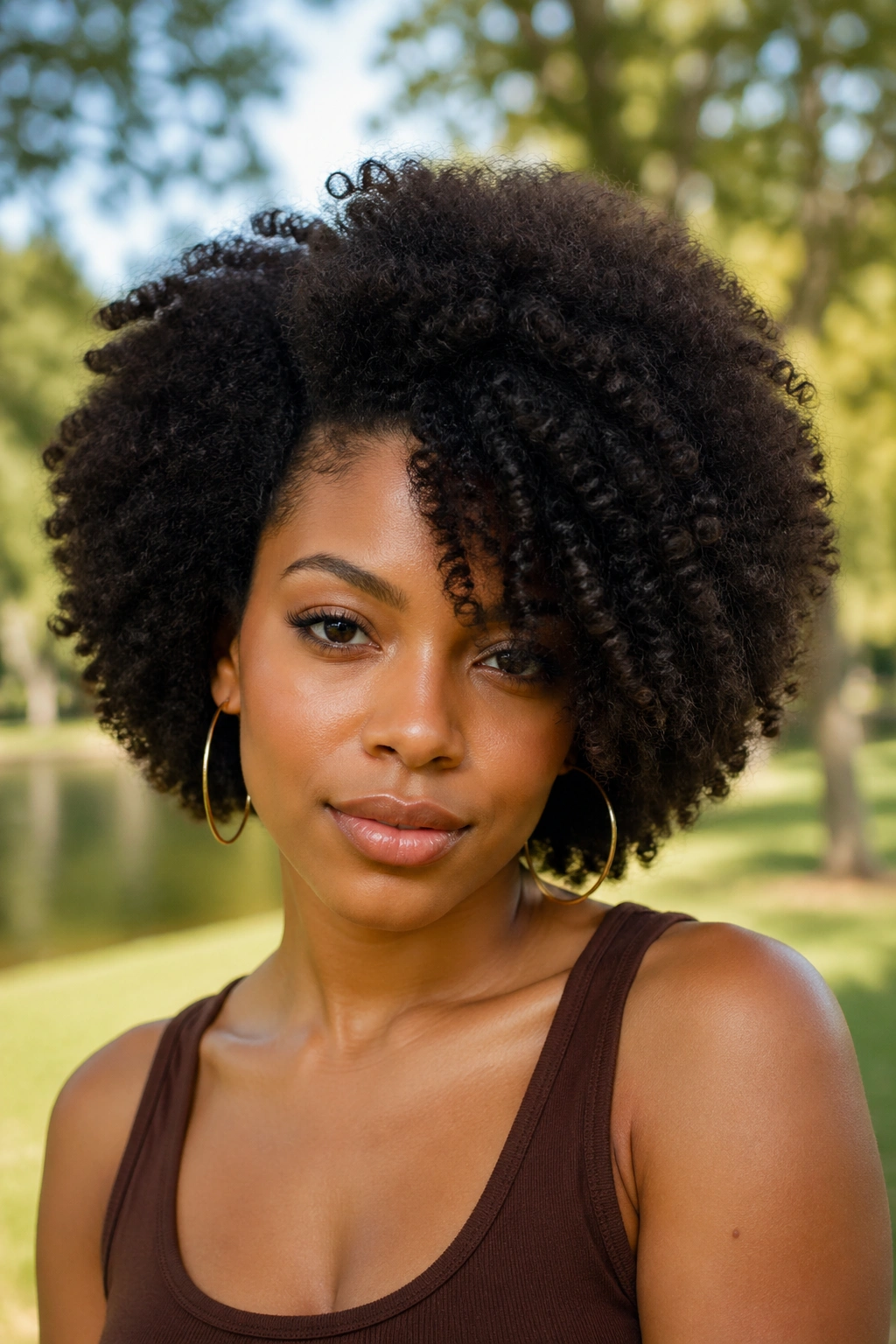
The most important thing about a side bang on curly natural hair is wearing it with intention. It’s not a default. It’s a choice — and the people who wear side bangs most successfully are the ones who fully commit to them, who style them deliberately, and who understand that the asymmetry they create is the point.
Side bangs on natural hair carry a certain confidence. They say: I know where I want my hair to go, and I’m directing it there. That directional intention, worn with the spring and texture of natural curls, creates a style that’s both personal and powerful.
Whether you cut them or create them through styling alone, whether you wear them long and dramatic or short and bold, side bangs are one of the most expressive style choices available to naturalistas. They change the face. They change the energy of a look. And they look incredible on curly natural hair.
