



All back cornrows in color turn a classic protective style into a moving piece of art. The parallel lines of braids running from forehead to nape carry the geometry. The color — whether subtle honey or bold electric blue — carries the personality. Put them together and you get a style that’s both traditional and completely individual, with roots in decades of Black hair heritage.
The all-back layout is the most straightforward of cornrow patterns. Everything runs in one direction, which means the focus shifts to the details: the width of each braid, the crispness of the parts, and the color story playing out across the head. Add extension hair in your chosen color and the whole visual effect comes alive.
For Black women considering colored cornrows, the all-back design is an excellent starting point. The simplicity of the layout lets the color shine without competing with complex parting patterns. And the style works on nearly every hair length and texture, from short 4C naturals to waist-length lengths.
Below, 22 takes on the all back cornrow in color, spanning shades from soft caramel to vivid green, with the technical and styling details that separate a casual install from a curated look.
Color Adds Another Dimension To Cornrows
Cornrows already carry visual interest through their parallel lines and tight geometry. Adding color takes that visual interest and multiplies it. Now there’s the braid pattern plus the color shift, plus the way both elements interact with your skin tone and the lighting around you.
Colored kanekalon is how most people achieve colored cornrows without dyeing their natural hair. The synthetic hair comes pre-colored in a full spectrum, from natural-looking browns and blondes to unnatural blues, greens, and pinks. You add color to the style by adding extension hair, which means no commitment to bleaching or depositing dye on your actual hair.
This approach is especially kind to 4C hair, which can be damaged by the bleaching required to achieve bright colors naturally. Kanekalon gives you the color without the cost to your strands.
Picking Colors That Flatter Your Skin
Color theory applies to hair as much as it does to makeup and clothing. Certain shades enhance your complexion while others work against it.
Warm undertones (skin with yellow, gold, or peach) tend to look best in warm colors: honey blonde, copper, caramel, warm brown, orange-red, and warm greens like olive.
Cool undertones (skin with pink, red, or blue undertones) tend to flatter cooler shades: platinum, ash blonde, burgundy, wine, blue-toned reds, and cool greens like emerald.
Neutral undertones work across both warm and cool palettes, with more flexibility to experiment.
Deep skin tones can carry extremely bold colors — jewel tones, neons, and pastels — because the high contrast creates drama rather than visual flattening. Medium and lighter skin tones may find medium-saturation colors more balanced than extreme neons.
Planning The Install
Before any color install, consider these details. How many braids do you want? Fewer braids (four to six) give chunky visibility and are easier to install. More braids (ten to fifteen) give finer, more detailed texture.
What color intensity? Pastels like soft pink or light blue read as soft and whimsical. Jewel tones like emerald or sapphire read as rich and sophisticated. Neons like electric green or hot pink read as bold and attention-grabbing.
Full color or partial? Full-color means every braid is the same non-natural shade. Partial means some braids are natural and others are colored, or the color is only in the front or the back.
Prep Same As Any Cornrow Install
Clarifying wash a day or two before. Deep condition for 30 minutes. Stretch the hair by tension drying or blow drying on low heat with a leave-in. Skip oils the day of the install.
For colored kanekalon, wash the hair before installation. Some packs, especially bright colors, shed dye in the first rinse. Pre-washing removes excess dye and reduces color transfer onto clothing and bedding.
Have old fabric or towels ready for the chair and your shoulders during install. Colored dust and fibers shed from the kanekalon as the braider works.
1. Honey Blonde All Back Cornrows Six Braids
The entry-level colored cornrow. Six honey blonde cornrows running straight back from forehead to nape. Honey blonde is warm enough to look like a natural sun-kissed color, but clearly styled enough to read as deliberate.
Why It Works
Honey blonde complements nearly every skin tone. It’s warm without being orange, light without being stark. The color photographs well in natural light and indoor lighting.
- Two to three packs of honey blonde kanekalon
- Six braids for medium-thick hair, adjust up or down for your density
- Pair with gold jewelry to reinforce the warm tones
Pro tip: Look for kanekalon labeled “#27” or “honey blonde” — these are industry-standard codes for the shade and help you match across brands.
2. Platinum Blonde Cornrows With Eight Braids
Eight braids in icy platinum blonde — the brightest, coolest shade on the blonde spectrum. Where honey blonde reads warm and approachable, platinum reads cool and editorial.
Platinum kanekalon is one of the hardest colors to wear well. The extreme lightness creates maximum contrast with darker skin tones, which can read as stunning or harsh depending on the rest of the styling.
Pair platinum cornrows with cool-toned makeup: mauve lips, silver jewelry, cool-toned eyeshadow. Avoid warm makeup tones, which can clash with the cool hair color and make the overall look feel disjointed.
Eight braids give the platinum density. Fewer braids make the color look sparse; eight strikes the balance between visible color coverage and manageable install time.
The commitment level of platinum is real. You’ll get looks — some admiring, some curious. Ready for that attention before you book the appointment.
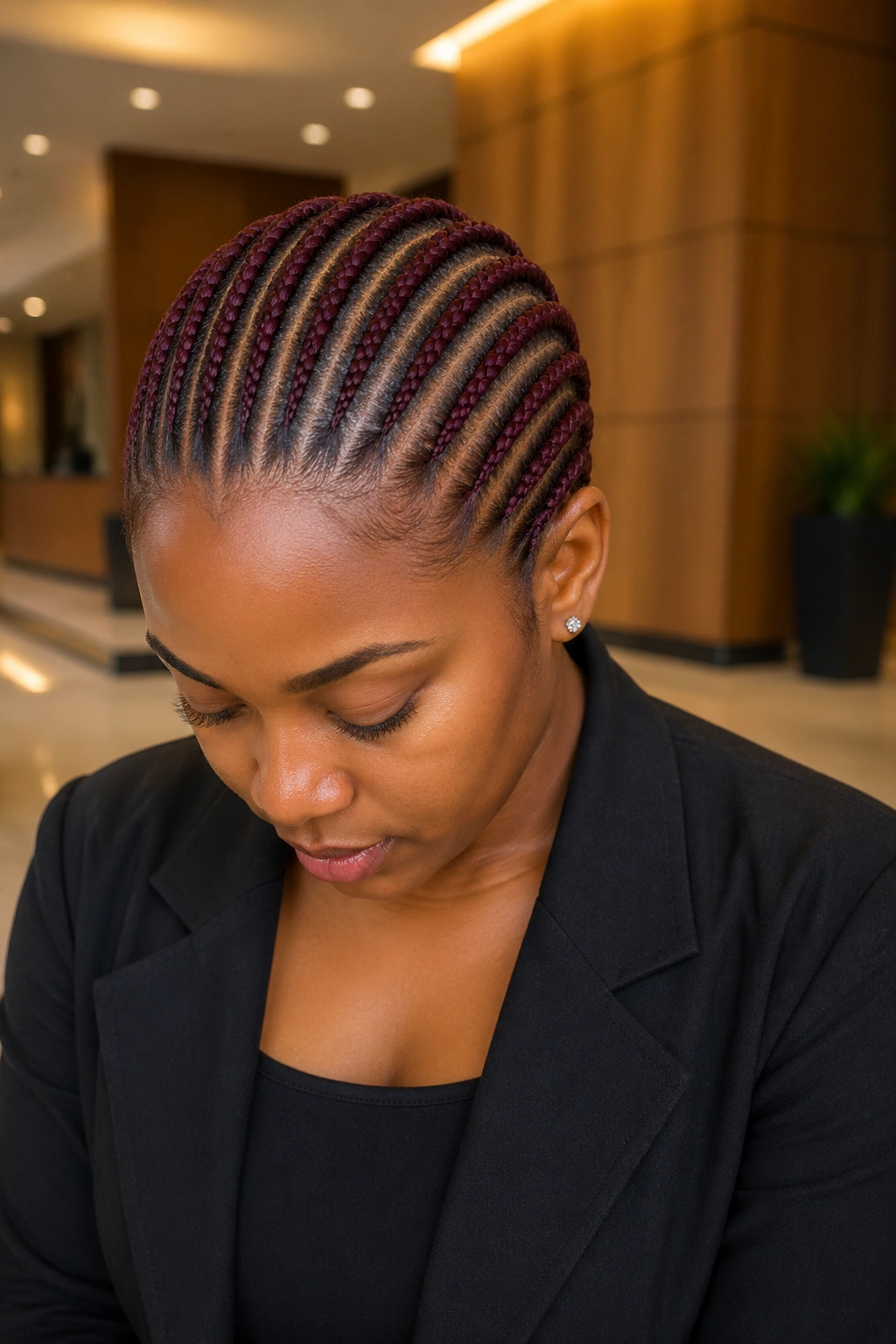
3. Burgundy All Back Cornrows Ten Braids
Ten deep burgundy cornrows running straight back. The narrower braids plus the rich dark red color create a textile-like appearance, almost woven fabric rather than individual braids.
What Makes It Different
Burgundy is the most professional-friendly of the bold cornrow colors. It’s clearly styled but reads as sophisticated rather than rebellious, which makes it suitable for office environments where other bright colors might feel inappropriate.
The ten-braid count creates finer detail than six or eight braids. Each braid is narrower, which means more visible scalp between braids and a more intricate visual pattern.
Style burgundy with jewel-tone clothing — emerald, sapphire, deep purple — for a rich, layered color palette. The whole look becomes color-saturated and dramatic.
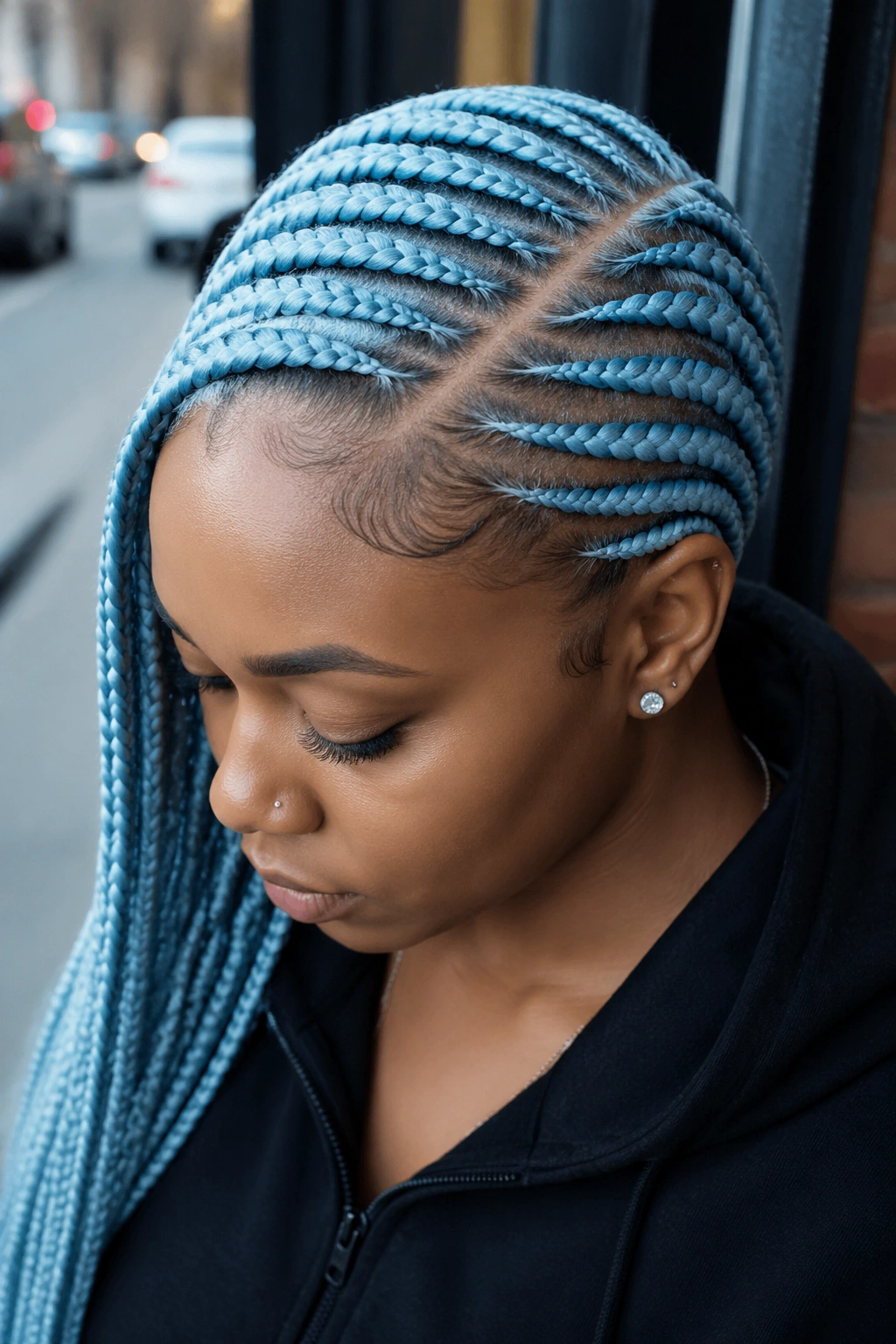
4. Icy Blue Cornrows With A Side Part
All back cornrows in a pale icy blue, styled with a deep side part for asymmetric visual interest. The cool blue against warm skin tones creates striking contrast.
Blue kanekalon comes in a range from pale baby blue to deep navy. Pale blue is the most commonly worn in all back cornrows because it reads as fashion-forward without being jarring.
The side part exposes more of one side of the head and creates visual imbalance that makes the style feel deliberately designed. Straight parts down the middle can sometimes make the blue feel too symmetrical and static.
Blue doesn’t flatter every complexion equally. It tends to look best on deeper skin tones where the contrast creates drama. On lighter complexions, blue can create a washed-out effect unless paired with saturated makeup.
5. Pastel Pink Cornrows Eight Braids
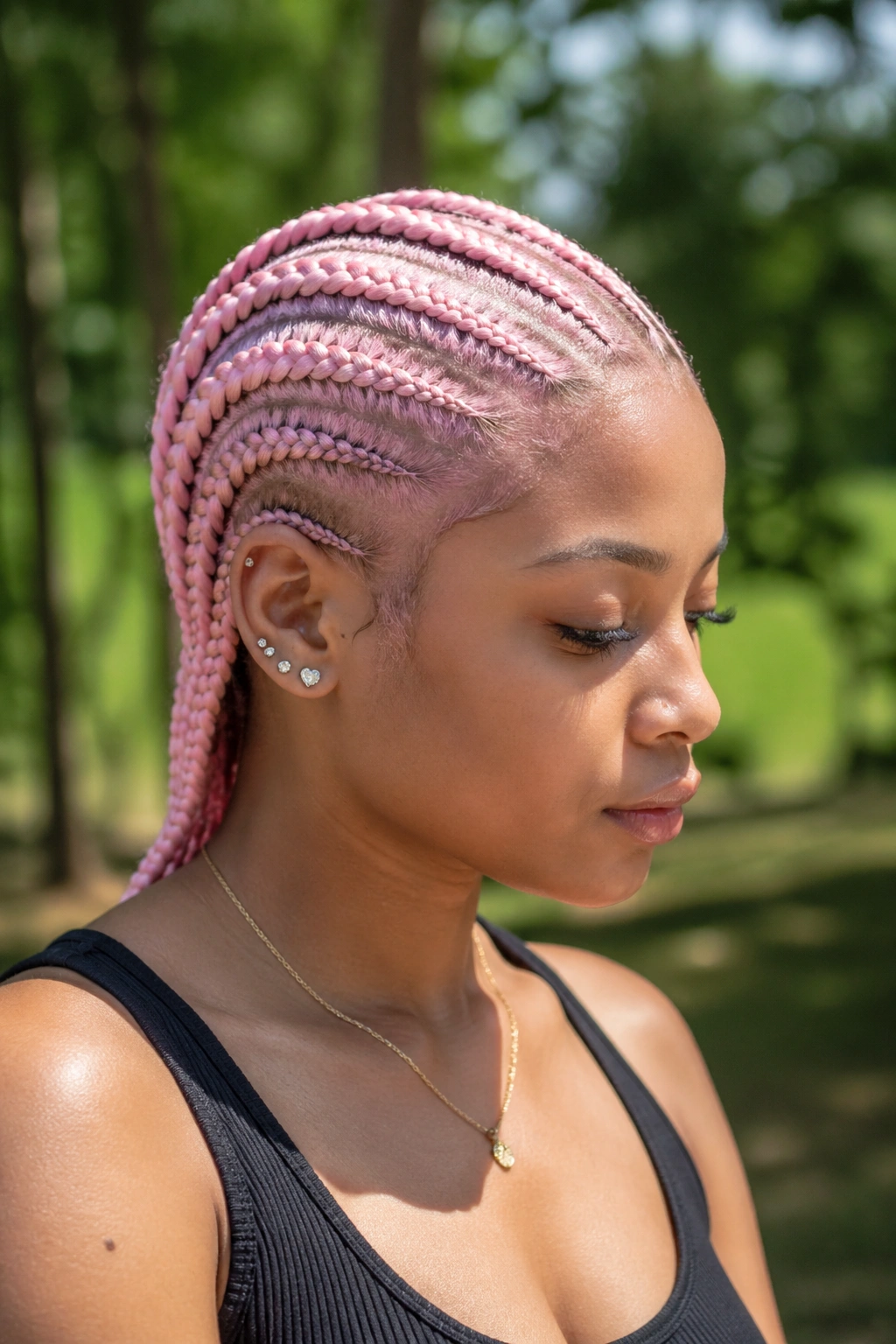
Eight pastel pink cornrows running straight back. Pastel pink is the softest of pink shades — barely-there rather than vivid — and it reads as sweet and feminine rather than electric.
Pastel pink kanekalon often comes with a slight peachy undertone, which helps it flatter warm skin tones. Look for shades labeled “pastel pink” or “dusty rose” for this gentler version.
The soft color is most visible in natural light. Indoor lighting can wash out pastel pink entirely, making the braids look like they have a neutral tone. Plan to be outdoors for photos to capture the color accurately.
6. Forest Green Cornrows Six Braids With Gold Cuffs
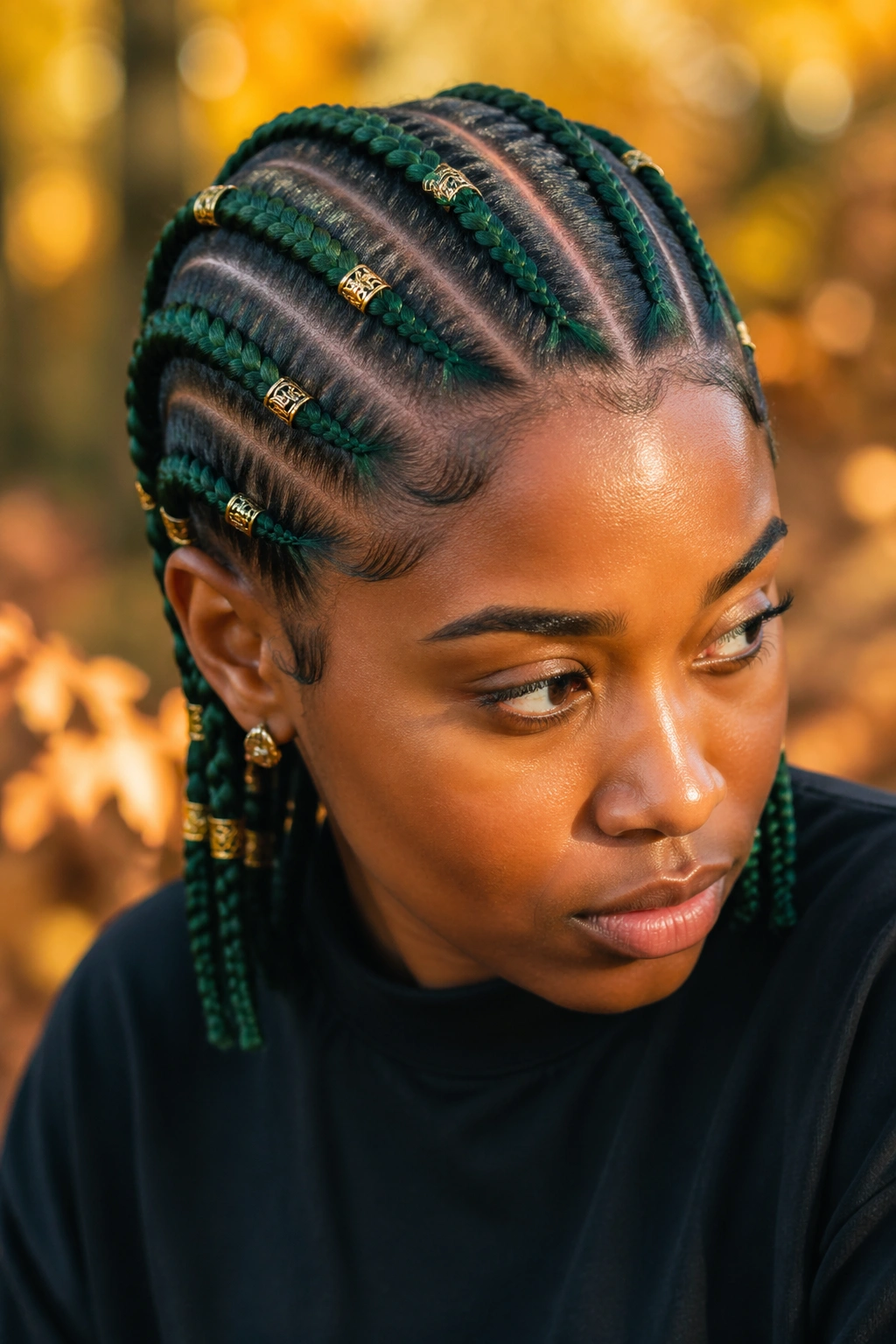
Deep forest green cornrows with gold cuffs on three or four braids for accent. The green and gold combination is bold and earthy.
Styling Tips
Green kanekalon looks best in deeper shades. Bright green reads as costume-like; forest green reads as sophisticated and unexpected.
Gold cuffs placed at staggered heights prevent the accessories from looking too uniform. Two cuffs on one braid, one on another, three on a third — the variation creates visual rhythm.
This style works well with earth-toned clothing — deep browns, burnt orange, rusty red. The color story becomes autumnal and layered.
7. Jet Black To Silver Ombre Cornrows
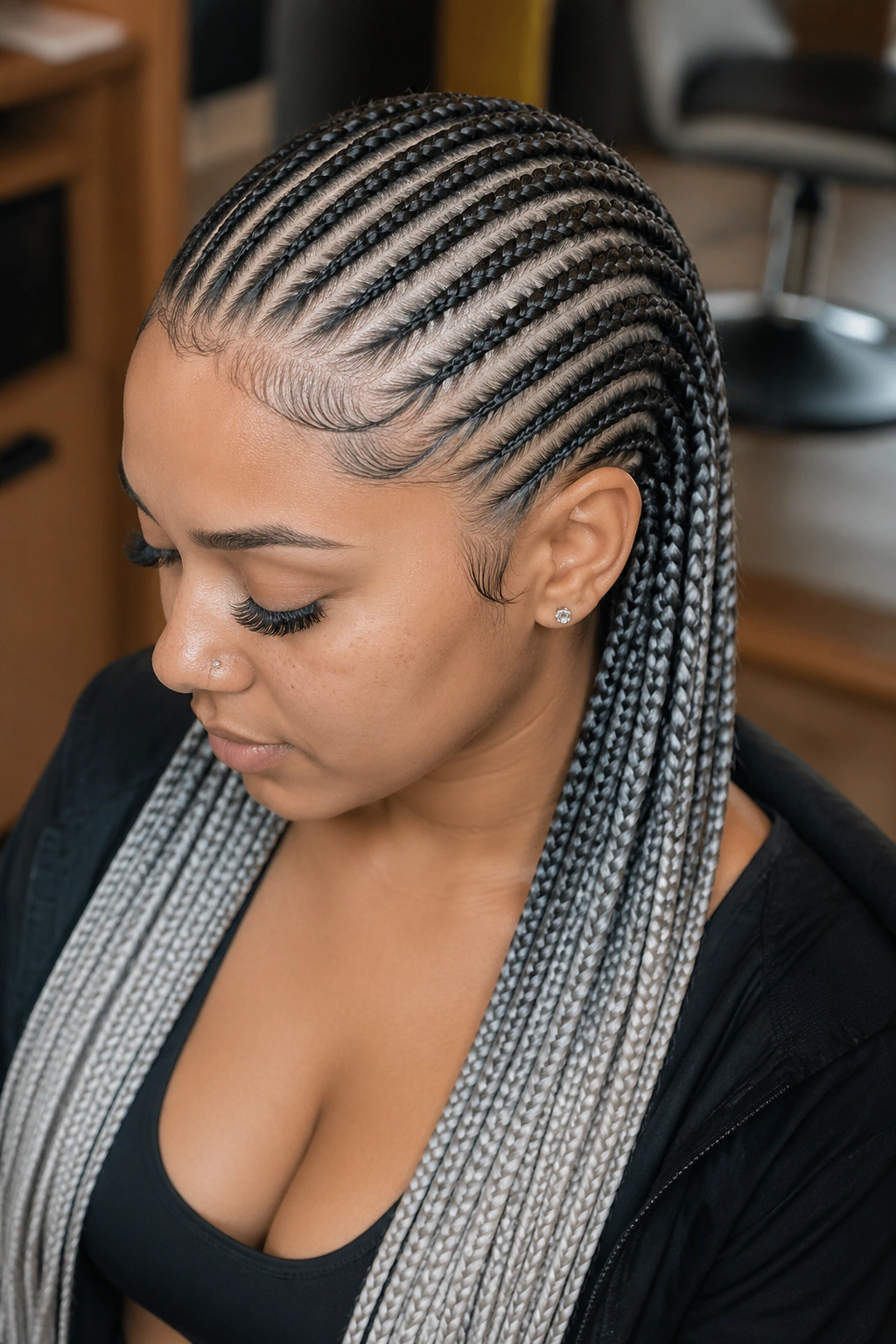
The braids start jet black at the root and transition through gray into pure silver at the ends. The ombre effect makes the silver color less jarring than a full-head silver install.
Ombre kanekalon comes pre-colored in packs labeled “1B/silver” or “1B/gray” for this specific transition. The gradient takes out the guesswork.
Silver has an aging connotation in Western cultures, which some people embrace and others want to avoid. The way to make silver read as stylish rather than aged is through fresh, current makeup and styling — bold lipstick, full brows, on-trend clothing.
8. Auburn With Caramel Highlights Eight Braids
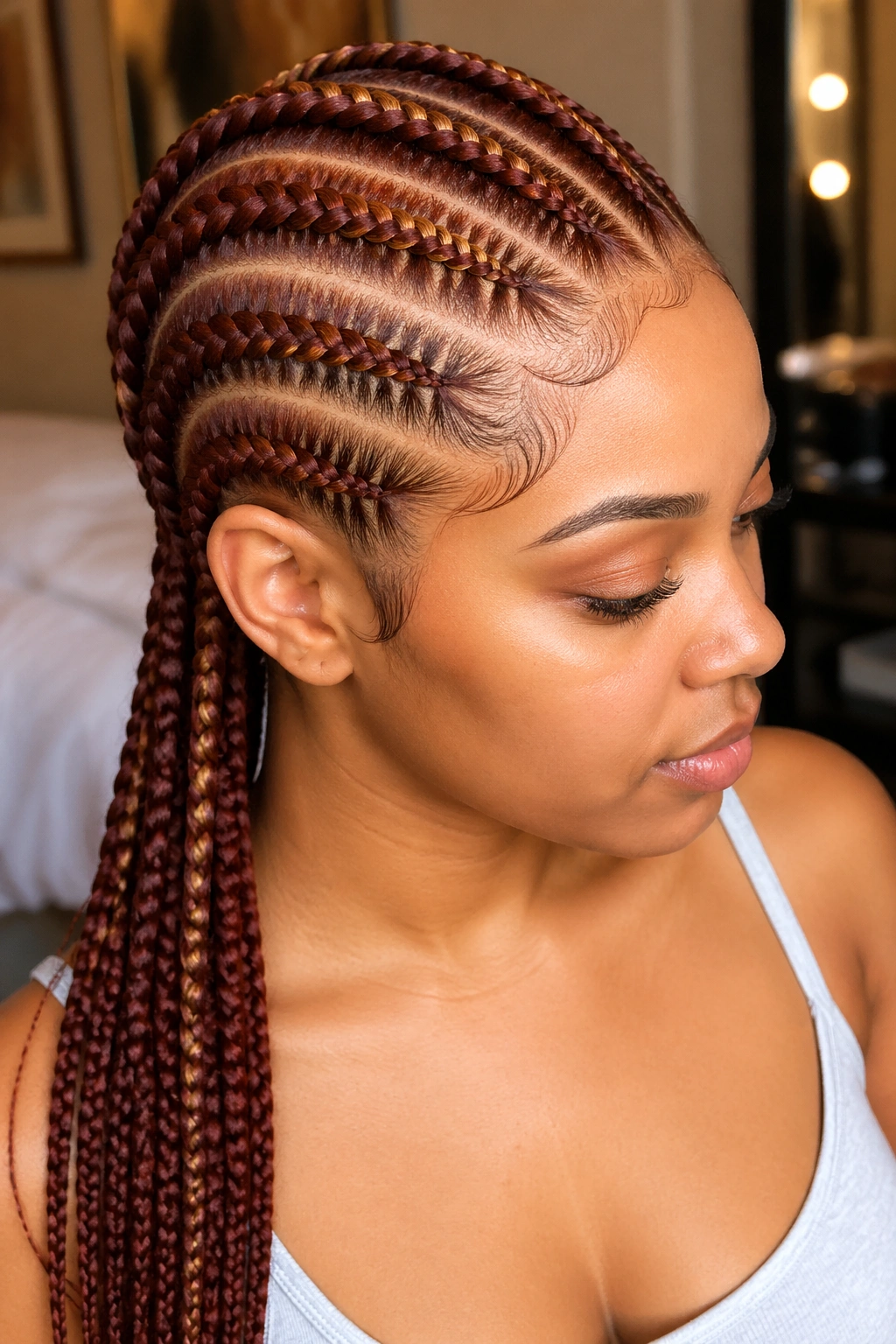
Eight all back cornrows in auburn, with caramel highlight pieces woven through some of the braids. The auburn base carries the red-brown warmth; the caramel highlights add dimension.
Highlight placement matters. Scattered highlights throughout all the braids create a sun-kissed look. Concentrated highlights in the front or on one side create focal-point dimension.
The dimensional color reads more natural than single-shade auburn. It mimics the way highlights appear in hair that’s been in the sun, with varying degrees of lightness throughout.
9. Electric Purple Cornrows Ten Braids
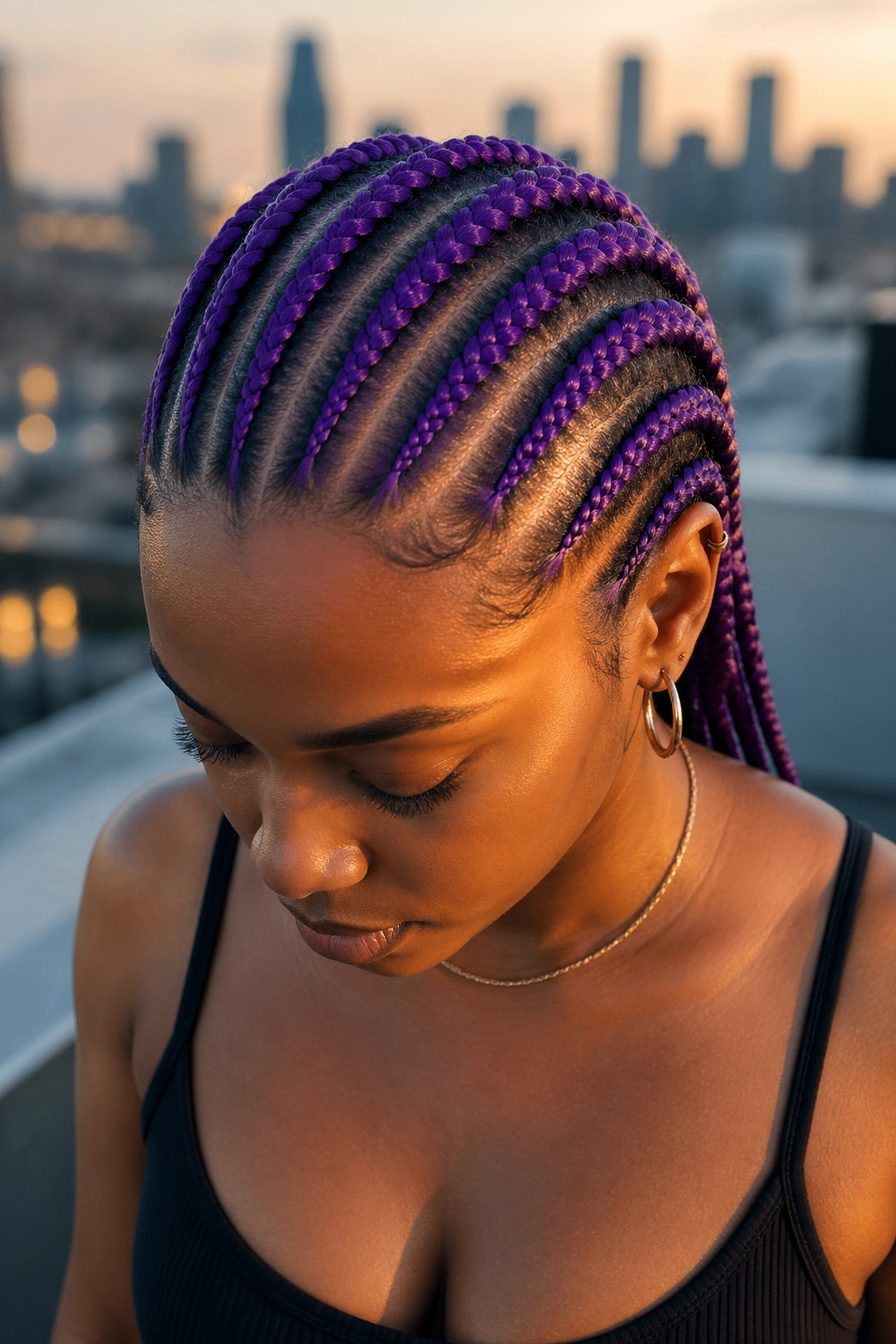
Ten bright purple cornrows running straight back. Electric purple is a saturated, vivid shade — not pastel, not muted — that sits between blue and red on the color wheel.
Who This Is For
People who want maximum visual impact without the expected red or blue choices. Purple is less commonly worn than either red or blue, which makes it feel fresh and distinctive.
Purple flatters deep skin tones especially well. The saturated color plays against the depth of the complexion to create high-contrast drama.
Pair purple cornrows with cool-toned makeup and silver or gunmetal jewelry. Warm gold competes with the cool purple tones and creates visual discord.
10. Blonde Front Black Back Cornrows
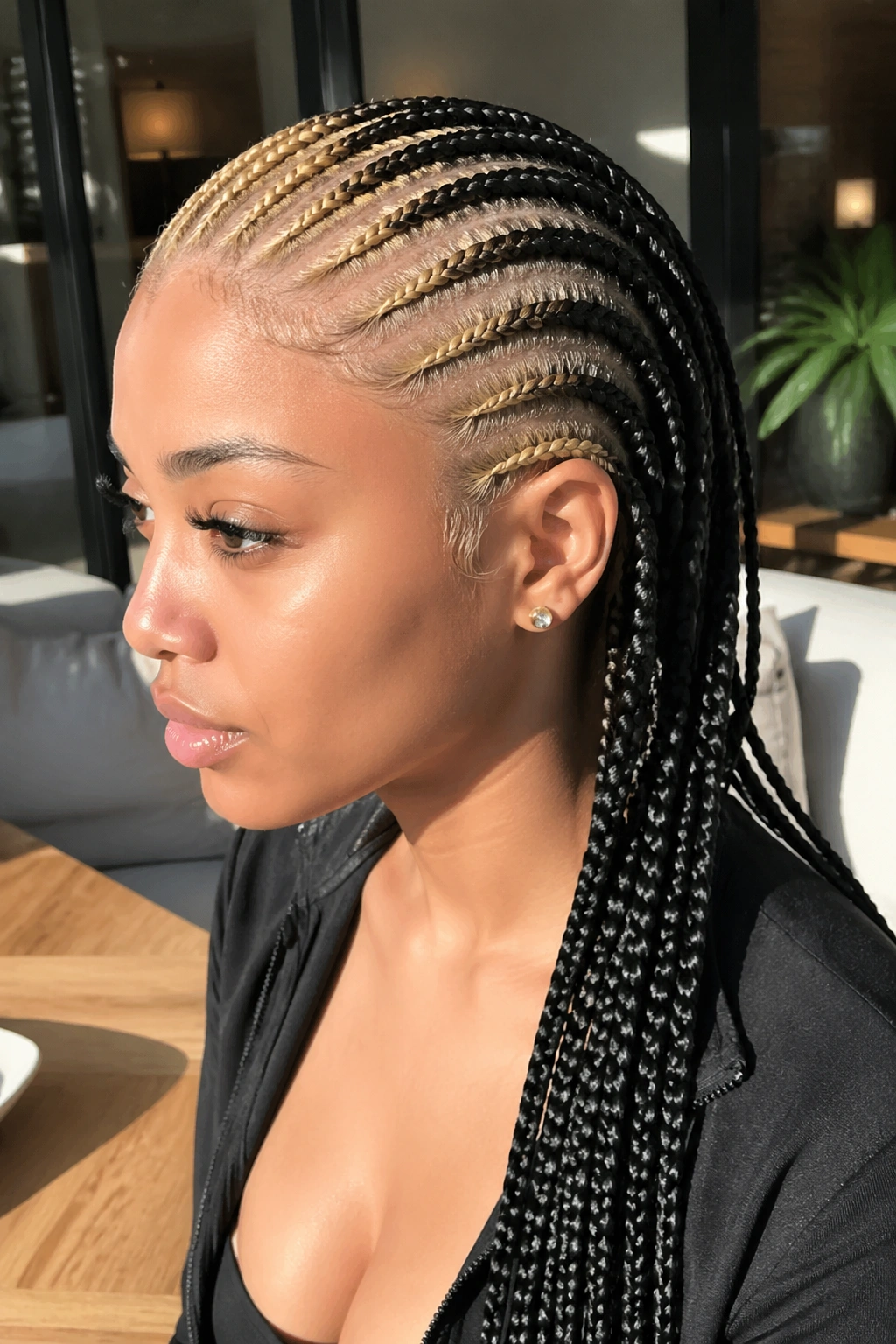
A two-tone effect where the front third of each braid is blonde and the back two-thirds are natural black. The color transitions from blonde to black as the braids run from front to back.
This style is visually unexpected because the color change happens along the length of the braid rather than at the root-to-tip level. The blonde front creates a halo of light around the face; the black back provides grounding contrast.
Achieving this effect requires two separate kanekalon colors and coordinated feeding as the braid progresses. The braider feeds blonde extensions in the first 6-8 inches, then switches to black for the remaining length.
11. Emerald Green Cornrows With Pearl Accents
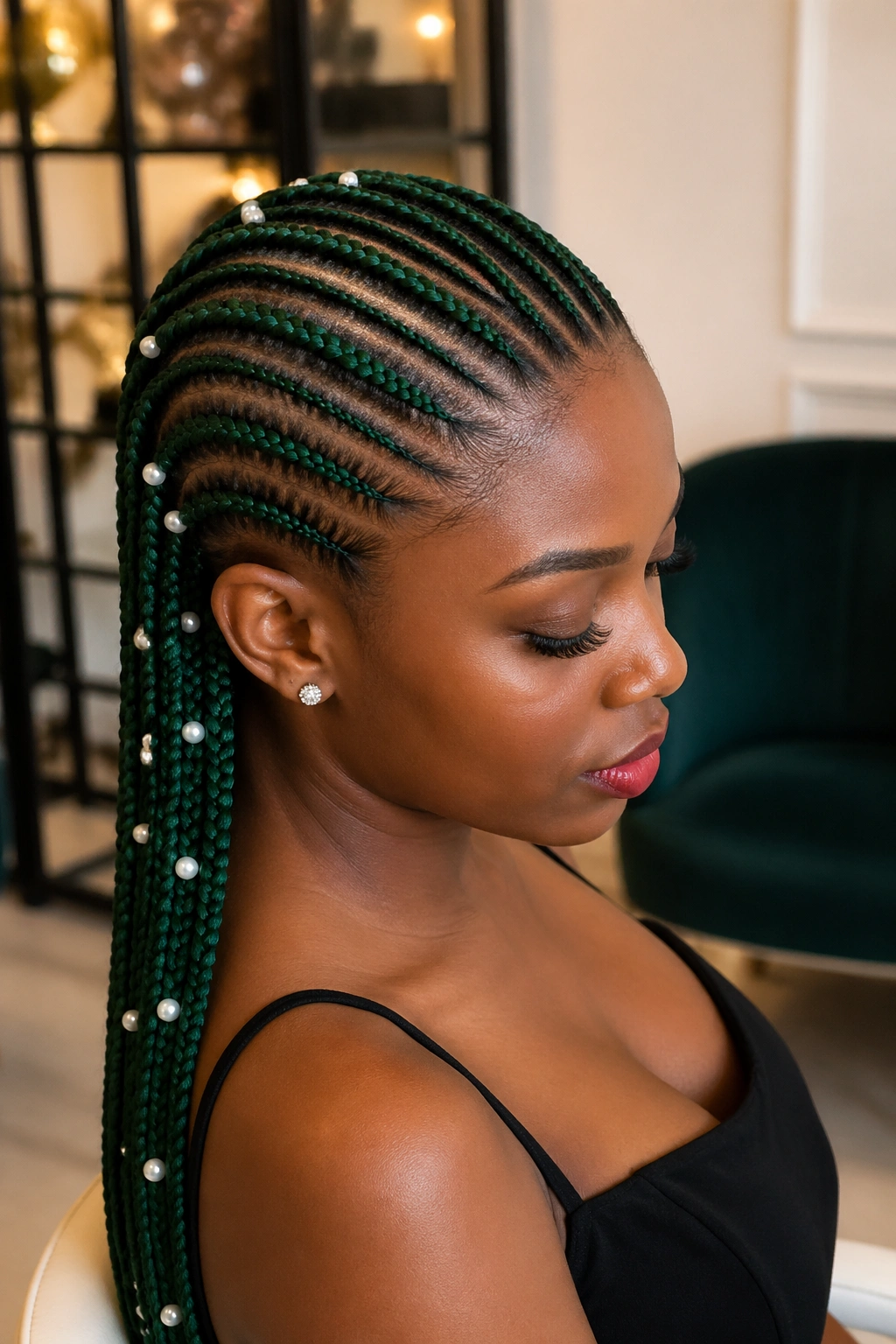
Deep emerald green cornrows with pearl beads strung along specific braids. The green and pearl combination creates a sophisticated, jewel-like color story.
Pearls are unusual accents for cornrows. Most beading is wooden, plastic, or metal — pearls add a luxe, wedding-appropriate vibe that elevates the style beyond casual wear.
Use pearls selectively. One pearl per braid on every third braid creates rhythmic dimension. Multiple pearls per braid can look overloaded, especially combined with the already-saturated green base color.
12. Gradient Red Cornrows From Dark To Light
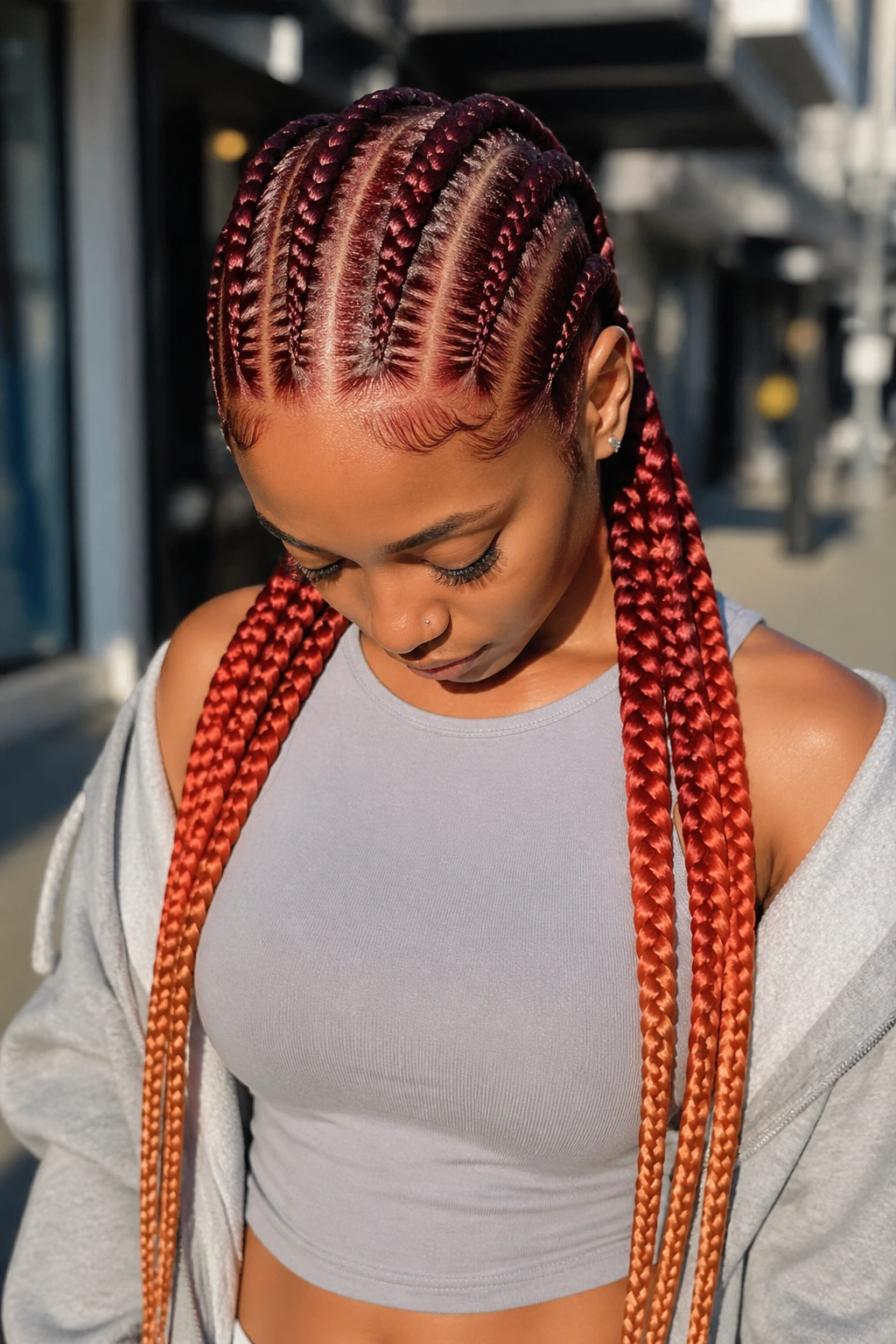
Six cornrows transitioning from dark burgundy at the root through medium red in the middle to bright copper at the ends. The gradient covers the full red spectrum in one install.
The Catch
Gradient installs take longer because the braider is working with multiple shades and transitioning between them at specific points on each braid. Add 1-2 hours compared to single-shade installs.
The gradient is most visible on longer lengths — at least 20-24 inches of finished braid. Shorter braids compress the color transition too tightly and lose the gradient effect.
This style photographs like color-treated natural hair. The gradient mimics the sun-lightening effect that occurs naturally in hair, which gives the style a realistic appearance despite using synthetic hair.
13. Cool Gray All Back Cornrows Eight Braids
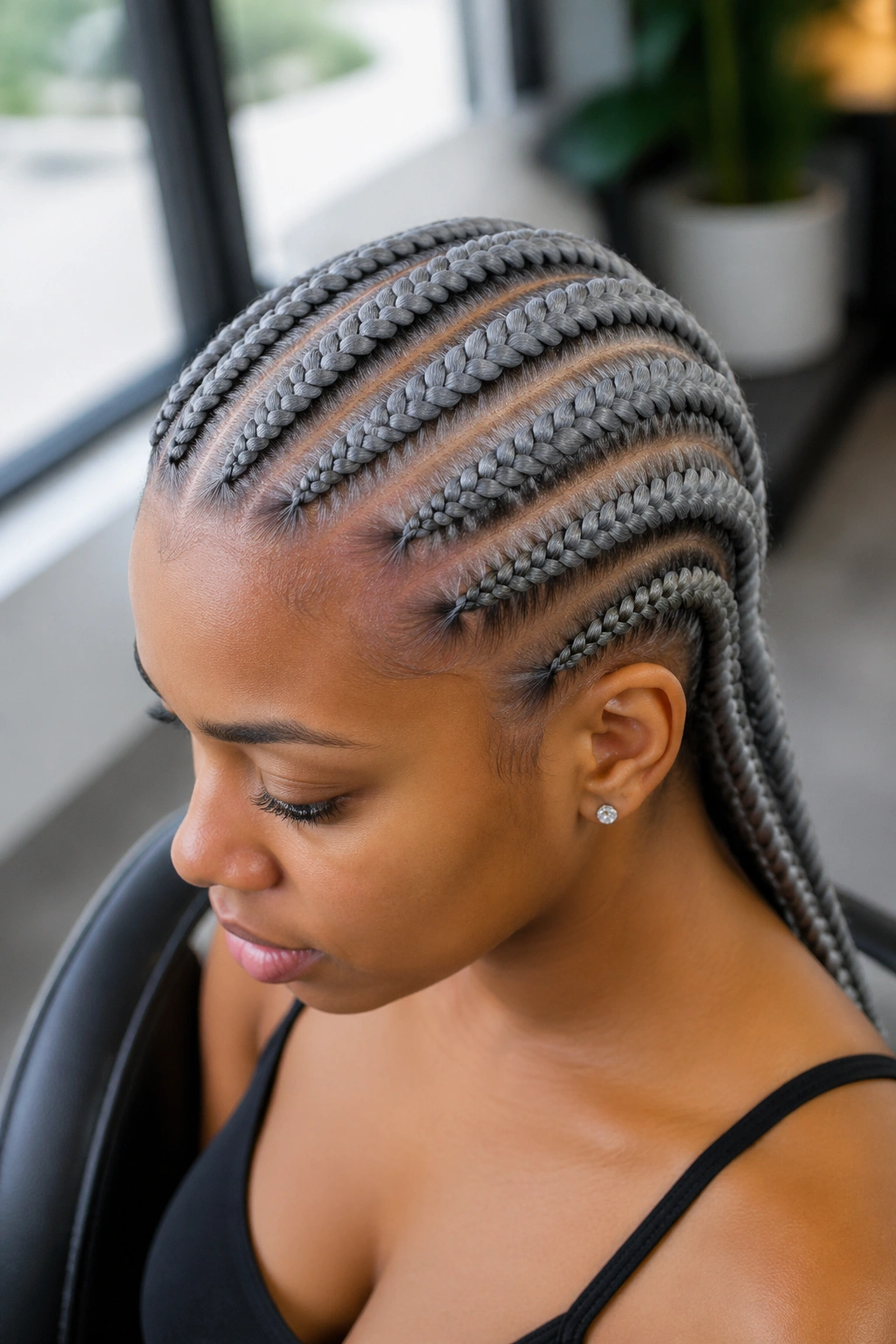
Eight cool gray cornrows running straight back. Gray sits between black and white — it’s a true neutral, neither warm nor cool, with an editorial, high-fashion energy.
Gray kanekalon requires good brand quality to avoid looking flat or muddy. Cheaper gray packs can read as dusty or dirty rather than clean and intentional. Spend extra for premium brands to get clear, consistent gray color.
Pair gray braids with bright accent colors elsewhere in the outfit — a red lip, bright earrings, colorful clothing. Gray needs visual contrast to read as styled rather than bland.
14. Mermaid Blue Green Cornrows
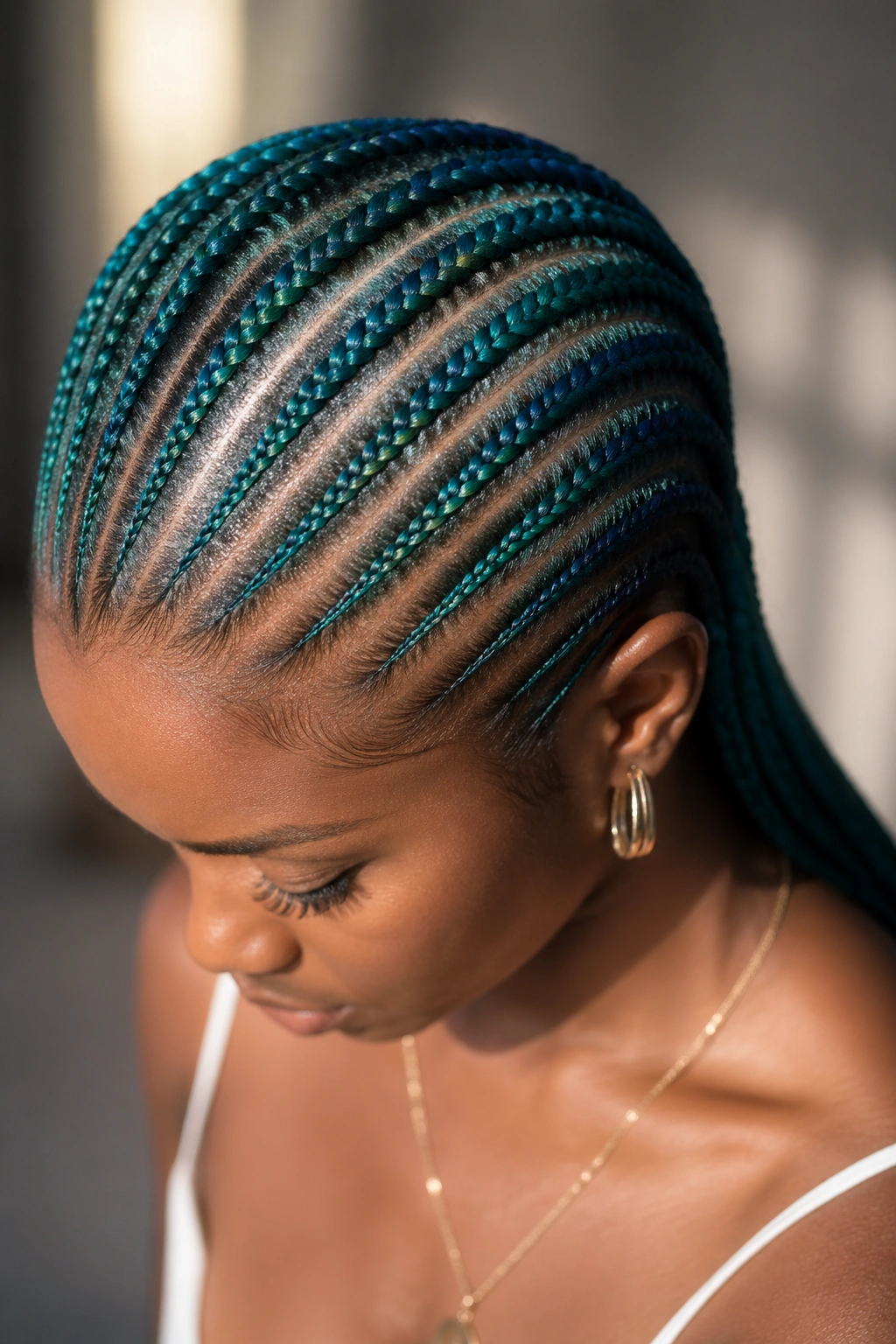
A bluish-green color somewhere between teal and aquamarine. The color mimics the shifting tones of ocean water, reading as different shades in different lighting.
Mermaid colors are increasingly popular as brands expand their kanekalon color ranges. Look for shades labeled “teal,” “seafoam,” or “mermaid” for this color family.
The color plays well with gold or silver jewelry, both of which create visible but non-clashing contrast. Silver emphasizes the cool blue undertones; gold brings out the green undertones.
15. Two-Tone Black And Neon Pink Cornrows
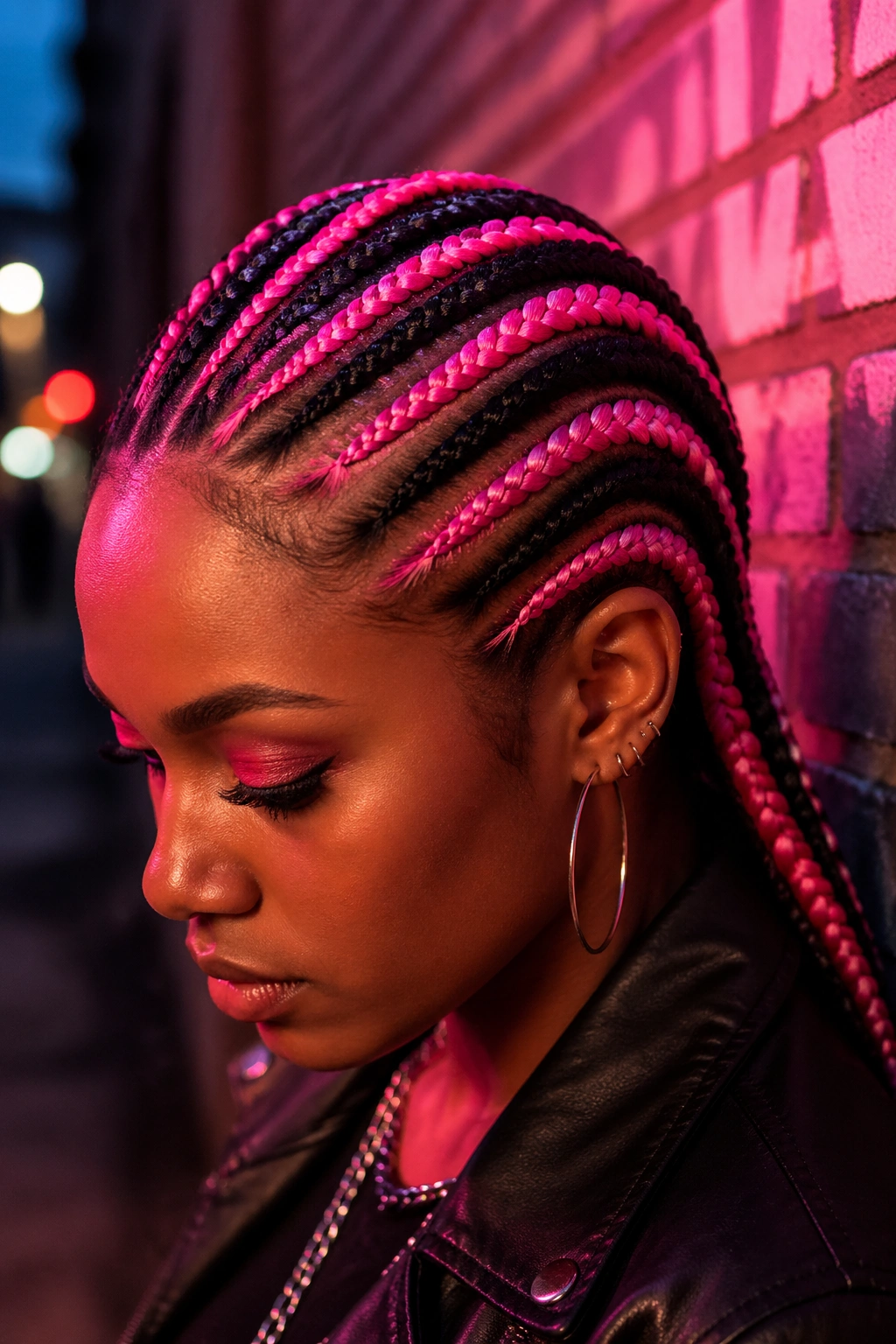
Alternating black and neon pink cornrows across the head. The high-contrast color pairing creates a punk-rock energy that’s striking and uncompromising.
Maintenance Notes
Neon pink fades more aggressively than darker colors. Keep the style shorter — 2-3 weeks max — to maintain the neon intensity.
- Alternate one black braid, one pink braid across six braids for balance
- Keep the pink fresh by avoiding clarifying shampoos
- Rinse with cool water only to slow fading
Pro tip: Neon pink stains fabric aggressively in the first week. Wear dark clothing during breaks and sleep on dark sheets until the initial dye shed stabilizes.
16. Caramel Highlights With Black Base
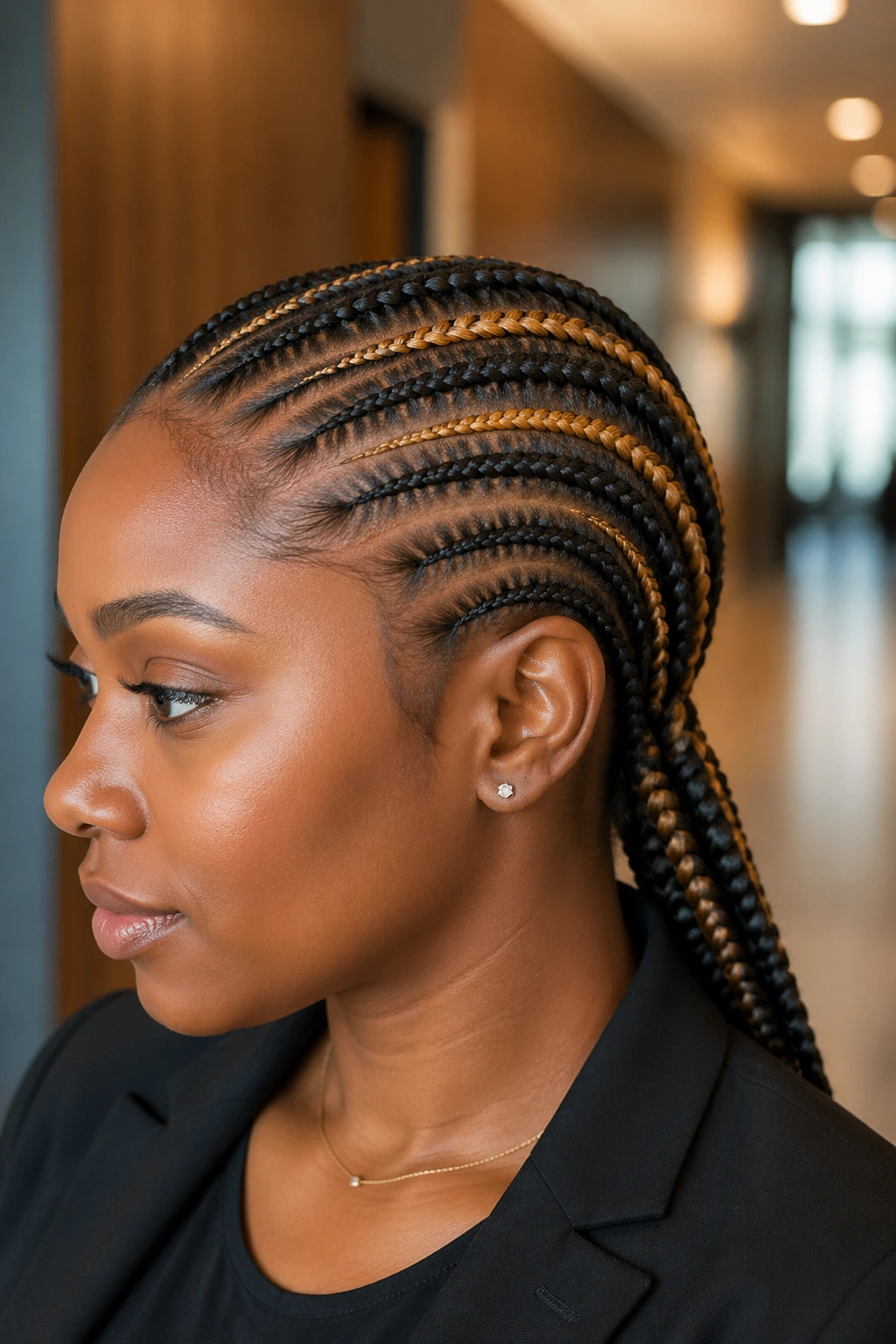
A predominantly black all back cornrow with caramel highlights woven through the hair in specific sections. The base stays natural-looking while the highlights add warmth.
This is the subtlest colored option on the list. From a distance, the braids look almost entirely natural. Up close, the caramel highlights become visible, creating a dimensional, lit-from-within effect.
Ideal for people who want color but need to maintain a professional appearance in conservative workplaces. The highlights read as styled rather than obviously dyed.
17. Lavender Purple Cornrows Six Braids
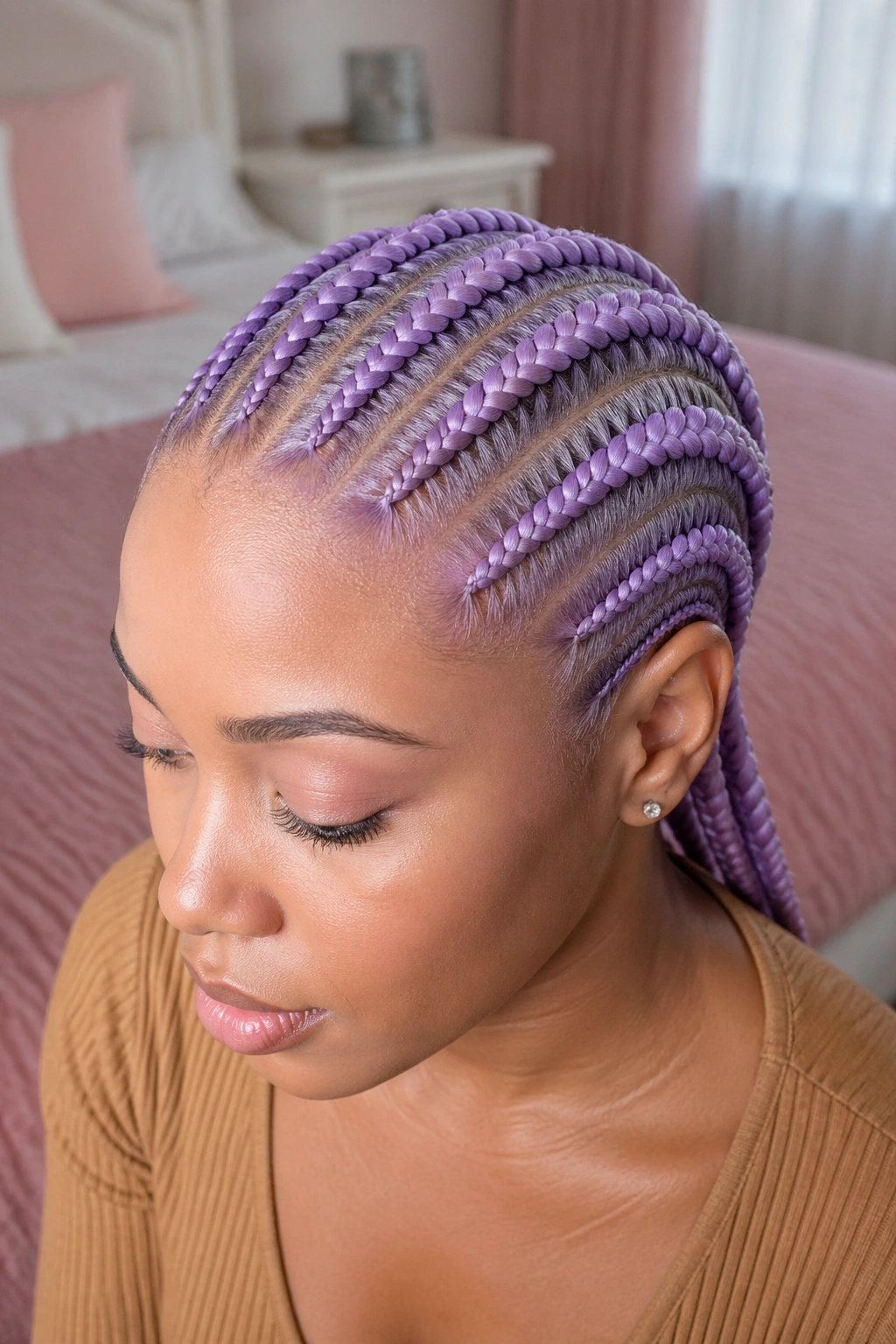
Six soft lavender cornrows. Where electric purple is bold and saturated, lavender is soft and romantic — a pastel cousin that reads as feminine rather than edgy.
Lavender kanekalon can vary significantly between brands. Some lean more pink, some more blue. Pick up the pack and assess the undertone against your skin before installation.
Lavender pairs beautifully with natural makeup and earth-toned clothing. The soft color doesn’t demand bold styling choices to support it.
18. Red And Black Striped Cornrows
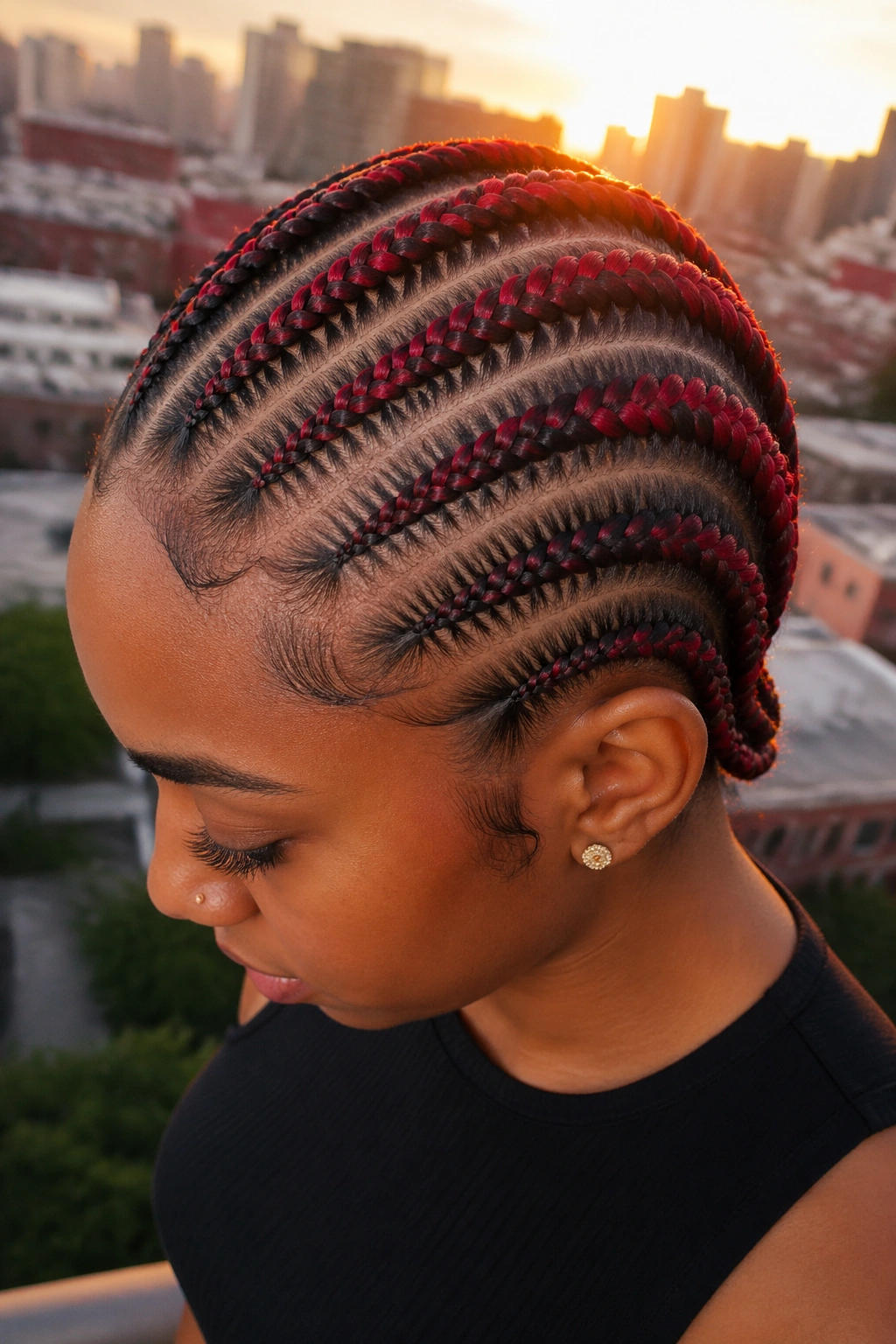
Alternating red and black braids creating a striped pattern. The stripes are structured and graphic, reading as intentional styling rather than accidental color mixing.
The red can be any shade — bright cherry, burgundy, or copper — each creating different stripe effects. Bright red creates maximum contrast; burgundy creates more muted stripes.
Use matching braid widths for both colors. Uneven widths — one thicker black braid, one thinner red braid — breaks the stripe rhythm and creates visual chaos.
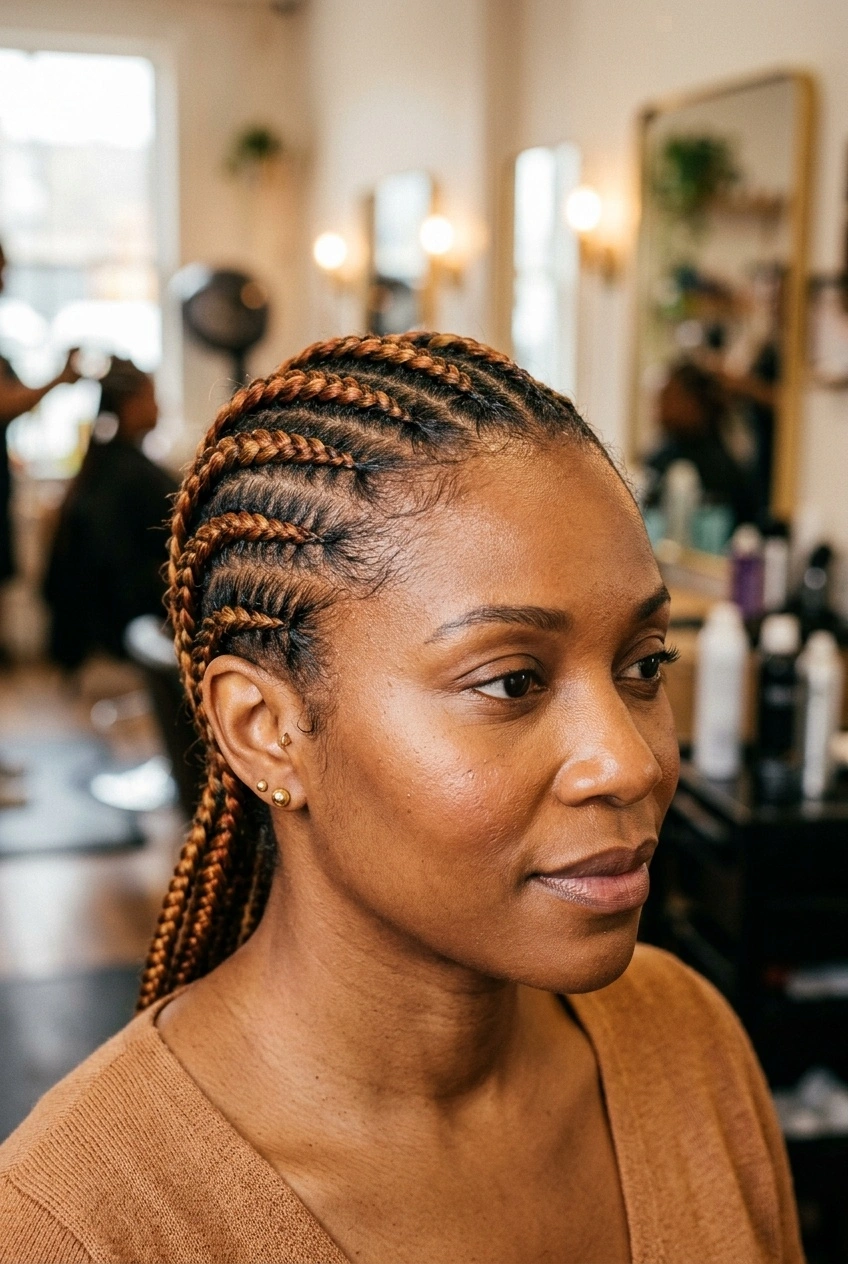
19. Orange Red Ginger Cornrows
Eight all back cornrows in ginger — an orange-red color that sits between copper and fire red. Ginger reads as warm, playful, and unexpected.
How To Style It
Ginger kanekalon is often sold as a blend, with slight color variations within the pack. This creates natural-looking dimensional color rather than flat single-shade.
The warm ginger color works especially well on warm-toned skin with hazel or green eyes. The color pulls out golden undertones in the complexion and highlights eye color.
Style ginger with green accents — green eyeshadow, green clothing, green jewelry — for a complementary color pairing that plays with the red-green complementary relationship.
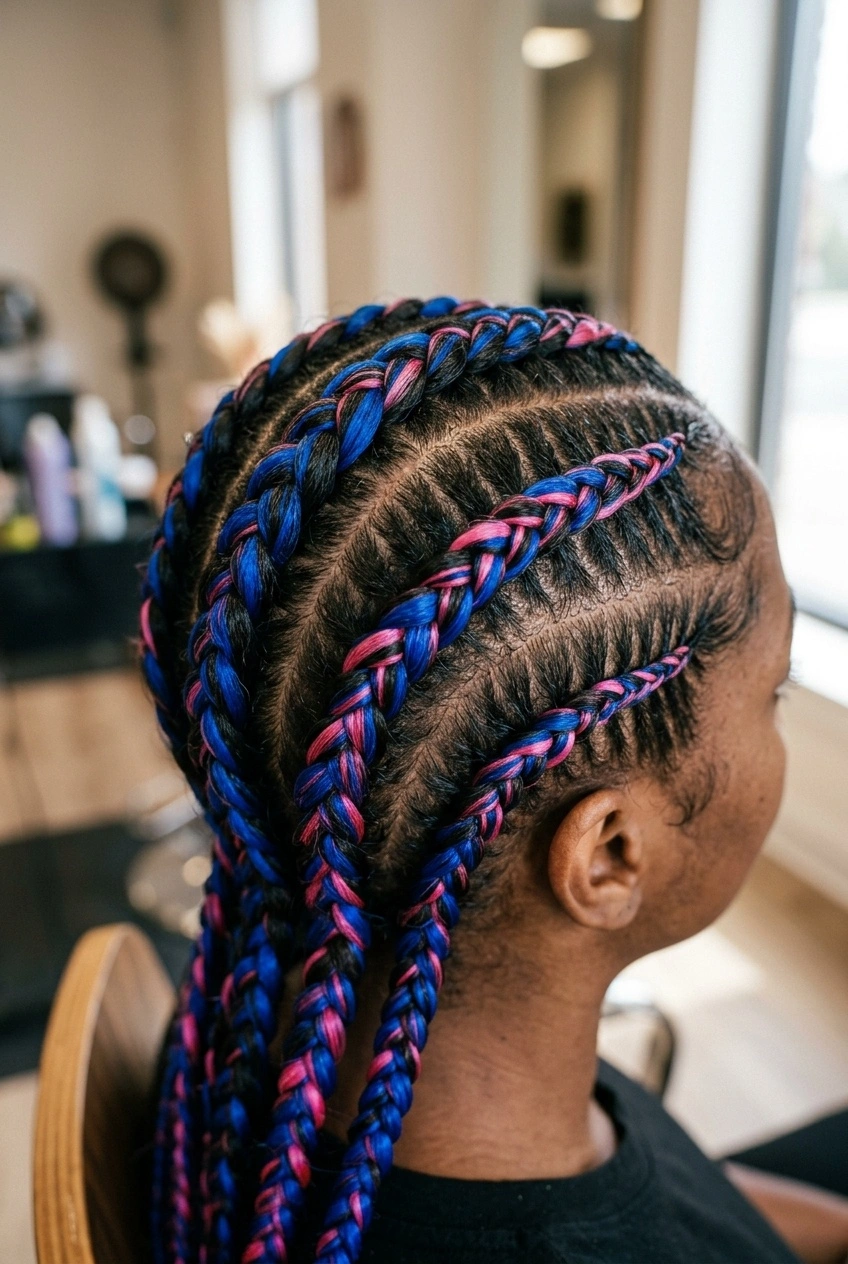
20. Mint Green Cornrows Ten Braids
Ten all back cornrows in pale mint green. The soft green is subtle and refreshing, reading as cool and spring-appropriate.
Mint green is one of the harder colors to pull off. It can read as juvenile or costume-like if not styled carefully. Balance it with sophisticated clothing — tailored pieces, neutral colors, minimal accessories — to elevate the look.
The soft color is most visible in direct light. Indoor lighting and shadowed spaces make mint green read almost gray. Factor this into how you expect the color to appear day-to-day.
21. Ombre Gray To White Cornrows
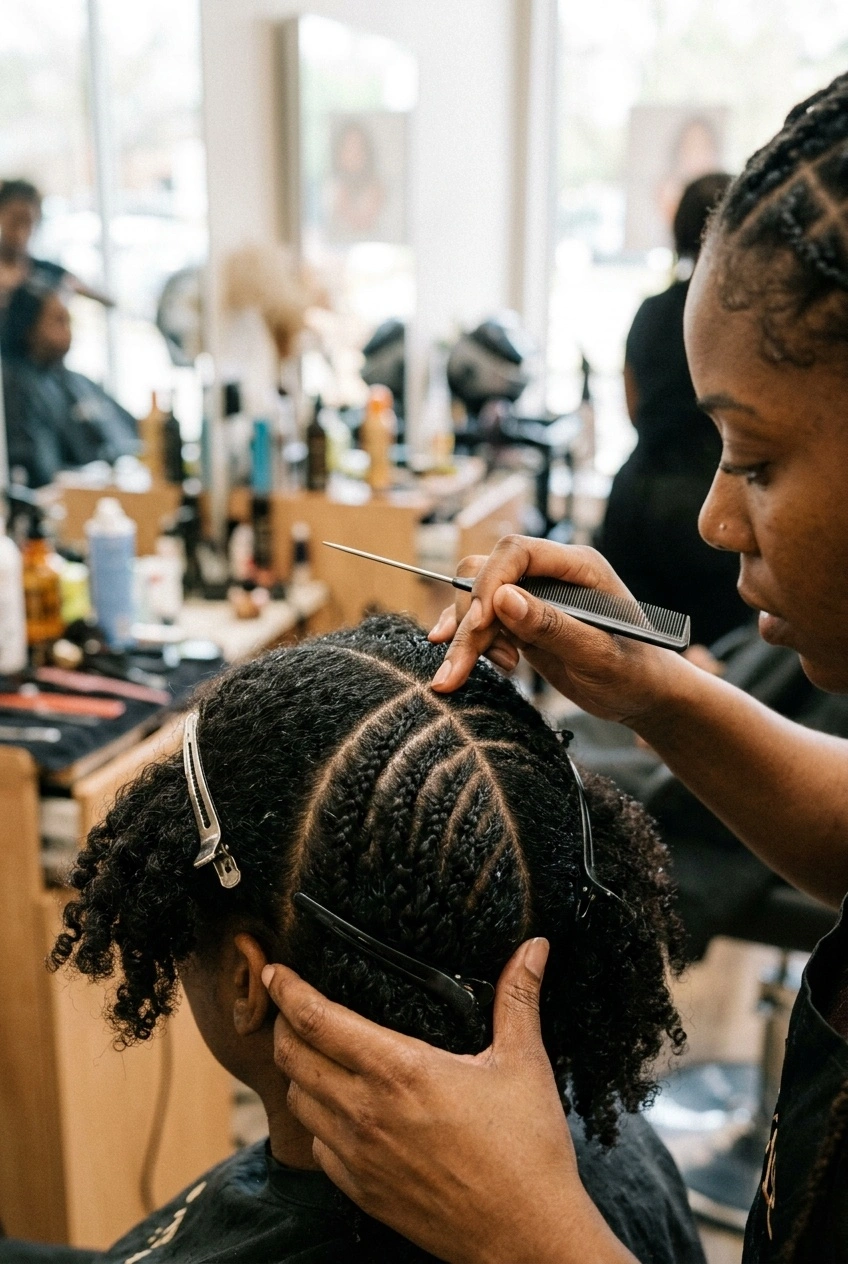
Six cornrows transitioning from dark gray at the root to pure white at the ends. The ombre effect creates a moonstone-like gradient that reads as futuristic and editorial.
Silver and white kanekalon are the most prone to dirtying and yellowing. Keep the braids away from nicotine smoke, cooking grease, and heavy products to maintain the color’s clarity.
This style is best for short-term wear — 2-3 weeks max. The light colors show dirt and discoloration faster than darker shades.
22. Rainbow Cornrows Multiple Colors
Each cornrow is a different color, creating a full rainbow effect across the head. Six to eight cornrows in red, orange, yellow, green, blue, and purple — or a curated selection of your favorite colors.
What To Watch For
Rainbow cornrows require careful planning. Random color placement can look chaotic. Deliberate placement — following the actual rainbow order or creating a gradient — creates cohesion.
The style reads as playful and bold. It’s not subtle and doesn’t try to be. This is for people who want visible, committed color and aren’t afraid of being the center of attention.
Pair rainbow braids with simple, solid-colored clothing. Patterned or multi-colored clothing competes with the braids and creates visual overload.
Making Colored Kanekalon Last
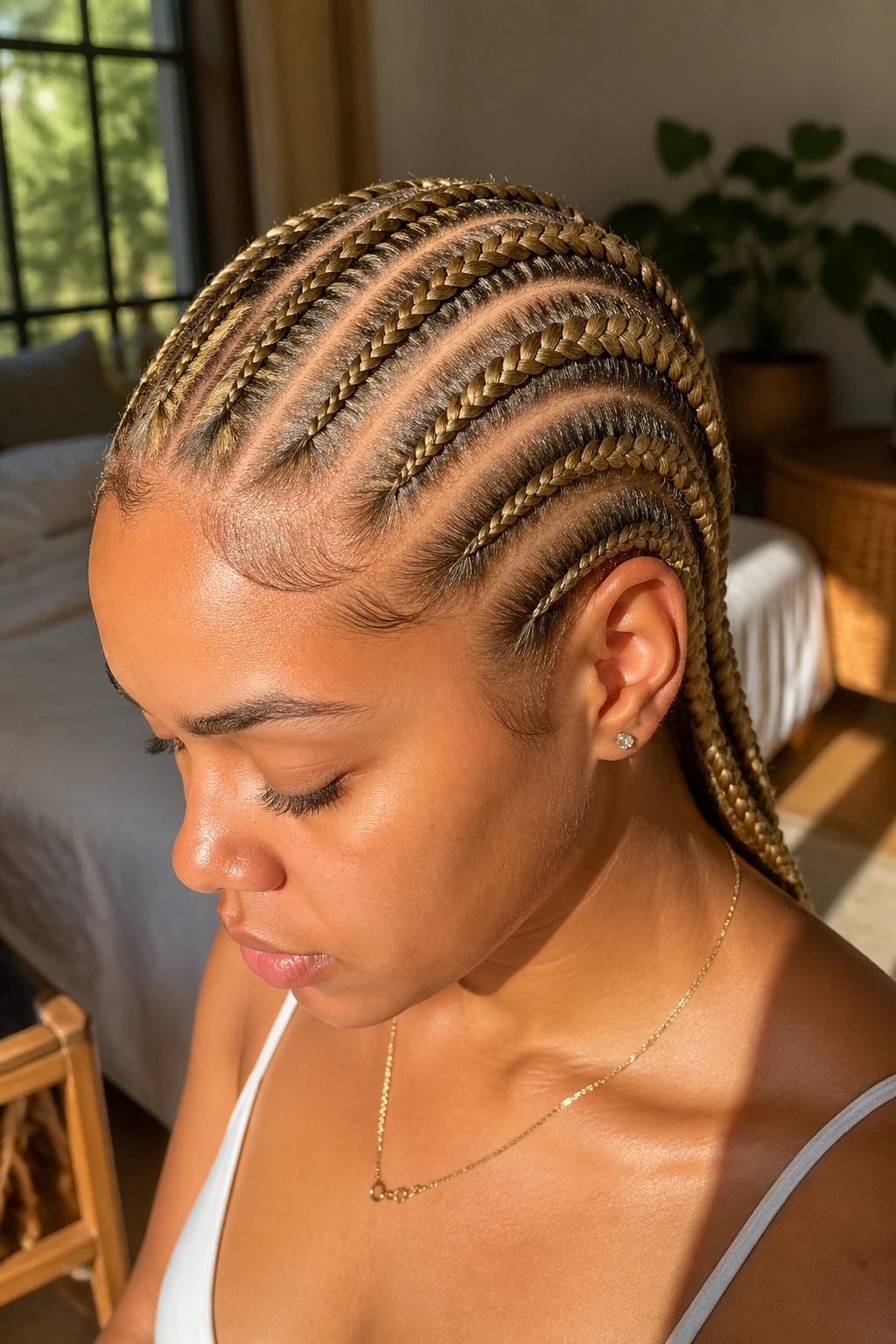
Colored braiding hair fades faster than natural-toned hair. Minimize fading by avoiding hot water, clarifying shampoos, and direct sunlight for extended periods.
Color-depositing conditioners can refresh fading color between washes. Match the product to the color family — pink conditioners for pink braids, blue for blue, etc.
Store remaining kanekalon from your pack in a dry, dark place. Unused kanekalon can be added to refresh sparse sections or for future use. Sunlight and moisture can damage the color even in storage.
Preventing Color Transfer
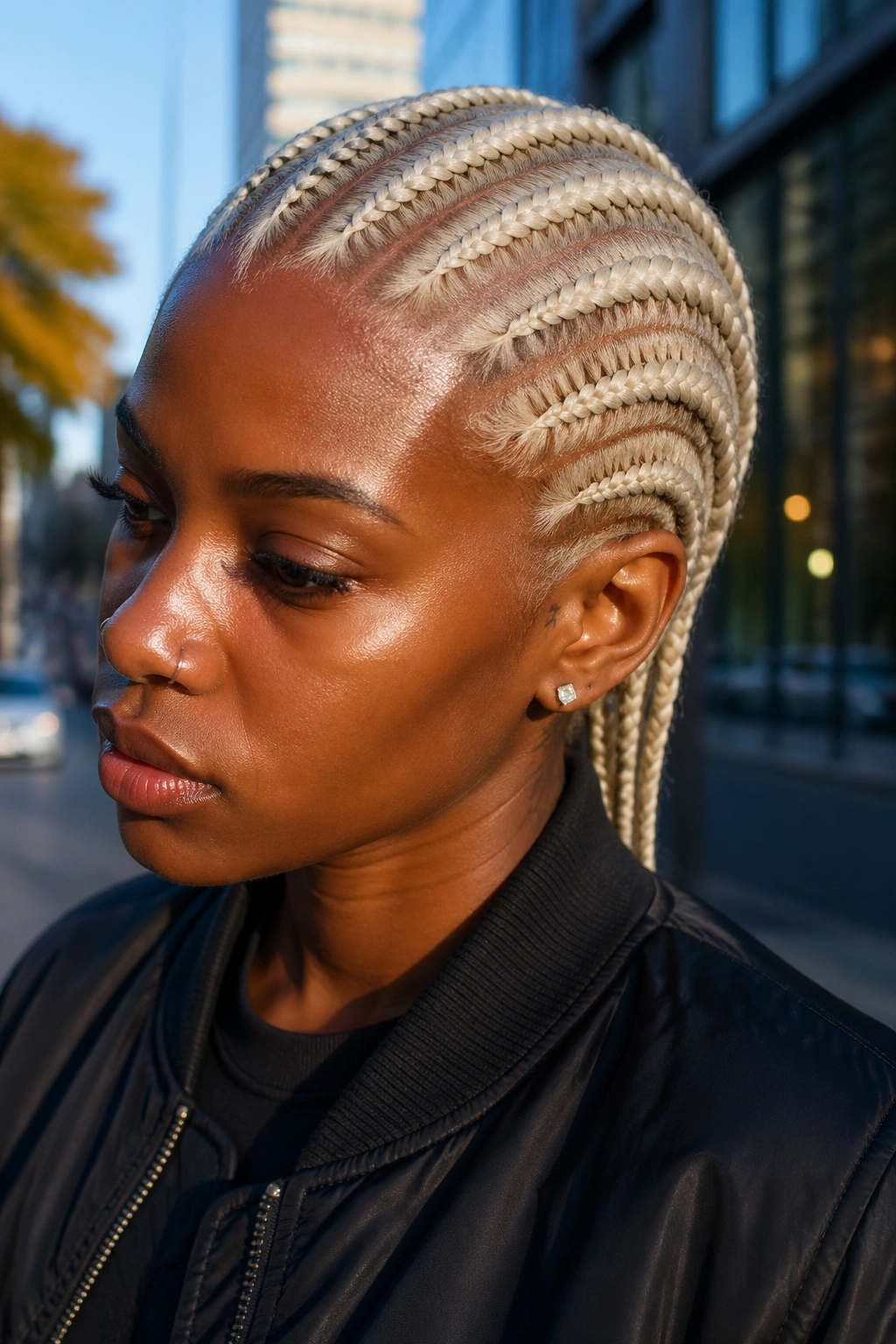
Bleeding kanekalon transfers onto anything it touches — clothing, pillowcases, towels, skin. Reduce transfer by rinsing the braiding hair before installation, which removes excess dye.
During the first week, wear dark-colored clothing around the neckline. Avoid white or light-colored tops until the initial dye shedding stabilizes.
Sleep on dark pillowcases or wrap braids in a dark satin scarf before bed. Bright colors especially (pink, red, purple) can stain pillowcases permanently.
For skin staining, a small amount of rubbing alcohol on a cotton pad removes most colored residue from the scalp or neck.
Washing Colored Cornrows
Wash every 10-14 days, not more often. Each wash strips some color.
Use a sulfate-free, color-safe shampoo diluted in water. Apply to the scalp through a squeeze bottle, massage gently, and rinse with cool water. Avoid hot water, which accelerates color loss.
Skip the clarifying shampoos. They’re designed to strip buildup, and they strip color along with it.
Condition with a color-safe conditioner or a deep conditioner applied to the braid lengths, avoiding the scalp. Leave on for 5-10 minutes and rinse thoroughly.
Taking Out Colored Cornrows
Takedown process is similar to any cornrow removal but with added color-care considerations.
Cut off the kanekalon tails above your natural hair length. This removes most of the dyed material before you start unraveling.
Spray each braid with diluted conditioner to soften the hair before unraveling. Work from the ends up, gently separating the braid rather than yanking.
Expect some color tint on your natural hair, especially if you wore bright colors. The tint typically washes out within 2-3 washes. Deep conditioning treatments after takedown help restore moisture lost during the wear period and the removal process.
After takedown, wash with clarifying shampoo to remove any color residue from your scalp and natural hair. Follow with a deep conditioner and rest your hair for at least 48 hours before installing another protective style.
