

Colored cornrow styles occupy a strange middle ground between protective styling and personal expression. They protect your hair the same way any cornrow does, but the color adds a layer of intention that a plain black braid never quite achieves. Done well, colored cornrows make a statement without needing to shout. Done badly, they scream cosplay and fade into an orange mess by week two. The difference comes down to three things: color choice, extension quality, and how the color is distributed across the braid pattern.
Most people approach colored cornrows the wrong way. They pick a color that looks good in the package, assume it’ll look the same on their head, and end up disappointed when the installed braid reads totally different against their skin. Color choice for cornrows is closer to picking lipstick than picking paint — the same pigment behaves differently depending on the undertones of the wearer’s complexion, the lighting, and how the color interacts with the natural hair it’s blending into.
The good news is that you don’t need expensive dye jobs or bleach to wear colored cornrows. The best approach uses pre-colored kanekalon extensions that install the same way standard feed-ins do. Your natural hair stays untouched. The color leaves when the braids leave.
Why Colored Cornrows Work Better Than Dyeing
Dyeing your natural hair, especially 4C, is a commitment with consequences. Bleach weakens the cuticle. Color-treated hair needs special care for months afterward. Protein treatments become non-negotiable. And when you decide to move on from the color, the only way out is growing it out or cutting it off.
Colored cornrows skip all of that. The color lives in the extension fiber. When you take the braids down, you walk away with the same hair you had before — no damage, no fade transition, no awkward growing-out phase.
The color selection in kanekalon has grown beyond anything available in box dye. Pastels, neons, jewel tones, ombres, rainbow blends — all pre-made, all installed without chemistry, all removable in one takedown session.
Quality matters. Cheap pre-colored kanekalon fades fast and snags on itself in the package. Look for brands that specify the color is heat-resistant and washable. Cheaper versions bleed color onto your scalp and pillowcase within the first week.
Picking the Right Color for Your Skin Tone
Cool undertones (pink, red, or blue underlying your skin) pair well with cool colors — silver, blue, platinum, burgundy, lavender. Warm undertones (yellow, golden, peach) pair with warm colors — copper, honey blonde, auburn, orange, gold.
Neutral undertones can wear either, but the safest bet for neutrals is jewel tones — emerald, sapphire, ruby — which read rich against any complexion.
Check your veins on the underside of your wrist. Blue or purple veins signal cool undertones. Greenish veins signal warm. A mix of both signals neutral.
Test the color against your collarbone in natural daylight before committing. Hold the kanekalon pack next to your skin and check a mirror. If the color makes your skin look grey, tired, or sallow, it’s the wrong color regardless of how pretty it looks on someone else.
Tools and Prep for Colored Installs
Colored kanekalon behaves slightly differently than black. It’s often stiffer because of the pigment, and some colors shed fiber more than plain black when worked.
Pre-stretch aggressively. Shake the pack, pull the fiber gently from end to end, and dip the tips in hot water for 2-3 seconds to soften. This reduces the wire-straight stiffness and helps the color blend with your natural texture.
Keep a lint roller nearby. Colored fiber transfers onto clothing more than black. A quick roll across your shirt after each braid prevents colored lint from spreading through your whole wardrobe.
Gloves aren’t necessary but useful for vibrant reds, pinks, and purples. These pigments can stain fingertips and palms during the first few braids. The staining fades in a day but looks strange in the meantime.
Caring for Colored Cornrows Through the Install
The first wash is the make-or-break moment for colored cornrows. Too hot, and the dye leaches out. Too cold, and the cuticle doesn’t close properly. Lukewarm — around 85 degrees Fahrenheit — is the sweet spot.
Shampoo should be sulfate-free and color-safe. Regular clarifying shampoos strip color from kanekalon the same way they strip it from natural hair. Use a gentle cleanser, dilute 1:2 with water, and apply with an applicator bottle along the parts.
Rinse until the water runs clear, not until the water looks clean. There’s a difference. Soap residue causes itching within 48 hours of washing.
Pat dry with a microfiber towel. Rubbing with a regular cotton towel creates friction that fades the color and fuzzes the braid surface.
1. Honey Blonde Straight-Back Cornrows
Honey blonde sits in the warm neutral zone — golden enough to read sunny, brown enough to look natural rather than obviously dyed.
Why This Color Works
- Flatters warm skin tones without washing them out
- Blends into dark roots without a harsh demarcation line
- Photographs well in every lighting condition, from overcast to golden hour
- Reads mature and intentional rather than costume-y
Tip: Buy kanekalon labeled “honey blonde” specifically rather than generic “blonde.” The honey variant has warm golden undertones that play well with natural hair textures.
Six to eight straight-back cornrows in honey blonde turn a basic protective style into something that looks expensive. The color catches natural light and creates subtle dimension along each braid as it moves. This is the entry-level colored cornrow — if you’ve never worn color before, start here.
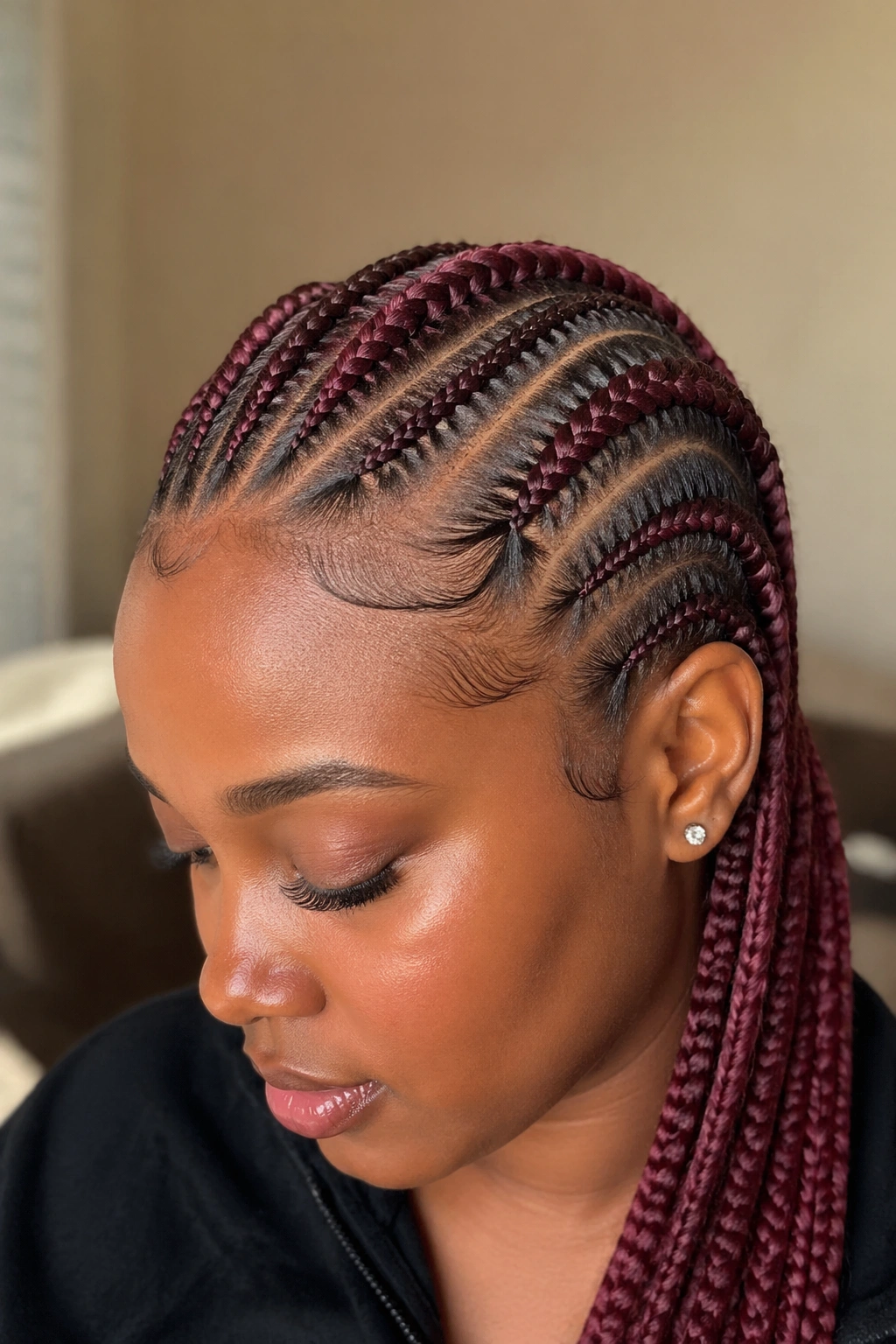
2. Burgundy Stitch Cornrows
Burgundy is the gateway drug to bolder colored cornrows. Dark enough to read professional, rich enough to read intentional, and forgiving across nearly every skin tone.
The stitch pattern — horizontal lines pulled across the braid as you work — takes on extra dimension in burgundy because the color has natural depth. Flat burgundy reads pretty. Stitched burgundy reads sculptural.
Seven to nine stitch cornrows is the count I prefer for this color. Fewer and the color dominates; more and you lose the stitch detail in the density of braids.
The color works best on a warm-undertone wearer but reads well on cool undertones too because burgundy sits on the line between warm and cool. It’s technically a warm red with blue undertones, which is why it’s so universally flattering.
3. Platinum Silver Feed-Ins
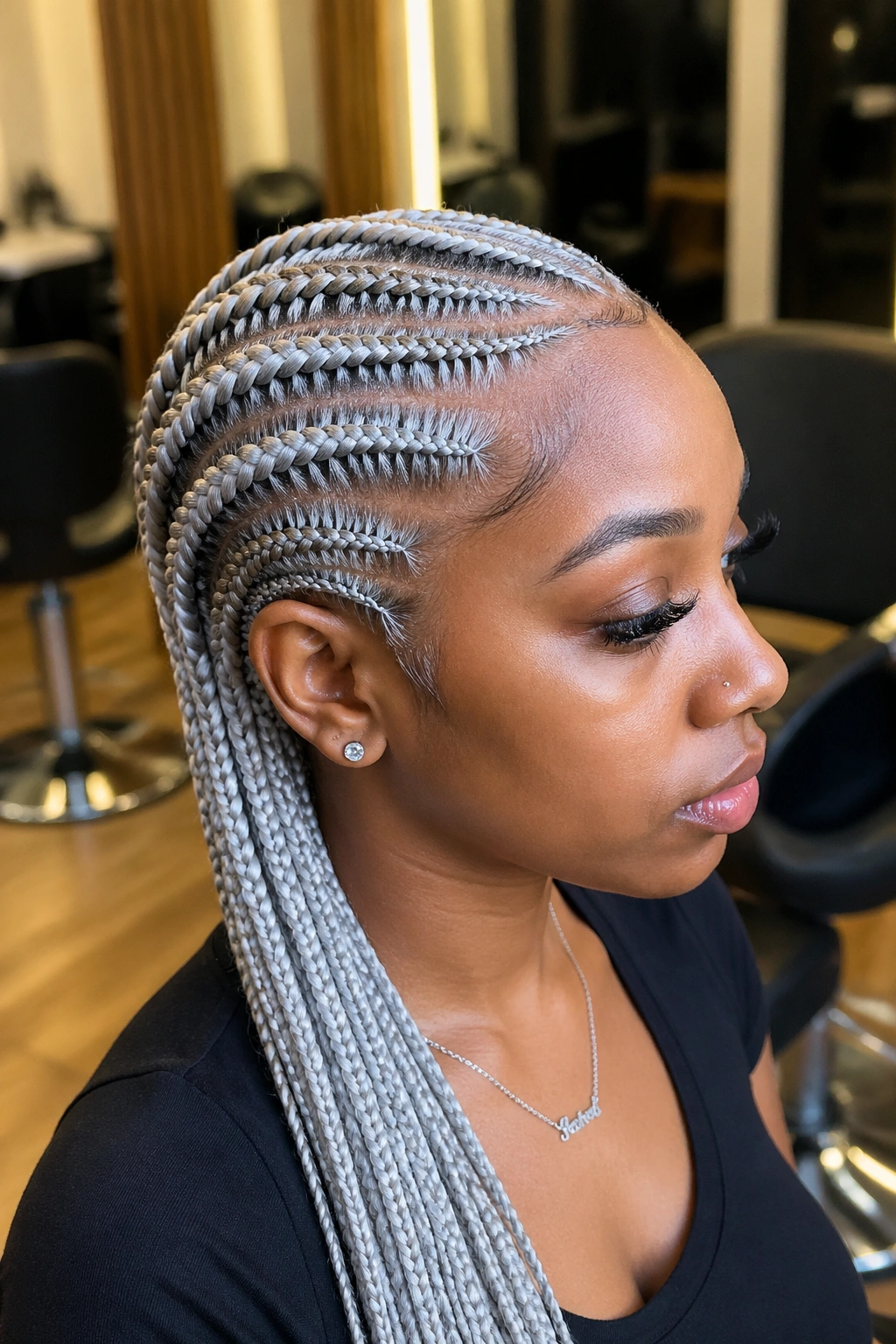
Platinum silver is a high-risk, high-reward choice. It photographs incredible. In person, it can read either sleek and futuristic or washed-out and dated depending on the cut of the cornrow pattern and the skin tone of the wearer.
Cool undertones carry platinum best. If your skin has pink or blue undertones, platinum makes your complexion glow. If your skin is warm, the contrast can be harsh and make the hair read grey rather than silver.
Feed-in technique works especially well with platinum because the gradual buildup of color at the base of each braid mimics the way salon dye jobs fade from root to tip. The effect reads dimensional rather than flat.
Maintenance on platinum is higher than darker colors. It shows dirt faster, picks up yellow tones if exposed to hard water, and fades to a dingy grey if not washed with purple shampoo every 1-2 weeks.
4. Rose Gold Ombre Cornrows
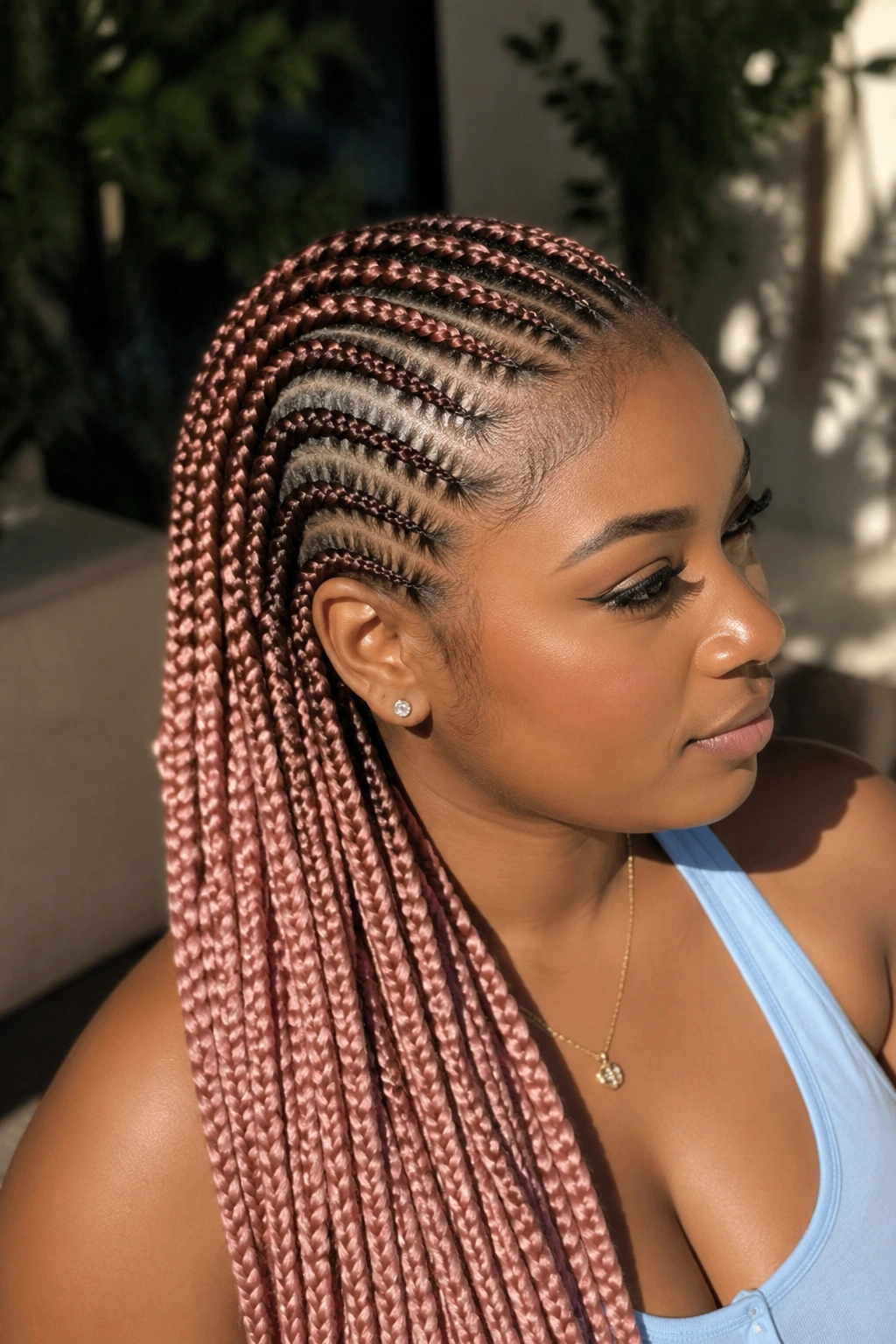
Rose gold cornrows shift from a darker pink at the root to a lighter blush at the tips. The ombre effect happens naturally when pre-colored kanekalon is woven with proper technique.
Ombre isn’t just two colors stacked. It’s a gradual shift that happens across the length of the braid, which means the extensions themselves need to be colored in a gradient — not spliced at a single point.
Pre-colored ombre kanekalon comes with the gradient already built into the fiber. You don’t create the ombre during braiding; you reveal it by installing the fiber in the right orientation.
Match the dark end of the ombre to your natural hair color at the root. This creates a seamless transition where the braid appears to grow out of your own hair and shift color as it extends.
Rose gold fades faster than most colors because pink pigments in kanekalon are less stable. Budget 3-4 weeks of vibrant wear, then the color starts drifting toward peach and then to a washed blonde. Many people consider the fade part of the style’s character.
5. Chocolate Brown With Caramel Highlights
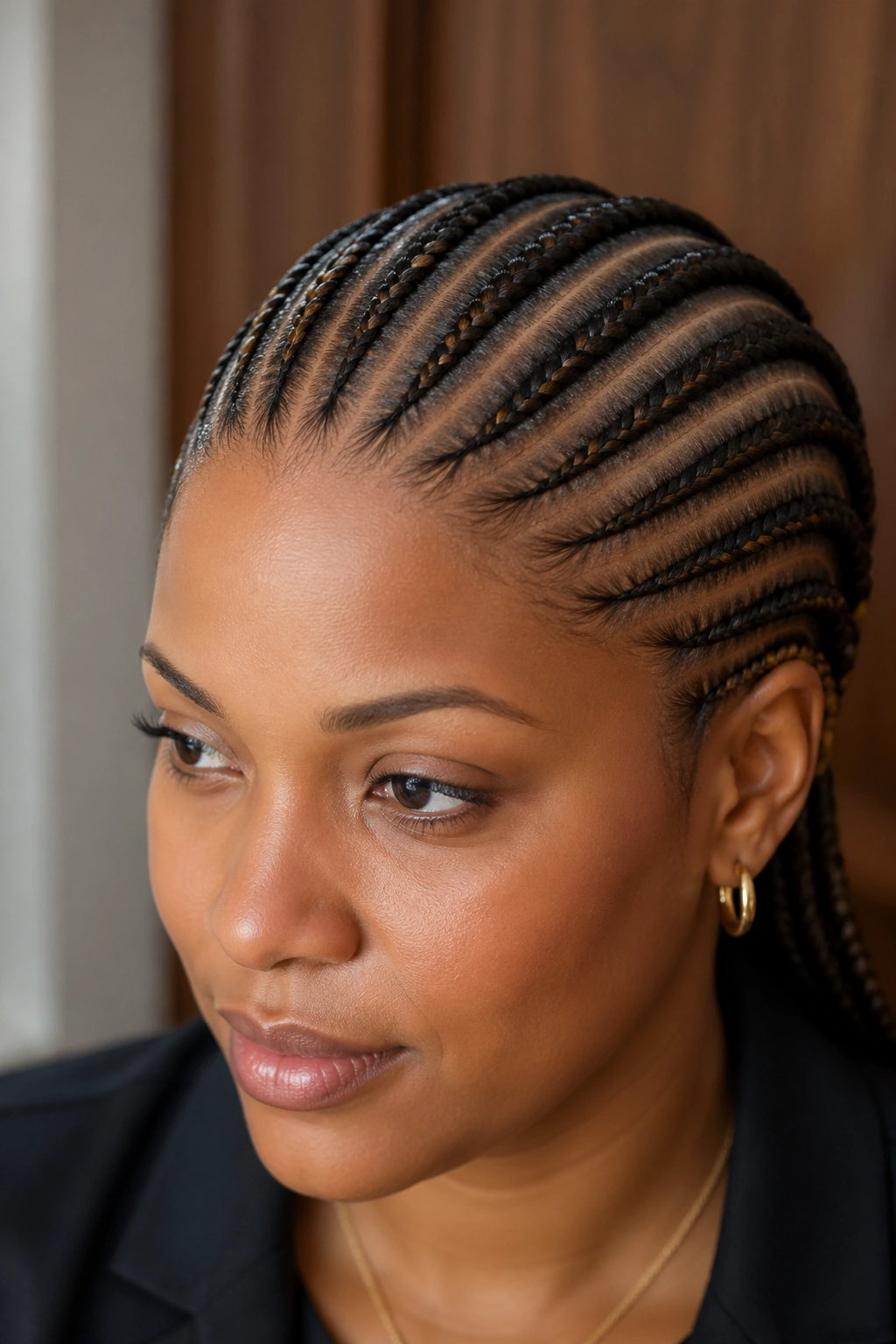
Ever seen those cornrows that look like the wearer just walked out of a high-end salon? This is often the combination — a chocolate brown base with caramel highlight strands woven through.
The caramel pieces aren’t ombres. They’re individual strands of lighter-colored kanekalon added during the feed-in process. About 20-30 percent of the total extension volume should be the lighter color. Any less and the highlights disappear; any more and the base color loses integrity.
How to Style It
Focus the highlights toward the front of the head. The pieces closest to the face should carry more caramel than the pieces toward the nape. This mimics natural sun-bleached patterns and frames the face softly.
Keep the braid pattern simple — straight-backs or gentle side sweeps. Complex parting patterns fight with the color dimension and the result reads busy.
This style is especially flattering for job interviews, professional events, or any setting where you want the style to read mature and polished without broadcasting “I have cornrows.”
6. Purple Lavender Goddess Braids
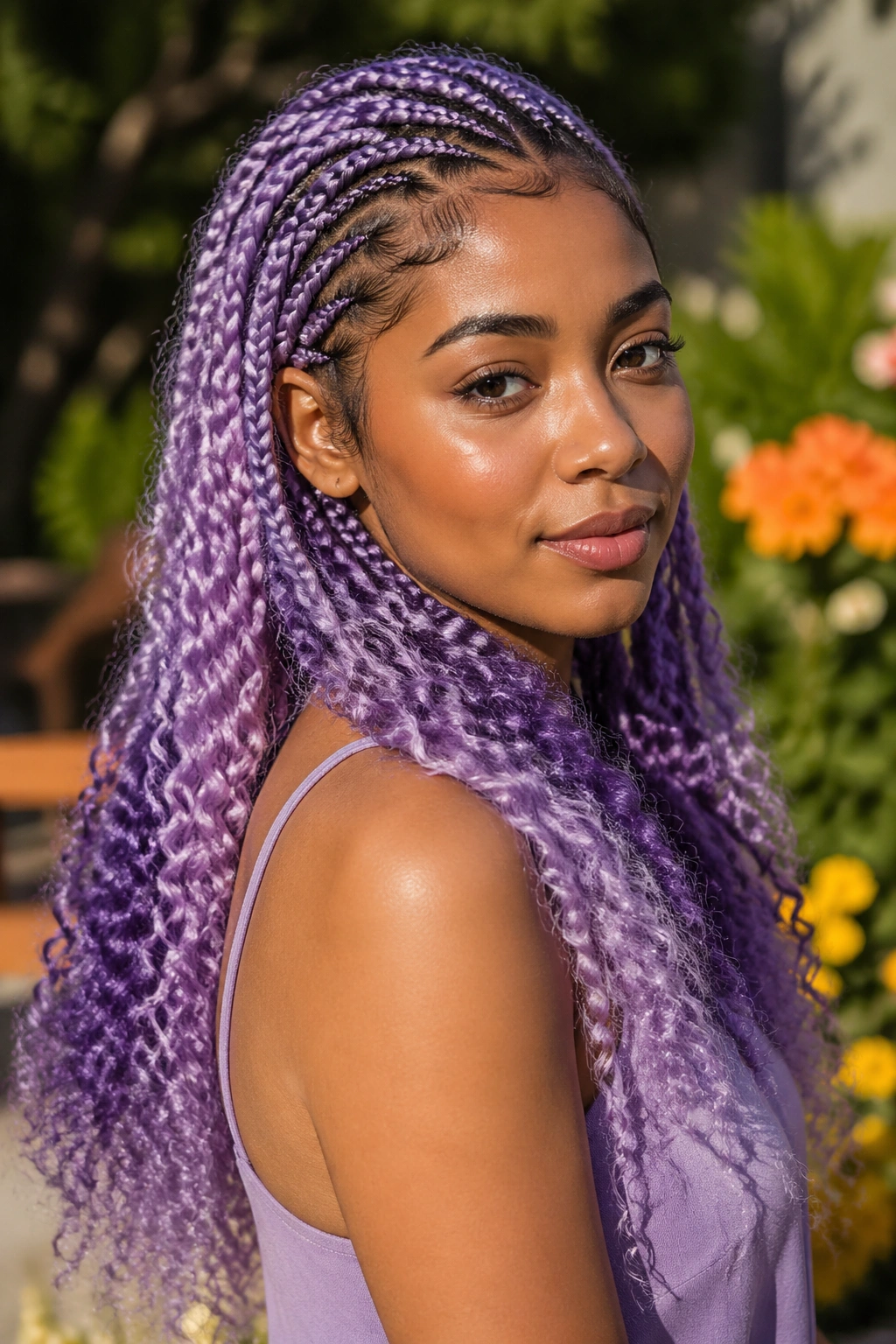
Lavender is a color that either works on you or doesn’t — there’s very little middle ground. Try it against your skin before committing to a full install.
The color reads youthful, romantic, and slightly magical. On melanated skin especially, lavender creates a beautiful contrast because the cool purple plays against warm complexions in a way that feels deliberate and flattering.
Goddess braids with lavender mean the bulky cornrow portion is lavender and the curly human hair additions can match or contrast. Lavender base with deep purple curly bulk creates dimension. Lavender base with blonde curly bulk reads fantasy-inspired.
Wash lavender cornrows with cold water only. Heat dramatically accelerates color fade in the purple family. Even lukewarm water strips pigment faster than it should.
The fade pattern for lavender is distinctive — it moves toward a cool grey rather than a warm beige. Many wearers enjoy the grey phase as much as the original lavender, getting two color experiences from a single install.
7. Copper Orange Lemonade Braids
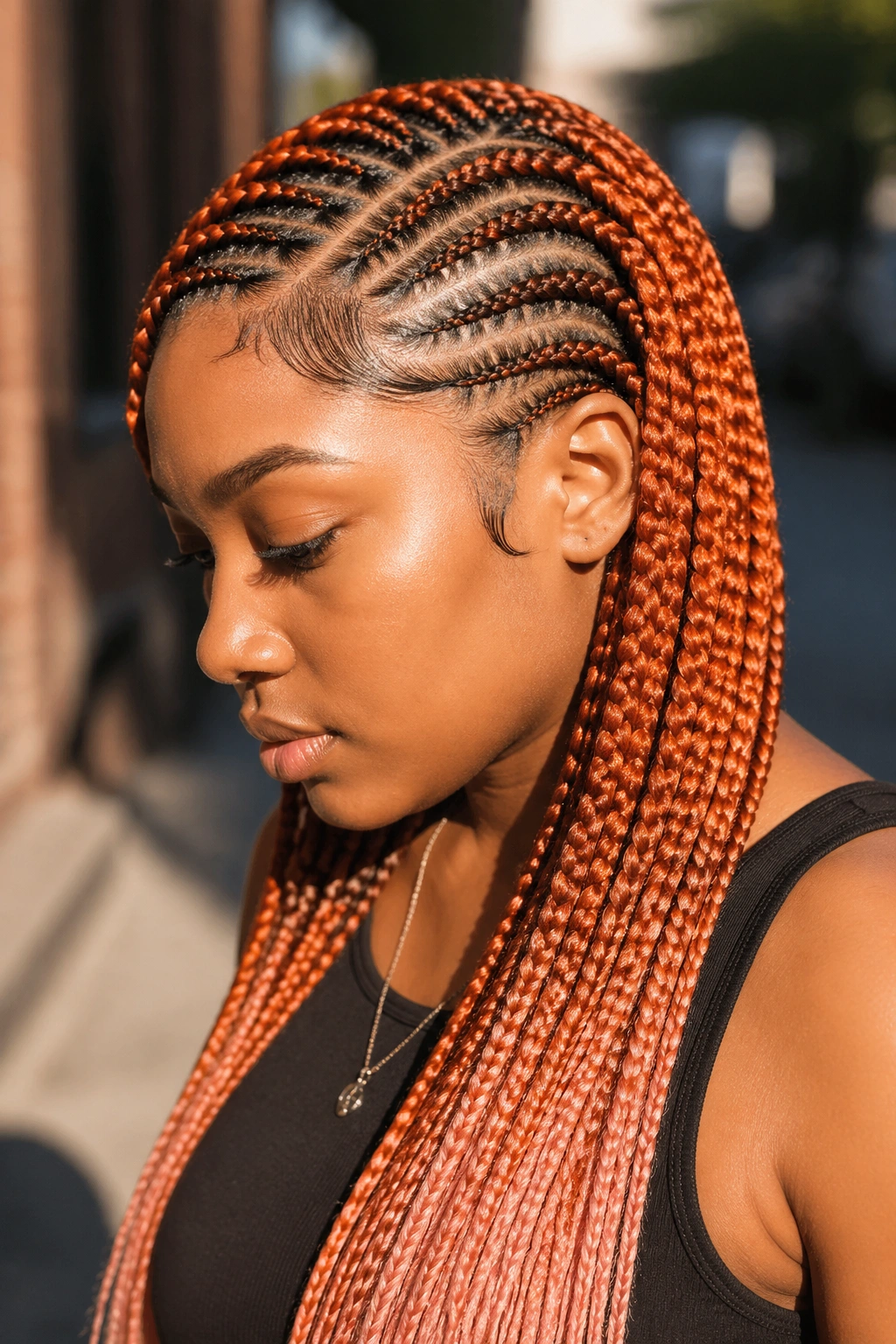
Copper sits between orange and red — brighter than burgundy, warmer than traditional red, and less cartoonish than pure orange.
The color reads bold but grounded. It’s been worn by cultural icons for decades — think Grace Jones, Rihanna, Solange — which gives it a built-in gravitas that newer colors lack.
Lemonade braid pattern (side-swept cornrows) works especially well with copper because the sweeping motion creates natural light-play that highlights the warm undertones of the color.
The lemonade silhouette needs weight. Feed-in technique adds bulk gradually, and copper kanekalon with some variation in shade (darker at the root, brighter at mid-shaft, lighter at the tips) creates dimension that flat copper doesn’t achieve.
Copper fades toward a dusty rose pink after about four weeks. Unlike some other fades, copper-to-rose is considered an attractive transition rather than a disappointing one.
8. Navy Blue Zig-Zag Cornrows
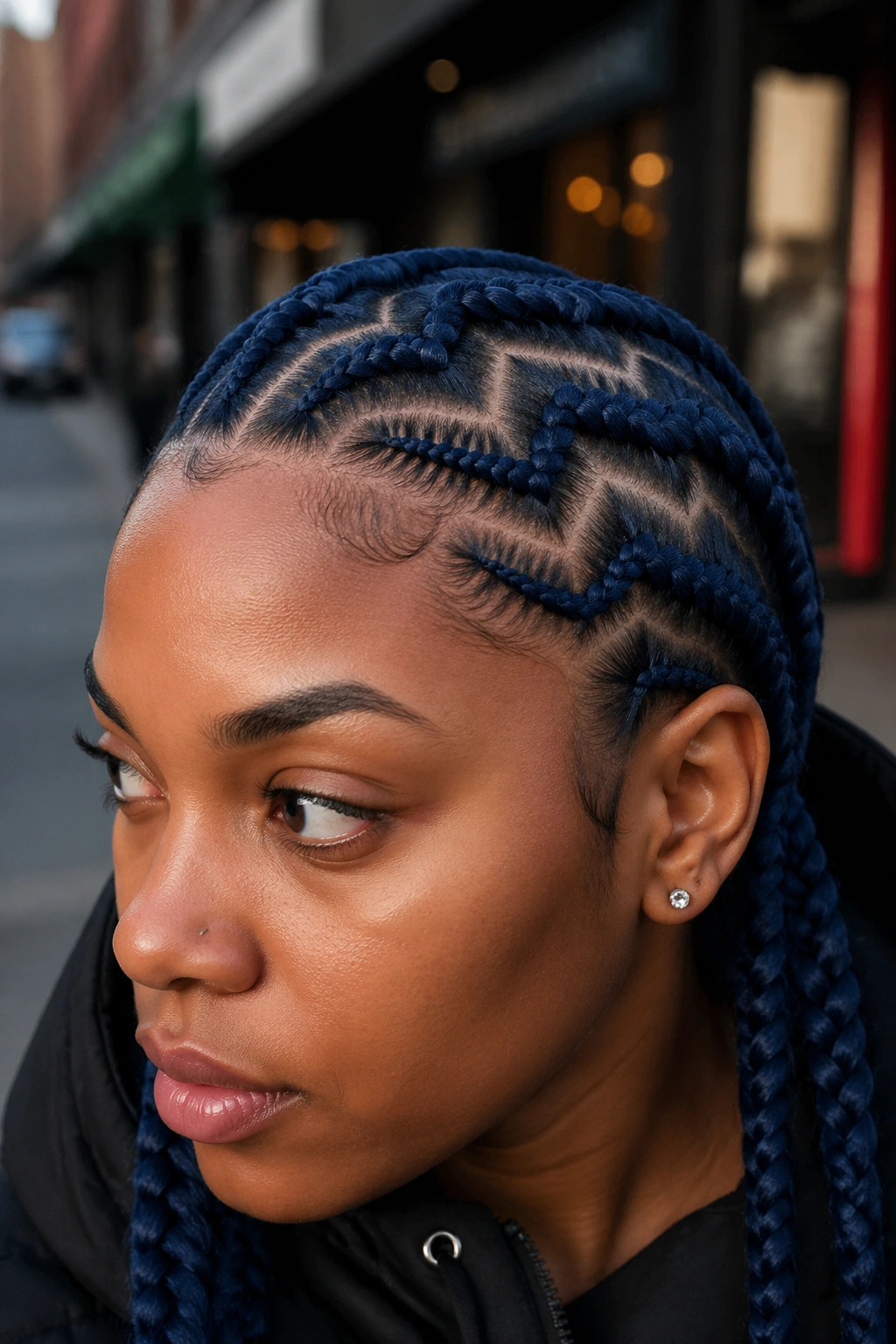
Navy blue is the sleeper hit of colored cornrows. Dark enough to read professional in nearly any setting, but colored enough to be clearly intentional rather than mistaken for black.
The zig-zag parting pattern amplifies the color because the sharp angles of the parts contrast against the rich blue of the braids. On flat parts, navy can read almost black. On geometric parts, it reads unmistakably blue.
Consider navy for work environments that allow color but favor professional presentations. It’s the colored cornrow equivalent of a navy blazer — confident without being loud.
Blue pigments are among the most stable in kanekalon. Expect navy to hold its color for six to eight weeks without significant fade, longer than most other colors.
9. Bubblegum Pink Micro Cornrows
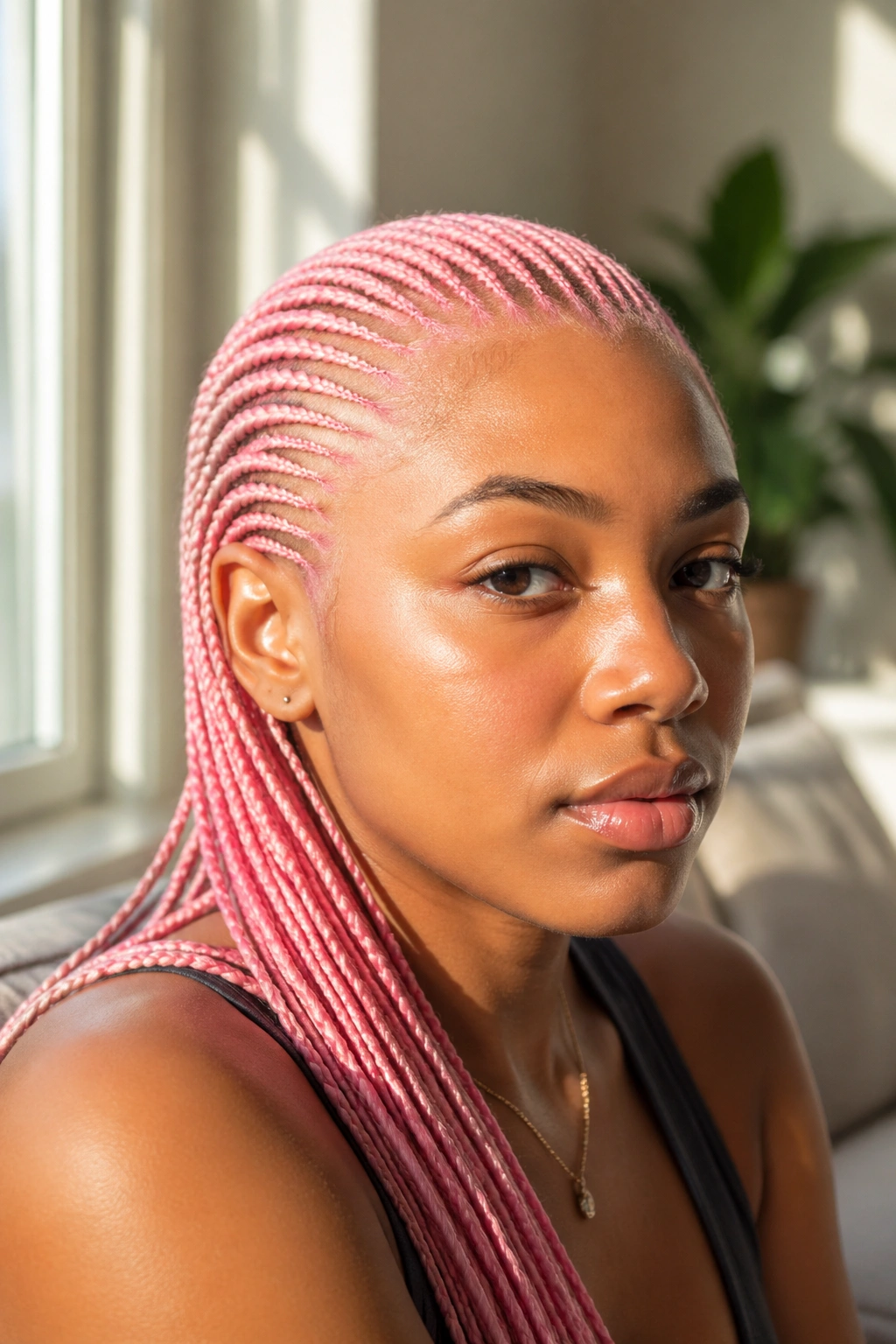
Bubblegum pink is unapologetically loud. There’s no subtlety, no professional version, no toning it down. If you want pink, you want to be seen.
Micro cornrows — very small, densely-packed braids — make pink land even harder. The density of the color combined with the density of the braids creates an intensity that larger braids dilute.
Budget six to eight hours for a full head of pink micro cornrows. The small sections take time, and the color means every imperfection shows more than it would on black braids.
This style reads youthful. It works for performers, artists, students, and anyone whose personal brand accommodates bold color. It reads less well for corporate environments or traditionally conservative professions.
The color fades to a washed peach-pink after 3-4 weeks. Plan takedown around the fade timeline or embrace the muted phase as part of the style’s arc.
10. Auburn Red With Copper Roots
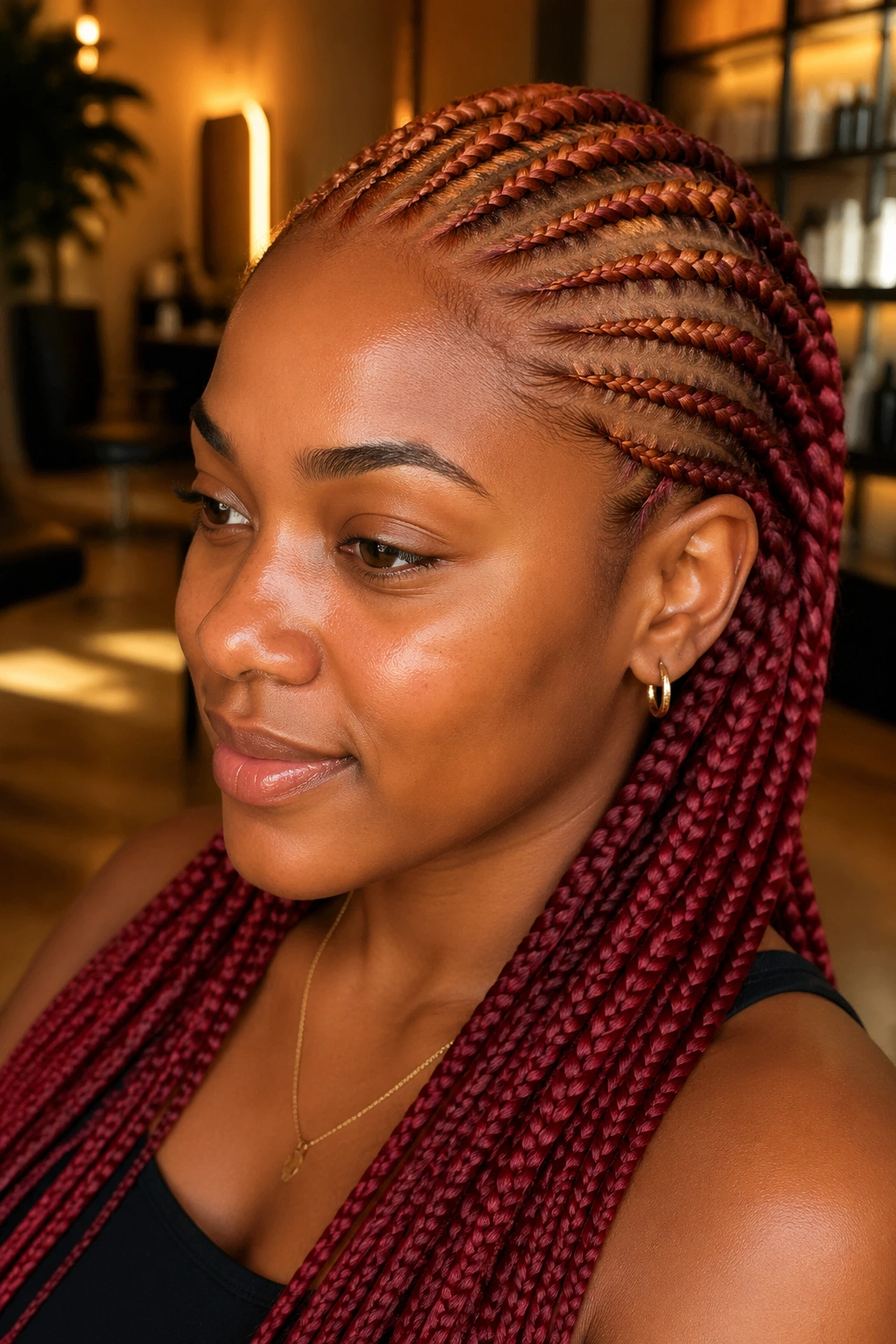
Auburn with copper roots reverses the typical root-fade pattern. Instead of darker roots fading to lighter tips, this style starts with the warmer, brighter copper at the root and deepens into a rich auburn as it extends.
The reverse ombre effect reads fresh because it mimics the way red hair catches sunlight more at the crown than at the ends — an optical illusion that suggests natural highlighting.
Technique: use two different pre-colored kanekalon packs and splice them during the feed-in process. The copper pack feeds first, close to the scalp. The auburn pack feeds second, starting at the 3-inch mark and continuing to the ends.
This style works especially well on olive, tan, and deeper skin tones where the warm red family plays against warm skin undertones. Cool-toned wearers may find auburn reads muddy rather than rich against their complexion.
11. Teal Green Fulani Braids
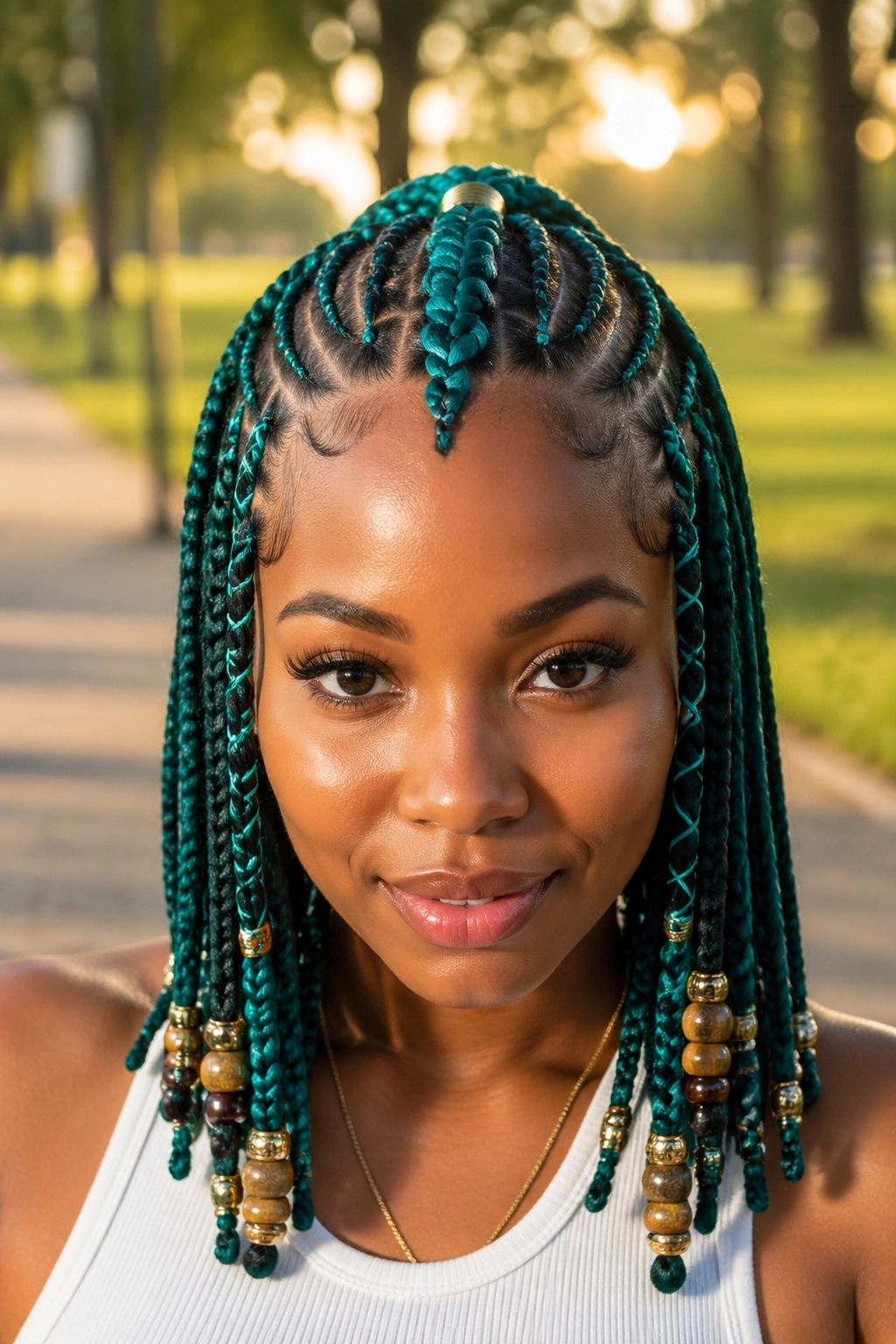
Teal green — that blue-green middle ground that shifts in different lighting — is one of the most flattering unusual colors for melanated skin.
Fulani braid patterns (traditional West African style with a center braid flowing forward and additional braids on either side) layer beautifully with teal because the color is unusual enough to make the traditional pattern feel fresh.
- Center braid runs from front hairline back to the crown or nape
- Side braids cascade from temple to shoulder
- Beads traditionally finish Fulani braids — gold or wooden beads pair well with teal
- Thread wraps at the base of each braid can match or contrast the teal
The overall effect reads both deeply cultural and strikingly individual. The tradition is honored through the silhouette; the individual expression comes through the color.
12. Gray Ash Straight-Backs
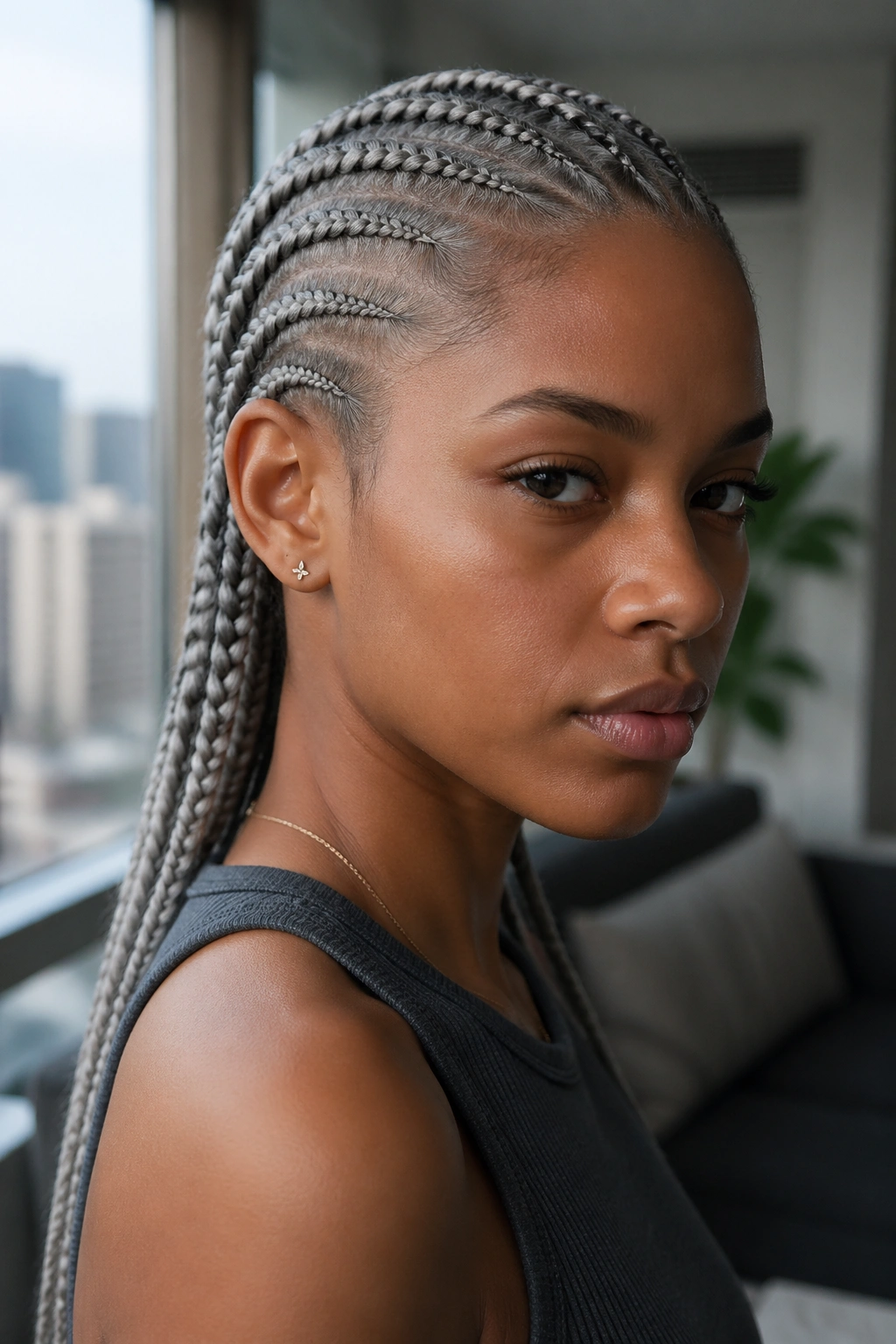
Ash grey is a cool, slightly blue-tinted grey that sits between silver and charcoal. It’s harder to pull off than platinum but rewards the effort with a uniquely sophisticated look.
Straight-back cornrows let the color itself carry the style. No complicated parting needed — the grey does the work.
The color works best on cool undertones and can read as prematurely grey on warm undertones (which some people actually want). Consider the look you’re going for before committing.
Ash grey fades to a beige blonde over time. Not always attractive. Use purple or blue shampoo weekly to maintain the cool tone.
This is a great color choice for anyone who wants impact without loud color. Grey reads mature and assured rather than youthful and playful.
13. Highlighter Yellow Cornrows
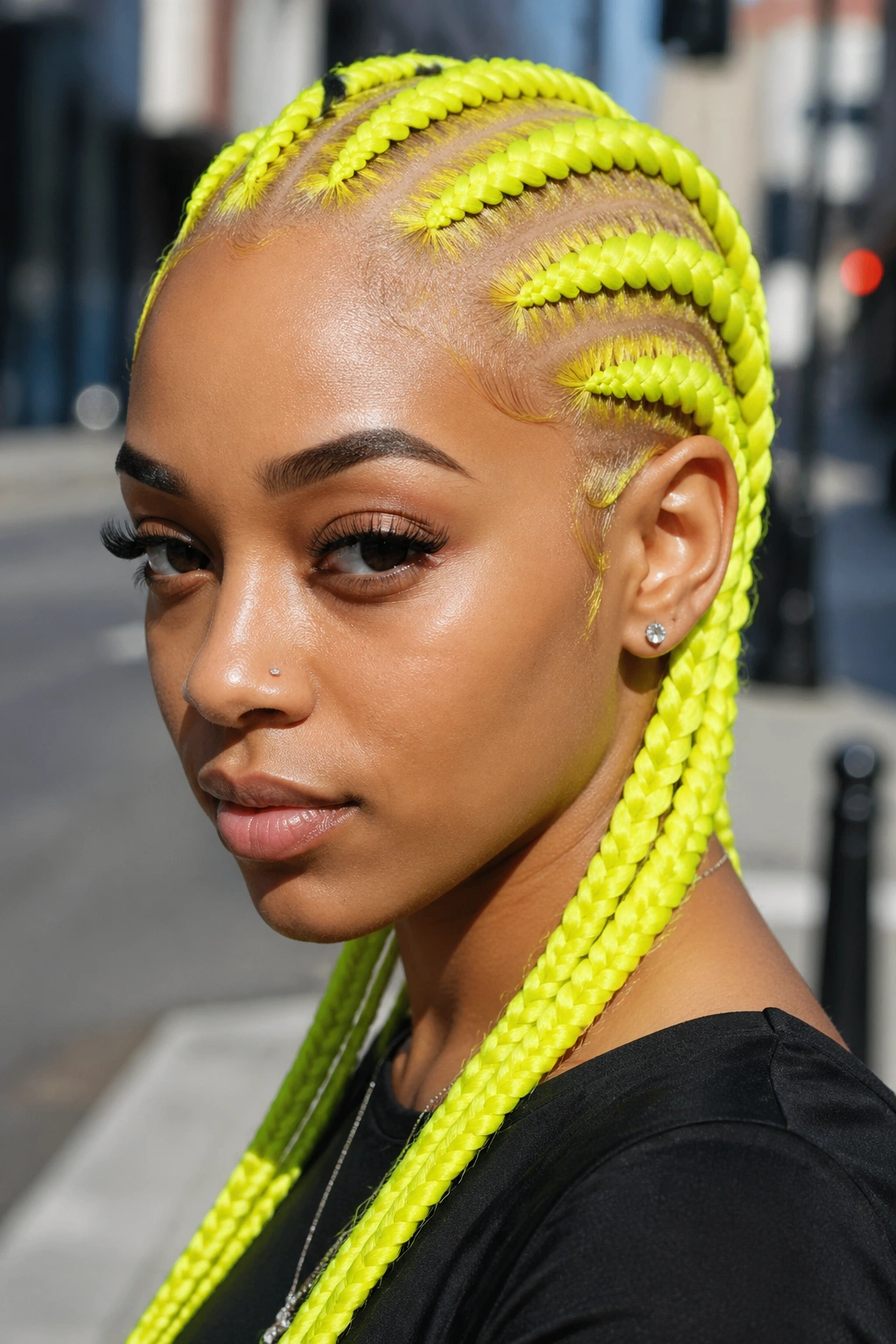
Neon yellow is high-commitment. There’s no toning it down, no blending with anything, no mistaking it for anything else.
The color photographs bright and reads even brighter in person. Under strong sunlight it can nearly glow. Under fluorescent light it can read flat and slightly sickly.
This is a statement style for performers, content creators, festival-goers, and anyone whose lifestyle or aesthetic can support the boldness.
Don’t try to tone down neon yellow with moderate styling. Lean into it. Pair with a simple pattern (straight-backs or a single lemonade sweep) and let the color be the entire design.
The fade on neon yellow is not forgiving. It goes from neon to a dingy greenish-beige in about 3 weeks. Plan for a shorter wear window or a refresh install.
14. Deep Violet Crown Braid
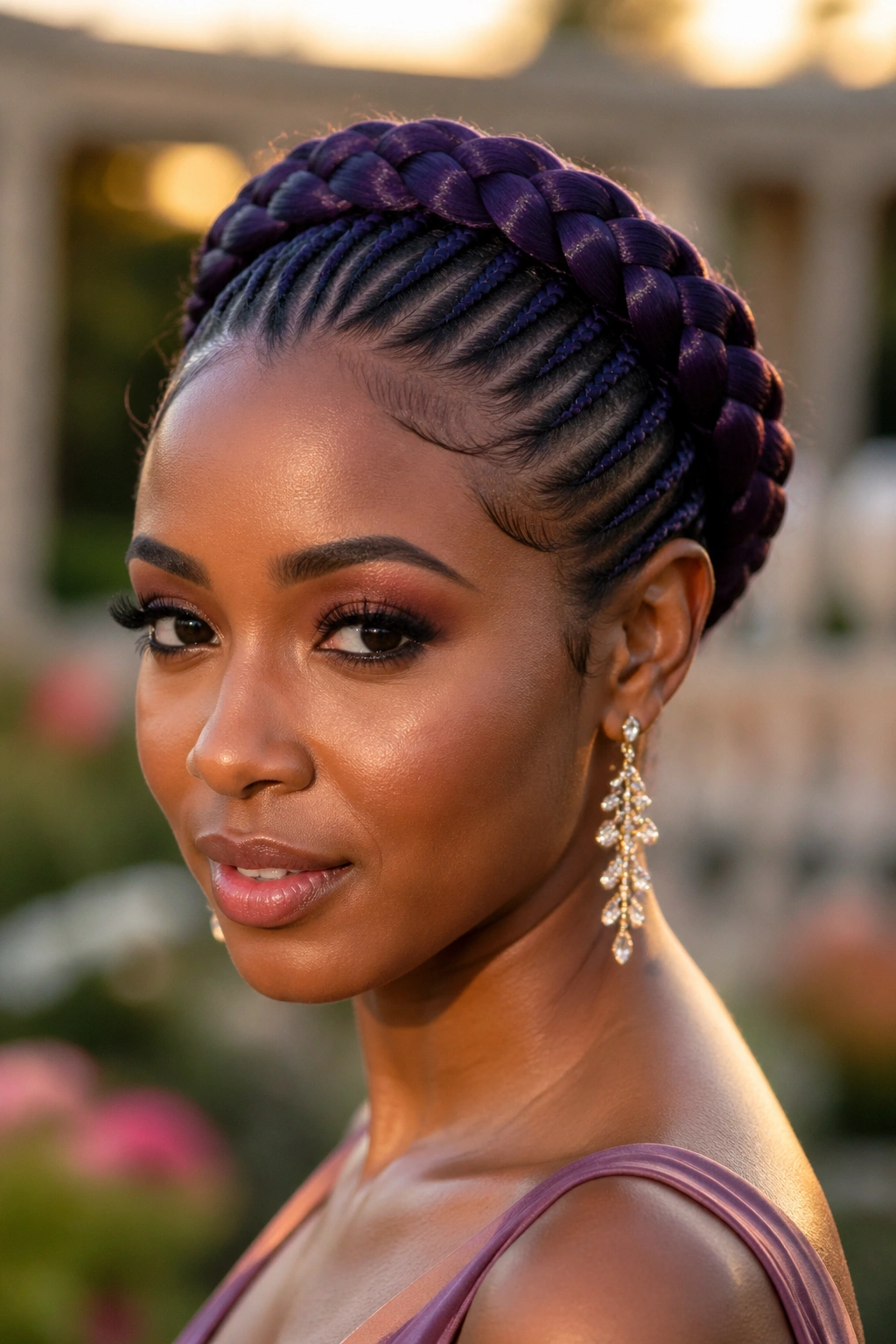
Deep violet — rich, almost black-purple — reads more intentional than lighter purples and carries a regal quality that lavender can’t match.
The crown braid style (one large braid circling the head like a headband) works well in deep violet because the color gives weight and presence that match the silhouette of a crown braid.
This style is understated but confident. Not every color needs to be seen from across the room. Deep violet reveals itself slowly as the light catches different parts of the braid.
Works for formal events, weddings, professional photography. Reads sophisticated rather than fun.
15. Jet Black With Electric Blue Tips
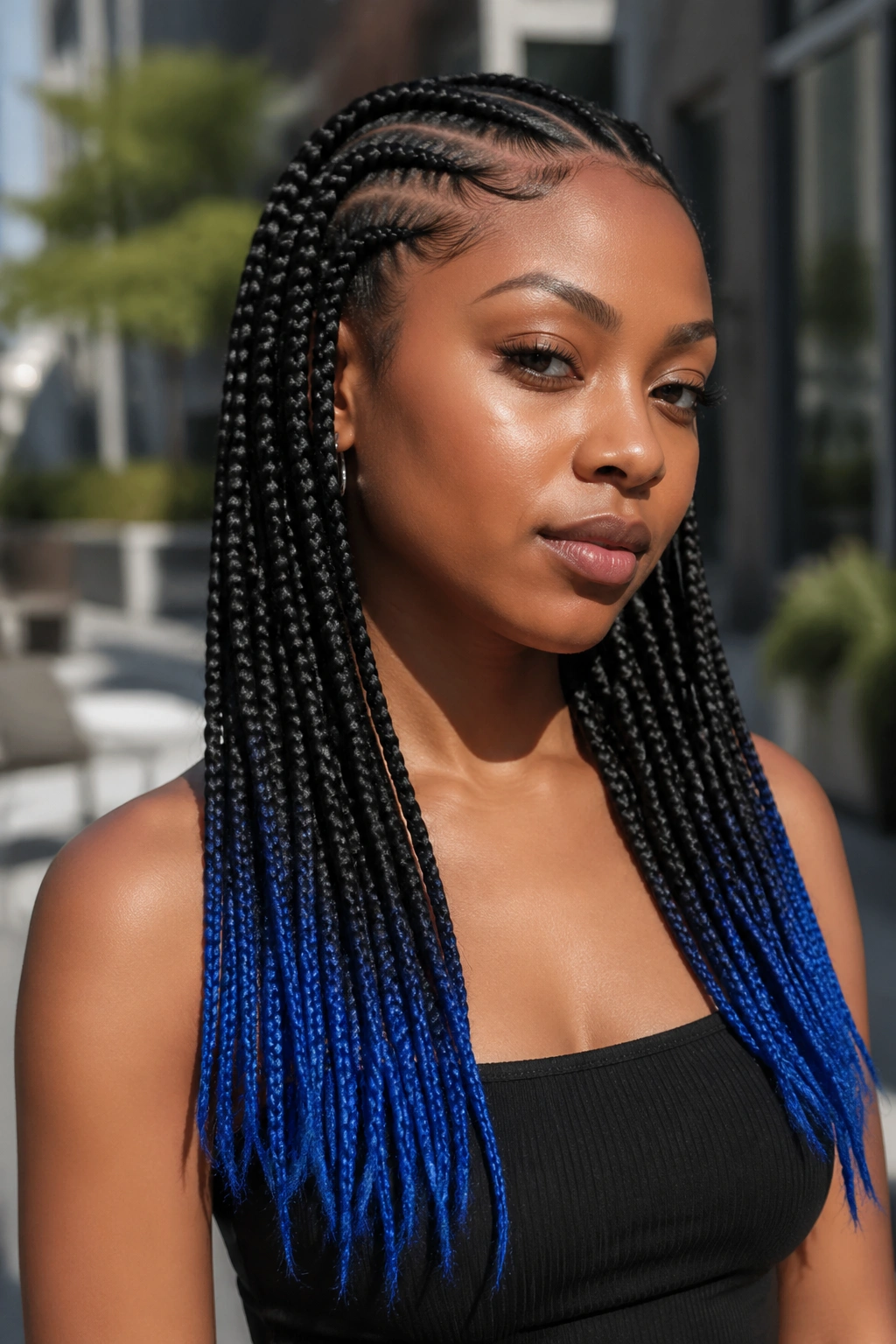
The base color is natural black. The last 3-4 inches of each braid transition into electric blue. The effect is dramatic without being overwhelming — it reads as a finishing detail rather than a full color commitment.
This is a starter style for anyone nervous about colored cornrows. The natural black base blends into your hair normally; only the tips show the color. If you decide you hate it, the blue-tipped sections sit below the braided portion and can be trimmed without affecting the actual cornrows.
Feed-in black kanekalon for the first several inches, then splice in electric blue kanekalon for the remaining length. The transition point should be clean — don’t try to blend. Crisp is better than messy gradient here.
Works best at mid-back to waist length. Shorter braids don’t give the blue tips enough real estate to register as a design element.
16. Sunset Ombre — Yellow to Orange to Red
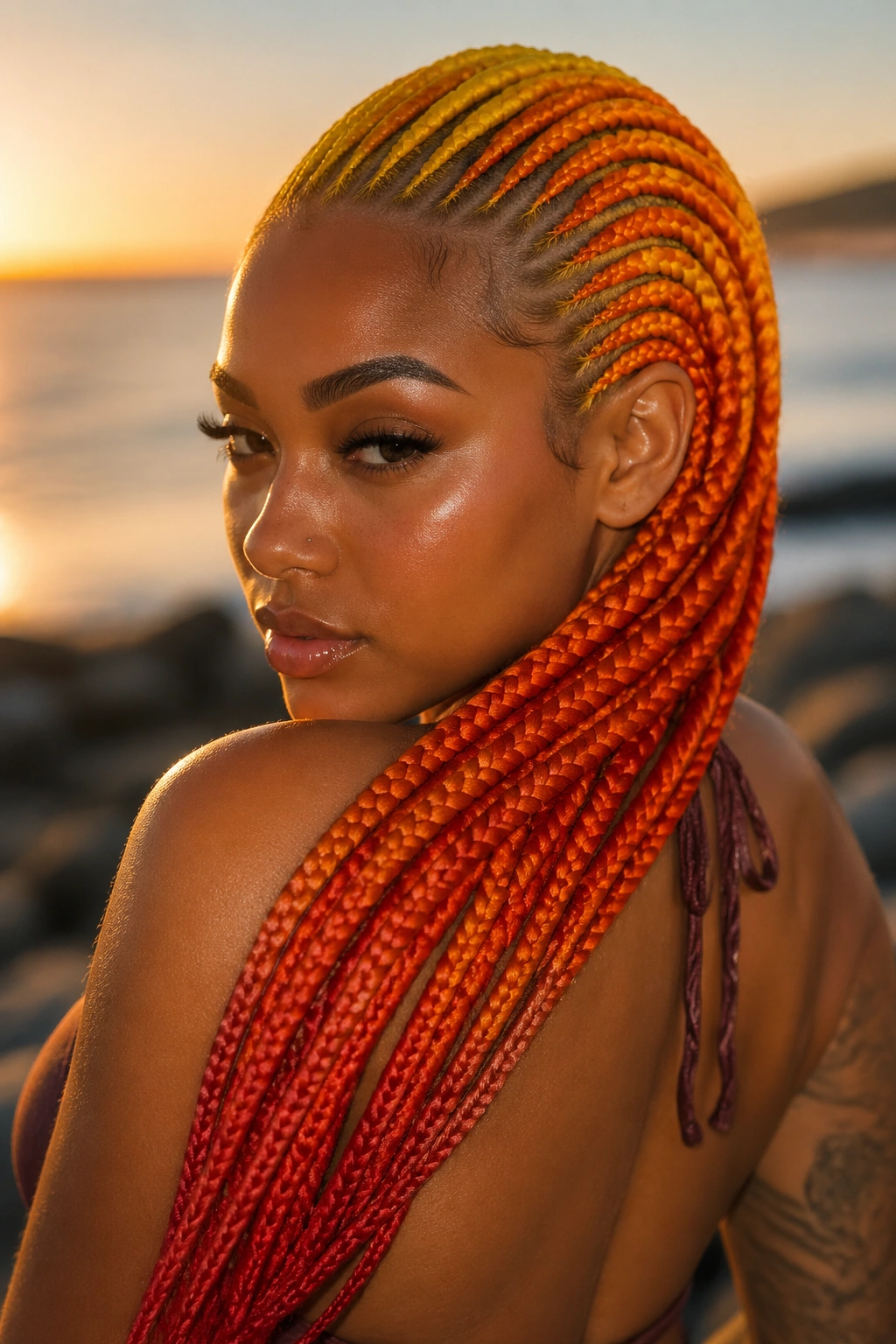
A three-color ombre that moves from yellow at the root through orange in the middle to red at the tips. The effect mimics a sunset, hence the name.
Execution Notes
- Pre-made three-color ombre kanekalon is the easiest approach
- If splicing manually, the transitions should happen at different points on different braids to create natural variation
- Avoid having every braid transition at the exact same height — the head will look striped
- The yellow section should be the shortest; red section the longest
The sunset ombre reads artistic and fun. It’s a favorite for summer travel styles, music festivals, and creative professionals who want a style that expresses personality without crossing into formal attire territory.
17. Icy White Jumbo Cornrows
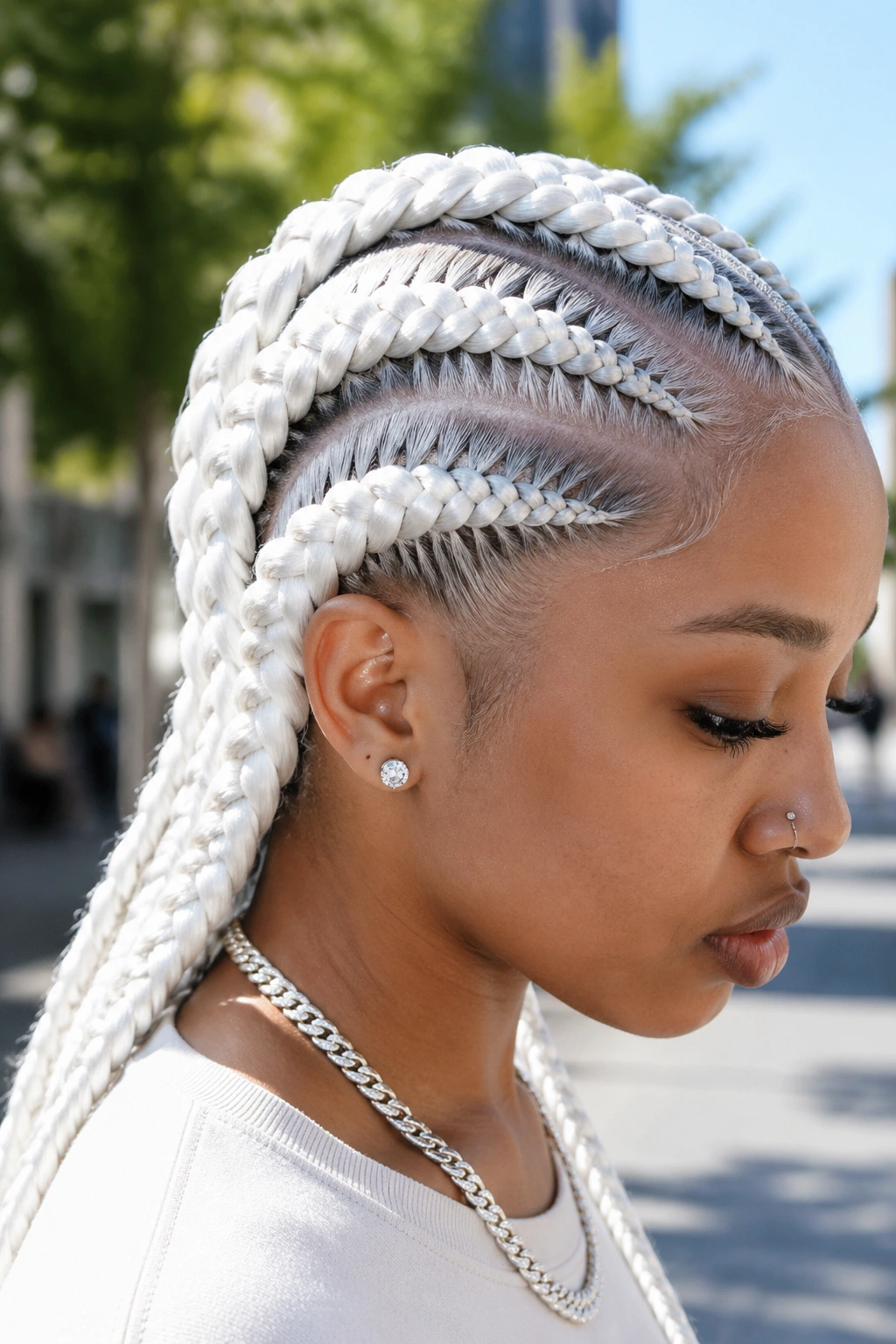
Pure white cornrows — not platinum, not silver, but true white — make maximum impact with minimum effort.
Jumbo cornrows (three to five chunky braids) work with white because the boldness of the color matches the boldness of the oversized braids. Smaller white cornrows can read wispy and thin.
Pure white fiber is harder to source than platinum. Look for kanekalon specifically labeled “snow white” or “pure white” rather than the default blonde-adjacent options.
Maintenance is demanding. White shows dirt, oil transfer, and discoloration faster than any other color. Cover at night, avoid heavy styling products, and use dry shampoo spray along the parts to prevent yellowing.
18. Multicolored Rainbow Cornrows
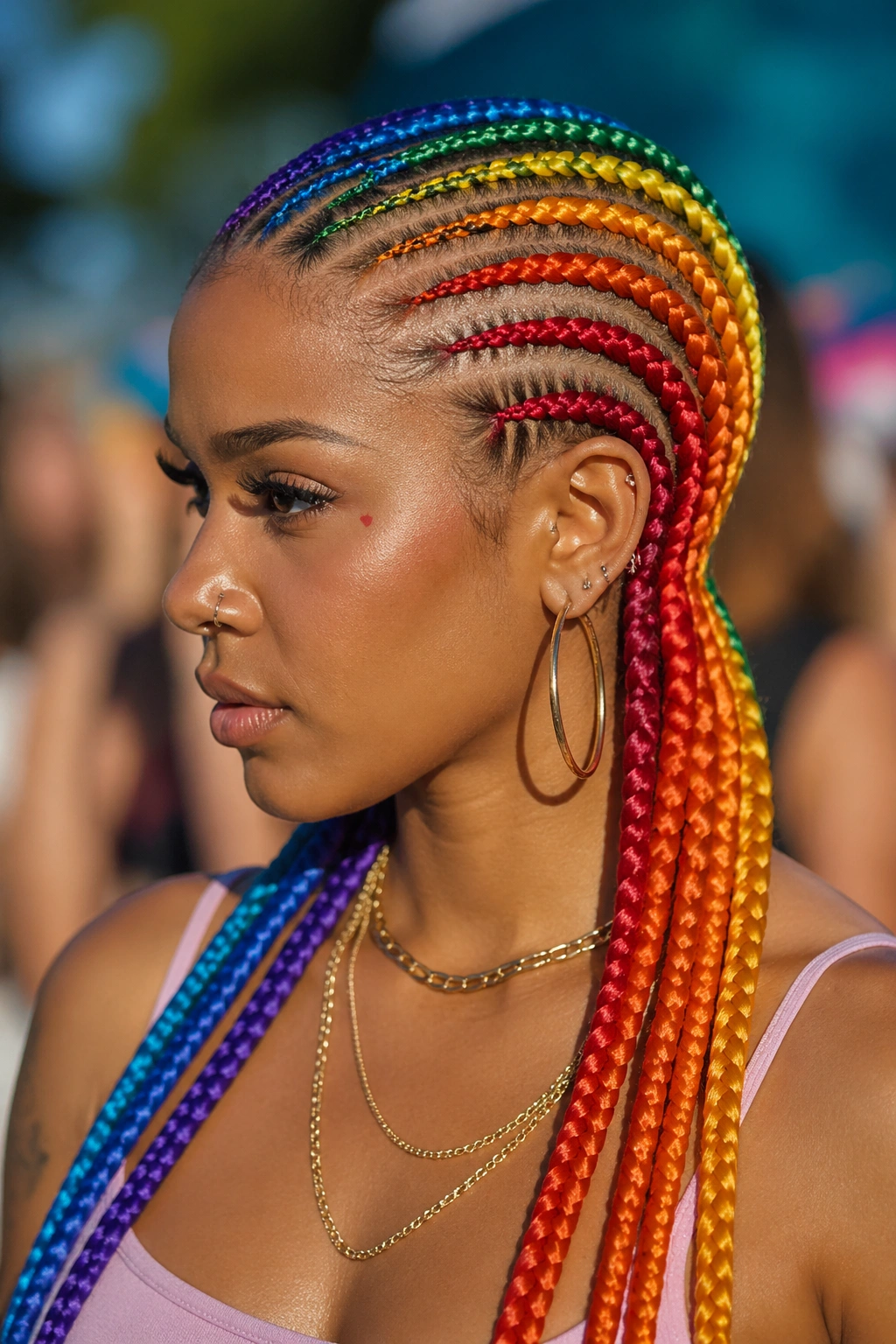
Each braid in a different color. Or groups of three to four braids in matching colors alternating with other color groups. Rainbow cornrows are loud, festive, and committed.
This style works for Pride events, music festivals, drag performances, and birthday celebrations. It reads less well for day-to-day professional wear or low-key settings.
Plan the color order before braiding. Random rainbow placement looks chaotic. Structured rainbow placement — red, orange, yellow, green, blue, purple in sequence, or repeating pairs — reads intentional.
Budget the longest install time of any colored cornrow style. A full head of multicolored rainbow takes 7-8 hours minimum because the braider is switching kanekalon packs with every braid.
19. Muted Mauve Cornrows
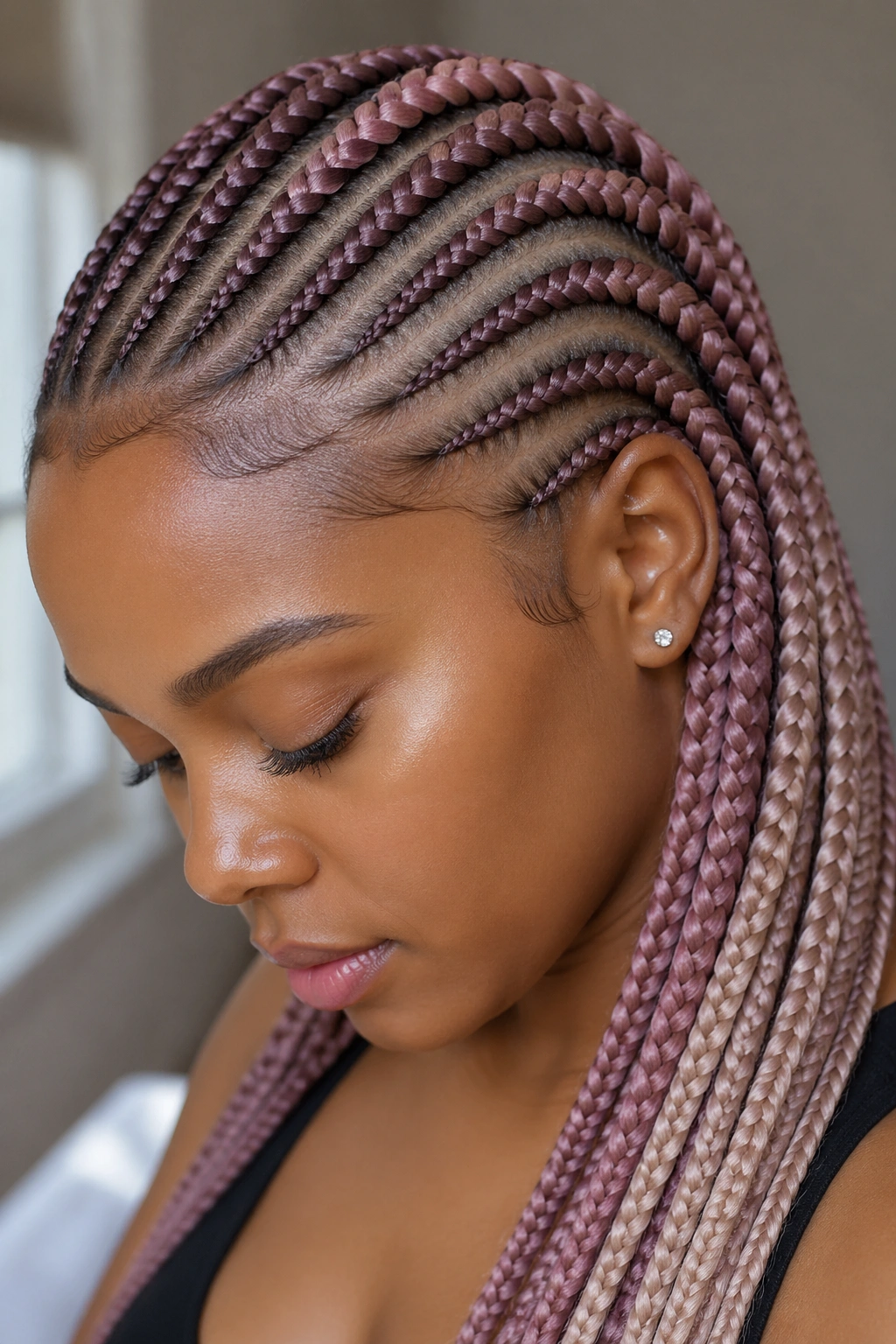
Mauve sits between pink and purple but reads more muted than either. It’s a sophisticated choice that reads softer than bold pink without fading into the background.
This color works for weddings (as a guest, not the bride), anniversaries, and events where you want presence without being the loudest person in the room.
The color fades to a dusty rose and then to a warm beige. Both fade stages are attractive — this is one of the few colors where you can wear the style through its entire color evolution without it looking washed out.
Works across all skin tones. One of the few “no wrong skin tone” colors in the kanekalon catalog.
20. Black Base With Copper Money Pieces
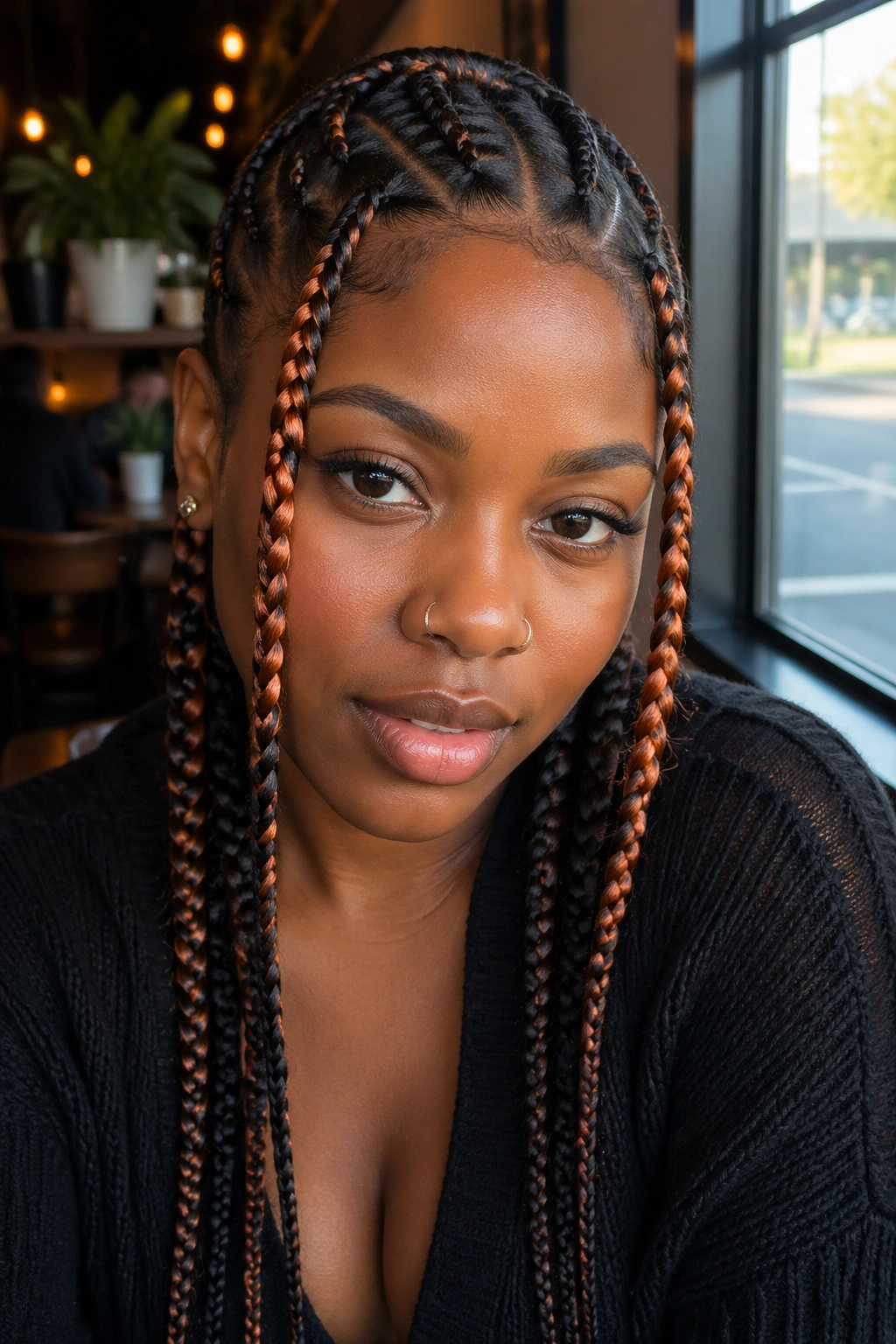
Money pieces are the front-facing strands that frame the face. Two braids on each side of the center part, colored differently from the rest of the head.
Black base with copper money pieces creates a face-framing effect that brightens the complexion without committing to full color.
This is the lowest-risk way to wear colored cornrows. The color is isolated to four braids (two per side), and if you decide you hate it, the rest of the head is still usable.
Works exceptionally well for anyone uncertain about bold color. The copper pieces test whether you can handle the color commitment without full investment.
21. Cotton Candy Pastel Mix
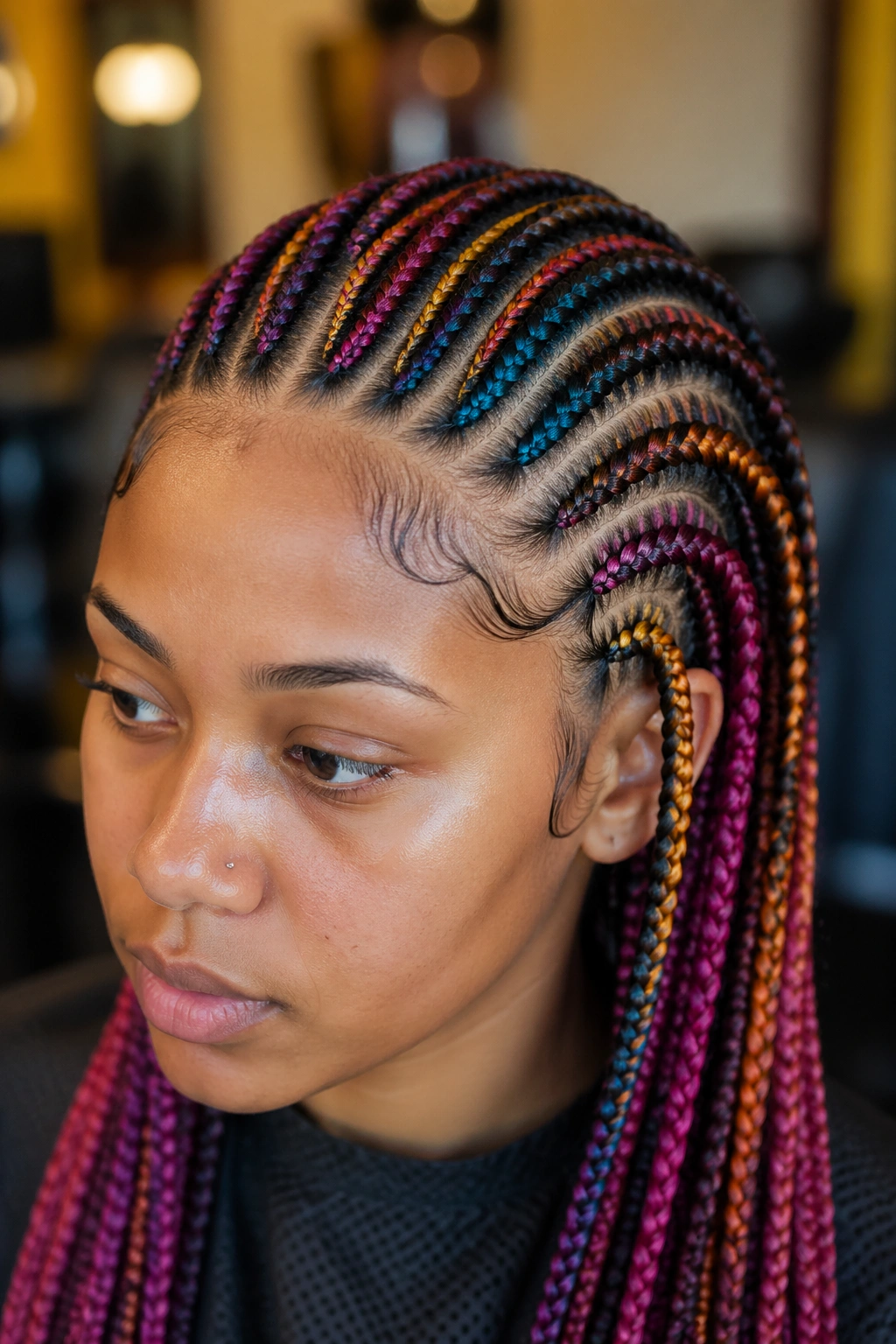
A blend of pastel pink, pastel blue, and pastel purple woven throughout the cornrow pattern. The effect reads dreamy, soft, and vaguely fantastical.
The pastels must be true pastels — not muted versions of bright colors. Look for kanekalon specifically labeled “pastel pink,” “pastel blue,” “pastel lavender” rather than regular versions.
Mixing pastels works best when one color dominates (say, 60 percent pink) with the other two playing supporting roles (20 percent blue, 20 percent lavender). Equal parts of all three can read chaotic.
The fade on pastels is beautiful. Cotton candy colors drift toward softer, more washed versions of themselves without becoming ugly at any stage.
22. Cherry Red With Black Roots
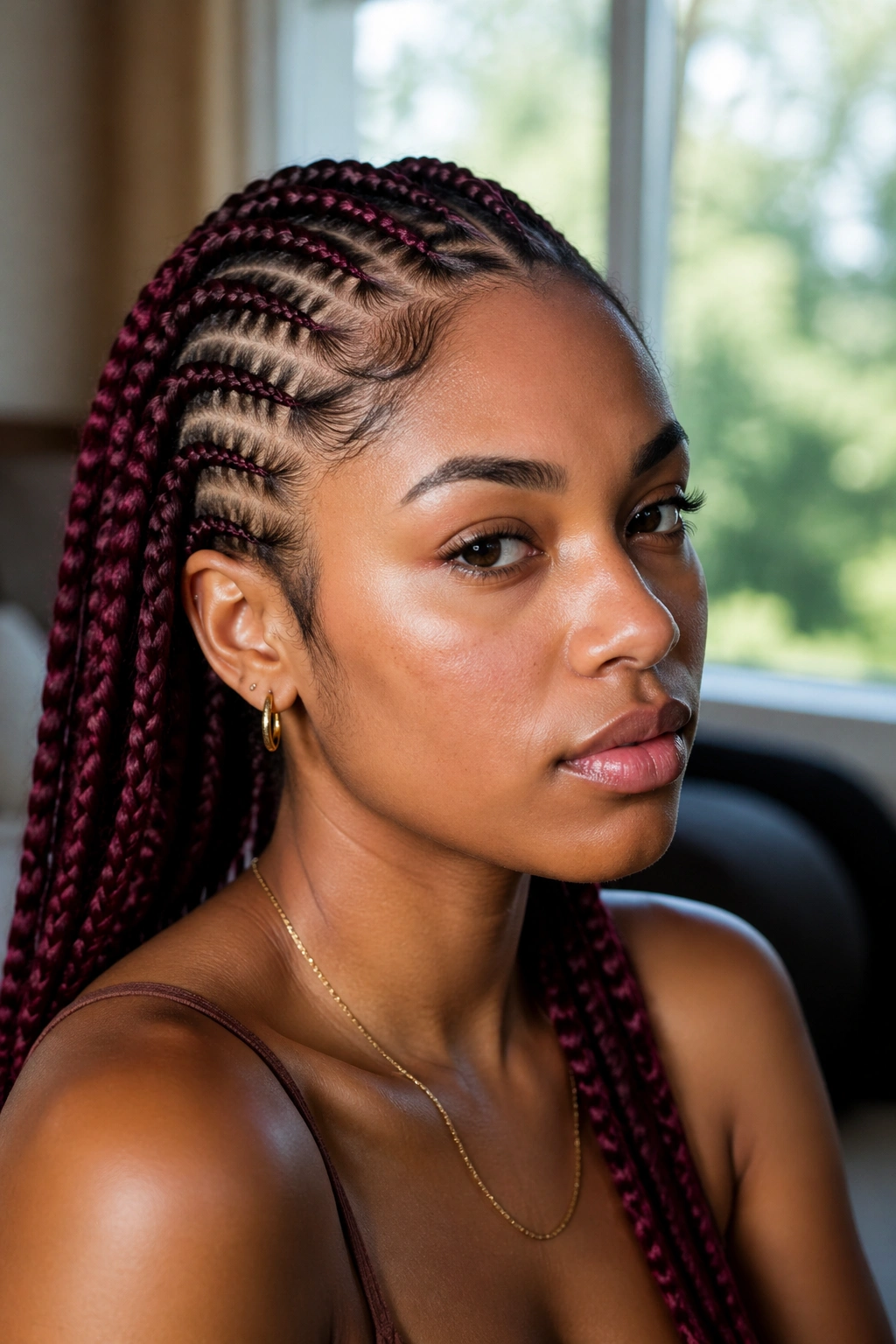
Cherry red is a true red — not burgundy, not orange-red, but vivid cherry. With black roots, the contrast creates natural dimension.
The black root section is about 2-3 inches. Not more. Beyond three inches and the effect shifts from rooted red to ombre, which is a different style entirely.
This color works for bold personalities, performers, and anyone drawn to classic femme fatale aesthetics. It photographs incredibly — red always does — but lives up to the photos in real-life lighting as well.
Cherry red fades faster than burgundy but slower than bubblegum pink. Expect 4-5 weeks of vibrant color before the first noticeable fade.
Maintenance for Colored Cornrows
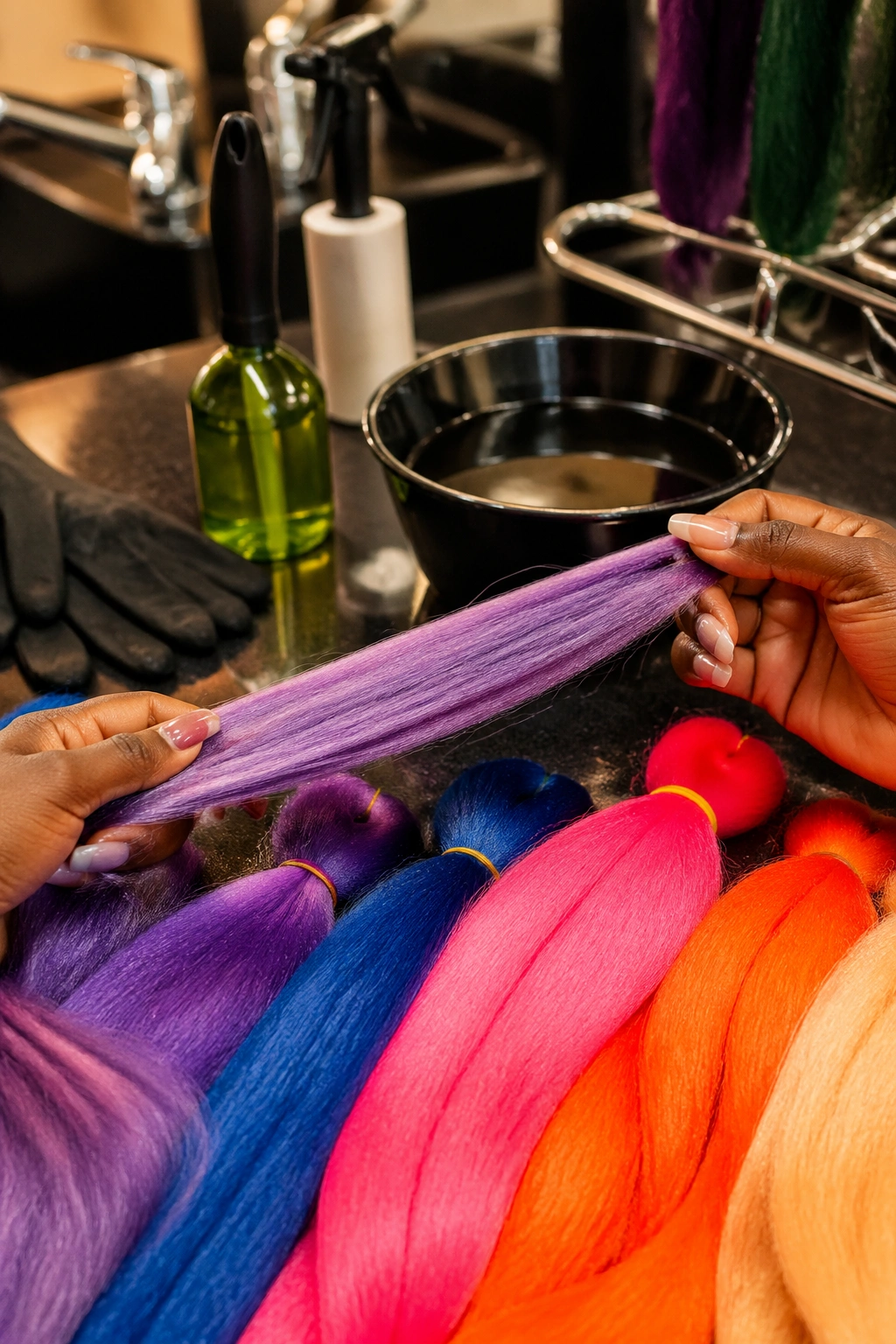
Color longevity comes down to wash technique, water temperature, and product choice. Get these three right and your cornrows hold color for the full install window.
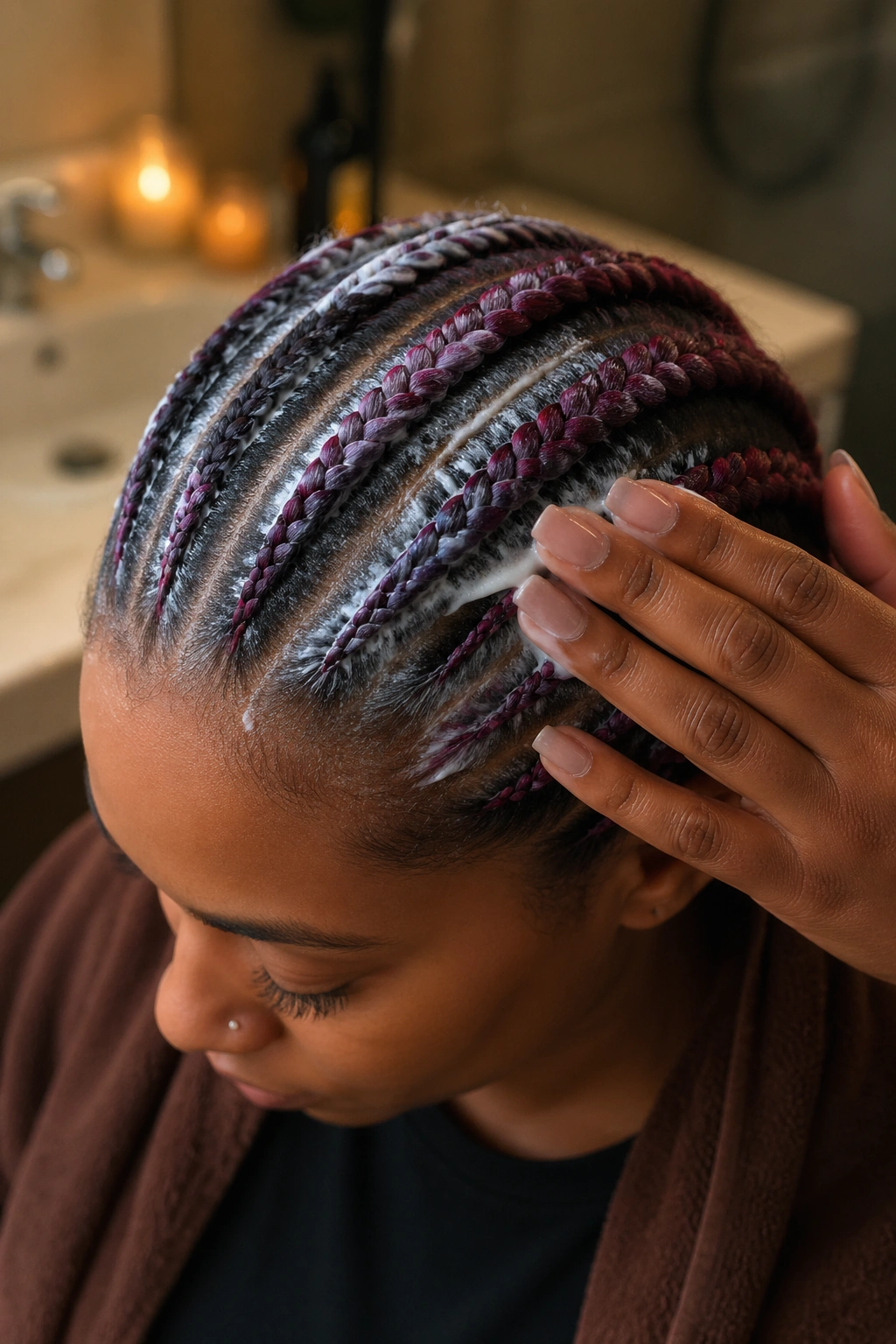
Shampoo at the scalp only. The braid shafts don’t need direct shampoo contact — the runoff as you rinse carries enough cleanser to keep them fresh. Direct shampoo application on colored fiber strips pigment fast.
Use color-safe, sulfate-free shampoo diluted 1:2 with water. Apply with an applicator bottle along the parts. Work into the scalp with fingertips (not nails) and let it sit for 2-3 minutes before rinsing.
Rinse with cool water — around 75-80 degrees Fahrenheit. Hotter water opens the cuticle on both natural hair and kanekalon fiber, letting color leach out.
Deep condition the braid shafts weekly with a leave-in conditioner spray. The kanekalon fiber benefits from moisture the same way natural hair does, and the color holds better on hydrated fiber.
Sleep and Lifestyle Protection
A satin or silk bonnet is non-negotiable for colored cornrows. Cotton pillowcases cause friction fading — the color literally rubs off onto the cotton as you move during sleep.
For side sleepers, consider a satin pillowcase in addition to the bonnet. The double layer of protection matters more for colored than for standard cornrows.
Avoid chlorine pools. The chlorine strips color from kanekalon faster than anything except direct sunlight. If you swim, wear a swim cap. If the swim cap isn’t an option, rinse cornrows with fresh water immediately after swimming.
Direct UV sunlight fades colored kanekalon over time. Wear a hat or scarf for outdoor events lasting more than 2-3 hours.
Takedown and Color Cleanup
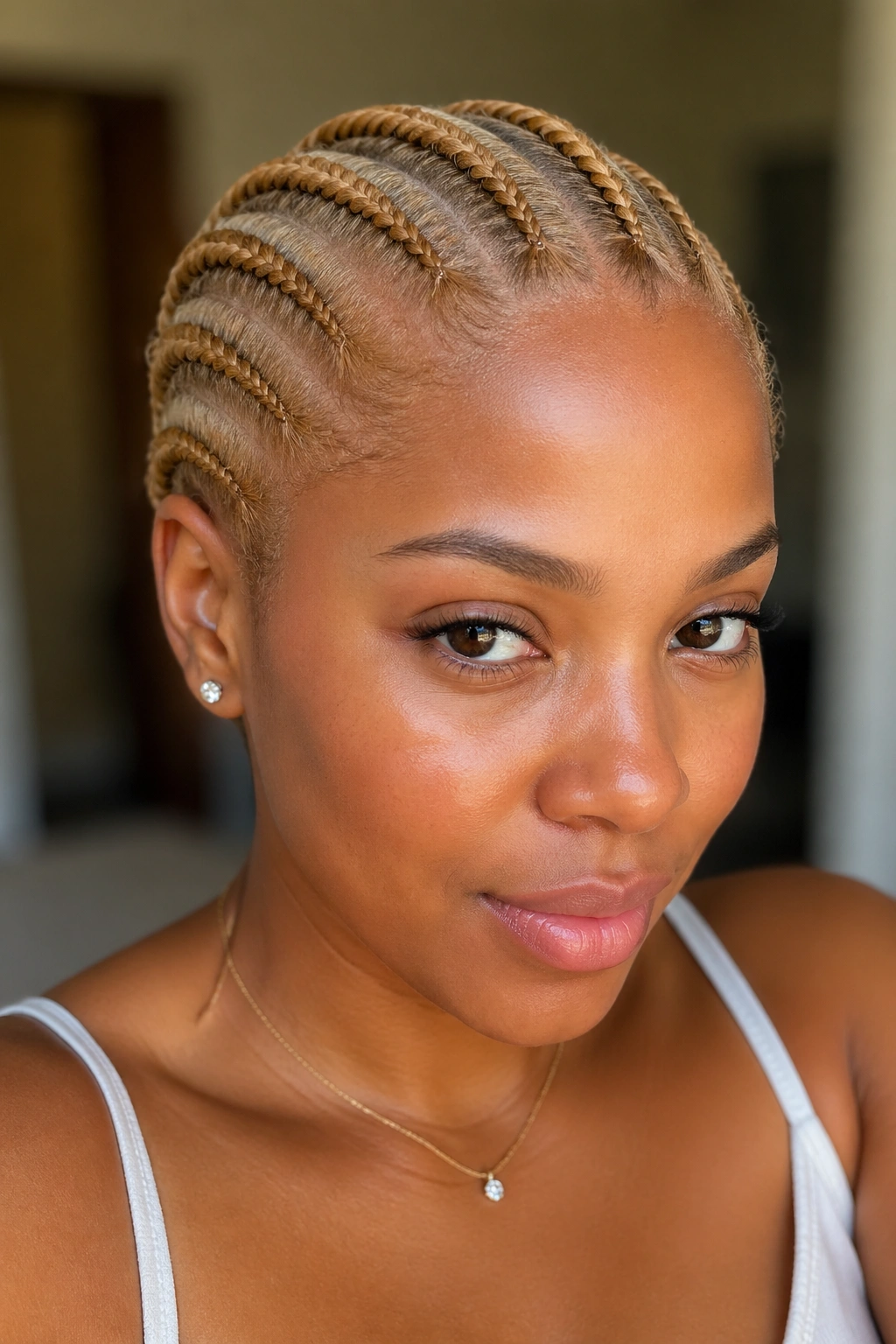
Takedown on colored cornrows is the same process as standard cornrows but with one extra step: clean the hair of any residual color transfer.
After unbraiding, wash with a clarifying shampoo to remove any dye that may have transferred from the kanekalon onto your natural hair. This usually isn’t visible unless the color was pink, red, or purple, but the clarifying step removes invisible buildup as well.
Deep condition after the clarifying wash. Your natural hair has been under tension for weeks and benefits from intense rehydration before any new styling.
Expect your scalp to take a few days to adjust to not having cornrows. The skin has been stretched in specific patterns for weeks — it needs time to release.
Picking the Right Colored Cornrow Style for Your Lifestyle
Your job, your social life, and your daily routine all factor into which colored cornrow style will actually work for you.
Corporate professionals: stick to burgundy, chocolate with caramel highlights, navy blue, or black with subtle money pieces. These read intentional without screaming attention.
Creative professionals: your color range is wider. Consider copper, teal, deep violet, or sunset ombre. The creative industries generally welcome bolder choices.
Students and young professionals: test with money pieces or ombre tips before committing to full color. Low-risk entry points let you evaluate fit without overhauling your look.
Stay-at-home professionals: almost any color works because your daily audience is forgiving. This is the ideal moment to try the bolder options like platinum, cotton candy, or highlighter yellow.
Performers and content creators: the bolder, the better. Your job rewards visual impact. Rainbow, neon, electric blue tips — all fair game.
Before booking, look at your calendar for the next 4-6 weeks. Are there events, meetings, or settings where a particular color would be wrong? The answer to that question often narrows your options in useful ways.
Colored cornrows aren’t just a hairstyle. They’re an identity statement for the window of time you wear them. Choose the color that matches the version of yourself you want to be for the next month.