



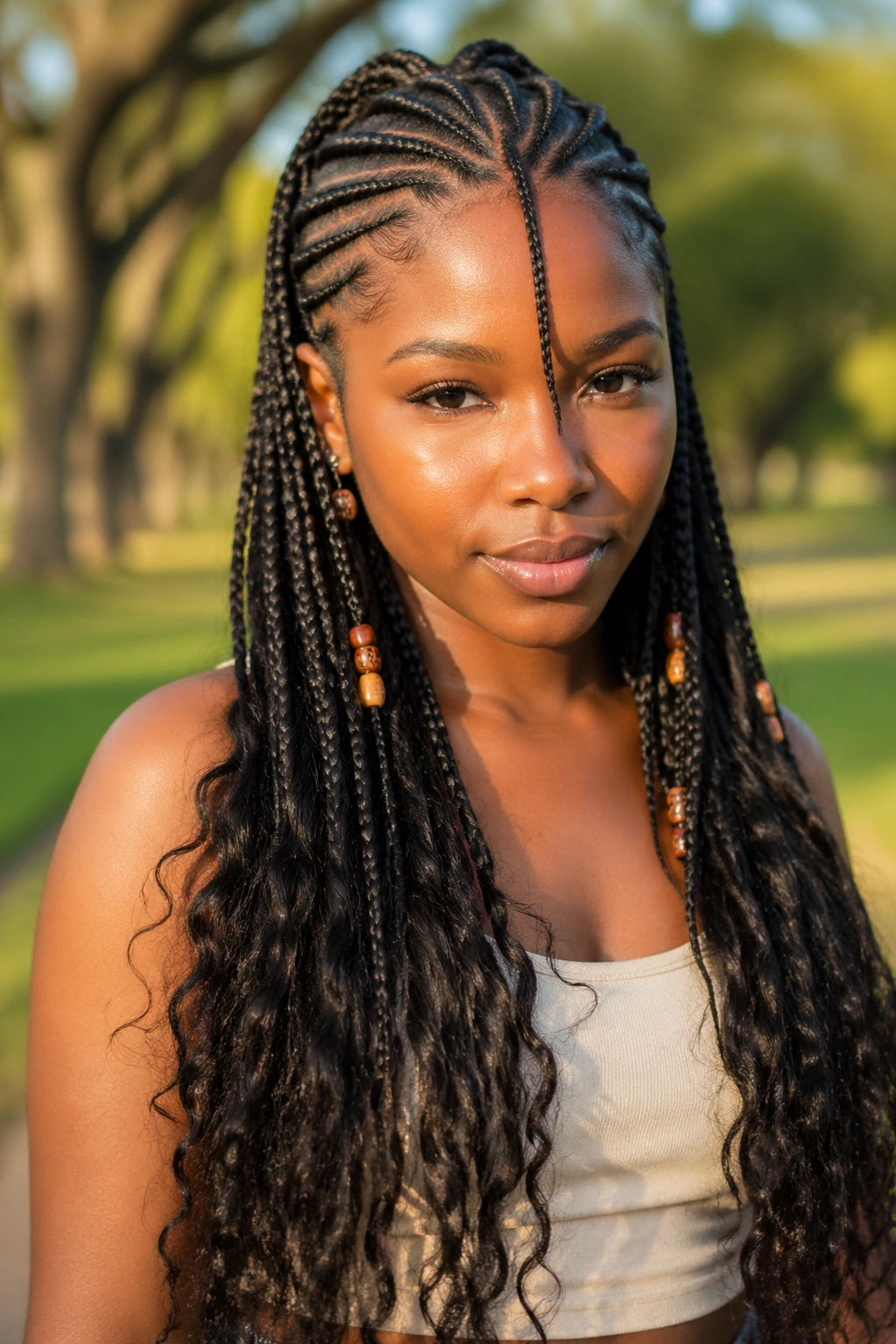
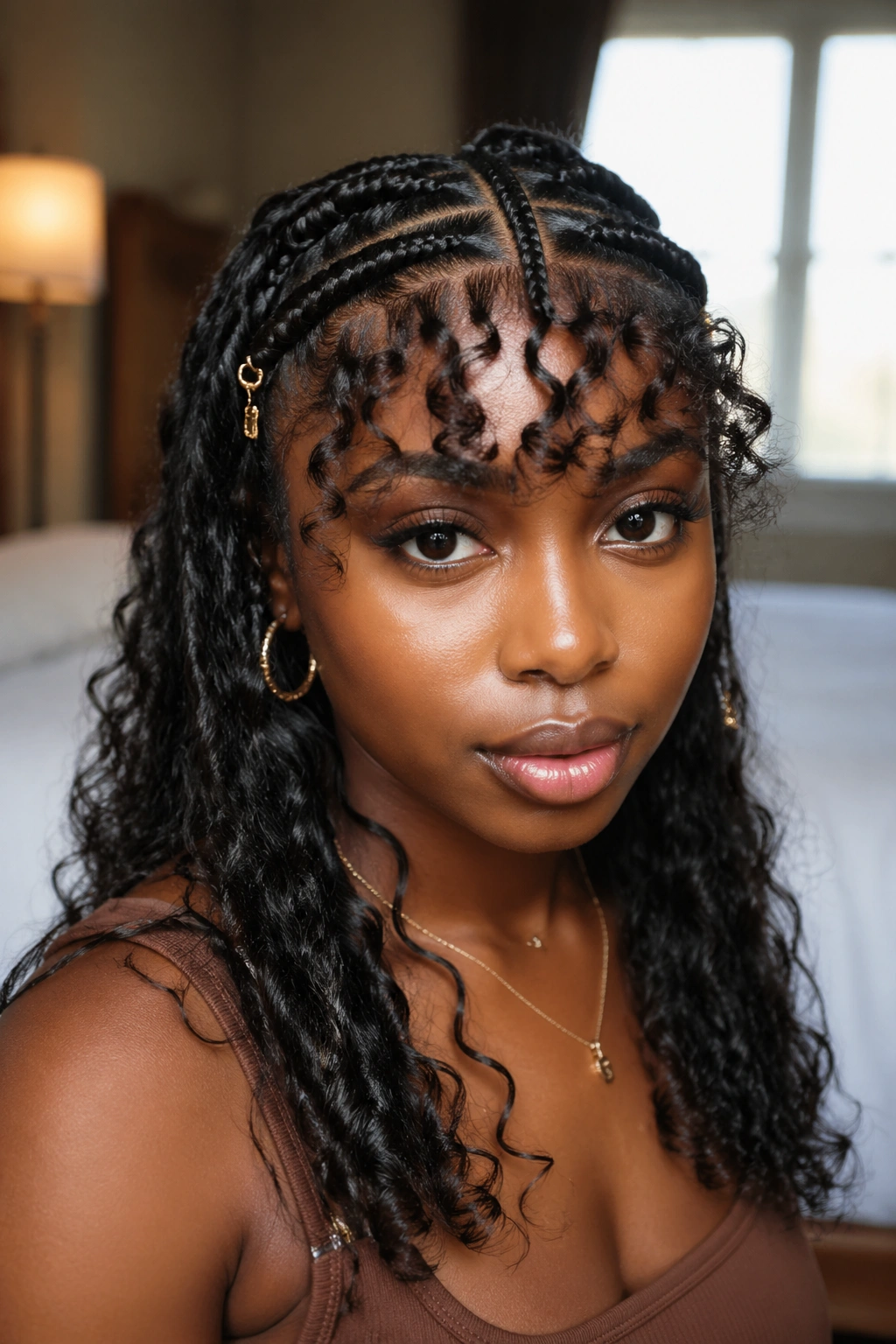
Fulani cornrows with curls hit a balance that pure cornrows can’t quite reach. You get the structured cultural roots of the Fulani style — that distinctive center braid, the side parts, the beaded accents — paired with the soft, feminine fall of curly extensions. The combination softens the geometric severity of traditional Fulani patterns while still honoring the form.
The Fulani people of West and Central Africa have braided hair this way for centuries. The center braid, the side cornrows angling toward the temples, the rolled or beaded ends — these aren’t trends. They’re documented heritage. When you wear Fulani cornrows with curls, you’re wearing a style with depth.
What’s different about adding curls is purely modern adaptation. Curly bulk hair, water wave kanekalon, deep wave bundles — these get woven into the loose ends of the cornrows or added as separate sections at the back. The result is a hybrid that retains the Fulani structure but reads softer than fully braided versions.
I’ve worn Fulani cornrows with curls through every season and every length of natural hair I’ve had. The 22 styles below are the ones I keep coming back to, plus a few I’ve watched friends and stylists execute beautifully.
The Fulani Origin and What That Means for Styling
Fulani braiding traditions are tied to identity, status, and ceremony. The signature elements — center braid, beaded accents, structured side cornrows — historically signaled marital status, age, and community ties. Wearing the style today is wearing a piece of that history.
Practically, this means certain elements should stay intact for the style to read as Fulani-inspired. The center braid is essential. Without it, you have generic cornrows. The angled side parts and the beaded or accented ends are also defining. Skip them and you’ve got a different style entirely.
The curls, on the other hand, are a contemporary addition. They don’t appear in traditional Fulani photography from earlier generations. Adding them is a personal choice that doesn’t violate the style’s roots, but it’s worth knowing the curls are an evolution rather than a heritage element.
Choosing Curl Texture
The curl pattern of your added hair affects how the style reads. Tighter curls — 3C or 4A patterns — blend naturally with most Black hair textures and create dense, defined volume at the ends. Looser waves — 2C or 3A — read sleeker and more “produced” but can look mismatched against tighter natural hair.
Water wave bulk hair is a popular choice. It comes pre-curled in a wavy-spiral pattern and holds its definition well through wear. Deep wave is similar but with a wider, more relaxed curl. Loose wave is the smoothest of the three.
Match the curl texture to your natural texture when wet. The transition between cornrow root and curly end will read most natural this way.
Prep for Fulani With Curls
Standard cornrow prep applies — clarifying wash, deep condition, blow dry on tension. The added step here is preparing the curly hair before install. Soak curly bulk hair in warm water with a tablespoon of leave-in conditioner for 10 minutes. This softens the strands and makes them easier to weave.
Don’t skip the pre-stretching. Curly extensions that go in unstretched can mat at the connection point with the cornrow, creating tangles that show up by week one.
Edge prep matters more for Fulani styles than most cornrow looks. The front center braid sits prominently on the forehead, so your edges frame the entire style. Take time here. Brush, lay, set.
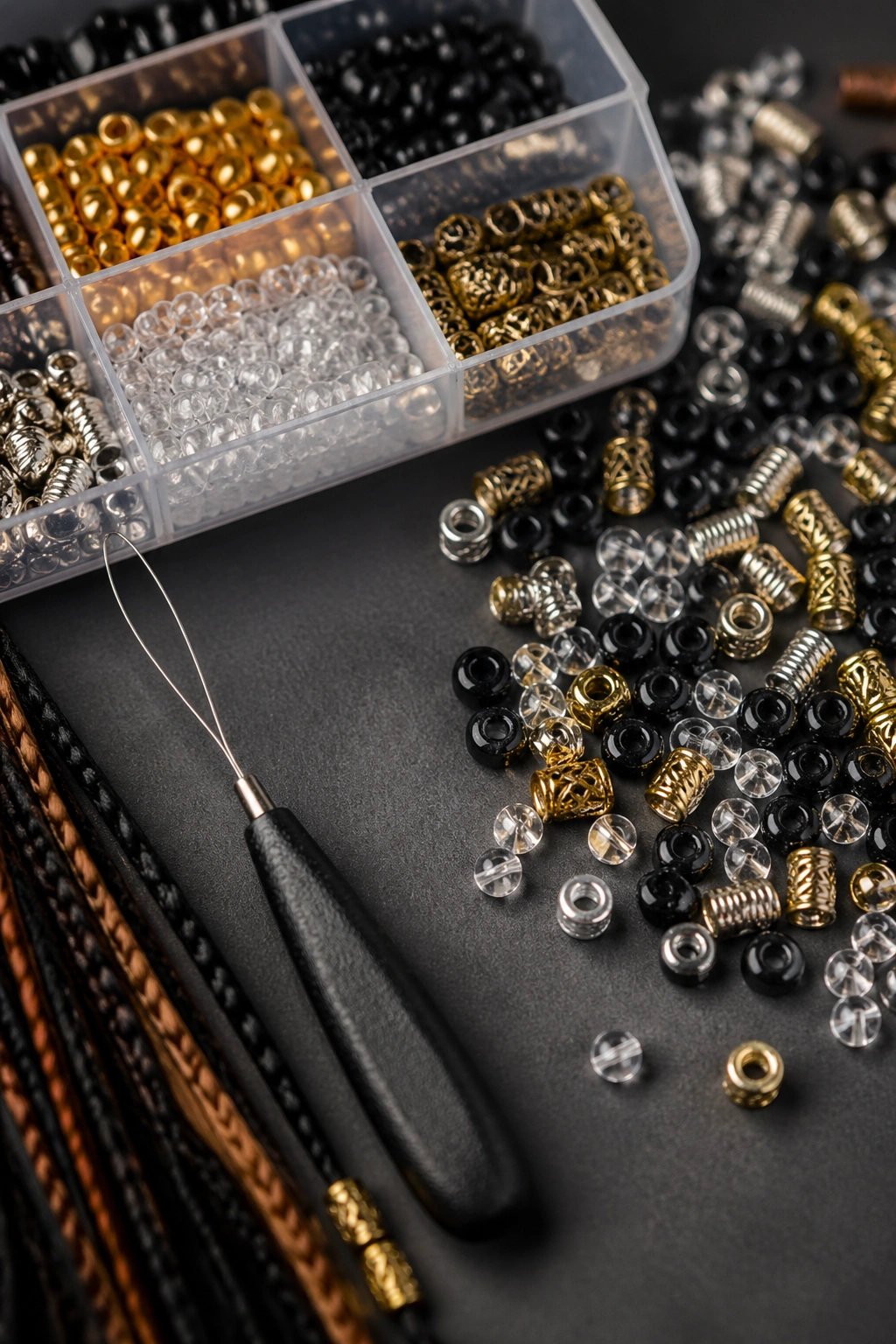
Tools Specific to This Style
Beads. Fulani styles call for beaded accents, and your bead collection determines the style’s character. Wooden beads, brass cuffs, cowrie shells, glass beads — each gives a different vibe. Have at least 10-15 beads ready before starting.
A bead threader (the small wire loop tool) speeds up beading dramatically. Without one, you’re forcing kanekalon through bead holes manually, which takes forever and frays the ends.
Curl-defining cream for finishing the curly sections after install. Look for a cream specifically formulated for synthetic hair if you’re using kanekalon-based curly bulk. Natural hair curl creams can damage synthetic fibers.
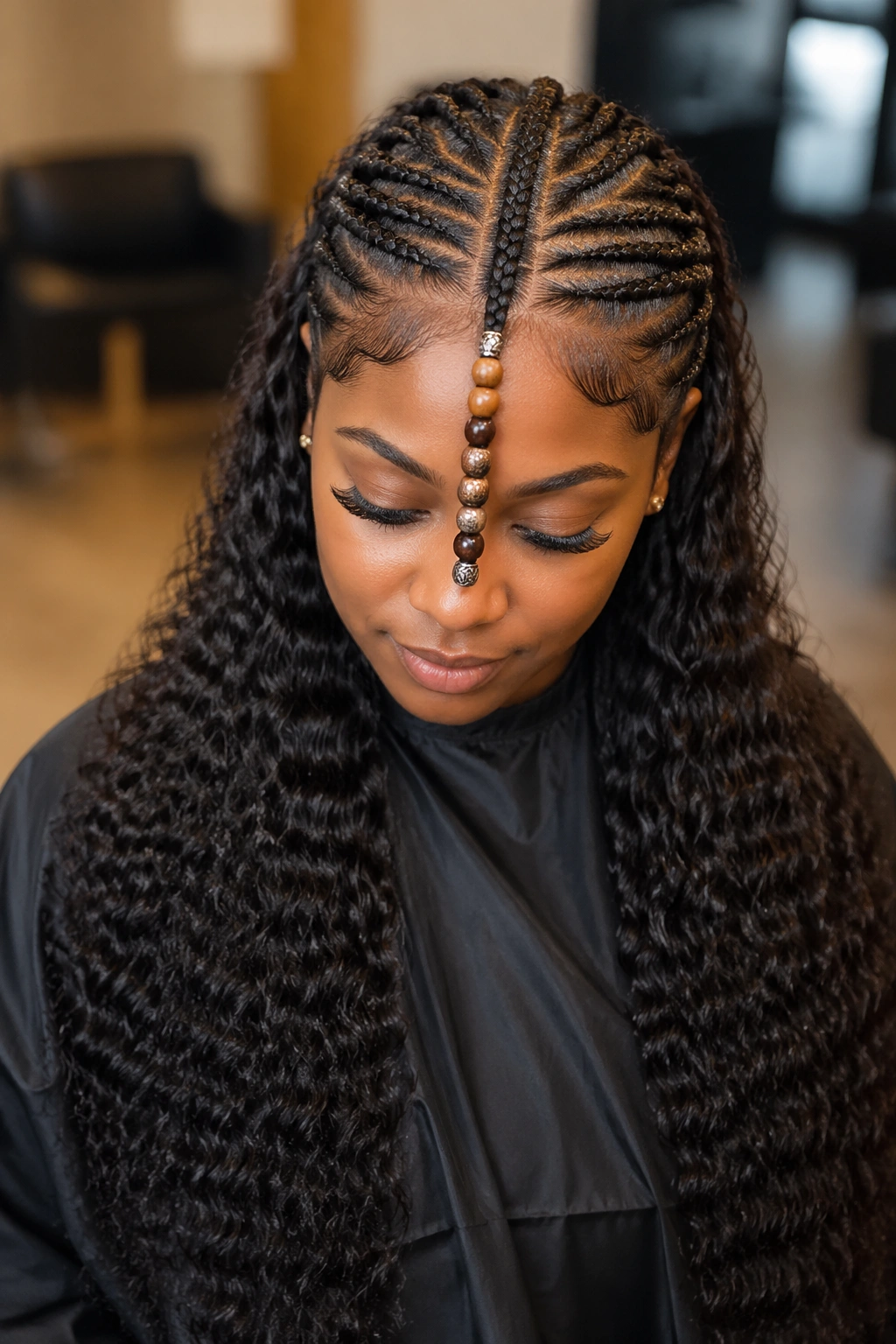
1. Classic Fulani With Water Wave Ends
The classic Fulani layout with water wave curls feeding into the loose ends. Center braid runs from forehead to crown, beaded with three wooden accents. Side cornrows angle from the part toward the temples and continue back to the nape. Water wave curls extend below the cornrowed sections.
Why It Works
The structure of traditional Fulani holds the style together while the curls add the soft contrast that pure braids miss.
- Center braid: 1 inch wide at the front, tapering slightly toward the crown
- Side cornrows: 4-5 per side, angled at roughly 30 degrees from the center part
- Bead placement: 3 beads on the center braid, spaced 3-4 inches apart
- Curls: water wave bulk hair, length to mid-back
Tip: Set the curls with a curl-defining cream before going out for the first time. Synthetic curls relax slightly during the first 24 hours of wear, and the cream locks in the pattern.
2. Fulani With Loose Curls at the Nape
Same Fulani structure but with the curls concentrated only at the nape rather than along the full length. The cornrows themselves extend most of the way down, with curly extensions added in just the last 4-5 inches.
This version reads more polished and less voluminous than full-length curls. It’s a good fit for office settings or formal occasions where dramatic curls might feel excessive.
The curls at the nape can be added through a simple weave-in at the cornrow’s end or by using rubber bands to secure curly bulk hair to the braid’s tip. The weave-in method looks more seamless. Rubber bands are faster but show a connection point.
For a professional look, choose loose wave or body wave bulk hair. The curl is present but subtle. For evening wear, switch to deep wave for more drama.
3. Fulani With Side Curls
Side curls add curly extensions only to the cornrows on one side of the head while the other side stays fully braided. This creates intentional asymmetry that reads modern and editorial.
The side that gets the curls should be the side that frames your face most prominently — usually the side where you part your hair or wear it forward. The full-braid side stays sleek and structured.
This style photographs strikingly because the asymmetry catches the eye. It also works in motion — turning your head shows the full transition between sides.
The downside is that asymmetric styles need precise execution. A slightly off center part or uneven bead placement throws the whole balance. Work with a braider who can commit to clean lines.
4. Beaded Fulani With Curly Crown
The beaded Fulani version emphasizes the bead work — more beads on the center braid, additional beads on selected side cornrows, and curly volume concentrated at the crown rather than at the nape.
Curly crown means adding curly extensions to the crown area instead of letting the cornrows simply gather there. This creates a halo of curl above the cornrowed sides and back.
Beading scale: 5-7 beads on the center braid, 2 beads each on 4-6 selected side cornrows. The bead colors should coordinate — wooden beads with bone or brass accents work harmoniously.
Crown curls should sit higher than the rest of the curl mass. A small foam donut or padded form under the crown curls creates the lifted shape.
5. Fulani Half-Up With Curls Down
Half the Fulani structure pulled into a small bun at the crown, with the curls hanging loose below. The bun gathers the cornrows from the top sections; the bottom half of the head retains its cornrows but allows the curls to fall.
This version works for transitional events — the half-up reads dressier than full down, but the loose curls keep things from feeling formal.
The bun at the crown should be small and tight. A loose, big bun fights with the precision of the Fulani cornrow lines. Aim for a bun no bigger than a golf ball, secured with a small elastic and decorated with a bead or cuff.
Wear time for this hybrid runs 2-3 weeks. The half-up structure stays clean longer than the loose curls, which need refreshing every 3-4 days.
6. Fulani With Spiral Curls
Spiral curls — tighter, more defined coils than wavy textures — pair beautifully with the geometric Fulani cornrow structure. The contrast between sharp braid lines and round curls reads dynamic.
Spiral curl bulk hair is sometimes labeled as “kinky curly” or “Afro kinky” in supply lists. Pick a curl pattern that sits between 3C and 4A for the best blend with most natural textures.
The spiral curls hold their shape longer than wavy textures but can look frizzy faster if not maintained. Use a satin scarf at night without fail. Refresh with a curl spray every other day.
For evening events, the spiral curls can be slightly oiled to add shine. A small amount of argan oil rubbed lightly through the curls boosts definition without weighing them down.
7. Fulani With Cowrie Shell Detailing
Cowrie shells add cultural depth to Fulani styling that other beads can’t quite replicate. The shells originated in coastal West African trade and carried significance as currency and adornment.
Place 4-6 cowrie shells along the center braid and 1-2 on each of two selected side cornrows. The shells should be drilled with through-holes wide enough for kanekalon. Pre-drilled cowrie shells are sold in beauty supply packs.
The curls behind the cowrie work should be subtle — wavy or loose curl rather than tight spirals — so the shell detailing remains the visual focus.
Cowrie shells are heavier than wooden beads. Limit your total shell count to 8-10 across the whole style. More than that creates pull on the cornrow foundations.
8. Long Fulani With Loose Curls
What if everything goes long? Center braid extends past the shoulders, side cornrows extend past the bust, and curls add another 6-8 inches below the cornrow ends. Total length reaches mid-back to waist.
Long Fulani styles read dramatic and statement-making. They work for events, photoshoots, and people who simply love long hair. They don’t always work for daily wear — the length adds weight and gets caught on bag straps, car seatbelts, and door handles.
The curls at long length should be loose wave or body wave. Tight spiral curls at extreme length tangle quickly.
Sleep care is critical. The curls need to be loosely braided or twisted at night to prevent matting against the pillow.
9. Fulani With Curly Bangs
Curly bangs sweep across the forehead in front of the center braid. The bangs are curly extensions clipped or pinned at the front, separate from the cornrowed sections.
This version softens the harshness of the center braid by introducing curl above the brow. The bangs frame the face in a way that pure cornrows can’t.
Bang length should hit the brow or just below. Longer bangs — past the eyes — interfere with vision and require constant adjustment. Shorter bangs — well above the brow — look stark and don’t soften effectively.
The bangs can be removed for formal events where the cornrows alone read better. This makes the style versatile across occasions.
10. Fulani With Triangle Parts
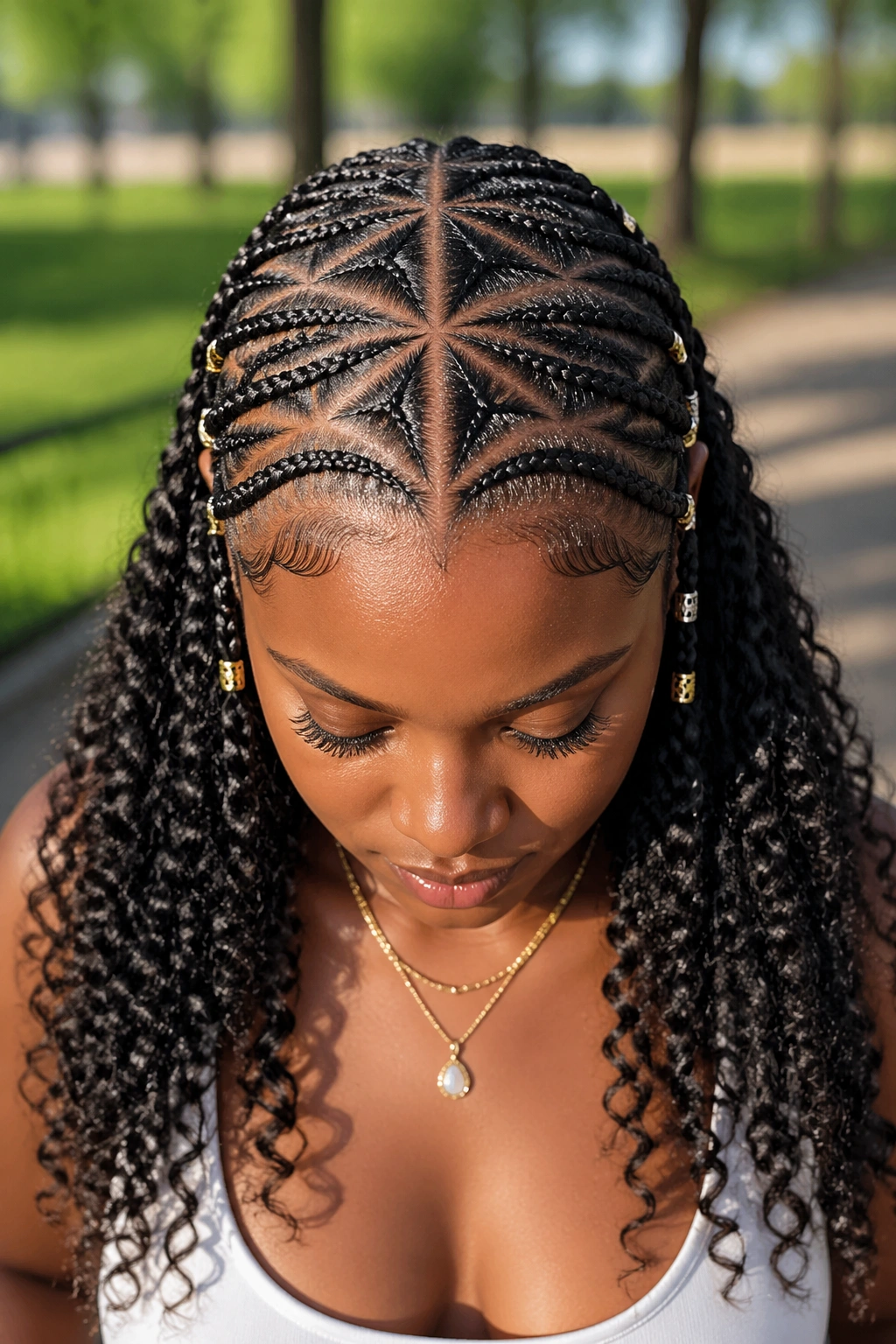
Triangle parts replace traditional Fulani straight side parts with geometric triangle shapes. The center braid still runs front to back, but the side cornrows emerge from triangle bases rather than straight lines.
How It Comes Together
Six triangles arranged symmetrically along each side of the center braid. From each triangle’s apex, a single cornrow runs outward toward the ear and back to meet the others at the nape. The curls feed in below the cornrowed sections.
Triangle parts are more time-intensive than straight parts. Plan for an extra hour of install time. The visual payoff justifies the time for anyone who values geometric detail.
The curls below should be substantial — full curly volume rather than a few tendrils — to balance the precision of the triangle work above.
11. Fulani With Ombre Curls
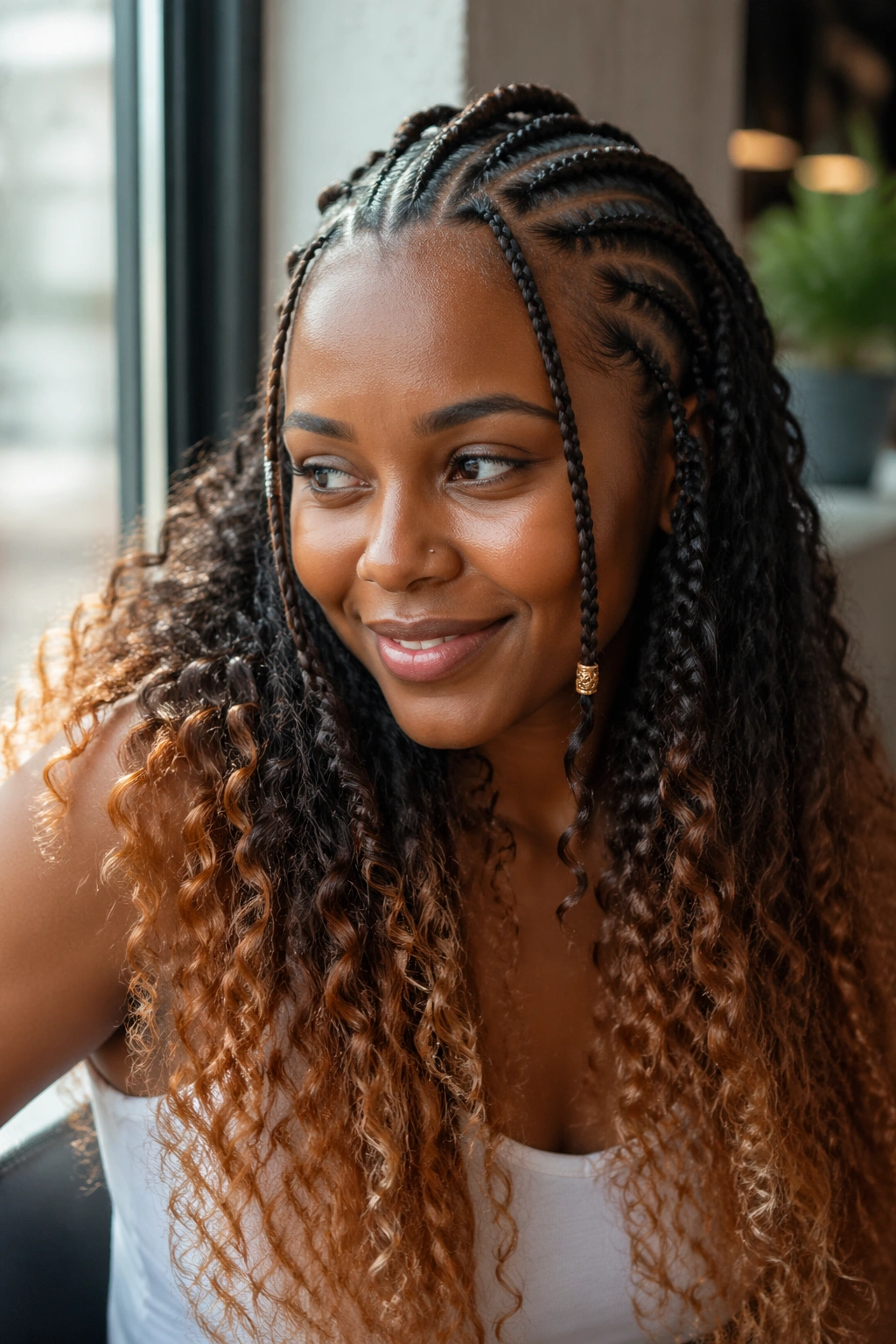
Ombre curls transition from one color at the cornrow connection point to another at the curl tips. Pair with traditional Fulani cornrow structure for a hybrid that mixes heritage form with contemporary color play.
Common ombre choices: black to honey blonde, black to burgundy, black to copper. The transition should happen at the curls rather than within the cornrows themselves — Fulani cornrows traditionally read as a single solid color along their length.
Buy pre-ombred curly bulk hair to avoid the difficulty of manually creating gradients. Look for transitions that happen 2-3 inches into the curl, so the connection point stays consistent in color.
Ombre curls draw eye downward, which suits people with strong jawlines or shoulders they want to emphasize.
12. Tribal Fulani With Curls
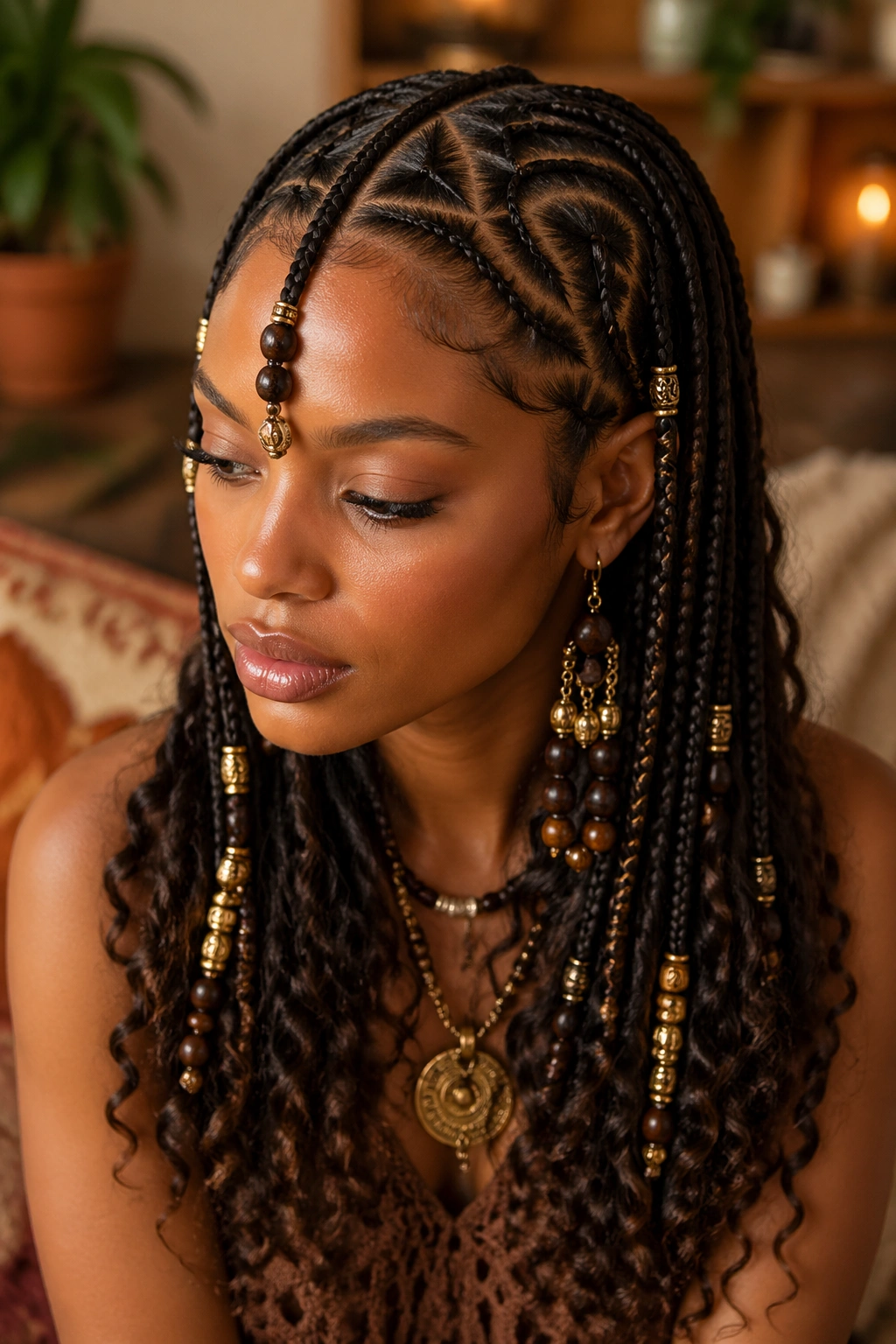
Tribal-inspired Fulani layers extra geometric detail onto the standard Fulani structure. Diamond patterns at the crown, additional beaded sections, more elaborate side cornrowing — all paired with curly ends.
Tribal styles take 6-8 hours to install with an experienced braider. The complexity isn’t for first-time wearers or quick installs.
The curls should be present but secondary to the cornrow detail. Loose wave or body wave at moderate length keeps focus on the braided patterns above.
Beaded accents in tribal Fulani run heavier than classic Fulani. Wooden beads in graduated sizes — larger beads at decorative anchor points, smaller beads scattered along the cornrows — create the layered ornamental look.
13. Fulani Bun With Curl Burst
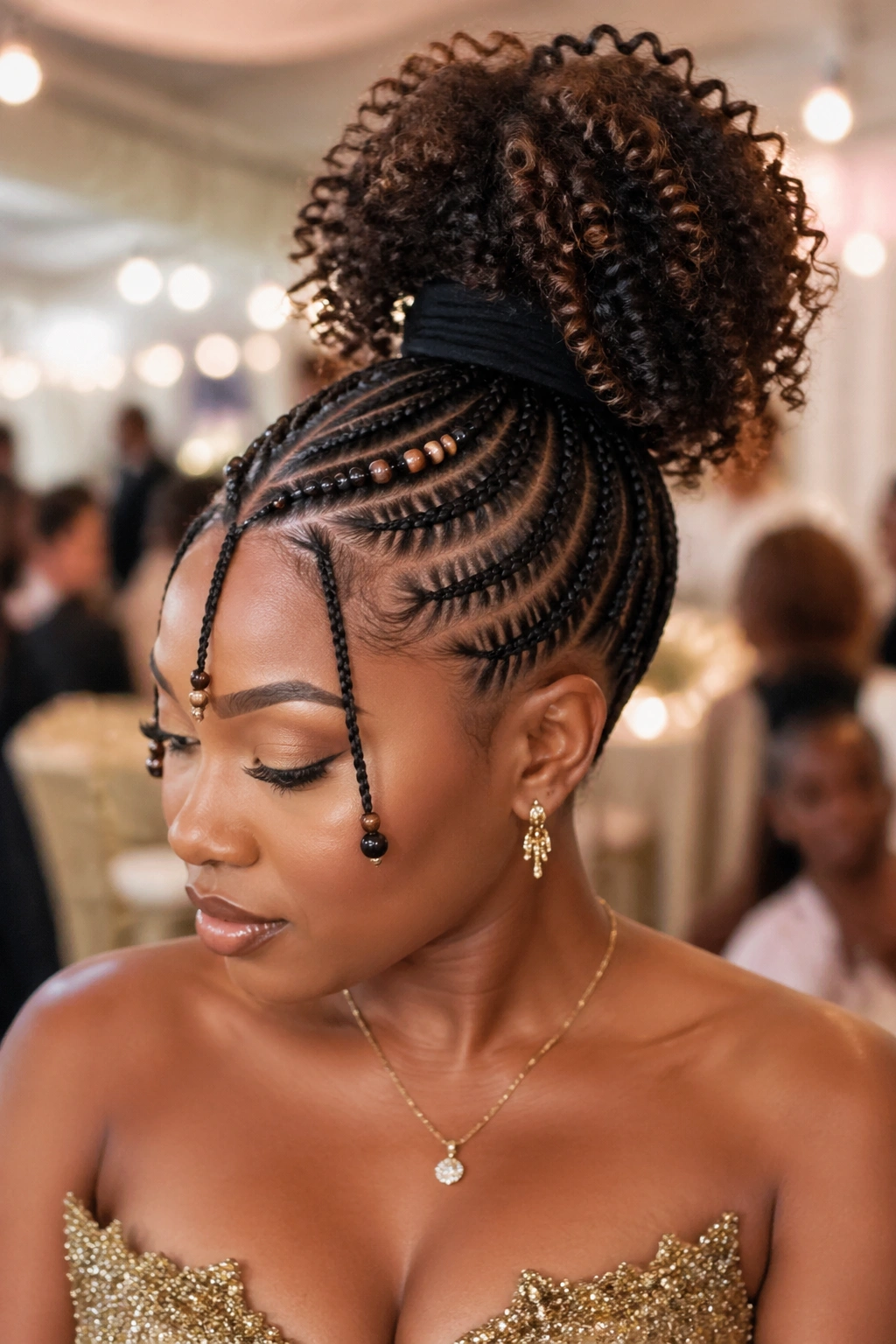
The bun gathers all the cornrows into a high bun at the crown, but instead of tucking the loose ends into the bun cleanly, the curls burst out from the bun’s center like a fountain of curl.
This version is statement and drama. The curls form a dramatic spray of texture above the cornrows, drawing eyes upward.
Bun construction: gather all cornrow ends and the curly extensions, secure tightly with a strong elastic, then let the curls splay outward from the elastic anchor. Don’t try to tame the spray — that’s the whole effect.
Best for events where you want to make an entrance. Less practical for daily wear since the bun spray catches on hats, scarves, and coat hoods.
14. Fulani With Mixed Bead Materials
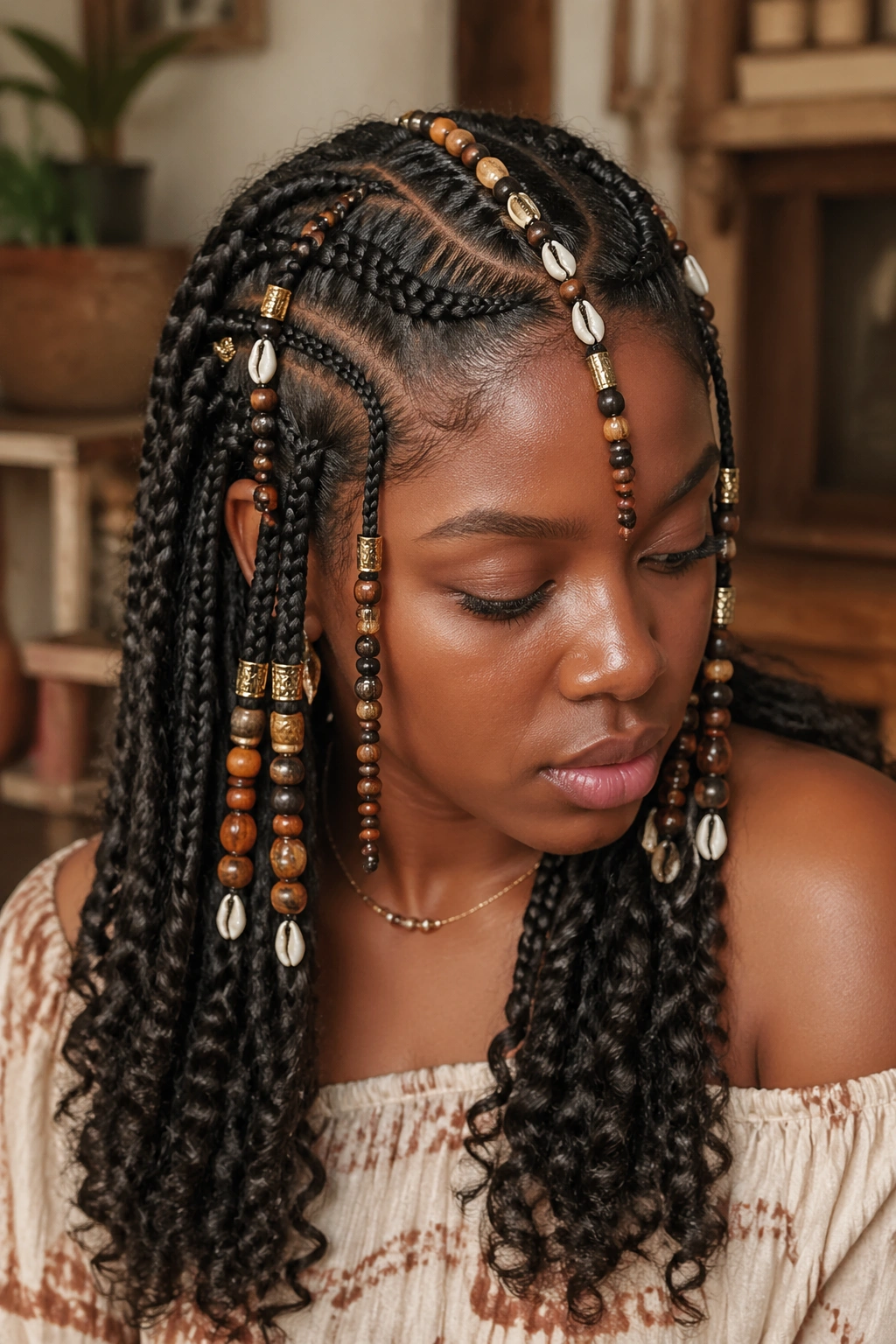
Wooden beads, glass beads, metal cuffs, and a few cowrie shells in a single style. The mix creates visual variety along the center braid and selected side cornrows.
The trick to mixing materials successfully is sticking to a consistent color story. Wooden beads in walnut tones, brass metal cuffs, dark amber glass beads, and natural cowrie shells all work together because they share warm tones.
Avoid mixing temperatures. Silver cuffs with warm wooden beads clash. Cool blue glass beads next to brass don’t read together.
The curls should be a complementary tone — natural black or warm brown rather than bright blonde, which would compete with the bead variety.
15. Curly Fulani Mohawk
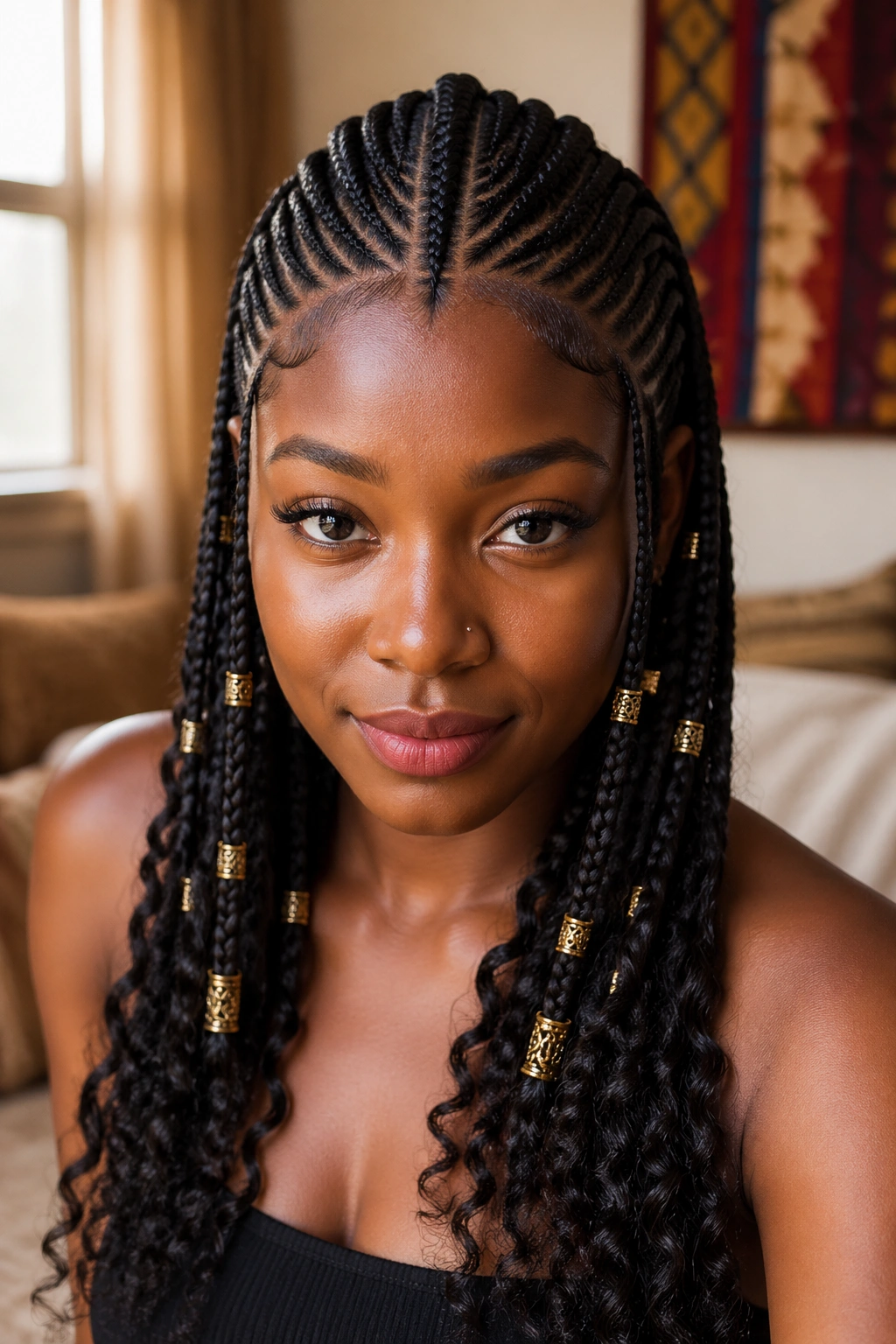
Center cornrows raised into a mohawk pattern with curly volume on top, side cornrows flat against the head, no curls on the sides.
The mohawk version of Fulani concentrates curl entirely down the center strip. The strip width should be 2-3 inches at its broadest, narrowing toward both the front and back.
Curly volume on the mohawk strip can be added through clipped-in curly extensions or by leaving a section of natural curly hair unbraided down the center. Either approach works.
The contrast between the curly center and the sleek braided sides is the whole point. Don’t let the side cornrows fuzz or loosen — they need to stay tight to maintain the contrast.
16. Fulani With Color Pop Curls
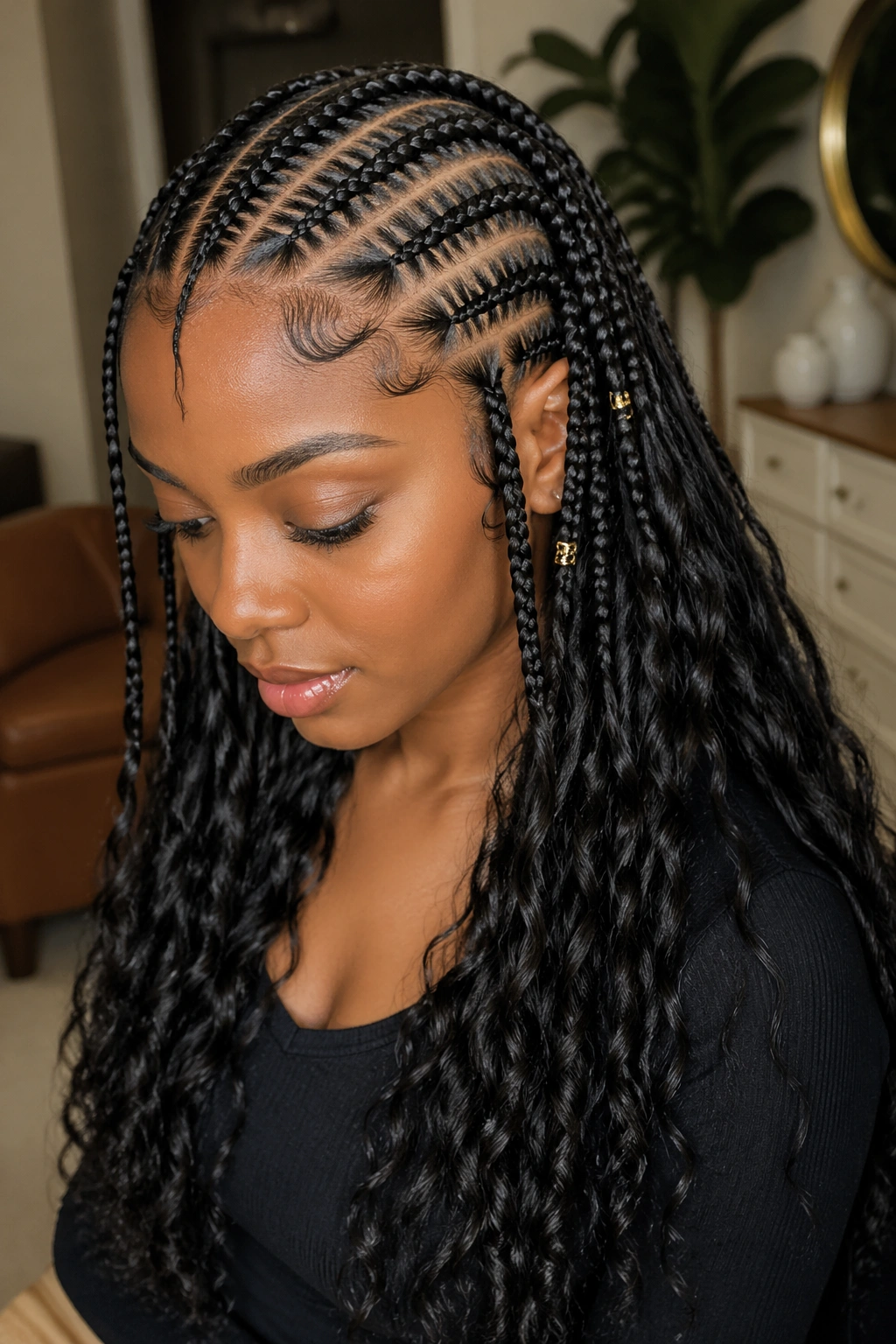
Standard black or natural Fulani cornrows paired with curls in a single bold color — burgundy, copper, deep purple, midnight blue. The cornrows read traditional; the curls add an unexpected pop.
Pick a color that flatters your skin tone. Burgundy and deep red flatter most undertones. Copper works on warm undertones. Purple and blue suit cool undertones.
The color pop curls should make up at least 30% of the style’s visual mass to read as intentional. A few colored strands look accidental. Full colored sections look chosen.
This style suits people who love their cornrow structure but want flexibility to experiment with color without committing to fully colored cornrows.
17. Fulani With Crown Twist
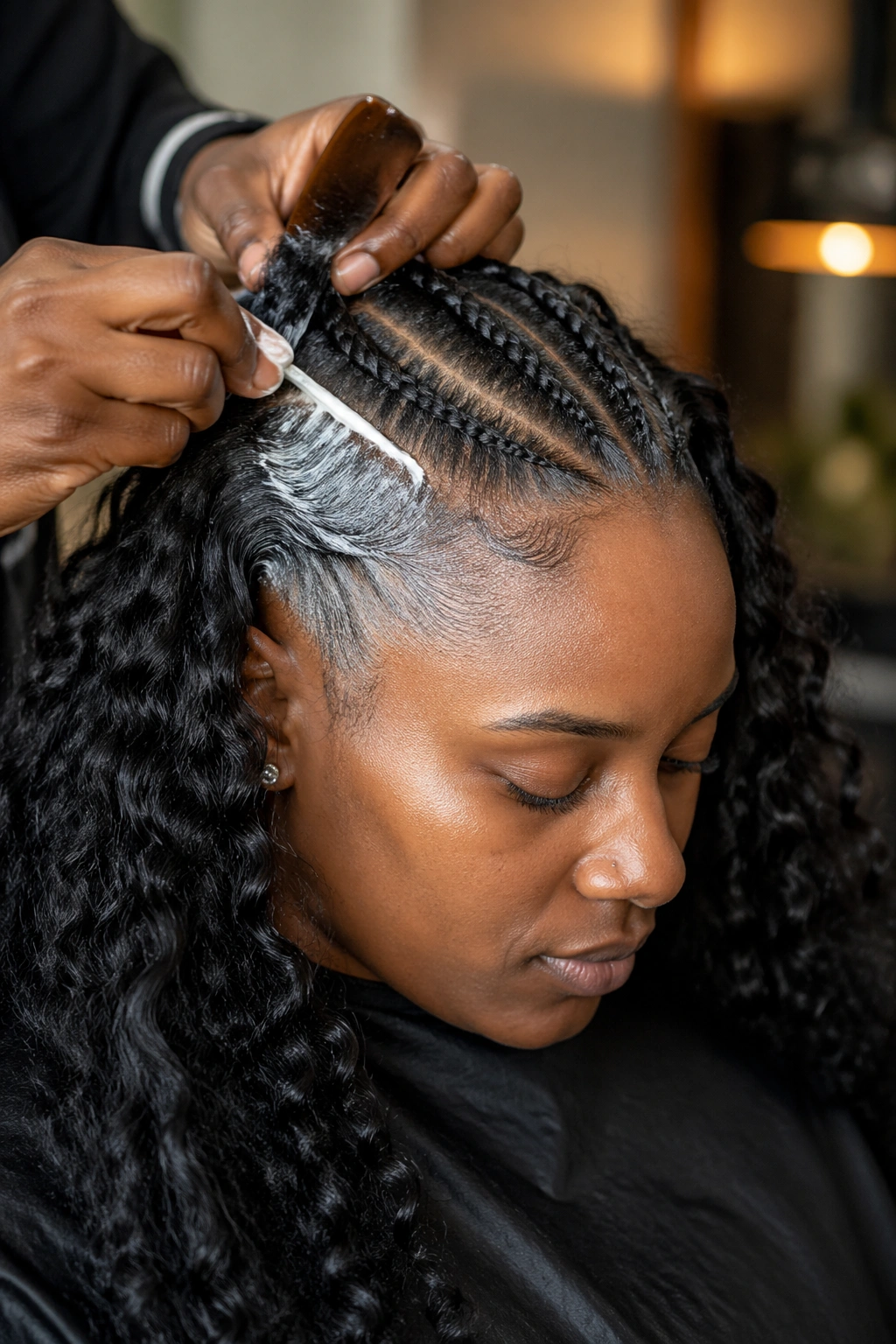
A twisted crown sits on top of the head where standard Fulani would have a part. The twist functions as a rolled cornrow that wraps around the head’s circumference.
What Makes It Different
The crown twist replaces the typical center braid with a rope-twisted band that wraps the head. Side cornrows still angle from the twist toward the temples; the curls still add softness below.
The twist should be tight enough to hold its rope shape through wear. Loose twists look like accidental tangles within days.
This variation reads more relaxed than traditional Fulani center braid styles. Good for casual wear or for people who want to soften the structure without abandoning the form.
18. Fulani Side Sweep With Curls
The whole style sweeps to one side. Center braid is replaced by a deep side part. All cornrows angle toward the favored side. Curls fall over one shoulder.
Side-swept Fulani reads less symmetric than traditional but more wearable for some face shapes. Round and oval faces benefit from the asymmetry.
The non-favored side has fewer cornrows — maybe 2-3 — to keep the visual weight balanced toward the favored side. The favored side gets 6-8 cornrows.
Curls on the favored side fall in a curtain over the shoulder. The other side stays sleek with no added curl, just the cornrow ending in a tight braided tail.
19. Fulani With Tapered Curl Length
Curls progress from short (at the front) to long (at the back). The shortest curls — 4-5 inches — sit near the temples. The longest — 12-15 inches — fall at the nape.
This tapered length creates dimension and reads more sculpted than uniform-length curls. The graduated effect frames the face with shorter curls and showcases length at the back.
Achieving this requires either pre-cut tapered curly bulk hair or careful trimming after install. Trimming synthetic curls with sharp shears at the curl peak (rather than mid-curl) keeps the curl shape intact.
The tapered look works especially well for round face shapes — the longer back curls elongate the silhouette while the shorter front curls don’t add unwanted width.
20. Fulani Goddess Hybrid
The hybrid takes Fulani’s structural elements — center braid, beaded accents, side cornrows — and combines them with goddess braid’s loose, wavy added hair throughout the cornrows themselves rather than just at the ends.
This means wavy hair is woven into the cornrow body, not just added at the tips. The cornrows have a softer, less precise edge as a result.
Goddess hybrid reads more bohemian than traditional Fulani. Less precision, more flow. It suits casual settings and creative environments better than formal ones.
Wear time runs 10-14 days. The integrated wavy hair frizzes faster than pure cornrow installs.
21. Fulani With Curls and Cuffs
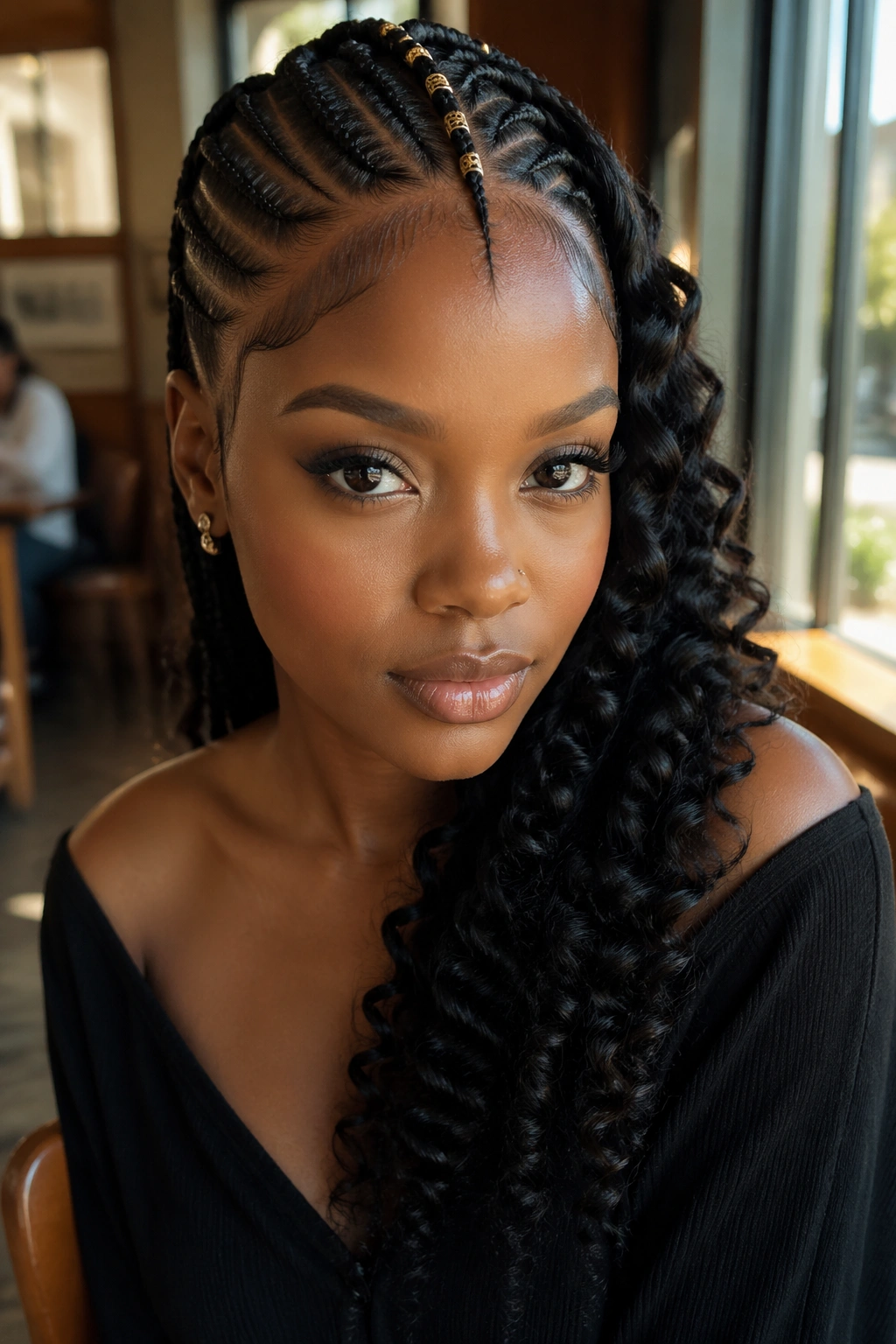
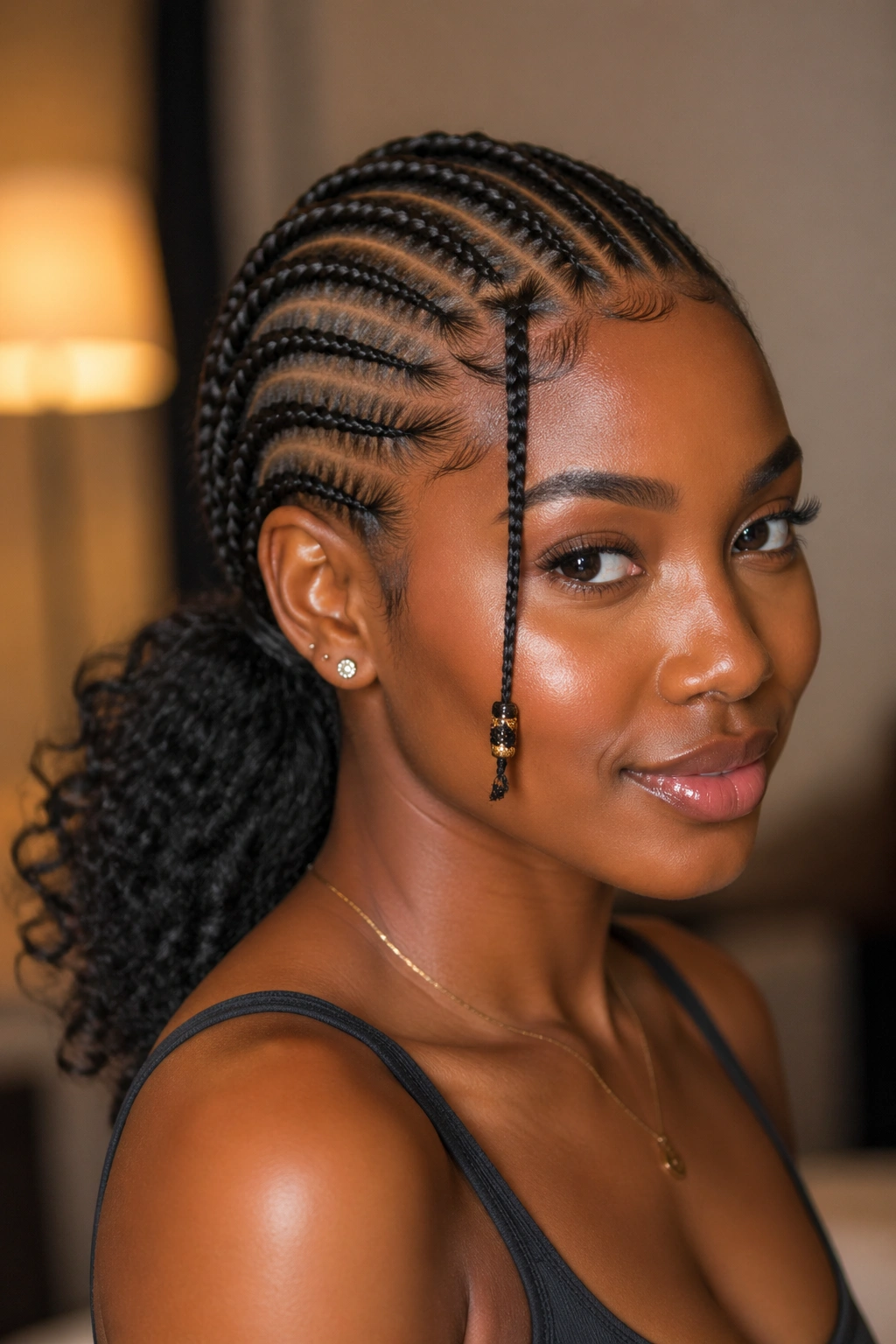
Combining cuffs (metal or brass rings sliding over cornrows) with curls. The cuffs sit on the cornrows above the curl section; the curls hang below.
Cuff placement: 1-2 cuffs per cornrow, focusing on the side cornrows rather than the center braid. The center braid carries the beads; the side cornrows carry the cuffs.
Brass cuffs in antiqued finishes pair beautifully with wavy or spiral curls in natural black. Gold-plated cuffs on auburn-toned curls give a warmer, more glamorous read.
Avoid silver cuffs unless your cornrows are in a cool-toned color (ash brown, cool black). Silver against warm tones clashes.
22. Minimalist Fulani With Subtle Curls
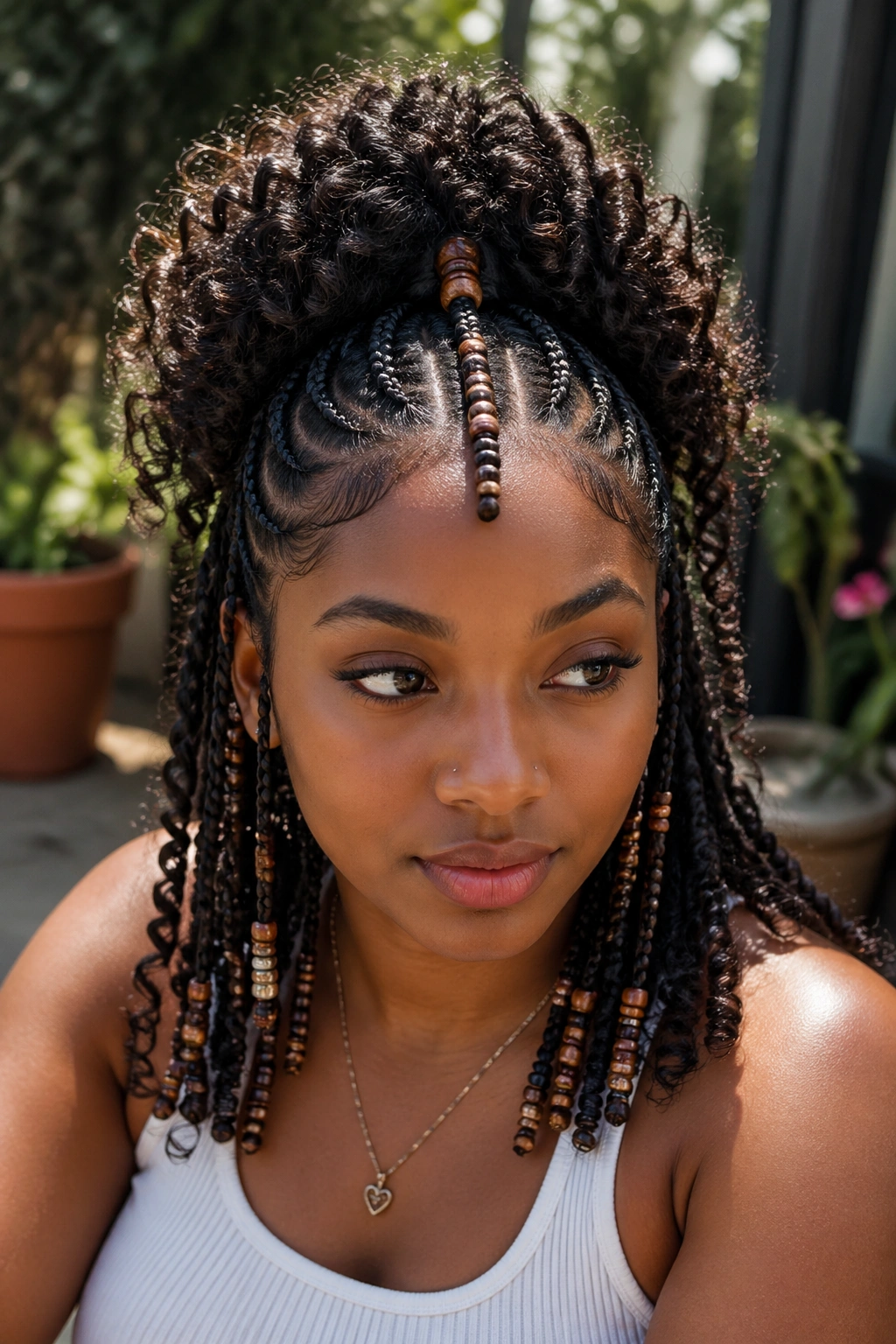
Pared-back version. Just the center braid, two side cornrows on each side, single beads on the center braid, and minimal curl at the ends — maybe just the last 3 inches.
Minimalist Fulani works for people who want the cultural form without the visual intensity. It also works as a rest style between heavier installs.
The curls should be loose wave at minimal length — barely curl, almost a tendril effect. This keeps the style feeling spare and clean.
This is the version I default to when I’m taking care of damaged edges or recovering from heavier styles. Less tension, less weight, less visible braid mass.
Maintaining Curls Through the Wear
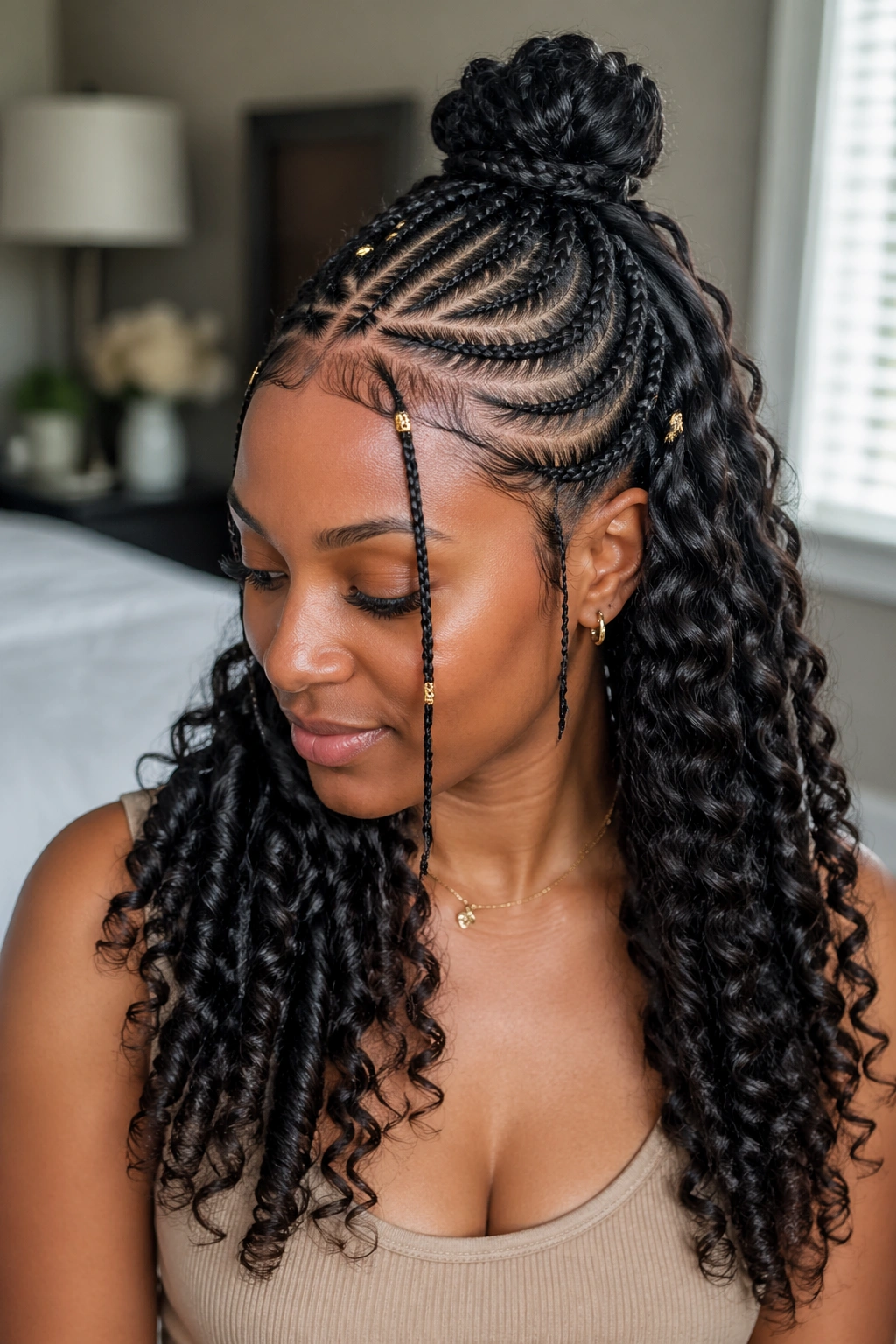
Synthetic curls relax over time. Day one definition becomes day fourteen wave. Use a curl reviving spray every 2-3 days to refresh the pattern. Look for sprays that don’t contain alcohol — alcohol formulations dry out kanekalon and shorten its life.
Sleeping in a satin bonnet or on a satin pillowcase is non-negotiable. Curls flatten against cotton and lose shape within a single night of bad sleep care.
Don’t comb the curls. Use fingers to detangle if needed. A wide-tooth comb breaks curl pattern and creates frizz. If serious tangling happens, work the curls apart with a leave-in conditioner and your fingers, section by section.
Bead Care During Wear
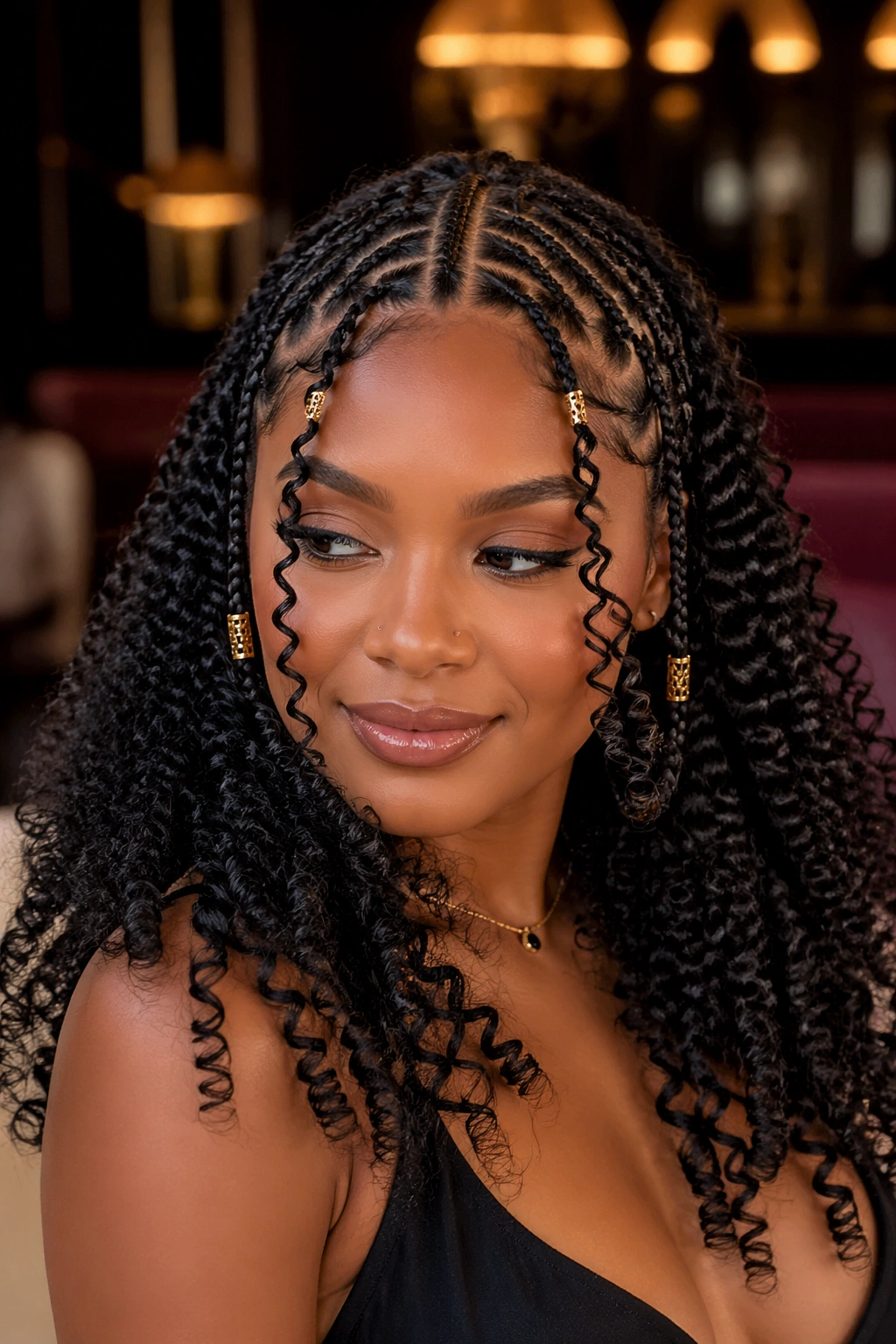
Wooden beads can crack with rough handling. Handle gently when adjusting the style. If a bead cracks, replace it with a similar bead at the same position rather than letting the broken pieces stay in.
Metal cuffs can tarnish over weeks of wear, especially in humid weather or if you sweat heavily. A quick polish with a soft cloth restores shine. Severely tarnished cuffs may need replacement.
Glass beads stay stable through wear but can chip if knocked against hard surfaces. Be mindful when sleeping, putting on jackets, or carrying bags.
Takedown Tips for Fulani With Curls
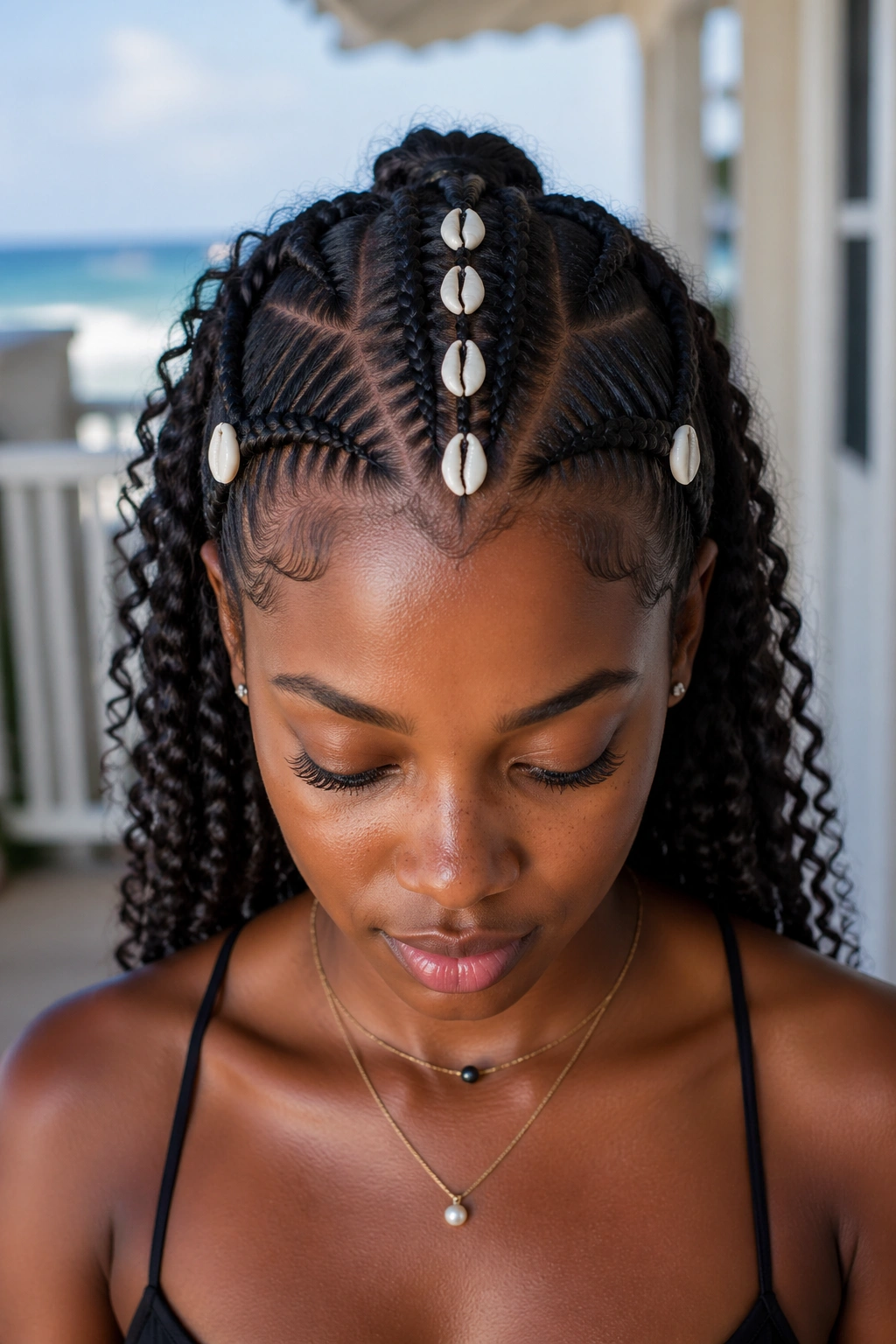
Remove all beads and accents first. Cut the elastic or braid loop holding each bead in place, slide the bead off, and set aside for reuse on future styles.
Detach curly extensions before unraveling cornrows. The connection point between cornrow and curl can mat together if you try to take them apart simultaneously. Cut the curls free with shears (cutting only the synthetic, not your own hair) and unravel the cornrow separately.
Pre-shampoo with warmed coconut oil applied to the cornrow body. Let it sit for 20 minutes. The oil softens the braid and helps separate shed hair that’s accumulated through wear.
Detangle thoroughly after takedown. Fulani styles trap shed hair more than simple cornrows because of the multiple intersecting braids.
Picking the Right Curl Length for Your Body
Petite frames (under 5’4″) suit shorter curl lengths — shoulder to mid-back. Full-length curly extensions can overwhelm a smaller frame and make the style read out of proportion.
Average heights (5’4″ to 5’9″) work with most curl lengths from collarbone to mid-back. Length depends on personal preference rather than proportion.
Taller frames (5’9″ and above) can carry longer curls — past the bust to the waist — without the style overwhelming. Long curls suit taller statures naturally.
Test the length by holding a section of curly bulk hair against your head and looking in the mirror. If the length looks balanced with your shoulders and frame, it’s right.
When Fulani Cornrows With Curls Are the Right Pick
Choose this style when you want cultural depth with modern softness. When you’re tired of full cornrows but not ready for full loose hair. When you want a style that reads beautiful in photos and feels good for several weeks of wear.
Skip this style when you need maximum protection — pure cornrows protect the ends better than curl-added versions. Skip it when you need a quick, low-maintenance install — Fulani with curls takes time to do well.
The 22 styles above range from minimalist to elaborate, traditional to contemporary. Pick the one that fits your next install window and commit to the prep, the install, and the maintenance. The result will reward the investment.
